

Submitted:
12 August 2026
Posted:
13 August 2026
You are already at the latest version
Abstract
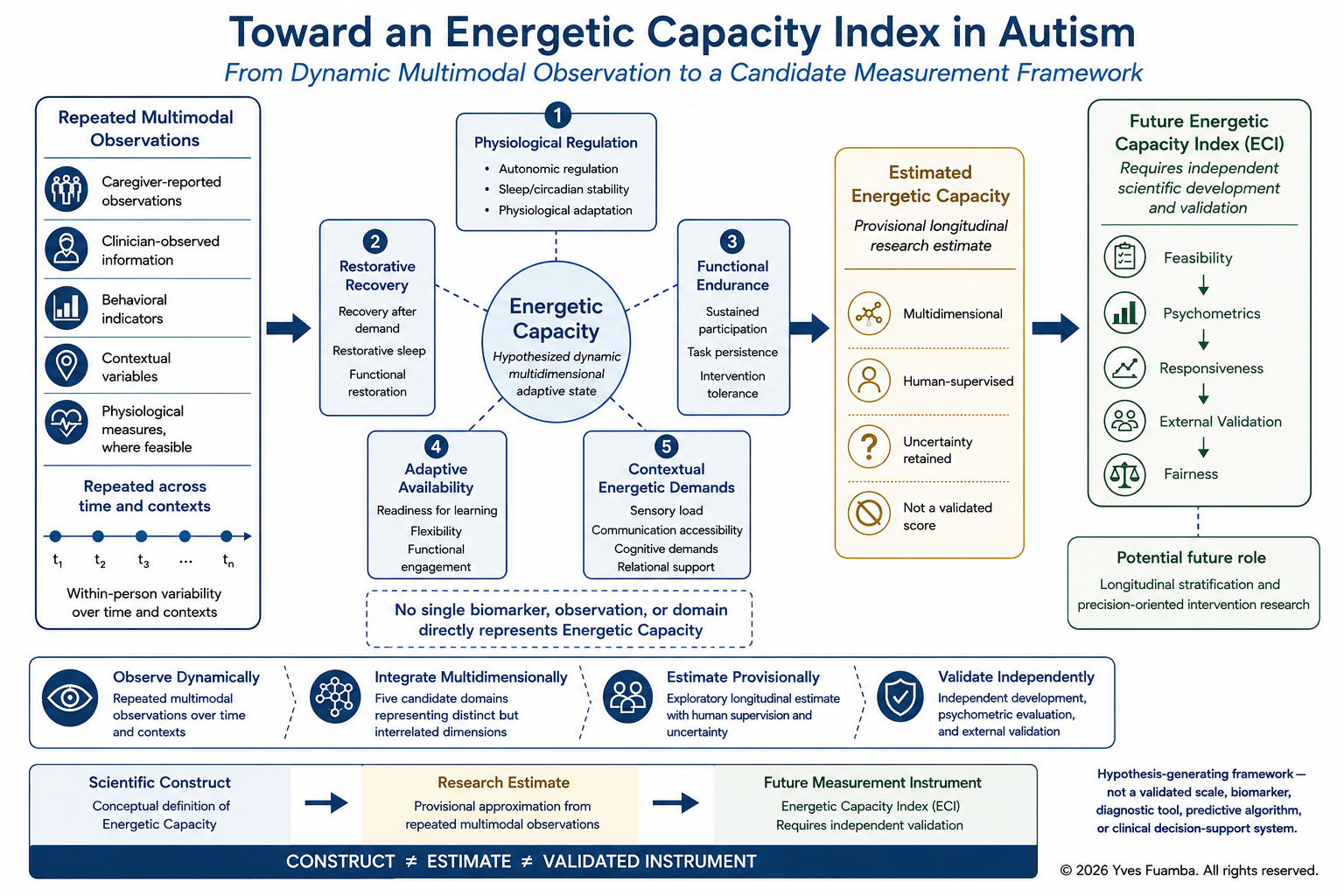
Autistic individuals often demonstrate substantial within-person variability in regulation, participation, recovery, learning readiness, and responsiveness to intervention across time and contexts. Although sleep disruption, fatigue, autonomic regulation, physiological stress, sensory demands, and recovery processes may contribute to this variability, no validated multidimensional instrument currently measures the dynamic biological and functional resources potentially available for adaptive developmental work. This Hypothesis and Theory article proposes a hypothesis-generating measurement framework for the future development of an Energetic Capacity Index (ECI) in autism. It distinguishes three scientifically separate levels: Energetic Capacity, the underlying translational construct; Estimated Energetic Capacity, a provisional research estimate derived from repeated multimodal observations; and the Energetic Capacity Index, a candidate measurement instrument requiring independent development and validation. A provisional measurement architecture is outlined across candidate domains of physiological regulation, restorative recovery, functional endurance, adaptive availability, and contextual demand. The proposed framework integrates repeated multimodal observations, including caregiver-reported, clinician-observed, behavioral, contextual, and, where feasible, physiological indicators while explicitly rejecting reliance on any single biomarker or isolated observation. The manuscript presents a staged development pathway encompassing conceptual operationalization, feasibility, reliability, construct discrimination, responsiveness, longitudinal sensitivity, fairness, external validation, and responsible digital implementation. The ECI is not presented as a validated scale, biomarker, diagnostic instrument, severity score, predictive algorithm, or clinical decision-support tool. Its scientific contribution will ultimately depend on whether future empirical studies demonstrate operational feasibility, coherent measurement properties, meaningful within-person variability, incremental explanatory value, fairness, and reproducibility across independent populations and settings. Rather than introducing a validated measurement instrument, this work establishes a transparent scientific roadmap for the responsible development of a future multidimensional measure of Energetic Capacity in autism.
Keywords:
autism
; energetic capacity
; measurement science
; Energetic Capacity Index
; adaptive reserve
; longitudinal assessment
; therapeutic readiness
; intervention responsiveness
; precision intervention
1. Introduction
The Measurement Gap in Dynamic Therapeutic Readiness and Adaptive Energetic Availability
Autistic individuals frequently demonstrate substantial variability in therapeutic engagement, learning readiness, adaptive functioning, and responsiveness to intervention across time and contexts [1,2]. Although these fluctuations are widely recognized in clinical practice, they remain insufficiently characterized by current measurement approaches, which largely rely on isolated behavioral observations, single physiological markers, or relatively static assessments that may not adequately capture dynamic within-person changes over time.
Growing evidence indicates that multiple biological, physiological, and sensory processes relevant to adaptive functioning in autism—including sleep quality [3], autonomic regulation [4], immune function [5], metabolic processes [6], sensory processing [31], and stress-related physiological regulation [32]—may collectively contribute to heterogeneity in functional states, adaptive participation, and therapeutic readiness. However, these processes are frequently examined through distinct disciplinary and measurement approaches, and, to our knowledge, no validated multidimensional measurement framework currently integrates them specifically into a coherent representation of dynamic adaptive energetic availability.
Consequently, this measurement gap may contribute to the persistent heterogeneity observed in intervention responsiveness across autistic individuals [1,2]. While existing research has traditionally focused on identifying relatively stable predictors of treatment outcome [1,2], considerably less attention has been devoted to developing measurement frameworks capable of characterizing dynamic within-person variation in the biological and adaptive resources potentially available to support therapeutic participation over time.
The concept of Energetic Capacity was recently proposed as a scientific construct [9]. Energetic Capacity provides a theoretical explanation for dynamic therapeutic readiness but does not specify how this phenomenon should be measured. Rather than representing fatigue, motivation, metabolic function, or physiological regulation alone, Energetic Capacity was conceptualized as a multidimensional state reflecting the adaptive resources potentially available to support engagement with therapeutic and developmental demands [9]. Although this conceptual framework provides a theoretical foundation, it does not by itself constitute a measurable research instrument.
Scientific constructs and measurement instruments represent distinct yet complementary stages of scientific development [10,11]. A construct provides the conceptual definition of a phenomenon, whereas a measurement framework specifies how that phenomenon may eventually be operationalized, observed, and evaluated empirically [10,11]. The transition from conceptual definition to candidate measurement architecture therefore represents a necessary intermediate step preceding feasibility studies, psychometric evaluation, external validation, and responsible translational implementation [10,11].
Accordingly, the present work is situated within Measurement Science, focusing on the methodological transition between construct definition and future empirical validation.
The objective of the present manuscript is therefore not to validate an Energetic Capacity Index, but to propose a hypothesis-generating measurement framework supporting its future development. Specifically, this paper distinguishes Energetic Capacity as the underlying scientific construct, Estimated Energetic Capacity as a provisional research estimate derived from repeated observations, and the Energetic Capacity Index (ECI) as a candidate multidimensional measurement instrument requiring independent operationalization, feasibility testing, and empirical validation before any translational research or clinical application can be considered.
2. From Construct to Measurement: Establishing the Scientific Development Continuum
Scientific constructs and measurement instruments represent distinct, complementary, and sequential stages of scientific development [10,11]. Although closely related, they address different scientific questions. A construct seeks to explain the nature of a phenomenon conceptually, whereas a measurement framework specifies how that phenomenon may eventually be operationalized, observed, quantified, and evaluated empirically [10,11]. Conflating these stages may lead to premature assumptions regarding measurement validity, psychometric performance, or clinical applicability before adequate empirical evidence has been established [12,11].
Within this perspective, Energetic Capacity represents the underlying scientific construct describing the dynamic adaptive reserve potentially available to support learning, therapeutic engagement, and responsiveness to intervention [9]. As proposed previously, this construct is conceptualized as a dynamic multidimensional adaptive state arising from interactions among biological regulation, restorative recovery, physiological demands, environmental context, and adaptive functioning rather than as a single biological process or isolated clinical observation [9].
The present manuscript introduces a second stage of scientific development by distinguishing Estimated Energetic Capacity from the construct itself. Estimated Energetic Capacity refers to a provisional research estimate derived from repeated multimodal observations collected within structured longitudinal investigations. It does not represent a validated score or definitive quantification of Energetic Capacity but rather an exploratory empirical approximation intended to support feasibility studies, methodological refinement, and subsequent measurement development. Estimated Energetic Capacity therefore constitutes a methodological bridge between conceptual theory and future measurement development.
A third and independent stage is represented by the proposed Energetic Capacity Index (ECI). The ECI is conceived as a candidate multidimensional measurement instrument designed to operationalize the Energetic Capacity construct through standardized multimodal observation, integration of candidate indicators, and reproducible measurement procedures. At the present stage, however, the ECI should not be interpreted as an existing validated instrument. Its future scientific value will depend entirely upon systematic operationalization, feasibility testing, psychometric evaluation, longitudinal responsiveness, external validation, and independent replication [10,11].
Taken together, these three stages establish a transparent Scientific Development Continuum extending from conceptual definition to future empirical measurement and validation. Rather than proposing immediate instrument validation, the present framework positions measurement development as an independent scientific discipline situated between construct generation and validation research. Within this continuum, Measurement Science is proposed as an independent methodological discipline concerned with the systematic transition from conceptual constructs to empirically testable measurement frameworks. This progression provides a structured methodological foundation for subsequent feasibility studies, multicenter validation, responsible digital implementation, and future translational investigation [10,11].
Figure 1 illustrates the proposed Scientific Development Continuum distinguishing Energetic Capacity as the scientific construct, Estimated Energetic Capacity as a provisional research estimate, and the future Energetic Capacity Index as the measurement instrument requiring independent development and validation.
- Concept Box 1
- The Three Levels of Scientific Development
- Scientific Construct
- ↓
- Research Estimate
- ↓
- Measurement Instrument
3. Conceptual Measurement Framework
3.1. Principles Guiding the Development of the Energetic Capacity Index
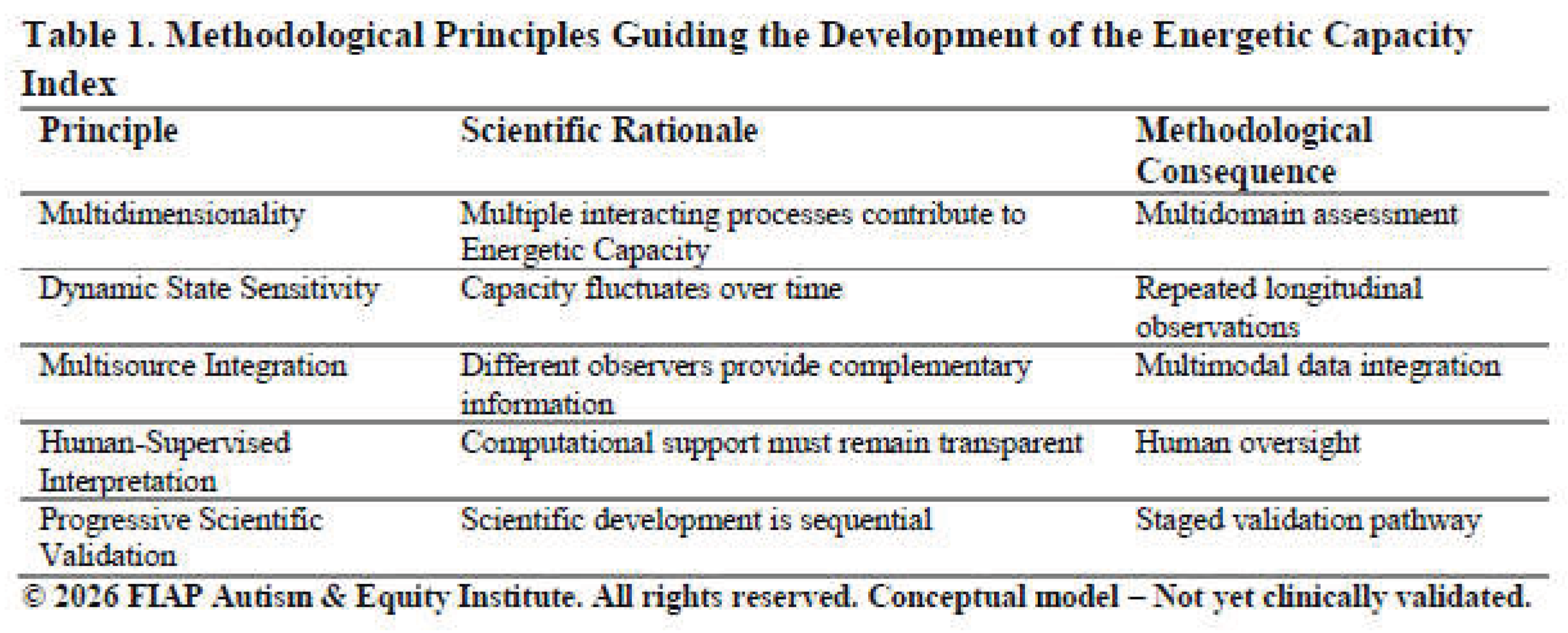
The transition from a scientific construct to a candidate measurement framework requires explicit methodological principles capable of guiding future operationalization while preventing premature assumptions regarding measurement validity [10,11]. The development of the proposed Energetic Capacity Index (ECI) is guided by the principle that multidimensional adaptive states cannot be adequately represented by isolated observations, single biomarkers, or individual behavioral indicators. Instead, measurement should reflect the dynamic integration of multiple complementary sources of information that collectively characterize the adaptive energetic resources potentially available for therapeutic participation at a given time.
Accordingly, the proposed ECI is conceptualized as a multidimensional measurement framework rather than a unidimensional scale. The objective is not to quantify a single biological process but rather to estimate the dynamic adaptive energetic resources potentially available through interactions among physiological regulation, restorative processes, behavioral functioning, environmental demands, and contextual adaptation [9]. The proposed framework is founded upon five methodological principles.
Principle 1. Multidimensionality
Scientific rationale
Energetic Capacity is hypothesized to emerge from multiple interacting biological and adaptive processes [9].
Methodological implication
Consequently, no individual observation—including sleep duration, fatigue severity, autonomic measures, metabolic markers, behavioral engagement, or caregiver perception—should be interpreted as a direct measure of Energetic Capacity. Candidate measurement therefore requires integration across multiple complementary domains.
Principle 2. Dynamic State Sensitivity
Scientific rationale
Energetic Capacity is conceptualized as a dynamic state rather than a stable individual trait [9].
Methodological implication
The proposed measurement framework therefore prioritizes repeated longitudinal observations capable of capturing within-person fluctuations across days and contexts rather than relying exclusively on cross-sectional assessment [14,15].
Principle 3. Multisource Integration
Scientific rationale
Methodological implication
The proposed framework therefore anticipates integration of complementary observations obtained from caregivers, intervention providers, behavioral assessments, contextual observations, and, where appropriate, physiological measurements. These information sources are considered complementary rather than interchangeable.
Principle 4. Human-Supervised Interpretation
Scientific rationale
Estimated Energetic Capacity should be interpreted within a transparent, human-supervised scientific framework [18].
Methodological implication
Computational processing may assist data integration and longitudinal characterization but should not replace scientific interpretation, qualified human judgment, or clinical decision-making [18]. At the present stage, the proposed framework is intended exclusively for research and methodological development.
Principle 5. Progressive Scientific Validation
Scientific rationale
The proposed ECI is introduced as a candidate measurement architecture requiring sequential scientific development [12,13,19].
Methodological implication
Future work will include operationalization, feasibility evaluation, psychometric assessment, responsiveness analyses, external replication, and multicenter validation before any consideration of translational implementation [12,13,19]. Progression between these stages should be supported by independent empirical evidence rather than inferred from theoretical plausibility or conceptual coherence alone. The methodological principles guiding the development of the Energetic Capacity Index is illustrated in the Table 1.
3.2. Conceptual Boundaries and Measurement Distinctiveness
Distinguishing Energetic Capacity from Related Constructs
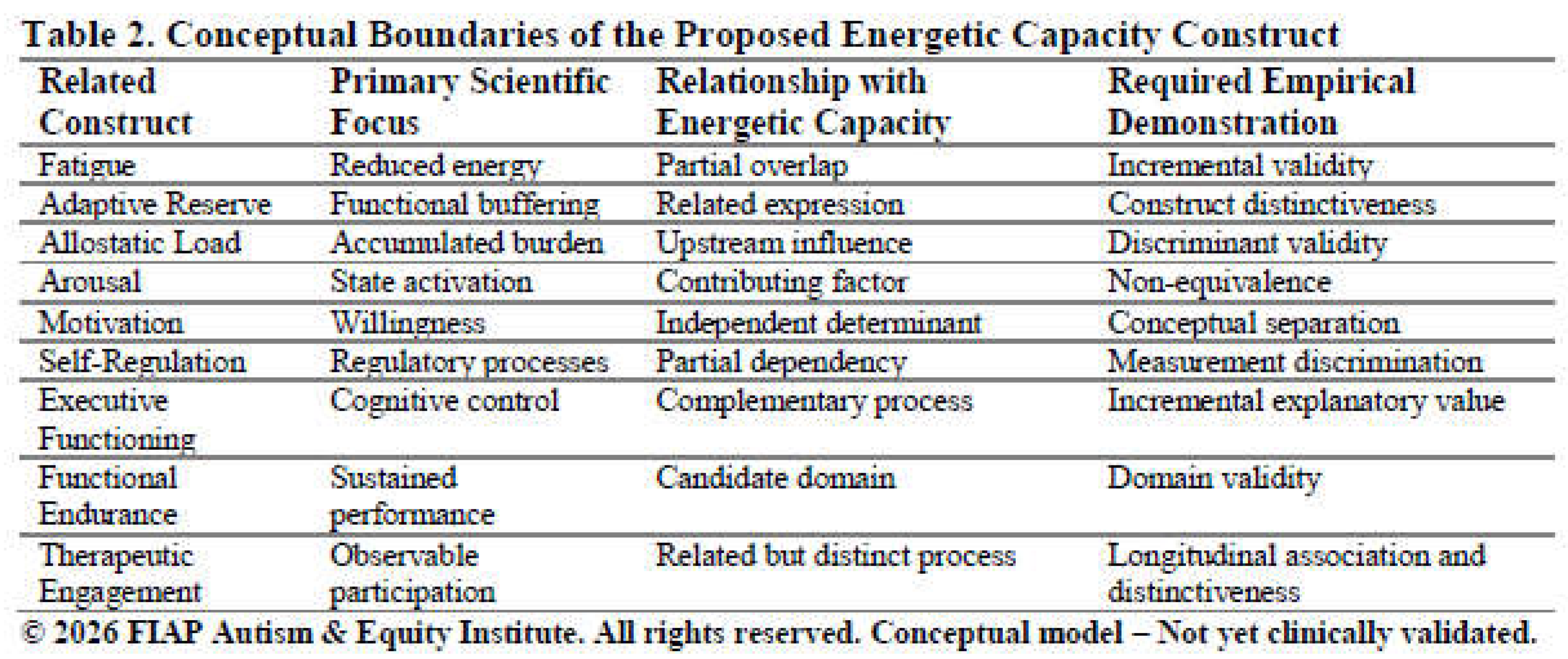
The scientific legitimacy of the proposed Energetic Capacity Index (ECI) will depend substantially on whether its underlying construct can be distinguished conceptually and empirically from neighboring constructs [10,11,12,13,19]. Energetic Capacity overlaps with several established domains, including fatigue, adaptive reserve, allostatic load, arousal, motivation, self-regulation, functional endurance, and therapeutic engagement. However, the ECI is not intended to replace, subsume, or relabel these constructs. Its proposed contribution is to organize the dynamic availability of biological and functional resources potentially available to sustain regulation, participation, recovery, learning, and adaptive developmental work across changing conditions.
Fatigue
Fatigue refers broadly to subjective experiences of tiredness, exhaustion, reduced energy, or increased effort, while fatigue-related phenomena may also manifest as reductions in endurance or performance [20]. It may represent one important indicator of reduced Energetic Capacity, but it does not define the construct in its entirety. The proposed ECI is intended to incorporate not only fatigue-related manifestations but also restorative recovery, physiological regulation, contextual demand, functional endurance, and adaptive availability.
An autistic individual may demonstrate reduced Energetic Capacity without overtly reporting or displaying fatigue, particularly when communication differences, developmental level, compensatory strategies, or environmental supports influence its observable expression. Conversely, fatigue may occur for reasons that do not necessarily imply a broader reduction in adaptive energetic availability. Future discriminant validation should therefore determine whether ECI estimates provide explanatory information beyond established fatigue measures.
Adaptive Reserve
The broader literature on reserve capacity conceptualizes reserve as resources that may be drawn upon to support adaptation under challenging conditions [21]. Within the present framework, adaptive reserve is used more narrowly to describe the functional buffer through which available biological and regulatory resources may support tolerance of demands, maintenance of adaptive functioning, and recovery following challenge. Energetic Capacity is therefore closely related to this notion but should not be considered synonymous with it.
The ECI is intended to characterize the broader multidimensional conditions that may support or constrain this adaptive reserve, including restorative processes, physiological stability, functional endurance, and contextual demand. Empirical studies will be required to determine whether Energetic Capacity demonstrates sufficient conceptual and measurement distinctiveness from reserve-related constructs to justify independent operationalization.
Allostatic Load
Allostatic load describes the cumulative physiological burden associated with repeated, prolonged, or dysregulated activation of adaptive systems in response to environmental and physiological demands [22]. Its primary orientation is toward the physiological costs of adaptation. By contrast, Energetic Capacity is oriented toward the dynamic resources that may remain available for adaptive functioning under current conditions.
Within the proposed framework, higher allostatic load is hypothesized to contribute to reduced Energetic Capacity, but the two constructs should not be treated as interchangeable. Allostatic load may represent one potential upstream influence, whereas the ECI is intended to estimate dynamic adaptive availability across biological, functional, and contextual domains. This proposed relationship remains subject to empirical investigation.
Arousal and Physiological Activation
Arousal broadly refers to variations in brain–body activation associated with wakefulness, autonomic regulation, affective states, and behavioral responsiveness [23]. Although arousal may influence attention, participation, regulation, and task tolerance, it is not a unitary phenomenon and may be expressed through partially distinct central, autonomic, behavioral, and subjective processes. Arousal therefore represents only one component of state regulation and does not by itself characterize restorative recovery, functional endurance, adaptive reserve, or contextual energetic demand.
The proposed ECI should therefore not be interpreted as an arousal scale. Physiological activation may contribute information to selected domains, but no isolated arousal indicator should be treated as a direct measure of Energetic Capacity.
Motivation
Motivation broadly refers to processes that energize, direct, and sustain goal-directed behavior and that are influenced by both internal states and external conditions [25]. Energetic Capacity should not be interpreted as motivation, willingness, compliance, or effort.
An individual may remain highly motivated while lacking sufficient physiological or functional availability to sustain participation. Conversely, adequate Energetic Capacity does not guarantee motivation or engagement when an activity lacks relevance, accessibility, relational safety, or appropriate contextual support. Distinguishing capacity from willingness is therefore an essential ethical and methodological requirement.
Self-Regulation
Self-regulation broadly refers to processes through which individuals modulate cognition, emotion, attention, and behavior in relation to internal states, environmental demands, and goal-directed functioning [25]. Although Energetic Capacity may influence the consistency with which regulatory processes can be sustained, self-regulation is also shaped by learned strategies, communication access, environmental predictability, executive processes, relational support, and contextual adaptation.
The ECI should therefore not be interpreted as a measure of regulatory skill or self-regulatory competence. Instead, selected regulation-related observations may contribute indirectly to estimating the resources potentially available to sustain adaptive functioning under demand.
Executive Functioning
Executive functioning refers to a family of higher-order cognitive control processes supporting goal-directed behavior, with inhibitory control, working memory, and cognitive flexibility commonly regarded as core executive functions from which higher-order processes such as planning and reasoning emerge [26].
Within the proposed framework, executive functioning may influence how efficiently available adaptive energetic resources are mobilized and deployed; however, executive functioning should not be interpreted as equivalent to Energetic Capacity.
An autistic individual may demonstrate relatively preserved executive functioning while experiencing limited adaptive energetic availability, or conversely exhibit adequate Energetic Capacity despite executive difficulties. Future empirical research should therefore determine whether Estimated Energetic Capacity provides incremental explanatory value beyond established measures of executive functioning.
Functional Endurance
Within the present framework, Functional Endurance refers to the capacity to sustain meaningful participation or performance over time under continuing cognitive, behavioral, communicative, educational, social, or therapeutic demands. This proposed domain overlaps conceptually with performance fatigability, which concerns changes in objectively measured performance during sustained activity [27], but the two should not be considered equivalent.
Functional Endurance is proposed as one candidate measurement domain of Energetic Capacity rather than as a proxy for the construct as a whole. Reduced endurance may reflect limited adaptive resources, but it may also result from contextual mismatch, physical illness, sensory overload, inadequate communication support, low task relevance, motivational factors, or excessive intervention demand. Reduced endurance should therefore not, in isolation, be interpreted as evidence of reduced Energetic Capacity or of a unitary energetic deficit.
Therapeutic Engagement
Within the Therapeutic Engagement Index framework, therapeutic engagement is conceptualized as a multidimensional, context-sensitive, and observable construct reflecting the degree to which an autistic child can access, tolerate, respond to, sustain, and generalize therapeutic input within a specific intervention context [28]. Therapeutic engagement therefore represents an observable process occurring within the therapeutic context rather than an estimate of the adaptive energetic resources potentially available to support that process.
The ECI, by contrast, is intended to estimate the adaptive energetic resources potentially available to support participation. Therapeutic engagement may therefore be associated with Energetic Capacity without being equivalent to it. Strong engagement may be observed despite limited energetic reserve when contextual support is optimal, whereas weak engagement may occur despite adequate energetic availability because of poor intervention fit, communication barriers, relational factors, or low task relevance. These proposed relationships remain hypotheses requiring empirical investigation.
Implications for Construct Validation
- can be operationalized reliably across repeated observations;
- exhibits meaningful within-person variability;
- is distinguishable from fatigue, adaptive reserve, allostatic load, arousal, motivation, self-regulation, executive functioning, functional endurance, and therapeutic engagement;
- provides incremental explanatory value beyond established measures;
- remains interpretable across diverse developmental, communication, cultural, and support profiles.
Failure to demonstrate these properties—including adequate discriminant validity from neighboring constructs—would weaken the scientific justification for maintaining the ECI as an independent measurement framework [10,11,12,13]. Consequently, the proposed framework should be regarded as an explicitly falsifiable scientific proposition, remaining open to refinement, restructuring, or rejection as new empirical evidence becomes available. The conceptual boundaries of the proposed Energetic Capacity construct is illustrated in the Table 2.
3.3. Candidate Measurement Domains and Provisional Indicators
A Multidimensional Candidate Measurement Framework for Energetic Capacity
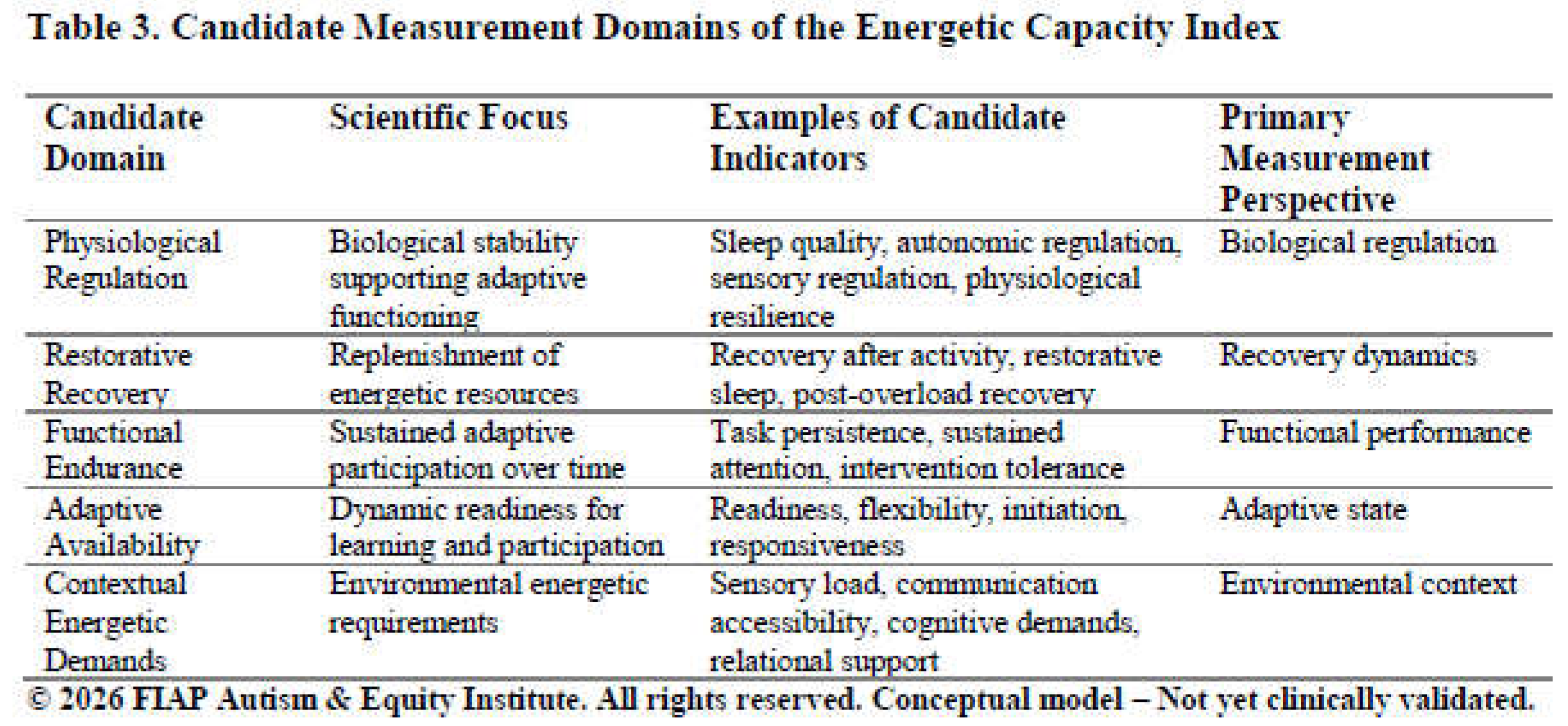
Consistent with the conceptual principles described above, the proposed Energetic Capacity Index (ECI) is hypothesized to estimate a multidimensional adaptive construct rather than a single observable characteristic. Accordingly, Energetic Capacity is provisionally organized into five complementary candidate measurement domains that collectively aim to characterize the dynamic availability of biological and functional resources potentially supporting adaptive participation, regulation, learning, and therapeutic responsiveness.
These candidate domains should not be interpreted as finalized psychometric subscales. Instead, they represent an initial conceptual organization intended to guide future operationalization, feasibility testing, and measurement development. Their structure, composition, weighting, and empirical relationships remain subject to independent scientific evaluation.
Domain 1. Physiological Regulation
Physiological Regulation refers to the stability and adaptability of biological systems that support the maintenance of energetic resources across daily activities and changing environmental demands. This domain is intended to capture the regulatory processes that may influence the individual's capacity to sustain adaptive functioning over time.
Candidate indicators may include patterns related to autonomic regulation [4], sleep quality and circadian stability [3,29], physiological recovery, stress-related biological responses, sensory regulation, and broader patterns of physiological stability and adaptation. Future studies may integrate caregiver observations, clinician assessments, physiological monitoring, and other multimodal measures where scientifically appropriate.
Importantly, this domain is not intended to quantify specific physiological mechanisms but rather to characterize their potential contribution to the broader multidimensional construct of Energetic Capacity.
Domain 2. Restorative Recovery
Within the proposed ECI framework, Restorative Recovery refers to the biological, physiological, cognitive, emotional, sensory, and behavioral processes through which adaptive resources may be replenished following periods of demand. Recovery has been conceptualized more broadly as a dynamic process involving changes in psychophysiological state following effort or demand [30]. The proposed ECI domain extends this principle by hypothesizing that adaptive functioning may depend not only on resource expenditure but also on the capacity to restore functional availability between periods of challenge.
Candidate observations may include sleep restoration, post-activity recovery patterns, recovery following sensory or emotional overload, perceived restoration after rest, and longitudinal fluctuations in functional readiness. These observations are intended to characterize recovery dynamics rather than isolated fatigue symptoms.
Future research will determine whether recovery represents an independent measurement domain or whether it should be integrated with other components of Energetic Capacity.
Domain 3. Functional Endurance
Within the proposed ECI framework, Functional Endurance refers to the capacity to sustain meaningful participation or performance during cognitive, behavioral, communicative, educational, social, or therapeutic activities over time. This proposed domain overlaps conceptually with performance fatigability, which concerns changes in objectively measured performance during sustained activity [27], but extends beyond task performance to consider the maintenance of adaptive participation under continuing demand.
Candidate indicators may include sustained attention, task persistence, tolerance of intervention duration, maintenance of participation, recovery from interruptions, and consistency of adaptive performance across repeated sessions.
Reduced Functional Endurance should not, in isolation, be interpreted as evidence of reduced Energetic Capacity, because observed endurance may also be influenced by contextual barriers, environmental mismatch, communication accessibility, sensory demands, task relevance, motivational factors, physical health, and intervention characteristics.
Domain 4. Adaptive Availability
Within the proposed ECI framework, Adaptive Availability refers to the hypothesized dynamic readiness of biological and functional resources to support learning, participation, regulation, and interaction at a given point in time. This proposed domain is informed by evidence that autism-related functioning and intervention-relevant characteristics may exhibit meaningful within-person variability over time, alongside substantial between-person heterogeneity [31].
Candidate observations may include readiness for learning, responsiveness to environmental support, adaptive flexibility, tolerance of transitions, capacity to initiate participation, and stability of functional engagement across changing contexts.
Domain 5. Contextual Energetic Demands
Within the proposed ECI framework, Energetic Capacity is hypothesized to be expressed through continuous interactions between individual resources and contextual demands. Autism research increasingly emphasizes that participation and adaptive functioning cannot be understood solely from individual characteristics, but should also consider environmental barriers, supports, and person–environment fit [31]. Consequently, estimation of Energetic Capacity should account for the demands and supports associated with the contexts in which adaptive functioning occurs.
Candidate contextual indicators may include environmental complexity, sensory demands, communication accessibility, predictability, relational support, intervention intensity, cognitive workload, and cumulative daily demands.
Rather than representing intrinsic individual characteristics, these observations are intended to characterize contextual demands and supports that may modify the resources required for adaptive participation.
This domain therefore acknowledges that observed patterns potentially relevant to Energetic Capacity should not be interpreted independently of the contexts in which adaptive participation occurs.
Dynamic Integration Across Domains
The proposed candidate domains are intended to function as complementary components of a multidimensional measurement architecture rather than as independent subscales. Energetic Capacity is hypothesized to emerge from their dynamic interaction over time, with repeated longitudinal observations proposed as potentially more informative than isolated measurements obtained at a single time point [14,32].
These domains should not be interpreted as finalized measurement dimensions or psychometric subscales. Rather, they constitute an initial conceptual organization intended to guide future operationalization, feasibility assessment, and measurement development. Future empirical studies will determine their final composition, operational definitions, candidate indicators, relative weighting, and measurement properties through iterative feasibility studies, psychometric evaluation, and independent external validation. Table 3 summarizes the proposed candidate measurement domains and their corresponding scientific focus and illustrative candidate indicators.
The proposed candidate domains should not be interpreted as finalized measurement dimensions or psychometric subscales. Rather, they provide a provisional conceptual organization intended to guide future operationalization, feasibility assessment, and measurement development. Their final composition and measurement properties will require iterative refinement through empirical investigation.
4. Candidate Measurement Architecture for the Operationalization of Energetic Capacity
- A
- Provisional Framework for Operationalizing Energetic Capacity
The proposed Energetic Capacity Index (ECI) is conceived as a candidate multidimensional measurement architecture rather than a predefined scoring system. At the present stage of scientific development, the objective is not to specify computational algorithms, weighting procedures, or numerical thresholds, but rather to establish a transparent conceptual framework capable of guiding future operationalization and empirical evaluation.
Consistent with the staged scientific development continuum proposed in this manuscript, measurement is conceptualized as a staged integrative process extending from repeated observations to candidate multidimensional estimation. Within this framework, Energetic Capacity is conceptualized as a latent construct that cannot be directly observed. Instead, it is hypothesized to be inferred from the convergence of multiple complementary indicators collected longitudinally across biological, behavioral, functional, and contextual domains.
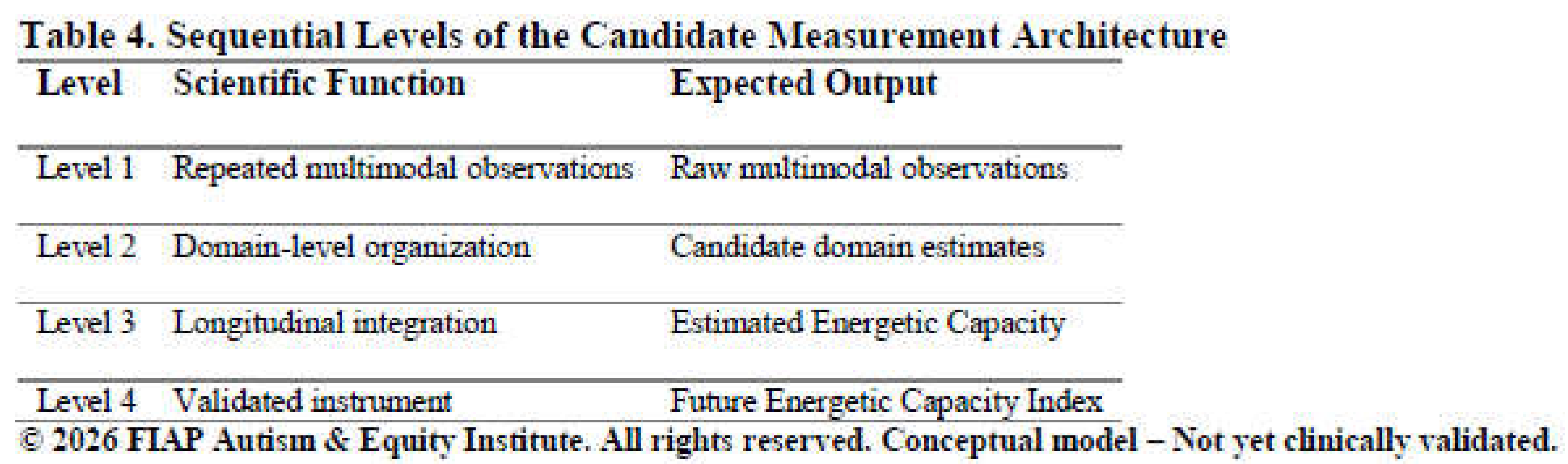
Accordingly, the proposed measurement architecture comprises four sequential methodological levels.
- Level 1. Repeated Multimodal Observations (Candidate Inputs)
The first level consists of standardized observations obtained through repeated multisource assessment [14,15,16]. Candidate observations may include caregiver-reported information, clinician observations, behavioral indicators, contextual variables, and, where feasible, physiological measurements. No individual observation is interpreted as representing Energetic Capacity independently.
- Level 2. Candidate Domain-Level Estimates
Repeated observations are subsequently organized within provisional candidate measurement domains reflecting complementary aspects of adaptive energetic functioning. These domains constitute conceptual organizational units intended to facilitate scientific interpretation rather than finalized psychometric subscales. Their future composition, weighting, and internal structure remain subject to empirical investigation.
- Level 3. Estimated Energetic Capacity
Integration of candidate domain-level estimates may generate a provisional research estimate referred to as Estimated Energetic Capacity. This estimate represents an exploratory longitudinal characterization of adaptive energetic availability within the specific context of feasibility research. It should not be interpreted as a validated measurement score or definitive representation of the underlying construct.
- Level 4. Future Energetic Capacity Index
Only following successful operationalization, feasibility evaluation, psychometric assessment, longitudinal responsiveness analyses, external replication, and multicenter validation could a scientifically validated Energetic Capacity Index ultimately be developed [12,13,18,19]. The present manuscript therefore addresses the conceptual architecture supporting future instrument development rather than the instrument itself. Figure 2 illustrates the proposed Candidate Measurement Architecture.
Scientific Transparency and Future Computational Implementation
The proposed measurement architecture intentionally separates conceptual organization from computational implementation. The present framework neither specifies proprietary algorithms nor prescribes numerical scoring procedures. Future computational implementation, including potential digital integration, should proceed through independent methodological development while preserving transparent reporting of candidate domains, analytical procedures, measurement properties, uncertainty estimates, and validation results [17]. This separation is intended to preserve scientific reproducibility, interpretability, and methodological flexibility throughout subsequent stages of instrument development. The sequential levels of the candidate measurement architecture are illustrated in the Table 4.
5. Measurement Development Roadmap
- A Staged Scientific Roadmap for the Development of the Energetic Capacity Index
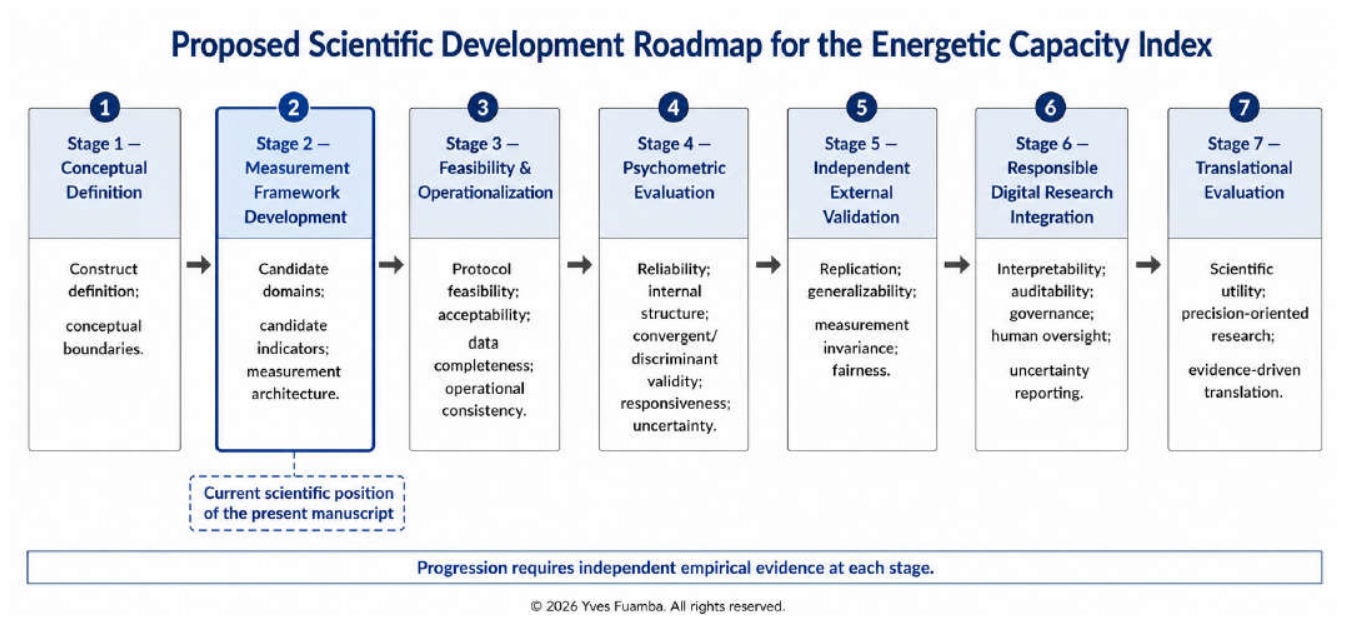
The proposed Energetic Capacity Index (ECI) should be understood as the starting point of a structured scientific development process rather than its final product. Consistent with established principles of measurement development and validation, the development of a multidimensional measurement instrument requires sequential empirical investigation extending beyond conceptual definition [12,13]. Accordingly, the present manuscript proposes a staged methodological roadmap designed to guide future scientific development while avoiding premature claims regarding measurement validity or clinical applicability.
- Stage 1. Conceptual Definition
The initial stage establishes the theoretical construct of Energetic Capacity and defines its conceptual boundaries relative to neighboring biological, behavioral, physiological, and functional constructs. This stage identifies the candidate dimensions hypothesized to contribute to Energetic Capacity while providing the scientific rationale for future operationalization.
- Stage 2. Measurement Framework Development
The second stage develops a candidate measurement architecture capable of organizing repeated multimodal observations into a coherent research framework. At this stage, candidate domains, indicators, and organizational principles are specified conceptually without assuming established psychometric performance or finalized scoring procedures.
- Stage 3. Feasibility and Operationalization
Following conceptual development, feasibility studies are required to determine whether repeated multisource observations can be collected consistently, integrated longitudinally, and implemented within real-world research settings. These investigations should primarily evaluate protocol implementation, participant and respondent burden, data completeness, operational consistency, acceptability, and preliminary measurement feasibility rather than establish definitive psychometric validity.
- Stage 4. Psychometric Evaluation
Once operational feasibility has been demonstrated, systematic psychometric investigation becomes necessary. Future studies should evaluate reliability, measurement stability, internal structure, construct validity—including convergent and discriminant validity—longitudinal responsiveness, and measurement uncertainty while refining candidate measurement procedures based on empirical evidence [10,11,12,13].
- Stage 5. Independent External Validation
Scientific credibility ultimately requires independent replication across diverse populations, institutions, and research settings. External validation should examine reproducibility, generalizability, measurement invariance where appropriate, fairness across relevant populations, and methodological robustness using harmonized protocols and independent analytical evaluation.
- Stage 6. Responsible Digital Research Integration
Only after adequate empirical validation should the ECI be considered for integration into transparent, interpretable, auditable, and human-supervised digital research infrastructures. Digital implementation should preserve scientific transparency, data governance, uncertainty reporting, and qualified human oversight while avoiding autonomous clinical decision-making [17].
- Stage 7. Translational Evaluation
The final stage evaluates whether a validated ECI provides meaningful scientific utility in longitudinal autism research and whether, following sufficient independent evidence, it may contribute to future precision-oriented intervention research. Translation should remain evidence-driven and proceed only after adequate demonstration of measurement performance, reproducibility, fairness, and translational relevance.
Figure 3 illustrates the proposed Scientific Development Roadmap for the Energetic Capacity Index.
6. Positioning of the Energetic Capacity Index Within a Multidimensional Measurement Architecture
Complementary Dimensions Within a Multidimensional Research Architecture
The proposed Energetic Capacity Index (ECI) is intended to represent one candidate measurement framework within a broader multidimensional research architecture designed to investigate variability in therapeutic readiness and intervention responsiveness. Although developed as an independent measurement framework, Energetic Capacity is hypothesized to interact dynamically with other candidate constructs and frameworks that may provide complementary information regarding biological regulation, adaptive functioning, therapeutic engagement, and neurodevelopmental responsiveness.
Within this conceptual perspective, the Biological Burden Index (BBI) is hypothesized to characterize multidomain biological and physiological burdens that may influence adaptive functioning. Rather than representing energetic resources directly, the BBI is intended to characterize biological and physiological challenges potentially affecting regulation, recovery, and adaptive availability.
The Neuroplastic Accessibility Index (NAI) is proposed as a complementary candidate framework intended to investigate the dynamic accessibility of neuroplastic processes potentially supporting learning and adaptive change. Whereas Energetic Capacity focuses on the adaptive energetic resources potentially available for therapeutic participation, the NAI is conceptually directed toward the accessibility of neuroplastic processes under varying biological and contextual conditions.
The Therapeutic Engagement Index (TEI) addresses a different level of observation by conceptualizing therapeutic engagement as a multidimensional, context-sensitive, and observable process occurring within intervention contexts [28]. In contrast to the ECI, which seeks to estimate adaptive energetic availability, the TEI focuses on how therapeutic accessibility and engagement are expressed within a specific intervention context.
Accordingly, the proposed candidate frameworks address distinct but potentially complementary scientific questions:
- BBI: What biological and physiological burdens may be influencing the individual?
- ECI: What adaptive energetic resources may currently be available?
- NAI: How accessible may neuroplastic adaptation be under current conditions?
- TEI: How is therapeutic engagement expressed within the intervention context?
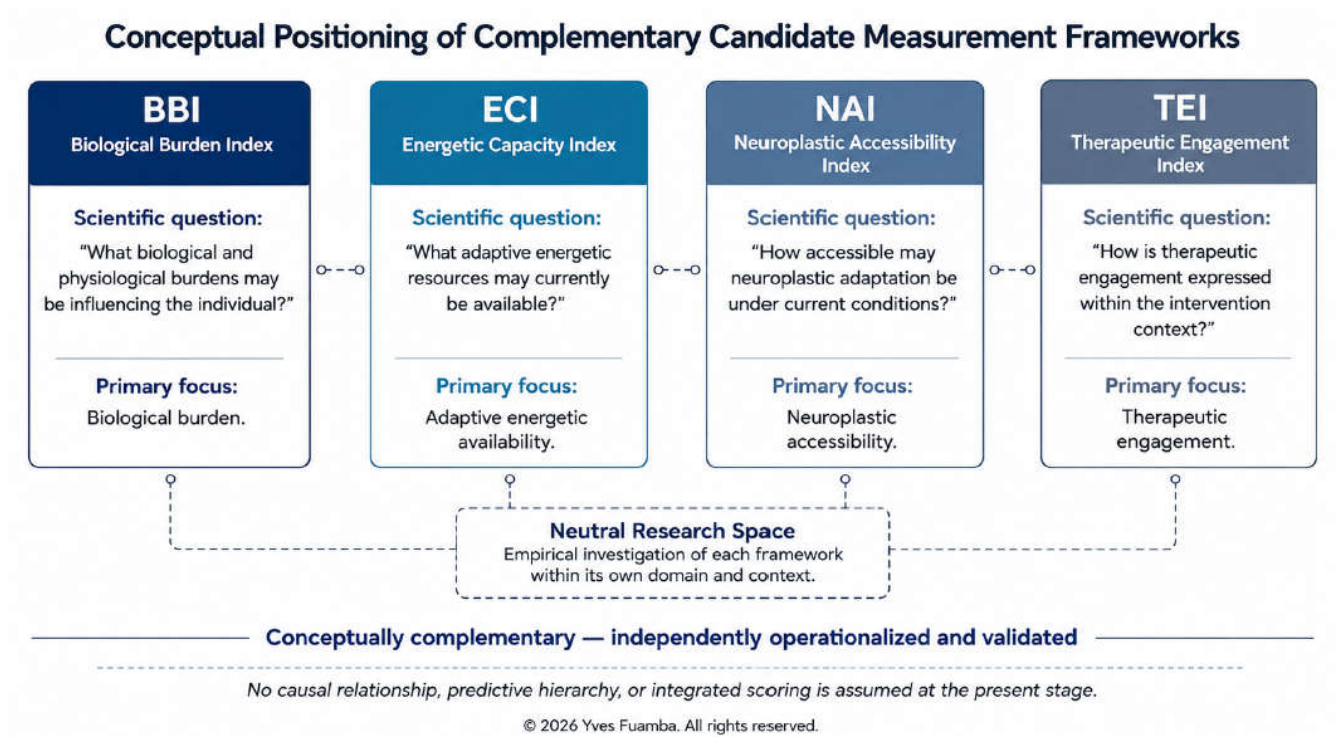
These candidate frameworks should be considered conceptually complementary rather than hierarchical or interchangeable. Each addresses a distinct scientific question within the proposed multidimensional research architecture and therefore requires independent operationalization, feasibility evaluation, psychometric investigation, and external validation. At the present stage of scientific development, no assumptions should be made regarding causal relationships, predictive performance, or integrated scoring across these proposed measurement frameworks.
Future longitudinal investigations may examine whether these candidate constructs and measurement frameworks demonstrate meaningful convergence, complementary explanatory value, or distinct temporal relationships. However, such questions remain empirical and should be addressed through appropriately designed feasibility studies, independent validation research, and multicenter replication.
Figure 4 and Table 5 illustrated the conceptual positioning of the proposed candidate measurement frameworks.
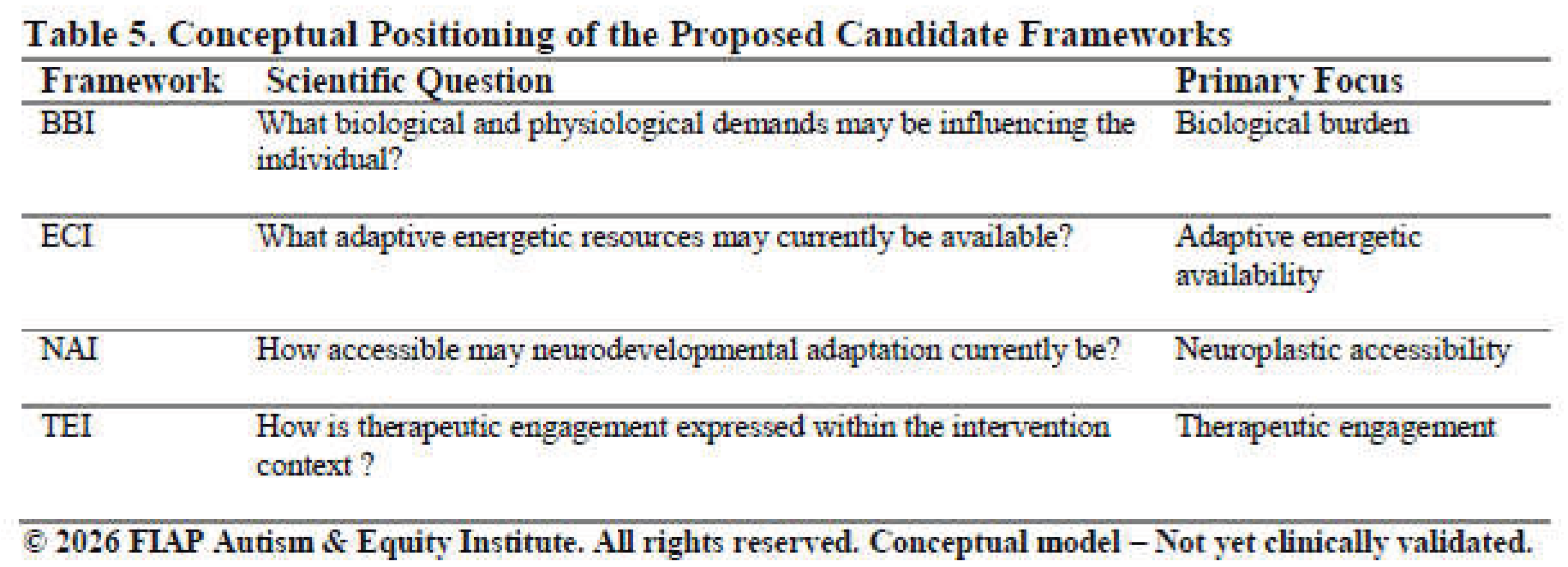
Figure 4.
Conceptual Positioning of Complementary Candidate Measurement Frameworks. Legend. The Biological Burden Index (BBI), Energetic Capacity Index (ECI), Neuroplastic Accessibility Index (NAI), and Therapeutic Engagement Index (TEI) are positioned as conceptually distinct but potentially complementary candidate frameworks addressing different scientific questions. BBI concerns multidomain biological and physiological burdens; ECI concerns adaptive energetic resources potentially available under current conditions; NAI concerns the accessibility of neuroplastic adaptation; and TEI concerns therapeutic engagement as expressed within the intervention context. The proposed relationships are hypothesis-generating and should not be interpreted as establishing hierarchy, causality, predictive pathways, or integrated scoring among the frameworks.
Figure 4.
Conceptual Positioning of Complementary Candidate Measurement Frameworks. Legend. The Biological Burden Index (BBI), Energetic Capacity Index (ECI), Neuroplastic Accessibility Index (NAI), and Therapeutic Engagement Index (TEI) are positioned as conceptually distinct but potentially complementary candidate frameworks addressing different scientific questions. BBI concerns multidomain biological and physiological burdens; ECI concerns adaptive energetic resources potentially available under current conditions; NAI concerns the accessibility of neuroplastic adaptation; and TEI concerns therapeutic engagement as expressed within the intervention context. The proposed relationships are hypothesis-generating and should not be interpreted as establishing hierarchy, causality, predictive pathways, or integrated scoring among the frameworks.
7. Ethical and Methodological Considerations
Responsible Development of a Candidate Measurement Framework
The present manuscript proposes a hypothesis-generating framework intended to support the future development of an Energetic Capacity Index (ECI). Accordingly, the proposed framework should not be interpreted as a validated measurement instrument, psychometric scale, diagnostic tool, biomarker, severity score, predictive algorithm, or clinical decision-support system. Rather, it represents an initial methodological architecture designed to guide subsequent scientific investigation.
Several methodological limitations should therefore be acknowledged. First, the conceptual framework has not yet undergone empirical operationalization, feasibility testing, or psychometric evaluation. Consequently, the candidate measurement domains proposed in this manuscript remain provisional and should not be interpreted as finalized components of a future instrument. Their composition, relative contribution, internal structure, measurement properties, and scientific utility will require systematic empirical investigation across diverse populations and research settings.
Second, Energetic Capacity is conceptualized as a dynamic multidimensional state characterized by within-person variability across time and contexts. Accordingly, future measurement approaches should prioritize repeated longitudinal observations rather than isolated cross-sectional assessments [14,32]. Whether the proposed framework adequately captures meaningful adaptive energetic fluctuations remains an empirical question that can only be addressed through appropriately designed longitudinal feasibility studies.
Third, the integration of multimodal observations introduces important methodological challenges related to missing data, temporal alignment, observer variability, contextual heterogeneity, and measurement uncertainty. Future studies should explicitly evaluate these methodological factors while ensuring transparent reporting of data provenance and quality, missingness, temporal alignment procedures, analytical assumptions, uncertainty estimates, and measurement limitations.
The proposed framework also emphasizes the importance of responsible computational implementation. Future computational implementation should be designed to remain transparent, interpretable, auditable, and subject to appropriate qualified human oversight [17]. Computational methods should support scientific interpretation without replacing human judgment or generating autonomous clinical recommendations. Computational approaches that cannot provide sufficient transparency, auditability, uncertainty characterization, or independent scientific evaluation should not be used to support ECI-related research interpretation or future translational decision-making.
Finally, ethical development of the ECI requires independent scientific validation before any translational or clinical implementation is considered. Reproducibility across independent and diverse populations, methodological transparency, fairness, and rigorous external replication should constitute essential prerequisites for any future translational or clinical application. Accordingly, progression beyond conceptual development should follow a staged scientific pathway in which each phase is supported by independent empirical evidence rather than inferred from theoretical plausibility alone.
8. Discussion
Advancing Measurement Science for Dynamic Therapeutic Readiness in Autism
The present manuscript proposes a hypothesis-generating framework for the future development of an Energetic Capacity Index (ECI) as a candidate multidimensional measurement architecture in autism. Rather than introducing a validated instrument, this work addresses a methodological gap situated between conceptual construct development and empirical validation. Specifically, it proposes that the scientific development of a measurement framework may constitute a distinct stage of investigation requiring explicit conceptualization before feasibility studies, psychometric evaluation, and translational implementation can be appropriately undertaken [12,13].
Current autism research has generated substantial knowledge regarding multiple biological, physiological, sensory, and functional processes, including sleep and circadian regulation, autonomic function, stress-related physiology, metabolic processes, sensory processing, and adaptive functioning [3,4,29]. However, these processes are frequently examined through distinct disciplinary and measurement approaches, while their potential interactions in relation to dynamic therapeutic participation remain incompletely characterized. The proposed ECI therefore seeks to provide a structured conceptual framework through which complementary observations may eventually be investigated within a coherent multidimensional measurement architecture.
A central contribution of the present work is the explicit distinction between Energetic Capacity, Estimated Energetic Capacity, and the Energetic Capacity Index. This staged conceptualization recognizes scientific constructs, research estimates, and validated measurement instruments as distinct methodological entities. By separating these developmental stages, the proposed framework seeks to avoid premature assumptions regarding measurement validity while providing a transparent roadmap for future scientific investigation.
This distinction also illustrates a broader principle of measurement science. Scientific constructs, provisional research estimates, and validated measurement instruments should not be regarded as interchangeable entities, but as methodologically distinct stages of scientific development requiring different forms of conceptual, empirical, and psychometric evidence [10,11,12,13]. Maintaining explicit separation between these stages may reduce premature assumptions regarding instrument validity, improve methodological transparency, and facilitate cumulative validation across independent research programs.
The manuscript further proposes that measurement-framework development should itself be recognized as a distinct component of translational research. The present approach introduces an intermediate methodological stage in which candidate domains, measurement principles, and operational architecture are explicitly organized before empirical implementation. This progression is intended to improve methodological transparency, facilitate reproducibility, and strengthen the scientific foundation upon which subsequent feasibility and validation studies can be conducted.
Importantly, the proposed framework should not be interpreted as evidence supporting clinical application. The candidate measurement architecture described in this manuscript has not yet undergone operationalization, feasibility testing, reliability assessment, construct validation, or external replication. Accordingly, all candidate domains, organizational structures, and longitudinal integration strategies remain provisional and subject to future empirical refinement.
Future research should therefore focus on sequential scientific development. Initial investigations should examine operational feasibility, repeated multisource data collection, data completeness, acceptability, and within-person longitudinal variability. Subsequent studies should evaluate reliability, internal structure, construct validity, responsiveness, fairness, and reproducibility across independent populations before responsible digital integration or translational research applications are considered [12,13,14].
Although developed within the context of Energetic Capacity, the methodological principles proposed in this manuscript may have broader implications for multidimensional measurement development in autism research. More generally, the distinction between conceptual constructs, candidate measurement frameworks, feasibility science, validation science, and translational implementation may provide a structured methodological pathway for the responsible development of future measurement instruments addressing other complex neurodevelopmental phenomena. Whether this proposed pathway proves useful and reproducible beyond the ECI will require independent methodological evaluation.
9. Conclusion
The proposed Energetic Capacity Index (ECI) represents a hypothesis-generating candidate measurement framework intended to support the future operationalization of the Energetic Capacity construct in autism. Rather than presenting a validated measurement instrument, this manuscript establishes a structured scientific roadmap describing how the operationalization of a multidimensional adaptive construct may progress from conceptual definition toward feasibility evaluation, empirical measurement, psychometric validation, independent external validation, and responsible translational implementation.
A central contribution of the present work is the explicit distinction between Energetic Capacity as the underlying scientific construct, Estimated Energetic Capacity as a provisional research estimate, and the Energetic Capacity Index as the future measurement instrument whose development would require independent empirical and psychometric validation. By separating these stages, the proposed framework emphasizes that conceptual innovation, measurement development, feasibility science, validation research, and translational implementation represent complementary but distinct phases of scientific investigation.
Although developed within the context of Energetic Capacity, the methodological principles described in this manuscript may provide a structured methodological framework for the future development of multidimensional measurement instruments addressing other dynamic neurodevelopmental constructs. Future empirical investigation will determine whether the proposed measurement architecture demonstrates sufficient feasibility, reliability, validity, longitudinal responsiveness, fairness, and reproducibility to justify progression toward subsequent translational research and, where scientifically appropriate, responsible digital implementation.
Author Contributions
YF conceived the ECI framework, developed the conceptual architecture, and wrote the manuscript.
Funding Statement
No specific external funding was received for the preparation of this manuscript.
Ethics Statement
This manuscript does not report human-subject data, animal data, clinical intervention, identifiable health information, or retrospective record review. It presents a conceptual and translational research architecture. Therefore, research ethics board approval was not required for the present manuscript. Future feasibility studies, pilot validation, data collection, or implementation research involving autistic children, caregivers, clinicians, educational contexts, health-related information, or service records will require appropriate ethics review, consent procedures, privacy safeguards, and governance approval before initiation.
Data Availability Statement
No datasets were generated or analyzed for the present manuscript. ECI is presented as a Hypothesis and Theory. Future empirical studies will require predefined data governance procedures, privacy protections, data minimization, and ethics-approved data-sharing arrangements where applicable.
Acknowledgments
Generative artificial intelligence tools were used for language refinement and figure-development support. All AI-assisted outputs were critically reviewed, revised, verified, and approved by the author, who takes full responsibility for the accuracy, originality, integrity, and scientific content of the manuscript. The tools used included ChatGPT (OpenAI) for language refinement and figure development support.
Conflicts of Interest Statement
The author is the founder of FIAP Autism & Equity Institute and the originator of the ECI conceptual architecture. ECI, FIAP-related constructs, figures, terminology, translational models, and future digital implementation concepts may constitute intellectual assets under development. The present manuscript is conceptual and does not present a validated clinical product, commercial device, medical intervention, diagnostic tool, or autonomous decision-support system.
Clinical and Translational Caution
ECI is not a validated clinical instrument, diagnostic system, biomarker panel, medical device, treatment-selection algorithm, or autonomous decision-making technology. It should not be used to make clinical decisions, determine service eligibility, restrict care, diagnose autism or any other condition, or modify intervention delivery outside an approved research protocol.
Intellectual Property Notice
© 2026 FIAP Autism & Equity Institute / Yves Fuamba. All rights reserved. The conceptual architecture, terminology, figures, tables, and translational model described in this manuscript are presented for scientific communication and hypothesis generation. No license is granted for unauthorized clinical, commercial, digital, algorithmic, educational, or derivative use without prior written authorization.
References
- Bent, C.; et al. Predictors of Developmental and Adaptive Behaviour Outcomes in Response to Early Intensive Behavioural Intervention and the Early Start Denver Model. J. Autism Dev. Disord. 2024, 54. [Google Scholar] [CrossRef] [PubMed]
- Asta, L.; Persico, A.M. Differential predictors of response to Early Start Denver Model vs. Early Intensive Behavioral Intervention in young children with autism spectrum disorder: a systematic review and meta-analysis. Brain Sci. 2022, 12(11), 1499. [Google Scholar] [CrossRef] [PubMed]
- Kim, H.; Kim, J.H.; Yi, J.H.; et al. Correlations between sleep problems, core symptoms, and behavioral problems in children and adolescents with autism spectrum disorder: a systematic review and meta-analysis. Eur. Child Adolesc. Psychiatry 2024, 33(5), 1539–1549. [Google Scholar] [CrossRef] [PubMed]
- Zadok, E.; Golan, O.; Lavidor, M.; Gordon, I. Autonomic nervous system responses to social stimuli among autistic individuals: a systematic review and meta-analysis. Autism Res. 2024, 17(3), 497–511. [Google Scholar] [CrossRef] [PubMed]
- Hughes, H.K.; Moreno, R.J.; Ashwood, P. Innate immune dysfunction and neuroinflammation in autism spectrum disorder. Brain Behav. Immun. 2023, 108, 245–254. [Google Scholar] [CrossRef] [PubMed]
- Frye, R.E.; Rincon, N.; McCarty, P.J.; et al. Biomarkers of mitochondrial dysfunction in autism spectrum disorder: a systematic review and meta-analysis. Neurobiol. Dis. 2024, 197, 106520. [Google Scholar] [CrossRef] [PubMed]
- Dellapiazza, F.; Vernhet, C.; Blanc, N.; Miot, S.; Schmidt, R.; Baghdadli, A. Links between sensory processing, adaptive behaviours, and attention in children with autism spectrum disorder: A systematic review. Psychiatry Res. 2018, 270, 78–88. [Google Scholar] [CrossRef] [PubMed]
- Makris, G.; Agorastos, A.; Chrousos, G.P.; Pervanidou, P. Stress System Activation in Children and Adolescents With Autism Spectrum Disorder. Front Neurosci. 2022, 15, 756628. [Google Scholar] [CrossRef] [PubMed]
- Fuamba, Y. Energetic Capacity in Autism: A Translational Construct Linking Biological Burden, Adaptive Reserve, Neuroplasticity, and Therapeutic Engagement; Preprints, 2026. [Google Scholar]
- Cronbach, L.J.; Meehl, P.E. Construct validity in psychological tests Cette référence constitue le fondement historique de la construct validity. Psychol. Bull. 1955, 52, 281–302. [Google Scholar] [PubMed]
- Borsboom, D.; Mellenbergh, G.J.; van Heerden, J. The concept of validity. Psychol. Rev. 2004, 111(4), 1061–1071. [Google Scholar] [CrossRef] [PubMed]
- Boateng, G.O.; Neilands, T.B.; Frongillo, E.A.; Melgar-Quiñonez, H.R.; Young, S.L. Best Practices for Developing and Validating Scales for Health, Social, and Behavioral Research: A Primer. Front. Public Health Cette publication décrit explicitement un développement séquentiel des instruments. 2018, 6, 149. [Google Scholar] [CrossRef] [PubMed]
- Terwee, C.B.; Prinsen, C.A.C.; Chiarotto, A.; et al. COSMIN methodology for evaluating the content validity of patient-reported outcome measures: a Delphi study. Qual. Life Res. 2018, 27, 1159–1170. [Google Scholar] [CrossRef] [PubMed]
- Laurenceau, J.-P.; DiGiovanni, A.M.; Bolger, N. Intensive Longitudinal Methods: Toward a Psychological Science of Daily Life. Annu Rev. Psychol. 2026, 77(1), 513–541. [Google Scholar] [CrossRef] [PubMed]
- Chen, Y.; Xi, Z.; Greene, T.; Mandy, W. A systematic review of ecological momentary assessment in autism research. Autism 2025, 29(6), 1374–1389. [Google Scholar] [CrossRef] [PubMed]
- De Los Reyes, A.; Augenstein, T.M.; Wang, M.; Thomas, S.A.; Drabick, D.A.G.; Burgers, D.E.; Rabinowitz, J. The validity of the multi-informant approach to assessing child and adolescent mental health. Psychol. Bull. 2015, 141(4), 858–900. [Google Scholar] [CrossRef] [PubMed]
- World Health Organization. Ethics and governance of artificial intelligence for health: WHO guidance; World Health Organization: Geneva, 2021. [Google Scholar]
- Prinsen, C.A.C.; Mokkink, L.B.; Bouter, L.M.; Alonso, J.; Patrick, D.L.; de Vet, H.C.W.; Terwee, C.B. COSMIN guideline for systematic reviews of patient-reported outcome measures. Qual. Life Res. 2018, 27(5), 1147–1157. [Google Scholar] [CrossRef] [PubMed]
- Mokkink, L.B.; Terwee, C.B.; Patrick, D.L.; Alonso, J.; Stratford, P.W.; Knol, D.L.; Bouter, L.M.; de Vet, H.C.W. The COSMIN checklist for assessing the methodological quality of studies on measurement properties of health status measurement instruments: an international Delphi study. Qual. Life Res. 2010, 19(4), 539–549. [Google Scholar] [CrossRef] [PubMed]
- Behrens, M.; Gube, M.; Chaabene, H.; Prieske, O.; Zenon, A.; Broscheid, K.C.; Schega, L.; Husmann, F.; Weippert, M. Fatigue and human performance: an updated framework. Sports Med. 2023, 53(1), 7–31. [Google Scholar] [CrossRef] [PubMed]
- Bergeman, C.S.; Nelson, N.A. Building a dynamic adaptational process theory of resilience (ADAPTOR): Stress exposure, reserve capacity, adaptation, and consequence. Am. Psychol. 2024, 79(8), 1063–1075. [Google Scholar] [CrossRef] [PubMed]
- McEwen, B.S. Protective and damaging effects of stress mediators. N Engl. J. Med. 1998, 338(3), 171–179. [Google Scholar] [CrossRef] [PubMed]
- Satpute, A.B.; Kragel, P.A.; Barrett, L.F.; Wager, T.D.; Bianciardi, M. Deconstructing arousal into wakeful, autonomic and affective varieties. Neurosci. Lett. 2019, 693, 19–28. [Google Scholar] [CrossRef] [PubMed]
- Simpson, E.H.; Balsam, P.D. The behavioral neuroscience of motivation: an overview of concepts, measures, and translational applications. Curr. Top. Behav. Neurosci. 2016, 27, 1–12. [Google Scholar] [CrossRef] [PubMed]
- Nigg, J.T. Annual Research Review: On the relations among self-regulation, self-control, executive functioning, effortful control, cognitive control, impulsivity, risk-taking, and inhibition for developmental psychopathology. J. Child Psychol. Psychiatry 2017, 58(4), 361–383. [Google Scholar] [CrossRef] [PubMed]
- Diamond, A. Executive functions. Annu Rev. Psychol. 2013, 64, 135–168. [Google Scholar] [CrossRef] [PubMed]
- Enoka, R.M.; Duchateau, J. Translating fatigue to human performance. Med. Sci. Sports Exerc. 2016, 48(11), 2228–2238. [Google Scholar] [CrossRef] [PubMed]
- Fuamba, Y. The therapeutic engagement index in autism: a hypothesis-generating framework for stratifying intervention responsiveness and adaptive therapeutic availability. Front Child Adolesc. Psychiatry 2026, 5, 1872562. [Google Scholar] [CrossRef] [PubMed]
- Carmassi, C.; Palagini, L.; Caruso, D.; Masci, I.; Nobili, L.; Vita, A.; Dell'Osso, L. Systematic Review of Sleep Disturbances and Circadian Sleep Desynchronization in Autism Spectrum Disorder: Toward an Integrative Model of a Self-Reinforcing Loop. Front Psychiatry 2019, 10, 366. [Google Scholar] [CrossRef] [PubMed]
- Zijlstra, F.R.H.; Cropley, M.; Rydstedt, L.W. From recovery to regulation: an attempt to reconceptualize “recovery from work”. Stress Health 2014, 30(3), 244–252. [Google Scholar] [CrossRef] [PubMed]
- Lai, M.C.; Anagnostou, E.; Wiznitzer, M.; Allison, C.; Baron-Cohen, S. Evidence-based support for autistic people across the lifespan: maximising potential, minimising barriers, and optimising the person–environment fit. Lancet Neurol. 2020, 19(5), 434–451. [Google Scholar] [CrossRef] [PubMed]
- Chen, Y.J.; Duku, E.; Georgiades, S. Rethinking autism intervention science: a dynamic perspective. Front Psychiatry 2022, 13, 827406. [Google Scholar] [CrossRef] [PubMed]
Figure 1.
Proposed Scientific Development Continuum for the Energetic Capacity Index. Legend. The framework distinguishes three methodologically separate levels of development: Energetic Capacity as the underlying scientific construct; Estimated Energetic Capacity as a provisional research estimate derived from repeated multimodal observations; and the future Energetic Capacity Index as a measurement instrument requiring independent operationalization, feasibility testing, psychometric evaluation, and external validation. The directional progression represents a scientific development pathway rather than an established validation sequence or evidence of current measurement validity.
Figure 1.
Proposed Scientific Development Continuum for the Energetic Capacity Index. Legend. The framework distinguishes three methodologically separate levels of development: Energetic Capacity as the underlying scientific construct; Estimated Energetic Capacity as a provisional research estimate derived from repeated multimodal observations; and the future Energetic Capacity Index as a measurement instrument requiring independent operationalization, feasibility testing, psychometric evaluation, and external validation. The directional progression represents a scientific development pathway rather than an established validation sequence or evidence of current measurement validity.
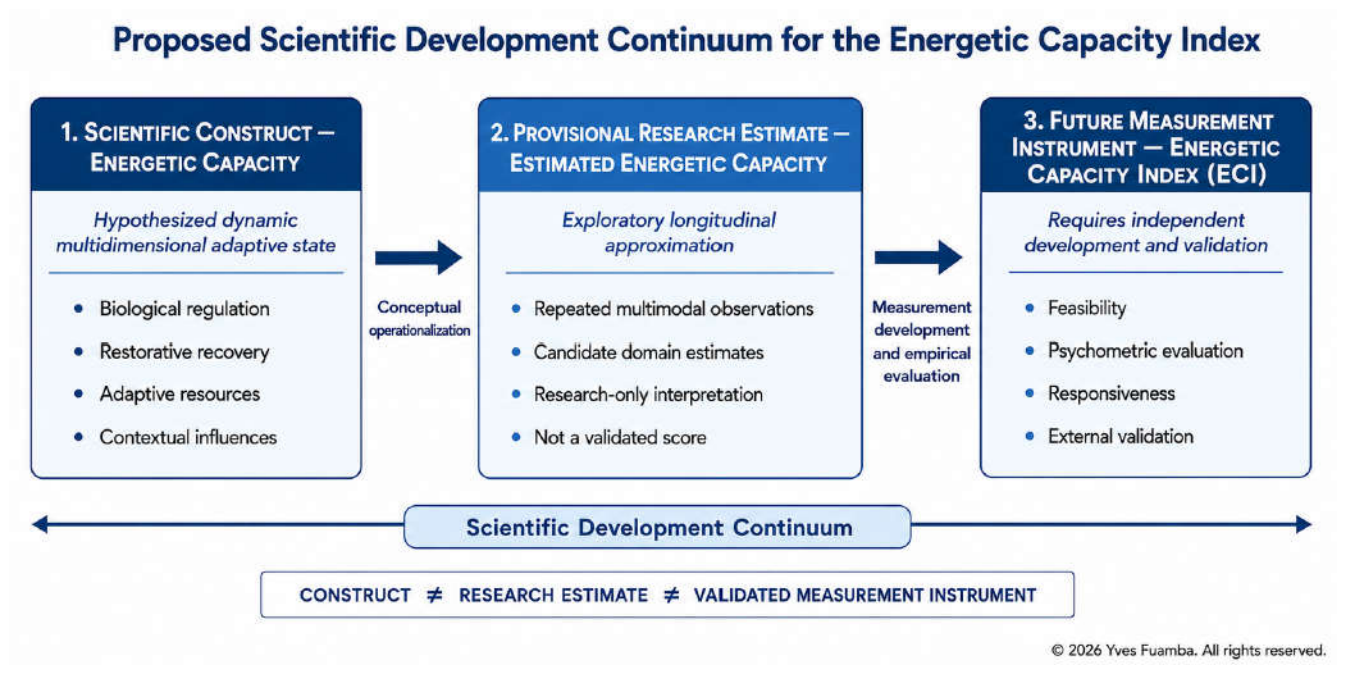
Figure 2.
Candidate Measurement Architecture for the Operationalization of Energetic Capacity. Legend. The proposed architecture comprises four sequential methodological levels: repeated multimodal observations as candidate inputs; organization of observations into provisional domain-level estimates; integration into Estimated Energetic Capacity as an exploratory longitudinal research estimate; and, only following adequate feasibility, psychometric evaluation, responsiveness testing, external replication, and validation, development of a future Energetic Capacity Index. No individual observation, candidate domain, or Estimated Energetic Capacity value should be interpreted as an independently validated measure of Energetic Capacity.
Figure 2.
Candidate Measurement Architecture for the Operationalization of Energetic Capacity. Legend. The proposed architecture comprises four sequential methodological levels: repeated multimodal observations as candidate inputs; organization of observations into provisional domain-level estimates; integration into Estimated Energetic Capacity as an exploratory longitudinal research estimate; and, only following adequate feasibility, psychometric evaluation, responsiveness testing, external replication, and validation, development of a future Energetic Capacity Index. No individual observation, candidate domain, or Estimated Energetic Capacity value should be interpreted as an independently validated measure of Energetic Capacity.
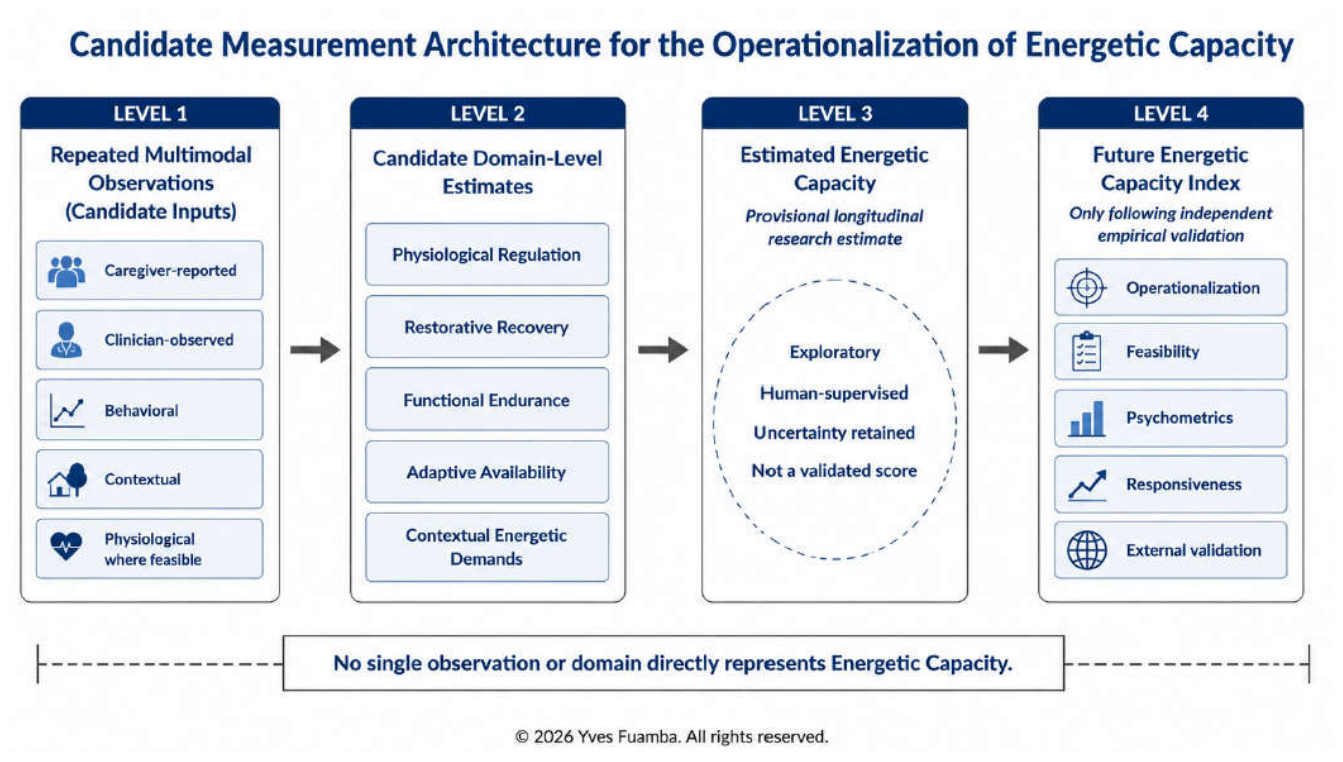
Figure 3.
Proposed Scientific Development Roadmap for the Energetic Capacity Index. Legend. Seven sequential stages are proposed: conceptual definition; measurement-framework development; feasibility and operationalization; psychometric evaluation; independent external validation; responsible digital research integration; and translational evaluation. Advancement across stages should depend on adequate empirical evidence rather than theoretical plausibility alone. The roadmap represents a proposed methodological development pathway and does not imply that the ECI has completed any stage beyond its present conceptual measurement-framework development.
Figure 3.
Proposed Scientific Development Roadmap for the Energetic Capacity Index. Legend. Seven sequential stages are proposed: conceptual definition; measurement-framework development; feasibility and operationalization; psychometric evaluation; independent external validation; responsible digital research integration; and translational evaluation. Advancement across stages should depend on adequate empirical evidence rather than theoretical plausibility alone. The roadmap represents a proposed methodological development pathway and does not imply that the ECI has completed any stage beyond its present conceptual measurement-framework development.
Disclaimer/Publisher’s Note: The statements, opinions and data contained in all publications are solely those of the individual author(s) and contributor(s) and not of MDPI and/or the editor(s). MDPI and/or the editor(s) disclaim responsibility for any injury to people or property resulting from any ideas, methods, instructions or products referred to in the content. |
© 2026 by the authors. Licensee MDPI, Basel, Switzerland. This article is an open access article distributed under the terms and conditions of the Creative Commons Attribution (CC BY) license (http://creativecommons.org/licenses/by/4.0/).
Copyright: This open access article is published under a Creative Commons CC BY 4.0 license, which permit the free download, distribution, and reuse, provided that the author and preprint are cited in any reuse.