
Submitted:
11 August 2026
Posted:
12 August 2026
You are already at the latest version
Abstract
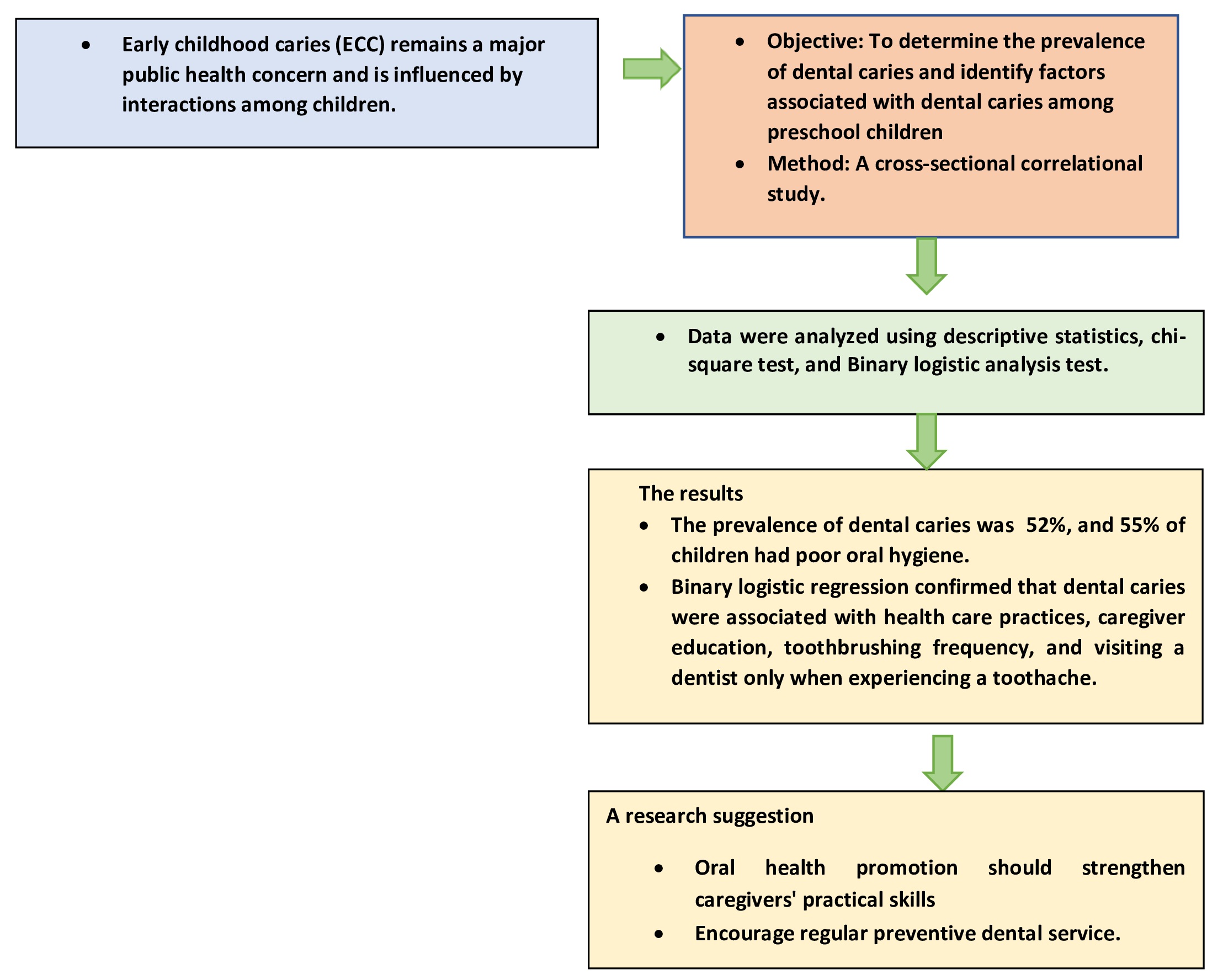
Background: Early childhood caries (ECC) remains a major public health concern and is influenced by interactions among children, environmental, and dental care factors. Purpose: This study aimed to determine the prevalence of dental caries and identify factors associated with dental caries among preschool children in Nakhon Si Thammarat Province. Methods: A cross-sectional correlational study was conducted among 435 preschool children aged 3–5 years and their primary caregivers in Nakhon Si Thammarat Province, Thailand. Data were collected using oral health examinations and structured questionnaires completed by caregivers. The questionnaires assessed demographic characteristics, caregivers' oral health attitudes and practices, and access to and utilization of dental services. Data was analyzed using descriptive statistics, chi-square tests, and binary logistic regression. Results: The prevalence of dental caries was 52.6%, and 55.6% of children had poor oral hygiene. The factors associated with dental caries included bottle-feeding, frequency and duration of toothbrushing, having a toothbrushing assistant at home, caregiver education level, attitude, caregivers’ oral health care behaviors for children, and visiting the dentist for toothaches, check-ups, and fluoride application (p < 0.01). Binary logistic regression confirmed that caregivers' oral health care practices were most strongly associated with dental caries. Children whose caregivers had low-to-moderate oral health care practices were 7.11 times more likely to have dental caries than those whose caregivers had high oral health care practices (AOR = 7.11; 95% CI: 4.11-12.32; p<0.001). And factors associated with dental caries included caregiver education below a bachelor's degree (AOR = 2.64; 95% CI: 1.64-4.23; p < 0.001), toothbrushing once daily (AOR = 2.20; 95% CI: 1.07-4.52; p < 0.05), and never/sometimes visiting a dentist only when experiencing toothache (AOR = 2.26; 95% CI: 1.36-3.74; p < 0.01). Conclusions: Dental caries remains highly prevalent among preschool children in southern Thailand. Caregiver oral health care was a strong predictor of dental caries. Oral health promotion programs should strengthen caregivers' practical skills in oral health care and encourage regular preventive dental care by collaborating among families and primary healthcare providers.
Keywords:
situation
; factors
; dental caries
; preschool children
1. Introduction
Early childhood caries (ECC) represents a major public health challenge worldwide. According to the World Health Organization (WHO), more than 353 million children worldwide are affected by dental caries [1]. As the most prevalent non-communicable disease among young children, ECC has an average global prevalence of approximately 49% [2]. Its occurrence is influenced by multiple interacting biological, behavioral, socioeconomic, and structural factors [3,4,5,6]. Southeast Asia has one of the highest reported prevalence rates, reaching up to 89% in some areas [2,7]. In Thailand, the prevalence of ECC remains high at 75.6%, underscoring that dental caries remains a major public health concern requiring effective prevention and control strategies [2].
The findings of the 9th National Oral Health Survey further emphasize the magnitude of this problem. Approximately 38.0% of 3-year-old children and 45.4% of 5-year-old children had early-stage dental caries. More importantly, untreated caries was found in 46.1% of 3-year-olds and increased to 70.4% among 5-year-olds. In addition, more than 40% of preschool children had visible dental plaque, placing them at high risk for developing new carious lesions [8]. The consequences of ECC extend beyond oral health. Dental pain may impair chewing, leading to selective eating that reduces dietary quality and increases the risk of malnutrition. Previous studies in Thailand have also reported that preschool children with dental caries have a 4.9 times higher risk of iron-deficiency anemia than children without caries [9]. In addition, chronic oral infection associated with untreated dental caries may contribute to systemic health problems and adversely affect children's quality of life, family well-being, school attendance, and healthcare expenditure. [1,10,11].
Southern Thailand remains one of the regions with the highest burden of dental caries. The prevalence among 3-5-year-old children has been reported at 55.5% and 79.6%, respectively, with higher rates observed in rural areas than in urban communities [8]. A similar pattern has been reported in Nakhon Si Thammarat Province, where 52.9% of 3-year-old children had dental caries and a large proportion presented with visible dental plaque, indicating a high risk of disease progression [8]. Community oral health assessments have consistently classified the province as a high-risk area for dental caries. Furthermore, provincial surveillance data in 2025 showed that only 49% of preschool children received oral health screening, which remained below the national target [8,12]. These findings suggest that existing preventive strategies have not yet achieved sufficient coverage or effectiveness in this setting.
The WHO framework on the determinants of health proposes that health outcomes are influenced not only by individual characteristics but also by environmental and health system factors [4,6,13]. Guided by this framework, the present study considered three domains potentially associated with dental caries among preschool children. Child-related factors, bottle-feeding practices, and oral hygiene behaviors, including toothbrushing frequency, duration, and caregiver assistance during toothbrushing, have consistently been associated with ECC [8,12,14,15,16,17,18]. Regular toothbrushing with fluoride toothpaste is recognized as the primary strategy for controlling dental plaque and preventing dental caries [12,17]. However, because preschool children have limited manual dexterity, effective toothbrushing often depends on supervision and assistance from primary caregivers [18].
Environmental factors are equally important in shaping children's oral health. The home environment, particularly caregivers' educational level, oral health attitudes, and oral health care practices, plays a central role in establishing children's daily oral hygiene and dietary behaviors [8,19,20]. At the same time, child development centers provide an important setting where teachers' oral health care practices for preschool children can reinforce healthy oral hygiene habits during the daytime [20,21]. Together, these homes and environments may influence children's oral health behaviors and subsequent risk of dental caries.
At the health system level, equitable access to and utilization of preventive dental services, including routine dental examinations and fluoride application, are essential components of ECC prevention [4,6]. Despite the proven effectiveness of these preventive measures, disparities in access to and utilization of oral health services remain common, particularly in rural communities, potentially limiting their impact on reducing dental caries burden.
Although previous studies in Thailand have identified several factors associated with ECC, most have focused primarily on child characteristics or caregiver-related factors [15,22]. Few studies have examined the combined influence of child, environmental, and health system-related factors within a single conceptual framework, particularly in southern Thailand. Therefore, this study aimed to determine the prevalence of dental caries and examine factors associated with dental caries among preschool children in Nakhon Si Thammarat Province. The findings may inform the development of integrated oral health promotion strategies involving families, child development centers, healthcare providers, and communities to improve oral health outcomes among preschool children.
Research Conceptual Framework
The conceptual framework of this study was developed based on the World Health Organization (WHO) framework on the determinants of health [13]. This framework categorizes the independent variables into three domains: (1) child-related factors, including bottle-feeding practices and oral hygiene behaviors (frequency and duration of toothbrushing); (2) environmental factors, comprising caregivers’ oral health attitudes and care practices in the home environment, together with teachers’ oral health care practices for preschool children in child development centers; and (3) health system factors, including access to and utilization of dental services. These domains were hypothesized to be associated with the dependent variable, dental caries among preschool children. The conceptual framework guided the selection of study variables and the examination of factors associated with dental caries in Nakhon Si Thammarat Province, Thailand.
2. Materials and Methods
2.1. Study Design
This is a cross-sectional correlational study aimed at examining the situation and factors associated with dental caries among preschool children in Nakhon Si Thammarat Province. The data was collected from May to July 2025
2.2. Measures
The study population consisted of 45,346 children aged 3–5 years in Nakhon Si Thammarat Province [23]. The sample size was calculated using Krejcie and Morgan’s (1970) formula, yielding a sample of 435 participants [24].
Setting the sample size by Krejcie & Morgan’s formula:
From n = X2Np(1-p)
e2(N-1) + X2p(1-p)
When n = Sample size
N = Population size
e = Acceptable level of errors
X2= Chi-square with df = 1 and 95% reliability (X2 = 3.841)
p = Proportion of interested characteristics in the population (In case of unknown, set p = 0.5)
Representation n = 3.841(45,346)(0.5)(1-0.5)
0.052(45,346) + 3.841(0.5) (1-0.5)
= 434.19 samples (sample size = 435)
A total of 435 samples were obtained in this research.
The required sample size for this study was initially calculated to be 435 participants. To account for possible attrition and incomplete responses, an additional 10% was added to the calculated sample size. Consequently, the final sample comprised 479 participants.
Participants were selected using a multi-stage sampling technique. Nakhon Si Thammarat Province consists of 23 districts. In the first stage, four districts were randomly selected: Mueang, Tha Sala, Pak Phanang, and Thung Yai. In the second stage, one subdistrict from each selected district was randomly chosen. In the final stage, two child development centers were randomly selected from each subdistrict, yielding a total of eight included in the study. The samples were selected through simple random sampling, with proportionate representation from each child development center.
The inclusion criteria for this study were children aged 3 to 5 years enrolled in Child Development Centers in Nakhon Si Thammarat Province. Their caregivers were required to be proficient in reading and writing Thai and must have provided voluntary informed consent for participation. Conversely, the exclusion criteria applied to children with physical disabilities or severe systemic conditions that could impact oral health or dental formation, such as cleft lip and palate, Down syndrome, thalassemia, or active cancer treatment. Additionally, children who were absent on data-collection dates or uncooperative during the oral health examination were excluded from the study. In the end, 435 completed responses were collected, representing 90.81% of the initial sample and meeting the study’s requirements.
2.3. Research Instruments
Research instruments were detailed as follows:
Part 1: Demographic Questionnaire. This part included questions on the demographic characteristics of both children (weight, height, date of birth, age, and gender) and their caregivers (gender, education level, and relation with the child). It also collected information on children's oral hygiene practices, feeding practices, and access to and utilization of dental services. The questionnaire consisted of both closed-ended and open-ended questions.
Part 2: Children's oral health status, including dental caries, filled teeth, and oral hygiene, was assessed according to the Bureau of Dental Health guidelines [12]. Examinations were performed by trained researchers (pediatric nursing instructors) using a flashlight in a well-lit, quiet area within the child development center. Dental caries was defined as a visible cavity or softened enamel, while filled teeth were defined as functional restorations without secondary caries. Inter-examiner reliability was ensured through standardized training by dentists prior to data collection.
Part 3: Caregivers’ attitudes toward children’s oral health. This section consisted of a 10-item questionnaire adapted from the literature and Bureau of Dental Health guidelines [12]. A 5-point Likert scale was employed, ranging from 5 (strongly agree) to 1 (strongly disagree). The instrument included both positive and negative items, with reverse scoring applied to the latter. Mean scores were categorized into 3 levels: high (3.67–5.00), moderate (2.34–3.66), and low (1.00–2.33).
Part 4: Caregivers' oral health care practices for preschool children. This section comprises a 16-item questionnaire adapted from the Bureau of Dental Health guidelines [12]. It assessed caregivers' oral health care practices over the previous 6 months, including oral hygiene, dietary, and bottle-feeding practices, as well as dental service utilization. Responses were rated on a four-point Likert scale ranging from 4 (regularly) to 1 (never). Mean scores were categorized into three levels: high (3.01–4.00), moderate (2.01–3.00), and low (1.00–2.00).
Part 5: Teachers' oral health care practices for children. This section consisted of 9 items developed according to the Bureau of Dental Health guidelines [12]. It evaluated teachers' oral health care practices over the previous 6 months, including oral hygiene practices and dietary supervision. Responses were rated on a four-point Likert scale ranging from 4 (regularly) to 1 (never). Mean scores were categorized into three levels: high (3.01–4.00), moderate (2.01–3.00), and low (1.00–2.00). For the bivariate analysis, the scores were further categorized into two groups: Very good (3.50–4.00) and Good (<3.50).
Regarding the quality of the research instruments, content validity was evaluated by a panel of five experts comprising two pediatric nursing specialists and three community nursing instructors. The content validity index (CVIs) obtained demonstrated strong alignment with the theoretical framework and study objectives. Specifically, the CVI values for caregivers’ attitudes, caregivers, and teachers’ oral health care behaviors were 0.96, 0.97, and 1.00, respectively.
Regarding instrument reliability, the refined questionnaires were pilot tested with a sample of 30 caregivers and teachers with characteristics similar to those of the target population. The internal consistency of the questionnaires was determined using Cronbach’s alpha coefficient. Specifically, the reliability coefficients for caregivers’ attitudes, caregivers’ oral health care behaviors, and teachers’ oral health care behaviors were 0.79
2.4. Data Collection
After the research proposal was approved by the Human Research Ethics Committee of Walailak University, permission to conduct the study was formally obtained from the relevant institutions.
1. The researchers wrote a letter of request for support from the School of Nursing, Walailak University, to the directors of all child development centers included in the study.
2. The researchers contacted the directors of all child development centers, parents, and research participants to clarify the project details, objectives, processes, and expected benefits. They also confirmed that their participation must be based on their consent. The researchers also requested their kind assistance to collect all data.
3. The researchers studied the early childhood sample in Nakhon Si Thammarat Province, where 3-5-year-olds in child development centers were randomly selected.
4. The researchers collected data by handing the questionnaire to all participants at child development centers in the community, with a detailed description of each question. Children were selected from the list of early childhood students by simple random sampling until the required number was reached. The participants had 30-45 minutes to complete the questionnaire.
5. The researchers examined the accuracy and completeness of all data.
2.5. Ethical Statement
The researchers conducted this study in accordance with the principles outlined in the Declaration of Helsinki. All procedures involving human participants adhered to the ethical standards of the relevant institutional board. Approval for this study was obtained from the Ethics Committee on Human Research at Walailak University on February 26, 2025 (WUEC-25-070-01), as mandated prior to data collection. Informed consent was obtained from all participants and their parents and/or guardians before they were included in the study. The children aged 3–5 years and their parents will provide written consent. Research information will be stored securely, with data coded for confidentiality.
2.6. Statistical Analysis
Statistical analyses were performed using IBM SPSS Statistics for Windows, Version 24.0 (IBM Corp., Armonk, NY, USA). Descriptive statistics, including frequencies, percentages, means, and standard deviations (SDs), were used to summarize participants' characteristics, the prevalence of dental caries, and study variables. Mean scores for caregivers' oral health attitudes, caregivers' oral health care practices, and teachers' oral health care practices were categorized according to the predefined cut-off points described in the instrument section. Associations between independent variables and dental caries were initially examined using the chi-square test. Variables that showed statistically significant associations in the bivariate analysis were subsequently entered simultaneously into a binary logistic regression model using the enter method to identify factors independently associated with dental caries. Adjusted odds ratios (AORs) and 95% confidence intervals (95% CIs) were reported. All statistical tests were two-tailed, and a p-value < 0.05 was considered statistically significant.
3. Results
Among the 435 children included in the study, 52.6% had dental caries. More than half of the children (55.6%) presented with poor oral hygiene. The mean age of participants was 3.83 years (S.D. = 0.71), with 4-year-old children representing the largest age group (44.1%). Most children had a normal nutritional status (78.2%). The majority of primary caregivers were parents (81.1%), and over half had an educational level below a bachelor’s degree (56.1%), as displayed in Table 1.
Regarding environmental characteristics, caregivers demonstrated high levels of oral health attitudes (Mean = 3.99, S.D. = 0.71), oral hygiene care behaviors (Mean = 3.07, S.D. = 0.55), and bottle-feeding practices (Mean = 3.19, S.D. = 0.85), whereas dietary habits were rated at a moderate level (Mean = 2.72, S.D. = 0.43). Oral health care practices provided by teachers in child development centers for preschool children were rated highly (Mean = 3.66, S.D. = 0.21), as displayed in Table 2.
Overall access to and utilization of dental services were moderate (Mean = 2.05, S.D. = 0.986). The highest mean score was observed for dental visits because of toothache (Mean = 2.68, S.D. = 1.074), followed by fluoride application (Mean = 2.09, S.D. = 1.006), routine six-month dental check-ups (Mean = 2.07, SD = 0.985), and dental fillings (Mean = 2.03, S.D. = 1.115). Dental visits for tooth extraction and children who had never visited a dentist had the lowest mean scores, as displayed in Table 3.
Factors were associated with dental caries. Bottle-fed children had a higher prevalence of dental caries than non-bottle-fed children (p < 0.01). Children who brushed their teeth once a day had a higher prevalence of dental caries than those who brushed twice or more daily (p < 0.001). Children who brushed for less than one minute and those who brushed independently without parental assistance (p < 0.01).
Children whose caregivers had an educational level below a bachelor's degree had a higher dental caries than those whose caregivers had attained a bachelor's degree or higher (p < 0.001). Children whose caregivers had low-to-moderate oral health attitudes and behaviors also had a higher prevalence of dental caries than those whose caregivers had high levels of attitudes and behaviors (p < 0.001). Within child development centers, teachers' oral care practices were not significantly associated with children's dental caries (p > 0.05).
Access to dental services was significantly associated with dental caries. Children who never or only occasionally visited a dentist because of a toothache had a higher prevalence of dental caries than those who visited frequently or regularly (p < 0.001). Similarly, children who did not receive routine six-month dental check-ups or fluoride applications had higher dental caries than those who received these preventive services regularly (p < 0.001), as shown in Table 4.
When confirmed using binary logistic regression, four variables remained significantly associated with dental caries. Children whose caregivers had low-to-moderate oral health care behaviors were more likely to have dental caries than those whose caregivers had high oral health care behavior scores (AOR = 7.11, 95% CI: 4.11–12.32, p < 0.001). Caregiver education below a bachelor's degree was also associated with dental caries (AOR = 2.64, 95% CI: 1.64–4.23, p < 0.001). Children who brushed their teeth once daily had approximately 2.2 times the risk of dental caries compared with those who brushed at least twice daily (AOR = 2.20, 95% CI: 1.07–4.52, p < 0.05). In addition, children who visited a dentist only when experiencing a toothache had higher odds of dental caries than those who visited regularly (AOR = 2.26, 95% CI: 1.36–3.74, p < 0.01), as shown in Table 5.
4. Discussion
This study aimed to examine the prevalence and factors associated with dental caries among preschool children in Nakhon Si Thammarat Province, Thailand. The findings showed that the prevalence of dental caries was 52.6%, which is classified as a very high level according to the criteria of the 9th National Oral Health Survey, where a community prevalence exceeding 50% is considered a major public health concern [8]. The prevalence observed in this study was lower than the national average (75.6%) and lower than that reported in several Southeast Asian countries [7,25]. The study also found that children living in urban areas had a lower prevalence. Similar disparities have been reported in Thailand and other developing countries, including China and India, where children living in rural communities generally experience poorer oral health than those in urban settings [5,7,26,27]. These differences are likely influenced by multiple contextual factors, including access to preventive oral health services, socioeconomic conditions, and health-related behaviors [7,28]. Therefore, oral health promotion strategies should consider local contexts and prioritize equitable access to preventive oral health services, particularly in rural communities.
Factors Associated with Dental Caries Among Preschool Children
Among the child’s factors, toothbrushing frequency remained independently associated with dental caries after adjustment for other variables. Children who brushed their teeth once daily had approximately 2.2 times the odds of developing dental caries as those who brushed twice or more per day. This finding is consistent with previous studies reporting that brushing teeth at least twice daily is associated with a lower prevalence of dental caries among preschool children [4,29,30]. Regular toothbrushing helps remove dental plaque and maintain fluoride on tooth surfaces, thereby reducing acid production by cariogenic bacteria. In addition, establishing a consistent toothbrushing routine from an early age may be more important than brushing characteristics alone, as regular daily practice promotes sustained plaque control and fluoride exposure.
Although bottle-feeding status, brushing duration, and toothbrushing assistance were significantly associated with dental caries in the bivariate analysis, these associations were no longer statistically significant after adjustment for other variables. This finding suggests that their effects may be influenced by broader caregiving practices, particularly caregivers' routine oral hygiene behaviors. Similar observations have been reported by Duangthip et al. (2017), who suggested that the effectiveness and consistency of tooth cleaning may have a greater influence on dental caries than brushing duration alone [7]. Nevertheless, previous studies have shown that brushing for an adequate duration facilitates more effective plaque removal because all tooth surfaces are more likely to be cleaned thoroughly [12]. Therefore, caregivers should continue to follow the recommendations of the Thai Department of Health, which advises brushing children's teeth at least twice daily with fluoride toothpaste and providing parental supervision throughout the preschool years [12].
Within the home environment, caregiver educational level and oral health care practices were associated with dental caries among preschool children. Children whose primary caregivers had an educational level below a bachelor's degree were 2.64 times more likely to have dental caries than those whose caregivers had attained a bachelor's degree or higher. This finding is consistent with previous studies reporting that caregiver education is associated with children's oral health through better health literacy, greater access to health information, and an improved ability to adopt appropriate preventive practices [19,31,32]. Caregivers with higher educational attainment may also be more likely to establish regular oral hygiene routines and seek preventive dental care for their children.
A notable finding of this study was that caregivers' oral health care practices showed the strongest association with children's dental caries. Preschool children whose caregivers reported low-to-moderate oral health care practices had 7.11 times higher odds of dental caries than those whose caregivers reported high levels of oral health care practices. This finding is biologically plausible because preschool children have limited manual dexterity and are not yet able to clean their teeth effectively without adult supervision.12 Daily caregiver involvement in toothbrushing, supervision of fluoride toothpaste use, and regulation of sugary food and beverage consumption, therefore, remain essential components of caries prevention. The magnitude of this association also suggests that caregiver practices may have a greater influence on children's oral health than individual child behaviors alone. Consequently, family-based oral health promotion programs should place greater emphasis on strengthening caregivers' practical skills and confidence in providing daily oral health care, particularly among families with lower educational attainment.
Interestingly, although caregivers' oral health attitudes were significantly associated with dental caries in the bivariate analysis, this association was no longer statistically significant after adjustment for other variables. This finding suggests that positive attitudes alone may not necessarily translate into appropriate oral health practices. Similar observations have been reported by Naidu et al. (2020), who found that although many caregivers recognized the importance of children's oral health, they experienced difficulties implementing recommended preventive practices, including supervising toothbrushing, limiting sugary snacks, and seeking preventive dental care [33]. In rural areas of southern Thailand, where grandparents frequently serve as primary caregivers, traditional caregiving practices, along with limited confidence in managing young children's oral hygiene, may further contribute to this gap between attitudes and daily practices. Therefore, oral health promotion programs should focus not only on improving knowledge and attitudes but also on developing practical caregiving skills that can be consistently incorporated into daily family routines.
Within child development centers, teachers' oral health care practices for preschool children were not significantly associated with children's dental caries. Although teachers reported a high level of oral health care practices, these practices were not independently associated with children's dental caries. One possible explanation is that oral health behaviors established in child development centers account for only part of children's daily oral health care. Preschool children spend a substantial proportion of their time at home, where toothbrushing routines, dietary habits, and caregiver supervision are more consistently maintained. Consequently, the influence of caregiver practices may outweigh that of teacher-supervised oral health care during childcare hours.
This finding is consistent with the multivariable analysis, in which caregiver oral health care practices remained the strongest predictor of dental caries, whereas teacher-supervised oral health care practices were not significantly associated with the outcome. These findings highlight the importance of continuity between home and child development center environments. Previous studies have similarly suggested that oral health promotion activities conducted in educational settings may have a limited impact when they are not reinforced by consistent oral health practices at home [26,27]. Nevertheless, child development centers remain an important setting for establishing healthy oral hygiene habits during early childhood. Daily supervised toothbrushing after meals, reducing the availability of sugary snacks, and strengthening communication between teachers and caregivers may help reinforce oral health messages delivered in both settings. Therefore, oral health promotion programs should encourage stronger collaboration among caregivers, teachers, and local health professionals to ensure that preventive practices are consistently implemented throughout children's daily lives.
Access to and utilization of dental services were also associated with dental caries among preschool children. Children who visited a dentist only when experiencing a toothache had 2.26 times higher odds of dental caries than those who attended dental services regularly. One possible explanation is that caregivers' care-seeking behavior is often symptom-driven rather than prevention-oriented. Caregivers may delay dental visits until children experience pain or visible dental problems, resulting in dental attendance occurring after caries has already developed. In the analysis, children who did not receive routine six-month dental check-ups or fluoride application also had a significantly higher prevalence of dental caries. However, these associations were no longer statistically significant after adjustment for other variables. Consequently, dental visits in this context are more likely to reflect existing diseases than effective preventive care. Similar findings have been reported in studies from China and Sri Lanka, where children with a history of dental visits often had a higher prevalence of dental caries because dental services were sought primarily for treatment rather than prevention [4,30]. Another possible explanation is that the apparent protective effects of routine dental check-ups and fluoride application observed in the bivariate analysis were attenuated after adjustment for caregiver education, oral health care practices, and toothbrushing frequency. This finding suggests that daily home oral health practices may have a greater influence on children's oral health than preventive dental services alone. Preventive services remain important; however, their effectiveness is likely to depend on consistent caregiver participation in daily oral hygiene practices and appropriate dietary control. Therefore, oral health promotion strategies should encourage caregivers to seek regular preventive dental care before symptoms develop while simultaneously strengthening oral health practices within the home environment.
5. Conclusions
Dental caries remains highly prevalent among preschool children. Caregiver oral health care practices were the strongest factor associated with dental caries, followed by caregiver educational level, toothbrushing frequency, and symptom-driven dental attendance. These findings emphasize that improving caregivers' daily oral health practices, together with regular preventive dental care and collaboration between families, child development centers, and primary healthcare providers, may help reduce dental caries and improve oral health outcomes in preschool children.
Author Contributions
P.K., K.K., the researchers, contributed significantly to the conception, study design, execution, data acquisition, analysis, interpretation, and drafting. P.K., K.K., and H.P. revision and critical review of the article. All authors provided final approval for the version to be published and agreed to its submission to the journal. Furthermore, the researchers accepted accountability for all aspects of the work. All authors have read and agreed to the published version of the manuscript.
Funding
This research was supported and awarded to the first author by a grant from the Public Institute for Health Sciences and the Excellence Center of Nursing Institute, Walailak University.
Institutional Review Board Statement
The researchers conducted this study in accordance with the principles outlined in the Declaration of Helsinki. All procedures involving human participants adhered to the ethical standards of the relevant institutional board. Approval for this study was obtained from the Ethics Committee on Human Research at Walailak University on February 26, 2025 (WUEC-25-070-01), as required prior to data collection. Researchers obtained informed consent from all participants in the study.
Informed Consent Statement
Informed consent was obtained from all subjects involved in the study.
Data Availability Statement
The original contributions presented in this study are included in the article/supplementary material. Further inquiries can be directed to the corresponding author(s).
Acknowledgments
We sincerely thank the Research Institute for Health Sciences and the Excellence Center of Nursing Institute at Walailak University for their invaluable support. We would also like to acknowledge the School of Nursing, Walailak University, and all participants in this study for their contributions.
Conflicts of Interest
The authors declare no conflicts of interest.
References
- World Health Organization. Global Oral Health Status Report: Towards Universal Health Coverage for Oral Health by 2030; WHO: Geneva, 2022; Available online: https://www.who.int/publications/i/item/9789240061484 (accessed on 4 March 2025).
- Maklennan, A.; Borg-Bartolo, R.; Wierichs, R.J.; et al. A systematic review and meta-analysis on early-childhood-caries global data. BMC Oral Health 2024, 24(1), 835. [Google Scholar] [CrossRef] [PubMed]
- Xu, Z.; Zeng, L.; Liang, Y.; et al. Cross-sectional survey on dental caries among preschool children in Guangzhou city in 2022. BMJ Open 2025, 15(3), e097334. [Google Scholar] [CrossRef] [PubMed]
- Liu, M.; Song, Q.; Xu, X.; Lai, G. Early childhood caries prevalence and associated factors among preschoolers aged 3-5 years in Xiangyun, China: A cross-sectional study. Front Public Health 2022, 10, 959125. [Google Scholar] [CrossRef] [PubMed]
- Tamchos, R.; Rahul, M.; Mathur, V.P.; et al. Prevalence of early childhood caries among preschool children of tribal Leh district of Ladakh: A cross-sectional study. J. Indian Soc. Pedod. Prev. Dent. 2025, 43(2), 182–188. [Google Scholar] [CrossRef] [PubMed]
- Thakur, S.; Sharma, R.; Singhal, P.; Chauhan, D. Prevalence and determinants of early childhood caries among preschool children in Shimla, North India: A cross-sectional study. BMC Oral Health 2025, 25(1), 168. [Google Scholar] [CrossRef] [PubMed]
- Duangthip, D.; Gao, S.S.; Lo, E.C.; Chu, C.H. Early childhood caries among 5- to 6-year-old children in Southeast Asia. Int. Dent. J. 2017, 67(2), 98–106. [Google Scholar] [CrossRef] [PubMed]
- Bureau of Dental Health; Department of Health. Report of the 9th National Oral Health Survey 2023; Ministry of Public Health: Nonthaburi, 2024; Available online: http://dental.anamai.moph.go.th (accessed on 4 March 2025).
- Kaewpawong, P.; Kusol, K.; Sonpaveerawong, J. Factors Related to Iron Deficiency Anemia among Pre-school Children in Child Development Centers, Tasala District, Nakhon Si Thammarat Province. J. Dept Med. Serv. 2018, 43(5), 75–80. [Google Scholar]
- Falconer, J.L.; Rajani, R.; Androshchuk, V.; et al. Exploring links between oral health and infective endocarditis. Front Oral Health 2024, 5, 1426903. [Google Scholar] [CrossRef] [PubMed]
- Aziz, S.; Dawar, A.K.; Jan, A.Z.; et al. Association of otitis media with dental caries in children: A systematic review. J. Rehman Med. Inst. 2022, 8(2), 26–30. [Google Scholar] [CrossRef]
- Bureau of Dental Health; Department of Health; Ministry of Public Health. Guidelines for the Control and Management of Early Childhood Caries; Manadee Media: Nonthaburi, 2025; Available online: https://dental.anamai.moph.go.th/th/cms-of-144/222917 (accessed on 10 January 2026).
- World Health Organization. A conceptual framework for action on the social determinants of health. WHO; Geneva, 2010. Available online: https://www.who.int/publications/i/item/9789241500852 (accessed on 10 January 2026).
- Cheng, A.Y.; Liu, Y.; Zheng, F.M.; et al. Age-Related Trends of Caries Experience Among Preschool Children in Shenzhen, China: A Cross-Sectional Study. Dent. J. 2026, 14(3), 149. [Google Scholar] [CrossRef] [PubMed]
- Boonyawong, M.; Auychai, P.; Duangthip, D. Risk Factors of Dental Caries in Preschool Children in Thailand: A Cross-Sectional Study. Healthcare 2022, 10(5), 794. [Google Scholar] [CrossRef] [PubMed]
- Sandy, L.P.A.; Helmyati, S.; Amalia, R. Nutritional Factors Associated with Early Childhood Caries: A Systematic Review and Meta-analysis. Saudi Dent. J. 2024, 36(3), 413–419. [Google Scholar] [CrossRef] [PubMed]
- Guan, M.; Nada, O.A.; Wu, J.; et al. Dental Caries and Associated Factors in 3–5-Year-Old Children in Guizhou Province, China: An Epidemiological Survey (2015–2016). Front Public Health 2021, 9, 747371. [Google Scholar] [CrossRef] [PubMed]
- Zaborskis, A.; Kavaliauskienė, A.; Razmienė, J. Pathways Between Parental Atitudes and Early Childhood Caries in Preschool Children. Dent. J. 2025, 13(5), 205. [Google Scholar] [CrossRef] [PubMed]
- Folayan, M.O.; De Barros Coelho, E.; Ayouni, I.; et al. Association Between Early Childhood Caries and Parental Education and the Link to the Sustainable Development Goal: A scoping review. BMC Oral Health 2024, 24(1), 522. [Google Scholar] [CrossRef] [PubMed]
- Alkhtib, A.; Alhatu, A.; Parcelona, T.; et al. Oral Health Promotion: A Qualitative Study to Explore Perspectives of Kindergarten Nurses in Qatar. BMC Oral Health 2025, 25(1), 109. [Google Scholar] [CrossRef] [PubMed]
- Bajric, E.; Arslanagic, A.; Zukanovic, A.; et al. Dental Caries Experience in Children in Public Kindergartens of Sarajevo, Bosnia and Herzegovina. Acta Stomatol Croat. 2023, 57(1), 32–42. [Google Scholar] [CrossRef] [PubMed]
- Suwan, K.; Chehhoh, S. New Dental Caries Prevention Model Using the AIC Participation Process in Lower Elementary Schools of Yala Province. South. Coll. Netw. J. Nurs. Public Health 2022, 9(2), 149–161. [Google Scholar]
- Nakhon Si Thammarat Provincial Public Health Office. Report on Population by Gender and Annual Age Group, Nakhon Si Thammarat Province. 2024. Available online: https://hdc.moph.go.th/nst/public/standard-report-detail (accessed on 17 December 2024).
- Krejcie, R.V.; Morgan, D.W. Determining Sample Size for Research Activities. Educ. Psychol. Meas. 1970, 30(3), 607–610. [Google Scholar] [CrossRef]
- Min, S.N.; Duangthip, D.; Gao, S.S.; Detsomboonrat, P. Early Childhood Caries and Its Associated Factors Among 5-year-old Myanmar Children. Front Oral Health 2024, 5, 1278972. [Google Scholar] [CrossRef] [PubMed]
- Badrov, M.; Matijevic, M.; Tadin, A. Parental Knowledge of Breastfeeding and Nutrition: Influence on Oral Health and Self-Reported Early Childhood Caries in Preschool Children in Croatia. Pediatr. Rep. 2025, 17(2), 43. [Google Scholar] [CrossRef] [PubMed]
- Prata, I.M.L.F.; Neves, E.T.B.; Lima, L.C.M.; et al. Contributions of School Context to Caries on Anterior Teeth: A Multilevel Analysis. Rev. Saude Publica 2021, 55, 111. [Google Scholar] [CrossRef] [PubMed]
- Hunsrisakhun, J.; Pithpornchaiyakul, S.; Yongstar, P. Factors Associated with Oral Hygiene of Young Children in Southern Province of Thailand. Health Sci. J. Thai 2022, 4(3), 64–73. Available online: https://he02.tci-thaijo.org/index.php/HSJT/article/view/255827 (accessed on 14 January 2026).
- Gunasinghe, K.A.M.M.; Wijesinghe, M.S.D.; Ratnayake, N.C. Socio-Behavioral Associates of Early Childhood Caries Among Preschool Children Aged Three to Four Years in Gampha District, Sri Lanka: A Cross-Sectional Study. BMC Oral Health 2024, 24(1), 1293. [Google Scholar] [CrossRef] [PubMed]
- Al-Sharani, H.M.; Stormon, N.; Al-Hutbany, N.; Zhang, Y.; Zulfiqar, T. Optimal Tooth Brushing Initiation Age and Frequency for Preventing Early Childhood Caries: A Systematic Review and Meta-Analysis. BMC Oral Health 2025, 25(1), 2006. [Google Scholar] [CrossRef] [PubMed]
- Cheng, A.Y.; Chen, J.; Zheng, F.M.; Duangthip, D.; Chu, C.H. Early Childhood Caries and Its Associated Factors Among 5-Year-Old Children in Shenzhen City, China: A Cross-Sectional Study. Dent. J. 2025, 13(12), 552. [Google Scholar] [CrossRef] [PubMed]
- Alzahrani, A.Y.; El Meligy, O.; Bahdila, D.; et al. The Influence of Parental Oral Health Literacy on Children's Oral Health: A Scoping Rreview. J. Clin. Pediatr. Dent. 2024, 48(4), 16–25. [Google Scholar] [CrossRef] [PubMed]
- Naidu, R.S.; Nunn, J.H. Oral Health Knowledge, Attitudes and Behavior of Parents and Caregivers of Preschool Children: Implications for Oral Health Promotion. Oral Health Prev. Dent. 2020, 18(2), 245–252. [Google Scholar] [CrossRef] [PubMed]

Table 1.
General information on children and their primary caregivers (n=435).
| Characteristics | Number | % |
| Preschool children | ||
| Gender | ||
| Female | 229 | 52.6 |
| Male | 206 | 47.4 |
| Age (year) (Mean 3.83, S.D = 0.714) | ||
| 3 | 165 | 38.0 |
| 4 | 192 | 44.1 |
| 5 | 78 | 17.9 |
| Nutritional status (weight-for-height) | ||
| Undernutrition (<-1.5 SD) | 15 | 3.4 |
| Normal (-1.5SD to +1.5SD) | 340 | 78.2 |
| Overnutrition (>+1.5 SD) Dental Caries Caries-free Have dental caries Oral Hygiene Status Good Poor |
80 206 229 193 242 |
18.4 47.4 52.6 44.4 55.6 |
| Primary caregiver | ||
| Gender | ||
| Female | 337 | 77.5 |
| Male | 98 | 22.5 |
| Relationship to the child | ||
| Father or mother | 353 | 81.1 |
| Grandparent/relative | 82 | 18.9 |
| Education level | ||
| Below a bachelor’s degree | 244 | 56.1 |
| Bachelor’s degree or higher | 191 | 43.9 |
Table 2.
Mean scores and levels of home and child development centers environmental factors (n=435).
Table 2.
Mean scores and levels of home and child development centers environmental factors (n=435).
| Environmental factors | Mean | S.D. | Level |
| Home environment | |||
| Caregivers’ attitudes toward children’s oral health | 3.99 | 0.706 | High |
| Caregivers' oral health care practices for children | |||
| - Oral hygiene practices | 3.07 | 0.552 | High |
| - Dietary practices | 2.72 | 0.426 | Moderate |
| - Bottle-Feeding Practices | 3.19 | 0.852 | High |
| Child development center environment | |||
| Teachers' oral health care practices for children | 3.66 | 0.211 | High |
Table 3.
Mean scores and levels of access to and utilization of dental services (n=435).
| Access and utilization of dental services | Mean | S.D. | Level |
| 1. Visit a dentist only when experiencing a toothache | 2.68 | 1.074 | Moderate |
| 2. Routine dental check-ups every 6 months | 2.07 | 0.985 | Moderate |
| 3. Visit for fluoride application | 2.09 | 1.006 | Moderate |
| 4. Visit for dental fillings | 2.03 | 1.115 | Moderate |
| 5. Visit for tooth extraction | 1.75 | 0.858 | Low |
| 6. Never visited a dentist | 1.72 | 0.882 | Low |
| Overall | 2.05 | 0.986 | Moderate |
Table 4.
Factors associated with dental caries among children (n = 435).
| Factors | Total | Caries-free n (%) | Have dental caries n (%) | p-Value | |
| Bottle feeding status | |||||
| Non-bottle-fed | 274 (63.0) | 144 (52.6) | 130 (47.4) | 8.025 | 0.005* |
| Bottle-fed | 161 (37.0) | 62 (38.5) | 99 (61.5) | ||
| Frequency of toothbrushing | |||||
| Once a day | 71 (16.3) | 19 (26.8) | 52 (73.2) | 14.437 | 0.000** |
| Twice or more per day | 364 (83.7) | 187 (51.4) | 177 (48.6) | ||
| Duration of brushing | |||||
| Less than 1 minute | 163 (37.5) | 62 (38.0) | 101 (62.0) | 9.082 | 0.003* |
| 1-2 minutes or more | 272 (62.5) | 144 (52.9) | 128 (47.1) | ||
|
Toothbrushing assistance at home |
|||||
| Independent brushing | 172 (39.6) | 66 (38.4) | 106 (61.6) | 9.211 | 0.002* |
| Caregiver assistance/re-brushing | 263 (60.4) | 140 (53.2) | 123 (46.8) | ||
| Caregiver education level | |||||
| Below a bachelor’s degree | 244 (56.1) | 88 (36.1) | 156 (63.9) | 28.416 | 0.000** |
| Bachelor’s degree or higher | 191 (43.9) | 118 (61.8) | 73 (38.2) | ||
| Caregivers’ attitudes toward children’s oral care | |||||
| Low-Moderate (≤ 3.66) | 127 (29.2) | 41 (32.3) | 86 (67.7) | 16.346 | 0.000** |
| High (3.67-5.00) | 308 (70.8) | 165 (53.6) | 143 (46.4) | ||
| Caregivers' oral care practices | |||||
| Low-Moderate (≤ 3.00) | 242 (55.6) | 61 (25.2) | 181 (74.8) | 107.339 | 0.000** |
| High (3.01-4.00) | 193 (44.4) | 145 (75.1) | 48 (24.9) | ||
| Teachers' oral care practices | |||||
| Good (< 3.50) | 100 (23.0) | 54 (54.0) | 46 (46.0) | 2.299 | 0.129 |
| Very good (3.50-4.00) | 335 (77.0) | 152 (45.4) | 183 (54.6) | ||
| Visit the dentist only when toothache | |||||
| Often/Regularly | 256 (58.9) | 150 (58.6) | 106 (41.4) | 31.513 | 0.000** |
| Never/Sometimes | 179 (41.1) | 56 (31.3) | 123 (68.7) | ||
| Check-ups every 6 months | |||||
| Often/Regularly | 134 (30.8) | 90 (67.2) | 44 (32.8) | 30.477 | 0.000** |
| Never/Sometimes | 301 (69.2) | 116 (38.5) | 185 (61.5) | ||
| Visit for fluoride application | |||||
| Often/Regularly | 136 (31.3) | 88 (64.7) | 48 (35.3) | 23.890 | 0.000** |
| Never/Sometimes | 299 (68.7) | 118 (39.5) | 181 (60.5) | ||
**p< 0.001, *p< 0.01.
Table 5.
Binary logistic regression analysis of factors associated with dental caries among children (n=435).
Table 5.
Binary logistic regression analysis of factors associated with dental caries among children (n=435).
| Variable | B | S.E. | Wald | df | AOR | 95%CI | p-Value | |
| Lower | Upper | |||||||
| Bottle feeding status | 0.840 | |||||||
| Non-bottle-fed ref | ||||||||
| Bottle-fed | 0.052 | 0.257 | 0.41 | 1 | 1.053 | 0.637 | 1.742 | |
| Frequency of toothbrushing | 0.032* | |||||||
| Twice or more per day ref | ||||||||
| Once a day | 0.789 | 0.367 | 4.614 | 1 | 2.201 | 1.072 | 4.520 | |
| Duration of brushing | 0.176 | |||||||
| 1-2 minutes or more ref | ||||||||
| Less than 1 minute | 0.338 | 0.249 | 1.831 | 1 | 1.402 | 0.860 | 2.285 | |
| Toothbrushing assistance at home | 0.301 | |||||||
| Caregiver assistance ref | ||||||||
| Independent brushing | 0.266 | 0.257 | 1.072 | 1 | 1.304 | 0.789 | 2.157 | |
| Caregiver education level | 0.000** | |||||||
| Bachelor’s degree or higher ref | ||||||||
| Below a bachelor’s degree | 0.970 | 0.241 | 16.153 | 1 | 2.637 | 1.643 | 4.232 | |
| Caregivers’ attitudes | 0.060 | |||||||
| High (3.67-5.00) ref | ||||||||
| Low-Moderate (≤3.66) | 0.568 | 0.301 | 3.550 | 1 | 0.567 | 0.314 | 1.023 | |
| Caregivers’ oral health care for children | 0.000** | |||||||
| High (3.01-4.00) ref | ||||||||
| Low-Moderate (≤ 3.00) | 1.962 | 0.280 | 49.074 | 1 | 7.114 | 4.109 | 12.318 | |
| Visit the dentist for toothaches | 0.002* | |||||||
| Often/Regularly ref | ||||||||
| Never/Sometimes | 0.814 | 0.257 | 10.020 | 1 | 2.258 | 1.364 | 3.738 | |
| Routine check-ups every 6 months | 0.333 | |||||||
| Often/Regularly ref | ||||||||
| Never/Sometimes | 0.317 | 0.327 | 0.939 | 1 | 1.373 | 0.723 | 2.605 | |
| Visit for fluoride application | ||||||||
| Often/Regularly ref | 0.192 | |||||||
| Never/Sometimes | 0.404 | 0.310 | 1.705 | 1 | 1.498 | 0.817 | 2.748 | |
Cox and Snell R Square = 0.305, Nagelkerke R Square = 0.408, **p < 0.001, *p<0.05, ref. = reference.
Disclaimer/Publisher’s Note: The statements, opinions and data contained in all publications are solely those of the individual author(s) and contributor(s) and not of MDPI and/or the editor(s). MDPI and/or the editor(s) disclaim responsibility for any injury to people or property resulting from any ideas, methods, instructions or products referred to in the content. |
© 2026 by the authors. Licensee MDPI, Basel, Switzerland. This article is an open access article distributed under the terms and conditions of the Creative Commons Attribution (CC BY) license.
Copyright: This open access article is published under a Creative Commons CC BY 4.0 license, which permit the free download, distribution, and reuse, provided that the author and preprint are cited in any reuse.