

Submitted:
10 August 2026
Posted:
12 August 2026
You are already at the latest version
Abstract
Background. Dyspareunia is persistent or recurrent pain or discomfort before, during, or after sexual intercourse. Most studies identify provoked localized vulvodynia (PLV) as a principal cause. In this prospective study, however, central introital dyspareunia (CID) was the most frequent cause of introital dyspareunia. Moreover, 70% of cases had multiple concomitant causes, indicating that appropriate management requires a thorough, systematic diagnostic evaluation. Methods. We conducted a descriptive analysis of the differential diagnoses among women presenting with painful intercourse over a 1-year period. All new patients presenting with dyspareunia between October 2019 and November 2020 to clinics for lower genital tract pathology at Femicare and the Regional Hospital of Tienen (Tienen, Belgium) or University Hospital Antwerp (Antwerp, Belgium) were invited to participate. For consenting patients, the physician completed a questionnaire covering demographic characteristics, obstetric history, and the type and severity of pain. A systematic clinical examination, including office microscopy of vaginal fluid, was performed and yielded one or more diagnoses. Six months after a tailored treatment was proposed, participants were invited to complete an online questionnaire about treatment satisfaction. Results. During the 1-year study period, 210 new patients presenting with dyspareunia were included. Participants were 15-73 years old (mean, 37.2 years) and had experienced dyspareunia for a mean of 3.2 years before referral (range, 1 month-20 years). Two-thirds (68.1%) had secondary dyspareunia. Pain was reported most frequently during initial penetration (89.3%), after sexual intercourse (e.g., during urination; 68.9%), or during coital movement (59.7%). Identified causes included severe lateral vulvodynia (29.5%), severe central pain (65.7%), increased pelvic floor muscle tone (37.6%), vulvovaginal infections (28.2%), vaginal atrophy (29.0%), dermatoses (9.5%), scar-related problems (4.3%), and less frequent conditions (rectocele, vaginal septum, or fecal soiling). A single disorder was identified in 24.8% of participants, whereas 70.0% had at least two contributing disorders. At 6 months after treatment, 67 of 78 women (85.9%) reported improved quality of life, and 15 of 78 (19.2%) reported complete resolution of dyspareunia. Conclusions. Dyspareunia is a common medical complaint. Although localized provoked vulvodynia is often presumed to be the principal cause, our findings indicate that central introital dyspareunia is more frequent, affecting approximately two-thirds of patients. Furthermore, the condition was multifactorial in up to 70% of cases. A comprehensive examination is therefore needed to identify the potentially diverse causes before treatment is proposed.
Keywords:
vulvodynia
; pain
; sexual dysfunction
; anxiety
; aerobic vaginitis
Background
Dyspareunia is persistent or recurrent pain or discomfort associated with sexual intercourse, particularly vaginal penetration. Pain may occur before, during, or after intercourse [1]. Its prevalence varies by region. Reported estimates range from 8-21% in the United States [1] to 54.5% among women of reproductive age in Iran [2]; another review found that 46% of sexually active women experienced dyspareunia [3]. Because dyspareunia is frequently underreported, the true prevalence may be higher. Shame and reluctance to discuss the problem with medical professionals may contribute to underreporting, as may insufficient clinician knowledge of its diagnosis and treatment [1,2,3].
Several factors have been associated with dyspareunia, including localized vulvodynia, vaginal atrophy, vulvovaginal infections, endometriosis, pelvic floor disorders, and perineal injury caused by surgery or childbirth [3,4,5]. Older age at first sexual intercourse has also been identified as a predisposing factor [6].
Despite the high prevalence of introital pain during intercourse, most trials have focused on postmenopausal women with vaginal atrophy or on women with endometriosis and/or pelvic floor disorders [7,8,9,10]. Because introital dyspareunia occurs across age groups and requires thorough assessment to identify one or more causes, this study aimed to characterize its causes and assess patient satisfaction with treatment selected on the basis of this diagnostic evaluation.
Methods
All women aged 18 years or older who consulted our clinic for lower genital tract pathology with dyspareunia between 1 October 2019 and 1 November 2020 were eligible. All patients were invited to participate and provided written informed consent.
All participants underwent a standardized examination performed by the same physician (GD). The physician completed a questionnaire covering demographic characteristics; obstetric and medical history; the type and severity of symptoms; diagnoses and causes associated with dyspareunia; and the proposed treatment.
Women were asked about symptom duration. Secondary dyspareunia was defined as pain that began after previously pain-free sexual intercourse, whereas primary dyspareunia was defined as pain present from the first sexual intercourse. Pain characteristics were recorded, including pain on touch before penetration, during attempted or completed penetration, during coital movement, during orgasm, and pain or burning afterward. Participants rated pain on a visual analogue scale (VAS). Treatments previously proposed by other healthcare professionals were also recorded.
All participants underwent vulvovaginal inspection and examination and microscopic evaluation of a vaginal smear. Localized provoked vulvodynia (PLV) was assessed with a cotton swab by rating lateral pain at the 1, 5, 6, 7, and 11 o'clock positions. Participants rated pain from 1 (sensation without pain) to 10 (the worst imaginable pain). Severe PLV was defined as a score of at least 7.
Central palpation and distension pain were assessed by gently inserting the index finger across the introital rim at the 6 o'clock position, as described previously [7]. Severe central pain, scored by the physician, was defined as a score of at least 2 during palpation of the central posterior introital/hymenal area (1, painful but tolerable; 2, very painful and intolerable; 3, passage through the hymenal area impossible because of severe pain). Central distension pain was then assessed while attempting to insert a second finger and separate the fingers by 5 mm (1, two fingers can be inserted without pain, but separation is painful; 2, one finger can be inserted without excessive pain, but a second cannot; 3, one finger cannot be inserted because of pain, precluding assessment of distension pain).
During the examination, participants were also assessed for vaginal atrophy, increased pelvic floor muscle tone, and vulvar abnormalities, including fissures, lichen planus, lichen sclerosus, eczema, psoriasis, scar tissue, and other abnormalities such as a vaginal septum.
A vaginal smear was obtained for microscopy. The following features were assessed: lactobacillary grade, cytolysis, inflammation, maturation index, pH, vaginal candidiasis, bacterial vaginosis, and the presence of aerobic flora and cocci as features of aerobic vaginitis.
Bacterial vaginosis (BV) was classified as full or partial, and candidiasis was defined by the presence of spores, hyphae, or both. Aerobic vaginitis was scored according to lactobacillary grade, the number and proportion of toxic leukocytes, the presence of cocci, and the proportion of parabasal cells, summarized as the aerobic vaginitis (AV) score [11]. Scores of 3-4, 5-6, and at least 7 represented mild, moderate, and severe AV, respectively. The vaginal maturation index (VMI) was calculated as 0.5 x (% intermediate cells) + 1 x (% superficial cells) [12]. After the examination, the diagnosis was discussed with the patient and treatment was proposed. Six months later, participants received an online questionnaire about treatment satisfaction, pain type and severity, and the effect of symptoms on quality of life. Baseline questionnaire and follow-up survey data were entered into a separate database at the study center. Microsoft Excel version 16.43 was used for data management and analysis. Numbers and percentages were calculated for nominal and ordinal variables; means and standard deviations were calculated for interval and ratio variables. The study was conducted in accordance with Good Clinical Practice, the Declaration of Helsinki, and applicable General Data Protection Regulation requirements (Belgian law of 25 May 2018). The Ethics Committee of RZ Tienen approved the study (2020-200003-03).
Results
The 210 included women had a mean age of 37.2 +/- 14.2 years, a mean age at menarche of 13.1 +/- 1.6 years, and a mean age at coitarche of 17.8 +/- 2.8 years. More than half were nulliparous (119/207, 57.5%); 31/207 (15.0%) were primiparous and 57/207 (27.5%) were multiparous at inclusion (range, 0-5 deliveries). A history of endometriosis was present in 12/209 (5.8%), and 3/210 (1.4%) had survived breast cancer (Table 1).

Table 1.
Demographic characteristics of 210 women presenting with dyspareunia at Femicare during a 1-year period.
Table 1.
Demographic characteristics of 210 women presenting with dyspareunia at Femicare during a 1-year period.
| Age (years), mean (std) | 37,2 (14,2) |
| Parity (%) Nulliparous (no delivery) Primiparous (1 delivery) Multiparous (>1 deliveries) |
119/207 (57.5%) 31/207 (15,0%) 57/207(27,5%) |
| Menarche age (years), mean (std); N=203 | 13,1 (1,6) |
| Coïtarche age (years), mean (std); N=206 | 17,8 (2,8) |
| History of endometriosis, n (%) | 12/208 (5,8%) |
| History of breast cancer, n (%) | 3/210 (1,4%) |
| Relational status, n (%) Currently no sexual relation Relational problems due to pain |
10/210 (4,8%) 9/210 (4,3%) |
| Psychiatry history (requiring medication), N (%) * Anxiety disorder Depression Bipolar disorder |
89/210 (42.4%) 80/210 (38,1%) 10/210 (4,8%) 1/210 (0,4%) |
* Anxiety disorder and depression co-occurred in two patients.
Table 2.
Pain characteristics of women with dyspareunia.
| Initiation of complaints, N (%) Primary Secondary |
67/210 (31,9%) 143/210 (68,1%) |
|
Pain type, N (%) Always While sitting During attempt of penetration During coital movement During orgasm Lower abdominal pain (deep penetration pain) After coital act (postcoital burning or while urinating) |
5/206 (2,4%) 43/206 (20,9%) 184/206 (89,3%) 123/206 (59,7%) 11/206 (5,3%) 18/206 (8,7%) 142/206 (68,9%) |
| Has to stop coital attempt because of pain, mean % (std) | 55,3 % ± 42,5 |
| VAS pain score, mean (std) | 7,7 ± 1,7 |
VAS, visual analogue scale (score, 0-10).
Dyspareunia was secondary in approximately two-thirds of women (143/210, 68.1%) and primary in the remainder (67/210, 31.9%). Most women had introital dyspareunia: 184/206 (89.3%) reported pain during attempted penetration, 142/206 (68.9%) also had pain after successful penetration (e.g., postcoital burning or pain during urination), and 123/206 (59.7%) experienced pain during coital movement. Less commonly reported symptoms were pain while sitting (43/206, 20.9%), lower abdominal pain (18/206, 8.7%), pain during orgasm (9/206, 4.4%), and constant pain (5/206, 2.4%). Fifty-five percent of women had to stop sexual intercourse because of pain. The mean VAS pain score was 7.7 +/- 1.7 (range, 2-10). Ten women (4.8%) were not in a relationship at inclusion, and 9/210 (4.3%) reported relationship problems related to pain. Among reported psychiatric conditions, depression requiring antidepressant medication was most frequent (10/210, 4.8%); one participant was treated for bipolar disorder (0.5%).
Before consulting our clinic, participants had experienced dyspareunia for a mean of 3.2 years (range, 1 month-20 years) and had consulted a mean of 1.9 other professionals (range, 0-11). Approximately half had consulted a general ,practitioner, and 157/210 (74.8%) had consulted at least one gynecologist. In addition, 39/210 (18.6%) had consulted a physiotherapist, 10/210 (4.8%) a psychologist, and 4/210 (1.9%) a psychiatrist. Other professionals included osteopaths (3/210, 1.4%), sexologists (26/210, 12.4%), urologists (10/210, 4.8%), and dermatologists (6/210, 2.9%). The most frequently proposed treatments were hormonal therapy (50/210, 23.8%), antifungal treatment (81/210, 38.6%), antibiotics (32/210, 15.2%), corticosteroids (23/210, 11.0%), lidocaine gel (22/210, 10.5%), pelvic floor therapy (46/210, 21.9%), and lubricants (44/210, 21.0%).
After a standardized examination covering six diagnostic domains, 62/210 women (29.5%) had localized provoked vestibulodynia, defined as pain on the lateral walls of the introitus at the 1, 5, 7, and/or 11 o'clock positions after gentle cotton-swab contact. Severe central introital pain was identified more than twice as frequently (138/210, 65.7%; Figure 1). Other conditions associated with dyspareunia were vaginal atrophy (61/210, 29.0%); vulvar dermatoses, including lichen planus, lichen sclerosus, lichen simplex, eczema, and psoriasis (21/210, 10.0%); increased pelvic floor muscle tone (79/210, 37.6%); vulvovaginal infection, including candidiasis, bacterial vaginosis, or moderate-to-severe aerobic vaginitis (27.8%); scar-related problems (9/210, 4.3%); and other conditions, including a transverse vaginal septum (n = 1), fecal soiling (n = 1), and rectocele (n = 1) (Table 3). Only 52/210 women (24.8%) had a single disorder, whereas 147/210 (70.0%) had more than one disorder associated with dyspareunia (Figure 2). No morphological cause was identified in 11/210 cases (5.2%; Figure 1).
Direct fresh wet-mount phase-contrast microscopy was performed in 209/210 women (99.5%); microscopy was not performed in one participant because of heavy menstruation at examination. Bacterial vaginosis was identified in 9/209 women (4.3%): five had full BV (2.4%) and four had partial BV. Moderate-to-severe AV (score >= 5) was identified in 14/209 (6.7%), and vulvovaginal candidiasis was identified in 36/209 (17.2%). Prominent cocci were present in 57/209 (27.3%), and a marked inflammatory response was present in 18.2%. Cytolysis was present in 28/209 women (13.4%), including severe cytolysis in 4/209 (1.9%). The mean VMI was 86 +/- 21.8, and 45/210 women (21.4%) had more than 5% parabasal epithelial cells.
Because CID was frequently diagnosed, the most commonly proposed treatment was central posterior widening hymenoplasty (100/209, 47.8%). Other proposed treatments included antifungal therapy (48/209, 23.0%); AV cream containing estradiol, miconazole, and sometimes hydrocortisone (47/209, 22.5%); gabapentin cream (39/209, 18.7%); topical vulvar corticosteroids (8/209, 3.8%); hormonal therapy (11/209, 4.8%); botulinum toxin injections (1/209, 0.5%); neurotropic medication (5/209, 2.4%); vestibulectomy (8/209, 3.8%); pelvic floor therapy (5/209, 2.4%); and referral to a sexologist (1/209, 0.5%). Discontinuation of combined hormonal contraception (oral contraceptive or vaginal ring) was advised for 15/209 women (7.2%).
A brief online questionnaire was sent 6 months after the intervention to 133 women for whom an email address was available; 78 (58.6%) completed it. Of these, 66/78 (84.6%) were in a sexual relationship and reported intercourse a mean of 5.6 +/- 5.3 times per month. The proportion who had to interrupt attempted intercourse decreased from 55.3% before treatment to 30.4% 6 months after the initial consultation.
At baseline, introital pain negatively affected quality of life (QOL) in 53/78 respondents (67.9%) and daily activities in 36/78 (46.2%). Participants reported a mean improvement in QOL score of 4.8 +/- 2.8 after treatment. Overall, 67/78 (85.9%) reported better QOL than before treatment; 15/78 (19.2%) were very satisfied, and another 56/78 (71.8%) reported substantial improvement in symptoms. Seven women (9.0%) reported no improvement, and none reported worsening.
Discussion
This study examined the causes of dyspareunia among women presenting with painful sexual intercourse to a specialized center during a 12-month period. The first major finding is that dyspareunia affects women across age groups but remains underestimated and incompletely understood. Participants had experienced symptoms for periods ranging from several months to 20 years and had consulted as many as 11 specialists or other healthcare professionals. Some were referred to a psychiatrist, psychologist, or sexologist before morphological, hormonal, or infectious causes had been evaluated, potentially limiting the benefit of these consultations. Because more than half of the patients required surgical intervention or targeted antimicrobial or pelvic floor treatment, nonspecific treatment alone was unlikely to be effective in this population.
The second major finding was the high frequency of CID relative to other diagnoses associated with painful intercourse, such as PLV and vulvovaginal atrophy. CID was the most frequent cause of introital dyspareunia in our cohort. One possible explanation is that CID is less widely recognized than PLV. Although numerous publications and educational materials discuss PLV and its treatment, clinicians may receive insufficient training to diagnose PLV and distinguish it from other causes.
We previously evaluated methods for standardizing the diagnosis of PLV. Contrary to expectation, a cotton swab used in a standardized manner predicted the severity of vulvar pain during attempted penetration better than the more sophisticated von Frey algesiometer commonly used in neurology to assess peripheral sensitivity and pain [13]. For the cotton-swab (Q-tip) test, the examiner gently touches the perineum while allowing the swab to slide between the thumb and index finger, thereby avoiding excessive pressure. The introital rim is tested at the 1, 3, 5, 6, 7, 9, and 11 o'clock positions in a nonsequential order so that the patient cannot anticipate the location. Patients rate pain from 1 (touch without pain) to 10 (unbearable pain). In PLV, lateral pain on touch is typically much greater than pain at the 6 o'clock position. The test also distinguishes two-site disease, with pain at 5 and 7 o'clock, from more severe and treatment-resistant four-site disease, with additional pain at 1 and 11 o'clock [14]. Unless both conditions coexist, women with CID do not have lateral introital pain but are highly sensitive at 6 o'clock, particularly over the posterior introitus. This area contains the hymenal remnant [15], which may be particularly painful in women with later sexual debut [6]. In contrast to the predominantly medical management of PLV, the primary treatment for CID is widening plasty of the posterior hymenal area, usually under local anesthesia [15]. Reported short- and long-term outcomes are favorable [15,16], with more than 75% of women having pain-free intercourse up to 10 years after the procedure. In our study, CID accounted for 32% of all diagnostic findings and was present in 66% of patients, whereas PLV accounted for 14% of findings and was present in 30% of patients.
The third major finding was that several causative factors often coexisted. More than one diagnosis was made in 70% of affected women, and more than two were made in 39%. In addition to CID and PLV, increased pelvic floor muscle tone, vulvovaginal atrophy, and vulvovaginal infections were each present in approximately one-third of women. Office microscopy is indispensable for identifying the latter two conditions. Aerobic vaginitis combines infection, atrophy, and inflammation [11,17] and is strongly associated with the severity of introital and vaginal dyspareunia [18]. Vaginal atrophy is also common, even in younger women, and can be detected by measuring the VMI or identifying parabasal epithelial cells in a vaginal smear [19]. It can usually be treated with estrogen-containing vaginal cream [20,21], with adapted treatment for women in whom estrogen is contraindicated, such as patients with breast cancer [22]. Acute and recurrent Candida infections are also readily treatable and should be actively investigated. In vitro evidence suggests possible sensitization to Candida antigens in women with PLV [23], further supporting the exclusion of Candida vulvovaginitis even when symptoms are mild. Although less common, dermatological conditions such as lichen planus and lichen sclerosus may cause dyspareunia, including in young women. Careful vulvar inspection, supplemented by biopsy when indicated, is therefore essential.
A fourth finding was the presence of psychiatric comorbidity, most often depression. Whether these conditions increase pain sensitivity or arise from prolonged pain is uncertain; however, long-term dyspareunia has been associated with mental health conditions ranging from depression to anxiety disorders [24]. Clinicians should therefore communicate clearly, obtain consent throughout the examination, and use a trauma-informed approach while performing the thorough assessment needed for diagnosis.
Finally, targeted treatment was associated with substantial improvements in pain, sexual activity, and quality of life at 6 months. Nevertheless, approximately 30% of respondents still had to interrupt intercourse because of severe pain. This is unsurprising because many participants had at least two diagnoses contributing to introital pain, and not all conditions can be resolved within 6 months. Approximately half of invited women completed the questionnaire, creating a risk of response bias. Satisfied patients may have been less motivated to respond than those with persistent symptoms, although the direction of any bias remains uncertain. Previous research showed that 42% of women had pain-free intercourse 3 months after posterior hymenoplasty for CID, increasing to 64% after 6 months [16]. This outcome is broadly consistent with the 70% satisfaction rate after 6 months in the present study, which included several treatments selected according to diagnostic findings rather than hymenoplasty alone.
A limitation of this study is the incomplete follow-up response. Because the primary aim was to characterize the multiple causes of introital dyspareunia, email addresses were not obtained for all participants and nonrespondents did not receive repeated reminders. The findings may therefore be affected by selection and response bias. In addition, the frequency observed at our tertiary referral center (approximately one new case per day) should not be interpreted as the population prevalence of introital dyspareunia. Nevertheless, the prolonged symptoms and extensive prior healthcare use reported by participants suggest important gaps in recognition and management.
Conclusions and Recommendations
Our findings emphasize that dyspareunia affects women of all ages and is common, underreported, and incompletely understood. PLV is not the only cause; several conditions may contribute, often concurrently. Clinicians should perform a systematic vulvovaginal examination, including Q-tip testing, single-finger assessment of the posterior hymenal rim, and fresh microscopic examination of the vaginal microflora. Treatment guided by a comprehensive diagnosis may improve patient satisfaction.
Author Contributions
Conceptualization, G.D. and F.D.; methodology, G.D.; investigation, G.D.; formal analysis, G.D. and R.J.; writing-original draft preparation, G.D.; writing-review and editing, R.J., F.D., L.V., and K.M.; critical discussion, G.D., R.J., F.D., K.M., and L.V. All authors have read and agreed to the published version of the manuscript.
Funding
The authors and participants received no funding for this study.
Conflict: of interest
The authors declare no conflict of interest.
References
- Ghaderi, F.; Bastani, P.; Hajebrahimi, S.; Jafarabadi, M.A.; Berghmans, B. Pelvic floor rehabilitation in the treatment of women with dyspareunia: A randomized controlled clinical trial. Int. Urogynecol J. 2019, 30, 1849–1855. [Google Scholar] [CrossRef] [PubMed]
- Sobhgol, S.S.; Alizadeli Charndabee, S.M. Rate and related factors of dyspareunia in reproductive age women: A cross-sectional study. Int. J. Impot Res. 2007, 19, 88–94. [Google Scholar] [CrossRef] [PubMed]
- Heim, L.J. Evaluation and differential diagnosis of dyspareunia. Am. Fam. Physician 2001, 63, 1535–1544. [Google Scholar] [PubMed]
- Gommesen, D.; Nohr, E.; Qvist, N.; Rasch, V. Obstetric perineal tears, sexual function and dyspareunia among primiparous women 12 months postpartum: A prospective cohort study. BMJ Open 2019, 9, e032368. [Google Scholar] [CrossRef] [PubMed]
- Handa, V.L.; Cundiff, G.; Chang, H.H.; Helzlsouer, K.J. Female sexual function and pelvic floor disorders. Obstet. Gynecol. 2008, 111, 1045–1052. [Google Scholar] [CrossRef] [PubMed]
- Donders, G.G.; Folens, S.; Peperstraete, B.; Bellen, G. Age of sexual debut and central introital dyspareunia. Eur. J. Obstet. Gynecol. Reprod. Biol. 2011, 158, 90–92. [Google Scholar] [CrossRef] [PubMed]
- Mitchell, C.M.; Guthrie, K.A.; Larson, J.; Diem, S.; LaCroix, A.Z.; Caan, B.; et al. Sexual frequency and pain in a randomized clinical trial of vaginal estradiol tablets, moisturizer, and placebo in postmenopausal women. Menopause 2019, 26, 816–822. [Google Scholar] [CrossRef] [PubMed]
- Kroll, R.; Archer, D.F.; Lin, Y.; Sniukiene, V.; Liu, J.H. A randomized, multicenter, double-blind study to evaluate the safety and efficacy of estradiol vaginal cream 0.003% in postmenopausal women with dyspareunia as the most bothersome symptom. Menopause 2018, 25, 133–138. [Google Scholar] [CrossRef] [PubMed]
- Constantine, G.D.; Bouchard, C.; Pickar, J.H.; Archer, D.F.; Graham, S.; Bernick, B.; et al. Consistency of Effect with a Low-Dose, Estradiol Vaginal Capsule (TX-004HR): Evaluating Improvement in Vaginal Physiology and Moderate-to-Severe Dyspareunia in Subgroups of Postmenopausal Women. J. Womens Health 2017, 26, 616–623. [Google Scholar] [CrossRef] [PubMed]
- Silva, A.P.; Montenegro, M.L.; Gurian, M.B.; Mitidieri, A.M.; Lara, L.A.; Poli-Neto, O.B.; et al. Perineal Massage Improves the Dyspareunia Caused by Tenderness of the Pelvic Floor Muscles. Rev. Bras. Ginecol. Obstet. 2017, 39, 26–30. [Google Scholar] [CrossRef] [PubMed]
- Donders, G.G.; Vereecken, A.; Bosmans, E.; Dekeersmaecker, A.; Salembier, G.; Spitz, B. Definition of a type of abnormal vaginal flora that is distinct from bacterial vaginosis: Aerobic vaginitis. BJOG 2002, 109, 34–43. [Google Scholar] [CrossRef] [PubMed]
- Weber, M.A.; Limpens, J.; Roovers, J.P. Assessment of vaginal atrophy: A review. Int. Urogynecol J. 2015, 26, 15–28. [Google Scholar] [CrossRef] [PubMed]
- Donders, G.G.; Bellen, G. Assessing severity of pain in women with focal provoked vulvodynia: Are von Frey filaments suitable devices? J. Reprod. Med. 2014, 59, 134–138. [Google Scholar] [PubMed]
- Donders, G.; Bellen, G. Characteristics of the pain observed in the focal vulvodynia syndrome (VVS). Med. Hypotheses 2012, 78, 11–14. [Google Scholar] [CrossRef] [PubMed]
- Donders, G.B.G.; Peperstraete, B.; Folens, S. Simple posterior vestibuloplasty for central introital dyspareunia. Gynecol. Surg. 2012, 9, 297–302. [Google Scholar] [CrossRef]
- Donders, G.; Nderlita, M.; Vertessen, V.J.; Reumers, J. Long Term Outcome of Surgical Treatment of Central Introital Dyspareunia. J. Clin. Med. 2022, 11. [Google Scholar] [CrossRef] [PubMed]
- Donders, G.G.G.; Bellen, G.; Grinceviciene, S.; Ruban, K.; Vieira-Baptista, P. Aerobic vaginitis: No longer a stranger. Res. Microbiol. 2017, 168, 845–858. [Google Scholar] [CrossRef] [PubMed]
- Donders, G.G.G.; Bellen, G.; Ruban, K.S. Abnormal vaginal microbioma is associated with severity of localized provoked vulvodynia. Role of aerobic vaginitis and Candida in the pathogenesis of vulvodynia. Eur. J. Clin. Microbiol. Infect. Dis. 2018, 37, 1679–1685. [Google Scholar] [CrossRef] [PubMed]
- Donders, G.G. Definition and classification of abnormal vaginal flora. Best Pract. Res. Clin. Obstet. Gynaecol. 2007, 21, 355–373. [Google Scholar] [CrossRef] [PubMed]
- Donders, G.G.G.; Donders, F. New developments in the management of vulvovaginal atrophy: A comprehensive overview. Expert Opin. Pharmacother. 2023, 24, 599–616. [Google Scholar] [CrossRef] [PubMed]
- Donders, G.G.G.; Akinosoglou, K.; Massie, Z.; Ozcelik, A.S. Review of current and emerging estrogen receptor agonists for vaginal atrophy. Expert Opin. Pharmacother. 2025, 26, 249–255. [Google Scholar] [CrossRef] [PubMed]
- Donders, G.; Neven, P.; Moegele, M.; Lintermans, A.; Bellen, G.; Prasauskas, V.; et al. Ultra-low-dose estriol and Lactobacillus acidophilus vaginal tablets (Gynoflor((R))) for vaginal atrophy in postmenopausal breast cancer patients on aromatase inhibitors: Pharmacokinetic, safety, and efficacy phase I clinical study. Breast Cancer Res. Treat. 2014, 145, 371–379. [Google Scholar] [CrossRef] [PubMed]
- Leusink, P.; van de Pasch, S.; Teunissen, D.; Laan, E.T.; Lagro-Janssen, A.L. The Relationship Between Vulvovaginal Candidiasis and Provoked Vulvodynia: A Systematic Review. J. Sex. Med. 2018, 15, 1310–1321. [Google Scholar] [CrossRef] [PubMed]
- Queiroz, J.F.; Aquino, A.C.Q.; Sarmento, A.C.A.; Siqueira, B.B.; Medeiros, H.D.; Falsetta, M.L.; et al. Psychosocial Factors Associated With Vulvodynia. J. Low. Genit. Tract. Dis. 2024, 28, 264–275. [Google Scholar] [CrossRef] [PubMed]
Figure 1.
Diagnostic findings in 210 women with dyspareunia seen over 1 year at the Femicare clinic.
Figure 1.
Diagnostic findings in 210 women with dyspareunia seen over 1 year at the Femicare clinic.
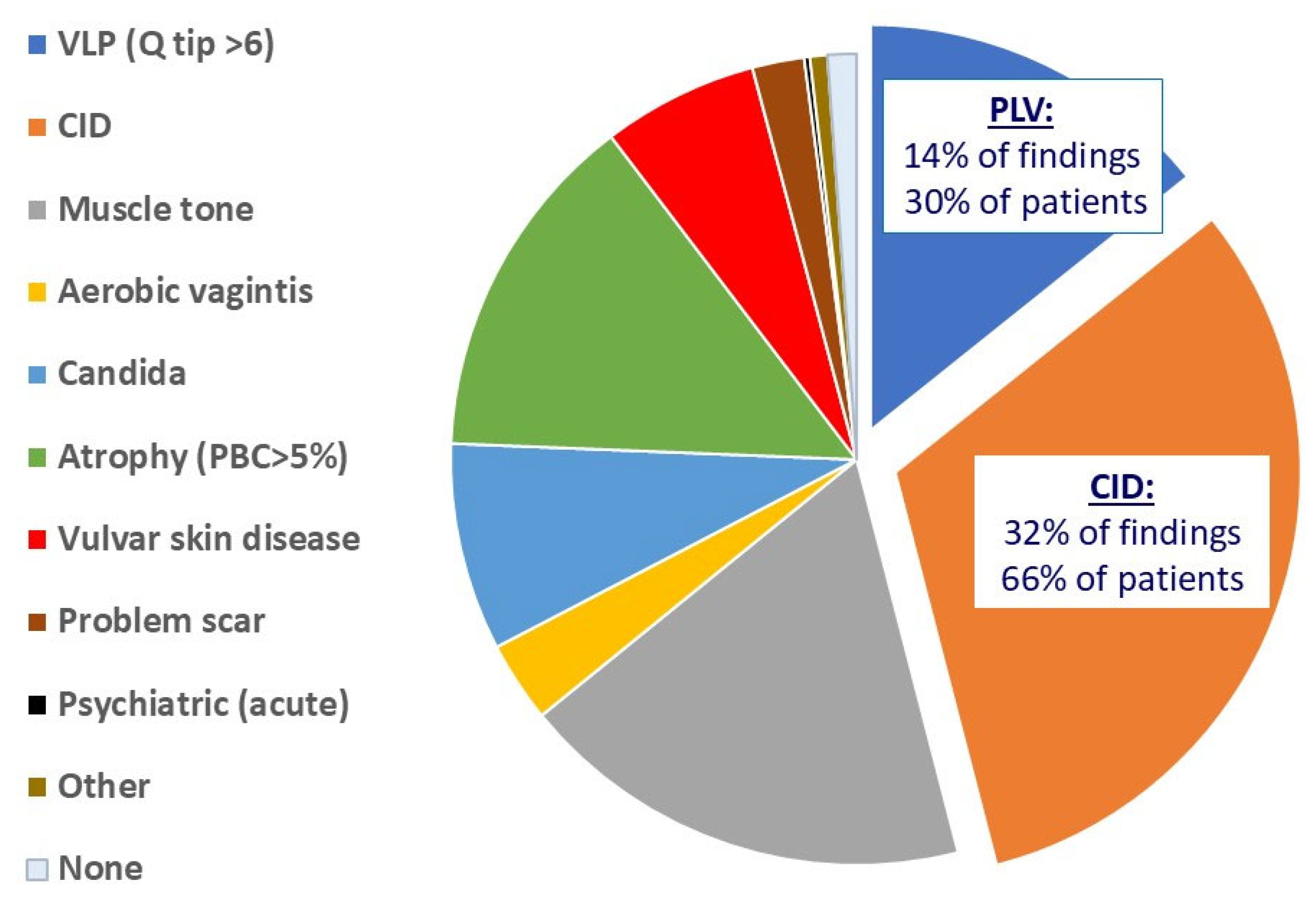
Figure 2.
Number of diagnostic findings in 210 patients with dyspareunia after standardized clinical examination. No cause was identified in 5% of patients (including women with BV).
Figure 2.
Number of diagnostic findings in 210 patients with dyspareunia after standardized clinical examination. No cause was identified in 5% of patients (including women with BV).
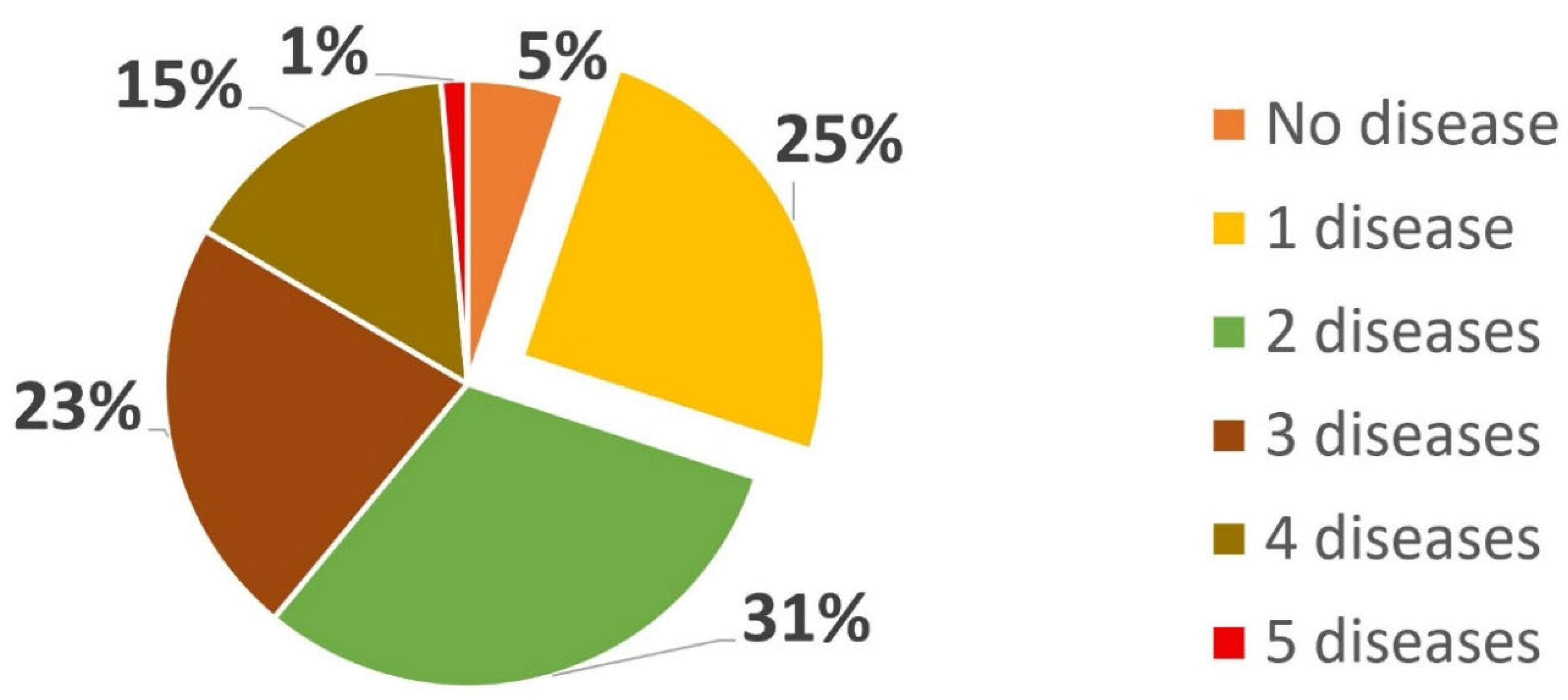
Table 3.
Diagnostic findings from standardized examinations of women with dyspareunia.
| Provoked Localized Vulvodynia (Q tip > 6), N (%) | 62/210 (29,5%) |
| Central Introital dyspareunia (moderate/severe), N (%) | 138/210 (65,7%) |
| Vaginal atrophy (PBC > 5%), N (%) | 61/210 (29,0%) |
| Vulvar skin disease (L simplex, L sclerosus, L planus, Psoriasis), N (%) | 27/210 (12,9%) |
| Increased pelvic muscle tone, N(%) | 79/210 (37,6%) |
| Vulvovaginal infection - Bacterial vaginosis - Aerobic vaginitis - Vaginal candida infection |
59/209 (28,2%) 9/209 (4,3%) 14/209 (6,7%) 36/209 (17,2%) |
| Scar problem, N (%) | 9/210 (4,3%) |
| Other (rectocele, fecal soiling, vaginal septum), N(%) | 3/210(1,4%) |
| No cause identified, N (%) | 5/210 (2.3%)* |
* In six patients, bacterial vaginosis (BV) was the only finding. Because BV without another diagnostic finding was not considered a cause of dyspareunia, the proportion without an identified causative factor was 11/210 (5.2%).
Disclaimer/Publisher’s Note: The statements, opinions and data contained in all publications are solely those of the individual author(s) and contributor(s) and not of MDPI and/or the editor(s). MDPI and/or the editor(s) disclaim responsibility for any injury to people or property resulting from any ideas, methods, instructions or products referred to in the content. |
© 2026 by the authors. Licensee MDPI, Basel, Switzerland. This article is an open access article distributed under the terms and conditions of the Creative Commons Attribution (CC BY) license (http://creativecommons.org/licenses/by/4.0/).
Copyright: This open access article is published under a Creative Commons CC BY 4.0 license, which permit the free download, distribution, and reuse, provided that the author and preprint are cited in any reuse.