

Submitted:
10 August 2026
Posted:
12 August 2026
You are already at the latest version
Preprints on COVID-19 and SARS-CoV-2
Abstract
Background: COVID-19 infection has been a major cause of hospitalization and mortality in the United States. Patients with liver cirrhosis may be especially vulnerable to severe outcomes of COVID-19 infection because of immune dysfunction, systemic inflammation, portal hypertension, and reduced physiologic reserve. These factors can increase the risk of severe infection, multiorgan complications, and poor inpatient outcomes. Using the 2020-2022 United States National Inpatient Sample, this study evaluates the effect of cirrhosis among adults hospitalized with COVID-19. Methods: We performed a retrospective cohort study using the National Inpatient Sample (NIS) database. Adult hospitalizations with COVID-19 from 2020 to 2022 were included and stratified according to the presence or absence of cirrhosis. Using multivariable logistic regression analyses, we evaluated in-hospital mortality as the primary outcome. Secondary outcomes included need for mechanical ventilation, septic shock, ARDS, ECMO utilization, acute kidney injury, renal replacement therapy, length of stay, and hospital charges. Results: A total of 5,934,565 hospitalized COVID-19 patients were included, of which 115,170 had concomitant cirrhosis. COVID-19 patients with cirrhosis had a higher in-hospital mortality than those without cirrhosis (16.8% vs. 11.3%; aOR 1.28; 95% CI 1.22-1.32). Patients with liver cirrhosis were also associated with higher odds of invasive mechanical ventilation, vasopressor use and septic shock. Conclusions: Cirrhosis was independently associated with increased in-hospital mortality and complications including need for invasive mechanical ventilation and septic shock in adults hospitalized with COVID-19. Although mortality associated with these patients have declined over time, they represent a high risk group that requires close monitoring.
Keywords:
COVID-19
; liver cirrhosis
; in-hospital mortality
; septic shock
; mechanical ventilation
; National Inpatient Sample
; healthcare utilization
1. Introduction
Since its emergence in 2019, coronavirus disease 2019 (COVID-19), caused by severe acute respiratory syndrome coronavirus 2 (SARS-CoV-2), has become a major global health concern with significant morbidity and mortality [1]. Although COVID-19 primarily affects the respiratory system, outcomes among hospitalized patients vary substantially depending on underlying comorbidities. Pre-existing chronic liver disease and cirrhosis may worsen the clinical course of COVID-19 by reducing physiologic reserve and increasing susceptibility to infection, sepsis, renal dysfunction, multiorgan failure, prolonged hospitalization and in-hospital mortality [2,3,4,5,6].
Liver cirrhosis is the end stage of chronic liver disease and is associated with progressive hepatic fibrosis, portal hypertension, impaired synthetic function, and reduced physiologic reserve. In addition to hepatic dysfunction, cirrhosis is associated with immune dysregulation, systemic inflammation, bacterial translocation, and increased susceptibility to infections [5,6]. Patients with cirrhosis are therefore at higher risk for sepsis, septic shock, acute kidney injury requiring renal replacement therapy and multiorgan failure during acute illnesses. Identifying these complications is clinically important because infections and systemic inflammatory states are common causes of decompensation and death in patients with cirrhosis [5,6].
COVID-19 infection may further worsen outcomes in patients with cirrhosis through multiple mechanisms. Severe COVID-19 can lead to hypoxemic respiratory failure, cytokine-mediated inflammation, endothelial dysfunction, microvascular thrombosis, shock, acute kidney injury and sepsis-related multiorgan dysfunction [2,3]. In patients with cirrhosis, these acute systemic insults may precipitate hepatic decompensation and worsen already limited physiologic reserve [2,3,5,6]. Furthermore, many patients with cirrhosis have coexisting conditions and risk factors, such as alcohol-related liver disease, metabolic syndrome, diabetes mellitus, chronic kidney disease, cardiovascular disease, malnutrition and socioeconomic barriers to care. These factors may further increase the risk of severe inpatient outcomes when patients with cirrhosis are hospitalized with COVID-19 infection [4,7,8].
Prior studies have evaluated the relationship between chronic liver disease, cirrhosis, and COVID-19 outcomes. Several observational studies, registry-based analyses and meta-analyses have suggested that patients with cirrhosis and COVID-19 have higher rates of mortality compared with patients without cirrhosis [4,7,8]. Some studies have also shown that the severity of underlying liver disease is associated with worse outcomes in COVID-19 infection [4,8]. However, many earlier studies were limited by small sample sizes, selected registry populations, single center or multicenter cohorts, international variation in patient care, or a focus on the early pandemic period [6,7,8]. In addition, the clinical outcomes of COVID-19 changed over time because of vaccination, evolving treatment protocols, availability of antiviral and immunomodulatory therapies, and emergence of different SARS-CoV-2 variants [1,3].
There are limited large-scale national data evaluating the impact of cirrhosis on a broad range of inpatient outcomes among adults hospitalized with COVID-19 infection across the 2020–2022 pandemic period. Prior National Inpatient Sample-based work has evaluated selected liver disease etiologies, including alcohol-associated liver disease, nonalcoholic steatohepatitis, alcoholic cirrhosis, and nonalcoholic steatohepatitis cirrhosis, among hospitalized patients with COVID-19; however, broader multi-year national data evaluating all-cause cirrhosis and multiple inpatient outcomes remain limited [9,10,11]. The National Inpatient Sample database, which is the largest all-payer inpatient database in the United States, includes hospitalizations from non-federal acute care hospitals across different geographic regions, hospital sizes, and teaching settings [12]. This database provides an opportunity to study a large, nationally representative cohort of hospitalized adults with COVID-19 infection and to evaluate the association of cirrhosis with clinically important inpatient outcomes.
Therefore, we conducted a retrospective cohort study using the 2020–2022 National Inpatient Sample (NIS) database, to evaluate the impact of liver cirrhosis on outcomes among adults hospitalized with COVID-19 infection. We hypothesized that patients with COVID-19 infection and cirrhosis would have worse inpatient outcomes compared with patients with COVID-19 infection without cirrhosis. We also aimed to evaluate the distribution of COVID-19 infection with cirrhosis from 2020 to 2022 and to describe mortality trends among patients with both COVID-19 infection and cirrhosis during the study period.
2. Materials and Methods
2.1. Study Design and Data Source
We conducted a retrospective cohort study using the National Inpatient Sample (NIS) database covering the period from January 1, 2020, to December 31, 2022. The NIS database is the largest all-payer dataset, among publicly available inpatient databases in the United States. Its database is derived from billing data submitted by hospitals to statewide data organizations across the USA, covering more than 97% of the US population.
2.2. Study Population
Patients admitted between January 2020 and December 2022 were included with the diagnosis of COVID-19 infection and cirrhosis, identified through International Classification of Diseases, 10th revision (ICD-10) codes. COVID-19 infection was identified using code U07.1 and cases were further stratified based on presence or absence of cirrhosis which was identified by codes K70.30, K70.31, K74.60, K74.69, K74.3, K74.4, K74.5.
2.3. Outcomes and Variables
The main aim of this study was to investigate the impact of cirrhosis on COVID-19 infection. The primary outcome was in-hospital mortality among hospitalized patients with cirrhosis. Secondary outcomes included need for Invasive Mechanical Ventilation, and Non-Invasive Ventilation (NIV), Length of hospital stay (LOS) in days, acute kidney injury (AKI), septic shock, acute respiratory distress syndrome (ARDS), as well as needs for renal replacement therapy (RRT), vasopressor, and extracorporeal membrane oxygenation use (ECMO).
Patient-level variables included baseline demographic characteristics such as age, sex, race, median household income, and primary insurance payer. The comorbidity burden was assessed using the Charlson Comorbidity Index, which categorizes patients by the number and severity of their conditions (categorized as 0, 1, 2, >=3). Hospital-level characteristics included geographic region, hospital location/teaching status, and hospital bed size.
2.4. Statistical Analysis
The patient information and data were analyzed using Stata/BE version 17.0 (StataCorp LLC, College Station, TX, USA). Since the NIS uses a complex design that incorporates stratification, clustering, and weighting of patient- and hospital-level data, this structure was accounted for throughout to generate nationally representative estimates, with comparisons made through survey-weighted linear regression and adjusted Wald tests. For categorical/dichotomous variables, we reported weighted percentages and applied the Rao–Scott corrected chi-square test. Initially, survey-weighted univariable regression analyses were performed to estimate crude associations between concurrent COVID-19 infection and each outcome. We then built survey-weighted multivariable logistic regression analyses to calculate adjusted odds ratios for mortality, invasive ventilation, non-invasive ventilation, vasopressor, septic shock, AKI, RRT, ARDS and ECMO, while adjusted mean difference for length of stay and total charges were examined using survey-weighted multivariable linear regression analyses. All multivariate models adjusted for age, sex, race, median household income quartile, insurance status, Charlson Comorbidity Index, hospital region, hospital location/teaching status, and hospital bed size. A p-value <0.05 was considered statistically significant.
3. Results
A total of 5,934,565 weighted adult COVID-19 hospitalizations and a total of 2,478,514 weighted adult hospitalizations with cirrhosis were identified from the 2020–2022 National Inpatient Sample database. The patients with diagnoses of COVID-19 infection were stratified based on the presence of cirrhosis; 115,170 had concomitant cirrhosis, whereas 5,819,395 did not have concomitant cirrhosis (Figure 1).
Baseline demographic and hospital characteristics are summarized in Table 1. Patients with COVID-19 infection and concomitant cirrhosis had a mean age of 62.1 years, compared with 62.7 years among those without cirrhosis (P<0.001). The sex distribution showed that males accounted for the majority of hospitalizations among patients with cirrhosis (58.3% vs. 50.6%, P <0.001). Caucasians constituted the largest racial group in both cohorts (59.6% vs. 59.9%) (P<0.001). The largest proportion of patients belonged to the lowest household income quartile (35.8% vs. 32.1%), followed by the second income quartile (26.5% vs. 26.9%) (P<0.001). Medicare was the most common primary payer in patients with cirrhosis (52.7% vs. 53.4%), followed by private insurance (17.9% vs. 27.2%) (P<0.001). Most patients had a Charlson Comorbidity Index of ≥3 (76.9% vs. 31.0%, P<0.001). Most hospitalizations occurred in the Southern region (38.5% vs. 41.8%), followed by the West (25.3% vs. 18.9%) (P<0.001). Similarly, most patients were admitted to urban teaching hospitals (75.0% vs. 70.3%), followed by urban non-teaching hospitals (17.2% vs. 19.0%) (P<0.001), and to large hospitals (49.5% vs. 45.4%), followed by medium-sized hospitals (29.2% vs. 29.2%) (P=0.001). Among hospital divisions, the South Atlantic accounted for the largest proportion of admissions (19.1% vs. 22.0%), followed by the Pacific (17.0% vs. 12.3%) (P<0.001).
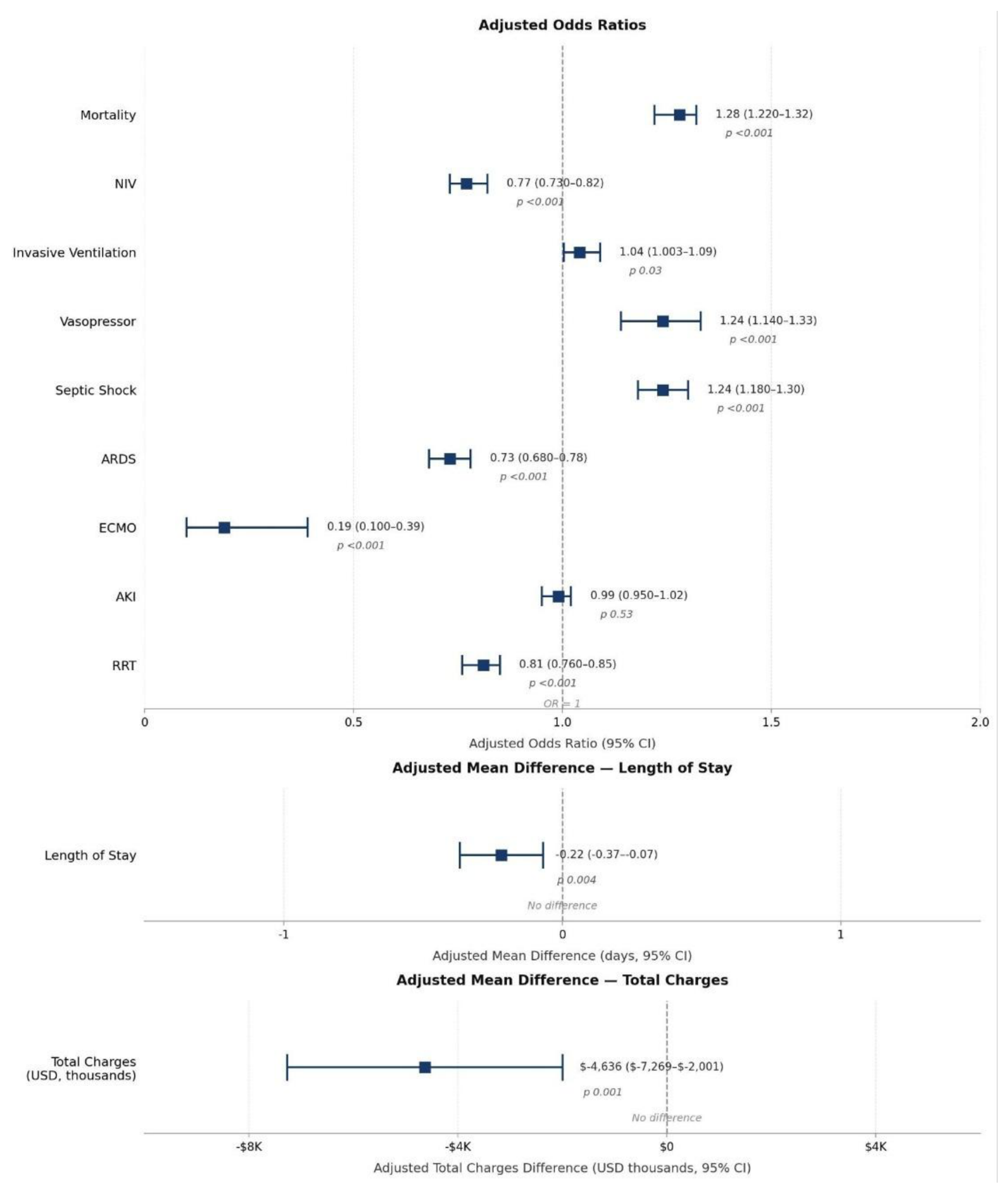
Compared with patients with COVID-19 infection without cirrhosis, those with concomitant cirrhosis had significantly higher in-hospital mortality (16.8% vs. 11.3%; aOR 1.28, 95% CI 1.22–1.32; P<0.001), invasive ventilation (13.9% vs. 10.4%; aOR 1.04, 95% CI 1.003–1.09; P=0.03), vasopressor use (4.2% vs. 2.4%; aOR 1.24, 95% CI 1.14–1.33; P<0.001), and septic shock (10.6% vs. 6.3%; aOR 1.24, 95% CI 1.18–1.30; P<0.001) (Figure 2 and Figure 3 and Figure 5).
Patients with COVID-19 infection and cirrhosis had higher unadjusted rates of acute kidney injury (37.5% vs. 27.7%) and renal replacement therapy (8.8% vs. 4.5%). However, after adjustment, cirrhosis was not independently associated with AKI (aOR 0.99, 95% CI 0.95-1.02; P=0.53) and was associated with lower odds of RRT (aOR 0.81, 95% CI 0.76-0.85; P<0.001). Patients with cirrhosis had lower rates and adjusted odds of NIV use (6.5% vs. 6.7%; aOR 0.77, 95% CI 0.73-0.82; P<0.001), ARDS (4.8% vs. 5.7%; aOR 0.73, 95% CI 0.68-0.78; P<0.001), and ECMO utilization (0.03% vs. 0.2%; aOR 0.19, 95% CI 0.10-0.39; P<0.001) (Figure 3 and Figure 5).
Patients with concomitant cirrhosis had longer unadjusted hospital stays (9.2 vs. 8.2 days) and higher unadjusted hospitalization charges ($115,294 vs. $96,817). However, after multivariable adjustment, cirrhosis was associated with lower adjusted mean length of stay (adjusted mean difference -0.22 days, 95% CI -0.37 to -0.07; P=0.004) and lower adjusted total hospitalization charges (adjusted mean difference -$4,636, 95% CI -$7,269 to -$2,001; P=0.001) (Figure 4 and Figure 5).
Figure 4.
Length of hospital stay and Total hospital cost for patients hospitalized with COVID-19 infection, with and without Liver cirrhosis.
Figure 4.
Length of hospital stay and Total hospital cost for patients hospitalized with COVID-19 infection, with and without Liver cirrhosis.
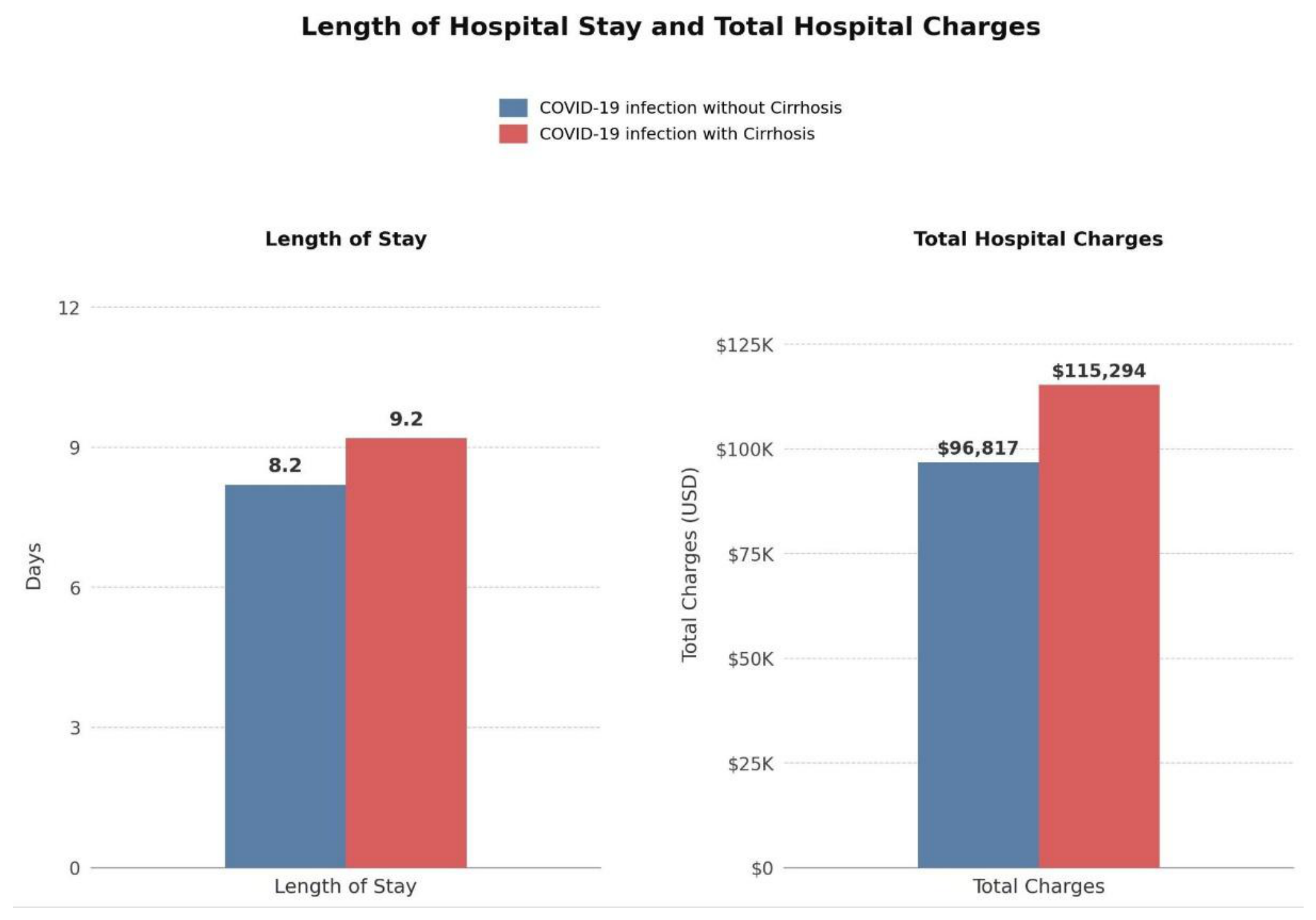
Figure 5.
Forest plot depicting Adjusted Odds Ratios for Mortality, Non-invasive ventilation (NIV), Invasive ventilation, Vasopressor use, Septic shock, Acute respiratory distress syndrome (ARDS), Extracorporeal membrane oxygenation (ECMO), Acute kidney injury (AKI), Renal replacement therapy (RRT); and Adjusted Mean Differences for Hospital length of stay and total hospital charges for patients with COVID-19 infection with liver cirrhosis.
Figure 5.
Forest plot depicting Adjusted Odds Ratios for Mortality, Non-invasive ventilation (NIV), Invasive ventilation, Vasopressor use, Septic shock, Acute respiratory distress syndrome (ARDS), Extracorporeal membrane oxygenation (ECMO), Acute kidney injury (AKI), Renal replacement therapy (RRT); and Adjusted Mean Differences for Hospital length of stay and total hospital charges for patients with COVID-19 infection with liver cirrhosis.
Temporal analysis demonstrated that in-hospital mortality among patients with COVID-19 infection with cirrhosis was 19.4% in 2020, which increased to 20.2% in 2021 and eventually declined to 12.9% in 2022, p<0.001. (Figure 6). The distribution of COVID-19 hospitalizations differed significantly between patients with and without cirrhosis from 2020 to 2022 (p<0.001). Among patients without cirrhosis, the proportion of hospitalizations was 28.1% in 2020, increased to 40.4% in 2021, and decreased to 31.6% in 2022. Among patients with cirrhosis, the proportion was 22.5% in 2020, increased to 33.1% in 2021, and further increased to 44.4% in 2022. (Figure 7).
4. Discussion
Cirrhosis represents the common final pathway of most chronic liver diseases. Histopathologically, it is characterized by fibrosis, regenerative nodule formation, and vascular architecture distortion leading to hepatic failure [13]. The estimated global prevalence of cirrhosis is 2.6% [14]. It is a leading cause of morbidity and mortality worldwide and imposes a substantial healthcare burden. Deaths due to cirrhosis accounted for 2.4% of all the deaths, globally in 2017 [14]. The most common etiologies of cirrhosis include alcohol-associated liver disease, chronic viral hepatitis, and metabolic dysfunction-associated steatotic liver disease (MASLD), previously termed nonalcoholic fatty liver disease (NAFLD) [15,16]. Individuals with MASLD comprise the largest proportion of people with cirrhosis in the United States (33.05%) [17]
Although SARS-CoV-2 primarily affects the respiratory tract, it can cause systemic disease. Viral RNA and evidence of viral involvement were identified in multiple organs, including the heart, liver, brain, and kidneys [18]. SARS-CoV-2 enters host cells primarily through interaction with the human angiotensin-converting enzyme 2 (hACE2) receptor, followed by viral replication and dysregulated host immune responses [19]. Hepatic involvement has been described, with detection of viral RNA and evidence of viral presence in post-mortem liver tissue [20].Severe COVID-19 has been shown to affect the liver, with alterations in transaminases and coagulation profiles. This is likely triggered by the innate immune response targeting the virus, severe cellular stress, and multiorgan involvement seen in severe COVID-19 [21]. Early COVID-19 studies showed no association between chronic liver disease, including cirrhosis, or an increased risk of severe COVID-19 [22]. However, subsequent studies have negated this data and showed an increased risk of complications from pre-existing cirrhosis and COVID-19. Several studies have shown that cirrhosis is a risk factor for the severe form of COVID-19 disease, with an increased mortality rate [23,24,25]. A multicenter research network study demonstrated increased mortality among patients with chronic liver disease and COVID-19 (RR 2.8; 95% CI 1.9-4.0), with an even greater risk among patients with cirrhosis (RR 4.6; 95% CI 2.6-8.3), along with increased hospitalization rates [26].
This study addresses a significant literature gap by using the National Inpatient Sample (NIS) database from 2020 to 2022 to provide a highly representative national analysis. Multivariate logistic and linear regression models were utilized to control for potential confounders, including demographics, income, comorbidities, and hospital-level characteristics. By analyzing data from nearly six million hospitalizations, our findings demonstrate that patients with cirrhosis have a significantly higher comorbidity burden and undergo more intense therapeutic interventions. They experienced worse clinical outcomes including higher in-hospital mortality rates.
Patients with cirrhosis, in general, are immunosuppressed and more susceptible to infections compared to the general population [27]. Cirrhosis, particularly when decompensated, can cause immune dysregulation, which is associated with a decreased responsiveness to vaccination. Impaired vaccine responses have been described in cirrhosis for several vaccines, including hepatitis B, pneumococcal, and influenza vaccines [28]. Similar concerns regarding reduced immunogenicity have been raised with COVID-19 vaccination. Current guidelines recommend timely administration of appropriate vaccinations in patients with chronic liver disease, given their increased susceptibility to infections and poorer outcomes [29]. Specifically, mRNA vaccination has been associated with reduced COVID-19 infection and COVID-19-related hospitalization or death among patients with cirrhosis [30]. Cirrhosis is characterized by a state of heightened systemic inflammation driven by increased intestinal permeability, gut microbiome dysbiosis, and impaired intestinal immune function. This promotes translocation of bacterial products and contributes to persistent immune activation [31]. Despite this inflammatory state, patients with cirrhosis also exhibit a state of immune deficiency, commonly referred to as cirrhosis-associated immune dysfunction syndrome. Systemic inflammation and immune deficiency are the primary features in cirrhosis-associated immune dysfunction syndrome. The extent of immune dysfunction correlates clinically with the severity of hepatic impairment, bacterial translocation, and organ failure. High-grade systemic inflammation, particularly in decompensated cirrhosis and acute-on-chronic liver failure, increases susceptibility to infections [5]. Low-grade systemic inflammation, typically seen in compensated cirrhosis, is associated with exaggerated inflammation without increased infection risk [5].
An acute systemic insult from severe COVID-19 can trigger a robust cytokine-mediated inflammatory response, endothelial injury, and microvascular injury. This can lead to multiorgan failure, as observed in our study. Specifically, patients with cirrhosis demonstrated higher incidence of septic shock (10.6% vs. 6.3%). The incidence of AKI and RRT use highlights the complex interaction between severe COVID-19, cirrhosis-associated hemodynamic abnormalities, and the development of hepatorenal syndrome or acute tubular necrosis. Chronic overproduction of nitric oxide seen in advanced cirrhosis causes marked splanchnic vasodilation, leading to a baseline compensatory renal vasoconstriction to maintain systemic perfusion [32,33]. The COVID-19-associated intense systemic inflammation, cytokine storm, and widespread endothelial microthrombosis can severely exacerbate renal hypoperfusion [34]. The increased reliance on invasive mechanical ventilation reflects the complexity of managing concurrent hepatic decompensation and systemic complications. In-hospital mortality was higher among patients with cirrhosis (16.8% vs. 11.3%), consistent with the increased burden of systemic complications observed in this population.
A key contribution of this study is the evaluation of annual trends, which maps the evolving landscape of COVID-19 infection in the high-risk population. The mortality rate among patients with cirrhosis and concomitant COVID-19 remained elevated and demonstrated minimal temporal variation between 2020 (19.4%) and 2021 (20.2%). These results were consistent with our preliminary analysis which similarly demonstrated increased mortality among hospitalized patients with cirrhosis and COVID-19 [35]. This persistently high mortality may be attributable to the limited therapeutic options initially, circulating viral variants, and delayed availability of effective preventive measures to vulnerable populations. In response to dynamic clinical and public health factors, mortality subsequently declined substantially, by 36.1%, from 20.2% in 2021 to 12.9% in 2022. This decline in mortality trend was observed in a nationwide study of patients with acute liver failure and COVID-19, supporting the hypothesis that improvements in clinical management, increasing vaccination rates, and the emergence of less virulent Omicron variants contributed to better outcomes across patients with chronic liver disease [36]. As shown in Figure 7, the observed temporal trends showed a variation in hospitalization between patients with and without cirrhosis. In 2022, the proportion of hospitalized COVID-19 patients without cirrhosis declined from the years prior (28.1% in 2020, 40.4% in 2021, and 31.6% in 2022). However, the proportion of hospitalized patients with cirrhosis continued to increase, reaching its highest level at the end of the three-year cohort (22.5% in 2020 to 44.4% in 2022). This divergent trend may reflect differences in healthcare utilization, access to outpatient therapies, and the underlying vulnerability of patients with cirrhosis. As vaccination, antiviral therapies, and outpatient management strategies became more widely available, hospitalization rates for the general population with COVID-19 declined. However, patients with cirrhosis remained vulnerable probably because of cirrhosis associated with immune dysfunction [5,27,28]. As a result, breakthrough infections in this population may have been more likely to require inpatient care. Additionally, evolving outpatient treatment protocols improved and changed the admission threshold over the course of the pandemic. Hospitalizations were probably more common among patients with greater clinical complexity, including those with decompensated liver cirrhosis.
4.1. Strengths and Limitations
A key strength of this study is the large sample size of the NIS database, which included up to 6 million hospitalizations and provided sufficient statistical power to evaluate yearly clinical trends. This study adds to the current literature in several ways. Many prior studies were limited to single-center cohorts, regional data, or early pandemic time periods [22,23,24,25,26]. The use of a nationally representative database also reduces the potential for single-center referral bias. Additionally, the large sample size enabled multivariate regression adjustments for complex baseline confounders, including socioeconomic factors and multiple comorbidity profiles. This improves the generalizability of our findings throughout diverse healthcare settings. Our study also included data from multiple time points, 2020 to 2022, during the dynamic and evolving landscape of COVID-19.
Our study has several limitations. The NIS database is derived from discharge-level data and relies on International Classification of Diseases, Tenth Revision, Clinical Modification (ICD-10-CM) administrative billing codes. The specific clinical information, such as Model for End-Stage Liver Disease (MELD) scores, Child-Pugh classifications, and specific cirrhotic etiologies, was not available for analysis. This limitation precludes in-depth analysis of whether distinct underlying etiologies of cirrhosis affect the clinical course of COVID-19, given that metabolic comorbidities inherently influence severity [16,17]. In addition, long-term post-discharge outcomes could not be assessed because the database is limited to inpatient encounters. While our study captures the broad association of cirrhosis on COVID-19 outcomes, future prospective studies are necessary to determine if specific disease pathways carry independent prognostic weight.
4.2. Future Directions
Future research should involve prospective multicenter studies to better characterize the complex interplay between cirrhosis severity, immune dysfunction, and COVID-19 outcomes. These studies should incorporate patient-level clinical data, including cirrhosis etiology, disease severity markers (such as MELD score and Child-Pugh classification), vaccination status, SARS-CoV-2 viral variants, and the timing and type of antiviral and immunomodulatory therapies. Integrating these variables with biomarkers of systemic inflammation, immune dysfunction, and hepatic injury may help identify high-risk patients and identify the mechanisms contributing to adverse outcomes in individuals with cirrhosis and COVID-19.
5. Conclusions
From a clinical perspective, our study demonstrates that cirrhosis is independently associated with increased in-hospital mortality and higher rates of severe systemic complications among patients hospitalized with COVID-19. Temporal changes in clinical outcomes over the course of the pandemic may be attributable to several factors, including widespread vaccination, improved clinical management protocols, and the emergence of SARS-CoV-2 variants with differing virulence. Early outpatient antiviral therapy, optimized vaccination strategies, and cirrhosis-specific preventive interventions remain essential to improve outcomes in this high-risk population.
Author Contributions
Conceptualization, AA; Methodology, AA, PD, JM; Validation, AA, DD, JM; Formal Analysis, AA, DD; Data Curation, AA, DD; Writing – Original Draft Preparation, AA, VSV, JM, DD, ASV, PD, RA, DK; Writing – Review & Editing, AA, VSV, JM, PD, DD, ASV, RA, DK; Visualization, DD; Supervision, AA, JM.
Funding
This research received no external funding.
Institutional Review Board Statement
All data were obtained through a request to the Online Healthcare Cost and Utilization Project (HCUP) Central Distributor, which administers the database (certificate HCUP- 28M71GVP5). We followed all AHRQ guidelines (https://hcup-us.ahrq.gov/db/publishing.jsp, accessed on 15 March 2026) and were exempt from IRB review as the National Inpatient Sample is publicly available, deidentified dataset.
Informed Consent Statement
Patient consent was waived due to the study analyzed secondary data from the NIS database, patients and the public were not involved directly. And all data in the NIS database are de-identified.
Data Availability Statement
The datasets analyzed during the current study are available from the Healthcare Cost and Utilization Project (HCUP) National Inpatient Sample (NIS) database and can be obtained as requested.
Conflicts of Interest
The authors declare no conflicts of interest.
References
- World Health Organization. COVID-19 epidemiological update — 24 December 2024; World Health Organization, 2024. [Google Scholar]
- Marjot, T.; Webb, G.J.; Barritt, A.S., IV; Moon, A.M.; Stamataki, Z.; Wong, V.W.; Barnes, E. COVID-19 and liver disease: Mechanistic and clinical perspectives. Nat. Rev. Gastroenterol. Hepatol. 2021, 18(5), 348–364. [Google Scholar] [CrossRef] [PubMed]
- Marjot, T.; Eberhardt, C.S.; Boettler, T.; Belli, L.S.; Berenguer, M.; Buti, M.; et al. Impact of COVID-19 on the liver and on the care of patients with chronic liver disease, hepatobiliary cancer, and liver transplantation: An updated EASL position paper. J. Hepatol. 2022, 77(4), 1161–1197. [Google Scholar] [CrossRef] [PubMed]
- Marjot, T.; Moon, A.M.; Cook, J.A.; Abd-Elsalam, S.; Aloman, C.; Armstrong, M.J.; et al. Outcomes following SARS-CoV-2 infection in patients with chronic liver disease: An international registry study. J. Hepatol. 2021, 74(3), 567–577. [Google Scholar] [CrossRef] [PubMed]
- Albillos, A.; Martin-Mateos, R.; Van der Merwe, S.; Wiest, R.; Jalan, R.; Álvarez-Mon, M. Cirrhosis-associated immune dysfunction. Nat. Rev. Gastroenterol. Hepatol. 2022, 19(2), 112–134. [Google Scholar] [CrossRef] [PubMed]
- Albillos, A.; Lario, M.; Álvarez-Mon, M. Cirrhosis-associated immune dysfunction: Distinctive features and clinical relevance. J. Hepatol. 2014, 61(6), 1385–1396. [Google Scholar] [CrossRef] [PubMed]
- Middleton, P.; Hsu, C.; Lythgoe, M.P. Clinical outcomes in COVID-19 and cirrhosis: A systematic review and meta-analysis of observational studies. BMJ Open Gastroenterol. 2021, 8(1), e000739. [Google Scholar] [CrossRef] [PubMed]
- Bajaj, J.S.; Garcia-Tsao, G.; Biggins, S.W.; Kamath, P.S.; Wong, F.; McGeorge, S.; et al. Comparison of mortality risk in patients with cirrhosis and COVID-19 compared with patients with cirrhosis alone and COVID-19 alone: Multicentre matched cohort. Gut 2021, 70(3), 531–536. [Google Scholar] [CrossRef] [PubMed]
- Arumairaj, A.J.; Gupta, N.; Mattana, J.; Chaudhari, S.; Kumar, P.; Habtes, I. Determining the impact of alcoholic liver disease among patients hospitalized with COVID-19 infection: A nationwide analysis. Chest 2024, 166((4) Suppl, A1781–A1782. [Google Scholar] [CrossRef]
- Arumairaj, A.; Gupta, N.; Mattana, J.; Chaudhari, S.; Kumar, P.; Habtes, I. Determining the impact of nonalcoholic steatohepatitis (NASH) on the severity of COVID-19 infection: A nationwide analysis. Chest 2024, 166((4) Suppl, A2039–A2040. [Google Scholar] [CrossRef]
- Kapuria, D.; Gangu, K.; Chourasia, P.; Boba, A.; Nguyen, A.; Ryu, M.; et al. COVID-19 alcoholic cirrhosis and non-alcoholic steatohepatitis cirrhosis outcomes among hospitalized patients in the United States: Insight from National Inpatient Sample Database. Trop. Med. Infect. Dis. 2022, 7(12), 421. [Google Scholar] [CrossRef] [PubMed]
- Agency for Healthcare Research and Quality. HCUP National Inpatient Sample (NIS) Overview [Internet]; Healthcare Cost and Utilization Project: Rockville (MD), 2026; Available online: https://hcup-us.ahrq.gov/nisoverview.jsp.
- Goossens, N.; Nakagawa, S.; Hoshida, Y. Molecular prognostic prediction in liver cirrhosis. World J. Gastroenterol. 2015, 21(36), 10262–73. [Google Scholar] [CrossRef] [PubMed] [PubMed Central]
- GBD 2017 Cirrhosis Collaborators. The global, regional, and national burden of cirrhosis by cause in 195 countries and territories, 1990-2017: a systematic analysis for the Global Burden of Disease Study 2017. Lancet Gastroenterol. Hepatol. 2020, 5(3), 245–266. [Google Scholar] [CrossRef] [PubMed] [PubMed Central]
- Crabb, D.W.; Im, G.Y.; Szabo, G.; Mellinger, J.L.; Lucey, M.R. Diagnosis and Treatment of Alcohol-Associated Liver Diseases: 2019 Practice Guidance From the American Association for the Study of Liver Diseases. Hepatology 2020, 71(1), 306–333. [Google Scholar] [CrossRef] [PubMed]
- Eslam, M.; Sanyal, A.J.; George, J.; International Consensus Panel. MAFLD: A Consensus-Driven Proposed Nomenclature for Metabolic Associated Fatty Liver Disease. Gastroenterology 2020, 158(7), 1999–2014.e1. [Google Scholar] [CrossRef] [PubMed]
- Younossi, Z.M.; de Avila, L.; Racila, A.; Nader, F.; Paik, J.; Henry, L.; Stepanova, M. Prevalence and predictors of cirrhosis and portal hypertension in the United States. Hepatology 2025, 82(5), 1229–1240. [Google Scholar] [CrossRef] [PubMed]
- Puelles, V.G.; Lütgehetmann, M.; Lindenmeyer, M.T.; Sperhake, J.P.; Wong, M.N.; Allweiss, L.; Chilla, S.; Heinemann, A.; Wanner, N.; Liu, S.; Braun, F.; Lu, S.; Pfefferle, S.; Schröder, A.S.; Edler, C.; Gross, O.; Glatzel, M.; Wichmann, D.; Wiech, T.; Kluge, S.; Pueschel, K.; Aepfelbacher, M.; Huber, T.B. Multiorgan and Renal Tropism of SARS-CoV-2. N Engl. J. Med. 2020, 383(6), 590–592. [Google Scholar] [CrossRef] [PubMed] [PubMed Central]
- Koçak Tufan, Z.; Kayaaslan, B.; Mer, M. COVID-19 and Sepsis. Turk. J. Med. Sci. 2021, 51(SI-1), 3301–3311. [Google Scholar] [CrossRef] [PubMed]
- Wanner, N.; Andrieux, G.; Badia-i-Mompel, P.; et al. Molecular consequences of SARS-CoV-2 liver tropism. Nat. Metab. 2022, 4, 310–319. [Google Scholar] [CrossRef] [PubMed]
- Zhang, C.; Shi, L.; Wang, F.S. Liver injury in COVID-19: management and challenges. Lancet Gastroenterol. Hepatol. 2020, 5(5), 428–430. [Google Scholar] [CrossRef] [PubMed] [PubMed Central]
- Lippi, G.; de Oliveira, M.H.S.; Henry, B.M. Chronic liver disease is not associated with severity or mortality in Coronavirus disease 2019 (COVID-19): a pooled analysis. Eur. J. Gastroenterol. Hepatol. 2021, 33(1), 114–115. [Google Scholar] [CrossRef] [PubMed] [PubMed Central]
- Qi, X.; Liu, Y.; Wang, J.; Fallowfield, J.A.; Wang, J.; Li, X.; Shi, J.; Pan, H.; Zou, S.; Zhang, H.; Chen, Z.; Li, F.; Luo, Y.; Mei, M.; Liu, H.; Wang, Z.; Li, J.; Yang, H.; Xiang, H.; Li, X.; Liu, T.; Zheng, M.H.; Liu, C.; Huang, Y.; Xu, D.; Li, X.; Kang, N.; He, Q.; Gu, Y.; Zhang, G.; Shao, C.; Liu, D.; Zhang, L.; Li, X.; Kawada, N.; Jiang, Z.; Wang, F.; Xiong, B.; Takehara, T.; Rockey, D.C. COVID-Cirrhosis-CHESS Group. Clinical course and risk factors for mortality of COVID-19 patients with pre-existing cirrhosis: a multicentre cohort study. Gut 2021, 70(2), 433–436. [Google Scholar] [CrossRef] [PubMed] [PubMed Central]
- Moon, A.M.; Webb, G.J.; Aloman, C.; Armstrong, M.J.; Cargill, T.; Dhanasekaran, R.; Genescà, J.; Gill, U.S.; James, T.W.; Jones, P.D.; Marshall, A.; Mells, G.; Perumalswami, P.V.; Qi, X.; Su, F.; Ufere, N.N.; Barnes, E.; Barritt, A.S.; Marjot, T. High mortality rates for SARS-CoV-2 infection in patients with pre-existing chronic liver disease and cirrhosis: Preliminary results from an international registry. J. Hepatol. 2020, 73(3), 705–708. [Google Scholar] [CrossRef] [PubMed] [PubMed Central]
- Iavarone, M.; D'Ambrosio, R.; Soria, A.; Triolo, M.; Pugliese, N.; Del Poggio, P.; Perricone, G.; Massironi, S.; Spinetti, A.; Buscarini, E.; Viganò, M.; Carriero, C.; Fagiuoli, S.; Aghemo, A.; Belli, L.S.; Lucà, M.; Pedaci, M.; Rimondi, A.; Rumi, M.G.; Invernizzi, P.; Bonfanti, P.; Lampertico, P. High rates of 30-day mortality in patients with cirrhosis and COVID-19. J. Hepatol. 2020, 73(5), 1063–1071. [Google Scholar] [CrossRef] [PubMed] [PubMed Central]
- Singh, S.; Khan, A. Clinical Characteristics and Outcomes of Coronavirus Disease 2019 Among Patients With Preexisting Liver Disease in the United States: A Multicenter Research Network Study. Gastroenterology 2020, 159(2), 768–771.e3. [Google Scholar] [CrossRef] [PubMed] [PubMed Central]
- Bonnel, A.R.; Bunchorntavakul, C.; Reddy, K.R. Immune dysfunction and infections in patients with cirrhosis. Clin. Gastroenterol. Hepatol. 2011, 9(9), 727–38. [Google Scholar] [CrossRef] [PubMed]
- Leise, M.D.; Talwalkar, J.A. Immunizations in chronic liver disease: what should be done and what is the evidence. Curr. Gastroenterol. Rep. 2013, 15(1), 300. [Google Scholar] [CrossRef] [PubMed]
- Janocha-Litwin, J.; Simon, K. Recommended vaccinations for patients with chronic liver diseases. Clin. Exp. Hepatol. 2025, 11(1), 1–8. [Google Scholar] [CrossRef] [PubMed] [PubMed Central]
- John, B.V.; Deng, Y.; Scheinberg, A.; Mahmud, N.; Taddei, T.H.; Kaplan, D.; Labrada, M.; Baracco, G.; Dahman, B. Association of BNT162b2 mRNA and mRNA-1273 Vaccines With COVID-19 Infection and Hospitalization Among Patients With Cirrhosis. JAMA Intern Med. 2021, 181(10), 1306–1314. [Google Scholar] [CrossRef] [PubMed] [PubMed Central]
- Hasa, E.; Hartmann, P.; Schnabl, B. Liver cirrhosis and immune dysfunction. Int. Immunol. 2022, 34(9), 455–466. [Google Scholar] [CrossRef] [PubMed] [PubMed Central]
- Ginès, P.; Solà, E.; Angeli, P.; Wong, F.; Nadim, M.K.; Kamath, P.S. Hepatorenal syndrome. Nat. Rev. Dis. Prim. Erratum in: Nat Rev Dis Primers. 2018 Oct 15;4(1):33. doi: 10.1038/s41572-018-0035-2. PMID: 30213943. 2018, 4(1), 23. [Google Scholar] [CrossRef] [PubMed]
- Jung, C.Y.; Chang, J.W. Hepatorenal syndrome: Current concepts and future perspectives. Clin. Mol. Hepatol. 2023, 29(4), 891–908. [Google Scholar] [CrossRef] [PubMed] [PubMed Central]
- Zhou, K.; Chen, Y.; Pang, J.; Zhang, J.; Lu, J. The endothelial-immunothrombotic storm in viral sepsis: lessons from COVID-19. Front. Immunol. 2026, 16, 1681764. [Google Scholar] [CrossRef] [PubMed]
- Arumairaj, A.J.; Gupta, N.; Mattana, J.; Chaudhari, S.; Poor, A. Determining the impact of cirrhosis on the severity of COVID-19 infection: A nationwide analysis. Chest 2024, 166((4) Suppl, 2037A–2038A. [Google Scholar] [CrossRef]
- Arumairaj, A.; Dhanani, D.; Veluswamy, A.S.; Arun Kumar, A.K.M.; Perez Moscoso, J.A.; Mittal, J.; Prajapati, V.; Korpu, D.; Dhorajiya, P. Trends and Outcomes of Acute Liver Failure in Patients with COVID-19 Infection: Insights from United States National Inpatient Sample Analysis 2020–2022. Livers 2026, 6, 70. [Google Scholar] [CrossRef]
Figure 1.
Study population flow diagram.
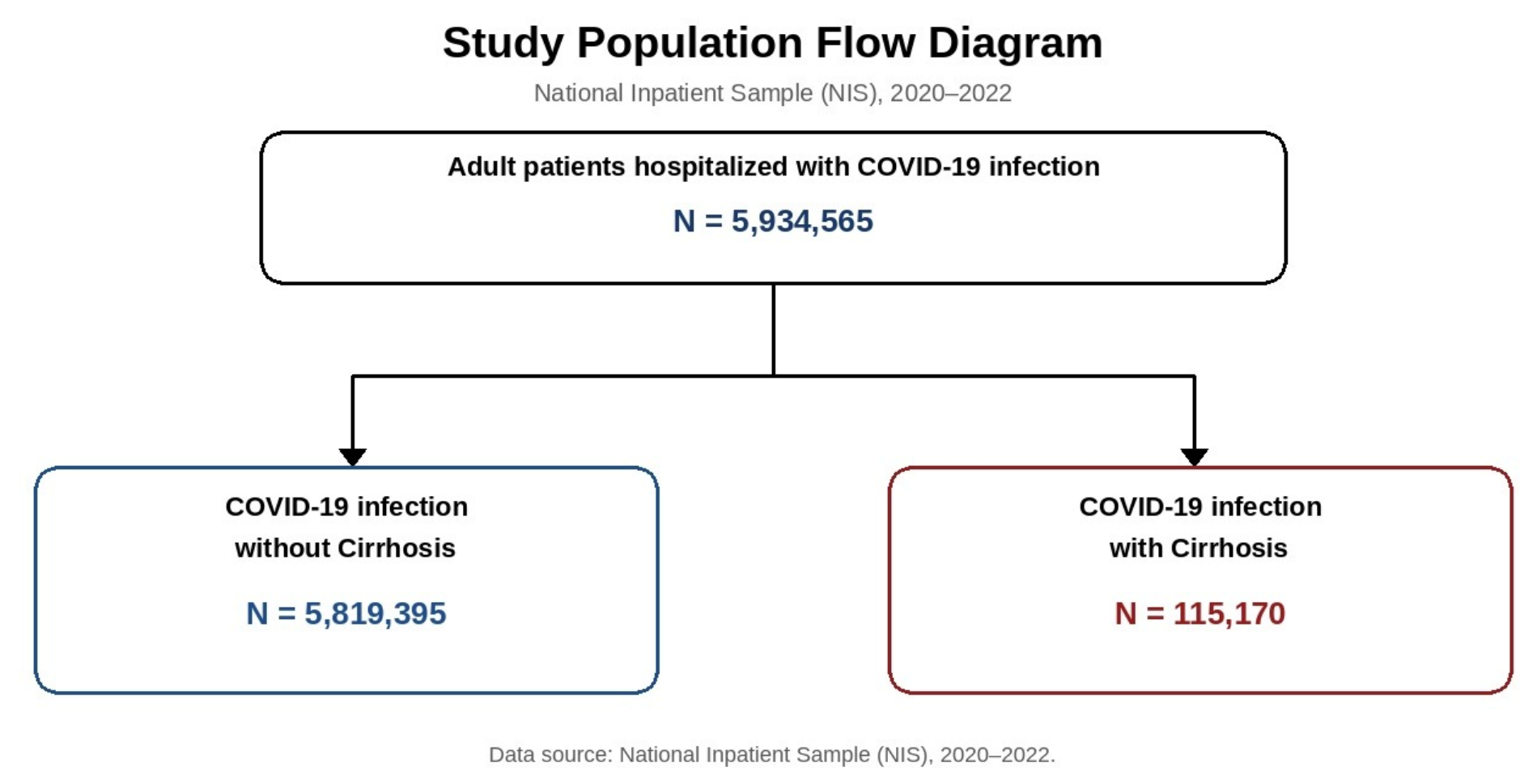
Figure 2.
Clinical Outcomes Comparing Mortality, Non-invasive Ventilation (NIV), Invasive Ventilation and Vasopressor use in patients with COVID-19 infection, with and without liver cirrhosis.
Figure 2.
Clinical Outcomes Comparing Mortality, Non-invasive Ventilation (NIV), Invasive Ventilation and Vasopressor use in patients with COVID-19 infection, with and without liver cirrhosis.
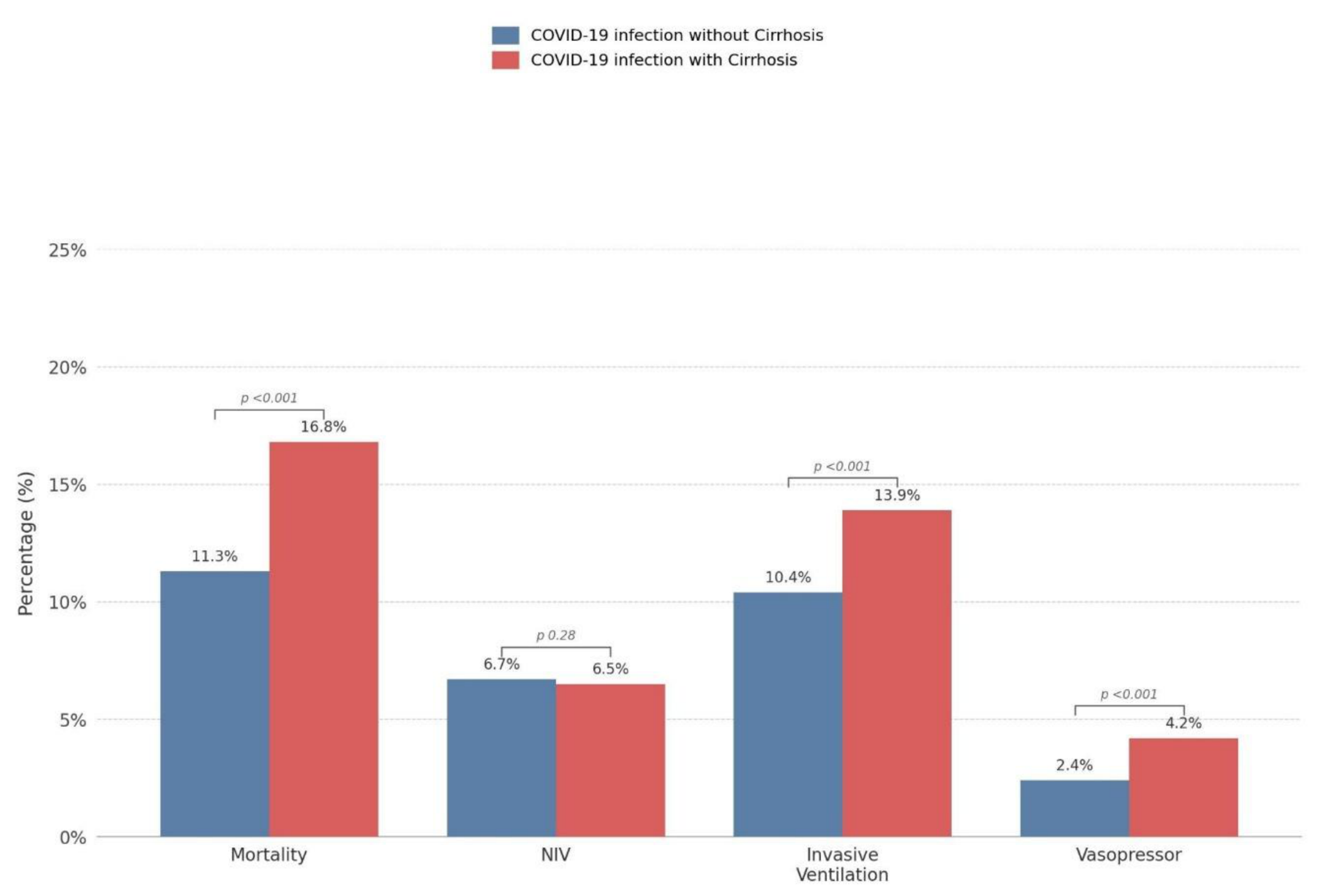
Figure 3.
Clinical Outcomes Comparing Septic shock, Acute Respiratory Distress Syndrome (ARDS), Extracorporeal Membrane Oxygenation (ECMO), Acute Kidney Injury (AKI) and Renal Replacement Therapy (RRT) in patients with COVID-19 infection, with and without Liver cirrhosis.
Figure 3.
Clinical Outcomes Comparing Septic shock, Acute Respiratory Distress Syndrome (ARDS), Extracorporeal Membrane Oxygenation (ECMO), Acute Kidney Injury (AKI) and Renal Replacement Therapy (RRT) in patients with COVID-19 infection, with and without Liver cirrhosis.
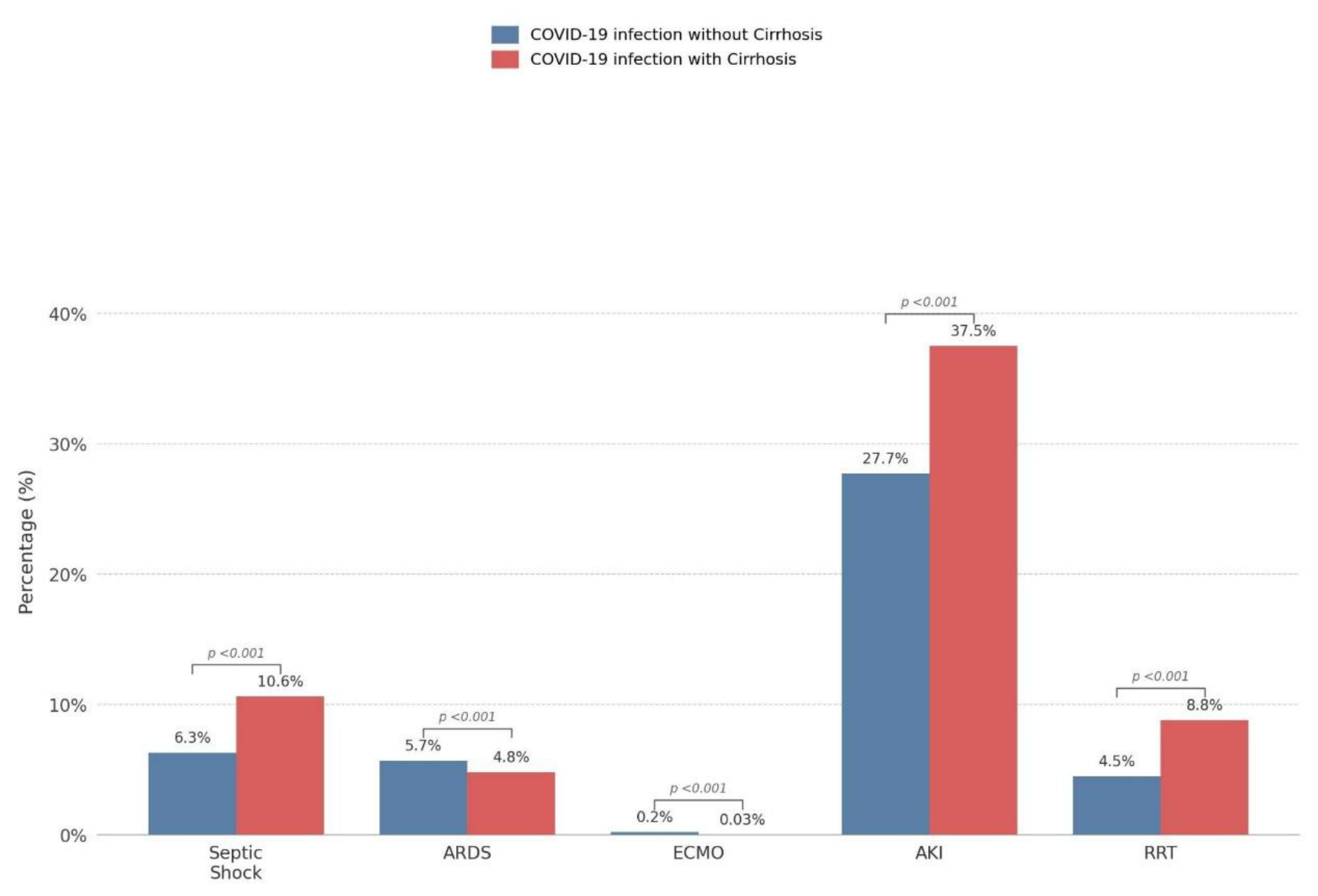
Figure 6.
Mortality trends in patients with COVID-19 infection and Liver cirrhosis from the years 2020 to 2022.
Figure 6.
Mortality trends in patients with COVID-19 infection and Liver cirrhosis from the years 2020 to 2022.
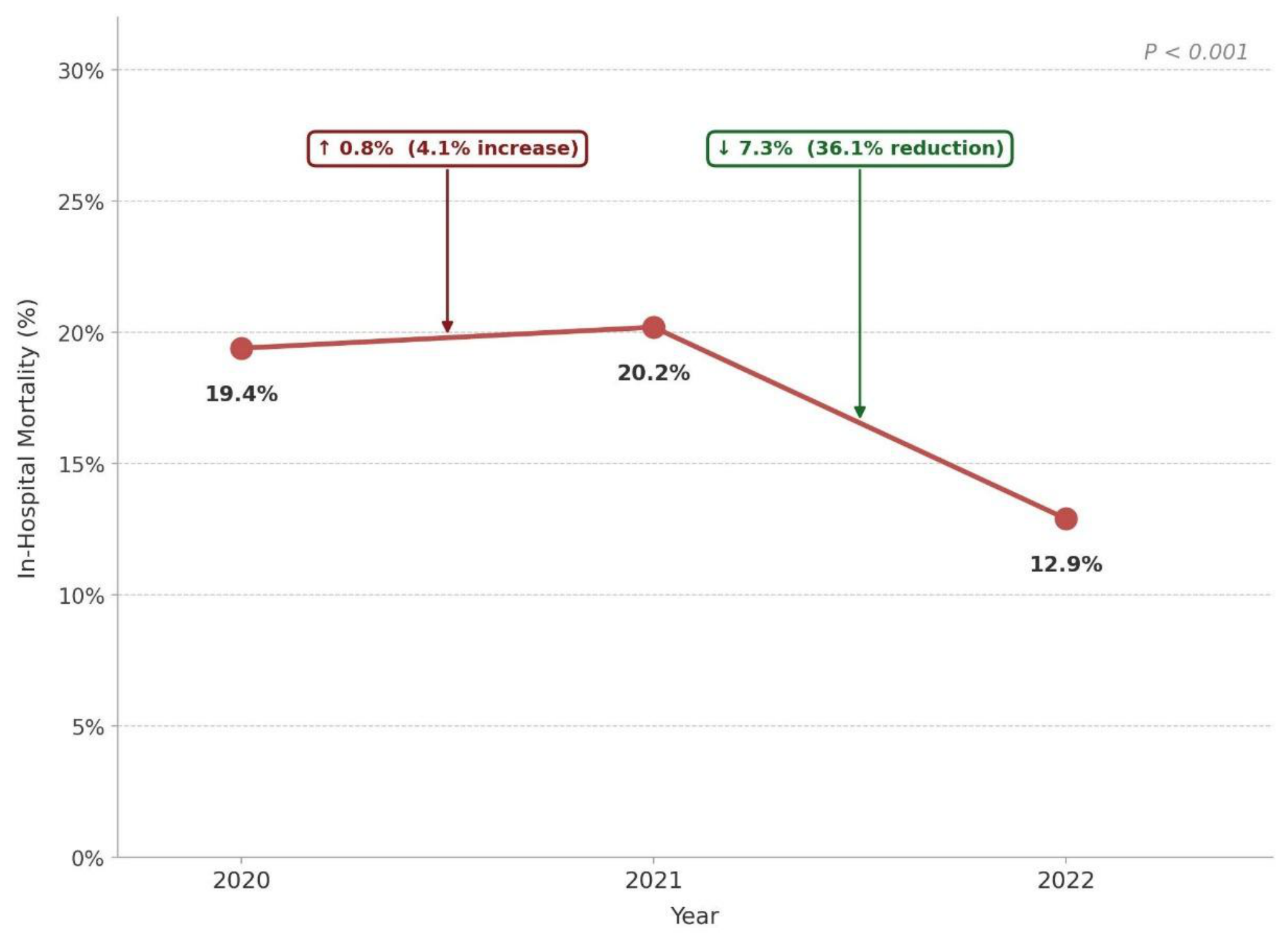
Figure 7.
Distribution of patients with COVID-19 infection and liver cirrhosis in the years 2020-2022.
Figure 7.
Distribution of patients with COVID-19 infection and liver cirrhosis in the years 2020-2022.
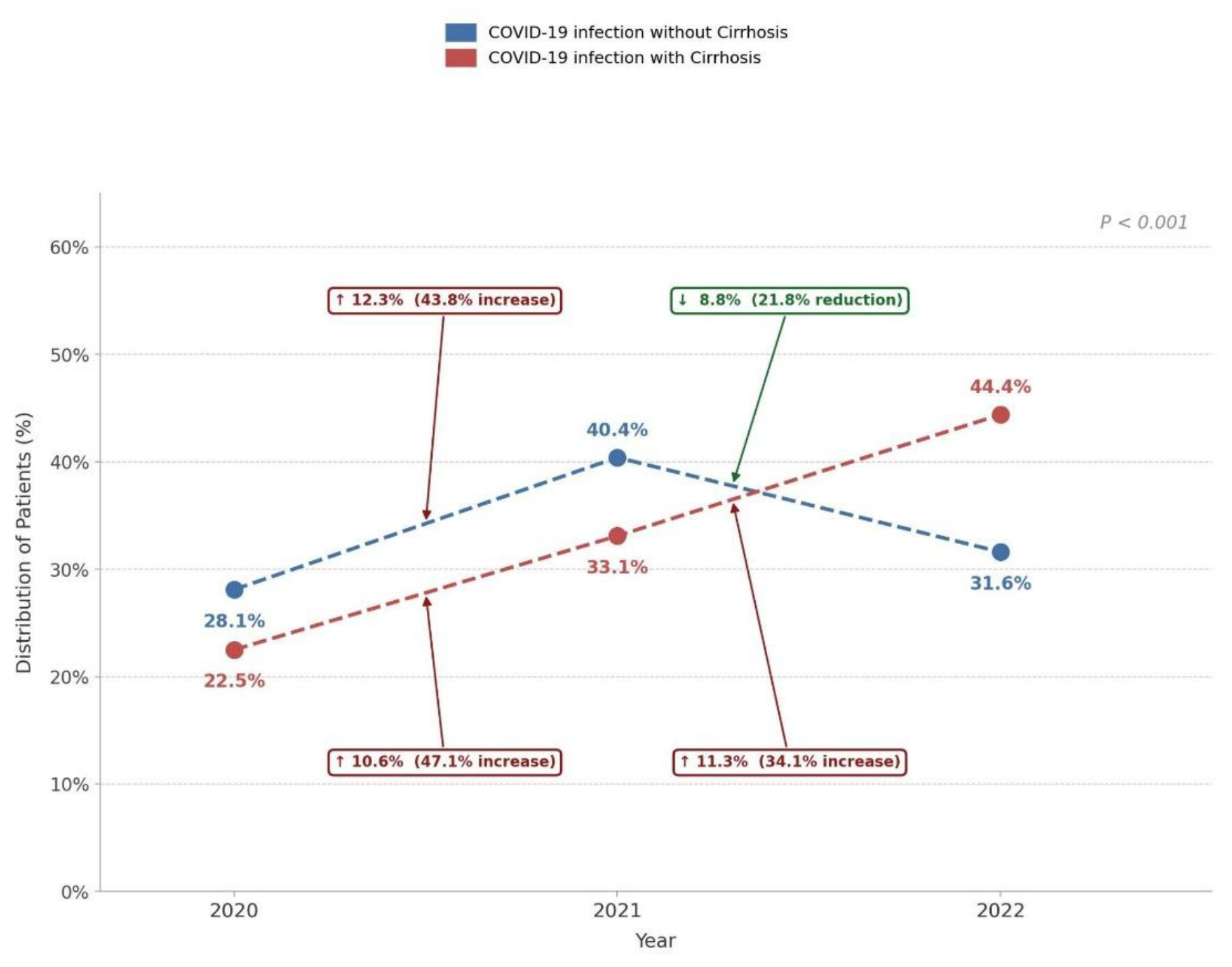

Table 1.
Demographic and clinical characteristics of hospitalized patients with COVID-19 infection, stratified by cirrhosis.
Table 1.
Demographic and clinical characteristics of hospitalized patients with COVID-19 infection, stratified by cirrhosis.
| Variable | COVID-19 infection without Cirrhosis (n =5,819,395) |
COVID-19 infection with Cirrhosis (n =115,170) |
P-Value |
|---|---|---|---|
| Age, mean (years) | 62.7 | 62.1 | <0.001 |
| Sex | <0.001 | ||
| Male | 50.6% | 58.3% | |
| Female | 49.4% | 41.7% | |
| Race | <0.001 | ||
| Caucasian | 59.9% | 59.6% | |
| African American | 16.8% | 10.7% | |
| Hispanic | 16.1% | 22.1% | |
| Asian/Pacific Islander | 2.9% | 2.1% | |
| Native American | 0.8% | 2.2% | |
| Other | 3.4% | 3.3% | |
| National Income Quartile | <0.001 | ||
| 1–$38,999 | 32.1% | 35.8% | |
| 39,000–47,999 | 26.9% | 26.5% | |
| 48,000–62,999 | 23.4% | 22.4% | |
| >$63,000 | 17.6% | 15.3% | |
| Insurance | <0.001 | ||
| Medicare | 53.4% | 52.7% | |
| Medicaid | 15.6% | 25.3% | |
| Private | 27.2% | 17.9% | |
| Uninsured | 3.7% | 4.0% | |
| Charlson Comorbidity Index | <0.001 | ||
| 0 | 28.9% | 0% | |
| 1 | 24.2% | 10.6% | |
| 2 | 15.9% | 12.5% | |
| ≥3 | 31.0% | 76.9% | |
| Hospital Region | <0.001 | ||
| Northeast | 18.0% | 17.3% | |
| Mid-West | 21.2% | 18.8% | |
| South | 41.8% | 38.5% | |
| West | 18.9% | 25.3% | |
| Hospital Location & Teaching Status | <0.001 | ||
| Rural | 10.7% | 7.7% | |
| Urban, Non-Teaching | 19.0% | 17.2% | |
| Urban, Teaching | 70.3% | 75.0% | |
| Hospital Bed Size | <0.001 | ||
| Small | 25.4% | 21.3% | |
| Medium | 29.2% | 29.2% | |
| Large | 45.4% | 49.5% | |
| Hospital Division | <0.001 | ||
| New England | 3.9% | 4.8% | |
| Middle Atlantic | 14.1% | 12.5% | |
| East North Central | 15.0% | 13.4% | |
| West North Central | 6.2% | 5.4% | |
| South Atlantic | 22.0% | 19.1% | |
| East South Central | 6.7% | 6.0% | |
| West South Central | 13.1% | 13.5% | |
| Mountain | 6.7% | 8.3% | |
| Pacific | 12.3% | 17.0% |
NIS = National Inpatient Sample; COVID-19 = Coronavirus Disease 2019.
Disclaimer/Publisher’s Note: The statements, opinions and data contained in all publications are solely those of the individual author(s) and contributor(s) and not of MDPI and/or the editor(s). MDPI and/or the editor(s) disclaim responsibility for any injury to people or property resulting from any ideas, methods, instructions or products referred to in the content. |
© 2026 by the authors. Licensee MDPI, Basel, Switzerland. This article is an open access article distributed under the terms and conditions of the Creative Commons Attribution (CC BY) license (http://creativecommons.org/licenses/by/4.0/).
Copyright: This open access article is published under a Creative Commons CC BY 4.0 license, which permit the free download, distribution, and reuse, provided that the author and preprint are cited in any reuse.