

Submitted:
30 July 2026
Posted:
11 August 2026
You are already at the latest version
Abstract
Background/Objectives
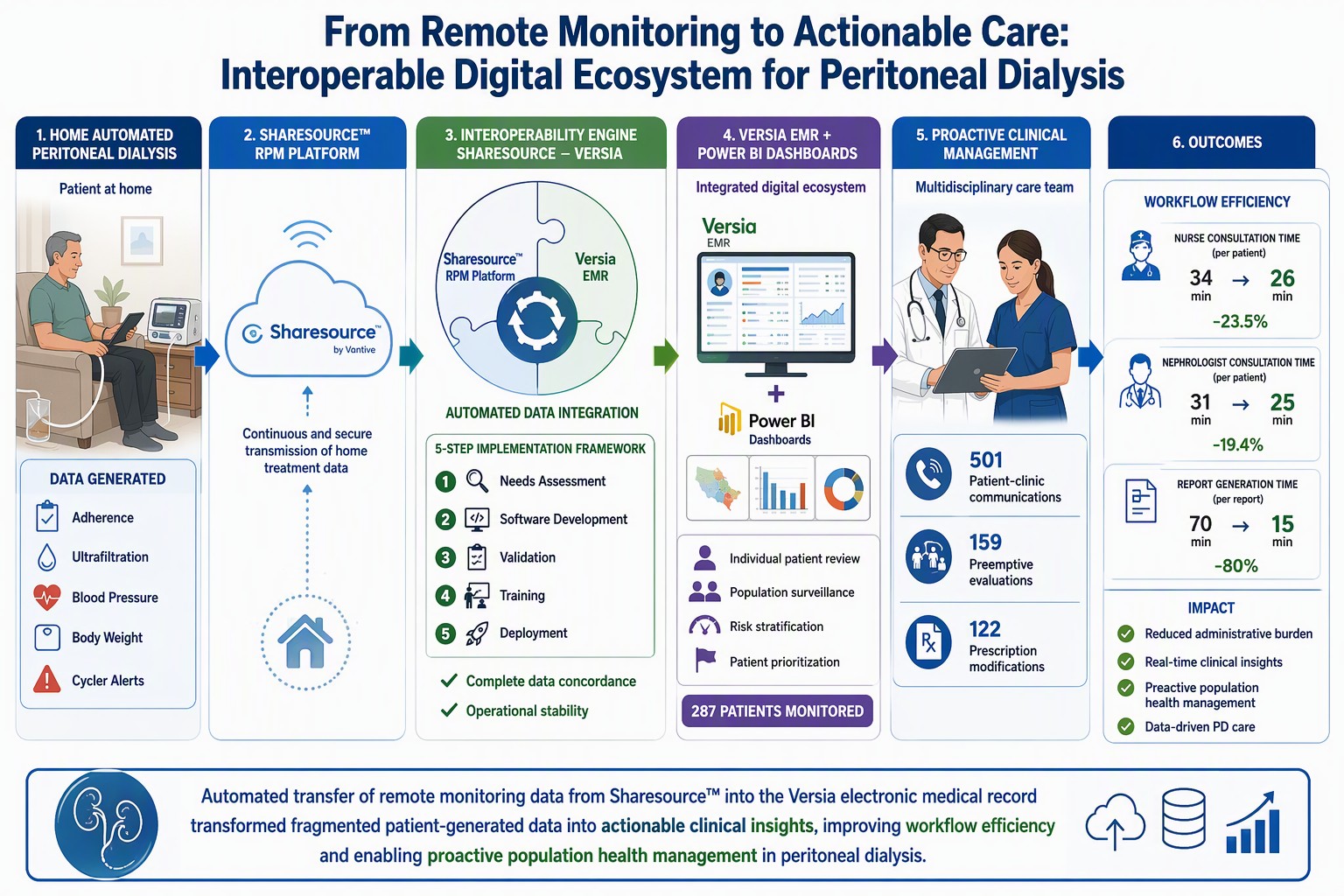
Remote patient monitoring (RPM) has expanded the capacity of peritoneal dialysis (PD) programs to supervise home-based therapy; however, its full clinical value may be limited when patient-generated data remain disconnected from electronic medical records (EMRs). This study evaluated the implementation and impact of integrating the Sharesource RPM platform with the Versia EMR system in routine PD care.
Methods
This multicenter real-world implementation study was conducted between November 2024 and February 2025 across three dialysis centers in Colombia. The integration enabled automated transfer of home treatment-related information from Sharesource to Versia and supported population health management through interactive dashboards. Workflow efficiency was assessed using a before-and-after time and motion analysis, and user experience was evaluated through structured surveys administered 12 weeks after implementation. Analyses were descriptive.
Results
The integration was successfully implemented across the participating centers, achieving complete data concordance and operational stability. During follow-up of 287 patients, 501 patient-clinic communications, 159 preemptive evaluations, and 122 prescription modifications were recorded, reflecting proactive identification and management of clinical issues. Nursing consultation time decreased from 34 to 26 minutes per patient, and nephrologist time from 31 to 25 minutes per patient. Surveys showed high acceptance, supporting proactive clinical decision-making, and greater workflow efficiency.
Conclusions
Real-world implementation of an interoperable RPM-EMR ecosystem in PD care was feasible, operationally stable, and associated with improved workflow efficiency and proactive population health management. By transforming fragmented patient-generated data into actionable clinical insights, this digital ecosystem can support more efficient, data-driven, and proactive models of chronic kidney disease care.
Keywords:
peritoneal dialysis
; remote patient monitoring
; digital health
; electronic medical records
; Sharesource
; digital ecosystems
1. Introduction
The global burden of kidney failure continues to rise, placing substantial pressure on healthcare systems to deliver high-quality, sustainable, and patient-centered kidney replacement therapies (KRT) [1,2]. In this context, peritoneal dialysis (PD) represents an important home-based treatment modality that supports patient autonomy, treatment flexibility, and continuity of chronic kidney disease care [3,4,5,6]. However, the success of home-based dialysis depends on effective monitoring, timely clinical intervention, and strong coordination between patients and multidisciplinary care teams [4,6].
Recent advances in digital health have transformed the management of PD programs. Remote patient monitoring (RPM) has expanded the capacity of PD programs to supervise therapy performed in the home setting [7,8,9,10,11,12,13]. In automated peritoneal dialysis (APD), RPM platforms enable access to treatment-related information such as adherence, ultrafiltration, blood pressure, body weight, cycler alerts, prescription execution, and session-level performance [7,8,10]. Sharesource™ (Baxter Healthcare, Deerfield, IL, USA) is one of the most widely adopted RPM platforms for APD that enables secure transmission of home cycler data to clinical teams and may support earlier identification of clinical or technical issues [7,8,9,10,11,12,13].
Although RPM has improved access to patient-generated health data, its clinical value may be limited when remote monitoring systems remain disconnected from electronic medical records (EMRs) [14,15,16,17]. In fragmented digital environments, clinicians may need to access multiple platforms, manually reconcile information, and duplicate documentation [14,18]. As a result, large volumes of patient-generated data may contribute to information overload rather than actionable clinical insight, adding to the time devoted to documentation which constitutes a major portion of the workday time for physicians and nurses [19]. This fragmentation reduces workflow efficiency, increases the administrative burden, and limits the ability of clinical teams to use RPM data proactively in routine care [16,18].
Healthcare interoperability between RPM platforms and nephrology-specific EMRs may represent the next stage of digital transformation in chronic kidney disease care [15,18,20,21]. By embedding remote monitoring data directly into the patient record and pairing these data with interactive dashboards, integrated digital ecosystems can support patient prioritization, risk surveillance, and population health management [15,21,22]. However, real-world evidence remains limited regarding the implementation, workflow impact, operational performance, and user experience of RPM-EMR integration in routine PD care [15,18].
To address this gap, the Renal Care Services network implemented an interoperable digital ecosystem integrating the Sharesource RPM platform with the Versia EMR system. The integration combined automated data transfer with interactive dashboards designed to support clinical decision-making and proactive population health management for home-based APD care. This study aimed to evaluate the real-world implementation and operational impact of the Sharesource-Versia integration in routine APD care, with emphasis on technical performance, workflow efficiency, population health management, and user experience.
2. Materials and Methods
2.1. Study Design and Setting
This multicenter, real-world implementation study used a before-and-after design to evaluate the deployment among patients receiving treatment with automated peritoneal dialysis in their homes of an interoperable digital ecosystem integrating the Sharesource remote patient monitoring platform with the Versia electronic medical record system. The study was conducted between November 2024 and February 2025 across three dialysis centers belonging to the Renal Care Services network in Colombia. All participating centers provided routine care for patients receiving automated peritoneal dialysis and used Sharesource as part of their remote monitoring workflow. The centers operated with a nurse-to-patient ratio of approximately 1:45 and a nephrologist-to-patient ratio of approximately 1:140. All adult patients receiving automated peritoneal dialysis and being monitored through Sharesource during the implementation period were eligible for inclusion. No additional inclusion or exclusion criteria were applied, as the objective was to assess implementation under routine clinical practice conditions. The integrated population management dashboards included 287 patients across the participating centers.
2.2. Development of the Interoperable Digital Ecosystem
The intervention consisted of the development and implementation of an interoperable digital ecosystem connecting Sharesource and Versia. The objective was to automate the transfer of patient-generated treatment data from the remote monitoring platform into the electronic medical record and to make these data available for routine clinical review, documentation, and population health management. A dedicated peritoneal dialysis module, referred to as the PD Treatment module, was developed within Versia. This module enabled clinicians to access remote monitoring information directly within the patient record, including dialysis prescriptions, treatment adherence, ultrafiltration parameters, blood pressure measurements, body weight records, cycler alerts, treatment execution data, and session-level performance indicators.
The implementation followed five sequential phases: needs assessment, software development and integration architecture, validation and regulatory review, user training, and operational deployment (Figure 1). The needs assessment focused on existing clinical workflows, information gaps, manual documentation requirements, and barriers related to the use of disconnected systems. Software development included definition of the integration architecture, data model, data transfer processes, and user-facing clinical views within the EMR.
Before deployment, the integration underwent software quality assurance, cybersecurity assessment, user acceptance testing, and formal validation procedures. Validation activities were designed to confirm data integrity, traceability, auditability, system reliability, and concordance between information displayed in Sharesource and data transferred into Versia. The validation approach followed principles derived from the U.S. Food and Drug Administration 21 CFR Part 11 framework for electronic records and electronic signatures [23]. Data concordance was assessed by comparing selected data elements displayed in Sharesource with the corresponding values transferred to Versia. Operational readiness was confirmed before routine clinical use. Following validation, users received training on the PD Treatment module, dashboard interpretation, and standardized workflows for reviewing integrated data [15,21].
2.3. Population Health Management Framework
After implementation, data transferred from Sharesource were combined with clinical information available in Versia and visualized through interactive dashboards developed using Microsoft Power BI. These dashboards supported both individual patient review and population-level surveillance across the automated peritoneal dialysis program.
The dashboards monitored key clinical and operational indicators, including treatment adherence, ultrafiltration performance, blood pressure control, body weight trends, dialysis prescription changes, cycler alerts, patient-clinic communications, preventive interventions, and indicators potentially associated with treatment discontinuation risk. Patients requiring clinical attention were identified using predefined monitoring criteria embedded within the dashboards, including missed treatments, ultrafiltration or dry-weight abnormalities, blood pressure values outside target ranges, catheter-related issues, cycler malfunctions, suspected infectious complications, poor metabolic control, and signals suggesting increased risk of therapy discontinuation.
The population health management framework was designed to support, not replace, clinical judgment. Dashboard-generated insights were used by clinical teams to prioritize patients for outreach, preventive clinical assessment, prescription review, and individualized treatment optimization.
2.4. Time-and-Motion Analysis
Workflow efficiency was evaluated using a structured time-and-motion analysis conducted before and after implementation of the integrated platform. During the pre-implementation phase, conducted from November 5 to November 15, 2024, ten healthcare professionals, including nephrologists (n=6) and peritoneal dialysis nurses (n=9), were observed during 245 patient-care activities over 133 hours. During the post-implementation phase, conducted from February 3 to February 17, 2025, the same methodology was applied to 208 patient-care activities observed over 114 hours. Time measurements were obtained by direct observation using a continuous timing methodology conducted by an external workflow assessment consultant. Activities were categorized as value-added or non-value-added according to process-mapping principles. Value-added activities were defined as tasks directly contributing to patient assessment, clinical decision-making, treatment planning, education, or care coordination. Non-value-added activities included duplicate documentation, manual data reconciliation, searching for information, and navigation across disconnected digital systems. Workflow outcomes included total consultation time per patient for nurses and nephrologists, time dedicated to reviewing Sharesource information, report generation time, and the proportion of time spent on value-added activities.
2.5. User Experience Assessment
User experience was assessed using structured surveys administered to nephrologists and peritoneal dialysis nurses 12 weeks after implementation of the integrated platform. Responses were anonymized before analysis. The survey evaluated domains related to overall experience, usability and design, system performance and interoperability, clinical functionality, workflow support, documentation and reporting, and perceived clinical value. Responses were collected using a 7-point Likert scale, where higher scores indicated more favorable perceptions. Survey responses were summarized separately for nephrologists and nurses using means and standard deviations. Domain-level findings were used to identify perceived strengths, limitations, and opportunities for further platform optimization.
2.6. Statistical Analysis
Analyses were primarily descriptive. Continuous variables are presented as means, and categorical variables as frequencies and percentages. Changes observed between the pre-implementation and post-implementation periods are reported as absolute and relative differences. Because this was an implementation-focused study, analyses were intended to describe operational and clinical impact rather than formally test hypotheses. Statistical analyses were performed using Stata 16® (StataCorp LLC, College Station, TX, USA).
3. Results
The primary implementation outcomes included technical integration success, data concordance, workflow efficiency, and user experience. Secondary outcomes included population health management indicators, consultation times, report generation time, and proactive clinical interventions.
3.1. Technical Implementation Outcomes
The interoperable RPM-EMR ecosystem was successfully implemented across the three participating centers following a 12-month software development and implementation process. Deployment was completed without interruption of routine clinical care after successful completion of software quality assurance, cybersecurity assessment, software validation, and change management procedures.
Software validation demonstrated complete concordance between records displayed in the Sharesource remote monitoring platform and those transferred to the Versia electronic medical record. No data loss, synchronization failures, or transfer errors were identified during implementation, and the integrated platform maintained continuous operational stability without unplanned downtime throughout the study period.
Successful implementation required addressing several technical and organizational challenges, including credential management, access-control mechanisms, architectural compatibility, software dependencies, version control, and regulatory compliance. These activities ensured system quality, traceability, auditability, and scalability while supporting secure exchange of patient-generated health data between both platforms.
Integration substantially improved operational performance by reducing report generation time and eliminating the need for clinicians to manually retrieve information from separate digital systems. The PD Treatment module enabled direct access to dialysis prescriptions, data on treatment adherence, ultrafiltration, blood pressure, and body weight, cycler alarms, and treatment performance indicators from within the electronic medical record (Figure 2). Collectively, these findings demonstrate that implementation extended beyond technical interoperability by establishing a robust, scalable, and clinically deployable digital ecosystem capable of supporting routine clinical workflows and population health management in an automated peritoneal dialysis program.
3.2. Workflow Efficiency Outcomes
Implementation of the interoperable RPM-EMR ecosystem substantially improved workflow efficiency by automating the aggregation of remote patient monitoring and clinical information into a unified digital environment. Report generation time, defined as the total time required for clinical staff to retrieve, consolidate, review, and prepare patient monitoring information from remote patient monitoring platforms and the electronic medical record for clinical assessment, decreased from 70 minutes to 15 minutes, representing an approximately 80% reduction. This improvement eliminated the need for manual data consolidation from multiple digital platforms and enabled clinicians to access comprehensive treatment information directly within the Versia electronic medical record through the PD Treatment module.
The interoperable ecosystem streamlined routine clinical workflows by providing immediate access to dialysis prescriptions, treatment adherence, ultrafiltration, blood pressure, body weight, cycler alarms, and treatment performance indicators within a single interface. Interactive dashboards developed using Microsoft Power BI further facilitated rapid identification of patients requiring clinical attention and supported prioritization of daily clinical activities without the need to navigate between independent information systems (Figure 3).
Together, these findings demonstrate more efficient access to integrated patient information during routine clinical care.
3.3. Population Health Management Outcomes
The integrated analytics environment enabled proactive identification of patients requiring clinical intervention and supported population-level management across the APD program. During the study period, 501 patient-clinic communications were recorded. The most frequent triggers were missed home dialysis sessions (n=106; 21.2%), PD catheter-related issues (n=99; 19.8%), ultrafiltration or dry-weight abnormalities (n=86; 17.2%), vital signs outside predefined target ranges (n=76; 15.2%), follow-up issues (n=44; 8.8%), and cycler malfunctions (n=43; 8.6%) (Table 1).
A total of 159 preemptive clinical visits were performed in 99 patients following identification of clinically relevant findings through the integrated monitoring systems. The most common reasons for these evaluations included ultrafiltration or dry-weight abnormalities (27.0%), PD catheter-related complications (19.5%), vital signs outside target ranges (17.0%), suspected peritonitis or exit-site infection (11.3%), cycler malfunctions (7.5%), and poor metabolic control (5.7%). In contrast, only 34 emergency department visits were recorded among 28 patients during the study period. The most common causes were heart failure (n=6), respiratory diseases (n=6), other cardiovascular events (n=4), skin disorders (n=4), cerebrovascular events (n=3), and gastrointestinal diseases (n=3).
Additionally, 122 dialysis prescription modifications were implemented in 93 patients. These changes were primarily related to dialysis adequacy, ultrafiltration performance, and PD catheter function, supporting individualized treatment optimization.
3.4. Time-and-Motion Outcomes
Implementation of the interoperable RPM–EMR ecosystem was associated with measurable improvements in consultation efficiency for both nurses and nephrologists. Overall consultation time during the study period decreased from 34 to 26 minutes per patient for nurses, representing a 23.5% reduction, and from 31 to 25 minutes per patient for nephrologists, representing a 19.4% reduction, following implementation of the integrated platform.
The greatest efficiency gains were observed in activities related to review and interpretation of remote monitoring data. Among nurses, the average time dedicated to reviewing Sharesource information decreased from 4.4 to 2.0 minutes per patient (54.5% reduction), while among nephrologists this time decreased from 2.5 to 1.0 minute per patient (60.0% reduction). Direct integration of RPM data within the electronic medical record reduced the need to navigate multiple digital platforms and facilitated more efficient access to treatment information during routine consultations (Table 2).
Value stream mapping demonstrated a consistent shift toward value-added clinical activities. The proportion of value-added time increased from 89% to 90% during nephrology consultations and from 90% to 94% during nursing consultations, reflecting reductions in duplicate documentation, data reconciliation, and navigation across disconnected information systems.
3.5. User Experience Outcomes
Overall, the integrated RPM-EMR ecosystem was well accepted by both nephrologists and nurses, with consistently favorable ratings across domains related to usability, clinical functionality, workflow support, and perceived clinical value. Nephrologists assigned the highest scores to data accuracy, patient triage capabilities, review of key clinical parameters, and patient assessment functions, reflecting the platform’s utility for clinical decision-making during routine practice. Nurses reported the highest ratings for treatment adherence monitoring, proactive identification of patient issues, workflow support, and prescription tracking, highlighting the value of the integrated platform for longitudinal patient follow-up and population surveillance.
Across both professional groups, system configurability and customization received the lowest ratings, identifying opportunities for future platform refinement while overall acceptance of the integrated ecosystem remained favorable (Table 3).
4. Discussion
This multicenter real-world implementation study demonstrates that an interoperable RPM-EMR ecosystem can be successfully integrated into routine peritoneal dialysis care. The implementation achieved complete data concordance, operational stability, and incorporation of patient-generated health data into clinical workflows. Beyond technical integration, the ecosystem supported proactive clinical management through interactive dashboards and population-level analytics, enabling more efficient and data-driven models of chronic kidney disease care [15,18,20,22].
Previous studies have consistently demonstrated that RPM improves treatment adherence, patient engagement, technique survival, and clinical outcomes in patients receiving automated peritoneal dialysis [9,10,11,12,13]. Our findings extend this evidence by addressing an implementation gap: how remote monitoring data can become usable in routine clinical workflows. The results suggest that the value of RPM may be substantially enhanced when patient-generated health data are integrated directly into the EMR, reducing information fragmentation and improving access to clinically relevant information at the point of care [15,22].
Although interoperability is often discussed as a technical objective, its clinical value lies in transforming dispersed patient-generated information into actionable intelligence [15,17,24,25,26]. In this study, automated data transfer reduced the need for manual reconciliation and enabled clinicians to review dialysis prescriptions, treatment adherence, ultrafiltration, blood pressure, weight, cycler alerts, and treatment performance indicators within a unified digital environment.
The integrated dashboards further enabled risk surveillance, patient prioritization, and timely interventions. These findings support the concept that interoperability should be understood not only as data exchange, but as a clinical enabler that embeds patient-generated data into decision-making processes and supports coordinated chronic care delivery [27,28,29,30]. Furthermore, the interoperable RPM-EMR ecosystem reduces the time for finding and documenting observations and medical actions; the time required for documentation represents a major burden for the healthcare work force [19].
A key benefit of the integrated platform was its support for proactive population health management. The dashboard enabled surveillance of 287 patients receiving automated peritoneal dialysis and supported clinic-initiated communication, preemptive clinical visits, and prescription modifications. The predominance of clinic-initiated communication suggests a shift from reactive care to proactive outreach, while preemptive visits and prescription changes indicate that integrated data were actively used to identify emerging problems and optimize treatment [8,30].
The implementation also generated measurable operational benefits. Report generation time decreased markedly, consultation time decreased for both nurses and nephrologists, and time dedicated to reviewing RPM data was reduced by more than half. These findings are relevant because digital health tools may fail to achieve adoption if they increase complexity or add administrative burden. In this study, integration reduced friction in clinical workflows by limiting duplicate documentation, manual data reconciliation, and reducing time demand for navigation across disconnected platforms [30,31]. The time needed for clinical documentation versus direct patient care is a major problem in healthcare and may contribute to low job satisfaction [32]. The ability of the interoperable RPM-EMR ecosystem to improve efficiency and facilitate direct patient care is therefore a major advantage.
User experience findings further support implementation feasibility. Nephrologists valued data accuracy, triage capabilities, review of key clinical parameters, and patient assessment functions, reflecting the platform’s utility for clinical decision-making. Nurses valued adherence monitoring, proactive identification of patient issues, prescription tracking, and longitudinal follow-up, highlighting the importance of integrated data for population surveillance. Lower ratings for system configurability and customization identify practical opportunities for further refinement and underscore the need for iterative end-user feedback.
Successful implementation requires more than technical connectivity. It depended on workflow mapping, cybersecurity and validation processes, user training, change management, and alignment with clinical priorities. These implementation lessons are important for scalability because interoperable digital ecosystems must be adapted to local workflows, data governance requirements, and clinical decision-making processes.
This study has several strengths, including its multicenter real-world design, evaluation under routine clinical practice conditions, and assessment of multiple outcome domains, including technical performance, workflow efficiency, population health management, and user experience. Limitations should also be acknowledged. The study was conducted within a single healthcare network in Colombia, which may limit its generalizability. The before-and-after design lacked a concurrent control group, follow-up was relatively short, and the analysis was descriptive rather than powered for clinical outcomes. In addition, formal economic evaluation, patient-reported outcomes, and long-term outcomes such as hospitalization, peritonitis, technique survival, and cost-effectiveness were not assessed.
Future studies should evaluate longer-term clinical outcomes, economic impact, patient and caregiver experience, and scalability across diverse dialysis programs and healthcare systems. Further work should also explore predictive analytics, alert optimization, and interoperability standards that can support broader implementation of data-driven chronic kidney disease care models.
5. Conclusions
In conclusion, RPM–EMR interoperability enhanced the clinical value of remote patient monitoring beyond simple data exchange by eliminating information fragmentation, ensuring complete data concordance, improving access to patient-generated health data, and creating measurable workflow efficiencies for nursing and nephrology teams. The integrated platform enabled a more proactive and population-based approach to peritoneal dialysis care through patient prioritization, clinic-initiated communication, early clinical intervention, and individualized prescription adjustments. These real-world findings demonstrate that interoperable digital ecosystems can transform remote monitoring data into actionable clinical insights at the point of care, supporting more efficient, proactive, and data-driven models of chronic kidney disease management.
Author Contributions
Dr. Rivera: Original conception and design of the research project and data interpretation; Dr. Sanabria: Original conception and design of the research project and data interpretation.; Ms. Vesga: Original conception and design of the research project, statistical analysis, and data interpretation.; Ms. Alba: Original conception and design of the research project, and data acquisition. ; Ms. Aldana: Original conception and design of the research project, and data acquisition.; Dr. Astudillo: Original conception and design of the research project, and data acquisition.; Ms. Saavedra: Original conception and design of the research project, and data acquisition.; Ms. Marrero: Original conception and design of the research project, and data acquisition.; Dr. Lindholm: Original conception and design of the research project and data interpretation.; Dr. Rutherford: Original conception and design of the research project and data interpretation. All authors have participated in writing the manuscript or in critical review and have provided final approval for the version to be published. All authors verify that they have met all journal authorship requirements. All authors agree to be responsible for all aspects of the work and ensure the publication’s accuracy and integrity. All authors have approved the final version of the manuscript submitted for publication.
Funding
This research was funded by Vantive, grant number RCS2025-001.
Institutional review board statement
The study was conducted in accordance with the Declaration of Helsinki and approved by the Institutional Review Board (Ethics Committee) of [Renal Therapy Services Colombia] (Protocol Code: [RCS2025-001]; Date of Approval: [23 September 2021]; minute 0006.
Data availability statement
The data that support the findings of this study are available from the corresponding author upon reasonable request.
Acknowledgments
The authors wish to express their gratitude to all the nephrologists and nursing teams who participated in the study.
Conflicts of Interest
Dr. Rivera is an employee of Vantive, USA. Dr. Sanabria is an employee of Renal Care Services Latin America, and Ms. Vesga, Ms. Alba, Ms. Aldana, Dr Astudillo, and Ms. Marrero are employees of Renal Care Services Colombia. Ms. Saavedra is an employee of Vantive, Colombia. Dr. Lindholm is an employee of Karolinska Institutet and a former employee of Baxter Healthcare Corporation and has received research grants from Vantive and Baxter Healthcare Corporation to Karolinska Institutet. Dr. Rutherford is an employee of Vantive, Switzerland.
Prior Presentation
An abridged version of these findings was presented as a poster at ASN Kidney Week 2025.
References
- Li PK, Chan GC, Chen J, Et al. Tackling dialysis burden around the world: a global challenge. Kidney Dis (Basel). 2021;7(3):167-175. [CrossRef]
- Rafferty Q, Stafford LK, Vos T. Et al. Global Global, regional, and national prevalence of kidney failure with replacement therapy and associated aetiologies, 1990–2023: a systematic analysis for the Global Burden of Disease Study 2023. Lancet Gob Health. 2025;13(8): e1378-e1395. [CrossRef]
- Kim DH, Park HC, Cho A, et al. Clinical Efficacy of a Home-based Peritoneal Dialysis Management Program. Kidney Int Rep. 2025;10(11):3874-3883. [CrossRef]
- Corbett RW, Beckwith H, Lucisano G, Brown EA. Delivering Person-Centered Peritoneal Dialysis. Clin J Am Soc Nephrol. 2024;19(3):377-384. [CrossRef]
- Alrowiyti IM, Bargman J. A Review of Residual Kidney Function in Peritoneal Dialysis Patients. Indian J Nephrol. 2023;33(4):239-246. [CrossRef]
- Desbiens LC, Tennankore KK, Goupil R, et al. Outcomes of integrated home dialysis care: results from the canadian organ replacement register. Am J Kidney Dis.2024; 83(1): 47-57. [CrossRef]
- Neri , Di Liberato L, Alfano G, et al. Precision medicine in peritoneal dialysis: an expert opinion on the application of the sharesource platform for the remote management of patients. J Pers Med. 2024; 14(8): 807.
- Dazzarola MP, Cely JE, Doria C, et al. Integrating algorithm driven analytics and clinical decision support in remote monitoring in automated peritoneal dialysis: patient and clinician experiences. Blood Purif. 2026:1-21. [CrossRef]
- Chang MY, Chi PJ, Wang HH, et al. Evaluation of the impact of remote monitoring using the sharesource connectivity platform on adherence to automated peritoneal dialysis in 51 patients. Med Sci Monit. 2023;29:e939523. [CrossRef]
- Paniagua R, Ramos A, Ávila M, et al. Remote monitoring of automated peritoneal dialysis reduces mortality, adverse events and hospitalizations: a cluster-randomized controlled trial. Nephrol Dial Transplant. 2025;40(3):588-597. [CrossRef]
- Corzo L, Wilkie M, Vesga JI, et al. Technique failure in remote patient monitoring program in patients undergoing automated peritoneal dialysis: A retrospective cohort study. Perit Dial Int. 2022;42(3):288-296. [CrossRef]
- Sanabria M, Vesga J, Lindholm B, Rivera A, Rutherford P. Time on therapy of automated peritoneal dialysis with and without remote patient monitoring: a cohort study. Int J Nephrol. 2022;2022:8646775. [CrossRef]
- Manani SM, Baretta M, Giuliani A, et al. Remote monitoring in peritoneal dialysis: Benefits on clinical outcomes and on quality of life. J. Nephrol. 2020;33:1301-1308. [CrossRef]
- Makhni S, Cerrato P, Rico J, et al. Meeting the challenges of electronic health record (EHR) optimization. NPJ Digit Med. 2025;9(1):8. [CrossRef]
- Martins D, Lewerenz S, Carmo A, Martins H. Interoperability of telemonitoring data in digital health solutions: a scoping review. Front Digit Health. 2025;7:1502260. [CrossRef]
- Kuverji MM, Caine NA, Ebbert JO, Shah VH. Reimagining the electronic health record to reduce administrative burden. Mayo Clin Proc. 2025;100(8):1293-1296. [CrossRef]
- Claggett J, Petter S, Joshi A, Ponzio T, Kirkendall E. An Infrastructure framework for remote patient monitoring interventions and research. J Med Internet Res. 2024;26:e51234. [CrossRef]
- Kelly YP, Kuperman GJ, Steele DJR, Mendu ML. Interoperability and patient electronic health record accessibility: opportunities to improve care delivery for dialysis patients. Am J Kidney Dis. 2020;76(3):427-430. [CrossRef]
- Joukes E, Abu-Hanna A, Cornet R, de Keizer NF. Time Spent on Dedicated Patient Care and Documentation Tasks Before and After the Introduction of a Structured and Standardized Electronic Health Record. Appl Clin Inform. 2018;9(1):46-53. [CrossRef]
- Centellas-Pérez, F.J; Ortega-Cerrato, A; Vera, M; et al. Impact of Remote Monitoring on Standardized Outcomes in Nephrology-Peritoneal Dialysis. Kidney Int. Rep. 2023, 9, 266–276. [CrossRef]
- Rinaldi, E; Kush, R; Dalmiani, S. Editorial: Unlocking the Potential of Health Data: Interoperability, Security, and Emerging Challenges in AI, LLM, Precision Medicine, and Their Impact on Healthcare and Research. Front. Digit. Health 2026, 8, 1783831. [CrossRef]
- Coiera, E; Chan, A; Brooke-Cowden, K; Rahimi-Ardabili, H; Halim, N; Tufanaru, C. Clinical and Economic Impact of Digital Dashboards on Hospital Inpatient Care: A Systematic Review. JAMIA Open 2025, 8, ooaf078. [CrossRef]
- Electronic Code of Federal Regulations (eCFR). 21 CFR Part 11-Electronic Records; Electronic Signatures. Food and Drug Administration, Department of Health and Human Services. Available from: https://www.ecfr.gov/current/title-21/chapter-I/subchapter-A/part-11. Accessed July 28, 2026.
- Lew, S.Q; Ronco, C. Use of eHealth and Remote Patient Monitoring: A Tool to Support Home Dialysis Patients, with an Emphasis on Peritoneal Dialysis. Clin. Kidney J. 2024, 17, i53–i61. [CrossRef]
- Cartwright, E.J; Goh, Z.S; Foo, M; Chan, C.M; Htay, H; Griva, K. eHealth Interventions to Support Patients in Delivering and Managing Peritoneal Dialysis at Home: A Systematic Review. Perit. Dial. Int. 2021, 41, 32–41. [CrossRef]
- Virzì, G.M; Morisi, N; Milan Manani, S; et al. Scheduling of Remote Monitoring for Peritoneal Dialysis Patients. J. Clin. Med. 2024, 13, 406. [CrossRef]
- Biebuyck, G.K.M; Neradova, A; de Fijter, C.W.H; Jakulj, L. Impact of Telehealth Interventions Added to Peritoneal Dialysis Care: A Systematic Review. BMC Nephrol. 2022, 23, 292. [CrossRef]
- Lew, S.Q; Sikka, N; Erickson, K.F. Telehealth in the US for Patients with End-Stage Kidney Disease: Its Utilization and Impact on Social, Economic and Health Outcomes. mHealth 2025, 11, 22. [CrossRef]
- Newton, T.J; Shah, N; Lewis, K; et al. Developing Infrastructure to Realize the Value of Patient-Generated Health Data in a Large Integrated Health Care System: The Veterans Health Administration Experience. J. Med. Internet Res. 2025, 27, e70755. [CrossRef]
- Petersen, C. Use of Patient-Generated Health Data for Shared Decision-Making in the Clinical Environment: Ready for Prime Time. mHealth 2021, 7, 39. [CrossRef]
- Mata-Lima, A.; Serrano-Olmedo, J.J.; Paquete, A.R. Leveraging ICT Tools to Improve Kidney Health: A Comprehensive Review of Innovations in Nephrology. Healthcare (Basel) 2026, 14, 785. [CrossRef]
- Ammenwerth E, Spötl HP. The time needed for clinical documentation versus direct patient care. A work-sampling analysis of physicians’ activities. Methods Inf Med. 2009;48(1):84-91.
Figure 1.
Five-phase implementation framework for the Sharesource–Versia integration. The figure summarizes the sequential implementation framework used to develop, validate, and deploy the interoperable RPM–EMR ecosystem.
Figure 1.
Five-phase implementation framework for the Sharesource–Versia integration. The figure summarizes the sequential implementation framework used to develop, validate, and deploy the interoperable RPM–EMR ecosystem.
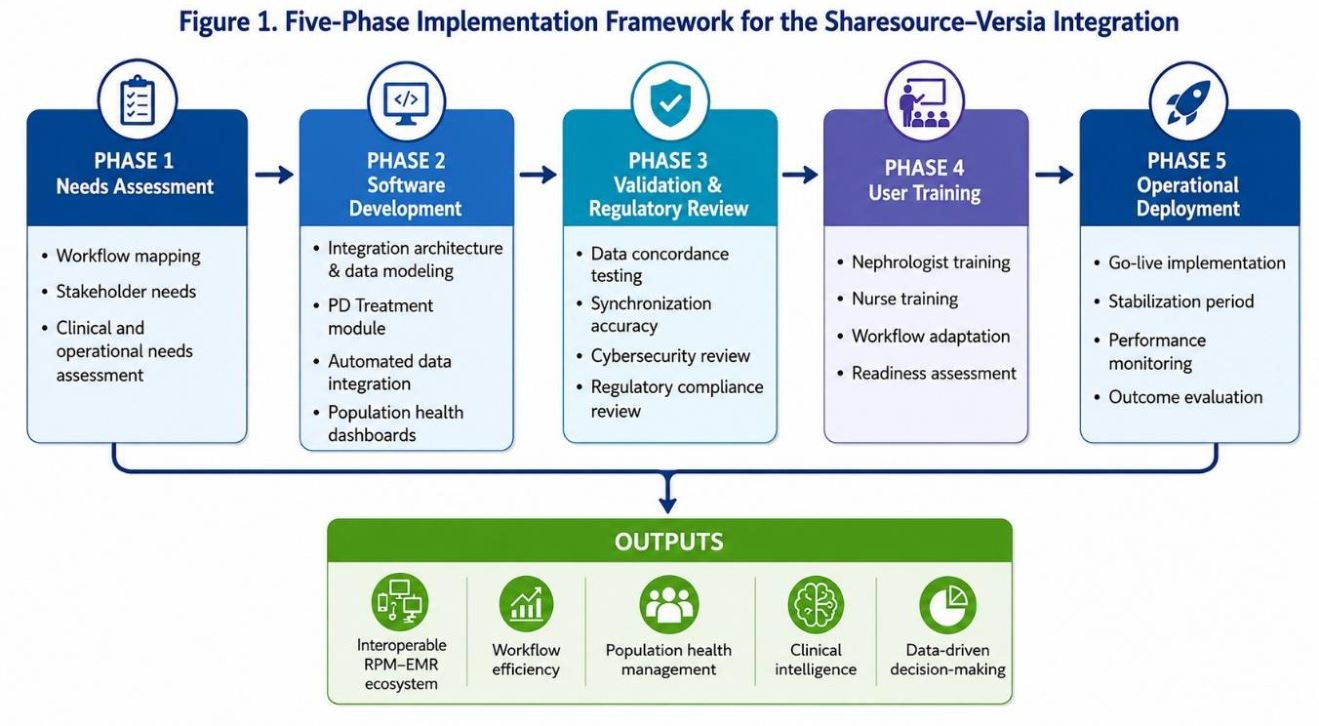
Figure 2.
Integration of Sharesource data into Versia. The figure illustrates the integration between Sharesource and Versia, including prescribed device program parameters, treatment adherence, alerts, events, and longitudinal clinical data such as total ultrafiltration, body weight, and blood pressure.
Figure 2.
Integration of Sharesource data into Versia. The figure illustrates the integration between Sharesource and Versia, including prescribed device program parameters, treatment adherence, alerts, events, and longitudinal clinical data such as total ultrafiltration, body weight, and blood pressure.
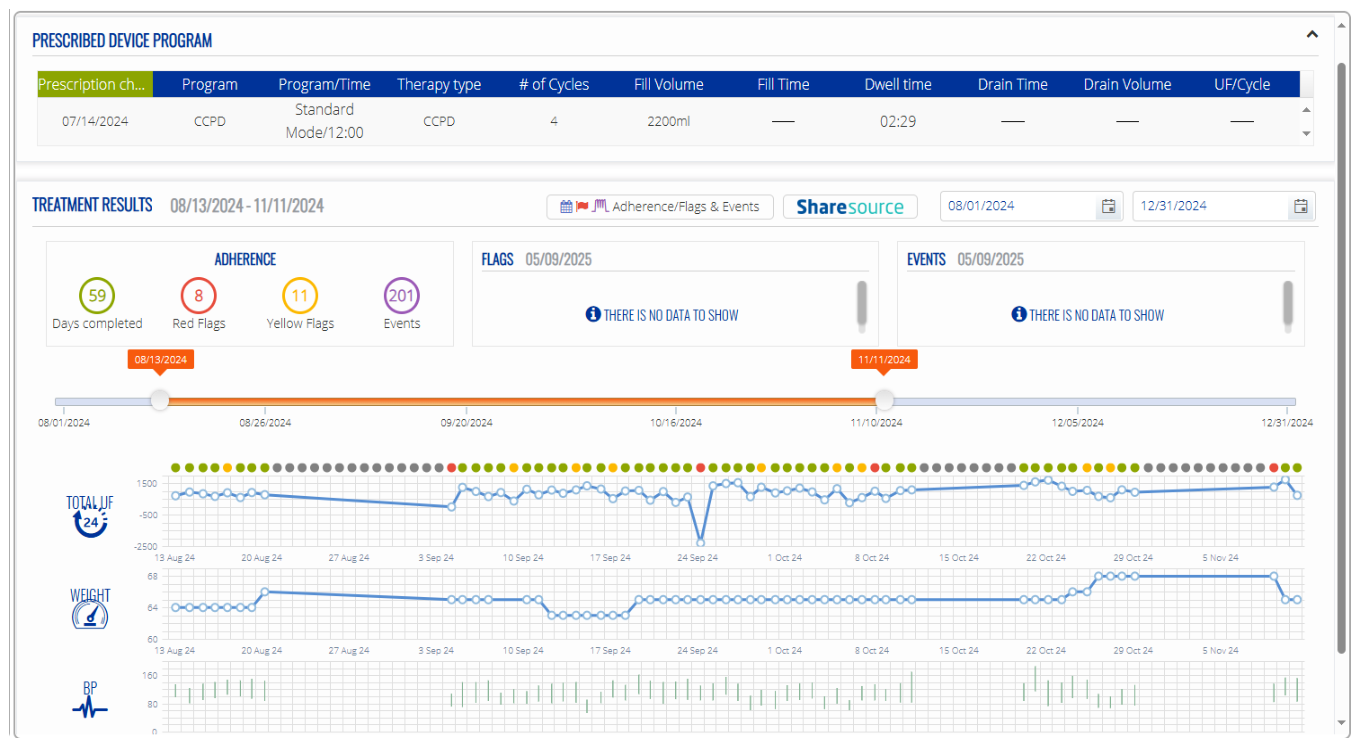
Figure 3.
Interactive population health dashboard integrating Sharesource remote monitoring data with Versia electronic medical record data.
Figure 3.
Interactive population health dashboard integrating Sharesource remote monitoring data with Versia electronic medical record data.
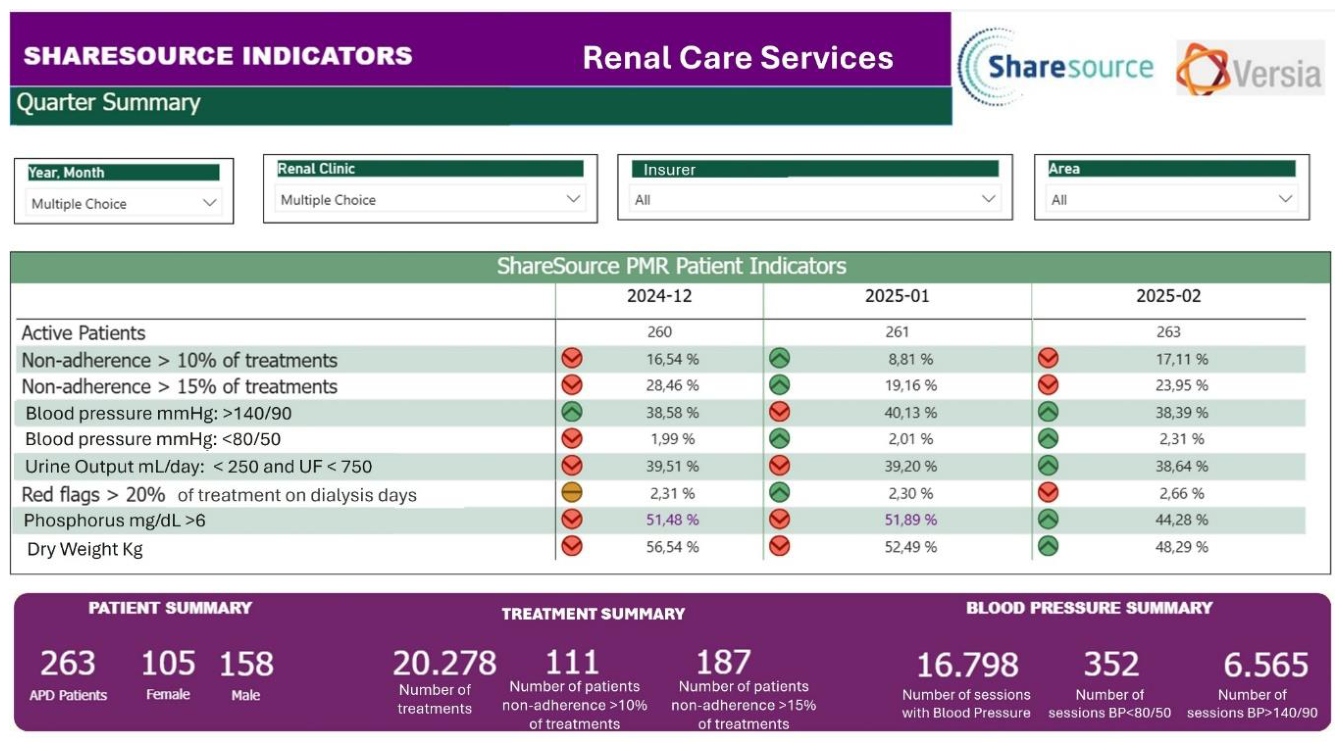

Table 1.
Population health management outcomes following implementation of the integrated RPM-EMR ecosystem.
Table 1.
Population health management outcomes following implementation of the integrated RPM-EMR ecosystem.
| Domain | Measure | Result |
|---|---|---|
| Population surveillance | Patients monitored | 287 |
| Risk identification | Patient-clinic communications | 501 |
| Clinic initiated | 463 (92.4%) | |
| Patient initiated | 38 (7.6%) | |
| Clinical prioritization | Preemptive clinical visits | 159 |
| Treatment optimization | Prescription modifications | 122 |
| Healthcare utilization | Emergency department visits | 34 |
Table 2.
Time-and-motion analysis before and after Sharesource–Versia integration.
| Activity | Before integration |
After integration |
Relative change |
|---|---|---|---|
| Nursing consultation time (minutes/patient) | 34 | 26 | -23.5% |
| Nephrologist consultation time (minutes/patient) | 31 | 25 | -19.4% |
| Nurse RPM review time (minutes/patient) | 4.4 | 2 | -54.5% |
| Nephrologist RPM review time (minutes/patient) | 2.5 | 1 | -60.0% |
| Value-added nursing activities (%) | 90 | 94 | +4.4% |
| Value-added nephrology activities (%) | 89 | 90 | +1.1% |
Table 3.
Nephrologist and nurse ratings of the Versia-Sharesource PD Treatment module across key domains.
Table 3.
Nephrologist and nurse ratings of the Versia-Sharesource PD Treatment module across key domains.
| Item | Nephrologists, N = 6 Mean ± SD |
Nurses, N = 9 Mean ± SD |
|---|---|---|
| Overall Experience | ||
| Comfortability using Versia-Sharesource integration | 6.2 (0.9) | 5.7 (1.0) |
| Likelihood to recommend the PD module to colleagues | 6.0 (1.3) | 5.8 (0.7) |
| Usability & Design | ||
| Easy to navigate | 6.5 (0.5) | 5.8 (1.3) |
| Configurable by the user | 1.8 (1.3) | 1.0 (0.0) |
| Customizable | 1.7 (1.8) | 1.4 (1.3) |
| System Performance & Integration | ||
| Well integrated / good interoperability | 5.5 (1.6) | 5.3 (1.3) |
| Data accuracy | 6.7 (0.5) | 4.8 (1.9) |
| Clinical Functionality | ||
| Ability to track adherence | 6.7 (0.5) | 5.9 (1.3) |
| Ability to track flags and events | 5.8 (1.5) | 5.7 (1.7) |
| Ability to track key parameters (UF, weight, blood pressure) | 6.7 (0.5) | 5.6 (1.6) |
| Ability to triage patients | 6.7 (0.5) | 2.7 (1.6) |
| Ability to review and assess patients | 6.6 (0.5) | 5.0 (1.0) |
| Ability to proactively identify patient issues | 6.0 (1.2) | 5.6 (1.3) |
| Ability to review PD cycler data | 6.2 (1.2) | 5.4 (1.5) |
| Workflow Support | ||
| Supports tracking of prescriptions and program changes | 5.5 (2.1) | 5.4 (1.6) |
| Simplifies PD workflow | 5.5 (1.8) | 3.7 (1.1) |
| Saves time | 5.7 (1.8) | 4.8 (1.3) |
| Documentation & Reporting | ||
| Printing documents | 6.5 (0.8) | 5.2 (1.5) |
| Improves patient review and assessment (clinical & treatment data) | 6.0 (1.3) | 5.1 (1.2) |
| Improves documentation in Versia | 4.7 (2.1) | 5.6 (1.5) |
| Generates dashboards / patient summaries | 5.0 (2.1) | 2.4 (1.7) |
| Perceived Clinical Value | ||
| Improves tracking of prescriptions and program changes | 5.0 (2.4) | 5.8 (1.6) |
| Improves tracking of adherence | 6.0 (1.5) | 5.3 (1.1) |
| Improves tracking of key parameters (UF, weight, blood pressure) | 6.7 (0.5) | 5.2 (1.6) |
| Supports discussion with patients about treatment status and progress | 6.2 (1.2) | 5.6 (1.3) |
Survey scale: 1 = not at all comfortable; 2 = slightly comfortable; 3 = somewhat comfortable; 4 = moderately comfortable; 5 = comfortable; 6 = very comfortable; 7 = extremely comfortable.
Disclaimer/Publisher’s Note: The statements, opinions and data contained in all publications are solely those of the individual author(s) and contributor(s) and not of MDPI and/or the editor(s). MDPI and/or the editor(s) disclaim responsibility for any injury to people or property resulting from any ideas, methods, instructions or products referred to in the content. |
© 2026 by the authors. Licensee MDPI, Basel, Switzerland. This article is an open access article distributed under the terms and conditions of the Creative Commons Attribution (CC BY) license (http://creativecommons.org/licenses/by/4.0/).
Copyright: This open access article is published under a Creative Commons CC BY 4.0 license, which permit the free download, distribution, and reuse, provided that the author and preprint are cited in any reuse.