

Submitted:
07 August 2026
Posted:
10 August 2026
You are already at the latest version
Abstract
Background/Objectives: Cognitive stimulation and cognitive training are used as non-pharmacological approaches to support people living with Alzheimer’s disease, but Alzheimer-specific evidence is dispersed across heterogeneous intervention formats. This scoping review mapped structured cognitive stimulation and training interventions evaluated in people with mild-to-moderate Alzheimer’s disease and summarized the cognitive, emotional, functional, and follow-up outcomes reported. Methods: The review was conducted using the Joanna Briggs Institute methodology and reported according to PRISMA-ScR. PubMed, SciELO, PEDro, LILACS, and Google Scholar were searched on 24 February 2025 for studies published between January 2015 and 24 February 2025 in English, Portuguese, or Spanish. Intervention studies were eligible. Two reviewers independently screened records and charted data, with disagreements resolved by a third reviewer. Results: Of 352 records identified, five studies involving 245 participants were included. Interventions comprised virtual-reality cognitive stimulation, conventional cognitive training, group reminiscence therapy, a multicomponent music–reminiscence–reality-orientation intervention, and computerized cognitive training. Technology-based interventions reported improvements in global cognition or selected memory, language, attention, and executive outcomes. Conventional cognitive training improved initiative and temporarily stabilized memory. Reminiscence-based interventions primarily improved depressive and neuropsychiatric symptoms. Where longer follow-up was available, benefits diminished over time. Conclusions: The mapped evidence suggests that structured cognitive stimulation and training may produce short-term, outcome-specific benefits in mild-to-moderate Alzheimer’s disease. However, the small number of heterogeneous studies, variable outcome measures, and limited long-term evidence preclude firm conclusions regarding comparative effectiveness. More rigorous and adequately powered studies are needed.
Keywords:
Alzheimer’s disease
; cognitive stimulation
; cognitive training
; reminiscence therapy
; virtual reality
; computerized cognitive training
; scoping review
1. Introduction
Dementia is a major cause of disability and dependency in later life. The World Health Organization estimates that 57 million people were living with dementia in 2021 and that Alzheimer’s disease accounts for approximately 60–70% of cases [1]. Although pharmacological treatment is an important component of clinical management, comprehensive dementia care also includes non-pharmacological strategies intended to support cognition, daily functioning, participation, and quality of life [1,2].
Cognitive stimulation commonly involves a range of engaging activities designed to provide general stimulation for thinking, concentration, and memory, frequently in a social context [2]. Cognitive training is more task-specific and generally consists of guided practice on standardized tasks targeting particular cognitive domains [3]. These approaches differ conceptually from cognitive rehabilitation, which is individualized and oriented toward personally meaningful functional goals [3,4]. In practice, however, the terminology and content of interventions often overlap, particularly in studies that combine memory exercises, reminiscence, reality orientation, music, computerized tasks, or simulations of everyday activities.
A recent Cochrane review of cognitive stimulation in people with dementia found small probable benefits for cognition and possible benefits in other outcomes, while also emphasizing substantial heterogeneity in intervention delivery, frequency, and participant characteristics [2]. Alzheimer-specific studies are especially heterogeneous, ranging from conventional group interventions to computerized training and immersive virtual-reality environments. Mapping these modalities separately in people with a confirmed Alzheimer’s disease diagnosis may clarify what has been evaluated, which outcomes have been reported, and where important evidence gaps remain.
This scoping review therefore aimed to map structured cognitive stimulation and cognitive training interventions evaluated in adults with mild-to-moderate Alzheimer’s disease. The review question was: What structured cognitive stimulation or training interventions have been evaluated in people with mild-to-moderate Alzheimer’s disease, and what cognitive, emotional, functional, feasibility, and follow-up outcomes have been reported?
2. Materials and Methods
2.1. Design and Reporting
This scoping review was conducted in accordance with the Joanna Briggs Institute methodological guidance for scoping reviews [5] and is reported according to the Preferred Reporting Items for Systematic Reviews and Meta-Analyses extension for Scoping Reviews (PRISMA-ScR) [6]. A protocol for this scoping review was not prospectively registered or published.
2.2. Eligibility Criteria
Eligibility criteria were organized using the Population–Concept–Context framework.
Population. Studies were eligible when participants were adults with a clinical diagnosis of mild-to-moderate Alzheimer’s disease. Studies involving mixed dementia populations were eligible only when Alzheimer-specific data were reported separately. Studies of cognitively healthy participants, people considered only at risk of Alzheimer’s disease, mild cognitive impairment without a confirmed Alzheimer’s disease diagnosis, severe or advanced Alzheimer’s disease, or other forms of dementia without separately reported Alzheimer-specific data were excluded.
Concept. Eligible studies evaluated a structured, repeated, non-pharmacological intervention whose main purpose was to stimulate, train, or maintain cognitive functioning. Eligible modalities included conventional cognitive stimulation or training, reminiscence therapy, reality orientation, computerized cognitive training, and virtual-reality-based cognitive stimulation. Multicomponent interventions were eligible when a cognitively oriented component was central to the intervention. Pharmacological interventions, diagnostic tools, caregiver-only education, and interventions based exclusively on physical exercise, yoga, sensory stimulation, social robotics, or music without an explicit cognitive or reminiscence component were excluded.
Context. Studies conducted in home, community, day-care, outpatient, hospital, nursing-home, or residential-care settings were eligible.
Types of evidence sources. Randomized controlled trials, non-randomized controlled studies, and controlled pilot intervention studies published as full-text peer-reviewed articles between January 2015 and February 2025 were considered. Publications in English, Portuguese, or Spanish were eligible. Reviews, protocols, editorials, opinion papers, conference abstracts, case reports, uncontrolled case series, and observational studies without an intervention were excluded.
The lower publication-date limit of January 2015 was selected to focus the review on contemporary intervention research and to capture the period in which technology-assisted approaches, including computerized training and virtual reality, became increasingly prominent in Alzheimer’s disease care. The upper limit corresponded to the date of the final search, 24 February 2025. English, Portuguese, and Spanish were selected because these were the languages in which the review team could reliably assess full-text publications without translation. This pragmatic language restriction may have resulted in the exclusion of relevant studies published in other languages and was therefore considered a limitation of the review.
2.3. Information Sources and Search
The search was conducted on 24 February 2025 in PubMed, SciELO, LILACS, PEDro, and Google Scholar. The following database-specific search strings were used exactly as reported in the Table 1.
The searches covered publications from January 2015 to February 2025. Publications in English, Portuguese, or Spanish were considered during eligibility assessment. Google Scholar contributed 100 records to the screening set. Records were managed in Mendeley®, and duplicate records were removed before screening.
2.4. Selection of Evidence Sources
Two reviewers independently screened titles and abstracts against the eligibility criteria. Potentially relevant reports were then assessed in full text. Disagreements were resolved through discussion and, when required, consultation with a third reviewer. The selection process is summarized in Figure 1.
2.5. Data Charting and Synthesis
A standardized data-charting form was used to extract the author, year, country, study design, setting, participant characteristics, intervention and comparator, intervention dose, outcome domains, main findings, follow-up, and limitations. Data were summarized descriptively in tables and through a narrative synthesis organized by intervention modality and outcome domain. Consistent with the mapping purpose of this scoping review, no formal risk-of-bias or certainty-of-evidence assessment was undertaken.
3. Results
3.1. Study Selection
The search identified 352 records: PubMed (n = 143), SciELO (n = 10), LILACS (n = 23), PEDro (n = 76), and Google Scholar (n = 100). After the removal of 12 duplicates, 340 records were screened by title and abstract, and 308 were excluded. Thirty-two full-text reports were assessed for eligibility. Twenty-seven reports were excluded for the following primary reasons: ineligible population (n = 10), intervention not meeting the predefined cognitive stimulation or cognitive training concept (n = 5), ineligible study design or publication type (n = 5), and Alzheimer-specific data not reported separately (n = 7). Finally, five studies were included in the final review. Flow of study selection is present in Figure 1.
3.2. Characteristics of the Included Studies
Six reports describing five distinct studies were published between 2016 and 2021 and were conducted in Portugal, Italy, China, and Spain [7,8,9,10,11,12]. Together, the five studies included 245 participants with mild-to-moderate or early-stage Alzheimer’s disease. Four studies used randomized controlled designs, and one used a controlled quasi-experimental pilot design. One randomized trial was reported in an original publication and a subsequent 12-month follow-up report. Intervention duration ranged from eight weeks to three months, and the longest reported follow-up was 12 months. Characteristics of the included studies are presented in the Table 2.
3.3. Intervention Modalities and Reported Outcomes
The included interventions could be grouped into three broad modalities: technology-assisted cognitive interventions, conventional cognitive training, and reminiscence-based or multicomponent interventions. The reported outcomes and limitations are summarized in the Table 3.
3.3.1. Technology-Assisted Cognitive Interventions
Two studies, reported in three publications, evaluated technology-assisted approaches [7,11,12]. Oliveira et al. used an immersive virtual-reality intervention based on simulated instrumental activities of daily living and reported preliminary improvement in global cognition after 10 sessions [7]. Cavallo et al. reported the immediate and six-month outcomes of the computerized intervention, while Cavallo and Angilletta subsequently reported the 12-month follow-up findings [11,12]. Together, these studies indicate the potential of digital formats while also highlighting small samples, uncertain transfer to everyday functioning, and limited durability.
3.3.2. Conventional Cognitive Training
Giovagnoli et al. compared cognitive training with active music therapy and neuroeducation [8]. Cognitive training improved initiative and temporarily stabilized episodic memory, whereas the two non-cognitive comparators produced larger psychosocial changes. The decline observed across groups at follow-up suggests that maintenance or booster sessions may be relevant, although the study was not designed to establish an optimal maintenance schedule.
3.3.3. Reminiscence-Based and Multicomponent Interventions
Li et al. evaluated structured group reminiscence therapy and reported benefits for depressive and neuropsychiatric symptoms [9]. Onieva-Zafra et al. combined familiar music, reminiscence, and reality orientation and found a reduction in depression in a small nursing-home sample [10]. In these studies, the clearest signals concerned emotional and behavioural outcomes rather than consistent improvement across cognitive or functional domains.
4. Discussion
This scoping review mapped five studies evaluating structured cognitive stimulation or cognitive training interventions in people with mild-to-moderate Alzheimer’s disease. The identified interventions included conventional cognitive training, group reminiscence therapy, a multicomponent music–reminiscence–reality-orientation intervention, computerized cognitive training, and immersive virtual reality. Overall, the findings were heterogeneous and outcome-specific. Technology-assisted and conventional cognitive training interventions primarily reported changes in cognitive outcomes, whereas reminiscence-based interventions more consistently affected depressive or neuropsychiatric symptoms. Evidence concerning functional transfer, acceptability, and long-term maintenance remained limited.
The pattern identified in this review is broadly consistent with the wider dementia literature. A recent systematic review and meta-analysis by Paggetti et al. found that both group and individual cognitive stimulation may support global cognitive functioning in people living with dementia, while cognitive training appeared particularly beneficial among people with mild dementia [13]. However, that review also identified substantial heterogeneity in intervention modality, intensity, duration, delivery format, participant characteristics, and outcome measurement. The certainty of evidence for cognitive training was lower than that for cognitive stimulation, and improvements in trained tasks did not consistently translate into everyday functioning [13]. Although this broader review was not restricted to Alzheimer’s disease, its findings reinforce the need to distinguish cognitive stimulation, cognitive training, and cognitive rehabilitation rather than treating them as interchangeable interventions.
More recent Alzheimer-specific evidence also supports the potential value of structured cognitive stimulation as an adjunct to pharmacological treatment. In an evaluator-blinded randomized controlled trial published after the search conducted for the present review, Cai et al. compared 14 weekly sessions of modified cognitive stimulation therapy combined with standard pharmacotherapy against pharmacotherapy alone in 80 people with mild-to-moderate Alzheimer’s disease [14]. The intervention was associated with better post-intervention cognitive performance, activities of daily living, and quality of life. The adjusted between-group differences favoured the cognitive stimulation group for ADAS-Cog, ADL, and QOL-AD outcomes [14]. These findings strengthen the short-term cognitive and functional signals observed in the studies mapped in the present review. Nevertheless, the absence of an active social-contact control, the relatively small sample, and the limited follow-up period mean that the specific contribution and durability of cognitive stimulation remain uncertain.
The different outcome profiles observed across intervention modalities may reflect differences in their therapeutic targets and mechanisms. Cognitive training generally involves repeated practice of specific cognitive operations, which may explain the improvements reported in memory, attention, language, or executive measures. By contrast, reminiscence-based interventions incorporate autobiographical memory, personal meaning, emotional expression, and social interaction. These characteristics may help explain why the clearest benefits in the reminiscence studies concerned depression and neuropsychiatric symptoms rather than consistent improvements across cognitive or functional outcomes. The wider evidence synthesized by Paggetti et al. similarly suggests that cognitive outcomes depend on the intervention modality, dementia severity, delivery format, and correspondence between the trained activities and the outcomes assessed [13].
Technology-assisted approaches may offer additional opportunities for personalization, repeated practice, ecological simulation, and delivery across different settings. In the present review, virtual reality was used to reproduce instrumental activities of daily living, whereas computerized cognitive training targeted memory, attention, executive functioning, and language [7,11,12]. However, technology should be understood as a mode of delivery rather than as evidence of superior effectiveness in itself. The clinical value of a digital intervention is likely to depend on whether it is accessible, meaningful, appropriately challenging, and integrated with professional guidance and interpersonal interaction.
This interpretation is supported by the mixed-methods study conducted by Fang et al., in which cognitive stimulation and digital cognitive training were embedded within a broader integrated care model comprising person-centred assessment, physical exercise, communication strategies, sensory interventions, digital technologies, and structured caregiver support [15]. Over 24 months, the integrated-care group demonstrated slower cognitive decline, better quality of life and functional outcomes, fewer behavioural symptoms, and reduced caregiver burden compared with usual care [15]. These findings suggest that cognitive interventions may be most clinically meaningful when integrated into comprehensive and person-centred care. However, because the intervention contained several coordinated components and used a quasi-experimental design, the observed outcomes cannot be attributed specifically to cognitive stimulation or digital training.
The implementation of digital and home-supported interventions also requires consideration of family caregivers. The systematic review and metasynthesis by Yu et al. showed that well-designed web-based psychoeducation programmes can enhance caregivers’ knowledge, self-efficacy, coping skills, and sense of empowerment [16]. Caregivers particularly valued relevant and stage-appropriate information, peer connection, professional facilitation, flexible access, and opportunities to revisit educational resources. Conversely, poor internet access, limited digital literacy, time constraints, information overload, and the absence of individual support impeded engagement [16]. Although this evidence does not demonstrate a direct effect on the cognition of people with Alzheimer’s disease, it identifies implementation conditions that may influence adherence, continuity, and the feasibility of home-based cognitive activities.
Caregiver involvement may be particularly relevant to intervention maintenance. In the studies mapped in this review, cognitive and initiative-related improvements diminished after treatment cessation, with deterioration observed at three months in the study by Giovagnoli et al. and attenuation of computerized-training gains at 12 months in the follow-up reported by Cavallo and Angilletta [8,12]. The wider meta-analytic evidence also highlights considerable variability in intervention frequency and intensity, with many studies using brief or low-intensity programmes [13]. Accordingly, future research should examine whether maintenance sessions, booster programmes, supervised home practice, or blended professional–caregiver delivery can sustain benefits beyond the immediate intervention period.
The findings also suggest that uniform intervention protocols may not be equally appropriate for all participants. Cai et al. identified educational attainment, baseline cognitive status, regular physical activity, and engagement in hobbies as exploratory predictors of response to cognitive stimulation therapy [14]. These results are compatible with the possible influence of cognitive reserve, lifestyle, and preserved learning capacities. Paggetti et al. similarly emphasized the potential contribution of educational, cultural, cognitive-reserve, and lifestyle characteristics to the variability in treatment response [13]. These findings should not be interpreted as indicating that people with lower education or more impaired cognition are unsuitable for cognitive intervention. Rather, they support adapting task complexity, pace, repetition, session duration, group size, sensory presentation, and the degree of caregiver or professional support to each person’s remaining abilities and preferences.
For nursing and multidisciplinary practice, the evidence supports the cautious inclusion of structured cognitive activities as an adjunct to comprehensive Alzheimer’s disease care. Intervention selection should be based on disease stage, cognitive and functional capacity, sensory and motor abilities, cultural background, digital familiarity, personal history, emotional response, and the care environment. Nurses may have a particularly important role in assessing these factors, tailoring activities, monitoring engagement and distress, educating caregivers, and coordinating cognitive interventions with pharmacological, functional, psychosocial, and behavioural care. Technology should augment rather than replace therapeutic relationships, and digital interventions should retain meaningful human guidance and social interaction [17,18,19,20].
Future trials should recruit larger and more diverse samples, use clearly described and replicable intervention protocols, and include active comparators capable of controlling for attention, expectation, group participation, and social contact. Core outcomes should encompass not only neuropsychological test performance but also everyday functioning, participation, quality of life, neuropsychiatric symptoms, caregiver outcomes, adherence, acceptability, adverse events, and implementation feasibility. Longer follow-up is required to determine whether short-term gains are maintained and to identify the optimal timing, frequency, intensity, and duration of maintenance or booster strategies.
This review has several limitations. First, only five distinct studies were included, and their interventions, comparators, outcome measures, and follow-up schedules were heterogeneous. Second, although five information sources were searched, the documented strategy relied on a relatively restricted set of search terms. Relevant studies indexed primarily under alternative concepts such as cognitive rehabilitation, cognitive intervention, computerized training, psychosocial intervention, or reality orientation may therefore have been missed. Third, the final search was conducted in February 2025. Evidence published subsequently, including recent controlled studies of modified cognitive stimulation therapy and integrated Alzheimer’s disease care, demonstrates the importance of updating the search before submission [14,15]. Studies published after the original search that meet the eligibility criteria should be incorporated into the study-selection process, data-charting tables, and narrative synthesis rather than being treated solely as external discussion sources. Fourth, the review was restricted to peer-reviewed publications in English, Portuguese, and Spanish, potentially excluding relevant evidence from other linguistic and cultural contexts. Fifth, no formal methodological appraisal or certainty-of-evidence assessment was undertaken. The findings therefore represent a map of reported interventions and outcomes rather than an estimate of comparative effectiveness.
5. Conclusions
The available controlled studies suggest that structured cognitive stimulation and training may provide short-term, domain-specific benefits for people with mild-to-moderate Alzheimer’s disease. Conventional and technology-assisted training primarily showed signals in cognitive outcomes, while reminiscence-based approaches more consistently affected depressive and neuropsychiatric symptoms. Evidence regarding functional transfer, acceptability, comparative effectiveness, and long-term maintenance remains insufficient. Future studies should use larger and more diverse samples, clearly described and replicable interventions, standardized core outcomes, active comparators, and longer follow-up, including evaluation of maintenance or booster strategies.
Author Contributions
Conceptualization, R.M., N.C., R.L. and J.B.; methodology, R.M., N.C., R.L. and J.B.; investigation, R.M. and N.C.; data curation, R.M., N.C. and R.L.; formal analysis, R.M., N.C., R.L. and J.B.; writing—original draft preparation, R.M. and N.C.; writing—review and editing, R.L. and J.B.; visualization, R.L. and J.B.; supervision, J.B. All authors have read and agreed to the published version of the manuscript.
Funding
This research received no external funding.
Institutional Review Board Statement
Not applicable.
Informed Consent Statement
Not applicable.
Data Availability Statement
The data charted from the included studies are presented in this article. Additional review materials, including the screening log and data-charting form, may be made available by the corresponding author on reasonable request.
Use of Generative Artificial Intelligence: Generative artificial intelligence was used to support English-language editing and the structural organization of the manuscript. It was not used to conduct study selection, data extraction, or evidence interpretation. All eligibility decisions, data verification, interpretations, and final manuscript content were reviewed and approved by the authors, who take full responsibility for the work.
Conflicts of Interest
The authors declare no conflicts of interest.
Abbreviations
The following abbreviations are used in this manuscript:
| AD | Alzheimer’s disease |
| IADL | Instrumental activities of daily living |
| JBI | Joanna Briggs Institute |
| PRISMA-ScR | Preferred Reporting Items for Systematic Reviews and Meta-Analyses extension for Scoping Reviews |
| VR | Virtual reality |
References
- World Health Organization. Dementia. Available online: https://www.who.int/news-room/fact-sheets/detail/dementia (accessed on 5 August 2026).
- Woods, B.; Rai, H.K.; Elliott, E.; Aguirre, E.; Orrell, M.; Spector, A. Cognitive stimulation to improve cognitive functioning in people with dementia. Cochrane Database Syst. Rev. 2023, 1, CD005562. [Google Scholar] [CrossRef] [PubMed]
- Bahar-Fuchs, A.; Martyr, A.; Goh, A.M.Y.; Sabates, J.; Clare, L. Cognitive training for people with mild to moderate dementia. Cochrane Database Syst. Rev. 2019, 3, CD013069. [Google Scholar] [CrossRef] [PubMed]
- Kudlicka, A.; Martyr, A.; Bahar-Fuchs, A.; Sabates, J.; Woods, B.; Clare, L. Cognitive rehabilitation for people with mild to moderate dementia. Cochrane Database Syst. Rev. 2023, 6, CD013388. [Google Scholar] [CrossRef] [PubMed]
- Peters, M.D.J.; Marnie, C.; Tricco, A.C.; Pollock, D.; Munn, Z.; Alexander, L.; McInerney, P.; Godfrey, C.M.; Khalil, H. Updated methodological guidance for the conduct of scoping reviews. JBI Evid. Synth. 2020, 18, 2119–2126. [Google Scholar] [CrossRef] [PubMed]
- Tricco, A.C.; Lillie, E.; Zarin, W.; O’Brien, K.K.; Colquhoun, H.; Levac, D.; Moher, D.; Peters, M.D.J.; Horsley, T.; Weeks, L.; et al. PRISMA Extension for Scoping Reviews (PRISMA-ScR): Checklist and explanation. Ann. Intern. Med. 2018, 169, 467–473. [Google Scholar] [CrossRef] [PubMed]
- Oliveira, J.; Gamito, P.; Souto, T.; Conde, R.; Ferreira, M.; Corotnean, T.; Fernandes, A.; Silva, H.; Neto, T. Virtual reality-based cognitive stimulation on people with mild to moderate dementia due to Alzheimer’s disease: A pilot randomized controlled trial. Int. J. Environ. Res. Public Health 2021, 18, 5290. [Google Scholar] [CrossRef] [PubMed]
- Giovagnoli, A.R.; Manfredi, V.; Parente, A.; Schifano, L.; Oliveri, S.; Avanzini, G. Cognitive training in Alzheimer’s disease: A controlled randomized study. Neurol. Sci. 2017, 38, 1485–1493. [Google Scholar] [CrossRef] [PubMed]
- Li, M.; Lyu, J.-H.; Zhang, Y.; Gao, M.-L.; Li, R.; Mao, P.-X.; Li, W.-J.; Ma, X. Efficacy of group reminiscence therapy on cognition, depression, neuropsychiatric symptoms, and activities of daily living for patients with Alzheimer disease. J. Geriatr. Psychiatry Neurol. 2020, 33, 272–281. [Google Scholar] [CrossRef] [PubMed]
- Onieva-Zafra, M.D.; Hernández-García, L.; González-del-Valle, M.T.; Parra-Fernández, M.L.; Fernández-Martínez, E. Music intervention with reminiscence therapy and reality orientation for elderly people with Alzheimer disease living in a nursing home: A pilot study. Holist. Nurs. Pract. 2018, 32, 43–50. [Google Scholar] [CrossRef] [PubMed]
- Cavallo, M.; Hunter, E.M.; van der Hiele, K.; Angilletta, C. Computerized structured cognitive training in patients affected by early-stage Alzheimer’s disease is feasible and effective: A randomized controlled study. Arch. Clin. Neuropsychol. 2016, 31, 868–876. [Google Scholar] [CrossRef] [PubMed]
- Cavallo, M.; Angilletta, C. Long-lasting neuropsychological effects of a computerized cognitive training in patients affected by early stage Alzheimer’s disease: Are they stable over time? J. Appl. Gerontol. 2019, 38, 1035–1044. [Google Scholar] [CrossRef] [PubMed]
- Paggetti, A.; Druda, Y.; Sciancalepore, F.; Della Gatta, F.; Anicioni, A.; Locuratolo, N.; Piscopo, P.; Vignatelli, L.; Sagliocca, L.; Guaita, A.; et al. The efficacy of cognitive stimulation, cognitive training, and cognitive rehabilitation for people living with dementia: A systematic review and meta-analysis. GeroScience 2025, 47, 409–444. [Google Scholar] [CrossRef] [PubMed]
- Cai, L.; Zhao, X.; Liao, C.; Liu, Q.; Hu, S.; Huang, M. Efficacy and predictors of cognitive stimulation therapy combined with pharmacotherapy for mild-to-moderate Alzheimer’s disease: A randomized controlled trial. Front. Psychiatry 2026, 17, 1840039. [Google Scholar] [CrossRef] [PubMed]
- Fang, H.; Cui, F.; Zhao, Y.; Qian, Q.; Yong, A.; Lan, P.; Huang, C. Transforming Alzheimer’s disease nursing: Integrating holistic care, innovative interventions, and evidence-based practices for enhanced patient outcomes. Front. Public Health 2025, 13, 1624310. [Google Scholar] [CrossRef] [PubMed]
- Yu, Y.; Xiao, L.; Ullah, S.; Meyer, C.; Wang, J.; Pot, A.M.; Shifaza, F. The experiences of informal caregivers of people with dementia in web-based psychoeducation programs: Systematic review and metasynthesis. JMIR Aging 2023, 6, e47152. [Google Scholar] [CrossRef] [PubMed]
- Shuzhen, L.; Wei, W.; Hongyan, G.; Ruiying, W.; Mulud, Z.A. Effects of multidisciplinary collaborative nursing combined with cognitive stimulation therapy on cognitive function, quality of life, and daily activities in patients with Alzheimer’s disease. J. Popul. Ther. Clin. Pharmacol. 2022, 29, e86–e96. [Google Scholar] [CrossRef] [PubMed]
- Kleinke, F.; Michalowsky, B.; Rädke, A.; Platen, M.; Mühlichen, F.; Scharf, A.; Mohr, W.; Penndorf, P.; Bahls, T.; van den Berg, N.; Hoffmann, W. Advanced nursing practice and interprofessional dementia care (InDePendent): Study protocol for a multi-center, cluster-randomized, controlled, interventional trial. Trials 2022, 23, 290. [Google Scholar] [CrossRef] [PubMed]
- Campbell, J.L. Exploring interprofessional collaboration and patient-centered care for people living with dementia. Home Healthc. Now. 2025, 43, 197–205. [Google Scholar] [CrossRef] [PubMed]
- Zucchella, C.; Sinforiani, E.; Tamburin, S.; Federico, A.; Mantovani, E.; Bernini, S.; Casale, R.; Bartolo, M. The multidisciplinary approach to Alzheimer’s disease and dementia: A narrative review of non-pharmacological treatment. Front. Neurol. 2018, 9, 1058. [Google Scholar] [CrossRef] [PubMed]
Figure 1.
PRISMA-ScR flow diagram of study selection.
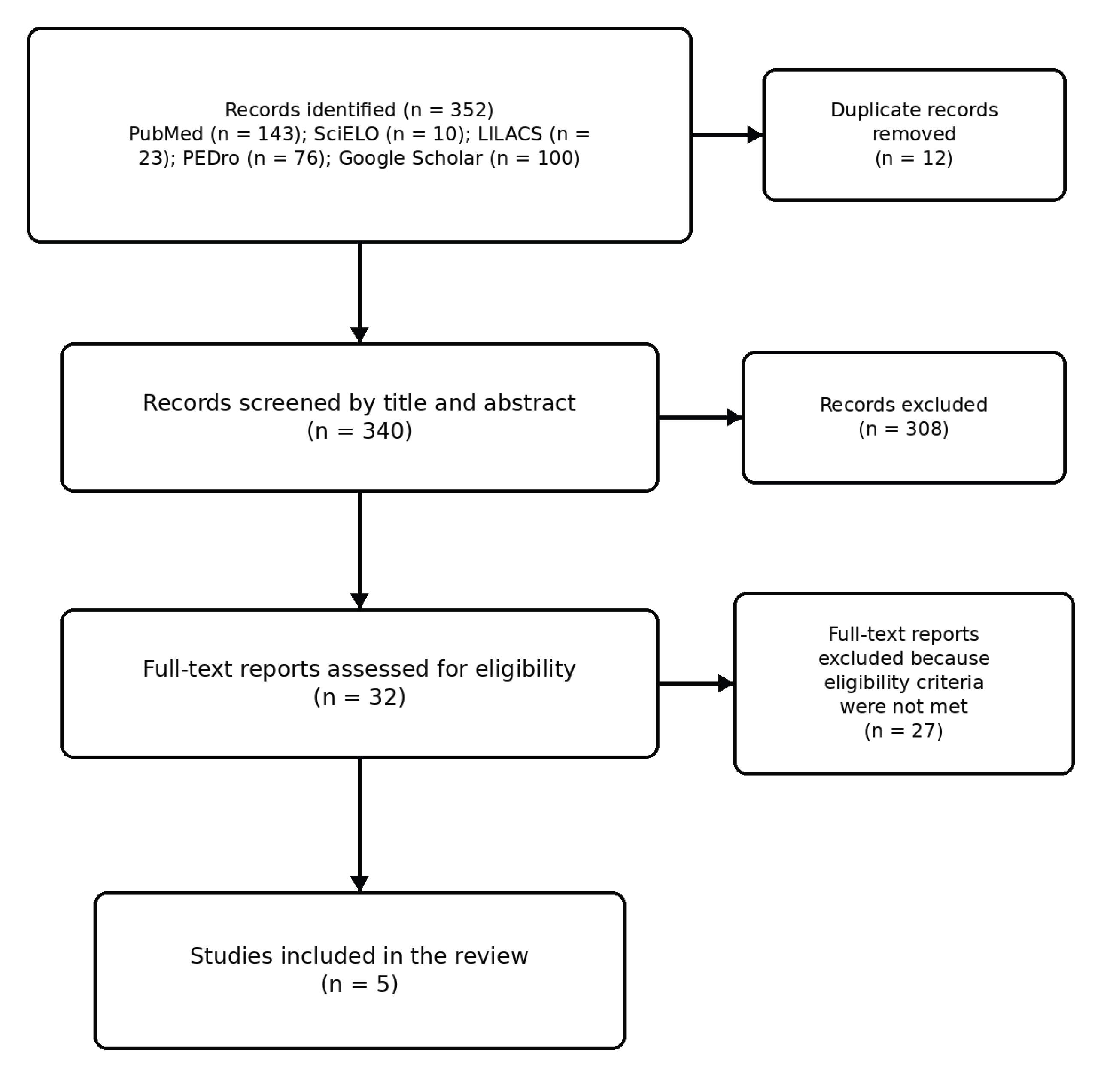

Table 1.
Characteristics of the included studies.
| Database | Number of results |
|
PubMed: (“Alzheimer Disease”[Mesh] OR Alzheimer[Title/Abstract]) AND (“cognitive stimulation”[Title/Abstract]) AND (“Aged”[Mesh] OR elderly[Title/Abstract] OR “older adult”[Title/Abstract]) |
143 |
|
SciELO: Aged AND cognitive stimulation AND Alzheimer |
10 |
|
LILACS: Aged AND cognitive stimulation AND Alzheimer |
23 |
|
PEDro: Aged AND cognitive stimulation AND Alzheimer |
76 |
|
Google Scholar: Aged AND cognitive stimulation AND Alzheimer |
100 |
Table 2.
Characteristics of the included studies.
| Study | Country / design | Participants / setting | Intervention | Comparator / assessment |
| Oliveira et al. (2021) [7] | Portugal; open-label pilot randomized controlled trial | 17 participants with mild-to-moderate dementia due to Alzheimer’s disease; residential care homes | Virtual-reality cognitive stimulation reproducing instrumental activities of daily living; 10 sessions over 2 months (2 sessions/week) | Treatment as usual; baseline and post-intervention neuropsychological assessment |
| Giovagnoli et al. (2017) [8] | Italy; randomized, controlled, single-blind study | 39 participants with mild-to-moderate Alzheimer’s disease | Cognitive training for 3 months | Active music therapy or neuroeducation; post-intervention and 3-month follow-up |
| Li et al. (2020) [9] | China; single-blind randomized parallel controlled trial | 90 participants with mild-to-moderate Alzheimer’s disease recruited from a geriatric hospital | Group reminiscence therapy; two 30–45 min sessions/week for 12 weeks | Conventional drug treatment and routine care; assessment at baseline, 4, 12, and 24 weeks |
| Onieva-Zafra et al. (2018) [10] | Spain; controlled quasi-experimental pilot pretest–posttest study | 19 nursing-home residents with mild Alzheimer’s disease (intervention n = 9; control n = 10) | Music and reminiscence therapy combined with reality-orientation techniques; two sessions/week for 8 weeks | Control group; baseline and post-intervention assessment |
| Cavallo et al. (2016) and Cavallo and Angilletta (2019) [11,12] | Italy; randomized controlled trial with a subsequent 12-month follow-up report [12] | 80 participants with early-stage Alzheimer’s disease | Computerized structured cognitive training targeting memory, attention, executive function, and language; 3 sessions/week for 12 weeks | Control intervention; assessment before, immediately after, and at longer-term follow-up |
Table 3.
Outcomes, main findings, and limitations reported in the included studies.
| Study | Outcome domains | Main reported findings | Follow-up / limitations |
| Oliveira et al. (2021) [7] | Global cognition, memory, attention, executive functions | Preliminary findings suggested improvement in overall cognitive functioning in the virtual-reality group. | Small pilot sample; treatment-as-usual rather than active control; no long-term follow-up. |
| Giovagnoli et al. (2017) [8] | Initiative, episodic memory, depression, anxiety, social relationships | Cognitive training improved initiative and stabilized episodic memory at treatment completion. Mood and social relationships improved across all three treatment groups, with larger psychosocial changes after active music therapy or neuroeducation. | Initiative and episodic memory declined across groups at the 3-month follow-up. Small sample across three arms. |
| Li et al. (2020) [9] | Cognition, depression, neuropsychiatric symptoms, activities of daily living | Group reminiscence therapy produced significant improvements in depressive and neuropsychiatric symptoms compared with control care. | Single-centre study. The abstracted evidence did not demonstrate clear between-group benefits for cognition or activities of daily living. |
| Onieva-Zafra et al. (2018) [10] | Depression and anxiety | The combined music, reminiscence, and reality-orientation intervention reduced depressive symptoms in participants with mild Alzheimer’s disease. | Very small non-randomized pilot sample; no long-term follow-up; anxiety benefit was not clearly established. |
| Cavallo et al. (2016) and Cavallo and Angilletta (2019) [11,12] | Short-term and working memory, ecological memory, language comprehension, executive function | Computerized training was associated with improvement across several neuropsychological domains compared with the control intervention. | The improvements decreased at 12 months; ecological transfer to everyday functioning remained uncertain. |
Disclaimer/Publisher’s Note: The statements, opinions and data contained in all publications are solely those of the individual author(s) and contributor(s) and not of MDPI and/or the editor(s). MDPI and/or the editor(s) disclaim responsibility for any injury to people or property resulting from any ideas, methods, instructions or products referred to in the content. |
© 2026 by the authors. Licensee MDPI, Basel, Switzerland. This article is an open access article distributed under the terms and conditions of the Creative Commons Attribution (CC BY) license (http://creativecommons.org/licenses/by/4.0/).
Copyright: This open access article is published under a Creative Commons CC BY 4.0 license, which permit the free download, distribution, and reuse, provided that the author and preprint are cited in any reuse.