

Submitted:
07 August 2026
Posted:
10 August 2026
You are already at the latest version
Abstract
Introduction: Yellow fever re-emerged as a major public health threat in the Americas during 2024–2025, with increasing numbers of cases and deaths, predominantly among unvaccinated individuals. Although the live-attenuated 17D yellow fever vaccine is highly effective, adults aged ≥60 years have an increased risk of serious adverse events following immunization (AEFIs). We assessed the safety profile of yellow fever vaccination in Colombia, with particular emphasis on older adults, and contextualized the observed risks within an epidemic setting characterized by active transmission and high mortality. Methods: We conducted an observational, descriptive study using secondary data from Colombia’s Expanded Program on Immunization and the national VigiFlow pharmacovigilance system. Individuals vaccinated against yellow fever between October 1, 2024, and July 31, 2025, were included. Reported AEFIs were analyzed by severity, sex, and age group. Rates were calculated per 100,000 vaccinated individuals, with 95% confidence intervals, and compared between adults aged ≥60 years and younger individuals. Older adults were further stratified into five-year age groups. Results: Among 3,915,966 vaccinated individuals, 425 AEFIs were reported in 233 unique cases. The overall AEFI rate was 10.85 per 100,000 vaccinated individuals, and the severe AEFI rate was 2.94 per 100,000. Adults aged ≥60 years had substantially higher rates of overall AEFIs than those aged <60 years (54.05 versus approximately 6.1 per 100,000, respectively), corresponding to a rate ratio of 8.8. Severe AEFI rates were 11.90 per 100,000 among adults aged ≥60 years and approximately 2.0 per 100,000 among younger individuals, corresponding to a rate ratio of 6.1. The highest severe-event rate was observed among adults aged 80–84 years, at 49.82 per 100,000. Nine fatal outcomes were reported; following causality assessment, none was considered attributable to the vaccine. Conclusions: Reported AEFIs following yellow fever vaccination were more frequent among adults aged ≥60 years, with a particularly marked increase in the oldest age groups. Nevertheless, the absolute rate of severe events remained low, at approximately 1.2 per 10,000 vaccinated older adults, and no reviewed fatal outcomes were attributed to vaccination. In settings of active yellow fever transmission, vaccination decisions for older adults should therefore be guided by individualized benefit–risk assessment rather than age alone, accompanied by careful screening, active pharmacovigilance, and clear risk communication. Vaccination remains the principal intervention for preventing yellow fever-related deaths.
Keywords:
yellow fever
; vaccination
; post-vaccination adverse events
; elderly
; epidemiological surveillance
; Colombia
Introduction
Yellow fever is an acute viral hemorrhagic disease [1], frequently manifesting with fever, myalgia, and jaundice [2]. A proportion of patients progress to a toxic phase, with liver and kidney failure, reaching a case fatality rate of approximately 40% [1,3]. Among patients who develop severe disease, approximately half die within 7 to 10 days [1,3].
Despite the availability of a safe and effective vaccine for more than eight decades, yellow fever has re-emerged as a threat to regional health security [4,5]. Between 2024 and 2025, an increase in cases was documented in several countries of the Americas [6], with reports occurring outside endemic areas such as the Amazon basin and a high case fatality rate [7]. Most confirmed cases occurred in unvaccinated individuals [8,9]. Therefore, the World Health Organization (WHO) classified the regional risk as "high" [3,10].
Colombia, an endemic country, experienced a marked increase in reported cases. According to the National Institute of Health (INS), 125 cases of yellow fever were identified in 2025, of which 51 were fatal, resulting in a case fatality rate of 36.8%. Eighty percent of the cases occurred in elderly males, and in this group, the case fatality rate increased to 65.5% [11,12,13,14,15]. It is considered that changes due to immunosenescence in advanced age, as well as chronic vascular inflammatory changes, represent a greater biological vulnerability associated with the potential for exaggerated vascular damage during infection, thus increasing the case fatality rate [16,17,18,19,20].
The live attenuated 17D virus vaccine is the most important, safe, and affordable preventive measure; it induces seroprotection in more than 95% of patients, with prolonged protection and 98.6% effectiveness in healthy adults after a single dose [21,22,23,24]. International recommendations indicate vaccinating the population over 9 months of age living in risk areas and travelers going to these areas, including those over 60 years of age without risk comorbidities, restricting vaccination of this population group only in specific cases [24,25,26].
Despite these recommendations and the growing evidence of vaccine safety, in many places the expected vaccination thresholds are not being reached, and lower adherence has been described in those over 60 years of age, precisely the age group with the highest mortality and, at the same time, with the highest risk of serious adverse events [27,28,29].
Given the live virus nature of the FMD vaccine, serious adverse events such as viscerotropic disease (YEL-AVD) and neurotropic disease (YEL-AND) have been reported. These events occur rarely and are related to underlying conditions in vaccinated individuals. The risk of complications increases with age due to immunosenescence, which impairs the innate and adaptive immune response in older adults [17,27,29,30].
In the context of the yellow fever emergency in Colombia, the Ministry of Health and Social Protection (MSPS) issued guidelines for preparation, organization, and response to the health alert and mandated vaccination of the population from 9 months of age, including those over 59 years old, in the municipalities of the endemic corridor of the department of Tolima, where the majority of cases were concentrated [11,31]. Since there is limited experience worldwide with this population group, Colombia has become a benchmark for vaccination practices in this age group, contributing scientific evidence [31].
Furthermore, the controversy between protection and safety has generated cautionary messages regarding higher-risk population groups, which may lead to vaccination restrictions among older adults, precisely the population with the highest mortality rate from the infection. This study aims to determine the incidence of adverse events following yellow fever vaccination in Colombia among adults aged 60 and older and to approximate the balance between vaccination benefits and mortality in this age group.
Methods
Design and population
This was an observational, descriptive study using secondary data, with an analytical component for disproportionality. All individuals vaccinated against yellow fever and registered in the Expanded Program on Immunization (EPI) between October 1, 2024, and July 31, 2025, were included, as well as cases reported as adverse events following vaccination (AEAPV) to the national pharmacovigilance system via the VigiFlow platform administered by the National Institute for Food and Drug Surveillance (INVIMA). The analysis was stratified by age groups (9–23 months, 2–19 years, 20–59 years, and ≥60 years) and, within the older age group, by five-year age increments (60–64, 65–69, 70–74, 75–79, 80–84, and ≥85 years).
Sources of information
Official sources of individual vaccination records from the Expanded Program on Immunization (EPI) for yellow fever were used as the population denominator; and individual safety case reports (ICSRs) notified to the INVIMA national pharmacovigilance system and registered in VigiFlow (INVIMA) were used as the numerator. Records of severe cases with causality analysis by the technical expert committee of the National Institute of Health were incorporated as a supplementary source for causality classification. Reports with adverse events following vaccination before vaccination or with negative intervals or intervals greater than 365 days, as well as records without severity classification, were excluded.
Variables and instruments
The primary outcome variables were the rate of adverse events per 100,000 vaccinated individuals, both overall and stratified by severity, age group, sex, and month; the type of adverse event reported; and the interval between vaccination and the onset of the adverse event (in days). Exposure variables included age group, sex, type of campaign, and the patient's department of residence. Severity classification was based on FDA criteria applied in VigiFlow (death, life-threatening, hospitalization or prolonged hospitalization, permanent disability, or congenital anomaly).
Statistical analysis
EAPV rates were calculated as the ratio of observed events to administered doses in each group, expressed per 100,000 vaccinated individuals, with 95% confidence intervals estimated using an exact Poisson distribution.
For the analysis of age disproportionality, the Reporting Odds Ratio (ROR) was calculated for each type of EAPV to compare reporting frequencies across groups, with 95% confidence intervals estimated using the Woolf method. A positive signal was defined as a lower 95% CI > 1.
For predictors of severity, a binary logistic regression model was fitted with severity classification (severe/not severe) as the dependent variable and age (in years) and sex as predictors. Adjusted odds ratios with their 95% confidence intervals and p-values were reported.
Contingency tables with Chi-square tests were used to compare the distribution of EAPV by sex, age group, and campaign type. All analyses were performed in R version 4.4.1. A significance level of α = 0.05 was used.
Ethical considerations
This study is a secondary analysis of anonymized, non-identifiable public health surveillance data. VigiFlow data were managed in accordance with the WHO's VigiBase platform usage guidelines and current Colombian data protection regulations (Law 1581 of 2012). According to Resolution 8430 of 1993 issued by the Colombian Ministry of Health, this research is classified as low risk. The study was conducted in accordance with the Declaration of Helsinki, and the protocol was approved by the Ethics Committee of Centro de Investigación Médica Ortiz (CIMO-IPS-CEI_EXT-002_2026) on May 6, 2026 [31].
Results
Between October 2024 and July 2025, 3,915,966 people were vaccinated against yellow fever, and 425 adverse events following vaccination (AEAPV) were reported, corresponding to 233 unique cases. The overall AEAPV rate was 10.85 per 100,000 vaccinated individuals (95% CI: 9.8–11.9), of which 115 (27.1%) met the severity criteria, representing a severe event rate of 2.94 (95% CI: 2.4–3.5). During the vaccination period, the first months of the campaign (October, November, and December 2024) saw sustained vaccination activity, with only two AEAPV reports in VigiFlow, suggesting underreporting during the campaign's expansion phase. Table 1).
Reporting activity increased from January 2025 to March 2025, primarily representing severe adverse events following vaccination (AEAPV). Subsequently, April 2025 was the month with the highest activity in vaccination (1,129,442) and AEAPV reporting (224), with a lower proportion of severe events, marking the beginning of reporting of mild events and correcting for selection bias. This trend continued to decline until July 2025 (Figure 1, Table 1).
Additionally, the temporal distribution of AEPs showed a marked concentration in the first hours and days post-vaccination, consistent with the expected profile for a live attenuated virus vaccine, with 95.7% of events recorded within the first 30 days. When broken down by event type, non-severe AEPs had a median onset of 1 day (IQR: 0-4), meaning half of them appeared in the first 24 hours post-vaccination, while severe events had a median onset of 2 days (IQR: 0-11, p<0.001), with a more dispersed distribution (Figure 2). This highlights that although most events occur within the first 48 hours and correspond to expected acute reactions, potentially serious events are distributed over a wider window that does not always coincide with the period of greatest post-vaccination surveillance, leading to under-detection of more serious cases, particularly in older adults.
Regarding the distribution by sex, it was observed that men represented 54.8% of the EAPV (233 events in 118 cases), constituting 45% of the vaccinated population, with an overall rate of 13.23 per 100,000 vaccinated (95% CI: 11.6-14.9), compared to 8.91 in women (95% CI: 7.7-10.2), representing a rate ratio of 1.5 (Table 2). Regarding severity, the rate of severe PAVD in men was 4.66 per 100,000, three times higher than that observed in women (1.53 per 100,000). In other words, 35.2% of the PAVD reported in men met the severity criteria, and in women that percentage was 17.2% (p<0.001) (Table 2).
When broken down by age groups, in those under 60 years of age, the rates of PAVD remained low and within a narrow range, with the 9-23 month group at 3.39 per 100,000 (95% CI: 1.4-5.8), the 2-19 year group at 4.83 (95% CI: 3.2-6.6), and the 20-59 year group at 6.78 (95% CI: 5.8-7.8). However, in the group over 60 years of age, the rate increased to 54.05 per 100,000 (95% CI: 46.8-61.5), representing a rate ratio of 8.8 compared to the population under 60 years of age, and 8.0 compared to the previous group (20-59 years) (Figure 3A, Table 3). Similarly, when discriminating by sex, a higher number of EAPV is evident in men over 60 years of age (Figure 3B).
When discriminating by severity, the contrast is equally marked. In those under 60 years of age, the rate of serious events ranged from 1.02 to 2.08 per 100,000. However, among those over 60 years of age, it reached 11.09 per 100,000 (95% CI: 8.5-15.5), with a rate ratio of 6.1 compared with those under 60 years of age (Figure 4). This highlights that it is not a gradual increase but a change in magnitude that qualitatively separates people over 60 from the rest of the cohort.
Given the higher rate of PAD in the over-60 age group, an emphasis and disaggregation by five-year age ranges was performed in this group. This revealed heterogeneity in the distribution, with a gradient proportional to age except in the 75-79 age group and those over 85 years old. Rates of 43.41 per 100,000 PAD were observed in the 60-64 age group (95% CI: 32.6-55.0), and 52.28 in the 65-70 age group (95%CI: 38,2-67,4), 66.74 in the 70-74 age group (95%CI: 47,9-87,1), 41.30 in the 75-79 age group (95%CI: 22,9-62,0), 117.60 in the 80-84 age group (95%CI: 77,0-163,1) and 48.63 in the over-85 age group (95%CI: 13,9-90,3(Figure 5). The decrease in the 75-79 age group compared to the other groups probably reflects the effect of the sample size (18 EAPV in 43,582 vaccinated individuals). The 80-84 age group had the highest rate in the entire cohort (including those under 60 years of age), at 2.7 times that of the 60-64 age group.
When the group aged 60 and over was broken down into five-year age groups, a more pronounced gradient in serious events was observed. Adults aged 60-64 years showed a rate of 9.41 serious events per 100,000 vaccinated individuals (95%CI: 4,3-15,2); in the 65-69 age group it decreased to 6.03 (6 serious events in 99,469 vaccinated individuals); in the 70-74 age group it increased to 11.61; in the 75-79 age group to 11.47; and in the 80-84 age group it reached 49.82 per 100,000 (95%CI: 22,6-81,5), which represents a rate 5.3 times that of the initial five-year period for the group over 60 years of age (Figure 6).
When the symptom reported as EAPV was presented by 5-year period among those over 60 years of age, headache and general malaise were the most frequent manifestations in the 60 to 74 age group, followed by fever (Figure 7).
When performing the disproportionality analysis based on age and severity, in the comparison of >60 years versus >60 years, two manifestations showed positive signals, general malaise (OR 4.06; 95% CI, 1.71-9.60) and myalgia (OR 2.71; 95% CI, 1.03-7.12) (Figure 8A), that is, when an EAPV occurs in someone over 60 years old, it is four times more likely to be general malaise and almost three times more likely to be myalgia, than in a younger person.
Regarding severity, comparing severe versus non-severe events, fever was the only adverse event reported as an adverse event (AEAPV), with a disproportionate signal (ROR 2.51; 95% CI: 1.33-4.74), meaning that when fever is recorded as an AEAPV in vaccination against fecal inflammatory syndrome (FAS), the probability of it occurring in conjunction with a severe event is 2.5 times higher than any other reported symptom (Figure 8B). This highlights the importance of fever as a clinical warning sign that should not be overlooked in vaccinated older adults.
In this context, a binary logistic regression model was fitted, with the severe and non-severe classification of the EAPV as the dependent variable; male sex independently increased the probability of a severe event by 2.58 times (95% CI: 1.64-4.155; p<0.001).
Classification of causality and characterization of the deceased
Of the severe adverse events following vaccination (AEAPV), 20 cases had a causality classification; in 87% of these, the evaluation was consistent with vaccination or the immunization process. However, the specific analysis of the 9 cases with a fatal outcome, based on the Individual Case Safety Reports (ICSRs) submitted to INVIMA, showed that none of the deaths were attributable to the vaccine: all were classified as coincidental and explained by underlying comorbidities or intercurrent events (acute myocardial infarction, sepsis, stroke, endocarditis, and respiratory distress). The most frequent comorbidities were hypertension, dyslipidemia, diabetes, chronic obstructive pulmonary disease, and neurodegenerative disease. The implicated biologics corresponded mostly to lots from Bio-Manguinhos (23K0929, 24F0617, and 24F0618) and, in one case, to the Sanofi vaccine (Table 5). Additionally, five of the severe cases (17%) presented with symptoms compatible with the disease prior to vaccination, which reinforces the coincidence classification and underscores the need for stricter exclusion criteria.

Table 4.
Binary logistic regression, as predictors of severe AEFIs.
| Variable | OR | 95%CI | p value |
|---|---|---|---|
| Age (years) | 0.991 | 0.981 1.000 | 0.058 |
| Sex (male) | 2.589 | 1.642 – 4.155 | 0.0001 |
Table 5.
Characterization of cases with fatal outcome (ICSR), Colombia, September 2024 – July 2025.
| Vaccine/Lot | Event | Comorbidities | Age | Classification |
|---|---|---|---|---|
| Bio-Manguinhos 23K0929 | 2 viscerotropic, 1 endocarditis | Hypertension, tricuspid regurgitation, dyslipidemia, osteoarthritis | 71-75-76 | Coincidental |
| Bio-Manguinhos 24F0617 | 2 sepsis, 1 stroke | Hypertension, chronic gastropathy, COPD, diabetes, Alzheimer's | 81-83-91 | Coincident / NR |
| Bio-Manguinhos 24F0618 | Acute Myocardial Infarction | Acute Myocardial Infarction | 85 | Coincidental |
| Lot 23K0929 (no name) | Acute Myocardial Infarction | Hypertension, dyslipidemia, smoking, chest pain | 60 | Coincidental |
| Sanofi 24600832127 | Difficulty breathing | No. | 75 | No. |
Absolute magnitude of the risk versus the case fatality rate of the disease
Although the relative risk of serious adverse events is substantially higher in older adults, its absolute magnitude remains low: a rate of 11.9 severe adverse events per 100,000 vaccinated individuals equates to slightly more than 1 serious event per 10,000 vaccinated people aged 60 and over, and none of the fatal outcomes were attributable to the vaccine. In contrast, the case fatality rate for yellow fever in severe cases was 39%, and in some municipalities of the Tolima endemic corridor, the incidence of the disease reached extreme values (for example, 429.4 per 100,000 inhabitants in Villarrica, 343.3 in Cunday, 235.5 in Prado, and 139.6 in Ataco), several orders of magnitude higher than the risk of a severe adverse event. The difference between these two risks places the risk-benefit balance clearly in favor of vaccination in a scenario of active viral circulation.
Data quality
During the analysis, limitations in data quality were identified that condition the interpretation: heterogeneity in the nominal registration of the PAIweb, underreporting, missing data in clinical variables in the pharmacovigilance reports (age, batch, comorbidities, and causality classification), and the absence of a complete causality classification for all serious EAPV.
Discussion
During the study period, the vast majority of people vaccinated against yellow fever (99.99%) reported no adverse events. Of the reported cases, higher rates of overall and severe adverse events were observed in men compared to women. A higher incidence was also observed in people over 60 years of age, especially in the 80-84 age group. The most frequently reported symptom in older adults was headache, followed by malaise and fever. Similarly, studies conducted in other countries in the region show more adverse effects in men and those over 60 years of age [32].
The differences observed between men and women could be explained by immunological mechanisms specific to each sex, considering that men may be more predisposed to immunoglobulin E-mediated hypersensitivity reactions (citation). Similarly, the characteristic behavior of each sex and the reporting of these differences may be related to them [33,34,35].
Some reports estimate a three- to five-fold increased risk of severe vaccine-associated adverse events (VAAEs) in older adults and a risk of viscerotropic disease up to 6.59 times higher [36,37]. Immunosenescence in older adults is considered the biological mechanism that favors replication of the attenuated virus in visceral organs [17,29,30]. Long-term post-vaccination safety assessments and case definitions of viscerotropic disease secondary to vaccination support these age-dependent risk findings [36,37,38,39].
These findings underscore the importance of defining vaccination recommendations for individuals over 60 years of age. Consequently, it is essential to conduct the individualized risk-benefit assessment recommended by health authorities, such as the Strategic Advisory Group of Experts (SAGE), for people over 60, taking into account the actual risk of exposure[24,27,29]. Similarly, active pharmacovigilance of severe adverse events following vaccination should be strengthened, particularly after the first doses, when the risk of viscerotropic disease is highest [27,29].
Regarding symptoms, the literature shows that fever is the most frequent initial symptom (appearing within the first 10 days) in viscerotropic disease. Therefore, our results reinforce the need for early clinical evaluation in cases of fever among vaccinated older adults [38].
Despite evidence of the risk of severe vaccine-associated adverse events (VAAEs), a higher risk of death from yellow fever virus-induced disease has been demonstrated (5). Vaccine-attributable mortality is therefore a quantitatively smaller event, and overstating it could potentially encourage vaccine hesitancy.
The global Eliminate Yellow Fever Epidemics (EYE) strategy and the most recent WHO guidelines prioritize immunization in at-risk populations, seeking to close gaps in access to vaccination [26,40]. The recent increase in yellow fever cases among unvaccinated populations in Colombia and the region [3,10,13] demonstrates persistent barriers to vaccination and a perception of the vaccine's lack of safety [25,26,40,41].
Consequently, in the current context of disease reemergence, the decision not to vaccinate the elderly exposes them to a greater risk of death, compared to the possible adverse events triggered by the vaccine.
Limitations
As an analysis of aggregated secondary sources, this study is subject to differential reporting bias: increased surveillance during the emergency and in older adults may overestimate PAE rates in these groups and periods, without the increase necessarily being real. The causality of PAE was not confirmed on a case-by-case basis in this phase, so the rates reflect reported events and not necessarily attributable ones. The use of PAI denominators may underestimate actual coverage due to nominal underreporting. These limitations will be addressed in the prospective phase of the protocol through causality classification, multivariate analysis adjusted for comorbidities, and stratification by study phase.
Conclusions
However, among people aged 60 and over, yellow fever vaccination carries an age-dependent risk of serious adverse events of less than 1 per 10,000 vaccinated individuals, a much lower magnitude than the disease's case-fatality rate. In the current epidemic context, the benefit of vaccinating older adults far outweighs the risk. Public policy should focus on closing the vaccination gap through individualized risk-benefit assessments, active pharmacovigilance, and clear risk communication. Ultimately, vaccination remains the most effective and cost-efficient intervention for preventing yellow fever mortality, even in those over 60.
Declarations
Author Contributions
Conceptualisation, methodology, formal analysis, investigation, writing—original draft preparation, and writing—review and editing, H.V.S.; Conceptualisation, methodology, formal analysis, investigation, writing—original draft preparation, and writing—review and editing, C.E.J.C..; Conceptualisation, methodology, formal analysis, investigation, writing—original draft preparation, and writing—review and editing, C.A.H.C.; Conceptualisation, methodology, formal analysis, investigation, writing—original draft preparation, and writing—review and editing, D.U.R.; Conceptualisation, methodology, formal analysis, investigation, writing—original draft preparation, and writing—review and editing, J.E.V.V.; Conceptualisation, methodology, formal analysis, investigation, writing—original draft preparation, and writing—review and editing, L.G.F.G.; Conceptualisation, methodology, formal analysis, investigation, writing—original draft preparation, and writing—review and editing, L.R.; Conceptualisation, methodology, formal analysis, investigation, writing—original draft preparation, and writing—review and editing, O.C.; Conceptualisation, methodology, formal analysis, investigation, writing—original draft preparation, and writing—review and editing, G.H.; Conceptualisation, methodology, formal analysis, investigation, writing—original draft preparation, and writing—review and editing, L.I.Z.; Conceptualisation, investigation, writing—original draft preparation, and writing review and editing, A.J.R.-M. All authors have read and agreed to the published version of the manuscript.
Funding
The study did not receive funding; the authors receive fees as contractors of the Ministry of Health and Social Protection, and these results are part of the protocol DEyD-INV-FA-2024-00. The current article processing charges (publication fees) were funded by the Universidad Tecnológica Centroamericana (UNITEC), Tegucigalpa, MDC, Honduras, Central America (granted to Zambrano).
Generative AI
During the preparation of this article, the authors used Perplexity Pro to help adjust the text length and check the grammar, and DeepL to translate the abstract and keywords. After using these tools or services, the authors reviewed and modified the content as needed and assume full responsibility for the publication's content.
Data Availability Statement
The anonymized literature review database is available through the corresponding author upon reasonable request.
Ethical Approval
Minimal risk assessment in accordance with Article 11 of Resolution 8430 of 1993; analysis of anonymized secondary sources. The study was conducted in accordance with the Declaration of Helsinki, and the protocol was approved by the Ethics Committee of Centro de Investigación Médica Ortiz (CIMO-IPS-CEI_EXT-002_2026) on May 6, 2026.
Conflicts of Interest
The authors declare no conflicts of interest.
References
- Centers for Disease, C.; Prevention. Yellow fever. In CDC Yellow Book 2024: Health Information for International Travel; CDC: Atlanta, 2025. [Google Scholar]
- Srivastava, S.; Dhoundiyal, S.; Kumar, S.; Kaur, A.; Khatib, M.N.; Gaidhane, S.; Zahiruddin, Q.S.; Mohanty, A.; Henao-Martinez, A.F.; Krsak, M.; et al. Yellow Fever: Global Impact, Epidemiology, Pathogenesis, and Integrated Prevention Approaches. Infez. Med. 2024, 32, 434–450. [Google Scholar] [CrossRef] [PubMed]
- World Health; O. Yellow fever – Region of the Americas. In Disease Outbreak News; OMS: Ginebra, 2025. [Google Scholar]
- Reno, E.; Quan, N.G.; Franco-Paredes, C.; Chastain, D.B.; Chauhan, L.; Rodriguez-Morales, A.J.; Henao-Martinez, A.F. Prevention of yellow fever in travellers: an update. Lancet Infect. Dis. 2020, 20, e129–e137. [Google Scholar] [CrossRef] [PubMed]
- Srivastava, S.; Jayaswal, N.; Gupta, P.; Sridhar, S.B.; Jaiswal, P.; Tariq, M.; Rao, G.; Mohanty, A.; Sah, S.; Mehta, R.; et al. The Yellow Fever Vaccine Journey: Milestones and Future Directions. Vaccines 2026, 14. [Google Scholar] [CrossRef] [PubMed]
- Rodriguez-Morales, A.J.; Alhazmi, A.H.; Katime, A.; Hameed, A.A.; Morales, A.; Lepetic, A.C.; Risquez, A.; Forero-Delgadillo, A.J.; Holguin, A.; Faccini-Martinez, A.A.; et al. Yellow fever in South America - A plea for action and call for prevention also in travelers from SLAMVI, ESGITM, EVASG, ALEIMC, GEPI-SEIMC, SEMEVI, and CMTZMV-ACIN. Travel Med. Infect. Dis. 2025, 67, 102871. [Google Scholar] [CrossRef] [PubMed]
- Cuellar-Saenz, J.A.; Rodriguez-Morales, A.J.; Faccini-Martinez, A.A. Reemergence of Yellow Fever, Magdalena Valley, Colombia, 2024-2025. Emerg. Infect. Dis. 2025, 31, 2216–2224. [Google Scholar] [CrossRef] [PubMed]
- Sanchez-Rojas, I.C.; Solarte-Jimenez, C.L.; Chamorro-Velazco, E.C.; Diaz-Llerena, G.E.; Arevalo, C.D.; Cuasquer-Posos, O.L.; Bonilla-Aldana, J.L.; Bonilla-Aldana, D.K.; Rodriguez-Morales, A.J. Yellow fever in Putumayo, Colombia, 2024. New Microbes New Infect. 2025, 64, 101572. [Google Scholar] [CrossRef] [PubMed]
- Sanchez-Rojas, I.C.; Solarte-Jimenez, C.L.; Pabon-Cadena, N.A.; Rodriguez-Cardona, A.; Caicedo-Triana, D.; Bravo-Munoz, L.C.; Lopez-Delgado, D.S.; Solarte-Portilla, M.A.; Bonilla-Aldana, J.L.; Bonilla-Aldana, D.K.; et al. Yellow fever mimicking dengue and leptospirosis in Narino, Colombia, 2024/2025. New Microbes New Infect. 2026, 72, 101785. [Google Scholar] [CrossRef] [PubMed]
- Salud, O.P.d.l. Alerta epidemiológica: aumento de los casos de fiebre amarilla en América Latina; OPS: Washington D.C., 2025. [Google Scholar]
- Decreto 0150 de 2026, por el cual se declara el Estado de Emergencia Económica, Social y Ecológica en parte del territorio nacional; Diario Oficial: Bogotá, Colombia, 2026.
- Cabezas, C. Fiebre amarilla en el Perú y las américas, el riesgo latente de su reurbanización: una amenaza evitable. Rev. Peru. Med. Exp. Salud Publica 2025, 42, 113–114. [Google Scholar] [CrossRef] [PubMed]
- Salud, I.N.d. Boletín epidemiológico semanal: fiebre amarilla, semana 2 de 2026; INS: Bogotá, 2026. [Google Scholar]
- Rodríguez-Morales, A.J.; Chica-Granados, E.T.; Zuluaga-Palomo, D.C.; Hernández-Serrano, L.V.; Bambague-Trujillo, L.F.; Realpe-Marín, H.S.; Rivera-Echeverry, C.I.; Grisales-Nieto, D.A.; Erazo-Paredes, I.A.; Vargas, H.; et al. Yellow fever in older populations: Marked age- and sex-based disparities in case-fatality rates in Colombia, Brazil, and Peru. Travel Med. Infect. Dis. 2026, 71, 102964. [Google Scholar] [CrossRef] [PubMed]
- Servadio, J.L.; Muñoz-Zanzi, C.; Convertino, M. Estimating case fatality risk of severe Yellow Fever cases: systematic literature review and meta-analysis. BMC Infect. Dis. 2021, 21, 819. [Google Scholar] [CrossRef] [PubMed]
- Charó, N.; Pozner, R.G.; Aguiar, M.; Tatti, S.; Schattner, M.; Gómez, R.M. Yellow fever virus infection triggers proinflammatory and prothrombotic responses in endothelial cells through NF-κB and MAPK signaling pathways. Thromb. Res. 2025, 254, 109439. [Google Scholar] [CrossRef] [PubMed]
- Crooke, S.N.; Ovsyannikova, I.G.; Poland, G.A.; Kennedy, R.B. Immunosenescence and human vaccine immune responses. Immun. Ageing 2019, 16, 25. [Google Scholar] [CrossRef] [PubMed]
- de Sousa, F.T.G.; Warnes, C.M.; Manuli, E.R.; Tjang, L.V.; Carneiro, P.H.; Maria de Oliveira Pinto, L.; Ng, A.; Bhat, S.; Zambrana, J.V.; D'Elia Zanella, L.; et al. Yellow fever disease severity and endothelial dysfunction are associated with elevated serum levels of viral NS1 protein and syndecan-1. EBioMedicine 2024, 109, 105409. [Google Scholar] [CrossRef] [PubMed]
- Donato, A.J.; Machin, D.R.; Lesniewski, L.A. Mechanisms of Dysfunction in the Aging Vasculature and Role in Age-Related Disease. Circ. Res. 2018, 123, 825–848. [Google Scholar] [CrossRef] [PubMed]
- Forero-Delgadillo, A.J.; Morales-Olivera, J.A.; Celis-Guzman, J.F.; Zapata-Diaz, O.E.; Gonzalez-Varona, G.A.; Acevedo-Bedoya, C.A.; Salazar-Fernandez, R.; Ordonez, J.O.; Robayo-Amortegui, H.; Quintero-Altare, A.; et al. Colombian consensus on the care of critically ill patients with suspected or confirmed severe yellow fever. Lancet Reg. Health Am. 2025, 48, 101144. [Google Scholar] [CrossRef] [PubMed]
- Jean, K.; Donnelly, C.A.; Ferguson, N.M.; Garske, T. A meta-analysis of serological response associated with yellow fever vaccination. Am. J. Trop. Med. Hyg. 2016, 95, 1435–1439. [Google Scholar] [CrossRef] [PubMed]
- Kling, K.; Domingo, C.; Bogdan, C.; Duffy, S.; Harder, T.; Howick, J.; Kleijnen, J.; McDermott, K.; Wichmann, O.; Wilder-Smith, A.; et al. Duration of protection after vaccination against yellow fever: a systematic review and meta-analysis. Clin. Infect. Dis. 2022, 75, 2266–2274. [Google Scholar] [CrossRef] [PubMed]
- Schnyder, J.L.; Garcia Garrido, H.M.; De Pijper, C.A.; et al. Long-term immunity following yellow fever vaccination: a systematic review and meta-analysis. Lancet Glob. Health 2024, 12, e445–e456. [Google Scholar] [CrossRef] [PubMed]
- Organization, W.H. Safety of yellow fever vaccines; OMS: Ginebra.
- World Health; O. Vaccines and vaccination against yellow fever: WHO position paper, June 2013. Wkly. Epidemiol. Rec. 2013, 88, 269–283. [Google Scholar] [PubMed]
- World Health; O. Yellow fever; Fact sheet; OMS: Ginebra, 2025/10/20, 2025. [Google Scholar]
- de Abreu, A.J.L.; Cavalcante, J.R.; de Araújo Lagos, L.W.; Caetano, R.; Braga, J.U. A systematic review and a meta-analysis of the yellow fever vaccine in the elderly population. Vaccines 2022, 10, 711. [Google Scholar] [CrossRef] [PubMed]
- Gardner, C.L.; Ryman, K.D. Yellow fever: a reemerging threat. Clin. Lab. Med. 2010, 30, 237–260. [Google Scholar] [CrossRef] [PubMed]
- Rafferty, E.; Duclos, P.; Yactayo, S.; Schuster, M. Risk of yellow fever vaccine-associated viscerotropic disease among the elderly: a systematic review. Vaccine 2013, 31, 5798–5805. [Google Scholar] [CrossRef] [PubMed]
- Khromava, A.Y.; Eidex, R.B.; Weld, L.H.; Kohl, K.S.; Bradshaw, R.D.; Chen, R.T.; Cetron, M.S. Yellow fever vaccine: an updated assessment of advanced age as a risk factor for serious adverse events. Vaccine 2005, 23, 3256–3263. [Google Scholar] [CrossRef] [PubMed]
- Vásquez-Serna, H.; Jiménez-Canizales, C.E.; Huertas-Caro, C.A.; Urrego-Ricaurte, D.; Vargas-Vargas, J.E.; Vera, M.; et al. Protocolo de investigación: Análisis de la letalidad por fiebre amarilla en Colombia, 2024-2025; Ministerio de Salud y Protección Social, Dirección de Epidemiología y Demografía: Bogotá, 2026. [Google Scholar]
- Lindsey, N.P.; Rabe, I.B.; Miller, E.R.; Fischer, M.; Staples, J.E. Adverse event reports following yellow fever vaccination, 2007-13. J. Travel Med. 2016, 23. [Google Scholar] [CrossRef] [PubMed]
- Liang, G.; Liu, Q.; Song, Y. Pharmacovigilance assessment of adverse events following yellow fever vaccination: Disproportionality analysis of VAERS reports, 2015-2025. Hum. Vaccin Immunother. 2025, 21, 2600765. [Google Scholar] [CrossRef] [PubMed]
- Miyaji, K.T.; Luiz, A.M.; Lara, A.N.; do Socorro Souza Chaves, T.; Piorelli Rde, O.; Lopes, M.H.; Sartori, A.M. Active assessment of adverse events following yellow fever vaccination of persons aged 60 years and more. Hum. Vaccin Immunother. 2013, 9, 277–282. [Google Scholar] [CrossRef] [PubMed]
- Shapiro, J.R.; Seddu, K.; Park, H.S.; Lee, J.S.; Creisher, P.S.; Yin, A.; Shea, P.; Kuo, H.; Li, H.; Abrams, E.; et al. The intersection of biological sex and gender in adverse events following seasonal influenza vaccination in older adults. Immun. Ageing 2023, 20, 43. [Google Scholar] [CrossRef] [PubMed]
- Bentsi-Enchill, A.D.; Schmitz, J.; Edelman, R.; Durbin, A.; Roehrig, J.T.; Smith, P.G.; Hombach, J.; Farrar, J. Long-term safety assessment of live attenuated tetravalent dengue vaccines: deliberations from a WHO technical consultation. Vaccine 2013, 31, 5055–5065. [Google Scholar] [CrossRef] [PubMed]
- Monath, T.P.; Vasconcelos, P.F.C. Yellow fever. J. Clin. Virol. 2015, 64, 160–173. [Google Scholar] [CrossRef] [PubMed]
- Gershman, M.D.; Staples, J.E.; Bentsi-Enchill, A.D.; Breugelmans, J.G.; Brito, G.S.; Camacho, L.A.; Cottin, P.; Domingo, C.; Durbin, A.; Gascon, J.; et al. Viscerotropic disease: case definition and guidelines for collection, analysis, and presentation of immunization safety data. Vaccine 2012, 30, 5038–5058. [Google Scholar] [CrossRef] [PubMed]
- Seligman, S.J. Risk groups for yellow fever vaccine-associated viscerotropic disease (YEL-AVD). Vaccine 2014, 32, 5769–5775. [Google Scholar] [CrossRef] [PubMed]
- World Health; O. Eliminate Yellow Fever Epidemics (EYE) Strategy 2017-2026; OMS: Ginebra, 2018. [Google Scholar]
- Salud, O.P.d.l. Actualización epidemiológica: fiebre amarilla en la Región de las Américas; OPS: Washington D.C., 2025. [Google Scholar]
Figure 1.
AEFIs per month: volume and proportion. Bars: total AEFIs (blue) and severe AEFIs (orange). Green line: % severe, dot size: number of vaccinated individuals. *AEFIs: Adverse events following immunization
Figure 1.
AEFIs per month: volume and proportion. Bars: total AEFIs (blue) and severe AEFIs (orange). Green line: % severe, dot size: number of vaccinated individuals. *AEFIs: Adverse events following immunization
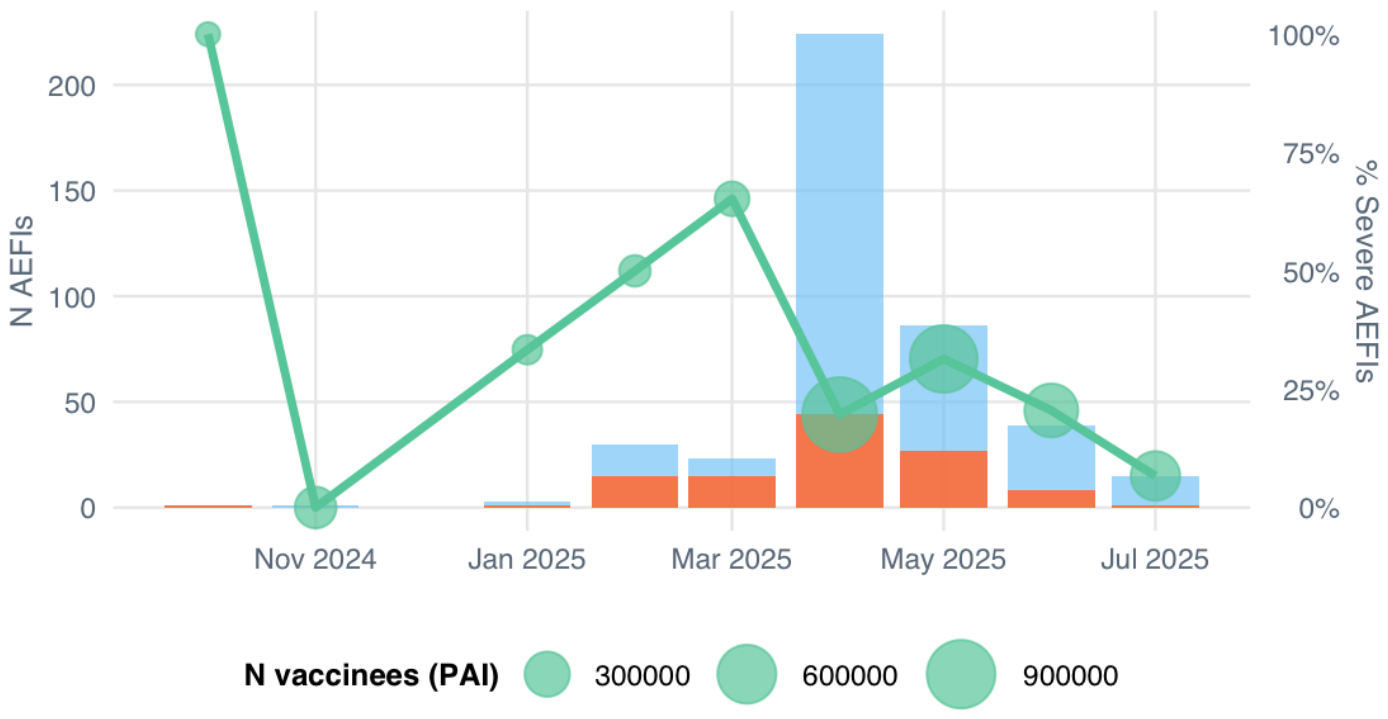
Figure 2.
Distribution of the Vaccination Interval at the Start of AEFIs. Dashed line indicates the median per group; negative values and >365 days were excluded. *AEFIs: Adverse events following immunization.
Figure 2.
Distribution of the Vaccination Interval at the Start of AEFIs. Dashed line indicates the median per group; negative values and >365 days were excluded. *AEFIs: Adverse events following immunization.
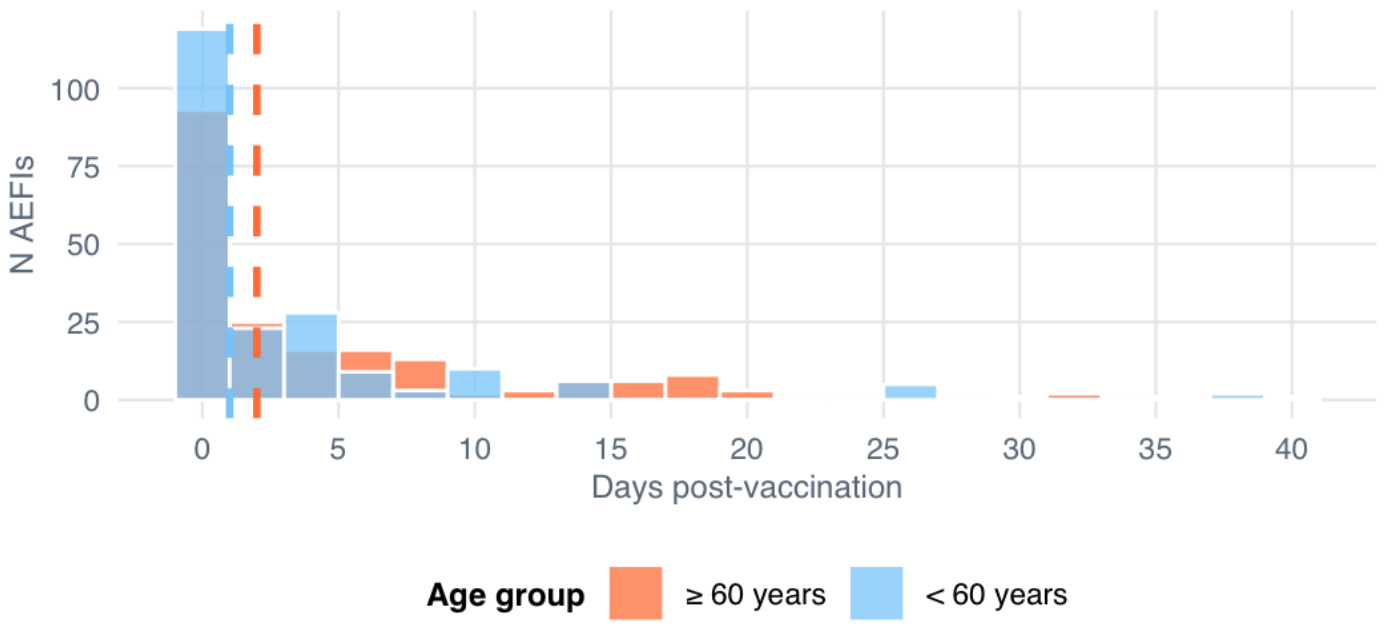
Figure 3.
A) AEFIs Rate by Age Group (×100,000 vaccinated), With 95% CI Poisson (Denominator). B) Population Pyramid, of patients with AEFIs-YF, Unique patients by five-year period and sex, Sep 2024 – Jul 2025.*AEFIs: Adverse events following immunization
Figure 3.
A) AEFIs Rate by Age Group (×100,000 vaccinated), With 95% CI Poisson (Denominator). B) Population Pyramid, of patients with AEFIs-YF, Unique patients by five-year period and sex, Sep 2024 – Jul 2025.*AEFIs: Adverse events following immunization
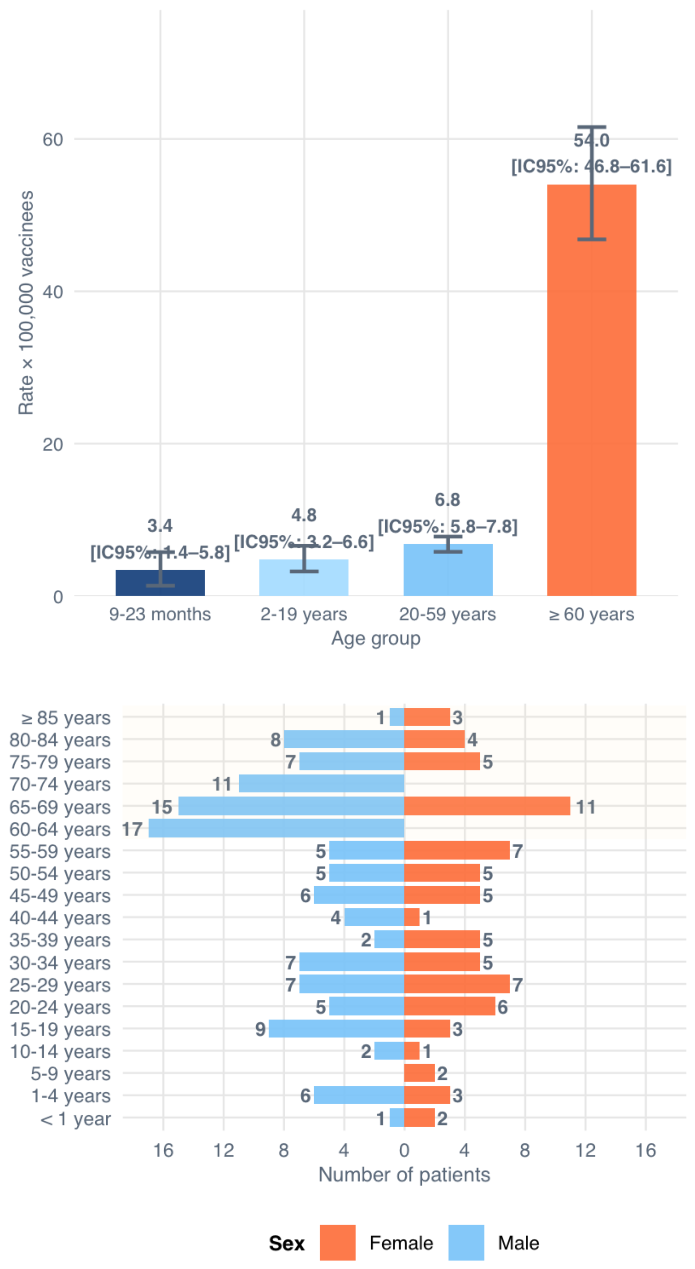
Figure 4.
Severe and Mild AEFIs Rates by Age Group (×100,000), Breakdown by severity. *AEFIs: Adverse events following immunization.
Figure 4.
Severe and Mild AEFIs Rates by Age Group (×100,000), Breakdown by severity. *AEFIs: Adverse events following immunization.
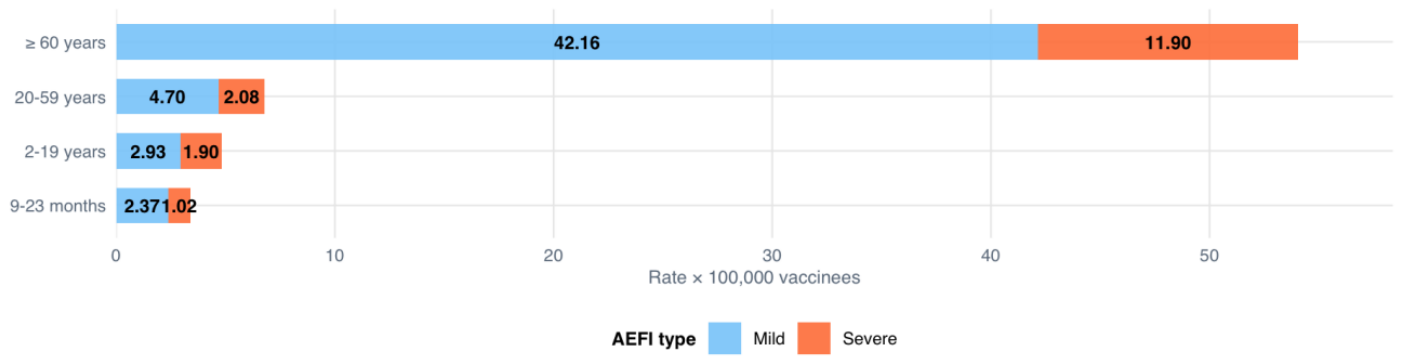
Figure 5.
Rate of AEFIs per five-year period in people over 60 years of age per 100,000 vaccinated, adjusted by the number of doses administered. 95%CI Poisson. *AEFIs: Adverse events following immunization.
Figure 5.
Rate of AEFIs per five-year period in people over 60 years of age per 100,000 vaccinated, adjusted by the number of doses administered. 95%CI Poisson. *AEFIs: Adverse events following immunization.
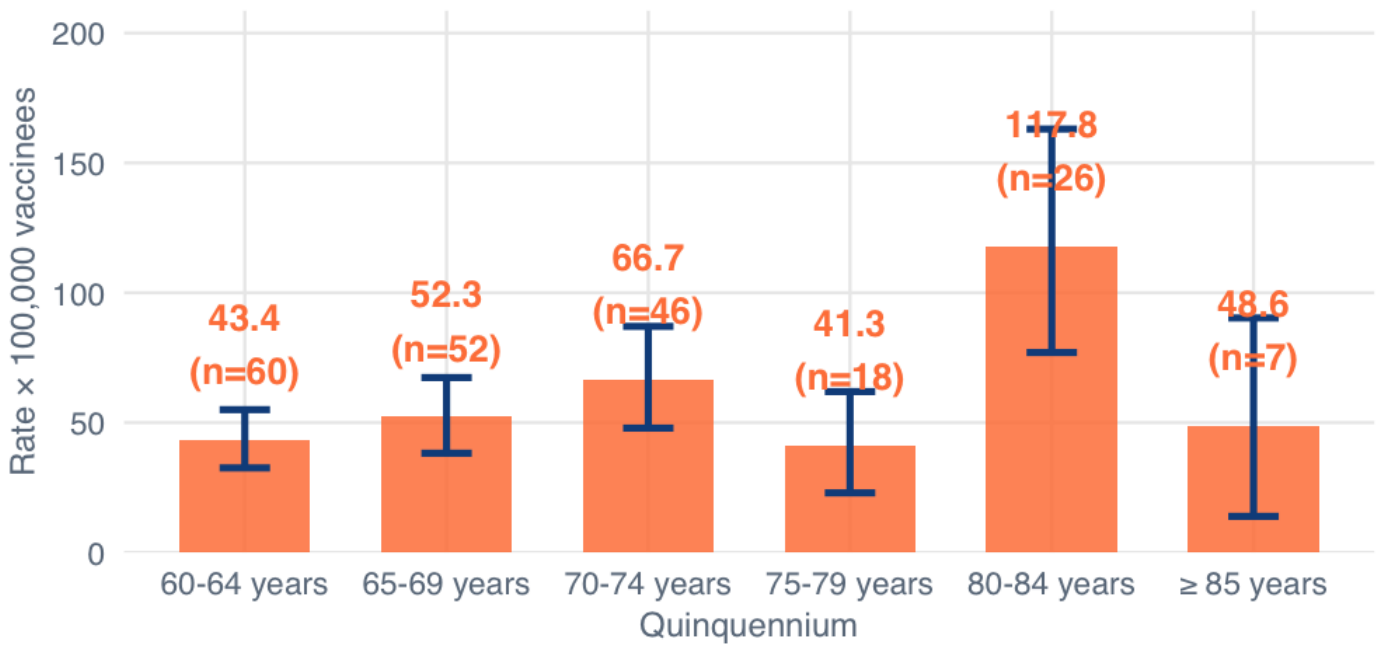
Figure 6.
Rate of severe and mild AEFIs per five-year period in people over 60 years of age per 100,000 vaccinated, adjusted by the number of doses administered. *AEFIs: Adverse events following immunization.
Figure 6.
Rate of severe and mild AEFIs per five-year period in people over 60 years of age per 100,000 vaccinated, adjusted by the number of doses administered. *AEFIs: Adverse events following immunization.
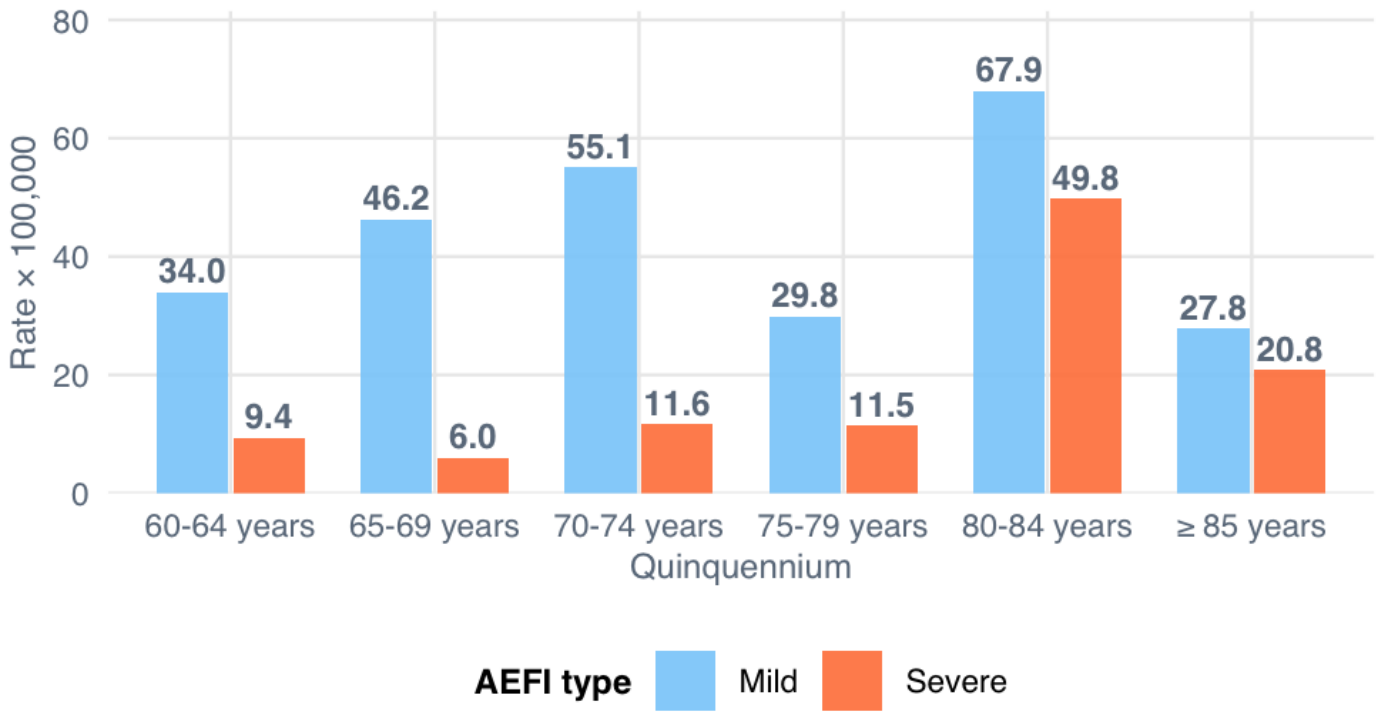
Figure 7.
Absolute frequency of the main clinical manifestations classified as EAPVs per five-year period in ≥ 60 Years.*AEFIs: Adverse events following immunization.
Figure 7.
Absolute frequency of the main clinical manifestations classified as EAPVs per five-year period in ≥ 60 Years.*AEFIs: Adverse events following immunization.
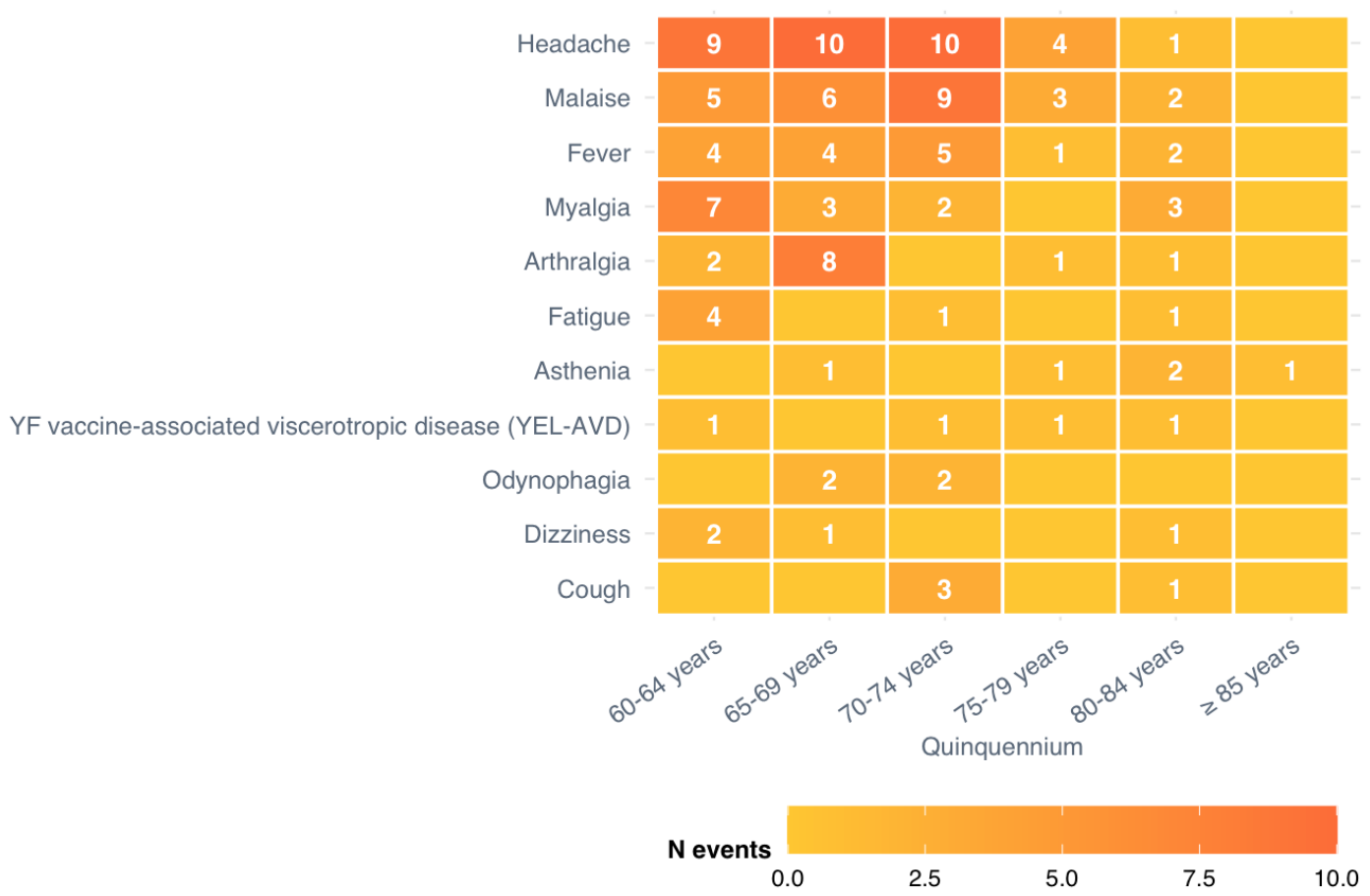
Figure 8.
A) Forest Plot of Age Signal by AEFIs, OR of being reported in ≥60 years vs <60 years, Line marks OR=1 (no difference), Only AEFIs with ≥3 reports, Orange color - positive signal (95% CI >1) B) Forest Plot of Severity Signal (Reporting Odds Ratio), ROR of being severe vs mild for each type of AEFIs, ROR > 1 with 95% CI >1 indicates disproportionate severity. *AEFIs: Adverse events following immunization.
Figure 8.
A) Forest Plot of Age Signal by AEFIs, OR of being reported in ≥60 years vs <60 years, Line marks OR=1 (no difference), Only AEFIs with ≥3 reports, Orange color - positive signal (95% CI >1) B) Forest Plot of Severity Signal (Reporting Odds Ratio), ROR of being severe vs mild for each type of AEFIs, ROR > 1 with 95% CI >1 indicates disproportionate severity. *AEFIs: Adverse events following immunization.
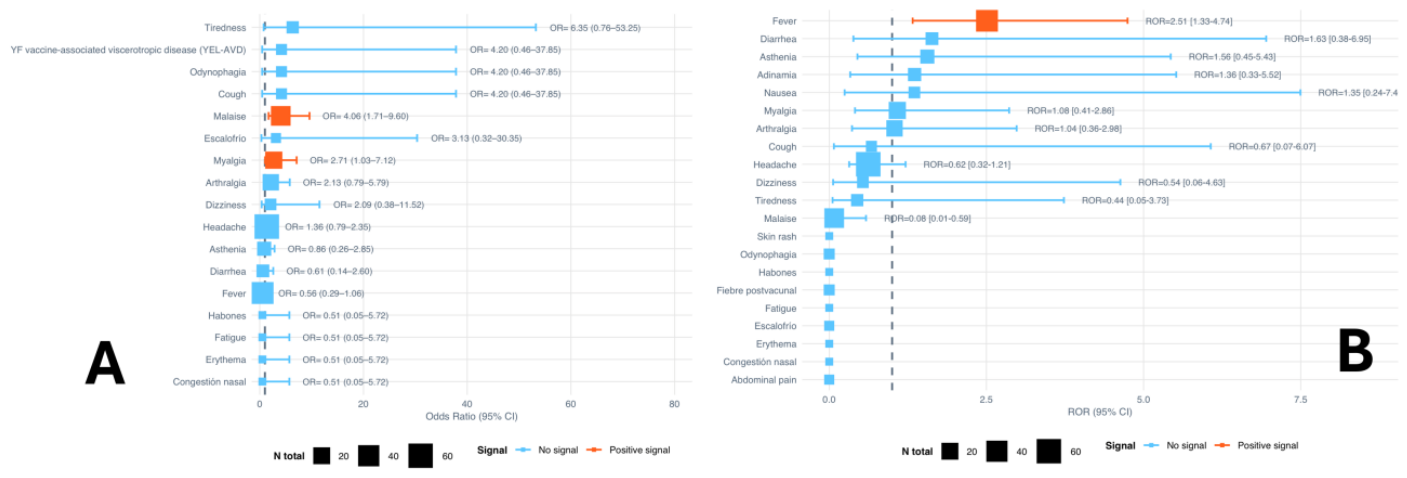
Table 1.
Vaccinated, AEFI and severe AEFI per month, Colombia, September 2024 – July 2025.
| Period | Cases | AEFIs (mild/severe) |
Vaccinated | Rate per 100,000 vaccinated (mild/severe) |
|---|---|---|---|---|
| Oct-2024 | 1 | 1 (0/1) |
126.909 | 0.79 (0,00/0,79) |
| Nov-2024 | 1 | 1 (1/0) |
246.698 | 0,41 (0,41/0,00) |
| Dic-2024 | 0 | 0(0/0) | 237.807 | 0(0/0) |
| June-2025 | 3 | 3 (2/1) |
138.147 | 2,17 (1,45/0,72) |
| Feb-2025 | 15 | 30 (15/15) |
148.250 | 20,24 (10,12/10,12) |
| Mar-2025 | 12 | 23 (8/15) |
170.311 | 13,50 (4,70/8,81) |
| Abr-2025 | 112 | 224 (180/44) |
1.129.442 | 19,83 (15,94/3,90) |
| May-2025 | 49 | 86 (59/27) |
869.716 | 9,89 (6,78/3,10) |
| Jun-2025 | 24 | 39 (31/8) |
470.900 | 8,28 (6,58/1,70) |
| Jul-2025 | 15 | 15 (14/1) |
377.786 | 3,97 (3,71/0,26) |
| Not classifiable | 1 | 3 (0/3) |
- | - |
| Total | 233 | 425 (310/115) |
3.915.966 | 10,85 (7,92/2,94) |
Table 2.
Rates of AEFIs and severe AEFIs by sex, Colombia, September 2024 – July 2025.
| Sex | Cases | N AEFIs | Graves (%) | Vaccinated | Total rate [95%CI] |
Severe rates | Mild rates |
|---|---|---|---|---|---|---|---|
| Women | 115 | 192 | 33 (17.2) | 2,155,629 | 8.91 [7.7 – 10.2] |
1.53 | 7.38 |
| Men | 118 | 233 | 82 (35.2) | 1,761,145 | 13.23 [11.6 – 14.9] |
4.66 | 8.57 |
Table 3.
Rates of AEFIs and severe AEFIs by broad age group, Colombia, September 2024 – July 2025.
| Age group | Absolute frequency | Vaccinated | Rates × 100,000 vaccinated | |||
|---|---|---|---|---|---|---|
| Cases | N AEFIs | Severe (%) | Total rate [95%CI] |
Severe rates [95%CI] |
||
| 2-19 years | 20 | 33 | 13 (39.4) | 683,038 | 4.83 [3.2 – 6.6] |
1.90 [0.9 – 3.1] |
| 20-59 years | 82 | 173 | 53 (30.6) | 2,551,134 | 6.78 [5.8 – 7.8] |
2.08 [1.5 – 2.7] |
| 9-23 months | 9 | 10 | 3 (30.0) | 295,138 | 3.39 [1.4 – 5.8] |
1.02 [0.0 – 2.4] |
| ≥ 60 years | 122 | 209 | 46 (22.0) | 386,656 | 54.05 [46.8 – 61.5] |
11.90 [8.5 – 15.5] |
| Total | 233 | 425 | 115 (27.1) | 3,915,966 | 10.85 | 2.94 |
Disclaimer/Publisher’s Note: The statements, opinions and data contained in all publications are solely those of the individual author(s) and contributor(s) and not of MDPI and/or the editor(s). MDPI and/or the editor(s) disclaim responsibility for any injury to people or property resulting from any ideas, methods, instructions or products referred to in the content. |
© 2026 by the authors. Licensee MDPI, Basel, Switzerland. This article is an open access article distributed under the terms and conditions of the Creative Commons Attribution (CC BY) license (http://creativecommons.org/licenses/by/4.0/).
Copyright: This open access article is published under a Creative Commons CC BY 4.0 license, which permit the free download, distribution, and reuse, provided that the author and preprint are cited in any reuse.