

Submitted:
06 August 2026
Posted:
07 August 2026
You are already at the latest version
Abstract
Background/Objectives: Antimicrobial resistance poses a major global health threat, necessitating strict compliance with treatment algorithms. This nationwide audit evaluated prescriber adherence to the National Antimicrobial Guideline (NAG 2019) among multidrug-resistant organism (MDRO) cases in Malaysian public hospitals, identifying key clinical, microbiological, and health-system determinants. Methods: A retrospective national clinical audit of N = 437 MDRO cases were conducted across public hospital tiers. Bivariate associations were evaluated using Pearson Chi-square tests. Multivariable binary logistic regression was performed to identify independent predictors of compliance while controlling confounders and multicollinearity. Results: Overall guideline adherence was 72.1% (315/437). Bivariate analysis showed significant associations between adherence and geographic zone (p = 0.018), infection site (p < 0.001), specimen type (p = 0.035), isolated pathogen (p = 0.007), surveillance year (p < 0.001), and treatment choice (p < 0.001). Gender, hospital category, and isolate colonization status showed no significant association. In multivariable modeling, primary infection site (p = 0.005) and surveillance year (p < 0.001) remained robust independent predictors. High-acuity conditions like hospital-acquired pneumonia (77.4%) and bloodstream infections (76.8%) yielded high compliance, whereas surgical site/soft tissue infections exhibited the lowest adherence (50.0%). Longitudinally, adherence dropped sharply during the 2020 COVID-19 pandemic peak (39.3%) before recovering rapidly in 2021 (88.5%) and 2022 (80.5%). Regional compliance varied from 75.9% (Northern) to 54.5% (Southern). Conclusions: Prescriber adherence to NAG 2019 is high overall, but marked disparities exist across clinical sites, regions, and pandemic stress periods. Antimicrobial stewardship programs should prioritize soft tissue infections, equalize regional resources, and establish crisis-resilient frameworks for future healthcare disruptions.
Keywords:
antimicrobial stewardship
; NAG 2019
; guideline adherence
; multidrug-resistant organisms
; public health
1. Introduction
Antimicrobial resistance (AMR) represents one of the paramount threats to contemporary global public health, as highlighted by the World Health Organization [1]. In 2019 alone, bacterial resistance was implicated in an estimated 4.95 million deaths worldwide, with 1.27 million directly attributable to resistant pathogens—a crisis primarily driven by the pervasive misuse and over-prescribing of antimicrobial agents [2]. Multidrug-resistant organism (MDRO) bloodstream infections exert a profound clinical and economic toll, markedly worsening patient outcomes and escalating healthcare expenditures compared to susceptible or non-infected cases [3]. Consequently, targeted financial investments and strategic, multi-sectoral interventions are urgently required to curb the proliferation of AMR.
In Malaysia, the burden of AMR is particularly severe. In 2019, resistant infections accounted for an estimated 3,500 direct fatalities and contributed to an additional 14,000 deaths—a cumulative mortality burden exceeding those of chronic respiratory illnesses, diabetes, renal diseases, and transport injuries within the nation [4,5]. MDRO infections escalate in-hospital mortality by 1.5- to 4.0-fold while driving prolonged length of stay and significant resource utilization [6] -[7].
Although evidence-based national antimicrobial guidelines (NAGs) synthesize contemporary clinical trial data and expert consensus to standardize care and mitigate resistance [8], substantial discordance persists between published recommendations and routine bedside prescribing. Evaluating health-system compliance is therefore critical to optimizing antimicrobial stewardship (AMS) and safeguarding patient safety. To address this gap, the present study provides the first comprehensive assessment of prescriber adherence to national clinical standards across Malaysian Ministry of Health (MOH) hospitals.
2. Results
2.1. Baseline Demographic, Clinical, and Microbiological Characteristics
A total of N = 437 eligible inpatient cases involving MDROs were analysed across 22 Malaysian public hospitals. The sample demonstrated a stable longitudinal distribution across the five-year surveillance period (2018–2022), providing a balanced representation of temporal prescribing patterns. More than half of the audited cases originated from state hospitals (54.5%, 238/437). Geographically, the Northern region accounted for the largest proportion of cases (52.2%), followed by the Central (25.4%) and Southern (12.6%) zones, while the Eastern region (4.6%) and East Malaysia/Borneo (5.3%) comprised the remaining cohort. Notably, the majority of patients (62.7%) had no documented prior healthcare facility encounters within the preceding exposure period. By clinical specialty, general internal medicine wards managed the highest volume of cases (31.1%), followed by anaesthesiology/intensive care units (21.1%) and surgical departments (15.1%). Microbiologically, over three-quarters of isolated MDRO cases were clinically classified as true invasive infections (76.4%, 334/437), with the remainder categorized as microbial colonization (23.6%,103/437; Table 1).
The distribution of clinical specimen types collected for pathogen isolation and MDRO identification is presented in Figure 1. Lower respiratory tract specimens predominated overall, with tracheal aspirates constituting the single most frequent sample matrix (28.4%), alongside sputum samples (5.3%) and bronchoalveolar lavage (BAL) fluids (< 3.0%). Peripheral blood cultures comprised the second most common specimen type, representing nearly a quarter of all analysed samples (24.0%). Urine specimens accounted for 15.3% of isolations, whereas localized cutaneous and soft tissue matrices—specifically solid tissue biopsies (10.8%) and superficial wound swabs (7.8%)—collectively accounted for 18.6% of the sample cohort. Sterile body fluids and invasive site samples, including peritoneal dialysis effluent, cerebrospinal fluid (CSF), and rectal screening swabs, were infrequently collected, with each representing less than 3.0% of total specimens. Miscellaneous anatomic sources (e.g., pericardial fluid, synovial aspirates, and ocular discharges) accounted for the remaining 5.9% of isolates (Figure 1).
The distribution of targeted MDROs isolated across participating state and major specialist hospitals is illustrated in Figure 2. Gram-negative bacilli constituted the majority of isolated pathogens, with Acinetobacter baumannii emerging as the single most prevalent species (27.5%, 120/437). Among Enterobacterales, extended-spectrum β-lactamase (ESBL)-producing Klebsiella pneumoniae was isolated in 19.9% (87/437) of cases, while ESBL-producing Escherichia coli and Carbapenem-Resistant Enterobacterales (CRE) accounted for 12.6% (55/437) and 9.4% (41/437) of isolations, respectively. Regarding Gram-positive species, Methicillin-Resistant Staphylococcus aureus (MRSA) represented the second most common overall isolate, comprising nearly a quarter of all cases (22.7%, 99/437). Other unclassified bacterial isolates accounted for the remaining 8.0% (35/437) of cases (Figure 2). Collectively, these findings highlight a heavy dual burden of resistant Gram-negative and Gram-positive pathogens within the public hospital system.
Evaluation of prescribing patterns against national treatment algorithms demonstrated that a clear majority of audited cases (72.1%, 315/437) achieved full compliance with recommended guideline protocols (Figure 3). Conversely, incomplete or minor dosing/duration deviations resulted in partial adherence in 3.7% (16/437) of cases. Complete non-adherence was documented in 24.2% (106/437) of prescriptions, wherein selected antimicrobial regimens deviated entirely from recommended preferred or alternative agent classifications (Figure 3). This substantial proportion of non-adherent prescribing highlights critical targets for institutional antimicrobial stewardship programs to curb irrational antibiotic utilization.
2.1. Bivariate Factors Associated with NAG 2019 Adherence
To examine the unadjusted relationships between various independent predictors and adherence to NAG 2019 protocols, bivariate cross-tabulations and Pearson Chi-square tests of independence (χ2) were executed across N = 437 audited cases. All categorical cross-tabulations met standard parametric prerequisites, maintaining zero cells (0.0%) with an expected frequency of less than 5.

Table 2.
Bivariate Associations Between Patient Demographic, Clinical, Microbiological, and Health-System Factors (Provider) and Adherence to NAG 2019 Guidelines (N=437).
Table 2.
Bivariate Associations Between Patient Demographic, Clinical, Microbiological, and Health-System Factors (Provider) and Adherence to NAG 2019 Guidelines (N=437).
| Variable | Adherence n (%) |
Non-adherence n (%) |
Pearson ꭓ2 (df) |
p-value* | |
|---|---|---|---|---|---|
| Department | Anesthesiology Medical Surgical Others Orthopedics |
73 (79.3%) 111 (74.5%) 56 (72.7%) 41 (73.2%) 34 (54.0%) |
19 (20.7%) 38 (25.5%) 21 (27.3%) 15 (26.8%) 29 (46.0%) |
13.169 (4) |
0.010 |
| Previous Healthcare Encounter | No Yes |
199 (71.8%) 116 (72.5%) |
78 (28.2%) 44 (27.5%) |
0.022 (1) |
0.882 |
| Type of Specimen | Respiratory Urine Blood SSTI Others |
119 (78.3%) 51 (76.1%) 76 (72.4%) 50 (61.7%) 19 (59.4%) |
33 (21.7%) 16 (23.9%) 29 (27.6%) 31 (38.3%) 13 (40.6%) |
10.340 (4) |
0.035 |
| Type of Infection | NA (unclassified) HAP/VAP BSI UTI Others SSI/SSTI |
80 (81.6%) 82 (77.4%) 76 (76.8%) 31 (68.9%) 19 (54.3%) 27 (50.0%) |
18 (18.4%) 24 (22.6%) 23 (23.2%) 14 (31.1%) 16 (45.7%) 27 (50.0%) |
25.810 (5) |
< 0.001 |
| Gender | Male Female |
201 (74.2%) 114 (68.7%) |
70 (25.8%) 52 (31.3%) |
1.545 (1) |
0.214 |
| Year | 2018 2019 2020 2021 2022 |
63 (80.8%) 64 (69.6%) 33 (39.3%) 85 (88.5%) 70 (80.5%) |
15 (19.2%) 28 (30.4%) 51 (60.7%) 11 (11.5%) 17 (19.5%) |
64.071 (4) |
< 0.001 |
| Isolated Organism |
Acinetobacter baumannii ESBL - K. pneumoniae CRE MRSA ESBL - E. coli Others |
100 (83.3%) 66 (75.9%) 29 (70.7%) 65 (65.7%) 35 (63.6%) 20 (57.1%) |
20 (16.7%) 21 (24.1%) 12 (29.3%) 34 (34.3%) 20 (36.4%) 15 (42.9%) |
16.066 (5) |
0.007 |
| Isolate Status | Colonizer Infection |
79 (76.7%) 236 (70.7%) |
24 (23.3%) 98 (29.3%) |
1.427 (1) |
0.232 |
| Hospital Category | Major Specialist Hospital State Hospital |
141 (70.9%) 174 (73.1%) |
58 (29.1%) 64 (26.9%) |
0.274 (1) |
0.601 |
| Hospital Location | Central East Malaysia Eastern Northern Southern |
83 (74.8%) 17 (73.9%) 12 (60.0%) 173 (75.9%) 30 (54.5%) |
28 (25.2%) 6 (26.1%) 8 (40.0%) 55 (24.1%) 25 (45.5%) |
11.926 (4) |
0.018 |
| Antimicrobial Selection |
Alternative NA (unclassified) Preferred |
92 (91.1%) 0 (0.0%) 223 (97.0%) |
9 (8.9%) 106 (100.0%) 7 (3.0%) |
362.536 (2) |
< 0.001 |
* Significance was determined at the 0.05 level.
2.2. Institutional (Provider) and Demographics Characteristics
Institutional governance and general demographic parameters demonstrated varying degrees of association with guideline compliance. A comparison across hospital facility tiers showed no statistically significant difference (χ2 (1) = 0.274, p = 0.601), with State Hospitals achieving 73.1% compliance (174/238) compared to 70.9% (141/199) in Major Specialist Hospitals. Similarly, patient biological sex did not significantly influence prescribing practices (χ2 (1) = 1.545, p = 0.214); adherence was comparable between male patients (74.2%, 201/271) and female patients (68.7%, 114/166).
In contrast, geographic location exhibited a statistically significant association with NAG 2019 adherence (χ2 (4) = 11.926, p = 0.018). Facilities in the Northern zone recorded both the highest volume and strong compliance at 75.9% (173/228), closely followed by the Central zone (74.8%, 83/111) and East Malaysia (73.9%, 17/23). Lower adherence rates were observed in the Eastern zone (60.0%, 12/20), while the Southern zone demonstrated the lowest overall compliance at 54.5% (30/55), with 45.5% (25/55) of audited cases deviating from protocol recommendations.
2.3. Clinical Presentation and Microbiological Predictors
Clinical and microbiological profiles significantly influenced provider adherence. Infection site classification demonstrated a strong association with protocol compliance (χ2 (5) = 25.810, p < 0.001). Cases categorized as Unclassified/Not Applicable recorded the highest compliance at 81.6% (80/98), followed by Hospital-Acquired/Ventilator-Associated Pneumonia (HAP/VAP) (77.4%, 82/106) and Bloodstream Infections (BSI) (76.8%, 76/99). Conversely, adherence dropped for Urinary Tract Infections (UTI) (68.9%, 31/45), Miscellaneous/Other sites (54.3%, 19/35), and reached its lowest point in Surgical Site and Skin/Soft Tissue Infections (SSI/SSTI) (50.0%, 27/54). Correspondingly, isolated specimen types also showed a statistically significant association (χ2 (4) = 10.340, p = 0.035), where Respiratory specimens (78.3%, 119/152) and Urine specimens (76.1%, 51/67) yielded higher adherence compared to SSTI swabs/tissues (61.7%, 50/81).
Pathogen-specific analysis further confirmed significant variations in adherence (χ2 (5) = 16.066, p = 0.007). Prescribers exhibited the highest compliance when managing Acinetobacter baumannii isolates (83.3%, 100/120), ESBL-producing Klebsiella pneumoniae (75.9%, 66/87), and Carbapenem-Resistant Enterobacterales (CRE) (70.7%, 29/41). However, lower compliance was observed for Methicillin-Resistant Staphylococcus aureus (MRSA) (65.7%, 65/99), ESBL-producing Escherichia coli (63.6%, 35/55), and other organisms (57.1%, 20/35). Whether the isolated organism was clinically classified as a true infection (70.7%, 236/334) or a colonizer (76.7%, 79/103) did not yield a statistically significant difference in adherence (χ2 (1) = 1.427, p = 0.232).
2.4. Temporal Trends and Pharmacotherapeutic Choice
Surveillance year analysis revealed substantial longitudinal shifts in prescribing practices across the 5-year audit period (χ2 (4) = 64.071, p < 0.001). Compliance was high in 2018 (80.8%, 63/78), but declined in 2019 (69.6%, 64/92), before experiencing a severe drop in 2020 to 39.3% (33/84). Following this inflection point, adherence rebounded sharply in 2021 to reach the study peak of 88.5% (85/96), remaining stable through 2022 at 80.5% (70/87).
Finally, antimicrobial agent selection category was the strongest single predictor of overall compliance (χ2 (2) = 362.536, p < 0.001). Prescriptions selecting Preferred (P) regimens achieved 97.0% compliance (223/230), while Alternative (A) agent selections achieved 91.1% compliance (92/101). The minor non-adherence between Preferred (3.0%) and Alternative (8.9%) choices was attributable to secondary dosing or duration errors. Prescriptions utilizing agents classified as Neither/Not Applicable (NA) resulted in absolute non-adherence (0.0%, 0/106).
2.5. Multivariable Logistic Regression Analysis
To determine the independent predictors of healthcare professional adherence to the NAG 2019, a multivariable binary logistic regression model was constructed incorporating surveillance year, type of infection, isolated MDRO, hospital geographical zone, and clinical department. The overall regression model demonstrated strong statistical fit (Omnibus Test p < 0.001), successfully accounting for systemic, biological, and institutional confounding factors across MOH facilities.
In ensuring statistical stability, satisfy model assumptions, and addressing sparse cell counts during multivariable logistic regression, several categorical variables were strategically re-categorized prior to final model fitting. First, the primary outcome variable (Adherence Status) was converted into a binary outcome—Full Adherence (72.1%, n = 315) versus non-adherence (27.9%, n = 122)—by collapsing partial adherence (3.7%, n = 16) and complete non-adherence (24.2%, n = 106) into a single non-compliant category, matching the clinical target of strict protocol fidelity. Second, sparse geographic categories with low cell counts (Eastern zone, n = 20; East Malaysia, n = 23) were consolidated or evaluated against a high-volume reference baseline (Northern zone, n = 228) to avoid unstable parameter estimates. Third, low-frequency primary infection sites and rare clinical specimens were grouped into consolidated "Other" categories. Finally, the variable “Type of Specimen” was excluded entirely from the final multivariable regression model despite showing bivariate significance (ꭓ2 (4) = 10.340, p = 0.035) due to extreme multicollinearity with “Type of Infection” (Cramer’s V > 0.50). This variable reduction successfully resolved quasi-complete separation, yielding stable standard errors (S.E. < 0.65) across all remaining model parameters (Table 5).
2.6. Temporal Trends and Long-Term Programmatic Impact
Longitudinal surveillance demonstrated a highly significant overall temporal effect on guideline compliance (Wald χ2=55.238, df = 4, p < 0.001). Taking the baseline study year (Year 1: 2018) as the reference category (AOR = 1.000), adherence patterns exhibited a non-linear trajectory across the five-year period. In Year 2 (2019), prescribers demonstrated significantly lower odds of full guideline adherence compared to the baseline year (AOR = 0.095; 95% CI: 0.039 - 0.230; p < 0.001). Similarly, Year 1 itself showed markedly reduced odds relative to later years (AOR = 0.297; 95% CI: 0.123 - 0.720; p = 0.007). Conversely, during the COVID-19 pandemic and post-pandemic surveillance years (Years 3 and 4), adherence rates stabilized, showing no statistically significant deviation from baseline (Year 3: AOR = 1.420, p = 0.504; Year 4: AOR = 0.718, p = 0.499). This temporal progression underscores a structural shift over time, reflecting the initial disruption and subsequent programmatic maturation of hospital Antimicrobial Stewardship (AMS) enforcement across MOH institutions.
2.7. Impact of Infection Site and Anatomic Presentation
The primary anatomical site of infection emerged as a robust, independent determinant of guideline compliance (Wald χ2 = 16.600, df = 5, p = 0.005). Relative to the reference infection category (Infection Type 1, Bloodstream Infections/BSI; AOR = 1.000), specific clinical presentations exhibited significantly lower compliance rates. Prescribers managing Infection Type 3 (SSI/SSTI) had 67.2% lower odds of adhering to NAG 2019 recommendations (AOR = 0.328; 95% CI: 0.126 - 0.856; p = 0.023). Furthermore, Infection Type 4 (UTI) demonstrated the strongest inverse association with compliance, where healthcare providers had 78.2% reduced odds of maintaining full guideline adherence (AOR = 0.218; 95% CI: 0.085 - 0.556; p = 0.001) compared to baseline BSI cases. In contrast, cases presenting as Infection Type 2 (HAP/VAP; AOR = 1.119, p = 0.786) and Infection Type 5 (AOR = 0.533, p = 0.198) did not differ significantly from the reference group. These findings highlight distinct diagnostic challenges and empirical prescribing uncertainties inherent to localized tissue and urinary tract infections compared to systemically overt bloodstream infections.
2.8. Biological and Regional Disparities in Compliance
Regarding microbiological profile, the specific isolated organism influenced prescribing compliance (Wald χ2 = 8.615, df = 5, p = 0.125). Compared to the reference pathogen (Isolated Organism 1; AOR = 1.000), treating infections caused by Isolated Organism 2 was associated with a statistically significant 68.4% reduction in the odds of guideline adherence (AOR = 0.316; 95% CI: 0.129 - 0.778; p = 0.012). Isolated Organism 5 similarly presented as a significant risk factor for non-adherence (AOR = 0.369; 95% CI: 0.137 - 0.990; p = 0.048), while Isolated Organism 4 trended toward reduced compliance (AOR = 0.473; 95% CI: 0.207 - 1.084; p = 0.077). Geographically, regional hospital clustering influenced adherence patterns. Relative to the baseline reference zone (Zone 1; AOR = 1.000), prescribers practicing within Zone 4 hospitals exhibited a 66.3% reduction in the odds of full NAG adherence (AOR = 0.337; 95% CI: 0.146 - 0.774; p = 0.010). Finally, clinical department allocation did not independently predict guideline adherence (Wald χ2 = 4.128, df = 4, p = 0.389), indicating that institutional prescriber discipline was largely uniform across medical, surgical, and intensive care specialties after adjusting for infection type and microbiological risk factors.
3. Discussion
This nationwide clinical audit evaluated compliance with the NAG 2019 across N = 437 MDRO management cases in public healthcare facilities. Overall compliance was established at 72.1% (n = 315). Bivariate screening identified significant statistical associations between protocol adherence and geographic region (p = 0.018), primary infection site (p < 0.001), isolated specimen type (p = 0.035), specific pathogen resistance profile (p = 0.007), surveillance year (p < 0.001), and treatment choice classification (p < 0.001). Patient biological sex (p = 0.214), hospital category (p = 0.601), and isolate colonization status (p = 0.232) demonstrated no significant bivariate associations. When controlling for confounders in the multivariable logistic regression model, primary infection site and surveillance year persisted as robust, independent predictors of prescribers' protocol adherence.
In observational clinical audits involving complex health-system data, raw categorical variables frequently exhibit sparse distributions, zero-count cells, or high degrees of inter-variable dependence [12]. In this study, converting the primary outcome into a binary endpoint (Full Adherence vs. Non-Adherence) was both methodologically necessary and clinically sound [13]. From a public health and AMS perspective, partial compliances such as selecting the correct empiric agent but administering an inadequate dose or excessive duration—still represents a protocol deviation capable of driving treatment failure or selecting for resistant strains [14,15]. Combining partial and complete non-adherence into a single non-compliant group preserved the clinical rigor of evaluating true, strict guideline fidelity while optimizing the statistical power of the logistic regression model [12,14].
Similarly, the decision to exclude “Type of Specimen” from the multivariable model addresses a common methodological challenge in epidemiological modelling: collinearity between diagnostic matrices and clinical diagnoses [16]. Because clinical specimen types naturally mirror infection sites (for example, bronchoalveolar lavage or tracheal aspirates inherently define ventilator-associated pneumonia, while tissue swabs correspond to soft tissue infections), retaining both variables introduced severe multicollinearity (Cramer’s V > 0.50) [17]. This mathematical redundancy inflated standard errors and risked quasi-complete separation [12,16]. Prioritizing “Type of Infection” over specimen matrix preserved superior clinical interpretability for hospital stewardship committees, as clinical treatment algorithms in NAG 2019 are structured primarily around anatomical infection sites rather than isolated laboratory matrices alone [18].
Furthermore, collapsing low-frequency geographic zones and minor pathogen categories prevented severe model overfitting and instability [12,19]. In multivariable logistic regression, sparse cells (n < 10) can artificially inflate odds ratios and produce excessively wide confidence intervals, rendering parameters uninterpretable [12,20]. By consolidating low-volume regions and rare bacterial isolates into stable reference and comparator groups, the model maintained high estimation precision (S.E. < 0.65) [16,19]. This methodological approach ensures that the identified independent predictors—specifically infection site and surveillance year—reflect robust, reproducible health-system determinants rather than statistical artifacts driven by sparse sample distributions [13,20].
The multivariable logistic regression demonstrated that the primary anatomic site of infection was a major determinant of NAG 2019 compliance (p = 0.005). Prescribers treating high-acuity systemic infections, such as Hospital-Acquired/Ventilator-Associated Pneumonia (HAP/VAP, 77.4%) and Bloodstream Infections (BSI, 76.8%), demonstrated significantly greater guideline compliance compared to those treating localized soft tissue or urinary tract pathologies. Clinically, lower adherence in HAP/VAP and BSI cases carries severe risks of rapid hemodynamic decompensation, severe sepsis, and mortality [21,22]; thus, clinicians in intensive care and acute medical units are more likely to rigorously follow standardized, evidence-based guidelines and consult infectious disease specialists early [23,24].
Conversely, Surgical Site Infections and Skin/Soft Tissue Infections (SSI/SSTI) exhibited the lowest adherence rate (50.0%, 27/54). This pronounced drop in compliance aligns with international stewardship literature highlighting soft tissue infections as frequent sites of empirical over-prescribing, unjustified broad-spectrum coverage, and non-guideline duration extension [25,26]. In localized SSTIs, clinicians often face diagnostic ambiguity in differentiating superficial purulent cellulitis from deeper polymicrobial tissue destruction [27]. This uncertainty frequently prompts the empirical addition of broad anti-pseudomonal or anti-MRSA agents beyond NAG recommendations prior to culture confirmation [18,27].
Furthermore, the bivariate analysis of isolated specimen types (p = 0.035) mirrored these clinical findings, with respiratory (78.3%) and urine (76.1%) specimens yielding higher compliance than SSTI swabs and tissue aspirates (61.7%). The decision to remove specimen type from the final multivariable regression due to extreme multicollinearity with infection site (Cramer’s V > 0.50) was both statistically necessary to resolve quasi-complete separation and clinically sound [16,17]. Because specimen collection matrices naturally mirror anatomic infection sites (e.g., bronchoalveolar lavage for pneumonia; superficial swabs for wound breakdown), retaining primary infection site preserved high-level clinical interpretability while maintaining model stability (S.E. < 0.65) [12,16].
A major finding of this study is the longitudinal fluctuation in prescribing compliance across the 5-year study period (p < 0.001). Following stable baseline adherence in 2018 (80.8%) and 2019 (69.6%), compliance experienced a sharp, statistically significant drop in 2020, declining to 39.3% (33/84).
Figure 4.
Healthcare professional’s adherence rate (%) to the NAG 2019 in Malaysia public health hospital (2018-2022).
Figure 4.
Healthcare professional’s adherence rate (%) to the NAG 2019 in Malaysia public health hospital (2018-2022).
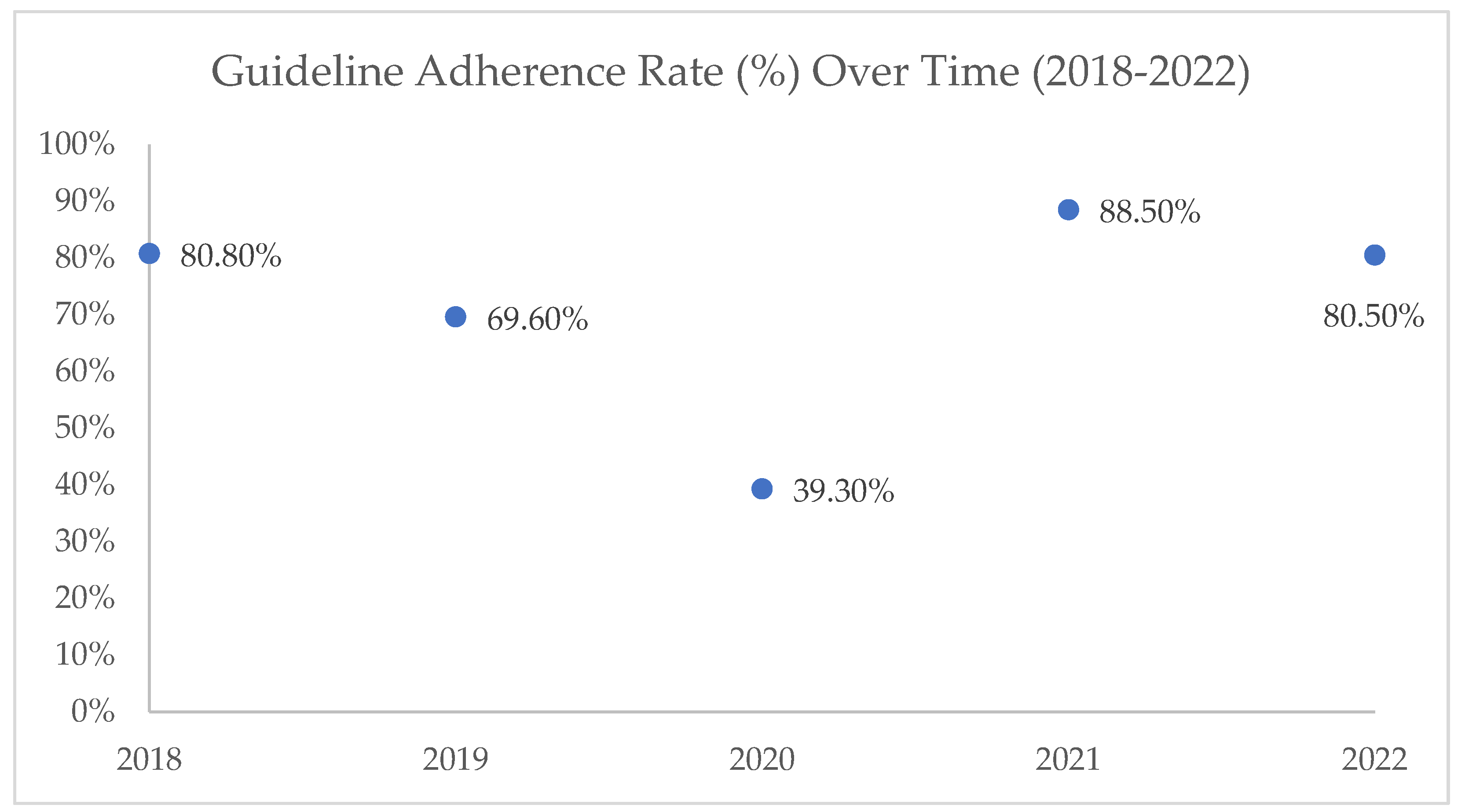
This marked drop in compliance corresponds directly with the worldwide surge of the COVID-19 pandemic [28,29]. During the initial phase of the pandemic, healthcare systems faced unprecedented strain, severe clinical uncertainty, diagnostic delays, and surging intensive care admissions [29,30]. Globally, clinicians managing severe viral respiratory distress empirically prescribed broad-spectrum antimicrobials and off-label therapies due to concerns over secondary bacterial superinfections [28,31]. Additionally, routine AMS activities—such as prospective audit-and-feedback, bed-side consultations, and restrictive pre-authorization—were temporarily disrupted as clinical pharmacists and infectious disease personnel were redeployed to frontline pandemic containment [30,32].
Importantly, the data demonstrates remarkable health-system resilience. In 2021, adherence rebounded significantly to 88.5% (85/96) and maintained stability through 2022 (80.5%, 70/87). This rapid recovery highlights the efficacy of re-establishing institutional AMS oversight, distributing updated COVID-19 co-infection algorithms, and integrating clinical pharmacists back into routine ward rounds as pandemic workflows stabilized [32,33].
Pathogen distribution significantly influenced bivariate adherence rates (p = 0.007). Cases involving Acinetobacter baumannii achieved the highest compliance (83.3%), followed by ESBL-producing Klebsiella pneumoniae (75.9%) and Carbapenem-Resistant Enterobacterales (CRE, 70.7%) [15,34]. High compliance in A. baumannii and CRE cases is likely driven by strict hospital restriction policies. Because treating these pathogens requires high-risk, reserve-tier antimicrobials (such as polymyxins, cefiderocol, or novel β-lactamase inhibitor combinations), institutional protocols generally enforce mandatory infectious disease consultation prior to drug dispensing [15,35].
Conversely, lower adherence was observed in cases involving ESBL-producing Escherichia coli (63.6%) and Methicillin-Resistant Staphylococcus aureus (MRSA, 65.7%). For ESBL E. coli, non-compliance frequently stems from step-down prescribing errors, where clinicians overuse carbapenems for uncomplicated urinary or soft tissue presentations rather than de-escalating to non-carbapenem sparing options (e.g., nitrofurantoin or oral fosfomycin) as advised by NAG algorithms [18,36]. For MRSA, non-compliance is commonly linked to inappropriate empiric glycopeptide dosing, failure to adjust for renal clearance, or prolonged prophylactic usage in surgical settings [37,38].
Notably, isolate classification as a true clinical infection (70.7%) versus a colonizer (76.7%) showed no statistically significant difference in adherence (p = 0.232). In clinical practice, distinguishing true infection from asymptomatic colonization—particularly in tracheostomy aspirates or chronic wound cultures—remains a major AMS challenge [14,39]. These findings indicate that once an MDRO was isolated, prescribers applied NAG therapeutic pathways uniformly, regardless of whether the culture reflected active tissue invasive disease or microbial colonization [24,39].
Bivariate analysis identified significant regional variations in protocol adherence (p = 0.018). Facilities in the Northern (75.9%) and Central (74.8%) zones maintained high adherence, whereas the Southern zone demonstrated significantly lower compliance (54.5%).
These disparities point to underlying structural variations in regional healthcare resources [40,41]. Northern and Central tertiary centers often benefit from higher concentrations of full-time infectious disease specialists, dedicated clinical ID pharmacists, and automated electronic decision-support systems embedded within hospital information networks [15,40]. In contrast, peripheral or Southern regional facilities may experience higher clinical workloads, staff turnover, and reduced frequency of real-time stewardship audits [41,42].
Encouragingly, institutional hospital classification (Major Specialist Hospitals vs. State Hospitals) showed no significant difference in adherence (70.9% vs. 73.1%, p = 0.601). This uniform baseline compliance demonstrates that Ministry of Health national AMS directives, standardized treatment guidelines, and national audit requirements have been successfully deployed across tertiary and secondary public healthcare tiers [18].
4. Materials and Methods
This retrospective cross-sectional study evaluated clinical data collected across 28 Ministry of Health (MOH) hospitals in Malaysia over a five-year surveillance period (2018–2022). The participating centers comprised 14 state hospitals—which function as high-volume tertiary facilities providing comprehensive acute medical and surgical services—and 14 major specialist hospitals that serve as regional referral centers for specialized subdisciplines [9]. Surveillance data were compiled by the MOH Infection Control Unit through the National Surveillance of Multidrug-Resistant Organisms (MDRO). Trained infection control nurses (ICNs) and personnel (ICPs) systematically extracted daily laboratory reports of targeted MDRO strains isolated from inpatient populations.
Eligible cases were defined in accordance with the 2018 MDRO Surveillance Manual as newly identified MDRO strains isolated from any clinical specimen in an admitted inpatient. A case was classified as "newly identified" if the pathogen was detected for the first time during the index admission or represented a novel infection with a distinct MDRO phenotype; multiple distinct MDRO isolates from a single patient were recorded independently [10]. The targeted pathogens encompassed Acinetobacter baumannii, extended-spectrum β-lactamase (ESBL)-producing Escherichia coli and Klebsiella pneumoniae, carbapenem-resistant Enterobacterales (CRE), methicillin-resistant Staphylococcus aureus (MRSA), and vancomycin-resistant Enterococcus (VRE). Cases originating from emergency departments, outpatient clinics, or external acute care institutions were excluded, as were repeat admissions within one year featuring identical MDRO strains, routine screening cultures, and records with incomplete critical data.
The required sample size was calculated using the single-proportion formula based on a primary categorical outcome of guideline adherence. Assuming an anticipated compliance baseline of 60.8% (p = 0.608) derived from prior local tertiary literature [11], a 95% confidence interval (α = 0.05), and a precision level (d) of 0.05, the minimum required size was 367. To accommodate an anticipated 20% missing or incomplete data rate, the final target sample size was expanded to 441 cases.
Evaluated independent variables included surveillance year, patient gender, hospital category, geographic zone, prior healthcare exposure, clinical discipline, specimen type, isolated microorganism, clinical infection versus colonization status, and specific antimicrobial agent choice. The primary dependent outcome, protocol adherence, was categorized as "full," "partial," or "non-adherence." Data was structured in Microsoft Excel and analyzed using IBM SPSS Statistics for Windows, Version 26.0 (IBM Corp., Armonk, N.Y., USA). Continuous and categorical variables were summarized using descriptive statistics, including absolute frequencies and percentages. Inferential comparisons across categorical sub-groups were performed using Pearson Chi-square tests, with statistical significance established at a two- sided p < 0.05.
5. Conclusions
This nationwide study provides a comprehensive evaluation of prescriber adherence to the NAG 2019 across N = 437 audited MDRO clinical cases in Malaysian public hospitals. Overall protocol compliance was established at 72.1%, demonstrating a commendable baseline level of stewardship implementation across state and major specialist hospital tiers.
While institutional classification and patient demographics did not significantly impact adherence, multivariable regression modelling confirmed that primary infection site and surveillance year serve as the principal independent determinants of NAG 2019 compliance. Prescribers demonstrated high fidelity to guidelines when managing high-acuity systemic conditions such as HAP/VAP (77.4%) and bloodstream infections (76.8%), as well as high-risk pathogens like Acinetobacter baumannii (83.3%). Conversely, localized infections, most notably Surgical Site and Skin/Soft Tissue Infections (50.0%)—and pathogens such as ESBL-producing E. coli (63.6%) presented persistent stewardship challenges, driven by empirical broad-spectrum over-prescribing and diagnostic ambiguity.
Longitudinally, the data highlighted both the vulnerability and resilience of healthcare systems under stress: compliance suffered a severe, unprecedented contraction during the peak of the COVID-19 pandemic in 2020 (39.3%), before making a rapid and sustained recovery through 2021 (88.5%) and 2022 (80.5%). Furthermore, observed geographic disparities—specifically between Northern/Central regions and the Southern zone—underscore the need for more equitable distribution of infectious disease expertise and stewardship resources.
Supplementary Materials
The following supporting information can be downloaded at: Preprints.org, Figure S1: Type of specimen taken for pathogen detection; Figure S2: Summary of isolated MDROs from 2018-2022 in MOH hospitals; Figure S3: Adherence status to National Antimicrobial Guidelines (NAG) 2019; Figure S4: Healthcare professionals adherence rate (%) to the NAG 2019 in Malaysia public health hospital (2018-2022); Table S1: Patients’ baseline characteristics; Table S2: Bivariate Associations Between Patient Demographic, Clinical, Microbiological, and Health-System Factors (Provider) and Adherence to NAG 2019 Guidelines (N=437) ; Table S3: Multivariable Logistic Regression Analysis of Determinants Associated with Adherence to NAG 2019 Guidelines (N=437).
Author Contributions
NAMS and MNAAR were responsible for designing the project and developing data collection tools. NFB provided the necessary data. MNAAR and NFB were involved in data cleaning, analysis, and interpretation. MNAAR prepared the initial draft of the manuscript. NAMS and NFB reviewed the document, provided technical guidance, and made significant revisions. Each author read and approved the final version of the manuscript. The corresponding author confirms that all listed authors meet the authorship criteria, and that no eligible contributors have been excluded. NAMS assumed overall responsibility as the guarantor of the content of the study.
Funding
This research received no external funding.
Institutional Review Board Statement
Ethical approval for this study was granted by the Medical Research and Ethics Committee (MREC) of the Ministry of Health Malaysia [NMRR ID-23-01759-ZOY (IIR)] before the study commenced. Additionally, authorization was obtained from the Director of the Medical Development Division, Ministry of Health Malaysia, who oversaw the data required for this research. Healthcare personnel at the hospital level secured informed consent from the patients before data collection, ensuring that participants were fully informed about the study's purpose, procedures, and potential implications. Patient identities were safeguarded using a password-protected database with data linked only to unique study identification numbers. Access to all study-related data was limited to the research investigators.
Informed Consent Statement
Not applicable.
Data Availability Statement
The data underlying the findings of this study were provided by the Ministry of Health, Malaysia. However, access to the data is restricted because it was obtained under a specific license for this study and is not publicly accessible. Nonetheless, the data may be made available upon reasonable request, subject to approval from the Ministry of Health, Malaysia and the authors.
Conflicts of Interest
The authors declare no conflicts of interest.
Acknowledgments
We extend our sincere appreciation to the Director General of Health, Malaysia, for granting us permission to publish this article. We are also deeply grateful to all medical officers and nurses in the infection control units across the Ministry of Health and participating hospitals for their invaluable contributions to this study.
Abbreviations
The following abbreviations are used in this manuscript:
| 95% CI | 95% Confidence Interval |
| AMR | Antimicrobial Resistance |
| AMS | Antimicrobial Stewardship |
| AOR | Adjusted Odds Ratio |
| BAL | Bronchoalveolar Lavage |
| BSI | Bloodstream Infection |
| COVID-19 | Coronavirus Disease 2019 |
| CRE | Carbapenem-resistant Enterobacterales |
| CSF | Cerebrospinal Fluid |
| ESBL | Extended-spectrum β-lactamase |
| HAP/VAP | Hospital-acquired/Ventilator-associated Pneumonia |
| ICN | Infection Control Nurse |
| ICP | Infection Control Personnel |
| ID | Infectious Disease |
| MDRO | Multidrug-resistant Organism |
| MOH | Ministry of Health |
| MRSA | Methicillin-resistant Staphylococcus Aureus |
| NA | Not Applicable |
| NAG | National Antimicrobial Guideline |
| S.E. | Standard Error |
| SSI/SSTI | Surgical Site/Soft Tissue Infection |
| UTI | Urinary Tract Infection |
| VRE | Vancomycin-resistant Enterococcus |
References
- Ajulo, S.; Awosile, B. Global antimicrobial resistance and use surveillance system (GLASS 2022): Investigating the relationship between antimicrobial resistance and antimicrobial consumption data across the participating countries. PLoS ONE 2024, vol. 19. [Google Scholar] [CrossRef] [PubMed]
- Cassini, A.; et al. Attributable deaths and disability-adjusted life-years caused by infections with antibiotic-resistant bacteria in the EU and the European Economic Area in 2015: a population-level modelling analysis. Lancet. Infect. Dis. 2019, vol. 19(no. 1), 56–66. [Google Scholar] [CrossRef] [PubMed]
- Dadgostar, P. Antimicrobial resistance: implications and costs. In Infection and Drug Resistance; Dove Medical Press Ltd, 2019. [Google Scholar] [CrossRef] [PubMed]
- Ministry of Health; M. Annual Report Ministry of Health Malaysia. In Annual Report Ministry of Health Malaysia; 2020; p. 80. [Google Scholar]
- Ar, M. N. A.; Binti Wan Puteh, S. E.; Ibrahim, R.; Rahman, M. M.; Abdul Karim, Z.; Bin Ali, F. Z.; Binti Bakhtiar, N. F. Antimicrobial resistance in Malaysia: a cross-sectional study analysing trends and economic impacts. BMJ Open 2025, 15(2), e091687. [Google Scholar] [CrossRef] [PubMed]
- Wp, S. E.; Norhidayah, M.; Ar, M. N. A. Factors associated with multidrug-resistant organism (MDRO) mortality: an analysis from the national surveillance of multidrug-resistant organism, 2018-2022. BMC Infect. Dis. 2025, vol. 25(no. 1), 60. [Google Scholar] [CrossRef]
- Murray, C. J.; et al. Global burden of bacterial antimicrobial resistance in 2019: a systematic analysis. The Lancet 2022, vol. 399(no. 10325), 629–655. [Google Scholar] [CrossRef] [PubMed]
- Mohammed, M.; et al. Impact of adherence to key performance indicators on mortality among patients managed for ischemic stroke. Pharm. Pract. 2020, vol. 18(no. 1), 1760. [Google Scholar] [CrossRef] [PubMed]
- P. H. Jantan and S. Bhd. Specialty & Subspecialty Framework Of Ministry of Health Hospitals Under The 11th Malaysia Plan. Cheras 2016, vol. 12. [Google Scholar]
- “Multidrug Resistance Organism (MDRO) & MRSA Bacteremia (MRSAB) - MALAYSIA ONE HEALTH ANTIMICROBIAL RESISTANCE.”. Available online: https://myohar.moh.gov.my/multidrug-resistance-organism-mdro-mrsa-bacteremia-mrsab/ (accessed on Jan. 14 2025).
- Loong, L. S.; et al. Comparing the appropriateness of antimicrobial prescribing among medical patients in two tertiary hospitals in Malaysia. J. Infect. Dev. Ctries. 2022, vol. 16(no. 12), 1877–1886. [Google Scholar] [CrossRef] [PubMed]
- Hosmer, D. W.; Lemeshow, S.; Sturdivant, R. X. Applied Logistic Regression: Third Edition. Appl. Logist. Regres. Third Ed. 2013, 1–510. [Google Scholar] [CrossRef]
- Peduzzi, P.; Concato, J.; Kemper, E.; Holford, T. R.; Feinstem, A. R. A simulation study of the number of events per variable in logistic regression analysis. J. Clin. Epidemiol. 1996, vol. 49(no. 12), 1373–1379. [Google Scholar] [CrossRef] [PubMed]
- Luyt, C. E.; Bréchot, N.; Trouillet, J. L.; Chastre, J. Antibiotic stewardship in the intensive care unit. Crit. Care 2014, vol. 18(no. 5), 480. [Google Scholar] [CrossRef] [PubMed]
- Barlam, T. F.; et al. Implementing an Antibiotic Stewardship Program: Guidelines by the Infectious Diseases Society of America and the Society for Healthcare Epidemiology of America. Clin. Infect. Dis. 2016, vol. 62(no. 10), e51–e77. [Google Scholar] [CrossRef] [PubMed]
- Dormann, C. F.; et al. Collinearity: A review of methods to deal with it and a simulation study evaluating their performance. Ecography 2013, vol. 36(no. 1), 27–46. [Google Scholar] [CrossRef]
- Akoglu, H. User’s guide to correlation coefficients. Turk. J. Emerg. Med. 2018, vol. 18(no. 3), 91–93. [Google Scholar] [CrossRef] [PubMed]
- Kamal, M. “THIRD EDITION FULL WEB VERSION CAN BE DOWNLOADED FROM : www.pharmacy,” 2019. Available online: https://www.researchgate.net/publication/351811794_National_Antimicrobial_Guideline_NAG_2019_3rd_Edition (accessed on Jul. 28 2026).
- Greenland, S.; Mansournia, M. A.; Altman, D. G. Sparse data bias: A problem hiding in plain sight. BMJ (Online) 2016, vol. 353. [Google Scholar] [CrossRef] [PubMed]
- Albert, A.; Anderson, J. A. On the existence of maximum likelihood estimates in logistic regression models. Biometrika 1984, vol. 71(no. 1), 1–10. [Google Scholar] [CrossRef]
- Kalil, C.; et al. Management of Adults With Hospital-acquired and Ventilator-associated Pneumonia: 2016 Clinical Practice Guidelines by the Infectious Diseases Society of America and the American Thoracic Society. Clin. Infect. Dis. 2016, vol. 63(no. 5), e61–e111. [Google Scholar] [CrossRef] [PubMed]
- Evans, L.; et al. Surviving sepsis campaign: international guidelines for management of sepsis and septic shock 2021. Intensive Care Med. 2021, vol. 47(no. 11), 1181. [Google Scholar] [CrossRef] [PubMed]
- Paulsen, J.; Solligård, E.; Damås, J. K.; DeWan, A.; Åsvold, B. O.; Bracken, M. B. The Impact of Infectious Disease Specialist Consultation for Staphylococcus aureus Bloodstream Infections: A Systematic Review. Open Forum Infect. Dis. 2016, vol. 3(no. 2), ofw048. [Google Scholar] [CrossRef] [PubMed]
- Schuts, E. C.; et al. Current evidence on hospital antimicrobial stewardship objectives: a systematic review and meta-analysis. Lancet Infect. Dis. 2016, vol. 16(no. 7), 847–856. [Google Scholar] [CrossRef] [PubMed]
- Stevens, D. L.; et al. Practice Guidelines for the Diagnosis and Management of Skin and Soft Tissue Infections: 2014 Update by the Infectious Diseases Society of America. Clin. Infect. Dis. 2014, vol. 59(no. 2), e10–e52. [Google Scholar] [CrossRef] [PubMed]
- Jenkins, T. C.; Sabel, A. L.; Sarcone, E. E.; Price, C. S.; Mehler, P. S.; Burman, W. J. Skin and soft-tissue infections requiring hospitalization at an academic medical center: opportunities for antimicrobial stewardship. Clin. Infect. Dis. 2010, vol. 51(no. 8), 895–903. [Google Scholar] [CrossRef] [PubMed]
- Esposito, S.; et al. Diagnosis and management of skin and soft-tissue infections (SSTI). A literature review and consensus statement: an update. J. Chemother. 2017, vol. 29(no. 4), 197–214. [Google Scholar] [CrossRef] [PubMed]
- Rawson, T. M.; et al. Bacterial and fungal co-infection in individuals with coronavirus: A rapid review to support COVID-19 antimicrobial prescribing. Clin. Infect. Dis. 2020, vol. 71(no. 9), ciaa530. [Google Scholar] [CrossRef] [PubMed]
- Arshad, A. R.; Ijaz, F.; Siddiqui, M. S; Khalid, S.; Fatima, A.; Aftab, R. K. COVID-19 pandemic and antimicrobial resistance in developing countries. Discoveries 2021, vol. 9(no. 2), e127. [Google Scholar] [CrossRef] [PubMed]
- Huttner, D.; Catho, G.; Pano-Pardo, J. R.; Pulcini, C.; Schouten, J. COVID-19: don’t neglect antimicrobial stewardship principles! Clin. Microbiol. Infect. 2020, vol. 26(no. 7), 808–810. [Google Scholar] [CrossRef] [PubMed]
- Langford, J.; et al. Antibiotic prescribing in patients with COVID-19: rapid review and meta-analysis. Clin. Microbiol. Infect. 2021, vol. 27(no. 4), 520–531. [Google Scholar] [CrossRef] [PubMed]
- Nori, P.; Stevens, M. P.; Patel, P. K. Rising from the pandemic ashes: Reflections on burnout and resiliency from the infection prevention and antimicrobial stewardship workforce. Antimicrob. Steward. Healthc. Epidemiol. ASHE 2022, vol. 2(no. 1), e101. [Google Scholar] [CrossRef] [PubMed]
- Stevens, M. P.; Patel, P. K.; Nori, P. Involving antimicrobial stewardship programs in COVID-19 response efforts: All hands on deck. Infect. Control Hosp. Epidemiol. 2020, vol. 41(no. 6), 744–745. [Google Scholar] [CrossRef] [PubMed]
- Tamma, P. D.; Aitken, S. L.; Bonomo, R. A.; Mathers, A. J.; Van Duin, D.; Clancy, C. J. Infectious Diseases Society of America Guidance on the Treatment of AmpC β-Lactamase-Producing Enterobacterales, Carbapenem-Resistant Acinetobacter baumannii, and Stenotrophomonas maltophilia Infections. Clin. Infect. Dis. 2022, vol. 74(no. 12), 2089–2114. [Google Scholar] [CrossRef] [PubMed]
- Hodgkin, et al. “The selection and use of essential medicines: report of the WHO Expert Committee on Selection and Use of Essential Medicines, 2019 (including the 21st WHO Model List of Essential Medicines and the 7th WHO Model List of Essential Medicines for Children),” WHO South. East. Asia J. Public Health. Dec 2019, vol. 24, pp. 1–9. Available online: https://iris.who.int/handle/10665/330668 (accessed on Jul. 28 2026).
- Mulbah, J. L.; Kenney, R. M.; Tibbetts, R. J.; Shallal, A. B.; Veve, M. P. Ceftriaxone versus cefepime or carbapenems for definitive treatment of low-risk AmpC-Harboring Enterobacterales bloodstream infections in hospitalized adults: A retrospective cohort study. Diagn. Microbiol. Infect. Dis. 2025, vol. 111(no. 1). [Google Scholar] [CrossRef] [PubMed]
- Liu, et al. Clinical practice guidelines by the infectious diseases society of america for the treatment of methicillin-resistant Staphylococcus aureus infections in adults and children. Clin. Infect. Dis. 2011, vol. 52(no. 3). [Google Scholar] [CrossRef] [PubMed]
- Rybak, M. J.; et al. Therapeutic monitoring of vancomycin for serious methicillin-resistant Staphylococcus aureus infections: A revised consensus guideline and review by the American Society of Health-System Pharmacists, the Infectious Diseases Society of America, the Pediat…. Am. J. Heal. Syst. Pharm. 2020, vol. 77(no. 11), 835–863. [Google Scholar] [CrossRef] [PubMed]
- CDC, Ncezid, and DHQP, CDC/NHSN Surveillance Definitions for Specific Types of Infections. 2026.
- Nathwani; Varghese, D.; Stephens, J.; Ansari, W.; Martin, S.; Charbonneau, C. Value of hospital antimicrobial stewardship programs [ASPs]: a systematic review. Antimicrob. Resist. Infect. Control 2019, vol. 8(no. 1), 35. [Google Scholar] [CrossRef] [PubMed]
- Antimicrobial stewardship programmes in health-care facilities in low- and middle-income countries: a WHO practical toolkit. JAC. Antimicrob. Resist. 2019, vol. 1(no. 3). [CrossRef] [PubMed]
- Suttels, V.; et al. Factors Influencing the Implementation of Antimicrobial Stewardship in Primary Care: A Narrative Review. Antibiotics 2022, vol. 12(no. 1), 30. [Google Scholar] [CrossRef] [PubMed]
Figure 1.
Type of specimen taken for pathogen detection.
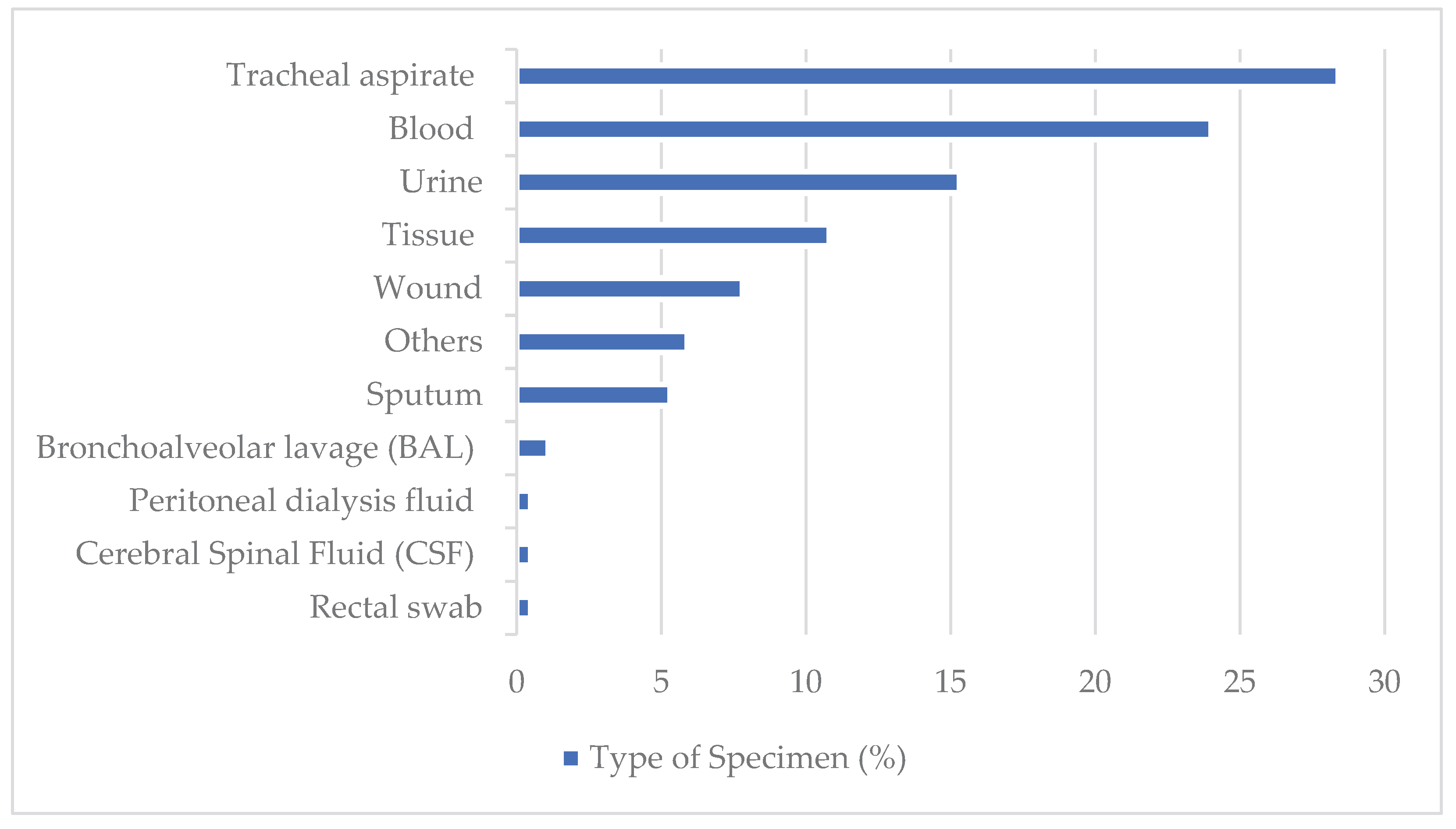
Figure 2.
Summary of isolated MDROs from 2018-2022 in MOH hospitals.
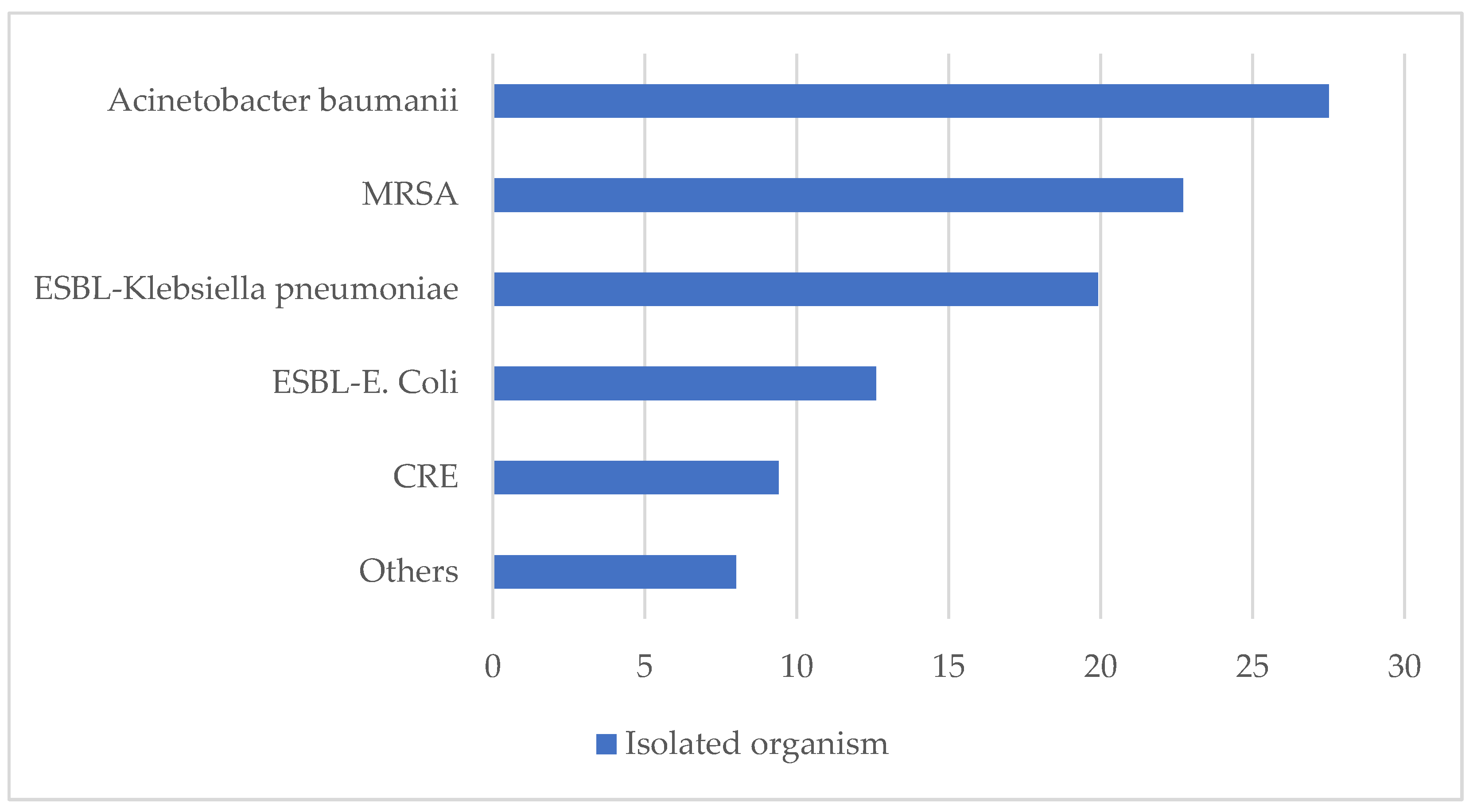
Figure 3.
Adherence status to National Antimicrobial Guidelines (NAG) 2019.
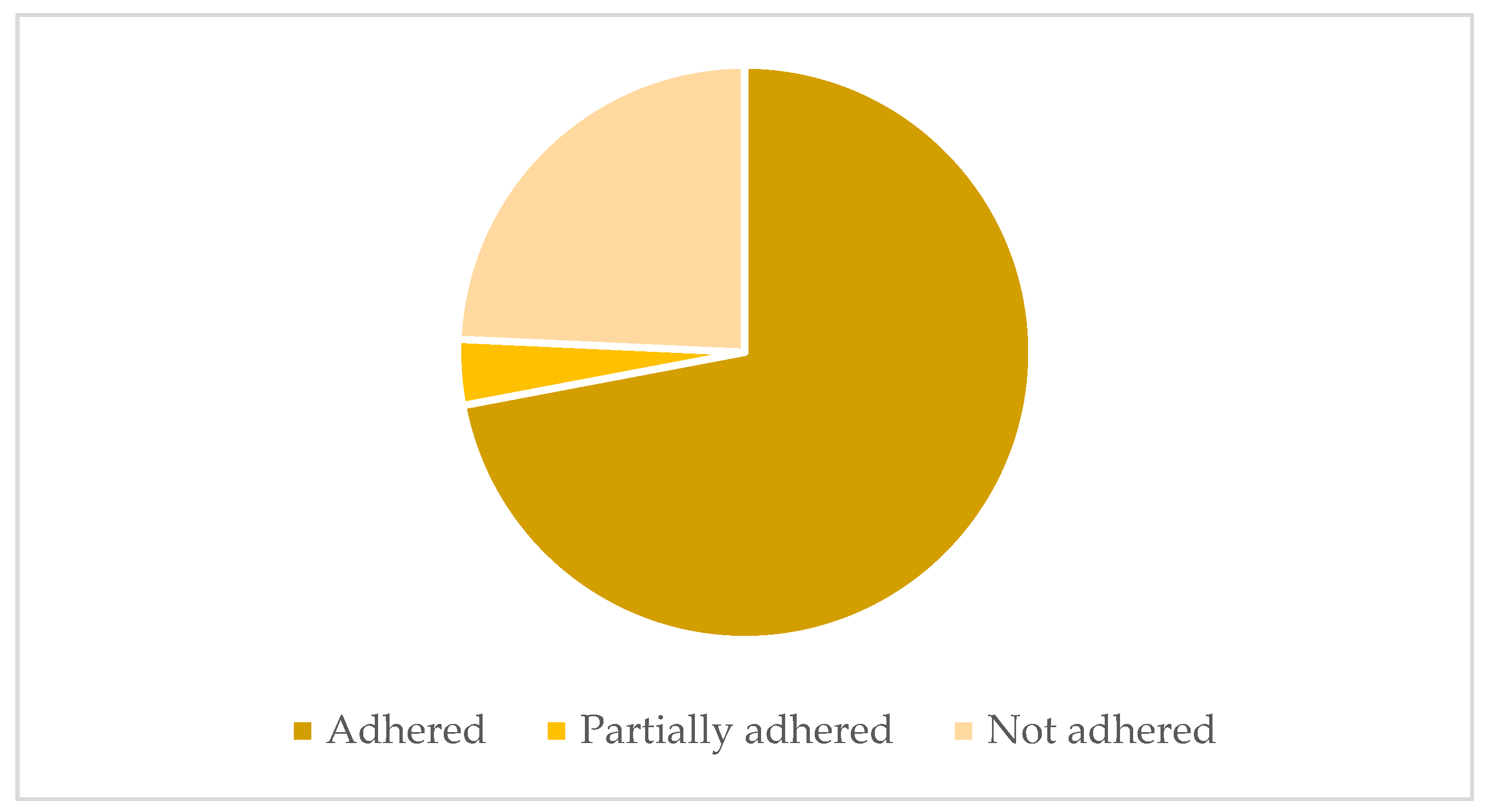
Table 1.
Patients’ baseline characteristics.
| Variables | Description | n (%) |
|---|---|---|
| Year | 2018 2019 2020 2021 2022 |
78 (17.8) 92 (21.1) 84 (19.2) 96 (22.0) 87 (19.9) |
| Gender | Male Female |
271 (62.0) 166 (38.0) |
| Previous encounter with healthcare facilities | Yes No Not documented |
160 (36.6) 274 (62.7) 3 (0.7) |
| Hospital category | State Hospital Major Specialist Hospital |
238 (54.5) 199 (45.5) |
| Zone | Central Northern Southern Eastern East Malaysia (Borneo) |
111 (25.4) 228 (52.2) 55 (12.6) 20 (4.6) 23 (5.3) |
| Discipline | Anesthesiology General Medicine General Surgery Nephrology Obstetrics & Gynecology Oncology Orthopedics Pediatrics Urology Others |
92 (21.1) 136 (31.1) 66 (15.1) 12 (2.7) 7 (1.6) 1 (0.2) 63 (14.4) 23 (5.3) 4 (0.9) 33 (7.6) |
| Isolated organisms’ status | Colonizer Infection |
103 (23.6) 334 (76.4) |
| Antimicrobial selection | Preferred Alternative Not documented |
230 (52.6) 101 (23.1) 106 (24.3) |
| Type of infection | BSI HAP Intra-abdominal SSI SSTI UTI VAP Others Not documented |
99 (22.7) 54 (12.4) 3 (0.7) 30 (6.9) 24 (5.5) 45 (10.3) 52 (11.9) 32 (7.3) 98 (22.4) |
Table 5.
Multivariable Logistic Regression Analysis of Determinants Associated with Adherence to NAG 2019 Guidelines (N=437).
Table 5.
Multivariable Logistic Regression Analysis of Determinants Associated with Adherence to NAG 2019 Guidelines (N=437).
| Variable | B | S.E. | Wald | df | p value* | AOR [Exp(B)] | 95% CI | |
|---|---|---|---|---|---|---|---|---|
| Year | 2018 2019 2020 2021 2022 |
-1.213 -2.355 0.351 -0.331 |
0.451 0.451 0.524 0.489 |
55.238 7.223 27.216 0.447 0.457 |
4 1 1 1 1 |
<0.001 0.007 <0.001 0.504 0.499 |
0.297 0.095 1.420 0.718 |
0.123-0.720 0.039-0.230 0.508-3.968 0.275-1.874 |
| Type of Infection | BSI HAP/VAP NA Others SSI/SSTI UTI |
-0.529 0.112 -1.115 -1.523 -0.628 |
0.408 0.413 0.489 0.478 0.488 |
16.600 1.679 0.074 5.193 10.165 1.658 |
5 1 1 1 1 1 |
0.005 0.195 0.786 0.023 0.001 0.198 |
0.589 1.119 0.328 0.218 0.533 |
0.265-1.311 0.498-2.511 0.126-0.856 0.085-0.556 0.205-1.388 |
| Isolated Organism |
Acinetobacter baumanii CRE ESBL – E.Coli ESBL – Klebsiella Pneumoniae MRSA Others |
-0.636 -1.151 -0.288 -0.748 -0.997 |
0.494 0.459 0.395 0.423 0.504 |
8.615 1.657 6.281 0.534 3.129 3.918 |
5 1 1 1 1 1 |
0.125 0.198 0.012 0.465 0.077 0.048 |
0.530 0.316 0.749 0.473 0.369 |
0.201-1.394 0.129-0.778 0.346-1.624 0.207-1.084 0.137-0.990 |
| Hospital Location | Central East Malaysia Eastern Northern Southern |
-0.935 -0.659 -0.404 -1.089 |
0.624 0.610 0.344 0.425 |
7.511 2.244 1.168 1.379 6.566 |
4 1 1 1 1 |
0.111 0.134 0.280 0.240 0.010 |
0.393 0.517 0.667 0.337 |
0.116-1.334 0.157-1.710 0.340-1.311 0.146-0.774 |
| Department | Anaest Medical Ortho Others Surgical |
0.164 -0.526 -0.184 0.223 |
0.385 0.467 0.482 0.460 |
4.128 0.182 1.268 0.145 0.235 |
4 1 1 1 1 |
0.389 0.670 0.260 0.703 0.628 |
1.178 0.591 0.832 1.249 |
0.554-2.506 0.236-1.477 0.323-2.142 0.507-3.077 |
* Significance was determined at the 0.05 level.
Disclaimer/Publisher’s Note: The statements, opinions and data contained in all publications are solely those of the individual author(s) and contributor(s) and not of MDPI and/or the editor(s). MDPI and/or the editor(s) disclaim responsibility for any injury to people or property resulting from any ideas, methods, instructions or products referred to in the content. |
© 2026 by the authors. Licensee MDPI, Basel, Switzerland. This article is an open access article distributed under the terms and conditions of the Creative Commons Attribution (CC BY) license (http://creativecommons.org/licenses/by/4.0/).
Copyright: This open access article is published under a Creative Commons CC BY 4.0 license, which permit the free download, distribution, and reuse, provided that the author and preprint are cited in any reuse.


