

Submitted:
06 August 2026
Posted:
06 August 2026
You are already at the latest version
Abstract
Background: Surgical antimicrobial prophylaxis (SAP) is a cornerstone of surgical site infection (SSI) prevention and represents one of the most cost-effective interventions in perioperative care. However, inappropriate antimicrobial selection, timing, dosing, and duration remain common, compromising clinical outcomes and increasing healthcare costs. This narrative review summarizes the pharmacoeconomic value of SAP and its role in antimicrobial stewardship, value-based healthcare, and healthcare sustainability. Methods: A narrative review was conducted to synthesize current evidence on the clinical and economic impact of SAP. The literature addressing the burden of SSIs, cost-effectiveness of prophylactic strategies, antimicrobial selection and duration, stewardship interventions, and future perspectives for optimizing perioperative infection prevention was reviewed. Results: Evidence consistently demonstrates that appropriate SAP reduces SSI rates, postoperative morbidity, hospital length of stay, readmissions, reoperations, and healthcare expenditures. First-generation cephalosporins, particularly cefazolin, remain the preferred agents for most procedures because of their efficacy, safety, and favorable pharmacoeconomic profile. In contrast, inappropriate antimicrobial selection and prolonged postoperative prophylaxis increase costs, antimicrobial consumption, adverse events, and antimicrobial resistance without improving outcomes. Antimicrobial stewardship programs significantly improve adherence to evidence-based recommendations, optimize antimicrobial use, and enhance both clinical and economic performance. Conclusions: Appropriate SAP is a high-value intervention that improves patient outcomes while reducing healthcare costs. Optimizing antimicrobial selection, timing, dosing, and duration through stewardship initiatives is essential to maximize clinical effectiveness, minimize unnecessary antimicrobial exposure, and promote sustainable healthcare systems. Future studies should incorporate standardized pharmacoeconomic methodologies to strengthen evidence-based decision-making and value-based surgical care.
Keywords:
surgical antimicrobial prophylaxis
; surgical site infection
; pharmacoeconomics
; antimicrobial stewardship
; value-based healthcare
1. Introduction
Surgical site infections (SSIs) remain among the most common healthcare-associated infections worldwide and are associated with substantial clinical and economic consequences [1]. Despite advances in surgical techniques, perioperative care, and infection prevention measures, SSIs continue to contribute significantly to postoperative morbidity, prolonged hospitalization, readmissions, reoperations, and increased mortality [2]. Beyond their impact on patient outcomes, these infections impose a considerable financial burden on healthcare systems through increased resource utilization and higher treatment costs [3].
Surgical antimicrobial prophylaxis (SAP) is one of the most effective and widely adopted strategies for preventing SSIs [4]. When appropriately prescribed, including the correct antimicrobial agent, timing of administration, dosage, and duration, SAP has consistently demonstrated the ability to reduce the incidence of postoperative infections across a wide range of surgical procedures. Consequently, SAP has become a fundamental component of evidence-based perioperative care and an essential element of international guidelines for infection prevention.
The benefits of SAP extend beyond clinical effectiveness. The prevention of postoperative infections translates into reductions in hospital length of stay, antimicrobial consumption, diagnostic testing, intensive care utilization, and the need for additional surgical interventions. These outcomes have important economic implications, particularly in healthcare systems facing increasing financial constraints and growing demands for efficiency, quality, and sustainability [5].
In this context, pharmacoeconomics provides a valuable framework for evaluating the relationship between the costs and outcomes associated with healthcare interventions [6]. Through methodologies such as cost-effectiveness, cost-benefit, cost-minimization, and cost-utility analyses, pharmacoeconomic evaluations support decision-making processes by identifying interventions capable of generating the greatest health benefits while optimizing resource allocation [7]. The application of pharmacoeconomic principles to surgical antimicrobial prophylaxis is particularly relevant because relatively low-cost preventive interventions may avoid costly postoperative complications and improve overall healthcare value [8].
More recently, the growing adoption of value-based healthcare models has reinforced the importance of assessing both clinical outcomes and economic performance when implementing infection prevention strategies [9]. In this scenario, surgical antimicrobial prophylaxis represents a paradigmatic example of an intervention capable of simultaneously improving patient safety, reducing healthcare expenditures, and promoting sustainability within healthcare systems [10].
Therefore, this narrative review aims to discuss the current evidence regarding the pharmacoeconomic value of surgical antimicrobial prophylaxis, focusing on its impact on surgical site infection prevention, healthcare costs, antimicrobial stewardship initiatives, and the sustainability of healthcare systems.
2. Economic Burden of Surgical Site Infections
Surgical site infections represent one of the most frequent healthcare-associated infections and remain a major challenge for healthcare systems worldwide. For surgical patients, SSIs constitute most nosocomial infections and account for approximately 20% of all hospital-acquired infections [11]. Despite advances in perioperative care and infection prevention strategies, SSIs continue to be associated with significant morbidity, mortality, and healthcare expenditures. According to reports, SSIs account for almost one-third of postoperative fatalities globally, and it annually endangers the lives of millions of people and fuels the development of antibiotic resistance [12]. Their impact extends beyond clinical outcomes, generating substantial economic consequences for patients, healthcare institutions, and society.
The economic burden of SSIs can be categorized into direct, indirect, and intangible costs. Direct costs include expenditures related to additional antimicrobial therapy, diagnostic tests, surgical reinterventions, intensive care unit admissions, prolonged hospitalization, wound care management, and outpatient follow-up. Several studies have demonstrated that patients who develop SSIs require significantly greater healthcare resource utilization compared with non-infected surgical patients, resulting in considerable increases in treatment costs.
Among the most important contributors to the economic burden of SSIs is prolonged hospital length of stay. Badia et al. assessed the impact of SSI on health-cost of 26 publications from Europe, but the major issue was the homogeneity of data for cost-evaluation [13]. Studies have demonstrated that patients who develop SSIs may require an additional 7 to 10 days of hospital stay compared with uninfected surgical patients, largely due to the need for further diagnostic investigations, intravenous antimicrobial therapy, surgical reinterventions, and management of infection-related complications [14]. Moreover, the attributable cost of a single SSI has been estimated to range from approximately US$11,000 to over US$20,000 per case, depending on the type and severity of the infection [15]. These findings highlight the significant economic burden imposed by SSIs on healthcare systems and reinforce the importance of effective preventive strategies aimed at reducing postoperative infectious complications.
In addition to direct medical costs, SSIs generates important indirect costs associated with productivity losses, delayed return to work, long-term disability, and caregiver burden [16]. These consequences may persist long after hospital discharge and substantially increase the overall societal impact of postoperative infections. Furthermore, intangible costs, including pain, psychological distress, reduced quality of life, and decreased patient satisfaction, represent significant but often difficult-to-measure components of the total burden [1].
Several economic analyses have highlighted the financial consequences of SSIs across different surgical specialties. In orthopedic trauma, for example, infection following tibial fracture fixation has been shown to significantly increase resource utilization and overall treatment expenditures, resulting in treatment costs that can be up to 6.5 times higher than uninfected cases [17]. Similarly, cardiac surgeries usually require a hospital length of stay (LOS) of roughly 7 to 10 days. Developing SSI increases the total postoperative duration to an average of 37 to 59 days, often necessitating readmission to the intensive care unit [18].
Given the substantial clinical and economic consequences of SSIs, preventive interventions have become a priority for healthcare organizations worldwide. Effective prevention strategies not only improve patient outcomes but also contribute to more efficient resource utilization and greater sustainability of healthcare systems [19]. Within this context, surgical antimicrobial prophylaxis has emerged as one of the most cost-effective interventions for reducing the burden of postoperative infections and optimizing healthcare expenditures.
3. Cost-Effectiveness of Surgical Antimicrobial Prophylaxis
Surgical antimicrobial prophylaxis is widely recognized as one of the most cost-effective interventions for preventing SSIs [20]. By reducing the incidence of postoperative infections, SAP not only improves patient outcomes but also decreases healthcare costs estimated at $4.5–10 billion annually in the United States [21]. The relatively low acquisition cost of prophylactic antibiotics, when compared with the high costs associated with the diagnosis and treatment of SSIs, makes SAP an intervention with a highly favorable cost-effectiveness profile confirmed in several studies around the world [22,23]. Even modest reductions in SSI rates may result in significant cost savings [24]. Multiple studies, including a meta-analysis published in 2018 by Allen et al., have demonstrated that the financial costs associated with managing a single SSI often exceed the total costs of prophylactic antibiotic administration for hundreds of surgical procedures [25,26,27].
Evidence from systematic reviews and economic evaluations consistently supports the cost-effectiveness of preoperative antimicrobial prophylaxis across a variety of surgical specialties, with SSI rates ranging from 0 to 71.1% with costs amounting to US$480-22,130 [28]. These studies have shown that appropriate SAP reduces infection rates while simultaneously lowering overall healthcare expenditures. Importantly, the economic benefits are observed not only in high-risk procedures involving implants or prosthetic materials but also in many clean and clean-contaminated surgeries where infection prevention translates into meaningful reductions in postoperative complications.
The effectiveness of SAP depends on adherence to evidence-based principles, including appropriate antimicrobial selection, timing of administration, dosage, and duration. Failure to comply with established guidelines may compromise both clinical and economic outcomes. Inappropriate antibiotic choices, delayed administration, unnecessary redosing, and prolonged postoperative prophylaxis increase antimicrobial consumption and healthcare costs without providing additional protection against infection. Consequently, adherence to guideline-recommended practices is essential for maximizing the economic value of prophylactic interventions. A systematic review recovered 859 articles at the databases, with a total of 18 studies selected for synthesis, showing appropriate indication of antibiotic prophylaxis (ranging from 70.3% to 95%), administration of antibiotic at the correct time (ranging from 12.73% to 100%), correct antibiotic choice (ranging from 22% to 95%), adequate discontinuation of antibiotic (ranging from 5.8% to 91.4%), and adequate antibiotic prophylaxis (ranging from 0.3% to 84.5%) [29]. These data demonstrate that we are far from the ideal SAP considering a global panorama. How many SSIs could be avoided yearly, and the financial burden?
Several studies have demonstrated that shorter prophylactic regimens, including single-dose strategies, achieve comparable infection prevention outcomes to prolonged antibiotic courses in selected surgical procedures [30]. From a pharmacoeconomic perspective, reducing unnecessary antimicrobial exposure decreases medication expenditures, minimizes adverse drug events, lowers the risk of antimicrobial resistance, and reduces costs associated with monitoring and treatment-related complications [8]. These findings reinforce the principle that greater antibiotic use does not necessarily translate into greater clinical benefit (Table 1).
In addition to reducing direct healthcare costs, SAP contributes to broader economic benefits by improving surgical outcomes, reducing readmissions, accelerating patient recovery, and facilitating earlier return to normal activities [31]. Such benefits are particularly relevant in modern healthcare systems increasingly focused on value-based care, where interventions are evaluated according to their ability to improve outcomes while optimizing resource utilization [32].
4. Economic Impact of Appropriate Antimicrobial Selection and Duration
The selection of an appropriate antimicrobial agent should be guided by the most likely pathogens associated with the surgical procedure, local epidemiological patterns, patient-specific risk factors, and antimicrobial stewardship principles [33,34]. In most clean and clean-contaminated procedures, first-generation cephalosporins, particularly cefazolin, remain the preferred agents due to their efficacy against common skin flora, favorable safety profile, narrow antimicrobial spectrum, and low acquisition cost. The use of broader-spectrum antibiotics when not clinically indicated may increase drug expenditures, promote antimicrobial resistance, and expose patients to unnecessary adverse events.
Comparative studies have demonstrated that broader-spectrum agents do not necessarily provide superior protection against SSIs. In some surgical settings, first-generation cephalosporins have shown equivalent or even superior outcomes compared with third-generation cephalosporins while maintaining lower treatment costs (Figure 1). These findings reinforce the importance of evidence-based antimicrobial selection as a strategy to optimize both clinical outcomes and healthcare resource utilization [35].
The duration of prophylaxis represents another critical determinant of economic efficiency. International guidelines consistently recommend limiting prophylaxis to a single preoperative dose or discontinuing antibiotic administration within 24 hours after surgery for most procedures [36]. Despite these recommendations, prolonged postoperative prophylaxis remains common in many institutions, often driven by concerns regarding infection risk rather than scientific evidence [37].
Several studies have demonstrated that extending prophylaxis beyond the recommended duration does not significantly reduce SSI rates, even for implant-associated surgeries [38]. In contrast, a recent study from Saudi Arabia showed that prolonged antibiotic exposure increases medication costs, nursing workload, laboratory monitoring requirements, and the risk of antibiotic-related adverse events [39]. Additional consequences include Clostridioides difficile infection, drug toxicity, allergic reactions, and the emergence of antimicrobial resistance, all of which contribute to increased healthcare expenditures [40].
From a pharmacoeconomic perspective, unnecessary postoperative antibiotic administration represents a low-value practice because it generates additional costs without corresponding clinical benefits. Economic analyses have shown that adherence to guideline-recommended prophylaxis durations can significantly reduce antimicrobial consumption while maintaining equivalent infection prevention outcomes, even in developing countries [41].
The financial implications of inappropriate antimicrobial selection and prolonged prophylaxis extend beyond individual patients [42]. At the institutional level, excessive antimicrobial utilization contributes to higher pharmacy expenditures and increased costs associated with antimicrobial stewardship activities and infection control measures [43]. At the healthcare system level, inappropriate antimicrobial use accelerates the development of antimicrobial resistance, creating long-term economic burdens that affect future treatment options and healthcare sustainability [44,45,46,47,48,49].
5. Antimicrobial Stewardship and Value-Based Care
Antimicrobial stewardship programs (ASPs) have emerged as essential components of modern healthcare systems, aiming to optimize antimicrobial use while improving patient outcomes, minimizing adverse events, reducing antimicrobial resistance, and controlling healthcare expenditures [47,48]. Within the surgical setting, stewardship initiatives play a critical role in ensuring appropriate implementation of SAP, thereby enhancing both clinical effectiveness and economic efficiency. Considering the current AI-based models of applications, the surveillance can be more accurate [47,48,50].
Common issues include the use of unnecessarily broad-spectrum agents, incorrect timing of administration, inappropriate dosing, and prolonged postoperative prophylaxis. Giamarellou et al. published a recent narrative review of the ASP in hospital setting, including some aspects of the SSIs prophylaxis [51]. These practices increase antimicrobial consumption and healthcare costs without providing additional clinical benefit.
Numerous studies have demonstrated that stewardship interventions can significantly improve adherence to evidence-based guidelines for surgical prophylaxis [34,52,53,54,55,56,57,58]. Strategies such as prospective audit and feedback [59], clinical decision support systems [60], multidisciplinary protocol development [61], pharmacist-led interventions [62,63] , educational programs [64,65], and continuous performance monitoring have been associated with substantial improvements in prescribing practices. As a result, healthcare institutions frequently observe reductions in antimicrobial utilization, lower pharmacy expenditures, and improved compliance with recommended prophylaxis protocols.
The stewardship programs contribute to lower rates of surgical site infections, reduced hospital length of stay, fewer readmissions, and decreased utilization of diagnostic and therapeutic resources [65]. These improvements generate significant cost savings while simultaneously enhancing patient safety and quality of care, which can be crucial in developing countries, where sustainability of the healthcare system is essential [66].
The growing emphasis on Value-Based Healthcare (VBHC) further strengthens the importance of stewardship programs [67,68]. Value-based care focuses on maximizing patient outcomes relative to the costs incurred throughout the continuum of care [69,70]. In this framework, healthcare interventions are assessed not only by their clinical efficacy but also by their ability to generate meaningful health outcomes efficiently and sustainably. Surgical antimicrobial prophylaxis represents an excellent example of a high-value intervention, particularly when implemented within a structured stewardship framework [68].
From a value-based perspective, the success of SAP should not be measured solely by reductions in infection rates but also by its contribution to broader healthcare outcomes, including patient safety, quality of life, resource optimization, and long-term sustainability [71,72]. Stewardship programs facilitate this approach by promoting evidence-based decision-making and ensuring that antimicrobial use aligns with both clinical needs and economic considerations.
In addition, multidisciplinary collaboration is fundamental to the success of stewardship initiatives [73,74]. Surgeons, anesthesiologists, infectious disease specialists, pharmacists, microbiologists, infection prevention teams, and hospital administrators all contribute to the development and implementation of effective prophylaxis protocols. As healthcare systems worldwide face increasing financial pressures, aging populations, and rising antimicrobial resistance rates, the integration of antimicrobial stewardship principles into value-based care models becomes increasingly important. By simultaneously improving clinical outcomes and reducing unnecessary expenditures, stewardship programs support the sustainability of healthcare systems while reinforcing the principles of high-quality, patient-centered care.
Therefore, antimicrobial stewardship should be considered not only an infection prevention strategy but also a key component of value-based healthcare, capable of generating substantial clinical, economic, and societal benefits through the optimization of surgical antimicrobial prophylaxis practices.
6. Future Perspectives and Healthcare System Sustainability
The future of SAP extends beyond infection prevention and increasingly encompasses broader goals related to healthcare quality, economic efficiency, and system sustainability. As healthcare systems worldwide face rising costs, increasing surgical volumes, aging populations, and the growing threat of antimicrobial resistance, optimizing preventive strategies has become a strategic priority for policymakers, healthcare institutions, and clinical professionals [75,76].
One of the most promising developments in this field is the incorporation of precision medicine into perioperative infection prevention [77]. Traditional prophylactic protocols are generally based on procedure-specific recommendations and population-level risk estimates. However, advances in genomics, microbiome research, and predictive analytics may enable more individualized approaches to antimicrobial prophylaxis [78]. Future strategies may consider patient-specific characteristics, colonization status, microbiological risk profiles, and local epidemiological patterns to optimize prophylactic interventions while minimizing unnecessary antimicrobial exposure.
Artificial intelligence and machine learning technologies also have the potential to transform perioperative infection prevention [47,48]. Predictive models capable of identifying patients at increased risk for SSIs may support more targeted preventive measures, improve resource allocation, and enhance clinical decision-making [79]. Additionally, AI-driven clinical decision support systems may assist healthcare professionals in selecting the most appropriate antimicrobial agent, dose, timing, and duration based on real-time patient and institutional data [80]. However, the use of AI in SAP is still incipient, focused on infection control and prevention [81,82].
The increasing availability of electronic health records and healthcare analytics platforms provides new opportunities for monitoring compliance with prophylaxis guidelines and evaluating outcomes at both institutional and healthcare system levels [83]. Automated surveillance systems may facilitate the identification of prescribing patterns, benchmark performance indicators, and support continuous quality improvement initiatives [84]. Hartmann et al. showed the impact of inadequate surgical antibiotic prophylaxis on perioperative outcome and length of stay, with improvement using automated surveillance system [84]. These tools may contribute to more efficient antimicrobial stewardship programs and promote evidence-based practice across surgical specialties.
Another important area of future development involves the integration of pharmacoeconomic evaluations into routine healthcare decision-making. While the clinical benefits of SAP are well established, economic analyses remain heterogeneous and are often underrepresented in surgical research. Future studies should incorporate standardized pharmacoeconomic methodologies, including cost-effectiveness, cost-utility, and budget impact analyses, to better quantify the value generated by prophylactic interventions. Such evidence will be essential for informing policy decisions and resource allocation strategies in increasingly constrained healthcare environments.
7. Conclusion
Surgical antimicrobial prophylaxis represents one of the most effective and cost-effective strategies for preventing surgical site infections, reducing postoperative morbidity, mortality, healthcare resource utilization, and associated costs. The evidence reviewed demonstrates that appropriate antimicrobial selection, timing, dosage, and duration are critical for maximizing both clinical and economic outcomes. Furthermore, antimicrobial stewardship programs enhance the value of prophylactic interventions by promoting guideline adherence, reducing unnecessary antimicrobial use, mitigating antimicrobial resistance, and optimizing resource allocation. In the context of increasing healthcare expenditures and growing demands for quality and efficiency, surgical antimicrobial prophylaxis should be regarded not only as a cornerstone of infection prevention but also as a strategic component of value-based healthcare. Future advances in precision medicine, artificial intelligence, and healthcare analytics may further improve the effectiveness and sustainability of prophylactic strategies, reinforcing their role in supporting resilient and economically sustainable healthcare systems.
Author Contributions
Conceptualization, M.F.F.F., J.R.T.R. and A.S.P.; methodology, A.S.P.; writing—original draft preparation, F.F.T; L.R.D.; writing—review and editing, M.F.F.F., F.F.T. All authors have read and agreed to the published version of the manuscript.
Funding
This research received no external funding.
Institutional Review Board Statement
Not applicable.
Informed Consent Statement
Not applicable.
Data Availability Statement
Not applicable.
Acknowledgments
During the preparation of this manuscript, the authors used ChatGPT for the purposes of language review.
Conflicts of Interest
The authors declare no conflicts of interest.
References
- Costabella, F.; Patel, K.B.; Adepoju, A.V.; et al. Healthcare Cost and Outcomes Associated With Surgical Site Infection and Patient Outcomes in Low- and Middle-Income Countries. Cureus 2023, 15, e42493. [Google Scholar] [CrossRef] [PubMed]
- Sullivan, E.; Gupta, A.; Cook, C.H. Cost and Consequences of Surgical Site Infections: A Call to Arms. Surg. Infect. 2017, 18, 451–454. [Google Scholar] [CrossRef] [PubMed]
- Broex, E.C.; van Asselt, A.D.; Bruggeman, C.A.; van Tiel, F.H. Surgical site infections: How high are the costs? J. Hosp. Infect. 2009, 72, 193–201. [Google Scholar] [CrossRef] [PubMed]
- Sartelli, M.; Coccolini, F.; Labricciosa, F.M.; et al. Surgical Antibiotic Prophylaxis: A Proposal for a Global Evidence-Based Bundle. Antibiotics 2024, 13. [Google Scholar] [CrossRef] [PubMed]
- Sparling, K.W.; Ryckman, F.C.; Schoettker, P.J.; et al. Financial impact of failing to prevent surgical site infections. Qual. Manag Health Care 2007, 16, 219–225. [Google Scholar] [CrossRef] [PubMed]
- Tonin, F.S.; Aznar-Lou, I.; Pontinha, V.M.; Pontarolo, R.; Fernandez-Llimos, F. Principles of pharmacoeconomic analysis: The case of pharmacist-led interventions. Pharm. Pract. 2021, 19, 2302. [Google Scholar] [CrossRef] [PubMed]
- El Arab, R.A.; Al Moosa, O.A. Systematic review of cost effectiveness and budget impact of artificial intelligence in healthcare. npj Digit Med. 2025, 8, 548. [Google Scholar] [CrossRef] [PubMed]
- Kumari, P.; Siddegowda, J.B.; Krishnaiah, V. Appropriateness and pharmacoeconomics of surgical antimicrobial prophylaxis in open reduction internal fixation surgery practiced in a tertiary hospital compared to recommendations in the national center for disease control guidelines. Perspect. Clin. Res. 2019, 10, 172–176. [Google Scholar] [CrossRef] [PubMed]
- Zanotto, B.S.; Etges, A.; Marcolino, M.A.Z.; Polanczyk, C.A. Value-Based Healthcare Initiatives in Practice: A Systematic Review. J. Healthc. Manag. 2021, 66, 340–365. [Google Scholar] [CrossRef] [PubMed]
- Dhole, S.; Mahakalkar, C.; Kshirsagar, S.; Bhargava, A. Antibiotic Prophylaxis in Surgery: Current Insights and Future Directions for Surgical Site Infection Prevention. Cureus 2023, 15, e47858. [Google Scholar] [CrossRef] [PubMed]
- Rezaei, A.R.; Zienkiewicz, D.; Rezaei, A.R. Surgical site infections: A comprehensive review. J. Trauma Inj. 2025, 38, 71–81. [Google Scholar] [CrossRef] [PubMed]
- Zewdu, S.; Daniel, A.; Abebe, A.; Abraham, Z.; Elias, H.; Belete, A. The burden of surgical site infection and associated factors among patients admitted to the surgical ward in resource-limited countries: An institutional-based cross-sectional study. Front Surg. 2025, 12, 1571033. [Google Scholar] [CrossRef] [PubMed]
- Badia, J.M.; Casey, A.L.; Petrosillo, N.; Hudson, P.M.; Mitchell, S.A.; Crosby, C. Impact of surgical site infection on healthcare costs and patient outcomes: A systematic review in six European countries. J. Hosp. Infect. 2017, 96, 1–15. [Google Scholar] [CrossRef] [PubMed]
- Kannan, S.; Bruch, J.D.; Song, Z. Changes in Hospital Adverse Events and Patient Outcomes Associated With Private Equity Acquisition. JAMA 2023, 330, 2365–2375. [Google Scholar] [CrossRef] [PubMed]
- Zimlichman, E.; Henderson, D.; Tamir, O.; et al. Health care-associated infections: A meta-analysis of costs and financial impact on the US health care system. JAMA Intern Med. 2013, 173, 2039–2046. [Google Scholar] [CrossRef] [PubMed]
- Monahan, M.; Jowett, S.; Pinkney, T.; et al. Surgical site infection and costs in low- and middle-income countries: A systematic review of the economic burden. PLoS ONE 2020, 15, e0232960. [Google Scholar] [CrossRef] [PubMed]
- Metsemakers, W.J.; Smeets, B.; Nijs, S.; Hoekstra, H. Infection after fracture fixation of the tibia: Analysis of healthcare utilization and related costs. Injury 2017, 48, 1204–1210. [Google Scholar] [CrossRef] [PubMed]
- Orlandi, B.M.M.; Mejia, O.A.V.; Trindade, E.M.; Jatene, F.B. Financial Impact of Deep Sternal Wound Infections After Coronary Surgery: A Microcosting Analysis. Braz. J. Cardiovasc Surg. 2023, 38, e20220261. [Google Scholar] [CrossRef] [PubMed]
- Cacciuttolo, M.G.; Specchia, M.L.; Bonacquisti, M.; et al. Economic impact of surgical site infection prevention across surgical units at Gemelli University Hospital: Insights from a point prevalence survey. J. Hosp. Infect. 2026, 167, 181–186. [Google Scholar] [CrossRef] [PubMed]
- Garnier, M.; Saint-Genis, Q.; Roger, C.; Guilhaumou, R.; Leone, M.; Boisson, M. Perioperative antimicrobial prophylaxis and surgical site infection prevention, what clinicians and researchers must know. Anaesth. Crit. Care Pain Med. 2025, 44, 101600. [Google Scholar] [CrossRef] [PubMed]
- Perencevich, E.N.; Sands, K.E.; Cosgrove, S.E.; Guadagnoli, E.; Meara, E.; Platt, R. Health and economic impact of surgical site infections diagnosed after hospital discharge. Emerg. Infect. Dis. 2003, 9, 196–203. [Google Scholar] [CrossRef] [PubMed]
- Baker, Y.; Diamond, M.; Priyadarshi, J.; Nazir, A.; Benny, B. A Cost-effectiveness Analysis of Antibiotic Prophylaxis versus No Antibiotic Prophylaxis for Postoperative Infectious Complications for Hand-assisted Laparoscopic Donor Nephrectomy. Ann. Surg. Open 2025, 6, e592. [Google Scholar] [CrossRef] [PubMed]
- Bashar, M.A.; Miot, J.; Shoul, E.; van Zyl, R.L. Impact of an antibiotic stewardship programme in a surgical setting. S Afr. J. Infect. Dis. 2021, 36, 307. [Google Scholar] [CrossRef] [PubMed]
- Rosemurgy, A.; Whitaker, J.; Luberice, K.; Rodriguez, C.; Downs, D.; Ross, S. A Cost-Benefit Analysis of Reducing Surgical Site Infections. Am. Surg. 2018, 84, 254–261. [Google Scholar] [CrossRef]
- Allen, J.; David, M.; Veerman, J.L. Systematic review of the cost-effectiveness of preoperative antibiotic prophylaxis in reducing surgical-site infection. BJS Open 2018, 2, 81–98. [Google Scholar] [CrossRef] [PubMed]
- Liu, Z.; Dumville, J.C.; Norman, G.; et al. Intraoperative interventions for preventing surgical site infection: An overview of Cochrane Reviews. Cochrane Database Syst. Rev. 2018, 2, CD012653. [Google Scholar] [CrossRef] [PubMed]
- Martinez-Sobalvarro, J.V.; Junior, A.A.P.; Pereira, L.B.; Baldoni, A.O.; Ceron, C.S.; Dos Reis, T.M. Antimicrobial stewardship for surgical antibiotic prophylaxis and surgical site infections: A systematic review. Int. J. Clin. Pharm. 2022, 44, 301–319. [Google Scholar] [CrossRef] [PubMed]
- Purba, A.K.R.; Setiawan, D.; Bathoorn, E.; Postma, M.J.; Dik, J.H.; Friedrich, A.W. Prevention of Surgical Site Infections: A Systematic Review of Cost Analyses in the Use of Prophylactic Antibiotics. Front Pharmacol. 2018, 9, 776. [Google Scholar] [CrossRef] [PubMed]
- Gouvea, M.; Novaes Cde, O.; Pereira, D.M.; Iglesias, A.C. Adherence to guidelines for surgical antibiotic prophylaxis: A review. Braz. J. Infect. Dis. 2015, 19, 517–524. [Google Scholar] [CrossRef] [PubMed]
- Oppelaar, M.C.; Zijtveld, C.; Kuipers, S.; et al. Evaluation of Prolonged vs Short Courses of Antibiotic Prophylaxis Following Ear, Nose, Throat, and Oral and Maxillofacial Surgery: A Systematic Review and Meta-analysis. JAMA Otolaryngol. Head. Neck Surg. 2019, 145, 610–616. [Google Scholar] [CrossRef] [PubMed]
- Worldwide Antimicrobial Resistance National/International Network Group, C. Ten golden rules for optimal antibiotic use in hospital settings: The WARNING call to action. World J. Emerg. Surg. 2023, 18, 50. [Google Scholar] [CrossRef] [PubMed]
- Tuon, F.F.; Telles, J.P.; Gasparetto, J.; Zequinao, T. Antibiotic price rise and antibiotic stewardship programs-Stimulus or discouragement? Infect. Control Hosp. Epidemiol. 2020, 41, 994–995. [Google Scholar] [CrossRef] [PubMed]
- Kourbeti, I.; Kamiliou, A.; Samarkos, M. Antibiotic Stewardship in Surgical Departments. Antibiotics 2024, 13. [Google Scholar] [CrossRef] [PubMed]
- Quartuccio, K.S.; Golden, K.; Tesini, B.; Stern, J.; Seligman, N.S. Impact of antimicrobial stewardship interventions on peripartum antibiotic prescribing in patients with penicillin allergy. Am. J. Obstet. Gynecol. MFM 2023, 5, 101074. [Google Scholar] [CrossRef] [PubMed]
- ASHP Therapeutic Guidelines on Antimicrobial Prophylaxis in Surgery. Am. Soc. Health-Syst. Pharm. Am J. Health Syst. Pharm. 1999, 56, 1839–1888. [CrossRef] [PubMed]
- Fiallo, P.; Williams, T.; Bush, L.M. When Antimicrobial Treatment and Surgical Prophylaxis Collide: A Stewardship Opportunity. Hosp. Pharm. 2024, 59, 460–464. [Google Scholar] [CrossRef] [PubMed]
- Zhou, X.; Gong, J.; Su, D.; et al. Effect of pharmacist intervention on antibiotic prophylaxis in orthopedic internal fixation: A retrospective study. Res. Soc. Adm. Pharm. 2023, 19, 301–307. [Google Scholar] [CrossRef] [PubMed]
- Ahmed, H.; Mazhar, F.; Gilani, A.; et al. Antibiotic Prophylaxis in Orthopaedic Surgery: A Review and Institutional Experience. Cureus 2025, 17, e87385. [Google Scholar] [CrossRef] [PubMed]
- Bin Akresh, A.; Alzeet, D.S.; Alshalan, N.Z.; et al. The impact of antibiotic prophylaxis appropriateness, duration and associated cost on the rate of surgical site infection at a tertiary hospital in Riyadh, Saudi Arabia: A retrospective study. Saudi Med. J. 2025, 46, 688–694. [Google Scholar] [CrossRef] [PubMed]
- Maestri, A.C.; Raboni, S.M.; Morales, H.M.P.; et al. Multicenter study of the epidemiology of Clostridioides difficile infection and recurrence in southern Brazil. Anaerobe 2020, 64, 102238. [Google Scholar] [CrossRef] [PubMed]
- Ulu-Kilic, A.; Alp, E.; Cevahir, F.; et al. Economic evaluation of appropriate duration of antibiotic prophylaxis for prevention of neurosurgical infections in a middle-income country. Am. J. Infect. Control. 2015, 43, 44–47. [Google Scholar] [CrossRef] [PubMed]
- Ali, N.; Hamouda, R.; Tarek, R.; et al. Non-adherence to surgical antibiotic prophylaxis guidelines: Findings from a mixed-methods study in a developing country. Antimicrob. Resist Infect. Control 2025, 14, 89. [Google Scholar] [CrossRef] [PubMed]
- Zequinao, T.; Gasparetto, J.; Oliveira, D.D.S.; Silva, G.T.; Telles, J.P.; Tuon, F.F. A broad-spectrum beta-lactam-sparing stewardship program in a middle-income country public hospital: Antibiotic use and expenditure outcomes and antimicrobial susceptibility profiles. Braz. J. Infect. Dis. 2020, 24, 221–230. [Google Scholar] [CrossRef] [PubMed]
- de Carvalho, F.R.T.; Telles, J.P.; Tuon, F.F.B.; Rabello Filho, R.; Caruso, P.; Correa, T.D. Antimicrobial Stewardship Programs: A Review of Strategies to Avoid Polymyxins and Carbapenems Misuse in Low Middle-Income Countries. Antibiotics 2022, 11. [Google Scholar] [CrossRef] [PubMed]
- Gasparetto, J.; Tuon, F.F.; Dos Santos Oliveira, D.; et al. Intravenous-to-oral antibiotic switch therapy: A cross-sectional study in critical care units. BMC Infect. Dis. 2019, 19, 650. [Google Scholar] [CrossRef] [PubMed]
- Telles, J.P.; Yamada, C.H.; Dario, T.M.; Miranda, A.N.; Pacheco, A.; Tuon, F.F. Impact of an antimicrobial stewardship program in a COVID-19 reference hospital according to the AWaRe classification. Am. J. Infect. Control. 2022, 50, 1182–1184. [Google Scholar] [CrossRef] [PubMed]
- Tuon, F.F.; Zequinao, T.; da Silva, M.S.; Silva, K.O. eHealth and mHealth in Antimicrobial Stewardship to Reduce Mortality in Empirical Antimicrobial Therapy and a Systematic Review with a Meta-Analysis of Adequate Therapy. Infect. Dis. Rep. 2024, 16, 707–723. [Google Scholar] [CrossRef] [PubMed]
- Tuon, F.F.; Zequinao, T.; da Silva, M.S.; Silva, K.O. eHealth and mHealth in Antimicrobial Stewardship Programs. Digit Biomark. 2024, 8, 194–206. [Google Scholar] [CrossRef] [PubMed]
- Zequinao, T.; Telles, J.P.; Gasparetto, J.; Tuon, F.F. Carbapenem stewardship with ertapenem and antimicrobial resistance-a scoping review. Rev. Soc. Bras. Med. Trop. 2020, 53, e20200413. [Google Scholar] [CrossRef] [PubMed]
- Tuon, F.F.; Gasparetto, J.; Wollmann, L.C.; Moraes, T.P. Mobile health application to assist doctors in antibiotic prescription—An approach for antibiotic stewardship. Braz. J. Infect. Dis. 2017, 21, 660–664. [Google Scholar] [CrossRef] [PubMed]
- Giamarellou, H.; Galani, L.; Karavasilis, T.; Ioannidis, K.; Karaiskos, I. Antimicrobial Stewardship in the Hospital Setting: A Narrative Review. Antibiotics 2023, 12. [Google Scholar] [CrossRef] [PubMed]
- Yamamoto, C.; Nukui, Y.; Kosaka, T.; et al. Adherence to Surgical Antimicrobial Prophylaxis Guidelines and Improvement Efforts: A Single-Center, Pre- and Post-Intervention Comparison Study. Health Sci. Rep. 2026, 9, e71516. [Google Scholar] [CrossRef] [PubMed]
- Seyferth, A.V.; Chen, S.; Ratna, A.; Wang, L.; Chung, K.C. Antibiotic prophylaxis for surgical-site infections and adherence to evidence-based guidelines. Surgery 2025, 181, 109168. [Google Scholar] [CrossRef] [PubMed]
- Sefah, I.A.; Chetty, S.; Yamoah, P.; Bangalee, V. The impact of antimicrobial stewardship interventions on surgical antibiotic prophylaxis guidelines compliance in a teaching hospital in Ghana. PLoS ONE 2025, 20, e0329541. [Google Scholar] [CrossRef] [PubMed]
- Righi, E.; Mutters, N.T.; Guirao, X.; et al. ESCMID/EUCIC clinical practice guidelines on perioperative antibiotic prophylaxis in patients colonized by multidrug-resistant Gram-negative bacteria before surgery. Clin. Microbiol. Infect. 2023, 29, 463–479. [Google Scholar] [CrossRef] [PubMed]
- Sefah, I.A.; Chetty, S.; Yamoah, P.; Bangalee, V. The impact of antimicrobial stewardship interventions on appropriate use of surgical antimicrobial prophylaxis in low- and middle-income countries: A systematic review. Syst. Rev. 2024, 13, 306. [Google Scholar] [CrossRef] [PubMed]
- Tiri, B.; Bruzzone, P.; Priante, G.; et al. Impact of Antimicrobial Stewardship Interventions on Appropriateness of Surgical Antibiotic Prophylaxis: How to Improve. Antibiotics 2020, 9. [Google Scholar] [CrossRef] [PubMed]
- Murri, R.; de Belvis, A.G.; Fantoni, M.; et al. Impact of antibiotic stewardship on perioperative antimicrobial prophylaxis. Int. J. Qual. Health Care 2016, 28, 502–507. [Google Scholar] [CrossRef] [PubMed]
- Bandaru, S.S.; Jawhar, D.S.; Kuzhiyil, A.; Abdlaleem, M.I.; Garg, C.; Anas, M. Observational study of 2-year data on the impact of an Antimicrobial Stewardship Committee’s focused department-level audit and feedback intervention on adherence to surgical prophylaxis guidelines at a secondary care hospital in the United Arab Emirates. J. Infect. Prev. 2025, 27, 17571774251397337. [Google Scholar] [CrossRef] [PubMed]
- McIntyre, M.; Esmail, T.; Kirkham, K.; Jackson, T.; Vaisman, A. Improving perioperative prophylactic antibiotic prescribing using a novel decision-support tool. J. Antimicrob. Chemother. 2026, 81. [Google Scholar] [CrossRef] [PubMed]
- Hey, M.T.; Rangel, S.J. Optimizing antimicrobial prophylaxis use in pediatric surgery through evidence, accountability, and multidisciplinary stewardship. Semin Pediatr. Surg. 2026, 40, 151611. [Google Scholar] [CrossRef] [PubMed]
- Naseralallah, L.; Koraysh, S.; Aboujabal, B.; Alasmar, M. Effectiveness of pharmacist-led antimicrobial stewardship programs in perioperative settings: A systematic review and meta-analysis. Res. Soc. Adm. Pharm. 2024, 20, 1023–1037. [Google Scholar] [CrossRef] [PubMed]
- Xu, J.; Huang, J.; Yu, Y.; et al. The Impact of a Multifaceted Pharmacist-Led Antimicrobial Stewardship Program on Antibiotic Use: Evidence From a Quasi-Experimental Study in the Department of Vascular and Interventional Radiology in a Chinese Tertiary Hospital. Front Pharmacol. 2022, 13, 832078. [Google Scholar] [CrossRef] [PubMed]
- Malone, S.M.; Seigel, N.S.; Newland, J.G.; Saito, J.M.; McKay, V.R. Understanding antibiotic prophylaxis prescribing in pediatric surgical specialties. Infect. Control Hosp. Epidemiol. 2020, 41, 666–671. [Google Scholar] [CrossRef] [PubMed]
- Knox, M.C.; Edye, M. Educational Antimicrobial Stewardship Intervention Ineffective in Changing Surgical Prophylactic Antibiotic Prescribing. Surg. Infect. 2016, 17, 224–228. [Google Scholar] [CrossRef] [PubMed]
- Telles, J.P.; Tuon, F.; Cunha, A.; Rocha, J.L.L. The burden of limited resources in Latin America on healthcare quality and management. Lancet Reg. Health Am. 2025, 43, 101014. [Google Scholar] [CrossRef] [PubMed]
- Carneiro, M.; Fernandes, R.; Telles, J.P.; Makdisse, M.; de Lacerda Vidal, C.F.; Brazilian Collaborative On Antimicrobial, S. The Role of Value-based Healthcare in Enhancing Antimicrobial Stewardship for End-of-Life Patients. Clin. Infect. Dis. 2025, 80, 475. [Google Scholar] [CrossRef] [PubMed]
- Youssef, S.A.; Alshurtan, K.S.; Alodayli, R.M.; Alzinati, H.M.; Mustafa, S.Y. Applying Value-Based Healthcare Principles in Optimizing Post-Operative Oral Antibiotic Prophylaxis: A Pre-Post Intervention Study in a Single Center in Saudi Arabia. Infect. Drug Resist. 2026, 19, 595284. [Google Scholar] [CrossRef] [PubMed]
- Teisberg, E.; Wallace, S.; O’Hara, S. Defining and Implementing Value-Based Health Care: A Strategic Framework. Acad. Med. 2020, 95, 682–685. [Google Scholar] [CrossRef] [PubMed]
- Gray, M. Value based healthcare. BMJ 2017, 356, j437. [Google Scholar] [CrossRef] [PubMed]
- Bianchini, S.; Rigotti, E.; Nicoletti, L.; et al. Surgical Antimicrobial Prophylaxis in Neonates and Children with Special High-Risk Conditions: A RAND/UCLA Appropriateness Method Consensus Study. Antibiotics 2022, 11. [Google Scholar] [CrossRef] [PubMed]
- Kakkar, A.K.; Shafiq, N.; Singh, G.; et al. Antimicrobial Stewardship Programs in Resource Constrained Environments: Understanding and Addressing the Need of the Systems. Front Public Health 2020, 8, 140. [Google Scholar] [CrossRef] [PubMed]
- Chiwera, L.; Wigglesworth, N.; McCoskery, C.; Lucchese, G.; Newsholme, W. Reducing adult cardiac surgical site infections and the economic impact of using multidisciplinary collaboration. J. Hosp. Infect. 2018, 100, 428–436. [Google Scholar] [CrossRef] [PubMed]
- Surat, G.; Bernsen, D.; Schimmer, C. Antimicrobial stewardship measures in cardiac surgery and its impact on surgical site infections. J. Cardiothorac. Surg. 2021, 16, 309. [Google Scholar] [CrossRef] [PubMed]
- Sartelli, M.; Labricciosa, F.M.; Casini, B.; et al. Optimizing Surgical Antibiotic Prophylaxis in the Era of Antimicrobial Resistance: A Position Paper from the Italian Multidisciplinary Society for the Prevention of Healthcare-Associated Infections (SIMPIOS). Pathogens 2025, 14. [Google Scholar] [CrossRef] [PubMed]
- Yalamanchi, P.; Parent, A.L.; Baetzel, A.E.; et al. Optimization of Antibiotic Prophylaxis Delivery for Pediatric Surgical Procedures. Pediatrics 2021, 148. [Google Scholar] [CrossRef] [PubMed]
- Larson, B.J.; Roakes, A.; Yurick, S.; Netravali, N.A. Precision in Prevention: Tailoring Single-Use Negative Pressure Wound Therapy Utilization Through Artificial Intelligence-Based Surgical Site Complications Risk and Cost Modeling. Surg. Infect. 2024, 25, 315–321. [Google Scholar] [CrossRef] [PubMed]
- Ward, R.A.; Aghaeepour, N.; Bhattacharyya, R.P.; et al. Harnessing the Potential of Multiomics Studies for Precision Medicine in Infectious Disease. Open Forum Infect. Dis. 2021, 8, ofab483. [Google Scholar] [CrossRef] [PubMed]
- Scala, A.; Loperto, I.; Triassi, M.; Improta, G. Risk Factors Analysis of Surgical Infection Using Artificial Intelligence: A Single Center Study. Int. J. Environ. Res. Public Health 2022, 19. [Google Scholar] [CrossRef] [PubMed]
- Harandi, H.; Shafaati, M.; Salehi, M.; et al. Artificial intelligence-driven approaches in antibiotic stewardship programs and optimizing prescription practices: A systematic review. Artif. Intell. Med. 2025, 162, 103089. [Google Scholar] [CrossRef] [PubMed]
- El Arab, R.A.; Almoosa, Z.; Alkhunaizi, M.; Abuadas, F.H.; Somerville, J. Artificial intelligence in hospital infection prevention: An integrative review. Front Public Health 2025, 13, 1547450. [Google Scholar] [CrossRef] [PubMed]
- Pinto-de-Sa, R.; Sousa-Pinto, B.; Costa-de-Oliveira, S. Brave New World of Artificial Intelligence: Its Use in Antimicrobial Stewardship—A Systematic Review. Antibiotics 2024, 13. [Google Scholar] [CrossRef] [PubMed]
- Voit, S.B.; Todd, J.K.; Nelson, B.; Nyquist, A.C. Electronic surveillance system for monitoring surgical antimicrobial prophylaxis. Pediatrics 2005, 116, 1317–1322. [Google Scholar] [CrossRef] [PubMed]
- Hartmann, B.; Sucke, J.; Brammen, D.; et al. Impact of inadequate surgical antibiotic prophylaxis on perioperative outcome and length of stay on ICU in general and trauma surgery. Analysis using automated data collection. Int. J. Antimicrob. Agents 2005, 25, 231–236. [Google Scholar] [CrossRef] [PubMed]
Figure 1.
Recommended surgical antimicrobial prophylaxis according to surgical procedure, expected pathogens, and alternative regimens for patients with β-lactam allergy. The figure summarizes the most common microorganisms associated with different surgical sites and the corresponding antimicrobial prophylaxis regimens recommended by international guidelines. Cefazolin remains the preferred agent for most clean surgical procedures due to its efficacy, safety profile, and favorable pharmacoeconomic characteristics. Alternative regimens are presented for patients with β-lactam allergy. Final antimicrobial selection should consider local epidemiology, antimicrobial resistance patterns, institutional protocols, and patient-specific risk factors.
Figure 1.
Recommended surgical antimicrobial prophylaxis according to surgical procedure, expected pathogens, and alternative regimens for patients with β-lactam allergy. The figure summarizes the most common microorganisms associated with different surgical sites and the corresponding antimicrobial prophylaxis regimens recommended by international guidelines. Cefazolin remains the preferred agent for most clean surgical procedures due to its efficacy, safety profile, and favorable pharmacoeconomic characteristics. Alternative regimens are presented for patients with β-lactam allergy. Final antimicrobial selection should consider local epidemiology, antimicrobial resistance patterns, institutional protocols, and patient-specific risk factors.
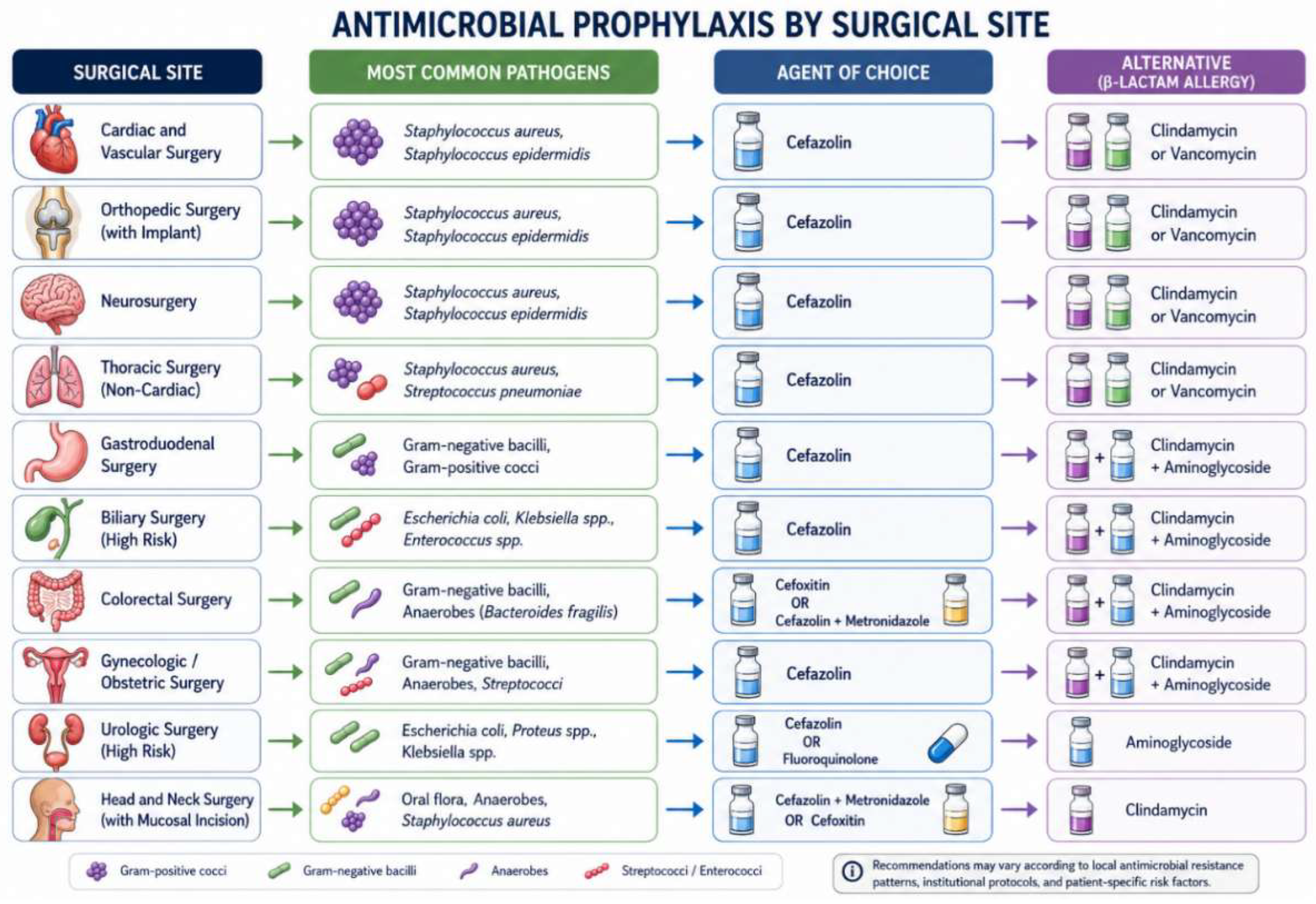

Table 1.
Overview of key studies evaluating the impact of surgical antimicrobial prophylaxis on surgical site infection prevention, healthcare costs, antimicrobial stewardship, and healthcare system sustainability.
Table 1.
Overview of key studies evaluating the impact of surgical antimicrobial prophylaxis on surgical site infection prevention, healthcare costs, antimicrobial stewardship, and healthcare system sustainability.
| Category | Study | Objective | Main Finding | Design |
| Economic Burden of SSI | Barres-Carsi et al., 2022 | Evaluate economic impact of SSI in tibial fractures | SSI significantly increased healthcare resource utilization and costs | Cohort |
| Benenson et al., 2020 | Assess financial impact of healthcare-associated infections | Infections increased hospital resource consumption | Case-control | |
| Orlandi et al., 2023 | Estimate costs of deep sternal wound infection | SSI generated substantial hospital costs | Economic study | |
| Nogueira et al., 2024 | Estimate antimicrobial costs associated with SSI | SSI resulted in significant antimicrobial expenditures | Economic study | |
| Davies et al., 2023 | Model health and economic burden of antimicrobial resistance | Resistance increased projected surgical costs | Methodological study | |
| Cost-Effectiveness of Surgical Antimicrobial Prophylaxis | Khan et al., 2022 | Reduce SSI through evidence-based interventions | SSI rate decreased from 30% to 5% | Interventional |
| Allen et al., 2018 | Evaluate cost-effectiveness of SAP | SAP reduced SSI and healthcare costs | Systematic review | |
| Veiga et al., 2025 | Compare single-dose vs. 24-hour prophylaxis | Single-dose regimen was sufficient | Randomized trial | |
| Negri et al., 2024 | Evaluate prophylaxis in hand surgery | Limited reduction in SSI | Systematic review | |
| Dexter et al., 2023 | Compare multifaceted vs. single interventions | Multifaceted approach reduced SSI by 68% | Prospective cohort | |
| Antimicrobial Selection and Duration | Bae et al., 2022 | Compare first- vs. third-generation cephalosporins | First-generation prophylaxis showed lower SSI rates | Retrospective cohort |
| Priyanka et al., 2019 | Assess appropriateness and pharmacoeconomics of SAP | Actual costs were 11-fold higher than guideline-based prophylaxis | Prospective observational | |
| Prebianchi et al., 2023 | Assess type and duration of prophylaxis | Antibiotic selection influenced SSI more than duration | Comparative study | |
| Oliveira Campos et al., 2024 | Compare antibiotic treatment duration | Longer treatment increased adverse events without reducing recurrence | Comparative study | |
| Truzzi et al., 2025 | Review prophylaxis recommendations in urology | Evidence supports procedure-specific prophylaxis | Narrative review | |
| Antimicrobial Stewardship and Value-Based Care | Hyland et al., 2022 | Evaluate stewardship program in arthroplasty | Savings of US$197,050 per 1,000 procedures | Cohort |
| Martinez-Sobalvarro et al., 2022 | Assess stewardship effectiveness | Improved adherence and reduced SSI | Systematic review | |
| Nehad et al., 2022 | Improve compliance with SAP guidelines | Increased adherence to prophylaxis recommendations | Prospective intervention | |
| Rangchian et al., 2022 | Evaluate pharmacist-led educational intervention | Improved SAP appropriateness and reduced costs | Prospective intervention | |
| Butt et al., 2019 | Assess pharmacist intervention | Reduced antibiotic use and hospitalization costs | Quasi-experimental | |
| Bashar et al., 2021 | Evaluate stewardship intervention | Reduced antimicrobial consumption | Cross-sectional study | |
| Li et al., 2018 | Improve rational SAP prescribing | Multidisciplinary intervention improved compliance | Interventional study | |
| Risk Factors and Future Perspectives | Scala et al., 2022 | Identify SSI risk factors using AI | Prophylaxis and surgical specialty predicted SSI | Cohort |
| Magalhães et al., 2024 | Identify risk factors in foot and ankle surgery | Comorbidities and operative time increased SSI risk | Cohort | |
| Batista et al., 2024 | Evaluate SSI in arthroplasty | Age and comorbidities associated with SSI | Observational | |
| Quiroz-Williams et al., 2024 | Identify risk factors in fractures | Operative time and comorbidities increased risk | Observational | |
| Pereira et al., 2023 | Assess risk factors after CABG | Diabetes and hospitalization time associated with SSI | Retrospective | |
| José et al., 2023 | Investigate deep sternal wound infection | Obesity and operative time were risk factors | Observational | |
| Oliveira et al., 2023 | Assess SSI in neurosurgical and orthopedic procedures | Operative time was a major risk factor | Observational | |
| Revilla-Pacheco et al., 2024 | Evaluate topical vancomycin | Significant reduction in SSI | Experimental | |
| Araújo et al., 2023 | Assess preventive measure adherence | Protocol adherence remained suboptimal | Cross-sectional | |
| Velozo et al., 2024 | Evaluate SAP adherence | Poor adherence associated with higher SSI risk | Observational |
Disclaimer/Publisher’s Note: The statements, opinions and data contained in all publications are solely those of the individual author(s) and contributor(s) and not of MDPI and/or the editor(s). MDPI and/or the editor(s) disclaim responsibility for any injury to people or property resulting from any ideas, methods, instructions or products referred to in the content. |
© 2026 by the authors. Licensee MDPI, Basel, Switzerland. This article is an open access article distributed under the terms and conditions of the Creative Commons Attribution (CC BY) license (http://creativecommons.org/licenses/by/4.0/).
Copyright: This open access article is published under a Creative Commons CC BY 4.0 license, which permit the free download, distribution, and reuse, provided that the author and preprint are cited in any reuse.


