
Submitted:
24 July 2026
Posted:
06 August 2026
You are already at the latest version
Abstract
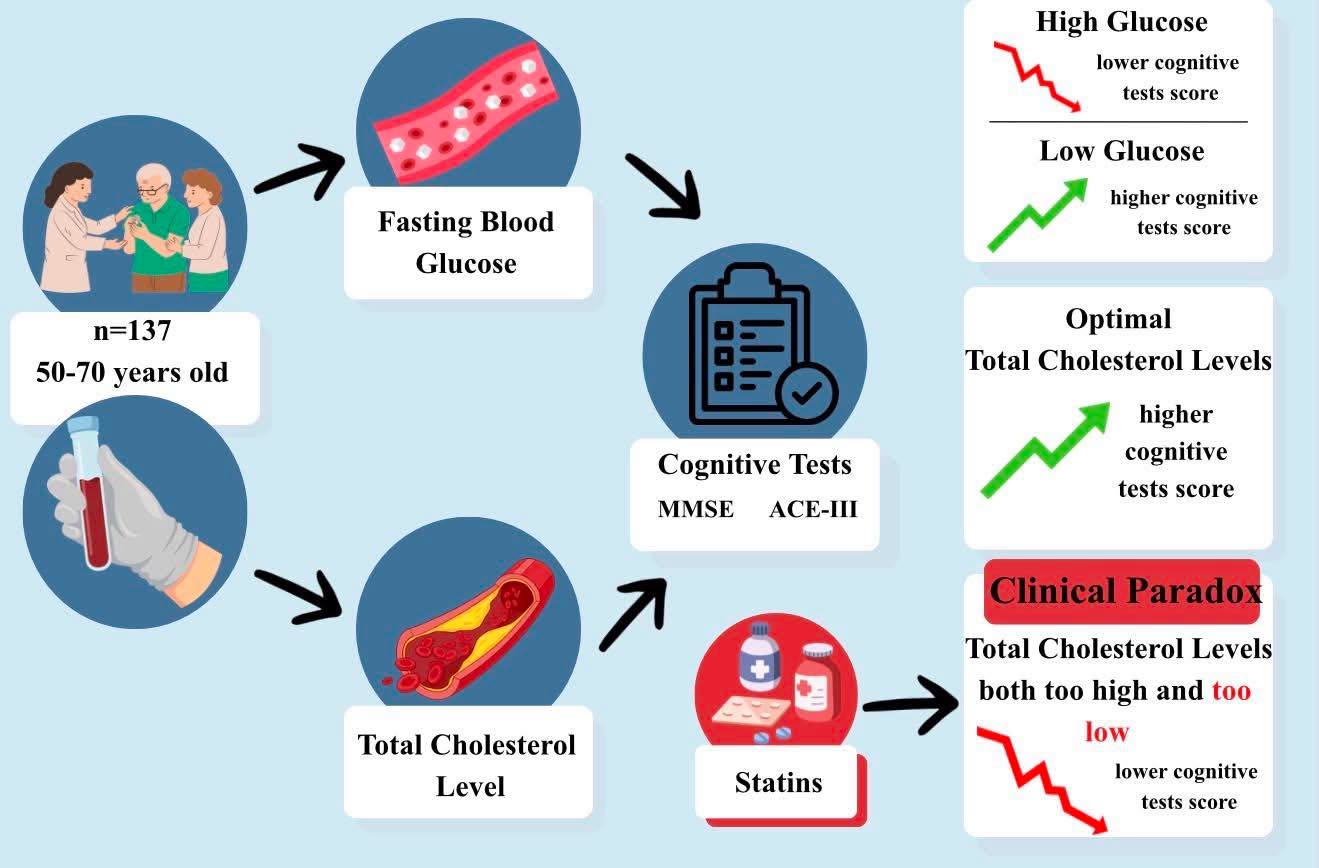
Objectives: This study aimed to evaluate the associations between fundamental metabolic markers—specifically fasting glucose and total cholesterol—and cognitive performance in a primary care population, continuing previous analyses focused on subclinical vascular parameters. Methods: The study included 137 primary care patients who completed neuropsychological assessments (Addenbrooke’s Cognitive Examination-III/ACE-III and Mini-Mental State Examination/MMSE) and a clinical interview. Fasting glucose and total cholesterol levels were extracted from their medical records. Results: Based on the MMSE, 26 participants (19.0%) had mild cognitive impairment (MCI) and 8 (5.8%) had neurocognitive disorders. Fasting glucose showed a significant negative correlation with the total ACE-III score, indicating poorer global cognition. Conversely, total cholesterol exhibited a weak positive correlation with the ACE-III score, a paradox likely reflecting the frequent use of lipid-lowering therapies in this group. Standard MMSE scores did not correlate significantly with any evaluated metabolic parameters. Conclusions: Elevated fasting glucose is associated with early cognitive decline, suggesting its utility in routine primary care screening for MCI risk. Furthermore, more comprehensive tools like the ACE-III are essential, as the standard MMSE fails to capture these subtle metabolic-related cognitive deficits.
Keywords:
neurocognitive disorders
; mild cognitive impairment
; dementia
; primary care
Copyright: This open access article is published under a Creative Commons CC BY 4.0 license, which permit the free download, distribution, and reuse, provided that the author and preprint are cited in any reuse.


