
Submitted:
04 August 2026
Posted:
05 August 2026
You are already at the latest version
Abstract
Background/Objectives: Occupational justice has expanded conceptually and empirically over the past two decades, addressing inequalities related to health, participation, and rights. However, there has been no comprehensive bibliometric analysis of its global scientific output. The objective of this study was to analyze evolution, distribution, editorial structure, collaboration networks, and thematic domains of the literature on occupational justice, using classical bibliometric laws and scientific mapping techniques. Methods: A bibliometric study was conducted on 238 articles and reviews indexed in the Web of Science Core Collection (1982–2026), retrieved using the subject equation TS=(occupational NEAR/0 justice). The laws of Price (growth), Lotka (prolific authors), Bradford (journal dispersion), and Zipf (semantic concentration) were applied. Scientific mapping was performed using co-authorship and co-occurrence analysis from Keywords Plus® via VOSviewer. Results: Scientific output showed exponential growth (R² = 87.29%), with an acceleration beginning in 2015 and thematic diversification between 2021 and 2026. The geographic distribution revealed a marked centrality of the Global North, along with the emergence of research hubs in the Global South. Just ten journals accounted for 75% of the output, forming a robust editorial nucleus. Co-authorship networks revealed three transnational clusters and bridge authors who facilitate the circulation of knowledge. The thematic map identified three interdependent macro-clusters: health and well-being, occupational practice and science, and justice and rights. Conclusions: Bibliometrics highlights the rapid expansion and editorial concentration of occupational justice, identifies geographic and thematic gaps, and proposes new agendas in digital, environmental, and decolonial fields. Although limited by its sources and methods, it helps guide priorities for more inclusive research, policies, training, and interventions.
Keywords:
occupational justice
; occupational therapy
; participation
; mental health
; social determinants
; bibliometric analysis
; co-authorship networks
; Keywords Plus
; science mapping
; VOSviewer
1. Introduction
Participation in meaningful occupations is a key determinant of health, well-being, and quality of life. Over the past two decades, this principle has driven the development of the concept of occupational justice, understood as a theoretical and practical approach that recognizes occupational participation as a fundamental human right, shaped by social, political, economic, cultural, and environmental factors [1,2,3]. From this perspective, occupational opportunities must be distributed equitably, acknowledging both individual capabilities and contextual conditions, in alignment with rights-based and capability-oriented frameworks [3].
Structural or contextual limitations that restrict access to meaningful occupations are conceptualized as occupational injustices, manifested in forms such as deprivation, marginalization, alienation, imbalance, and occupational apartheid [4,5]. These injustices disproportionately affect vulnerable populations, such as people with disabilities [6,7], refugees [5], youth in conflict with the law [8], institutionalized individuals [9], migrants and digital platform workers [10], older adults [11], and impoverished communities [12]. Such inequalities constrain autonomy, participation, and control over daily life, with documented consequences for well-being, social integration, and mental health [13,14].
Recent literature shows that these injustices are not isolated phenomena, but rather expressions of social determinants of health that operate at multiple levels. For example, people with spinal cord injuries in Gaza face environmental, economic, and sociocultural barriers that limit their participation even after rehabilitation [6]. Users of assistive technologies describe experiences of empowerment, but also of marginalization and alienation when the devices do not fit their life contexts [4]. Syrian refugees in Turkey experience deprivation, alienation, and occupational apartheid, which led to the development of a specific scale to assess occupational justice in this population [5]. Young people with intellectual disabilities in South Africa rely on individualized supports to access employment but face structural barriers that perpetuate injustices [15]. Older adults in England have their mobility and participation restricted due to inaccessible technological environments [11]. Children in institutional care with mental health diagnoses report the loss of previous occupations, isolation, and severe deprivation [9]. Migrant workers on digital platforms reconfigure their occupations within socio-technical contexts that simultaneously enable and restrict their participation [10]. Together, these cases illustrate how occupational injustices emerge from intersecting structural, technological, and sociopolitical conditions.
Likewise, studies conducted in crisis contexts – such as natural disasters, pandemics, or forced displacements – show how occupational justice is affected by dynamics of vulnerability, resilience, and collective action [14,16]. In restrictive institutional settings, such as forensic hospitals or prisons, occupational deprivation intensifies, but participatory processes can bring about significant transformations [17,18]. At the community level, occupational justice is linked to social participation, active aging, and community cohesion [19,20]. These findings reinforce the multilevel nature of occupational justice and its relevance across clinical, community, and sociopolitical environments.
Occupational justice, in this sense, involves not only the recognition of inequalities but also a transformative approach aimed at identifying and removing barriers through participatory, culturally relevant, and context-specific interventions [6,21]. This approach is implemented at the micro, meso, and macro levels, cutting across various spheres of intervention, from clinical practice to public policy formulation [21,22]. However, translating this transformative intent into practice remains uneven across contexts.
However, its theoretical development and practical application face persistent challenges. The literature points to a lack of conceptual clarity [1,23], difficulties in operationalizing its principles in everyday professional contexts [2,24], and limited explicit incorporation of human rights into clinical and community practice [3]. Furthermore, there is a tendency to view injustices as individual issues, without sufficiently addressing their structural roots [25]. These tensions reveal a persistent gap between the normative aspirations of occupational justice and its practical implementation.
Added to this is a crucial contemporary debate: the need to decolonize the concept. Various authors question its foundation in universalist notions of human rights of Western origin, proposing pluralistic perspectives that incorporate Indigenous, African, and community worldviews [26,27]. Along these lines, proposals such as intergenerational occupational justice [28,29], multispecies justice [30], and approaches that integrate environmental and occupational justice [31] are emerging, broadening the field to include ecological, political, and sociotechnical debates. This diversification signals an epistemic shift that challenges traditional boundaries of the field.
At the same time, scholarly output on occupational justice has experienced sustained growth between 2009 and 2026, expanding its scope to include disability, migration, mental health, aging, technology, education, environmental justice, community participation, and public policy. This expansion has contributed to the consolidation of a diverse and dynamic field of study, although it is also characterized by increasing thematic and conceptual dispersion. Consequently, rigorous syntheses are needed to identify emerging trends, conceptual gaps, and priority areas for future research. In this context, this article aims to analyze the evolution, distribution, editorial structure, collaboration networks, and thematic domains of the literature on occupational justice using bibliometric techniques and scientific mapping, with the goal of providing a structured synthesis that clarifies conceptual development and areas of practical application, as well as the relevance of the concept in clinical, community, and sociopolitical contexts.
2. Materials and Methods
This bibliometric study analyzed 238 articles and reviews indexed in the Web of Science Core Collection (WoSCC), with no time restrictions but with results from 1982 to 2026, retrieved using the equation TS=(occupational NEAR/0 justice). The laws of Price, Lotka, Bradford, and Zipf were applied to evaluate the growth dynamics, author concentration, journal dispersion, and the semantic structure of the field. Scientific mapping was conducted using VOSviewer 1.6.20, through co-authorship analysis, Keywords Plus® co-occurrence analysis, and conceptual networks based on eponymous bibliometric laws. This approach enabled an integrated analysis of the evolution, collaboration patterns, and thematic domains of global research on occupational justice.
2.1. Study Design and Data Source
This bibliometric study was based on a set of 238 articles and reviews indexed in the Web of Science Core Collection (WoSCC). The search was conducted on April 1, 2026, using the following subject vector: {TS=(occupational NEAR/0 justice)}.
The TS operator allows for a simultaneous search across the title, abstract, author keywords, Keywords Plus®, and author fields, while the NEAR/0 proximity operator requires that both terms appear together without any semantic distance [32]. This search strategy increases retrieval precision for documents explicitly addressing occupational justice based on their data and metadata.
The search applied no geographical, temporal, or language restrictions. Documents from 1982 to 2026 were retrieved, allowing inclusion of both contemporary works and early isolated publications predating conceptual consolidation. After removing duplicates, the final dataset comprised 238 publications across 54 journals and 36 countries (See Table 1).
2.2. Performance Analysis
The performance analysis aimed to characterize the productivity, distribution, and structure of the field by applying the main classical bibliometric laws, in accordance with the established tradition in the bibliometric literature [35,36].
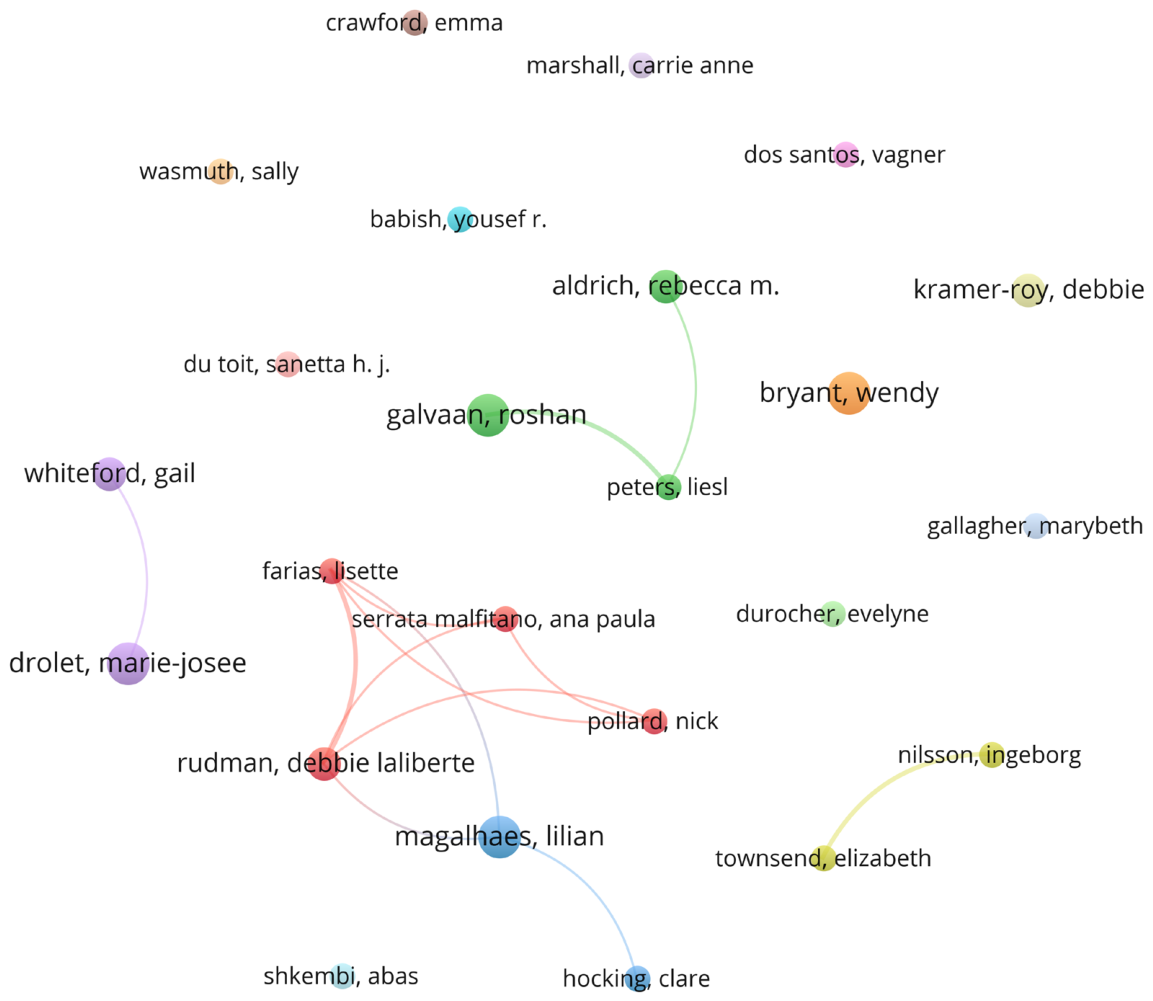
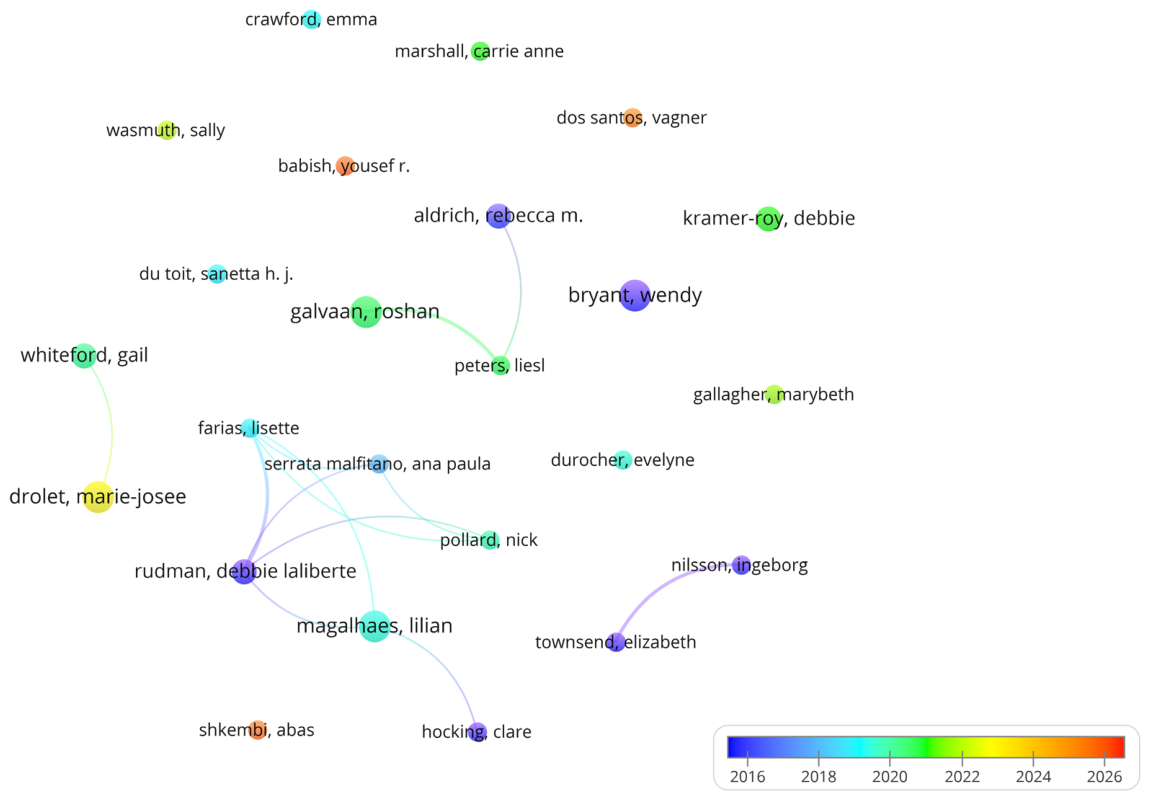
- Lotka’s Law (1926) [39]: Used to identify author concentration and distinguish prolific authors (≥ n publications) from occasional authors. Prolific authors were estimated using N = √(authors), adjusted to a discrete set of highly productive authors [40,41]. This procedure informed Figure 3A (co-authorship network) and Figure 3B (temporal view).
- Zipf’s Law (1932) [45]: Keywords Plus® and author keywords were analyzed to identify semantic concentration. Salient terms were estimated using N = √(keywords), adjusted to high-frequency terms. This procedure informed the Keyword Plus thematic map (Figure 4) and identification of semantic macro-clusters.
2.3. Science Mapping
Science mapping was conducted using VOSviewer 1.6.20 [34], based on three analytical criteria:
- Co-authorship networks: Collaboration patterns among prolific authors, countries, and institutions were mapped, identifying transnational clusters and bridge authors (intermediaries) (Figures 3A and 3B).
- Keyword Plus® co-occurrence: The thematic map (Figure 4) revealed the semantic structure of the field and conceptual clusters linking health, therapy, and justice.
- Conceptual networks and eponymous laws: Following Valderrama-Zurian et al. [47], eponymous bibliometric laws (Price, Lotka, Bradford, Zipf) were incorporated as conceptual nodes, structuring both performance analysis and science mapping.
This approach enabled the integration of bibliometric laws as conceptual frameworks, the construction of coherent networks among laws, authors, and journals, and alignment with international bibliometric standards.
3. Results
This section shows the main findings of the bibliometric analysis conducted on a corpus of 238 publications in occupational justice (see Supplementary Materials, Table S1: OJ238_data.xlsx). The results integrate Price’s, Lotka’s, Bradford’s, and Zipf’s laws with VOSviewer-based scientific mapping, covering the temporal evolution of output, geographic distribution, co-authorship networks, journal spaces, and the thematic structure of the field. Together, these analyses characterize the global dynamics of occupational justice research, its collaboration patterns, and the conceptual domains shaping contemporary literature.
3.1. Global Research Output on Occupational Justice
In accordance with Price’s Law, Figure 1 shows the annual trend in scientific output between 2009 and 2026. The trend reveals sustained growth with fluctuations and a marked acceleration beginning in 2015. The exponential fit yields R2 = 87.29%, indicating strong consistency in the progressive increase in publications.
In the early years (2009–2012), output remained low and stable, reflecting an initial phase of conceptual consolidation aligned with foundational work clarifying the construct [3,48]. From 2013 onward, output diversified into areas such as mental health, disability, and community participation [24,49].
Between 2016 and 2020, empirical studies expanded significantly, addressing injustices affecting people with intellectual disabilities [15], displaced communities [5,14], injured individuals [6,7], older adults [11], youth in conflict with the law [8], and institutionalized individuals [9]. This period also saw critical reviews examining conceptual tensions within the field [1,23,50].
The most substantial increase occurred between 2021 and 2026, marked by broader approaches including intergenerational [28,29] and multispecies [30] justice, environmental justice [31], sociotechnical analyses of platform work [10], and decolonial perspectives challenging Western frameworks [26,27]. This expansion signals the consolidation of occupational justice as a diversified and contemporary research field.
Overall, Figure 1 confirms exponential growth consistent with Price’s Law, showing that occupational justice has evolved from an emerging concept into a robust and complex field of inquiry.
3.2. Geographic Distribution of Scientific Output on Occupational Justice
In accordance with the territorial census criteria defined in the previous section, Figure 2 presents the geographic distribution and international collaboration network for the total set of 238 publications identified in the registry, including the early works from 1982 and 2002, as well as all publications accumulated through 2026. The analysis reveals a highly unequal global structure, characterized by a marked concentration of publications in countries of the Global North and an emerging, though still limited, participation by regions of the Global South.
In terms of volume, the United States (70 documents, 714 citations), Canada (39 documents, 688 citations), Australia (31 documents, 304 citations), and England (30 documents, 323 citations) are the main centers of production, accounting for more than 60% of all cadastral publications. These countries also exhibit high levels of total link strength (U.S. = 20; Canada = 27; Australia = 23; England = 32), indicating a central position in the global network and intense collaborative activity. This pattern coincides with the presence of established research groups that have contributed to the conceptual development of the field by clarifying the theoretical foundations of occupational justice and its associated concepts (Canada) [1], developing rights- and capabilities-based approaches (Canada) [3], integrating justice and human rights frameworks into clinical practice (Australia) [24], and the application of occupation-centered models to address occupational deprivation in institutional settings (Australia and England) [17].
In Europe, Sweden (21 documents, 292 citations), Spain (12 documents, 100 citations), Ireland (10 documents, 185 citations), and Scotland (7 documents, 63 citations) stand out; these countries demonstrate sustained output and significant links to the network’s central nodes. Sweden and Spain exhibit high levels of collaboration (total link strength = 19 and 18, respectively), reflecting their participation in various studies on technology [11], childhood [51], and inclusion [11,51,52].
In the Global South, Brazil (15 documents, 216 citations) and South Africa (18 documents, 155 citations) emerge as the countries with the highest output, both with significant collaboration networks (total link strength = 26 and 9). Brazil stands out for its tradition in social occupational therapy and for studies that examine occupational justice from critical and decolonial perspectives [26,53,54]. South Africa contributes research on disability, employment, mental health, and structural inequalities [15,55].
Other countries in the Global South have made specific but relevant contributions, such as the Philippines (5 documents) with studies on assistive technology and occupational justice in rehabilitation contexts [7,56], Chile (11 documents) with studies on youth in conflict with the law and digital justice [8,57], India (4 documents) with research on marginalization and community health, and Palestine (1 document) with studies on refugees and occupation in conflict contexts [14].
The network also includes countries with emerging research output, such as Georgia, Tunisia, Zimbabwe, Vietnam, Türkiye, Iran, Israel, Singapore, South Korea, and Greece, whose contributions – though smaller in volume – broaden the field’s geographic and thematic diversity in areas such as environmental justice [31], ethnic inequality [58], and pro-natalist policies [59], among others.
Overall, Figure 2 shows that scholarly output on occupational justice – considering the entire corpus of 238 publications – is characterized by a focus on the Global North, accompanied by a growing emergence of critical and contextualized perspectives from the Global South, which enrich and challenge the epistemological foundations of the field [26,27].
3.3. Global Co-Authoring Networks on Occupational Justice
In accordance with Lotka’s Law, Figure 3A and Table 2 show the co-authorship network corresponding to the 24 prolific authors (≥3 publications) identified in the database of 238 publications on occupational justice, who together account for 73 publications.
Thus, Figure 3A, supplemented by the co-authorship structure presented in Table 2, shows that only 13 of the 24 prolific authors establish collaborative links with one another, while the remaining 11 are classified as solitary authors with no connections within the productivity threshold under consideration. This distribution reveals a moderately cohesive network, where collaboration is concentrated in three main types of substructures: a tetrad, a triad, and three dyads.
The tetrad consisting of Farias, Pollard, Rudman, and Malfitano constitutes the densest cluster of the network. Within this group, Rudman stands out as the author with the highest productivity (4 papers), the highest cumulative citation count (143 citations), and the highest connectivity (total link strength = 5), positioning her as the central node of the collaborative structure. This cluster challenges the traditional use of the occupational justice framework and proposes critical and participatory approaches to address the sociopolitical roots of inequality.
The triad composed of Aldrich, Galvaan, and Peters represents a second collaborative cluster, aimed at demonstrating that education and international collaboration strengthen critical awareness and the application of occupational justice. Galvaan is the group’s most prolific author (5 papers), the most cited (67 citations), and the most interconnected (total link strength = 2), reflecting her coordinating role in exploring occupational injustices in highly stigmatized contexts and proposing critical and decolonial approaches to transform participation, health, and education.
Dyads reveal stable bilateral links between pairs of authors. The Drolet–Whiteford dyad explores how occupational justice can guide ethical and transformative responses to injustices in disasters, institutional contexts, and intergenerational challenges. The Nilsson–Townsend dyad promotes an inclusive, rights-based occupational justice to guide practice in diverse contexts. The Hocking–Magalhães dyad stands out for its structural relevance: Magalhães, in addition to being the most cited author in the group (100 citations), acts as a bridge node between her dyad and the tetrad led by Rudman, revealing how sociopolitical structures generate occupational injustices and proposing critical and participatory approaches to transform them.
Finally, the 11 solo authors (Babish, Bryant, Crawford, dos Santos, du Toit, Durocher, Gallagher, Kramer-Roy, Marshall, Shkembi, and Wasmuth) do not have any co-authorship ties within the group of prolific authors, suggesting independent research trajectories or collaborations outside the productivity threshold analyzed.
Taken together, Figure 3A and Table 2 show a network organized into a connected central cluster, an incomplete triad, and several dyads, while nearly half of the authors remain unconnected. This configuration reflects a consolidating community, with collaboration concentrated in groups that support the field’s major contributions.
Figure 3A.
Co-authorship network of prolific authors.
In addition, Figure 3B shows the evolution over time of the co-authorship network of the 24 prolific authors, revealing three distinct phases in the consolidation of the field.
- In the initial phase (2016–2018), blue nodes predominate, representing authors who established the first connections of the period, particularly within the tetrad formed by Rudman, Farias, Pollard, and Malfitano, who emerged early on with conceptual and critical works that defined the theoretical foundations of the field. This tetrad constitutes the oldest and most stable cluster of the network, with Rudman as the most cited and connected author. Joining this group at the same time are the dyad of Nilsson and Towsend, Aldrich as the origin of his triad, and Bryant as a solitary author.
- During the intermediate phase (2019–2022), represented by shades of green and yellow, new collaborations were incorporated that strengthened the trio of Aldrich, Galvaan, and Peters, which focused on empirical and educational studies of participation and social inclusion. This period also sees the consolidation of the Nilsson–Townsend and Drolet–Whiteford pairs, whose work broadens the field to include issues of rights, sustainability, and collaboration to transform practices in contexts of inequality.
- Finally, in the most recent phase (2023–2026), indicated by orange nodes, we observe the inclusion of authors who, although prolific, maintain solitary trajectories within the network, reflecting independent lines of research or collaborations outside the scope of the productivity analyzed. Among those breaking into the scene are Babish and Dos Santos, who radicalize occupational justice by denouncing structures of oppression, contextualizing practices within critical sociopolitical realities, and demanding transformative, decolonial, and solidarity-based responses.
Figure 3B.
Temporal view of the co-authorship network.
3.4. Scientific Research Spaces on Occupational Justice
In accordance with Bradford’s Law, an analysis of scientific output shows that just 10 journals account for 75% of all scientific output, while the remaining 44 journals account for only 25% of the total. This pattern confirms a high degree of editorial concentration, typical of emerging fields with strong conceptual cohesion and well-established research communities.
Table 3 presents the 10 journals with the highest publication volume among the total of 54 journals identified in the database of 238 documents on occupational justice. The results show a high concentration of scientific output in a small number of sources, which is reflected in the Bradford structure, with a clearly defined nucleus and two zones of dispersion.

Table 3.
Journals with the highest production.
| Bradford’s Zone | Source Title | Total | % | Cum | %Cum |
|---|---|---|---|---|---|
| Nucleus |
Journal of Occupational Science | 43 | 18% | 43 | 18% |
| Scandinavian Journal of Occupational Therapy | 32 | 13% | 75 | 32% | |
| Zone 1 | Canadian Journal of Occupational Therapy / Revue Canadienne d Ergotherapie | 20 | 8% | 95 | 40% |
| Cadernos Brasileiros de Terapia Ocupacional / Brazilian Journal of Occupational Therapy | 16 | 7% | 111 | 47% | |
| American Journal of Occupational Therapy | 15 | 6% | 126 | 53% | |
| OTJR – Occupational Therapy Journal of Research | 15 | 6% | 141 | 59% | |
| British Journal of Occupational Therapy | 13 | 5% | 154 | 65% | |
| Zone 2 | Australian Occupational Therapy Journal | 12 | 5% | 166 | 70% |
| WORK – A Journal of Prevention Assessment & Rehabilitation | 8 | 3% | 174 | 73% | |
| Occupational Therapy in Health Care | 4 | 2% | 178 | 75% |
3.4.1. Bradford Nucleus: Thematic Focus and Editorial Leadership
The nucleus consists of two journals that, together, account for 75 publications (32% of the total):
- Journal of Occupational Science (43 articles; 18% of the total): It ranks as the most influential journal in the field, even though the articles were published between 2021 and 2026. The journal explores how occupations intersect with inequalities, identities, ecologies, and sociopolitical systems, proposing a critical, intersectional, and transformative occupational justice for diverse human contexts. Its prominence is reflected in the presence of prolific authors among its most-cited articles [29,55] and of prolific authors with more recent publications [54,60].
- Scandinavian Journal of Occupational Therapy (32 articles; 13% of the total): Articles published in this journal between 2010 and 2025 demonstrate how occupational justice is expressed through collaborative and context-specific practices that address inequalities, accessibility, identities, and changing environments to enhance participation and dignity in everyday life [48,61,62].
These two journals form the nucleus of the field, accounting for most of the research output and defining the predominant lines of research.
3.4.2. Zone 1: High Productivity Journals with Specialized Subject Topics
Zone 1 includes five journals that, together, account for 79 additional publications, representing another 33% of the cumulative total:
- Canadian Journal of Occupational Therapy (20 articles): Contributes studies published between 2012 and 2026 that promote a critical and anti-oppressive occupational justice, focused on rights, participation, and transformative action in response to structural inequalities in diverse contexts [6,21,23].
- Cadernos Brasileiros de Terapia Ocupacional (16 articles): This is the most substantial journal of Latin American origin, focusing on occupational injustices in contexts marked by inequality, health, migration, and coloniality, and proposing community-based, decolonial, and eco-social practices to expand participation and autonomy [19,63,64].
- Occupational Therapy Journal of Research (OTJR) (15 articles): Contributes by delving deeper into a critical occupational justice that confronts structural inequalities in health, disability, racism, and the prison system, proposing transformative practices based on participation, critical epistemologies, and lived experiences [50,67,68].
- British Journal of Occupational Therapy (13 articles): Includes studies published between 2009 and 2026 that demonstrate how occupational justice is implemented in diverse community, ecological, and cultural contexts, promoting inclusion, participation, and dignity in the face of everyday inequalities [2,69,70].
These journals make up the high-productivity zone, characterized by thematic diversity and a strong presence of empirical studies.
3.4.3. Zone 2: Journals with Medium and Low Productivity
Zone 2 includes 47 journals that, together, account for 35% of total production. However, considering just 3 of the journals in this zone – along with the nucleus group and Zone 1 – was sufficient to account for 75% of the cumulative total:
3.5. Thematic Areas of Scientific Research
The overall structure of the thematic map, as depicted in the graph in Figure 4, shows a highly integrated network in which the three clusters are connected through central nodes such as health, therapy, justice, occupational justice, and participation.
This framework demonstrates that occupational justice lies at the intersection of: (1) health and well-being, (2) professional practice and occupational science, and (3) human rights and social justice. Furthermore, the density of connections between mental health, participation, rights, and occupational justice suggests that literature approaches occupation as a phenomenon that is simultaneously clinical, social, and political, consistent with the findings of the comprehensive review.
Figure 4.
Thematic map based on Keyword Plus.
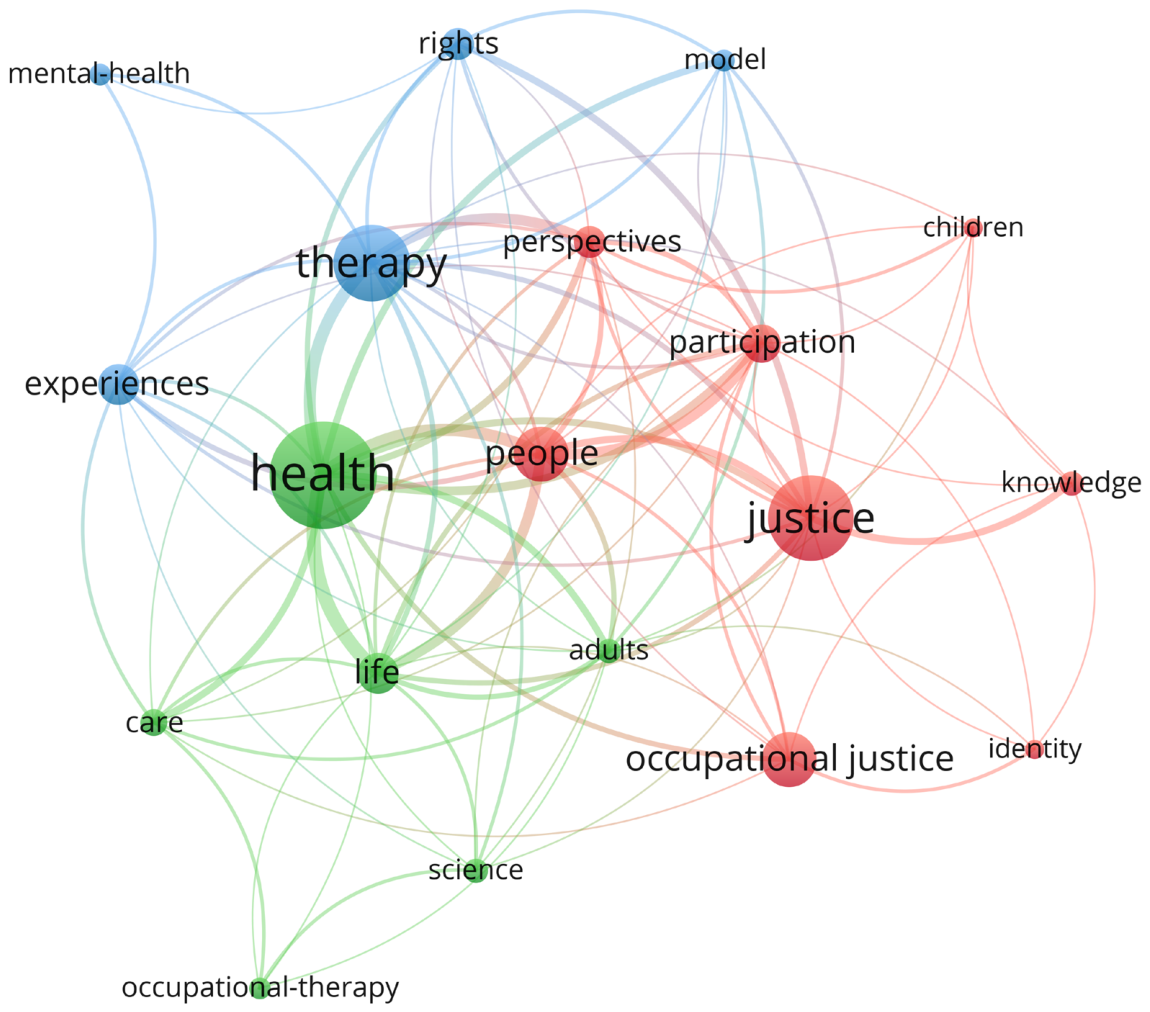
Figure 4 presents the thematic map of 19 Keyword Plus (= SQRT(372)), with a minimum of 7 occurrences, corresponding to the complete corpus of 238 publications, showing the semantic structure of the field based on the most frequently occurring keywords in Web of Science. The analysis reveals an organization into three thematic macro-clusters linked by co-occurrence and identified by color: health, therapy, and justice, which articulate the central concepts and the relationships among them.
- Cluster 1: Health and Well-being (green). This cluster includes 6 terms: “health” (39 occurrences), “life” (15), “care” (10), “adults” (9), “science” (9), and “occupational-therapy” (8), bringing together research that demonstrates how occupational therapy relates to life, care, and participation in diverse contexts, always with a focus on occupational justice. Shaw et al. [74] highlight the importance of participatory research on labor transitions, emphasizing the need for comprehensive strategies to reduce inequalities in access to work. Wood [78] broadens the perspective by analyzing occupations in chimpanzees, suggesting that occupational assessment can be extended to natural and social environments, with implications for interspecies justice. Taff et al. [64] demonstrate that, although the profession has begun to address marginalization and colonialism in clinical and educational practice, these approaches have yet to be integrated into the models and theories that underpin discipline. Agner [79] contributes insights from participatory research in mental health, highlighting the challenges of transitioning from conventional methodologies to collaborative approaches that promote social transformation. Mohr et al. [13] synthesize studies on experiences of flow among people with disabilities, noting that accessibility and occupational justice are key to fostering optimal states of well-being. Ceo-DiFrancesco et al. [80] analyze the resilience of migrant families on the U.S.-Mexico border, demonstrating how occupational adaptation and support networks strengthen hope and the continuity of daily life. Finally, Marshall et al. [81] identify the competencies required of occupational therapists working with people experiencing homelessness, offering a framework to guide practice and professional training in this field.
- Cluster 2: Occupational therapy, practice, and science (blue). This cluster includes five terms: “therapy” (28 occurrences), “experiences” (15), “rights” (12), “mental health” (8), and “model” (8), reflecting the diversity of approaches that seek to broaden the understanding and application of occupational justice in different contexts. Galvin et al. (2011) demonstrate how the invisibility of human rights in everyday practice can be addressed through learning communities that strengthen professional awareness. Malfitano et al. [67] trace the historical evolution of the concept and highlight the importance of collective approaches for socially responsible interventions. Crabtree et al. [18] document experiences with participatory research in prisons, revealing power tensions and opportunities for personal and collective growth. Farias et al. [61] propose a critical and dialogic approach that fosters the co-creation of knowledge and challenges assumptions that limit transformative practice. Kiepek [82] expands the concept of occupational justice to include interspecies perspectives, integrating decolonial and sustainable approaches that recognize interdependence with the environment. Yazici and Akyurek [5] developed the first occupational justice scale for refugees, providing a valid and reliable tool for assessing experiences of injustice among displaced populations. Canning et al. [83] analyze the psychological health of criminal justice system workers, emphasizing the need for comprehensive strategies that address individual, institutional, and structural factors. Finally, Candia et al. [84] highlight the ancestral occupations of the Kawésqar people (Chile), showing how colonization and current regulations have transformed and limited their occupational and cultural identity.
- Cluster 3: Justice, Rights, and Occupation (red): This cluster includes terms such as “justice” (31 occurrences), “occupational justice” (20), “people” (20), “participation” (14), “perspectives” (12), “knowledge” (9), “children” (7), and “identity” (7), forming the semantic cluster of the field. Centered on this axis, we observe how occupational justice expands into ethical, ecological, community-based, and critical praxis frameworks. Various authors are contributing to this expansion: Wallcook et al. [11] show how everyday technologies can influence older adults’ participation, generating subtle forms of occupational injustice; Cox et al. [85] emphasize the need to strengthen consumer participation in research to democratize knowledge production; Swisher [86] offers a thorough examination of the role of ethics and professionalism in training and disciplinary leadership; Hocking et al. [87] highlight the evolution of the human rights approach within occupational therapy and the challenges of its implementation; Irvine-Brown et al. [88] point out tensions between theory and practice in community work, calling for the maintenance of processes of critical praxis; Wolbring and Gill [89] note that non-health-centered occupational concepts are underutilized in debates about social barriers and disability, limiting their transformative potential; Steelman [30] proposes a multispecies expansion of occupational justice, integrating perspectives on animal rights and shared ecologies; Finally, Smith et al. [90] explore the meaning of home for people with dementia, showing how moves to nursing homes affect identity, continuity, and a sense of belonging.
Overall, the Keyword Plus thematic map reveals that scholarly output on occupational justice is organized around three interdependent conceptual domains, which bring together health, professional practice, and social justice as pillars of the contemporary field.
4. Discussion
The results of this bibliometric study provide insight into the evolution, structure, and contemporary trends of occupational justice as a scientific field. Overall, the findings reveal sustained growth, increasing thematic diversification, and the incorporation of perspectives that challenge both the original theoretical foundations and the geographic distribution of knowledge production. This expansion is particularly significant given that the framework of occupational justice was established in the late 1990s with the aim of encouraging occupational therapists to address injustices related to occupation [25]. Despite this growth, persistent conceptual challenges remain, including the absence of a unified definition and the limited operationalization of its principles in practice [1]. In this context, the bibliometric trends observed call for a critical examination of who produces knowledge, from which theoretical frameworks, and for what purposes, especially given the need to strengthen the conceptual coherence and applicability of occupational justice in diverse contexts [25,67].
4.1. Growth and Consolidation of the Subject Field
The trend showing exponential growth since 2009 and acceleration beginning in 2015 confirms that occupational justice has evolved from an emerging concept to a critical mass of research [67,91]. This growth reflects both heightened visibility of social issues (e.g., mental health, labor exclusion, migration) and the field’s capacity to incorporate new thematic areas, such as environmental justice and digital justice, which have expanded rapidly between 2021 and 2026 [89,92]. However, quantitative expansion alone does not guarantee epistemological plurality or meaningful social impact, underscoring the need for critical, context-sensitive approaches.
4.2. Geographic Inequalities and the Circulation of Knowledge
The concentration of output in the Global North (U.S., Canada, Australia, United Kingdom) replicates a well-known pattern in the health sciences: greater production where resources, infrastructure, and established networks exist [53,64]. Although emerging hubs are appearing in Brazil, South Africa, India, and Chile, the centrality of publishing and authorship continues to shape which questions are prioritized and which solutions are proposed. Co-authorship networks reveal bridge authors who facilitate circulation, but also highlight persistent asymmetries, as many voices from the Global South remain marginalized or are absorbed into dominant theoretical frameworks [53,93].
4.3. Editorial Focus and Thematic Specialization
The application of Bradford’s Law and the identification of a small nucleus of journals accounting for most output indicate a high degree of cohesion, but also a risk of disciplinary closure. The nucleus journals tend to publish conceptual and critical works, while peripheral journals host empirical and applied studies. This structure supports theoretical consolidation but may hinder the translation of research into transformative policies and practices, particularly in underrepresented contexts [25,91].
4.4. Semantic Structure and Conceptual Domains
The thematic map reveals three interdependent macro-clusters: health and well-being, professional practice, and justice and rights, confirming the bridging role of occupational justice between clinical and political spheres. However, the analysis shows a tendency to individualize structural problems, particularly in studies focused on personal experiences without linking them to public policy. This limits the field’s capacity to influence systemic transformations [67,91]. Although recent studies integrating critical, decolonial, and ecological approaches counteract this trend, they remain a minority [27,64].
4.5. Strains and Consequences for Theory, Practice, and Public Policy
The findings highlight three key strains that must be addressed:
- Policy: Translating research findings into public policy (e.g., basic income, labor regulation, digital accessibility, environmental justice) requires analytical frameworks that connect micro-experiences with macro-structures. Emerging literature on basic income suggests promising avenues for linking income, dignity, and occupational freedom [92].
These tensions imply that occupational justice must shift from diagnosis to structural intervention: describing injustices is insufficient; interventions must be designed, evaluated, and scaled to change material and normative conditions.
4.6. Future Research Lines and Practical Recommendations
Based on the results and the tensions identified, we propose specific priorities:
- Participatory action research: Expand studies integrating research and action (Participatory Action Research, PAR; Community-Based Participatory Research, CBPR) to ensure that knowledge generation has tangible effects on policies and services [25].
- Environmental and multispecies justice: Incorporate ecological and multispecies dimensions into analyses of occupational justice, recognizing that environmental crises redistribute occupational risks and opportunities [92].
- Metrics and operational models: Design validated indicators to measure occupational injustices at the population level and assess policy impacts (e.g., Basic Income, accessibility, labor market inclusion).
Occupational justice has matured as a field, but its transformative potential depends on the ability to decolonize frameworks, link knowledge to action, and broaden the agenda to include digital, ecological, and structural dimensions. Moving forward requires changes in publishing practices, funding, training, and international collaboration so that research not only interprets injustices but also remedies them [25,91,92].
5. Conclusions
Occupational justice has established itself as a rapidly expanding interdisciplinary field, characterized by exponential growth in scientific output (R2 = 87.3%), a marked concentration in certain publishing hubs, and the presence of bridge authors who coordinate transnational collaborative networks. This bibliometric analysis provides an updated and integrated map of the field, identifying geographic and thematic gaps and confirming three conceptual macro-clusters (health and well-being, occupational practice and education, and justice and rights). It also reveals emerging hubs in the Global South and shifts the field from descriptive accumulation toward strategic prioritization of research, training, funding, and science policy agendas.
These findings have the potential to transform the field by facilitating multicenter projects and implementation studies that bridge theory and practice, while legitimizing critical and situated approaches that incorporate decolonial, environmental, and multispecies perspectives. Key future research directions include: (1) situated and decolonial epistemologies; (2) participatory action research; (3) socio-technical justice; (4) environmental and multispecies justice; (5) development of metrics and indicators to assess occupational justice; and (6) strengthening South–South collaborative networks and funding.
The study has limitations associated with the exclusive use of the Web of Science Core Collection and a strict thematic search vector, which may underrepresent unindexed, regional, and gray literature. Additionally, the concentration of publishers, the time frame limited to 2026, and reliance on semantic analyses based primarily on co-occurrences constrain the assessment of real-world impacts and the qualitative depth of conceptual interpretations. Therefore, bibliometrics not only analyzes the growth of the field but also identifies where strategic investment is needed to translate knowledge into more inclusive policies, professional training, interventions, and technologies.
Supplementary Materials
The following supporting information can be downloaded at the website of this paper posted on Preprints.org. Table S1: OJ238_data.xlsx.
Author Contributions
Conceptualization, V.R-L.-P., D.C.-H. and A.V.-M.; methodology, A.V.-M., G.S.-S. and P.L.-C.; software, A.V.-M., and G.S.-S.; validation, V.R-L.-P., D.C.-H. and D.C.; formal analysis, V.R-L.-P., J.C.A.-S., and S.V-R.; resources, A.V.-M.; data curation, D.C., G.S.-S. and P.L.-C.; writing—original draft preparation, A.V.-M., D.C., D.C.-H., G.S.-S., J.C.A.-S., P.L.-C., S.V-R., and V.R-L.-P.; writing—review and editing, A.V.-M., D.C., D.C.-H., G.S.-S., J.C.A.-S., P.L.-C., S.V-R., and V.R-L.-P.; visualization, A.V.-M., and G.S.-S.; supervision, V.R-L.-P., and J.C.A.-S.; project administration, A.V.-M.; funding acquisition, A.V.-M., D.C., G.S.-S., P.L.-C., S.V-R., and V.R-L.-P.. All authors have read and agreed to the published version of the manuscript.
Funding
This research received no external funding.
Institutional Review Board Statement
Not applicable.
Informed Consent Statement
Not applicable.
Data Availability Statement
The original contributions presented in this study are included in the supplementary material. Further inquiries can be directed at the corresponding authors.
Acknowledgments
During the preparation of this manuscript, the authors used Microsoft Copilot, version 2026.07, for the purpose of improving writing and proofreading. The authors have reviewed and edited the output and take full responsibility for the content of this publication.
Conflicts of Interest
The authors declare no conflicts of interest.
References
- Durocher, E.; Gibson, B.E.; Rappolt, S. Occupational justice: A review of concepts. J. Occup. Sci. 2021, 28, 561–573. [Google Scholar] [CrossRef]
- Tay, V.; Chua, P.; Gnoh, N.; Goh, K.; Dancza, K.M. Early career occupational therapists’ perceptions of occupational justice in practice in Singapore. Br. J. Occup. Ther. 2025, 88, 217–227. [Google Scholar] [CrossRef] [PubMed]
- Hammell, K.R.W. Critical reflections on occupational justice: Toward a rights-based approach to occupational opportunities. Can. J. Occup. Ther. 2017, 84, 47–57. [Google Scholar] [CrossRef] [PubMed]
- Arthanat, S.; Simmons, C.D.; Favreau, M. Exploring occupational justice in consumer perspectives on assistive technology. Can. J. Occup. Ther. 2012, 79, 309–319. [Google Scholar] [CrossRef] [PubMed]
- Yazici & Akyurek, 2025 Yazici, MR; Akyurek, G. Development of the Occupational Justice Scale for Refugees and Investigation of Its Psychometric Properties. Am. J. Occup. Ther. 2025, 79, 7902180010. [CrossRef] [PubMed]
- Abu Mostafa; Abu Mostafa, M.K.; Plastow, N.A.; Savin-Baden, M.; et al. Participatory Methods to Develop Health Education for PW-SCI: Perspectives on Occupational Justice. Can. J. Occup. Ther. 2023, 90, 55–67. [Google Scholar] [CrossRef] [PubMed]
- Yao, D.P.G.; Inoue, K.; Sy, M.P.; Bontje, P.; Suyama, N.; Yatsu, C.; Perez, D.A.; Ito, Y. Experience of Filipinos with Spinal Cord Injury in the Use of Assistive Technology: An Occupational Justice Perspective. Occup. Ther. Int. 2020, 2020, 6696296. [Google Scholar] [CrossRef] [PubMed]
- Cuevas-Garcinuño, A.; Casanova-Soto, K.; Delgado-Vargas, S.; Navarro-Rivas, F.; Olivares-Aising, D. The power of everyday scientific discourse in the construction of a juvenile law-offender subject: Perpetuating occupational injustices. J. Occup. Sci. 2026, 33, 117–134. [Google Scholar] [CrossRef]
- Warren, L.P.; Watson, J.L. Childhood occupational injustice: A phenomenological study of boys living in an institutional setting. J. Occup. Sci. 2026, 33, 105–116. [Google Scholar] [CrossRef]
- Yekta, A.R. Occupational justice in sociotechnical contexts: Exploring immigrant platform workers’ experiences of doing, being, becoming, and belonging. J. Occup. Sci. 2025. [Google Scholar] [CrossRef]
- Wallcook, S.; Nygård, L.; Kottorp, A.; Gaber, S.; Charlesworth, G.; Malinowsky, C. Kaleidoscopic associations between life outside home and the technological environment that shape occupational injustice as revealed through cross-sectional statistical modelling. J. Occup. Sci. 2021, 28, 42–58. [Google Scholar] [CrossRef]
- Wagman, P.; Johansson, A.; Fristedt, S. Begging abroad in Sweden: An interview study. Scand. J. Occup. Ther. 2020, 27, 408–417. [Google Scholar] [CrossRef] [PubMed]
- Mohr, S.; Kramer-Roy, D.; Boyle, P. The experience of flow by people living with disabilities: A meta-study of qualitative research. J. Occup. Sci. 2024, 31, 433–457. [Google Scholar] [CrossRef]
- Fabianek, A.A.; Li, J.Z.; Laume, S.E.; Mageary, J.; Al-Rousan, T.; Rosu, C.A.; Alheresh, R. First-Generation Palestinian Refugees in Jordan: Experiences of Occupational Disruption From an Occupational Justice Perspective. Am. J. Occup. Ther. 2023, 77, 7704205070. [Google Scholar] [CrossRef] [PubMed]
- Engelbrecht, M.; van Niekerk, L.; Shaw, L. Supported employment for youth with intellectual disability: Promoting occupational justice. J. Occup. Sci. 2023, 30, 403–419. [Google Scholar] [CrossRef]
- Huppatz, E.; George, E.; Wicks, A.; Whiteford, G. Exploring occupational participation and engagement during disaster through the lens of the Participatory Occupational Justice Framework. J. Occup. Sci. 2025, 32, 71–83. [Google Scholar] [CrossRef]
- Whiteford; Whiteford, G.; Jones, K.; Weekes, G.; Ndlovu, N.; Long, C.; Perkes, D.; Brindle, S.; et al. Combatting occupational deprivation and advancing occupational justice in institutional settings: Using a practice-based enquiry approach for service transformation. Br. J. Occup. Ther. 2020, 83, 52–61. 308022619865223. [Google Scholar] [CrossRef]
- Crabtree, J.L.; Wall, J.M.; Ohm, D. Critical Reflections on Participatory Action Research in a Prison Setting: Toward Occupational Justice. OTJR-Occup. Ther. J. Res. 2016, 36, 244–252. [Google Scholar] [CrossRef] [PubMed]
- da Silva, A.C.C.; Oliver, F.C. Social participation as a possible way forward for social and occupational justice. Cad. Bras. Ter. Ocup. 2022, 30, e3081. [Google Scholar] [CrossRef]
- Lowe, J.A.; Collins, T.; Sallis, P. Getting old is not all bingo and knitting’. An exploration of positive ageing and occupational participation through engagement with community leisure activities: a qualitative study. Int. J. Ther. Rehabil. 2023, 30, 170. [Google Scholar] [CrossRef]
- Bailliard, A.L.; Dallman, A.R.; Carroll, A.; Lee, B.; Szendrey, S. Doing Occupational Justice: A Central Dimension of Everyday Occupational Therapy Practice. Can. J. Occup. Ther. 2020, 87, 144–152. 8417419898930. [Google Scholar] [CrossRef] [PubMed]
- Chichaya, T.F.; Joubert, R.W.E.; McColl, M.A. Voices on disability issues in Namibia: Evidence for entrenching occupational justice in disability policy formulation. Scand. J. Occup. Ther. 2020, 27, 14–27. [Google Scholar] [CrossRef] [PubMed]
- Hammell, K.R.W.; Beagan, B. Occupational injustice: A critique. Can. J. Occup. Ther. 2017, 84, 58–68. [Google Scholar] [CrossRef] [PubMed]
- Galvin, D.; Wilding, C.; Whiteford, G. Utopian visions/dystopian realities: Exploring practice and taking action to enable human rights and occupational justice in a hospital context. Aust. Occup. Ther. J. 2011, 58, 378–385. [Google Scholar] [CrossRef] [PubMed]
- Benjamin-Thomas, T.E.; Rudman, D.L. A critical interpretive synthesis: Use of the occupational justice framework in research. Aust. Occup. Ther. J. 2018, 65, 3–14. [Google Scholar] [CrossRef] [PubMed]
- de Brito, C.M.; Pinto, P.L.; Magalhaes, J.L.; Magalhaes, R.C. Critical reflections about plural law, Western constructions of human rights, and occupational justice: From Indigenous and African cosmovisions. J. Occup. Sci. 2024, 31, 47–58. [Google Scholar] [CrossRef]
- Emery-Whittington, I.G. Occupational Justice-Colonial Business as Usual? Indigenous Observations from Aotearoa New Zealand. Can. J. Occup. Ther. 2021, 88, 153–162. 84174211005891. [Google Scholar] [CrossRef] [PubMed]
- Drolet, M.J. Intergenerational occupational justice. Can. J. Bioeth. 2022, 5, 156–160, 57. [Google Scholar] [CrossRef]
- Drolet, M.J.; Désormeaux-Moreau, M.; Soubeyran, M.; Thiébaut, S. Intergenerational occupational justice: Ethically reflecting on climate crisis. J. Occup. Sci. 2020, 27, 417–431. [Google Scholar] [CrossRef]
- Steelman, T. Occupational injustice across species. J. Occup. Sci. 2024, 31, 758–767. [Google Scholar] [CrossRef]
- Yazici, M.R.; Yazici, G.Z.; Akyurek, G. Reflecting on the importance of bridging the gap: Integrating environmental and occupational justice for inclusive well-being. J. Occup. Sci. 2026. [Google Scholar] [CrossRef]
- Clarivate (2026). Web of Science. Available online: https://www.webofknowledge.com (accessed on 1 April 2026).
- Mukherjee, D.; Lim, W.M.; Kumar, S.; Donthu, N. Guidelines for advancing theory and practice through bibliometric research. J. Bus. Res. 2022, 148, 101–115. [Google Scholar] [CrossRef]
- Van Eck, N. J.; Waltman, L. Software survey: VOSviewer, a computer program for bibliometric mapping. Scientometrics 2010, 84, 523–538. [Google Scholar] [CrossRef] [PubMed]
- Haddow, G. Bibliometric research, 241-266, chapter 10. In Research Methods, 2nd Ed.; Williamson, K., Johanson, G., Eds.; Chandos Publishing, 2018. [Google Scholar] [CrossRef]
- Valderrama-Zurian, J.C.; Melero-Fuentes, D.; Aleixandre-Benavent, R. Origin, characteristics, predominance and conceptual networks of eponyms in the bibliometric literature. J. Inf. 2019, 13, 434–448. [Google Scholar] [CrossRef]
- Price, D.S. A general theory of bibliometric and other cumulative advantage processes. J. Assoc. Inf. Sci. 1976, 27, 292–306. [Google Scholar] [CrossRef]
- Dobrov, G.; Randolph, R.; Rauch, W. New options for team research via international computer networks. Scientometrics 1979, 1, 387–404. [Google Scholar] [CrossRef]
- Lotka, A. The frequency distribution of scientific productivity. J. Wash. Acad. Sci. 1926, 16. [Google Scholar]
- Nicholls, P. Price’s square root law: Empirical validity and relation to Lotka’s law. Inf. Process. Manag. 1988, 24, 469–477. [Google Scholar] [CrossRef]
- Tsai, H. Knowledge management vs. data mining: Research trend, forecast and citation approach. Expert Syst. Appl. 2013, 40, 3160–3173. [Google Scholar] [CrossRef]
- Bradford, S.C. Sources of information on specific subjects. Eng.: An Illus. Wkly. J. 1934, 137, 85–86. [Google Scholar]
- Bulik, S. Book use as a Bradford-Zipf phenomenon. Coll. Res. Libr. 1978, 39, 215–219. [Google Scholar] [CrossRef]
- Desai, N.; Veras, L.; Gosain, A. Using Bradford’s law of scattering to identify the core journals of pediatric surgery. J. Surg. Res. 2018, 229, 90–95. [Google Scholar] [CrossRef] [PubMed]
- Zipf, G. Selected Studies of the Principle of Relative Frequency in Language; Oxford University Press: Oxford, UK, 1932. [Google Scholar]
- Merediz-Solà, I.; Bariviera, A. A bibliometric analysis of bitcoin scientific production. Res. Int. Bus. Financ. 2019, 50, 294–305. [Google Scholar] [CrossRef]
- Valderrama-Zurian, J.C.; Melero-Fuentes, D.; Aleixandre-Benavent, R. Origin, characteristics, predominance and conceptual networks of eponyms in the bibliometric literature. J. Inf. 2019, 13, 434–448. [Google Scholar] [CrossRef]
- Nilsson, I.; Townsend, E. Occupational Justice-Bridging theory and practice. Scand. J. Occup. Ther. 2010, 17, 57–63. [Google Scholar] [CrossRef] [PubMed]
- Hansen, A.M.W. Bridging theory and practice: Occupational justice and service learning. Work 2013, 45, 41–58. [Google Scholar] [CrossRef] [PubMed]
- Farias, L.; Rudman, D.L.; Magalhaes, L. Illustrating the Importance of Critical Epistemology to Realize the Promise of Occupational Justice. OTJR-Occup. Ther. J. Res. 2016, 36, 234–243. [Google Scholar] [CrossRef] [PubMed]
- Rivas-Quarneti, N.; Viana-Moldes, I.; Veiga-Seijo, S.; Canabal-López, M.; Magalhaes, L. Politicizing Children’s ‘ s Play A Community Photovoice Process to Transform a School Playground. Am. J. Occup. Ther. 2024, 78, 7804185100. [Google Scholar] [CrossRef] [PubMed]
- Nilsson, I.; Townsend, E. Occupational Justice-Bridging theory and practice. Scand. J. Occup. Ther. 2014, 21, 64–70. [Google Scholar] [CrossRef] [PubMed]
- Malfitano, A.P.S.; de Souza, R.G.D.; Townsend, E.A.; Lopes, R.E. Do occupational justice concepts inform occupational therapists’ practice? A scoping review. Can. J. Occup. Ther. 2019, 86, 299–312. [Google Scholar] [CrossRef] [PubMed]
- Santos, B.U.M.; dos Santos, V.; dos Santos, J.E. ‘What’s behind this is another story’: Perspectives of newly graduated Brazilian occupational therapists on occupational injustice. J. Occup. Sci. 2026, 33, 189–207. [Google Scholar] [CrossRef]
- Galvaan, R. Generative disruption through occupational science: Enacting possibilities for deep human connection. J. Occup. Sci. 2021, 28, 6–18. [Google Scholar] [CrossRef]
- Sy, M.P.; Reyes, R.C.D.; Roraldo, M.P.N.R.; Ohshima, N. Uncovering the lived experiences of Filipino drug recoverees towards occupational participation and justice through an interpretative phenomenological analysis. Scand. J. Occup. Ther. 2021, 28, 457–470. [Google Scholar] [CrossRef] [PubMed]
- Palma, O.; Soto, X.; Barría, C.; Lucero, X.; Mella, D.; Santana, Y.; Seguel, E. An qualitative study of the adaptation process and inclusion of a group of students with disabilities from higher education at Universidad de Magallanes. Magallania 2016, 44, 131–158. [Google Scholar] [CrossRef]
- Khourieh, H.; Fogel-Grinvald, H.; Golos, A. Participation and Quality of Life Among Older Adults: Comparison Study of Ethnic Majority and Minority Groups. Am. J. Occup. Ther. 2025, 79, 7902180120. [Google Scholar] [CrossRef] [PubMed]
- Kim, H. From demographic crisis to ethical dilemma: A critical occupational science perspective on South Korean pronatalism. J. Occup. Sci. 2026. [Google Scholar] [CrossRef]
- Babish, Y.R. Echoes of audacity: Courageous scholarship in the spirit of Yerxa’s legacy. J. Occup. Sci. 2026, 33, 41–44. [Google Scholar] [CrossRef]
- Farias, L.; Rudman, D.L.; Pollard, N.; Schiller, S.; Malfitano, A.P.S.; Thomas, K.; van Bruggen, H. Critical dialogical approach: A methodological direction for occupation-based social transformative work. Scand. J. Occup. Ther. 2019, 26, 235–245. [Google Scholar] [CrossRef] [PubMed]
- Gallagher, M.; Bagatell, N. Occupational therapists’ experiences of hegemony in a mental health setting: A practice-based enquiry. Scand. J. Occup. Ther. 2025, 32, 2456462. [Google Scholar] [CrossRef] [PubMed]
- Galvaan, R.; Peters, L.; Richards, L.A.; Francke, M.; Krenzer, M. Pedagogies within occupational therapy curriculum: centering a decolonial praxis in community development practice. Cad. Bras. Ter. Ocup. 2022, 30, e3133. [Google Scholar] [CrossRef]
- Taff, S.D.; Clifton, M.; Smith, C.R.; Lipsey, K.; Hoyt, C.R. Exploring professional theories, models, and frameworks for justice-oriented constructs: a scoping review. Cad. Bras. Ter. Ocup. 2024, 32, e3638. [Google Scholar] [CrossRef]
- Blakeney, A.B.; Marshall, A. Water Quality, Health, and Human Occupations. Am. J. Occup. Ther. 2009, 63, 46–57. [Google Scholar] [CrossRef] [PubMed]
- Paul-Ward, A. Social and Occupational Justice Barriers in the Transition From Foster Care to Independent Adulthood. Am. J. Occup. Ther. 2009, 63, 81–88. [Google Scholar] [CrossRef] [PubMed]
- Malfitano, A.P.S.; de Souza, R.G.D.; Lopes, R.E. Occupational Justice and Its Related Concepts: An Historical and Thematic Scoping Review. OTJR-Occup. Ther. J. Res. 2016, 36, 167–178. [Google Scholar] [CrossRef] [PubMed]
- Kilian, M.; van der Merwe, T.R.; du Toit, S.H.J. Evidence-Based Practice: Implementing REIS Findings in South African Aged Care Facilities. OTJR-Occup. Ther. J. Res. 2024, 44, 106–116. [Google Scholar] [CrossRef] [PubMed]
- Bishop, R.; Purcell, E. The value of an allotment group for refugees. Br. J. Occup. Ther. 2013, 76, 264–269. [Google Scholar] [CrossRef]
- Algado, S.S.; Townsend, E.A. Eco-social occupational therapy. Br. J. Occup. Ther. 2015, 78, 182–186. [Google Scholar] [CrossRef]
- Thomas, Y.; Gray, M.; McGinty, S.; Ebringer, S. Homeless adults engagement in art: First steps towards identity, recovery and social inclusion. Aust. Occup. Ther. J. 2011, 58, 429–436. [Google Scholar] [CrossRef] [PubMed]
- Gibson, D.; Isbel, S. Reform and reverberation: Australian aged care policy changes and the unintended consequences for allied health. Aust. Occup. Ther. J. 2024, 71, 392–407. [Google Scholar] [CrossRef] [PubMed]
- van Niekerk, L. Participation in work: A source of wellness for people with psychiatric disability. Work 2009, 32, 455–465. [Google Scholar] [CrossRef] [PubMed]
- Shaw, L.; Jacobs, K.; Rudman, D.; Magalhaes, L.; Huot, S.; Prodinger, B.; Mandich, A.; Hocking, C.; Akande, V.; Backman, C.; Bossers, A.; Bragg, M.; Bryson, M.; Cowls, J.; Stone, S.D.; Dawe, E.; Dennhardt, S.; Dennis, D.; Foster, J.; Friesen, M.; Galheigo, S.; Gichuri, J.; Hughes, I.; Isaac, A.; Jarus, T.; Kinsella, A.; Klinger, L.; Leyshon, R.; Lysaght, R.; Mckay, E.; Orchard, T.; Phelan, S.; Ravenek, M.; Gruhl, K.R.; Robb, L.; Stadnyk, R.; Sumsion, T.; Suto, M. Directions for advancing the study of work transitions in the 21st century. Work 2012, 41, 369–377. [Google Scholar] [CrossRef] [PubMed]
- Aldrich, R.M.; Dickie, V.A. It’s hard to plan your day when you have no money: Discouraged workers’ occupational possibilities and the need to reconceptualize routine. Work 2013, 45, 5–15. [Google Scholar] [CrossRef] [PubMed]
- Ramirez, R.D.; Suarez-Balcazar, Y.; Fischer, H.C.; Magasi, S.R. The Occupational Participation of Latinx Cancer Survivors and Their Family Caregivers Living in Survivorship: A Qualitative Exploration Informed by Multiple Stakeholders. Occup. Ther. Health Care 2022, 36, 116–14. [Google Scholar] [CrossRef] [PubMed]
- Hoerder, R.; Josephsson, S.; Kramer-Roy, D. Justice Becomes Our Agency. Occupational Therapists in Germany Reflect on Their Practice Processes in and with Communities. Occup. Ther. Health Care 2025, 39, 193–215. [Google Scholar] [CrossRef] [PubMed]
- Wood, W. Ecological synergies in two groups of zoo chimpanzees: Divergent patterns of time use. Am. J. Occup. Ther. 2002, 56, 160–170. [Google Scholar] [CrossRef] [PubMed]
- Agner, J. Changing habits of mind: Seven concrete lessons for aspiring community-based researchers. J. Occup. Sci. 2025, 32, 487–502. [Google Scholar] [CrossRef] [PubMed]
- Ceo-DiFrancesco, D.; Dunn, L.S.; Gibson, J.E. Fleeing, waiting, hoping: Occupational adaptation as resilience among families at the Mexico-U.S. Border. J. Occup. Sci. 2025, 32, 285–304. [Google Scholar] [CrossRef]
- Marshall, C.A.; Cooke, A.; Gewurtz, R.; Barbic, S.; Roy, L.; Lysaght, R.; Kirsh, B. Competencies for occupational therapy practice in homelessness: A Delphi study. Scand. J. Occup. Ther. 2023, 30, 924–938. [Google Scholar] [CrossRef] [PubMed]
- Kiepek, N. Occupation in the Anthropocene and Ethical Relationality. Can. J. Occup. Ther. 2024, 91, 44–55. [Google Scholar] [CrossRef] [PubMed]
- Canning, C.; Szusecki, T.; Hilton, N.Z.; Moghimi, E.; Melvin, A.; Duquette, M.; Wintermute, J.; Adams, N. Psychological health and safety of criminal justice workers: a scoping review of strategies and supporting research. Health Justice 2025, 13, 10. [Google Scholar] [CrossRef] [PubMed]
- Candia, O.P.; Yáñez, M.A.; Ojeda, A.C.; González, O.M. Form, function, and meaning of the identity occupations of the Kawésqar native people: a postcolonial analysis. Cad. Bras. Ter. Ocup. 2025, 33, e4037. [Google Scholar] [CrossRef]
- Cox, R.; Kendall, M.; Molineux, M.; Miller, E.; Tanner, B. Consumer engagement in occupational therapy health-related research: A scoping review of the Australian Occupational Therapy Journal and a call to action. Aust. Occup. Ther. J. 2021, 68, 180–192. [Google Scholar] [CrossRef] [PubMed]
- Swisher, L.L. Ethics and Moral Agency for a Postpandemic Era: Beyond the Storm. Phys. Ther. 2022, 102, pzac149. [Google Scholar] [CrossRef] [PubMed]
- Hocking, C.; Townsend, E.; Mace, J. World Federation of Occupational Therapists position statement: Occupational Therapy and Human Rights (Revised 2019) - the backstory and future challenges. World Fed. Occup. Ther. B 2022, 78, 83–89. [Google Scholar] [CrossRef]
- Irvine-Brown, L.; Ware, V.A.; Malfitano, A.P.S. Exploring the Praxis of Occupational Therapy-Community Development Practitioners. Can. J. Occup. Ther. 2022, 89, 26–35, 84174211066662. [Google Scholar] [CrossRef] [PubMed]
- Wolbring, G.; Gill, S. Occupational Concepts: An Underutilized Resource to Further Disabled People and Others Being Occupied: A Scoping Review. Societies 2023, 13, 259. [Google Scholar] [CrossRef]
- Smith, L.; Carr, C.; Chesher, I.; Phillipson, L. The meaning of home when you don’t live there anymore: Using body mapping with people with dementia in care homes. Ageing Soc. 2025, 45, 207–232. [Google Scholar] [CrossRef]
- Gupta, J. Mapping the Evolving Ideas of Occupational Justice: A Critical Analysis. OTJR-Occup. Ther. J. Res. 2016, 36, 179–194. [Google Scholar] [CrossRef] [PubMed]
- Johansson, M.; Carlstedt, A.B.; Jansson, I. How basic income influences daily occupations: A scoping review. J. Occup. Sci. 2025, 32, 718–738. [Google Scholar] [CrossRef]
- Malfitano, A.P.S.; Lopes, R.E.; Magalhães, L.; Townsend, E.A. Social occupational therapy: conversations about a Brazilian experience. Can. J. Occup. Ther. 2014, 81, 298–307. [Google Scholar] [CrossRef] [PubMed]
Figure 1.
Annual publications on occupational justice (2009–2026). The dashed line represents the trend line.
Figure 1.
Annual publications on occupational justice (2009–2026). The dashed line represents the trend line.
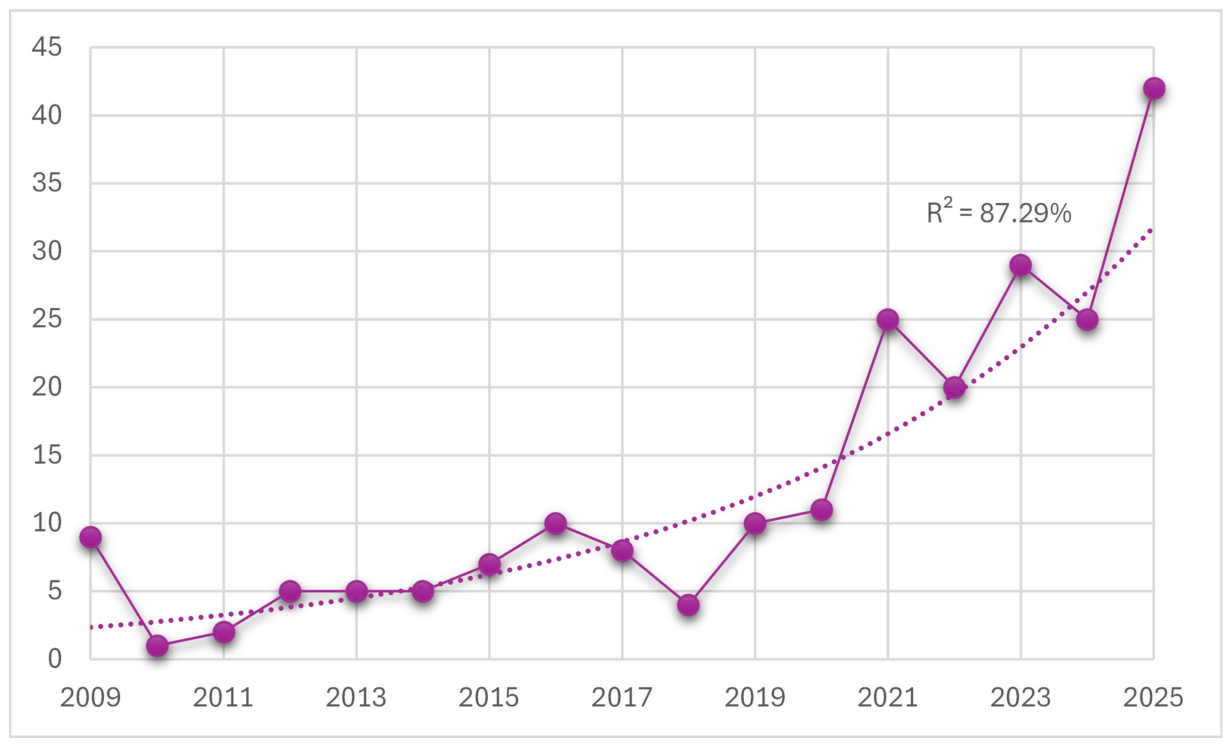
Figure 2.
Graph showing the geographic distribution of scientific production on occupational justice.
Figure 2.
Graph showing the geographic distribution of scientific production on occupational justice.
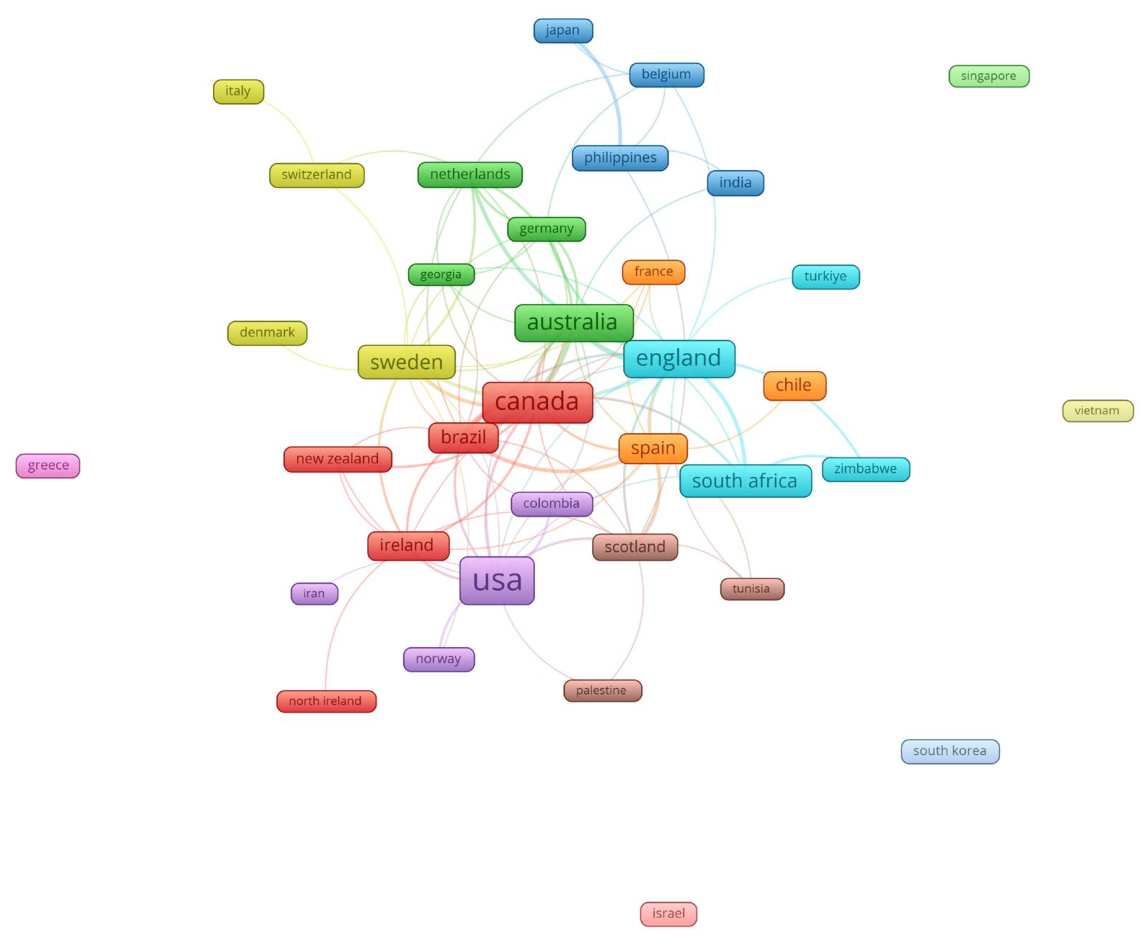
Table 1.
Characterization of document corpus to be analyzed.
| Variable | Value (or Sample, n) | Unit | Subsampling criterion |
|---|---|---|---|
| Documents | 238 | Article | - - - |
| Time | 1982-2026 | Year | Period without blanks, Price’s Law |
| Place (Affilliation) | 36 | Country / Territory | Census 1 |
| Authors | 715 | Person | Lotka’s Law |
| Journals | 54 | Journal | Bradford’s Law |
| Keywords Plus | 372 | Words | Zipf’s Law |
1 In the absence of country (and territory) specific laws.
Table 2.
Co-authorship structures among prolific authors.
| Structure | Authors | Most prolific authors (documents) | Most-cited author (citations) | Most-linked author (total link strength) |
|---|---|---|---|---|
| Tetrad | Farias, Lisette; Pollard, Nick; Rudman, Debbie Laliberte; Malfitano, Ana Paula | Rudman, Debbie Laliberte (4) | Rudman, Debbie Laliberte (143) | Rudman, Debbie Laliberte (5) |
| Triad | Aldrich, Rebecca M.; Galvaan, Roshan; Peters, Liesl | Galvaan, Roshan (5) | Galvaan, Roshan (67) | Galvaan, Roshan (2) |
| Dyad 1 | Drolet, Marie-Josee; Whiteford, Gail | Drolet, Marie-Josee (5) | Whiteford, Gail (76) | Drolet, Marie-Josee (1); Whiteford, Gail (1) |
| Dyad 2 | Hocking, Clare; Magalhaes, Lilian | Magalhaes, Lilian (5) | Magalhaes, Lilian (100) | Magalhaes, Lilian (3) |
| Dyad 3 | Nilsson, Ingeborg; Townsend, Elizabeth | Nilsson, Ingeborg (3); Townsend, Elizabeth (3) | Nilsson, Ingeborg (122) | Nilsson, Ingeborg (2); Townsend, Elizabeth (2) |
Disclaimer/Publisher’s Note: The statements, opinions and data contained in all publications are solely those of the individual author(s) and contributor(s) and not of MDPI and/or the editor(s). MDPI and/or the editor(s) disclaim responsibility for any injury to people or property resulting from any ideas, methods, instructions or products referred to in the content. |
© 2026 by the authors. Licensee MDPI, Basel, Switzerland. This article is an open access article distributed under the terms and conditions of the Creative Commons Attribution (CC BY) license (http://creativecommons.org/licenses/by/4.0/).
Copyright: This open access article is published under a Creative Commons CC BY 4.0 license, which permit the free download, distribution, and reuse, provided that the author and preprint are cited in any reuse.


