

Submitted:
04 August 2026
Posted:
05 August 2026
You are already at the latest version
Abstract
Background/Objectives: Placebo responses can substantially influence patient-reported outcomes in clinical trials and are particularly relevant in allergen immunotherapy (AIT), where treatment efficacy is commonly assessed using symptom- and medication-based endpoints. We conducted an exploratory post hoc cross-study comparison of birch pollen-allergic participants who received pre-seasonal placebo injections in two randomised, double-blind, placebo-controlled AIT trials with participants from a third trial in whom the planned study injections were not administered before the corresponding birch pollen season. Methods: Data were pooled from three prospective clinical studies evaluating the mannan-conjugated birch pollen allergoid EP-088-T502: T502-SIT-020, T502-SIT-045, and T502-SIT-068. Placebo-injection cohorts from studies T502-SIT-020 and T502-SIT-045 were compared with the injection-free cohort from study T502-SIT-068. Clinical outcomes included the Combined Symptom and Medication Score (CSMS), daily Symptom Score (dSS), and daily Medication Score (dMS). Results: The three comparison cohorts comprised 321 participants: 161 in the injection-free cohort and 160 in the placebo-injection cohorts. Participants in the injection-free cohort had significantly higher symptom and medication scores during the secondary fixed 1–30 April analysis period than participants in the placebo-injection cohorts. Median CSMS was 1.97 in the injection-free cohort compared with 1.32 and 0.86 in the placebo-injection cohorts. Likewise, median dSS (1.08 vs. 0.79 and 0.59) and dMS (0.87 vs. 0.33 and 0.25) were higher in the injection-free cohort. Pairwise comparisons indicated statistically significant between-cohort differences. Conclusions: In this non-randomised, non-concurrent cross-study comparison, symptom and rescue-medication scores were lower in the placebo-injection cohorts than in the injection-free cohort. Because the cohorts were derived from separate studies conducted in different years, these findings are hypothesis-generating and do not establish a causal effect of placebo injections. Trial-related contextual factors and other cross-study differences should be considered when interpreting the results.
Keywords:
allergen immunotherapy
; placebo effect
; birch pollen allergy
; seasonal allergic rhinitis
; placebo-controlled trial
; patient-reported outcomes
; combined symptom and medication score
; therapeutic context
1. Introduction
Randomised, double-blind, placebo-controlled (DBPC) trials are considered the reference standard for evaluating treatment efficacy because they allow specific treatment effects to be distinguished from nonspecific improvements that occur independently of the active intervention. Within this framework, placebo groups are essential for accounting for seasonal variations in pollen exposure, the natural course of allergic disease, and psychobiological effects associated with participation in a clinical trial [1].
The placebo effect refers to the improvement of symptoms following an intervention perceived as beneficial despite the absence of an active therapeutic component. It reflects the influence of conditioning, patient expectations, and the therapeutic environment on both physiological responses and patients’ symptom perception. These effects are mediated by complex neurobiological mechanisms involving reward- and anxiety-related brain networks as well as bidirectional interactions between the nervous and immune systems [2].
Placebo responses in allergen immunotherapy (AIT) trials are frequently substantial and clinically relevant. Placebo-treated patients commonly experience improvements in allergic symptoms and reduced use of anti-allergic medication during the pollen season. For example, an analysis of six DBPC studies of sublingual and subcutaneous allergen immunotherapy (SLIT and SCIT), including birch pollen AIT studies, demonstrated reductions of up to 41% in the Combined Symptom and Medication Score (CSMS) among placebo-treated patients receiving SCIT [3]. Notably, these clinical improvements occurred in the absence of measurable immunological changes, such as increases in allergen-specific IgG, suggesting that the observed benefits are primarily attributable to contextual and expectation-related mechanisms rather than allergen-induced immune modulation [1].
The European Academy of Allergy and Clinical Immunology (EAACI) has emphasised the importance of placebo responses in AIT, estimating that they may account for up to 77% of the perceived clinical benefit in SCIT, depending on study design and methodological characteristics [1]. Factors influencing placebo responses include treatment frequency and invasiveness, patients’ expectations, previous treatment experiences, and the integrity of study blinding [2,4]. Regular clinical visits, repeated injections, and close medical monitoring may further reinforce patients’ perception of receiving effective therapy.
Despite the importance of placebo effects in clinical trial methodology, the clinical burden of birch pollen allergy remains considerable. Birch pollen is among the most important causes of seasonal allergic rhinitis (AR) in Central and Northern Europe [5]. Among tree pollens, birch (Betula) is the most allergenic species, followed by alder (Alnus) and hazel (Corylus). The prevalence of birch pollen allergy varies considerably across geographical regions, with positive skin prick tests reported in 5% to 54% of patients [6]. In most individuals, birch pollen allergy manifests as intermittent allergic rhinoconjunctivitis (ARC), although persistent ARC and asthma may also occur [7,8].
The management of pollen-induced ARC primarily relies on symptomatic pharmacotherapy. However, these therapies often fail to provide adequate symptom control in patients with moderate-to-severe disease [9] for whom AIT is recommended [10]. AIT is based on the repeated administration of an allergen, typically over a period of three to five years, with the aim of inducing long-term immune tolerance. It is one of the few disease-modifying treatment options for ARC. Numerous studies have demonstrated that AIT reduces allergic symptoms, decreases the use of anti-allergic medication, and provides sustained clinical benefits after treatment has been completed [10].
To further optimise AIT, a mannan-conjugated birch pollen allergoid (EP-088-T502) was developed for subcutaneous administration. Its efficacy and safety were evaluated in several clinical studies, including the dose-finding study T502-SIT-020 and the pivotal phase III DBPC study T502-SIT-045 [11,12]. These studies also included large, well-characterised placebo groups that demonstrated clinically relevant symptom improvement despite the absence of active AIT.
The present exploratory post hoc analysis compared allergic symptoms and rescue-medication use in placebo-injection cohorts from studies T502-SIT-020 and T502-SIT-045 with those in an injection-free cohort from study T502-SIT-068, in which the planned pre-seasonal injections were not administered before the 2024 birch pollen season. As the CSMS is the recommended outcome measure for assessing AIT efficacy [4], this comparison provides descriptive evidence on differences in patient-reported clinical outcomes between cohorts exposed to different study contexts. Because the cohorts were enrolled in separate studies conducted in different years and were not randomised for the comparison evaluated here, the analysis was not intended to establish a causal placebo effect.
2. Materials and Methods
2.1. Study Design
This post hoc analysis was based on data from three clinical studies (T502-SIT-020, T502-SIT-045, and T502-SIT-068). All three studies were originally designed as DBPC trials to evaluate the efficacy and safety of SCIT with the mannan-conjugated birch pollen allergoid EP-088-T502. Although the study protocols were largely comparable, study T502-SIT-068 differed in its implementation, resulting in a distinct participant population for the present analysis.
In studies T502-SIT-020 and T502-SIT-045, participants were randomised to receive either active treatment or placebo. Participants assigned to the active treatment group received EP-088-T502, whereas placebo-treated participants received saline solution according to the study injection schedule. All placebo-treated participants underwent regular clinical follow-up in accordance with the study protocol.
However, delayed regulatory approval prevented administration of the planned pre-seasonal injections before the start of the birch pollen season. Consequently, participants enrolled in T502-SIT-068 received no study injections during the assessment period. They nevertheless underwent protocol-defined clinical assessments, including daily documentation of allergic symptoms and rescue-medication use as well as quality-of-life assessments. For the present analysis, participants with evaluable data formed an injection-free comparison cohort and were compared with the placebo-injection cohorts from studies T502-SIT-020 and T502-SIT-045.
2.2. Study Population
Eligible participants were adults aged 18–64 years with a documented history of moderate-to-severe AR or ARC caused by birch pollen during at least the two preceding pollen seasons, with disease severity classified according to ARIA. Additional eligibility criteria included a positive skin prick test to birch pollen and birch pollen-specific IgE of CAP class 3 or higher. In study T502-SIT-068, participants with CAP class 2 could also be included if a previous laboratory report, obtained outside the birch pollen season and no more than two years earlier, documented CAP class 3 or higher.
In study T502-SIT-020, 61 participants were randomised to the placebo group. In study T502-SIT-045, 99 participants received placebo treatment. In study T502-SIT-068, 162 eligible participants received no study injections; 161 completed the study and formed the injection-free comparison cohort. An overview of patient enrolment and treatment allocation across all three studies is provided in Table S1.
2.3. Combined Symptom and Medication Score
The CSMS, previously described in earlier studies, was selected as the primary endpoint of the present analysis [4,11,12].
Participants recorded nasal symptoms (rhinorrhoea, sneezing, nasal pruritus, and nasal congestion) and ocular symptoms (ocular pruritus and watery eyes) daily throughout the birch pollen season using the CCC STUDY Diary mobile application. Each symptom was assessed on a 4-point ordinal scale.
The daily Symptom Score (dSS) was calculated as the mean score of the six individual symptoms:
dSS = (SS1 + SS2 + SS3 + SS4 + SS5 + SS6) / 6
Symptom severity was defined as follows:
Score 0: no symptoms
Score 1: mild symptoms (symptoms clearly present but easily tolerated)
Score 2: moderate symptoms (symptoms causing noticeable discomfort but remaining tolerable)
Score 3: severe symptoms (symptoms difficult to tolerate and interfering with daily activities and/or sleep)
Participants were provided with rescue medication. The daily Medication Score (dMS) was determined using a predefined additive scoring system based on the medications used on each study day. Rescue medications could be used individually or in combination.
Medication scores were assigned as follows:
Score 0: no medication
Score 1.0: antihistamine tablets (desloratadine 5 mg once daily)
Score 1.5: intranasal corticosteroid (fluticasone furoate nasal spray, 110 μg/day)
Score 0.5: antihistamine eye drops
2.3. Pollen Data
The 14 consecutive days with the highest predicted birch pollen levels were defined as the peak birch pollen season. Regional pollen forecasts provided by the German Weather Service (Deutscher Wetterdienst, DWD) were used to determine the peak pollen period individually for each study site. Mean regional DWD forecast levels during the peak birch pollen seasons of 2020, 2022, and 2024 are summarised in Table S3. For a secondary calendar-based analysis, the fixed period from 1 to 30 April was used in all three studies.
2.4. Rhinoconjunctivitis Quality of Life Questionnaire
Health-related quality of life (QoL) was assessed using the Rhinoconjunctivitis Quality of Life Questionnaire (RQLQ), originally developed by Juniper and Guyatt [13] and administered in its validated German version [14]. The questionnaire is specifically designed to assess disease-related impairment in patients with ARC.
The RQLQ was completed immediately before the birch pollen season and again during the birch pollen season in all three studies included in the present analysis.
2.5. Statistical Analysis
Statistical analyses were performed using IBM SPSS Statistics version 30 (IBM Corp., Armonk, NY, USA). Overall comparisons among the three cohorts were performed using the Kruskal–Wallis test. Pairwise comparisons were performed using two-sided Mann–Whitney U tests.
The primary endpoint was the CSMS in the injection-free cohort from study T502-SIT-068 and the placebo-injection cohorts from studies T502-SIT-020 and T502-SIT-045. Secondary endpoints included the dSS, dMS, and QoL.
Descriptive statistics, including the mean, standard deviation, median, quartiles, and 95% confidence intervals, were calculated for both the site-specific 14-day peak birch pollen period and the fixed 1–30 April analysis period. For studies T502-SIT-020 and T502-SIT-045 [11,12], analyses were performed using the intention-to-treat (ITT) population. For study T502-SIT-068, the Eligible Set (E-Set) comprised all participants who provided written informed consent and fulfilled the inclusion and exclusion criteria and who would have received study treatment according to the original protocol. Of the 162 participants in the E-Set, 161 completed the study and were included in the comparative outcome analyses. All between-study comparisons were exploratory and were not intended to estimate a causal effect of placebo injections.
2.6. Ethical and Regulatory Considerations
Study T502-SIT-068 was conducted in accordance with the Declaration of Helsinki [15], the International Council for Harmonisation Good Clinical Practice guidelines (ICH-GCP; CPMP/ICH/135/95), and applicable national drug, data protection, and other regulatory requirements.
The participant information sheet, informed consent form, and data protection declaration were approved by the responsible ethics committee before participant enrolment.
The study was submitted through the Clinical Trials Information System (CTIS; EU trial number: 2023-508013-16-00) and received regulatory authorisation in Germany from the Paul-Ehrlich-Institut on 14 February 2024.
3. Results
3.1. Baseline Characteristics
Of 236 participants screened for study T502-SIT-068, 74 were not enrolled, leaving 162 eligible participants in the E-Set. One participant discontinued because of an adverse event (AE); therefore, 161 participants completed the study and were included in the comparative outcome analyses. Further details are provided in Figure S1.
Selected baseline characteristics of the three source cohorts are summarised in Table S2. Full baseline characteristics for studies T502-SIT-020 and T502-SIT-045 have been reported previously [11,12]. Mean regional DWD peak pollen forecast levels were 2.99 in 2020, 2.85 in 2022, and 2.25 in 2024 (Table S3).
All included patients had a history of birch pollen-induced AR or ARC, with or without asthma, for at least 2 years and had used anti-allergic medication during at least 2 previous birch pollen seasons.
3.2. Combined Symptom and Medication Score (CSMS)
During the peak birch pollen season, defined as the 14 days in April with the highest birch pollen concentrations, participants who received no study injections in study T502-SIT-068 experienced a significantly greater burden of allergic symptoms and rescue-medication use than patients in the placebo groups of studies T502-SIT-020 and T502-SIT-045. Specifically, participants in the injection-free cohort reported more severe symptoms and required more rescue medication than patients who received placebo injections.
The median CSMS during the peak birch pollen season was 1.34 in study T502-SIT-020, 1.07 in study T502-SIT-045, and 2.14 in study T502-SIT-068. The median CSMS in study T502-SIT-068 was 1.6-fold higher than that in study T502-SIT-020 and 2.0-fold higher than that in study T502-SIT-045 (p < 0.0001 for both comparisons; Figure 1A).
During the fixed 1–30 April analysis period, the median CSMS was 1.32 in study T502-SIT-020, 0.86 in study T502-SIT-045, and 1.97 in study T502-SIT-068. The median CSMS in the injection-free cohort was significantly higher than that in both placebo groups (p < 0.0001), corresponding to a 1.5-fold increase compared with study T502-SIT-020 and a 2.3-fold increase compared with study T502-SIT-045 (Figure 1B).
3.3. Daily Symptom Score (dSS)
During the peak birch pollen season, the median dSS was 0.78 in study T502-SIT-020, 0.70 in study T502-SIT-045, and 1.22 in study T502-SIT-068. The median dSS values in studies T502-SIT-020 and T502-SIT-045 were significantly lower than that in study T502-SIT-068 (p < 0.0001), corresponding to 1.6-fold and 1.7-fold higher scores in the injection-free cohort, respectively (Figure 2A).
Analysis of the fixed 1–30 April period showed that symptom scores were higher in the injection-free cohort. The median dSS was 0.79 in study T502-SIT-020, 0.59 in study T502-SIT-045, and 1.08 in study T502-SIT-068. The injection-free cohort had significantly higher scores than both placebo groups (p < 0.0001), corresponding to a 1.4-fold increase compared with study T502-SIT-020 and a 1.8-fold increase compared with study T502-SIT-045 (Figure 2B).
Daily medication score (dMS)
During the peak birch pollen season, the median dMS was 0.39 in study T502-SIT-020, 0.36 in study T502-SIT-045, and 0.93 in study T502-SIT-068. The median dMS values in studies T502-SIT-020 and T502-SIT-045 were significantly lower than that in study T502-SIT-068 (p < 0.0001). This corresponded to 2.4-fold and 2.6-fold higher rescue medication use in the injection-free cohort compared with studies T502-SIT-020 and T502-SIT-045, respectively (Figure 3A).
Consistent with these findings, rescue medication use remained higher in the injection-free cohort during the fixed 1–30 April analysis period. The median dMS was 0.33 in study T502-SIT-020, 0.25 in study T502-SIT-045, and 0.87 in study T502-SIT-068. The median dMS in the injection-free cohort of study T502-SIT-068 was significantly higher than that in the placebo groups of studies T502-SIT-020 and T502-SIT-045 (p < 0.0001 for both comparisons), corresponding to a 2.6-fold increase compared with study T502-SIT-020 and a 3.5-fold increase compared with study T502-SIT-045 (Figure 3B).
3.4. Rhinoconjunctivitis Quality of Life Questionnaire (RQLQ)
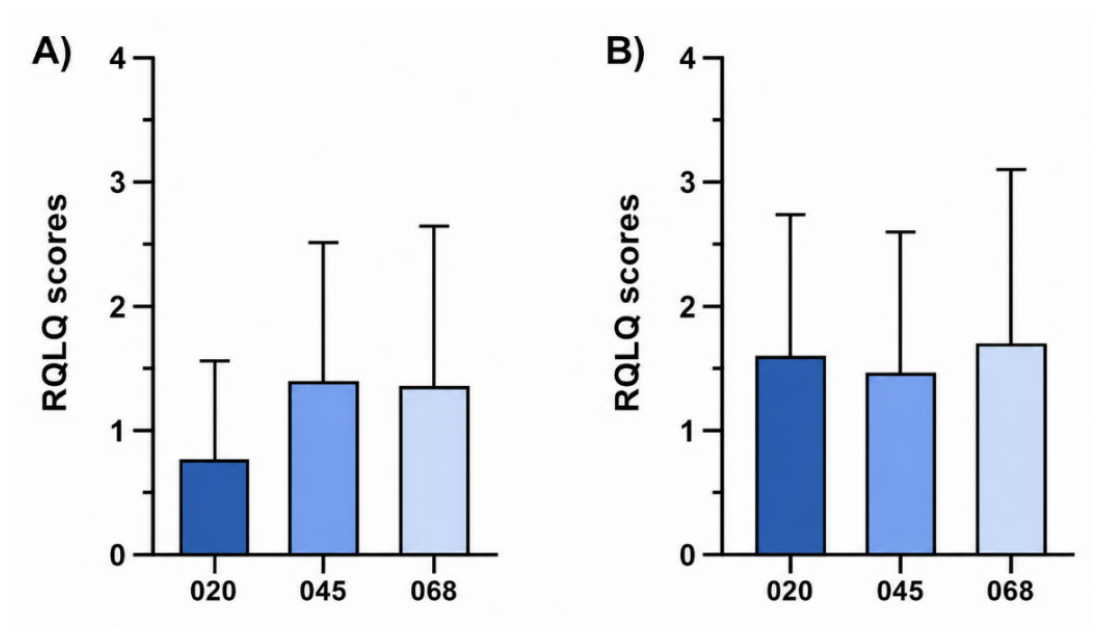
In addition to the CSMS, health-related quality of life was assessed using the RQLQ across all three studies. Before the onset of the birch pollen season, mean RQLQ scores were 0.77 in study T502-SIT-020, 1.41 in study T502-SIT-045, and 1.36 in the injection-free cohort of study T502-SIT-068 (Figure 4A).
During the birch pollen season, mean RQLQ scores were 1.61 in study T502-SIT-020, 1.49 in study T502-SIT-045, and 1.72 in the injection-free cohort of study T502-SIT-068 (Figure 4B).
RQLQ scores are presented descriptively, and no clear between-cohort pattern was observed during the birch pollen season.
4. Discussion
In this exploratory post hoc analysis, we compared clinical outcomes in placebo-injection cohorts with those in an injection-free cohort across three non-concurrent studies. Participants in the injection-free cohort experienced significantly greater symptom severity and required significantly more rescue medication than placebo-treated patients during both the site-specific 14-day peak periods and the fixed 1–30 April analysis periods. During the peak pollen season, the median CSMS in participants in the injection-free cohort was 2.14, which was twice that observed in the placebo group of study T502-SIT-045 (1.07). Likewise, both the dSS and dMS were significantly higher in participants in the injection-free cohort than in placebo-treated participants. These findings demonstrate differences between the injection-free cohort and the historical placebo-injection cohorts. However, because the cohorts were derived from separate studies conducted in different years and were not randomised for the present comparison, the observed differences cannot be attributed specifically to placebo injections.
The CSMS is the EAACI-recommended primary endpoint for clinical trials in AIT and has been shown to be a sensitive and robust outcome measure with a large effect size across multiple studies [4,11,12].
Previous analyses of SCIT and SLIT trials have shown that placebo responses may be associated with reductions in CSMS of up to 40.5%, depending on study design and patient expectations [3,16]. The EAACI position paper further emphasised that placebo responses may account for up to 77% of the perceived clinical benefit observed in AIT studies [1]. This response is influenced by several factors, including treatment frequency, increased medical attention, patient expectations, previous treatment experience, and the integrity of study blinding [1,2,4]. The findings of the present post hoc analysis further highlight that the therapeutic context itself, including regular physician visits, repeated injections, and continuous patient monitoring, may substantially influence patient-reported outcomes (PROs). These contextual influences may reflect placebo-associated and other trial-related mechanisms; however, the present analysis was not designed to distinguish among these potential mechanisms. RQLQ results did not show the same between-cohort separation as the symptom and medication scores.
Doctor–patient interactions, patient expectations, and regular follow-up visits represent important psychosocial factors that may directly influence symptom perception. In the present analysis, lower symptom scores were observed in the placebo-injection cohorts than in the injection-free cohort; however, the mechanisms underlying this difference were not directly assessed. In the context of AIT, such contextual factors may also promote treatment adherence. As AIT typically requires several months to years of continuous treatment, early subjective symptom relief may encourage patients to continue therapy and thereby improve long-term treatment adherence [17,18].
Symptom improvement in AIT is influenced not only by allergen-specific immunological mechanisms but also by the psychological and contextual components of the treatment process. Previous studies have demonstrated that placebo interventions may activate endogenous opioid, dopaminergic, immune, and endocrine pathways, thereby contributing to measurable physiological responses [19,20]. These observations highlight the importance of acknowledging placebo-associated mechanisms as an integral component of the overall therapeutic experience. Physicians should therefore recognise the potential contribution of these contextual factors and communicate openly with patients throughout treatment. Such an approach may help improve treatment persistence, particularly during the early phase of AIT, when clinical benefits may still be limited and 3–5 years of continuous treatment are generally required to achieve sustained efficacy [10,17,18]. As psychosocial factors are important determinants of therapeutic success, optimizing the overall patient experience, including effective physician-patient communication, comprehensive patient education, structured follow-up, telemedicine support, and an appropriate treatment environment, may further improve adherence and treatment outcomes [17,18,21].
Furthermore, the inclusion of an injection-free comparison cohort may provide additional insights in future AIT studies. Most AIT trials compare active treatment with placebo alone and therefore do not evaluate the contribution of placebo responses relative to an injection-free trial context. However, the inclusion of an injection-free comparison cohort is not feasible in a blinded study design. It is also important to recognise that the perceived treatment effect is often smaller in double-blind, placebo-controlled trials because empathic clinical care and high patient expectations enhance placebo responses, which may account for 30–50% of the overall symptom improvement [1,16]. The present comparison provides exploratory information on differences between placebo-injection and injection-free trial contexts but does not permit a precise estimation of the placebo response. These findings may help optimise the design and interpretation of future AIT trials, in which careful evaluation of placebo responses is essential to avoid underestimating treatment efficacy.
Limitations
This study has several limitations. First, the comparison was non-randomised and non-concurrent, as the cohorts were derived from three separate studies conducted in 2020, 2022, and 2024. Differences in pollen exposure, participant characteristics, study procedures, blinding, visit schedules, expectations, and other unmeasured factors may therefore have contributed to the observed between-cohort differences. These between-study differences could not be fully adjusted post hoc. Furthermore, the fixed 1–30 April analysis window may have captured different proportions of the actual birch pollen season in the three study years, introducing additional temporal and exposure-related confounding.
In addition, study T502-SIT-020 was conducted during the first COVID-19 lockdown in Germany, when reduced outdoor activity, face-mask use, and other behavioural changes may have altered allergen exposure and symptom reporting, providing an alternative explanation for the lower scores observed in this cohort. The analysis cannot isolate the effect of placebo injections from these cross-study differences and should be regarded as exploratory and hypothesis-generating.
Furthermore, immunological and cellular biomarkers are essential for a comprehensive assessment of treatment efficacy. Although the CSMS is a widely accepted endpoint in AIT clinical trials, it is a PRO. As a subjective measure, the CSMS cannot distinguish whether improvements in patient-reported symptoms are attributable to immunological changes or to the psychological and contextual effects associated with study participation. Therefore, biological markers, including allergen-specific IgG4, IgE, the basophil activation test (BAT), and regulatory T cells (Tregs), should also be evaluated alongside the CSMS. These parameters provide objective biological evidence supporting the efficacy of AIT [22].
Finally, the present cross-study analysis relied primarily on patient-reported symptom and rescue-medication outcomes and did not include harmonised objective exposure or mechanistic measures across the three source studies. Therefore, the mechanisms underlying the observed between-cohort differences could not be assessed.
5. Conclusions
In this exploratory post hoc cross-study comparison, participants in the placebo-injection cohorts had lower symptom and rescue-medication scores than participants in the injection-free cohort. Because the cohorts were derived from separate studies conducted in different years and were not randomised for the comparison evaluated here, the observed differences cannot be attributed specifically to placebo injections. The findings are therefore hypothesis-generating and suggest that trial-related contextual factors should be considered when interpreting patient-reported outcomes in AIT studies.
Supplementary Materials
The following supporting information can be downloaded at: https://www.mdpi.com... Figure S1: Flow chart of the study. Of note, no participants from Poland were screened or included; Table S1: Overview of patient enrolment and treatment allocation across trials T502-SIT-020, T502-SIT-045 and T502-SIT-068; Table S2: Baseline characteristics of the source cohorts; Table S3. Mean regional DWD birch pollen forecast levels during the site-specific peak birch pollen seasons in 2020, 2022, and 2024.
Author Contributions
Conceptualization, S.d.P., E.R., S.A., J.L.S., and M.C.V.; methodology, H.S.; validation, H.S., L.D., C.N., A.R., S.d.P., and M.C.V.; formal analysis, H.S. and C.F.; investigation, E.R.; resources, S.A., M.C.V., and J.L.S.; data curation, C.N., N.K., H.S., and C.F.; writing—original draft preparation, C.N., A.R., E.R., and C.F.; writing—review and editing, L.D., N.K., S.A., A.R., H.S., C.F., E.R., S.d.P., M.C.V., and J.L.S.; visualization, N.K., A.R., and C.F.; supervision, S.A., S.d.P., J.L.S., and E.R.; project administration, C.N., L.D., N.K., S.A., E.R., and S.d.P.; funding acquisition, S.A., M.C.V., and J.L.S. All authors have read and agreed to the published version of the manuscript.
Funding
The clinical studies were funded by Inmunotek S.L., Spain.
Institutional Review Board Statement
The three source studies were conducted in accordance with the Declaration of Helsinki and applicable Good Clinical Practice, ethical, and regulatory requirements. For study T502-SIT-020, the independent ethics committee issued a positive opinion on 9 November 2018, and the study protocol was submitted to the Paul-Ehrlich-Institut in 2019 under reference number 3695/01. For study T502-SIT-045, the independent ethics committee issued a positive opinion on 27 September 2021. The study protocol was submitted to the Paul-Ehrlich-Institut under reference number 4564/01, and regulatory approval was granted on 27 October 2021. For study T502-SIT-068, the participant information sheet, informed consent form, and data protection declaration were approved by the responsible ethics committee before participant enrolment. The study was submitted through the Clinical Trials Information System (CTIS; EU trial number: 2023-508013-16-00) and was authorised in Germany by the Paul-Ehrlich-Institut on 14 February 2024.
Informed Consent Statement
Written informed consent was obtained from all participants before study enrolment.
Data Availability Statement
Data will be available from the corresponding author upon reasonable request.
Acknowledgments
The authors are grateful to the participating study sites and their patients.
Conflicts of Interest
E.R., C.N., A.R., N.K., H.S., S.A., and L.D. are employees of ClinCompetence Cologne GmbH, the contract research organisation involved in the reported studies. C.F. declares no conflicts of interest. S.d.P. is an employee of Inmunotek S.L.; J.L.S. and M.C.V. are shareholders of Inmunotek S.L.
Abbreviations
The following abbreviations are used in this manuscript:
| AE | Adverse event |
| AIT | Allergen immunotherapy |
| AMG | Arzneimittelgesetz |
| AR | Allergic rhinitis |
| ARIA | Allergic Rhinitis and its Impact on Asthma |
| ARC | Allergic rhinoconjunctivitis |
| BAT | Basophil Activation Test |
| CSMS | Combined Symptom and Medication Score |
| CTIS | Clinical Trials Information System |
| DBPC | Double-blind, placebo-controlled |
| dMS | Daily Medication Score |
| dSS | Daily Symptom Score |
| DWD | Deutscher Wetterdienst |
| EAACI | European Academy of Allergy and Clinical Immunology |
| E-Set | Eligible Set |
| ICH-GCP | International Council for Harmonisation Good Clinical Practice |
| ITT | Intention-to-treat |
| PRO | Patient-reported outcome |
| QoL | Quality of Life |
| RQLQ | Rhinoconjunctivitis Quality of Life Questionnaire |
| SCIT | Subcutaneous allergen-specific immunotherapy |
| SLIT | Sublingual immunotherapy |
| Tregs | Regulatory T cells |
References
- Pfaar, O.; Agache, I.; Bergmann, K.C.; et al. Placebo effects in allergen immunotherapy-An EAACI Task Force Position Paper. Allergy 2021, 76(3), 629–647. [Google Scholar] [CrossRef]
- Price, D.D.; Finniss, D.G.; Benedetti, F. A comprehensive review of the placebo effect: recent advances and current thought. Annu Rev. Psychol. 2008, 59, 565–590. [Google Scholar] [CrossRef] [PubMed]
- Narkus, A.; Lehnigk, U.; Haefner, D.; Klinger, R.; Pfaar, O.; Worm, M. The placebo effect in allergen-specific immunotherapy trials. Clin. Transl. Allergy 2013, 3(1), 42. [Google Scholar] [CrossRef] [PubMed]
- Pfaar, O.; Demoly, P.; Gerth van Wijk, R.; et al. Recommendations for the standardization of clinical outcomes used in allergen immunotherapy trials for allergic rhinoconjunctivitis: an EAACI Position Paper. Allergy 2014, 69(7), 854–867. [Google Scholar] [CrossRef] [PubMed]
- Biedermann, T.; Winther, L.; Till, S.J.; Panzner, P.; Knulst, A.; Valovirta, E. Birch pollen allergy in Europe. Allergy 2019, 74(7), 1237–1248. [Google Scholar] [CrossRef] [PubMed]
- D’Amato, G.; Cecchi, L.; Bonini, S.; et al. Allergenic pollen and pollen allergy in Europe. Allergy 2007, 62(9), 976–990. [Google Scholar] [CrossRef] [PubMed]
- Bousquet, J.; Van Cauwenberge, P.; Khaltaev, N.; ARIA Workshop Group; World Health Organization. Allergic rhinitis and its impact on asthma. J. Allergy Clin. Immunol. 2001, 108((5) Suppl, S147–S334. [Google Scholar] [CrossRef] [PubMed]
- Brozek, J.L.; Bousquet, J.; Baena-Cagnani, C.E.; et al. Allergic Rhinitis and its Impact on Asthma (ARIA) guidelines: 2010 revision. J. Allergy Clin. Immunol. 2010, 126(3), 466–476. [Google Scholar] [CrossRef] [PubMed]
- Bousquet, J.; Khaltaev, N.; Cruz, A.A.; et al. Allergic Rhinitis and its Impact on Asthma (ARIA) 2008 update (in collaboration with the World Health Organization, GA(2)LEN and AllerGen). Allergy 2008, 63 Suppl 86, 8–160. [Google Scholar] [CrossRef] [PubMed]
- Roberts, G.; Pfaar, O.; Akdis, C.A.; et al. EAACI Guidelines on Allergen Immunotherapy: Allergic rhinoconjunctivitis. Allergy 2018, 73(4), 765–798. [Google Scholar] [CrossRef] [PubMed]
- Mösges, R.; Zeyen, C.; Raskopf, E.; et al. A randomized, double-blind, placebo-controlled trial with mannan-conjugated birch pollen allergoids. Allergy 2024, 79, 990–1000. [Google Scholar] [CrossRef] [PubMed]
- Mösges, R.; Raskopf, E.; Klimek, L.; et al. Short-course subcutaneous treatment with birch pollen allergoids greatly improves symptom and medication scores in birch allergy. Allergy 2025, 80, 817–826. [Google Scholar] [CrossRef] [PubMed]
- Juniper, E.F.; Guyatt, G.H. Development and testing of a new measure of health status for clinical trials in rhinoconjunctivitis. Clin. Exp. Allergy 1991, 21(1), 77–83. [Google Scholar] [CrossRef] [PubMed]
- Neumann, Y.; Bullinger, M.; Przybilla, B. Quality of life in allergic rhinitis: standardisation of a self assessment questionnaire. Allergy 1992, 47 (Suppl 12), 72. [Google Scholar]
- World Medical Association. World Medical Association Declaration of Helsinki: Ethical Principles for Medical Research Involving Human Subjects. JAMA 2013, 310(20), 2191–2194. [Google Scholar] [CrossRef] [PubMed]
- Abramowicz, M.; Kruszewski, J.; Chciałowski, A. Evaluation of the placebo effect in the trials of allergen immunotherapy effectiveness: meta-analysis of randomized and placebo-controlled trials. Postep. Dermatol. Alergol. 2018, 35(6), 620–625. [Google Scholar] [CrossRef] [PubMed]
- Catamerò, F.; Barbaglia, S.; Heffler, E.; Giovannini, M.; Paoletti, G. Patients’ perspective on allergen immunotherapy for respiratory allergy. Curr. Opin. Allergy Clin. Immunol. 2025, 25(6), 500–510. [Google Scholar] [CrossRef] [PubMed]
- Li, Y.; Xiong, Y.; Fan, W.; et al. Sequential model for predicting patient adherence in subcutaneous immunotherapy for allergic rhinitis. Front Pharmacol. 2024, 2024;15, 1371504. [Google Scholar] [CrossRef] [PubMed]
- Benedetti, F. Placebo effects: from the neurobiological paradigm to translational implications. Neuron 2014, 84(3), 623–637. [Google Scholar] [CrossRef] [PubMed]
- Niazi, S.K. Placebo Effects: Neurological Mechanisms Inducing Physiological, Organic, and Belief Responses-A Prospective Analysis. Healthcare Published. 2024, 12(22), 2314. [Google Scholar] [CrossRef] [PubMed]
- Bender, B.G.; Oppenheimer, J. The special challenge of nonadherence with sublingual immunotherapy. J. Allergy Clin. Immunol. Pract. 2014, 2(2), 152–155. [Google Scholar] [CrossRef] [PubMed]
- Larsen, J.N.; Broge, L.; Jacobi, H. Allergy immunotherapy: the future of allergy treatment. Drug Discov. Today 2016, 21(1), 26–37. [Google Scholar] [CrossRef] [PubMed]
Figure 1.
Combined Symptom and Medication Score (CSMS) in studies T502-SIT-020, T502-SIT-045, and T502-SIT-068. A) Site-specific 14-day peak birch pollen period. B) Fixed 1–30 April analysis period. Data are presented as medians, 25th–75th percentiles, and minimum–maximum values. ***p < 0.0001.
Figure 1.
Combined Symptom and Medication Score (CSMS) in studies T502-SIT-020, T502-SIT-045, and T502-SIT-068. A) Site-specific 14-day peak birch pollen period. B) Fixed 1–30 April analysis period. Data are presented as medians, 25th–75th percentiles, and minimum–maximum values. ***p < 0.0001.
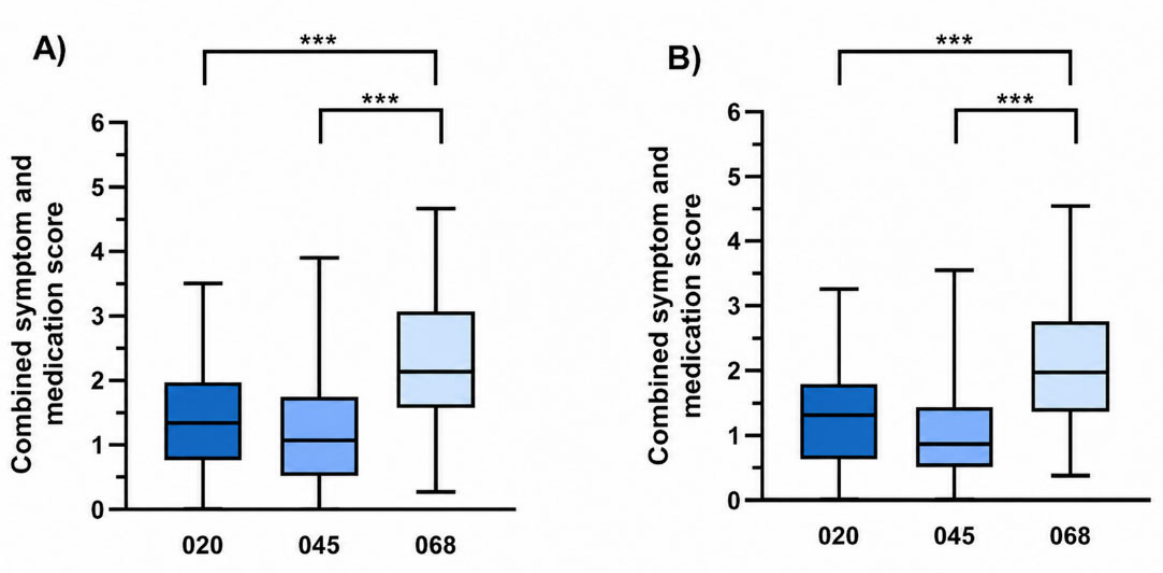
Figure 2.
Daily Symptom Score (dSS) in studies T502-SIT-020, T502-SIT-045, and T502-SIT-068. A) Site-specific 14-day peak birch pollen period. B) Fixed 1–30 April analysis period. Data are presented as medians, 25th–75th percentiles, and minimum–maximum values. ***p < 0.0001.
Figure 2.
Daily Symptom Score (dSS) in studies T502-SIT-020, T502-SIT-045, and T502-SIT-068. A) Site-specific 14-day peak birch pollen period. B) Fixed 1–30 April analysis period. Data are presented as medians, 25th–75th percentiles, and minimum–maximum values. ***p < 0.0001.
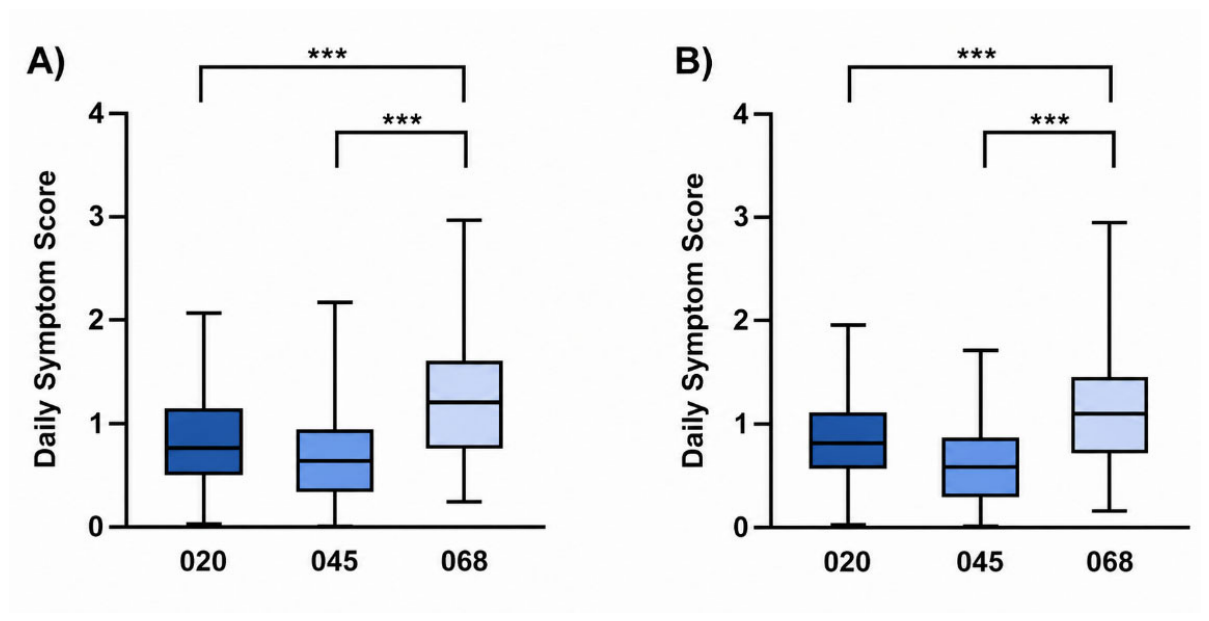
Figure 3.
Daily Medication Score (dMS) in studies T502-SIT-020, T502-SIT-045, and T502-SIT-068. A) Site-specific 14-day peak birch pollen period. B) Fixed 1–30 April analysis period. Data are presented as medians, 25th–75th percentiles, and minimum–maximum values. ***p < 0.0001.
Figure 3.
Daily Medication Score (dMS) in studies T502-SIT-020, T502-SIT-045, and T502-SIT-068. A) Site-specific 14-day peak birch pollen period. B) Fixed 1–30 April analysis period. Data are presented as medians, 25th–75th percentiles, and minimum–maximum values. ***p < 0.0001.
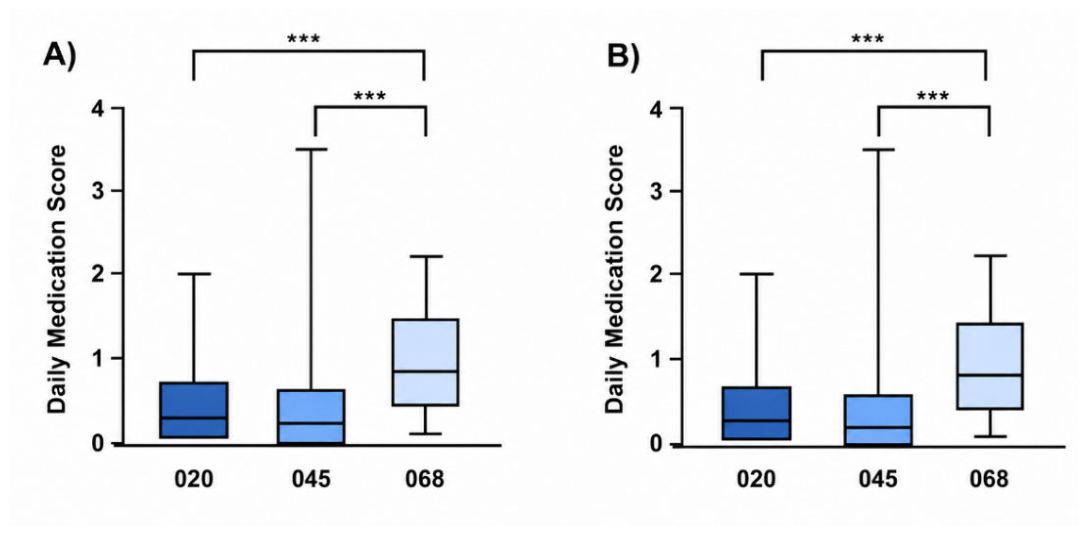
Figure 4.
Rhinoconjunctivitis Quality of Life Questionnaire (RQLQ) scores in studies T502-SIT-020, T502-SIT-045, and T502-SIT-068. A) RQLQ scores immediately before the birch pollen season. B) RQLQ scores during the birch pollen season. Data are presented as mean ± SD.
Figure 4.
Rhinoconjunctivitis Quality of Life Questionnaire (RQLQ) scores in studies T502-SIT-020, T502-SIT-045, and T502-SIT-068. A) RQLQ scores immediately before the birch pollen season. B) RQLQ scores during the birch pollen season. Data are presented as mean ± SD.
Disclaimer/Publisher’s Note: The statements, opinions and data contained in all publications are solely those of the individual author(s) and contributor(s) and not of MDPI and/or the editor(s). MDPI and/or the editor(s) disclaim responsibility for any injury to people or property resulting from any ideas, methods, instructions or products referred to in the content. |
© 2026 by the authors. Licensee MDPI, Basel, Switzerland. This article is an open access article distributed under the terms and conditions of the Creative Commons Attribution (CC BY) license.
Copyright: This open access article is published under a Creative Commons CC BY 4.0 license, which permit the free download, distribution, and reuse, provided that the author and preprint are cited in any reuse.