

Submitted:
02 August 2026
Posted:
04 August 2026
You are already at the latest version
Abstract
Background: Pharmacist involvement in immunization has expanded as a strategy to improve access to vaccines. In Costa Rica, private community pharmacies operate under a regulatory framework for vaccination services, yet little evidence exists on the private dispensing of administrable vaccines. The aim of this study was to describe the dispensing activity of administrable vaccines in private community pharmacies in Costa Rica by units, economic value, vaccine category and provincial distribution during MAT February 2025–MAT February 2026. Methods: A descriptive, retrospective, national study was conducted using an aggregated secondary IQVIA database of the Costa Rican private pharmaceutical market. Dispensed units, economic value in USD, percentage growth and share by vaccine category and province were analyzed; no individual patient, professional, establishment or nominal records were used. Results: Dispensed units rose from 162,664 to 217,387 (+33.6%). Economic value increased from USD 8,700,809 to USD 13,416,717 (+54.2%). Influenza was the highest-volume category in MAT February 2026 (87,064 units). Yellow fever showed the greatest growth, rising from 22,281 to 70,133 units and from USD 2.7 million to USD 7.0 million. HPV ranked second in economic value (USD 3.6 million). San José concentrated 63.0% of units and 52.9% of national economic value. Conclusions: The private market for administrable vaccines in Costa Rican community pharmacies expanded substantially in volume and economic value, driven mainly by yellow fever, while influenza led in units and HPV retained a major economic weight. These findings position private pharmacies as an active vaccine dispensing channel but do not allow estimation of vaccination coverage or doses actually administered.
Keywords:
pharmacist-led immunization
; community pharmacy
; vaccine dispensing
; Costa Rica
; yellow fever
; HPV
; influenza
; private pharmaceutical market
1. Introduction
Vaccination is one of the public health strategies with the greatest impact and best cost-effectiveness. Its contribution to reducing mortality and gaining healthy life-years exceeds that of many other health interventions [1]. Since 1974, immunization programs have prevented approximately 154 million deaths worldwide, mainly in children under five years of age, who account for about 95% of these lives saved. This impact translates into roughly 9.0 billion life-years gained and 10.2 billion healthy life-years preserved when the reduction in morbidity associated with vaccine-preventable diseases is also considered [2].
The role of the pharmacist in immunization programs has progressively expanded internationally, consolidating as a strategy to improve access to vaccination and increase vaccine uptake in different populations. Available evidence shows that pharmacist participation can significantly increase vaccination rates, both when the pharmacist directly administers vaccines and when participating in promotion, education and vaccine recommendation activities. In systematic reviews, the pharmacist acting as an immunizer has been associated with an increase in vaccination rates, with a relative risk of 1.14, whereas their role as a promoter or advocate of vaccination has been linked to an even greater effect, with a relative risk of 1.31 [3]. Likewise, a meta-analysis reported that pharmacist-led immunization programs have a relevant overall impact, with variations by vaccine type, including influenza, herpes zoster and other vaccines [4] .
In Costa Rica, pharmacist participation in immunization services is supported by a regulatory and professional framework composed of several complementary provisions. The National Vaccination Law, Law 8111, regulates the selection, procurement and availability of vaccines in the country, as well as the role of the National Vaccination and Epidemiology Commission in defining the official list of vaccines [5]. Complementarily, the National Vaccination Standard, Decree 37808-S, establishes the technical criteria for the indication, contraindication, application, recording, storage and disposal of vaccines, applicable to authorized public and private services. Likewise, the Manual of Standards for the Licensing of Pharmacies, Decree 31969-S, incorporates requirements for the storage of products requiring a cold chain and for the provision of vaccination services [6,7].
In this context, the 2014 COLFAR Protocol for injectables and vaccination services in private pharmacies defines requirements for human resources, physical facilities, documentation and procedures for the administration of injectables and vaccines, while the professional guideline COLFAR G-PP-287 specifically operationalizes Pharmaceutical Immunization Services from the community pharmacy, aimed at permanent or substitute regent pharmacists who participate in or wish to implement these services [8].
Therefore, the objective of this study was to describe the dispensing activity of administrable vaccines in private community pharmacies in Costa Rica through a national analysis of dispensed units, economic value, main products and provincial geographic distribution during the period MAT February 2025–MAT February 2026.
2. Materials and Methods
2.1. Study Design
A descriptive, retrospective, national study was conducted using an aggregated secondary database of vaccine dispensing activity in the private market of Costa Rica. The analysis focused on administrable vaccines dispensed in private community pharmacies during the MAT February 2025 and MAT February 2026 periods.
2.2. Data Source
The information source was an aggregated secondary database of the private pharmaceutical market, obtained from IQVIA data for Costa Rica. The database included information aggregated by country, vaccine category, province, dispensed units and economic value expressed in US dollars. For this analysis, a cleaned sheet of the original database was used, retaining only administrable vaccines and excluding immunological products that did not correspond to administrable preventive vaccination in the community pharmacy context. The information was analyzed in aggregate form, without access to individual data on patients, prescribers, specific establishments or nominal vaccination records.
2.3. Analysis Period
The analysis used the MAT February 2025 and MAT February 2026 periods. MAT, from the English “moving annual total”, corresponds to the cumulative annual moving total over the 12 months ending in February of each year. Therefore, MAT February 2026 represents the cumulative annual figure up to February 2026, while MAT February 2025 represents the immediately preceding comparable annual period.
MAT data were prioritized over isolated monthly data because the moving annual total reduces the effect of one-off variations in a specific month, product availability, seasonality or temporary changes in demand.
2.4. Unit of Analysis
The unit of analysis was aggregated records of administrable vaccine dispensing in the private market, grouped by vaccine category and province. The reported units represent units dispensed in the market database and therefore should not necessarily be interpreted as doses actually administered or as the number of persons vaccinated.
2.5. Inclusion Criteria
The vaccine categories corresponding to administrable vaccines in the context of private community pharmacies were included. Categories were analyzed using general clinical denominations, such as influenza, yellow fever, human papillomavirus, Tdap, hepatitis A, hepatitis B, pneumococcal, meningococcal, varicella and hexavalent vaccines, among others.
2.6. Exclusion Criteria
Products classified within the group of immunologicals that did not correspond to administrable preventive vaccines in community pharmacies, such as oral immunostimulants, antivenoms or other non-vaccine products, were excluded. Empty rows, totals, subtotals or duplicate records that could alter the aggregated calculations were also excluded. To avoid a promotional or commercial interpretation, no commercial brands or manufacturing laboratories were reported in the main results. The analysis was presented solely by vaccine category and province.
2.7. Variables Analyzed
The main variables of the study included the dispensed units and the economic value in US dollars for the MAT February 2025 and MAT February 2026 periods. In addition, the vaccine category and the province of dispensing were considered as grouping variables for the analysis. From these variables, derived indicators were calculated, including the annual percentage growth between the two periods, the percentage share of each vaccine category within the national total, the provincial percentage share and the distribution of economic value by category and province.
2.8. Data Analysis
A descriptive analysis was performed using absolute frequencies, percentages, economic values and percentage variations. Units and economic values were aggregated at the national level, by vaccine category and by province. The annual percentage growth was calculated by comparing MAT February 2026 against MAT February 2025 using the following formula:
Growth rate = [(MAT 2026 value − MAT 2025 value)/MAT 2025 value] × 100
The percentage share of each vaccine category was calculated by dividing its units or economic value by the corresponding national total for the same period. Likewise, the provincial percentage share was calculated by dividing the units or economic value of each province by the national total for MAT February 2026. The economic analysis was expressed in US dollars. No hypothesis tests, inferential models or multivariate adjustments were performed, because the objective of the study was descriptive and the data were available in aggregate form.
2.9. Ethical Considerations
The study used an aggregated secondary database of the private pharmaceutical market, without identifiable individual information on patients, health professionals, prescribers, pharmacies or specific establishments. The database did not include medical records, nominal vaccination records, individual clinical data or variables that would allow direct or indirect identification of individuals. In accordance with the Biomedical Research Regulatory Law of Costa Rica, Law No. 9234, the framework for review by a Scientific Ethics Committee applies to biomedical research involving human beings in health matters; since this study did not involve human participants, clinical intervention, sample collection or access to personal health data, approval by a Scientific Ethics Committee was not considered necessary. Likewise, as it did not process personal or sensitive data, the analysis did not entail risks associated with the processing of information protected under Law No. 8968 on the Protection of Individuals with Regard to the Processing of their Personal Data. The results are interpreted solely as aggregate indicators of dispensing activity and economic value of the private vaccine market, and not as individual clinical data, population vaccination coverage or evaluation of health outcomes.
3. Results
During the study period, an increase was observed in the national dispensing activity of administrable vaccines in private community pharmacies in Costa Rica. As shown in Table 1, dispensed units rose from 162,664 in MAT February 2025 to 217,387 in MAT February 2026, representing a growth of 33.6%. In parallel, the associated economic value increased from USD 8,700,809 to USD 13,416,717, equivalent to an increase of 54.2%. These results show a simultaneous expansion of the dispensed volume and the economic value of the private vaccine market during the study period.
Figure 1 shows the main vaccine categories by dispensed units. Influenza was the highest-volume category in both periods, increasing from 72,943 units in MAT February 2025 to 87,064 units in MAT February 2026. Yellow fever showed the most marked growth, rising from 22,281 to 70,133 units, positioning it as the second-highest-volume category in the 2026 period. HPV also increased, from 22,551 to 26,385 units. In contrast, some categories showed a reduction in units, including Tdap, hepatitis A, pneumococcal, meningococcal and varicella. Overall, the results show that the private market for administrable vaccines was concentrated mainly in influenza, yellow fever and HPV.
Regarding economic value by vaccine category (Figure 2), yellow fever was the category with the greatest weight in MAT February 2026, increasing from approximately USD 2.7 million in MAT February 2025 to USD 7.0 million in MAT February 2026. HPV ranked second in economic value, with an increase from USD 2.9 million to USD 3.6 million. Although influenza was the category with the highest volume of dispensed units, its economic contribution was lower compared with yellow fever and HPV, reaching approximately USD 1.2 million in MAT February 2026. Overall, these findings show that the economic value of the private vaccine market was concentrated mainly in yellow fever and HPV.
The annual percentage variation by vaccine category showed heterogeneous behavior between MAT February 2025 and MAT February 2026 (Figure 3). Yellow fever showed the greatest relative growth, with an increase of 214.8%, well above the rest of the categories. Increases were also observed in influenza, HPV, hepatitis B and the hexavalent vaccine, although of lower magnitude. In contrast, several categories showed a reduction in dispensed units, especially Tdap, varicella, meningococcal and hepatitis A. These results suggest that the overall growth of the private vaccine market was driven mainly by the expansion of the yellow fever category, while other vaccines showed stability or a decline in the analyzed period.
The provincial distribution (Figure 4) showed a marked concentration of the private market for administrable vaccines in San José during MAT February 2026. This province concentrated 136,883 units, equivalent to 63.0% of the national total, and USD 7,093,630, corresponding to 52.9% of the total economic value. Alajuela was the second province in share, with 29,270 units (13.5%) and USD 2,181,103 (16.3%), followed by Heredia, Cartago, Guanacaste, Puntarenas and Limón. Although Limón had the lowest absolute share in units and economic value, it showed the highest year-over-year percentage growth in units, with an increase of 101.6%. Likewise, Cartago, Guanacaste and Puntarenas showed growth exceeding 48%, suggesting a relative expansion of the private vaccine market outside the main metropolitan core.
4. Discussion
4.1. General Trend of the Private Vaccine Market
In recent years, an increase in the number of vaccines dispensed by pharmacists in private pharmacies has been observed in various parts of the world. An example of this is the United States, where routine vaccination in retail pharmacies increased from 3.4 million in 2015 to 13.3 million in 2023 [9]. These data follow a similar pattern in Costa Rica, where dispensed units rose from 162,664 in MAT February 2025 to 217,387 in MAT February 2026. For Costa Rica, this reflects an economic increase of 54.2% from one year to the next.
4.2. Dissociation Between Volume and Economic Value
The present analysis showed that the economic value of the private vaccine market in Costa Rica was predominantly concentrated in two high-unit-price categories, yellow fever and human papillomavirus (HPV), while influenza, despite leading in the volume of dispensed units, showed a comparatively lower economic contribution. This dissociation between volume and value reflects heterogeneous market dynamics, governed by differentiated drivers that should be interpreted independently.
4.3. Yellow Fever: Exceptional Demand and Regional Outbreaks
The most pronounced increase corresponded to the yellow fever vaccine, whose value rose from approximately USD 2.7 million to USD 7.0 million between the MAT February 2025 and MAT February 2026 periods. This behavior does not appear attributable to an expansion of routine population coverage, but rather to situational demand driven by the confluence of epidemiological and regulatory factors documented during the observation window. At the regional level, the Pan American Health Organization warned of a sustained resurgence of the disease in the Americas, with 235 confirmed cases and 96 deaths between January and May 2025 and a regional case-fatality rate close to 41%, as well as a geographic expansion of the virus beyond the Amazon basin [10]. Toward the end of that year, 346 confirmed cases and 143 deaths were reported in seven countries of the region, and transmission continued to be recorded in 2026 [11]. In this context, the Ministry of Health of Costa Rica established a mandatory vaccination certificate for travelers from at-risk countries, a requirement that took effect for a list of countries as of March 2025 and was progressively extended to destinations such as Brazil, Peru and various African countries [12]. The pressure on demand led to a shortage that prompted the extension of the mandatory requirement due to high demand and limited dose availability, with access difficulties reported in the public network and the consequent channeling of demand toward the private sector, where availability was guaranteed in private pharmacies through importation, at an approximate cost of USD 140 per dose [13]. The most plausible interpretation of the observed jump is, therefore, a demand peak mediated by a travel health requirement and shifted to the private channel given the supply restriction in the public system. This situational nature requires the finding to be interpreted with caution regarding its external validity, since its persistence depends on the continuity of the regional outbreak and the current regulatory framework, and does not necessarily represent a structural market trend.
4.4. Human Papillomavirus: Stable Demand and Preventive Value
Second, the HPV vaccine showed a more moderate increase, rising from USD 2.9 million in MAT February 2025 to USD 3.6 million in MAT February 2026. Unlike yellow fever, whose behavior appears associated with situational demand related to travel and international health requirements, the pattern observed for HPV suggests a more stable demand linked to primary prevention by individual or family decision. This category has particular clinical relevance, since HPV vaccination is associated with the prevention of precancerous lesions and cancers associated with human papillomavirus. Therefore, its economic weight within the private market should not be interpreted solely as a commercial phenomenon, but also as a reflection of a high-value preventive health intervention, frequently complementary to public immunization strategies [14].
The need to simultaneously analyze dispensed units and economic value is consistent with the literature on the economic evaluation of vaccines. Barbieri and Boccalini, when evaluating the return on investment of vaccination programs in Italy, demonstrated that vaccines can have very different economic profiles depending on the target population, the time horizon of the benefits, the clinical costs avoided and the type of preventable disease. In that analysis, HPV vaccination showed the highest return on investment, with values between 1.4 and 3.58, indicating that the expected savings from diseases avoided may exceed the cost of the vaccine investment. In contrast, influenza vaccination in older adults showed lower values, between 0.48 and 0.53; however, this does not imply lesser clinical importance, since it remains relevant for preventing complications, hospitalizations and severe disease in vulnerable populations [15].
4.5. Geographic Distribution and Access to Vaccination
From a geographic perspective, the results show a marked concentration of the private vaccine market in San José and, to a lesser extent, in the rest of the metropolitan corridor. This pattern is consistent with the territorial structure of the country's pharmaceutical supply, in which about 70% of pharmacies are located in the Greater Metropolitan Area versus 30% in rural areas, as well as with the concentration of purchasing power and private health services in the central region [16]. Nonetheless, the percentage growth observed in provinces such as Limón, Guanacaste, Puntarenas and Cartago suggests a relative expansion of activity outside the main urban core.
This finding can be interpreted in light of international geospatial evidence that has identified community pharmacies as potentially useful points for expanding access to vaccination in rural areas or areas with lower availability of primary care providers. In South Carolina, for example, a geospatial analysis of HPV vaccination found that spatial access to pharmacies in small rural areas was comparable to that observed in urban areas, supporting the potential role of pharmacies as alternative vaccination sites. However, that study also emphasized that geographic access is not sufficient to guarantee vaccine uptake, since other factors intervene, such as vaccine availability, storage capacity, financial coverage, regulatory restrictions, patient knowledge and pharmacy staff readiness [17].
4.6. The Role of the Pharmacist in Vaccination in Costa Rica
The findings also allow us to discuss that the clinical role of the pharmacist is not uniform across the main vaccine categories observed. In Costa Rica, the COLFAR Protocol for the service and administration of injectables and/or vaccination services establishes a technical framework for private pharmacies offering this service, including requirements for human resources, physical facilities, preparation, administration and safe handling of injectable medicines and vaccines. Likewise, the pharmacy licensing regulations contemplate the vaccination and injectables service, the storage of thermolabile products and the maintenance of the cold chain, although the administration of injectable medicines must be carried out under medical prescription and documented [8].
For yellow fever, the role of the pharmacist is oriented mainly toward management, guidance, prior traveler screening and timely referral, rather than a routine model of mass vaccination. This is because the yellow fever vaccine is a live attenuated vaccine, linked to international health requirements and to the International Certificate of Vaccination or Prophylaxis [18]. Its administration requires an individual risk-benefit assessment that considers destination, trip duration, epidemiological risk, age, pregnancy, immunosuppression and other clinical contraindications [19]. Relevant contraindications include age under 6 months, severe allergy to vaccine components, immunodeficiencies, symptomatic HIV infection or CD4 <200 cells/mL, immunosuppressive therapies, malignant neoplasms, thymus disorders and transplantation. In addition, there are precautions for persons aged 6 to 8 months, adults ≥60 years, pregnancy, breastfeeding and asymptomatic HIV with CD4 between 200 and 499 cells/mL [20]. Although serious adverse events are infrequent, rates of approximately 1 serious event per 250,000 doses and anaphylaxis in 1.3 cases per 100,000 doses have been described, with greater risk in older adults [19].Therefore, the pharmacist can add clinical value through education on the minimum 10-day interval before travel, review of contraindications, guidance during shortage periods and referral to the official mechanisms defined by the Ministry of Health for issuing the international certificate.
The behavior observed for the HPV category can also be interpreted in light of recent evidence on vaccination in community pharmacies. Shah et al. showed that, although pharmacies are accessible sites for adolescent vaccination, HPV vaccination requires more than product availability: it needs active identification of candidates, strong recommendations, clear communication with parents or guardians and follow-up to complete multidose schedules. In their pilot study, training aimed at the pharmacy team increased the proportion of staff making strong HPV vaccination recommendations from 22% to 67%, improved confidence in addressing vaccine hesitancy and was considered acceptable and feasible by the participating staff [21]. These findings support that, in the Costa Rican context, the observed growth in the economic value of HPV may represent an opportunity to strengthen the clinical role of the pharmacist in primary cancer prevention, health education, reduction of vaccine hesitancy and support for schedule completion [22].
For its part, influenza represents the most classic model of community pharmacy vaccination due to its seasonal demand, high dispensing volume and usefulness in groups at greater risk of complications. International evidence supports this role: a meta-analysis of six studies and 3,182 participants found that pharmacist interventions increased influenza vaccination by 24% compared with standard care, while another meta-analysis showed significant increases when the pharmacist acted as an immunizer (RR 1.14) or as an educator/advocate of vaccination (RR 1.31) [23,24]. In Canada, the authorization of pharmacists as immunizers was associated with an increase in coverage from 35.7% to 41.7% in Nova Scotia and with an estimated national increase of 2.2% [25]. In addition, US epidemiological models suggest that incorporating pharmacies as vaccination points during influenza epidemics could prevent between 11.9 and 16.0 million symptomatic cases, depending on scenario severity, and generate total estimated savings between USD 5.2 and 45.3 billion [26]. Therefore, although influenza had a lower relative economic weight than yellow fever and HPV in the present study, its leadership in dispensed units confirms its clinical, operational and population relevance within community pharmacy immunization services.
Taken together, these three categories show a gradient of pharmacist participation: management and counseling for travel vaccines, promotion and adherence for life-course preventive vaccines, and direct administration for high-volume seasonal vaccines. This reinforces that immunization services in private pharmacies should be understood as a structured clinical activity, not merely a commercial dispensing activity.
5. Conclusions
Based on aggregated private-market data, this study describes a substantial expansion of vaccine dispensing in private community pharmacies in Costa Rica between MAT February 2025 and MAT February 2026: units increased by 33.6% and economic value by 54.2%. The fact that value grew more than volume suggests, in addition to greater activity, a shift in demand toward higher-unit-value categories. This dynamic was not homogeneous: influenza concentrated the highest volume as a consolidated seasonal vaccine; yellow fever recorded the greatest absolute, relative and economic growth, consistent with situational factors and a shift from the public sector; and HPV showed stable demand with significant economic weight, consistent with its role in primary prevention. Geographically, activity was concentrated in San José and the metropolitan corridor, although some peripheral provinces grew notably, without the aggregated database allowing inferences about improvements in coverage or access equity.
Taken together, the findings support that immunization in private pharmacies constitutes a structured clinical activity and not merely a commercial one, with different levels of pharmacist intervention by category. The study does not allow estimation of persons vaccinated, doses administered, coverage, safety, effectiveness or epidemiological impact, but it provides descriptive national-level evidence on a poorly documented component of the Costa Rican immunization ecosystem and lays a foundation for future research integrating dispensing data, effective administration, nominal records and public health outcomes.
Funding
This research received no external funding.
Institutional Review Board Statement
Ethical review and approval were waived for this study because it used an aggregated secondary database of the private pharmaceutical market containing no identifiable individual data, in accordance with Law No. 9234 of Costa Rica.
Informed Consent Statement
Not applicable, as the study did not involve human participants.
Data Availability Statement
The data analyzed in this study were obtained from IQVIA under a commercial license and are subject to restrictions; they are not publicly available.
Conflicts of Interest
The authors declare no conflicts of interest.
References
- Shattock, A.J.; Johnson, H.C.; Sim, S.Y.; Carter, A.; Lambach, P.; Hutubessy, R.C.W.; Thompson, K.M.; Badizadegan, K.; Lambert, B.; Ferrari, M.J.; et al. Contribution of Vaccination to Improved Survival and Health: Modelling 50 Years of the Expanded Programme on Immunization. Lancet 2024, 403, 2307–2316. [CrossRef]
- Zhang, H.; Patenaude, B.; Zhang, H.; Jit, M.; Fang, H. Global Vaccine Coverage and Childhood Survival Estimates: 1990–2019. Bull World Health Organ 2024, 102, 276–287. [CrossRef]
- Le, L.M.; Veettil, S.K.; Donaldson, D.; Kategeaw, W.; Hutubessy, R.; Lambach, P.; Chaiyakunapruk, N. The Impact of Pharmacist Involvement on Immunization Uptake and Other Outcomes: An Updated Systematic Review and Meta-Analysis. J Am Pharm Assoc (2003) 2022, 62, 1499-1513.e16. [CrossRef]
- Baroy, J.; Chung, D.; Frisch, R.; Apgar, D.; Slack, M.K. The Impact of Pharmacist Immunization Programs on Adult Immunization Rates: A Systematic Review and Meta-Analysis. J Am Pharm Assoc (2003) 2016, 56, 418–426. [CrossRef]
- Sistema Costarricense de Información Jurídica Available online: https://pgrweb.go.cr/scij/Busqueda/Normativa/Normas/nrm_texto_completo.aspx?param1=NRTC&nValor1=1&nValor2=6581&nValor3=96425&strTipM=TC (accessed on 16 June 2026).
- Vacunas (DVS) Available online: https://www.ministeriodesalud.go.cr/index.php/biblioteca-de-archivos-left/documentos-ministerio-de-salud/vigilancia-de-la-salud/normas-protocolos-guias-y-lineamientos/vacunas-dvs (accessed on 16 June 2026).
- Sistema Costarricense de Información Jurídica Available online: https://pgrweb.go.cr/scij/Busqueda/Normativa/Normas/nrm_texto_completo.aspx?nValor1=1&nValor2=53476&nValor3=58324¶m1=NRTC&strTipM=TC&utm_source=chatgpt.com (accessed on 16 June 2026).
- Colegio de Farmacéuticos de CR Available online: https://www.colfar.com/cont-colfar.html (accessed on 18 June 2026).
- Meador, S.A.; Lamias, M.J.; Kroger, A.; Santibanez, T.A.; Lu, P.-J.; Singleton, J.A. Trends in Pediatric and Adult COVID-19, Influenza, and Routine Vaccinations Administered in Retail Pharmacies, 2015 through 2023, United States. Am J Infect Control 2026, S0196-6553(26)00432-3. [CrossRef]
- Alerta epidemiológica: Aumento de los casos de fiebre amarilla en América Latina - OPS/OMS | Organización Panamericana de la Salud Available online: https://www.paho.org/es/noticias/4-2-2025-alerta-epidemiologica-aumento-casos-fiebre-amarilla-america-latina (accessed on 18 June 2026).
- La OPS alerta sobre transmisión sostenida de fiebre amarilla en partes de Sudamérica - OPS/OMS | Organización Panamericana de la Salud Available online: https://www.paho.org/es/noticias/13-3-2026-ops-alerta-sobre-transmision-sostenida-fiebre-amarilla-partes-sudamerica (accessed on 18 June 2026).
- Díaz, N.S. Ministerio de Salud actualiza disposiciones sobre fiebre amarilla y mantiene vacunación obligatoria para viajeros a zonas de riesgo Available online: https://www.ministeriodesalud.go.cr/index.php/prensa/67-noticias-2026/2364-ministerio-de-salud-actualiza-disposiciones-sobre-fiebre-amarilla-y-mantiene-vacunacion-obligatoria-para-viajeros-a-zonas-de-riesgo (accessed on 18 June 2026).
- User, S. Salud amplía plazo para vacuna contra fiebre amarilla, requisito sigue para Colombia Available online: https://www.ministeriodesalud.go.cr/index.php/prensa/62-noticias-2025/2216-salud-amplia-plazo-para-vacuna-contra-fiebre-amarilla-requisito-sigue-para-colombia (accessed on 18 June 2026).
- Markowitz, L.E.; Unger, E.R. Human Papillomavirus Vaccination. New England Journal of Medicine 2023, 388, 1790–1798. [CrossRef]
- M, B.; S, B. Return on Investment (ROI) of Three Vaccination Programmes in Italy: HPV at 12 Years, Herpes Zoster in Adults, and Influenza in the Elderly. Vaccines 2023, 11. [CrossRef]
- Farmacias independientes pierden terreno frente al voraz crecimiento de las cadenas • Semanario Universidad 2023.
- Expanding Access to HPV Vaccination in South Carolina through Community Pharmacies: A Geospatial Analysis - ClinicalKey Available online: https://www.clinicalkey.es/#!/content/playContent/1-s2.0-S1544319120302399?returnurl=https:%2F%2Flinkinghub.elsevier.com%2Fretrieve%2Fpii%2FS1544319120302399%3Fshowall%3Dtrue&referrer=https:%2F%2Fpubmed.ncbi.nlm.nih.gov%2F (accessed on 18 June 2026).
- Freedman, D.O.; Chen, L.H.; Kozarsky, P.E. Medical Considerations before International Travel. New England Journal of Medicine 2016, 375, 247–260. [CrossRef]
- Reno, E.; Quan, N.G.; Franco-Paredes, C.; Chastain, D.B.; Chauhan, L.; Rodriguez-Morales, A.J.; Henao-Martínez, A.F. Prevention of Yellow Fever in Travellers: An Update. Lancet Infect Dis 2020, 20, e129–e137. [CrossRef]
- CDC Yellow Fever Available online: https://www.cdc.gov/yellow-book/hcp/travel-associated-infections-diseases/yellow-fever.html (accessed on 19 June 2026).
- Impact of Pharmacist Intervention to Promote Adult Human Papillomavirus Vaccination in a Primary Care Clinic - ClinicalKey Available online: https://www.clinicalkey.es/#!/content/playContent/1-s2.0-S1544319126000683?returnurl=https:%2F%2Flinkinghub.elsevier.com%2Fretrieve%2Fpii%2FS1544319126000683%3Fshowall%3Dtrue&referrer=https:%2F%2Fpubmed.ncbi.nlm.nih.gov%2F (accessed on 18 June 2026).
- Calo, W.A.; Shah, P.D.; Gilkey, M.B.; Vanderpool, R.C.; Barden, S.; Doucette, W.R.; Brewer, N.T. Implementing Pharmacy-Located HPV Vaccination: Findings from Pilot Projects in Five U.S. States. Hum Vaccin Immunother 2019, 15, 1831–1838. [CrossRef]
- Le, L.M.; Veettil, S.K.; Donaldson, D.; Kategeaw, W.; Hutubessy, R.; Lambach, P.; Chaiyakunapruk, N. The Impact of Pharmacist Involvement on Immunization Uptake and Other Outcomes: An Updated Systematic Review and Meta-Analysis. J Am Pharm Assoc (2003) 2022, 62, 1499-1513.e16. [CrossRef]
- Murray, E.; Bieniek, K.; del Aguila, M.; Egodage, S.; Litzinger, S.; Mazouz, A.; Mills, H.; Liska, J. Impact of Pharmacy Intervention on Influenza Vaccination Acceptance: A Systematic Literature Review and Meta-Analysis. Int J Clin Pharm 2021, 43, 1163–1172. [CrossRef]
- Isenor, J.E.; O’Reilly, B.A.; Bowles, S.K. Evaluation of the Impact of Immunization Policies, Including the Addition of Pharmacists as Immunizers, on Influenza Vaccination Coverage in Nova Scotia, Canada: 2006 to 2016. BMC Public Health 2018, 18, 787. [CrossRef]
- Epidemiologic and Economic Impact of Pharmacies as Vaccination Locations during an Influenza Epidemic - PubMed Available online: https://pubmed.ncbi.nlm.nih.gov/30340884/(accessed on 19 June 2026).
Figure 1.
Main vaccine categories by dispensed units in private pharmacies in Costa Rica, MAT February 2025 vs. MAT February 2026.
Figure 1.
Main vaccine categories by dispensed units in private pharmacies in Costa Rica, MAT February 2025 vs. MAT February 2026.
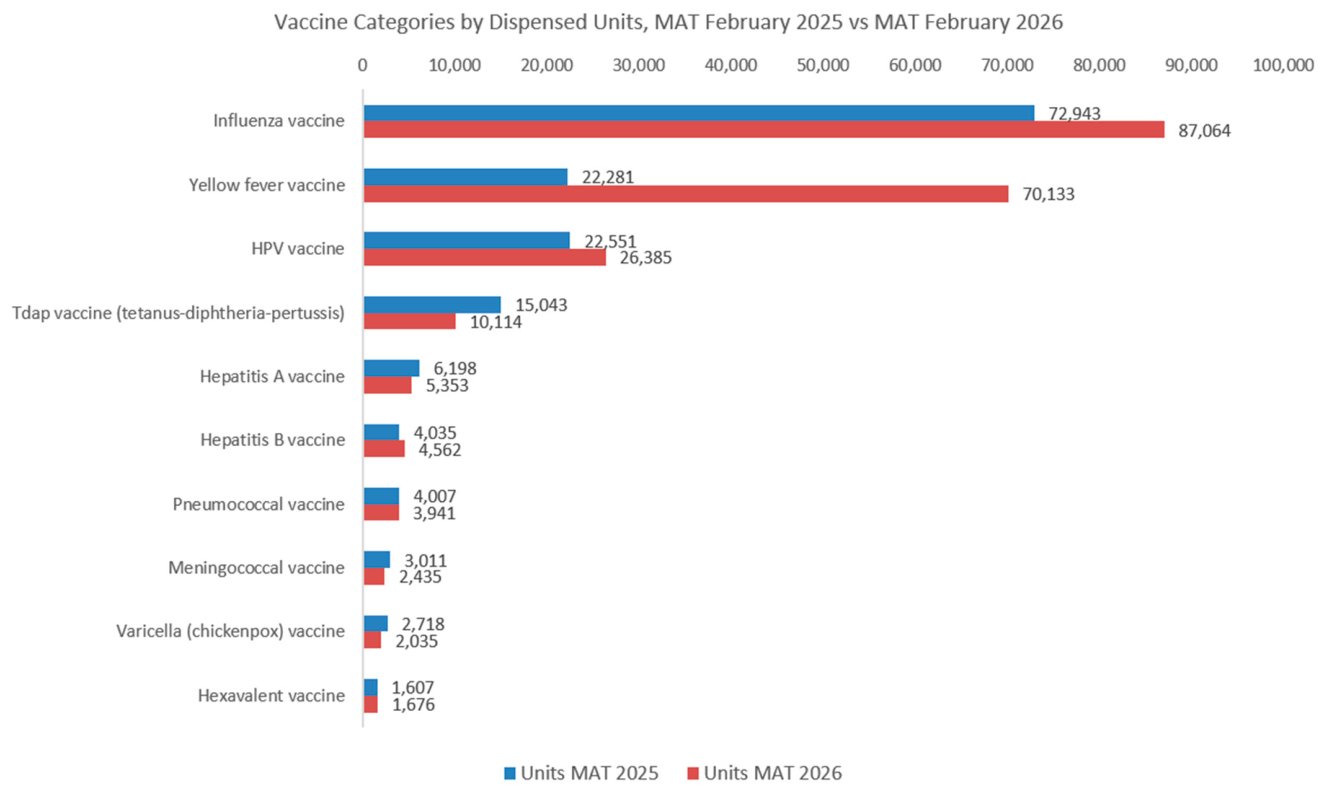
Figure 2.
Main vaccine categories by economic value in private pharmacies in Costa Rica, MAT February 2025 vs. MAT February 2026.
Figure 2.
Main vaccine categories by economic value in private pharmacies in Costa Rica, MAT February 2025 vs. MAT February 2026.
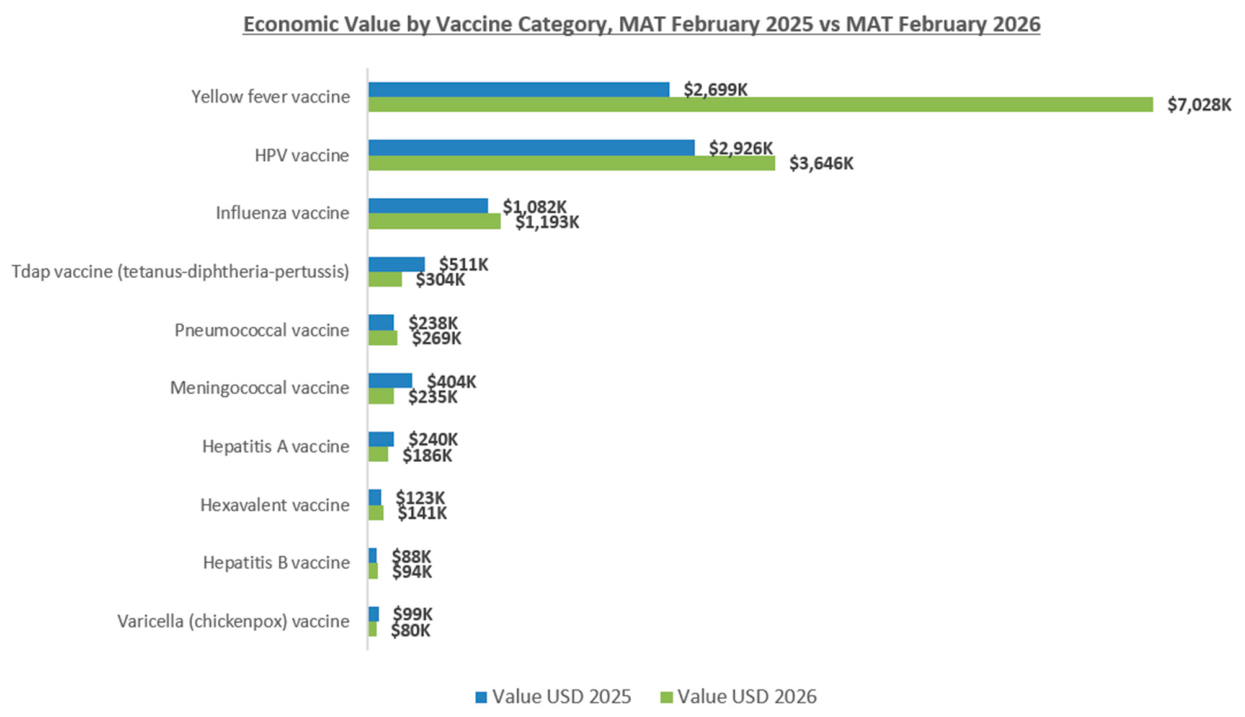
Figure 3.
Annual percentage variation of dispensed units by vaccine category in private pharmacies in Costa Rica, MAT February 2025–2026.
Figure 3.
Annual percentage variation of dispensed units by vaccine category in private pharmacies in Costa Rica, MAT February 2025–2026.
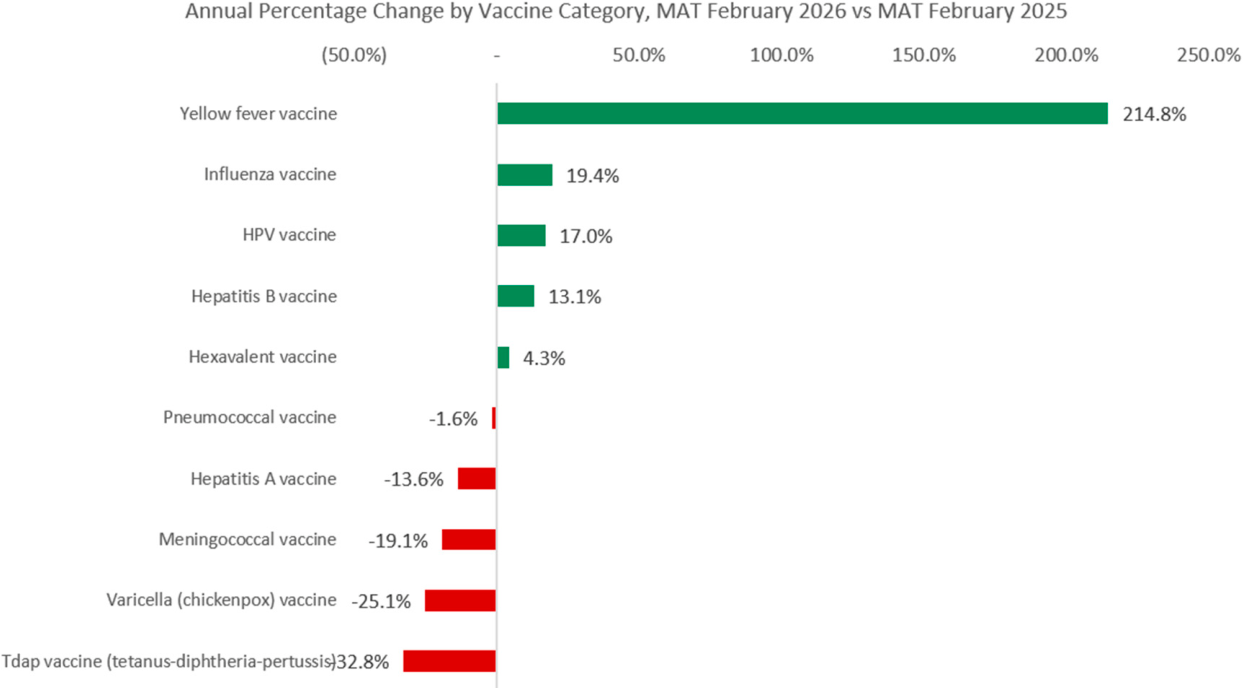
Figure 4.
Provincial distribution of dispensed units and economic value of administrable vaccines in private pharmacies in Costa Rica, MAT February 2026.
Figure 4.
Provincial distribution of dispensed units and economic value of administrable vaccines in private pharmacies in Costa Rica, MAT February 2026.
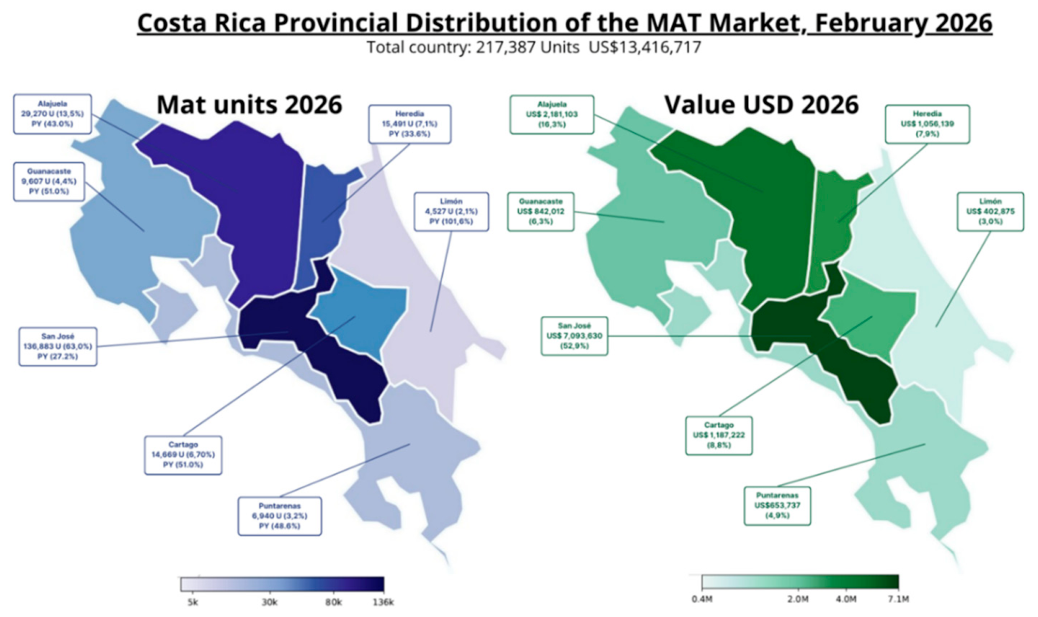

Table 1.
National volume and economic value of administrable vaccines, MAT February 2025–2026.
| Indicator | MAT Feb 2025 | MAT Feb 2026 |
|---|---|---|
| Units | 162,664 | 217,387 |
| USD value | $8,700,809 | $13,416,717 |
Disclaimer/Publisher’s Note: The statements, opinions and data contained in all publications are solely those of the individual author(s) and contributor(s) and not of MDPI and/or the editor(s). MDPI and/or the editor(s) disclaim responsibility for any injury to people or property resulting from any ideas, methods, instructions or products referred to in the content. |
© 2026 by the authors. Licensee MDPI, Basel, Switzerland. This article is an open access article distributed under the terms and conditions of the Creative Commons Attribution (CC BY) license (http://creativecommons.org/licenses/by/4.0/).
Copyright: This open access article is published under a Creative Commons CC BY 4.0 license, which permit the free download, distribution, and reuse, provided that the author and preprint are cited in any reuse.