

Submitted:
30 July 2026
Posted:
31 July 2026
You are already at the latest version
Abstract
Launched in 2014, China’s Sponge City (SC) initiative represents one of the world’s most ambitious efforts to integrate nature‑based solutions into urban stormwater management for a variety of benefits. Although widely adopted as a dominant planning model across Chinese cities, SC’s long-term effectiveness and viability remain debated. Moreover, the scope and potential impact of SC initiatives have multidisciplinary implications. To address these gaps, this study adopts a novel conceptual framework and further elaborates its theoretical foundation for evaluating SC viability across six dimensions: Environment, Economy, Governance, Civic Engagement, Urban Form, and Human Wellbeing. The framework extends traditional sustainability models by expanding social and spatial considerations, which are critical factors in the urban context and often underexamined in SC research. The vast scope of SC scholarship makes it challenging to assess the viability of the national initiative in China. Thus, we conducted a systematic review of reviews and an assessment of thematic relevance across the six dimensions of the framework. Findings reveal a heavy focus on the Environmental dimension, while other important dimensions receive substantially less attention. This imbalance suggests that current scholarship may offer a partial understanding of SC viability, underscoring the need for more integrated, interdisciplinary, and evidence-based research.
Keywords:
climate adaptation
; urban resilience
; nature-based solutions
; sustainability
; urban stormwater management
; thematic relevance
1. Introduction
China is confronted with a unique water crisis, characterized by coexisting urban flooding, water scarcity, and water pollution [1]. Flood risk is a pressing stormwater management issue in many Chinese cities, driven by rapid urbanization, land-use change, and accelerated socio-economic development [2]. Studies reveal that nearly 98% of the country’s 654 leading cities have problems with flooding and waterlogging due to rapid urban growth in recent years, encroaching floodplains with impermeable concrete surfaces [3,4,5]. Climate change, along with intensified human activities, has led to more frequent flooding in regions like the Yangtze River and the Huai River Basins. Conversely, precipitation in the north and northeast regions has declined since 1970, leading to arid conditions. Certain areas have experienced severe droughts in recent years [6].
To solve the urban stormwater problems, the “Sponge City” (SC) concept was first proposed by Chinese scholars in the early 2010s [7]. Chinese President Xi Jinping endorsed the SC idea during the Central Government Conference on Urbanization in 2013 [8]. In 2014, China initiated a nationwide SC campaign [9], incorporating low-impact development (LID) principles into SC policies [7] . Since then, a series of policies and guidelines have been introduced to reinforce and advance SC implementation nationwide.
In this manuscript, Sponge City is defined as an ambitious planning policy and design practice in China that relies primarily on nature-based solutions to manage stormwater amid climate change and rapid urbanization. Additional definitions of SC-related terms are provided in Appendix A: Sponge City Key Term Glossary.
The SC practice in China is not merely a practice; it is a transformative movement in urban planning. The massive scale and the amount of effort the Chinese government has put into it are unprecedented. Between 2015 and 2016, 30 cities were selected as pilot cities from 500 applications [10], receiving substantial government subsidies of USD 6.4 billion. The national goal is to implement the SC concept in 20% of built urban areas by 2020, with a major increase to 80% by 2030 [11]. Building on the momentum of the ongoing pilot city programs, more than 600 cities across China have been mobilized to achieve the ambitious goal within a short timeline [12]. The estimated construction cost for SC is between 15 and 22.5 million USD per square kilometer, with a total expenditure of 1.5 trillion USD [1]. After over a decade of practice, the initiative has evolved into a common practice, deeply ingrained in urban design schemes across the country [13].
China’s SC policy and its practical implementation have gained significant attention [6,14] with numerous scholars engaging in discussions and research, especially in the fields of environmental sciences. This has resulted in thousands of publications across major academic databases in Chinese and English. Because of the vast literature on the SC topic, navigating and synthesizing this extensive body of work poses a significant challenge.
To address the complexity and breadth of the literature on China’s SC initiative, this study adopts a review of reviews approach. The process of identifying and appraising published reviews allows researchers to assess the quality of the existing evidence, synthesize and contrast the review findings, and assess the strength of the conclusions reached [15]. Modeled after a published review of reviews journal article by Javaid et al. [16], this study also adopts a proposed framework to assess SC viability in China. The framework comprises six key dimensions (see Section 2. Framework and Figure 1), which serve as the analytical lens for organizing and synthesizing findings from existing review studies. This approach enables a systematic extraction and evaluation of evidence across diverse thematic areas relevant to SC viability. The following research questions (RQs) guide this review of reviews: 1) How does the existing review literature address the six dimensions of SC viability in China? 2) What challenges and opportunities within these six dimensions emerged from the review literature? and 3) What research needs might be important considerations to guide future SC scholarship and implementation?
2. Framework
It is crucial to have a coherent framework that highlights the key influencing factors that affect SC viability in China. SC planning and practice can be placed under the broader umbrella of sustainable development, defined as “development that meets the needs of the present without compromising the ability of future generations to meet their own needs” by the Brundtland Commission of the United Nations in 1987 [17]. In the mid-1990s, John Elkington introduced the “Triple Bottom Line” framework, emphasizing three dimensions of sustainability: people, planet, and profit (3Ps) [18]. The framework involves integrating environmental considerations into every aspect of social, political, and economic activities. This echoes related constructs, including the three pillars of sustainability [17] and the “planners triangle” [19], both of which highlight the importance of addressing environmental, economic, and social equity (3Es) considerations in sustainable urban planning.
This study draws on these precedents to investigate the viability of the SC initiative in China, a planning policy and practice centered on stormwater management. It adopts a novel conceptual framework to assess SC viability (see Figure 1), which was first introduced by the authors and applied through a recent qualitative interview study with 30 SC practitioners and domain experts [20]. Building on that work, the present study further elaborates this framework by applying it to the broader body of SC scholarship.
The benefits of sustainable urban stormwater management extend well beyond flood control. SC projects can generate a wide range of ecosystem services, including improved water quality, groundwater recharge, and enhanced urban biodiversity [21]. Equally important are the social benefits it can provide, such as promoting public health, enriching urban aesthetics, expanding cultural and recreational opportunities, and fostering inclusive community development. Realizing these diverse potentials requires stormwater interventions to adopt a multidimensional lens, one that accounts not only for environmental factors but also for spatial and social dimensions. Within the proposed conceptual framework, four subdimensions are identified under Elkington’s “people” category [18]: Governance, Civic Engagement, Urban Form, and Human Wellbeing. These sub-dimensions warrant focused, discrete attention because each represents a distinct pathway through which SC implementation interacts with human experience, institutional processes, and the social fabric of urban environments. Together, they illuminate how policy, participation, spatial design, and lived experience may be shaped by the SC initiative.
Governance is central to the success of SC projects in China, as it addresses the coordination of policies and allocation of resources across sectors [22]. Importantly, the centralized, top-down system of governance in China can serve as either a critical enabler or a barrier to viable SC planning and implementation [7].
Civic Engagement is an essential consideration because it ensures that local communities are actively involved in the planning, design, and maintenance of SC infrastructure. Bottom-up participatory approaches cultivate a sense of ownership and pride in the community. It also makes people more aware of water conservation, sustainable practices, and environmental stewardship [23] thereby enhancing long-term sustainability.
Urban Form plays a critical role in the viability of SC interventions, as urban development can significantly alter runoff patterns by increasing impervious surface coverage [24]. The resulting urban form can significantly affect flood vulnerability [25]. As such, effective SC projects need to take urban morphology into account to not only bolster flood resilience but also enhance urban aesthetics, livability, and social cohesion.
Last but not least, human health and wellbeing are important factors in assessing SC viability. The urban ecological environment plays a vital role in promoting positive emotions, reducing stress, and enhancing overall population health [26]. Sponge Cities that incorporate green spaces and water-sensitive urban design can also provide therapeutic benefits, significantly improving both mental and physical wellbeing [27]. This co-benefit is crucial for evaluating the broader viability of such interventions beyond technical performance.
From these considerations, six key dimensions of SC viability form a coherent conceptual framework, embracing the 3 Ps [18], including “planet”, “profit”, and four subcategories in the “people” dimension that encompass Governance, Civic Engagement, Human Wellbeing, and Urban Form. As noted in Tang et al. [20], these dimensions are interrelated to one another rather than being mutually exclusive, and are critical to SC theory and practice.
3. Methodology
This study adopts a review of reviews approach, informed by the established systematic review of reviews methodology in healthcare [15] and a recent review of reviews publication in sustainability research [16]. Following the PRISMA protocol [28], the methodology was designed to ensure transparency, rigor, and thematic breadth. The review process embraced four key steps. First, a multi-stage search and screening process was carried out across multiple academic databases using the PRISMA protocol. Second, keyword co-occurrence visualization was carried out using VOSviewer software to show patterns and research emphasis in the collected review literature. Third, each collected review was assessed for thematic relevance to the six dimensions in the proposed framework (see 2. Framework and Figure 1) using a simplified 0-3 Likert scale rating system, with emphasis on the depth of discussion and thematic alignment. Finally, a thematic review was carried out in three stages: 1) evaluating each review article’s contributions to specific dimensions; 2) conducting targeted supplementary reviews where gaps were identified; and 3) synthesizing findings using a narrative review approach to identify cross-cutting challenges and opportunities in six dimensions of SC viability in China. This multi-step approach enabled a comprehensive and comparative understanding of the scholarly work on SC viability in China.
To provide greater analytical depth, the final set of review articles was examined using an inductive (a posteriori) thematic coding process. Guided by the conceptual framework (see Section 2. Framework), patterns and concepts emerged iteratively from the texts related to the six dimensions of SC viability (Environment, Economy, Governance, Urban Form, Civic Engagement, and Human Wellbeing). Key themes of challenges and opportunities in each dimension were refined through constant comparison across articles, with studies coded across multiple dimensions where appropriate. This inductive approach, anchored within the overarching conceptual framework, allowed the analysis to remain both empirically grounded and analytically structured. To enhance analytical rigor and reliability, the inductively generated themes were reviewed and discussed among the research team to reach shared agreement on theme definitions and implications.
3.1. PRISMA Protocol
The literature search was conducted on July 22, 2025, using two major academic databases: Web of Science (WoS) and Scopus. Searches in both databases employed the truncated terms “Sponge Cit” AND “Chin”** to capture all relevant variations (e.g.,, Sponge City/Cities, China/Chinese), with capitalization not affecting results. The initial search yielded 1,943 records from WoS and 755 records from Scopus, encompassing journal articles, review papers, conference proceedings, book chapters, and other document types across four languages.
The PRISMA (Preferred Reporting Items for Systematic Reviews and Meta-Analyses) guidelines [29] were followed to ensure clarity, transparency, and rigor in the literature review and synthesis. Because this study adopts a review-of-reviews approach, only review articles were retained. Bibliographic records were exported to Zotero, where duplicates were identified and manually removed, resulting in 91 unique review articles (83 in English, 8 in Chinese).
Titles and abstracts were then screened to exclude studies unrelated to the viability of SC planning and practice in China, leaving 73 articles for full-text assessment. Following full-text review, 23 articles were excluded for insufficient relevance, yielding a final sample of 50 review articles (44 in English, 6 in Chinese) for analysis and synthesis. The selection process is summarized in the Adapted PRISMA Flow Diagram (Figure 2).
3.2. Keyword Co-Occurrence Visualization
To explore thematic relationships within the selected literature, a keyword co-occurrence visualization was generated using VOSviewer, a software tool for visualizing bibliometric networks [30]. Keywords were extracted from the titles and abstracts of the selected 50 review articles published between 2017 and 2025. VOSviewer was used to generate a term co-occurrence map from author keywords. Keywords appearing at least three times were included in the analysis. The software clustered related keywords and positioned them according to the strength of their co-occurrence relationships, with more strongly associated keywords located closer together.
Figure 3 shows the resulting network of 124 keywords that met the minimum occurrence threshold, drawn from a total of 1,050 keywords identified in the literature. In the network, nodes represent keywords and links represent co-occurrence relationships between them. The more often two terms appear together, the closer they are to each other on the map. Different colors indicate different clusters of related terms identified by VOSviewer. The top six keywords with the highest co-occurrence in all titles and abstracts in the review article collection were “water management,” “performance,” “floods”, “climate change,” “low impact development,” and “green infrastructure”. Terms like “Sponge City”, “China”, and other less informative, generic terms were excluded to enhance clarity and relevance.
3.3. Rating of Thematic Relevance
The Likert scale, which was first introduced by Rensis Likert in 1932 [31], served as the basis for ranking the thematic relevance in this study. Likert’s seminal work, “A Technique for the Measurement of Attitudes,” established the popular 5-point scale framework for assessing perceptions and attitudes. To assess the thematic relevance linking each review article to the six framework dimensions, a simplified Likert scale rating system with a range of 0 to 3 was adopted:

Table 1.
Likert scale rating system of thematic relevance.
| Scale | Ranking | Description |
| 0 | Not relevant | Not mentioned at all. |
| 1 | Weakly relevant | The dimension is mentioned with little explanation or indirect significance. |
| 2 | Moderately relevant | The dimension is explained with some interpretation or supporting data. |
| 3 | highly relevant | The dimension is the main focus of the review and is supported by thorough analysis and solid data. |
These ratings reflect the degree to which each review provides substantive insights into a specific dimension. To ensure consistency and reliability of the rating, the two lead authors respectively coded five of the selected review articles and arrived at similar ratings; the remaining articles were rated by the lead author. Author interpretations, study consistency, and expert judgment all influenced the evaluations, which should be understood as an organized yet interpretive assessment.
3.4. Thematic Review
The thematic review followed several steps to assess SC viability across the six dimensions of the conceptual framework. Using a simplified 0–3 Likert scale, each review article was evaluated through full-text analysis for its relevance to the corresponding dimensions. When necessary, original studies cited in narrative reviews were also examined.
Key challenges and opportunities are summarized in the Results section and analyzed in the Discussion section. It entailed synthesizing the findings of all selected review papers to identify common themes, gaps, and points of divergence. This synthesis also sought to identify cross-cutting issues that may not be apparent in individual assessments by drawing upon ideas from research across the six dimensions.
4. Results
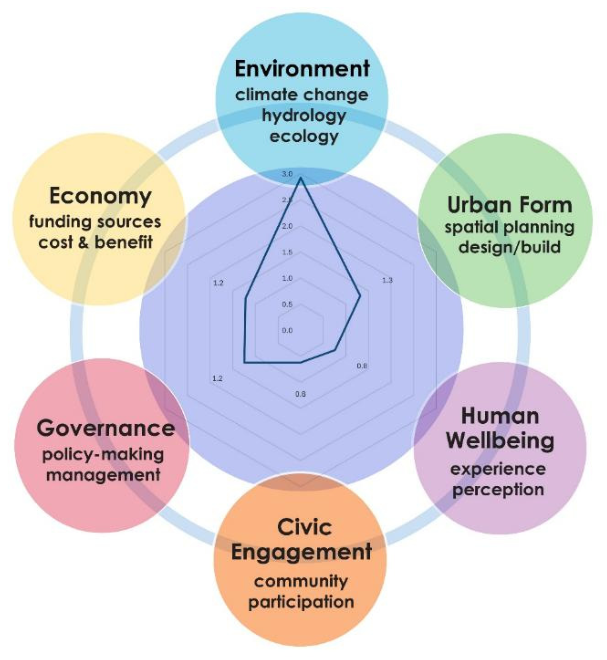
This section highlights the key findings of this review of reviews study by examining how scholarship on China’s Sponge City (SC) initiative aligns with the six dimensions of the SC viability framework: Environment, Economy, Governance, Civic Engagement, Urban Form, and Human Wellbeing. For each dimension, the corresponding subsection foregrounds review papers rated as “highly relevant” in the thematic assessment, followed by those classified as “moderately” or “weakly relevant.” Each subsection then systematically identifies the key challenges and opportunities associated with that dimension in the literature. Bar charts in each subsection are used to visualize the frequency of themes and are color-coded to align with the conceptual framework shown in Figure 1. The sequence of this subsection is organized based on the weighted relevance scale of the thematic rating system in Table 2. The Environmental dimension ranks as the primary focus of the literature (2.9/3), followed by Urban Form (1.4/3), Governance (1.3/3), Economy (1.2/3), Human Wellbeing (0.8/3), and Civic Engagement (0.6/3).
Figure 4.
Weighted scale of thematic relevance.
4.1. Challenges and Opportunities across the Six Dimensions of the Framework
4.1.1. The Environmental Dimension
Of the 50 review articles examined, 46 were rated highly relevant (scale = 3) and four moderately relevant (scale = 2) to the Environmental dimension. The total relevance score was calculated as (46 × 3) + (4 × 2) = 146. Dividing this total by the 50 reviewed articles yields an average weighted relevance score of 2.9 on a 0–3 scale. Following an in-depth review, key themes were identified.
Figure 5 and Figure 6 present the major environmental challenges and opportunities that influence SC viability, along with their frequencies of occurrence across the reviewed articles.
- Environment: Challenges
- 1)
- Systemic co-occurrence of urban water problems
China faces a unique water crisis as urban flooding, water scarcity, and water pollution coexist [1], interacting with each other and elevating environmental risk. Stormwater management is much more complicated than tackling any single urban water issue. Since sponge measures must function within already strained hydrologic and ecological systems, these systemic pressures directly impact SC viability. As Nguyen et al. [32] (p. 12) note, “a comprehensive understanding of urban water systems is extremely important to prevent major problems such as flooding, water pollution and water shortages.”
- 2)
- Extreme weather exceeding system capacity
Intensified climate change has triggered a global spike in extreme rainfall events, substantially increasing the risk of urban floods [33]. Studies show that SC strategies may reduce flooding during minor events but fail under major ones [34]. “As the rainfall return period increases, the effectiveness of LID facilities in mitigating urban flooding diminishes… as the schemes gradually reach their maximum handling capacity” [35] (p. 9). Without adequate storage, conveyance, and flood-control capacity, environmental risk persists, limiting the effectiveness and long-term sustainability of SC interventions.
- 3)
- Geographic heterogeneity
Given China’s diverse geographic conditions, from tropical areas in the south to sub-arctic zones in the north, and alpine conditions in the Tibetan regions, it is difficult to develop a universal plan for all cities [1]. Soil and topographic differences further constrain infiltration potential [36], and cold, wet regions face performance losses from freeze–thaw cycles and biological growth in permeable materials [37]. Without local calibration to these varied biophysical contexts, SC measures risk underperforming or failing. As summarized by Nguyen et al. [38] (p. 11), “some physical challenges, including climate, soil and geographical conditions are barriers to implementing a successful Sponge City.”
- 5)
- Environmental “disservices” & bio-physical side effects
Environmental “disservices” can hinder SC viability when poorly performing measures generate new environmental burdens. Review literature reveals that certain SC facilities may increase nutrient loading or act as pollutant sinks, allowing stormwater to mobilize phosphorus, heavy metals, and other contaminants into soils, wetlands, or storage systems (e.g., [39,40]). As noted by Chikhi et al. [23] (p. 2), “the overuse of infiltration-based facilities can lead to substantial contamination of subsurface water, allowing the runoff pollutants to reach the underground water, allowing the runoff pollutants to reach the underground water” (citing [22]). Scholars also point out that green roofs may become pollutant sources with the potential to leach into runoff [39]. Additional unintended effects, such as algae and bacterial growth on permeable pavements in humid climates [37] or heightened mosquito breeding in stagnant or clogged areas [41], undermine ecological performance and increase maintenance demands.
- Environment: Opportunities
- 1)
- Improve water quality through source control and ecological treatment
Sponge City systems can enhance environmental performance by capturing and treating stormwater at the source, thereby intercepting pollutants and reducing non-point contamination [41,42]. As Huang et al. [43] (p.1.) emphasize, SC construction is “an ideal approach to mitigate the degradation of urban water environments.” Rain gardens, in particular, can “infiltrate rainwater, intercept pollution sources, and optimize reuse” [42] (pp 1-2), while permeable pavements can increase rainwater infiltration and purify surface runoff [37]. Moreover, “constructed wetlands (CWs) can not only purify water quality, but also store and regulate rainwater” [44] (p. 1). Through these hydrologic purification processes, SC measures can restore natural hydrological pathways and improve downstream water quality, supporting long-term environmental sustainability.
- 2)
- Enhance climate resilience
By attenuating flood peaks and moderating microclimates, SC interventions can function as climate-resilient infrastructure, enhancing urban resilience to extreme rainfall and heat, especially when deployed at scale and paired with upgraded drainage and other nature-based solutions. Studies show that such measures can help control runoff, mitigate urban flooding, and strengthen disaster prevention [33]. As Yin et al. [36] (p. 12) note, SC measures can “significantly reduce runoff volume, improve runoff quality, alleviate heat island effect, and increase groundwater recharge.” Together, these environmental benefits can support more reliable climate adaptation and strengthen overall SC viability.
- 3)
- Restoring urban ecological functions
A key environmental opportunity for strengthening SC viability lies in the capacity of nature-based, green stormwater infrastructure (GSI) to restore degraded urban ecological processes. GSI measures, such as wetlands, green swales, permeable surfaces, bioretention systems, and expanded green networks, can enhance infiltration, support groundwater recharge, improve stormwater purification, and stabilize local microclimates [34,45]. Building on these strategies, SC approaches further promote ecological renewal by restoring habitat structure, increasing biodiversity, and reestablishing water–soil–plant interactions. They can also help address hydro-meteorological phenomena, enabling cities to recover ecological capacity and strengthen long-term environmental performance [46].
- 4)
- Holistic management of urban water systems
By treating stormwater as a resource rather than a threat, the review literature suggests that SC strategies can potentially address multiple co-occurring water challenges, including urban flooding, water scarcity, pollution, and ecological degradation [47,48]. Urban rainwater harvesting and source-control measures are integrated solutions that combine storage, infiltration, purification, and reuse to enhance system resilience and reduce pressures on the urban water cycle [1,49]. As Zhou et al. [48] (p. 1) note, rainwater harvesting offers “an effective approach to solve comprehensive urban water problems”, while Chen and Guo [47] highlight its potential to mitigate water scarcity. These approaches, together with holistic planning and design, can help SC address interrelated water concerns more effectively and sustainably.
4.1.2. The Urban Form Dimension
Of the 50 review articles examined, five were rated highly relevant (scale = 3), 15 moderately relevant (scale = 2), and 23 weakly relevant (scale = 1) to the Urban Form dimension. The total relevance score was calculated as (5 × 3) + (15 × 2) + (23 x 1) = 68. Dividing this total by the 50 reviewed articles yields an average weighted relevance score of 1.4 on a 0–3 scale. A review of these articles further revealed key themes related to both the challenges and opportunities of Urban Form in the context of SC viability. Figure 7 and Figure 8 illustrate the key themes of urban form-related challenges and opportunities influencing SC viability, along with their respective frequencies of mention in the identified review articles.
- Urban Form: Challenges
- 1)
- Scale mismatch and fragmented implementation
Sponge City projects in China are often implemented as fragmented, site-scale interventions rather than as part of an integrated water system with hydrological connectivity. As Jiang et al. [4] (p. 139) observe, “the initiatives across pilot cities are largely conceived and implemented as independent, standalone activities rather than systematically organized, integrated components of a program”. Many interventions prioritize local surface permeability while overlooking hydrological linkages between neighboring watersheds [23]. Tohis scale mismatch and fragmentation limit cumulative benefits and undermine system-level flood resilience.
- 2)
- High-density land use and physical constraints
High-density urban land use with limited open space as well as physical constraints, such as unfavorable soils, steep slopes, and high groundwater tables, significantly limit the feasibility and effectiveness of sponge facilities. As Yin et al. [36] (p. 7) highlight, “rapid developments… have encroached into floodplains, lowlands, and lakeshore areas.” In built cities, sponge strategies are often downsized or excluded due to space constraints. Many older neighborhoods dominated by impervious surfaces lack the flexibility for retrofitting. J. Han et al.[7] (p. 1312) further observe, “China has a large number of urban communities that are impractical for direct renovation or reconstruction as sponge cities”.
- 3)
- Facility degradation and loss of function
Many SC facilities, such as permeable pavements, bioretention cells, and green roofs, experience performance decline over time. Without regular inspection and maintenance, these systems are vulnerable to clogging, material aging, and vegetation decline [4,50]. In dense urban settings, inadequate upkeep can quickly reduce infiltration and hydraulic efficiency, causing well-designed SC interventions to underperform or fail. As Li and Zhang [51] (p. 5) emphasize, “regular inspection and maintenance are necessary…, as the clogging and aging of measures can reduce the runoff control capacity.”
- 4)
- Uneven spatial distribution of SC facilities
Sponge City facilities are disproportionately concentrated in parks and large public open spaces, leaving streets, residential blocks, corridors, and blue networks overlooked. This imbalance in SC types limits their cumulative hydrological impact across the urban landscape. As N. anHanHan et al. [33] (p. 13) note, “nearly half of the reviewed studies (48.5%) concentrate on parks, whereas other forms of green and blue infrastructure… are comparatively underrepresented”. Kumar et al. [1] (p. 21) further comment, “planning of sponge cities requires several LIDs to be located in private properties… hard to convince them (property owners) to allocate considerable spaces.”
- Urban Form: Opportunities
- 1)
- Multiple functions and benefits
SC measures embedded in urban landscapes, such as wetlands, rain gardens, permeable pavements, and green roofs, are widely recognized for their ability to deliver multiple benefits simultaneously [37,49,52]. Rather than functioning solely as drainage facilities, sponge facilities can be designed as integral components of public space and urban life, enhancing livability while addressing stormwater challenges. For example, they can support cultural ecosystem services (CES), such as recreation, aesthetics, identity, and spiritual well-being, as noted by N. Han et al. [33].
- 2)
- Improving the water cycle through place-based design
Urban surface redesign enables runoff reduction, peak-flow attenuation, water purification, and groundwater recharge, reinforcing the role of urban form in regulating hydrological processes. The review literature shows that the hydrological performance of SC interventions depends on how design strategies respond to local conditions, particularly the physical configuration and material properties of urban surfaces (e.g., [36,44]). For example, Fang et al. [53] note that permeable pavement can effectively regulate urban rainwater runoff by promoting infiltration and storage, while Jiang et al. [54] identify LID bioretention systems as one of the key measures in SC construction, particularly when adapted to local conditions.
- 3)
- Connectivity through systematic spatial planning
Sponge City viability can be greatly enhanced when sponge infrastructure is planned as part of an integrated blue–green network across multiple spatial scales. These elements can strengthen hydrological and ecological connectivity from the site to the city and, potentially, to the watershed level. The literature emphasizes that these benefits depend on systematic spatial planning and coordinated implementation, aligning urban form, hydrology, and infrastructure to move beyond fragmented approaches toward integrated urban water resilience (e.g., [49,55]). As stated by Li and Zhang [51], systems thinking can “enhance the connectivity between source–community–region watershed scales.”
- 4)
- Retrofitting urban landscapes
Sponge City projects provide an opportunity to integrate green and gray infrastructures [56,57]. Rather than replacing conventional drainage systems, SC elements can be retrofitted into established urban fabrics, allowing already built-out cities to enhance stormwater performance without large-scale demolition or additional land acquisition [34,58]. J. Han et al. [7] (pp. 14-15) further note that “retrofitting existing urban communities with Sponge City features is a common practice in pilot areas.”
4.1.3. The Governance Dimension
Of the 50 review articles examined, nine were rated highly relevant (scale = 3), 14 moderately relevant (scale = 2), and eight weakly relevant (scale = 1) to the Governance dimension. The total relevance score was calculated as (9x3) + (14x2) + (8×1) = 63. Dividing this total by the 50 reviewed articles yields an average weighted relevance score of 1.3 on a 0–3 scale. Following an in-depth review, key themes were identified. Figure 9 and Figure 10 present the major governance-related challenges and opportunities influencing SC viability, along with their frequencies of occurrence across the reviewed articles.
- Governance: Challenges
- 1)
- Institutional fragmentation and insufficient coordination
Sponge City development in China is shaped by a policy-driven planning system dictated by a centralized governance structure [33]. However, implementation is frequently fragmented across agencies, particularly due to “lack of integration between urban land policy and urban water management” as stated by Nguyen et al. [38] (p. 160). This is echoed by N. Han et al. [33] (p. 19), who note that practical implementation barriers include “fragmented responsibilities, limited cross-sectoral coordination, and bureaucratic inertia” (citing [59,60]). All of these limit effective coordination and integrated decision-making, undermining system-level outcomes.
- 2)
- Weak legal basis and limited policy enforcement
While China’s SC Initiative is a major national policy, there is currently no national-level legislation specifically governing its implementation. The program operates primarily through central government guidelines, administrative notices, and technical standards rather than a formal law passed by the national legislature [3]. “The lack of legislation from the central government is one of the major factors that hinder the nationwide implementation of SCP in China” [3] (p. 7). As a result, SC implementation remains uneven across cities and regions, limiting scalability and long-term commitment.
- 3)
- One-size-fits-all standards lacking local adaptability
Uniform national standards and guidelines do not account for local variations in climate, soil, groundwater, terrain, and urban form. This lack of place-based adaptability frequently leads to poor site selection and design, decreased efficacy, and implementation barriers at the local level. As Qi et al. [46] (p. 11) note, the SC pilot cities “are located in contrasting geographical areas, with terrains ranging from coastal plains to lowlands and mountains, and regional climates ranging from tropical to temperate forest, which complicates the development of overarching guidance” (citing [61]).
- 4)
- Policy inconsistency and misalignment across governance levels
Policy conflicts and misalignment between national and local priorities create ambiguities and inefficiencies, weakening coherence and effectiveness across governance levels. According to Yin et al. [57] (p. 12), “conflicts still exist among many current policies issued by different ministries.” Policy inconsistency, such as “inadequate building codes on infrastructure and land-use planning” [34] (p. 5), disrupts alignment between national guidance and local practice, affecting coordinated execution.
- Governance: Opportunities
- 1)
- Lateral integration and cross-sectoral governance
Sponge City viability can be enhanced by shifting toward integrated, cross-sectoral governance that connects stormwater management with land-use planning, environmental protection, and urban livability improvement, particularly through the coordination between land use planning, construction methods, and SC implementation. Such integration can help overcome fragmented responsibilities and enable system-level coordination across disciplines and administrative sectors. For example, C. Shi et al. [55] suggest that the multidisciplinary approach can integrate water management with spatial planning.
- 2)
- Strengthening legislation and policy instruments
Relevant literature suggests that governance opportunities arise from establishing clearer laws, regulations, and mandatory policy instruments to support SC implementation (e.g., [3,52]). As J. Han et al. [7] (p. 13) advocate, “more laws and regulations can be established to facilitate the sponge city development.” Stronger legal foundations can improve enforcement, accountability, and long-term commitment, helping move SC initiatives beyond pilot-based experimentation toward institutionalized practice.
- 3)
- Context-sensitive and locally adaptive standards
Literature reveals that a crucial governance opportunity is to replace strict, universal standards with flexible, place-based guidelines that address local climatic, hydrological, geological, and urban form constraints (e.g., [42,62]). Yin et al. [36] (p. 2) assert that the SC planning and design “should be based on the differences in the city’s climate characteristics, soil types, and zoning”. Locally adapted standards can enhance the feasibility, performance, and relevance of SC measurements across a wide range of urban conditions under climate change.
- 4)
- Policy alignment across governance levels
Scholars emphasize the importance of policy alignment across ministries and levels of government. In particular, effective coordination among central, provincial, and local governments is essential for achieving national SC goals set for 2030 [1,56]. As Nguyen et al. [38] (p. 10) note, “the close cooperation of various levels of government administration is a vital factor for successful implementation of Sponge City.”
4.1.4. The Economic Dimension
Of the 50 review articles examined, four were rated highly relevant (scale = 3), 16 moderately relevant (scale = 2), and 17 weakly relevant (scale = 1) to the economic dimension. The total relevance score was calculated as (4x3) + (16x2) + (17×1) = 61. Dividing this total by the 50 reviewed articles yields an average weighted relevance score of 1.2 on a 0–3 scale. Following an in-depth review, key themes were identified. Figure 11 and Figure 12 present the key economic-related challenges and opportunities influencing SC viability, along with their frequencies of occurrence across the reviewed articles.
- Economy: Challenge
- 1)
- High investment costs & fiscal pressure
Sponge City implementation necessitates substantial upfront capital investment for stormwater management system integration and construction costs. Multiple reviews, including Jiang et al. [4] and Luo et al. [42], support the findings of Li and Zhang [51] (p. 1643), “high initial construction costs and limited fiscal capacity of local governments remain major constraints for widespread implementation of sponge city projects.” Nguyen et al. [32] further underscore, “the Sponge City model requires substantial investment costs… the costs involved might exceed the value of the output.”
- 2)
- Uncertain economic benefits & cost-benefit valuation
Several reviews report difficulty in monetizing SC benefits, such as ecosystem services, flood risk reduction, and climate resilience [22,32]. This is partially due to the unclear long-term scope and the spatially diffuse pattern of SC interventions. Benefits such as cultural ecosystem services are indirect and also difficult to monetize [33]. Additionally, life-cycle cost analysis is lacking. As Xu et al. [10] (p. 1109) note, “most studies focus on hydrological performance, while the economic benefits of low-impact development practices are difficult to quantify and remain highly uncertain.”
- 3)
- Limited private-sector participation & financing mechanisms
Reviews highlight that weak public–private partnerships (PPPs) deter private investment, leaving SC initiatives reliant on insufficient public funding and creating a significant financing gap that local governments cannot address alone. As Jia et al. [58] (p. 21) note, “the lack of attractive profit mechanisms and clear return pathways has significantly reduced private sector participation in sponge city projects”. This challenge persisted in subsequent years, as Chan et al. [63] (p. 5) observe that “current financing mechanisms are insufficient to mobilize large-scale private capital for sponge city development.”
- 4)
- Insufficient operation & maintenance (O&M) funding
Long-term O&M is frequently underestimated or excluded at the planning stage. Reviews emphasize that inadequate O&M funding undermines performance, reduces lifecycle cost-effectiveness, and threatens SC sustainability. As Lu et al. [45] (p. 578) discuss in their study of roadside green swales in China’s SC implementations, “one of the major challenges faced is sustaining funds for ongoing maintenance after swale construction.” Yin et al. [36] (p. 11) further emphasize that “without regular inspection and maintenance, the runoff control capacity… would be undoubtedly affected.”
- Economy: Opportunities
- 1)
- Life-cycle efficiency and long-term savings
Several reviews, including articles by Nguyen et al. [38] and Chikhi et al. [23], suggest that although SC construction involves a higher initial investment, it can significantly lower long-term costs by reducing flood damage costs and infrastructure maintenance expenses. Xu et al. [10] (p. 1110) further emphasize that, “life-cycle cost analysis shows that low-impact development practices can achieve better economic performance over the long term compared with conventional grey infrastructure.”
- 2)
- Economic valuation of ecosystem services and co-benefits
Sponge City systems can support multiple ecosystem services, including water purification, urban cooling, biodiversity enhancement, and recreational benefits, which can be incorporated into economic valuations to broaden the investment rationale beyond single-function flood control. Several review studies indicate that ecosystem services can be quantified using life-cycle assessment, cost–benefit analysis, and avoided damage costs [10,22], as well as benefit-transfer methods, which involve the use of existing valuation information from one context to estimate values in another [22,64].
- 3)
- Green finance and Public–Private Partnerships (PPPs)
Several reviews identify mobilizing green finance instruments and PPPs as a potential way to diversify funding sources, reduce reliance on public budgets, and enhance the long-term financial sustainability of SC programs (e.g., [1,55]). According to Chan et al. [63], green finance refers to “local, national, or transnational financial investments from public, private, and alternative sources flowing into environmental and sustainability initiatives.” This may be a viable solution to support the construction, operation, and maintenance of SC development [63].
- 4)
- Ecological compensation as a funding instrument
Ecological compensation policies, such as stormwater management fees, can generate funding for SC interventions. C. Shi et al. [55] (pp. 7-8) note that “by advocating for the ‘polluter-pays’ and ‘beneficiary pays’ principles, ecological compensation aims to restore and substitute ecological functions that have been impaired, thus playing a crucial role in the sustainability discourse” (citing [65,66]). These mechanisms can support public investment and enhance the long-term viability SC initiatives.
4.1.5. The Human Wellbeing Dimension
Of the 50 review articles examined, two were rated highly relevant (scale = 3), four moderately relevant (scale = 2), and 24 briefly addressed the subject of Human Wellbeing (scale = 1). The total relevance score was calculated as (2 x 3) + (4 x 2) + (24 x 1) = 38. Dividing this total by the 50 reviewed articles yields an average weighted relevance score of 0.8 on a 0–3 scale, indicating that human wellbeing receives limited attention in the review literature. Analysis of these articles further identified key challenges and opportunities related to human health and wellbeing in the context of SC viability. Figure 13 and Figure 14 summarize these themes and their frequencies of mention.
- Human Wellbeing: Challenges
- 1)
- Insufficient flood risk protection
Intensified flood risk poses a fundamental challenge to SC viability as the protection of human life is the non-negotiable baseline of SC strategies. The literature consistently shows that climate change–driven extreme rainfall, combined with rapid urbanization, has led to flooding events that exceed the capacity of SC systems. Flooding persists as a widespread and escalating hazard, directly threatening human life, property, and public safety (e.g., [35,67]). As Zeng et al. [3] (p. 1) underscore, “The SC program in China is still insufficient to prevent flooding risks effectively. In the past eight years, 24/34 provinces have recorded flooding. Flooding caused a total of 4701 deaths… causing severe health risks to citizens.”
- 2)
- Public health risks and disservices
Literature reveals that SC measures can create two major public-health risks when poorly maintained or overloaded: 1) exposure to polluted stormwater carrying nutrients, pathogens, or heavy metals, and 2) increased mosquito and vector-borne disease risks where stagnant or humid sponge environments support insect breeding. Stormwater overflow events can “deteriorate water quality and jeopardize human health” [23] (p. 3), and heavy metals in runoff may “accumulate in animals and plants and enter the human body through the food chain” [47] (p. 15). At the same time, high-humidity sponge environments can intensify vector exposure, as “mosquito breeding induced by the high humidity… makes it imperative to manage the mosquito problem” [41] (p. 18). These reviews warn that without health-risk-informed design, maintenance, and clogging prevention, SC systems may expose communities to long-term environmental health hazards. These public health-related challenges highlight the need for an integrated approach that puts human wellbeing at the center of resilience and livability
- 3)
- Disturbance and public resistance
Literature reveals that SC measures can generate disruptions that contribute to public resistance. Compared with traditional stormwater drainage systems, many SC interventions are spread over large surface areas. Li and Zhang [51] (p. 9) note that “disturbance to residents’ lives during construction and operation may cause residents to resent” the SC construction (citing [68,69]). Other studies further indicate that certain facilities can encroach on urban living space, intensifying perceived inconvenience and spatial conflicts [62]. In addition, Zhou et al. [37] note that permeable pavements may be prone to weathering, potentially making road surfaces slippery and increasing driving risks.
- Human Wellbeing: Opportunities
- 1)
- Reduce flood risk & improve public health
Sponge City measures can enhance human wellbeing by lowering flood exposure and improving water quality. For example, urban rainwater harvesting “can effectively reduce surface rainfall-runoff peak… and protect the lives and properties of urban residents” [48] (p. 9). Rainwater harvesting facilities, rain gardens, and permeable surfaces can not only help mitigate waterlogging and protect daily life but also decrease exposure to waterborne pollutants and germs [48,70] Stormwater utilization can also strengthen water security and reduce contamination risks, while cooling and evaporation features help alleviate heat-related stress [53]. These integrated benefits may contribute to safer, healthier communities, particularly in densely populated urban areas.
- 2)
- Enhance urban livability and everyday experience
Sponge City features, such as permeable pavements, rain gardens, shading vegetation, and cooling surfaces, can create more comfortable, walkable, and livable environments. These measures have the potential to mitigate heat island effects, regulate temperature and humidity, reduce glare and noise, and improve pedestrian safety, especially in schools, campuses, and community spaces [55,71]. By softening urban hardscapes and improving microclimates, SC designs elevate the daily experience for residents and enhance the desirability and functionality of public spaces.
- 3)
- Provide recreational, cultural, and psychological benefits
Although not a focus in most scholarly work, the review literature does note that nature-based SC landscapes, such as wetlands, green spaces, eco-corridors, and permeable plazas, can provide cultural, recreational, and psychological benefits by supporting mental restoration, educational engagement, and social interaction. These green–blue areas can enhance aesthetics, provide leisure and play spaces, and improve community wellbeing by integrating cultural ecosystem services into urban design [33,45]. Through this human-centered endeavor, SC interventions can help cultivate healthier, more connected communities.
4.1.6. The Civic Engagement Dimension
Of the 50 review articles examined, none was identified as highly relevant (scale = 3), nine as moderately relevant (scale = 2), and 14 as weakly relevant (scale = 1) to the civic engagement dimension. The total relevance score was calculated as (9x2) + (14×1) = 32. Dividing this total by the 50 reviewed articles yields an average weighted relevance score of 0.6 on a 0–3 scale, indicating that Civic Engagement receives the least attention in the review literature. Following an in-depth review, key themes were identified. Figure 15 and Figure 16 present the major civic-engagement-related challenges and opportunities that influence SC viability, along with their frequencies of occurrence across the reviewed articles.
- Civic Engagement: Challenges
- 1)
- Low public awareness
Relevant literature, such as [36,72], reports that the public has limited awareness of SC concepts, functions, and benefits due to insufficient education and public communication [32]. As Chikhi et al. [23] (p. 11) note, “the lack of public understanding and awareness of the Sponge City concept has a negative impact on its success, as evidenced by the lack of support and low public funding for Sponge City.”
- 2)
- Superficial public participation
Public participation is often symbolic, superficial, or limited to post-flood responses rather than embedded early in planning and decision-making. As Yin et al. [57] point out, “the public only cares about sponge city construction when flooding occurs.” Xu et al. [73] (p. 14) further note, SC “has yet to include active stakeholder engagement and is far from supporting stakeholder participation, particularly with respect to local residents.”
- 3)
- Top-down and fragmented governance limits participation
Sponge City’s planning and design processes need cross-sector coordination and joint planning, with stakeholders co-creating knowledge around shared goals [4]. However, “the complex and fragmented structure of China’s administrative system offers less opportunity for participation and collaboration” [38]. This significantly limits stakeholder influence, cross-sector collaboration, and local initiative, constraining adaptive, place-responsive SC implementation.
- 4)
- Lack of solid evidence to gain public trust
As Nguyen et al. [38] (pp. 257-258) report, “China currently has only limited regional data for Sponge City implementation… the lack of evidence becomes a hindrance to empowering … the public to create change and participate in public-private partnerships,” citing [69,56]. This concern is echoed by Xu et al. [10] (p. 12), who note that “in China, lack of the onsite data is the biggest challenge… few cities have monitored operation data.” Without credible, place-specific evidence on performance, SC initiatives struggle to gain public trust.
- Civic Engagement: Opportunities
- 1)
- Early and broad stakeholder engagement
Several review studies highlight the importance of engaging residents, planners, engineers, and local stakeholders early in the process. This can support co-design and community buy-in and potentially enhance the long-term viability of SC projects. As C. Shi et al. [55] (p. 10) emphasize, the development of SC solutions is “inherently a collaborative endeavor… Engaging a broad spectrum of stakeholders early in the planning process is crucial for balancing various interests and ensuring that the proposed interventions are both effective and supported by the community”.
- 2)
- Public awareness-raising and capacity building
Conducting education training courses can help improve public perceptions and engagement [74]. As Chikhi et al. [23] (p. 10) note, “residents may be asked to participate in decision-making processes, provide feedback, and help design these projects.” This capacity building and active participation can “foster a sense of community ownership and pride, while also raising awareness about water conservation, sustainable practices, and environmental stewardship.”
- 3)
- Participatory tools and communication platform
Decision-support tools, participatory planning methods, and digital communication platforms can enhance transparency, knowledge exchange, and informed civic participation, helping bridge technical complexity and public understanding. According to Chan et al. [34] (p. 10), “the well-used social media… helped governmental authorities respond faster and more precisely.”
- 4)
- Local knowledge & ancient wisdom
While not a dominant theme, a small number of SC studies draw on scholarship on ancient and local water-management wisdom. For example, Angelakis and Zheng [75] discuss lessons from historical water-management systems that may inform contemporary approaches. Notably, the review by Cun et al. [76] frames such perspectives as civic engagement resources relevant to SC implementation. “Ancient technologies are not merely historical artifacts, but workable potential models for sustainable water technologies.” Cun et al. [76] (p. 3) also note, “local residents put turtles in the ditches to keep them clean and prevent blockage” (citing [75]), reflecting a locally developed grassroots solution for maintaining drainage performance.
5. Discussion
This section synthesizes the review findings and their implications for SC viability. It begins by examining how the six core dimensions of the proposed framework are represented in the scholarly literature, revealing important imbalances in research attention. It then explores recurring themes and interrelationships across these dimensions, discusses conflicting findings regarding SC performance and impacts, and also compares scholarly priorities with practitioner perspectives.
5.1. Dimensions of SC Viability
This study reveals an imbalance in scholarly attention within the SC viability framework, with a predominant focus on environmental sciences and water resources. Other dimensions, including Governance, Economy, Urban Form, Civic Engagement, and Human Wellbeing, receive much less attention. The keyword co-occurrence analysis clearly reflects this trend, a finding echoed by scholars such as Wang and Palazzo [77] (p. 2), who note that “current assessment of Sponge City outcomes focuses on environmental performance and monitoring and it is often carried on with model evaluation” (citing [78,79]). While this emphasis is understandable given that flooding and stormwater management are primary drivers of China’s SC initiative, it may lead to a skewed understanding of SC viability by disproportionately prioritizing environmental performance metrics, such as flood control and rainwater storage, over other crucial dimensions.
Importantly, SC is inherently multidisciplinary [80]. China’s national policy explicitly frames SC as a multi-purpose strategy, aiming to enhance urban resilience, ecological capacity, and urban livability [81]. Institutional, financial, and social factors are equally important for effective SC planning and implementation. For example, Governance shapes policymaking and management at multiple administrative levels [82]. Economic factors, particularly investment structures and funding mechanisms, are crucial to scaling SC and necessitate greater private-sector involvement [58,63]. Urban Form, the spatial configuration of urban environments [83], impacts the integration of SC interventions within existing and new urban fabrics. Civic Engagement affects public awareness and community acceptance of SC projects [23,32]. Furthermore, the Human Wellbeing dimension reflects how SC solutions can shape public health, urban aesthetics, and overall livability [40]. All are essential for effective SC implementations.
5.2. Interrelated and Repeated Themes across the Six Dimensions
This study reveals that key themes within the six dimensions are highly interconnected and frequently overlap. The Environmental dimension, for example, is closely linked to Urban Form, with similar opportunities and approaches such as blue-green infrastructure and other nature-based solutions. Governance and Economic considerations shape the feasibility and funding mechanisms, such as the PPP of the SC implementations. Similarly, the “one-size-fits-all” problem and the call for place-based, locally adaptive approaches apply across multiple dimensions, such as Environment, Urban Form, and Governance. Moreover, Civic Engagement and Human Wellbeing are closely interrelated. Limited public awareness and participation in SC initiatives can affect implementation effectiveness [3,32]. Conversely, greater stakeholder involvement and community engagement can enhance public acceptance, foster a sense of community ownership and pride, ultimately improving wellbeing outcomes [23,46]. The repeated appearance of these themes suggests that SC development operates as an integrated system rather than a set of isolated components. This interconnectedness highlights the need for more holistic and systematic approaches in both research and practice, moving beyond narrow perspectives to better reflect the complexity of SC implementation and long-term viability.
5.3. Conflicting Findings in SC Review Articles
An examination of the 50 review articles finds noticeable contradictions in terms of the effectiveness and impact of SC implementation. While several studies (e.g., [3,36,84]) highlight SC’s ability to mediate urban flooding through infiltration, retention, and rainwater harvesting, some doubt its efficacy, especially under extreme rainfall circumstances, implying limited performance at the larger scale (e.g., [35,49,67]). Similarly, inconsistent reports emerge about water quality outcomes: some literature suggests that SC systems can filter and cleanse water and minimize runoff contaminants (e.g., [50,57]), while others emphasize hazards like pollutant accumulation, particularly heavy metals in soils, and potential groundwater pollution (e.g., [39,40]). Similar contradictions emerge in public health impacts: while some studies concern increased mosquito breeding in sponge environments [41], others argue that SC measures can reduce the possibility of germs and mosquitoes being deposited in low-lying areas and thus reduce public health risks [3].
Divergent recommendations also extend to potential co-benefits, such as edible plants being incorporated in SC interventions, as some studies promote vegetable planting in rain gardens [54], while others caution against pollutant retention risks in SC facilities [23]. These inconsistencies may reflect differences in local environmental conditions, methodological approaches, and underlying assumptions, as well as potential positionality bias among researchers. Collectively, they highlight the need for more context-sensitive, empirically grounded, and long-term evaluations of SC performance across multiple dimensions.
5.4. Divergence Between Scholarly Focus and Practitioner Priorities
Findings from a recent practitioner-based study by Tang et al. [20] suggest a markedly different prioritization between SC scholarship and practice. Drawing on interviews with 30 practitioners and domain experts, including national- and city-level SC specialists, the study found that governance and economic factors are perceived as the most critical determinants of SC viability [20]. See Figure 17 for comparison.
This disparity highlights a clear difference in emphasis between scholars and practitioners. While academic research primarily focuses on SC’s technical and environmental challenges, practitioners in China view its success as dependent on governance structures, funding mechanisms, and long-term management capacity [20]. This perspective underscores the central role of effective and sustainable governance in SC viability. This is echoed by three well-known Chinese SC experts, She, Xie, and Li [85], noting China’s SC construction “needs to seek institutional breakthrough with the support of national policies.”
6. Conclusion
A trillion-US dollar national program [12], China’s SC initiative is among the most ambitious global efforts to incorporate nature-based solutions into urban stormwater management. Despite its widespread adoption as a planning model across China, its effectiveness and overall sustainability remain contested. To assess the long-term viability of this major public works initiative, a systematic review of 50 review articles was conducted, and the literature was analyzed through a six-dimensional conceptual framework encompassing Environment, Economy, Governance, Civic Engagement, Urban Form, and Human Wellbeing. Findings illustrate that the literature is heavily concentrated on the environmental dimension, while other socioeconomic dimensions receive substantially less attention. This imbalance suggests that current research may capture only a partial picture of SC viability. Moreover, crucial questions pertain to the actual stormwater management capacity of SC interventions in China and the need for a more robust evidence base to assess their effectiveness across diverse urban and climatic contexts.
Given the comprehensive goals of the national initiative, SC viability and associated scholarship depend not only on optimized hydrological and ecological performance but also on effective governance, sustainable financing, integrated spatial planning, and meaningful civic engagement that support long-term environmental, economic, and social outcomes. Existing research is dominated by modeling, conceptual analyses, and short-term assessments. To establish a stronger evidence base, future research should prioritize empirical, practice-oriented investigations. Particular attention should be given to how governance factors, including policymaking, institutional coordination, funding mechanisms, and community participation, influence the long-term functionality and effectiveness of SC implementation. Moreover, the long-term success of urban stormwater management depends largely on operation and maintenance (O&M) [12]; as such, field-based research and long-term monitoring would improve understanding of how SC measures function in practice and throughout their life cycles [10], especially under changing climatic conditions, urbanization pressures, and management regimes.
Author Contributions
investigation, H.T.; data curation, H.T.; writing—original draft preparation, H.T.; writing—review and editing, T.E., R.R., and, B.Y.; visualization, H.T; supervision, T.E.; funding acquisition, H.T. All authors have read and agreed to the published version of the manuscript.
Funding
This research was supported by the Department of Landscape Architecture and Regional Planning at the University of Massachusetts, and the University of Arizona through MDPI’s Institutional Open Access Program (IOAP).
Data Availability Statement
The original contributions presented in this study are included in the article. Further inquiries can be directed to the corresponding author.
Conflicts of Interest
The authors declare no conflicts of interest.
Acknowledgments
We express special thanks to University of Massachusetts Emeritus Jack Ahern for his guidance and insightful discussions during the development of this research. During the preparation of this manuscript/study, the lead author used Microsoft 365 and NVivo 15 for literature translation, summarization, and coding assistance. The authors have reviewed and edited the output and take full responsibility for the content of this publication.
Abbreviations
The following abbreviations are used in this manuscript:
| 3Es 3Ps CES CWs GSI |
Environment, Economy, and Equity People, planet, and profit Cultural ecosystem services Constructed Wetlands Green Stormwater Infrastructure |
| LID | Low-impact Development |
| O&M PPP SC SCP WoS |
Operations and Maintenance Public–Private Partnership Sponge City Sponge City Project Web of Science |
Appendix A. Sponge City Key Term Glossary
Definitions of key terms related to “Sponge City” viability used in this manuscript. Notably, several of these terms are debated and may continue to evolve.
| Term | Definition | Citation(s) | |
| Climate -Resilient Infrastructure |
How well urban infrastructure resists and recovers from impacts exacerbated by climate change. As climate change intensifies urban flooding, extreme heat, wildfires, and other hazards, infrastructure must be transformed to improve resilience. | [86] | |
| GSI | Green Stormwater Infrastructure. Approaches and technologies that infiltrate, evapotranspire, or reuse stormwater at its source rather than relying on conventional gray infrastructure conveyance systems. | [87] | |
| LID | Low-Impact Development. Source-control and decentralized measures that maintain pre-development hydrological conditions through infiltration, retention, storage, purification, reuse, and controlled discharge of stormwater. | [11]; also see the definition by the U.S. Environmental Protection Agency [88]. |
|
| NBS | Nature-based Solutions. Interventions inspired and supported by nature that provide environmental, social, and economic benefits while addressing societal challenges. | [89] | |
| Resilience | A system’s capacity to respond to change or disruption without losing its basic structure or function. | [90] | |
| Sponge City | An ambitious planning policy and design practice in China that relies primarily on nature-based solutions to manage stormwater amid climate change and rapid urbanization. | This manuscript; also see the official definition by China’s Ministry of Housing and Urban-Rural Development [11]. | |
| Sponge City Viability | The capability of Sponge City approaches to manage urban stormwater effectively and sustainably while reducing flooding, water pollution, and water scarcity and generating environmental, economic, and social co-benefits. | This manuscript | |
| Viability | The quality or state of being viable; the capacity to live or function successfully under particular conditions. | [91] | |
| Six Framework Dimensions | |||
| Environment | Accounts for air, water, and land. The environmental dimension emphasizes ecological integrity and sustainability. | [17,92] | |
| Economy | The structure or conditions of economic life. Economic viability refers to generating net positive economic value after all costs and benefits are considered. | [93,94] | |
| Governance | The process of decision-making and the process by which decisions are implemented (or not implemented). It concerns who decides, how decisions are enforced, and who benefits. | UN Economic and Social Commission for Asia and the Pacific [95] | |
| Civic Engagement | Working to make a difference in the civic life of communities and developing the knowledge, skills, values, and motivation needed to make that difference. It promotes quality of life through both political and non-political processes. | [96] | |
| Human Wellbeing | The state of being healthy and happy. Human wellbeing emphasizes human needs, experiences, aspirations, emotions, and health. | [97] and this manuscript | |
| Urban Form | Spatial configurations in the built environment that support ecological and physical processes, as well as cultural and human activities. | [83] | |
References
- Kumar, N.; Liu, X.; Narayanasamydamodaran, S.; Pandey, K.K. A Systematic Review Comparing Urban Flood Management Practices in India to China’s Sponge City Program. Sustainability 2021, 13, 6346. [CrossRef]
- Chan, F.K.S.; Griffiths, J.A.; Higgitt, D.; Xu, S.; Zhu, F.; Tang, Y.-T.; Xu, Y.; Thorne, C.R. “Sponge City” in China—A Breakthrough of Planning and Flood Risk Management in the Urban Context. Land Use Policy 2018, 76, 772–778. [CrossRef]
- Zeng, C.; Aboagye, E.M.; Li, H.; Che, S. Comments and Recommendations on Sponge City — China’s Solutions to Prevent Flooding Risks. Heliyon 2023, 9, e12745. [CrossRef]
- Jiang, Y.; Zevenbergen, C.; Ma, Y. Urban Pluvial Flooding and Stormwater Management: A Contemporary Review of China’s Challenges and “Sponge Cities” Strategy. Environ. Sci. Policy 2018, 80, 132–143. [CrossRef]
- Jia, H.; Chen, F.; Pan, D.; Du, E.; Wang, L.; Wang, N.; Yang, A. Flood Risk Management in the Yangtze River Basin —Comparison of 1998 and 2020 Events. Int. J. Disaster Risk Reduct. 2022, 68, 102724. [CrossRef]
- Hermaputi, R.L.; Hua, C. Creating Urban Water Resilience: Review of China’s Development Strategies “Sponge City” Concept and Practices. Indones. J. Plan. Dev. 2017, 2, 1.
- Han, J.; Wang, C.; Deng, S.; Lichtfouse, E. China’s Sponge Cities Alleviate Urban Flooding and Water Shortage: A Review. Environ. Chem. Lett. 2023. [CrossRef]
- Oates, L.; Dai, L.; Sudmant, A.; Gouldson, A. Building Climate Resilience and Water Security in Cities: Lessons from the Sponge City of Wuhan, China.; Coalition for Urban Transitions: London and Washington, DC, 2020; p. 29;.
- Zevenbergen, C.; Fu, D.; Pathirana, A. Transitioning to Sponge Cities: Challenges and Opportunities to Address Urban Water Problems in China. WATER 2018, 10. [CrossRef]
- Xu, C.; Jia, M.; Xu, M.; Long, Y.; Jia, H. Progress on Environmental and Economic Evaluation of Low-Impact Development Type of Best Management Practices through a Life Cycle Perspective. J. Clean. Prod. 2019, 213, 1103–1114. [CrossRef]
- MOHURD Sponge City Construction Technical Guide - Low-Impact Development Rainwater System Construction (Trial). Available online: https://www.planning.org.cn/law/view?id=2117 (accessed on 14 July 2025).
- Su, Y.; Qin, S.; Zhao, Y.; Trinkaus, S.; Dang, J. Operation and Maintenance Challenges in China’s “Sponge City” Program. J. Civ. Eng. Archit. 2020, 14. [CrossRef]
- Xu, Y. Chapman Taylor | What Are Sponge Cities and Why Are They the Future Of Available online: https://www.chapmantaylor.com/insights/what-are-sponge-cities-and-why-are-they-the-future-of-urban-design (accessed on 30 March 2021).
- Li, Z.; Xu, S.; Yao, L. A Systematic Literature Mining of Sponge City: Trends, Foci and Challenges Standing Ahead. Sustain. Switz. 2018, 10. [CrossRef]
- Smith, V.; Devane, D.; Begley, C.M.; Clarke, M. Methodology in Conducting a Systematic Review of Systematic Reviews of Healthcare Interventions. BMC Med. Res. Methodol. 2011, 11, 1–6. [CrossRef]
- Javaid, A.; Creutzig, F.; Bamberg, S. Determinants of Low-Carbon Transport Mode Adoption: Systematic Review of Reviews. Environ. Res. Lett. 2020, 15, 103002. [CrossRef]
- WCED Our Common Future; 1st edition.; Oxford University Press: Oxford; New York, 1987; ISBN 978-0-19-282080-8.
- Elkington, J. Towards the Sustainable Corporation: Win-Win-Win Business Strategies for Sustainable Development. Calif. Manage. Rev. 1994, 36, 90–100. [CrossRef]
- Campbell, S. Green Cities, Growing Cities, Just Cities?: Urban Planning and the Contradictions of Sustainable Development. J. Am. Plann. Assoc. 1996, 62, 296–312. [CrossRef]
- Tang, H.; Ryan, R.L.; Eisenman, T.S.; Yang, B. “Sponge City” Viability: Perspectives from Practitioners and Domain Experts in China. Land 2026, 15, 1–31. [CrossRef]
- Prudencio, L.; Null, S.E. Stormwater Management and Ecosystem Services: A Review. Environ. Res. Lett. 2018, 13, 033002. [CrossRef]
- Wu, Y.; Liu, L.; Xie, H.; Yu, G.; Zhou, H.; Yan, Y. Towards Government Mechanisms of Sponge City Construction in China: Insights from Developed Countries. Water Policy 2020, 22, 574–590. [CrossRef]
- Chikhi, F.; Li, C.; Ji, Q.; Zhou, X. Review of Sponge City Implementation in China: Performance and Policy. Water Sci. Technol. 2023, 88, 2499–2520. [CrossRef]
- Zhou, Q. A Review of Sustainable Urban Drainage Systems Considering the Climate Change and Urbanization Impacts. Water 2014, 6, 976–992. [CrossRef]
- Li, X.; Erpicum, S.; Mignot, E.; Archambeau, P.; Pirotton, M.; Dewals, B. Influence of Urban Forms on Long-Duration Urban Flooding: Laboratory Experiments and Computational Analysis. J. Hydrol. 2021, 603, 127034. [CrossRef]
- Chen, Z.; Zhai, X.; Ye, S.; Zhang, Y. A Meta-Analysis of Restorative Nature Landscapes and Mental Health Benefits on Urban Residents and Its Planning Implication. ResearchGate 2016. [CrossRef]
- Li, Y. Sponge City Construction and Population Health. Front. Public Health 2024, 12, 1–12. [CrossRef]
- Page, M.J.; McKenzie, J.E.; Bossuyt, P.M.; Boutron, I.; Hoffmann, T.C.; Mulrow, C.D.; Shamseer, L.; Tetzlaff, J.M.; Akl, E.A.; Brennan, S.E.; et al. The PRISMA 2020 Statement: An Updated Guideline for Reporting Systematic Reviews. Syst. Rev. 2021, 10, 89. [CrossRef]
- Moher, D.; Liberati, A.; Tetzlaff, J.; Altman, D.G. Preferred Reporting Items for Systematic Reviews and Meta-Analyses: The PRISMA Statement. BMJ 2009, 339, b2535. [CrossRef]
- vosviewer.com VOSviewer - Visualizing Scientific Landscapes. Available online: https://www.vosviewer.com// (accessed on 19 March 2026).
- Likert, R. A Technique for the Measurement of Attitudes. Arch. Psychol. 1932, 22. 140, 55–55.
- Nguyen, T.T.; Ngo, H.H.; Guo, W.; Wang, X.C. A New Model Framework for Sponge City Implementation: Emerging Challenges and Future Developments. J. Environ. Manage. 2020, 253, 109689. [CrossRef]
- Han, N.; Ibrahim, R.B.; Bin Noor, M.S. Assessing Cultural Ecosystem Services in Sponge City Infrastructure: A Systematic Review and Framework Proposal. Sustainability 2025, 17, 5130. [CrossRef]
- Chan, F.K.S.; Lu, X.; Li, J.; Lai, Y.; Luo, M.; Chen, Y.D.; Wang, D.; Li, N.; Chen, W.-Q.; Zhu, Y.-G.; et al. Compound Flood Effects, Challenges and Solutions: Lessons toward Climate-Resilient Chinese Coastal Cities. Ocean Coast. Manag. 2024, 249. [CrossRef]
- Zheng, Z.; Zhang, X.; Qiao, W.; Zhao, R. Emergency Response to Urban Flooding: An Assessment of Mitigation Performance and Cost-Effectiveness in Sponge City Construction. WATER Resour. Manag. 2025, 39, 1993–2007. [CrossRef]
- Yin, D.; Chen, Y.; Jia, H.; Wang, Q.; Chen, Z.; Xu, C.; Li, Q.; Wang, W.; Yang, Y.; Fu, G.; et al. Sponge City Practice in China: A Review of Construction, Assessment, Operational and Maintenance. J. Clean. Prod. 2021, 280, 1–17. [CrossRef]
- Zhou, J.; Pang, Y.; Du, W.; Huang, T.; Wang, H.; Zhou, M.; Liu, J. Review of the Development and Research of Permeable Pavements. Hydrol. Process. 2024, 38. [CrossRef]
- Nguyen, T.T.; Ngo, H.H.; Guo, W.; Wang, X.C.; Ren, N.; Li, G.; Ding, J.; Liang, H. Implementation of a Specific Urban Water Management - Sponge City. Sci. Total Environ. 2019, 652, 147–162. [CrossRef]
- Wang, H.; Qin, J.; Hu, Y. Are Green Roofs a Source or Sink of Runoff Pollutants? Ecol. Eng. 2017, 107, 65–70. [CrossRef]
- Liu, Q.; Cui, W.; Tian, Z.; Tang, Y.; Tillotson, M.; Liu, J. Stormwater Management Modeling in “Sponge City” Construction: Current State and Future Directions. Front. Environ. Sci. 2022, 9, 1–16.
- Shi, L.; Maruthaveeran, S.; Yusof, M.J.M.; Zhao, J.; Liu, R. Exploring Herbaceous Plant Biodiversity Design in Chinese Rain Gardens: A Literature Review. Water Switz. 2024, 16, 1–28. [CrossRef]
- Luo, P.; Yan, P.; Wang, X.; Wu, Y.; Lyu, J.; He, B.; Duan, W.; Wang, S.; Zha, X. Historical and Comparative Overview of Sponge Campus Construction and Future Challenges. Sci. Total Environ. 2024, 907, 1–13. [CrossRef]
- Huang, L. A Systematic Review of Planning Principles for Green Infrastructure in Response to Urban Stormwater Management. Landsc. Res. 2024, 49, 287–300. [CrossRef]
- Cai, Y.; Zhao, Y.; Wei, T.; Fu, W.; Tang, C.; Yuan, Y.; Yin, Q.; Wang, C. Utilization of Constructed Wetland Technology in China’s Sponge City Scheme under Carbon Neutral Vision. J. Water Process Eng. 2023, 53. [CrossRef]
- Lu, L.; Chan, F.K.S.; Johnson, M.; Zhu, F.; Xu, Y. The Development of Roadside Green Swales in the Chinese Sponge City Program: Challenges and Opportunities. Front. Eng. Manag. 2023, 10, 566–581. [CrossRef]
- Qi, Y.; Chan, F.K.S.; Thorne, C.; O’donnell, E.; Quagliolo, C.; Comino, E.; Pezzoli, A.; Li, L.; Griffiths, J.; Sang, Y.; et al. Addressing Challenges of Urban Water Management in Chinese Sponge Cities via Nature-Based Solutions. Water Switz. 2020, 12, 1–24. [CrossRef]
- Chen, D.; Guo, Z. The Source, Transport, and Removal of Chemical Elements in Rainwater in China. Sustain. Switz. 2022, 14, 1–24. [CrossRef]
- Zhou, J.; Pang, Y.; Fu, G.; Wang, H.; Zhang, Y.; Memon, F.A. A Review of Urban Rainwater Harvesting in China. Water Reuse 2023, 13, 1–17. [CrossRef]
- Shang, S.; Wang, L.; Wang, Y.; Su, X.; Li, L.; Xia, X. Exploration of Sponge City Construction in China from the Perspective of Typical Cases. Front. Earth Sci. 2023, 11, 1–11. [CrossRef]
- Wang, Z.; Liu, Z.; Zeng, F.; He, K.; Guo, S. Review on Frost Resistance and Anti-Clogging of Pervious Concrete. J. Traffic Transp. Eng. Engl. Ed. 2024, 11, 481–496. [CrossRef]
- Li, F.; Zhang, J. A Review of the Progress in Chinese Sponge City Programme: Challenges and Opportunities for Urban Stormwater Management. Water Supply 2022, 22, 1638–1651. [CrossRef]
- Chen, N.; Xiang, H.; Ma, B.; Li, J.-Y. Research hotspots and trends of urban stormwater management in China based on resilience theory. Chin. J. Appl. Ecol. 2022, 33, 3137–3145. [CrossRef]
- Fang, M.; Wang, X.; Liu, J.; Xu, Z.; Chen, Y. Design, Application and Performance Improvement of Eco-Permeable Pavement Materials (Eco-PPMs): A Review. Constr. Build. Mater. 2022, 360. [CrossRef]
- Jiang, C.; Li, J.; Li, H. Advances in studies on bioretention systems for purifying runoff nutrients. J. Hydroelectr. Eng. 2017, 36, 65–77. [CrossRef]
- Shi, C.; Li, Y.; Li, H.; Qiu, H.; Xu, T. Towards Sustainable Urban Water Management: An Ecological Compensation Framework for Sponge Cities. Environ. Res. Lett. 2024, 19, 123002. [CrossRef]
- Wang, H.; Mei, C.; Liu, J.; Shao, W. A New Strategy for Integrated Urban Water Management in China: Sponge City. Sci. China Technol. Sci. 2018, 61, 317–329. [CrossRef]
- Yin, D.; Xu, C.; Jia, H.; Yang, Y.; Sun, C.; Wang, Q.; Liu, S. Sponge City Practices in China: From Pilot Exploration to Systemic Demonstration. Water Switz. 2022, 14. [CrossRef]
- Jia, H.; Wang, Z.; Zhen, X.; Clar, M.; Yu, S.L. China’s Sponge City Construction: A Discussion on Technical Approaches. Front. Environ. Sci. Eng. 2017, 11, 18. [CrossRef]
- Xia, J.; Zhang, Y.; Xiong, L.; He, S.; Wang, L.; Yu, Z. Opportunities and Challenges of the Sponge City Construction Related to Urban Water Issues in China. Sci. China Earth Sci. 2017, 60, 652–658. [CrossRef]
- Guo, Z.; Zhang, X.; Winston, R.; Smith, J.; Yang, Y.; Tao, S.; Liu, H. A Holistic Analysis of Chinese Sponge City Cases by Region: Using PLS-SEM Models to Understand Key Factors Impacting LID Performance. J. Hydrol. 2024, 637, 131405. [CrossRef]
- Zevenbergen, C.; Veerbeek, W.; Gersonius, B.; Herk, S. Challenges in Urban Flood Management: Travelling across Spatial and Temporal Scales. J. Flood Risk Manag. 2008, 1, 81–88. [CrossRef]
- Yang, F.; Chen, L.; Zhang, Y.; Guo, Q.; Lian, J.; Li, M. Review of low impact development rainwater system planning. Shuili Fadian XuebaoJournal Hydroelectr. Eng. 2021, 40, 62–78. [CrossRef]
- Chan, F.K.S.; Chen, W.Y.; Gu, X.; Peng, Y.; Sang, Y. Transformation towards Resilient Sponge Cities in China. Nat. Rev. Earth Environ. 2022, 3, 99–101. [CrossRef]
- Iftekhar, S.; Gunawardena, A.; Fogarty, J.; Pannel, D.; Rogers, A. INFFEWS Value Tool: Guideline (Version 1): IRP2 Comprehensive Economic Evaluation Framework (2017 – 2019).; Cooperative Research Centre for Water Sensitive Cities Ltd.: Melbourne, Australia, 2019;
- Kosoy, N.; Martinez-Tuna, M.; Muradian, R.; Martinez-Alier, J. Payments for Environmental Services in Watersheds: Insights from a Comparative Study of Three Cases in Central America. Ecol. Econ. 2007, 61, 446–455.
- Yu, B.; Xu, L. Review of Ecological Compensation in Hydropower Development. Renew. Sustain. Energy Rev. 2016, 55, 729–738.
- Jiang, A.Z.; McBean, E.A. Sponge City: Using the “One Water” Concept to Improve Understanding of Flood Management Effectiveness. Water Switz. 2021, 13. [CrossRef]
- Flynn, K.; Linkous, B.; Buechter, M. Operation and Maintenance Assessment for Structural Stormwater BMPs. World Environ. Water Resour. Congr. 2012 Crossing Boundaries Proc. 2012 Congr. 2012. [CrossRef]
- Li, H.; Ding, L.; Ren, M.; Li, C.; Wang, H. Sponge City Construction in China: A Survey of the Challenges and Opportunities. Water 2017, 9, 594. [CrossRef]
- Chen, C.; Li, Y.; Le, W.; You, C.; Liu, Z.; Liu, W.; Zhang, R. Field Performance of Rain Garden in Red Soil Area in Southern China. Water. 2023, 15. [CrossRef]
- Huang, Y.; Sun, H.; Liu, Y.; Zhao, K.; Liu, T.; Liu, D. Application of Pervious Concrete Pavement in the “Breathe in-Breathe out” Design for Sponge Cities in China. Environ. Sci. Pollut. Res. 2024, 31, 40818–40837. [CrossRef]
- Li, H.; Jia, B.; Cheng, B.; Guo, C.; Li, J. Research progress on the effect of concentrated runoff infiltration on soil and groundwater in sponge city. Shuikexue Jinzhan Advances Water Sci. 2019, 30, 589–600. [CrossRef]
- Xu, Z.; Chen, H.; Ren, M.; Cheng, T. Progress on disaster mechanism and risk assessment of urban flood/waterlogging disasters in China. Shuikexue Jinzhan Advances Water Sci. 2020, 31, 713–724. [CrossRef]
- Lashford, C.; Rubinato, M.; Cai, Y.; Hou, J.; Abolfathi, S.; Coupe, S.; Charlesworth, S.; Tait, S. SuDS & Sponge Cities: A Comparative Analysis of the Implementation of Pluvial Flood Management in the UK and China. SUSTAINABILITY 2019, 11. [CrossRef]
- Angelakis, A.N.; Zheng, X.Y. Evolution of Water Supply, Sanitation, Wastewater, and Stormwater Technologies Globally. Water 2015, 7, 455–463. [CrossRef]
- Cun, C.; Zhang, W.; Che, W.; Sun, H. Review of Urban Drainage and Stormwater Management in Ancient China. Landsc. Urban Plan. 2019, 190, 1–9. [CrossRef]
- Wang, S.; Palazzo, E. Sponge City and Social Equity: Impact Assessment of Urban Stormwater Management in Baicheng City, China. 2021. [CrossRef]
- Liu, H.; Jia, Y.; Niu, C. “Sponge City” Concept Helps Solve China’s Urban Water Problems. Environ. Earth Sci. 2017, 76, 473. [CrossRef]
- Deng, S.; Zhang, X.; Shao, Z.; Yan, W.; Chai, H.; He, Q. An Integrated Urban Stormwater Model System Supporting the Whole Life Cycle of Sponge City Construction Programs in China. J. Water Clim. Change 2018, 10, 298–312. [CrossRef]
- Yu, K.; Li, D.; Yuan, H.; Fu, W.; Qiao, Q.; Wang, S. “Sponge City”: Theory and Practice. City Plan. Chin. 2015, 39, 26–36.
- www.gov.cn Notice on Carrying out the Demonstration Work of Systematically Promoting the Construction of Sponge City in the Whole Country. Available online: http://www.gov.cn/zhengce/zhengceku/2021-04/26/content_5602408.htm (accessed on 14 April 2023).
- Griffiths, J.; Chan, F.K.S.; Shao, M.; Zhu, F.; Higgitt, D.L. Interpretation and Application of Sponge City Guidelines in China. Philos. Trans. R. Soc. Math. Phys. Eng. Sci. 2020, 378, 20190222. [CrossRef]
- Ahern, J. Green Infrastructure for Cities: The Spatial Dimension. In Cities of the Future Towards Integrated Sustainable Water and Landscape Management; Novotny, V., Brown, P., Eds.; IWA Publishing: London, 2007; pp. 267–283.
- Pan, B.; Wang, Y.; Chen, L.; Chen, Q.; Yu, J.; Li, H.; Fan, Y.; Gao, K. The Research Trends and Application Prospects of Waterlogging Tolerance in Garden Plants Through Bibliometric Analysis. Horticulturae 2025, 11. [CrossRef]
- She, N.; Xie, Y.; Li, D. Reflections and Suggestions on China’s Sponge City Construction. Landsc. Archit. Front. 2021, 9, 82–91. [CrossRef]
- Ulm, F.-J.; Manav, I.B. Climate-Resilient Infrastructure | MIT Climate Portal. Available online: https://climate.mit.edu/explainers/climate-resilient-infrastructure (accessed on 8 January 2024).
- Chini, C.M.; Canning, J.F.; Schreiber, K.L.; Peschel, J.M.; Stillwell, A.S. The Green Experiment: Cities, Green Stormwater Infrastructure, and Sustainability. Sustainability 2017, 9, 105. [CrossRef]
- US EPA, O. Nonpoint Source: Urban Areas. Available online: https://www.epa.gov/nps/nonpoint-source-urban-areas (accessed on 18 July 2025).
- Qi, Y.; Chan, F.K.S.; Thorne, C.; O’donnell, E.; Quagliolo, C.; Comino, E.; Pezzoli, A.; Li, L.; Griffiths, J.; Sang, Y.; et al. Addressing Challenges of Urban Water Management in Chinese Sponge Cities via Nature-Based Solutions. Water Switz. 2020, 12. [CrossRef]
- Walker, B.; Salt, D. Resilience Thinking: Sustaining Ecosystems and People in a Changing World; Illustrated edition.; Island Press: Washington, DC, 2006; ISBN 978-1-59726-093-0.
- Oxford English Dictionary. Definition of Viability. Available online: https://www.oed.com/search/dictionary/?scope=Entries&q=viability (accessed on 10 November 2023).
- Najjar, R. Four Dimensional Spatial Sustainability (4DSS): A Revolutionary Approach toward Utopian Sustainability. Discov. Sustain. 2022, 3, 21. [CrossRef]
- Merriam-Webster. Definition of Economy. Available online: https://www.merriam-webster.com/dictionary/economy (accessed on 11 November 2023).
- Hydropower Sustainability Council Economic Viability.
- unescap.org What Is Good Governance? Available online: https://www.unescap.org/resources/what-good-governance (accessed on 19 July 2025).
- Civic Responsibility and Higher Education:; Ehrlich, T., Ed.; Oryx Pr: Westport, Conn, 2000; ISBN 978-1-57356-289-8.
- Cambridge Dictionary Well-Being. Available online: https://dictionary.cambridge.org/dictionary/english/well-being (accessed on 25 November 2023).
Figure 1.
Evolution of the SC Viability Framework from the Triple Bottom Line. Source: created by the lead author, adapted and expanded from Tang et al. [20].
Figure 1.
Evolution of the SC Viability Framework from the Triple Bottom Line. Source: created by the lead author, adapted and expanded from Tang et al. [20].
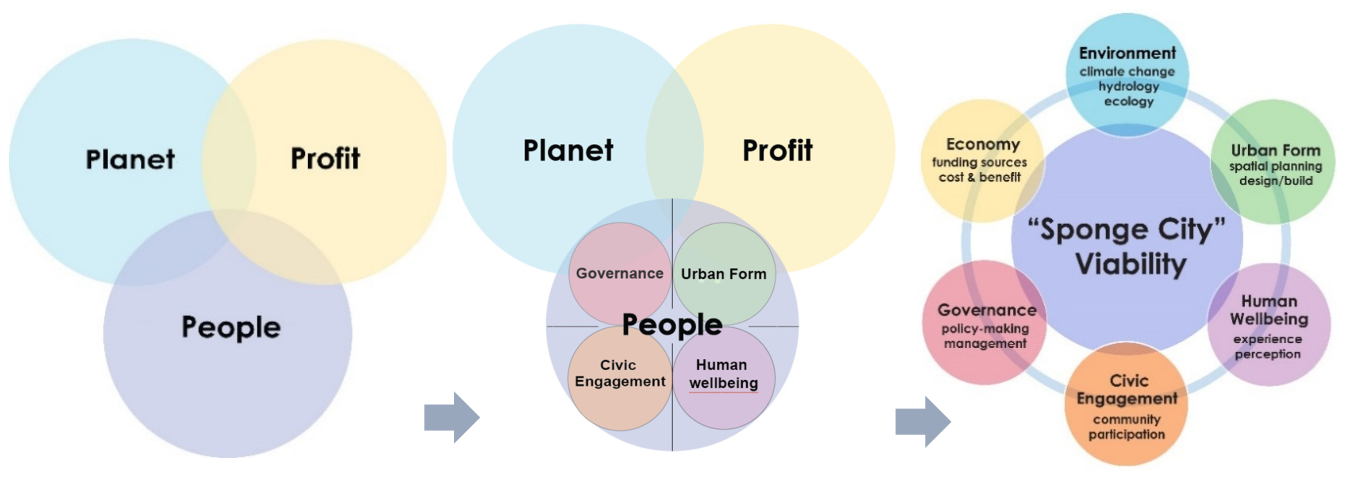
Figure 2.
Adapted PRISMA Flow Diagram.
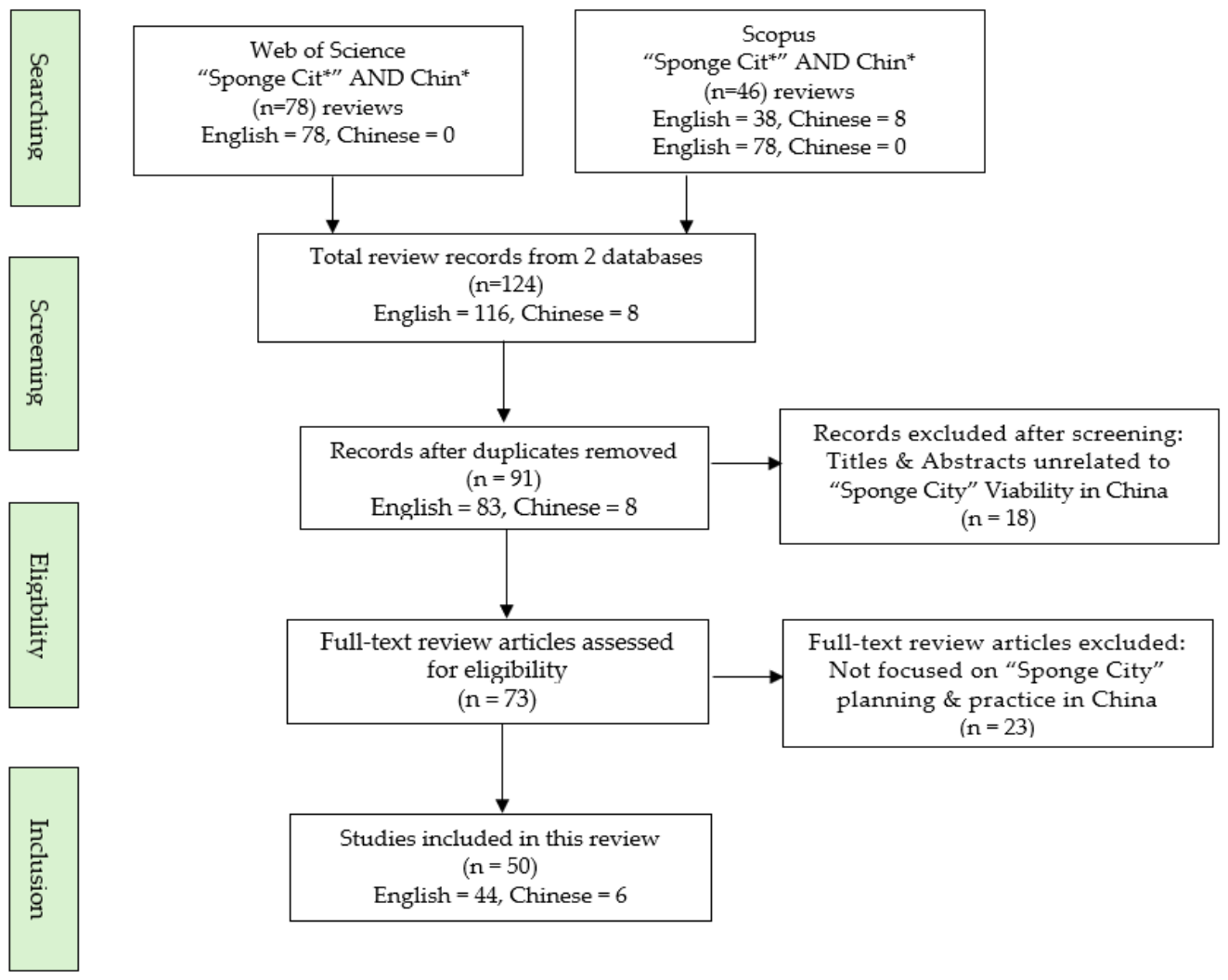
Figure 3.
Keyword term co-occurrence visualization map on SC.
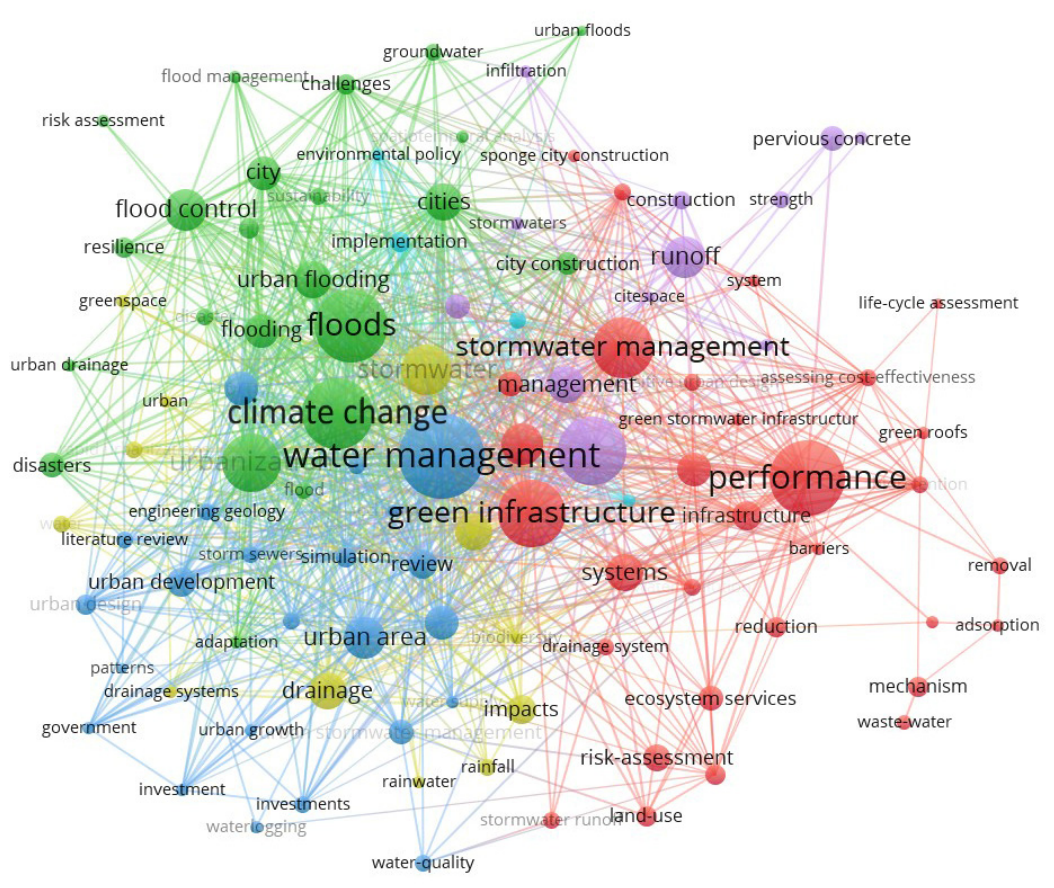
Figure 5.
Key themes in environmental challenges and mention frequency.

Figure 6.
Key themes in environmental opportunities and mention frequency.

Figure 7.
Key themes in urban form challenges and mention frequency.

Figure 8.
Key themes in urban form opportunities, and mention frequency.
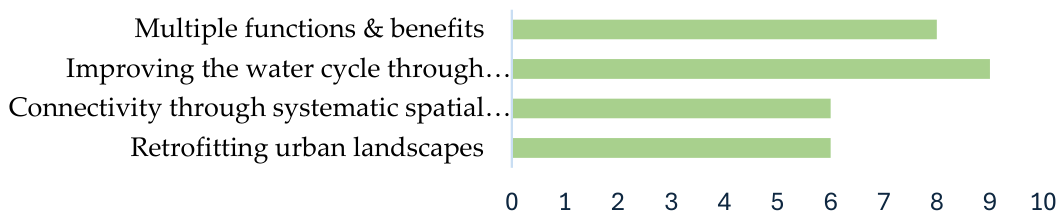
Figure 9.
Key themes in climate consideration and mention frequency.

Figure 10.
Key themes in governance opportunities and mention frequency.
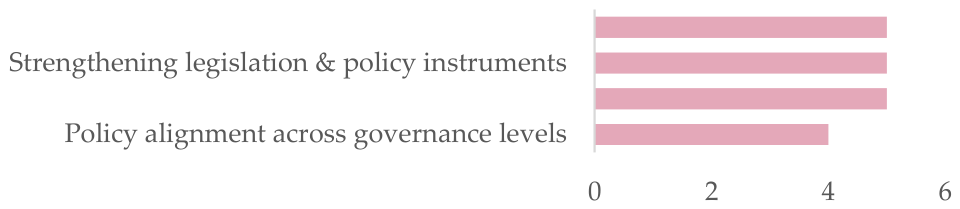
Figure 11.
Key themes in economic challenges and mention frequency.

Figure 12.
Key themes in economic opportunities and mention frequency.

Figure 13.
Key human wellbeing challenges and mention frequency.

Figure 14.
Key human wellbeing opportunities and mention frequency.

Figure 15.
Key civic engagement-related challenges and mention frequency.

Figure 16.
Key civic engagement-related opportunities and mention frequency.

Figure 17.
Comparison of SC priorities in scholarship and practice.
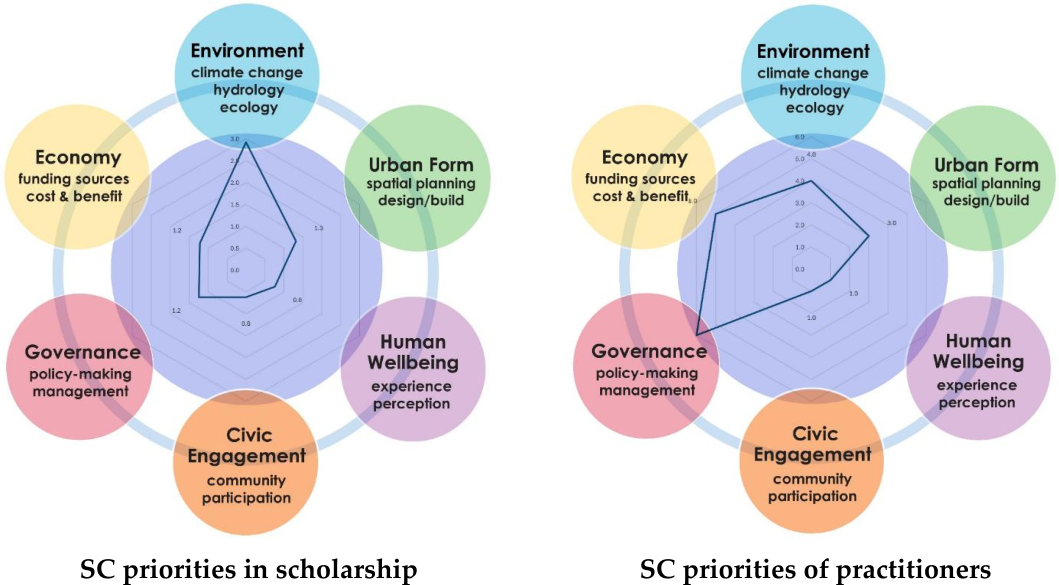
Table 2.
Average weighted relevance score of each dimension on a 1-3 scale.
| Environment | Urban Form | Governance | Economy | Human Wellbeing | Civic Engagement |
| 2.9 | 1.4 | 1.3 | 1.2 | 0.8 | 0.6 |
Disclaimer/Publisher’s Note: The statements, opinions and data contained in all publications are solely those of the individual author(s) and contributor(s) and not of MDPI and/or the editor(s). MDPI and/or the editor(s) disclaim responsibility for any injury to people or property resulting from any ideas, methods, instructions or products referred to in the content. |
© 2026 by the authors. Licensee MDPI, Basel, Switzerland. This article is an open access article distributed under the terms and conditions of the Creative Commons Attribution (CC BY) license (http://creativecommons.org/licenses/by/4.0/).
Copyright: This open access article is published under a Creative Commons CC BY 4.0 license, which permit the free download, distribution, and reuse, provided that the author and preprint are cited in any reuse.