

Submitted:
29 July 2026
Posted:
30 July 2026
You are already at the latest version
Abstract
Evidence on how organizational and technological factors jointly influence patient safety performance in community health centers remains limited in emerging health systems. Studies of digital transformation in primary care often emphasize technology adoption while underestimating leadership, culture, and contextual constraints. A sequential mixed-methods study was conducted across all 18 community health centers in one Indonesian district. Healthcare professionals completed structured surveys, which were analyzed using Partial Least Squares Structural Equation Modeling (PLS-SEM) to examine relationships among organizational technology preparedness, perceived clinical value of EMR, healthcare technology self-efficacy, innovation-supportive leadership, organizational culture-driven orientation, teamwork climate, and perceived patient safety performance. Follow-up interviews contextualized the quantitative findings. Innovation supportive leadership emerged as the strongest predictor of organizational culture and teamwork climate (p < 0.001). Organizational culture significantly influenced teamwork climate and patient safety performance, and teamwork climate positively affected safety outcomes. The perceived clinical value of EMR did not directly improve teamwork climate. Resource constraints weakened the effect of organizational culture on patient safety. Patient safety in community health centers is driven more by leadership and organizational culture than by perceived technological value alone, underscoring the need for integrated organizational and digital strategies in emerging primary care systems. Keywords: Digital health preparedness; electronic medical records; patient safety performance; community health centers; emerging health system.
Keywords:
digital health preparedness
; electronic medical records
; perceived patient safety performance
; primary healthcare
; organizational culture
; innovation-supportive leadership
1. Introduction
Health systems worldwide are undergoing rapid digital transformation as part of broader efforts to strengthen quality, efficiency, and patient safety [1,2]. In emerging health systems, primary care facilities serve as the front line of public health delivery, functioning as the first point of contact for communities and as the backbone of universal health coverage [2,3,4]. In Indonesia, community health centers or Pusat Kesehatan Masyarakat (Puskesmas) play a central role in preventive, promotive, and curative services, particularly in semi-urban and rural areas where resource constraints are common [5,6]. As such, strengthening safety and quality at this level is critical to overall system performance.
The implementation of Electronic Medical Records (EMR), referring to the routine clinical utilization of digital patient records in daily healthcare practice, has been widely promoted as a strategy to reduce medication errors, improve documentation accuracy, enhance coordination of care, and support clinical decision-making [7,8]. However, evidence from low-resource primary care settings remains limited and inconsistent [6,10]. While EMR systems are increasingly mandated, technological adoption alone does not automatically translate into improved patient safety outcomes [11,12]. Many community health centers continue to face challenges, including limited digital readiness, insufficient leadership support, fragmented teamwork, and operational resource constraints [10,12]. These contextual realities raise important questions regarding how organizational and technological factors interact to shape perceived patient safety performance in frontline care.
Patient safety performance was selected as the dependent variable because it reflects a measurable and practice-oriented outcome directly relevant to public health impact [13,14]. Although previous studies have examined EMR adoption, user acceptance, or system usability, relatively few have investigated downstream safety performance in primary care environments, particularly using structural modeling approaches [15]. Moreover, research integrating leadership, organizational culture, teamwork climate, and technological factors within a unified framework for EMR in primary care remains scarce in emerging health systems [3,5,15]
Previous studies examining Electronic Medical Record (EMR) implementation in community health centers and similar primary care settings have largely focused on system adoption, user acceptance, data quality, or technical feasibility [16]. Much of the available evidence originates from hospital-based environments or urban healthcare systems with relatively stable infrastructure and supportive resources. In primary care facilities, particularly in low- and middle-income countries, research has tended to emphasize readiness assessments, barriers to implementation, or health worker perceptions without linking EMR use to downstream perceived patient safety performance, especially infection prevention [17,18]. Moreover, previous studies have reported that EMR implementation may fail to achieve its intended benefits because of poor system design, workflow misalignment, limited organizational readiness, and inadequate user engagement, particularly in resource-constrained settings [16]. Although the implementation of patient safety efforts remains fragile [19,20], the interaction between organizational conditions and EMR implementation may operate differently in low-resource settings, where digital infrastructure, human resources, and managerial capacity vary substantially [8,11,18]. Therefore, there remains a critical need for empirical evidence that moves beyond adoption metrics and investigates how digital preparedness and organizational dynamics collectively shape perceived patient safety performance in resource-constrained primary care contexts.
Within low- and middle-income countries, EMR implementation is further complicated by heterogeneous digital infrastructure, variable workforce capacity, and differences in organizational readiness across primary healthcare facilities. These contextual characteristics suggest that technological implementation should be understood as a socio-technical process in which organizational factors may be as important as technological capability in shaping healthcare performance.
This study addresses these gaps by examining the structural relationships among organizational technology preparedness, perceived clinical value of EMR, healthcare technology self-efficacy, innovation-supportive leadership, organizational culture-driven orientation, teamwork climate, and perceived patient safety performance across all community health centers within one district. By employing a sequential explanatory mixed-methods design, this study moves beyond technology-centric explanations to examine the relative contributions of leadership, organizational culture, teamwork climate, and technological factors to perceived patient safety performance in community health centers. Accordingly, the aim of this study was to examine how organizational and technological factors are associated with perceived patient safety performance through organizational culture-driven orientation and teamwork climate in community health centers operating in a resource-constrained emerging health system.
2. Methods
Study Design
This study employed a sequential explanatory mixed-methods design, consisting of a quantitative phase followed by a qualitative phase. The quantitative component used a cross-sectional survey analyzed with Partial Least Squares Structural Equation Modeling (PLS-SEM) to examine structural relationships among organizational and technological determinants of patient safety performance. The subsequent qualitative phase was conducted to provide a deeper contextual interpretation of the quantitative findings.
A mixed-methods approach was selected because digital health implementation in primary care represents a complex socio-technical phenomenon that cannot be fully understood through quantitative modeling alone [21]. While structural equation modeling enables the examination of latent constructs and multivariate relationships, it does not capture contextual mechanisms, leadership dynamics, or cultural interpretations that shape safety performance in low-resource healthcare environments. Sequential explanatory designs are particularly appropriate when quantitative results require further explanation or elaboration through qualitative inquiry [22]. This integration enhances interpretive validity and strengthens inference development by linking statistical patterns with lived organizational experiences. By combining structural modeling with post hoc analysis, this study provides both empirical rigor and contextual depth, improving the explanatory power and policy relevance of the findings.
Setting and Participants
The study was conducted across all 18 community health centers or Pusat Kesehatan Masyarakat (Puskesmas) within Ogan Komering Ulu Regency, South Sumatra, Indonesia, representing a semi-urban and rural primary healthcare system in an emerging health context. Community health centers, known locally as Puskesmas, provide preventive, promotive, and curative services and function as the frontline of public health delivery. These facilities represent a typical low-resource primary healthcare setting within Indonesia’s decentralized healthcare system and often operate under financial constraints, limited digital infrastructure, and disparities in human resource capacity, particularly in health information technology competencies [23].
All participating community health centers implemented the Indonesian Ministry of Health’s national digital health program using the Satusehat platform in conjunction with the e-Puskesmas information system for routine primary healthcare services. The integrated system supports patient registration, electronic clinical documentation, medical history recording, prescribing, referral management, and mandatory reporting to the national health information system. Because all participating facilities operated within the same government digital health framework, this study focused on healthcare professionals’ perceptions of organizational and technological factors influencing EMR implementation rather than differences in software functionality. Nevertheless, variations in local infrastructure quality, internet connectivity, and workforce capacity remained across facilities, reflecting routine operational conditions in resource-constrained primary healthcare settings.
The target population comprised all healthcare professionals directly involved in patient care and routine EMR use, including physicians, dentists, nurses, midwives, and other clinical staff. A census approach was applied during the quantitative phase by inviting all 512 eligible healthcare professionals across the 18 community health centers to participate. Of these, 456 respondents provided complete and valid questionnaires, representing an overall valid response rate of 89.1%. Inclusion criteria were: (1) active employment at a participating community health center; (2) direct involvement in clinical service delivery; and (3) experience using the EMR system. Administrative personnel without direct patient care responsibilities were excluded. Following completion of the quantitative survey, the qualitative phase employed purposive sampling to recruit 14 participants representing different professional roles and levels of EMR engagement to obtain diverse perspectives and provide contextual explanations for the quantitative findings.
Variables and Conceptual Framework
The conceptual framework integrates organizational and technological factors associated with perceived patient safety performance in community health centers. Independent variables included organizational technology preparedness, perceived clinical value of EMR, healthcare technology self-efficacy, and innovation-supportive leadership. Organizational culture-driven orientation and teamwork climate were modeled as mediating variables, while organizational resource conditions, measured as resource-constrained operating conditions, were examined as a moderating variable. The dependent variable, perceived patient safety performance, was selected because it reflects healthcare professionals’ perceptions of organizational safety practices and quality improvement processes within routine primary healthcare services. Hypotheses were developed based on organizational readiness, socio-technical systems, and patient safety culture perspectives to examine the proposed structural relationships among these constructs. The latent variables included in this study were measured using multi-item scales adapted from previously validated instruments. Table 1 presents the conceptual definitions of each construct together with their corresponding literature sources.
The proposed conceptual framework views EMR implementation as a socio-technical organizational process in which technological readiness, individual capability, and leadership function as complementary antecedents that shape organizational culture and teamwork. Beyond looking at perceived patient safety performance directly, these organizational mechanisms may be seen as operating processes through collaborative and cultural pathways, while organizational resource conditions are expected to associate with the extent to which these organizational capabilities can be translated into routine patient safety practices. Accordingly, the proposed hypotheses represent an integrated explanatory model linking technological, organizational, and contextual factors within a single conceptual framework.
Digital transformation in healthcare is widely conceptualized as a socio-technical process in which organizational readiness, technological perceptions, and leadership jointly shape implementation outcomes [28,29,33]. Organizational technology preparedness encompasses structural readiness, infrastructure adequacy, and managerial support, which are expected to facilitate collaborative work environments and the formation of culture [30,34]. Prior research suggests that organizational readiness enhances teamwork and shared norms in healthcare settings [28,30,34]. Perceived clinical value of EMR reflects the extent to which healthcare professionals believe the system improves clinical quality and workflow efficiency [31]. Perceived usefulness and clinical value have also been associated with positive organizational engagement in digital settings [29,32]. Collectively, the hypotheses propose that organizational readiness and perceived clinical value of EMR constitute complementary technological antecedents that may facilitate collaborative work practices and organizational adaptation during digital transformation.
H1.
Organizational technology preparedness is positively associated with teamwork climate.
H2.
Organizational technology preparedness is positively associated with organizational culture-driven orientation.
H3.
Perceived clinical value of EMR is positively associated with teamwork climate.
H4.
Perceived clinical value of EMR is positively associated with the organizational culture-driven orientation.
Healthcare technology self-efficacy captures an individual’s confidence in using digital systems such as EMRs and is associated with improvement [35]. Self-efficacy theory posits that higher confidence promotes collaborative behaviors and adaptive culture [29,36]. Innovation-supportive leadership is recognized as a central driver of organizational change and digital transformation [37]. Transformational and innovation-oriented leadership has been shown to strengthen collaborative culture and team functioning in healthcare systems [38]. Taken together, these hypotheses posit that individual capability and innovation-supportive leadership jointly contribute to stronger organizational culture and teamwork during EMR implementation. Therefore, the hypotheses can be proposed as follows;
H5.
Healthcare technology self-efficacy is positively associated with teamwork climate.
H6.
Healthcare technology self-efficacy is positively associated with organizational culture-driven orientation.
H7.
Innovation supportive leadership is positively associated with teamwork climate.
H8.
Innovation supportive leadership is positively associated with an organizationally culture-driven orientation.
Organizational culture and teamwork climate are core dimensions of safety culture theory, which emphasizes shared values and coordinated practices as determinants of patient safety [39]. This may be linked to factors critical to EMR implementation [11,40]. A culture that prioritizes learning, accountability, and improvement is associated with stronger teamwork and improved safety outcomes [41]. Both teamwork climate and organizational culture have been linked to reductions in clinical errors and improvements in patient safety performance in primary care and hospital settings [12,29,41]. Therefore, hypotheses reflect the proposition that organizational culture and teamwork climate function as key organizational mechanisms linking digital transformation with perceived patient safety performance.
H9.
Organizational culture-driven orientation is positively associated with teamwork climate.
H10.
Teamwork climate is positively associated with perceived patient safety performance.
H11.
Organizational culture-driven orientation is positively associated with perceived patient safety performance.
Primary care facilities in emerging health systems often operate under resource-constrained conditions, including limited infrastructure, staffing shortages, and operational burdens that affect the delivery of care [5,9,25]. Resource dependency theory suggests that environmental constraints can weaken organizational effectiveness mechanisms [42]. Even when teamwork and culture are strong, limited resources may restrict their positive impact on safety outcomes [11,25]. Accordingly, the moderation hypotheses propose that the availability of organizational resources may strengthen or weaken the extent to which organizational mechanisms are associated with perceived patient safety performance.
H12.
Resource-constrained operating conditions moderate the relationship between teamwork climate and perceived patient safety performance.
H13.
Resource-constrained operating conditions moderate the relationship between organizationally culture-driven orientation and perceived patient safety performance.
The conceptual framework of this study illustrates the hypothesized relationships among the key constructs examined in the research model. Figure 1 depicts how the independent variables are expected to be associated with variations in the dependent variable, while also incorporating moderating effects that act as the boundary condition in the structural relationships within the model.
Measurement and Questionnaire Development
All constructs were measured using multi-item scales adapted from previously validated instruments in healthcare management and digital health research [27,43,44]. Several items were contextually adapted to reflect the characteristics of primary healthcare services in Indonesian community health centers while preserving the conceptual meaning of the original instruments. Responses were measured using a five-point Likert scale ranging from strongly disagree (1) to strongly agree (5). The questionnaire was initially developed in English, translated into Bahasa Indonesia by a professional bilingual translator, and subsequently back-translated to ensure semantic equivalence between the two language versions. Any discrepancies identified during the translation process were resolved through discussion between the translators and the research team to ensure conceptual consistency.
Prior to the main survey, the questionnaire underwent a content validity assessment by an expert panel comprising five specialists with expertise in hospital management, digital health, health services research, and patient safety. The evaluation demonstrated satisfactory content validity, with Aiken’s Value coefficients ranging from 0.81 to 0.89 and Scale Content Validity Index (S-CVI) values ranging from 0.84 to 0.91, exceeding the recommended minimum thresholds for acceptable content validity [45]. These findings indicate that the questionnaire items were considered relevant, clear, and conceptually representative of their respective constructs while demonstrating adequate agreement among the expert panel. Subsequently, a pilot study involving 30 healthcare professionals was conducted before the main survey to evaluate item clarity, internal consistency, and preliminary measurement performance. The pilot results demonstrated satisfactory psychometric properties, with all indicator loadings exceeding 0.70 and Cronbach’s alpha coefficients above 0.70, confirming that the instrument was appropriate for full-scale data collection. No substantial revisions to the questionnaire items were required following the pilot testing, as all items demonstrated acceptable clarity and measurement performance.
Data Collection
A census approach was employed during the quantitative phase by inviting all 512 eligible healthcare workers across the 18 participating community health centers to participate in the study. Prior to the main survey, a pilot study was conducted between October and November 2025 to evaluate the clarity, feasibility, and reliability of the questionnaire. The pilot data were used exclusively for instrument refinement and reliability assessment and were not included in the final dataset or any statistical analyses reported in this study.
Following the completion of the pilot study, ethical approval was obtained from the Institutional Review Board of Pelita Harapan University (Approval No. 001/ MARS/EC/I/2026) dated 8 January 2026. The full-scale quantitative data collection commenced only after ethical approval had been granted and was conducted between January and February 2026 using a secure web-based self-administered survey platform to facilitate standardized data collection across geographically dispersed facilities. Prior to analysis, all returned questionnaires were screened for completeness, eligibility, and response consistency. Questionnaires with incomplete responses or those that did not satisfy the predefined inclusion criteria were excluded, resulting in 456 complete and valid questionnaires from the 512 eligible healthcare workers, corresponding to a valid response rate of 89.1%.
Participation in the main survey was voluntary and anonymous. Before completing the questionnaire, all participants received an information sheet describing the study objectives and procedures and provided electronic informed consent. Respondents were instructed to complete the questionnaire independently based on their own professional experiences and routine clinical practice. Participant confidentiality and data anonymity were maintained throughout all stages of the study.
Following completion of the quantitative survey, the qualitative phase was undertaken using purposive sampling to recruit 14 healthcare professionals, including general practitioners, nurses, midwives, and heads of community health centers who were directly involved in EMR implementation. Participants were purposively selected based on their direct experience and sustained involvement in routine EMR use to provide rich contextual insights into the quantitative findings, consistent with the sequential explanatory mixed-methods design. All semi-structured interviews were conducted by the first author using a predefined interview guide designed to explore participants’ experiences regarding leadership practices, organizational culture, teamwork, EMR implementation, and organizational resource conditions related to patient safety performance. The interview guide ensured consistency across interviews while allowing sufficient flexibility for participants to elaborate on emerging issues and experiences relevant to the research questions. Interviews were conducted remotely via telephone or
WhatsApp calls according to participants’ preferences and availability. With participants’ informed consent, all interviews were audio-recorded and supplemented with field notes to capture contextual observations and facilitate subsequent data interpretation.
Participant recruitment continued until thematic saturation was achieved, defined as the point at which successive interviews yielded no substantially new concepts or themes relevant to the study objectives. The interview data subsequently served to explain and contextualize the quantitative findings by providing a deeper understanding of the organizational and contextual mechanisms underlying EMR implementation and perceived patient safety performance.
Data Analysis
Modeling (PLS-SEM) with SmartPLS®4.1.1.2, following the analytical procedures recommended by Hair et al. [46]. Prior to analysis, all questionnaires were screened for completeness and eligibility, and only complete responses were retained; therefore, no missing data imputation was required. The PLS algorithm was estimated using the path scheme, followed by bootstrapping with 10,000 resamples to obtain path coefficients, confidence intervals, and significance values. The measurement model was evaluated by assessing indicator reliability, internal consistency reliability (Cronbach’s alpha and composite reliability), convergent validity (average variance extracted), and discriminant validity using the Heterotrait–monotrait ratio (HTMT). The structural model was subsequently evaluated through collinearity assessment, path coefficients, coefficients of determination (R2), effect sizes (f2), predictive relevance (Q2), and out-of-sample predictive performance using the Cross-Validated Predictive Ability Test (CVPAT), consistent with the recommendations of Hair et al. [46].
A multivariate PLS-SEM was selected since the primary objective of this study was explanatory prediction rather than covariance reproduction. The proposed research model comprised multiple organizational, technological, mediating, and moderating constructs, making PLS-SEM particularly suitable for modelling complex structural relationships in applied health systems research [46]. Furthermore, PLS-SEM is robust when analysing non-normal data and is well-suited to organizational research conducted in resource-constrained healthcare settings.
Qualitative interview data were analyzed using reflexive thematic analysis following the six-phase approach proposed by Braun and Clarke [47]. All audio-recorded interviews were transcribed verbatim immediately after data collection and reviewed alongside the corresponding field notes to ensure transcription accuracy and preserve contextual meaning. The first author conducted repeated readings of the transcripts to achieve familiarization with the data before generating initial codes. Subsequently, two researchers independently reviewed the transcripts and compared the emerging codes and preliminary themes through iterative discussions until consensus was reached, thereby enhancing the credibility and trustworthiness of the analysis through analyst triangulation. The coded data were then systematically organized into candidate themes, which were reviewed, refined, and defined through repeated comparison across participants to ensure that each theme accurately reflected shared patterns within the dataset while remaining conceptually distinct. Participant recruitment and data analysis proceeded concurrently until thematic saturation was achieved, indicated by the absence of substantially new concepts or themes in the final interviews. Representative quotations were subsequently selected to illustrate themes that consistently emerged across multiple participants rather than isolated individual opinions.
Consistent with the sequential explanatory mixed-methods design, the qualitative findings were subsequently integrated with the quantitative results to provide contextual explanations for the observed statistical relationships and to enhance the interpretation of the proposed structural model. To maintain the focus of this article, only qualitative themes directly relevant to explaining the quantitative findings are presented.
3. Result
Quantitative Phase
The quantitative phase was conducted to examine the proposed structural relationships among organizational, technological, and contextual factors associated with perceived patient safety performance in community health
Participant Characteristics
Of the 512 eligible healthcare professionals invited to participate, 456 returned complete and valid questionnaires, yielding a valid response rate of 89.1%. Participant characteristics are summarized in Table 2. Overall, the sample comprised a multidisciplinary workforce actively engaged in routine clinical care and Electronic Medical Record (EMR) implementation across the participating community health centers. The predominance of female participants is consistent with the staffing composition of community health centers, where nurses and midwives, professions that are predominantly female, constitute the largest proportion of frontline healthcare providers. In addition, most participants were permanent employees with several years of professional experience, indicating familiarity with routine clinical workflows and organizational practices. The diversity of professional roles and levels of experience provides a suitable basis for examining the organizational, technological, and teamwork-related factors associated with perceived patient safety performance during EMR implementation.
Outer Model (Measurement Model)
The measurement model was evaluated by examining indicator reliability, internal consistency reliability, convergent validity, and descriptive statistics. As presented in Table 3, all indicators achieved outer loading values above the recommended threshold of 0.70, ranging from 0.819 to 0.969, indicating satisfactory indicator reliability. Cronbach’s alpha values ranged from 0.873 to 0.964, rho_a values from 0.882 to 0.965, and composite reliability values from 0.913 to 0.971, demonstrating satisfactory internal consistency across all constructs. Furthermore, all constructs achieved Average Variance Extracted (AVE) values ranging from 0.724 to 0.886, exceeding the recommended threshold of 0.50 and confirming adequate convergent validity. Overall, the results presented in Table 3 indicate that all measurement model criteria were satisfied, supporting the suitability of the constructs for subsequent structural model analysis.
The descriptive statistics presented in Table 3 indicate generally positive perceptions across all study constructs. Mean values ranged from 3.885 to 4.314 on a five-point Likert scale, suggesting favorable evaluations of organizational technology preparedness, healthcare technology self-efficacy, perceived clinical value of EMR, innovation-supportive leadership, organizational culture-driven orientation, teamwork climate, resource-constrained operating conditions, and perceived patient safety performance. Among these constructs, perceived clinical value of EMR and perceived patient safety performance recorded the highest mean scores, whereas organizational technology preparedness and healthcare technology self-efficacy showed comparatively lower, yet still favorable, evaluations. In resource-constrained operating environments, the indicators assess healthcare professionals’ perceptions regarding the adequacy of organizational resources available to support routine service delivery. Consequently, higher construct scores represent more favorable perceived organizational resource conditions rather than objectively measured resource scarcity. These descriptive findings suggest that respondents generally perceived both the organizational environment and EMR implementation positively within the participating community health centers.
Discriminant validity was assessed using the Heterotrait–monotrait ratio (HTMT). As shown in Table 4, the HTMT values among the main constructs range from 0.595 to 0.891. Most of the values remain below the recommended threshold of 0.90, indicating that the constructs capture conceptually distinct measurements within the model. Although the HTMT value between teamwork climate and perceived patient safety performance (0.891), as well as between teamwork climate and resource-constrained operating conditions (0.860), nearly approaches the upper threshold, these values still fall within the acceptable range commonly reported in PLS-SEM studies. In addition, the interaction constructs (RCO–TC and RCO–OCD) show relatively low HTMT values with the other constructs, which supports their discriminant separation from the primary latent variables.
Although the HTMT values between Innovation-Supportive Leadership and Perceived Patient Safety Performance (0.905) and between Organizational Culture-Driven Orientation and Perceived Patient Safety Performance (0.907) slightly exceeded the commonly recommended threshold of 0.90, these constructs remain conceptually distinct within the proposed framework. Leadership represents managerial behaviors that facilitate organizational change, whereas organizational culture reflects shared values and norms, and perceived patient safety performance captures healthcare professionals’ perceptions of safety practices and organizational safety outcomes. Given their close theoretical relationships within socio-technical and patient safety frameworks, relatively high HTMT values are expected and do not necessarily indicate conceptual redundancy. The remaining measurement quality indicators collectively support the adequacy of discriminant validity for the proposed model. These results suggest that the constructs included in the model demonstrate adequate discriminant validity and that each latent variable represents a distinct theoretical concept in the analysis of measurement.
Inner Model (Structural Model)
The most important step in structural analysis using bootstrapping techniques is to examine the coefficients and significance. Before this, an assessment of the model’s quality has been carried out. The results in the measurement stage indicate that all inner VIF values were below the recommended threshold of 3, suggesting that multicollinearity among the predictor constructs was not a concern in this model. Likewise, the full collinearity assessment was performed to detect the potential presence of common method bias (CMB). The results show that all VIF values were below the more conservative threshold of 3.3, indicating that the model is free from substantial common method bias. According to reference [46], VIF values below 3.3 in a full collinearity test provide evidence that common method bias is unlikely to contaminate the results
Figure 2.
Inner Model (Structural Model).
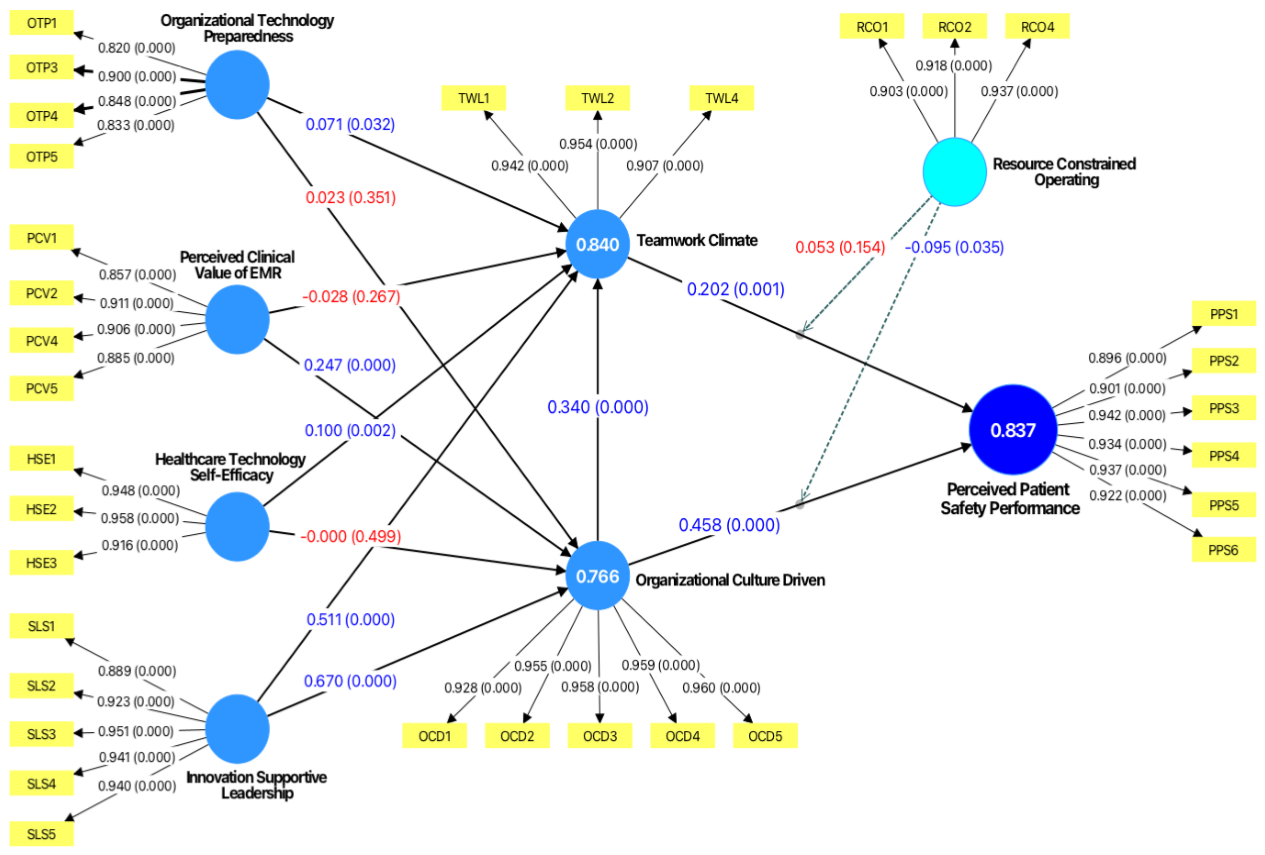
The explanatory power of the structural model was assessed by examining the coefficient of determination (R2) for the dependent variable. The results show that the R2 value for perceived patient safety performance is 0.837, indicating that the model explains 83.7% of the variance in perceived patient safety performance. This value suggests a substantial level of explanatory power, meaning that the independent constructs included in the model collectively provide a strong explanation of variations in perceived patient safety performance. Furthermore, in model evaluation, the predictive relevance of the model was evaluated using the PLS Predict. The results show that the Q2 value is above 0.5, indicating large predictive relevance of the model. This finding was further confirmed using the Cross-Validated Predictive Ability Test (CVPAT), which also supports the model’s predictive capability.
To assess the out-of-sample predictive performance of the structural model, the PLS-Predict procedure, with the new approach, the Cross-Validated Predictive Ability Test (CVPAT), was used. This approach evaluates whether the predictive accuracy of the PLS-SEM model exceeds that of a benchmark model based on linear regression (LM) [48]. The results indicate that the prediction errors generated by the PLS model were consistently lower than those produced by the indicator average (IA) and the straightened linear model (LM) benchmark for most indicators of the endogenous constructs. In essence, the CVPAT results of the overall model indicate that the PLS model’s predictive performance is statistically better than that of the linear model benchmark (p-value < 0.000). These results indicate that the proposed model demonstrates adequate predictive capability in predicting the endogenous constructs examined in this study. The presence of the model predictive validity suggests that the structural relationships identified in the model are not only statistically meaningful within the observed sample but also capable of generating reliable predictions in comparable contexts.

Table 5.
Cross-Validated Predictive Ability Test (CVPAT).
| Variable/Model | PLS-SEM vs. Indicator average (IA) | PLS-SEM vs. Linear model (LM) | ||||||
| PLS loss | IA loss | Average loss difference | p- value | PLS loss | LM loss | Average loss difference | p- value | |
| Organization Culture Driven | 0.174 | 0.543 | -0.369 | 0.000 | 0.174 | 0.189 | -0.015 | 0.074 |
| Teamwork Climate | 0.162 | 0.541 | -0.379 | 0.000 | 0.162 | 0.170 | -0.008 | 0.236 |
| Perceived Patient Safety Performance | 0.157 | 0.497 | -0.340 | 0.000 | 0.157 | 0.170 | -0.014 | 0.010 |
| Overall Model | 0.164 | 0.523 | -0.359 | 0.000 | 0.164 | 0.177 | -0.013 | 0.002 |
From a practical perspective, the predictive capability of the model suggests that the identified organizational and behavioral factors may provide useful guidance for understanding and anticipating patient safety performance in primary healthcare settings implementing electronic medical record systems, particularly in environments operating under resource constraints.
The significance of the structural relationships was assessed using the bootstrapping procedure in Partial Least Squares Structural Equation Modeling (PLS-SEM). Bootstrapping is a non-parametric resampling technique, whereas in this study, the bootstrapping procedure was conducted with 10,000 resamples to ensure robust and stable parameter estimates [45]. The results of this procedure provide the basis for evaluating the significance and direction of the hypothesized relationships in the structural model. The detailed results of the hypothesis testing obtained from the bootstrapping analysis are presented in Table 6.
The results from the analysis of organizational and technological antecedents revealed mixed findings. Organizational technology preparedness showed a small but statistically significant positive effect on teamwork climate (β = 0.071, p = 0.033, 95% CI [0.010, 0.135]), as the confidence interval did not cross zero. However, its effect on organizationally culture-driven orientation was not significant (β = 0.023, p = 0.351, 95% CI [−0.052, 0.134]), indicating that structural readiness alone may not directly shape cultural orientation. Similarly, perceived clinical value of EMR did not significantly influence teamwork climate (β = −0.028, p = 0.267, 95% CI [−0.094, 0.052]), although it demonstrated a significant positive association with organizational culture (β = 0.247, p < 0.000, 95% CI [0.139, 0.370]). Healthcare technology self-efficacy significantly improved teamwork climate (β = 0.100, p = 0.002, 95% CI [0.039, 0.150]) but did not significantly affect organizational culture (p = 0.499)
Innovation supportive leadership emerged as the strongest predictor in the model. It exerted substantial positive effects on both teamwork climate (β = 0.511, p < 0.000, 95% CI [0.364, 0.630]) and organizational culture-driven orientation (β = 0.670, p < 0.000, 95% CI [0.549, 0.767]). Organizational culture further demonstrated a significant positive influence on teamwork climate (β = 0.340, p < 0.000, 95% CI [0.196, 0.508]). Regarding patient safety performance, both teamwork climate (β = 0.202, p = 0.001, 95% CI [0.079, 0.310]) and organizational culture (β = 0.458, p < 0.000, 95% CI [0.368, 0.574]) showed significant positive effects, with organizational culture displaying the stronger association.
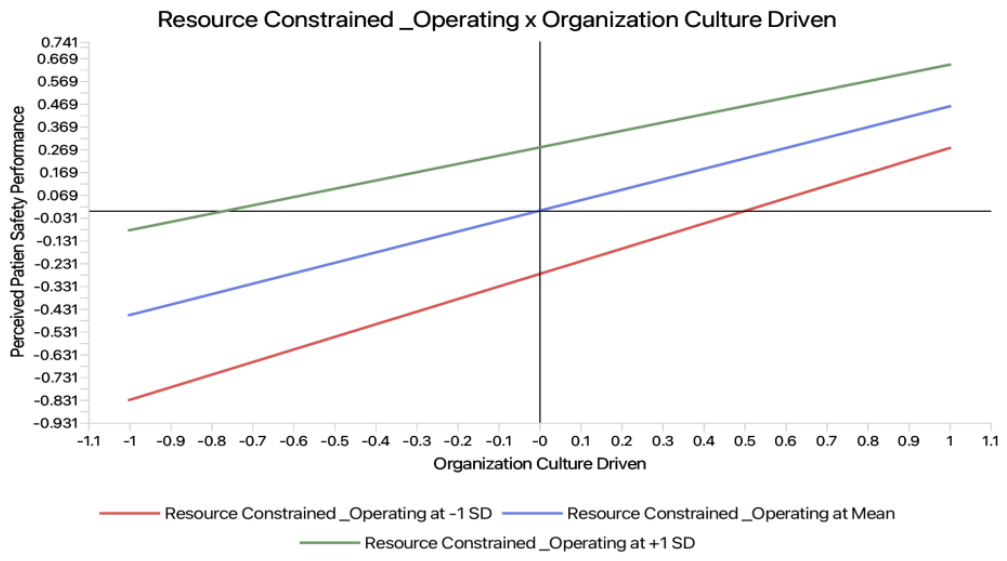
The moderation findings suggest that organizational resource conditions influence the extent to which organizational culture is associated with perceived patient safety performance. The Resource-Constrained Operating construct reflects healthcare professionals’ perceptions of organizational resource conditions rather than objective measures of resource scarcity. The significant negative interaction coefficient indicates that the positive association between organizational culture and perceived patient safety performance becomes less pronounced under more favorable perceived organizational resource conditions. This pattern suggests that the contribution of organizational culture to perceived patient safety performance depends on the organizational context in which healthcare services are delivered. One possible explanation is that when healthcare professionals perceive organizational resources to be more adequate, structural supports such as staffing, infrastructure, and operational capacity may contribute more directly to patient safety, thereby reducing the relative influence of organizational culture alone. Conversely, under less favorable organizational resource conditions, a strong organizational culture may play a more prominent role in sustaining safe clinical practices despite operational challenges.
Figure 3.
Simple Slope Moderation.
Qualitative Phase
The qualitative phase involved interviews with 14 healthcare professionals, including general practitioners, nurses, midwives, and heads of community health centers who were directly involved in EMR implementation. Consistent with the sequential explanatory mixed-methods design, the qualitative findings were used to explain and contextualize the quantitative results by providing deeper insights into organizational and contextual factors influencing EMR implementation. Three overarching themes emerged from the analysis: (1) innovation-supportive leadership as the primary driver of organizational change, (2) technological readiness and perceived clinical value do not automatically shape organizational culture, and (3) organizational resource conditions influence the translation of organizational culture into patient safety performance.
To enhance the trustworthiness of the qualitative analysis, analyst triangulation was applied, whereby two researchers independently reviewed the interview transcripts and coded emerging themes. In addition, data triangulation was ensured by including informants from multiple professional roles and organizational levels, enabling the findings to reflect both frontline clinical perspectives and managerial viewpoints regarding EMR implementation
The qualitative findings were organized into three major themes to explain and contextualize the quantitative results: (1) the dominant role of innovation-supportive leadership, (2) the non-significant influence of certain technological readiness variables on organizational culture, and (3) organizational resource conditions associated with the translation of organizational culture into perceived patient safety performance.
Theme 1: Innovation-Supportive Leadership as the Primary Driver of Cultural and Teamwork Change
The interview revealed a General Practitioner’s opinion: “When the head of the Puskesmas actively uses the EMR and discusses it in every meeting, we feel that this system is not just an IT obligation. It becomes part of how we work together. If leadership is passive, most of us would just input data minimally.” At the same time, the insight comes from the Head of the Community Health Center. “At the beginning, many staff were resistant. I had to demonstrate that EMR is not about control, but about improving patient safety and continuity of care. We created weekly reflection sessions to discuss errors and system improvements.”
These narratives provide contextual explanations for the quantitative finding that innovation-supportive leadership had the strongest effect on both organizational culture and teamwork climate. Leadership was described not merely as administrative oversight but as behavioral modeling, symbolic commitment, and facilitation of shared learning. The data suggest that leadership engagement transforms EMR from a technical tool into a collective organizational value. In that regard, several participants emphasized that without visible endorsement and consistent reinforcement from leadership, EMR use would remain procedural rather than culturally embedded. Across all professional groups, leadership was consistently described as the primary mechanism that transformed EMR implementation from a technical requirement into a shared organizational practice. This supports the interpretation that leadership functions as a socio-organizational catalyst, aligning technological initiatives with safety norms and collaborative practices.
Theme 2: Technological Readiness and Perceived Clinical Value Do Not Automatically Shape Organizational Culture
The insight from a General Practitioner was as follows: “Technically, the system is ready. Computers are there. But culture does not change just because the system is available. Some colleagues still see EMR as extra work.” While from a Nurse Informant: “We know EMR can help clinically, especially for tracking chronic patients. But if the workload is high, we prioritize finishing the queue. The perceived benefit does not always translate into daily practice.” One of the heads of Puskesmas mentioned that “Infrastructure is important, but mindset is more difficult to change. Culture needs time and reinforcement.”
These accounts help explain why organizational technology preparedness and perceived clinical value of EMR did not significantly influence organizational culture orientation in the quantitative model. Although staff recognized the technical availability and potential benefits of EMR, this awareness alone did not automatically translate into deeper normative shifts. Participants differentiated between “system availability” and “collective belief.” Culture was described as a shared mindset requiring sustained reinforcement rather than structural readiness. The qualitative findings, therefore, clarify that technological infrastructure and perceived usefulness operate at a cognitive level, whereas organizational culture reflects shared norms and behavioral expectations, which require leadership mediation and social processes to evolve. More than contradicting the quantitative findings, participants distinguished between technological availability and the gradual development of shared organizational norms, providing contextual understanding for the observed non-significant structural relationships. These qualitative findings provide contextual support for the statistically non-significant structural paths observed in the quantitative analysis, suggesting that technological readiness alone is insufficient to produce organizational cultural change.
Theme 3: Organizational Resource Conditions Influence the Translation of Organizational Culture into Patient Safety Performance
One of the General Practitioners in Puskesmas stated, “Even if we believe in safety and proper documentation, sometimes we handle more than 80 patients a day. In those conditions, it is difficult to fully apply what we know is ideal.” On the other side, a Head of Puskesmas: “We try to build a safety culture, but limited staff and unstable internet sometimes force compromises. The intention is there, but operational pressure is real.” While a Midwife Informant stated, “When the network is down, we return to manual notes. Later, we re-enter data. That increases fatigue and risk of missing information.”
These findings illuminate the significant negative moderating effect of the Resource-Constrained Operating construct on the relationship between organizational culture and perceived patient safety performance. The interviews consistently revealed that healthcare professionals experienced a gap between normative commitment to patient safety and the practical realities of everyday service delivery. Rather than indicating increasing resource scarcity, the qualitative findings suggest that variations in perceived organizational resource conditions influenced the extent to which organizational culture could be translated into routine patient safety practices.
Overall, the qualitative findings extended the quantitative results by explaining why innovation-supportive leadership emerged as the strongest organizational driver, why technological readiness alone did not consistently translate into organizational culture, and how organizational resource conditions shaped the implementation of patient safety practices. The integration of both phases provided a more comprehensive understanding of EMR implementation than either quantitative or qualitative findings alone, thereby strengthening the interpretation of the proposed sequential explanatory mixed-methods model.
4. Discussion
General Discussion
The quantitative findings demonstrate that innovation-supportive leadership is the most influential determinant shaping both organizational culture orientation and teamwork climate in the implementation of EMR within low-resource primary healthcare settings. This finding aligns with socio-technical systems theory, which posits that technological implementation outcomes depend on the alignment between technical infrastructure and social subsystems [49]. In primary care settings such as community health centers, leadership appears to function as a critical integrating mechanism that translates technological initiatives into shared organizational norms and collaborative practices. Previous studies in digital health transformation have similarly shown that leadership engagement significantly predicts successful EMR adoption and sustainability, particularly in resource-constrained environments [8,10,28,39]
The qualitative findings provide deeper explanatory insight into this strong statistical effect. Interviews with general practitioners and heads of community health centers revealed that visible leadership engagement, such as personally using the EMR, embedding it in routine meetings, and framing it as a perceived patient safety tool despite an administrative requirement, was pivotal in transforming staff attitudes. Participants emphasized that without consistent endorsement and behavioral modeling from leadership, EMR use would remain procedural and compliance-driven. This convergence between quantitative and qualitative evidence suggests that leadership does not merely facilitate implementation but actively constructs the organizational meaning of EMR, embedding it into cultural and teamwork practices.
Interestingly, organizational technology preparedness did not significantly influence organizational culture orientation, and perceived clinical value of EMR did not significantly affect teamwork climate. These findings suggest that structural readiness and perceived instrumental benefits alone are insufficient to reshape deeper social and relational dynamics within healthcare teams. While earlier EMR adoption studies have highlighted infrastructure readiness and perceived usefulness as primary drivers of system acceptance [2,8], the present findings indicate that in low-resource settings, psychosocial factors may play a more decisive role than technological readiness per se. The qualitative data corroborate this interpretation: participants acknowledged that hardware availability and system functionality were necessary but not transformative. Several informants noted that although they recognized the clinical benefits of EMR, heavy workloads often prevented these perceived advantages from being translated into collaborative routines. Thus, perceived value operates at a cognitive level but does not automatically induce cultural alignment without social reinforcement mechanisms.
Healthcare technology self-efficacy significantly enhanced teamwork climate, consistent with Self-Efficacy Theory, which posits that confidence in one’s capability influences behavioral engagement and collaborative functioning [35,50]. Interview data illustrated that staff members who felt competent in navigating EMR were more willing to coordinate care, update shared records, and assist colleagues. In contrast, low confidence generated avoidance behavior and reliance on parallel manual systems. This integrated evidence suggests that competence-building initiatives may serve as a practical leverage point to strengthen teamwork dynamics during digital transitions.
Furthermore, both organizational culture orientation and teamwork climate significantly predicted perceived patient safety performance, with organizational culture demonstrating the stronger effect. This finding is consistent with patient safety literature emphasizing that safety outcomes are deeply embedded in organizational values, norms, and shared accountability structures [12,14,18]. Qualitative narratives reinforced this pathway: respondents described safety culture as a shared commitment to documentation accuracy, continuity of care, and open discussion of errors. EMR was perceived as a tool that could enhance safety only when embedded within such shared norms. The integration of findings therefore extends prior research by demonstrating empirically how EMR-related organizational factors relate to perceived patient safety through cultural and teamwork mechanisms in public primary healthcare facilities.
The moderation findings suggest that organizational resource conditions influence the extent to which organizational culture is reflected in perceived patient safety performance. The resource-constrained operating construct captures healthcare professionals’ perceptions of resource conditions rather than objective measures of resource scarcity. Accordingly, the significant negative interaction should be interpreted as indicating that the association between organizational culture and perceived patient safety performance varies across different organizational resource conditions. These findings suggest that the effectiveness of organizational culture in supporting perceived patient safety may depend on the broader operational environment in which healthcare professionals deliver routine services.
Healthcare providers consistently reported that, despite strong normative commitment to safety and documentation standards, operational pressures often forced them to prioritize patient throughput over optimal EMR utilization. Importantly, teamwork dynamics were perceived as relatively resilient under pressure, which may explain why the moderating effect was not observed on the teamwork pathway [51]. This nuanced pattern highlights that culture shapes intention, but structural capacity determines execution. The finding aligns with health systems strengthening literature, suggesting that governance and organizational culture must be supported by adequate structural resources to achieve sustainable quality improvements [7,11,29].
From a practical perspective, the integrated findings underscore that EMR implementation strategies in primary healthcare should avoid a purely technology-centric orientation. Leadership development programs that foster innovation-supportive behaviors are essential to ensure alignment between digital initiatives and organizational culture. Interventions aimed at strengthening healthcare technology self-efficacy, such as structured training, peer mentoring, and protected learning time, may enhance teamwork climate and reduce resistance. Additionally, policymakers must recognize that resource constraints can attenuate the safety impact of positive organizational culture. Investments in workforce capacity, workload management, and infrastructural reliability are therefore critical complements to digital transformation initiatives.
The mixed-method evidence reinforces the argument that EMR implementation in low-resource primary healthcare settings represents a systemic intervention requiring synchronized improvements in leadership, organizational culture, workforce capability, and structural capacity. Technology alone is insufficient; its effectiveness depends on social embedding and contextual resilience.
The convergence between quantitative and qualitative findings strengthens confidence in the proposed explanatory model. Whereas the structural model identified statistically significant organizational pathways, the interview findings clarified the contextual mechanisms underlying both significant and non-significant relationships. This integration demonstrates the value of sequential explanatory mixed methods in understanding digital health implementation beyond statistical associations alone.
Theoretical Contribution and Public Health Policy Implications
This study contributes to the digital health and health systems literature by developing and empirically validating an integrated explanatory framework that conceptualizes Electronic Medical Record (EMR) implementation as a socio-technical organizational process. The proposed model brings together technological readiness, healthcare technology self-efficacy, innovation-supportive leadership, organizational culture-driven orientation, teamwork climate, organizational resource conditions, and perceived patient safety performance within a single conceptual framework. Instead of examining these constructs as isolated determinants, the model explains how they interact as complementary organizational, technological, and contextual mechanisms that collectively shape perceived patient safety performance in resource-constrained primary healthcare settings. This integrated perspective provides a stronger theoretical explanation of EMR implementation by demonstrating that successful digital transformation extends beyond technology adoption and depends on the alignment of organizational capability, leadership, collaborative culture, and contextual resource conditions. Accordingly, the theoretical contribution of this study lies not only in identifying significant structural relationships but also in explaining how these interrelated mechanisms operate together to influence perceived patient safety performance within a unified socio-technical framework.
This study also extends current understanding of EMR implementation in primary healthcare by providing evidence from a resource-constrained setting within a low- and middle-income country, where organizational and operational conditions differ substantially from those reported in high-income health systems. Much of the existing literature has been developed in healthcare environments with relatively stable infrastructure, stronger institutional capacity, and greater technological maturity. As a result, the influence of organizational resource conditions on the implementation of digital health interventions has received comparatively limited empirical attention. The present findings demonstrate that organizational resource conditions shape the extent to which organizational culture is translated into perceived patient safety performance, highlighting that the effectiveness of digital transformation depends not only on organizational capability but also on the broader operational environment in which healthcare professionals deliver care. This perspective broadens the application of socio-technical and organizational theories by explicitly recognizing organizational resource conditions as an important contextual boundary influencing digital health implementation in primary healthcare.
An additional contribution of this study lies in the integration of quantitative structural modeling with qualitative explanatory evidence within a sequential explanatory mixed-methods design. While the structural model identifies the organizational and technological pathways associated with perceived patient safety performance, the qualitative findings clarify the organizational processes and contextual conditions underlying those statistical relationships. This integration provides a more comprehensive understanding of EMR implementation by explaining not only which factors are associated with perceived patient safety performance, but also how and why those relationships occur in routine primary healthcare practice. These contributions position the proposed model as an integrated organizational explanation of EMR implementation that links technological capability, organizational processes, and contextual resource conditions to perceived patient safety performance within primary healthcare.
From a public health policy perspective, the findings carry significant implications for countries pursuing primary healthcare digitalization. In the Indonesian context, these findings imply that successful implementation of the national Satusehat ecosystem requires not only technological interoperability but also organizational leadership and workforce readiness at the primary healthcare level. National EMR scale-up strategies should extend beyond infrastructure provision and include structured leadership development, workforce self-efficacy enhancement, and organizational culture strengthening as core components of reform. Importantly, the moderating effect of resource constraints indicates that digital health policies must be embedded within broader health systems strengthening agendas, including adequate staffing, workload management, and reliable technological infrastructure. Without parallel structural investment, digital interventions risk producing suboptimal safety gains despite strong leadership and cultural commitment. Policymakers in low-resource countries should therefore conceptualize EMR implementation not as a standalone technological upgrade, but as a systemic reform instrument requiring coordinated governance, human resource investment, and operational resilience to achieve sustainable improvements in patient safety performance.
5. Conclusion
This study demonstrates that perceived patient safety performance during Electronic Medical Record (EMR) implementation in community health centers is associated with the interaction of organizational and digital health factors rather than technology alone. Innovation-supportive leadership emerged as the central organizational factor associated with stronger organizational culture and teamwork climate, which subsequently supported perceived patient safety performance. Although organizational technology preparedness and the perceived clinical value of EMR remained important enabling conditions, they were not sufficient by themselves to promote organizational change. The integration of quantitative and qualitative findings further showed that leadership engagement and healthcare technology self-efficacy facilitate the translation of digital health initiatives into routine clinical practice.
The findings contribute to the growing body of digital health research by demonstrating that organizational mechanisms play an important role in explaining how EMR implementation is associated with perceived patient safety performance in primary healthcare. In addition, organizational resource conditions influenced the extent to which organizational culture was reflected in patient safety practices, indicating that successful digital transformation depends on both organizational readiness and implementation capacity.
From a public health perspective, these findings suggest that digital transformation strategies in primary healthcare should extend beyond EMR deployment and infrastructure investment. Leadership development, workforce capability, organizational culture, and adequate organizational resource capacity should be strengthened alongside digital health implementation to support sustainable improvements in perceived patient safety and quality of care.
Several limitations should be acknowledged. First, the cross-sectional design limits causal inference; therefore, longitudinal studies are needed to examine how organizational factors and EMR implementation evolve over time. Second, perceived patient safety performance was measured using healthcare professionals’ self-reported perceptions rather than objective clinical patient safety outcomes. Although perceived safety performance is appropriate for understanding organizational safety practices, self-reported measures may be influenced by social desirability and common method bias.
Future studies should therefore incorporate objective patient safety indicators, multiple data sources, and longitudinal assessments to strengthen causal inference and external validation. Third, because healthcare professionals were recruited from community health centers within a single district in Indonesia, the generalizability of the findings to other healthcare systems and organizational contexts may be limited. Fourth, respondents were nested within individual community health centers, and although all participating facilities operated under the same national EMR platform and organizational framework, unmeasured organizational differences across facilities may have influenced individual responses. Future studies employing multilevel analytical approaches would help further examine organizational-level variation in EMR implementation and perceived patient safety performance. Finally, future research needs to examine these organizational and digital health relationships across different regions and health systems and evaluate how long-term organizational investments influence the sustainability of EMR implementation and patient safety improvement.
Author Contributions
Conceptualization, E.A and F.A.; methodology, F.A.; software, E.A.; validation, E.A., F.A.; formal analysis, E.A.; investigation, F.A., L.H.; resources, L.H.; data curation, L.H.; writing—original draft preparation, E.A; writing—review and editing, F.A.; visualization, F.A.; supervision, F.A.; project administration, L.H.; funding acquisition, L.H. All authors have read and agreed to the published version of the manuscript.
Funding
This research received no external funding.
Institutional Review Board Statement
The study was conducted in accordance with the Declaration of Helsinki and approved by the Institutional Review Committee of Pelita Harapan University (001/MARS/EC/I/2026) dated 8 January 2026.
Informed Consent Statement
Informed consent was obtained from all subjects involved in the study.
Conflicts of Interest
The authors declare no conflicts of interest.
References
- Sony, M.; Antony, J.; Tortorella, G. L. Critical success factors for successful implementation of healthcare 4.0: A literature review and future research agenda. Int. J. Environ. Res. Public Health 2023, 20(5), 4669. [Google Scholar] [CrossRef] [PubMed]
- Derecho, K. C.; Cafino, R.; Aquino-Cafino, S. L.; Isla, A.; Esencia, J. A.; Lactuan, N. J.; Maranda, J. A.; Velasco, L. C. Technology adoption of electronic medical records in developing economies: A systematic review on physicians’ perspective. Digit. Health 2024, 10. [Google Scholar] [CrossRef] [PubMed]
- Sambodo, N. P.; Bonfrer, I.; Sparrow, R.; Pradhan, M.; van Doorslaer, E. Effects of performance-based capitation payment on the use of public primary health care services in Indonesia. Soc. Sci. Amp Med. 2023, 327, 115921. [Google Scholar] [CrossRef] [PubMed]
- Aboumoussa, T. H.; Hassan, A.; Almarzooqi, E. A. Impact of electronic health services on patient satisfaction in primary care: A systematic review. Cureus 2025. [Google Scholar] [CrossRef] [PubMed]
- Nathan, D. S.; Rostiaty, E. An analysis study on the effect of the use of electronic medical records on the effectiveness and efficiency of services at Public Health Centers (Puskesmas) in Indonesia: A systematic review. Int. J. Med. Sci. Health Res. 2024, 5(7), 20–34. [Google Scholar] [CrossRef]
- He, A. J.; Tang, V. F. Y. Integration of health services for the elderly in Asia: A scoping review of Hong Kong, Singapore, Malaysia, Indonesia. Health Policy 2021, 125(3), 351–362. [Google Scholar] [CrossRef] [PubMed]
- Rahal, R. M.; Mercer, J.; Kuziemsky, C.; Yaya, S. Factors affecting the mature use of electronic medical records by Primary Care Physicians: A systematic review. BMC Med. Inform. Decis. Mak. 2021, 21(1). [Google Scholar] [CrossRef] [PubMed]
- Woldemariam, M. T.; Jimma, W. Adoption of electronic health record systems to enhance the quality of healthcare in low-income countries: A systematic review. BMJ Health Amp Care Inform. 2023, 30(1). [Google Scholar] [CrossRef] [PubMed]
- Yehualashet, D. E.; Seboka, B. T.; Tesfa, G. A.; Demeke, A. D.; Amede, E. S. Barriers to the adoption of electronic medical record systems in Ethiopia: A systematic review. J. Multidiscip. Healthc. 2021, Volume 14, 2597–2603. [Google Scholar] [CrossRef] [PubMed]
- Akwaowo, C. D.; Sabi, H. M.; Ekpenyong, N.; Isiguzo, C. M.; Andem, N. F.; Maduka, O.; Dan, E.; Umoh, E.; Ekpin, V.; Uzoka, F.-M. Adoption of electronic medical records in developing countries—a multi-state study of the Nigerian Healthcare System. Front. Digit. Health 2022, 4. [Google Scholar] [CrossRef] [PubMed]
- Alzghaibi, H.; Hutchings, H. A. Barriers to the implementation of large-scale electronic health record systems in Primary Healthcare Centers: A mixed-methods study in Saudi Arabia. Front. Med. 2025, 12. [Google Scholar] [CrossRef] [PubMed]
- Lawati, M. H.; Dennis, S.; Short, S. D.; Abdulhadi, N. N. Patient safety and safety culture in primary health care: A systematic review. BMC Fam. Pract. 2018, 19(1). [Google Scholar] [CrossRef] [PubMed]
- Agius, S.; Cassar, V.; Bezzina, F.; Topham, L. Leveraging digital technologies to enhance patient safety. Health Technol. 2025, 15(6), 1053–1063. [Google Scholar] [CrossRef]
- Black, G. B.; Bhuiya, A.; Friedemann Smith, C.; Hirst, Y.; Nicholson, B. D. Harnessing the electronic health care record to optimize patient safety in primary care: Framework for evaluating E–safety-netting tools. JMIR Med. Inform. 2022, 10(8). [Google Scholar] [CrossRef] [PubMed]
- Kosiek, K.; Staniec, I.; Godycki-Cwirko, M.; Depta, A.; Kowalczyk, A. Structural equation modeling for identification of patient safety antecedents in primary care. BMC Fam. Pract. 2021, 22(1). [Google Scholar] [CrossRef] [PubMed]
- Finnegan, H.; Mountford, N. 25 years of electronic health record implementation processes: Scoping review. J. Med. Internet Res. 2025, 27. [Google Scholar] [CrossRef] [PubMed]
- Cheah, R.; Chen, C.; Capurro, D.; Manski-Nankervis, J.-A.; Rozova, V.; Thursky, K. A systematic review on how primary care electronic medical record data have been used for antimicrobial stewardship. Antimicrob. Steward. Amp Healthc. Epidemiol. 2025, 5(1). [Google Scholar] [CrossRef] [PubMed]
- Mohammaddokht, S.; Azami-Aghdash, S.; Rezapour, R.; Abdolahi, H. M.; Jeddi, A.; Tabrizi, J. S. Evaluation of patient safety in primary health care using the WHO patient safety-friendly primary care framework: An experience from a low-income and middle-income country. J. Patient Saf. 2025, 22(1), 45–50. [Google Scholar] [CrossRef] [PubMed]
- Selna, A.; Othman, Z.; Tham, J.; Yoosuf, A. K. Challenges to using electronic health records to enhance patient safety, in a small island developing state (SIDS) context. Rec. Manag. J. 2022, 32(3), 249–259. [Google Scholar] [CrossRef]
- Gens-Barberà, M.; Hernández-Vidal, N.; Vidal-Esteve, E.; Mengíbar-García, Y.; Hospital-Guardiola, I.; Oya-Girona, E. M.; Bejarano-Romero, F.; Castro-Muniain, C.; Satué-Gracia, E. M.; Rey-Reñones, C.; Martín-Luján, F. M. Analysis of patient safety incidents in primary care reported in an electronic registry application. Int. J. Environ. Res. Public Health 2021, 18(17), 8941. [Google Scholar] [CrossRef] [PubMed]
- Kaur, M. Application of mixed method approach in Public Health Research. Indian J. Community Med. 2016, 41(2), 93. [Google Scholar] [CrossRef] [PubMed]
- Creswell, J. W.; Plano Clark, V. L. Revisiting mixed methods research designs twenty years later. Sage Handb. Mix. Methods Res. Des. 2023, 21–36. [Google Scholar] [CrossRef]
- Aisyah, D. N.; Setiawan, A. H.; Mayadewi, C. A.; Lokopessy, A. F.; Kozlakidis, Z.; Manikam, L. Understanding Health Information Systems utilization across public health centers in Indonesia: Cross-sectional study. JMIR Med. Inform. 2025, 13. [Google Scholar] [CrossRef] [PubMed]
- World Health Organization. Global patient safety report 2024; World Health Organization, 2024. [Google Scholar]
- Sharma, D.; Cotton, M. Overcoming the barriers between resource constraints and Healthcare Quality. Trop. Dr. 2023, 53(3), 341–343. [Google Scholar] [CrossRef] [PubMed]
- Beaulieu, M.-D.; Dragieva, N.; Del Grande, C.; Dawson, J.; Haggerty, J.; Barnsley, J. The team climate inventory as a measure of primary care teams’ processes: Validation of the French version. Healthc. Policy Polit. De Santé 2014, 9(3), 40–54. [Google Scholar] [CrossRef]
- Liu, L.; Curry, L. A.; Nadew, K.; Desai, M. M.; Linnander, E. Measuring organizational culture in Ethiopia’s primary care system: Validation of a practical survey tool for managers. Int. J. Health Policy Manag. 2022. [Google Scholar] [CrossRef] [PubMed]
- Alotaibi, N.; Wilson, C. B.; Traynor, M. Enhancing digital readiness and capability in healthcare: A systematic review of interventions, barriers, and facilitators. BMC Health Serv. Res. 2025, 25, 500. [Google Scholar] [CrossRef] [PubMed]
- Kruszyńska-Fischbach, A.; Sysko-Romańczuk, S.; Napiórkowski, T. M.; Napiórkowska, A.; Kozakiewicz, D. Organizational e-Health Readiness: How to Prepare the Primary Healthcare Providers’ Services for Digital Transformation. Int. J. Environ. Res. Public Health 2022, 19(7), 3973. [Google Scholar] [CrossRef] [PubMed]
- Ngusie, H. S.; Kassie, S. Y.; Chereka, A. A.; Enyew, E. B. Healthcare providers’ readiness for electronic health record adoption: A cross-sectional study during pre-implementation phase. BMC Health Serv. Res. 2022, 22(1), 1–12. [Google Scholar] [CrossRef] [PubMed]
- Uslu, A.; Stausberg, J. Value of the electronic medical record for hospital care: Update from the literature. J. Med. Internet Res. 2021, 23(12). [Google Scholar] [CrossRef] [PubMed]
- O’Donnell, A.; Kaner, E.; Shaw, C.; Haighton, C. Primary care physicians’ attitudes to the adoption of electronic medical records: a systematic review and evidence synthesis using the clinical adoption framework. BMC Med. Inform. Decis. Mak. 2018, 18(1). [Google Scholar] [CrossRef] [PubMed]
- Vaishnavi, V.; Suresh, M.; Dutta, P. A study on the influence of factors associated with organizational readiness for change in healthcare organizations using TISM. Benchmarking An. Int. J. 2019, 26(4), 1290–1313. [Google Scholar] [CrossRef]
- Sharma, A.; Venkatraman, S. Towards a Standard Framework for Organizational Readiness for Technology Adoption; 2023; pp. 197–219. [Google Scholar] [CrossRef]
- Tsai, M.-F.; Hung, S.-Y.; Yu, W.-J.; Chen, C. C.; Yen, D. C. Understanding physicians’ adoption of electronic medical records: Healthcare technology self-efficacy, service level and risk perspectives. Comput. Stand. Interfaces 2019, 66, 103342. [Google Scholar] [CrossRef]
- Rahman, M. S.; Ko, M.; Warren, J.; Carpenter, D. Healthcare Technology Self-Efficacy (HTSE) and its influence on individual attitude: An empirical study. Comput. Hum. Behav. 2016, 58, 12–24. [Google Scholar] [CrossRef]
- Lee, A.; Legood, A.; Hughes, D.; Tian, A. W.; Newman, A.; Knight, C. Leadership, Creativity and innovation: a meta-analytic Review. Eur. J. Work Organ. Psychol. 2019, 29(1), 1–35. [Google Scholar] [CrossRef]
- Aarons, G. A.; Green, A. E.; Trott, E.; Willging, C. E.; Torres, E. M.; Ehrhart, M. G.; Roesch, S. C. The Roles of System and Organizational Leadership in System-Wide Evidence-Based Intervention Sustainment: A Mixed-Method Study. Adm. Policy Ment. Health Ment. Health Serv. Res. 2016, 43(6), 991–1008. [Google Scholar] [CrossRef] [PubMed]
- Ahmed, S. S.; van Rijswijk, S. P.; Farooq, A. Work Climate, Improved Communication, and Cohesive Work Linked with Patient Safety Culture: Findings from a Sports Medicine Hospital. Healthcare 2023, 11(24), 3109. [Google Scholar] [CrossRef] [PubMed]
- Mwogosi, Augustino; Kibusi, S. Critical success factors for EHR systems implementation in developing countries: a systematic review. In Global Knowledge, Memory and Communication; ahead-of-print(ahead-of-print); 2024. [Google Scholar] [CrossRef]
- Hassan, A. E.; Mohammed, F. A.; Zakaria, A. M.; Ibrahim, I. A. Evaluating the Effect of TeamSTEPPS on Teamwork Perceptions and Patient Safety Culture among Newly Graduated Nurses. BMC Nurs. 2024, 23(1), 1–11. [Google Scholar] [CrossRef] [PubMed]
- Yeager, V. A.; Zhang, Y.; Diana, M. L. Analyzing Determinants of Hospitals’ Accountable Care Organizations Participation. Med. Care Res. Rev. 2015, 72(6), 687–706. [Google Scholar] [CrossRef] [PubMed]
- Rhayha, R.; Alaoui Ismaili, A. Development and validation of an instrument to evaluate the perspective of using the electronic health record in a hospital setting. BMC Med. Inform. Decis. Mak. 2024, 24(1). [Google Scholar] [CrossRef] [PubMed]
- Top, M.; Yilmaz, A.; Karabulut, E.; Otieno, O. G.; Saylam, M.; Bakır, S.; Top, S. Validation of a Nurses’ Views on Electronic Medical Record Systems (EMR) Questionnaire in the Turkish Health System. J. Med. Syst. 2015, 39(6). [Google Scholar] [CrossRef] [PubMed]
- Polit, D. F.; Beck, C. T. Essentials of Nursing Research: Appraising Evidence for Nursing Practice: International Edition, 10th ed.; Lippincott Williams & Wilkins, 2022. [Google Scholar]
- Kock, N. Common method bias in PLS-SEM: A full collinearity assessment approach. Int. J. E-Collab. 2015, 11(4), 1–10. [Google Scholar] [CrossRef]
- Braun, V.; Clarke, V. Thematic Analysis: A Practical Guide. QMiP Bull. 2022, 1(33). [Google Scholar] [CrossRef]
- Liengaard, B. D.; Sharma, P. N.; Hult, G. T. M.; Jensen, M. B.; Sarstedt, M.; Hair, J. F.; Ringle, C. M. Prediction: Coveted, yet Forsaken? Introducing a Cross-Validated Predictive Ability Test in Partial Least Squares Path Modeling. Decis. Sci. 2020, 52(2). [Google Scholar] [CrossRef]
- Fox, W. Sociotechnical System Principles and Guidelines: Past and Present. J. Appl. Behav. Sci. 31 1995, 105–91. [Google Scholar] [CrossRef]
- Nørgaard, B.; Ammentorp, J.; Kyvik, K. O.; Kofoed, P.-E. Communication Skills Training Increases Self-Efficacy of Health Care Professionals. J. Contin. Educ. Health Prof. 2012, 32(2), 90–97. [Google Scholar] [CrossRef] [PubMed]
- Marques-Quinteiro, P.; Schmutz, J.; Antino, M.; Maynard, M.; Eppich, W. A process model of team effectiveness in extreme environments. Appl. Psychol. 2025. [Google Scholar] [CrossRef]
Figure 1.
Conceptual Framework.
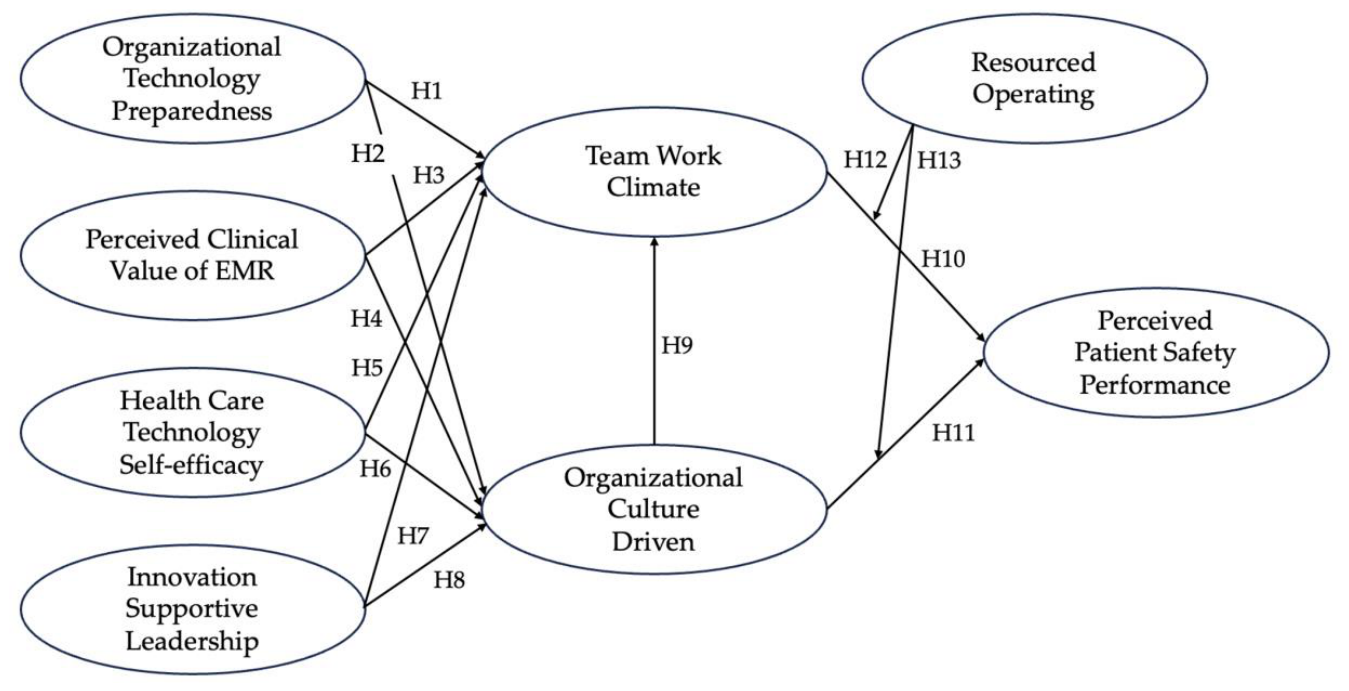
Table 1.
Conceptual Definition.
| Constructs | Conceptualized Definition |
| Perceived Patient Safety Performance |
Healthcare workers’ perceptions of the organization’s ability to prevent patient safety incidents, implement safety standards, and maintain quality of care through safety systems and a culture of safety [24] |
| Resource-Constrained Operating Pressure |
Healthcare professionals’ perceptions of the organizational resource conditions under which routine clinical services are delivered, including the adequacy of staffing, operational funding, medical supplies, and infrastructure available to support patient care. [25] |
| Teamwork Climate | Healthcare workers’ perceptions of the quality of cooperation, communication, coordination, mutual trust, and team support in completing service tasks [26] |
| Organizational Culture Driven |
An organizational culture orientation that perceived has been supporting the adaptation, learning, openness to innovation, and work patterns consistent with change [27] |
| Innovation-Supportive Leadership |
Is the perception that the leadership style encourages creativity, supports change, provides resources, and gives space for staff to try and adopt innovations, including digital innovations in healthcare facilities [28]. |
| Digital Health Readiness | Is the perception about the readiness of health workers to accept, adopt, use, and integrate digital technology in health services, including digital competency and positive attitudes towards technology [29,30] |
| Perceived Clinical Value of EMR | Healthcare workers’ perceptions of the clinical benefits of using RME, such as increased data accuracy, clinical decision support, increased efficiency, reduced errors, and increased patient safety [31,32] |
| Organizational Technology Preparedness | Is the perception of the employee that organization’s able to provide the technology infrastructure, training, human resources, policies, technical support, and change management systems needed for the implementation of digital technologies [33,34] |
Table 2.
Participants’ Characteristics (456).
| Characteristics | Category | Frequency (n) | Percentage (%) | |
| Sex | Male | 118 | 26 | |
| Female | 338 | 74 | ||
| Age | 20–29 years | 107 | 23 | |
| 30–39 years | 210 | 46 | ||
| 40 - 55 years | 139 | 30 | ||
| Length of Work | 1–3 years | 74 | 16 | |
| 4 - 10 years | 205 | 45 | ||
| 10 - 55 years | 177 | 39 | ||
| Employment Status |
Permanent (civil servants) | 367 | 80 | |
| Contract | 89 | 20 | ||
| Health Worker Type | General Physician | 75 | 16 | |
| Dentist | 16 | 4 | ||
| Midwife | 133 | 29 | ||
| Nurse | 232 | 51 |
Table 3.
Construct Reliability and Validity.
| Variable | Code | Measurement Indicator | Mean | OL |
| Healthcare Technology Self-Efficacy | HSE1 | I find it easy to use EMR at this Community Health Center | 3.885 | 0.948 |
| HSE2 | I am confident in my ability to utilize EMR for patient care | 3.928 | 0.958 | |
| HSE3 | I can learn how to utilize the data in EMR effectively. | 4.015 | 0.916 | |
| CA=0. 935, rho_a= 0.937, rho_c (CR)=0.959, AVE=0.886 | ||||
| Organization Culture Driven | OCD1 | Healthcare professionals at this Community Health Center share the same commitment to providing better services for patients. | 4.269 | 0.927 |
| OCD2 | When urgent tasks arise, healthcare professionals work collaboratively to complete them efficiently. | 4.259 | 0.947 | |
| OCD3 | Health workers at this Community Health Center are open to communicating with each other in completing their work. | 4.227 | 0.969 | |
| OCD4 | Each medical staff member understands their responsibilities and expected contributions to achieve the performance | 4.232 | 0.953 | |
| OCD5 | Health workers at this Health Center respect each other’s opinions in their work. | 4.222 | 0.958 | |
| CA=0.891, rho_a= 0.913, rho_c (CR)=0.949, AVE=0.823 | ||||
| Organizational Technology Preparedness | OTP1 | The digital computerized system at this Health Center can work well. | 4.030 | 0.819 |
| OTP3 | The software is updated periodically according to the needs | 4.040 | 0.900 | |
| OTP4 | Medical personnel receive sufficient training to use EMR | 3.985 | 0.849 | |
| OTP5 | Medical personnel have understood the procedures for using EMR according to the established operational standards. | 3.885 | 0.833 | |
| CA=0.873 rho_a= 0.882, rho_c (CR)=0.913, AVE=0.724 | ||||
| Perceived Clinical Value of EMR | PCV1 | The use of EMR in Community Health Centers can reduce the risk of medical errors when treating patients. | 4.234 | 0.857 |
| PCV2 | The use of EMR makes coordination between medical personnel (doctors, dentists, midwives) easier. | 4.314 | 0.811 | |
| PCV4 | EMR users help reduce manual administrative work so they can focus more on patient care. | 4.264 | 0.906 | |
| PCV5 | The use of EMR at this Community Health Center can support the accuracy of recording patient medical history. | 4.277 | 0.885 | |
| CA=0.912, rho_a= 0.913, rho_c (CR)=0.938, AVE=0.792 | ||||
| Perceived Patient Safety Performance | PPS1 | At this Center, the level of handwashing compliance of health workers is in accordance with the specified target. | 4.267 | 0.897 |
| PPS2 | The use of personal protective equipment (PPE) by medical personnel is carried out effectively. | 4.219 | 0.901 | |
| PPS3 | There were no errors in the identification of patients undergoing treatment at the Community Health Center. | 4.269 | 0.942 | |
| PPS4 | Incident reporting has been carried out according to the routine schedule. | 4.200 | 0.934 | |
| PPS5 | Distribution of drugs to outpatients has been carried out according to standards. | 4.262 | 0.937 | |
| PPS6 | So far, there have been few complaints from community health center patients due to side effects of drugs. | 4.269 | 0.922 | |
| CA=0.964, rho_a= 0.965, rho_c (CR)=0.971, AVE=0.851 | ||||
| Resource Constrained Operating | RCO1 | This health center actually has adequate funding sources to support routine service operations. | 3.998 | 0.903 |
| RCO2 | Availability of medical supplies such as medicines or medical equipment is sufficient to provide services according to standards. | 4.082 | 0.918 | |
| RCO4 | There are sufficient health workers at this Community Health Center who have adequate competence to handle the workload. | 4.102 | 0.937 | |
| CA=0.909, rho_a= 0.915, rho_c (CR)=0.943, AVE=0.846 | ||||
| Innovation Supportive Leadership | SLS1 | The leader at this Community Health Center give acknowledgement when they hear of new ideas to improve patient safety performance. | 4.167 | 0.889 |
| SLS2 | The Community Health Center Management seriously considers input from medical personnel in an effort to improve patient safety. | 4.207 | 0.923 | |
| SLS3 | The Community Health Center Management actively seek input from medical personnel in an effort to improve patient safety. | 4.187 | 0.951 | |
| SLS4 | The leadership at the Community Health Center ensures the availability of facilities that can support new ways of improving services for patients. | 4.185 | 0.941 | |
| SLS5 | Leaders at the Community Health Center facilitate professional cooperation between medical personnel. | 4.217 | 0.940 | |
| CA=0.960, rho_a= 0.961, rho_c (CR)=0.969, AVE=0.853 | ||||
| Teamwork Climate | TWL1 | Health workers received constructive feedback regarding the collaboration that had been carried out to reduce medical errors. | 4.137 | 0.942 |
| TWL2 | In this Community Health Center, if there is a medical error, it is considered a shared responsibility, not just the fault of one person. | 4.150 | 0.954 | |
| TWL4 | Health workers at the Community Health Center can work together well to improve the quality of patient services. | 4.185 | 0.907 | |
| CA=0.927, rho_a= 0.928, rho_c (CR)=0.954, AVE=0.873 | ||||
OL: Outer Loading, CA: Cronbach Alpha, CR: Composite Reliability, AVE: Average Variance Extracted.
Table 4.
Heterotrait-Monotrait Ratio.
| Variable | HSE | SLS | OCD | OTP | PCV | PPS | RCO | TC | RCO - TC | RCO-OCD |
| SLS | 0.707 | |||||||||
| OCD | 0.642 | 0.884 | ||||||||
| OTP | 0.790 | 0.641 | 0.605 | |||||||
| PCV | 0.647 | 0.740 | 0.769 | 0.644 | ||||||
| PPS | 0.691 | 0.905 | 0.907 | 0.595 | 0.771 | |||||
| RCO | 0.778 | 0.824 | 0.798 | 0.722 | 0.730 | 0.861 | ||||
| TC | 0.734 | 0.843 | 0.802 | 0.682 | 0.732 | 0.891 | 0.860 | |||
| RCO - TC | 0.279 | 0.398 | 0.390 | 0.180 | 0.185 | 0.430 | 0.348 | 0.425 | ||
| RCO -OCD | 0.271 | 0.403 | 0.434 | 0.172 | 0.217 | 0.460 | 0.347 | 0.402 | 0.848 |
HSE: Healthcare Technology Self-Efficacy, SLS: Innovation Supportive Leadership, OTP: Organizational Technology Preparedness, PCV: Perceived Clinical Value, PPS: Perceived Patient Safety Performance, RCO: Resource Constrained Operating, TWL: Teamwork Climate, OCD: Organization Culture Driven.
Table 6.
Hypothesis Test Result.
| Hypotheses |
Path Coefficient |
P – values |
Confidence Interval | Decision | ||
| 5.0% | 95.0% | |||||
| H1 | Organizational Technology Preparedness -> Teamwork Climate | 0.071 | 0.032 | 0.010 | 0.135 | Hypotheses Supported |
| H2 | Organizational Technology Preparedness -> Organization Culture Driven | 0.023 | 0.351 | -0.052 | 0.134 | Hypotheses Not Supported |
| H3 | Perceived Clinical Value of EMR -> Teamwork Climate | -0.028 | 0.267 | -0.094 | 0.052 | Hypotheses Not Supported |
| H4 | Perceived Clinical Value of EMR -> Organization Culture Driven | 0.247 | 0.000 | 0.139 | 0.370 | Hypotheses Supported |
| H5 | Healthcare Technology Self-Efficacy -> Teamwork Climate | 0.100 | 0.002 | 0.039 | 0.150 | Hypotheses Supported |
| H6 | Healthcare Technology Self-Efficacy -> Organization Culture Driven | 0.000 | 0.499 | -0.099 | 0.086 | Hypotheses Not Supported |
| H7 | Innovation Supportive Leadership -> Teamwork Climate | 0.511 | 0.000 | 0.364 | 0.630 | Hypotheses Supported |
| H8 | Innovation Supportive Leadership -> Organization Culture Driven | 0.670 | 0.000 | 0.549 | 0.767 | Hypotheses Supported |
| H9 | Organization Culture Driven -> Teamwork Climate | 0.340 | 0.000 | 0.196 | 0.508 | Hypotheses Supported |
| H10 | Teamwork Climate -> Perceived Patient Safety Performance | 0.202 | 0.001 | 0.079 | 0.310 | Hypotheses Supported |
| H11 | Organization Culture Driven -> Perceived Patient Safety Performance |
0.458 | 0.000 | 0.368 | 0.574 | Hypotheses Supported |
| H12 | Resource Constrained Operating x Teamwork Climate -> Perceived Patient Safety Performance |
0.053 | 0.154 | -0.032 | 0.152 | Hypotheses Not Supported |
| H13 | Resource Constrained Operating x Organization Culture Driven -> Perceived Patient Safety Performance |
-0.095 | 0.035 | -0.191 | -0.009 | Hypotheses Supported |
Disclaimer/Publisher’s Note: The statements, opinions and data contained in all publications are solely those of the individual author(s) and contributor(s) and not of MDPI and/or the editor(s). MDPI and/or the editor(s) disclaim responsibility for any injury to people or property resulting from any ideas, methods, instructions or products referred to in the content. |
© 2026 by the authors. Licensee MDPI, Basel, Switzerland. This article is an open access article distributed under the terms and conditions of the Creative Commons Attribution (CC BY) license.
Copyright: This open access article is published under a Creative Commons CC BY 4.0 license, which permit the free download, distribution, and reuse, provided that the author and preprint are cited in any reuse.