
Submitted:
29 July 2026
Posted:
30 July 2026
You are already at the latest version
Abstract
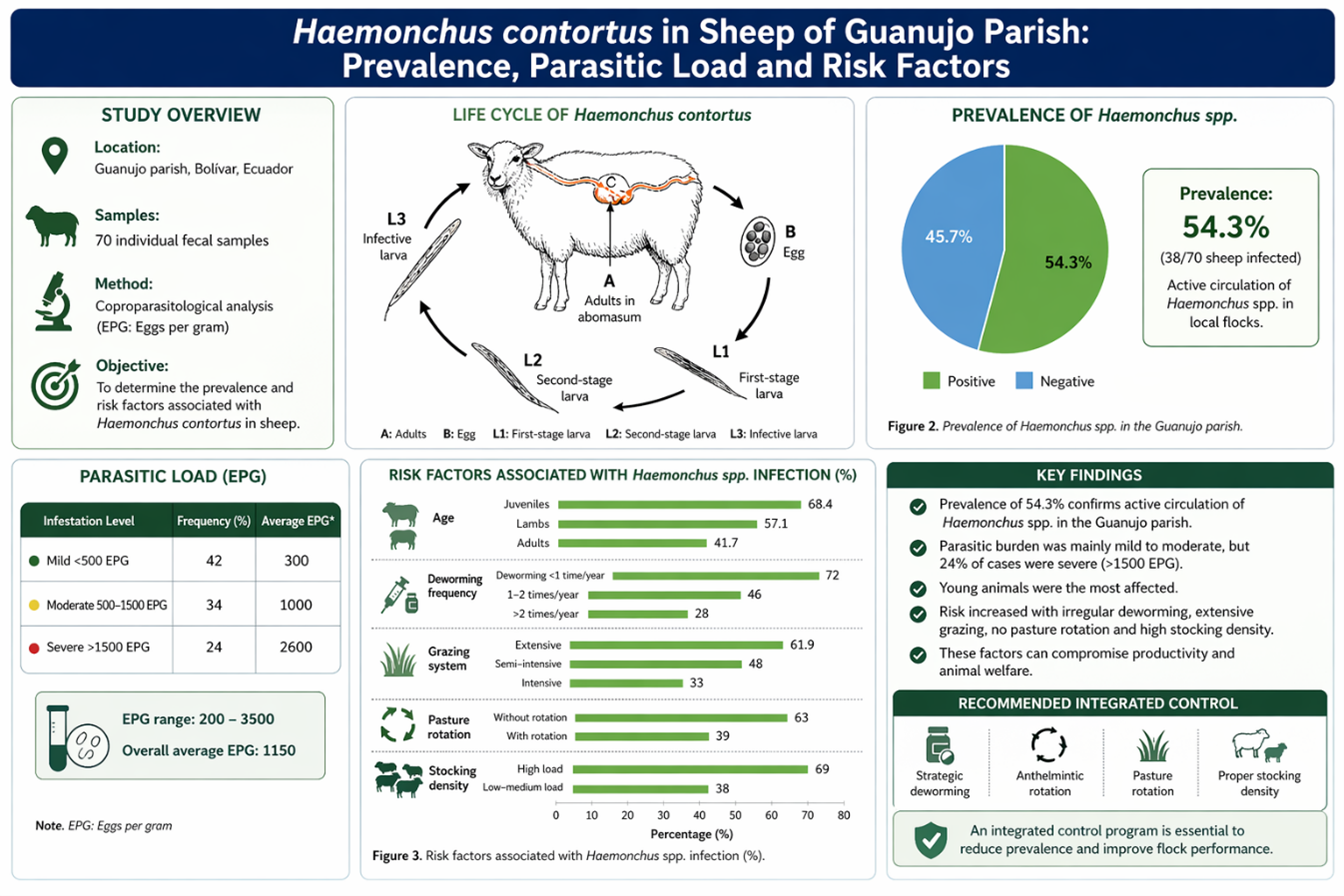
Background: Haemonchus spp. is one of the most pathogenic nematodes in sheep production due to the health and economic losses it causes. Aim: This study determined the prevalence and associated risk factors in sheep from the Guanujo parish, Ecuador. Methods: A quantitative, descriptive, cross-sectional study was conducted between November 2025 and March 2026. Seventy fecal samples were collected individually from sheep via rectal sampling. These samples were then analyzed using coproparasitological techniques, and the modified McMaster method was applied to quantify eggs per gram (EPG). Results: Thirty-eight animals tested positive for the pathogen, representing a prevalence of 54.3% (95% CI: 42.6–65.5%). Parasite counts ranged from 200 to 3500 EPG, with an average of 1150 EPG. Mild infestation was observed in 42% of the animals, moderate infestation in 34%, and severe infestation in 24%. Infection was higher in young animals, lactating ewes, those in poor body condition, and those raised in extensive systems with irregular deworming. A significant association was identified with age, physiological state, deworming frequency, animal density, and production system (p<0.05). Conclusion: These findings confirm that Haemonchus represents a significant production and health challenge in local sheep farming systems, suggesting the need for integrated parasite control strategies.
Keywords:
strongyle eggs
; prevalence in sheep
; risk factors
; Guanujo Ecuador
1. Introduction
Gastrointestinal parasitosis is one of the main public health problems affecting extensive and semi-extensive sheep production worldwide. Among the parasites of economic and health importance is the gastrointestinal nematode of the strongylid type, considered the most dangerous pathogens in small ruminants due to their hematophagous nature and high reproductive capacity. Infection with this parasite causes anemia, weight loss, hypoproteinemia, decreased productivity, and in some cases, can even cause death, especially in limited health management systems [1,2]. Nematodes of the genus Haemonchus are characterized by a high capacity for adaptation to diverse climatic conditions, which explains their wide geographic distribution. The highest prevalence of this pathogen has been recorded in subtropical and tropical regions, such as southern India, Australia, Central Africa, and northern South America; however, recent research has demonstrated a more rapid expansion into temperate and colder zones, increasing its epidemiological importance worldwide [3,4].
In fact, examples of this expansion have even been recorded in countries like Russia, where H. contortus is already the most widespread digestive nematodiasis in sheep [5].
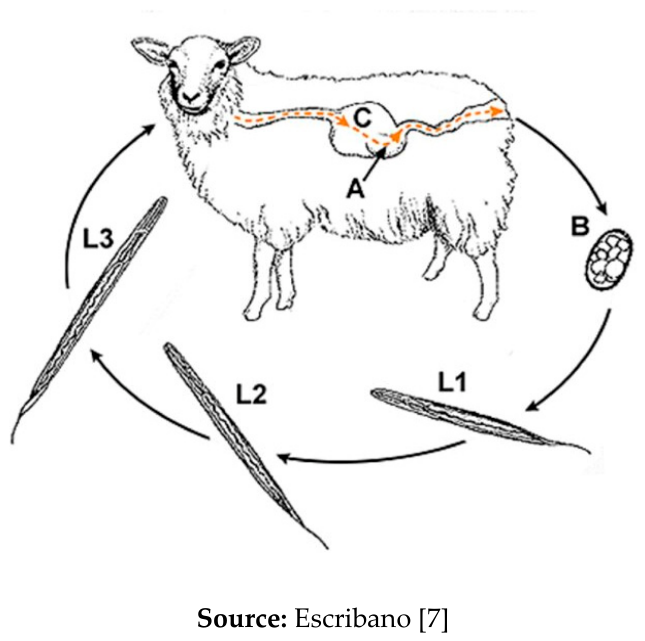
From a biological perspective, the life cycle of Strongyle-type gastrointestinal nematode, it includes free-living stages in the environment: egg, L1, L2, and L3, which require suitable humidity and temperature conditions for their development, as well as parasitic stages in the abomasum (the fourth and last compartment of the stomach) of the host. The infectious L3 larvae are ingested by sheep during grazing and develop into hematophagous adults capable of consuming up to 50 μL of blood per day, which explains the severity of the clinical signs, mainly in young animals and lactating ewes [2,6].
Figure 1.
Life cycle of Strongyle-type gastrointestinal nematode in the host.
The burden and prevalence of pathogen depend on multiple factors, ranging from environmental conditions and the animal's physiological state to production system, age, and herd health management. Warm, humid regions favor larval survival in pastures, increasing the infectious load in grazing sheep. Research conducted on young ruminants with irregular deworming and poor body condition has shown that these sheep are more susceptible to infection [8,9].
A key factor in controlling this pathogen is the resistance to anthelmintics that has emerged with the indiscriminate use of common clinical anthelmintics. These drugs include, for example, macrocyclic lactones, levamisole, and benzimidazoles. The main problem arises when resistant strains with multiple resistance appear, reducing the effectiveness of conventional treatments, leading to therapeutic failures and increased costs [10,11]. This situation has prompted the search for alternative strategies, such as selective control, monitoring of parasite load, phytotherapy, alternating active ingredients, and the use of experimental vaccines [12,13]. In Ecuador, the largest sheep-raising area is concentrated in the central highland provinces of Cotopaxi, Chimborazo, Azuay, and Bolívar, where traditional grazing systems with minimal sanitary control predominate. Previous studies in this region have identified high prevalences of Haemonchus spp. In these areas, this parasite is the leading gastrointestinal parasite of sheep [14]. However, epidemiological information at the local level, especially in the Bolívar province, remains quite limited, or even nonexistent, particularly regarding the identification of risk factors associated with the infection.
Although Haemonchus contortus is considered the predominant pathogenic strongyle in tropical sheep production systems, the modified McMaster technique cannot differentiate eggs of Haemonchus from other trichostrongylid nematodes. Therefore, positivity in the present study refers to strongyle-type eggs detected by fecal examination.
Therefore, this study aimed to determine the prevalence and associated risk factors of Strongyle eggs in sheep in the parish of Guanujo, Bolívar province, Ecuador, thus contributing to the generation of local epidemiological information that will strengthen sanitary control strategies in the region.
2. Materials and Methods
2.1. Study Area and Study Period
In this study, sheep fecal samples were collected in the parish of Guanujo and parasitologically analyzed at the laboratories of the Faculty of Agricultural Sciences of the State University of Bolívar between November 2025 and March 2026. The research was quantitative, descriptive, analytical, and cross-sectional. Since representative sheep fecal samples were analyzed within the same timeframe, this allowed for the estimation of the prevalence and parasitic load of Strongyle-type gastrointestinal nematode in the parish of Guanujo, as well as the identification of various associated risk factors that predispose sheep to infestation by strongyle-type eggs.
2.2. Methodological Approach and Study Design
The study employed a quantitative, observational, cross-sectional, descriptive, and analytical design. During a single study period, fecal samples and information on animals and livestock farms were collected to estimate the prevalence and parasite load of the strongyle-type eggs, and to evaluate the factors associated with parasite positivity.
2.3. Study Population, Unit of Analysis, and Unit of Observation
2.3.1. Study Population
In the investigation, the population consisted of approximately 650 sheep belonging to production units in the Guanujo parish.
2.3.2. Unit of Analysis and Unit of Observation
The unit of analysis and observation was each sampled sheep. An individual fecal sample was collected from every animal, together with animal-level and farm-level information on productive, sanitary, and management characteristics.
2.4. Sample Size Calculation
Based on an estimated population of 650 sheep in the parish of Guanujo, the minimum sample size was calculated using the formula for estimating a proportion in a finite population. A 95% confidence level (Z = 1.96), an expected prevalence of 50% (p = 0.50) due to the lack of previous studies in the area, and an absolute margin of error of 10% (d = 0.10) were demonstrated. The minimum sample size was 60 animals. To compensate for potential sample losses or unsuitable samples, 70 sheep were ultimately included.
2.5. Farm Selection and Sampling Procedure
Fourteen farms were selected, taking into account their accessibility and the consent of their owners, while the animals will be randomly selected within each participating farm.

Table 1.
Distribution of sampled sheep among the production units included in the study in Guanujo parish, Ecuador.
Table 1.
Distribution of sampled sheep among the production units included in the study in Guanujo parish, Ecuador.
| Sector | Farms code | Animals sampled |
|---|---|---|
| Centro de Guanujo | CGa | 6 |
| Centro de Guanujo | CGb | 4 |
| Nuevo Guanujo | NGa | 4 |
| Nuevo Guanujo | NGb | 4 |
| Ibisgagua | Ib | 5 |
| Quinoa Corral | QCa | 5 |
| Quinoa Corral | QCb | 4 |
| Callanayacu | CAa | 5 |
| Callanayacu | CAb | 4 |
| Llullundongo | SjLa | 8 |
| Llullundongo | SjLb | 4 |
| La Moya | LMo | 5 |
| Rumipungo | RUa | 6 |
| Rumipungo | RUb | 6 |
| Total | 14 | 70 |
2.6. Characteristics of the Study Population
Animals were classified according to age as lambs (<6 months), juveniles (6–12 months), or adults (>12 months). Physiological status was categorized as lactating, pregnant, non-pregnant, or growing. This population composition allowed the evaluation of the strongyle-type eggs infection in animals belonging to different age and physiological categories, facilitating the analysis of these variables as possible factors associated with the infection.
2.7. Farm Management Characteristics
Information on farm management was obtained through a structured questionnaire administered to the farm owner or the person responsible for flock management.
The extensive system refers to open-range grazing on large pastures under natural shelters; the semi-intensive system is grazing plus strategic supplementation (grains/forage) during critical periods; and the intensive system is highly precise rotational grazing with a controlled diet.
The following categories are defined: Low Stocking Rate (Less than 3 to 4 sheep/hectare); Medium Stocking Rate (5 to 10 sheep/hectare); High Stocking Rate (More than 12 to 15 sheep/hectare).
2.8. Fecal Sample Collection, Preservation, and Transport
Approximately 10–20 g of feces was collected directly from the rectum of each sheep using disposable gloves. Samples were placed in sterile, airtight, individually labeled containers and transported under refrigerated conditions at approximately 4 °C. Coproparasitological analyses were performed within four hours after collection.
2.9. Coproparasitological Analysis
All fecal samples were analyzed using the modified McMaster technique to determine the presence and severity of gastrointestinal nematode infection. Briefly, 4 g of feces were homogenized with a flotation solution to obtain the appropriate dilution for egg counting. The resulting suspension was filtered and introduced into a 0.15 mL McMaster counting chamber, following the standard operating procedure for the technique. The egg count was multiplied by a conversion factor of 50, and the results were expressed as eggs per gram of feces (EPG). Eggs consistent with Strongyle-type gastrointestinal nematode were identified based on their morphological characteristics observed using light microscopy, including their oval shape, thin, transparent shell, and the presence of a morula composed of multiple blastomeres, according to standard parasitological identification keys. All microscopic examinations were performed by laboratory personnel trained and experienced in veterinary parasitology. Samples were considered positive when at least one egg morphologically compatible with strongyle-type eggs was observed in the McMaster chamber.
2.10. Data Collection and Study Variables
2.10.1. Data Collection
Information was collected at both the animal and farm levels using a standardized data collection form specifically designed for this study. Animal-level information was obtained through direct observation, physical examination, and consultation of farm records, when available. Farm management information was obtained through a structured interview with the owner or the person responsible for herd management. The data collection form included variables related to animal identification, age, sex, breed, physiological state, body condition score, and coproparasitological findings. Information was also recorded on the production system, stocking rate, deworming practices, anthelmintic use, pasture rotation, coexistence with other livestock species, the presence of wetlands or flooded grazing areas, and the geographic location of each farm. The animal's body condition was assessed by physical examination using palpation of the lumbar region, following the standard five-point scoring system for sheep, while management-related variables were obtained directly from the producers during the interview.
2.10.2. Dependent Variable
The primary dependent variable was parasitological positivity for strongyle-like eggs, classified as positive or negative according to the coproparasitological examination performed using the modified McMaster technique. An animal was considered positive when at least one strongyle-like egg morphologically compatible with Strongyle-type gastrointestinal nematode was observed during microscopic examination. The secondary outcome variable was the parasite load, expressed as eggs per gram of feces (EPG), calculated using the McMaster counting technique with a multiplication factor of 50. EPG values were analyzed as a continuous quantitative variable.
2.10.3. Independent Variables
The explanatory variables evaluated in this study were classified into animal-level variables and farm-level management variables. Animal-level variables included age, sex, breed, physiological state, and body condition. Age was determined from farm records when available and, when necessary, confirmed by dental examination. Animals were classified as lambs (<6 months), juveniles (6–12 months), and adults (>12 months). Sex was recorded as male or female, while breed was classified according to the predominant genetic type reported by the owner. Physiological state was established from farm records, owner information, and physical examination. Juvenile animals and lambs were classified as growing, while adult females were categorized as pregnant, lactating, or non-pregnant (open) according to their reproductive status at the time of sampling. Body condition score (BCS) was assessed using the five-point (1-5) scoring system described for sheep by palpating the lumbar region. Based on the score obtained, the animals were classified as having low, medium, or high body condition. Farm-level variables included the production system (extensive, semi-intensive, or intensive), stocking rate (low, medium, or high), deworming frequency (<1 treatment/year, 1-2 treatments/year, or >2 treatments/year), the class of anthelmintic used (benzimidazoles, macrocyclic lactones, other classes, or no treatment), pasture rotation (yes/no), coexistence with other livestock species (yes/no), the presence of wetlands or flooded grazing areas (yes/no), and the geographic sector within the parish.
2.11. Statistical Analysis
The data were cleaned and analyzed using the statistical software Infostat and Excel. Descriptive analysis was performed using frequencies and percentages for categorical variables, while quantitative variables were summarized using mean and standard deviation or median and interquartile range, depending on their distribution. The prevalence of the strongyle-type eggs was estimated with its respective 95% confidence intervals, and the parasite load was expressed as eggs per gram of feces (EPG). The association between parasite positivity and the independent variables was initially assessed using Pearson's chi-squared test or Fisher's exact test when necessary, estimating crude odds ratios (OR) with their 95% confidence intervals. Subsequently, variables with a p-value < 0.20 in the univariate analysis, along with those considered epidemiologically relevant, were included in a multivariable binary logistic regression model to identify factors independently associated with positivity. Adjusted odds ratios (ORa) and 95% confidence intervals were calculated. Variance inflation factors (VIF) were examined and no severe multicollinearity was detected. Statistical significance was considered when p < 0.05. Because the animals came from different farms, the potential pooling effect was considered during the interpretation of the results; if this effect was not incorporated into the statistical model, this limitation was acknowledged in the discussion.
2.12. Research Hypothesis
We hypothesized that parasitological positivity was associated with animal-level characteristics and flock-management practices.
2.13. Ethical Approval and Animal Welfare
The study protocol was approved by the Bioethics Committee of the Vice-Rectorate for Research of the Universidad Estatal de Bolívar under approval code UEB-VIV-CBE-2026-003. All animal-handling and sample-collection procedures were conducted in accordance with institutional biosafety and animal-welfare guidelines. Informed consent was obtained from the owners or persons responsible for the participating farms before sample collection and the administration of the questionnaire.
3. Results
3.1. Characteristics of the Study Population
Table 2.
Characteristics of the sheep included in the study (n=70).
| Variable | Category | n | % |
|---|---|---|---|
| Age | Lambs | 17 | 24.3 |
| Juveniles | 35 | 50.0 | |
| Adults | 18 | 25.7 | |
| Sex | Female | 45 | 64.3 |
| Male | 25 | 35.7 | |
| Physiological status | Growing | 35 | 50.0 |
| Lactating | 17 | 24.3 | |
| Non-pregnant | 11 | 15.7 | |
| Pregnant | 7 | 10.0 |
A total of 70 sheep from 14 production units located in Guanujo parish were included in the study. Of these, 35 (50.0%) were juveniles, 18 (25.7%) were adults, and 17 (24.3%) were lambs. Regarding physiological status, 35 animals (50.0%) were classified as growing, 17 (24.3%) were lactating, 11 (15.7%) were non-pregnant, and 7 (10.0%) were pregnant.
Table 3.
Characteristics of the farms included in the study.
| Variable | Category | Number of farms | % |
|---|---|---|---|
| Production System | Extensive | 7 | 50.0 |
| Semi-intensive | 5 | 35.7 | |
| Intensive | 2 | 14.3 | |
| Deworming Frequency | <1 time/year | 10 | 71.4 |
| 1–2 times/year | 2 | 14.3 | |
| >2 times/year | 2 | 14.3 | |
| Pasture Rotation | Yes | 5 | 35.7 |
| No | 9 | 64.3 | |
| Stocking Rate | High | 8 | 57.1 |
| Low-medium | 6 | 42.9 |
3.2. Prevalence of the Strongyle-Type Eggs
The results show the prevalence and parasitic load of nematode in sheep in the Guanujo parish, as well as its association with production and management factors.
Figure 2.
Prevalence of Strongyle-type gastrointestinal nematode in Guanujo.
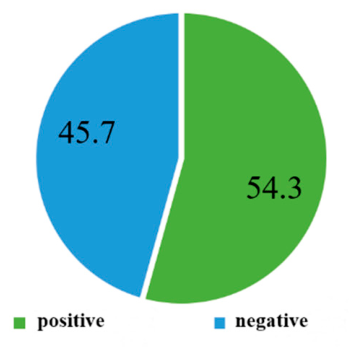
Thirty-eight of the 70 evaluated sheep tested positive, corresponding to an overall prevalence of 54.3% (95% CI: 42.6–65.5%). Positive animals were detected in all evaluated sectors of Guanujo parish, indicating a wide distribution of the parasite throughout the study area.
3.3. Parasite Burden
Table 4.
Parasite load.
| Infestation Level | Frequency (%) | Average EPG |
|---|---|---|
| Mild <500 EPG | 42 | 300 |
| Moderate 500–1500 | 34 | 1000 |
| Severe >1500 | 24 | 2600 |
Note. EPG: Eggs per gram.
Egg counts ranged from 200 to 3500 EPG, with a mean parasite burden of 1150 EPG. According to the established classification, 42% of positive animals showed mild infestation, 34% moderate infestation, and 24% severe infestation. These findings demonstrate the coexistence of subclinical infections and severe parasitic burdens that may compromise animal productivity and health status.
3.4. Factors Associated with Positivity
Figure 3.
Factors associated with strongyle-type eggs infection (%).
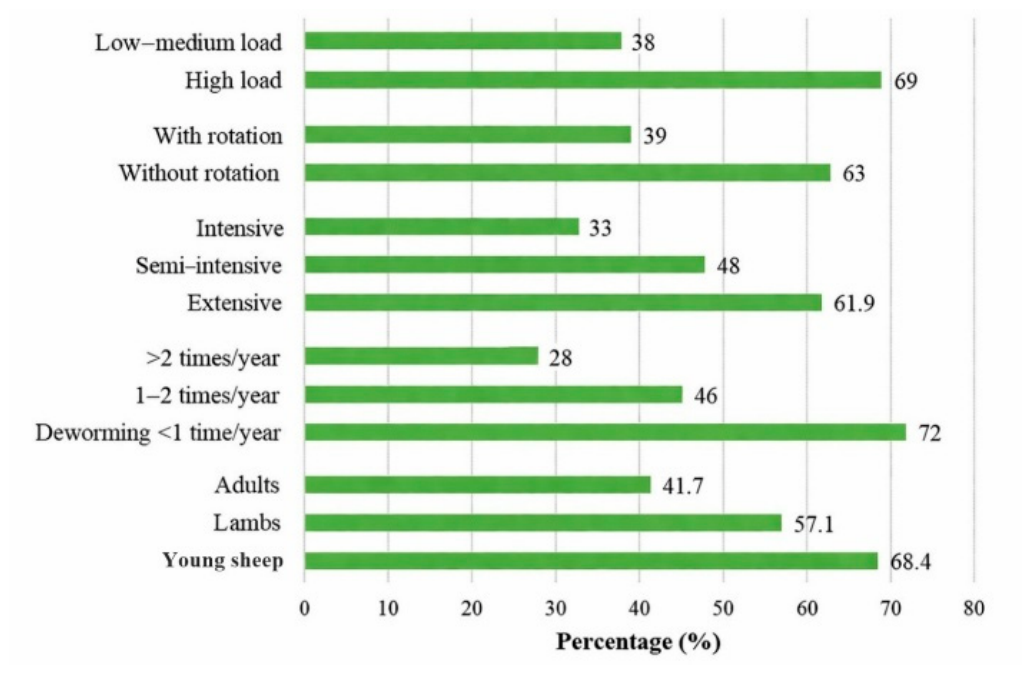
Table 5.
Characteristics of the study population (n = 70).
| Variable | Categoría | Prevalence (%) | P value | |
|---|---|---|---|---|
| Age | Lambs | 57.1 | ||
| Juveniles | 68.4 | 0.035 | ||
| Adults | 41.7 | |||
| Physiological status | Lactating | 70.0 | ||
| Pregnant | — | |||
| Non-pregnant | — | |||
| Growing | 58.0 | 0.015 | ||
| Production system | Extensive | 61.9 | ||
| Semi-intensive | 48.0 | |||
| Intensive | 33.0 | 0.022 | ||
| Deworming frequency | <1 time/year | 72.0 | ||
| 1–2 times/year | 46.0 | |||
| >2 times/year | 28.0 | 0.009 | ||
| Pasture rotation | yes | 39.0 | ||
| No | 63.0 | 0.025 | ||
| Stocking density | High | 69.0 | ||
| Low-moderate | 38.0 | 0.006 | ||
Higher positivity was observed among juvenile animals (68.4%), lactating ewes (70.0%), sheep raised under extensive production systems (61.9%), farms with less than one deworming treatment per year (72.0%), farms without pasture rotation (63.0%), and farms with high stocking density (69.0%).
3.5. Univariate Analysis
Table 6 presents the results of the univariate analysis of factors associated with Strongyle-type gastrointestinal nematode positivity. Statistically significant associations were identified for deworming frequency, pasture rotation, production system, animal density, age, and physiological state (p < 0.05). Sheep raised in extensive systems with high animal density, without pasture rotation, and with a deworming frequency of less than once a year showed a higher probability of infection. Likewise, juvenile animals and lactating ewes showed a higher probability of positivity compared to adults and non-lactating animals, respectively. In contrast, sex, breed, cohabitation with other species, and the presence of wetlands did not show a statistically significant association with infection (p > 0.05).
3.6. Multivariable Logistic Regression
Table 7.
Multivariable logistic regression model for the identification of factors independently associated with positivity for Strongyle-type gastrointestinal nematode in sheep from the Guanujo parish.
Table 7.
Multivariable logistic regression model for the identification of factors independently associated with positivity for Strongyle-type gastrointestinal nematode in sheep from the Guanujo parish.
| Variable | Comparison | OR ajusted | 95% inferior CI | 95% superior CI | p-value |
|---|---|---|---|---|---|
| Age | Lambs vs. adults | 4.818 | 1.137 | 20.421 | 0.033 |
| Age | Juveniles vs adults | 8.721 | 1.998 | 38.074 | 0.004 |
| Sex | Males vs females | 1.988 | 0.585 | 6.759 | 0.271 |
| System | Extensive vs intensive | 4.604 | 1.615 | 13.120 | 0.004 |
| System | Semi-intensive vs intensive | 4.085 | 1.127 | 14.809 | 0.032 |
| Deworming | 1–2 times/year vs >2 times/year | 0.580 | 0.122 | 2.756 | 0.493 |
| Deworming | <1 time/year vs >2 times/year | 0.337 | 0.129 | 0.883 | 0.027 |
| Rotation | No vs Yes | 0.869 | 0.241 | 3.140 | 0.830 |
| Density | High vs low | 5.149 | 1.425 | 18.598 | 0.012 |
Multivariable logistic regression allowed the identification of factors independently associated with strongyle-type eggs positivity, while simultaneously adjusting for the effect of other variables included in the model. Lambs (aOR = 4.82; 95% CI: 1.14–20.42; p = 0.033) and, especially, juveniles (aOR = 8.72; 95% CI: 2.00–38.07; p = 0.004) showed a higher probability of positivity compared to adult animals. Extensive (aOR = 4.60; 95% CI: 1.62–13.12; p = 0.004) and semi-intensive (aOR = 4.09; 95% CI: 1.13–14.81; p = 0.032) production systems, as well as high animal density (aOR = 5.15; 95% CI: 1.43–18.60; p = 0.012), remained significantly associated with infection. In contrast, sex and pasture rotation did not show an independent association with positivity (p > 0.05). Although deworming frequency showed a statistically significant association in the adjusted model (aOR = 0.34; 95% CI: 0.13–0.88; p = 0.027), this result should be interpreted with caution, as its direction differs from that observed in the univariate analysis and likely reflects collinearity effects or residual confounding among the management variables evaluated. Overall, the model indicated that animal age, production system, and stocking density were the main factors independently associated with Strongyle-type gastrointestinal nematode positivity.
In contrast, sex, pasture rotation, and deworming frequency did not show a consistent independent association after adjustment for the other variables in the model.
4. Discussion
4.1. Prevalence of Strongyle-Type Gastrointestinal Nematodes
The prevalence obtained in this study was 54.3%, indicating the active circulation of Strongyle-type gastrointestinal nematodes in sheep production systems in the parish of Guanujo. This prevalence falls within a moderate range when compared to reports from other countries and production systems. For example, Rojas-Hernández et al. [15], reported a significantly higher prevalence (77.63%) in grazing sheep in Mexico, attributing these results to extensive grazing systems and ambient humidity, which favor the pathogen's survival in pastures. Similarly, Demessie et al. [16], described a prevalence of 66.9% in Ethiopia, associating the infection with favorable climatic conditions and traditional management practices.
The lower prevalence observed in the present study compared with these reports may be explained by differences in climatic conditions, grazing pressure, parasite control strategies, and management practices among production systems. Nevertheless, the prevalence found in Guanujo confirms that Strongyle-type gastrointestinal nematodes are widely distributed and remain a major constraint for sheep production in the region.
The relatively high prevalence observed in Guanujo could be associated with continuous grazing, ambient humidity, and limited pasture rotation, factors that favor the survival of infectious L3 larvae of Strongyle-type gastrointestinal nematode. Furthermore, the climatic conditions of the Bolívar highlands, characterized by periods of persistent humidity and moderate temperatures, could contribute to greater larval survival in grazing areas, significantly increasing the likelihood of reinfection in sheep managed under traditional extensive systems. In contrast, Gebresilassie and Tadele [17], reported a lower prevalence of 40.9% in Ethiopia, highlighting the importance of management variables such as grazing practices and the frequency of deworming. These differences between the various studies could explain why the prevalence observed in Guanujo was higher than in systems implementing more controlled management practices.
4.2. Parasite Burden
The average parasite load observed in this study was 1150 EPG, indicating moderate to severe infestation levels in the studied sheep population. Brik et al. [18], reported similar results, associating high EPG values with favorable ambient humidity, extensive management systems, and poor body condition in the analyzed animals. Boukhari et al. [19], demonstrated that continuous grazing and the absence of regular deworming programs favor the accumulation of infectious larvae in pastures, leading to an increased parasite load in grazing sheep. These findings are consistent with the conditions identified in the Guanujo parish.
4.3. Risk Factors Associated with Infection
This study also demonstrated that factors such as management significantly influenced parasite transmission dynamics. Animals managed with infrequent deworming, extensive grazing systems, and a lack of pasture rotation showed significantly higher infection rates.
These findings are consistent with those reported by Mohamed et al. [9] in Somalia, who reported that continuous grazing systems and traditional management favor contact with L3 larvae, increasing the likelihood of parasitosis compared to animals managed under controlled conditions. These results support the idea that production and health management are key factors in parasite transmission in grazing systems [20].
Similarly, sheep managed under extensive and semi-intensive production systems exhibited significantly higher odds of infection than animals raised under intensive conditions. Mohamed et al. [9] reported comparable findings, indicating that continuous grazing systems increase exposure to infective third-stage (L3) larvae because animals remain in permanent contact with contaminated pastures. Solís-Carrasco et al. [8] likewise demonstrated that extensive grazing under humid environmental conditions substantially increases the risk of gastrointestinal nematode infection.
High stocking density also emerged as an independent risk factor in the present study. Greater animal density probably increases pasture contamination with infective larvae and consequently elevates the risk of parasite transmission among grazing sheep. Similar observations have been reported in other grazing systems where excessive stocking rates favor the persistence and dissemination of gastrointestinal nematodes [19].
In contrast, our study did not observe a highly significant association between infection and variables such as breed, sex, coexistence with other species, or the presence of wetlands. This suggests that management and biosecurity practices may influence parasite epidemiology more than the intrinsic characteristics of the animals under the evaluated production conditions. This may indicate that the epidemiological dynamics of Strongyle-type gastrointestinal nematode are strongly influenced by management conditions and sanitary control strategies. In fact, pasture rotation combined with strategic deworming has been shown to significantly reduce the probability of parasite reinfestation, reinforcing the importance of implementing integrated parasite control measures in sheep production systems in the Guanujo parish of the Guaranda canton [21].
4.4. Variables Not Independently Associated with Infection
Although deworming frequency, pasture rotation, and physiological status were significantly associated with infection in the univariate analysis, these variables did not remain significant after adjustment in the multivariable model. This finding suggests that part of their apparent effect may be explained by their interaction with production system and stocking density, which represented the strongest predictors of infection.
Likewise, sex, breed, coexistence with other animal species, and the presence of wetlands were not significantly associated with parasite positivity. Similar findings have been reported in previous epidemiological studies, indicating that management practices often have a greater influence on gastrointestinal nematode transmission than the intrinsic characteristics of the animals.
4.5. Implications for Parasite Control
Overall, the results indicate that management practices are the principal determinants of Strongyle-type gastrointestinal nematode infection in sheep from Guanujo Parish. Consequently, integrated parasite control strategies—including strategic anthelmintic treatments, improved pasture management, rotational grazing, and appropriate stocking densities—should be prioritized to reduce pasture contamination and interrupt parasite transmission under local production conditions.
5. Study Limitations
a) Only Strongyle eggs were used.
b) No molecular identification was performed.
c) No larval culture was performed.
d) The sample size was relatively small.
e) Cross-sectional design. Does not allow for establishing causality.
f) Possible selection bias.
g) Seasonality was not assessed.
6. Conclusions
The prevalence of strongyle-like gastrointestinal nematode eggs in sheep in the Guanujo parish was 54.3%, indicating widespread circulation of these parasites in the area's sheep production systems. The average parasite load was 1150 eggs per gram (EPG), with mild and moderate infestations predominating, although some animals with high loads were also identified, which could compromise their health and productivity.
Multivariable logistic regression analysis identified animal age, production system, and high stocking density as the main factors independently associated with strongyle-like gastrointestinal nematode egg positivity. Specifically, lambs and juveniles showed a higher probability of infection than adults, while extensive and semi-intensive systems, as well as farms with high stocking rates, showed a greater risk of positivity.
Although variables such as deworming frequency, pasture rotation, and physiological status showed an association in the univariate analysis, they did not maintain a consistent independent association after adjustment for the other variables in the model. This suggests that their effect may be influenced by other management characteristics and the production units evaluated.
Overall, the results highlight the need to strengthen integrated parasite control strategies, prioritizing improvements in production system management, stocking rate control, and biosecurity practices. These could contribute to reducing pasture contamination, decreasing the transmission of gastrointestinal nematodes, and improving the health and productivity of sheep flocks under the conditions of the Guanujo parish.
Author Contributions
M. F. M. G: Conceptualization, Methodology, Investigation, Data curation, Formal analysis, Validation, Visualization, Writing – original draft.; F.B.M: Conceptualization, Methodology, Supervision, Formal analysis, Project administration, Resources, Funding acquisition, Writing – review & editing, Validation, Correspondence. All authors have read and agreed to the published version of the manuscript.
Financial Support
This work was funded by the researchers with the support of the general laboratory of the Facultad de Ciencias Agropecuaria of the Universidad Estatal de Bolívar.
Acknowledgments
The authors express their sincere gratitude to the Departamento de Posgrado y Educación Continua of the Universidad Estatal de Bolívar, as well as to the Facultad de Ciencias Agropecuarias, Recursos Naturales y del Ambiente, for the institutional support provided and for facilitating the spaces, resources and conditions necessary throughout this time for the development and completion of this research work.
Conflicts of Interest
The authors declare that there are no conflicts of interest-financial, personal, professional, or institutional-that may have influenced the design, development, analysis, interpretation of results, or publication of this study. Furthermore, the Universidad Estatal de Bolívar exerted no influence whatsoever on the conclusions of this work, thus guaranteeing the scientific independence and objectivity of the research.
References
- Tachack EB, Oviedo-Socarrás T, Pastrana MO, Pérez-Cogollo LC, Benavides YH, Pinto CR, Garay OV. Status of gastrointestinal nematode infections and associated epidemiological factors in sheep from Córdoba, Colombia. Trop Anim Health Prod. 2022 Apr 26;54(3):171. PMID: 35471467; PMCID: PMC9042984. [CrossRef]
- Macedo IF, de Oliveira LB, Ribeiro WC, Dos Santos JM, Silva KC, Filho JA, Bevilaqua CM. Anthelmintic activity of Cymbopogon citratus against Haemonchus contortus. Brazilian Journal of Veterinary Parasitology. 2015; 24(3): 268–275. [CrossRef]
- do Nascimento JM, Brito SV, Teixeira AA, Guimarães R, Rodrigues AA, do Nascimento J, Sousa F, Leme da Cunha IA. Potential distribution modelling for Haemonchus contortus (Nematoda: Trichostrongylidae) in South America. Parasitol Res. 2024; 123, 227. [CrossRef]
- Sallé G, Doyle SR, Cortet J, Cabaret J, Berriman M, Holroyd N, Cotton JA. The global diversity of Haemonchus contortus is shaped by human intervention and climate. Nat Commun. 2019; 10: 4811. [CrossRef]
- Parvin S, Dey AR, Shohana NN, Anisuzzaman, Talukder, MH, & Alam MZ. Haemonchus contortus, an obligatory haematophagus worm infection in small ruminants: Population genetics and genetic diversity. Saudi Journal of Biological Sciences. 2024; 31(8): 104030. [CrossRef]
- Abosse JS, Terefe G, & Teshale BM. Comparative study on pathological changes in sheep and goats experimentally infected with Haemonchus contortus. Surgical and Experimental Pathology. 2022; 5(14): 1–12. [CrossRef]
- Escribano CS. Evaluación inmunológica de ovinos resistentes y susceptibles a la infestación por el nemátodo Haemonchus contortus. Thesis master, Universidad de la República, Facultad de Ciencias, Montevideo. 2022; Uruguay. https://www.researchgate.net/publication/332974430_Evaluacion_inmunologica_de_ovinos_resistentes_y_susceptibles_a_la_infestacion_por_el_nematodo_Haemonchus_contortus.
- Solís-Carrasco J, Gaxiola-Camacho S, Enríquez-Verdugo I, Portillo-Loera J, López-Valencia G, & Castro-del-Campo N. Factores ambientales asociados a la prevalencia de Haemonchus spp. en corderos de la zona centro de Sinaloa. Abanico Veterinario. 2021; 11: 1–14. [CrossRef]
- Mohamed MO, Yasin AM, & Jama NA. Assessment of the prevalence and risk factors of Haemonchus contortus infection of sheep and goats in Afgooye district, Somalia. Research Square. 2024; [CrossRef]
- Babják M, Königová A, Komáromyová M, Kuzmina T, Nosal P, Várady M. Multidrug resistance in Haemonchus contortus in sheep – can it be overcome? Journal of Veterinary Research. 2023; 67: 575–581. [CrossRef]
- Qamar W, & Alkheraije KA. Anthelmintic resistance in Haemonchus contortus of sheep and goats from Asia – A review of in vitro and in vivo studies. Pakistan Veterinary Journal, 2023; 43(3): 376–387. [CrossRef]
- Sajovitz-Grohmann F, Adduci I, Werling D, Wiedermann S, Wortha LN, Prole B, Lichtmannsperger K. Safety and efficacy of a novel glycoengineered recombinant vaccine candidate against Haemonchus contortus in sheep. NPJ Vaccines. 2025; 10:190: . [CrossRef]
- Ali R, Rooman M, Mussarat S, Norin S, Ali S, Adnan M, & Khan S N. A systematic review on comparative analysis, toxicology, and pharmacology of medicinal plants against Haemonchus contortus. Frontiers in Pharmacology. 2021; 12: 644027. [CrossRef]
- Pilataxi Simbaña JD. Elaboración y aplicación de antígeno parasitario (Haemonchus) en Ovinos. Universidad Técnica de Cotopaxi. Latacunga. 2021; 72 p. http://repositorio.utc.edu.ec/handle/27000/7938.
- Rojas-Hernández S, Gutiérrez-Segura I, Olivares-Pérez J, & Valencia-Almazán MT. Prevalencia de nemátodos gastrointestinales en ovinos en pastoreo en la parte alta del municipio de Cuetzala del Progreso, Guerrero-México. REDVET Revista electrónica de Veterinaria, 2007; 8(9): 1–7. http://www.veterinaria.org/revistas/redvet/n090907/090714.pdf.
- Demessie TS, Nigussie DR, Biru TM, Ambaw YG. Prevalence, Associated Risk Factors of Haemonchosis and Burden of Strongyle Nematode of Small Ruminants in Bishoftu, Oromia, Central Ethiopia. Journal of Parasitology Research. 2025; 10:2025:4417948. [CrossRef]
- Gebresilassie L, & Tadele B. Prevalence of Ovine Haemonchosis in Wukro, Ethiopia. Journal of Parasitology Research, 2015; 22: 635703. [CrossRef]
- Brik K, Hassouni T, Elkharrim K, Belghyti D. A survey of Haemonchus contortus parasite of sheep from Gharb plain, Morocco. Parasite Epidemiology and Control, 2019;3: e00094. [CrossRef]
- Boukhari MI, Elfadil AAM, Omer FA, Shuaib YA. Prevalence and risk factors of Haemonchus contortus in sheep in Khartoum State, Sudan. IOSR Journal of Agriculture and Veterinary Science. 2016; 9 (2): 77–83. [CrossRef]
- Mohamed SA, Dyab AK, Raya-Álvarez E, Abdel-Aziz FM, Osman F, Gareh A, ... & Elmahallawy EK. Molecular identification of Haemonchus contortus in sheep from Upper Egypt. Frontiers in Veterinary Science. 2024; 10: 1327424. [CrossRef]
- Ahmad N, Khan SA, Majid HA, Ali R, Ullah R, Bari A, Akbar NU, Majid A. Epidemiology and phylogeny of Haemonchus contortus through internal transcribed spacer 2 gene in small ruminants. Frontiers in Veterinary Science. 2024; 11: 1380203. [CrossRef]
Table 6.
Univariate analysis of factors associated with strongyle-type eggs positivity in sheep from Guanujo Parish, Ecuador.
Table 6.
Univariate analysis of factors associated with strongyle-type eggs positivity in sheep from Guanujo Parish, Ecuador.
| Variable | Comparison | OR crude | 95% CI | p-value | |
|---|---|---|---|---|---|
| Deworming frequency | <1 time/year vs >2 times/year | 3.42 | 1.32–8.86 | 0.009 | |
| Pasture rotation | Without rotation vs With rotation | 2.51 | 1.11–5.68 | 0.025 | |
| Production system | Extensive vs Intensive | 2.78 | 1.12–6.91 | 0.022 | |
| Animal density | High vs Low/Moderate | 3.65 | 1.42–9.01 | 0.006 | |
| Age | Juveniles vs Adults | 2.14 | 1.06–4.35 | 0.035 | |
| Physiological state | Lactating vs No-lactating | 2.96 | 1.23–7.12 | 0.015 | |
| Sex | Males vs females | 1.18 | 0.61–2.29 | 0.421 | |
| Breed | Local breed vs. Crossbreed | 1.09 | 0.54–2.18 | 0.537 | |
| Coexistence with other species | Yes vs No | 1.41 | 0.75–2.67 | 0.288 | |
| Presence of wetlands | Yes vs No | 1.87 | 0.86–4.03 | 0.114 |
OR = Odds Ratio (razón de momios) crudo; IC = intervalo de confianza al 95%. Las variables con p < 0.05 fueron consideradas significativamente asociadas con la positividad y constituyen candidatas para el análisis multivariable.
Disclaimer/Publisher’s Note: The statements, opinions and data contained in all publications are solely those of the individual author(s) and contributor(s) and not of MDPI and/or the editor(s). MDPI and/or the editor(s) disclaim responsibility for any injury to people or property resulting from any ideas, methods, instructions or products referred to in the content. |
© 2026 by the authors. Licensee MDPI, Basel, Switzerland. This article is an open access article distributed under the terms and conditions of the Creative Commons Attribution (CC BY) license (http://creativecommons.org/licenses/by/4.0/).
Copyright: This open access article is published under a Creative Commons CC BY 4.0 license, which permit the free download, distribution, and reuse, provided that the author and preprint are cited in any reuse.


