

Submitted:
28 July 2026
Posted:
29 July 2026
You are already at the latest version
Abstract
Cold hypersensitivity in hands and feet (CHHF) affects 20–52% of East Asian populations, is more prevalent in women, and is managed with vasodilators in Western medicine or herbal therapies in traditional East Asian medicine. This study was conducted to compare the pharmacological characteristics of two heat-clearing (HCHs, Scutellariae Radix and Coptidis Rhizoma) and two blood-tonifying herbs (BTHs, Angelicae Sinensis Radix and Paeoniae Radix Alba) used for CHHF. Candidate herbs were selected based on herbology classifications, PubMed searches, and the Korean Medicine Clinical Practice Guideline for CHHF. A total of 61 active compounds and 323 corresponding protein targets with CHHF were retrieved from the traditional Chinese medicine systems pharmacology database and analysis platform (TCMSP), standardized via UniProt, and intersected with CHHF-related genes from GeneCards. Protein–protein interaction networks were con-structed, core targets identified, and functional enrichment analyses performed using Gene Ontology and Reactome databases. A total of 166 herb–CHHF common targets were identified, including 24 shared across all four herbs. HCHs were primarily enriched in hemostasis-, immune-, and signaling-related pathways, whereas BTHs were associated with immune regulation, metabolism, and neuronal modulation. Notably, Scutellariae Radix and Paeoniae Radix Alba showed substantial overlap in enriched pathways. These findings suggest that HCHs and BTHs may act through distinct yet complementary mechanisms in CHHF, providing a mechanistic basis for combined traditional use.
Keywords:
cold hypersensitivity in hands and feet
; heat-clearing herbs
; blood-tonifying herbs
; network pharmacology
; protein–protein interaction
; pathway enrichment analysis
1. Introduction
Cold hypersensitivity is a condition in which specific parts of the body feel unusually cold and painful, even at temperatures that would not normally provoke such sensations, making it difficult to maintain daily activities [1]. Cold hypersensitivity primarily arises from impaired blood circulation and reduced heat production, but it can also be induced by a wide range of underlying factors. Common contributors include decreased physical strength due to gastrointestinal disturbance, anemia, hypotension, capillary constriction caused by dysautonomia, pelvic congestion, and disturbances in body fluid metabolism. Various disorders—such as Raynaud’s phenomenon (RP), peripheral neuritis, polyneuropathy, and carpal tunnel syndrome—can also elicit cold hypersensitivity. CHHF is generally defined as a subjective sensation of coldness in the hands or feet, and it may present as coldness limited to the hands, to the feet, or involving both the hands and feet [2]. This condition is commonly observed in approximately 20%–52% of East Asian populations, and a twin-based genetic study conducted in Korea reported a female-to-male ratio of 3:2 in CHHF prevalence, indicating increased rates among women [3]. According to the Clinical Practice Guideline of Korean Medicine for Cold Hypersensitivity in Hands and Feet (hereafter CPG of CHHF), this condition is not classified as an independent disease entity. CHHF is defined as a clinical category that includes primary Raynaud’s phenomenon (RP) and other peripheral cold-related disorders, while excluding secondary RP caused by identifiable underlying diseases [1]. Therefore, CHHF is not synonymous with RP but represents a broader clinical spectrum, within which primary RP is considered a subtype. Although research articles and reviews related to CHHF have been steadily increasing, a clear and universally accepted definition of CHHF has not yet been established [4].
In Western medicine, CHHF is regarded as one of the representative clinical manifestations of RP, and most patients with CHHF are prescribed antihypertensive or vasodilatory agents [4]. Traditional East Asian medicine—including Traditional Chinese Medicine (TCM), KM, and Japanese Kampo Medicine—interprets “Cold (冷)” as a major pathogen [4]. From the perspective of Yin–Yang theory, depletion of Yang-qi and predominance of Yin-qi result in a decline in body temperature [4]. Consequently, traditional East Asian medical systems emphasize a holistic and individualized approach aimed at restoring the balance of Yin and Yang as a central therapeutic strategy for CHHF [4]. In Korean Medicine (KM), cold hypersensitivity is understood to result from disruptions in the circulation of qi and blood or deficiencies of qi, blood and yang due to pathological patterns such as spleen-yang deficiency, kidney-yang deficiency, blood stasis, blood deficiency, qi deficiency, or water poison [2]. Previous studies have suggested that herbal medicines rooted in traditional East Asian medicine have the potential to serve as safe and effective treatment options for CHHF [4].
Unlike conventional pharmaceuticals, which typically contain a single active ingredient designed to target a specific molecular pathway, herbal medicines consist of multiple bioactive compounds and are known to modulate various biological targets simultaneously [5]. In other words, the pharmacologically active compounds of medicinal herbs exert broad therapeutic effects through various pathways, while showing minimal adverse reactions in the human body [6]. Herbal medicines are categorized into several groups, among which Heat-Clearing Herbs (淸熱藥, HCHs) represent one major category. Most herbs within this group possess a cold nature (寒性) and function to eliminate heat, drain pathogenic fire (火), dry dampness, cool the blood, and detoxify harmful substances. Their primary therapeutic action is to dispel internal heat. In this context, the concept of “heat” or “fire” corresponds to fever associated with inflammatory conditions [7]. Accordingly, HCHs are currently recognized and utilized for their anti-inflammatory and inflammation-modulating properties.
According to the study by Chang et al. [8], the pathogenesis of cold hypersensitivity in the hands and feet may involve increased sympathetic activity and exaggerated dysfunction of endothelial cells (ECs). A study has reported that herbal medicines exert effects such as modulation of sympathetic nervous system activity [9]. While CHHF has traditionally been classified as a cold pattern (寒證) and treated mainly with warming methods (溫法) using interior-warming herbs [2], modern pharmacological studies on representative HCHs and their constituents have suggested modulation of sympathetic activity, along with anti-inflammatory and vascular effects [10]. Traditionally, HCHs have been used to drain (瀉) pathogenic “heat (熱)” from the body. Accordingly, this study explored the potential mechanisms underlying HCHs using a network pharmacology approach grounded in these conceptual perspectives.
In RP, CHHF is attributed to recurrent and reversible excessive vasoconstriction of peripheral vessels, impaired blood flow, and endothelial dysfunction [10].
Endothelial dysfunction involves key vasoconstrictive mediators such as endothelin-1, angiotensin II, and angiopoietin-2. Endothelin-1 is major endothelium-derived vasoconstrictor, and patients with RP exhibit reduced endothelium-dependent vasodilation, which contributes to digital ischemia [10]. The expression of these vasoconstrictors has been reported to be upregulated by pro-inflammatory cytokines, including Tumor necrosis factor-α (TNF-α) and interferon-γ (IFN-γ) [11]. This suggests that CHHF is closely related not only to vascular dysfunction but also to inflammatory responses.
The pathophysiology of endothelial dysfunction is further associated with p38 mitogen-activated protein kinase (p38 MAPK) activation [12].
Recent studies suggest that microvascular stabilization mechanisms, including endothelial cell (EC)–pericyte interactions, play an important role in maintaining peripheral blood flow. CXCR3–CXCL11 signaling has been implicated in regulating EC proliferation and pericyte recruitment [13].
In addition, dysautonomia-related CHHF has been associated with sympathetic overactivity, in which α2-adrenergic receptors (α2-ARs), particularly the α2A-AR subtype, mediate rapid vasoconstriction in cutaneous vessels [8,14,15].
Herbal medicines consist of complex mixtures of compounds that act on multiple pathological targets and pathways. Conventional pharmacological approaches therefore have limitations in elucidating their mechanisms of action [16]. In 2013, Shao Li proposed the concept of “network pharmacology,” offering a new strategy for uncovering the mechanistic basis of herbal formulas [17]. Network analysis and network pharmacology utilize database mining and bioinformatic computation to analyze and simulate human protein–protein interaction (PPI) networks, thereby revealing the complex interaction patterns between drugs and diseases [18].
Network pharmacology has increasingly been applied to investigate the mechanisms underlying the therapeutic effects of herbal medicines in various diseases [19], and this approach is particularly suited to herbal medicine research because it emphasizes the synergistic relationships among multiple components, pathways, and targets [19,20].
Figure 1.
Schematic workflow of the network pharmacology and pathway analysis.
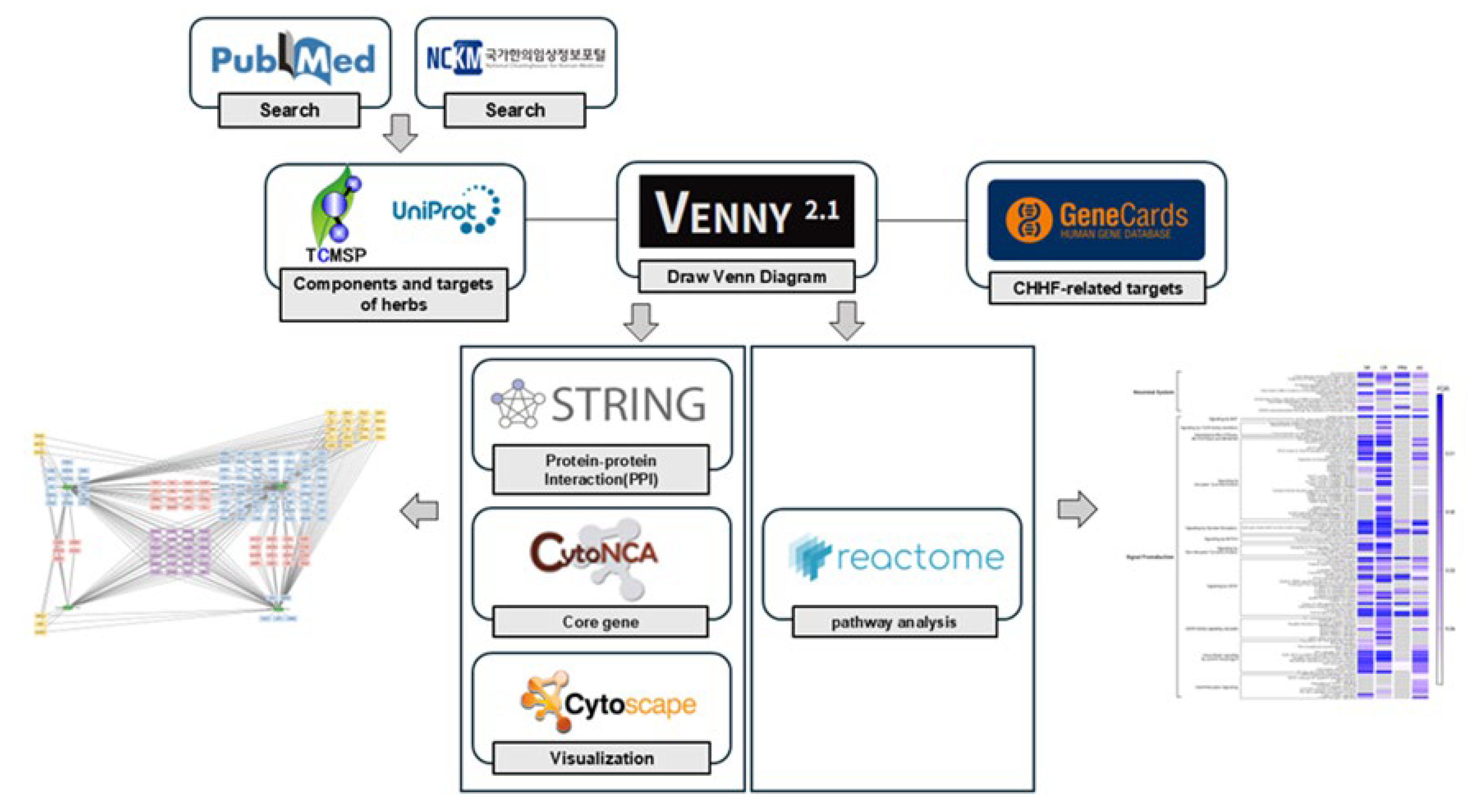
Herbs were chosen by literature screening (PubMed, national clinical practice guidelines for Korean medicine (NCKM)). Herb compounds and targets (TCMSP) were standardized (UniProt) and intersected with CHHF targets (GeneCards) using Venny 2.1. Protein–protein interaction (PPI) networks (search tool for the retrieval of interacting genes/proteins (STRING)), core-gene analysis (Cytoscape network centrality analysis (CytoNCA)), visualization (Cytoscape), and pathway enrichment analysis (Reactome) were performed.
2.1. Selection of Herbal Medicines for Analysis
2.1.1. Selection of Heat-Clearing Herbs: PubMed
In this study, herbal medicines classified as “Heat-Clearing Herbs” in 『Herbology』[21] were selected as the target group for analysis. Candidate herbs were identified through a literature search of the PubMed database(https://pubmed.ncbi.nlm.nih.gov/). Searches were conducted by combining the English names of the herbs with clinical and pathophysiological terms related to CHHF, including “primary Raynaud’s phenomenon”, “peripheral mechanism”, “increased vasoconstriction”, “sensitive to cold”, and “hot flushes” using the OR operator.
This search strategy was based on the fact that CHHF is not typically reported as an independent disease entity, but rather described under various diagnoses or clinical/pathophysiological terms such as primary RP or other specified peripheral vascular disorders.
Accordingly, key symptoms associated with CHHF were identified through a review of the relevant academic literature, and these were used as search terms. Based on the search outcomes, the two most frequently appearing herbs were selected as the final target herbs for this study.
2.1.2. Selection of Commonly Used Herbal Medicines for CHHF: Clinical Practice Guideline of Korean Medicine—CHHF Figures, Tables and Schemes
Clinical practice guidelines (CPGs) are evidence-based documents developed through systematic and scientific processes to assist healthcare providers and patients in making informed decisions throughout medical care [2].
To identify herbal medicines commonly used in clinical practice for CHHF, we collected prescriptions recommended in the Clinical Practice Guideline of Korean Medicine for Cold Hypersensitivity in Hands and Feet (hereafter CPG of CHHF). Prescriptions with an evidence-based recommendation grade of C or higher, or a consensus-based recommendation grade of GPP, were included.
Subsequently, all constituent herbs from the prescriptions listed in the CPG of CHHF were extracted. The names of herbal medicines were standardized based on『Herbology』[21]. According to this text, “Peony root (芍藥, Paeoniae Radix)” is not listed as an independent item; instead, it is categorized either as White Peony root (白芍藥, Paeniae Radix Alba) under blood-tonifying herbs (補血藥, BTHs) or as Red Peony root (赤芍藥, Paeoniae Radix Rubra) under heat-clearing and blood-cooling herbs (淸熱凉血藥). For each prescription, the source was therefore reviewed to determine whether Peony root referred to White or Red Peony root.
Additionally, because “Red Poria (赤茯苓; in Korea, the light reddish portion beneath the outer peel (皮層) is referred to as 赤茯苓)” is not listed separately in the 『Herbology』table of contents, it was integrated into “Poria (茯苓, Poria Sclerotium).” Although Korean Red Ginseng (紅蔘, Ginseng Radix Rubra, steamed and dried ginseng prepared after removing the fine rootlets (鬚根) of Ginseng Radix) is not listed as a separate item in 『Herbology』, it was not merged with Ginseng (人蔘), as the CPG of CHHF identifies “Korean Red Ginseng granule” as distinct from Ginseng used in other prescriptions.
The standardized herbal names were then sorted by frequency, and the top two herbs were selected as the final study targets. Licorice (甘草, Glycyrrhizae Radix et Rhizoma) was excluded because it is used extremely broadly as a harmonizing herb (調和諸藥); it appears in 70 out of the 113 prescriptions in the Shanghanlun (傷寒論) [22].
2.2. Collection of Active Compounds and Target Gene/Protein Data: TCMSP
Data on the active compounds and target gene/protein information of the selected herbal medicines were collected through searches in the Traditional Chinese Medicine Systems Pharmacology Database and Analysis Platform (TCMSP) (http://tcmspw.com/tcmsp.php). TCMSP is a systems pharmacology platform that provides information about herbal ingredients, their corresponding molecular targets, and associated diseases. It contains data on 499 herbs, 29,384 compounds, and 3,311 target proteins, as well as 12 key ADME (absorption, distribution, metabolism, and excretion) characteristics that describe the pharmacokinetic properties of each compound [23].
According to previous research, approximately one-third of studies using TCMSP apply compound-selection criteria of oral bioavailability (OB) ≥ 30% and drug-likeness (DL) ≥ 0.18 [24]. In the present study, active compounds were therefore selected based on these same criteria.
Next, the “Target name” corresponding to each active compound was collected from the TCMSP database. To standardize protein names for the target proteins associated with the active compounds, each Target name obtained from TCMSP was searched in the UniProt database (Database of Protein Sequences, https://www.uniprot.org/). Only entries with a status of “Reviewed (Swiss-Prot)” and classified under “Human” in the Popular organisms’ category were included. From the resulting matches, proteins whose Protein Names exactly corresponded to the queried Target name were selected, and their Entry (UniProt ID) and Gene Names were retrieved.
2.3. Collection of Target Gene/Protein Data for CHHF: GeneCards
Target genes associated with CHHF were collected by searching the human gene database GeneCards (https://www.genecards.org/) using the keyword “cold hypersensitivity in hands and feet.” Protein entries without UniProt IDs and duplicated data were excluded from the dataset.
2.4. Network Pharmacology Analysis
2.4.1. Collection of Common Herb–CHHF Target Proteins: Venny, Cytoscape
To identify the common target proteins shared between each herbal medicine and CHHF, Venny 2.1.0 (https://bioinfogp.cnb.csic.es/tools/venny/) was first employed. All datasets were entered in UniProt ID format.
The overlapping target proteins between each herb and CHHF were then re-entered into Venny to examine the distribution and intersection patterns of proteins commonly targeted by the four herbs—Scutellariae Radix (黃芩), Coptidis Rhizoma (黃連), Angelicae Sinensis Radix (當歸), and Paeoniae Radix Alba (白芍藥).
The resulting common-target protein network was visualized using Cytoscape 3.10.3 (https://cytoscape.org/index.html), an open-source software platform designed for analyzing, integrating, and visualizing biological interaction networks.
2.4.2. Protein–Protein Interaction (PPI) Network Analysis: STRING
Based on the common target proteins identified between each herbal medicine and CHHF using Venny 2.1.0, a PPI network analysis was conducted to explore the potential pharmacological mechanisms of the selected herbs.
The common target proteins were entered into the STRING 12.0 database (https://www.string-db.org/) in UniProt ID format to generate the PPI network. During this process, the organism was restricted to Homo sapiens, and the confidence threshold was set at a confidence score ≥ 0.7 (high confidence). All other parameters were maintained at their default settings.
2.4.3. Extraction of Core Genes
The structural characteristics of the PPI network were analyzed using PII analysis results. The CytoNCA plugin in Cytoscape 3.10.3 was used to calculate the topological properties of each node. Four key centrality parameters—betweenness (BC), closeness (CC), degree (DC), and eigenvector centralities (EC)—were applied.
The topological indices for each node were exported from Cytoscape as a table; then, Python was used to determine and extract the core genes. Nodes with values above the median for all four centrality parameters were classified as core genes. The selection criteria for core genes for each herbal medicine are summarized in Table 1.
2.4.4. Pathway Enrichment Analysis: Reactome (Home—Reactome Pathway Database)
To explore the molecular interaction pathways involved in the pathophysiology of CHHF, the common target proteins shared between each herbal medicine and CHHF—identified previously using Venny 2.1.0—were entered into the REACTOME database. REACTOME is an open-source, open-access pathway database that provides biologically curated pathway information constructed through expert manual annotation and peer review [25].
For each herbal medicine, the common target proteins associated with CHHF were uploaded to REACTOME in UniProt ID format to perform biological pathway enrichment analysis. From the resulting output, only the Pathway identifier, Pathway name, and false discovery rate (FDR) values of entities were extracted. The pathway identifier was used to classify each pathway according to its higher-level category.
After compiling the Pathway names and FDR values of entities for all four herbs, only pathways with FDR values of entities < 0.05 were retained. The REACTOME database contains 29 top-level pathway categories, among which five categories were selected for analysis based on their relevance to the known pathophysiology of CHHF.
In patients with RP, abnormalities in the coagulation system—such as platelet activation, increased blood viscosity, and microthrombus formation—have been observed [26], and these factors can be considered to be associated with the impaired blood flow observed in CHHF, which represents a clinical manifestation of RP. In addition, it has been reported that immune responses may partially contribute to the pathophysiology of RP [10]. Cold-induced vasoconstriction is mediated by redox signaling in vascular smooth muscle cells, during which mitochondrial ROS stimulate the RhoA/Rho kinase signaling pathway. This activation subsequently promotes the translocation of α2C-adrenergic receptors (α2C-ARs) to the cell surface, leading to vasoconstriction, a mechanism closely associated with CHHF [27].
Additionally, from a neurogenic perspective, exposure to cold or stress increases sympathetic nervous system activity, resulting in the release of norepinephrine, which activates postsynaptic α-adrenergic receptors on vascular smooth muscle and induces vasoconstriction, ultimately contributing to CHHF [28].
Repeated cycles of ischemia–reperfusion in RP have also been shown to generate excessive ROS, causing metabolic stress in affected tissues [28]. Based on these cumulative findings, five top-level pathway categories highly relevant to CHHF pathophysiology—Hemostasis, Immune system, Signal transduction, Neuronal system, and Metabolism—were selected as the focus of the present analysis.
3. Results
3.1. Selection of Herbal Medicines
3.1.1. Selection of Heat-Clearing Herbs (淸熱藥): PubMed Search
According to the 『Herbology』[21], a total of 52 herbal medicines are classified under the category of “heat-clearing herbs.” Each of these herbs was searched in PubMed using the following query: “(Herb name) AND ((primary Raynaud’s phenomenon) OR (peripheral mechanism) OR (increased vasoconstriction) OR (sensitivity to cold) OR (hot flushes)).”
The number of publications retrieved for each herb was summarized (Table 2), and Scutellariae Radix and Coptidis Rhizoma were ultimately selected as the target herbs for this study.
3.1.2. Selection of Commonly Used Herbal Medicines for CHHF
Based on the CPG of CHHF, a total of twelve prescriptions are recommended (with evidence-based recommendation grade ≥ C or consensus-based grade GPP) [2].
The first-line prescriptions include Dangguisayeoktang (當歸四逆湯), Dangguisayeokgaosuyusaengangtang (當歸四逆加吳茱萸生薑湯), Ongyeongtang (溫經湯), Korean Red Ginseng (紅蔘) granules, Gyejibokryeonghwan (桂枝茯苓丸), and Dangguijakyaksan (當歸芍藥散) [2].
In addition, Yijungtang (理中湯), Bojungigkitang (補中益氣湯), Sipjeondaebotang (十全大補湯), Ojeoksan (五積散), Palmijihwanghwan (八味地黃丸), and Gyejitang (桂枝湯) are recommended for use according to syndrome differentiation, based on formal expert consensus [2].
An analysis of these twelve prescriptions identified 37 constituent herbs. When sorted by frequency of occurrence, Licorice (甘草, Glycyrrhizae Radix et Rhizoma), White Peony root (白芍藥, Paeoniae Radix Alba), and Angelica Gigas Root(當歸, Angelicae Gigantis Radix) appeared in seven of the formulas. Considering the harmonizing property of Licorice (調和諸藥), it was excluded from the study. Consequently, Paeoniae Radix Alba and Angelicae Gigantis Radix were selected as the final target herbs.
3.2. Collection of Active Compounds and Target Proteins: TCMSP
Active compounds were retrieved from the TCMSP based on the criteria of OB ≥ 0.30 and DL ≥ 0.18.
The corresponding target genes and proteins related to these active compounds were also collected, and the results are summarized in Table 3. The active compounds are also listed in Appendix A.
In the case of Angelicae Gigantis Radix (Angelica gigas root, Danggui), the Korean Pharmacopoeia defines it as the root of Angelica gigas Nakai (Korean Danggui), whereas the Chinese Pharmacopoeia defines Danggui as the root of Angelica sinensis (Oliv.) Diels (Chinese Danggui). As only Chinese Danggui is available in the TCMSP database, the pharmacognostic name Angelicae Sinensis Radix was used in this study.
Subsequently, UniProt IDs of the target proteins were collected.
For several proteins that could not be precisely identified in the UniProt database, their UniProt IDs were determined through consensus among three independent researchers (Table 4).
3.3. Collection of Target Proteins Related to CHHF: GeneCards
Target genes and proteins associated with CHHF in hands and feet were retrieved from the GeneCards database using the search term “cold hypersensitivity in hands and feet.”
Following the exclusion of entries without UniProt IDs and the removal of duplicates, a total of 2,588 unique target proteins were finalized for further analysis starting from an initial pool of 2,750 identified proteins.
3.4. Network Pharmacology Analysis
3.4.1. Identification of Common Target Proteins Between Herbal Medicines and CHHF: Venny
Common target proteins shared between the selected herbal medicines and CHHF were identified using Venny 2.1.0.
As a result, 84, 138, 66, and 35 overlapping target proteins were identified for Scutellariae Radix, Coptidis Rhizoma, Paeoniae Radix Alba, and Angelicae Sinensis Radix, respectively (Figure 2 and Table 5).
The common target proteins shared between the herbal medicines and CHHF were reanalyzed using Venny, and the distribution and overlapping patterns of target proteins among the four herbal medicines were visualized with Cytoscape (Figure 3). Overlapping targets proteins between CHHF and four selected herbs are also listed in Table A5.
In the network diagram, four green hexagons represent the four herbal medicines—Scutellariae Radix, Coptidis Rhizoma, Angelicae Sinensis Radix, and Paeoniae Radix Alba. Light blue squares indicate targets unique to a single herb, while pink squares represent proteins targeted by two. Yellow squares denote proteins commonly targeted by three herbs, and purple squares correspond to proteins shared by all four.
A total of 166 target proteins were identified from the four herbs, of which 85 were targeted by at least two herbs. In contrast, 81 proteins were uniquely targeted by a single herb, with Coptidis Rhizoma accounting for the largest proportion (61 unique targets). Notably, Angelicae Sinensis Radix had no unique targets. A total of 16 proteins were co-targeted exclusively by the two HCHs (Scutellariae Radix and Coptidis Rhizoma), whereas no targets were shared solely by the two BTHs (Angelicae Sinensis Radix and Paeoniae Radix Alba). A total of 18 proteins were co-targeted by Scutellariae Radix, Coptidis Rhizoma, and Paeoniae Radix Alba, and 24 were found to be common targets of all four herbs.
3.4.2. Protein–Protein Interaction (PPI) Network Analysis: STRING
The common target genes and proteins of the four herbs identified through Venny 2.1.0 were entered into the STRING 12.0 database to construct individual PPI networks for each herb (Figure 4).
Among them, Coptidis Rhizoma exhibited the highest average node degree (16.5), indicating the most extensive PPI compared to the other herbs. In contrast, Angelicae Sinensis Radix showed the lowest average node degree (3.2), suggesting relatively limited interactions. Scutellariae Radix and Paeoniae Radix Alba displayed intermediate levels, with average node degrees of 10.6 and 7.03, respectively (Table 6).
3.4.3. Identification of Core Genes
Nodes with betweenness (BC), closeness (CC), degree (DC), and eigenvector centrality (EC) values higher than the median were defined as core genes.
3.4.4. Pathway Enrichment Analysis: Reactome
The common target genes and proteins between each herbal medicine and CHHF were input into the Reactome Pathway Database (Home—Reactome Pathway Database) in UniProt ID format.
Among the biological pathways identified, only those with an FDR values of entities < 0.05 were retained, resulting in 494 pathways belonging to 19 supercategories.
Of these, 233 pathways corresponding to the five major supercategories considered most relevant to CHHF—Hemostasis, Immune system, Signal transduction, Neuronal system, and Metabolism—were selected for further analysis.
The numbers of pathways significantly associated with CHHF for each herbal medicine were as follows: Scutellariae Radix (153), Coptidis Rhizoma (188), Angelicae Sinensis Radix (44), and Paeoniae Radix Alba (144).
The numbers of pathways in each supercategory for each herb are summarized in Table 7, and the detailed distribution of enriched pathways is presented in Figure 5A,B.
Comparison of shared pathways among the four herbs revealed that Scutellariae Radix and Coptidis Rhizoma shared 119 pathways; Scutellariae Radix and Angelicae Sinensis Radix, 44 pathways; Scutellariae Radix and Paeoniae Radix Alba, 116 pathways; Coptidis Rhizoma and Angelicae Sinensis Radix, 34 pathways; Coptidis Rhizoma and Paeoniae Radix Alba, 12 pathways; and Angelicae Sinensis Radix and Paeoniae Radix Alba, 36 pathways.
Notably, among the 116 pathways shared by Scutellariae Radix and Paeoniae Radix Alba, approximately 76% of the those of the former and 80% of those of the latter overlapped, indicating a close mechanistic association between these two herbs in CHHF treatment.
All 44 pathways identified for Angelicae Sinensis Radix were shared with Scutellariae Radix, suggesting that the mechanisms of the former are largely encompassed within those of the latter.
A total of 34 pathways were found to be common to all four herbs.
When examined by supercategory, the numbers of significant pathways related to Hemostasis were nine for Scutellariae Radix, nine for Coptidis Rhizoma, four for Paeoniae Radix Alba, and none for Angelicae Sinensis Radix.
Among these, pathways directly associated with platelet activation and aggregation, integrin signaling, and fibrin clot formation were observed exclusively for Scutellariae Radix and Coptidis Rhizoma.
This finding suggests that Scutellariae Radix, while sharing mechanistic similarities with Paeoniae Radix Alba, also exhibits unique pathways related to blood coagulation and hemostasis in conjunction with Coptidis Rhizoma.
Regarding the proportions of pathways in the Immune system and Signal transduction categories, Coptidis Rhizoma accounted for 76%, Paeoniae Radix Alba for 73%, Scutellariae Radix for 66%, and Angelicae Sinensis Radix for 55%.
Among them, Angelicae Sinensis Radix showed the lowest proportion of Immune system-related pathways (14%) but exhibited the highest proportions of Metabolism (27%) and Neuronal system (18%) pathways, indicating its relative emphasis on metabolic and neuroregulatory mechanisms compared with the other herbs.
4. Discussion
KM has played a significant role in health management and disease treatment across East Asia for over two millennia. Herbal medicine has been widely utilized for the prevention and treatment of various diseases, and its therapeutic effects are documented extensively in the classical medical literature [29].
In this study, two HCHs (Scutellariae Radix and Coptidis Rhizoma) were investigated using network pharmacology to explore their therapeutic potential for CHHF, in comparison with two BTHs (Angelicae Sinensis Radix and Paeoniae Radix Alba) which are traditionally used to treat this condition. By integrating target protein data from TCMSP and GeneCards and visualizing the interaction networks using Venny and Cytoscape, potential target proteins associated with CHHF were identified for each herb.
Among the 81 proteins uniquely targeted by individual herbs, 61 were specific to Coptidis Rhizoma, while Angelicae Sinensis Radix had no unique targets. This difference may largely reflect disparities in the number of target proteins collected for each herb. Nevertheless, the fact that 18 of the 85 overlapping proteins were shared among Scutellariae Radix, Coptidis Rhizoma, and Paeoniae Radix Alba is significant, as it suggests that their common pharmacological effects are not solely determined by their classical categories (heat-clearing vs. blood-tonifying) but may also be influenced by their intrinsic properties and flavors (性味).
The HCHs, Scutellariae Radix and Coptidis Rhizoma, are characterized as bitter and cold (苦寒), whereas the BTHs differ: Angelicae Sinensis Radix is warm and sweet–pungent (溫, 甘辛), while Paeoniae Radix Alba is slightly cold and bitter–sour (微寒, 苦酸), more similar to the HCHs [21]. This similarity in properties and flavors may partially explain the overlap in target protein distributions among these herbs.
Pathway analysis revealed substantial overlap between Scutellariae Radix and Paeoniae Radix Alba, while the former uniquely included pathways related to hemostasis and coagulation. More specifically, pathways such as platelet activation, signaling and aggregation, integrin signaling, and fibrin clot formation were predominantly observed in Scutellariae Radix and Coptidis Rhizoma.
CHHF is often associated with endothelial dysfunction and impaired peripheral circulation, potentially driven by p38 MAPK signaling pathway hyperactivation. p38 MAPK is a stress-responsive signaling protein activated by inflammatory cytokines, oxidative stress, and various other stimuli, mediating contraction, proliferation, and inflammatory reactions in vascular smooth muscle cells (VSMCs) and ECs. p38 MAPK hyperactivation reduces nitric oxide (NO) production, increases endothelin-1 expression, and promotes reactive oxygen species (ROS) accumulation, ultimately impairing endothelial function. Consequently, peripheral vasoconstriction becomes excessively sustained, tissue blood flow is reduced, and clinical manifestations such as CHHF or RP may occur [12]. In this study, Scutellariae Radix, Coptidis Rhizoma, and Paeoniae Radix Alba were all enriched in MAPK-related signaling pathways, suggesting that these herbs may modulate endothelial dysfunction and vascular constriction through MAPK-mediated stress response pathways. p38 MAPK signaling pathway hyperactivation is likely to represent one of the key pathophysiological mechanisms underlying CHHF, and pharmacological modulation of this pathway has emerged as a potential therapeutic strategy for improving peripheral blood flow and restoring vascular function [12]. This provides mechanistic evidence supporting the potential of Scutellariae Radix and Coptidis Rhizoma in alleviating the pathophysiology of CHHF.
In addition, Coptidis Rhizoma was found to potentially influence the pathophysiology of CHHF through the signal transduction pathway. This pathway includes multiple signaling molecules, including CXCL11, which has been reported in previous studies as a key regulator contributing to vascular stabilization by suppressing excessive endothelial cell proliferation and promoting pericyte recruitment. Therefore, the present findings suggest that Coptidis Rhizoma modulates signal transduction pathways, providing mechanistic insight into its potential involvement in CXCL11-associated signaling networks, and thereby contributing to microvascular stabilization and peripheral blood flow regulation [13]. This interpretation is consistent with the key pathological features of CHHF, namely microvascular instability and reduced peripheral blood flow, and further suggests the need for follow-up experimental studies to elucidate Coptidis Rhizoma’s vascular-stabilizing effects. Recent studies have increasingly reported that microvascular stabilization mechanisms—including the interactions between endothelial cells (ECs) and pericytes—play a critical role in maintaining peripheral blood flow. Accordingly, not only vasodilation but also vascular structural stability and the suppression of aberrant EC proliferation should be regarded as important therapeutic factors in CHHF management. Emerging evidence further suggests that CXCR3–CXCL11 signaling contributes to vascular stabilization by inhibiting excessive EC proliferation and promoting pericyte attachment [13]. Moreover, in the pathophysiological mechanisms underlying dysautonomia-related CHHF, the role of α2-adrenergic receptors (α2-ARs) has been highlighted as a key contributor [8]. Unlike other vascular beds, cutaneous vasculature exhibits greater sensitivity to α2-ARs than to α1-adrenergic receptors (α1-ARs), and the α2A-AR subtype in particular mediates rapid vasoconstriction in response to sympathetic stimulation [14,15]. In addition, the finding that adrenoceptor Alpha 2C (ADRA2C), a target of Coptidis Rhizoma, belongs to the signal transduction pathway indicates that Coptidis Rhizoma may directly modulate α2C-adrenergic receptor-mediated cold-induced vasoconstrictive mechanisms through this signaling axis [14,30]. Previous physiological studies have demonstrated that the α2C-adrenergic receptors (α2C-AR) are normally quiescent but translocate to the cell membrane upon cold stimulation, exhibiting a characteristic of rapidly amplifying the contractile response [30]. This enhanced function, or hyperfunction, of α2A·α2C-AR may consequently represent a major pathophysiological mechanism underlying the cold hypersensitivity and vasospasm observed in patients with chronic hand and foot coldness (CHHF) or RP. ADRA2A encodes the α2A-adrenergic receptor, which mediates rapid cutaneous vasoconstriction in response to increased sympathetic activity [14,15]. Network pharmacology analysis suggests that ADRA2A may be a potential target of Scutellariae Radix and Angelicae Sinensis Radix. In the Reactome analysis of the present study, Scutellariae Radix was classified as being involved in the platelet activation, signaling, and aggregation pathway through ADRA2A. These findings suggest that Scutellariae Radix may have the potential to concurrently modulate ADRA2A-mediated vasoconstrictive mechanisms and platelet activation pathways.
The HCHs showed the highest proportions of pathways related to the immune system and signal transduction, including those involving nuclear factor kappa-light-chain-enhancer of activated B cells (NF-κB), janus kinase-signal transducer and activator transcription (JAK-STAT), interleukin-4 and Interleukin-13 (IL-4/13), and IFN-γ signaling, indicating their anti-inflammatory and cytokine-modulating effects. Notably, the identification of inflammatory cytokine targets such as TNF-α, IFN-γ, interleukin-16 (IL-16), and members of the interleukin-1 (IL-1) family in the present study is consistent with previous reports indicating that angiopoietin-2 (Ang-2) destabilizes endothelial cells in the pathophysiology of RP, thereby rendering them more susceptible to inflammatory cytokine stimulation and inducing endothelial cell apoptosis, which ultimately exacerbates microvascular damage and ischemia [10]. Conversely, the BTHs exhibited distinct patterns. Paeoniae Radix Alba showed the highest proportion of immune system-related pathways (38%), suggesting roles in TNF signaling, TIR-domain containing adapter-including interferon-β-mediated cell death (TRIF-mediated cell death), and IκB kinase (IKK) recruitment, thereby modulating TNF-mediated inflammation and apoptosis. In contrast, Angelicae Sinensis Radix showed the lowest proportion of immune pathways (14%) but the highest representation in metabolic (27%) and neuronal (18%) pathways, indicating its relative specialization in improving blood flow via regulating energy metabolism and mitochondrial function.
These results suggest that while HCHs (Scutellariae Radix and Coptidis Rhizoma) primarily act through anti-inflammatory, cytokine-suppressive, and hemostatic mechanisms, BTHs (Paeoniae Radix Alba and Angelicae Sinensis Radix) contribute through metabolic regulation, neurovascular modulation, and partial inhibition of TNF-mediated signaling. Therefore, the combination of heat-clearing and BTHs may act synergistically through complementary mechanisms to restore microcirculatory balance in disorders such as CHHF.
The term 淸熱藥 (HCHs) derives from the Chinese characters “淸” (to clear) and “熱” (heat), literally meaning “to clear heat.” In traditional theory, “heat” refers not only to fever but also to pathological states resembling inflammation. Many HCHs have been reported to have anti-inflammatory effects via multi-target mechanisms, providing an important pharmacological rationale for their traditional indications [31].
Traditionally, CHHF in KM has been categorized as cold pattern (寒證), including upper body heat and lower body cold (上熱下寒) or systemic coldness. However, the present study aimed to reinterpret CHHF from a new perspective. Conditions such as RP are characterized by excessive vasoconstriction or circulatory impairment of peripheral vessels triggered by cold exposure or emotional stress, often followed by reactive hyperemia accompanied by pain or redness. This pattern suggests that CHHF cannot be fully explained by cold pattern alone.
Given that vascular constriction and reperfusion can elicit inflammatory responses in patients with CHHF [32], the anti-inflammatory effects of HCHs may alleviate these pathological reactions, thereby contributing to their therapeutic efficacy.
This study has several limitations.
Firstly, the scope of herbal selection was limited to four representative herbs. Only two HCHs with presumed efficacy for CHHF were analyzed, and further studies encompassing a broader range of herbal categories are warranted.
Secondly, the PubMed-based selection of HCHs yielded a relatively limited dataset, reflecting the scarcity of prior research on their application in CHHF and thereby raising the possibility that other potentially relevant herbs may have been excluded.
Thirdly, this study was based solely on literature-derived network pharmacology analysis without experimental or clinical validation. Nonetheless, it provides meaningful preliminary evidence supporting the potential of HCHs in treating CHHF, warranting further experimental and clinical investigations.
This study is the first to explore the therapeutic potential of HCHs (Scutellariae Radix and Coptidis Rhizoma) by comparing them with traditionally used BTHs (Angelicae Sinensis Radix and Paeoniae Radix Alba) for CHHF treatment.
The findings reveal novel mechanisms of Scutellariae Radix and Coptidis Rhizoma not explained by the classical actions of BTHs, providing new insights into the pharmacological basis of CHHF treatment.
Furthermore, by integrating compound–target interaction data from public databases and applying network pharmacology analysis, this study revalidated traditional empirical knowledge of herbal efficacy through modern bioinformatics approaches. This integration bridges the gap between traditional concepts and molecular-level mechanisms, highlighting the importance of combining empirical and mechanistic evidence in future KM research.
5. Conclusions
Network pharmacology analysis was conducted on two HCHs (Scutellariae Radix and Coptidis Rhizoma) and two BTHs (Angelicae Sinensis Radix and Paeoniae Radix Alba) commonly prescribed for CHHF in KM.
The results demonstrated that Scutellariae Radix and Paeoniae Radix Alba shared a substantial number of signaling pathways, while the former uniquely contained additional pathways related to hemostasis and coagulation.
Overall, HCHs primarily acted through anti-inflammatory, cytokine-suppressive, and hemostatic mechanisms, whereas BTHs contributed to improved blood flow and microcirculation.
These findings suggest that HCHs such as Scutellariae Radix and Coptidis Rhizoma provide novel therapeutic mechanisms for CHHF treatment and may serve as complementary or alternative strategies to conventional BTH therapies.
Author Contributions
Conceptualization, Y.-C.L. and E.L.; methodology, E.L. and Y.K.; software, H.K.; validation, H.K., H.K. and J.Y.; formal analysis, J.S. and H.K.; investigation, E.L., Y.K., J.S., H.K. and J.Y.; resources, Y.K.; data curation, E.L., Y.K., J.S., H.K., J.Y. and H.K.; writing—original draft preparation, E.L., Y.K. and J.S.; writing—review and editing, Y.-C.L., E.L., Y.K., J.S., H.K. and J.Y.; visualization, E.L., Y.K., J.S.; supervision, Y.-C.L.; project administration, Y.-C.L., E.L., Y.K. and J.S.; funding acquisition, Y.-C.L. and E.L. All authors have read and agreed to the published version of the manuscript.
Funding
This research received no external funding.
Institutional Review Board Statement
Not applicable.
Informed Consent Statement
Not applicable.
Data Availability Statement
The original contributions presented in this study are included in the article/supplementary material. Further inquiries can be directed to the corresponding author(s). The raw data were derived from the following resources available in the public domain: TCMSP (http://tcmspw.com/tcmsp.php), GeneCards (https://www.genecards.org/), UniProt (https://www.uniprot.org/), STRING (https://string-db.org/), and Reactome (https://reactome.org/).
Acknowledgments
During the preparation of this manuscript, the authors used ChatGPT 5.2 for the purposes of correcting the English. The authors have reviewed and edited the output and take full responsibility for the content of this publication.
Conflicts of Interest
The authors declare no conflicts of interest.
Abbreviations
The following abbreviations are used in this manuscript:
| RP | Raynard’s phenomenon |
| KM | Korean medicine |
| CHHF | Cold hypersensitivity in hands and feet |
| TCM | Traditional Chinese medicine |
| HCHs | Heat clearing herbs |
| ECs | Endothelial cells |
| TNF-α | Tumor necrosis factor-α |
| IFN-γ | Interferon-γ |
| P38 MAPK | P38 mitogen-activated protein kinase |
| VSMCs | Vascular smooth muscle cells |
| NO | Nitric oxide |
| ROS | Reactive oxygen species |
| α2-ARs | α2-adrenergic receptors |
| α1-ARs | α1-adrenergic receptors |
| α2A-AR | α 2A-adrenergic receptors |
| α2C-AR | α2C-adrenergic receptors |
| NCKM | National clinical Practice Guidelines for Korean medicine |
| TCMSP | Traditional Chinese medicine systems pharmacology database and analysis platform |
| PPI | Protein-protein interaction |
| STRING | Search tool for the retrieval of interacting genes/proteins |
| CytoNCA | Cytoscape network centrality analysis |
| CPG of CHHF | Clinical practice guideline of Korean medicine for cold hypersensitivity in hands and feet |
| ADME | Absorption, distribution, metabolism, excertion |
| BC | Betweenness centrality |
| CC | Closeness centrality |
| DC | Degree centrality |
| EC | Eigenvector centrality |
| CPG | Clinical practice guideline |
| BTHs | Blood tonifying herbs |
| FDR | False discovery rate |
| SR | Scutellariae Radix |
| CR | Coptidis Rhizoma |
| ASR | Angelicae Sinensis Radix |
| PRA | Paeoniae Radix Alba |
| ADRA2C | Adrenoceptor Alpha 2C |
| NF-κB | Nuclear factor kappa-light-chain-enhancer of activated B cells |
| JAK-STAT | Janus kinase-signal transducer and activator transcription |
| IL-4/13 | Interleukin-4 and Interleukin-13 |
| IL-16 | Interleukin-16 |
| IL-1 | Interleukin-1 |
| TRIF-mediated cell death | TIR-domain containing adapter-inducing interferon-β-mediated cell death |
| IKK | IκB kinase |
Appendix A
Appendix A.1, 2, 3, 4
The active compounds listed in Table A1, Table A2, Table A3 and Table A4 were retrieved from the Traditional Chinese Medicine Systems Pharmacology Database and Analysis Platform (TCMSP) (http://tcmspw.com/tcmsp.php) and the PubChem database (https://pubchem.ncbi.nlm.nih.gov). For compounds not available in TCMSP or requir-ing structural confirmation, chemical information including PubChem CID, molecular formula, molecular weight, and canonical structure was obtained from PubChem. Structural data were cross validated to ensure consistency between databases. Dupli-cated entries were removed, and compounds lacking definitive structural or molecular information were excluded.
Appendix A.5
Overlapping and unique target proteins between CHHF-related targets and the four selected herbs identified through venny 2.1.0. Targets were classified into herb-specific and shared target groups and visualized using Cytoscape.
Appendix A.6
Overlapping and unique coregenes between CHHF-related targets and the four se-lected herbs identified through venny 2.1.0. Targets were classified into herb-specific and shared target groups and visualized using Cytoscape.

Table A1.
Active compounds of Scutellariae Radix.
| No. | Molecule Name | PubChem CID | Molecular Formula | Structure | Molecular Weight (g/mol) |
|---|---|---|---|---|---|
| 1 | (2R)-7-hydroxy-5-methoxy-2-phenylchroman-4-one | 821279 | C16H14O4 | 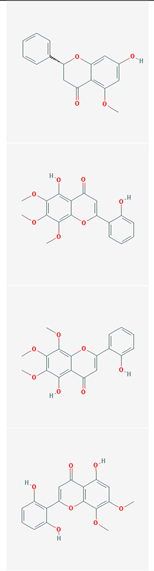 |
270.28g/mol |
| 2 | 11,13-Eicosadienoic acid, methyl ester | 5365674 | C21H38O2 | 322.5g/mol | |
| 3 | 5,2’-Dihydroxy-6,7,8-trimethoxyflavone | 159029 | C18H16O7 | 433.3g/mol | |
| 4 | 5,2’,6’-Trihydroxy-7,8-dimethoxyflavone | 5322059 | C23H22O13 | 506.4g/mol | |
| 5 | 5,7,2,5-tetrahydroxy-8,6-dimethoxyflavone | 44258627 | C17H18O8 |  |
350.3g/mol |
| 6 | 5,7,2’,6’-Tetrahydroxyflavone | 5321865 | C21H20O11 | 448.4g/mol | |
| 7 | 5,7,4’-trihydroxy-6-methoxyflavanone | 5322074 | C16H14O6 | 302.28g/mol | |
| 8 | 5,7,4’-trihydroxy-8-methoxyflavanone | 26213330 | C16H14O6 | 302.28g/mol | |
| 9 | 5,7,4’-Trihydroxy-8-methoxyflavone | 5322078 | C16H12O6 | 300.26g/mol | |
| 10 | 5,8,2’-Trihydroxy-7-methoxyflavone | 156992 | C16H12O5 | 300.26g/mol | |
| 11 | acacetin | 5280442 | C16H12O5 | 284.26g/mol | |
| 12 | baicalein | 5281605 | C15H10O5 | 270.24g/mol | |
| 13 | beta-sitosterol | 222284 | C29H50O |  |
414.7 g/mol |
| 14 | bis[(2S)-2-ethylhexyl] benzene-1,2-dicarboxylate | 7057920 | C24H38O4 | 390.6g/mol | |
| 15 | Carthamdin | 188308 | C15H12O6 | 288.25g/mol | |
| 16 | coptisine | 72322 | C19H14NO4+ | 320.3g/mol | |
| 17 | Dihydrobaicalin_qt | 14135323 | C15H12O5 | 272.25 g/mol | |
| 18 | DIHYDROOROXYLIN | 25721350 | C16H14O5 |
286.28 g/mol |
|
| 19 | dihydrooroxylin A | 177032 | C16H14O5 |
286.28 g/mol |
|
| 20 | Diop | 33934 | C24H38O4 |
390.6 g/mol |
|
| 21 | ent-Epicatechin | 182232 | C15H14O6 | 290.27 g/mol | |
| 22 | epiberberine | 160876 | C20H18NO4+ |  |
336.4 g/mol |
| 23 | Eriodyctiol (flavanone) | 373261 | C15H12O6 | 288.25 g/mol | |
| 24 | Moslosooflavone | 188316 | C17H14O5 | 298.29 g/mol | |
| 25 | NEOBAICALEIN | 124211 | C19H18O8 | 374.3 g/mol | |
| 26 | Norwogonin | 5281674 | C15H10O5 | 270.24 g/mol | |
| 27 | oroxylin a | 5320315 | C16H12O5 | 284.26 g/mol | |
| 28 | Panicolin | 5320399 | C17H14O6 |
314.29 g/mol |
|
| 29 | rivularin | 13889022 | C18H16O7 | 344.3 g/mol | |
| 30 | Salvigenin | 161271 | C18H16O6 | 328.3 g/mol | |
| 31 | sitosterol | 12303645 | C29H50O | 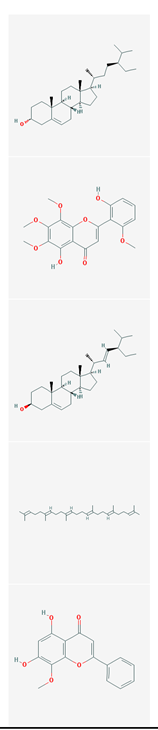 |
414.7 g/mol |
| 32 | Skullcapflavone II | 124211 | C19H18O8 |
374.3 g/mol |
|
| 33 | Stigmasterol | 5280794 | C29H48O | 412.7 g/mol | |
| 34 | Supraene | 638072 | C30H50 | 410.7 g/mol | |
| 35 | wogonin | 5281703 | C16H12O5 | 284.26 g/mol |
Table A2.
Active compounds of Coptidis Rhizoma
| No. | Molecule Name | PubChem CID | Molecular Formula | Structure | Molecular Weight (g/mol) |
|---|---|---|---|---|---|
| 1 | (R)-Canadine | 443422 | C20H21NO4 | 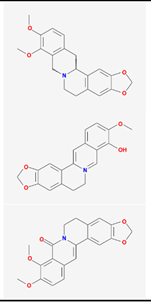 |
339.4 g/mol |
| 2 | berberrubine | 72704 | C19H16NO4+ | 322.3 g/mol | |
| 3 | Berlambine | 11066 | C20H17NO5 | 351.4 g/mol | |
| 4 | coptisine | 72322 | C19H14NO4+ |  |
320.3 g/mol |
| 5 | epiberberine | 160876 | C20H18NO4+ | 336.4 g/ mol |
|
| 6 | Magnograndiolide | 5319198 | C15H22O4 | 266.33 g/mol | |
| 7 | Moupinamide | 5280537 | C18H19NO4 | 313.3 g/mol | |
| 8 | Obacunone | 119041 | C26H30O7 | 454.5 g/mol | |
| 9 | palmatine | 19009 | C21H22NO4+ | 352.4 g/mol | |
| 10 | quercetin | 5280343 | C15H10O7 | 302.23 g/mol | |
| 11 | Worenine | 20055073 | C20H16NO4+ | 334.3 g/mol |
Table A3.
Active compounds of Angelicae Sinensis Radix.
| No. | Molecule Name | PubChem CID | Molecular Formula | Structure | Molecular Weight (g/mol) |
|---|---|---|---|---|---|
| 1 | beta-sitosterol | 222284 | C29H50O | 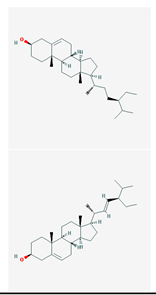 |
414.7 g/mol |
| 2 | Stigmasterol | 5280794 | C29H48O | 412.7 g/mol |
Table A4.
Active compounds of Paeoniae Radix Alba.
| No. | Molecule Name | PubChem CID | Molecular Formula | Structure | Molecular Weight (g/mol) |
|---|---|---|---|---|---|
| 1 | (+)-catechin | 9064 | C15H14O6 |  |
290.27 g/mol |
| 2 | (3S,5R,8R,9R,10S,14S)-3,17-dihydroxy-4,4,8,10,14-pentamethyl-2,3,5,6,7,9-hexahydro-1H-cyclopenta[a]phenanthrene-15,16-dione | 9841735 | C22H30O4 | 358.5 g/mol
|
|
| 3 | 11alpha,12alpha-epoxy-3beta-23-dihydroxy-30-norolean-20-en-28,12beta-olide | C29H42O5 | 470.71 g/mol | ||
| 4 | albiflorin_qt | C17H18O6 | 318.35 g/mol | ||
| 5 | benzoyl paeoniflorin | C30H34O13 | 584.62 g/mol | ||
| 6 | beta-sitosterol | 222284 | C29H50O | 414.7 g/mol | |
| 7 | kaempferol | 5280863 | C15H10O6 |  |
286.24 g/mol |
| 8 | Lactiflorin | 5318917 | C23H26O10 | 462.4 g/mol | |
| 9 | Mairin | 64971 | C30H48O3 | 456.7 g/mol | |
| 10 | paeoniflorgenone | C17H18O6 | 318.35 g/mol | ||
| 11 | paeoniflorin | 442534 | C23H28O11 | 480.51 g/mol | |
| 12 | paeoniflorin_qt | C17H18O6 | 318.35 g/mol | ||
| 13 | sitosterol | 12303645 | C29H50O | 414.7 g/mol |
Table A5.
Overlapping targets proteins between CHHF and four selected herbs visualized by Cytoscape.
Table A5.
Overlapping targets proteins between CHHF and four selected herbs visualized by Cytoscape.
| Set of Target protein | Name of target proteins |
|---|---|
| Targets unique to Scutellariae Radix | PRKCD FASLG FN1 CYP19A1 KDR MAPK14 CYCS CYP2C9 CA2 FASN MCL1 PTPN1 FABP5 CDK7 FOSL1 |
| Targets unique to Coptidis Rhizoma | IL10 PTEN IFNG EGFR IL1B SOD1 CD40LG CRP GJA1 IL2 COL1A1 ERBB2 MAPK1 NFKBIA MYC MMP2 HSPB1 RAF1 EGF THBD CTSD COL3A1 IL1A CAV1 CHEK2 RASA1 NCF1 RUNX2 SERPINE1 PARP1 SPP1 NFE2L2 ERBB3 CXCL10 CHUK PLAT POR GRP78 BCL2L1 IGFBP3 MMP3 IRF1 F3 PPARA BIRC5 GRIA2 TOP1 ODC1 ABCG2 E2F1 NQO1 HTR3A RASSF1 MGAM PRKCB HSF1 OPRD1 CXCL11 HK2 ADRA2C ADRA1D |
| Targets unique to Paeoniae Radix Alba | IKBKB CAT MAPK8 CD14 SLPI |
| Common targets of Scutellariae Radix and Coptidis Rhizoma | TP53 IL8 VEGFA MPO CCL2 MMP9 IGF2 CCND1 HIF1A CDKN1A FOS ESR2 CHEK1 CDK2 CCNB1 PPARD |
| Common targets of Scutellariae Radix and Angelicae Sinensis Radix | MAOA ADRB1 ADRA2A NCOA1 CTRB1 |
| Common targets of Coptidis Rhizoma and Paeoniae Radix Alba | STAT1 ICAM1 INSR HMOX1 CYP3A4 GSTM1 XDH VCAM1 CYP1B1 GSTP1 SELE CYP1A1 SLC2A4 ALOX5AP NR1I2 NR1I3 |
| Common targets of Scutellariae Radix and Coptidis Rhizoma and Angelicae Sinensis Radix | SLC6A3 MAOB AKR1B1 |
| Common targets of Scutellariae Radix and Coptidis Rhizoma and Paeoniae Radix Alba | TNF IL6 AKT1 ESR1 PPARG AR F2 NOS3 MMP1 NOS2 ACHE CALM1 RELA CYP1A2 CDC2 AHR TOP2A DPP4 |
| Common targets of Scutellariae Radix and Angelicae Sinensis Radix and Paeoniae Radix Alba | NR3C2 PGR CHRNA7 |
| Common targets of Scutellariae Radix and Coptidis Rhizoma and Angelicae Sinensis Radix and Paeoniae Radix Alba | TGFB1 CASP8 SCN5A PTGS2 BCL2 PIK3CG CASP3 JUN BAX SLC6A4 PRKACA ADRB2 PON1 HTR2A PRKCA CASP9 OPRM1 GABRA1 PTGS1 HSP90AB1 CHRM3 DRD1 ADRA1A ADRA1B |
Table A6.
Overlapping core genes between CHHF and four selected herbs visualized by Cytoscape.
| Set of core genes | Name of core genes |
|---|---|
| Targets unique to Scutellariae Radix | FN1 |
| Targets unique to Coptidis Rhizoma | PRKCA MYC EGFR MAPK1 ERBB2 PTEN NFE2L2 SPP1 CAV1 RAF1 IL1B RUNX2 TGFB1 VCAM1 NFKBIA BCL2L1 PARP1 MMP3 |
| Targets unique to Angelicae Sinensis Radix | CASP9 |
| Targets unique to Paeoniae Radix Alba | MAPK8 CALM3 NOS3 |
| Common targets of Scutellariae Radix and Coptidis Rhizoma | TP53 CXCL8 FOS MMP9 HIF1A CCL2 CDKN1A CCND1 CDK1 |
| Common targets of Scutellariae Radix and Angelicae Sinensis Radix | PGR NCOA1 |
| Common targets of Coptidis Rhizoma and Paeoniae Radix Alba | HMOX1 STAT1 |
| Common targets of Scutellariae Radix and Coptidis Rhizoma and Angelicae Sinensis Radix | PTGS2 JUN HSP90AB1 PRKACA CASP3 BCL2 |
| Common targets of Scutellariae Radix and Coptidis Rhizoma and Paeoniae Radix Alba | TNF PPARG ESR1 RELA AKT1 IL6 |
References
- Choi, S.-J.; Choi, Y.; Lee, Y.S.; Noh, E.-J.; Kim, D.-I. A Review of Acupuncture Treatment Methods for Cold Hypersensitivity of Hands and Feet. Korean J. Acupunct. 2021, 38, 43–61. [Google Scholar] [CrossRef]
- Medicine, T.S.o.S.C.a.I.; Gynecology, T.S.o.K.M.O.a. Clinical Practice Guideline of Korean Medicine—Cold Hypersensitivity in Hands and Feet; Development project group of Clinical Practice Guideline of Korean Medicine of National Institute for Korean Medicine Development, 2021. [Google Scholar]
- Yu, J.S.; Lee, D.; Hyun, D.; Chang, S.J. Herbal Medicines for Cold Hypersensitivity in the Hands and Feet: A Systematic Review and Meta-Analysis. J. Altern. Complement Med. 2018, 24, 1150–1158. [Google Scholar] [CrossRef] [PubMed]
- Hur, Y.M.; Chae, J.H.; Chung, K.W.; Kim, J.J.; Jeong, H.U.; Kim, J.W.; Seo, S.Y.; Kim, K.S. Feeling of cold hands and feet is a highly heritable phenotype. Twin Res. Hum. Genet 2012, 15, 166–169. [Google Scholar] [CrossRef] [PubMed]
- Park, S.Y.; Lee, Y.Y.; Kim, M.H.; Kim, C.E. Deciphering the Systemic Impact of Herbal Medicines on Allergic Rhinitis: A Network Pharmacological Approach. Life 2024, 14. [Google Scholar] [CrossRef] [PubMed]
- He, Q.; Yang, J.; Pan, Z.; Zhang, G.; Chen, B.; Li, S.; Xiao, J.; Tan, F.; Wang, Z.; Chen, P.; et al. Biochanin A protects against iron overload associated knee osteoarthritis via regulating iron levels and NRF2/System xc-/GPX4 axis. BioMed Pharmacother. 2023, 157, 113915. [Google Scholar] [CrossRef] [PubMed]
- Muluye, R.A.; Bian, Y.; Alemu, P.N. Anti-inflammatory and Antimicrobial Effects of Heat-Clearing Chinese Herbs: A Current Review. J. Tradit. Complement Med. 2014, 4, 93–98. [Google Scholar] [CrossRef] [PubMed]
- Chang, C.J.; Fan, Y.H.; Chiu, Y.C.; Cheng, W.M. Cold hypersensitivity in the hands and feet is associated with erectile dysfunction in young Taiwanese men. Sci. Rep. 2024, 14, 10577. [Google Scholar] [CrossRef] [PubMed]
- Jin, Z.; Lan, Y.; Li, J.; Wang, P.; Xiong, X. The role of Chinese herbal medicine in the regulation of oxidative stress in treating hypertension: from therapeutics to mechanisms. Chin. Med. 2024, 19, 150. [Google Scholar] [CrossRef] [PubMed]
- Nawaz, I.; Nawaz, Y.; Nawaz, E.; Manan, M.R.; Mahmood, A. Raynaud’s Phenomenon: Reviewing the Pathophysiology and Management Strategies. Cureus 2022, 14, e21681. [Google Scholar] [CrossRef] [PubMed]
- Shinagawa, S.; Okazaki, T.; Ikeda, M.; Yudoh, K.; Kisanuki, Y.Y.; Yanagisawa, M.; Kawahata, K.; Ozaki, S. T cells upon activation promote endothelin 1 production in monocytes via IFN-gamma and TNF-alpha. Sci. Rep. 2017, 7, 14500. [Google Scholar] [CrossRef] [PubMed]
- He, X.; Feng, Z.P.; Liu, Z.Y.; Jiang, X.Y.; Li, B.; Peng, H.Y. Investigation on the mechanism of p38MAPK in the failure of autogenous arteriovenous fistula caused by stenosis. J. Physiol. Pharmacol. 2021, 72. [Google Scholar] [CrossRef] [PubMed]
- Lee, J.; Goeckel, M.E.; Levitas, A.; Colijn, S.; Shin, J.; Hindes, A.; Mun, G.; Burton, Z.; Chintalapati, B.; Yin, Y.; et al. CXCR3-CXCL11 Signaling Restricts Angiogenesis and Promotes Pericyte Recruitment. Arterioscler. Thromb. Vasc. Biol. 2024, 44, 2577–2595. [Google Scholar] [CrossRef] [PubMed]
- Chotani, M.A.; Flavahan, S.; Mitra, S.; Daunt, D.; Flavahan, N.A. Silent alpha(2C)-adrenergic receptors enable cold-induced vasoconstriction in cutaneous arteries. Am. J. Physiol. Heart Circ. Physiol. 2000, 278, H1075–1083. [Google Scholar] [CrossRef] [PubMed]
- Flavahan, N.A. alpha2 adrenoceptors, cold-induced vasoconstriction, and Raynaud’s phenomenon. Cell Genom. 2025, 5, 100884. [Google Scholar] [CrossRef] [PubMed]
- Wang, Y.; Yuan, Y.; Wang, W.; He, Y.; Zhong, H.; Zhou, X.; Chen, Y.; Cai, X.J.; Liu, L.Q. Mechanisms underlying the therapeutic effects of Qingfeiyin in treating acute lung injury based on GEO datasets, network pharmacology and molecular docking. Comput Biol. Med. 2022, 145, 105454. [Google Scholar] [CrossRef] [PubMed]
- Li, S.; Zhang, B. Traditional Chinese medicine network pharmacology: theory, methodology and application. Chin. J. Nat. Med. 2013, 11, 110–120. [Google Scholar] [CrossRef] [PubMed]
- Zhang, W.; Huai, Y.; Miao, Z.; Qian, A.; Wang, Y. Systems Pharmacology for Investigation of the Mechanisms of Action of Traditional Chinese Medicine in Drug Discovery. Front Pharmacol. 2019, 10, 743. [Google Scholar] [CrossRef] [PubMed]
- Liu, Z.W.; Luo, Z.H.; Meng, Q.Q.; Zhong, P.C.; Hu, Y.J.; Shen, X.L. Network pharmacology-based investigation on the mechanisms of action of Morinda officinalis How. in the treatment of osteoporosis. Comput Biol. Med. 2020, 127, 104074. [Google Scholar] [CrossRef] [PubMed]
- Zhang, H.; Zhang, S.; Hu, M.; Chen, Y.; Wang, W.; Zhang, K.; Kuang, H.; Wang, Q. An integrative metabolomics and network pharmacology method for exploring the effect and mechanism of Radix Bupleuri and Radix Paeoniae Alba on anti-depression. J. Pharm. BioMed Anal. 2020, 189, 113435. [Google Scholar] [CrossRef] [PubMed]
- National Editorial Committee for the Joint Textbook of Herbology, C. o.K.M. Herbology; Yeonglimsa, 2020. [Google Scholar]
- Shin, S.-w.; Yoon, E.; Jo, S.; Hwang, J. A Study on the ‘Harmonizing All Medicinals’ Property of Gancao. J. Korean Med. Class. 2020, 33, 179–196. [Google Scholar] [CrossRef]
- Wang, X.; Xu, X.; Tao, W.; Li, Y.; Wang, Y.; Yang, L. A systems biology approach to uncovering pharmacological synergy in herbal medicines with applications to cardiovascular disease. Evid. Based Complement Altern. Med. 2012, 2012, 519031. [Google Scholar] [CrossRef] [PubMed]
- Lee, W.Y.; Park, K.I.; Bak, S.B.; Lee, S.; Bae, S.J.; Kim, M.J.; Park, S.D.; Kim, C.O.; Kim, J.H.; Kim, Y.W.; et al. Evaluating current status of network pharmacology for herbal medicine focusing on identifying mechanisms and therapeutic effects. J. Adv. Res. 2025, 76, 799–815. [Google Scholar] [CrossRef] [PubMed]
- Milacic, M.; Beavers, D.; Conley, P.; Gong, C.; Gillespie, M.; Griss, J.; Haw, R.; Jassal, B.; Matthews, L.; May, B.; et al. The Reactome Pathway Knowledgebase 2024. Nucleic Acids Res. 2024, 52, D672–D678. [Google Scholar] [CrossRef] [PubMed]
- Pauling, J.D.; O’Donnell, V.B.; McHugh, N.J. The contribution of platelets to the pathogenesis of Raynaud’s phenomenon and systemic sclerosis. Platelets 2013, 24, 503–515. [Google Scholar] [CrossRef] [PubMed]
- Bailey, S.R.; Mitra, S.; Flavahan, S.; Flavahan, N.A. Reactive oxygen species from smooth muscle mitochondria initiate cold-induced constriction of cutaneous arteries. Am. J. Physiol. Heart Circ. Physiol. 2005, 289, H243–250. [Google Scholar] [CrossRef] [PubMed]
- Cooke, J.P.; Marshall, J.M. Mechanisms of Raynaud’s disease. Vasc. Med. 2005, 10, 293–307. [Google Scholar] [CrossRef] [PubMed]
- Song, B.K.; Won, J.H.; Kim, S. Historical Medical Value of Donguibogam. J. Pharmacopunct. 2016, 19, 16–20. [Google Scholar] [CrossRef] [PubMed]
- Fardoun, M.M.; Nassif, J.; Issa, K.; Baydoun, E.; Eid, A.H. Raynaud’s Phenomenon: A Brief Review of the Underlying Mechanisms. Front Pharmacol. 2016, 7, 438. [Google Scholar] [CrossRef] [PubMed]
- Guan, F.; Lam, W.; Hu, R.; Kim, Y.K.; Han, H.; Cheng, Y.C. Majority of Chinese Medicine Herb Category “Qing Re Yao” Have Multiple Mechanisms of Anti-inflammatory Activity. Sci. Rep. 2018, 8, 7416. [Google Scholar] [CrossRef] [PubMed]
- Robbins, S.L.; Kumar, V.; Abbas, A.K.; Aster, J.C.; Perkins, J.A. Robbins Basic Pathology, 10th ed; Elsevier, 2018. [Google Scholar]
Figure 2.
Venn diagrams showing overlapping targets between CHHF and selected herbs.
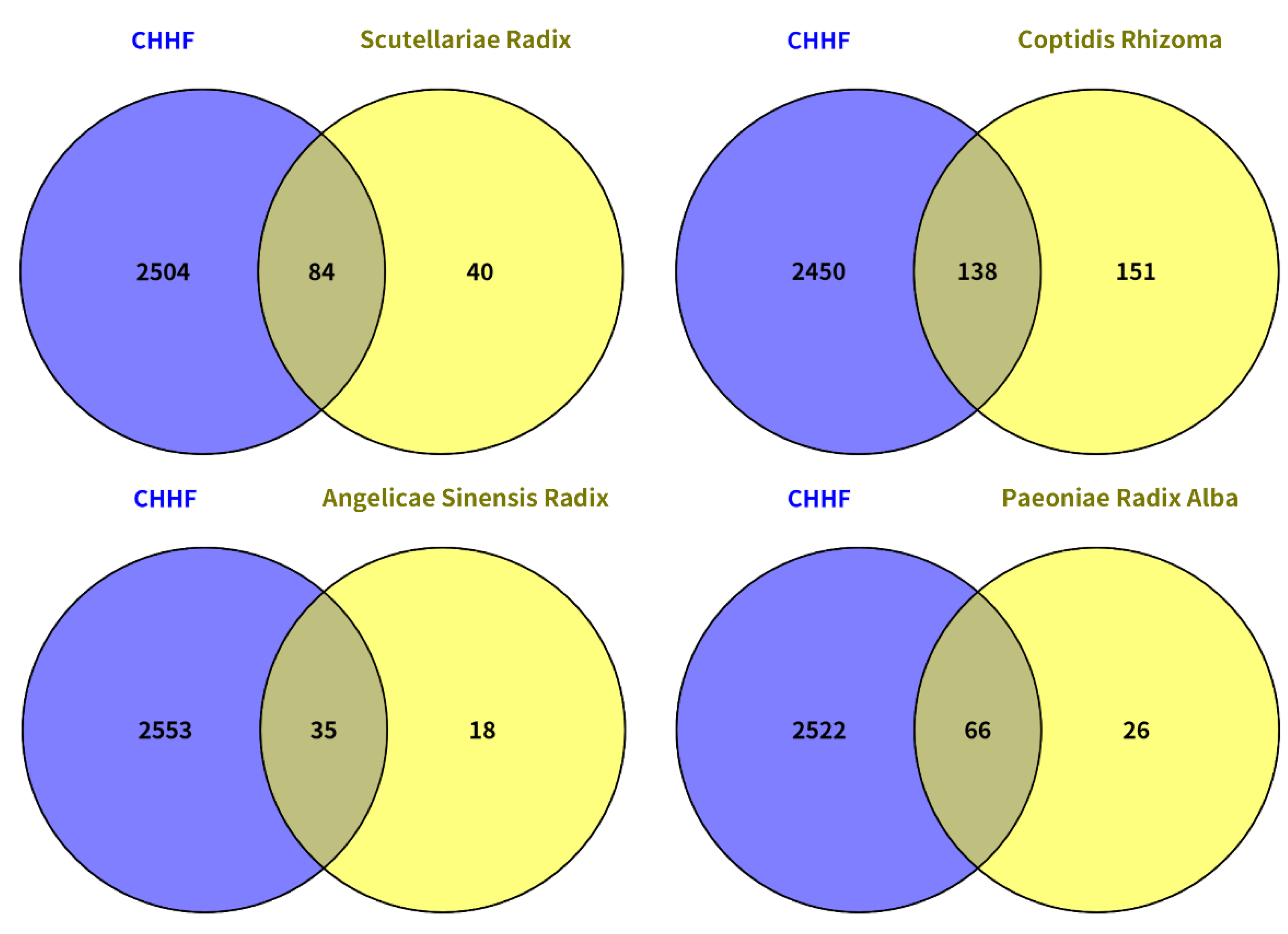
Figure 3.
Network of overlapping targets between CHHF and four selected herbs visualized by Cytoscape.
Figure 3.
Network of overlapping targets between CHHF and four selected herbs visualized by Cytoscape.
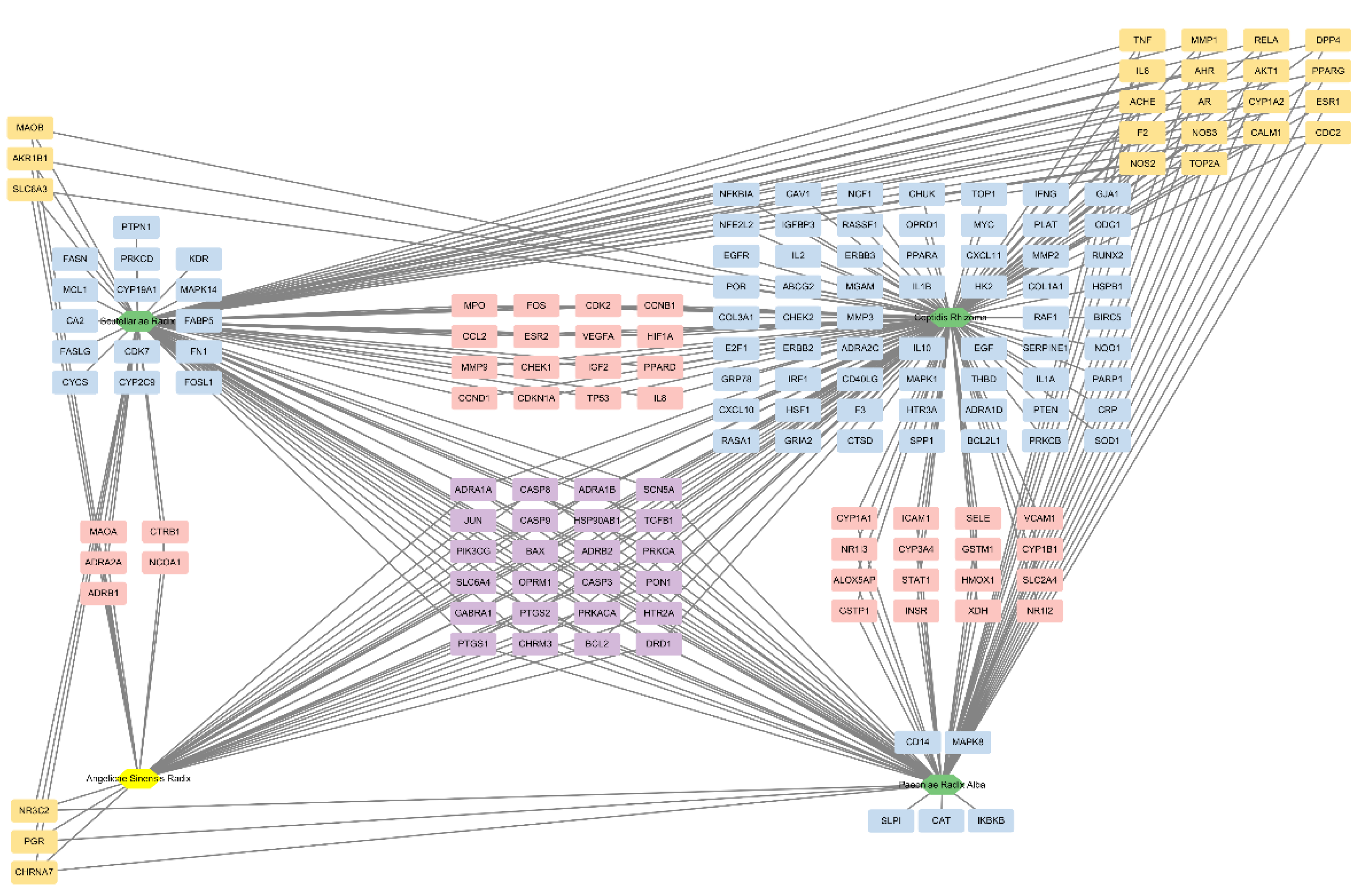
Figure 4.
Visualization of the commone target genes and proteins of the four herbs (SR, CR, ASR and PRA). STRING 12.0 software was used to create the PPI network.
Figure 4.
Visualization of the commone target genes and proteins of the four herbs (SR, CR, ASR and PRA). STRING 12.0 software was used to create the PPI network.
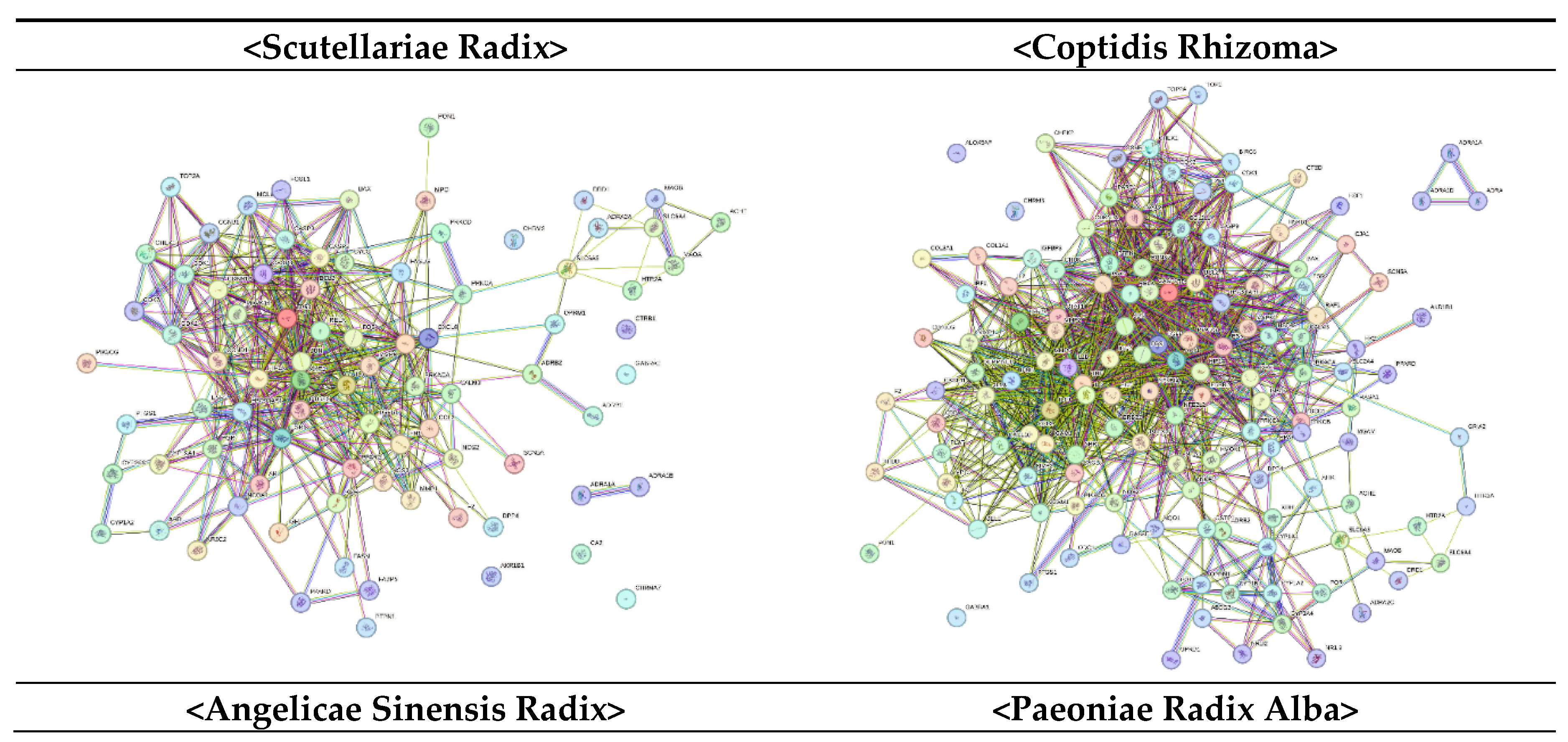
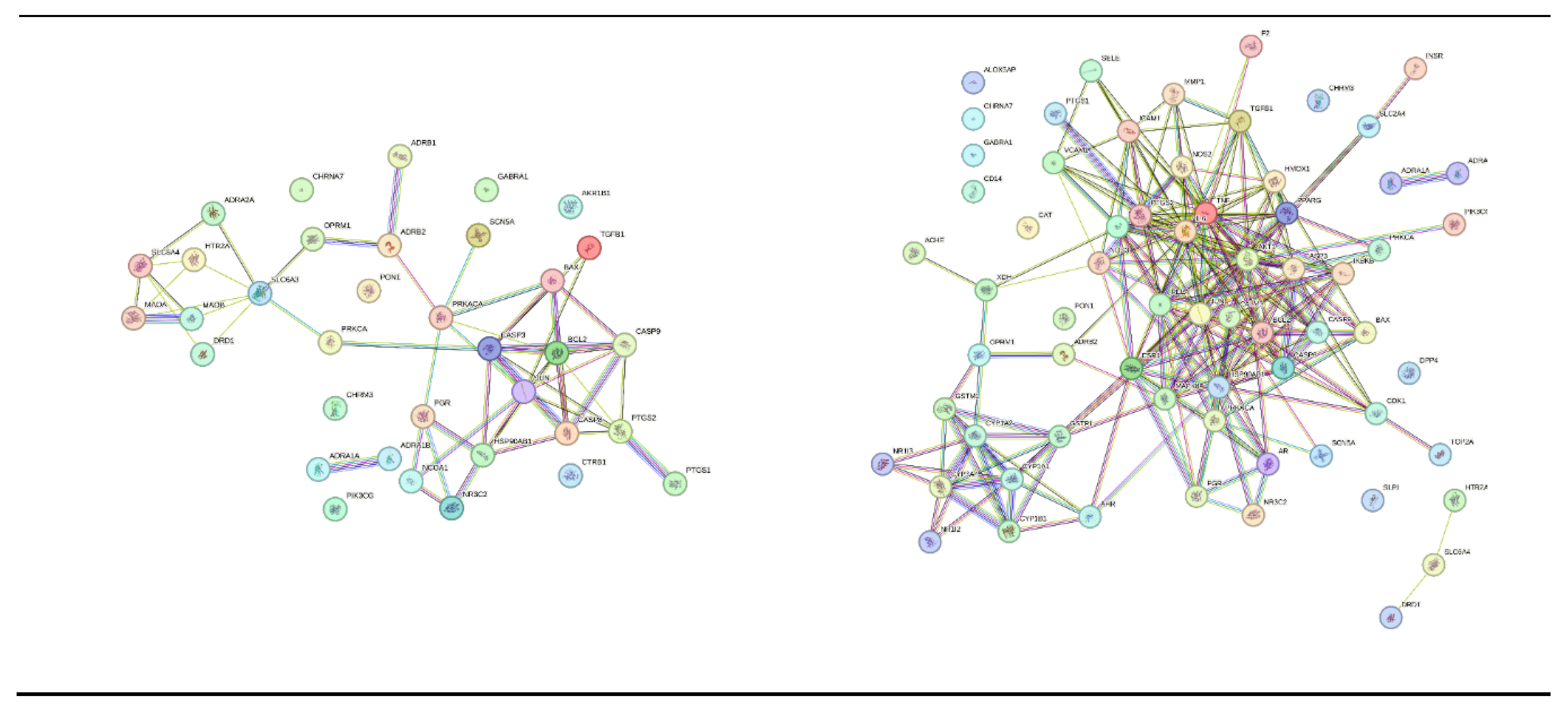
Figure 5.
Network of overlapping core genes between CHHF and four selected herbs (SR, CR, ASR and PRA) visualized by Cytoscape.
Figure 5.
Network of overlapping core genes between CHHF and four selected herbs (SR, CR, ASR and PRA) visualized by Cytoscape.
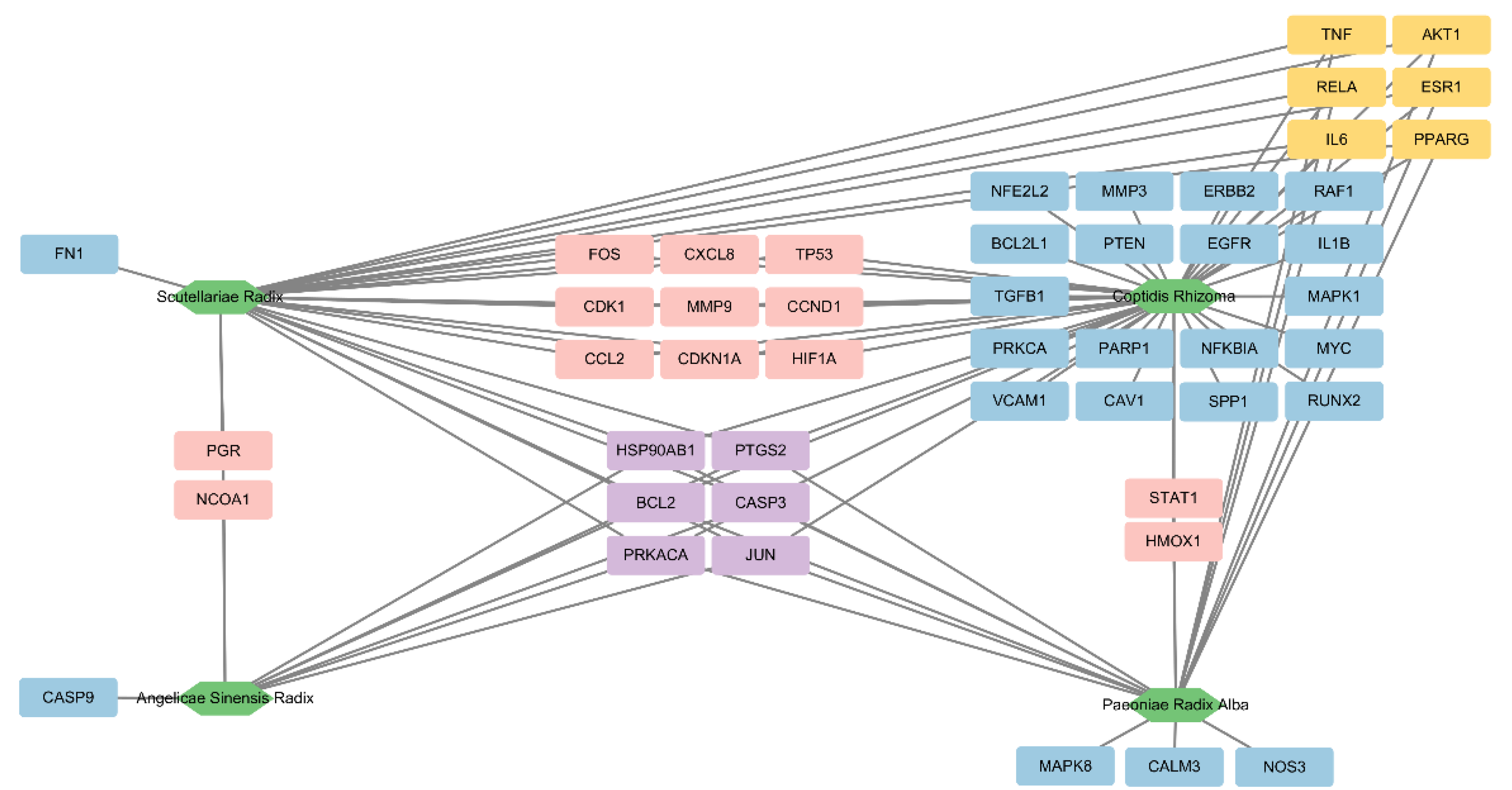
Figure 6.
The differences in molecular pathways between SR, CR, ASR and PRA. SR: Scutellariae Radix; CR: Coptidis Rhizoma; ASR: Angelicae Sinensis Radix; PRA: Paeoniae Radix Alba. (A) The hemostasis, immune system and metabolism-related molecular pathways. (B) The neuronal system and signal transduction-related molecular pathways.
Figure 6.
The differences in molecular pathways between SR, CR, ASR and PRA. SR: Scutellariae Radix; CR: Coptidis Rhizoma; ASR: Angelicae Sinensis Radix; PRA: Paeoniae Radix Alba. (A) The hemostasis, immune system and metabolism-related molecular pathways. (B) The neuronal system and signal transduction-related molecular pathways.
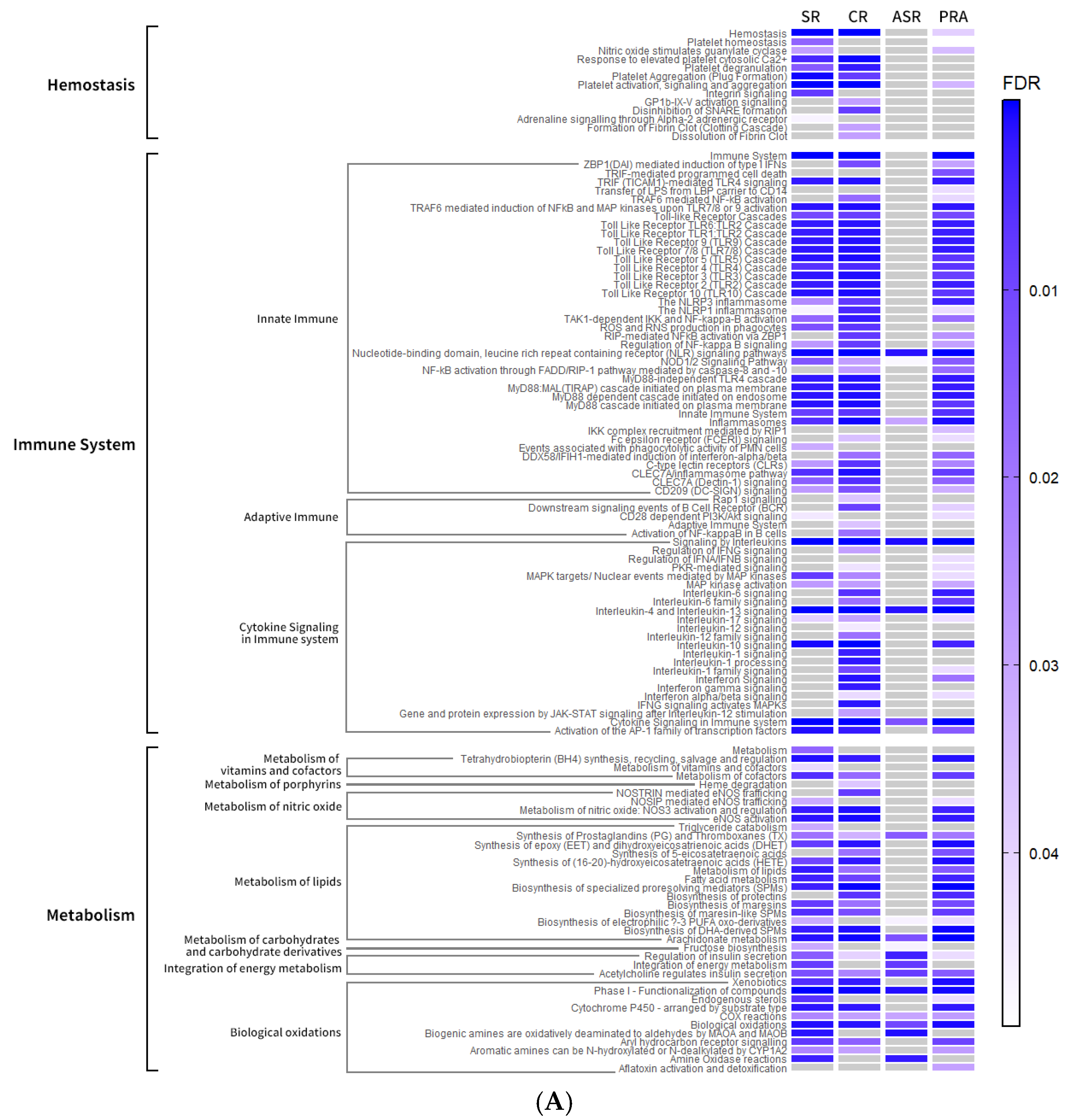
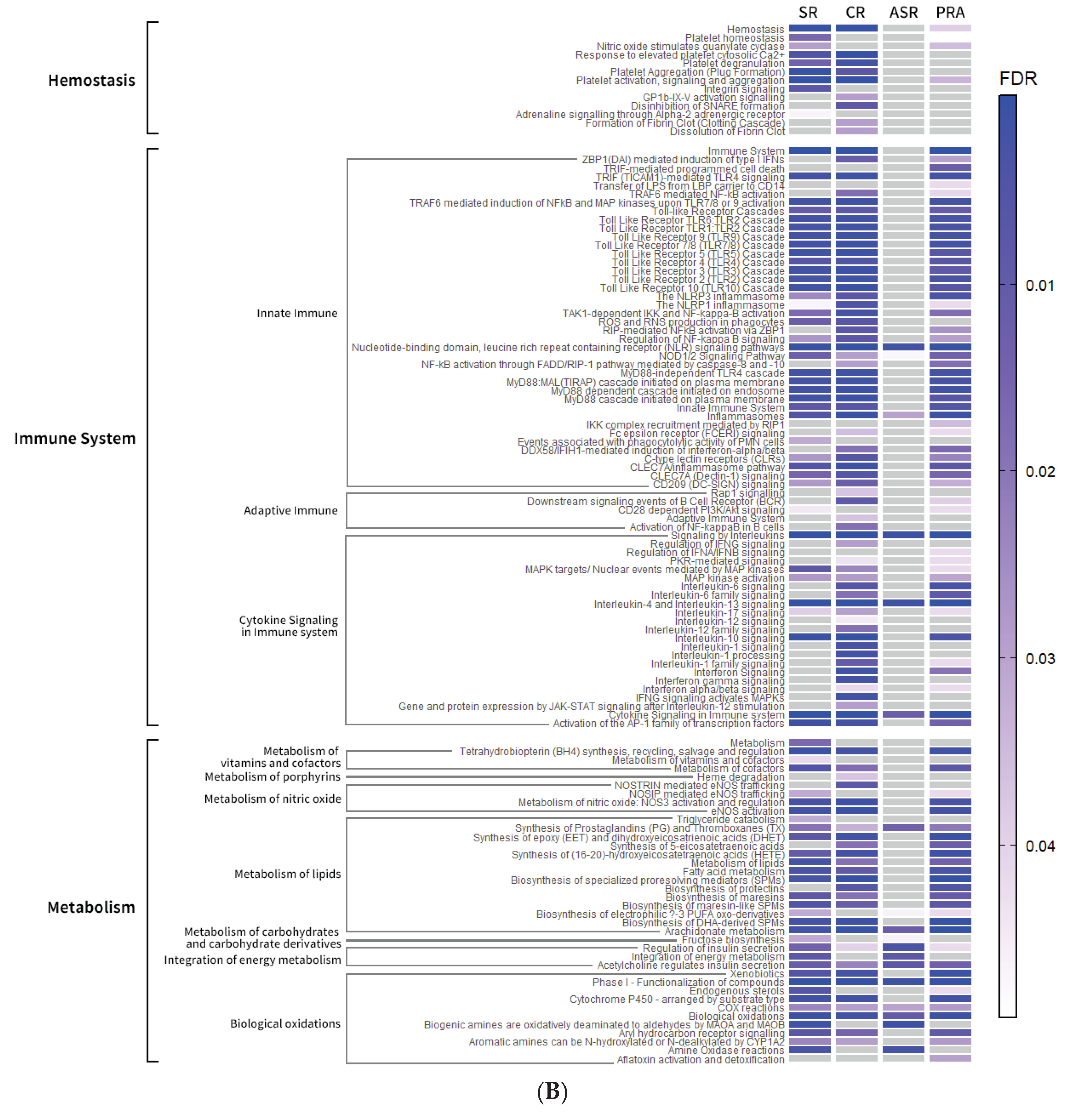
Table 1.
Centrality measures used for the selection of core genes of herbal medicine.
| BC | CC | DC | EC | |
|---|---|---|---|---|
| Scutellariae Radix | 12.0 | 0.216106 | 7.724 | 0.062662 |
| Coptidis Rhizoma | 47.0 | 0.178791 | 9.786 | 0.04442 |
| Angelicae Sinensis Radix | 1.5 | 0.191165 | 2.825 | 0.057668 |
| Paeoniae Radix Alba | 10.0 | 0.132553 | 6.13 | 0.074147 |
Table 2.
Frequency of PubMed hits for candidate HCHs.
| No. | Herbal medicine name AND (keyword) | PubMed frequency |
|---|---|---|
| 1 | Scutellariae Radix | 27 |
| 2 | Coptidis Rhizoma | 10 |
| 3 | Rehmanniae Radix | 6 |
| 4 | Gardeniae Fructus | 2 |
Table 3.
Active compounds and predicted protein targets of selected herbs from TCMSP.
| Herbal medicine | Number of active compounds | Number of predicted protein targets (with duplication) |
Number of predicted protein targets (duplicates removed) |
|---|---|---|---|
| Scutellariae Radix | 35 | 507 | 124 |
| Coptidis Rhizoma | 11 | 284 | 182 |
| Angelicae Sinensis Radix | 2 | 69 | 53 |
| Paeoniae Radix Alba | 13 | 123 | 92 |
Table 4.
UniProt search results and final determination of IDs for proteins with ambiguous matches.
| Target name | Search results | Final determination |
|---|---|---|
| Bcl-2-binding component 3 | Isoforms 1/2 and 3/4 were retrieved | Isoform 1/2 was determined as correct |
| Calmodulin | CALM1, CALM2, CALM3 were retrieved, corresponding to three UniProt IDs: ‘P0DP23’, ‘P0DP24’, ‘P0DP26’ | It was determined that Calmodulin corresponds to a total of three UniProt IDs |
| Coagulation factor Xa | Retrieved as Coagulation factor X | Determined as the UniProt ID of Coagulation factor X |
| Thrombin | Retrieved as Prothrombin | Determined as the UniProt ID of Prothrombin |
Table 5.
Number of herb-derived targets and overlapping targets with CHHF.
| Herbal medicine | Number of herb-derived target proteins |
Number of overlapping target proteins with CHHF |
|---|---|---|
| Scutellariae Radix | 124 | 84 |
| Coptidis Rhizoma | 182 | 138 |
| Angelicae Sinensis Radix | 53 | 35 |
| Paeoniae Radix Alba | 92 | 66 |
Table 6.
Number of nodes and core genes of selected herbs based on centrality measures.
| Herbal medicine | Number of overlapping protein targets with CHHF | PPI network analysis | Core gene analysis | |||
|---|---|---|---|---|---|---|
| Number of nodes | Number of edges | Average node degree | Number of nodes | Number of core genes | ||
| Scutellariae Radix | 84 | 83 | 438 | 10.6 | 77 | 24 |
| Coptidis Rhizoma | 138 | 137 | 1132 | 16.5 | 134 | 41 |
| Angelicae Sinensis Radix | 35 | 35 | 56 | 3.2 | 28 | 9 |
| Paeoniae Radix Alba | 66 | 66 | 232 | 7.03 | 57 | 17 |
Table 7.
Pathway enrichment results of common targets between CHHF and selected herbs based on Reactome analysis.
Table 7.
Pathway enrichment results of common targets between CHHF and selected herbs based on Reactome analysis.
| Pathway category | Scutellariae Radix |
Coptidis Rhizoma |
Angelicae Sinensis Radix | Paeoniae Radix Alba |
Pathways enriched by ≥1 herb |
|---|---|---|---|---|---|
| Hemostasis | 9 | 9 | 0 | 4 | 13 |
| Immune system | 40 | 62 | 6 | 55 | 68 |
| Metabolism | 33 | 27 | 12 | 29 | 38 |
| Neuronal system | 10 | 9 | 8 | 6 | 14 |
| Signal Transduction | 61 | 81 | 18 | 50 | 100 |
| Total pathways | 153 | 188 | 44 | 144 |
Disclaimer/Publisher’s Note: The statements, opinions and data contained in all publications are solely those of the individual author(s) and contributor(s) and not of MDPI and/or the editor(s). MDPI and/or the editor(s) disclaim responsibility for any injury to people or property resulting from any ideas, methods, instructions or products referred to in the content. |
© 2026 by the authors. Licensee MDPI, Basel, Switzerland. This article is an open access article distributed under the terms and conditions of the Creative Commons Attribution (CC BY) license (http://creativecommons.org/licenses/by/4.0/).
Copyright: This open access article is published under a Creative Commons CC BY 4.0 license, which permit the free download, distribution, and reuse, provided that the author and preprint are cited in any reuse.