

Submitted:
29 July 2026
Posted:
29 July 2026
You are already at the latest version
Abstract
Cancer metabolism has re-emerged as a major focus of oncology research, leading to renewed interest in therapeutic strategies that target the metabolic vulnerabilities of malignant cells. Dietary interventions, fasting, ketogenic diets, glutamine restriction, and pharmacologic metabolic inhibitors have demonstrated encouraging experimental and early clinical results, reinforcing the concept that metabolism represents a promising therapeutic target. Nevertheless, despite decades of investigation, complete and selective metabolic starvation of tumors remains biologically unattainable.The principal limitation of tumor starvation is physiological rather than technological. Tumors and normal tissues share many of the same fundamental metabolic requirements, including energy substrates, amino acids, micronutrients, and mitochondrial function. Consequently, interventions designed to deprive tumors of metabolic resources inevitably influence host physiology. At the same time, malignant cells exhibit remarkable metabolic plasticity, enabling adaptation to changing nutrient availability through alternative metabolic pathways. These reciprocal adaptations create an intrinsic biological constraint that limits the therapeutic window of tumor-starvation strategies.In a recent conceptual paper, we proposed the concepts of Host–Tumor Metabolic Homeostasis, the Dual-System Therapeutic Principle, and the Therapeutic Index Principle as a theoretical framework for understanding these constraints. The present paper expands upon that work by examining the physiological mechanisms underlying the inherent limitations of tumor starvation and discussing their implications for the future development of metabolic cancer therapy.Rather than diminishing the importance of metabolic therapy, recognizing these physiological constraints provides a foundation for developing more effective strategies that simultaneously exploit tumor metabolic vulnerabilities while preserving and optimizing host physiology.
Keywords:
cancer metabolism
; metabolic therapy
; tumor starvation
; ketogenic diet
; glutamine metabolism
; metabolic plasticity
; host–tumor metabolic homeostasis
; systems physiology
; integrative oncology
1. Introduction
The resurgence of cancer metabolism has fundamentally reshaped contemporary oncology[1]. Nearly a century after Otto Warburg[2] first described the altered metabolic phenotype of cancer cells, advances in molecular biology, metabolomics, and systems biology have renewed interest in targeting tumor metabolism as a therapeutic strategy[3]. Dietary interventions, fasting, ketogenic diets, glutamine restriction, mitochondrial-targeted therapies, and a growing number of pharmacologic metabolic inhibitors have all emerged from the recognition that metabolic reprogramming represents one of the defining hallmarks of cancer[1,4,5].
These developments have substantially expanded the therapeutic landscape. Unlike conventional cytotoxic therapies that primarily target DNA synthesis or cell division, metabolic therapies seek to exploit the biochemical dependencies that support malignant growth. This approach has generated considerable enthusiasm because it offers the possibility of selectively impairing tumor growth while potentially reducing treatment-related toxicity[6,7].
Despite these advances, an important physiological question remains insufficiently addressed:
Can a tumor ever be selectively starved without simultaneously starving the host?
This question extends beyond the effectiveness of any individual metabolic intervention. It challenges a more fundamental assumption underlying tumor-starvation strategies—that malignant cells can be deprived of essential metabolic resources while normal tissues remain relatively unaffected. Although tumors often display unique metabolic characteristics, they continue to share many essential biochemical pathways with the host[3]. Furthermore, both tumor cells and normal tissues possess substantial metabolic adaptability, allowing them to respond dynamically to changing nutritional and physiological conditions[5,7].
These observations suggest that the ultimate limitation of metabolic cancer therapy may not lie in our ability to identify increasingly potent methods of restricting tumor metabolism, but rather in the biological constraints imposed by the integrated physiology of the host–tumor system.
In our recent conceptual paper, we proposed Host–Tumor Metabolic Homeostasis, the Dual-System Therapeutic Principle, and the Therapeutic Index Principle as a theoretical framework for understanding the dynamic metabolic relationship between tumors and their hosts. Rather than repeating those concepts in detail, the present paper examines the physiological basis underlying that framework. Specifically, we explore why complete tumor starvation is biologically unattainable, how both tumors and hosts adapt to metabolic stress, and why these physiological realities define the therapeutic boundaries of metabolic cancer therapy.
2. The Promise of Tumor Starvation
The concept of targeting cancer metabolism has evolved considerably since Warburg first observed that many malignant cells preferentially utilize aerobic glycolysis despite the presence of adequate oxygen[2]. Although the metabolic heterogeneity of cancer is now widely recognized, altered nutrient utilization remains one of the most consistent biological characteristics shared across many tumor types[3,5].
The growing recognition that malignant cells undergo extensive metabolic reprogramming transformed cancer metabolism from a biological curiosity into a promising therapeutic target[4]. Rapidly proliferating tumors frequently exhibit increased demand for glucose, glutamine, lipids, and other metabolic substrates to sustain bioenergetics, biosynthesis, and redox homeostasis[6]. These metabolic dependencies suggested that selectively disrupting nutrient acquisition or utilization might impair tumor growth while preserving normal tissues, thereby providing an attractive therapeutic strategy distinct from conventional cytotoxic approaches.
This understanding has stimulated the development of diverse therapeutic strategies designed to exploit metabolic vulnerabilities. These include carbohydrate restriction through ketogenic diets, fasting and fasting-mimicking diets, inhibition of glutamine metabolism, pharmacologic suppression of glycolysis or mitochondrial function, and combinations of metabolic interventions with chemotherapy, radiotherapy, targeted therapy, or immunotherapy. Collectively, these approaches have demonstrated encouraging experimental evidence and, in selected clinical settings, promising therapeutic benefit.
More importantly, these advances have established a critical principle: tumor metabolism is a legitimate and clinically relevant therapeutic target. The challenge, however, is determining the extent to which metabolic manipulation can selectively impair malignant cells without exceeding the physiological limits of the host.
3. The Shared Metabolism Problem: The Fundamental Biological Constraint
The central premise of tumor-starvation strategies is that malignant cells can be deprived of essential metabolic substrates more effectively than normal tissues[3,4,5]. This premise is supported by decades of research demonstrating that many cancers exhibit increased dependence on glucose, glutamine, and other nutrients to sustain rapid proliferation[3,5,6]. Such metabolic dependencies represent genuine therapeutic vulnerabilities and have stimulated intense interest in dietary interventions, fasting, ketogenic diets, amino acid restriction, and pharmacologic inhibitors of cancer metabolism.
Yet this therapeutic paradigm contains an inherent biological challenge that is frequently underappreciated. Unlike infectious organisms, cancer cells are not foreign metabolic systems. They originate from normal host cells and therefore retain the overwhelming majority of the metabolic machinery required for human life[3,6]. Although malignant transformation profoundly alters the regulation and magnitude of metabolic activity, it rarely creates entirely novel metabolic pathways or unique nutrient requirements[5,6].
This distinction fundamentally separates cancer from infectious disease. Antibiotics selectively target bacterial cell walls, ribosomes, or metabolic pathways because these structures differ substantially from those of human cells. Antifungal agents exploit differences in sterol synthesis, while antiviral therapies target viral enzymes that are absent from the host. Cancer presents a far more difficult therapeutic problem because the tumor and the host share nearly identical biochemical infrastructure[4,6].
Consequently, the challenge is not simply to deprive the tumor of nutrients but to do so without simultaneously compromising the physiology of the organism from which the tumor arose.
3.1. Shared Dependence on Essential Metabolic Resources
Every living human cell depends upon a continuous supply of energy substrates and biosynthetic precursors to maintain ATP production, macromolecular synthesis, redox homeostasis, membrane integrity, and cellular repair. Rapidly proliferating cancer cells often require these resources in greater quantities than most differentiated tissues, but the qualitative requirements remain remarkably similar.
Glucose
Glucose occupies a central position in cancer metabolism because many tumors exhibit increased glycolytic activity[3,5]. This observation forms the biological basis for FDG-PET imaging[6] and has motivated numerous strategies aimed at lowering systemic glucose availability.
However, glucose is equally indispensable for many normal physiological processes[8]. Erythrocytes rely exclusively on glycolysis because they lack mitochondria[8]. Although prolonged fasting and nutritional ketosis substantially reduce cerebral glucose consumption, portions of the central nervous system continue to require glucose for normal function[9]. Activated lymphocytes and other proliferating immune cells markedly increase glucose utilization during immune activation, while wound healing, bone marrow hematopoiesis, and tissue regeneration also require substantial glycolytic activity[10].
Furthermore, blood glucose concentration is tightly regulated through coordinated endocrine mechanisms involving insulin, glucagon, cortisol, catecholamines, and hepatic gluconeogenesis[8,9]. Even during prolonged starvation, the body actively synthesizes glucose to preserve essential physiological functions[9]. These homeostatic mechanisms illustrate an important principle: systemic glucose cannot simply be eliminated because it is required for survival of the host.
Thus, while reducing excessive glucose availability may create an unfavorable metabolic environment for certain tumors, complete glucose deprivation is biologically incompatible with normal human physiology.
Glutamine
Glutamine has emerged as a second major focus of metabolic oncology[5,11]. Many cancers utilize glutamine not only as an energy substrate but also as a source of nitrogen for nucleotide synthesis, an anaplerotic substrate for the tricarboxylic acid cycle, and a precursor for glutathione synthesis and redox regulation[12].
Yet glutamine is equally indispensable for normal physiology. It serves as the preferred fuel for enterocytes, supports intestinal barrier integrity, fuels activated lymphocytes and macrophages, contributes to renal acid-base homeostasis, and participates in wound healing and tissue repair[8,13]. During severe illness, trauma, infection, and surgery, glutamine demand often exceeds endogenous production, reflecting its central role in the host stress response[14].
Consequently, systemic glutamine depletion may impair immune competence and tissue recovery at the same time that it limits tumor growth. The therapeutic challenge therefore lies not in determining whether glutamine metabolism can be targeted but in identifying strategies that preferentially exploit differences in glutamine dependence between tumor and host.
Amino Acids, Lipids, and Micronutrients
The same principle extends beyond glucose and glutamine. Essential amino acids support protein synthesis, cellular signaling, and immune function throughout the body. Fatty acids provide structural components of biological membranes, fuel oxidative metabolism in multiple organs, and generate signaling molecules that regulate inflammation and immunity. Vitamins and trace elements function as indispensable cofactors in mitochondrial respiration, collagen synthesis, DNA repair, antioxidant defense, and countless enzymatic reactions required by both malignant and normal cells.
Although individual tumors may exhibit selective dependence upon specific amino acids or altered lipid metabolism, no major nutrient class is uniquely required by cancer[5,7]. Differences generally reflect altered regulation, increased demand, or reduced metabolic flexibility rather than absolute metabolic exclusivity.
Accordingly, nutrient restriction alone rarely provides complete therapeutic selectivity.
3.2. Metabolic Homeostasis and Systemic Integration
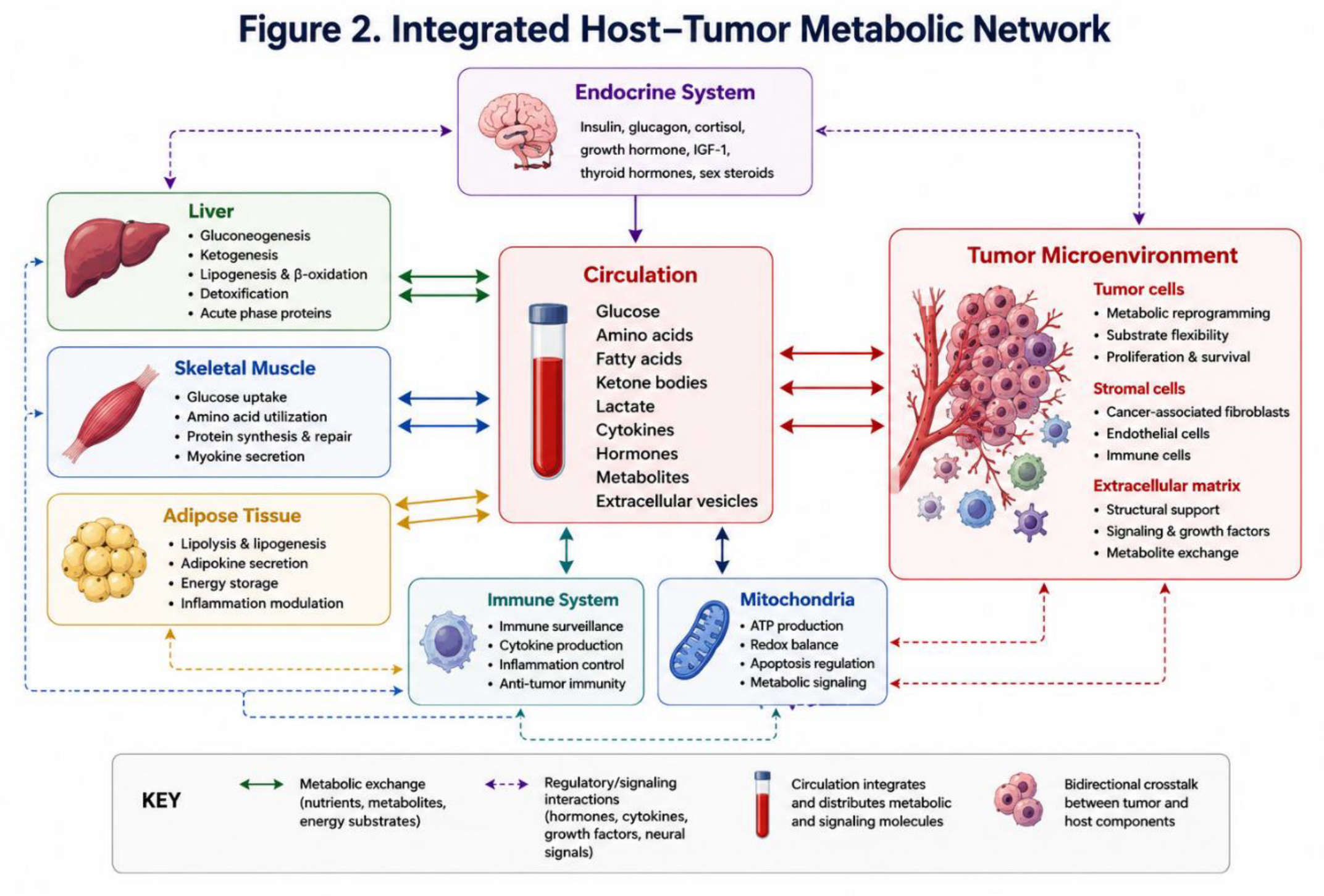
The shared metabolic dependence of tumor and host reflects a broader physiological reality: nutrients are not delivered independently to malignant tissues but are distributed through highly integrated systemic regulatory networks[8].
Blood vessels supplying the tumor arise from the host circulation[8]. Endocrine signals regulate nutrient availability throughout the body rather than within individual organs. The liver continuously adjusts gluconeogenesis, glycogen metabolism, amino acid turnover, and lipid transport to maintain systemic homeostasis[8]. Skeletal muscle, adipose tissue, immune organs, and the gastrointestinal tract all participate in dynamic exchange of metabolites that supports whole-body physiology.
Consequently, metabolic interventions are inherently systemic rather than tumor-specific[3,8]. Altering circulating nutrient availability inevitably influences multiple organs simultaneously, producing adaptive responses that extend far beyond the tumor itself.
This systems-level integration distinguishes metabolic therapy from treatments directed against molecular targets expressed predominantly by malignant cells. Nutrient availability is regulated at the level of the entire organism, making complete metabolic selectivity fundamentally difficult to achieve.
3.3. Nutrient Prioritization: Evolution Determines Who Gets Fed
The shared dependence of tumor and host on common metabolic resources raises an important physiological question that is seldom considered explicitly: when nutrients become limited, how does the body determine where they are allocated?
The answer lies in the evolutionary design of systemic metabolic regulation.
Throughout human evolution, nutrient scarcity was a recurrent challenge[15]. Survival therefore depended upon physiological mechanisms capable of prioritizing the distribution of limited metabolic resources to tissues essential for immediate survival and future reproduction. These regulatory systems evolved long before cancer became a major disease of aging and were not designed to optimize tumor growth.
Consequently, nutrient allocation within the human body is highly regulated rather than passive. Endocrine signaling, autonomic regulation, hepatic metabolism, immune activation, and tissue-specific transporter expression continuously coordinate the distribution of glucose, amino acids, fatty acids, and micronutrients according to physiological priority[8].
For example, during prolonged fasting, hepatic gluconeogenesis continues despite depletion of dietary carbohydrate because certain tissues—including erythrocytes and portions of the central nervous system—retain obligatory glucose requirements[9]. During acute infection or tissue injury, activated immune cells and healing tissues receive preferential metabolic support through profound endocrine and inflammatory adaptations[16]. Likewise, during pregnancy, maternal physiology undergoes extensive metabolic reprogramming to ensure nutrient delivery to the developing fetus[8].
These examples illustrate an important principle: systemic metabolism evolved to preserve the host, not to maximize nutrient delivery to neoplastic tissue.
Cancer cells must therefore compete within a physiological environment whose regulatory priorities were established for normal organismal survival[7]. Although tumors frequently manipulate angiogenesis, inflammation, endocrine signaling, and local metabolism to improve nutrient acquisition, they remain constrained by the same systemic homeostatic mechanisms that govern all other tissues.
Accordingly, complete tumor starvation is not prevented simply because tumors require essential nutrients. It is prevented because those nutrients are embedded within an actively regulated physiological economy whose primary objective is preservation of the organism.
This evolutionary perspective further emphasizes that metabolic cancer therapy is fundamentally a systems physiology problem rather than a problem of nutrient deprivation alone.
3.4. The Therapeutic Implication
Recognition of shared metabolism does not diminish the importance of metabolic therapy. Rather, it clarifies both its opportunities and its limitations.
The objective of metabolic therapy should not be viewed as complete elimination of nutrients essential for life. Instead, therapeutic success depends upon exploiting quantitative differences in metabolic demand, regulatory control, and adaptive capacity between malignant cells and normal tissues[5,7]. The greater this differential, the greater the potential therapeutic benefit.
Conversely, as systemic nutrient restriction becomes increasingly aggressive, the physiological costs to the host inevitably increase. This shared dependence on common metabolic resources therefore establishes the first and perhaps most fundamental biological constraint on tumor-starvation strategies.
The remaining sections of this review examine two additional constraints that further limit complete tumor starvation. The first is the extraordinary metabolic adaptability of cancer itself; the second is the finite physiological reserve of the host. Together, these three principles define the biological boundaries within which metabolic cancer therapy must operate.
4. Metabolic Plasticity: An Evolutionary Constraint on Tumor Starvation
The shared metabolic dependence of tumor and host represents one fundamental limitation of tumor-starvation strategies. A second, equally important limitation arises from the intrinsic adaptive capacity of malignant cells themselves. Even when nutrient availability is successfully altered, tumors rarely remain metabolically static[5,6,7]. Instead, they continuously remodel their metabolism in response to changing environmental conditions, therapeutic interventions, and selective pressures.
This capacity for adaptation—commonly termed metabolic plasticity—is now recognized as one of the defining characteristics of cancer[1,5,7]. Rather than relying upon a single metabolic program, malignant cells dynamically reconfigure energy production, biosynthesis, redox regulation, and nutrient utilization according to environmental constraints[3,5,7]. Consequently, metabolic therapy should not be viewed as targeting a fixed metabolic phenotype but rather as intervening within an evolving biological system[7,17].
The significance of metabolic plasticity extends beyond biochemical flexibility. It reflects the broader evolutionary nature of cancer itself. Every metabolic intervention alters the selective environment in which tumor cells compete, favoring populations capable of adapting while eliminating those that cannot[17,18,19]. Complete tumor starvation is therefore constrained not only by shared metabolism with the host but also by the evolutionary capacity of malignant cells to survive changing metabolic conditions.
4.1. Metabolic Plasticity Is an Evolutionary Property of Cancer
Cancer develops through continuous cycles of genetic variation, epigenetic modification, and natural selection[18,19,20]. Within a single tumor, numerous cellular populations coexist, differing in growth characteristics, signaling pathways, nutrient utilization, mitochondrial function, and stress tolerance[7,21,22]. This heterogeneity provides the biological substrate upon which therapeutic selection acts.
Metabolic interventions are no exception. Restriction of glucose, inhibition of glutamine metabolism, fasting, ketogenic diets, or pharmacologic inhibition of specific metabolic pathways all alter the selective landscape of the tumor[7,17]. Cells unable to adapt undergo apoptosis or growth arrest, whereas populations possessing alternative metabolic capabilities survive and expand[22,23].
From this perspective, metabolic plasticity should not be regarded as an isolated biochemical phenomenon but as a predictable consequence of Darwinian evolution operating within heterogeneous tumor populations[17,18,19]. Adaptation is therefore not an unexpected obstacle to metabolic therapy—it is an inherent property of living systems under sustained selective pressure.
4.2. Beyond the Warburg Effect
The Warburg effect remains one of the foundational discoveries of cancer biology and established the conceptual basis for modern metabolic oncology[2,6]. The observation that many malignant cells preferentially utilize aerobic glycolysis despite adequate oxygen availability demonstrated that altered metabolism represents a hallmark of cancer rather than a secondary consequence of malignant transformation[4,6].
Subsequent research, however, has revealed that the metabolic landscape of cancer is considerably more complex. While some tumors remain highly glycolytic, others depend more heavily upon oxidative phosphorylation, glutamine metabolism, fatty acid oxidation, or hybrid metabolic phenotypes that vary according to microenvironmental conditions[3,5,7].
Even within individual tumors, distinct regions frequently exhibit different metabolic programs as a consequence of variations in oxygen tension, nutrient availability, vascularization, stromal interactions, and immune infiltration[7,24]. The Warburg effect should therefore be viewed as one adaptive metabolic strategy rather than a universal metabolic identity[3,7].
4.3. Multiple Fuel Utilization and Metabolic Flexibility
One of the defining characteristics of malignant cells is their ability to utilize multiple metabolic substrates according to environmental availability[3,5,7].
When glucose availability becomes limiting, some tumors can increase their utilization of alternative substrates, including glutamine, fatty acids, lactate, acetate, ketone bodies, or branched-chain amino acids[5,7]. Inhibition of one pathway often promotes activation of another, allowing continued ATP production and biosynthesis despite substantial metabolic stress[7,23].
Tumors also employ adaptive mechanisms that extend beyond substrate switching. Autophagy enables recycling of intracellular components to sustain metabolism during nutrient deprivation[25], whereas macropinocytosis allows extracellular proteins to be internalized and degraded into amino acids[26]. Interactions with stromal cells further expand metabolic flexibility through exchange of lactate, lipids, amino acids, and other metabolites[24,27].
4.4. Intratumoral Heterogeneity Drives Evolutionary Selection
Metabolic plasticity is amplified by the remarkable heterogeneity of malignant tumors.
No clinically significant tumor consists of a homogeneous population of identical cells. Instead, tumors comprise genetically, epigenetically, phenotypically, and metabolically diverse subpopulations that coexist within continuously changing microenvironments[20,21,22].
Therapeutic interventions therefore function as evolutionary filters rather than simple cytotoxic events[17,19]. Nutrient restriction eliminates susceptible populations while simultaneously selecting for cells possessing greater metabolic adaptability[17,23]. Over time, these resistant populations may become increasingly dominant, reducing the long-term effectiveness of interventions that initially appeared highly successful[17,22].
4.5. The Tumor Microenvironment as a Metabolic Ecosystem
Metabolic adaptation cannot be understood solely at the level of malignant cells.
Cancer develops within an integrated microenvironment composed of endothelial cells, fibroblasts, immune cells, adipocytes, extracellular matrix, and vascular networks[24,28]. These components exchange nutrients, cytokines, growth factors, extracellular vesicles, and metabolic intermediates through highly dynamic reciprocal interactions[24,27].
Consequently, nutrient restriction imposed upon malignant cells also influences stromal populations, while metabolic adaptations occurring within stromal cells may in turn support continued tumor growth[24,27]. Lactate, fatty acids, amino acids, and other metabolites may be exchanged among different cellular populations, allowing tumors to exploit metabolic cooperation during periods of nutrient stress[24,29].
4.6. Adaptation Carries Biological Costs
Although metabolic plasticity enhances survival, adaptation is not without consequence.
Switching between metabolic programs requires extensive reorganization of cellular signaling, mitochondrial function, enzyme expression, substrate transport, and biosynthetic activity[5,7]. These adaptations consume energy, alter growth kinetics, and may expose new metabolic dependencies that were previously absent[7,30].
Accordingly, adaptation should not be interpreted as unlimited metabolic flexibility[23,30]. Every adaptive strategy involves trade-offs that influence cellular fitness under different physiological conditions. Recognition of these trade-offs provides an important rationale for combination therapies that simultaneously target multiple metabolic vulnerabilities while preserving host physiology[17,30].
Thus, metabolic plasticity represents both a challenge and a potential therapeutic opportunity.
4.7. The Therapeutic Implication
Collectively, these observations demonstrate that metabolic plasticity constitutes a second fundamental biological constraint on complete tumor starvation.
The limitation arises not because tumor metabolism is an unsuitable therapeutic target but because cancer is an evolving biological system[17,19]. Every metabolic intervention alters the selective environment, and malignant populations respond through continuous adaptation and evolutionary selection[7,17,18].
Successful metabolic therapy must therefore anticipate adaptation rather than assume metabolic stability[17]. Future strategies will likely depend less upon complete inhibition of individual metabolic pathways than upon combinations of interventions that exploit transient vulnerabilities created during metabolic adaptation while preserving the adaptive capacity of the host[7,17].
The following section considers the third major biological constraint on tumor starvation: the remarkable physiological adaptability of the host itself. Together with shared metabolism and tumor evolution, host adaptation defines the biological limits within which metabolic cancer therapy must operate.
5. Host Physiological Adaptation: Defining the Therapeutic Boundary
The limitations of tumor-starvation strategies arise not only from the metabolic properties of cancer cells but also from the remarkable adaptive capacity of the host. Throughout evolution, humans developed sophisticated physiological mechanisms to survive periods of nutrient scarcity, infection, trauma, and environmental stress[9,31]. These adaptive responses maintain systemic homeostasis, preserve the function of vital organs, and maximize the probability of survival under adverse conditions[9,32].
Consequently, the host is not a passive recipient of metabolic therapy but an active physiological participant whose responses fundamentally shape therapeutic outcomes. Any intervention designed to alter systemic metabolism inevitably triggers coordinated endocrine, immune, mitochondrial, and metabolic adaptations throughout the organism[32,33,34]. These responses frequently preserve host survival but simultaneously limit the extent to which systemic nutrient deprivation can selectively impair tumor growth.
The effectiveness of metabolic cancer therapy must therefore be evaluated not only according to its ability to suppress malignant proliferation but also according to its effects on the host's capacity to maintain physiological resilience. The therapeutic boundary of tumor starvation is ultimately defined by the host's ability to adapt without compromising the biological systems required for survival.
5.1. Homeostasis: Evolution Favors Preservation of the Host
Human metabolism evolved in an environment characterized by recurrent fluctuations in food availability rather than continuous nutritional abundance[34]. Survival therefore depended upon highly integrated physiological mechanisms capable of maintaining energy supply despite prolonged periods of fasting or caloric restriction[31,34].
When nutrient availability declines, glycogen stores are mobilized, hepatic gluconeogenesis increases, adipose tissue releases fatty acids, ketogenesis accelerates, and endocrine regulation shifts to preserve energy delivery to essential organs[31,32,34]. Simultaneously, numerous tissues modify substrate utilization according to metabolic priority, thereby maintaining systemic homeostasis despite substantial changes in dietary intake[32,34].
These adaptive responses illustrate an important principle: the primary objective of human metabolism is preservation of the organism rather than maximization of nutrient delivery to any individual tissue.
Consequently, systemic metabolism actively resists complete nutrient depletion. Even under prolonged starvation, the body continues to synthesize glucose, redistribute amino acids, mobilize lipid stores, and regulate endocrine signaling to preserve the physiological integrity of critical organs[31,34]. These homeostatic mechanisms, while essential for survival, simultaneously limit the degree to which metabolic deprivation can selectively target malignant tissues.
5.2. Immune Function: Tumor Suppression Requires Metabolic Resources
The immune system represents one of the most metabolically active components of the host and provides a compelling example of why nutrient restriction cannot be considered solely from the perspective of tumor biology.
Activation of T lymphocytes, macrophages, dendritic cells, natural killer cells, and other immune populations requires profound metabolic reprogramming[33,35]. Cellular proliferation, cytokine synthesis, antigen presentation, phagocytosis, and cytotoxic activity all depend upon adequate availability of glucose, glutamine, amino acids, fatty acids, and mitochondrial ATP production[33,35]. During immune activation, many leukocytes increase glycolysis dramatically, reflecting metabolic demands comparable to those observed in rapidly proliferating malignant cells[33,35].
This overlap creates an intrinsic therapeutic dilemma. Interventions designed to deprive tumors of metabolic substrates may simultaneously reduce the functional capacity of the immune system responsible for recognizing and eliminating malignant cells[36,37]. Excessive metabolic restriction therefore risks weakening one of the host's most important anticancer defenses[33,36].
From a systems physiology perspective, preservation of immune competence should be regarded not merely as supportive care but as an essential therapeutic objective. Effective metabolic therapy must increase metabolic stress on malignant cells without impairing the physiological mechanisms responsible for immune surveillance and long-term tumor control[33,36].
5.3. Physiological Reserve: The Importance of Maintaining the Host
Cancer patients frequently experience reduced physiological reserve as a consequence of systemic inflammation, treatment toxicity, malnutrition, aging, and progressive disease[38,39]. Under these circumstances, additional metabolic stress imposed by therapeutic nutrient restriction may produce consequences that extend well beyond effects on tumor growth.
Cancer cachexia provides perhaps the clearest clinical illustration of this principle. Unlike uncomplicated starvation, cachexia is characterized by persistent inflammation, endocrine dysregulation, mitochondrial dysfunction, accelerated protein catabolism, and progressive loss of skeletal muscle that cannot be fully reversed by nutritional supplementation alone[38,39,40]. The resulting decline in functional capacity compromises mobility, respiratory performance, immune competence, wound healing, tolerance of surgery and systemic therapy, and ultimately survival[38,39,41].
Preservation of skeletal muscle and functional capacity therefore represents far more than maintenance of body weight. Muscle functions as a major metabolic organ, amino acid reservoir, endocrine tissue, and determinant of physical resilience[42,43]. Loss of this physiological reserve diminishes the host's ability to withstand both disease progression and therapeutic intervention[39,41].
These observations emphasize that successful metabolic therapy requires preservation of the biological systems that enable patients to tolerate treatment and recover from physiological stress. Weakening the host in pursuit of greater tumor starvation may ultimately narrow rather than expand the therapeutic window.
5.4. Endocrine and Mitochondrial Integration
Systemic metabolism is coordinated through an extensive network of endocrine and mitochondrial regulation that continuously adjusts physiological responses according to nutrient availability and environmental demands.
Insulin, glucagon, cortisol, catecholamines, thyroid hormones, growth hormone, and sex steroids collectively regulate glucose production, protein turnover, lipid metabolism, mitochondrial function, and energy expenditure[34,44]. These endocrine responses interact with mitochondrial substrate selection, oxidative phosphorylation, reactive oxygen species signaling, and cellular stress responses to maintain energy homeostasis across multiple organ systems[32,45].
Consequently, metabolic therapy cannot be considered a localized intervention directed solely at tumor metabolism[32]. Rather, it perturbs integrated physiological networks that influence virtually every organ within the body. The therapeutic objective therefore extends beyond suppression of malignant metabolism to preservation of the adaptive mechanisms that maintain systemic function throughout treatment.
Recognition of this complexity further reinforces the concept that metabolic oncology is fundamentally a systems physiology discipline rather than a collection of isolated biochemical pathways.
5.5. The Therapeutic Boundary Is Defined by Host Physiology
Taken together, these physiological adaptations reveal a fundamental principle that extends beyond any individual metabolic intervention.
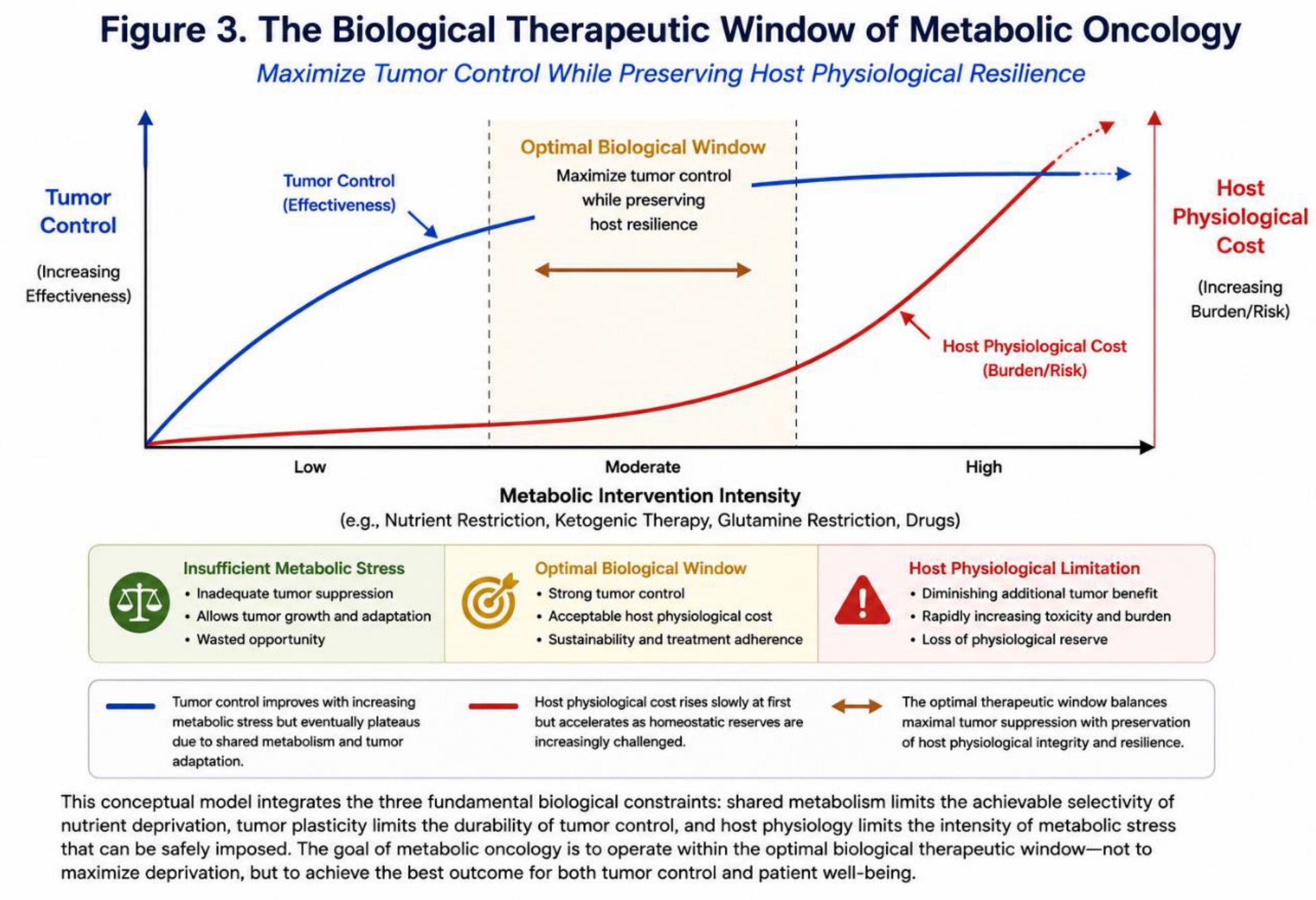
As systemic metabolic restriction becomes progressively more intensive, two opposing processes occur simultaneously[34,38,39]. Increased metabolic stress may further impair tumor growth, yet the adaptive capacity of the host progressively approaches its physiological limits. Once host resilience begins to decline, additional nutrient restriction yields diminishing therapeutic returns because the biological costs imposed upon the organism increasingly offset any incremental suppression of malignant metabolism.
The therapeutic boundary of tumor starvation is therefore determined not by the absolute degree of nutrient deprivation achieved but by the point at which further metabolic stress compromises the physiological systems required to sustain the host[38,39].
This boundary is dynamic rather than fixed. It varies according to age, nutritional status, disease burden, organ function, treatment history, inflammatory state, and individual metabolic resilience. Nevertheless, its existence appears to be an intrinsic consequence of integrated human physiology rather than a limitation of current therapeutic technology.
Accordingly, the objective of metabolic cancer therapy should not be maximal nutrient deprivation but maximal therapeutic differential—creating conditions in which malignant cells experience greater metabolic stress than the host while preserving the physiological systems that maintain resilience, immune competence, tissue repair, and recovery.
The following section integrates shared metabolism, tumor metabolic plasticity, and host physiological adaptation into a unified framework defining the biological limits of tumor-starvation strategies.
6. The Biological Limits of Tumor Starvation
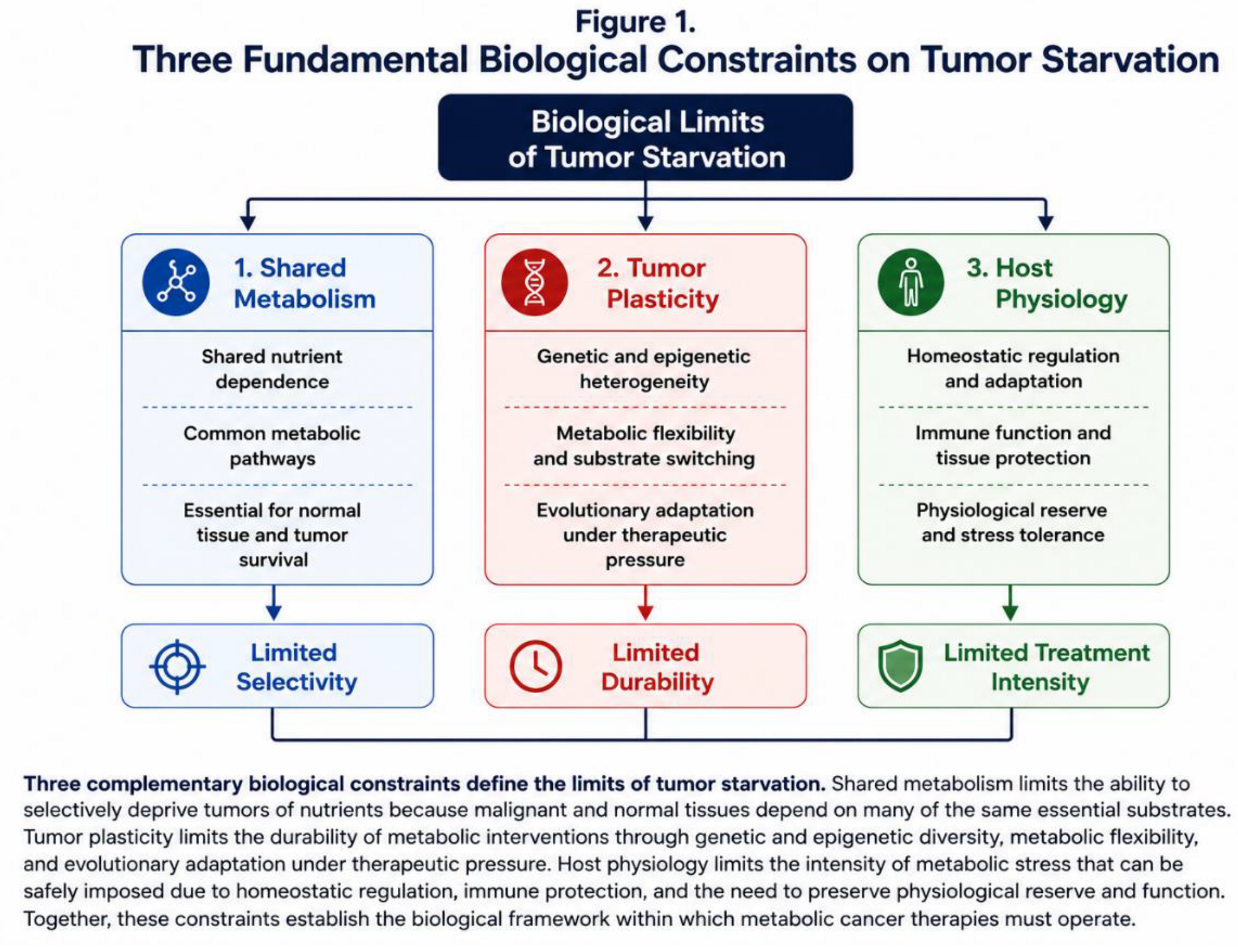
The preceding sections identify three fundamental biological constraints that collectively define the limits of tumor-starvation strategies. First, malignant cells retain extensive metabolic dependence upon the same nutrients required by normal tissues, making complete metabolic selectivity biologically unattainable[3,6]. Second, tumors exhibit remarkable metabolic plasticity and evolutionary adaptability, enabling continued survival under changing metabolic conditions[7,17,19]. Third, the host possesses highly integrated physiological mechanisms that actively preserve systemic homeostasis during nutrient deprivation, thereby limiting the degree of metabolic stress that can be safely imposed[32,34,39].
Each of these constraints alone presents a significant challenge to complete tumor starvation. More importantly, however, they do not operate independently. Rather, they interact continuously within a complex host–tumor system in which alterations in one component inevitably influence the others[27]. This systems-level interaction explains why progressively intensifying metabolic deprivation rarely produces unlimited therapeutic benefit. Instead, increasing metabolic stress eventually reaches a biological boundary beyond which further restriction produces diminishing tumor control while increasing physiological costs to the host.
The limitations of tumor starvation should therefore be understood not as failures of individual therapeutic strategies but as consequences of fundamental biological organization. Cancer exists within an integrated organism whose metabolic networks evolved to preserve survival under fluctuating environmental conditions[27,32,34]. Therapeutic interventions must operate within these physiological constraints rather than assume they can be completely overcome.
6.1. Three Fundamental Biological Constraints
The biological limits of tumor starvation arise from the interaction of three complementary principles.
The first constraint is shared metabolism. Because malignant cells originate from host tissues, they depend upon many of the same essential nutrients required for normal cellular function. Glucose, glutamine, amino acids, fatty acids, vitamins, and micronutrients support not only tumor growth but also immune function, tissue repair, endocrine regulation, and maintenance of vital organs. Complete deprivation of these substrates is therefore incompatible with preservation of normal physiology[3,6,34].
The second constraint is tumor metabolic plasticity. Cancer cells continuously adapt to metabolic stress through substrate switching, activation of alternative biosynthetic pathways, autophagy, macropinocytosis, mitochondrial remodeling, and evolutionary selection among heterogeneous cellular populations. As therapeutic pressure increases, tumors evolve rather than remain metabolically static, reducing the long-term effectiveness of strategies directed against single metabolic pathways[7,17,19].
The third constraint is host physiological adaptation. Endocrine regulation, hepatic gluconeogenesis, ketogenesis, immune responses, mitochondrial adaptation, and redistribution of metabolic resources collectively preserve organismal survival during periods of nutrient limitation. These adaptive mechanisms maintain physiological resilience but simultaneously sustain metabolic environments that tumors may continue to exploit[27,32,34].
Together, these three constraints define the biological landscape within which all metabolic cancer therapies must function.
6.2. From Maximum Starvation to Maximum Therapeutic Advantage
Recognition of these biological constraints suggests that the objective of metabolic oncology should not be complete nutrient deprivation but optimization of the therapeutic relationship between tumor suppression and host preservation.
Tumor-starvation strategies can implicitly encourage the assumption that progressively greater nutrient restriction will produce progressively greater anticancer effects. The systems physiology reviewed in this article suggests a more complex reality. Beyond a certain point, increasing metabolic stress no longer produces proportionally greater tumor inhibition because the host's adaptive responses and the tumor's evolutionary adaptations progressively offset the intended therapeutic effect.
The goal of metabolic therapy should therefore be to create a selective physiological advantage for the host rather than to achieve absolute metabolic deprivation. Effective interventions should increase metabolic stress on malignant cells while simultaneously preserving or strengthening immune competence, mitochondrial function, tissue repair, endocrine homeostasis, and overall physiological resilience.
This perspective shifts metabolic oncology from maximal nutrient restriction toward maximal therapeutic differential.
6.3. A Systems Physiology Perspective
The concepts discussed throughout this review collectively support a systems physiology approach to metabolic cancer therapy.
Rather than viewing cancer metabolism as an isolated property of malignant cells, this perspective recognizes that tumor behavior emerges from continuous interactions among malignant cells, normal tissues, immune responses, endocrine regulation, vascular function, nutrient availability, and whole-body metabolic homeostasis[7,27]. Therapeutic interventions inevitably influence each of these interconnected systems simultaneously[27,32].
Within this framework, successful metabolic therapy depends not upon complete suppression of a single metabolic pathway but upon coordinated modulation of the host–tumor system[3,17,27]. Durable therapeutic benefit is more likely to arise from interventions that simultaneously weaken malignant adaptation while preserving the physiological capacity of the host to repair tissues, maintain immune surveillance, and tolerate treatment[17,36,39].
Accordingly, metabolic oncology should increasingly be regarded as an application of systems physiology rather than solely a discipline of cellular metabolism.
6.4. Clinical and Research Implications
This systems perspective has important implications for both clinical practice and future research.
Future metabolic therapies should be designed to exploit differences in metabolic vulnerability rather than pursue complete elimination of individual nutrients[3,7]. Combination approaches that integrate appropriately selected dietary interventions, pharmacologic metabolic modulation, immunotherapy, nutritional optimization, and preservation of host physiological reserve warrant investigation as alternatives to increasingly intensive nutrient restriction alone[17,27,46].
Equally important, therapeutic success should be evaluated using measures that reflect both tumor response and host resilience[38,46]. In addition to conventional oncologic endpoints, assessment of immune competence, nutritional status, skeletal muscle preservation, metabolic health, functional capacity, quality of life, and treatment tolerance may provide a more comprehensive understanding of therapeutic benefit[38,39,46].
Future research should likewise focus on identifying strategies that enhance the biological differential between tumor vulnerability and host resilience. Such approaches are more consistent with the integrated physiology of the human organism than attempts to achieve complete systemic nutrient deprivation.
The biological limitations of tumor starvation do not diminish the importance of metabolic therapy in cancer treatment. Rather, they define the physiological framework within which such therapies can be most effectively developed. Recognizing these constraints shifts the focus from pursuing complete metabolic deprivation toward designing interventions that maximize tumor control while preserving the adaptive capacity of the host. This systems-oriented perspective provides a more biologically realistic foundation for the next generation of metabolic oncology.
7. Conclusion
Metabolic therapy has emerged as one of the most promising complementary approaches in modern oncology, supported by an expanding understanding of cancer metabolism and increasing interest in dietary, pharmacological, and mitochondrial-targeted interventions[3,6,7]. Nevertheless, despite encouraging experimental and early clinical observations, no current metabolic intervention has demonstrated that complete systemic deprivation of the nutrients required by malignant cells can be achieved safely and durably in patients[7,27].
This review argues that the principal limitation is biological rather than technological. Three fundamental constraints collectively define the therapeutic boundaries of metabolic cancer therapy. First, malignant cells share extensive metabolic requirements with normal tissues, making complete metabolic selectivity through systemic nutrient deprivation biologically implausible[3,6]. Second, tumors continuously adapt through metabolic plasticity and evolutionary selection, reducing the durability of interventions directed at individual metabolic pathways[7,17,19]. Third, the host actively maintains systemic homeostasis through highly integrated physiological mechanisms that preserve survival during metabolic stress, thereby limiting the degree of nutrient restriction that can be safely imposed[32,34,39].
These constraints should not be interpreted as reasons to abandon metabolic therapy. Rather, they establish the biological framework within which metabolic interventions can be most effectively designed and evaluated. The challenge is therefore not to achieve complete nutrient deprivation, but to exploit differences in metabolic vulnerability while preserving—or ideally enhancing—the physiological resilience of the host.
Viewed from this perspective, metabolic oncology becomes fundamentally a systems-physiology discipline, informed by systems biology but extending beyond cellular and molecular networks to encompass whole-body host–tumor integration. Tumor metabolism cannot be understood independently of immune function, endocrine regulation, mitochondrial biology, vascular physiology, nutritional status, and whole-body metabolic homeostasis[27,32]. Effective therapies must therefore consider the integrated host–tumor system rather than focusing exclusively on malignant cells or individual metabolic pathways.
Future research should investigate combination strategies that target multiple metabolic vulnerabilities while preserving or strengthening host physiological reserve[7,17,46]. Such approaches may include rationally selected dietary interventions, pharmacological metabolic modulation, immunotherapy, nutritional optimization, exercise or rehabilitation, and other supportive strategies tailored to the biological characteristics and physiological reserve of both the tumor and the patient[17,27,46]. Success should ultimately be judged not only by tumor response but also by preservation of functional capacity, treatment tolerance, quality of life, and long-term physiological resilience[38,39,46].
Ultimately, the future of metabolic cancer therapy lies not in pursuing complete tumor starvation but in understanding and working within the fundamental principles of human biology. Recognizing the biological limits imposed by shared metabolism, tumor adaptation, and host physiology provides a more realistic and scientifically grounded framework for the development of safer, more effective metabolic interventions. Rather than representing a limitation of the field, this systems perspective offers a roadmap for its continued evolution toward therapies that maximize tumor control while preserving the biological integrity of the patient.
Declarations
Author Contributions
R.Z.C. conceived the manuscript, developed the theoretical framework, conducted the literature review, designed the figures, wrote the manuscript, and approved the final version.
Funding
This research received no external funding.
Institutional Review Board Statement
Not applicable.
Informed Consent Statement
Not applicable.
Data Availability Statement
No new data were generated or analyzed in this conceptual review. Data sharing is not applicable.
Conflicts of Interest
The author declares no conflicts of interest.
AI Use Statement: The author used generative artificial intelligence (ChatGPT, OpenAI) to assist with language editing, manuscript organization, and literature review. All scientific interpretation, conceptual development, critical evaluation, and final manuscript content were independently reviewed and approved by the author.
References
- Hanahan, D. Hallmarks of Cancer: New Dimensions. Cancer Discov. 2022, 12((1)), 31–46. [Google Scholar] [CrossRef] [PubMed]
- Warburg, O. On the Origin of Cancer Cells. Science 1956, 123((3191)), 309–314. [Google Scholar] [CrossRef] [PubMed]
- DeBerardinis, R.J.; Chandel, N.S. Fundamentals of Cancer Metabolism. Sci. Adv. 2016, 2((5)), e1600200. [Google Scholar] [CrossRef] [PubMed]
- Hanahan, D.; Weinberg, R.A. Hallmarks of Cancer: The next Generation. Cell 2011, 144((5)), 646–74. Available online: http://linkinghub.elsevier.com/retrieve/pii/S0092867411001279. [CrossRef] [PubMed]
- Pavlova, N.N.; Thompson, C.B. The Emerging Hallmarks of Cancer Metabolism. Cell Metab. 2016, 23((1)), 27–47. [Google Scholar] [CrossRef] [PubMed]
- Vander Heiden, M.G.; DeBerardinis, R.J. Understanding the Intersections between Metabolism and Cancer Biology. Cell 2017, 168((4)), 657–669. [Google Scholar] [CrossRef] [PubMed]
- Faubert, B.; Solmonson, A.; DeBerardinis, R.J. Metabolic Reprogramming and Cancer Progression. Science 2020, 368((6487)), eaaw5473. [Google Scholar] [CrossRef] [PubMed]
- Hall, John E; Hall, Michael E. Guyton and Hall Textbook of Medical Physiology; Elsevier: Philadelphia, PA, 2025. [Google Scholar]
- Cahill, G.F.; Owen, O.E. Starvation and Survival. Trans. Am. Clin. Climatol. Assoc. 1968, 79, 13–20. [Google Scholar] [PubMed]
- Buck, M.D.; O’Sullivan, D.; Pearce, E.L. T Cell Metabolism Drives Immunity. J. Exp. Med. 2015, 212((9)), 1345–1360. [Google Scholar] [CrossRef] [PubMed]
- Altman, B.J.; Stine, Z.E.; Dang, C.V. From Krebs to Clinic: Glutamine Metabolism to Cancer Therapy. Nat. Rev. Cancer 2016, 16((10)), 619–634. [Google Scholar] [CrossRef] [PubMed]
- DeBerardinis, R.J.; Mancuso, A.; Daikhin, E.; et al. Beyond Aerobic Glycolysis: Transformed Cells Can Engage in Glutamine Metabolism That Exceeds the Requirement for Protein and Nucleotide Synthesis. Proc. Natl. Acad. Sci. U S A 2007, 104((49)), 19345–19350. [Google Scholar] [CrossRef] [PubMed]
- Newsholme, P. Why Is L-Glutamine Metabolism Important to Cells of the Immune System in Health, Postinjury, Surgery or Infection? J. Nutr. 2001, 131 Suppl, 2515S–22S; discussion 2523S-4S. [Google Scholar] [CrossRef] [PubMed]
- DeLegge, M.H. Enteral Feeding. Curr. Opin. Gastroenterol. 2008, 24((2)), 184–189. [Google Scholar] [CrossRef] [PubMed]
- Nesse, R.M.; Williams, G.C. Why We Get Sick: The New Science of Darwinian Medicine.; New York, 2018. [Google Scholar]
- Hotamisligil, G.S. Foundations of Immunometabolism and Implications for Metabolic Health and Disease. Immunity 2017, 47((3)), 406–420. [Google Scholar] [CrossRef] [PubMed]
- Gatenby, R.A.; Brown, J.S. Integrating Evolutionary Dynamics into Cancer Therapy. Nat. Rev. Clin. Oncol. 2020, 17((11)), 675–686. [Google Scholar] [CrossRef] [PubMed]
- Nowell, P.C. The Clonal Evolution of Tumor Cell Populations. Science 1976, 194((4260)), 23–28. [Google Scholar] [CrossRef] [PubMed]
- Merlo, L.M.F.; Pepper, J.W.; Reid, B.J.; et al. Cancer as an Evolutionary and Ecological Process. Nat. Rev. Cancer 2006, 6((12)), 924–935. [Google Scholar] [CrossRef]
- Black, J.R.M.; McGranahan, N. Genetic and Non-Genetic Clonal Diversity in Cancer Evolution. Nat. Rev. Cancer 2021, 21((6)), 379–392. [Google Scholar] [CrossRef] [PubMed]
- Burrell, R.A.; McGranahan, N.; Bartek, J.; et al. The Causes and Consequences of Genetic Heterogeneity in Cancer Evolution. Nature 2013, 501((7467)), 338–345. [Google Scholar] [CrossRef] [PubMed]
- Dagogo-Jack, I.; Shaw, A.T. Tumour Heterogeneity and Resistance to Cancer Therapies. Nat. Rev. Clin. Oncol. 2018, 15((2)), 81–94. [Google Scholar] [CrossRef] [PubMed]
- Persi, E.; Wolf, Y.I.; Horn, D.; et al. Mutation-Selection Balance and Compensatory Mechanisms in Tumour Evolution. Nat. Rev. Genet 2021, 22((4)), 251–262. [Google Scholar] [CrossRef] [PubMed]
- Anastasiou, D. Tumour Microenvironment Factors Shaping the Cancer Metabolism Landscape. Br. J. Cancer 2017, 116((3)), 277–286. [Google Scholar] [CrossRef] [PubMed]
- Jiang, X.; Overholtzer, M.; Thompson, C.B. Autophagy in Cellular Metabolism and Cancer. J. Clin. Invest 2015, 125((1)), 47–54. [Google Scholar] [CrossRef] [PubMed]
- Commisso, C.; Davidson, S.M.; Soydaner-Azeloglu, R.G.; et al. Macropinocytosis of Protein Is an Amino Acid Supply Route in Ras-Transformed Cells. Nature 2013, 497((7451)), 633–637. [Google Scholar] [CrossRef] [PubMed]
- Altea-Manzano, P.; Decker-Farrell, A.; Janowitz, T.; et al. Metabolic Interplays between the Tumour and the Host Shape the Tumour Macroenvironment. Nat. Rev. Cancer 2025, 25((4)), 274–292. [Google Scholar] [CrossRef] [PubMed]
- Hanahan, D.; Coussens, L.M. Accessories to the Crime: Functions of Cells Recruited to the Tumor Microenvironment. Cancer Cell 2012, 21((3)), 309–322. [Google Scholar] [CrossRef] [PubMed]
- Sonveaux, P.; Végran, F.; Schroeder, T.; et al. Targeting Lactate-Fueled Respiration Selectively Kills Hypoxic Tumor Cells in Mice. J. Clin. Invest 2008, 118((12)), 3930–3942. [Google Scholar] [CrossRef] [PubMed]
- Hausser, J.; Alon, U. Tumour Heterogeneity and the Evolutionary Trade-Offs of Cancer. Nat. Rev. Cancer 2020, 20((4)), 247–257. [Google Scholar] [CrossRef]
- Owen, O.E.; Felig, P.; Morgan, A.P.; et al. Liver and Kidney Metabolism during Prolonged Starvation. J. Clin. Invest 1969, 48((3)), 574–583. [Google Scholar] [CrossRef] [PubMed]
- Smith, R.L.; Soeters, M.R.; Wüst, R.C.I.; et al. Metabolic Flexibility as an Adaptation to Energy Resources and Requirements in Health and Disease. Endocr. Rev. 2018, 39((4)), 489–517. [Google Scholar] [CrossRef] [PubMed]
- O’Neill, L.A.J.; Kishton, R.J.; Rathmell, J. A Guide to Immunometabolism for Immunologists. Nat. Rev. Immunol. 2016, 16((9)), 553–565. [Google Scholar] [CrossRef] [PubMed]
- Cahill, G.F. Fuel Metabolism in Starvation. Annu Rev. Nutr. 2006, 26, 1–22. [Google Scholar] [CrossRef]
- Pearce, E.L.; Pearce, E.J. Metabolic Pathways in Immune Cell Activation and Quiescence. Immunity 2013, 38((4)), 633–643. [Google Scholar] [CrossRef] [PubMed]
- Chang, C.-H.; Qiu, J.; O’Sullivan, D.; et al. Metabolic Competition in the Tumor Microenvironment Is a Driver of Cancer Progression. Cell 2015, 162((6)), 1229–1241. [Google Scholar] [CrossRef] [PubMed]
- Ho, P.-C.; Bihuniak, J.D.; Macintyre, A.N.; et al. Phosphoenolpyruvate Is a Metabolic Checkpoint of Anti-Tumor T Cell Responses. Cell 2015, 162((6)), 1217–1228. [Google Scholar] [CrossRef] [PubMed]
- Fearon, K.; Strasser, F.; Anker, S.D.; et al. Definition and Classification of Cancer Cachexia: An International Consensus. Lancet Oncol. 2011, 12((5)), 489–495. [Google Scholar] [CrossRef] [PubMed]
- Baracos, V.E.; Martin, L.; Korc, M.; et al. Cancer-Associated Cachexia. Nat. Rev. Dis. Prim. 2018, 4, 17105. [Google Scholar] [CrossRef] [PubMed]
- Argilés, J.M.; Busquets, S.; Stemmler, B.; et al. Cachexia and Sarcopenia: Mechanisms and Potential Targets for Intervention. Curr. Opin. Pharmacol. 2015, 22, 100–106. [Google Scholar] [CrossRef] [PubMed]
- Gallois, C.; Bourillon, C.; Auclin, E.; et al. Skeletal Muscle Loss during Chemotherapy and Its Association with Survival and Systemic Treatment Toxicity in Metastatic Colorectal Cancer: An AGEO Prospective Multicenter Study. Clin. Res. Hepatol. Gastroenterol. 2021, 45((6)), 101603. [Google Scholar] [CrossRef] [PubMed]
- Pedersen, B.K.; Febbraio, M.A. Muscle as an Endocrine Organ: Focus on Muscle-Derived Interleukin-6. Physiol. Rev. 2008, 88((4)), 1379–1406. [Google Scholar] [CrossRef] [PubMed]
- Wolfe, R.R. The Underappreciated Role of Muscle in Health and Disease. Am. J. Clin. Nutr. 2006, 84((3)), 475–482. [Google Scholar] [CrossRef] [PubMed]
- Karimi, R.; Yanovich, A.; Elbarbry, F.; et al. Adaptive Effects of Endocrine Hormones on Metabolism of Macronutrients during Fasting and Starvation: A Scoping Review. Metabolites 2024, 14((6)), 336. [Google Scholar] [CrossRef] [PubMed]
- Mishra, P.; Chan, D.C. Metabolic Regulation of Mitochondrial Dynamics. J. Cell Biol. 2016, 212((4)), 379–387. [Google Scholar] [CrossRef] [PubMed]
- Muscaritoli, M.; Arends, J.; Bachmann, P.; et al. ESPEN Practical Guideline: Clinical Nutrition in Cancer. Clin. Nutr. 2021, 40((5)), 2898–2913. [Google Scholar] [CrossRef] [PubMed]
Disclaimer/Publisher’s Note: The statements, opinions and data contained in all publications are solely those of the individual author(s) and contributor(s) and not of MDPI and/or the editor(s). MDPI and/or the editor(s) disclaim responsibility for any injury to people or property resulting from any ideas, methods, instructions or products referred to in the content. |
© 2026 by the authors. Licensee MDPI, Basel, Switzerland. This article is an open access article distributed under the terms and conditions of the Creative Commons Attribution (CC BY) license (http://creativecommons.org/licenses/by/4.0/).
Copyright: This open access article is published under a Creative Commons CC BY 4.0 license, which permit the free download, distribution, and reuse, provided that the author and preprint are cited in any reuse.