

Submitted:
27 July 2026
Posted:
29 July 2026
You are already at the latest version
Abstract
Background: The global healthcare landscape is increasingly shaped by two pivotal trends: the adoption of international quality frameworks, such as Joint Commission International (JCI) accreditation, and the strategic shift towards resource-efficient models like outpatient surgery. While JCI is the gold standard for hospital risk management and outpatient surgery is a key driver of efficiency, a critical disconnect exists in both research and policy. The applicability and impact of hospital-centric JCI standards within the unique operational context of ambulatory surgery remain a critical blind spot. The present scoping review aims to systematically map the evidence regarding the association between JCI accreditation and outpatient surgery, identify critical knowledge gaps, and highlight implications for healthcare contexts. Methods: The scoping review was performed in accordance with the PRISMA-ScR guidelines. A comprehensive search of major databases (i.e., PubMed/MEDLINE, Scopus, and Web of Science) was conducted for the period 2000–2025. Data extraction was centered on study design, interventions, and key findings related to quality and risk management. Results: Our analysis of 80 included publications revealed a key finding: the literature on JCI accreditation and outpatient surgery exists in two separate, non-overlapping silos. A complete absence of empirical studies directly evaluating the implementation or effectiveness of JCI accreditation within outpatient surgery centers was identified. Conclusions: The review revealed a critical evidence gap concerning integrated risk management in ambulatory settings. This finding highlights an urgent need for further research to inform evidence-based healthcare policy and ensure patient safety in the growing field of outpatient surgery.
Keywords:
joint commission international
; JCI accreditation
; outpatient surgery
; healthcare quality
; risk management
; scoping review
1. Introduction
The global pursuit of high-quality, safe, and efficient healthcare has propelled two transformative forces to the forefront of health system reform. The first is the rise of international accreditation, with Joint Commission International (JCI) widely regarded as the gold standard for institutionalizing patient safety and robust risk management frameworks [1,2,3,4]. The second is the strategic shift toward resource-optimizing delivery models, exemplified by the rapid global expansion of outpatient surgery, which now accounts for a majority of elective procedures in many developed nations [5,6,7,8]. These parallel movements represent the twin pillars of modern healthcare delivery: one focused on quality assurance, the other on operational efficiency.
Despite the parallel rise of these two powerful trends, a critical disconnect exists in both research and practice. JCI standards were historically developed and validated within complex hospital environments [4,13]. Conversely, outpatient surgery centers (OSCs) operate under a fundamentally different model characterized by high patient turnover, limited post-operative observation, and distinct logistical risks. This misalignment creates a critical blind spot for policymakers and healthcare leaders: Are we effectively applying hospital-centric quality standards to ambulatory settings, or are we failing to address unique risks? The analytical link between international accreditation standards and the specific operational risks of outpatient surgery remains a critically under-explored area in the current evidence base.
To address this critical gap, a scoping review was determined to be the most appropriate methodology. This approach is ideal for mapping the extent, range, and nature of evidence in a broad and heterogeneous field, identifying knowledge gaps, and summarizing findings without the requirement for formal quality appraisal needed in a systematic review [10,11]. The present scoping review aims to examine and summarize the extant literature on the relationship between JCI accreditation and outpatient surgery. Specifically, this review addressed the following research questions:
What is the extent and nature of the existing literature at the intersection of JCI accreditation and outpatient surgery?
What are the key thematic areas and conceptual frameworks present in the current evidence, particularly concerning risk management, quality, and policy?
What are the critical evidence gaps regarding the implementation and impact of JCI standards in outpatient surgical settings that require future empirical investigation?
2. Materials and Methods
2.1. Study Design
This study was designed as a scoping review to systematically map the existing literature at the intersection of international accreditation and outpatient surgery and to identify directions for future research. The methodology was guided by the foundational framework proposed by Arksey and O’Malley [10], and this report adheres to the Preferred Reporting Items for Systematic Reviews and Meta-Analyses extension for Scoping Reviews (PRISMA-ScR) guidelines [11]. A scoping review approach was selected as the ideal methodology for mapping a broad and heterogeneous body of evidence where a comprehensive systematic review would be premature.
2.2. Information Sources and Search Strategy
A comprehensive literature search was conducted across multiple academic databases, including PubMed/MEDLINE, Scopus, Web of Science, and the Cochrane Library. To capture relevant regional literature, the search was extended to eLIBRARY.ru (Russian Science Citation Index), CyberLeninka, and Google Scholar. The search period spanned from January 2000 to May 2026.
The search strategy combined MeSH terms and free-text keywords using Boolean operators (AND, OR) across three primary domains: (1) international accreditation, (2) surgical settings, and (3) quality and risk outcomes. An example of the search string used in PubMed is: (“Joint Commission International” OR “JCI”) AND (“ambulatory surgery” OR “outpatient surgery”) AND (“patient safety” OR “risk management” OR “healthcare quality”).
2.3. Eligibility Criteria
The inclusion and exclusion criteria were defined using the Population-Concept-Context (PCC) framework and are detailed in Table 1. Studies were included if they focused on medical organizations and surgical patients (Population), the implementation of JCI standards within ambulatory care models (Concept), and global healthcare settings with a focus on risk management and policy (Context). Eligible publication types included original research, systematic reviews, qualitative studies, and official documents from international organizations, such as the World Health Organization (WHO) [61], the International Society for Quality in Health Care (ISQua) [12], and Joint Commission International (JCI) [4]. Publications lacking original data, conference abstracts without full-text versions, and duplicate publications were excluded.
2.4. Study Selection
The study selection process followed a systematic, two-stage approach conducted by two independent reviewers. In the first stage, titles and abstracts were screened for relevance. In the second stage, full-text articles of potentially eligible records were retrieved and assessed against the inclusion criteria. Any disagreements between reviewers at either stage were resolved through discussion or consultation with a third senior reviewer. The final analysis included 80 sources, as detailed in the PRISMA flow diagram (Figure 1).
2.5. Data Charting and Synthesis
A standardized data extraction form was developed and used by two independent researchers to chart relevant information from the included studies. The extracted data included publication details (year, country), study design, population characteristics, and primary findings related to the review’s objectives.
A descriptive-thematic synthesis approach was employed to analyze the charted data. First, the characteristics of the included literature were summarized using descriptive statistics (frequency, percentage). Second, the findings were systematically coded and organized into major thematic domains, focusing on their relevance to risk management strategies and global healthcare policy. This synthesis explicitly aimed to map critical evidence gaps, particularly the lack of empirical data on the synergistic implementation of JCI accreditation within outpatient surgical settings, thereby providing a foundational framework for future research.
3. Results
3.1. Study Selection and Characteristics of Included Publications
The literature search and screening process are summarized in the PRISMA flow diagram (Figure 1) [11]. The initial search yielded 1,262 records. After the removal of 406 duplicates, 856 records were screened, leading to the full-text assessment of 110 articles. Of these, 30 were excluded for not containing original data. Ultimately, 80 publications met all eligibility criteria and were included in the synthesis.
The included literature is methodologically diverse and spans a wide range of geographical contexts. Table 2 provides a summary of the characteristics of 15 selected publications to illustrate the breadth of the evidence base.
3.2. Overview of Thematic Areas
An analysis of the 80 included publications revealed a methodologically diverse evidence base, as detailed in Table 3. The most common publication types were original observational research (n=29, 36.25%) and reports describing implementation experience (n=18, 22.50%). This composition indicates a field characterized by both empirical investigation and practical application reports relevant to policy and risk assessment.
A thematic analysis showed that the literature is concentrated in several key areas. Table 4 presents the distribution of publications by primary subject area. The most prevalent themes were “The Impact of Accreditation on Clinical Outcomes” (18 mentions) and “Impact on organizational processes and security” (15 mentions), demonstrating the primary focus of existing research on the effects of accreditation within hospital settings.
3.3. Thematic Findings on JCI Accreditation
The review identified a substantial and mature body of evidence focused on the implementation and effects of JCI accreditation. The key thematic findings are synthesized below.
3.3.1. Association with Clinical Outcomes and Organizational Safety
A recurrent theme in the literature is the association between JCI accreditation and improvements in clinical outcomes and organizational safety [17,18,19,20,21,22]. Studies from various national contexts, including the United States, South Korea, and Taiwan, report associations with reduced mortality and readmission rates [17,18,20]. Furthermore, the evidence indicates that accreditation is a catalyst for organizational change, promoting the standardization of processes and fostering a culture of safety [26,27,28,29,34,71,76].
3.3.2. Impact on Patients and Medical Staff
The literature reports a multifaceted impact on key stakeholders. For patients, the association is predominantly positive, with studies linking accreditation to increased patient support and satisfaction [26,28,32,33,34]. For medical staff, a dual impact is noted: multiple sources identify increased stress and workload during the preparatory phases [36,37,38,44], while others document long-term benefits such as improved safety culture and enhanced professional satisfaction post-accreditation [31,40,41,42,43,45,46].
3.3.3. Economic Impact and Application in Specialized Contexts
The economic effects of accreditation are reported as highly context-dependent [21,22,40,47]. While some studies identify specific cost savings [78], the overall evidence on direct financial benefits is inconsistent. The literature does, however, demonstrate the versatility of JCI standards, with numerous reports of successful adaptation to specialized clinical areas, such as pediatric oncology [48], orthopedic surgery [49], oncology [50], and medication management [51,58].
3.4. Thematic Findings on Outpatient Surgery
Parallel to the literature on accreditation, the review mapped an extensive evidence base on the efficacy of outpatient surgery [5,6,7,8,59,60,63,64,69,70,72,80]. This body of work consistently demonstrates the medical, social, and economic benefits of shifting surgical procedures to ambulatory settings, including reduced treatment times, lower complication rates, and significant cost savings compared to inpatient care [5,6,7,8,62,63,70]. The effective functioning of outpatient surgery centers is shown to be contingent on stringent organizational conditions, including qualified staffing and robust clinical protocols [21,61,63,68].
3.5. The Identified Evidence Gap at the Intersection of JCI and Outpatient Surgery
The primary finding of this scoping review is the identification of a critical gap in the scientific literature. Despite the extensive and distinct bodies of research on JCI accreditation and outpatient surgery, the systematic mapping revealed a complete absence of empirical studies that examine the intersection of these two domains.
No publications were identified that directly evaluated the implementation of JCI standards within outpatient surgery centers, nor were any studies found that measured the impact of such accreditation on clinical, organizational, or economic outcomes in an ambulatory surgical context. The analysis indicates that these two fields, while central to modern healthcare delivery, exist as separate and unconnected domains within the published scientific literature. This constitutes a significant evidence gap for healthcare policy, risk management, and clinical practice.
4. Discussion
4.1. Summary of Principal Findings from the Scoping Review for Risk Management and Healthcare Policy
This scoping review systematically mapped the existing literature on Joint Commission International (JCI) accreditation and the expansion of outpatient surgical care, focusing on their roles in risk management and their healthcare policy implications. Three principal findings emerge from this mapping exercise.
First, the mapped literature predominantly focuses on JCI accreditation in hospital settings. It consistently describes associations with improved clinical outcomes, organizational processes, and safety culture across diverse settings, though the magnitude of association varies considerably. Studies from South Korea [17], the United States [18], and Taiwan [20] report lower mortality in accredited hospitals, while research from Italy [23] found no significant differences, suggesting that the effectiveness of accreditation as a risk management tool can vary by context and baseline quality levels [20,21].
Second, the mapped evidence on outpatient surgical care demonstrates substantial potential for medical, social, and economic efficiency, with up to 55–80% of procedures performed ambulantly in developed health systems [7,8]. However, these outcomes are consistently linked to organizational conditions: appropriate patient selection, qualified staffing, adequate facilities, and clear protocols. The efficient delivery of care through outpatient surgery represents a key policy lever for resource optimization and improved patient access.
Third, the mapped experience of CIS countries, particularly Kazakhstan, illustrates how international standards can be adapted to national contexts [2,52]. Kazakhstan’s development of an ISQua-accredited national accreditation system [12,56,58,59,65,66], alongside JCI-accredited institutions [68], offers a potential model for emerging economies. Local studies from Kazakhstan further enrich this context by highlighting regional challenges, such as the epidemiology of offences against health [9], patient satisfaction and disparities related to health insurance status [30], and healthcare professionals’ perspectives on systemic care challenges [35].
A critical and consistent gap identified across the mapped literature is the lack of empirical studies directly examining Joint Commission International (JCI) accreditation within outpatient surgery centers, representing an unmapped area for integrated risk management and policy evaluation.
4.2. Mechanisms: How Might Accreditation Produce Effects for Risk Management?
Understanding the mechanisms through which accreditation influences outcomes is essential for interpreting the mapped evidence and guiding risk management implementation. Four interconnected mechanisms emerge from the literature: standardization of clinical processes, behavioral change through audit and feedback, resource allocation prioritization, and reputational motivation. These mechanisms help explain why accreditation associations vary, depending on baseline processes, resource availability, and local market conditions.
Standardization of clinical processes. JCI standards require explicit protocols for key clinical activities: surgical safety checklists, medication reconciliation, hand hygiene, and patient identification. Japanese studies on operative time suggest that standardization need not reduce efficiency and may, in fact, enhance it [67,68]. By reducing unwarranted variation, standardization minimizes errors and creates predictable workflows, thereby supporting operational risk reduction.
Behavioral change through audit and feedback. The accreditation process involves external surveyors observing practice, reviewing records, and providing feedback. This creates what might be termed a „visible accountability effect”: knowing that performance will be assessed against explicit standards modifies behavior. The hand hygiene improvements documented in ICU settings illustrate that this mechanism fosters sustained preparation that changes daily routines, embedding safety practices [75].
Resource allocation prioritization. Preparing for accreditation forces organizations to allocate resources toward quality-related infrastructure: staff training, equipment upgrades, and information systems. The medication management improvements reported in China [78] and Kazakhstan [58] required dedicated investment in formularies, monitoring systems, and personnel development. Accreditation thus functions as a mechanism for signaling organizational commitment to quality, both internally and externally, and prioritizes investment in risk mitigation.
Reputational motivation. JCI accreditation confers prestige and market differentiation. JCI accreditation was identified as a key factor in enhanced reputation and staff pride in qualitative assessments of hospital leadership [40,41]. This reputational effect may drive organizational commitment beyond what regulatory compliance alone would achieve, indirectly supporting sustained risk management efforts.
4.3. Why Might Findings Differ Across Settings and Implications for Policy?
The heterogeneity in study findings, as mapped in this review, is not merely methodological noise but reflects meaningful contextual variation that directly impacts healthcare policy and risk management strategies. Three contextual factors appear particularly important.
Baseline quality levels. The „ceiling effect” hypothesis that accreditation yields greater improvements where baseline quality is lower is supported by multiple observations. The dramatic mortality reductions reported in the Russian hospital [1] occurred in a setting starting from relatively low baseline compliance. Conversely, the Italian study finding no mortality differences was conducted in a health system with uniformly high baseline standards [23]. The systematic review by Vuohijoki et al. (2025) explicitly concluded that accreditation effects are more pronounced in developing countries, precisely where baseline quality is more variable [25]. These differences highlight the importance of policy decisions being tailored to the baseline risk profile of a healthcare system.
Regulatory environment. In countries with strong governmental regulation, accreditation may add less marginal value. A comparative study of different accrediting agencies in the United States found relatively small differences, suggesting that when minimum standards are already high, accreditation becomes more about differentiation than fundamental improvement [19]. In contrast, in settings where governmental oversight is weaker, accreditation may serve as a primary driver of quality, effectively serving as a de facto regulatory mechanism for risk control [13].
The mixed findings on staff perceptions, ranging from stress and burnout [38,40] to positive appreciation [36,37], likely reflect differences in how accreditation is implemented. Organizations that invest in preparation, communication, and support may realize the benefits while mitigating the burdens. The temporal pattern documented by Rhoden et al. (2021) shows that anxiety during preparation decreases after accreditation, suggesting that stress may be transient if the process is well-managed [44]. Furthermore, the baseline safety culture, patient safety culture indicators such as the intention to disclose medical errors [30], alongside the determinants of patient satisfaction [39], can significantly influence the implementation success of accreditation efforts. The Palestinian studies on patient satisfaction illustrate another dimension of context: patient perceptions may be influenced by factors unrelated to accreditation (facility age, location, staffing levels) that confound simple comparisons [33,34]. This underscores the need for multi-site, controlled studies that account for contextual variables when assessing policy impacts.
4.4. The Synergy Argument: JCI Accreditation and Outpatient Surgery as an Integrated Conceptual Model
The central proposition of this review is that combining Joint Commission International (JCI) accreditation with outpatient surgical care may create synergistic benefits for risk management and healthcare policy. A critical observation emerging from this scoping review is the absence of empirical studies directly examining JCI-accredited outpatient surgery centers (OSCs). While the literature includes extensive research on JCI accreditation in hospital settings [17,18,19,20,21,22] and separate studies on outpatient surgical outcomes [5,6,7,8,77], no identified publications have evaluated the combined effect of JCI standards implementation specifically in ambulatory surgical facilities.
Crucially, in alignment with scoping review methodology [10,11], this lack of empirical evidence represents an unmapped area. Therefore, this section serves explicitly as a hypothesis-generating conceptual framework, intended to map the identified gap and propose a structure for future empirical validation.
Based on the synthesis of JCI standards [4,13] and the mechanisms of accreditation effects identified in Section 4.2, we propose a logic model (Figure 2) for how JCI accreditation could enhance outpatient surgical quality and safety.
We hypothesize that JCI standards contribute to outpatient surgery by addressing specific operational risks (e.g., higher patient turnover, shorter observation periods, limited on-site resources for managing complications) through:
International Patient Safety Goals (IPSGs): Correct patient identification, effective clinical communication, and surgical safety checklists mitigate procedure-related risks when patients move rapidly through the system [4,13].
Medication Management and Use (MMU): Standardized medication reconciliation and safety protocols reduce errors [78], which is particularly important when patients self-administer post-discharge with limited professional supervision.
Prevention and Control of Infections (PCI): Stringent sterilization and infection surveillance protocols ensure safety, especially in ambulatory settings where the reprocessing of instruments may occur outside central sterile departments.
Facility Management and Safety (FMS): Autonomous emergency preparedness and equipment safety protocols ensure that physically separate OSCs maintain appropriate emergency preparedness and address environmental risks.
Assessment of Patients (AOP): Rigorous pre-operative risk stratification and standardized patient assessments minimize the likelihood of acute postoperative complications.
Conversely, OSCs may be particularly well-suited to demonstrating JCI compliance. Studies on high-volume ambulatory procedures, such as cataract surgery, demonstrate that standardization and protocol adherence according to JCI benchmarks can significantly reduce procedure times and operating room transit intervals [67,68]. This suggests that ambulatory settings with focused, high-volume procedures may achieve efficiency gains from protocol adherence that are less visible in complex hospital environments.
Based on the evidence reviewed, we propose that the successful integration of JCI standards into outpatient surgical care requires attention to four domains: patient selection protocols (minimizing unplanned admissions), perioperative process standardization (streamlined for ambulatory workflows), discharge and follow-up systems (ensuring continuity of care), and emergency preparedness (protocols for transferring patients to acute care).
This integrated conceptual framework requires empirical testing. Priority research questions for risk management and healthcare policy include: Do JCI-accredited OSCs have lower complication rates than non-accredited OSCs? Does accreditation affect patient selection decisions? What are the cost implications of accreditation for OSCs? Evaluating this integration requires multi-dimensional measurement strategies. Drawing on established Donabedian structure-process-outcome frameworks [20,24], we propose the measurement approach previously presented in Table S6, complemented by an evaluation battery for JCI-accredited OSCs developed in Table 5.
Based on this framework, we propose the following hypotheses for future empirical testing:
H1: JCI-accredited OSCs will have lower rates of wrong-site surgery, medication errors, and surgical site infections compared to non-accredited OSCs [23,31].
H2: Compliance with International Patient Safety Goals will be higher in JCI-accredited OSCs and will correlate with patient satisfaction scores [28,33].
H3: JCI-accredited OSCs will demonstrate more complete documentation of preoperative assessments and informed consent [29,60].
H4: The standardization effect of JCI accreditation will be associated with reduced procedure times in high-volume ambulatory procedures [67,68].
H5: Unplanned hospital transfer rates will be lower in JCI-accredited OSCs due to robust emergency preparedness and transfer protocols [33].
Evaluation and Implementation
The implementation of JCI’s Outpatient Care Program involves approximately 600 evaluation items adapted to ambulatory workflows [30,31]. To enable rigorous testing of the integration synergy, we propose the evaluation battery for JCI-accredited OSCs presented in Table 5.
This measurement framework is intended to generate evidence to guide policy regarding Joint Commission International (JCI) accreditation in ambulatory settings, addressing the lack of direct empirical data identified in this review.
4.5. Implications for Policy and Practice
The findings mapped in this scoping review offer several critical implications for global healthcare policy and the strategic management of clinical risks. For healthcare systems evaluating the adoption of Joint Commission International (JCI) accreditation, the identified literature suggests that such frameworks may provide the most significant utility in contexts characterized by variable baseline quality and limited governmental oversight. In emerging economies, the pursuit of JCI accreditation is described as both a catalyst for organizational improvement and a mechanism for established international credibility; however, the substantial financial and structural investments required necessitate a cautious, often phased implementation strategy. The development of national accreditation systems that are incrementally aligned with international standards, as demonstrated in the Republic of Kazakhstan, provides a foundational model for other emerging healthcare systems seeking to balance global benchmarks with local scalability [54].
With respect to the expansion of outpatient surgical models, the evidence highlights a significant opportunity for resource optimization, with high-volume procedures suitable for ambulatory settings reportedly reaching 80% in mature healthcare systems [7,8]. Nevertheless, the literature underscores that these efficiency gains are strictly contingent upon the presence of rigorous organizational conditions and risk management protocols. Consequently, there is a clear requirement for policymakers to develop dedicated regulatory frameworks for outpatient surgery centers (OSCs) that specifically address facility requirements, specialized staff qualifications, standardized patient selection criteria, and continuous quality monitoring [61,64,65].
Furthermore, the critical evidence gap identified regarding the direct intersection of accreditation and ambulatory care presents a unique opportunity for policy innovation. For jurisdictions planning to expand their ambulatory surgical capacity, the simultaneous integration of JCI standards during the initial developmental phase may prove more resource-efficient than sequential implementation. The regional experience within the Commonwealth of Independent States (CIS) indicates that national accreditation systems can successfully achieve international recognition through bodies such as the International Society for Quality in Health Care (ISQua) [12,54], making JCI benchmarks attainable for leading regional institutions. Although challenges related to implementation costs and the adaptation of standards remain, as identified in recent regional assessments, these barriers are reportedly surmountable through sustained institutional commitment and targeted policy support [64]. Ultimately, the integration of international accreditation standards within outpatient surgical models represents a prospective pathway for advancing healthcare quality and integrated risk management globally.
4.6. Limitations
This scoping review has several limitations. First, consistent with the scoping review framework, a formal appraisal of the methodological quality of the included studies was not performed; therefore, this review maps the evidence rather than confirms its effectiveness. Second, the heterogeneity of the literature precluded any form of meta-analysis. Third, the search was restricted to English and Russian language publications, which may have introduced a language bias. Finally, and most importantly, the central finding of this review the absence of direct empirical evidence means that the proposed integrated model (Figure 2) is necessarily conceptual and hypothesis-generating, requiring future empirical validation.
4.7. Future Research
The preceding analysis identifies several priority areas for future research crucial for advancing risk management and informing healthcare policy:
Rather than asking simply whether accreditation works, future research should examine how it functions across different contexts to achieve risk reduction. Mixed-methods studies combining quantitative outcomes with qualitative explorations of implementation processes would illuminate the mechanisms proposed in Section 4.2. Specifically, investigating how accreditation influences patient safety culture indicators, including the intention to disclose medical errors among health professionals [30,76], is essential.
Is accreditation more impactful in lower-baseline settings? How do organizational resources dictate implementation success? Research should investigate how national public health challenges (e.g., the epidemiology of offences against health) [9] and the determinants of patient satisfaction [39] interact with accreditation efforts to better inform context-specific policy decisions.
Prospective studies evaluating Joint Commission International (JCI) accredited outpatient surgery centers are urgently needed. These studies should compare clinical outcomes, economic costs, and patient experiences with non-accredited OSCs and traditional hospital-based care to empirically validate the proposed integrated risk management model.
Following organizations through multiple accreditation cycles would reveal whether risk reduction effects are sustained, amplified, or diminished over time. Comprehensive cost-effectiveness analyses encompassing both direct implementation costs and indirect benefits are required to inform long-term healthcare expenditure policy.
Research on adapting JCI standards to resource-constrained settings without compromising core safety principles will support wider global adoption. The Guatemalan pediatric oncology experience [48] and Kazakhstan’s development of an ISQua-recognized national accreditation system [12,54,55,56] offer foundational models for investigating how international standards can be effectively balanced with local implementation challenges.
5. Conclusions
This scoping review systematically mapped the evidence on JCI accreditation and outpatient surgery, revealing two mature but entirely separate bodies of literature. While one extensively documents the impact of JCI in hospital settings and the other confirms the efficiency of outpatient surgery, a critical and complete evidence gap exists at their intersection. No empirical studies were found that directly examine the implementation or impact of JCI accreditation in outpatient surgery centers.
To address this gap, this review provides a foundational, hypothesis-generating framework and a set of priority research questions to guide future investigation. Closing this evidence gap is not merely an academic exercise; it is essential for developing robust, evidence-based policies to ensure patient safety and advance integrated risk management in one of the fastest-growing sectors of global healthcare. This work is critical for building more resilient, efficient, and safer healthcare systems worldwide.
Author Contributions
All authors made a significant contribution to the work reported, whether that is in the conception, study design, execution, acquisition of data, analysis and interpretation, or in all these areas; took part in drafting, revising or critically reviewing the article; gave final approval of the version to be published; have agreed on the journal to which the article has been submitted; and agree to be accountable for all aspects of the work.
Funding
This research received no external funding.
Institutional Review Board Statement
Not applicable.
Informed Consent Statement
Not applicable.
Data Availability Statement
No new data were created or analyzed in this study. Data sharing is not applicable to this article.
Conflicts of Interest
The authors declare no conflicts of interest.
List of Abbreviations
| AACI | American Accreditation Commission International. |
| ACHSI | Australian Council on Healthcare Standards International. |
| CIS | the Commonwealth of Independent States. |
| HRT | hospital-replacing technology. |
| IEEA | the International Society for Quality Assessment in Healthcare. |
| ISQua | the International Society for Quality in Health Care. |
| JCAHO | the American Joint Commission on Accreditation of Healthcare Organizations. |
| JCI | Joint Commission International. |
| OJSC | Open Joint-Stock Company. |
| OSC | outpatient surgery center. |
| RCHD | Republican Center for Healthcare Development. |
References
- Kasyanova, A.D.; Knyazyuk, N.F. Possibilities of implementing international JCI standards in the activities of a medical organization. Bus. Educ. Knowl. Econ. (In Russian) 2022, 3, 36–40. [Google Scholar]
- Kondratova, N.V. International patient safety goals: compliance with JCI standards. Deputy Chief Physician (In Russian) 2015, 10, 91–106. [Google Scholar]
- Khairullin, I.I.; Ardashirova, N.S.; Kazanfarova, M.A. International accreditation in CIS clinics and in world practice. Healthc. Manag. (In Russian) 2021, 10, 68–76. [Google Scholar] [CrossRef]
- Joint Commission International. Available online: https://www.jointcommissioninternational.org/ (accessed on 22 October 2021).
- Shilnikova, N.F.; Bogatova, I.V. Evaluation of the effectiveness of the outpatient surgery center in the conditions of the Trans-Baikal Regional Consultative and Diagnostic Center. Bull. Public Health Russ. Far East (In Russian) 2014, 4, 3. [Google Scholar]
- Lobkarev, K.A.; Sakeev, E.P.; Sibryaev, V.Y. Efficiency of work of beds of day hospital of multidisciplinary healthcare institution. In Proceedings of the Interregional Innovation Conference, (In Russian) City, Country, 2017; pp. 75–79. [Google Scholar]
- Mekshina, L.A.; Khryachkov, V.V.; Shalyapin, V.G.; Sharipova, M.R. Treatment of patients in the conditions of the outpatient surgery center of the district clinical hospital. Sci. Bull. Sci. Pract. (In Russian) 2024, 10. [Google Scholar] [CrossRef] [PubMed]
- Yarikov, A.V.; Rumyantseva, A.V.; Mukhin, A.S.; et al. Outpatient surgery center—modern capabilities. Byulleten’ Nauk. I Prakt. (In Russian) 2024, 10. [Google Scholar] [CrossRef] [PubMed]
- Tsigengagel, O.; Glushkova, N.; Mammadov, V.; et al. Epidemiology of offences against health in the Republic of Kazakhstan: 2015-2019. J. Law. Med. 2021, 28, 492–502. [Google Scholar] [PubMed]
- Arksey, H.; O’Malley, L. Scoping studies: towards a methodological framework. Int. J. Soc. Res. Methodol. 2005, 8, 19–32. [Google Scholar] [CrossRef]
- Tricco, A.C.; Lillie, E.; Zarin, W.; et al. PRISMA extension for scoping reviews (PRISMA-ScR): checklist and explanation. Ann. Intern. Med. 2018, 169, 467–473. [Google Scholar] [CrossRef] [PubMed]
- The International Society for Quality in Health Care External Evaluation Association (ISQua EEA). Available online: https://ieea.ch/ (accessed on 20 October 2021).
- Donahue, K.T.; vanOstenberg, P. Joint Commission International accreditation: relationship to four models of evaluation. Int. J. Qual. Health Care 2000, 12, 243–246. [Google Scholar] [CrossRef] [PubMed]
- Accreditation Canada. Available online: https://accreditation.ca/ (accessed on 19 October 2021).
- ACHS International. Available online: https://www.achsi.org/ (accessed on 20 October 2021).
- American Accreditation Commission International. Available online: https://aacihealthcare.com/ (accessed on 20 October 2021).
- Chun, Y.J.; Lee, B.Y.; Lee, Y.H. Association between accreditation and in-hospital mortality in patients with major cardiovascular diseases in South Korean hospitals: pre-post accreditation comparison. Medicina 2020, 56, 436. [Google Scholar] [CrossRef] [PubMed]
- Lam, M.B.; Figueroa, J.F.; Feyman, Y.; et al. Association between patient outcomes and accreditation in US hospitals: observational study. BMJ 2018, 363, k4011. [Google Scholar] [CrossRef] [PubMed]
- Kato, M.; Zikos, D. Association between hospital accrediting agencies and hospital outcomes of care in the United States. J. Hosp. Manag. Health Policy 2021, 6. [Google Scholar] [CrossRef]
- Ko, T.; Yang, C.H.; Mao, C.T.; et al. Effects of national hospital accreditation in acute coronary syndrome on in-hospital mortality and clinical outcomes. Acta Cardiol. Sin. 2020, 36, 416–427. [Google Scholar] [CrossRef] [PubMed]
- Hussein, M.; Pavlova, M.; Ghalwash, M.; Groot, W. The impact of hospital accreditation on the quality of healthcare: a systematic literature review. BMC Health Serv. Res. 2021, 21, 1057. [Google Scholar] [CrossRef] [PubMed]
- Alhawajreh, M.J.; Paterson, A.S.; Jackson, W.J. Impact of hospital accreditation on quality improvement in healthcare: a systematic review. PLoS ONE 2023, 18, e0294180. [Google Scholar] [CrossRef] [PubMed]
- Campra, M.; Riva, P. Association between Patient Outcomes and Joint Commission International (JCI) Accreditation in Italy: An Observational Study. UniUPO Repository. 2021. Available online: https://iris.uniupo.it/cris/rp/rp00352 (accessed on 20 October 2021).
- Brubakk, K.; Vist, E.G.; Bukholm, G.; Barach, P.; Tjomsland, O. A systematic review of hospital accreditation: the challenges of measuring complex intervention effects. BMC Health Serv. Res. 2015, 15, 280. [Google Scholar] [CrossRef] [PubMed]
- Vuohijoki, A.; Ristolainen, L.; Leppilahti, J.; et al. Impact of joint commission international accreditation on occupational health and patient safety: A systematic review. PLoS ONE 2025, 20, e0325894. [Google Scholar] [CrossRef] [PubMed]
- Bergholt, M.D.; Falstie-Jensen, A.M.; Brink Valentin, J.; et al. Patients Experience More Support After First-Time Hospital Accreditation. Int. J. Qual. Health Care 2021, 33, mzab149. [Google Scholar] [CrossRef] [PubMed]
- Sperling, D.; Pikkel, R.B. Promoting patients’ rights through hospital accreditation. Isr. J. Health Policy Res. 2020, 9, 47. [Google Scholar] [CrossRef] [PubMed]
- Al-Sayedahmed, H.; Al-Tawfiq, J.; Al-Dossary, B.; Al-Yami, S. Impact of accreditation on improving patient safety at Johns Hopkins Aramco Healthcare. Glob. J. Qual. Saf. Healthc. 2021, 4, 117–122. [Google Scholar] [CrossRef] [PubMed]
- ElLithy, M.H.; Salah, H.; Abdelghani, L.S.; et al. Medication incidents reporting in a JCI accredited university teaching hospital. Saudi Pharm. J. 2023, 31, 101726. [Google Scholar] [CrossRef] [PubMed]
- Aliyeva, S.; Lokshin, V.; Kamaliev, M.; Sarmuldayeva, S.; Kaldybayev, G.; Tsigengagel, O. Exploring disparities in satisfaction with obstetric-gynecological care among insured and uninsured women in Almaty, Kazakhstan: a comparative cross-sectional study. Front. Glob. Women’s Health 2025, 6, 1580888. [Google Scholar] [CrossRef] [PubMed]
- Tarieh, R.R.A.; Zayyat, R.; Naoufal, R.N.; Samaha, H.R. Impact of JCI standards on staff productivity and motivation. Health Sci. Rep. 2022, 5, e497. [Google Scholar] [CrossRef] [PubMed]
- Aboshaiqah, A.E.; Alonazi, W.B.; Patalagsa, J.G. Patients’ assessment of quality of care in hospitals with and without accreditation. J. Adv. Nurs. 2016, 72, 2750–2760. [Google Scholar] [CrossRef] [PubMed]
- Dasan, M.A.M. The Effect of JCI Implementation on Patient Satisfaction. Master’s Thesis, Arab American University, Jenin, Palestine, 2023. [Google Scholar]
- Barghouthi, E.D.; Imam, A. Patient satisfaction: comparative study between JCI accredited and nonaccredited Palestinian hospitals. Health Sci. J. 2018, 12, 547. [Google Scholar] [CrossRef]
- Aliyeva, S.; Lokshin, V.; Kamaliev, M.; Sarmuldayeva, S.; Tsigengagel, O. Health professionals’ perspectives on challenges in providing obstetrics and gynecology care in Kazakhstan: a qualitative study. Int. J. Healthc. Manag. 2025, 18, 487–493. [Google Scholar] [CrossRef]
- Kwan, M.R.; Seo, H.J.; Lee, S.J. Experience of hospital accreditation and nurses’ perception of patient safety culture. BMC Nurs. 2021, 20, 195. [Google Scholar] [CrossRef] [PubMed]
- Despotou, G.; Her, J.; Arvanitis, T.N. Nurses’ perceptions of JCI accreditation on patient safety in South Korea. J. Nurs. Regul. 2019, 10, 30–36. [Google Scholar] [CrossRef]
- Elkins, G.; Cook, T.; Dove, J.; et al. Perceived stress among nursing staff related to accreditation. Clin. Nurs. Res. 2010, 19, 376–386. [Google Scholar] [CrossRef] [PubMed]
- Aliyeva, S.U.; Atabayeva, A.; Ansatbayeva, T.N.; et al. Key predictors of satisfaction among gynecological patients in Almaty, Kazakhstan: a multivariate analysis. Reprod. Med. 2025, 1, 49–56. [Google Scholar] [CrossRef]
- Zhang, H.; Huang, S.T.; Bittle, M.J.; et al. Hospital employees’ perception of Joint Commission International accreditation. Int. J. Qual. Health Care 2024, 36, mzae081. [Google Scholar] [CrossRef] [PubMed]
- Zhang, H.; Huang, S.T.; Bittle, M.J.; et al. Perceptions of Chinese hospital leaders on JCI accreditation: a qualitative study. Front. Public Health 2023, 11, 1258600. [Google Scholar] [CrossRef] [PubMed]
- Algahtani, H.; Aldarmahi, A.; Manlangit, J., Jr.; Shirah, B. Perception of hospital accreditation among health professionals in Saudi Arabia. Ann. Saudi Med. 2017, 37, 326–332. [Google Scholar] [CrossRef] [PubMed]
- Hamed, M. Nurses’ Satisfaction: Comparative Study Between JCI Accredited and Non-accredited Palestinian Hospitals. Master’s Thesis, Al-Quds University, Jerusalem, Palestine, 2023. [Google Scholar]
- Rhoden, D.J.; Colet, C.; Stumm, E.M.F. Stress and musculoskeletal pain in nurses before hospital accreditation assessment. Rev. Lat. Am. Enferm. 2021, 29, e3465. [Google Scholar] [CrossRef] [PubMed]
- Kakemam, E.; Rajabi, M.R.; Raeissi, P.; Ehlers, L.H. Attitudes towards accreditation among hospital employees in Iran. J. Multidiscip. Healthc. 2020, 13, 799–807. [Google Scholar] [CrossRef] [PubMed]
- Agustine, E.D.; Pujiyanto. Health professional’s perception toward impact of hospital accreditation on quality of care in Asia. Indian J. Public Health Res. Dev. 2019, 10, 929–934. [Google Scholar] [CrossRef]
- Sriratanaban, J.; Ngamkiatpaisarn, S.; Charoenmukayananta, S. Association between hospital accreditation and outcomes in Thailand. Qual. Manag. Health Care 2020, 29, 150–157. [Google Scholar] [CrossRef]
- Day, S.W.; McKeon, L.M.; Garcia, J.; et al. Use of JCI standards to improve pediatric oncology nursing care in Guatemala. Pediatr. Blood Cancer 2013, 60, 810–815. [Google Scholar] [CrossRef] [PubMed]
- Kobayashi, K.; Ando, K.; Nakashima, H.; et al. Challenges for JCI accreditation: performance of orthopedic surgeons. Nagoya J. Med. Sci. 2021, 83, 87–92. [Google Scholar] [CrossRef] [PubMed]
- Milanesi, M.; Fiorito, R.; Caloccia, L.; et al. Enhancing patient safety through clinical pathways in oncology. BMJ Open Qual. 2025, 14, e003012. [Google Scholar] [CrossRef] [PubMed]
- Sallam, M.; Hamdan, A. JCI accreditation surveys and medication safety practices in Dubai, UAE. J. Integr. Health 2023, 2, 68–79. [Google Scholar] [CrossRef]
- Ministry of Health of the Republic of Kazakhstan. Order No. 713: On Approval of Accreditation Standards for Healthcare Entities. MOH RK: Astana, Kazakhstan, 2009. [Google Scholar]
- President of the Republic of Kazakhstan. Decree No. 1113: On Approval of the State Program Salamatty Kazakhstan. Astana, Kazakhstan, 2010. [Google Scholar]
- Kaupbaeva, B.T.; Nurmanova, S.A.; Bizhigitova, R.E. Development of the accreditation system in Kazakhstan. J. Health Dev. 2018, 3, 34–39. [Google Scholar]
- Kulkaeva, G.U.; Shaikhiev, S.S.; Kumisbekova, G.S. Development of national accreditation of medical organizations: barriers and proposals. J. Health Dev. 2025, Special Issue, 30–37. [Google Scholar]
- Accreditation Center for Quality in Healthcare. Available online: https://acqh.kz/ (accessed on 23 October 2021).
- Aiypkhanova, A.T.; Kaupbaeva, B.T.; Ospanov, D.M.; Gazezov, F.M. Transferring national accreditation to an independent environment. Curr. Issues Form. Healthy Lifestyle Dis. Prev. Health Promot. 2021, 1, 9–18. [Google Scholar]
- Ermukhanova, L.S.; Katasheva, D.N. Development of hospital-replacing technologies. Bull. Kazn. 2015, 1, 453–455. [Google Scholar]
- Belevitin, A.B.; Vorobyov, V.V.; Bezugly, A.V.; et al. Possibilities of outpatient surgery. Surgery 2016, 3, 49–53. [Google Scholar]
- Karailanov, M.G.; Rusev, I.T.; Prokin, I.G.; et al. Rational use of hospital-replacing technologies. Bull. Russ. Mil. Med. Acad. 2016, 4, 152–157. [Google Scholar] [CrossRef]
- World Health Organization. Delivering Quality Health Services: A Global Imperative; WHO: Geneva, Switzerland, 2018. [Google Scholar]
- Devkaran, S. The impact of hospital accreditation on clinical documentation compliance. BMJ Open 2014, 4, e005240. [Google Scholar] [CrossRef] [PubMed]
- Vorobyov, V.V.; Novikov, K.V.; Ovchinnikov, D.V. Development of hospital-replacing technologies in surgery. Med. Care 2024, 4, 43–51. [Google Scholar] [CrossRef]
- Aituganova, A.A.; Medeubekov, U.S. Assessment of the quality of medical services in outpatient surgery. KRMU J. 2017, 19, 227–233. [Google Scholar]
- Auelbekova, A.A.; Medeubekov, U.S. Quality of medical services in outpatient surgery. Actual Probl. Theor. Clin. Med. 2023, 3, 24–32. [Google Scholar] [CrossRef]
- Republican Center for Healthcare Development. Accreditation of Medical Organizations. Available online: http://www.rcrz.kz/ (accessed on 25 October 2021).
- Inomata, T.; Mizuno, J.; Iwagami, M.; et al. The impact of Joint Commission International accreditation on time periods in the operating room. PLoS ONE 2018, 13, e0204301. [Google Scholar] [CrossRef] [PubMed]
- Okumura, Y.; Inomata, T.; Iwagami, M.; et al. Shortened cataract surgery by standardisation according to JCI accreditation. BMJ Open 2019, 9, e028656. [Google Scholar] [CrossRef] [PubMed]
- Myler, C.S.; Kerris, R.; Rajan, N. Outcomes in ambulatory surgery. Curr. Opin. Anaesthesiol. 2025, 38, 734–738. [Google Scholar] [CrossRef] [PubMed]
- Fleisher, L.A. The economic implications of perioperative practice changes in ambulatory surgery. Anesthesiology 2023, 138, 212–220. [Google Scholar] [CrossRef]
- Al-Awa, B.; Al Mazrooa, A.; Rayes, O.; et al. Benchmarking the post-accreditation patient safety culture at King Abdulaziz Hospital. Ann. Saudi Med. 2012, 32, 143–150. [Google Scholar] [CrossRef] [PubMed]
- Gridnev, O.V.; Ermolova, M.S.; Petrov, V.G. New process model of the outpatient surgery center. Qual. Manag. Med. 2021, 2, 76–81. [Google Scholar]
- Hwang, Y.S.; Lee, H.W.; Kim, E.H.; Min, P.K. A Joint Commission International (JCI)-accredited small-scale clinic: a case report. J. Health Info. Stat. 2021, 46, 141–146. [Google Scholar] [CrossRef]
- Falstie-Jensen, A.M.; Bogh, S.B.; Johnsen, S.P. Consecutive cycles of accreditation and quality of in-hospital care: a Danish population-based study. Int. J. Qual. Health Care 2022, 33, mzab048. [Google Scholar] [CrossRef] [PubMed]
- Bharara, T.; Gur, R.; Duggal, S.; Chugh, V. Evaluation of hand hygiene compliance in an ICU preparing for accreditation. J. Fam. Med. Prim. Care 2020, 9, 1939–1943. [Google Scholar] [CrossRef] [PubMed]
- Greenfield, D.; Lawrence, S.A.; Kellner, A.; et al. Health service accreditation stimulating change in clinical care: A study of 311 Australian hospitals. Health Policy 2019, 123, 661–665. [Google Scholar] [CrossRef] [PubMed]
- Hashemi, B.; Motamedi, M.; Etemad, M.; et al. An audit of emergency department accreditation based on JCI standards. Emergency 2014, 2, 130–133. [Google Scholar] [CrossRef]
- Song, P.; Li, W.; Zhou, Q. An outpatient antibacterial stewardship intervention during the journey to JCI accreditation. BMC Pharmacol. Toxicol. 2014, 15, 8. [Google Scholar] [CrossRef] [PubMed]
- Shaw, C.D. Evaluating accreditation. Int. J. Qual. Health Care 2003, 15, 455–456. [Google Scholar] [CrossRef] [PubMed]
- Lebedev, N.N.; Reshetnikov, S.V.; Shikhmetov, A.N. Hospital-replacing technologies in a clinical diagnostic center. J. Outpatient Surg. 2017, 1-2, 18–22. [Google Scholar]
Figure 1.
PRISMA flow diagram of the study selection process.
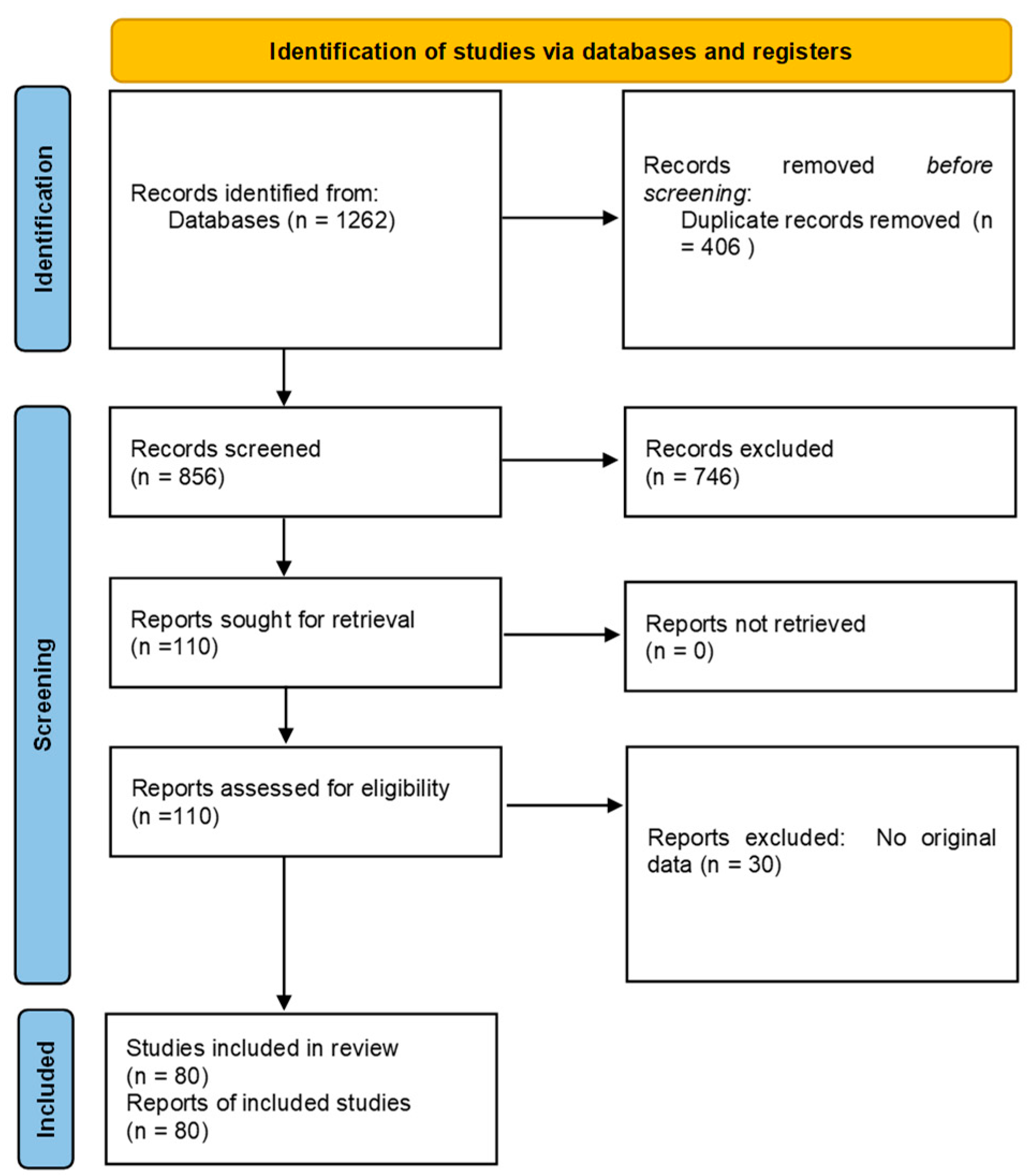
Figure 2.
Proposed logic model for the integration of JCI standards in Outpatient Surgery Centers (OSCs).
Figure 2.
Proposed logic model for the integration of JCI standards in Outpatient Surgery Centers (OSCs).
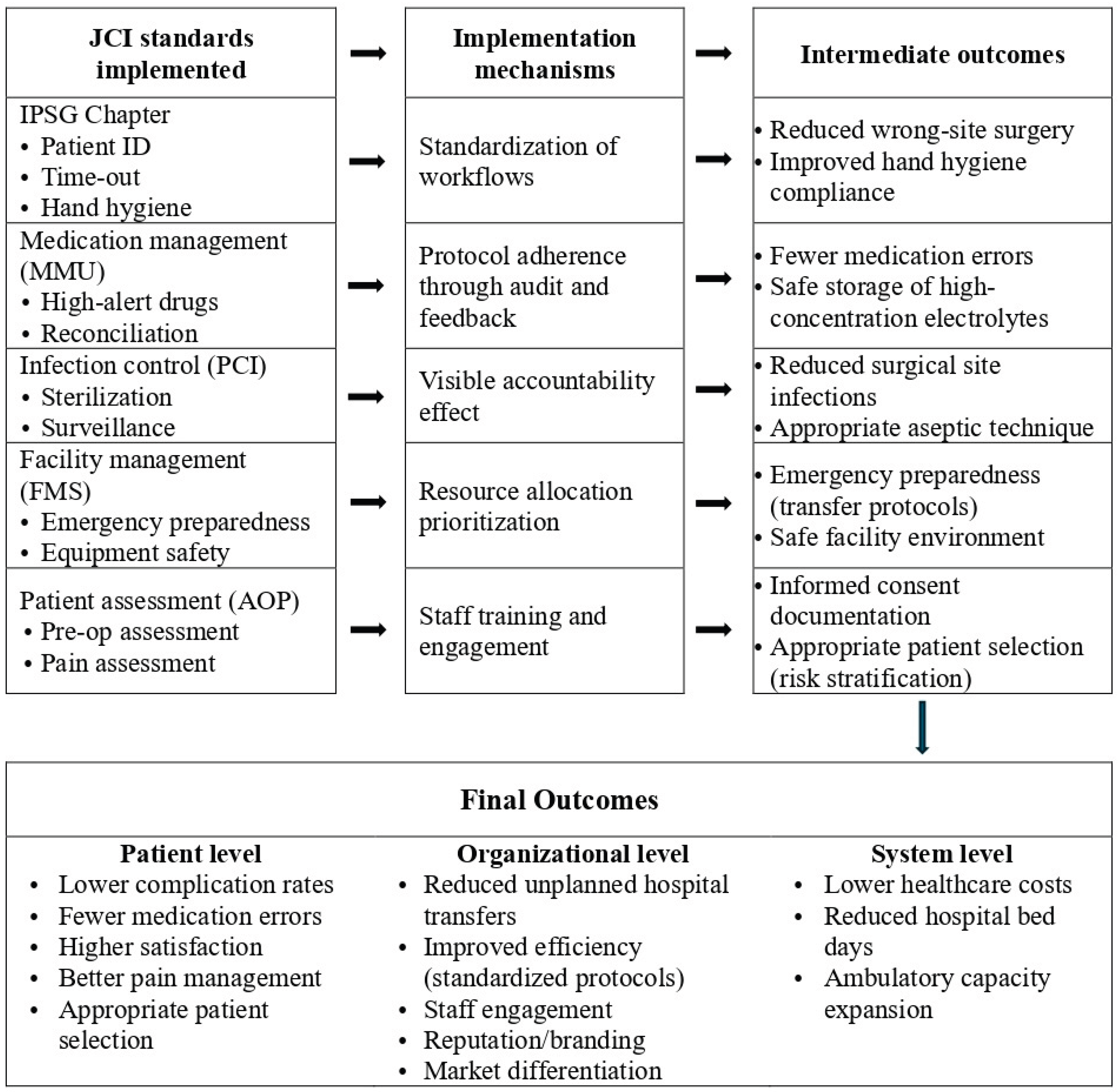

Table 1.
Eligibility Criteria based on the Population-Concept-Context (PCC) Framework.
| Component | Inclusion Criteria | Exclusion Criteria |
| Population | Medical organizations, surgical patients, healthcare professionals. | Studies not focused on healthcare settings or patient populations. |
| Concept | Implementation, impact, or perception of JCI standards; outpatient, ambulatory, or day surgery models. | Publications not addressing both JCI and outpatient surgery concepts. |
| Context | Global healthcare settings; focus on quality, risk management, patient safety, or healthcare policy. | Studies with no relevance to quality, risk, or policy outcomes. |
| Study Types | Original research (quantitative, qualitative), systematic reviews, implementation reports, official documents. | Conference abstracts, editorials without original data, duplicate publications. |
| Language | Publications in English or Russian. | All other languages. |
Table 2.
Characteristics of Selected Included Publications (N=15).
| Author (Year) [Ref.] | Country/Region | Study Design | Key Focus Area | Main Finding Relevant to This Review |
| Impact on Clinical Outcomes | ||||
| Lam et al. (2018) [18] | USA | Multi-hospital Observational Study | Accreditation and patient outcomes | Hospital accreditation was associated with lower 30-day mortality and readmission rates across US hospitals. |
| Chun et al. (2020) [17] | South Korea | Pre-post Accreditation Comparison | Accreditation and in-hospital mortality | Accreditation was associated with reduced in-hospital mortality for patients with major cardiovascular diseases. |
| Alhawajreh et al. (2023) [22] | Global | Systematic Review | Impact of accreditation on quality | Confirmed a predominantly positive, though context-dependent, impact of accreditation on quality improvement indicators. |
| Impact on Stakeholders (Staff & Patients) | ||||
| Zhang et al. (2023) [41] | China | Qualitative Study | Hospital leaders’ perception of JCI | Identified enhanced reputation, branding, and staff pride as key motivations for pursuing accreditation. |
| Rhoden et al. (2021) [44] | Brazil | Longitudinal Study | Impact of accreditation on nursing staff | A temporary increase in anxiety and musculoskeletal pain was observed among nurses leading up to the accreditation audit. |
| Al-Awa et al. (2012) [71] | Saudi Arabia | Benchmarking Study | Patient safety culture | JCI-accredited hospitals demonstrated a significantly higher patient safety culture score compared to non-accredited hospitals. |
| Greenfield et al. (2019) [76] | Australia | Multi-site Study (311 hospitals) | Accreditation and clinical care change | Found that accreditation stimulates change by enhancing patient engagement and providing greater support. |
| Economic & Specialized Applications | ||||
| Sriratanaban et al. (2020) [47] | Thailand | Cost-Benefit Analysis | Economic aspects of accreditation | Noted high implementation costs and the need for significant organizational restructuring, with mixed financial outcomes. |
| Day et al. (2013) [48] | Guatemala | Implementation Report | JCI in resource-limited settings | Demonstrated that JCI standards can be successfully adapted to improve pediatric oncology care even in resource-constrained settings. |
| Okumura et al. (2019) [68] | Japan | Observational Study | Standardization and efficiency | Standardization according to JCI accreditation was associated with significantly shortened cataract surgery times. |
| Outpatient Surgery Context | ||||
| Yarikov et al. (2024) [8] | Russia | Narrative Review | Capabilities of outpatient surgery | Outlines the modern capabilities and growing efficiency of outpatient surgery centers as an alternative to hospitalization. |
| Fleisher L.A. (2023) [70] | USA | Economic Review | Economics of ambulatory surgery | Analyzes the significant economic implications and cost-saving potential of shifting procedures to ambulatory settings. |
| Policy & Regional Adaptation (CIS) | ||||
| Khairullin et al. (2021) [3] | CIS/Global | Review | International accreditation in CIS | Provides an overview of JCI implementation in CIS clinics, contextualizing it within global practice. |
| Kaupbaeva et al. (2018) [54] | Kazakhstan | Policy Review | National accreditation system | Describes the development of Kazakhstan’s unique, ISQua-recognized national accreditation system. |
| Tsigengagel et al. (2021) [9] | Kazakhstan | Epidemiological Study | Baseline risk assessment | Provides epidemiological data on health-related offences, underscoring the need for robust safety frameworks like accreditation. |
Table 3.
Characteristics of Included Publications (N=80).
| Publication Type | Quantity | Percent (%) |
| Original research (observational) | 29 | 36.25% |
| Systematic reviews | 3 | 3.75% |
| Comparative studies | 15 | 18.75% |
| Description of implementation experience | 18 | 22.50% |
| Official documents and manuals | 4 | 5.00% |
| Analytical reviews | 9 | 11.25% |
| Qualitative studies | 2 | 2.50% |
| Total | 80 | 100.0% |
Some publications relate to several thematic areas.
Table 4.
Distribution of publications by subject area.
| Thematic Areas | Number of Publications |
| The Impact of Accreditation on Clinical Outcomes | 18 |
| Impact on organizational processes and security | 15 |
| Impact on patient satisfaction | 11 |
| Impact on medical personal | 11 |
| Economic aspects of accreditation | 5 |
| Experience of implementing JCI in various countries | 11 |
| Hospital-substituting technologies in surgery | 15 |
| Specific clinical areas (oncology, ophthalmology, etc) | 9 |
| Systematic reviews and meta-analyses | 4 |
| Total mentions | 99 * |
Note: * The total number of mentions exceeds the total number of unique publications (N=80) because individual sources were mapped to multiple thematic areas (e.g., studies addressing both clinical outcomes and patient satisfaction simultaneously).
Table 5.
A Proposed Evaluation Framework for JCI-Accredited OSCs.
| Domain | Specific Measure | Target | Data Collection Frequency |
| Patient Safety | Surgical site marking compliance | >95% | Monthly audit |
| Infection Control | Hand hygiene compliance | >90% | Quarterly observation |
| Clinical Outcomes | Unplanned hospital transfer rate | <2% | Monthly tracking |
| Patient Experience | Patient satisfaction (overall) | >4.5/5 | Post-discharge survey |
| Efficiency | Procedure time (standardized cases) | Track trend | Quarterly analysis |
Disclaimer/Publisher’s Note: The statements, opinions and data contained in all publications are solely those of the individual author(s) and contributor(s) and not of MDPI and/or the editor(s). MDPI and/or the editor(s) disclaim responsibility for any injury to people or property resulting from any ideas, methods, instructions or products referred to in the content. |
© 2026 by the authors. Licensee MDPI, Basel, Switzerland. This article is an open access article distributed under the terms and conditions of the Creative Commons Attribution (CC BY) license (http://creativecommons.org/licenses/by/4.0/).
Copyright: This open access article is published under a Creative Commons CC BY 4.0 license, which permit the free download, distribution, and reuse, provided that the author and preprint are cited in any reuse.


