
Submitted:
27 July 2026
Posted:
27 July 2026
You are already at the latest version
Abstract
Paradoxically, whilst historic Environment, Culture, Heritage, and Arts (ECHA) organisations curate knowledge for the public, thousands of them lack the required operational knowledge to manage their rapidly changeable and demanding operations. Their management requires extensive up-to-date knowledge, in accessible recorded formats (knowledge artefacts) interacting with human experience. For decades, the ECHA ecosystem, ECHAsystem [EE-kah-siss-tuhm], has been in a protracted crisis resulting in reduction of service for, and closures of, thousands of these organisations. The purpose of this cross-sectional, parallel mixed methods applied research was to develop a beneficial operational knowledge curating design to improve the ECHAsystem’s organisational sustainability. The findings demonstrated that accessible and up-to-date knowledge significantly improves processes and organisational sustainability performance. It also showed that a wise, allied development of knowledge resources, and allied application of available organisational resources, produces the greatest results. The research proposed the Athena [ah-thee-NAH] de-sign: a Knowledge Alliance coordinating the Operational Wisdom Library (OWL), in-formed by 31 networks across the ECHAsystem’s habitats and operations. The design can help individuals to grow professionally, organisations to thrive, and the ECHAsystem to achieve its aspirations. The research advocates a unified ECHAsystem benefiting from collaborative application of knowledge to deliver its public-good, intergenerational, organisational sustainability objectives.
Keywords:
historic Environment
; Culture
; Heritage and Arts (ECHA)
; ECHAsystem
; organisational sustainability
; knowledge management
; Athena design
; Knowledge Alliance
; Operational Wisdom Library (OWL)
1. Introduction: The Paradox
Cultural and artistic values enrich the historic environment and heritage assets in which they reside. (Historic) Environment, Culture, Heritage, and Arts (ECHA) organisations professionally curate (create, collect, store, conserve, and communicate) the historic environment, heritage assets, cultural and artistic values. They also curate interpretive knowledge about these intergenerational assets and values. Paradoxically, however, thousands of these organisations lack the operational knowledge they need to manage their rapidly changeable, complex, and diverse operations. Successful management of such operations requires human experience (tacit knowledge), interacting with recorded knowledge (explicit knowledge) in a variety of accessible formats (knowledge artefacts). For decades, ECHA organisations have been in a protracted crisis, due to social, technological, economic, environmental, political, and organisational culture pressures. These pressures have been causing reduction of service, and closures of thousands of ECHA sites. The purpose of this research was to develop a knowledge curating design for the ECHA ecosystem, or ECHAsystem [EE-kah-siss-tuhm], aiming to enable the long-term provision of the required knowledge to manage processes, and to improve organisational sustainability performance. The theoretical problem being addressed is how to sustainably manage experience-rich, up-to-date, accessible, and beneficial operational knowledge in organisations with intergenerational public-good objectives, and across their ecosystem.
The research question is:
How can knowledge artefacts inform an operational knowledge curating design that enables individual and team practice, and positively influences organisational performance within a ECHAsystem-supported population?
The question has four parts, concentrating on:
- producing an applicable operational knowledge curating design;
- by focusing in towards the process, and;
- focusing out on performance;
- within an unusual but global ecosystem, one of public-good values and a supportive provision structure. The support is based on a cultural policy that aims to nurture the cultural, social, economic, and environmental capitals we inherited, currently benefit from, and ought to pass on to future generations.
To address the problem, a balanced interdisciplinary approach was used, applying: 1) knowledge management, to 2) historic environment, culture, arts, and heritage management; an interdisciplinary application here termed as operational knowledge curation. This unifying attempt faced theoretical problems, alongside literature and methodological gaps. For the first discipline, the majority of knowledge management literature is concerned with organisations gaining competitive advantage. This is not compatible with a public-good ecosystem providing an intergenerational service that is supported by cultural policy accordingly. This research, therefore, focuses on the knowledge management theory and literature that enables knowledge sharing and collaboration. Furthermore, as with much organisational theory, knowledge management generally studies large organisations, and production industries. This is also unhelpful in ECHA studies and management, which relate to a service-provider ecosystem, with the vast majority of its organisations across the world being micro and small, with fewer than 1% being medium and large organisations.
For the second discipline, when attempting the application of suitable knowledge management literature (collaboration in service provision) to the ECHAsystem, an ecosystem boundary was needed. Which organisations are included? This has been a major ECHAsystem research issue. As one report puts it, ‘is a Gilbert and Sullivan choir part of the heritage sector?’ [1]. There has been extensive fragmentation, also experienced in this research, with librarians not feeling as being relevant to culture, arts organisations not feeling associated with heritage, and nature conservationists not feeling that they relate to either heritage or culture.
Through literature and iterative exploration (abduction), this research has looked at four common objectives (cultural education, social participation, economic development, environmental preservation) and the common operations of organisations delivering such objectives. An organisational sustainability framework based on sustainable development models was proposed, of 15 habitats with 16 common operations, that provides a boundary for the ecosystem, as ECHAsystem. The organisational sustainability framework is a key contribution of this research, enabling organisations and the ECHAsystem to measure their operational knowledge, their learning needs, and organisational sustainability performance. 270 questionnaires and 40 interviews were used, focusing on the United Kingdom (UK), New Zealand, and Greece. The data mapped knowledge artefact characteristics and organisational sustainability performance across the common ECHAsystem operations, to understand their relation across key demographics. The findings were then explored through abduction, creating features (mini case studies), further informing the design. The research has demonstrated that the organisational sustainability in the ECHAsystem can be significantly improved by a wiser operational knowledge curation approach, and has presented a detailed operational knowledge curation design, the Athena [ah-thee-NAH] design, comprising the Knowledge Alliance and an ECHAsystem-wide Operational Wisdom Library (OWL).
An organisational sustainability definition and framework were developed to map organisational sustainability performance across the ECHAsystem operations. This research defined organisational sustainability as the continued ability of an organisation to achieve its cultural, social, economic, and environmental objectives, by ensuring its people have the practical knowledge and technological tools to perform their roles and to provide value co-creating quality service.
The research follows pragmatism as its philosophical foundation. It is based on the evolutionary organisation theory [2,3,4] and then focuses from broad knowledge management to non-competitive knowledge management literature. Evolutionary organisation theory grew out of the neoclassical theory’s human centred approach to organising, focusing on organisational learning from experience [3]. It was selected because of its human centred approach, focus on knowledge and learning, study of change in an evolutionary, rather than static or transformational approach, and a wide-ranging perspective (rather than economist only) of organising. Organisational knowledge as the enabler of learning (by individuals, groups, organisations, and groups of organisations) is central to the evolutionary organisation theory [3].
Pragmatism, evolutionary organisation theory, and human-centered aspects of knowledge management, all revolve around the concept of habit, ‘…the predisposition to act in certain ways…’, but they are not fixed; habits change and trigger change in us [5]. A habit relates to an individual person’s action, whilst an organisational routine is the equivalent to an organisation’s collective action [6]. Organisational routines ‘require more processing than habits because they involve choices, branches or decision points’ [7]; ‘an organizational routine is a repetitive, recognizable pattern of interdependent actions, involving multiple actors’ [7]. Central to habits and organisational routines are organisational artefacts, physical and technological repositories of explicit knowledge [8,9]. Organisational artefacts that are not idle information repositories but used purposely to dynamically manage and share knowledge are here defined as knowledge artefacts (Holsapple, 2002); artefacts purposefully used to share their recorded knowledge. Knowledge artefacts in this research are appreciated for revealing knowledge, not for concealing it as in competitive advantage strategies.
The research made theoretical contributions to both knowledge management and to heritage (more broadly ECHA) studies. In knowledge management, it overlapped two pragmatism-based theories, the Dynamic Knowledge Creation model by Nonaka and co-authors, and the Boundary object by Star and co-authors. This produced a comprehensive knowledge artefact model with measurable and enabling characteristics, the Boundary Dynamic Interaction of Knowledge Artefacts (BouDIKA) model. BouDIKA is briefly discussed in the literature section, and is fully presented in a separate methodological paper. The theoretical contribution to historic environment, cultural, heritage, and arts (ECHA) studies, is the introduction of the ECHAsystem and its organisational sustainability framework in this paper. The findings inform the practical application of the Athena knowledge curation design, as introduced by this paper. The paper also provides insights to the practical application of the design and its future research directions.
Section 2 presents the theoretical foundations, starting with ECHA literature, before bringing in relevant collaborative knowledge management theory. Section 3 presents the mixed methods methodology. Section 4 provides the inductive, deductive and abductive findings. Section 5 syntheses the findings in the discussion. Section 6 presents the proposed Athena design, and section 7 concludes with future research directions and prompts for practical application.
2. Theoretical Framework
This section first outlines the literature review process used in the research (2.1). Then it elaborates on the pressures (2.2), fragmentation (2.3) and contemporary management approaches (2.4) across the ecosystem sectors. A review of organisational sustainability models is then presented before introducing the united ECHAsystem and its organisational sustainability framework (2.5).
2.1. Literature Review Process
A systematic literature review was undertaken at the start of the research to inform the theoretical framework and research design [10,11], (Figure 1).
The Web of Science citation database [12] was selected for producing the most relevant sources. 2,820 results surfaced by using a Boolean algorithm. The Preferred Reporting Items for Systematic reviews and Meta-Analyses (PRISMA) process was used using the following exclusion criteria:
-Exclude literature using knowledge management theory with competitive advantage as the sole objective.
-Exclude literature on large-scale production and supply chains, with some exceptions where use of technology, networks and collaboration, significance of stakeholders and human resources was valuable. Selection has focused on literature for service-related organisations, managing or operating within a historic environment.
-Exclude sustainability literature discussing only environmental sustainability in organisations. This is a recognised terminology issue [13].
-Excluded literature discussing interpretive knowledge curation, rather than operational knowledge curation.
The results were filtered for duplications and suitability, leaving only nine relevant sources (Figure 2). This partially demonstrated the limited available literature.
Due to the limited available sources, the review then was progressed through an iterative process. Using the small number of relevant cited sources from the systematic review, key works were used to initiate iterative exploration. This was expanded with historical reviews (organisation theory, Dynamic Knowledge Creation model), and scoping (knowledge management), and integrative (organisational routines, cultural heritage, resilience and organisational sustainability) literature reviews. Ongoing web search on grey literature (government departments, cultural heritage support, and curating organisations) took place throughout the research. Recent (2010 onwards) and top peer-reviewed sources were used for broadening the search regarding recent changes in legislation and technological advances.
2.2. Ecosystem Literature
2.2.1. ECHA Organisations Interdependence and Pressures
The historic environment encapsulates ‘all aspects of the environment resulting from the interaction between people and places through time, including all surviving physical remains of past human activity, whether visible or buried, and deliberately planted or managed flora’ [14]. Its protection is based on extensive national legislative framework and international conventions [15], however, it is recognised that ‘it is not realistic to conserve anything forever or everything for any time at all’ [16]. One could easily mistake the following Daniel Defoe’ quote from 1724, as a contemporary issue:
‘Several towns, which antiquity speaks of as considerable, are now lost and swallowed up by the sea, such as Dunwich in Suffolk.’ [17]
Environmental and cultural sustainability are related directly, due to ‘the conservation objective of cultural heritage, particularly regarding causes of irreversible change, and loss of cultural diversity; tangible through disrepair or demolition, and intangible as in ‘ideas, beliefs, traditions…or indigenous languages’ [18].
Culture denotes ‘cultivation and a sense of growth’ and suggests ‘a degree of sophistication and refinement’ [19]. Culture can be the incubator for experiential learning, positive social interaction, and change [20]. Yet culture can also carry a fundamentalist resistance to change from established traditions, in society and in organisations [21,22,23]. UNESCO defines culture as an ‘organized sector … of human intellectual and artistic creativity and comprising individuals, organizations and institutions responsible for their transmission and renewal … commonly regarded as the “cultural sector”, a demarcated policy domain, concerned mainly with heritage and creativity’ [24].
Heritage encompasses everything that surrounds us, in a nostalgic recitation of function and beauty [18,25,26]. Heritage has a time-affected physical form, built and natural, embellished with an intangible body of cultural traditions and values [27]. Its significance varies upon our understanding of our environment and of our past, and is influenced by the levels of available information, the viewpoint of the communicator, and our human needs [28,29].
The development of cultural heritage, from its former colonial, western view of cultural property, to the understanding, protection, and democratic participation in world cultural heritage, can be traced through the United Nations Educational, Scientific and Cultural Organization (UNESCO) conventions and international charters [30,31]. Cultural heritage management is a relatively new discipline still being moulded, concerned with the significance, policy, and intergenerational curation of tangible and intangible heritage assets, and of the cultural values enriching them [26,32,33,34].
Cultural heritage comprises the cultural values that are embedded in heritage assets, and is the incubator for inspiring participation and mutual appreciation of our inherited world, and of custodian attitudes towards it [19,23,28,29,35,36,37]. ‘Cultural heritage is … both a product and a process, which provides societies with a wealth of resources that are inherited from the past, created in the present and bestowed for the benefit of future’ [38].
What we now associate with the arts, is the gaining of understanding through experiencing the world [39]. Etymologically, from technes in Greek, arts translate as crafts, skills, or productive knowledge, from which words such as technique and technology derive [40]. The arts, therefore, are as much about practical life skills, as they are about advocating creativity. The arts embrace literature (including poetry, drama, story), the visual arts (painting, drawing, sculpture), the graphic arts (painting, drawing, design, and other forms expressed on flat surfaces), the plastic arts (sculpture, modelling), the decorative arts (enamelwork, furniture design, mosaic), the performing arts (theatre, dance, music), music (as composition), and architecture (often including interior design) [41].
In the UK, since the disbandment of the Museums, Libraries, and Archives council (MLA) in 2012, the Arts Council England (ACE) has taken responsibility of the arts, and also key environments in which they are performed: collections and cultural property, libraries, museums, and theatres [42]. The role, and positive impact, of arts on its wider operational and wider environment, is highlighted in literature:
‘the quality of bonding ties among arts organizations will serve as a predictor for organizational sustainability’. [43]
There is an invaluable diversity of historic environment, culture, heritage, and arts which needs to be protected [44,45]. The Burra Charter highlights that no one cultural or natural value should benefit on the expense of another, and cultural heritage should safeguard a rural or underrepresented community tradition or heritage asset as much as another [44,46]. Additionally, this diversity builds a place’s capital [18]. Loss of this diversity results in depreciation of cultural, social, economic, and environmental capitals [47,48,49]. In response, cultural policy is the government’s action mechanism to protecting the values of these cultural heritage capitals, and outlines ‘why and how government ... intentionally intervenes in culture’ [50]. Curating the diverse ECHAlogy, therefore, reflects and requires a diversity of ECHA organisations that sustain and grow such capitals.
This diversity, however, is under threat as ‘cultural heritage is in a protracted crisis’ [51]. Focusing in the United Kingdom (UK), thousands of museums, libraries, theatres, galleries, historic houses, archaeological sites and other ECHA organisations have been significantly cutting back on their levels of value-creating service provision, both in quantity and quality [52,53,54,55,56]. Since 2010, ‘773 [libraries] have closed … a fifth of the UK’s libraries’ [57]. In 2016/17, 88% of all museums reduced their opening hours compared to the previous year [54]. Museums also experienced an exponential rate of closures; 818 museums have closed in the 1960-2019 period in the UK [58] (Figure 3), with continued reports of more closures [59,60,61].
Despite a multi-billion annual government funding, support packages during COVID-19, and additional financial provision (post 2024 UK elections), the reduction of value-creating service levels and the closures of ECHA organisations continue [62,63,64,65,66,67,68,69]. Furthermore, closures trigger loss of operational and interpretive knowledge, leading to knowledge discontinuity [70]. The causes for the reduction of service and continuing closures, consists of external (to the organisations) and internal pressures (Figure 4)
The external pressures include:
Figure 4.
Internal and external pressures on cultural heritage organisations. Source: Author.
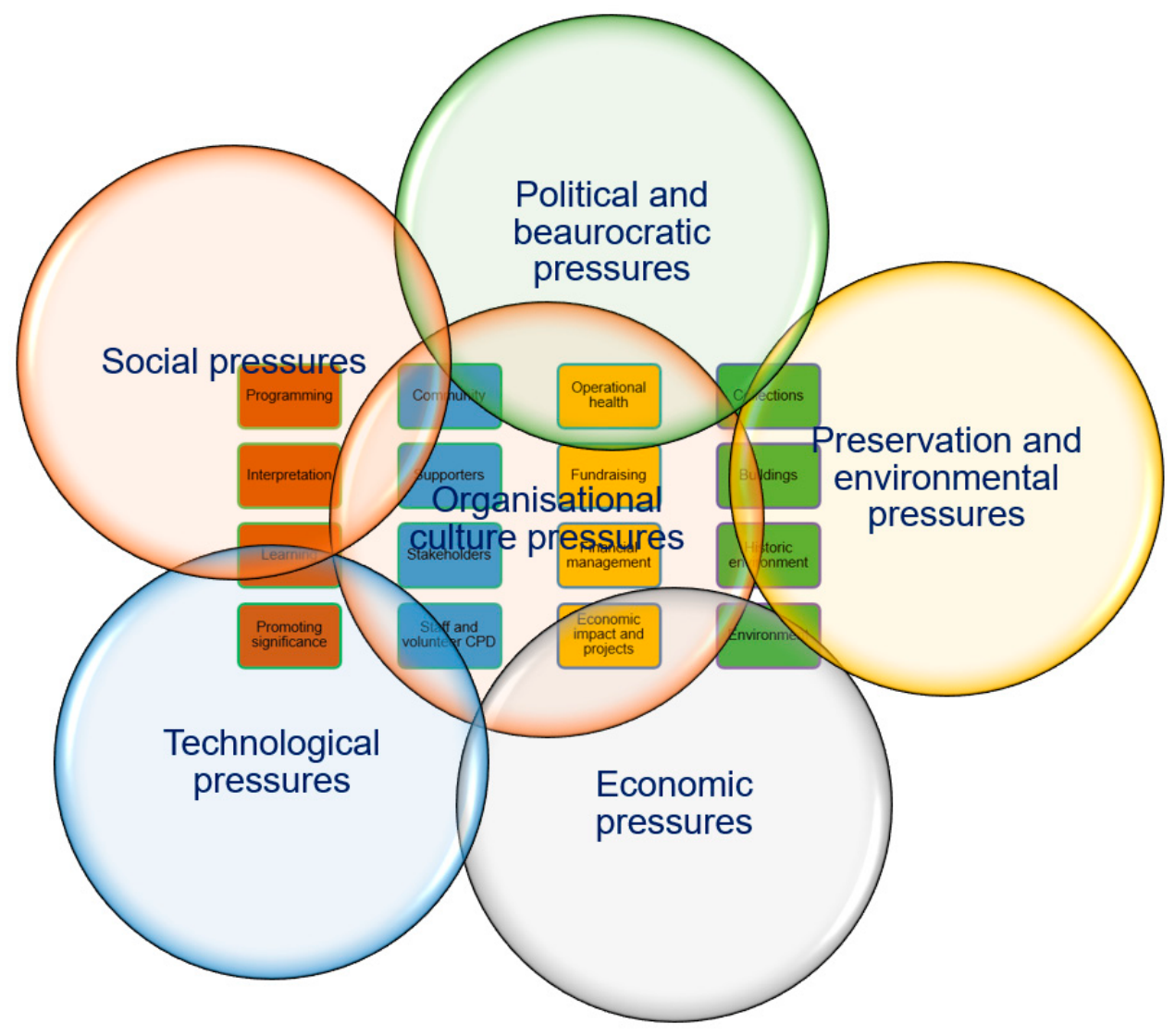
The two main internal pressures have been i) to change from a historically authoritative attitude toward audiences to a participatory, inclusive engagement whilst addressing historical and continuing colonial, racist, class, slavery, and patriarchal stances ii) and an increasing insular attitude because jobs and organisations are threatened by the external pressures. This is exacerbated as training budgets and personal development in struggling organisations are non-existent or superficial [18,26,33,55,58,83,90,112,124,125,126,127,128,129].
If an engineering analogy can be used here, to withstand such pressures necessitates that these organisations expand their base of operations, by adding business operations and widening their education, participation, and preservation ones. ECHA organisations have a double workload; they must provide a curatorial service, and operate a business.
To deliver more operations successfully, however, requires more, up-to-date, and accessible operational knowledge. Most ECHA organisations are small and with limited resources, and are struggling to manage such wide operational knowledge requirements, under changeable conditions and pressures. The literature shows that ECHA organisations lack the knowledge to manage their operations against these changeable pressures [80,88,111,130,131]. There have been calls to improve operational knowledge resources, such as having a ‘simple implementation toolkit providing accessible guidance on tools and models that are suitable for heritage organisations, including collating resources that are already available for free’ [130]. One of the reasons for the absence of such common operational knowledge is a constructed fragmentation. In literature, including the definition of culture by UNESCO, the terms culture, heritage (and arts, creative industries, historic environment) and the 15 (or equivalent) habitats are generally denoted as sectors; meaning divided economic areas [132]. Such sectorial representation provides a means for the allocation of government and grant funding. The sectorial representation, however, can create competition for limited resources, and fragmentation, segmenting any economies of scale. Accordingly, operational knowledge in competitive settings becomes a leading innovation organisational resource that is protected (hidden) from competitor organisations and sectors, rather than shared. Such sectorial segmentation produces ‘wasted effort to recreate the same thing individually without collaboration’ [80]. Not sharing ECHA operational knowledge effectively is particularly highlighted within the UK literature [88,111,130,131]. Operationally in ECHA, however, the sectorial constructs do not represent the sites. A theatre or historic house, for example, can have cultural programmes (educational, artistic), and a historic building (heritage asset), gardens (natural asset), and designated collections (heritage assets because they have cultural value). Such overlap and interdependence is better described as an ecosystem, ‘the interaction between organisms living together in a particular environment’, and the 15 organisational areas better described as a habitats, comprising the resources available to a population in a specific ecosystem environment [133,134,135,136]. The continued closures raise the practical question about the lack of a conduit system for open access and up-to-date core operational knowledge across their ecosystem.
Individual projects trying to understand and improve access to operational knowledge have been developed by several support organisations. Historic England’s heritage skills learning and networking programmes, the Association of Independent Museums (AIM) Hallmarks project, and the Collections Trust Spectrum resources are three key examples [137,138]. The Arts Marketing Association, and The Heritage Alliance offer two further notable examples, the former providing the CultureHive resource hub [139], and the later having produced the Innovation: Explore report for improving access to business information [140]. Grant funding applications for five projects related to improving operational knowledge for UK ECHA organisations were submitted to the National Lottery Heritage Fund between 2020 and 2023 (freedom of information request). The need for operational knowledge by ECHA organisations and a comprehensive approach to managing it, is clear. It is important therefore to understand the theory underpinning such undertaking.
2.2.2. Know Thy Self: The Sectorial Pie
‘Is a Gilbert and Sullivan choir part of the heritage sector?’ [1]
The literature has shown culture, heritage, and environment, being complementary, as cultural and artistic values enrich heritage assets all residing within the historic environment. Where does the sectorial fragmentation originate from then? We need to look at a specific example, in this case the UK, to be able to understand the setting better.
The UK has the sixth largest economy (in GDP) [141] and ninth highest number of museums in the world [142]. Its culture, heritage, arts, and creative industries are managed by the Department for Digital, Culture, Media & Sport (DCMS), a ministerial department supported by 45 agencies and public bodies [143]. The DCMS funds two key non-departmental bodies:
- the Arts Council (set up in 1946 by Royal Charter, which was given a leading role following the disbandment of the Museums, Galleries, and Libraries council in 2011); and
DCMS also funds directly the 15 UK national galleries and museums [66,147]. The DCMS’s cultural sector has a broad overlap with the creative industries, tourism, and the digital sector [148] (Figure 5).
The Standard Industrial Classification (SIC) codes have been used for categorising industry activities within each sector [149]. The DCMS acknowledges the SIC codes have ‘significant limitations due to the limited granularity of the standard industrial classifications’ [148].
The cultural activities are spread under a wide range of SIC codes; arts, museums, libraries, archives, sport, ‘botanical and zoological gardens and nature reserves activities’, and ‘amusement parks and theme parks’ are all under Section R (arts, entertainment and recreation). Tour operators are under Section N (administration services), and cultural education under Section P (education). Within the main section R, heritage occupies one understated sub-category code:
‘The Heritage sub-sector is depicted in our estimates by one SIC code “91.03 Operation of historical sites and building and similar visitor attractions”… the published estimates are likely to be an underestimate for the Heritage sub-sector.’ [148]
The acknowledgement that the categorisation is not sufficient to estimate the cost and value of culture and its subsectors, alongside the lack of a common language and boundaries for these, came to the fore more intensely in the 2010s. The inability to collect performance data, demonstrate impact, or fund accordingly, was raised in reports and reviews [88,150]. One resulting project was the Arts Council’s Impact and Insight Toolkit, launched in 2019 [151,152], and another project stream was the Culture and Heritage Capital (CHC) programme, launched by DCMS in January 2021 [49]. As part of the CHC programme, Historic England commissioned The Audience Agency and MyCake to establish the size of the heritage ecosystem [1]. The aim was ‘to bring a coherence and shared purpose to data collection, sharing and analysis across the sector’ [153]. The research approached heritage not through SICs classification but by including organisations across six domains that heritage has impact upon (advocating, researching, conserving, educating, engaging, and managing) (Figure 6)
The flow of heritage data is then followed from data creation and collection, to information management, analysis interpretation, and use and reuse (Figure 7).
The organisation types included, are categorised as (Figure 8):
- Non-sector specific and public sector.
- Public bodies/funders with interest in heritage.
- 3rd/private sector funders.
- ‘Heritage sector’.
- Sector bodies.
Figure 8.
The stakeholders in Heritage for the data creation and collection. Source: Knowing the Sector Description Final Draft, (The Audience Agency and MyCake, 2024b, p. 21).
Figure 8.
The stakeholders in Heritage for the data creation and collection. Source: Knowing the Sector Description Final Draft, (The Audience Agency and MyCake, 2024b, p. 21).
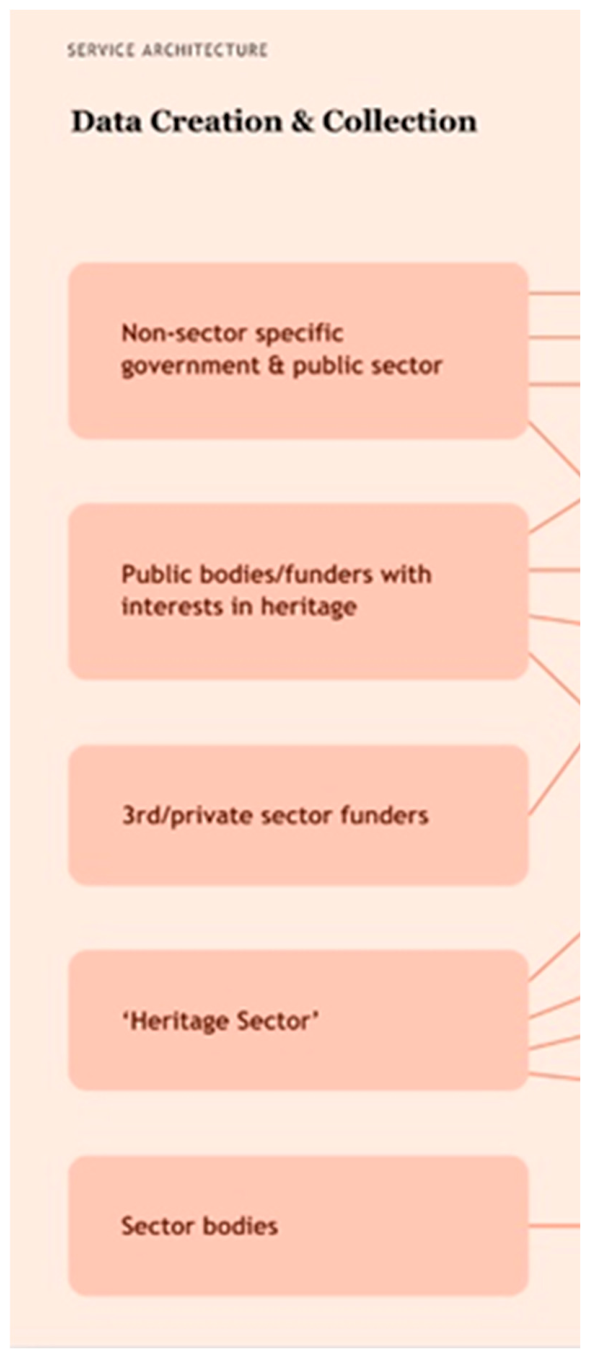
From these, the ‘heritage sector’ aligns with the user organisations (and freelancers) in this research, and the other four align with the provider organisations. By understanding this alignment, it will be possible to relate the Knowing the sector work for Historic England with this knowledge curating design.
The Knowing the sector work is specific to the heritage habitat. More recent work within this programme includes the Arts, Culture, and Heritage (ACH) taxonomy project, which lists three of the five functional benefits of such classification systems as ‘a unifying language’, ‘improved knowledge transfer [of metadata]’ and ‘improved knowledge management’.
Whilst a review of the Arts Council had been in progress [154], it is noticeable that in the above taxonomy project the wording has expanded to include arts, alongside heritage and culture. This comes closer to the original conception of a museum in the antiquity, which incorporated the notions of a library, archive, and the arts [155]. What is not explicitly discussed, however, is nature conservation work and preservation. As mentioned earlier some nature organisations did not take part as they did not feel included in culture, heritage, or the arts. Key nature conservation organisations in the UK are funded by the Department for Environment, Food & Rural Affairs [156,157,158], demonstrating further the sectorial fragmentation, created for financing and management reasons, rather than being a natural taxonomy (pun intended). But in daily life this is not a reflection of how such ecosystems evolve. One example can be a property from the National Trust, Europe’s biggest conservation charity [159]. A property may manage extensive collections within a historic building, and host indoors and outdoors cultural events, all within a managed natural setting of gardens, woodlands, farmsteads, and often coastlines or extensive countryside parks. How does one apportion its cultural and wellbeing benefits and costs, across art, or culture, or heritage without fragmenting its complementary operations? Translating the example at national level shows that a purely economist sectorial classification collapses the economies of scale and associated complementary unity. It creates constructed barriers, and unnecessary competition for resources within and across these not-for-profit habitats. As a result, culture’s reliance on grant funding ‘is creating a relatively benign environment … that hides the need for innovative, sustained change’ [87].
An awareness is needed that the Culture and Heritage Capital programme was fundamentally established due to important financing needs, rather than complementarity opportunities, so it could result in ever deeper separation of the sectors. Whilst an economist factor is needed for economic appraisal and decision-making, sectoring can also have political motivations. Financial and social pressures have created a move towards ‘judicious withdrawal of hands-on government engagement’ across many countries, with privatisation of operations but ownership of heritage assets such as buildings and collection still under public ownership and legal protection (Throsby, 2010, p. 124). Purposeful sector fragmentation could be a means to divide (and conquer) subsectors, prior to withdrawing hands-on engagement. During the austerity decade (2010s) in the UK, the disbandment of the Museums, Libraries, and Archives council (MLA) in 2012 [42], was followed by a significant transition of state-managed cultural, heritage, and arts organisations to charitable status. This includes the Canal and River Trust (previously known as British Waterways) (2012), Historic Royal Palaces (2014), English Heritage (2015), and many local museums [88,144,160,161]. So, how does such shift towards independent organisations affect the Athena design?
The deductive analysis shows that self-funding at around 67% relates to the highest levels of knowledge artefacts, and highest performance. Coupled with processual freedom which also relates to higher performance, a knowledge design ought to support a judicious level of an independent ecosystem. A balance is needed for artistic, political, and processual independence without compromising human rights to cultural participation due to creating financial barriers (of which paid entry is a contentious one [93,162], alongside ticketed events, and charged-for school visits). Several cultural, heritage, and arts support-organisations were historically set up to support a balanced transition of ECHA organisations to independent status. Key examples include the Association of Independent Museums (AIM) established in 1977 due to the increase and continuing move of museums to independent status, and The Heritage Alliance, set up in 2002 to promote heritage organisations’ move from government to independent status [163]. The Historic Houses grew out of the British Tourism Authority in 1973 as an independent association that supports the thousands of independently owned historic houses in the UK [164]. Even in independently governed organisations, many collections and buildings remain under state ownership, whilst limited central and local authority finances are understandably prioritised towards health and emergency services. In the UK, local authorities had ‘a budget reduction of 27%, from £426m to £311m for museums and galleries in the decade between 2009/10 and 2019/20’ [93]. Local authority museums have been affected by the financial environment the most, in addition to having operational limitations in setting and managing their own budgets [94], restrictions in income generation, and lack of marketing and digital freedom [88]. Additionally, ‘from 2010 the government grant to ACE was cut by 30% in real terms over four years’ and even further in 2015-16 [82]. Museums in response to reduced funding have been faced with collections backlogs [88] and have been ‘reducing opening hours, cancelling outreach work. Furthermore, they have been losing professional expertise, such as replacing permanent posts with short term roles, or professional posts with unpaid posts’ which can damage the museums’ value, relationships, and diversity of workforce and audiences’ [88]. Peripheral support services, however, usually get cut, without understanding of the impact on the delivery departments [165]. Additionally, the government’s total funding for Culture includes government funding and public (lottery) grants [88]. ‘… while these sources have decreased, since 2011/12 much of the decline has been mitigated by increased funding from the Heritage Lottery Fund and a significant growth in funding from tax measures’ [88]. The lottery grants, therefore, were no longer additional support but replacing reduced government funding; and increasing an unhealthy competitive environment for grant funding.
2.2.3. All Change Here: Choosing Between Resilience and Sustainability
‘Change takes time, and negotiation and adjustment’ [166].
This section examines change management in relation to the ECHA organisations, enabling the development of an operational framework on which to map organisational knowledge and associated organisational performance.
Change in natural and organisational habitats happens; either planned or unplanned, incrementally or rapidly, temporarily or permanently, within an evolutionary cycle of stability and transformation [167,168,169,170]. Change can be experienced either as a disturbance (temporary disruption) or a permanent change [168]. Two significant change-management concepts, resilience and sustainability, are examined in relation to anticipating change, or not. Anticipation can be defined as expecting and planning to adapt to change. Without anticipation the change management is emergent (reactive) and often utilises the resilience concept. When anticipation is introduced, the management is deliberate (proactive), and is generally associated with the concept of sustainability [110,171,172].
Without anticipation: Organisational performance traditionally relied on stability [6,173] and is associated with a conservative, conforming, and nomothetic approach for preserving the existing social status quo (functionalism) [174]. The concept of resilience tends to resolve towards stability. ‘Resilience is the capacity of a system to absorb disturbance and reorganize while undergoing change so as to still retain essentially the same function, structure, identity, and feedbacks’ [175]. Walker and his co-authors assigned four aspects to this system (pp.3-4):
- 1)
- latitude, being the maximum stretch the system will take and still recover;
- 2)
- the resistance level to change;
- 3)
- precariousness, as the proximity to the threshold; and
- 4)
- panarchy, as the large-scale external impacts on local level.
An established view of resilience can be seen as hesitantly riding the waves until the storm passes [169]. Its application focuses at returning to normal [176] rather than enabling learning and innovation from the disturbance [167]. Resilience can even ‘lock a system into a dysfunctional, or inefficient state’ becoming resistance to all change [176] and can be ‘potentially damaging … to the cultural economy’ masking the needs for networking and better staff training and development [177].
In the UK, resilience became extensively researched across ECHA operations and came to the fore during the introduction of the austerity measures by the coalition government in 2010 [82,177]. The journey of replacing the previously popularly used sustainability term with the concept of resilience in the UK arts [82] is traced in the ACE review ‘What Is Resilience Anyway?’ which questioned whether resilience is a useful term for the ACE’s remit. The review pondered over the distinction between survival resilience (‘bouncing back’) and the richer, more fruitful idea of adaptive resilience (‘bouncing forward’)’ but concluded that the single word term resilience had been favoured due to its familiarity in the cultural sector and within the literature [72]. The ACE framework for resilience was modified to include the cultural, social, economic, and environmental elements of the pillars of sustainability, through the corporate sustainability model (pp. 18-21) before reducing the use of the sustainability term (pp. 53-55) [72].
Historic England’s ‘Heritage Counts’ in 2012, examined the concept of resilience within the heritage sector through two key reports [83]. Firstly, the ‘Heritage Organisations and Resilience’ report [130] found that the biggest barriers in resilience were:
- i)
- resource constraints; and
- ii)
- restrictive routines;
while the following approaches improved resilience:
- i)
- developing people;
- ii)
- a flexible approach to heritage assets use; and
- iii)
- strategic outlook, in relation to planning and better visibility and networking, problem-solving and innovation.
Secondly, The Work Foundation’s ‘Heritage in the 2020 Knowledge Economy’ report in 2010, looked at ‘how heritage contributes to the resilience of the UK economy’ [83], rather than examine the resilience of the heritage sector itself. It pushed a policy of increased private business involvement and the use of knowledge in the heritage sector as an income generating asset [178]. On the other hand, the National Lottery Heritage Fund (NLHF) resilience projects and guidance aimed for organisations to acquire knowledge, create greater capacity, review governance models, and develop income streams [179,180]. The NLHF’s Resilient Heritage Programme awarded a total of £22.2 million through 377 projects; 70% of which was used by ‘historic buildings and monuments’ and ‘museums, libraries, archives and collections’ [181]. Three key contributors to resilience are shown in the evaluation:
- i)
- management skills and knowledge: improving strategic direction and the management knowledge and skills of board members, staff and volunteers’ ability to deliver it;
- ii)
- improved processes; and
- iii)
- the structure to enable financial diversification, professional outlook, collaboration and joint working.
The delivery of NLHF resilience projects varied, as it was carried out as stand-alone projects, ‘umbrella’ partnerships, or managed through service providers delivering training across multiple organisations [181]. In all cases, however, the outputs of these projects, including knowledge sharing, do not generally survive beyond the length of the funding period, ‘leaving little or no mark on institutional practice’ [74]. Even when resilience projects support the development of communities of practice, these collaborations provide joined audience outputs [179], rather than developing organisational knowledge specifically for improving resilience. The review of resilience in the heritage sector in regards to funding interventions, finds that short-sighted projects as quick fixes, create long term problems, and investment is needed in developing the people, skills and knowledge across the heritage sector, with ‘peer sharing and mentoring … being extremely valuable and under-provided’ [80].
The NLHF resilience projects evaluation shows that participants had no understanding of the withstanding threats, nor mentioned having worked in partnership, or shared expertise or resources. The evaluation pointed out future needs, which influenced the development of this knowledge curating design research:
‘Also notable by its absence (as highlighted in previous evaluation reports) is reference to working in partnership to ‘share services, staff and resources. Going forward … it may be that specific support or advice on how to develop/ achieve this is needed by heritage organisations’ [181].
Resilience across a wider ecosystem, because organisations are increasingly intersected in the ‘social, technological and environmental’ setting [182], is referred to as ecosystem resilience [183]. A turning point to the approach of trying to save every struggling ECHA organisation was the joint sector statement: ‘… the ambition for resilience in the arts and culture sector should be the growth of a flourishing ecosystem of arts and culture provision rather than emphasising the resilience of individual organisations’ [72]. However, ‘without … innovation, the system as a whole becomes more vulnerable to unexpected disturbance’ [172]. As part of arts and culture sector-wide working, the ACE resilience review recommend that ‘the sector could find a way to model and adopt best practice (for example through standards and guidance for such processes)’ and by ‘identifying and tracking performance’ [72]. The ACE review highlights the gap of staff development processes, reinforcing the call for better sharing across the heritage sector, similar to the call made by the NLHF resilience projects’ evaluation report. The ACE review proposes ‘particularly across cities or regions … shared services and campaigns to avoid duplication of resources and achieve economies of scale’ (p. 35). The review recommends ‘in some cases … to aim for sustainable growth – in other cases … doing less, but doing it better’ [72].
The Heritage Sector Resilience is one of the strategic priorities for the Historic Environment Forum (HEF), ‘a collaborative initiative that brings together senior representatives from organisations working across the historic environment sector in England’ [184].
‘The Historic Environment Forum’s Resilience plan defines resilience through four characteristics: (1) having the right knowledge and expertise, (2) being appreciated and appropriately resourced, (3) actively serving the community, and (4) being well-connected and collaborative.’ (extract from an interview given to HEF on the knowledge curating research by the author (redacted for peer review)
Regional resilience provides robustness, where shared resources improve performance, reduce risks, and offer alternative similar organisations as subsystems that can replace failed ones; organisational diversity within a region therefore is shown to improve regional resilience [176]. Another resilience-related risk-reduction concept is ‘building back better’, enabling ‘the restoration of communities and assets in a manner that makes them less vulnerable to disasters and strengthens their resilience, by preventing the creation of, and reducing existing, disaster risk’ [110].
With anticipation: instead of the other forms of resilience, the concept of adaptive resilience had been proposed for ECHA organisations as it introduces a level of anticipation for change [172]. Adaptability is ‘the capacity of actors in a system to influence resilience’ [175]. Adaptive resilience comprised resources and associated adaptive skills for resilient arts organisations [172]. Adaptation connects ‘change, performance, and survival’, and is part of organisational learning towards a strategic ‘fit between internal structures and external subenvironments’ [186]. The four measures of the adaptive-resilience framework include the two levels of preparation (reactive to proactive) against the two levels of adaptation (rigid to agile). The combination of rigid and reactive puts organisations at high risk, and the combination of being proactive and agile creates competent resilience [187].
Another approach to anticipate change is to plan for incremental change, which uses ‘tactical … small-scale improvements’ rather than ‘strategic … large-scale’ change, to achieve continuous, both immediate and on-going, improvements [188]. The value of incremental change arose through the Royal Society’s seventeenth century’s idea of science ‘papers’, building-up knowledge in small steps [189]. Incremental change is fundamental in pragmatism, ‘the ultimate good lies in the evolutionary process’; managing change is not about a final product but for creating the habit of ‘synechism, … becoming continuous’ as the beneficial outcome [190]. Supported by incremental change, viability is ‘the long-term continuance of an organization and its ability to meet change and new circumstances’ [191], while safeguarding is the activity to achieve viability [192]. As part of the viability activities, ‘vitality’ reflects the activity levels of an organization, ‘the use of its outputs, the relations between people, and between people and activities within the institution, and how the institution both projects itself and is perceived beyond its own walls’ [191]. Viability and vitality can impact intergenerational equity, the ‘fairness in the distribution of welfare, utility, or resources between generations’ [193], which is a key requisite of sustainability. Sustainability in cultural heritage is the application of ‘a long-term perspective to all processes of decision-making … with a view to fostering intergenerational equity, justice, and a world fit for present and future generations’ [110].
Sustainability ‘goes beyond the concept of viability and living within the limits to also embrace the idea of interconnections among economy, society, and environment and the equitable distribution of resources and opportunities … the enduring nature of systems and processes’ [110].
In economics, sustainability narrowly refers to budgetary deficits, whilst sustainable development more widely requires financial measures (such as the Gross Domestic Product (GDP)) to be balanced with intergenerational quality of life measures [193]. A comprehensive view of sustainability includes economic, social and environmental considerations [194]. Sustainable development therefore aims ‘to ensure that it meets the needs of the present without compromising the ability of future generations to meet their own needs’ (‘Brundtland report: our common future’, 1987, p. 16). Whilst sustainable development ‘has been used and abused so often that effectively it has lost its meaning’ [195], there is a need for ‘a vision and strategy for the sustainable management of its cultural heritage … [which] comprises … equity and access, the safeguarding of heritage, the economics of cultural production, and the promotion of innovation and creativity’ [195]. Management and measurement of cultural heritage sustainability have therefore been developing as all-encompassing, rather than just in economic terms (Museums Association, 2009). The United Nations Educational, Scientific and Cultural Organization (UNESCO) allocated sustainable development indicators in four thematic objective areas: knowledge and skills, inclusion and participation, prosperity & livelihoods, and environment and resilience [196] (Figure 9). These thematic indicators by UNESCO, and this paper’s operational framework, are being brought together in the next section to form the organisational sustainability framework.
The 17 Sustainable Development Goals (SDGs) and their 161 sub-goals are central to the 2030 Agenda for Sustainable Development, which was adopted by all United Nations Member States in 2015, as a global partnership [197,198]. The Canadian Museums Association advised ‘to conduct an inventory of your practices in every area of your operation’ (p.18) and measure how these deliver the objectives of sustainability [199]. In this research, the mapping of organisational knowledge resources and measuring their relation to organisational sustainability objectives is based on this advice.
Sustainable development and cultural heritage are both intergenerational; they relate to a capital stock of tangible and intangible assets that we inherited, from which we benefit, and we have custodian responsibility to maintain and pass on to the next generations (Brand, 2000; Throsby, 2010; UNESCO, 2015; Moldavanova and Goerdel, 2018; BD/Historic England, 2021). To apply ‘the principle of intergenerational equity’ [193], evaluation of cultural and heritage assets is required, reflected in policy, government intervention, and associated government economics [18]. Maintaining the existing levels of cultural and heritage capitals constitutes a weak sustainability, whilst strong sustainability aims to achieve sustainability without undermining growth [200]. Furthermore, unsustainability is associated with poor management and unsustainable development, particularly in relation to tourism [201]. It is also argued within the ECHA support [194] and research literature [202,203,204], that ‘if a museum is unsustainable, then it cannot fully (and perhaps ethically) participate in a sustainable society’ [202]. Yet, cultural heritage is expected to provide ‘the necessary transformative dimension that enables the sustainability of development processes’ [120]. There is a synergy, as ‘heritage conservation mutually reinforces the principles of sustainable development’ [129], and long-term organization effectiveness relies on a balance of stability and delivery of transformations [168].
Anticipation of change is, therefore, a decisive consideration in selecting the appropriate change management concept for this research and the ECHA organisations. The use of survival resilience has been short-sighted and potentially harmful. Ecosystem resilience within an adaptive approach is potentially not harmful. Even then, however, longer-term thinking is required for intergenerational equity of the historic environment, cultural and heritage crafts, collections, and the arts, that are cared for by these organisations. Such requirement increases the need for proactive planning. Sustainable development producing incremental change offers a suitable balance between temporary relief from quick-win interventions, and extreme transformations such as closures of ECHA organisations. Aligning with the need to include anticipation in planning, this research declines resilience and instead applies sustainable organisational development. To do so, an operational model of organisational sustainability is needed.
Organisational sustainability can have various definitions, depending on the business models representing it (Dhanda and Shrotryia, 2021). Organisational sustainability can be themed by a) dimensions, b) cause-and-effect-relationship, and c) evolution levels (Soler et al., 2018). Key representative models in each theme and their application in cultural heritage research are shown in Figure 10.
Dimension sustainability models are the most widely used in practice, because they are simpler (Soler et al., 2018). The dimension models include the Environment-Social-Governance model utilising the United Nations’ Principles of Responsible Investment indicators; the commonly utilised Triple-Bottom Line; and the extensively used three, four, or more, versions of pillars of sustainability. The universal sustainable development indicators are based on the United Nation’s ‘four pillars of sustainability: social, economic, environmental, and institutional’ [205]. The culture pillar has been theorised extensively for ECHA organisations in versions of the four pillars sustainable development model [206,207,208]. The Cause-and-effect, and, particularly the evolution models, would be suitable for this research, as they relate to evolutionary economics (Knudsen, 2010) and have contributed to this study towards establishing the knowledge-to-performance relation. Whilst they are generally simple models to use, allocating indicators can be problematic, as is the lack of attributing the effect to specific causes (Soler et al., 2018). This research utilises the four pillars model, giving them all equal weighting, building up from the UNESCO’s thematic indicators of objective areas. Next, the ECHA common objectives and operations are presented and added to the framework.
2.2.4. The ECHAsystem and Its Organisational Sustainability Framework
Historic environment, cultural, heritage, and arts organisations can be classified based on a range of characteristics:
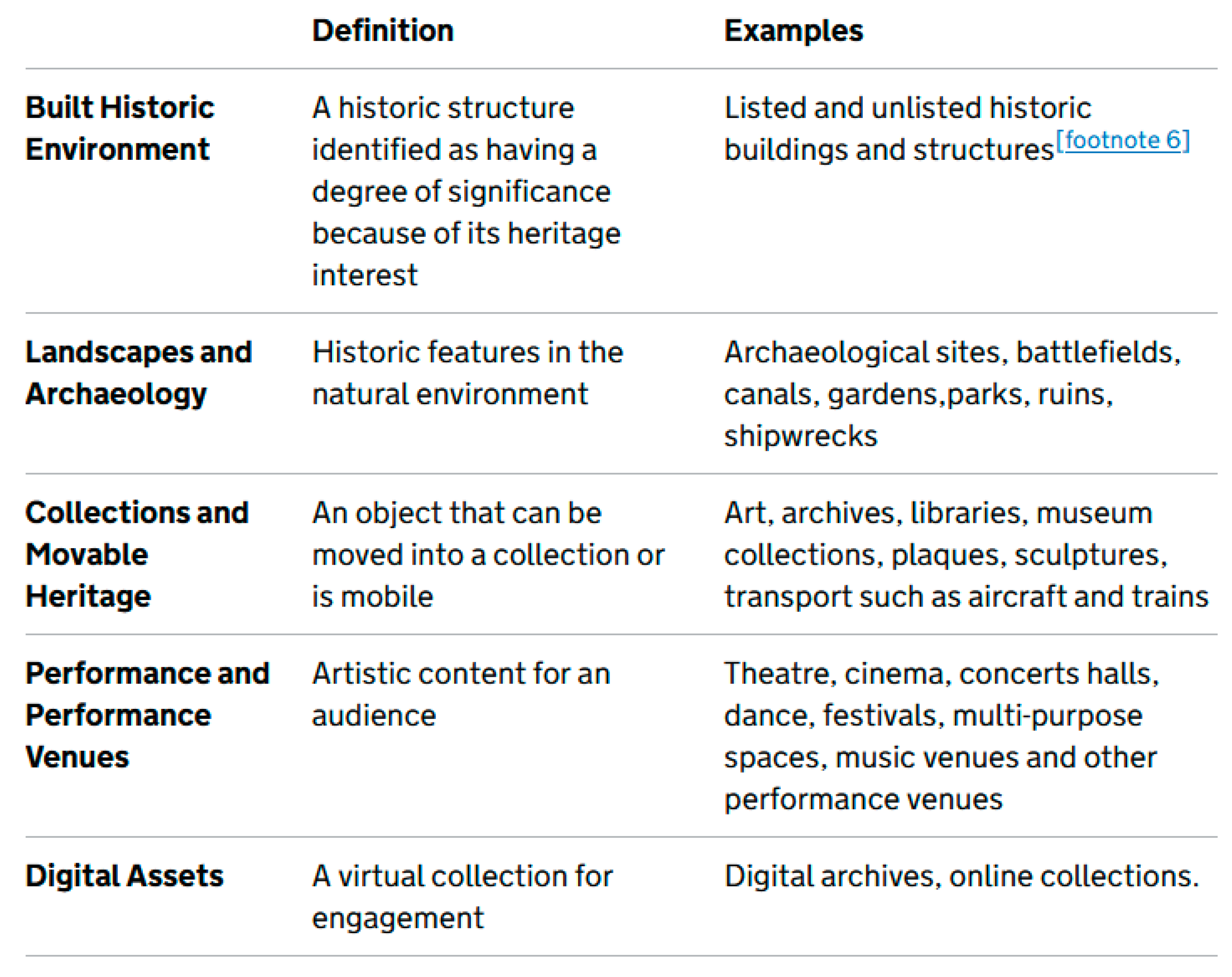
- Subject of operations; Lord and Markert (2017) separate ‘museums, science centers, gardens, zoos, heritage sites, libraries, archives and zoos’ to heritage ‘collections-related’ organisations, and culture organisations as ‘performing arts’-related, and libraries as a separate category; although they point out ‘that boundaries are being blurred among institutional types—with many gardens incorporating exhibitions, many museums being part of multidisciplinary cultural centers and festivals’ [127].

Table 1.
‘Valuing Culture and Heritage Capital: A Framework towards Informing Decision Making’. Source: Culture and Heritage Assets GOV.UK (Sagger et al., 2021).
Table 1.
‘Valuing Culture and Heritage Capital: A Framework towards Informing Decision Making’. Source: Culture and Heritage Assets GOV.UK (Sagger et al., 2021).
 |
- The Department for Digital, Culture Media and Sport (DCMS) UK sector classification [65]: The DCMS classification is made through the operational codes of Arts, Film, TV and Music, Radio, Photography, Crafts, Museums and galleries, Library and archives. Cultural education, operation of historical sites and similar visitor attractions, and an overlap with Creative industries to include associated advertising and marketing, architecture and publishing (including computer games).
- The museums mapping project subject matter themes [214]: Archaeology, Arts, Belief and identity, Buildings, Communications, Food and drink, Industry and manufacture, Leisure and sport, Local histories, Medicine and health, Mixed, Natural world, Other, Personality, Rural industry, Science and technology, Sea and seafaring, Services, Transport, Utilities, War and conflict.
- As heritage attractions: Heritage destinations are wider areas, whilst heritage visitor attractions are single sites and ‘form the basis of a country’s tourism product’ [215]. Major categories of heritage attractions include, among others, natural history, craft centres, performing arts, transport, military, stately and ancestral homes, towns, countryside, seaside resorts, festivals and pageants, sociocultural and field sports [215]. Prentice expands on 23 types of heritage attractions [216].
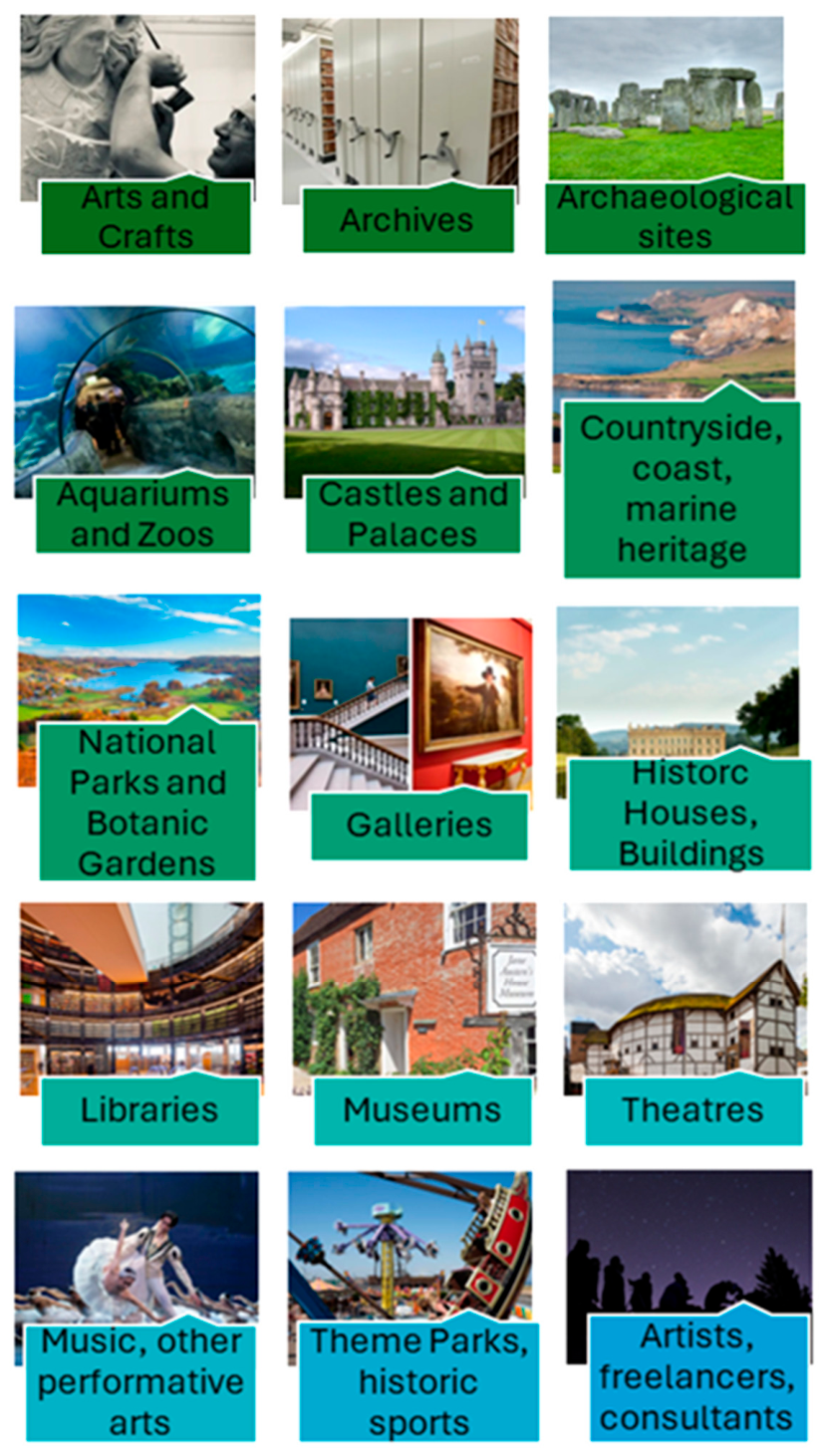
For this research, that organisational diversity has been presented in 15 organisational habitats: 1) Arts and crafts, 2) Archives, 3) Archaeological sites, 4) Aquariums and zoos, 5) Castles and palaces, 6) Countryside, coast, marine heritage, 7) National parks and botanic gardens, 8) Galleries, 9) Historic houses and buildings, 10) Libraries, 11) Museums, 12) Theatres, 13) Music, other performative arts, 14) Theme parks, historic sports, 15) Artists, freelancers, consultants (Figure 11).
Figure 10.
Representative organisational sustainability models. Source: Author.
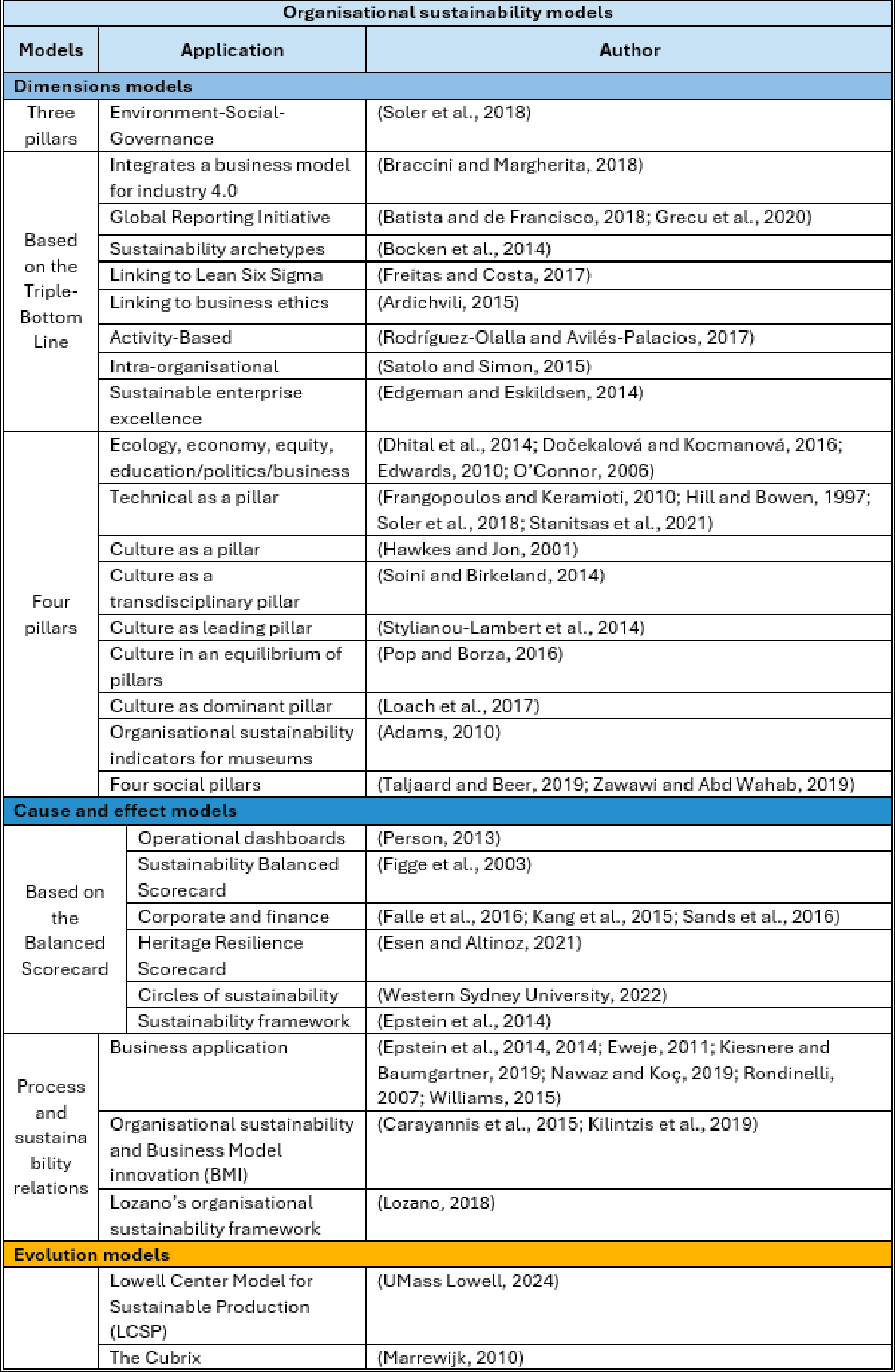
Figure 11.
The 15 organisational habitats of cultural heritage included in this research: 1) Arts and crafts, 2) Archives, 3) Archaeological sites, 4) Aquariums and zoos, 5) Castles and palaces, 6) Countryside, coast, marine heritage, 7) National parks and botanic gardens, 8) Galleries, 9) Historic houses and buildings, 10) Libraries, 11) Museums, 12) Theatres, 13) Music, other performative arts, 14) Theme parks, historic sports, 15) Artists, freelancers, consultants. Source: Author.
Figure 11.
The 15 organisational habitats of cultural heritage included in this research: 1) Arts and crafts, 2) Archives, 3) Archaeological sites, 4) Aquariums and zoos, 5) Castles and palaces, 6) Countryside, coast, marine heritage, 7) National parks and botanic gardens, 8) Galleries, 9) Historic houses and buildings, 10) Libraries, 11) Museums, 12) Theatres, 13) Music, other performative arts, 14) Theme parks, historic sports, 15) Artists, freelancers, consultants. Source: Author.
ECHA organisations can be identified as an ecosystem through their common objectives, operations, and pressures. ECHA organisations have similar strategy planning and management processes. Whether public, independent or private, organisations within the ECHA grouping, can have the following common objectives and tasks: collections management; education provision; permanent and temporary exhibitions; and research [18]. Performing arts can have fewer collections or less curatorial work, but more event and ticketing management. Libraries have both curatorial and commercial elements, with additional digital and cataloguing remits [127]. Organisations from the ECHA grouping have ‘common sets of culturally productive industries, activities and practices’ [38] and are ‘vehicles for learning, inspiration and entertainment’ [112].
‘Museums’ founding purposes often relate to their public and educational functions. They exist to engage audiences with their subject matter and often hold a collection closely associated with a particular place – in some sense, therefore, belonging to the people living there. Museums play an important community role, bringing people together for learning, enjoyment and inspiration, and providing a space for civic activities and reflection’. [88]
Cultural, social, and environmental values are associated with educational and health attributes, and intrinsic life enriching, alongside the more measurable economic values [217]. Heritage has the power to improve lives [218] and drive economic regeneration [77]. Its assets hold social value, through benefits of contribution to people’s ‘sense of place and belonging’, greater social cohesion, local network development, interaction between different ethnic groups, social mixing, increased trust and well-being [77]. The value stocks can be apportioned across the four intergenerational capitals: human (knowledge and skills); social (trust, understanding and reciprocity through networks in society); physical (goods); natural (natural resources) [77].
Using abduction for iterative exploration of literature (by focusing on business plans, constitutional objectives, wider grey literature, academic articles and monographs), four common objectives were observed across these 15 habitats: education, participation, development, preservation.
Education
‘Education is the process of acquiring knowledge, skills, values, and attitudes through various forms of learning’. [219]
‘Culture is inseparable from education, since by definition, it is made up of learned behaviours’ [50]. Crucially, ‘exposing children to the arts is an enduring and effective strategy for ensuring the intergenerational sustainability of cultural organizations’ [43].
Participation
Participation is involvement in cultural life and making decisions about it. Participation is a fundamental human right [221]. ‘Culture is a social phenomenon’ with an equity requirement of ‘fair access to cultural participation and benefits’ enabled through social policy, particularly in ‘under-populated peripheral or under-privileged areas’ [45].
Development
Development in the ECHAsystem is a concerted effort to bring change to the state and impact of its organisations and wider society. To be balanced, it needs to be linked to education, participation, and preservation. In economic terms, it focuses on the financial viability of organisations, and their contribution to the local, regional, or national economy [222,223,224,225]. ‘The economy is the system of production, distribution, and consumption of goods and services’ [226] and is often associated with having to live or operate with scarce resources [227]. The Heritage and Culture Valuation project reflects the experiencing of the heritage through: a) use value as the use of a historic site for living, work, tourism, as commercial or retail setting, or to let out, or b) indirect use value for its existence, potential, and future (intergenerational) merits [18,71,84].
Preservation
Conservation work cares for heritage assets and natural environments, whilst preservation is safeguarding their long term existence, as species and heritage assets are irreplaceable once lost [18,228,229]. Preservation involves the minimum possible intervention and the ability to study its original meaning [114].
These four objectives are the sources of ‘cultural, social… environmental…as well as economic’ values [230]. The organisational sustainability framework combines:
- 1)
- the four pillars of sustainable development (cultural, social, economic, environmental) that reflect the four UNESCO’s thematic indicators, and
- 2)
- the four common intergenerational, public-good objectives (education, participation, development, preservation).
Therefore, the four organisational sustainability objectives in the framework are cultural education, social participation, economic development, and environmental preservation. These were received positively by the pilot participants; bringing the four sustainability pillars and four objectives together was ‘poetic’ (Participant 2).
We need to be able to measure organisational sustainability across the objectives [231,232]. Being consistent with UNESCO’s sustainability indicators [38], this can be achieved by attaching specific measurable operations to these objectives as they contribute value to the four organisational sustainability capitals. Through further iterative exploration, a list of operations was compiled by utilising the operational structure for a) visitor attractions [94], b) ‘collecting institutions’ [127], c) the operational sections for museums [233], d) the Arts Council’s accreditation guidance [234], and e) the New Zealand ‘running a museum' guide [235]. The list was then checked against literature on operations of each of the included 15 habitats, adding or amending according to new findings. Then the operations were grouped to four main operational areas per objective. The organisational sustainability objectives and their operations are shown in Figure 12. The objectives are depicted as round pillars viewed from above. Their operations are depicted as the pillars viewed from the front, each operation represented as a drum (drum is a stone section of a pillar).
Researching the relation of knowledge resources and performance for each drum and objective was influenced by the cause-and-effect sustainability models, plus the double loop learning theory [236,237]. More broadly, it was influenced by the helix modelling [238]: (a) knowledge enables processes in operations; (b) the improved operations positively impact organisational sustainability performance and the value of capitals in the ecosystem; (c) gaps in such performance and value, trigger the need to improve knowledge resources and support for those specific operations (Figure 13).
The current processes for managing knowledge in ECHA organisations is explored next, before sourcing beneficial knowledge management theory that can support the application of operational knowledge curation.
2.2.5. How Is Cultural Heritage Managing Organisational Knowledge?
In the United Kingdom (UK) extensive cultural heritage expert knowledge stays dormant and unutilised [72]. The need to understand what solutions exist, and how to share knowledge resources, was highlighted in the Mendoza review [88]. Collaboration ‘minimises the waste of overlap and duplication, and unlocks the potential of resources already existing but underexploited’ [239]. Whilst the knowledge flow in ECHA organisations is likely to be from larger, more established organisations, towards the smaller ones [130], networking benefits all participants to ‘build their skills, confidence and self-esteem’ [118].
There is extensive networking activity, but the sharing of expertise, knowledge, and good sustainable practice, is limited and ineffective [72,88,111,130,131,240]. One negative cause can be explained by critically reviewing the support projects. For example, projects such as ‘Survive and Thrive’, supported networking in museums, with grand objectives of ‘establishing them into more dynamic, entrepreneurial and economically sustainable organisations’ [89]. However, those projects (and many like them) were short-lived, consultancy-delivered, one-directional workshops, not networks. They likely added to the information overload, without providing the ‘interface’ infrastructure needed, or the adoptive teaming routines to share ‘successfully demonstrated’ practice and practical knowledge [165,241,242]. The funding policy had been driving quick-win resilience projects. Short projects and associated consultancy work are quick fixes, not cost-effective solutions; building collaborative infrastructures requires commitment for the long term which pays back by providing long-term sustainability [47]. Alas, the following general quote reflects insightfully the knowledge management approach across ECHA organisations: a ‘tendency to recycle knowledge in organizations, rather than critically challenging and extending it’ [5].
Another cause to ineffective knowledge sharing is the ‘wasted effort to recreate the same thing individually without collaboration’ [80]. Uncoordinated manuals, toolkits, and software are continually being developed by a range of individual sector support organisations [108,243,244,245,246,247,248]. Many sector support organisations provide access to knowledge resources through paid membership, charged courses, and conferences. Registering to the large number of memberships to cover the knowledge needed for all the operations is beyond the financial ability of most of these small organisations [72]. In 2024, the total cost for joining at basic level the paid memberships of the Investment Principles Support Organisations (IPSOs), was £2,331 for organisational membership, or £1,441 for individuals, not including the additional cost for events, conferences and training (source: Author, exclude one membership of £2,000). Additionally, there is currently no mechanism for the wider ecosystem support organisations or non-members, to find what is available behind the membership walls, or what is missing.
Operational knowledge can also be sourced from the monograph literature which provides published works of manuals and handbooks. These are generally narrowly focusing on collections care and interpretation. Wider operations are usually only touched upon, typically at too basic a level and are quickly out of date [233,249,250,251,252,253]. Even fewer publications provide practical organisational knowledge relating to what makes or breaks an organisation; its people [254,255].
The continued closures and reductions of service provision, raise the practical question about the lack of a design for collaborative creation, open access, and up-to-date knowledge across an operational knowledge-united ECHAsystem. Reports have asked for a ‘simple implementation toolkit providing accessible guidance on tools and models that are suitable for heritage organisations, including collating resources that are already available for free’ [130]. Further reports pointed out that ‘some kind of dedicated national information gathering would be ideal, so that people don’t have to reinvent the wheel’ [73]. The call for collaborative working and funding a shared infrastructure relating to toolkits, sources of information, and best practice, is also a Mendoza review recommendation [88].
The barriers to effective knowledge curation and networking need to be understood to successfully develop and implement an operational knowledge curating design. Such barriers are being explored throughout this research, as they impact the development of a suitable methodology, the understanding of the findings, and the design implementation will need to address the historical foundations of such barriers.
One reason behind the lack of coordination of operational knowledge appears to be political, as implied in the joint sector statement [106]. Its position is that the organisations, not the sector support, need to take direct responsibility. ‘Building cross-sector intelligence’ [80] is much needed but goes against the policy of ‘judicious withdrawal of hands-on government engagement’ [18]. Particularly during the austerity and continuing lean years, a cross-sector intelligence infrastructure has been seen as being beyond an appropriate level of government intervention. The earlier investigation of resilience and sustainability reveals a divide-and-conquer approach underlying the withdrawal of government engagement. The economist approach to valuing culture as a policy domain has perpetuated the division of the ecosystem and its habitats, making it difficult to find common ground or to effectively define or agree an ecosystem boundary.
This division results to not benefiting from economies of scale, or being able to measure performance; how can we measure or improve the performance of an ecosystem that has no defined boundaries? Organisational and personal performance awareness, and balanced feedback on performance, improve organisational competence [173,256]. Not having a clear goal and the knowledge to action it, leads to poor performance [257]. It is the goal setting and feedback on performance (that is below an aspiration level) that triggers search for the solutions, and organisational knowledge can cause behavioural change that leads to achieving the aspiration levels [256,258].
Another reason behind the divisions appears to be linguistic. The ECHA discourse uses the terms cultural policy, heritage, culture, arts, creative industries, historic environment, and so on, interchangeably. The DCMS Culture and Heritage valuation research programme started to distinguish between the terms of culture, heritage, and more recently arts [71,259]. Even in this programme however, the term cultural heritage is still used interchangeably with heritage, making it unclear whom it includes or what it measures.
To apply knowledge management, it will be prudent to adopt contextual language. Curating is a familiar, and proud, practice in ECHA organisations. Curation applies the participatory practices of creating, collecting, storing, conserving, and communicating about, heritage assets, cultural values, and associated knowledge [260,261]; practices equivalent to managing operational knowledge. Curating operational knowledge, rather than managing it, is likely to be a more instantly understood set of processes within ECHA management. Aligning the language of processes will build the common language that is needed for the two fields of knowledge management and ECHA management to discourse. The term operational knowledge curation is used in this research for the ECHAsystem.
The following sections present the foundations of knowledge management theories that support the development of the Athena (operational knowledge curation) design.
2.2.6. The Nature and Application of Knowledge
‘For any person, there are some things they know, and some things they don’t. What exactly is the difference? [262].
The nature of knowledge has been debated for thousands of years and there is no one universally agreed definition of knowledge. This author provides a pragmatism-based definition: knowledge is our current, empirically justified, understanding of a subject. We store data, we transmit it as information, we understand (empirically justified) information as knowledge, and we apply knowledge as wisdom for social benefit.
Being central to this research, the nuanced understanding of the distinction between explicit (recorded) and tacit (experiential) knowledge is credited to Polanyi [263,264,265,266,267]. Utmost subjective stances see knowledge as fully embedded and impossible to transmit intact, as certain unconscious nuances and processes are lost in translation. The broader subjective (practice theory) camp see explicit and tacit knowledge as complementary in a continuum, whilst objectivists (capability perspective) see the two types of knowledge as distinct and incompatible, although the perceived dichotomy is increasingly challenged [264].
Explicit knowledge can be ‘easily transferred to others in traditional formats, such as printed or digital documents’, whilst tacit knowledge is not-easily transferred because it is personal know-how knowledge [268,269]. ‘Explicit knowledge is revealed by its communication … Tacit knowledge … through its application’ [173].
Explicit and tacit knowledge are different but the dichotomous relation between them is increasingly considered as complementary, not contradictory. In pragmatism, the recorded (explicit) knowledge and the embodied (experiential, tacit) knowledge, interact in a cycle of learning from one another. Explicit (objective) and tacit (subjective) knowledge can be likened to vision and hearing, together enabling a more comprehensive observation of the world. In research, a variety of methodologies study explicit and tacit knowledge as complementary [270,271,272,273].
2.2.7. The Knowledge Lifecycle
Beneficial knowledge application requires a planned process. Knowledge management includes the management of the knowledge lifecycle and of the infrastructure for doing so [264]. The knowledge lifecycle can become complex. Knowledge (created, co-created, or adapted) requires sourcing (internally, externally or both), translation to its new setting’s common language and systems, storage, and a retrieval and diffusion infrastructure [6,173,274,275,276,277]. Then it needs feedback for updating its content (‘single loop feedback’) and feedback for reviewing its governance purpose and effectiveness (‘double loop feedback’) [236,237].
The combined what-why-how knowledge within an organisation, comprises its organisational memory [274]. This combined knowledge can be demonstrated through the following example: suppose that a museum education officer needs to make an educational film about a new archaeological artefact. We can list the functions: propositional/ contemplative knowledge (what) as the facts required, the practical knowledge (why) as the operational objective, and the procedural/ productive knowledge (how) as the process. We then need to consider knowledge needed to create the film itself, the knowledge needed about the archaeological artefact, and how to review the quality of the final film (Figure 14).
This creates a matrix of considerable levels of required knowledge. The education officer can consider outsourcing it instead. The training and review requirements are still needed, and the officer must now know how to create a brief for the contract, how to contract someone and how to select the most suitable developer, know the levels of available budgets, and so on. Similarly, to co-create the film with another heritage group or museum, the officer will need to establish what the commitment and rights of each partner are. Additionally, the officer needs to consider the life cycle of the film. How will it be stored, secured, shared, updated, replaced or withdrawn? What licencing rights will it have? Will it need a user manual? The officer will also need to consider the life cycle of the knowledge itself for the film development project. How is the officer going to record the facts, objectives, and process for the training, development, and performance review? Who will access the development knowledge and how will that knowledge be available for other staff, volunteers, or partners so they can use it in similar projects or in the future? Will the officer create a development toolkit for the film? How will this toolkit be kept up to date?
The list of knowledge requirements is extensive. Quite often the education officer will be working part-time in a small, mainly volunteer-run, museum with limited resources. Such an objective is one of many cultural education, social participation, economic development, and environmental preservation objectives that a museum, or any ECHA organisation needs to know how to deliver, to be organisationally sustainable. How is all this knowledge to be managed?
2.2.8. Knowledge Management
Too much information makes it difficult to interpret it and action [241] leading to ‘information overload syndrome … the stress perceived by individuals having to deal with large amounts of information when a technological or organizational change occurs’ [278].
We now have too much information, and are unable of ‘knowing parsimoniously’ [165].
Knowledge management is defined as a proactive management of explicit (recorded) knowledge and its interaction with tacit (experiential) knowledge to make knowledge accessible, actionable, and beneficial for individuals, organisations, and the society. As such, organising knowledge can be described as the management of knowledge at any of these levels (individual, organisation, society), organisational knowledge being managed within individual organisations, whilst interorganisational knowledge management is the co-creation, sharing and maintenance of organisational knowledge across two or more organisations [279]. The importance of interorganisational knowledge is widely acknowledged [280,281,282] for its benefits of ‘organizational learning, performance improvement, the creation of competitive advantage, innovation and continuous improvement of processes’ on organisations [283].
The benefits of knowledge management for commercial and public organisations are extensively demonstrated in knowledge management literature. Table 2 lists some key benefits.
Different approaches to knowledge management are found under the terms of strategy, framework, model, and system. These approaches can be grouped as 1) high-level and, 2) lower-level [284].
- 1)
- A high-level knowledge approach sees strategic planning of knowledge as integral part of an organisation’s business planning. This high-level strategy influences the low-level strategy.
- 2)
- Lower-level strategies are selected based on specific types or sources of knowledge. The choices fall within four main dimensions:
- i)
- Tacit knowledge (people-oriented) or explicit knowledge (technology-oriented) approaches. The literature on knowledge types overwhelmingly supports the pragmatist view [263,285] that a judicious combination of personalisation and codification is required in a hybrid model of complementary tacit and explicit knowledge [263,270,271,272,273,284,285,286,287,288,289,290,291,292,293,294,295,296,297,298,299,300,301,302,303,304].
- ii)
- Creating new knowledge or sharing existing knowledge. This relates to the benefits, costs and barriers to exploration of new knowledge, or exploitation and reuse of existing knowledge [276,305]. Ambidexterity refers to the ability to both explore and exploit knowledge, at varying levels over different times [263,306,307].
- iii)
- Sourced internally (within the organisation) or externally (within the ecosystem or across other disciplines). A combination of internal and external knowledge as heterogeneous knowledge can improve the delivery of objectives, depending on the available resources and knowledge within the organisation [307,308,309].
- iv)
Table 2.
Organisational benefits of knowledge management. Source: Author.
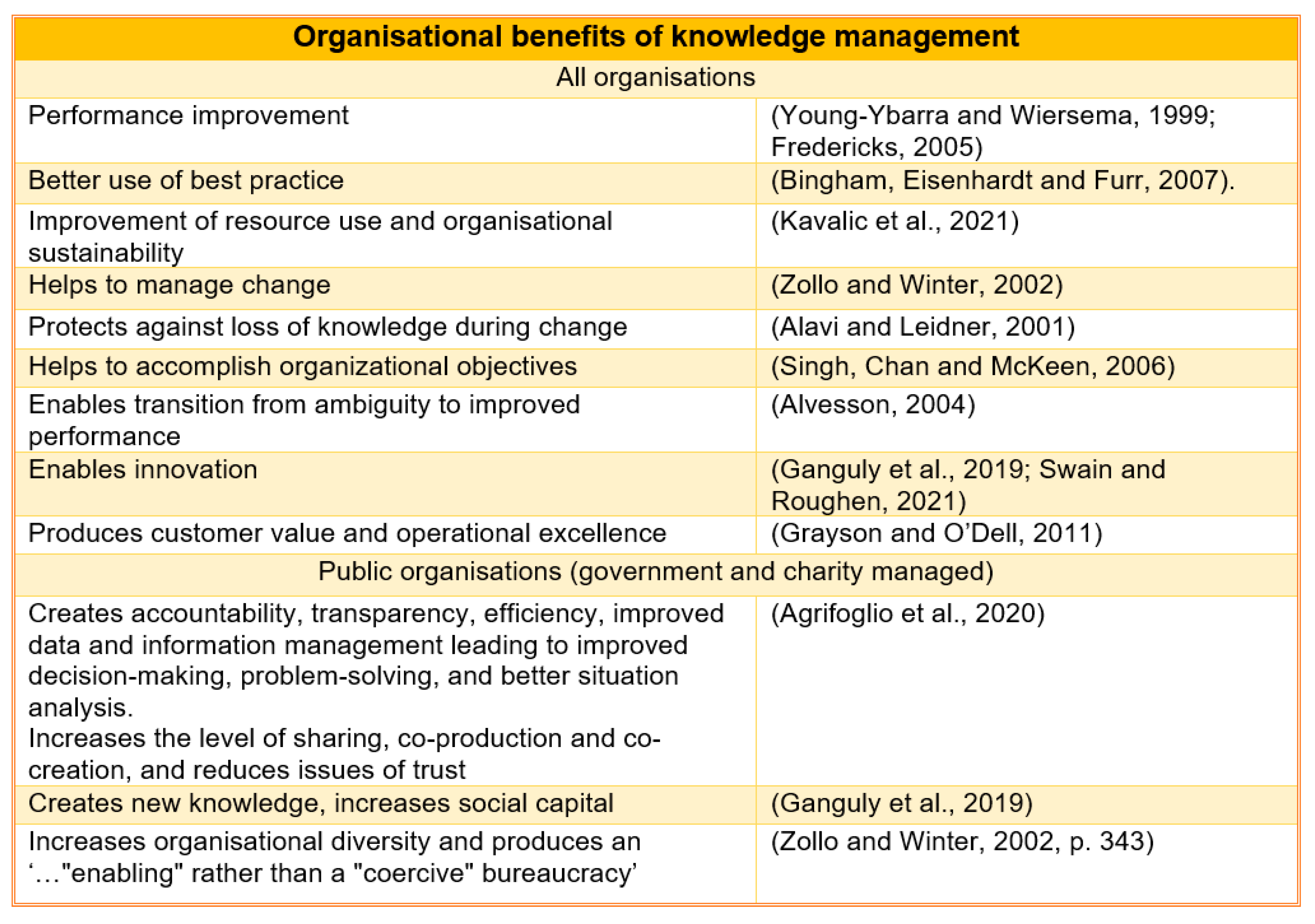 |
The selection and implementation of a knowledge management strategy or model commonly starts with two phases [284,332,333]:
- i)
- formative evaluation of the pressures that act as the business driver for change, and
- ii)
In the first phase, a formative evaluation can begin by understanding the time pressures; whether the strategy needed is deliberate (proactive) with time to choose from a range of knowledge management processes, or emergent (reactive) [171].
The rate of change affects the business drivers being selected for a knowledge management strategy or model. For example, three business drivers were used by the Loughborough University CLEVER project: i) structural change (expansion, restructuring, merger and acquisition, down-sizing), ii) external change (new market, new technology), or iii) continuous improvement (performance improvement) [336].
For the second phase, mapping is conducted through knowledge ‘stocks’ (existing explicit and tacit knowledge) audits, and ‘flows’ (sharing and access processes) audits, and often combinations of these [171,286,294,301,304,309,335,336,337,338,339,340]. An example of a comprehensive combined (stocks and flows) auditing methodology is ‘“STOCKS” (Strategic Tool to Capture Critical Knowledge and Skills)’ [335] (Figure 15).
Following the mapping phase, the selection of the appropriate knowledge management approach is possible by relating the organisational knowledge map to appropriate criteria. Then, plans for resourcing and enabling the knowledge management approach need to be agreed upon within the organisation [284,341]. Agreed actions and planning are followed by piloting [285,294,337,341] and implementation of the knowledge management processes [342]. This is followed by evaluation of single loop feedback on the knowledge management content and processes, and double loop performance feedback on their management and their impact on overall organisational performance [236,237]. The business strategy implementation that incorporates a knowledge management strategy can have inclusive (middle-up-down), instructive (top-down), or in-between approaches [334]. However, successful implementation of a knowledge management approach is often the result of an inclusive, social process [310].
This research utilised these two selection phases and implementation processes; it evaluated the pressures on the ECHA organisations, examined the rate of change in the ECHAsystem, developed a knowledge mapping process, and used the findings to set suitable principles and selection criteria, discuss, and propose a knowledge curating design. Design piloting and implementation in the ecosystem have been considered, and a feedback review process incorporated.
2.2.9. The Boundary Dynamic Interaction of Knowledge Artefacts (BouDIKA)
This empirical research developed the Boundary Dynamic Interaction of Knowledge Artefacts (BouDIKA) model, by overlapping two significant theories (Dynamic Knowledge Creation, and Boundary object) which have a common philosophical foundation (pragmatism). The BouDIKA model was used to map knowledge artefact characteristics, the interaction of tacit and explicit knowledge, to synthesise the findings, and discuss enablers and barriers to knowledge application.
Nonaka’s (and Hedlund, Ichijo, Hirose, Konno, Krogh, Takeuchi, Toyama, Umemoto, and Zhu, amongst other co-authors) Dynamic Knowledge Creation model, is the most encountered knowledge creation model, and has been evolving for over 35 years. It focuses on the interaction of explicit (recorded) with tacit (experiential) knowledge, within a shared contextual space (Ba), which has (or lacks) enablers, including a balanced (middle-up-down) enabling leadership. The interaction advances in a continuous spiral from personal, to team, organisational, interorganisational, ecosystem, and societal levels. The explicit-tacit interaction can be observed across four modes; Socialization, Externalization, Combination, and Internalization, known as SECI. Knowledge assets, comprising the experiential and recorded knowledge stocks in an organisation, are specified within each of the SECI modes, providing means to map knowledge interaction across the spiral and modes, and to study the enabling Ba environment.
The Dynamic Knowledge Creation model enabling attributes and knowledge assets, explain how knowledge is used to manage change in individuals, teams, organisations, interorganisationally, and in ecosystems. Knowledge assets, such as organisational routines and organisational artefacts, provide measurable concepts for conducting research. Knowledge assets are key constituents of the Dynamic Knowledge Creation model and of evolutionary organisation theory [3].
The organisational artefact is the explicit knowledge asset in the Dynamic Knowledge Creation model and has no tacit knowledge characteristics. Whilst the Dynamic Knowledge Creation model provided a framework to study the explicit-explicit interaction through the organisational artefact, it did not provide organisational artefact characteristics to study the tacit-explicit, tacit-tacit, and explicit-tacit interactions. On the other hand, Star’s constructivist Boundary object’s characteristics (Star, 2010, 1989; Star and Griesemer, 1989), provide tacit knowledge characteristics:
- 1)
- how people network around organisational artefacts;
- 2)
- the impact of organisational artefacts that do not function as well as they could (ill-structured boundary objects); and
- 3)
- how people use and experience organisational artefacts. (Star, 2010, 1989; Star and Griesemer, 1989)
Boundary object is an object within a shared space, that ‘people … act toward and with‘ (Star, 2010, p. 603). The Boundary object enhances active knowledge sharing and transfer from a social perspective [343], enabling flexibility for multiple viewpoints to support collaboration and learning [344]. However, it does not sufficiently address explicit knowledge. It lacks the knowledge creation and accumulation characteristics, and SECI structure of the Dynamic Knowledge Creation model. Overlapping the two pragmatism-based theories, offers a mixed methods, practical methodological model for studying the interaction of tacit and explicit knowledge. By utilising the Boundary object characteristics, the organisational artefact is embellished with socializing characteristics to act as a knowledge artefact, for active knowledge sharing in the hybrid Boundary Dynamic Interaction of Knowledge Artefacts (BouDIKA) model (Figure 16).
2.2.10. Organisational Forms and the Role of Teaming Routines
‘Many problems occur when all organizations are treated as similar, which was the case with scientific management and administrative principles that attempted to design all organizations alike’ [345].
Five key organisational variations affecting interorganisational knowledge curation are examined here; purpose, organisation size, staff turnaround, product type, and change cycle:
Purpose: public-good organisations operate participatory and collaborative strategies involving a wide range of government, charitable, local community, and commercial stakeholders [1,346]. The requirement for inimitable-knowledge to gain sustainable competitive advantage, as expected in the resource-based organisation theory, is not compatible with public good organisations. Aggressively competitive strategies are against the definition and ethos of ECHA management. The publicly funded development of manuals, toolkits and associated software in ECHA organisations has a requirement of open access, whilst partnerships, networks, and alliancing are encouraged (ACE Sector Support Organisations, 2020; NLHF Licence requirement, 2020).
Organisation size: the role of the knowledge artefact varies according to organisational size, as in large organisations the larger distance between top management and staff converts the knowledge artefact into a control mechanism [345].
‘More than 100 studies … indicate that large organizations are different from small organizations along several dimensions of bureaucratic structure, including formalization, centralization, and personnel ratios.’ [345]
The research bias towards large organisations can erroneously generalise knowledge artefacts as being control mechanisms in all organisations [2].
Staff turnaround: associated with the size and type of the organisation, knowledge retention is affected by people turnaround, particularly in not-for-profit organisations in which volunteers often are the majority, or the entirety of the people managing an organisation [327].
‘Knowledge in NFPs [Not For Profit] is often fragmented, heterogeneous, rarely formalised and transient due to the considerable turnover of volunteer staff and the lack of operational maturity’ [327].
Replacing people in a large commercial organisation can be a weekly occurrence. In a small organisation it is a major disruption and a considerable loss if their knowledge has not been retained within the organisation. Such loss is common in small public-good organisations relying on underpaid staff and largely on volunteers, who tend to either move-on once they have gained experience, or unfortunately pass away (elderly volunteers) [103,347,348].
Product (manufacturing versus service): manufacturing organisations vary significantly amongst them (low-batch, large-batch, and continuous-process production). Furthermore, they are distinct from service providing organisations which produce an intangible output with indirect quality service measures, are labour and knowledge intensive (rather than capital intensive in manufacturing), have direct interaction with the customer, and provide service in site-specific environments [345].
Change cycle: incremental change associated with sustainable development objectives is an appropriate approach to manage the extensive body of heritage assets that require continuous care, and the public support that is required to leverage private and public funding for this [38,110]. Conversely, mergers, acquisitions and similar transformational strategies found in existing studies are not generally applicable in the public-good sectors; different ECHA organisations relate to, or are managed by, a local community, specific heritage, or belief. Their diversity reflects the cultural heritage diversity that builds the cultural and heritage capital of a place [18]. The Burra Charter highlights the significance of each natural and cultural value, especially if they are under-represented and endangered [44,46].
The interaction between organisations is a significant knowledge design consideration. Individual organisations and organisation forms do not operate in isolation. They are in increasingly open contact with their ecosystem, and permeable to external influences [3]. Interorganisational routines enable knowledge interactions. ‘Interorganizational routines are organizational routines where participants are members of different formal organizations’ [349]. A population of interorganisational routines tends to share common objectives, functions, and technological application [349]. Interorganisational routines can benefit a range of cross-organisational teams to access knowledge, learn, share problems and costs [47,350]. Furthermore, organisational routines have an interorganisational application [351]. When they are designed specifically to enable teamwork, they act as teaming routines which enable coordination and collaboration between experts across organisational boundaries. Teaming routines require enabling leadership, regular review and modification, and a collaborative team structure [352,353]. Common collaborative structures are the networks, knowing communities, and alliances.
Networks pursuit ‘mutual benefit … by working more closely with other people or organizations in order to share information, business opportunities or skills’ and their activities tend to be compatible with organisational missions [47]. Participating organisations need to be diverse enough to have something different to share, but not so different as not to understand each other’s operations (optimal cognitive distance [350].
Compared to organisational teams, knowing communities are usually more autonomous groups sharing resources voluntarily over longer periods and act as ‘repositories of useful knowledge’ [354]. A community of practice involves people with a common professional subject that they care about. They share practices based on mutual trust, to accomplish a common requirement or goal [241,355]. Communities of practice do explore new knowledge, but mainly exploit existing knowledge, particularly by replication of a routine that has been proved successful [354].
By comparison, strategic, or inter-firm alliances are more formal relations, ‘a form of organizational arrangement for ongoing cooperative relationships among firms’ to access resources, knowledge, and learn new capabilities [350]. Partners may share equity, as in joint ventures, or instead have an agreement. Cross-sector partnerships that include civic, business, and government organisations provide even greater diversity of resources and knowledge, and often build stronger altruistic motivations [350].
Understanding the benefits and challenges of collaboration helps improve organisational sustainability [356]. Six knowledge collaboration benefits are highlighted in literature: capacity building: [88,165,357,358], shared understanding builds stability [359], creating social leadership [349,350,352,354,360,361,362,363], building trust [353,364], supporting collaborative learning [47,350,352,354,355,365], creating efficiency [165,354,356,366,367,368,369,370].
There are, however, barriers to interorganisational collaborations, including lack of capacity and of trust, and the traditional view of non-transferability of organisational routines [362,370]. Specific internal barriers include lack of absorptive capacity, and inhibiting organisational culture which includes: resistance to ‘disregarding old routines and developing new ones’, unsupportive leadership, and ‘fear of loss of ownership, control or competitive edge' [350,352,371]. Horizontal (interorganisational) networks can be seen as challengers by top-down hierarchical authority and to its decision-making and delegation [365]. External barriers include a sector’s structure and culture, lack of suitable partners or of compatible knowledge and resources, and inability to find out what resources are available or missing [350,371]. Networking efforts can encounter conflicts in decision-making, resource access, and technical solution selection, and there are legal (ownership) considerations, ‘free riding’ partners, and a wide range of different priorities and interdependencies to consider [356]. However, contrary to general belief, experimental evidence supports that groups can make correct decisions faster than individuals [372].
A final collaboration barrier to consider is the concern of institutionalisation, or over-standardisation, from the extensive sharing of knowledge and practices. Organisational networks have been studied for their benefits but also for their institutionalising influence. Best practice, use of standards, awards, and operational systems, can all be identified with isomorphism, the loss of diversity by increased convergence, leading to institutionalisation. Mimetic isomorphism is imitation of other more successful or influential organisations during periods of instability, whilst normative isomorphism is imitation through political and financial reliance, or pressure to achieve prescribed professional standards and policies [373,374,375]. However, the view of knowledge diffusion as conformity has been challenged, when social, cultural, and environmental factors are considered alongside economic efficiency [375]. In addition, ‘institutional entrepreneurship’ as a bottom-up knowledge enabler is shown to reduce institutionalisation because diversified financial sources reduce legislative, grant-funding, and political dependency [375]. Overall, homogeneous ecosystem-wide organisational routines can shield individual organisations from external isomorphic factors such as political shifts [376].
‘The public organization of the future will be more collaborative … Silos … are increasingly seen as causing more harm than good.’ [357]
3. Methodology
The pragmatist philosophical orientation is introduced first, followed by the methodology. Pragmatism developed out of the work of Kant, who related the value of experience to the need for a causal concept, the two combined being interpreted through our understanding. ‘In this way, a subjective, sensory experience may … be transformed into objective conceptual knowledge’ [377]. Like most philosophical theories, pragmatism has been continually evolving, and literature has been addressing past criticism [378,379,380,381,382]. Pragmatism is an evolving philosophical movement, mediating an all-encompassing empirical examination of the real but ever-changing natural and social world, informed by experience, multiple views, and ethical considerations, advocating action for cultural learning, social wellbeing, sustainable development, and active democratic participation.
Pragmatism has been a conscious movement for the synthesis of the rational with experience, therefore is justly seen as a worldview for mixed methods research [379,383,384]. Following pragmatism, this research utilised deduction, induction, and abduction. Each logic type answers different questions and has useful and limited applications (Figure 17).
The complexity of the ECHA operations makes the complementary use of mixed methods necessary. The nature ecosystem, within which both the subjective arts, and objective heritage operate, are all interconnected. This can be described at site level. An objective description of a ECHA site could be a monument in a historic setting, a classical temple of knowledge, linking the present with nostalgia about the past; it also describes its organisational structures and functions. A subjective understanding might visualize a site of public good and intergenerational values but also question its organisational culture, its operating environment of policy instability, lack of innovation, and misinterpreted significance. In developing an operational knowledge curating design, the researcher must be aware of the combined representation and consider the practicalities for its implementation. Such research has to be reflexive, as it impacts on social norms (organisational culture, decolonisation, nationalism, etc.), it is politically sensitive (who should manage the ECHAsystem and its habitats, at what risk, at what level of intervention and associated bureaucracy) and addresses difficult economic decisions: should the ECHAsystem receive more money when other vital services are underfunded, if not, what is the impact on social equality and equity, and on the wider economy?
Methodological Design
This cross-sectional applied research used a mixed methods parallel design, initially informed by the literature review. The use of the organisational sustainability concept and operational framework for mapping the knowledge artefacts were tested through a concept pilot utilising five semi-informal interviews. The concept pilot showed that manuals and toolkits were familiar and positively received knowledge artefacts in ECHA organisations, enabling the mapping of knowledge artefacts. Organisational sustainability related to managing resources and was the only sustainability-related concept directly linked to knowledge management.
Next, the methodology pilot focused on a single management category. The 58 UK universities listed by University Museums and Collections (UMAC) were contacted as they manage museums, libraries, archives, botanical gardens, theatres, and other collections and sites, as part of their educational roles. Data was collected through nine completed questionnaires and one semi-structured interview. The pilot helped finetune the variables that data was collected for, and the questions used. The pilot findings were consistent with the main research.
Selecting an approach for mapping knowledge artefacts was a crucial research design consideration. Not to audit organisations, but instead make it a positive engagement process. This was achieved by using Appreciative inquiry (Ai) [385,386,387] which ‘suggests that we look at what works in an organisation; we appreciate it’ [388]. The online questionnaire was adjusted to find out what the participants’ aspirations were, for their organisation. Similarly, interview questions included an appreciative, forward-looking section. The knowledge design then could be developed towards the fulfilment and delivery of such management and performance aspirations.
For the main phase, data collection was conducted in parallel (24th July 2023 until 26th July 2024) through 40 semi-structured interviews (induction) and 270 usable online questionnaires (deduction). Data was collected across two groups; knowledge artefact user organisations, and knowledge artefact provider organisations. An iterative examination followed, of raised questions and of developing patterns or standout findings (abduction) which are presented as features (mini case studies) (Figure 18).
The methods used, and types of primary and secondary data collected, are shown in Figure 19.
The interview participating demographics are shown in Figure 20.
All semi-structured interviews were conducted online and were transcribed on Teams. Thematic analysis was conducted using the Braun and Clarke six-phase framework [389,390] on NVivo software. The quantitative data objectives and alternative hypotheses and data types are shown in Figure 21.
Figure 20.
Participant sites or departments demographics for the main phase interviews. Source: Author.
Figure 20.
Participant sites or departments demographics for the main phase interviews. Source: Author.
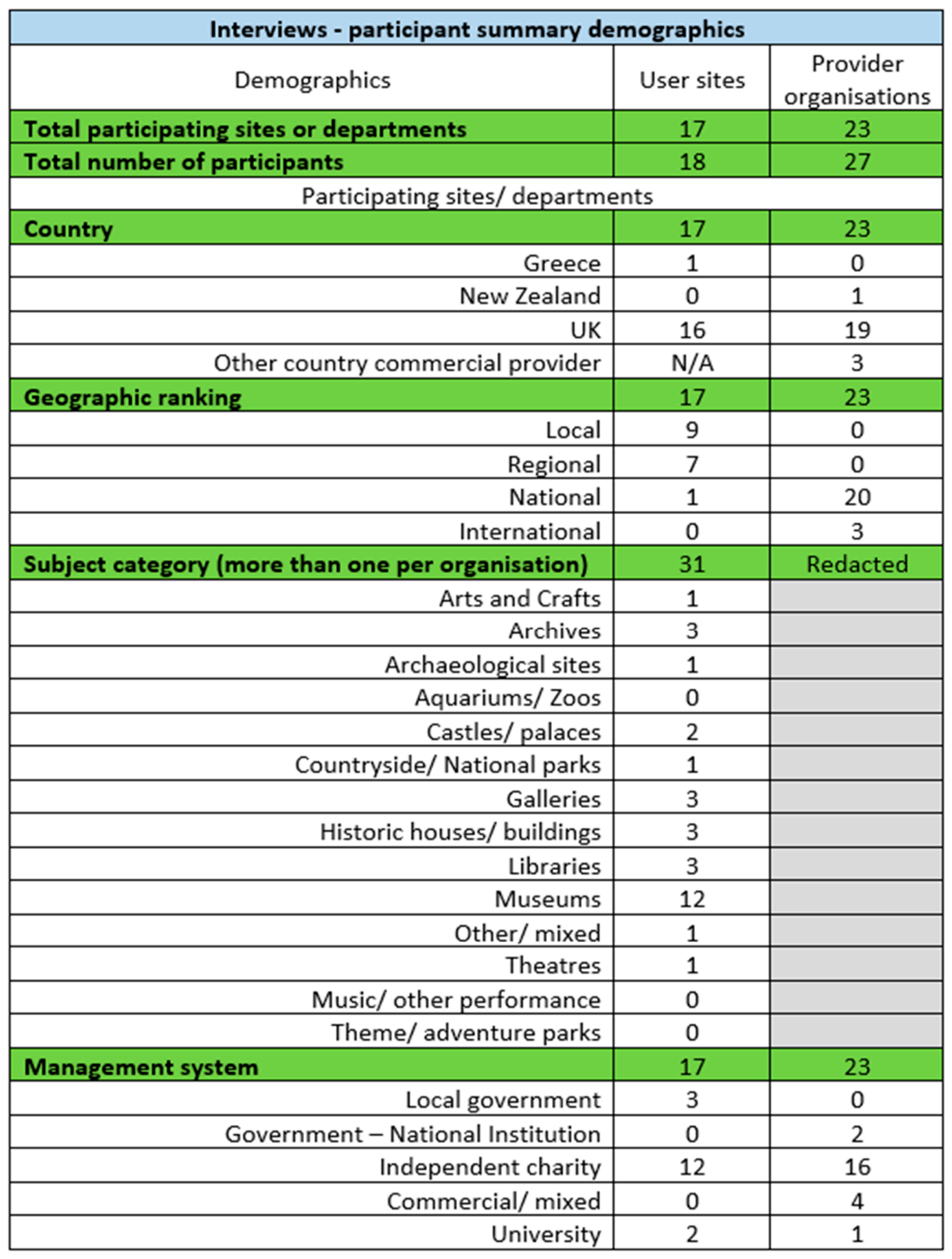
The online questionnaire was used to map out measurable characteristics of the knowledge artefacts, and the performance of the participating sites. A representative, stratigraphic sampling across the 15 habitats and their key demographics was used.
Figure 21.
Hypotheses and data types for the two objectives. Source: Author.
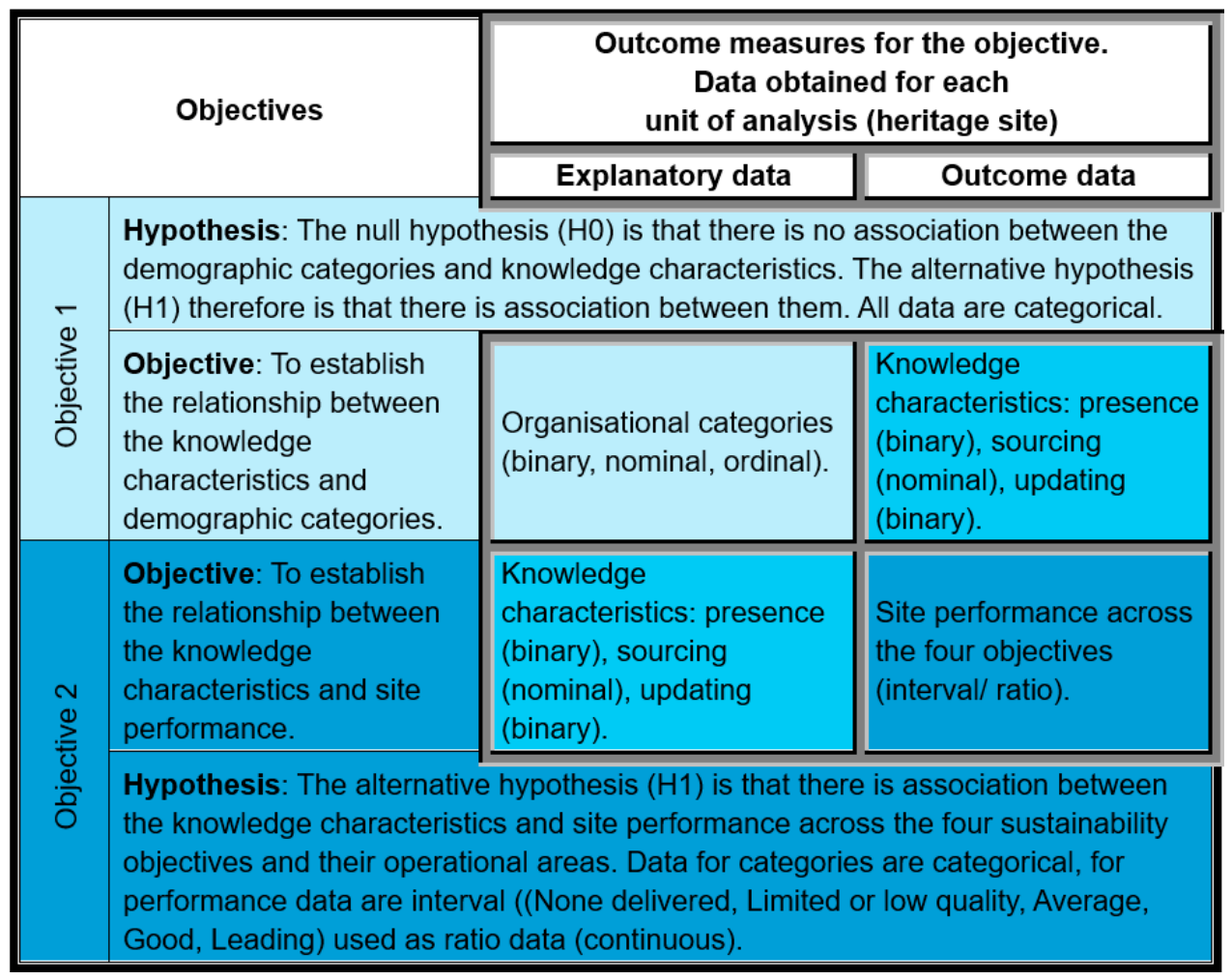
The sample size calculations are shown in Table 3.
The categories used as variables are shown in Table 4.
After filtering out incomplete contributions and removing one duplication, the final data set used included 244 user and 26 provider participations. The main demographic participation numbers are shown in Table 5.
This sample size of 270 participants reflects the population size with a confidence level of 95% and an error margin of 5.95% [391,392,393]. Therefore, if the research is repeated 100 times, in 95 of them the results will correctly reflect the population within ± 5.95% error margin [394]. The questionnaire set-up and data collection were conducted using the Qualtrics system. The data was analysed using IBM’s SPSSv29, utilising SPSS’s linear regression and descriptive analysis functions.
Descriptive analysis was used to map the presence, updating, and sourcing knowledge levels and characteristics across the demographic variables. Present knowledge artefacts were measured as updated if they were updated or created within the previous 12 months. Sourcing was measured using a rank-type question, in which participants clicked and dragged their most used source option to the top and the rest in reducing order. A few supplementary questions helped to build on the source characteristic data.
Table 3.
Sample size calculations and direct email contact. Notes: NZ New Zealand, UK United Kingdom. Source: Author.
Table 3.
Sample size calculations and direct email contact. Notes: NZ New Zealand, UK United Kingdom. Source: Author.
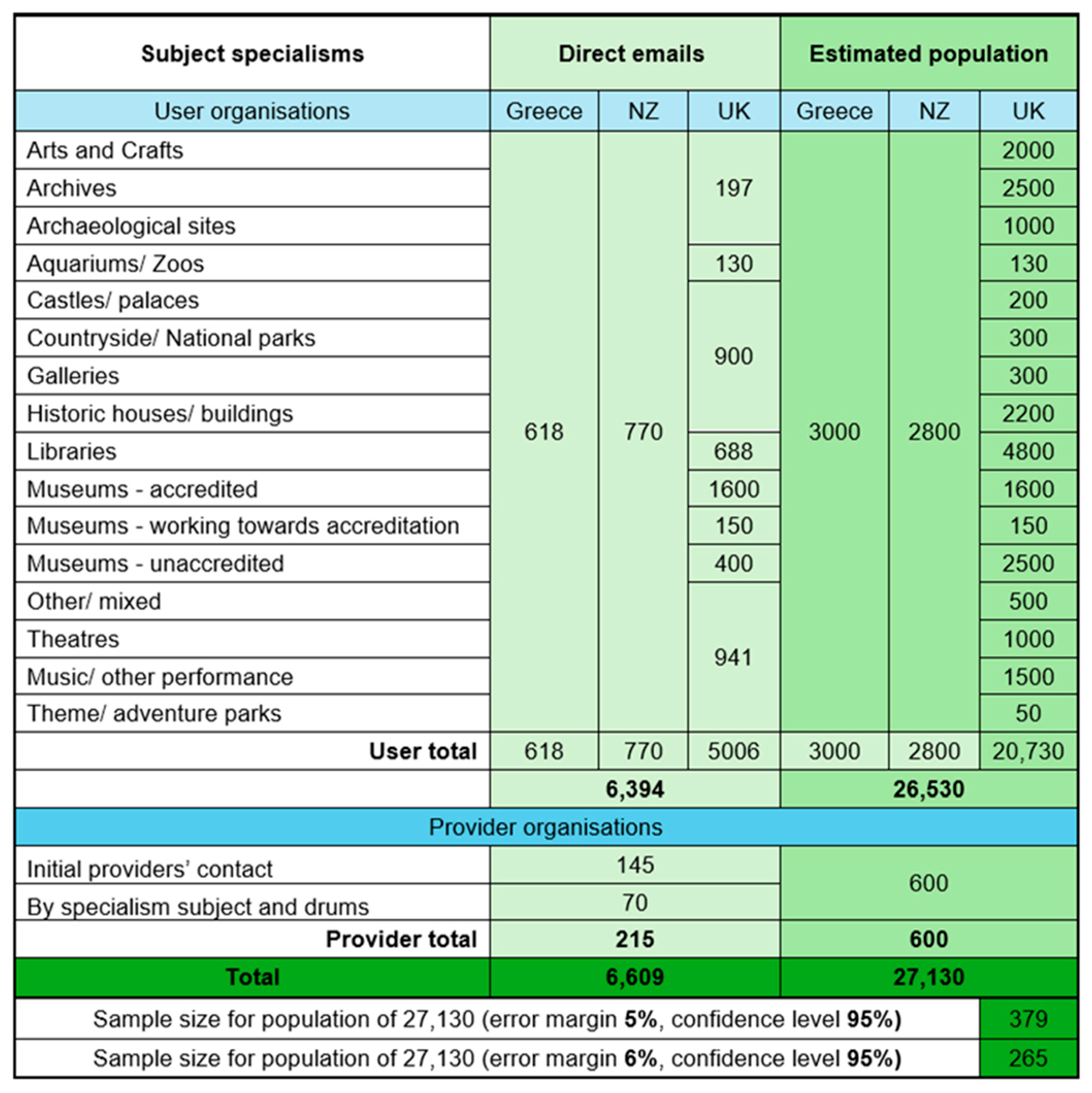 |
Table 4.
Demographic categories of cultural heritage organisations used as variables. Source: Author.
Table 4.
Demographic categories of cultural heritage organisations used as variables. Source: Author.
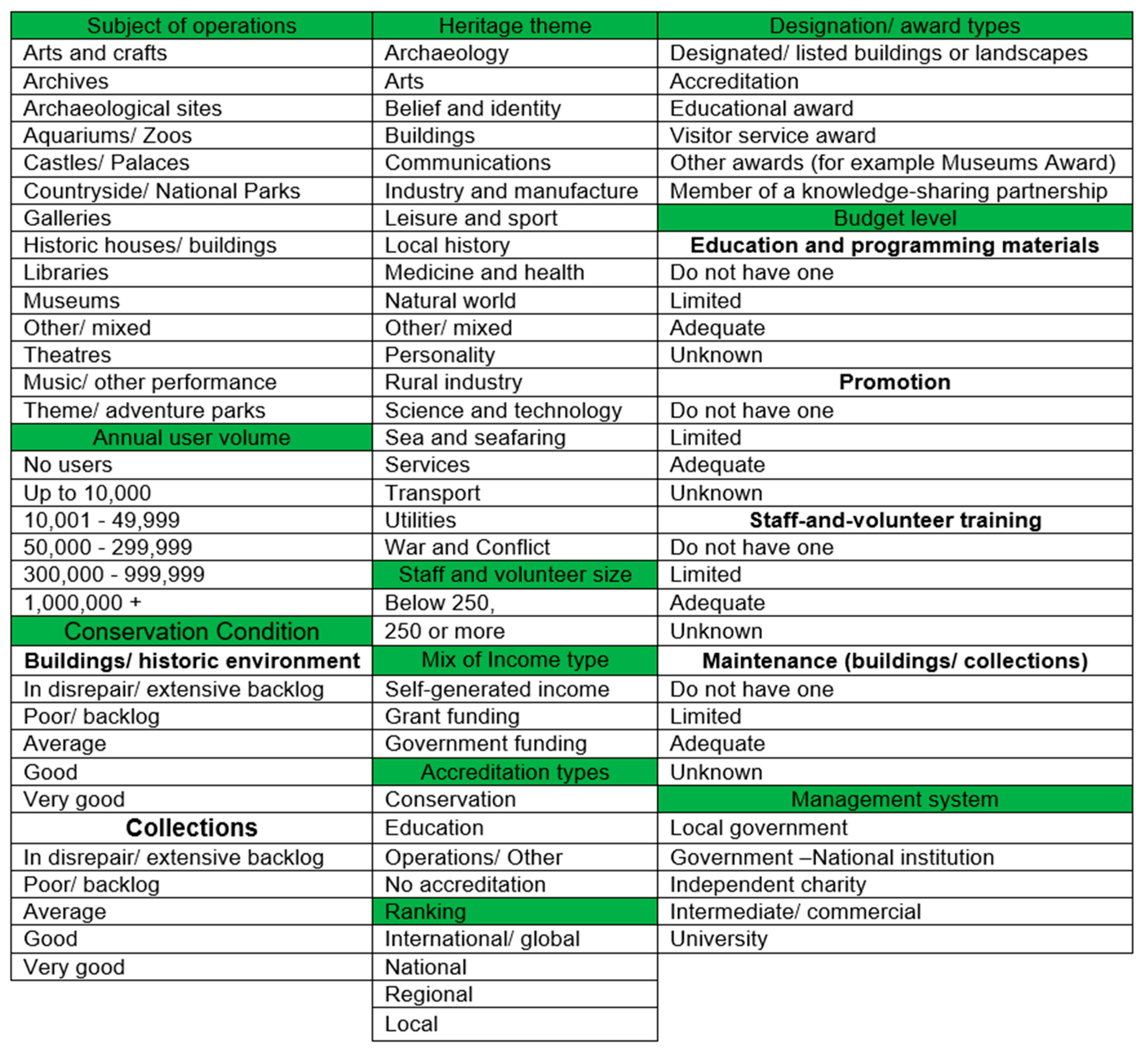 |
Table 5.
Participants’ summary demographics. Source: Author.
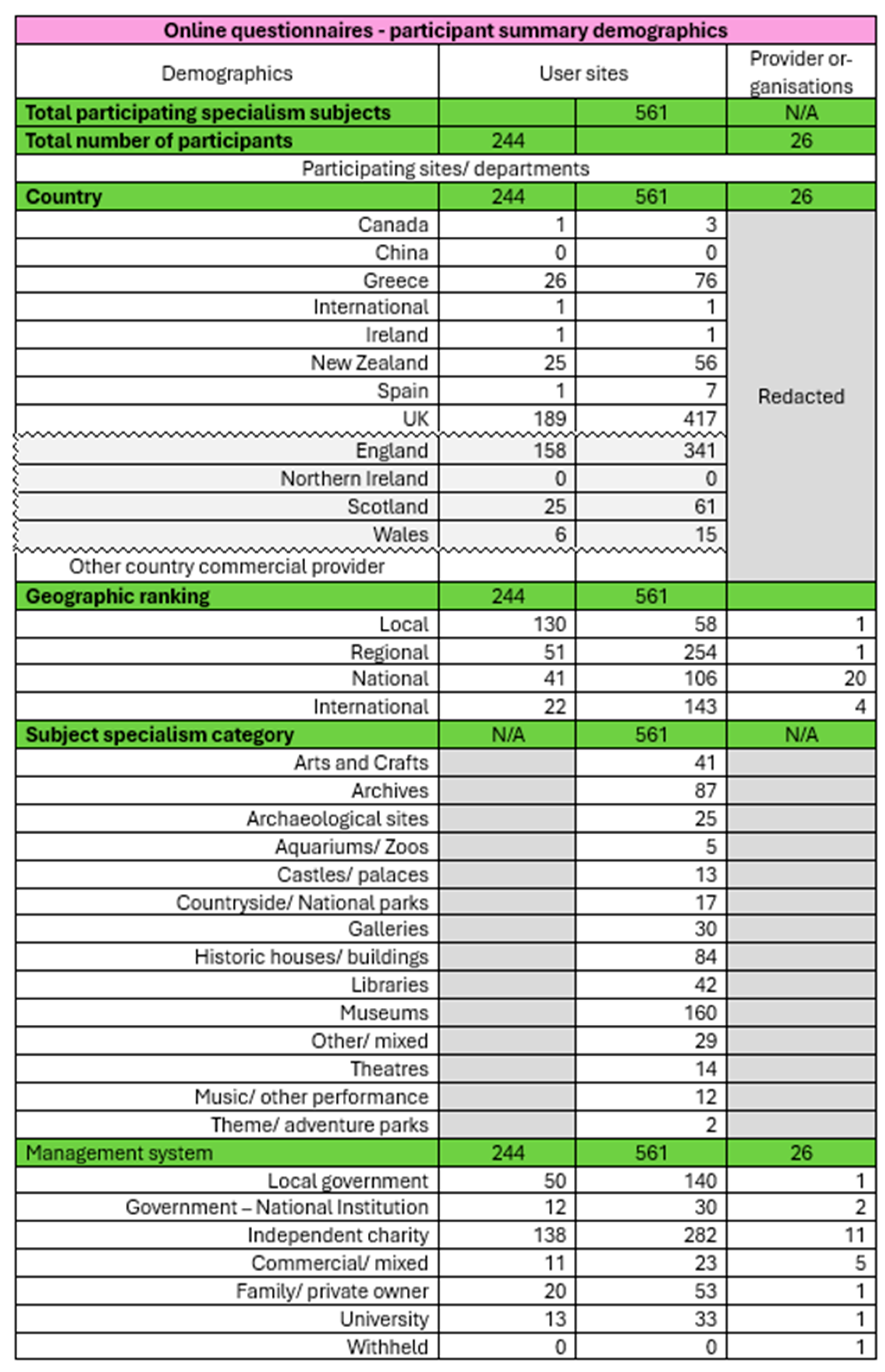 |
The organisational sustainability performance was self-rated by the participants, measured with a Likert scale (None delivered, Limited or low quality, Average, Good, Leading) for each of the four operational objectives (cultural education, social participation, economic development, environmental preservation). The ratings were then converted to a continuous variable using scores of 0%, 25%, 50%, 75%, and 100% respectively for each of the five Likert scale levels. To relate the knowledge characteristics to performance, linear regression was selected due to its suitability in relating the continuous outcome (organisational sustainability performance) to the predictor categorical variables (knowledge characteristics and demographic categories) [395]. The linear regression model was successfully tested .[396] for symmetry of the distribution of the error, linear relationship, heteroscedasticity, outliers, and multicollinearity. Having set the confidence intervals at the standard 95%, all required assumptions were satisfied. The analyses for present and updated knowledge artefacts in relation to performance show a significance (Sig.) at p < 0.001, well below the p < 0.05 value required for showing a statistically valid relation (Table 6).
Table 6.
Linear regression analysis model showing coefficients, p value <= 0.001, confidence intervals and collinearity factor. Note Presence R Square=0.146, Updated R Square=0.088. Source: Author using SPSS.
Table 6.
Linear regression analysis model showing coefficients, p value <= 0.001, confidence intervals and collinearity factor. Note Presence R Square=0.146, Updated R Square=0.088. Source: Author using SPSS.
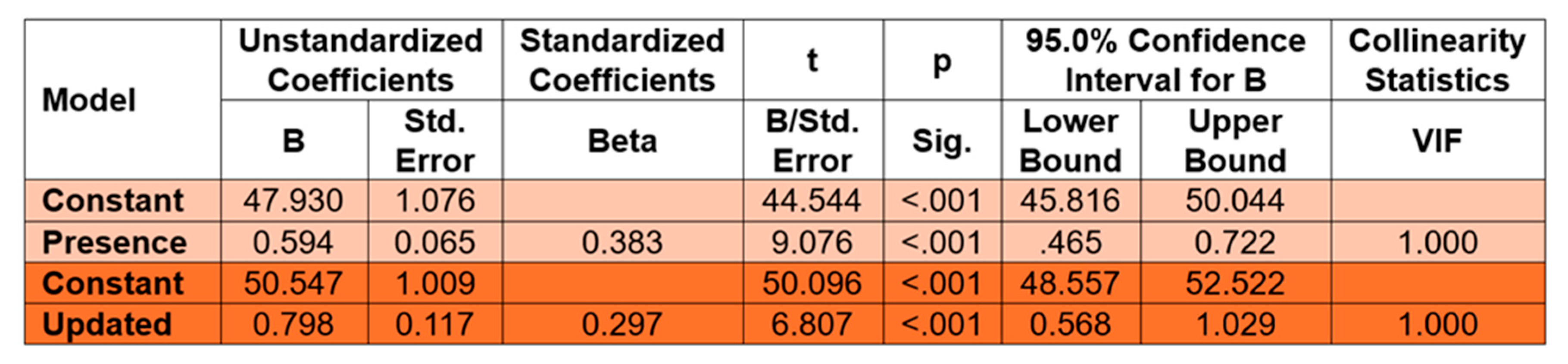 |
The induction, deduction, and abduction findings were synthesised in the discussion using the BouDIKA model characteristics. Referencing has been applied using Zotero software. No Artificial Intelligence programs have been used for developing the research.
4. Results
The induction, deduction, and abduction findings are summarised in this section. The extensive detailed findings, with tables and figures, can be accessed on the research website (redacted for peer review). The quotes by knowledge artefact user organisations are shown with a U and by provider organisations with a P, for example Participant U1 or Participant P1.
4.1. Inductive Analysis
‘If you create something so complex that you need another document to explain it, you might have shot yourself in the foot.’ (Participant U12)
The pilot interview provided a useful initial understanding of the knowledge artefact use and updating processes, which are heavily context-dependent but impacted by the ecosystem’s reactive (rather than proactive) management.
The four resulting themes from the 40 main phase interviews looked at the processes and habits, system-wide considerations, role of technology, and participant views on a cultural heritage system-wide design.
Creating quality resources to fill gaps or meet changeable requirements, is avoided where possible by user organisations when existing knowledge artefacts can be adapted. Providers rely on funding and generally create isolated knowledge resources, with short lifespans. Access to knowledge artefacts is variable depending on the organisational culture, and overall, volunteers have less access to knowledge resources than they need. Sourcing is a minefield, hampered by a fog of duplications, lack of a centrally managed index or depository, unclear open access status of the knowledge artefacts, and the, collectively expensive, membership wall. Updating knowledge resources is low priority for user organisations, and a missing habit for most provider organisations, both groups being hampered by lack of capacity. Effective use and learning in ECHA organisations, require a more sophisticated planning for a variety of knowledge artefacts formats and media. The support networking structures and accreditation-type schemes have a significant positive impact on the presence of knowledge resources and updating habits. But there is misalignment of priorities, and the competitive funding environment discourages the social good and cooperative ethos of the fragmented ECHA habitats. Knowledge artefacts are ineffective without access to the supporting specialist networks, and are more efficacious when developed as a package of continued professional development. Technology, including AI, are increasingly used across every single operation, but the technological provision is still bitty, part of the era of bolt-on apps rather than comprehensive software systems. As such, constant costs, upgrades, and training needs are hampering the potential use of technology. Overall, participants would like to see a joined-up, planned approach to mapping gaps and needs, creation and distribution, of easy to access and easy to use variety of quality knowledge artefact formats, that are a package with continued professional development training and support specialist networks. They would like to see a joined-up curation of the knowledge resource stocks and flows.
The research started by assuming, based on literature and signposting approaches, that there are plenty of useful resources available across all the operations, that can be better accessed to provide the information needed to deliver those operations. The qualitative research shows that this is not the case, there are in fact too many similar, low quality and out-of-date knowledge resources, in too technical and inaccessible formats. It is difficult to find what is needed, and users cannot know if what they are looking for exists, or which knowledge artefact is the most authoritative or up-to-date.
By focusing inwards we attained a better understanding of the knowledge curating habits of ECHA sites. Next, the analysis focuses outwards, relating knowledge artefact characteristics to organisational sustainability performance, and offers an examination of how the characteristics and performance vary across the different demographics of the ECHAsystem.
4.2. Deductive Analysis
Two relations to knowledge artefacts were examined, their relation to demographic categories, and to performance. The overall findings are presented first, followed by the relations across geographic and organisational categories, social, financial, and technological demographics. Finally, the relations of knowledge artefact sources and access, to levels of present and updated knowledge artefacts and to performance.
Managed by 244 participants, the survey of 561 sites or departments, shows a modest 20.26% presence of knowledge artefacts, under half of which are up-to-date (9.51%). Overall, the levels of knowledge artefacts are higher in operations with legal requirements. The data figures visually show, consistently across the participating countries and nations, that the four ECHAsystem objectives tend to have an increasing level of present and updated knowledge artefacts, from the low levels in the intangible objectives (Cultural education and Social participation) towards the higher levels of the tangible objectives (Economic development and Environmental preservation). The conversion rate of present to updated knowledge artefacts, is similarly higher in the tangible operations. Having and maintaining recorded knowledge, therefore, appears more difficult in intangible, social-sciences related operations compared to tangible, physical, natural-sciences operations.
Performance with absence of knowledge artefacts is 47.93%, and with the current level of knowledge artefacts performance is 54.97%. For every 1% of operations with knowledge artefacts, performance increases by 0.59%, or by an additional 0.80% if the knowledge artefacts are up-to-date. Economic development is the objective with the lowest performance in all countries and nations, highlighting the financial difficulties across the ECHAsystem. The conversion rate of present to updated knowledge artefacts varies across these countries and nations, influencing the volumes of updated knowledge artefacts in each. High volumes of present knowledge artefacts do not always relate to equally high performance, hinting towards nation-wide barriers in some countries, perhaps bureaucratic, financing, or operational isolation, that limit the organisations’ ability to benefiting fully by the knowledge artefacts.
Local sites have high volumes of present and updated knowledge artefacts (presumably those need them the most), whilst regional sites have the lowest of both, possibly having organisational barriers to adopting ECHA-specific knowledge artefacts. These levels are directly reflected in the highest performance (by local sites) and lowest performance (by regional sites) respectively. National sites have better performance from lower levels of knowledge artefacts, possibly due to more expertise available in their teams. Local, private, and independent sites have higher levels of knowledge artefacts in the intangible operations, whilst regional and child-sites have more knowledge artefacts in the tangible operations.
Local sites, independent charities, and single-site organisations, whilst generally being smaller organisations, must still cover all operations. But they do so with smaller teams (less tacit knowledge), so they have and update more knowledge artefacts as they seem to depend more on the recorded, explicit knowledge. Their performance directly increases with the higher levels of knowledge artefacts. Volumes of knowledge artefacts increase when organisations have physical sites, and as the number of visitors increase. The very large visitor sites, similarly to multi-site organisations, achieve high performance as they potentially have more tacit knowledge to supplement lower levels of knowledge artefacts. Large paid-staff teams have much higher performance with more modest volumes of present and updated knowledge artefacts; here lies an opportunity as higher knowledge artefact levels in large teams produce exponentially increased performance. Volunteer teams of all sizes have and update more knowledge artefacts and in doing so, achieve increased performance, but not at the same high-performance rate as large paid-staff teams. Crucially, providing training and the tools that the teams need, relates to dramatic positive increase in knowledge artefacts and around a three-quarters increase in performance. Training and equipping teams is the single most important variable for improving not only the tacit knowledge within people, but also the recorded and up-to-date knowledge in the organisation, and makes the greatest difference in organisational performance increase (81% increase for staff teams, and 71% increase for volunteers).
The presence of knowledge artefacts across the habitats varies depending on their specialism. It follows naturally that different habitats have different priority objectives and therefore higher levels for those. The range starts at very low levels with presence of knowledge artefacts in only one in ten operational flutes (suboperations), to higher levels of one in three operational flutes, which is still relatively moderate. All habitats with buildings and collections are positively influenced in Environmental preservation by the better provision in that objective. Updating varies considerably, leading to some habitats with fewer present artefacts but higher updating conversion rate, to having more effective explicit knowledge and higher performance. There isn’t an apparent distinction in knowledge artefacts between arts and heritage sites. However, the Galleries from the GLAM cluster benefit much more from knowledge artefacts compared to the Library, Archive, and Museum (LAM) sites.
The role of legal requirements, national policy or culture, size of operations and teams, habitat specialism, but also the ease of updating for each habitat objective, are therefore significant factors to consider. And the most significant is the provision of training and tools for the teams to perform their tasks knowledgeably.
The social demographic categories relations reveal some of the largest influences within specific objectives. A standout example is the complementarity of the accreditation and award schemes, which when combined relate to 23% higher levels of performance, but currently certain barriers (explored through abduction) obstruct such increase.
Accreditation had a consistent positive relation in all participating countries, mainly in the two tangible objectives, however, accreditation appeared to be hindered in countries and sites with tight parent organisation-child site control. Local (rather than regional) museums benefited the most from accreditation. Whilst both museum and archive accreditation related positively to development of knowledge artefacts and performance increase, museum accreditation related to higher volumes of knowledge artefacts than the archive equivalent, possibly because museum accreditation had a larger support mechanism behind it. However, the archive accreditation was more effective in increasing performance. Educational awards had a positive relation too, this time more in the intangible objectives. Presence of educational awards converted to high levels of updated knowledge artefacts and high performance. Visitor awards had a positive relation across the objectives, especially the middle socio-economic objectives, linking the tangible and intangible operations. The Visitor awards relation, however, varied by country, potentially depending on which objectives were supported more. The Other awards had a positive relation mainly across the intangible objectives but also on Economic development. Networking through memberships had the highest positive relation to Economic development, and also significant relation to the intangible objectives. However, easy and free membership access related to higher knowledge artefact and performance increases across all objectives.
Funding was around 55% self-generated. Government funding is associated with both security and parent organisation-child site restrictions, whilst grant funding provided a short-term boost and unsustainable effect on knowledge management. A self-funded level at two-thirds of the total operational cost, supplemented by the other two streams could relate to the highest levels of knowledge artefacts and highest performance. Grant funding had more positive relation in sites requiring intervention for their building’s or collection’s poor condition. Good building condition related to higher volumes of knowledge artefacts and higher performance in the tangible operations, whilst good collection condition related to benefits in all operations, as participation and education are enabled through the collections. Lack of budget for promotion, education, programming, and training, forced sites to better look after and update the few knowledge artefacts they had. With more adequate budgets, the knowledge artefacts and performance, however, did improve in all objectives. This was more evident with the training budget relating to 41% more present and 32% more updated knowledge artefacts, and 26% higher performance, compared to sites with no training budget.
The presence of software as knowledge artefacts, related to higher volumes of other knowledge artefacts and around 50% higher performance across all objectives. The software’s positive relation in Economic development performance was the highest of any demographic contingencies.
In-house creation of knowledge artefacts and the recruitment of an expert were the two most common sourcing options, but adoption of existing knowledge artefacts appeared difficult and an improvement opportunity for the knowledge curating design. In modelling the sourcing options, two aspects emerged that could help improve the volumes and effectiveness of knowledge in the sites: 1) make knowledge artefacts (explicit knowledge) easier to find and adopt, and 2) enhance continuity and the benefits of having knowledgeable people in the teams; this can be achieved through the judicious employment of experts within the teams, which appears to improve performance sufficiently to cover the payroll cost. What amplifies the connection of explicit and tacit knowledge, however, is for all the people in the teams, staff and volunteers, having access permission, being able to find what exists, and having equitable accessibility to internal knowledge artefacts. Enabled access related to 98% higher presence, 90% more updated knowledge artefacts, and increased performance by 26%.
The findings also showed that provision can be better informed and joined-up, by complementing the providers’ strengths. Figure 22 shows the schemes (accreditation, educational award, visitor award, other awards, memberships) as social demographics that peak in different objectives. The first observation is the potential of a closer knowledge curation partnership between accreditation (tangible objectives positive relation) and educational awards (intangible objectives positive relation). Additionally, knowledge co-ordination from that partnership with the providers of knowledge resources from Other awards and with membership organisations would strengthen organisational knowledge and performance in the middle objectives of Social participation and Economic development. And knowledge curation collaboration in the software application would maximise the results in all objectives and especially Economic development.
As seen in the funding streams and the source types modelling, it is the wise combination of the available resources that produce the greatest results. Figure 23 shows the current average per objective (lowest performance), the improved performance related to the schemes’ average (middle performance line), and the even higher levels of performance (23% higher) that can be achieved by realising the top provided scheme(s)’ current performance in each objective.
We can look for further complementarity opportunities for user organisations. The diversity in habitats relates to the different objectives that are more significant to each habitat’s purpose. The question is, do all habitats have the level of capacity required to manage that core objective without dropping the quality or performance in the other objectives? In general, for local sites, independent charities, single-sites, low visitor sites, and sites with small teams, the answer appears to be no. They have in common not only limited capacity, but also less internal expertise. They, therefore, depend more on the explicit knowledge encoded in knowledge artefacts. To utilise explicit knowledge, an applicable knowledge curating design will need to help overcome the barrier of limited capacity. Similarly, large operationally sites, and multisite or national organisations, have more expertise and can perform well by combining explicit and tacit knowledge, but are not utilising explicit knowledge effectively. Overall, substantial but targeted and balanced levels of updated knowledge artefact relate to best performance; not having too little explicit knowledge on one hand, and not being too bureaucratic on the other.
A final demographic pattern to keep in mind is the parent organisation-child site relation on conversion of present to updated knowledge artefacts. Whilst child sites have access to knowledge flows through their parent organisation larger teams and networks, and to stocks of (usually non-cultural heritage) knowledge artefacts which exist in the parent organisations, the child sites seem shackled and unable to utilise the cultural heritage ecosystems’ resources, such as those provided through accreditation.
We have seen then that there is a clear relation between the demographic categories and knowledge artefact characteristics (quantitative analysis objective 1). The presence, updating, and rate of conversion from present to updated, are all affected at different rates by different demographics. The observed levels of present and updated knowledge artefacts were low, however, simply having high volumes is not a wise aim. Knowledge artefacts are needed more in the absence of tacit knowledge, and for the objectives that are core to each habitat. Operating under limited capacity requires a judicious collection and management of knowledge artefacts, achieving a balance between bureaucracy and lack of accessible knowledge. Managing high levels of updated knowledge artefacts from a modest library of present knowledge artefacts is a wiser management strategy than being buried in a fog of out-of-date knowledge artefacts. Wise sourcing and management of knowledge artefacts (by each specific habitat) has significant positive relation to performance (quantitative objective 2). Validating Nonaka’s consideration for continuous relation of tacit and explicit knowledge, we see that training provision, training budgets, and enabling internal access to the organisation’s quality and up-to-date recorded knowledge, are strategies that ECHA organisations can use to improve their knowledge and performance the most. As an ECHAsystem, the wise complementarity of available schemes and of existing funding can produce much higher levels of performance, compared to the existing fragmented approach. The role of knowledge artefacts on performance was dampened, and the potential is that the disconnected demographic categories can be wisely partnered to significantly increase performance in each of the four organisational objectives and significantly improve overall performance.
4.3. Abductive Analysis
Through literature, induction, and deduction so far, knowledge artefacts processes and their relation to performance are better understood. However, further questions were raised, grouped under three headings:
- 1)
- schemes as continued professional development;
- 2)
- accreditation variation;
- 3)
- knowledge artefact access and the role of technology;
These groups of questions were tackled through abduction, similar to a detective’s approach of finding the most plausible answer. Abduction is here applied to help better understand the patterns and exceptions found in the empirical setting. The full features are available through the research website (redacted for peer review) and summarised next.
4.4. Enabling Continued Professional Development
The interviews and questionnaires analysis brought to the fore an emerging theme first presented in literature. The issue of unconnected knowledge artefacts to training provision, and the issue of unconnected training sessions to a more comprehensive professional development plan. The author looked at two schemes that buck that patchy trend and instead plan more holistically: the Association of Independent Museum’s (AIM) Hallmarks scheme, and the Archaeology Skills Passport scheme. Then two vital streams of knowledge curating work were examined, provided by the two leading English support organisations: Historic England and the Arts Council England. Finally, the support approach of the Historic Houses, and a positive exception to local museum management are examined, before looking at knowledge provision as a package by Creative New Zealand, the equivalent to the Arts Council England.
The knowledge design findings steered the abductive detection towards strong examples of provision for continued professional development (AIM Hallmarks, Archaeology Skills Passport), and of associated platforms disseminating quality resources. There is a clear complementarity shown from these features that between them can raise performance across the tangible and intangible operations. The work and provision by Historic England on skills training, and by the Arts Council on partnership development are exceptional, but the knowledge resources between them are fragmented, and as seen from the quantitative analysis, not as effective as they could be if they were joined-up. The specialist networks could be a significant source of both experiential and recorded knowledge in an operational knowledge curating design, but seem to have little capacity to individually maintain the administrative workload. The Heritage Open Days are a significant example of multilayer networking for small organisations with a nationally wide organisation. The knowledge created within the Heritage Open Days team, as with the National Portfolio Organisations (NPO), IPSOs, and Museum Development officers, provides an invaluable pool of knowledge within a small number of people, but also risk of knowledge-loss.
Partnerships within user organisations are also beneficial; against the pattern, one governance partnership showed much above average high volumes of present (95.00%) and updated knowledge artefacts (53.33%), and high performance (68.75%). The governance set up in this site is reverse to the usual partnerships; the building and collection are owned by a charity and managed by the local authority. Such a partnership appears to sustainably produce high levels of knowledge artefacts and performance (deductive analysis and abductive examination).
Furthermore, knowledge resources are needed for freelancers; the Sustainable careers webpages provided knowledge resources across three themes; make connections, navigate the law, and navigate your personal finances. Each theme had an initial introductory short film, supplemented by links to associated resources and websites. These were all usefully grouped in sub-themes and accompanied by one or two explanatory sentences, making them brief and user-friendly. One subtheme had links to networks and support organisations, whilst longer films were available further down the webpages providing more detail as needed. It was all freely accessible, with downloadable PDFs, and all the weblinks worked [398].
4.5. Accreditation Variation
The review of accreditation schemes showed that accreditation standards provide guidance, motivation and a method of assessing organisational health. The comparison of museum and archive accreditation schemes across the participating countries and nations shows that accreditation can be a bureaucratic and institutionalising process, or supportive and empowering; knowledge levels and performance benefit from offering a more approachable and open culture, and an easy process for using knowledge artefacts. Additionally, there is a knowledge curating opportunity to complement the wealth of tacit experiential knowledge in private heritage owners and commercial providers with the accreditation formal resources. The Museum Development programmes provide strong personal support and guidance for the accreditation scheme, which has complementarity opportunities with the education award. And having a leading user organisation for each habitat driving the accreditation provision, appears to contribute positively to the condition of knowledge artefacts and associated increase in performance.
4.6. Technology
Digital technology relates to very high increase in performance and enables more effective curation of knowledge resources (deductive analysis). Technology, however, innovates incrementally for the benefit of digital companies, making it very difficult for small organisations with limited capacity and funding to utilise it.
The investigation of technology application started by exploring the two most-mentioned websites (from the interviews and the online questionnaires) for hosting knowledge resources are investigated; CultureHive, and The Collections Trust. The high quality provision was evident, helped by having focused operational areas [399,400,401,402]. The Collections Trust does not seem to churn out high volumes of resources like some provider organisations do, but to create few core resources that have longevity and quality. Over time the Collections Trust has addressed the full spread of operations in its remit, which sits in the tangible objectives of the operational framework. As seen in the data analysis, its knowledge resources positively skew upwards the presence levels of knowledge artefacts for the entire Environmental preservation objective. In parallel, the resources hosted by CultureHive relate mainly to the intangible objectives (Cultural education and Social participation). One cannot but wonder then, the potential benefits of a closer partnership and sharing of expertise between these two key platforms and their organisations.
The mentioned websites host internally and externally created knowledge artefacts, and signpost to other websites. If a central website was to be used to coordinate knowledge resources, then its branding, design, and content would require significant planning (alongside costs and maintenance). Several Knowledge Management Systems (KMS) and Customer Manager Systems (CRM) were explored, and useful functions have been incorporated in the design. Open access and user-updated content were explored by engaging with the GAM e-Lab, which supports open licence development, and Wikimedia UK [403,404]. Wikimedia provides support and guidance for setting up and maintaining wiki pages, and a Wikibase cloud can be set up specifically for the ECHAsystem, which can also link to existing Wikipedia pages ((pers. comm. WikimediaUK), [404]).
The use of Artificial Intelligence (AI) is a key consideration for the operational knowledge curating design. Organisations are exploring its use to improve (or replace) searching, and for provider and user organisations to create knowledge artefacts [405]. The National Archives researched the AI’s capability for categorising and finding documents, concluding that there were promising results if used as a tool [406,407].The application of AI by Stonnington Libraries in Australia highlighted the need for searchable metadata for every record [408]. A key recent AI research project is HAZEL, piloting a generative AI guidance assistant for Historic England. The quality of the AI outputs from the different service providers varies significantly, and some are less suited to heritage content (pers. comm. HAZEL project). The HAZEL researchers and many of this research’s participating organisations are aware of the AI hallucinations, which are ‘… incorrect or misleading results that AI models generate’ [409]. One example of a hallucination is that ‘it recommends books that don’t exist’ [410]. Work on reducing AI hallucinations, and improving the overall AI output is progressing at speed and its role is expected to be increasingly significant within the next few years ((pers. comm. AMACultureHive, pers. comm. HAZEL project), [411]). The quality of the AI output depends highly on training the programme on relevant, high quality, trusted sources. Otherwise, the output does not only include hallucinations, but also reflects existing prejudices in literature, for example reinforcing racism [412].
The technology, even with AI, is simply not user-friendly yet, it is driven by the software developers’ commercial strategies, not the user needs and abilities [413,414,415]. The technology changes quickly and a design ought to plan for the provider organisations to be fully trained and equipped, so they can utilise digital technology at ecosystem scale, and to be able to offer advice on tested systems. This would be more sensible than expecting thousands of small individual organisations to experiment with the variable quality of fast changing apps, and the associated costs. Overall, abductive logic suggests that significant digital investment needs to be focused on the provider organisations, as this will have a positive impact at large scale, across the whole ecosystem. Such approach could save time, hustle, and stress, across the thousands of user organisations.
4.7. Future Performance Predictions and Aspirations
If we then move away from fragmented sectors, how such a unified-knowledge ecosystem would like to be performing? Before concluding the abductive findings, the future performance forecast and aspirations of participants are examined, using both numerical and textual data from the online questionnaires. Participating user sites predicted their future performance to improve slightly from just above average towards good (from 54.97% to 60.87, Table 7).
User sites expected a modest increase in Social participation and Environmental performance, and a higher increase in Economic development to just above average. These were similar rates to the providers’ prediction (matched by government departments but the performance rating was higher by commercial providers and support agencies). Both user sites and provider organisations aspired for the overall performance to be above good (75.62% and 80.51% respectively).
Many participants included text in their answers relating to future prediction and aspirations. Several were concerned about the survival of their sites and service, ‘I don’t know if there will be a library service in 10 years’ time, we suffered major cuts, and more cuts are planned in the future’ (Participant QU218). Participants would like their focus to shift from ‘surviving to thriving’ (Participant QU18), also reflected in the ratings provided in the previous table, aspiring to move from just average to good and higher. Regarding Cultural education, user participants would like to improve their programme on physical and online events and exhibitions, being able to employ education and outreach staff, [re]engage with schools, have better websites and interpretation, improve the promotion of their significance, and engage more diverse audiences even with difficult cultural topics such as slavery. In Social participation, participants would like to work closer with their communities, including developing community-led events and engage audiences that are not currently connected, engage with young people regularly, improve training for staff and volunteers, and grow and manage better their volunteer teams. In Economic development, the common themes were the lack of staff and of funds, which are seen as barriers to make sustainable changes. Participants would like to be able to grow their existing income streams and diversify more their funds, particularly where costly heritage buildings are cared for. In Environmental preservation, participants want to improve energy efficiency towards net zero, which is harder in listed and other historic buildings, to improve collections care environmental controls and systems, and to have permanent professional collections care staff.
Participants from provider organisations aspired to see more inclusive and accessible engagement of communities, better staff diversity and training, ‘shift to a practitioner or artist-centric approach’ (Participant QP3), and develop longer-term funding. Measuring and evaluating performance and impact was a pattern in the comments, ‘…to be better at demonstrating the economic impact of our sector, and for it to be better recognised. Not being seen as a financial burden but a public benefit’ (Participant Q27).
5. Discussion
In the discussion, a holistic understanding of the current and potential operational knowledge curation in the ECHAsystem is synthesised through the discussion of the findings.
5.1. Summary Findings
The pilot (questionnaire and interview) findings started the conversation by pointing out the positive relation of knowledge artefacts in people’s daily practices and organisational performance. The presence of up-to-date knowledge artefacts in university-managed cultural heritage sites, a) reduced the stress associated with managing a very broad and fast changing package of operations under limited resources and capacity, and b) significantly improved performance across all four objectives. The pilot showed that while operating under limited capacity, simpler knowledge artefact media, like templates, are easier to adopt in the new environment, and to use. Access to the creators or experts of the knowledge artefact content makes these more user-friendly and effective. As an extension to such practical networking, the accreditation and other similar schemes, provide more credible knowledge resources (knowledge artefacts, socializing channels, training, and access to expert support). Schemes act as altruistic incentives and legal obligations. Finding and accessing the right knowledge resources at the right time, was, however, a significant challenge, and better coordination, potentially through a knowledge sharing platform, was called for.
The findings from the main phase concurred with the pilot (17% performance increase) regarding a positive relation, showing a 15% increase ((54.97%-47.93%)/47.93%) in overall performance related to 20.26% present and 9.51% updated knowledge artefacts across the operations (Figure 24).
The main phase also provided greater detail on the role of networks, support schemes, knowledge artefact media types and variation across organisational forms. Findings showed a positive association of knowledge artefacts with performance. But also raised many questions, as this research demonstrated that knowledge artefacts have not been as impactful as they could be in enhancing processes and organisational sustainability. Certain combinations of support provision are associated with much higher potential performance compared to the observed average.
Several factors appeared to hamper the positive potential of knowledge artefacts. The overall presence of knowledge artefacts across the operations was a modest 20.26%, and fewer than half of them were up-to-date (9.51%) (questionnaires). It was difficult for participants to find knowledge artefacts or even work out whether the knowledge artefacts they needed actually exist (methodology pilot interview, interviews). The fragmentation of the ecosystem, misalignment of priorities, constant technological upgrades culture, and the competitive funding environment, all seem harmful to creating, updating, storing, sourcing, and sharing knowledge.
Planning for a suitable, wise, intervention requires comprehensive understanding. Drastic transformational change is not applicable, or suitable in ECHA organisations. The data in the Economic development objective highlights the financial difficulties across the ECHAsystem in all participating countries and nations. There simply aren’t enough financial or human resources available, but treating public-good, curating organisations as competitive businesses is a fallacy. A balance is needed for financial, artistic, political, and processual independence, without compromising human rights to cultural participation.
Figure 24.
Presence of knowledge artefacts was 20.26% (5.797/28,611) across the 51 suboperations (flutes). Within all the 51 flutes, 9.51% (2,720/28,611) had updated knowledge artefacts. Performance with no presence (47.93%), with no updated (50.54%), and performance with current levels of knowledge artefacts (54,97%). Source: Author.
Figure 24.
Presence of knowledge artefacts was 20.26% (5.797/28,611) across the 51 suboperations (flutes). Within all the 51 flutes, 9.51% (2,720/28,611) had updated knowledge artefacts. Performance with no presence (47.93%), with no updated (50.54%), and performance with current levels of knowledge artefacts (54,97%). Source: Author.
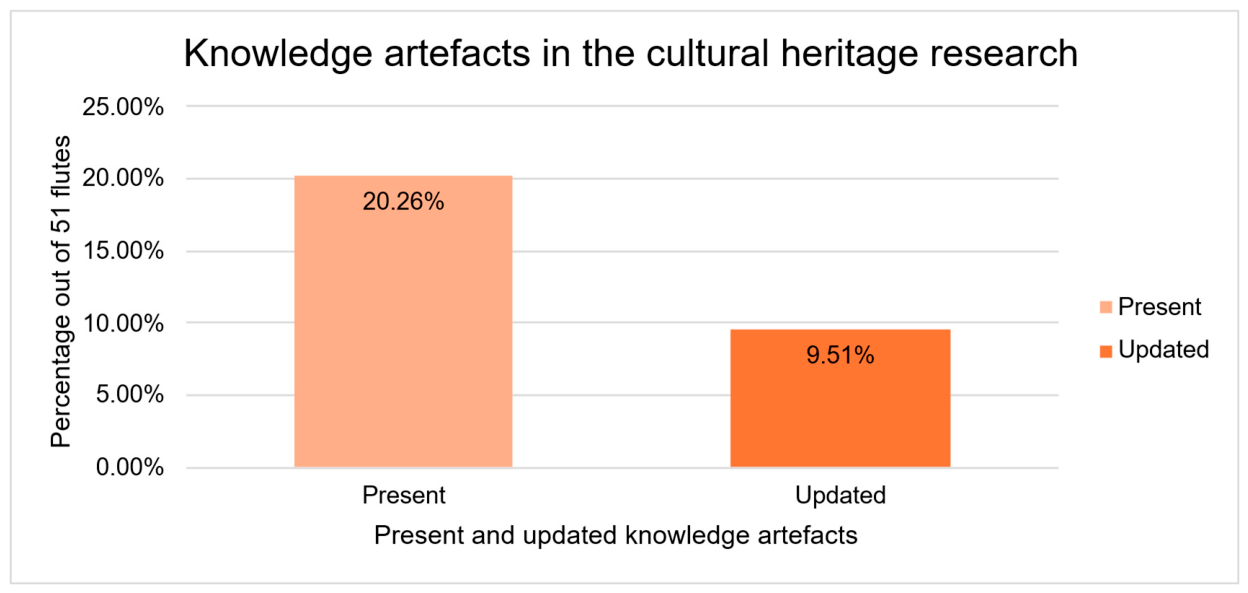
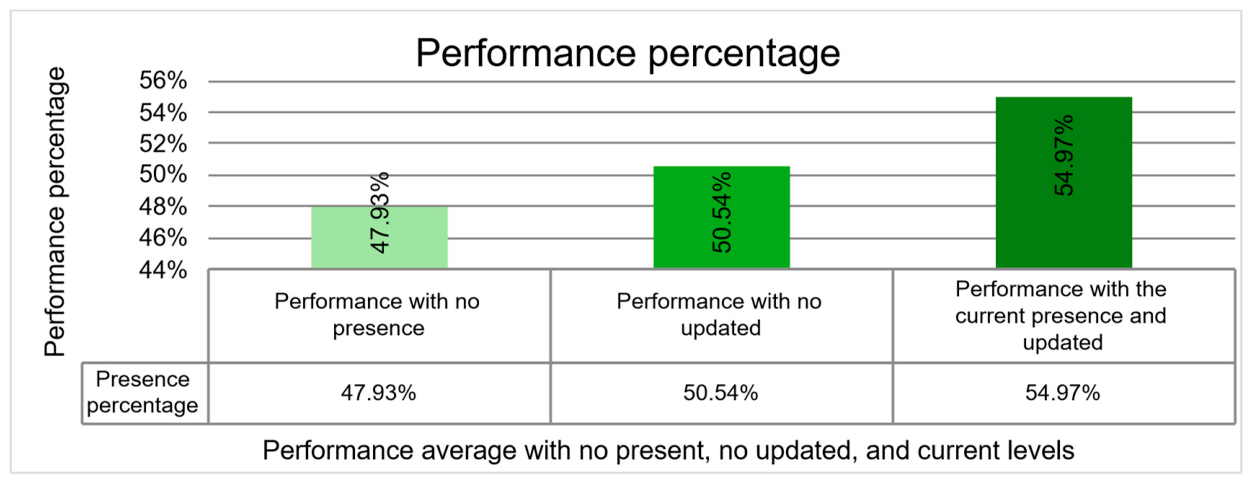
Participating organisations were realistic about the difficult current performance and predicted that overall performance in ten years will improve from just above average towards good (from 54.97% to 60.87%), particularly in Economic development. Participating organisations aspired to move from average to above good performance (user organisations 75.62%, provider organisations 80.51%), many, however, were fearful for the sustainability of their sites and their habitats.
The hidden potential is revealed in the complementarity of the social demographic forms. Particularly, as the four operational objectives, and the associated knowledge contained in the knowledge artefacts, are interdependent. The participants would like to see a joined-up, strategic approach to mapping gaps and needs, creation and distribution of knowledge artefacts. These need to be easy to access and easy to use, in a variety of quality knowledge artefact formats, that are a knowledge collection, a curated quality package of knowledge resources aiming to enable continued professional development in the cultural heritage ecosystem.
The participants would like to see a joined-up curation of the knowledge resource stocks and flows. The following sections show how the findings informed the Athena operational knowledge curation design.
5.2. Combination: Knowledge Artefact Sourcing Process and Presence
The discussion on the role of knowledge artefacts starts within the Combination mode, the home of knowledge artefacts. Whilst one might have expected to find a good selection of available, useful, knowledge artefacts, the interviews showed that was not the case. There were in fact too many similar, low quality and out-of-date knowledge artefacts, in too technical and inaccessible formats. It was difficult for users to find what was needed, and they could not know if what they were looking for existed, or which knowledge artefact was the most authoritative or up-to-date (concept pilot interviews, interviews). Sourcing knowledge artefacts was a minefield, hampered by a fog of duplications, lack of a centrally managed index or depository, unclear open access status of the knowledge artefacts, and the, collectively expensive, membership wall (interviews). Although cultural heritage organisations preferred to adopt in and adapt existing knowledge artefacts, the difficulties involved in search meant that most of them created knowledge artefacts internally, even when they lacked capacity or expertise (methodology pilot questionnaires, interviews).
The levels of present and updated knowledge artefacts were low, however simply having high volumes is not a wise aim. Operating under limited capacity requires a judicious collection and management of knowledge artefacts, achieving a balance between bureaucracy and lack of accessible knowledge. Managing high levels of updated knowledge artefacts from a modest library of knowledge artefacts is a wiser management strategy than being lost in a fog of out-of-date knowledge artefacts. However, the full range of objectives and their operations (drums) need to be managed. Whilst large organisations can rely on more available experience, organisations with small teams need knowledge artefacts the most, but also have the least capacity or expertise to source, create, or update them (questionnaires).
Local, privately owned, and independent sites have higher levels of knowledge artefacts in the intangible operations, whilst regional and child-sites have more knowledge artefacts in the tangible operations (questionnaires). Tangible operations and operations relating to legal requirements, have higher levels of present knowledge artefacts (questionnaires). Higher networking relates to higher levels of knowledge artefact presence. Schemes, such as accreditation, educational, visitor, or other awards, and provider organisations’ memberships all increase the levels of present knowledge artefacts, at different objectives and operations (methodology pilot interview, questionnaires). Additionally, the presence of software as knowledge artefacts relates to higher volumes of other knowledge artefacts and around 50% higher performance across all objectives. Overall, all habitats share common objectives and operations, yet each habitat has a different pattern of knowledge artefact needs, a unique fingerprint, depending on which of the four objectives is (/are) core to its mission, and on its organisational form (interviews, questionnaires). To fill gaps in core objectives, wise sourcing across the available provision is needed, to suit each habitat’s fingerprint.
However, overly bureaucratic cultures, lack of funds, and operational isolation limit the organisations’ ability to benefiting fully from the knowledge artefacts (questionnaires). Fragmented habitats and short intervention funding projects hamper the wise sourcing or combination of different types of knowledge resources, creating barriers in knowledge flows and in economies of scale, leading to reactive and ineffective knowledge management (interviews, abductive investigation). Lack of funds triggers better maintenance of the few knowledge artefacts that organisations do have, whilst available budgets relate to increased knowledge artefact presence. The one budget that makes the largest difference is the training budget, relating to 41% more present and 32% more updated knowledge artefacts, and 26% higher performance, compared to sites with no training budget (questionnaires). This moves the discussion from knowledge artefacts to knowledge resources, which alongside knowledge artefacts include the training, access to expert support and networks, and technological infrastructure that joins them. We perhaps need to think of knowledge curation as integral to a comprehensive, ecosystem-wide continued professional development. We ought to consider the Combination mode not just as accumulation of knowledge resources within individual organisations, but the strategic, skilful coordination of creating, updating, and sharing knowledge resources, and of a culture of trust, that enables such beneficial application, across thousands of organisations at ecosystem scale. This approach is consistent with a hands-off policy, enabling these organisations to take control of their operations and responsibility for their performance. The model enablers for the Combination mode are collaboration, networking, and the ability to apply technology.
- Collaboration relates to strategic partnerships to create strength in numbers, economies of scale and time, knowledge sharing, and joined-up planning of the knowledge resources.
- The networking required in this function can describe the communities of practice as conduits of professional knowledge and as gatekeepers checking the knowledge quality.
- Ability to apply technology relates to i) the cost and skills to maintain a suitable infrastructure for sourcing, creating, updating, storing, retrieving, and sharing recorded knowledge, in the required variety or accessible media, and ii) user training and access to the technology and its content.
Collaboration can be visualised as strategic partnerships that share intelligence on feedback, presence and gaps of knowledge resources, and by being well-informed to strategically plan provision, avoiding duplications. Networking can ensure that expertise across each habitat, objective, and operational drum is connected, filtering in and out the right plurality of knowledge artefacts. The literature pointed out the potential of technology to help overcome barriers. This research shows that technological ability needs to be enhanced at provider-level first, ensuring that the providers can gather and share intelligence, to create high quality knowledge resources at a variety of media, to know what and if those need to be archived or updated, and have intuitive, user-friendly sharing platforms or processes for user organisations to search from. The research has demonstrated that, in general, such technological ability is lacking from the provision (interviews, questionnaires, abductive investigation). Signposting to knowledge resources has proved useful for pointing at corporate partners, corporate companies, and external suppliers, but it has significant limitations. The strategic investment needs to be directed to the providers’ technological ability first, for provision to utilise better connected platforms, whether these are websites or other AI empowered applications (integrating KMSs, CRMs, LMSs, Wikis, and so on). Providers can then pass on such technological ability to the thousands of user organisations, ably; having first gained experience and expertise.
The role of provision is key, in enabling wise sourcing, access to support, and technological ability. The Collections Trust have definitely succeeded in enhancing accreditation by accumulating quality over time rather than churning out high volumes of knowledge resources (interviews, questionnaires, abductive investigation). The findings show that there is an opportunity for provision itself to be better informed and joined-up, by complementing the providers’ strengths. A closer knowledge curation partnership between accreditation (tangible objectives positive relation) and educational awards (intangible objectives positive relation) would strengthen organisations across the four objectives. Furthermore, such partnership linking with providers of knowledge resources from Other awards and with membership organisations, would strengthen organisational knowledge and performance in the middle objectives of Social participation and Economic development. If ECHA organisations could achieve the best performance per objective associated with these schemes, their average performance would be 67.51% compared to 54.97% at the time of the research. And knowledge curation collaboration in the software application would increase the performance further in all objectives and especially in Economic development. As seen with the funding streams and the source types modelling, it is the wise combination of the available resources that produce the greatest results (questionnaires).
5.3. Internalization: Knowledge Artefact Access and Use Process
The Internalization mode enablers are training, mentoring, active participation, and continuous self-development. During the Internalization mode, people absorb recorded knowledge by putting it into practice over time. This can be examined through the access and use characteristics of knowledge artefacts. The findings show that Internalization enablers enhance continuity and performance by developing knowledgeable people in the teams. When people in the teams, both staff and volunteers, could find what knowledge resources existed, and had access permission and equitable accessibility to internal knowledge artefacts, the knowledge artefact presence was 98% higher, with 90% more updated knowledge artefacts, and performance was higher by 26% (questionnaires). Additionally, graded knowledge artefacts, having simple step-by-step introductory versions progressing to more detailed ones, available in a variety of media are easier to adopt and to use (concept pilot interviews, methodology pilot interview, interviews, questionnaires). Providing training and the tools that the teams need, related to dramatic positive increase in knowledge artefacts and a dramatic increase in performance by 81% for staff and 71% for volunteers. Training and equipping teams was the single most important demographic form for improving not only the tacit knowledge within people but also the recorded and up-to-date knowledge in the organisation, and related to the greatest performance increase (questionnaires). The research therefore showed that providing equitable access to a comprehensive package of knowledge resources that is accompanied by training, is the most beneficial activity a cultural heritage organisation can do to improve its organisational sustainability and performance across all four objectives.
The barriers internally (to the organisation) for providing such a package, are lack of capacity, limited financial resources, and organisational culture. Small teams did not have operational availability, or technological infrastructure, or budgets, to maintain a comprehensive professional development training programme (interviews, questionnaires). Many organisations did not have the processes, or good habits, for systematically collating, organising, and updating their knowledge resources (concept pilot interviews). Additionally, high competition for jobs negatively affects knowledge sharing within organisations. And volunteers are frequently seen as extra workload rather than help, often receiving minimal training, and have restricted access to knowledge resources, which makes them less useful or engaged (concept pilot interviews, interviews, questionnaires).
Externally, the difficulty of finding the right knowledge resources was a significant barrier. Furthermore, accessing external training, networking events, and knowledge artefacts, often involves cost and time, and is a piecemeal activity, provided through short-project funded support that leaves no continuity to those knowledge resources once the project ends (literature, interviews, questionnaires).
The Internalization enabling challenges for the knowledge curating design therefore are to develop a continuity and quality to the knowledge resources, and to nurture the organisational culture that empowers equitable access to them.
5.4. Externalization: Knowledge Artefact Updating Process
Up-to-date knowledge artefacts positively affect people and operations (concept pilot interviews, interviews, questionnaires). Alongside making the delivery of operations easier (interviews), 9.51% of operations with updated knowledge artefacts relate to 15% increase in performance (questionnaires). In the Externalization mode, the enablers of updating knowledge, are dialogue and articulation skills (section 2.2). Dialogue relates to learning from, and allowing, a plurality of viewpoints, in addition to having inter-personal, good listening skills (as individuals and as organisations). Articulation skills enable people to express the experience in a way that can be captured comprehensively and to then be understood (literature, section 2.2). As the media for recording knowledge evolve fast, continually-developing articulation skills and infrastructure are needed. The updating enablers need to be considered from the user and the provider perspectives. Both perspectives have three aspects in common. Firstly, the lack of capacity and financial resources, which make updating knowledge a much lower priority, and result in loss of tacit knowledge that is not being codified in knowledge artefacts (concept pilot interviews, interviews). Secondly, that articulation of intangible operations (Cultural education, Social participation) is more demanding than the articulation of tangible operational knowledge (Economic development, Environmental preservation) and accordingly the conversion rate of present to updated knowledge artefacts is higher in the tangible operations (questionnaires, interviews). Thirdly, regulatory intervention, such as accreditation, legal and funding requirements, national policy, and heritage listing or wider planning legislation, all trigger regular updating (by users and providers) on affected operations (questionnaires, interviews).
Additionally, updating by user organisations depends on the size of operations and teams, habitat specialism, and organisational culture (questionnaires). Alongside limited capacity, there is an absence of habitually recording processes as they happen. The dialogue about sharing experiences and learning, needs to be led by the organisation, and to take place in a culture of trust. As many staff and most volunteers have limited access to the organisation’s recorded knowledge (questionnaires), mutual trust is generally not demonstrated, limiting the motivation to share new experiences. Furthermore, availability of technology and skills to use technology, is a significant consideration; the transition from pen and paper, to cameras and software-based notebooks and process-capturing programmes, might be theoretically feasible but is not suitable for all conditions (for example visitor facing operations, remote locations, or by volunteers with no access or training to it) (questionnaires, interviews).
Provider organisations are hindered in updating knowledge artefacts by the short life of the project funding for creating such resources, and the limited levels or absence of horizon scanning and feedback about the knowledge resources (questionnaires, interviews). Because of the ecosystem fragmentation, any available feedback is not magnified, and planning is reactive. Often, knowledge resources are created after changes to legislation or regulations, not before. This, for example, makes it difficult for staff who provide guidance or training to know who is developing what, and whether and when the knowledge resources will be updated (interviews). The ecosystem is reactive, not proactive. A dialogue therefore is even more necessary between the provider organisations. Additionally, provider articulation skills and infrastructure have impact at large, ecosystem scale. Provider organisations need to become proficient in all the new codifying technology, and to have access to it. They need train-the-trainer knowledge resources and technological infrastructure. Their knowledge and their knowledge resources need to be up-to-date consistently, so they can pass on that knowledge and suitable advice to the user organisations. The policy and funding behind it, have focused to digitally upskill the user organisations, but instead funding (the same pot of money) needs to be focusing more on training-the-trainers, and to enable a large-scale knowledge-articulating technological infrastructure that benefits the whole ecosystem.
5.5. Socialization: The Social Learning and Networking Role of the Knowledge Artefact
Examining the knowledge artefact in the Socialization mode can help to evaluate the pollination of knowledge in the cultural heritage sites and across the ecosystem. The main enablers for the Socialization mode are trust and commitment. Trust in the Socialization mode relates to i) trusted interactions within the people of the organisation, ii) trust within the networks, and iii) trust between provider organisations. Commitment can also be assessed at i) personal level ii) organisational level as commitment to professional development, and iii) ecosystem level as commitment to quality knowledge accumulation. Lack of commitment can be seen as loss of memory and skills, and loss of cultural and heritage value, a devaluation of the ecosystem.
Knowledge artefacts enable the accumulation and internalization of the organisational memory. They are perceived positively in cultural heritage as they provide confidence, direction, and enable personal development (concept pilot interviews, interviews). Knowledge artefacts are useful to share best practice and by keeping them simple they are easier to adapt to their new site (concept pilot interviews, methodology pilot interview, interviews). However, especially in a competitive and stressed ecosystem, it is understandable that some people hold back knowledge to safeguard their positions (concept pilot interviews, interviews).
Two characteristics make knowledge artefacts more useful in socializing experiential knowledge in cultural heritage, i) being integral to continued professional development (interviews), and ii) being part of a proactive knowledge resources package, which includes access to specialist support (abductive examination). The scope of socialization, however, is limited. There was an appreciation of overlapping operations and common objectives, but participants felt they were in separate competing sectors, rather than belonging to an overarching unified ecosystem (concept pilot interviews, interviews, abductive investigation). Participants were aware that individual organisations were integral parts of broader systems and that there was an opportunity to learn from others, particularly from larger organisations (concept pilot interviews, interviews). However, policy, financial pressures, and competition for resources, have driven divisions, leading to cultural heritage habitats being operationally disjointed, limiting the reach and scope of knowledge artefacts (literature, methodology pilot interview, abductive examination).
The financial pressures have also built up a membership wall in knowledge provision, with paid membership fostering exclusive clubs rather than inclusive knowledge sharing (literature). Compared to all demographic types examined, memberships had the highest positive relation to Economic development performance, and significant relation to the intangible objectives. This, however, might just be tautology; organisations that can afford to pay memberships are financially better off, irrespectively of the membership benefits. On the other hand, easy access and free membership related to more equal increases across all four objectives (questionnaires). Considering the lack of visibility to non-members of what knowledge artefacts a membership includes, people appear to join as members for the networking support, not for the access to unknown quality or levels of knowledge artefacts. The membership organisations’ strategy of churning out high volumes, of often rushed and quickly out of date, knowledge artefacts to attract members, seems to be unsubstantiated; membership organisations with limited capacity should instead be focusing on developing high quality continued professional development training packages to accompany their supportive networking provision. This quality socialization is what members value (interviews) and would be a better strategy to increase their membership.
Formal schemes and networks had a significant positive association with the processes around knowledge artefacts and with organisational performance. Accreditation schemes triggered the creation and updating of knowledge artefacts (concept pilot interviews, methodology pilot interview, interviews) but its positive influence was neutralized in all participating countries and sites with tight parent organisation-child site control (questionnaires). A more approachable, open, and user-friendly accreditation interface (even if the content is bureaucratically heavy) related to higher knowledge uptake. High quality accreditation knowledge resources, accessibility to those, and intensity of supportive structure, amplified the performance (questionnaires, abductive examination). Having the leading user organisation of the habitat, assigned to the management of the accreditation scheme (such as the Archives accreditation in the UK, and the Museum accreditation in New Zealand) made the schemes more effective (questionnaires, abductive examination). In the UK, connecting the accreditation scheme with high quality and accessible knowledge artefacts (as in the partnership with the Collections Trust), supported by training and access to experts (as provided by the Museum Development regional teams and other support organisations) has positively impacted the whole Environmental development objective. And targeting specific demographic categories within the scheme, such as local museums, has had a significant positive impact for them (questionnaires). But such comprehensive infrastructure as for managing collections is not found for the other two accreditation-related headings, organisational health and user experience (abductive examination, questionnaires). Different high-quality schemes do exist that have positive relation on the other objectives, such as the Education awards (intangible objectives), the Visitor Awards (socio-economic objectives), and the Other awards (mainly across the intangible objectives but also on Economic development) but their knowledge resources provision is not joined-up with a high-profile programme such as the accreditation scheme (literature, questionnaires, abductive examination).
Equally, there are extensive professional networks creating alliances with commercial providers, bringing in missing technical skills, but their knowledge resources are not socializing with the other schemes, especially accreditation. Similarly, there are excellent provider organisations with extensive training programmes and professional development elements, but the funding, planning, and creation of their knowledge resources are not cohesive, nor do they create a complete professional development package (interviews, abductive examination). The hosting of knowledge resources is equally fragmented, making search for knowledge resources ineffective. The fragmentation makes a provision of knowledge resources (training, expert support, and knowledge artefacts) full of gaps, duplications, and uncoordinated use of funding for them (literature, interviews, questionnaires, abductive investigation). The provision limitations are reflected in the restrained organisational sustainability performance of user organisations (questionnaires).
A wide range of support networks rely on small teams of experts (interviews, abductive examination). Alongside the high risk of knowledge loss when these people leave a role, it is important to consider structured development provision for the experts, whether they are in a specific provider organisation, or the extensive, vulnerable, number of freelancers who cannot afford the costs of memberships as means of personal development (literature, abductive investigation). The ecosystem needs a professional development train-the-trainer package of knowledge resources for all the objectives and operations, and a comprehensive infrastructure to deliver professional development to the user organisations.
So, instead of thinking of personal knowledge, user-organisation knowledge, provider-organisation knowledge, or sectorial knowledge, we can commit to cultural heritage professional development knowledge. What knowledge does any individual need to join the ecosystem, to settle in, to continue developing professionally, and to help others learn from their experience? What knowledge do people need whether they join in as volunteers, apprentices, from university, from other ecosystems, and as they develop, work as independent freelancers, or move across roles and different organisations (with common public-good objectives and common operations). If individuals have access to knowledge they need, and they can build their personal professional development library, they will not hoard or hide organisational knowledge. If there is an ecosystem commitment to a live library of cultural heritage professional knowledge, the individual and organisational barriers to trust can break down.
Breaking the trust barriers then starts with leadership commitment, and would enhance the socialization of experiential knowledge. Professional development requires quality training joined up with training materials. We have seen that such socialization is negatively affected by short-lived networking programmes (literature, interviews, abductive investigation). Training and workshops are not providing long-term support, and crucially they do not contribute to updated knowledge. Even if such activity produces knowledge artefacts, once a project ends those are often lost once a website is no longer maintained, or go out of date with no one to review them. Users then end up lost out in sea, with a fog of out-of-date information making their knowledge search and selection harder. In an ecosystem-wide design, the role of provider organisations, therefore, takes a different purpose, they become leaders in the commitment, an alliance of lighthouses. Rather than competing for funds to provide ad-hoc, reactive knowledge resources, they could be funded (same pot of money) to lead a joined up professional development package for each of the four objectives, and each of their operational areas (drums) or suboperations (flutes) (or equivalent ones). Each of those operational areas could have a coordinated feedback process, and a plan for addressing gaps and needs, all informing the funding priorities; enabling funders to know how much and when each objective, drum, or flute, will need more funding. The provision commitment then becomes two-way; enabling commitment by provider organisations to an ecosystem knowledge design also becomes a longer-term, more secure, funding environment for these provider organisations.
There would likely be resistance to the design by provider organisations who might understandably fear they would be destabilised, lose out, or even close because of it. The numbers of provider organisations (and freelancers) increased while user organisations have been cutting-back or closing. Improving the knowledge resources, and therefore organisational performance across the ecosystem, would enable user organisations to reemploy and bring expertise and capacity in house. This would potentially create a natural reduction or consolidation of provider organisations (and freelancers) over time, easing off the competition. Additionally, provision across specific drums would not only reduce duplications of knowledge resources but also overlapping of provider organisations. Funders would be able to avoid funding overlaps of expert organisations, again ensuring that provider organisations with specific knowledge curating remits are more stable over the long term. It would allow provider organisations to develop their expertise in specific operations and to demonstrate the positive impact of their knowledge curating work. The knowledge curating design then also requires making a commitment, to set a principle that it would be governed and operated in a way that avoids harming provision organisations by its application.
A professional development approach in knowledge curation, would reach organisations that are network-shy or not accreditation-ready. Most museums, and many organisations in other habitats, are not accredited or formal members of knowledge sharing networks. Ongoing access to professional knowledge by individuals could be a starting socializing point for their organisations to engage with the ecosystem. Additionally, there is one more source of knowledge that has great potential to contribute to knowledge socializing: the (increasingly under-funded) local authorities. Their knowledge resources are created through public funds, and local authorities are exactly that, local, covering every county. They have templates for operations such as human resources, risk assessments, safeguarding and equality policies, and so on, that small cultural heritage organisations are thirsty for. We have seen that the parent-child relation of local authority-managed cultural heritage sites restricts the absorption of accreditation and other similar ecosystem-specific knowledge resources. But we have also seen one alternative relation that thrives. In the abductive investigation one governance partnership showed much above average high volumes of present (95.00%) and updated knowledge artefacts (53.33%), and high performance (68.75%). The governance set up site was reverse to the usual partnerships; the building and collection were owned by a charity, and managed by the local authority. Such a partnership produced high levels of knowledge artefacts and performance (deductive analysis and abductive examination). The role of local authorities therefore ought to be considered within the knowledge curating design as a beneficial provider of non-cultural heritage knowledge resources to cultural heritage organisations at each local area; enriching the knowledge artefacts of county-wide knowledge curating networks. Such approach would again utilise existing resources and raise the profile and role of local authorities in improving their county’s cultural heritage without (necessarily) having to manage sites themselves.
5.6. Organisational Culture Enablers
In addition to mode-specific enablers, the BouDIKA model has adopted the Dynamic Knowledge Creation model’s five organisational culture enablers: vision, communications, knowledge activists, sharing, and broad access.
Knowledge management was a surprising subject to participants, but they anticipated that having a knowledge management vision would have a significantly positive impact on their work (concept pilot interviews, interviews). The lack of capacity (in user and provider organisations) and the ecosystem fragmentation, have made it difficult for cultural heritage to have a knowledge curating vision. The starting point is provided by this research. The knowledge vision requires to map the current state, to demonstrate what it could be, and show how to get there [416]. The research so far has mapped the ecosystem’s knowledge fog, and shown the individual excellent work that, if joined-up and complemented, can relatively quickly and inexpensively significantly improve processes and organisational sustainability in cultural heritage. The following builds up the how, and outlines the proposal.
Initiating the vision requires leadership. The key organisations would need to manage conversations. That involves a conversational etiquette, setting the example of reflecting on the findings, being prepared to talk, and to actively encourage participation in the process [416]. The Athena design section provides a potential structure for such activity. Starting the implementation of the vision requires the ‘major players’ to be engaged as knowledge activists [416].
The fourth enabler is creating the right context for sharing [416]. In the ECHAsystem this involves formalising partnerships and network roles, creating the technological infrastructure, and reigniting a professional development aspiration within the user organisations.
The final enabler is broadening the scope of knowledge [275,416]. This is a two-way relation, providing ECHAsystem-wide knowledge, in this case professional development knowledge, knowledge that can be utilised by everyone involved in the ECHAsystem, and enable everyone to socialize with that knowledge at team, organisational, and interorganisational level, for sharing their experience and knowledge viewpoints.
6. The Athena Design
The success of Pericles’ Athens (5th century B.C.) is attributed to the city’s organised management of dispersed knowledge (Chen, 2022). Athens, and this design, are named after the goddess of wisdom, Athena [ah-thee-NAH]. The Athena design has 6 design elements: professional development, design principles, technological infrastructure, operational structure, sustaining the design, and policy recommendations (Figure 25).
15 design principles have been developed, outlining the purpose, governance, management, and evaluation of the design:
- 1)
- The design is committed to provide professional development knowledge for everyone interested to enter or is already working or volunteering in ECHA organisations or as freelancers.
- 2)
- The design aims to enable quality induction and ongoing professional development for everyone involved in ECHA management.
- 3)
- The design will contain knowledge resources for users (organisations and freelancers) and for providers (train-the-trainer, and guidance on how to develop knowledge resources).
- 4)
- The design will have a two-tier development process, i) a proactive plan to inform operations across the objectives and operational drums, and ii) a crisis process for developing and disseminating knowledge resources at speed.
- 5)
- The design activity will be delivered by an inclusive umbrella structure of partnerships and networks, by engaging organisations and individuals across all cultural heritage habitats and all common objectives and operational drums. Knowledge curation will be part of people’s work (not additional or voluntary), integrating knowledge work and knowledge rewards into ongoing operations.
- 6)
- The design’s activities will actively refrain from causing direct or indirect harm to providers (organisations or individuals) of knowledge resources.
- 7)
- The knowledge resources will be checked by expert networks to meet quality criteria before being included, and will provide a democratic plurality of views.
- 8)
- The design promotes open access and follows the Findable, Accessible, Interoperable, Reproducible (FAIR) principles.
- 9)
- A range of knowledge resource formats will be available to suit a wide range of accessibility needs and learning styles.
- 10)
- The design will use analytics and user feedback to proactively plan the development of knowledge resources.
- 11)
- The knowledge resources need to be effective in improving organisational sustainability in the ECHAsystem.
- 12)
- The design aims to enhance diversified financial models for user organisations and to engage government, charitable, and commercial organisations in partnerships.
- 13)
- Through partnerships and networks, the design activity will efficiently utilise existing knowledge provision and financial resources, and be sustainable over the long term (multiple decades).
- 14)
- The design will have an evaluation process to measure the quality and quantity of its outputs.
- 15)
- The design aims to increase the cultural, social, economic and environmental capital of the ECHAsystem and will link to measurable user organisations’ outcomes.
A partnership-coordinated digital platform, Operational Wisdom Library (OWL), would unite existing expertise and significantly upgrading the technological capability of provider organisations. It would enable users (students, apprentices, staff, volunteers, freelancers) a fast, trustworthy, and efficacious sourcing of knowledge resources as modular packages, for extracting templates and for bite-size learning; providing knowledge resources in a variety of media to suit accessibility needs and learning styles. Additionally, the knowledge resources would be supplemented by personal development records (not organisation-specific) that help individuals track their learning and demonstrate their knowledge to potential employers.
The Knowledge alliance comprises i) a knowledge curating board which at strategic level co-ordinates the alliance, including the administration and technical support for the Operational Wisdom Library (OWL) platform (Figure 26), and ii) the knowledge curation networks across the 16 operational drums and the 15 habitats (Figure 27). Each of the knowledge curation networks would:
- review and approve their network’s knowledge resources to be added to the OWL.
- review feedback on their resources and have an updating schedule for all the resources of their network (supported by the administration team).
- lead grant applications to create new resources to fill gaps and needs as required for their networks.
The accessible OWL platform (collaboratively curated, recorded operational knowledge) curated by an alliance of expert networks, utilises the collaborative benefits of the tacit and explicit knowledge integration in knowledge management theory. The overlap of knowledge across the 16 operations and 15 habitats creates a deliberate redundancy, allowing people to learn from each other, and understand and appreciate what others do (and why, and how) [275].
The Athena design requires commitment by the leading ECHA organisations, with an operational (rather than grant) or at least a long-term (grant-in-aid or National Portfolio Organisation type) financial arrangement that ensures longevity over decades. The savings from individual projects and grants would be much greater than the modest annual cost for the knowledge collection management, platform administration, and technological infrastructure. Sustaining the design is justified due to its extensive benefits. The curating design aligns with national strategies, and can be beneficial to user and provider organisations, and to every individual concerned with ECHA operations.
Figure 26.
Knowledge curating board with strategic leadership and coordination of the alliance and the technological administration. Source: Author.
Figure 26.
Knowledge curating board with strategic leadership and coordination of the alliance and the technological administration. Source: Author.
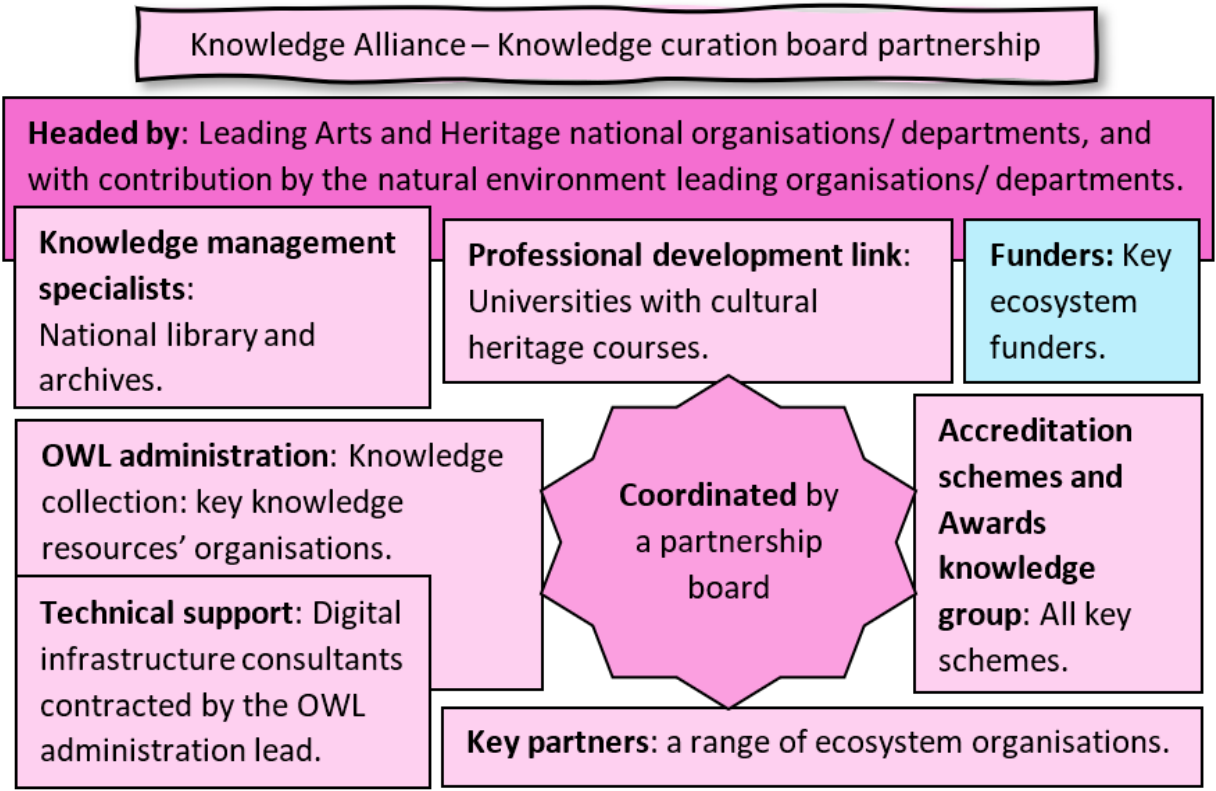
Figure 27.
Knowledge curating networks for the 16 operational drums and the 15 habitats. Source: Author.
Figure 27.
Knowledge curating networks for the 16 operational drums and the 15 habitats. Source: Author.
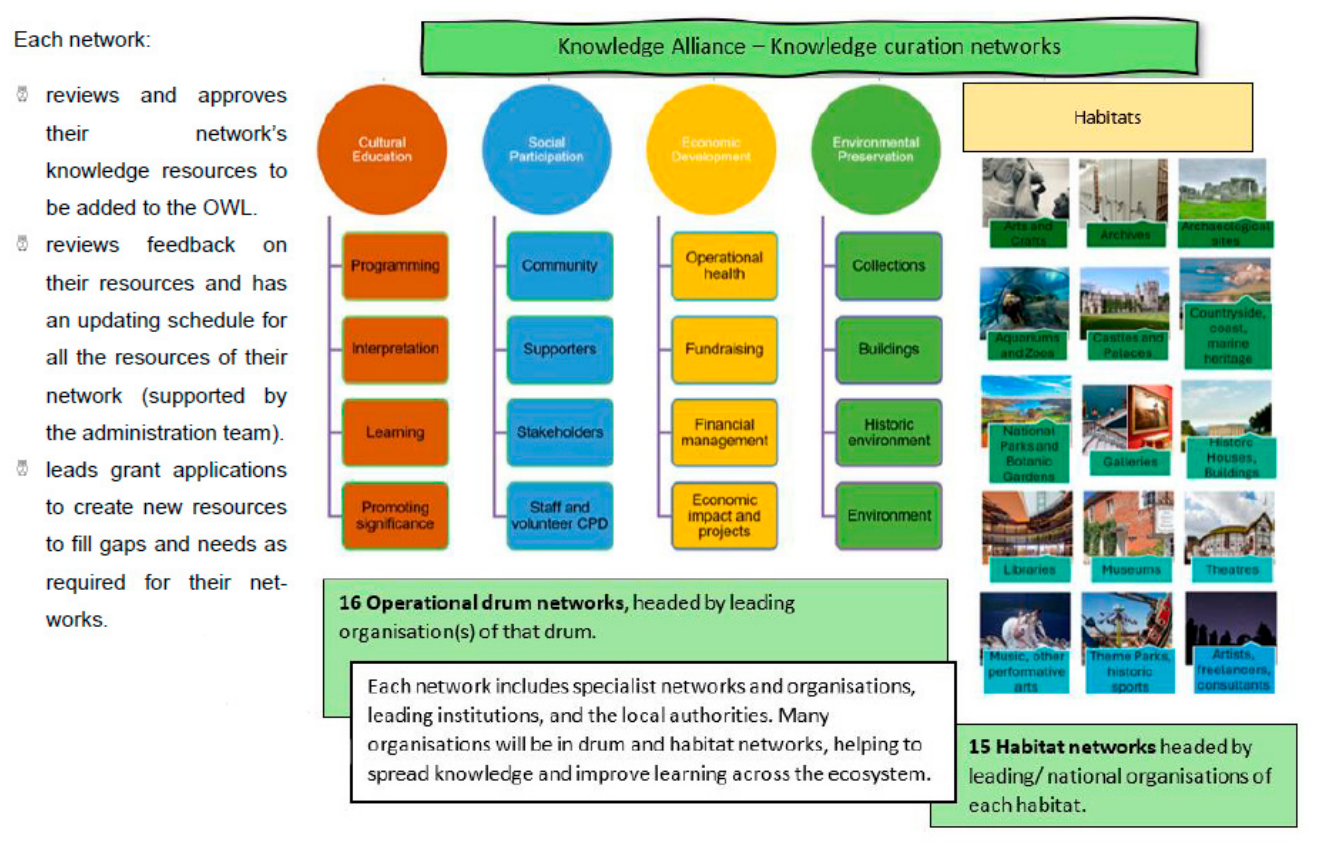
The direct benefit, as shown from this research, is twofold, to make processes easier and less stressful within a culture of trust, and to significantly improve performance across all four objectives. Overall, cultural heritage will benefit from improved organisational sustainability performance. During data collection, the levels of present (20.26%) and updated (9.51%) knowledge artefacts related to 54.97% performance (just above the average performance at 50.00%). Making knowledge search, adoption, adaption, and learning easier at personal and organisational levels would enable the knowledge artefacts to positively affect performance. We can use the regression values to calculate such performance variation based on usable quantity increase. If, for example presence of knowledge artefacts doubled to 40.46% of the operational drums, and half of those were up-to-date, the performance due to the presence would be (47.93%+0.59x(40.46%*51flutes)) = 60.10%, and due to the updated knowledge artefacts would be (60.10%+0.80x(50%*51flutes) = 80.50% (Good towards Leading in the Likert scale). The performance increase would be 47% ((80.50%-54.97%)/54.97%). The performance would be above the ecosystem’s user organisations’ aspiration of 75.63% and matches the high aspiration by provider organisations of 80.51%. Additionally, if the quality of the knowledge resources’ content improves, alongside providing a greater variety of media, with knowledge resources being joined up and accessible, the step change (unstandardized coefficient B values of 0.594 and 0.798 respectively) would also increase, making the performance even higher.
ECHA sites and organisations would be able to select resources and set up specific OWL knowledge resources, webpages, and filtering functions for their people. Organisations with no intranet or learning systems could utilise the OWL ones, or link their own systems to the OWL webpage resources and functions. The site-specific operational topics (reflecting the knowledge resources by objectives, drums (operational areas) and flutes (sub-operations)) could be set up by the site or organisation, and they could add or link their site-specific resources (which will not be shared with external organisations).
The OWL administrative and technical support would provide user organisations free access to a) the knowledge resources and b) the technical expertise to set up and manage their own site- and organisation-specific OWL webpages for all operational drums. This would benefit especially all the smaller organisations with limited capacity or funds. All users would be able to filter and select resources suitable for their habitat, size, location, management type, and so on. Overall, organisations would be able to access and manage more targeted, quality operational knowledge easier and quicker, helping to improve their absorptive capacity, operational capacity, and organisational performance.
Personal development would be accumulative and supported throughout people’s careers, and there would be a common language in the ECHAsystem, helping people to be inducted, settle in, and learn faster when they join an ECHA organisation. Knowledge artefacts, training, and expert support would be connected for all users, even if the resources were created by different provider organisations. The knowledge collection could be searchable through a variety of filters, and accessible to freelancers, staff, volunteers, students, and apprentices. Filtering by habitats, regions, counties, organisation size, and so on, could help find knowledge resources specific to the individual users.
Access to knowledge artefacts by staff and volunteers (permissions, ability to see what is available, and accessibility) relates to 26% higher organisational performance. The knowledge engagement level with volunteers in particular would be much improved through the Athena design. Volunteer teams provided with the operational knowledge and tools they need, relate to 71% higher organisational performance. However, often volunteers are seen as additional workload. Such negative experience of volunteers and volunteering is a result of the fragmented and limited knowledge sharing. We need to enable volunteers to access a variety of knowledge media (some might prefer to read extensively, whilst others would rather watch a film rather than read a 200-page dull manual), and be able to select knowledge that is relevant to their interests, their motivations. So, we need to understand what their motivation for volunteering is [103,347,348,417,418,419,420,421]. Volunteering is a common, and often required, route to gaining experience prior to being employed in cultural heritage. Socializing is another main motivation; gaining social interaction skills and fighting isolation. Other volunteers participate because they are interested in specific cultural heritage aspects, such as history, architecture, cooking, music, gardening, theatre, and so on. They all have in common a need to learn; through experience, from social interaction, participation, or facts. A personal development knowledge collection would enable them to expand on their interests and engage more beneficially in operations. Additionally, a distinct category of volunteers includes trustees. They usually bring in expertise from their own ecosystems and may lack expertise required in the ECHAsystem. Having a socializing knowledge process that enables trustees to learn skills they need, and to add knowledge from outside into the existing practices, as well as critique and challenge existing knowledge from a different viewpoint, would enrich the EACHsystem knowledge base.
There would be significant benefits for provider organisations. Knowledge resources on websites of individual networks and providers require maintenance; updating the webpages and knowledge resources, and ensuring these are continually accessible. Furthermore, knowledge resources require technical skills and infrastructure for website architecture, webhosting, and for creating a variety of media, which carry associated costs. As shown in the research, provider organisations also have limited capacity and scarce financial resources. Having a centrally coordinated platform would enable all the individual provider websites to slim down, saving on capacity and making them easier to navigate through. Additionally, a centrally coordinated platform could include all the latest technology required for knowledge resource development which would be available to all knowledge alliance (partnership board and knowledge networks) providers, with training and technical support. Such help to providers would reduce their costs, administration workload, and ease off their capacity issue. Knowledge providers would be able to focus their work on developing and delivering high quality value-creating knowledge artefacts, training, and on providing expert support. Resource filtering and ECHAsystem-wide analytics on the use and feedback of the quality of all the resources could be used by provider organisations for horizon scanning, including to spot gaps for future knowledge resources development. Available knowledge resources and gaps would be visible, and there would be an accumulative way of collating feedback at ECHAsystem scale and at speed; shortening the timescales for knowledge resource decision making, development, implementation, and communication. The knowledge resources would each have the provider’s details and logo, and would link back to the provider’s websites, raising the profile of the providers, while reducing their workload. It would make the linked provider’s training courses, events, and their memberships more visible. As their memberships would offer comprehensive knowledge resource supportive packages, the design would enable provider organisations to increase their membership and sell more tickets for their training and events. Provider organisations would have more stable funding for specific remits of knowledge resources, more administrative support for themselves, improved capacity, raised profile and membership status, and reduced costs.
The Athena design could therefore benefit individuals and organisations, both user and provider ones. It could also add value to the ECHAsystem through sustainably increased vitality. Currently, the prevailing valuation work is concerned with measurement as a means of value redistribution. The larger the value demonstrated, the larger piece of pie each sector can claim, and the greater need to finance it can be tabled. This research, and the Dynamic Knowledge Creation model, are not concerned with value distribution but with value creation, seeing the potential to grow the value of the ECHAsystem’s four capitals. Culture can be devalued when it is not participatory and not contributing to wellbeing, and heritage can be devalued when it is not maintained and not restored [18,50,422]. This research defined the ECHAsystem for its complementary parts, the cultural and artistic values enriching environmental and heritage assets. Curating organisational knowledge in the ECHAsystem can sustainably improve cultural education, social participation, economic development, and environmental preservation by providing professional development knowledge in a healthy organisational culture, which in itself is a cultural value. As shown in literature, knowledge grows the most when shared [423]; the Athena design can increase the cultural, social, economic, and environmental capitals on their own merit, not by redistribution of limited resources.
The knowledge resources package would also enable value co-creation [429,430] by knowledge socialization through user (user organisations and their visitor/ user’s input) and provider (support organisations and wider stakeholders) contribution to the knowledge resources’ content. This would be at:
- i)
- individual expert level, contributing to open access Wiki pages for each topic, to specific ECHAsystem social media channels, and providing feedback on existing and missing knowledge resources on OWL, and;
- ii)
- as part of the network panels for each habitat or operational drum and its flutes, by reviewing feedback and needs (gaps, updating, and archiving), and by reviewing and approving any new resources.
Additionally, the content approval process by habitat network panels can ensure there would be a democratic plurality of voices in the knowledge resources, but no duplications, and all content would be of high quality. This would create a credible and trusted source for users, and an approved bank of knowledge resources to be used for AI applications to be trained on, to then produce reliable AI-created new content. Furthermore, contributors, individually or through a network panel, would benefit from the socialization process itself, and from recognition by peers, potential employers, and funders. A professional recognition aspect could be built in the knowledge resources; socialization with the knowledge content, from contributing to using it, could be recorded by individuals as learning credits, demonstrating continued professional development. And at ECHAsystem level, it would enable operational knowledge accumulation for its confident, wise, practical application. This is consistent with the core value of the ECHAsystem; learn from the past to create a more equitable and sustainable future.
There is of course intellectual property in organisations. The design is not aiming to access all knowledge, nor standardise it. Reflecting on the accreditation schemes and AIM’s Hallmarks, the aim is to enable thousands of organisations to transition out of the danger survival zone and to stand on a basic sustainable level. Each habitat and organisation has its own fingerprint, so the basic sustainability level and required knowledge will be different in each case. Having reached their sustainable level, they can then stretch and compete for higher hallmarks, achieve their aspirations, and, using the ACE strategy language, thrive [424]. Giving access to the variety of knowledge that can be selected, through detailed filtering for example, would enable organisations to create new knowledge for their own circumstances, and to innovate.
Thinking of knowledge as professional development knowledge produces a valuable organisational culture of trust and participation. A knowledge alliance would demonstrate leadership in a culture of appreciation and trust, and create a powerful ECHAsystem voice. It would provide long term stability, and would not be as affected by capacity issues and organisational changes in individual provider organisations. The Athena design is, therefore, beneficial for individuals’ professional development, for (user and provider) organisational sustainability, and is aligned with national strategies to help organisations and the cultural heritage ecosystem to thrive.
The design would need processes to evaluate its outputs and outcomes. Evaluation on its outputs could be measured on:
- Up-to-date knowledge resource coverage for each objective and their operational drums.
- Volumes of knowledge socialization activity (network contribution, Wiki pages, social media) and quality of the design (partner, network, and user feedback on benefits of the design).
- Effective evaluation and response to user feedback on the knowledge collection content.
- Levels of use of the knowledge resources (platform analytics) and learning credits.
Evaluation on outcomes would need to be linked to ECHAsystem performance. This could be measured by:
- Indirect impact on participating schemes (e.g. increase in award performance (e.g. VisitEngland scores, increase in accreditation uptake).
- Relating to improvements in organisational survival (e.g. comparison in annual Historic England and other surveys) or new annual benchmarking ECHAsystem-wide survey.
- Against specific metrics for each operational drum (e.g. number of school visits, level of unrestricted funds versus annual operational cost, and so on).
- Numbers of new people working and volunteering in the ECHAsystem, and their learning level.
Policy Recommendations
Policy recommendations based on the research findings are provided below, categorised in collaboration, proactive planning, and funding-related themes.
Collaboration
- 1)
- Develop a knowledge alliance to coordinate a knowledge library (Operational Wisdom Library (OWL)) for the ECHAsystem.
- 2)
- Knowledge resources should be reviewed by topic specific networks and suitable knowledge resources should be approved and added to the trusted knowledge library that builds the professional knowledge in the ECHAsystem.
- 3)
- Every membership organisation could provide a list of all knowledge resources available through their membership, and the date developed or updated. The lists should be compiled in a directory that can be consulted by knowledge resource providers and funders, to avoid duplication. Provision of such a list should be a requirement by grant funders.
- 4)
- Connect the planning and provision of knowledge resources between the different award schemes. Especially accreditation and educational awards would be much more beneficial to organisations if planning and provision was more joined-up.
- 5)
- The leading user organisation(s) in each habitat should be actively involved in leading the accreditation or equivalent schemes for each habitat.
- 6)
- Utilise local authority templates, policies, and guidance to improve ECHA organisations’ knowledge resources in each local authority.
Proactive planning
- 7)
- A package of knowledge resources (knowledge artefacts (template, manual, video), training courses, and expert support (already trained on upcoming changes) should be developed before any guidance or legislation changes take place.
- 8)
- Development of knowledge resources should be informed by a comprehensive and ongoing mapping of user needs and knowledge gaps. The knowledge curating design would enable such mapping.
- 9)
- Open licensing (creative commons, open government licence, other) should be clearly stated in all sources and knowledge resources that the license applies to.
- 10)
- There should be a declaration regarding who is the responsible author, and the use of AI, in every ECHAsystem formal management document.
Funding-related
- 11)
- Create commitment to knowledge curation and focus on professional development knowledge for everyone aspiring to join or already working or volunteering in the ECHAsystem, by:
- funding an ECHAsystem-wide knowledge alliance and provision infrastructure that makes a significant, large-scale, positive impact on organisational performance and organisational culture (instead of funding short-term and limited impact knowledge resources projects);
- funding training budgets for user organisations;
- funding train-the-trainer programmes for provider organisations;
- funding provider organisations to lead joined-up professional development packages for each of the four objectives, and each of their operational areas (drums) or suboperations (flutes).
- 12)
- Establish a formal process for evaluation of outputs and the lasting impact of the outcomes associated with grant funded knowledge resources. Additionally, grants should have a requirement that funded knowledge resources should be submitted for evaluation and depositing to the knowledge library (OWL) and a directory of knowledge resources is provided by funded organisations to avoid duplication when applying for funding and developing new resources.
7. Conclusions: The Quest for Practical Wisdom
‘agreeing a singularity of approach to things that are universally raised as challenges.’ Participant P17
The conclusion initially answers the research question. It then presents the theoretical and practical implications of the research, as well as its limitations and future research directions and opportunities.
To answer the research question, an empirical toolkit (induction, deduction, abduction) was placed upon an interdisciplinary theoretical underlay (BouDIKA model). At first inspection, an abundance of knowledge artefacts existed, although it was difficult to find the most suitable knowledge artefacts for each operation. If a design could make sense of what was out there, surely it would help address the pressures. A pattern of three fragmented entities challenged the research initially. The first challenge was on the theoretical underlay; recorded and experiential knowledge (explicit and tacit) can be seen as incompatible with each other. Defining the nature of knowledge and whether it can be counted or managed has opposing theoretical stances. The second challenge was inside the toolkit, as the empirical data in it (quantitative, qualitative) have been considered theoretically incompatible. The third challenge was on the research topic itself, as it has been seen not as an ecosystem but as multiple, overlapping and competing sectors, with no clearly defined outer boundaries.
The pilot and main phase interviews (induction) straight away hinted that something was amiss. Instead of a wealth of useful knowledge artefacts, there was a thick fog of variable quality and out-of-date knowledge artefacts, without a directory of what existed or what the gaps were. Feedback on the knowledge artefacts and knowledge needs analysis were circumstantial, reactive, and uncoordinated. The sectorial fragmentation had driven a competitive and damaging culture, negatively impacting knowledge artefacts, perhaps metaphorically comparable to the devastating plastic pollution in the seas, or the space debris from satellites in the atmosphere.
Overall, presence of knowledge artefacts in 20.26% of the 51 suboperations (flutes) related to 6% higher performance (50.54%-47.93%)/50.54%). Having updated knowledge artefacts in (only) 9.51% of the 51 suboperations (flutes) related to 15% higher ((54.97%-47.93%)/47.93%) overall organisational performance. Knowledge artefacts had a positive impact, but such impact appeared constrained.
By abductively examining patterns, the need for complementarity at two levels became clear:
- Enabled access to knowledge artefacts relates to 98% higher presence, 90% more updated knowledge artefacts, and increased performance by 26%. And organisations with a training budget relate to 41% more present and 32% more updated knowledge artefacts, and 26% higher performance, compared to sites with no training budget. Overall, organisational performance in trained teams was 81% higher for staff and 71% higher for volunteers. Complementarity of knowledge resources, which comprise knowledge artefacts, training, networking, expert support, and the infrastructure connecting those is therefore crucial. The proposed design has the potential to break down barriers to trust, and requires knowledge leadership.
- Efficacious complementarity of existing resources and strengths, between providers and users, and across operations and habitats. When the knowledge resources in accreditation and award schemes were complementary, ECHA organisations achieved 67.51% compared to 54.97% at the time of conducting the research. Furthermore, if a design could double the level of knowledge artefacts, the average performance could be 80.50%, a performance increase by 47%. This would surpass the ecosystem’s user organisations’ aspiration of 75.63% and matches the high aspiration by provider organisations of 80.51%. Additionally, if the access and content quality improves to the knowledge resources, the performance would improve further.
The core theoretical contribution of this research is that it applies knowledge management not as competing economist or critical theories, but as complementary, appreciative approaches. This research unites organisational theory and ECHA management theory across three streams of theoretical research:
- Initiating the restoration of the fragmented sectors into a unified ECHAsystem.
- Bringing the ECHA objectives and their common operations under a unifying organisational sustainability framework, enabling the mapping of operational knowledge, of operational knowledge and learning development needs, and of associated ECHAsystem performance.
- Unifying collaborative knowledge management with ECHAsystem management as operational knowledge curation.
Additionally, the research builds on contemporary Areas of Research Interest for the U.K. [431], in relation to digital skills and AI (4.13b, 4.12a, 4.12b), digital platform reliance (4.8e), economic development (4.11k, 4.11j, 4.11i, 4.11g). It contributes to knowledge transfer between cultural organisations (4.11e), knowledge spillovers from movement of labour (4.11c), and as a methodological approach to mapping the ecosystem (4.11b). Particularly, it relates to the Culture and Heritage Capital programme (4.10g), ‘intersections and overlaps between natural capital and culture and heritage capital (4.10f), and tracking of contributions of cultural assets (4.10c). It also contributes towards understanding collaboration (4.6e, 4.6c), and international benchmarking (4.2c).
7.1. Contribution to Practice: ECHAsystem Potentiality
The model provided a clearer perspective on the interaction of the personal, passionate, custodian experience, and the recorded (but not habitually), and quickly out-dated operational knowledge in cultural heritage management. The research demonstrated that accessible and up-to-date knowledge significantly improves processes and organisational performance. It also showed that for ECHA organisations the fragmented sectorial approach is dampening such improvement.
The research kick started a discussion about knowledge management in an ECHAsystem. The concept pilot showed that knowledge management was a surprising topic and challenging task for the participants. The paradox, that the ECHAsystem expertly curates interpretative knowledge, but not about its own operations, is now at least acknowledged. The research initiated the knowledge vision by mapping the ECHAsystem’s knowledge fog, and showing the individual excellent work that, if it was joined up and complementary, could relatively quickly and inexpensively, significantly improve processes and organisational sustainability in the ECHAsystem; exceeding even the more optimistic aspirations. The Athena design shows how to get there.
Initiating the vision requires leadership and this research provides the enabling background for key organisations to manage conversations and make a knowledge alliance reality. The Athena design principles and the extensive benefits to user and provider organisations have been presented, as well as the organisational sustainability framework, and networking structure that enables the implementation of the design. The design could create significant savings from individual projects to justify its own small costs, and the technological infrastructure proposed would upgrade the digital capability of the provider organisations exponentially, and benefit thousands of ECHA organisations and freelancers.
The significant point of departure regarding knowledge and trust, is reigniting a professional development aspiration within the ECHAsystem. Application of the Athena design would convert potentiality to actuality. Seeing the Aristotelian potentiality of growing a tree from an acorn, in a constantly changing world, from Dewey’s and Nonaka’s pragmatist viewpoint, requires wise leadership; a choice can be made on what tree to grow, where and how to support it. Potentiality does not turn to actuality on its own, it requires the right conditions and action.
7.2. Limitations and Future Research
The limitations due to sparce existing theoretical and empirical literature on knowledge management application upon ECHA management were shown in the literature section. Such literature limitations necessitated a more exploratory approach to developing the methodology, so the research had to expand the social characteristics of the knowledge artefact, increasing perhaps the complexity of the theoretical framework. Additionally, the methodology had to be expanded with an appreciative element. The use of mixed methods required longer periods for data collection and analysis to be planned, and empirically the data sets can be seen as relatively subjective. It is difficult for participants to know every knowledge artefact and its condition within their organisation. The self-reporting rather than auditing approach has therefore reliability limitations. Encouraging multiple participants to take part within each participating site, making the questions available online to check before taking part, and the option to exit and continue the questionnaire, allowed participants to better prepare and check the data. Whilst COVID-19 reduced any physical meetings and site visits, the use of technology for virtual meetings and (web)site exploration largely counteracted such deficit. The impact of COVID-19 on operations made the use of annual reports more problematic as financial statements were severely skewed by inability to create self-generated income and by a range of support grants, not necessarily of the same values or within the same financial years in which income would normally have been generated. The self-rating performance used in the questionnaires, therefore, also carries subjectivity. So, rather than taking one overall performance figure, data was instead built from the four objectives after information and questions about those objectives took place. This made the self-rated scores more reflective, and the average score moderated and potentially more accurate. For both methods, interviews and questionnaires, the comparison between user versus provider ratings, from pilot and the main phase, also provided checks of the data collected. Even then, and with proven statistical significance, the rates of change should be taken as indicative proof, not quoted as absolute. The broad stratigraphic sampling provided powerful representation within the ecosystem, but as discussed regarding the organisational forms and the unique, public-good nature of cultural heritage, the findings are not meant to be generalised beyond the ECHAsystem, or at least ones with extensive charitable and volunteering elements. The formal thematic analysis process followed during the interview analysis, and the extensive training and support on quantitative data analysis provided by UCL, helped to continually reflect on the quality of the processes used. Equally, following the formal ethical guidelines and application process, helped plan each stage of the research in greater detail and to present it in a more transparent light, thus keeping in check at every step the author’s potential bias due to extensive professional experience in the ECHAsystem.
Overall, whilst the above comprise imposed limitations, their negative impact has been moderated where possible or is not substantially damaging to the findings. There were also delimitations, limitations not external but set by the author. As a single-researcher doctoral study, it was not possible to conduct and compare repeated broad mappings (longitudinal research) or to conduct extensive ethnographic examination of ECHA sites. This research presented one, quite comprehensive snapshot. Repeated mapping in the future, perhaps at habitat level would create further new knowledge. It is hoped that the development of the BouDIKA model, and of the organisational sustainability framework, will be useful and enable more mixed-method research to progress the study and application of knowledge curation in ECHAsystem management. Alongside longitudinal studies, the knowledge curation in the 16 individual operational drums and 15 habitats can be explored in more detail. Additionally, the knowledge needs of the ECHAsystem could be mapped, ideally by 31 knowledge networks (16 operational drums and 15 habitats). The technology for the platform, and work on the AIs ongoing capability and for curing AI hallucinations, need ongoing research. Also relating to technology, the interaction of tacit and explicit knowledge can be studied further in an open access context [307]. The Athena design can be further researched relating to professional development skills, especially to streams of heritage skills, and on the professional development needs of freelancers. Similarly, the ongoing DCMS work on arts, heritage, and culture valuation will be useful to provide more formal organisational performance criteria. Establishing agreed performance criteria for each operational drum is a significant stream of future research and will be key in evaluating the outcomes of the Athena design, and of the organisational sustainability for ECHA organisations, habitats, and the whole ECHAsystem. The performance criteria can be examined in relation to double loop performance feedback and in relation to a grant-funding reliance culture.
As the research demonstrated the benefits of diversified income, the mix of different sources and levels of self-generated, grant-funding, and direct government funding can be further explored. A particularly important finance-related area for research is the potential impact of charging for school visits, especially in more economically deprived areas, when considering school children as the future audience and curators of the ECHAsystem. Schools can be studied as the first stage of the professional development journey for cultural heritage management. Also, the benefits of improved access to expert (professional) knowledge for volunteers can also be studied against the background of barriers to voluntary contribution such as the increases of retirement age.
Studying professional knowledge, as opposed to personal or organisational, in ECHAsystem management can be examined as a comprehensive training and development journey (schooling and informal education, apprenticeships, university, continuing professional training, and experience sharing). The examination can take place across each of the four objectives (cultural, social, economic, environmental). This could be approached from two potential perspectives. Firstly, the quadruple helix lens examining the professional development journey across each of the four objectives as interacting helixes [238,432,433,434]. An alternative approach is heritage dynamics [435]. Using heritage dynamics, the professional development journey can be examined by perceiving the four objectives as assemblages of the tangible and intangible ECHA operations, including stakeholder and user practices. Such assemblages are dynamically composed, altered, and disassembled, enabling i) the study of their constituents, and ii) of their change processes [435]. The four ECHAsystem objectives can be examined as open systems by researching the interaction in heritage dynamics across the objectives and their operational drums.
7.3. Concluding Prompts
This research demonstrated the positive processual and performance relation of tactile knowledge; experience rich, up-to-date, accessible, and beneficial knowledge. Knowledge provision by individual organisations, particularly of accreditation and award schemes, can deliver much improved results, if such provision is designed to be allied. The research showed that providing a more cohesive, equitable access to a comprehensive package of knowledge resources that is accompanied by training, is the most beneficial knowledge curating activity that the ECHAsystem can do to improve its organisational sustainability. Instead of thinking of personal knowledge, user-organisation knowledge, provider-organisation knowledge, or sectorial knowledge, we can commit to ECHAsystem professional development knowledge. What knowledge does any individual need to join the ecosystem, to settle in, to continue developing professionally, and to help others learn from their experience? What knowledge do people need whether they join in as volunteers, apprentices, from other ecosystems, from university, and as they develop, work as independent freelancers, or move across roles and different organisations (with common public-good objectives and common operations)? If individuals have access to knowledge they need and can build their personal professional development library, they will not hoard or hide organisational knowledge. If there is an ecosystem commitment to a live, reliable library of credible ecocultural heritage professional knowledge, the individual and organisational barriers to trust can break down. The focus of the Athena design, therefore, is not on how to signpost to quickly outdated existing resources, but how to enable continuous knowledge curation of a comprehensive package of knowledge resources (knowledge artefacts, training, and expert support) with synergic knowledge contribution by users and providers in the ECHAsystem.
The proposed Athena design provides the vision, principles, and structure to apply professional development knowledge in the ECHAsystem, more economically and effectively than short projects do, to produce significant performance improvement that exceeds the aspirations of user and support organisations. For governments, the knowledge curating design offers an enabling, hands-off, low-risk, and high reward policy, which requires the major players to engage and lead the knowledge discussions now taking place. For user and provider organisations, it is an opportunity to demonstrate leadership that breaks down barriers to trust, and which improves organisational sustainability at large scale, across the ecosystem. The ECHAsystem potentiality requires the right conditions and action; with the wise synergy of existing structures and resources, the whole ECHAsystem can grow healthier. Nurturing ECHAsystem potentiality to a thriving actuality requires knowledge leadership and commitment to wise action.
Research information can be found on the research website (redacted for peer review). This research received no external funding. Data sets are available on request. The author declares no conflict of interest. No GenAI has been used for this research.
References
- The Audience Agency; MyCake. Historic England – Knowing the Heritage Sector. The Audience Agency. 2024. Available online: https://theaudienceagency.org/en/news/historic-england-knowing-heritage-sector.
- Aldrich, H.; Ruef, M.; Lippmann, S. Organizations Evolving; Edward Elgar Publishing Limited: Cheltenham, UK ; Northampton, Massachusetts, USA, 2020. [Google Scholar]
- Aldrich, H. E.; Ruef, M. Organizations Evolving; SAGE, Los Angeles, 2011. [Google Scholar]
- Nelson, R. R.; Winter, S. G. An Evolutionary Theory of Economic Change / Richard R. Nelson and Sidney G. Winter.; Belknap Press: Cambridge, Mass., 1982. [Google Scholar]
- Elkjaer, B.; Simpson, B. Pragmatism: A lived and living philosophy. What can it offer to contemporary organization theory? In Philosophy and Organization Theory; Tsoukas, H., Chia, R., Eds.; Emerald Group Publishing Limited, 2011; pp. vol. 32 55–84. [Google Scholar]
- Becker, M. C. Organizational routines: a review of the literature. Ind. Corp. Change 2004, 13, 643–678. [Google Scholar] [CrossRef]
- Feldman, M. S.; Pentland, B. T. Reconceptualizing Organizational Routines as a Source of Flexibility and Change. Adm. Sci. Q. 2003, 48, 94. [Google Scholar] [CrossRef]
- D’Adderio, L. Artifacts at the centre of routines: performing the material turn in routines theory. J. Institutional Econ. 2011, 7, 197–230. [Google Scholar]
- Pentland, B. T.; Feldman, M. S. Organizational routines as a unit of analysis. Ind. Corp. Change 2005, 14, 793–815. [Google Scholar] [CrossRef]
- Boote, D. N.; Beile, P. Scholars Before Researchers: On the Centrality of the Dissertation Literature Review in Research Preparation. Educ. Res. 2005, 34, 3–15. [Google Scholar] [CrossRef]
- Randolph, J. A Guide to Writing the Dissertation Literature Review. Pract. Assess. Res. Eval. 2009, 14, 13. [Google Scholar]
- Clarivate Web of Science. Web of Science | Clarivate. 2025. Available online: https://clarivate.com/academia-government/scientific-and-academic-research/research-discovery-and-referencing/web-of-science/.
- Lozano, R. Proposing a Definition and a Framework of Organisational Sustainability: A Review of Efforts and a Survey of Approaches to Change. Sustainability 2018, 10, 1157. [Google Scholar] [CrossRef]
- English Heritage [Historic England. Conservation Principles, Policies and Guidance; 2008. [Google Scholar]
- GOV.UK. Historic environment. GOV.UK. 2019. Available online: https://www.gov.uk/guidance/conserving-and-enhancing-the-historic-environment.
- Cassar, M. Climate Change and the Historic Environment; Centre for Sustainable Heritage, University College London: London, 2005. [Google Scholar]
- Defoe, D. A Tour through the Whole Island of Great Britain / Daniel Defoe (1724-26); Yale University Press, 1742. [Google Scholar]
- Throsby, D. (Ed.) Cultural heritage. In The Economics of Cultural Policy; Cambridge University Press: Cambridge, 2010; pp. 106–130. [Google Scholar] [CrossRef]
- Pounds, N. J. G. The Culture of the English People: Iron Age to the Industrial Revolution; Cambridge Univ. Press: Cambridge, 1994. [Google Scholar]
- Volanakis, A. Χωρογραφία και Επιτελεστικές Τέχνες: συν-υφάνσεις και συν-υπάρξεις χώρου και σώματος από τον 20ό στον 21ο αιώνα. [Own translation: Spaceography and performative arts]. Pergamos - Library and Information Center of National and Kapodistrian University of Athens. 2020. Available online: https://pergamos.lib.uoa.gr/uoa/dl/object/2903804.
- Bourdieu, P. Outline of a Theory of Practice; Cambridge University Press: Cambridge, 2010. [Google Scholar]
- The Invention of Tradition; Cambridge Univ. Pr: Cambridge, 2010.
- Schein, E. H. Organizational Culture and Leadership; Jossey-Bass Publishers: San Francisco, 1985. [Google Scholar]
- UNESCO CDIS manual. CDIS Methodology manual. 2014. Available online: https://en.unesco.org/creativity/activities/cdis.
- Lowenthal, D. The Past Is a Foreign Country; Cambridge University Press: Cambridge [Cambridgeshire] ; New York, 1985. [Google Scholar]
- Smith, L. Uses of Heritage; Routledge: London, 2010. [Google Scholar]
- UNESCO. UNESCO - Lists of Intangible Cultural Heritage and Register of good safeguarding practices. Intangible Cultural Heritage. 2020. Available online: https://ich.unesco.org/en/lists.
- Belk, R. W.; Wallendorf, M. Of mice and men: gender identity in collecting. In Interpreting objects and collections; Pearce, S. M., Ed.; Routledge: London ; New York, 1994. [Google Scholar]
- Black, G. The Engaging Museum: Developing Museums for Visitor Involvement; Routledge: London ; New York, 2005. [Google Scholar]
- UNESCO. Charter on the Preservation of the Digital Heritage - UNESCO Digital Library. 2003. Available online: https://unesdoc.unesco.org/ark:/48223/pf0000179529.
- UNESCO. Conventions. UNESCO. 2022. Available online: https://en.unesco.org/about-us/legal-affairs/instruments/conventions.
- Howard, P. Heritage: Management, Interpretation, Identity; Continuum, London; New York, 2003. [Google Scholar]
- Cultural Heritage Management: A Global Perspective; University Press of Florida: Gainesville, 2010.
- Taylor, K.; Verdini, G. Management Planning for Cultural Heritage: Places and Their Significance; Routledge: London, 2021. [Google Scholar] [CrossRef]
- Blake, J. On Defining the Cultural Heritage. Int. Comp. Law. Q. 2000, 49, 61–85. [Google Scholar] [CrossRef]
- Historic England. Heritage Definitions | Historic England. 2022. Available online: http://historicengland.org.uk/advice/hpg/hpr-definitions/.
- Verwayen, H. BUSINESS MODEL INNOVATION IN DIGITAL LIBRARIES: THE CULTURAL HERITAGE SECTOR from Business Planning for Digital Libraries: International Approaches on JSTOR. 2010. Available online: https://www-jstor-org.libproxy.ucl.ac.uk/stable/j.ctt9qdz2g.5?refreqid=excelsior%3A24891a0fb2ca6a997b576dd30d21cd1e&seq=1#metadata_info_tab_contents.
- UNESCO CDIS. UNESCO Culture for Development Indicators (CDIS) | Diversity of Cultural Expressions. 2009. Available online: https://en.unesco.org/creativity/activities/cdis.
- Pelegrinis, T. N. Oι Πέντε Εποχές Της Φιλοσοφίας [Own Translation: The Five Seasons of Philosophy]; Hellēnika Grammata: Athēna, 1997. [Google Scholar]
- Johansen, T. K. Productive Knowledge in Ancient Philosophy: The Concept of Technê; Cambridge University Press, 2021. [Google Scholar]
- Britannica Encyclopaedia. the arts | Britannica. 2022. Available online: https://www.britannica.com/topic/the-arts.
- GOV.UK. MLA responsibilities to transfer. GOV.UK. 2012. Available online: https://www.gov.uk/government/news/mla-responsibilities-to-transfer.
- Moldavanova, A.; Goerdel, H. T. Understanding the puzzle of organizational sustainability: toward a conceptual framework of organizational social connectedness and sustainability. Public Manag. Rev. 2018, 20, 55–81. [Google Scholar]
- Australia ICOMOS; ICOMOS. Burra Chart. Aust. ICOMOS Chart. Places Cult. Significance 2013 2013. [CrossRef]
- UNESCO. Recommendation on Participation by the People at Large in Cultural Life and their Contribution to It. 1976. Available online: http://portal.unesco.org/en/ev.php-URL_ID=13097&URL_DO=DO_TOPIC&URL_SECTION=201.html.
- Esen, S. Y.; Altinoz, A. G. B. The Heritage Resilience Scorecard: Performance Measurement in Risk Governance of Cultural Heritage. Hist. Env.-Policy Pract. 2021, 12, 222–251. [Google Scholar] [CrossRef]
- Griffin, J. Strategic linkages and networks. In Manual of heritage management; Harrison, R., Ed.; Butterworth-Heinemann: Oxford ; Boston, 1994; pp. 43–53. [Google Scholar]
- Newman, A. Understanding the social impact of museums, galleries and heritage through the concept of capital. In Heritage, museums and galleries: an introductory reader; Corsane, G., Ed.; Routledge: London ; New York, 2005; pp. 228–237. [Google Scholar]
- Sagger, H.; Philips, J.; Haque, M.; DCMS. Valuing culture and heritage capital: a framework towards informing decision making. GOV.UK. 2021. Available online: https://www.gov.uk/government/publications/valuing-culture-and-heritage-capital-a-framework-towards-decision-making/valuing-culture-and-heritage-capital-a-framework-towards-informing-decision-making.
- Rosenstein, C. Understanding Cultural Policy; Routledge: New York, NY, 2018. [Google Scholar]
- Olinsson, S. B.; Fouseki, K. Social entrepreneurship for sustainable heritage management – the case of open-air museums. J. Cult. Herit. Manag. Sustain. Dev. 2019, 9, 486–499. [Google Scholar] [CrossRef]
- Adams, G. K. River & Rowing Museum to ‘cease current operation’ as it considers future plans. 2025. Available online: https://mail.google.com/mail/u/0/#inbox/FMfcgzQZTVmtBsLPjJcpvRJZlHWcPjvg.
- Adams, G. K. Crisis-hit councils in Nottingham and Birmingham approve culture cuts. Museums Association. 2024. Available online: https://www.museumsassociation.org/museums-journal/news/2024/03/crisis-hit-councils-in-nottingham-and-birmingham-approve-culture-cuts/.
- House of Commons. Local museums CDP-2018-0059.pdf. 2018.
- Museums Association. MUSEUMS IN THE UK 2018 REPORT. 2018. [Google Scholar] [CrossRef] [PubMed]
- Postans, A.; Nally, C. Bristol city council proposals to cut art funding branded ‘nuts’. BBC News. 2025. Available online: https://www.bbc.com/news/articles/cvg449zqr87o.
- Lyons, M. 800 libraries closed in Britain since 2010. Government Business. 2019. Available online: https://governmentbusiness.co.uk/news/06122019/800-libraries-closed-britain-2010.
- Museums Mapping. Museums Mapping. 2021. Available online: http://museweb.dcs.bbk.ac.uk/browseproperties#tab4.
- Adams, G. K. Scottish museums’ finances are ‘more fragile than ever’. Museums Association. 2024. Available online: https://www.museumsassociation.org/museums-journal/news/2024/11/scottish-museums-finances-are-more-fragile-than-ever-mgs-report-finds/#msdynttrid=IEsnH6Vn6m9yaGmzVpYjoj1c7iFI-NUqqvVrAE6gDoc.
- Adams, G. K. Warning over closure of sites as Museum Wales grapples with budget cut. Museums Association. 2024. Available online: https://www.museumsassociation.org/museums-journal/news/2024/04/warning-over-closure-of-sites-as-museum-wales-grapples-with-budget-cut/.
- Hardaker, A. Leeds City Council proposes closure of Thwaite Watermill to cut costs. Museums + Heritage Advisor. 2024. Available online: https://advisor.museumsandheritage.com/news/leeds-city-council-proposes-closure-of-thwaite-watermill-to-cut-costs/.
- ACE National Portfolio Investment. Our investment narratives | Arts Council England. 2022. Available online: https://www.artscouncil.org.uk/national-portfolio-2018-22/narratives#section-2.
- Culture Recovery Board. Culture Recovery Fund. GOV.UK. 2022. Available online: https://www.gov.uk/government/groups/culture-recovery-board.
- DC Research; Wavehill. Research to understand the levels of public investment in museums. Arts Council England. 2024. Available online: https://www.artscouncil.org.uk/research-and-data/research-understand-levels-public-investment-museums.
- DCMS. DCMS Sectors Economic Estimates: Monthly GVA (to September 2021). GOV.UK. 2021. Available online: https://www.gov.uk/government/statistics/dcms-sectors-economic-estimates-monthly-gva-to-september-2021.
- DCMS. Total income of DCMS-funded cultural institutions 2019/20. GOV.UK. 2019. Available online: https://www.gov.uk/government/statistics/total-income-of-dcms-funded-cultural-institutions-201920.
- Heritage Fund. Culture Recovery Fund for Heritage – Continuity Support | The National Lottery Heritage Fund. 2021. Available online: https://www.heritagefund.org.uk/funding/culture-recovery-fund-continuity-support.
- National Lottery Good Causes. Distributors - Funding. National Lottery Good Causes. 2022. Available online: https://www.lotterygoodcauses.org.uk/funding/distributors.
- NLHF. Welcome | The National Lottery Heritage Fund. 2022. Available online: https://www.heritagefund.org.uk/.
- Comunian, R.; England, L. Creative clusters and the evolution of knowledge and skills: From industrial to creative glassmaking. Geoforum 2019, 99, 238–247. [Google Scholar] [CrossRef]
- ACE. Culture & Heritage Capital | Arts Council England. 2022. Available online: https://www.artscouncil.org.uk/publication/culture-heritage-capital.
- ACE. What Is Resilience Anyway? A Review | Arts Council England. 2018. Available online: https://www.artscouncil.org.uk/publication/what-resilience-anyway-review.
- ACE. Sector resilience | Arts Council England. 2015. Available online: https://www.artscouncil.org.uk/innovation-and-resilience/sector-resilience#section-1.
- Brekke, A. A. Changing practices : a qualitative study of drivers for change in Norwegian museums and archives; University of Leicester, 2018. [Google Scholar]
- Carroll, D. A.; Stater, K. J. Revenue Diversification in Nonprofit Organizations: Does it Lead to Financial Stability? J. Public Adm. Res. Theory 2009, 19, 947–966. [Google Scholar]
- Comunian, R. Creative Collaborations: the role of networks, power and policy. In Cultural Policy, Innovation and the Creative Economy: Creative Collaborations in Arts and Humanities Research; Shiach, Morag, Virani, Tarek, Eds.; Springer, 2016; pp. 231–244. [Google Scholar]
- Dorpalen, B. Towards better valuation: The Culture and Heritage Capital approach. 2021, 14. [Google Scholar]
- English Heritage. Annual Reports. English Heritage. 2022. Available online: https://www.english-heritage.org.uk/about-us/annual-reports/.
- Eppich, R.; Garcia-Grinda, J. L. Sustainable financial management of tangible cultural heritage sites. J. Cult. Herit. Manag. Sustain. Dev. 2019, 9, 282–299. [Google Scholar] [CrossRef]
- GMV. A Review of ‘Resilience’ in the Heritage Sector. 2018. Available online: https://www.heritagefund.org.uk/sites/default/files/media/attachments/Resilience%20report%20March%202020.pdf.
- GOV.UK. UK charity tax relief statistics. GOV.UK. 2022. Available online: https://www.gov.uk/government/collections/charitable-donations-and-tax-reliefs-statistics.
- Gupta, S.; Gupta, A.-Y. “Resilience” as a policy keyword: Arts Council England and austerity. Policy Stud. 2019, 1–17. [Google Scholar] [CrossRef]
- Historic England. 2012 - The Historic Environment and Resilience | Historic England. 2022. Available online: https://historicengland.org.uk/research/heritage-counts/2012-the-historic-environment-and-resilience/.
- Historic England. Culture and Heritage Capital | Historic England. 2021. Available online: http://historicengland.org.uk/research/current/social-and-economic-research/culture-and-heritage-capital/.
- LGPS, S.A.B. LGPS Scheme Advisory Board - Fund Annual Reports. 2022. Available online: https://lgpsboard.org/index.php/schemedata/scheme-annual-report-2.
- Loach, K.; Rowley, J.; Griffiths, J. Hidden gems? The cultural contribution of independent libraries in the United Kingdom and the United States. J. Librariansh. Inf. Sci. 2020, 52, 1073–1085. [Google Scholar] [CrossRef]
- Marks, N. M. The Impacts of Austerity on Local Authority Museums in England; UCL (University College London), 2018. [Google Scholar]
- Mendoza, N. The Mendoza review: an independent review of museums in England. Cult. Trends 2018, 27, 154–158. [Google Scholar] [CrossRef]
- MLA. Capturing_outcomes_hub_museums_sustainability_case_study_report.Pdf. 2011. Available online: https://www.artscouncil.org.uk/sites/default/files/download-file/Capturing_outcomes_hub_museums_sustainability_case_study_report.pdf.
- Museums Association. New lockdown leaves museums ‘fighting for survival’. Museums Association. 2021. Available online: https://www.museumsassociation.org/museums-journal/news/2021/01/new-lockdown-leaves-museums-fighting-for-survival/.
- National Trust. Annual reports. National Trust. 2022. Available online: https://www.nationaltrust.org.uk/features/annual-reports.
- NLHF. Advice: Understanding our licence requirement | The National Lottery Heritage Fund. 2020. Available online: https://www.heritagefund.org.uk/stories/advice-understanding-our-licence-requirement.
- Rex, B.; Campbell, P. Local authority museums after a decade of austerity. In Museums Association. Museums Association; 2021; Available online: https://www.museumsassociation.org/campaigns/advocacy/la-funding-report/.
- Swarbrooke, J. The Development and Management of Visitor Attractions; Routledge: London New York, 2011. [Google Scholar]
- Tamworth, B.C. Decision - Medium Term Financial Strategy (Revenue and Capital). 2022. Available online: https://democracy.lichfielddc.gov.uk/ieDecisionDetails.aspx?ID=439.
- UNESCO. The Tracker Culture & Public Policy. UNESCO. 2020. Available online: https://en.unesco.org/culture-development/tracker.
- VisitBritain. Tourism business research. VisitBritain. 2022. Available online: https://www.visitbritain.org/tourism-business-research.
- Walsall Council. Draft Revenue Budget 2021-22 2023-24 and in-Year Position 2020-21.Pdf. https://cmispublic.walsall.gov.uk/cmis/Document.ashx?czJKcaeAi5tUFL1DTL2UE4zNRBcoShgo=kRiVGYAPwV4mTmj2X9pE%2FIoICc%2B%2B%2B%2Bt8x4x82YCjiGIqzls6eosMKw%3D%3D&rUzwRPf%2BZ3zd4E7Ikn8Lyw%3D%3D=pwRE6AGJFLDNlh225F5QMaQWCtPHwdhUfCZ%2FLUQzgA2uL5jNRG4jdQ%3D%3D&mCTIbCubSFfXsDGW9IXnlg%3D%3D=hFflUdN3100%3D&kCx1AnS9%2FpWZQ40DXFvdEw%3D%3D=hFflUdN3100%3D&uJovDxwdjMPoYv%2BAJvYtyA%3D%3D=ctNJFf55vVA%3D&FgPlIEJYlotS%2BYGoBi5olA%3D%3D=NHdURQburHA%3D&d9Qjj0ag1Pd993jsyOJqFvmyB7X0CSQK=ctNJFf55vVA%3D&WGewmoAfeNR9xqBux0r1Q8Za60lavYmz=ctNJFf55vVA%3D&WGewmoAfeNQ16B2MHuCpMRKZMwaG1PaO=ctNJFf55vVA%3D (2022).
- The Road to Wigan Pier? Managing Local Authority Museums and Art Galleries; H.M.S.O, London, 1991.
- Jackson, A. John Pick Vile Jellies: the Birth, Life, and Lingering Death of the Arts Council of Great Britain. New Theatre Q. 1993, 9, 99–99. [Google Scholar] [CrossRef]
- Hatton, A. The legislation and institutional context: museums. In Manual of heritage management; Harrison, R., Ed.; Butterworth-Heinemann, Oxford; Boston, 1994; pp. 157–170. [Google Scholar]
- GOV.UK. Big Society Speech. GOV.UK. 2010. Available online: https://www.gov.uk/government/speeches/big-society-speech.
- Casselden, B.; Pickard, A. J.; McLeod, J. The challenges facing public libraries in the Big Society: The role of volunteers, and the issues that surround their use in England. J. Librariansh. Inf. Sci. 2015, 47, 187–203. [Google Scholar]
- GOV.UK. 2010 to 2015 government policy: arts and culture. GOV.UK. 2015. Available online: https://www.gov.uk/government/publications/2010-to-2015-government-policy-arts-and-culture/2010-to-2015-government-policy-arts-and-culture.
- Steel, P. ACE spends reserves as lottery income falls. Museums Association. 2017. Available online: https://www.museumsassociation.org/museums-journal/news/2017/08/08082017-ace-spends-reserves-as-lottery-income-falls/.
- Joint sector statement. Statement on heritage museums and collections at risk. 2020.
- DWP. State Pension age timetables. 2022. Available online: https://www.gov.uk/government/publications/state-pension-age-timetable/state-pension-age-timetable.
- Icon. Horizon Scanning. 2022. Available online: https://www.icon.org.uk/resource-report/horizon-scanning.html.
- IPCC. TAR Climate Change 2001: Impacts, Adaptation, and Vulnerability — IPCC. 2001. Available online: https://www.ipcc.ch/report/ar3/wg2/.
- UNESCO. Policy document on World Heritage and Sustainable Development. 2015. [Google Scholar] [CrossRef] [PubMed]
- ACE. Now and the future. Formal learning in museums; 2016. [Google Scholar]
- Heritage, Museums and Galleries: An Introductory Reader; Routledge, London; New York, 2005.
- Edginton, C. R. Managing Recreation, Parks, and Leisure Services: An Introduction; Sagamore Pub: Urbana, IL, 2014. [Google Scholar]
- Graham, B.; Ashworth, G. J.; Tunbridge, J. E. The uses and abuses of heritage. In Heritage, museums and galleries: an introductory reader; Corsane, G., Ed.; Routledge: London ; New York, 2005; pp. 26–37. [Google Scholar]
- Harrison, J. D. Ideas of museums in the 1990s. In Heritage, museums and galleries: an introductory reader; Corsane, G., Ed.; Routledge: London ; New York, 2005; pp. 38–53. [Google Scholar]
- Lumley, R. The debate on heritage rewarded. In Heritage, museums and galleries: an introductory reader; Corsane, G., Ed.; Routledge: London ; New York, 2005; pp. 15–25. [Google Scholar]
- Morse, N. Patterns of accountability: an organizational approach to community engagement in museums. Mus. Soc. 2018, 16, 171–186. [Google Scholar] [CrossRef]
- Museums Association. Museums change lives. 2013. [Google Scholar] [CrossRef] [PubMed]
- Thompson, J.; Wijesuriya, G. From ‘Sustaining heritage’ to ‘Heritage sustaining broader societal wellbeing and benefits’: An ICCROM perspective. In World Heritage and Sustainable Development; Routledge, 2018. [Google Scholar]
- UNESCO. UNESCO in brief - Mission and Mandate | UNESCO. 2022. Available online: https://www.unesco.org/en/introducing-unesco.
- United Nations. 68% of the world population projected to live in urban areas by 2050, says UN | UN DESA | United Nations Department of Economic and Social Affairs. 2018. Available online: https://www.un.org/development/desa/en/news/population/2018-revision-of-world-urbanization-prospects.html.
- Manžuch, Z. Collaborative networks of memory institutions in digitisation initiatives. Electron. Libr. 2011, 29, 320–343. [Google Scholar] [CrossRef]
- Simetrica-Jacobs. Rapid Evidence Assessment: Culture and Heritage Valuation Studies. GOV.UK. 2020. Available online: https://www.gov.uk/government/publications/rapid-evidence-assessment-culture-and-heritage-valuation-studies.
- Flynn, N. Public Sector Management; SAGE, London; Los Angeles, 2007. [Google Scholar]
- Blanco, V.; Herrero, L.; Prieto-Rodriguez, J. 24. Performance of cultural heritage institutions. Handb. Econ. Cult. Herit. 2013, 470–488. [Google Scholar] [CrossRef]
- Scott, C. A. An Introduction to Museums and Public Value. Museums and Public Value: Creating Sustainable Futures 1–13; Ashgate Publishing Ltd: Aldershot, 2013. [Google Scholar]
- Lord, G. D.; Markert, K. Manual of Strategic Planning for Cultural Organizations: A Guide for Museums, Science Centers, Gardens, Zoos, Heritage Sites, Libraries, and … Heritage Sites, Libraries, Archives and Zoos; Rowman & Littlefield Publishers: Lanham, Maryland, 2017. [Google Scholar]
- López, M. B.; Recuero Virto, N.; San-Martín, S. The cornerstones of museum performance. A cross-national analysis. Mus. Manag. Curatorship 2019, 34, 211–233. [Google Scholar]
- UNESCO. Competence framework for cultural heritage management: a guide to the essential skills and knowledge for heritage practitioners - UNESCO Digital Library. 2021. Available online: https://unesdoc.unesco.org/ark:/48223/pf0000379275.
- BOP Consulting. Heritage Organisations and Resilience. 2012. Available online: https://historicengland.org.uk/content/heritage-counts/pub/2012/bop-heritage-organisations-resilience-pdf/.
- Collections Trust. Getting it together – Collections Trust. 2022. Available online: https://collectionstrust.org.uk/tapping-our-collections-potential/.
- Cambridge Dictionary. Sector. 2025. Available online: https://dictionary.cambridge.org/dictionary/english/sector.
- Augustyn, A. Habitat | Biodiversity, Ecosystems & Conservation | Britannica. 2025. Available online: https://www.britannica.com/science/habitat-biology.
- Grant, T. Ecosystem | Definition, Components, Examples, Structure, & Facts | Britannica. 2025. Available online: https://www.britannica.com/science/ecosystem.
- Murtoff, J.; Rafferty, J. P. Habitat loss | Description, Types, & Facts | Britannica. 2025. Available online: https://www.britannica.com/science/habitat-loss.
- National Geographic Society. Biomes, Ecosystems, and Habitats. 2025. Available online: https://education.nationalgeographic.org/resource/biomes-ecosystems-and-habitats.
- AIM. The AIM Hallmarks of Prospering Museums. AIM - Association of Independent Museums. 2015. Available online: https://www.aim-museums.co.uk/helping-organisations/resources/hallmarks/.
- Collections Trust. Spectrum. Collections Trust. 2025. Available online: https://collectionstrust.org.uk/spectrum/.
- AMA. Home - CultureHive. 2025. Available online: https://www.culturehive.co.uk/.
- The Heritage Alliance. Innovation: Explore. 2023. Available online: https://www.theheritagealliance.org.uk/wp-content/uploads/2023/10/The-Heritage-Alliance-Innovation.pdf.
- World Bank Group. World Bank Open Data. World Bank Open Data. 2024. Available online: https://data.worldbank.org.
- Statista. Top countries worldwide by number of museums 2021. Statista. 2024. Available online: https://www.statista.com/statistics/1201825/top-countries-by-number-of-museums-worldwide/.
- DCMS. Department for Digital, Culture, Media & Sport. GOV.UK. 2022. Available online: https://www.gov.uk/government/organisations/department-for-digital-culture-media-sport.
- Historic England. Annual Report and Accounts 2020-2021; 2021. [Google Scholar]
- ACE. Arts Council England |. 2022. Available online: https://www.artscouncil.org.uk/.
- Historic England. Heritage Indicators. 2021; 24.
- DCMS. Total income of DCMS-funded cultural organisations 2022/23: headline release. GOV.UK. 2024. Available online: https://www.gov.uk/government/statistics/total-income-of-dcms-funded-cultural-organisations-20222023/total-income-of-dcms-funded-cultural-organisations-202223-headline-release.
- DCMS. DCMS Sector Economic Estimates Methodology. GOV.UK. 2025. Available online: https://www.gov.uk/government/publications/dcms-sectors-economic-estimates-methodology/dcms-sector-economic-estimates-methodology.
- Companies House. Nature of business: Standard Industrial Classification (SIC) codes. 2025. Available online: https://resources.companieshouse.gov.uk/sic/.
- Economics, Alma. Research report: heritage sector statistics methodology. GOV.UK. 2024. Available online: https://www.gov.uk/government/publications/research-report-heritage-sector-statistics-methodology.
- CountingWhatCounts. Analysis & Reports. Impact & Insight Toolkit. 2025. Available online: https://impactandinsight.co.uk/resources-guidance/analysis-reports/.
- Culture Counts. Arts Council England. Culture Counts. 2019. Available online: https://culturecounts.cc/blog/arts-council-england.
- The Audience Agency; MyCake. Knowing the Sector Description Final Draft. 2024. [Google Scholar]
- DCMS. Independent review to ensure access to high quality arts and culture in every region. GOV.UK. 2024. Available online: https://www.gov.uk/government/news/independent-review-to-ensure-access-to-high-quality-arts-and-culture-in-every-region.
- Sellars, J. Aristotle; Pelican Books, 2023. [Google Scholar]
- DEFRA. Department for Environment, Food & Rural Affairs. GOV.UK. 2025. Available online: https://www.gov.uk/government/organisations/department-for-environment-food-rural-affairs.
- Natural England. Natural England. GOV.UK. 2022. Available online: https://www.gov.uk/government/organisations/natural-england.
- Natural England Designations. Natural England designations programme for areas, sites and trails. GOV.UK. 2016. Available online: https://www.gov.uk/government/publications/natural-england-designations-programme-for-areas-sites-and-trails.
- National Trust. What does the National Trust do? National Trust. 2025. Available online: https://www.nationaltrust.org.uk/our-cause.
- Canal & River Trust. The Canal & River Trust. 2022. Available online: https://canalrivertrust.org.uk/.
- Charity Commission. HISTORIC ROYAL PALACES - Charity 1068852. 2022. Available online: https://register-of-charities.charitycommission.gov.uk/charity-search/-/charity-details/3944422.
- AIM. Admissions Pricing Policy Report. 2023. Available online: https://aim-museums.co.uk/wp-content/uploads/2024/11/AIM-Admissions-Pricing-Policy-Report-FINAL.pdf.
- The Heritage Alliance. The Heritage Alliance. 2020. Available online: https://www.theheritagealliance.org.uk/.
- Historic Houses. Our story. Historic Houses. 2025. Available online: https://www.historichouses.org/our-story/.
- Simon, H. A. Administrative Behavior: A Study of Decision-Making Processes in Administrative Organizations; Free Press, New York, 1997. [Google Scholar]
- Star, S. L. This is Not a Boundary Object: Reflections on the Origin of a Concept. Sci. Technol. Hum. Values 2010, 35, 601–617. [Google Scholar] [CrossRef]
- Davidson, D. J. The Applicability of the Concept of Resilience to Social Systems: Some Sources of Optimism and Nagging Doubts. Soc. Nat. Resour. 2010, 23, 1135–1149. [Google Scholar] [CrossRef]
- Pasmore, W. A.; Woodman, R. W.; Shani, A. B. Research in Organizational Change and Development / Edited by William A. Pasmore, Richard W. Woodman, Abraham B. (Rami) Shani.; Emerald: Bingley, UK, 2010; Volume 18. [Google Scholar]
- de Haan, J.; Kwakkel, J. H.; Walker, W. E.; Spirco, J.; Thissen, W. A. H. Framing flexibility: Theorising and data mining to develop a useful definition of flexibility and related concepts. Futures 2011, 43, 923–933. [Google Scholar] [CrossRef]
- Brozovic, D. Strategic Flexibility: A Review of the Literature: Strategic Flexibility. Int. J. Manag. Rev. 2018, 20, 3–31. [Google Scholar]
- Bratianu, C. Knowledge Strategies. In Elements in Business Strategy; 2022. [Google Scholar] [CrossRef]
- Robinson, M. Making adaptive resilience real. 2010, 52. [Google Scholar]
- Zollo, M.; Winter, S. G. Deliberate Learning and the Evolution of Dynamic Capabilities. Organ. Sci. 2002, 13, 339–351. [Google Scholar] [CrossRef]
- Burrell, G.; Morgan, G. Sociological Paradigms and Organisational Analysis: Elements of the Sociology of Corporate Life; Routledge: London New York, 2016. [Google Scholar]
- Walker, B.; Holling, C. S.; Carpenter, S. R.; Kinzig, A. Resilience, Adaptability and Transformability in Social–ecological Systems. Ecol. Soc. 2004, 9. [Google Scholar] [CrossRef]
- Martin, R.; Sunley, P. On the notion of regional economic resilience: conceptualization and explanation. J. Econ. Geogr. 2015, 15, 1–42. [Google Scholar] [CrossRef]
- Pratt, A. C. Resilience, locality and the cultural economy. City Cult. Soc. 2015, 6, 61–67. [Google Scholar] [CrossRef]
- Brinkley, I.; Clayton, N.; Levy, C.; Morris, K.; Wright, J. Heritage in the 2020 Knowledge Economy. 2020. [Google Scholar] [CrossRef] [PubMed]
- NLHF. Organisational resilience guidance | The National Lottery Heritage Fund. 2020. Available online: https://www.heritagefund.org.uk/publications/organisational-resilience-guidance.
- NLHF. New project funding and loans to support sector resilience | The National Lottery Heritage Fund. 2022. Available online: https://www.heritagefund.org.uk/news/new-project-funding-and-loans-support-sector-resilience.
- NLHF. Resilient Heritage programme evaluation, September 2020 | The National Lottery Heritage Fund. 2020. Available online: https://www.heritagefund.org.uk/publications/resilient-heritage-programme-evaluation.
- Bhamra, R.; Dani, S.; Burnard, K. Resilience: the concept, a literature review and future directions. Int. J. Prod. Res. 2011, 49, 5375–5393. [Google Scholar] [CrossRef]
- Brand, F. S.; Jax, K. Focusing the Meaning(s) of Resilience: Resilience as a Descriptive Concept and a Boundary Object. E&S 2007, 12, art23. [Google Scholar] [CrossRef]
- Historic Environment Forum. Historic Environment Forum. Historic Environment Forum. 2024. Available online: https://historicenvironmentforum.org.uk/.
- Volanakis, N. A.; Seymour, C.; Fouseki, K. Assessing the Long-COVID Impact on Heritage Organisations. Heritage 2024, 7, 3211–3247. [Google Scholar] [CrossRef]
- Sarta, A.; Durand, R.; Vergne, J.-P. Organizational Adaptation. J. Manag. 2021, 47, 43–75. [Google Scholar]
- Burnard, K.; Bhamra, R.; Tsinopoulos, C. Building Organizational Resilience: Four Configurations. IEEE Trans. Eng. Manag. 2018, 65, 351–362. [Google Scholar] [CrossRef]
- Bogan, C. E.; English, M. J. Benchmarking for Best Practices: Winning through Innovative Adaptation; McGraw-Hill: New York, 1994. [Google Scholar]
- Brand, S. The Clock of the Long Now: Time and Responsibility; Basic Books: New York, NY, 2000. [Google Scholar]
- Pragmatism, the Classic Writings: Charles Sanders Peirce, William James, Clarence Irving Lewis, John Dewey, George Herbert Mead; Hackett Pub. Co, Indianapolis, 1982.
- Carman, J. Archaeology and Heritage: An Introduction; Continuum, London; New York, 2002. [Google Scholar]
- UNESCO. UNESCO - Text of the Convention for the Safeguarding of the Intangible Cultural Heritage. 2003. Available online: https://ich.unesco.org/en/convention.
- Throsby, D. Sustainability and culture some theoretical issues. Int. J. Cult. Policy 1997, 4, 7–19. [Google Scholar] [CrossRef]
- Museums Association. Sustainability and museums. 2009. [Google Scholar] [CrossRef] [PubMed]
- van Oers, R. Cultural Heritage Management and Sustainability. In in Perceptions of Sustainability in Heritage Studies; De Gruyter, 2015; pp. 189–202. [Google Scholar] [CrossRef]
- UNESCO. Culture|2030 Indicators Poster. UNESCO. 2009. Available online: https://whc.unesco.org/en/culture2030indicators/.
- 2030 Agenda DSEA. Transforming our world: the 2030 Agenda for Sustainable Development | Department of Economic and Social Affairs. 2022. Available online: https://sdgs.un.org/2030agenda.
- United Nations. THE 17 GOALS | Sustainable Development. 2022. Available online: https://sdgs.un.org/goals.
- CMA. CMA | Canadian Museums Association. 2022. Available online: https://www.museums.ca/client/document/documents.html?categoryId=361.
- Mori, K.; Christodoulou, A. Review of sustainability indices and indicators: Towards a new City Sustainability Index (CSI). Environ. Impact Assess. Rev. 2012, 32, 94–106. [Google Scholar] [CrossRef]
- Loulanski, T.; Loulanski, V. The sustainable integration of cultural heritage and tourism: a meta-study. J. Sustain. Tour. 2011, 19, 837–862. [Google Scholar] [CrossRef]
- Adams, E. TOWARDS SUSTAINABILITY INDICATORS FOR MUSEUMS IN AUSTRALIA. 2010. Available online: https://webarchive.nla.gov.au/awa/20201127002427/https://significanceinternational.com/Portals/0/Documents/Sustainability_indicators_report_by_Eleanor_Adams_11January2010.pdf.
- Pop, I. L.; Borza, A. Factors Influencing Museum Sustainability and Indicators for Museum Sustainability Measurement. Sustainability 2016, 8, 101. [Google Scholar] [CrossRef]
- Loach, K. S. Independent libraries and cultural sustainability; Manchester Metropolitan University in collaboration with The Portico Library, 2018. [Google Scholar]
- Soler, J. A. P.; Delgado, F. M.; Sanjuan, A. M. B.; Garcia, M. N. Models to assess organizational sustainability. Estud. Gerenc. 2018, 34, 63–73. [Google Scholar]
- Hawkes, J.; Jon. The Fourth Pillar of Sustainability: Culture’s Essential Role in Public Planning; 2001. [Google Scholar]
- Stylianou-Lambert, T.; Boukas, N.; Christodoulou-Yerali, M. Museums and cultural sustainability: stakeholders, forces, and cultural policies. Int. J. Cult. Policy 2014, 20, 566–587. [Google Scholar] [CrossRef]
- Soini, K.; Birkeland, I. Exploring the scientific discourse on cultural sustainability. Geoforum 2014, 51, 213–223. [Google Scholar] [CrossRef]
- UNESCO. Official texts | United Nations Educational, Scientific and Cultural Organization. 2001. Available online: http://www.unesco.org/new/en/culture/themes/underwater-cultural-heritage/2001-convention/official-text/.
- UNESCO. Convention Concerning the Protection of the World Cultural and Natural Heritage. UNESCO. 1972. Available online: https://whc.unesco.org/en/conventiontext/.
- Carman, J. Assessing possible futures for cultural heritage: national, global, public, private, commercial? in Culture and perspective at times of crisis: state structures, private initiative and the public character of heritage; Antoniadou, S., et al., Eds.; Oxbow Books: Oxford ; Philadelphia, PA, 2018. [Google Scholar]
- GOV.UK. Set up a charity. GOV.UK. 2022. Available online: https://www.gov.uk/setting-up-charity/structures.
- Singh, N.; Mthuli, S. A. The Big Picture of Non-Profit Organisational Sustainability: a Qualitative System Dynamics Approach. Syst. Pract. Action Res. 2020, 34, 229–249. [Google Scholar] [CrossRef]
- Museums Mapping categories. Museums Mapping categories. 2022. Available online: https://museweb.dcs.bbk.ac.uk/browseproperties.
- Leask, A.; Yeoman, I. Heritage Visitor Attractions: An Operations Management Perspective; Thomson, London, 2009. [Google Scholar]
- Prentice, R. Heritage. A key sector in the ‘new’ tourism. In Heritage, museums and galleries: an introductory reader; Corsane, G., Ed.; Routledge: London ; New York, 2005; pp. 243–256. [Google Scholar]
- DCMS. The Culture White Paper. 2016. Available online: https://www.gov.uk/government/publications/culture-white-paper.
- Historic England Future Strategy. Historic England Future Strategy 2021. 10. 2021.
- UNESCO. What is Education? Meaning, Definition. 2026. Available online: https://www.unesco.org/en/query-list/e/education.
- Webb, D. M. Running Theaters: Best Practices for Leaders and Managers; Allworth Press: New York, N.Y, 2004. [Google Scholar]
- United Nations. Universal Declaration of Human Rights. United Nations. 1948. Available online: https://www.un.org/en/about-us/universal-declaration-of-human-rights.
- Taqa, A. The Role of Cultural Heritage in Sustainable Development. 2025. [Google Scholar] [CrossRef]
- UNESCO. Leveraging Cultural Heritage for Sustainable Development | UNESCO. 2026. Available online: https://www.unesco.org/en/node/169439.
- Historic England. Heritage and its Role in Development | Heritage Counts | Historic England. 2023. Available online: https://historicengland.org.uk/research/heritage-counts/heritage-and-economy/place-development/.
- Giliberto, D. F. Bridging past, present – and future: how can heritage support development? 2026. Available online: https://spotlight.leeds.ac.uk/world-changers/bridging-past-present-future/.
- National Geographic Society. Economy. 2026. Available online: https://education.nationalgeographic.org/resource/resource-library-economy.
- Bank of England. What is the economy? 2026. Available online: https://www.bankofengland.co.uk/explainers/what-is-the-economy.
- Historic England HAR. Heritage at Risk | Historic England. 2022. Available online: https://historicengland.org.uk/advice/heritage-at-risk/.
- National Geographic Society. Preservation. 2026. Available online: https://education.nationalgeographic.org/resource/preservation.
- Historic England. Heritage and the Economy 2019. 2019. Available online: https://historicengland.org.uk/research/heritage-counts/heritage-and-economy/.
- Stubbs, M. Heritage-sustainability: developing a methodology for the sustainable appraisal of the historic environment. Plan. Pract. Res. 2004, 19, 285–305. [Google Scholar] [CrossRef]
- Orea-Giner, A.; De-Pablos-Heredero, C.; Guerrero, T. V. Sustainability, economic value and socio-cultural impacts of museums: a theoretical proposition of a research method. Mus. Manag. Curatorship 2021, 36, 48–61. [Google Scholar] [CrossRef]
- Ambrose, T.; Paine, C. Museum Basics: The International Handbook; Routledge Taylor & Francis Group: London ; New York, 2018. [Google Scholar]
- ACE Accreditation Scheme. UK Museum Accreditation Scheme | Arts Council England. 2022. Available online: https://www.artscouncil.org.uk/supporting-arts-museums-and-libraries/uk-museum-accreditation-scheme.
- Museum of New Zealand; Te Papa Tongarewa. Running a museum | Te Papa. 2025. Available online: https://tepapa.govt.nz/learn/for-museums-and-galleries/how-guides/running-museum.
- Argyris, C.; Schön, D. A. Organizational Learning: A Theory of Action Perspective; Addison-Wesley Pub. Co: Reading, Mass, 1978. [Google Scholar]
- Argyris, C. On Organizational Learning; Blackwell Business, Oxford: Malden, Mass, 1999. [Google Scholar]
- Carayannis, E. G.; Grigoroudis, E.; Campbell, D. F. J.; Meissner, D.; Stamati, D. The ecosystem as helix: an exploratory theory-building study of regional co-opetitive entrepreneurial ecosystems as Quadruple/Quintuple Helix Innovation Models. R D. Manag. 2018, 48, 148–162. [Google Scholar]
- MLA. Renaiss. Reg. A New Vis. England’s Mus. 2001, 152.
- Darlow, S.; Essex, S.; Brayshay, M. Sustainable heritage management practices at visited heritage sites in Devon and Cornwall. J. Herit. Tour. 2012, 7, 219–237. [Google Scholar] [CrossRef]
- Grayson, C. J.; O’Dell, C. If Only We Knew What We Know: The Transfer of Internal Knowledge and Best Practices; Simon and Schuster, 2011. [Google Scholar]
- Nonaka, I.; Hirose, A. Practical Strategy as a Co-Creating Collective Narrative : A Perspective of Organizational Knowledge-Creating Theory; in, 2015. [Google Scholar]
- AMA. Arts Marketing Association Membership - Join our community of members today. 2020. Available online: https://www.a-m-a.co.uk/membership/.
- AHI. Association for Heritage Interpretation - a diverse network. AHI. 2020. Available online: https://ahi.org.uk/.
- AIM. Join AIM. AIM - Association of Independent Museums. 2020. Available online: https://www.aim-museums.co.uk/for-aim-members/join-aim/.
- Institute of Fundraising. Membership for Individuals, Organisations and Suppliers - Institute of Fundraising. 2020. Available online: https://www.institute-of-fundraising.org.uk/membership/.
- Museums Association. Join. Museums Association. 2020. Available online: https://www.museumsassociation.org/join/.
- Icon. Icon - The Institute of Conservation. 2022. Available online: https://www.icon.org.uk/.
- Manual of Heritage Management; Butterworth-Heinemann, Oxford; Boston, 1994.
- Edson, G.; Dean, D. Handbook for Museums; Routledge: London, 1996. [Google Scholar]
- Media, Leisure. Attractions Management Handbook. 2000. Available online: https://www.attractionshandbook.com/index.cfm.
- UNESCO. Running a Museum: A Practical Handbook | United Nations Educational, Scientific and Cultural Organization. 2004. Available online: http://www.unesco.org/new/en/culture/themes/museums/unescoicom-museum-studies-training-package/running-a-museum-a-practical-handbook/.
- Lord, G. D.; Lord, B. The Manual of Museum Management; AltaMira Press: Lanham, MD, 2009. [Google Scholar]
- Graves, A. Small Libr. Manag. Handb. 2004. [CrossRef]
- Interreg-Central. COME-IN! Interreg CENTRAL EUROPE. 2017. Available online: http://www.interreg-central.eu/Content.Node/COME-IN.html.
- Greve, H. R. Organizational routines and performance feedback. In Handbook of organizational routines; Becker, M. C., Ed.; Edward Elgar, Cheltenham, UK Northampton, MA, USA, 2010; pp. 187–204. [Google Scholar]
- Bingham, C. B.; Eisenhardt, K. M.; Furr, N. R. What makes a process a capability? Heuristics, strategy, and effective capture of opportunities. Strateg. Entrep. J. 2007, 1, 27–47. [Google Scholar] [CrossRef]
- Becker, M. C. The past, present and future of organisational routines: introduction to the Handbook of Organisational Routines. In Handbook of organizational routines; Becker, M. C., Ed.; Edward Elgar, Cheltenham, UK Northampton, MA, USA, 2010; pp. 3–14. [Google Scholar]
- Historic England. The ACHTaxonomies Project | Historic England. 2024. Available online: https://historicengland.org.uk/research/current/social-and-economic-research/culture-and-heritage-capital/achtaxonomies/.
- Fouseki, K. ‘Community Voices, Curatorial Choices’: Community Consultation for the 1807 Exhibitions. Mus. Soc. 2010, 8, 180–192. [Google Scholar] [CrossRef]
- George, A. The Curator’s Handbook: Museums, Commercial Galleries, Independent Spaces; Thames and Hudson, New York, 2015. [Google Scholar]
- Ichikawa, J. J.; Steup, M. The Analysis of Knowledge. The Stanford Encyclopedia of Philosophy. 2024. Available online: https://plato.stanford.edu/archives/fall2024/entries/knowledge-analysis/.
- Easterby-Smith, M.; Prieto, I. M. Dynamic Capabilities and Knowledge Management: an Integrative Role for Learning? Br. J. Manag. 2008, 19, 235–249. [Google Scholar] [CrossRef]
- Hislop, D.; Bosua, R.; Helms, R. Knowledge Management in Organizations: A Critical Introduction; Oxford University Press: Oxford New York, NY, 2018. [Google Scholar]
- The Logic of Personal Knowledge: Essays Presented to M. Polanyi on His Seventieth Birthday, 11th March, 1961; Routledge, Taylor & Francis Group: London New York, 2015. [Google Scholar]
- Polanyi, M. The Tacit Dimension / Michael Polanyi.; (P. Smith, Gloucester, Mass, 1983. [Google Scholar]
- Polanyi, M. Personal Knowledge: Towards a Post-Critical Philosophy / by Michael Polanyi.; Routledge & Kegan Paul, London, 1973. [Google Scholar]
- Nonaka, I. A Dynamic Theory of Organizational Knowledge Creation. Organ. Sci. 1994, 5, 14–37. [Google Scholar] [CrossRef]
- Cullom, C.; Cullom, R. S. Knowledge Management for Nonprofits: A Strategy for Organizational Sustainability. 2011, 11, 12. [Google Scholar]
- Jasimuddin, S. M. A holistic view of knowledge management strategy. J. Knowl. Manag. 2008, 12, 57–66. [Google Scholar] [CrossRef]
- Kumar, J. A.; Ganesh, L. S. Balancing knowledge strategy: codification and personalization during product development. J. Knowl. Manag. 2011, 15, 118–135. [Google Scholar] [CrossRef]
- Ng, A. H. H.; Yip, M. W.; Din; binti, S.; Bakar, N. A. Integrated Knowledge Management Strategy: A Preliminary Literature Review. Procedia Soc. Behav. Sci. 2012, 57, 209–214. [Google Scholar] [CrossRef]
- Hesamamiri, R.; Mahdavi Mazdeh, M.; Bourouni, A. Knowledge-based strategy selection: a hybrid model and its implementation. VINE J. Inf. Knowl. Manag. Syst. 2016, 46, 21–44. [Google Scholar] [CrossRef]
- Cohen, M. D.; Bacdayan, P. Organizational Routines Are Stored as Procedural Memory: Evidence from a Laboratory Study. Organ. Sci. 1994, 5, 554–568. [Google Scholar] [CrossRef]
- Nonaka, I.; Takeuchi, H. The Knowledge-Creating Company: How Japanese Companies Create the Dynamics of Innovation; Oxford University Press, Incorporated, Oxford, 1995. [Google Scholar]
- O’Dell, C. S.; Grayson, C. J.; Essaides, N. If Only We Knew What We Know: The Transfer of Internal Knowledge and Best Practice; Free Press: New York, 1998. [Google Scholar]
- Thatchenkery, T. J.; Chowdhry, D. Appreciative Inquiry and Knowledge Management: A Social Constructionist Perspective; Edward Elgar, Cheltenham, UK: Northampton, MA, 2007. [Google Scholar]
- Lazaric, N. Routines and routinization: an exploration of some micro-cognitive foundations. In Handbook of organizational routines; Becker, M. C., Ed.; Edward Elgar, Cheltenham, UK Northampton, MA, USA, 2010; pp. 205–227. [Google Scholar]
- Hock-Doepgen, M.; Clauss, T.; Kraus, S.; Cheng, C.-F. Knowledge management capabilities and organizational risk-taking for business model innovation in SMEs. J. Bus. Res. 2021, 130, 683–697. [Google Scholar] [CrossRef]
- Chen, S.; Duan, Y.; Edwards, J. S.; Lehaney, B. Toward understanding inter-organizational knowledge transfer needs in SMEs: insight from a UK investigation. J. Knowl. Manag. 2006, 10, 6–23. [Google Scholar] [CrossRef]
- Ya-Feng, C. A critical account of intra -and inter- organizational knowledge management: Diversity, relationship making, and paradoxes. Turk. Econ. Rev. 2017, 4, 429–436. [Google Scholar]
- Sindakis, S.; Aggarwal, S.; Chen, C. Coopetitive dynamics and inter-organizational knowledge flow among venture capital firms: A systematic literature review. Kybernetes 2020, 49, 47–72. [Google Scholar]
- Santos, R. F.; Bragagnolo, G.; Oliveira, M.; Chaves, M. S. Exploring knowledge management within teams from a social capital perspective: a literature review. Gest. Prod. 2020, 27. [Google Scholar] [CrossRef]
- Saito, A.; Umemoto, K.; Ikeda, M. A strategy-based ontology of knowledge management technologies. J. Knowl. Manag. 2007, 11, 97–114. [Google Scholar] [CrossRef]
- Knight, T.; Howes, T. Knowledge Management: A Blueprint for Delivery: A Programme for Mobilizing Knowledge and Building the Learning Organization; Butterworth-Heinemann, Oxford; Burlington, MA, 2003. [Google Scholar]
- Davenport, T. H. Ten Principles of Knowledge Management and Four Case Studies. Knowl. Process Manag. 1997, 4, 187–191. [Google Scholar] [CrossRef]
- Hansen, M. T.; Nohria, N.; Tierney, T. J. What’s Your Strategy for Managing Knowledge? In Harvard Business Review; 1999. [Google Scholar]
- Lang, I. What’s Your Strategy for Managing Knowledge? Harv. Bus. Rev. 1999, 77, 178–178. [Google Scholar]
- McAdam, R.; McCreedy, S. A critical review of knowledge management models. Learn. Organ. 1999, 6, 91–101. [Google Scholar] [CrossRef]
- DeTienne, K. B.; Jackson, L. A. KNOWLEDGE MANAGEMENT: UNDERSTANDING THEORY AND DEVELOPING STRATEGY. Compet. Rev. 2001, 11, 1–11. [Google Scholar] [CrossRef]
- Bollinger, A. S.; Smith, R. D. Managing organizational knowledge as a strategic asset. J. Knowl. Manag. 2001, 5, 8–18. [Google Scholar] [CrossRef]
- Choi, B.; Lee, H. Knowledge management strategy and its link to knowledge creation process. Expert Syst. With Appl. 2002, 23, 173–187. [Google Scholar] [CrossRef]
- Choi, B.; Lee, H. An empirical investigation of KM styles and their effect on corporate performance. Inf. Manag. 2003, 40, 403–417. [Google Scholar] [CrossRef]
- Maier, R.; Remus, U. Implementing process-oriented knowledge management strategies. J. Knowl. Manag. 2003, 7, 62–74. [Google Scholar] [CrossRef]
- Scheepers, R.; Venkitachalam, K.; Gibbs, M. R. Knowledge strategy in organizations: refining the model of Hansen, Nohria and Tierney. J. Strateg. Inf. Syst. 2004, 13, 201–222. [Google Scholar] [CrossRef]
- Liebowitz, J. Knowledge Retention: Strategies and Solutions / Jay Liebowitz.; Auerbach Publications: Boca Raton, 2008. [Google Scholar]
- Perçin, S. Use of analytic network process in selecting knowledge management strategies. Manag. Res. News 2010, 33, 452–471. [Google Scholar] [CrossRef]
- López-Nicolás, C.; Meroño-Cerdán, Á. L. Strategic knowledge management, innovation and performance. Int. J. Inf. Manag. 2011, 31, 502–509. [Google Scholar] [CrossRef]
- Bettiol, M.; Di Maria, E.; Grandinetti, R. Codification and creativity: knowledge management strategies in KIBS. J. Knowl. Manag. 2012, 16, 550–562. [Google Scholar] [CrossRef]
- Landry, R.; Amara, N.; Doloreux, D. Knowledge-exchange strategies between KIBS firms and their clients. Serv. Ind. J. 2012, 32, 291–320. [Google Scholar] [CrossRef]
- Clair, G. S. Knowledge Services: A Strategic Framework for the 21st Century Organization; De Gruyter: Berlin/Boston, 2016. [Google Scholar] [CrossRef]
- Mohiuddin, M.; Halilem, N.; Kobir, S. A.; Yuliang, C.; Chan, I. Knowledge Management Strategies and Applications. Knowledge Management Strategies and Applications; IntechOpen, 2017. [Google Scholar] [CrossRef] [PubMed]
- Bratianu, C. Organizational Learning and the Learning Organization; 2018. [Google Scholar] [CrossRef]
- Lenart-Gansiniec, R. Implementation of knowledge management strategies. In The Routledge Companion to Knowledge Management; Chen, J., Nonaka, I., Eds.; Routledge: London, 2022. [Google Scholar] [CrossRef]
- March, J. G. Exploration and Exploitation in Organizational Learning. Organ. Sci. 1991, 2, 71–87. [Google Scholar] [CrossRef]
- Revilla, E.; Prieto, I. M.; Prado, B. R. Knowledge strategy: Its relationship to environmental dynamism and complexity in product development. Knowl. Process Manag. 2010, 17, 36–47. [Google Scholar] [CrossRef]
- Giudice, M. D.; Cillo, V. The Spiral of Knowledge Creation in a Dynamic and Evolving Business Environment. In The Routledge Companion to Knowledge Management; Routledge, 2022. [Google Scholar]
- Bierly, P.; Chakrabarti, A. Generic Knowledge Strategies in the U.S. Pharmaceutical Industry. Strateg. Manag. J. (1986-1998) 1996, 17, 123. [Google Scholar] [CrossRef]
- Maier, R. Knowledge Management Systems: Information and Communication Technologies for Knowledge Management; Springer: Berlin ; New York, 2007. [Google Scholar]
- Lyles, M. A.; Schwenk, C. R. Top Management, Strategy and Organizational Knowledge Structures. J. Manag. Stud. 1992, 29, 155–174. [Google Scholar] [CrossRef]
- Foss, N. J. More Critical Comments on Knowledge-Based Theories of the Firm. Organ. Sci. 1996, 7, 519–523. [Google Scholar] [CrossRef]
- Liebeskind, J. P. Knowledge, Strategy, and the Theory of the Firm. Strateg. Manag. J. 1996, 17, 93–107. [Google Scholar] [CrossRef]
- Blumentritt, R.; Johnston, R. Towards a Strategy for Knowledge Management. Technol. Anal. Strateg. Manag. 1999, 11, 287–300. [Google Scholar] [CrossRef]
- Donoghue, L. P.; Harris, J. G.; Weitzman, B. A. Knowledge management strategies that create value. 1999. [Google Scholar] [CrossRef] [PubMed]
- Dawson, R. Knowledge capabilities as the focus of organisational development and strategy. J. Knowl. Manag. 2000, 4, 320–327. [Google Scholar] [CrossRef]
- Schulz, M.; Jobe, L. A. Codification and tacitness as knowledge management strategies: an empirical exploration. J. High Technol. Manag. Res. 2001, 12, 139–165. [Google Scholar] [CrossRef]
- Krogh, G. V.; Nonaka, I.; Aben, M. Making the Most of Your Company’s Knowledge: A Strategic Framework. Long. Range Plan. 2001, 34, 421–439. [Google Scholar] [CrossRef]
- Forcadell, F. J.; Guadamillas, F. A case study on the implementation of a knowledge management strategy oriented to innovation. Knowl. Process Manag. 2002, 9, 162. [Google Scholar] [CrossRef]
- Moffett, S.; McAdam, R.; Parkinson, S. Developing a model for technology and cultural factors in knowledge management: a factor analysis. Knowl. Process Manag. 2002, 9, 237. [Google Scholar] [CrossRef]
- Haggie, K.; Kingston, J. Choosing Your Knowledge Management Strategy. 2003, 20. [Google Scholar]
- Liebowitz, J. A Knowledge Management Strategy for the Jason Organization*: A Case Study. J. Comput. Inf. Syst. 2003, 44, 1–5. [Google Scholar]
- Garavelli, C.; Gorgoglione, M.; Scozzi, B. Knowledge management strategy and organization: a perspective of analysis. Knowl. Process Manag. 2004, 11, 273–282. [Google Scholar] [CrossRef]
- Kenny, J. Strategy and the learning organization: a maturity model for the formation of strategy. Learn. Organ. 2006, 13, 353–368. [Google Scholar] [CrossRef]
- Russ, M.; Jones, J.; Fineman, R. Toward a taxonomy of knowledge-based strategies: early findings. IJKL 2006, 2, 1–40. [Google Scholar] [CrossRef]
- Casselman, R. M.; Samson, D. Aligning Knowledge Strategy and Knowledge Capabilities. Technol. Anal. Strateg. Manag. 2007, 19, 69–81. [Google Scholar] [CrossRef]
- Greiner, M. E.; Böhmann, T.; Krcmar, H. A strategy for knowledge management. J. Knowl. Manag. 2007, 11, 3–15. [Google Scholar] [CrossRef]
- Hume, C.; Hume, M. The strategic role of knowledge management in nonprofit organisations. Int. J. Nonprofit Volunt. Sect. Mark. 2008, 13, 129–140. [Google Scholar]
- Lam, W.; Chua, A. Y. K. Knowledge outsourcing: An alternative strategy for knowledge management. J. Knowl. Manag. 2009, 13, 28–43. [Google Scholar] [CrossRef]
- Kasten, J. Knowledge strategy and its influence on knowledge organization. nasko 2011, 1, 100. [Google Scholar] [CrossRef]
- Biloslavo, R.; Zornada, M. Development of a Knowledge Management Framework within the Systems Context. 2017. Available online: https://warwick.ac.uk/fac/soc/wbs/conf/olkc/archive/oklc5/papers/h-3_biloslavo.pdf.
- Ferreira, J.; Mueller, J.; Papa, A. Strategic knowledge management: theory, practice and future challenges. J. Knowl. Manag. 2020, 24, 121–126. [Google Scholar]
- Shannak, D. R. O. Knowledge Management Strategy Building. Eur. Sci. J. 2012, 8, 27. [Google Scholar]
- Lehtimaki, H. The Strategically Networked Organization: Leveraging Social Networks to Improve Organizational Performance; Emerald Publishing Limited: Bingley, 2016. [Google Scholar]
- Milton, N. J.; Lambe, P. The Knowledge Manager’s Handbook: A Step-by-Step Guide to Embedding Effective Knowledge Management in Your Organization; Kogan Page, New York, NY, 2020. [Google Scholar]
- Lee, R. W.; Shek, V. W. Retaining Knowledge. In The Routledge Companion to Knowledge Management; Routledge: London, 2022; pp. 33–51. [Google Scholar] [CrossRef]
- Kamara, J. M.; Anumba, C. J.; Carrillo, P. M. A CLEVER approach to selecting a knowledge management strategy. Int. J. Proj. Manag. 2002, 20, 205–211. [Google Scholar] [CrossRef]
- Davenport, T.; Prusak, L. Working Knowledge: How Organizations Manage What They Know. Ubiquity 1998, vol. 1. [Google Scholar]
- Drew, S. Building Knowledge Management into Strategy: Making Sense of a New Perspective. Long. Range Plan. 1999, 32, 130. [Google Scholar] [CrossRef]
- Zack, M. H. Developing a Knowledge Strategy. Calif. Manag. Rev. 1999, 41, 125–145. [Google Scholar] [CrossRef]
- Collison, C. J. The KM Cookbook: Stories and Strategies for Organisations Exploring Knowledge Management Standard ISO30401 / Chris J. Collison, Paul J. Corney and Patricia Lee Eng. 2019. [CrossRef]
- Ronen, T.; Pasher, E. The Complete Guide to Knowledge Management: A Strategic Plan to Leverage Your Company’s Intellectual Capital.; John Wiley & Sons, Incorporated, Hoboken, 2011. [Google Scholar]
- BS ISO. BS ISO 30401:2018+A1:2022; Knowledge management systems. Requirements. 2022.
- Kanwal, S.; Nunes, M. B.; Hui, M. A. C.; Madden, A. D. Application of Boundary Objects in Knowledge Management Research: A Review. Electron. J. Knowl. Manag. 2019, 17, pp100-113–pp100-113. [Google Scholar] [CrossRef]
- Margolis, A.; Blomsma, F. The boundary object as a prescriptive framework. 2023. Available online: https://rsdsymposium.org/wp-content/uploads/2024/05/The-boundary-object-as-a-prescriptive-framework.pdf.
- Daft, R. L. Organization Theory and Design; South-Western Cengage Learning: Mason, Ohio, 2010. [Google Scholar]
- ACE. Key information for 2023-26 NPOs and IPSOs. Arts Council England. 2025. Available online: https://www.artscouncil.org.uk/NationalPortfolio23/key-information-2023-26-npos-and-ipsos.
- McCurley, S.; Lynch, R. & Directory of Social Change (Firm). Essential Volunteer Management. In Directory of Social Change, London; 1994. [Google Scholar]
- Millar, S. Volunteers in Museums and Heritage Organisations: Policy, Planning, and Management; HMSO, London, 1991. [Google Scholar]
- Pentland, B. Towards an Ecology of Inter-Organizational Routines: A Conceptual Framework for the Analysis of Net-Enabled Organizations. in 2004, vol. 37. [Google Scholar]
- Dzhengiz, T. A Literature Review of Inter-Organizational Sustainability Learning. Sustainability 2020, 12, 4876. [Google Scholar] [CrossRef]
- Jarzabkowski, P.; Bednarek, R.; Spee, P. The role of artifacts in establishing connectivity with professional routines. A question of entanglement. in Organizational routines: how they are created, maintained, and changed; Howard-Grenville, J. A., Rerup, C., Langley, A., Tsoukas, C. K., Eds.; Oxford University Press: Oxford, 2017; pp. 117–139. [Google Scholar]
- Edmondson, A. C.; Zuzul, T. Teaming Routines in Complex Innovation Projects. in Organizational routines: how they are created, maintained, and changed; Howard-Grenville, J. A., Rerup, C., Langley, A., Tsoukas, C. K., Eds.; Oxford University Press: Oxford, 2017; pp. 179–202. [Google Scholar]
- Zollo, M.; Reuer, J. J.; Singh, H. Interorganizational Routines and Performance in Strategic Alliances. Organ. Sci. 2002, 13, 701–713. [Google Scholar] [CrossRef]
- Cohendet, P.; Llerena, P. The role of teams and communities in the emergence of organisational routines. In Handbook of organizational routines; Becker, M. C., Ed.; Edward Elgar, Cheltenham, UK Northampton, MA, USA, 2010; pp. 256–277. [Google Scholar]
- de Laat, M.; Schreurs, B.; Nijland, F. Communities of Practice and Value Creation in Networks; Routledge Handbooks Online, 2014. [Google Scholar] [CrossRef]
- Lozano, R.; Barreiro-Gen, M.; Zafar, A. Collaboration for organizational sustainability limits to growth: Developing a factors, benefits, and challenges framework. Sustain. Dev. 2021, 29, 728–737. [Google Scholar] [CrossRef]
- Feldman, M. S. Managing the Organization of the Future. Public Adm. Rev. 2010, 70, s159–s163. [Google Scholar] [CrossRef]
- Moizer, J.; Tracey, P. Strategy Making in Social Enterprise: The Role of Resource Allocation and Its Effects on Organizational Sustainability. Syst. Res. Behav. Sci. 2010, 27, 252–266. [Google Scholar] [CrossRef]
- Feldman, M. S.; Rafaeli, A. Organizational Routines as Sources of Connections and Understandings. J. Manag. Stud. 2002, 39, 309–331. [Google Scholar] [CrossRef]
- Chong, A. Y.-L.; Chan, F. T. S.; Goh, M.; Tiwari, M. K. Do interorganisational relationships and knowledge-management practices enhance collaborative commerce adoption? Int. J. Prod. Res. 2013, 51, 2006–2018. [Google Scholar] [CrossRef]
- Howard-Grenville, J.; Rerup, C.; Langley, Ann; Tsoukas, H. Introduction: Advancing a process perspective on routines by zooming out and zooming in. in Organizational routines: how they are created, maintained, and changed; Howard-Grenville, J. A., Rerup, C., Langley, A., Tsoukas, C. K., Eds.; Oxford University Press: Oxford, 2017; pp. 1–18. [Google Scholar]
- Ventresca, M. J.; Kaghan, W. N. Routines, ‘going concerns’ and innovation: towards an evolutionary economic sociology. In Handbook of organizational routines; Becker, M. C., Ed.; Edward Elgar, Cheltenham, UK Northampton, MA, USA, 2010; pp. 52–86. [Google Scholar]
- Wals, A. E. J.; Schwarzin, L. Fostering organizational sustainability through dialogical interaction. Learn. Organ. The Learn. Organ.> 2012, 19, 11–27. [Google Scholar] [CrossRef]
- Young-Ybarra, C.; Wiersema, M. Strategic Flexibility in Information Technology Alliances: The Influence of Transaction Cost Economics and Social Exchange Theory. Organ. Sci. 1999, 10, 439–459. [Google Scholar] [CrossRef]
- Grant, R. M. Toward a Knowledge-Based Theory of the Firm. Strateg. Manag. J. 1996, 17, 109–122. [Google Scholar] [CrossRef]
- Dunne, D. Two inquiry-based approaches to sustainable value: Positive design and integrative thinking. In Advances in Appreciative Inquiry; Thatchenkery, T., Cooperrider, D. L., Avital, M., Eds.; Emerald Group Publishing Limited, 2010; pp. 195–214. [Google Scholar] [CrossRef]
- Eisenhardt, K. M.; Furr, N. R.; Bingham, C. B. Microfoundations of performance: balancing efficiency and flexibility in dynamic environments. Organ. Sci. 2010, 21, 1263–1276. [Google Scholar] [CrossRef]
- Faccin, K.; Genari, D.; Macke, J. Interorganisational social capital and innovation: a multiple case study in wine producers networks in Serra Gaúcha. RAI-Rev. De Adm. E Inovação 2017, 14, 52–66. [Google Scholar] [CrossRef]
- Rathi, D.; Given, L. M.; Forcier, E. Interorganisational Partnerships And Knowledge Sharing: The Perspective Of Non-Profit Organisations (NPOs). J. Knowl. Manag. 2014, 18, 867–885. [Google Scholar] [CrossRef]
- Schulz, M. Staying on track: a voyage to the internal mechanisms of routine reproduction. In Handbook of organizational routines; Becker, M. C., Ed.; Edward Elgar, Cheltenham, UK Northampton, MA, USA, 2010; pp. 228–255. [Google Scholar]
- Duschek, S. Inter-firm Resources and Sustained Competitive Advantage. 2004. Available online: http://www.proquest.com/docview/201527423/fulltextPDF/DA8BC469E3D4321PQ/1?accountid=14511.
- Becker, M. C.; Narduzzo, A.; Warglien, M. (Eds.) Conducting experimental research on organizational routines. In Handbook of organizational routines; Edward Elgar, Cheltenham, UK Northampton, MA, USA, 2010; pp. 301–322. [Google Scholar]
- Massini, S.; Lewin, A. Y.; Greve, H. R. Innovators and imitators: Organizational reference groups and adoption of organizational routines. Res. Policy 2005, 34, 1550–1569. [Google Scholar] [CrossRef]
- Horak, S.; Arya, B.; Ismail, K. M. Organizational Sustainability Determinants in Different Cultural Settings: A Conceptual Framework: Organizational Sustainability. Bus. Strat. Env. 2018, 27, 528–546. [Google Scholar] [CrossRef]
- David, R. J.; Tolbert, P. S.; Boghossian, J. Institutional Theory in Organization Studies. In Oxford Research Encyclopedia of Business and Management; 2019; Available online: https://oxfordre.com/business/view/10.1093/acrefore/9780190224851.001.0001/acrefore-9780190224851-e-158. [CrossRef]
- McKeown, T. J. Organisational routines in political science. In Handbook of organizational routines; Becker, M. C., Ed.; Edward Elgar, Cheltenham, UK Northampton, MA, USA, 2010; pp. 31–51. [Google Scholar]
- Collinson, D.; Plant, K. Fifty Major Philosophers; Routledge: London, 2006. [Google Scholar]
- Biesta, G. SAGE Handbook of Mixed Methods in Social & Behavioral Research; SAGE Publications, Inc., 2010. [Google Scholar] [CrossRef]
- Greene, J. C.; Hall, J. N. SAGE Handbook of Mixed Methods in Social & Behavioral Research; SAGE Publications, Inc., 2010. [Google Scholar] [CrossRef]
- Howe, K. R. Against the Quantitative-Qualitative Incompatibility Thesis or Dogmas Die Hard. Educ. Res. 1988, 17, 10–16. [Google Scholar] [CrossRef]
- Onwuegbuzie, A. J.; Leech, N. L. Taking the “Q” Out of Research: Teaching Research Methodology Courses Without the Divide Between Quantitative and Qualitative Paradigms. Qual. Quant. 2005, 39, 267–295. [Google Scholar] [CrossRef]
- Onwuegbuzie, A. J.; Leech, N. L. On Becoming a Pragmatic Researcher: The Importance of Combining Quantitative and Qualitative Research Methodologies. Int. J. Soc. Res. Methodol. 2005, 8, 375–387. [Google Scholar] [CrossRef]
- Creswell, J. W.; Plano Clark, V. L. Designing and Conducting Mixed Methods Research; Sage, Los Angeles London New Delhi Singapore Washington DC Melbourne, 2018. [Google Scholar]
- Denscombe, M. The Good Research Guide: For Small-Scale Social Research Projects; McGraw-Hill Education: Maidenhead, 2007. [Google Scholar]
- Reed, J. Appreciative Inquiry; SAGE Publications, Inc.: 2455 Teller Road, Thousand Oaks California 91320 United States of America, 2007. [Google Scholar] [CrossRef]
- Cooperrider, D. L.; Whitney, D.; Stavros, J. M. Appreciative Inquiry Handbook: For Leaders of Change; Crown Custom Publishing, inc.: Brunswick, Ohio, 2008. [Google Scholar]
- Bushe, G. R. Appreciative inquiry: Theory and critique. Routledge Companion to Organizational Change. 2013. Available online: https://www.academia.edu/40426491/Appreciative_inquiry_Theory_and_critique.
- Hammond, S. A. The Thin Book of Appreciative Inquiry; Thin Book Publishing Co: Bend, OR, 2013. [Google Scholar]
- Braun, V.; Clarke, V. One size fits all? What counts as quality practice in (reflexive) thematic analysis? Qual. Res. Psychol. 2021, 18, 328–352. [Google Scholar]
- Braun, V.; Clarke, V. Using thematic analysis in psychology. Qual. Res. Psychol. 2006, 3, 77–101. [Google Scholar] [CrossRef]
- DATAtab. Sample size calculator. 2024. Available online: https://datatab.net/tutorial/sample-size.
- Qualtrics. Sample Size Calculator. Qualtrics. 2023. Available online: https://www.qualtrics.com/blog/calculating-sample-size/.
- Sample Size Calculator. Sample Size Calculator. 2024. Available online: https://www.calculator.net/sample-size-calculator.html?type=1&cl=95&ci=5.95&pp=50&ps=25030&x=Calculate.
- Frost, J. Margin of Error: Formula and Interpreting. Statistics By Jim. 2022. Available online: https://statisticsbyjim.com/hypothesis-testing/margin-of-error/.
- Nahhas, R. W. 2.2 Why use regression? | Introduction to Regression Methods for Public Health Using R. 2024. Available online: https://www.bookdown.org/rwnahhas/RMPH/overview-why.html.
- Field, A. Discovering Statistics Using IBM SPSS Statistics; Sage, Los Angeles London New Delhi Singapore Washington DC Melbourne, 2024. [Google Scholar]
- DiploFoundation. Two kinds of conversation: Dialectic and dialogic - Diplo. 2023. Available online: https://www.diplomacy.edu/blog/two-kinds-conversation/.
- Creative New Zealand. Sustainable careers. 2025. Available online: https://creativenz.govt.nz/development-and-resources/sustainable-careers-resources.
- AMA. Arts Marketing Association. Arts Marketing Association. 2025. Available online: https://www.a-m-a.co.uk/.
- AMA. Arts Marketing Association. Arts Marketing Association. 2022. Available online: https://www.a-m-a.co.uk/.
- AMA CultureHive. Home. CultureHive. 2022. Available online: https://www.culturehive.co.uk/.
- Collections Trust. Collections Trust. Collections Trust. 2025. Available online: https://collectionstrust.org.uk/.
- GLAM-E Lab. GLAM-E Lab. GLAM-E Lab. 2024. Available online: https://glamelab.org/.
- The Wikibase Consultancy. What is Wikibase? The Wikibase Consultancy. 2024. Available online: https://www.wikibase.consulting/what-is-wikibase/.
- Engines, Analytics. How the Private and Public Sectors are Leveraging AI-Enabled Search. Analytics Engines. 2025. Available online: https://analyticsengines.com/resources/insights/how-the-private-and-public-sectors-are-leveraging-ai-enabled-search/.
- Ranade, S. Using AI for Digital Records Selection in Government; 2021. [Google Scholar]
- The National Archives. The National Archives - Homepage. The National Archives. 2021. Available online: https://www.nationalarchives.gov.uk/information-management/manage-information/preserving-digital-records/research-collaboration/using-ai-for-digital-selection-in-government/.
- ZDNET. How an AI archive platform is helping a Victorian library keep up with data. ZDNET. 2019. Available online: https://www.zdnet.com/article/how-an-ai-archive-platform-is-helping-a-victorian-library-keep-up-with-data/.
- Google Cloud. What are AI hallucinations? Google Cloud. 2025. Available online: https://cloud.google.com/discover/what-are-ai-hallucinations.
- Toews, R. The Next Generation Of Large Language Models. Forbes. 2023. Available online: https://www.forbes.com/sites/robtoews/2023/02/07/the-next-generation-of-large-language-models/.
- University of Oxford. Major research into ‘hallucinating’ generative models advances reliability of artificial intelligence | University of Oxford. 2024. Available online: https://www.ox.ac.uk/news/2024-06-20-major-research-hallucinating-generative-models-advances-reliability-artificial.
- Noble, S. U. Algorithms of Oppression: How Search Engines Reinforce Racism; NYU Press, 2018. [Google Scholar] [CrossRef]
- Jones, T. Benefits of Incremental Innovation in Digital Commerce. 2024. Available online: https://commercetools.com/blog/embracing-agility-resilience-the-strategic-advantage-of-incremental-innovation-in-digital-commerce.
- TechTarget. What is incremental innovation? | Definition from TechTarget. Search CIO. 2024. Available online: https://www.techtarget.com/searchcio/definition/incremental-innovation.
- Zhang, X. Incremental Innovation: Long-Term Impetus for Design Business Creativity. Sustainability 2022, 14, 14697. [Google Scholar] [CrossRef] [PubMed]
- Krogh, G. V.; Ichijo, K.; Nonaka, I. Enabling Knowledge Creation: How to Unlock the Mystery of Tacit Knowledge and Release the Power of Innovation. x–x; Oxford University Press: New York, 2000. [Google Scholar] [CrossRef]
- Brudney, J. L. Fostering Volunteer Programs in the Public Sector: Planning, Initiating, and Managing Voluntary Activities; Jossey-Bass, San Francisco, 1990. [Google Scholar]
- Fletcher, K. The 9 Keys to Successful Volunteer Programs; Taft Group: Rockville, MD, 1987. [Google Scholar]
- Goodlad, S.; McIvor, S. Museum Volunteers: Good Practice in the Management of Volunteers; Routledge, 2005. [Google Scholar]
- Hardy, R. E.; Cull, J. G. Applied Volunteerism in Community Development; Thomas, Springfield, Ill, 1973. [Google Scholar]
- DCMS. Involving volunteers in your organisation. GOV.UK. 2022. Available online: https://www.gov.uk/guidance/involving-volunteers-in-your-organisation.
- Crooke, E.; et al. Museums and Community Wellbeing. 2022. Available online: https://www.ulster.ac.uk/__data/assets/pdf_file/0015/1043205/MCC-Briefing2_Dec2021_MuseumsandCommunityWellbeing.pdf.
- Quinn, J. B.; Anderson, P.; Finkelstein, S. Leveraging Intellect. Acad. Manag. Exec. 1993, 10, 7–27. [Google Scholar]
- ACE. Our strategy 2020-2030. In Arts Council England; 2020; Available online: https://www.artscouncil.org.uk/our-strategy-2020-2030.
- Historic England. Historic England Corporate Plan 2023-26 | Historic England. 2023. Available online: https://historicengland.org.uk/about/what-we-do/corporate-plan/.
- Creative New Zealand. Creative NZ 2019-2029 framework. 2019. Available online: https://creativenz.govt.nz/-/media/project/creative-nz/creativenz/legacy-page-documents/framework.pdf.
- Creative New Zealand. Corporate documents | Creative New Zealand. 2021. Available online: https://creativenz.govt.nz/about-creative-nz/corporate-documents.
- Taonga, Manatū; Ministry for Culture; Heritage. Amplify: A Creative and Cultural Strategy for New Zealand | Manatū Taonga | Ministry for Culture & Heritage. 2024. Available online: https://www.mch.govt.nz/our-work/arts-sector/amplify-creative-and-cultural-strategy-new-zealand.
- Romanelli, M. New technologies for value co-creation within museums. in Ifkad 2017: 12th International Forum on Knowledge Asset Dynamics: Knowledge Management in the 21st Century: Resilience, Creativity and Co-Creation; Spender, J. C., Schiuma, G., Gavrilova, T., Eds.; Ikam-Inst Knowledge Asset Management: Matera, 2017; pp. 1559–1569. [Google Scholar]
- Zhao, Y. C.; Lian, J.; Zhang, Y.; Song, S.; Yao, X. Value co-creation in cultural heritage information practices: Literature review and future agenda: An Annual Review of Information Science and Technology (ARIST) paper. J. Assoc. Inf. Sci. Technol. 2024, 75, 298–323. [Google Scholar]
- ari.org.uk. ARI questions. 2026. Available online: https://ari.org.uk/aris?query=&topics%5B%5D=13215.
- Campbell, D. F. J.; Carayannis, E. G.; Rehman, S. S. Quadruple Helix Structures of Quality of Democracy in Innovation Systems: the USA, OECD Countries, and EU Member Countries in Global Comparison. J. Knowl. Econ. 2015, 6, 467–493. [Google Scholar] [CrossRef]
- Del Giudice, M.; Carayannis, E. G.; Maggioni, V. Global knowledge intensive enterprises and international technology transfer: emerging perspectives from a quadruple helix environment. J. Technol. Transf. 2017, 42, 229–235. [Google Scholar]
- Schütz, F.; Heidingsfelder, M. L.; Schraudner, M. Co-shaping the Future in Quadruple Helix Innovation Systems: Uncovering Public Preferences toward Participatory Research and Innovation. She Ji J. Des. Econ. Innov. 2019, 5, 128–146. [Google Scholar] [CrossRef]
- Fouseki, K. Herit. Dyn. 2022. [CrossRef]
Figure 1.
Boolean algorithm used for initial systematic literature search. Source: Author.
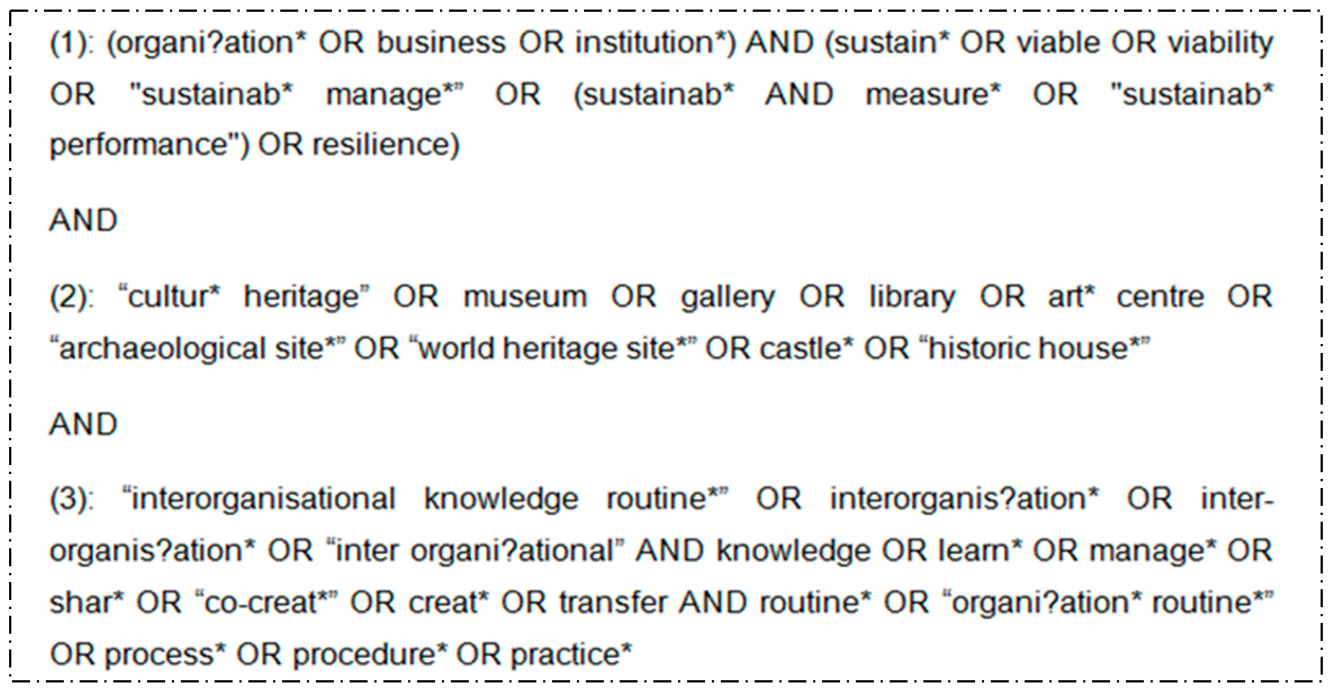
Figure 2.
PRISMA process for filtering the results.
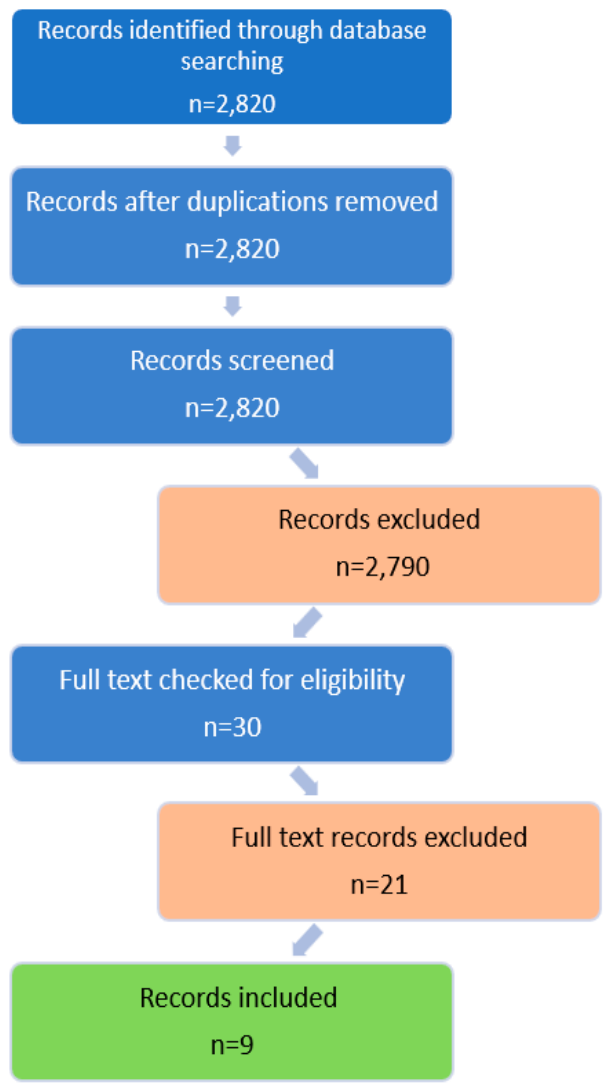
Figure 3.
UK cumulative museum closures 1960-2019. Source: Graph developed by the Author using data from (Museums Mapping, 2021).
Figure 3.
UK cumulative museum closures 1960-2019. Source: Graph developed by the Author using data from (Museums Mapping, 2021).
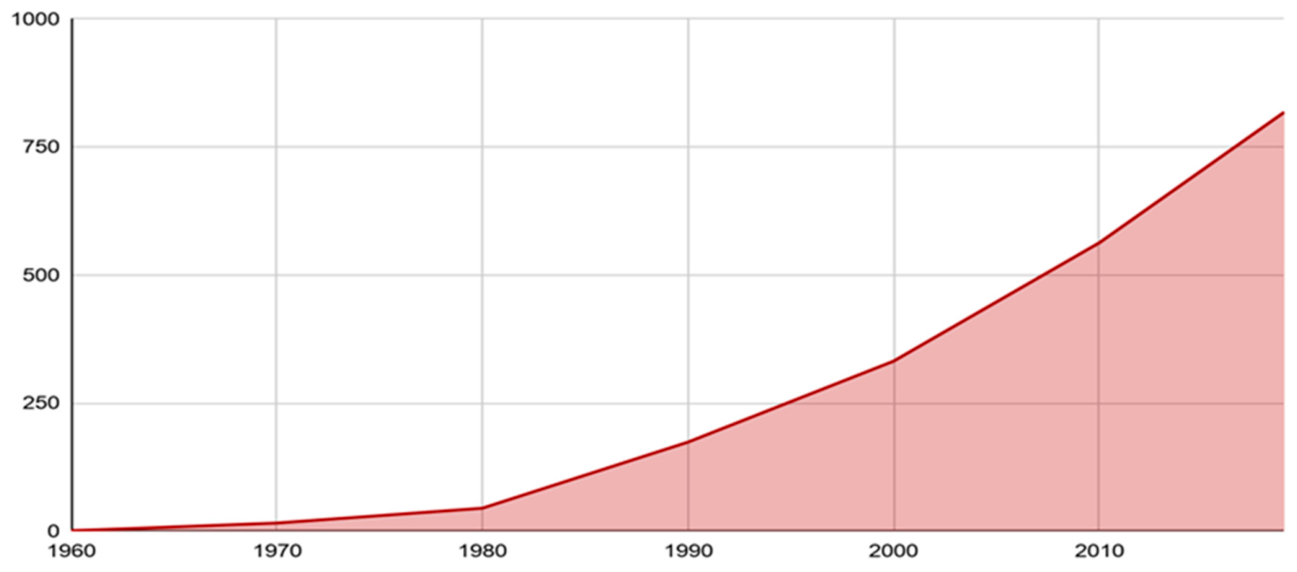
Figure 5.
The cultural sector and its overlaps with other Department for Digital, Culture, Media & Sport (DCMS) sectors. Source: DCMS Sector Economic Estimates Methodology (DCMS, 2025, fig. 2.1).
Figure 5.
The cultural sector and its overlaps with other Department for Digital, Culture, Media & Sport (DCMS) sectors. Source: DCMS Sector Economic Estimates Methodology (DCMS, 2025, fig. 2.1).
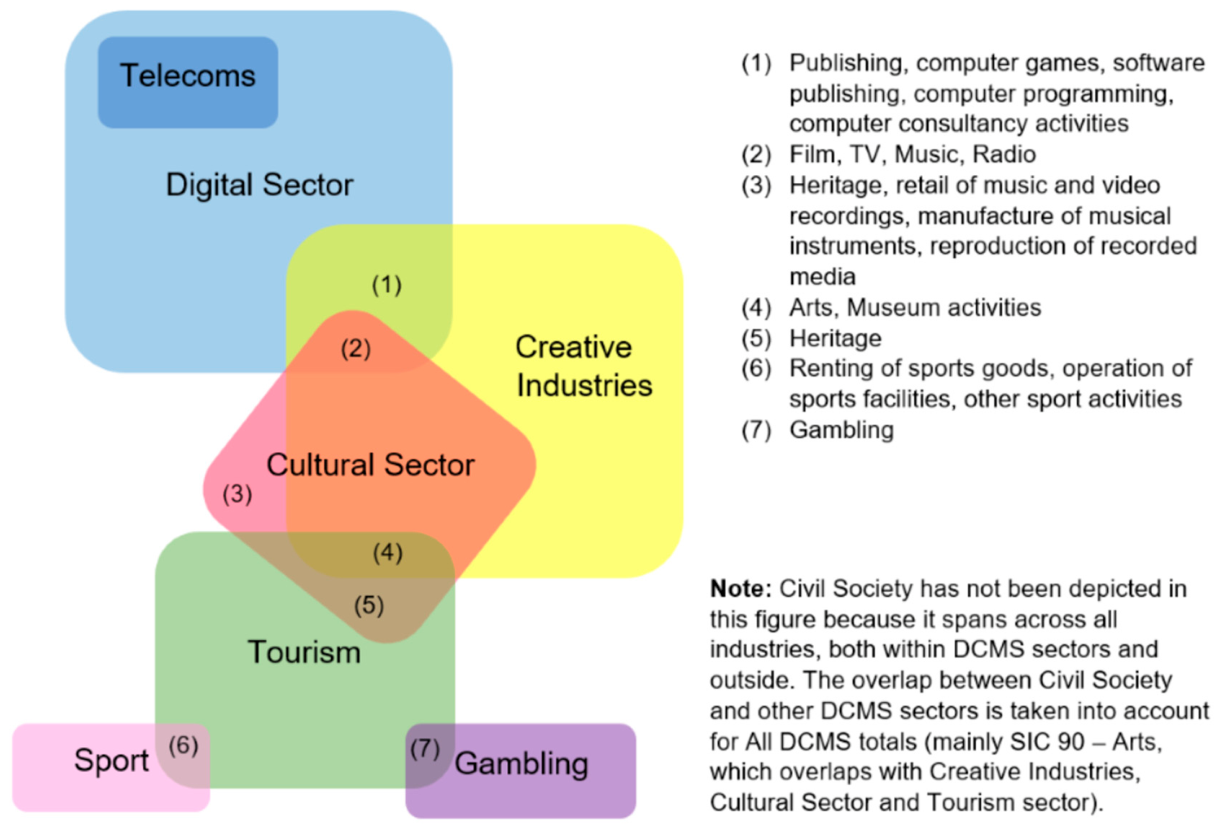
Figure 6.
The six ‘domains of activity’ within England’s heritage sector. Source: Knowing the Sector Description Final Draft, (The Audience Agency and MyCake, 2024b, p. 7).
Figure 6.
The six ‘domains of activity’ within England’s heritage sector. Source: Knowing the Sector Description Final Draft, (The Audience Agency and MyCake, 2024b, p. 7).
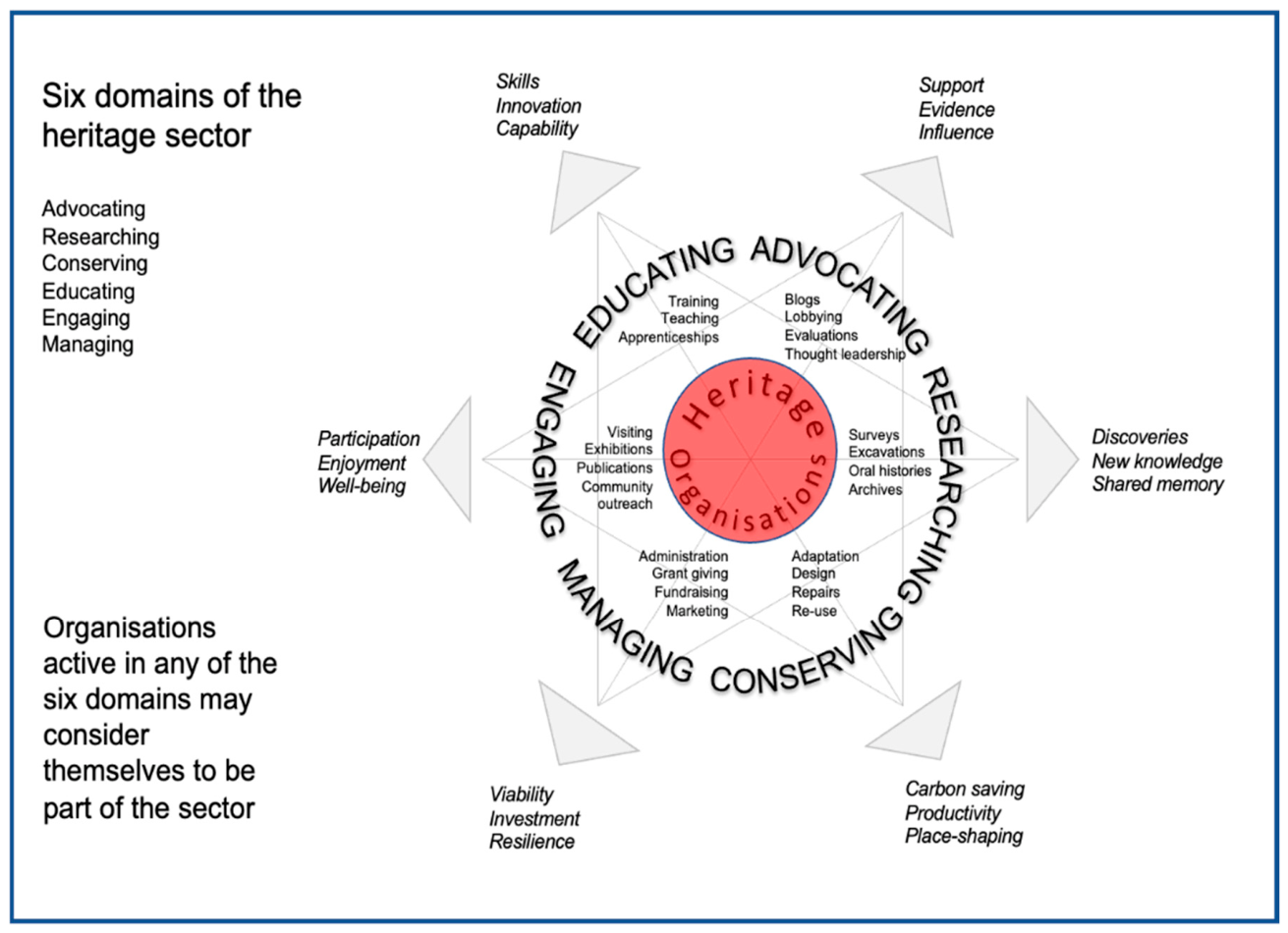
Figure 7.
Data service architecture for Heritage. Source: Knowing the Sector Description Final Draft, (The Audience Agency and My Cake, 2024b, p. 21).
Figure 7.
Data service architecture for Heritage. Source: Knowing the Sector Description Final Draft, (The Audience Agency and My Cake, 2024b, p. 21).
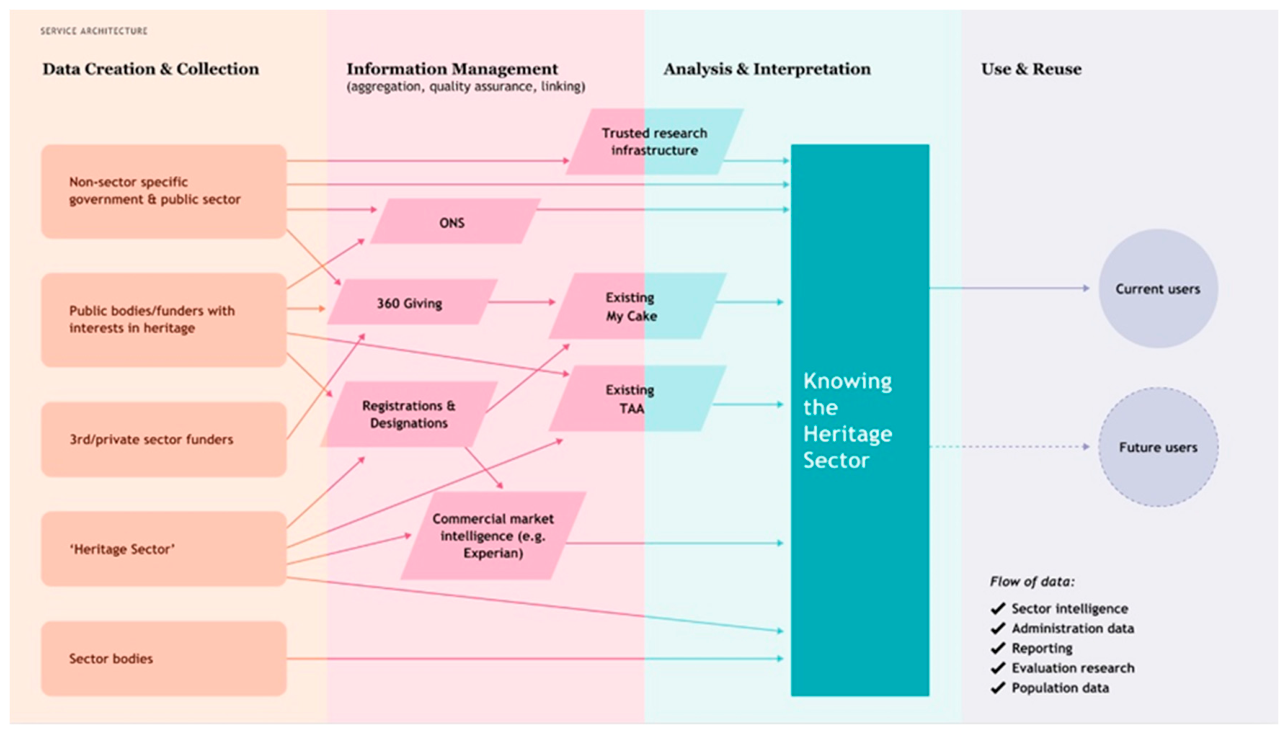
Figure 9.
UNESCO’s thematic indicators of objective areas. Source: Poster (UNESCO World Heritage Centre, 2009).
Figure 9.
UNESCO’s thematic indicators of objective areas. Source: Poster (UNESCO World Heritage Centre, 2009).
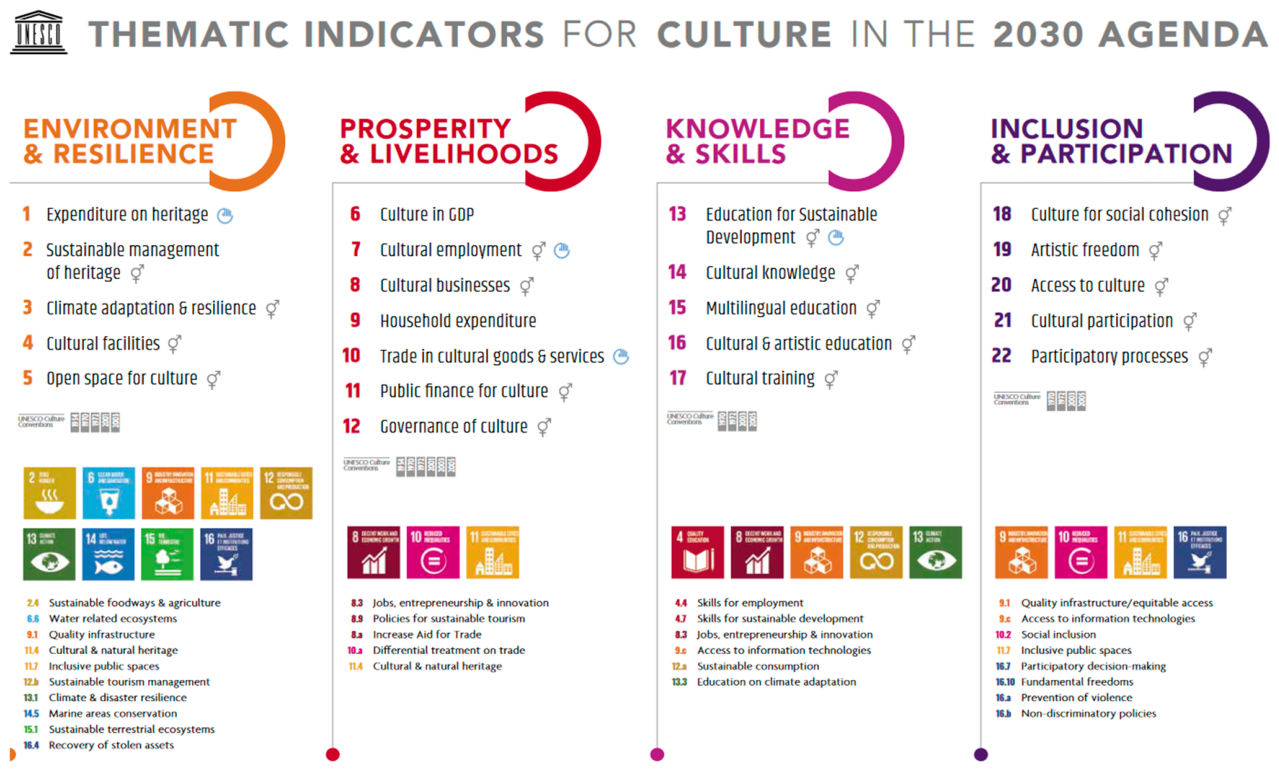
Figure 12.
The 16 common operational areas found in literature within the 15 cultural heritage habitats, grouped across the four intergenerational public-good objectives (cultural education, social participation, economic development, environmental preservation). Source: Author.
Figure 12.
The 16 common operational areas found in literature within the 15 cultural heritage habitats, grouped across the four intergenerational public-good objectives (cultural education, social participation, economic development, environmental preservation). Source: Author.
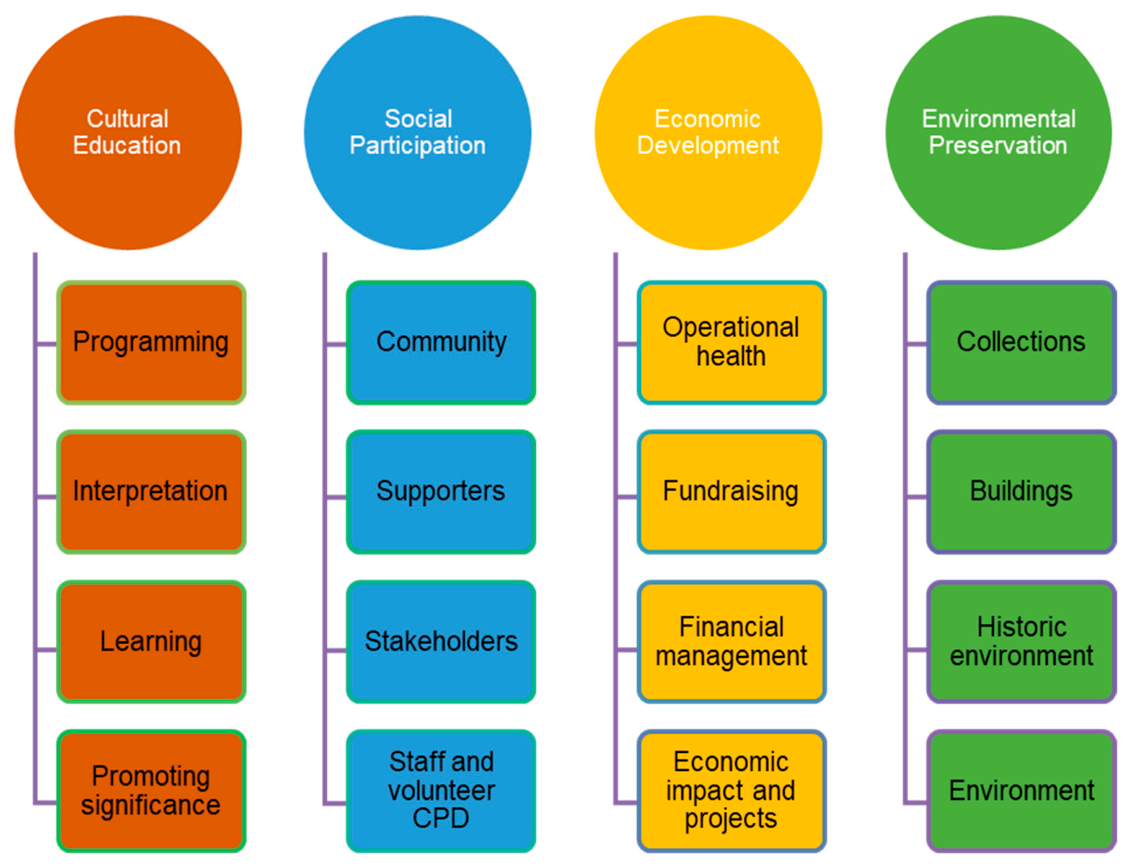
Figure 13.
Macro-level placing of the operational framework between performance and professional development, with the drums as enablers of double loop learning. Source: Author.
Figure 13.
Macro-level placing of the operational framework between performance and professional development, with the drums as enablers of double loop learning. Source: Author.
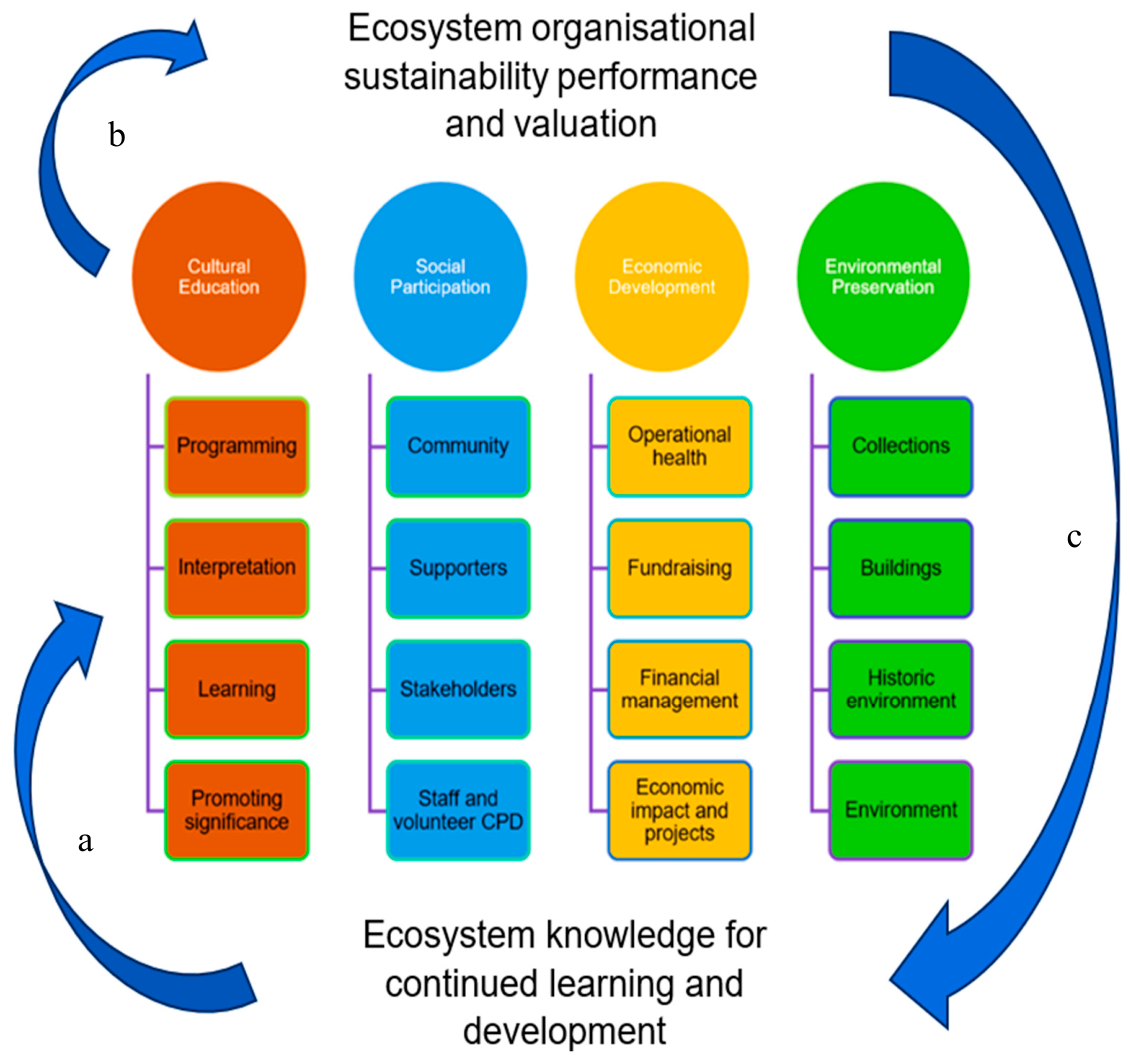
Figure 14.
A knowledge matrix showing the facts, objective, and process, in creating an educational film, alongside the training needed on the content of the film, and to review the quality of the final film. Source: Author.
Figure 14.
A knowledge matrix showing the facts, objective, and process, in creating an educational film, alongside the training needed on the content of the film, and to review the quality of the final film. Source: Author.
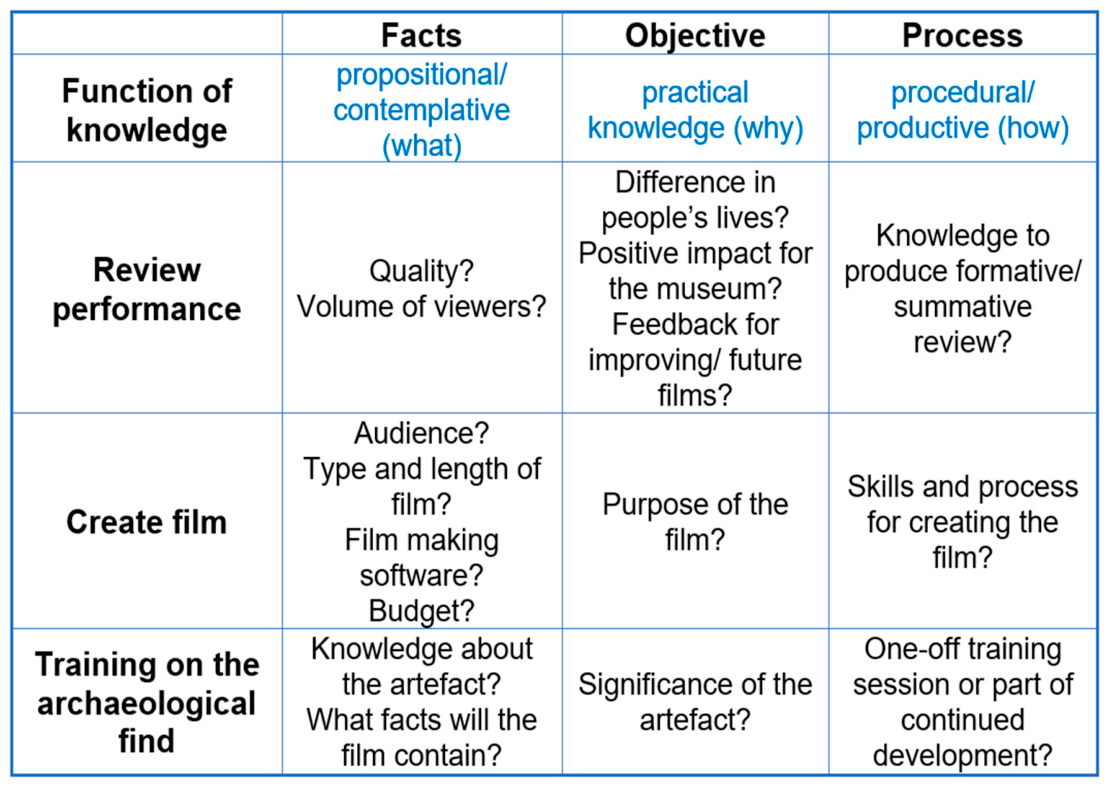
Figure 15.
Representation of STOCKS knowledge auditing method. Source: (Lee and Shek, 2022, p. 49).
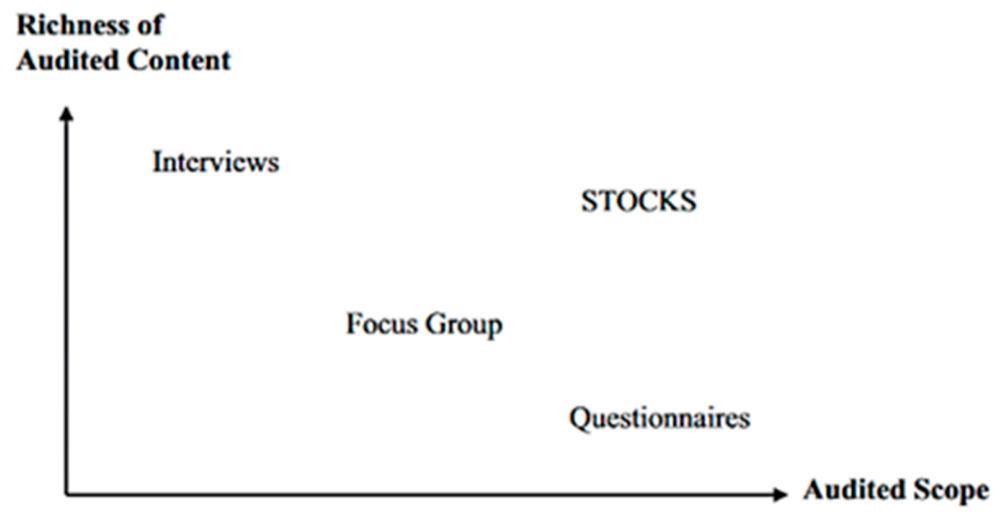
Figure 16.
Boundary Dynamic Interaction of Knowledge Artefacts (BouDIKA) model. Source: Author.
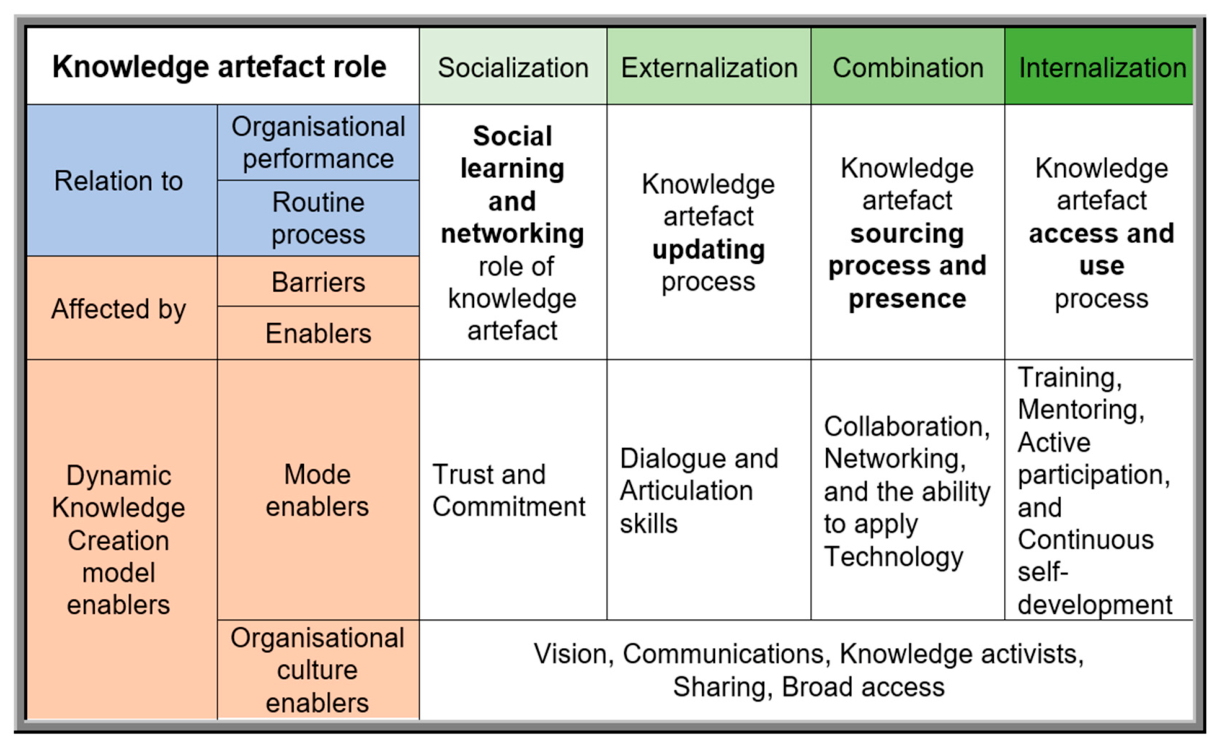
Figure 17.
Deductive, inductive, and abductive types of logical inference. Source (Smith, 2022, p. 165).
Figure 17.
Deductive, inductive, and abductive types of logical inference. Source (Smith, 2022, p. 165).
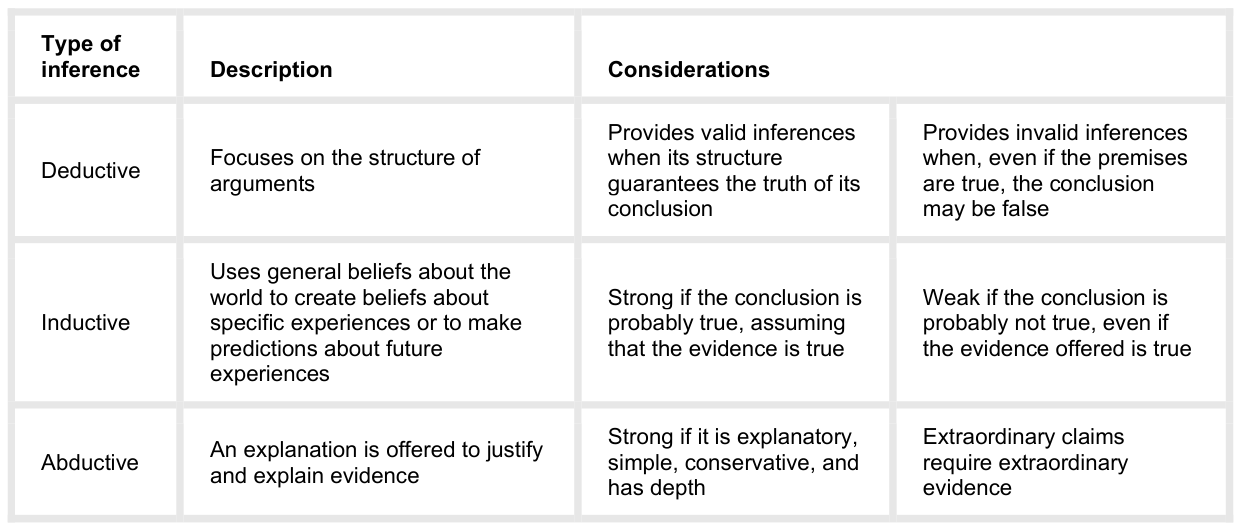
Figure 18.
Methodology structure presenting the empirical steps (1-5) following the introduction and literature review. The empirical steps are followed by the conclusion. Source: Author.
Figure 18.
Methodology structure presenting the empirical steps (1-5) following the introduction and literature review. The empirical steps are followed by the conclusion. Source: Author.
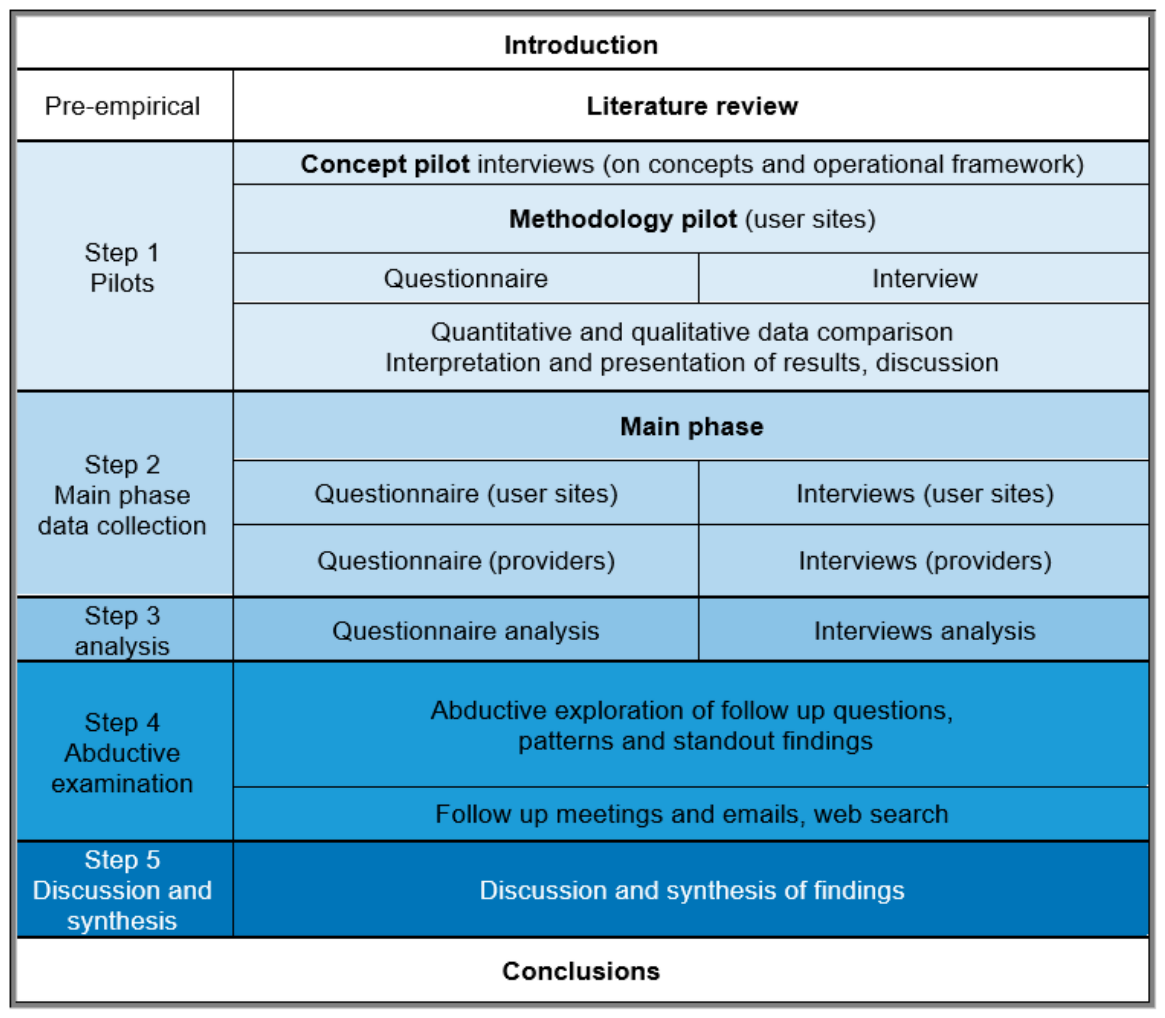
Figure 19.
Summary of the methods used, and types of primary and secondary data collected. Source: Author.
Figure 19.
Summary of the methods used, and types of primary and secondary data collected. Source: Author.
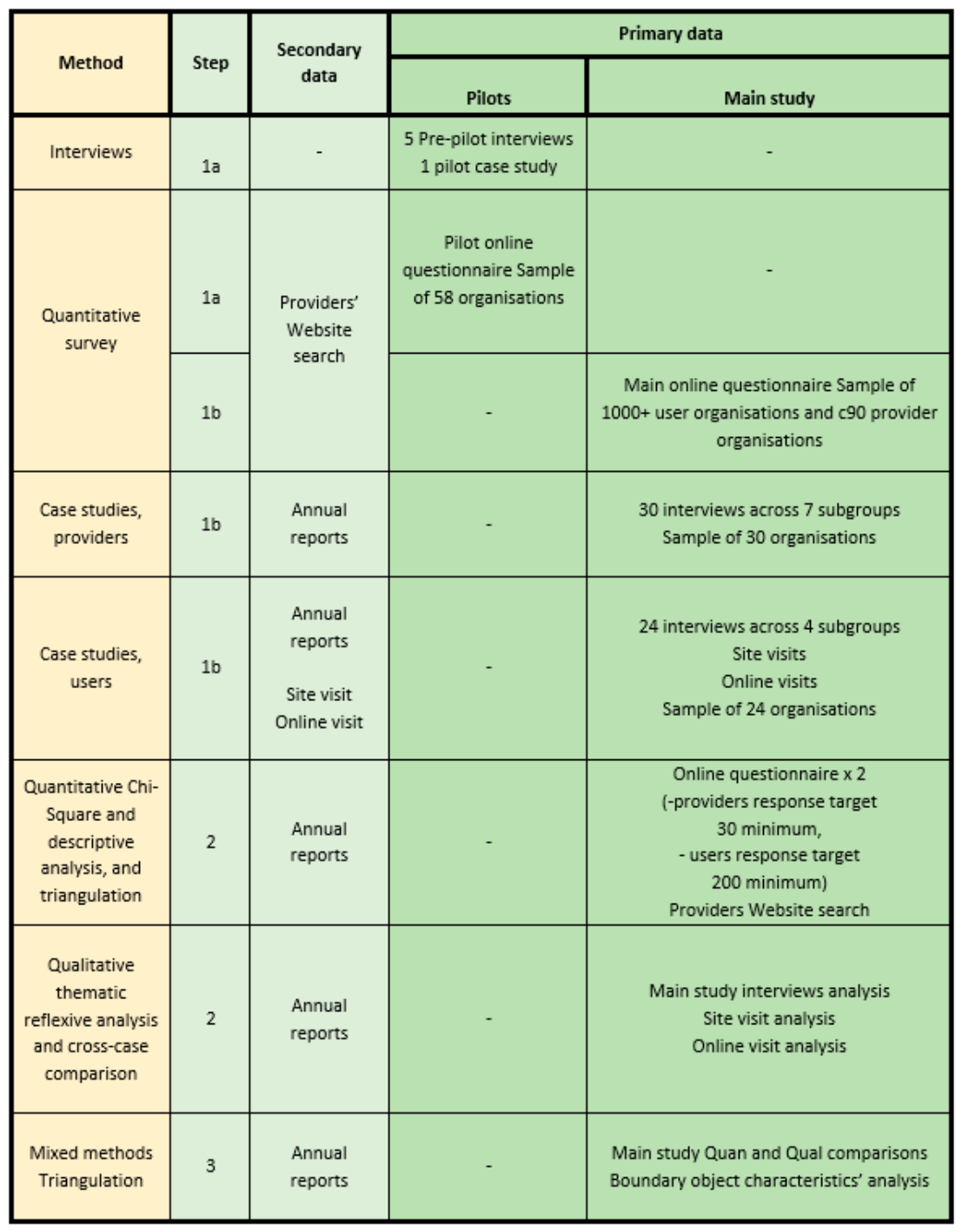
Figure 22.
Performance related to the support schemes of Accreditation, Education award, Visitor award, Other awards, and Membership. Source: Author.
Figure 22.
Performance related to the support schemes of Accreditation, Education award, Visitor award, Other awards, and Membership. Source: Author.
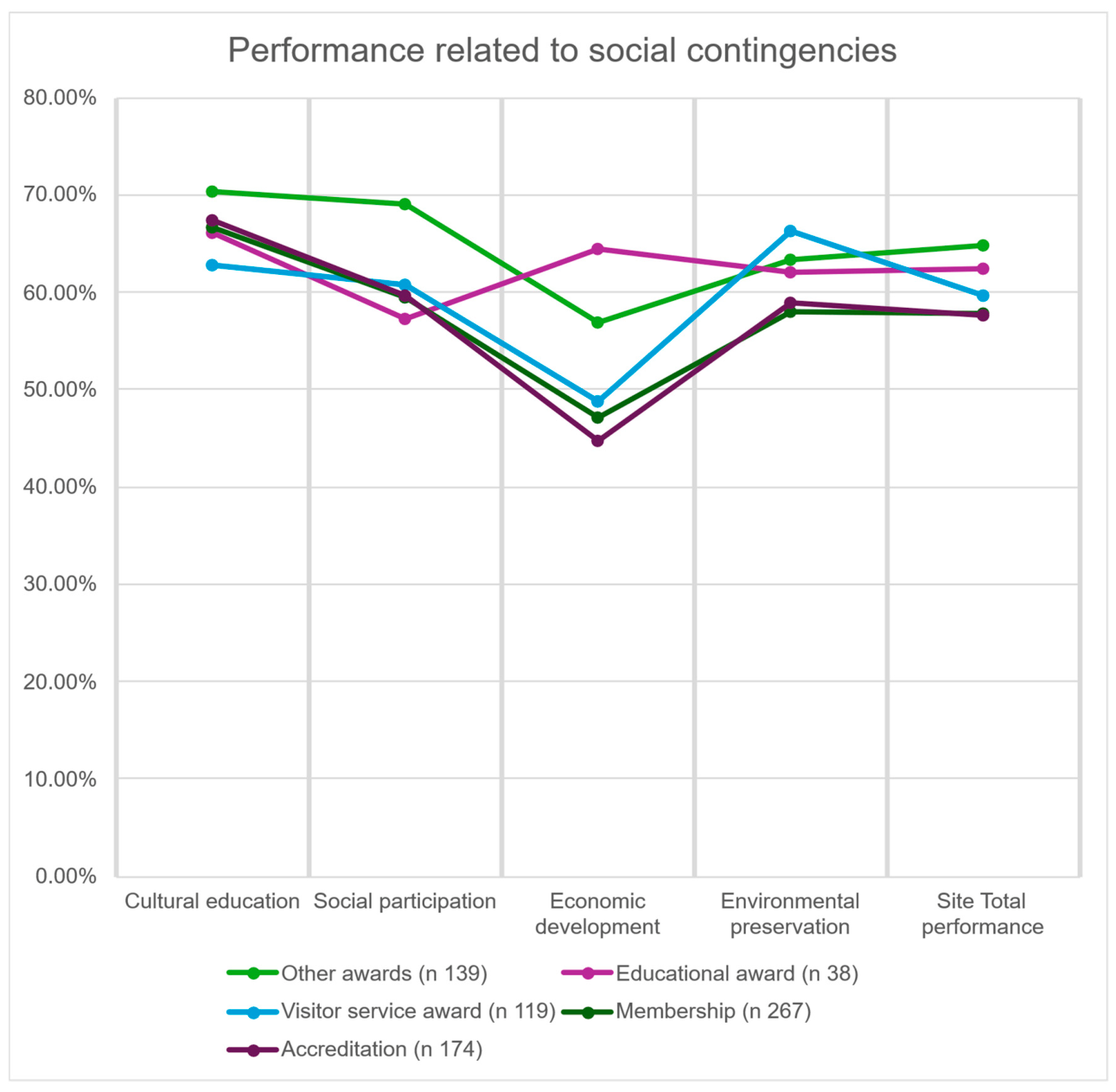
Figure 23.
Current average performance compared to the higher average of support schemes, and with the top performance related to support schemes in respective objectives. Source: Author.
Figure 23.
Current average performance compared to the higher average of support schemes, and with the top performance related to support schemes in respective objectives. Source: Author.
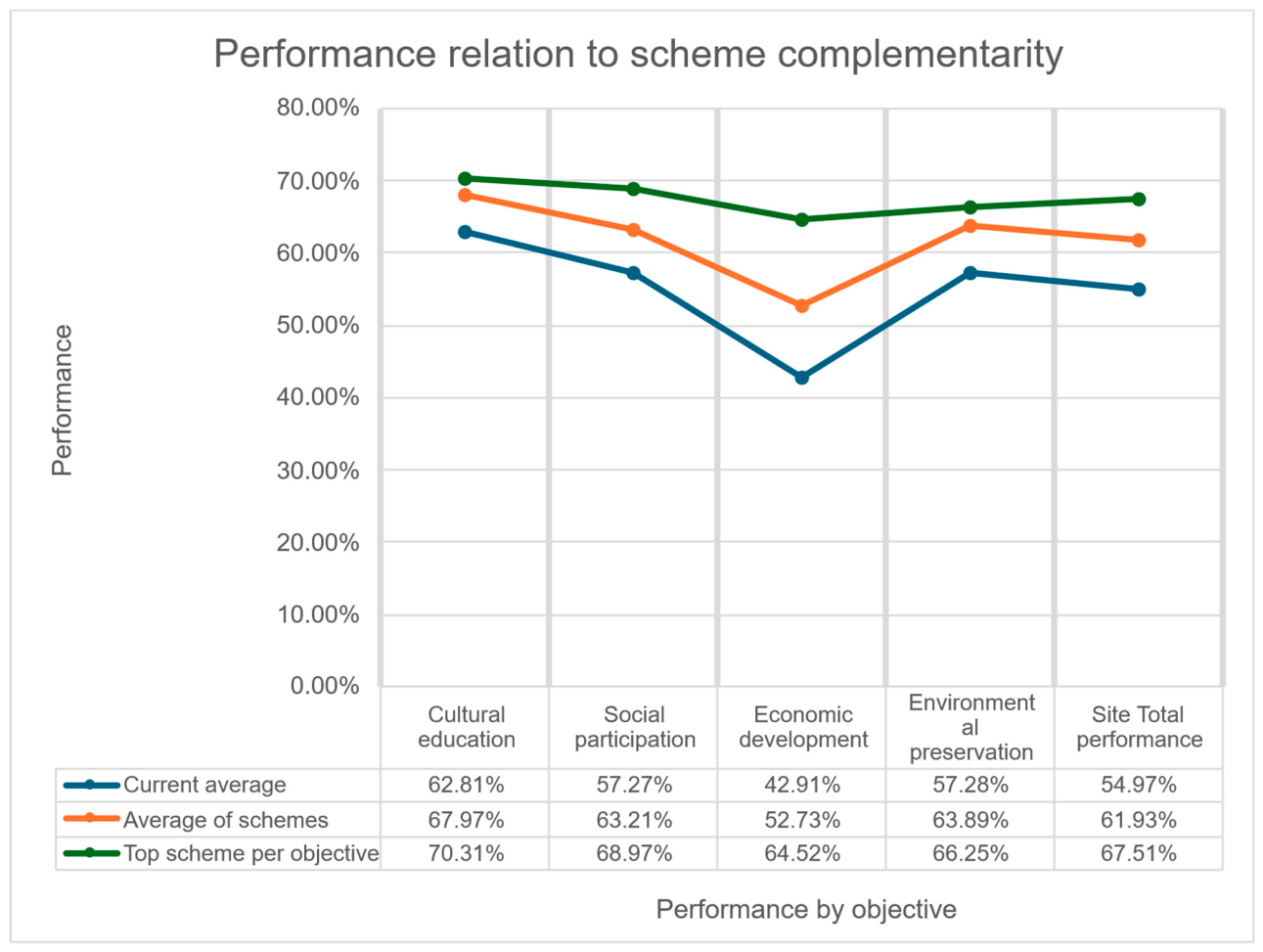
Figure 25.
Knowledge curating design elements. Source: Author.
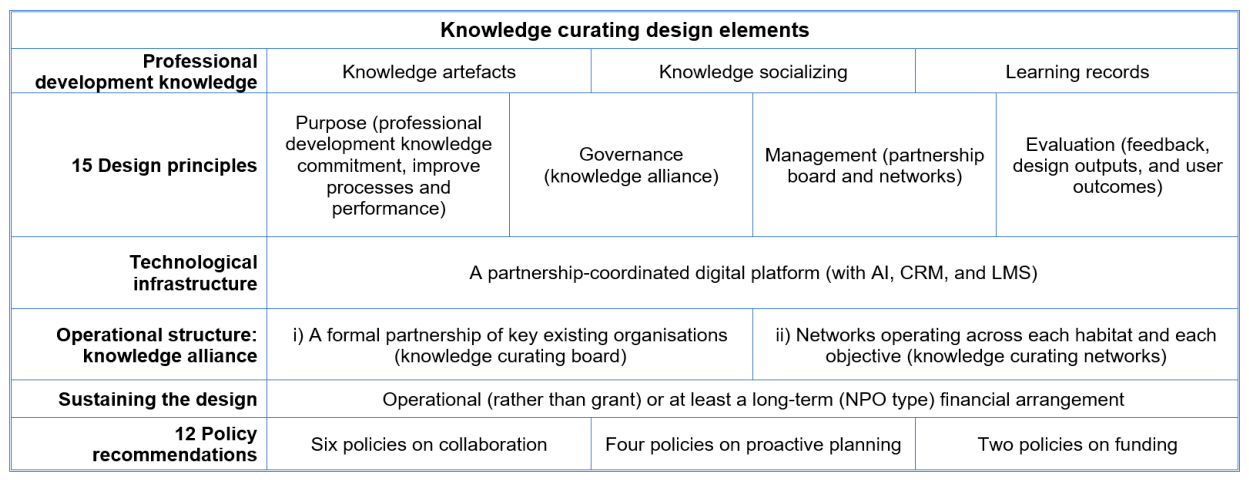
Table 7.
10-year prediction and long-term aspiration for the performance of user organisations. Source: Author.
Table 7.
10-year prediction and long-term aspiration for the performance of user organisations. Source: Author.
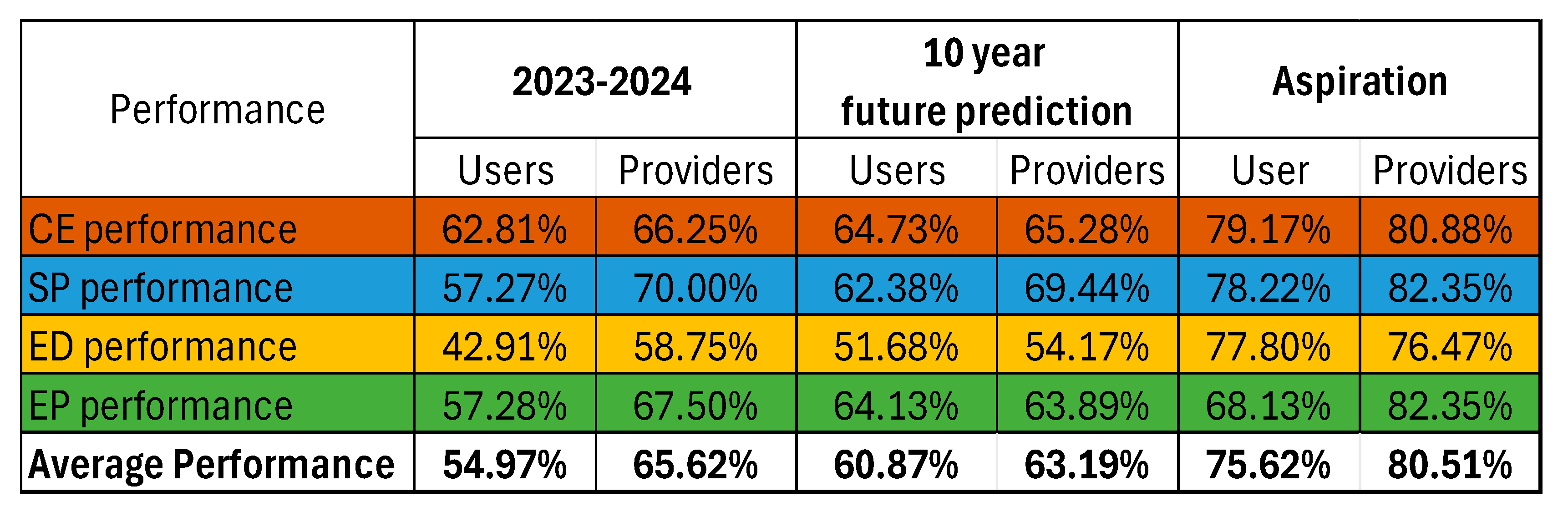 |
Disclaimer/Publisher’s Note: The statements, opinions and data contained in all publications are solely those of the individual author(s) and contributor(s) and not of MDPI and/or the editor(s). MDPI and/or the editor(s) disclaim responsibility for any injury to people or property resulting from any ideas, methods, instructions or products referred to in the content. |
© 2026 by the authors. Licensee MDPI, Basel, Switzerland. This article is an open access article distributed under the terms and conditions of the Creative Commons Attribution (CC BY) license (http://creativecommons.org/licenses/by/4.0/).
Copyright: This open access article is published under a Creative Commons CC BY 4.0 license, which permit the free download, distribution, and reuse, provided that the author and preprint are cited in any reuse.