

Submitted:
24 July 2026
Posted:
27 July 2026
You are already at the latest version
Abstract
Landfilling doesn’t eliminate waste. It is only a mechanism for temporarily storing waste, which means environmental issues continue to persist. Waste in landfills can pose serious risks to the environment and human health, including the emission of potent greenhouse gases such as methane, foul odours, leachate-contaminated groundwater, and the loss of circulating resources vital to a sustainable economy. Landfills are still being created globally, in addition to those that already exist. This alone is a valid reason for us to explore how we manage them, since their impact, both short and long term, can potentially generate a multitude of adverse consequences. Landfill mining (LFM) offers a method to reduce the risk of various contaminants entering the environment from landfills and to recover useful materials from discarded and buried waste. By shifting the view of landfills from waste storage to a source of resources, LFM can help reduce long-term environmental problems, support the circular economy, and change how society manages buried waste. The concept of Landfill Mining (LFM) has emerged as a possible solution to increasing issues in waste management, such as limited landfill space, pollution, and the need to rehabilitate sites. Early LFM projects mainly recovered small quantities of materials, such as soil and waste fuels, but encountered many obstacles, including technological constraints, high costs, and strict regulations, which made LFM less common. Recent research and technological advances suggest that LFM could achieve much more if the right conditions are met. With active enforcement of policies such as extended producer responsibility (EPR), government oversight, and improved material processing, LFM could scale to industrial levels, helping recover more resources and manage legacy waste. Clear guidelines for responsible waste management will be vital for ensuring this over the long term. LFM is not just a way to create value from waste; it also helps implement circular economy principles. This paper describes LFM as a form of ‘retrospective circular economy.’ LFM can transform old landfills into urban mines, converting buried waste into useful raw materials and helping society move towards sustainability.
Keywords:
landfill mining
; retrospective circular economy
; legacy landfills
; urban mining
; resource recovery
; circular economy
; environmental remediation
; waste management
; extended producer responsibility
; sustainable resource use
1. Introduction and Background
This paper explores one of the less investigated options for mitigating the negative impacts of past waste management practices. It highlights LFM as a way to enhance resource recovery and reduce GHG emissions from waste—an aspect often neglected, sometimes for decades. By concentrating on historical waste, this approach embodies a form of retrospective circularity, seeking to recover valuable resources lost through waste management methods that failed to adopt more sustainable options (Yi, 2019).
Although landfill mining (LFM) has been explored for decades, its full potential for resource recovery remains underdeveloped, with applications often limited to land reclamation, energy recovery, and hazard mitigation rather than systematic material recovery (Jones et al., 2013; Huntington, 2022). A stronger emphasis on resource recovery aligns with circular economy principles, enabling the reclamation of valuable materials, reduction of greenhouse gas emissions, and the creation of new economic opportunities (Goh et al., 2025; Yi, 2019).
This paper primarily explores the untapped potential of legacy landfills, emphasising prospects for resource recovery through mining. It looks not only at the material value contained in these sites but also at their wider social and environmental impacts. By addressing these challenges and opportunities, this paper seeks to advance the discussion on urban sustainability and demonstrate how circular economy transitions can be made more comprehensive and effective on a global scale.
1.1. Landfills and the Case for a Retrospective Circular Economy
For decades, landfills have been the primary method of waste disposal globally, serving as the final resting place for society’s discarded materials. Within these sites, successive layers of mixed waste of varying types, toxicity levels, and degradability are compacted and buried, mostly hidden from public view. Essentially, landfills stand as lasting monuments to human consumption, repositories of our discarded legacy and powerful symbols of the linear economy. They entomb valuable resources for centuries, often forever, while new landfills keep spreading relentlessly across the planet’s surface, highlighting an unsustainable cycle that shows little sign of slowing down (Wilson et al., 2006; Hoornweg & Bhada-Tata, 2012; Nanda & Berruti, 2021).
Despite their ubiquity, landfills have long been linked to serious environmental risks (See Figure 1 and Figure 2). They cause soil and groundwater pollution through leachate, emit potent greenhouse gases such as methane, and pose ongoing health risks to nearby communities, often those that are economically disadvantaged and disproportionately affected by environmental harm. However, throughout much of modern history, these impacts were overlooked by policymakers and different levels of government, with landfills being seen as a necessary but regrettable part of urban solid waste management (Scott et al., 2005; Asefi et al., 2020; Blair & Mataraarachchi, 2021; Madden et al., 2023; Wheeler, 2024). Recently, though, a significant shift has begun to occur in waste management. While still considered secondary to efforts such as waste separation initiatives and recycling infrastructure, governments are beginning to question their reliance on landfilling as the primary disposal method. This change reflects the growing adoption of circular economy principles and programs (see below) that aim to cut waste volumes, improve recovery, and encourage more efficient resource use (Geissdoerfer et al., 2017; Kirchherr et al., 2017).
The authors believe that making small, gradual changes to circular economy policies over the long term will not be sufficient to meet urgent climate goals. They suggest a bolder solution: adding landfill mining (LFM) to circular economy plans. This would mean not only carefully digging up and processing old landfill sites to recover materials, clean up polluted land, and reduce environmental risks, but also creating strong management rules for current landfills.
The authors introduce a new term, “Retrospective Circular Economy,” for this broader approach. In this model, societies must manage not only today’s and tomorrow’s waste but also waste buried in the past that is often ignored. This involves applying circular economy principles to old landfills, which may contain valuable metals, minerals, and compostable materials. Recovering these resources can reduce the need to extract new materials, improve waste recovery, and speed up the transition to more sustainable resource use.
Adding landfill mining to circular economy plans helps complete the cradle-to-cradle cycle, in which resources are always recovered and reused, after they end up in landfills (Braungart & McDonough, 2002). This idea challenges the old view of landfills as the end point for waste and instead sees them as “urban mines” that can help improve resource security and sustainability (Krook & Baas, 2013).
Making this change takes more than just new technology. It requires careful planning, advanced engineering, strong rules, and teamwork across disciplines (Johansson et al., 2017). Just as important is a shift in culture and institutions: old landfills should be seen not as permanent problems, but as valuable resources in a circular system (Van Passel et al., 2013). In this context, the global and Australian focus on the circular economy provides a strong base for supporting landfill mining.
1.2. What Is a Landfill?
Landfills are the primary waste management facilities in most cities across the globe, located both on city outskirts and in more isolated areas to keep waste separate from daily urban life. Historically, municipal waste disposal involved open dumping, often in pits or low-lying spots, with little regard for environmental or public health. These methods were widespread worldwide, including in countries now known as developed nations in Europe, North America, and Australia, during the eighteenth and nineteenth centuries. They are still common in many parts of the world today (Melosi, 2005).
The concept of the sanitary landfill, the more sustainable method of waste disposal, in which waste is systematically compacted and covered with soil to reduce odours, pests, and health risks, emerged in the early twentieth century. One of the earliest documented applications of this method was implemented in Fresno, California, in 1937, and subsequently influenced landfill practices in other industrialised countries (USEPA, 2002). From the 1960s onward, increasingly stringent environmental regulations in high-income countries led to the development of engineered landfills, incorporating design features such as impermeable liners, leachate collection and treatment systems, and landfill gas capture to mitigate groundwater contamination and greenhouse gas emissions (Christensen et al., 2001).
In principle, modern sanitary landfills are designed to serve as controlled containment systems, isolating solid waste from surrounding ecosystems while regulating emissions produced during waste decomposition. In practice, however, the widespread use of such facilities is limited to specific areas worldwide. Recent estimates show that over one-third of the world’s municipal solid waste still ends up in open dumps or poorly managed sites, especially in low and middle-income countries, where financial, technical, and institutional capacities for engineered disposal are restricted (Kaza et al., 2018). Consequently, a large share of landfills worldwide do not meet the technical or operational standards for sanitary landfilling and continue to pose serious risks to environmental quality, public health, and climate mitigation efforts.
1.3. What Is Landfill Mining?
Landfill mining (LFM) is defined in multiple ways, but most descriptions emphasise the active excavation, processing, treatment, and recovery of materials deposited in both informal waste dumps and engineered landfills, while also reclaiming the land resource itself (Savage et al., 1993). More specifically, LFM seeks to reduce existing sources of contamination through excavation and treatment, recover and reuse valuable materials, improve the cost-effectiveness of waste management systems, and facilitate site redevelopment and land reuse (Cossu et al., 1996).
Although energy recovery from mined waste is frequently highlighted in the literature, its practical significance depends less on theoretical energy yields than on the quality and usability of the recovered material (Bosmans et al. 2013). The energy potential of excavated landfill waste is primarily associated with its combustible fractions, including plastics, textiles, wood, paper residues, and partially degraded organic matter, as well as, in some cases, residual landfill gas generated through anaerobic decomposition. Empirical evidence, however, consistently demonstrates that mined waste is characterised by high material heterogeneity and wide variation in calorific value, shaped by factors such as landfill age, historical waste composition, climatic conditions, and past compaction and operational practices (Krook et al., 2012; Jones & Tielemans, 2018). Older landfills, in particular, tend to contain substantial proportions of inert materials, including soil, ash, and construction debris, which dilute overall energy potential. Nevertheless, studies indicate that recoverable combustible fractions may still comprise approximately 20–40% of the excavated mass, especially in landfills developed during or after the proliferation of plastic-based consumer products (Prechthai et al., 2008).
Landfill mining first took place in 1957 in Israel, where soil cover was removed to be used as fertiliser in orchards (Krook et al., 2012). This early effort sparked the idea of extracting resources from landfills but did not gain widespread attention again until the 1980s. A meta-analysis by Krook et al. (2012, page 516), covering 1988 to 2008, indicated that landfill mining was primarily seen as a way to address common landfill issues, such as space shortages and local pollution. Some LFM projects have focused on recovering resources, mainly soil, using basic excavation and screening tools. Reporting of mining recyclable items or critical metals that can generate higher financial returns was of lesser significance. Also, over the last few decades, reported progress has been limited, with academic articles describing ‘enhanced landfill mining’ primarily as a process of material recovery, mostly limited to removing soil cover or extracting materials for use as refuse-derived fuel (Muttaraid et al., 2024).
In Europe, institutional and legal barriers have significantly constrained the implementation of LFM initiatives. European landfill regulations are built on the assumption that landfills are sources of pollution and pose health and safety risks, particularly when disturbed. Juusti (2018) highlights that both EU and Finnish law aim to ensure that active and legacy landfills are maintained in a safe and environmentally secure condition. Because excavation can expose workers and nearby communities to hazardous emissions, landfill mining under the European Landfill Directive becomes legally and operationally complex.
However, the opportunity was not entirely prohibitive, as when a landfill is deemed unsanitary or fails to meet the standards of the Landfill Directive, EU legislation requires corrective action to prevent environmental harm. Such measures, often involving remediation, could open doors for landfill mining. Nonetheless, even in these cases, strict regulations limit LFM as a mainstream activity. Within the EU, landfill mining is restricted not only by the Landfill Directive but also by broader legal frameworks, including the Waste Framework Directive (WFD) and the precautionary principle. These frameworks restrict the conditions under which LFM can proceed and demand strong justification. Due to limited experimentation in mining, securing stable markets for recovered materials is also a common challenge. As Johansson (2016) and Justin (2018) observe, even when considerable effort is put into resource recovery, the lack of viable end uses can turn reclaimed materials into a secondary waste problem, simply shifting the disposal burden rather than solving it.
The challenges are even more acute when dealing with older legacy landfills. These landfills, often poorly engineered and environmentally vulnerable, were created before modern concerns such as resource recovery, recycling, and sustainable waste management gained prominence (Pires et al., 2011). These sites are now environmentally sensitive and require ongoing monitoring, remediation, or rehabilitation, and such vulnerability may pose additional challenges if they are subject to mining. In the context of climate-related disasters such as heat waves, floods, coastal inundation, and landslides, unmanaged legacy landfills can quickly escalate into severe health and safety threats. Deteriorated conditions and outdated construction make them susceptible to leaching, structural failure, and the release of hazardous materials, underscoring the urgency of integrating legacy landfill management into contemporary environmental and disaster-resilience planning.
Even after several EU-funded pilot projects and significant advances in landfill mining research, a full-scale landfill mining operation driven primarily by systematic resource recovery has yet to be implemented globally (Dumont et al., 2018). Progress in this field continues to be constrained by a range of interrelated obstacles, including legal, regulatory, and institutional obstacles (Johansson, 2016; Juusti, 2018). These constraints were reflected at the policy level when the European Council declined to endorse the amendment adopted by the European Parliament in March 2017 that sought to formally recognise Enhanced Landfill Mining (ELFM) within the EU Landfill Directive as part of the Circular Economy Package (Jones et al., 2018; Nalladiyil & Babu, 2024).
Processing of landfill-derived materials involves technological challenges related to handling composite wastes and effectively separating recoverable components. Additionally, a large portion of the excavated landfill material consists of non-compostable fractions, especially low-value plastics and other residues, where demand remains weak, mainly because products made from virgin petroleum are still significantly cheaper.
Márquez et al. (2019) reviewed 112 LFM projects worldwide and found that LFM activity was very limited outside Europe and, when undertaken, yielded limited productive outcomes. For instance, a significant project in the United Arab Emirates from 2004 to 2008 excavated about 1.9 million square metres of the Sharjah landfill, and much of the recovered material was used for backfilling, while some of the remaining material, including metals and timber, was recycled (Mandpe et al., 2019). In the United States, several LFM projects have been undertaken mainly for environmental remediation and to extend landfill lifespan (Sabour et al., 2020).
Across Asia, several countries, including South Korea, Sri Lanka, India, and Pakistan, have explored LFM primarily to mitigate environmental risks to the surrounding land (Zoungrana et al., 2022). India was the first in the region to undertake landfill mining, beginning with the Deonar landfill in 1989. However, the results yielded mostly fine materials such as compost-like soil. Subsequent initiatives between 1997 and 2013 were similarly driven by the need to rehabilitate degraded waste sites. In Taipei City, Taiwan, LFM efforts also focused on land restoration. Much of the excavated waste was returned to the landfill, while portions were diverted to municipal waste-to-energy incineration or repurposed as construction materials (Mandpe et al., 2019). Case studies from China and Thailand show a similar pattern: the primary goal of LFM has been the excavation of fine fractions for use as compost in horticulture, alongside limited energy recovery from combustible materials. However, concerns remain regarding the quality and safety of these fine fractions. As Zoungrana et al. (2022) note, such materials may contain contaminants, and in some countries, their use in agricultural compost is restricted.
Krook and Baas (2013) concluded that landfill mining has high potential but identified a need for applied research to develop extraction technology and assess performance in practice. Mandpe et al. (2019), Dumont et al. (2018), Sabour et al. (2020), and Zoungrana et al. (2022) also highlighted the promising nature of landfill mining despite limited action. Research by several international agencies (The Economist, 2024; Pandey, 2020; World Economic Forum, 2018, 2019) suggests that landfills may contain substantial amounts of gold with concentrations in some items up to 15 times those found in natural gold deposits. Extracting gold from LFM has significantly lower environmental impacts than conventional mining, which uses heavy machinery and toxic chemicals to extract small amounts of gold from ore. Even with this tempting value, there is a persistent reluctance to approach landfill mining proactively (Johansson 2016; Duarte et al. 2024; The Economist, 2024). Figure 3 displays the estimated values attributed to potential e-waste buried underground.
Meanwhile, the search for innovative solutions to reduce MSW continues to reduce the flow of materials going to landfills. Nevertheless, such solutions are implemented very slowly because they require complex coordination among stakeholders and the efficient implementation of Extended Producer Responsibility (EPR).
1.3.1. Landfill Typologies Relevant to Landfill Mining
Landfill typology is a critical determinant of landfill mining outcomes, as waste composition, layering practices, and contamination pathways vary significantly across sites. Two landfill types are particularly relevant: Construction and Demolition (C&D) landfills and Municipal Solid Waste (MSW) landfills. Figure 3 Estimated values attributed to potential e-waste buried underground.
C&D landfills predominantly receive materials from excavation, construction, renovation, and demolition activities. These sites are characterised by high proportions of inert materials, including soil, sand, concrete, masonry, asphalt, and mixed rubble. Importantly, soil constitutes an inherent component of the waste stream, originating from earthworks rather than from operational cover practices. Consequently, C&D landfills exhibit low organic content, limited biodegradation, and minimal landfill gas generation, offering greater potential for aggregate and soil recovery than for energy recovery.
By contrast, MSW landfills contain heterogeneous household and commercial waste streams, including organics and combustible materials. In these landfills, soil is intentionally imported and applied daily, intermediate, or final cover, creating stratified layers of waste and cover material. This results in complex material mixtures during excavation, with higher potential for energy recovery but greater challenges in material separation.
Recognising the structural differences between C&D and MSW landfills is essential for designing appropriate landfill mining strategies and setting realistic recovery expectations.
1.4. The Circular Economy Explained
Following the idea of a “Retrospective Circular Economy” introduced above, a more detailed examination of the term Circular Economy (CE) is pertinent. The conceptual foundation of reducing or even eliminating waste is far from new. Discussions about minimising resource use and promoting recycling have been integral to sustainability dialogues for decades, though the term itself only entered mainstream academic discourse in the last two decades (Geissdoerfer et al, 2017; Kirchherr et al. 2017).
In 1966, American economist and philosopher K.E. Boulding anticipated its core principles, arguing that sustaining life on Earth requires viewing the planet as a closed system with finite resources and no external inputs. In his seminal essay “The Economics of the Coming Spaceship Earth,” he conceptualised the economy and the environment as parts of a circular, self-sustaining system, in which waste and resource use must be continuously balanced (Boulding, 1966).
Around the same time, Athelstan Spilhaus, President of the American Association for the Advancement of Science, outlined the concept of a closed-loop industrial system, declaring that “Ideally ... All water would be purified and reused; all solid wastes would be sent back as resources for making more things” (Spilhaus, 1966: p. 488). However, it was Stahel (1982) who first brought the idea of circularity to the fore as a practical approach to addressing resource depletion and regeneration, calling for the need to develop systems to facilitate a “spiral-loop system that minimises matter, energy-flow, and environmental deterioration” principles enshrining the earliest environmental sustainability thinking. In the 1990s, Pearce and Turner (1990) introduced the circular economy in economic terms, distinguishing between capital stocks and their flows. More practical circularity models have emerged in the interim, the most well-known being the ‘cradle to cradle” approach, introduced by Braungart and McDonough (2002) and biomimicry by Benyus (1997).
Figure 4.
Waste and recovery process in the Circular Economy. Source: NSW DPIE, 2021.
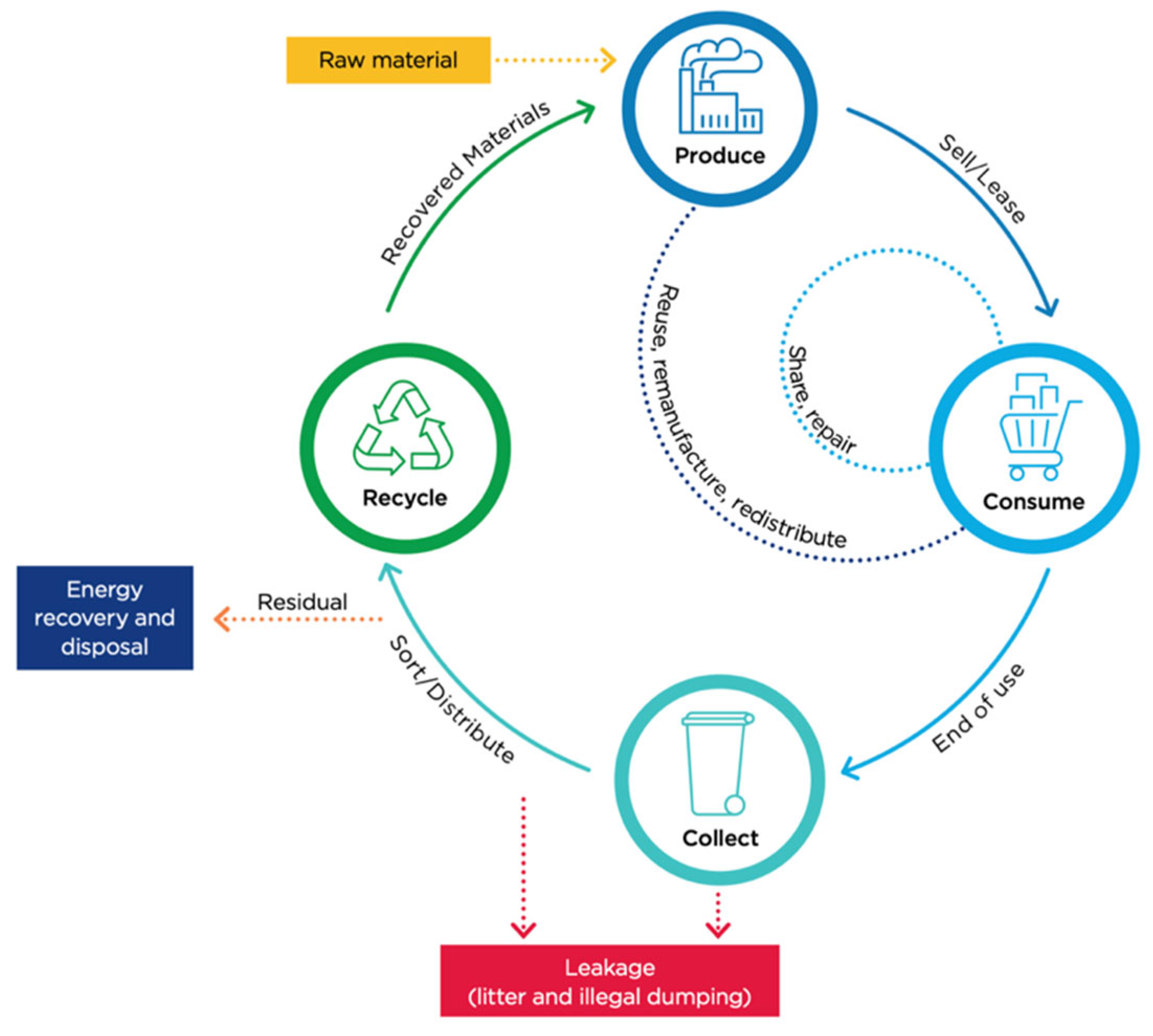
Although the word was not specifically mentioned, in their book, Cradle to Cradle: Remaking the Way We Make Things, Braungart and McDonough (2002) introduced circularity to the manufacturing sector. They actively engaged with industry, advising on how to redesign consumables to “change the way they make things.” Their book provided the basis for transitioning from eco-efficiency to eco-effectiveness, pioneering the transition from ‘doing less bad’ to ‘doing good’. Benyus (1997) added to the discourse, identifying biomimicry as the imitation of nature’s models and the application of ecological principles to judge human endeavours. Both publications continue to inspire many sustainability innovations.
Although the idea of a circular economy has existed for some time, it was not fully recognised as a distinct paradigm within environmental policy and research circles until the early 2010s. A major turning point came in 2013, when the Ellen MacArthur Foundation (EMF) published the first volume of its influential Towards the Circular Economy report (EMF, 2013). This publication introduced the now-iconic “butterfly diagram” (See Figure 5), which vividly illustrates the flows of materials within a circular system and catalysed global attention toward the concept.
The European Commission adopted a Circular Economy Package in 2015, which included a full set of legislative proposals covering waste, packaging, landfill and e-waste. It set out binding targets for 2030: (65% municipal waste recycling, 75% packaging recycling, and a reduction of waste to landfill to not more than 10% of MSW) and provided a more comprehensive “cradle-to-grave” action plan (European Commission, 2015; 2015a).
On a parallel track, the World Economic Forum (WEF) authored a major report, Towards the Circular Economy: Accelerating the scale-up across global supply chains (2014), which laid out how circular-economy thinking could be mainstreamed via policy, design and business models (WEF, 2014). The combined efforts of the European Commission and the WEF not only gave momentum to circular-economy frameworks within Europe but also fed into global policy dialogues. For example, several Australian state governments explicitly reference EU documentation when developing their own CE strategies.
2. Waste Management and the Circular Economy in Australia
Although waste management practices in Australia have improved significantly over the past few decades, particularly in municipal solid waste collection efficiency and increased recycling rates, engagement with CE has largely remained rhetorical; policy initiatives, research, and dialogue have not always translated into practical programs (Velis, 2017; Williams, 2019). Furthermore, the dominant focus on waste recovery often equates circularity solely with recycling instead of recognising its broader potential across social, economic, and environmental aspects. For instance, practices like adding recycled glass into asphalt are beneficial, but they do not constitute a truly circular approach; instead, they are an extension of linear processes. The same applies to waste-to-energy initiatives. Achieving the full potential of CE requires a deeper understanding of the concept and a comprehensive cultural and institutional shift. Circularity should be viewed as a sustainability challenge encompassing resource depletion, pollution, climate change, and social inequality, rather than merely a recycling technique. This perspective positions circularity not just as a technical or industrial framework but as a societal paradigm capable of fostering long-term ecological resilience.
2.1. Waste and Landfills in the Australian Context
Despite increasing attention to responsible waste management and the transition towards a circular economy, Australia still lacks consistent, comprehensive, and up-to-date national data on its waste infrastructure. Much of the earlier analysis has depended on datasets from the National Waste Report 2013, and although subsequent reporting, particularly the National Waste Report 2020 and more recent updates by the Department of Climate Change, Energy, the Environment, and Water, has improved the evidence base, significant gaps remain. The available data is still insufficient to support detailed, system-level or forensic analysis of waste infrastructure and performance (Department of the Environment 2014; Pickin et al. 2020).
Recent estimates suggest that Australia generated approximately 76 million tonnes of waste in 2022–23, of which around 48 million tonnes were disposed of to landfill (DCCEEW, 2025). The number of landfills operating across Australia is less precisely defined, with estimates typically ranging from around 1,000 to over 2,000 sites, depending on classification, including smaller and unlicensed facilities.
Although various sources have attempted to quantify waste infrastructure, such as resource recovery facilities and transfer stations, these figures are often inconsistent due to differences in definitions, reporting standards, and jurisdictional data collection. As a result, while Australia has a well-developed waste management network, comprehensive and standardised national infrastructure data remains limited.
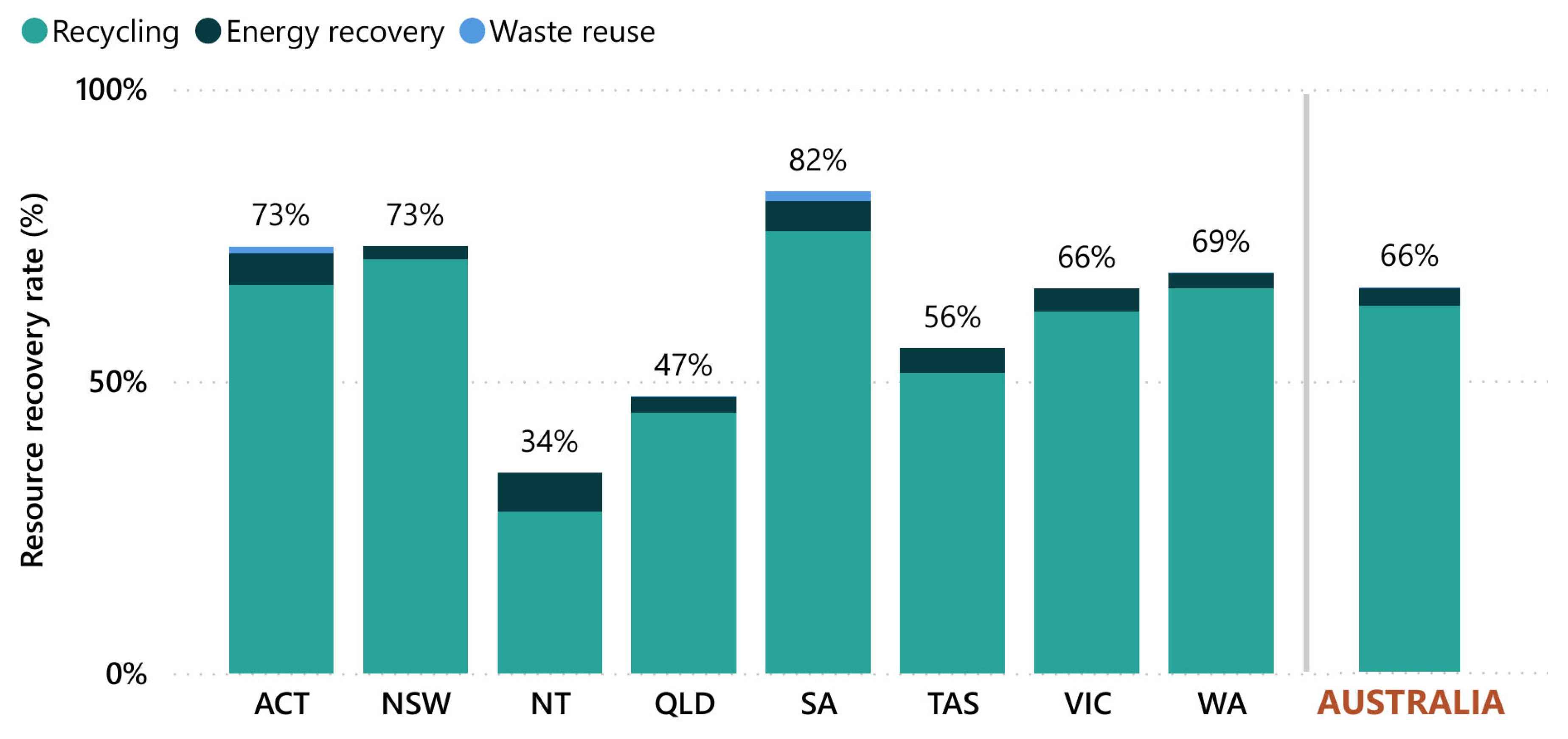
As shown in Table 1, Table 2 and Table 3 and Figure 2, waste generation in Australia continues to increase in absolute terms, reaching approximately 76 million tonnes in 2022–23, a 1.8% rise from the previous year. However, on a per capita basis, waste generation slightly declined from 2.883 to 2.875 tonnes (–0.3%), indicating modest decoupling from population growth. Over the longer term, national data suggest that waste generation has broadly tracked population growth, while increasing at a slower rate than GDP, reflecting incremental improvements in resource efficiency (DCCEEW, 2025, 2025a).
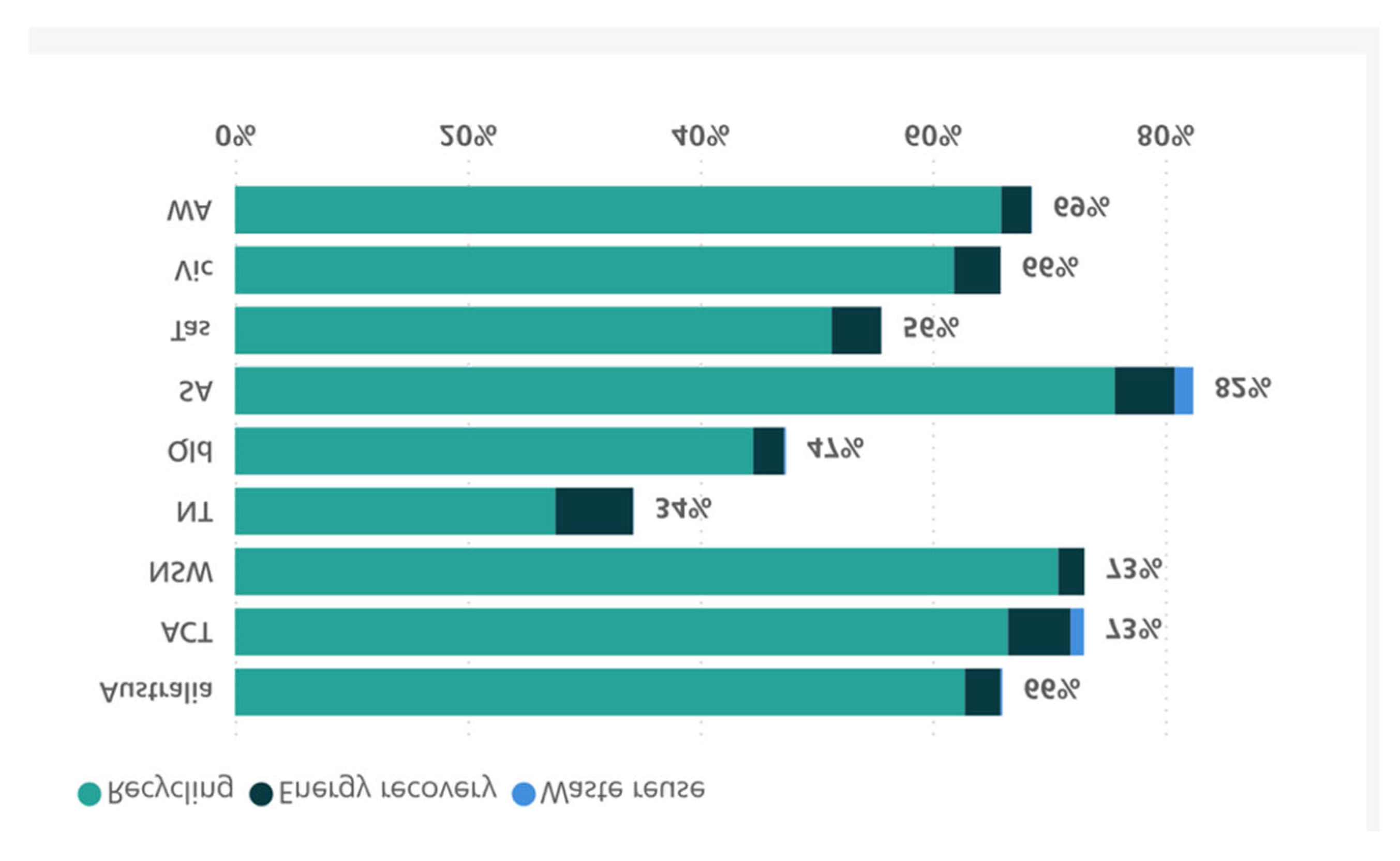
Approximately 34% of total waste continues to be disposed of in landfills, based on 26 million tonnes of disposed waste in 2022–23. This implies that around 66% of waste is diverted through recycling, reuse, composting, and waste-to-energy processes, representing a relatively strong resource recovery performance by international standards. Nevertheless, despite improvements in recovery rates and increasingly engineered landfill systems, landfills remain significant long-term sources of greenhouse gas emissions, particularly methane, reinforcing the need to further reduce reliance on disposal pathways.
Figure 6.
Source: DCCEEW, 2025a.
While recycling and reuse rates improved marginally, other forms of recovery showed limited progress (Table 1). According to the National Waste Report 2024 (DCCEEW, 2025), around 82% of “headline waste”, encompassing municipal solid waste, commercial and industrial waste, and construction and demolition waste that could not be diverted, was ultimately landfilled (NSW EPA, 2020).
In total, an estimated 22 million tonnes of core waste were deposited in landfills in 2022–23. Organic waste alone accounted for approximately 14.6 million tonnes. Although the recovery rate for organics has improved modestly—from about 59% in 2016–17 to 62% in 2022–23—the absolute quantity of organics (and other materials) arriving at landfills remains high. Plastics continue to be a major concern: only about 12.5% of plastic waste is recovered, with the remaining 87.5% predominantly ending up in landfills (DCCEEW, 2025).

Table 4.
Waste generation by Stream (2016-17 and 2022-23).
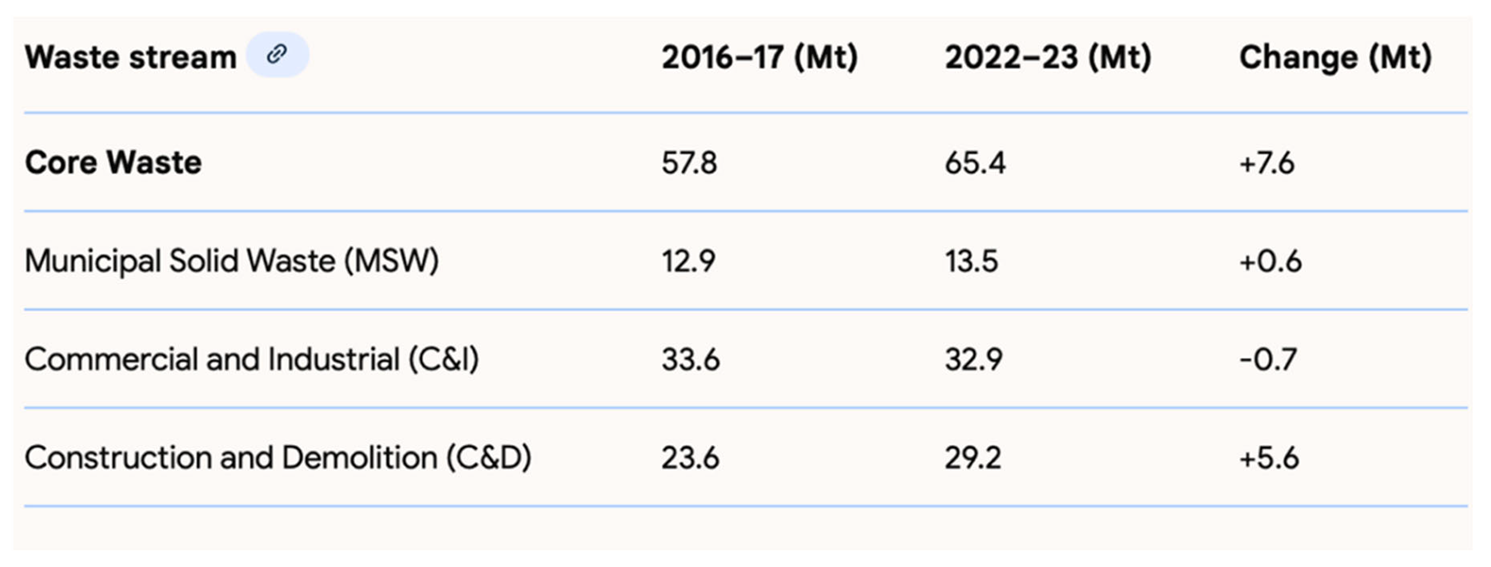 |
Source: Pickin & Macklin 2025.
Figure 7.
Waste generation per person and the proportion of waste recovered for reuse, recycling and energy. Source: DCCEEW, 2025a.
Figure 7.
Waste generation per person and the proportion of waste recovered for reuse, recycling and energy. Source: DCCEEW, 2025a.
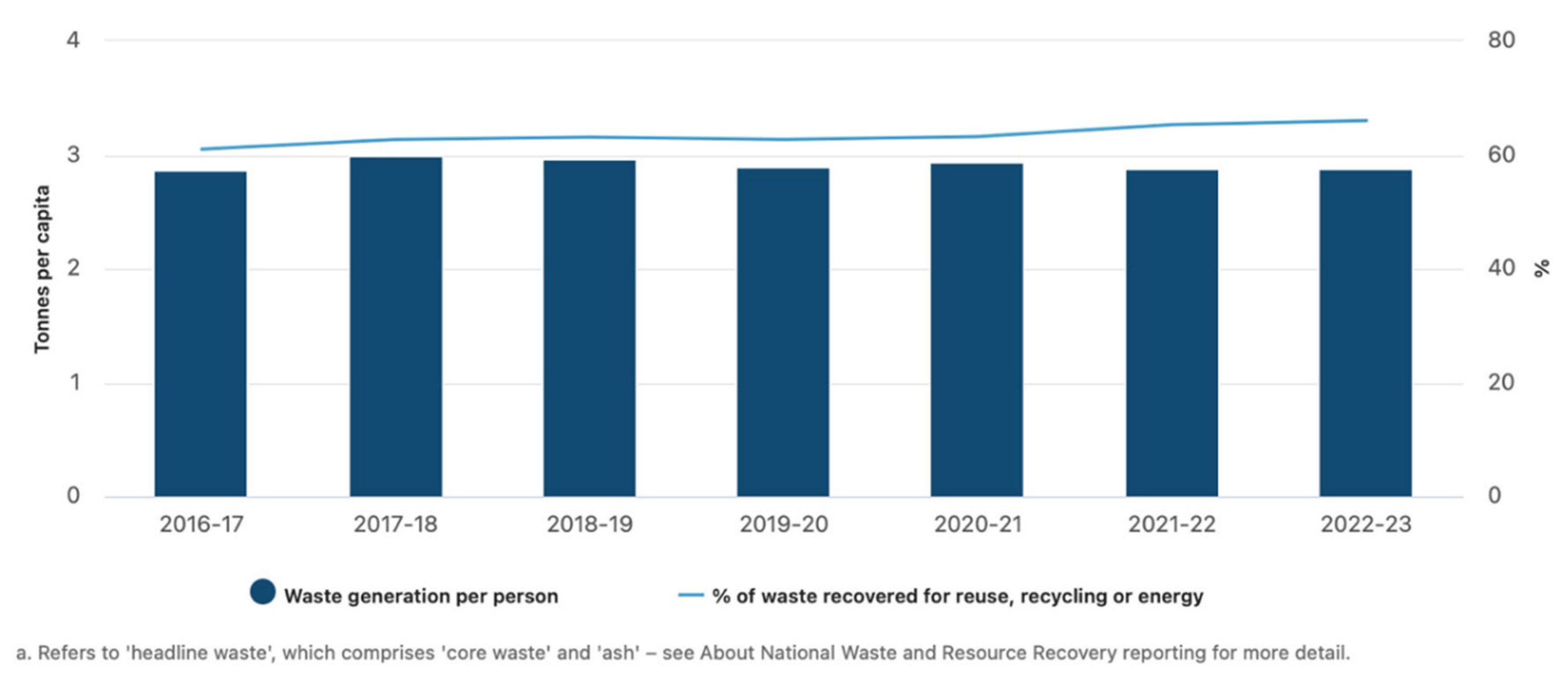
During the same year, Australia’s overall resource recovery rate reached 66%, including about 63% recycling, 3% energy recovery (mainly from landfill gas), and a small proportion from reuse. This is an improvement from 61% in 2016–17, but population growth and increasing waste generation continue to push total disposal volumes higher. As a strategy to combat climate change, increasing methane recovery from landfills remains underused and varies across states (Table 3). A significant amount of methane still escapes into the atmosphere, and although composting, anaerobic digestion, and other organic recovery methods are expanding, they have not yet reached the scale needed to offset emissions from older or larger sites.
When recoverable materials are disposed of in landfills, the consequence is not only a loss of potential resource value, but also foregone economic activity, employment opportunities, and increased environmental burdens. In this context, landfill mining shifts from being a discretionary option to a strategic necessity. Its justification extends beyond immediate financial returns, as the broader public benefits—resource recovery, environmental risk reduction, and long-term land value optimisation—can outweigh the limited residual value of the materials recovered.
Figure 8.
Australian resource recovery rates of headline waste by jurisdiction. DCCEEW, 2025a.
2.2. Cradle to Cradle—“Waste Equals Food”
When Braungart and McDonough (2002) introduced the cradle-to-cradle concept, it redefined how designers, manufacturers, and policymakers approached sustainability. While the notion that waste can serve as a resource was not entirely new, their framing “waste equals food” offered a compelling narrative that bridged ecological principles with industrial design. The approach advocates for products to be conceived with their entire lifecycle in mind, enabling materials to circulate endlessly in closed loops that emulate natural ecosystems. In doing so, it rejects the idea of waste altogether, proposing instead a regenerative system where outputs from one process become inputs for another (EMF, 2013).
Overall, the impact of the cradle-to-cradle approach extends beyond individual practices; it represents a broader movement toward a more sustainable future. By challenging conventional design and production methods, Braungart and McDonough (2002) have catalysed a transformative shift that promotes the long-simmering principles of the circular economy, ultimately paving the way for a more resilient and sustainable world. This philosophy has gained traction across industries, influencing sustainable manufacturing, construction, and waste management practices globally. Its emphasis on design for disassembly, material health, and continuous cycles of use and recovery aligns closely with the principles of the circular economy and offers an actionable framework for Australia’s transition away from resource depletion and landfill dependency (Geissdoerfer et al., 2017).
2.3. Towards Real Sustainability
Achieving sustainability necessitates a fundamental shift in our lifestyles, values, and systems. This transformation may involve rethinking our consumption patterns, redefining notions of success and progress, and embracing a more holistic view of our relationship with the planet. Rather than merely implementing isolated strategies to mitigate environmental issues, we must adopt a comprehensive approach that tackles the root causes of these challenges.
Such a transition necessitates structural changes across production systems, consumption patterns, and modes of social and economic organisation. This includes the redesign of urban environments to integrate low-carbon technologies, resource-efficient materials, and energy-efficient processes, alongside a systematic shift toward renewable energy systems. It also requires advancing circular economy principles to reduce waste generation and improve resource recovery. In parallel, strengthening education and institutional capacity, together with targeted community engagement, will be essential to support informed decision-making and coordinated implementation of sustainable practices.
Additionally, this fundamental change must be supported by policy reforms at all levels of government, ensuring that regulations incentivise sustainable practices rather than perpetuating the status quo. It is crucial that businesses, too, adapt to this new paradigm, embedding sustainability into their corporate strategies and operations.
This radical transformation urges us to reevaluate the waste we bury in landfills, recognising it primarily as a significant source of greenhouse gas. Such deposits have far-reaching implications, including long-term methane emissions, local pollution, ground settlement concerns, and constraints on urban development.
In a strategic sense, we must understand that if we continue to neglect what we deem “waste,” we risk depleting the essential resources vital to our long term survival. As we embrace the principles of a circular economy in our quest for a sustainable future, it is essential to explore the idea of a retrospective circular economy. This concept entails systematically mining landfills—regardless of how long the waste has been deposited—to recover valuable materials and resources. By tapping into these buried materials, we can reduce the environmental impact of traditional resource extraction and move toward a more sustainable model that prioritises resource recovery and reuse. What is recovered from landfill mining can contain a range of materials that can be repurposed, recycled, or processed for various applications. Thus implementing a retrospective circular economy encourages us to view landfills not simply as repositories of discarded materials but as potential treasure troves of valuable resources.
As previously flagged, Krook et al. (2012) found that landfill mining has primarily been portrayed as a solution to traditional management issues associated with landfills, such as limited landfill capacity and local pollution. While some recovery of deposited resources occurred, primarily focusing on soil and, in certain instances, waste-derived fuel, recycling efforts were often treated as secondary. Nonetheless, the authors noted that various global shifts and recent research developments signal a growing recognition of landfills as potential reservoirs for resource extraction. However, they argued that several operational challenges must be addressed to facilitate effective LFM. These include the need for advanced technologies, clarifying the conditions necessary for effective resource recovery, and developing standardised frameworks to evaluate the economic and environmental performance of landfill mining from a systems perspective.
3. Legacy Landfills in Context
If we mined existing landfills today, we would uncover a layered history of human consumption: from the glass and metals of the mid-20th century to the plastics and electronics of the late 20th century, to the disposable, fast-consumer culture of today. What we find depends on when the landfill was active, where it is located, and who lived in the communities contributing to it. Landfills are therefore both an ecological hazard and a potential urban mine, with their value (or toxicity) determined by the interplay of time, location, and socio-economic context.
In the landfill mining and broader waste governance literature, legacy landfills are typically categorised into three interrelated dimensions: time, location, and composition.
3.1. The Time Dimension
The temporal dimension of legacy landfills reflects both their age and their period of operation, factors that significantly influence waste composition, stability, and environmental risks. Waste profiles illustrate the historical practices of consumption and disposal, especially those from before modern regulatory frameworks, containing large amounts of ash, cinders, untreated organics, construction debris, and simple packaging like glass, metals, and paper (Pichtel, 2005; Johansson et al., 2012; Krook & Baas, 2013). Plastics were minimal during this period, although recyclable metals such as steel, copper, and aluminium, along with plentiful glass, were common components. Despite corrosion and degradation over time, these materials still hold some recycling potential, making them characteristic of legacy deposits (Johansson et al., 2012).
As decades pass, decomposition and compaction alter the physical and chemical properties of landfill contents, influencing both recovery potential and environmental risk (Jones et al., 2013). Older sites are particularly associated with elevated methane emissions, leachate generation, and greater remediation demands, underscoring the centrality of a landfill’s temporal profile regarding both its hazardous nature and potential benefits (Krook et al., 2012).
By the late 20th century (1970s–2000s), landfill composition had shifted dramatically, reflecting industrial growth, consumerism, and new material technologies. This period saw a rapid increase in plastics, composite packaging, chemically treated products, and electronic waste (Robinson, 2009). The diversity of synthetic polymers grew substantially, and with it the presence of toxic residues, including brominated flame retardants and heavy metals from appliances and electronics (Krook & Baas, 2013). At the same time, higher concentrations of recyclable metals entered the waste stream, driven by the disposal of consumer appliances, vehicles, and electronic goods (Jones et al., 2013).
In recent decades (2000s to the present), landfills have become repositories of highly heterogeneous waste streams dominated by disposable consumer goods. Today, mixed municipal solid waste contains a large fraction of plastics, single-use packaging, fast-fashion textiles, and e-waste (Geyer et al., 2017). Emerging waste types, including lithium-ion batteries, medical waste, and electronic devices, further complicate composition and management (Zeng et al., 2014). While organics are increasingly diverted to composting and anaerobic digestion in many high-income countries, they remain a substantial component of landfills in low- and middle-income contexts, where source separation and recovery systems are less established (Hoornweg & Bhada-Tata, 2012). These temporal shifts highlight how the material signatures of landfills are historically contingent and carry implications for both resource recovery and environmental risk.
3.2. The Geographical (Spatial/Locational) Dimension
The geographical dimension of landfill mining refers to the spatial characteristics of a landfill, including its location in relation to urban centres, ecosystems, infrastructure, and land values. Proximity to urban and peri-urban areas often increases the strategic importance of landfills, as remediated sites can be reclaimed for residential, commercial, or recreational use, thereby contributing to broader urban regeneration strategies (Van Passel et al., 2013). In such contexts, the value of reclaimed land can offset some of the costs of mining and remediation, making projects more financially viable and socially desirable. Landfills located in densely urbanised areas also tend to contain higher proportions of construction and demolition debris, consumer goods, and electronic waste, all of which can enhance the potential for resource recovery (Frändegård et al., 2013).
By contrast, landfills in rural or remote areas present a very different set of challenges. The limited scale of waste generation, coupled with high transportation costs and weaker demand for recovered resources, often undermines economic feasibility (Frändegård et al., 2013). Infrastructure constraints, including the absence of nearby recycling facilities or energy grids, can further reduce the potential for profitable recovery. As a result, landfill mining in such locations may be driven less by material value and more by environmental or public health concerns.
Location also strongly shapes the level of environmental risk associated with landfills. Sites located near water bodies, agricultural land, or ecologically sensitive areas pose elevated risks of leachate infiltration, soil contamination, and biodiversity loss, making remediation an urgent priority (Lou et al., 2011). Conversely, isolated sites may carry lower immediate risks, though they can still contribute to greenhouse gas emissions and groundwater pollution over the long term. These geographical variations underscore the need for context-specific approaches to landfill mining, where both recovery potential and environmental safeguarding are carefully evaluated.
The composition and characteristics of landfills vary considerably across geographical contexts, reflecting differences in economic development, regulatory frameworks, and local consumption patterns. In high-income countries, landfills typically contain higher-value recyclables such as electronics, non-ferrous metals, aluminium, and stainless steel, owing to greater per capita consumption of durable and disposable consumer goods (Wilson et al., 2006; Jones et al., 2013). These sites therefore present greater potential for resource recovery through landfill mining. At the same time, tighter environmental regulations have meant that many landfills in developed economies are engineered with liners, capping systems, and leachate controls, which influences both the environmental risks and the technical feasibility of mining activities (Pichtel, 2005).
In contrast, low- and middle-income countries (LMICs) often exhibit waste profiles dominated by organic materials, typically comprising 40–60% of the waste stream (Hoornweg & Bhada-Tata, 2012). Metals and plastics may be less prevalent in landfill deposits due to extensive informal recycling and scavenging networks, which extract valuable materials before disposal (Medina, 2007). Furthermore, landfills in LMICs are frequently unmanaged or operate as open dumps, resulting in highly heterogeneous and contaminated deposits that complicate recovery efforts and pose greater public health risks (Wilson et al., 2006).
Geographic variation is also evident when comparing urban and rural landfills. Urban sites are generally characterised by higher proportions of construction and demolition waste, electronics, and consumer goods, reflecting patterns of urban consumption and development (Van Passel et al., 2013). In contrast, rural landfills often contain more agricultural residues, biomass, and lower-value waste streams, with resource recovery potential shaped more by volume than by material diversity (Lou et al., 2011). These distinctions highlight the importance of considering location when assessing the feasibility and benefits of landfill mining projects.
3.3. Material (Composition/Content) Dimension
The material dimension of landfill mining is primarily defined by the physical, chemical, and biological composition of deposited waste, which, in turn, determines both the risks and the potential for resource recovery of any intervention. A significant challenge arises from the prevalence of composite and multi-material products whose components are chemically or mechanically bonded, rendering post-consumer separation and recycling technologically or economically unfeasible. Legacy landfills typically comprise a highly heterogeneous assemblage of organic matter, metals, plastics, construction and demolition residues, soils, and various hazardous substances. The relative proportions of these constituents reflect the historical evolution of waste management practices, local industrial structures, and socio-economic conditions (Van Passel et al., 2013; Jones et al., 2013; 2018a; Krook & Baas, 2013). This evolving composition reflects broader shifts in consumption and production patterns, which in turn alter the types of materials available for recovery. Importantly, the presence of marketable resources can help offset remediation costs, making landfill mining both an environmental management approach and a potential economic pursuit. However, the variability and contamination of materials often make recovery more challenging, reducing their quality and recyclability compared to virgin resources (Johansson et al., 2011).
The material mix also influences the technical pathways available for treatment and recovery. Organic waste requires biological processes such as composting or anaerobic digestion, whereas metals are best recovered through established recycling systems, and plastics may require advanced sorting and chemical recycling technologies (Van Passel et al., 2013). Hazardous components, including solvents, heavy metals, and medical waste, require specialised handling to minimise environmental and health risks, further complicating landfill mining projects (Johansson et al., 2017). Understanding the composition of landfills is therefore critical for evaluating trade-offs between resource recovery, environmental protection, and economic feasibility, ensuring that interventions are context-specific and aligned with broader sustainability objectives.
3.3.1. Material Streams in Modern Landfills
Modern landfills contain a diverse range of material streams that reflect contemporary consumption and disposal behaviours. Metals remain a major component, including iron and steel from construction debris, copper from wiring and motors, aluminium from cans and appliances, and trace amounts of rare earths and precious metals from electronics (Van Passel et al., 2013). While often corroded, these materials retain significant recycling potential. Plastics form another large fraction, dominated by common polymers such as PET, HDPE, LDPE, PP, PVC, and PS. However, their contaminated, or mixed condition within landfills makes recycling technically and economically challenging (Geyer et al., 2017).
Glass and ceramics, including bottles, window glass, and tiles, are also widely present. Despite their high volumes, they typically offer limited recovery value due to low market demand and contamination (Pichtel, 2005). Organic waste, such as food scraps, garden waste, and textiles, remains abundant, especially in middle- and low-income contexts. While biodegradable, organics present challenges in anaerobic conditions, generating methane and leachate that contribute to greenhouse gas emissions and groundwater contamination (DCCEEW, 2025).
In addition, hazardous waste, including batteries, solvents, medical waste, and heavy metals, is increasingly found in modern landfills, creating significant environmental and public health risks (Robinson, 2009). Finally, a substantial soil-like fraction (SLOF) develops over time as decomposed organics and fine soil particles accumulate. This fraction can sometimes be reused as cover material or even as a secondary construction aggregate, although contamination often limits its safe application (Jones et al., 2013; Kaza et al., 2018). Taken together, these streams illustrate both the risks and possibilities that underpin the rationale for landfill mining.
3.4. Socio-Economic Influences
The socio-economic context of a community exerts a profound influence on the composition, value, and environmental impact of its landfills. In affluent communities, higher incomes, consumer culture, and shorter product life cycles drive the generation of waste streams rich in electronics, complex packaging, and disposable goods (Wilson et al., 2006). These waste profiles tend to include significant quantities of recoverable metals, as noted above As a result, such landfills often contain concentrated stocks of secondary raw materials that can rival or even exceed those found in natural deposits (Jones et al., 2013).
In contrast, lower-income communities typically generate waste streams dominated by organic and biodegradable materials, including food waste, textiles, and agricultural residues (Hoornweg & Bhada-Tata, 2012). More valuable components are less prevalent because goods are frequently reused, repaired, or repurposed before reaching end-of-life (Medina, 2007). This also shifts the environmental focus to managing organic degradation. High levels of biodegradable waste increase the risk of methane emissions, leachate generation, and associated health hazards, especially in unlined or poorly managed landfills (Lou et al., 2011).
Socio-economic variation, therefore, plays a dual role in shaping the outcomes of landfill mining. Wealthier communities may present stronger contributors of waste for resource recovery, while lower-income contexts highlight the importance of environmental risk management. Recognising these differences is essential for tailoring landfill mining strategies to local conditions, ensuring that interventions deliver both economic and ecological benefits.
3.5. Challenges in Landfill Mining
One of the most prominent challenges in landfill mining is heterogeneity. Waste composition varies widely depending on the time of deposition, geographic location, socio-economic context, and historical waste management practices, making no two landfills identical (Krook et al., 2012). This variability complicates the development of standardised recovery processes, as both the quality and quantity of recoverable materials may differ substantially even within a single site. Consequently, landfill mining operations must adopt flexible strategies that can accommodate heterogeneous waste streams, which increases technical complexity and operational planning requirements.
Contamination is another critical challenge. Over decades, landfill materials undergo physical, chemical, and biological transformations that degrade recyclables and introduce hazardous elements (Van Passel et al., 2013). Plastics will fragment into nano and microplastics rather than decompose, metals corrode, and organic waste decomposes into soil-like fractions that absorb toxins like microplastics and heavy metals, complicating sorting and reducing the market value of recovered materials. These processes also elevate treatment costs, require specialised handling, and introduce significant health and safety risks during excavation. Workers may be exposed to dust, leachate, methane, and pathogens, necessitating robust occupational safeguards.
The economic viability of landfill mining is often uncertain. Recovering materials from mixed, degraded, and contaminated waste streams is frequently more expensive than extracting or producing virgin resources, particularly in regions where markets for secondary materials are underdeveloped (Cossu & Williams, 2015). Economic feasibility typically depends on coupling material recovery with additional benefits, such as reclaiming land for urban development, reducing leachate management costs, or capturing methane for energy generation (Jones et al., 2013; Esguerra, 2021). Without these supplementary incentives, landfill mining can remain financially marginal, deterring investment in the sector.
Finally, governance and social issues present persistent barriers. Many landfills, especially in low- and middle-income countries, serve as livelihood sources for informal waste pickers who rely on scavenging for income (Wilson et al., 2006). Mining operations can displace these communities or expose them to heightened health risks from contact with toxic or pathogenic materials. Additionally, land tenure disputes, unclear regulatory frameworks, and fragmented waste governance can significantly delay or prevent landfill mining projects (Krook & Baas, 2013). Addressing these challenges requires comprehensive stakeholder engagement, clear legal frameworks, and social safeguards to balance environmental, economic, and social outcomes.
3.6. Opportunities in Landfill Mining
Despite numerous challenges, landfill mining presents a range of significant opportunities across economic, environmental, and social areas. The most immediate and visible benefit is resource recovery, which offers multiple advantages.
A further significant opportunity is land reclamation. Many legacy landfills are located in peri-urban or central urban areas where land values are high. Once excavated and remediated, these sites can be repurposed for residential, commercial, recreational, or green infrastructure projects, thereby creating socio-economic and urban planning benefits (Frändegård et al., 2013). By integrating landfill mining with urban regeneration initiatives, projects can enhance community wellbeing, improve aesthetics, and restore previously degraded landscapes, thereby linking environmental management with spatial planning outcomes.
Finally, landfill mining contributes to environmental remediation. Excavation and treatment of legacy waste can significantly reduce leachate generation, mitigate methane emissions, and lower the risk of uncontrolled fires, which are common in unmanaged dumpsites (Pichtel, 2005). Environmental remediation not only protects soil, water, and air quality but also reduces long-term liabilities and operational costs for local governments and communities. By addressing both pollution and resource recovery, landfill mining offers a comprehensive approach to sustainable waste management.
Taken together, these opportunities suggest that although landfill mining remains technically demanding and economically uncertain, it holds significant promise for advancing sustainability objectives. When implemented strategically, it can generate multiple co-benefits including enhanced resource circularity, more efficient land use, and improved environmental protection (Van Passel et al., 2013; Krook & Baas, 2013; Frändegård et al., 2013). With appropriate planning, regulatory frameworks, and technological innovation, landfill mining can evolve beyond its current status as a niche remediation tool to become a strategic component of sustainable urban and industrial development.
In doing so, it directly contributes to the achievement of Sustainable Development Goal (SDG) 11: Sustainable Cities and Communities, by promoting cleaner, more resource-efficient urban systems, while also supporting SDG 9: Industry, Innovation and Infrastructure, through fostering industrial symbiosis, material recovery, and innovation in waste management technologies (United Nations Department of Economic and Social Affairs, undated).
3.7. Landfill Mining Has Multiple Benefits
Multiple studies provide empirical evidence supporting key claims about landfill composition and the potential for landfill mining. In low- and middle-income settings, organic waste accounts for a significant share of municipal solid waste, as discussed above. For example, a household waste characterisation study in Hanoi, Vietnam, found that approximately 78.9% of household waste consisted of food and garden organics, followed by plastics and paper (Le et al., 2018). Similar trends have been observed in other developing contexts, with organic waste commonly accounting for 50–80% of landfill inputs—for instance, in Phnom Penh, Cambodia (~63%), and Moratuwa, Sri Lanka (~90%) (Al-Khatib et al., 2010). These findings underscore the importance of organic waste management, particularly for mitigating methane emissions and enabling recovery through composting or anaerobic digestion. Organic waste is converted into compost, adding value to the circular economy as a fertiliser for agriculture.
Plastic waste constitutes a significant portion of municipal solid waste (MSW) and often persists even within composted waste streams. A study of MSW compost in Sri Lanka found a high concentration of plastic contaminants, mainly polyethylene, polypropylene, as well as plastic-associated toxic metals (Wijesekara et al., 2020). These findings underscore two critical dimensions of waste management: first, the persistent problem of plastic contamination that compromises compost quality; and second, the latent resource potential of plastics as a recoverable material within landfill mining and circular economy frameworks. However, the economic challenge remains significant, as recycled plastics often cost more to process than virgin materials, especially in the mixed state found in landfills, thereby limiting the financial feasibility of large-scale recovery efforts.
Landfill mining studies further reveal that excavated materials often contain a range of hazardous contaminants such as heavy metals (Fe, Zn, Mn, Cu, Pb, Ni, Cr, Cd), and a significant number of microplastics (100,150 ± ~29,300 items per kg dry mass found in an Indian study) (Raut et al., 2021). Studies assessing soil and groundwater quality around closed landfills have found elevated heavy metal concentrations linked to plastic and organic waste degradation, as well as detectable levels of microplastics in leachates and surrounding soils (Raut et al., 2021). This evidence underscores the dual role of landfill mining: it can recover valuable materials while simultaneously addressing legacy contamination and environmental risk.
3.8. Modern Landfill Composition
Recent studies confirm that plastics constitute a major fraction of modern landfill waste, often accompanied by significant quantities of microplastics. Research in Sri Lanka revealed that landfill leachate and sediments contained abundant microplastics, with polyethylene accounting for more than 50% of the observed particles (Chamenee et al., 2024). Similarly, in Songkhla Province, Thailand, multiscale characterisation of landfill-recovered plastics revealed that polymers such as polyethylene (PE), polypropylene (PP), and polyethylene terephthalate (PET) degrade physically and chemically over time, developing cracks, surface porosity, and functional group modifications, yet they remain persistent in the environment (Thongham et al., 2025). These findings highlight the challenges of plastic recovery and the potential risks of microplastic contamination in landfill ecosystems.
Landfills are increasingly recognised as reservoirs of pharmaceuticals and other toxic residues primarily because they function as the final sink for a wide range of poorly regulated and diffuse waste streams. In many countries, expired or unused medicines from households, clinics, pharmacies, and informal healthcare providers are routinely disposed of through municipal solid waste systems rather than through dedicated take-back or hazardous waste schemes. Once deposited, these compounds only partially degrade under anaerobic landfill conditions, allowing active pharmaceutical ingredients to persist and migrate into leachate over time. The lack of source segregation, combined with limited public awareness and weak regulatory enforcement, further exacerbates this pathway, particularly in low- and middle-income contexts.
The landfill environment itself amplifies this problem. Heterogeneous waste layers, variable moisture content, and long residence times create conditions where pharmaceuticals can accumulate, transform into metabolites, or be slowly released into surrounding soils and groundwater. This explains the wide spectrum of pharmaceutical residues detected in landfill refuse and leachate in locations such as Shanghai, China, and Ejisu-Juaben, Ghana, highlighting potential long-term environmental and human health risks (Qi et al., 2020; Dankwa et al., 2024). These findings underscore the need for improved hazardous waste segregation at source and targeted remediation strategies within landfill mining projects.
Similarly, the sharp increase in plastic content in landfills reflects broader shifts in consumption patterns and waste generation, particularly during the COVID-19 pandemic. Public health measures, including lockdowns, home delivery services, and heightened reliance on personal protective equipment, led to a surge in single-use plastics and packaging waste. Studies indicate that paper and plastics together accounted for approximately 62% of municipal solid waste by volume during this period, with plastic shares increasing significantly (Singh et al., 2020; 2021). The limited recyclability of contaminated and composite plastics meant that much of this material was diverted to landfills, further reinforcing their role as long-term plastic reservoirs.
Taken together, these trends illustrate how landfills are no longer merely disposal sites but evolving repositories of complex and potentially hazardous materials. This transformation has important implications for landfill mining, necessitating greater attention to contaminant risks, material recovery priorities, and adaptive management strategies for both legacy and newly deposited waste streams.
4. Concluding Remarks—A Tailored Research Agenda
Achieving sustainability requires adopting a circular economy (CE) approach that is holistic, systemic, and inclusive of diverse strategies to close material loops. Yet, during this transition, landfill mining (LFM) has often been overlooked despite its potential to support resource recovery, environmental remediation, and urban regeneration. As legacy landfills continue to pose ecological and social risks while simultaneously holding untapped material value, LFM should be recognised as one of the many complementary avenues available to advance CE objectives and sustainable outcomes. To realise this potential, however, a stronger evidence base and more systematic inquiry are required. A forward-looking research agenda should therefore address the following priorities:
4.1. Comprehensive Material Characterisation
Future research must go beyond generalised accounts of landfill contents to develop robust and standardised datasets on the distribution of metals, plastics, rare earth elements, and emerging waste fractions such as batteries and medical residues. Current studies often rely on site-specific excavations, which have limited comparability, making it challenging to draw general conclusions about recovery potential across regions. To address this, harmonised sampling methodologies and advanced analytical techniques—such as geochemical assays, microplastic characterisation, and life-cycle assessments—should be employed. Such approaches would enable more accurate estimates of resource stocks, as well as provide critical insights into contamination pathways and the environmental risks of recovery.
From a retrospective circular economy perspective, landfills must be re-conceptualised not merely as legacy disposal sites, but as unintended material repositories created by past linear production and consumption systems. Landfill mining, when framed within this logic, is not simply an extractive exercise aimed at recovering secondary resources, but a corrective intervention that seeks to remediate historical system failures while recovering residual value. To support this transition, future research must move beyond descriptive inventories of landfill contents and instead generate robust, standardised, and comparable datasets that can inform strategic, risk-aware decision-making.
A priority research agenda for retrospective circular economy must focus on systematically characterising both recoverable materials—such as metals, plastics, and rare earth elements—and hazardous or emerging waste fractions, including batteries, electronic waste, pharmaceuticals, and medical residues. Existing studies are heavily reliant on site-specific excavations that reflect local waste practices and regulatory gaps, limiting their transferability and making it difficult to assess recovery potential at scale. Without harmonised data, landfill mining risks becoming opportunistic, driven by short-term material value rather than long-term environmental and social outcomes.
Ultimately, embedding landfill mining within a retrospective circular economy framework allows it to function as a bridge between past linear systems and future circular ones. By combining resource recovery with risk reduction, environmental restoration, and informed site management, landfill mining can evolve from an experimental niche into a credible component of sustainable materials governance. Achieving this shift will require methodological rigour, policy alignment, and a clear recognition that the primary value of landfill mining often lies as much in what it prevents—pollution, land degradation, and long-term liabilities—as in what it recovers.
4.2. Historic Landfill Composition
The material makeup of early landfills, particularly those predating the 1970s, remains poorly documented and is often reconstructed through patchy municipal records or anecdotal evidence. More systematic archival research, combined with targeted excavation campaigns, is needed to establish reliable profiles of ash, untreated organics, simple packaging, and industrial residues. This would help not only in quantifying the recovery potential of such deposits but also in understanding how shifts in consumption and industrial processes have shaped long-term environmental liabilities. Such work is especially important for informing remediation strategies for sites where leachate, methane emissions, or soil contamination remain poorly controlled.
Operationalising a retrospective circular economy approach requires moving away from ad hoc excavation towards systematic, non-intrusive, and data-rich methods for assessing landfill contents and contamination pathways. Conventional trial pits and bulk excavations, while informative, are costly, disruptive, and spatially limited, and have been shown to provide only partial representations of landfill heterogeneity (Krook et al., 2012; Jones et al., 2013; 2018a). Future landfill mining initiatives should therefore adopt tiered assessment frameworks that integrate desk-based analysis, remote sensing, in situ monitoring, and selective physical sampling.
At the preliminary level, historical waste records, aerial imagery, and material flow reconstructions can be used to infer waste composition by age, catchment, and regulatory context, providing an initial basis for prioritisation (Kjeldsen et al., 2002; Krook et al., 2012). These approaches can be complemented by geophysical methods—such as electrical resistivity tomography, ground-penetrating radar, and electromagnetic surveys—to map waste stratification, moisture regimes, buried infrastructure, and contamination hotspots without disturbing the landfill body (Rosqvist et al., 2003; Soupios et al., 2007)..
At finer scales, robotic and autonomous inspection technologies offer significant potential. Sewer robots, adapted from wastewater infrastructure inspection, can access leachate collection systems and subsurface conduits to provide real-time data on leachate chemistry, sediment accumulation, and contaminant signatures, including metals, microplastics, and pharmaceutical residues (Dirksen et al., 2013; Haurum & Moeslund, 2020). Borehole-deployed sensors and robotic probes can further characterise gas composition, temperature, and moisture gradients, offering insights into waste degradation stages and contaminant mobility, particularly in older or poorly stabilised landfills (Christensen et al., 2001; Benson et al., 2007).
Targeted physical sampling should then be undertaken selectively, guided by these diagnostic tools rather than uniform excavation grids. Advanced laboratory analyses, combined with material flow analysis, life-cycle assessment, and risk assessment, enable more accurate evaluations of recovery potential, remediation benefits, and environmental trade-offs (Jones et al., 2013; 2018; 2018a). In this way, robotic and non-intrusive technologies do not replace conventional sampling but enhance its efficiency, safety, and strategic value, aligning landfill mining with the core principles of retrospective circular economy—risk reduction, environmental remediation, and informed resource recovery.
4.3. Integration of Social Dimensions
Although landfill mining is often discussed primarily in terms of its technical feasibility and economic viability, its social dimensions are equally important yet remain underexplored. The livelihoods, health, and safety of informal waste pickers and their surrounding communities can be directly impacted by landfill interventions. Moreover, public perception and community trust play a decisive role in shaping the acceptance and success of redevelopment initiatives and whether they involve active landfill mining.
To address these complexities, future research should adopt mixed methods approaches that combine ethnographic inquiry, stakeholder mapping, and participatory assessment with quantitative measures, such as health and socioeconomic indicators. Such an integrated framework would provide a more comprehensive understanding of how landfill mining and related redevelopment projects affect local populations through potential displacement, new livelihood opportunities, changes in environmental quality, or shifts in social dynamics.
4.4. Economic and Policy Viability
Economic assessments of landfill mining often focus narrowly on material recovery, overlooking the broader costs and benefits associated with land reclamation, climate mitigation, and avoided environmental liabilities. Future research should adopt holistic modelling frameworks that capture these multiple value streams and integrate them with policy instruments such as carbon credits, land-use planning incentives, and extended producer responsibility schemes. Comparative analyses across jurisdictions would further clarify how governance frameworks enable or constrain viable projects, particularly in contexts where land tenure is contested or regulatory enforcement is weak.
4.5. Technology Pathways and Innovation
The technological dimension of landfill mining requires deeper exploration, particularly in evaluating how advanced recovery methods—such as chemical recycling, waste-to-energy integration, and hazardous waste stabilisation—can be adapted to heterogeneous and often contaminated waste streams. Research should assess not only their technical feasibility but also their environmental trade-offs, energy requirements, and cost structures. Special attention should be given to scaling these technologies in low- and middle-income contexts, where infrastructure gaps and limited markets for secondary materials present unique barriers to innovation.
4.6. Long-Term Sustainability Outcomes
The current literature provides limited evidence on the practicalities of continuous application and long-term effectiveness of sustainability interventions related to landfill mining and redevelopment. While there is potential to initiate projects that may include renewable energy systems, greywater reuse, or urban greening initiatives, their long-term sustainability and functionality are not well established or, when available, poorly documented. Longitudinal research is needed to monitor operational performance, maintenance challenges, and socio-economic outcomes of these interventions, allowing for a more accurate assessment of their role in circular economy transitions.
4.7. Cross-Regional and Comparative Analysis
Finally, comparative research is essential to understand how socio-economic and geographic differences shape landfill composition, recovery potential, and project feasibility. In high-income contexts, landfills may serve as “urban mines” rich in electronics and metals, while in low- and middle-income countries, organic waste dominates, often alongside weaker regulatory frameworks and more acute public health risks. Harmonised methods for waste auditing, resource quantification, and socio-economic analysis are needed to allow meaningful cross-site comparisons. Such research would strengthen the global evidence base and help identify strategies adaptable to diverse contexts.
Taken together, these priorities underscore the need to reposition landfill mining within the broader CE framework, not as a marginal or remedial activity, but as a strategic pathway that encompasses other approaches such as recycling, reuse, organics diversion, and product redesign. By embedding LFM into circular economy planning and practice, policymakers, researchers, and practitioners can simultaneously reduce environmental liabilities, unlock the value of secondary resources, and reclaim land for future generations. Ultimately, a holistic CE transition cannot afford to ignore landfills; addressing them through mining and remediation must be part of the portfolio of solutions to achieve long-term sustainability.
4.8. Entropy and the Limits of Circularity
Some scholars argue that true sustainability is physically impossible, invoking the Second Law of Thermodynamics, ‘entropy’. Entropy concerns the energetic transformation of all materials, whether through production, consumption, combustion, or decay, leading to an irreversible degradation of order and quality. It states that once changed, no resource can be fully restored to its original state, as each use cycle results in entropic losses that accumulate over time, even with highly efficient recovery methods. This thermodynamic principle challenges the ideal of a fully closed-loop circular economy, revealing that circularity can only ever be partial and can only approach perfection asymptotically. Material cycles inevitably suffer losses in energy, material purity, structural integrity, or other quality indicators (Georgescu-Roegen 1973; Körhönen et al., 2018; Valero & Valero 2019). In this light, landfill mining is not a contradiction to the aims of a circular economy, but a pragmatic strategy that operates within these limits—recovering residual value from previous material flows while recognising that complete reversibility of waste processes is physically impossible.
Author Contributions
Conceptualisation, Sarath Mataraarachchi; Methodology, Sarath Mataraarachchi and John Blair; Software, Sarath Mataraarachchi and John Blair; Validation, Sarath Mataraarachchi and John Blair; Formal analysis - Sarath Mataraarachchi and John Blair; Resources, Sarath Mataraarachchi and John Blair; Data curation, Sarath Mataraarachchi and John Blair; Writing, original draft preparation, Sarath Mataraarachchi, John Blair and Paul Osmond;Writing, review and editing, Sarath Mataraarachchi, John Blair and Paul Osmond; visualisation, Sarath Mataraarachchi and John Blair; Supervision, Paul Osmond; Project administration, Sarath Mataraarachchi. All authors have read and agreed to the published version of the manuscript.
Funding
This research received no external funding.
Data Availability Statement
No new data were created or generated in the course of this research. The study draws on existing publicly availa-ble data and published sources, all of which have been appropriately cited, referenced and acknowledged in the manuscript.
Conflicts of Interest
The authors declare no conflict of interest.
| 1 | Municipal Solid Waste (MSW), Commercial & Industrial (C&I), and Construction & Demolition (C&D) |
References
- Al-Khatib, I.A., M. Monou, A. S. F. A. Zahra, H. Q. Shaheen, & D. Kassinos (2010). Solid waste characterisation, quantification and management practices in developing countries. A case study: Nablus district, Palestine. In Journal of Environmental Management, Volume 91, Issue 5, May 2010, Pages 1131-1138. Retrieved 20 January 2026. https://www.sciencedirect.com/science/article/abs/pii/S0301479710000046.
- Asefi, H., Zhang, Y., Lim, S., & Maghrebi, M. (2020). An integrated approach to suitability assessment of municipal solid waste landfills in New South Wales, Australia. In Australasian Journal of Environmental Management, 27(1), 63–83. Retrieved on 12 January 2026. https://doi.org/10.1080/14486563.2020.1719438.
- Benyus, J. (1997). Biomimicry, William Morrow/Harper Collins, New York. Harper Collins e-Books. Retrieved 13 January 2026. https://elmoukrie.com/wp-content/uploads/2021/11/janine-m-benyus-biomimicry_-innovation-inspired-by-nature-harper-perennial-2002-2.pdf.
- Blair, J., & Mataraarachchi, S. (2021). A review of landfills, waste and the nearly forgotten nexus with climate change. Environments, 8(8), 73. Retrieved on 12 January 2026. https://doi.org/10.3390/environments8080073.
- Bosmans, A., I. Vanderreydt, D. Geysen, & L. Helsen, (2013). The crucial role of Waste-to-Energy technologies in enhanced landfill mining. Journal of Cleaner Production, 55, pp.10–23. Retrieved on 10 December 2025. https://www.sciencedirect.com/science/article/abs/pii/S0959652612002557.
- Boulding, K.E. (1966). The economics of the coming spaceship earth. In H. Jarrett (Ed.), Environmental Quality Issues in a Growing Economy, Johns Hopkins University Press, pp. 3-14. Retrieved 12 January 2026. http://arachnid.biosci.utexas.edu/courses/THOC/Readings/ Boulding_SpaceshipEarth.pdf.
- Braungart, M., & W. McDonough, (2002). Cradle to Cradle: Remaking the Way We Make Things. North Point Press.
- Frikha, Y., J. Fellner & M.Zairi (2017). Leachate generation from landfill in a semi-arid climate: A qualitative and quantitative study from Sousse, Tunisia. In Waste Management & Research 1–9. Retrieved on 23.02.2026. https://www.researchgate.net/publication/318310862_Leachate_generation_from_landfill_in_a_semi-arid_climate_A_qualitative_and_quantitative_study_from_Sousse_Tunisia/figures?lo=1.
- Benson, C.H., M.A. Barlaz, D.T. Lane, & J.M. Rawe (2007). Practice review of five bioreactor/recirculation landfills. In Waste Management, 27(1), pp.13–29. Retrieved on 8 January 2026. https://www.sciencedirect.com/science/article/abs/pii/S0956053X0600122X.
- Chamenee, G., M. Sewwandi, H. Wijesekara, & M. Vithanage (2024). Occurrence and Abundance of Microplastics and Plasticisers in Landfill Leachate from Open Dumpsites in Sri Lanka. In Environmental Pollution. Volume 350. Retrieved on 24 January 2026. https://www.sciencedirect.com/science/article/abs/pii/S0269749124006584?via%3Dihub.
- Christensen, T.H., P. Kjeldsen, P.L.Bjerg, D.L. Jensen, J.B. Christensen, A. Baun, H.J. Albrechtsen, & G. Heron, (2001). Biogeochemistry of landfill leachate plumes. Applied Geochemistry, 16(7–8), pp.659–718. Retrieved on 18 January 2026. https://www.sciencedirect.com/science/article/abs/pii/S0883292700000822.
- Christensen, T. H., T.Fruergaar, & Y.Matsufuji (2011). Residential Waste, In Solid Waste Technology & Management, Volume 1, Wiley. Retrieved on 9 December 2025. https://content.e bookshelf.de/ media/reading/L-577333-33f5a1c422.pdf.
- Cossu, R., Motzo, G.M., Laudadio, M. (1996). Preliminary study for a landfill mining project in Sardinia. Proceedings Sardinia 95, Fifth International Landfill Symposium, Cagliari, Italy, 841–850. Cited by J. Krook, N. Svensson, M. Eklund, N. Johansson, P. Frändegård (2010). Knowledge Collaboration & Learning for Sustainable Innovation ERSCP-EMSU conference, Delft, The Netherlands, October 25-29. Retrieved on 1 January 2026. http://www.diva-portal.org/smash/get/diva2:369345/FULLTEXT01.pdf.
- Cossu, R. & I. D. Williams (2015). Urban mining: Concepts, terminology, challenges. In Waste Management, 45, 1–3. Retrieved on 24 February 2026. https://pubmed.ncbi.nlm.nih.gov/26505691/.
- Christensen, T.H., Bjerg, P.L., Banwart, S.A., Jakobsen, R., Heron, G. and Albrechtsen, H.J. (2000). Characterization of redox conditions in groundwater contaminant plumes. In Journal of Contaminant Hydrology, 45(3–4), pp.165–241.
- Dirksen, J., F. Clemens, H. Korving, F. Cherqui, P. Le Gauffre, T. Ertl, H. Plihal & C. Snaterse (2013). The consistency of visual sewer inspection data. Structure and Infrastructure Engineering, 2011, pp.1-15. Retrieved on 19 January 2026. https://hal.science/hal-00663958v1/document.
- Dankwa, B.E., J.N.Gyesi, B. A. Nyaaba, M. A. Ampah, C. K. Boadu, M. K. Laryea, G.Darko & L.S. Borquaye (2024). Environmental impact of pharmaceutical contaminants in dumpsites: a study from Ejisu-Juaben municipality, Ghana. Discov. Soil 1, 6 (2024). https://doi.org/10.1007/s44378-024-00007-2.
- Department of Climate Change, Energy, Environment and Water (DCCEEW) (2025). At a glance – Headline Waste. https://www.dcceew.gov.au/environment/protection/waste/publications/national-waste-resource-recovery-reporting/glance-2024#toc_0.
- Department of Climate Change, Energy, Environment and Water (DCCEEW) (2025a). National waste and resource recovery report 2024. Accessed 20 February 2026. https://www.dcceew.gov.au/sites/default /files/documents/national-waste-and-resource-recovery-report-2024.pdf.
- Department of the Environment (2014). National Waste Policy Implementation Report 2012 and 2013. Retrieved on 23 November 2025. https://www.dcceew.gov.au/sites/default/files/documents/national-waste-policy-implementation-2013.pdf.
- Duarte, A. da C. L. Jesus, & A. C. S. Valentim (2024). Bibliometric analysis of landfill mining: Worldwide research evolution. Detritus, 26, 74–82. Retrieved on 12 January 2026. https://doi.org/10.31025/2611-4135/2024.18351.
- Dumont, G., N. Mark, T. Robert & F. Nguyen (2018). Assessment of Multiple Geophysical Techniques for the Characterisation of Municipal Waste Deposit Sites. P.T. Jones and L. Machiels (eds), Proceedings of the 4th International Symposium on Enhanced Landfill Mining, 5–6 February 2018, Mechelen, Belgium. Retrieved on 12 January 2026.https://vb.nweurope.eu/media/3962/elfm-iv-rawfill-geophysics-2.pdf.
- NSW Department of Planning, Industry and Environment (NSW DPIE) (2021). NSW Waste and Sustainable Materials Strategy 2041, Stage 1: 2021–2027. DPIE, Sydney. Accessed 23.02.2026. https://www.epa.nsw.gov.au/sites/default/files/nsw-waste-and-sustainable-materials-strategy-2041.pdf.
- Ellen Macarthur Foundation (EMF) (2021). The butterfly diagram: visualising the circular economy. Accessed 23.02.2026. https://www.ellenmacarthurfoundation.org/circular-economy-diagram.
- Ellen MacArthur Foundation (EMF) (2013). Towards the Circular Economy Vol. 1: Economic and Business Rationale for an Accelerated Transition. Retrieved on 19 December 2025. https://content.ellenmacarthurfoundation.org/m/4384c08da576329c/original/Towards-a-circular-economy-Business-rationale-for-an-accelerated-transition.pdf.
- Forti V., C.P. Baldé, R. Kuehr & G.Bel (2020). The Global E-waste Monitor 2020: Quantities,flows and the circular economy potential. United Nations University (UNU)/United Nations Institute for Training and Research (UNITAR) – co-hosted SCYCLE Programme, International Telecommunication Union (ITU) & International Solid Waste Association (ISWA), Bonn/Geneva/Rotterdam.
- Esguerra, L. (2021). Landfill mining in Europe: Assessing the economic potential of value creation from generated combustibles and fines residue. Thesis submitted for the double degree of:.
- Doctor of Environmental Management and Engineering at Linköping University.
- Doctor of Applied Economics at the University of Antwerp. Retrieved on 22 November 2025. https://www.researchgate.net/publication/356891892_Developing_strategies_for_improved_economic_performance_and_reduced_climate_impact_of_landfill_mining_in_Europe.
- European Commission (2015). An EU action plan for the Circular Economy. European Commission. Retrieved on 22 November 2025. https://eur-lex.europa.eu/legalcontent/EN/TXT/?uri=CELEX:52015DC0614.
- European Commission (2015a). Closing the loop: Commission adopts ambitious new Circular Economy Package to boost competitiveness, create jobs and generate sustainable growth, European Commission - Press release. European Commission. Retrieved on 21 November 2025 https://ec.europa.eu/commission/presscorner/api/files/document/print/en/ip_15_6203/IP_15_6203_EN.pdf?utm_source=chatgpt.com.
- Frändegård, P., J. Krook, N.Svensson, & M. Eklund (2013). A novel approach for environmental evaluation of landfill mining. In Journal of Cleaner Production, 55, 24–34. Retrieved on 23 March 2026. https://www.sciencedirect.com/science/article/abs/pii/S0959652612002788.
- Geissdoerfer, M., P. Savaget, N.M.P. Bocken, & E.J. Hultink (2017). The Circular Economy – A New Sustainability Paradigm? In Journal of Cleaner Production, 143, 757–768. Retrieved on 9 April, 2026. https://www.sciencedirect.com/science/article/abs/pii/S0959652616321023.
- Georgescu-Roegen, N. (1973). The Entropy Law and the Economic Process. Harvard University Press, Cambridge. https://content.csbs.utah.edu/~lozada/Adv_Resource_Econ/En_Law_Econ_Proc_Cropped _Optimized_Clearscan.pdf.
- Geyer, R., J. R. Jambeck & K.L. Law, (2017). Production, use, and fate of all plastics ever made. In Science Advances, 3(7), e1700782. Retrieved on 11 March 2026. https://www.science.org/doi/10.1126/sciadv.1700782.
- Goh, K.C. et Al. (2025). Promoting landfill mining for sustainable resource recovery, circular economy, and climate mitigation: a review. In Frontiers in Environmental Science, Volume 13 – 2025. Retrieved on 11 March 2026. https://www.frontiersin.org/journals/environmental-science/articles/10.3389/fenvs.2025.1643195/full?utm_source=chatgpt.com.
- Haurum, J.B. and Moeslund, T.B. (2020). A survey on image-based automation of CCTV and sewer inspections. Automation in Construction, Vol. III. Retrieved on 10 February 2026. https://www.sciencedirect.com/science/article/abs/pii/S0926580519311227?via%3Dihub.
- Hoornweg, D., & Bhada-Tata, P. (2012). What a waste: A global review of solid waste management. World Bank. Retrieved on 9 January 2026. https://documents1.worldbank.org/curated/en/302341468126264791/pdf/68135-REVISED-What-a-Waste-2012-Final-updated.pdf.
- Johansson, N., J. Krook, & M. Eklund (2017). The institutional capacity for a resource transition – A critical review of Swedish governmental commissions on landfill mining. In Environmental Science & Policy, 16, 42–50. Retrieved on 12 December 2025. https://www.sciencedirect.com/science/article/abs/pii/S1462901116309248.
- Johansson, N. (2016). Landfill mining: Institutional challenges for the implementation of resource extraction from waste deposits. Linköping University Electronic Press, Sweden. Retrieved on 15 September 2025. https://scholar.google.com/citations?view_op=view_citation&hl=en&user=wRspGPcAAAAJ&citation_for_view=wRspGPcAAAAJ:Y0pCki6q_DkC.
- Johansson, J., N. Svensson & M. Eklund (2011). Landfill Mining: A Critical Review of Two Decades of Research. In Waste Management 32(3):513-2. Retrieved on 12 August 2025. https://www.sciencedirect.com/science/article/abs/pii/S0956053X11004740.
- Jones, P.T., D. Geysen, Y. Tielemans, S. Van Passel, Y. Pontikes, B. Blanpain, M. Quaghebeur & N. Hoekstra, (2013). Enhanced landfill mining in view of multiple resource recovery. In Journal of Cleaner Production, 55, pp.45–55. Retrieved on 11.02.2026. https://www.sciencedirect.com/science/article/pii/S0959652612002442.
- Jones, P.T. & L. Machiels, (eds.), 2018. Proceedings of the 4th International Symposium on Enhanced Landfill Mining, 5–6 February 2018, Mechelen, Belgium. Retrieved on 20.03.2026. https://vb.nweurope.eu/media/3962/elfm-iv-rawfill-geophysics-2.pdf.
- Jones, P.T. & Y. Tielemans (2018a). Enhanced Landfill Mining: From concept to reality. In Journal of Sustainable Metallurgy, 4(1), pp.1–15. Retrieved on 20.03.2026. https://www.researchgate.net/publication/253375051_Enhanced_Landfill_Mining_in_View_of_ Multiple_Resource_Recovery_A_ Critical_Review.
- Jones, S. (2020). Waste Management in Australia Is an Environmental Crisis: What Needs to Change so Adaptive Governance Can Help? In School of Business, The University of Queensland, Queensland 4072, Australia. In Sustainability, 12(21), 9212. https://doi.org/10.3390/su12219212.
- Juusti, L., 2018. Legal barriers for enhanced landfill mining activities in EU and Finnish environmental law in the view of the circular economy. University of Eastern Finland, Kuopio. Retrieved on 20.09.2025. 2025. https://erepo.uef.fi/bitstream/handle/123456789/19320/urn_nbn_fi_uef-20180432.pdf[].
- Krook, J., N. Svensson & M. Eklund (2012). Landfill mining: A critical review of two decades of research. In Waste Management, 32(3), pp.513–520. Retrieved on 11.09.2026. https://www.sciencedirect.com/science/article/pii/S0956053X11004740.
- NSW Environmental Protection Authority (EPA)(2020). Construction and demolition waste. EPA, Sydney. Retrieved on 23.02.2026. https://www.epa.nsw.gov.au/sites/default/files/20p2392-construction-demolition-waste-management-toolkit.pdf.
- Pandey, A. (2020). Why do billions of dollars in gold and other materials get discarded? In DW IN FOCUS. Retrieved on 23.02.2026. https://www.dw.com/en/un-electronic-waste-gold-silver-platinum/a-54022278#:~:text=Billions%20worth%20of%20valuable%20metals%20such%20as,person%2C%20a%20UN%20report%20showed%20on%20Thursday.
- Prechthai, T., M. Padmasri & C. Visvanathan (2008). Quality assessment of mined municipal solid waste from an open dumpsite for recycling potential. Resources, Conservation and Recycling, 53(1–2), pp.70–78. Retrieved on 10.04.2026. https://www.sciencedirect.com/science/article/abs/pii/S0921344908001420.
- Qi, R., D.L.Jones, Z.Li, Q.Liu, C.Yan (2020). Behaviour of microplastics and plastic film residues in the soil environment: A critical review. In Science of The Total Environment. Volume 703. Retrieved on 11.09.2026. https://pubmed.ncbi.nlm.nih.gov/31767311/.
- Kaza, S., Yao, L., P. Bhada-Tata & F. Van Woerden (2018). What a Waste 2.0: A Global Snapshot of Solid Waste Management to 2050. Washington, DC: World Bank. Retrieved on 11.08.2025. https://openknowledge.worldbank.org/entities/publication/d3f9d45e-115f-559b-b14f-28552410e90a.
- Kjeldsen, P., Barlaz, M.A., Rooker, A.P., Baun, A., Ledin, A. and Christensen, T.H. (2002). Present and long-term composition of MSW landfill leachate: A review. Critical Reviews in Environmental Science and Technology, 32(4), pp.297–336. Retrieved on 8.08.2025. https://www.tandfonline.com/doi/abs/10.1080/10643380290813462.
- Krook, J., Svensson, N. and Eklund, M. (2012). Landfill mining: A critical review of two decades of research. In Waste Management, 32(3), pp.513–520. Retrieved on 7.09.2025. https://new-mine.eu/wp-content/uploads/2017/10/Landfill-mining-A-critical-review-of-two-decades-of-research.pdf.
- Kowasch, M. (2022). Circular Economy, Cradle to Cradle and Zero Waste Frameworks in Teacher Education for Sustainability. International Journal of Sustainability in Higher Education, 23(6), 1404-1425. Retrieved on 14.09.2025. https://hal.science/hal-05032370v1/file/10-1108_IJSHE-10-2021-0428.pdf.
- Kirchherr, J., D.Reike, & M.Hekkert (2017). Conceptualizing the circular economy: An analysis of 114 definitions. Resources, Conservation & Recycling, 127, 221–232. Retrieved on 01.04.2026. https://www.sciencedirect.com/science/article/pii/S0921344917302835.
- Körhönen, J., A. Honkasalo & J. Seppälä (2018). “Circular Economy: The Concept and its Limitations,” Ecological Economics, Elsevier, vol. 143(C), pages 37-46. Retrieved on 23.03.2026. https://ideas.repec.org/a/eee/ecolec/v143y2018icp37-46.html.
- Krook, J., & L. Baas, (2013). Getting serious about mining the technosphere: A review of recent landfill mining and urban mining research. Journal of Cleaner Production, 55, 1–9. Retrieved on 12.02.2026. https://www.sciencedirect.com/science/article/abs/pii/S0959652613002916.
- Krook, J., N.Svensson & M. Eklund (2012). Landfill mining: A critical review of two decades of research. Waste Management, 32(3), 513–520. Retrieved on 23.02.2025. https://www.sciencedirect.com/science/article/abs/pii/S0956053X11004740.
- Le, T. T., H.N.Vu, T.T.H Pham, T.T.Dao & V.H.Le (2018). Characterization and analysis of household solid waste composition, Hanoi, Vietnam. MDPI Sustainability, 10(9), 3201.
- Loorbach, D. (2007). Transition Management New mode of governance for sustainable development. International Books, Grifthoek.
- Lou, X. F., Nair, J., & Ho, G. (2011). Potential for energy generation from anaerobic digestion of food waste in Australia. Waste Management & Research, 29(5), 429–436.
- Madden, B., N. Florin, S. Mohr, D. Giurco 2023. Emissions associated with managing household organic waste, from collection to recovery and disposal: A bottom-up approach for Sydney and surrounding areas, Australia. Cleaner Waste Systems, Volume 6, December 2023, 100111.
- Mandpe, A., S.Paliya, S.Kumar, & R.Kumar (2019). Fly ash as an additive for enhancing microbial and enzymatic activities in in-vessel composting of organic wastes. Bioresource Technology.
- Volume 293, December 2019, 122047.
- Marc, J. (2015). EU Circular Economy Package: Questioning the reasons for withdrawal. In Zero Waste Europe. https://zerowasteeurope.eu/2015/01/eu-circular-economy-package-questioning-the-reasons-for-withdrawal/?utm_source=chatgpt.com.
- Márquez, A.J.C., Filho, P.C.C., Rutkowski, E.W. and Isaac, R.L., 2019. Landfill mining as a strategic tool towards global sustainable development. Journal of Cleaner Production, 226, pp.1102–1115.
- Medina, M. (2007). The world’s scavengers: Salvaging for sustainable consumption and production. AltaMira Press.
- McCabe, B. and William Clarke (2017). Explainer: how much landfill does Australia have? Retrieved on 23.12.2025. https://theconversation.com/explainer-how-much-landfill-does-australia-have-78404?utm_source=chatgpt.com.
- Melosi, M.V. (2005). Garbage in the Cities: Refuse, Reform, and the Environment. Pittsburgh: University of Pittsburgh Press.
- Munir, M. T., Mansouri, S. S., Udugama, I. A., Baroutian, S., Gernaey, K. V., & Young, B. R. (2018). Resource recovery from organic solid waste using hydrothermal processing: Opportunities and challenges. Renewable and Sustainable Energy Reviews, 96, 64–75. Retrieved on 23.03.2026. https://orbit.dtu.dk/en/publications/resource-recovery-from-organic-solid-waste-using-hydrothermal-pro/#:~:text=Abstract,level%20(SRL)%20are%20moderate.
- Muttaraid, A., S. Towprayoon, & C. Chiemchaisri, 2024. Optimizing landfill mining operations: a comparative analysis of material flow and cost–benefit assessment for medium- and large-scale sites. In Journal of Material Cycles and Waste Management. Pp.830-844. Retrieved on 4.09.2025. https://www.springerprofessional.de/optimizing-landfill-mining-operations-a-comparative-analysis-of-/26501302.
- Nalladiyil, A. & G.L.S.Babu (2024). Dumpsite Remediation Through Landfill Mining and Rehabilitation: A Circular Economy Perspective. In Journal of the Indian Institute of Science. Vo.104, Iss. 2, 489-518. Retrieved on 5.2.2026. https://aithor.com/paper-summary/dumpsite-remediation-through-landfill-mining-and-rehabilitation-a-circular-economy-perspective.
- Nanda, S and F. Berruti 2021. A technical review of bioenergy and resource recovery from municipal solid waste. In Journal of Hazardous Materials, Volume 403. Retrieved on 9.8.2025. https://pubmed. ncbi.nlm.nih.gov/33265011/.
- Pearce, D. and R. Turner (1990), Economics of Natural Resources and the Environment, Harvester Wheatsheaf, Hemel Hempstead, Herts., UK.
- Pichtel, J. (2005). Waste management practices: Municipal, hazardous, and industrial. CRC Press.
- Pickin, J., C. Wardle, K. O’Farrell, P. Nyunt, S. D. (2020). National Waste Report 2020. Department of Agriculture, Water and the Environment, Canberra. Retrieved on 7.12.2025. https://www.dcceew.gov.au/sites/default/files/env/pages/5a160ae2-d3a9-480e-9344-4eac42ef9001/files/national-waste-report-2020.pdf.
- Pickin, J. and J. Macklin (2025). National waste and resource recovery report 2024. DCCEEW (Department of Climate Change, Energy, the Environment and Water). Retrieved on 12.12.2025. https://www.dcceew.gov.au/sites/default/files/documents/national-waste-and-resource-recovery-report-2024.pdf.
- Pires, A., Martinho, G., & Chang, N. B. (2011). Solid waste management in European countries: A review of systems analysis techniques. In Journal of Environmental Management, 92(4), 1033–1050. Retrieved on 1.2.2026. https://www.semanticscholar.org/paper/Solid-waste-management-in-European-countries%3A-a-of-Pires-Martinho/af5954d8b56310ab545e2adaf0c7ffca4df27f2e.
- Raut, S., Patil, S., Bhandewadi, R., & Nagarkar, A. (2021). Unveiling the composition of bio-earth from landfill mining: Organics, heavy metals, and microplastics. In PubMed. Retrieved on 9.12.2025. https://pubmed.ncbi.nlm.nih.gov/.
- Robinson, B. H. (2009). E-waste: An assessment of global production and environmental impacts. In Science of the Total Environment, 408(2), 183–191. Retrieved on 9.12.2025. https://pubmed.ncbi. nlm.nih.gov/19846207/.
- Rosqvist, H., Dahlin, T., Fourie, A., Röhrs, L., Bengtsson, A. and Larsson, M. (2003). Mapping of leachate plumes at landfill sites using geoelectrical imaging techniques. In Journal of Applied Geophysics, 53(2–4), pp.105–116. Retrieved on 30.03.2026. https://www.researchgate.net/publication/237818692_MAPPING_OF_LEACHATE_PLUMES_AT_TWO_LANDFILL_SITES_IN_SOUTH_AFRICA_USING_GEOELECTRICAL_IMAGING_TECHNIQUES.
- Soupios, P.M., N. Papadopoulos, M. Kouli, I. Georgaki, F. Vallianatos, & E. Kokkinou, (2007). Investigation of waste disposal areas using electrical methods. In Environmental Geology, 51, pp.1249–1261. Retrieved on 7.03.2026. https://pure.kfupm.edu.sa/en/publications/investigation-of-waste-disposal-areas-using-electrical-methods-a-/.
- Sabour, M. R., E. Alam, & M. Hatami (2020). Environmental and Economic Assessment of Enhanced Landfill Mining in Tehran. In Environmental Science and Pollution Research, 27, 34469-34483. Retrieved on 10.12.2025. https://pubmed.ncbi.nlm.nih.gov/32557053/.
- Savage, G.M., C.G. Golueke, E.L. von Stein (1993). Landfill mining: Past and present. In Biocycle, 34 (1993), pp. 58-61. Retrieved on 7.03.2026. https://www.proquest.com/docview/236865860?sourcetype=Trade%20Journals.
- Scott, J., D. Beydoun, R. Amal, G.Low, and J.Cattle 2005. Landfill Management, Leachate Generation,.
- and Leach Testing of Solid Wastes in Australia and Overseas. Critical Reviews in Environmental Science and Technology, 35(3), 239–332. Retrieved on 9.12.2025. https://www.tandfonline.com/doi/full/10.1080/10643380590917969?scroll=top&needAccess=true.
- Singh, N., Sharma, S., & Kumar, A. (2021). Effect of plastic waste on landfill volume consumption during the COVID-19 pandemic. MDPI Waste Management, 120, 1–10. Retrieved on 5.01.2026. https://www.mdpi.com/2071-1050/14/23/15974.
- Singh, N., Y.Tang, & O.A.Ogunseitan (2020). Environmentally sustainable management of used personal protective equipment. Environmental Science & Technology, 54(14), pp.8500–8502. Retrieved on 7.03.2026. https://doi.org/10.1021/acs.est.1c03022.
- Spilhaus, A. (1966), ‘Resourceful Waste Management’, Science News, Vol. 89, No. 25 (June 18), pp. 486- 488+498. Retrieved on 6.12.2025. https://www.jstor.org/stable/pdf/3950241.pdf?refreqid=excelsior %3Ae34f7b126ddfbaa3a2243d304e104c 50.
- Stahel, W. (1982), ‘Product-Life Factor’, Mitchell Prize Winning Paper, Product-Life Institute. Retrieved on 2.3.2026.http://www.product-life.org/en/major-publications/the-product-life-factor.
- The Economist (2024). There’s lots of gold in urban waste dumps. Retrieved on 3.02.2026. https://www.economist.com/science-and-technology/2024/11/11/theres-lots-of-gold-in-urban-waste-dumps.
- Thongham, N., P. Khongprom, and C. Sangsubun (2025). Multiscale characterisation of commercial and landfill-recovered plastics in Songkhla province, Thailand. RSC Adv., 2025, 15, 24424–24434. Retrieved on 25.11.2025. https://pubs.rsc.org/en/content/articlepdf/2025/ra/d5ra03620h.
- United Nations Department of Economic and Social Affairs (undated). SDG 11 Make cities and human settlements inclusive, safe, resilient and sustainable. Retrieved on 2.09.2025.
- https://sdgs.un.org/goals/goal11#:~:text=11.6,municipal%20waste%20generated%2C%20by%20cities.
- USEPA (United States Environmental Protection Agency) (2002). Solid Waste Management and Greenhouse Gases. Washington, DC: USEPA. Retrieved on 20 January, 2026. https://19january2017snapshot.epa.gov/www3/epawaste/conserve/tools/warm/pdfs/WARM_Documentation.pdf.
- Valero, A. & A.Valero (2019). Thermodynamic Rarity and Recyclability of Raw Materials in the Energy Transition: The Need for an In-Spiral Economy. In Entropy 2019, 21(9), 873. Retrieved on 9.12.2025. https://doi.org/10.3390/e21090873.
- Van Passel, S., M.Dubois, J.Eyckmans, de S.Gheldere, F.Ang, P. T. Jones, & K.Van Acker (2013). The economics of enhanced landfill mining: Private and societal performance drivers. Journal of Cleaner Production, 55, 92–102. Retrieved on 11.12.2025. https://www.sciencedirect.com/science/article/pii/S0959652612001710.
- Velis, C. (2017). Waste pickers in global waste management. Waste Management & Research, The Journal for a Sustainable Circular Economy, Volume 35, Issue 4. Retrieved on 23.12.2025. https://journals.sagepub.com/doi/full/10.1177/0734242X17702024.
- Wheeler, M. 2024. Monash Uni sets out roadmap for Australia’s circular economy. Retrieved on 11.12.2025. https://www.insidewaste.com.au/monash-uni-sets-out-roadmap-for-australias-circular-economy/.
- Wijesekara, H., K. Perera, & S. Fernando (2020). Plastics and plastic-bound toxic metals in municipal solid waste compost from Sri Lanka. SpringerLink. Retrieved on 19.09.2025. https://link.springer.com/.
- Williams, J. (2019). Circular cities. In urban Studies. Volume 56, Issue 13. Retrieved on 18.02.2026. https://journals.sagepub.com/doi/abs/10.1177/ 0042098018806133.
- Wilson, D. C., C. Velis & Cheeseman, C. (2006). Role of informal-sector recycling in waste management in developing countries. Habitat International, 30(4), 797–808. Retrieved on 28.11.2025. https://www.sciencedirect.com/science/article/pii/S0197397505000482.
- World Economic Forum (WEF) (2014). Retrieved on 11.09.2025. https://www3.weforum.org/docs/WEF_ENV_TowardsCircularEconomy_Report_2014.pdf?utm_source=chatgpt.com.
- World Economic Forum (2019). A New Circular Vision for Electronics, Time for a Global Reboot. WEF, Devos. Retrieved 23.02.2026. https://www3.weforum.org/docs/WEF_A_New_Circular_Vision_for_Electronics.pdf.
- World Economic Forum (2018). Recovery of Key Metals in the Electronics Industry in the People’s Republic of China: An Opportunity in Circularity, Initial Findings. WEF, Geneva. Retrieved 20 January, 2026. https://www3.weforum.org/docs/Environment_Team/39777_Recovery_Key_Metals_Electronics_Industry_China_Opportunity_Circularity_report_2018.pdf.
- Yi, S. (2019). Resource recovery potentials by landfill mining and reclamation in South Korea. In Journal of Environment Management, 15:248 pp178-185. Retrieved on 8.11.2025. https://pubmed.ncbi.nlm. nih.gov/31035180/.
- Zeng, X., J. Li, & N. Singh (2014). Recycling of spent lithium-ion battery: A critical review. Critical Reviews in Environmental Science and Technology, 44/10. Retrieved on 11.09.2025. https://www.tandfonline.com/doi/abs/10.1080/10643389.2013.763578.
- Zoungrana, A., M. T. Hasnine & Q. Yuan, (2022). Landfill mining: Significance, operation and global perspectives. In P. Pathak & S. G. Palani (Eds.), Circular Economy in Municipal Solid Waste Landfilling: Biomining & Leachate Treatment (pp. 25-45). Springer Nature. Retrieved on 22.10.2025. https://www.researchgate.net/publication/362677051_Landfill_Mining_Significance_Operation_and_Global_Perspectives.
Figure 1.
Cross section of a contemporary sanitary landfill. Source: Meegoda et al., 2026.
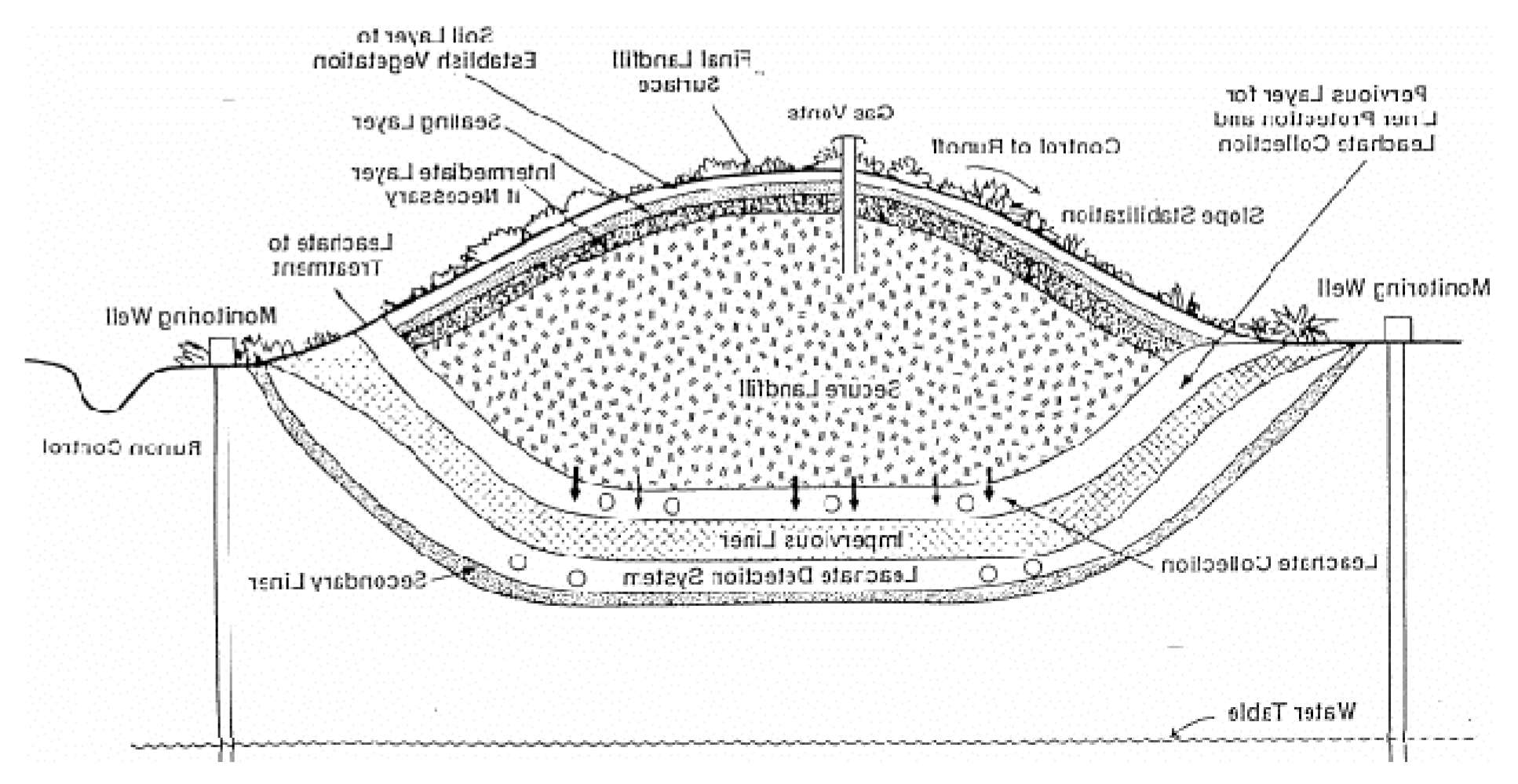
Figure 2.
Cross section of the landfill over time, the final cover and the bottom layers. Source: Frikha et al., 2017.
Figure 2.
Cross section of the landfill over time, the final cover and the bottom layers. Source: Frikha et al., 2017.
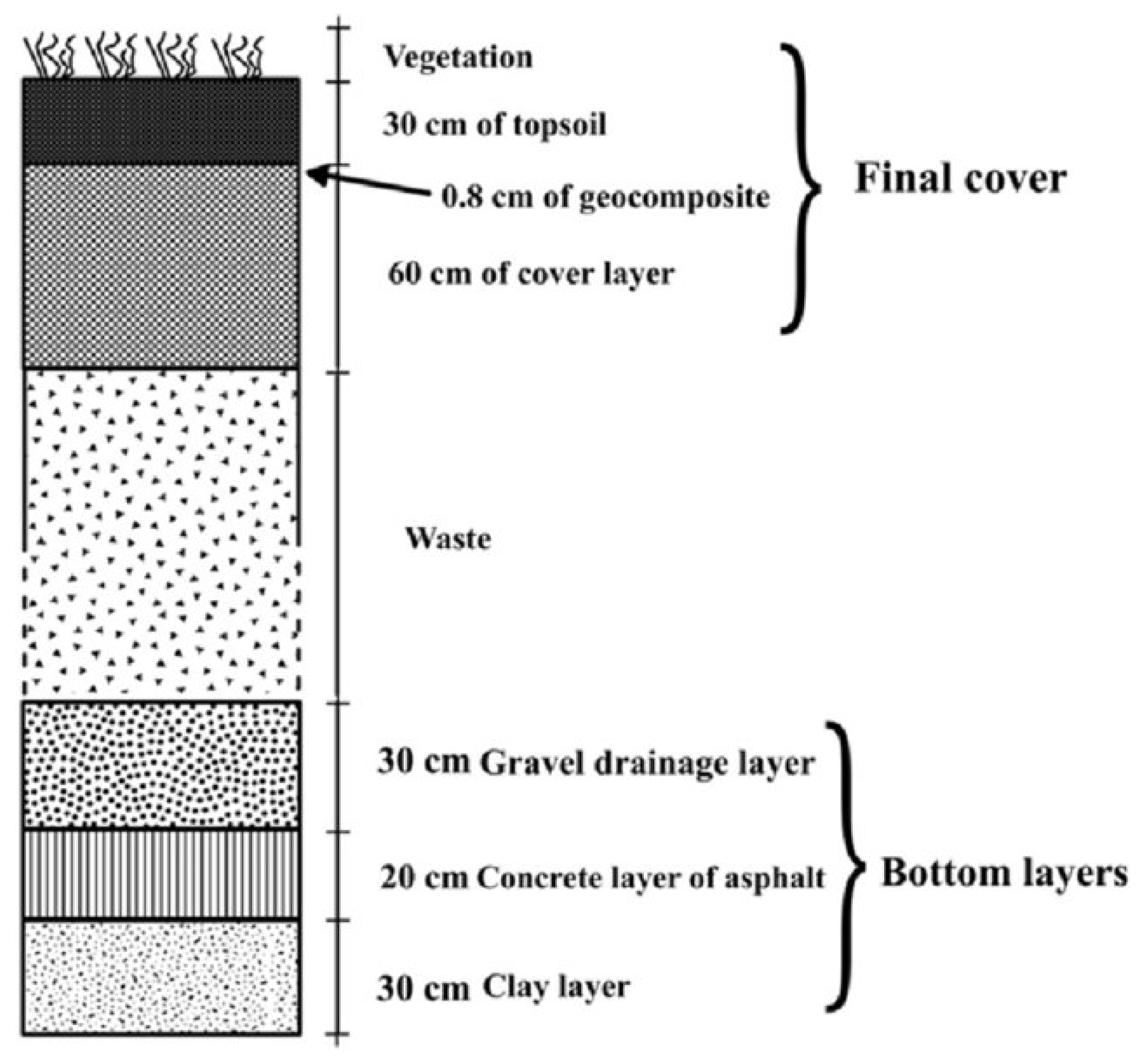
Figure 3.
Global E-Waste Generated in 2019. Source: Forti et al., 2020.
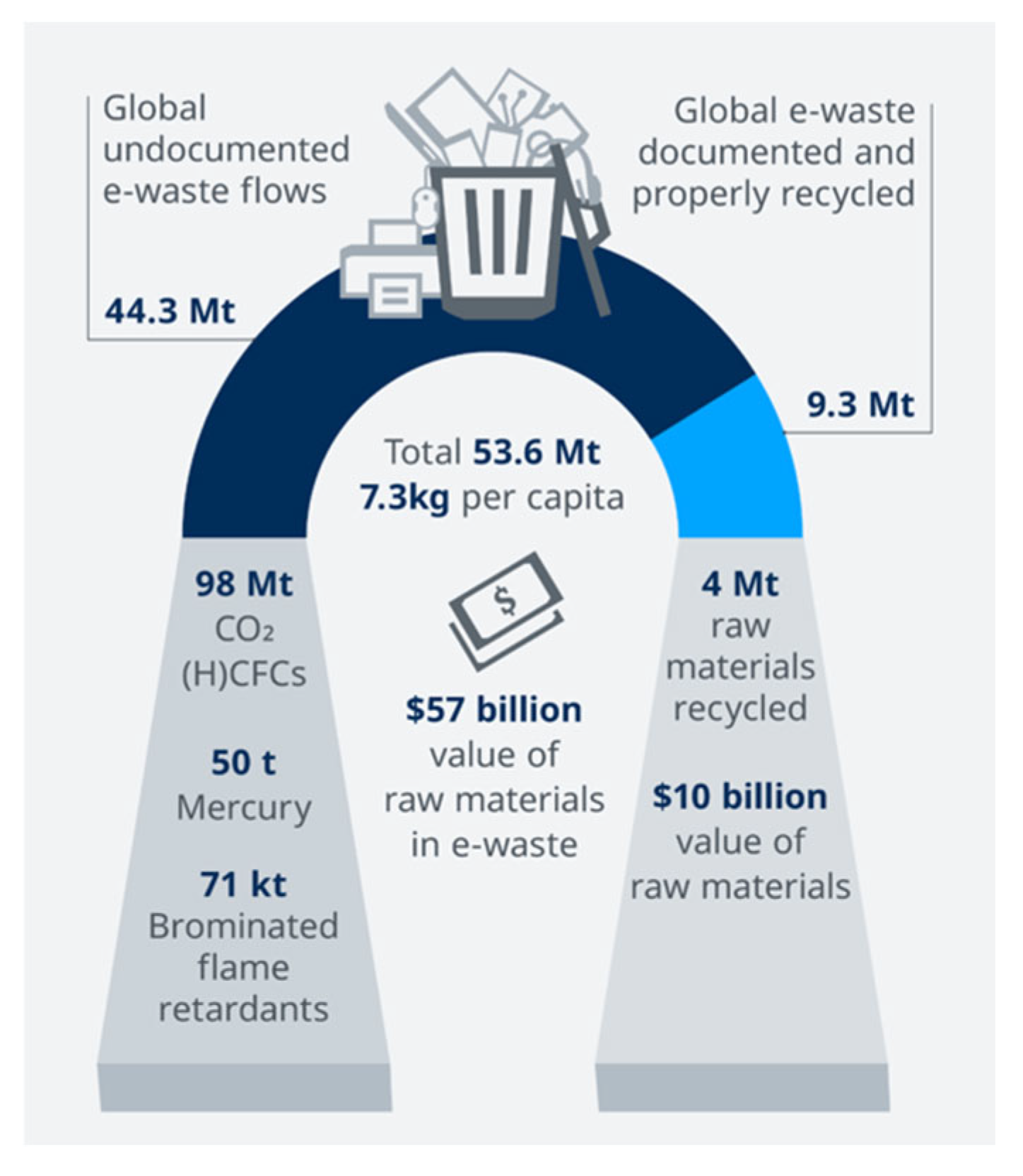
Figure 5.
The Butterfly Diagram. Source: EMF, 2013.
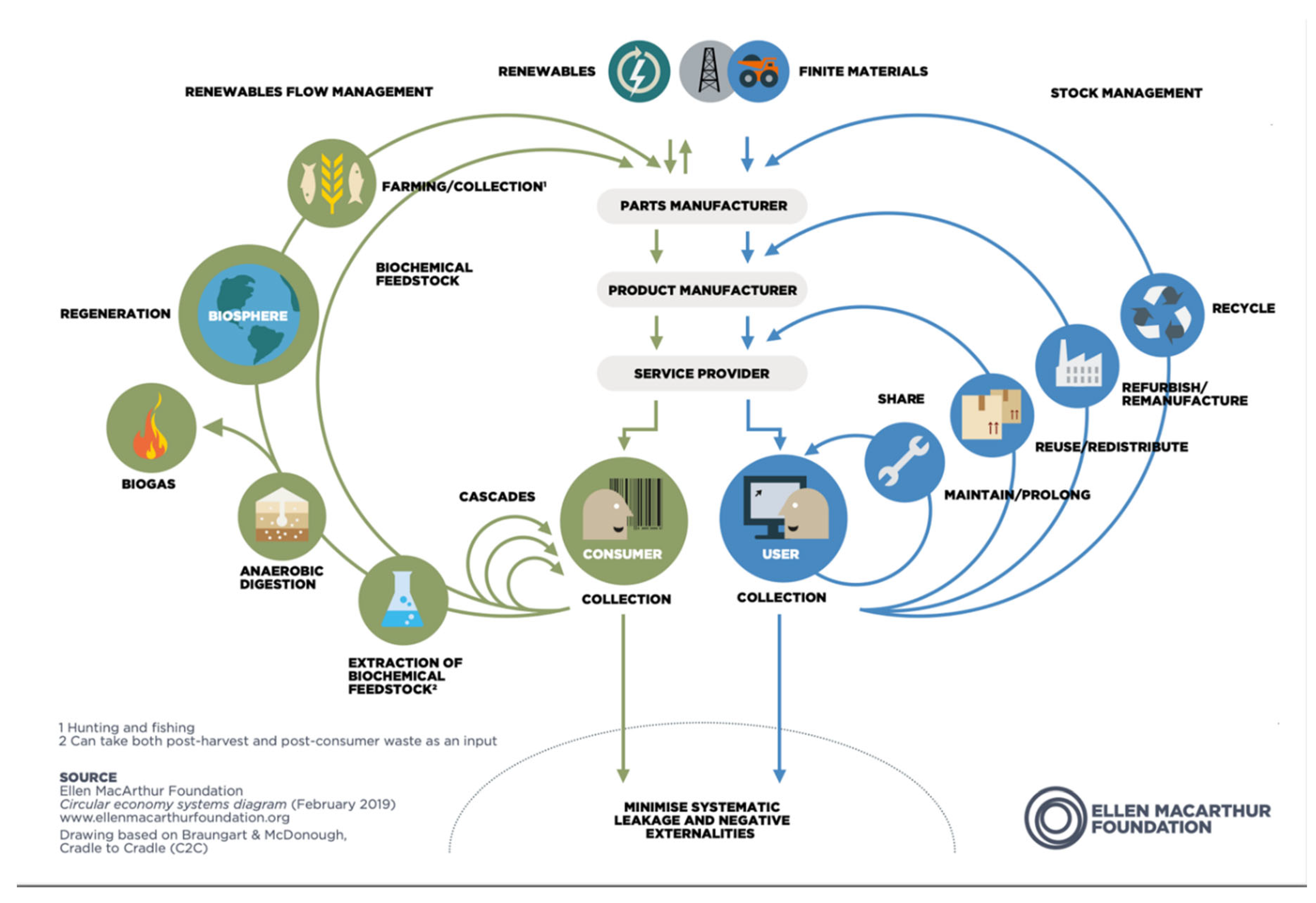
Table 1.
Change in headline waste, Australia.
| Period | 2021-22 | 2022-23 | Change |
|---|---|---|---|
| Waste generation1 | 74 Mt | 76Mt | 1.8% |
| Waste generation (per capita) | 2.883t | 2.875t | - 0.3% |
| Waste recycled and reused | 46Mt | 48Mt | 2.9% |
| Waste recycled and reused (tonnes per capita) | 1.797 | 1.81 | 0.8% |
| Waste disposed | 25.75Mt | 25.71Mt | -0.2% |
| Waste disposed (tonnes per capita) | 1.0t | 0.977 | 2.2% |
| Waste to energy (tonnes) | 2.2Mt | 2.3Mt | 3.6% |
| Resources recovery rate | 65.3% | 66% | 0.7% |
| Recycling rate | 62.3% | 63% | 0.7% |
Source: DCCEEW, 2025a.
Table 2.
Changes in waste generation per capita, Australia 2016–17 to 2022–23.
|
Headline waste |
Cire waste | MSW |
Headline C&I waste |
Core C&I waste | C&D waste |
| +0.1% | +4.8% | -2.8% | -9.2% | -1.8% | +155 |
Source: DCCEEW, 2025a.
Table 3.
Headline waste.
| Waste generation (Mt) | Waste reuse (Mt) | Waste recycling (Mt) | Waste to energy (Mt) | Waste disposal (Mt) | Resource recovery rate (Mt) | Recycling and waste reuse rate (Mt) | |
| 2022-23 | 76 | 0.1 | 47 | 2.3 | 26 | 66% | 63% |
| 2020-21 | 75 | 0.1 | 45 | 2.3 | 28 | 63% | 60% |
| 2018-19 | 75 | 45 | 2.3 | 28 | 63% | 60% | |
| 2016-17 | 70 | 41 | 2.2 | 27 | 61% | 58% | |
‘Mt’ means mega tonnes (millions of tons). Source: DCCEEW, 2025a.
Disclaimer/Publisher’s Note: The statements, opinions and data contained in all publications are solely those of the individual author(s) and contributor(s) and not of MDPI and/or the editor(s). MDPI and/or the editor(s) disclaim responsibility for any injury to people or property resulting from any ideas, methods, instructions or products referred to in the content. |
© 2026 by the authors. Licensee MDPI, Basel, Switzerland. This article is an open access article distributed under the terms and conditions of the Creative Commons Attribution (CC BY) license (http://creativecommons.org/licenses/by/4.0/).
Copyright: This open access article is published under a Creative Commons CC BY 4.0 license, which permit the free download, distribution, and reuse, provided that the author and preprint are cited in any reuse.