
Submitted:
23 July 2026
Posted:
27 July 2026
You are already at the latest version
Abstract
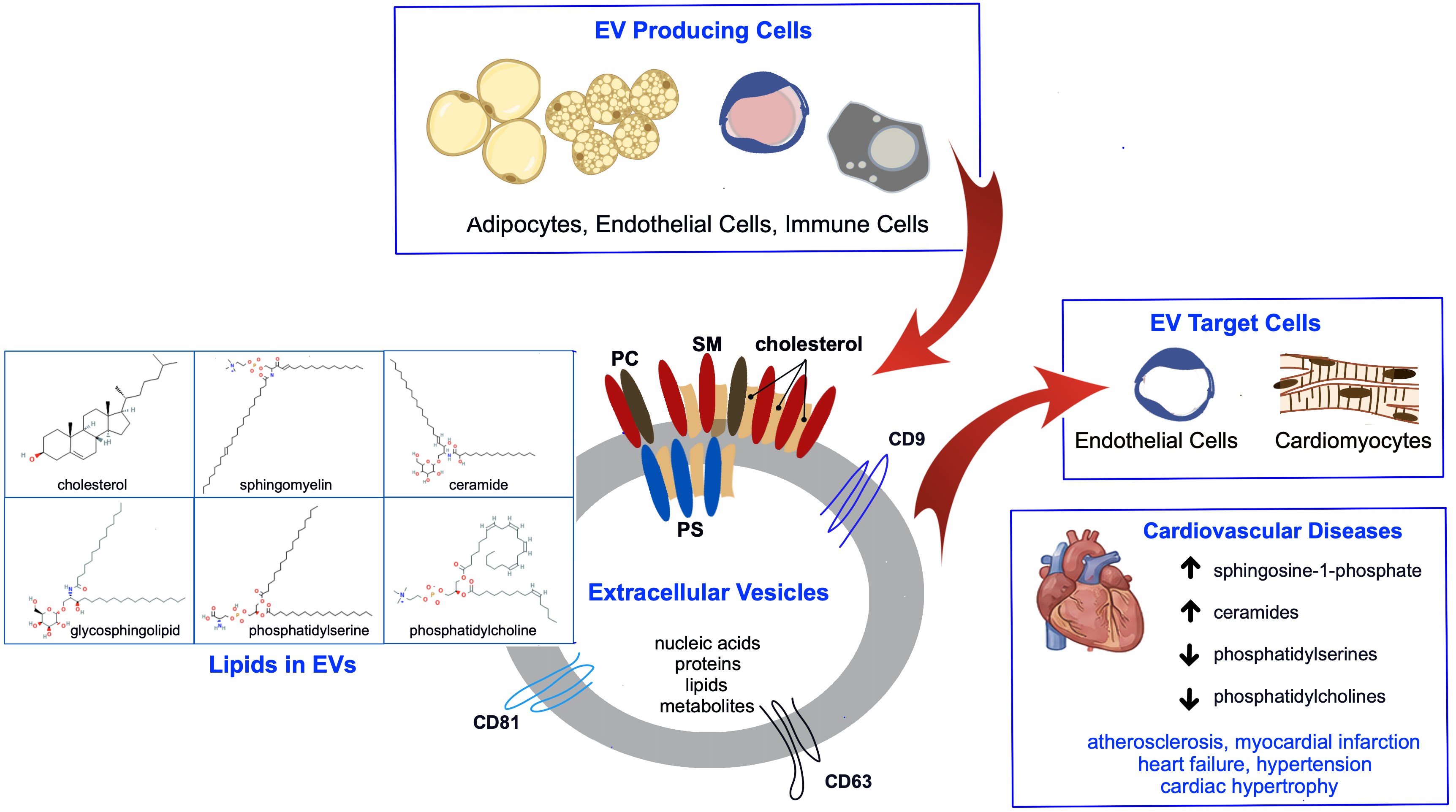
Cardiovascular diseases (CVD) are the most prevalent cause of mortality globally, despite decades of targeted treatment of known risk factors including hypercholesterolemia. This review summarizes recent work on other lipids beyond cholesterol that may also contribute to CVD and serve as novel therapeutic targets. In particular, work on extracellular vesicles (EVs), which are membrane-delimited particles released by many cell types, suggests that lipid classes such as sphingolipids, phospholipids, and glycosylated lipids may equally contribute to CVD progression. EVs are particularly interesting due to their high biocompatibility, specific targeting, and diverse payloads. They enable intercellular communication through the transfer of lipids, proteins, and nucleic acids. Changes in EV composition are highly dependent on the cellular environment, potentially enabling their use as biomarkers. While most of the published body of work on EVs is focused on protein- and miRNA cargo, recent advances in metabolomic techniques enable the probing of changes in distinct EV lipid profiles associated with CVD. Herein, we summarize EV lipid work of the last five years that reaches beyond cholesterol and triglycerides and describe known lipid function in EVs and CVD. More research is needed to determine exactly how changing lipid loads of EVs impact the cardiovascular system, and how EVs and their selective lipid cargo may offer a novel approach for the treatment and diagnosis of CVD.
Keywords:
extracellular vesicles
; lipidomics
; lipid species
; cardiovascular disease
Copyright: This open access article is published under a Creative Commons CC BY 4.0 license, which permit the free download, distribution, and reuse, provided that the author and preprint are cited in any reuse.


