
Submitted:
23 July 2026
Posted:
24 July 2026
You are already at the latest version
Abstract
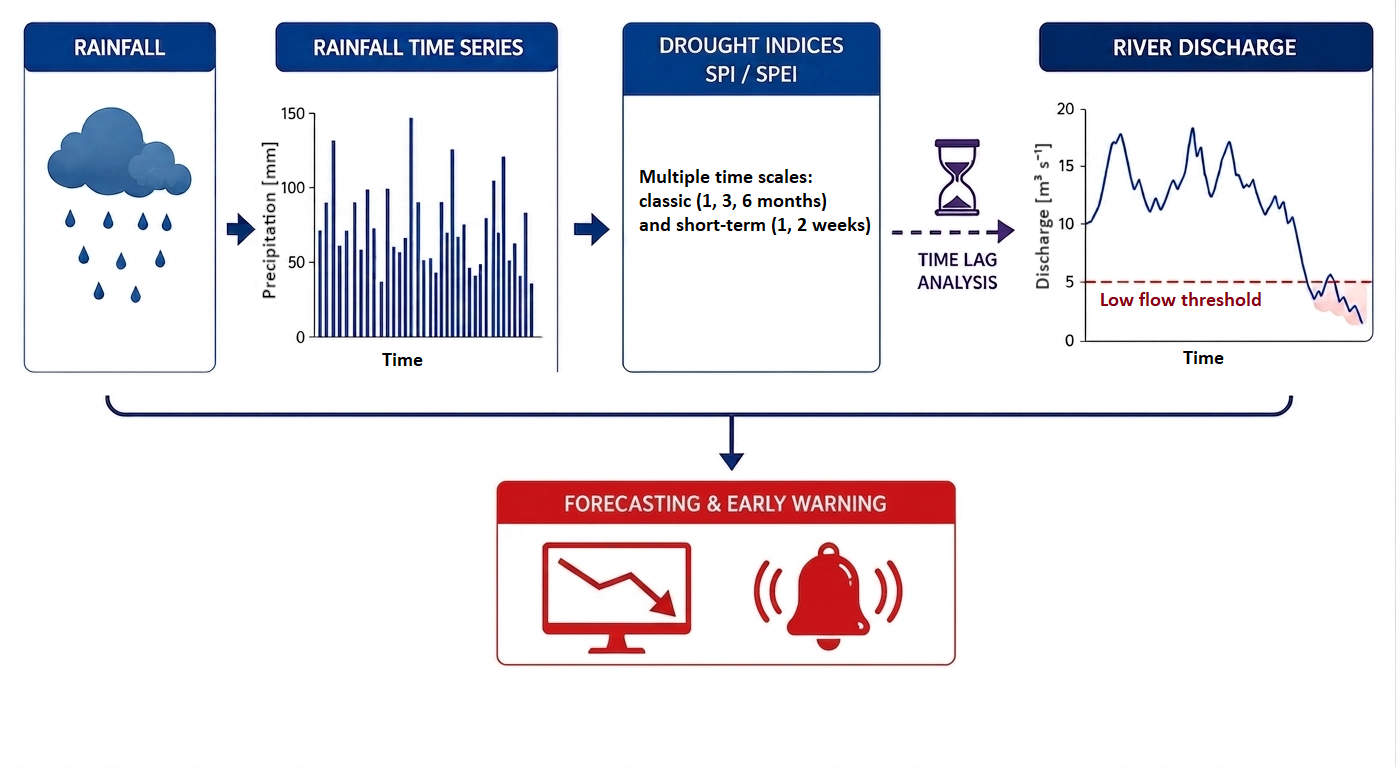
Meteorological, soil, and hydrological droughts are among the most important phenomena affecting the natural environment and water management. Prolonged precipitation deficits often result in low river flows, reducing water resources and degrading aquatic ecosystems. This study evaluates the potential of meteorological drought indices as predictors of observed low flows. Long-term meteorological and hydrological data, including precipitation and river discharge records, were analyzed for the Biała Lądecka River catchment in Lower Silesia, southwestern Poland. Meteorological drought was characterized using the Standardized Precipitation Index (SPI) and the Standardized Precipitation Evapotranspiration Index (SPEI) calculated for 1-, 3-, and 6-month time scales, together with corresponding one- and two-week indices. Relationships between drought index values and observed low flows were analyzed while accounting for the time lag of the catchment response. The predictive performance of individual indices was evaluated to determine their suitability for water resources monitoring and management. The results show that meteorological drought indices can effectively indicate the occurrence of low flows, although the strength of the relationships depends on the adopted time scale. Both classical and short-term indices proved useful for analyzing the development of hydrological drought and have potential applications in low-flow monitoring and early warning systems.
Keywords:
meteorological drought
; hydrological drought
; SPI
; SPEI
; low flows
Copyright: This open access article is published under a Creative Commons CC BY 4.0 license, which permit the free download, distribution, and reuse, provided that the author and preprint are cited in any reuse.


