

Submitted:
23 July 2026
Posted:
24 July 2026
You are already at the latest version
Abstract
The imposition of Structural Adjustment Programmes on some developing countries in the 1980s, which necessitated cuts in social spending, contributed to the current healthcare challenges in these countries. The introduction of health insurance was intended to improve access to affordable healthcare; however, many people in the informal sector are not covered by the commonly adopted health insurance models. Community-based health insurance was recommended as a better alternative. This study was conducted to assess the awareness and interest in community-based health insurance in 11 selected rural communities in Kwara State, Nigeria. A mixed methods approach was adopted to obtain data for the study. Focus group discussions, questionnaires, and key informant and in-depth interviews were the methods of data collection. The respondents in this study are members of the selected communities, including religious and community leaders. The study found that awareness about community-based health insurance was high among the respondents. It also found that the involvement of community members and leaders in creating awareness is essential for the success of health policy programmes. Thus, to attain universal health coverage, it is recommended that policymakers secure buy-in from the people and work closely with community members who have already earned the people’s trust.
Keywords:
healthcare
; health insurance
; community-based health insurance
; rural community
; awareness
; interest
; enrolment
1. Background
The 1980s marked a new beginning in social provision of services in developing countries, especially in Sub-Saharan Africa (SSA). This era was characterised by the retrenchment of public healthcare spending due to the imposition of Structural Adjustment Programmes (SAPs). The SAPs imperilled the operations of the healthcare sector through the imposition of fiscal austerity, budget reductions, significant reallocation of scarce intra-sectoral resources, and a significant shift in health policy [1] due to large debt repayments. Consequently, healthcare reform became necessary in Low- and Middle-Income Countries (LMICs), especially in Africa, in the 1980s; however, the focus of the healthcare reform was primarily on financing. Unfortunately, many developing countries have been unable to effectively adopt effective health financing models to provide healthcare coverage for their citizenry [2]. For instance, the National Health Insurance Scheme (NHIS) in Nigeria could not cover 10% of the population [3]. Thus, ‘out-of-pocket model’ – which requires the patient to pay user fees at the point of use – could not be easily eliminated in view of the socio-economic realities of the people. To effectively eliminate Out-Of-Pocket (OOP) expenditure and ensure that the healthcare needs of everyone - especially the poor - are adequately covered, the Community-Based Health Insurance (CBHI) model was introduced in some developing countries, including Nigeria. Awareness1 and enrolment2 can help reduce the challenges of achieving universal healthcare coverage (UHC) through CBHI. However, in addition to sustainability concerns [4], other challenges that have limited the performance of CBHI in LMICs include limited financial pooling capacity [5], inappropriate benefits package [6], poor health outcomes [7], voluntary nature of enrolment [8], inadequate legal framework [9], and affordability of enrolment premium [10].
The healthcare structure in Nigeria is designed in a way that the healthcare system is financed at different levels of government - that is, the federal, state and local government levels. However, the federal government, at the highest level, does not have the legal rights to compel the state and local governments to prioritise expenditure on healthcare. As such, the healthcare situation in Kwara, Nigeria, is largely in a deplorable state [11]. Consequently, in 2007, the Kwara State Government in collaboration with the Dutch-Health Insurance Fund, PharmAccess Foundation, and Hygeia Nigeria Limited implemented a donor-subsidised CBHI programme in rural communities in Kwara State to provide access to basic healthcare services to the rural populace, with the intention of extending it over time to cover the entire population of the State. The programme was operational in 43 healthcare facilities across 11 Local Government Areas (LGAs) in the State.
Premium for enrolment was not based on illness or relative risk. To ensure high enrolment, the premium was heavily subsidised by the partners – the Health Insurance Fund and the Kwara State Government – who provided annual co-payments ranging from 3 USD to 5 USD per enrollee [12]. This is because the enrollees could not afford the actual amount required to access care; hence, the agreement was for the state government to increasingly take up the subsidy, which made the enrolment premium affordable, while the contribution of the Health Insurance Fund was to diminish gradually [13]. Each enrollee paid a premium of  500 (approximately 1.38 USD in 2015 when the CBHI programme was still operational) per annum. Essentially, the programme was designed to provide primary and secondary healthcare services and to reduce catastrophic health expenditures among insured households [12]. It covered inpatient and outpatient care; admissions; specialist consultations; pharmaceutical care; laboratory, radiological, and diagnostic services; preventive care and treatment of diseases; minor and intermediate surgeries; antenatal, delivery, and neonatal care; eye care; annual check-ups; and health education [13]. Although the programme faced challenges, including funding, inadequate equipment, and corruption [14], studies reported that it met expectations and improved the healthcare conditions of the enrollees [12,15,16].
500 (approximately 1.38 USD in 2015 when the CBHI programme was still operational) per annum. Essentially, the programme was designed to provide primary and secondary healthcare services and to reduce catastrophic health expenditures among insured households [12]. It covered inpatient and outpatient care; admissions; specialist consultations; pharmaceutical care; laboratory, radiological, and diagnostic services; preventive care and treatment of diseases; minor and intermediate surgeries; antenatal, delivery, and neonatal care; eye care; annual check-ups; and health education [13]. Although the programme faced challenges, including funding, inadequate equipment, and corruption [14], studies reported that it met expectations and improved the healthcare conditions of the enrollees [12,15,16]. However, the programme stopped in 2016 due to sustainability challenges, including partners' inability to continue financing it. Precisely, the programme ended because the Kwara State Government was unable to pay the required counterpart fund as agreed [14]. The collapse of the programme has shown that a large population and substantial risk sharing are essential for the sustainability of health insurance programmes. Nevertheless, there are lessons to be learnt from such a programme that has come to a halt; one of which is that no matter how good a policy is, if the prospective beneficiaries lack information and understanding about it, they may reject it, and this non-adoption may lead to the programme’s failure. Existing CBHI research in Nigeria has largely focused on service utilisation, enrolment patterns, and ability to pay [17,18]. Studies on CBHI awareness [19,20,21] did not examine how community actors contribute to the process. Also, previous studies paid limited attention to the sources of knowledge.3 Hence, this study explores people’s sources of knowledge about the CBHI programme, as well as their awareness and interest in the programme at inception. The novelty of this study lies in its focus on the awareness-generation processes at inception that informed interest in and acceptance of the CBHI programme, an area that has been relatively underexplored in the existing literature. The study is germane especially for policy makers and development partners in understanding how awareness and interest intersect to facilitate acceptance of healthcare programmes for underserved rural communities.
2. Methods
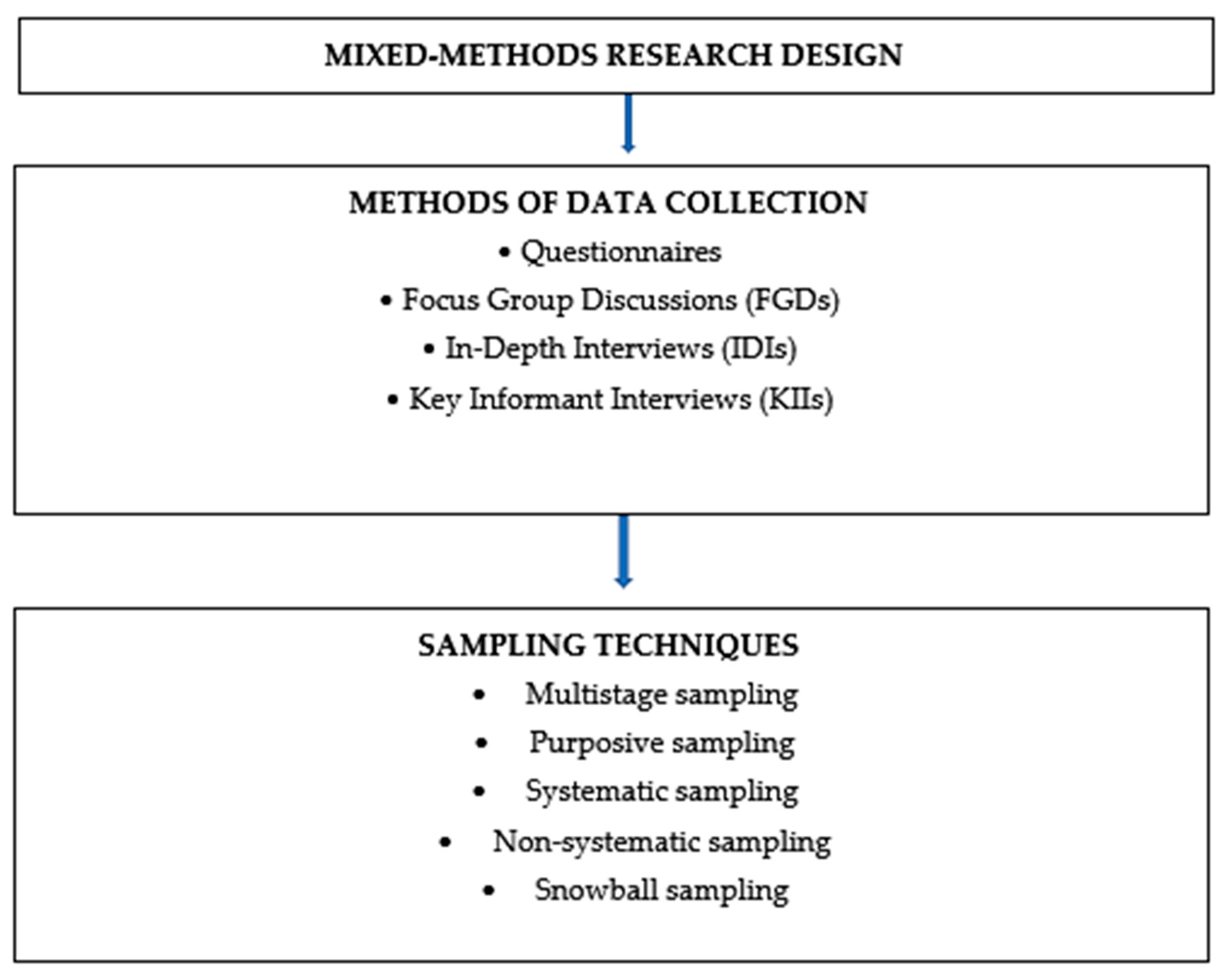
The research design adopted for this study is mixed-methods, as it offers an opportunity to understand complex issues from multiple perspectives [22]. Adoption of mixed-methods helps in reliability test and the consistency of findings from the methods affirms the reliability of the study [23]. This involved the use of Focus Group Discussion (FGD), semi-structured questionnaires (one for the former enrollees and one for the non-enrollees), and key informant and in-depth interviews for data collection. The instruments were designed in consonance with the objectives of the study. There are 16 Local Government Areas (LGAs) in Kwara State, Nigeria, where the CBHI programme exists. The programme operated in 43 healthcare facilities across 11 LGAs in the State: Asa, Baruten, Edu, Ekiti, Ifelodun, Irepodun, Isin, Kaiama, Moro, Oke-Ero, and Oyun.
Multi-stage sampling technique [24] was adopted for the study; this was particularly well-suited to this study given the non-availability of data on the communities’ population. The primary sampling units were selected with the aid of purposive sampling technique, which was used to select the community with highest enrolment in the programme from each of the LGAs for the study. These selected communities are: Aboto-Oja, Gure, Bacita, Osi, Idofian, Oro, Edidi, Kaiama, Bode Saadu, Odo-Owa, and Erinle. Highest enrolment was used as a criterion for the selection of the communities because the focus of this study is related to interest and enrolment, particularly their exposure to the awareness campaigns and early stages of programme implementation. This provides an opportunity to gather rich, detailed data relevant to the study objective while reducing the risk of arbitrary selection bias. Purposive sampling was also used to select 22 participants (one male and one female per community) for the In-Depth Interviews (IDIs) and 11 community leaders (one per community) for the Key Informant Interviews (KIIs) conducted in this study. A total of 33 participants were interviewed, this includes the IDIs and KIIs. Further, 12 Focus Group Discussions were conducted in six communities with the highest enrolment among the 11 communities selected (that is, Aboto Oja, Gure, Bacita, Osi, Idofian, and Oro). Two sessions (that is, one male and one female) were conducted in each of the six communities, while each session had between eight and 10 selected participants (consisting of former enrollees and non-enrollees). The total number of participants in the FGDs is 104. The research instruments were carefully developed in line with the objectives of the study and insights drawn from a review of relevant literature on CBHI. The FGDs were conducted as a pilot study and to validate other research instruments; insights from them helped in framing the questions in the questionnaires and interview guides. After conducting the FGDs, the draft instruments were reviewed by experts in Medical Sociology and Public Health for content and face validity. Their suggestions were used to refine and improve the instruments. Consequently, the final versions of questionnaires and interview guides were used in all the 11 communities, including the six where the 12 FGDs were conducted. The data also formed part of those used in the qualitative analysis because the FGD was designed to serve a dual function (instrument validation and data collection) [25].
The total enrolment in the selected communities is 95,151. Thus, using the Survey System Sample Size Calculator at a confidence interval of three per cent (see www.surveysystem.com), a sample size of 1,055 was proportionally taken from the enrollees - that is, the community members who joined the CBHI programme - in the 11 selected communities. In addition, the non-enrollees - that is, the community members who did not join the CBHI programme - made up half of the total sample size of 1,055 of the survey, that is, 528 respondents, representing 48 non-enrolled respondents per community. There was no data available on the population of the communities; hence, all the communities were allowed equal participation in the study. A total of 1,583 respondents participated in the survey. See Table 1 for more information on the survey and questionnaires. This secondary sampling unit stage involved a random selection of participants.
Systematic random sampling and non-systematic random sampling procedures were also used in the study; this ensured that each participant had an equal chance of being selected, and the sampling technique also helped to guard against researcher bias during the participant selection process. The initial sampling plan of the study was to systematically sample former enrollees from the CBHI enrolment registers and the non-enrollees from community registers. However, access to the enrolment registers and community registers was not granted by the gatekeepers. Hence, another sampling strategy was devised wherein a household register was created for sampling purposes; using this register, the respondents, which consist of former enrollees and non-enrollees, were recruited into the study using systematic random sampling – that is, using the nth number and selecting a sample at regular intervals depending on the size of each community and the needed sample. Thus, the sampling interval varied from one community to another. After randomly selecting the starting point from the register, the research team identified and visited the systematically selected households. Data collection for former enrollees and non-enrollees was carried out concurrently. However, in a particular community, Edidi, snowball sampling, which is a non-systematic technique, was used to identify some – 4 out of 12 – of the former enrollees because the enrolment population in the community was relatively low.
To ensure gender representation in each community, 50% of the respondents – former enrollees and non-enrollees – were selected from males and females, respectively. Further, individuals aged 21 and above were selected to ensure that respondents were at least 18 years (the age of majority) by the time the programme stopped in 2016. The former enrollees recruited into the study showed their registration cards as evidence of enrolment in each of the selected communities. Also, the non-enrollees, be it males or females or husbands or wives, were selected from the communities among heads of household because of their roles in the decision about the enrolment of members of their households in the CBHI programme.

Table 1.
Selected Communities and Number of Questionnaires Administered.
| S/N | COMMUNITY | LGA | TOTAL ENROLMENT PER COMMUNITY |
SELECTED SAMPLE | ||
|---|---|---|---|---|---|---|
| FORMER ENROLLEES | NON-ENROLLEES | TOTAL | ||||
| 1 | Aboto-Oja | Asa | 11,993 | 133 | 48 | 181 |
| 2 | Gure | Baruten | 8,961 | 99 | 48 | 147 |
| 3 | Bacita | Edu | 6,731 | 74 | 48 | 122 |
| 4 | Osi | Ekiti | 24,550 | 272 | 48 | 320 |
| 5 | Idofian | Ifelodun | 11,009 | 122 | 48 | 170 |
| 6 | Oro | Irepodun | 12,306 | 137 | 48 | 185 |
| 7 | Edidi | Isin | 1,119 | 12 | 48 | 60 |
| 8 | Kaiama | Kaiama | 5,213 | 58 | 48 | 106 |
| 9 | Bode Saadu | Moro | 5,963 | 66 | 48 | 114 |
| 10 | Odo Owa | Oke-Ero | 1,682 | 19 | 48 | 67 |
| 11 | Erinle | Oyun | 5,624 | 63 | 48 | 111 |
| Total | 95,151 | 1,055 | 528 | 1,583 | ||
Figure 1.
Summary of Mixed Methods Design Adopted.
The quantitative data were analysed using the Statistical Product and Service Solution (SPSS) version 25 [26]. Specifically, bivariate analysis and test of significance were adopted to examine relationships among variables. The qualitative data were analysed using both manual and electronic methods. All recorded discussions and interviews were transcribed and coded to extract major themes. Thematic analysis was used to identify the relevant themes in the data [27].
Also, ATLAS.ti was used in the study to systematically organise and support the analysis of the qualitative data obtained [28]. In particular, ATLAS.ti was used to manage, extract, compare, and explore data from the texts. The qualitative data were collected in Yoruba, which is the local language of the communities and audio-recorded to allow the respondents to express themselves clearly. The recordings were transcribed in Yoruba language and subsequently translated into English language. Thereafter, the researchers compared the content of the transcripts and the voice recordings to ensure a rich contextual data. The transcripts for each respondents were properly labelled and imported into ATLAS.ti for data management. The process of coding was both inductive and deductive (data-driven and literature-driven). After data familiarization by the research team, emerging codes with similar patterns were carefully and iteratively grouped into sub-themes and themes. Analytical triangulation4 was used to minimize interpretation bias and enhance data credibility [29]. As a quantitatively dominant mixed-methods study [30], the qualitative findings were used to complement the quantitative results. Ethical approval for conducting the study was obtained from the University of South Africa, South Africa and the Kwara State Ministry of Health in Ilorin, Kwara State, Nigeria.
3. Results
Table 2 illustrates the participants’ demographic information. This is followed by the other results, which are the respondents’ sources of knowledge and awareness about the CBHI programme in Kwara State and their interest in the CBHI programme at inception.
From Table 2, the study had equal participation for both male and female respondents and this indicates a fair gender representation. Findings revealed that the mean age was 41.7 years among former enrollees and 37.8 years among non-enrollees. Further, more than 60% of the total respondents had at least a secondary school education, indicating that the majority had some formal education. In addition, most respondents were Muslim because Islam is the predominant religion in the study areas. Also, over 80% of the former enrollees were married. The household size of most respondents falls within the range of 4-6, indicating a gradual shift away from the large household size that characterises traditional West African families. Most of the respondents were traders, as there are no formal business organisations in rural communities other than schools and hospitals. While farming is common in rural areas, only a few respondents indicated that they were farmers; a possible reason is that most community dwellers, including the respondents, were involved in subsistence farming and other income-generating activities. Also, half of the respondents earned a monthly income of 12,000 (approximately 33.1 USD) or less; this indicates that most earned below Nigeria’s 2015 minimum wage of N18,000 (approximately 49.6 USD), when the programme was still active.
12,000 (approximately 33.1 USD) or less; this indicates that most earned below Nigeria’s 2015 minimum wage of N18,000 (approximately 49.6 USD), when the programme was still active. 3.1. Sources of Knowledge and Awareness About the CBHI Programme in Kwara State
The CBHI programme became operational in 2007 and started in Shonga, Edu Local Government Area of Kwara State. The commencement was supported by strong awareness efforts to ensure acceptance of the programme through mass enrolment. As a result, many people had the opportunity to enrol in the programme. The respondents became aware of the CBHI programme through various sources. Table 3 shows the various sources through which the respondents learned about the programme.
According to Table 3, the predominant sources of information among the respondents were family & friends and community meetings; this suggests a good level of social interaction and communication among community members and their kith and kins. Similarly, qualitative data aligns with the results in Table 3; for instance, a community leader, during an interview, noted that: “Initially, when information about the programme went round, it was seemingly strange to this community, but with the efforts of indigenes that went around to enlighten the people, the programme gained a high level of acceptance” (KII Community Leader, Bode Saadu). Another community leader added that: “We called a meeting of all community members, including people from the neighbouring communities. Then, we briefed them about the programme, and we embraced it” (KII Community Leader, Aboto-Oja). Also, a community member noted that: “I heard about it from a family member, but there was also awareness efforts carried out in the community” (IDI, Male, Gure).
In addition, Table 3 shows that the religious institutions and community leaders assisted in spreading awareness about CBHI and propagated related information. A community member explained that: “I became aware of the programme in the hospital, though the community also sensitised the people through the mosques and churches. This sensitisation exercise improved the level of participation in the programme because people became more aware and enrolled” (IDI, Male, Bacita). Other sources of information that enhanced awareness of the programme were radio programmes and billboards. According to another community member: “First, I heard about it through the radio. Second, I heard about it through my family members. Third, I heard about it at the community meeting” (IDI, Male, Erinle). Moreover, community leaders were mandated to sensitise their community members. A community leader noted that: “The community leadership was requested to sensitise and enlighten the community members to enrol in the programme” (KII, Community Leader, Kaiama).
Table 4.
Chi-Square Test of Association between Selected Socio-Demographic Variables and Knowledge about the CBHI Programme.
Table 4.
Chi-Square Test of Association between Selected Socio-Demographic Variables and Knowledge about the CBHI Programme.
| Variables | Former Enrollees | Non-Enrollees | ||||||
|---|---|---|---|---|---|---|---|---|
| χ² | Df | Cramér’s V | p-value | χ² | df | Cramér’s V | p-value | |
| Gender | 6.746 | 3 | 0.080 | 0.080 | 2.235 | 3 | 0.065 | 0.525 |
| Education | 15.512 | 12 | 0.121 | 0.215 | 14.990 | 12 | 0.169 | 0.242 |
| Age | 20.482 | 24 | 0.139 | 0.669 | 36.096 | 24 | 0.151 | 0.054 |
| Occupation | 22.955 | 12 | 0.147 | 0.028 | 25.321 | 12 | 0.219 | 0.013 |
Note: Pearson’s Chi-square test was used. All expected cell counts exceeded five. This satisfies the assumptions of the test. Cramér’s V was calculated to assess the strength of association (0.00–0.10 = negligible/small; 0.10–0.30 = small to moderate; >0.30 = moderate to strong). Significance level set at p < 0.05. Source: Fieldwork, 2019.
A series of Chi-square tests of independence were conducted to examine the association between key socio-demographic variables and respondents’ knowledge about the CBHI programme. Among former enrollees (n ≈ 1,055), no statistically significant associations were found between knowledge of the programme and gender (p = 0.080), education (p = 0.215) or age (p = 0.669). However, there was a statistically significant association with occupation (χ² = 22.955, df = 12, p = 0.028). The effect size was small (Cramér’s V = 0.147). This suggests that while occupation influenced how respondents became knowledgeable about the programme, the relationship was modest in strength. This might be related to the methods of publicising the programme. For instance, rallies and meetings were organised in the community markets. A community leader explained: “We were invited to our big market where they introduced the programme to us, and everybody was present” (KII, Community Leader, Gure). In other words, the programme managers and community leadership were instrumental to the high level of knowledge generation about the programme.
Among the non-enrollees (n ≈ 528), no significant associations emerged for gender (p = 0.525) or education (p = 0.242). Age showed a borderline association (χ ² = 36.096, df = 24, p = 0.054) with a small effect size (Cramér’s V = 0.151). A statistically significant association was again observed with occupation (χ² = 25.321, df = 12, p = 0.013) with a small-to-moderate effect size (Cramér’s V = 0.219), which is the strongest association in this Table. Occupation consistently emerged as a significant factor associated with knowledge of the CBHI programme in both groups. The lack of association with education and gender suggests that the awareness campaigns were relatively equitable and effective across these demographics. The borderline age effect among non-enrollees may indicate that older respondents in this group had slightly different exposure patterns. All effect sizes were small to moderate, which is common in large social surveys where multiple factors influence knowledge diffusion.
3.2. Interest in the CBHI Programme at Inception
Figure 2 shows the respondents’ interest in the CBHI programme at the time of its launch.
Figure 2 shows that most respondents were interested in the CBHI programme at its inception. While some people saw it as an opportunity to access good healthcare, others were skeptical about the efficacy of the programme. A community member gave a similitude of how happy she was, thus: “It was like someone who had been under the sun and about to die due to the hotness of the sun; and was given a very cold drink to take” (IDI, Female, Odo Owa). In addition, a community member felt that it would provide affordable access to healthcare and improved health for the community members and stated that: “I was delighted with the introduction of the CBHI programme because many people were not healthy and had no money to access care” (IDI, Male, Edidi). Similarly, a community leader noted that: “We were delighted when we heard about the programme. The organisers came to this palace to inform the King; he informed us [the chiefs]” (KII, Community Leader, Odo-Owa). Despite the high level of interest, some people were reluctant to accept the programme. A participant explained that: “People were insinuating all sorts of negativities about it at inception until when some people decided to give it a try” (IDI, Female, Osi). Another participant noted that: “Initially, we did not trust the programme, but gradually we started to find it interesting when we were hearing about what was happening in the hospital” (IDI, Male, Bacita).
As shown in Table 3, the majority of people learned about the programme through family and friends, as well as community meetings. Thus, the endorsement of the programme by the community leaders, as well as the close bond and trust shared with family and friends may have influenced the interest of the community members in the programme. Community and religious leaders were also involved in the programme's sensitisation efforts (KII, Community Leader, Idofian; KII, Community Leader, Bode Saadu). Also, a male community member in Bacita noted that: “The programme was publicised through health talks in the markets, churches, mosques and other parts of the community…” (IDI, Male, Bacita). All of these were contributory to the high level of interest in the programme in the communities.
Table 5.
Chi-Square Test of Association between Selected Socio-Demographic Variables and Interest in the CBHI Programme.
Table 5.
Chi-Square Test of Association between Selected Socio-Demographic Variables and Interest in the CBHI Programme.
| Variables | Former Enrollees | p-value | Non-Enrollees | p-value | ||||
|---|---|---|---|---|---|---|---|---|
| χ² | Df | Cramér’s V | χ² | df | Cramér’s V | |||
| Gender | 0.762 | 3 | 0.027 | 0.858 | 8.244 | 3 | 0.125 | 0.041 |
| Age | 26.184 | 24 | 0.091 | 0.344 | 33.160 | 24 | 0.145 | 0.101 |
| Education | 14.793 | 12 | 0.068 | 0.253 | 15.917 | 12 | 0.100 | 0.195 |
| Occupation | 23.813 | 12 | 0.087 | 0.022 | 22.335 | 12 | 0.119 | 0.034 |
| Income | 48.175 | 15 | 0.107 | 0.001 | 28.289 | 15 | 0.116 | 0.020 |
| Knowledge about CBHI | 18.232 | 9 | 0.076 | 0.033 | 57.301 | 9 | 0.190 | 0.001 |
Note: Pearson’s Chi-square test was used. All expected cell counts exceeded five except for the gender–interest crosstabulation among former enrollees (2 cells had expected counts < 5); therefore, the Likelihood Ratio test was reported for that comparison (p = 0.857). Cramér’s V indicates the strength of association (0.00–0.10 = negligible/small; 0.10–0.30 = small to moderate; >0.30 = moderate to strong). Significance level set at p < 0.05. Source: Fieldwork, 2019.
Chi-square tests of independence were performed to investigate the associations between socio-demographic variables and respondents’ interest in the CBHI programme at inception. Among former enrollees (n ≈ 1,055), no statistically significant associations were observed between interest and gender (p = 0.858), age (p = 0.344) or education (p = 0.253). All effect sizes were negligible to small. However, statistically significant associations were found with occupation (χ² = 23.813, df = 12, p = 0.022, Cramér’s V = 0.087), monthly income (χ² = 48.175, df = 15, p = 0.001, Cramér’s V = 0.107) and knowledge about the CBHI programme (χ² = 18.232, df = 9, p = 0.033, Cramér’s V = 0.076). These relationships were small in magnitude. Among non-enrollees (n ≈ 528), gender was significantly associated with interest (χ² = 8.244, df = 3, p = 0.041, Cramér’s V = 0.125) with a small effect size. Significant associations were also detected for occupation (χ² = 22.335, df = 12, p = 0.034, Cramér’s V = 0.119), income (χ² = 28.289, df = 15, p = 0.020, Cramér’s V = 0.116) and knowledge about the CBHI programme (χ² = 57.301, df = 9, p = 0.001, Cramér’s V = 0.190, which is the strongest effect in the table). No significant associations were found for age or education (p > 0.05).
Socio-economic factors, especially occupation, income and prior knowledge of the programme, consistently influenced interest in the CBHI programme across both groups, however, effect sizes range from small to small-moderate sizes. This suggests that individuals in certain occupations and those with lower or irregular incomes showed greater interest. This is likely driven by the programme’s potential to mitigate catastrophic out-of-pocket healthcare expenditure. The significant role of knowledge highlights the importance of effective awareness campaigns. The gender difference observed only among non-enrollees may reflect differing household decision-making dynamics or risk perceptions between men and women in that group.
4. Discussion
Awareness and sensitisation are critical to the success of any CBHI programme. The study found a high level of awareness about the programme among the respondents. Most of them became aware of CBHI through family and friends, and community meetings. The findings indicate that the spread of information and awareness about the programme was due to the combined efforts of those implementing the programme and community members, most notably the community and religious leaders. More so, people tend to have considerable respect and trust in community and religious leaders. However, poor awareness and paucity of information about a CBHI programme have been noted in some places, for instance, in Lagos State [31]. Also, recent studies [17,19,20] have found poor CBHI awareness among some respondents in Alimosho, Lagos; Ekiti; and Osun States in South-Western Nigeria. The high level of awareness found in this study can also be attributed to the channels, such as family and friends, radio, and billboards that were employed in creating awareness about the programme.
The lack of association between educational status and knowledge about the programme found in this study is contrary to the outcome of a study which found a statistically significant relationship between educational status and knowledge about CBHI in Southern Ethiopia [32]. This might be due to the use of different strategies or publicity channels in the two settings. In addition, a study found no relationship between age and knowledge about CBHI in Anambra State, Nigeria [33]. This might be related to the importance attributed to access to healthcare services in communities [34]. Based on insights from this study, the introduction of the CBHI programme attracted most of the community members because it came with an opportunity of affordable access to healthcare. This study also found that some people were sceptical of the programme's efficacy. While some people saw it as an opportunity to access the much-needed healthcare and do so within their financial capacity, other people felt the package was too good to be real. Hence, this indicates that trust is one of the challenges of enrolment in CBHI programmes. The finding regarding scepticism about the efficiency of the programme is corroborated by a study which found that “lack of trust as one of the main reasons for low coverage of CBHI in the LMICs” [35].
The high level of interest in the programme is in tune with the study that was conducted in Southeast Nigeria where 92.4% of the respondents were interested in enrolling in a CBHI programme [18]. In the same vein, a study found that 81.5% of respondents were interested in enrolling in the CBHI programme in Northwest Ethiopia [36]. The association between gender and interest in the programme among non-enrolled respondents suggests that certain factors influenced their interest. This study also found no association between education and interest in the CBHI programme. However, this is not in tune with the findings of studies conducted in Nepal [37] and Southeast Nigeria [21] that found association between education and interest in CBHI.
Further, the lack of association between age and interest in the CBHI programme among the respondents indicates that most respondents' age did not influence their interest in and consideration of the programme. Often, the aged and children appear more vulnerable, however, no one is immune to illness. More so, the healthcare programme was accessible to all upon enrolment, regardless of age group. This study’s finding on the lack of association between age and interest in the CBHI programme is dissimilar to the outcome of a recent study in Ethiopia which found an association between age and interest in a CBHI programme [38]. However, the association found between occupation and interest is confirmed by a study in Bangladesh [39], which found an association between occupation and willingness to enrol in a CBHI programme. Furthermore, the study found income to be a significant factor in the generation of interest in CBHI. The findings in this study indicate that most of the respondents earned 12,000 (approximately 33.1 USD in 2015 when the CBHI programme was still operational) or below and the majority were traders, who may not have consistent or guaranteed income, but desired healthcare coverage against catastrophic OOP. Likewise, a previous study [40] found an association between income and interest in CBHI programmes in North-Western Nigeria.
12,000 (approximately 33.1 USD in 2015 when the CBHI programme was still operational) or below and the majority were traders, who may not have consistent or guaranteed income, but desired healthcare coverage against catastrophic OOP. Likewise, a previous study [40] found an association between income and interest in CBHI programmes in North-Western Nigeria.The policy implication and relevance of this paper is that high level of awareness and interest has a direct impact on the orientation and readiness to increasingly utilise modern healthcare services among people in the rural areas. Hence, it is suggested that the government implement appropriate plans to provide access to healthcare services to the populace, especially in rural areas, utilising relevant sensitisation and awareness strategies, particularly using the awareness creation channels that were found to be the most effective in this study. In so doing, a more healthy populace may be acheived.
5. Conclusions
There was high level of CBHI awareness among the people in the studied communities. In particular, family and friends, religious and community leaders influenced the awareness and interest rates in the programme. However, there is a need for further studies to confirm if such interest leads to an increased enrolment in and long-term use of CBHI programmes. This is because awareness and interest do not automatically translate into enrolment as there are other factors that determine enrolment in a CBHI programme. Therefore, while the policymakers make efforts to implement a health policy that provides access to comprehensive healthcare in the long-term, steps should be taken towards the delivery of a quality healthcare service under CBHI programmes to ensure that the vast majority of those that are aware, and interested, are sustainably enrolled and covered. In other words, policy makers and development partners should adopt relevant strategies and channels for sensitisation and awareness creation among the prospective beneficiaries to achieve cooperation and adoption of the programme.
Author Contributions
Conceptualization, Afeez Folorunsho Folorunsho Lawal; Methodology, Afeez Folorunsho Folorunsho Lawal and Caroline Agboola; Software, Afeez Folorunsho Folorunsho Lawal and Caroline Agboola; Validation, Afeez Folorunsho Folorunsho Lawal and Caroline Agboola; Formal analysis, Afeez Folorunsho Folorunsho Lawal; Investigation, Afeez Folorunsho Folorunsho Lawal and Caroline Agboola; Resources, Afeez Folorunsho Folorunsho Lawal; Data curation, Afeez Folorunsho Folorunsho Lawal and Caroline Agboola; Writing – original draft, Afeez Folorunsho Folorunsho Lawal; Writing – review & editing, Afeez Folorunsho Folorunsho Lawal and Caroline Agboola; Visualization, Afeez Folorunsho Folorunsho Lawal and Caroline Agboola; Supervision, Afeez Folorunsho Folorunsho Lawal; Project administration, Afeez Folorunsho Folorunsho Lawal and Caroline Agboola; Funding acquisition, Afeez Folorunsho Folorunsho Lawal.
Funding
This research received no external funding.
Institutional Review Board Statement
The study was approved by the relevant government in Nigeria (MOH/KS/EU/777/295, 13 May 2019) and by the University of South Africa's College of Human Sciences Research Ethics Review Committee (2019-CHS--Depart -64116271, 10 May 2019).
Informed Consent Statement
Informed consent was obtained from all subjects involved in the study.
Data Availability Statement
The data presented in this study are openly available in http://hdl.handle.net/10500/27847.
Acknowledgments
The first author sincerely acknowledges the invaluable academic guidance, mentorship, and constructive supervision provided by my doctoral supervisor, Prof Jimi Adesina, throughout my PhD research, from which this manuscript was derived.
Conflicts of Interest
The authors declare no conflicts of interest.
References
- Adeyeye, S. A. O., Ashaolu, T. J., Bolaji, O. T., Abegunde, T. A., & Omoyajowo, A. O. Africa and the Nexus of poverty, malnutrition and diseases. Critical Reviews in Food Science and Nutrition 2023, 63(5), 641-656.
- Beattie, A., Yates, R., & Noble, D. Accelerating progress towards universal health coverage for women and children in South Asia, East Asia and the pacific. UNICEF Regional Office Thematic Paper, South Asia, Nepal, 2016.
- Effiong, F. B., Dine, R. D., Hassan, I. A., Olawuyi, D. A., Isong, I. K., & Adewole, D. A. Coverage and predictors of enrollment in the state-supported health insurance schemes in Nigeria: a quantitative multi-site study. BMC Public Health, 2025, 25(1), 2125. [CrossRef]
- Fadlallah, R., El-Jardi, F., Hemadi, N., Morsi, R. Z., Samra, C. A. A., Ahmad, A., Arif, K., Hishi, L., Honein-AbouHaidar, G., & Akl, E. A. Barriers and facilitators to implementation, uptake and sustainability of community-based health insurance schemes in low and middle income countries: a systematic review. International Journal for Equity in Health 2018, 17(13):1-18. [CrossRef]
- Mathauer, I., Mathivet, B., & Kutzin, J. Community based health insurance: how can it contribute to progress towards UHC? Health Financing Policy Brief (17.3). World Health Organization, Geneva, Switzerland, 2017, 1-14.
- Ranabhat, C. L., Kim, C. B., Singh, A., Acharya, D., Pathak, K., Sharma, B., & Mishra, S. R. Challenges and opportunities towards the road of universal health coverage (UHC) in Nepal: a systematic review. Archives of Public Health 2019, 77(1):1-10. [CrossRef]
- Eze, P., Ilechukwu, S., & Lawani, L. O. Impact of community-based health insurance in low-and middle- income countries: A systematic review and meta-analysis. PLoS One 2023, 18(6), e0287600. [CrossRef]
- Habte, A., Tamene, A., Ejajo, T., Dessu, S., Endale, F., Gizachew, A., & Sulamo, D. Towards universal health coverage: The level and determinants of enrollment in the Community-Based Health Insurance (CBHI) scheme in Ethiopia: A systematic review and meta-analysis. PloS One 2022 17(8), e0272959. [CrossRef]
- Dror, D. M., Shahed Hossain, S. A., Majumdar, A., Koehlmoos, T. L. P., John, D., & Panda, P. K. What factors affect voluntary uptake of community-based health insurance schemes in low and middle-income countries? A systematic review and meta-analysis. PLoS One 2016, 11(8):1-31. [CrossRef]
- Lawal, A. F., Tsekpo, K. O., Omoruan, A. I., & Araba, K. T. Determinants of Community- Based Health Insurance Enrolment in Africa: Reflections from Rural Nigeria. Governance and Society Review 2025, 4(1), 41-63. [CrossRef]
- David, F. A., & Oluwatosin, A. J. The Problems and Prospects of Primary Healthcare: a case study of Odo-Owa Oke Ero Local Government Kwara State, Nigeria. Divers Equal Health Care, 2023, 20, 31.
- Okunogbe, A., Hähnle, J., Rotimi, B. F., Akande, T. M., & Janssens, W. Short and longer-term impacts of health insurance on catastrophic health expenditures in Kwara State, Nigeria. BMC health services research, 2022 22(1), 1557. [CrossRef]
- Amsterdam Institute of International Development. A short term impact evaluation of the health insurance fund program in central Kwara State, Nigeria. 2013. https://www.pharmaccess.org/update/a-short-term-impact-evaluation-of-the-health-insurance-fund-program-in-central-kwara-state-nigeria/ (Accessed July 12 2018).
- Lawal, A. F. Social Protection and Healthcare Services in Africa: The Collapse of a Community-Based Health Insurance Program in Rural Nigeria. In The Oxford Handbook of Social Welfare in the Global South. Brik, A.B. Oxford University Press, Oxford, United Kingdom, 2026: 507-520.
- Bonfrer, I., Van de Poel, E., Gustafsson-Wright, E., & Van Doorslaer, E. Voluntary health insurance in Nigeria: effects on takers and non-takers. Social Science & Medicine, 2018, 205, 55-63. [CrossRef]
- Gomez, G. B., Foster, N., Brals, D., Nelissen, H. E., Bolarinwa, O. A., Hendriks, M. E., ... & Schultsz, C. Improving maternal care through a state-wide health insurance program: a cost and cost-effectiveness study in rural Nigeria. PloS One, 2015, 10(9), e0139048. [CrossRef]
- Akindele, R., Olajubu, O., Oladejo, R., Jerry-Adetoro, F., Sunmonu, T., & Olarewaju, S. Knowledge and perception of Osun Health Insurance Scheme (OHIS) among enrollees in Osun State. Journal of Pharmaceutical & Allied Sciences, 2025, 22(3). [CrossRef]
- Oluedo, E. M., Obikeze, E., Nwankwo, C., & Okonronkwo, I. Willingness to enroll and pay for community based health insurance, decision motives, and associated factors among rural households in Enugu State, Southeast Nigeria. Nigerian Journal of Clinical Practice, 2023, 26(7), 908-920. [CrossRef]
- Ibirongbe, D. O., Elegbede, O. E., Ipinnimo, T. M., Adetokunbo, S. A., Emmanuel, E. T., & Ajayi, P. O. Awareness and willingness to pay for community health insurance scheme among rural households in Ekiti State, Nigeria. Indian Journal of Medical Sciences, 2021, 22(1), 37-50.
- Abdulrasheed, H. B., & Aladetohun, B. Awareness and perception of the healthcare consumer towards Community-based health insurance policy: insight from Alimosho local government, Lagos state, Nigeria, International Journal of Politics and Good Governance, 2018, 9(3):1-22. [CrossRef]
- Azuogu, B. N., & Eze, N. C. Awareness and willingness to participate in Community Based Health Insurance among artisans in Abakaliki, Southeast Nigeria, Asian Journal of Research in Medical and Pharmaceutical Sciences 2018, 1-8. [CrossRef]
- Ngulube, P. The movement of mixed methods research and the role of information science professionals. Handbook of research on connecting research methods for information science research, IGI Global. Hershey, USA, 2020; pp. 425-455. [CrossRef]
- Tahir, S. R. Reliability and validity of mixed methods research. In Design and Validation of Research Tools and Methodologies, IGI Global Scientific Publishing, Hershey, USA, 2020; 2025; pp. 167-176.
- Takona, D. Research design: qualitative, quantitative, and mixed methods approaches. Quality and Quantity, 2024; 58(1): 1011-1013.
- Jung, H., & Ro, E. Validating common experiences through focus group interaction. Journal of Pragmatics 2019, 143, 169-184. [CrossRef]
- Rahayu, N. I., Muktiarni, M., & Hidayat, Y. An application of statistical testing: A guide to basic parametric statistics in educational research using SPSS. ASEAN Journal of Science and Engineering 2024, 4(3), 569-582. [CrossRef]
- Squires, V. Thematic analysis. In Varieties of qualitative research methods: Selected contextual perspectives. Springer International Publishing, Cham, Switzerland, 2023; pp. 463-468.
- Gupta, A. Qualitative Methods and Data Analysis Using ATLAS.ti. Springer: Cham, Switzerland, 2024.
- Schlunegger, M. C., Zumstein-Shaha, M., & Palm, R. Methodologic and data-analysis triangulation in case studies: A scoping review. Western Journal of Nursing Research, 2024, 46(8), 611-622. [CrossRef]
- Schoonenboom, J., & Johnson, R. B. How to construct a mixed methods research design. KZfSS Kölner Zeitschrift für Soziologie und Sozialpsychologie, 2017, 69(Suppl 2), 107-131. [CrossRef]
- Shittu, A. K., & Afolabi, O. S. Community Based health insurance scheme and state-local relations in rural and semi-urban areas of Lagos State, Nigeria. Public Organization Review, 2021, 21(1), 19-31.
- Abdilwohab, M. G., Abebo, Z. H., Godana, W., Ajema, D., Yihune, M., & Hassen, H. Factors affecting enrollment status of households for community based health insurance in a resource-limited peripheral area in Southern Ethiopia. Mixed method. PloS One, 2021, 16(1), e0245952. [CrossRef]
- Iyalomhe, F. O., Adekola, P. O., & Cirella, G. T. Community-based health financing: empirical evaluation of the socio-demographic factors determining its uptake in Awka, Anambra state, Nigeria. International journal for equity in health, 2021, 20(1), 235. [CrossRef]
- Gizaw, Z., Astale, T. and Kassie, G.M. What improves access to primary healthcare services in rural communities? A systematic review. BMC Primary Care, 2022 23(1), p.313. [CrossRef]
- Adebayo, E. F., Uthman, O. A., Wiysonge, C. S., Stern, E. A., Lamont, K. T., & Ataguba, J. E. A systematic review of factors that affect uptake of community-based health insurance in low income and middle income countries, BMC Health Services Research, 2015, 15(543):1-13. [CrossRef]
- Kibret, G. D., Leshargie, C. T., Wagnew, F., & Alebel, A. Willingness to join community based health insurance and its determinants in East Gojjam zone, Northwest Ethiopia, BMC Research Notes, 2019, 12(1):1-5. [CrossRef]
- Ko, H., Kim, H., Yoon, C. G., & Kim, C. Y. Social capital as a key determinant of willingness to join community-based health insurance: a household survey in Nepal, Public Health, 2018, 160:52-61. [CrossRef]
- Garedew, M. G., Sinkie, S. O., Handalo, D. M., Salgedo, W. B., Kehali, K. Y., Kebene, F. G., Waldemarium, T. D., & Mengesha, M. A. Willingness to join and pay for Community-Based Health Insurance among rural households of selected Districts of Jimma Zone, Southwest Ethiopia, ClinicoEconomics and Outcomes Research, 2020, 12:45-55. [CrossRef]
- Ahmed, S., Hoque, M. E., Sarker, A. R., Sultana, M., Islam, Z., Gazi, R., & Khan, J.A. Willingness-to-pay for community-based health insurance among informal workers in urban Bangladesh, PloS One, 2018, 11(2):1-16. [CrossRef]
- Gobir, A. A., Adeyemi, A. O., Abubakar, A. A., Audu, O., & Joshua, I. A. Determinants of willingness to join Community-Based Health Insurance Scheme in a rural community of North-Western Nigeria, African Journal of Health Economics, 2016, 5:1-10. [CrossRef]
Figure 2.
Respondents’ Interest in the CBHI Programme at Inception. Source: Fieldwork, 2019.
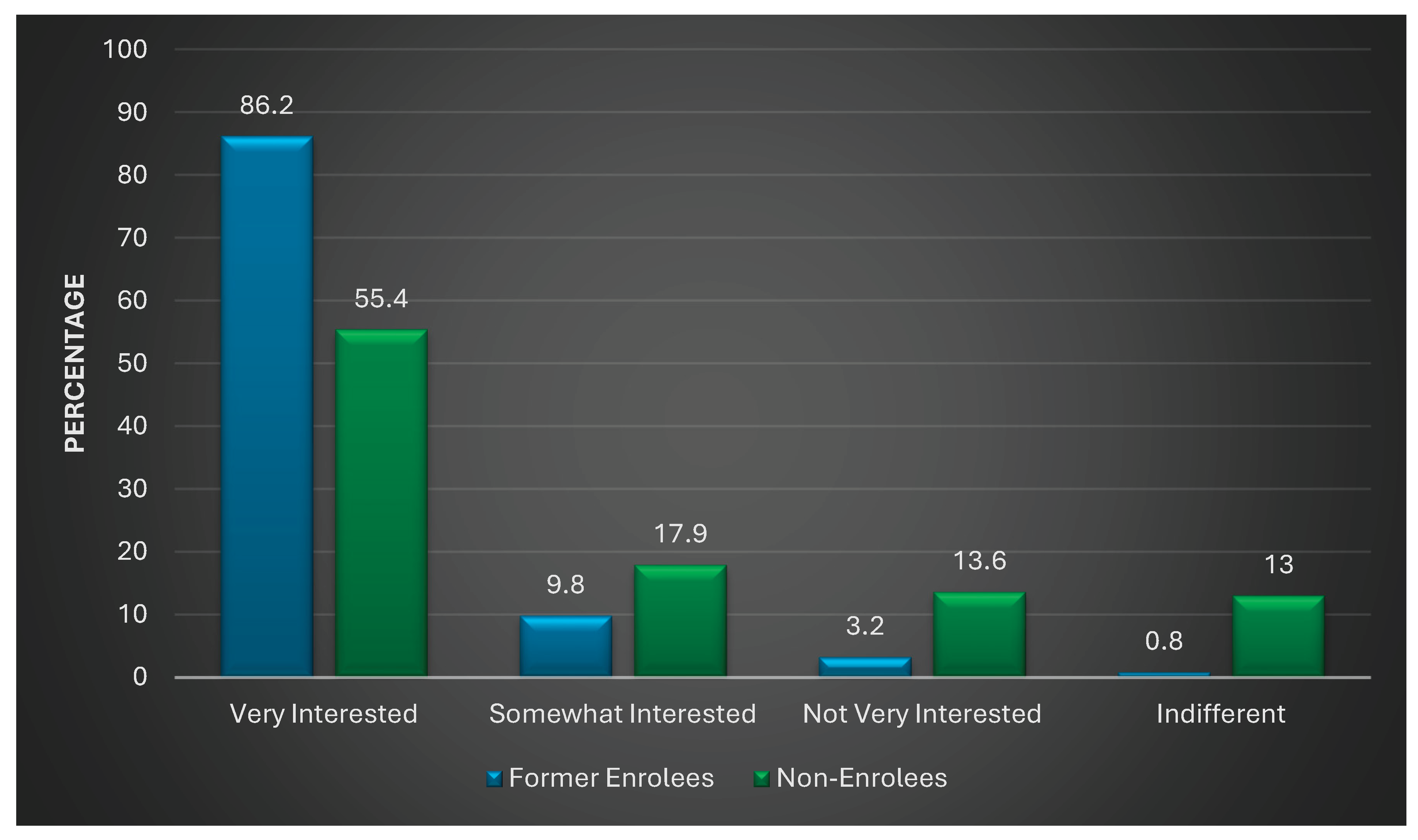
Table 2.
Socio-Demographic Characteristics of Respondents.
| Variables | Enrollees (N = 1,055) | Non-Enrollees (N = 528) | ||
|---|---|---|---|---|
| Gender | Frequency | Percentage | Frequency | Percentage |
| Male | 527 | 49.95 | 264 | 50.0 |
| Female | 528 | 50.05 | 264 | 50.0 |
| Age | Frequency | Percentage | Frequency | Percentage |
| 21 – 30 | 287 | 29.7 | 196 | 42.6 |
| 31 – 40 | 262 | 27.1 | 114 | 24.8 |
| 41 - 50 | 191 | 19.8 | 81 | 17.6 |
| 51 -60 | 116 | 12.1 | 29 | 6.3 |
| 61 and above | 110 | 11.3 | 40 | 8.7 |
| Education | Frequency | Percentage | Frequency | Percentage |
| No Education | 215 | 20.9 | 74 | 14.4 |
| Primary School | 197 | 19.1 | 98 | 19.0 |
| Secondary School | 303 | 29.4 | 202 | 39.2 |
| ND/NCE/Technical School | 201 | 19.5 | 92 | 17.9 |
| HND/University Graduate | 115 | 11.2 | 49 | 9.5 |
| Religion | Frequency | Percentage | Frequency | Percentage |
| Islam | 629 | 61.7 | 306 | 59.4 |
| Christianity | 388 | 38.0 | 207 | 40.2 |
| African Traditional Religion | 1 | 0.1 | 1 | 0.2 |
| Others | 2 | 0.2 | 1 | 0.2 |
| Marital Status | Frequency | Percentage | Frequency | Percentage |
| Married | 886 | 86.9 | 528 | 100.0 |
| Divorced | 4 | 0.4 | 0 | 0 |
| Widowed | 120 | 10.6 | 0 | 0 |
| Single | 106 | 0.9 | 0 | 0 |
| Household Size | Frequency | Percentage | Frequency | Percentage |
| 1 – 3 | 165 | 20.4 | 74 | 21 |
| 4 – 6 | 435 | 53.8 | 180 | 51 |
| 7 – 10 | 174 | 21.5 | 76 | 21.5 |
| 11 and above | 35 | 4.3 | 23 | 6.5 |
| Occupation | Frequency | Percentage | Frequency | Percentage |
| Farmer | 118 | 11.7 | 72 | 14.1 |
| Trader | 409 | 40.8 | 164 | 32.0 |
| Technician | 109 | 10.8 | 78 | 15.2 |
| Civil Servant | 166 | 16.4 | 59 | 11.5 |
| Others | 208 | 20.6 | 139 | 27.1 |
| Income per month (USD) | Frequency | Percentage | Frequency | Percentage |
|
3,000 or below (8.2 and below) |
61 | 7.7 | 33 | 8.7 |
|
3,001 – 6,000 (8.2 – 16.5) |
137 | 17.3 | 74 | 19.5 |
|
6,001 – 9,000 (16.5 – 24.8) |
47 | 5.9 | 17 | 4.5 |
|
9,001- 12,000 (24.8 – 33.1) |
158 | 19.9 | 65 | 17.1 |
|
12,001 – 15,000 (33.1 – 41.4) |
53 | 6.7 | 33 | 8.7 |
|
15,001 and above (41.4 and above) |
337 | 42.5 | 158 | 41.5 |
Source: Fieldwork, 2019.
Table 3.
Sources of Knowledge about the CBHI Programme.
| Source of Knowledge | Former Enrollees (N = 1,111) | Non- Enrollees (N = 527) | ||
|---|---|---|---|---|
| Frequency | Percentage | Frequency | Percentage | |
| Mass media | 141 | 12.6 | 60 | 11.4 |
| Family & Friends | 421 | 37.8 | 214 | 40.6 |
| Community meetings | 393 | 35.3 | 157 | 29.7 |
| Sales Agents | 28 | 2.5 | 8 | 1.5 |
| Mosques/Churches | 10 | 0.9 | 1 | 0.2 |
| Healthcare facilities | 23 | 2.07 | 5 | 0.9 |
| Association meetings | 1 | 0.09 | 0 | 0 |
| Awareness programmes | 0 | 0 | 7 | 1.3 |
| Others | 94 | 8.5 | 75 | 14.2 |
Source: Fieldwork, 2019.
| 1 | Awareness refers to the people’s recognition and understanding that the CBHI programme exists within their community. |
| 2 | Enrolment refers to the payment of the required premium for registration and utilisation of healthcare services under the CBHI programme. |
| 3 | Knowledge refers to the awareness or comprehension of the people about the existence and operations of the CBHI programme, particularly, within their community. |
| 4 | Analytical triangulation involves the process where different members of a research team separately analyze the same data to identify areas of convergence or divergence with a view to eliminating possible bias. |
Disclaimer/Publisher’s Note: The statements, opinions and data contained in all publications are solely those of the individual author(s) and contributor(s) and not of MDPI and/or the editor(s). MDPI and/or the editor(s) disclaim responsibility for any injury to people or property resulting from any ideas, methods, instructions or products referred to in the content. |
© 2026 by the authors. Licensee MDPI, Basel, Switzerland. This article is an open access article distributed under the terms and conditions of the Creative Commons Attribution (CC BY) license (http://creativecommons.org/licenses/by/4.0/).
Copyright: This open access article is published under a Creative Commons CC BY 4.0 license, which permit the free download, distribution, and reuse, provided that the author and preprint are cited in any reuse.


