

Submitted:
22 July 2026
Posted:
22 July 2026
You are already at the latest version
Abstract
Background: Affective and somatic symptoms in girls and women arise within interacting biological, psychological, relational, and structural contexts. Premenstrual syndrome (PMS) and premenstrual dysphoric disorder (PMDD) are clinically recognized menstrual-cycle-related conditions, yet premenstrual language is also used socially to trivialize legitimate distress. Broader determinants—including menstrual stigma, reproductive transitions, unpaid care, violence, economic dependence, and health-care bias—remain insufficiently integrated in many clinical formulations. Objective: To clarify the clinical boundaries of PMS, PMDD, and premenstrual exacerbation; synthesize evidence on social determinants of affective-somatic distress across the life course; and propose a practical, non-diagnostic framework for menstrual-informed and gender-responsive assessment. Methods: A structured narrative search of PubMed/MEDLINE and the websites of major professional and public-health organizations was conducted for English-language literature available through July 2026. Search concepts included PMS, PMDD, premenstrual exacerbation, menstrual health, adolescent mental health, perinatal and menopausal mental health, gender norms, unpaid and cognitive care work, violence, child marriage, pain bias, and gender-responsive care. Priority was given to clinical guidelines, consensus statements, systematic reviews, and major epidemiological reports. No meta-analysis or formal certainty-of-evidence grading was undertaken. Synthesis: PMS and PMDD should be evaluated through symptom timing, postmenstrual remission, functional impairment, prospective daily ratings, and differential diagnosis. Hormonal sensitivity may influence vulnerability, but biological mechanisms do not invalidate the meaning of emotions or social stressors. Across the life course, symptom expression and access to care are shaped by menstrual stigma, body surveillance, unequal care responsibilities, reproductive-role expectations, violence, financial dependence, and differential credibility within health systems. These influences may coexist with, exacerbate, or be mistaken for menstrual and reproductive-stage disorders. Conclusions: Clinical assessment should distinguish established menstrual-cycle disorders from non-cyclical psychiatric, medical, and sociostructural sources of distress. The proposed concept of embodied female affective-somatic distress is a heuristic, not a diagnosis, intended to organize assessment of timing, reproductive stage, medical differential diagnoses, safety, care burden, and social context. Such an approach supports diagnostic precision while reducing both hormonal dismissal and social reductionism.
Keywords:
women's mental health
; girls
; premenstrual syndrome
; premenstrual dysphoric disorder
; menstrual health
; gender norms
; unpaid care work
; violence against women
; medical bias
; narrative review
Plain-Language Summary
PMS and PMDD are real health conditions linked to the menstrual cycle, but not every difficult emotion expressed by a girl or woman is caused by menstruation. This review explains why clinicians should assess both the body and the social environment. Important questions include whether symptoms follow a repeated cycle pattern, whether they improve after menstruation begins, whether pregnancy, the postpartum period, or menopause is relevant, and whether pain, sleep loss, violence, caregiving, financial dependence, or health-care dismissal is contributing. The review introduces a non-diagnostic framework for organizing these factors. It does not replace established diagnoses. A careful response begins by listening, checking safety, assessing symptom timing and impairment, considering medical and psychiatric alternatives, and supporting the person’s autonomy and goals.
1. Introduction
Girls and women experience affective and somatic symptoms within a life course shaped by menstrual physiology, reproductive transitions, interpersonal relationships, and social conditions. Menstruation, pregnancy, the postpartum period, and menopause can influence mood, sleep, pain, and energy; at the same time, stigma, unequal care work, violence, economic dependence, and health-care bias can affect how symptoms are interpreted, disclosed, and treated. Clinical models that privilege either biology or social context alone therefore risk incomplete assessment.
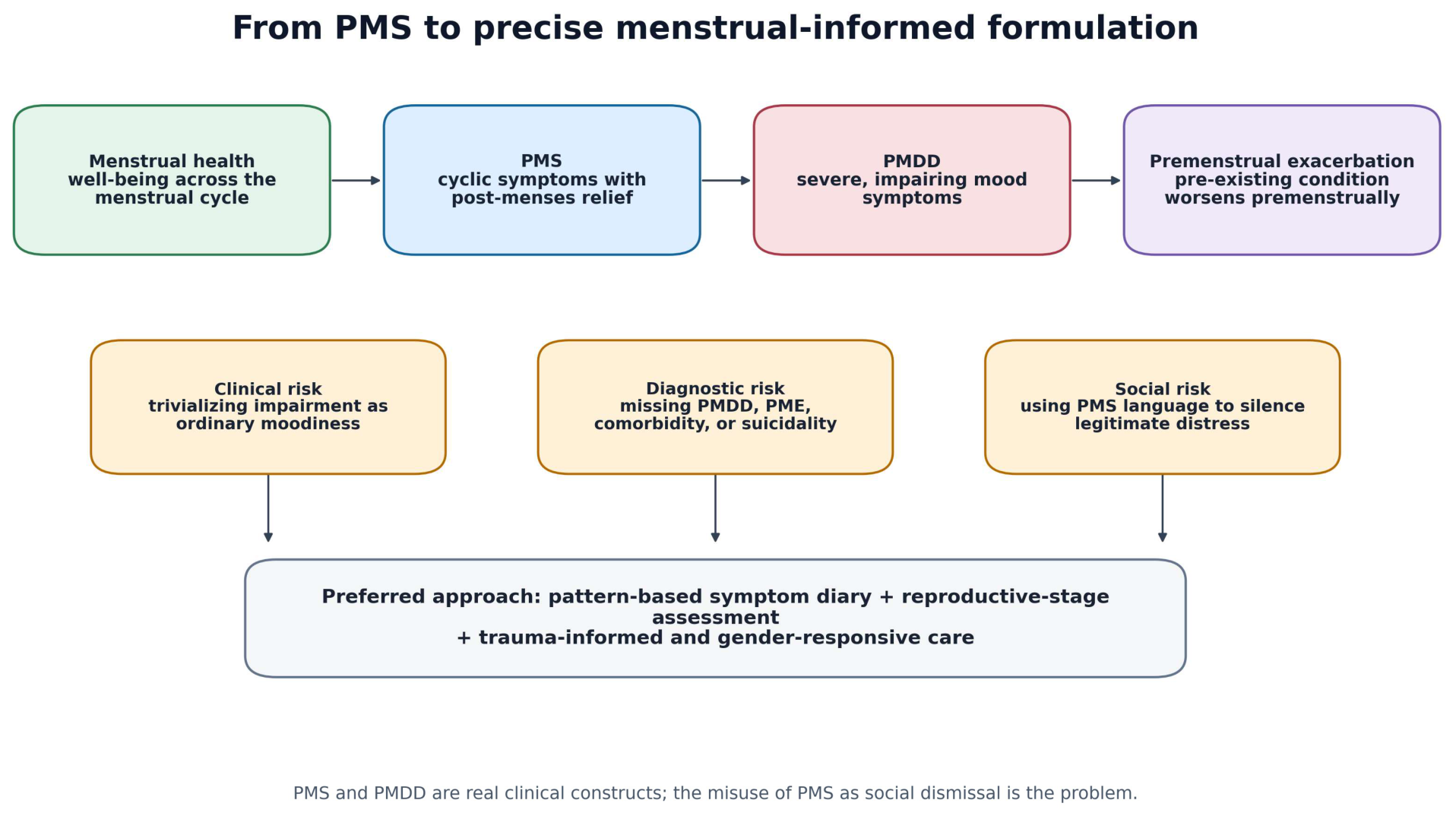
PMS and PMDD illustrate this tension. PMS refers to clinically significant affective, behavioral, and physical symptoms that recur in the luteal phase and improve shortly after menstruation begins. PMDD is a more severe, functionally impairing disorder defined by a characteristic set of cyclical mood symptoms and ideally confirmed by prospective daily ratings across at least two symptomatic cycles [1,2,3,4,5]. Premenstrual exacerbation, in which an existing disorder worsens before menses but remains present at other times, should be distinguished from PMDD [1,5].
Despite their clinical validity, premenstrual disorders are commonly invoked in everyday discourse to discredit anger, grief, or disagreement expressed by girls and women. The opposite error also occurs: severe cyclical symptoms may be normalized as ordinary menstruation and left untreated. Comparable patterns of under-recognition or misattribution occur in perinatal mental health, menopausal symptoms, chronic pelvic pain, and trauma-related distress [6,7,8,9].
This review has three aims: (1) to clarify the distinction among PMS, PMDD, and premenstrual exacerbation; (2) to synthesize evidence on social determinants that shape affective-somatic distress across the female life course; and (3) to propose a clinically practical, non-diagnostic framework that integrates menstrual timing, reproductive stage, medical differential diagnosis, safety, and social context. The intention is not to pathologize ordinary emotion or introduce a new disorder, but to improve conceptual and clinical precision.
2. Terminology and Scope
This review uses “girls and women” when discussing people who are socially positioned or identify within these gender categories, and “female” when referring specifically to sex-linked biology, reproductive physiology, or female-coded evidence. Sex and gender are related but distinct: sex concerns biological characteristics, whereas gender encompasses identities, roles, norms, relations, and institutional arrangements that influence health and access to care [8].
Not all girls and women menstruate, become pregnant, or experience menopause, and not all people who menstruate identify as girls or women. Transgender men and non-binary people may also menstruate or become pregnant and can encounter additional barriers in gendered health systems. Menstrual-informed care should therefore be biologically precise and inclusive while remaining attentive to the historically gendered burdens placed on girls and women.
The phrase “feminine resilience” is used critically rather than as a biological or moral trait. Resilience may describe adaptive coping, leadership, caregiving, and recovery, but it should not become an expectation that girls and women tolerate avoidable pain, unsafe relationships, or unsupported care responsibilities. In clinical practice, resilience should be recognized without being used as a substitute for treatment, protection, or structural support.
3. Methods
This narrative review was developed using a structured, non-systematic search of PubMed/MEDLINE and official websites of major professional and public-health organizations. English-language literature available through July 2026 was considered across the following domains: menstrual health; PMS, PMDD, and premenstrual exacerbation; adolescent girls’ mental health; perinatal and menopausal mental health; gender norms and role expectations; unpaid and cognitive household labor; violence against women and girls; child marriage; menstrual stigma; gender bias in pain assessment; and gender-responsive care. Search terms were adapted iteratively to each domain.
Priority was given to clinical practice guidelines, diagnostic consensus statements, systematic reviews, large epidemiological studies, and reports from recognized organizations. Sources were selected for clinical relevance, methodological strength, and contribution to conceptual integration. The synthesis was informed by principles for transparent narrative review, including an explicit rationale, a defined scope, critical comparison of evidence, and acknowledgement of uncertainty [10,11]. Because the review was not systematic, no PRISMA flow diagram, formal risk-of-bias assessment, meta-analysis, or certainty-of-evidence grading was performed.
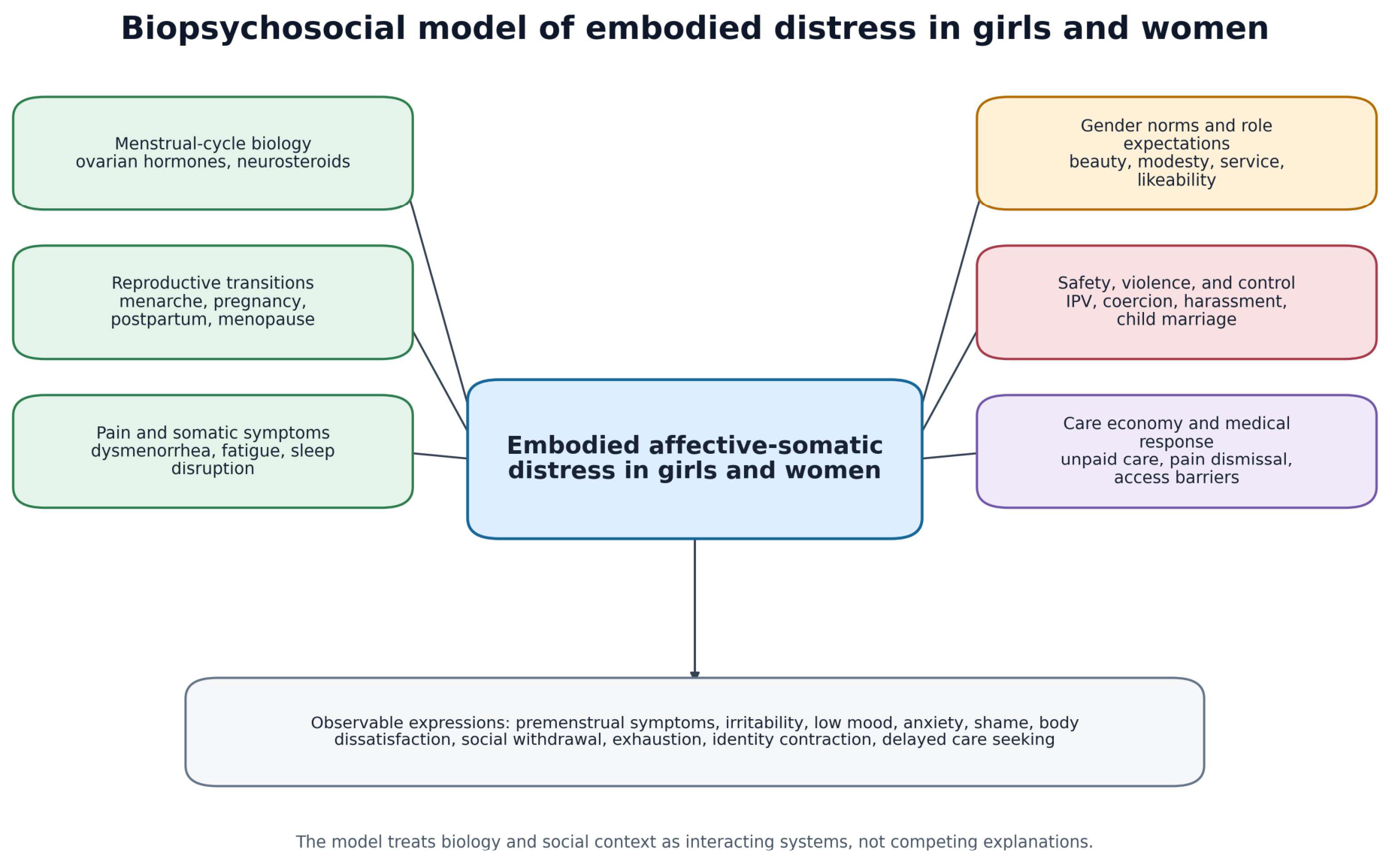
Figure 1.
Biopsychosocial model of embodied distress in girls and women. Menstrual-cycle biology, reproductive transitions, pain and sleep, gender norms, violence, care burden, and health-system response are represented as interacting pathways rather than competing single-cause explanations [6,7,8,9,12,13,14].
Figure 1.
Biopsychosocial model of embodied distress in girls and women. Menstrual-cycle biology, reproductive transitions, pain and sleep, gender norms, violence, care burden, and health-system response are represented as interacting pathways rather than competing single-cause explanations [6,7,8,9,12,13,14].
4. PMS, PMDD, and the Risk of Hormonal Dismissal
PMS comprises recurrent affective, behavioral, and physical symptoms that emerge during the luteal phase, improve within several days after menstruation begins, and cause clinically meaningful distress or functional impairment. PMDD is defined by more severe mood symptoms, including marked irritability, affective lability, depressed mood, or anxiety, accompanied by impairment. Premenstrual exacerbation describes the premenstrual worsening of another disorder whose symptoms remain present outside the premenstrual window [2,15,16,17,18].
Assessment should establish whether symptoms follow a reproducible temporal pattern, whether a symptom-free or substantially improved interval occurs after menses, and whether functioning is impaired. Prospective daily ratings across at least two cycles remain the preferred method for confirming PMDD because retrospective recall tends to overestimate cyclicity [16,19]. Relevant symptoms may include mood lability, irritability, depressed mood, anxiety, fatigue, sleep change, difficulty concentrating, breast tenderness, bloating, headache, and pain [13,20,21].
Differential diagnosis is essential. Major depressive disorder, bipolar disorder, anxiety disorders, trauma-related conditions, eating disorders, migraine, endometriosis, anemia, thyroid disease, sleep disorders, medication effects, pregnancy, perimenopause, and intimate partner violence may mimic or worsen premenstrual symptoms. Acute suicidality, mania, psychosis, severe bleeding, or immediate safety concerns require prompt assessment regardless of cycle phase. The clinical question is therefore not whether a patient is “hormonal,” but whether a specific, impairing, and reproducible cycle-related pattern is present.
Current models of PMDD emphasize altered sensitivity to normal ovarian hormone fluctuations rather than consistently abnormal circulating hormone concentrations. Neuroactive steroids, particularly allopregnanolone, and their effects on GABA-A receptor signaling are among the proposed mechanisms [16]. This biological plausibility supports the legitimacy of PMDD, but it does not imply that every emotion expressed near menstruation is hormonally caused or clinically disordered.
5. Menstrual Health, Stigma, and the Development of Body Insecurity
Menstrual health is defined as physical, mental, and social well-being in relation to the menstrual cycle, rather than the absence of disease alone [17]. This definition extends beyond menstrual products and hygiene to include accurate information, pain management, privacy, sanitation, participation in education and work, freedom from stigma, and access to appropriate clinical care [17,21,24,25,26].
Menarche can be experienced as a positive developmental milestone when it is accompanied by preparation, privacy, and supportive communication. In other settings, secrecy, impurity beliefs, product insecurity, inadequate sanitation, and restrictions on school or social participation can generate shame and fear [9,14,27]. These experiences vary substantially across and within societies; they should not be treated as universal features of menstruation.
Stigma can influence more than menstrual management. When pain and bleeding are normalized or considered embarrassing, adolescents may delay seeking care for dysmenorrhea, heavy menstrual bleeding, anemia, endometriosis, or premenstrual disorders. Repeated messages that the body must be hidden, corrected, or endured may also contribute to body dissatisfaction and reduced confidence in reporting symptoms.
Adolescence adds further developmental and social pressures. Pubertal change may coincide with appearance surveillance, sexualization, weight stigma, peer comparison, and social-media exposure, all of which can affect body image and psychological well-being [13,14,21,26]. In the 2023 United States Youth Risk Behavior Survey, female high-school students continued to report a greater burden of poor mental health and suicide-related indicators than male students, although several measures improved compared with 2021[8]. These national data are not globally representative, but they illustrate the need to study menstrual, developmental, and social influences together [1,8,20].
6. Reproductive Transitions Across the Life Course
Affective and somatic symptoms may cluster around reproductive transitions, but these transitions are not exclusively biological events. Menarche, pregnancy, childbirth, lactation, pregnancy loss, infertility, perimenopause, and menopause occur within relationships, workplaces, schools, economies, and cultural narratives. Biological vulnerability and social stress can therefore operate simultaneously.
The perinatal period involves substantial hormonal, immune, sleep, relational, and role changes. Clinical guidance recommends repeated screening and diagnostic assessment for depression, anxiety, bipolar disorder, psychosis, and suicidality during pregnancy and postpartum, with systems for treatment, monitoring, and follow-up [1,22,23]. Symptoms should not be dismissed as an inevitable consequence of pregnancy, sleep deprivation, or early parenting.
Idealized expectations of motherhood can make distress difficult to disclose. Some pregnant or postpartum patients may fear that reporting intrusive thoughts, anger, grief, ambivalence, traumatic birth experiences, or loss of identity will be interpreted as ingratitude or parental inadequacy. These concerns are not universal, but they highlight why assessment should include sleep, support, safety, prior psychiatric history, birth experience, infant-care burden, and access to treatment rather than relying on role-based assumptions.
The menopausal transition provides a similar example of embodied change within social context. Vasomotor symptoms, sleep disruption, previous depression, prolonged transition, stressful life events, and caregiving demands may increase vulnerability for some individuals; however, available evidence does not support a universal rise in severe mental illness during menopause [3,28]. A balanced approach should neither dismiss distress as normal aging nor attribute all midlife symptoms to menopause without appropriate differential diagnosis.
7. Gendered Insecurity: From Individual Feeling to Social Production
“Insecurity” is often described as an individual weakness, yet uncertainty about one’s body, voice, safety, or social acceptance can be produced by repeated evaluation and unequal consequences. Restrictive norms may reward compliance and punish mobility, sexual autonomy, anger, ambition, or deviation from appearance expectations. Under such conditions, vigilance and self-monitoring may be understandable adaptations rather than evidence of an inherently insecure personality [19,21,24,25,26].
Gender inequality influences health through access to information, education, mobility, income, decision-making power, legal protection, and quality of care [11,20,24,25]. It also shapes which emotions are considered acceptable. For example, sadness may be tolerated when expressed quietly, whereas anger may be interpreted as disrespect; ambition may be supported until it conflicts with domestic expectations; and pain may be normalized as part of being female. These patterns vary by setting and intersect with class, race, ethnicity, disability, migration, sexuality, and age.
This review uses the term gendered insecurity to describe internalized uncertainty that develops when girls and women are repeatedly evaluated through standards of appearance, obedience, modesty, reproductive value, relational service, emotional availability, or self-sacrifice. The term is non-diagnostic. It may help explain pathways to shame, body dissatisfaction, perfectionism, people-pleasing, self-silencing, relational dependence, or delayed help-seeking, but it should not replace assessment for established psychiatric or medical conditions.
Restrictive norms may also be enforced by relatives, peers, teachers, health professionals, or community members of any gender. Such enforcement is better understood as intergenerational and peer transmission of social rules than as an inherent conflict among women. A clinically useful account should identify the function and consequences of these norms without stereotyping families or cultures and without assigning collective blame.
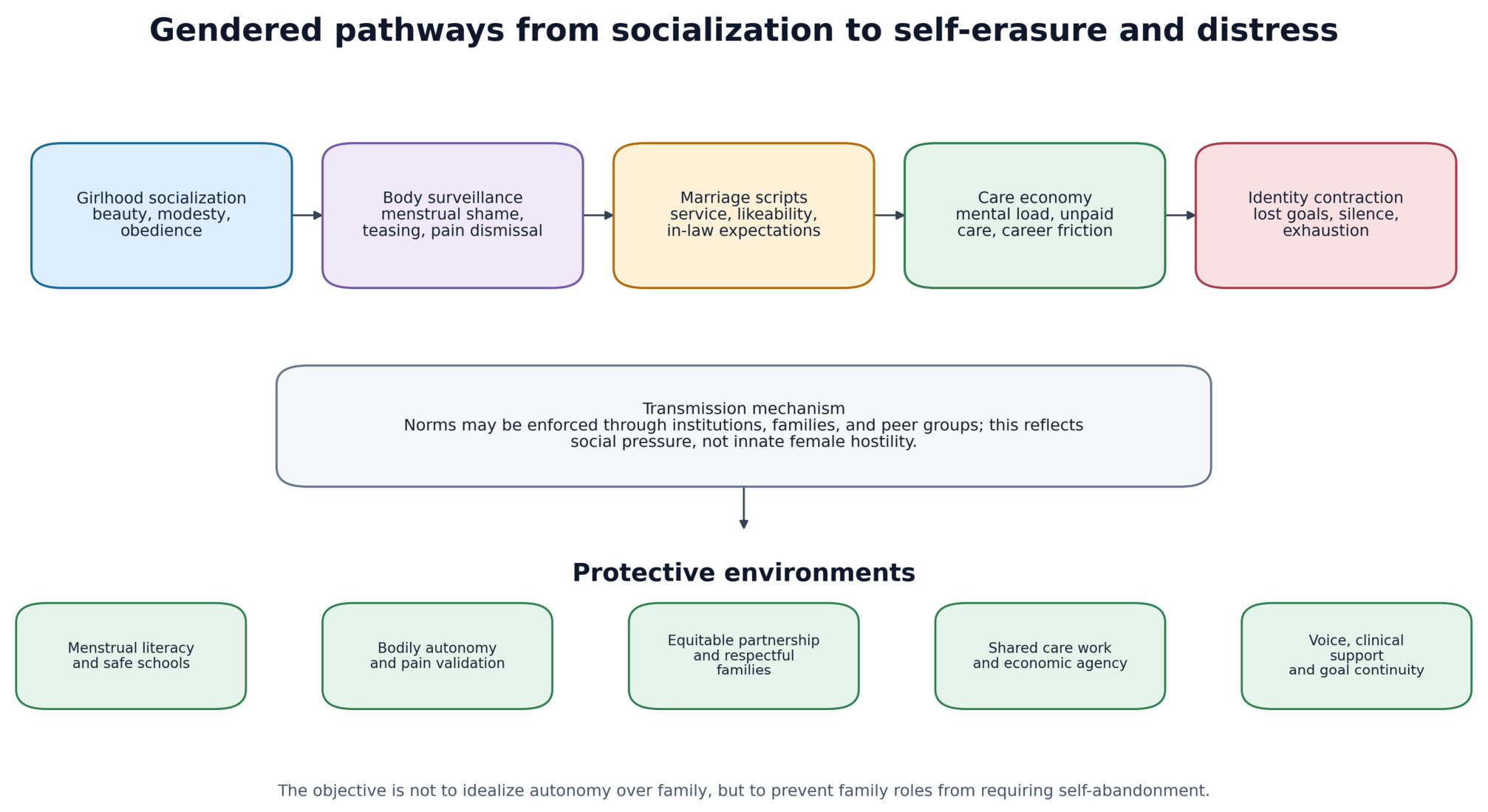
Figure 3.
Gendered pathways from socialization to self-erasure and distress. The model illustrates how body surveillance, menstrual stigma, marital scripts, unequal care work, and identity contraction may contribute to distress, while supportive environments can interrupt these pathways [13,14,21,26].
Figure 3.
Gendered pathways from socialization to self-erasure and distress. The model illustrates how body surveillance, menstrual stigma, marital scripts, unequal care work, and identity contraction may contribute to distress, while supportive environments can interrupt these pathways [13,14,21,26].
8. Marriage, Motherhood, and the Risk of Identity Contraction
Marriage and motherhood can provide attachment, meaning, companionship, social support, and intergenerational continuity. They become potential mental-health risk contexts when power is unequal, care is unreciprocated, autonomy is restricted, or maintaining the relationship requires sustained abandonment of education, work, friendships, rest, safety, or self-definition. This review uses identity contraction as a non-diagnostic term for that gradual narrowing of roles and goals.
The organization of these roles differs across settings. Some marriages are embedded in extended-family systems with expectations concerning fertility, domestic service, and relations with in-laws; others are organized around nuclear households but still rely on women to manage emotional communication, contraception, social planning, child development, and relationship repair. The relevant clinical question is not whether marriage or motherhood is beneficial or harmful in the abstract, but how responsibilities, authority, resources, and opportunities are distributed in a particular household.
Evidence indicates that women frequently perform a disproportionate share of unpaid domestic labor and the cognitive work of anticipating, planning, monitoring, and coordinating household needs [29]. A systematic review found that greater unpaid labor was generally associated with poorer mental health among employed women [12,20]. More recent work on cognitive household labor similarly links unequal planning responsibility with maternal stress, depression, burnout, and lower relationship functioning [14].
The mental-health burden is not limited to the number of hours worked. Repeated interruption of sleep, medical care, study, paid employment, exercise, friendships, and recovery time can erode continuity of personal goals. Clinical formulation should therefore distinguish caring relationships from compulsory, invisible, or unsafe care arrangements. Care itself is not pathological; inequitable and unsupported care can become a source of chronic stress.
9. Violence, Control, and the Mental-Health Burden of Unsafe Environments
Violence is a major determinant of mental and physical health. It includes physical and sexual violence, coercive control, threats, stalking, psychological abuse, reproductive coercion, economic control, digital abuse, and harassment. Global estimates indicate that approximately one in three women have experienced physical and/or sexual intimate partner violence or non-partner sexual violence during their lifetime [24,30,31,32]. Prevalence and consequences vary by age, setting, disability, migration status, sexuality, conflict exposure, and access to protection.
Adolescent girls may be particularly vulnerable when gendered power intersects with age, dependency, limited mobility, and restricted access to confidential services. Child marriage can interrupt education, increase early pregnancy and violence risk, and reduce economic and legal autonomy; UNICEF estimated that more than 640 million girls and women alive in 2023 had been married in childhood [6,25,33]. These risks should be assessed without assuming that every family or marriage follows the same pattern.
Violence can alter the meaning of symptoms. Insomnia, irritability, panic, pelvic pain, headache, gastrointestinal symptoms, low libido, emotional numbing, self-blame, and withdrawal may reflect trauma or ongoing threat rather than personality or hormonal instability [22]. Menstrual and trauma-informed approaches are complementary: assessment should consider both cyclical timing and safety rather than treating them as competing explanations.
Safety is structural as well as interpersonal. It includes bodily autonomy, confidential care, access to money and transportation, educational continuity, legal protection, credible pathways to leave an unsafe relationship, and services that are culturally and linguistically accessible. When immediate danger, coercion, or suicidality is present, safety planning and urgent support take precedence over longitudinal symptom tracking.
10. Medical Dismissal, Pain Bias, and the Gendered Credibility Gap
Health systems can themselves contribute to distress when menstrual pain, pelvic pain, fatigue, sexual pain, or mood symptoms are normalized, psychologized prematurely, or investigated after substantial delay. A systematic review of chronic-pain literature identified recurring gender stereotypes in which women were more often characterized as emotional or sensitive and men as stoic [28,30,34]. Experimental studies also suggest that gender can influence observers’ estimates of pain and some treatment decisions [15,20,21,22].
This credibility gap is particularly relevant to menstrual health. Dismissing severe cyclical symptoms as ordinary may delay diagnosis and treatment, whereas attributing every complaint to hormones may obscure depression, bipolar disorder, trauma, anemia, thyroid disease, migraine, endometriosis, medication effects, pregnancy, or violence. The appropriate response is neither unquestioning acceptance of a single explanation nor skepticism toward the patient, but careful investigation of timing, severity, impairment, comorbidity, and context.
A useful opening question is: “What pattern have you noticed in your body, mood, functioning, relationships, and environment?” This invites the patient to describe temporal patterns and lived context without forcing an early physical-versus-psychological distinction. Follow-up may include prospective symptom ratings, pain and bleeding assessment, reproductive-stage review, medication and sleep review, mental-health screening, and confidential inquiry about safety.
11. Cultural Variation Without Cultural Determinism
The pressures described in this review differ across cultures, religions, socioeconomic positions, legal systems, and family structures. No region is monolithic, and culture should not be used as a shorthand explanation for women’s distress. Similar mechanisms—appearance surveillance, reproductive expectations, unequal care, constrained mobility, or fear of stigma—may take different forms in different settings [7,8,14].
Within any community, experiences vary according to education, income, urban or rural residence, generation, migration, disability, race or ethnicity, sexual orientation, religious interpretation, and local law. Social change, feminist advocacy, public-health programs, and supportive families can challenge restrictive norms. Analysis should therefore distinguish population-level patterns from assumptions about an individual patient.
Cultural humility requires locally specific questions: Which roles and behaviors are valued? What consequences follow nonconformity? Who controls money, movement, fertility decisions, education, and access to care? Which symptoms can be discussed safely? Who is available for support? Such questions are more clinically useful than ranking cultures as either protective or oppressive.
12. An Integrative Assessment Framework for Menstrual-Informed and Gender-Responsive Care
This review proposes embodied female affective-somatic distress as a non-diagnostic conceptual framework. The term refers to emotional, bodily, cognitive, relational, and behavioral symptoms that emerge through interactions among menstrual-cycle biology, reproductive transitions, pain, sleep, psychiatric vulnerability, trauma, role expectations, care work, economic conditions, cultural norms, safety, and health-system response.
The framework is not intended to replace PMS, PMDD, major depressive disorder, anxiety disorders, bipolar disorder, post-traumatic stress disorder, eating disorders, endometriosis, thyroid disease, perinatal mental disorders, menopausal symptoms, or other established conditions. Its purpose is to organize assessment when symptoms cross conventional boundaries. It asks three linked questions: What is occurring biologically? What is occurring psychologically and relationally? What social or structural conditions are shaping the presentation and the patient’s options?
Five domains are considered. The affective domain includes sadness, irritability, anxiety, shame, anger, guilt, emotional numbing, and hopelessness. The somatic domain includes pain, fatigue, sleep disturbance, bleeding, headache, gastrointestinal symptoms, breast tenderness, vasomotor symptoms, libido change, and pelvic symptoms. The cognitive domain includes rumination, concentration difficulty, body dissatisfaction, fear of judgment, and low self-worth. The relational-behavioral domain includes withdrawal, people-pleasing, self-silencing, conflict avoidance, disordered eating, substance use, and delayed help-seeking. The sociostructural domain includes violence, unpaid care, economic dependence, stigma, discrimination, migration, disability, legal vulnerability, and health-care credibility.
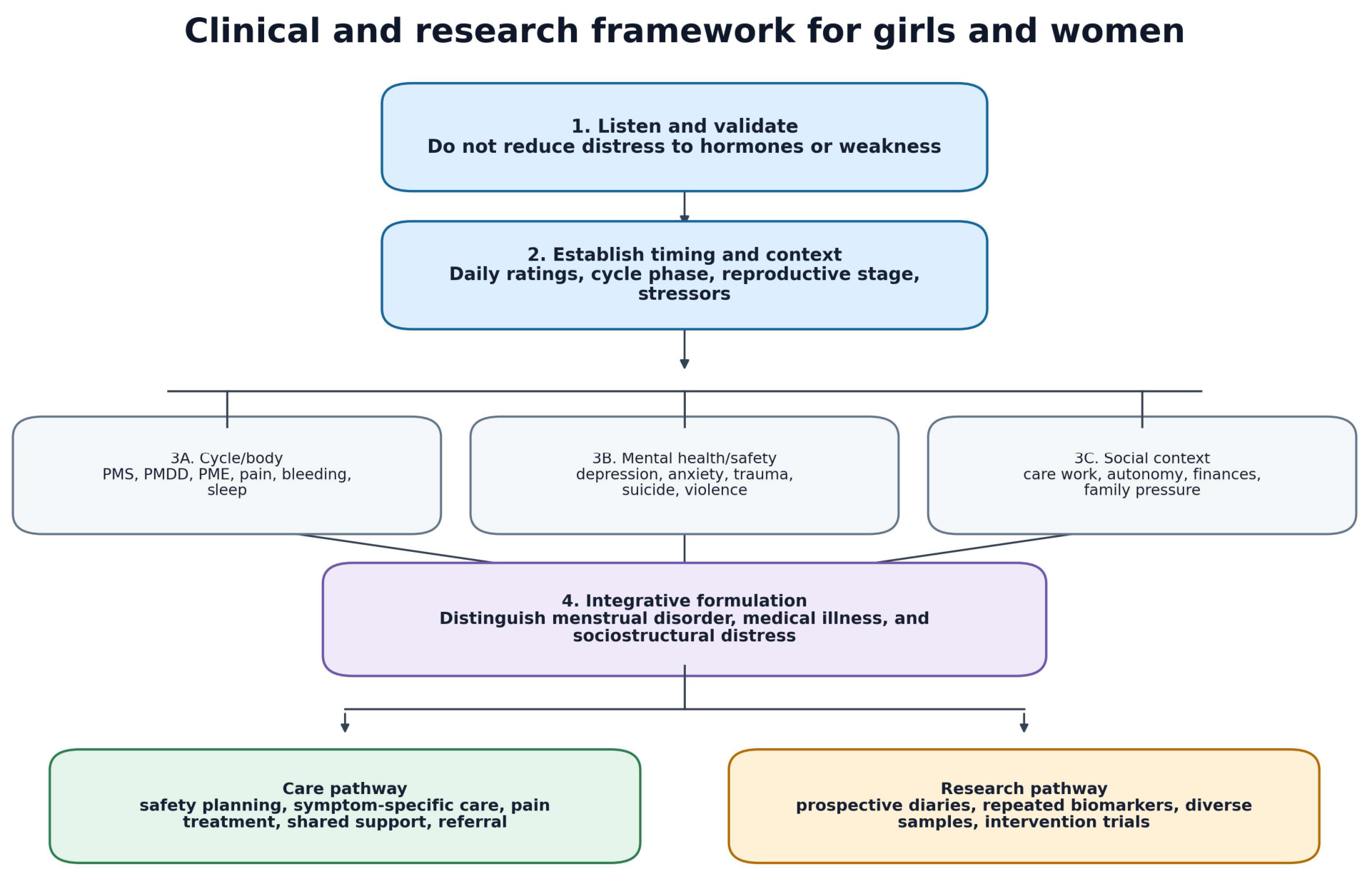
Figure 4.
Clinical and research framework for girls and women. The pathway begins with validation and timing-based assessment, then integrates cycle-related, mental-health, medical, safety, and social-context domains before linking formulation to care and research pathways [3,13,17,19,20,21,27,30,32,35,36].
Figure 4.
Clinical and research framework for girls and women. The pathway begins with validation and timing-based assessment, then integrates cycle-related, mental-health, medical, safety, and social-context domains before linking formulation to care and research pathways [3,13,17,19,20,21,27,30,32,35,36].

Table 1.
Distinguishing menstrual and life-course constructs.
| Construct | Timing or anchor | Typical clinical expression | Key caution |
|---|---|---|---|
| Menstrual health | Across the menstrual life course | Physical, mental, and social well-being in relation to the menstrual cycle | Do not reduce menstrual health to hygiene or product access alone |
| PMS | Luteal-phase symptoms that improve shortly after menses begins | Affective, somatic, and behavioral symptoms causing distress or impairment | Confirm cyclicity and consider alternative explanations |
| PMDD | Severe cyclical luteal-phase symptoms with postmenstrual remission | Marked irritability, mood lability, depressed mood, anxiety, and functional impairment | Ideally confirm with prospective daily ratings over at least two cycles |
| Premenstrual exacerbation | Worsening of an existing condition before menses | Depression, anxiety, bipolar disorder, migraine, pain, or trauma symptoms that intensify premenstrually | Assess symptoms outside the premenstrual window; do not misclassify as PMDD |
| Perinatal mental-health conditions | Pregnancy and the postpartum period | Depression, anxiety, trauma-related symptoms, bipolar disorder, psychosis, or suicidality | Do not dismiss symptoms as normal pregnancy or parenting stress |
| Menopausal transition symptoms | Perimenopause and menopause | Vasomotor symptoms, sleep disturbance, mood change, anxiety, and cognitive complaints | Avoid both dismissal and universal attribution to menopause |
| Embodied female affective-somatic distress | Biopsychosocial pattern across body and context | Interacting affective, somatic, cognitive, relational, and sociostructural symptoms | Framework, not diagnosis; requires condition-specific differential assessment |
Table 2.
Gendered sources of insecurity and protective conditions.
| Domain | Common pressure | Potential mental-health pathway | Protective condition |
|---|---|---|---|
| Body and appearance | Weight, skin, hair, attractiveness, modesty, and aging surveillance | Body dissatisfaction, shame, disordered eating, social comparison | Body respect, diverse representation, and reduced appearance policing |
| Menstruation | Secrecy, stigma, poor product or sanitation access, and pain normalization | School or work disruption, anxiety, delayed care, and self-blame | Menstrual literacy, supplies, sanitation, pain care, and confidentiality |
| Marriage and family | Unequal authority, fertility pressure, family-role expectations, and divorce stigma | Self-silencing, anxiety, relational dependence, and identity contraction | Respectful partnership, autonomy, family education, and safe exit routes |
| Motherhood and care | Intensive parenting norms, mental load, unpaid care, and career interruption | Exhaustion, depression, resentment, and loss of goal continuity | Shared care, parental leave, childcare, protected rest, and economic agency |
| Safety and violence | Harassment, intimate partner violence, coercive control, child marriage, and sexual violence | Trauma symptoms, fear, isolation, somatic distress, and suicidality | Prevention, survivor-centered care, legal protection, and economic support |
| Health-care credibility | Pain dismissal, premature psychologization, and fragmented care | Delayed diagnosis, distrust, and untreated symptoms | Gender-responsive, trauma-informed, and bias-aware assessment |
Table 3.
Pattern-based assessment domains for girls and women.
| Assessment domain | Example questions | Purpose |
|---|---|---|
| Timing | Do symptoms change before bleeding, during bleeding, postpartum, or during perimenopause? Is there a symptom-free or clearly improved interval? | Distinguishes PMS/PMDD, premenstrual exacerbation, perinatal patterns, and menopausal patterns |
| Safety | Do you feel safe at home, school, work, and online? Has anyone controlled, threatened, coerced, or harmed you? | Identifies violence, coercive control, and urgent risk |
| Mental health | Are there persistent symptoms of depression, anxiety, irritability, panic, intrusive thoughts, mania, self-harm, eating concerns, or trauma memories? | Screens common and high-risk psychiatric conditions |
| Somatic symptoms | What pain, bleeding, fatigue, sleep, gastrointestinal, sexual, or vasomotor symptoms are present? | Prevents premature psychologization and guides medical differential diagnosis |
| Care and role burden | Who anticipates, plans, remembers, and performs household or care tasks? Which responsibilities cannot be put down? | Assesses unpaid and cognitive labor burden |
| Autonomy and goals | Have family, relationship, motherhood, education, or work expectations changed your goals, friendships, finances, or access to care? | Identifies restricted autonomy and identity contraction |
| Culture and stigma | What might happen if others knew about your symptoms, menstruation, pain, relationship problems, or need for help? | Reveals disclosure barriers and locally specific risks |
| Care plan | What would help you feel safer, believed, and practically supported over the next month? | Translates assessment into patient-centered action |
Note. These questions are examples, not a diagnostic instrument. They should be adapted for age, language, culture, disability, trauma history, confidentiality, and clinical setting.
13. Clinical Implications
First, symptoms should be validated before they are explained. Validation does not imply a predetermined diagnosis; it communicates that pain, mood change, fear, fatigue, and shame warrant careful assessment. This is particularly important for adolescents, people with prior medical dismissal, survivors of violence, and those experiencing pregnancy, the postpartum period, or perimenopause.
Second, menstrual timing should be assessed prospectively whenever feasible. Daily ratings can clarify whether symptoms are confined to the luteal phase, persist across the cycle, represent premenstrual exacerbation, or track more closely with sleep loss, pain, workload, violence, or reproductive transition [3,4,5,16,18]. Severe depression, self-harm risk, mania, psychosis, heavy bleeding, or immediate danger should be addressed without waiting for diary completion.
Third, precise terminology should replace casual use of “PMS.” Relevant alternatives include PMDD, premenstrual exacerbation, dysmenorrhea, heavy menstrual bleeding, perinatal depression or anxiety, trauma-related symptoms, menopausal symptoms, caregiver strain, and gendered role stress. Diagnostic precision reduces both dismissal and inappropriate treatment.
Fourth, partners and families should be considered part of the care environment when the patient wishes. Meaningful support may include sharing domestic and cognitive labor, protecting sleep and treatment time, respecting reproductive and educational autonomy, accompanying clinical care when invited, and avoiding ridicule or coercion related to menstruation, fertility, pregnancy, postpartum distress, or menopause.
Fifth, health systems should strengthen coordination among gynecology, primary care, psychiatry, psychology, pain services, social work, school health, and violence-response services. Integrated pathways are needed so that patients are not required to prove that distress is exclusively “physical” or exclusively “psychological” before receiving appropriate care.
14. Research Agenda
Longitudinal within-person research is needed to distinguish cyclical symptoms from persistent disorders and context-dependent exacerbations. Future studies should combine prospective symptom diaries with cycle tracking, sleep and activity measures, reproductive-stage markers, and repeated assessment of stress, violence, care burden, economic conditions, and stigma.
Diagnostic specificity should be a priority. Studies should clearly distinguish PMS, PMDD, and premenstrual exacerbation; define impairment thresholds; use prospective ratings when PMDD is the outcome; and report medical and psychiatric comorbidity [5,23]. Harmonized definitions would improve comparability and reduce both overdiagnosis and under-recognition.
Adolescent research should examine how menarche preparation, menstrual stigma, sanitation and product access, body image, social-media exposure, harassment, family control, and early relationship violence interact over time [34,37]. Studies should include school participation, help-seeking, safety, and developmental stage rather than treating sex or gender as a simple covariate.
Marriage and motherhood should be analyzed as social contexts rather than only demographic categories. Measures of cognitive and emotional labor, partner support, household authority, economic dependence, fertility pressure, family relationships, and violence may help explain why some individuals thrive in these roles while others experience chronic stress or identity contraction [12,29,38].
Intervention studies should test menstrual-health education, prospective PMDD assessment pathways, clinician training to reduce pain bias, integrated perinatal mental-health services, school and workplace accommodations, survivor-centered safety services, and household interventions that redistribute unpaid and cognitive care. Outcomes should include symptom burden, functioning, safety, autonomy, care access, and unintended harms.
15. Discussion: Avoiding Biological and Social Reductionism
The central challenge is to avoid two symmetrical errors. Biological reductionism treats distress primarily as a consequence of reproductive hormones and can obscure trauma, pain disorders, sleep disruption, violence, or structural disadvantage. Social reductionism attributes symptoms primarily to gendered experience and can minimize established menstrual and reproductive-stage conditions. The evidence reviewed here supports an interactional account in which biology, psychological vulnerability, relationships, and social structures influence symptom onset, interpretation, impairment, and access to care.
The principal contribution of the proposed framework is organizational rather than diagnostic. It places cycle timing and reproductive stage alongside medical differential diagnosis, psychiatric assessment, safety, and social-role formulation. This structure may help clinicians resist premature closure, but it requires empirical testing before it can be operationalized as a research or clinical instrument. The framework should be refined with input from adolescents, people with PMS/PMDD, perinatal and perimenopausal patients, survivors of violence, clinicians, and culturally diverse communities.
16. Limitations
This review has several limitations. It is narrative rather than systematic, was restricted to English-language sources, and does not provide pooled prevalence estimates, formal risk-of-bias ratings, or graded certainty of evidence. The search was structured but not exhaustive, so relevant literature may have been missed. The proposed concept of embodied female affective-somatic distress is a heuristic and has not been validated as a measure, screening tool, or diagnostic construct.
The review also integrates evidence from domains with different methods and levels of maturity, including diagnostic research, epidemiology, qualitative studies, social theory, and public-health reports. Broad synthesis can clarify interactions but may obscure local variation and causal uncertainty. Experiences related to class, race, caste, ethnicity, religion, sexuality, disability, migration, infertility, chronic illness, incarceration, and conflict are not fully represented. Future work should use participatory and cross-cultural methods to refine the framework and test its clinical usefulness.
17. Conclusions
Affective and somatic distress in girls and women cannot be understood adequately through hormones or social context alone. PMS and PMDD are clinically valid disorders that require prospective, timing-based assessment; premenstrual language should not be used to dismiss legitimate emotions or obscure other diagnoses. Menstrual stigma, reproductive transitions, pain, violence, unequal care, economic constraints, and health-care bias may coexist with or intensify cycle-related symptoms.
Embodied female affective-somatic distress is offered as a non-diagnostic framework for integrating these domains. Its practical sequence is straightforward: listen and validate, assess timing and impairment, evaluate medical and psychiatric alternatives, ask about reproductive stage and safety, examine care and role burden, and protect continuity of the patient’s goals. This approach favors diagnostic precision, cultural humility, and patient-centered care over assumptions about either biology or femininity.
Author Contributions
Muhammad Adil Malik was responsible for conceptualization, literature synthesis, writing, critical revision, and figure development.
Funding
No specific funding was received for this work.
Institutional Review Board Statement
Not applicable. This narrative review did not involve individual patient data.
Informed Consent Statement
Not applicable.
Data Availability Statement
No new data were generated or analyzed for this review.
Conflicts of Interest
The author declares no competing interests.
Patient and public involvement
No formal patient or public involvement was undertaken. Future refinement of the framework should include lived-experience input from adolescents, people with PMS/PMDD, mothers, perimenopausal patients, survivors of violence, and culturally diverse communities.
References
- Kurtz, T.; et al. Postpartum extended-release buprenorphine tissue necrosis. Obstet. Gynecol. 2023, 142(6), 1504–1508. [Google Scholar] [CrossRef] [PubMed]
- Yonkers, K.A.; O'Brien, P.S.; Eriksson, E. Premenstrual syndrome. The Lancet 2008, 371(9619), 1200–1210. [Google Scholar] [CrossRef]
- O’Brien, P.M.S.; et al. Towards a consensus on diagnostic criteria, measurement and trial design of the premenstrual disorders: the ISPMD Montreal consensus. Arch. Women's Ment. Health 2011, 14(1), 13–21. [Google Scholar] [CrossRef]
- American Psychiatric Association. Diagnostic and statistical manual of mental disorders, Text Revision (DSM-5-TRTM); American Psychiatric Pub, 2022. [Google Scholar]
- Eisenlohr-Moul, T.A.; et al. Toward the reliable diagnosis of DSM-5 premenstrual dysphoric disorder: the Carolina Premenstrual Assessment Scoring System (C-PASS). Am. J. Psychiatry 2017, 174(1), 51–59. [Google Scholar] [CrossRef]
- Organization, W.H. Guide for integration of perinatal mental health in maternal and child health services; World Health Organization, 2022. [Google Scholar]
- Organization, W.H. A global health strategy for 2025-2028-advancing equity and resilience in a turbulent world: fourteenth general programme of work; World Health Organization, 2025. [Google Scholar]
- Organization, W.H. Guidance for countries to assess adolescent health and well-being; World Health Organization, 2025. [Google Scholar]
- Organization, W.H. Extending healthy ageing across the life course: connecting optimal development and healthy ageing: report of the fourth Life Course Network meeting, 18-19 November 2024; 2025. [Google Scholar]
- Baethge, C.; Goldbeck-Wood, S.; Mertens, S. SANRA—a scale for the quality assessment of narrative review articles. Res. Integr. Peer Rev. 2019, 4(1), 5. [Google Scholar] [CrossRef]
- Greenhalgh, T.; Thorne, S.; Malterud, K. Time to challenge the spurious hierarchy of systematic over narrative reviews? Eur. J. Clin. Invest 2018, 48(6), e12931. [Google Scholar] [CrossRef]
- Ervin, J.; et al. Gender differences in the association between unpaid labour and mental health in employed adults: a systematic review. Lancet Public Health 2022, 7(9), e775–e786. [Google Scholar] [CrossRef]
- Samulowitz, A. Pain, gender norms and psychosocial resources. A critical appraisal of taken for granted ideas on men and women with pain; 2023. [Google Scholar]
- Heise, L.; et al. Gender inequality and restrictive gender norms: framing the challenges to health. Lancet 2019, 393(10189), 2440–2454. [Google Scholar] [CrossRef] [PubMed]
- Hantsoo, L.; Epperson, C.N. Premenstrual dysphoric disorder: epidemiology and treatment. Curr. Psychiatry Rep. 2015, 17(11), 87. [Google Scholar] [CrossRef] [PubMed]
- Hantsoo, L.; Epperson, C.N. Allopregnanolone in premenstrual dysphoric disorder (PMDD): Evidence for dysregulated sensitivity to GABA-A receptor modulating neuroactive steroids across the menstrual cycle. Neurobiol. Stress 2020, 12, 100213. [Google Scholar] [CrossRef] [PubMed]
- Naik, S.S.; et al. Diagnostic validity of premenstrual dysphoric disorder: revisited. Front. Glob. Women's Health 2023, 1181583. [Google Scholar] [CrossRef]
- Yonkers, K.A.; Ireland, L.D.; Truehart, A.I. Management of premenstrual disorders. Obstet. Gynecol. 2023, 142(6), 1516–1533. [Google Scholar] [CrossRef]
- Lambert, E.R.; Nolan, L.N.; Schmalenberger, K.M. Gold-standard evidence and best practice guidance for menstrual cycle-informed clinical care: An overview for clinicians. Br. J. Clin. Psychol. 2026. [Google Scholar] [CrossRef] [PubMed]
- Guzikevits, M.; et al. Sex bias in pain management decisions. Proc. Natl. Acad. Sci. USA 2024, 121(33), e2401331121. [Google Scholar] [CrossRef] [PubMed]
- Zhang, L.; et al. Gender Biases in Estimation of Others' Pain. J. Pain 2021, 22(9), 1048–1059. [Google Scholar] [CrossRef] [PubMed]
- Miller, E.S.; et al. Treatment and management of mental health conditions during pregnancy and postpartum. Obstet. Gynecol. 2023, 141(6), 1262–1288. [Google Scholar] [CrossRef]
- Simas, T.A.M.; et al. Screening and diagnosis of mental health conditions during pregnancy and postpartum. Obstet. Gynecol. 2023, 141(6), 1232–+. [Google Scholar] [CrossRef]
- Oesterle, D.W.; et al. What Teens Hear and How They React: Adolescent Perspectives on Substance Use, Sexual Risk, and Sexual Violence Prevention in Primary Care. Behav. Sci. 2026, 16(4), 492. [Google Scholar] [CrossRef] [PubMed]
- Paricio-del-Castillo, R. Integration of Perinatal Mental Health into Maternal and Child Care: Progress and Challenges from the World Health Organization's Perspective. Eur. J. Ment. Health 2024, 19, 1–7. [Google Scholar] [CrossRef]
- Zavrou, R.; et al. Guardians of Memory. In Psychosocial Barriers to Mental Health Care for Mothers Bereaved by Suicide; 2026. [Google Scholar]
- Meeta, M.; et al. Clinical Practice Guidelines for Menopause:* An Executive Summary and Recommendations: Indian Menopause Society 2026. J. Mid-Life Health 2026, 17 (Suppl 1), S12–S116. [Google Scholar] [CrossRef]
- Brown, L.; et al. Promoting good mental health over the menopause transition. The Lancet 2024, 403(10430), 969–983. [Google Scholar] [CrossRef]
- Aviv, E.; et al. Cognitive household labor: gender disparities and consequences for maternal mental health and wellbeing. Arch. Women's Ment. Health 2025, 28(1), 5–14. [Google Scholar] [CrossRef]
- Blomstedt Larsson, E. Bridging The Gap?-Implementation Gaps And Challenges In Supporting Survivors Of Violence Against Women In Cape Town: A semi-structured qualitative interview study of the civil society working with women survivors of gender-based violence and human trafficking 2026. [CrossRef]
- Edwards, K.M.; et al. An online program for sexual and gender minority youth reduces alcohol use and teen dating violence: A randomized controlled trial. J. Stud. Alcohol Drugs 2025, 86(2), 287–296. [Google Scholar] [CrossRef] [PubMed]
- Shaikh, M.A. Prevalence and correlates of intimate partner violence against women: results from Mozambique Demographic and Health Survey 2022–2023. Front. Public Health 2025, 13, 1568324. [Google Scholar] [CrossRef] [PubMed]
- Cappa, C.; Murray, C.; Maksud, N. Child marriage could be history by 2030, or last 300 more years. The Lancet 2023, 401(10388), 1554–1555. [Google Scholar] [CrossRef]
- Brener, N.D. Overview and methods for the youth risk behavior surveillance system—United States, 2023. MMWR Suppl. 2024. [Google Scholar] [CrossRef] [PubMed]
- Klein, J.; Vogelstein, R.; Hoffman, L. A Roadmap for Women’s Rights for the Next Thirty Years. 2025. [Google Scholar]
- Vinter, C.A.; Linde, D.S.; Petersen, L.K. Research in women-Women in research. Dan. Med. J. 2026, 73(2), A10250782. [Google Scholar] [PubMed]
- Hennegan, J.; et al. Menstrual health: a definition for policy, practice, and research. Sex. Reprod. Health Matters 2021, 29(1), 31–38. [Google Scholar] [CrossRef]
- Unknown. Menstrual Health and Hygiene; World Bank.
Disclaimer/Publisher’s Note: The statements, opinions and data contained in all publications are solely those of the individual author(s) and contributor(s) and not of MDPI and/or the editor(s). MDPI and/or the editor(s) disclaim responsibility for any injury to people or property resulting from any ideas, methods, instructions or products referred to in the content. |
© 2026 by the authors. Licensee MDPI, Basel, Switzerland. This article is an open access article distributed under the terms and conditions of the Creative Commons Attribution (CC BY) license (http://creativecommons.org/licenses/by/4.0/).
Copyright: This open access article is published under a Creative Commons CC BY 4.0 license, which permit the free download, distribution, and reuse, provided that the author and preprint are cited in any reuse.


