

Submitted:
18 July 2026
Posted:
21 July 2026
You are already at the latest version
Abstract
Background: Yokukansan (YKS; Yi-Gan San, TJ-54), a 7-herb Kampo formula, is widely prescribed to ameliorate the behavioral and psychological symptoms of dementia (BPSD), including those arising in Alzheimer's disease (AD). Although YKS improves the behavioral and psychological symptoms of dementia in randomized trials, a compound-resolved map of which YKS constituents act on which BPSD-relevant proteins is still lacking. An integrated network-pharmacology and molecular-docking workflow was applied to predict which YKS constituents act on which BPSD-relevant proteins.Methods: Major constituents of the 7 YKS herbs were retrieved from PubChem. Compound targets were assembled from experimentally measured bioactivities in ChEMBL and BindingDB, and disease-associated targets were obtained from the Open Targets Platform for the 3 behavioral symptom axes of BPSD (psychotic disorder, aggressive behavior and sleep disorder). Common targets were overlaid, a protein-protein interaction (PPI) network was built with STRING, hub targets were ranked by network centrality, and functional enrichment was performed. The 10 highest-ranked hubs by composite centrality were taken forward for docking against all 45 constituents with AutoDock Vina. Predicted compound-target pairs were cross-referenced against known bioactivities to prioritize previously unreported interactions.Results: In total, 45 constituents were mapped to 181 human target genes through measured compound-target edges. Overlaying these on the union of the 3 BPSD symptom bands yielded 37 common targets. The PPI network (37 nodes, 178 edges) identified SRC, MAOB, MAOA, SLC6A4 and DRD1 as principal hubs, and functional enrichment was dominated by the KEGG "Neuroactive ligand-receptor interaction", "Serotonergic synapse" and "Dopaminergic synapse" pathways (all FDR < 0.05). Docking of 45 compounds against the 10 hub targets (450 pairs) gave 424 favorable poses and highlighted the strongest predicted binding at the kinase SRC and the dopamine D4 receptor DRD4, led by brain-penetrant Uncaria alkaloids (e.g., geissoschizine methyl ether, hirsuteine, hirsutine) and Atractylodes terpenoids (atractylenolide I-III). In total, 85 previously unreported compound-target pairs with strong predicted binding were prioritized.Conclusions: A multi-target mechanism is proposed in which YKS constituents jointly engage the central hubs of the BPSD target network, spanning the monoaminergic, kinase-and-enzyme-signaling and adrenergic modules. A centrality-driven selection surfaces action points beyond the serotonergic and dopaminergic receptors that have traditionally defined YKS pharmacology, notably the kinase SRC, the monoamine oxidases MAOA and MAOB and the dopamine D4 receptor DRD4, with SRC and DRD4 showing the strongest predicted binding. The brain-penetrant Uncaria alkaloids (e.g., geissoschizine methyl ether, hirsuteine, hirsutine) and Atractylodes terpenoids (atractylenolide I-III) emerge as the most credible central-acting constituents, so that candidate molecular mechanisms of YKS in BPSD are proposed that extend beyond its conventional monoamine-receptor targets. The prioritized compound-target pairs are offered as specific, testable hypotheses for experimental validation.
Keywords:
Yokukansan
; Kampo medicine
; BPSD
; dementia
; network pharmacology
; molecular docking
; Uncaria
; geissoschizine methyl ether
; dopamine D4 receptor
; monoamine oxidase
; SRC kinase
1. Introduction
The behavioral and psychological symptoms of dementia (BPSD)—agitation, aggression, delusions, hallucinations and sleep disturbance—affect the large majority of patients over the disease course of dementia and impose a substantial burden on patients and caregivers[1]. Dementia, the syndrome underlying these symptoms, affected more than 57 million people worldwide in 2019 and is projected to reach approximately 153 million by 2050[2], and its most common cause, Alzheimer's disease (AD), is characterized clinically not only by progressive cognitive decline but also by BPSD. Conventional pharmacological management of BPSD relies heavily on antipsychotics. However, meta-analyses of randomized trials and large observational cohorts have established that both atypical and conventional antipsychotics increase mortality in elderly patients with dementia[3,4], while offering only modest efficacy that is frequently outweighed by adverse events including cerebrovascular events, sedation and extrapyramidal symptoms[5]. Safer, mechanistically rational alternatives are therefore of substantial clinical interest.
Yokukansan (YKS; Yi-Gan San in Chinese, marketed as TJ-54), a traditional Japanese Kampo medicine composed of 7 herbs—Uncaria hook (Uncaria rhynchophylla; Choto-ko), Bupleurum root (Saiko), Glycyrrhiza (licorice; Kanzo), Angelica acutiloba (Toki), Cnidium rhizome (Senkyu), Atractylodes lancea (Sojutsu) and Poria (Bukuryo)—has been used for neurosis, insomnia and irritability, and is now widely prescribed for BPSD. Multiple randomized controlled trials and meta-analyses indicate that YKS reduces BPSD subscale scores, particularly delusions, hallucinations and agitation/aggression, and improves activities of daily living, while being well tolerated and, unlike the atypical antipsychotic risperidone, not increasing extrapyramidal symptoms[6,7,8,9]. Mechanistic pharmacology has implicated serotonergic, glutamatergic, cholinergic, dopaminergic and adrenergic neurotransmission. A landmark finding is that the Uncaria indole alkaloid geissoschizine methyl ether (GM) is a potent partial agonist of the serotonin 5-HT1A receptor and a leading candidate for the anti-aggressive/pro-social action of YKS[10].
Despite this progress, a systematic, compound-resolved map of which YKS constituents act on which BPSD-relevant proteins is lacking. YKS is a multi-component mixture, and its therapeutic action is expected to arise from the combined engagement of many targets rather than a single compound–target axis—precisely the setting for which network pharmacology was developed[11]. Network pharmacology integrates compound–target and disease–target information into interaction networks, from which hub proteins and enriched pathways nominate the mechanistic core, and molecular docking then provides structure-level evidence for individual compound–target pairs.
Here, an end-to-end network-pharmacology and docking pipeline was constructed for YKS in BPSD. Compound–target edges were restricted to experimentally measured bioactivities (ChEMBL and BindingDB) and disease targets were defined from the genetics- and evidence-weighted Open Targets Platform. The 2 target sets were then overlaid, hub proteins and enriched pathways were identified, all constituents were docked against targets representing each module, and—critically—the docking results were cross-referenced against known bioactivities to distinguish predictions that merely recapitulate established pharmacology from genuinely unreported compound–target hypotheses worthy of experimental testing.
Figure 1.
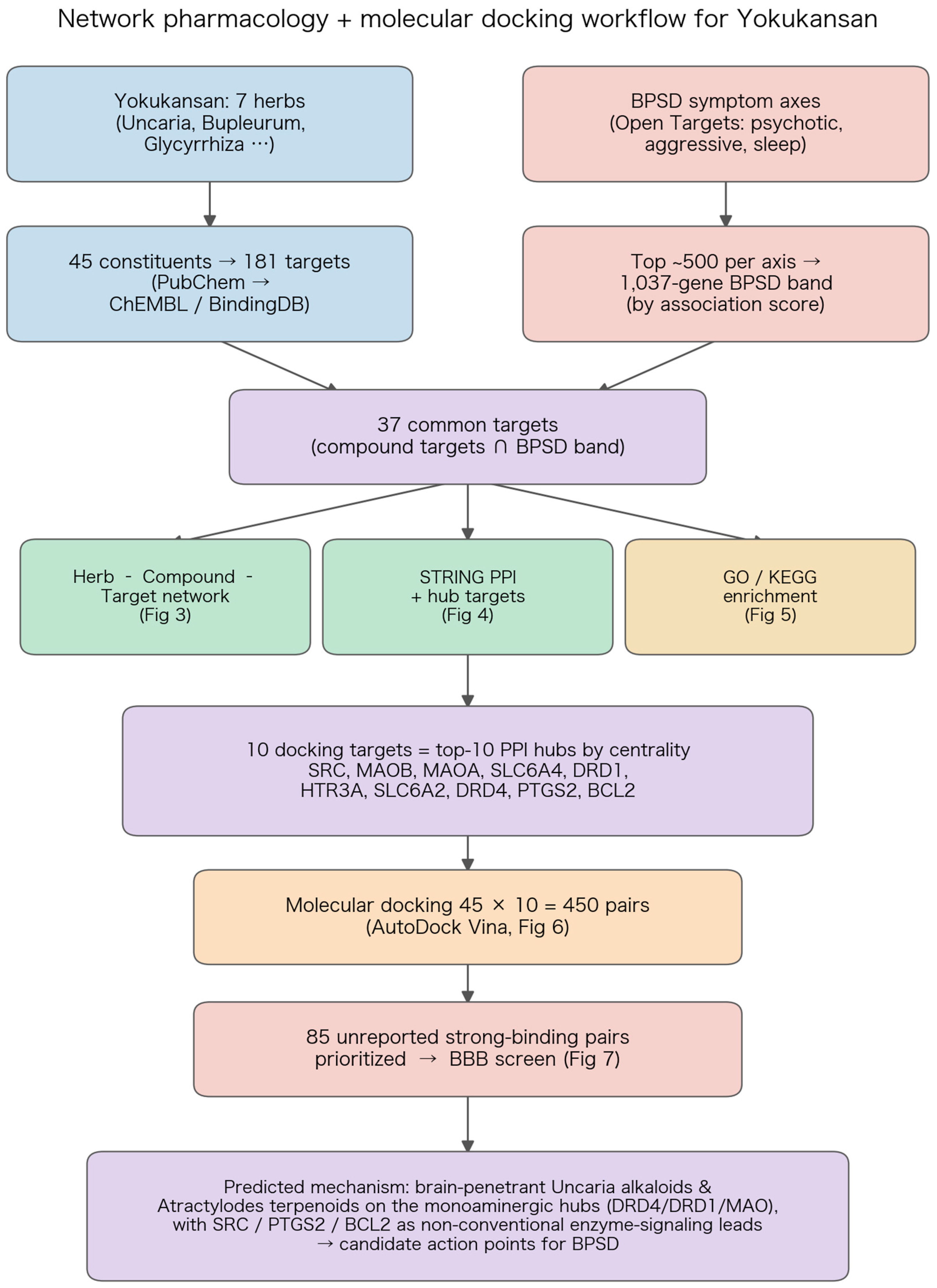
Overall workflow. YKS constituents (PubChem) are mapped to human targets via measured bioactivities (ChEMBL, BindingDB), overlaid on the BPSD disease bands (Open Targets) to define 37 common targets, analyzed by STRING PPI and functional enrichment, and docked (45 compounds × 10 hub targets = 450 pairs; AutoDock Vina) to prioritize previously unreported compound–target pairs. The integrated results support a putative multi-target mechanism in which YKS constituents act in parallel on the central hubs of the BPSD network, a monoaminergic axis in which brain-penetrant Uncaria alkaloids (geissoschizine methyl ether, hirsuteine, hirsutine, rhynchophylline, corynoxine, isorhynchophylline) and small terpenoids (atractylenolide I–III) engage the dopamine D4 and D1 receptors, the 5-HT3A receptor and the monoamine oxidases, together with a kinase-and-enzyme-signaling axis at SRC, PTGS2 and BCL2 engaged by the Bupleurum and Glycyrrhiza glycosides, so that candidate action points beyond the conventional monoamine-receptor targets of YKS are proposed.
Figure 1.
Overall workflow. YKS constituents (PubChem) are mapped to human targets via measured bioactivities (ChEMBL, BindingDB), overlaid on the BPSD disease bands (Open Targets) to define 37 common targets, analyzed by STRING PPI and functional enrichment, and docked (45 compounds × 10 hub targets = 450 pairs; AutoDock Vina) to prioritize previously unreported compound–target pairs. The integrated results support a putative multi-target mechanism in which YKS constituents act in parallel on the central hubs of the BPSD network, a monoaminergic axis in which brain-penetrant Uncaria alkaloids (geissoschizine methyl ether, hirsuteine, hirsutine, rhynchophylline, corynoxine, isorhynchophylline) and small terpenoids (atractylenolide I–III) engage the dopamine D4 and D1 receptors, the 5-HT3A receptor and the monoamine oxidases, together with a kinase-and-enzyme-signaling axis at SRC, PTGS2 and BCL2 engaged by the Bupleurum and Glycyrrhiza glycosides, so that candidate action points beyond the conventional monoamine-receptor targets of YKS are proposed.
2. Materials and Methods
The entire analysis and the writing of this manuscript were carried out with Claude Science, an AI-assisted scientific computing environment, which was used to run the network-pharmacology and docking pipeline described below and to prepare the figures, tables and text.
2.1. Constituent Compound Library
The 7 YKS herbs were Uncaria rhynchophylla (Choto-ko), Bupleurum falcatum (Saiko), Glycyrrhiza spp. (Kanzo), Angelica acutiloba (Toki), Cnidium officinale (Senkyu), Atractylodes lancea (Sojutsu) and Poria cocos (Bukuryo). Major reported constituents of each herb were curated and resolved in PubChem[12] by name or, where required, by CID. For each compound, the canonical SMILES, molecular formula, molecular weight, XLogP, topological polar surface area, hydrogen-bond donor/acceptor counts and rotatable-bond count were retrieved. This yielded 49 herb–compound assignments corresponding to 45 unique constituents (per-herb: Kanzo 9, Saiko 8, Choto-ko 8, and 6 each for Senkyu, Toki, Sojutsu and Bukuryo. The sum of 49 exceeds 45 because 4 Senkyu/Toki constituents—Z-ligustilide, butylidenephthalide, ferulic acid and senkyunolide A—are shared between the 2 herbs). Because YKS is an already-prescribed formula, no oral-bioavailability/drug-likeness filtering was applied. Physicochemical descriptors were recorded for reference only. All online resources were accessed programmatically through their public APIs; because these databases are updated continuously, the results reflect their contents as of the access dates, namely PubChem on 5 July 2026 and ChEMBL, BindingDB, the UniProt REST API, the Open Targets Platform and STRING (including its KEGG and Reactome enrichment) on 13–14 July 2026.
2.2. Compound–Target Identification
Compound–target relationships were restricted to experimentally measured bioactivities. Each constituent was matched to ChEMBL[13] by structure (identity of the 1st 14-character InChIKey connectivity block), and human bioactivities with pChEMBL ≥ 6 were retained. ChEMBL targets were mapped to gene symbols and UniProt accessions. The pChEMBL value is a standardized potency metric defined as the negative base-10 logarithm of the molar activity concentration (−log10 of IC50, EC50, Ki or Kd in M), which places heterogeneously reported activities on a single comparable scale. A threshold of pChEMBL ≥ 6 (i.e. activity ≤ 1 µM) was used to retain only interactions with experimentally measured, pharmacologically meaningful potency. Additional measured targets were obtained from BindingDB[14]. Target names were normalized to human gene symbols via the UniProt REST API[15]. The union defined the compound–target edge set.
2.3. BPSD Target Sets and Common Targets
Disease-associated targets were retrieved from the Open Targets Platform[16], ranked by the overall association score. This score, which ranges from 0 to 1, is a genetics- and evidence-weighted measure of how strongly a gene or protein is associated with the disease. It is computed by Open Targets from the integration of multiple evidence types, including genetic associations, somatic mutations, known drugs, animal models, pathway membership and literature text-mining, so that a higher value reflects stronger and more firmly established disease relevance. Yokukansan is prescribed principally for the behavioral and psychological symptoms of dementia (BPSD), and its efficacy in randomized trials rests on the improvement of behavioral symptoms rather than on core cognitive measures, so the disease axis was defined by the symptom domains of BPSD alone. Targets were retrieved for 3 BPSD symptom axes, psychotic disorder (MONDO_0005485), aggressive behavior (EFO_0003015) and sleep disorder (MONDO_0100081), taking the top around 500 associated targets of each. The union of these 3 target bands (1,037 genes) was intersected with the 181 compound-target genes to define the common target set of 37 genes, dominated by neurotransmitter receptors, transporters and monoamine-metabolizing enzymes central to BPSD pharmacology (Figure 2).
2.4. PPI Network and Hub Target Ranking
A protein–protein interaction network of the common targets was built with STRING v12[17] (Homo sapiens, medium confidence, combined score ≥ 0.4). Degree, betweenness, closeness and eigenvector centrality were computed with NetworkX[18], and a composite hub score (mean of min–max-normalized degree, betweenness and eigenvector centrality) was used to rank hub targets. Greedy modularity community detection partitioned the network into functional modules.
2.5. Functional Enrichment
Gene Ontology (Biological Process, Cellular Component, Molecular Function), KEGG[19] and Reactome[20] enrichment of the 37 common targets was performed through the STRING enrichment API, with Benjamini–Hochberg false-discovery-rate (FDR) < 0.05 considered significant. The FDR is the expected proportion of false positives among the terms called significant, an adjustment of the raw p-value that accounts for the large number of gene sets tested simultaneously, so that a threshold of 0.05 admits at most about 5% false discoveries.
2.6. Target Structure and Ligand Preparation
Docking targets were defined by network centrality alone, without regard to prior pharmacological interest. The 10 highest-ranked hubs by composite centrality were taken forward, namely SRC, MAOB, MAOA, SLC6A4, DRD1, HTR3A, SLC6A2, DRD4, PTGS2 and BCL2, each of which carries a co-crystallized orthosteric or substrate pocket suitable for docking. This centrality-only selection deliberately did not force coverage of the smaller cholinergic module, whose leading member (acetylcholinesterase) ranks only 16th, so that the docked set is not biased toward the conventional cholinesterase target of dementia therapeutics. Experimental structures with a co-crystallized pocket ligand or bound substrate were obtained from the RCSB PDB[21] (SRC 2SRC, MAOA 2Z5X, MAOB 2V5Z, SLC6A4 7MGW, DRD1 7CKW, HTR3A 6DG8, SLC6A2 7Y7Y, DRD4 5WIU, PTGS2 5IKR, BCL2 6O0K), each verified through the RCSB REST API for method, resolution, chain and co-crystallized ligand before use. For MAOA and MAOB the catalytic FAD cofactor was retained in the receptor. Receptors were isolated (single chain, waters and heteroatoms removed), protonated at pH 7.4 and converted to PDBQT with Open Babel[22]. Docking boxes were centered on the co-crystal ligand centroid (edge = ligand span + 8 Å, clipped to 18–30 Å). Ligand ionization states were assigned at physiological pH 7.4 before 3D generation. Carboxylic acids were deprotonated and basic aliphatic amines were protonated using structure-based rules (RDKit SMARTS), whereas phenols, enols and amides (with pKa outside the physiological window) were left neutral. This step converted 8 triterpene or phenolic acids to anions and all 8 Uncaria indole alkaloids (hirsutine, hirsuteine, isorhynchophylline, rhynchophylline, corynoxine, corynoxeine, isocorynoxeine and geissoschizine methyl ether) to +1 cations. Explicit hydrogens were added to each ionized structure (RDKit AddHs), and 3D conformers were then generated with RDKit[23] (ETKDGv3), MMFF/UFF-minimized, and converted to PDBQT with Meeko, so that both receptors and ligands were prepared at a common pH of 7.4.
2.7. Molecular Docking and Visualization
All 45 constituents were docked against each of the 10 hub targets (450 pairs) with AutoDock Vina v1.2[24] (exhaustiveness 8, 9 modes). The best-mode affinity (kcal/mol) was recorded for each pair to form a 45 × 10 score matrix.
The docking protocol was validated with a native-ligand redocking control on the monoamine-transporter pocket, which is the most challenging of the docking targets because of its narrow, solvent-exposed substrate site. Serotonin was redocked into the co-crystallized substrate pocket of the serotonin transporter SLC6A4, a direct structural homolog of the retained noradrenaline transporter SLC6A2 in the same SLC6 family, with enhanced sampling (exhaustiveness 32, 20 output modes), and the symmetry-corrected heavy-atom RMSD of each pose to the crystallographic ligand was computed with obrms (Open Babel). The protocol reproduced the native binding mode to within 2 Å RMSD, confirming that the search space and receptor preparation define the correct pocket for this transporter fold.
To visualize the predicted binding modes, the best-scoring pose of each visualized complex was analyzed with the Protein–Ligand Interaction Profiler (PLIP) v3.0.0[25], which classifies non-covalent contacts into hydrogen bonds, salt bridges, π-stacking and hydrophobic interactions. The corresponding complexes were rendered with PyMOL v3.1[26], with the ligand shown as prominent sticks and the interacting binding-site residues labeled.
2.8. Prioritization of Unreported Compound–Target Pairs
Each docking pair was labeled "known" if the compound–gene edge already appeared in the ChEMBL/BindingDB evidence set, and "unreported" otherwise. Among unreported pairs with strong predicted binding (Vina ≤ −8 kcal/mol), the pairs were ranked directly by docking affinity to identify the strongest unreported predictions (Figure 6). All analyses used Python 3.11 (pandas, NumPy, SciPy, Matplotlib).
2.9. Blood–Brain-Barrier Prediction
Because a CNS therapeutic hypothesis requires the active compound to reach the brain, blood–brain-barrier (BBB) permeability was estimated in silico for all 45 constituents after docking. From RDKit-derived descriptors (molecular weight, topological polar surface area [TPSA], Wildman–Crippen cLogP, hydrogen-bond donors/acceptors, rotatable bonds), the logarithm of the brain/blood ratio (logBB) was computed with the Clark regression, logBB = −0.0148·TPSA + 0.152·cLogP + 0.139[27], and a central-nervous-system multiparameter-optimization (CNS MPO) desirability score was derived from the physicochemical parameters[28]. A consensus call (BBB+, BBB±, BBB−) combined logBB with the CNS-drug-space thresholds TPSA ≤ 90 Å and molecular weight ≤ 450 Da. To corroborate this descriptor-based estimate with a contemporary data-driven method, BBB permeability was independently predicted for all 45 constituents with ADMET-AI[29], a graph-neural-network (Chemprop) model trained on the Therapeutics Data Commons BBB_Martins benchmark (≈2,000 compounds)[30]. The model returns a calibrated permeability probability (permeant if ≥ 0.5) and the corresponding percentile among approved drugs. Agreement between the Clark logBB and the ADMET-AI probability was quantified by Spearman correlation.
3. Results
3.1. Constituent–Target Network and Common Targets with BPSD
The 45 curated constituents were mapped to 181 unique human target genes through 258 experimentally measured compound–target edges. Of these, 24 of the 45 constituents carried at least 1 measured human target, with flavonoids such as quercetin, kaempferol and rutin being the most target-rich, while 21 constituents (notably several Uncaria alkaloids such as hirsutine and rhynchophylline, and Poria/Atractylodes terpenoids such as ergosterol and atractylenolide I) had no previously reported human target and thus served as docking-only candidates. Because Yokukansan is prescribed principally for BPSD and its trial efficacy rests on behavioral rather than core-cognitive endpoints, the disease axis was defined by 3 BPSD symptom axes, psychotic disorder, aggressive behavior and sleep disorder, each taken to the top around 500 associated targets (overall association score from 0 to 1, where 1 denotes the strongest disease association). Overlaying the 181 compound-target genes on the union of these 3 bands (1,037 genes) identified 37 common targets (Figure 2). The set was dominated by neurotransmitter receptors, transporters and monoamine-metabolizing enzymes central to BPSD (DRD1/3/4/5, HTR1A/1D/3A/5A/6/7, CHRM1/2/4, ADRA1B/1D, ADRA2A/2B, SLC6A2, SLC6A4, MAOA, MAOB, OPRD1/K1/M1), together with kinase and enzyme-signaling proteins (SRC, AKT1, BCL2, PTGS2, ALK, ESR2, MMP2, CYP19A1, ADAM10, TP53, TYR), the cholinesterase ACHE and the arginine methyltransferase PRMT6.
A herb–compound–target network linking the 4 herbs that contributed compounds hitting common targets, 15 such constituents and the 37 common targets (Figure 3) showed that quercetin and rutin act as multi-target hubs, whereas the Uncaria indole alkaloids rhynchophylline, isorhynchophylline, corynoxine and hirsuteine map onto the monoaminergic receptors of the BPSD network, consistent with the neurotransmitter-modulating pharmacology of YKS.
3.2. PPI Network and Hub Targets
The 37 common targets formed a connected STRING PPI network of 178 edges (Figure 4). Hub proteins interact with many partners across the network and are disproportionately essential. Their perturbation is therefore expected to propagate across multiple downstream pathways, making them preferential candidates for a multi-target formula such as YKS. By composite hub score, the principal hubs were the kinase SRC (degree 23), the monoamine oxidase MAOB (degree 18), the monoamine oxidase MAOA (degree 19), the serotonin transporter SLC6A4 (degree 19) and the dopamine D1 receptor DRD1 (degree 16). Greedy modularity detection partitioned the network into 4 modules that map onto interpretable biology: a monoaminergic (serotonin/dopamine) module (DRD1/3/4/5, HTR1A/1D/3A/5A/6/7, MAOA, MAOB, SLC6A4), a kinase-and-enzyme-signaling module (SRC, AKT1, BCL2, PTGS2, ALK, ESR2, MMP2, CYP19A1, ADAM10, TP53, TYR), an adrenergic/opioid module (ADRA1B/1D, ADRA2A/2B, SLC6A2, OPRD1, OPRM1) and a cholinergic (muscarinic) module (ACHE, CHRM1/2/4); the remaining 2 targets, OPRK1 and PRMT6, fell outside these 4 modules as isolated network nodes. The monoaminergic module, populated most densely by the BPSD symptom axes, is the largest module of the network. Notably, the 5-HT1A receptor HTR1A, the classical focus of YKS pharmacology, ranked only 12th by composite centrality and thus fell just outside the 10 hubs taken forward for docking.
3.3. Functional Enrichment
Enrichment analysis of the 37 common targets returned 621 significantly enriched functional terms at a Benjamini–Hochberg false-discovery rate (FDR, the expected fraction of false positives among the significant terms) below 0.05. Each term is a gene set from an annotation database, and the 621 terms comprised 315 GO Biological Process, 38 GO Cellular Component and 32 GO Molecular Function terms, 69 KEGG and 24 Reactome pathways, 91 WikiPathways and 52 disease terms. This large number reflects a strong functional coherence of the 37 targets rather than a random gene set (Figure 5). The most significant KEGG pathway was "Neuroactive ligand–receptor interaction" (18 genes, FDR 4×10⁻²⁰), followed by "Serotonergic synapse" (9 genes, FDR 9×10⁻¹¹), "Calcium signaling pathway" (9 genes), "cAMP signaling pathway" (8 genes) and "Dopaminergic synapse" (7 genes, FDR 3×10⁻⁷). Reactome enrichment was led by "Amine ligand-binding receptors" (16 genes, FDR 5×10⁻²⁹), "Class A/1 (Rhodopsin-like receptors)" (18 genes) and GPCR signaling terms, while GO Molecular Function and Cellular Component terms centered on serotonin, dopamine and catecholamine receptor activity and on synapse and postsynaptic membrane (Figure 5). Together these results indicate that the BPSD common targets converge on neurotransmitter-receptor signaling and the serotonergic and dopaminergic synapses.
3.4. Molecular Docking
The 10 targets taken forward for docking were the 10 highest-ranked hubs of the BPSD network by composite centrality, namely SRC, MAOB, MAOA, SLC6A4, DRD1, HTR3A, SLC6A2, DRD4, PTGS2 and BCL2 (Methods 2.6, Table 1). This centrality-only selection spans 3 of the 4 network modules, the monoaminergic, kinase-and-enzyme-signaling and adrenergic modules, and deliberately excludes the conventional cholinesterase target of dementia therapeutics, which ranks only 16th. All 45 constituents were docked against the 10 targets, giving 450 attempted pairs, of which 424 returned a favorable docked pose. The remaining 26 pairs either did not converge within the search box or returned only repulsive (positive-energy) poses, concentrated at the narrow substrate pocket of the serotonin transporter SLC6A4 (22 pairs), which does not accommodate the larger constituents. The full 45 × 10 affinity matrix is shown in Figure 6, where darker cells mark stronger predicted binding and blank cells mark the 26 pairs without a favorable pose. The best-scoring constituent per target is summarized in Table 1. It was narcissin for SRC (−10.8 kcal/mol), glycyrrhizic acid for MAOB (−7.1), formononetin for MAOA (−9.1), butylidenephthalide for the serotonin transporter SLC6A4 (−7.9), quercetin for the dopamine D1 receptor DRD1 (−9.3), narcissin for the serotonin 5-HT3A receptor HTR3A (−8.9), isoliquiritigenin for the noradrenaline transporter SLC6A2 (−8.2), narcissin for the dopamine D4 receptor DRD4 (−10.8), atractylenolide I for PTGS2 (−8.3) and glycyrrhizic acid for BCL2 (−9.7). The strongest predicted binding was concentrated at the kinase SRC and the dopamine D4 receptor DRD4, both new to Yokukansan pharmacology, where the Bupleurum flavonol glycoside narcissin reached −10.8 kcal/mol at each. Across the docked set, the Bupleurum glycoside narcissin and the Glycyrrhiza saponin glycyrrhizic acid gave the strongest binding at the kinase and enzyme-signaling hubs SRC and BCL2, while the Atractylodes terpenoid atractylenolide I was strongest at PTGS2; the monoaminergic receptors DRD1, DRD4 and HTR3A were engaged most strongly by narcissin, quercetin and the brain-penetrant Uncaria alkaloids geissoschizine methyl ether and hirsuteine.
Of the 424 favorable pairs, 91 reached strong predicted binding (Vina ≤ −8 kcal/mol), of which only 6 corresponded to already-known bioactivities, leaving 85 unreported strong-binding pairs. The strongest unreported predictions by affinity were narcissin–SRC (−10.8 kcal/mol), narcissin–DRD4 (−10.8) and rutin–DRD4 (−10.0), all at the 2 most central non-conventional hubs, the kinase SRC and the dopamine D4 receptor. Several brain-penetrant Uncaria alkaloids were predicted to bind the dopamine D4 receptor, including geissoschizine methyl ether–DRD4 (−9.8 kcal/mol) and hirsuteine–DRD4 (−9.7). These predictions place much of the strongest binding at targets outside the serotonergic and dopaminergic receptors that have traditionally defined YKS pharmacology.
3.5. Brain Penetration of Top Hits
Blood-brain barrier (BBB) permeability was then assessed for all 45 constituents with 2 independent methods, the historical Clark 1999 logBB regression and the data-driven ADMET-AI graph-neural-network model (Figure 7). The descriptor method stratified the constituents into 11 BBB+, 25 BBB± and 9 BBB− compounds (Figure 7A), and the descriptor logBB and the neural-network probability were positively correlated (Spearman ρ = 0.72, p < 10−5), with the neural-network model resolving much of the borderline (BBB±) group into confident calls (Figure 7B). The Uncaria indole alkaloids—geissoschizine methyl ether, hirsutine, hirsuteine, rhynchophylline, corynoxine and isorhynchophylline—fell in the brain-permeant range (GNN probability 0.96–0.98, 84th–91st percentile of approved drugs), together with small terpenoid aglycones such as atractylenolide I, II and III. In contrast, several of the strongest raw docking hits are large, highly polar glycosides predicted not to cross the BBB, including narcissin (logBB −3.90, GNN 0.04), rutin (−4.11, 0.03), liquiritin (−1.98, 0.18) and glycyrrhizic acid (−3.47, 0.03), so that the strongest binders at the central hubs are unlikely to act directly within the brain. Combining the 2 criteria identified 19 constituents that were both strong binders (best Vina ≤ −8 kcal/mol) and predicted to cross the blood–brain barrier by the ADMET-AI neural network, with the Clark descriptor model placing them at the permeant-to-borderline boundary (Table 2). This set was led by the Uncaria alkaloids (e.g., geissoschizine methyl ether, hirsuteine) and the Atractylodes terpenoids (atractylenolide I–III). 5 of these constituents were taken forward for interaction analysis (green-shaded in Table 2), selected as the strongest brain-penetrant binder of each hub target so that both the monoaminergic and the kinase–enzyme-signaling modules are represented. This yielded 7 compound–target pairs whose 2D structures, binding poses and interaction profiles are examined below (Figure 8, Table 3).
Taken together across all constituents, the brain-penetrant and strong-binding subset is dominated by the Uncaria alkaloids (e.g., geissoschizine methyl ether, hirsuteine) and the Atractylodes terpenoids (atractylenolide I–III) rather than by the highest-affinity glycosides. This brain-penetration profile refines the priority list toward constituents that couple strong target binding with predicted CNS access, focusing experimental follow-up on the alkaloid–dopamine-receptor and terpenoid–enzyme predictions.
4. Discussion
This study provides a compound-resolved, evidence-restricted map of the putative molecular actions of Yokukansan in the behavioral and psychological symptoms of dementia, built by intersecting the measured targets of its 45 constituents with the BPSD disease network, ranking the resulting hub proteins by network centrality, and docking the constituents against the leading hubs (Figure 1, Figure 2, Figure 3, Figure 4, Figure 5 and Figure 6, Table 1). Three features of this map are drawn out below: the centrality-based selection points to targets beyond the conventional monoamine receptors, filtering by predicted brain penetration reshapes the list of credible central-acting constituents, and the prioritized compound–target pairs constitute specific, testable hypotheses.
A distinctive feature of the centrality-driven selection is what it surfaces beyond the receptors that have historically defined Yokukansan research. The serotonergic and dopaminergic receptors around which most prior YKS pharmacology has been built, in particular the 5-HT1A receptor HTR1A, did not reach the 10 most central hubs of the BPSD network, HTR1A ranking only 12th (Table 1). These hubs are central by virtue of their many interaction partners in the network rather than by any prior pharmacological interest. Selecting targets by centrality therefore widened the search beyond the conventional monoamine-receptor set and nominated candidate action points—the kinase SRC, the monoamine oxidases, the dopamine D4 receptor and the enzyme-signaling hubs PTGS2 and BCL2—that a receptor-focused analysis would not have examined. The strongest predicted binding fell precisely on 2 of these non-conventional targets, the kinase SRC and the dopamine D4 receptor, where the Bupleurum flavonol glycoside narcissin reached −10.8 kcal/mol (Figure 6, Table 1).
When docking strength is read together with predicted brain penetration, the credible central-acting subset shifts away from the strongest raw binders. Several of the highest-affinity hits are large, highly polar glycosides and saponins—narcissin, rutin, the saikosaponins and glycyrrhizic acid—predicted not to cross the blood–brain barrier by either method (Figure 7), so their strong binding at the kinase and enzyme-signaling hubs SRC and BCL2 is more likely to act peripherally than within the brain. The 19 constituents that combine strong binding with predicted brain penetration (Table 2) are instead led by the brain-penetrant Uncaria indole alkaloids (geissoschizine methyl ether, hirsutine, hirsuteine, corynoxine, isorhynchophylline and rhynchophylline) and Atractylodes terpenoids (atractylenolide I–III), which converge on the monoaminergic hubs of the BPSD network. Across the 7 compound–target pairs taken forward for interaction analysis (Figure 8, Table 3), these brain-penetrant constituents engage both the monoaminergic module (DRD4, DRD1, MAOA, HTR3A) and the kinase–enzyme-signaling module (SRC, PTGS2, BCL2), with the Poria sterol ergosterol the strongest binder, at the dopamine D4 receptor DRD4 (−10.6 kcal/mol). The brain-penetrant arm of the formula is therefore predicted to act in parallel on these 2 modules, rather than on the 5-HT1A receptor of classical YKS pharmacology.
This predicted mechanism is consistent with experimental evidence on the whole formula, which suppresses hippocampal neuroinflammation [31] and improves the behavioral and psychological symptoms of dementia in a randomized trial [32]. What the present analysis adds is specificity: instead of a general phenotypic effect on behavioral symptoms, it proposes concrete compound–target pairs, in particular the alkaloid–dopamine-D4 and terpenoid–monoamine-oxidase predictions, each stated precisely enough to be tested directly (Figure 7, Figure 8, Table 2, Table 3). The established serotonergic pharmacology of YKS [33,34,35] is preserved as a coherent module of the network, but it is not where centrality places the leading hubs. The main limitations are those inherent to an in silico workflow: the compound–target edges are restricted to measured bioactivities and so under-represent orphan constituents, and docking scores approximate but do not measure binding free energy. Molecular-dynamics simulation of the predicted complexes and wet-lab validation through enzyme-inhibition, binding and functional assays will be needed to confirm these predictions.
5. Conclusions
An integrated, evidence-restricted network-pharmacology and molecular-docking analysis maps which Yokukansan constituents may act on which BPSD-relevant proteins. Centrality-directed docking reached beyond the serotonergic and dopaminergic receptors of classical YKS pharmacology and, once filtered by predicted brain penetration, prioritized the Uncaria alkaloids (geissoschizine methyl ether, hirsutine, hirsuteine) and Atractylodes terpenoids (atractylenolide I–III) acting on the dopamine D4 and D1 receptors and monoamine oxidase A as the most credible central-acting candidates. These predictions are offered as testable hypotheses, to be confirmed by molecular-dynamics simulation and wet-lab assays.
References
- Lyketsos, C.G.; Lopez, O.; Jones, B.; et al. Prevalence of neuropsychiatric symptoms in dementia and mild cognitive impairment: results from the Cardiovascular Health Study. JAMA. 2002, 288(12), 1475–1483. [Google Scholar] [CrossRef] [PubMed]
- GBD 2019 Dementia Forecasting Collaborators. Estimation of the global prevalence of dementia in 2019 and forecasted prevalence in 2050: an analysis for the Global Burden of Disease Study 2019. Lancet Public Heal. 2022, 7(2), e105–e125. [Google Scholar] [CrossRef]
- Schneider, L.S.; Dagerman, K.S.; Insel, P. Risk of death with atypical antipsychotic drug treatment for dementia: meta-analysis of randomized placebo-controlled trials. JAMA. 2005, 294(15), 1934–1943. [Google Scholar] [CrossRef] [PubMed]
- Wang, P.S.; Schneeweiss, S.; Avorn, J.; et al. Risk of death in elderly users of conventional vs atypical antipsychotic medications. N Engl. J. Med. 2005, 353(22), 2335–2341. [Google Scholar] [CrossRef] [PubMed]
- Schneider, L.S.; Dagerman, K.; Insel, P.S. Efficacy and adverse effects of atypical antipsychotics for dementia: meta-analysis of randomized, placebo-controlled trials. Am. J. Geriatr. Psychiatry. 2006, 14(3), 191–210. [Google Scholar] [CrossRef] [PubMed]
- Matsunaga, S.; Kishi, T.; Iwata, N. Yokukansan in the treatment of behavioral and psychological symptoms of dementia: an updated meta-analysis of randomized controlled trials. J. Alzheimers Dis. 2016, 54(2), 635–643. [Google Scholar] [CrossRef] [PubMed]
- Furukawa, K.; Tomita, N.; Uematsu, D.; et al. Randomized double-blind placebo-controlled multicenter trial of Yokukansan for neuropsychiatric symptoms in Alzheimer's disease. Geriatr. Gerontol. Int. 2017, 17(2), 211–218. [Google Scholar] [PubMed]
- Mizukami, K.; Asada, T.; Kinoshita, T.; et al. A randomized cross-over study of a traditional Japanese medicine (kampo), yokukansan, in the treatment of the behavioural and psychological symptoms of dementia. Int. J. Neuropsychopharmacol. 2009, 12(2), 191–199. [Google Scholar] [PubMed]
- Egashira, N. Pharmacological effects of Yokukansan on behavioral and psychological symptoms of dementia. Tradit. Kampo Med. 2019, 6(2), 59–65. [Google Scholar] [CrossRef]
- Nishi, A.; Yamaguchi, T.; Sekiguchi, K.; et al. Geissoschizine methyl ether, an alkaloid in Uncaria hook, is a potent serotonin1A receptor agonist and candidate for amelioration of aggressiveness and sociality by yokukansan. Neuroscience. 2012, 207, 124–136. [Google Scholar] [CrossRef] [PubMed]
- Hopkins, A.L. Network pharmacology: the next paradigm in drug discovery. Nat. Chem. Biol. 2008, 4(11), 682–690. [Google Scholar] [CrossRef] [PubMed]
- Kim, S.; Chen, J.; Cheng, T.; et al. PubChem 2023 update. Nucleic Acids Res. 2023, 51(D1), D1373–D1380. [Google Scholar] [PubMed]
- Zdrazil, B.; Felix, E.; Hunter, F.; et al. The ChEMBL Database in 2023. Nucleic Acids Res. 2024, 52(D1), D1180–D1192. [Google Scholar] [PubMed]
- Gilson, M.K.; Liu, T.; Baitaluk, M.; et al. BindingDB in 2015: a public database for medicinal chemistry, computational chemistry and systems pharmacology. Nucleic Acids Res. 2016, 44(D1), D1045–D1053. [Google Scholar] [PubMed]
- The UniProt Consortium. UniProt: the Universal Protein Knowledgebase in 2023. Nucleic Acids Res. 2023, 51(D1), D523–D531. [Google Scholar] [PubMed]
- Ochoa, D.; Hercules, A.; Carmona, M.; et al. The next-generation Open Targets Platform: reimagined, redesigned, rebuilt. Nucleic Acids Res. 2023, 51(D1), D1353–D1359. [Google Scholar] [PubMed]
- Szklarczyk, D.; Kirsch, R.; Koutrouli, M.; et al. The STRING database in 2023. Nucleic Acids Res. 2023, 51(D1), D638–D646. [Google Scholar] [PubMed]
- Hagberg, A.A.; Schult, D.A.; Swart, P.J. Exploring network structure, dynamics, and function using NetworkX. Proc 7th Python in Science Conf (SciPy)., 2008; pp. 11–15. [Google Scholar]
- Kanehisa, M.; Furumichi, M.; Sato, Y.; et al. KEGG for taxonomy-based analysis of pathways and genomes. Nucleic Acids Res. 2023, 51(D1), D587–D592. [Google Scholar] [PubMed]
- Milacic, M.; Beavers, D.; Conley, P.; et al. The Reactome Pathway Knowledgebase 2024. Nucleic Acids Res. 2024, 52(D1), D672–D678. [Google Scholar]
- Burley, S.K.; Bhikadiya, C.; Bi, C.; et al. RCSB Protein Data Bank (RCSB.org). Nucleic Acids Res. 2023, 51(D1), D488–D508. [Google Scholar]
- O'Boyle, N.M.; Banck, M.; James, C.A.; et al. Open Babel: an open chemical toolbox. J. Cheminform. 2011, 3, 33. [Google Scholar] [CrossRef]
- Landrum, G.; et al. RDKit: Open-source cheminformatics. Available online: https://www.rdkit.org.
- Eberhardt, J.; Santos-Martins, D.; Tillack, A.F.; Forli, S. AutoDock Vina 1.2.0: new docking methods, expanded force field, and Python bindings. J. Chem. Inf. Model. 2021, 61(8), 3891–3898. [Google Scholar] [CrossRef]
- Adasme, M.F.; Linnemann, K.L.; Bolz, S.N.; et al. PLIP 2021: expanding the scope of the protein–ligand interaction profiler to DNA and RNA. Nucleic Acids Res. 2021, 49(W1), W530–W534. [Google Scholar] [CrossRef] [PubMed]
- The PyMOL Molecular Graphics System, Version 3.1. Schrödinger LLC, 2024.
- Clark, D.E. Rapid calculation of polar molecular surface area and its application to the prediction of transport phenomena. 2. Prediction of blood–brain barrier penetration. J. Pharm. Sci. 1999, 88(8), 815–821. [Google Scholar] [CrossRef] [PubMed]
- Wager, T.T.; Hou, X.; Verhoest, P.R.; Villalobos, A. Moving beyond rules: the development of a central nervous system multiparameter optimization (CNS MPO) approach to enable alignment of druglike properties. ACS Chem. Neurosci. 2010, 1(6), 435–449. [Google Scholar] [CrossRef] [PubMed]
- Swanson, K.; Walther, P.; Leitz, J.; et al. ADMET-AI: a machine learning ADMET platform for evaluation of large-scale chemical libraries. Bioinformatics. 2024, 40(7), btae416. [Google Scholar] [CrossRef] [PubMed]
- Martins, I.F.; Teixeira, A.L.; Pinheiro, L.; Falcao, A.O. A Bayesian approach to in silico blood-brain barrier penetration modeling. J. Chem. Inf. Model. 2012, 52(6), 1686–1697. [Google Scholar] [CrossRef]
- Kawada, K.; Ishida, T.; Jobu, K.; Morisawa, S.; Kawazoe, T.; et al. Yokukansan suppresses neuroinflammation in the hippocampus of mice and decreases the duration of lipopolysaccharide- and diazepam-mediated loss of righting reflex induced by pentobarbital. J. Nat. Med. 2022, 76(3), 634–644. [Google Scholar] [CrossRef] [PubMed]
- Yuan, M.; Gu, C.; Nguyen, T.T.T.; Xu, L.; Chen, X.; Sun, J. Efficacy and safety of Yokukansan for concomitant behavioral and psychological symptoms of Alzheimer’s disease: a randomized, double-blinded clinical trial. J. Ethnopharmacol. 2026, 338, 121644. [Google Scholar] [CrossRef]
- Ueki, T.; Mizoguchi, K.; Yamaguchi, T.; Nishi, A.; Ikarashi, Y.; Hattori, T.; Kase, Y. Yokukansan increases 5-HT1A receptors in the prefrontal cortex and enhances 5-HT1A receptor agonist-induced behavioral responses in socially isolated mice. Evid. Based Complement Altern. Med. 2015, 2015, 726471. [Google Scholar] [CrossRef]
- Ueki, T.; Mizoguchi, K.; Yamaguchi, T.; Nishi, A.; Sekiguchi, K.; Ikarashi, Y.; Kase, Y. Yokukansan, a traditional Japanese medicine, decreases head-twitch behaviors and serotonin 2A receptors in the prefrontal cortex of isolation-stressed mice. J. Ethnopharmacol. 2015, 166, 23–30. [Google Scholar] [CrossRef] [PubMed]
- Yamaguchi, T.; Tsujimatsu, A.; Kumamoto, H.; Izumi, T.; Ohmura, Y.; Yoshida, T.; Yoshioka, M. Anxiolytic effects of yokukansan, a traditional Japanese medicine, via serotonin 5-HT1A receptors on anxiety-related behaviors in rats experienced aversive stress. J. Ethnopharmacol. 2012, 143(2), 533–539. [Google Scholar] [CrossRef] [PubMed]
Figure 2.
Overlap of the 181 YKS compound-target genes with the BPSD disease band, the union of the 3 symptom axes (psychotic disorder, aggressive behavior and sleep disorder), each taken to the top around 500 Open Targets associations, yielding the 1,037-gene band and 37 common targets.
Figure 2.
Overlap of the 181 YKS compound-target genes with the BPSD disease band, the union of the 3 symptom axes (psychotic disorder, aggressive behavior and sleep disorder), each taken to the top around 500 Open Targets associations, yielding the 1,037-gene band and 37 common targets.
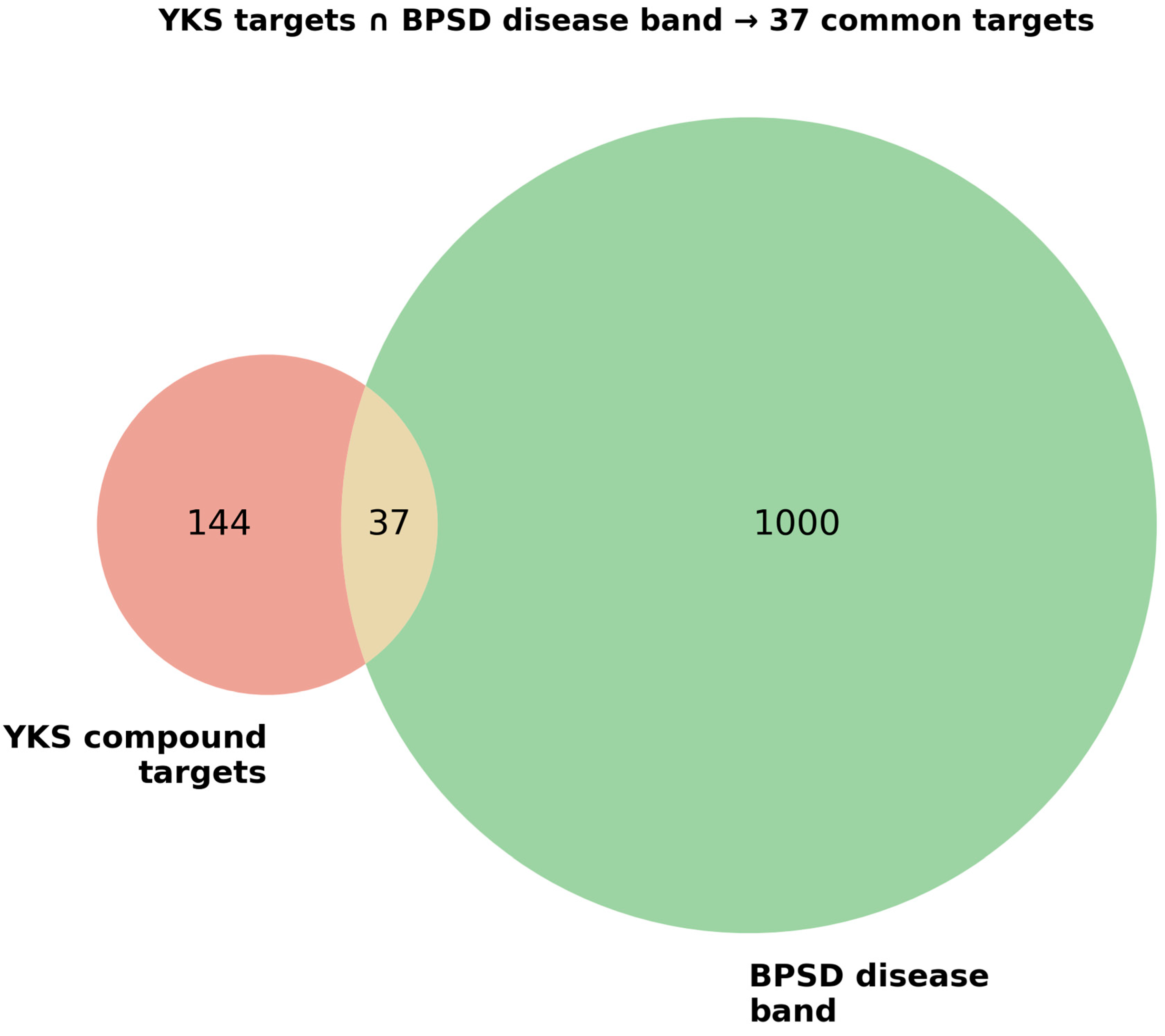
Figure 3.
Herb–compound–target network. Concentric layout: source herbs at the center (purple diamonds, labeled by Latin binomial), the 15 constituents on the middle ring (green squares), and the 37 BPSD common targets on the outer ring, colored by PPI module. Edges link each herb to its constituents and each constituent to its measured targets. 4 herbs (Uncaria, Glycyrrhiza, Bupleurum and Angelica) contribute the constituents that hit the common targets.
Figure 3.
Herb–compound–target network. Concentric layout: source herbs at the center (purple diamonds, labeled by Latin binomial), the 15 constituents on the middle ring (green squares), and the 37 BPSD common targets on the outer ring, colored by PPI module. Edges link each herb to its constituents and each constituent to its measured targets. 4 herbs (Uncaria, Glycyrrhiza, Bupleurum and Angelica) contribute the constituents that hit the common targets.
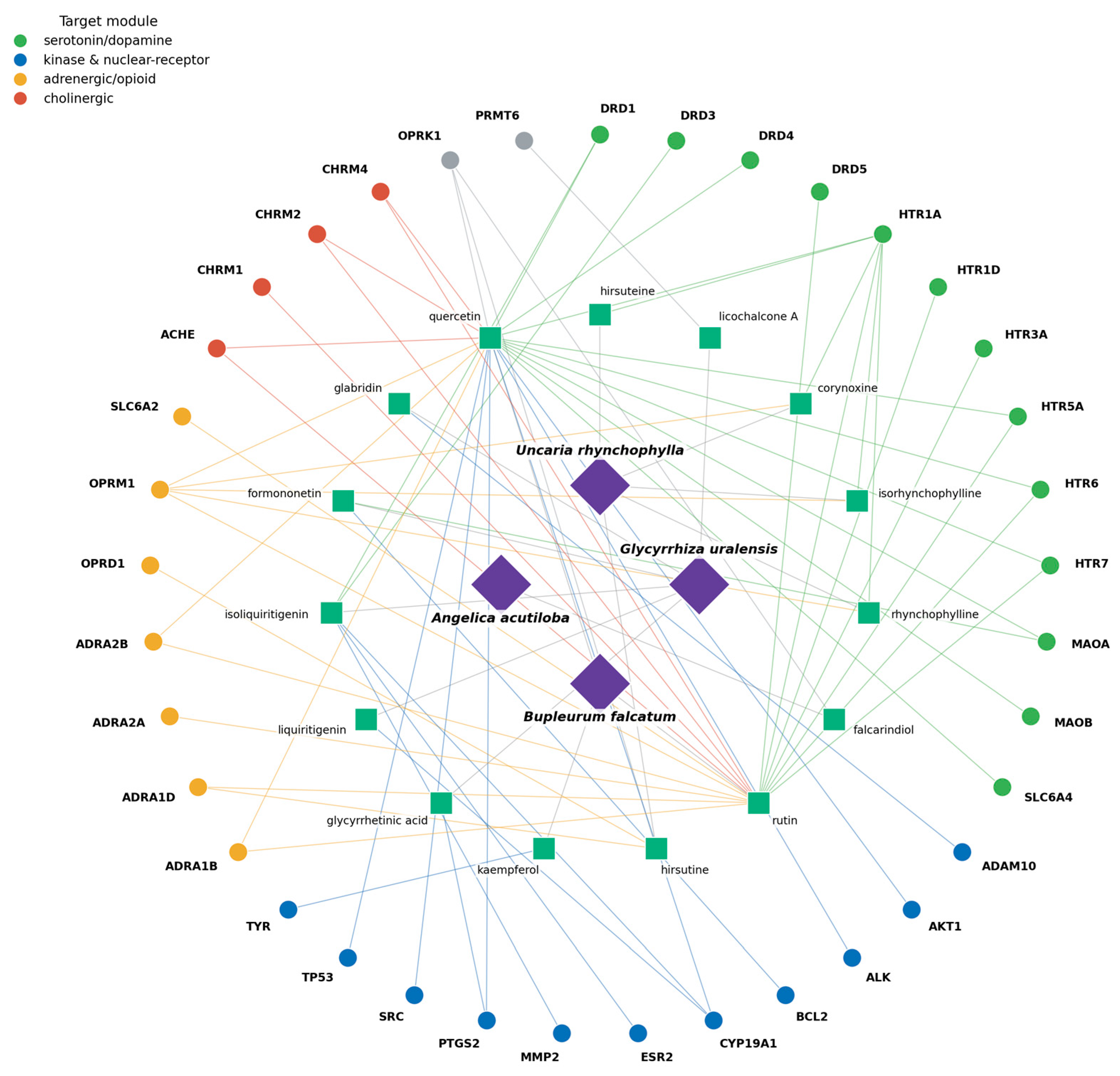
Figure 4.
STRING protein–protein interaction network of the 37 BPSD common targets. (A) Full network with nodes colored by PPI module (monoaminergic, kinase & enzyme signaling, adrenergic/opioid and cholinergic) and sized by edge count (degree), so that the most connected hubs appear largest. (B) Induced subnetwork of the 10 highest-ranked hubs, retaining the module colors of panel A but shaded by composite centrality (hub score), with darker shading indicating higher centrality within each module, and each node labeled with its edge count in the full network; SRC (23 edges), the serotonin transporter SLC6A4 and the monoamine oxidase MAOA (19 edges each) have the most edges in the full network. Edge width and shading reflect STRING confidence.
Figure 4.
STRING protein–protein interaction network of the 37 BPSD common targets. (A) Full network with nodes colored by PPI module (monoaminergic, kinase & enzyme signaling, adrenergic/opioid and cholinergic) and sized by edge count (degree), so that the most connected hubs appear largest. (B) Induced subnetwork of the 10 highest-ranked hubs, retaining the module colors of panel A but shaded by composite centrality (hub score), with darker shading indicating higher centrality within each module, and each node labeled with its edge count in the full network; SRC (23 edges), the serotonin transporter SLC6A4 and the monoamine oxidase MAOA (19 edges each) have the most edges in the full network. Edge width and shading reflect STRING confidence.
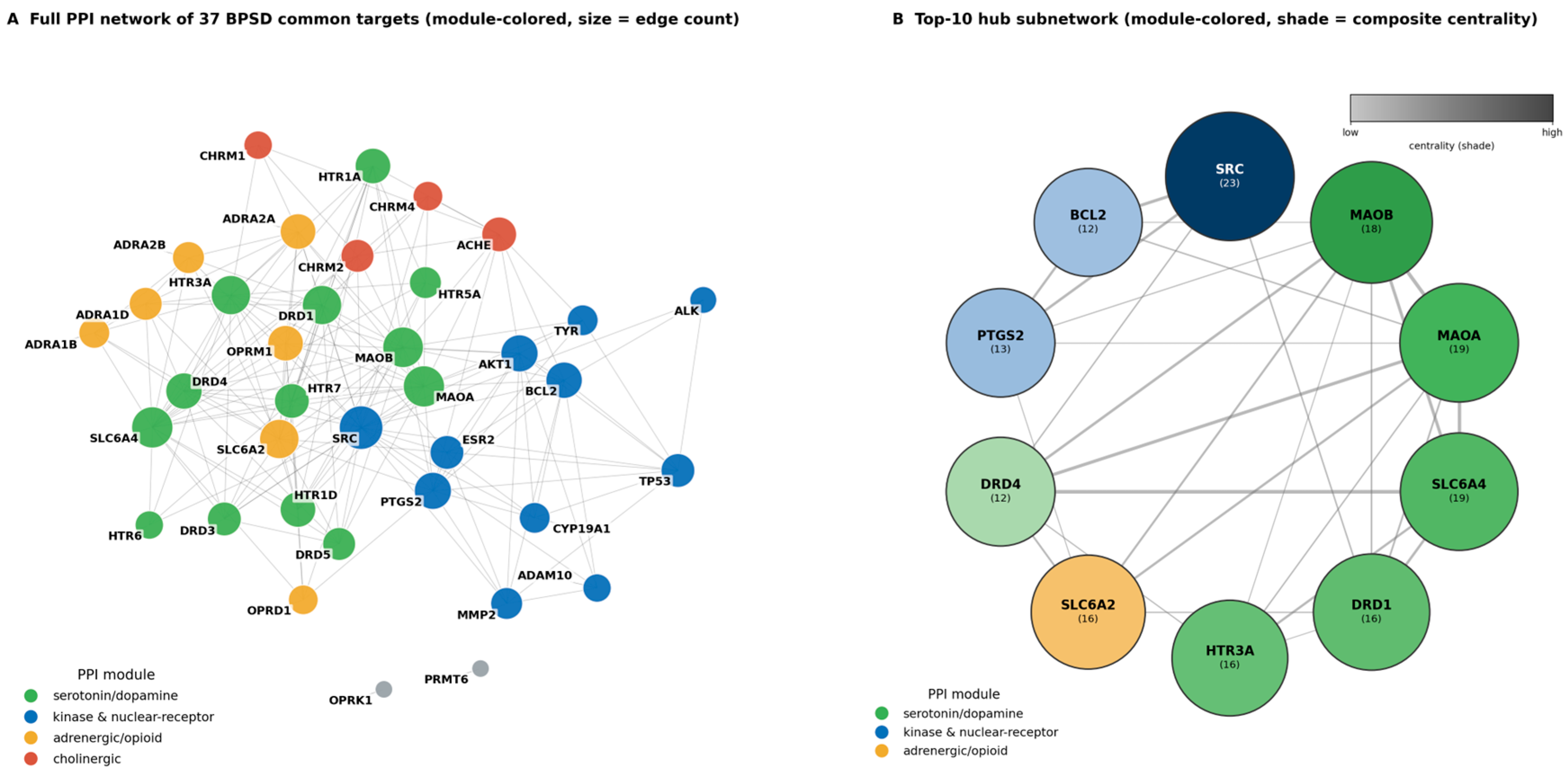
Figure 5.
Bubble maps of GO and KEGG enrichment, where the GO categories are biological process (BP, the process a gene takes part in), cellular component (CC, where the protein is located) and molecular function (MF, its biochemical activity). The x-axis is gene ratio, color is −log10FDR and size is gene count.
Figure 5.
Bubble maps of GO and KEGG enrichment, where the GO categories are biological process (BP, the process a gene takes part in), cellular component (CC, where the protein is located) and molecular function (MF, its biochemical activity). The x-axis is gene ratio, color is −log10FDR and size is gene count.
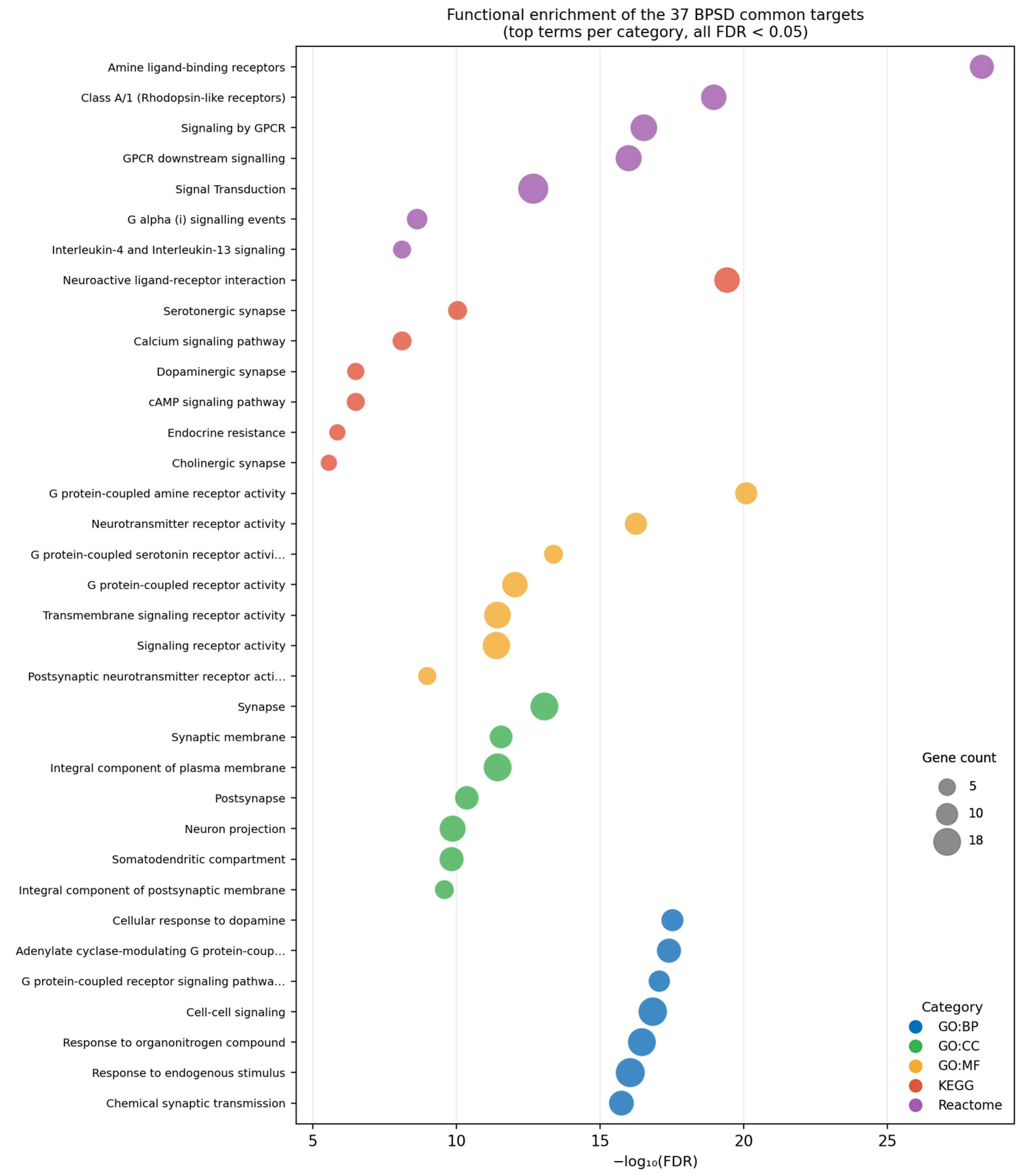
Figure 6.
Docking-score matrix of 45 constituents × 10 BPSD hub targets, with all ligands protonated at pH 7.4 (darker = stronger predicted binding). Columns are grouped by PPI-network module (monoaminergic, kinase & enzyme signaling and adrenergic), separated by black vertical lines. Rows are grouped by source herb, separated by white lines and ordered within each herb by strongest affinity. Row labels give the constituent and its source herb, and cells with binding at or below −8 kcal/mol are labeled with the score. Blank cells mark the 26 pairs for which no favorable docked pose was obtained, concentrated at the narrow substrate pocket of the serotonin transporter SLC6A4 (22 pairs), which does not accommodate the larger saponin and glycoside constituents.
Figure 6.
Docking-score matrix of 45 constituents × 10 BPSD hub targets, with all ligands protonated at pH 7.4 (darker = stronger predicted binding). Columns are grouped by PPI-network module (monoaminergic, kinase & enzyme signaling and adrenergic), separated by black vertical lines. Rows are grouped by source herb, separated by white lines and ordered within each herb by strongest affinity. Row labels give the constituent and its source herb, and cells with binding at or below −8 kcal/mol are labeled with the score. Blank cells mark the 26 pairs for which no favorable docked pose was obtained, concentrated at the narrow substrate pocket of the serotonin transporter SLC6A4 (22 pairs), which does not accommodate the larger saponin and glycoside constituents.
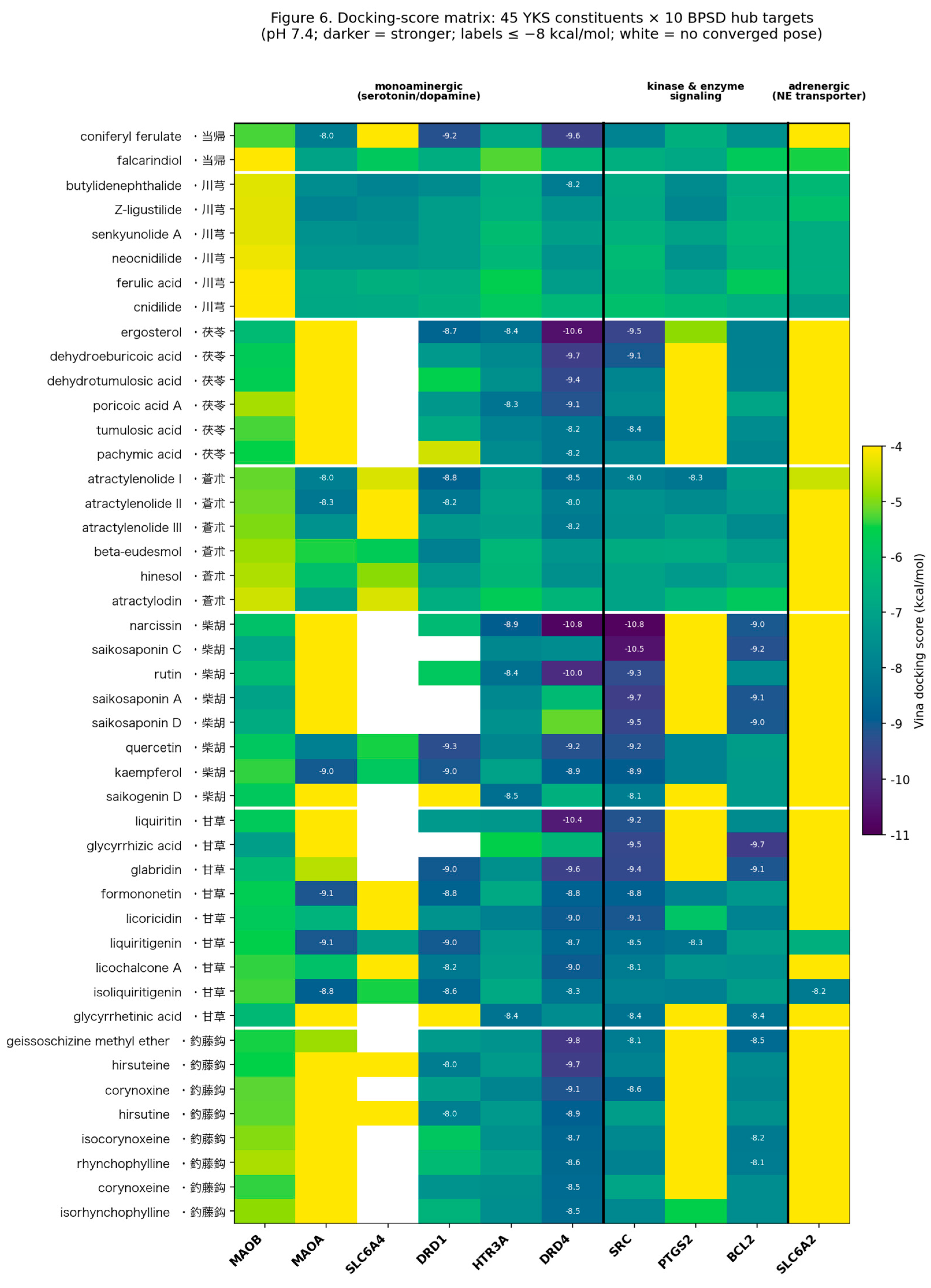
Figure 7.
Brain-penetration prediction by 2 independent methods across all 45 constituents. (A) Clark 1999 predicted logBB of every constituent, each bar colored by the descriptor-based consensus BBB call; the logBB < −1 line marks poor CNS access. (B) ADMET-AI graph-neural-network permeability probability, with the 0.5 line separating predicted brain-permeant from non-permeant compounds. Both panels list the constituents in the same order (descending Clark logBB) so the 2 methods can be compared row by row. The Uncaria alkaloids (e.g., geissoschizine methyl ether, hirsuteine, hirsutine) and small terpenoid (atractylenolide I–III) and flavonoid aglycones are predicted brain-permeant, whereas the large polar glycosides are not.
Figure 7.
Brain-penetration prediction by 2 independent methods across all 45 constituents. (A) Clark 1999 predicted logBB of every constituent, each bar colored by the descriptor-based consensus BBB call; the logBB < −1 line marks poor CNS access. (B) ADMET-AI graph-neural-network permeability probability, with the 0.5 line separating predicted brain-permeant from non-permeant compounds. Both panels list the constituents in the same order (descending Clark logBB) so the 2 methods can be compared row by row. The Uncaria alkaloids (e.g., geissoschizine methyl ether, hirsuteine, hirsutine) and small terpenoid (atractylenolide I–III) and flavonoid aglycones are predicted brain-permeant, whereas the large polar glycosides are not.
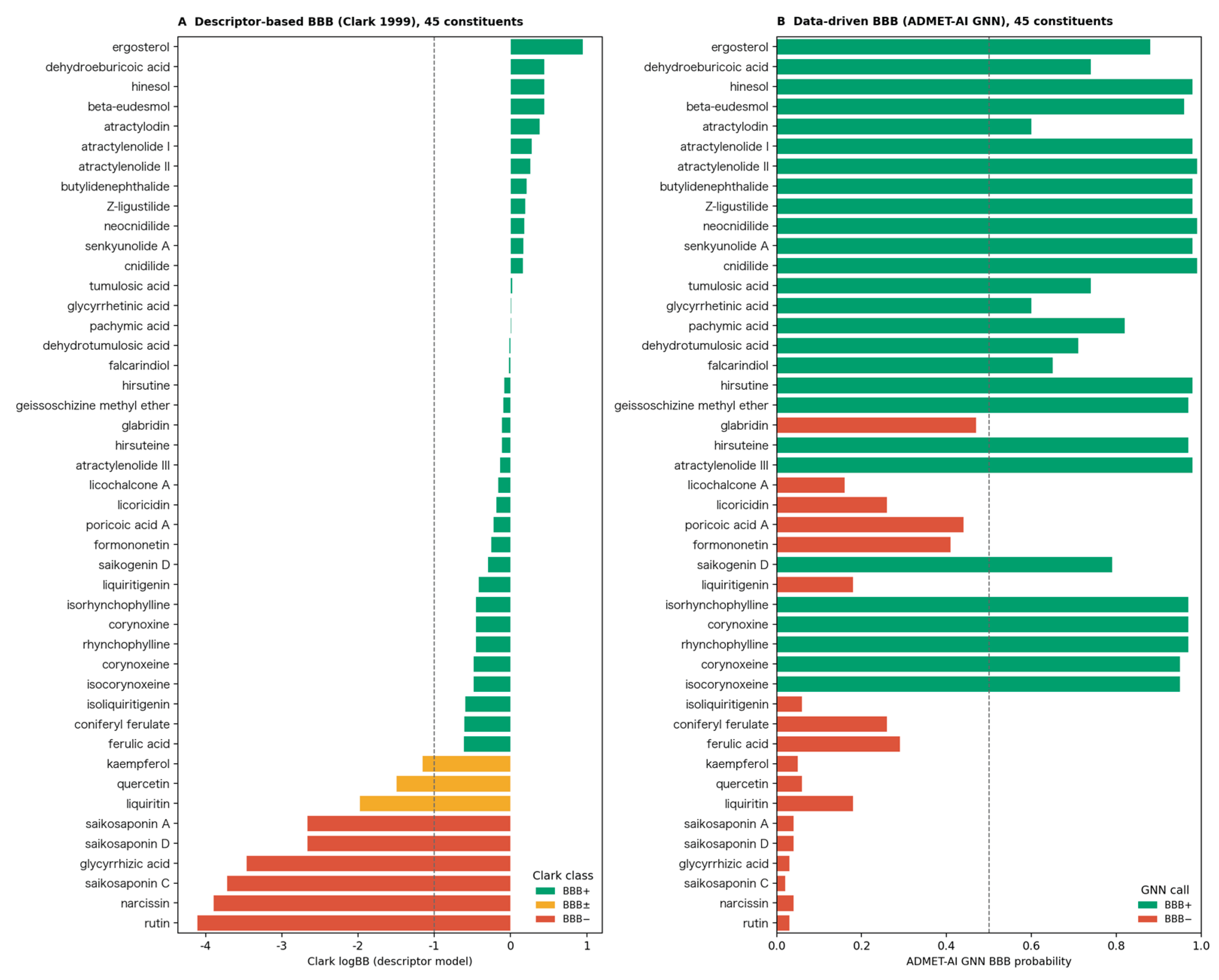
Figure 8.
Predicted binding poses (top) and 2D structure (bottom) for each of the 7 strong-binding, brain-penetrant compound–target pairs (5 constituents across the monoaminergic and kinase–enzyme-signaling modules), ordered by docking affinity. Poses are rendered by PLIP with the ligand shown in orange and the interacting binding-site residues in blue, and the protein–ligand interactions color-coded by type (blue dashed lines, hydrogen bonds; yellow dashed lines, salt bridges; gray dashed lines, hydrophobic contacts; no π-stacking interactions were present among these 7 pairs). The interaction counts per complex are given in the PLIP interaction table (Table 3).
Figure 8.
Predicted binding poses (top) and 2D structure (bottom) for each of the 7 strong-binding, brain-penetrant compound–target pairs (5 constituents across the monoaminergic and kinase–enzyme-signaling modules), ordered by docking affinity. Poses are rendered by PLIP with the ligand shown in orange and the interacting binding-site residues in blue, and the protein–ligand interactions color-coded by type (blue dashed lines, hydrogen bonds; yellow dashed lines, salt bridges; gray dashed lines, hydrophobic contacts; no π-stacking interactions were present among these 7 pairs). The interaction counts per complex are given in the PLIP interaction table (Table 3).
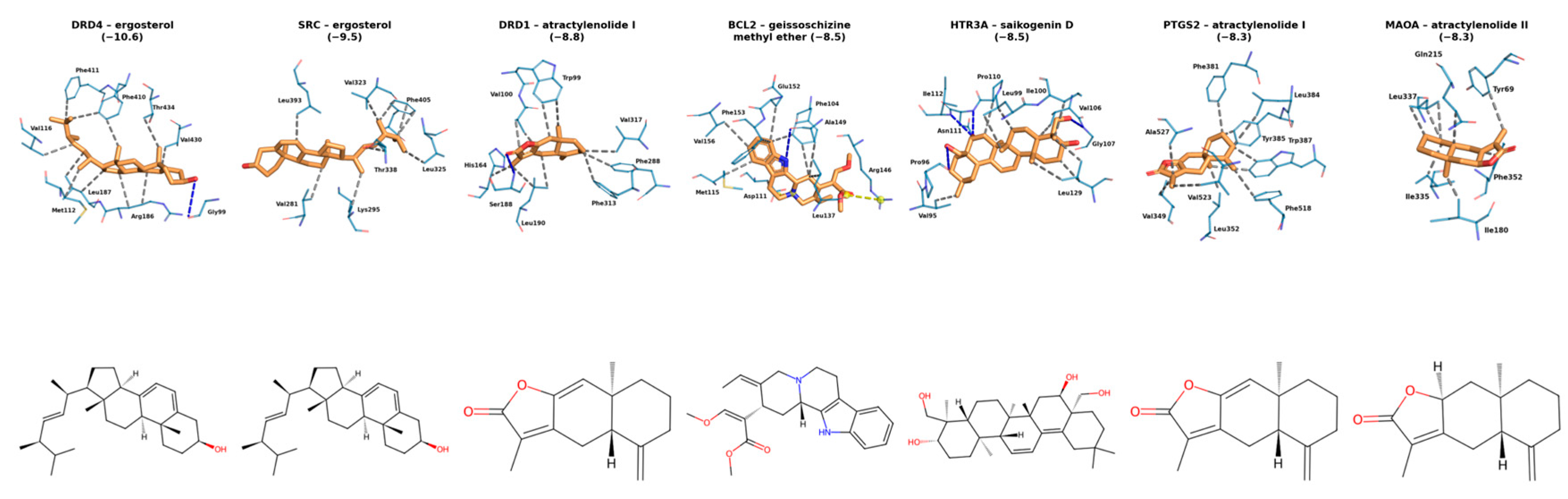

Table 1.
The 10 docking targets, defined as the 10 highest-ranked hubs of the BPSD network by composite centrality, with the module assignment, composite-centrality hub rank and degree among the 37 common targets, and the best-scoring constituent and its docking affinity at each target. Modules are the communities of the protein–protein interaction network (Figure 4): monoaminergic, kinase & enzyme signaling and adrenergic.
Table 1.
The 10 docking targets, defined as the 10 highest-ranked hubs of the BPSD network by composite centrality, with the module assignment, composite-centrality hub rank and degree among the 37 common targets, and the best-scoring constituent and its docking affinity at each target. Modules are the communities of the protein–protein interaction network (Figure 4): monoaminergic, kinase & enzyme signaling and adrenergic.
| Target | Protein | Module | Hub rank | Degree | Best constituent (herb) | Best Vina (kcal/mol) |
|---|---|---|---|---|---|---|
| SRC | Proto-oncogene tyrosine-protein kinase Src | Kinase & enzyme signaling | 1 | 23 | narcissin (Bupleurum falcatum) | −10.8 |
| MAOB | Monoamine oxidase B | Monoaminergic | 2 | 18 | glycyrrhizic acid (Glycyrrhiza uralensis) | −7.1 |
| MAOA | Monoamine oxidase A | Monoaminergic | 3 | 19 | formononetin (Glycyrrhiza uralensis) | −9.1 |
| SLC6A4 | Serotonin transporter | Monoaminergic | 4 | 19 | butylidenephthalide (Cnidium officinale) | −7.9 |
| DRD1 | Dopamine D1 receptor | Monoaminergic | 5 | 16 | quercetin (Bupleurum falcatum) | −9.3 |
| HTR3A | Serotonin 5-HT3A receptor | Monoaminergic | 6 | 16 | narcissin (Bupleurum falcatum) | −8.9 |
| SLC6A2 | Noradrenaline transporter | Adrenergic | 7 | 16 | isoliquiritigenin (Glycyrrhiza uralensis) | −8.2 |
| DRD4 | Dopamine D4 receptor | Monoaminergic | 8 | 12 | narcissin (Bupleurum falcatum) | −10.8 |
| PTGS2 | Cyclooxygenase-2 (COX-2) | Kinase & enzyme signaling | 9 | 13 | atractylenolide I (Atractylodes lancea) | −8.3 |
| BCL2 | Apoptosis regulator Bcl-2 | Kinase & enzyme signaling | 10 | 12 | glycyrrhizic acid (Glycyrrhiza uralensis) | −9.7 |
Table 2.
Yokukansan constituents that combine strong predicted binding (Vina ≤ −8 kcal/mol at 1 or more of the 10 BPSD hub targets) with predicted blood–brain-barrier penetration (ADMET-AI GNN probability ≥ 0.5), ranked in descending order of GNN probability. For each constituent the BPSD targets at which it binds ≤ −8 kcal/mol are listed with the Vina score. The Clark descriptor model classifies most of these constituents as borderline (BBB±) and 4 as clearly permeant (BBB+), so the 2 methods agree on direction while differing in stringency. Green-shaded rows are the 5 constituents taken forward for binding-pose and interaction analysis (Figure 8, Table 3), selected as the strongest brain-penetrant binder of each hub target so that both the monoaminergic and the kinase–enzyme-signaling modules are represented. MW, molecular weight; TPSA, topological polar surface area; cLogP, calculated lipophilicity; logBB, Clark 1999 predicted brain/blood ratio; GNN, ADMET-AI graph-neural-network permeability probability.
Table 2.
Yokukansan constituents that combine strong predicted binding (Vina ≤ −8 kcal/mol at 1 or more of the 10 BPSD hub targets) with predicted blood–brain-barrier penetration (ADMET-AI GNN probability ≥ 0.5), ranked in descending order of GNN probability. For each constituent the BPSD targets at which it binds ≤ −8 kcal/mol are listed with the Vina score. The Clark descriptor model classifies most of these constituents as borderline (BBB±) and 4 as clearly permeant (BBB+), so the 2 methods agree on direction while differing in stringency. Green-shaded rows are the 5 constituents taken forward for binding-pose and interaction analysis (Figure 8, Table 3), selected as the strongest brain-penetrant binder of each hub target so that both the monoaminergic and the kinase–enzyme-signaling modules are represented. MW, molecular weight; TPSA, topological polar surface area; cLogP, calculated lipophilicity; logBB, Clark 1999 predicted brain/blood ratio; GNN, ADMET-AI graph-neural-network permeability probability.
| Constituent | Herb | BPSD targets (Vina ≤ −8) | MW (Da) | TPSA (Ų) | cLogP | logBB | Clark | GNN prob. | GNN |
|---|---|---|---|---|---|---|---|---|---|
| atractylenolide II | Atractylodes lancea | MAOA (−8.3), DRD1 (−8.2), DRD4 (−8.0) | 232 | 26 | 3.38 | 0.26 | BBB+ | 0.99 | BBB+ |
| atractylenolide I | Atractylodes lancea | DRD1 (−8.8), DRD4 (−8.5), PTGS2 (−8.3), SRC (−8.0), MAOA (−8.0) | 230 | 26 | 3.51 | 0.28 | BBB+ | 0.98 | BBB+ |
| butylidenephthalide | Cnidium officinale | DRD4 (−8.2) | 188 | 26 | 3.00 | 0.21 | BBB+ | 0.98 | BBB+ |
| atractylenolide III | Atractylodes lancea | DRD4 (−8.2) | 248 | 46 | 2.70 | -0.14 | BBB± | 0.98 | BBB+ |
| hirsutine | Uncaria rhynchophylla | DRD4 (−8.9), DRD1 (−8.0) | 368 | 55 | 3.82 | -0.09 | BBB± | 0.98 | BBB+ |
| isorhynchophylline | Uncaria rhynchophylla | DRD4 (−8.5) | 384 | 68 | 2.70 | -0.46 | BBB± | 0.97 | BBB+ |
| corynoxine | Uncaria rhynchophylla | DRD4 (−9.1), SRC (−8.6) | 384 | 68 | 2.70 | -0.46 | BBB± | 0.97 | BBB+ |
| hirsuteine | Uncaria rhynchophylla | DRD4 (−9.7), DRD1 (−8.0) | 366 | 55 | 3.59 | -0.12 | BBB± | 0.97 | BBB+ |
| rhynchophylline | Uncaria rhynchophylla | DRD4 (−8.6), BCL2 (−8.1) | 384 | 68 | 2.70 | -0.46 | BBB± | 0.97 | BBB+ |
| geissoschizine methyl ether | Uncaria rhynchophylla | DRD4 (−9.8), BCL2 (−8.5), SRC (−8.1) | 366 | 55 | 3.74 | -0.10 | BBB± | 0.97 | BBB+ |
| isocorynoxeine | Uncaria rhynchophylla | DRD4 (−8.7), BCL2 (−8.2) | 382 | 68 | 2.48 | -0.49 | BBB± | 0.95 | BBB+ |
| corynoxeine | Uncaria rhynchophylla | DRD4 (−8.5) | 382 | 68 | 2.48 | -0.49 | BBB± | 0.95 | BBB+ |
| ergosterol | Poria cocos | DRD4 (−10.6), SRC (−9.5), DRD1 (−8.7), HTR3A (−8.4) | 397 | 20 | 7.33 | 0.95 | BBB+ | 0.88 | BBB+ |
| pachymic acid | Poria cocos | DRD4 (−8.2) | 529 | 84 | 7.33 | 0.01 | BBB± | 0.82 | BBB+ |
| saikogenin D | Bupleurum falcatum | HTR3A (−8.5), SRC (−8.1) | 473 | 81 | 5.00 | -0.30 | BBB± | 0.79 | BBB+ |
| tumulosic acid | Poria cocos | SRC (−8.4), DRD4 (−8.2) | 487 | 78 | 6.76 | 0.02 | BBB± | 0.74 | BBB+ |
| dehydroeburicoic acid | Poria cocos | DRD4 (−9.7), SRC (−9.1) | 469 | 58 | 7.57 | 0.44 | BBB± | 0.74 | BBB+ |
| dehydrotumulosic acid | Poria cocos | DRD4 (−9.4) | 485 | 78 | 6.54 | -0.02 | BBB± | 0.71 | BBB+ |
| glycyrrhetinic acid | Glycyrrhiza uralensis | BCL2 (−8.4), SRC (−8.4), HTR3A (−8.4) | 471 | 75 | 6.41 | 0.01 | BBB± | 0.60 | BBB+ |
Table 3.
PLIP-profiled binding-site interactions for the 7 strong-binding, brain-penetrant compound–target pairs (5 constituents, chosen as the strongest brain-penetrant binder of each of 7 BPSD hub targets across the monoaminergic and kinase–enzyme-signaling modules), shown in the docking poses of Figure 8. Counts give the number of hydrogen bonds, salt bridges, π-stacking/cation and hydrophobic contacts identified by the Protein–Ligand Interaction Profiler. Directed-interaction residues list the residues forming hydrogen bonds, salt bridges or π-interactions; a dash indicates a purely hydrophobic binding mode.
Table 3.
PLIP-profiled binding-site interactions for the 7 strong-binding, brain-penetrant compound–target pairs (5 constituents, chosen as the strongest brain-penetrant binder of each of 7 BPSD hub targets across the monoaminergic and kinase–enzyme-signaling modules), shown in the docking poses of Figure 8. Counts give the number of hydrogen bonds, salt bridges, π-stacking/cation and hydrophobic contacts identified by the Protein–Ligand Interaction Profiler. Directed-interaction residues list the residues forming hydrogen bonds, salt bridges or π-interactions; a dash indicates a purely hydrophobic binding mode.
| Target | Constituent | Vina | H-bonds | Salt bridges | π-stacking/cation | Hydrophobic | Directed-interaction residues |
|---|---|---|---|---|---|---|---|
| DRD4 | ergosterol | −10.6 | Gly99 | — | — | Met112, Val116, Arg186, Leu187, Phe410, Phe411, Val430, Thr434 | Gly99 |
| SRC | ergosterol | −9.5 | — | — | — | Val281, Lys295, Val323, Leu325, Thr338, Leu393, Phe405 | — |
| DRD1 | atractylenolide I | −8.8 | Ser188 | — | — | Trp99, Val100, His164, Leu190, Phe288, Phe313, Val317 | Ser188 |
| BCL2 | geissoschizine methyl ether | −8.5 | Ala149 | Asp111, Arg146 | — | Phe104, Asp111, Met115, Leu137, Ala149, Glu152, Phe153, Val156 | Ala149, Asp111, Arg146 |
| HTR3A | saikogenin D | −8.5 | Pro96, Gly107, Asn111, Ile112 | — | — | Val95, Leu99, Ile100, Val106, Pro110, Leu129 | Pro96, Gly107, Asn111, Ile112 |
| PTGS2 | atractylenolide I | −8.3 | — | — | — | Val349, Leu352, Phe381, Leu384, Tyr385, Trp387, Phe518, Val523, Ala527 | — |
| MAOA | atractylenolide II | −8.3 | — | — | — | Tyr69, Ile180, Gln215, Ile335, Leu337, Phe352 | — |
Disclaimer/Publisher’s Note: The statements, opinions and data contained in all publications are solely those of the individual author(s) and contributor(s) and not of MDPI and/or the editor(s). MDPI and/or the editor(s) disclaim responsibility for any injury to people or property resulting from any ideas, methods, instructions or products referred to in the content. |
© 2026 by the authors. Licensee MDPI, Basel, Switzerland. This article is an open access article distributed under the terms and conditions of the Creative Commons Attribution (CC BY) license (http://creativecommons.org/licenses/by/4.0/).
Copyright: This open access article is published under a Creative Commons CC BY 4.0 license, which permit the free download, distribution, and reuse, provided that the author and preprint are cited in any reuse.