

Submitted:
17 July 2026
Posted:
20 July 2026
You are already at the latest version
Abstract
Psychosocial health challenges remain pervasive among Southern African Indigenous communities, yet prevailing Western-oriented intervention models often inadequately address the cultural and contextual realities of these populations. This disconnect underscores the need for culturally congruent frameworks grounded in Indigenous knowledge systems and community participation. This study aims to confirm and validate a hypothetical model for psychosocial health management among Southern African Indigenous communities, developed during an earlier phase of a broader community-informed research project. A non-experimental quantitative design was employed to assess the model’s content validity and comprehensiveness. Expert evaluation was conducted using the Content Validity Index (CVI) and Content Validity Ratio (CVR), and inter-rater reliability was assessed using Kappa statistics. The findings demonstrate that psychosocial health is best understood as a lifelong process of achieving and maintaining balance across interconnected social, cultural, spiritual, psychological, and communal domains. The model was confirmed as both content valid and comprehensive, highlighting the significance of community participation, shared belief systems, spiritual realm, resilience, and culturally embedded healing practices in the management of psychosocial health. Its confirmation provides a critical foundation for future intervention development, policy development, and psychosocial health practice within Indigenous contexts.
Keywords:
harmonious balance
; shared belief system
; psychosocial health
; Southern African indigenous communities
; indigenous health care
1. Introduction
Health remains a foundational concept within the health sciences, yet its conceptualisation continues to evolve across contexts. The World Health Organization (WHO) famously defines health as “a state of complete physical, mental and social well-being and not merely the absence of disease or infirmity.” [1]. This definition marked a paradigm shift from a purely biomedical perspective towards a holistic understanding of health, foregrounding the interdependence in its constitutive domains. Importantly, the emphasis on completeness suggests that health extends beyond the absence of pathology to a holistic outlook [2]. Despite critiques regarding its perceived idealism, the WHO definition continues to serve as a conceptual anchor for health systems globally [3,4].
In the African context, conceptions of health resonate with this holistic account, often extending further to include spiritual, communal, and cosmic realities [5,6]. African Indigenous Knowledge Systems (AIKS) conceptualise health as a interconnected and interactional phenomenon embedded in social harmony, cultural continuity, and spiritual balance [7,8]. Within this broader understanding, psychosocial health emerges as a critical component of overall well-being. Psychosocial health is a multifaceted phenomenon that derives its meaning from the balance or imbalance between the sense of oneness and the cosmic realities. It reflects a nuanced approach on how as a collective the African Indigenous communities relate with the self, society and the unseen world [9,10].
Notably, the WHO’s assertion that “there is no health without mental health.” [11], a position echoed by [12], who argue that mental and physical health are fundamentally interconnected. Reinforces the centrality of psychosocial dimensions in achieving holistic well-being, underscoring their inseparability from overall health. This position aligns with both WHO’s holistic definition and African Indigenous worldviews, which reject fragmented and reductionist understandings of overall well-being. Consequently, psychosocial health must be understood not merely as an individual construct but as a socially situated and culturally mediated phenomenon embedded within communal, and cosmic contexts. Hence, we lean toward the position that the concept of mental health could be best interpreted under the label of ‘psychosocial health’ in our times [13].
Despite increasing recognition of its importance, psychosocial health remains a persistent global challenge. Across the Global North and Global South, mental health disorders, social isolation, trauma, and socio-economic inequities continue to undermine well-being [14]. Global estimates suggest a growing burden of mental health conditions, exacerbated by factors such as urbanisation, conflict, poverty, and health system inequities [15,16]. In low- and middle-income countries, these challenges are further compounded by limited resources, stigma, and inadequate integration of mental health into primary healthcare systems [8]. While high-income countries have made advances in mental health service delivery, disparities persist, particularly among marginalised populations, indicating that psychosocial health is a universal yet unevenly addressed concern [17].
In the African context, the psychosocial health burden is intensified by historical, socio-political, and economic factors, including colonial legacies, structural inequalities, unemployment, and rapid social change[18]. These challenges are particularly pronounced across all African regions, where health systems often struggle to address the complex interplay of psychological and social determinants of health [19,20,21,22,23]. As it may, dominant Western-oriented models of mental health care have frequently failed to resonate with local belief systems and lived realities, resulting in limited utilisation and effectiveness [16]. This mismatch underscores the need for culturally grounded and contextually relevant approaches to psychosocial health management.
In response to these challenges, a growing body of research has focused on the development of theories, models, and frameworks for psychosocial health management within African contexts [24,25]. These include integrative and culturally responsive frameworks that draw on Indigenous Knowledge Systems (IKS), community-based practices, and ecological perspectives. For example, a holistic mental health framework developed within the African context emphasises the integration of cultural values, community practices, and broader social systems in understanding and addressing mental health concerns [26]. Similarly, African-centred frameworks have highlighted the therapeutic value of communal dialogues, spirituality, and culturally embedded healing practices in managing psychosocial challenges [27]. Collectively, these models demonstrate promising outcomes, particularly in enhancing cultural relevance, community engagement, and holistic care.
However, the literature also reveals inconsistencies and limitations. While some studies report positive outcomes associated with culturally grounded models, others highlight challenges related to sustainability, scalability, empirical validation, and integration into formal health systems [28,29]. Additionally, with the paucity of tested models within African settings, as many frameworks remaining at the conceptual or exploratory stage [30,31,32,33,34,35]. This gap reflects a broader trend in African health research, where the emphasis has often been placed on model development rather than systematic testing and implementation. Consequently, the evidence base for effective psychosocial health management models in African contexts remains fragmented and inconclusive.
Given this landscape, there is a compelling need to move beyond the development of models towards their empirical confirmation and validation. Testing existing frameworks is essential to determine their effectiveness, adaptability, and applicability across diverse contexts. It also enables the refinement of models to better align with the lived realities of communities, thereby enhancing their utility in practice and policy. Importantly, such efforts must prioritise culturally informed approaches that integrate IKS with contemporary health paradigms, ensuring that interventions are both contextually relevant and scientifically robust.
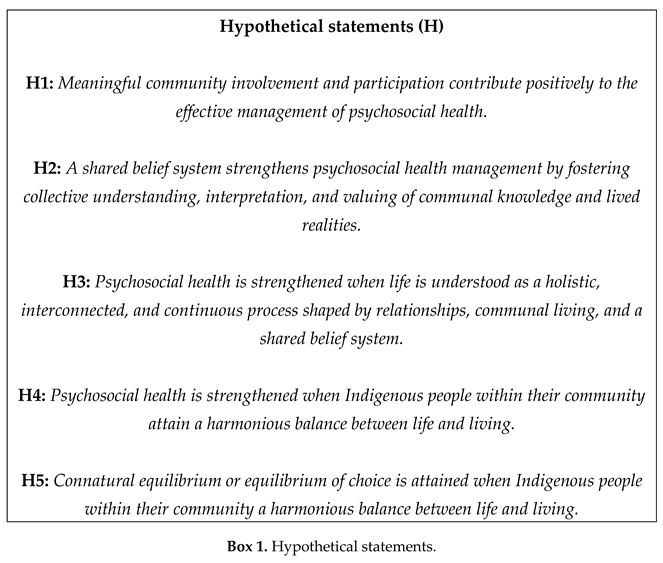
The validated and confirmed model in this study was developed as part of a community-led participative action research project (details withheld to preserve blind review) [Citation omitted]. As illustrated in Figure 1, the model is anchored on five interrelated hypothetical statements (see Box 1). Collectively, these statements conceptualise psychosocial health as an interconnected, shared, purposeful, and lifelong process. Consequently, psychosocial health management is directed towards maintaining a harmonious balance between life and living, thereby achieving well-being for all within the communal context.
First, hypothetical statement one (see Figure 1 & Table 1) is grounded in the community’s shared belief system and establishes the epistemological and ontological foundations of psychosocial health management. It positions communal persons as custodians of psychosocial well-being and care. In this role, they preserve and apply Indigenous knowledge systems in defining health, illness, healing, psychosocial well-being, and culturally appropriate methods of healthcare. Importantly, these meanings and practices are expressed and transmitted through Indigenous languages, which serve as repositories of knowledge, identity, and lived experience.
Building on this foundation, hypothetical statement two emphasises the importance of shared belief impelled through meaningful community participation through custodianship (see Figure 1 & Table 1). Within this approach, psychosocial health management begins at the family level, extends to the broader community, and, where necessary, progresses to formal curative systems. Through this culturally congruent continuum of care, psychosocial health management becomes more accessible, trustworthy, cost-effective, relatable, and less stigmatising, while also facilitating timely feedback and ongoing monitoring of progress.
This communal proclivity informs hypothetical statement three, which recognises the interconnected nature of life and its connubial on understandings of health, illness, healing, and psychosocial well-being (see Figure 1 & Table 1). The statement is premised on the view that all aspects of communal life exist within a web of relationships and continuous interaction. Living within a communal context therefore involves an ongoing effort to remain aligned with life and its interconnected realities. As such, psychosocial health management is not regarded as a discrete intervention but as an integral component of everyday life.
Emerging from this understanding, hypothetical statement four identifies the attainment of a harmonious balance between life and living as the overarching goal of psychosocial health management (see Figure 1 & Table 1). Within this perspective, psychosocial well-being is viewed as a lifelong and collective endeavour characterised by continuous adaptation, and mutual support for the well-being of all.
Finally, the culmination of the model is reflected in hypothetical statement five (see Box 1), which highlights the centrality of communality in functioning of society. It proposes that psychosocial health challenges are collective concerns that should be addressed through communal therapeutic practices embedded within everyday cultural life (see Figure 1). This process is conceptualised as connatural equilibrium (see Figure 1), referring to the attainment of balance through culturally grounded ways of living. At the same time, the model acknowledges diversity in beliefs and lived experiences. It therefore incorporates an equilibrium of choice (see Figure 1), recognising the autonomy of individuals to pursue psychosocial well-being in ways that align with their own values while remaining situated within the broader communal context.
Therefore, this study aims to confirm and validate a hypothetical model for psychosocial health management among Southern African Indigenous communities. By evaluating the validity and comprehensiveness of an existing model, this research contributes to the advancement of evidence-based, culturally grounded approaches to psychosocial health. Importantly, this endeavour aligns with global development imperatives, particularly the United Nations Sustainable Development Goals (SDGs). Psychosocial health is integral to SDG 3 (Good Health and Well-being), which emphasises the promotion of mental health and well-being, as well as SDG 10 (Reduced Inequalities) which recognise the role of inclusive, equitable, and contextually relevant systems in fostering human development. Furthermore, the emphasis on culturally responsive and community-based approaches resonates with SDG 16 (Peace, Justice and Strong Institutions), given the role of psychosocial well-being in social cohesion, resilience, and sustainable communities.
In doing so, this study aligns with ongoing calls within the health sciences to decolonise knowledge production, centre Indigenous epistemologies, and develop contextually responsive interventions that address the complex realities of psychosocial health in the 21st century. By integrating IKS with empirically tested models, the study not only advances scholarly discourse but also contributes to the realisation of sustainable, culturally congruent health systems that are responsive to both local and global priorities.
2. Materials and Methods
A non-experimental quantitative design was employed to assess the content validity and comprehensiveness of the model. Expert evaluation was conducted using the Content Validity Index (CVI) and Content Validity Ratio (CVR), while inter-rater reliability was assessed using Kappa statistics. This process involved evaluation and validation by a specified number of experts to determine whether the individual items, as well as the overall approach, demonstrated adequate content validity.
Validity refers to the extent to which an instrument accurately measures the properties of the construct under investigation [38,39]. It is important to note that validity is commonly conceptualised as comprising three key components: content validity, construct validity, and criterion-related validity [38]. Among these, content validity is considered a prerequisite for the other forms of validity. Therefore, in this study, emphasis was placed on content validity to confirm and validate the emerging theory [40].
Content validity refers to the degree to which the selected items adequately represent the variables of the construct being measured [41]. In essence, it addresses the extent to which the items of an instrument sufficiently capture the content domain [40]. As further simplified by Lynn [38] and Scholtes [42], content validity reflects the representativeness and relevance of instrument items, typically assessed through a two-stage process involving development and judgement. In this study, however, validity assessment was conducted using a one-stage process-judgement, because the development stage had already been completed during the earlier phases of the bigger research project. The judgement-quantification stage consisted of two steps: (1) confirmation by a specified number of experts that the items were content valid and (2) confirmation that the overall instrument was content valid [38,39].
2.1. Feasibility
To address potential limitations associated with the CVI, a pilot study was conducted by the lead author under the guidance of a quantitative expert and the second author. The pilot study served two primary purposes. First, it assessed whether the instructions provided to experts were clear, understandable, and sufficient. Second, it enabled experts to provide preliminary judgement on the model. Accordingly, the judgement-quantification stage involved two steps: (1) expert confirmation of item-level content validity and (2) confirmation of the overall instrument’s content validity.
Six experts were purposively sampled, of whom four agreed to participate. The sample included a mental health clinician, a mental health nurse educator, a health science researcher with grounded theory expertise, a quantitative expert, and a clinical nurse.
The pilot study employed the CVI and CVR for both data collection and analysis. The findings indicated that the instructions provided were clear and understandable. Based on expert feedback, all 40 items of the instrument were refined, with some items reclassified under different hypotheses. Importantly, the total number of items remained unchanged at 40, with no additions or deletions. Overall, the instrument was deemed to have acceptable content validity.
2.2. Population and Sampling Method
The population for this phase comprised a panel of eight experts selected using purposive sampling (see Table 1). Of these, six were women and two were men. Four experts were aged between 46 and 55 years, two were between 56 and 65 years, one was between 36 and 45 years, and one was between 26 and 35 years (see Table 1).
In terms of qualifications, five experts held Doctor of Philosophy (PhD) degrees, one held a master’s degree, and two held basic degrees. Their areas of expertise included mental health, Indigenous Knowledge Systems, social and health research, and nursing.
Specifically, seven participants were nursing experts, and one was a mental health clinician. Two experts held PhDs in nursing sciences (mental health nursing), while another two held PhDs with specialization in mental health nursing and Indigenous health. One expert held a PhD in nursing sciences and Indigenous health. One expert held a master’s degree in nursing science and Indigenous health, and the remaining two experts held basic degrees in mental health nursing and mental health (Clinical Practice), respectively.
2.3. Data Collection
Data collection involved the distribution of a comprehensive document package to the expert panel. This package included the CVI and CVR evaluation forms, with open-ended sections for qualitative feedback regarding the overall comprehensiveness of the emerging theory. It also contained a diagrammatic representation of the model (see Figure 1), accompanied by explanatory discussions framed through hypothetical statements. A cover letter was included to outline the purpose and significance of the study, provide clear instructions, emphasize the importance of expert contributions, and request timely responses. Experts were allocated a minimum of two weeks to complete the evaluation, with the option to request an extension if needed.
Only two experts completed the evaluation within the allocated timeframe. Although all experts reported that the instructions were clear and understandable, they also indicated that the time allocation was adequate. The delays were attributed to competing professional commitments, as confirmed through follow-up consultation with the experts.
2.3.1. Content Validity Index (CVI)
The CVI was used to assess the extent to which the instrument adequately represented the construct being measured [39,41]. The study applied the expert proportion agreement approach, whereby experts evaluated the relevance of each item in relation to the content domain it was intended to measure [43]. Item-level content validity (I-CVI) was calculated as the proportion of agreement among experts regarding item relevance, with values ranging from 0 to 1 [40,41]. Interpretation was conducted as follows: a CVI greater than 0.79 indicated that the item was relevant, values between 0.70 and 0.79 indicated the need for revision, and values below 0.70 indicated that the item should be eliminated [38,40,41,44].
Experts were also invited to identify any omitted areas within the model. Additionally, they provided qualitative judgements regarding whether the model, in its entirety, demonstrated sufficient content validity for relevance and applicability in psychosocial health management among Southern African Indigenous communities.
Formula
I-CVI = Agreed items/N
Where N is the total number of experts. For the application of this formula the original scorings of the experts where coded as following;
3 & 4 = 1
1 & 2 = 0
2.3.2. Content Validity Ratio (CVR)
The CVR was used to assess the essentiality of each item [40,44]. Experts evaluated each item using a three-point scale: not necessary, useful but not essential, and essential [40]. CVR values range from -1 to 1, with higher values indicating greater agreement among experts regarding the necessity of an item [40,44]. The CVR formula was applied as follows:
Formula.
CVR = (Ne – N ∕ 2) ∕ (N∕ 2)
Where Ne is the number of panelists indicating essential and N is the total number of panelists.
2.3.3. Multi-Rate Kappa Statistic
To adjust for inflated agreement due to chance in CVI ratings, Kappa statistic was employed. The Kappa statistic represents the proportion of agreement remaining after accounting for chance agreement [43,45]. This method enhanced the robustness of the analysis by comparing the observed agreement (Pc) with the maximum possible agreement after accounting for chance (1-Pc). The Kappa statistic was calculated using the I-CVI for each item and the probability of chance agreement (Pc). After calculating the I-CVI for all items, the Kappa statistic was computed by incorporating both the probability of chance agreement (Pc) and the corresponding I-CVI values. Evaluation criteria were interpreted using the following thresholds: values above 0.74 were considered ‘excellent’, values between 0.60 and 0.74 were considered ‘good’, and values between 0.40 and 0.59 were considered ‘fair’ [40]. After adjusting for chance agreement, items with an I-CVI equal to or greater than 0.78 were considered to demonstrate excellent agreement.
2.4. Reliability
A quantitative expert was engaged to ensure the consistency of the instrument and the reliability of the items included in the CVI form, as well as the overall hypothetical models. This process also aimed to mitigate limitations inherent in the CVI approach. Reliability was strengthened through consensus discussions involving the lead author, second author, and the quantitative expert. In addition, the pilot study allowed experts to provide quantitative ratings, assess the clarity and comprehensiveness of the instructions, and evaluate the instrument. The application of the Kappa statistic further enhanced the reliability of the CVI outcomes. Consequently, the instrument used to measure content validity was considered reliable.
3. Results
Table 2 shows the calculated expert judgement and interpretation from a panel of eight experts. The aim of this non-experimental quantitative design was to validate and confirm the level of validity enjoyed by the items and the totality of the hypothetical model. Therefore, the discussion below focuses mainly on demonstrating whether the items of the emerging theory are content valid, and whether the emerging theory in its comprehensiveness is content valid.
3.1. Judgement-Quantification of Expert Panel
3.1.1. Are the Items’ Content Valid?
Item-level content validity was assessed using item relevance and clarity agreement rates (I-CVI), the Kappa statistic, and item essentiality (CVR). The CVI instrument comprised five hypotheses operationalised through 40 items (see Annexure A & B). All items were found to be relevant and acceptable, with I-CVI values exceeding 0.79. For example, under hypothesis one, item one The psychosocial health care provided involves the family, community, and the curative institutions. Having the I-CVI value of 0.88, a CVR of 0.75 and a kappa value of 0.875 (see Table 2), showing that the item was excellent and demonstrated strong agreement among experts. The corresponding CVR and Kappa values further indicated that this level of agreement was not attributable to chance but reflected a true consensus among the expert panel. This finding confirms that the item is both relevant and essential to the model. Substantively, it underscores the significance of co-existence of family, community, and biomedical systems in the provision of psychosocial health care within Southern African Indigenous contexts.
Similarly, under hypothesis four, item 22 The psychosocial health care provided appreciates that harmonious balance is achieved through a holistic-continual process of healing involving basic and advanced communal therapeutic techniques. Yielded an I-CVI of 1, a CVR of 1, and a Kappa value of 1 (see Table 2), classifying the item as excellent. These values indicate complete agreement among experts regarding the item’s relevance and essentiality. Importantly, this agreement is not inflated by chance but represents a robust and reliable consensus.
Overall, the findings demonstrate that all items included in the CVI and CVR instruments achieved acceptable levels of content validity. This confirms the adequacy and coherence of the items in representing the content of the model. Furthermore, the results indicate a high level of expert acceptance and recognition of the model.
These findings provide empirical support for the central role of cultural axioms in the management of psychosocial health, as identified in this study. Specifically, they highlight the importance of meaningful community participation and the acknowledgement of shared belief systems as foundational to psychosocial health management. The model is therefore affirmed as a culturally grounded approach that positions communal persons as custodians of care, recognising belief systems as integral to psychosocial health management approach.
3.1.2. Is the Entire Instrument Content Valid?
The overall content validity of the instrument was determined through an in-depth analysis of the qualitative feedback provided by the expert panel. Experts were specifically requested to identify any omissions, strengths, areas for improvement, and to offer recommendations for refining the model. The qualitative responses reflected a high level of consensus regarding the comprehensiveness and relevance of the instrument. For instance, expert B report that “the instrument is content valid. The content touches the most important aspects of a communal holistic therapeutic approach for psychosocial health management.” While expert H noted that “the items generated for the instrument covers all relevant parts of the domain.” Expert H further expressed that “the model clearly shows how psychological systems work in communal context.” This perspective was equally supported by expert E who emphasised that “the instrument content is valid and encompasses most of the Southern African Indigenous community.” Similarly, expert A remarked that “very comprehensive instrument as it has touched almost all parts that affects the life of an indigenous person.”, reinforcing the collective view of the panel. Moreover, expert C commended the model “incorporating indigenous knowledge and practices is an essential aspect of the approach, recognizing the significance of local traditions and heritage.”, while Expert F stated that “the focus on a shared belief system and interconnectedness of life and living highlights the importance of holistic and context-specific approaches to psychosocial health.” This perspective was further strengthened by another expert.
“The instrument is valid as it encompasses all the aspects of an indigenous life which include culture and belief systems. This indeed will encourage full participation in the care since clients, family members including the community members are well equipped with knowledge and skills in the care provided. Since each member is involved in the care, trust in the provider is well built and the client also gets all the support needed from both provider and community including the family. Issues of stigma are minimized since it is a communal responsibility.” - Expert G.
Collectively, these responses affirm that the instrument is comprehensive, particularly in its ability to respect and align with the communal context in which psychosocial health is integrated in the lifestyle. Simultaneously, some reservations were expressed by members of the expert panel.
“Some specific aspects might change over time as beliefs change and people may choose to follow a certain practice, while others may not. Therefore, I think some flexibility is required, perhaps by including respect and understanding of people’s belief systems and practices over time, and that community members may find themselves at different stages, for example following some indigenous practices, but not others, or seeking healing and help in the community, but also at Western health care systems.” This was corroborated by expert C who opines that “it's essential to consider cultural variations within different communal contexts. Some aspects of the approach may need to be tailored to specific cultural beliefs and practices.” - Expert D.
These perspectives highlight the need for careful consideration of contextual diversity and differing epistemological acclimations. Therefore, while the findings support the overall comprehensiveness of the instrument, caution is warranted in its application. Without implying generalisability, it is essential that the model is positioned as a psychosocial health management approach capable of co-existing with diverse and potentially opposing worldviews within communal contexts. This reinforces the importance of cultural sensitivity and adaptability in the implementation of the model.
As importantly, expert A identified a potential omission, “there is no discussion of how this strategy might affect the community or society as a whole. The effect that this strategy will have on families, communities, and governmental infrastructure is also absent. I would insist that this method be used to demonstrate the impact on the creation and modification of policies.” Which points to an area requiring further refinement. In alignment with this observation, expert D submitted a different perspective, “In my opinion, the instrument will produce desirable outcomes as the care provided involves all aspects of an individual’s life. It is also culturally acceptable as compared to the western way of providing care. The care allows community participation, respects cultural beliefs which indeed would enhance the healing process.” Thereby reinforcing the need to address this aspect within the model. This concern was further elaborated by expert H, who indicated that “as expected, some concepts are abstract but sufficiently close to empirical data to generate specific interventions for practice. For example, the items generated from the hypothesis show a way to potentially test and refine the model.” Collectively, these insights highlight specific areas for improvement and strengthen the overall critical appraisal of the instrument. Notwithstanding these observations, and in consideration of the broader aim of this research, it is important to recognise that the testing and determination of the impact or effectiveness of the emerging theory extend beyond the scope of the present study and remain key considerations for future research.
In addition, panel members provided constructive recommendations to further strengthen the emerging theory.
“How would the researcher feel about including human rights as part of equilibrium? Human rights is something very relevant to all cultures and forms part of cultural identity and the world view of cultures.” While expert E proposed “What about community members and family members not following conducive practices such as respect and displaying harmful practices? A family may also cause harm, for example, child abuse and domestic violence. These practices are opposed to psychosocial health and should be acknowledged by the community as harmful to support family members that need to distance themselves from family members causing harm and not facilitating psychosocial health. A person may also experience conflicting feelings: Must I stay loyal to cultural practices or follow my own belief system? So, acceptance of different perspectives should form part of the approach – being tolerant and accepting and respecting different value systems. Harmful practices towards self and others should be rejected by community members who should take a stance against these members and encourage them to respect others.” - Expert B.
These contributions offer valuable direction for the refinement and contextual adaptation of the model. Overall, the application of a non-experimental quantitative design, incorporating CVI, CVR, and Kappa statistics, demonstrates that the hypothetical model achieves acceptable levels of content validity and comprehensiveness. When considered alongside the strengths, limitations, and expert recommendations identified, the findings indicate that the model adequately addresses key elements of psychosocial health management within Southern African Indigenous communities. Therefore, it is concluded that the instrument, in its entirety, demonstrates acceptable content validity.
4. Discussion
The findings of this study provide empirical support for the content validity and comprehensiveness of the hypothetical model for psychosocial health management among Southern African Indigenous communities. The consistently acceptable CVI and CVR values, together with robust Kappa statistics, confirm that both the individual items and the model as a whole are relevant, essential, and represent the intended content. Importantly, these findings reflect true expert consensus rather than chance agreement, thereby strengthening confidence in the model’s validity. To the best of our knowledge, this study represents one of the first systematic attempts to empirically validate a culturally grounded psychosocial health model specifically tailored to Southern African Indigenous contexts. In doing so, it bridges a critical gap between conceptual model development and empirical validation, which has been identified as a limitation in Indigenous health research globally [46]. Contributes to the growing body of evidence that positions Indigenous health systems as legitimate, coherent, and scientifically grounded approaches to health care.
The findings affirm that Indigenous models of psychosocial health are not only contextually relevant but also capable of co-existing with Western biomedical paradigms. This aligns with Ref. [47], arguing that effective healthcare for Indigenous populations often requires practitioners to walk in two worlds by integrating Indigenous and Western knowledge systems in a culturally safe manner. Similarly, there is increasing evidence that integrating Indigenous and Western epistemologies enhances responsiveness to complex health needs by incorporating holism, culture, and community-based healthcare [48], particularly where culturally adapted and Indigenous-led interventions have shown improved psychosocial outcomes [49].
A central outcome of this study is the affirmed role of meaningful community participation in psychosocial health management. The experts agree on the positioning of the Indigenous community, particularly family systems and communal structures, as active agents in psychosocial healthcare. This finding is consistent with Walker [50], who emphasise that Indigenous health improvement is closely linked to the meaningful involvement of communities and the restoration of autonomy over health-related decision-making. Within the Southern African context, ethnographic studies on practices such as ukuthwasa further illustrate that healing processes are deeply embedded in communal relationships, social inclusion, and cultural legitimacy [51]. These findings support the argument that psychosocial health cannot be effectively addressed through individualised approaches alone, but rather requires collective engagement and recognition of shared belief systems. At the same time, contradictory evidence suggests that cultural interpretations of psychosocial distress may, in some cases, delay access to biomedical care or contribute to stigma [52]. This underscores the need for balanced approaches that respect cultural frameworks while ensuring equitable access to diverse forms of care.
Another key contribution of this study lies in its conceptualisation of psychosocial health management as a continuous and lifelong pursuit of harmonious balance. The model’s emphasis on equilibrium resonates strongly with Indigenous and global holistic health paradigms, which conceptualise health as an ongoing process rather than a fixed state. Evidence from sub-Saharan region indicates that traditional healing systems are not only widely utilised but also play a significant role in improving psychosocial well-being, enabling individuals to interpret distress through culturally meaningful frameworks and, in some cases, achieve improved mental health outcomes through integrated and community-based care [53,54]. Similarly, global Indigenous frameworks emphasise balance across mental, physical, social, and spiritual domains as central to well-being.
Pertinently, this perspective is further reinforced by African philosophical traditions such as Ubuntu, which conceptualise health as a holistic state grounded in interconnectedness, social harmony, and collective well-being, rather than merely the absence of disease [55,56]. Within this worldview, well-being is attained through the maintenance of equilibrium between the individual, the community, and the broader ecological and spiritual environment. Similar conceptualisations are evident in other Indigenous contexts globally. For example, the Māori model of health, Te Whare Tapa Whā, conceptualises well-being as a balanced integration of physical, mental, spiritual, and family dimensions, where disruption in any one component leads to overall imbalance and ill health [57]. This reinforces the notion that health is a holistic and ongoing process of maintaining harmony across interrelated domains of life.
However, the current findings extend this discourse by explicitly acknowledging that balance is achieved within the realities of life’s inherent challenges, rather than in their absence. That is why the model is not conceptualised as static or insulated from the complexities of lived realities. In this regard, the model recognises that human experience is characterised by both positive and adverse conditions, and that sustained psychosocial health involves continuous adaptation within this complexity. This perspective is supported by contemporary resilience literature, which conceptualises well-being as a dynamic and adaptive process involving the capacity to maintain psychological functioning in the face of adversity, stress, and ongoing life challenges [58,59]. Resilience is increasingly understood not as a fixed trait, but as a context-dependent process shaped by interactions between individuals, their social environments, and broader structural conditions [60,61].
Within Indigenous African contexts, this ongoing process of maintaining balance is deeply interwoven with spiritual realm, particularly the relationship between people, the community at large, those who were here before (ancestors) and the cosmic world. Recent scholarship highlights that this interconnectedness is not merely symbolic but constitute an integral component of psychosocial well-being, providing meaning-making frameworks, guidance, and continuity during periods of distress [62,63]. Ref [64] examined how Swati traditional healers conceptualise and manage psychological ailments in Mpumalanga, South Africa. The study identified disorder categories linked to ancestral calling, bewitchment, taboo violations, depression, and psychosis, together with Indigenous treatment protocols. However, this balance may be challenged in contexts where competing epistemologies exist, particularly between Indigenous and Western paradigms, necessitating adaptive negotiation to preserve psychosocial equilibrium [65]. Therefore, conceptualising psychosocial health as a continuous pursuit of balance (equilibrium) within the complexities of life offers a nuanced and contextually grounded approach to psychosocial health management.
Interestingly, although this notion is deeply embedded within Indigenous health epistemologies, similar evidence have emerged from Western scientific inquiry. Gravity has since been found to be a fundamental organizing force for life on Earth, shaping biological adaptation, bodily regulation, and the maintenance of physiological stability [66]. Building on this foundation, evidence has shown gravity contributes to the overall psychological health and well-being [67]. From this perspective, health is understood not as a static condition but as the outcome of continuous adaptation to forces that seek to disturb equilibrium.
Recent developments in neuroscience and mental health have extended this argument through the concept of “mental gravity”, which views psychological well-being as a dynamic balancing process involving cognitive, emotional, social, and environmental systems [68]. Rather than perceiving mental health as the complete absence of adversity, this framework suggests that individuals maintain mental well-being through the ongoing regulation of internal and external influences, closely mirroring Indigenous conceptualisations of health as harmony among interconnected domains of life.
Empirical evidence further supports the importance of balance and equilibrium in mental health. Mindfulness practices have been shown to strengthen neural connectivity within brain networks associated with self-awareness, emotional regulation, and adaptive functioning, suggesting that psychological balance can be cultivated through intentional cognitive and behavioural practices [69]. Similarly, floatation-restricted environmental stimulation therapy (floatation-REST), which temporarily reduces gravitational and sensory demands on the body, has demonstrated benefits for relaxation, anxiety reduction, and psychological restoration among both healthy individuals and those experiencing depression and anxiety [70,71]. Beyond clinical interventions, exposure to natural environments has been associated with improved health and well-being, highlighting the restorative value of maintaining balance between human beings and their broader ecological environment [72]. Likewise, practices such as yoga have been linked to improvements in interoceptive awareness and emotional experience through the cultivation of bodily and psychological alignment [73].
Conversely, disturbances in equilibrium have been observed in individuals living with major mental illnesses, where impairments in gait, posture, and physical balance frequently accompany psychopathology, underscoring the interconnectedness of mental and physical functioning [74]. Collectively, these findings suggest that both Indigenous and Western paradigms increasingly converge on the principle that health emerges from the maintenance and restoration of balance. Hence, the current model acknowledges that health is not characterised by the absence of disruption, but by the capacity to navigate, adapt, and find meaning within ongoing life challenges while maintaining alignment across social, cultural, spiritual, psychological, and physical dimensions. This reinforces the applicability of the emerging model within diverse and dynamic community settings.
Importantly, the study’s findings also raise critical considerations related to human rights, cultural safety, and inclusivity. The validation of a culturally grounded model aligns with the United Nations Declaration on the Rights of Indigenous Peoples (UNDRIP), which affirms the right of Indigenous peoples to maintain their health practices and access culturally appropriate care [75]. Furthermore, the principle of cultural safety, as articulated by McGough [76] and Curtis [77], emphasises the need for healthcare systems to respect and respond to cultural identities and power dynamics in care delivery. The expert concerns regarding the coexistence of multiple worldviews highlight the importance of designing models that are adaptable and inclusive rather than prescriptive. This is particularly relevant in diverse societies where Indigenous, Western, and other knowledge systems intersect. The comprehensiveness of the model, therefore, lies not only in its content but also in its ability to attend to diversity and avoid epistemological dominance.
The findings of this study have important implications for psychosocial health management, health policy, and healthcare practice within Indigenous contexts. Based on the validation and comprehensiveness of the model, the study advocates for the revitalisation of Indigenous healthcare practices in the management of psychosocial health. The findings suggest that healthcare systems and policymakers should develop a deeper understanding of Indigenous paradigms of health and well-being and acknowledge their relevance within 21st-century healthcare. Such recognition is consistent with growing international calls for culturally responsive, community-centred, and rights-based models of care that respect Indigenous knowledge systems and healing traditions [50,63]. The model validated in this study offers a culturally congruent framework through which psychosocial health management can be understood within Southern African Indigenous communities, while simultaneously creating opportunities for constructive engagement between Indigenous and Western health systems.
However, several limitations should be acknowledged. The study was susceptible to the risk of inflated chance agreement, a common limitation in expert validation studies. To minimise this risk, a pilot study was conducted to determine whether the instructions provided to experts were clear, understandable, and comprehensive. Experts were also encouraged to identify omissions and provide recommendations for improving the instrument. Furthermore, Kappa statistics were employed to adjust for chance agreement and strengthen confidence in the findings. Another limitation related to time management during data collection. Most of the experts were unable to complete their reviews within the allocated timeframe because of competing professional commitments, which subsequently delayed data analysis and completion of the study. While these limitations did not compromise the overall validity of the findings, they should be considered when interpreting the results.
Despite these weaknesses, several strengths enhance the credibility of this study. First, the model underwent a rigorous expert validation process involving specialists from diverse fields, including mental health, Indigenous Knowledge Systems, nursing, and health research. Second, the use of multiple validation measures, namely the CVI, CVR, and Kappa statistics, strengthened the methodological rigour of the study by assessing content validity from complementary perspectives and controlling for chance agreement. Third, the inclusion of qualitative expert feedback allowed a more comprehensive evaluation of the model beyond numerical ratings, enabling experts to identify strengths, omissions, and recommendations for refinement. Collectively, these methodological approaches strengthened confidence in the content validity and comprehensiveness of the model.
While the model shows considerable promise, the identified limitations and expert recommendations point to the need for further research to assess its effectiveness and applicability across diverse contexts. In the future we plan to move beyond content validation and focus on testing the effectiveness, applicability, and impact of the model in real-world settings. In the immediate future we plan to determine the internal consistency of the model’s item. We further plan to conduct a correlation study to investigate the relationship between the items itself and the relationship between Indigenous and Western healthcare. We will also conduct exploratory and confirmatory factor analysis.
5. Conclusions
This study advances the field of psychosocial health management by providing empirical validation of a culturally grounded model developed within the realities and worldviews of Southern African Indigenous communities. The findings demonstrate that psychosocial well-being is best understood as a lifelong process of achieving and maintaining balance across interconnected social, cultural, spiritual, psychological, and communal domains. Through expert evaluation, the model was confirmed as both content valid and comprehensive, highlighting the significance of community participation, Indigenous belief systems, spiritual realm, resilience, and culturally embedded healing practices in the management of psychosocial health.
More importantly, the study contributes to ongoing efforts to broaden health sciences beyond narrowly biomedical conceptualisations of health. The findings reveal notable convergence between Indigenous understandings of harmonious balance and emerging evidence from contemporary resilience literature, mental health promotion, and person-centred approaches, all of which recognise well-being as the capacity to adapt, maintain equilibrium, and function meaningfully in the face of life's challenges. Rather than positioning Indigenous and Western paradigms as competing systems, the study demonstrates opportunities for constructive dialogue and co-existence between these knowledge traditions.
The significance of this research lies in its provision of a validated, culturally congruent model that can inform future research, policy development, and psychosocial health practice within Indigenous contexts. By demonstrating the relevance and legitimacy of Indigenous healthcare knowledge in contemporary health systems, the study strengthens the evidence base for culturally responsive approaches to psychosocial health care and provides a foundation for future testing and implementation of the model. Ultimately, the findings reaffirm the World Health Organization’s view of health as a state of complete physical, mental, and social well-being and support its assertion that there is no health without mental health. Within the African Indigenous context, psychosocial health emerges as a holistic and lifelong process rooted in the continuous pursuit of harmonious balance among the self, society, and the spiritual and cosmic realities that shape human existence. As such, the model offers a culturally grounded pathway for advancing mental health and well-being (SDG 3), promoting equitable and contextually relevant systems of care (SDG 10), and strengthening social cohesion, resilience, and inclusive communities (SDG 16). Collectively, these contributions position the model as a meaningful framework for fostering psychosocial well-being while advancing more inclusive, culturally responsive, and a decolonised, sustainable health systems.
Supplementary Materials
The following supporting information can be downloaded at the website of this
paper posted on Preprints.org. Annexure A: CVI form. Annexure B: CVR form.
Author Contributions
Conceptualization, K.S.M. and A.J.P.; Project administration, G.G.M. and A.J.P.; Methodology, K.S.M and A.J.P.; investigation, K.S.M.; formal analysis, K.S.M. and A.J.P.; funding acquisition, all authors.; Resources, G.G.M. and A.J.P.; Supervision, A.J.P. and G.G.M.; validation, A.J.P and G.G.M.; Writing - original draft, all authors.; writing – review & editing, K.S.M. All authors have read and agreed to the final version of the manuscript. .
Funding
“The work reported herein was made possible through funding by the South African Medical Research Council through its Division of Research Capacity Development under the Bongani Mayosi National Health Scholars Programme from funding received from the Public Health Enhancement Fund / South African National Department of Health. The content hereof is the sole responsibility of the authors and does not necessarily represent the official views of the SAMRC.”.“The financial assistance of the National Research Foundation (NRF) towards this research is hereby acknowledged. Opinions expressed and conclusions arrived at, are those of the author and are not necessarily to be attributed to the NRF." Grunt Number: 128884
Institutional Review Board Statement
The study was approved by the University of Venda, Human and Clinical Trails Research Ethics Committee (HCTREC) and received certification of ethical acceptability of research involving human participants. Project no: SHS/21/PDC/09/0907, approved on 21 July 2021.
Informed Consent Statement
Written informed consent was obtained from all participants prior to participation, including their right to withdraw from the study at any time without consequence.
Data Availability Statement
The data presented in this study are available on request from the corresponding author, the data are not publicly available due to ethical restrictions.
Acknowledgments
This work is dedicated to the remembrance of Professor Abel Jacobus Pienaar, whose hard work and meaningful contributions gave life to this project. We acknowledge Professor T. Mulaudzi and Dr T. Malwela for their general supervision in making this work possible. The authors have reviewed and edited the output and take full responsibility for the content of this publication.
Conflicts of Interest
The authors declare no conflicts of interest.
Abbreviations
The following abbreviations are used in the manuscript:
AIKS) African Indigenous Knowledge Systems
CVI Content Validity Index
CVR Content Validity Ratio
IKS Indigenous Knowledge Systems
SDG ustainable Development Goals
UNDRIP United Nations Declaration on the Rights of Indigenous Peoples
WHO World Health Organization
Nomenclature
Ukuthwasa is an Indigenous initiation process through which individuals undergo training to become traditional healers in response to an ancestral calling, with the aim of achieving harmony between the domains of life.
References
- World Health Organization. Constitution of the World Health Organization; WHO: Geneva, Switzerland, 1948; Available online: https://apps.who.int/gb/bd/PDF/bd47/EN/constitution-en.pdf?ua=1 (accessed on 1 July 2026).
- Schramme, T. Health as complete well-being: The WHO definition and beyond. Public Health Ethics 2023, 16, 210–218. [Google Scholar] [CrossRef] [PubMed]
- Wang, C.; Chen, S.; Shao, R.; Yang, W. Redefining human health: Physical wellbeing, mental wellbeing, social wellbeing, and environmental wellbeing. Chin. Med. J. 2023, 136, 2395–2396. [Google Scholar] [CrossRef] [PubMed]
- Varga, S.; Latham, A. J. Is health the absence of disease? Inquiry 2024, 61, 1–21. [Google Scholar] [CrossRef]
- Anyikwa, C. Exploring the role of divination in traditional medicine in Africa: A critical perspective. Res. Dir. One Health 2024, 2, 1–5. [Google Scholar] [CrossRef]
- Nicolaides, A. Considering the philosophy of Ubuntu in South African healthcare ethical practices. J. Med. Lab. Sci. Technol. S. Afr. 2023, 5, 71–76. [Google Scholar] [CrossRef]
- Bakow, B. R.; Low, K. A South African experience: Cultural determinants of ukuthwasa. J. Cross-Cult. Psychol. 2018, 49, 436–452. [Google Scholar] [CrossRef]
- Ajima, O. G.; Ubana, E. U. The concept of health and wholeness in traditional African religion and social medicine. Arts Soc. Sci. J. 2018, 9, 2–5. [Google Scholar]
- Bayuo, J. Indigenous African philosophy as a paradigm for health and social care research: A philosophical and methodological discussion. Nurs. Inq. 2025, 32, e70002. [Google Scholar] [CrossRef] [PubMed]
- Udah, H.; Tusasiirwe, S.; Mugumbate, R.; Gatwiri, K. Ubuntu philosophy, values, and principles: An opportunity to do social work differently. J. Soc. Work 2025, 25, 433–451. [Google Scholar] [CrossRef]
- World Health Organization Regional Office for Europe. Mental Health: Facing the Challenges, Building Solutions: Report from the WHO European Ministerial Conference; WHO Regional Office for Europe: Copenhagen, Denmark, 2005. [Google Scholar]
- Prince, M.; Patel, V.; Saxena, S.; Maj, M.; Maselko, J.; Phillips, M. R.; Rahman, A. No health without mental health. Lancet 2007, 370, 859–877. [Google Scholar] [CrossRef] [PubMed]
- Husain, W. Components of psychosocial health. Health Educ. 2022, 122, 387–401. [Google Scholar] [CrossRef]
- Kirkbride, J. B.; Anglin, D. M.; Colman, I.; Dykxhoorn, J.; Jones, P. B.; Patalay, P.; Pitman, A.; Soneson, E.; Steare, T.; Wright, T.; Griffiths, S. L. The social determinants of mental health and disorder: Evidence, prevention and recommendations. World Psychiatry 2024, 23, 58–90. [Google Scholar] [CrossRef] [PubMed]
- Patel, V.; Saxena, S.; Lund, C.; Kohrt, B.; Kieling, C.; Sunkel, C.; Kola, L.; Chang, O.; Charlson, F.; O’Neill, K.; Herrman, H. Transforming mental health systems globally: Principles and policy recommendations. Lancet 2023, 402, 656–666. [Google Scholar] [CrossRef] [PubMed]
- Kavengi, M. N. Harnessing African Indigenous psychosocial approaches to address mental health challenges and substance addiction among youths in Kenya: An integrative framework for culturally responsive interventions. In Critical Ethics on Mental Health and Madness; Nyaga, D., Zangeneh, M., Eds.; Springer: Cham, Switzerland, 2026; pp. 1–22. [Google Scholar]
- Moitra, M.; Owens, S.; Hailemariam, M.; et al. Global mental health: Where we are and where we are going. Curr. Psychiatry Rep. 2023, 25, 301–311. [Google Scholar] [CrossRef]
- Nicholas, A.; Joshua, O.; Elizabeth, O. Accessing mental health services in Africa: Current state, efforts, challenges and recommendation. Ann. Med. Surg. 2022, 81, 104421. [Google Scholar] [CrossRef]
- Amu, H.; Dzenu, M. W.; Baku, S. T.; Naboare, D.; Charles-Unadike, V. O.; Boateng, L. A.; Tarkang, E. E.; Baiden, F. E. Addressing mental health challenges and non-communicable diseases in sub-Saharan Africa: An analysis from health systems approach. Prev. Med. Res. Rev. 2024, 1, 21–24. [Google Scholar] [CrossRef]
- Chisholm, D.; Docrat, S.; Abdulmalik, J.; et al. Mental health financing challenges, opportunities and strategies in low- and middle-income countries: Findings from the Emerald project. BJPsych Open 2019, 5, e68. [Google Scholar] [CrossRef] [PubMed]
- Mitiku, K. W.; Amsalu, M.; Dagne, S.; et al. Assessing the magnitude of mental health and substance use comorbidity among young adults in East Africa: A systematic review. Discov. Public Health 2024, 21, 82. [Google Scholar] [CrossRef]
- Okasha, T.; Shaker, N. M.; El-Gabry, D. A. Mental health services in Egypt, the Middle East, and North Africa. Int. Rev. Psychiatry 2025, 37, 306–314. [Google Scholar] [PubMed]
- Nagi, Y.; Al-Ajlouni, Y. A.; Al Ta’ani, O.; Bak, M.; Makarem, N.; Haidar, A. The burden of mental disorders and substance abuse in the Middle East and North Africa region: Findings from the Global Burden of Disease Study. Soc. Psychiatry Psychiatr. Epidemiol. 2026, 61, 151–168. [Google Scholar] [PubMed]
- Chukwuere, P. C.; Sehularo, L. A.; Manyedi, M. E. Conceptual framework for the psychosocial management of depression in adolescents in the North West Province, South Africa. Open Public Health J. 2024, 17, e18749445274233. [Google Scholar] [CrossRef]
- Mabunda, N. F.; Netshikweta, M. L.; Lebese, R. T.; Nemathaga, L. H. A model to promote family involvement in caring for mental health care users in long-term mental health institutions in Limpopo Province. Gend. Behav. 2019, 17, 13425–13438. [Google Scholar]
- Johnson, N. E.; Malimabe, M.; Yoon, G. H.; Osborn, T. L.; Falgas-Bague, I.; Swahn, M. H. Integration of local realities to address mental health in Africa. Lancet Psychiatry 2025, 12, 399–401. [Google Scholar] [CrossRef] [PubMed]
- Mahlatsi, K. S.; Pienaar, A. J.; Nare, N. E.; Mulaudzi, T. M. A conceptual framework for psychosocial health management grounded in the therapeutic merits of indigenous KhoiSan health dialogues. Health SA Gesondheid 2021, 26, 1–10. [Google Scholar] [CrossRef]
- Faregh, N.; Lencucha, R.; Ventevogel, P.; et al. Considering culture, context and community in mhGAP implementation and training: Challenges and recommendations from the field. Int. J. Ment. Health Syst. 2019, 13, 58. [Google Scholar] [CrossRef] [PubMed]
- Venturo-Conerly, K. E.; Osborn, T. L.; Rusch, T.; Ochuku, B. K.; Johnson, N. E.; van der Markt, A.; Wasanga, C. M.; Weisz, J. R. Testing the Shamiri intervention and its components with Kenyan adolescents during the COVID-19 pandemic: Outcomes of a universal, 5-arm randomized controlled trial. J. Am. Acad. Child Adolesc. Psychiatry 2025, 64, 786–798. [Google Scholar] [CrossRef] [PubMed]
- Nare, N. E.; Pienaar, A. J.; Mphuthi, D. D. Conceptualisation of African primal health care within mental health care. Curationis 2018, 41, 1–11. [Google Scholar] [CrossRef]
- Oluwabiyi, D. T. Indigenous epistemologies and the reconfiguration of mental health in urban Lagos State, Nigeria. J. Afr. Philos. Indig. Knowl. Syst. 2025, 2, 65–74. [Google Scholar] [CrossRef]
- Rotzinger, J. S.; Jensen, L. A.; Thalmayer, A. G. Ubuntu in Namibia and Kenya: How emerging adults live an essential African value today. J. Cross-Cult. Psychol. 2025, 56, 194–213. [Google Scholar] [CrossRef] [PubMed]
- Thobakgale, E. M.; Ngunyulu, R.; Mulaudzi, M. Traditional health practitioners’ understanding of spirit possession in Gauteng Province, South Africa. Health SA Gesondheid 2024, 29, 1887. [Google Scholar] [CrossRef] [PubMed]
- Kpobi, L. N.; Swartz, L.; Omenyo, C. N. Traditional herbalists’ methods of treating mental disorders in Ghana. Transcult. Psychiatry 2019, 56, 250–266. [Google Scholar] [PubMed]
- Lee, Y. J.; Coleman, M.; Nakaziba, K. S.; et al. Perspectives of traditional healers, faith healers, and biomedical providers about mental illness treatment: Qualitative study from rural Uganda. Camb. Prism. Glob. Ment. Health 2025, 12, e29. [Google Scholar] [CrossRef] [PubMed]
- Citation omitted. Information withheld to preserve blind review
- Citation omitted. Information withheld to preserve blind review
- Lynn, M. R. Determination and quantification of content validity. Nurs. Res. 1986, 35, 382–386. [Google Scholar] [CrossRef] [PubMed]
- Lam, K. W.; Hassan, A.; Sulaiman, T.; Kamarudin, N. Evaluating the face and content validity of an instructional technology competency instrument for university lecturers in Malaysia. Int. J. Acad. Res. Bus. Soc. Sci. 2018, 8, 367–385. [Google Scholar] [CrossRef]
- Zamanzadeh, V.; Ghahramanian, A.; Rassouli, M.; Abbaszadeh, A.; Alavi-Majd, H.; Nikanfar, A. R. Design and implementation content validity study: Development of an instrument for measuring patient-centered communication. J. Caring Sci. 2015, 4, 165–178. [Google Scholar] [CrossRef] [PubMed]
- Polit, D. F.; Beck, C. T.; Owen, S. V. Is the CVI an acceptable indicator of content validity? Appraisal and recommendations. Res. Nurs. Health 2007, 30, 459–467. [Google Scholar] [CrossRef] [PubMed]
- Scholtes, V. A.; Terwee, C. B.; Poolman, R. W. What makes a measurement instrument valid and reliable? Injury 2011, 42, 236–240. [Google Scholar] [CrossRef] [PubMed]
- Wynd, C. A.; Schmidt, B.; Schaefer, M. A. Two quantitative approaches for estimating content validity. West. J. Nurs. Res. 2003, 25, 508–518. [Google Scholar] [CrossRef] [PubMed]
- Rodrigues, I. B.; Adachi, J. D.; Beattie, K. A.; MacDermid, J. C. Development and validation of a new tool to measure the facilitators, barriers and preferences to exercise in people with osteoporosis. BMC Musculoskelet. Disord. 2017, 18, 1–9. [Google Scholar] [CrossRef]
- Cohen, J. A coefficient of agreement for nominal scales. Educ. Psychol. Meas. 1960, 20, 37–46. [Google Scholar] [CrossRef]
- Harding, T.; Oetzel, J. Implementation effectiveness of health interventions for Indigenous communities: A systematic review. Implement. Sci. 2019, 14, 76. [Google Scholar] [CrossRef] [PubMed]
- Rogers, B. J.; Swift, K.; van der Woerd, K.; Auger, M.; Halseth, R.; Atkinson, D.; Vitalis, S.; Wood, S.; Bedard, A. At the Interface: Indigenous Health Practitioners and Evidence-Based Practice; National Collaborating Centre for Aboriginal Health: Prince George, BC, Canada, 2019; pp. 1–34. [Google Scholar]
- Kirmayer, L. J.; Dandeneau, S.; Marshall, E.; Phillips, M. K.; Williamson, K. J. Rethinking resilience from Indigenous perspectives. Can. J. Psychiatry 2011, 56, 84–91. [Google Scholar] [CrossRef] [PubMed]
- Lee, R. S.; Brown, H. K.; Salih, S.; Benoit, A. C. Systematic review of Indigenous involvement and content in mental health interventions and their effectiveness for Indigenous populations. Aust. N. Z. J. Psychiatry 2022, 56, 1230–1251. [Google Scholar] [CrossRef] [PubMed]
- Walker, J.; Lovett, R.; Kukutai, T.; Jones, C.; Henry, D. Indigenous health data and the path to healing. Lancet 2017, 390, 2022–2023. [Google Scholar] [CrossRef] [PubMed]
- van der Zeijst, M.; Veling, W.; Makhathini, E. M.; Susser, E.; Burns, J. K.; Hoek, H. W.; Susser, I. Ancestral calling, traditional health practitioner training and mental illness: An ethnographic study from rural KwaZulu-Natal, South Africa. Transcult. Psychiatry 2021, 58, 471–485. [Google Scholar] [PubMed]
- 52. Wana, D. I. How do cultural beliefs and the traditional practice of Ukuthwasa perpetuate misconceptions surrounding psychosocial disabilities in Black South African communities? Master's Thesis, University of Pretoria, Pretoria, South Africa, 2023.
- Berhe, K. T.; Gesesew, H. A.; Ward, P. R. Traditional healing practices, factors influencing access to the practices and their complementary effect on mental health in sub-Saharan Africa: A systematic review. BMJ Open 2024, 14, e083004. [Google Scholar] [CrossRef] [PubMed]
- Shange, S.; Ross, E. The question is not how but why things happen: South African traditional healers’ explanatory model of mental illness, its diagnosis and treatment. J. Cross-Cult. Psychol. 2022, 53, 503–521. [Google Scholar] [CrossRef]
- Matahela, V. E.; Ngwenya, N. A meta-synthesis of studies on ubuntu philosophy in nursing: Implications for nursing education. Curationis 2025, 48, 1–10. [Google Scholar] [CrossRef]
- van Breda, A. D. Developing the notion of Ubuntu as African theory for social work practice. Soc. Work. Werk. 2019, 55, 439–450. [Google Scholar] [CrossRef]
- Sculley, D.; Smith, L. A living curriculum: Interweaving Te Whare Tapa Whā, model of Māori holistic health and wairua, into postgraduate mental health and addictions nursing. Whitireia J. Nurs. Health Social. Serv. 2023, 30, 29–35. [Google Scholar] [CrossRef]
- Abate, B. B.; Sendekie, A. K.; Tadesse, A. W.; Engdaw, T. T.; Mengesha, A.; Zemariam, A. B.; Alamaw, A. W.; Abebe, G. Resilience after adversity: An umbrella review of adversity, protective factors, and resilience-promoting interventions. Front. Psychiatry 2024, 15, 1–15. [Google Scholar] [CrossRef]
- Park, E. R.; Luberto, C. M.; Chad-Friedman, E.; Traeger, L.; Hall, D. L.; Perez, G. K.; Goshe, B.; Vranceanu, A.-M.; Baim, M.; Denninger, J. W.; Fricchione, G.; Lechner, S. C. A comprehensive resiliency framework: Theoretical model, treatment, and evaluation. Glob. Adv. Health Med. 2021, 10, 1–10. [Google Scholar] [CrossRef]
- Gee, D. G. Early adversity and development: Parsing heterogeneity and identifying pathways of risk and resilience. Am. J. Psychiatry 2021, 178, 998–1013. [Google Scholar] [CrossRef] [PubMed]
- Palamarchuk, I. S.; Vaillancourt, T. Mental resilience and coping with stress: A comprehensive, multi-level model. Front. Behav. Neurosci. 2021, 15, 719674. [Google Scholar] [CrossRef] [PubMed]
- Mthethwa, N.; Bhagwan, R. A journey into African spirituality: An exploration of its key values, traditions, and healing methodologies. Religions 2025, 16, 1300. [Google Scholar] [CrossRef]
- Ned, L.; Kpobi, L.; Ohajunwa, C. Thinking about mental health and spirituality from the Indigenous knowledge systems frame of reference. Disabil. Stud. Q. 2022, 41. [Google Scholar] [CrossRef]
- Ngobe, A.; Semenya, S.; Sodi, T. Psychological ailments and their treatment protocols: A case study of Swati traditional healers in Mpumalanga Province, South Africa. Afr. Health Sci. 2021, 21, 884–895. [Google Scholar] [CrossRef] [PubMed]
- Ohajunwa, C. O. Understanding, Interpretation and Expression of Spirituality and Its Influence on Care and Wellbeing in a South African Indigenous Community. Doctoral Thesis, Stellenbosch University, Stellenbosch, South Africa, 2019. [Google Scholar]
- Morey-Holton, E. R. The impact of gravity on life. In Evolution on Planet Earth; Knoll, A. H., Bambach, R., Briggs, D. E. G., Valentine, K. M., Eds.; Academic Press: San Diego, CA, USA, 2003; pp. 143–159. [Google Scholar]
- Kourtidou-Papadeli, C.; Papadelis, C. L.; Vernikos, J.; Bamidis, P. D.; Hitoglou-Antoniadou, M.; Perantoni, E.; Vlachogiannis, E. The therapeutic benefits of gravity in space and on earth. Hippokratia 2008, 12 (Suppl. 1), 28–31. [Google Scholar] [PubMed]
- Kent, L. Mental gravity as a translational framework for mental health promotion. Front. Hum. Neurosci. 2025, 19, 1–6. [Google Scholar] [CrossRef] [PubMed]
- Sharp, P. B.; Sutton, B. P.; Paul, E. J.; Sherepa, N.; Hillman, C. H.; Cohen, N. J.; et al. Mindfulness training induces structural connectome changes in insula networks. Sci. Rep. 2018, 8, 7929. [Google Scholar] [CrossRef] [PubMed]
- Garland, M. M.; Wilson, R.; Thompson, W. K.; Stein, M. B.; Paulus, M. P.; Feinstein, J. S.; et al. A randomized controlled safety and feasibility trial of floatation-REST in anxious and depressed individuals. PLoS ONE 2024, 19, e0286899. [Google Scholar] [CrossRef] [PubMed]
- Pantazis, I.; Wittmann, M. Experience after floatation-REST: Relaxation during floating mediates the afterglow effect. Conscious. Cogn. 2025, 130, 103836. [Google Scholar] [CrossRef] [PubMed]
- White, M. P.; Alcock, I.; Grellier, J.; Wheeler, B. W.; Hartig, T.; Warber, S. L.; et al. Spending at least 120 minutes a week in nature is associated with good health and wellbeing. Sci. Rep. 2019, 9, 7730. [Google Scholar] [CrossRef] [PubMed]
- Schillings, C.; Schultchen, D.; Pollatos, O. Effects of a single yoga session on cardiac interoceptive accuracy and emotional experience. Brain Sci. 2021, 11, 1572. [Google Scholar] [CrossRef] [PubMed]
- Feldman, R.; Schreiber, S.; Pick, C.; Been, E. Gait, balance and posture in major mental illnesses: Depression, anxiety and schizophrenia. Austin Med. Sci. 2020, 5, 1–6. [Google Scholar]
- United Nations General Assembly. United Nations Declaration on the Rights of Indigenous Peoples: Resolution Adopted by the General Assembly; A/RES/61/295; United Nations: New York, NY, USA, 2007. [Google Scholar]
- McGough, S.; Wynaden, D.; Gower, S.; Duggan, R.; Wilson, R. There is no health without cultural safety: Why cultural safety matters. Contemp. Nurse 2022, 58, 33–42. [Google Scholar] [CrossRef] [PubMed]
- Curtis, E.; Jones, R.; Tipene-Leach, D.; Walker, C.; Loring, B.; Paine, S. J.; Reid, P. Why cultural safety rather than cultural competency is required to achieve health equity: A literature review and recommended definition. Int. J. Equity Health 2019, 18, 174. [Google Scholar] [CrossRef] [PubMed]
Figure 1.
Hypothetical model. Note: H1-H5 is hypothesis 1 to 5. CPL is communal psychosocial lifestyle.
Figure 1.
Hypothetical model. Note: H1-H5 is hypothesis 1 to 5. CPL is communal psychosocial lifestyle.
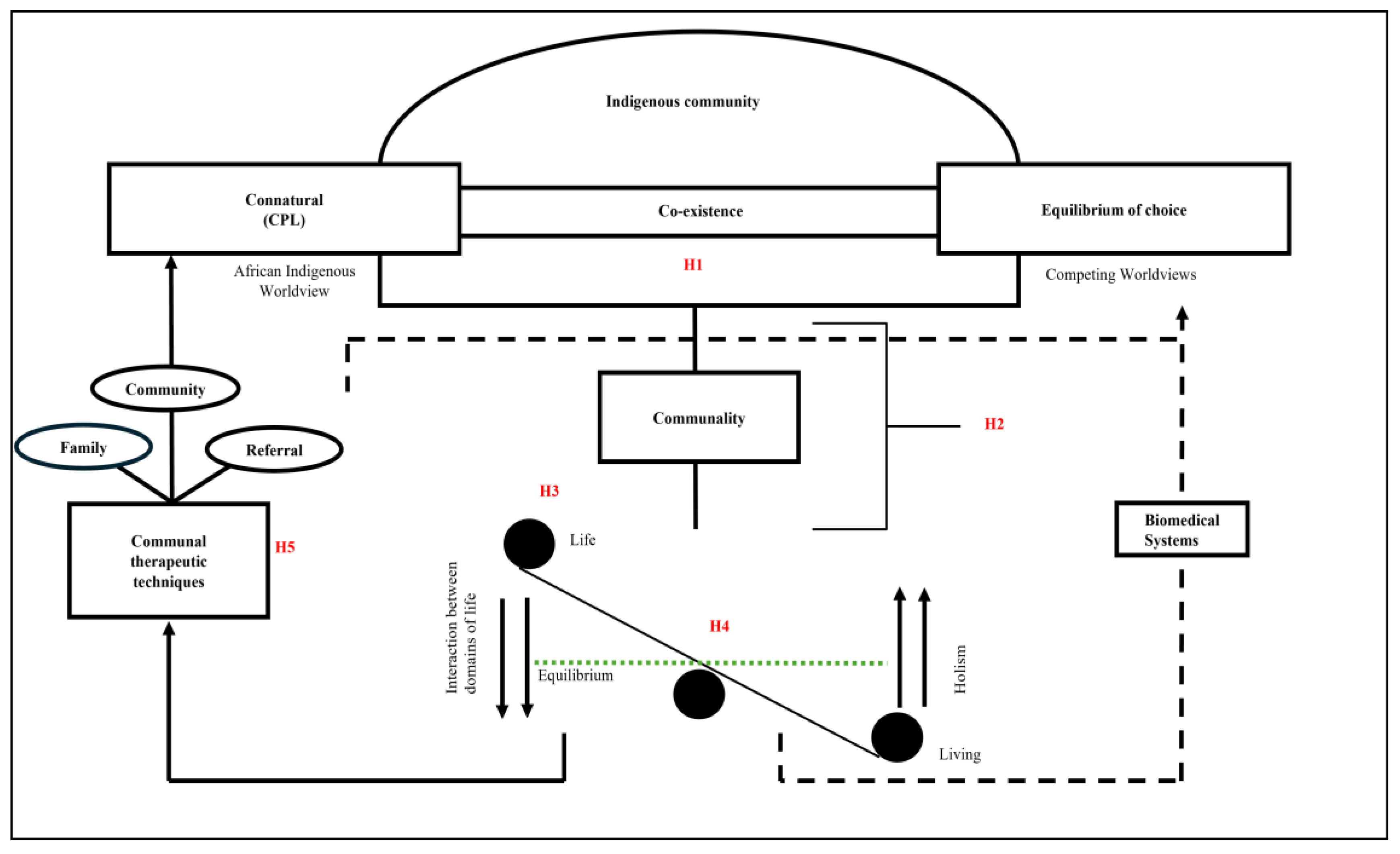

Table 1.
demographic table.
| Frequency | Total | |
| Gender | ||
| Men | 2 | 8 |
| Women | 6 | |
| Age |
8 |
|
| 26-35 | 1 | |
| 36-45 | 1 | |
| 46-55 | 4 | |
| 56-65 | 2 | |
| Highest qualification | ||
| Doctor of Philosophy (PhD) | 5 |
8 |
| Master’s degree | 1 | |
| Bachelor’s degree | 2 |
Table 2.
Summary of the results.
| Hypothesis | Items | Experts | Experts in agreement | Calculations | Interpretations | |||||||||
| 1 | 2 | 3 | 4 | 5 | 6 | 7 | 8 | I-CVI | CVR | k | Excellent | |||
|
1 |
1 | 1 | 1 | 1 | 1 | 1 | 1 | 0 | 1 | 7 | 0.88 | 0.75 | 0.875 | Excellent |
| 2 | 1 | 1 | 1 | 1 | 1 | 1 | 1 | 1 | 8 | 1 | 1 | 1 | Excellent | |
| 3 | 1 | 1 | 1 | 1 | 1 | 1 | 1 | 1 | 8 | 1 | 1 | 1 | Excellent | |
| 4 | 1 | 1 | 1 | 1 | 1 | 1 | 1 | 0 | 7 | 0.88 | 0.75 | 0.875 | Excellent | |
| 5 | 1 | 1 | 1 | 1 | 1 | 1 | 1 | 1 | 8 | 1 | 1 | 1 | Excellent | |
| 6 | 1 | 1 | 0 | 1 | 1 | 1 | 1 | 1 | 7 | 0.88 | 0.75 | 0.875 | Excellent | |
| 7 | 1 | 1 | 1 | 1 | 1 | 1 | 1 | 1 | 8 | 1 | 1 | 1 | Excellent | |
| 8 | 1 | 1 | 1 | 1 | 1 | 1 | 1 | 1 | 8 | 1 | 1 | 1 | Excellent | |
| 9 | 1 | 1 | 1 | 1 | 1 | 1 | 1 | 1 | 8 | 1 | 1 | 1 | Excellent | |
| 10 | 1 | 1 | 1 | 1 | 1 | 1 | 1 | 1 | 8 | 1 | 1 | 1 | Excellent | |
| 11 | 1 | 1 | 1 | 1 | 1 | 1 | 1 | 1 | 8 | 1 | 1 | 1 | Excellent | |
| 12 | 1 | 1 | 1 | 1 | 1 | 1 | 1 | 1 | 8 | 1 | 1 | 1 | Excellent | |
| 13 | 1 | 1 | 1 | 1 | 1 | 1 | 1 | 1 | 8 | 1 | 1 | 1 | Excellent | |
| 14 | 1 | 1 | 1 | 1 | 1 | 1 | 0 | 1 | 7 | 0.88 | 0.75 | 0.875 | Excellent | |
| 15 | 1 | 1 | 1 | 1 | 1 | 1 | 1 | 1 | 8 | 1 | 1 | 1 | Excellent | |
| 16 | 1 | 1 | 1 | 0 | 1 | 1 | 1 | 1 | 7 | 0.88 | 0.75 | 0.875 | Excellent | |
|
2 |
17 | 1 | 1 | 1 | 0 | 1 | 1 | 1 | 1 | 7 | 0.88 | 0.75 | 0.875 | Excellent |
| 18 | 1 | 1 | 1 | 1 | 1 | 1 | 1 | 0 | 7 | 0.88 | 0.75 | 0.875 | Excellent | |
| 19 | 1 | 1 | 1 | 1 | 1 | 1 | 1 | 1 | 8 | 1 | 1 | 1 | Excellent | |
| 20 | 1 | 1 | 1 | 1 | 1 | 1 | 1 | 1 | 8 | 1 | 1 | 1 | Excellent | |
| 21 | 1 | 1 | 1 | 1 | 1 | 1 | 1 | 1 | 8 | 1 | 1 | 1 | Excellent | |
| 22 | 1 | 1 | 1 | 1 | 1 | 1 | 1 | 1 | 8 | 1 | 1 | 1 | Excellent | |
| 23 | 1 | 1 | 1 | 1 | 1 | 1 | 0 | 1 | 7 | 0.88 | 0.75 | 0.875 | Excellent | |
| 3 | 24 | 1 | 1 | 0 | 1 | 1 | 1 | 1 | 1 | 7 | 0.88 | 0.75 | 0.875 | Excellent |
| 25 | 1 | 1 | 1 | 1 | 1 | 1 | 1 | 1 | 8 | 1 | 1 | 1 | Excellent | |
|
4 |
26 | 1 | 1 | 1 | 1 | 1 | 1 | 1 | 1 | 8 | 1 | 1 | 1 | Excellent |
| 27 | 1 | 1 | 1 | 1 | 1 | 1 | 1 | 1 | 8 | 1 | 1 | 1 | Excellent | |
| 28 | 1 | 1 | 1 | 1 | 1 | 1 | 1 | 1 | 8 | 1 | 1 | 1 | Excellent | |
| 29 | 1 | 1 | 1 | 1 | 1 | 1 | 1 | 1 | 8 | 1 | 1 | 1 | Excellent | |
| 30 | 1 | 1 | 1 | 1 | 1 | 1 | 1 | 1 | 8 | 1 | 1 | 1 | Excellent | |
| 31 | 1 | 1 | 1 | 0 | 1 | 1 | 1 | 1 | 7 | 0.88 | 0.75 | 0.875 | Excellent | |
| 32 | 1 | 1 | 1 | 1 | 1 | 1 | 1 | 1 | 8 | 1 | 1 | 1 | Excellent | |
| 33 | 1 | 1 | 1 | 1 | 0 | 1 | 1 | 1 | 7 | 0.88 | 0.75 | 0.875 | Excellent | |
| 34 | 1 | 1 | 1 | 0 | 1 | 1 | 1 | 1 | 7 | 0.88 | 0.75 | 0.875 | Excellent | |
| 35 | 1 | 1 | 1 | 1 | 1 | 1 | 1 | 1 | 8 | 1 | 1 | 1 | Excellent | |
| 36 | 1 | 1 | 1 | 1 | 1 | 1 | 1 | 1 | 8 | 1 | 1 | 1 | Excellent | |
| 37 | 1 | 1 | 0 | 1 | 1 | 1 | 1 | 1 | 7 | 0.88 | 0.75 | 0.875 | Excellent | |
| 38 | 1 | 1 | 1 | 1 | 1 | 1 | 1 | 1 | 8 | 1 | 1 | 1 | Excellent | |
| 5 | 39 | 1 | 1 | 1 | 1 | 1 | 1 | 0 | 1 | 7 | 0.88 | 0.75 | 0.875 | Excellent |
| 40 | 1 | 1 | 1 | 1 | 1 | 1 | 0 | 1 | 7 | 0.88 | 0.75 | 0.875 | Excellent | |
Disclaimer/Publisher’s Note: The statements, opinions and data contained in all publications are solely those of the individual author(s) and contributor(s) and not of MDPI and/or the editor(s). MDPI and/or the editor(s) disclaim responsibility for any injury to people or property resulting from any ideas, methods, instructions or products referred to in the content. |
© 2026 by the authors. Licensee MDPI, Basel, Switzerland. This article is an open access article distributed under the terms and conditions of the Creative Commons Attribution (CC BY) license (http://creativecommons.org/licenses/by/4.0/).
Copyright: This open access article is published under a Creative Commons CC BY 4.0 license, which permit the free download, distribution, and reuse, provided that the author and preprint are cited in any reuse.


