

Submitted:
15 July 2026
Posted:
17 July 2026
You are already at the latest version
Abstract
Postoperative atrial fibrillation (POAF) after cardiac surgery is often managed as a transient inpatient arrhythmia, yet recurrent or silent atrial fibrillation (AF) after discharge may expose a vulnerable atrial substrate and change decisions about stroke prevention, anticoagulation and bleeding risk. This issue is particularly relevant in cancer survivors, in whom active malignancy, previous cardiotoxic therapy, frailty, anaemia, thrombocytopenia, hypercoagulability and planned oncological procedures can make standard POAF follow-up insufficient. This narrative review synthesises literature from POAF, cardio-oncology, wearable electrocardiographic monitoring and health informatics to examine whether digital rhythm surveillance could support post-discharge risk reassessment in this population. Direct evidence linking cancer, cardiac surgery, POAF and digital monitoring remains limited; therefore, the proposed “Digital Cancer-POAF Survivorship Pathway” is presented as a conceptual, hypothesis-generating framework for structured follow-up rather than as a validated clinical algorithm. Digital monitoring could improve detection of missed post-discharge AF, but only if results lead to clear clinical decisions, predefined AF-burden thresholds and prospective testing against clinical outcomes.
Keywords:
postoperative atrial fibrillation
; cancer survivors
; wearable ECG
; remote monitoring
; cardio-oncology
; digital health
; rhythm surveillance
; post-discharge care
; anticoagulation
1. Introduction
Postoperative atrial fibrillation (POAF) remains an important rhythm complication after cardiac surgery. It usually appears in the early stages of recovery and is managed with rate or rhythm control, correction of reversible triggers, and anticoagulation if required. This inpatient approach is often appropriate because many episodes resolve before discharge, while early postoperative care prioritises haemodynamic stability and reversible precipitants. However, the prevailing view of POAF as just a transient reaction to surgical stress is increasingly challenged as it has been associated with an increased risk of recurrent atrial fibrillation (AF), stroke, readmission and mortality. A normal sinus rhythm upon discharge does not guarantee absence of future risk.
POAF may reflect underlying atrial vulnerability. Inflammation from surgical procedures and electrolyte irregularities can contribute to AF after an operation, but these influences are shaped by the individual circumstances of each patient. Key contributors include age, left atrial enlargement, and surgical complexity, while the impact of current or prior malignancies is often overlooked in cardiac surgical data.
Cancer survivorship has become an important part of modern cardiovascular care. Patients with previous or active cancer increasingly live long enough to develop degenerative valvular disease, coronary artery disease, or other circumstances that call for cardiac surgery. Cancer history is often treated as a binary variable. This is clinically limited, as a patient undergoing adjuvant chemotherapy is not equivalent to one who has been cured of cancer a decade prior. Similarly, a patient who has received thoracic radiotherapy, been exposed to anthracyclines, experienced immune checkpoint inhibitor-induced myocarditis, developed thrombocytopenia, or presents with active metastatic disease has a different risk profile compared to a patient with a low-risk malignancy and no ongoing treatment. Therefore, the label “cancer survivor” can obscure different arrhythmic, thrombotic, and haemorrhagic risk profiles. In this review, the term “cancer survivor” is used broadly to include individuals from the time of cancer diagnosis onwards, encompassing active malignancy, ongoing treatment, remission and remote cancer history; these clinically distinct states are considered separately where relevant.
Post-discharge rhythm monitoring is more than a technical question. In cancer survivors with POAF, the key question is whether monitoring improves clinical decision-making. A brief inpatient telemetry record fails to adequately characterise the AF burden post-discharge, and a routine clinic electrocardiogram (ECG) may overlook paroxysmal or asymptomatic AF. Symptom-driven follow-up is particularly questionable in postoperative and oncology patients, as manifestations such as palpitations, fatigue, dyspnoea, and dizziness may be attributed to anaemia, deconditioning, pain, chemotherapy, infection, or anxiety. Detection is useful only if it changes management [1,2].
This narrative review proposes a practical approach to digital rhythm surveillance in oncology patients with POAF after cardiac surgery and introduces the “Digital Cancer-POAF Survivorship Pathway” as a conceptual, hypothesis-generating model for post-discharge care. Digital rhythm monitoring is not yet established as standard care in this population, and the pathway should not be interpreted as a validated treatment algorithm. The review outlines how monitoring could be assessed, implemented and governed if future studies show clinical benefit [2,3,4,5,6].
To inform this narrative review, PubMed/MEDLINE, Scopus and Google Scholar were searched up to June 2026 using combinations of terms related to POAF, cancer, cardio-oncology, wearable electrocardiographic monitoring, remote rhythm surveillance and digital health. Reference lists of relevant guidelines, systematic reviews and primary studies were also examined. Literature was selected narratively according to its clinical relevance, and no formal systematic-review protocol or quantitative screening process was undertaken.
2. POAF After Cardiac Surgery: From Inpatient Arrhythmia to Post-Discharge Risk Signal
After cardiac surgery, POAF occurs in roughly 25-30% of patients, influenced by factors including age, surgical complexity and perioperative inflammation (Figure 1). It usually appears 2-4 days after surgery and commonly returns to sinus rhythm before the patient is discharged [7,8,9]. Historically, POAF was viewed as a self-limiting arrhythmia occurring during the recovery phase. Observational studies and meta-analyses link POAF with adverse clinical outcomes. For example, one analysis reported that POAF was associated with an almost three-fold higher risk of in-hospital stroke compared with patients who did not experience POAF [7]. Over the longer term, POAF is associated with increased cumulative mortality and stroke rates lasting for months to years [8,9]. These associations suggest that POAF frequently reveals an underlying persistent atrial cardiopathy. Prospective follow-up studies of patients with POAF indicate that roughly 10-20% have documented recurrent AF within the early post-discharge period, with higher rates in studies using more intensive monitoring [10,11,12]. In many cases, the initial episode of AF post-surgery occurred only after the patient had been discharged, meaning it was missed during inpatient monitoring [12]. Sinus rhythm at discharge should therefore not be taken as proof that risk has resolved and POAF may serve as a marker of post-discharge risk.
3. Cancer Survivorship and Cardiovascular Vulnerability
Cancer survivors are a growing and clinically heterogeneous group, and the phrase “history of cancer” masks wide variation. Active malignancy versus remote remission differs markedly in physiology. Patients receiving chemotherapy may have anaemia, thrombocytopenia and systemic inflammation, whereas a patient cured a decade ago may have none of these issues [13,14].
Several mechanisms increase cardiovascular vulnerability in cancer survivors. Important cancer therapies are cardiotoxic: anthracyclines and trastuzumab may impair myocardial function, thoracic radiotherapy can cause cardiac fibrosis, and agents such as ibrutinib and other tyrosine kinase inhibitors have well-documented arrhythmogenic effects [13,14]. Cancer is also associated with a pro-thrombotic, inflammatory state (“Trousseau syndrome”), and chronic inflammation may promote AF development [14,15]. Patients often have frailty, polypharmacy (including anticoagulants, antiemetics, steroids), and planned invasive procedures (e.g., tumour resection) that complicate AF management. A patient receiving chemotherapy with borderline platelet counts may face substantial bleeding risk if started on anticoagulation for recurrent AF. Conversely, active cancer may contribute to thrombotic risk independently of AF. A binary cancer variable in risk models is too crude for clinical decision-making as a patient actively receiving chemotherapy is not equivalent to a patient with a remote, stage I skin cancer. Cancer-specific factors (tumour type, stage, treatment exposures, current laboratory values and frailty scores) should inform POAF follow-up strategies. A breast cancer survivor on endocrine therapy may tolerate anticoagulation differently than a lymphoma patient on high-dose steroids. These considerations support a more granular approach to POAF follow-up in cancer survivors.
4. Current Evidence Linking Cancer and POAF
Direct data on cancer and POAF after cardiac surgery remain sparse [2,3]. One recent prospective study of 400 elective cardiac surgery patients found cancer to be an independent predictor of POAF: cancer was present in 15% of patients who developed POAF compared with 4% of those who did not, yielding an adjusted OR of 3.85 [16]. However, that result came from a relatively small number of cancer patients, so the finding should be interpreted cautiously. A recent review reports an overall higher incidence of AF among patients with cancer than among those without cancer [13]. Beyond cardiac surgery, studies of AF risk in cancer patients show a bidirectional link: for example, subjects with lymphoma or other cancers have higher new-onset AF rates than age-matched peers, and AF has also been associated with subsequent cancer diagnosis in some cohorts [13]. Large-scale AF registries often do not detail cancer therapies or timing. Contemporary AF guidelines recognise the need to balance thromboembolic and bleeding risks, but provide little specific guidance for POAF management in cancer survivors [17,18,19]. No dedicated trial or registry has specifically evaluated digital monitoring for POAF in cancer survivors. For example, meta-analyses show that AF patients with cancer face similar stroke risk but markedly higher bleeding risk and mortality than non-cancer AF patients [14,15]. This suggests cancer status should influence anticoagulation decisions, but standard practice rarely captures this complexity. Direct data linking cancer to POAF after cardiac surgery remain limited, and most arguments for structured post-discharge surveillance are extrapolated from broader AF, cardio-oncology and digital monitoring literature [1,2,3,4,5,6,13,14,15,17,18,19].
5. The Post-Discharge Detection Gap
Many AF episodes are likely to be missed in standard follow-up visits. After telemetry is stopped, a rhythm check is performed when the patient complains of symptoms or when additional monitoring is arranged at clinician discretion or when AF is captured incidentally on ECG [20,21].
This is particularly relevant in cancer survivors as their care is often spread across cardiac surgery, cardiology, oncology and primary care. The patient may report experiencing palpitations during their oncology visit; however, they may not link fatigue, dizziness or breathlessness to rhythm disturbance. These symptoms can often be attributed to factors including anaemia, effects from treatments, infections, pain, lack of restful sleep and delayed recovery from surgical procedures [2,13,22]. A single ECG in an oncology clinic provides only a rhythm snapshot and intermittent AF may therefore be missed by clinic-based ECG [20].
Digital monitoring can detect AF missed by routine clinic-based follow-up. Digital monitoring technology includes patch monitors, smartwatch-based and handheld ECGs and photoplethysmography (PPG) alerting systems. These tools extend rhythm assessment beyond discharge. The harder question is what AF duration, frequency or burden should trigger a change in treatment [20,21,23,24,25].
This decision is harder in cancer survivors. Brief monitor-detected AF should not automatically be managed like sustained or recurrent AF. Platelet count, systemic therapy, bleeding risk and planned procedures should inform ECG confirmation, clinical review and escalation. Without these elements, expanded monitoring may produce more data without better decisions [14,26,27].
6. Digital Rhythm Surveillance Technologies
Several technologies can extend rhythm surveillance after discharge. Each differs in diagnostic accuracy, patient burden, workflow impact and interpretability (Figure 2). Traditional 24- to 48-hour Holter monitors remain widely utilised and non-invasive, and can identify AF episodes that occur within the recording period. Their short recording window makes them insufficient for detecting intermittent AF that may appear days or weeks following surgery. Although Holter monitors may be useful for immediate postoperative assessment, they do not address much of the post-discharge detection gap [20,21,23,24].
Patch ECG monitors allow longer continuous rhythm assessment, typically spanning 7 to 14 days, and avoid wired leads and may be better tolerated than traditional Holter monitors. These devices detect more early AF recurrence than shorter monitoring methods [12,20,21]. Limitations include cost, potential for skin irritation, variability in patient adherence, and the inherent limitation of time-bound surveillance. Given that a significant proportion of POAF recurrences appear during the early post-discharge phase, patch monitors represent a pragmatic choice for initial rhythm surveillance [20,21].
Implantable loop recorders (ILRs), such as the Reveal LINQ, provide continuous rhythm monitoring over extensive periods, ranging from months to years, and are most likely to identify infrequent or delayed AF episodes. Their utility is well-documented in specific clinical contexts, such as cryptogenic stroke, yet their application following postoperative AF remains largely investigational. Although ILRs reduce the risk of undetected AF episodes, they require a minimally invasive procedure, involve initial device and implantation costs, and may identify transient episodes of uncertain clinical significance. ILRs are best reserved for high-risk patients or research protocols [10,28].
Handheld or app-based ECG devices allow patient-activated single-lead ECG recordings. These devices are low-cost, impose a low burden on users, and are useful for the confirmation of suspected arrhythmias during episodes of palpitations or when alerts are generated by other monitoring devices. The primary limitation of these devices is their reliance on patient initiation for recordings. Asymptomatic AF may be missed unless recordings are conducted with sufficient frequency or follow a predetermined schedule. They are best regarded as adjunctive confirmatory tools [1,29].
Smartwatches combine ECG recording capabilities with continuous PPG-based pulse monitoring. Devices such as the Apple Watch and Fitbit can identify irregular rhythms and enable single-lead ECG recording. Studies suggest that smartwatch-based screening can achieve substantial sensitivity and specificity for recognising AF in outpatient settings. They are accessible, familiar to many patients and can capture rhythm outside clinic. Nonetheless, data collection is interrupted when the device is not worn, and false positives may arise from motion artefact, ectopy, or rhythm problems unrelated to AF. PPG alerts still need ECG confirmation before smartwatch-detected AF is acted on clinically. From a workflow perspective, smartwatch data may remain restricted to commercial cloud services or require manual sharing by patients, leading to limited integration into electronic health records (EHRs) [23,24,25,30,31].
PPG-based applications and devices can identify pulse irregularities via smartphone cameras or wearable sensors. They offer a low-burden approach to passive rhythm screening, while lacking diagnostic rhythm strips. Their vulnerability to noise and artefact requires formal ECG confirmation following positive alerts. PPG-only detection may assist in identifying patients needing further evaluation but should not be considered a standalone diagnostic tool for AF [23,27,30,31].
Technical performance is only one barrier. High-sensitivity tools may generate misleading positives that could cause overdiagnosis. Premature atrial contractions, motion artefact, or other non-AF rhythms can imitate AF on PPG or single-lead ECG recordings. Smartphone camera applications show high pooled sensitivity and specificity, but their positive predictive value can be modest, meaning false-positive results may outnumber true positives in low-prevalence screening populations [27]. False-positive alerts could cause unnecessary anxiety, additional clinic visits, unnecessary ECGs, or extra blood tests in post-surgical patients. Conversely, the detection of brief AF episodes raises concerns regarding clinical significance. Treating every brief episode with anticoagulants could expose patients to unnecessary bleeding risk, particularly in cases involving cancer-related low platelet counts. Digital surveillance requires explicit action criteria, including minimum episode duration or cumulative AF burden. These thresholds remain uncertain and should be prioritised for research.
Data overload is another major barrier. Continuous rhythm monitoring can produce large numbers of ECG strips or rhythm alerts per patient each week. In already stretched clinical services, wearable-derived data may create alerts that delay review. Automated algorithms may help filter events, but they require validation in the specific population being monitored. If every possible AF alert requires manual review by a clinician, the workload can quickly become impractical without dedicated staffing or AI-supported triage. This determines whether monitoring becomes usable clinical information or unmanageable data. Expert consensus and contemporary AF guidance have noted that such devices can generate a large volume of data, with limited guidance on how such information should be managed in routine practice [1,19,31,32].
Even when AF is detected accurately, the clinical action threshold may remain ambiguous. Contemporary AF guidelines recommend structured thromboembolic-risk assessment to inform anticoagulation, although the preferred scoring approach differs between guideline frameworks and its applicability to POAF remains uncertain [17,18,19]. This uncertainty is further amplified in cancer survivors by fluctuating platelet counts, planned procedures, active malignancy and treatment-related bleeding risk. A smartwatch alert at midnight, for example, is only useful if there is a predefined pathway for review, confirmation and escalation. Without such a pathway, the alert may either be ignored or acted on disproportionately, both of which create clinical and medico-legal risk.
Workflow determines whether monitoring is usable. A pathway should identify the individuals responsible for data analysis, the frequency of these evaluations, the findings that require escalation, and the clinician responsible for treatment decisions. Possible frameworks include nurse-led rhythm surveillance clinics, triage systems led by cardiac clinicians, cardio-oncology review pathways, or automated notifications sent to electrophysiology teams. Each framework has unique staffing and financial considerations. Remote device-clinic models are established in several healthcare systems, but a corresponding outpatient structure for post-POAF surveillance remains insufficiently developed. A dedicated POAF or cardio-oncology rhythm clinic is appealing, but remains untested [32,33,34].
EHR integration also remains difficult. Most consumer device data are not easily integrated into hospital EHR systems. Without interoperability standards, including Fast Healthcare Interoperability Resources (FHIR)-based approaches for personal health devices, rhythm data may remain confined to patient-facing apps or commercial cloud platforms. This fragmentation limits longitudinal care, audit, governance and clinical accountability. A cardiologist may not see the data, an oncologist may be unaware of recurrent AF, and the discharge summary may not reflect the post-discharge rhythm burden. General Data Protection Regulation (GDPR) and Health Insurance Portability and Accountability Act (HIPAA) considerations also become relevant when patient-generated data are transmitted, stored or reviewed through third-party platforms [4,32,33].
Privacy and security must be built into the pathway from the start. Continuous or repeated rhythm monitoring can generate sensitive health data, including incidental findings such as bradycardia, pauses or non-AF arrhythmias. Patients should be told who can access their data, how often the data will be reviewed, what will happen if an abnormality is detected, and what the limits of monitoring are. Hospitals and device providers also need clear arrangements around data storage, encryption, consent, audit processes and responsibility for missed or delayed alerts [1,32].
Monitoring may support patient counselling after cardiac surgery when results are explained clearly. However, unexplained alerts may encourage repeated device-checking or concern about benign rhythm irregularities. This is especially relevant in cancer survivors, as they may already be dealing with uncertainty about relapse, treatment effects, and future medical plans. Clinicians should clearly explain that digital monitoring aims to identify clinically significant AF that could require changes in management, while avoiding unnecessary alarm about every rhythm irregularity [32].
Equity also matters, because older individuals, socioeconomically disadvantaged patients, people with limited health literacy, and those with poor internet access or low technological confidence may be less able to use smartwatches, mobile applications, or telehealth platforms effectively. A monitoring framework that relies exclusively on privately owned consumer technology risks favouring the most digitally proficient patients while marginalising those who may be at higher clinical risk. Realistic pathways include offering devices, facilitating training sessions, using mailed patch monitors, or initiating community-based ECG checks. Equity should be built into the pathway from the start [35,36,37,38].
Cost-effectiveness is uncertain because digital monitoring involves device costs, staff time, data infrastructure, confirmatory ECGs, clinical appointments and possible downstream investigations. Modelling in general populations aged 65 years or older suggests that wearable AF screening may be cost-effective, with estimates around $57,900 per quality-adjusted life-year [39]. However, the balance may differ in cancer survivors after POAF. Higher baseline risk could make surveillance more valuable, but higher bleeding risk, competing mortality and treatment complexity could reduce net benefit. Formal economic analyses should therefore include device costs, clinical workload, anticoagulation decisions, bleeding complications, stroke prevention, readmissions and oncology-treatment disruption. Without these data, widespread implementation may be difficult to justify to healthcare systems or payers.
These challenges mean that digital rhythm surveillance should be embedded in defined clinical pathways and not left as device-led monitoring [32].
7. Clinical Decisions Supported by Digital Monitoring
Digital monitoring has value only when it informs management. The clearest example is anticoagulation. Patients with elevated thromboembolic risk, assessed according to the applicable guideline framework, may be considered for prolonged anticoagulation if persistent or recurrent AF is detected after discharge, whereas those with lower risk and no recurrence may be candidates for earlier treatment discontinuation. In cancer survivors, this decision-making process is complex. However, the absence of AF during a limited monitoring period should not, in isolation, justify anticoagulation discontinuation. Decisions should remain individualised according to the overall thromboembolic and bleeding-risk profile, monitoring duration and certainty of rhythm assessment. Factors such as thrombocytopenia, bleeding history, recent surgeries, and drug interactions can complicate the assessment of thromboembolic versus haemorrhagic risks. A digital system could enable ongoing assessment: a patient on anticoagulation for inpatient POAF with no recurrence and chemotherapy-induced thrombocytopenia may need different management than one with recurrent AF despite bleeding risks.
Rhythm data may influence the management of procedural bleeding risks. In cases where AF burden is low, clinicians may be more confident in interrupting anticoagulation for procedures such as biopsies or operations, or during periods of systemic therapy-related thrombocytopenia. In contrast, chronic or repeated AF might decrease the threshold for maintaining anticoagulation, modifying procedural timing, or involving specialists. Monitoring also helps clinicians judge acceptable risk during oncological and surgical recovery.
Digital monitoring can also inform rhythm control decisions. Recurrent, symptomatic, or persistent AF after discharge may require referral for evaluation by a cardiologist or electrophysiologist, consideration of cardioversion, initiation of antiarrhythmic pharmacotherapy or, in specific cases, catheter ablation. Conversely, transient, self-resolving, and asymptomatic episodes may support a more conservative management strategy. Rhythm surveillance can help separate clinically meaningful recurrent AF from mild arrhythmias that may not require intensive intervention [17,18,19,25].
Optimisation of rate control represents another practical area for decision-making. Recognising episodes of rapid AF after discharge could require changes in beta-blockers, calcium channel blockers, or digoxin, based on cardiac function, blood pressure readings, and comorbidities. This is particularly important following heart surgery, where uncontrolled tachyarrhythmia could worsen symptoms, delay recovery, and add to the risk of heart failure or readmission. In this context, monitoring may allow earlier outpatient medication adjustments instead of waiting until clinical deterioration requires emergency review [17,18,25].
Early outpatient detection may also support efforts to prevent readmission. When remote monitoring identifies a patient with ongoing AF, they may be contacted, evaluated, and treated before clear decompensation develops. This intervention could include medication changes, confirmatory ECGs, reassessment of anticoagulation, or planned cardioversion. However, monitoring could also increase healthcare use if each alert leads to emergency review. For this reason, surveillance must incorporate predefined escalation pathways that differentiate clinically meaningful events from artefacts or benign arrhythmias [25,28,34].
Coordination with oncology is central in this population. Rhythm findings may affect the timing of chemotherapy, radiotherapy or surgery, especially when anticoagulation is being considered. Frequent AF may prompt closer coordination around treatment timing, drug interactions and anticoagulation interruption. Conversely, reassuring rhythm data may allow planned cancer treatment to proceed without unnecessary cardiac delay. Rhythm data may influence the wider cancer-care plan [20,21,23].
8. A Proposed Digital Cancer-POAF Survivorship Pathway
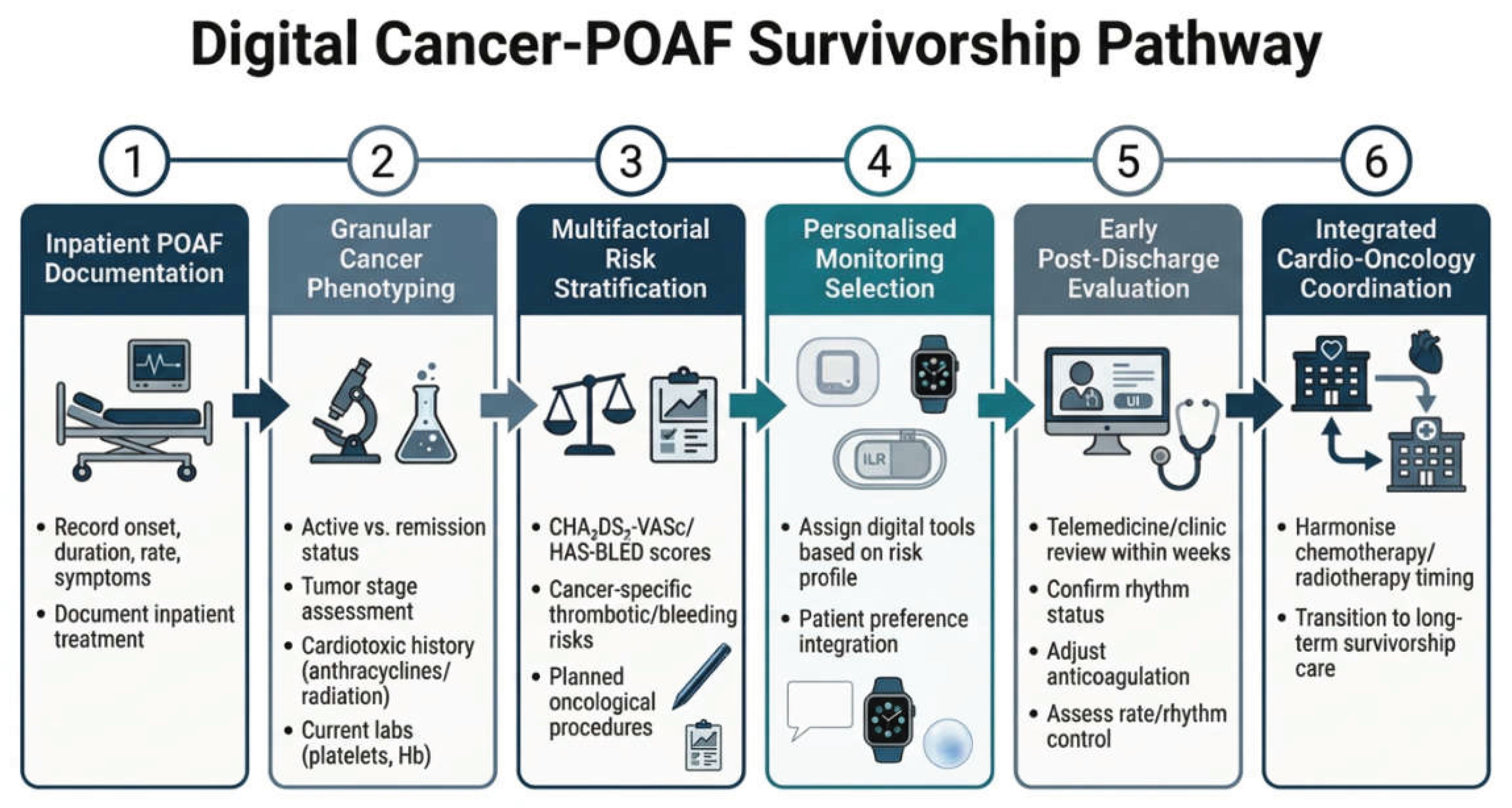
The “Digital Cancer-POAF Survivorship Pathway” is proposed as a conceptual, hypothesis-generating framework for post-discharge rhythm surveillance among cancer survivors who experience POAF after cardiac surgery (Figure 3). It integrates rhythm monitoring with clinical reassessment, anticoagulation review and cardio-oncology coordination after discharge [2,32]. It is intended to organise current evidence gaps and define testable components for future prospective studies, not to mandate a uniform monitoring strategy for all patients.
The pathway begins during the index cardiac surgical admission. Any occurrence of POAF should ideally be documented clearly before discharge, including timing of onset, duration, ventricular rate, symptoms, haemodynamic impact, and treatment given. This information should appear clearly in the discharge summary, and not be confined to inpatient records, as it identifies a patient who may require structured rhythm follow-up after hospitalisation [2,32].
Next, clinicians should assess the cancer phenotype. Cancer history should not be categorised only as present or absent. Clinicians must differentiate between active cancer, recent therapeutic interventions, remission status, and remote cancer history. Factors such as tumour type, stage, treatment exposure, thoracic radiotherapy, platelet count, haemoglobin levels, coagulation profile, frailty, and anticipated oncological procedures should all be evaluated [2,13,22,40].
Pre-discharge risk stratification could combine traditional rhythm and stroke-risk evaluations with cancer-specific considerations regarding bleeding and thrombotic risks. Standardised thromboembolic- and bleeding-risk assessments may serve as preliminary frameworks; however, conventional tools do not adequately incorporate active malignancy, thrombocytopenia, cancer-associated hypercoagulability or planned procedures. A patient planned for biopsy or chemotherapy shortly following discharge presents a distinct anticoagulation challenge compared to a patient in stable remission with no planned interventions [19,26,41,42].
The selection of the monitoring modality should be based on this comprehensive assessment of rhythm risk, cancer status, bleeding risk, life expectancy and functional status, patient preferences, and available local resources. A patient with active cancer, recurrent episodes of POAF, elevated thromboembolic risk, and acceptable functional status could be considered for extended patch monitoring or, in specific research contexts, an ILR. Conversely, a patient with a history of cancer and moderate risk may be better managed with a 14-day patch monitor or structured surveillance via wearable technology. In contrast, a patient with a remote history of low-risk cancer, transient self-terminating POAF, and minimal thromboembolic risk may benefit more from symptom education and selective ECG follow-up instead of intensive digital monitoring [29,43].
Early post-discharge rhythm evaluation may be appropriate. Rhythm data should be reviewed within the first few weeks after discharge, either through in-person consultations or via telemedicine platforms. Any suspected AF must be confirmed with an appropriate ECG, and the findings should inform reassessment of anticoagulation strategies, bleeding risk, rate control, the need for rhythm control, and scheduling of oncology treatments. Where remote monitoring technologies are employed, the responsibility for reviewing alerts must be clearly assigned [32,33].
The final stage involves coordination with oncology services and longer-term survivorship follow-up. The results of rhythm assessments may influence the timing of cancer treatment, interruptions in anticoagulation, the need for invasive procedures, or referrals to cardio-oncology services. Patients who show recurrent AF, or continued cardiovascular vulnerability related to cancer may require ongoing rhythm surveillance extending beyond the immediate postoperative timeframe. Accordingly, the pathway treats POAF as a post-discharge risk signal and should be prospectively tested as a coordinated follow-up model across cardiology, cardiac surgery, oncology and primary care [2,19].
9. Future Directions
Because this pathway is hypothesis-generating, future research should test it prospectively, moving beyond AF detection to assess whether monitoring-guided care reduces stroke, bleeding, readmission, heart failure, treatment disruption and poor patient experience after cardiac surgery. Multicentre prospective studies should investigate whether structured post-discharge rhythm monitoring reduces adverse events such as stroke and heart failure, while also evaluating patient anxiety and healthcare utilisation. This is crucial for cancer survivors, as thrombocytopenia and competing mortality risks amplify the consequences of both under- and over-treatment [5,6,39].
Future investigations must clarify patient selection criteria, monitoring duration, and appropriate technologies. A uniform monitoring strategy for patients with POAF is likely to be inefficient. Research should explore risk-stratified models that differentiate between various cancer types and treatment histories to identify optimal monitoring strategies. Such models would help define the appropriate level of surveillance for different patients and clarify the clinical significance of brief versus sustained AF episodes [29,36].
Effective digital surveillance requires rhythm data to be incorporated, interpreted and acted on within a secure clinical pathway. Future implementation studies should evaluate nurse-led rhythm clinics and integrated EHR systems as possible workflow models. These studies must evaluate AF detection rates, clinician workload and documentation quality. Without robust operational evidence, digital rhythm monitoring may become fragmented instead of a valuable extension of care [31,32,33,34,44].
Future studies should assess whether the “Digital Cancer-POAF Survivorship Pathway” improves anticoagulation decisions and cancer-treatment planning. Until such evidence exists, digital surveillance should be treated as promising but unvalidated; its value will depend less on the device itself than on whether results are reviewed, confirmed and acted on safely [2,22,32].
10. Conclusions
POAF in cancer survivors after cardiac surgery should not be dismissed as a transient inpatient arrhythmia. While digital rhythm monitoring is not yet standard practice in this population, it offers a plausible way to address the post-discharge detection gap and support ongoing reassessment of anticoagulation strategies, bleeding risk, rhythm management, and oncological treatment planning. The proposed “Digital Cancer-POAF Survivorship Pathway” should be viewed as a conceptual framework that places monitoring within survivorship care, rather than as a validated clinical protocol. Future studies should define AF-burden thresholds, test workflow models, address data governance and equity, and determine whether this hypothesis-generating framework improves clinically meaningful endpoints rather than simply increasing rhythm-data capture [2,15,31].
Author Contributions
Conceptualization, S.K., G.P.G. and F.T.; methodology, S.K., A.G. and A.X.; validation, A.G., A.X. and M.N.; investigation, S.K., P.G., A.K. and M.N.; resources, P.G. and A.X.; writing—original draft preparation, S.K.; writing—review and editing, G.P.G., P.G., A.K., A.X., M.N., A.G. and F.T.; visualization, S.K. and M.N.; supervision, G.P.G. and F.T.; project administration, G.P.G. and S.K. All authors have read and agreed to the published version of the manuscript.
Funding
This research received no external funding.
Institutional Review Board Statement
Not applicable.
Informed Consent Statement
Not applicable.
Data Availability Statement
No new data were created or analysed in this study. Data sharing is not applicable to this article.
Acknowledgments
During the preparation of this manuscript, the authors used OpenAI’s ChatGPT Images 2.0 for the purposes of figure drafting. The authors have reviewed and edited the output and take full responsibility for the content of this publication.
Conflicts of Interest
The authors declare no conflicts of interest.
Abbreviations
The following abbreviations are used in this manuscript:
| AF | Atrial fibrillation |
| AI | Artificial intelligence |
| CHA₂DS₂-VASc | Congestive heart failure, hypertension, age ≥75 years (2 points), diabetes mellitus, stroke/transient ischaemic attack/systemic embolism (2 points), vascular disease, age 65–74 years, and sex category |
| ECG | Electrocardiogram |
| EHR | Electronic health record |
| FHIR | Fast Healthcare Interoperability Resources |
| GDPR | General Data Protection Regulation |
| HAS-BLED | Hypertension, Abnormal renal/liver function, Stroke, Bleeding, Labile INR, Elderly, Drugs/alcohol — bleeding-risk score |
| HIPAA | Health Insurance Portability and Accountability Act |
| ILR | Implantable loop recorder |
| OR | Odds ratio |
| POAF | Postoperative atrial fibrillation |
| PPG | Photoplethysmography |
References
- Varma, N.; Cygankiewicz, I.; Turakhia, M.P.; Heidbuchel, H.; Hu, Y.; Chen, L.Y.; Couderc, J.P.; Cronin, E.M.; Estep, J.D.; Grieten, L.; Lane, D.A.; Mehra, R.; Page, A.; Passman, R.; Piccini, J.P.; Piotrowicz, E.; Piotrowicz, R.; Platonov, P.G.; Ribeiro, A.L.; Rich, R.E.; Russo, A.M.; Slotwiner, D.; Steinberg, J.S.; Svennberg, E. 2021 ISHNE/HRS/EHRA/APHRS Collaborative Statement on mHealth in Arrhythmia Management: Digital Medical Tools for Heart Rhythm Professionals. Cardiovasc. Digit. Health J. 2021, 2, 1–54. [Google Scholar] [CrossRef] [PubMed]
- Georghiou, G.P.; Georghiou, P.; Georgiou, A.; Triposkiadis, F. Cardiac Surgery and Postoperative Atrial Fibrillation: The Role of Cancer. Medicina 2025, 61, 1815. [Google Scholar] [CrossRef] [PubMed]
- Kyriakou, S.; Markantonis, M.; Georghiou, P.; Triposkiadis, F.; Georgiou, A.; Lampropoulos, K.; Kyriakou, A.; Iosif, N.; Georghiou, G.P. Cancer as a Hidden Catalyst: Rethinking Postoperative Atrial Fibrillation After Cardiac Surgery. J. Clin. Med. 2026, 15, 4456. [Google Scholar] [CrossRef] [PubMed]
- Ayaz, M.; Pasha, M.F.; Alzahrani, M.Y.; Budiarto, R.; Stiawan, D. The Fast Health Interoperability Resources (FHIR) Standard: Systematic Literature Review of Implementations, Applications, Challenges and Opportunities. JMIR Med. Inform. 2021, 9, e21929. [Google Scholar] [CrossRef] [PubMed]
- Freedman, B.; Camm, J.; Calkins, H.; Healey, J.S.; Rosenqvist, M.; Wang, J.; AF-SCREEN International Collaboration. Screening for Atrial Fibrillation: A Report of the AF-SCREEN International Collaboration. Circulation 2017, 135, 1851–1867. [Google Scholar] [CrossRef] [PubMed]
- Hermans, A.N.L.; Gawalko, M.; Dohmen, L.; van der Velden, R.M.J.; Betz, K.; Verhaert, D.V.M.; Pluymaekers, N.A.H.A.; Hendriks, J.M.; Linz, D. A Systematic Review of Mobile Health Opportunities for Atrial Fibrillation Detection and Management. Eur. J. Prev. Cardiol. 2022, 29, e205–e208. [Google Scholar] [CrossRef] [PubMed]
- Pierik, R.; Zeillemaker-Hoekstra, M.J.; Scheeren, T.W.L.; Erasmus, M.E.; Luijckx, G.J.R.; Rienstra, M. Early Thromboembolic Stroke Risk of Postoperative Atrial Fibrillation Following Cardiac Surgery. J. Cardiothorac. Vasc. Anesth. 2022, 36, 807–814. [Google Scholar] [CrossRef] [PubMed]
- Feilberg Rasmussen, L.; Andreasen, J.J.; Riahi, S.; Lundbye-Christensen, S.; Johnsen, S.P.; Andersen, G.; Mortensen, J.K. Risk and Subtypes of Stroke Following New-Onset Postoperative Atrial Fibrillation in Coronary Bypass Surgery: A Population-Based Cohort Study. J. Am. Heart Assoc. 2022, 11, e027010. [Google Scholar] [CrossRef] [PubMed]
- Eikelboom, R.; Sanjanwala, R.; Le, M.L.; Yamashita, M.H.; Arora, R.C. Postoperative Atrial Fibrillation After Cardiac Surgery: A Systematic Review and Meta-Analysis. Ann. Thorac. Surg. 2021, 111, 544–554. [Google Scholar] [CrossRef] [PubMed]
- Kaur, H.; Tao, B.; Silverman, M.; Healey, J.S.; Belley-Cote, E.P.; Islam, S.; Whitlock, R.P.; Devereaux, P.J.; Conen, D.; Bidar, E.; Kawczynski, M.; Ayala-Paredes, F.; Ayala-Valani, L.M.; Sandgren, E.; El-Chami, M.F.; Jorgensen, T.H.; Thyregod, H.G.H.; Sabbag, A.; McIntyre, W.F. Recurrence of New-Onset Post-Operative Atrial Fibrillation After Cardiac Surgery Detected by Implantable Loop Recorders: A Systematic Review and Meta-Analysis. Int. J. Cardiol. 2024, 404, 131930. [Google Scholar] [CrossRef] [PubMed]
- Sabbag, A.; Berkovich, A.; Raanani, E.; Volvovitch, D.; McIntyre, W.F.; Kassif, Y.; Kogan, A.; Glikson, M.; Beinart, R. Subclinical Postoperative Atrial Fibrillation: A Randomized Trial. Front. Cardiovasc. Med. 2023, 10, 1153275. [Google Scholar] [CrossRef] [PubMed]
- Ha, A.C.T.; Verma, S.; Mazer, C.D.; Quan, A.; Yanagawa, B.; Latter, D.A.; Yau, T.M.; Jacques, F.; Brown, C.D.; Singal, R.K.; Yamashita, M.H.; Saha, T.; Teoh, K.H.; Lam, B.K.; Deyell, M.W.; Wilson, M.; Hibino, M.; Cheung, C.C.; Kosmopoulos, A.; Garg, V.; Brodutch, S.; Teoh, H.; Zuo, F.; Thorpe, K.E.; Juni, P.; Bhatt, D.L.; Verma, A. SEARCH AF CardioLink-1 Investigators. Effect of Continuous Electrocardiogram Monitoring on Detection of Undiagnosed Atrial Fibrillation After Hospitalization for Cardiac Surgery: A Randomized Clinical Trial. JAMA Netw. Open 2021, 4, e2121867. [Google Scholar] [CrossRef] [PubMed]
- Shaaban, A.; Scott, S.S.; Greenlee, A.N.; Binda, N.; Ali, N.; Webb, A.; Guo, S.; Purdy, N.; Pennza, N.; Habib, A.; Mohammad, S.J.; Smith, S.A. Atrial Fibrillation in Cancer and Anti-Cancer Therapies. J. Mol. Cell. Cardiol. 2024, 194, 118–132. [Google Scholar] [CrossRef] [PubMed]
- Balomenakis, C.; Papazoglou, A.S.; Vlachopoulou, D.; Kartas, A.; Moysidis, D.V.; Vouloagkas, I.; Tsagkaris, C.; Georgopoulos, K.; Samaras, A.; Karagiannidis, E.; Giannakoulas, G. Risk of Arterial Thromboembolism, Bleeding and Mortality in Atrial Fibrillation Patients with Comorbid Cancer: A Systematic Review and Meta-Analysis. Hell. J. Cardiol. 2023, 74, 65–73. [Google Scholar] [CrossRef] [PubMed]
- Chu, G.; Seelig, J.; Cannegieter, S.C.; Gelderblom, H.; Hovens, M.M.C.; Huisman, M.V.; van der Hulle, T.; Trines, S.A.; Vlot, A.J.; Versteeg, H.H.; Hemels, M.E.W.; Klok, F.A. Atrial Fibrillation in Cancer: Thromboembolism and Bleeding in Daily Practice. Res. Pract. Thromb. Haemost. 2023, 7, 100096. [Google Scholar] [CrossRef] [PubMed]
- Georghiou, G.P.; Xanthopoulos, A.; Kanellopoulos, G.; Georghiou, P.; Georgiou, A.; Skoularigis, J.; Giamouzis, G.; Lampropoulos, K.; Patrikios, I.; Triposkiadis, F. Cancer Is a Major Determinant of Postoperative Atrial Fibrillation After Cardiac Surgery. J. Clin. Med. 2025, 14, 2117. [Google Scholar] [CrossRef] [PubMed]
- Van Gelder, I.C.; Rienstra, M.; Bunting, K.V.; Casado-Arroyo, R.; Caso, V.; Crijns, H.J.G.M.; De Potter, T.J.R.; Dwight, J.; Guasti, L.; Hanke, T.; et al. 2024 ESC Guidelines for the Management of Atrial Fibrillation Developed in Collaboration with the European Association for Cardio-Thoracic Surgery (EACTS). Eur. Heart J. 2024, 45, 3314–3414. [Google Scholar] [CrossRef] [PubMed]
- January, C.T.; Wann, L.S.; Calkins, H.; Chen, L.Y.; Cigarroa, J.E.; Cleveland, J.C., Jr.; Ellinor, P.T.; Ezekowitz, M.D.; Field, M.E.; Furie, K.L.; Heidenreich, P.A.; Murray, K.T.; Shea, J.B.; Tracy, C.M.; Yancy, C.W. 2019 AHA/ACC/HRS Focused Update of the 2014 AHA/ACC/HRS Guideline for the Management of Patients with Atrial Fibrillation. Circulation 2019, 140, e125–e151. [Google Scholar] [CrossRef] [PubMed]
- Joglar, J.A.; Chung, M.K.; Armbruster, A.L.; Benjamin, E.J.; Chyou, J.Y.; Cronin, E.M.; Deswal, A.; Eckhardt, L.L.; Goldberger, Z.D.; Gopinathannair, R.; Gorenek, B.; Hess, P.L.; Hlatky, M.; Hogan, G.; Ibeh, C.; Indik, J.H.; Kido, K.; Kusumoto, F.; Link, M.S.; Linta, K.T.; Marcus, G.M.; McCarthy, P.M.; Patel, N.; Patton, K.K.; Perez, M.V.; Piccini, J.P.; Russo, A.M.; Sanders, P.; Streur, M.M.; Thomas, K.L.; Times, S.; Tisdale, J.E.; Valente, A.M.; Van Wagoner, D.R. 2023 ACC/AHA/ACCP/HRS Guideline for the Diagnosis and Management of Atrial Fibrillation. Circulation 2024, 149, e1–e156. [Google Scholar] [CrossRef] [PubMed]
- Steinhubl, S.R.; Waalen, J.; Edwards, A.M.; Ariniello, L.M.; Mehta, R.R.; Ebner, G.S.; Carter, C.; Baca-Motes, K.; Felicione, E.; Sarich, T.; Topol, E.J. Effect of a Home-Based Wearable Continuous ECG Monitoring Patch on Detection of Undiagnosed Atrial Fibrillation: The mSToPS Randomized Clinical Trial. JAMA 2018, 320, 146–155. [Google Scholar] [CrossRef] [PubMed]
- Biersteker, T.E.; Schalij, M.J.; Treskes, R.W. Impact of Mobile Health Devices for the Detection of Atrial Fibrillation: Systematic Review. JMIR Mhealth Uhealth 2021, 9, e26161. [Google Scholar] [CrossRef] [PubMed]
- Lyon, A.R.; Lopez-Fernandez, T.; Couch, L.S.; Asteggiano, R.; Aznar, M.C.; Bergler-Klein, J.; Boriani, G.; Cardinale, D.; Cordoba, R.; Cosyns, B.; Cutter, D.J.; de Azambuja, E.; de Boer, R.A.; Dent, S.F.; Farmakis, D.; Gevaert, S.A.; Gorog, D.A.; Herrmann, J.; Lenihan, D.; Moslehi, J.; Moura, B.; Salinger, S.S.; Stephens, R.; Suter, T.M.; Szmit, S.; Tamargo, J.; Thavendiranathan, P.; Tocchetti, C.G.; van der Meer, P.; van der Pal, H.J.H.; ESC Scientific Document Group. 2022 ESC Guidelines on Cardio-Oncology Developed in Collaboration with EHA, ESTRO and IC-OS. Eur. Heart J. 2022, 43, 4229–4361. [Google Scholar] [CrossRef] [PubMed]
- Bumgarner, J.M.; Lambert, C.T.; Hussein, A.A.; Cantillon, D.J.; Baranowski, B.; Wolski, K.; Lindsay, B.D.; Wazni, O.M.; Tarakji, K.G. Smartwatch Algorithm for Automated Detection of Atrial Fibrillation. J. Am. Coll. Cardiol. 2018, 71, 2381–2388. [Google Scholar] [CrossRef] [PubMed]
- Perez, M.V.; Mahaffey, K.W.; Hedlin, H.; Rumsfeld, J.S.; Garcia, A.; Ferris, T.; Balasubramanian, V.; Russo, A.M.; Rajmane, A.; Cheung, L.; Hung, G.; Lee, J.; Kowey, P.; Talati, N.; Nag, D.; Gummidipundi, S.E.; Beatty, A.; Hills, M.T.; Desai, S.; Granger, C.B.; Desai, M.; Turakhia, M.P. Apple Heart Study Investigators. Large-Scale Assessment of a Smartwatch to Identify Atrial Fibrillation. N. Engl. J. Med. 2019, 381, 1909–1917. [Google Scholar] [CrossRef] [PubMed]
- Lubitz, S.A.; Atlas, S.J.; Ashburner, J.M.; Trisini Lipsanopoulos, A.T.; Borowsky, L.H.; Guan, W.; Khurshid, S.; Ellinor, P.T.; Chang, Y.; McManus, D.D.; Singer, D.E. Screening for Atrial Fibrillation in Older Adults at Primary Care Visits: VITAL-AF Randomized Controlled Trial. Circulation 2022, 145, 946–954. [Google Scholar] [CrossRef] [PubMed]
- Jagadish, P.S.; Kirolos, I.; Khare, S.; Rawal, A.; Lin, V.; Khouzam, R.N. Post-Operative Atrial Fibrillation: Should We Anticoagulate? Ann. Transl. Med. 2019, 7, 407. [Google Scholar] [CrossRef] [PubMed]
- O’Sullivan, J.W.; Grigg, S.; Crawford, W.; Turakhia, M.P.; Perez, M.; Ingelsson, E.; Wheeler, M.T.; Ioannidis, J.P.A.; Ashley, E.A. Accuracy of Smartphone Camera Applications for Detecting Atrial Fibrillation: A Systematic Review and Meta-Analysis. JAMA Netw. Open 2020, 3, e202064. [Google Scholar] [CrossRef] [PubMed]
- Svendsen, J.H.; Diederichsen, S.Z.; Hojberg, S.; Krieger, D.W.; Graff, C.; Kronborg, C.; Olesen, M.S.; Nielsen, J.B.; Holst, A.G.; Brandes, A.; Haugan, K.J.; Kober, L. Implantable Loop Recorder Detection of Atrial Fibrillation to Prevent Stroke (The LOOP Study): A Randomised Controlled Trial. Lancet 2021, 398, 1507–1516. [Google Scholar] [CrossRef] [PubMed]
- Pluymaekers, N.A.H.A.; Hermans, A.N.L.; van der Velden, R.M.J.; Gawalko, M.; den Uijl, D.W.; Buskes, S.; Vernooy, K.; Crijns, H.J.G.M.; Hendriks, J.M.; Linz, D. Implementation of an On-Demand App-Based Heart Rate and Rhythm Monitoring Infrastructure for the Management of Atrial Fibrillation Through Teleconsultation: TeleCheck-AF. Europace 2021, 23, 345–352. [Google Scholar] [CrossRef] [PubMed]
- Lubitz, S.A.; Faranesh, A.Z.; Selvaggi, C.; Atlas, S.J.; McManus, D.D.; Singer, D.E.; Pagoto, S.; McConnell, M.V.; Pantelopoulos, A.; Foulkes, A.S. Detection of Atrial Fibrillation in a Large Population Using Wearable Devices: The Fitbit Heart Study. Circulation 2022, 146, 1415–1424. [Google Scholar] [CrossRef] [PubMed]
- Brandes, A.; Stavrakis, S.; Freedman, B.; Antoniou, S.; Boriani, G.; Camm, A.J.; Chow, C.K.; Ding, E.; Engdahl, J.; Gibson, M.M.; Golovchiner, G.; Glotzer, T.; Guo, Y.; Healey, J.S.; Hills, M.T.; Johnson, L.; Lip, G.Y.H.; Lobban, T.; Macfarlane, P.W.; Marcus, G.M.; McManus, D.D.; Neubeck, L.; Orchard, J.; Perez, M.V.; Schnabel, R.B.; Smyth, B.; Steinhubl, S.; Turakhia, M.P. Consumer-Led Screening for Atrial Fibrillation: Frontier Review of the AF-SCREEN International Collaboration. Circulation 2022, 146, 1461–1474. [Google Scholar] [CrossRef] [PubMed]
- Ferrick, A.M.; Raj, S.R.; Deneke, T.; Kojodjojo, P.; Lopez-Cabanillas, N.; Abe, H.; Boveda, S.; Chew, D.S.; Choi, J.I.; Dagres, N.; Dalal, A.S.; Dechert, B.E.; Frazier-Mills, C.G.; Gilbert, O.; Han, J.K.; Hewit, S.; Kneeland, C.; Mirza, S.D.; Mittal, S.; Ricci, R.P.; Runte, M.; Sinclair, S.; Alkmim-Teixeira, R.; Vandenberk, B.; Varma, N. 2023 HRS/EHRA/APHRS/LAHRS Expert Consensus Statement on Practical Management of the Remote Device Clinic. Heart Rhythm 2023, 20, e92–e144. [Google Scholar] [CrossRef] [PubMed]
- Pathak, J.; Kho, A.N.; Denny, J.C. Electronic Health Records-Driven Phenotyping: Challenges, Recent Advances, and Perspectives. J. Am. Med. Inform. Assoc. 2013, 20, e206–e211. [Google Scholar] [CrossRef] [PubMed]
- Gawalko, M.; Duncker, D.; Manninger, M.; van der Velden, R.M.J.; Hermans, A.N.L.; Verhaert, D.V.M.; Pison, L.; Pisters, R.; Hemels, M.; Sultan, A.; Steven, D.; Gupta, D.; Heidbuchel, H.; Sohaib, A.; Wijtvliet, P.; Tieleman, R.; Gruwez, H.; Chun, J.L.; Schmidt, B.; Keaney, J.J.; Muller, P.; Lodzinski, P.; Svennberg, E.; Hoekstra, O.; Jansen, W.P.J.; Desteghe, L.; de Potter, T.; Tomlinson, D.R.; Neubeck, L.; Crijns, H.J.G.M.; Pluymaekers, N.A.H.A.; Hendriks, J.M.; Linz, D. TeleCheck-AF Investigators. The European TeleCheck-AF Project on Remote App-Based Management of Atrial Fibrillation During the COVID-19 Pandemic: Centre and Patient Experiences. Europace 2021, 23, 1003–1015. [Google Scholar] [CrossRef] [PubMed]
- Richardson, S.; Lawrence, K.; Schoenthaler, A.M.; Mann, D. A Framework for Digital Health Equity. npj Digit. Med. 2022, 5, 119. [Google Scholar] [CrossRef] [PubMed]
- Gawalko, M.; Hermans, A.N.L.; van der Velden, R.M.J.; Betz, K.; Verhaert, D.V.M.; Hillmann, H.A.K.; Scherr, D.; Meier, J.; Sultan, A.; Steven, D.; Terentieva, E.; Pisters, R.; Hemels, M.; Voorhout, L.; Lodzinski, P.; Krzowski, B.; Gupta, D.; Kozhuharov, N.; Pison, L.; Gruwez, H.; Desteghe, L.; Heidbuchel, H.; Evens, S.; Svennberg, E.; de Potter, T.; Vernooy, K.; Pluymaekers, N.A.H.A.; Manninger, M.; Duncker, D.; Sohaib, A.; Linz, D.; Hendriks, J.M.; TeleCheck-AF Investigators. Patient Motivation and Adherence to an On-Demand App-Based Heart Rate and Rhythm Monitoring Infrastructure for Atrial Fibrillation Management: Data from the TeleCheck-AF Project. Eur. Heart J. Digit. Health 2022, 3, 636–644. [Google Scholar] [CrossRef] [PubMed]
- Badr, J.; Motulsky, A.; Denis, J.L. Digital Health Technologies and Inequalities: A Scoping Review of Potential Impacts and Policy Recommendations. Health Policy 2024, 146, 105122. [Google Scholar] [CrossRef] [PubMed]
- Hadjiat, Y. Healthcare Inequity and Digital Health: A Bridge for the Divide, or Further Erosion of the Chasm? PLoS Digit. Health 2023, 2, e0000268. [Google Scholar] [CrossRef] [PubMed]
- Chen, W.; Khurshid, S.; Singer, D.E.; Atlas, S.J.; Ashburner, J.M.; Ellinor, P.T.; McManus, D.D.; Lubitz, S.A. Cost-Effectiveness of Screening for Atrial Fibrillation Using Wearable Devices. JAMA Health Forum 2022, 3, e222419. [Google Scholar] [CrossRef] [PubMed]
- Lenihan, D.J.; Cardinale, D.M.; Cipolla, C.M. The Compelling Need for a Cardiology and Oncology Partnership and the Birth of the International Cardio-Oncology Society. Prog. Cardiovasc. Dis. 2010, 53, 88–93. [Google Scholar] [CrossRef] [PubMed]
- Lip, G.Y.H.; Nieuwlaat, R.; Pisters, R.; Lane, D.A.; Crijns, H.J.G.M. Refining Clinical Risk Stratification for Predicting Stroke and Thromboembolism in Atrial Fibrillation Using a Novel Risk Factor-Based Approach: The Euro Heart Survey on Atrial Fibrillation. Chest 2010, 137, 263–272. [Google Scholar] [CrossRef] [PubMed]
- Pisters, R.; Lane, D.A.; Nieuwlaat, R.; de Vos, C.B.; Crijns, H.J.G.M.; Lip, G.Y.H. A Novel User-Friendly Score (HAS-BLED) to Assess 1-Year Risk of Major Bleeding in Patients with Atrial Fibrillation. Chest 2010, 138, 1093–1100. [Google Scholar] [CrossRef] [PubMed]
- Suero, O.R.; Ali, A.K.; Barron, L.R.; Segar, M.W.; Moon, M.R.; Chatterjee, S. Postoperative Atrial Fibrillation (POAF) After Cardiac Surgery: Clinical Practice Review. J. Thorac. Dis. 2024, 16, 1503–1520. [Google Scholar] [CrossRef] [PubMed]
- Suresh Kumar, S.; Connolly, P.; Maier, A. Considering User Experience and Behavioral Approaches in the Design of mHealth Interventions for Atrial Fibrillation: Systematic Review. J. Med. Internet Res. 2024, 26, e54405. [Google Scholar] [CrossRef] [PubMed]
Figure 1.
Conceptual shift in postoperative atrial fibrillation (POAF) after cardiac surgery, from a self-limiting inpatient event to a persistent post-discharge risk signal. In the inpatient phase (days 0–7), POAF occurs in approximately 25–30% of patients, peaks on days 2–4, and is driven by surgical stress, inflammation and sympathetic activation; most episodes revert to sinus rhythm before discharge, potentially masking residual risk. In the post-discharge phase (months to years), recurrent or silent AF marks an extended risk window associated with increased stroke risk, underlying atrial cardiopathy and higher mortality. AF, atrial fibrillation; POAF, postoperative atrial fibrillation.
Figure 1.
Conceptual shift in postoperative atrial fibrillation (POAF) after cardiac surgery, from a self-limiting inpatient event to a persistent post-discharge risk signal. In the inpatient phase (days 0–7), POAF occurs in approximately 25–30% of patients, peaks on days 2–4, and is driven by surgical stress, inflammation and sympathetic activation; most episodes revert to sinus rhythm before discharge, potentially masking residual risk. In the post-discharge phase (months to years), recurrent or silent AF marks an extended risk window associated with increased stroke risk, underlying atrial cardiopathy and higher mortality. AF, atrial fibrillation; POAF, postoperative atrial fibrillation.
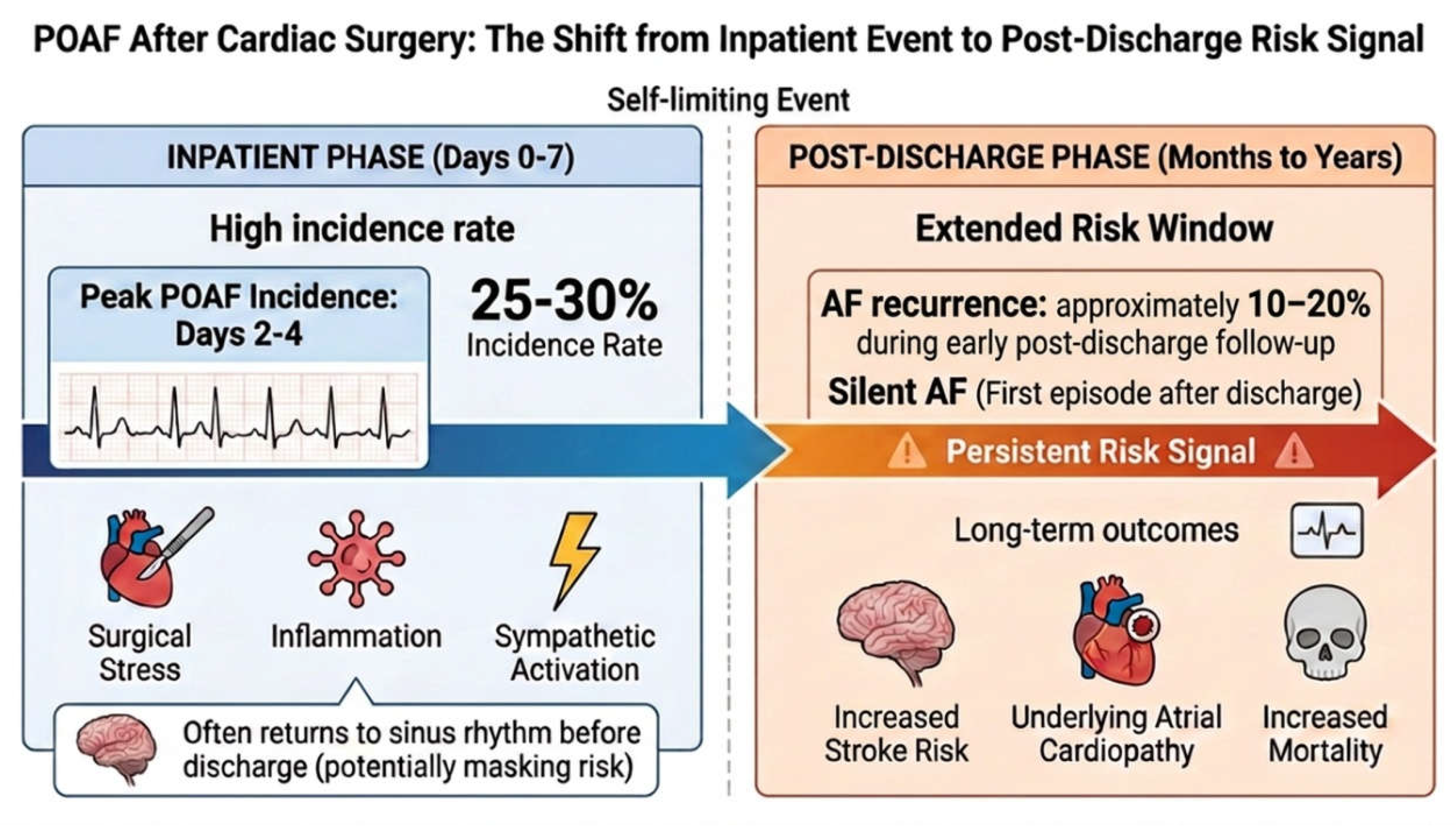
Figure 2.
Digital rhythm-surveillance technologies positioned by typical monitoring duration (hours to years). For each modality—Holter monitor (24–48 h), ECG patch (7–14 days), implantable loop recorder, handheld single-lead ECG, smartwatch (continuous PPG plus spot-check ECG) and PPG smartphone applications—the primary role and key trade-off are summarised. Four implementation pillars—workflow integration, data/EHR integration, digital equity and cost-effectiveness—apply across all modalities. ECG, electrocardiogram; EHR, electronic health record; ILR, implantable loop recorder; PPG, photoplethysmography.
Figure 2.
Digital rhythm-surveillance technologies positioned by typical monitoring duration (hours to years). For each modality—Holter monitor (24–48 h), ECG patch (7–14 days), implantable loop recorder, handheld single-lead ECG, smartwatch (continuous PPG plus spot-check ECG) and PPG smartphone applications—the primary role and key trade-off are summarised. Four implementation pillars—workflow integration, data/EHR integration, digital equity and cost-effectiveness—apply across all modalities. ECG, electrocardiogram; EHR, electronic health record; ILR, implantable loop recorder; PPG, photoplethysmography.
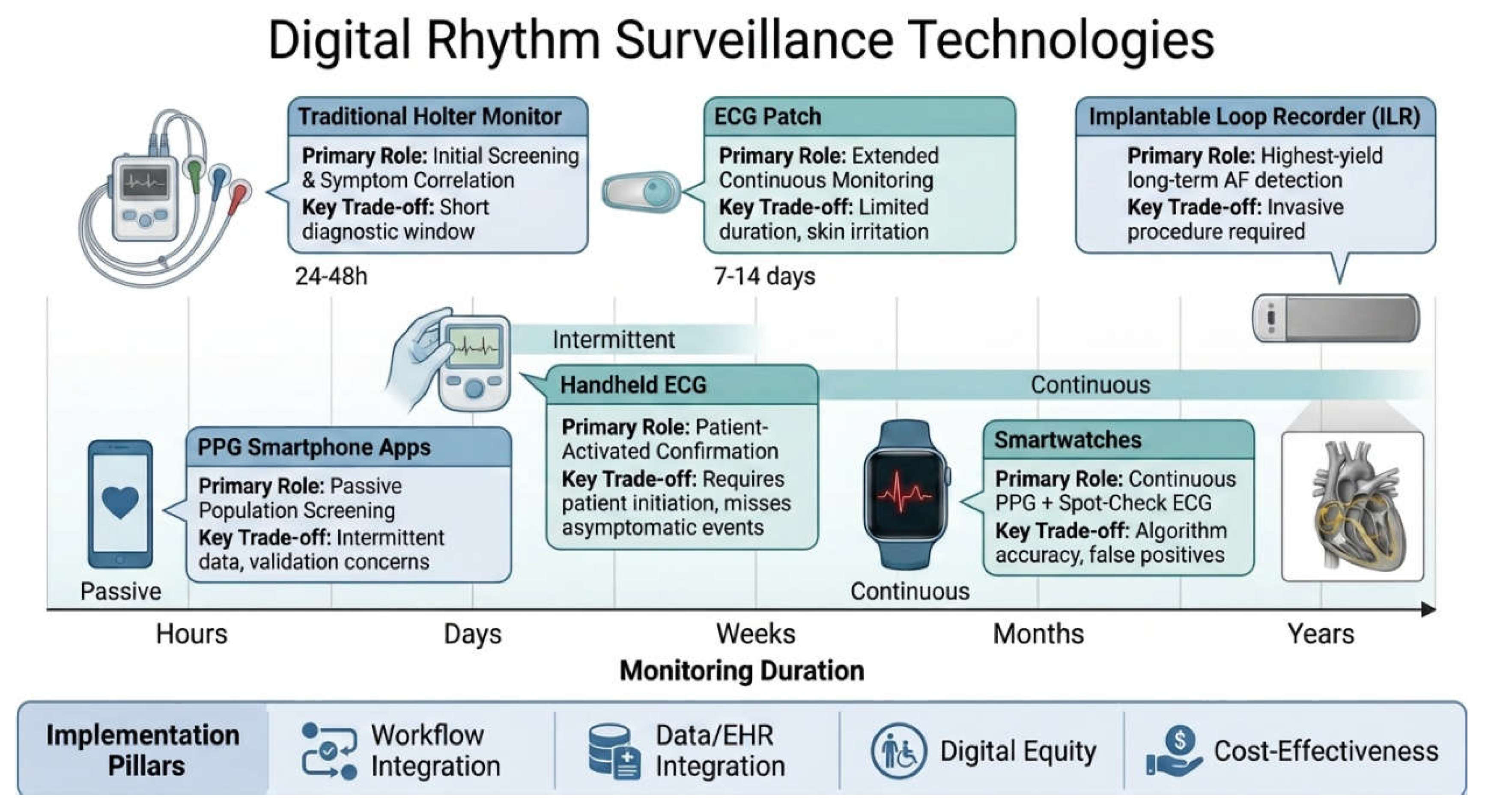
Figure 3.
The proposed Digital Cancer-POAF Survivorship Pathway, a conceptual, hypothesis-generating framework for post-discharge rhythm surveillance in cancer survivors who develop POAF after cardiac surgery. The six sequential stages are: (1) inpatient POAF documentation; (2) granular cancer phenotyping; (3) multifactorial risk stratification; (4) personalised monitoring selection; (5) early post-discharge evaluation; and (6) integrated cardio-oncology coordination. The framework is intended to organise evidence gaps and define testable components for prospective study, not to mandate a uniform monitoring strategy. CHA₂DS₂-VASc, stroke-risk score; HAS-BLED, bleeding-risk score; Hb, haemoglobin; ILR, implantable loop recorder; POAF, postoperative atrial fibrillation.
Figure 3.
The proposed Digital Cancer-POAF Survivorship Pathway, a conceptual, hypothesis-generating framework for post-discharge rhythm surveillance in cancer survivors who develop POAF after cardiac surgery. The six sequential stages are: (1) inpatient POAF documentation; (2) granular cancer phenotyping; (3) multifactorial risk stratification; (4) personalised monitoring selection; (5) early post-discharge evaluation; and (6) integrated cardio-oncology coordination. The framework is intended to organise evidence gaps and define testable components for prospective study, not to mandate a uniform monitoring strategy. CHA₂DS₂-VASc, stroke-risk score; HAS-BLED, bleeding-risk score; Hb, haemoglobin; ILR, implantable loop recorder; POAF, postoperative atrial fibrillation.
Disclaimer/Publisher’s Note: The statements, opinions and data contained in all publications are solely those of the individual author(s) and contributor(s) and not of MDPI and/or the editor(s). MDPI and/or the editor(s) disclaim responsibility for any injury to people or property resulting from any ideas, methods, instructions or products referred to in the content. |
© 2026 by the authors. Licensee MDPI, Basel, Switzerland. This article is an open access article distributed under the terms and conditions of the Creative Commons Attribution (CC BY) license.
Copyright: This open access article is published under a Creative Commons CC BY 4.0 license, which permit the free download, distribution, and reuse, provided that the author and preprint are cited in any reuse.


