

Submitted:
06 July 2026
Posted:
08 July 2026
You are already at the latest version
Abstract
Background: Type 2 diabetes (T2DM) increases the risk of mild cognitive impairment (MCI), however, the mechanisms of this process have not yet been fully identified. The aim of the study was to determine the levels of vitamin B12 and homocysteine in elderly diabetic patients, with and without cognitive impairment, and identify the risk factors associated with MCI in this group. Methods: A total of 385 elderly diabetic patients were to screened to for MCI. Several clinical and biochemical data were recorded. Results: In the study group, MCI subjects had lower vitamin B12 levels and higher homocysteine concentrations compared to controls. In MCI subjects, vitamin B12 levels were negatively correlated with homocysteine or HbA1c levels and positively correlated with MoCA scores. The univariate logistic regression showed factors associated with MCI in elderly diabetic patients were the following: older age and fewer years of education, longer history of diabetes, a higher number of co-morbidities, higher levels of HbA1c, triglycerides and homocysteine, lower levels of vitamin B12, presence of cardiovascular disease, hypertension, hyperlipidemia, retinopathy, and nephropathy. Independent factors associated with MCI evaluated in multivariate model included lower levels of vitamin B12, higher levels of triglycerides, a higher number of co-morbidities and fewer years of formal education. Conclusions: The association between T2DM and higher risk of MCI is partly mediated by lower levels of vitamin B12, and higher levels of homocysteine. The findings of this study highlight the importance of regular vitamin B12 screening and routine cognitive function testing in older adults with diabetes.
Keywords:
mild cognitive impairment
; vitamin B12
; homocysteine
; elderly
; type 2 diabetes
Introduction
The prevalence of type 2 diabetes (T2DM) is rapidly growing, becoming a major global health issue. It is projected to rise from 588.7 million in 2024 to 852.5 million by 2050 [1]. This serious disease increases the risk of several comorbidities, one of which is cognitive impairment and dementia [2]. Adults with T2DM have an approximately 1.6 times higher risk for dementia compared to individuals without diabetes [2], which might affect self-care management, worsen diabetic control and increase the mortality [3]. With a growing aging population, cognitive impairment is becoming a more prevalent condition in the elderly [4]. Mild cognitive impairment (MCI) is characterized by a decline in one or more cognitive domains in neurocognitive testing, including memory, language, calculation, emotions, attention, orientation, and executive function [5]. Although this condition does not seriously affect activities of daily life, it may lead to higher rates of disability, mortality, thus constituting a considerable public health burden. MCI is regarded as a transitional stage between normal cognitive health and dementia [5,6]. It has been reported that even 15% of patients with cognitive impairment aged over 65 years develop dementia in two years [7].
Age-related deterioration in cognition is typically connected to changes in brain structure and function such as decline in gray and white matter volume, decreased synaptic plasticity, impaired large-scale functional connectivity, and lower neurotransmitter levels [8]. Many studies indicate that the cerebral microvascular dysfunction plays a critical role in the pathogenesis of dementia in the elderly [9]. In a diabetic brain, microcirculatory damage is manifested by white matter hyperintensities and lacunes of presumed vascular origin, cerebral microbleeds, perivascular spaces, total cerebral atrophy, and microinfarcts [10]. These features of cerebral small vessel disease are related to increased oxidative stress, inflammatory response and altered blood-brain barrier permeability. In diabetes, factors that contribute to microvascular dysfunction include hyperglycemia, insulin resistance, hypertension and arterial stiffness [10].
The mechanisms underlying type 2 diabetes-related cognitive impairment seem to be multifactorial, however, they have not yet been fully identified. Vitamin B12 deficiency has been linked to many neuropsychiatric conditions and mentioned to be a reversible factor contributing to dementia [11]. Vitamin B12, or cobalamin, is a water-soluble vitamin that plays a key role in in the modulation of gene expression, DNA synthesis, and the formation of red blood cells [12]. It is also a cofactor for cytosolic methionine synthase, and the mitochondrial methylmalonyl coenzyme A. Cobalamin deficiency leads to accumulation of neurotoxins such as homocysteine and methylmalonic acid. The disturbed function of methionine synthase causes a reduction in metabolites of methionine, which plays a crucial role in the production of neurotransmitters, phospholipids and myelin formation [13]. Nevertheless, hyperhomocysteinemia, resulting from vitamin B12 deficiency, has been found to elevate inflammation, oxidative stress, and contribute to a range of illnesses such as ischemic heart disease, stroke, Alzheimer’s disease and Parkinson’s disease [14,15,16]. In general, vitamin B12 levels decrease with age, and various conditions, including gastritis, malabsorption, bacterial overgrowth, poorer nutrition, and regular use of drugs, affect release of vitamin B12 from food sources [17]. Although the elderly population has a higher risk of vitamin B12 deficiency and hyperhomocysteinemia, the relationship between these conditions and cognitive function has not yet been clearly defined. Some research findings have indicated that B12 vitamin plays a significant role in decreasing the risk of cognitive decline, which is linked to enhanced cognitive abilities in elderly individuals [18,19]. Some studies have indicated an association between low vitamin B12 levels and poor cognition or dementia [20,21]. Others, however, do not confirm this observation [22].
Futhermore, the meta-analysis showed that vitamin B supplementation was effective in reducing levels of homocysteine without any improvement in cognition in elderly patients with Alzheimer’s disease or dementia [23].
Considering the increasing number of elderly individuals with T2DM, it is important to understand the changes in cognitive health and recognize related risk factors. It is crucial for early identification and prevention of neurodegenerative disorders linked to aging. Therefore, the authors conducted novel research to determine the levels of vitamin B12 and homocysteine in elderly diabetic patients with and without cognitive impairment. The study also aimed to identify the risk factors associated with MCI in this group.
Materials and Methods
Study Design
The present cross-sectional study was carried out in the Specialist Outpatient Clinic of Diabetes, the N. Barlicki Memorial Teaching Hospital No. 1 of the Medical University of Lodz. The participants were briefly screened for recruitment and gave informed consent to enter the study. After the collection of fasting blood samples, the patients were given a snack to ensure they were not hypoglycemic at the time of psychological evaluation. In the next stage, in a private and discreet environment, a standard interview was taken and physical examination and neuropsychological assessment were also conducted. Finally, a total of 385 elderly patients with type 2 diabetes were recruited. The participants were selected into two groups: one including 126 subjects diagnosed with MCI and the other including 259 patients evaluated cognitively normal.
Participant Selection
The study participants were recruited based on predefined eligibility criteria. The inclusion criteria were the following: age 65 years or older, confirmed diagnosis of T2DM for at least one year and ability to understand and cooperate with study procedures.
The study excluded subjects with a history of any diseases or medications that could confound the results of vitamin B12 and homocysteine levels. The exclusion criteria were as follows: gastrointestinal disorders, e.g., malabsorption or chronic gastritis, ulcerative colitis, Crohn’s disease, celiac disease, bariatric surgeries and ileal resection, alcohol or substance abuse, use of drugs that affect vitamin B12 metabolism, such as colchicine, chloramphenicol, cimetidine, neomycin, phenytoin, methyldopa, long-term use of medications affecting secretion of gastric acid or pH (proton pump inhibitors (PPI), H2 receptor antagonists (H2RA), pernicious anemia, vegan or vegetarian diet, vitamin B12 supplementation within the past three months, severe illness, e.g. an active infection, sepsis, malignancy. The study also excluded participants who had head injury, suffered from depression or dementia, had other neurological or psychiatric conditions, had taken cognition-impairing medications in the last three months, had severe heating, visual or motor coordination impairment.
Assessment of Cognitive Function
First, the Montreal Cognitive Assessment (MoCA) tool was used in all the subjects. It comprises eight domains: visuospatial/executive reasoning, memory, naming, abstraction attention, language, and orientation skills [24]. The MoCA test has been shown to be sensitive in differentiating patients with MCI from cognitively normal individuals and it has been regarded as the best screening tool in the elderly and diabetic patients [25,26]. The maximum possible total score in the MoCA test is 30 points and a cut-off of ≥26 is considered normal. It also accounts for less than 12 years of education by adding 1 point to the total score. In line with epidemiological studies, MoCA test scores below 19 points were assumed to indicate ‘dementia’, and subjects with such scores were excluded from the study and referred to a psychiatrist for further assessment.
In this study, MCI diagnosis was established according to the diagnostic criteria proposed by the 2006 European Alzheimer’s Disease Consortium [27]. These procedure included the following items: cognitive complaints reported by the patient and/or their family, cognitive decline reported by the patient or informant within the past year; objective evidence of cognitive impairment, i.e., neuropsychological test scores below the norm for age and education, no impact on daily functioning (maintaining independence in activities of daily living although with some difficulties when performing more complex tasks), absence of dementia (not meeting the Diagnostic and Statistical Manual of Mental Disorders-IV (DSM-IV) criteria for dementia syndromes) [27].
Sample Collection and Biochemical Analysis
After overnight fasting, samples of peripheral venous blood (a total of 10 mL) were collected from each participant under aseptic conditions for various biochemical tests. Total cholesterol, low-density lipoprotein cholesterol (LDL), high-density lipoprotein cholesterol (HDL), triglycerides (TG), fasting plasma glucose (FBG) and glycosylated hemoglobin (HbA1c) levels were measured in a certified centralized laboratory. The blood samples were centrifuged within 30 minutes following collection and subsequently stored at a temperature of −80°C. Measurements were performed after all the patients had been enrolled in the study. Serum vitamin B12 (Vitamin B12 ELISA kit, ab287826, BioVision, an Abcam company, UK) and homocysteine levels (General Hcy/Homocysteine ELISA kit, E0772Ge, EIAab, Wuhan, China) were determined with the use of a commercially available Quantikine Human Immunoassay (ELISA) kit according to the manufacturer’s instructions. The detection ranges of the enzyme-linked immunosorbent assays (ELISA) for vitamin B12 and homocysteine were 50-500 pg/ml and 0.78 – 50 ng/ml, respectively. For optimal performance, all samples and controls were assayed in duplicate. Absorbance was read at 450 nm after adding the stop solution. Minimum detectable concentrations were 25 pg/ml for vitamin B12, and 0.38 ng/ml for homocysteine, respectively, with an overall intra-assay coefficient of variation (CV) of< 8% and an inter-assay CV of < 10%.
Assessment of Demographic and Other Variables
Clinical and demographic data were collected through structured interviews and medical record reviews. The following variables were considered: age; gender; educational level, lifestyle factors (including smoking and physical activity), duration of diabetes, medication use, hypertension, hyperlipidemia, retinopathy, nephropathy, neuropathy, stroke cardiovascular disease, comorbidities. Height and weight of all the subjects were measured by a trained nurse using a calibrated stadiometer and digital scale and body mass index (BMI = weight in kg/ height in m2) was calculated. Blood pressure was measured with a validated mercury sphygmomanometer using the right arm, in a seating position in accordance with standard operating procedures. Hypertension was diagnosed based on two blood pressure measurements of ≥ 140/90 mmHg or a prior report of active hypertension and current use of anti-hypertensive medications. Hyperlipidemia was evaluated based on either a history of the use of any lipid lowering drug, or untreated levels of triglycerides over 1.7 mmol/l or/and serum LDL cholesterol levels over 2.6 mmol/l.
Ethical Approval
The study was conducted in full compliance with the guidelines of good clinical practice of the World Medical Association (WMA) Declaration of Helsinki. The purpose, nature, and potential risks of the experiments were fully explained to the subjects before admission, and prior to enrollment, all the subjects gave informed consent. Each patient was assigned a number by which they were identified to ensure privacy. The study was approved by the institutional medical ethical committee (Medical University of Lodz, Approval No. RNN/420/13/KB).
Statistical Analysis
Statistical analyses were performed using Statistica 13.1 (StatSoft, Poland). The continuous variables were expressed as mean and standard deviation (SD), whereas the categorical variables were reported as absolute frequencies and percentages. The distribution of data was examined using the Shapiro-Wilk Test. An independent t-test was used to compare normally distributed continuous variables. The Mann–Whitney U test was applied for skewed data. Categorical data were analyzed using the chi-square (χ2) test. The relationships were assessed using Pearson’s correlation analysis, for normally distributed variables, or Spearman’s rank correlation, for non-normally distributed variables. Simple logistic regression model was developed to select so-called independent factors which increase the selection risk MCI in elderly patients with T2DM. To evaluate the associations of vitamin B12 or homocysteine levels with MCI, a multivariable logistic regression model was developed to assess whether circulating mediators were independently associated with MCI. To “optimize” the multivariable model, a stepwise approach was applied (backward elimination based on the Wald criteria). Odds ratios (OR) were computed and presented with the 95% interval of confidence (CI). P value of < 0.05 was considered statistically significant.
Results
Clinical and Laboratory Characteristics of T2DM Patients
The characteristics related to the demographics, clinical aspects, and laboratory findings of the study group are presented in Table 1. The results of the Mann–Whitney U test or T-test showed that patients with MCI were older, with a lower level of education, had a longer duration of diabetes, a higher number of comorbidities, increased levels of HbA1c, total cholesterol and triglycerides, lower levels of HDL cholesterol and lower MoCA scores (Table 1). Furthermore, the χ2 test showed that subjects with MCI were significantly more likely to be diagnosed with CVD, hypertension, hyperlipidemia, retinopathy and nephropathy (Table 1). Lastly, no significant differences were found between the groups in terms of gender, smoking habits, physical activity, stroke, diabetic polineuropathy, type of treatment, BMI, levels of LDL cholesterol, FBG and systolic/diastolic blood pressure (p > 0.05).
Serum Levels of Vitamin B12and Homocysteine in theElderlyT2DM Patients withMCI andThose Without MCI
Serum levels of vitamin B12 were significantly decreased in patients with MCI (251 ± 36.9 pg/ml) compared to normal (339.9 ± 40.7 pg/ml, p<0.001) (Figure 1a). As expected, in this group vitamin B12 levels were negatively correlated with HbA1c levels (r=-0.53, p<0.001) (Figure 2b), FBG (r=-0.52, p<0.001 (data not shown in figures), and positively with MoCA score (r=0.65, p<0.001) (Figure 2c). Also, a positive but weak correlation was found between vitamin B12 levels and years of education (r=0.19, p=0.03), and a negative association with duration of T2DM (r=-0.26, p=0.003) (data not shown in figures).
Serum levels of homocysteine were significantly increased in patients with MCI (15.9 ± 4 ng/ml) compared to healthy individuals (11.4 ± 3.1 ng/ml, p<0.001) (Figure 1b) and inversely correlated with vitamin B12 levels (r=-0.62, p<0.001) (Figure 2a) and with MoCA scores (r=-0.46, p<0.001) (Figure 2e). Additionally, homocysteine levels were positively correlated with HbA1c levels (r=0.47, p<0.001) (Figure 2d), FBG (r=0.4, p<0.001), duration of T2DM (r=0.4, p<0.001), and the number of comorbidities (r=0.22, p=0.01) (data not shown in figures).
Logistic Regression Models
The univariate logistic regression analyses indicated that factors that increased the likehood of MCI diagnosis in elderly patients with type 2 diabetes were: older age and fewer years of formal education, longer history of diabetes, a higher number of co-morbidities, higher levels of HbA1c, triglycerides and homocysteine, lower levels of vitamin B12, presence of CVD, hypertension, hyperlipidemia, retinopathy, and nephropathy,
(Table 2). Finally, a multivariate logistic regression model was developed to identify the predictors of MCI. Independent factors associated with MCI included: lower levels of vitamin B12, higher levels of triglycerides, increased number of co-morbidities and fewer years of formal education (Table 3).
Discussion
The study aimed at determining levels of vitamin B12 and homocysteine in elderly diabetic patients, both with and without cognitive impairment. It was first found that serum levels of vitamin B12 were significantly decreased in patients with MCI compared to cognitively normal, and inversely correlated with homocysteine concentrations. Whereas levels of homocysteine were observed to be significantly higher in subjects with cognitive impairment compared to cognitively normal. There are several studies describing the association between vitamin B12 or homocysteine and cognitive health in general population [15,20,22,28,29]. In a cross-sectional study that enrolled 1773 elderly individuals, the authors showed that low levels of vitamin B12 were related to lower cognitive status assessed using the minimental state examination (MMSE) [28]. Also, in an analysis that included a large sample of community dwelling individuals aged 60-85 years, the researchers indicated that low vitamin B12 and higher concentrations of homocysteine contributed to poorer cognitive performance [20]. In another study based on the NHANES database, a U-shaped association was identified between vitamin B12 and the risk of cognitive impairment, where low or high levels of vitamin B12 can increase the risk of developing the condition [29]. The harmful effects of high concentration of vitamin B12 are reflected by specific metabolic and renal comorbidities such as kidney stones, hypertension, overweight, and hyperuricemia [29]. On the other hand, a systematic literature review revealed that treatment with vitamins B6, B12 and/or folic acid led to a significant decrease in homocysteine levels in patients with MCI, considering that hyperhomocysteinemia is a known risk factor for cognitive decline [30]. Studies that analyzed the association of vitamin B12 or homocysteine in patients with cognitive impairment in diabetic population do not provide sufficient results. In a research study, the authors examined the cognitive status of community-dwelling older adults (including diabetics) and found that vitamin B12 had no association with any cognitive test [31]. However, the study revealed important risk factors for cognitive decline in older adults such as glycated hemoglobin which was inversely correlated to processing speed and executive function, as well as geriatric depression, which correlated inversely with visuospatial abilities [31]. In our study, higher levels of HbA1c were one of the independent factors increasing the likelihood of diagnosis of MCI in univariate analysis. In another study, elderly diabetic patients with mild B12 deficiency received supplementation [32]. The results showed no improvement in cognitive decline, however, they revealed an increase in serum active B12 and significant reduction in serum homocysteine concentrations after 27 months of the treatment [32]. A retrospective study showed that hyperhomocysteinemia is a risk factor for cognitive impairment in adults with T2DM [33]. Whereas contradictory results were obtained in a small group of 97 diabetic patients, where final model of logistic regression reveled no association between serum homocysteine and cognitive function [34].
As mentioned above, in our study patients with cognitive impairment had significantly lower levels of vitamin B12 and increased concentrations of homocysteine compared to cognitively normal. However, the mechanism that could explain how these factors contribute to cognitive health has not yet been fully identified. Firstly, both vitamin B12 deficiency [35,36] and hyperhomocysteinemia [37] have been shown to lead to brain atrophy, although studies on supplementation with vitamin B12 provided contradictory results. A research study showed that the treatment had no beneficial effect on brain volumes [37]. Another study revealed that supplementation with B-vitamins (including B12, B6, and folic acid) led to a reduction in overall brain atrophy and loss of grey matter, thereby slowing cognitive decline in MCI subjects [38]. Secondly, hyperhomocysteinemia being a consequence of deficiency of vitamin B12 is a common observation in the literature, constituting a well- known risk factor for diabetic complications [39]. The underlying pathophysiological processes leading to these complications include the involvement of homocysteine in increasing oxidative stress, causing inflammation, promoting thrombosis, disrupting the endothelial function, and enhancing cell proliferation [40]. Our study found a strong inverse correlation between levels of vitamin B12 and homocysteine. It was observed that subjects with MCI were more often diagnosed with CVD, hypertension, hyperlipidemia, retinopathy and nephropathy.
However, homocysteine can be regarded as a neurotoxin that may potentially have a direct impact on neurodegeneration through induction of the accumulation of beta amyloid in the brain, and the stimulation of neuronal apoptosis [40]. This action can contribute to development of cognitive impairment or dementia independently of the impact on the vascular mechanism. In that context, the results of our study are consistent and show a negative correlation between MoCA score and homocysteine levels, and positive association between MoCA score and concentration of vitamin B12.
Moreover, the authors found an inverse relationship between vitamin B12 and HbA1c as well as fasting glucose, and a positive correlation between homocysteine and glycated hemoglobin or fasting blood glucose. This observation indicates that lower levels of vitamin B12 followed by a higher concentration of homocysteine may be associated with poor glycemic control. The results are in line with data reported in a recently published study [41]. The authors revealed that individuals with suboptimal glycemic control (HbA1c ≥ 7%) had significantly lower levels of vitamin B12 and showed dyslipidemia and impaired renal function. In our study, higher levels of triglycerides remain an important risk factor for MCI in the multivariate analysis.
Our study did not find any significant differences between the groups in terms of the type of treatment, however, it was shown that patients with MCI were more subject to therapy or received metformin. Metformin is a known risk factor of B12 deficiency as prolonged therapy affects absorption of the vitamin [42]. The mechanism includes a disruption of calcium-dependent membrane activity in the ileum, the main location for the absorption of vitamin B12. These discrepancies may be analyzed based on the assessment of metformin doses and time of the treatment, which was not the primary aim of the study. Besides none of the patients was diagnosed with a vitamin B12 deficiency severe enough to affect the results. Conversely, a large review summarized the positive influence of metformin use for the development of dementia in diabetes, which supports its great value in the therapy [42].
Lastly, the authors showed that patients diagnosed with MCI were significantly older, had a longer duration of diabetes, and higher number of comorbidities. These common risk factors are consistent with other studies [43,44]. Collectively, the data highlight that cognitive impairment reflects a cluster of interrelated disturbances including micronutrient deficiencies, comorbidities, poor glycemic control, microvascular complications, and progressing aging process. This underlines the importance of a diverse, comprehensive management strategy.
Our study provides a significant contribution to the topic as so far no research has conducted among elderly diabetic patients with and without cognitive impairment. It was found that serum levels of vitamin B12 were significantly decreased in patients with MCI compared to cognitively normal and inversely correlated with homocysteine concentrations. Moreover, a significant correlation was identified between these factors and HbA1c or MoCA score in MCI subjects. Finally, the study focused on the crucial risk factor of MCI in diabetic elderly population that was confirmed in the multivariate analysis.
The study also has weaknesses. Due to its current cross-sectional design, it was not possible to identify causal relationships between the studied variables and impaired cognitive function. It was conducted in a single center, which may limit the generalizability of the results to other populations. Lastly, the study did not analyze data on eating habits or dietary intake of vitamin B12 that could have an important effect on both the level of the vitamin and cognitive impact.
Conclusions
In summary, our findings confirmed the critical role of lower levels of vitamin B12, higher concentrations of triglycerides, increased number of comorbidities and fewer years of formal education in the diagnosis of MCI in elderly patients with T2DM. The results emphasize the importance of regular screening of vitamin B12 levels as well as routine cognition tests in diabetic elderly subjects. Further longitudinal cohort studies and randomized controlled trials are warranted to understand the mechanism behind the association between diabetes and cognitive impairment.
Author Contributions
Conceptualization, M.G-C. and M.C.; methodology, M.G-C. and M.C. formal analysis, M.G-C.; investigation, M.G-C. and M.C.; resources, M.G-C. and M.C.; data curation, M. G-C.; writing—original draft preparation, M.G-C. and M.C.; writing—review and editing, M.G-C. and M.C.; visualization, M.G-C. and M.C.; supervision, M.G-C.; project administration, M.G-C. and M.C. All authors have read and agreed to the published version of the manuscript.
Funding
The study was supported by nonprofit grant of Medical University of Lodz No: 503/8-072-04/503-81-001.
Institutional Review Board Statement
The study was conducted in accordance with the Declaration of Helsinki, and approved by the independent local Ethics Committee of Medical University of Lodz No RNN/420/13/KB.
Informed Consent Statement
Informed consent was obtained from all subjects involved in the study.
Data Availability Statement
The data presented in this study are available on request from the corresponding author.
Conflicts of Interest
The authors declare no conflict of interest.
References
- International Diabetes Federation. IDF Diabetes Atlas, 11th ed.; IDF: Brussels, Belgium, 2025; Available online: https://diabetesatlas.org/resources/idf-diabetes-atlas-2025/ (accessed on 7 Jan 2025).
- Chatterjee, S.; Peters, S.A.; Woodward, M.; Mejia Arango, S.; Batty, G.D.; Beckett, N.; Beiser, A.; Borenstein, A.R.; Crane, P.K.; Haan, M.; et al. Type 2 Diabetes as a Risk Factor for Dementia in Women Compared With Men: A Pooled Analysis of 2.3 Million People Comprising More Than 100,000 Cases of Dementia. Diabetes Care 2016, 39, 300–307. [Google Scholar] [CrossRef] [PubMed]
- Tomic, D.; Shaw, J.E.; Magliano, D.J. The Burden and Risks of Emerging Complications of Diabetes Mellitus. Nat. Revs. Endocrinol. 2022, 18, 525–539. [Google Scholar] [CrossRef] [PubMed]
- Pérez Palmer, N.; Trejo Ortega, B.; Joshi, P. Cognitive Impairment in Older Adults: Epidemiology, Diagnosis, and Treatment. Psychiatr. Clin. North Am. 2022, 45, 639–661. [Google Scholar] [CrossRef] [PubMed]
- Petersen, R.C.; Roberts, R.O.; Knopman, D.S.; Boeve, B.F.; Geda, Y.E.; Ivnik, R.J.; Smith, G.E.; Jack, C.R., Jr. Mild Cognitive Impairment: Ten Years Later. Arch. Neurol. 2009, 66, 1447–1455. [Google Scholar] [CrossRef] [PubMed]
- Barry, R.B.; Blacker, M.J.; Kanjee, D.; Z. Would You Screen This Patient for Cognitive Impairment? : Grand Rounds Discussion From Beth Israel Deaconess Medical Center. Ann. Intern. Med. 2023, 176, 1405–1412. [Google Scholar] [CrossRef] [PubMed]
- Petersen, R.C.; Lopez, O.; Armstrong, M.J.; Getchius, T.S.D.; Ganguli, M.; Gloss, D.; Gronseth, G.S.; Marson, D.; Pringsheim, T.; Day, G.S.; et al. Practice Guideline Update Summary: Mild Cognitive Impairment [RETIRED]: Report of the Guideline Development, Dissemination, and Implementation Subcommittee of the American Academy of Neurology. Neurology 2018, 90, 126–135. [Google Scholar] [CrossRef] [PubMed]
- Harada, C.N.; Natelson Love, M.C.; Triebel, K.L. Normal cognitive aging. Clin. Geriatr. Med. 2013, 29, 737–752. [Google Scholar] [CrossRef] [PubMed]
- Toth, P.; Tarantini, S.; Csiszar, A.; Ungvari, Z. Functional Vascular Contributions to Cognitive Impairment and Dementia: Mechanisms and Consequences of Cerebral Autoregulatory Dysfunction, Endothelial Impairment, and Neurovascular Uncoupling in Aging. Am. J. Physiol. Heart Circ. Physiol. 2017, 312. [Google Scholar] [CrossRef] [PubMed]
- Sloten, T.T.; Sedaghat, S.; Carnethon, M.R.; Launer, L.J.; Stehouwer, C.D.A. Cerebral Microvascular Complications of Type 2 Diabetes: Stroke, Cognitive Dysfunction, and Depression. Lancet Diabetes Endocrinol. 2020, 8, 325–336. [Google Scholar] [CrossRef] [PubMed]
- Jatoi, S.; Hafeez, A.; Riaz, S.U.; Ali, A.; Ghauri, M.I.; Zehra, M. Low Vitamin B12 Levels: An Underestimated Cause Of Minimal Cognitive Impairment And Dementia. Cureus 2020, 12, 6976. [Google Scholar] [CrossRef] [PubMed]
- Alvarez, M.; Poveda, S.; Cisneros, A.; Parra, D.; Luna, M.; Rincón, O.; Guzman, I. B Vitamin Deficiencies and Associated Neuropathies. Curr. Nutr. Rep. 2026, 15, 8. [Google Scholar] [CrossRef] [PubMed]
- Marchi, G.; Busti, F.; Zidanes, A.L.; Vianello, A.; Girelli, D. Cobalamin Deficiency in the Elderly. Mediterr. J. Hematol. Infect. Dis. 2020, 12, 2020043. [Google Scholar] [CrossRef] [PubMed]
- Green, R.; Allen, L.H.; Bjørke-Monsen, A.L.; Brito, A.; Guéant, J.L.; Miller, J.W.; Molloy, A.M.; Nexo, E.; Stabler, S.; Toh, B.H.; et al. Vitamin B12 deficiency. Nat. Rev. Dis. Prim. 2017, 3, 17040. [Google Scholar] [CrossRef] [PubMed]
- Seshadri, S.; Beiser, A.; Selhub, J.; Jacques, P.F.; Rosenberg, I.H.; D’Agostino, R.B.; Wilson, P.W.; Wolf, P.A. Plasma Homocysteine as a Risk Factor for Dementia and Alzheimer’s Disease. N. Engl. J. Med. 2002, 346, 476–483. [Google Scholar] [CrossRef] [PubMed]
- Fan, X.; Zhang, L.; Li, H.; Chen, G.; Qi, G.; Ma, X.; Jin, Y. Role of Homocysteine in the Development and Progression of Parkinson’s Disease. Ann. Clin. Transl. Neurol. 2020, 7, 2332–2338. [Google Scholar] [CrossRef] [PubMed]
- Wong, C.W. Vitamin B12 deficiency in the elderly: is it worth screening? Hong. Kong Med. J. 2015, 21, 155–164. [Google Scholar] [CrossRef] [PubMed]
- Nguyen, H.D.; Kim, M.S. The Role of Mixed B Vitamin Intakes on Cognitive Performance: Modeling, Genes and miRNAs Involved. J. Psychiatr. Res. 2022, 152, 38–56. [Google Scholar] [CrossRef] [PubMed]
- Sashindran, V.K.; Aggarwal, V.; Khera, A. Prevalence of Vitamin B12 Deficiency in Elderly Population (>60 Years) Presenting with Dementia to Outpatient Department. Med. J. Armed Forces India. 2022, 78, 94–98. [Google Scholar] [CrossRef] [PubMed]
- Nalder, L.; Zheng, B.; Chiandet, G.; Middleton, L.T.; Jager, C.A. Vitamin B12 and Folate Status in Cognitively Healthy Older Adults and Associations with Cognitive Performance. J. Nutr. Health Aging. 2021, 25, 287–294. [Google Scholar] [CrossRef] [PubMed]
- Morris, M. The Role of B Vitamins in Preventing and Treating Cognitive Impairment and Decline. Adv. Nutr. 2012, 3, 801–812. [Google Scholar] [CrossRef] [PubMed]
- Zhang, C.; Luo, J.; Yuan, C.; Ding, D. Vitamin B12, B6, or Folate and Cognitive Function in Community-Dwelling Older Adults: A Systematic Review and Meta-Analysis. J. Alzheimers Dis. 2020, 77, 781–794. [Google Scholar] [CrossRef] [PubMed]
- Zhang, D.M.; Ye, J.X.; Mu, J.S.; Cui, X.P. Efficacy of Vitamin B Supplementation on Cognition in Elderly Patients With Cognitive-Related Diseases. J. Geriatr. Psychiatry Neurol. 2017, 30, 50–59. [Google Scholar] [CrossRef] [PubMed]
- Nasreddine, Z.S.; Phillips, N.A.; Bédirian, V.; Charbonneau, S.; Whitehead, V.; Collin, I.; Cummings, J.L.; Chertkow, H. The Montreal Cognitive Assessment, MoCA: A Brief Screening Tool for Mild Cognitive Impairment. J. Am. Geriatr. Soc. 2005, 53, 695–699. [Google Scholar] [CrossRef] [PubMed]
- Alagiakrishnan, K.; Zhao, N.; Mereu, L.; Senior, P.; Senthilselvan, A. Montreal Cognitive Assessment Is Superior to Standardized Mini-Mental Status Exam in Detecting Mild Cognitive Impairment in the Middle-Aged and Elderly Patients with Type 2 Diabetes Mellitus. BioMed Res. Int. 2013, 186106. [Google Scholar] [CrossRef] [PubMed]
- Trzepacz, P.T.; Hochstetler, H.; Wang, S.; Walker, B.; Saykin, A.J.; Initiative, A.D.N. Relationship between the Montreal Cognitive Assessment and Mini-Mental State Examination for Assessment of Mild Cognitive Impairment in Older Adults. BMC Geriatr. 2015, 15, 107. [Google Scholar] [CrossRef] [PubMed]
- Portet, F.; Ousset, P.J.; Visser, P.J.; Frisoni, G.B.; Nobili, F.; Scheltens, P.; Vellas, B.; Touchon, J.; Alzheimer’s Disease, M.C.I.W.G. Mild Cognitive Impairment (MCI) in Medical Practice: A Critical Review of the Concept and New Diagnostic Procedure. Report of the MCI Working Group of the European Consortium on Alzheimer’s Disease. J. Neurol. Neurosurg. Psychiatry. 2006, 77, 714–718. [Google Scholar] [CrossRef] [PubMed]
- Vinueza Veloz, A.F.; Carpio Arias, T.V.; Vargas Mejía, J.S.; Tapia Veloz, E.C.; Piedra Andrade, J.S.; Nicolalde Cifuentes, T.M.; Heredia Aguirre, S.I.; Vinueza Veloz, M.F. Cognitive Function and Vitamin B12 and D among Community-Dwelling Elders: A Cross-Sectional Study. Clin. Nutr. ESPEN. 2022, 50, 270–276. [Google Scholar] [CrossRef] [PubMed]
- Miao, J.; Zhao, D. Relationship Between Serum Vitamins and Cognitive Impairment in the Elderly: A Study Based on the NHANES Database. Brain Behav. 2026, 16, 71181. [Google Scholar] [CrossRef] [PubMed]
- Olaso-Gonzalez, G.; Inzitari, M.; Bellelli, G.; Morandi, A.; Barcons, N.; Viña, J. Impact of Supplementation with Vitamins B6, B12, and/or Folic Acid on the Reduction of Homocysteine Levels in Patients with Mild Cognitive Impairment: A Systematic Review. IUBMB Life. 2022, 74, 74–84. [Google Scholar] [CrossRef] [PubMed]
- Dongaonkar, B.; Singh, A.D.; Hurakadli, S.B.; Godbole, A. Glycated Hemoglobin Levels and Geriatric Depression Impact Cognitive Status in an Indian Urban Elderly Community. IBRO Neurosci. Rep. 2025, 19, 426–436. [Google Scholar] [CrossRef] [PubMed]
- Kwok, T.; Lee, J.; Ma, R.C.; Wong, S.Y.; Kung, K.; Lam, A.; Ho, C.S.; Lee, V.; Harrison, J.; Lam, L. A Randomized Placebo Controlled Trial of Vitamin B12 Supplementation to Prevent Cognitive Decline in Older Diabetic People with Borderline Low Serum Vitamin B12. Clin. Nutr. 2017, 36, 1509–1515. [Google Scholar] [CrossRef] [PubMed]
- Ma, F.; Zhang, Q.; Shi, J.; Li, S.; Wu, L.; Zhang, H. Risk Factors for Cognitive Dysfunction and Glycemic Management in Older Adults with Type 2 Diabetes Mellitus: A Retrospective Study. BMC Endocr. Disord. 2023, 23, 220. [Google Scholar] [CrossRef] [PubMed]
- Damanik, J.; Mayza, A.; Rachman, A.; Sauriasari, R.; Kristanti, M.; Agustina, P.S.; Angianto, A.R.; Prawiroharjo, P.; Yunir, E. Association between Serum Homocysteine Level and Cognitive Function in Middle-Aged Type 2 Diabetes Mellitus Patients. PLoS One. 2019, 14, 0224611. [Google Scholar] [CrossRef] [PubMed]
- Vogiatzoglou, A.; Refsum, H.; Johnston, C.; Smith, S.M.; Bradley, K.M.; Jager, C.; Budge, M.M.; Smith, A.D. Vitamin B12 Status and Rate of Brain Volume Loss in Community-Dwelling Elderly. Neurology. 2008, 71, 826–832. [Google Scholar] [CrossRef] [PubMed]
- Ueno, A.; Hamano, T.; Nagata, M.; Yamaguchi, T.; Endo, Y.; Enomoto, S.; Kimura, H.; Ikawa, M.; Yamamura, O.; Yamanaka, D.; et al. Association of Vitamin B12 Deficiency in a Dementia Cohort with Hippocampal Atrophy on MRI. J. Prev. Alzheimers Dis. 2025, 12, 100265. [Google Scholar] [CrossRef] [PubMed]
- van der Zwaluw, N. L.; Brouwer-Brolsma, E.M.; van de Rest, O.; van Wijngaarden, J. P.; In 't Veld, P. H.; Kourie, D. I.; Swart, K. M.; Enneman, A. W.; van Dijk, S. C.; van der Velde, N.; Kessels, R. P.; Smeets, P. A.; Kok, F. J.; Dhonukshe-Rutten, R. A.; de Groot, L. C. Folate and Vitamin B12-Related Biomarkers in Relation to Brain Volumes. Nutrients 2016, 9, 8. [Google Scholar] [CrossRef] [PubMed]
- Douaud, G.; Refsum, H.; Jager, C.A.; Jacoby, R.; Nichols, T.E.; Smith, S.M.; Smith, A.D. Preventing Alzheimer’s Disease-Related Gray Matter Atrophy by B-Vitamin Treatment. Proc. Natl. Acad. Sci. U S A. 2013, 110, 9523–9528. [Google Scholar] [CrossRef] [PubMed]
- Muzurović, E.; Kraljević, I.; Solak, M.; Dragnić, S.; Mikhailidis, D.P. Homocysteine and Diabetes: Role in Macrovascular and Microvascular Complications. J. Diabetes Complicat. 2021, 35, 107834. [Google Scholar] [CrossRef] [PubMed]
- Gasecka, A.; Siwik, D.; Gajewska, M.; Jaguszewski, M.J.; Mazurek, T.; Filipiak, K.J.; Postuła, M.; Eyileten, C. Early Biomarkers of Neurodegenerative and Neurovascular Disorders in Diabetes. J. Clin. Med. 2020, 9, 2807. [Google Scholar] [CrossRef] [PubMed]
- Singh, U.P.; Mishra, D.K.; Gangwar, P.; Kushwaha, P. Association of Vitamin B12 and Vitamin D Levels with Glycemic Control in Patients with Type 2 Diabetes Mellitus. Int. J. Prev. Med. 2025, 16, 84. [Google Scholar] [CrossRef] [PubMed]
- Campbell, J.M.; Stephenson, M.D.; Courten, B.; Chapman, I.; Bellman, S.M.; Aromataris, E. Metformin Use Associated with Reduced Risk of Dementia in Patients with Diabetes: A Systematic Review and Meta-Analysis. J. Alzheimers Dis. 2018, 65, 1225–1236. [Google Scholar] [CrossRef] [PubMed]
- Deary, I.J.; Corley, J.; Gow, A.J.; Harris, S.E.; Houlihan, L.M.; Marioni, R.E.; Penke, L.; Rafnsson, S.B.; Starr, J.M. Age-associated cognitive decline. B.r Med. Bull. 2009, 92, 135–152. [Google Scholar] [CrossRef] [PubMed]
- Sun, L.; Diao, X.; Gang, X.; Lv, Y.; Zhao, X.; Yang, S.; Gao, Y.; Wang, G. Risk Factors for Cognitive Impairment in Patients with Type 2 Diabetes. J. Diabetes Res. 2020, 4591938. [Google Scholar] [CrossRef] [PubMed]
Figure 1.
Serum levels of Vitamin B12 (pg/ml) (a) and Homocysteine (ng/ml) (b) in the elderly T2DM patients with mild cognitive impairment (MCI) and those without MCI (Normal).
Figure 1.
Serum levels of Vitamin B12 (pg/ml) (a) and Homocysteine (ng/ml) (b) in the elderly T2DM patients with mild cognitive impairment (MCI) and those without MCI (Normal).
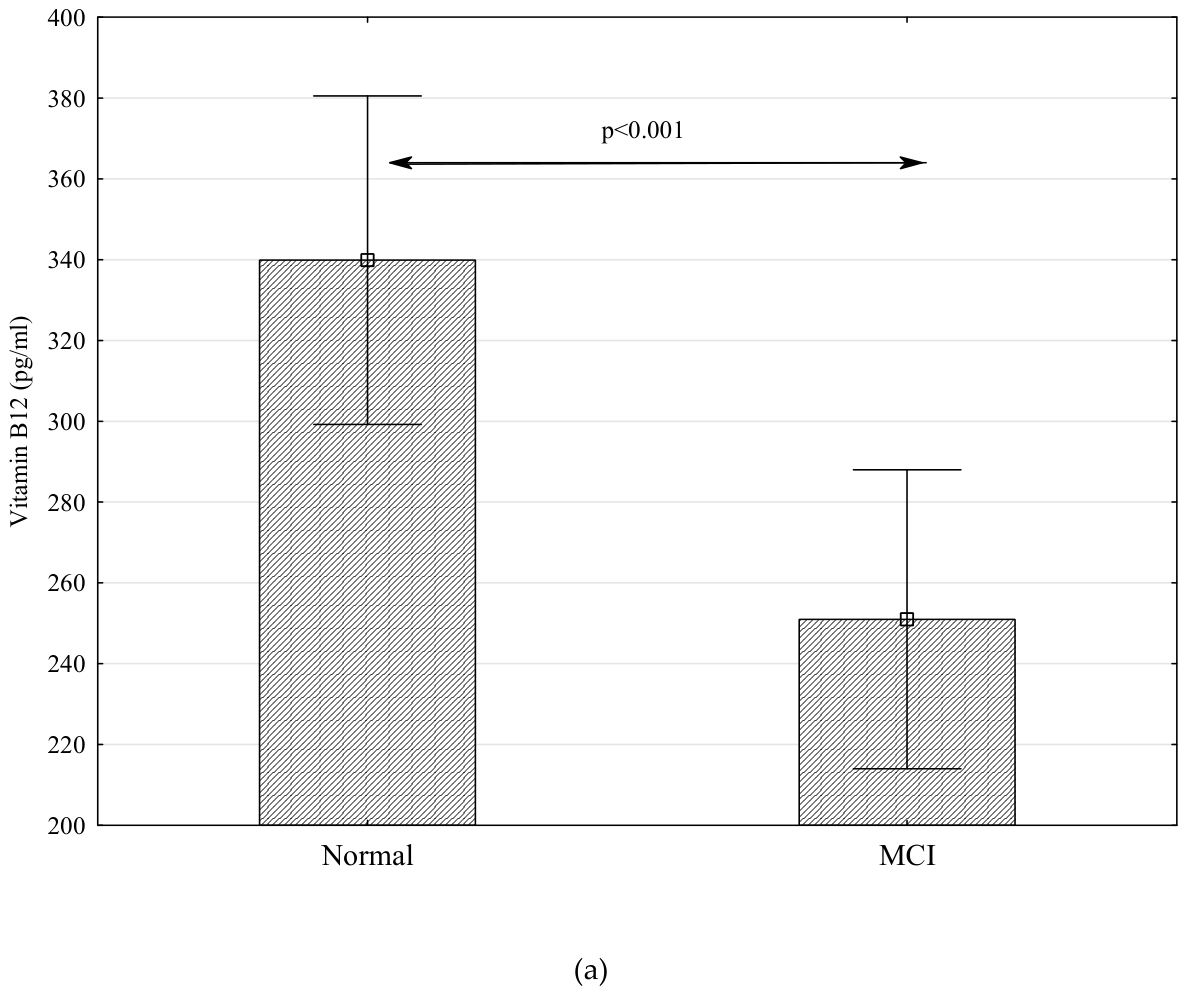
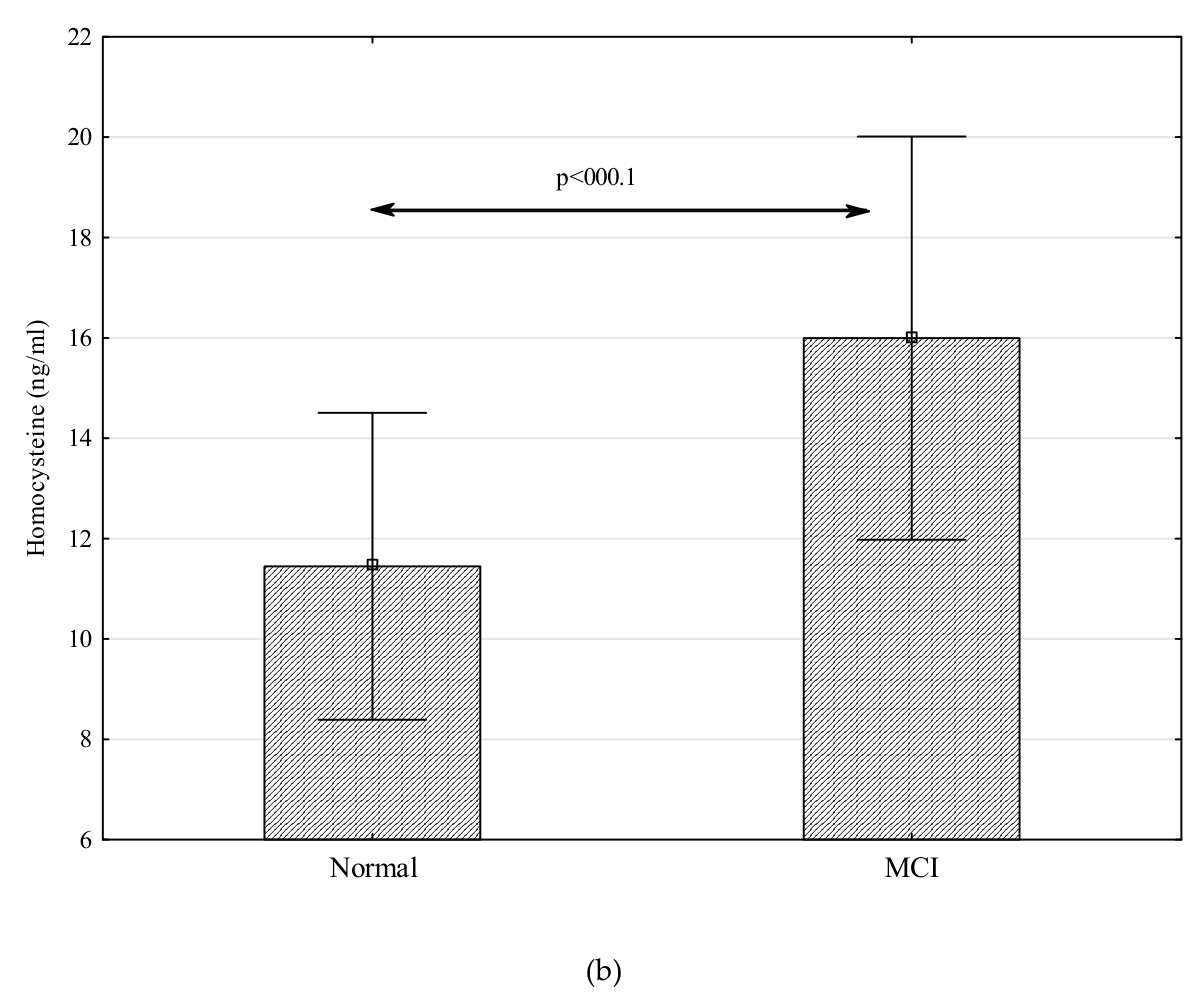
Figure 2.
Significant associations in the elderly T2DM patients with mild cognitive impairment (MCI): a - Vitamin B12 (pg/ml) and Homocysteine (ng/ml) b - Vitamin B12 (pg/ml) and HbA1c levels (%) ; c - Vitamin B12 (pg/ml) and MoCA score; d - Homocysteine (ng/ml) and HbA1c levels (%), e - Homocysteine (ng/ml) and MoCA score; r-correlation coefficient and p- significance.
Figure 2.
Significant associations in the elderly T2DM patients with mild cognitive impairment (MCI): a - Vitamin B12 (pg/ml) and Homocysteine (ng/ml) b - Vitamin B12 (pg/ml) and HbA1c levels (%) ; c - Vitamin B12 (pg/ml) and MoCA score; d - Homocysteine (ng/ml) and HbA1c levels (%), e - Homocysteine (ng/ml) and MoCA score; r-correlation coefficient and p- significance.
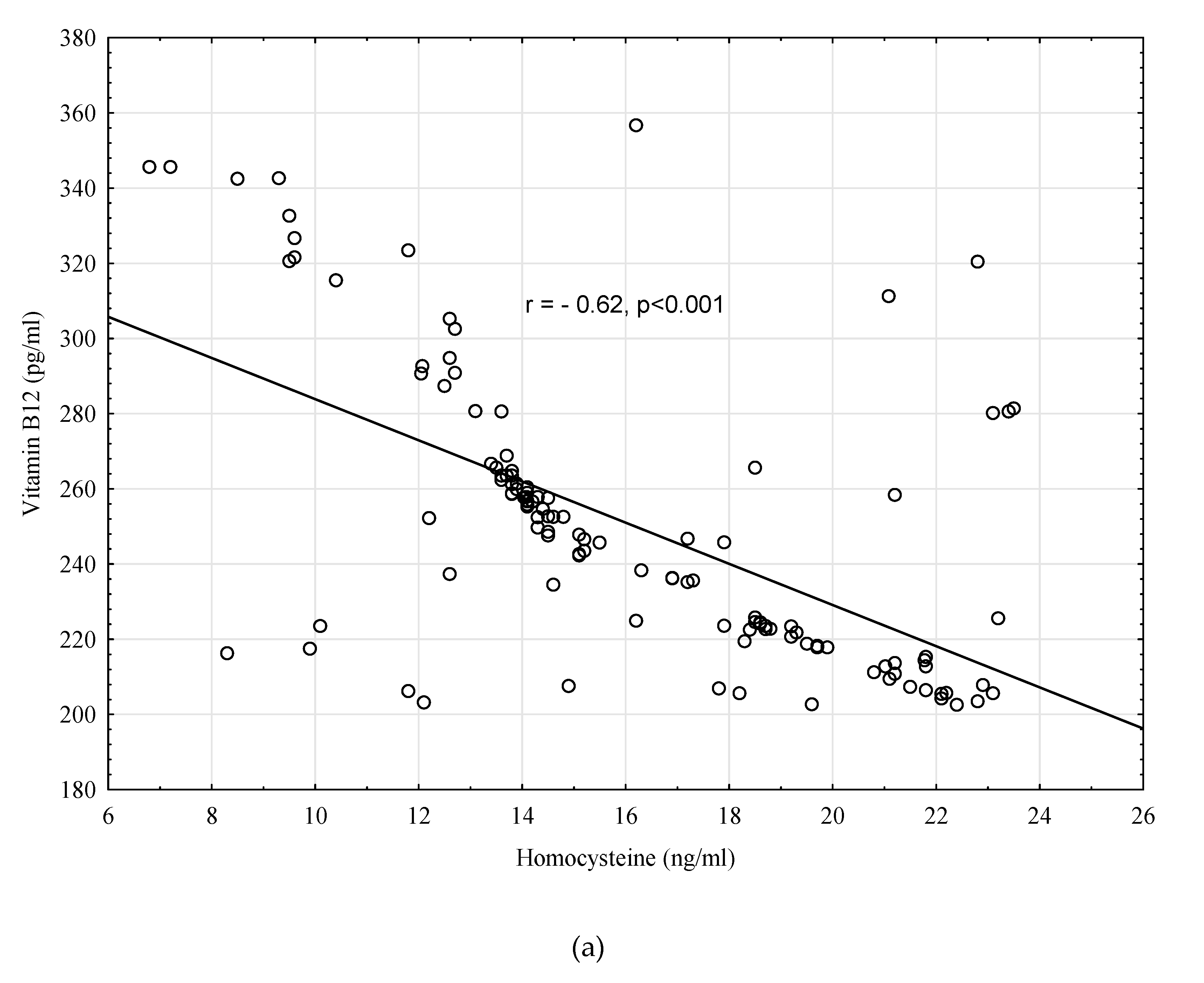
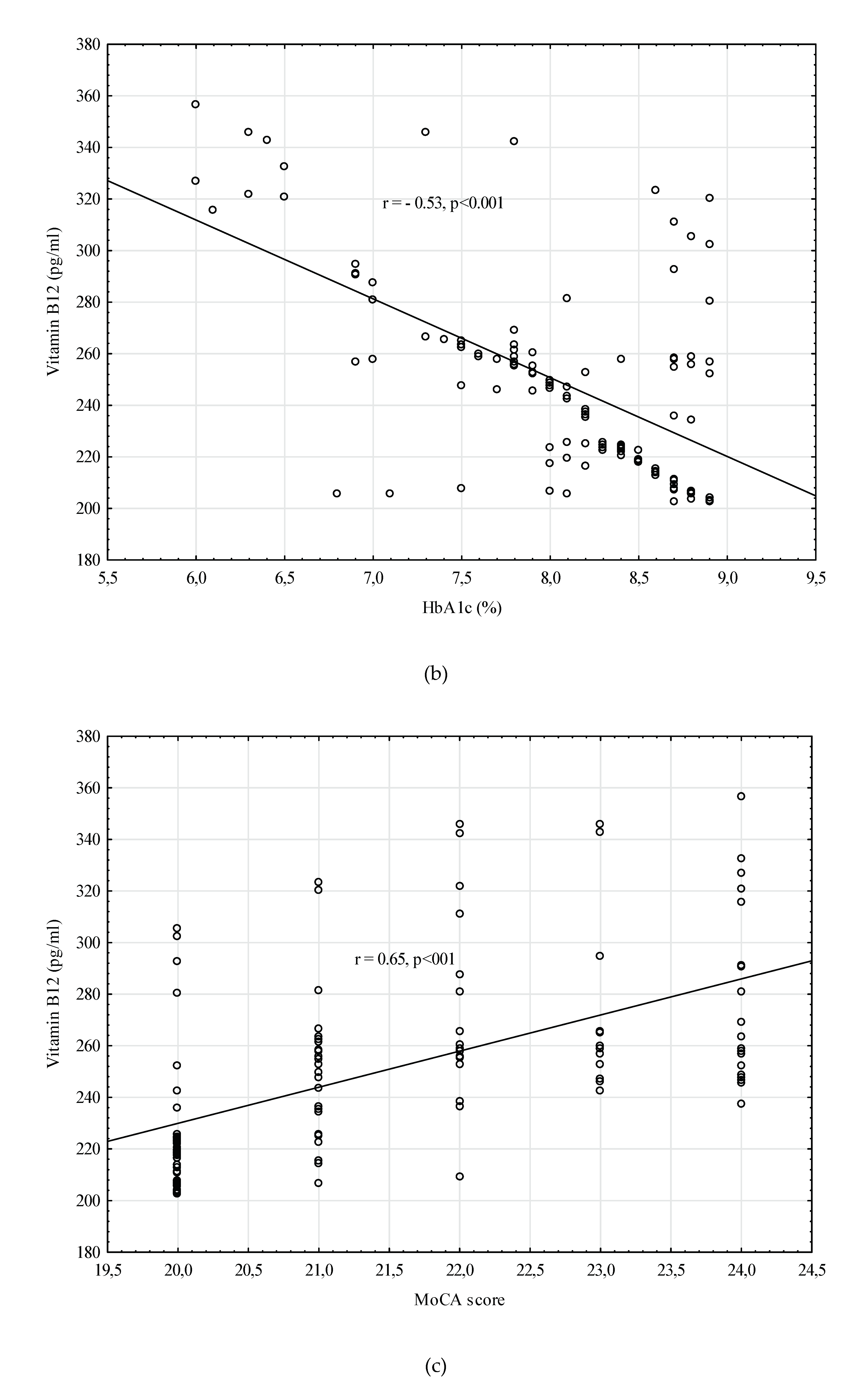
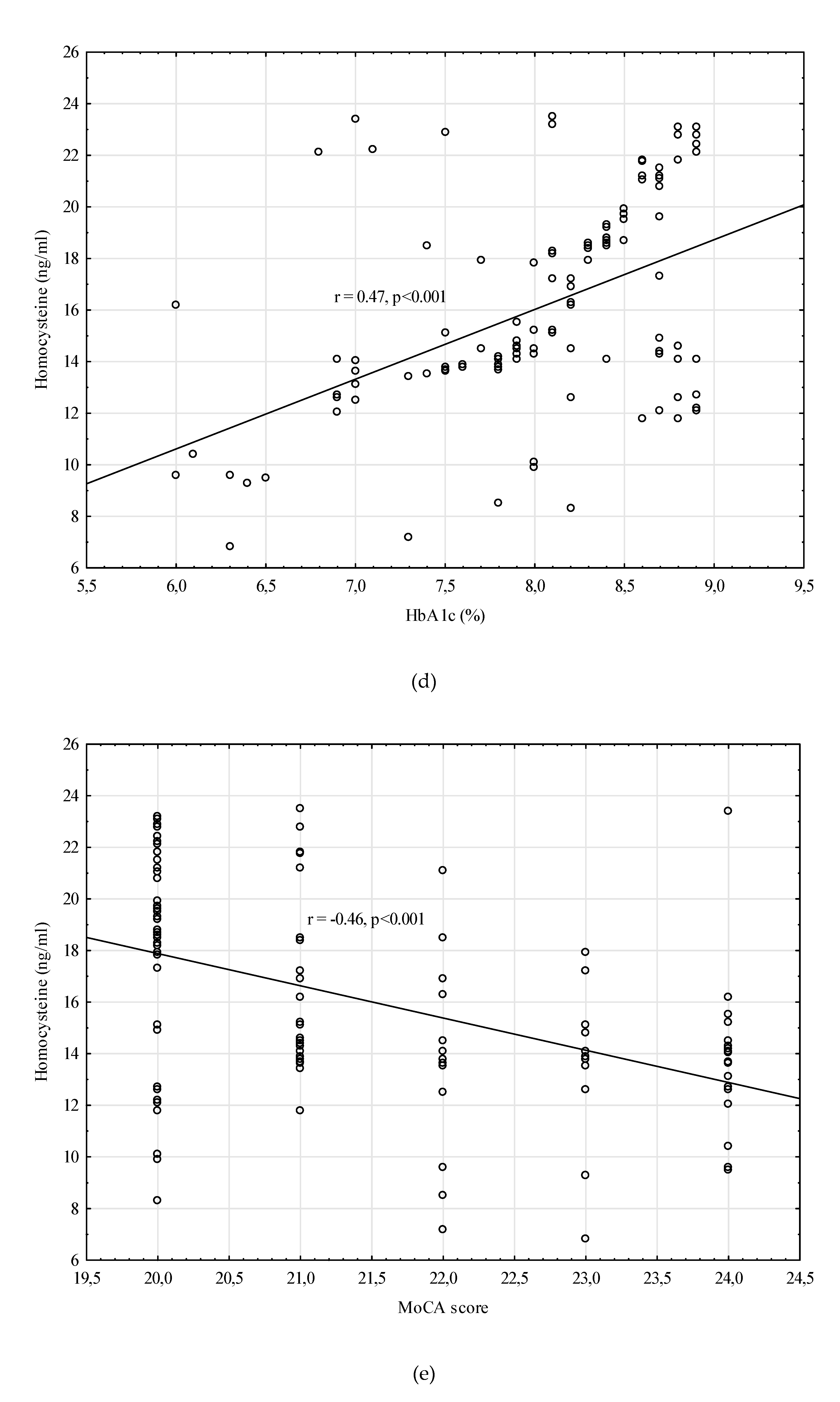

Table 1.
Clinical and laboratory characteristics of T2DM patients, comparing subjects with mild cognitive impairment (MCI) and those without MCI (Normal).
Table 1.
Clinical and laboratory characteristics of T2DM patients, comparing subjects with mild cognitive impairment (MCI) and those without MCI (Normal).
| Mild Cognitive Impairment (n=126) |
Normal (n=259) |
Statistics | P value | |||
| Mean | SD | Mean | SD | Z/t | ||
| Continuous variables | ||||||
| Age (years)* | 74.6 | 3.9 | 72.1 | 3.7 | -6.1 | <0.001 |
| Education (years)* | 9.5 | 1.8 | 11.8 | 2.4 | 8.9 | <0.001 |
| T2DM duration (years)* |
10.7 | 6.2 | 6.5 | 5.2 | -7.9 | <0.001 |
| BMI (kg/m2) | 29.6 | 3.5 | 29.3 | 3.5 | -1.1 | 0.26 |
| HbA1c (%)* | 7.9 | 0.7 | 7.1 | 0.6 | -10.2 | <0.001 |
| Total-C (mmol/L)* | 4.83 | 0.95 | 4.67 | 0.95 | -2.5 | 0.01 |
| LDL (mmol/L) | 2.78 | 0.72 | 2.72 | 0.74 | -1.4 | 0.15 |
| HDL (mmol/L)* | 1.15 | 0.29 | 1.19 | 0.21 | 2.4 | 0.02 |
| TG (mmol/L)* | 2.04 | 0.52 | 1.92 | 0.36 | -4.3 | <0.001 |
| FPG (mmol/L) | 7.37 | 1.5 | 7.18 | 1.29 | -1.23 | 0.21 |
| SBP (mmHg) | 135.5 | 16.1 | 135.1 | 15.1 | -0.08 | 0.93 |
| DBP (mmHg) | 75.3 | 7.7 | 74.9 | 7.9 | -0.33 | 0.74 |
| Number of comorbidities* | 7.2 | 3.4 | 3.7 | 2.6 | -8.7 | <0.001 |
| MoCA score* | 21.5 | 1.5 | 27.2 | 1.2 | 15.9 | <0.001 |
| Quantitative variables | Frequency | % | Frequency | % | χ2 | P value |
| Female gender | 59 | 46.8 | 115 | 44.4 | 0.2 | 0.65 |
| Current smokers | 42 | 33.3 | 79 | 30.5 | 0.32 | 0.57 |
| No physical activity | 62 | 49.2 | 128 | 49.4 | 0.01 | 0.97 |
| DM complications | ||||||
| CVD* | 100 | 79.4 | 103 | 39.8 | 53.3 | <0.001 |
| Stroke | 6 | 4.8 | 10 | 3.9 | 0.17 | 0.68 |
| Hypertension* | 114 | 90.5 | 208 | 80.3 | 6.4 | 0.01 |
| Hyperlipidemia* | 115 | 91.3 | 185 | 71.4 | 19.4 | <0.001 |
| Diabetic polyneuropathy | 23 | 18.3 | 31 | 11.9 | 2.78 | 0.09 |
| Retinopathy* | 94 | 74.6 | 115 | 44.4 | 31.2 | <0.001 |
| Nephropathy* | 70 | 55.5 | 94 | 36.3 | 12.8 | 0.003 |
| Current treatment | ||||||
| OAD | 121 | 96 | 247 | 95.4 | 0.09 | 0.77 |
| Metformin | 101 | 80.2 | 184 | 71 | 3.6 | 0.06 |
| Insulin | 53 | 42.1 | 110 | 42.5 | 0.01 | 0.94 |
Values are presented as mean ± standard deviations (SD) or frequency (%). *Significance, p<0.05; Mann-Whitney U test (Z) and t test (t) for continuous variables or χ2 test for quantitative variables were used to test for significant differences between patients with MCI and those without MCI (Normal). Abbreviations: CVD - cardiovascular disease, BMI – body mass index, T2DM – type 2diabetes, Total -C - total cholesterol, FBG – fasting blood glucose, HbA1c - glycosylated hemoglobin, HDL - high-density lipoprotein cholesterol, LDL - low density lipoprotein cholesterol, MCI - mild cognitive impairment, MoCA - Montreal Cognitive Assessment, OAD - oral antidiabetic drugs, TG – triglycerides.
Table 2.
Univariate logistic regression analysis of risk factors for mild cognitive impairment (MCI) in T2DM elderly patients.
Table 2.
Univariate logistic regression analysis of risk factors for mild cognitive impairment (MCI) in T2DM elderly patients.
| Parameter | ß | SE of ß | p value | OR | 95% CI |
| Age (years)* | 0.162 | 0.03 | <0.001 | 1.18 | 1.11-1.25 |
| Education (years)* | -0.55 | 0.067 | <0.001 | 0.57 | 0.51-0.66 |
| T2DM duration (years)* | 0.129 | 0.022 | <0.001 | 1.14 | 1.09-1.19 |
| BMI (kg/m2) | 0.028 | 0.031 | 0.36 | 1.03 | 0.96-1.09 |
| HbA1c (%)* | 1.81 | 0.193 | <0.001 | 6.14 | 4.2-8.94 |
| Total-C (mmol/L) | 0.005 | 0.003 | 0.1 | 1.01 | 0.99-1,01 |
| LDL (mmol/L) | 0.002 | 0.004 | 0.5 | 1.01 | 0.99-1.01 |
| HDL (mmol/L) | -0.02 | 0.01 | 0.07 | 0.98 | 0.95-1.00 |
| TG (mmol/L)* | 0.008 | 0.003 | 0.01 | 1.01 | 1.01-1.02 |
| FPG ((mmol/L) | 0.005 | 0.004 | 0.22 | 1.01 | 0.99-1.01 |
| SBP (mmHg) | 0.002 | 0.007 | 0.8 | 1.01 | 0.98-1.01 |
| DBP (mmHg) | 0.005 | 0.014 | 0.73 | 1.01 | 0.98-1.03 |
| Number of comorbidities* | 0.35 | 0.041 | <0.001 | 1.42 | 1.31-1.54 |
| Female gender | 0.09 | 0.2 | 0.65 | 1.1 | 0.71-1.69 |
| Current smokers | 0.13 | 0.23 | 0.57 | 1.14 | 0.72-1.79 |
| No physical activity | -0.009 | 0.21 | 0.96 | 0.99 | 0.65-1.52 |
| CVD* | 1.76 | 0.254 | <0.001 | 5.83 | 3.54-9.58 |
| Stroke | 0.22 | 0.52 | 0.67 | 1.24 | 0.44-3.51 |
| Hypertension* | 0.85 | 0.34 | 0.01 | 2.33 | 1.19-4.54 |
| Hyperlipidemia* | 1.43 | 0.34 | <0.001 | 4.18 | 2.13-8.21 |
| Diabetic polyneuropathy | 0.49 | 0.3 | 0.09 | 1.64 | 0.91-2.95 |
| Retinopathy* | 1.302 | 0.24 | <0.001 | 3.68 | 2.29-5.88 |
| Nephropathy* | 0.786 | 0.221 | <0.001 | 2.19 | 1.42-3.38 |
| OAD | 0.16 | 0.54 | 0.76 | 1.17 | 0.41-3.41 |
| Metformin | 0.499 | 0.262 | 0.06 | 1.65 | 0.98-2.75 |
| Insulin | -0.02 | 0.22 | 0.93 | 0.98 | 0.63-1.51 |
| Vitamin B12 (pg/ml)* | -0.048 | 0.005 | <0.001 | 0.95 | 0.94-0.96 |
| Homocysteine (ng/ml)* | 0.343 | 0.039 | <0.001 | 1.41 | 1.31-1.52 |
*Statistically significant difference, p<0.05; ß: regression coefficient; CI: confidence interval for odds ratio; OR: odds ratio; SE: standard error; Abbreviations: CVD - cardiovascular disease, BMI – body mass index, T2DM – type 2diabetes, Total -C - total cholesterol, FBG – fasting blood glucose, HbA1c - glycosylated hemoglobin, HDL - high-density lipoprotein cholesterol, LDL - low density lipoprotein cholesterol, MCI - mild cognitive impairment, OAD - oral antidiabetic drugs, TG – triglycerides.
Table 3.
Multivariate logistic regression analysis of risk factors for mild cognitive impairment (MCI) in T2DM elderly patients.
Table 3.
Multivariate logistic regression analysis of risk factors for mild cognitive impairment (MCI) in T2DM elderly patients.
| Parameter | ß | SE of ß | p value | OR | 95% CI |
| Vitamin B12 (pg/ml)* | -0.05 | 0.005 | <0.001 | 0.96 | 0.94-0.97 |
| TG (mmol/L)* | -0.02 | 0.005 | 0.002 | 0.98 | 0.97-0.99 |
| Number of comorbidities* | 0.23 | 0.06 | <0.001 | 1.26 | 1.11-1.43 |
| Education (years)* | -0.31 | 0.10 | 0.002 | 0.73 | 0.59-0.89 |
*Statistically significant difference, p<0.05; ß: regression coefficient; CI: confidence interval for odds ratio; OR: odds ratio; SE: standard error; Abbreviations: TG – triglycerides.
Disclaimer/Publisher’s Note: The statements, opinions and data contained in all publications are solely those of the individual author(s) and contributor(s) and not of MDPI and/or the editor(s). MDPI and/or the editor(s) disclaim responsibility for any injury to people or property resulting from any ideas, methods, instructions or products referred to in the content. |
© 2026 by the authors. Licensee MDPI, Basel, Switzerland. This article is an open access article distributed under the terms and conditions of the Creative Commons Attribution (CC BY) license.
Copyright: This open access article is published under a Creative Commons CC BY 4.0 license, which permit the free download, distribution, and reuse, provided that the author and preprint are cited in any reuse.


