Preprint
Review

This version is not peer-reviewed.

Bidirectional Association Between Gout and Parkinson’s Disease: A Systematic Review and Meta-Analysis

Submitted:

06 July 2026

Posted:

08 July 2026

You are already at the latest version

Abstract

Background: Parkinson's disease (PD) and gout are common chronic disorders with potentially shared biological mechanisms involving urate metabolism, inflammation, and oxidative stress. However, epidemiological findings remain inconsistent. This systematic review and meta-analysis evaluated the bidirectional association between gout and PD. Methods: A systematic search of PubMed/Medline, Embase, and the Cochrane Library was conducted from database inception to January 2026. Observational studies evaluating the association between gout and PD were included. Pooled hazard ratios (HRs) with 95% confidence intervals (CIs) were calculated using random-effects models. Statistical significance was defined as p<0.05. The review was prospectively registered in PROSPERO (CRD420261439697). Results: Six cohort studies were included. In pooled analyses, gout was not associated with subsequent PD risk (HR=1.02, 95% CI 0.93–1.12; p=0.70). Sex-stratified analyses also demonstrated no significant associations among women (HR=1.10, 95% CI 0.93–1.30; p=0.27) or men (HR=0.99, 95% CI 0.92–1.07; p=0.79). Evidence regarding the reverse association was limited to a single nationwide cohort study, which reported a lower subsequent risk of gout among individuals with PD (HR=0.51, 95% CI 0.43–0.60; p<0.00001). Similar findings were observed among women (HR=0.56, 95% CI 0.43–0.72) and men (HR=0.47, 95% CI 0.39–0.57). Conclusion: Gout was not associated with subsequent PD risk. Evidence from a single nationwide cohort suggests that PD may be associated with a reduced risk of subsequent gout. Further large-scale prospective studies are needed to clarify the relationship between PD, gout, and urate metabolism.

Keywords: 
;  ;  ;  ;  

1. Introduction

Parkinson’s disease (PD) is the second most common neurodegenerative disorder worldwide and is characterized by progressive loss of dopaminergic neurons in the substantia nigra, leading to motor and non-motor manifestations that substantially impair quality of life [1]. The global burden of PD has increased considerably over recent decades owing to population aging, making the identification of modifiable risk factors and protective mechanisms a major public health priority [2]. Although the precise etiology of PD remains incompletely understood, accumulating evidence implicates oxidative stress, mitochondrial dysfunction, protein aggregation, and chronic neuroinflammation in disease pathogenesis [3,4].
Gout is the most common inflammatory arthritis and results from the deposition of monosodium urate crystals in joints and surrounding tissues due to persistent hyperuricemia [5]. The prevalence of gout has increased globally, particularly among older adults [6]. Beyond its musculoskeletal manifestations, gout has been associated with a wide range of metabolic, cardiovascular, and neurological conditions [5]. Uric acid (UA), the end product of purine metabolism, exhibits potent antioxidant properties and accounts for a substantial proportion of the antioxidant capacity of human plasma [7]. Consequently, urate metabolism has attracted considerable interest in neurodegenerative research.
Several biological mechanisms suggest a potential association between gout and PD. Oxidative stress is believed to play a central role in dopaminergic neuronal degeneration, and UA may exert neuroprotective effects by scavenging reactive oxygen species and reducing oxidative damage [8]. Epidemiological studies have demonstrated that lower serum urate concentrations are frequently observed among patients with PD and may be associated with faster disease progression [7,9]. Consistent with these observations, recent studies have reported that higher serum uric acid levels in early-stage PD are associated with better cognitive performance, lower motor severity, and improved functional mobility, further supporting the hypothesis that urate metabolism may reflect disease burden and neurodegenerative progression in PD [10,11]. Conversely, gout is characterized by chronic systemic inflammation, which has also been implicated in neurodegeneration and could potentially counteract any protective effects of elevated urate levels [12]. These complex and potentially opposing mechanisms have generated substantial interest regarding the relationship between gout and PD.
Despite growing investigation into this topic, epidemiological studies have produced inconsistent findings. Several cohort studies have reported no significant association between gout and PD risk, whereas others have suggested either protective or inverse associations [13,14,15,16,17]. While some studies have reported a reduced risk of PD among individuals with gout or elevated urate levels, others have found no significant association. Furthermore, relatively little attention has been directed toward the reverse temporal relationship, namely whether a diagnosis of PD influences the subsequent risk of developing gout. Clarifying these associations may improve understanding of the shared biological pathways linking neurodegeneration, inflammation, and purine metabolism. Therefore, the aim of this systematic review and meta-analysis was to comprehensively evaluate the bidirectional association between gout and PD. Specifically, we assessed whether gout influences the risk of subsequent PD and whether PD affects the risk of subsequent gout using evidence derived from longitudinal cohort studies.

2. Methodology

2.1. Primary and Secondary Outcomes

The primary outcome of this systematic review and meta-analysis was the temporal association between gout and the subsequent development of PD, expressed as hazard ratios (HRs) with corresponding 95% confidence intervals (CIs). The secondary outcome was the reverse temporal association, evaluating the risk of developing gout following a diagnosis of PD. Where available, sex-specific estimates for women and men were extracted and analyzed separately to explore potential sex-related differences in the associations.

2.2. Literature Search Strategy

This systematic review and meta-analysis was conducted in accordance with the Preferred Reporting Items for Systematic Reviews and Meta-Analyses (PRISMA) 2020 guidelines (Table S1) [18]. A comprehensive literature search was performed in PubMed/Medline, Embase, and the Cochrane Library from database inception to January 2026 to identify studies evaluating the association between gout and PD. The search strategy included a combination of Medical Subject Headings (MeSH) terms and keywords related to “gout”, “hyperuricemia”, “uric acid”, “Parkinson’s disease”, “parkinsonism”, “cohort studies”, “case-control studies” and “hazard ratios”. The complete search strategy is presented in Table S2. Additionally, the reference lists of eligible studies were manually screened to identify any potentially relevant articles not captured through the electronic search. The study was prospectively registered in the International Prospective Register of Systematic Reviews (CRD420261439697).

2.3. Inclusion and Exclusion Criteria

Studies were considered eligible if they met the following criteria: (1) employed a longitudinal cohort or population-based observational design; (2) evaluated the association between gout and subsequent PD, or PD and subsequent gout; (3) reported effect estimates as HRs or provided sufficient data for their calculation; and (4) were conducted in human participants. Studies were excluded if they were reviews, editorials, conference abstracts without sufficient data, case reports, case series, animal studies, or studies lacking relevant outcome measures.

2.4. Data Extraction

Data were extracted independently by J.P.R. and A.L.F.C. using a standardized data-extraction form. Any discrepancies were resolved through discussion and, when necessary, consultation with A.F. Extracted information included study characteristics, participant demographics and baseline characteristics, exposure and outcome definitions, effect estimates, and other relevant outcome data.

2.5. Quality Assessment

The methodological quality of included studies was assessed by an independent reviewer A.F. and P.T. using the Newcastle-Ottawa Scale (NOS) for cohort studies [19]. This tool evaluates studies based on selection of participants, comparability of study groups, and outcome assessment, with a maximum score of nine points. Certainty of evidence was assessed using the Grading of Recommendations Assessment, Development and Evaluation (GRADE) framework. Evidence from observational studies was initially rated as low certainty and subsequently downgraded based on risk of bias, inconsistency, indirectness, imprecision, and publication bias when appropriate [20].

2.6. Statistical Analysis

Longitudinal cohort studies evaluating the temporal association between gout and PD, in either direction, were eligible for inclusion. Study-level effect estimates were extracted as HRs with corresponding 95% CIs. When standard errors were not explicitly reported, they were calculated from the logarithm of the reported HRs and CIs [21,22].
Meta-analyses were performed using a generic inverse-variance approach on the log-HR scale. Pooled estimates were calculated using random-effects models with between-study variance (τ²) estimated via restricted maximum likelihood (REML) [23], and confidence intervals derived using the standard normal approximation. Separate quantitative syntheses were planned for the associations of gout with subsequent PD and PD with subsequent gout. Where at least two studies were available, pooled estimates were calculated using random-effects meta-analysis. When only a single eligible study was identified, the study-specific effect estimate was reported descriptively without pooling. Sex-stratified analyses were prespecified a priori because of established sex differences in gout prevalence, urate metabolism, and PD epidemiology [24,25]. Sex-stratified (female-only and male-only) and combined (female + male) estimates were presented separately to avoid cross-stratum contamination. Only one estimate per study was included within each meta-analysis. Combined-sex analyses used sex-combined estimates, whereas sex-specific analyses used female-only or male-only estimates separately.
Statistical heterogeneity was quantified using τ², Cochran’s Q (χ²) statistic, and the I² statistic. Overall effects were assessed using Z-tests, and subgroup differences by sex were evaluated using χ² tests for interaction. All analyses were hypothesis-driven, with two-sided p values <0.05 considered statistically significant. Potential reporting bias and small-study effects were assessed using contour-enhanced funnel plots. Study influence and sources of heterogeneity were explored using Galbraith and Baujat diagnostics.
All analyses were conducted using R (R Foundation for Statistical Computing, Vienna, Austria), employing the metafor package for model fitting, effect estimation, and forest plot generation [26]. Forest plots were produced in GraphPad Prism version 10.4.1 for Mac (GraphPad Software, Boston, Massachusetts, USA; www.graphpad.com, accessed 2 July 2026)[27].

3. Results

3.1. Study Selection

The systematic literature search identified a total of 495 records from electronic databases, including PubMed/Medline (n = 235), Embase (n = 186), and the Cochrane Library (n = 74). Prior to screening, 118 duplicate records were removed, 4 records were excluded by automation tools, and 175 records were removed for other reasons, leaving 198 records for title and abstract screening. Following screening, 2 records were excluded, and 196 reports were sought for retrieval. All reports were successfully retrieved (n = 0 not retrieved) and underwent full-text assessment for eligibility.
Of the 196 full-text reports evaluated, 190 were excluded, including duplicate records identified during full-text review (n = 51), literature reviews or systematic reviews (n = 46), studies unrelated to UA or gout (n = 36), basic science or animal studies (n = 32), and studies that did not report hazard ratios or provide sufficient data for effect-size estimation (n = 25). Ultimately, six cohort studies met the eligibility criteria and were included in the systematic review and quantitative synthesis (Figure 1).

3.2. Study Characteristics

A total of 6 cohort studies were included in this meta-analysis comprising participants across multiple countries. The included studies were conducted in Norway [7], Taiwan [13], South Korea [15,16], Sweden [17], and the United States [14]. The majority of studies employed retrospective cohort designs using large national administrative or health insurance databases, such as the Korean National Health Insurance Service (NHIS), Taiwan National Health Insurance Research Database (NHIRD), Medicare databases, Western Swedish Health Care Register (VEGA), The Cause of Death Register (Dödsorsaksregistret), The Swedish Prescribed Drug Register (Läkemedelsregistret) and Clinical Chemistry Database of VGR (Registercentrum Västra Götaland).
Sample sizes varied substantially, ranging from 15,800 participants to over 3.5 million individuals. Most studies included matched controlled groups without gout, while some utilized large population-based registries. Gout was primarily identified using International Classification of Diseases (ICD) codes (ICD-9-CM code 274 or ICD-10 code M10), often in combination with prescriptions for urate-lowering drugs such as allopurinol, febuxostat, or colchicine. In one study, gout was identified using prolonged exposure to urate-lowering drugs as a proxy.
PD was consistently identified using ICD diagnostic codes (ICD-9 code 332 or ICD-10 code G20), with one study additionally requiring levodopa prescription thresholds to improve diagnostic specificity. One study also examined related neurodegenerative outcomes, including Alzheimer’s disease and dementia [16].
Overall, the included studies were population-based and relied on large-scale healthcare databases, providing substantial statistical power and longitudinal follow-up. Detailed characteristics of the included studies are presented in Table 1 [7,13,14,15,16,17].

3.3. Quality Assessment

Overall, all included studies were of high methodological quality, with scores ranging from 8 to 9. Most studies achieved full scores in selection and outcome domains due to their use of large, population-based registries and validated diagnostic coding systems. Comparability was adequately addressed through matching or statistical adjustment for confounders. Sensitivity analysis excluding lower-quality studies was not performed due to the uniformly high quality of included studies. Detailed results of the quality assessment are presented in Table 2 [7,13,14,15,16,17].

3.4. Meta-Analysis

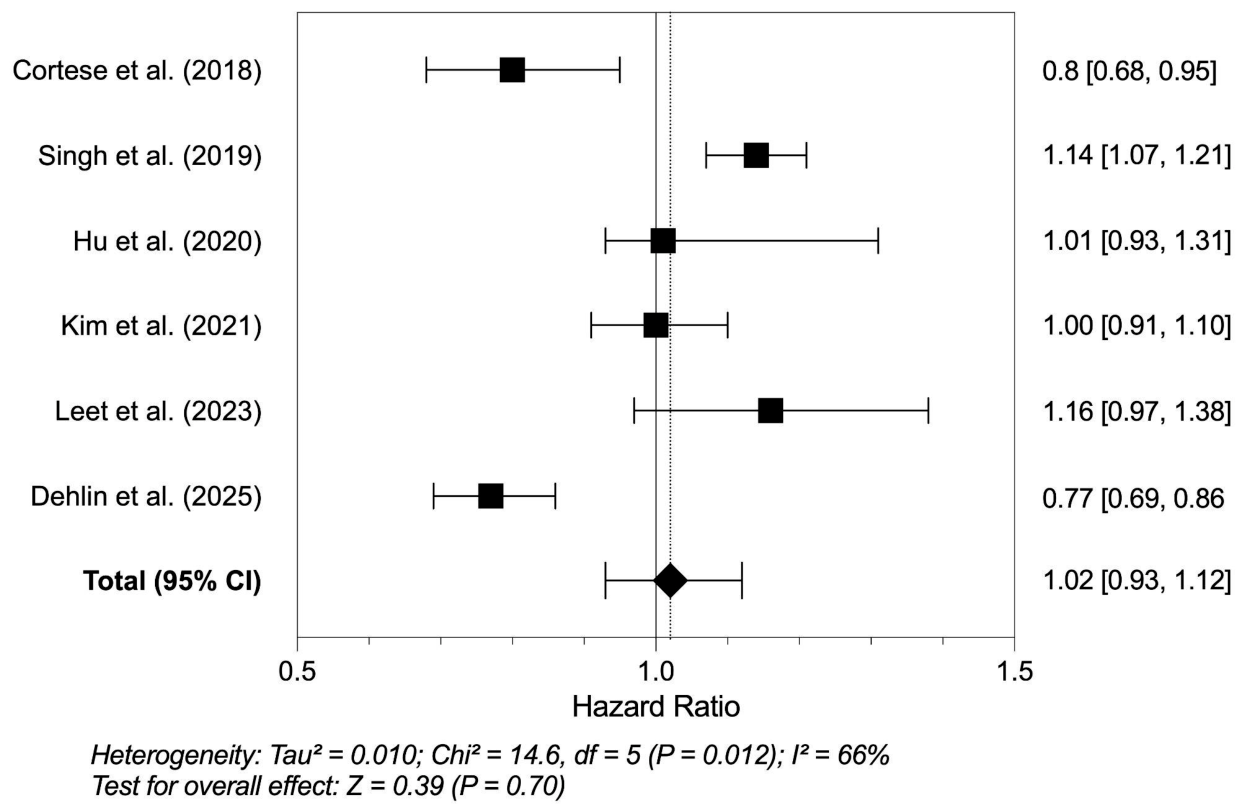
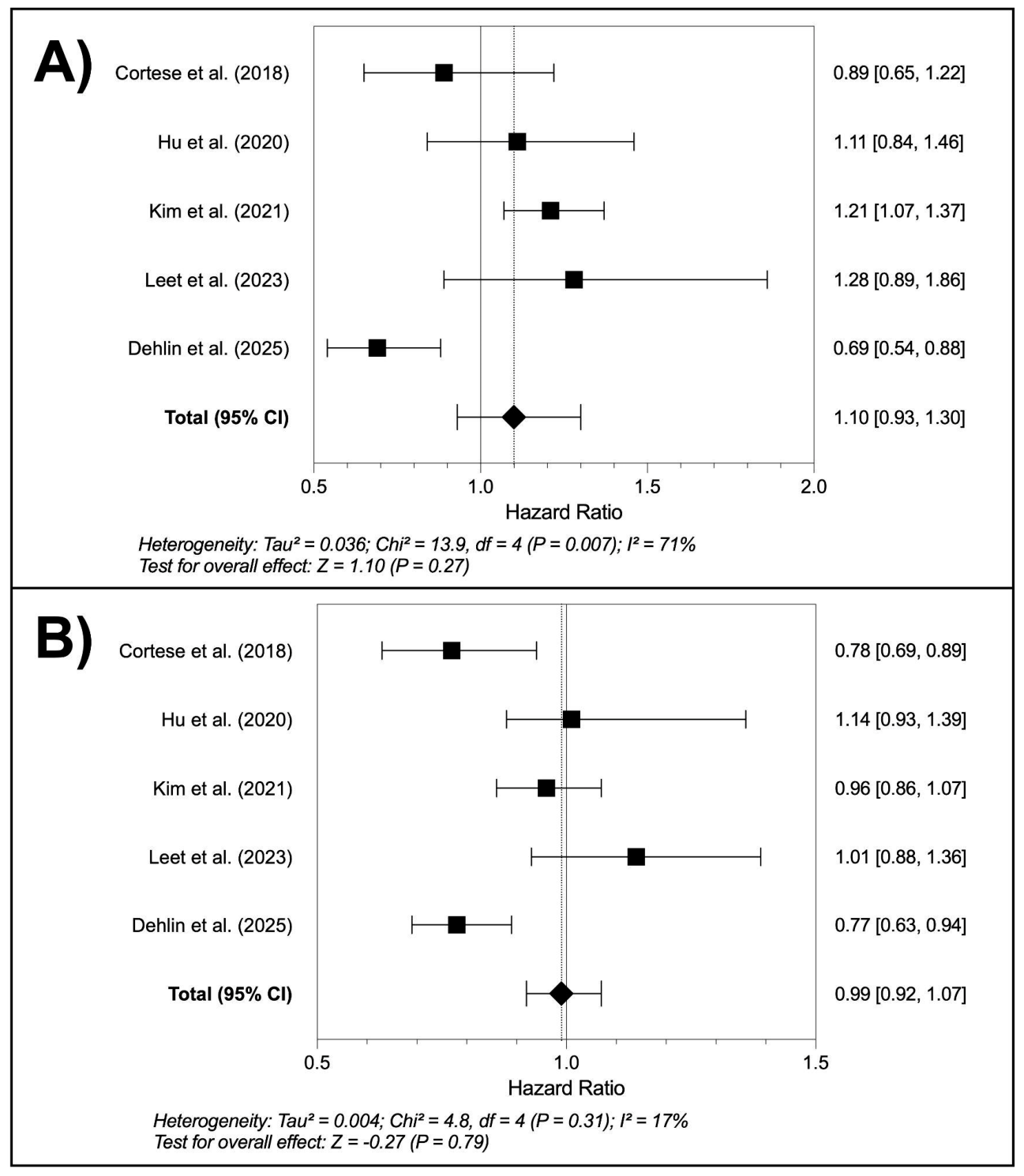
The meta-analysis included six population-based longitudinal cohort studies, collectively representing 6,275,069 individuals (Table 3)(Table S3) [7,13,14,15,16,17]. In analyses pooling men and women, gout was not associated with subsequent PD risk (pooled HR = 1.02, 95% CI 0.93–1.12; Z = 0.39, p = 0.70) (Figure 2) [7,13,14,15,16,17]. Between-study heterogeneity was moderate to substantial (τ² = 0.010; χ² = 14.6, df = 5, p = 0.012; I² = 66%), reflecting variability across Western and East Asian populations. Sex-stratified analyses showed no statistically significant association in either subgroup: among women, gout was associated with a non-significant increase in PD risk (HR = 1.10, 95% CI 0.93–1.30; Z = 1.10, p = 0.27; τ² = 0.036; I² = 71%), whereas among men, the pooled estimate indicated no association (HR = 0.99, 95% CI 0.92–1.07; Z = −0.27, p = 0.79) with low heterogeneity (τ² = 0.004; I² = 17%)(Figure 3) [7,13,15,16,17]. There was no evidence of effect modification by sex (χ² = 1.58, df = 1, p = 0.21).
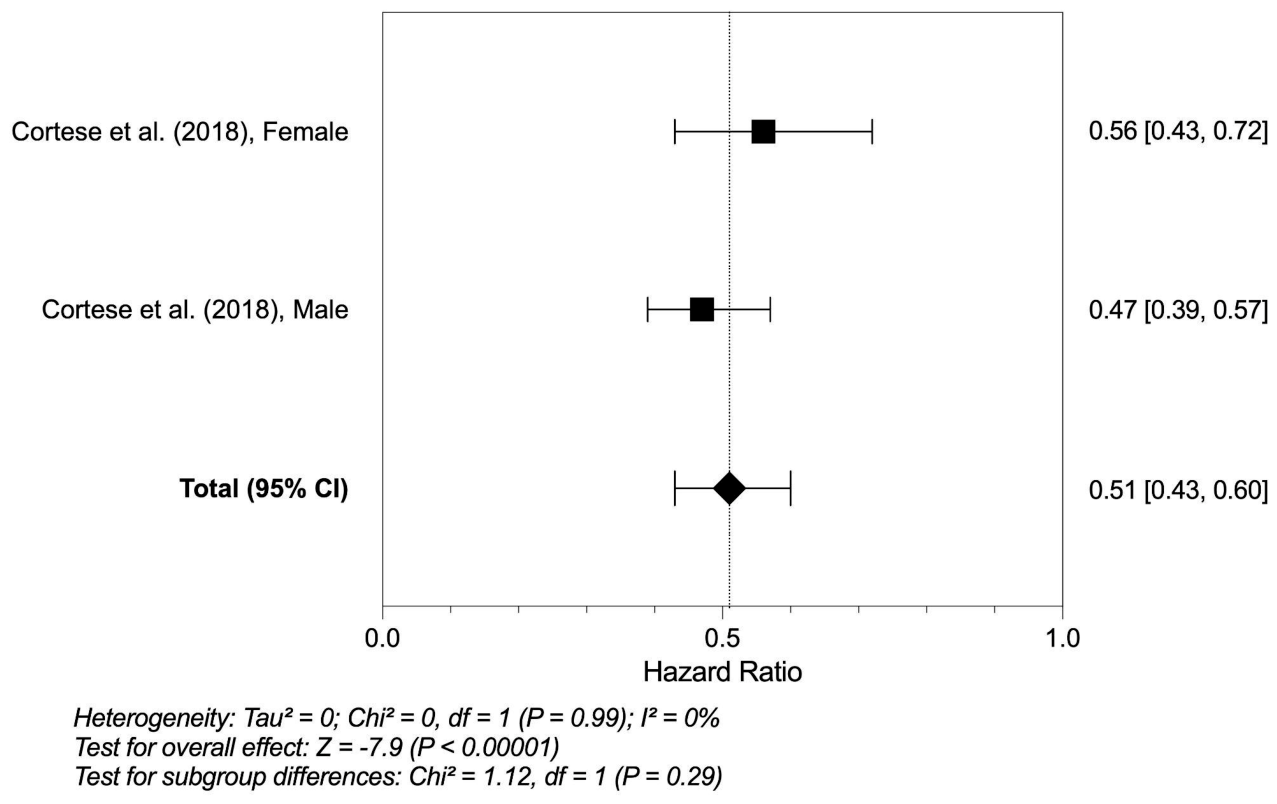
In contrast, only one eligible population-based cohort study evaluated the reverse temporal association between PD and subsequent gout (Figure 4) [7]. In this nationwide Norwegian registry study including 3,571,714 individuals, PD was associated with a significantly lower subsequent risk of gout (HR = 0.51, 95% CI 0.43–0.60; Z = −7.9, p < 0.00001) [7]. Sex-specific estimates were highly consistent, demonstrating a reduced risk of gout following PD in both women (HR = 0.56, 95% CI 0.43–0.72; Z = −4.6, p < 0.00001) and men (HR = 0.47, 95% CI 0.39–0.57; Z = −6.8, p < 0.00001). No sex-based difference in the magnitude of this association was observed (χ² = 1.12, df = 1, p = 0.29). Because only one eligible study evaluated the PD and subsequent gout relationship, pooled effect estimation and formal heterogeneity assessment were not feasible.

3.5. Risk of Bias

Evaluation of reporting bias and study influence did not reveal clear evidence of substantial small-study effects or selective publication. The contour-enhanced funnel plot did not suggest obvious asymmetry (Figure S1) [7,13,14,15,16,17]. However, interpretation of funnel-plot findings is limited because fewer than ten studies were available, reducing the reliability of visual assessment of publication bias and small-study effects. Therefore, conclusions regarding reporting bias should be interpreted with caution.
Galbraith analysis revealed an overall pattern of consistency across studies, although a limited number of estimates contributed disproportionately to between-study variability (Figure S2). Consistent with this observation, Baujat diagnostics identified Singh et al. as the most influential study with respect to both heterogeneity and overall effect size [14], while no single study appeared capable of materially altering the direction of the association (Figure S3). Taken together, these diagnostics suggest that the summary estimates remain stable despite moderate between-study heterogeneity and do not indicate obvious reporting bias. Interpretation of publication-bias diagnostics should be undertaken with caution because fewer than ten studies were available, limiting the power of funnel-plot-based assessments.

3.6. Certainty of Evidence

According to the GRADE framework, the certainty of evidence for the association between gout and subsequent PD was judged to be low. Although the analysis included large population-based cohorts, confidence in the estimates was reduced by the observational design of the included studies and moderate-to-substantial heterogeneity, particularly in the combined and female-specific analyses. The certainty of evidence for the reverse association between PD and subsequent gout was rated as very low because it was derived from a single observational cohort study, precluding assessment of consistency across studies and limiting confidence in the generalizability of the findings (Table 4).

4. Discussion

4.1. Summary

This systematic review and meta-analysis evaluated the bidirectional association between gout and PD using evidence from six large population-based cohort studies. The pooled analysis demonstrated that gout was not associated with an increased risk of PD, and this finding remained consistent across sex-stratified analyses. In contrast, evidence from a large nationwide cohort suggested that PD may be associated with a lower subsequent risk of gout, with similar estimates observed in both women and men. These findings support a potentially asymmetric relationship between the two conditions, indicating that gout does not appear to influence the risk of developing PD, whereas PD may be associated with factors that reduce the likelihood of developing gout. However, because evidence for the reverse association was derived from a single study, this observation should be interpreted cautiously pending replication in independent populations. The reverse association was summarized descriptively rather than meta-analyzed because only one eligible study evaluated the temporal relationship between PD and subsequent gout.

4.2. General

The potential relationship between gout and PD has been widely explored due to the hypothesized neuroprotective role of UA, a potent endogenous antioxidant [28]. Elevated urate levels have been proposed to mitigate oxidative stress, a key mechanism implicated in dopaminergic neuronal degeneration in PD [29]. However, the present findings do not support a protective effect of gout on PD risk, suggesting that systemic hyperuricemia alone may not confer clinically meaningful neuroprotection. Importantly, gout is an imperfect surrogate for serum urate concentration because it reflects not only chronic hyperuricemia but also inflammatory activity, treatment effects, and associated metabolic comorbidities [30]. Previous reviews and commentaries have also highlighted associations between lower serum urate concentrations and greater motor severity, cognitive impairment, and neurodegenerative progression in PD, further supporting interest in urate metabolism as a potential biomarker of disease activity and prognosis [28,31]. More recently, Liang et al. reported that lower serum uric acid levels independently predicted the development of depression during a 5-year follow-up of individuals with prodromal Parkinson's disease, further supporting the concept that reduced urate levels may be associated with PD-related neurodegenerative and non-motor manifestations even before the onset of overt motor disease [32]. Additional longitudinal evidence from prodromal α-synucleinopathies supports this observation [33]. Zang et al. reported that patients with isolated REM sleep behavior disorder, a well-established prodromal stage of α-synucleinopathies, exhibited lower serum uric acid levels than healthy controls, and lower baseline uric acid levels were independently associated with an increased risk of phenoconversion to dementia during prospective follow-up. These findings further support the hypothesis that reduced urate levels may accompany early neurodegenerative processes preceding the onset of overt synucleinopathy [34]. Similarly, Chang et al. demonstrated that higher serum uric acid levels in early-stage PD were associated with better global cognitive performance, lower motor severity, greater neural efficiency on neurophysiological testing, and superior functional mobility, further supporting the potential role of urate as a biomarker of disease burden and clinical status rather than a directly protective therapeutic target [11].
The biological relationship between PD and urate metabolism is complex and likely reflects the opposing antioxidant and pro-inflammatory properties of UA. PD is characterized by progressive degeneration of dopaminergic neurons driven by oxidative stress, mitochondrial dysfunction, α-synuclein (αSyn) aggregation, impaired protein clearance, and chronic neuroinflammation [4,8]. Under physiological conditions, soluble UA functions as one of the body's principal endogenous antioxidants by scavenging reactive oxygen and nitrogen species, reducing lipid peroxidation, and preserving mitochondrial integrity, thereby potentially protecting vulnerable dopaminergic neurons from oxidative injury [28]. However, persistent hyperuricemia results in the formation of monosodium urate crystals that activate the NLRP3 inflammasome, promoting the release of pro-inflammatory cytokines, including interleukin-1β, interleukin-6, interleukin-18, and tumor necrosis factor-α, which drive chronic systemic inflammation [5]. These inflammatory mediators may disrupt blood-brain barrier integrity, activate microglia, amplify oxidative stress, and facilitate αSyn aggregation, thereby contributing to dopaminergic neuronal injury and neurodegeneration [8,28,35]. Consequently, UA appears to exert concentration- and context-dependent effects, whereby physiological soluble urate may provide neuroprotection through its antioxidant properties, whereas chronic hyperuricemia accompanied by crystal-induced inflammation may offset these benefits and potentially promote neurodegenerative processes. This biphasic mechanism provides a plausible biological explanation for the inconsistent epidemiological findings reported across studies investigating the association between gout, hyperuricemia, and PD.
Several factors may explain this lack of association. Gout is not only characterized by elevated UA levels but also by chronic systemic inflammation, which may counteract any potential antioxidant benefits [36]. Additionally, heterogeneity in disease severity, treatment exposure (e.g., urate-lowering therapies), and comorbidities across populations may obscure subtle associations. Furthermore, serum urate levels may not accurately reflect central nervous system urate concentrations, limiting their relevance in neurodegenerative processes [37].
In contrast, the observed inverse association between PD and subsequent gout is notable. This finding may be explained by behavioral and metabolic changes in individuals with PD. Patients with PD frequently experience reduced dietary intake, weight loss, and altered metabolism, all of which may contribute to lower serum urate levels [38,39]. In addition, dopaminergic dysfunction and medication use may influence renal urate handling and systemic metabolic pathways, further reducing gout risk [40].
These findings are broadly consistent with some previous epidemiological studies but contrast with others that have suggested a protective role of UA. For example, some studies reported largely null associations between gout and subsequent PD [13,14,15,16], while Cortese et al. observed associations between urate levels and PD risk [7]. More recently, Dehlin et al. also found no clear evidence supporting a protective effect of gout against PD [17]. Differences in study design, population characteristics, and adjustment for confounding factors likely contribute to these inconsistencies. By incorporating large-scale cohort data and performing sex-stratified analyses, the present study provides a more comprehensive evaluation of this relationship. In contrast, Zhang et al. meta-analyzed 18 observational studies and more than 840,000 participants reported that higher UA levels were associated with a lower risk of PD (OR 0.84, 95% CI 0.77–0.91), with stronger associations observed in men and evidence of a dose-response relationship [41]. However, that analysis primarily evaluated circulating urate levels, dietary urate indices, and hyperuricemia-related exposures rather than clinically defined gout, which may explain the discrepancy with the present findings.
Interest in urate as a potential neuroprotective target in PD has also been driven by interventional studies. Observational and longitudinal investigations have suggested that higher serum and cerebrospinal fluid (CSF) urate concentrations are associated with slower clinical progression and reduced dopaminergic decline in early PD, leading to the development of inosine-based urate-elevating strategies [7,28]. The phase II Study of Urate Elevation in PD (SURE-PD) program demonstrated that oral inosine could safely increase serum and CSF urate concentrations, providing biological proof of concept for urate augmentation as a disease-modifying approach [42]. However, the subsequent phase III SURE-PD3 randomized controlled trial found that despite successfully elevating serum urate levels, inosine treatment did not significantly slow clinical progression compared with placebo among patients with early PD [41,43]. These findings suggest that although urate may serve as a biomarker associated with PD risk and progression, pharmacological elevation of systemic urate concentrations does not necessarily translate into clinical benefit [44,45,46]. Consequently, the absence of a significant association between gout and subsequent PD risk observed in the present meta-analysis is broadly consistent with the negative findings of SURE-PD3 and supports the possibility that elevated urate levels may represent a marker of underlying biological processes rather than a directly neuroprotective factor in PD pathogenesis or progression [12,41].
A recent systematic review and meta-analysis by Qtaishat et al. also evaluated the relationship between gout, hyperuricemia, and PD and highlighted the ongoing uncertainty regarding the role of urate metabolism in neurodegeneration [12]. Our findings complement and extend this prior work by specifically examining the temporal association between gout and PD using updated cohort data and by exploring the reverse relationship between PD and subsequent gout. While both reviews underscore the complexity of the association and the potential contribution of shared pathways involving oxidative stress, inflammation, and purine metabolism, our results provide little evidence that gout materially alters the subsequent risk of PD. These findings contrast with hypotheses proposing a neuroprotective effect of elevated urate levels and suggest that the proinflammatory and metabolic consequences of gout may offset any potential antioxidant benefits of hyperuricemia. Conversely, although derived from a single large population-based cohort, the available evidence suggests that PD may be associated with a lower subsequent risk of gout, potentially reflecting disease-related alterations in metabolism, nutritional status, body composition, renal urate handling, and overall urate homeostasis. Collectively, these observations support a complex and potentially asymmetric relationship between the two conditions and highlight the need for large prospective studies incorporating direct urate measurements, detailed phenotyping, and comprehensive adjustment for potential confounding factors.
Beyond its proposed association with PD risk, serum urate has also been investigated as a biomarker of clinical manifestations and disease burden in several neurological disorders. Previous studies have linked lower urate concentrations with greater motor severity, cognitive impairment, and non-motor symptoms in PD [47,48,49], although relationships with symptoms such as fatigue have been inconsistent across neurodegenerative and neuroinflammatory diseases [50].

4.3. Limitations

Several limitations warrant consideration. First, all included studies were observational in nature, precluding causal inference and leaving open the possibility of residual and unmeasured confounding despite multivariable adjustment. Second, exposure and outcome ascertainment relied predominantly on administrative databases and diagnostic coding systems, which may be susceptible to misclassification bias, although most studies employed validated case definitions and nationwide registries. Third, potentially important modifiers of the association (including serum urate concentrations, dietary patterns, alcohol consumption, body composition, disease severity, and adherence to urate-lowering therapies) were not consistently reported, limiting exploration of underlying biological mechanisms and contributing factors. Fourth, moderate heterogeneity was observed in the analysis of gout and subsequent PD, likely reflecting differences in study populations, healthcare systems, exposure definitions, and adjustment strategies across countries. The limited number of eligible studies reflects the scarcity of longitudinal investigations specifically designed to evaluate temporal associations between gout and PD, as most published studies have focused on cross-sectional associations, serum urate concentrations, or non-longitudinal designs. Also, some studies used urate-lowering medication exposure as a proxy for gout, which may introduce exposure misclassification. Furthermore, gout should not be considered equivalent to long-term serum urate concentration. Although hyperuricemia is a prerequisite for gout, gout reflects a complex clinical phenotype characterized by episodic crystal-induced inflammation, comorbid metabolic disease, medication exposure, and variable serum urate levels over time. Consequently, the absence of an association between gout and subsequent PD risk does not necessarily exclude potential associations involving circulating urate concentrations or other biomarkers of urate metabolism.
An additional and important limitation is that evidence regarding the reverse temporal association between PD and subsequent gout was derived from a single large population-based cohort. Therefore, the reverse association could only be summarized descriptively, and a pooled meta-analytic estimate could not be generated. Consequently, the observed inverse association could not be quantitatively replicated across independent studies, precluding a formal meta-analysis and limiting assessment of between-study consistency and generalizability. Furthermore, publication-bias analyses should be interpreted cautiously because fewer than ten studies were available, reducing the reliability of funnel-plot-based methods. Finally, the overall certainty of evidence, as assessed by GRADE, ranged from low to very low, underscoring the need for large prospective cohorts incorporating detailed clinical, biochemical, and longitudinal data to validate these findings and clarify the mechanisms linking urate metabolism and neurodegeneration.

5. Future Directions

Future research should prioritize large prospective cohorts with repeated measurements of serum and, where feasible, CSF urate concentrations to better characterize the temporal relationship between urate metabolism and PD risk. Studies incorporating detailed phenotyping, including disease severity, nutritional status, body composition, medication exposure, and lifestyle factors, will be essential to address residual confounding and identify potential effect modifiers. In parallel, mechanistic investigations are needed to elucidate how urate metabolism interacts with oxidative stress, neuroinflammation, mitochondrial dysfunction, and dopaminergic neurodegeneration across different stages of PD.
Given the emerging availability of multi-omics approaches, future studies integrating genetic, metabolomic, proteomic, and microbiome data may provide important insights into the biological pathways linking gout and neurodegeneration [51]. Mendelian randomization analyses may further help clarify whether urate-related traits exert a causal effect on PD susceptibility or progression [52,53]. Finally, evaluation of urate-modifying interventions and urate-lowering therapies in well-characterized longitudinal cohorts may improve understanding of their neurological consequences and inform the potential development of targeted preventive or disease-modifying strategies.

6. Conclusion

In conclusion, this systematic review and meta-analysis found no evidence that gout is associated with the subsequent risk of PD. In contrast, evidence from a large population-based cohort suggests that PD may be associated with a lower risk of subsequent gout, although this observation requires independent replication. Collectively, these findings support a complex and potentially asymmetric relationship between urate-related disorders and neurodegeneration. Future prospective studies integrating detailed clinical phenotyping, longitudinal urate measurements, and mechanistic biomarkers are needed to clarify the biological pathways linking gout, urate metabolism, and PD.

Supplementary Materials

The following supporting information can be downloaded at Preprints.org, Table S1: PRISMA Checklist; Table S2: Search Strategy; Table S3: Dataset of Studies [7,13,14,15,16,17]; Figure S1: Funnel Plot Contours [7,13,14,15,16,17]; Figure S2: Galbraith Plot; Figure S3: Baujat Plot.

Author Contributions

Conceptualization: J.P.R.; Methodology: J.P.R., A.L.F.C.; Formal analysis: J.P.R.; Data curation: J.P.R.; Validation: A.F., P.T.; Writing—original draft preparation: J.P.R.; Writing—review and editing: J.P.R., A.F., P.T., A.L.F.C.; Visualization: J.P.R.; Supervision: A.L.F.C. All authors have read and agreed to the published version of the manuscript.

Funding

This research received no external funding.

Institutional Review Board Statement

Not applicable.

Data Availability Statement

The data supporting the findings of this study are available within the article and its Supplementary Material.

Conflicts of Interest

The authors declare no conflicts of interest.

Abbreviations

The following abbreviations are used in this manuscript:
CI Confidence intervals
CSF Cerebrospinal fluid
GRADE Grading of Recommendations Assessment, Development and Evaluation
HR Hazard ratios
ICD International classification of diseases
NA Not applicable
NHIS National Health Insurance Service
NHIRD National Health Insurance Research Database
NOS Newcastle–Ottawa Scale
PD Parkinson’s disease
PRISMA Preferred Reporting Items for Systematic Reviews and Meta-Analyses
UA Uric acid
ULD Urate-lowering drug
VGR Västra Götaland Region
VEGA Western Swedish Health Care Register
αSyn α-synuclein

References

  1. Pitton Rissardo, J.; McGarry, A.; Shi, Y.; Fornari Caprara, A.L.; Kannarkat, G.T. Alpha-Synuclein Neurobiology in Parkinson’s Disease: A Comprehensive Review of Its Role, Mechanisms, and Therapeutic Perspectives. Brain Sci. 2025, 15. [Google Scholar] [CrossRef]
  2. Li, M.; Ye, X.; Huang, Z.; Ye, L.; Chen, C. Global Burden of Parkinson’s Disease from 1990 to 2021: A Population-Based Study. BMJ Open 2025, 15, e095610. [Google Scholar] [CrossRef] [PubMed]
  3. Zhang, S.; Wang, T.; Peng, Y.; Wang, Q.; Zhang, Z.; Chu, S.; Huang, H.; Chen, N. Parkinson’s Disease: Pathogenesis and Therapeutic Strategies. Mol. BioMed 2026, 7. [Google Scholar] [CrossRef] [PubMed]
  4. Schwarzschild, M.A.; Schwid, S.R.; Marek, K.; Watts, A.; Lang, A.E.; Oakes, D.; Shoulson, I.; Ascherio, A.; Hyson, C.; Gorbold, E.; et al. Serum Urate as a Predictor of Clinical and Radiographic Progression in Parkinson Disease. Arch. Neurol. 2008, 65, 716–723. [Google Scholar] [CrossRef] [PubMed]
  5. Ahn, E.Y.; So, M.W. The Pathogenesis of Gout. J. Rheum. Dis. 2025, 32, 8–16. [Google Scholar] [CrossRef] [PubMed]
  6. Tang, X.; Deng, D.; Wu, Q. Global, Regional, and National Burden of Gout among Older Adults (≥65) from 1990 to 2021 and Projections for 2050. Front Public Health 2025, 13, 1540190. [Google Scholar] [CrossRef] [PubMed]
  7. Cortese, M.; Riise, T.; Engeland, A.; Ascherio, A.; Bjørnevik, K. Urate and the Risk of Parkinson’s Disease in Men and Women. Park. Relat. Disord. 2018, 52, 76–82. [Google Scholar] [CrossRef] [PubMed]
  8. Bej, E.; Cesare, P.; Volpe, A.R.; d’Angelo, M.; Castelli, V. Oxidative Stress and Neurodegeneration: Insights and Therapeutic Strategies for Parkinson’s Disease. Neurol. Int. 2024, 16, 502–517. [Google Scholar] [CrossRef] [PubMed]
  9. Ascherio, A.; LeWitt, P.A.; Xu, K.; Eberly, S.; Watts, A.; Matson, W.R.; Marras, C.; Kieburtz, K.; Rudolph, A.; Bogdanov, M.B.; et al. Urate as a Predictor of the Rate of Clinical Decline in Parkinson Disease. Arch. Neurol. 2009, 66, 1460–1468. [Google Scholar] [CrossRef] [PubMed]
  10. Zhan, J.; Zhang, W.; Guan, S.; Liu, Y.; Lin, X.; Yang, J.; Yuan, W.; Zhou, L.; Huang, G. Comparative Characteristics of Homocysteine and Uric Acid in Patients with Parkinson’s Disease-Related Cognitive Impairment and Post-Stroke Cognitive Impairment. Front Neurol. 2026, 17, 1819930. [Google Scholar] [CrossRef] [PubMed]
  11. Chang, C.-L.; Lin, T.-K.; Tsai, C.-L. Serum Albumin and Uric Acid: Biomarkers of Neurocognitive and Physical Function in Early Parkinson’s Disease. Exp. Brain Res. 2026, 244. [Google Scholar] [CrossRef] [PubMed]
  12. Qtaishat, F.A.; Alsufi, M.I.; Yasin, J.A.; Abunamoos, A.; Salomon, I.; Qutaishat, S.; Odat, R.M. Association between Gout, Hyperuricemia, and Parkinson’s Disease: A Systematic Review and Meta-Analysis. Eur. J. Med. Res. 2025, 30, 904. [Google Scholar] [CrossRef] [PubMed]
  13. Hu, L.-Y.; Yang, A.C.; Lee, S.-C.; You, Z.-H.; Tsai, S.-J.; Hu, C.-K.; Shen, C.-C. Risk of Parkinson’s Disease Following Gout: A Population-Based Retrospective Cohort Study in Taiwan. BMC Neurol. 2020, 20, 338. [Google Scholar] [CrossRef] [PubMed]
  14. Singh, J.A.; Cleveland, J.D. Gout and the Risk of Parkinson’s Disease in Older Adults: A Study of U.S. Medicare Data. BMC Neurol. 2019, 19, 4. [Google Scholar] [CrossRef] [PubMed]
  15. Kim, J.H.; Choi, I.A.; Kim, A.; Kang, G. Clinical Association between Gout and Parkinson’s Disease: A Nationwide Population-Based Cohort Study in Korea. Medicina 2021, 57. [Google Scholar] [CrossRef] [PubMed]
  16. Lee, E.J.; Kim, S.Y.; Choi, H.G.; Kim, Y.H.; Kwon, M.J.; Kim, J.-H.; Lee, H.S.; Oh, J.K.; Chang, I.B.; Song, J.H.; et al. Longitudinal Follow-up Study of the Association with Gout and Alzheimer’s Disease and Parkinson’s Disease in Korea. Sci. Rep. 2023, 13, 3696. [Google Scholar] [CrossRef] [PubMed]
  17. Dehlin, M.; Bergquist, F.; Drivelegka, P.; Sandström, T.Z.; Jacobsson, L.T.H. Association between Gout, Hyperuricaemia and Parkinson’s Disease Risk: A Cohort Study in Western Sweden (2001-2017). Rheumatol. Adv. Pract. 2025, 9, rkaf102. [Google Scholar] [CrossRef] [PubMed]
  18. Page, M.J.; McKenzie, J.E.; Bossuyt, P.M.; Boutron, I.; Hoffmann, T.C.; Mulrow, C.D.; Shamseer, L.; Tetzlaff, J.M.; Akl, E.A.; Brennan, S.E.; et al. The PRISMA 2020 Statement: An Updated Guideline for Reporting Systematic Reviews. BMJ 2021, 372, n71. [Google Scholar] [CrossRef] [PubMed]
  19. Stang, A. Critical Evaluation of the Newcastle-Ottawa Scale for the Assessment of the Quality of Nonrandomized Studies in Meta-Analyses. Eur. J. Epidemiol. 2010, 25, 603–605. [Google Scholar] [CrossRef] [PubMed]
  20. Zhang, Y.; Akl, E.A.; Schünemann, H.J. Using Systematic Reviews in Guideline Development: The GRADE Approach. Res. Synth. Methods 2019, 10. [Google Scholar] [CrossRef] [PubMed]
  21. Kerkhofs, M.; Lindeboom, M. Subjective Health Measures and State Dependent Reporting Errors. Health Econ. 1995, 4, 221–235. [Google Scholar] [CrossRef] [PubMed]
  22. Tierney, J.F.; Stewart, L.A.; Ghersi, D.; Burdett, S.; Sydes, M.R. Practical Methods for Incorporating Summary Time-to-Event Data into Meta-Analysis. Trials 2007, 8, 16. [Google Scholar] [CrossRef] [PubMed]
  23. Viechtbauer, W. Bias and Efficiency of Meta-Analytic Variance Estimators in the Random-Effects Model. J. Educ. Behav. Stat. 2005, 30, 261–293. [Google Scholar] [CrossRef]
  24. Cerri, S.; Mus, L.; Blandini, F. Parkinson’s Disease in Women and Men: What’s the Difference? J. Park. Dis. 2019, 9, 501–515. [Google Scholar] [CrossRef] [PubMed]
  25. Halperin Kuhns, V.L.; Woodward, O.M. Sex Differences in Urate Handling. Int. J. Mol. Sci. 2020, 21. [Google Scholar] [CrossRef] [PubMed]
  26. Viechtbauer, W. Conducting Meta-Analyses in R with the Metafor Package. J. Stat. Softw. 2010, 36, 1–48. [Google Scholar] [CrossRef]
  27. Swift, M.L. GraphPad Prism, Data Analysis, and Scientific Graphing. J. Chem. Inf. Comput. Sci. 1997, 37, 411–412. [Google Scholar] [CrossRef]
  28. Alrouji, M.; Al-Kuraishy, H.M.; Al-Gareeb, A.I.; Alshammari, M.S.; Alexiou, A.; Papadakis, M.; Bahaa, M.M.; Batiha, G.E.-S. Role of Uric Acid in Neurodegenerative Diseases, Focusing on Alzheimer and Parkinson Disease: A New Perspective. Neuropsychopharmacol. Rep. 2024, 44, 639–649. [Google Scholar] [CrossRef] [PubMed]
  29. Xu, L.; Li, C.; Wan, T.; Sun, X.; Lin, X.; Yan, D.; Li, J.; Wei, P. Targeting Uric Acid: A Promising Intervention against Oxidative Stress and Neuroinflammation in Neurodegenerative Diseases. Cell Commun. Signal 2025, 23, 4. [Google Scholar] [CrossRef] [PubMed]
  30. Dalbeth, N.; Merriman, T.R.; Stamp, L.K. Gout. Lancet 2016, 388, 2039–2052. [Google Scholar] [CrossRef] [PubMed]
  31. Pitton Rissardo, J.; Fornari Caprara, A. Uric Acid and Parkinson’s Disease. Menoufia Med. J. 2023, 35, 2093–2094. [Google Scholar] [CrossRef] [PubMed]
  32. Liang, K.; Ouyang, Y.; Li, B.; Li, T.; Tan, J.; Shuai, C.; Tang, X.; Chen, Z.; Huang, Z.; Tang, X.; et al. Lower Serum Uric Acid Levels as a Risk Factor for Depression in Prodromal Parkinson’s Disease: A Cohort Study. Open Life Sci. 2026, 21, 20251309. [Google Scholar] [CrossRef] [PubMed]
  33. Toś, M.; Dymek, A.; Morka, A.; Włodarczyk, P.; Siuda, J. Uric Acid and Impulse Control Disorders in Parkinson’s Disease: A Cross-Sectional Analysis. Medicina 2025, 61. [Google Scholar] [CrossRef] [PubMed]
  34. Zang, Y.; Wang, T.; Zhang, H.; Li, Y.; Ying, C.; Yuan, Y.; Chen, F.; Liu, Z.; Cai, Y.; Chan, P.; et al. Serum Metabolic Markers for α-Synucleinopathies Conversion in Isolated REM Sleep Behavior Disorder: A Prospective Cohort Study. Park. Relat. Disord. 2026, 147, 108323. [Google Scholar] [CrossRef] [PubMed]
  35. Rissardo, J.P.; Caprara, A.L.F. Alpha-Synuclein and Microglia in Parkinson’s Disease and Multiple System Atrophy: A Comprehensive Review. Brain Circ.> 9900. [CrossRef]
  36. Scanu, A.; Luisetto, R.; Ramonda, R.; Spinella, P.; Sfriso, P.; Galozzi, P.; Oliviero, F. Anti-Inflammatory and Hypouricemic Effect of Bioactive Compounds: Molecular Evidence and Potential Application in the Management of Gout. Curr. Issues Mol. Biol. 2022, 44, 5173–5190. [Google Scholar] [CrossRef] [PubMed]
  37. Zhang, T.; An, Y.; Shen, Z.; Yang, H.; Jiang, J.; Chen, L.; Lu, Y.; Xia, Y. Serum Urate Levels and Neurodegenerative Outcomes: A Prospective Cohort Study and Mendelian Randomization Analysis of the UK Biobank. Alzheimers Res. Ther. 2024, 16, 106. [Google Scholar] [CrossRef] [PubMed]
  38. Sobral, J.; Empadinhas, N.; Esteves, A.R.; Cardoso, S.M. Impact of Nutrition on the Gut Microbiota: Implications for Parkinson’s Disease. Nutr. Rev. 2025, 83, 713–727. [Google Scholar] [CrossRef] [PubMed]
  39. Ma, K.; Xiong, N.; Shen, Y.; Han, C.; Liu, L.; Zhang, G.; Wang, L.; Guo, S.; Guo, X.; Xia, Y.; et al. Weight Loss and Malnutrition in Patients with Parkinson’s Disease: Current Knowledge and Future Prospects. Front Aging Neurosci. 2018, 10, 1. [Google Scholar] [CrossRef] [PubMed]
  40. Xiong, B.; Duan, C.; Xu, S.; Xu, S.; Yang, C.; He, D.; Luo, C. Drug-Induced Hyperuricemia: Multi-Pathway Regulation, Causative Drugs, and Individualized Management Strategies. Front Pharmacol. 2026, 17, 1791120. [Google Scholar] [CrossRef] [PubMed]
  41. Schwarzschild, M.A.; Ascherio, A.; Casaceli, C.; Curhan, G.C.; Fitzgerald, R.; Kamp, C.; Lungu, C.; Macklin, E.A.; Marek, K.; Mozaffarian, D.; et al. Effect of Urate-Elevating Inosine on Early Parkinson Disease Progression: The SURE-PD3 Randomized Clinical Trial. JAMA 2021, 326, 926–939. [Google Scholar] [CrossRef] [PubMed]
  42. Schwarzschild, M.A.; Ascherio, A.; Beal, M.F.; Cudkowicz, M.E.; Curhan, G.C.; Hare, J.M.; Hooper, D.C.; Kieburtz, K.D.; Macklin, E.A.; Oakes, D.; et al. Inosine to Increase Serum and Cerebrospinal Fluid Urate in Parkinson Disease: A Randomized Clinical Trial. JAMA Neurol. 2014, 71, 141–150. [Google Scholar] [CrossRef] [PubMed]
  43. Pitton Rissardo, J.; Fornari Caprara, A.L. Disease-Modifying Trials in Parkinson’s Disease: Challenges, Lessons, and Future Directions. Preprints 2025. [Google Scholar] [CrossRef]
  44. Yusupov, F.A.; Yuldashev, A.A.; Abdykadyrov, M.S.; Yusupova, T.F. [Effect of uric acid on the progression of Parkinson’s disease: Myth or reality?]. Zh Nevrol. Psikhiatr Im. S S Korsakova 2025, 125, 7–14. [Google Scholar] [CrossRef] [PubMed]
  45. di Biase, L.; Pecoraro, P.M.; Carbone, S.P.; Di Lazzaro, V. The Role of Uric Acid in Parkinson’s Disease: A UK Brain Bank Pathology-Validated Case-Control Study. Neurol. Sci. 2025, 46, 3117–3126. [Google Scholar] [CrossRef] [PubMed]
  46. Pitton Rissardo, J.; Fornari Caprara, A. Disease-Modifying Therapies for Parkinson’s Disease: Biological Mechanisms, Pharmacological Strategies, and Clinical Pipeline. Preprints 2025. [Google Scholar] [CrossRef]
  47. Shi, X.; Zheng, J.; Ma, J.; Wang, Z.; Sun, W.; Li, M.; Huang, S.; Hu, S. Low Serum Uric Acid Levels Are Associated with the Nonmotor Symptoms and Brain Gray Matter Volume in Parkinson’s Disease. Neurol. Sci. 2022, 43, 1747–1754. [Google Scholar] [CrossRef] [PubMed]
  48. Dănău, A.; Dumitrescu, L.; Lefter, A.; Popescu, B.O. Serum Uric Acid Levels in Parkinson’s Disease: A Cross-Sectional Electronic Medical Record Database Study from a Tertiary Referral Centre in Romania. Medicina 2022, 58. [Google Scholar] [CrossRef] [PubMed]
  49. Ding, M.; Wang, H.; Li, J.; Zhu, X. Correlation between Parkinson’s Disease Subtypes and Plasma Uric Acid/Neutrophil-to-Lymphocyte Ratio. Neurol. Sci. 2025, 46, 4415–4423. [Google Scholar] [CrossRef] [PubMed]
  50. Pitton Rissardo, J.; Jayasinghe, M.; Rashidi, M.; Rashidi, F.; Moharam, H.; Khalil, I.; Dway, A.; Elhassan, W.A.; Elbadawi, M.H.; Ur Rehman, A.; et al. Exploring Fatigue in Parkinson’s Disease: A Comprehensive Literature Review. Cureus 2025, 17, e81129. [Google Scholar] [CrossRef] [PubMed]
  51. Lee, S.; Kim, J.; Jung, H.-U.; Kim, D.; Cho, E.; Kim, Y.-J.; Ji, Y.R.; Go, Y.; Song, P.; Oh, Y.-S.; et al. Artificial Intelligence and Multiomics Integration for Parkinson’s Disease Drug Development. Mol. Cells 2026, 49, 100343. [Google Scholar] [CrossRef] [PubMed]
  52. Simon, K.C.; Eberly, S.; Gao, X.; Oakes, D.; Tanner, C.M.; Shoulson, I.; Fahn, S.; Schwarzschild, M.A.; Ascherio, A. Mendelian Randomization of Serum Urate and Parkinson Disease Progression. Ann. Neurol. 2014, 76, 862–868. [Google Scholar] [CrossRef] [PubMed]
  53. Kia, D.A.; Noyce, A.J.; White, J.; Speed, D.; Nicolas, A.; Burgess, S.; Lawlor, D.A.; Davey Smith, G.; Singleton, A.; Nalls, M.A.; et al. Mendelian Randomization Study Shows No Causal Relationship between Circulating Urate Levels and Parkinson’s Disease. Ann. Neurol. 2018, 84, 191–199. [Google Scholar] [CrossRef] [PubMed]
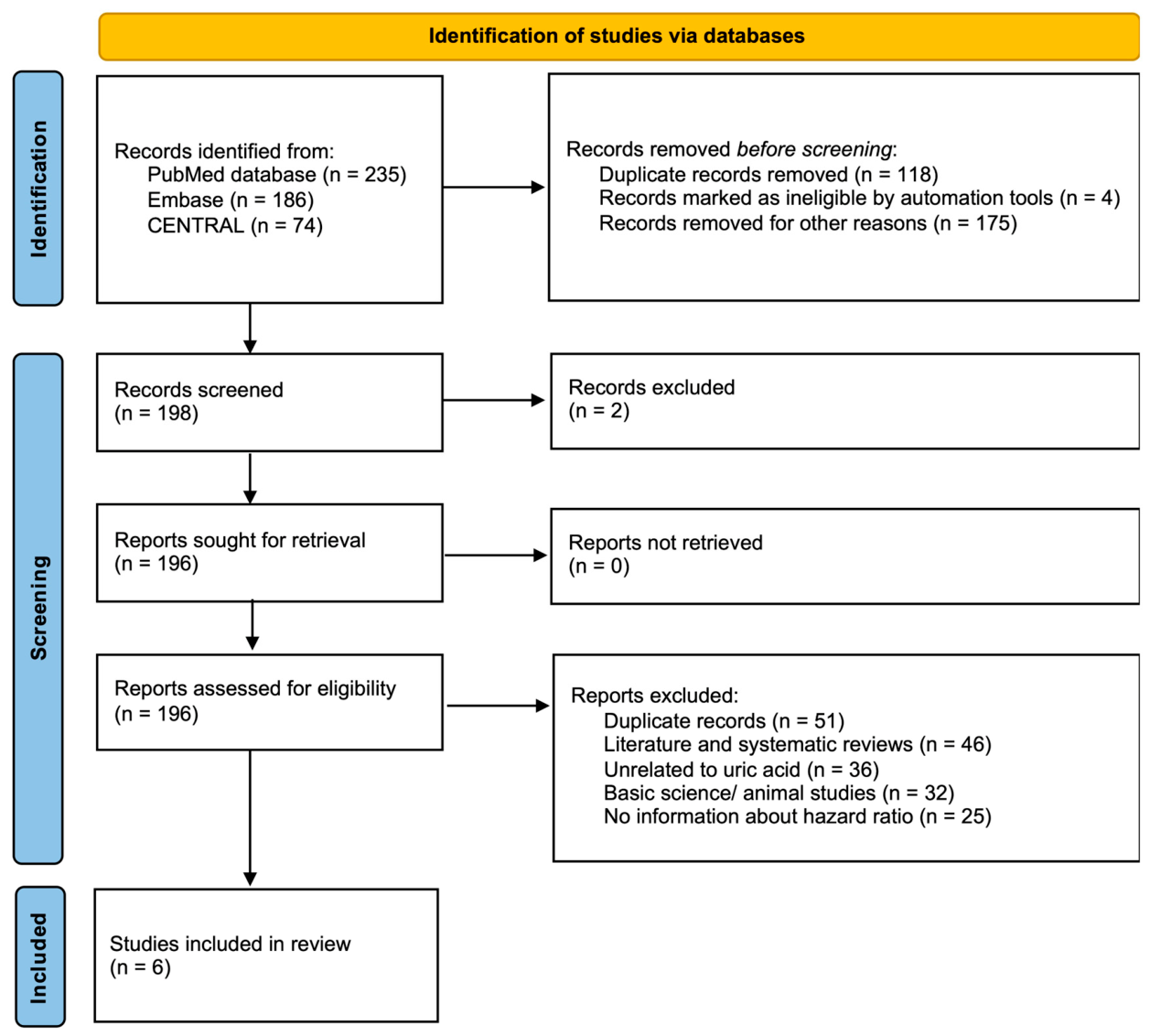
Figure 1. PRISMA flowchart for the identification of included studies.
Preprints 221923 g001
Figure 2. Gout and PD risk. Forest plot of hazard ratios (HRs) with 95% confidence intervals (CIs) for the association between gout and incident PD in sex-combined populations (female + male). References: [7,13,14,15,16,17].
Preprints 221923 g002
Figure 3. Sex-specific association between gout and incident PD. Panel A presents results for women only, and Panel B presents results for men only. References: [7,13,15,16,17].
Preprints 221923 g003
Figure 4. PD and subsequent risk of gout (sex-specific analysis). Forest plot showing HRs with 95% CIs for the association between PD and subsequent gout, stratified by sex, derived from a nationwide Norwegian population-based cohort. Reference: [7].
Preprints 221923 g004
Table 1. Baseline features of the included studies.
Reference, year; country Database Population size Gouta PD
Cortese et al., 2018; Norway [7] Norwegian Prescription Database, Norway's National Education Database 3,572,437 adults (> 18 years); 4523 PD cases during followup ULD PD diagnostic code or levodopa therapy for 1 year
Singh et al., 2019; USA [14] 5% Medicare data (2006-2012) from Centers for Medicaid and Medicare (CMS) Chronic Condition Data Warehouse 1,725,833 medicare beneficiaries aged 65-75 years (94,133 gout and 1.63 million controls) ULD & ICD-9 code 274 (gout)
Incident PD defined using ICD-9-CM code 332 for PD
Hu et al., 2020; Taiwan [13] Taiwan National Health Insurance Research Database (Longitudinal Health Insurance Database 2000) 15,800 participants (7,900 gout and 7,900 controls) ICD-9 code 274 (gout) ICD-9 code 332 (PD)
Kim et al., 2021; South Korea [15] Korean NHIS 654,320 participants (327,160 gout and 327,160 controls) ICD-10 code M10 (gout) & ULD ICD-10 code G20 (PD)
Lee et al., 2023; South Korea [16] Korean NHIS 514,866 participants with 615,488,428 medical claim codes (20,739 gout and 494,127 controls). After matching process, 18,079 gout and 72,316 controls ICD-10 code M10 (gout) ICD-10 code G20 (PD)
Dehlin et al., 2025; Sweden [17] Western Swedish Health Care Register (VEGA), VGR, The Cause of Death Register, The Swedish Prescribed Drug Register, Clinical chemistry database of VGR 42,976 gout cases and 209,029 controls (after excluding 42,260 gout patients and 174,747 controls) ICD-10 code M10 (gout) & ULD ICD-10 code G20.9 (PD)
Abbreviations: ICD, International Classification of Diseases; NHIS, National Health Insurance Service; PD, Parkinson’s disease; ULDs, urate-lowering drugs. a. ULD were used as gout-proxy for database extraction. b. No meaningful participant overlap was identified among studies included within each pooled analysis.
Table 2. Quality assessment of included studies using NOS.
Reference S1 S2 S3 S4 C1 C2 O1 O2 O3 Total Risk of Bias
Cortese et al., 2018 [7] 9 Low
Singh et al., 2019 [14] 9 Low
Hu et al., 2020 [13] 8 Low
Kim et al., 2021 [15] 9 Low
Lee et al., 2023 [16] 9 Low
Dehlin et al., 2025 [17] 9 Low
Note: S1, Representativeness of exposed cohort; S2, Selection of non-exposed cohort; S3, Ascertainment of exposure; S4, Outcome not present at baseline; C1–C2, Comparability of cohorts; O1, Assessment of outcome; O2, Follow-up duration; O3, Adequacy of follow-up. ★ indicates criterion met; ☆ indicates criterion not met.
Table 3. Summary table.
Sequence Gout → PD PD → Gout
Subgroup F + M F M F + M F M
Studies 6 5 5 1 1 1
HR
(95% CI)
1.02
(0.93–1.12)
1.10
(0.93–1.30)
0.99
(0.92–1.07)
0.51
(0.43–0.60)
0.56
(0.43–0.72)
0.47
(0.39–0.57)
Heterogeneity I2 66% 71% 17% NA - -
τ2 0.010 0.036 0.004 NA - -
χ2 14.6 13.9 4.8 NA - -
df 5 4 4 NA - -
p 0.012 0.007 0.31 NA - -
Test of overall effect Z 0.39 1.10 -0.27 -7.9 -4.6 -6.8
p 0.70 0.27 0.79 < 0.00001 < 0.00001 < 0.00001
Subgroup difference χ2 1.58 1.12
df 1 1
p 0.21 0.29
Abbreviations: NA, not applicable.
Table 4. Certainty of evidence.
Outcome Effect estimate
Participants
(studies)
GRADE Comments
Gout → PD (combined) HR 1.02
(95% CI 0.93–1.12)
n = 6,275,069
(k = 6)
Low ⊕⊕◯◯ Downgraded for serious inconsistency (I2 = 66%) and residual confounding inherent to observational studies.
Gout → PD (F) HR 1.10
(95% CI 0.93–1.30)
n = NA
(k = 5)
Very low ⊕◯◯◯ Downgraded for serious inconsistency (I2 = 71%) and serious imprecision (CI includes no effect).
Gout → PD (M) HR 0.99
(95% CI 0.92–1.07)
n = NA
(k = 5)
Very low ⊕◯◯◯ Downgraded for risk of residual confounding and imprecision.
PD → gout (combined) HR 0.51
(95% CI 0.43–0.60)
n = 3,571,714
(k = 1)
Very low ⊕◯◯◯ Downgraded for indirectness and inability to assess consistency because evidence was derived from a single observational study.
PD → gout (F) HR 0.56
(95% CI 0.43–0.72)
n = NA
(k = 1)
Very low ⊕◯◯◯ Downgraded for indirectness, observational design, and evidence derived from a single study.
PD → gout (M) HR 0.47
(95% CI 0.39–0.57)
n = NA
(k = 1)
Very low ⊕◯◯◯ Downgraded for indirectness, observational design, and evidence derived from a single study.
Abbreviations: CI, confidence interval; HR, hazard ratio; I2, Higgins heterogeneity statistic; k, number of studies; n, number of participants; NA, not available/not reported/not reported separately.
Disclaimer/Publisher’s Note: The statements, opinions and data contained in all publications are solely those of the individual author(s) and contributor(s) and not of MDPI and/or the editor(s). MDPI and/or the editor(s) disclaim responsibility for any injury to people or property resulting from any ideas, methods, instructions or products referred to in the content.
Copyright: This open access article is published under a Creative Commons CC BY 4.0 license, which permit the free download, distribution, and reuse, provided that the author and preprint are cited in any reuse.
Prerpints.org logo

Preprints.org is a free preprint server supported by MDPI in Basel, Switzerland.

Subscribe

© 2026 MDPI (Basel, Switzerland) unless otherwise stated

Accessibility

Disclaimer

Terms of Use

Privacy Policy

Privacy Settings