
Submitted:
02 July 2026
Posted:
03 July 2026
You are already at the latest version
Abstract
The efficient removal of antibiotic contaminants from aquatic systems remains a significant challenge due to their persistence and complex environmental matrices. In this study, a CuO-loaded biochar (CuO–BC) composite was developed as an efficient catalyst for peroxydisulfate (PDS) activation toward ciprofloxacin (CIP) degradation. The CuO–BC exhibited superior catalytic performance, achieving rapid CIP removal over a wide pH range with strong resistance to coexisting ions. Mechanistic investigations revealed that both radical (SO₄•⁻ and •OH) and non-radical pathways (1O2 and electron transfer) contributed to CIP degradation. Quenching experiments, electron paramagnetic resonance (EPR), and probe analyses confirmed the coexistence of multiple reactive oxygen species (ROS), with interfacial electron transfer between Cu species and biochar playing a dominant role. The synergistic coupling of Cu2+/Cu+ redox cycling and the conductive biochar matrix facilitated efficient electron transport and selective ROS generation. Furthermore, the system was successfully applied in a simulated permeable reactive barrier (PRB), exhibiting stable degradation performance under continuous-flow conditions. This study provides new insights into interfacial PDS activation mechanisms and offers a promising strategy for designing efficient catalytic systems for antibiotic removal in complex water environments.
Keywords:
copper oxide
; biochar
; persulfate
; ciprofloxacin
; PRB reactor
1. Introduction
The widespread occurrence of antibiotic contaminants in aquatic environments has raised increasing concerns due to their persistence, bioaccumulation potential, and contribution to the proliferation of antibiotic-resistant bacteria [1]. Among them, ciprofloxacin (CIP), a widely used fluoroquinolone antibiotic, is frequently detected in surface water, groundwater, and wastewater effluents owing to its extensive consumption and low biodegradability [2,3,4,5,6,7]. The continuous release of CIP poses long-term ecological risks and challenges conventional water treatment technologies [8,9].
Advanced oxidation processes (AOPs), particularly sulfate radical-based systems, have emerged as promising strategies for degrading refractory organic pollutants [10,11,12]. Peroxydisulfate (PDS) activation can generate highly reactive species such as sulfate radicals (SO4•-) and hydroxyl radicals (•OH), enabling efficient pollutant degradation. However, conventional PDS activation systems often suffer from limited catalytic efficiency, poor stability, and susceptibility to interference from complex water matrices [13,14]. More importantly, recent studies have highlighted that non-radical pathways, such as singlet oxygen (1O2) generation and direct electron transfer, can play critical roles in pollutant degradation, offering improved selectivity and resistance to background constituents [15,16,17,18,19,20]. Nevertheless, the mechanisms governing the coexistence and regulation of radical and non-radical pathways remain insufficiently understood.
Carbon-based materials, particularly biochar, have attracted increasing attention as catalyst supports due to their tunable surface chemistry, porous structure, and excellent electrical conductivity [21,22]. Incorporating transition metal oxides into biochar matrices is an effective strategy to enhance catalytic performance. In such systems, the interaction between metal active sites and conductive carbon frameworks can facilitate interfacial electron transfer and promote redox cycling of metal species, thereby improving oxidant activation efficiency [23]. Among various candidates, Cu-based catalysts are especially attractive due to their multiple valence states and strong redox capability [24,25]. However, the interfacial interactions between Cu species and biochar, as well as their roles in regulating PDS activation pathways, remain unclear.
In addition to mechanistic understanding, practical applicability is crucial for real-world environmental remediation. Permeable reactive barriers (PRBs) have been widely recognized as an effective in situ technology for groundwater treatment due to their low energy consumption and continuous operation capability [26,27,28,29]. However, integrating advanced oxidation processes into PRB systems remains challenging, particularly in maintaining long-term catalytic activity and stability under dynamic flow conditions [30,31].
In this study, a CuO-loaded biochar (CuO–BC) composite was synthesized and employed as an efficient catalyst for PDS activation toward CIP degradation. The objectives of this work are to: (i) evaluate the catalytic performance of CuO–BC under various environmental conditions; (ii) elucidate the synergistic roles of radical and non-radical pathways with particular emphasis on interfacial electron transfer mechanisms; and (iii) assess the feasibility of integrating the CuO–BC/PDS system into a PRB for continuous water treatment. This work provides new insights into interfacial PDS activation and offers a promising strategy for coupling advanced oxidation processes with PRB systems for in situ groundwater remediation.
2. Material and Methods
2.1. Materials
Ciprofloxacin (C17H18FN3O3, ≥98.0%) and furfuryl alcohol (C5H6O2, FFA, ≥98.0%) were purchased from Shanghai Macklin Biochemical Co., Ltd (Shanghai, China). Copper(II) nitrate trihydrate (Cu(NO3)2·3H2O, ≥99.0%) and potassium persulfate (K2S2O8, ≥99.5%) were obtained from Sinopharm Chemical Reagent Co., Ltd (Shanghai, China). Acetonitrile (HPLC grade), methanol (HPLC grade), and tert-butanol (TBA, ≥99.0%) were also supplied by Sinopharm. Hydrochloric acid (HCl, 36–38%), acetic acid (CH3COOH, ≥99.5%), and sodium hydroxide (NaOH, ≥96.0%) were purchased from Luoyang Chemical Reagent Factory (China).
Groundwater samples were collected from Xinhua District, Pingdingshan City, China, at a depth of approximately 10 m. All chemicals were of analytical grade and used as received. Ultrapure water was used for the preparation of all solutions.
2.2. Catalyst Synthesis
Peanut shells were washed with deionized water, dried at 80 °C for 4 h, and then crushed into powder. Subsequently, 15 g of the biomass was impregnated in 150 mL of 0.08 mol/L Cu(NO3)2 solution and stirred at 30 °C and 150 rpm for 8 h. The mixture was then filtered, washed with deionized water until neutral pH, and dried at 80 °C for 12 h.
The dried precursor was pyrolyzed in a muffle furnace at 600 °C for 4 h with a heating rate of 5 °C/min under limited oxygen conditions. The obtained product was ground and sieved (60–100 mesh), and denoted as CuO–BC.
2.3. Characterization of CuO-BC
The crystalline structure of the samples was analyzed using X-ray diffraction (XRD, Bruker D8 Advance, Germany). Surface functional groups were identified by Fourier transform infrared spectroscopy (FTIR, Nicolet iS10, Thermo Scientific, USA). The surface morphology was observed using scanning electron microscopy (SEM, Regulus 8100, Hitachi, Japan). The elemental composition and chemical states were analyzed by X-ray photoelectron spectroscopy (XPS, ESCALAB 250Xi, Thermo Fisher Scientific, USA). The specific surface area and pore structure were determined by N₂ adsorption–desorption isotherms (BET method).
2.4. CIP Degradation Experiments
Batch experiments were conducted in 100 mL CIP solution (10 mg/L). CuO–BC was added and stirred at 170 rpm in a thermostatic water bath at 35 °C for 10 min to reach adsorption–desorption equilibrium. Subsequently, PDS was added to initiate the reaction.
At predetermined time intervals, 5 mL of the reaction solution was withdrawn and immediately quenched with 40 μL methanol. A small amount of 0.01 mol/L NaOH solution was added to eliminate interference from dissolved copper ions. The samples were then centrifuged and filtered through a 0.22 μm membrane prior to analysis.
The residual CIP concentration was determined by high-performance liquid chromatography (HPLC). All experiments were conducted at room temperature (25 ± 1 °C).
For PRB experiments, the setup is illustrated in Figure 1.
2.5. Analytical Methods
CIP concentration was determined using an HPLC system equipped with a C18 column (4.6 × 150 mm, 5 μm). The column temperature was maintained at 30 °C, and the detection wavelength was set at 277 nm. The mobile phase consisted of acetonitrile and 0.1% acetic acid solution (25:75, v/v) at a flow rate of 1.0 mL/min. The injection volume was 20 μL.
3. Results and Discussion
3.1. Characterization of Catalysts
(1) SEM
The surface morphology of BC and CuO–BC was characterized by SEM (Figure 2). As shown in Figure 2a, pristine BC exhibited a relatively smooth and compact surface with limited porosity. After CuO loading (Figure 2b), the surface became rougher with the formation of interconnected grooves, providing more exposed active sites [32].
In addition, CuO nanoparticles were uniformly distributed on the BC surface, which can be attributed to strong interactions between Cu species and oxygen-containing functional groups of biochar. This uniform dispersion effectively suppressed particle aggregation [23]. EDS mapping (Figure 2c and Figure 2c and Figure S1) further confirmed the homogeneous distribution of C, O, N, and Cu elements.
(2) XRD
The crystalline structures of BC and CuO–BC were analyzed by XRD (Figure 3a). The diffraction peaks at 35.4°, 38.7°, 48.7°, and 61.5° correspond to the (0 0 2), (1 1 1), (2 0 2), and (1 1 -3) planes of CuO (JCPDS No. 41-0254) [33,34], confirming the successful incorporation of CuO into the biochar matrix. Compared with BC, the CuO–BC sample exhibited stronger characteristic peaks of CuO, indicating improved crystallinity. In addition, the characteristic peaks of carbon were weakened or masked due to the presence of CuO species [35].
(3) FTIR
FTIR spectra of BC and CuO–BC are shown in Figure 3b. The peaks around 2922 cm⁻¹ are attributed to the stretching vibrations of C–H bonds. The band near 1470 cm⁻¹ corresponds to CO32- vibrations [36]. Notably, the peaks observed at 925 cm⁻¹ and 1091 cm⁻¹ are assigned to Cu–O stretching vibrations, indicating the formation of Cu–O bonds and successful interaction between copper species and the biochar matrix [37,38,39].
(4) BET
The surface area and pore structure of the samples were analyzed by N2 adsorption–desorption measurements [40]. As summarized in Table 1, BC exhibited a specific surface area of 391.88 m2/g, while CuO–BC showed an increased value of 448.36 m2/g. Meanwhile, the total pore volume and average pore diameter also increased after CuO loading, indicating the formation of a more developed porous structure. It is obvious the pore size distributions of functionalized sample CuO-BC were larger than the unfunctionalized sample BC. In other words, CuO modified biochar exhibits a richer pore structure which is conducive to providing more catalytic active sites and accelerate the mass transfer process between pollutants and PDS [41,42,43]. The isotherms of both samples were classified as type IV, characteristic of mesoporous materials (Figure S2) [44,45]. The enhanced porosity and surface area of CuO–BC are beneficial for exposing more active sites and facilitating mass transfer during PDS activation.
(5) XPS
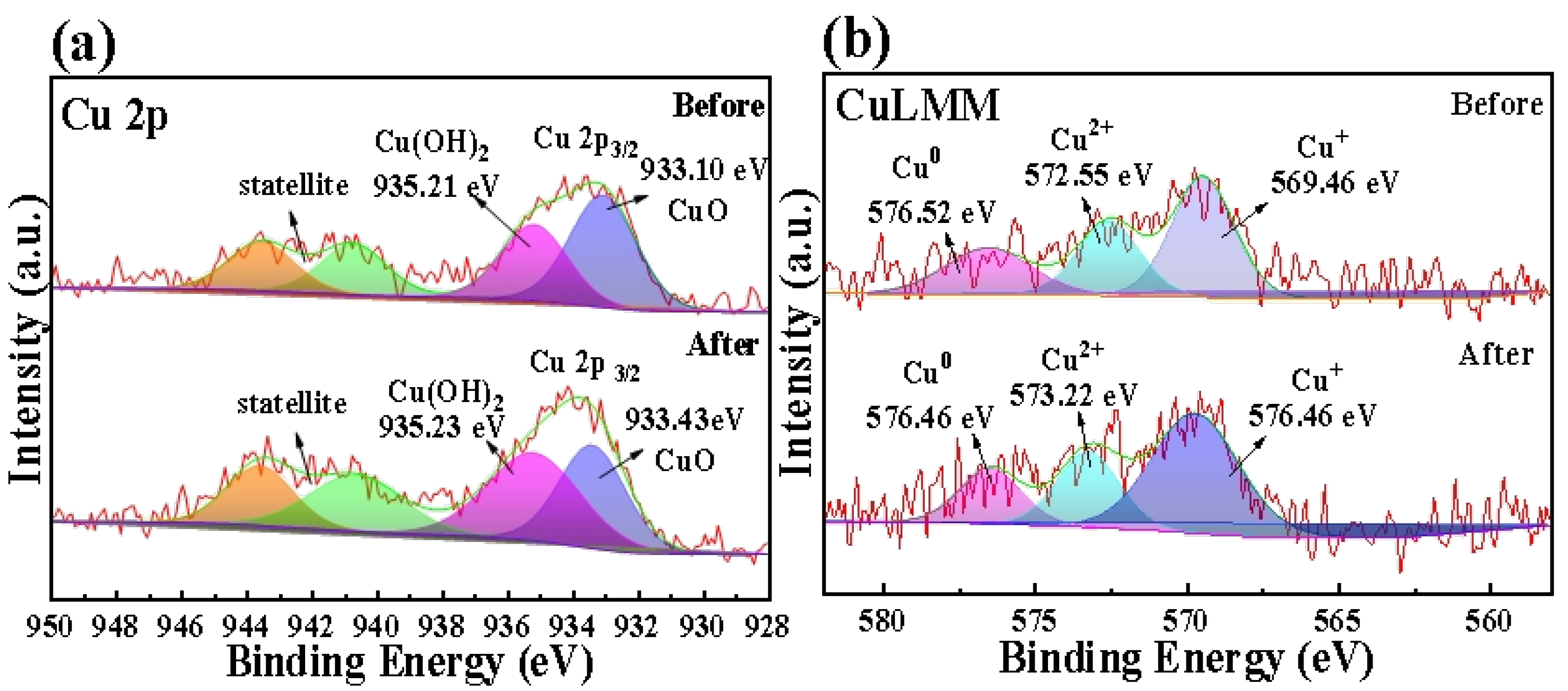
XPS analysis was conducted to investigate the surface elemental composition and chemical states of CuO–BC. The survey spectra confirmed the presence of C, O, and Cu elements in both fresh and used samples, indicating good structural stability [35]. The high-resolution C 1s spectrum showed peaks corresponding to C–C/C=C, C–O, and C=O bonds, suggesting abundant oxygen-containing functional groups on the biochar surface. These functional groups can enhance interactions between Cu species and PDS [46,47,48,49,50]. The Cu 2p spectrum exhibited characteristic peaks of Cu2+, along with satellite peaks, confirming the dominant presence of CuO . Meanwhile, the Cu LMM Auger spectra further indicated the coexistence of Cu0, Cu+, and Cu2+ species [51,52,53,54]. The coexistence of multiple valence states of copper facilitates redox cycling (Cu2+/Cu+), which plays a crucial role in PDS activation and electron transfer processes [55,56].
Figure 4.
XPS spectra of CuO-BC before and after the reaction: (a) Cu 2p; (b) Cu LMM Auger spectrum.
Figure 4.
XPS spectra of CuO-BC before and after the reaction: (a) Cu 2p; (b) Cu LMM Auger spectrum.
3.2. Catalytic Degradation Performance of CIP
The catalytic performance of different systems for CIP removal is shown in Figure 5. Prior to oxidation, adsorption experiments indicated that BC exhibited a higher adsorption capacity (44.73%) compared to CuO–BC (14.31%), likely due to partial blockage of surface pores by CuO nanoparticles [57]. However, adsorption alone was insufficient for effective CIP removal. In contrast, the CuO–BC/PDS system demonstrated significantly enhanced degradation efficiency, achieving 91.71% removal within 30 min, which was markedly higher than that of PDS alone, CuO, BC, CuO/PDS, and BC/PDS systems. This result indicates that the synergistic interaction between CuO and biochar plays a critical role in PDS activation.
The superior performance of CuO–BC can be attributed to: (i) the presence of Cu active sites that promote PDS decomposition; (ii) the conductive biochar matrix that facilitates electron transfer; and (iii) the improved dispersion of CuO particles, providing more accessible reactive sites.
The degradation kinetics were further analyzed using a pseudo-first-order model. The apparent rate constant (kobs) of the CuO–BC/PDS system reached 0.0830 min⁻¹, which was 6.92, 6.24, and 4.28 times higher than those of CuO–BC, CuO/PDS, and BC/PDS, respectively. The high correlation coefficients (R2 > 0.99) indicate that the degradation process follows pseudo-first-order kinetics.
These results demonstrate that the CuO–BC/PDS system exhibits outstanding catalytic activity for CIP degradation and highlight the importance of interfacial synergy in enhancing PDS activation.
3.3. Effects of Operating Conditions
(1) Effect of CuO–BC dosage
The effect of catalyst dosage on CIP degradation is shown in Figure 6a. As the CuO–BC dosage increased from 0.1 to 0.5 g/L, the removal efficiency significantly improved from 38.39% to 91.71%, accompanied by an increase in kobs from 0.0162 to 0.0830 min⁻¹ (Figure S6a). This enhancement can be attributed to the increased number of active sites available for PDS activation. However, a further increase in catalyst dosage (0.7–0.9 g/L) led to a decline in degradation efficiency. This phenomenon may be due to the aggregation of catalyst particles at high concentrations, which reduces the effective surface area and limits mass transfer. In addition, excessive catalyst dosage may lead to unproductive consumption of reactive species, thereby inhibiting the degradation process [58]. These results suggest that an optimal catalyst dosage is essential to balance active site availability and reaction efficiency [59].
(2) Effect of PDS concentration
As shown in Figure 6b and Figure S6b, increasing the PDS concentration from 0 to 0.8 g/L significantly enhanced CIP degradation efficiency, indicating that higher oxidant availability promotes the generation of reactive oxygen species. However, further increasing the PDS concentration to 1.0 g/L resulted in a decrease in removal efficiency and kobs. This can be attributed to the scavenging effect caused by excess sulfate radicals, as well as possible self-quenching reactions of PDS at high concentrations [60,61,62]. Therefore, an appropriate PDS dosage is critical to maximize the generation and utilization efficiency of reactive species.
(3) Effect of initial pH
The initial pH plays a crucial role in PDS activation and CIP degradation. As shown in Figure 6c and Figure S6c, the highest degradation efficiency was achieved at near-neutral conditions (pH = 6), while both acidic and alkaline conditions led to reduced performance. Under acidic conditions, excessive protonation may suppress the interaction between PDS and catalyst surface [63,64]. In contrast, under alkaline conditions, Cu2+ may precipitate as Cu(OH)2, leading to the loss of active sites [60]. Moreover, electrostatic repulsion between negatively charged PDS (S2O82⁻) and the catalyst surface may further hinder the reaction [53]. The optimal performance at near-neutral pH suggests that the CuO–BC/PDS system is suitable for practical water treatment applications without the need for extensive pH adjustment.
(4) Effect of initial CIP concentration
The influence of initial CIP concentration on degradation performance is shown in Figure 6d and Figure S6d. As the CIP concentration increased from 10 to 70 mg/L, the removal efficiency decreased from 91.71% to 47.32%, accompanied by a reduction. This decline can be attributed to the limited availability of reactive species at higher pollutant concentrations, leading to insufficient oxidation capacity [65]. In addition, higher CIP concentrations may occupy more active sites on the catalyst surface, thereby inhibiting PDS activation. These results indicate that the CuO–BC/PDS system is more effective for treating low to moderate concentrations of CIP-contaminated water. .
3.4. Mechanism of PDS Activation and CIP Degradation
The activation of peroxydisulfate (PDS) by heterogeneous catalysts typically involves the generation of reactive oxygen species (ROS), including sulfate radicals (SO4•⁻), hydroxyl radicals (•OH), and singlet oxygen (1O2) [66,67]. To elucidate the underlying mechanism of CIP degradation in the CuO–BC/PDS system, a combination of quenching experiments, electron paramagnetic resonance (EPR), and probe molecule analyses was employed.
Quenching experiments were first conducted to identify the dominant reactive species. Methanol (MeOH), which can scavenge both SO4•⁻and •OH, and tert-butanol (TBA), a selective scavenger for •OH, were introduced into the system. As shown in Figure S7, the addition of MeOH and TBA significantly suppressed CIP degradation, indicating the involvement of both sulfate radicals and hydroxyl radicals [68]. In addition, the presence of furfuryl alcohol (FFA), a well-known quencher for singlet oxygen (1O2), also led to a notable decrease in degradation efficiency [69]. This result suggests that 1O2 plays an important role in the CuO–BC/PDS system.
The generation of ROS was further confirmed by EPR analysis. As shown in Figure 7a, characteristic signals corresponding to •OH (1:2:2:1 quartet) and SO4•⁻ were clearly observed using DMPO as the spin-trapping agent, and their intensities increased over time, indicating continuous ROS generation. In addition, DMPO-•O₂⁻ signals were detected (Figure 7b), suggesting the presence of superoxide radicals in the system. Furthermore, a typical triplet signal (1:1:1) of TEMP-1O2 was observed (Figure 7c), confirming the generation of singlet oxygen. These results collectively demonstrate the coexistence of multiple ROS in the CuO–BC/PDS system.
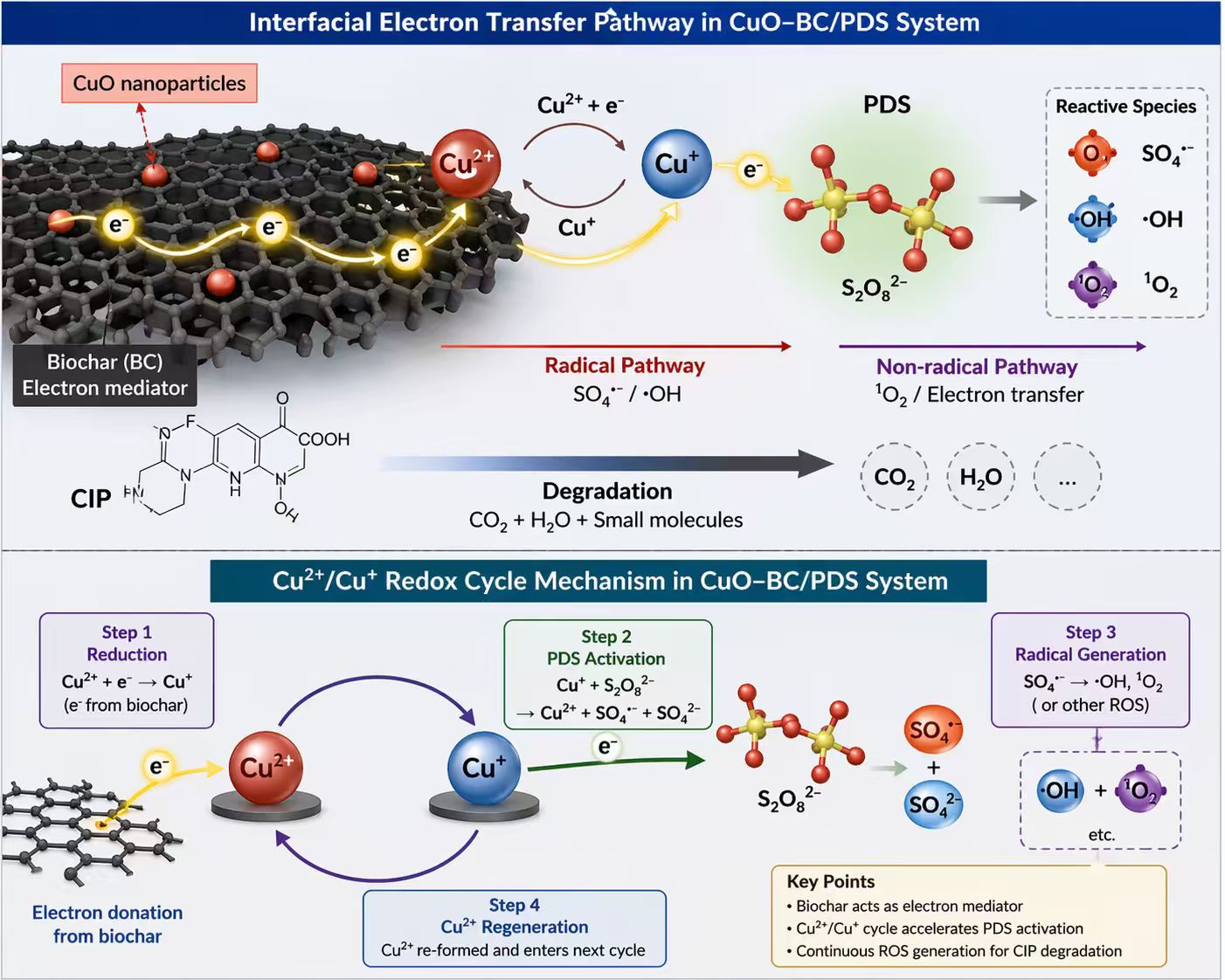
The conductive biochar matrix acts as an electron mediator, facilitating electron transfer to Cu species and peroxydisulfate (PDS). The transferred electrons promote the reduction of Cu2+ to Cu+ and accelerate PDS activation, leading to the generation of reactive oxygen species (SO₄•⁻, •OH, and 1O2). Both radical and non-radical pathways contribute to ciprofloxacin (CIP) degradation. The possible interfacial electron transfer pathway is shown in Figure 8.
This redox cycling accelerates PDS activation and sustains ROS production. The electrons supplied by the conductive biochar matrix reduce Cu2+ to Cu+, initiating the redox cycle. The Cu⁺ species subsequently activate PDS to generate sulfate radicals (SO₄•⁻), while being oxidized back to Cu2+. This continuous Cu2+/ Cu+ cycling not only accelerate oxidant activation but also sustain reactive oxygen species production. The coupling of redox cycling and interfacial electron transfer plays a critical role in regulating the balance between radical and non-radical pathways. Specifically, Cu2+ species can be reduced to Cu⁺ through electron donation from the biochar matrix. Subsequently, Cu+ reacts with PDS to generate sulfate radicals (SO4•⁻) while being oxidized back to Cu2+, forming a continuous Cu2+/Cu+ redox cycle. The proposed mechanistic illustration of the Cu2+/Cu+ redox cycle during PDS activation is shown in Fig.9.
Cu2+ species are reduced to Cu+ by electrons transferred from the biochar matrix. The generated Cu⁺ reacts with PDS, producing sulfate radicals (SO₄•⁻) and regenerating Cu2+, thus forming a continuous redox cycle. This process facilitates sustained PDS activation and reactive oxygen species generation, enabling efficient degradation of ciprofloxacin. Interfacial electron transfer plays a central role in regulating PDS activation.
Based on these findings, a comprehensive mechanism is proposed (Figure 9). The CuO–BC catalyst integrates multiple functions: (i) Cu species act as active sites for PDS activation through redox cycling; (ii) the biochar matrix facilitates interfacial electron transfer; and (iii) the synergistic interaction between radical and non-radical pathways enhances CIP degradation efficiency.
3.5. Stability and Reusability of CuO–BC
The stability and reusability of the CuO–BC catalyst were evaluated through consecutive cycling experiments. As shown in Figure 10, the CIP removal efficiency slightly decreased from 91.71% to 85.34% after five cycles, indicating good catalytic stability. The minor decline in performance may be attributed to partial loss of active sites or slight leaching of copper species during repeated use. Nevertheless, the overall degradation efficiency remained high, demonstrating the robustness of the catalyst.
To further assess structural stability, the used catalyst was characterized by XRD and XPS (). The characteristic diffraction peaks of CuO remained largely unchanged after the reaction, suggesting that the crystalline structure was well preserved. In addition, XPS analysis revealed that the Cu2+/Cu+ redox pair was still present after cycling, indicating the persistence of active redox sites.
These results confirm that the CuO–BC catalyst possesses excellent structural stability and reusability, which are essential for practical applications.
3.6. Application in Permeable Reactive Barrier (PRB)
To evaluate the practical applicability of the CuO–BC/PDS system, a simulated permeable reactive barrier (PRB) was constructed, and continuous-flow experiments were conducted (). As shown in Figure 11, the CuO–BC/PDS system maintained stable CIP removal performance over an extended operation period, with an average removal efficiency exceeding 90%. This result demonstrates that the catalytic system can operate effectively under dynamic flow conditions.
Compared with batch systems, the PRB configuration provides continuous treatment and better mimics real groundwater remediation scenarios. The sustained performance observed in the PRB can be attributed to the synergistic effects of continuous pollutant supply, stable catalyst packing, and efficient mass transfer within the porous medium.
In addition, the involvement of non-radical pathways, particularly singlet oxygen (1O2), may contribute to the improved resistance against interference from coexisting substances, thereby enhancing system stability in complex water matrices.
These findings highlight the feasibility of integrating advanced oxidation processes with PRB systems and demonstrate the potential of the CuO–BC/PDS system for in situ groundwater remediation.
3.7. Possible Degradation Pathways
In order to analyze the degradation process of antibiotics more effectively, potential intermediate degradation products and the mineralization process during the catalytic degradation of CIP by the CuO/BC/PDS system were illustrated in Figure 12. showed the MS spectra of intermediates. The possible degradation pathways included oxidation, ring-opening, and defluorination steps [70]. In pathway I, P1 (m/z=334) was obtained from CIP through hydroxylation and replacement of -F with -OH, with the cleavage of the C-F bond resulting from attack by free radicals [71]. Then, by removing the carboxyl and hydroxyl groups and breaking the C-N bond, P1 (m/z=334) was converted into P2 (m/z=316) and P3 (m/z=245). In pathway II, the piperazine ring was gradually oxidized, possibly initiated by 1O2. It has been reported that the 15 C and 16 C positions on the piperazine portion of CIP were susceptible to being attacked by electrophilic species 1O2, leading to the cleavage and oxidation of the piperazine ring, resulting in the intermediate P4 (m/z=362) and P5 (m/z=334) [72]. P6 (m/z=263) was formed after further oxidation, lost the “CH2CH2NH2” group, and formed a carbonyl group. Both P7 (m/z=237) and P10 (m/z=184) were generated from P6 through the process of quinolone ring opening and hydroxylation, with P9 also losing the “NH2” and “CH2CH2CH” moieties. In pathway Ⅲ, the quinolone ring of CIP was attacked by activating agents to generate P8 (m/z=350), which was then transformed into P9 (m/z=283) by the addition of a hydroxyl group. Subsequently, P9 was converted to P10 by losing two carboxyl groups, an amide group, and the “CH2CH2CH” moiety. Finally, the above-mentioned intermediates were further mineralized into smaller degradation products through different degradation pathways or were directly mineralized into CO2, H2O, F-, etc., according to different pathways [73,74].
4. Conclusions
In this study, a CuO-loaded biochar (CuO–BC) catalyst was successfully synthesized and applied for peroxydisulfate (PDS) activation toward ciprofloxacin (CIP) degradation. The CuO–BC/PDS system exhibited excellent catalytic performance, achieving rapid CIP removal over a wide pH range with strong resistance to coexisting substances. Mechanistic investigations revealed that CIP degradation proceeded via a synergistic pathway involving both radical (SO₄•⁻ and •OH) and non-radical (¹O₂ and electron-transfer) processes. Notably, interfacial electron transfer between Cu species and the conductive biochar matrix played a central role in regulating PDS activation and ROS generation. The Cu²⁺/Cu⁺ redox cycle further enhanced catalytic efficiency by sustaining continuous oxidant activation. The catalyst also demonstrated excellent stability and reusability, with minimal structural changes after repeated cycles. Furthermore, the successful application of the CuO–BC/PDS system in a simulated permeable reactive barrier (PRB) highlights its potential for continuous water treatment under realistic conditions.Overall, this work provides new insights into interfacial PDS activation mechanisms and offers a promising strategy for coupling advanced oxidation processes with PRB systems for in situ groundwater remediation.
AUTHOR: INFORMATION.
These authors contributed equally. All authors have given approval to the final version of the manuscript. Yingchun Wang: Conceptualization, Project administration, writing-review & editing. Bang Li and Jie zhao: Investigation, Methodology, Data curation, Writing – original draft, Writing – review & editing. Investigation, Methodology. Xiaoxian Hu、Xiang Guo、 Yinshi Qiang and Yanyan Dou: Validation, Supervision. V. Stolbikhin Yury and Xinhai Zhang: Supervision, Resources. Junfeng Wu: Project administration, supervision, Funding acquisition.
CRediT:
authorship contribution statement.
References
- Rathi, B.S.; Kumar, P.S.; Show, P. A review on effective removal of emerging contaminants from aquatic systems: Current trends and scope for further research. J. HAZARD MATER. 2021, 409, 124413. [Google Scholar] [CrossRef] [PubMed]
- Fei, Y.; Li, Y.; Han, S.; Ma, J. Adsorptive removal of ciprofloxacin by sodium alginate/graphene oxide composite beads from aqueous solution. J. COLLOID INTERF. SCI 2016, 484, 196–204. [Google Scholar] [CrossRef]
- Kumar, J.V.; Karthik, R.; Chen, S.M.; Muthuraj, V.; Karuppiah, C. Fabrication of potato-like silver molybdate microstructures for photocatalytic degradation of chronic toxicity ciprofloxacin and highly selective electrochemical detection of H(2)O(2). SCI REP-UK 2016, 6, 34149. [Google Scholar]
- Yang, F.; Yu, X.; Wang, K.; Liu, Z.; Gao, Z.; Zhang, T.; Niu, J.; Zhao, J.; Yao, B. Photocatalytic degradation of methylene blue over BiVO4/BiPO4/rGO heterojunctions and their artificial neural network model. J. ALLOY COMPD. 2023, 960, 170716. [Google Scholar]
- Wu, D.; Zhang, M.; He, L.; Zou, H.; Liu, Y.; Li, B.; Yang, Y.; Liu, C.; He, L.; Ying, G. Contamination profile of antibiotic resistance genes in ground water in comparison with surface water. SCI TOTAL Env. 2020, 715, 136975. [Google Scholar] [CrossRef]
- Liu, Y.; Gao, J.; Wang, Y.; Duan, W.; Liu, J.; Zhang, Y.; Zhang, H.; Zhao, M. The removal of antibiotic resistant bacteria and genes and inhibition of the horizontal gene transfer by contrastive research on sulfidated nanoscale zerovalent iron activating peroxymonosulfate or peroxydisulfate. J. HAZARD MATER. 2022, 423, 126866. [Google Scholar] [CrossRef] [PubMed]
- Danner, M.; Robertson, A.; Behrends, V.; Reiss, J. Antibiotic pollution in surface fresh waters: Occurrence and effects. Sci. Total Environ. 2019, 664, 793–804. [Google Scholar] [CrossRef] [PubMed]
- Wang, K.; Zhuang, T.; Su, Z.; Chi, M.; Wang, H. Antibiotic residues in wastewaters from sewage treatment plants and pharmaceutical industries: Occurrence, removal and environmental impacts. SCI TOTAL Env. 2021, 788, 147811. [Google Scholar] [CrossRef]
- Rodriguez-Mozaz, S.; Chamorro, S.; Marti, E.; Huerta, B.; Gros, M.; Sànchez-Melsió, A.; Borrego, C.M.; Barceló, D.; Balcázar, J.L. Occurrence of antibiotics and antibiotic resistance genes in hospital and urban wastewaters and their impact on the receiving river. WATER RES 2015, 69, 234–242. [Google Scholar] [CrossRef] [PubMed]
- Jia, X.; Zhang, J.; Huang, Q.; Xiong, C.; Ji, H.; Ren, Q.; Jin, Z.; Chen, S.; Guo, W.; Chen, J.; Ge, Y.; Ding, Y. Efficient degradation of ciprofloxacin in wastewater by CuFe2O4/CuS photocatalyst activated peroxynomosulfate. Env. RES 2024, 241, 117639. [Google Scholar]
- Wang, J.; Wang, S. Activation of persulfate (PS) and peroxymonosulfate (PMS) and application for the degradation of emerging contaminants. CHEM. ENG J. 2018, 334, 1502–1517. [Google Scholar] [CrossRef]
- Dong, C.; Fang, W.; Yi, Q.; Zhang, J. A comprehensive review on reactive oxygen species (ROS) in advanced oxidation processes (AOPs). CHEMOSPHERE 2022, 308, 136205. [Google Scholar] [CrossRef] [PubMed]
- Qi, C.; Liu, X.; Li, Y.; Lin, C.; Ma, J.; Li, X.; Zhang, H. Enhanced degradation of organic contaminants in water by peroxydisulfate coupled with bisulfite. J. HAZARD MATER. 2017, 328, 98–107. [Google Scholar] [CrossRef] [PubMed]
- Saien, J.; Ojaghloo, Z.; Soleymani, A.R.; Rasoulifard, M.H. Homogeneous and heterogeneous AOPs for rapid degradation of Triton X-100 in aqueous media via UV light, nano titania hydrogen peroxide and potassium persulfate. CHEM. ENG J. 2011, 167, 172–182. [Google Scholar] [CrossRef] [PubMed]
- Ghanbari, F.; Riahi, M.; Kakavandi, B.; Hong, X.; Lin, K.A. Intensified peroxydisulfate/microparticles-zero valent iron process through aeration for degradation of organic pollutants: Kinetic studies, mechanism and effect of anions. J. WATER PROCESS ENG 2020, 36, 101321. [Google Scholar]
- Hayati, F.; Moradi, S.; Farshineh Saei, S.; Madani, Z.; Giannakis, S.; Isari, A.A.; Kakavandi, B. A novel, Z-scheme ZnO@AC@FeO photocatalyst, suitable for the intensification of photo-mediated peroxymonosulfate activation: Performance, reactivity and bisphenol A degradation pathways. J. Env. Manag. 2022, 321, 115851. [Google Scholar]
- Zhang, X.; Chen, Z.; Kang, J.; Zhao, S.; Wang, B.; Yan, P.; Deng, F.; Shen, J.; Chu, W. UV/ peroxymonosulfate process for degradation of chloral hydrate: Pathway and the role of radicals. J. HAZARD MATER. 2021, 401, 123837. [Google Scholar] [CrossRef] [PubMed]
- Huang, Z.; Ji, Z.; Zhao, Y.; Liu, J.; Li, F.; Yuan, J. Treatment of wastewater containing 2-methoxyphenol by persulfate with thermal and alkali synergistic activation: Kinetics and mechanism. CHEM. ENG J. 2020, 380, 122411. [Google Scholar] [CrossRef]
- Tian, D.; Zhou, H.; Zhang, H.; Zhou, P.; You, J.; Yao, G.; Pan, Z.; Liu, Y.; Lai, B. Heterogeneous photocatalyst-driven persulfate activation process under visible light irradiation: From basic catalyst design principles to novel enhancement strategies. CHEM. ENG J. 2022, 428, 131166. [Google Scholar] [CrossRef]
- Lee, Y.; Lee, S.; Cui, M.; Kim, J.; Ma, J.; Han, Z.; Khim, J. Improving sono-activated persulfate oxidation using mechanical mixing in a 35-kHz ultrasonic reactor: Persulfate activation mechanism and its application. ULTRASON Sonochem. 2021, 72, 105412. [Google Scholar] [PubMed]
- Zhao, Y.; Yuan, X.; Li, X.; Jiang, L.; Wang, H. Burgeoning prospects of biochar and its composite in persulfate-advanced oxidation process. J. HAZARD MATER. 2021, 409, 124893. [Google Scholar] [CrossRef] [PubMed]
- Xiong, Y.; Pei, D. A review on efficient removal of phthalic acid esters via biochars and transition metals-activated persulfate systems. CHEMOSPHERE 2021, 277, 130256. [Google Scholar] [CrossRef] [PubMed]
- Wang, J.; Cheng, X.; Li, P.; Fan, Q.; Wu, D.; Liang, H. Activation of peroxymonosulfate with biochar-supported CuO (CuO@BC) for natural organic matter removal and membrane fouling control. Chemosphere 2023, 341, 140044. [Google Scholar] [PubMed]
- Ding, Y.; Fu, L.; Peng, X.; Lei, M.; Wang, C.; Jiang, J. Copper catalysts for radical and nonradical persulfate based advanced oxidation processes: Certainties and uncertainties. CHEM. ENG J. 2022, 427, 131776. [Google Scholar] [CrossRef]
- Jiang, D.; Xue, J.; Wu, L.; Zhou, W.; Zhang, Y.; Li, X. Photocatalytic performance enhancement of CuO/Cu2O heterostructures for photodegradation of organic dyes: Effects of CuO morphology. Appl. Catal. B Environ. 2017, 211, 199–204. [Google Scholar]
- Miller, E.; Menashe, O.; Dosoretz, C.G. A tailored permeable reactive bio-barrier for in situ groundwater remediation: removal of 3-chlorophenol as a case study. Env. TECHNOL. 2022, 43, 1200–1210. [Google Scholar]
- Zhang, Y.; Cao, B.; Yin, H.; Meng, L.; Jin, W.; Wang, F.; Xu, J.; Al-Tabbaa, A. Application of zeolites in permeable reactive barriers (PRBs) for in-situ groundwater remediation: A critical review. CHEMOSPHERE 2022, 308, 136290. [Google Scholar] [CrossRef] [PubMed]
- Cui, X.; Xiao, M.; Tao, R.; Hu, R.; Ruppert, H.; Gwenzi, W.; Noubactep, C. Developing the Ascorbic Acid Test: A Candidate Standard Tool for Characterizing the Intrinsic Reactivity of Metallic Iron for Water Remediation. WATER-SUI 2023, 15, 1930. [Google Scholar] [CrossRef]
- Li, J.; Dou, X.; Qin, H.; Sun, Y.; Yin, D.; Guan, X. Characterization methods of zerovalent iron for water treatment and remediation. WATER RES 2019, 148, 70–85. [Google Scholar] [CrossRef] [PubMed]
- Dong, G.; Huang, L.; Wu, X.; Wang, C.; Liu, Y.; Liu, G.; Wang, L.; Liu, X.; Xia, H. Effect and mechanism analysis of MnO2 on permeable reactive barrier (PRB) system for the removal of tetracycline. CHEMOSPHERE 2018, 193, 702–710. [Google Scholar] [CrossRef] [PubMed]
- Eljamal; Maamoun, I.; Alkhudhayri, S.; Eljamal, R.; Falyouna, O.; Tanaka, K.; Kozai, N.; Sugihara, Y. Insights into boron removal from water using Mg-Al-LDH: Reaction parameters optimization & 3D-RSM modeling. J. WATER PROCESS ENG 2022, 46, 102608. [Google Scholar]
- Song, J.; Zhang, Q.; Xu, J.; Guo, H.; Wang, L. Application of the persulfate activated by molten anhydrous CuCl2 modified biochar to degrade antibiotics: Performance and the role of C-O-Cu structure. SEP PURIF. TECHNOL. 2023, 326, 124767. [Google Scholar]
- Lei, Y.; Chen, C.; Tu, Y.; Huang, Y.; Zhang, H. Heterogeneous Degradation of Organic Pollutants by Persulfate Activated by CuO-Fe3O4: Mechanism, Stability, and Effects of pH and Bicarbonate Ions. Env. SCI TECHNOL. 2015, 49, 6838–6845. [Google Scholar]
- Ghasemi, M.; Khataee, A.; Gholami, P.; Cheshmeh Soltani, R.D. Template-free microspheres decorated with Cu-Fe-NLDH for catalytic removal of gentamicin in heterogeneous electro-Fenton process. J. Env. Manag. 2019, 248, 109236. [Google Scholar]
- Wu, J.; Su, H.; Wang, Z.; Hou, B.; Cheng, X.; Stolbikhin Yury, V.; Wang, X.; Liu, B.; Zhu, X.; Mao, Y.; Gao, H.; Li, S. N/ZnFe2O4 codoped biochar as an activator for peroxydisulfate to degrade oxytetracycline: Synthesis, property and mechanism. SEP PURIF. TECHNOL. 2022, 297, 121487. [Google Scholar]
- Akbari Dourbash, F.; Alizadeh, P. Organosilane modified bioactive glass/poly (amido amine) generation 5 hybrids: Effect of solvent and synthesis route on structural properties, thermal stability and apatite formation. MATER. CHEM. PHYS. 2017, 202, 104–113. [Google Scholar] [CrossRef]
- Zhao, Y.; Yu, L.; Song, C.; Chen, Z.; Meng, F.; Song, M. Selective Degradation of Electron-Rich Organic Pollutants Induced by CuO@Biochar: The Key Role of Outer-Sphere Interaction and Singlet Oxygen. Env. SCI TECHNOL. 2022, 56, 10710–10720. [Google Scholar]
- Shu, X.; Feng, J.; Liao, J.; Zhang, D.; Peng, R.; Shi, Q.; Xie, X. Amorphous carbon-coated nano-copper particles: Novel synthesis by Sol–Gel and carbothermal reduction method and extensive characterization. J. ALLOY COMPD. 2020, 848, 156556. [Google Scholar]
- Tran, T.V.; Nguyen, D.T.C.; Nguyen, T.T.; Le, H.T.N.; Nguyen, C.V.; Nguyen, T.D. Metal-organic framework HKUST-1-based Cu/Cu2O/CuO@C porous composite: Rapid synthesis and uptake application in antibiotics remediation. J. WATER PROCESS ENG 2020, 36, 101319. [Google Scholar]
- Wang, C.; Dai, H.; Liang, L.; Li, N.; Cui, X.; Yan, B.; Chen, G. Enhanced mechanism of copper doping in magnetic biochar for peroxymonosulfate activation and sulfamethoxazole degradation. J. HAZARD MATER. 2023, 458, 132002. [Google Scholar] [CrossRef] [PubMed]
- Chen, L.; Yang, S.; Zuo, X.; Huang, Y.; Cai, T.; Ding, D. Biochar modification significantly promotes the activity of Co3O4 towards heterogeneous activation of peroxymonosulfate. CHEM. ENG J. 2018, 354, 856–865. [Google Scholar] [CrossRef]
- Li, Y.; Li, J.; Pan, Y.; Xiong, Z.; Yao, G.; Xie, R.; Lai, B. Peroxymonosulfate activation on FeCo2S4 modified g-C3N4 (FeCo2S4-CN): Mechanism of singlet oxygen evolution for nonradical efficient degradation of sulfamethoxazole. CHEM. ENG J. 2020, 384, 123361. [Google Scholar]
- Feng, Y.; Wu, D.; Deng, Y.; Zhang, T.; Shih, K. Sulfate Radical-Mediated Degradation of Sulfadiazine by CuFeO2 Rhombohedral Crystal-Catalyzed Peroxymonosulfate: Synergistic Effects and Mechanisms. Env. SCI TECHNOL. 2016, 50, 3119–3127. [Google Scholar]
- Mady, M.L.B.D. Amr Hussein; Tuma, J.S. Heterogeneous activation of peroxymonosulfate by a novel magnetic 3D γ-MnO2@ZnFe2O4/rGO nanohybrid as a robust catalyst for phenol degradation. Appl. Catal. B Environ. 2018, 244, 946–956. [Google Scholar]
- Yu, Y.; Li, N.; Lu, X.; Yan, B.; Chen, G.; Wang, Y.; Duan, X.; Cheng, Z.; Wang, S. Co/N Co-doped carbonized wood sponge with 3D porous framework for efficient peroxymonosulfate activation: Performance and internal mechanism. J. HAZARD MATER. 2022, 421, 126735. [Google Scholar] [PubMed]
- Fu, H.; Ma, S.; Zhao, P.; Xu, S.; Zhan, S. Activation of peroxymonosulfate by graphitized hierarchical porous biochar and MnFe2O4 magnetic nanoarchitecture for organic pollutants degradation: Structure dependence and mechanism; Chemical engineering journal: Lausanne, Switzerland, 1996; Volume 360, pp. 157–170. [Google Scholar]
- Du, X.; Zhang, Y.; Si, F.; Yao, C.; Du, M.; Hussain, I.; Kim, H.; Huang, S.; Lin, Z.; Hayat, W. Persulfate non-radical activation by nano-CuO for efficient removal of chlorinated organic compounds: Reduced graphene oxide-assisted and CuO (0 0 1) facet-dependent. CHEM. ENG J. 2019, 356, 178–189. [Google Scholar]
- Lyu, L.; Zhang, L.; He, G.; He, H.; Hu, C. Selective H2O2 conversion to hydroxyl radicals in the electron-rich area of hydroxylated C-g-C3N4/CuCo-Al2O3. J. Mater. Chem. A Mater. Energy Sustain. 2017, 5, 7153–7164. [Google Scholar]
- Fang, G.; Liu, C.; Gao, J.; Dionysiou, D.D.; Zhou, D. Manipulation of Persistent Free Radicals in Biochar To Activate Persulfate for Contaminant Degradation. Env. SCI TECHNOL. 2015, 49, 5645–5653. [Google Scholar] [CrossRef]
- Ouyang, D.; Yan, J.; Qian, L.; Chen, Y.; Han, L.; Su, A.; Zhang, W.; Ni, H.; Chen, M. Degradation of 1,4-dioxane by biochar supported nano magnetite particles activating persulfate. CHEMOSPHERE 2017, 184, 609–617. [Google Scholar] [CrossRef] [PubMed]
- Ding, Y.; Zhu, L.; Wang, N.; Tang, H. Sulfate radicals induced degradation of tetrabromobisphenol A with nanoscaled magnetic CuFe2O4 as a heterogeneous catalyst of peroxymonosulfate. Appl. Catal. B Environ. 2013, 129, 153–162. [Google Scholar]
- Zhou, X.; Jawad, A.; Luo, M.; Luo, C.; Zhang, T.; Wang, H.; Wang, J.; Wang, S.; Chen, Z.; Chen, Z. Regulating activation pathway of Cu/persulfate through the incorporation of unreducible metal oxides: Pivotal role of surface oxygen vacancies. Appl. Catal. B Environ. 2021, 286, 119914. [Google Scholar] [CrossRef]
- Li, W.; Liu, B.; Wang, Z.; Wang, K.; Lan, Y.; Zhou, L. Efficient activation of peroxydisulfate (PDS) by rice straw biochar modified by copper oxide (RSBC-CuO) for the degradation of phenacetin (PNT). CHEM. ENG J. 2020, 395, 125094. [Google Scholar]
- Tran, T.V.; Nguyen, D.T.C.; Le, H.T.N.; Bach, L.G.; Vo, D.N.; Hong, S.S.; Phan, T.T.; Nguyen, T.D. Tunable Synthesis of Mesoporous Carbons from Fe3O(BDC)3 for Chloramphenicol Antibiotic Remediation. NANOMATERIALS-BASEL 2019, 9, 237. [Google Scholar] [PubMed]
- Zhao, X.; Tan, Y.; Wu, F.; Niu, H.; Tang, Z.; Cai, Y.; Giesy, J.P. Cu/Cu2O/CuO loaded on the carbon layer derived from novel precursors with amazing catalytic performance. SCI TOTAL Env. 2016, 571, 380–387. [Google Scholar]
- Zhang, X.; Verbist, M.; Kamali, M.; Xue, Y.; Liu, Y.; Jin, P.; Costa, M.E.V.; Appels, L.; Cabooter, D.; Dewil, R. Activation of periodate with pinewood biochar-CuO composite for the removal of recalcitrant organic pollutants – Mechanisms and degradation products. CHEM. ENG J. 2023, 465, 142916. [Google Scholar]
- Abdul, G.; Zhu, X.; Chen, B. Structural characteristics of biochar-graphene nanosheet composites and their adsorption performance for phthalic acid esters. CHEM. ENG J. 2017, 319, 9–20. [Google Scholar] [CrossRef]
- Xu, H.; Zhang, Y.; Li, J.; Hao, Q.; Li, X.; Liu, F. Heterogeneous activation of peroxymonosulfate by a biochar-supported Co3O4 composite for efficient degradation of chloramphenicols. Env. POLLUT. 2020, 257, 113610. [Google Scholar]
- Nfodzo, P.; Choi, H. Triclosan decomposition by sulfate radicals: Effects of oxidant and metal doses. CHEM. ENG J. 2011, 174, 629–634. [Google Scholar] [CrossRef]
- Rao, Z.; Zhu, N.; Wei, X.; Li, F.; Wu, P.; Dang, Z.; Cui, B. Efficient peroxydisulfate activation with nZVI/CuO@BC nanocomposite derived from wastes for degradation of tetrabromobisphenol A in alkaline environment. J. HAZARD MATER. 2021, 417, 126029. [Google Scholar] [PubMed]
- Zhao, C.; Shao, B.; Yan, M.; Liu, Z.; Liang, Q.; He, Q.; Wu, T.; Liu, Y.; Pan, Y.; Huang, J.; Wang, J.; Liang, J.; Tang, L. Activation of peroxymonosulfate by biochar-based catalysts and applications in the degradation of organic contaminants: A review. CHEM. ENG J. 2021, 416, 128829. [Google Scholar] [CrossRef]
- Zhong, Q.; Lin, Q.; Huang, R.; Fu, H.; Zhang, X.; Luo, H.; Xiao, R. Oxidative degradation of tetracycline using persulfate activated by N and Cu codoped biochar; Chemical engineering journal: Lausanne, Switzerland, 1996; Volume 380, p. 122608. [Google Scholar]
- Peng, S.; Feng, Y.; Liu, Y.; Wu, D. Applicability study on the degradation of acetaminophen via an H2O2/PDS-based advanced oxidation process using pyrite. Chemosphere 2018, 212, 438–446. [Google Scholar] [PubMed]
- Ding, D.; Liu, C.; Ji, Y.; Yang, Q.; Chen, L.; Jiang, C.; Cai, T. Mechanism insight of degradation of norfloxacin by magnetite nanoparticles activated persulfate: Identification of radicals and degradation pathway. CHEM. ENG J. 2017, 308, 330–339. [Google Scholar] [CrossRef]
- Fathinia, M.; Khataee, A. Photocatalytic ozonation of phenazopyridine using TiO2 nanoparticles coated on ceramic plates: mechanistic studies, degradation intermediates and ecotoxicological assessments. Appl. Catal. A General. 2015, 491, 136–154. [Google Scholar] [CrossRef]
- Oh, W.; Lim, T. Design and application of heterogeneous catalysts as peroxydisulfate activator for organics removal: An overview; Chemical engineering journal: Lausanne, Switzerland, 1996; Volume 358, pp. 110–133. [Google Scholar]
- Lee, J.; von Gunten, U.; Kim, J. Persulfate-Based Advanced Oxidation: Critical Assessment of Opportunities and Roadblocks. Env. SCI TECHNOL. 2020, 54, 3064–3081. [Google Scholar] [CrossRef]
- Liang, S.; Ziyu, Z.; Fulong, W.; Maojuan, B.; Xiaoyan, D.; Lingyun, W. Activation of persulfate by mesoporous silica spheres-doping CuO for bisphenol A removal. Env. RES 2022, 205, 112529. [Google Scholar]
- Wang, J.; Li, B.; Li, Y.; Fan, X.; Zhang, F.; Zhang, G.; Zhu, Y.; Peng, W. Easily Regenerated CuO/γ-Al2O3 for Persulfate-Based Catalytic Oxidation: Insights into the Deactivation and Regeneration Mechanism. ACS APPL. MATER. INTER 2021, 13, 2630–2641. [Google Scholar]
- Xu, X.; Zhang, Y.; Zhou, S.; Huang, R.; Huang, S.; Kuang, H.; Zeng, X.; Zhao, S. Activation of persulfate by MnOOH: Degradation of organic compounds by nonradical mechanism. CHEMOSPHERE 2021, 272, 129629. [Google Scholar] [CrossRef] [PubMed]
- Xue, Y.; Kamali, M.; Yu, X.; Appels, L.; Dewil, R. Novel CuO/Cu2(V2O7)/V2O5 composite membrane as an efficient catalyst for the activation of persulfate toward ciprofloxacin degradation. CHEM. ENG J. 2023, 455, 140201. [Google Scholar]
- He, sB.; Song, L.; Zhao, Z.; Liu, W.; Zhou, Y.; Shang, J.; Cheng, X. CuFe2O4/CuO magnetic nano-composite activates PMS to remove ciprofloxacin: Ecotoxicity and DFT calculation. CHEM. ENG J. 2022, 446, 137183. [Google Scholar]
- Li, N.; Li, R.; Duan, X.; Yan, B.; Liu, W.; Cheng, Z.; Chen, G.; Hou, L.A.; Wang, S. Correlation of Active Sites to Generated Reactive Species and Degradation Routes of Organics in Peroxymonosulfate Activation by Co-Loaded Carbon. Env. SCI TECHNOL. 2021, 55, 16163–16174. [Google Scholar] [CrossRef]
- Chen, M.; Yang, T.; Zhao, L.; Shi, X.; Li, R.; Ma, L.; Huang, Y.; Wang, Y.; Lee, S. Manganese oxide on activated carbon with peroxymonosulfate activation for enhanced ciprofloxacin degradation: Activation mechanism and degradation pathway. APPL. SURF. SCI 2024, 645, 158835. [Google Scholar]
- Sathishkumar, K.; Naraginti, S.; Lavanya, K.; Zhang, F.; Ayyamperumal, R.; Liu, X. Intimate coupling of g-C3N4/CdS semiconductor on eco-friendly biocarrier loofah sponge for enhanced detoxification of ciprofloxacin. Env. RES 2023, 235, 116558. [Google Scholar]
Figure 1.
Experimental setup for PRB (Buffer layer I consisted of quartz sand with a particle size of 0.5-1 mm, simulated aquifer layer II was composed of quartz sand with a particle size less than 0.25 mm, and reactive medium III was made up of CuO-BC. The ratio of the three components was I:II:III=2:7:1).
Figure 1.
Experimental setup for PRB (Buffer layer I consisted of quartz sand with a particle size of 0.5-1 mm, simulated aquifer layer II was composed of quartz sand with a particle size less than 0.25 mm, and reactive medium III was made up of CuO-BC. The ratio of the three components was I:II:III=2:7:1).
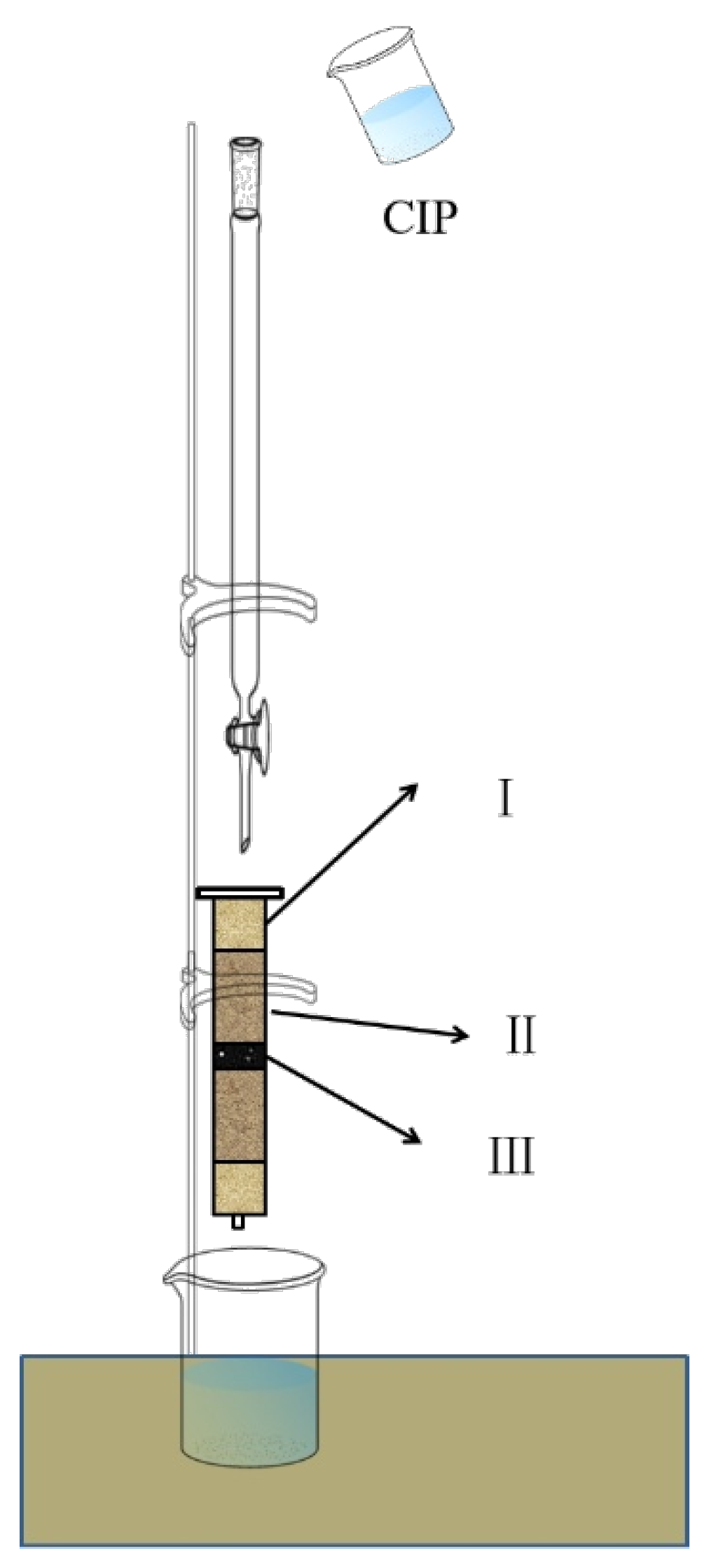
Figure 2.
SEM photos of BC (a) and CuO-BC (b); (c) EDS mapping of CuO-BC.
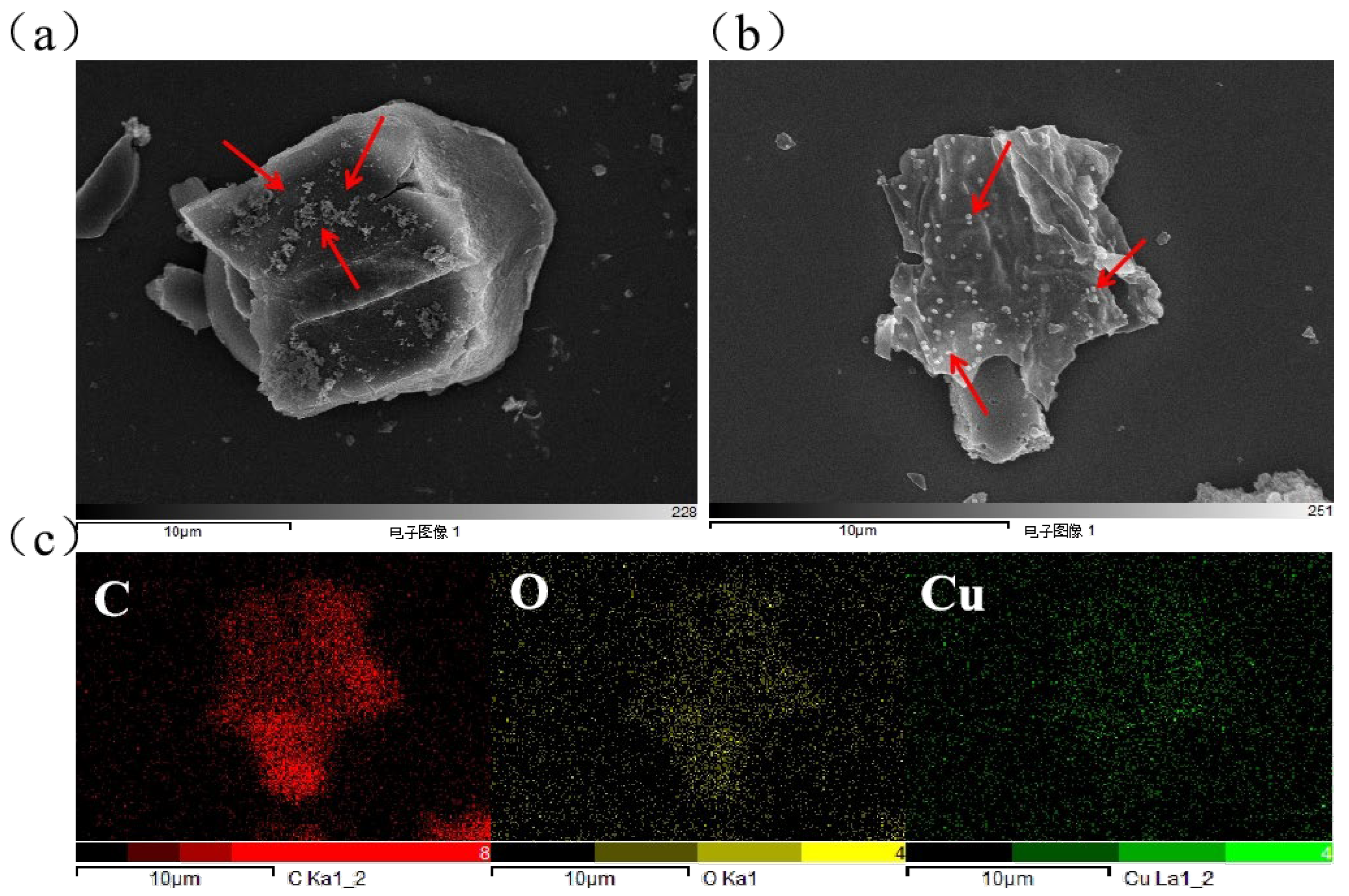
Figure 3.
(a) XRD spectra of BC and CuO-BC; (b) FTIR spectra of CuO-BC and BC.
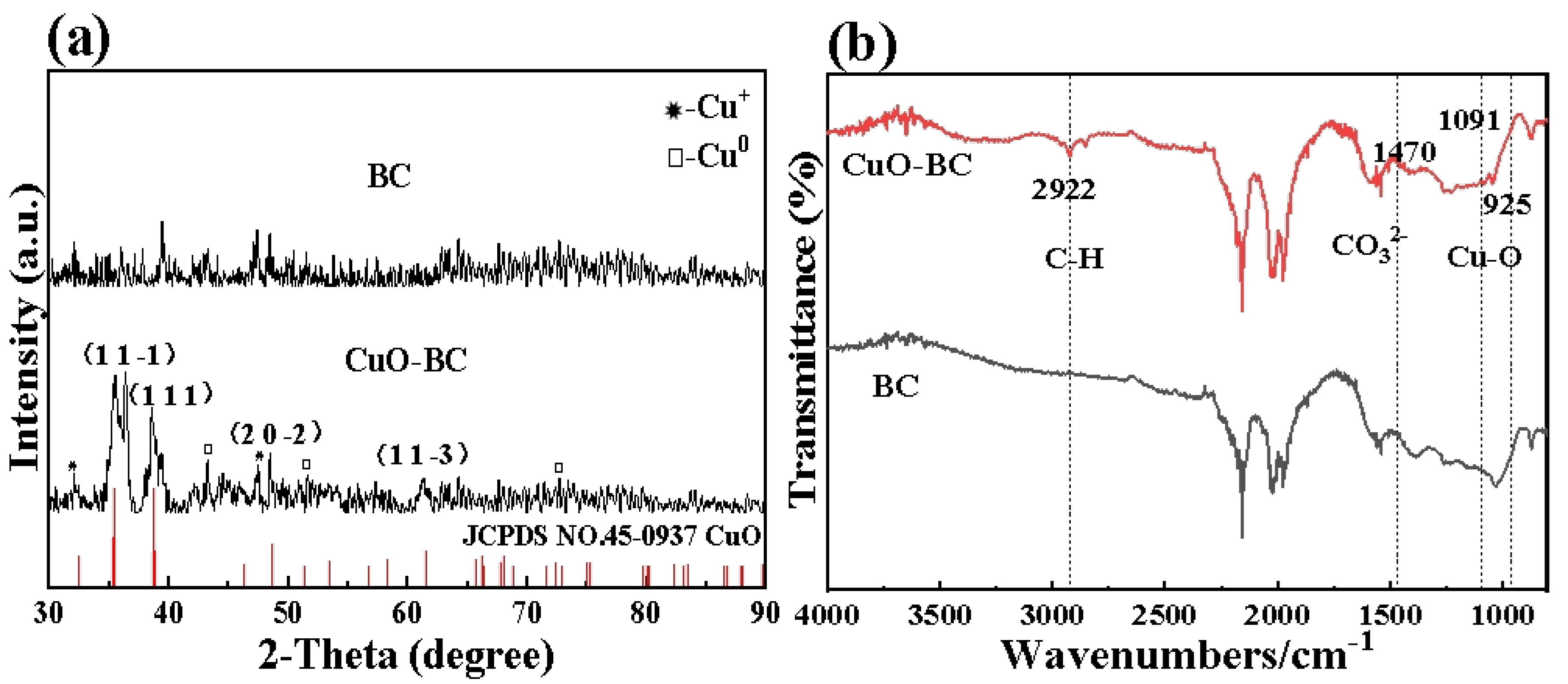
Figure 5.
Degradation efficiency of CIP with different systems. (catalyst dosage: 0.5 g/L, PDS: 0.8 g/L, CIP: 10 mg/L, pH: the initial pH (6.0)).
Figure 5.
Degradation efficiency of CIP with different systems. (catalyst dosage: 0.5 g/L, PDS: 0.8 g/L, CIP: 10 mg/L, pH: the initial pH (6.0)).
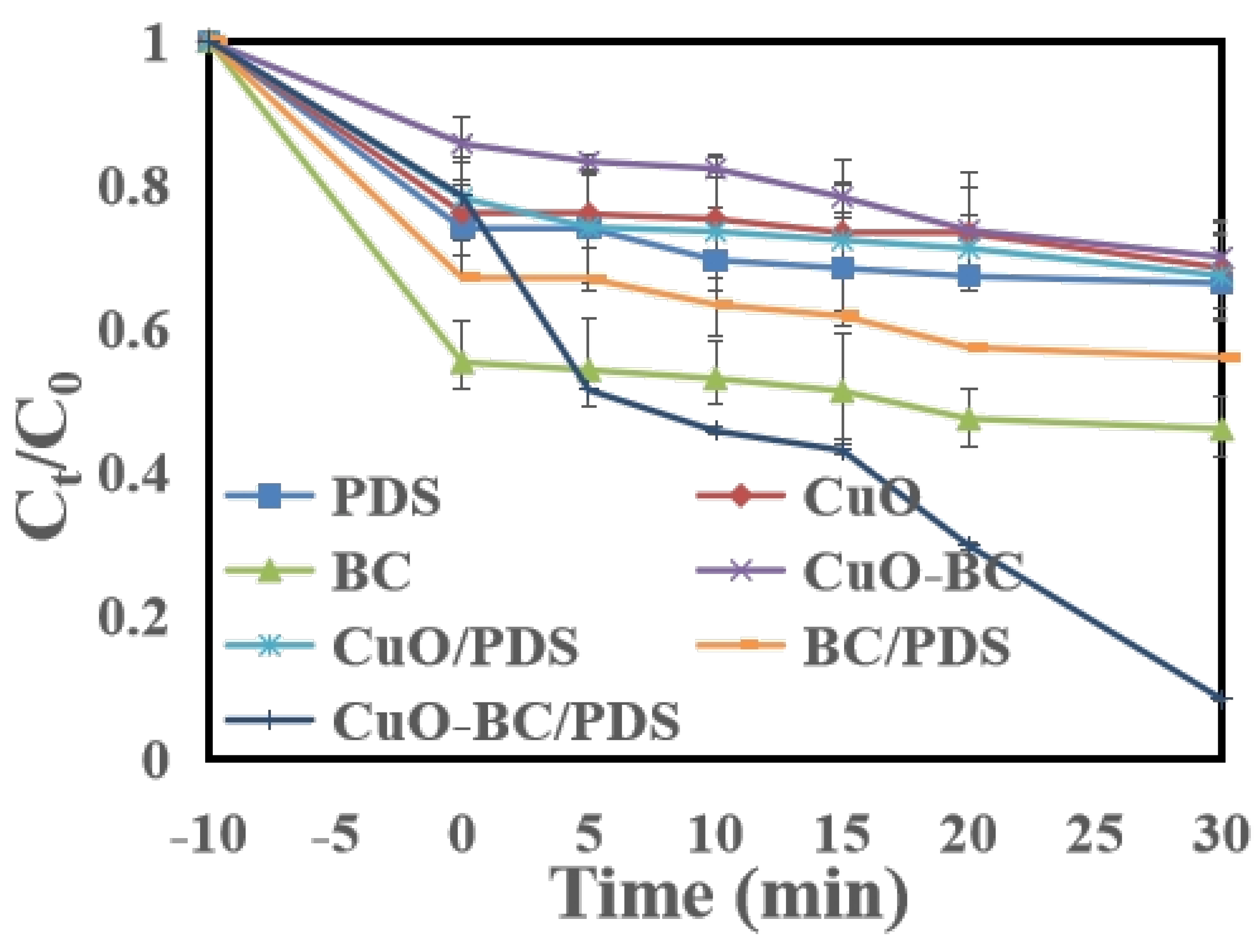
Figure 6.
(a) Effect of different CuO-BC concentrations on CIP degradation. Experimental conditions: PDS: 0.8 g/L, CIP: 10 mg/L, pH: the initial pH (6.0); (b) Effect of different PDS concentrations on CIP degradation. Experimental conditions: CuO-BC: 0.5 g/L, CIP: 10 mg/L, pH: the initial pH (6.0). (c) Effect of different pH on CIP degradation. Experimental conditions: CuO-BC: 0.5 g/L, PDS: 0.8 g/L, CIP: 10 mg/L; (d) Effect of different CIP concentrations on CIP degradation. Experimental conditions: CuO-BC: 0.5 g/L, PDS: 0.8 g/L, pH: the initial pH (6.0).
Figure 6.
(a) Effect of different CuO-BC concentrations on CIP degradation. Experimental conditions: PDS: 0.8 g/L, CIP: 10 mg/L, pH: the initial pH (6.0); (b) Effect of different PDS concentrations on CIP degradation. Experimental conditions: CuO-BC: 0.5 g/L, CIP: 10 mg/L, pH: the initial pH (6.0). (c) Effect of different pH on CIP degradation. Experimental conditions: CuO-BC: 0.5 g/L, PDS: 0.8 g/L, CIP: 10 mg/L; (d) Effect of different CIP concentrations on CIP degradation. Experimental conditions: CuO-BC: 0.5 g/L, PDS: 0.8 g/L, pH: the initial pH (6.0).
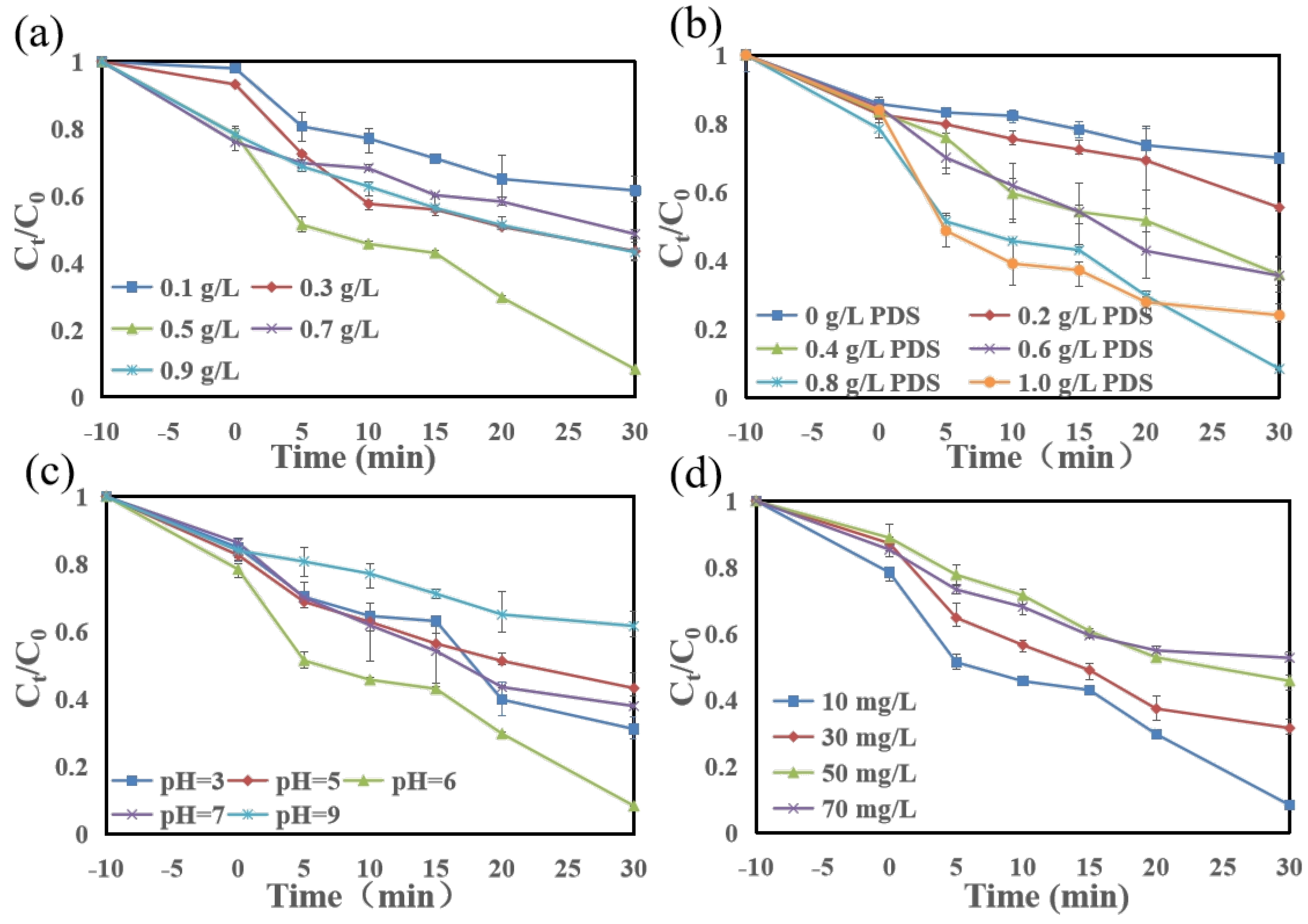
Figure 7.
EPR pattern of (a) SO4·--DMPO and ·OH-DMPO, (b) ·O2--DMPO, (c) 1O2-TEMP.
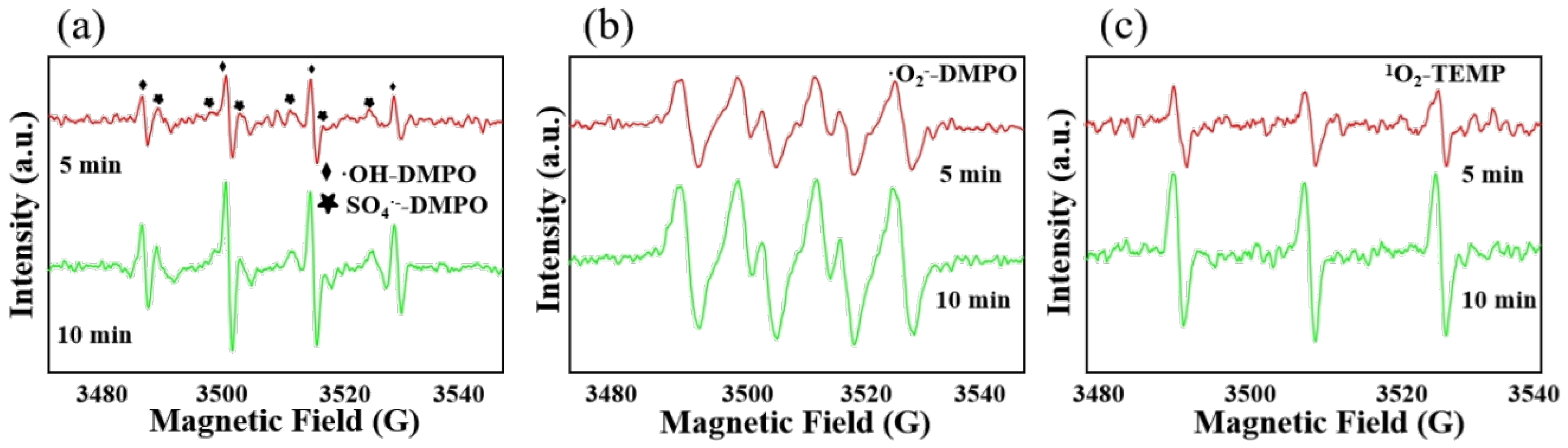
Figure 8.
Schematic illustration of the interfacial electron transfer pathway in the CuO–BC/PDS system.
Figure 8.
Schematic illustration of the interfacial electron transfer pathway in the CuO–BC/PDS system.
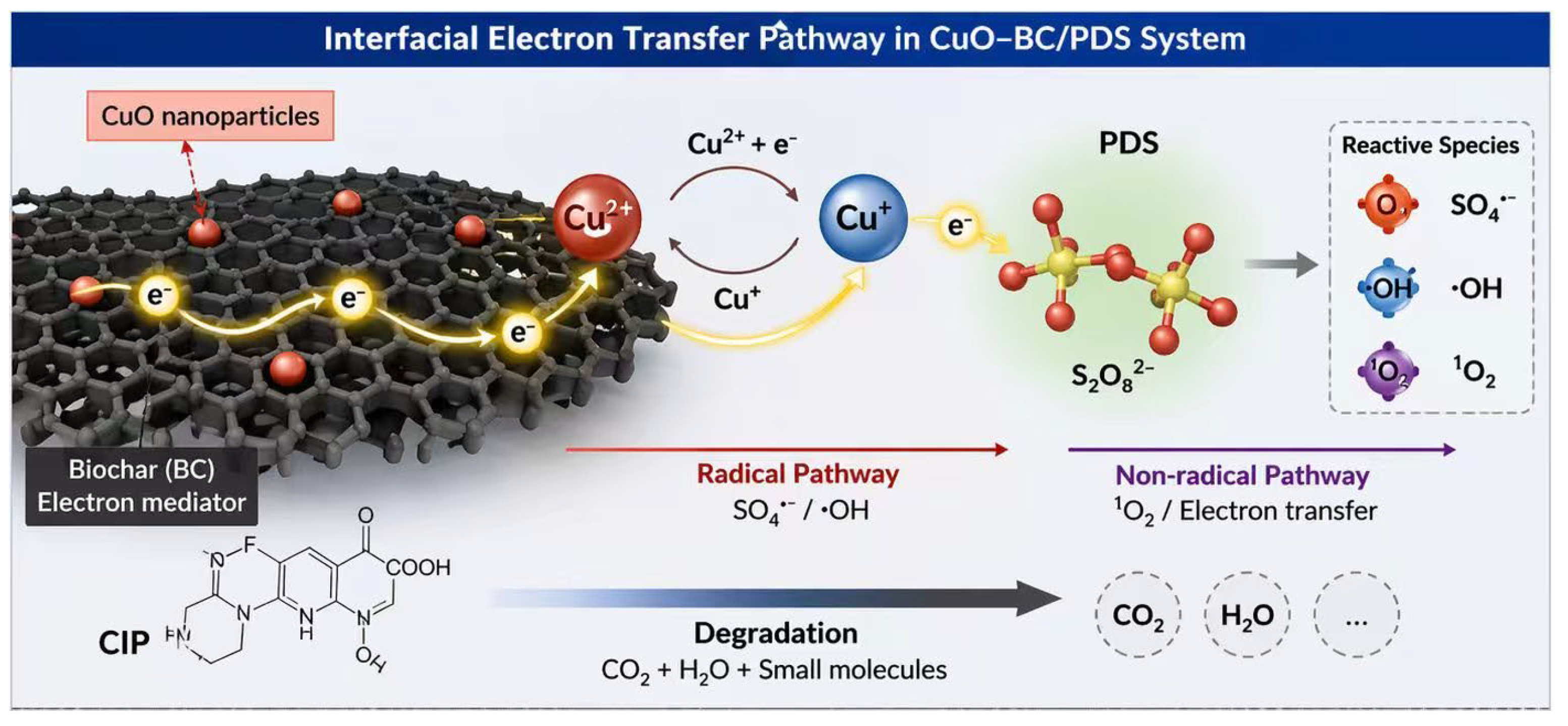
Figure 9.
Proposed Cu2+/ Cu+ redox cycle mechanism in the CuO–BC/PDS system.
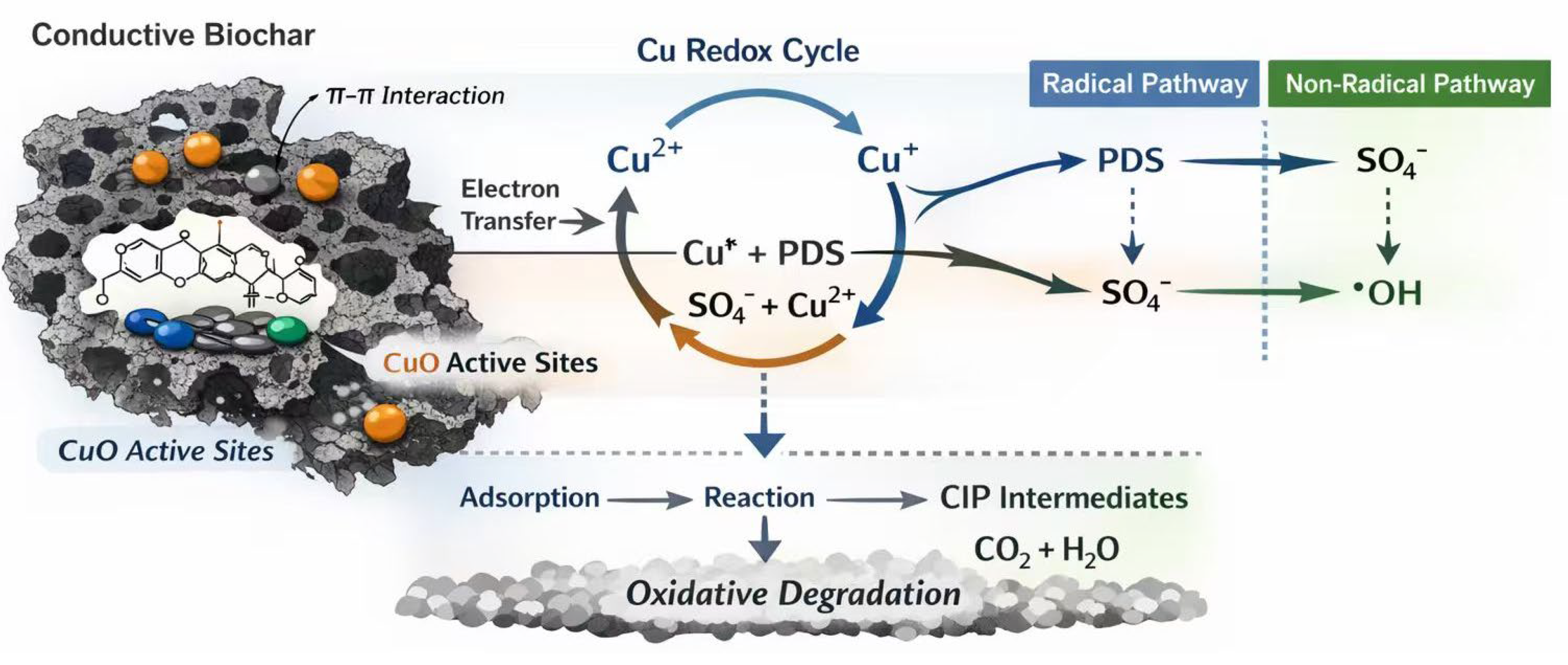
Figure 10.
Recycle experiments for the CIP degradation by CuO-BC/PDS.
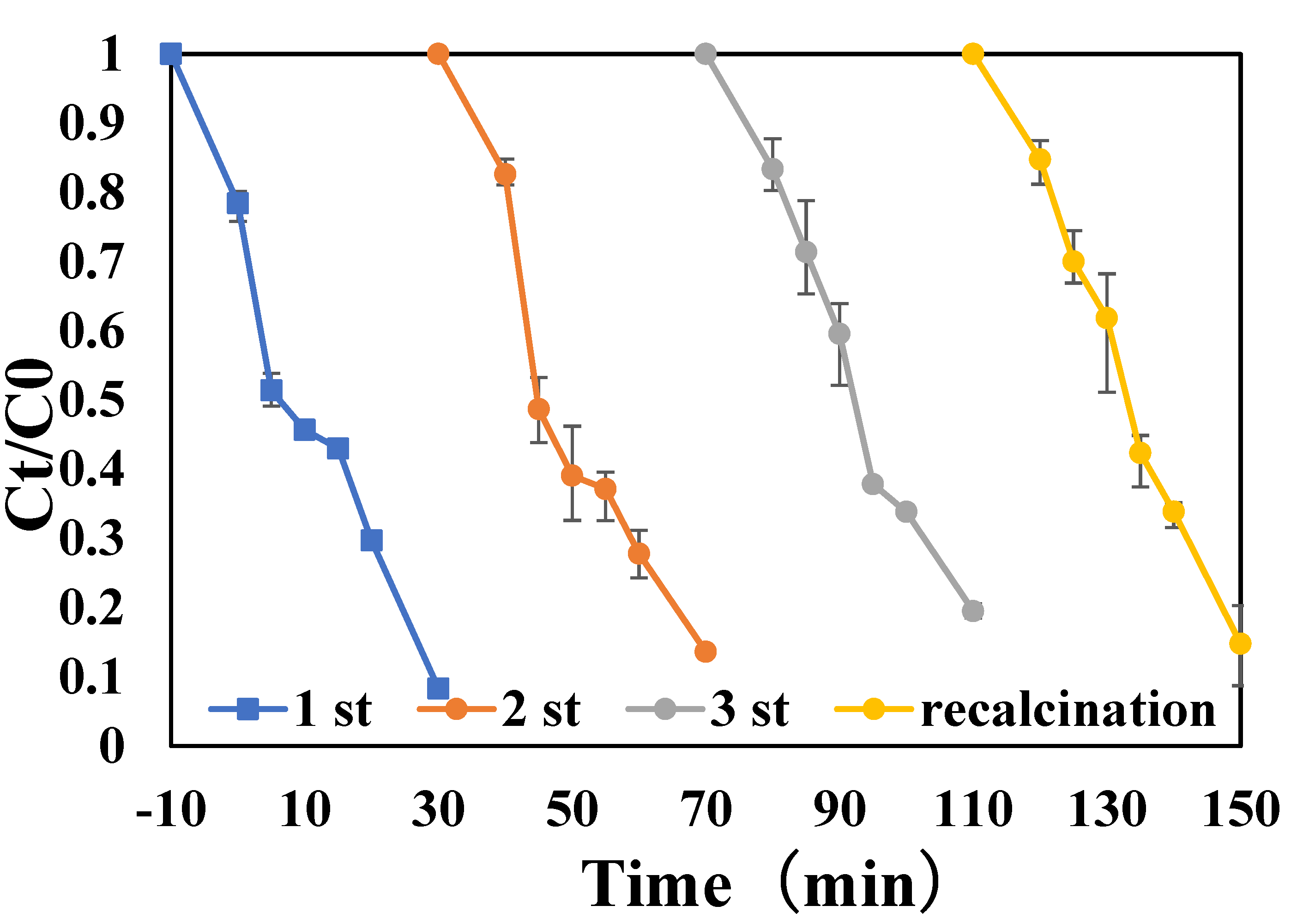
Figure 11.
Removal of CIP from groundwater.
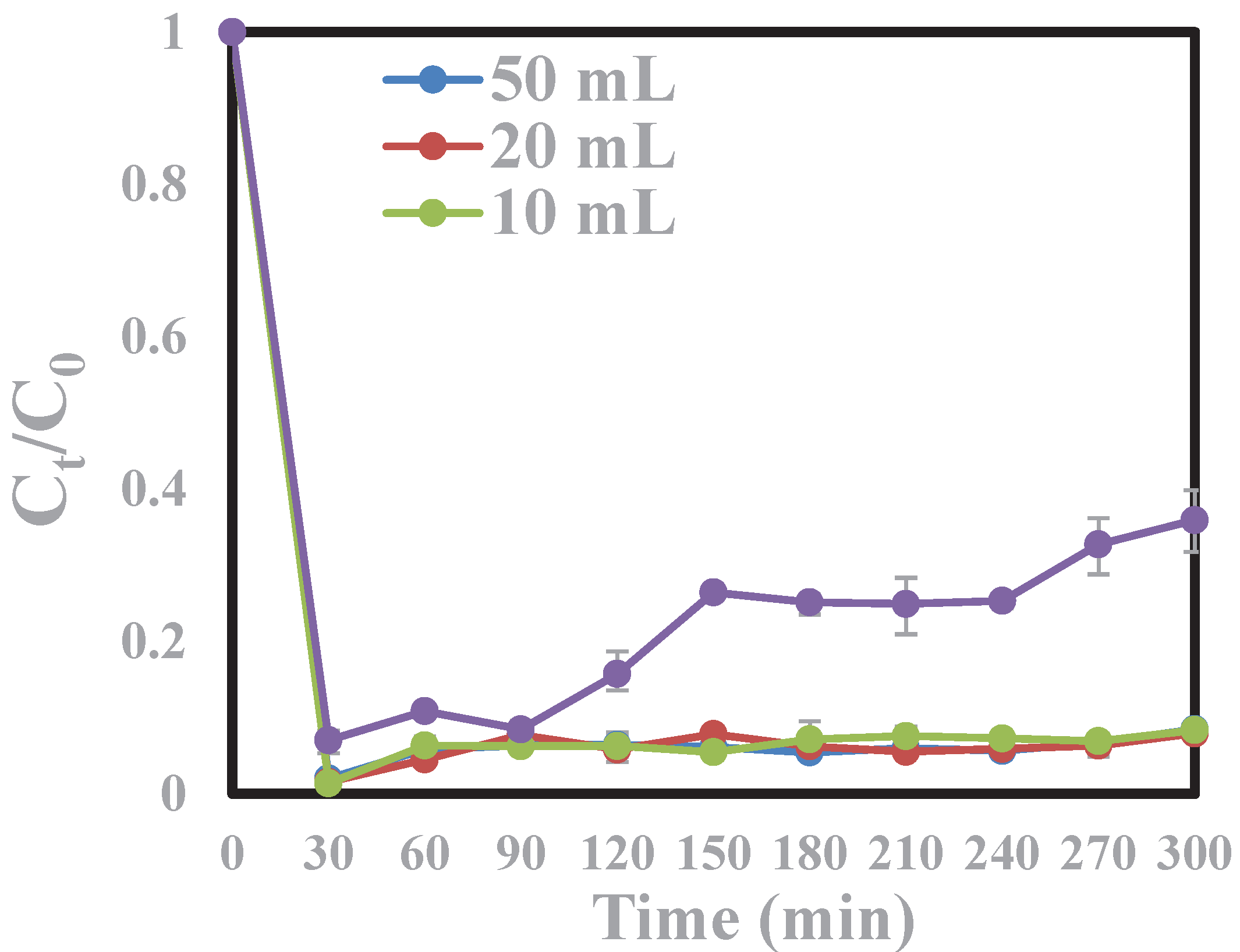
Figure 12.
Possible degradation pathway of ciprofloxacin.
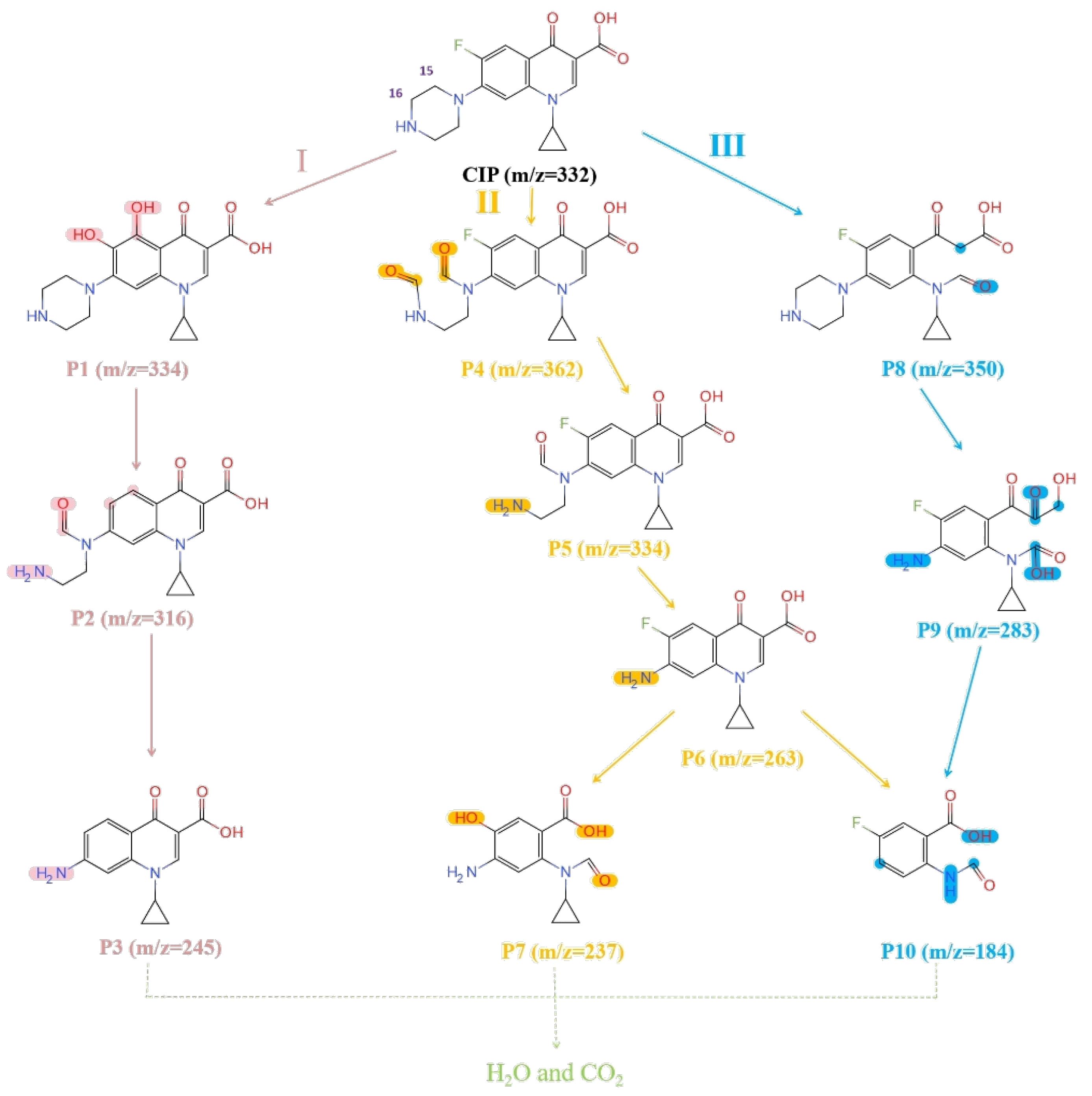

Table 1.
Physical properties of the BC and CuO-BC.
| Sample | SBET(m2/g) | TPV(cm3/g) | BJH(pore diameter(nm)) |
| BC | 391.88 | 0.14 | 3.30 |
| CuO-BC | 448.36 | 0.19 | 6.22 |
Disclaimer/Publisher’s Note: The statements, opinions and data contained in all publications are solely those of the individual author(s) and contributor(s) and not of MDPI and/or the editor(s). MDPI and/or the editor(s) disclaim responsibility for any injury to people or property resulting from any ideas, methods, instructions or products referred to in the content. |
© 2026 by the authors. Licensee MDPI, Basel, Switzerland. This article is an open access article distributed under the terms and conditions of the Creative Commons Attribution (CC BY) license (http://creativecommons.org/licenses/by/4.0/).
Copyright: This open access article is published under a Creative Commons CC BY 4.0 license, which permit the free download, distribution, and reuse, provided that the author and preprint are cited in any reuse.


