
Submitted:
30 June 2026
Posted:
02 July 2026
You are already at the latest version
Abstract
Background/objective: This in vivo and in vitro studies aims to test the hypothesis that functional foods represented by fruit vinegars (FVs) can be an alternative dietary treatment for body weight loss in obesity, and metabolic syndrome/inflammation complications can lead to the diabetes development. Methods: In vivo experiment was carried on Wistar rat, Sprague Dawley strain, divided into 04 groups including n=30 rats/group: i) Group I or Control group fed the standard laboratory diet; ii) Group II or Control group, fed the HyperFat Diet (HFD); iii) Group III or therapeutic group, fed HFD and treated separately with pomegranate or prickly pear or apple FVs by 7ml /kg body weight/day administered orally for 18 weeks; iv) Group IV or Placebo group, fed HFD and received orally 7ml of saline solution (0.09%) for 18 weeks. In vitro experiment was conducted on 3T3-preadipocytes cell line to study the anti-adipogenic effects, and on Raw 264,7 cell line to study the anti-inflammatory effects. Results: The major results reveal that FVs exerts a powerful body-fat loss linked to fat oxidation, sustained by RQ=0.7 and increase BMR, associated with elevated serum free fatty acids, which confirms lipolytic activity. Among the 3 vinegars, pomegranate vinegar showed the greatest health benefit; however, hepatic steatosis and dyslipidemia were normalized by apple vinegar, which has proven to be the most effective. FVs exerts a spectacular anti- obesogenic effect by inhibiting the differentiation of 3T3-preadipocytes into mature adipocytes; and by inhibiting the inflammatory-necrotic process via the suppression of cytokines TNFα, IL-6, IL-1β production. The PPARγ, C/EBPα and NF-κB modulation signaling pathways is convincing. Conclusions: the data from this study are considered a preclinical phase with potential translational relevance, but not clinical recommendations. Ultimately, Fruit vinegars represent an emerging therapeutic prospective as functional foods, thus justifying further human clinical research.
Keywords:
functional foods
; fruit vinegars
; pomegranate
; prickly pear
; apple
; obesity
; type 2 diabetes
; pro-inflammatory cytokines
; adipogenic factors (PPARγ
; C/EBPα
; NF-κB)
1. Introduction
By 2026, the association of obesity and type 2 diabetes mellitus (T2DM) encompasses two concurrent conditions, representing a global pandemic with devastating socio-economic repercussions on cardiovascular health. Obesity - T2DM comorbidity is present in almost every country in the world [1]. Over the past decade, epidemiological figures estimate that more than one billion people are obese or overweight, and more than 500 million are affected by T2DM. The World Health Organization as a chronic and recurring disease resulting from complex interactions between eating behaviors, metabolic disorders, lack of physical activity, and epigenetic factors [2]. Body fat mass is composed of adipose tissue (AT) playing a major role in regulating energy balance and other physiological functions as an endocrine gland, inflammatory site, and in cardiovascular homeostasis [3]. However, excessive AT storage is a major risk factor in the development of chronic non-communicable diseases, such as diabetes mellitus, hypertension, cardiovascular diseases [4] and cancer [5]. The adipose tissue accretion mass in obesity and T2DM is due to increased white adipose tissue in subcutaneous and visceral anatomical zones [6] which is mainly determined by adipogenesis differentiation process [7]. It is essential to clarify that adipogenesis is linked to the adipose tissue trophism and corresponds to transformation process of immature pre-adipocytes from undifferentiated mesenchymal stem cells to mature adipocytes [8]. To study, a number of authors have shown that the cellular model of 3T3-L1 adipocyte lineage represents an excellent cellular model to study adipogenesis process, and obesity development [9]. Indeed, several studies have shown that 3T3-L1 preadipocytes differentiate into adipocytes or not under exposition to adipogenic and anti-adipogenic compounds [10]. Several transcription factors are involved in the mechanisms of adipogenesis, such as the PPARγ (peroxisome proliferator γ) activated receptor and the CCAAT/enhancer α (C/EBPα) binding proteins. These factors modulate signaling pathways and epigenetic mechanisms which in turn affect a cascade of intrinsic and extrinsic factors, including hormones, cytokines, growth factors and nutrients [11]. Furthermore, during the development of obesity, adipose tissue is heavily infiltrated by macrophages are derived from either monocytes or dendritic cells, which can represent up to 40 to 50% of tissue cells and induce chronic low-grade inflammation that promotes insulin resistance [12]. It is described that there are two types of macrophages, M1 and M2. The "M1" type macrophages are pathogenic, producing TNF-α, IL-6, IL-1β, and nitric oxide are pro-inflammatory cytokines strongly implicated in the metabolic disorders development. In contrast, the cytokines IL-4, IL-10, and IL-13 are secreted by "M2" macrophages phenotype, considered as protective by anti-inflammatory properties. The "M1" type macrophages originate from an increase in lipopolysaccharide (LPS) circulating levels [13] and are activated by metabolic signals such as increase of saturated free fatty acids levels, hyperinsulinemia, hyperglycemia, or oxidized LDL, which promote adipocyte hypertrophy and consequently the obesity grade severity [14]. It is important to clarify that adipose tissue hypertrophy refers to an increase in the adipocytes volume of cytoplasm due to an excessive lipids accumulation. Unlike hyperplasia, this refers to an increase in the cells number of adipocytes [15]. It is essential to note that the inflammatory process is linked to the binding of LPS to its specific receptor on macrophages, primarily TLR4 (Toll-like Receptor 4), which triggers a pro-inflammatory storm signaling cascade via NF-κB synthesis. This stimulation produces the catabolism of the inhibitory NF-κB complex, inducing the translocation of NF-κB to the cell nucleus and, consequently, triggering the production of pro-inflammatory cytokines such as TNF-α, IL-1β, and IL-6 [16]. Regarding the treatment of obesity and diabetes, several classes of drugs are used, including appetite suppressants, Fat absorption inhibitors (Orlistat), Energy expenditure stimulators linked to enhancing thermogenesis (thyroid hormones), and more recently, GLP-1 agonists (se semaglutide, liraglutide) which reduce appetite and gastric emptying [17]. However, the benefits of these treatments remain limited [18] with frequent adverse effects, particularly anorexia, constipation, insomnia, dizziness, and nausea [19]. In order to avoid the side effects of obesity pharmacological treatments, several nutritional studies have focused on functional foods, from which beneficial bioactive molecules are extracted from fermented Fruits [20] playing a key nutraceutical role in the treatment of chronic diseases and obesity associated with its inflammatory complications [21]. In this regard, Fruit Vinegars (FVs) contain a multitude of bioactive organic compounds including organic acids, polyphenols, melanoidins and tetramethylpyrazine which modulate caloric intake (eating behavior control), gene expression regulation (anti-tumoral), protein metabolism (anti-sarcopenia), lipid metabolism (anti-dyslipidemia), carbohydrate metabolism (glucose tolerance), accurate immune deficiency, oxidative stress suppression, prevent platelet aggregation and ensure blood fluidity (blood pressure control), detoxify the liver in the presence of steatosis and improve brain performance [22]. The effects of fruit vinegars have been described primarily in diabetes [23] and obesity [24]; but especially in weight loss treatments [25]. Regarding photochemical composition of FVs, it is important to emphasize the importance of the beneficial health effects of polyphenols and flavonoids; however often used interchangeably, the terms polyphenols and flavonoids while they are not synonymous. Precisely, all flavonoids are polyphenols, but not all polyphenols are flavonoids. It is more accurate to say that flavonoids are polyphenolic compounds. Polyphenols are a general class; whereas flavonoids are a subclass of polyphenols (approximately 60% of polyphenols). The relationship between polyphenols and flavonoids can be structured as follows: Polyphenols are found in plant products (fresh fruits and vegetables) rich in phytochemicals compounds characterized by the presence of multiple phenol groups. They are divided into two main subgroups: 1) Flavonoids: more than 8,000 identified types, responsible for the color of many fruits and vegetables. 2) Non-flavonoids: Other compounds such as phenolic acids, stilbenes (e.g., resveratrol in grapes, red wine, blackberries), and lignans. Flavonoids share the same structure: 2 aromatic nuclei and 1 central pyranic nucleus. Flavonoids are classified on the basis of the number, position and nature of radical substituents. Flavonoids are subdivided into Anthoxanthins and Anthocyanins. Anthoxanthins represent the most dominant subgroup of flavonoids [26]. The FDA (food drug administration) gives flavonoids the name vitamin P and recognizes their venoactive properties. Flavones are found in red onions, red apples, and red beets; flavonols in yellow apples, tomatoes, yellow onions, pumpkins, squash, and pineapples; flavanols in green tea and yellow grapes; flavonones in lemons, oranges, black tea, black grapes, dark chocolate, and coffee; isoflavones in soy; and anthocyanins in red, garnet, and orange fruits and vegetables. Several clinical investigations have been carried out to study the therapeutic effects of vinegars, targeting their bioactive molecules, mainly acetic acid, gallic acid, catechin, ephicatechin, chlorogenic acid and caffeic acid, p-coumaric acid and ferulic acid, and their antioxidant, anti-inflammatories, antidiabetic, antimicrobial, antitumor, and anti-obesity effects [27]. Recent relevant studies have shown that Fruit vinegars modulate macrophage polarization primarily by suppressing the pro-inflammatory M1 phenotype and promoting the anti-inflammatory M2 phenotype, notably through the action of bioactive polyphenols and organic acids. This shift, often induced by the suppression of the NF-κB pathway and the activation of the Nrf2 pathway, helps reduce chronic inflammation. Fruit vinegars exert their anti-inflammatory action by reducing the expression of M1 markers such as inducible nitric oxide synthase (iNOS), cyclooxygenase (COX)-2 and pro-inflammatory cytokines (TNF-α, IL-6, IL-1β). The components of vinegar promote tissue repair by inhibiting M1 predominance and stimulating the passage to M2 type macrophages, which release anti-inflammatory cytokines like IL-10 to promote tissue repair [28]. Among the therapeutic benefits of FVs, the studies published in recent years have focused on apple cider vinegar [Malus Domestica Borkh. (Rosaceae)], particularly in diabetes and cadiometabolic risk treatment [29,30], but very few studies have examined the anti-obesity in vitro effects of prickly pear vinegar (Opuntia ficus-indica) and pomegranate vinegar (Punica granatum). It is important to give the reasons for our choice of the three FVs types made from pomegranate, apple and prickly pear. It should be remembered that these FVs have been used in traditional Mediterranean and Asian medicine. In previous studies from our laboratory, we studied separately the effects of these three FVs on oxidative stress, inflammation, and dyslipidemia [31,32].
i) Regarding Pomegranate (Punica granatum L.), it is described that several phytochemical constituents have been identified in pomegranate red juice, including polyphenols, flavonoids, anthocyanins, alkaloids, lignans and triterpenes. Randomized clinical trials have provided evidence of the pharmacological activities of pomegranate vinegar in several diseases, including diabetes, cardiovascular diseases, oral cavity disorders, endocrine disorders, and cancer. In addition, Pomegranate has been used in the treatment of intestinal parasites, dysentery, diarrhoea, hemorrhoids and vaginal itching [33].
ii) Regarding Apple (Malus domestica L.), it has been extensively studied, particularly with regard to apple cider. This is linked to widespread consumption of apples in the human diet compared to pomegranates and prickly pears, and therefore it is the main fruit providing nutritional phytochemical compounds. Apples are rich in various acids such as acetic, gallic, chlorogenic, caffeic, catechin, p-coumaric, and ferulic acids. Ephicatechin is the most important flavonoid in apples. These phytochemicals have anti-obesity, antioxidant, cholesterol-lowering, antimicrobial, and anti-tumor effects [34].
iii) Regarding Prickly Pear (Opuntia ficus-indica), has been widely studied due to its content of bioactive compounds such as isorhamnetin, flavonols, dihydroflavonols, flavonones, and flavanonols. Pertinent publication describes prickly pear vinegar as having the greatest influence on the gut microbiota [35] compared to other fruit vinegars. Given the importance of the microbiota in human health, it appears that prickly pear vinegar is the most important to investigate. The in vitro anti-adipogenic and anti-inflammatory tests were intentionally performed with vinegar separately to identify and compare their individual biological activities and specific contributions. Independent evaluation of the vinegars allowed us to determine if any one exhibited greater bioactivity than the others and to avoid potential interactions that could mask their intrinsic properties. In parallel, we conducted an in vivo study aimed at investigating the therapeutic potential of fruit vinegar separately in order to establish a dietary vinegaformulation: pomegranate, prickly pear or apple. Therefore, the three fruit vinegars were evaluated in a diabetic and obese animal model to assess potential complementary under physiological conditions. The objectives of this study target the following physiological and metabolic clusters: 1) in vivo study: investigated the effects of FVs on metabolic syndrome components observed in diabetes, energy expenditure variation, and adipose tissue body distribution; 2) in vitro study: investigated the effects of FVs on adipogenesis inhibition (anti-obesity effect) and anti-inflammation by studying the signaling pathways of pro-inflammatory cytokines (TNFα, IL6, IL1β) and adipogenic factors (PPARγ; C/EBPα; NF-κB). To our knowledge, we believe this study will represent a new approach by Functional Foods as a Palliative Dietary Treatment for Obesity and Diabetes using Fruits Vinegars.
2. Materials and Methods
2.1. Vinegar Production Method
In this study, we used three types of fruit vinegars (FVs): prickly pear, pomegranate, and apple. The FVs were obtained from the Algerian National Office for Wine Products. The FVs production method has been described previously [36]. The acetic acid concentration of the FVs was adjusted to 0.5% (w/v). FVs are produced through the double fermentation of a fruit extract, under the selective action of certain microorganisms such as yeasts and bacteria. After the extraction of the fruit juice, vinegar production involves two main steps:
- Alcoholic fermentation (or submerged fermentation) which takes place in anaerobic conditions under the action of the yeast Saccharomyces cerevisiae or Saccharomyces ellipsoideus, which transforms the fermentable sugars of the fruits into ethyl alcohol;
- (Acetic fermentation (or aerated fermentation) takes place in open air under the action of the acetic acid bacteria (Mycoderma aceti), which transforms the ethyl alcohol obtained in the previous phase into acetic acid.
2.2. Total Organics Acids Analysis of FVs
To total organics acids content in pomegranate, prickly pear, and apple vinegars were performed by HPLC (high-performance liquid chromatography) coupled with Mass Spectrometry (LC/MS) analysis (Shimadzu LC-2010 CHT) according to the method described previously [37]. LC/MS was equipped with auto sampling injector, solvent degasser, ultraviolet detector and Hypersil BDS- C18, 4.0×250 mm column. 35 µl of sample (1ml of vinegars was diluted by 10 ml water and filtered with 0.2 µm filter) was injected on isocratic flow of Orthophosphoric acid (0.1%). The flow rate was 1 ml/min and the column was maintained at 55 °C. The detector was monitored at 210 nm.
2.3. Total Polyphenols-Flavonoids Characterization and Total Acidity of FVs
To quantify the total polyphenol content in pomegranate, prickly pear, and apple vinegars, we used a reference technique described in the Folin-Ciocalteu method [38] with slight modifications. Following this method, we determined the total phenolic compounds (TPC) of the vinegars using a colorimetric method described previously [30]. We also evaluated the phenolic compounds in FVS by LC/MS (Shimadzu LC-2010CHT)]. The flow rate was 0.5 ml/min and the column was maintained at 35 °C. The detector was monitored at 280 nm.
The assessment steps are as follows: The vinegar sample (25 µl) was mixed with 250 µL of Folin-Ciocalteu phenolic reagent. After 5 min, 750 µl of saturated sodium carbonate solution (20%w/v in water) solution was added to the mixture and the volume was adjusted to 3 mL with distilled water. The reaction was maintained in the dark for 40 min at 40°C, and after centrifugation, the sample and standard readings were performed using a spectrophotometer (Varian Cary 50 Bio UV-Vis spectrophotometer) at 765 nm relative to the reactive blank. Gallic acid solution was used as a standard curve. The phenolic compound content was calculated in gallic acid equivalents (GAE) from a Gallic acid calibration curve (10–100 µg/mL, Y = 0.0027x − 0.0055, R² = 0.9999). The TPC content is expressed in mg GAE/mL of vinegar. Total acidity was measured by titration with a 0.1 N sodium hydroxide solution. The vinegar samples were analyzed in triplicate.
Regarding the total flavonoids compounds (TFC), the appraisal steps are as follows using the aluminium trichloride (ALCL3) method [39]. 1 ml of vinegar was added to 1 ml of a 2% (20 g/l) ALCL3·6H2O solution. We used quercetin prepared in methanol at various concentrations as a standard curve. Quercetin standard solutions were then prepared by successive dilutions in methanol (1-20 µg/mL). After 30 min of incubation, the absorbance was read at 510 nm against the blank (acetic acid) using a Varian UV-Vis spectrophotometer (Cary 50 BioUV-Vis spectrophotometer, Varian). The TFC in the vinegars was calculated from the calibration curve (Y = 0.0162x + 0.0044, R² = 0.999) and expressed as mg quercetin equivalent (QE)/mL of vinegar. All determinations were performed in triplicate.
The vinegar sample solutions were diluted to a concentration of 500 ppm. It should be noted that 500ppm is the equivalent of 500 mg of acetic acid / L of solution (05g/L or 0.05% m/v) according to acetic acid density is close to water. The Folin-Ciocalteu reagent, gallic acid, and quercetin standard solutions were obtained from Sigma-Aldrich Co. (St. Louis, Missouri, USA). Aluminum chloride hexahydrate, methanol, and sodium carbonate were obtained from Fisher Scientific (Fair Lawn, New Jersey, USA). The water was purified using a Milli-Q system (Millipore).
2.4. DPPH Radical-Scavenging Antioxidant Activity
The property to scavenge DPPH (1-diphenyl-2-picrylhydrazyl) free radicals was measured according to the method described previously [40]. 25 µl of vinegar were mixed with 975 µl DPPH at 60 µM. After 30 min in dark incubation at 22°C, the absorbance was recorded at 517 nm. The scavenging property was estimated in percentage of DPPH radicals scavenged using the following equation: scavenging effect (%) = [(control absorbance - sample absorbance) / (control absorbance)] x100. The IC50 value is the inhibition concentration that could scavenge 50% of the DPPH radicals. BHT and ascorbic acid were used as positive controls. Samples were analysed in triplicate.
2.5. In Vivo FVs Experimental Protocol Treatment and Diet Composition
The all experimentation was undertaken on adult male Wistar rats (Rattus norvegicus), Sprague Dawley strain older than 9 months (80-140 g). The Wistar rats were delivered by the Pasteur Institute, Algiers, Algeria. Animals were supervised by a veterinarian accredited by the Algerian National Institute of Scientific Research. After an initial two-week acclimation period, 120 Wistar rats were placed in individual cages. Randomization then separated the animals into two diet groups according to the experimental protocol shown in Figure 1. The animals were kept in a temperature-controlled animal facility (23°C ± 1°C) under artificial light with a 12-hour light-dark cycle. Weight was recorded daily, and caloric intake was calculated from 500 g of food distributed in containers. The body mass index (BMI) of Wistar rats was assessed by dividing the weight (g) by the height square (cm); the tail of animal was not taken into account for the BMI calculation (g/cm2). Weekly blood samples were taken from the retro-orbital venous plexus to measure biochemical parameters. The experiment lasted 18 weeks. At the end of the study, the animals were anesthetized with urethane (Sigma-Aldrich) and then sacrificed by cervical dislocation. Blood was collected in dry or heparinized tubes according to the parameters measured. Adipose tissue was collected from different body areas, weighed, and then immediately frozen in liquid nitrogen and stored at -80°C for subsequent analysis.
2.5.1. Experimented Wistar Rats Groups
Our investigation was carried out on 4 Wistar rats groups distributed as follows:
- Group I or LSD group: Thirty Wistar rats were maintained ad libitum on laboratory synthetic chow pellets diet (LSD) is equivalent to 3.25 Kcal/g of food. LSD is provided by Carfil Quality, Beyntellus, Belgium; https://www.carfil.be). This synthetic diet contain: 47.4% carbohydrates, 25% proteins, 7.5% fat, contained vitamins and minerals substances. Group I represents the control group.
- Group II: This group consists of Wistar rats made obese by a high-fat diet (HFD), then made diabetic by intrapritoneal injection of streptozotocin (STZ). This experimental model, which involves feeding Wistar rats an HFD diet followed by a low-dose STZ injection, is a widely used and highly reliable experimental protocol for mimicking the natural progression and metabolic characteristics of type 2 diabetes (T2D) in humans [41]. This HFD diet contain: 35% carbohydrates, 20% proteins, 45% fat, contained vitamins and minerals substances. Thirty Wistar rats treated with a single injection of 45 mg/kg of STZ developed a T2D state [42]. HFD is equivalent to 4.75 Kcal/g of food. A HFD is defined as a dietary pattern characterized by a significant intake of fats, which has been associated with the development and maintenance of obesity due to its high caloric density and lower metabolic cost for fat storage compared to carbohydrates and proteins [43]. In this in vivo study, we used separately vinegars of Pomegranate vinegar (PGV); or Prickly Pear vinegar (PPV); or Apple vinegar (AV).
- Group III: This group contained 30 diabetic Wistar rats fed an HFD diet and treated separately with PGV, or PPV, or AV. The fruit vinegars (FVs) were administered daily via gastric intubation at a dose of 7 mL of FVs /kg body weight/day for 18 weeks. The dose of vinegar cocktail used in this study was set as the reference dose of apple cider vinegar (15 mL/day) which has shown a slimming effect in humans [44].
- Group IV: This group represents the placebo group, comprising 30 diabetic Wistar rats, which continued to be fed a high-fat diet and continuously received a 0.9% NaCl isotonic saline solution (placebo). It is important to clarify that FVs doses used in both in vivo and in vitro studies were established based on validated and published experimental protocols. Prior to this, we assessed the acute and subchronic toxicity of the vinegars according to the method described previously [45]. During this toxicity phase test (3.5 – 7 – 14 mL/kg p.c/day), we noted weight changes and the appearance of signs of toxicity such as behavioral disturbances in the cage, alopecia, skin rashes, lacrimation, or gastrointestinal manifestations like diarrhea. The mortality rate was also recorded. At the end of this phase, we established a concentration of 7 mL/kg body weight, primarily motivated by a balance between metabolic efficiency and gastrointestinal tolerance. In vitro study, experiments animals often adjust the acidity of the vinegar to a standard percentage, on average 0.5% w/v acetic acid [46].
2.5.2. Determination of Energy Expenditure, Basal Metabolism and Oxygen Consumption
In this study, we used indirect calorimetry to assess energy expenditure (EE) and the nature of the oxidized substrate. The measurement apparatus consisted of metabolic cages, peristaltic pumps, perfusion flow regulators (2 L/min), valves, and analyzers. From day 0 to day 7, Wistar rats were placed in an indirect calorimetry system (Oxymax, Columbus Instruments, Ohio, USA) for 24 h at an ambient temperature of 28 °C. This computer-controlled energy measurement system sends a signal to store the data (Metabolism, Panlab, Barcelona, Spain), allowing real-time measurement of oxygen consumption (VO2) and carbon dioxide production (VCO2). The sampling line was purged every 1.5 min, allowing the calculation of RQ (respiratory quotient) = VCO2/VO2 ratio. Oxygen consumption and CO₂ production were measured incessantly for 8 hours, with measurements taken every 5 minutes for 30 minutes. The RQ was calculated using the NPRQ (non-protein respiratory quotient) table to determine lipid, carbohydrate, or protein oxidation. The respiratory quotient (RQ) evaluation use the same equipment allows for basal metabolism measurement or basal metabolic rate (BMR), which was calculated using a method previously described in rodents [47]. The BMR value takes into account the NPRQ, assessed by urinary nitrogen balance. To determine the temperature of thermal neutrality, Wistar rats were fasted for 12 hours and then placed individually in metabolic cages. Using a thermometer, we measured rectal temperature. Total energy expenditure (TEE) was determined from the RQ, as described previously [48]. An RQ of 1.0 indicates exclusive carbohydrate oxidation, an RQ of 0.7 indicates lipid oxidation, and an RQ of 0.8 indicates protein oxidation.
2.6. In Vitro FVs Treatment on Viability-Cell Culture and Experimental Design
In this in vitro investigation, we separately studied the vinegars in order to identify the best therapeutic benefits effects of PV, PPV and AV vinegar. In this study we used murine 3T3-L1 preadipocytes as a model of adipogenesis and RAW264.7 murine macrophages (American Type Culture Collection, USA). Cells were cultured in DMEM supplemented with 10% FBS, 100 U/ml of penicillin and 100 μg/mL of streptomycin in a humidified 5% CO2 incubator at 37 °C. The FVs effects on cell viability was evaluated by MTT [3-(4,5-diMethylThiazol-2-yl)-2, 5-diphenylTetrazolium bromide] cell proliferation kit (Invitrogen, USA). Briefly, RAW264.7 or 3T3-L1 Preadipocytes were cultured in 96-well plates (6×10³ cells/well) and allowed to adhere overnight.
2.7. 3T3-L1 Cell Culture and Differentiation Adipogenesis Process
The differentiation of 3T3-L1 preadipocytes into mature adipocytes was achieved in a specific culture medium according to the protocol described previously [49]. Culture of 3T3-L1 preadipocytes was performed in modified Dulbecco medium (DMEM) containing 10% fetal bovine serum (SVN, Invitrogen, Carlsbad, CA, USA) and 10 mg/mL penicillin/streptomycin at 37°C under a 5% CO₂ atmosphere. The preadipocytes were seeded in six-well plates at a concentration of 5 × 10⁵ cells/well. At complete confluence, the initial culture medium was modified with another culture medium containing 0.5 mM IBMX (3-isobutyl-1-methylxanthine), 0.25 µM dexamethasone, and 10 µg/mL insulin in DMEM supplemented with 10% fetal bovine serum (FBS) and 10 mg/mL penicillin/streptomycin. After 2 days of incubation, the culture medium was renewed every 2 days with DMEM containing 10% FBS. On day 6, fully differentiated preadipocytes were stained with oil red O, used for real-time RT-PCR, and then photographed. The control was treated with an equal volume of distilled water.
2.8. Oil Red O Staining
We used a method specific to the adipocyte described previously [50]. The 3T3-L1 preadipocytes differentiation occurs on day 6. After coloring with oil red O, the adipocytes were fixed in 10% formalin in PBS for 1 h at room temperature. Following fixation, the cells were incubated with isopropanol for 1 h, followed by three washes with distilled water to remove the oil red O from the intracellular medium. Absorbance was measured at a wavelength of 520 nm using a microplate reader (Bio-Rad, USA).
2.9. Triglyceride Level Analysis in 3T3-L1 Cells
Differentiated 3T3-L1 preadipocytes to adipocytes were resuspended in PBS to facilitate cell lysis. Cell suspension was carried out in lysis buffer (Tris-HCl 50 mM, NaCl 150 mM, EDTA 1 mM, NaF 50 mM, Na₄P₂O₇ 30 mM, Triton X-100, PMSF 1 mM, aprotinin 2 µg/mL) for 1 h on ice, then centrifuged at 272 g for 5 min to remove cell debris. The supernatant was collected for the determination of cellular triglyceride (TG) levels using an intracellular TG assay kit. For the analysis, 20 µL of cell supernatant were taken and mixed with 3 mL of the reagent (assay kit) and incubated at 37 °C for 5 min. After incubation, the absorbance of the mixture was measured at 600 nm using a microplate reader (Emax, Molecular Devices, Sunnyvale, USA).
2.10. Pro-Inflammatory Cytokines mRNA Expression
RAW 264.7 Cells (5 × 10⁴ cells/mL in 24-well plates) were exposed to different concentrations of fruit vinegars for 1 h, followed by activation with 1 μg/mL of LPS. After 8 h of cell activation, TNF-α, IL-1β, and IL-6 mRNA levels were determined by real-time RT-PCR according to the method described previously [51].
2.11. NF-κB Immunofluorescence Assay
NF-κB immunofluorescence method in RAW 264.7 cells has been described previously [52]. Cells are cultured on glass coverslips in 6-well plates, then pretreated with FVs for 2 h followed by the addition of LPS (1 μg/mL) for 1 h. After washing with PBS, cells were fixed immediately in 95% ethanol and rehydrated in 0.1 M PBS, pH 7.4. Cells were permeabilized with 0.2% Triton X-100 for 30 min at room temperature. The slides were then incubated with a primary antibody against NF-κB p65 (1:100 dilution, Cell Signalling Technology, France) at 4 °C overnight. After washing with PBS, slides were incubated with FITC-conjugated donkey anti-rabbit IgG secondary antibody (Jackson ImmunoResearch Laboratories, USA) at room temperature during 2 h. Afterwards, slides were washed with PBS and mounted using ProLong Antifade reagent containing 4’,6-diamidino-2-phenylindole (Life Technologies, USA) to highlight cell nuclei. At the end of treatment, slides were covered with coverslips and visualized under a fluorescence microscope (Zeiss Axioskop, Germany).
2.12. Real-Time RT-PCR of the Primer Sequences
Total RNA was isolated from differentiated 3T3-L1 adipocytes and RAW 264.7 macrophages using TRIzol reagent as indicated in the manufacturer's recommendations (Life Technologies, USA), we proceeded according to the instructions using the iScript cDNA synthesis kit (Bio-Rad, USA) to biosynthesize cDNA from isolated RNA. cDNA samples were subjected to real-time PCR with a specific detection system (StepOnePlus), SYBR Green PCR master mix (Applied Biosystems, USA). The primer sequences for the interest genes were as follows, according to β-actin sens:
- 5’-ATGATATCGCCGCGCTCGTCGTC-3’, β-actin reverse: 5’- CTTCTTGGGCATGTAAAACT-3’; PPARγ forward: 5’- CCTGCGGAAGCCCTTTGGTGACTT-3’, PPARγ: reverse: 5’- TTCACGTTCAGCAAGCCTGGGC-3’; C/EBPα forward: 5’- GCAAAGCCAAGAAGTCGGTG-3’, C/EBPα reverse: 5’-
- AGGCGGTCATTGTCACTGGT- 3’; TNF-α forward: 5’-
- GGCAGGTCTACTTTGGAGTCATTGC-3’, TNF-α reverse: 5’-
- ACATTCGAGGCTCCAGTGAATTCG-3’; IL-1β forward: 5’- GGGCCTCAAAGGAAAGAATC-3’, IL-1β reverse: 5’-
- TACCAGTTGGGGAACTCTGC- 3’; IL-6 forward: 5’-
- GACAACCACGGCCTTCCCTA-3’, IL-6 reverse: 5’-
- GCCTCCGACTTGTGAAGTGGT-3’
It should be noted that the β-actin gene was used as an internal control (Sigma-Aldrich, St. Louis, Missouri, USA). The results represent the relative interest genes expression compared to the internal control gene, according to the method described previously [53]. The RAW 264.7 cells were incubated in the presence of fetal bovine serum (FBS), penicillin, streptomycin, and trypsin, ethylenediaminetetraacetic acid, iso butyl methyl xanthine (IBMX), dexamethasone, insulin, Oil Red O, LPS, Triton X- 100, and acetic acid. The 3T3-L1 preadipocyte cell line was cultured in Dulbecco's Modified Eagle Medium (DMEM). High-glucose DMEM and phosphate buffer saline (PBS) were obtained from Lonza industry (Belgium).
2.13. Evaluation of Adiposity Index in Adipose Tissue Samples
After 18 weeks of experimentation and sacrifice, animal’s adipose tissue samples were surgically taken from different body sites and then weighed. The fat deposits consisted of subcutaneous adipose tissue located in the abdominal region, between the muscle and the skin, particularly in the hind legs (inguinal deposit) and upper back (dorsal deposit); visceral adipose tissue, including retroperitoneal, omental, and mesenteric tissues; retroperitoneal adipose tissue around the kidney and along the lumbar muscles (perirenal, intramuscular, and suprascapular); epididymal adipose tissue covering the epididymis; and brown adipose tissue in the interscapular region. The adiposity index was determined using a method previously described in rats [54]. The nature and degree of obesity (android or gynoid) were defined according to the adiposity index based on the distribution of body fat. In our study, the main white adipose tissues are visceral, epididymal, subcutaneous, and suprascapular adipose tissue. Brown adipose tissue is not included in the adiposity index calculation.
2.14. Assessment of Plasma and Liver Biochemical Parameters
Plasma and liver biochemical parameters were measured in all animals groups previously fasted for 12 hours with free access to water. After blood sampling, the blood samples were centrifuged at 3,000 rpm for 10 minutes. The serum or plasma was collected and immediately placed on ice, then stored at −80°C. For the analysis of biochemical parameters, we used colorimetric and enzymatic methods (Cobas Integra 400, Roche Diagnostics, Meylan, France) with the Cobas® analyzer (Roche Diagnostics, Meylan, France). ALT concentration is a consequence of hepatocyte damage [55] and the degree of liver steatosis is positively correlated with the liver function parameter ALT and visceral adipose tissue [56]. Plasma insulin was measured using a double-antibody solid phase radioimmunoassay (RIA-Insulin-Cis bio kit, France). Insulin resistance was estimated by the homeostasis model assessment of insulin resistance (HOMA-IR) method applied to experimental investigations. HOMA IR= fasting glucose (mmol/L)×fasting insulin (mU/L)/22.5 [57]. Plasma glycosylated haemoglobin (HbA1C) was measured by turbidimetry (Roche Diagnostic Systems, Basel, Switzerland). Plasma non-esterified fatty acids (NEFA) were extracted by solid-phase technical extraction [58]. Plasma NEFA levels were determined by microfluorimetry (Roche, Lörrach, Germany). Immunoturbidimetry was used to measure high-sensitivity C-reactive protein (hs-CRP) levels on a Synchron LX®20 PRO chemical analyzer. The Von Clauss chronometric method was used to measure fibrinogen using the ACL TOPTM hemostasis analyzer (Biolabo, Maizy, France). Fluorescence polarization immunoassay (FPIA) on the Immulite 2000 analyzer (ref.: L2KH02) was used to measure total homocysteine (Hcy).
2.15. Determination of Protein, Glycogen and Lipid Levels in the Liver
Liver tissue aliquots of 300–350 mg were collected, rinsed, and homogenized in physiological saline at +4°C, then analyzed. The Bradford method [59] was used to quantify proteins using bovine serum albumin (BSA) as a standard curve. The quantitative gravimetric method, according to a previously described technique [60], was used to assess triglyceride, esterified cholesterol, and free cholesterol levels. Glycogen levels were determined using a method described previously [61]. This method involves extracting glycogen from liver tissue with KOH at 100°C, then hydrolyzing with sulfuric acid.
2.16. Statistical Analysis
The results of this study are presented as mean ± standard deviation (SD). For data analysis, we used Student's t-test when comparing two independent groups. In addition to Student's t-test, we used ANOVA test to compare each parameter measured in the LSD-group (Group I) and the HFD-groups (Groups II, III, and IV). Both statistical methods are parametric and assume normality of data and equality of variances between the compared groups. To quantify the associations between the diabetics FV-treated groups and diabetics placebo group, we used Pearson's correlation coefficient (r). SPSS 20.0 for Windows (SPSS Inc., Chicago, IL) was used to perform all statistical analyses of the study. The results were considered significant (p < 0.05), very significant (p < 0.01), highly significant (p < 0.001) or not significant (ns). The one-way analysis of variance (ANOVA) was followed by Fisher's test for least significant difference (LSD) to confirm the post hoc comparisons. The assumption of normality was verified using the Shapiro-Wilk test. For the multiple comparisons, the post hoc analyses were planned and targeted. Since the overall ANOVA was significant, Fisher's LSD was deemed appropriate for these targeted comparisons.
3. Results
3.1. Phytochemicals Analysis, Antioxidant Activity, Phenolic Profiles, and Organic Acid Contents in Pomegranate, Prickly Pear and Apple Vinegars
Qualitative phytochemical tests showed that pomegranate and apple vinegar is very rich in flavonoids, tannins, alkaloids, saponins and triterpenes. In contrast, prickly pear vinegar contains only tannins, saponins, and triterpenes (Table 1 and Table 2).
The data mentioned in Table 1 shows the total Polyphenols composition and total acidity of pomegranate, prickly pear, and apple Vinegars. In this investigation, we studied the free radical scavenging activity of the phenolic compounds in vinegar, which was evaluated by measuring their capacity to scavenge the free radical DPPH (1,1-diphenyl-2-pycrilhydrazyl) compared to BHT (butylated hydroxytoluene) and vitamin C (Ascorbic acid). The study of the antioxidant capacity showed that the vinegars and standards follow this order: Ascorbic acid > pomegranate vinegar > BHT > prickly pear vinegar > apple vinegar (Figure 2).
Pomegranate vinegar has high Polyphenols compounds (Table 1), compared with apple vinegar and prickly pear vinegar. Pomegranate vinegar has the highest pH and titratable acidity compared to apple vinegar and prickly pear cider vinegar. The lowest acidity is found in prickly pear vinegar (Table 1) and the highest acidity is observed in pomegranate vinegar. The medium acid is found in apple vinegar. Among the main Flavonoid compounds isolated (Table 2), we have recorded: epicatechin, rutin, naringenin, catechin, myricetin, hesperidin and quercetin. Furthermore, pomegranate vinegar is characterized by the presence of tannins, something that is not found in apple and prickly pear vinegars.
The tannins were identified by adding a few drops of a 1% aqueous FeCL3 solution to 5 mL of each vinegar sample. The appearance of a blue-black color indicates the presence of tannins. Pomegranate vinegar is exceptionally rich in specific hydrolyzable tannins, primarily punicalagin and punicalin. These compounds are considered highly characteristic of the pomegranate fruit. In addition to phenolic compounds identified in fruit vinegars, we also determined phenolic acids. The results obtained reveal that all the FVs contain several acids: Acetic, Oxalic, Ascorbic, Malic, Formic, and Citric. The highest concentration of acetic acid is detected in prickly pear vinegar (0.15 mg/mL), followed by apple vinegar at 0.05 mg/mL and pomegranate vinegar at 0.031 mg/mL. Formic and malic acids are identified only in pomegranate vinegar. The highest concentrations of ascorbic and citric acids are noted in pomegranate vinegar (0.52 mg/mL and 4.55 mg/mL, respectively), followed by prickly pear vinegar (0.19 mg/mL and 0.84 mg/mL, respectively) and apple vinegar (0.14 mg/mL and 0.13 mg/mL, respectively).
3.2. In Vivo Effects of Fruit Vinegars on the Body Adipose Tissue Distribution
The body weight (BW) of age-matched male and female Wistar rats in groups II and IV nearly doubled compared to the control group (LSD-group I). We recorded an increase of approximately 43% in BW compared to group I. This BW gain is confirmed by the body mass index (BMI) of obese Wistar rats in the HFD group compared to the LSD group by 23 %. In contrast, in group III treated with fruit vinegar, anthropometric parameters decreased significantly. Body weight and BMI were reduced by 22% and 31%, respectively (p < 0.001) in Group III compared to Group IV (Table 3). The body fat distribution is predominantly composed by visceral adipose tissue (VAT) and suprascapular adipose tissue (SAT) in Wistar rats fed a high-fat diet (HFD) compared to rats fed a low-fat diet (LSD). The fat mass of both VAT and SAT is significantly increased in group II, explaining the elevated BMI values in the HFD group compared to the LSD control group (Table 3). Among the anatomical regions of VAT, mesenteric adipose tissue was observed to be the most hypertrophied (50%) compared to omental and retroperitoneal adipose tissue (37% and 11%, respectively). Conversely, adipose tissues (AT): epididymal (EAT), subcutaneous (SCAT), intramuscular (IMAT), perirenal (PRAT), and gonadal (GAT) do not appear to be stimulated by the HFD diet, given the moderately elevated values for EAT, SCAT, IMAT, PRAT, and GAT versus VAT. The adiposity index calculation reveals that Group II exhibits severe obesity associated with an increase in BMI compared to Group I (Table 3). The treatment with fruit vinegars confirmed the significant reduction in the adiposity index in group III compared to groups II and IV (-72%). We observed a significant positive correlation between plasma triglyceride depletion and visceral adipose tissue loss (r = +0.705, p < 0.0001) in group III. The beneficial effect of fruit vinegar treatment demonstrated a positive impact on obesity management by resulting in weight loss, as evidenced by the decrease in visceral and subcutaneous fat mass (-60% and -11%, respectively). Interestingly, we measured a 40% increase in brown adipose tissue fat mass in group III treated with fruit vinegars versus groups II and IV, with no significant change in group I (Table 3).
3.3. In Vivo Effects of FVs on Caloric Intake, Energy Expenditure, Basal Metabolic Rate, Plasma and Hepatic Metabolic Status
As mentioned in Table 4, Wistar rat maintained on LSD is low daily caloric intake. After 18 weeks of experimentation, Wistar rats under high-fat diet (HFD) shows a significant enhance in caloric intake, substantially increasing their daily energy intake by 75%. FV treatment allowed a significant reduction in caloric intake in Group III compared to Group II (-78%). In the placebo group, caloric intake remained high. Furthermore, it is interesting to note that FV treatment resulted in improved body fat oxidation in group III compared to Groups II and IV. In group III, we recorded a significant increase in lipid oxidation and a decrease in carbohydrate oxidation. We observed that the respiratory quotient (RQ) in Group III approached an RQ of 0.7 while it was RQ = 1. A significant positive correlation was observed between plasma triglyceride degradation and RQ (r = +0.991, p < 0.0001) in group III. BMR (Basal Metabolism Rate) and TEE (Total Energy Expenditure) was significantly lower by 19% in group II compared to FV treated group III, indicating lowered TE.
In experimental group III, we noted that FV treatment significantly increased BMR by 27% in group III compared to group IV, which explains why the weight loss and decrease in BMI are associated with TEE (Table 3). According to the data mentioned in Table 4, Wistar rats HFD diet developed a complex physiological disorders characteristic of metabolic syndrome. In Groups II and IV compared to Group I shown insulin resistance (hyperinsulinemia, elevated HOMA-IR), glucose intolerance (elevated HbA1c), and plasma lipid profile disturbances. Concomitantly, we noted type III dyslipidemia, visualized by hypertriglyceridemia, associated with hypercholesterolemia (+79% and +80%, respectively). In contrast, LSD Wistar rats (Group I) exhibited no dyslipidemia, glucose intolerance and no insulin resistance. Administration of FVs treatment significantly reduced blood glucose levels by 73% (p < 0.001) in the STZ-induced diabetic Group III compared to Group II. Concurrently, FVs treatment reduced hyperinsulinemia and the HOMA-IR index in Group III compared to the placebo group (-67%, -80%, and -51%, respectively, p < 0.001). HbA1c decreased progressively throughout FVs treatment in Group III, reaching a final stabilized value close to that of Group I (Table 4). This indicates that metabolic abnormalities associated with disorders affecting insulin sensitivity observed in Groups III and IV were partially improved by FVs treatment (Table 4). The results obtained in this study highlight the ability of FVs treatment to correct type III dyslipidemia by significantly reducing serum total cholesterol, but moderately reducing serum triglycerides, compared to Group I (-68% and -47%, respectively). It is interesting to note that among the 3 vinegars, pomegranate vinegar showed the greatest health benefit; however, for dyslipidemia, apple vinegar showed the most effectiveness. Concomitantly, FVs treatment decreased serum NEFAs levels in group III compared to placebo group. This appears to be explained by the RQ specific to lipid oxidation. This observation was corroborated by a drastic increase in transaminase activity, particularly ALT (Table 4), in Group II compared to the control group (LSD) (+63%).
Indeed, the significantly elevated plasma ALT levels (p < 0.001) in Group II reflect specific hepatocyte damage. Remarkably, the administration of FV to Group III reduced the degree and stage of hepatic steatosis, as evidenced by the drop in plasma ALT levels (Table 4). This harmful lipid storage in hepatocytes was attenuated by FVs treatment and normalized the liver mass/body weight ratio in Group III compared to the placebo group (Table 4). These results indicate that FVs treatment can prevent or suppress hepatic steatosis. Concurrently, this FVs treatment corrected liver glycogen levels (-54%) in Group III compared to the placebo group (Table 4).
3.4. In Vivo Effects of FVs on Systemic Inflammation and on Atherothromboembolic Risk
As mentioned in Table 4, Serum Hs-CRP levels were significantly higher in groups II versus LSD- controlled group (+67%). The Pearson correlation test showed that serum Hs-CRP concentrations were positively correlated with serum elevated homocysteine levels (> 12 µmol/L) in Group II (r = +0.78, p < 0.001). In contrast, serum fibrinogen concentrations were not altered between Group II and the LSD control group. The results presented in Table 4 reveal that FVs treatment exerted a significant anti-inflammatory action, marked by a decrease in serum Hs-CRP levels (-72%, p < 0.001). In parallel, the FVs treatment attenuated atherothrombogenic risk by reduction hyperhomocysteinemia (-67%, p < 0.001). This anti-inflammatory effect was not observed with fibrinogen.
3.5. In Vitro Effects of FVs on Cell Viability and Cytotoxic
The cytotoxic effects of FVs on 3T3-L1 pre-adipocytes and RAW 264.7 cells on cell viability were evaluated using MTT assay. As shown in Figure 3A and Figure 3B, the studied FVs did not affect cell viability at dilution factors ranging from 1:128 to 1:2048. To study the effects of pomegranate, prickly pear, and apple vinegars, we selected dilutions of 1:128, 1:256 and 1:512, respectively.
3.6. In Vitro Effects of FVs on Adipogenesis and Lipid Accumulation
The FVs therapeutic effects were studied on day 6 of the differentiation of pre-adipocytes into adipocytes. The adipogenesis process is based on the cultures of 3T3-L1 pre-adipocytes and 3T3-L1 cells in post-confluence induced by a differentiation medium (MD) containing MDI in the presence of FVs. Quantitative analysis of intra-adipocyte lipids was performed using oil red O in 3T3-L1 preadipocytes incubated with different FVs. The data obtained (Figure 4) showed that FVs reduced significantly lipid accumulation by approximately 39% compared to control 3T3-L1 preadipocytes not treated with FVs. Pomegranate vinegar showed the most significant effect in preventing MDI induced lipid accumulation comparatively to prickly pear and apple vinegars.
3.7. In Vitro Effects of FVs on mRNA of PPARγ and C/EBPα Expression
As shown Figure 5A,B, FVs treatment decreased significantly the PPARγ expression by 0.32‒0.59-fold, and C/EBPα expression by 0.19‒0.5-fold (p<0.001). These data reveal that FVs exert a powerful anti-adipogenic effect by down-expression mRNA of PPARγ and C/EBPα in 3T3-L1 pre-adipocyte. A powerful therapeutic effect of pomegranate vinegar has been observed compared to prickly pear and apple vinegars.
3.8. In Vitro Effects of FVs on mRNA of Pro-Inflammatory Cytokine Expression
As shown Figure 6A–C, FVs treatment suppress the expression of pro-inflammatory cytokine mRNAs of TNF-α, IL-1β, and IL-6. The inflammation was induced by LPS and was determined in LPS-stimulated RAW 264.7 macrophages. The data obtained show that LPS treatment of RAW 264.7 macrophages induces a significant increase in the expression of TNF-α, IL-1β, and IL-6, by 32.86, 267.4, and 155.7-fold, respectively (p < 0.001). The data obtained also showed that vinegar treatment drastically reduced the expression of TNF-α, IL-1β, and IL-6 mRNA levels by 0.3 to 3.93 times, 0.27 to 1.19 times, and 0.42 to 1.54 times, respectively (p < 0.001). This study confirms the anti-inflammatory effect of pickled fruits. As previously described, we have shown that Pomegranate vinegar showed more efficiency in this regard than prickly pear or apple vinegar.
3.9. In Vitro Effects of FVs on NF-κB Nuclear Translocation
Immunofluorescence images shown in Figure 7 revealed that the NF-κB p65 subunit was sequestered in the adipocytes cytoplasm. We observed no nuclear translocation of NF-κB p65 in cells in the absence of LPS stimulation (control panel). In contrast, nuclear localization of NF-κB p65 in RAW 264.7 cells was significantly induced after LPS stimulation (LPS panel). Treatment with vinegars abolished the nuclear translocation of NF-κB p65 in the presence of pomegranate (LPS + PV panel), prickly pear (LPS + PPV panel), or apple (LPS + AV panel). The results suggest that FVs treatment inhibit NF-κB activation in RAW264.7 macrophages, which could lead to a decrease the pro-inflammatory mediator’s expression. The data also indicate that inactivation of the NF-κB signaling is the pathway through which the molecular events involved in the anti-inflammatory actions of FVs treatment occur in LPS-stimulated RAW264.7 cells.
4. Discussion
Data presented in this study highlights FVs treatment has beneficial healthy pleiotropic physiological actions. In vivo FVs treatment, allowed preventing the progression of insulin resistance side effects, regressing weight gain, improving liver cell alterations identified by hepatic steatosis lesions, to restore basal metabolism disruption and restore cellular oxygen consumption linked to respiratory quotient. Concomitantly, this investigation highlights, in vitro FVs treatment reduce significantly the adipogenesis process, which may contribute to obesity effects, particularly anti-visceral. This investigation revealed also that inflammation is associated with the increase of adipogenesis argued by the modulation of PPAR γ signaling factors, consequently hypertrophy and hyperplasia of adipose tissue. In this study, the effects of FVs have been shown to regulate the immune response/pro-inflammatory cytokines production and adipocytes cell proliferation and probable anti-apoptotic effect via inhibition of NF-κB (Nuclear Factor-kappa B) signaling pathways. Our discussion will be divided into two sections: 1) in vivo effects of the FVs treatment on the physiological and metabolic parameters; 2) in vitro effects of the FVS treatment on adipogenesis process using undifferentiated preadipocytes. Finally, we will discuss these results in relation to the potential anti-obesity and anti-diabetic targets of FVs. Before discussing these two important points of this study, it is important to review the phytochemical compounds identified in FVs and correlate them with literature data.
- 1)
- Biological relevance of differences in polyphenol content and acidity in pomegranate vinegars versus prickly pear, and apple vinegars
As we presented in the results section, pomegranate vinegar exhibits superior biological functionality compared to prickly pear and apple vinegars, primarily due to its higher polyphenol content (epigallocatechin, rutin, catechin, naringenin, myricetin, and quercetin), but also its punicalagins, anthocyanins, and organic acids. These various phytochemical compounds enhance its ability to regulate metabolic dysfunctions associated with obesity and diabetes, and its antioxidant and anti-inflammatory properties contribute to weight management, giving it specific therapeutic benefits [62,63];
- 2)
- Synergistic actions of epicatechin and quercetin to explain metabolic disorders attenuation
Interestingly, it is to note that the cocktail of 3 vinegars studied contain a synergistic action between epicatechin (E) and quercetin (Q) to enhance antioxidant capacity, reduce inflammation, and improves energy expenditure. Together, they improve syndrome metabolic markers, such as decreasing hyperglycemia and serum lipid levels. Their combined action is particularly effective in preventing cardiovascular disease and ischemic neuronal damage, often surpassing the efficacy of either compound alone. In our study, the combined and synergistic beneficial effects of E+Q can be explained at the mitochondrial level, the crucial cellular organelle in regulating energy metabolism by increasing oxygen consumption, and consequently, fatty acid oxidation and body weight control [64]. The individual effects of E and Q, or their combination, on key aspects of mitochondrial function can explain the signaling mechanisms involved in mitigating metabolic disorders [65]. Indeed, some studies suggest that the activation of protein kinase B (Akt) and the elevation of cytosolic calcium concentration [Ca2+]c by E and Q [66] significantly improve insulin resistance [67]. The resulting increase in [Ca2+]m stimulates ATP synthesis by increasing the production of reducing equivalents (NADH2) and electron transfer in the respiratory chain, which explains the RQ corresponding to lipid oxidation. Activation of Akt signaling pathway by E and Q and phosphorylation of CREB (C-AMP Response Element-binding protein) increases cAMP levels and stimulate lipolysis, which explains the elevated NEFA flux in our study. Concurrently, Q and E used SGLT1 (sodium-dependent glucose transporter) as transporter in the intestine [68]. This SGLT1-glucose-Q/E co-transport regulates blood glucose levels, thus explaining our results. However, the mechanism responsible for accumulation of E and Q in mitochondria remains unclear;
- 3)
- Exclusive presence of tannins in pomegranate vinegar could contribute to its more pronounced physiologic effects: The richness in tannins in pomegranate vinegar, particularly hydrolyzable tannins such as ellagitannins, it gives it many health benefits [69]. Indeed, Ellagitannins (Punicalagins) plays a crucial role in alleviates the symptoms of metabolic syndrome including blood pressure disorder, impaired glucose, dyslipidemia, ectopic fat deposition in intestine and liver. Besides, studies conducted on Sprague Dawley rats fed a high-fat diet have shown that ellagitannins exerts a significant modulating effect on mitochondrial gene expression, potentially influencing oxidative metabolism, especially against reactive oxygen species released during fatty acid oxidation in the mitochondrion [70]. The ellagitannins in pomegranate act as prebiotics by stimulating bacterial growth in the microbiota, including Enterobacteriaceae, the Bacteroides fragilis group, clostridia, bifidobacteria and lactobacilli [71]. It is important to emphasize those tannins and polyphenols are activated by the microbiota before entering the systemic circulation [72].
- The first target is linked to effects of FVs treatment via their flavonoid components on and calorie intake, energy expenditure, glycemia, insulin resistance, dyslipidemia and hepatic metabolic abnormalities.
Phytochemical screening of the FVs showed that they are rich in bioactive compounds such as polyphenols, particularly in pomegranate vinegar. Among the polyphenols, flavonoids are the most important such as Epigallocatechin gallate, rutin, and catechin. The health benefits of flavonoids have been described in several studies, attributed to their anti-oxidative stress capacity as reactive oxygen species scavengers, and to their anti-inflammatory properties. However, other, more important roles of flavonoids have recently been described, involving the regulation of all metabolic processes via distinct signaling pathways. Data from our study confirmed that FVs treatment promotes weight loss in obese Wistar rats, concomitant with an inhibition of caloric intake. This significant result could be a consequence of increased energy expenditure and body fat oxidation, supported by the respiratory quotient and basal metabolic rate data. The weight-loss mechanisms induced by FV treatment appear to be linked to the numerous organic acids contained in vinegar fruits. Indeed, several studies have identified various acids, such as succinic, ascorbic, formic, citric, and oxalic acids. Acetic acid, the main component of vinegars (6 to 9%), is the most dominant acid and exerts the majority of vinegar's effects [73]. Acetic acid, with its sour taste and pungent odor, is described as slowing gastric emptying and enhancing the feeling of satiety, which is influenced by appetite. Some studies have shown that apple cider vinegar affects eating behavior by decreasing appetite, thus contributing to a reduction in caloric intake [74]. It is important to emphasize that the reduction in calorie intake and the achievement of satiety following vinegar consumption is still not explicitly detailed in the literature, but some mechanisms have been proposed in application to human nutrition [75]: i) vinegar palatability effect and tolerability have a role in suppressing appetite. Indeed, the effects of vinegar ingestion on satiety result from a physiological effect related to the ingestion of short-chain fatty acids (such as acetic acid), possibly mediated by the activation of free fatty acid receptors [76,77,78,79] GPR43 (G-protein-coupled receptor 43) and GPR41(G-protein-coupled receptor 41); ii) Vinegar tolerance could also be explained by a greater release of insulin during the cephalic phase of digestion for foods judged to be very appetizing compared to less appetizing foods [80,81]; iii) In addition, simulated feeding with unappetizing foods has been shown to significantly delay gastric emptying [82] and reduce cephalic phase vagal stimulation [83] compared with more palatable foods. Our results show that the rate of gastric emptying depends on the stimulation of acid sensors located in the proximal half of the small intestine. Several mechanisms to account for these effects have been proposed, including interference with enzymatic digestion of complex carbohydrate and acidity of FVs. Acidity in the small intestine stimulates these sensors, leading to the release of bicarbonates, which neutralize acids and slow gastric emptying [84]. It has been proven that the phytochemical compounds contained in fruit vinegar can act directly on the control food intake linked to hypothalamic structures via the leptin effects and reduced hypothalamic microglia activation [85]. It is important to emphasize that body weight control is regulated by hypothalamic nuclei that depend on the control of alimentary intake and energy expenditure through central and peripheral nutritional signals such as hormones, nutrients, and signals from the gastrointestinal nervous system [86]. Indeed, in the arcuate nucleus (ARC) of the hypothalamus, metabolic signals from the periphery are detected, and adaptive neuroendocrine responses involving the melanocortin system are triggered to maintain energy expenditure (EE) [87]. The melanocortin system is composed of proopiomelanocortin (POMC) hypothalamic neurons and agouti-related peptide (AgRP) neurons, which have opposing functions: POMC neurons reduce food intake (FI) and increase EE, while AgRP neurons increase FI and reduce EE [88]. Besides, Flavonoids, including catechins, have been shown to activate sympathetic nervous system-dependent thermogenesis [89]. It is interesting to note that treatment with fruit vinegars led to fat mass loss and not muscle mass loss, as confirmed by the respiratory quotient specific to lipid oxidation. Our results are consistent with certain studies that have examined bitter melon vinegar and shown that QR allows for an increase in lipids energy consumption [90]. Other more recent studies on animal models suggest that FVs treatment may act by improving β cell function, thereby stimulating insulin secretion and reducing the postprandial glycemic response in diabetics rats STZ-induced, while limiting insulin spikes, which promote the accumulation of adipose tissue [91,92]. In addition, some studies have shown that fruit vinegars promote intestinal glucose absorption, its intracellular hepatic utilization and its conversion into glycogen. This will result in a modulation of the regulation of the glycolysis / gluconeogenesis cycle with a favorable impact on glycemic balance. Regarding the regulation of glycemia by vinegars, the effects were observed primarily after food consumption (postprandial state), but not on an empty stomach (fasting state) both in healthy subjects [93,94,95,96,97], and in subjects with insulin resistance and type 2 diabetes [98]. The majority of studies that have investigated the effects of vinegars on blood sugar have observed this in relation to the actions of acetic acid [99]. According to some studies, the consumption of vinegars that have an acidic pH inactivates α-amylase. This inhibitory effect of α-amylase leads to an 80% decrease in the hydrolysis of bread starch during the first 30 minutes of gastric digestion [100]. Recent studies have shown that hypoglycemic effects of vinegar have been explained by incretin effect, mainly via the actions of glucagon like peptide 1 [101]. Our study revealed a reduction in HbA1c levels in the group of diabetic rats treated with vinegar (group IV), with a beneficial effect on normalized fasting blood glucose. Our results are consistent with the other study [102] in KK-A(y) diabetic mice, which reported a significant reduction in HbA1c with a diet containing acetic acid obtained from vinegar. Similarly, some study [103] also found that daily consumption of vinegar with meals reduced HbA1c levels in diabetic patients. The normalization of HbA1c levels in diabetic subjects induced by vinegar treatment could be linked to the acetic acid effect on decreasing the glycemic index of food intake [104]. Indeed, clinical studies have demonstrated an inhibitory effect of vinegar on the rise in blood glucose after simultaneous ingestion of an administered glucose load and consumption of a 2% acetic acid solution in healthy subjects. The results showed that the area under the OGTT (oral glucose tolerance test) curve after sucrose ingestion and the insulin response, the glycemic response was reduced by 20%; whereas it was more than 30% with the concomitant administration of 20 mL of vinegar [105]. Our results suggest that vinegar could improve glycemic control in diabetic’s experimental rats, which can be applied to humans type 2 diabetes, but which is only partially modeled [106]. In addition to other findings, some studies have shown that acetic acid inhibits disaccharidases and increases glucose-6-phosphate concentrations in skeletal muscles, thereby increasing glycogen stores [107,108]. The authors note that the vinegar action could have beneficial effects similar to those observed with acarbose or metformin [109]. It is important to report that fruits vinegar improve insulin sensitivity, and therefore the glycemic regulation by potentially stimulating the secretion of glucagon like peptide 1 (GLP-1), a hormone that promotes satiety and slows gastric emptying. The mechanism of action appears to increase GLP-1 levels by activating the free fatty acid receptor 2 (FFAR2) in intestinal L cells localized in the intestinal lumen enteroendocrine L-cells, leading to increased GLP-1 secretion [110]. Among the other acids present in vinegars, such as gallic acid that stimulates insulin sensitivity and energy expenditure [111]. It should be added that Caffeic acid in vinegar stimulates adipocyte lipolysis by inhibiting lipogenic enzymes in the liver, resulting in an anti-steatotic effect [112]. It is crucial to consider that lipolysis metabolic pathway is not an opposite lipogenesis metabolic pathway, but is governed by specific mechanisms that control the flow of free fatty acids (FFAs) and glycerol. FFAs are not only oxidized to produce energy (ATP), but also contribute to the production of heat and inflammatory factors, such as prostaglandins and leukotrienes [113]. Besides, it is important to note that lipotoxicity concept has been reviewed in some studies, as high circulating concentrations of FFAs have been observed in endurance athletes, without exhibiting lipotoxicity [114,115]. The inhibition of lipogenesis is concomitant with a reduction in caloric intake and elevation in BMR or TEE which can be explained by a drop in leptin production [116] associated with hypothalamic effects via the proopiomelanocortin mRNA expression [117]. Our study showed that administering FVs reduced dyslipidemia in group II diabetic rats, characterized by elevated plasma triglycerides and total cholesterol. Our data is in accordance with several studies reported that oral apple cider vinegar administration normalizes hypertriglyceridemia [118]. Literature data indicates that fruit vinegars have a potent lipid-lowering effect due to a reduction in VLDL (Very Low Density Lipoprotein) synthesis by the liver, which would explain our results concerning hepatic lipids. In this regard, several studies have demonstrated that vinegars acetic acid reduces the genes expression involved in hepatic lipogenesis, primarily ACACA (acetyl-CoA carboxylase) and FASN (fatty acid synthase), which are activated by transcription factors such as SREBP-1c (sterol regulatory element-binding protein-1c) and ChREBP (Carbohydrate - responsive element binding protein). This explains our study the concomitant increase in free NEFA (non-esterified fatty acids) levels, and specific respiratory quotient for lipid oxidation in mitochondria fatty acid oxidation [119]. It is important to emphasize that RQ determination is crucial to assess the FVs effects on weight loss. An effective emaciation should oxidize body lipids but not proteins oxidation. Otherwise, weight loss is associated with sarcopenia, which is detrimental to health. Therefore, it is essential to ensure that fruit vinegars only oxidize body fat but not muscle mass. In our study we note that in groups III and IV; the HFD diets increase the RQ due to the intense lipogenesis activity and the lipids storage as body fat, hence the weight gain. The literature describes very little about the effect of vinegars on increasing free fatty acids, which likely results from their oxidation. However, some studies target three levels of action of vinegars via their bioactive physicochemical compounds, namely acetic acid and flavonoids related to improve glycemic control [120]. i) The relationship between the effect of vinegars and uncoupling proteins that increase thermogenesis; ii) The relationship between the effect of vinegars and carnitine palmitoleyl transferase, which increases the intramitochondrial fatty acids transport; iii) The relationship between the effect of vinegars and the microbiota, which, under the influence of vinegars, releases bioactive molecules that either stimulate lipolysis or inhibit lipogenesis, such as short-chain fatty acids and branched amino acids. These improvements in metabolic parameters revealed that fruit vinegars treatment was able to reverse insulin resistance and increase fat burning in rats on a long-term high-fat diet.
- ii.
- The second target is related to FVs treatment on body adipose tissue distribution.
The high-fat diet (HFD) application in animal experimentation has the advantage of reproducing most of the metabolic disorders associated with caloric intake and lipid overload in diet. This allows the study of the effects of humans overfeeding with its abnormalities consequences in the subcutaneous adipose tissue distribution, but also the ectopic accumulation of fat such as visceral adiposity and physiological disorders related to metabolic syndrome [121] and muscle proteolysis [122]. The data from our study demonstrated that FVs treatment reduces visceral fat accumulation and significantly decreases the adiposity index. It is interesting to note that vinegars have been shown to increase the brown tissue mass, which contributes to weight loss in connection with the uncoupling proteins activity. Several studies have shown that the acetic acid in vinegars acts as a stimulant for thermogenic proteins, increasing the expression of uncoupling protein 1 (UCP-1), the main UCP in brown adipose tissue mitochondria, responsible for diverting energy from ATP synthesis to heat production [123]. In addition, vinegars promote adipogenesis of brown adipose tissue by acting on adipocyte receptors, notably GPR43 (G protein-coupled receptor 43), to modify the morphology of fat cells during development, thus promoting the generation of functional brown adipocytes [124]. Several alkaloids contained in vinegars, in particular, Sinapic acid activate the PKA-CREB signaling pathway, a signaling pathway used by the nervous system to stimulate brown fat differentiation and lipolysis [125]. Our results are reliable with several studies that have tested the FVs treatment. These studies have demonstrated several beneficial effects of FVs treatment on weight loss, insulin resistance, fat mass reduction associated with mitochondrial fatty acid oxidation and increased adipocyte thermogenic activity linked to uncoupling proteins role, thus an anti-obesity effect. The depletion of hepatic steatosis and the reduction of serum lipid levels, thus an anti-dyslipidemia effect [126]. It should be noted that majority of studies have focused on apple cider vinegar, but very few on prickly pear vinegar. In our study, we hypothesized that FV treatment could activate AMP-activated protein kinase (AMPK) signaling pathways via the actions of acetic acid contained in FVs. It should be emphasized that these signaling pathways are hypotheses, not proven mechanisms. After gastrointestinal absorption and interaction with the gut microbiota, acetic acid is converted to acetyl-coenzyme A (acetyl-CoA), a component essential for fatty acid synthesis. However, during acetyl-CoA synthesis, ATP (adenosine triphosphate) is consumed and adenosine monophosphate (AMP) is produced, increasing the AMP/ATP ratio and enabling AMPK synthesis. Activation of this signaling pathway promotes glucose uptake and increases the oxidation of hepatic fatty acids and free fatty acids in skeletal muscle [127,128,129]. Activation of the AMPK signaling pathway leads to increased energy expenditure and sensitization of insulin-dependent tissues [130,131]. Furthermore, some studies have argued that treatment with fruit vinegars exerts potent lipid-lowering effects, inhibiting de novo lipogenesis and contributing to the reduction of visceral adiposity [132]. These studies highlight the crucial role of fruit vinegars in reducing body weight in obese individuals and inhibiting dyslipidemia in patients with type 2 diabetes. In our study, we recorded a significant reduction in BMI in the diabetic group treated with fruit vinegar (group III), suggesting a greater reduction in visceral fat in this group. The originality of our results underscores the well-established association between abdominal adiposity and insulin resistance. In addition, two recent meta-analyses confirm the effect of FV supplementation on cardiometabolic risk factors in diabetic patients [133,134].
- iii.
- The third target is associated to FVs treatment on in vitro adipogenesis modulation via reduction of triglycerides accumulation in 3T3-L1 preadipocytes. Before discussing 3T3-L1 preadipocytes in vitro experimental section, it is important to emphasize that in vivo experimental section, we have demonstrated that FVs treatment has an anti-obesogenic effect on foods intake with a high patability value, which will be interesting to use FVs in hyperphagous subjects presenting eating disorders with bulimia attacks and cravings to reduce caloric intake. Concurrently, FVs treatment also significantly corrected hypertriglyceridemia and hypercholesterolemia associated with clearing accumulation lipid in the liver, and preventing the development of hepatic steatohepatitis. All together, the data of this study show that anthropometric and metabolic improvements reveal that FVs treatment is able in the long term to reverse insulin resistance and metabolic syndrome clusters. Furthermore, the HFD diet led to increased lipid accumulation (mainly triglycerides) in the liver, resulting in severe liver deterioration and an increase in liver mass, clearly indicating the development of morbid hepatic steatosis, mostly non-alcoholic fatty liver disease (NAFLD). Furthermore, FVs treatment lowered plasma homocysteine levels and, consequently, to avoid atherogenic risk. FVs treatment significantly reduced visceral fat mass; this has a positive impact on limiting the adipocytes size. Indeed, in this in vitro experimental study, we showed that FVs treatment significantly reduced lipid accumulation in 3T3-L1 preadipocytes compared to untreated 3T3-L1 control cells during cell differentiation, which may contribute to their anti-visceral obesity properties. Several studies have shown that triglycerides accumulation in the 3T3-L1 preadipocytes cytoplasm highlighted by oil red O indicates their differentiation into adipocytes [135]. Our in vitro data are in agreement to other anti-adipotogenic studies on vinegars treatment by triglycerides storage inhibition in 3T3-L1 preadipocytes and their differentiation into mature adipocytes [136,137]. In our study, we highlighted that pomegranate vinegar modulates adipocyte differentiation, which leads to lipid remodeling in adipocytes through the formation of lipid microdroplets, allowing for easier lipid degradation through lipolysis. This Adipose Tissue lipid remodelling is an important therapeutic property for metabolic disorders treatment observed in obesity and Type 2 diabetes. Previously, important studies have proven that the de novo lipogenesis of lipid microdroplets (mLD) has two interests cardiovascular protective target [138]. On the one hand, stimulating lipolysis by triglyceride lipases action with a larger surface area, on the other hand, preventing free fatty acids from cells lipotoxic [139]. This effect facilitates the fatty acids re-esterification and the mLD formation makes it possible to envisage a therapeutic target in the treatment of obesity and diabetes [140].
- iv.
- The fourth target is connected to FVs treatment on in vitro Adipogenesis Modulation via Down-Expression mRNA of PPARγ and C/EBPα.
The Adipose tissue development is regulated by several factors such as adipogenesis gene markers and transcription factors. The major transcriptional activators of adipocyte differentiation are PPARγ (Peroxisome proliferator-activated receptor γ) and C/EBPα (CCAAT enhancer binding protein α). PPARγ binds to a nuclear receptor, which is activated and acts as a ligand that regulates adipogenesis in all its phases, from the early to the terminal phase of differentiation. In contrast, the activator C/EBPα stimulates preadipocyte differentiation in coordination with PPARγ, but is expressed in the intermediate and late adipogenesis stages [141]. In our study, we have shown that treatment with FVs exerted a potent anti-adipogenic effect by significantly decreasing the expression levels of PPARγ and C/EBPα mRNAs in 3T3-L1 preadipocytes. Pomegranate vinegar proved more effective in this regard than the other FVs. Our results are agreement with some studies on vinegars treatment on PPARγ and C/EBPα expression genes related to preadipocytes into adipocytes differentiation. Some studies specific to ginkgo vinegar have shown that it significantly inhibits the expression of the C/EBP and PPAR genes during adipogenesis in 3T3-L1 cells. Surprisingly, the acetic acid in ginkgo vinegar does not appear to affect the expression of these genes. The authors suggest that ginkgo vinegar blocks the expression of these genes via flavonoid glycosides, particularly quercetin [142]. This study posits that flavonoids interact with the gut microbiota and may release metabolites, such as short-chain fatty acids, which exert a more potent modulating effect on the expression of adiposity genes than acetic acid itself [143]. In our study, Pomegranate vinegar proved more effective in this regard than the other FVs in adipose tissue. Indeed, several studies have shown that pomegranate vinegar has the strongest binding affinity for PPARγ-ligands compared to other vinegars via the epicatechin flavonoid compound [144]. It has been reported that pomegranate vinegar exerts anti-adipocyte differentiation, hypoglycemic effects, enhance insulin sensitivity, decrease α-glucosidase activity, and GLUT4 activity (glucose transporter type 4). All of these actions are modulated by phosphorylation of AMPK (AMP-activated protein kinase), which leads to changes in mRNA expression of hormone-sensitive triglyceride lipase, SREBP-1c (sterol regulatory element 1c-binding protein), and PPARγ receptor [145].
- v.
- The fifth target is connected to FVs treatment on Adipogenesis Modulation via Down-Expression mRNA of Pro-inflammatory Cytokine and Inhibition of NF-κB nuclear translocation.
In this study section, we have shown that FVs treatment suppresses the TNF-α, IL-1β and IL-6 mRNA expression in LPS (lipopolysaccharide)-stimulated RAW 264.7 macrophages. Also our results suggest that FVs treatment inhibit NF-κB activation, which could explain decrease pro-inflammatory mediators expression in RAW264.7 macrophages as indicated by our results a significant reduction in intracellular green fluorescence intensity and an increase in intracellular red fluorescence intensity. Our data are similar with other studies that have shown that fruit vinegars exert inflammatory activities by inhibition Inflammation in LPS-Induced RAW264.7 Macrophages via the Suppression of MAPK (mitogen-activated protein kinase)/NF-κB (Nuclear factor-kappaB) nuclear pathway activation [146]. LPS acts primarily through the ERK1/2 (extracellular signal-regulated kinase), JNK (Jun's N-terminal kinase), and p38 MAPK signaling pathways. These pathways regulate the transcription factors activity and modulation of inflammatory expression factors such as iNOS (induced nitric oxide synthase), COX-2 (cyclooxygenase-2), TNF-α, and the interleukins IL-1β and IL-6. It has been described that inhibiting the activation of NF-κB and MAPK signaling pathways represents a crucial therapeutic target for inflammatory diseases. Polyphenols appear to exert anti-inflammatory effects by influencing NF-κB and MAPK signaling pathways via gene transcription/expression, and the inflammatory cell cycle (recruitment or migration) [147]. In our study, pomegranate vinegar was more effective than prickly pear or apple vinegar. Among the flavonoid compounds in fruit vinegar, Epigallocatechin gallate (EGCG) is the one that exerts the most powerful anti-inflammatory effect. We evaluated the EGCG at 211 ± 9.64 mg QE/mL in pomegranate vinegar (+ 70% more than prickly pear and apple vinegars). Our study support the inhibitory effects of EGCG based on the mechanism underlying the signaling pathway of ERK and p38 MAPK activation. These enzymes exert upstream regulation of COX-2 expression via NF-κB pathway inhibition, which activates inflammatory signal transduction dependent on the gene expression of interleukins IL-1 and IL-8, playing a crucial role in macrophage activation. Several studies highlight the therapeutic potential of EGCG and related phenolic compounds as a novel pharmacological strategy to suppress the inflammatory response of the NF-κB pathway [148]. In this study, it is likely that other signaling pathway to regulate the production of pro-inflammatory cytokines in addition to the NF-κB pathway. Indeed, in addition to the NF-κB pathway, other major signaling pathways can regulate the production of pro-inflammatory cytokines, namely the MAPK (Mitogen-Activated Protein Kinase) and JAK/STAT (Janus Kinase/Signal Transducer and Activator of Transcription) pathways. These pathways often act synergistically to promote inflammation and constitute key targets, just like NF-κB, in the therapy of inflammatory diseases [149]. The data obtained in our study support this finding and demonstrate that pomegranate vinegar reduces LPS-induced nuclear damage in macrophages and consequently inhibits the production of pro-inflammatory cytokines, such as TNF-α, IL-1β, and IL-6 [150]. Besides, our findings suggest that pomegranate vinegar polyphenols play an important role in protecting mitochondria from free radicals resulting from lipid peroxidation, playing a significant probable anti-apoptotic role and anti-inflammatory reactions, particularly by Gallic acid [151].
5. Conclusions
Based in vivo FVs treatment experiments, data seem established its effectiveness to alleviate the metabolic and physiological disorders observed in obesity and diabetes mellitus. In vitro FVs treatment allows: (i) mitigate lipid accumulation during adipogenesis in 3T3-L1 pre-adipocyte; (ii) inhibition of PPARγ and C/EBPα expression in preadipocytes; (iii) Cellular depletion of pro-inflammatory cytokines (TNF-α, IL-1β, IL-6) mRNA levels in RAW 264.7 cells; (ii) probable apoptotic effect by NF-κB in macrophages. We hypothesize that the fruit vinegar treatment we have implemented could interact with the gastrointestinal microbiome before entering the bloodstream. This would allow the microbiota bacteria to secrete bioactive molecules that exert the beneficial health effects observed in vivo and in vitro.
Institutional Review Board Statement
In our study, all experimental techniques were authorized by the Institutional Animal Protection Committee of the Directorate General of Higher Education and Scientific Research (DGRSDT; http://www.dgrsdt.dz). The authorizations were granted by the Algerian government in accordance with ethical regulations, specifically Executive Decree No. 10-90 of March 10, 2010, supplementing Executive Decree No. 04-82 of March 18, 2004. The study complies with the Guidelines for the Care and Use of Laboratory Animals [DHHS Publ. No. (NIH) 85-23, revised in 1996, Office of Science and Health Reports, Bethesda, MD 20892]. The experiments comply with the "European Convention for the Protection of Vertebrate Animals Used for Experimental or Other Scientific Purposes" (Council of Europe No. 123, Strasbourg 1985).
Informed Consent Statement
Not applicable.
Author Contributions
Ines Gouaref (IG): Methodology, Data curation, Investigation, Formal analysis, Validation. Asma Bouazza (AB) and Hamza Saidi (HS): Statistical analysis. Abbdenour Bounihi (AB): Data curation. Aziz Hichami (AH): Investigation and Validation Software. Naim Akhtar Khan (NAK): Conceptualization, Investigation and Methodology. Elhadj-Ahmed Koceir (EAK): Conceptualization, Investigation, Methodology, Writing - original draft - review & editing.
Funding
The authors would like to acknowledge the financial support of the Algerian Agency for the Research & Development in Health (DGRSDT) and the Algerian Ministry of Higher Education Program Research through the CNEPRU project (grant number F002 2014 0100).
Acknowledgments
The authors would like to thank Mr. BOUZID Salah (ANOWPT, Algeria) for providing all the FVs (pomegranate, prickly pear and apple) used in this study.
Conflicts of Interest
The authors declare that they have no conflicts of interest related to this study.
References
- Di Maio, G.; Tafuri, M.G.; Casillo, M.; Messina, A.; Allocca, S.; Villano, I.; Moscatelli, F.; Monda, A.; La Marra, M.; Monda, V. Physiological Regulation of Nutritional and Metabolic Biomarkers in Obesity: Implications for Precision Nutrition. Nutrients 2026, 18, 1014. [Google Scholar] [CrossRef] [PubMed]
- GBD 2021 Diabetes Collaborators. Global, Regional, and National Burden of Diabetes from 1990 to 2021, with Projections of Prevalence to 2050: A Systematic Analysis for the Global Burden of Disease Study 2021. Lancet 2023, 402, 203–234. [Google Scholar] [CrossRef] [PubMed]
- Cypess, A.M. Reassessing Human Adipose Tissue. N. Engl. J. Med. 2022, 386, 768–779. [Google Scholar] [CrossRef] [PubMed]
- Valenzuela, P.L.; Carrera-Bastos, P.; Castillo-García, A.; Lieberman, D.E.; Santos-Lozano, A.; Lucia, A. Obesity and the risk of cardiometabolic diseases. Nat. Rev. Cardiol. 2023, 20, 475–94. [Google Scholar] [CrossRef] [PubMed]
- Avgerinos, K.I.; Spyrou, N.; Mantzoros, C.S.; Dalamaga, M. Obesity and cancer risk: Emerging biological mechanisms and perspectives. Metabolism 2019, 92, 121–135. [Google Scholar] [CrossRef] [PubMed]
- Drolet, R.; Richard, C.; Sniderman, A.D.; Mailloux, J.; Fortier, M.; Huot, C.; Rhéaume, C.; Tchernof, A. Hypertrophy and hyperplasia of abdominal adipose tissues in women. Int. J. Obes. (Lond) 2008, 32, 283–91. [Google Scholar] [PubMed]
- Song, T.; Kuang, S. Adipocyte dedifferentiation in health and diseases. Clin. Sci. (Lond) . 2019, 133, 2107–2119. [Google Scholar] [CrossRef] [PubMed]
- Sul, H.S. Minireview: Pref-1: role in adipogenesis and mesenchymal cell fate. Mol. Endocrinol. 2009, 23, 1717–25. [Google Scholar] [CrossRef] [PubMed]
- Zebisch, K.; Voigt, V.; Wabitsch, M.; Brandsch, M. Protocol for effective differentiation of 3T3-L1 cells to adipocytes. Anal. Biochem. 2012, 425, 88–90. [Google Scholar] [CrossRef] [PubMed]
- Guru, A.; Issac, P.K.; Velayutham, M.; Saraswathi, N.T.; Arshad, A.; Arockiaraj, J. Molecular mechanism of down-regulating adipogenic transcription factors in 3T3-L1 adipocyte cells by bioactive anti-adipogenic compounds. Mol. Biol. Rep. 2021, 48, 743–761. [Google Scholar] [PubMed]
- Ghaben, A.L.; Scherer, P.E. Adipogenesis and metabolic health. Nat. Rev. Mol. Cell. Biol. 2019, 20, 242–258. [Google Scholar] [CrossRef] [PubMed]
- Castoldi, A.; Naffah de Souza, C.; Câmara, N.O.; Moraes-Vieira, P.M. The Macrophage Switch in Obesity Development. Front. Immunol. 2016, 6, 637. [Google Scholar] [CrossRef] [PubMed]
- Russo, L.; Lumeng, C.N. Properties and functions of adipose tissue macrophages in obesity. Immunology 2018, 155, 407–417. [Google Scholar] [CrossRef] [PubMed]
- Xu, S.; Lu, F.; Gao, J.; Yuan, Y. Inflammation-mediated metabolic regulation in adipose tissue. Obes. Rev. 2024, 25, e13724. [Google Scholar] [PubMed]
- Horwitz, A.; Birk, R. Adipose Tissue Hyperplasia and Hypertrophy in Common and Syndromic Obesity-The Case of BBS Obesity. Nutrients 2023, 15, 3445. [Google Scholar] [PubMed]
- Baker, R.G.; Hayden, M.S.; Ghosh, S. NF-κB, inflammation, and metabolic disease. Cell. Metab. 2011, 13, 11–22. [Google Scholar] [PubMed]
- Celletti, F.; Farrar, J.; De Regil, L. World Health Organization Guideline on the Use and Indications of Glucagon-Like Peptide-1 Therapies for the Treatment of Obesity in Adults. JAMA 2026, 335, 434–438. [Google Scholar] [CrossRef] [PubMed]
- Yanovski, S.Z.; Yanovski, J.A. Approach to Obesity Treatment in Primary Care: A Review. JAMA Intern. Med. 2024, 184, 818–829. [Google Scholar] [PubMed]
- Jackson, V.M.; Breen, D.M.; Fortin, J.P.; Liou, A.; Kuzmiski, J.B.; Loomis, A.K.; Rives, M.L.; Shah, B.; Carpino, P.A. Latest approaches for the treatment of obesity. Expert. Opin. Drug. Discov. 2015, 10, 825–39. [Google Scholar] [CrossRef] [PubMed]
- Yuan, X.; Wang, T.; Sun, L.; Qiao, Z.; Pan, H.; Zhong, Y.; Zhuang, Y. Recent advances of fermented fruits: A review on strains, fermentation strategies, and functional activities. Food Chem. X. 2024, 22, 101482. [Google Scholar] [CrossRef] [PubMed]
- Xia, T.; Zhang, B.; Duan, W.; Zhang, J.; Wang, M. Nutrients and bioactive components from vinegar: A fermented and functional food. J. Funct. Foods 2020, 64, 103681. [Google Scholar] [CrossRef]
- Khalifa, S.A.M.; El-Shabasy, R.M.; Tahir, H.E.; Abo-Atya, D.M.; Saeed, A.; Abolibda, T.Z.; Guo, Z.; Zou, X.; Zhang, D.; Du, M.; et al. Vinegar - a beneficial food additive: production, safety, possibilities, and applications from ancient to modern times. Food Funct. 2024, 15, 10262–10282. [Google Scholar] [PubMed]
- Chen, H.; Chen, T.; Giudici, P.; Chen, F. Vinegar Functions on Health: Constituents, Sources, and Formation Mechanisms. Compr. Rev. Food Sci. Food Saf. 2016, 15, 1124–1138. [Google Scholar] [CrossRef] [PubMed]
- Kondo, T.; Kishi, M.; Fushimi, T.; Ugajin, S.; Kaga, T. Vinegar intake reduces body weight, body fat mass, and serum triglyceride levels in obese Japanese subjects. Biosci. Biotechnol. Biochem. 2009, 73, 1837–43. [Google Scholar] [CrossRef] [PubMed]
- Yildiz, E. Characterization of Fruit Vinegars via Bioactive and Organic Acid Profile Using Chemometrics. Foods 2023, 12, 3769. [Google Scholar] [CrossRef] [PubMed]
- Billowria, K.; Ali, R.; Rangra, N.K.; Kumar, R.; Chawla, P.A. Bioactive Flavonoids: A Comprehensive Review on Pharmacokinetics and Analytical Aspects. Crit. Rev. Anal. Chem. 2024, 54, 1002–1016. [Google Scholar] [PubMed]
- Ousaaid, D.; Mechchate, H.; Laaroussi, H.; Hano, C.; Bakour, M.; El Ghouizi, A.; Conte, R.; Lyoussi, B.; El Arabi, I. Fruits Vinegar: Quality Characteristics, Phytochemistry, and Functionality. Molecules 2021, 27, 222. [Google Scholar] [CrossRef] [PubMed]
- Jin, C.H.; Zhang, Y.Z.; Wu, F.H.; Wu, C.L.; Wang, P.; Feng, W.; Liang, L.M.; Xu, W.J.; Sun, X.T.; Liu, X.Q.; et al. Advances in the research on phenolic acids and flavonoids in vinegar: Sources, formation and degradation mechanisms, and functional properties. Food Res. Int. 2025, 222, 117702. [Google Scholar] [CrossRef] [PubMed]
- Hadi, A.; Pourmasoumi, M.; Najafgholizadeh, A.; Clark, C.C.T.; Esmaillzadeh, A. The effect of apple cider vinegar on lipid profiles and glycemic parameters: a systematic review and meta-analysis of randomized clinical trials. BMC Complement Med. Ther. 2021, 21, 179. [Google Scholar] [CrossRef] [PubMed]
- Tehrani, S.D.; Keshani, M.; Rouhani, M.H.; Moallem, S.A.; Bagherniya, M.; Sahebkar, A. The Effects of Apple Cider Vinegar on Cardiometabolic Risk Factors: A Systematic Review and Meta-analysis of Clinical Trials. Curr. Med. Chem. 2025, 32, 2257–2274. [Google Scholar] [CrossRef] [PubMed]
- Bouazza, A.; Bitam, A.; Amiali, M.; Bounihi, A.; Yargui, L.; Koceir, E.A. Effect of fruit vinegars on liver damage and oxidative stress in high-fat-fed rats. Pharm. Biol. 2016, 54, 260–5. [Google Scholar] [PubMed]
- Bounihi, A.; Bitam, A.; Bouazza, A.; Yargui, L.; Koceir, E.A. Fruit vinegars attenuate cardiac injury via anti-inflammatory and anti-adiposity actions in high-fat diet-induced obese rats. Pharm. Biol. 2017, 55, 43–52. [Google Scholar] [PubMed]
- Eghbali, S.; Askari, S.F.; Avan, R.; Sahebkar, A. Therapeutic Effects of Punica granatum (Pomegranate): An Updated Review of Clinical Trials. J. Nutr. Metab. 2021, 2021, 5297162. [Google Scholar] [CrossRef] [PubMed]
- Patocka, J.; Bhardwaj, K.; Klimova, B.; Nepovimova, E.; Wu, Q.; Landi, M.; Kuca, K.; Valis, M.; Wu, W. Malus domestica: A Review on Nutritional Features, Chemical Composition, Traditional and Medicinal Value. Plants 2020, 9, 1408. [Google Scholar] [CrossRef] [PubMed]
- Zhang, Y.; Chang, H.; Shao, S.; Zhao, L.; Zhang, R.; Zhang, S. Anthocyanins from Opuntia ficus-indica Modulate Gut Microbiota Composition and Improve Short-Chain Fatty Acid Production. Biology 2022, 11, 1505. [Google Scholar] [PubMed]
- Viana, R.O.; Magalhães-Guedes, K.T.; Braga, R.A., Jr.; Dias, D.R.; Schwan, R.F. Fermentation process for production of apple-based kefir vinegar: microbiological, chemical and sensory analysis. Braz. J. Microbiol. 2017, 48, 592–601. [Google Scholar] [CrossRef] [PubMed]
- Kašpar, M.; Bajer, T.; Bajerová, P.; Česla, P. Comparison of Phenolic Profile of Balsamic Vinegars Determined Using Liquid and Gas Chromatography Coupled with Mass Spectrometry. Molecules 2022, 27, 1356. [Google Scholar] [CrossRef] [PubMed]
- Pérez, M.; Dominguez-López, I.; Lamuela-Raventós, R.M. The Chemistry Behind the Folin-Ciocalteu Method for the Estimation of (Poly) phenol Content in Food: Total Phenolic Intake in a Mediterranean Dietary Pattern. J. Agric. Food. Chem. 2023, 71, 17543–17553. [Google Scholar] [PubMed]
- Mammen, D.; Daniel, M. A critical evaluation on the reliability of two aluminum chloride chelation methods for quantification of flavonoids. Food Chem. 2012, 135, 1365–8. [Google Scholar] [CrossRef] [PubMed]
- Tatarczak-Michalewska, M.; Flieger, J. Application of High-Performance Liquid Chromatography with Diode Array Detection to Simultaneous Analysis of Reference Antioxidants and 1,1-Diphenyl-2-picrylhydrazyl (DPPH) in Free Radical Scavenging Test. Int. J. Environ. Res. Public Heal. 2022, 19, 8288. [Google Scholar]
- Leguina-Ruzzi, A.; Ortiz, R.; Velarde, V. The streptozotocin-high fat diet induced diabetic mouse model exhibits severe skin damage and alterations in local lipid mediators. Biom. J. 2018, 41, 328–332. [Google Scholar] [CrossRef]
- Furman, B.L. Streptozotocin-induced diabetic models in mice and rats. Curr. Protoc. Pharmacol. 2015, 70, 5.47.1–5.47.20. [Google Scholar] [PubMed]
- Licholai, J.A.; Nguyen, K.P.; Fobbs, W.C.; Schuster, C.J.; Ali, M.A.; Kravitz, A.V. Why Do Mice Overeat High-Fat Diets? How High-Fat Diet Alters the Regulation of Daily Caloric Intake in Mice. Obesity 2018, 26, 1026–1033. [Google Scholar] [PubMed]
- Kondo, T.; Kishi, M.; Fushimi, T.; Ugajin, S.; Kaga, T. Vinegar intake reduces body weight, body fat mass, and serum triglyceride levels in obese Japanese subjects. Biosci. Biotechnol. Biochem. 2009, 73, 1837–43. [Google Scholar] [CrossRef] [PubMed]
- Suganthy, N.; Karthikeyan, K.; Archunan, G.; Pandian, S.K.; Devi, K.P. Safety and toxicological evaluation of Rhizopora mucronata (a mangrove from Vellar estuary, India): assessment of mutagenicity, genotoxicity and in vivo acute toxicity. Mol. Biol. Rep. 2014, 41, 1355–71. [Google Scholar] [CrossRef] [PubMed]
- Olas, B. Pro-Health Potential of Fruit Vinegars and Oxymels in Various Experimental Models. Int. J. Mol. Sci. 2024, 26, 7. [Google Scholar] [CrossRef] [PubMed]
- McNab, B.K. An analysis of the factors that influence the level and scaling of mammalian BMR. Comp. Biochem. Physiol. A Mol. Integr. Physiol. 2008, 151, 5–28. [Google Scholar] [CrossRef] [PubMed]
- Frayn, K.N. Calculation of substrate oxidation rates in vivo from gaseous exchange. J. Appl. Physiol. Respir. Environ. Exerc. Physiol. 1983, 55, 628–634. [Google Scholar] [CrossRef] [PubMed]
- Cave, E.; Crowther, N.J. The Use of 3T3-L1 Murine Preadipocytes as a Model of Adipogenesis. Methods Mol. Biol. 2019, 1916, 263–272. [Google Scholar] [PubMed]
- Du, J.; Zhao, L.; Kang, Q.; He, Y.; Bi, Y. An optimized method for Oil Red O staining with the salicylic acid ethanol solution. Adipocyte 2023, 12, 2179334. [Google Scholar] [CrossRef] [PubMed]
- Swaggerty, C.L.; Pevzner, I.Y.; Kaiser, P.; Kogut, M.H. Profiling pro-inflammatory cytokine and chemokine mRNA expression levels as a novel method for selection of increased innate immune responsiveness. Vet. Immunol. Immunopathol. 2008, 126, 35–42. [Google Scholar] [PubMed]
- Kumar, R.P.; Abraham, A. Inhibition of LPS induced pro-inflammatory responses in RAW 264.7 macrophage cells by PVP-coated naringenin nanoparticle via down regulation of NF-kappaB/P38MAPK mediated stress signaling. Pharmacol. Rep. 2017, 69, 908–915. [Google Scholar]
- Livak, K.J.; Schmittgen, T.D. Analysis of relative gene expression data using real-time quantitative PCR and the 2(-Delta Delta C(T)) Method. Methods 2001, 25, 402–8. [Google Scholar] [PubMed]
- Leopoldo, A.S.; Lima-Leopoldo, A.P.; Nascimento, A.F.; Luvizotto, R.A.; Sugizaki, M.M.; Campos, D.H.; da Silva, D.C.; Padovani, C.R.; Cicogna, A.C. Classification of different degrees of adiposity in sedentary rats. Braz. J. Med. Biol. Res. 2016, 49, e5028. [Google Scholar] [CrossRef] [PubMed]
- Chang, Y.; Ryu, S.; Sung, E.; Jang, Y. Higher concentrations of alanine amino transferase within the reference interval predict nonalcoholic fatty liver disease. Clin. Chem. 2007, 53, 686–92. [Google Scholar] [PubMed]
- Engl, J.; Sturm, W.; Sandhofer, A.; Kaser, S.; Tschoner, A.; Tatarczyk, T.; Weiss, H.; Tilg, H.; Patsch, J.R.; Ebenbichler, C.F. Effect of pronounced weight loss on visceral fat, liver steatosis and adiponectin isoforms. Eur. J. Clin. Invest. 2008, 38, 238–44. [Google Scholar] [CrossRef] [PubMed]
- Antunes, L.C.; Elkfury, J.L.; Jornada, M.N.; Foletto, K.C.; Bertoluci, M.C. Validation of HOMA-IR in a model of insulin-resistance induced by a high-fat diet in Wistar rats. Arch. Endocrinol. Metab. 2016, 60, 138–42. [Google Scholar] [PubMed]
- Burdge, G.C.; Wright, P.; Jones, A.E.; Wootton, S.A. A method for separation of phosphatidylcholine, triacylglycerol, non-esterified fatty acids and cholesterol esters from plasma by solid-phase extraction. Br. J. Nutr. 2000, 84, 781–7. [Google Scholar] [PubMed]
- Bradford, M.M. A rapid and sensitive method for the quantitation of microgram quantities of protein utilizing the principle of protein-dye binding. Anal. Biochem. 1976, 72, 248–54. [Google Scholar] [CrossRef] [PubMed]
- Folch, J.; Lees, M.; Sloane Stanley, G.H. A simple method for the isolation and purification of total lipides from animal tissues. J. Biol. Chem. 1957, 226, 497–509. [Google Scholar] [CrossRef] [PubMed]
- Chan, T.M.; Exton, J.H. A rapid method for the determination of glycogen content and radioactivity in small quantities of tissue or isolated hepatocytes. Anal. Biochem. 1976, 71, 96–105. [Google Scholar] [CrossRef] [PubMed]
- Permana, D. The Pomegranate Grower’s Handbook. 2024. 159p. In dependently published; ISBN -13: 979-8336849677.
- Virgen-Carrillo, C.A.; Mojica, L. Bioactive Compounds From Pomegranate: A Systematic Review of Mechanistic Insights for the Management of Cardiometabolic Risk Factors. J. Food Sci. 2025, 90, e70358. [Google Scholar] [CrossRef] [PubMed]
- Leyva-Soto, A.; Alejandra Chavez-Santoscoy, R.; Porras, O.; Hidalgo-Ledesma, M.; Serrano-Medina, A.; Alejandra Ramírez-Rodríguez, A.; Alejandra Castillo-Martinez, N. Epicatechin and quercetin exhibit in vitro antioxidant effect, improve biochemical parameters related to metabolic syndrome, and decrease cellular genotoxicity in humans. Food Res. Int. 2021, 142, 110101. [Google Scholar] [CrossRef] [PubMed]
- Nichols, M.; Zhang, J.; Polster, B.M.; Elustondo, P.A.; Thirumaran, A.; Pavlov, E.V.; Robertson, G.S. Synergistic neuroprotection by epicatechin and quercetin: Activation of convergent mitochondrial signaling pathways. Neuroscience 2015, 308, 75–94. [Google Scholar] [CrossRef] [PubMed]
- Montero, M.; Lobatón, C.D.; Hernández-Sanmiguel, E.; Santodomingo, J.; Vay, L.; Moreno, A.; Alvarez, J. Direct activation of the mitochondrial calcium uniporter by natural plant flavonoids. Biochem J. 2004, 384, 19–24. [Google Scholar] [CrossRef] [PubMed]
- Williamson, G.; Sheedy, K. Effects of Polyphenols on Insulin Resistance. Nutrients 2020, 12, 3135. [Google Scholar] [CrossRef] [PubMed]
- Cunningham, P.; Afzal-Ahmed, I.; Naftalin, R.J. Docking studies show that D-glucose and quercetin slide through the transporter GLUT1. J. Biol. Chem. 2006, 281, 5797–803. [Google Scholar] [CrossRef] [PubMed]
- Heber, D. Pomegranate Ellagitannins. In Herbal Medicine: Biomolecular and Clinical Aspects;Chapter 10, 2nd edition; Benzie, I.F.F., Wachtel-Galor, S., Eds.; CRC Press/Taylor & Francis: Boca Raton (FL), 2011. [Google Scholar]
- Cheng, H.S.; Goh, B.H.; Phang, S.C.W.; Amanullah, M.M.; Ton, S.H.; Palanisamy, U.D.; Abdul Kadir, K.; Tan, J.B.L. Pleiotropic ameliorative effects of ellagitannin geraniin against metabolic syndrome induced by high-fat diet in rats. Nutrition 2020, 79-80, 110973. [Google Scholar] [CrossRef] [PubMed]
- Li, Z.; Summanen, P.H.; Komoriya, T.; Henning, S.M.; Lee, R.P.; Carlson, E.; Heber, D.; Finegold, S.M. Pomegranate ellagitannins stimulate growth of gut bacteria in vitro: Implications for prebiotic and metabolic effects. Anaerobe 2015, 34, 164–8. [Google Scholar] [CrossRef] [PubMed]
- Wang, D.; Ho, L.; Faith, J.; Ono, K.; Janle, E.M.; Lachcik, P.J.; Cooper, B.R.; Jannasch, A.H.; D'Arcy, B.R.; Williams, B.A.; et al. Role of intestinal microbiota in the generation of polyphenol-derived phenolic acid mediated attenuation of Alzheimer's disease β-amyloid oligomerization. Mol. Nutr. Food Res. 2015, 59, 1025–40. [Google Scholar] [PubMed]
- Sahar, S.A.; Soltan; Shehata, M.M.E.M. Antidiabetic and Hypocholesrolemic Effect of Different Types of Vinegar in Rats. Life Sci. J. 2012, 9, 2141–2151. [Google Scholar]
- Darzi, J.; Frost, G.S.; Montaser, R.; Yap, J.; Robertson, M.D. Influence of the tolerability of vinegar as an oral source of short-chain fatty acids on appetite control and food intake. Int. J. Obes. (Lond) . 2014, 38, 675–81. [Google Scholar] [PubMed]
- Hasan, F.; Hamilton, K.; Angadi, S.; Kranz, S. The Effects of Vinegar/Acetic Acid Intake on Appetite Measures and Energy Consumption: A Systematic Literature Review. Curr. Dev. Nutr. 2022, 6 (Suppl 1), 285. [Google Scholar] [CrossRef]
- Tazoe, H.; Otomo, Y.; Kaji, I.; Tanaka, R.; Karaki, S.I.; Kuwahara, A. Roles of short-chain fatty acids receptors, GPR41 and GPR43 on colonic functions. J. Physiol. Pharmacol. 2008, 59, 251–262. [Google Scholar] [PubMed]
- Tazoe, H.; Otomo, Y.; Karaki, S.; Kato, I.; Fukami, Y.; Terasaki, M.; Kuwahara, A. Expression of short-chain fatty acid receptor GPR41 in the human colon. Biomed. Res. 2009, 30, 149–156. [Google Scholar] [CrossRef] [PubMed]
- Karaki, S.; Tazoe, H.; Hayashi, H.; Kashiwabara, H.; Tooyama, K.; Suzuki, Y.; Kuwahara, A. Expression of the short-chain fatty acid receptor, GPR43, in the human colon. J. Mol. Histol. 2008, 39, 135–42. [Google Scholar] [PubMed]
- Brown, A.J.; Goldsworthy, S.M.; Barnes, A.A.; Eilert, M.M.; Tcheang, L.; Daniels, D.; Muir, A.I.; Wigglesworth, M.J.; Kinghorn, I.; Fraser, N.J.; et al. The Orphan G protein-coupled receptors GPR41 and GPR43 are activated by propionate and other short chain carboxylic acids. J. Biol. Chem. 2003, 278, 11312–9. [Google Scholar] [CrossRef] [PubMed]
- Bellisle, F.; Louis-Sylvestre, J.; Demozay, F.; Blazy, D.; Le Magnen, J. Cephalic phase of insulin secretion and food stimulation in humans: a new perspective. Am. J. Physiol. 1985, 249, E639–E645. [Google Scholar] [CrossRef] [PubMed]
- Lucas, F.; Bellisle, F.; Di Maio, A. Spontaneous insulin fluctuations and the preabsorptive insulin response to food ingestion in humans. Physiol. Behav. 1987, 40, 631–636. [Google Scholar] [CrossRef] [PubMed]
- Wicks, D.; Wright, J.; Rayment, P.; Spiller, R. Impact of bitter taste on gastric motility. Eur. J. Gastroenterol. Hepatol. 2005, 17, 961–965. [Google Scholar] [CrossRef] [PubMed]
- Stern, R.M.; Jokerst, M.D.; Levine, M.E.; Koch, K.L. The stomach’s response to unappetizing food: cephalic-vagal effects on gastric myoelectric activity. Neurogastroenterol. Motil. 2001, 13, 151–154. [Google Scholar] [PubMed]
- Lin, H.C.; Doty, J.E.; Reedy, T.J.; Meyer, J.H. Inhibition of Gastric Emptying by Acids Depends on pH, Titratable Acidity, and Length of Intestine Exposed to Acid. Am. J. Physiol. 1990, 259, 1025. [Google Scholar] [CrossRef]
- Romero-Juárez, P.A.; Visco, D.B.; Manhães-de-Castro, R.; Urquiza-Martínez, M.V.; Saavedra, L.M.; González-Vargas, M.C.; Mercado-Camargo, R.; Aquino, J.S.; Toscano, A.E.; Torner, L.; et al. Dietary flavonoid kaempferol reduces obesity-associated hypothalamic microglia activation and promotes body weight loss in mice with obesity. Nutr. Neurosci. 2023, 26, 25–39. [Google Scholar] [PubMed]
- Belfort-DeAguiar, R.; Seo, D. Food Cues and Obesity: Overpowering Hormones and Energy Balance Regulation. Curr. Obes. Rep. 2018, 7, 122–129. [Google Scholar] [CrossRef] [PubMed]
- Yang, Y.; Xu, Y. The central melanocortin system and human obesity. J. Mol. Cell. Biol. 2020, 12, 785–797. [Google Scholar] [CrossRef] [PubMed]
- Timper, K.; Brüning, J.C. Hypothalamic circuits regulating appetite and energy homeostasis: pathways to obesity. Dis. Model Mech. 2017, 10, 679–689. [Google Scholar] [CrossRef] [PubMed]
- Dulloo, A.G. The search for compounds that stimulate thermogenesis in obesity management: from pharmaceuticals to functional food ingredients. Obes. Rev. 2011, 12, 866–83. [Google Scholar] [CrossRef] [PubMed]
- Ichikawa, M.; Ohta, M.; Kanai, S.; Yoshida, Y.; Takano, S.; Ueoka, T.; Takahashi, T.; Kimoto, K.; Funakoshi; A. Miyasaka, K. Bitter melon malt vinegar increases daily energy turnover in rats. J. Nutr. Sci. Vitaminol. 2003, 49, 428–33. [Google Scholar] [CrossRef] [PubMed]
- Seok, H.; Lee, J.Y.; Park, E.M.; Park, S.E.; Lee, J.H.; Lim, S.; Lee, B.; Kang, E.S.; Lee, H.C.; Cha, B.S. Balsamic Vinegar Improves High Fat-Induced Beta Cell Dysfunction Via Beta Cell ABCA1. Diabetes Metab. J. 2012, 36, 275–279. [Google Scholar] [CrossRef] [PubMed]
- Gu, X.; Zhao, H.; Sui, Y.; Guan, J.; Chan, J.C.N.; Tong, P.C.Y. White Rice Vinegar Improves Pancreatic Beta-Cell Function and Fatty Liver in Streptozotocin-Induced Diabetic Rats. Acta. Diabetol. 2010, 49, 185. [Google Scholar] [PubMed]
- Ostman, E.; Granfeldt, Y.; Persson, L.; Björck, I. Vinegar supplementation lowers glucose and insulin responses and increases satiety after a bread meal in healthy subjects. Eur. J. Clin. Nutr. 2005, 59, 983–8. [Google Scholar] [CrossRef] [PubMed]
- Brighenti, F.; Castellani, G.; Benini, L.; Casiraghi, M.C.; Leopardi, E.; Crovetti, R.; Testolin, G. Effect of neutralized and native vinegar on blood glucose and acetate responses to a mixed meal in healthy subjects. Eur. J. Clin. Nutr. 1995, 49, 242–7. [Google Scholar] [PubMed]
- Johnston, C.S.; Buller, A.J. Vinegar and peanut products as complementary foods to reduce postprandial glycaemia. J. Am. Diet. Assoc. 2005, 105, 1939–1942. [Google Scholar] [PubMed]
- Liljeberg, H.; Bjorck, I. Delayed gastric emptying rate may explain improved glycaemia in healthy subjects to a starchy meal with added vinegar. Eur. J. Clin. Nutr. 1998, 52, 368–371. [Google Scholar] [CrossRef] [PubMed]
- Liljeberg, H.G.M.; Bjorck, I.M.E. Delayed gastric emptying rate as a potential mechanism for lowered glycaemia after eating sourdough bread: studies in humans and rats using test products with added organic acids or an organic salt. Am. J. Clin. Nutr. 1996, 64, 886–893. [Google Scholar] [PubMed]
- Sugiyama, M.; Tang, A.C.; Wakaki, Y.; Koyama, W. Glycaemic index of single and mixed meal foods among common Japanese foods with white rice as a reference food. Eur. J. Clin. Nutr. 2003, 57, 743–752. [Google Scholar] [PubMed]
- Santos, H.O.; de Moraes, W.M.A.M.; da Silva, G.A.R.; Prestes, J.; Schoenfeld, B.J. Vinegar (acetic acid) intake on glucose metabolism: A narrative review. Clin. Nutr. ESPEN 2019, 32, 1–7. [Google Scholar] [CrossRef] [PubMed]
- Mitrou, P.; Petsiou, E.; Papakonstantinou, E.; Maratou, E.; Lambadiari, V.; Dimitriadis, P.; Spanoudi, F.; Raptis, S.A.; Dimitriadis, G. The role of acetic acid on glucose uptake and blood flow rates in the skeletal muscle in humans with impaired glucose tolerance. Eur. J. Clin. Nutr. 2015, 69, 734e9. [Google Scholar] [CrossRef]
- Seyidoglu, N.; Karakçı, D.; Ergin Eğritağ, H.; Yıkmış, S. A New Alternative Nutritional Source Hawthorn Vinegar: How It Interacts with Protein, Glucose and GLP-1. Nutrients 2024, 16, 2163. [Google Scholar] [CrossRef] [PubMed]
- Sakakibara, S.; Yamauchi, T.; Oshima, Y.; Tsukamoto, Y.; Kadowaki, T. Acetic acid activates hepatic AMPK and reduces hyperglycemia in diabetic KK-A(y) mice. Biochem. Biophys. Res. Commun. 2006, 344, 597–604. [Google Scholar] [PubMed]
- Johnston, C.S.; White, A.M.; Kent, S.M. Preliminary evidence that regular vinegar ingestion favorably influences hemoglobin A1c values in individuals with type 2 diabetes mellitus. Diabetes Res. Clin. Pract. 2009, 84, e15-7. [Google Scholar] [CrossRef] [PubMed]
- Gheflati, A.; Bashiri, R.; Ghadiri-Anari, A.; Reza, J.Z.; Kord, M.T.; Nadjarzadeh, A. The effect of apple vinegar consumption on glycemic indices, blood pressure, oxidative stress, and homocysteine in patients with type 2 diabetes and dyslipidemia: A randomized controlled clinical trial. Clin. Nutr. ESPEN. 2019, 33, 132–138. [Google Scholar] [CrossRef] [PubMed]
- Brighenti, F.; Castellani, G.; Benini, L.; Casiraghi, M.C.; Leopardi, E.; Crovetti, R.; Testolin, G. Effect of neutralized and native vinegar on blood glucose and acetate responses to a mixed meal in healthy subjects. Eur. J. Clin. Nutr. 1995, 49, 242–7. [Google Scholar] [PubMed]
- Cheng, L.J.; Jiang, Y.; Wu, V.X.; Wang, W. A systematic review and meta-analysis: Vinegar consumption on glycaemic control in adults with type 2 diabetes mellitus. J. Adv. Nurs. 2020, 76, 459–474. [Google Scholar] [PubMed]
- Ogawa, N.; Satsu, H.; Watanabe, H.; Fukaya, M.; Tsukamoto, Y.; Miyamoto, Y.; Shimizu, M. Acetic acid suppresses the increase in disaccharidase activity that occurs during culture of Caco-2 cells. J. Nutr. 2000, 130, 507–513. [Google Scholar] [CrossRef] [PubMed]
- Fushimi, T.; Tayama, K.; Fukaya, M.; Kitakoshi, K.; Nakai, N.; Tsukamoto, Y.; Sato, Y. Acetic acid feeding enhances glycogen repletion in liver and skeletal muscle of rats. J. Nutr. 2001, 131, 1973–1977. [Google Scholar] [CrossRef] [PubMed]
- Johnston, C.S.; Kim, C.M.; Buller, A.J. Vinegar improves insulin sensitivity to a high- carbohydrate meal in subjects with insulin resistance or type 2 diabetes. Diabetes Care 2004, 27, 281–2. [Google Scholar] [CrossRef] [PubMed]
- Seyidoglu, N.; Karakçı, D.; Ergin Eğritağ, H.; Yıkmış, S. A New Alternative Nutritional Source Hawthorn Vinegar: How It Interacts with Protein, Glucose and GLP-1. Nutrients 2024, 16, 2163. [Google Scholar] [CrossRef] [PubMed]
- Doan, K.V.; Ko, C.M.; Kinyua, A.W.; Yang, D.J.; Choi, Y.H.; Oh, I.Y.; Nguyen, N.M.; Ko, A.; Choi, J.W.; Jeong, Y.; et al. Gallic acid regulates body weight and glucose homeostasis through AMPK activation. Endocrinology 2015, 156, 157–68. [Google Scholar] [CrossRef] [PubMed]
- Liao, C.C.; Ou, T.T.; Wu, C.H.; Wang, C.J. Prevention of diet-induced hyperlipidemia and obesity by caffeic acid in C57BL/6 mice through regulation of hepatic lipogenesis gene expression. J. Agric. Food Chem. 2013, 61, 11082–8. [Google Scholar] [PubMed]
- Edwards, M.; Mohiuddin, S.S. Biochemistry, Lipolysis. In StatPearls; StatPearls Publishing: Treasure Island (FL), 2026, 2023; p. 17. [Google Scholar]
- Zacharewicz, E.; Hesselink, M.K.C.; Schrauwen, P. Exercise counteracts lipotoxicity by improving lipid turnover and lipid droplet quality. J. Intern. Med. 2018, 284, 505–518. [Google Scholar] [CrossRef] [PubMed]
- Russell, A.P. Lipotoxicity: the obese and endurance-trained paradox. Int. J. Obes. Relat. Metab. Disord. 2004, 4, S66–71. [Google Scholar] [CrossRef]
- Ali, Z.; Ma, H.; Rashid, M.T.; Ayim, I.; Wali, A. Reduction of body weight, body fat mass, and serum leptin levels by addition of new bever age in normal diet of obese subjects. J. Food Biochem 2018, e12554. [Google Scholar]
- Frost, G.; Sleeth, M.L.; Sahuri-Arisoylu, M.; Lizarbe, B.; Cerdan, S.; Brody, L.; Anastasovska, J.; Ghourab, S.; Hankir, M.; Zhang, S.; et al. The short-chain fatty acid acetate reduces appetite via a central homeostatic mechanism. Nat. Commun. 2014, 5, 3611. [Google Scholar] [CrossRef] [PubMed]
- Hadi, A.; Pourmasoumi, M.; Najafgholizadeh, A.; Clark, C.C.T.; Esmaillzadeh, A. The effect of apple cider vinegar on lipid profiles and glycemic parameters: a systematic review and meta-analysis of randomized clinical trials. BMC Complement Med. Ther. 2021, 21, 179. [Google Scholar] [CrossRef] [PubMed]
- Kondo, T.; Kishi, M.; Fushimi, T.; Kaga, T. Acetic acid upregulates the expression of genes for fatty acid oxidation enzymes in liver to suppress body fat accumulation. J. Agric. Food Chem. 2009, 57, 5982–6. [Google Scholar] [CrossRef] [PubMed]
- Lim, J.; Henry, C.J.; Haldar, S. Vinegar as a functional ingredient to improve postprandial glycemic control-human intervention findings and molecular mechanisms. Mol. Nutr. Food Res. 2016, 60, 1837–49. [Google Scholar] [PubMed]
- Tan, J.T.M.; Nankivell, V.A.; Bilu, C.; Shemesh, T.; Nicholls, S.J.; Zimmet, P.; Kronfeld-Schor, N.; Brown, A.; Bursill, C.A. High-Energy Diet and Shorter Light Exposure Drives Markers of Adipocyte Dysfunction in Visceral and Subcutaneous Adipose Depots of Psammomys obesus. Int. J. Mol. Sci. 2019, 20, 6291. [Google Scholar] [CrossRef] [PubMed]
- Booth, A.D.; Magnuson, A.M.; Fouts, J.; Wei, Y.; Wang, D.; Pagliassotti, M.J.; Foster, M.T. Subcutaneous adipose tissue accumulation protects systemic glucose tolerance and muscle metabolism. Adipocyte 2018, 7, 261–272. [Google Scholar] [CrossRef] [PubMed]
- Coulter, A.A.; Greenway, F.L.; Ramanathan, G.; Hubbard, J.R.; Rebello, C.J. Phytocompounds That Target White Adipose Tissue for Weight Loss: A Review Spanning From Ucp1 Induction in Rodents to Human Clinical Trials. Obes. Rev. 2026, 15, e70173. [Google Scholar] [CrossRef]
- Hu, J.; Kyrou, I.; Tan, B.K.; Dimitriadis, G.K.; Ramanjaneya, M.; Tripathi, G.; Patel, V.; James, S.; Kawan, M.; Chen, J.; et al. Short-Chain Fatty Acid Acetate Stimulates Adipogenesis and Mitochondrial Biogenesis via GPR43 in Brown Adipocytes. Endocrinology 2016, 157, 1881–94. [Google Scholar] [CrossRef] [PubMed]
- John, C.M.; Arockiasamy, S. Sinapic acid prevents adipogenesis by regulating transcription factors and exerts an anti-ROS effect by modifying the intracellular anti-oxidant system in 3T3-L1 adipocytes. Iran. J. Basic Med. Sci. 2022, 25, 611–620. [Google Scholar] [PubMed]
- Castagna, A.; Ferro, Y.; Noto, F.R.; Bruno, R.; Aragao Guimaraes, A.; Pujia, C.; Mazza, E.; Maurotti, S.; Montalcini, T.; Pujia, A. Effect of Apple Cider Vinegar Intake on Body Composition in Humans with Type 2 Diabetes and/or Overweight: A Systematic Review and Meta-Analysis of Randomized Controlled Trials. Nutrients 2025, 17, 3000. [Google Scholar] [CrossRef] [PubMed]
- Grahame Hardie, D. AMP-Activated Protein Kinase: A Master Switch in Glucose and Lipid Metabolism. Rev. Endocr. Metab. Disord. 2004, 5, 119–125. [Google Scholar] [CrossRef]
- Yamashita, H.; Fujisawa, K.; Ito, E.; Idei, S.; Kawaguchi, N.; Kimoto, M.; Hiemori, M.; Tsuji, H. Improvement of Obesity and Glucose Tolerance by Acetate in Type 2 Diabetic Otsuka Long-Evans Tokushima Fatty (OLETF) Rats. Biosci. Biotechnol. Biochem. 2007, 71, 1236–1243. [Google Scholar] [CrossRef] [PubMed]
- Patocka, J.; Bhardwaj, K.; Klimova, B.; Nepovimova, E.; Wu, Q.; Landi, M.; Kuca, K.; Valis, M.; Wu, W. Malus domestica: A Review on Nutritional Features, Chemical Composition, Traditional and Medicinal Value. Plants 2020, 9, 1408. [Google Scholar] [CrossRef] [PubMed]
- Park, J.E.; Kim, J.Y.; Kim, J.; Kim, Y.J.; Kim, M.J.; Kwond, S.W.; Kwona, O. Pomegranate vinegar beverage reduces visceral fat accumulation in association with AMPK activation in overweight women: A double-blind, randomized, and placebo- controlled trial. J. Funct. Foods 2014, 8, 274–81. [Google Scholar] [CrossRef]
- Mitrou, P.; Petsiou, E.; Papakonstantinou, E.; Maratou, E.; Lambadiari, V.; Dimitriadis, P.; Spanoudi, F.; Raptis, S.A.; Dimitriadis, G. Vinegar Consumption Increases Insulin- Stimulated Glucose Uptake by the Forearm Muscle in Humans with Type 2 Diabetes. J. Diabetes Res. 2015, 2015, 175204. [Google Scholar] [CrossRef] [PubMed]
- Khezri, S.S.; Saidpour, A.; Hosseinzadeh, N.; Amiri, Z. Beneficial Effects of Apple Cider Vinegar on Weight Management, Visceral Adiposity Index and Lipid Profile in Overweight or Obese Subjects Receiving Restricted Calorie Diet: A Randomized Clinical Trial. J. Funct. Foods 2018, 43, 95. [Google Scholar] [CrossRef]
- Arjmandfard, D.; Behzadi, M.; Sohrabi, Z.; Mohammadi Sartang, M. Effects of Apple Cider Vinegar on Glycemic Control and Insulin Sensitivity in Patients with Type 2 Diabetes: A GRADE-Assessed Systematic Review and Dose-Response Meta-Analysis of Controlled Clinical Trials. Front. Nutr. 2025, 12, 1528383. [Google Scholar] [PubMed]
- Tehrani, S.D.; Keshani, M.; Rouhani, M.H.; Moallem, S.A.; Bagherniya, M.; Sahebkar, A. The Effects of Apple Cider Vinegar on Cardiometabolic Risk Factors: A Systematic Review and Meta-Analysis of Clinical Trials. Curr. Med. Chem. 2025, 32, 2257–2274. [Google Scholar] [CrossRef] [PubMed]
- Ramírez-Zacarías, J.L.; Castro-Muñozledo, F.; Kuri-Harcuch, W. Quantitation of adipose conversion and triglycerides by staining intracytoplasmic lipids with Oil red O. Histochemistry 1992, 97, 493–7. [Google Scholar] [CrossRef] [PubMed]
- Lee, J.H.; Cho, H.D.; Jeong, J.H.; Lee, M.K.; Jeong, Y.K.; Shim, K.H.; Seo, K.I. New vinegar produced by tomato suppresses adipocyte differentiation and fat accumulation in 3T3-L1 cells and obese rat model. Food Chem. 2013, 141, 3241–9. [Google Scholar] [CrossRef] [PubMed]
- Son, H.K.; Kim, Y.K.; Shin, H.W.; Lim, H.J.; Moon, B.S.; Lee, J.J. Comparison of Anti- obesity Effects of Spirit Vinegar and Natural Fermented Vinegar Products on the Differentiation of 3T3-L1 Cells and Obese Rats Fed a High-fat Diet. J. Food Nutr. Res. 2017, 5, 594–605. [Google Scholar]
- Paar, M.; Jüngst, C.; Steiner, N.A.; Magnes, C.; Sinner, F.; Kolb, D.; Lass, A.; Zimmermann, R.; Zumbusch, A.; Kohlwein, S.D.; et al. Remodeling of lipid droplets during lipolysis and growth in adipocytes. J. Biol. Chem. 2012, 287, 11164–73. [Google Scholar] [CrossRef] [PubMed]
- Listenberger, L.L.; Han, X.; Lewis, S.E.; Cases, S.; Farese, R.V., Jr.; Ory, D.S.; Schaffer, J.E. Triglyceride accumulation protects against fatty acid-induced lipotoxicity. Proc. Natl. Acad. Sci. U S A. 2003, 100, 3077–82. [Google Scholar] [CrossRef] [PubMed]
- Ábel, T.; Csobod Csajbókné, É. Semaglutide-Mediated Remodeling of Adipose Tissue in Type 2 Diabetes: Molecular Mechanisms Beyond Glycemic Control. Int. J. Mol. Sci. 2026, 27, 1186. [Google Scholar] [CrossRef] [PubMed]
- Yang, Y.F.; Ruan, C.C.; Lei, Y. PPARgamma Mediates Transdifferentiation of CX3CR1(+)-Derived Cells into Adipocytes. Int. J. Mol. Sci. 2026, 27, 2917. [Google Scholar] [PubMed]
- Hosoda, S.; Kawazoe, Y.; Shiba, T.; Numazawa, S.; Manabe, A. Anti-Obesity Effect of Ginkgo Vinegar, a Fermented Product of Ginkgo Seed Coat, in Mice Fed a High-Fat Diet and 3T3-L1 Preadipocyte Cells. Nutrients 2020, 12, 230. [Google Scholar] [PubMed]
- Barrea, L.; Muscogiuri, G.; Annunziata, G.; Laudisio, D.; Pugliese, G.; Salzano, C.; Colao, A.; Savastano, S. From gut microbiota dysfunction to obesity: could short-chain fatty acids stop this dangerous course? Hormones 2019, 18, 245–250. [Google Scholar] [CrossRef] [PubMed]
- Medjakovic, S.; Hobiger, S.; Jungbauer, A. Pomegranate: High Binding Affinity for PPARγ, a Drug Target for Diabetes Type 2, and Lipid Remodelling in Adipocytes. Nat. Prod. Chem. Res. 2014, 2, 4. [Google Scholar]
- Ok, E.; Do, G.M.; Lim, Y.; Park, J.E.; Park, Y.J.; Kwon, O. Pomegranate vinegar attenuates adiposity in obese rats through coordinated control of AMPK signaling in the liver and adipose tissue. Lipids Health Dis. 2013, 12, 163. [Google Scholar] [CrossRef] [PubMed]
- Du, P.; Song, J.; Qiu, H.; Liu, H.; Zhang, L.; Zhou, J.; Jiang, S.; Liu, J.; Zheng, Y.; Wang, M. Polyphenols Extracted from Shanxi-Aged Vinegar Inhibit Inflammation in LPS-Induced RAW264.7 Macrophages and ICR Mice via the Suppression of MAPK/NF-κB Pathway Activation. Molecules 2021, 26, 2745. [Google Scholar] [PubMed]
- Yang, M.; Wang, Y.; Patel, G.; Xue, Q.; Singor Njateng, G.S.; Cai, S.; Cheng, G.; Kai, G. In vitro and in vivo anti-inflammatory effects of different extracts from Epigynum auritum through down-regulation of NF-κB and MAPK signaling pathways. J. Ethnopharmacol. 2020, 261, 113105. [Google Scholar] [PubMed]
- Kundu, J.K.; Na, H.K.; Chun, K.S.; Kim, Y.K.; Lee, S.J.; Lee, S.S.; Lee, O.S.; Sim, Y.C.; Surh, Y.J. Inhibition of phorbol ester-induced COX-2 expression by epigallocatechin gallate in mouse skin and cultured human mammary epithelial cells. J. Nutr. 2003, 133((11) Suppl 1, 3805S–3810S. [Google Scholar] [PubMed]
- Chen, L.; Deng, H.; Cui, H.; Fang, J.; Zuo, Z.; Deng, J.; Li, Y.; Wang, X.; Zhao, L. Inflammatory responses and inflammation-associated diseases in organs. Oncotarget 2017, 9, 7204–7218. [Google Scholar] [CrossRef] [PubMed]
- Xu, J.; Zhao, Y.; Aisa, H.A. Anti-inflammatory effect of pomegranate flower in lipopolysaccharide (LPS)-stimulated RAW264.7 macrophages. Pharm. Biol. 2017, 55, 2095–2101. [Google Scholar] [PubMed]
- Bindal, A.; Aşçı, H.; Karabacak, P.; Garlı, S.; Kolay, Ö.; Elmas, A.; Bindal, G.T.; Oğuzlar, F.Ç.; Özmen, Ö. Gallic acid attenuates LPS-induced hepatic injury via SIRT-1- dependent immunomodulation and anti-apoptotic mechanisms in rats. Biochim. Biophys. Acta Mol. Basis Dis. 2026, 1872, 168194. [Google Scholar] [PubMed]
Figure 1.
Experimental protocol design Fruit vinegars treatment in obese and diabetic Wistar rats.Vinegar treatment was tested after 24 hours of cell incubation were exposed to different concentrations of fruit vinegars for 1 h. 3T3-L1 preadipocytes were then incubated with 10 μL of MTT solution (0.5 mg/mL) added to each assay unit. After 2 hours of incubation, mitochondrial dehydrogenase was added to 100 μL of 10% SDS containing 0.01 N HCl to convert MTT to insoluble formazan and dissolve the crystals formed by the 3T3-L1 cells. The absorbance was measured at 690 nm using a microplate reader (Bio-rad, USA).
Figure 1.
Experimental protocol design Fruit vinegars treatment in obese and diabetic Wistar rats.Vinegar treatment was tested after 24 hours of cell incubation were exposed to different concentrations of fruit vinegars for 1 h. 3T3-L1 preadipocytes were then incubated with 10 μL of MTT solution (0.5 mg/mL) added to each assay unit. After 2 hours of incubation, mitochondrial dehydrogenase was added to 100 μL of 10% SDS containing 0.01 N HCl to convert MTT to insoluble formazan and dissolve the crystals formed by the 3T3-L1 cells. The absorbance was measured at 690 nm using a microplate reader (Bio-rad, USA).
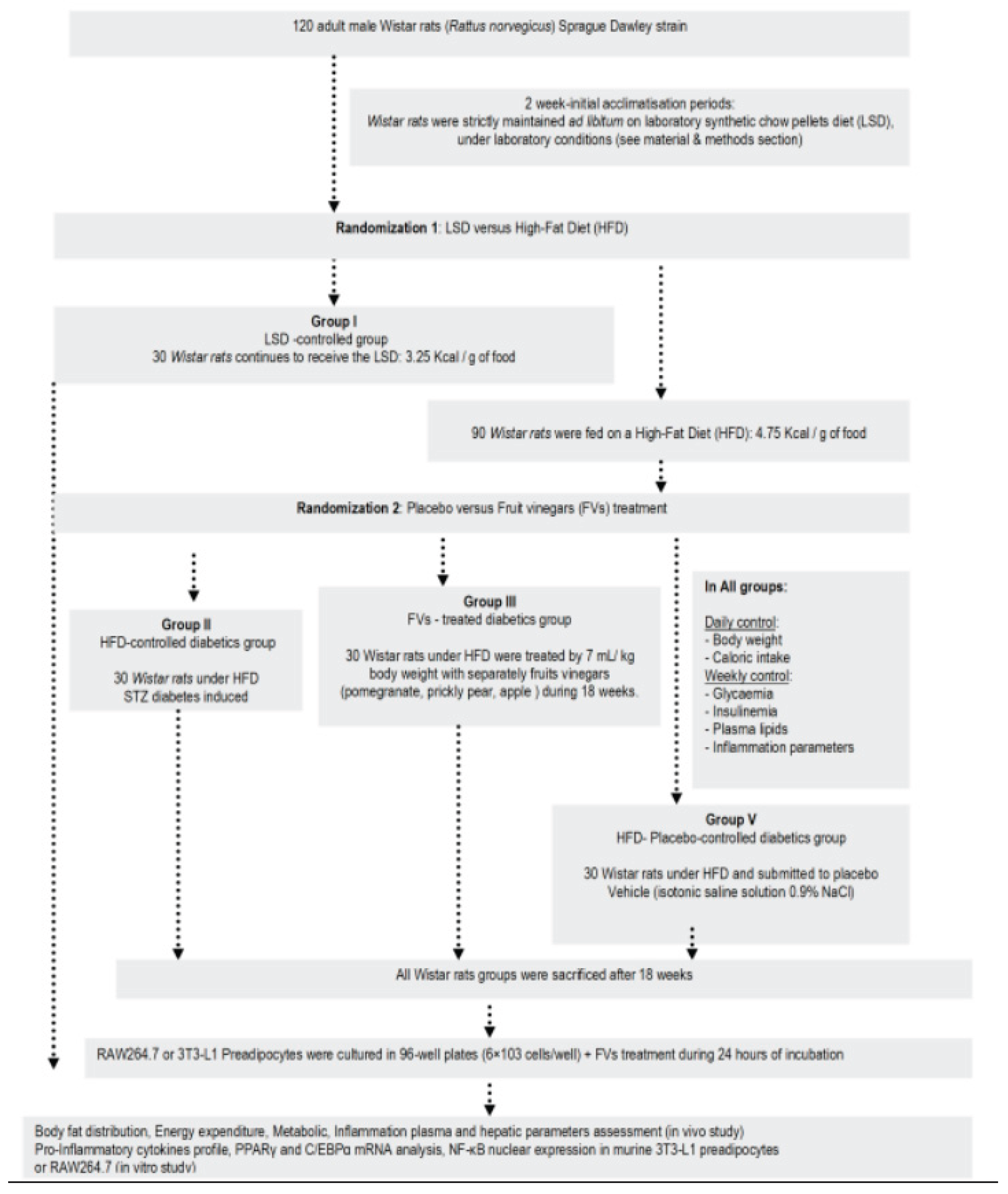
Figure 2.
DPPH radical scavenging activity of fruits vinegars. Pomegranate vinegar (PMV), prickly pear vinegar (PPV), and apple vinegar (APV). Butylated hydroxyl toluene (BHT) and ascorbic acid (AA) were used as positive controls. All vinegars are presented as the mean ± SEM (n= 3). Statistically different (p<0.05, p<0.001) when compared with BHT and when compared with AA.
Figure 2.
DPPH radical scavenging activity of fruits vinegars. Pomegranate vinegar (PMV), prickly pear vinegar (PPV), and apple vinegar (APV). Butylated hydroxyl toluene (BHT) and ascorbic acid (AA) were used as positive controls. All vinegars are presented as the mean ± SEM (n= 3). Statistically different (p<0.05, p<0.001) when compared with BHT and when compared with AA.
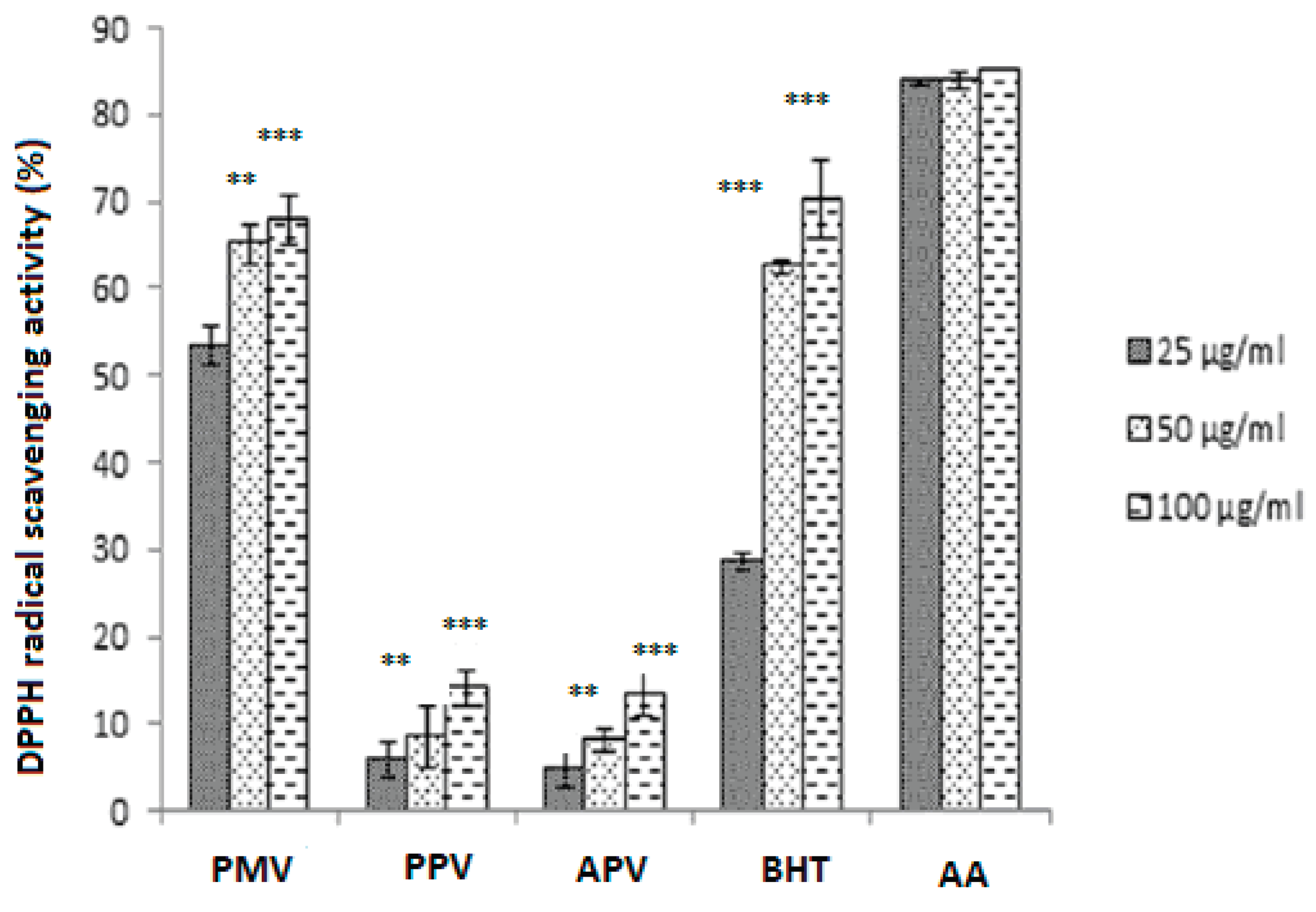
Figure 3.
Effects of FVs treatment distributed from pomegranate, prickly pear, and apple vinegar on cell viability. The cells were incubated in a culture medium containing different concentrations of vinegars to be tested as anti-obesity therapies. After 24 h of culture, cytotoxicity to the vinegars was determined by spectrophotometric measurement with an absorbance of 690 nm after the addition of the MTT reagent (see material and methods section). Data are expressed as the percentage of surviving cells (viability test) compared to control cells (without vinegar treatment). The results represent the mean ± standard error of the mean (SEM) of three independent experiments.
Figure 3.
Effects of FVs treatment distributed from pomegranate, prickly pear, and apple vinegar on cell viability. The cells were incubated in a culture medium containing different concentrations of vinegars to be tested as anti-obesity therapies. After 24 h of culture, cytotoxicity to the vinegars was determined by spectrophotometric measurement with an absorbance of 690 nm after the addition of the MTT reagent (see material and methods section). Data are expressed as the percentage of surviving cells (viability test) compared to control cells (without vinegar treatment). The results represent the mean ± standard error of the mean (SEM) of three independent experiments.
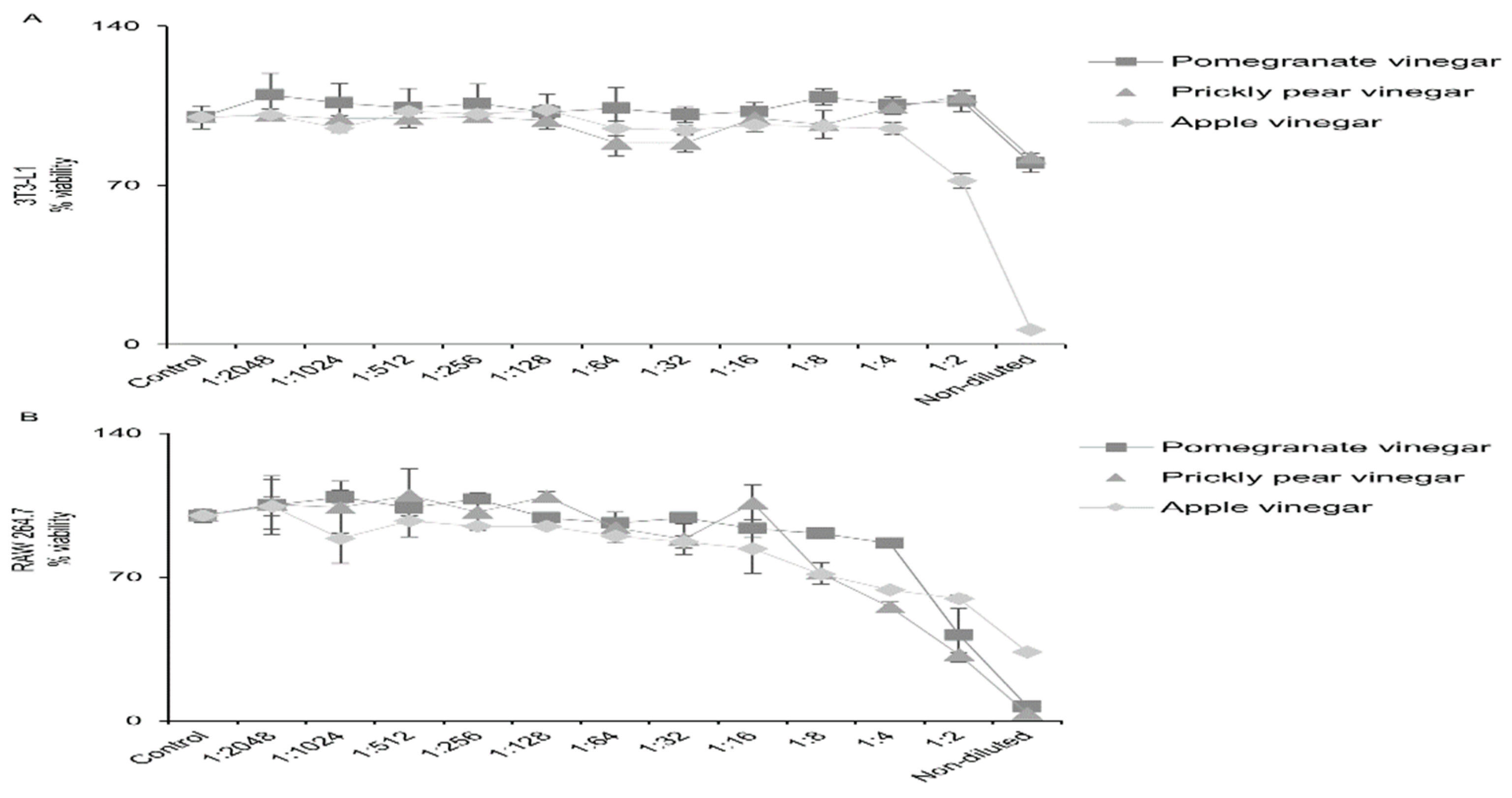
Figure 4.
Effects of pomegranate, prickly pear, and apple vinegars on lipid accumulation in adipocytes. The 3T3-L1 preadipocytes were differentiated into adipocytes and exposed to different concentrations of fruit vinegars diluted 1:128, 1:256, or 1:512 (see Materials and Methods section) for six days. Intracellular lipids retained in the culture solution were extracted with isopropanol, stained with O-red, and then measured at an absorbance of 520 nm. A 0.5% acetic acid solution (AA) was used as positive control (diluted at 1:128). GM: growth media. DM: differentiation medium. Pomegranate (PV), prickly pear (PPV), and apple (AV) vinegars are shown on the bar graphs. The mean ± standard error of the mean (SEM) of three independent experiments is represented by the following values: #p < 0.05, ##p < 0.01, ###p < 0.001 compared to the control group "GM" (no fruit vinegar). *p < 0.05, **p < 0.01, ***p < 0.001 compared to the control group "DM" (no FVs treatment).
Figure 4.
Effects of pomegranate, prickly pear, and apple vinegars on lipid accumulation in adipocytes. The 3T3-L1 preadipocytes were differentiated into adipocytes and exposed to different concentrations of fruit vinegars diluted 1:128, 1:256, or 1:512 (see Materials and Methods section) for six days. Intracellular lipids retained in the culture solution were extracted with isopropanol, stained with O-red, and then measured at an absorbance of 520 nm. A 0.5% acetic acid solution (AA) was used as positive control (diluted at 1:128). GM: growth media. DM: differentiation medium. Pomegranate (PV), prickly pear (PPV), and apple (AV) vinegars are shown on the bar graphs. The mean ± standard error of the mean (SEM) of three independent experiments is represented by the following values: #p < 0.05, ##p < 0.01, ###p < 0.001 compared to the control group "GM" (no fruit vinegar). *p < 0.05, **p < 0.01, ***p < 0.001 compared to the control group "DM" (no FVs treatment).
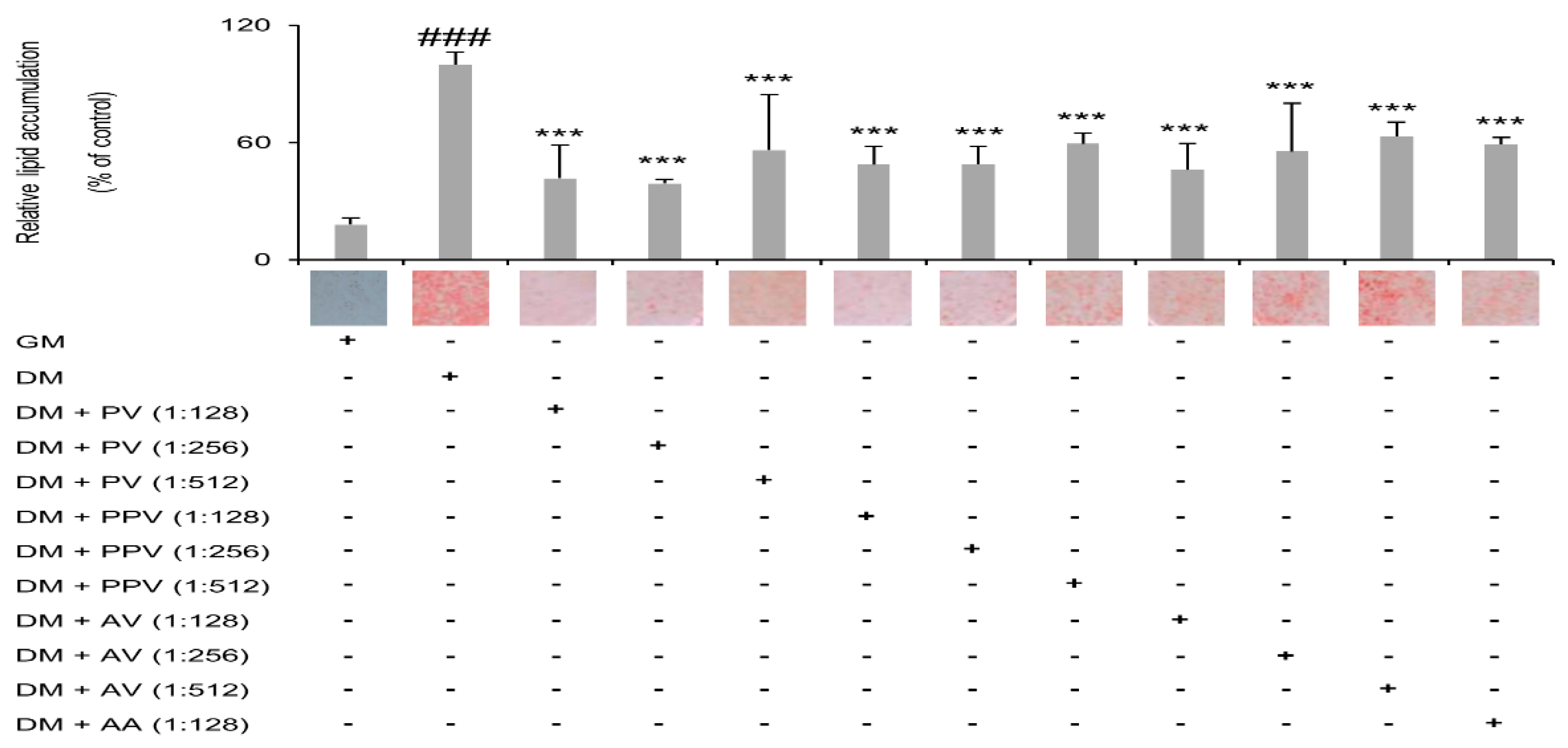
Figure 5.
Modulation of PPARγ (A) and C/EBPα (B) mRNA expression by FVs treatment in 3T3-L1 adipocytes. 3T3-L1 preadipocytes were differentiated into adipocytes in culture medium in the presence of different dilutions of pomegranate (PV), prickly pear (PPV), and apple (AV) fruit vinegars studied (1:128, 1:256, or 1:512) for six days (see Materials and Methods section). The transcription of the adipogenic factors PPARγ and C/EBPα was determined by real-time RT-PCR. 0.5% acetic acid (AA) was used as a positive control (diluted 1:128). GM: growth medium. DM: differentiation medium. The bar graphs represent the mean ± standard error of the mean (SEM) of three independent experiments. #p < 0.05, ##p < 0.01, ###p < 0.001 compared to the untreated "GM" group with fruit vinegars. *p < 0.05, **p < 0.01, ***p < 0.001 compared to the untreated "DM" group with fruit vinegars. ns: not significant.
Figure 5.
Modulation of PPARγ (A) and C/EBPα (B) mRNA expression by FVs treatment in 3T3-L1 adipocytes. 3T3-L1 preadipocytes were differentiated into adipocytes in culture medium in the presence of different dilutions of pomegranate (PV), prickly pear (PPV), and apple (AV) fruit vinegars studied (1:128, 1:256, or 1:512) for six days (see Materials and Methods section). The transcription of the adipogenic factors PPARγ and C/EBPα was determined by real-time RT-PCR. 0.5% acetic acid (AA) was used as a positive control (diluted 1:128). GM: growth medium. DM: differentiation medium. The bar graphs represent the mean ± standard error of the mean (SEM) of three independent experiments. #p < 0.05, ##p < 0.01, ###p < 0.001 compared to the untreated "GM" group with fruit vinegars. *p < 0.05, **p < 0.01, ***p < 0.001 compared to the untreated "DM" group with fruit vinegars. ns: not significant.
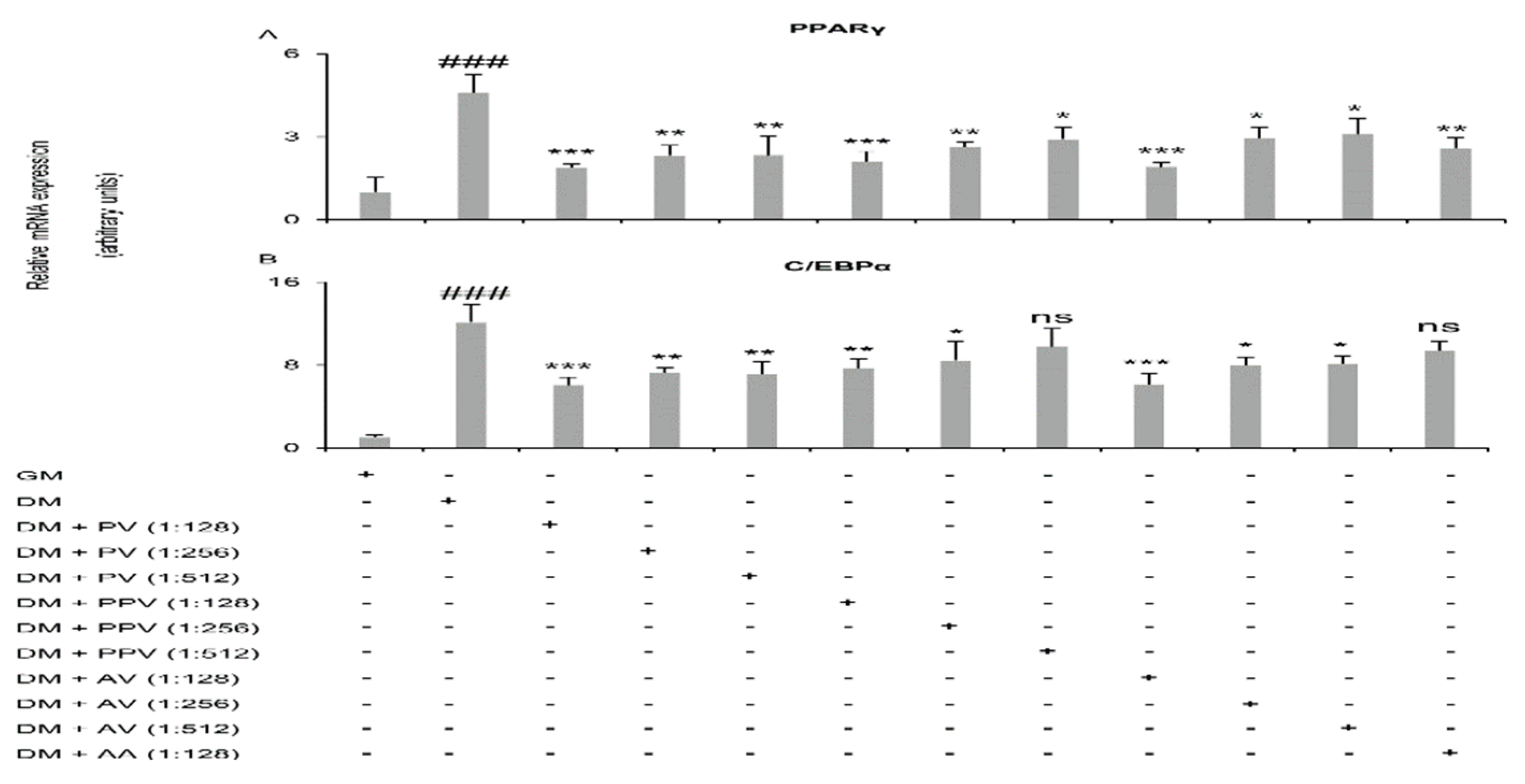
Figure 6.
Effects of pomegranate, prickly pear, and apple vinegars on LPS-induced TNF-α (A), IL-1β (B), and IL-6 (C) mRNA expression in RAW 264.7 macrophages. Cells were pre-treated with the indicated dilutions of the studied fruit vinegars 1 h prior to incubation with LPS (1 µg/mL). TNF-α, IL-1β, and IL-6 mRNA expression levels were determined by real-time RT-PCR after 8 h incubation of preadipocytes in culture medium in the presence of pickled pomegranate (PV), prickly pear (PPV), and apple (AV) vinegars. Bar graphs represent the mean ± standard error of the mean (SEM) of three independent experiments. #p < 0.05, ##p < 0.01, ###p < 0.001 compared to the control group. *p < 0.05, **p < 0.01, ***p < 0.001 compared to the LPS group. ns: not significant.
Figure 6.
Effects of pomegranate, prickly pear, and apple vinegars on LPS-induced TNF-α (A), IL-1β (B), and IL-6 (C) mRNA expression in RAW 264.7 macrophages. Cells were pre-treated with the indicated dilutions of the studied fruit vinegars 1 h prior to incubation with LPS (1 µg/mL). TNF-α, IL-1β, and IL-6 mRNA expression levels were determined by real-time RT-PCR after 8 h incubation of preadipocytes in culture medium in the presence of pickled pomegranate (PV), prickly pear (PPV), and apple (AV) vinegars. Bar graphs represent the mean ± standard error of the mean (SEM) of three independent experiments. #p < 0.05, ##p < 0.01, ###p < 0.001 compared to the control group. *p < 0.05, **p < 0.01, ***p < 0.001 compared to the LPS group. ns: not significant.
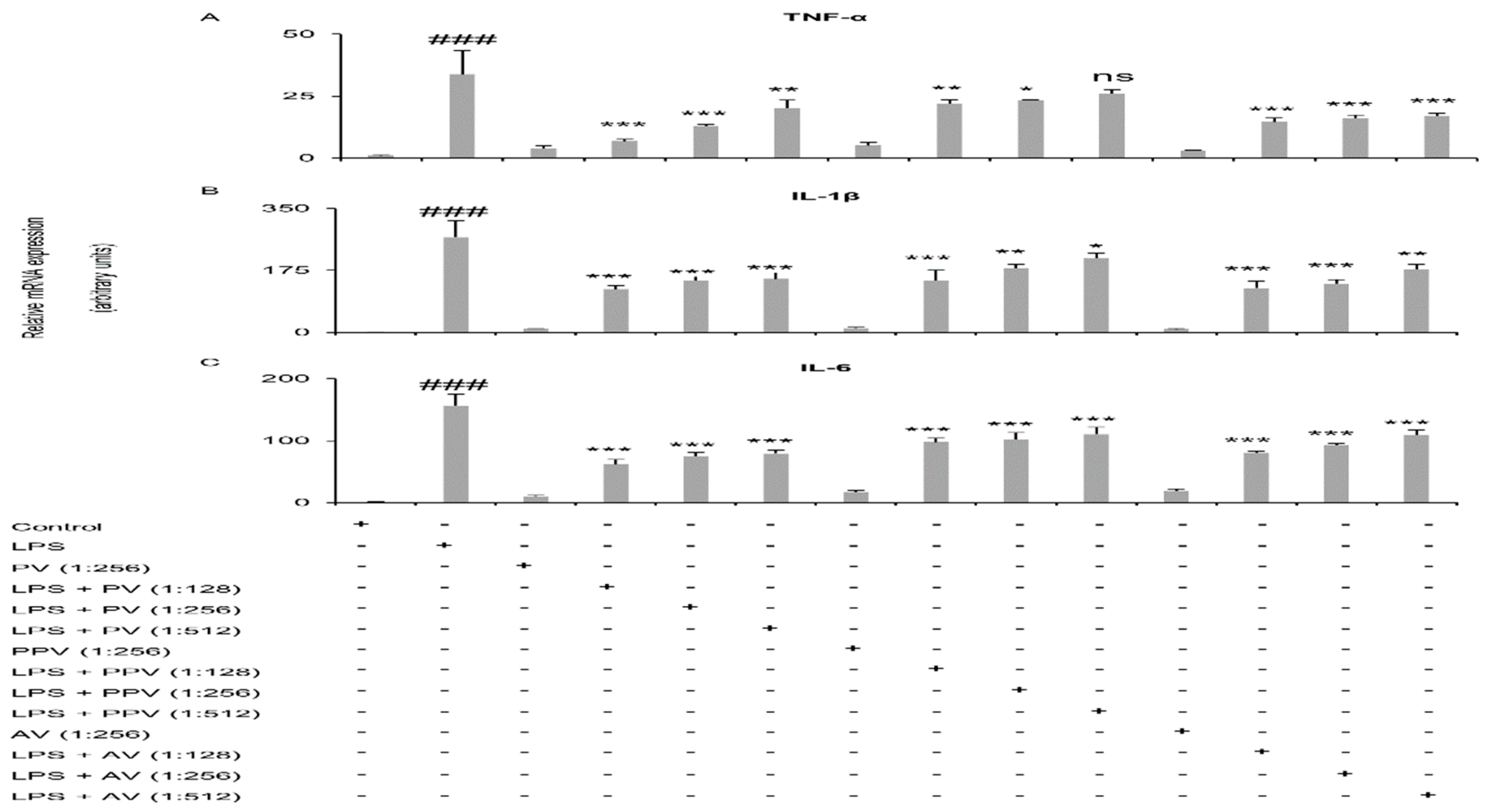
Figure 7.
Modulation of LPS-induced nuclear translocation of NF-κB p65 by FVs treatment in RAW 264.7 macrophages. Macrophage cells were treated for 2 h with pomegranate (PV), prickly pear (PPV), and apple (AV) vinegars diluted 1:128 and then incubated for 1 h with LPS (1 µg/mL). The localization of NF-κB p65 was identified and visualized by fluorescence microscopy after immunofluorescence staining with an anti-NF-κB p65 antibody (green color). Nuclei were stained with DAPI (blue color). The results presented are representative of three independent experiments.
Figure 7.
Modulation of LPS-induced nuclear translocation of NF-κB p65 by FVs treatment in RAW 264.7 macrophages. Macrophage cells were treated for 2 h with pomegranate (PV), prickly pear (PPV), and apple (AV) vinegars diluted 1:128 and then incubated for 1 h with LPS (1 µg/mL). The localization of NF-κB p65 was identified and visualized by fluorescence microscopy after immunofluorescence staining with an anti-NF-κB p65 antibody (green color). Nuclei were stained with DAPI (blue color). The results presented are representative of three independent experiments.
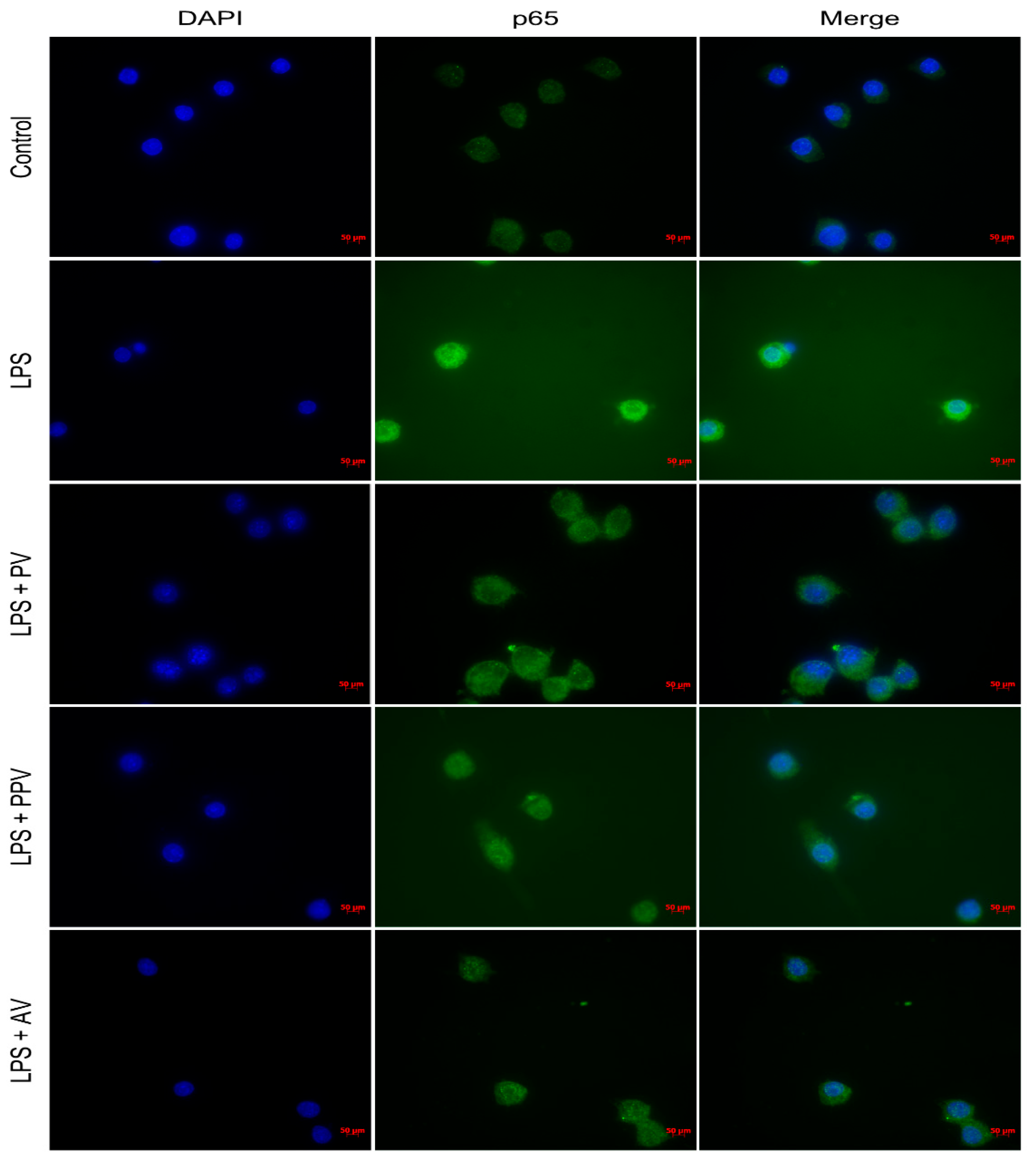

Table 1.
Phytochemical screening and organic acids profile in Pomegranate, Prickly pear and Apple vinegars.
Table 1.
Phytochemical screening and organic acids profile in Pomegranate, Prickly pear and Apple vinegars.
| Phytochemical products | Pomegranate vinegar | Prickly pear vinegar | Apple vinegar |
| Total Polyphenols (mg GAE/mL) | 41.09 ± 7.02 | 29.06 ± 3.11 | 38.05 ± 5.25 |
| Oxalic acid (mg/ml) | 1.13 ± 0.08 | 2.21 ± 0.09 | 0.51 ± 0.03 |
| Formic acid (mg/ml) | 0.56 ± 0.01 | ND | ND |
| Ascorbic acid (mg/ml) | 0.52 ± 0.01 | 0.19 ± 0.01 | 0.14 ± 0.01 |
| Acetic acid (mg/ml) | 0.031 ± 0.001 | 0.15 ± 0.01 | 0.05 ± 0.001 |
| Citric acid (mg/ml) | 4.55 ± 0.31 | 0.84 ± 0.01 | 0.13 ± 0.01 |
| Malic acid (mg/ml) | 0.022 ± 0.001 | ND | ND |
| TA (% w/v) | 0.98 ± 0.01 | 0.31 ± 0.02 | 0.73 ± 0.06 |
| Tannins | +++ | - | + |
| Alkaloids | + | + | - |
| Quinones | - | - | - |
| Saponins | +++ | ++ | +++ |
| Anthocyanins | - | - | + |
| Triterpenes | +++ | +++ | ++ |
| Total acidity (% w/v) | 0.97 ± 0.03 | 0.30 ± 0.09 | 0.77 ± 0.08 |
| pH | 2.95 ± 0.0033 | 3.24 ± 0.0033 | 3.28 ± 0.0066 |
Values are expressed as mean ± SEM. The assessments are done in triplicate. ND: not determined. +++: Strongly positive; ++: Moderately positive; +: Weakly positive; - : Absence.
Table 2.
Flavonoids compounds of Pomegranate, Prickly pear and Apple vinegars.
| Flavonoids compounds (mg QE)/mL) | |||
| Pomegranate vinegar | Prickly pear vinegar | Apple vinegar | |
| Epigallocatechin gallate | 211 ± 9.64 | 51.9 ± 4.34 | 46.8 ± 3.22 |
| Rutin | 211 ± 8.89 | 26.2 ± 2.71 | 8.45 ± 0.13 |
| Catechin | 148 ± 14.7 | 44.9 ± 3.28 | 107 ± 2.71 |
| Naringenin | 165 ± 0.58 | 76.2 ± 5.31 | 1.84 ± 0.21 |
| Myricetin | 93 ± 6.08 | ND | 22.3 ± 2.12 |
| Hesperidin | 19 ± 3.46 | 76.2 ± 0.31 | ND |
| Quercetin | 13 ± 0.58 | 9.08 ± 0.03 | 33.1 ± 2.09 |
| Gallic acid | 12 ± 2.01 | 2.27 ± 0.07 | 8.52 ± 1.11 |
| Caffeic acid | 20.6 ± 2.22 | 17.4 ± 3.07 | 4.67 ± 0.81 |
| Vanillin | 20.7 ± 1.89 | ND | 53.5 ± 1.77 |
| Benzoic acid | 97.6 ± 5.33 | 13.2 ± 0.99 | ND |
| Salicylic acid | ND | ND | 2.37 ± 0.09 |
Data are expressed as mean ± standard error of the mean (SEM). The results of this study are based on values measured 3 times. ND: not determined.
Table 3.
In vivo effects of Fruit Vinegars on body weight and anatomic adipose tissue repartition in experimented Wistar rats.
Table 3.
In vivo effects of Fruit Vinegars on body weight and anatomic adipose tissue repartition in experimented Wistar rats.
| Parameters/Groups | Group I | Group II | Group III | Group IV | ||
| LSD-controlled | HFD-controlled | HFD-FVs-treated | HFD-Placebo | |||
| PGV | PPV | AV | ||||
| Body weight (g) | 80 ± 9 | 147 ± 12*** | 81 ± 4***/¶¶¶ | 84 ± 3***/¶¶¶ | 102 ± 7***/¶¶¶ | 142 ± 8*** |
| BMI (g/cm2) | 0.39 ± 0.02 | 0.48 ± 0.02*** | 0.32 ± 0.01ns/¶¶¶ | 0.36 ± 0.04ns/¶¶¶ | 0.43 ± 0.06ns/¶¶¶ | 0.46 ± 0.01*** |
| Total visceral fat (mg/g BW) | 10.3 ± 3.38 | 25.8 ± 4.32*** | 14.2 ± 1.85***/¶¶¶ | 15.1 ± 2.05***/¶¶¶ | 18.7 ± 2.11***/¶¶¶ | 26.3 ± 4.38*** |
| Retroperitoneal fat (mg/g BW) | 2.75 ± 0.66 | 3.02 ± 0.57ns | 1.66 ± 0.44 ns/ns | 1.82 ± 0.21 ns/ns | 1.97 ± 0.33ns/ns | 2.98 ± 0.75ns |
| Omental fat (mg/g BW) | 1.27 ± 0.91 | 9.95 ± 1.33*** | 5.48 ± 1.08***/¶¶¶ | 6.67 ± 1.04***/¶¶¶ | 6.93 ± 1.06***/¶¶¶ | 10.1 ± 2.22*** |
| Mesenteric fat (mg/g BW) | 6.33 ± 1.81 | 12.9 ± 2.42*** | 7.11 ± 0.23***/¶¶¶ | 8.18 ± 0.72***/¶¶¶ | 8.91± 0.55***/¶¶¶ | 13.2 ± 1.41*** |
| Epididymal fat (mg/g BW) | 3.14 ± 0.72 | 8.69 ± 1.47*** | 4.78 ± 0.15*** | 5.39 ± 0.22*** | 6.25 ± 0.66*** | 9.02 ± 0.73*** |
| Subcutaneous fat (mg/g BW) | 1.93 ± 0.17 | 8.33 ± 1.18*** | 4.59 ± 0.25***/¶¶¶ | 5.17 ± 0.33***/¶¶¶ | 6.09 ± 0.44***/¶¶¶ | 7.92 ± 0.22*** |
| Perirenal fat (mg/g BW) | 2.13 ± 0.51 | 2.82 ± 1.61ns | 2.22 ± 0.31 ns/ns | 2.55 ± 0.42 ns/ns | 2.72 ± 0.55 ns/ns | 2.57 ± 1.91ns |
| Suprascapular fat (mg/g BW) | 5.91 ± 2.14 | 12.5 ± 1.08** | 6.88 ± 1.33***/¶¶¶ | 7.75 ± 2.55***/¶¶¶ | 8.63 ± 3.11***/¶¶¶ | 11.9 ± 2.01** |
| Gonadal fat (mg/g BW) | 1.78 ± 0.61 | 1.93 ± 0.22ns | 1.26 ± 0.55 ns/ns | 1.65 ± 0.77 ns/ns | 1.76 ± 0.38 ns/ns | 1.86 ± 1.24ns |
| Intramuscular fat (mg/g BW) | 2.51 ± 0.33 | 3.74 ± 0.27** | 2.06 ± 0.24***/¶¶¶ | 2.32 ± 0.55***/¶¶¶ | 2.81 ± 0.77***/¶¶¶ | 3.67 ± 0.45** |
| Adiposity index (% BW) | 2.61 ± 0.35 | 3.87 ± 0.95*** | 2.69 ± 0.11**/¶¶¶ | 2.81 ± 0.09**/¶¶¶ | 2.97 ± 0.17**/¶¶¶ | 3.91 ± 0.47*** |
| Brown adipose tissue (mg/g BW) | 0.46 ± 0.03 | 0.33 ± 0.07* | 0.55 ± 0.03*//¶ | 0.43 ± 0.04*//¶ | 0.47 ± 0.05*//¶ | 0.31 ± 0.02* |
HFD: high-fat diet; BW: Body Weight. BMI: body mass index. PGV: Pomegranate vinegar; PPV: Prickly Pear vinegar; AV: Apple vinegar. Values are expressed as mean ± standard error of the mean (SEM) compared Fruit Vinegars (FVs)-treated group to the Laboratory Standard Diet group.*p < 0.05; **p < 0.01; ***p < 0.001; ¶p < 0.05; ¶¶p < 0.01; ¶¶¶p < 0.001 compared FVs-treated group versus placebo group. ns: no significant.
Table 4.
In vivo effects of Fruit Vinegars on Caloric intake, Energy expenditure, Plasma and Hepatic Metabolic Status in Wistar rats.
Table 4.
In vivo effects of Fruit Vinegars on Caloric intake, Energy expenditure, Plasma and Hepatic Metabolic Status in Wistar rats.
| Parameters / Groups | Group I | Group II | Group III | Group IV | ||
|---|---|---|---|---|---|---|
| LSD-controlled | HFD-controlled | HFD-FVs-treated | HFD-Placebo | |||
| PGV | PPV | AV | ||||
| Caloric intake (Kcal/100g BW) | 131 ± 1.9 | 534 ± 11*** | 294 ± 35***/¶¶¶ | 332 ± 22***/¶¶¶ | 369 ± 41***/¶¶¶ | 492 ± 17*** |
| Respiratory quotient | 0.913 ± 0.09 | 0.975 ± 0.03ns | 0.753 ± 0.05***/¶¶¶ | 0.709 ± 0.02***/¶¶¶ | 0.699 ± 0.07***/¶¶¶ | 0.944 ± 0.07 ns |
| BMR (mLO2/h/g BW) | 0.521 ± 0.02 | 0.643 ± 0.09*** | 0.972 ± 0.03***/¶¶¶ | 0.887 ± 0.05***/¶¶¶ | 0.842 ± 0.07***/¶¶¶ | 0.675 ± 0.03*** |
| TEE (kJ/kg BW/day) | 1152 ± 27 | 1191 ± 33 | 1726 ± 59***/¶¶¶ | 1643 ± 37***/¶¶¶ | 1560 ± 68***/¶¶¶ | 1189 ± 44 |
| Glucose (mmol / L) | 5.21 ± 0.51 | 15.2 ± 1.04*** | 8.36 ± 1.17ns/¶¶¶ | 9.43 ± 1.22ns/¶¶¶ | 10.5 ± 1.03ns/¶¶¶ | 14.9 ± 1.82*** |
| HbA1c (mmol / mol) | 29.9 ± 0.65 | 98.2 ± 9.44*** | 54.1 ± 3.85ns/¶¶¶ | 60.8 ± 2.77ns/¶¶¶ | 67.8 ± 4.45ns/¶¶¶ | 95.9 ± 7.11*** |
| Insulin (pmol / L) | 110 ± 21 | 580 ± 47*** | 319 ± 24***/¶¶¶ | 360 ± 32***/¶¶¶ | 401 ± 44***/¶¶¶ | 608 ± 85*** |
| HOMA-IR | 3.41 ± 0.14 | 55.4 ± 1.23*** | 30.6 ± 2.11ns/¶¶¶ | 34.4 ± 5.09ns/¶¶¶ | 38.2 ± 4.33ns/¶¶¶ | 56.9 ± 0.44*** |
| ALT (IU/L) | 26.3 ± 1.58 | 74.1 ± 2.35*** | 40.7 ± 3.07 ns/¶¶¶ | 45.9 ± 5.33 ns/¶¶¶ | 51.2 ± 6.41 ns/¶¶¶ | 81.3 ± 1.71*** |
| AST (IU/L) | 86.1 ± 6.7 | 127 ± 25*** | 69.8 ± 21.3***/¶¶¶ | 80.2 ± 11.2***/¶¶¶ | 87.7 ± 12.2***/¶¶¶ | 129 ± 33***/¶¶¶ |
| Triglycerides (mmol / L) | 0.81 ± 0.07 | 4.09 ± 0.61*** | 2.25 ± 0.91***/¶ | 2.54 ± 0.77***/¶ | 1.58 ± 0.01***/¶ | 3.07 ± 0.06*** |
| Total cholesterol (mmol / L) | 1.48 ± 0.70 | 8.06 ± 1.22*** | 4.44 ± 0.64***/¶¶¶ | 5.01 ± 0.22***/¶¶¶ | 2.81 ± 0.64***/¶¶¶ | 7.98 ± 1.15*** |
| NEFA (μmol / L) | 291 ± 33 | 578 ± 41*** | 318 ± 66***/¶¶¶ | 359 ± 25***/¶¶¶ | 298 ± 77***/¶¶¶ | 609 ± 23*** |
| Hs-CRP (mg/L) | 5.90 ± 1.11 | 18.1 ± 1.33*** | 9.33 ± 1.54***/¶¶¶ | 11.1 ± 2.09***/¶¶¶ | 12.5 ± 3.04***/¶¶¶ | 16.45 ± 1.23***/¶¶¶ |
| Fibrinogen (g/L) | 2.27 ± 0.15 | 3.04 ± 0.27* | 1.68 ± 0.07*/¶ | 1.89 ± 0.09*/¶ | 2.15 ± 0.03*/¶ | 3.11 ± 0.19*/¶ |
| tHcy (µmol/L) | 7.2 ± 2.52 | 21.1 ± 3.53*** | 11.6 ± 4.33***/¶¶¶ | 13.1 ± 2.44***/¶¶¶ | 14.6 ± 1.77***/¶¶¶ | 19.3 ± 4.11***/¶¶¶ |
| Total hepatic lipids (g 100 g wet/wt) | 2.97 ± 0.31 | 6.17 ± 0.94*** | 3.41 ± 0.66***/¶¶¶ | 3.83 ± 0.54***/¶¶¶ | 4.26 ± 0.72***/¶¶¶ | 5.83 ± 0.76*** |
| Hepatic glycogen (g/100 g wet/wt) | 2.77 ± 0.84 | 2.44 ± 0.93* | 3.93 ± 0.18***/¶¶¶ | 3.36 ± 0.22***/¶¶¶ | 3.19 ± 0.32***/¶¶¶ | 2.65 ± 0.79 |
| Liver mass (% body BW) | 2.51 ± 0.45 | 4.05 ± 0.78*** | 2.23 ± 0.47***/¶¶¶ | 2.52 ± 0.33***/¶¶¶ | 2.89 ± 0.33***/¶¶¶ | 3.64 ± 1.49*** |
HFD: high-fat diet; PGV: Pomegranate vinegar; PPV: Prickly pear vinegar; AV: Apple vinegar; BMR : Basal Metabolic Rate; TEE: Total Energy Expenditure; HbA1c: Glycated hemoglobin; HOMA-IR: Homeostatic Model Assessment-Insulin Resistance; ALT: alanine aminotransferase; AST: aspartate aminotransferase; NEFA: non-esterified fatty acids; tHcy : total Homocysteine. Data are expressed as mean±SEM. *p < 0.05; **p < 0.01; ***p < 0.001 compared FVs-treated group versus HFD placebo group. ¶p < 0.05; ¶¶p < 0.01; ¶¶¶p < 0.001 compared FVs-treated group versus placebo group. ns: no significant.
Disclaimer/Publisher’s Note: The statements, opinions and data contained in all publications are solely those of the individual author(s) and contributor(s) and not of MDPI and/or the editor(s). MDPI and/or the editor(s) disclaim responsibility for any injury to people or property resulting from any ideas, methods, instructions or products referred to in the content. |
© 2026 by the authors. Licensee MDPI, Basel, Switzerland. This article is an open access article distributed under the terms and conditions of the Creative Commons Attribution (CC BY) license (http://creativecommons.org/licenses/by/4.0/).
Copyright: This open access article is published under a Creative Commons CC BY 4.0 license, which permit the free download, distribution, and reuse, provided that the author and preprint are cited in any reuse.


