

Submitted:
01 July 2026
Posted:
01 July 2026
You are already at the latest version
Abstract
In brain nanomedicine, large libraries of barcoded nanoparticles (NP) have, mirroring similar trends in viral vector research, have created an alternative to the traditional, low-throughput way of rationally designing NPs for blood-brain barrier (BBB) transport. Testing sizable pools of NPs administered simultaneously can, aside from the straightforward benefit of reducing animal use, transform the screening funnel itself to reflect which steps are best performed in vitro vs in vivo. Advances in barcoding technology have also allowed distinguishing between NP biodistribution and functional delivery of the payload. Despite some intrinsic limitations such as the low dose of individual NPs in a pool or possible NP-NP interactions, barcoded library screening may also dissect NP passage across the BBB and within brain parenchyma, to identify combinations of NP properties that enable each step of this passage and use this data to build predictive models. Iterative screens of large NP libraries, refined at each stage by this modeling, informed by mechanistic insights into BBB transport and, possibly, leveraging targets known to mediate this transport in human BBB, can maximize the efficiency of NP BBB transport and unlock the full potential of brain nanomedicine.
Keywords:
blood-brain barrier
; drug delivery
; screening
; transcytosis
; trafficking
; nanoparticles
; viral vectors
1. Introduction
The use of nanoparticles (NPs) for delivery across the blood-brain barrier (BBB) is almost as old as the trans-BBB delivery field itself [1,2]. This has led both to findings attributable solely to NPs, such as the ambiguous role of apolipoprotein E recruitment [3,4,5], and to those informed by preceding findings in other modalities - such as ligand density optimization [6,7,8,9] influenced by the role of monoclonal antibody (mAb) affinity [10] and valency [11] in BBB trafficking. The flexibility of NP platforms helped, on one end of the spectrum, derive straightforward untargeted liposomes, and on the other - theranostic contrivances of such mind-boggling complexity that, compared to developability, BBB transport appears the least of their challenges. In short, nanomedicine has enriched BBB transport research not only with genuinely important discoveries, but also with a certain flair less common in other modalities.
When it comes brain delivery, NPs possess a decidedly mixed bag of features. NP size, at least for soft nanocarriers, might be reasonably considered a disadvantage, both for diffusion in the brain extracellular space [12,13] and, more arguably, even for endocytic trafficking across brain microvascular endothelial cells (BMEC). Endosomal escape in target cells is difficult for NPs, but then again, it is difficult for nearly all delivery vehicles, perhaps slightly less so for some types of viral vectors which have their own issues. Well-developed functionalization for targeting facilitates NP use in receptor-mediated transcytosis but may require exhaustive optimization of ligand density. On the other hand, NPs have some undeniable benefits. While advances in oligonucleotide chemistry increasing the stability of antisense oligonucleotides and siRNA, including antibody conjugates, have somewhat diminished the importance of payload protection offered by NPs to these modalities, in mRNA or DNA delivery this protection remains as crucial as ever. Payload capacity is a universal benefit of NPs not easily matched by other carriers, except perhaps for extracellular vesicles; in brain delivery, for instance, they can to a degree make up for inefficient transcytosis by releasing multiple payload molecules in a single transcytosis event.
In recent developments in brain nanomedicine, there is a clear resemblance to viral vector-, especially adeno-associated virus (AAV)-focused research – it might even be argued that in brain delivery, nanomedicine now retraces this research with a lag of several years. The introduction of polymeric [14] and then lipidoid libraries [15], followed by DNA barcoding [16,17] have enabled screening strategies broadly resembling those in biopanning [18,19,20]. Active targeting in in vivo barcoded NP libraries [21], mirroring similar trend in the AAV field [22,23], further reinforces similarity. On the other hand, even though the size of NP libraries screened in vivo has somewhat increased (from 5-30 in the first attempts [16,17] to above 100 more recently [24]), it is not even remotely close to those common in AAV capsid libraries (theoretical limit of ~1010–1011 depending on randomized residues, even though actual libraries are much smaller at ~106). Overcoming formulation bottlenecks to expand and diversify NP libraries may help identify combinations of optimal NP features – which, curiously, would again retrace similar developments in viral vector research [25,26]. Overall, iterative screening of large NP libraries, informed by insights into NP pharmacokinetics (PK), BBB crossing and brain distribution may circumvent challenges inherent in low-throughput, rational NP design. In this Opinion, I discuss recent trends in this screening and comment on some possible optimization approaches.
2. The Screening Funnel
Unlike AAV directed evolution where the transition to in vivo biopanning has, until the recent trend to target specific BMEC proteins such as transferrin receptor [22] or carbonic anhydrase 4 [23], made in vitro studies largely subordinate – e.g., to identify target receptors of capsids already known to cross the BBB in vivo [27,28] - in vitro testing of NPs has been more prominent. The typical workflow has been to select a few best-performing hits from in vitro studies (frequently ending with or solely comprising some transport assay), then test in vivo [29,30,31,32]. I would argue that this funnel leaves some room for optimization. For one thing, BBB models might not yet be at the stage where they can robustly predict NP transport across an intact in vivo BBB. While passive diffusion of lipophilic molecules across the BBB is well-suited for modeling in in vitro – in fact, by now even in silico – assays [33], the transport of NPs, even those targeted to specific proteins, involves, to a far greater extent than e.g. for mAbs, a multitude of biological interactions on and inside the cell. These interactions may be mediated by NPs’ own components as well as by the protein corona they acquire after injection, and modeling them requires high fidelity to the in vivo BBB at a molecular level. Balancing this high fidelity with strong barrier properties desirable for transport assays has, especially for human models, been challenging [34,35]. Furthermore, even for the most faithful in vitro BBB models, the measure of success is, evidently, the prediction of transport rates across in vivo BBB, i.e., specifically, across an endothelial layer spanning BMEC glycocalyx on the luminal side and the basement membrane on the other. While undoubtedly informative, these rates do not account for NPs’ PK profile - at the most basic level, how much of NPs remains available in the brain capillary lumen, for crossing the BBB. In other words, a formulation with the best rate of transport across in vitro BBB or even in vivo BBB taken in isolation (the latter, for small molecules, could be measured using in vivo microdialysis, although for NPs this technique is nearly unsuitable) may be overshadowed by another formulation, one with less efficient transport but substantially better PK – which, again, is harder to predict for NPs.
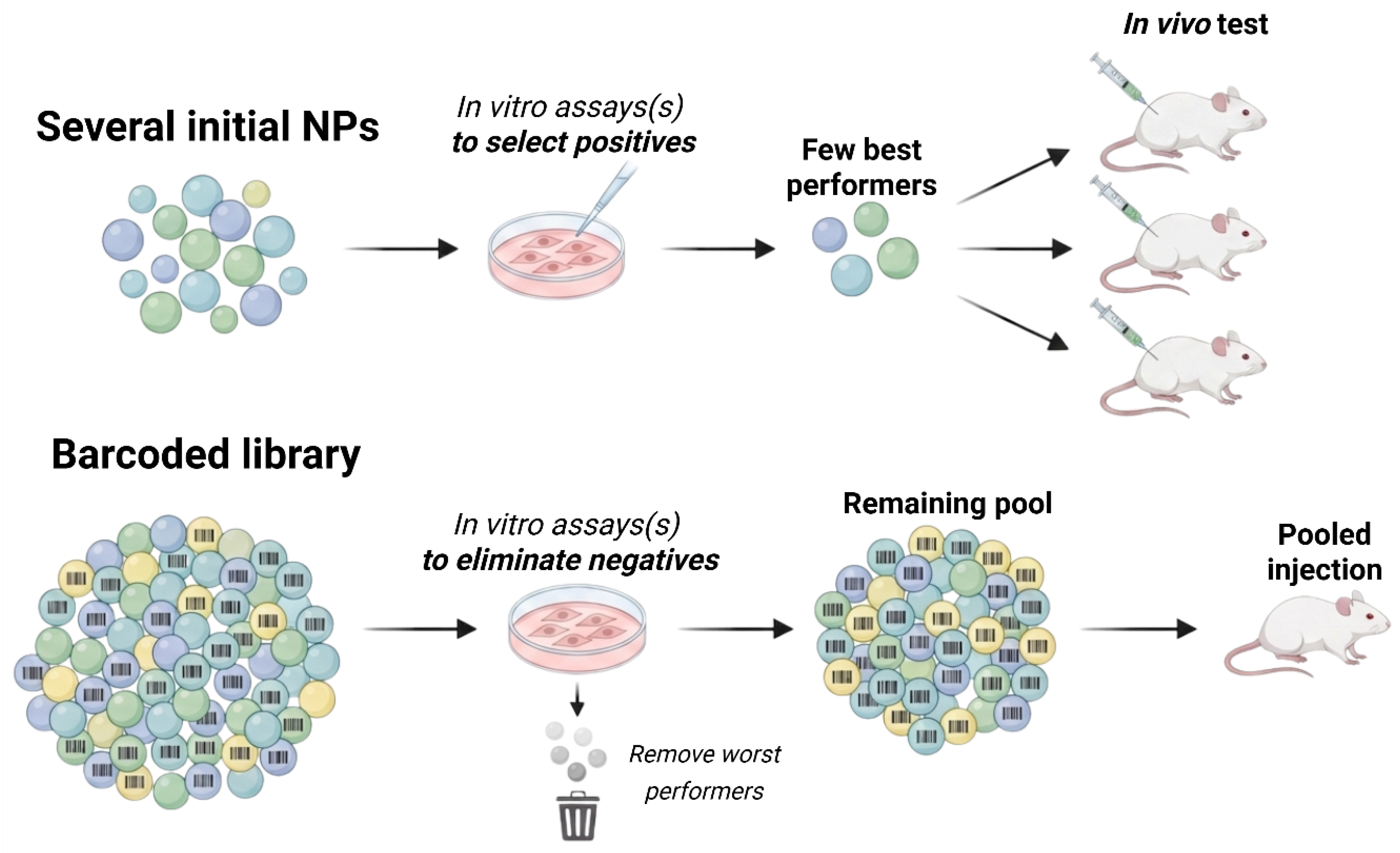
The ‘negative’ hits, however, can be highly informative. If a NP shows negligible uptake by BMEC in vitro, the odds that it will be internalized by, let alone transcytosed across BMEC in vivo could be expected to be slim, and especially so for targeted NPs. In fact, successful brain delivery of such NPs in vivo should probably prompt careful verification to exclude toxicity, non-specific BBB opening or BBB-unrelated routes. Since uptake assays are much more straightforward than in vitro transport assays, throughput-wise they might as well serve as an initial filter to exclude negatives. As a middle ground, one might substitute uptake with recycling assays - while only marginally more difficult to set up than the former, the process they dissect, i.e., recycling, resembles transcytosis much more closely and, for instance, might more reliably eliminate formulations whose trafficking is curtailed by clustering target receptors and lysosomal routing – a critical factor unearthed in studies on transferrin receptor-targeted mAbs [11,36]. At any rate, one possible approach could then be to test the NP library in this ‘first pass’ in vitro screen, filter out negative candidates (including those that show toxicity), pool, without any particular ranking, the ones that show at least some level of uptake or recycling, and funnel them into a barcoded library for in vivo administration, ideally keeping the barcoding strategy consistent with the desired payload, as discussed below (Figure 1). Moreover, cell-specific readouts [37] appear paramount, not only to analyze brain distribution more granularly, but also to help identify easily foreseeable scenarios where NPs may be taken up but stopped at the level of BMEC. Altogether, this can help make the best use of the numbers of NPs administered as a pool.
Numbers, naturally, do not per se guarantee success as the properties of underlying platform and BBB biology still impose fundamental limitations – e.g., ~100 um metallic microparticles will not suddenly become likely to cross a non-disrupted BBB even if screened in exceedingly large libraries. In addition, the administration of barcoded NP pools in vivo has certain intrinsic challenges. For instance, since the total injected amount cannot be increased infinitely, each individual NP type is injected at a miniscule dose inversely proportional to the library size – which, in turn, augments the nonlinearity and even stochasticity of biological interactions of NPs, as well as NP-NP interactions and competition, aside from more technical, detection-related challenges. Furthermore, by analogy with viral vector evolution, one could expect library screening campaigns to be strongly affected by inter- and intra-species variability. One may even see a similarity between the selection of best-performing formulations in in vivo library screens and development of machine learning models overfitting on a specific dataset (by analogy, specific animal strain or even species). Indeed, as of now true positives in in vivo library screening, few and far between, might be more of a testament to the sheer, large number-derived power of this strategy, than a reflection of the strategy's full potential. Further optimization - whether through targeting to specific, humanized receptors, or though constant, iterative of optimizing NP properties based on mechanistic insights into BBB trafficking and on 'chain screening' to dissect NP transport steps, in vivo or in vitro (see below) - might help realize this potential.
3. Biodistribution and Functional Delivery
The way in vivo screening of barcoded libraries is normally implemented, best hits are selected for validation in downstream assays, e.g. transfection [38,39]. In other words, those assays are only employed to confirm the performance of best candidates identified earlier. Since this earlier identification is frequently based on biodistribution readouts, this can lead to a discrepancy between the two stages. Evidently, this affects false negatives more than it does true positives. That is, if the hits continue to perform well, this validates their selection in library screening, and if not, they can be deemed false positives and written off as a loss in the screening funnel. However, this approach may leave a latent pool of constructs that could have (more) successfully delivered the payload across the BBB in those downstream assays but do not – because they never get a chance, being filtered out earlier based on distribution and abundance readouts.
In AAV directed evolution, one way to tackle this has been to switch the readouts from the DNA to the RNA level [19,40] – the rationale being that reading barcoded RNA sequences requires prior RNA transcription from DNA and therefore transgene import to the nucleus, i.e., functional delivery, which, as an additional benefit, could be further dissected by using cell-specific promoters. For NPs, a similar strategy was explored in [41] which employed NPs encapsulating barcoded plasmids that, aside from unique identification at the DNA level, could, after transcription, be uniquely identified at the RNA level as well. Although the eight formulations tested in that study can hardly be considered a library, the strategy itself merits attention since it allows comparing the levels of unique DNA sequences, indicating delivery abundance, with the levels of RNA, indicating functional delivery. In a different approach termed FIND [42], resembling the use of Cre-Lox in AAV biopanning, functional delivery of LNPs was evaluated using DNA barcodes in LNPs encapsulating Cre mRNA; predictably, aside from the bystander effect inherent in this family of strategies, their use of transgenic animals limits applicability to higher species. An interesting variation of barcoding to distinguish functional vs non-functional delivery was recently employed in [43], where payload mRNA encoded a reverse transcriptase which, after mRNA translation in the cytosol, would transcribe a barcoded retron sequence, thus producing unique, detectable cDNA. Furthermore, in screening NPs designed to restore or increase a protein’s expression, barcoding can be implemented at the peptide level, with peptides translated from mRNA barcodes detected using mass spectrometry (MS) [44,45]. MS-based peptide barcode identification is technically more demanding than amplification-based oligonucleotide detection, and this can restrict the number of unique barcodes detectable with high confidence in all tissues [46]. In addition, if the barcode is part of the protein of interest (which it would ideally be), this can curtail this strategy if the protein’s expression is generally low. Nevertheless, this, along with other listed strategies, represents a clear advancement in terms of distinguishing between abundance / distribution and functional delivery in NP screens.
These emerging strategies, however, have not yet been widely adopted in NP screening studies where more straightforward short DNA or mRNA oligo barcoding still dominates in general and, especially, in the limited subset of those studies that are focused on brain delivery [21,39]. This can undoubtedly reflect the easier use of (by now) well-established, even if less advanced, approaches in studies focusing more on new therapeutic applications and less on new barcoding methodology. There is, however, a more fundamental issue that may affect the versatility of barcoding in nanomedicine. In a vaguely Heisenbergian fashion, the very tools that allow tracing individual NP distribution may, via changing NP properties, alter the pattern of this distribution compared to non-barcoded NPs. This observer effect may be minimized, if, e.g., the NPs are intended for therapeutic mRNA or DNA delivery in the first place, and the barcode is merely a non-functional extension of the therapeutic payload [24,47]. In commonly encountered mixed cases, however, – e.g., where a barcode is a DNA and the intended payload is an mRNA, siRNA, sgRNA etc. [5,42,48], one might expect this effect to be more tangible. For instance, in 47, the distribution of LNPs where mRNA payload itself incorporated a barcoded sequence in its 3′ untranslated region was markedly different from that of similarly formulated LNPs where the barcode was a short DNA oligonucleotide, incorporated separately. Furthermore, just as barcoding may affect NP properties and thus, distribution, it may have a similar effect on the payload. If barcoding is applied at the protein level, for instance, the very introduction of the barcoded sequence may affect protein synthesis or folding and, consequently, readouts based on proteins expression [49]; one can naturally expect this to have a greater impact on smaller proteins, not to mention peptides. On the other hand, fortunately, barcodes in NP screens, regardless of their type, are typically encapsulated, which is undoubtedly advantageous compared to their use in modalities such as mAbs or small molecules, where barcodes, being exposed to the external milieu, may have a more distinct effect on biodistribution and interaction with target cells.
4. Chain Screening and Modeling
One area where nanomedicine is especially versatile is cargo diversity. Unlike viral vectors which almost exclusively deliver genes, NPs can encapsulate small molecules, DNA [50], mRNA [51], siRNA [52], sgRNA [53], antisense oligonucleotides [54], peptides [55], even enzymes [56], and other types of cargo, including combinations. The ideal delivery location of this cargo varies accordingly, ranging from the nucleus for plasmid delivery to cytosol for mRNA delivery to even lysosomes for enzyme replacement therapy. This diversity, may, one might argue, even be used to build comprehensive datasets toward predictive modeling of NP brain delivery. Here, one can make a distinction between using libraries for therapeutic outcome versus using them for mechanistic investigation. The latter can, for instance, be used to derive data toward building predictive models – in a sort of ‘chain screening’ systematically isolating steps relevant to NP-mediated delivery and identifying combinations of NP properties most efficient at enabling those steps. This can range from endosomal escape relevant to most NPs to e.g., crossing the mitochondrial membrane in specific therapeutic applications. In trans-BBB delivery of intact NPs this dissection may be particularly crucial since the steps involved in such delivery may, depending on its stage, be at odds with each other. For instance, cytosolic or even lysosomal delivery of the payload - a commonly desirable outcome for NPs targeted to brain parenchymal cells – could be premature at best in BMEC, with some notable exceptions involving therapeutic protein production within BMEC with subsequent secretion into the brain parenchyma [57,58,59].
As an example, this delivery would frequently require endosomal escape, and many functional readouts implicitly include this step. If the detection is based on transcribed RNA, then, given that NP-based plasmid delivery to the nucleus, unlike transgene delivery of AAVs, might not necessarily or even likely involve NP nuclear import, this largely implies plasmid release into the cytosol. However, this would then still require additional steps - plasmid entry into the nucleus and RNA transcription. Similarly, if barcodes encoded as DNA or even mRNA are detected as peptides, this would involve extra processing - transcription and translation in the case of DNA barcodes, or only translation in the case of mRNA barcodes. Implicit inclusion of those steps in the functional readout, ideally at the level of target cells, is perfectly reasonable if the therapeutic payload delivery also includes them, but in a mechanistic study investigating which NP are most efficient at which specific step - e.g., depending on the application, trafficking across the BBB, entry into target cells, endosomal escape, crossing the mitochondrial membrane if needed, etc. - irrelevant steps may become a source of noise. To dissect cytosolic release of the payload, for instance, one might prefer to detect released barcodes directly in the cytosolic fraction. At the most basic, but speculative, level, oligonucleotide barcodes could themselves be made sensitive to different types of environments, either cytosolic or lysosomal, and thus uniquely identify the stages of NP trafficking; however, to my knowledge, such technology does not yet exist. A variation of this strategy might be to use aptamers or, less likely, barcoded antibody fragments, which, after release, would bind some abundant intracellular proteins and detected through co-immunoprecipitation or proximity labeling. One might even consider using peptide barcode blueprints detectable via deconvolution, similar to those in [60]. Overall, regardless of the implementation, this 'chain screening', dissecting individual steps of NP-mediated delivery might isolate enabling NP features or their combinations, and use this data to model improved - in particularly, more robustly performing - NPs.
This type of dissection may, evidently, be affected by the observer effect, as above, and far more so if one decides to deploy surface functionalization. Furthermore, the more detailed it is, the greater becomes the appeal of cellular models offering greater granularity and species relevance at the expense of reduced scope (e.g., even when dissecting a specific processing step in target cells, NPs would not appear in those cells out of nowhere, i.e., cannot fully sacrifice properties enabling them to get to that stage, which they very well can in the in vitro setup). This further touches on the broader aspects concerning modeling in NP library design. Predictive models generally perform best where there is substantial amount of reliable and relevant data to power them. Unsurprisingly, in the case of NPs the largest amount of such data comes from formulation, characterization and stability studies, where dataset generation is a) less time-consuming and more high-throughput, and b) is immediately and directly relevant to NP developability. This data becomes scarcer and, at any rate, more sensitive to experimental variability the further one progresses in discovery, let alone clinical development. For instance, the advances of PK/PD modeling have enabled remarkable progress in predicting mAb properties [61]; one would, however, note that a key reason these advances were possible in the first place is that by now there is so much clinical data available for different mAbs. For NPs, this data is much scarcer, especially so given that the variety of NP platforms - diverse types of liposomes, lipid NPs, polymeric NPs etc. - is vastly greater than that of most therapeutic mAbs which are built around largely the same scaffold. Overall, a flexible approach to screening, deploying in vitro and in vivo steps where most appropriate, powering predictive models with reliable data on enabling NP properties related both to ultimate PD readouts, and intermediate steps of NP transport across the BBB and their functional delivery, iteratively refining candidates and expanding search space based on this refinement, as well as incorporating new BBB trafficking insights into NP library design would, I expect, substantially increase the informativeness of NP screens.
5. Conclusions
The allure of the magic bullet, somewhat ironic given the concept's ominous connotations in the opera Ehrlich derived it from, has had a profound impact on (brain) nanomedicine. In a resounding triumph of strategic vision over basic physiology, NPs could be championed to deliver their payload, effortlessly and exclusively, across the BBB and to specific cells and intracellular locations, enabling, along the way, veritable fireworks of multimodal diagnostics. These curious excesses belie the undeniable potential of NPs in trans-BBB delivery. With a substantial payload capacity and payload protection in the bloodstream that is paramount in gene delivery, flexible functionalization for targeting, and a half-life that, while not rivaling mAbs, can still be meaningfully extended, NPs would offer much to brain disease treatment, if not hampered by the BBB transport. Emerging trends have a strong chance to address this obstacle. Combinatorial chemistry has created large NP libraries, and barcoding has facilitated their screening in a way resembling viral vector selection, offering an alternative to earlier, purely rational design-based low-throughput strategies. In parallel, transcriptomics and proteomics analysis of BMEC have identified new potential transport targets, while mechanistic insights into BBB trafficking obtained largely in mAbs have already influenced NP design and can be further applied to large-scale screening. An eclectic use of these recent improvements, ideally coupled with carefully designed screening campaigns with iterative refinement of candidates based on predictive modeling, may unlock the full potential of brain nanomedicine.
Funding
None.
Acknowledgments
I thank all researchers whose work inspired me to reflect on BBB transport. This work is aligned with the activities of the EU-consortium project Non-Animal Platform for Nanoparticle-Based Delivery across the Blood Brain Barrier Interface with Vehicle Evolution (NAP4DIVE) led by Åbo Akademi University. Figures were made using BioRender.
Conflicts of Interest
I work at AstraZeneca. I declare that this work is not funded by AstraZeneca and my employment with AstraZeneca is unrelated to this work.
References
- Kreuter, J.; Alyautdin, R.N.; Kharkevich, D.A.; Ivanov, A.A. Passage of Peptides through the Blood-Brain Barrier with Colloidal Polymer Particles (Nanoparticles). In Brain research; 1995. [Google Scholar] [CrossRef] [PubMed]
- Huwyler, J.; Wu, D.; Pardridge, W. M. Brain Drug Delivery of Small Molecules Using Immunoliposomes. Proceedings of the National Academy of Sciences of the United States of America 1996, 93(24), 14164–14169. [Google Scholar] [CrossRef] [PubMed]
- Kreuter, J.; Shamenkov, D.; Petrov, V.; Ramge, P.; Cychutek, K.; Koch-Brandt, C.; Alyautdin, R. Apolipoprotein-Mediated Transport of Nanoparticle-Bound Drugs across the Blood-Brain Barrier. J. Drug Target 2002, 10(4), 317–325. [Google Scholar] [CrossRef] [PubMed]
- Paunovska, K.; Da Silva Sanchez, A. J.; Lokugamage, M. P.; Loughrey, D.; Echeverri, E. S.; Cristian, A.; Hatit, M. Z. C.; Santangelo, P. J.; Zhao, K.; Dahlman, J. E. The Extent to Which Lipid Nanoparticles Require Apolipoprotein E and Low-Density Lipoprotein Receptor for Delivery Changes with Ionizable Lipid Structure. Nano Lett. 2022, 22(24), 10025–10033. [Google Scholar] [CrossRef] [PubMed]
- Da Silva Sanchez, A. J.; Dobrowolski, C.; Cristian, A.; Echeverri, E. S.; Zhao, K.; Hatit, M. Z. C.; Loughrey, D.; Paunovska, K.; Dahlman, J. E. Universal Barcoding Predicts In Vivo ApoE-Independent Lipid Nanoparticle Delivery. Nano Lett. 2022, 22(12), 4822–4830. [Google Scholar] [CrossRef] [PubMed]
- Wiley, D. T.; Webster, P.; Gale, A.; Davis, M. E. Transcytosis and Brain Uptake of Transferrin-Containing Nanoparticles by Tuning Avidity to Transferrin Receptor. Proceedings of the National Academy of Sciences of the United States of America 2013, 110(21), 8662–8667. [Google Scholar] [CrossRef] [PubMed]
- Johnsen, K. B.; Bak, M.; Kempen, P. J.; Melander, F.; Burkhart, A.; Thomsen, M. S.; Nielsen, M. S.; Moos, T.; Andresen, T. L. Antibody Affinity and Valency Impact Brain Uptake of Transferrin Receptor-Targeted Gold Nanoparticles. Theranostics 2018, 8(12), 3416–3436. [Google Scholar] [CrossRef] [PubMed]
- Johnsen, K. B.; Bak, M.; Melander, F.; Thomsen, M. S.; Burkhart, A.; Kempen, P. J.; Andresen, T. L.; Moos, T. Modulating the Antibody Density Changes the Uptake and Transport at the Blood-Brain Barrier of Both Transferrin Receptor-Targeted Gold Nanoparticles and Liposomal Cargo. J. Control. Release Off. J. Control. Release Soc. 2019, 295, 237–249. [Google Scholar] [CrossRef] [PubMed]
- Lopes, C. D. F.; Basile, M.; Barbieri, V.; Cosenza, V.; Pfeifer, P.; Battaglia, G. Avidity-by-Design: Spatial Control of T7 Peptide Presentation on Polymersomes Dictates Blood-Brain Barrier Transport Fate. Drug Deliv. Transl. Res. 2026. [Google Scholar] [CrossRef] [PubMed]
- Yu, Y. J.; Zhang, Y.; Kenrick, M.; Hoyte, K.; Luk, W.; Lu, Y.; Atwal, J.; Elliott, J. M.; Prabhu, S.; Watts, R. J.; Dennis, M. S. Boosting Brain Uptake of a Therapeutic Antibody by Reducing Its Affinity for a Transcytosis Target. Sci. Transl. Med. 2011, 3(84), 84ra44. [Google Scholar] [CrossRef] [PubMed]
- Niewoehner, J.; Bohrmann, B.; Collin, L.; Urich, E.; Sade, H.; Maier, P.; Rueger, P.; Stracke, J. O.; Lau, W.; Tissot, A. C.; Loetscher, H.; Ghosh, A.; Freskgard, P. O. Increased Brain Penetration and Potency of a Therapeutic Antibody Using a Monovalent Molecular Shuttle. Neuron 2014, 81(1), 49–60. [Google Scholar] [CrossRef] [PubMed]
- McKenna, M.; Shackelford, D.; Pontes, C.; Ball, B.; Nance, E. Multiple Particle Tracking Detects Changes in Brain Extracellular Matrix and Predicts Neurodevelopmental Age. ACS Nano 2021, 15(5), 8559–8573. [Google Scholar] [CrossRef] [PubMed]
- Thorne, R. G.; Nicholson, C. In Vivo Diffusion Analysis with Quantum Dots and Dextrans Predicts the Width of Brain Extracellular Space. Proceedings of the National Academy of Sciences of the United States of America 2006, 103(14), 5567–5572. [Google Scholar] [CrossRef] [PubMed]
- Lynn, D. M.; Anderson, D. G.; Putnam, D.; Langer, R. Accelerated Discovery of Synthetic Transfection Vectors: Parallel Synthesis and Screening of a Degradable Polymer Library. J. Am. Chem. Soc. 2001, 123(33), 8155–8156. [Google Scholar] [CrossRef] [PubMed]
- Akinc, A.; Zumbuehl, A.; Goldberg, M.; Leshchiner, E. S.; Busini, V.; Hossain, N.; Bacallado, S. A.; Nguyen, D. N.; Fuller, J.; Alvarez, R.; Borodovsky, A.; Borland, T.; Constien, R.; de Fougerolles, A.; Dorkin, J. R.; Narayanannair Jayaprakash, K.; Jayaraman, M.; John, M.; Koteliansky, V.; Manoharan, M.; Nechev, L.; Qin, J.; Racie, T.; Raitcheva, D.; Rajeev, K. G.; Sah, D. W.; Soutschek, J.; Toudjarska, I.; Vornlocher, H. P.; Zimmermann, T. S.; Langer, R.; Anderson, D. G. A Combinatorial Library of Lipid-like Materials for Delivery of RNAi Therapeutics. Nat. Biotechnol. 2008, 26(5), 561–569. [Google Scholar] [CrossRef] [PubMed]
- Yaari, Z.; da Silva, D.; Zinger, A.; Goldman, E.; Kajal, A.; Tshuva, R.; Barak, E.; Dahan, N.; Hershkovitz, D.; Goldfeder, M.; Roitman, J. S.; Schroeder, A. Theranostic Barcoded Nanoparticles for Personalized Cancer Medicine. Nat. Commun. 2016, 7(1), 13325. [Google Scholar] [CrossRef] [PubMed]
- Dahlman, J. E.; Kauffman, K. J.; Xing, Y.; Shaw, T. E.; Mir, F. F.; Dlott, C. C.; Langer, R.; Anderson, D. G.; Wang, E. T. Barcoded Nanoparticles for High Throughput in Vivo Discovery of Targeted Therapeutics. Proceedings of the National Academy of Sciences of the United States of America 2017, 114(8), 2060–2065. [Google Scholar] [CrossRef] [PubMed]
- Deverman, B. E.; Pravdo, P. L.; Simpson, B. P.; Kumar, S. R.; Chan, K. Y.; Banerjee, A.; Wu, W. L.; Yang, B.; Huber, N.; Pasca, S. P.; Gradinaru, V. Cre-Dependent Selection Yields AAV Variants for Widespread Gene Transfer to the Adult Brain. Nat. Biotechnol. 2016, 34(2), 204–209. [Google Scholar] [CrossRef] [PubMed]
- Nonnenmacher, M.; Wang, W.; Child, M. A.; Ren, X. Q.; Huang, C.; Ren, A. Z.; Tocci, J.; Chen, Q.; Bittner, K.; Tyson, K.; Pande, N.; Chung, C. H.; Paul, S. M.; Hou, J. Rapid Evolution of Blood-Brain-Barrier-Penetrating AAV Capsids by RNA-Driven Biopanning. Mol. Ther. Methods Clin. Dev. 2021, 20, 366–378. [Google Scholar] [CrossRef] [PubMed]
- Ravindra Kumar, S.; Miles, T. F.; Chen, X.; Brown, D.; Dobreva, T.; Huang, Q.; Ding, X.; Luo, Y.; Einarsson, P. H.; Greenbaum, A.; Jang, M. J.; Deverman, B. E.; Gradinaru, V. Multiplexed Cre-Dependent Selection Yields Systemic AAVs for Targeting Distinct Brain Cell Types. Nat. Methods 2020, 17(5), 541–550. [Google Scholar] [CrossRef] [PubMed]
- Ghosh, S.; Fan, Y.; Laufer, B. I.; Stephenson, W.; Zang, N.; Lawrence, J.; Lin, H. H.; Sen, S.; Miller, S. E.; Chu, S.; Imperio, J.; Lubeck, E.; Yen, C.-W.; Meilandt, W. J.; Monson, S.; Bingol, B.; Friedman, B. A.; Shatz-Binder, W. Multiplex Screening of Transferrin Receptor-Targeted Lipid Nanoparticles for Systemic Brain Delivery Using DNA Barcodes. Cell Biomater. 2026, 2(3), 100303. [Google Scholar] [CrossRef]
- Huang, Q.; Chan, K. Y.; Wu, J.; Botticello-Romero, N. R.; Zheng, Q.; Lou, S.; Keyes, C.; Svanbergsson, A.; Johnston, J.; Mills, A.; Lin, C. Y.; Brauer, P. P.; Clouse, G.; Pacouret, S.; Harvey, J. W.; Beddow, T.; Hurley, J. K.; Tobey, I. G.; Powell, M.; Chen, A. T.; Barry, A. J.; Eid, F. E.; Chan, Y. A.; Deverman, B. E. An AAV Capsid Reprogrammed to Bind Human Transferrin Receptor Mediates Brain-Wide Gene Delivery. Science 2024, 384(6701), 1220–1227. [Google Scholar] [CrossRef] [PubMed]
- Lin, C.; Chen, X.; Hoang, J. D.; Ristic, F.; Fan, Y.; Jang, S.; Chung, J. H. A.; Sullivan, E. E.; Gawda, T.; Kavvathas, B.; Tran, I.; Li, Y.; Steele, A. D.; Shay, T. F.; Gradinaru, V. AAVs Targeting Human Carbonic Anhydrase IV Enhance Gene Delivery to the Brain. Cell Rep. 2025, 44(11), 116419. [Google Scholar] [CrossRef] [PubMed]
- Hamilton, A. G.; Thatte, A. S.; Xu, J.; Luo, Z.; Safford, H. C.; Swingle, K. L.; Muscat-Rivera, J.; Kegel, M.; Han, X.; Joseph, R. A.; Murray, A. M.; Geisler, H. C.; Whitaker, R. C.; Xue, L.; Spektor, R.; Melamed, J. R.; Weissman, D.; Mitchell, M. J. High-Throughput In Vivo Screening Using Barcoded mRNA Identifies Lipid Nanoparticles With Extrahepatic Tropism for In Situ Immunoengineering. Adv. Mater. 2026, 38(13), e14370. [Google Scholar] [CrossRef] [PubMed]
- Bryant, D. H.; Bashir, A.; Sinai, S.; Jain, N. K.; Ogden, P. J.; Riley, P. F.; Church, G. M.; Colwell, L. J.; Kelsic, E. D. Deep Diversification of an AAV Capsid Protein by Machine Learning. Nat. Biotechnol. 2021, 39(6), 691–696. [Google Scholar] [CrossRef] [PubMed]
- Eid, F.-E.; Chen, A. T.; Chan, K. Y.; Huang, Q.; Zheng, Q.; Tobey, I. G.; Pacouret, S.; Brauer, P. P.; Keyes, C.; Powell, M.; Johnston, J.; Zhao, B.; Lage, K.; Tarantal, A. F.; Chan, Y. A.; Deverman, B. E. Systematic Multi-Trait AAV Capsid Engineering for Efficient Gene Delivery. Nat. Commun. 2024, 15(1), 6602. [Google Scholar] [CrossRef] [PubMed]
- Huang, Q.; Chan, K. Y.; Tobey, I. G.; Chan, Y. A.; Poterba, T.; Boutros, C. L.; Balazs, A. B.; Daneman, R.; Bloom, J. M.; Seed, C.; Deverman, B. E. Delivering Genes across the Blood-Brain Barrier: LY6A, a Novel Cellular Receptor for AAV-PHP.B Capsids. PLoS ONE 2019, 14(11), e0225206. [Google Scholar] [CrossRef] [PubMed]
- Shay, T. F.; Jang, S.; Brittain, T. J.; Chen, X.; Walker, B.; Tebbutt, C.; Fan, Y.; Wolfe, D. A.; Arokiaraj, C. M.; Sullivan, E. E.; Ding, X.; Wang, T.-Y.; Lei, Y.; Chuapoco, M. R.; Chou, T.-F.; Gradinaru, V. Human Cell Surface-AAV Interactomes Identify LRP6 as Blood-Brain Barrier Transcytosis Receptor and Immune Cytokine IL3 as AAV9 Binder. Nat. Commun. 2024, 15(1), 7853. [Google Scholar] [CrossRef] [PubMed]
- Han, E. L.; Padilla, M. S.; Palanki, R.; Kim, D.; Mrksich, K.; Li, J. J.; Tang, S.; Yoon, I.-C.; Mitchell, M. J. Predictive High-Throughput Platform for Dual Screening of mRNA Lipid Nanoparticle Blood–Brain Barrier Transfection and Crossing. Nano Lett. 2024, 24(5), 1477–1486. [Google Scholar] [CrossRef] [PubMed]
- Han, E. L.; Tang, S.; Kim, D.; Murray, A. M.; Swingle, K. L.; Hamilton, A. G.; Mrksich, K.; Padilla, M. S.; Palanki, R.; Li, J. J.; Mitchell, M. J. Peptide-Functionalized Lipid Nanoparticles for Targeted Systemic mRNA Delivery to the Brain. Nano Lett. 2025, 25(2), 800–810. [Google Scholar] [CrossRef] [PubMed]
- Wang, C.; Xue, Y.; Markovic, T.; Li, H.; Wang, S.; Zhong, Y.; Du, S.; Zhang, Y.; Hou, X.; Yu, Y.; Liu, Z.; Tian, M.; Kang, D. D.; Wang, L.; Guo, K.; Cao, D.; Yan, J.; Deng, B.; McComb, D. W.; Parsons, R. E.; Minier-Toribio, A. M.; Holt, L. M.; Pan, J.; Hashemi, A.; Kopell, B. H.; Charney, A. W.; Nestler, E. J.; Peng, P. C.; Dong, Y. Blood–Brain-Barrier-Crossing Lipid Nanoparticles for mRNA Delivery to the Central Nervous System. Nat. Mater. 2025, 24(10), 1653–1663. [Google Scholar] [CrossRef] [PubMed]
- Cao, D.; Hou, X.; Wang, C.; Wang, S.; Liu, Z.; Tian, M.; Guo, K.; Li, H.; Kang, D. D.; Zhong, Y.; Xue, Y.; Yu, C.; Deng, B.; Dong, Y. Lipid Nanoparticles for mRNA Delivery in Brain via Systemic Administration. Sci. Adv. 2025, 11(33), eadw0730. [Google Scholar] [CrossRef] [PubMed]
- Ebert, A.; Goss, K.-U. Blood-Brain Barrier Permeability Revisited: Predicting Intrinsic Passive BBB Permeability Using the Solubility-Diffusion Model. Eur. J. Pharm. Sci. 2025, 215, 107354. [Google Scholar] [CrossRef] [PubMed]
- Lu, T. M.; Houghton, S.; Magdeldin, T.; Durán, J. G. B.; Minotti, A. P.; Snead, A.; Sproul, A.; Nguyen, D.-H. T.; Xiang, J.; Fine, H. A.; Rosenwaks, Z.; Studer, L.; Rafii, S.; Agalliu, D.; Redmond, D.; Lis, R. Pluripotent Stem Cell-Derived Epithelium Misidentified as Brain Microvascular Endothelium Requires ETS Factors to Acquire Vascular Fate. Proc. Natl. Acad. Sci. 2021, 118(8), e2016950118. [Google Scholar] [CrossRef] [PubMed]
- Porkoláb, G.; Mészáros, M.; Szecskó, A.; Vigh, J. P.; Walter, F. R.; Figueiredo, R.; Kálomista, I.; Hoyk, Z.; Vizsnyiczai, G.; Gróf, I.; Jan, J.-S.; Gosselet, F.; Pirity, M. K.; Vastag, M.; Hudson, N.; Campbell, M.; Veszelka, S.; Deli, M. A. Synergistic Induction of Blood–Brain Barrier Properties. Proc. Natl. Acad. Sci. 2024, 121(21), e2316006121. [Google Scholar] [CrossRef] [PubMed]
- Smith, B. A.; Meeks, C. B.; Murray-Brown, I.; McCarthy, E. A.; Julian, M. C.; Arndt, J.; Stewart, M.; Spilker, K.; D’Lima, N.; Dolnikova, J.; Li, Y.; Prasad, S.; Qian, F.; Gong, B.; Jiang, D.; Yuan, L.; Tuczkewycz, T.; Amatucci, J.; Doyle, R.; Wagatsuma, A.; Yang, F.-C.; Pepinsky, B.; Weinreb, P. H.; Cameron, T. O.; Koksal, A. C. Balancing Brain Exposure, Pharmacokinetics and Safety of Transferrin Receptor Antibodies for Delivery of Neuro-Therapeutics. mAbs 2025, 17(1), 2592422. [Google Scholar] [CrossRef] [PubMed]
- Kuzminich, Y.; Shakked, A.; Calkins, R.; Rudden, S.; Jones, C.; Doan, J.; Jang, B.; Echeverri, E. S.; Zenhausern, R.; Lian, L.; Loughrey, D.; Peck, H. E.; Wiese, R.; Koveal, D.; Santangelo, P. J.; Dahlman, J. E. Lipid Nanoparticles Deliver mRNA to the Blood–Brain Barrier. Nano Res. 2024, 17(10), 9126–9134. [Google Scholar] [CrossRef]
- Huayamares, S. G.; Lokugamage, M. P.; Rab, R.; Da Silva Sanchez, A. J.; Kim, H.; Radmand, A.; Loughrey, D.; Lian, L.; Hou, Y.; Achyut, B. R.; Ehrhardt, A.; Hong, J. S.; Sago, C. D.; Paunovska, K.; Echeverri, E. S.; Vanover, D.; Santangelo, P. J.; Sorscher, E. J.; Dahlman, J. E. High-Throughput Screens Identify a Lipid Nanoparticle That Preferentially Delivers mRNA to Human Tumors in Vivo. J. Control. Release 2023, 357, 394–403. [Google Scholar] [CrossRef] [PubMed]
- Han, E. L.; Kim, D.; Murray, A. M.; Mrksich, K.; Hamilton, A. G.; Tang, S.; Yoo, S.; Zhu, A. T.; Tong, E. R.; Palanki, R.; Hall, M. L.; Bedingfield, S. K.; Mitchell, M. J. High-Throughput In Vivo Screening Identifies Structural Factors Driving mRNA Lipid Nanoparticle Delivery to the Brain. ACS Nano 2026, 20(4), 3807–3820. [Google Scholar] [CrossRef] [PubMed]
- Moyer, T. C.; Hoffman, B. A.; Chen, W.; Shah, I.; Ren, X.-Q.; Knox, T.; Liu, J.; Wang, W.; Li, J.; Khalid, H.; Kulkarni, A. S.; Egbuchulam, M.; Clement, J.; Bloedel, A.; Child, M.; Kaur, R.; Rouse, E.; Graham, K.; Maura, D.; Thorpe, Z.; Sayed-Zahid, A.; Hiu-Yan Chung, C.; Kutchin, A.; Johnson, A.; Yao, J.; Thompson, J.; Pande, N.; Nonnenmacher, M. E. Highly Conserved Brain Vascular Receptor ALPL Mediates Transport of Engineered AAV Vectors across the Blood-Brain Barrier. Mol. Ther. [CrossRef] [PubMed]
- Kim, J.; Vaughan, H. J.; Zamboni, C. G.; Sunshine, J. C.; Green, J. J. High-Throughput Evaluation of Polymeric Nanoparticles for Tissue-Targeted Gene Expression Using Barcoded Plasmid DNA. J. Control. Release 2021, 337, 105–116. [Google Scholar] [CrossRef] [PubMed]
- Sago, C. D.; Lokugamage, M. P.; Paunovska, K.; Vanover, D. A.; Monaco, C. M.; Shah, N. N.; Gamboa Castro, M.; Anderson, S. E.; Rudoltz, T. G.; Lando, G. N.; Munnilal Tiwari, P.; Kirschman, J. L.; Willett, N.; Jang, Y. C.; Santangelo, P. J.; Bryksin, A. V.; Dahlman, J. E. High-Throughput in Vivo Screen of Functional mRNA Delivery Identifies Nanoparticles for Endothelial Cell Gene Editing. Proceedings of the National Academy of Sciences of the United States of America 2018, 115(42), E9944–E9952. [Google Scholar] [CrossRef] [PubMed]
- Wang, K. C.; Young, T. L.; Chen, J.; Tsai, S. N.; Xu, Y.; Varley, A. J.; Solek, N. C.; Gong, F.; Lu, R. X. Z.; Hubbard, B. P.; Li, B. A Reverse Transcription Nucleic-Acid-Based Barcoding System for In Vivo Measurement of Lipid Nanoparticle mRNA Delivery. ACS Bio Med. Chem. Au 2025, 5(1), 35–41. [Google Scholar] [CrossRef] [PubMed]
- Rhym, L. H.; Manan, R. S.; Koller, A.; Stephanie, G.; Anderson, D. G. Peptide-Encoding mRNA Barcodes for the High-Throughput in Vivo Screening of Libraries of Lipid Nanoparticles for mRNA Delivery. Nat. BioMed Eng. 2023, 7(7), 901–910. [Google Scholar] [CrossRef] [PubMed]
- Odunze, U.; Rustogi, N.; Devine, P.; Miller, L.; Pereira, S.; Vashist, S.; Snijder, H. J.; Corkill, D.; Sabirsh, A.; Douthwaite, J.; Bond, N.; Desai, A. RNA Encoded Peptide Barcodes Enable Efficient in Vivo Screening of RNA Delivery Systems. Nucleic Acids Res. 2024, 52(16), 9384–9396. [Google Scholar] [CrossRef] [PubMed]
- Chinnaraj, M.; Huang, H.; Hutchinson, S.; Meyer, M.; Pike, D.; Ribezzi, M.; Sultana, S.; Mansour, G. H.; Ocampo, D.; Ding, F.; Carpenter, M. L.; Chorny, I.; Vieceli, J. Protein Barcoding and Next-Generation Protein Sequencing for Multiplexed Protein Selection, Analysis, and Tracking. bioRxiv 2026, 2024.12.31.630920. [Google Scholar] [CrossRef]
- Guimaraes, P. P. G.; Zhang, R.; Spektor, R.; Tan, M.; Chung, A.; Billingsley, M. M.; El-Mayta, R.; Riley, R. S.; Wang, L.; Wilson, J. M.; Mitchell, M. J. Ionizable Lipid Nanoparticles Encapsulating Barcoded mRNA for Accelerated in Vivo Delivery Screening. J. Control. Release Off. J. Control. Release Soc. 2019, 316, 404–417. [Google Scholar] [CrossRef] [PubMed]
- Xue, L.; Hamilton, A. G.; Zhao, G.; Xiao, Z.; El-Mayta, R.; Han, X.; Gong, N.; Xiong, X.; Xu, J.; Figueroa-Espada, C. G.; Shepherd, S. J.; Mukalel, A. J.; Alameh, M.-G.; Cui, J.; Wang, K.; Vaughan, A. E.; Weissman, D.; Mitchell, M. J. High-Throughput Barcoding of Nanoparticles Identifies Cationic, Degradable Lipid-like Materials for mRNA Delivery to the Lungs in Female Preclinical Models. Nat. Commun. 2024, 15(1), 1884. [Google Scholar] [CrossRef] [PubMed]
- Kumano, S.; Tanaka, K.; Akahori, R.; Yanagiya, A.; Nojima, A. Using Peptide Barcodes for Simultaneous Profiling of Protein Expression from mRNA. Rapid Commun. Mass Spectrom. 2024, 38(18), e9867. [Google Scholar] [CrossRef] [PubMed]
- Zhu, Y.; Shen, R.; Vuong, I.; Reynolds, R. A.; Shears, M. J.; Yao, Z.-C.; Hu, Y.; Cho, W. J.; Kong, J.; Reddy, S. K.; Murphy, S. C.; Mao, H.-Q. Multi-Step Screening of DNA/Lipid Nanoparticles and Co-Delivery with siRNA to Enhance and Prolong Gene Expression. Nat. Commun. 2022, 13(1), 4282. [Google Scholar] [CrossRef] [PubMed]
- Pardi, N.; Tuyishime, S.; Muramatsu, H.; Kariko, K.; Mui, B. L.; Tam, Y. K.; Madden, T. D.; Hope, M. J.; Weissman, D. Expression Kinetics of Nucleoside-Modified mRNA Delivered in Lipid Nanoparticles to Mice by Various Routes. J. Control. Release 2015, 217, 345–351. [Google Scholar] [CrossRef] [PubMed]
- Jayaraman, M.; Ansell, S. M.; Mui, B. L.; Tam, Y. K.; Chen, J.; Du, X.; Butler, D.; Eltepu, L.; Matsuda, S.; Narayanannair, J. K.; Rajeev, K. G.; Hafez, I. M.; Akinc, A.; Maier, M. A.; Tracy, M. A.; Cullis, P. R.; Madden, T. D.; Manoharan, M.; Hope, M. J. Maximizing the Potency of siRNA Lipid Nanoparticles for Hepatic Gene Silencing In Vivo. Angew. Chem. Int. Ed. 2012, 51(34), 8529–8533. [Google Scholar] [CrossRef] [PubMed]
- Chen, K.; Han, H.; Zhao, S.; Xu, B.; Yin, B.; Lawanprasert, A.; Trinidad, M.; Burgstone, B. W.; Murthy, N.; Doudna, J. A. Lung and Liver Editing by Lipid Nanoparticle Delivery of a Stable CRISPR–Cas9 Ribonucleoprotein. Nat. Biotechnol. 2025, 43(9), 1445–1457. [Google Scholar] [CrossRef] [PubMed]
- Qassem, S.; Naidu, G. S.; Goldsmith, M.; Breier, D.; Rampado, R.; Ramishetti, S.; Keller, M.; Schumacher, F.; Lassen, K. G.; Otikovs, L.; Kamyshinsky, R.; Hazan-Halevy, I.; Peer, D. Targeting Intestinal Inflammation Using Locked Nucleic Acids Delivered via Lipid Nanoparticles. Nat. Commun. 2025, 16(1), 7682. [Google Scholar] [CrossRef] [PubMed]
- Ye, T.; Chen, Y.; Zhong, Z.; Huang, Y.; De Baere, J.; Gontsarik, M.; Deswarte, K.; Golba, B.; Risseeuw, M.; Van Calenbergh, S.; Lambrecht, B. N.; De Geest, B. G. Galloyl Dialkyl Lipids Drive Encapsulation of Peptides into Lipid Nanoparticles by Hydrogen Bonding. J. Am. Chem. Soc. 2025, 147(1), 1307–1318. [Google Scholar] [CrossRef] [PubMed]
- Sevarika, B.; Couvidou, A.; Aldawod, D.; Dinamarca, M. C.; McNeil, S. Charge-Driven Lipid Nanoparticle Encapsulation of Enzymes for Enhanced ERT with Reduced Immunogenicity. J. Control. Release 2026, 394, 114859. [Google Scholar] [CrossRef] [PubMed]
- Hede, E.; Christiansen, C. B.; Heegaard, C. W.; Moos, T.; Burkhart, A. Gene Therapy to the Blood–Brain Barrier with Resulting Protein Secretion as a Strategy for Treatment of Niemann Picks Type C2 Disease. J. Neurochem. 2021, 156(3), 290–308. [Google Scholar] [CrossRef] [PubMed]
- Laczek, B.; Thomsen, M. S.; Körbelin, J.; Burkhart, A.; Moos, T. A Novel Vector Design Targeting the Blood-Brain Barrier with the Brain-Specific AAV-BR1 Vector Enables Abluminal Protein Secretion from Brain Endothelial Cells in Vitro. Fluids Barriers CNS 2025, 23(1), 7. [Google Scholar] [CrossRef] [PubMed]
- Chen, X.; Wolfe, D. A.; Bindu, D. S.; Zhang, M.; Taskin, N.; Goertsen, D.; Shay, T. F.; Sullivan, E. E.; Huang, S.-F.; Ravindra Kumar, S.; Arokiaraj, C. M.; Plattner, V. M.; Campos, L. J.; Mich, J. K.; Monet, D.; Ngo, V.; Ding, X.; Omstead, V.; Weed, N.; Bishaw, Y.; Gore, B. B.; Lein, E. S.; Akrami, A.; Miller, C.; Levi, B. P.; Keller, A.; Ting, J. T.; Fox, A. S.; Eroglu, C.; Gradinaru, V. Functional Gene Delivery to and across Brain Vasculature of Systemic AAVs with Endothelial-Specific Tropism in Rodents and Broad Tropism in Primates. Nat. Commun. 2023, 14(1), 3345. [Google Scholar] [CrossRef] [PubMed]
- Ogden, P.; Kuznetsov, G.; Lofgren, S.; Nudel, K.; Lim, H. C.; Duffy, K.; Chang, J. Methods and Compositions for Protein Detection. 7 May 2024. Available online: https://patents.google.com/patent/US11976384B2/en.
- Tegenge, M. A.; Yogurtcu, O. N.; Belov, A. A.; Wang, X.; Forshee, R. A. Physiologically Based Pharmacokinetic Modeling and Simulation in Regulatory Review: US FDA CBER Experience and Perspectives. AAPS J. 2025, 27(6), 157. [Google Scholar] [CrossRef] [PubMed]
Figure 1.
In a typical selection, in vitro transport assays are used to select best positives for subsequent testing in vivo. In a barcoded library, in vitro assays, not necessarily transport, may instead be used to eliminate negatives, with sizable remaining numbers administered in a single pool.
Figure 1.
In a typical selection, in vitro transport assays are used to select best positives for subsequent testing in vivo. In a barcoded library, in vitro assays, not necessarily transport, may instead be used to eliminate negatives, with sizable remaining numbers administered in a single pool.
Disclaimer/Publisher’s Note: The statements, opinions and data contained in all publications are solely those of the individual author(s) and contributor(s) and not of MDPI and/or the editor(s). MDPI and/or the editor(s) disclaim responsibility for any injury to people or property resulting from any ideas, methods, instructions or products referred to in the content. |
© 2026 by the authors. Licensee MDPI, Basel, Switzerland. This article is an open access article distributed under the terms and conditions of the Creative Commons Attribution (CC BY) license (http://creativecommons.org/licenses/by/4.0/).
Copyright: This open access article is published under a Creative Commons CC BY 4.0 license, which permit the free download, distribution, and reuse, provided that the author and preprint are cited in any reuse.


