

Submitted:
29 June 2026
Posted:
01 July 2026
You are already at the latest version
Abstract
Background/ Aim: Stroke continues to be a leading cause of death and disability worldwide. Although stroke care has advanced considerably, there are still unmet needs in the medical management of large hemispheric strokes. Glyburide has been researched in stroke due to its potential to reduce cerebral edema and improve patient outcomes through its neuroprotective abilities. This literature review aims to synthesize current knowledge of glyburide use in stroke care and provide recommendations for future directions. Methodology: We conducted a literature review by searching PubMed and included studies exploring the therapeutic benefits, risks, and synergistic combinations of using glyburide in stroke. We also explored circumstances that led to the discontinuation of potentially landmark trials such as the GAMES-RP. Results: Glyburide use in patients with large hemispheric infarct has overall favorable outcomes, with most trials reporting benefit or neutrality. We found that a large number of animal studies and clinical trials conducted so far support its use with tolerable adverse effects limited to hypoglycemia. Conclusion: Glyburide can potentially improve patient outcomes in patients with large hemispheric infarcts and can be used along with the standard of care. Further large-scale clinical trials are warranted to explore its therapeutic benefits, its use in other conditions causing cerebral edema, and risk-mitigating efforts.
Keywords:
glyburide
; glibenclamide
; stroke
; malignant cerebral edema
; hypothermia
; hypoglycemia
; rtPA
; CHARM
; GAMES-RP
; SUR1-TRPM4
1. Introduction
Large hemispheric infarct due to a large vessel occlusion occurs in less than 40% of strokes, but the mortality can be as high as 96%. Malignant cerebral edema is a major contributor to morbidity and mortality in large infarcts, and the current standard of care is surgical decompression [1]. Approximately 10% of patients hospitalized with stroke develop malignant cerebral edema, which carries 60 - 80% mortality due to further ischemic damage presenting as altered mental status. In theory, it is physiologic to control edema formation rather than the current standard of care, which is decompressive craniectomy, to prevent complications from edema such as herniation [2]. The sulfonylurea receptor 1 - transient receptor potential melastatin 4 (SUR1-TRPM4) is a cation channel that mediates cerebral edema, and glyburide (glibenclamide) antagonizes this channel to prevent edema.
Glyburide was introduced into clinical practice in 1969 as a treatment for type 2 diabetes mellitus [2]. Similar to other sulfonylureas, it has long been used to manage diabetes mellitus type 2. It targets potassium ATP channels (Sur1 - Kir6.2 subtype) in the islet cells of the pancreas and results in increased insulin production. Over the last 20 years, another therapeutic strategy using sulfonylureas has emerged in the field of neurocritical care, and targeting the SUR1-TRPM4 channel (transient receptor potential melastatin) to control edema in large hemispheric strokes and acute neurologic injury produced promising results in the preclinical phases of multiple studies. It has been shown to be beneficial in several clinically relevant models of ischemic and hemorrhagic stroke, traumatic brain injury (TBI), spinal cord injury, metastatic brain tumors, and encephalopathy of prematurity [2]. The GAMES (Glyburide advantage in malignant edema and stroke) trial has supported the use of intravenous glyburide by demonstrating a mortality benefit, improved functional outcomes, and decreased cerebral edema [3].
Glyburide has anti-inflammatory effects, inhibits cell necrosis, and reduces microvessel injury, preventing edema. In mice models of subarachnoid hemorrhage, glyburide use reduced apoptosis of neurons in the hippocampus, improved spatial learning functionally, and reduced venous congestion. In experimental models of traumatic brain injury, glyburide reduced brain edema and volume expansion. Overall, the trend toward neurological recovery is favorable when compared to decompressive craniectomy [4].
This review aims to provide a comprehensive overview of the use of glyburide in stroke. An extensive literature review demonstrated gaps in understanding the use of glyburide with a focus on its indications, dosage form and regimen, its use in metastasis, and synergistic combinations that improve functional outcomes. We discussed the preclinical and clinical models of glyburide use in stroke and their respective outcomes, along with the potential translations to clinical practice. Furthermore, our goals were to study trials that investigated glyburide in stroke and that have been discontinued and to discuss how further research is needed to minimize adverse outcomes. While most authors favor using glyburide in stroke, some believe it is not efficacious, and a minority think it is unsafe. For further understanding of the methodology of the current manuscript, consider reading the supplementary material (Table S1).
2. Glyburide Pharmacology
Intravenous glyburide is the only United States Food and Drug Administration-approved drug to enter a randomized controlled trial for the treatment of malignant cerebral edema. The phase II of the CHARM trial, which evaluated the efficacy and safety of intravenous glyburide for severe cerebral edema following a large hemispheric infarct, demonstrated a reduction in midline shift, lower net lesional water uptake, as well as lower NIHSS (National institute of health stroke scale) compared to placebo [5]. However, the changes in the primary outcome, which was the percentage of participants with improved functional outcomes measured at 90 days (assessed using the modified Rankin scale), were not statistically significant.
Glyburide (5-chloro-N-(4-[N-(cyclohexyl carbonyl)-sulfamoyl]phenethyl) -2-methoxybenzamide) is a sulfonylurea compound that works by inhibition of sulfonylurea receptor 1 (SUR1) and adenosine triphosphate dependent potassium channels (KATP) in the pancreatic islet cells resulting in release of stored insulin. It is routinely used in the management of diabetes mellitus (DM), neonatal DM, and congenital hyperinsulinism. An analogous receptor, the SUR1-TRPM4, is expressed in hypoxia, ischemia, and trauma in the brain and spinal cord. Lack of adenosine triphosphate (ATP) secondary to hypoxia triggers the opening of these cation channels, ion inflow, and eventually osmotic cell death, resulting in edema. Glyburide works by inhibiting this channel opening to reduce ion influx and edema [2].
Glyburide directly inhibits SUR1-containing channel complexes (SUR1–Kir6.2 in pancreas; SUR1–TRPM4 in injured) (Figure 1). Glyburide is a weak acid that increases the closing time of the KATP channels without affecting the opening time. At a lower pH of 6.8, glyburide is 8 times more potent. Although penetration of glyburide in the central nervous system (CNS) is poor, lactic acidosis along with disrupted blood-brain barrier in ischemic and hemorrhagic stroke results in preferential accumulation of glyburide in ischemic lesions of CNS. Due to its protein-bound nature, glyburide enters the neurovascular system after the breakdown of the blood-brain barrier during stroke [6,7].
3. Clinical Trials with Glyburide and Stroke
As of the time of this review, glyburide is constantly under testing in clinical trials in the management of various subtypes of stroke. Although primarily studied in the context of acute ischemic stroke, glyburide is thought to have the potential to benefit patients with acute hemorrhagic stroke, including intracerebral hemorrhage and subarachnoid hemorrhage, as well, due to similar mechanisms in the prevention of cerebral edema. Studies evaluating the efficacy and safety of glyburide within these various stroke subtypes are included below, and a summary table is provided in Table 1 [5,8,9,10,11].
3.1. Acute Ischemic Stroke
3.1.1. GAMES-RP Trial: Glyburide Advantage in Malignant Edema and Stroke
Based on the improvements in brain edema and survival seen in preclinical models and the feasibility established in the GAMES-Pilot study, Sheth et al. performed the first major randomized controlled trial of early intravenous glyburide use in the context of ischemic stroke. Named the Glyburide Advantage in Malignant Edema and Stroke (GAMES-RP) trial, it was published in 2016 [8] and consisted of a multicenter, randomized, double-blind, placebo-controlled, phase 2 trial evaluating the efficacy and safety of intravenous glyburide in patients presenting with large anterior circulation hemispheric infarction, confirmed by a baseline diffusion-weighted image (DWI) lesion volume of 82-300 cm3, who were at risk of developing malignant edema. It was conducted in 18 centers across the United States between 2013 and 2015.
In this trial, adult patients were randomized in a 1:1 manner to receive early (within 10 hours of stroke onset) intravenous glyburide infusion or placebo to evaluate a primary endpoint of the proportion of patients who achieved a modified Rankin Scale (mRS) score of 0-4 at 90 days without receiving a decompressive craniectomy [8]. Secondary outcomes included the proportion of patients who received decompressive craniectomy or died by day 14, change in ipsilateral swelling from baseline to 72-96 hours, and change in lesional swelling from baseline to 72-96 hours. Although patients who received thrombolysis up to 4.5 hours after symptom onset were included, patients undergoing endovascular thrombectomy were excluded. In terms of interventions, intravenous glyburide was administered as a 0.13 mg bolus in the first 2 minutes, followed by an intravenous infusion of 0.16 mg/hr for 6 hours, which was then reduced to 0.11 mg/hr for the remaining 66 hours.
Despite calculating that 93 patients per group would be required to meet significant power for the study, the research team ended enrollment after 86 patients due to limited funding. In terms of results, no difference was seen in the primary outcome of patients with an mRS score of 0-4 at 90 days without decompressive craniectomy between groups (41% in the intravenous glyburide group versus 39% in the placebo group, adjusted OR 0.87, 95% CI 0.32-2.32, p=0.77) in the per-protocol analysis. Additionally, no statistical differences were seen in safety outcomes when comparing serious adverse events or cardiac-related deaths between groups. Although blood glucose values were more frequently low in the intravenous glyburide group versus placebo, the differences were not statistically significant (9% versus 0%, p=0.12), and symptomatic hypoglycemia was not seen.
Although no statistically significant differences in primary or secondary outcomes were observed in this trial, the authors did highlight additional tertiary outcomes that may be of significance in this population, including a lower median midline shift from baseline to 72-96 hours (4.6 [2.0-6.6] mm versus 8.5 [5-14.2] mm, p=0.0006) in the intravenous glyburide group compared to placebo, as well as lower concentrations of plasma matrix metalloproteinase-9 (MMP-9), a marker of brain edema, during study drug infusion compared with placebo (211.4 [138.1] ng/mL versus 345.8 [250.7] ng/mL, p=0.006). These outcomes further support preclinical data on the potential benefit of glyburide’s impact on cerebral edema formation. The authors also noted that the intravenous glyburide group demonstrated a non-significant reduction in mortality compared to the placebo group, which may be worth further exploration in future trials. Although intravenous glyburide did not show improvements in primary or secondary outcomes in this trial, the authors concluded that it may still reduce mortality, midline shift, and concentrations of plasma MMP-9. The authors also reiterated that glyburide deserves further investigation in clinical trials [8].
3.1.2. SE-GRACE Trial: Safety and Efficacy of Glibenclamide Combined with rtPA in Acute Cerebral Ischemia with Occlusions/Stenosis of Anterior Circulation
Based on the available evidence from GAMES-RP and preclinical data, Huang et al. performed the subsequent major randomized controlled trial of glyburide use in the context of ischemic stroke titled “Safety and Efficacy of Glibenclamide Combined with rtPA in Acute Cerebral Ischemia with Occlusions/Stenosis of Anterior Circulation (SE-GRACE),” published in 2023 [9].
Unlike the GAMES-RP trial, which evaluated intravenous glyburide, SE-GRACE was the first multicenter, randomized, double-blind, placebo-controlled trial evaluating the efficacy and safety of early enteral glyburide in ischemic stroke and included adult patients presenting with symptomatic anterior circulation occlusion with an NIHSS score of 4-25 treated with rtPA within 4.5 hours of symptom onset. Before randomization, eligible patients received full-dose intravenous alteplase 0.9 mg/kg (max 90 mg) administered as 10% over 1-minute bolus followed by the remaining dose over 1 hour and were then submitted to endovascular therapy. The study was conducted by 8 academic hospitals in China between 2018 and 2022. In this trial, patients were randomized in a 1:1 manner to receive early (within 10 hours of stroke onset) enteral glyburide or placebo to evaluate a primary endpoint of the proportion of patients with favorable outcomes, defined as an mRS of 0-2, at 90 days. This trial had a number of secondary outcomes, including a decrease of 4 or more in the NIHSS at 7 days, the incidence of parenchymal hemorrhagic transformation in cranial CT within 96 hours, the ratio of midline shift of 6 mm or more in cranial CT within 96 hours, mRS shift at 90 days, the ratio of Barthel Index of 60-100 points at 90 days, the proportion of IQCODE of < 3.40 at 6-months and 1-year after stroke onset, and serum concentration of MMP-9 before treatment as well as at 24, 48, and 72 hours after treatment. Regarding interventions, enteral glyburide was administered orally or via a feeding tube as a loading dose of 1.25 mg, followed by 0.625 mg every 8 hours for five days. Overall, 305 patients were randomized, and 272 patients (142 in the glyburide group and 130 in the placebo group) were included in the modified intention-to-treat analysis. In terms of results, no statistical difference was seen in terms of primary outcome of patients with an mRS score of 0-2 at 90 days (73% in the enteral glyburide group versus 72% in the placebo group, adjusted risk difference 0.002, 95% CI -0.098-0.103, p=0.96), and no statistical differences were seen in secondary outcomes, except for lower mean MMP-9 concentrations during 24-72 hours in the glyburide group (105.9 [96.6-115.3] ng/mL versus 126.1 [116.9-135.3] ng/mL, p=0.003). Regarding safety, no statistical differences were seen in death from any cause or other adverse effects between groups. The occurrence of hypoglycemia was similar between groups as well.
Similar to the GAMES-RP trial, primary and secondary outcomes in the SE-GRACE trial did not show a statistically significant difference between glyburide and placebo groups, except for mean MMP-9 plasma concentrations. A few of the most notable differences between this trial and the previously discussed GAMES-RP trial include the dosing and route of administration of glyburide, the stroke severity of the study population, and the proportion of patients who received rtPA and/or endovascular therapy. In GAMES-RP, glyburide was exclusively administered intravenously compared to enteral administration in the SE-GRACE trial. In GAMES-RP, the baseline NIHSS was reported as 20 (16–22) in the intravenous glyburide group and 21 (17–23) in the placebo group, as compared to baseline NIHSS of 9 (5–12) in the glyburide group and 8 (5-11) in the placebo group in the SE-GRACE trial. In GAMES-RP, 61% of patients received intravenous rtPA, and patients were excluded if they had received endovascular therapy. However, in the SE-GRACE trial all patients received intravenous rtPA, and approximately 17% of the subjects received endovascular therapy. Although no differences were seen in primary efficacy or safety outcomes between groups in the SE-GRACE study, limitations on the generalizability of these findings raise questions about the most appropriate population that may benefit from this therapy. The authors concluded that although enteral glyburide was safe and reduced plasma concentrations of MMP-9 in the studied population, the lack of benefit seen in favorable outcomes at 90 days does not favor routine use in a non-selective stroke population. This provides additional evidence that glyburide may demonstrate its most notable benefits in a more selective subset of stroke patients, such as those with larger, more severe strokes [9].
3.1.3. CHARM Trial: Cirara in Large Hemispheric Infarction Analyzing Modified Rankin and Mortality
The most recent trial evaluating glyburide for the prevention of cerebral edema following large hemispheric infarction was the phase 3 clinical study known as the CHARM trial (NCT02864953). CHARM was an international, multicenter, randomized, placebo-controlled trial evaluating the safety and efficacy of intravenous glyburide versus placebo in patients with large hemispheric infarction in 21 countries from 2018 to 2023. Participants in this trial were randomized to receive intravenous glyburide, administered as an IV bolus on Day 1, followed by a continuous IV infusion for over 72 hours, versus a matching placebo. The primary outcome for the study was the percentage of participants with improvement in functional outcome assessed via mRS scores at 90 days, and secondary outcomes included time to all-cause death through Day 90, percentage of participants with mRS 0-4 at Day 90, midline shift at 72 hours, and the percentage of participants with adverse events and unfavorable outcomes. Although the trial was terminated early due to operational challenges, the initial results have been presented. Overall, 535 patients were enrolled in the trial, and 431 patients (217 in the glyburide group and 214 in the placebo group) were evaluated in the modified intention-to-treat analysis of the primary outcome. After adjusting for covariates, the primary outcome was similar between groups, OR 1.17 (95% CI 0.80-1.71, p=0.4150). Available preliminary data on secondary and safety outcomes was also reportedly similar between groups. Despite these overall neutral findings, prespecified subgroup analyses may provide exploratory evidence of benefit in select patient subsets from this trial.
In a post-hoc analysis of the CHARM trial, investigators examined whether baseline ischemic core volume modified the treatment effect of intravenous glyburide in patients with large hemispheric infarction and found signal for benefit among those with core volumes <125 mL. Among 147 participants aged ≤70 years with severe strokes (median NIHSS 18), baseline core volumes were similar between treatment arms, yet glyburide was associated with a significantly favorable shift in 90-day modified Rankin Scale scores compared with placebo after adjustment for key covariates [5]. The apparent benefit was particularly pronounced in patients who underwent endovascular thrombectomy, in whom glyburide treatment was linked to markedly better functional outcomes, fewer decompressive hemicraniectomies, reduced midline shift, and lower mortality at 90 days.
3.2. Intracerebral Hemorrhage
3.2.1. GATE-ICH Trial: Glibenclamide Advantage in Treating Oedema After Intracerebral Hemorrhage
Based on the potential benefits of glyburide seen in preclinical and clinical studies for the treatment of acute ischemic stroke, Zhao et al. performed the first major randomized controlled trial evaluating glyburide in the management of intracerebral hemorrhage known as the Glibenclamide Advantage in Treating Oedema after Intracerebral Hemorrhage (GATE-ICH), published in 2022 [10].
This was a multicenter, prospective, randomized, controlled, phase 2 clinical trial evaluating the efficacy and safety of enteral glyburide in adult patients with primary basal ganglia hemorrhage of 5-30 mL with an initial Glasgow Coma Scale (GCS) score of 6 or more, and symptom onset within 72 hours before admission. This trial was conducted in 26 centers in China between 2018 and 2020. In this trial, patients were randomized in a 1:1 ratio to receive enteral glyburide 1.25 mg TID plus standard care for 7 consecutive days or standard care alone. Of note, standard care within this trial included a systolic blood pressure goal below 140 mmHg for patients with elevated blood pressure. The primary endpoint of this trial was the percentage of patients with poor outcomes, defined as a mRS of 3 or greater at 90 days. Secondary outcomes included hematoma volumes, edema parameters, clinical scores at days 3 and 7, and clinical scores at day 90. Overall, 220 patients were randomized, and 200 patients (99 in the glyburide group and 101 in the placebo group) were included in the primary analysis.
In terms of results, no significant difference was seen in the incidence of poor outcome (mRS > 3) at 90 days between the glyburide and control groups (20.2% versus 29.7%, 95% CI -3.2-21.8%, p=0.121) with adjusted odds ratios of 0.54 (95% CI 0.24-1.20, p=0.129). After adjusting for confounders in secondary outcomes, glyburide treatment significantly reduced perihematomal edema volume, edema extension distance at day 7, the growth rate of perihematomal edema from days 1 to 7, and peak perihematomal edema compared with placebo in the modified intention-to-treat population. Regarding safety outcomes, no statistical differences were seen between groups in side effects or serious adverse events. However, the incidence of asymptomatic hypoglycemia was significantly higher in the glyburide group (15.2% versus 0%, p<0.001). Although the authors comment on a potentially relevant shift in mRS distribution and reduced brain edema in the glyburide group, this trial did not provide evidence that glyburide significantly reduces the proportion of poor outcomes at 90 days. From a safety standpoint, this trial did show a higher incidence of hypoglycemia with the use of glyburide compared with placebo. Based on these results, this trial does not support the routine use of glyburide in managing acute intracerebral hemorrhage, highlighting outcomes similar to those seen in trials evaluating glyburide use in patients with acute ischemic stroke [10].
3.3. Subarachnoid Hemorrhage
3.3.1. GASH Trial: Glibenclamide in Aneurysmal Subarachnoid Hemorrhage
In addition to acute ischemic stroke and ICH, glyburide has also been evaluated in the context of subarachnoid hemorrhage based on its potential to protect vascular endothelium through the reduction of cerebral edema and secondary hemorrhage, inhibit neuronal death, promote neurogenesis, and provide anti-inflammatory effects. Da Costa et al. performed the first major randomized, placebo-controlled trial evaluating glyburide use in the management of subarachnoid hemorrhage, known as the Glibenclamide in Aneurysmal Subarachnoid Hemorrhage (GASH) trial, published in 2022 [11].
This was a single-center, randomized, placebo-controlled trial evaluating the efficacy and safety of enteral glyburide in adult patients with radiologically confirmed aneurysmal subarachnoid hemorrhage who presented to the hospital within 96 hours of ictus. It was conducted in the Hospital das Clinicas, University of Sao Paulo, Brazil, between 2017 and 2020. In this trial, patients were randomized in a 1:1 manner to receive enteral glyburide 5 mg daily or placebo for 21 days. In addition to glyburide or placebo, nimodipine 60 mg every 4 hours was initiated on admission and continued for 21 days, and definitive treatment of the aneurysm occurred as soon as possible. The primary outcome of this trial was the distribution of the 6-month mRS score, and secondary outcomes included 6-month mRS dichotomous analysis, discharge mRS, occurrence of delayed cerebral ischemia (DCI), and death. Overall, 90 patients were randomized, and 78 patients (38 in the glyburide group and 40 in the placebo group) were included in the primary analysis. Of note, two patients were excluded from the primary analysis due to early persistent hypoglycemia in the first 48 hours, which returned to normoglycemia after medication withdrawal. In terms of results, no significant difference was seen in the primary outcome (mRS score at 6 months) between groups, with an unadjusted common OR of 0.66 (95% CI 0.29-1.48), and secondary outcomes were similar between groups as well. Overall mortality of the study was 29.5%, and no statistically significant difference in mortality was seen between groups (28.9% glyburide versus 30% placebo, p=0.655). Although DCI appeared more commonly in the control group versus the glyburide group in the unadjusted analysis (30% versus 10.5%, p=0.038), it was determined that this difference was mainly due to the timing of definitive treatment and not glyburide use, after evaluating the potential confounders. In terms of adverse events, hypoglycemia was more common in the glyburide group versus the placebo group (5.3% versus 0%). Similar to the results of trials evaluating glyburide in the context of ischemic stroke and intracerebral hemorrhage, the GASH trial showed that glyburide was not associated with improved functional outcomes or mortality following aneurysmal subarachnoid hemorrhage. Interestingly, hypoglycemia was more frequently observed [11].
4. Discussion
4.1. Evidence Favoring the Use of Glyburide in Stroke
4.1.1. Animal Models
The thromboembolism middle cerebral artery occlusion rat model had reduced edema, improved leptomeningeal blood flow, and reduced lesion volume after glyburide use. The temporary middle cerebral artery (MCA) occlusion model had multiple findings, including reduced necrosis of subcortical tissue, reduced loss of neurons, reduced pathological calcium deposition, cortical preservation of neurons, improved sensorimotor and cognitive function, and even neurogenesis and angiogenesis. The permanent MCA occlusion model had reduced infarct volume, reduced hemispheric swelling, and improved grip strength after glyburide use. Sparing of the hypothalamus and cortico-striatal tracts has been observed in rats treated with glyburide, which the authors believed explained weight maintenance. In contrast, rats treated with decompressive hemicraniectomy had weight loss for unknown reasons [6].
Glyburide use in rat models of transient ischemia demonstrated early migration of neuroblasts to the site of infarction 3 days after the insult, resulting in improved behavioral outcomes. Glyburide may reduce stress, which appears to improve cognitive outcomes. Glyburide inhibits SUR1 and results in the migration of neuroblasts to ischemic regions. Glyburide increases microvascular diameter in the non-lesioned cortex, attracting microglial cells that stimulate the release of angiogenic factors, which are intensely involved in functional recovery after stroke. Glyburide also regulates the phagocytic activity of microglial cells and, overall, may contribute to neuronal recovery [12].
In rat models of encephalopathy of prematurity induced by in-utero ischemia and raised intrathoracic pressure, the effects were similar to those seen in a human infant brain and included vestibulo-motor and cognitive impairments. Glyburide offered significant neuroprotection and reduced mortality by 30%, reduced hemorrhages, and resulted in improved functional outcomes by the end of the study. Edema plays an important role in the pathogenesis of cerebral metastasis, and by the action of glyburide on decreasing zonula occludens gap formation, reduced edema was observed, similarly to the effect of dexamethasone [4].
In an acute ischemic stroke, all cells that comprise a neurovascular unit, including astrocytes, oligodendrocytes, and glial cells, have an upregulation of SUR1 - TRPM4 channels, which can be associated with edema and secondary hemorrhage. Simard et al. hypothesized that glyburide reduced edema, size of the infarct, hemorrhagic transformation, and mortality based on stroke models in rats (thromboembolic model, temporary MCA, and permanent MCA occlusion model). Furthermore, the authors concluded that patients with diabetes who continued using glyburide while being hospitalized had improved outcomes at discharge based on retrospective data [2,7]. The upregulation of SUR1 in the cells of a neurovascular unit was demonstrated in autopsy models by Mehta et al. [13].
Glyburide blocks SUR1-TRPM4 channels expressed by neurons and microglia during an acute ischemic stroke. Glyburide also decreased neutrophil recruitment and reduced myeloperoxidase activity, lipid peroxides, tumor necrosis alpha, and prostaglandin E2. At the same time, it prevented the reduction in glutathione, interleukin 10, and nitric oxide in the hippocampus of rat models. Glyburide demonstrated reduction in cell loss in hippocampal pyramidal neurons during hypoxia. Glyburide also acts on plasma KATP channels while sparing mitochondrial channels in neuronal and glial cells. This results in an enhanced protective effect of glial cells, partly by improving their phagocytic nature through various mediators [6,7,14].
Simard et al. reported better preservation of white matter with glyburide compared to surgical decompression [6]. Ortega et al. suggested glyburide improved neurogenesis and angiogenesis [15]. The authors also reported improved cognitive abilities with glyburide use in ischemic strokes [6,7,14]. Glyburide has antiinflammatory effects and stimulates neurogenesis in spinal cord injury, stroke, and traumatic encephalopathy [14].
Glyburide might improve stroke outcomes by acting on SUR1 channels in the microglia. Microglial cells have an increased expression of SUR1 and Kir6.2 in the core of lesions after an ischemic stroke. Glyburide use in rat models increased the number of neural blast cells migrating toward the ischemic core 72 hours after reperfusion. The authors suggest that modulation of these receptors by glyburide is associated with its therapeutic benefits. Overall, multiple cells of the neurovascular unit are involved in cerebral ischemia, and discovering novel potential drug targets in this context is crucial [16].
Microglial cells are essential during early and late stroke recovery. In focal cerebral ischemia, microglial cells were noted to have upregulation of KATP channels in response to inflammation. Glyburide enhances neuroprotection by blocking KATP channels of microglial cells during ischemia resulting in inflammation. Glyburide increases the levels of TNF alpha and enhances neuroprotection facilitating remodeling and remyelination. After an ischemic injury, calcification of the ischemic brain region is noted secondary to the phagocytic action of microglial cells. Glyburide use was associated with decreased calcification in rat models of stroke, suggesting its beneficial effects. However, the volume of the lesion is independent of glyburide-mediated neuroprotective effects. Rat models of MCA occlusion which received glibenclamide showed preservation of neurons [15].
Initial bolus followed by steady infusion of glyburide after a few minutes of stroke onset is found to prevent expansion of cerebral edema, reduce functional deficits, and improve mortality in rodent models of stroke. These models were evaluated based on grip strength, which was previously suggested to be a good indicator of neurologic outcomes. The authors suggest that reperfusion may not be as essential in permanent cerebrovascular occlusion given the neuroprotective properties of glyburide. Regulation of inflammation and immune system mediation are thought to be responsible for the action of glyburide [17].
4.1.2. Studies with Humans
The glyburide advantage in malignant edema and stroke (GAMES-RP) trial was a prospective randomized control trial (2015) assessing the effectiveness of glyburide (glibenclamide or RP1127) in large anterior circulation ischemic strokes among subjects 18-80 years old versus placebo with a composite outcome of mRS functional outcomes and incidence of decompressive craniectomy. Specific parameters included a diffusion-weighted imaging (DWI) lesion size between 82 - 300 cm2 on magnetic resonance imaging (MRI). The intravenous infusion of glyburide was administered less than 10 hours from the last known neurological baseline and continued for 72 hours [8].
In phase II of the trial, glyburide was found to reduce the incidence of severe edema, and 20% of patients required the current standard of care, i.e., decompressive craniectomy and osmotic therapy. Parenchymal hematoma reduction was significant, and the subset of patients with decreased mRS was higher in the glyburide group. The glyburide group had reduced midline shift on radiographic imaging and decreased MMP-9 levels. MMP-9 levels, which are associated with the blood-brain barrier damage, and edema were lower in patients treated with glyburide [8]. Despite using glyburide, hyperosmolar therapy was still indicated in these trials [18].
Intravenous glyburide has demonstrated a reduction in MMP-9 levels. A post hoc analysis of the GAMES trial performed by Vorasayan et al. showed a reduction in the water uptake ratio on a computed tomography (CT) scan and a decrease in midline shift, suggesting decreased edema [19]. Kimberly et al. and Sheth et al. reported a reduction in midline shift when compared with the use of IV glyburide vs a placebo [8,20]. A study evaluating midline shift using oral glyburide was performed by Huang et al., but the effect size was small, and the reduction in midline shift was not statistically significant [9]. Kaplan Meier’s survival analysis of the study by Kimberly et al. showed that glyburide effectively reduced mortality related to edema within a month of the stroke [20]. Glyburide demonstrated moderate efficacy and survival benefit [21]. Kunte et al. reported improved neurological outcomes in patients with diabetes who were continued on glyburide while admitted for stroke [22].
As of 2024, phase III of the trial has been terminated due to operational and strategic challenges [1]. Patients in Europe and Canada were continued on glyburide after the stroke, and the authors suggested that clinical benefit may exist. However, no possible neuroprotective benefit was evident when they received glyburide before the stroke [6,8].
Glyburide has been found to inhibit the NOD-like receptor pyrin domain containing 3 inflammasomes independently of SUR1. This domain is upregulated during states of inflammation, and glyburide’s action on these is independent of its action on SUR1-TRPM4. This suggests intravenous glyburide as a promising intervention in managing patients with cerebral edema and preventing the need for surgical management due to its anti-inflammatory effects [23].
Expression of TRPM 4 is upregulated in adult human brains during focal cerebral ischemia. Previously, this upregulation was noted in multiple sclerosis and subarachnoid hemorrhage and was associated with inflammation and blood-brain barrier permeability. Antibody-based testing demonstrated transcriptional upregulation of TRPM4 and SUR1 in the infarcted human cerebral cortex [13].
Wen et al. performed a retrospective analysis comparing outcomes in patients with strokes who were on sulfonylureas at the time of onset of stroke and those who were not and noted a non-significant improvement in neurological outcomes in the treatment group [24]. Kunte et al. performed a similar analysis but studied patients on sulfonylureas through their hospital discharge [22]. They observed no significant differences in the primary outcome of a decreased National Institute of Health Stroke Scale (NIHSS) of 4 and a secondary outcome of a modified Rankin score (mRS) of less than 2 at discharge. A second retrospective analysis performed by Kunte et al. compared similar cases and controls with a primary outcome of symptomatic hemorrhage within three weeks of stroke or before discharge and secondary outcome of hemorrhagic transformation, death, mRS less than 2, NIHSS decrease by 4 points or more [25]. The sulfonylurea group was found to have no deaths, no symptomatic hemorrhage, less risk of hemorrhagic transformation, and an overall improvement in neurological outcomes [6,7,14].
On magnetic resonance imaging (MRI), the apparent diffusion coefficient (ADC) is a sensitive indicator of cytotoxic edema. In a study by Kimberly et al., patients treated with intravenous glyburide had no decrease in ADC compared to controls, but authors suggest this could be related to the timing of glyburide initiation [20]. Also, MMP-9 levels are believed to be associated with the breakdown of the blood-brain barrier, and higher levels could indicate an increased risk of hemorrhagic transformation. Kimberly et al. found that MMP-9 levels were decreased with glyburide use [20].
A post hoc analysis of the GAMES-RP trial was performed, and key findings about the use of glyburide in large hemispheric infarction were demonstrated. Edema development occurred most rapidly in the first 12 hours after stroke. Initially, the net water uptake on the CT scan was an early indicator of clinical deterioration, and later on, the midline shift became a better predictor. In this context, early inhibition of SUR1 by the use of glyburide was shown to decrease both parameters. As demonstrated in animal models, grey matter is affected more than white matter when considering fluid shifts due to ion channel disruption and dysfunction. The edema plateaus at 48-96 hours, and clinically, an altered level of consciousness is noted in patients. It has been demonstrated that glyburide may reduce water uptake in both grey and white matter in animal models. This post hoc analysis did not evaluate the use of glyburide after endovascular thrombectomy. Moreover, analysis of CT scans is subject to artifacts and hemorrhagic conversion, which can be confounding factors. Net water uptake can be considered a biomarker for brain edema and clinical deterioration [19].
Favilla et al. studied glyburide use in unspecified strokes with no record of the timing of medication with stroke using the Virtual International Stroke Trials Archive (VISTA). 298 patients out of 1050 study participants used glyburide before the onset of stroke. Initial stroke severity (measured by NIHSS) and disability (mRS at 90 days) was not significantly different in both the groups, No improvement with the use of glyburide was found when analyzing these outcomes [26].
A retrospective study evaluating sulfonylurea use in patients with diabetes mellitus conducted by Kunte et al. in Berlin Charitable Hospital demonstrated positive outcomes in acute ischemic stroke. It is theorized that cerebrovascular SUR2 channels are involved in hypoxic/ hypercarbic vasodilation and are essential in collateral blood flow after stroke. Patients on sulfonylureas were found to have better neurological outcomes, demonstrated by improvement of NIHSS > 4 and better functional outcomes with modified Rankin scale <2. Interestingly, sulfonylurea’s effectiveness was associated with the etiology of stroke. Patients with non-lacunar strokes and large artery atherosclerosis had significant differences in primary outcomes and mRS scores. This could be due to the availability of collaterals when larger vessels are occluded compared to trauma and microvessels. Reduced mortality and risk of symptomatic hemorrhage is suggested. Glyburide’s action in the reduction of edema in animal models is thought to exhibit a similar effect after proximal vessel occlusion secondary to improved collateral blood flow to the pia-arachnoid mater [22].
A study performed by Pallan et al. with a small sample size in Kansas demonstrated improved outcomes in patients treated with glyburide. Seven patients with increased intracranial pressure (ICP) secondary to ischemic stroke were treated with glyburide, and reduced edema was noted on the CT scan, along with decreased ICP readings. The authors suggest that glyburide is significantly more effective than mannitol and steroids in reducing edema. All these patients had hyperglycemia at baseline and did not experience hypoglycemia after administration of glyburide which is a known side effect [27].
A post hoc analysis of outcomes in subjects < 70 years of age from the GAMES-RP trial demonstrated that intravenous glyburide can inhibit edema formation. Brain atrophy increases after age 70, and cerebral atrophy is an independent protective factor against herniation. However, it is a predictor of poor functional outcomes. Reduction in MMP-9 levels was 51% with IV glyburide compared to 39% in the overall cohort. A significant reduction in midline shift was also noted in patients treated with IV glyburide. While the result of the sub-group analysis was not statistically significant, a shift in the modified Rankin scale was observed in the intravenous glyburide group [28].
4.2. Intravenous Versus Oral Formulation
Both oral and intravenous forms of glyburide are studied in the setting of acute ischemic stroke. Oral glyburide reaches its peak concentration in plasma in 1-2 hours. The peak levels of the drug result in insulin release, which is higher in individuals with normal functioning pancreas. As a result, individuals without diabetes have higher insulin release and a risk of hypoglycemia. The pH determines oral bioavailability, and administration of glyburide orally is not recommended as it varies significantly in critically ill patients. Continuous infusion has better outcomes than intermittent doses and oral administration [6].
Intravenous administration of glyburide in stroke has been investigated more frequently in the recent studies about cerebral edema after a stroke. Limitations with oral dosing start with dysphagia which is often seen in stroke patients and extend to its long time of absorption. Factors that need to be considered include but are not limited to reduced absorption through the gastrointestinal tract. Intravenous form has rapid bioavailability on the other hand and can be administered in conjunction with other standard of care stroke treatments. Glyburide is a weak acid and has increased permeability during the low pH state of an ischemic stroke. It is highly lipophilic in nature and can be administered at relatively lower doses compared to oral forms with minimal effects on the pancreas [21].
Oral glyburide achieves peak plasma levels rapidly to curb the postprandial glucose spike. While this works for the treatment of diabetes mellitus, constant channel blockade is necessary in patients with stroke which its oral form cannot achieve. Durable and safe effects, however, can be achieved with intravenous glyburide through a rapid steady state and maintenance of receptor blockade [2].
4.3. Hypoglycemia
Armahizer et al. evaluated the rate of hypoglycemia occurrence following glyburide administration for cerebral or spinal cord edema. They found that 17/71 (23.9%) of patients had an hypoglycemic episode, and 15/71 (21.1%) required pharmacologic intervention for hypoglycemia [29].
Wilkinson et al. assessed the rates of hypoglycemia with enteral glyburide in acute ischemic stroke. The authors divided the therapy into full and partial duration, in which the full duration was characterized by more than five doses of glyburide. They found higher rates of hypoglycemia in patients who received a full duration of treatment (23%) versus a partial duration (5%) [30]. The authors suggested that glyburide did not have a significant impact on cerebral edema, and the risk of hypoglycemia is high, indicating the need for careful dosing. This calls for future studies evaluating efficacy and safety should especially evaluate the rates of hypoglycemia.
Huang et al. suggested oral glyburide is safe and does not increase the risk of hypoglycemia. While an optimal dosing regimen was not clear, the translation of intravenous to oral drug formulations is deemed safe and effective in reducing cerebral edema [31]. Feng et al. reported that glyburide effectively reduced cerebral edema but carried a risk of hypoglycemia to varying degrees [32].
Risk of hypoglycemia is an accepted side effect of the use of glyburide and patients must be monitored closely. Use of intravenous form is preferred to oral form (due to ease of monitoring) and rapid correction of hypoglycemia is indicated, the risk of which is low.
4.4. Glyburide After rtPA
Recombinant tissue plasminogen activator (tPA) is standard of care in stroke, and the risk of hemorrhagic transformation is 6%, resulting in complex decision-making. The use of glyburide in patients that received tPA is an important consideration. It is assumed that MMP-9 is the key factor in hemorrhagic transformation following rtPA whereas factors such as N-methyl-D-aspartate (NMDA) excitotoxicity and activation of microglial cells are involved in hemorrhagic transformation as well. MMP-9, which is increased 10-fold in the ischemic regions, penetrates the blood-brain barrier through tight junction and basal lamina proteins. Glyburide inhibits MMP-9 activity by reducing its expression, secretion, and activation thereby reducing risk of hemorrhagic transformation. It does not inhibit clot lysis by rtPA due to its minimal interaction. Rat models of stroke with malignant edema received glyburide at the time of recanalization, and improved mortality was demonstrated. Similarly, glyburide reduced brain swelling and symptomatic hemorrhagic transformation in models of stroke [33,34].
Tissue plasminogen activator induces protease-activated receptor 1 (PAR1), which results in activation of SUR1-TRPM4 and release of MMP-9. TNF alpha-mediated activation of nuclear factor kappa beta results in the release of MMP-9 from neutrophils and endothelial cells of humans. It is possible that the administration of rtPA, as time progresses, is unsafe in stroke due to the activation of SUR1-TRPM4 channels. It has been hypothesized that glyburide reduces MMP-9 levels only partially, as it inhibits the phasic release of MMP-9 [35].
Lansberg et al. suggest that a combination of glyburide and recombinant tissue plasminogen activator (rtPA) in rat models improved neurological outcomes compared to either alone [36]. The risk of bleeding due to rt-PA is secondary to MMP-9, and glyburide can reduce its impact [14,37].
4.4.1. Synergistic Combinations with Glyburide
The use of glyburide and bumetanide together to inhibit the SR1-TRPM 4 channel and Na(+)-dependent chloride transporter (NKCC1) channels can enhance functional outcomes by optimizing microvascular circulation and preventing the failure of capillary microcircuits in brain injury and ischemia. These channels are upregulated at different critical points in the pathogenesis of edema, and targeting them together can counter the deleterious effects of edema on neurologic processes [38].
Glyburide’s use is subject to its bioavailability, and Peng et al. suggest using a covalent organic framework (COF) with embedded superoxide dismutase (SOD) and glyburide. Reactive oxygen species contribute to reversible brain damage in ischemic stroke, and superoxide dismutase plays an important defense role in combating oxidative stress. Thus, targeting SUR1-TRPM4 and ROS, the SOD/glyburide COF prevented edema, inflammation, and blood-brain barrier disruption, leading to functional neurological improvement in models [39].
Jha et al. suggest that glyburide reduced cerebral edema that developed in the contralateral hemisphere in mice models of combined TBI and hemorrhagic shock. Glyburide, however, failed to reduce edema at the site of contusion in the hemisphere ipsilateral to injury. Mechanisms apart from SUR1 upregulation may play a part in contusional edema and glyburide might act on these mechanisms. The SUR1 pathway is implicated in both vasogenic and cytotoxic edema. Diffuse edema generated in the hemisphere contralateral to the insult in the mice model was reduced significantly over 24 hours, suggesting strong SUR1 presence along with undefined targets of glyburide. The authors suggest that cerebral edema is complex and that multiple mechanisms are responsible, necessitating a deeper understanding of the type of edema and agents that can help ameliorate its effect [40].
4.5. Glyburide in Intracerebral Edema Secondary to Metastases
Glyburide administration in rat models of traumatic brain injury demonstrated reduced edema formation and hemorrhagic progression. This was also found to be true in the case of white matter spinal tract damage. In premature newborn animals, glyburide administration was beneficial in decreasing hemorrhagic encephalopathy-associated mortality. Thompson et al. reported the upregulation of SUR1 in intracerebral malignancies and suggested the effectiveness of glyburide [41]. Zona occludens of the endothelium maintains the integrity of tight junctions, and SUR1 disrupts this protein. Glyburide can reduce the rearrangement of actin and proteins of zona occludens. Radiographic evidence of decreased edema (as evidenced by decreased ADC levels) in rats that received glyburide was noted in rat models. Thompson et al. also suggest that glyburide can reduce edema in pediatric brain masses and improve functional outcomes [41]. The ability of glyburide to reduce edema in brain malignancies needs support from additional studies [42].
Brain tumors can have significant edema, which is associated with morbidity and mortality. Similar to other neuro-inflammatory conditions, SUR1 is up-regulated. Glyburide decreases cytotoxic edema in mice models of stroke, subarachnoid hemorrhage, trauma, and cerebral metastasis. In animal models of cerebral metastasis, glyburide resulted in significantly reduced permeability of the blood vessels and demonstrated superior efficacy to dexamethasone. Hypoglycemia noted during such administration was within the expected range. This reduced vascular permeability was demonstrated in cerebral metastasis of lung cancer and melanoma. Tumors such as medulloblastoma have shown high expression of SUR1 suggesting the need for further exploration of its effects [41].
4.6. Spinal Cord Injury Neuroprotection with Glyburide
Secondary to an ischemic event, the spinal cord behaves similarly to the brain and has lesions that evolve over time, termed “progressive hemorrhagic necrosis.” Upregulation of SUR1 in the capillaries and postcapillary venules was evident in spinal cord injury. Glyburide illuminated the fragmentation of these capillaries and, in a span of 1 to 6 weeks, reduced the lesion volumes by 2-3 folds [4].
Capillary fragmentation explains the damage to the spinal cord following injury. Calcium-activated cation channels play an essential role in this phenomenon, and Simard et al. suggest glibenclamide prevents this breakdown [6]. Rat models of traumatic spinal cord injury treated with glyburide demonstrate minimal secondary microhemorrhage formation and prevention of capillary fragmentation [43]. If treated early enough, lesional volumes in injured locations decreased significantly. Functional outcomes were superior in the glyburide treatment group, with a more realistic time frame of 3-4 hours [44].
4.7. Nanoparticle Delivery
Nanoparticle delivery of glyburide has shown promising results in mice affected by stroke. The impermeability of blood-brain barrier and lack of effective therapeutic measures to combat processes responsible for stroke mortality and morbidity, such as inflammation, free radical-mediated stress, and excitotoxicity, has led Deng et al. to investigate nanoparticle delivery of glyburide. Betulinic acid nanoparticles carrying glyburide could penetrate the blood-brain barrier (evidenced by positron emission tomography) to a limited extent and demonstrated functional recovery in animal stroke models [45]. Poly (2,2′-thiodiethylene 3,3′-thiodipropionate) nanoparticles can encapsulate and deliver glyburide to achieve antioxidant effects and reduce edema in ischemic stroke. The combined therapeutic effect of the nanoparticle and glyburide was higher than either of these agents alone in mice models of stroke [46].
AMD3100-conjugated, size-shrinkable nanoparticles (ASNP) have been demonstrated to enhance the clinical effectiveness of glyburide, which was previously not feasible due to the limitations. The therapeutic effect of glyburide can be fully utilized by employing nanoparticle delivery by increasing the amount of drug that reaches the brain, preventing peripheral effects of hypoglycemia, and altering the rate of release, which is not feasible through an intravenous formulation. It is worth mentioning that the major components of these nanoparticles are FDA-approved [47].
Glyburide delivered via CXCR4-overexpressing membrane-coated nanoparticles was found to enhance its delivery and thereby promote reduced infarct volume, improved survival, and improved neurological outcomes. Significant effects are observed in mouse models of stroke and TBI secondary to nanoparticle delivery [48].
4.8. Biomarkers
Post hoc analysis of the GAMES-RP trial suggests hypoxanthine levels can be used as biomarkers for intravenous glyburide responsiveness. In a hypoxic state, degradation of adenine is affected, and elevated hypoxanthine is found in several ischemic states. Of note, hypoxanthine induces the release of reactive oxygen species and is implicated in reperfusion injury. After an ischemic stroke, plasma hypoxanthine levels can serve as a marker for cerebral edema. Hypoxanthine levels are affected by MMP-9 and midline shift, which indicates its use in assessing edema [49].
4.9. Glyburide and Hypothermia
Rat models with stroke had improved outcomes and reduced mortality rates when a synergistic effect of hypothermia and glyburide was implemented, theorized to act by inhibiting cytokine release. Darsalia et al. believed that sulfonylurea derivatives through augmentation of insulin levels (resulting in neuroprotective effects) are effective in stroke prevention in healthy mice but not in diabetic mice [50].
Stroke models in rats with MCAO demonstrate that timely induction of hypothermia is associated with improved outcomes. When combined with glyburide, edema formation is reduced, the therapeutic window is extended, and neurologic outcomes improved. Hypothermia reduces metabolic demand, suppresses glutamate excitotoxicity, reduces activation of nitric oxide, and decreases levels of MMP-9. Induction of hypothermia and glyburide may attenuate edema formation from COX2 expression secondary to ischemia. Upregulation of TNF alpha and interleukin-1 beta is inhibited by hypothermia and glyburide [51].
The combination of glyburide and therapeutic hypothermia in ischemic models was studied, and it was noted that functional outcomes were improved. Cerebral edema was significantly decreased, possibly secondary to safeguarding tight junction proteins. This treatment also protected endothelial cells and decreased inflammatory factors and caspase 3 levels. In mild ischemic stroke models, this combination therapy was effective in improving neurological outcomes and reducing disruption of the blood-brain barrier. The mortality rate, edema volume, and recovery of neurological function were reduced in ischemic mice models. Both therapeutic hypothermia and glyburide decreased inflammatory markers by varying degrees; however combining these two therapies had a more substantial effect on caspase 3 than either factor alone. Further studies should explore the antiapoptotic effects of the combination [52].
4.10. Glyburide in Hemorrhagic Stroke
Jiang et al. found that glyburide effectively reduced the volume of edema surrounding hematoma secondary to hemorrhagic stroke and resulted in long-term improvement of cognitive function [53]. Wilkinson et al. noted no improvement or worsening in edema or neurological recovery after glyburide in a study involving collagenase-induced intracerebral hemorrhage [54].
Caffes et al. suggested that targeting SUR1 receptors using glyburide may be an effective treatment option for hemorrhagic and ischemic stroke [7]. Tosun et al., in 2013, reported protective anti-inflammatory effects with glyburide in preclinical models of subarachnoid hemorrhage and reported improvement in short-term neurological outcomes and long-term cognitive function [55]. Using in situ hybridization technique, it was demonstrated that in subarachnoid hemorrhage, there was an increase in Abcc8 gene mRNA, which is the precursor SUR1 channels. In states of inflammation, tumor necrosis factor-alpha (TNF alpha) upregulates nuclear factor kappa B (NF-KB), and this, in turn, upregulates the SUR1 channel evidenced by detection of SUR1-TRPM4 in sites surrounding a hemorrhage [7].
Blocking SUR1 results in decreased inflammation, as evidenced by biomarkers measured in subarachnoid hemorrhage models of stroke. The use of glyburide reduced immunoglobulin G and TNF alpha overexpression. Rat models demonstrated better cognitive performance with glyburide, which also decreased levels of TNF alpha and NF-KB, along with caspase-3 and astrocyte gliosis [56].
In rat models of subarachnoid hemorrhage, glyburide was found to reduce vasogenic edema by altering disrupted blood-brain barrier permeability, reducing caspase 3 activation, and decreasing inflammation-mediated reactive astrocytosis. These changes resulted in less neuronal and parenchymal cell death. Glyburide reduced apoptosis of neurons in the hippocampus and white matter tracts, as evidenced by preserved spatial learning in rat models [7].
A meta-analysis performed to review the use of glyburide in intracerebral hemorrhage found that it decreased edema and improved behavioral outcomes but did not affect bleeding or lesion volume. The number of studies reviewed was small, and the quality of the studies was questionable. Effect size varies among studies, resulting in poor reliability of the results. Most trials failed to translate results from preclinical to human models. Several trials did not follow the Stroke Therapy Academic Industry Roundtable (STAIR) guidelines. The choice of mice models was also problematic as it included only male, healthy mice. A defined therapeutic window is not established for the use of glyburide in intracerebral hemorrhage. The pathogenesis and clinical manifestations of stroke is different in mice models compared to human models, and these discrepancies may limit validity and applicability of these studies. The glyburide advantage in treating edema after the ICH (GATE–ICH) trial evaluated smaller strokes with low mortality and results might not be generalizable when used in other cases. The authors suggested that additional studies are required before further clinical trials are performed [57].
A randomized control trial performed by Feng et al. studying the effects of glyburide on cerebral edema secondary to SAH demonstrated favorable outcomes. A dosage of 15 mg a day was chosen as it was previously determined that 2.5 mg to 20 mg is safe for administration. The treatment and placebo groups had an equal probability of undergoing decompressive craniectomy (DHC) on admission. After 10 days of glyburide administration, incidence of DHC was lower in the treatment group. Modified Fisher scale assessment suggested that patients in the treatment arm had faster reabsorption of the hemorrhage. Glyburide was not found to reduce the mortality rate or the rate of cerebral vasospasm. Patients in the glyburide treatment arm were found to have ventricular enhancement, which is theorized to be due to the accumulation of SUR1 secondary to apoptosis. Alterations in the levels of SUR1-TRPM4 were noted in serum and CSF. Studies with larger sample sizes and assessments of cognitive performance in intervention groups are necessary. Authors suggest using micropumps for a steady infusion of glyburide in future studies. Hypoglycemia remains important adverse reaction to be considered in future studies [32].
In human models of subarachnoid hemorrhage, upregulation of SUR1-TRPM4 was demonstrated in microvascular, endothelium, neurons, and astrocytes. This upregulation explains its role in abnormal blood-brain barrier permeability, overexpression of TNF alpha, and functional outcome deficits, including spatial learning and memory. Extravasated proteins contribute to neuroinflammation, a factor that can be avoided by preserving the integrity of the BBB. Subarachnoid hemorrhage involves demyelination of several pathways involved in spatial learning, and these effects were ameliorated by glyburide [55].
Glyburide pretreatment in rat models of intracerebral hemorrhage demonstrated reduced hematoma expansion, which was induced by warfarin use. Reduced BBB disruption and MMP-9 levels were recorded, suggesting improved functional outcomes. The timing of glyburide administration is related to the observed effect. Further studying glyburide dosing regimens and long-term outcomes is necessary and beneficial [58].
A study was designed by Igarashi et al. to evaluate the use of glyburide in the prevention of hemorrhagic transformation of ischemic stroke through quantitative assessments of the hemorrhage. This study supports the idea of glyburide having beneficial effects with or without the administration of tissue plasminogen activator. Glyburide reduced hemorrhagic transformation and was supported by quantitative measures of the mean density ratio compared to the control group. Continuous administration of glyburide reduced levels of total MMP 9, which were directly proportional to the size of the hemorrhagic transformation [59].
4.11. Glyburide and Traumatic Brain Injury
High-dose glyburide use in traumatic brain injury demonstrated improved hematoma volume, reduced vasogenic edema, and reduced cytotoxic edema, as shown by a reduction in T2–hyperintensity and ADC restriction. Similar effects were not observed with low-dose glyburide. However, the 7-day edema volume was low in both groups. It is theorized that the SUR1–TRMP 4 facilitates cerebral edema, resulting in water influx and cytotoxic cell death in TBI. These channels are upregulated after an injury in many cells of the neurovascular unit. Inhibition of this channel by glyburide is theorized to help cytotoxic and vasogenic edema [60].
5. Evidence Against the Use of Glyburide
A randomized, double-blind, placebo-controlled trial performed in China reported that the addition of glyburide to thrombolytic therapy did not result in any improved neurological outcomes after stroke compared to placebo. This was the first study specifically designed to evaluate the safety and efficacy of glyburide oral formulation for patients with ischemic stroke of the anterior circulation who received thrombolysis with tPA. The study demonstrated that glyburide, when administered orally, was well-tolerated. The SE–GRACE trial also confirmed that MMP-9 concentrations were lower in the glyburide group. Incidence of cardiac events, infections, and adverse events were found to be similar between both groups. The glyburide group did not observe functional improvement at 90 days [9].
However, the limitations of the study need to be considered. In this trial, patients had low median baseline NIHSS scores, and the majority had small vessel occlusions, indicating a low probability of severe cerebral edema. This may however indicate that glyburide might be more effective in treating malignant edema. The glyburide dosing in this trial is much lower than that of the GAMES trial. Several patients did not receive endovascular therapy in this trial, and the rate of revascularization secondary to thrombolytic therapy is inadequately reported. A scenario arises where the efficacy of the medication cannot be entirely determined because it cannot reach the target tissue if there is no adequate reperfusion. It is also hard to determine if adequate reperfusion occurs and if tissue injury is minimal. The study supports selecting patients to initiate glyburide therapy [9].
The use of low-dose oral glyburide is found to be safe in patients with acute hemispheric stroke. It did not improve functional outcomes at 6 months on the modified Rankin scale. However, a trend was observed toward less severe disability. While decompressive craniectomy reduces mortality, permanent disabilities arise. Oral glyburide was found to prevent brain edema, explaining the above trend. However, surrogate markers of vasogenic edema were not significantly different from those of the control group, as was observed with intravenous glyburide. While the study shows promise for oral glyburide, its small sample size and oral form have a different bioavailability. Further, the optimal time window for administration of oral glyburide is unclear [31].
Collagenase-induced intracerebral hemorrhage mice models of moderate to severe hemorrhages were studied, and no significant reduction in hematoma volume was noted with the administration of glyburide. Collagenase models of ICH represent moderate to severe edema and provide glyburide room for benefit. Glyburide worsened cytotoxic edema in peri hematoma sites via elevation of cell volume. No difference in the Abcc8 gene or TRMP4 RNA expression was noted. No changes were found in the Na and K levels after the glyburide administration. The authors suggest that glyburide was not beneficial in alleviating cytotoxic edema [61].
A post-analysis of the GAMES trial by Hinson et al. was undertaken with the idea that osmotherapy is used in symptomatic cerebral edema and IV glyburide use can influence the necessity of osmotherapy. The authors suggest that glyburide use was not associated with a reduction in the use of osmotherapy, and neuroimaging findings were consistent with this hypothesis. Variation in clinical practice exists in the use of mannitol and hypertonic saline for deterioration of clinical status in cerebral edema even while being adherent to guidelines. It is unclear whether the need for osmolar active agents as markers is acceptable, limiting the validity of the analysis. Further controlled trials are needed to explore the use of glyburide in reducing cerebral edema [62].
Horsdal et al., in 2012, studied a database and reported that mortality was higher in patients treated with glyburide post-stroke, resulting in discontinuation of the medication [63]. Monami et al. observational studies reported that the use of sulfonylureas is associated with arrhythmias and stroke risk due to interference with cardiac ATP-sensitive K channels [64]. Liu et al. performed a systematic meta-analysis that disclosed diabetics treated with sulfonylureas are at higher risk of stroke compared to other hypoglycemic agents [65].
6. Addressing the Gap Between Preclinical and Clinical Studies
Glyburide works as an antiedema drug and not a neuroprotective agent. Using glyburide to reduce edema in ischemic strokes has been shown to be successful in animal models. When applied to human subjects, multiple issues arise because of the following reasons suggested by Jacobson et al. Firstly, the most common animal model used in assessment is the MCAO (middle cerebral artery occlusion) model. The infarct volume is between 21% and 45% of the hemisphere in mice models. When the same volume was applied to human subjects, the stroke that arises is extremely large and atypical. Patients with this degree of ischemic stroke would present with NIHSS scores greater than 15-20 accompanied by progressive syndromic features (referred to as malignant cerebral edema (MCE) such as altered mental status, focal eye deviation, and hemiplegia within 48 to 96 hours. Apparent diffusion coefficient (ADC) mismatch on diffusion-weighted magnetic resonance imaging was found to have reliable specificity and sensitivity in the prediction of malignant cerebral edema, serving as a marker and this would be very large [66].
Second, strokes in humans are heterogeneous, and most are small. A large hemispheric infarct (LHI) is characterized by the location of the occlusion and collateral circulation. These factors are extremely variable among individuals, and it is hard to predict which patient will develop LHI after the occlusion of a large artery. Only about 30 to 50% of patients with LHI develop MCE, representing a small population. Glyburide is theorized to work predominantly in this small subset of the population. Third, while experimental animals are raised in controlled environments without significant comorbidities, patients with stroke are different. Malignant cerebral edema is also more common in younger individuals and is thought to be due to low intracranial compliance, as brain atrophy is minimal when compared to older individuals [66].
Fourth, the glyburide administration time in ischemic stroke is unclear as practical limitations arise. No precise translation of timing between mice models of stroke and human models of stroke is possible, and 10 hours is the currently accepted time frame for the administration of the drug from the onset of ischemic stroke. Fifth, the dosage of the drug is strongly related to the induction of hypoglycemia, and a clear answer is not available about what dose is effective in a defined timeframe. Practical implications, such as avoidance of oral pills via nasogastric tube after the patient received tPA (as most patients are unconscious after LHI), arise. Sixth, translating functional outcomes in animal models to human models is difficult. Finally, studying multiple species and multiple animals of different ages and comorbidities while using different doses based on the STAIR requirements was not implemented by the researchers [66].
LASTE trial compared outcomes of thrombectomy and medical care and medical care alone with over 150 patients in each group. This was a randomized prospective controlled multicenter open label trial in patients with anterior circulation stroke. While previous trials excluded patients with large infarcts (measured as Alberta Stroke Program Early Computed Tomography Score of less than or equal to 1), LASTE trial demonstrated benefit of thrombectomy and medical management over medical management alone with no upper limit of infarct size. Functional outcomes (measured by modified Rankin Scale measurement) and reduced mortality were demonstrated. However, a higher rate of intracerebral hemorrhage was noted [67].
Mechanical thrombectomy has revolutionized stroke care since 2015. The popular notion of “time is brain” is well known. However, the question of retrieval of clot even after 24 hours of symptom onset was studied by Nogueira et al. to understand the impact of presence of clot. Clinical deficits that are disproportionately worse compared to imaging findings indicate salvageable brain tissue. The rate of functional Independence achieved by patients that received mechanical thrombectomy within 24 hours of stroke onset was similar to the rate reported by patients that received stroke treatment within 6 hours of symptom onset. The rates of symptomatic hemorrhage did not differ significantly within these two groups.It is possible that this benefit is related to curbing inflammation that was resultant from the clot [68]. Glyburide can be considered in reduction of edema secondary to the inflammation.
7. Glyburide vs. Glimepiride Neuropharmacology in Stroke
Although glyburide remains the most researched sulfonylurea for preventing cerebral edema in both ischemic and hemorrhagic stroke, glimepiride has also been investigated in this context due to its potential advantages over glyburide. Glimepiride, a second-generation oral sulfonylurea first approved in 1995, is currently indicated as an adjunct therapy to diet and exercise to improve glycemic control in adults with type 2 diabetes mellitus in the United States. Similar to glyburide, glimepiride primarily works by binding to the sulfonylurea receptor (Sur1) in the pancreatic beta-cell plasma membrane, leading to the closure of the ATP-sensitive potassium channel and stimulating insulin release, but it is also thought to have similar activity to glyburide in the inhibition of Sur1-Trpm4 channel induced by ischemia [9,69]. Pharmacokinetically, glimepiride has a peak effect within 2-3 hours after ingestion, a half-life of 5-9 hours, and an anticipated duration of effect of approximately 24 hours. Due to this prolonged duration of action, glimepiride is typically dosed once daily, though higher doses may be split into two divided doses per day [70].
When compared to glyburide, glimepiride has been shown to have an improved safety profile in patients with type 2 diabetes mellitus. In a 2001 population-based study, glimepiride induced fewer episodes of severe hypoglycemia than glyburide under real-world conditions despite being prescribed more often [71]. A 2007 systematic review and meta-analysis reported significantly more hypoglycemia with glyburide versus other sulfonylureas in a series of randomized controlled trials that compared glyburide and other monotherapies for diabetes mellitus, despite finding no difference in overall mortality between groups [72]. Furthermore, a 2017 retrospective cohort study showed the highest rates of serious hypoglycemia occurred with the use of glyburide compared to glimepiride or other sulfonylureas. A 2015 systematic review and meta-analysis found that glimepiride had a lower risk of all-cause mortality and a numerically reduced number of cardiovascular-related mortality compared to glyburide [73,74]. Conversely, a recent retrospective cohort study found higher rates of severe hypoglycemia with new glimepiride use when compared to glyburide in long-term nursing home patients. However, this study was limited to a specific population of elderly patients with known comorbidities and may not be generalizable to all populations [75]. The overall lower rate of hypoglycemia with glimepiride over glyburide in most populations can be explained by its lower binding affinity to the beta cell receptor with a high exchange rate that causes lower amounts of insulin secretion in the fasting state and postprandially without losing glucose-lowering efficacy [71].
Although glimepiride has often been compared to other agents for type 2 diabetes mellitus and included in class evaluations of the use of sulfonylureas in acute stroke, literature comparing the effect of glimepiride versus glyburide for the prevention of cerebral edema is limited to animal studies [22,76]. In a 2020 study by Wang et al., glimepiride was compared against both glyburide and vehicle in a mouse model of temporary middle cerebral artery occlusion (tMCAO). In this study, glimepiride was administered to mice with tMCAO once daily at three separate doses (10 mcg/kg, 100 mcg/kg, and 1 mg/kg) and compared to glyburide (initial dose of 10 mcg/kg followed by subsequent doses of 1.2 mcg every eight hours) or vehicle only. Ultimately, the authors found no difference in hypoglycemia among groups and found that glimepiride was comparable to glyburide in numerous endpoints, including improvement in neurologic deficits, reduction in infarct volume, mitigation of brain edema, restoration of blood-brain barrier integrity, and lessening of inflammation after tMCAO [76]. It was thought that the benefits were mainly attributable to glimepiride’s effect on Sur1-Trpm4 channels, as previously hypothesized. Due to the enhanced safety profile and once-daily dosing of glimepiride, this data provides supportive evidence for future clinical research in using glimepiride as a potential alternative to glyburide for treating acute stroke.
8. Recent Systematic Reviews and Meta-Analysis
Across four independent meta-analyses evaluating glibenclamide in acute cerebrovascular disease, pooled results consistently demonstrate no significant improvement in global functional outcome when all routes of administration and stroke subtypes are analyzed together [77,78,79,80]. None of the analyses showed a statistically significant shift in 90-day modified Rankin Scale or an increase in functional independence when oral and intravenous regimens were combined. Mortality outcomes were similarly neutral overall, with confidence intervals crossing unity in all studies. Importantly, heterogeneity was substantial across analyses, driven by differences in formulation (oral vs intravenous), timing of drug initiation, stroke severity, and patient selection, limiting the interpretability of aggregate effect estimates [77,78,79]. Across meta-analyses, sensitivity analyses restricted to ischemic stroke alone did not materially alter the direction of effect, reinforcing the overall neutral pooled result [78,79,80].
However, all four meta-analyses identified signal heterogeneity by formulation and severity, with secondary or subgroup analyses suggesting divergent effects between oral and intravenous administration. Trials using predominantly oral or enteral glibenclamide contributed the majority of included patients and were consistently associated with higher rates of hypoglycemia without demonstrable functional benefit [77,79,80]. In contrast, intravenous glibenclamide trials—although fewer and underpowered—showed directional trends toward reduced cerebral edema–related outcomes, including lower rates of malignant edema, decompressive craniectomy, and early neurological deterioration, without a corresponding increase in severe hypoglycemia [78,79,80]. Notably, none of the meta-analyses were adequately powered to perform a definitive formulation-specific efficacy analysis, and all concluded that pooling oral and intravenous preparations likely diluted any potential treatment signal attributable to optimized intravenous dosing [77,78,79,80]. Collectively, these results support the conclusion that current meta-analytic neutrality reflects trial heterogeneity and formulation imbalance rather than definitive evidence of target inefficacy.
9. Future Studies
Glyburide has potential for the treatment of malignant cerebral edema after a stroke and further studies can have promising impact. However, some key areas should be addressed by researchers.
Preclinical studies demonstrate that aquaporin channels play a significant role in edema. Blockage of these receptors, along with blockage of sur1-trpm4 receptors can have a synergistic effect. Effectiveness of glyburide is restricted secondary to its limited penetrating potential across the blood brain barrier. Further studies should focus on glyburide delivery such as through novel nanoparticles and synergistic drug combinations need to be explored.
Literature points to the fact that focus has been on the use of glyburide in anterior circulation strokes suggesting the need for investigation of its role and limitations in posterior circulation strokes. While inhibition of SUR1 has been the most accepted mechanism of action of glyburide, further research is needed into its role, particularly inhibition of hypoxanthine. Demonstrated success of glyburide in reducing edema in stroke raises the possibility that other sulfonylureas might possess similar, if not, better neuroprotective effects that should be further explored to broaden therapeutic choices.
Further studies should explore the use of glyburide in patients that achieve recanalization after large vessel occlusion. Exploration of the anti-inflammatory nature of glyburide in reducing inflammation and improving edema can be invaluable.
10. Conclusion
In conclusion, glyburide offers a therapeutic avenue for mitigating malignant cerebral edema after a stroke thereby improving patient outcomes and reducing mortality (Figure 2). Currently, the only standard of care is decompressive hemicraniectomy which is not devoid of significant life impact. Data from preclinical studies offers compelling support for its neuroprotective properties. While these effects are potentially mediated through SUR1-TRPM4 channel, further exploration of its neuroprotective mechanism is warranted. Synergistic combinations with standard of care modalities such as tissue plasminogen activator and aquaporin inhibitors should be further explored to reach a viable stage of clinical use. Large-scale clinical trials should be further pursued with endpoints chosen carefully to understand the impact that glibenclamide can have on prevention of cerebral edema.
The use of Glyburide in other edema states such as traumatic brain injury, hemorrhagic strokes, spinal cord injury should be explored continually to add supporting data to the preclinical successful studies. The approval after thorough research of an agent as an alternative to surgical measures with prevention of lethal cerebral edema is certain to improve patient outcomes and quality of life after a devastating stroke. Stroke is a leading cause of morbidity and mortality throughout the world and effective strategies such as use of sulfonylureas to prevent mortality should be explored further.
Supplementary Materials
The following supporting information can be downloaded at the website of this paper posted on Preprints.org, Table S1: Methodology.
Author Contributions
Conceptualization, V.V.B. and J.P.R.; methodology, V.V.B.; software, V.V.B.; validation, A.L.F.C. and K.A.H.; formal analysis, J.P.R.; investigation, V.V.B. and A.L.F.C.; resources, V.V.B.; data curation, K.A.H.; writing—original draft preparation, V.V.B., J.P.R., and J.J.D.; writing—review and editing, A.L.F.C. and K.A.H.; visualization, V.V.B.; supervision, A.L.F.C. and K.A.H.; project administration, V.V.B.; funding acquisition, V.V.B. All authors have read and agreed to the published version of the manuscript.
Funding
This research received no external funding.
Institutional Review Board Statement
Not applicable.
Informed Consent Statement
Not applicable.
Data Availability Statement
All the data are presented in the manuscript.
Acknowledgments
None.
Conflicts of Interest
The authors declare no conflicts of interest.
Abbreviations
The following abbreviations are used in this manuscript:
| ADC | Apparent diffusion coefficient |
| ASNP | AMD3100-conjugated, size-shrinkable nanoparticle |
| ATP | Adenosine triphosphate |
| BBB | Blood-brain barrier |
| CHARM | Cirara in large Hemispheric infarction Analyzing modified Rankin and Mortality |
| CNS | Central nervous system |
| COF | Covalent organic framework |
| CSF | Cerebrospinal fluid |
| CT | Computed tomography |
| DCI | Delayed cerebral ischemia |
| DHC | Decompressive hemicraniectomy |
| DM | Diabetes mellitus |
| DWI | Diffusion-weighted image |
| GAMES | Glyburide advantage in malignant edema and stroke |
| GASH | Glibenclamide in Aneurysmal Subarachnoid Hemorrhage |
| GATE-ICH | Glibenclamide Advantage in Treating Oedema after Intracerebral Hemorrhage |
| GCS | Glasgow Coma Scale |
| KATP | Adenosine triphosphate dependent potassium channels |
| MCA | Middle cerebral artery |
| MCAO | Middle cerebral artery occlusion |
| MCE | Malignant cerebral edema |
| MMP-9 | Matrix metalloproteinase-9 |
| MRI | Magnetic resonance imaging |
| mRS | modified Rankin Scale |
| NF-KB | Nuclear factor kappa B |
| NMDA | N-methyl-D-aspartate |
| NIHSS | National institute of health stroke scale |
| NKCC1 | Na(+)-dependent chloride transporter |
| rtPA | Recombinant tissue plasminogen activator |
| SOD | Superoxide dismutase |
| SUR1 | Sulfonylurea receptor 1 |
| SUR1-TRPM4 | Sulfonylurea receptor 1 - transient receptor potential melastatin 4 |
| TBI | Traumatic brain injury |
| tMCAO | Temporary middle cerebral artery occlusion |
| TNF alpha | Tumor necrosis factor-alpha |
| VISTA | Virtual International Stroke Trials Archive |
References
- Cannarsa, G.J.; Simard, J.M. Decompressive Craniectomy for Stroke: Who, When, and How. Neurol. Clin. 2022, 40, 321–336. [Google Scholar] [CrossRef] [PubMed]
- Sheth, K.N.; Simard, J.M.; Elm, J.; Kronenberg, G.; Kunte, H.; Kimberly, W.T. Human Data Supporting Glyburide in Ischemic Stroke. Acta Neurochir. Suppl. 2016, 121, 13–18. [Google Scholar] [CrossRef] [PubMed]
- Sheth, K.N.; Elm, J.J.; Beslow, L.A.; Sze, G.K.; Kimberly, W.T. Glyburide Advantage in Malignant Edema and Stroke (GAMES-RP) Trial: Rationale and Design. Neurocrit Care 2016, 24, 132–139. [Google Scholar] [CrossRef] [PubMed]
- Kurland, D.B.; Tosun, C.; Pampori, A.; Karimy, J.K.; Caffes, N.M.; Gerzanich, V.; Simard, J.M. Glibenclamide for the Treatment of Acute CNS Injury. Pharmaceuticals 2013, 6, 1287–1303. [Google Scholar] [CrossRef] [PubMed]
- Kimberly, W.T.; Saver, J.L.; Campbell, B.C.V.; Albers, G.W.; Molyneaux, B.J.; Hinson, H.E.; Rocha, M.; Mittal, S.; Bacchi, S.; Sharma, G.; et al. Intravenous Glyburide in Medical and Endovascular-Treated Large-Core Stroke: A Subgroup Analysis of the CHARM Randomized Clinical Trial. Ann. Neurol. 2025, 98, 616–624. [Google Scholar] [CrossRef] [PubMed]
- Simard, J.M.; Sheth, K.N.; Kimberly, W.T.; Stern, B.J.; del Zoppo, G.J.; Jacobson, S.; Gerzanich, V. Glibenclamide in Cerebral Ischemia and Stroke. Neurocrit Care 2014, 20, 319–333. [Google Scholar] [CrossRef] [PubMed]
- Caffes, N.; Kurland, D.B.; Gerzanich, V.; Simard, J.M. Glibenclamide for the Treatment of Ischemic and Hemorrhagic Stroke. Int. J. Mol. Sci. 2015, 16, 4973–4984. [Google Scholar] [CrossRef] [PubMed]
- Sheth, K.N.; Elm, J.J.; Molyneaux, B.J.; Hinson, H.; Beslow, L.A.; Sze, G.K.; Ostwaldt, A.-C.; Del Zoppo, G.J.; Simard, J.M.; Jacobson, S.; et al. Safety and Efficacy of Intravenous Glyburide on Brain Swelling after Large Hemispheric Infarction (GAMES-RP): A Randomised, Double-Blind, Placebo-Controlled Phase 2 Trial. Lancet Neurol. 2016, 15, 1160–1169. [Google Scholar] [CrossRef] [PubMed]
- Huang, K.; Zhao, X.; Zhao, Y.; Yang, G.; Zhou, S.; Yang, Z.; Huang, W.; Weng, G.; Chen, P.; Duan, C.; et al. Safety and Efficacy of Glibenclamide Combined with rtPA in Acute Cerebral Ischemia with Occlusion/Stenosis of Anterior Circulation (SE-GRACE): A Randomized, Double-Blind, Placebo-Controlled Trial. EClinicalMedicine 2023, 65, 102305. [Google Scholar] [CrossRef] [PubMed]
- Zhao, J.; Song, C.; Li, D.; Yang, X.; Yu, L.; Wang, K.; Wu, J.; Wang, X.; Li, D.; Zhang, B.; et al. Efficacy and Safety of Glibenclamide Therapy after Intracerebral Haemorrhage (GATE-ICH): A Multicentre, Prospective, Randomised, Controlled, Open-Label, Blinded-Endpoint, Phase 2 Clinical Trial. EClinicalMedicine 2022, 53, 101666. [Google Scholar] [CrossRef] [PubMed]
- da Costa, B.B.S.; Windlin, I.C.; Koterba, E.; Yamaki, V.N.; Rabelo, N.N.; Solla, D.J.F.; Teixeira, M.J.; Figueiredo, E.G. Glibenclamide in Aneurysmatic Subarachnoid Hemorrhage (GASH): Study Protocol for a Randomized Controlled Trial. Trials 2019, 20, 413. [Google Scholar] [CrossRef] [PubMed]
- Ortega, F.J.; Jolkkonen, J.; Rodríguez, M.J. Microglia Is an Active Player in How Glibenclamide Improves Stroke Outcome. J. Cereb. Blood Flow Metab. 2013, 33, 1138–1139. [Google Scholar] [CrossRef] [PubMed]
- Mehta, R.I.; Tosun, C.; Ivanova, S.; Tsymbalyuk, N.; Famakin, B.M.; Kwon, M.S.; Castellani, R.J.; Gerzanich, V.; Simard, J.M. Sur1-Trpm4 Cation Channel Expression in Human Cerebral Infarcts. J. Neuropathol. Exp. Neurol. 2015, 74, 835–849. [Google Scholar] [CrossRef] [PubMed]
- Hussien, N.R.; Al-Naimi, M.S.; Rasheed, H.A.; Al-Kuraishy, H.M.; Al-Gareeb, A.I. Sulfonylurea and Neuroprotection: The Bright Side of the Moon. J. Adv. Pharm. Technol. Res. 2018, 9, 120–123. [Google Scholar] [CrossRef] [PubMed]
- Ortega, F.J.; Gimeno-Bayon, J.; Espinosa-Parrilla, J.F.; Carrasco, J.L.; Batlle, M.; Pugliese, M.; Mahy, N.; Rodríguez, M.J. ATP-Dependent Potassium Channel Blockade Strengthens Microglial Neuroprotection after Hypoxia-Ischemia in Rats. Exp. Neurol. 2012, 235, 282–296. [Google Scholar] [CrossRef] [PubMed]
- Ortega, F.J.; Jolkkonen, J.; Mahy, N.; Rodríguez, M.J. Glibenclamide Enhances Neurogenesis and Improves Long-Term Functional Recovery after Transient Focal Cerebral Ischemia. J. Cereb. Blood Flow Metab. 2013, 33, 356–364. [Google Scholar] [CrossRef] [PubMed]
- Wali, B.; Ishrat, T.; Atif, F.; Hua, F.; Stein, D.G.; Sayeed, I. Glibenclamide Administration Attenuates Infarct Volume, Hemispheric Swelling, and Functional Impairments Following Permanent Focal Cerebral Ischemia in Rats. Stroke Res. Treat. 2012, 2012, 460909. [Google Scholar] [CrossRef] [PubMed]
- DeHoff, G.; Lau, W. Medical Management of Cerebral Edema in Large Hemispheric Infarcts. Front Neurol. 2022, 13, 857640. [Google Scholar] [CrossRef] [PubMed]
- Vorasayan, P.; Bevers, M.B.; Beslow, L.A.; Sze, G.; Molyneaux, B.J.; Hinson, H.E.; Simard, J.M.; von Kummer, R.; Sheth, K.N.; Kimberly, W.T. Intravenous Glibenclamide Reduces Lesional Water Uptake in Large Hemispheric Infarction. Stroke 2019, 50, 3021–3027. [Google Scholar] [CrossRef] [PubMed]
- Kimberly, W.T.; Battey, T.W.K.; Pham, L.; Wu, O.; Yoo, A.J.; Furie, K.L.; Singhal, A.B.; Elm, J.J.; Stern, B.J.; Sheth, K.N. Glyburide Is Associated with Attenuated Vasogenic Edema in Stroke Patients. Neurocrit Care 2014, 20, 193–201. [Google Scholar] [CrossRef] [PubMed]
- Griepp, D.W.; Lee, J.; Moawad, C.M.; Davati, C.; Runnels, J.; Fiani, B. BIIB093 (Intravenous Glibenclamide) for the Prevention of Severe Cerebral Edema. Surg. Neurol. Int. 2021, 12, 80. [Google Scholar] [CrossRef] [PubMed]
- Kunte, H.; Schmidt, S.; Eliasziw, M.; del Zoppo, G.J.; Simard, J.M.; Masuhr, F.; Weih, M.; Dirnagl, U. Sulfonylureas Improve Outcome in Patients with Type 2 Diabetes and Acute Ischemic Stroke. Stroke 2007, 38, 2526–2530. [Google Scholar] [CrossRef] [PubMed]
- Pergakis, M.; Badjatia, N.; Chaturvedi, S.; Cronin, C.A.; Kimberly, W.T.; Sheth, K.N.; Simard, J.M. BIIB093 (IV Glibenclamide): An Investigational Compound for the Prevention and Treatment of Severe Cerebral Edema. Expert Opin. Investig. Drugs 2019, 28, 1031–1040. [Google Scholar] [CrossRef] [PubMed]
- Wen, L.; Huang, B.; Tu, R.; Wan, K.; Zhang, H.; Zhang, X. Effectiveness and Safety of Glibenclamide for Stroke: Protocol for a Systematic Review and Meta-Analysis. BMJ Open 2021, 11, e043585. [Google Scholar] [CrossRef] [PubMed]
- Kunte, H.; Busch, M.A.; Trostdorf, K.; Vollnberg, B.; Harms, L.; Mehta, R.I.; Castellani, R.J.; Mandava, P.; Kent, T.A.; Simard, J.M. Hemorrhagic Transformation of Ischemic Stroke in Diabetics on Sulfonylureas. Ann. Neurol. 2012, 72, 799–806. [Google Scholar] [CrossRef] [PubMed]
- Favilla, C.G.; Mullen, M.T.; Ali, M.; Higgins, P.; Kasner, S.E. Sulfonylurea Use before Stroke Does Not Influence Outcome. Stroke 2011, 42, 710–715. [Google Scholar] [CrossRef] [PubMed]
- Pallan, T.V.; Ahmed, I. Glyburide in Treating Malignant Cerebral Edema. Blocking Sulfonyl Urea One (SUR1) Receptors. J. Vasc. Interv. Neurol. 2014, 7, 23–25. [Google Scholar] [PubMed]
- Sheth, K.N.; Petersen, N.H.; Cheung, K.; Elm, J.J.; Hinson, H.E.; Molyneaux, B.J.; Beslow, L.A.; Sze, G.K.; Simard, J.M.; Kimberly, W.T. Long-Term Outcomes in Patients Aged ≤70 Years With Intravenous Glyburide From the Phase II GAMES-RP Study of Large Hemispheric Infarction: An Exploratory Analysis. Stroke 2018, 49, 1457–1463. [Google Scholar] [CrossRef] [PubMed]
- Armahizer, M.J.; Howard, A.K.; Seung, H.; Kalasapudi, L.; Sansur, C.; Morris, N.A. Risk Factors for Hypoglycemia with the Use of Enteral Glyburide in Neurocritical Care Patients. World Neurosurg. 2021, 147, e63–e68. [Google Scholar] [CrossRef] [PubMed]
- Wilkinson, B.; Delic, J.; Igneri, L.; Pasciolla, S. Oral Glyburide for the Prevention of Cerebral Edema in Acute Ischemic Stroke. World Neurosurg. 2024, 186, e608–e613. [Google Scholar] [CrossRef] [PubMed]
- Huang, K.; Hu, Y.; Wu, Y.; Ji, Z.; Wang, S.; Lin, Z.; Xu, J.; Pan, S. Exploratory Analysis of Oral Glibenclamide in Acute Ischemic Stroke. Acta Neurol. Scand. 2019, 140, 212–218. [Google Scholar] [CrossRef] [PubMed]
- Feng, X.; Zhang, T.; Wang, N.; Qu, X.; Qi, M.; Zhao, H.; Zhang, H.; Xu, Y. Safety and Efficacy of Glibenclamide on Cerebral Oedema Following Aneurysmal Subarachnoid Haemorrhage: A Randomised, Double-Blind, Placebo-Controlled Clinical Trial. Stroke Vasc. Neurol. 2024, 9, 530–540. [Google Scholar] [CrossRef] [PubMed]
- Simard, J.M.; Geng, Z.; Silver, F.L.; Sheth, K.N.; Kimberly, W.T.; Stern, B.J.; Colucci, M.; Gerzanich, V. Does Inhibiting Sur1 Complement Rt-PA in Cerebral Ischemia? Ann. N Y Acad. Sci. 2012, 1268, 95–107. [Google Scholar] [CrossRef] [PubMed]
- Khanna, A.; Walcott, B.P.; Kahle, K.T.; Simard, J.M. Effect of Glibenclamide on the Prevention of Secondary Brain Injury Following Ischemic Stroke in Humans. Neurosurg. Focus 2014, 36, E11. [Google Scholar] [CrossRef] [PubMed]
- Gerzanich, V.; Kwon, M.S.; Woo, S.K.; Ivanov, A.; Simard, J.M. SUR1-TRPM4 Channel Activation and Phasic Secretion of MMP-9 Induced by tPA in Brain Endothelial Cells. PLoS ONE 2018, 13, e0195526. [Google Scholar] [CrossRef] [PubMed]
- Lansberg, M.G.; O’Donnell, M.J.; Khatri, P.; Lang, E.S.; Nguyen-Huynh, M.N.; Schwartz, N.E.; Sonnenberg, F.A.; Schulman, S.; Vandvik, P.O.; Spencer, F.A.; et al. Antithrombotic and Thrombolytic Therapy for Ischemic Stroke: Antithrombotic Therapy and Prevention of Thrombosis, 9th Ed: American College of Chest Physicians Evidence-Based Clinical Practice Guidelines. Chest 2012, 141, e601S–e636S. [Google Scholar] [CrossRef] [PubMed]
- Walcott, B.P.; Kahle, K.T.; Simard, J.M. Novel Treatment Targets for Cerebral Edema. Neurotherapeutics 2012, 9, 65–72. [Google Scholar] [CrossRef] [PubMed]
- Simard, J.M.; Kahle, K.T.; Gerzanich, V. Molecular Mechanisms of Microvascular Failure in Central Nervous System Injury--Synergistic Roles of NKCC1 and SUR1/TRPM4. J. Neurosurg. 2010, 113, 622–629. [Google Scholar] [CrossRef] [PubMed]
- Peng, Y.; Ren, Q.; Ma, H.; Lin, C.; Yu, M.; Li, Y.; Chen, J.; Xu, H.; Zhao, P.; Pan, S.; et al. Covalent Organic Framework Based Cytoprotective Therapy after Ischemic Stroke. Redox Biol. 2024, 71, 103106. [Google Scholar] [CrossRef] [PubMed]
- Jha, R.M.; Molyneaux, B.J.; Jackson, T.C.; Wallisch, J.S.; Park, S.-Y.; Poloyac, S.; Vagni, V.A.; Janesko-Feldman, K.L.; Hoshitsuki, K.; Minnigh, M.B.; et al. Glibenclamide Produces Region-Dependent Effects on Cerebral Edema in a Combined Injury Model of Traumatic Brain Injury and Hemorrhagic Shock in Mice. J. Neurotrauma 2018, 35, 2125–2135. [Google Scholar] [CrossRef] [PubMed]
- Thompson, E.M.; Halvorson, K.; McLendon, R. Sulfonylurea Receptor 1 Expression Is Variable in Adult and Pediatric Brain Tumors. Clin. Neuropathol. 2018, 37, 221–227. [Google Scholar] [CrossRef] [PubMed]
- Boggs, D.H.; Simard, J.M.; Steven, A.; Mehta, M.P. Potential of Glyburide to Reduce Intracerebral Edema in Brain Metastases. Expert Rev. Neurother. 2014, 14, 379–388. [Google Scholar] [CrossRef] [PubMed]
- Ulndreaj, A.; Badner, A.; Fehlings, M.G. Promising Neuroprotective Strategies for Traumatic Spinal Cord Injury with a Focus on the Differential Effects among Anatomical Levels of Injury. F1000Res 2017, 6, 1907. [Google Scholar] [CrossRef] [PubMed]
- Minnema, A.J.; Mehta, A.; Boling, W.W.; Schwab, J.; Simard, J.M.; Farhadi, H.F. SCING-Spinal Cord Injury Neuroprotection with Glyburide: A Pilot, Open-Label, Multicentre, Prospective Evaluation of Oral Glyburide in Patients with Acute Traumatic Spinal Cord Injury in the USA. BMJ Open 2019, 9, e031329. [Google Scholar] [CrossRef] [PubMed]
- Deng, G.; Ma, C.; Zhao, H.; Zhang, S.; Liu, J.; Liu, F.; Chen, Z.; Chen, A.T.; Yang, X.; Avery, J.; et al. Anti-Edema and Antioxidant Combination Therapy for Ischemic Stroke via Glyburide-Loaded Betulinic Acid Nanoparticles. Theranostics 2019, 9, 6991–7002. [Google Scholar] [CrossRef] [PubMed]
- Wu, H.; Peng, B.; Mohammed, F.S.; Gao, X.; Qin, Z.; Sheth, K.N.; Zhou, J.; Jiang, Z. Brain Targeting, Antioxidant Polymeric Nanoparticles for Stroke Drug Delivery and Therapy. Small 2022, 18, e2107126. [Google Scholar] [CrossRef] [PubMed]
- Guo, X.; Deng, G.; Liu, J.; Zou, P.; Du, F.; Liu, F.; Chen, A.T.; Hu, R.; Li, M.; Zhang, S.; et al. Thrombin-Responsive, Brain-Targeting Nanoparticles for Improved Stroke Therapy. ACS Nano 2018, 12, 8723–8732. [Google Scholar] [CrossRef] [PubMed]
- Ma, J.; Zhang, S.; Liu, J.; Liu, F.; Du, F.; Li, M.; Chen, A.T.; Bao, Y.; Suh, H.W.; Avery, J.; et al. Targeted Drug Delivery to Stroke via Chemotactic Recruitment of Nanoparticles Coated with Membrane of Engineered Neural Stem Cells. Small 2019, 15, e1902011. [Google Scholar] [CrossRef] [PubMed]
- Irvine, H.J.; Acharjee, A.; Wolcott, Z.; Ament, Z.; Hinson, H.E.; Molyneaux, B.J.; Simard, J.M.; Sheth, K.N.; Kimberly, W.T. Hypoxanthine Is a Pharmacodynamic Marker of Ischemic Brain Edema Modified by Glibenclamide. Cell Rep. Med. 2022, 3, 100654. [Google Scholar] [CrossRef] [PubMed]
- Darsalia, V.; Ortsäter, H.; Olverling, A.; Darlöf, E.; Wolbert, P.; Nyström, T.; Klein, T.; Sjöholm, Å.; Patrone, C. The DPP-4 Inhibitor Linagliptin Counteracts Stroke in the Normal and Diabetic Mouse Brain: A Comparison with Glimepiride. Diabetes 2013, 62, 1289–1296. [Google Scholar] [CrossRef] [PubMed]
- Wu, Z.; Zhu, S.-Z.; Hu, Y.-F.; Gu, Y.; Wang, S.-N.; Lin, Z.-Z.; Xie, Z.-S.; Pan, S.-Y. Glibenclamide Enhances the Effects of Delayed Hypothermia after Experimental Stroke in Rats. Brain Res. 2016, 1643, 113–122. [Google Scholar] [CrossRef] [PubMed]
- Zhu, S.; Gao, X.; Huang, K.; Gu, Y.; Hu, Y.; Wu, Y.; Ji, Z.; Wang, Q.; Pan, S. Glibenclamide Enhances the Therapeutic Benefits of Early Hypothermia after Severe Stroke in Rats. Aging Dis. 2018, 9, 685–695. [Google Scholar] [CrossRef] [PubMed]
- Jiang, B.; Li, L.; Chen, Q.; Tao, Y.; Yang, L.; Zhang, B.; Zhang, J.H.; Feng, H.; Chen, Z.; Tang, J.; et al. Role of Glibenclamide in Brain Injury After Intracerebral Hemorrhage. Transl. Stroke Res. 2017, 8, 183–193. [Google Scholar] [CrossRef] [PubMed]
- Wilkinson, C.M.; Brar, P.S.; Balay, C.J.; Colbourne, F. Glibenclamide, a Sur1-Trpm4 Antagonist, Does Not Improve Outcome after Collagenase-Induced Intracerebral Hemorrhage. PLoS ONE 2019, 14, e0215952. [Google Scholar] [CrossRef] [PubMed]
- Tosun, C.; Kurland, D.B.; Mehta, R.; Castellani, R.J.; deJong, J.L.; Kwon, M.S.; Woo, S.K.; Gerzanich, V.; Simard, J.M. Inhibition of the Sur1-Trpm4 Channel Reduces Neuroinflammation and Cognitive Impairment in Subarachnoid Hemorrhage. Stroke 2013, 44, 3522–3528. [Google Scholar] [CrossRef] [PubMed]
- James, R.F.; Kramer, D.R.; Aljuboori, Z.S.; Parikh, G.; Adams, S.W.; Eaton, J.C.; Abou Al-Shaar, H.; Badjatia, N.; Mack, W.J.; Simard, J.M. Novel Treatments in Neuroprotection for Aneurysmal Subarachnoid Hemorrhage. Curr. Treat. Options Neurol. 2016, 18, 38. [Google Scholar] [CrossRef] [PubMed]
- Kung, T.F.C.; Wilkinson, C.M.; Liddle, L.J.; Colbourne, F. A Systematic Review and Meta-Analysis on the Efficacy of Glibenclamide in Animal Models of Intracerebral Hemorrhage. PLoS ONE 2023, 18, e0292033. [Google Scholar] [CrossRef] [PubMed]
- Zeng, Z.; Liang, L.; Feng, Z.; Guo, P.; Hao, X.; Xian, J.; Feng, H.; Chen, Y.; Chen, Z. Glibenclamide Pretreatment Attenuates Early Hematoma Expansion of Warfarin-Associated Intracerebral Hemorrhage in Rats by Alleviating Perihematomal Blood-Brain Barrier Dysfunction. Chin. Neurosurg. J. 2023, 9, 35. [Google Scholar] [CrossRef] [PubMed]
- Igarashi, T.; Sastre, C.; Wolcott, Z.; Kimberly, W.T. Continuous Glibenclamide Prevents Hemorrhagic Transformation in a Rodent Model of Severe Ischemia-Reperfusion. J. Stroke Cerebrovasc. Dis. 2021, 30, 105595. [Google Scholar] [CrossRef] [PubMed]
- Zusman, B.E.; Wu, Y.; Kochanek, P.M.; Vagni, V.E.; Janesko-Feldman, K.; Gerzanich, V.; Simard, J.M.; Karahalios, K.; Mihaljevic, S.; Raikwar, S.; et al. Precision Effects of Glibenclamide on MRI Endophenotypes in Clinically Relevant Murine Traumatic Brain Injury. Crit. Care Med. 2023, 51, e45–e59. [Google Scholar] [CrossRef] [PubMed]
- Kung, T.F.C.; Wilkinson, C.M.; Dirks, C.A.; Jickling, G.C.; Colbourne, F. Glibenclamide Does Not Improve Outcome Following Severe Collagenase-Induced Intracerebral Hemorrhage in Rats. PLoS ONE 2021, 16, e0252584. [Google Scholar] [CrossRef] [PubMed]
- Hinson, H.E.; Sun, E.; Molyneaux, B.J.; von Kummer, R.; Demchuk, A.; Romero, J.; Taylor Kimberly, W.; Sheth, K.N. Osmotherapy for Malignant Cerebral Edema in a Phase 2 Prospective, Double Blind, Randomized, Placebo-Controlled Study of IV Glibenclamide. J. Stroke Cerebrovasc. Dis. 2020, 29, 104916. [Google Scholar] [CrossRef] [PubMed]
- Horsdal, H.T.; Mehnert, F.; Rungby, J.; Johnsen, S.P. Type of Preadmission Antidiabetic Treatment and Outcome among Patients with Ischemic Stroke: A Nationwide Follow-up Study. J. Stroke Cerebrovasc. Dis. 2012, 21, 717–725. [Google Scholar] [CrossRef] [PubMed]
- Monami, M.; Genovese, S.; Mannucci, E. Cardiovascular Safety of Sulfonylureas: A Meta-Analysis of Randomized Clinical Trials. Diabetes Obes. Metab. 2013, 15, 938–953. [Google Scholar] [CrossRef] [PubMed]
- Liu, R.; Wang, H.; Xu, B.; Chen, W.; Turlova, E.; Dong, N.; Sun, C.L.F.; Lu, Y.; Fu, H.; Shi, R.; et al. Cerebrovascular Safety of Sulfonylureas: The Role of KATP Channels in Neuroprotection and the Risk of Stroke in Patients With Type 2 Diabetes. Diabetes 2016, 65, 2795–2809. [Google Scholar] [CrossRef] [PubMed]
- Jacobson, S.M.; MacAllister, T.W.; Geliebter, D.M. Found in Translation: The Rationale behind the Early Development of Glibenclamide in Large Hemispheric Infarction. Neurosci. Lett. 2020, 716, 134672. [Google Scholar] [CrossRef] [PubMed]
- Costalat, V.; Jovin, T.G.; Albucher, J.F.; Cognard, C.; Henon, H.; Nouri, N.; Gory, B.; Richard, S.; Marnat, G.; Sibon, I.; et al. Trial of Thrombectomy for Stroke with a Large Infarct of Unrestricted Size. N Engl. J. Med. 2024, 390, 1677–1689. [Google Scholar] [CrossRef] [PubMed]
- Nogueira, R.G.; Jadhav, A.P.; Haussen, D.C.; Bonafe, A.; Budzik, R.F.; Bhuva, P.; Yavagal, D.R.; Ribo, M.; Cognard, C.; Hanel, R.A.; et al. Thrombectomy 6 to 24 Hours after Stroke with a Mismatch between Deficit and Infarct. N Engl. J. Med. 2018, 378, 11–21. [Google Scholar] [CrossRef] [PubMed]
- Wang, Z.; Zhang, S.; Du, J.; Lachance, B.B.; Chen, S.; Polster, B.M.; Jia, X. Neuroprotection of NSC Therapy Is Superior to Glibenclamide in Cardiac Arrest-Induced Brain Injury via Neuroinflammation Regulation. Transl. Stroke Res. 2023, 14, 723–739. [Google Scholar] [CrossRef] [PubMed]
- Rosenstock, J.; Samols, E.; Muchmore, D.B.; Schneider, J. Glimepiride, a New Once-Daily Sulfonylurea. A Double-Blind Placebo-Controlled Study of NIDDM Patients. Glimepiride Study Group. Diabetes Care 1996, 19, 1194–1199. [Google Scholar] [CrossRef] [PubMed]
- Holstein, A.; Plaschke, A.; Egberts, E.H. Lower Incidence of Severe Hypoglycaemia in Patients with Type 2 Diabetes Treated with Glimepiride versus Glibenclamide. Diabetes Metab. Res. Rev. 2001, 17, 467–473. [Google Scholar] [CrossRef] [PubMed]
- Gangji, A.S.; Cukierman, T.; Gerstein, H.C.; Goldsmith, C.H.; Clase, C.M. A Systematic Review and Meta-Analysis of Hypoglycemia and Cardiovascular Events: A Comparison of Glyburide with Other Secretagogues and with Insulin. Diabetes Care 2007, 30, 389–394. [Google Scholar] [CrossRef] [PubMed]
- Leonard, C.E.; Han, X.; Brensinger, C.M.; Bilker, W.B.; Cardillo, S.; Flory, J.H.; Hennessy, S. Comparative Risk of Serious Hypoglycemia with Oral Antidiabetic Monotherapy: A Retrospective Cohort Study. Pharmacoepidemiol Drug Saf. 2018, 27, 9–18. [Google Scholar] [CrossRef] [PubMed]
- Simpson, S.H.; Lee, J.; Choi, S.; Vandermeer, B.; Abdelmoneim, A.S.; Featherstone, T.R. Mortality Risk among Sulfonylureas: A Systematic Review and Network Meta-Analysis. Lancet Diabetes Endocrinol. 2015, 3, 43–51. [Google Scholar] [CrossRef] [PubMed]
- Zullo, A.R.; Riester, M.R.; Hayes, K.N.; Munshi, M.N.; Berry, S.D. Comparative Safety of Sulfonylureas among U.S. Nursing Home Residents. J. Am. Geriatr. Soc. 2023, 71, 1047–1057. [Google Scholar] [CrossRef] [PubMed]
- Wang, X.; Chang, Y.; He, Y.; Lyu, C.; Li, H.; Zhu, J.; Liu, K.; Hu, Y.; Huang, K.; Pan, S. Glimepiride and Glibenclamide Have Comparable Efficacy in Treating Acute Ischemic Stroke in Mice. Neuropharmacology 2020, 162, 107845. [Google Scholar] [CrossRef] [PubMed]
- Shilash, O.B.; Alhathlol, H.; Alduhaysh, R.; Almufarriji, R.; Bafaquh, M. Safety and Efficacy of Glibenclamide on Functional Outcomes in Ischemic and Hemorrhagic Stroke: A Systematic Review and Meta-Analysis of Randomized Clinical Trials. Front Neurol. 2025, 16, 1609101. [Google Scholar] [CrossRef] [PubMed]
- Mohammed, H.E.; Haseeb, M.E.; Bady, Z.; Nasser, M.; Meshref, M. The Efficacy and Safety of Glibenclamide in Improving Cerebral Edema and Neurological Outcomes in Stroke: A GRADE-Evaluated Systematic Review and Meta-Analysis with Subgroup Analysis. Neurocrit Care 2025, 43, 1013–1032. [Google Scholar] [CrossRef] [PubMed]
- da Costa Borsatto, G.J.; da Costa, H.P.V.; Santana, L.S.; de Medeiros Neto, M.B.; Strutz, V.Z.; Mouty Rabello, P.H.; Yamaki, V.N.; Mota Telles, J.P.; Figueiredo, E.G. Neuroprotective Effect of Glibenclamide in Stroke: A Systematic Review and Meta-Analysis of Randomized Controlled Trials. Acta Neurol. Belg. 2026, 126, 55–65. [Google Scholar] [CrossRef] [PubMed]
- Hegazi, A.; Mohamed, R.G.; Kashbour, M.; Hussien, H.O.; Amin, A.M.; Kassar, O.; Nashwan, A.J.; Abouelmagd, M.E. Efficacy and Safety of Glibenclamide on Functional Outcomes and Cerebral Edema Following Ischemic and Hemorrhagic Stroke: A Systematic Review and Meta-Analysis of Randomized Controlled Trials. Med. Princ. Pract. 2026, 35, 45–61. [Google Scholar] [CrossRef] [PubMed]
Figure 1.
Glyburide Mechanism of Action through SUR1-TRPM4 Channel Inhibition. Sulfonylurea receptor 1 - Transient receptor potential 4 (SUR1-TRPM4) channel is transcriptionally upregulated in injured cells of the neurovascular unit (astrocytes, oligodendrocytes, neurons) within the ischemic penumbra soon after onset of ischemia. Ischemia results in ATP depletion and influx of Na+ through the heteromeric channel and results in depolarization of the cell. This leads to water influx (through aquaporin channels, not visualized) and edema. Calcium influx can trigger Na2+ resulting in further worsening of edema. Glibenclamide inhibits the SUR1-TRPM4 channel and reduces osmolyte influx.
Figure 1.
Glyburide Mechanism of Action through SUR1-TRPM4 Channel Inhibition. Sulfonylurea receptor 1 - Transient receptor potential 4 (SUR1-TRPM4) channel is transcriptionally upregulated in injured cells of the neurovascular unit (astrocytes, oligodendrocytes, neurons) within the ischemic penumbra soon after onset of ischemia. Ischemia results in ATP depletion and influx of Na+ through the heteromeric channel and results in depolarization of the cell. This leads to water influx (through aquaporin channels, not visualized) and edema. Calcium influx can trigger Na2+ resulting in further worsening of edema. Glibenclamide inhibits the SUR1-TRPM4 channel and reduces osmolyte influx.
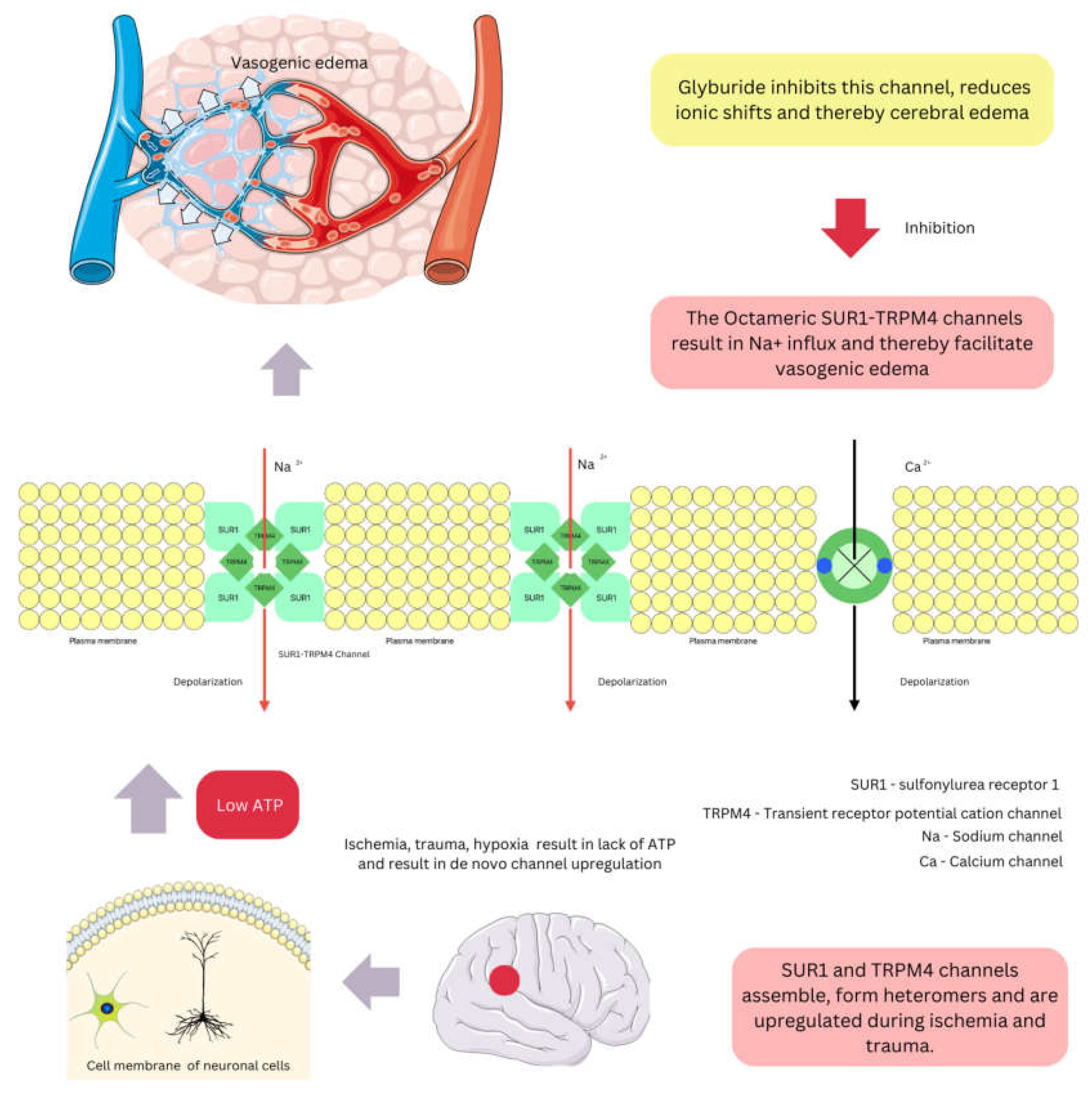
Figure 2.
Glyburide inhibits SUR1-TRPM4 which results in inhibition of cerebral edema. Additionally, several mechanisms are proposed to explain its neuroprotective abilities. Glyburide inhibits neutrophil recruitment and inhibits inflammation in the regions surrounding ischemia. In rat models, it has been demonstrated to prevent death of pyramidal neurons in the hippocampus. It has potential for neuroregeneration and studies have demonstrated improved cognitive outcomes in patients that were administered glyburide when compared to controls after a stroke. It is found to reduce MMP9 levels and levels of myeloperoxidase which represent inflammation.
Figure 2.
Glyburide inhibits SUR1-TRPM4 which results in inhibition of cerebral edema. Additionally, several mechanisms are proposed to explain its neuroprotective abilities. Glyburide inhibits neutrophil recruitment and inhibits inflammation in the regions surrounding ischemia. In rat models, it has been demonstrated to prevent death of pyramidal neurons in the hippocampus. It has potential for neuroregeneration and studies have demonstrated improved cognitive outcomes in patients that were administered glyburide when compared to controls after a stroke. It is found to reduce MMP9 levels and levels of myeloperoxidase which represent inflammation.
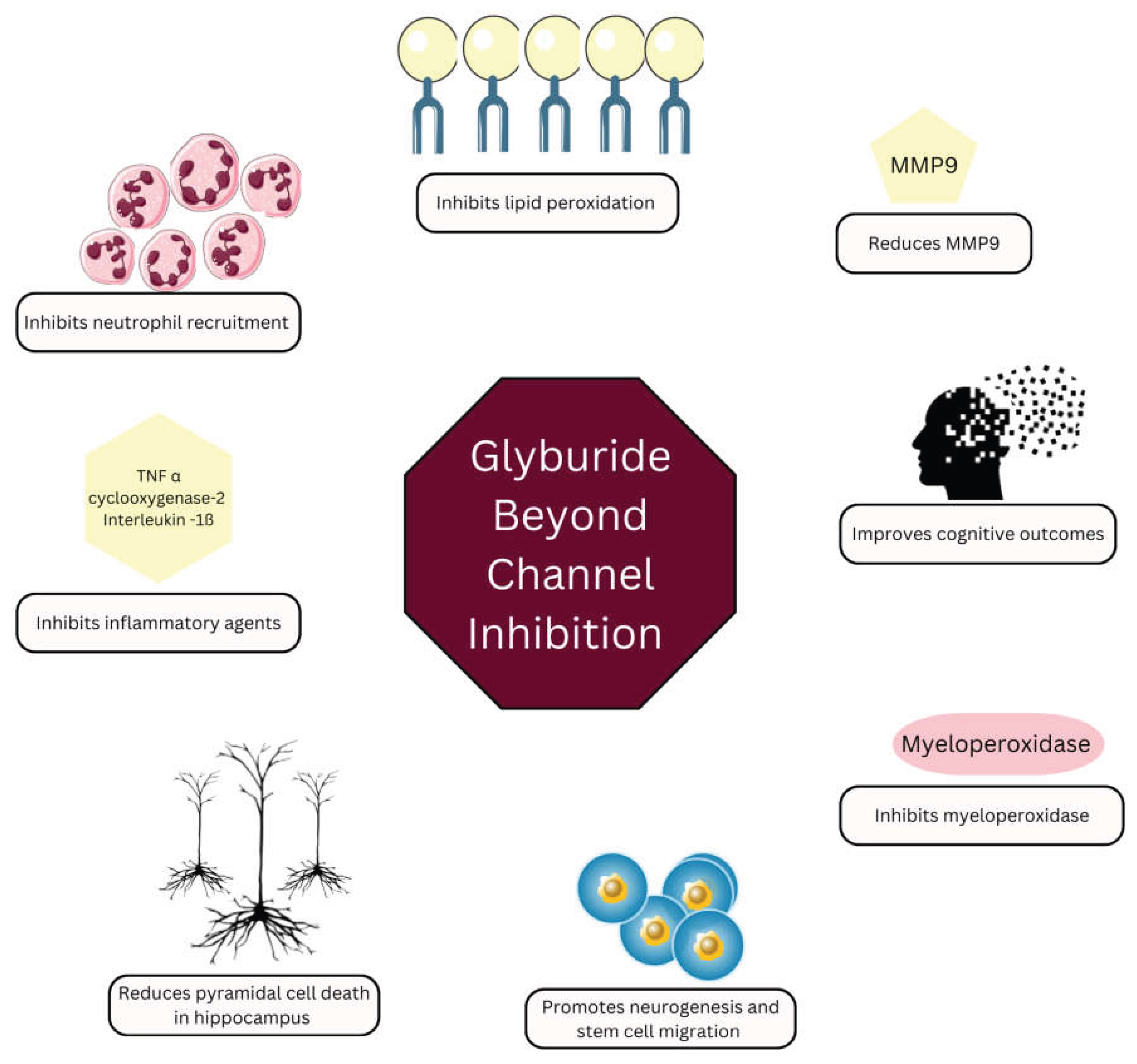

Table 1.
Randomized Controlled Trials of Glyburide in Stroke.
| Trial | Population | Intervention | Primary Endpoint | Outcomes | Safety |
|---|---|---|---|---|---|
| Acute Ischemic Stroke | |||||
| GAMES-RP (Sheth et al. 2016) |
- Adults (18-80 years) - Large anterior circulation hemispheric infarction; lesion volume 82-300 cm3 - United States (18 centers) |
Intravenous Glyburide, administered as:
|
Proportion of patients with mRS 0-4 at 90 days without receiving decompressive craniectomy | Glyburide: 41% Placebo: 39%, p=0.77 |
Serious AE or cardiac-related deaths: No difference Hypoglycemia - Total: 9% glyburide, 0% placebo, p=0.12 - Symptomatic: 0% both |
| SE-GRACE (Huang et al. 2023) |
- Adults (18-74 years) - Symptomatic anterior circulation occlusion - NIHSS 4-25 - Treated with alteplase within 4.5 hours of symptom onset - China (8 centers) |
Enteral Glyburide, administered as:
|
Proportion of patients with good outcomes (mRS 0-2 at 90 days) | Glyburide: 73% Placebo: 72%, p=0.96 |
AE or death from any cause: No difference Hypoglycemia: - Glyburide: 7% - Placebo: 11%, p=0.22 |
| CHARM (NCT02864953) |
- Adults (18-85 years) - MCA territory acute ischemic stroke - Large hemispheric infarct; lesion volume 80-300 cm3 - NIHSS > 10 - Worldwide (21 countries) |
Intravenous Glyburide, administered as:
|
Percentage of patients with improvement in mRS at day 90 | Odds Ratio: 1.17 [95% CI 0.80-1.71] |
Serious Hypoglycemia -Glyburide 5.79% -Placebo 1.54% Non-serious Hypoglycemia -Glyburide: 11.97% -Placebo: 3.09% |
| Intracerebral Hemorrhage | |||||
| GATE-ICH (Zhao et al. 2022) |
- Adults (18 years or older) - Primary basal ganglia hemorrhage, 5-30 mL - Initial Glasgow Coma Scale score > 6 - Symptom onset within 72 hours of admission - China (26 centers) |
Enteral Glyburide, administered as:
|
Percentage of poor outcome (mRS >3) at 90 days | Glyburide: 20.2% Standard Care: 29.7%, p=0.121 |
AE and serious AE: No difference Hypoglycemia, asymptomatic: - Glyburide: 15.2% - Placebo: 0%, p<0.001 |
| Subarachnoid Hemorrhage | |||||
| GASH (da Costa et al. 2022) |
- Adults (18-70 years) - Radiological evidence of SAH with aneurysmal origin confirmed - Clipping or coiling within 96 hours - Brazil (1 center) |
Enteral Glyburide, administered as:
|
Distribution of 6-month mRS score | Odds Ratio: 0.66 [95% CI 0.29-1.48] | Mortality: - Glyburide: 28.9% - Placebo: 30%, p=0.655 Hypoglycemia: - Glyburide: 5.3% - Placebo 0% |
Disclaimer/Publisher’s Note: The statements, opinions and data contained in all publications are solely those of the individual author(s) and contributor(s) and not of MDPI and/or the editor(s). MDPI and/or the editor(s) disclaim responsibility for any injury to people or property resulting from any ideas, methods, instructions or products referred to in the content. |
© 2026 by the authors. Licensee MDPI, Basel, Switzerland. This article is an open access article distributed under the terms and conditions of the Creative Commons Attribution (CC BY) license (http://creativecommons.org/licenses/by/4.0/).
Copyright: This open access article is published under a Creative Commons CC BY 4.0 license, which permit the free download, distribution, and reuse, provided that the author and preprint are cited in any reuse.


