

Submitted:
01 July 2026
Posted:
01 July 2026
You are already at the latest version
Abstract
Background: Men’s emotional suffering is frequently under-recognized because many social systems frame men as strong, self-reliant, productive, sexually competent, financially responsible, and emotionally controlled. Popular expressions such as “male PMS” are biologically imprecise, because premenstrual syndrome is defined in relation to the menstrual cycle. Yet the phrase may point toward a neglected clinical and social phenomenon: recurrent or episodic affective, somatic, cognitive, and behavioral distress in men.Objective: This narrative review synthesizes evidence and theory on male affective symptoms, testosterone and stress physiology, sleep and metabolic factors, externalizing presentations of depression, help-seeking barriers, and the social construction of masculine resilience.Methods: A narrative literature synthesis was conducted across premenstrual disorders, irritable male syndrome, testosterone physiology, sleep and stress biology, male depression, suicide epidemiology, masculinity norms, and mental-health help-seeking. This review does not propose “male PMS” as a formal diagnosis; rather, it evaluates the phrase as a cultural entry point into male episodic distress.Findings: Men do not experience PMS in the strict gynecological sense. Nevertheless, men may experience recurrent irritability, low mood, fatigue, anxiety, emotional withdrawal, sleep disturbance, reduced libido, anger, substance use, and loss of motivation through interactions among endocrine fluctuation, cortisol and sleep disruption, metabolic and physical health, psychiatric vulnerability, occupational stress, relationship strain, and masculine role expectations.Conclusions: The term “male PMS” should not be adopted as a medical diagnosis, but the distress it attempts to name deserves serious scholarly attention. We propose male episodic affective-somatic distress as a non-diagnostic framework for recurrent patterns of male suffering shaped by biological, psychological, and sociocultural mechanisms.
Keywords:
men’s mental health
; masculinity
; testosterone
; affective symptoms
; irritable male syndrome
; depression
; help-seeking
; suicide prevention
; biopsychosocial model
; narrative review
1. Introduction
The expression “male PMS” has entered popular discourse as a shorthand for periods in which men appear unusually irritable, emotionally withdrawn, fatigued, reactive, anxious, or low in motivation. In scientific terms, the phrase is problematic. Premenstrual syndrome is a menstrual-cycle-linked condition, and its clinical meaning depends on the timing of symptoms before menses and their improvement after menstruation begins [1,2]. Men, therefore, do not experience PMS in the strict reproductive or gynecological sense.
Yet the social popularity of the phrase should not be dismissed too quickly. Popular language often emerges where clinical language is absent, insufficient, or culturally inaccessible. “Male PMS” may be a flawed attempt to describe a real and under-recognized phenomenon: men’s recurrent emotional and bodily distress, especially when such distress is expressed through irritability, anger, shutdown, overwork, risk-taking, alcohol use, sexual concerns, or silence rather than through direct disclosure of sadness or fear.
Men’s mental health has a paradoxical visibility. It is frequently discussed in relation to crisis outcomes such as suicide, violence, addiction, occupational breakdown, or relationship failure, yet it is less often recognized in its earlier, quieter, recurring forms [3]. Many men are taught to function despite pain, maintain control despite anxiety, provide despite exhaustion, and appear confident despite shame. In this social context, emotional distress may be interpreted as personal weakness, immaturity, irresponsibility, lack of discipline, or aggression rather than as suffering requiring care [4,5].
This review argues for a precise reframing. The term “male PMS” should not be used as a diagnostic term. However, the phenomenon it attempts to name should be studied seriously. We propose the concept of male episodic affective-somatic distress: recurrent or episodic patterns of mood, energy, sleep, libido, cognition, bodily discomfort, and behavior in men, shaped by interacting endocrine, sleep, stress, metabolic, psychiatric, relational, occupational, and sociocultural mechanisms. This framework preserves scientific accuracy while creating conceptual space for men’s overlooked emotional cycles.
2. Methods and Scope
This article is a narrative review and critical perspective rather than a systematic review or meta-analysis. The goal is conceptual integration across domains that are often studied separately: premenstrual disorders, irritable male syndrome, testosterone physiology, sleep and stress biology, male depression, suicide epidemiology, masculine norms, and mental-health help-seeking. Priority was given to clinical guidelines, public-health sources, peer-reviewed empirical studies, systematic or narrative reviews, and foundational conceptual work.
Because the literature directly addressing “male PMS” is sparse and heterogeneous, the review deliberately avoids treating it as an established clinical entity. Instead, the phrase is used as a cultural signal that motivates a broader scientific question: how should recurrent male emotional and somatic distress be conceptualized without either dismissing men’s symptoms or misappropriating female reproductive terminology? The proposed framework is therefore non-diagnostic and hypothesis-generating. It is intended to guide research design, clinical communication.
3. Conceptual Clarification: Why “Male PMS” Is Inaccurate but Revealing
PMS and PMDD are defined by symptom timing in relation to the menstrual cycle. PMS generally describes a constellation of physical, emotional, and behavioral symptoms that occur before menstrual bleeding and improve shortly after menstruation begins [1]. PMDD is a more severe disorder characterized by prominent affective symptoms, functional impairment, and prospective cycle-linked symptom confirmation [2,6]. The cycle-linked reproductive biology is not incidental; it is central to diagnosis.
Consequently, “male PMS” is not scientifically accurate if it implies that men undergo an equivalent menstrual endocrine cycle. This point matters because imprecise language can generate backlash from reviewers, trivialize PMS and PMDD, and weaken an otherwise important argument about men’s mental health. A high-quality review must therefore begin by refusing false equivalence.
However, conceptual rejection of the term should not lead to clinical rejection of the underlying suffering. Men may experience recurrent fluctuations in irritability, fatigue, low mood, anxiety, emotional numbness, libido, sleep, concentration, and behavior. These patterns may not be menstrual, but they may still be embodied, patterned, and clinically meaningful. The phrase “male PMS” is therefore best understood as socially revealing rather than medically correct. It exposes a vocabulary gap: many social systems lack acceptable language for male vulnerability unless it is converted into anger, stress, performance failure, or biological shorthand.
A safe formulation is therefore: men do not have PMS, but men can experience episodic affective-somatic distress that deserves rigorous study. This formulation protects the specificity of women’s reproductive health while legitimizing men’s mental-health concerns.
4. Biological Mechanisms: Dynamic Physiology Without Hormonal Reductionism
Biological factors plausibly contribute to recurrent male affective-somatic symptoms, but they should not be reduced to a simplistic “low testosterone equals bad mood” model. Testosterone varies across the day, declines with aging in many men, and is influenced by sleep, obesity, illness, medications, stress, and health behaviors [7,8,9]. Clinical guidelines for hypogonadism emphasize that diagnosis should require both compatible symptoms and unequivocally low testosterone concentrations confirmed by repeat morning testing [7]. This guidance is important because nonspecific symptoms such as fatigue, reduced libido, low mood, and poor concentration may have endocrine, psychiatric, sleep-related, metabolic, relational, or occupational causes.
The most clinically defensible position is that testosterone may be one contributor among many. Testosterone has been associated with sexual function, vitality, body composition, and some dimensions of mood, but supplementation has not shown consistent benefits across mood, cognition, cardiovascular outcomes, or sexual function in all men [10]. Over-attribution of emotional distress to testosterone risks missing depression, anxiety, trauma, sleep disorders, substance use, chronic pain, or burnout. It may also encourage commercial overmedicalization of normal distress or complex social suffering.
Sleep is a particularly plausible pathway linking physiology and affective regulation. In a small experimental study of healthy young men, one week of sleep restriction was associated with a 10-15% reduction in daytime testosterone [11]. Other work has produced mixed findings, reminding us that sleep-testosterone relationships may depend on age, duration and quality of sleep, circadian timing, health status, and measurement strategy [12]. Even when testosterone is not the primary pathway, insufficient sleep can directly impair emotion regulation, impulse control, pain sensitivity, appetite, metabolic health, and interpersonal functioning.
Stress biology provides another mechanism. Chronic occupational demand, financial pressure, caregiving, relationship conflict, social isolation, and perceived failure may produce allostatic load, altered cortisol rhythms, and behavioral coping patterns that worsen sleep, diet, exercise, sexual function, and mood. The male social role often normalizes sustained pressure: men may interpret exhaustion as a price of responsibility rather than a warning sign. A man who is irritable and withdrawn may not be experiencing a discrete endocrine disorder; he may be living inside an unrelenting stress system with inadequate recovery.
The construct of irritable male syndrome is relevant but limited. Lincoln described irritable male syndrome as nervousness, irritability, lethargy, and depression following testosterone withdrawal in adult male mammals, with discussion of negative mood states after androgen withdrawal in men [13]. This concept is useful because it recognizes that male mood can be biologically sensitive to androgenic change. Nevertheless, it is not a fully validated human diagnosis, and animal models cannot capture the social meanings of masculinity, work, marriage, fatherhood, shame, unemployment, sexual performance, or stigma.
5. Male Depression, Externalizing Symptoms, and the Visibility Problem
Male distress is often difficult to detect because it may not present through stereotypical depressive language. Men can experience sadness, hopelessness, guilt, and tearfulness, but they may also express psychological distress through irritability, anger, emotional shutdown, risk-taking, substance use, compulsive work, gaming, pornography use, cynicism, social withdrawal, or somatic complaints. These externalizing expressions may be more socially permissible than admitting fear, shame, loneliness, or vulnerability.
This does not mean that male depression is a completely separate disease. Rather, gender norms influence symptom interpretation, disclosure, and clinical recognition. Standard depression instruments may capture many male symptoms, but they may under-detect men whose distress is expressed as anger, overcontrol, avoidance, substance use, or perceived failure. Research on male-type depression and male depression risk scales has attempted to address this measurement gap by including externalizing and gendered symptom patterns [14,15].
The public-health stakes are high. The World Health Organization reports that more than 720,000 people die by suicide each year globally [16]. In the United States, CDC data show that the 2024 age-adjusted suicide rate among males was 22.2 per 100,000 compared with 5.6 per 100,000 among females, nearly a fourfold difference [17,18,19]. Suicide is not caused by masculinity alone, nor by hormones alone, and simplistic explanations should be avoided. However, these figures underscore the need for earlier recognition of male distress before it reaches crisis presentation [4].
One reason early distress is missed is that male suffering may appear functionally productive. A distressed man may work more, train harder, withdraw quietly, provide financially, avoid medical care, or appear controlled in public while deteriorating privately. The social system may reward these behaviors until the costs become visible. In this sense, masculine resilience can delay recognition: the same traits that help men endure adversity may also prevent them from acknowledging when endurance has become harmful.
6. The Social Construction of Masculine Resilience
Masculine resilience is not inherently pathological. Courage, responsibility, self-control, protection, discipline, and commitment can be deeply valuable. The problem arises when these values become compulsory and one-dimensional, leaving men no acceptable way to be frightened, ashamed, exhausted, dependent, uncertain, or emotionally hurt. Strength becomes a prison when vulnerability is treated as disqualification [3].
Traditional masculine norms often emphasize self-reliance, stoicism, dominance, emotional control, toughness, success, heterosexual performance, and provider responsibility [20,21,22]. These norms may reduce help-seeking by making psychological support feel like weakness or failure. They may also shape the form of symptoms. A man may say “I am stressed” rather than “I am depressed,” “I am angry” rather than “I am ashamed,” or “I am tired” rather than “I cannot keep living like this.” The problem is not that men lack emotion; it is that many men have been given limited permission to name it.
This has implications for families, workplaces, and clinical systems. Partners may experience male distress as irritability or withdrawal without recognizing the underlying vulnerability. Workplaces may reward overfunctioning until burnout occurs. Health systems may focus on cardiovascular risk, sexual function, or substance use while missing the emotional ecology connecting these problems. Public discourse may mock male vulnerability or reduce it to jokes about moodiness. Each of these responses reinforces silence.
The phrase “male PMS” sits at this intersection. It is imprecise and potentially stigmatizing, but it also reflects an attempt to say that men have emotional cycles too. A more respectful and scientifically sound vocabulary can help. Men do not need a borrowed menstrual diagnosis to have legitimate emotional suffering. They need a language that recognizes recurrent distress without ridicule, false equivalence, or hormonal determinism.
7. Proposed Framework: Male Episodic Affective-Somatic Distress
We propose male episodic affective-somatic distress as a non-diagnostic conceptual framework. It describes recurrent or episodic patterns of emotional, bodily, cognitive, and behavioral symptoms in men, shaped by interacting biological, psychological, and sociocultural mechanisms [3]. The term is intentionally descriptive rather than diagnostic. It does not imply a fixed syndrome, a universal male cycle, or a single endocrine cause.
The framework includes five domains. The affective domain includes irritability, anger, low mood, anxiety, emotional numbness, shame, guilt, and reduced pleasure. The somatic domain includes fatigue, pain, headache, gastrointestinal discomfort, sleep disruption, appetite change, reduced libido, and erectile concerns. The cognitive domain includes poor concentration, indecision, pessimism, rumination, perceived failure, and reduced self-efficacy. The behavioral domain includes withdrawal, overwork, risk-taking, substance use, compulsive digital behavior, avoidance, aggression, and reduced self-care [23]. The sociocultural domain includes provider pressure, masculinity norms, relationship expectations, workplace identity, financial responsibility, stigma, and cultural models of manhood [24,25].
The value of this framework is that it asks clinicians and researchers to look for patterns rather than stereotypes. Does distress occur after sleep loss, conflict, alcohol use, occupational overload, sexual difficulty, perceived failure, or social humiliation? Does the man become irritable rather than sad, silent rather than tearful, overproductive rather than visibly impaired? Does he delay care because help-seeking threatens his identity as competent, strong, or responsible? These questions create a richer clinical map than asking whether testosterone is low or whether he has “male PMS.”
The framework also prevents overmedicalization. It does not imply that all mood fluctuation in men requires medication, testosterone therapy, or psychiatric labeling. Some distress may be a normal response to abnormal pressure. Some may require psychotherapy, sleep restoration, relationship support, substance-use treatment, medical evaluation, or crisis care. The construct is useful precisely because it supports differential formulation rather than a single-cause diagnosis.
8. Clinical Implications
First, clinicians should avoid false equivalence with PMS. When patients or families use the phrase “male PMS,” the most helpful response is not ridicule but translation: “Men do not have PMS in the menstrual sense, but men can have recurrent stress, mood, sleep, energy, and hormone-related symptoms. Let us understand the pattern.” This validates distress while correcting terminology.
Second, assessment should include timing and triggers. Clinicians can ask whether symptoms appear in waves, occur after specific work cycles, worsen after poor sleep, follow alcohol use, emerge after relationship conflict, coincide with sexual dysfunction, or intensify during financial or occupational pressure. Pattern-based assessment helps distinguish chronic depression, adjustment disorder, substance-related mood symptoms, sleep disorders, endocrine disorders, and context-linked distress.
Third, risk should be assessed early and explicitly. Irritability, withdrawal, substance use, and hopelessness can coexist with suicide risk. Because some men disclose risk indirectly, clinicians should ask about feeling trapped, being a burden, losing purpose, reckless behavior, access to lethal means, and thoughts of death. Safety planning and crisis referral should occur when indicated.
Fourth, endocrine evaluation should be careful and guideline-based. Testosterone testing may be appropriate when symptoms suggest hypogonadism, but diagnosis should not be made on a single non-morning value or on nonspecific mood symptoms alone [7]. Men deserve serious medical evaluation, but they also deserve protection from simplistic commercial narratives that convert complex distress into a single hormone number.
Fifth, clinical language should reframe strength. Telling men simply to “be vulnerable” may not work if vulnerability feels identity-threatening. A more effective message may be: responsible men monitor their own deterioration; strength includes early repair; seeking help protects the people who depend on you; emotional control is not the same as emotional silence. Such language does not reinforce harmful stoicism; it redirects masculine values toward care-seeking and self-preservation [26,27].
9. Research Agenda
The proposed framework requires empirical validation. The most important next step is prospective within-person research. Cross-sectional surveys cannot determine whether men experience recurrent distress patterns, what time scales these patterns follow, or which mechanisms predict onset and recovery. Daily or weekly symptom diaries should be combined with sleep, activity, alcohol use, work stress, relationship events, sexual function, and perceived role strain.
Repeated biological measurement is also needed. Single testosterone values are insufficient to characterize dynamic physiology. Studies should include repeated testosterone, cortisol, inflammatory markers, metabolic markers, and circadian indicators where feasible. Wearable devices may contribute sleep duration, sleep regularity, physical activity, heart-rate variability, and recovery metrics, although these measures must be interpreted cautiously and ethically.
Psychometric development is another priority. Existing depression and anxiety scales remain useful, but research should examine whether they adequately capture male-coded distress such as irritability, emotional restriction, externalizing behavior, overwork, risk-taking, substance use, and shame linked to perceived failure. Measurement should avoid reinforcing stereotypes; the goal is to improve detection, not to claim that all men express distress in the same way.
Finally, intervention studies should test gender-responsive care pathways. Candidate interventions include workplace mental-health screening, peer-support models, digital symptom diaries, sleep restoration, fatherhood-focused support, psychotherapy adapted for men reluctant to disclose emotion, integrated endocrine-mental health clinics, and public messaging that reframes help-seeking as responsible strength. Outcomes should include symptom reduction, functional recovery, help-seeking, relationship functioning, substance use, and crisis prevention.
10. Ethical Considerations
A manuscript on this topic must avoid several pitfalls. The first is biological overclaiming. Men do not have PMS, and the review should not imply that a male menstrual-cycle equivalent exists. The second is hormonal determinism. Testosterone is important but not sufficient to explain male distress. The third is gender competition. Recognizing male suffering should not diminish PMS, PMDD, postpartum depression, menopause-related symptoms, or women’s mental health. The fourth is stereotyping men as emotionally primitive, violent, or help-resistant by nature. The problem is not male biology alone; it is the interaction between embodied vulnerability and social expectations.
Careful terminology is therefore essential. “Male episodic affective-somatic distress” is not presented as a new diagnosis. It is a conceptual scaffold for studying recurrent male distress while maintaining diagnostic humility. The term should be refined, challenged, and tested empirically. A contribution should be judged not by whether it invents a syndrome, but by whether it improves conceptual clarity, clinical recognition, and research design.
11. Limitations
This review has limitations. It is narrative rather than systematic and does not provide pooled prevalence estimates or effect sizes. The proposed construct is conceptual and requires empirical validation. Evidence on irritable male syndrome is limited, especially in humans. The review uses “men” pragmatically, but future work must distinguish sex assigned at birth, gender identity, hormonal milieu, reproductive anatomy, and sociocultural masculinity. Experiences of male distress also vary by age, race, class, sexuality, disability, employment, fatherhood, migration, military exposure, chronic illness, and culture. No single framework can represent all men.
A further limitation is that the phrase “male PMS” may itself be stigmatizing, humorous, or dismissive in some contexts. This review uses the phrase only as an object of critique and translation, not as an endorsed clinical label. Future research should examine how men themselves describe recurrent distress and which terms increase recognition without shame.
12. Conclusions
Men do not experience PMS in the strict biological sense. However, many men experience recurrent emotional, somatic, cognitive, and behavioral distress that remains poorly recognized because male suffering is often filtered through expectations of strength, self-reliance, productivity, sexual competence, and emotional control. The phrase “male PMS” is scientifically imprecise, but it points toward an important gap in men’s mental health.
This review proposes male episodic affective-somatic distress as a non-diagnostic framework for studying and communicating recurrent male distress. The framework integrates endocrine variation, sleep and stress biology, metabolic and physical health, depression and externalizing symptoms, help-seeking barriers, and the social construction of masculine resilience. Its purpose is not to create a new disease label, but to make invisible cycles visible enough to be studied, discussed, and treated.
The central message is simple: men’s distress is real even when it has been taught to speak in silence. A scientifically careful and socially humane approach can validate that distress without false equivalence, hormonal reductionism, or stigma.
Figures
Figure 1.
Integrated biopsychosocial model of male episodic affective-somatic distress. The model depicts male distress as a dynamic, multidetermined process shaped by endocrine dynamics, sleep and circadian disruption, stress biology, metabolic and physical health, and masculine role pressure. Bidirectional arrows emphasize feedback loops rather than single-cause explanations.
Figure 1.
Integrated biopsychosocial model of male episodic affective-somatic distress. The model depicts male distress as a dynamic, multidetermined process shaped by endocrine dynamics, sleep and circadian disruption, stress biology, metabolic and physical health, and masculine role pressure. Bidirectional arrows emphasize feedback loops rather than single-cause explanations.
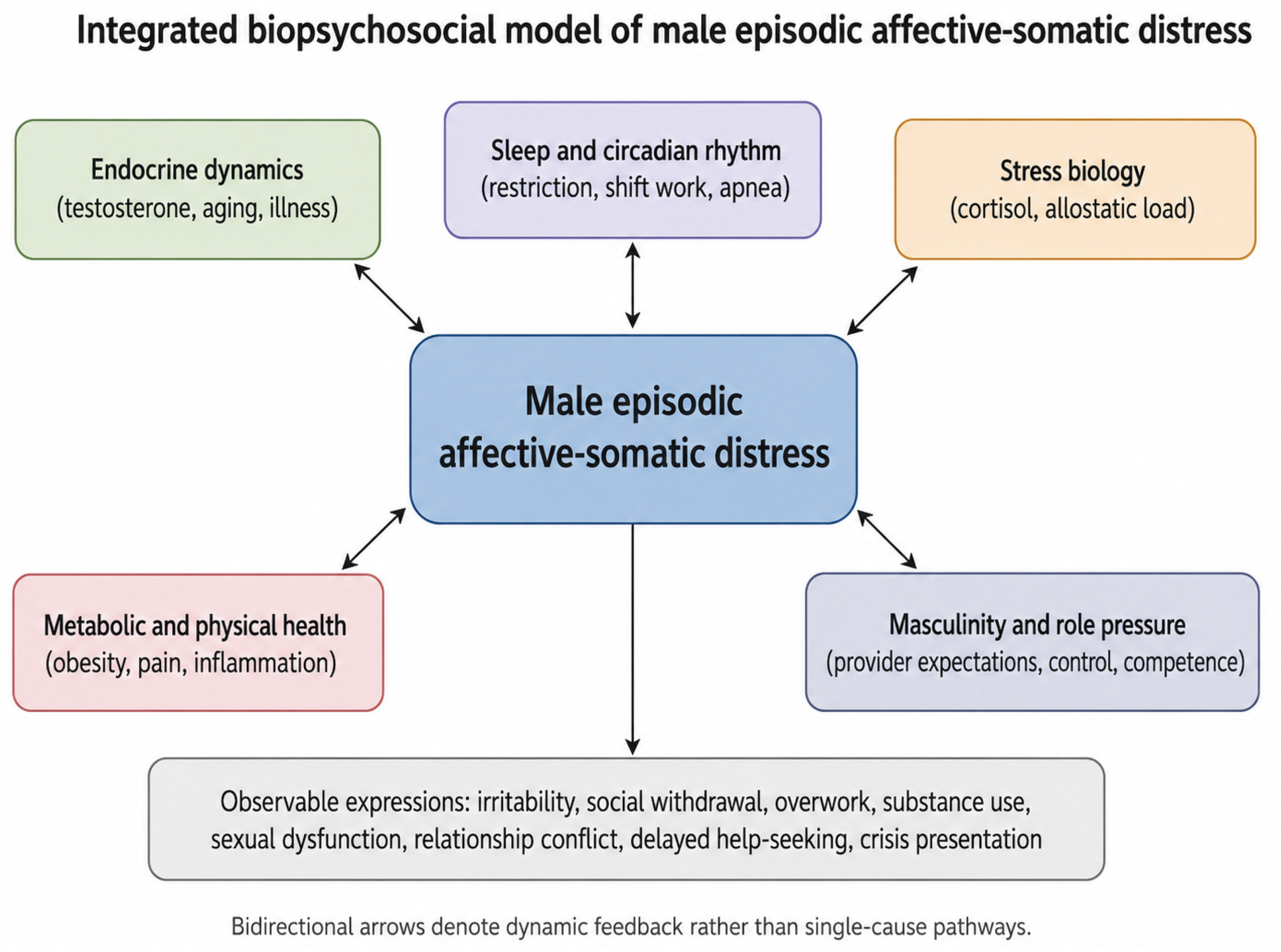
Figure 2.
From popular metaphor to clinically precise language. “Male PMS” is rejected as a diagnostic term but translated into a more defensible research construct: male episodic affective-somatic distress.
Figure 2.
From popular metaphor to clinically precise language. “Male PMS” is rejected as a diagnostic term but translated into a more defensible research construct: male episodic affective-somatic distress.
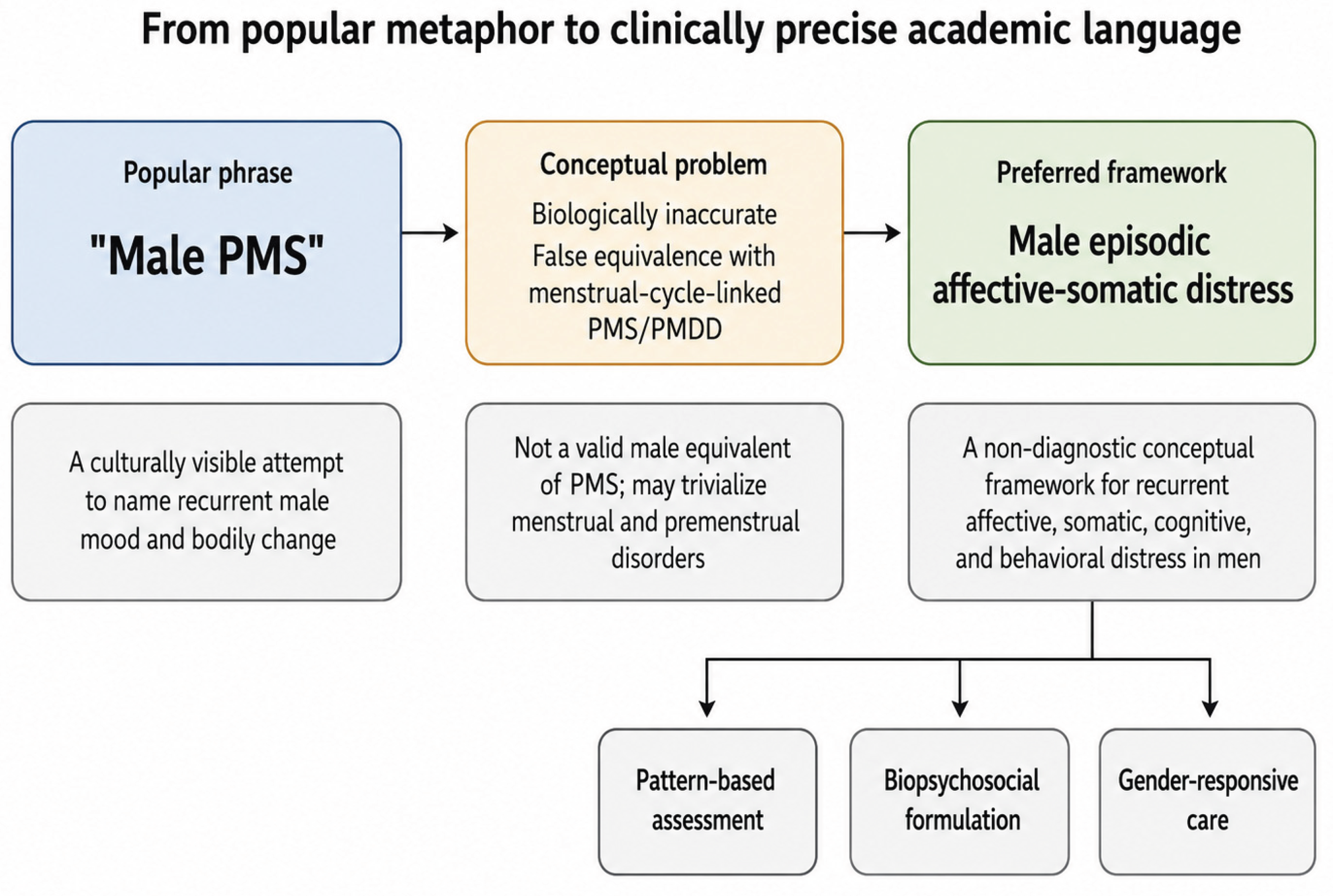
Figure 3.
Clinical reasoning pathway for recurrent male affective-somatic symptoms. The pathway emphasizes pattern recognition, early safety screening, biological and psychosocial review, integrative formulation, and longitudinal care.
Figure 3.
Clinical reasoning pathway for recurrent male affective-somatic symptoms. The pathway emphasizes pattern recognition, early safety screening, biological and psychosocial review, integrative formulation, and longitudinal care.
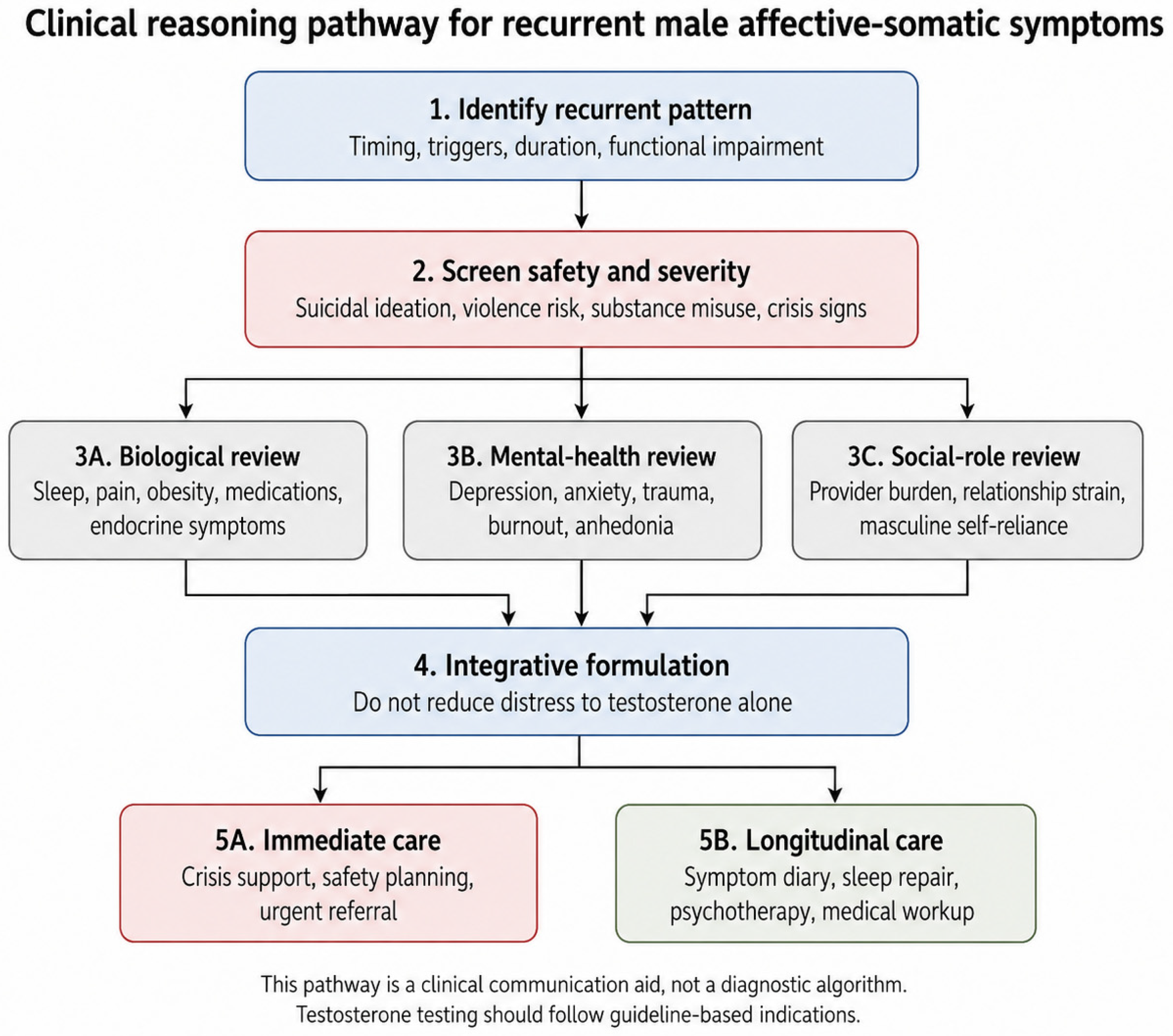
Figure 4.
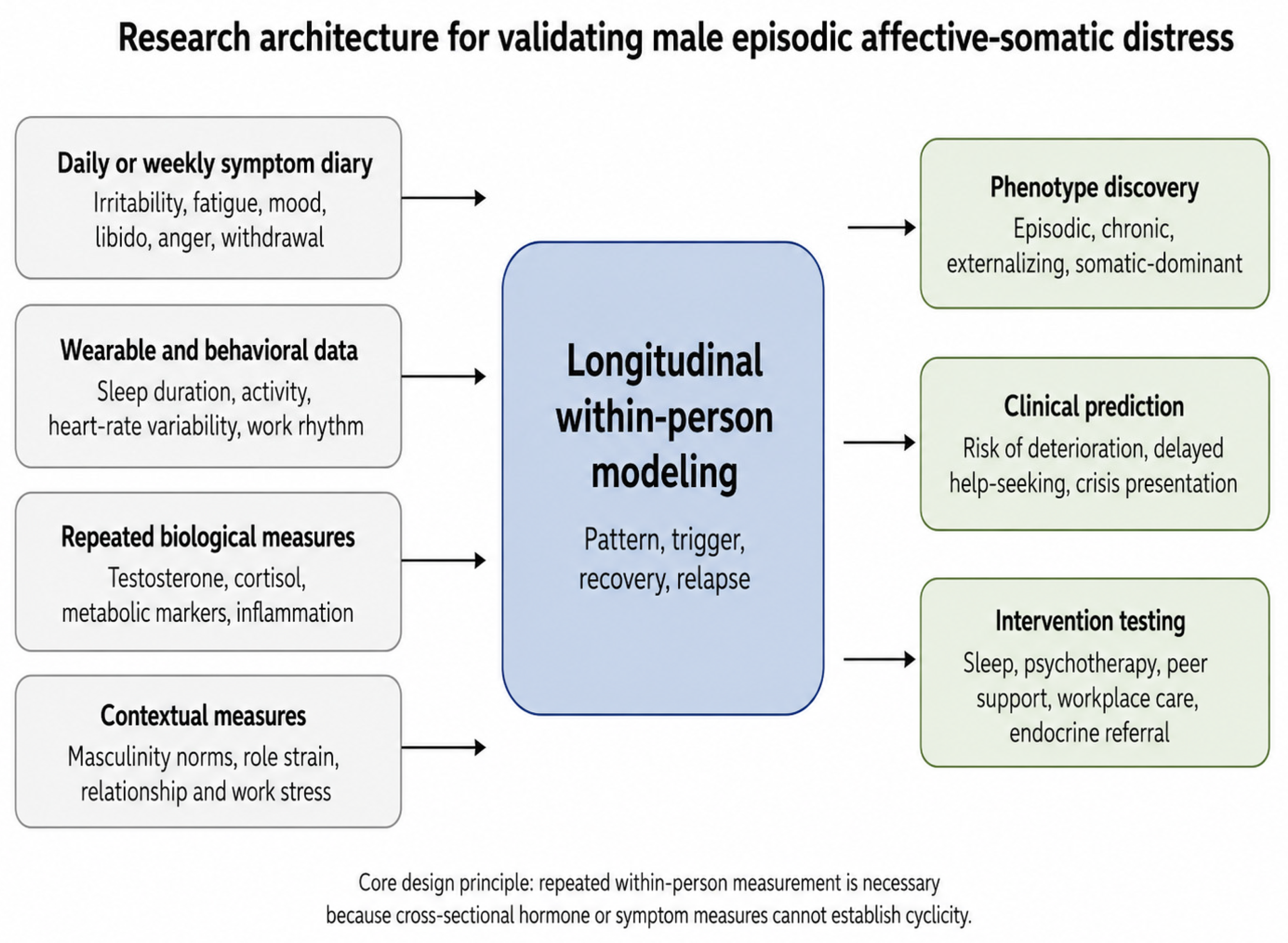
Research architecture for validating male episodic affective-somatic distress. The recommended strategy combines symptom diaries, wearable and behavioral data, repeated biological measurement, and contextual assessment within longitudinal within-person designs.
Figure 4.
Research architecture for validating male episodic affective-somatic distress. The recommended strategy combines symptom diaries, wearable and behavioral data, repeated biological measurement, and contextual assessment within longitudinal within-person designs.
Tables

Table 1.
Conceptual distinction among PMS, PMDD, irritable male syndrome, and male episodic affective-somatic distress.
Table 1.
Conceptual distinction among PMS, PMDD, irritable male syndrome, and male episodic affective-somatic distress.
| Construct | Biological anchor | Status | Typical symptoms | Key limitation |
| Premenstrual syndrome | Menstrual-cycle-linked symptom timing before menstruation | Established clinical construct | Mood change, irritability, fatigue, bloating, breast tenderness, sleep/appetite change | Not applicable to men without menstrual cycling |
| Premenstrual dysphoric disorder | Menstrual-cycle-linked severe affective symptoms and impairment | Formal psychiatric diagnosis | Affective lability, irritability, depressed mood, anxiety, functional impairment | Requires prospective menstrual-cycle-linked confirmation |
| Irritable male syndrome | Proposed androgen-withdrawal mechanism | Hypothesis-generating construct; not routine human diagnosis | Nervousness, irritability, lethargy, depression | Evidence is limited and partly based on animal models |
| Male episodic affective-somatic distress | Biopsychosocial interaction among endocrine, sleep, stress, metabolic, psychological, and social-role factors | Proposed non-diagnostic framework | Irritability, fatigue, low mood, anxiety, withdrawal, sleep disturbance, libido change, overwork, substance use | Requires empirical validation and careful measurement |
Table 2.
Clinical assessment domains for recurrent male affective-somatic symptoms.
| Domain | Example assessment question | Purpose |
| Temporal pattern | Do these symptoms come in waves, at certain times, or after specific triggers? | Identify episodic structure and possible precipitating contexts |
| Sleep and recovery | Do symptoms worsen after poor sleep, shift work, travel, or insufficient recovery? | Detect sleep-related emotional dysregulation and fatigue |
| Mood and anxiety | Do you feel sad, numb, ashamed, anxious, trapped, or hopeless? | Identify internalizing distress that may be hidden behind irritability |
| Externalizing symptoms | Do you withdraw, become angry, drink more, overwork, take risks, or avoid people? | Capture male-coded distress expressions |
| Sexual/endocrine symptoms | Any change in libido, erections, energy, strength, or body composition? | Guide appropriate medical and endocrine evaluation |
| Substance use | Do alcohol, cannabis, stimulants, or sedatives increase when you feel overwhelmed? | Identify maladaptive coping and suicide-risk amplification |
| Role pressure | What responsibilities feel impossible to put down? | Assess provider burden, occupational identity, and relationship strain |
| Help-seeking beliefs | Would asking for help feel like weakness, failure, or loss of control? | Reveal masculinity-linked barriers to care |
Table 3.
Recommended language for scholarly and clinical communication.
| Avoid | Preferred wording | Rationale |
| Men have PMS too. | Men may experience recurrent affective-somatic distress, but this is not PMS in the menstrual-cycle-linked sense. | Avoids false biological equivalence while validating distress |
| It is just low testosterone. | Endocrine factors may contribute, but symptoms require biopsychosocial formulation. | Prevents hormonal reductionism and overmedicalization |
| Men do not talk about feelings. | Some men have been socialized to express distress indirectly or delay disclosure. | Avoids essentializing men while acknowledging socialization |
| He is just angry/lazy/irresponsible. | Irritability, withdrawal, and overwork may be external expressions of distress. | Improves recognition of hidden depression, anxiety, or burnout |
| Real men should be strong. | Strength includes early recognition, responsible help-seeking, and recovery. | Reframes resilience without reinforcing silence |
Author Contributions
Conceptualization, literature synthesis, writing, critical revision, and figure development were performed by the author.
Funding
No specific funding was received for this work.
Ethics approval
Not applicable.
Consent to participate
Not applicable.
Data availability
Not applicable.
Conflicts of interest
The author declares no conflicts of interest.
References
- ACOG committee opinion. Premenstrual syndrome. Number 155--April 1995 (replaces no. 66, January 1989) Committee on Gynecologic Practice. Am. Coll. Obstet. Gynecol. Int. J. Gynaecol. Obstet. 1995, 50(1), 80–4. [Google Scholar]
- Management of Premenstrual Disorders: ACOG Clinical Practice Guideline No. 7. Obstet. Gynecol. 2023, 142(6), 1516–1533. [CrossRef] [PubMed]
- Oliffe, J.L.; Phillips, M.J. Men, depression and masculinities: A review and recommendations. J. Men’s Health 2008, 5(3), 194–202. [Google Scholar] [CrossRef]
- Mokhwelepa, L.W.; Sumbane, G.O. Men’s mental health matters: The impact of traditional masculinity norms on men’s willingness to seek mental health support; a systematic review of literature. Am. J. Men’s Health 2025, 19(3), 15579883251321670. [Google Scholar] [CrossRef]
- Courtenay, W.H. Constructions of masculinity and their influence on men’s well-being: a theory of gender and health. Soc. Sci. Med. 2000, 50(10), 1385–1401. [Google Scholar] [CrossRef] [PubMed]
- American Psychiatric Association. Diagnostic and statistical manual of mental disorders, Text Revision (DSM-5-TRTM); American Psychiatric Pub, 2022. [Google Scholar]
- Bhasin, S.; et al. Testosterone therapy in men with hypogonadism: an endocrine society clinical practice guideline. J. Clin. Endocrinol. Metab. 2018, 103(5), 1715–1744. [Google Scholar] [CrossRef] [PubMed]
- Brambilla, D.J.; et al. The effect of diurnal variation on clinical measurement of serum testosterone and other sex hormone levels in men. J. Clin. Endocrinol. Metab. 2009, 94(3), 907–913. [Google Scholar] [CrossRef] [PubMed]
- Feldman, H.A.; et al. Age trends in the level of serum testosterone and other hormones in middle-aged men: longitudinal results from the Massachusetts male aging study. J. Clin. Endocrinol. Metab. 2002, 87(2), 589–598. [Google Scholar] [CrossRef] [PubMed]
- Huo, S.; et al. Treatment of men for “low testosterone”: a systematic review. PLoS ONE 2016, 11(9), e0162480. [Google Scholar] [CrossRef] [PubMed]
- Leproult, R.; Van Cauter, E. Effect of 1 week of sleep restriction on testosterone levels in young healthy men. Jama 2011, 305(21), 2173–2174. [Google Scholar] [CrossRef] [PubMed]
- Smith, R.P.; et al. The evidence for seasonal variations of testosterone in men. Maturitas 2013, 74(3), 208–212. [Google Scholar] [CrossRef] [PubMed]
- Lincoln, G.A. The irritable male syndrome. Reprod. Fertil. Dev. 2002, 13(8), 567–576. [Google Scholar] [CrossRef]
- Rice, S.M.; et al. Development and preliminary validation of the male depression risk scale: Furthering the assessment of depression in men. J. Affect. Disord. 2013, 151(3), 950–958. [Google Scholar] [CrossRef] [PubMed]
- Martin, L.A.; Neighbors, H.W.; Griffith, D.M. The experience of symptoms of depression in men vs women: analysis of the National Comorbidity Survey Replication. JAMA Psychiatry 2013, 70(10). [Google Scholar] [CrossRef] [PubMed]
- Organization, W.H. Suicide worldwide in 2019: global health estimates. 2021. [Google Scholar] [CrossRef]
- Liu, G.S.; Fowler, K.A.; Schaechter, J. Physical Health Conditions Among Suicide Decedents: National Violent Death Reporting System, US, 2020–2023. Am. J. Prev. Med. 2026, 108409. [Google Scholar] [CrossRef] [PubMed]
- Choi, N.G.; et al. Associations of medical outcomes with substances involved in suicide attempt cases age 50 and older reported to US Poison Centers, 2016–2023. Front. Public Health 2025, 13, 1505040. [Google Scholar] [CrossRef] [PubMed]
- Bischops, A.C. Trends in Suicide Mortality by Method among US Individuals aged 10-24 Years from 1999 to 2024 p. 2026.06. 12.26355540. medRxiv 2026. [Google Scholar] [CrossRef] [PubMed]
- Mahalik, J.R.; et al. Development of the conformity to masculine norms inventory. Psychol. Men. Masculinity 2003, 4(1), 3. [Google Scholar] [CrossRef]
- Addis, M.E. and J.R. Mahalik, Men, masculinity, and the contexts of help seeking. Am. Psychol. 2003, 58(1), 5. [Google Scholar] [CrossRef] [PubMed]
- Seidler, Z.E.; et al. The role of masculinity in men’s help-seeking for depression: a systematic review. Clin. Psychol. Rev. 2016, 49, 106–118. [Google Scholar] [CrossRef] [PubMed]
- McEwen, B.S. Protective and damaging effects of stress mediators. N. Engl. J. Med. 1998, 338(3), 171–179. [Google Scholar] [CrossRef] [PubMed]
- Brownhill, S.; et al. ‘Big build’: hidden depression in men. Aust. N. Z. J. Psychiatry 2005, 39(10), 921–931. [Google Scholar] [CrossRef] [PubMed]
- Kuehner, C. Why is depression more common among women than among men? Lancet Psychiatry 2017, 4(2), 146–158. [Google Scholar] [CrossRef] [PubMed]
- Galdas, P.M.; Cheater, F.; Marshall, P. Men and health help-seeking behaviour: literature review. J. Adv. Nurs. 2005, 49(6), 616–623. [Google Scholar] [CrossRef] [PubMed]
- Yousaf, O.; Grunfeld, E.A.; Hunter, M.S. A systematic review of the factors associated with delays in medical and psychological help-seeking among men. Health Psychol. Rev. 2015, 9(2), 264–276. [Google Scholar] [PubMed]
Disclaimer/Publisher’s Note: The statements, opinions and data contained in all publications are solely those of the individual author(s) and contributor(s) and not of MDPI and/or the editor(s). MDPI and/or the editor(s) disclaim responsibility for any injury to people or property resulting from any ideas, methods, instructions or products referred to in the content. |
© 2026 by the authors. Licensee MDPI, Basel, Switzerland. This article is an open access article distributed under the terms and conditions of the Creative Commons Attribution (CC BY) license (http://creativecommons.org/licenses/by/4.0/).
Copyright: This open access article is published under a Creative Commons CC BY 4.0 license, which permit the free download, distribution, and reuse, provided that the author and preprint are cited in any reuse.


