
Submitted:
25 June 2026
Posted:
29 June 2026
You are already at the latest version
Abstract
The hybrid methodology first employed the Fire Risk Assessment Method for Engineers Method (FRAME) for initial screening across thirty-one departments. The facilities department (Occupants Risk: 3.199) was subsequently identified as the critical department. A Building Information Modeling (BIM) model of the facilities department was developed for computational analysis: Fire tenability (Available Safe Egress Time (ASET)) was determined using PyroSim software, and evacuation dynamics (Required Safe Egress Time (RSET)) were modeled using Pathfinder software. The FRAME analysis showed 90% of assessed departments were unacceptable occupant risk. In the Facilities Department, baseline simulation confirmed untenable conditions (ASET= 154 s < RSET, avg. 259.7 s). Post-intervention strategies (automatic suppression and optimized egress routes) led to a significant decrease in Occupants Risk (from 3.199 to 1.1) and substantially reduced the average evacuation time to 26.6 s. Integrating FRAME screening with advanced FDS and evacuation simulations provides a robust, two-stage methodology for fire safety engineering in complex buildings. The findings conclusively demonstrate the effectiveness of targeted interventions in converting a critically unsafe scenario into a secure, tenable environment, offering validated guidance for safety professionals.
Keywords:
hospital fire safety
; FRAME method
; Performance-Based Design (PBD)
; evacuation simulation
; occupant fire risk
1. Introduction
Hospital fires are a frequent and potentially catastrophic occurrence worldwide, especially in developing countries [1,2]. Their devastating impact has been particularly evident since the COVID-19 pandemic, with hospital fires causing over 250 fatalities in various countries [3]. Since 2020, Iran has experienced Twelve fire disasters leading to significant fatalities and major property damage, including the fire and explosion at Sina Athar Clinic in July 2020, which resulted in 19 deaths, and the fire at Ghaem Hospital in June 2024, which caused 9 fatalities [4,5]. Indeed, fires in healthcare facilities are critically associated with significant human casualties, extensive financial losses, and equipment damage [6]. The presence of expensive medical equipment and the inherently limited mobility of occupants during evacuation are the main causes of this vulnerability [7,8]. As a result of these issues, numerous studies have consistently emphasized the urgent need for robust fire safety assessment and emergency preparedness and management in hospitals and other healthcare facilities [4,5,8,9]. The primary objective of fire management is to establish conditions that ensure the protection of occupants and assets from fire [10]. Operational fire safety assessment in hospitals is paramount as a crucial initial step for defining and prioritizing effective control strategies [11].
Various methods and frameworks have been developed for fire risk assessment with the main aim of identifying weaknesses in fire safety intervention strategies and providing effective control measures. GRETENER [12,13], Fire Risk Assessment Method for Engineers (FRAME) [5], Failure Mode and Effects Analysis (FMEA) [14,15], and the Computerized Fire Safety Evaluation System (CFSES), which is based on NFPA 101 [16], are examples of semi-quantitative fire risk assessment techniques. Furthermore, qualitative procedures such as guidelines, regulations, standards and checklists are applicable to different types of buildings [17,18]. Among these procedures, FRAME is known as a thorough and comprehensive method for hospital buildings, because in addition to determining the fire risk for both property and occupants; it also quantifies the fire risk for activities. Moreover, it takes into account all variables influencing hospital fire safety while estimating the fire risk [18,19].
Evaluating the efficacy of control strategies for risk mitigation and selecting the optimal intervention is a central concern for fire safety managers [17,20]. Since traditional full-scale fire tests are often prohibitively expensive, modern computational modeling techniques that accurately predict temperature and smoke propagation are increasingly utilized, offering a significant cost advantage [21,22]. This trend supports the shift toward Performance-Based Design (PBD), which has been favored since the 1970s for its ability to tailor fire protection systems precisely to a building's unique characteristics and occupancy [23]. For PBD, Computational Fluid Dynamics (CFD) models are recognized as highly accurate tools for fire prediction [24,25]. Specifically, the Fire Dynamics Simulator (FDS), developed by NIST, is a prominent CFD tool used to simulate low-velocity, thermally-driven flows, focusing on smoke and heat spread [25].
This study utilizes a comprehensive, multi-methodological framework for Quantitative Risk Assessment (QRA) in a hospital. This methodology effectively combines the FRAME technique with advanced performance-based simulations (CFD and Pathfinder) to get a two-tiered validation of fire safety margins. In the present study, Pyrosim (an FDS interface) was used to simulate smoke and fire spread under a worst-case scenario and estimate the Available Safe Egress Time (ASET) based on critical thresholds for temperature, visibility, and concentration. Concurrently, the Pathfinder evacuation simulator was employed to model occupant egress based on realistic behavior and characteristics, determining the Required Safe Egress Time (RSET). Consequently, given the critical need for effective fire simulation methods in hospitals to ensure safe evacuation and mitigate casualties [3,26,27], this study selected a hospital. The research established specific fire scenarios, developed an FDS model, and analyzed smoke spread and fire growth. Fire safety strategies (including automatic systems and optimized evacuation routes) were assessed by integrating fire risk assessment, fire simulation, and evacuation simulation to rigorously evaluate their contribution to risk reduction. The results are expected to advance research and provide valuable guidance for hospital health and safety programs.
2. Methods and Materials
This study employed a two-phase methodology for fire risk reduction in an Iranian public hospital (31 departments, 196 units). Initially, a comprehensive fire risk assessment was conducted using the FRAME method. The facilities department, identified as having the highest fire risk for occupants, was selected for detailed computational analysis.
A Building Information Model (BIM) was developed using Revit (2023). This model served as the basis for simulating fire and smoke spread via Pyrosim (FDS interface) and occupant evacuation dynamics via Pathfinder software.
Two worst-case fire scenarios were simulated to determine the Available Safe Egress Time (ASET) based on critical thresholds for concentration, temperature, and visibility. The Required Safe Egress Time (RSET) was concurrently calculated from evacuation simulations. The core objective was to quantify evacuation risk by comparing ASET and RSET both before and after proposed fire safety interventions (active suppression [sprinklers] and optimized egress routes [increased exits]). The ultimate goal was to achieve a two-tiered validation of risk reduction by integrating the performance-based ASET/RSET comparison with the FRAME risk index.
2.1. Study Setting and Hospital Description
The fire risk assessment was conducted across 31 major departments (comprising 196 functional units) on the ground and first floors of a 30-year-old public hospital in Iran. The building features a mixed concrete and masonry structure with a fire resistance rating between 30 to 60 minutes. Central HVAC operations rely on chilling refrigeration, air handling units (AHUs), and fan-coil networks. To explicitly define the occupancy profiles and operational intentions required by the performance-based approach, the 31 departments evaluated in the screening phase are classified into four functional zones:
• Critical Care & Surgical Zones: Dedicated to highly vulnerable, non-ambulatory patients on life support or undergoing acute care, including Emergency Room, Operating Room, ICU 1, ICU 2, NICU, Post-NICU 1, and Post-NICU 2.
• Clinical & Inpatient Wards (Standard Dependency): Designed for admitted patients with varying degrees of assisted mobility, encompassing Internal Medicine Specialist, General Internal Medicine, Pediatrics, LDR, Infectious, Special Surgery Inpatient, Maternity Hospital, and Poisoned Department.
• Diagnostic & Auxiliary Services: Intended for ambulatory outpatients, medical technicians, and rotating staff, which includes MRI, Radiology - CT scan, Angiography, Endoscopy, Pathology, Laboratory, Pharmacy, Education, Library, Administrative Department, and Property Warehouse.
• Technical & Infrastructure Support (Zero Patients): Restricted strictly to trained technical staff, housing zero patients but characterized by extreme fire loads. This includes Facilities (Engine Room/Oxygen Station), Kitchen, Laundry, and Waste Disposal.
Baseline Fire Protection Status:
The hospital relies on an emergency water supply and manual firefighting networks. While portable extinguishers are properly distributed based on localized fuel types and inspected regularly, critical baseline infrastructure deficits exist. Fire hose cabinets (fireboxes) are spaced more than 30 meters apart, meaning that a worst-case fire scenario leaves several rooms out of reach due to the standard 25-meter hose limit. Additionally, the fire alarm system is predominantly manual across most wards, creating inherent detection delays. While clinical zones house more vulnerable patients, a fire in the Facilities zone poses a catastrophic systemic risk, fully justifying its prioritization for detailed CFD and egress modeling.
2.2. Fire Risk Assessment
The purpose of this method is whether the balance between threat, protection and exposure has been achieved given the conditions hospital, and crucially, to quantitatively identify the department with the highest fire risk for subsequent performance-based modeling.
This methodology calculates various factors affecting fire safety, such as fire load, fire spread, area factor, evacuation time factor, and venting factor. These factors are combined using relevant equations. The FRAME method enabled the calculation of Potential Risk Levels (R), Risk Acceptance (A), and Protection Levels (D) for the building, occupants, and activities according to the equations presented in Table 1.
At the level of potential risk, fire load (q), fire spread (i), area factor (g), level factor (e), Venting factor (v) and access factor (z) are effective. At the risk acceptance level, activity factor (a), evacuation time factor (t), environmental factor (r), content factor (c) and dependency factor (d) are effective. In the protection level, water supply factor (W), normal protection factor (N), escape factor (U), special protection factor (S), fire resistance factor (F) and salvage factor (Y) are effective.
The overall fire risk levels for Buildings and contents (R), occupants (R1) and activities (R2) are obtained based on the following equations.
In addition, the initial risk to determine the required protection systems was obtained using the following equation.
In here, is the structural fire resistance factor.
This initial FRAME screening served to prioritize the facilities department, which exhibited the highest occupant risk score, for the subsequent detailed CFD and egress analysis.
The modeling phase commenced with the development of a BIM for the high-risk facilities department using Revit (2023). This area was critical due to its essential infrastructure, including the medical oxygen cylinder station and the engine room.
Subsequent simulations of fire progression and occupant egress utilized specialized software. Pyrosim (a FDS simulation interface) was employed to analyze smoke and fire spread dynamics, determining the ASET [29], while Pathfinder software simulated occupant evacuation behaviors and pathways, determining the RSET. Initial simulations adopted a worst-case scenario. This analysis was extended to evaluate the impact of two primary proposed fire safety interventions—one for active suppression and one for egress enhancement—simulating the scenario following the implementation of specified strategies (e.g., modifications to exit widths and installation of sprinkler systems).
2.3. Determination of ASET and RSET
Fire evacuation risk assessment relies on the critical comparison between the Available Safe Egress Time (ASET) and the Required Safe Egress Time (RSET) [30,31].
ASET is the duration from ignition until hazardous conditions render egress routes untenable [32]. This study determines ASET using the minimum time established by three critical human tolerance limits, derived from numerical fire simulation (FDS):
The critical thresholds adopted were: Carbon Monoxide (CO) concentration at 0.04 mol/mol% (or 400 PPM); Temperature (60∘C); and Visibility (5 meters).
RSET is the total time required for the last occupant to reach a safe zone [32]. As per Zhang et al. (2017) [33], it is decomposed into three phases, which were calculated via Pathfinder simulation:
where: Recognition Time (Tr) is the time from ignition to alarm; Pre-Movement Time (Tpre) is the delay between the alarm and movement initiation; and Movement Time (Tm) is the duration until the last occupant exits. The overall risk assessment is then quantified by comparing these two key time metrics (ASET vs. RSET).
2.4. Evacuation Modeling Using PathFinder
Evacuation scenarios were simulated using PathFinder software in Steering mode, which models occupant movement and interaction more closely to real-world human behavior, including dynamic path selection and collision avoidance. This mode allows for precise simulation by adjusting specific individual characteristics (e.g., speed, dimensions).
Governing Equations:
Movement in the Steering mode is governed by several equations, including those for speed reduction across obstacles and direction selection weighting.
The reduction in occupant speed () when traversing obstacles in areas of low density is obtained with specific acceleration (a) over time (t):
The Direction Selection Weighting (), which indicates the importance of choosing a particular direction for egress, is determined by:
where is the angle between possible evacuation directions and the software's planned path tangent.
2.5. Fire and Smoke Spread Modeling Using Pyrosim
Pyrosim was utilized to investigate fire and smoke spread under conservative worst-case characteristics. The initial conditions assumed an air temperature of 25 °C, air density of 1.169 kg/m³, and a ceiling height of 4 meters.
2.5.1. Mesh Sizing Determination
The characteristic fire diameter () was calculated based on the FDS manual formula:
where is the total heat release rate, is air density (1.2 kg/m³), is the specific heat of air (1.014 kJ/kg ·K), is ambient air temperature (20 °C or 293 K), and g is the acceleration due to gravity (9.8 m/s²).
Subsequently, the mesh size () was determined using:
where (ranging from 4 to 16, with providing suitable results) is a resolution parameter. Considering computational constraints and sensitivity studies, a uniform mesh with cell size 0.25 × 0.25 × 0.25 meters was defined. The facilities department's actual computational domain dimensions were 38.75 m 17.5 m (Area: 678.125 m2) with a height of 4 m, resulting in a total volumetric cell count of approximately 1734400 cells. The fire source area was set to .
2.5.2. Mesh Sensitivity Analysis (MSA)
A MSA was performed to validate the solution's independence from the grid size (0.45 m, 0.35 m, 0.25 m, and 0.15 m). The temperature results were compared at 60 seconds at a height of 1.8 m near the fire source under no-wind conditions. The results showed that the course meshes (0.45 m and 0.35 m) exhibited the worst effect. This irregular behavior confirmed the numerical inaccuracy and solution dependency on the grid size for these dimensions. Conversely, the simulation results for the 0.25 m and 0.15 m mesh sizes were similar. This strong convergence verified the numerical solution's independence from the grid size. Therefore, the 0.25 m mesh size was selected as the optimal compromise, ensuring sufficient accuracy while minimizing the computational running time cost. The temperature results for these network configurations are illustrated in Figure 1.
To further validate the mesh resolution, the non-dimensional ratio was calculated. Given the peak Heat Release Rate of 3.76 MW, the characteristic fire diameter () is approximately 1.63 m. With a grid size () of 0.25 m, the ratio is 6.52. This value falls well within the 4 to 16 range recommended by the NUREG-1824 and SFPE guidelines, confirming that the mesh is sufficiently refined to capture the fire's plume dynamics and smoke transport accurately.
The Fire Dynamics Simulator (FDS) code, which provides the basis of the PyroSim software, is an established and reliable numerical instrument for fire scenario reconstruction. Numerous studies have validated the accuracy and dependability of FDS by comparing its results with empirical and experimental data. (The extensive validation history of FDS against full-scale experiments, engineering correlations, and documented actual fires has been thoroughly reviewed and summarized in the foundational literature [34,35,36], confirming its suitability for predicting fire behavior with an acceptable error margin.)
2.6. Fire Scenario Definition
In constructing the fire spread and evacuation models, the selection of fire sources rigorously adhered to the principle of identifying locations with the highest potential for fire under worst-case scenario hypotheses [37]. Consequently, two distinct worst-case scenarios were simulated within the engine room: a storage diesel fuel fire (Scenario 1) and an electric board fire (Scenario 2). The choice of a diesel fuel fire is based on the specific hazard profile of the facilities department, which typically houses fuel storage for emergency backup generators. The fuel load within the ignition zone was estimated at 37.6 , primarily consisting of liquid hydrocarbons (diesel). This concentration of high-calorific fuel justifies the rapid transition to a fully developed fire state, ensuring that the ASET/RSET analysis accounts for the most severe potential hazards.
Fire scenarios encompass three general characteristics: building specifications, fire specifications, and occupant specifications, the details of which are listed in the following Table 2 and Table 3.
In the simulations, the following conservative assumptions were made: all doors and windows were open, and no mechanical ventilation system was present in the engine room or the broader department. A total of thirty-two employees were assumed present. Given the technical nature of the facilities department (engine room), the occupant profile was explicitly scoped to staff-only (32 mobile individuals). This area is restricted to trained personnel and does not house non-ambulatory patients. Therefore, an 'immediate response' staff model was utilized for this infrastructure-focused analysis. All occupants immediately proceeded to the nearest available exit. The defining characteristics of the simulated scenario—encompassing fire growth, combustion chemistry, and occupant behavior—are detailed in the accompanying Table 2 (Fire Characteristics and Chemical Yields) and Table 3 (Occupant and Egress Parameters). The determined ASET and RSET values were used to facilitate the evacuation risk assessment both before and after the implementation of fire safety improvements.
The design fire was characterized by a peak Heat Release Rate (HRR) of 3.76 MW, reflecting a high-intensity fuel-controlled scenario within the engine room. Given the presence of diesel fuel storage and high-voltage electrical components, a Very High (Ultra-Fast) fire growth rate was assigned () according to SFPE guidelines. This represents a worst-case fire development scenario to rigorously test the building's life safety systems (Yu et al. [40]).
The fuel load within the ignition zone was estimated at , primarily consisting of liquid hydrocarbons (diesel). This concentration of high-calorific fuel justifies the rapid transition to a fully developed fire state, ensuring that the ASET/RSET analysis accounts for the most severe potential hazards.
Simulations were constructed using conservative, worst-case scenario hypotheses to rigorously analyze the evacuation risk. To challenge the smoke control dynamics, two non-mitigating environmental assumptions were established: no mechanical ventilation system was operating in the engine room or the broader facilities department, and all internal doors and windows were modeled as open. The alarm sequence was initiated by a manual activation from a person located in Room 1 overlooking the engine room, introducing a time delay characteristic of human detection. The occupant base consisted of thirty-two employees, all of whom were modeled to immediately proceed to the nearest available exit upon the alarm, representing a cautious yet efficient response. The evacuation scenario characteristics, including occupant speed, dimensions, and behavior (as detailed in accompanying Table 3), remained consistent for both the pre- and post-intervention analyses.
For the fire simulations, two distinct worst-case sources were selected: a diesel fuel fire (Scenario 1) and an electrical panel fire (Scenario 2). The diesel fire was assigned a very high fire growth coefficient () based on established literature [40], while the electrical panel fire was categorized as rapid growth. The maximum heat release rate () was derived from the calculated fire load density. To ensure comprehensive data collection through the growth and fully developed fire phases, simulation durations of 600 seconds were selected.
3. Results
3.1. Results of the FRAME Method
The fire risk assessment was systematically conducted across the hospital's thirty-one wards, which are situated on the ground and first floors and encompass 196 rooms. The findings, derived using the comprehensive methodology, are summarized in Figure 2, detailing the initial fire risk levels categorized by Property, Occupants, and Activities for each department.
The analysis revealed a concerning degree of fire safety risk level throughout the hospital wards. A total of 22% of the assessed wards exhibited an unacceptable risk level for building and property, while a significantly higher proportion of wards, 90%, demonstrated an unacceptable risk for occupants.
Critically, the Facilities department consistently showed the highest initial fire risk score among all thirty-one assessed areas. Specifically, the facilities department registered the maximum risk values for both Property (1.612) and, most importantly, occupants (3.199).
The facilities department located at the end of the ground floor, represents a critically high-risk zone. Its proximity to both the Engine Room (Room 1) and the medical oxygen cylinder station (Room 13) significantly elevates the potential for a catastrophic fire event. The BIM of this department (Figure 3) confirms its layout, which includes office rooms (2, 3, 4, 5, and 6) with doors oriented toward an open external area, providing potential egress routes.
3.2. FDS/Evacuation Simulation Results (ASET and RSET Determination)
The Pyrosim and Pathfinder simulator were performed to quantify the risk in the baseline scenario. To precisely evaluate the fire's thermal progression, three temperature sensors were located one meter from the fire source (Room 1) at heights of 1.8 m (Sensor 1), 2.8 m (Sensor 2), and 3.8 m (Sensor 3) to monitor the thermal conditions (Figure 4). Sensor 1, positioned at the established critical smoke layer height (1.8 m), was deemed for evaluating occupant tenability. The temperature profile from Sensor 1, corroborated by the 2D thermal slice data shown at t = 154 s (Figure 5), confirms the temperature breaching the human tolerance threshold of 60 precisely at 154 s.
To ensure a conservative safety assessment, ASET was initially monitored via Sensor 1 near the fire source. However, for performance-based validation, tenability was also monitored at meaningful egress locations such as corridor junctions. While the local temperature at the source reached at 154 s, the architectural separation (walls and doors) delayed the spread of heat to the egress routes, maintaining tenable conditions for occupants during the required movement time.
The CO volume fraction profile (Figure 6) illustrates the mean, minimum, and maximum concentrations over the 600 second simulation period. The analysis consistently shows that all measured CO concentrations remained negligible. The maximum recorded concentration was approximately 0.00001 mol/mol (or 10 PPM), which is orders of magnitude below the critical human tolerance threshold of 0.04 mol/mol (400 PPM).
Conversely, the visibility profile (Figure 7) illustrates the impact of smoke spread on occupant tenability. The measuring device was positioned near the fire source (Room 1) at the established critical smoke layer height (1.8 m) to monitor the conditions relevant to egress. Initially, visibility was clear at 30 meters. However, due to the rapid growth of the fire and subsequent smoke production, a dramatic drop in visibility commenced shortly after 140 seconds. Visibility plummeted, reaching the critical human tolerance threshold of 5 meters at approximately 163 seconds.
Evacuation simulations (Pathfinder) were performed to determine the Required Safe Egress Time (RSET). In the baseline scenario, the insufficient suitable evacuation routes and inadequate exit capacity led to severe congestion. As summarized in Table 4, the average evacuation completion time (Tm + Tpre) for all 32 occupants was 259.7 seconds at baseline scenario. The maximum occupant density observed reached 3.158 occ/m2 during the 37-39 s interval, confirming significant congestion at the exit point.
3.3. Fire Safety Strategies to Reduce Fire Risk
The risk assessment findings led to the investigation of specific fire protection strategies (Table 5), designed to mitigate the unacceptable risk levels identified in the baseline scenario. These strategies involved: 1) Employing an Automatic Fire Suppression System (sprinkler system) to reduce risk for buildings and property, and 2) Increasing the Number of Evacuation Routes (installing new doors in office rooms 2 through 6, Figure 3) to reduce risk for occupants.
Figure 8 visually represents the fire risk assessment results for the facilities department before and after the implemented interventions.
The characteristics of the facilities department, derived from the FRAME method study, both before and after the proposed interventions (installation of doors and sprinklers), are summarized in Table 6. The implementation of these measures demonstrably improved evacuation efficiency, resulting in a substantial reduction in the average RSET. The problematic Flow Rate at the exit units increased sharply from 38 persons/min to 125 persons/min (Table 6). Furthermore, the implementation of these strategies demonstrably improved evacuation efficiency, resulting in a substantial reduction in the average evacuation completion time from 259.7 seconds to approximately 26.6 seconds (Table 4), achieving a RSET reduction of approximately 89.7%.
By installing new doors in rooms 2 through 6, occupants were provided with Direct Exterior Access. This eliminated the need to traverse hazardous internal corridors and removed the significant bottleneck at the original single exit. The low standard deviation (4.0 s) in the ‘After’ scenario reflects the efficiency of these direct paths, where travel distance—rather than crowd congestion—becomes the primary factor in evacuation time.
The modification, which involved increasing the effective exit width and installing new doors (Figure 9), simultaneously dropped the maximum density to 1.89 occ/m2 effectively eliminating critical bottlenecks.
4. Discussion
The initial phase of the study, utilizing the FRAME method, successfully identified the Facilities Department as the critically high-risk zone within the hospital. This systematic pre-screening validated the subsequent decision to focus the computationally intensive Performance-Based Assessment (FDS and Pathfinder simulations) exclusively on this specific location to model the greatest potential threat. In the baseline scenario in this area, the critical temperature of 60 was breached at 154 s, this establishes the ASET. Although the visibility monitoring device (also placed at the critical layer height) reached its critical threshold (5 m) slightly later at 163 s, and CO concentration (also monitored at the critical height) remained below 400 PPM for the duration, the earliest breach defines the safe time:
The comparison of the two key metrics revealed a clear safety failure: ASET (154 s) < RSET (259.7 s). The negative safety margin of 105.7 seconds confirmed that the pre-intervention scenario was untenable and critically unsafe for occupants.
The previous studies focused on investigating mitigation strategies. For example, research by Wei-Wen et al. [6] focusing on respiratory care wards with immovable patients suggested critical fire safety strategies, including "occupied zones" for "defense in place" and designated refuge areas for horizontal evacuation. Additionally, the crucial role of well-defined evacuation route plans in effective fire safety management has been strongly emphasized in analyses of fire accidents [41].
As highlighted in the previous section, the fire risk assessment indicated a critical need for automatic fire extinguishing systems [17,42]. Consequently, Previous experimental findings confirm that sprinklers effectively control fire spread, maintaining low temperatures and reducing the production of toxic fumes [43,44]. In parallel, the installation of a full-coverage sprinkler system was investigated as a mitigation strategy. FDS simulation results demonstrated that the sprinkler head activated at t= 63 s following ignition. This rapid response enabled the system to effectively suppress the fire and prevent significant thermal growth. This early control ensured that environmental conditions (temperature and smoke) never breached the critical tenability threshold 60 for occupants in the egress path. Consequently, the ASET in the post-intervention scenario is maintained above the maximum simulation time 600. The implementation of an automatic sprinkler system led to a shift in ASET from 154 s to over 600 s. Since the system suppressed the fire growth at 63 s (well before the tenability breach), the environment remained secure throughout the evacuation process, resulting in a robust positive safety margin.
The FRAME results confirmed the success of the mitigation strategy. Figure 4 visually represents the fire risk assessment results for the facilities department. Figure 4a illustrates a significant reduction in overall fire risk across all categories, with the Occupant risk seeing the most substantial decrease (from approximately 3.2 to 1.1). This improvement is further supported by the considerable increase in the acceptance risk level (Figure 4c) and the protection level (Figure 4d), indicating enhanced protective capabilities. The combined effect of optimized egress and automatic suppression successfully converted the critically unsafe scenario into a tenable environment. The final safety comparison establishes a highly positive safety margin. These findings conclusively demonstrate the effectiveness of targeted interventions in achieving a positive and substantial safety margin, offering validated guidance for safety professionals.
Regarding the FRAME risk assessment, it is noted that while the occupant risk index dropped significantly from 3.199 to 1.1, the value remains slightly above the ideal acceptance threshold of 1.0. This residual risk indicates that despite the high efficacy of the proposed active and passive strategies, the department is not yet fully compliant with the strictest safety standards. However, the 65% reduction in risk represents a transition from a 'critically unsafe' to a 'manageable' state. Further reduction would likely require extensive structural modifications to the building's core, which may not be feasible. Thus, the current interventions achieve the ALARP (As Low As Reasonably Practicable) principle for this high-risk zone.
5. Conclusion
This research integrated the FRAME screening methodology with advanced simulations (FDS/Pathfinder Software) to quantify fire safety deficiencies and validate mitigation strategies in an Iranian hospital.
The initial FRAME screening revealed significant vulnerabilities, identifying 90% of departments with unacceptable occupant risk. The facilities department, selected as the worst-case scenario, confirmed the critical necessity for intervention.
Simulations of fire scenarios in the facilities department demonstrated that, under initial conditions without interventions, the RSET significantly exceeded the ASET. This indicated a high risk of casualties in the event of a fire. The implementation of integrated mitigation strategies (automatic suppression and optimized egress routes) proved highly effective: the occupant risk dropped substantially (3.199 to 1.1), and the average RSET was reduced dramatically from 259.7 s to 26.6 s.
In conclusion, this research validates a robust, two-tiered methodological framework for fire safety engineering in complex buildings. The findings offer practical and valuable guidance for hospital administrators and safety professionals, conclusively demonstrating that targeted interventions, verified by performance-based metrics, can successfully convert a critically unsafe scenario into a tenable and secure environment, thereby fulfilling the ultimate goal of protecting lives and assets.
6. Limitations and Recommendations
This study employed a decoupled, one-way coupling approach between the CFD fire model (PyroSim/FDS) and the Pathfinder egress model. This approach precludes dynamic, two-way coupling feedback, where evolving hazard parameters (e.g., thermal exposure or smoke obscuration) instantaneously influence pedestrian behavioral responses (walking speed and decision-making). This limitation can bias the RSET margin estimation. To mitigate this, future research should transition to a probabilistic framework, leveraging Monte Carlo simulation to explicitly account for the stochastic variability in fire growth and human factors. This is essential for establishing quantitative uncertainty bounds on the required safety margin (ASET vs. RSET). Furthermore, the egress modeling scope must extend beyond the able-bodied population; detailed analysis of assisted evacuation strategies for non-ambulatory and reduced-mobility occupants is warranted, incorporating time penalties and physical constraints associated with specialized medical equipment transport. Finally, although the current numerical results rely on internal benchmark studies, direct empirical validation against measured evacuation drill data or full-scale experiments must be prioritized to enhance the reproducibility and external credibility of the performance-based simulations.
Data Availability Statement
Data is contained within the article or supplementary material: The original contributions presented in this study are included in the article/supplementary material. Further inquiries can be directed to the corresponding author.
Acknowledgments
This study is part of the author's Ph.D. dissertation, conducted under Project Code 992118001. The authors gratefully acknowledge the financial support of Tehran University of Medical Sciences.
References
- Mani, Z.A.; Khorram-Manesh, A.; Alotaibi, H.; Goniewicz, K. Global catastrophe of hospital disasters: a retrospective analysis (1976–2023). Signa Vitae 2024, 1, 12. [Google Scholar]
- Chowdhury, K. Fires in Indian hospitals: root cause analysis and recommendations for their prevention. J. Clin. Anesth. 2014, 26(5), 414–24. [Google Scholar] [CrossRef] [PubMed]
- Salari, S.; Karimi, A. Introducing an integrated approach for fire safety assessment in healthcare facilities by interval valued neutrosophic-AHP and Fuzzy Inference System. Heliyon 2025, 11(2). [Google Scholar] [CrossRef] [PubMed]
- Salari, S.; Karimi, A. Introducing an integrated approach for fire safety assessment in healthcare facilities by interval valued neutrosophic-AHP and Fuzzy Inference System. Heliyon 2025. [Google Scholar] [CrossRef] [PubMed]
- Salari, S.; Soltani, A.; Qaziany, M.N.; Karimi, A. Determining and Analyzing Factors Affecting Fire Safety Based on Fire Risk Assessment Method for Engineering and providing Control Solutions: A Case Study in a Hospital. J. Health Saf. At. Work 2024, 14(3). [Google Scholar]
- Wei-Wen, T.; Kuo-Hsiung, P.; Che-Ming, H. Performance-based fire safety design for existing small-scale hospitals. Procedia Eng. 2011, 11, 514–21. [Google Scholar]
- Omidvari, F.; Jahangiri, M.; Mehryar, R.; Alimohammadlou, M.; Kamalinia, M. Fire risk assessment in healthcare settings: Application of FMEA combined with multi-criteria decision making methods. Math. Probl. Eng. 2020, 2020, 1–12. [Google Scholar]
- Liu, D.; Xu, Z.; Wang, Y.; Li, Y.; Yan, L. Identifying fire safety in hospitals: Evidence from Changsha, China. Alex. Eng. J. 2023, 64, 297–308. [Google Scholar]
- Tinaburri, A. Principles for Monte Carlo agent-based evacuation simulations including occupants who need assistance. From RSET to RiSET. Fire Saf. J. 2022, 127, 103510. [Google Scholar] [CrossRef]
- Badida, P.; Janakiraman, S.; Jayaprakash, J. Occupational health and safety risk assessment using a fuzzy multi-criteria approach in a hospital in Chennai, India. Int. J. Occup. Saf. Ergon. 2023, 29(3), 1047–56. [Google Scholar] [PubMed]
- Wang, L.; Li, W.; Feng, W.; Yang, R. Fire risk assessment for building operation and maintenance based on BIM technology. Build. Environ. 2021, 205, 108188. [Google Scholar] [CrossRef]
- Brzezińska, D.; Bryant, P. Risk index method—A tool for building fire safety assessments. Appl. Sci. 2021, 11(8), 3566. [Google Scholar] [CrossRef]
- Hahnemann, A.; Corrêa, C.; Rabbani, E. Fire safety evaluation: an alternative method for Brazilian buildings. Rev. ALCONPAT 2017, 7(2), 186–99. [Google Scholar]
- Omidvari, F.; Jahangiri, M.; Mehryar, R.; Alimohammadlou, M.; Kamalinia, M. Fire risk assessment in healthcare settings: Application of FMEA combined with multi-criteria decision making methods. Math. Probl. Eng. 2020, 2020(1), 8913497. [Google Scholar]
- Chen, Z.; Wu, X.; Qin, J. Risk assessment of an oxygen-enhanced combustor using a structural model based on the FMEA and fuzzy fault tree. J. Loss Prev. Process Ind. 2014, 32, 349–57. [Google Scholar] [CrossRef]
- Khakkar, S.; Ranjbarian, M.; Pouyakian, M. Study of CFSES software compliance with Iranian national standards for fire safety assessment of commercial complexes. J. Health Field 2019, 7(1), 26–35. [Google Scholar]
- Kodur, V.; Kumar, P.; Rafi, M.M. Fire hazard in buildings: review, assessment and strategies for improving fire safety. PSU Res. Rev. 2020, 4(1), 1–23. [Google Scholar]
- Ntzeremes, P.; Kirytopoulos, K. Evaluating the role of risk assessment for road tunnel fire safety: A comparative review within the EU. J. Traffic Transp. Eng. (English edition) 2019, 6(3), 282–96. [Google Scholar] [CrossRef]
- SEPEHRP; AZARIANH; POURCHANGIZA. ESHAGHIM Fire risk assessment in an educational environment using the fire risk assessment method for engineers (FRAME). In Occupational Hygiene and Health Promotion; 2020. [Google Scholar]
- Thompson, M.P.; Calkin, D.E. Uncertainty and risk in wildland fire management: a review. J. Environ. Manag. 2011, 92(8), 1895–909. [Google Scholar] [CrossRef]
- Węgrzyński, W.; Lipecki, T. Fire and smoke modelling; Handbook of Fire and the Environment: Impacts and Mitigation: Springer, 2022; pp. 101–81. [Google Scholar]
- Chen, T.B.Y. Multi-scale Fire Modelling of Combustible Building Materials; University of New South Wales (Australia), 2022. [Google Scholar]
- Wang, Y.; Burgess, I.; Wald, F.; Gillie, M. Performance-based fire engineering of structures; CRC press, 2012. [Google Scholar]
- Parsa, V.; Santiago, A.; Laím, L. Computational Fluid Dynamics of Compartment Fires: A Review of Methods and Applications. Appl. Sci. 2025, 15(5), 2342. [Google Scholar] [CrossRef]
- Muñoz-Blanc, C. Numerical simulation of two-dimensional turbulent dilatable flows in a fire. Fire 2023, 6(11), 413. [Google Scholar] [CrossRef]
- Kim, Y.; Kim, J.; Kim, M.; Rie, D. A Study on Nursing Personnel Operations to Ensure Evacuation Safety during Medical Facility Disasters. Sustainability 2024, 16(2), 838. [Google Scholar] [CrossRef]
- Jha, A.; Lajnef, N.; Kodur, V. Modelling the Effect of Smoke on Evacuation Strategies in Hospital Buildings. Buildings 2025, 15(17), 3093. [Google Scholar] [CrossRef]
- Salari, S.; Soltani, A.; Qaziany, M.N.; Karimi, A. Determining and Analyzing Factors Affecting Fire Safety Based on Fire Risk Assessment Method for Engin. J. Health Saf. At. Work 2024. [Google Scholar]
- Ovadiuc, E.-P.; Năstase, H.; Calotă, R. Numerical Fire Simulation: Key Tools in Fire Safety for Modern Engineering. Rev. Romana De Ing. Civila 2024, 15(3), 1–12. [Google Scholar] [CrossRef]
- Purser, D.A. Developments in tenability and escape time assessment for evacuation modelling simulations; Evacuation Modeling Trends: Springer, 2016; pp. 25–53. [Google Scholar]
- Chu, G.; Wang, J.; Wang, Q. Time-dependent fire risk assessment for occupant evacuation in public assembly buildings. Struct. Saf. 2012, 38, 22–31. [Google Scholar] [CrossRef]
- Sun, Q.; Turkan, Y. A BIM-based simulation framework for fire safety management and investigation of the critical factors affecting human evacuation performance. Adv. Eng. Inform. 2020, 44, 101093. [Google Scholar] [CrossRef]
- Zhang, G.; Huang, D.; Zhu, G.; Yuan, G. Probabilistic model for safe evacuation under the effect of uncertain factors in fire. Saf. Sci. 2017, 93, 222–9. [Google Scholar] [CrossRef]
- Nielsen, J. Validation Study of Fire Dynamics Simulator; Aalborg University, 2013. [Google Scholar]
- Shen, T.-S.; Huang, Y.-H.; Chien, S.-W. Using fire dynamic simulation (FDS) to reconstruct an arson fire scene. Build. Environ. 2008, 43(6), 1036–45. [Google Scholar] [CrossRef]
- Chi, J.-H. Using thermal analysis experiment and Fire Dynamics Simulator (FDS) to reconstruct an arson fire scene. J. Therm. Anal. Calorim. 2013, 113(2), 641–8. [Google Scholar]
- Li, D.; Cova, T.J.; Dennison, P.E. Setting wildfire evacuation triggers by coupling fire and traffic simulation models: a spatiotemporal GIS approach. Fire Technol. 2019, 55(2), 617–42. [Google Scholar]
- Hurley, M.J.; Gottuk, D.T.; Hall, J.R., Jr.; Harada, K.; Kuligowski, E.D.; Puchovsky, M.; et al. SFPE handbook of fire protection engineering; Springer, 2015. [Google Scholar]
- Engineers, S.o.F.P. SFPE guide to human behavior in fire; Springer, 2018. [Google Scholar]
- Wang, M.; Wang, J.; Yu, X.; Zong, R. Experimental and numerical study of the thermal response of a diesel fuel tank exposed to fire impingement. Appl. Therm. Eng. 2023, 227, 120334. [Google Scholar] [CrossRef]
- Ong, W.C.; Suleiman, M.Z. Fire safety management problems in fire accidents in hospital building. Adv. Environ. Biol. 2015, 9(4), 43–6. [Google Scholar]
- Pushkina, J.; Jansons, V.; Didenko, K. Applying Multi-Criteria Analysis Methods for Fire Risk Assessment. Saf. Technog. Environ. 2015, 7. [Google Scholar] [CrossRef]
- Wieczorek, C.J.; Ditch, B.; Bill, R.G., Jr. Environmental impact of automatic fire sprinklers: part 2. Experimental study. Fire Technol. 2011, 47(3), 765–79. [Google Scholar]
- Hostikka, S.; Veikkanen, E.; Hakkarainen, T.; Kajolinna, T.; Kling, T. Effect of sprinklers on the patient's survival probability in hospital room fires. Fire Saf. J. 2021, 120, 103092. [Google Scholar] [CrossRef]
Figure 1.
The mesh sensitivity analysis.
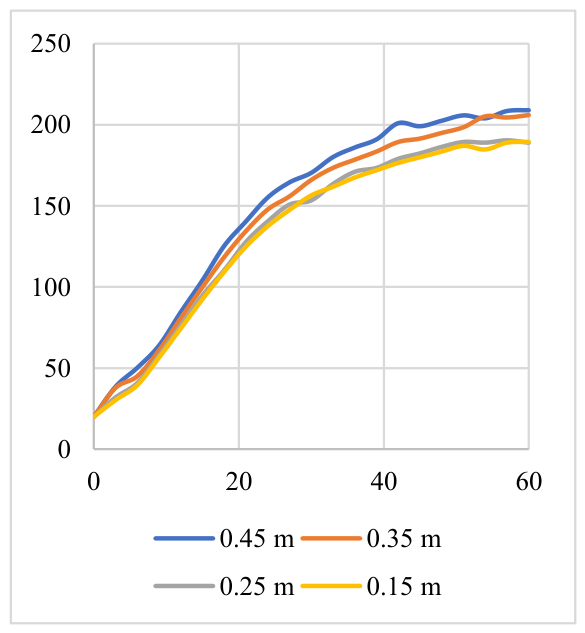
Figure 2.
Fire Risk Assessment Findings by FRAME method.
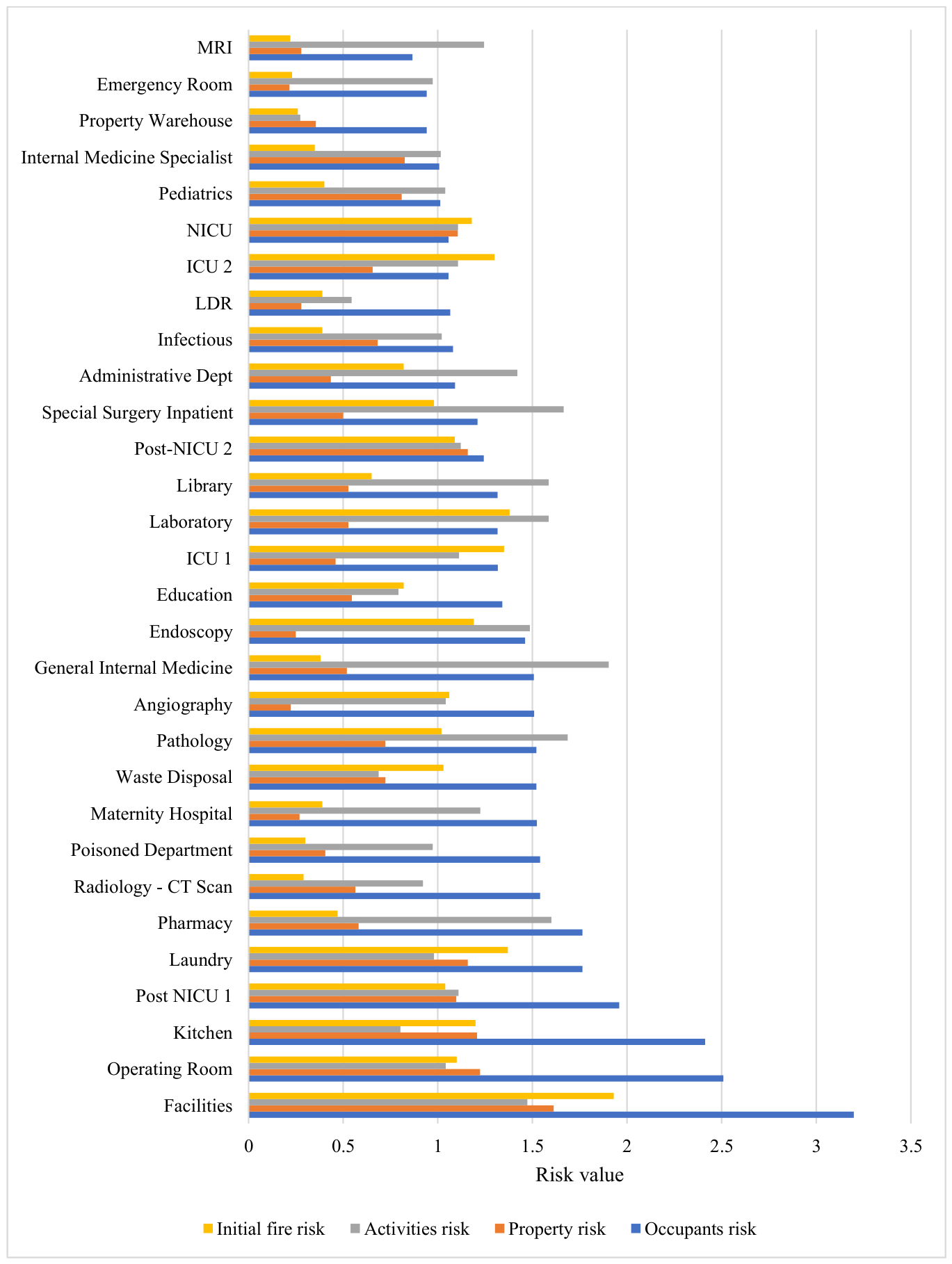
Figure 3.
BIM model of the facilities department in the studied hospital.
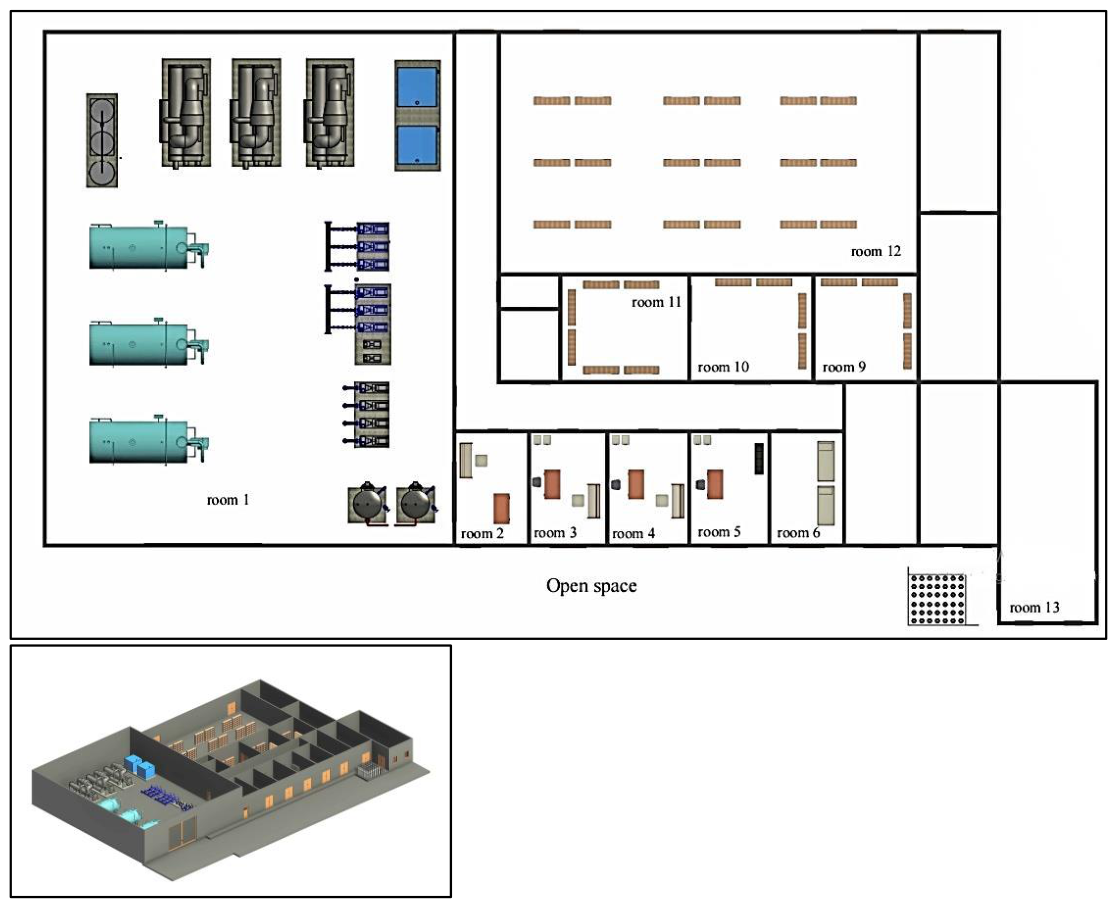
Figure 4.
Time-Temperature Variation Curves at different sensor heights (baseline scenario).
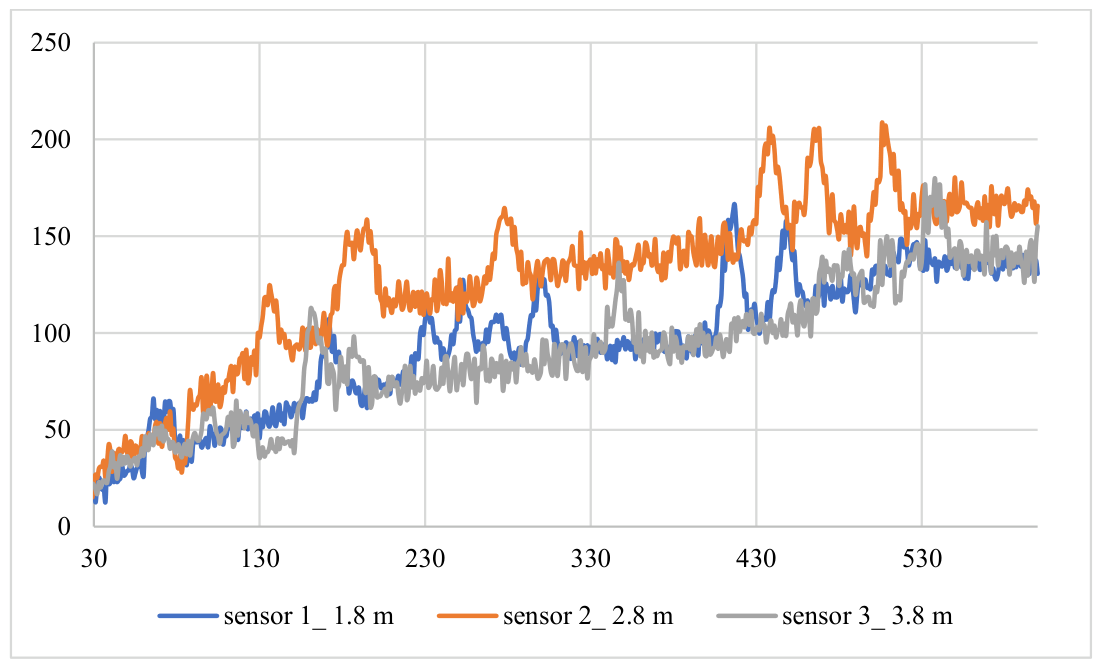
Figure 5.
2D Representation of Temperature Changes.
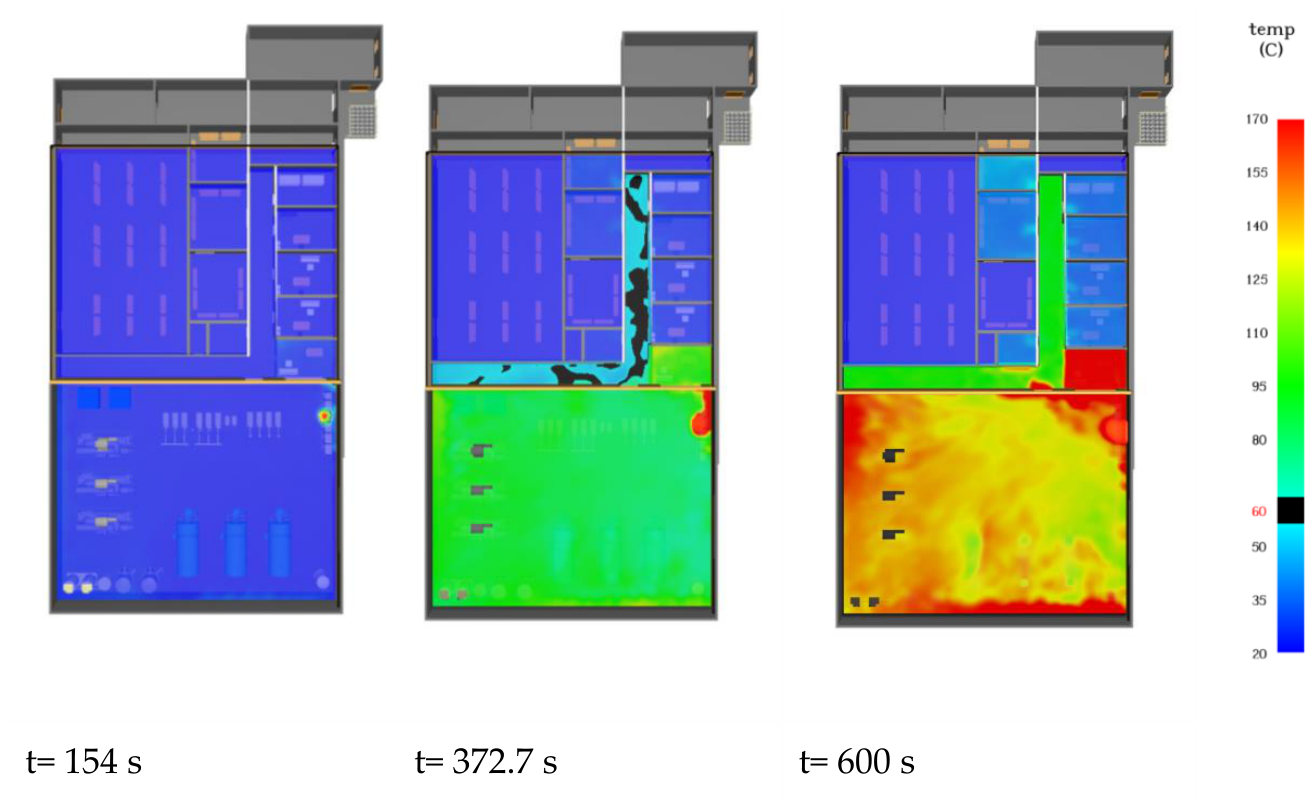
Figure 6.
Time-Dependent CO Volume Fraction at critical layer height (baseline scenario).
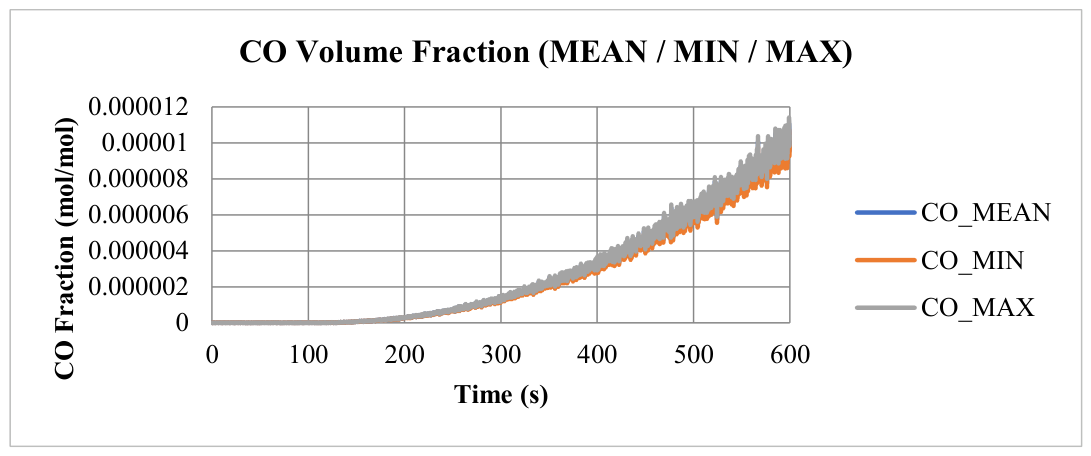
Figure 7.
Time-visibility variation curve (Baseline Scenario).
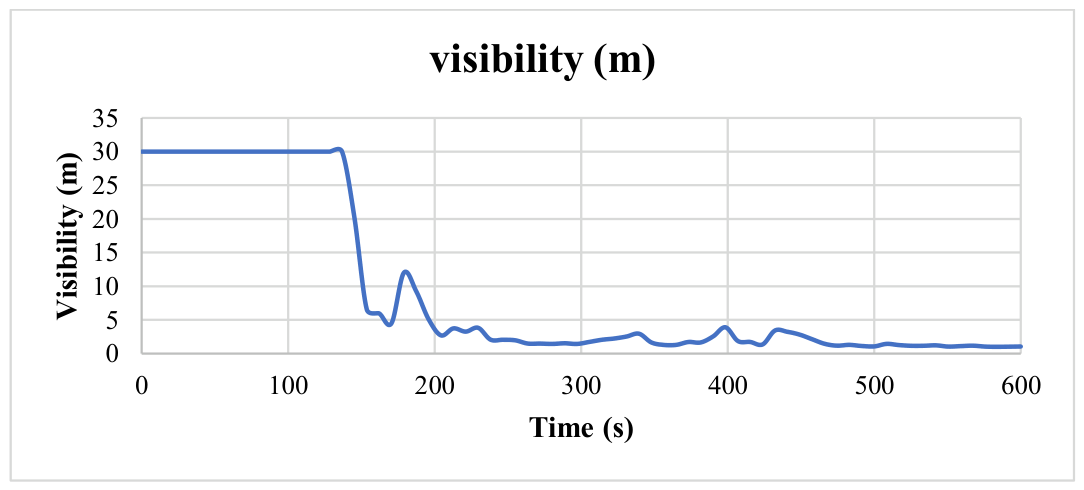
Figure 8.
Fire risk assessment results for the facilities department.
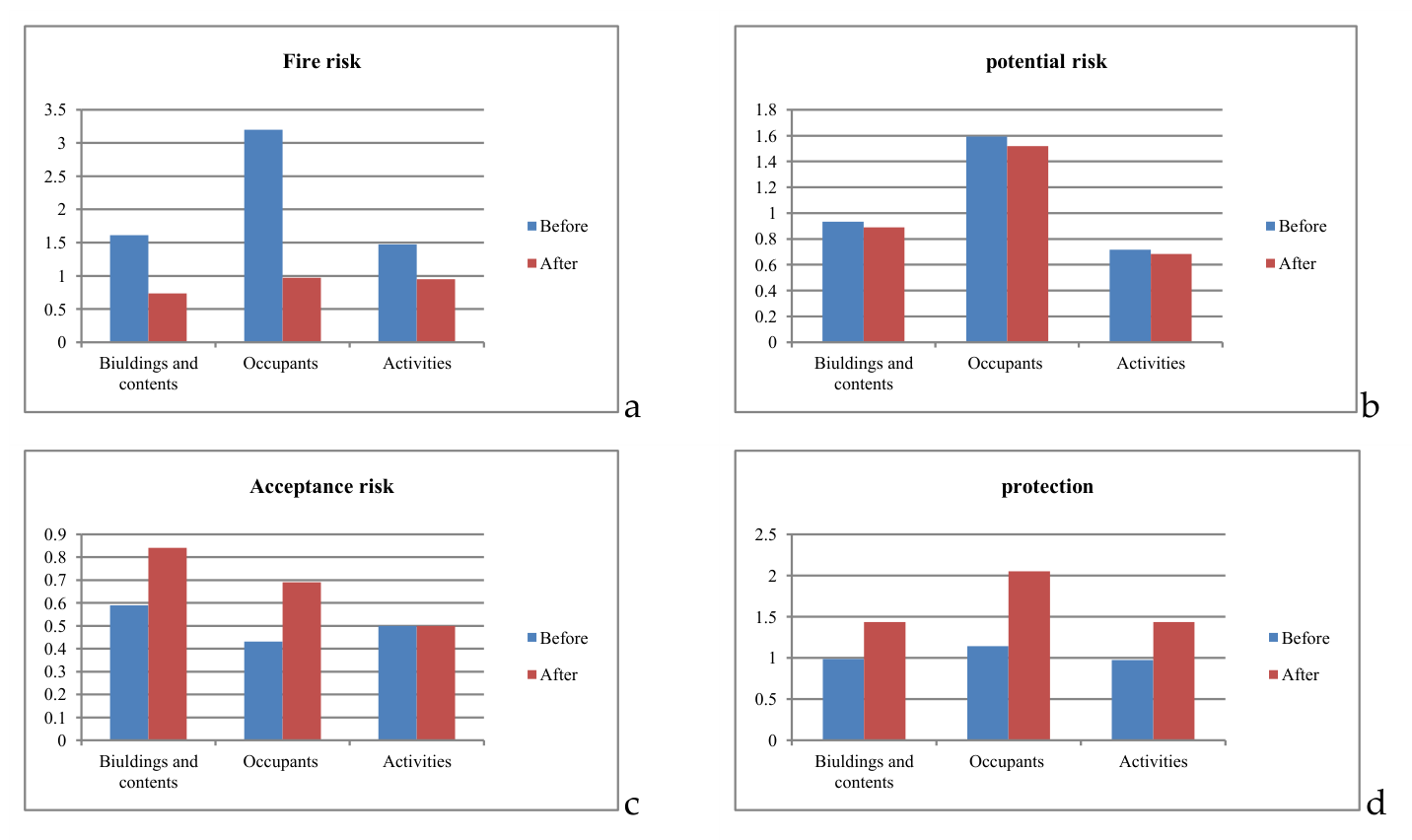
Figure 9.
Before and after evacuation simulation.
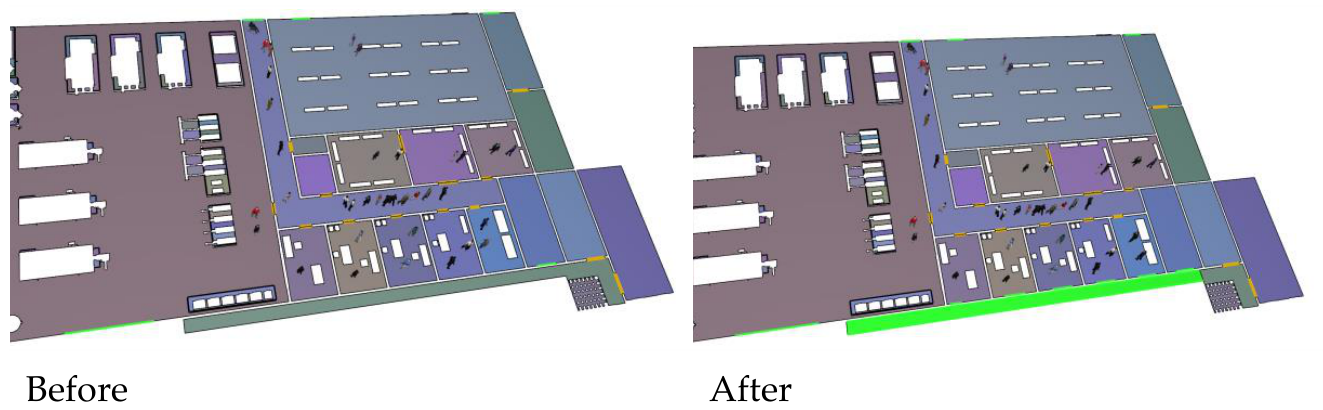

Table 1.
Fire risk calculation equations for property, occupants and activities [28].
Table 1.
Fire risk calculation equations for property, occupants and activities [28].
| Potential risk levels (R) | risk acceptance (A) | protection level (D) | |
|---|---|---|---|
| building and contents | |||
| occupants | |||
| activities |
Table 2.
Fire Characteristics and Chemical Yields [38].
Table 2.
Fire Characteristics and Chemical Yields [38].
| Fuel Source | Chemical Formula | Fire Growth Rate | Fire Load Density | Maximum HRR | Time to Max HRR |
|---|---|---|---|---|---|
| Alternative Fuel (Conventional Diesel) | Ultra-Fast (Based on 0.1878 ) | 37.6 (as Fuel Load) | 3.76 MW (or 3,765,207 W) | 141 seconds | |
| Specific HRR/Oxygen | Carbon Dioxide Yield () | Carbon Monoxide Yield () | Soot Yield () | Simulation Duration | |
| 12.9 (kJ/gr) | 2.29 | 0.004 | 0.018 | 900 seconds |
Table 3.
Occupant and Egress Parameters.
| Occupant Characteristic | Detail |
|---|---|
| Number of Occupants | 32 people |
| Occupant Type (Percentage) | Middle-aged and Young |
| Occupant Speed range | [0.97 m/s, 1.62 m/s] [39] |
| Average Occupant Height | Height: [1.63 m, 1.83 m][39] |
| Average Occupant Width | Diameter: [0.46 m, 0.61 m][39] |
| Occupant Mobility | Mobile individuals, independent of others |
| Critical Smoke Layer Height | 1.85 m (i.e., 1.85 < Hc) (calculated) |
| Toxicity Eye Height | 1.22 m (80% of the average occupant height) |
| Behavior of Occupants in Department | All individuals are physically and mentally healthy. |
Table 4.
Results of Scenario Simulation – Evacuation Parameters.
| Before | After | |
|---|---|---|
|
Completion Times for All Occupants (s): |
335.4 s Min: 164.69 Max: 336.06 Average: 259.7 StdDev: 11.3 |
61.49 s Min: 6.048 Max: 61.48 Average: 26.6 StdDev: 4.0 |
| max density | 3.158 occ/m2 (during 37-39s) | 1.893 occ/m2 (1-2s) |
Table 5.
Investigated Fire Safety Strategies to Reduce Fire Risk.
| Category | Fire Safety Strategy | Description |
|---|---|---|
| Reducing Fire Risk for Buildings and Property | Employing an Automatic Fire Suppression System | Sprinkler system with full coverage of the engine room. |
| Reducing Fire Risk for Occupants | Increasing the Number of Evacuation Routes | Installing doors in office rooms, numbered 1 through 6, in accordance with Figure 3. |
Table 6.
Fire risk assessment at before and after interventions Derived from the FRAME Method.
| Indicator | Before | Following Installation of Doors and Sprinkler |
|---|---|---|
| Fire Spread | 1.202 | 1.202 |
| Flow Rate (persons/min) at Normal Walking Speed | 38 | 125 |
| Fire Load Factor | 1.302 | 1.302 |
| Access Factor | 1.100 | 1.050 |
| Evacuation Time Factor | 0.314 | 0.059 |
Disclaimer/Publisher’s Note: The statements, opinions and data contained in all publications are solely those of the individual author(s) and contributor(s) and not of MDPI and/or the editor(s). MDPI and/or the editor(s) disclaim responsibility for any injury to people or property resulting from any ideas, methods, instructions or products referred to in the content. |
© 2026 by the authors. Licensee MDPI, Basel, Switzerland. This article is an open access article distributed under the terms and conditions of the Creative Commons Attribution (CC BY) license (http://creativecommons.org/licenses/by/4.0/).
Copyright: This open access article is published under a Creative Commons CC BY 4.0 license, which permit the free download, distribution, and reuse, provided that the author and preprint are cited in any reuse.


