

Submitted:
23 June 2026
Posted:
24 June 2026
You are already at the latest version
Abstract
Background/Objectives: Alopecia areata (AA) is a widespread autoimmune condition causing non-scarring hair loss, significantly affecting the quality of life. Despite its prevalence, data on diagnostic and treatment efficacy and the quality of patients’ care in Poland remain unstudied. The aim of this study was to assess the current clinical approaches to the diagnosis and management of alopecia areata by dermatologists in Poland and to highlight the challenges encountered by Polish patients.
Methods: A cross-sectional study was conducted regarding dermatologists and AA patients in Po-land. The data were gathered from distinct proprietary surveys: an original questionnaire for doctors, and DLQI, CDLQI, AAPPO, WPAI+CIQ:AS, and SF-36 questionnaires for patients.
Results: The study included 100 dermatologists and 252 pa-tients from Poland. The study revealed that the care provided to patients with alopecia areata is inadequate and lacks a comprehensive approach, despite the negative disease impact on patients’ quality of life. A number of physicians do not follow the diagnostic and treatment guidelines. Despite the registration of next-generation treatments like Janus kinase inhibitors, access to these medications remained limited until recently.
Conclusions: Alopecia areata in Poland poses significant diagnostic, therapeutic, and psychosocial challenges. While clinical practice largely aligns with international recommendations, notable gaps remain in the use of validated severity tools, psychosocial assessment, and access to advanced therapies. The recent reimbursement of ritlecitinib represents a breakthrough, bringing Polish care in line with global stand-ards. However, optimal management requires not only pharmacological advances but also interdisciplinary strategies integrating psychological support, patient advocacy, and public education to reduce stigma and improve overall quality of life for affected individuals.
Keywords:
alopecia areata
; autoimmune diseases
; DLQI
; JAK inhibitors
; ritlecitinib
1. Introduction
Alopecia areata (AA) is a common autoimmune disorder characterized by non-scarring hair loss, affecting approximately 2% of the general population [1,2]. AA exhibits a wide range of clinical manifestations, from small, well-defined areas of hair loss to complete absence of hair on the scalp and body. The condition affects individuals of all ages, genders, and ethnic backgrounds, often leading to frustration due to its unpredictable course, with frequent deteriorations and remissions [3]. Recent discoveries have shed light on the multifactorial etiopathogenesis of AA, encompassing aspects such as genetics, immunology, oxidative stress, the microbiome, allergies, microbiota, epigenetics, and other contributing factors [1,4,5,6,7,8]. Literature reviews indicate that the lifetime risk of developing AA ranges from 0.7% to 3.8% [9]. Although these findings are supported by the literature, there is a lack of epidemiological and demographic data specific to Poland.
According to a 2020 expert consensus, increased risk factors for AA include a family history of the condition and a personal history of other autoimmune disorders such as autoimmune thyroiditis or vitiligo [10,11]. Moreover, numerous studies have reported a notable comorbidity between AA and mental disorders, pointing to the significant roles of stress and psychological factors in the onset and exacerbation of the condition. However, further evidence is required to elucidate the correlations between the immune response, stress, and the physiological factors observed in AA patients [8].
The adverse impact of the disease on patients’ quality of life is well-documented, though data on its effect on various life aspects within the Polish patient population remain scarce. The low public awareness and stigma associated with sudden hair loss may contribute to psychological and psychiatric complications. AA frequently causes considerable psychological distress and negatively affects the quality of life, correlating with increased risks of depression, anxiety, and disturbances in emotional and social functioning. Research on mortality and causes of death in AA patients has shown a significantly higher risk of self-harm and psychiatric conditions compared to control groups [11,12]. Therefore, an early diagnosis, as well as the proper patient care is vital in therapeutic practices.
One of the initial steps emphasized by the team of specialists is the proper assessment of the patient. The diagnosis of alopecia areata can be established on the basis of clinical examination and trichoscopy. The most well-known trichoscopic feature of alopecia areata are exclamation mark hairs which are short hair shafts with a thick and dark distal end. Other trichoscopic markers of alopecia areata activity are black dots, triangular hairs, broken hairs, tapered hairs, and Pohl-Pincus constrictions [11]. One of the most common trichoscopic features of alopecia areata are yellow dots, however they are not pathognomonic for this condition. The trichogram in the diagnosis of alopecia areata has no diagnostic significance. Scalp biopsy and histological examination are recommended in cases of diagnostic doubt [13,14,15,16,17].
Treatment decisions are guided by the severity of the condition, as measured by the Severity of Alopecia Tool (SALT) or the Alopecia Areata Scale (AAS). For mild cases (SALT <20), ultra-high potency topical glucocorticoids and intralesional triamcinolone acetonide are the standard treatments, however in many cases they do not provide the required therapeutic effects. In cases of moderate to severe (SALT ≥20) alopecia areata, systemic therapy is generally necessary. Currently, the only medications specifically approved for individuals aged 12 and older by the European Medicines Agency (EMA) and the United States are baricitinib and ritlecitinib (JAK 3/TEC inhibitor), which represent a therapeutic breakthrough. Other systemic drugs that may be used off-label for this indication include glucocorticosteroids, cyclosporine, methotrexate, and azathioprine [18,19,20].
Long-term maintenance therapy is of considerable importance in managing alopecia areata. Management demands a multidisciplinary approach and increasing public awareness, which would help improve access to modern and effective treatments. In Poland, the management of alopecia areata has long been hindered by the absence of a dedicated drug program, focusing on off-label treatment [20]. This changed on July 1, 2025, with the introduction of program B.173, which offers free ritlecitinib treatment for patients from 12 years of age with severe disease [21].
Given the scarcity of epidemiological data, the substantial psychosocial burden of alopecia areata, and the recent introduction of a dedicated drug program in Poland, a comprehensive evaluation of current clinical practice is warranted. Importantly, therapeutic strategies have historically relied largely on off-label treatments, and the implementation of targeted therapies represents an early stage of systemic change. Therefore, a real-world assessment of both physician practices and patient experiences is essential to identify existing gaps and support further improvements in the standard of care.
Our study aims to assess the current clinical approaches to the diagnosis and management of alopecia areata by dermatologists in Poland and to highlight the challenges encountered by Polish patients within the context of global standards. The present study was conducted immediately prior to and during the early phase of implementation of the national drug program introducing ritlecitinib. The findings are expected to contribute to better understanding of AA management and enhance the future care of individuals with AA, both in Poland and on a global scale.
2. Materials and Methods
A cross-sectional study was conducted among specialists and physicians specializing in dermatology and venereology in Poland, and among Polish patients (both adolescent and pediatric populations) suffering from alopecia areata by using distinct proprietary surveys. Doctors practicing in both hospitals and private clinics were enrolled in the study, using an original questionnaire. Patients belonging to the Polish Alopecia Association and patients from the database of the Dermoklinika Medical Centre in Lodz were surveyed using the following questionnaires: the Dermatology Life Quality Index (DLQI), the Children’s Dermatology Life Quality Index (CDLQI), the Alopecia Areata Patient Priority Outcomes (AAPPO), the Work Productivity and Activity Impairment Questionnaire and Classroom Impairment Questions: Allergy Specific (WPAI+CIQ) and the 36-Item Short Form Survey (SF-36). The DLQI and the CDLQI were employed to gauge the quality of life in adults and pediatric patients with chronic dermatological conditions, respectively. The AAPPO questionnaire, recently devised, was utilized to assess hair loss, emotional distress, and activity limitations associated with alopecia areata. The WPAI+CIQ provided insights into the deterioration in occupational and daily activity performance, including educational disruptions. The SF-36 was used to evaluate the overall quality of life across specific patient demographics.
Categorical data were presented as the total number of cases and as percentages of the total number of patients studied
3. Results
The study encompassed 252 patients and 100 physicians.
3.1. Dermatological Practices and Treatment Patterns
A survey involving 100 dermatology and venereology specialists (80 women and 20 men) from various medical settings revealed diverse diagnostic and therapeutic approaches to alopecia areata. About 33% of the physicians had over 20 years of experience. Diagnostic practices varied: 39% diagnosed based solely on clinical examination and history, while others used additional diagnostic tools, such as dermoscopy (78%), but only a few ordered biopsies (5%) or a trichogram (13%). Barely 36% of doctors utilized scales to assess disease severity, predominantly the SALT scale (78%), and 35% used tools to evaluate the psychosocial impact, with the DLQI being the most employed (92%) (Figure 1 A, B, C, D).
The most frequently ordered diagnostic tests by physicians included complete blood count, thyroid function tests and autoantibodies, antinuclear antibodies, as well as assessments of liver and kidney function (Figure 2).
In patients with limited alopecia areata, the therapeutic strategies proved highly consistent across age groups. Among individuals ≥12 years, topical glucocorticosteroids predominated as first-line therapy, applied in 61.22% (n=60) of cases, a proportion almost identical to that observed in children under 12 years (62.89%, n=61). Combination regimens with a contact sensitizer or irritant plus a topical steroid represented the second most frequent choice (16.33%, n=16 in older patients; 13.40%, n=13 in younger). Less commonly, third-line approaches were introduced, accounting for 9.19% (n=9) and 6.19% (n=6), respectively.
When analyzing beard alopecia areata, topical steroids again remained the mainstay (57.14%, n=56), while topical calcineurin inhibitors were applied in 17.35% (n=17). A combined regimen of steroids with calcineurin inhibitors was reported in 12.24% (n=12).
Management of eyebrow involvement revealed subtle age-related differences. In those ≥12 years, the majority received topical steroids (51.02%, n=50), followed by calcineurin inhibitors (25.51%, n=25) and combination therapy (8.16%, n=8). The pediatric group displayed a similar hierarchy, though with a slightly higher reliance on calcineurin inhibitors (35.35%, n=35) and slightly lower use of steroids (45.45%, n=45); combinations were used in 9.09% (n=9).
For scalp alopecia areata in patients ≥12 years, the dominant approach remained topical steroids (47.92%, n=46), supplemented in some cases with focal steroid injections (16.67%, n=16) or contact sensitizer plus steroid therapy (9.38%, n=9). In contrast, younger patients were more frequently managed with topical monotherapy (56.70%, n=55) or combination treatment (12.37%, n=12). Notably, a subset of children (7.22%, n=7) did not progress to any third-line intervention, underscoring a more conservative approach in this age group.
In severe alopecia areata, the treatment spectrum broadened to systemic options. Among patients <12 years, topical steroids still accounted for the largest share (34.38%, n=33), yet systemic glucocorticosteroids gained prominence (18.75%, n=18) alongside cyclosporine combined with steroids (11.46%, n=11). By contrast, in older patients, systemic glucocorticosteroids emerged as the leading choice (29.47%, n=28), followed by topical steroids (18.85%, n=18) and cyclosporine monotherapy (13.68%, n=13).
In cases of severe generalized alopecia areata, systemic immunosuppression became dominant. Among children, systemic glucocorticosteroids were prescribed in 33.68% (n=32), cyclosporine in 16.84% (n=16), while the third-line involved either cyclosporine combined with steroids or topical steroids (12.63%, n=12 each). For adults, systemic glucocorticosteroids were even more prevalent (45.16%, n=42), followed by cyclosporine (19.35%, n=18) and topical agents (7.53%, n=7).
The application of Janus kinase (JAK) inhibitors was rare, reflecting historical limitations in availability and reimbursement in Poland. They were employed in only 1.05% (n=1) of severe cases among patients ≥12 years and in a comparable proportion in children under 12 (1.04%, n=1). In severe generalized alopecia areata, their use reached 3.23% (n=3) in the older cohort. These low rates highlight the restricted access to targeted therapies before the introduction of the national drug program. All therapeutic approaches to specific AA cases reported by the physicians are presented in Figure A1 in the Appendix A section of the article. Comparison of reported therapeutic practices with clinical guideline recommendations across different alopecia areata scenarios is analyzed in Table A1 in the Appendix A section of the article.
3.2. Quality of Life: DLQI/CDLQI
The DLQI results demonstrated a profound impact of alopecia areata on patients’ quality of life. A total of 32% of respondents reported very severe impairment, 21% severe impairment, and 15% moderate impairment, with a mean DLQI score of 12.33 (Figure 3). Emotional and psychological domains were markedly affected: 44.5% reported work-related difficulties due to depression or anxiety. Cutaneous symptoms such as soreness, burning, or tingling were experienced by 69% of respondents, with severity rated as moderate (41%), severe (19%), or very severe (9%). Moreover, 72% indicated that their condition interfered with daily functioning, including clothing choices and social activities. Participation in sports was limited for 62% of patients, while 85% reported embarrassment related to their appearance; 57% admitted that alopecia hindered their ability to perform everyday tasks (Figure 4).
In the pediatric subgroup, the mean CDLQI score was 14.48 (Figure 3). Among 89 respondents, 87% reported feelings of shame, shyness, sadness, or anxiety due to their condition. Social interactions were significantly affected, with 44% experiencing difficulties with friends. Additionally, 35% reported reluctance to leave the house or engage in hobbies, and 75% stated they were forced to alter clothing choices daily. Sports participation was limited in 42% of children, and 24% reported school attendance problems in the week preceding the study, including 1% who were unable to attend at all. Leisure time was also compromised, with 34% indicating reduced enjoyment of vacations and free time. Peer relationships were often negatively impacted, as 42% experienced teasing, bullying, or social avoidance, while 29% reported disturbed sleep due to skin problems (Figure 5).
3.3. AAPPO
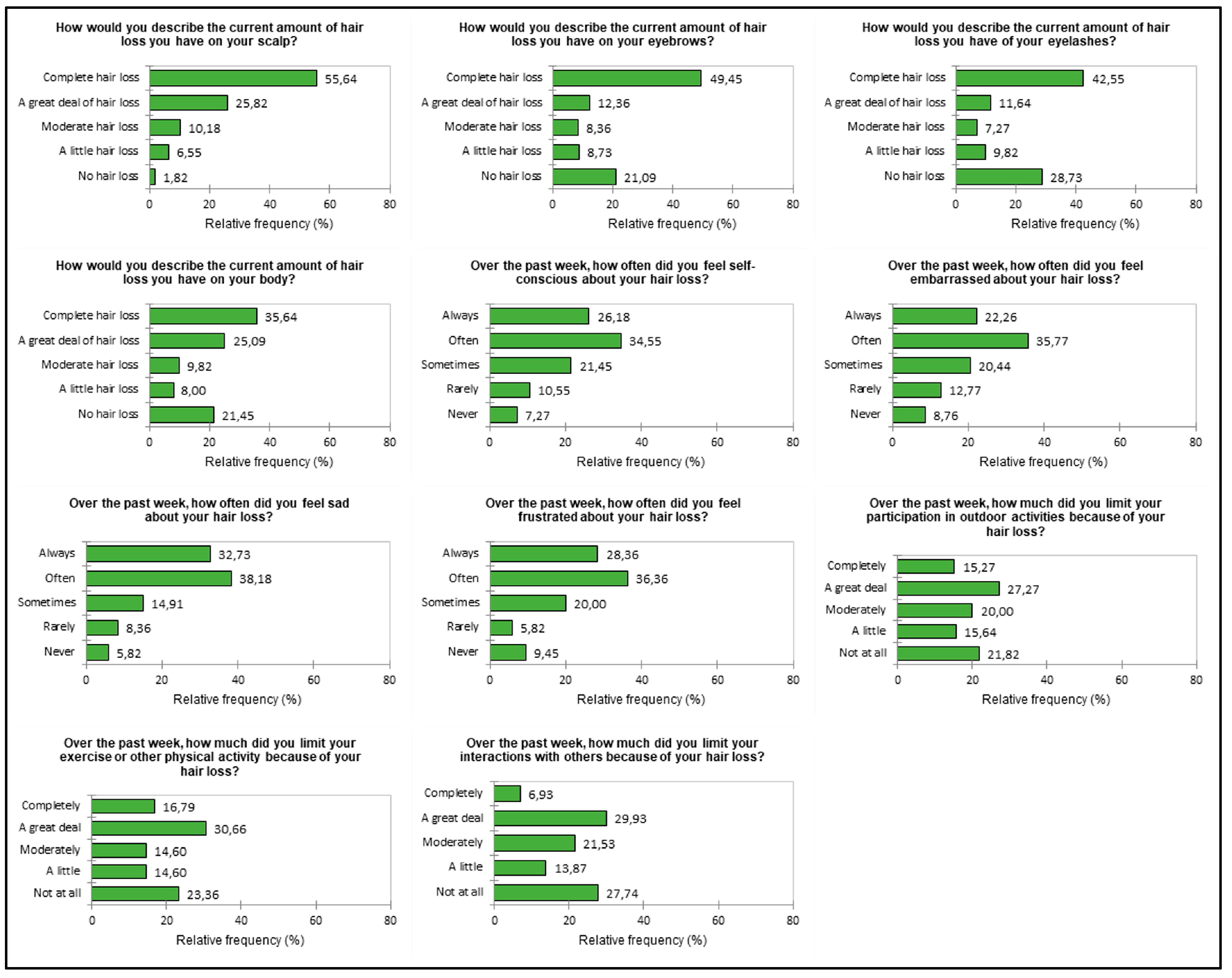
According to the AAPPO questionnaire, extensive hair loss was frequently reported: 55.64% (n=153) experienced complete scalp involvement, 49.45% (n=136) eyebrow loss, 42.55% (n=117) eyelash loss, and 35.64% (n=98) total body hair loss. Severe alopecia was reported in 25.82% (n=71) of patients for the scalp, 12.36% (n=34) for eyebrows, 11.64% (n=32) for eyelashes, and 25.09% (n=69) for the whole body. Moderate hair loss was noted in 10.18% (n=28) for the scalp, 8.36% (n=23) for eyebrows, 7.27% (n=20) for eyelashes, and 9.82% (n=27) for body hair. Item-by-item results of the AAPPO questionnaire are summarized in Figure 6.
Psychological distress was substantial. In the preceding week, 34.55% (n=95) of patients reported often feeling self-conscious about hair loss, while 26.18% (n=72) reported experiencing this constantly. Sadness was common, with 38.18% (n=105) often and 32.73% (n=90) always feeling sad due to the disease. Frustration was reported often by 36.36% (n=100) and always by 28.36% (n=78). Embarrassment was equally prominent: 35.77% (n=98) often and 22.26% (n=61) always felt ashamed of their condition.
The disease imposed considerable restrictions on daily life. Outdoor activities were markedly reduced in 27.27% (n=70) of respondents and completely avoided by 15.27% (n=42). Exercise and physical activities were limited in 30.66% (n=84) of patients. AA substantially impaired social interactions. Nearly one-third of respondents (29.93%, n=82) reported significantly limiting social contact, while 6.93% (n=19) withdrew completely from interactions.
3.4. SF-36
Analysis of the SF-36 health-related quality of life questionnaire revealed that 40.11% of patients rated their overall health as good. However, the disease considerably restricted functioning, particularly activities requiring greater physical effort (29.95%), such as running or lifting. Emotional factors also played a role, with 21.08% reporting work-related difficulties linked to depression or anxiety, resulting in reduced work satisfaction. Almost half of the respondents (47%) indicated that physical or psychological health negatively affected social functioning with family, friends, or peers. Reported symptoms included persistent nervousness (28.38%), irritability (31.18%), depression (13.98%), and daytime fatigue (20.86%).
Overall, 57% stated that alopecia-related hair loss negatively affected their mood and reduced physical activity. Social withdrawal was reported by 35%, with respondents acknowledging significant or complete restriction of social interactions. ). See: Supplementary File S1 for details.
3.5. WPAI+CIQ
The WPAI+CIQ analysis demonstrated considerable occupational and educational impact. Among economically active respondents (57%), 34% reported being unable to work in the week preceding the survey due to alopecia areata, with an average of 11.75 work hours lost (maximum: 40 hours) due to absenteeism, tardiness, or early departure. Additionally, 8.5% were completely unable to work during that period. Among 76 student respondents, 38% reported school or class absences related to the disease in the previous week, averaging 8 hours (maximum: 30 hours).
4. Discussion
AA is recognized as a significant dermatological condition worldwide, with substantial medical, psychological, and socioeconomic consequences [22]. The most comprehensive epidemiological analysis to date, covering the period from 1990 to 2021, demonstrated that while the absolute number of AA cases has risen globally, the age-standardized incidence rate (ASIR) has remained largely stable or has slightly declined [1,2,3,4,22]. Higher ASIRs are consistently observed in high-income countries, likely reflecting both improved recognition and more systematic data collection, while the increases documented in developing regions are thought to result from greater access to healthcare and more accurate diagnostic practices. Despite these advances, country-specific data from Poland remain limited, underscoring the importance of our survey in providing novel insights into both diagnostic and therapeutic practices.
Diagnostic strategies in AA have been extensively discussed in international consensus statements, with most guidelines emphasizing the central role of clinical examination supplemented by dermoscopy [11,14,17]. Trichoscopy is now considered the standard of care in differentiating AA from other non-scarring alopecias, and validated severity assessment tools such as the SALT or the AAS are recommended for both clinical and research purposes [1,4,23]. Our findings confirm strong adherence to trichoscopy-based diagnosis in Poland, with 78% of physicians employing dermoscopy at the initial stage, which aligns well with global best practices. However, 13% of physicians still reported using trichograms, despite their limited diagnostic value, which points to the persistence of outdated methodologies. Even more concerning is the underutilization of validated severity tools, as only a minority of respondents applied scales such as SALT or AAS in routine practice. Given that therapeutic decisions and eligibility for systemic treatments are strongly dependent on objective severity measures, this diagnostic gap underscores the need for targeted educational initiatives within the Polish dermatology community.
Therapeutic approaches to AA remain highly heterogeneous worldwide. The European Dermatology Forum and North American consensus statements recommend topical corticosteroids as the first-line therapy for limited disease, with intralesional corticosteroids in adults and older children as an additional option [11,18,20]. For severe disease, systemic corticosteroids and immunosuppressants such as cyclosporine have been used, although their long-term efficacy remains limited. Our survey revealed that therapeutic choices in Poland are broadly consistent with these recommendations. In limited disease, topical corticosteroids were the predominant first-line treatment in both children (<12 years: 62.89%, n=61) and adolescents/adults (≥12 years: 61.22%, n=60). In severe AA, systemic glucocorticosteroids and cyclosporine were the most frequently used options (≥12 years: systemic GKS 45.16%, n=42; cyclosporine 19.35%, n=18), reflecting the accepted principle of escalating to systemic therapy in cases of SALT ≥20. These findings confirm that Polish physicians generally follow evidence-based practices, despite the lack of standardized national treatment guidelines.
Nevertheless, several deviations from consensus recommendations were observed. Calcineurin inhibitors were relatively frequently prescribed, particularly in eyebrow AA (25.51% in ≥12 years and 35.35% in <12 years), despite the absence of convincing evidence supporting their efficacy in AA. Similarly, contact immunotherapy was often employed as a second-line option, earlier than typically recommended in international guidelines, which usually reserve this method for refractory, extensive cases. Moreover, the use of intralesional corticosteroid injections in patients under 12 years was occasionally reported, although international consensus restricts this modality to older children and adults. These findings suggest that in Poland, as in many countries without formalized AA guidelines, clinical practice is influenced by tradition, physician preference, and the absence of standardized care pathways.
The most striking therapeutic gap identified in our study concerns the limited use of JAK inhibitors. Over the past decade, JAK inhibitors have emerged as the most promising class of targeted therapies for alopecia areata, with multiple randomized controlled trials confirming their efficacy and safety. Baricitinib has been approved by both the U.S. Food and Drug Administration (FDA) and EMA for the treatment of severe AA in adults, with pivotal phase 3 trials demonstrating clinically meaningful improvement in 38.8% of patients at week 36 [25]. Ritlecitinib, a selective JAK3/TEC inhibitor, has also recently been approved in both the United States and Europe for patients ≥12 years with severe disease, marking a major advance in adolescent care.
In contrast, access to these agents in Poland was virtually nonexistent until recently, as there was neither reimbursement nor a dedicated drug program. Our findings reflect this limitation, with only four physicians reporting the use of JAK inhibitors, primarily in an off-label setting, highlighting the structural barriers that have historically restricted access to modern therapies.
Importantly, the present study was conducted immediately prior to and during the early phase of implementation of the national drug program introducing ritlecitinib. Consequently, the results primarily represent treatment patterns based on previously available therapeutic options. A turning point occurred on July 1, 2025, with the introduction of a national program reimbursing ritlecitinib for patients aged 12 years and older, marking a significant step toward alignment with international standards of care.
Further follow-up studies are warranted to assess changes in treatment strategies, accessibility of targeted therapies, and patient outcomes following the full implementation of this program.
Beyond pharmacological treatment, AA exerts a profound psychosocial burden that is often underestimated in routine clinical practice. International studies consistently demonstrate that AA has one of the highest negative impacts on quality of life among dermatological conditions, particularly in children and adolescents, who are vulnerable to bullying, stigmatization, and impaired self-esteem [26]. Despite this, only 35% of Polish physicians in our study reported using validated tools to assess the psychosocial burden, such as DLQI, CDLQI, AAPPO, WPAI+CIQ:AS, or SF-36. Our data showed a mean CDLQI score of 14.48 in children, indicating a very large impact, compared with a mean DLQI score of 12.33 in adults. Children were disproportionately affected, with 87% reporting embarrassment or self-consciousness, and 24% experiencing school absenteeism due to AA, including 1% unable to attend school entirely. In adults, the greatest burden was occupational, with 34% reporting work interruptions, contributing to reduced economic productivity and worsening mental health. These findings echo reports from other countries, where stigma and psychosocial distress remain among the most disabling consequences of AA, reinforcing the need for routine integration of psychosocial assessment into clinical care.
Stigmatization of AA patients represents a major unmet challenge worldwide, including in Poland. Public misconceptions and lack of awareness foster feelings of isolation, with patients often perceived as having a purely cosmetic issue rather than a chronic autoimmune disease. International initiatives provide valuable models for improving this situation. In the United States, the National Alopecia Areata Foundation (NAAF) has played a critical role in advocacy, patient support, and research funding, while the American Academy of Dermatology’s “Good Skin Knowledge” program educates schoolchildren about dermatological diseases and reduces stigma. Similar programs are emerging in Europe, particularly in countries where patient organizations collaborate closely with professional societies. In Poland, however, comparable initiatives remain limited, underscoring the urgent need for greater public education, structured support, and community engagement to empower patients and reduce discrimination.
5. Conclusions
Our findings highlight the multidimensional burden of alopecia areata in Poland and the challenges in delivering optimal care. While diagnostic and therapeutic practices are broadly aligned with international consensus, important gaps persist in the use of severity assessment tools, the integration of psychosocial evaluation, and access to advanced therapies. The recent introduction of ritlecitinib marks a long-awaited milestone, finally placing Poland on par with global standards of care and offering hope to patients with severe disease. However, improving outcomes will require more than pharmacological advances. A comprehensive, interdisciplinary approach—combining evidence-based medical treatment with psychological support, educational initiatives, and patient advocacy—is essential to address the full spectrum of needs faced by individuals with alopecia areata. Only by uniting these elements can we begin to dismantle the stigma, alleviate the psychosocial burden, and provide truly holistic care for this vulnerable patient population.
Supplementary Materials
The following supporting information can be downloaded at the website of this paper posted on Preprints.org, Supplement S1. Item-by-item SF-36 questionnaire results.
Author Contributions
Conceptualization, A.L., J.N., J.H. and Ł.C.; methodology, A.L., J.H., I.B. and Ł.C.; software, A.L. and J.N.; validation, M.D., J.N. and A.L.; formal analysis, J.H., I.B., M.R. and M.D.; investigation, J.H, I.B., M.R. and M.D.; resources, A.L. and J.N.; data curation, J.H., Ł.C., I.B. and M.R..; writing—original draft preparation, J.H. and Ł.C.; writing—review and editing, I.B., M.R. and M.D.; visualization, Ł.C.; supervision, J.N. and A.L.; project administration, J.N. and A.L.; funding acquisition, J.N. and A.L.
Funding
The study was funded by the Medical University of Lodz, project no. 500/1-064-01/503-11-001. This research did not receive any specific grant from funding agencies in the public, commercial, or not-for profit sectors.
Institutional Review Board Statement
The study was conducted in accordance with the ethical principles of the Declaration of Helsinki of 1964 and its later amendments. The study was approved by The Bioethics Committee at the Regional Medical Chamber in Lodz, Poland (ref. no. K.B. – 21/2023).
Informed: Consent Statement All participants (dermatologists and patients, or their legal guardians in the case of minors) provided informed consent to participate in the study prior to completing the questionnaires. Full anonymity was ensured throughout the data collection process.
Data Availability Statement
The datasets generated during and/or analyzed during the current study are available from the corresponding author on reasonable request. The data are fully anonymized to ensure patient privacy.
Acknowledgments
The authors would like to thank all the patients and physicians involved in this study for their invaluable contributions. Their time and willingness to share their experiences were essential to the completion of this research. Special thanks are extended to the Polish Alopecia Association for its support in the data collection process.
Conflicts of Interest
The authors declare that they have no conflicts of interest to disclose.
Abbreviations
The following abbreviations are used in this manuscript:
| AA | Alopecia Areata |
| SALT | Severity of Alopecia Tool |
| AAS | Alopecia Areata Scale |
| EMA | European Medicines Agency |
| DLQI | Dermatology Life Quality Index |
| CDLQI | Children’s Dermatology Life Quality Index |
| AAPPO | Alopecia Areata Patient Priority Outcomes |
| WPAI+CIQ |
Work Productivity and Activity Impairment Questionnaire and Classroom Impairment Questions |
| SF-36 | 36-Item Short Form Survey |
| JAK | Janus Kinase |
| ASIR | age-standardized incidence rate |
| FDA | U.S. Food and Drug Administration |
| NAAF | National Alopecia Areata Foundation |
Appendix A
Figure A1.
Therapeutic approaches among physicians to specific AA cases: (A), topical corticosteroids; (B), topical calcineurin inhibitors; (C), intralesional steroid injections; (D), combination therapy: a topical corticosteroid and a topical calcineurin inhibitor; (E), contact sensitizers (ex. DPCP, SADBE); (F), contact irritants (ex. anthralin, dithranol); (G), combination therapy: a contact sensitizer and an irritant; (H), combination therapy: a contact sensitizer or an irritant and a topical corticosteroid; (I), systemic cyclosporine; (J), systemic corticosteroids; (K), combination therapy: systemic cyclosporine and systemic corticosteroids; (L), systemic JAK inhibitors; (M), “I don’t use any treatment”; (N), other; (O), systemic methotrexate; (P), phototherapy.
Figure A1.
Therapeutic approaches among physicians to specific AA cases: (A), topical corticosteroids; (B), topical calcineurin inhibitors; (C), intralesional steroid injections; (D), combination therapy: a topical corticosteroid and a topical calcineurin inhibitor; (E), contact sensitizers (ex. DPCP, SADBE); (F), contact irritants (ex. anthralin, dithranol); (G), combination therapy: a contact sensitizer and an irritant; (H), combination therapy: a contact sensitizer or an irritant and a topical corticosteroid; (I), systemic cyclosporine; (J), systemic corticosteroids; (K), combination therapy: systemic cyclosporine and systemic corticosteroids; (L), systemic JAK inhibitors; (M), “I don’t use any treatment”; (N), other; (O), systemic methotrexate; (P), phototherapy.


Table A1.
Concordance and deviations between official guidelines and real-world treatment patterns in alopecia areata management among Polish physicians.
Table A1.
Concordance and deviations between official guidelines and real-world treatment patterns in alopecia areata management among Polish physicians.
| Clinical scenario | Guideline recommendation | Most frequent treatments in our study | Concordance / Deviation |
|---|---|---|---|
|
Limited AA (SALT ≤20, scalp) |
High-potency topical corticosteroids as first-line; intralesional triamcinolone in ≥13 yrs; contact immunotherapy optional, not first-line; calcineurin inhibitors discouraged |
≥12 yrs: topical steroids 61.22% (n=60); <12 yrs: topical steroids 62.89% (n=61); second-line: corticosteroid + contact sensitizer (16.33%, 13.40%) |
High concordance (topical steroids first-line). Earlier than recommended use of contact immunotherapy as second-line. |
| Beard AA | First-line: topical corticosteroids; calcineurin inhibitors not recommended |
Topical steroids 57.14% (n=56); calcineurin inhibitors 17.35% (n=17); combination 12.24% (n=12) |
Concordant for steroids; deviation: relatively frequent use of calcineurin inhibitors despite lack of recommendation |
| Eyebrow AA | First-line: topical corticosteroids; prostaglandin analogues optional for eyelashes; calcineurin inhibitors discouraged |
≥12 yrs: steroids 51.02% (n=50), calcineurin inhibitors 25.51% (n=25); <12 yrs: steroids 45.45% (n=45), calcineurin inhibitors 35.35% (n=35) |
Partial concordance (steroids preferred), but notable deviation: substantial use of calcineurin inhibitors |
|
Severe localized AA (≥12 yrs) |
Systemic therapy required if SALT ≥20; systemic glucocorticosteroids, cyclosporine, methotrexate; JAK inhibitors preferred where available |
Systemic GKS 29.47% (n=28); topical steroids 18.85% (n=18); cyclosporine 13.68% (n=13) |
Concordant: systemic therapy prioritized Deviation: topical steroids still used in severe cases; 2 JAK inhibitors reported |
| Severe localized AA (<12 yrs) | Systemic therapy considered; cautious use due to age; topical steroids may be continued in limited cases |
Topical steroids 34.38% (n=33); systemic GKS 18.75% (n=18); cyclosporine+GKS 11.46% (n=11) |
Mixed concordance: systemic therapy used, but topical steroids remain dominant. |
| Severe generalized AA (≥12 yrs) | First-line systemic therapy; JAK inhibitors preferred; systemic GKS and cyclosporine as alternatives |
Systemic GKS 45.16% (n=42); cyclosporine 19.35% (n=18); topical steroids 7.53% (n=7) |
Concordant: prioritizing systemic therapy Deviation: 2 JAK inhibitors reported |
| Severe generalized AA (<12 yrs) | Systemic therapy; topical steroids insufficient | Systemic GKS 33.68% (n=32); cyclosporine 16.84% (n=16); cyclosporine+GKS 12.63% (n=12); topical steroids 12.63% (n=12) |
Concordant: emphasis on systemic therapy; some persistence of topical therapy despite severity |
References
- Zhou, C.; Li, X.; Wang, C.; Zhang, J. Alopecia Areata: An Update on Etiopathogenesis, Diagnosis, and Management. Clin. Rev. Allergy Immunol. 2021, 61(3), 403–23. [Google Scholar] [CrossRef] [PubMed]
- Pratt, C.H.; King, B.A.; Messenger, A.G.; et al. Alopecia Areata. Nat. Rev. Dis. Prim. 2017, 3(1), 17011. [Google Scholar] [CrossRef] [PubMed]
- Strazzulla, L.C.; Wang, E.H.C.; Vega, L.; et al. Alopecia Areata. J. Am. Acad. Dermatol. 2018, 78(1), 1–12. [Google Scholar] [CrossRef] [PubMed]
- Minokawa, Y.; Ohyama, M.; Hirai, T.; et al. Lifestyle Factors Involved in the Pathogenesis of Alopecia Areata. Int. J. Mol. Sci. 2022, 23(3), 1038. [Google Scholar] [CrossRef] [PubMed]
- Simakou, T.; Butcher, J.P.; Reid, S.; et al. Alopecia Areata: A Multifactorial Autoimmune Condition. J. Autoimmun. 2019, 98, 74–85. [Google Scholar] [CrossRef] [PubMed]
- Rajabi, F.; Drake, L.A.; Senna, M.M.; et al. Alopecia Areata: A Review of Disease Pathogenesis. Br. J. Dermatol. 2018, 179(5), 1033–48. [Google Scholar] [CrossRef] [PubMed]
- Gilhar, A.; Keren, A.; Paus, R. Frontiers in Alopecia Areata Pathobiology Research. J. Allergy Clin. Immunol. 2019, 144(6), 1478–89. [Google Scholar] [CrossRef] [PubMed]
- Torales, J.; Rodriguez-Sasiain, J.M.; Mendez-Caballero, A.N.; et al. Alopecia Areata: A Psychodermatological Perspective. J. Cosmet. Dermatol. 2022, 21(6), 2318–23. [Google Scholar] [PubMed]
- Miteva, M.; Villasante, A. Epidemiology and Burden of Alopecia Areata: A Systematic Review. Clin. Cosmet. Investig. Dermatol. 2015, 8, 397–403. [Google Scholar] [CrossRef]
- Meah, N.; Wall, D.; York, K.; et al. The Alopecia Areata Consensus of Experts (ACE) Study: Results of an International Expert Opinion on Treatments for Alopecia Areata. J. Am. Acad. Dermatol. 2020, 83(1), 123–30. [Google Scholar] [CrossRef] [PubMed]
- Rakowska, A.; Gierut, K.; Sławińska, M.; et al. Alopecia areata. Diagnostic and therapeutic recommendations of the Polish Dermatological Society. Part 1. Diagnosis and severity assessment. Dermatol. Rev. 2023, 110(2), 89–100. [Google Scholar] [CrossRef]
- Muntyanu, A.; Gabriel, G.; Lavigne, E.; et al. The Burden of Alopecia Areata: A Scoping Review Focusing on Quality of Life, Mental Health and Work Productivity. J. Eur. Acad. Dermatol. Venereol. 2023, 37(8), 1490–520. [Google Scholar] [CrossRef]
- Lacarrubba, F.; Dall’Oglio, F.; Rita Nasca, M.; et al. Videodermatoscopy Enhances Diagnostic Capability in Some Forms of Hair Loss. Am. J. Clin. Dermatol. 2004, 5(3), 205–08. [Google Scholar] [CrossRef] [PubMed]
- Rudnicka, L.; Olszewska, M.; Rakowska, A.; et al. Atlas of Trichoscopy: Dermoscopy in Hair and Scalp Disease; Springer, 2012; pp. 47–94. [Google Scholar]
- Inamadar, A.C.; Palit, A. Light Microscopy of the Hair: A Simple Tool to «Untangle» Hair Disorders. Int. J. Trichology. 2011, 3(1), 46–56. [Google Scholar] [CrossRef]
- Rudnicka, L.; Olszewska, M.; Rakowska, A.; et al. Hair Shafts in Trichoscopy. Dermatol. Clin. 2013, 31(4), 695–708. [Google Scholar] [CrossRef] [PubMed]
- Guttikonda, A.S.; Gara, S.K.; Madavi, P.L.; et al. Evaluation of Clinical Significance of Dermoscopy in Alopecia Areata. Indian J. Dermatol. 2016, 61(6), 628–33. [Google Scholar] [CrossRef] [PubMed]
- Sibbald, C. Alopecia Areata: An Updated Review for 2023. J. Cutan. Med. Surg. 2023, 27(3), 241–59. [Google Scholar] [CrossRef] [PubMed]
- King, B.A.; Wyrwich, K.W.; Sunagawa, T.; et al. Development of the Alopecia Areata Scale for Clinical Use: Results of an Academic–Industry Collaborative Effort. J. Am. Acad. Dermatol. 2022, 86(2), 359–64. [Google Scholar] [CrossRef] [PubMed]
- Rakowska, A.; Gierut, K.; Sławińska, M.; et al. Alopecia areata. Diagnostic and therapeutic recommendations of the Polish Society of Dermatology. Part 2: Treatment. Dermatol. Rev. 2023, 110(2), 101–20. [Google Scholar] [CrossRef]
- Ministry of Health of Poland. Notice of the Minister of Health of June 17, 2025, on the list of reimbursed medicinal products, foods for special medical purposes, and medical devices effective as of July 1, 2025. Available online: https://dziennikmz.mz.gov.pl/legalact/2025/39/ (accessed on 21 June 2026).
- Darwin, E.; Hirt, P.A.; Fertig, R.; et al. Alopecia Areata: Review of Epidemiology, Clinical Features, Pathogenesis, and New Treatment Options. Int. J. Trichology. 2018, 10(2), 51–60. [Google Scholar] [CrossRef] [PubMed]
- Zhou, J.; Cao, J.; Li, F.; et al. Global Burden of Alopecia Areata and Associated Diseases: A Trend Analysis From 1990 to 2021. J. Cosmet. Dermatol. 2025, 24(3), e70076. [Google Scholar] [CrossRef] [PubMed]
- Wyrwich, K.W.; Kitchen, H.; Knight, S.; et al. The Alopecia Areata Investigator Global Assessment Scale: A Measure for Evaluating Clinically Meaningful Success in Clinical Trials. Br. J. Dermatol. 2020, 183(4), 702–09. [Google Scholar] [CrossRef] [PubMed]
- European Medicines Agency. Olumiant (baricitinib). EMA/480402/2023. 2023. Available online: https://www.ema.europa.eu/en/medicines/human/EPAR/olumiant (accessed on 11 May 2026).
- Prendke, M.; Kremer, K.; Schiele-Fisette, K.; et al. Quality of Life in Children and Adolescents with Alopecia Areata—A Systematic Review. J. Eur. Acad. Dermatol. Venereol. 2023, 37(8), 1521–34. [Google Scholar] [CrossRef]
Figure 1.
Use of disease activity scales and psychosocial assessment tools among the surveyed physicians: (A), General use of scales; (B), Specific disease activity scale usage; (C), General use of psychosocial impact assessment tools; (D), Specific psychosocial impact assessment tool usage.
Figure 1.
Use of disease activity scales and psychosocial assessment tools among the surveyed physicians: (A), General use of scales; (B), Specific disease activity scale usage; (C), General use of psychosocial impact assessment tools; (D), Specific psychosocial impact assessment tool usage.
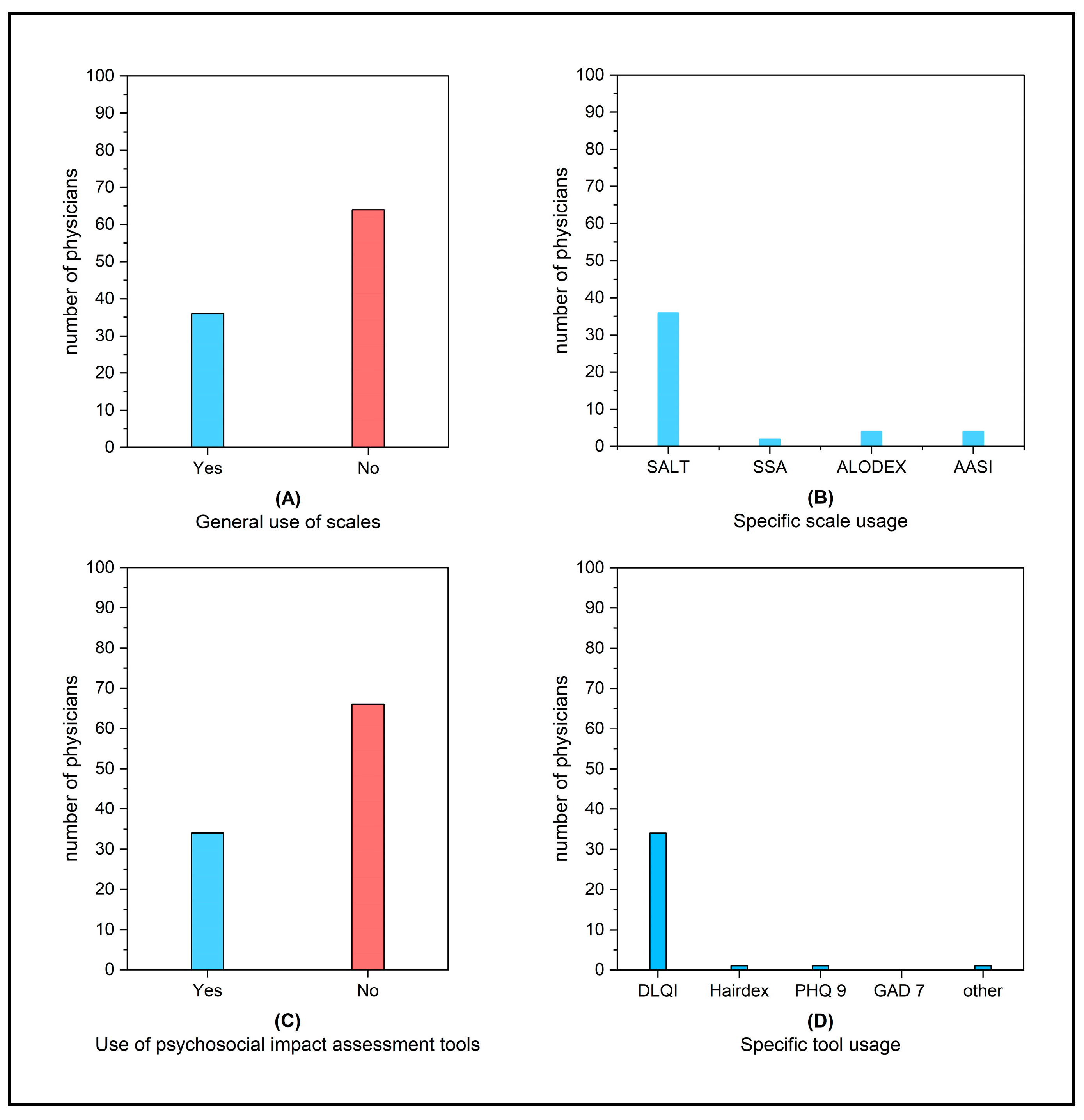
Figure 2.
Routine laboratory tests ordered by physicians.
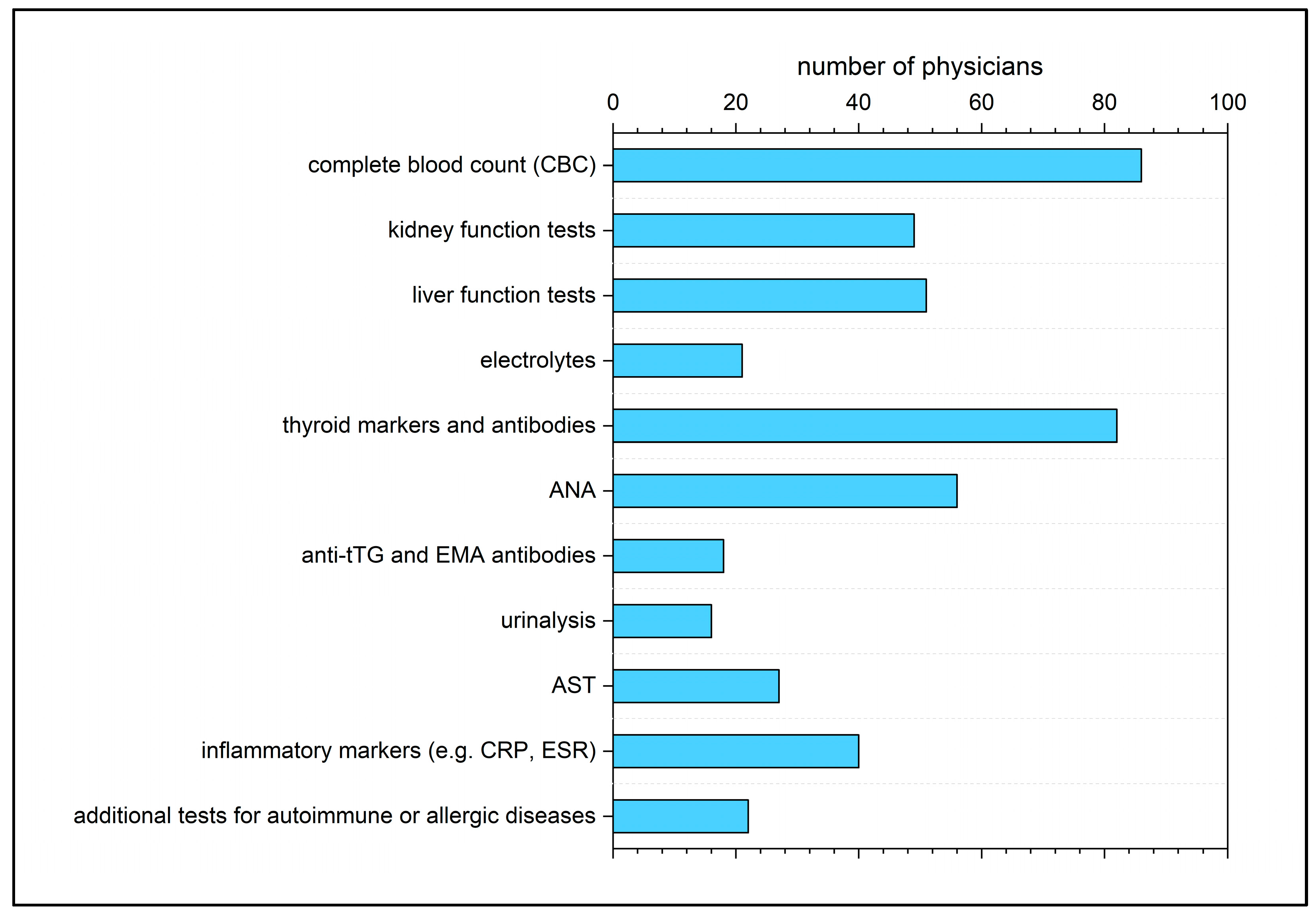
Figure 3.
Mean and median DLQI and CDLQI scores among patients with AA.
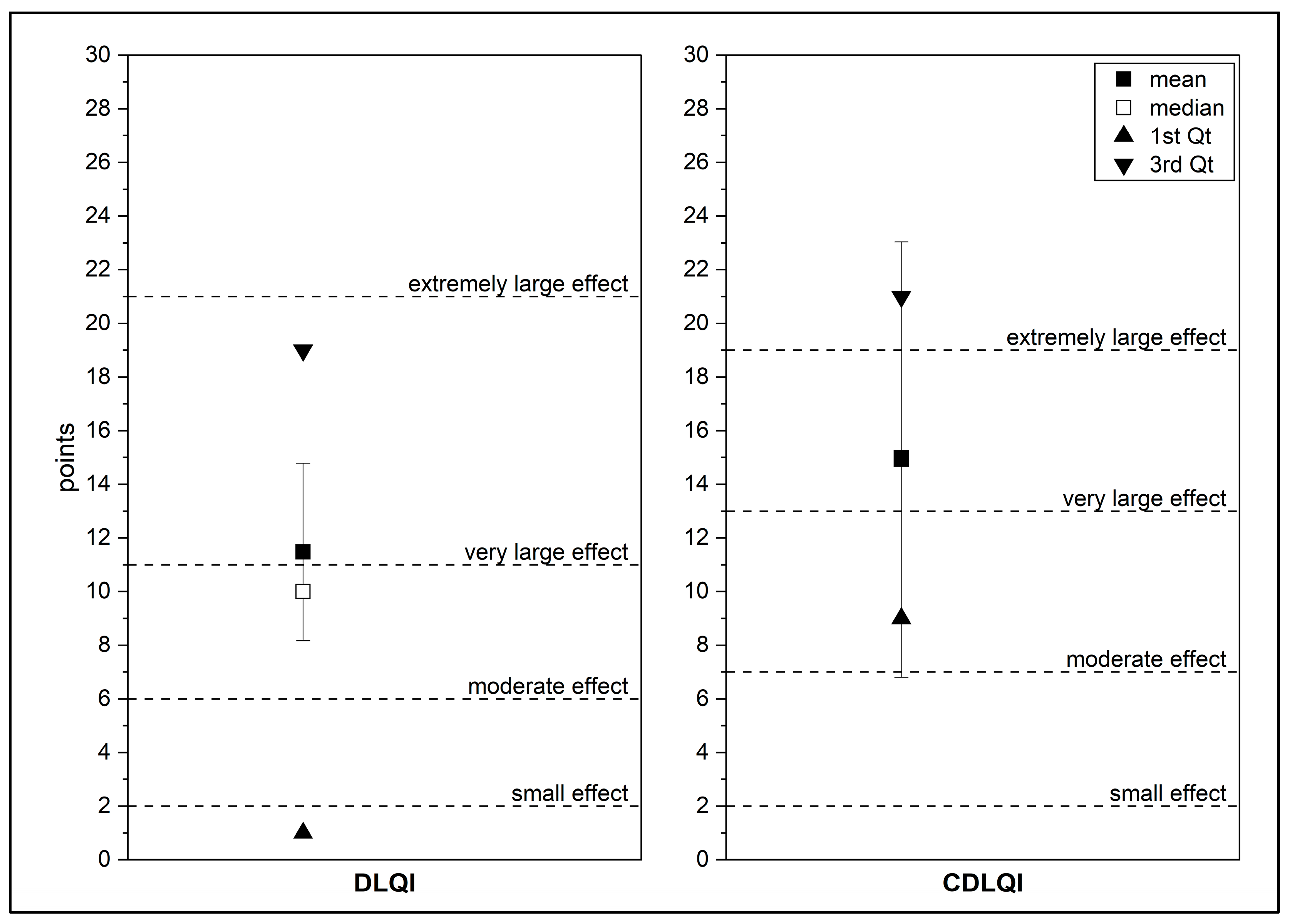
Figure 4.
Item-by-item analysis of the DLQI scores among patients with AA.
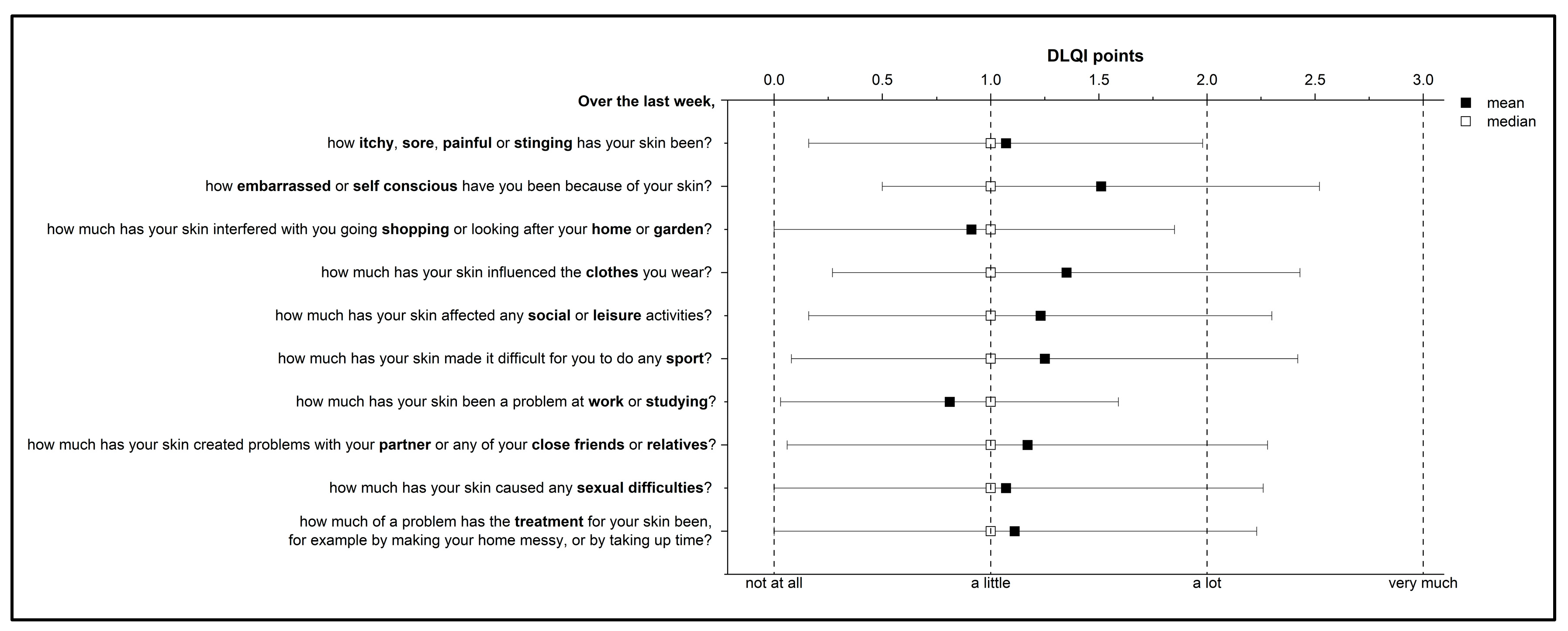
Figure 5.
Item-by-item analysis of the CDLQI scores among patients with AA.
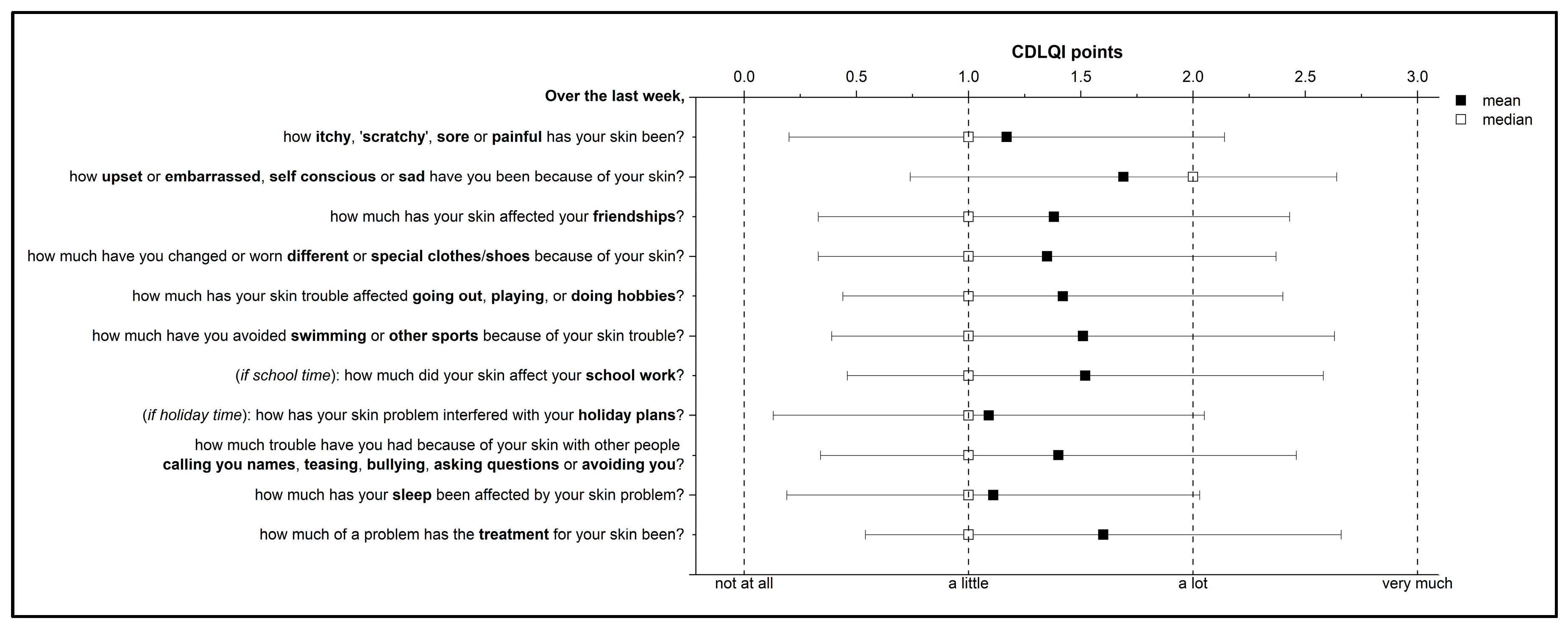
Figure 6.
Item-by-item analysis of the AAPPO questionnaire results.
Disclaimer/Publisher’s Note: The statements, opinions and data contained in all publications are solely those of the individual author(s) and contributor(s) and not of MDPI and/or the editor(s). MDPI and/or the editor(s) disclaim responsibility for any injury to people or property resulting from any ideas, methods, instructions or products referred to in the content. |
© 2026 by the authors. Licensee MDPI, Basel, Switzerland. This article is an open access article distributed under the terms and conditions of the Creative Commons Attribution (CC BY) license.
Copyright: This open access article is published under a Creative Commons CC BY 4.0 license, which permit the free download, distribution, and reuse, provided that the author and preprint are cited in any reuse.


