
Submitted:
08 June 2026
Posted:
23 June 2026
You are already at the latest version
Abstract
Desalination is an urgent response to global freshwater shortages, serving more than 300 million people by 2025. However, it is a technology that still raises several sustainability concerns. Through this study, we aim to propose a systematic review based on the PRISMA methodology, analyzing 45 studies published between 2015 and 2026. The results show that brine discharges, reaching 40-75 g/L, lead to the emergence of hypersaline plumes that cause biodiversity loss, particularly in Posidonia oceanica meadows and coral reefs. From a health perspective, residual contaminants, such as boron (1.8 mg/L) and bromate (25 µg/L), exceed WHO recommended standards, posing potential risks to public health. Economically, the levelized cost of desalinated water remains high (USD 0.5–2.0/m³) due to the high energy consumption of up to 15 kWh/m³ in thermal processes. This study proposes several mitigation strategies, including diffuser optimization, integration of renewable energies, and brine recovery through the extraction of strategic minerals. The originality of this study lies in its integrated approach, combining health, environmental, energy, and economic dimensions, all addressed together in previous reviews. These results demonstrate the need for regional governance and consistent international standards to achieve sustainable water desalination that combines water security and ecosystem conservation.
Keywords:
desalination
; public health
; brine
; carbon footprint
; SEC
; LCOW
1. Introduction
Freshwater poverty is a major global problem today, particularly in arid and semi-arid regions where demand for water resources far exceeds supply. Desalination is now considered a strategic solution to ensure water security, as is the case in the MENA (Middle East and North Africa) region, where over 50% of drinking water is supplied using desalination technology [1,2].
However, this technology still poses significant environmental, health, and economic challenges. Freshwater production through reverse osmosis or thermal processes is often accompanied by highly saline discharges, called brines, and the frequent addition of chemicals such as chlorine, biocides, and anti-scalants [3,4]. These discharges disrupt saline and thermal stratification, causing biodiversity loss, deterioration of seagrass beds such as Posidonia oceanica in the Mediterranean, and the death of sensitive benthic organisms [5,6].
On the other hand, desalinated water can contain chemical byproducts such as boron and bromate, which pose significant health risks. Desalination plant workers are also exposed to hazardous chemicals on a daily basis, increasing their risk of developing occupational diseases [7,8]. In addition to these environmental and health risks, there are other energy and economic aspects: the production of desalinated water consumes a lot of energy (3-4 kWh/m³ for reverse osmosis and approximately 15 kWh/m³ for thermal processes), resulting in significant costs and a significant carbon footprint [9,10,11].
To address these challenges, an integrated approach must be developed, combining hypersaline plume modeling, health risk assessment, and energy and economic analysis, with the goal of sustainable water desalination.
Figure 1 provides the conceptual framework for this work, illustrating the main stages of the desalination process: freshwater production (blue pathway), saltwater discharge (red pathway), and their associated impacts on the environment and public health. It provides a synthetic view of the interactions studied and constitutes the basis of the methodology developed in the subsequent stages of the study.
2. Materials and Methods
2.1. General Approach
This study adopts the principle of a systematic and critical review of international scientific literature published between 2015 and 2026 in high-impact journals. The methodological objective of the work is to reassess the potential impacts of desalination plants from a health, environmental, and economic perspective, drawing on:
• Experimental data,
• Quantitative analyses,
• Documented regional case studies.
2.2. Source Selection Criteria
Throughout this study, all sources were selected based on specific inclusion and exclusion criteria, ensuring the validity and relevance of the analyzed data (Table 1).
2.3. Literature Search Strategy and Inclusion/Exclusion Criteria
Using the PRISMA methodology, 612 articles were identified in the Scopus, Web of Science, and ScienceDirect databases (2015–2026). After screening, 45 studies were selected for the final analysis. A closer examination of eight major studies, selected for their geographical and methodological diversity, shows a convergence of results regarding the impact of brine discharges (Table 2).
This review highlights the need for minimal dilution and appropriate regulation, as well as improved diffuser systems with continuous monitoring and brine recovery.
2.4. Data Analysis Methods
2.4.1. Energy Analysis
The energy analysis aims to compare the specific energy consumption of different technologies to measure their sustainability (as shown in Figure 2). These analyses show that the wide variation in energy consumption rates is due to the type of technology used. Reverse osmosis (RO) consumes an average of 3 to 4 kWh/m³, while multi-stage distillation (MSF) consumes up to 12 kWh/m³ [20,21].
Specific energy consumption (SEC) can be calculated based on the following relationship:
Where:
• Etot = total energy consumed (kWh),
• Vwater = volume of desalinated water (m³).
To compare the energy efficiency of different desalination technologies, Table 3 presents a set of specific energy consumption (SEC) values reported in some recent studies.
To better illustrate the performance gaps, Figure 2 provides a comparison of specific energy consumption (kWh/m³) between the different desalination technologies currently in use.
Thermal technologies remain energy-intensive, which limits their sustainability in energy transitions.
2.4.2. Economic Analysis
The economic analysis is based on the Levelized Cost of Water (LCOW) study, which provides a regional comparison (Figure 3). The levelized cost of desalinated water was estimated in dollars/m³ according to the International Energy Agency [24].
Where:
• Ct = total annual costs (investment, operation, maintenance),
• Vt = volume of water produced,
• r = discount rate,
• n = lifetime of the facility.
Table 4 presents the levelized costs of desalinated water (LCOW), by main production areas.
As shown in the figure below (Figure 3), there is significant variation in the cost of desalinated water by region, for a number of reasons, reflecting significant differences in energy availability, technology used and available support policies.
2.4.3. Environmental Analysis
Based on the environmental analysis, we focus on the volumes and salinity of brine discharges.
The discharged brine volumes were calculated according to:
R = recovery rate (40–50% in RO, 25–35% in MED/MSF).
MED = Multi-Effect Distillation.
MSF = Multi-Stage Flash Distillation.
Table 5 gives the average brine discharge volumes and associated salinities for various major desalination technologies.
Figure 4 highlights that membrane processes have a better ratio between produced water and discharged brine compared to thermal processes, which is better in terms of environmental sustainability.
2.4.4. Health Analysis
The health analysis is based on the epidemiological and toxicological literature on chemical by-products and nanoparticles. A set of epidemiological and toxicological data was collected on:
• Presence of chemical by-products: chlorine, bromates, and trihalomethanes (THMs).
• Toxicity of nanoparticles from membranes.
• Effects of concentrated brine on marine organisms.
3. Results
The main objective of this study is to illustrate the potential and multidimensional impact of desalination plants in terms of public health, the environment, and the economy.
3.1. Discharge Volumes and Salinities
• Desalination plant output varies on average by 1.5 liters of saline solution for every liter of freshwater [22,27].
• In the MENA region, discharges could exceed 55 Mm³/day, or about half of the total global discharge [22].
3.2. Plume Dilution and Extension
• According to hydrodynamic models (CORMIX, Delft3D, MIKE 21), the minimum acceptable dilution ranges from 20:1 to 50:1, depending on local hydrodynamics [12].
• In the Algerian Mediterranean (Ténès, Tipaza), hypersaline plumes can extend over a distance of 100 to 300 meters from the discharge point under slow current conditions (< 0.05 m/s) [3,29]. Desalination brine discharges may cause ecological disturbances in marine ecosystems exposed to high salinity conditions [29].
Figure 5 shows the dilution and extension of brine plumes as a function of distance from the discharge point. In the Algerian Mediterranean (Ténès, Tipaza), the extension of hypersaline plumes extends up to 100 and 300 meters under weak current conditions, while in the Arabian Gulf, the salinity anomaly remains above 3 g/L beyond 300 meters. In Chile, however, it drops to less than 1 g/L from the first 100 meters. On the Chilean coast, exposed to strong currents, the dilution is less than 50 meters [15]. Hypersaline brine discharges can significantly affect marine benthic diatom diversity and coastal microbial ecosystems [19].
3.3. Comparative Ecological Impacts
• The salinity of Posidonia oceanica meadows exceeds a critical threshold of > 1 g/L above ambient levels [30].
• Due to cumulative discharges into the Arabian Gulf waters, this has led to an increase in coastal salinity of 2 to 3 g/L, with a lasting impact on macrofauna [28].
3.4. Trends 2015–2026
• Overall increase: According to recent estimates, global brine production is expected to increase from 95 Mm³/day in 2015 to over 110 Mm³/day in 2025 [27,32].
Figure 6 shows the global increase in desalination-related brine discharges recorded through 2025. It highlights a continued upward trend, driven by the increased use of desalination technologies, particularly in arid and semi-arid regions [22].
3.5. Synthetic Regional Comparison
Table 6 summarizes the observed regional variations in brine discharges, taking into account volumes, salinity, dilution, and environmental impacts. The Arabian Gulf tops the list, with brine discharge rates exceeding 35 Mm³/d and salinity levels reaching 75 g/L. The 20:1 ratio remains elusive, resulting in a serious impact on benthic organisms [35].
However, the Algerian (2-3 Mm³/d) and Moroccan (1-2 Mm³/d) coasts are the least affected but still at risk, particularly for Posidonia oceanica meadows. Chile and Australia, meanwhile, record moderate discharge levels (≤1 Mm³/d), with rapid mitigation and limited impacts, highlighting the urgent need for unified international standards.
Figure 7 compares the volumes and salinity of saltwater discharges by region. The highest levels are in the Persian Gulf, with over 35 Mm³/day, followed by the Mediterranean coast of Algeria and Morocco, with around 1 to 3 Mm³/day. In contrast, Chile and Australia record low levels of brine, with rapid dilution. With global production exceeding 110 Mm³/day, this illustrates the scale of the problem.
3.6. Brine Production and Impacts on the Marine Ecosystem
The amount of brine discharged by desalination plants is 1.5 liters for every liter of freshwater produced, resulting in high salinity in the presence of high concentrations of chlorine, copper, and antiscalants [28,32].
The following formula gives the ratio of produced water to infiltrated brine:
• Qwater = volume of water produced (m³/day)
• Qbrine = volume of brine discharged (m³/day).
Table 7 shows the ratios between produced water and brine discharged for several technologies, highlighting the low efficiency of thermal processes compared to reverse osmosis.
These discharges cause local oxygen shortages, high mortality rates among marine animals, and a significant decline in biodiversity [36].
3.7. Impacts on Public Health
Halogenated disinfection by-products formed during chlorination and chloramination of desalinated water may pose significant toxicological risks [37]. Desalinated water generally meets all drinking water standards, but the presence of residual by-products can pose serious health risks if not managed properly.
• In the Gulf region, bromate (BrO₃⁻) formation during ozonation depletion has been detected at levels up to 25 µg/L, exceeding the World Health Organization's recommended limit of 10 µg/L.
• The residual boron concentration in reverse osmosis-treated water ranges from 1.5 to 2.5 mg/L, which is very high compared to the WHO maximum limit (0.5 mg/L), which can have negative effects on reproductive health [38].
• Epidemiological studies conducted in the Kingdom of Saudi Arabia and occupied Palestine have shown a significant increase in the prevalence of kidney disease, between 12 and 18%, among the population using desalinated water compared to those using groundwater [8,39].
Table 8 summarizes the main contaminants detected in desalinated water, their average concentrations and possible exceedances of WHO standards, as well as the associated health risks.
3.7.1. Evolution of Cancer Diseases Following the Proliferation of Desalination Plants
The widespread use of desalination plants has contributed to water security in arid regions, but it has also raised health concerns, particularly regarding cancer. Although no direct link has yet been established between the use of desalinated water and increased cancer cases, several studies have shown the presence of disinfection by-products (DBPs), such as bromates and nitrosamines (NDMA), which are produced following oxidative treatments of bromide-rich seawater (chlorination and ozonation) [29,40]. As in Kuwait, high bromate levels are associated with a cancer risk of up to 3.9 x 10⁻⁴, which exceeds international limits [1]. In contrast, a study conducted in the occupied territories did not show a significant increase in colorectal cancer but recommended long-term monitoring [41]. Therefore, the association of desalination and cancer risk still requires further study and monitoring. This requires improved treatment processes, strict monitoring at all stages of desalination, and the establishment of stricter standards to mitigate potential health risks [29,42].
Table 9 shows the concentrations and presence of disinfection by-products (DBPs) in several locations around the world.
In some Gulf countries, some plants exceed the maximum bromate limit set by the World Health Organization, increasing the risk of cancer. In the occupied territories, NDMA levels remain low but require strict monitoring. In Spain and Australia, concentrations remain below guideline values.
Figure 8 illustrates the formation of disinfection by-products (DBPs) in desalination plant water, including bromates, trihalomethanes (THMs), and nitrosamines (NDMA) resulting from reactions between oxidants (chlorine, ozone, chloramine) and bromide ions. Their direct discharge into the sea leads to ecosystem degradation and negatively affects biodiversity, with potential public health risks throughout the food chain.
3.7.2. Impact on the Health of Desalination Plant Workers and Technicians
Desalination plant workers and technicians are exposed to significant chemical risks (bromates, trihalomethanes, boron, acids, and bases) that can lead to respiratory diseases, cancer, skin irritation, and poisoning. Physical stress (heat, humidity, and noise >85 dB)s can also lead to dehydration, cardiovascular and musculoskeletal disorders, and hearing impairment. Close monitoring and preventive measures are therefore necessary.
Table 10 summarizes the main chemical agents present in desalination plants, their exposure routes, and their effects on worker health.
Figure 9 shows the various occupational hazards to which desalination plant workers are exposed, which are mainly due to chemical factors and poor working conditions.
The figure shows that worker exposure to chemicals (chlorine, antiscalants, boron, and bromate) and saline aerosols constitute the most significant risks, surpassing noise and heat stress.
3.8. Case Study: Numerical Modeling of Brine Dispersion — Tenes (Western Mediterranean)
3.8.1. Objectives
To enrich this review with an innovative quantitative dimension, a numerical model of the dispersion of brine discharged from a hypothetical reverse osmosis plant on the Algerian coast (Ténès) was developed. Its objectives are as follows:
- Measurement of the spatial dimension of hypersaline plumes under different hydrodynamic conditions;
- Compliance with environmental salinity thresholds by estimating the minimum dilution required;
- Development of a set of technical recommendations adapted to the Mediterranean context.
3.8.2. Simulation Methodology
The approach combines:
1. Near-field: Estimation of initial mixing using a semi-empirical model (CorJet/CORMIX).
2. Far-field: Simulation of coastal dispersion using the three-dimensional Delft3D model, integrating various elements such as tides, winds, and currents.
3. Post-processing: Development of isosalinity maps and vertical profiles to quantify the affected area (ΔS = +1 and +2 g/L).
3.8.3. Input Parameters
Table 11 presents the parameters adopted for the numerical simulation of brine dispersion.
3.8.4. Calculation of Minimum Dilution
The required dilution is given by:
Example: for Ssw=38 g/L, Sbr=76 g/L, et ΔSmax=2 g/L, we ge :
3.8.5. Simulated Scenarios
• Scenario A (medium): current 0.15 m/s.
• Scenario B (worst case): low current 0.02 m/s.
• Scenario C (high energy): current 0.30 m/s.
• Scenario D (attenuation): optimized diffuser + deep discharge.
3.8.6. Main Results
• Under average conditions, the plume (+2 g/L) extends over 150 m.
Figure 10 reveals the dispersion process of the hypersaline plume under intermediate conditions (scenario A), with iso-salinities ΔS = +1 g/L and +2 g/L at t = 24 h.
• In weak currents, the plume remains dense and confined, extending over more than 400 m, as shown by [12] through their simulations.
Figure 11 also provides a vertical section of the dense plume from scenario B, highlighting its tight confinement to the seabed and the accumulation of salinity > +2 g/L over more than 400 m.
• In strong currents, dispersion is very rapid (< 100 m).
• Optimizing the diffuser (scenario D) reduces the surface area affected by ΔS > 2 g/L by 35%.
Table 12 presents the surface area affected by increased salinity under the different simulated scenarios.
3.8.7. Discussion and Recent References
The results obtained confirm local studies conducted in Algeria and elsewhere [12,13,47]. The recommendations for the Maghreb region are part of the regional discussion for the Middle East and North Africa regarding the brine discharge process [16].
Figure 12 shows the evolution of the surface area affected by increased salinity (ΔS > 2 g/L) as a function of current velocity. A significant decrease in the surface area of the affected zone is observed when the velocity increases from 0.02 to 0.30 m/s.
4. Discussion
The results obtained highlight the importance of the multidimensional impacts of desalination, in addition to highlighting additional elements compared to previous international studies. The discussion of this study is structured around five axes: comparison with major international studies, examination of impacts on health and the environment, energy and the economy, regional case studies, and conclusion on the implications for governance and sustainability.
4.1. Comparison with Major International Studies
The results highlight significant brine discharges, ranging from 40 to 75 g/L, with hypersaline plumes reaching 100 to 300 m in the Algerian Mediterranean Sea (Amokrane et al., 2021), our study relies on local modeling (CORMIX, Delft3D) to develop tailored recommendations. The critical limits retained (+1 g/L for Posidonia oceanica, +2 g/L for benthos) are consistent with the research of [4], and show the increased vulnerability associated with weak currents and thermal stratification. This study also includes a health component, showing exceedances of the WHO limit values for bromate and boron, potentially establishing a new link between chemical discharges and public health.
4.2. Health and Environmental Impacts
4.2.1. Health Impacts
Desalinated water generally meets drinking water standards, but it contains hazardous chemicals such as boron, bromate, and trihalomethanes (THMs) [37,38].
4.2.2. Impacts on Aquatic Life
Discharges of highly saline waters laden with chemicals (chlorine, biocides, and anti-scalants) alter salt layers, posing a threat to benthic biodiversity [32,50].
Figure 13 illustrates the range of environmental impacts of brine discharges: habitat destruction, plankton/larval capture, and the spread of hypersaline and chemical clouds.
• In the Mediterranean region, this phenomenon leads to an increase in the mortality rate of Posidonia oceanica and other sensitive species [6,51,52].
• In the Red Sea, increased salinity causes rapid deterioration of coral reefs [28].
• Suction systems installed in stations result in the destruction of large quantities of plankton and fish larvae, causing an imbalance in food webs [50,52].
Our numerical simulations show that under low-current conditions (<0.05 m/s), the area affected by ΔS > 2 g/L can reach 300 m wide, while in areas with strong hydrodynamics, the dilution can be less than 50 m.
4.3. Energy and Economic Considerations
Seawater reverse osmosis (SWRO) remains the most efficient technology, with an energy consumption of 3–4 kWh/m³, compared to 10–15 kWh/m³ for thermal processes (MSF, MED) [8,10].
The levelized cost of desalinated water is relatively high, between USD 0.6 and USD 1.5 per cubic meter, which constitutes a barrier to widespread adoption of this technology, particularly in countries that rely heavily on fossil fuels to power desalination plants. However, relying on the latest technological developments and integrating renewable energies (notably photovoltaic and wind), as well as the use of new generation pressure exchangers, makes it possible to reduce the total energy consumption of the stations by around 30 to 40%, which reduces the carbon footprint and strengthens environmental and economic sustainability [52].
4.4. Regional Case Studies
The inclusion of case studies is essential to illustrate specific challenges and the solutions adopted:
• Algerian Mediterranean: adoption of multi-jet diffusers to protect Posidonia oceanica meadows.
• Arabian Gulf: major degradation of coral reefs with discharge salinity reaching 70–80 g/L; regional programs integrating nanostructured membranes and renewable energy [10,35].
• Australia: Perth SWRO plant powered by a wind farm, reducing energy consumption by 35% thanks to energy recovery [53].
• Morocco (Chtouka): solar-reverse osmosis combination producing 275,000 m³/day, reducing costs and emissions.
• Chile: Implementation of brine mining, valorizing brine by extracting lithium and magnesium [54].
4.5. Implications for Sustainability and Governance
To assess the sustainability of desalination, this study presents a comprehensive framework that combines environmental, health, and economic dimensions [54]. This report highlights the need for integrated regional governance, inspired by the European Water Framework, to standardize the management of transboundary discharges and plumes [16]. Efforts to integrate emerging technologies such as artificial intelligence and remote sensing can improve real-time monitoring and adaptive discharge management, helping to address the gaps identified by [4,22].
4.6. Novelty and Scientific Contribution
This study combines all of the following elements in its integrated approach:
• Hydrodynamic modeling using (CORMIX, Delft3D) for plume dispersion.
• Conduct health analyses based on recent epidemiological data [8].
• Economic and energy assessment (LCOW, SEC).
• Innovation prospects through brine valorization.
Unlike traditional reviews, this study provides a detailed regional view of North Africa and addresses a gap identified in the scientific literature [55].
While the results demonstrate the importance of desalination for water security, it must evolve towards sustainable models that integrate:
• Work to reduce environmental impacts through strict standards and improved technologies [51].
• Work to reduce health risks associated with chemical by-products.
• Work toward integrating renewable energy in an effort to reduce the carbon footprint.
• Work toward regional cooperation and organizational harmony.
This comprehensive approach paves the way for sustainable desalination technology, combining water security, public health, and biodiversity conservation.
4.7. Recommendations and Outlook
This study presents an integrated approach to health, environmental, economic, and energy factors, clarifying their interactions. This approach aims to guide research and policy toward sustainable desalination, based on innovation, governance, and multidisciplinary assessments of brine discharges.
1. High-resolution environmental monitoring: Numerical models must be complemented by the deployment of independent sensors for salinity, temperature, and dissolved oxygen to ensure uncertainty reduction and validate simulations in real time [12,13].
2. Remote sensing and GIS: GIS tools, combined with satellite imagery, enable continuous monitoring and mapping of hypersaline plume dynamics [15].
3. Artificial Intelligence and Predictive Modeling: Integrating machine learning and neural networks into hydrodynamic models can improve plume prediction under extreme conditions, enhancing desalination potential [56].
4. Life Cycle Assessment (LCA): Future research should use life cycle assessment to assess the overall impact of desalination, including the energy, climate, and environmental impacts of brine discharge [28].
5. Brine Valorization: Invest in research to extract brine solutions to benefit from salts, magnesium, or lithium, to convert waste into resources and reduce discharge concentrations [55].
6. A comprehensive, integrated approach: Global scientific and institutional cooperation is essential to ensure the development of common strategies and rational management of desalination impacts through shared research and databases [56].
Finally, desalination should not be viewed as a simple technical solution, but rather as a transitional technology that combines innovation, sustainability, and social justice to preserve health, biodiversity, and the economy.
5. Conclusions
The massive expansion of desalination capacity is an inevitable response to the worsening global water scarcity crisis. However, this study systematically demonstrates that this solution requires several multidimensional trade-offs in terms of biodiversity conservation, public health, sustainability, and economics. Using the PRISMA methodology to synthesize 45 studies, we reveal that brine discharges, characterized by hypersalinity (40-75 g/L) and the presence of chemical residues, pose a significant threat to diverse marine ecosystems, including sensitive benthic communities and Posidonia oceanica meadows. Regarding public health, the presence of pollutants such as boron and bromate in drinking water, whose concentrations can exceed the World Health Organization's permitted limits in many regions, poses a health risk to consumers and can even lead to cancer. Furthermore, factory workers are exposed to significant occupational and health risks. The originality of our systematic review lies in its integrated assessment framework, which simultaneously analyzes potential risks across health, environmental, energy, and economic dimensions—a comprehensive approach that is perhaps under-addressed and often fragmented in the existing literature. Furthermore, the inclusion of a regional case study using advanced hydrodynamic modeling (CORMIX, Delft3D) for the Algerian coast provides a tangible and quantitative illustration of brine dispersion dynamics. Simulation results performed on Ténès show that under low-current conditions (<0.05 m/s), a minimum initial dilution ratio of 19:1 is necessary to contain the increase in salinity below the critical threshold of +2 g/L, above which significant environmental damage is caused. This modeling process not only validates the results of other regional studies but also provides a systematic method that can be replicated in other regions to predict and mitigate impacts. The results of this study also conclusively demonstrate that the future of sustainable desalination cannot rely solely on water production using various technologies; rather, it requires a qualitative shift toward integrated governance and innovation. This includes rigorous and science-based regulation, technology-driven mitigation, and the valorization of brine as a strategic imperative.
Author Contributions
E.B. contributed to conceptualization, methodology, formal analysis, in-vestigation, visualization, and writing–original draft, while C.R. was responsible for supervision, project administration, validation, and writing–review & editing. Y.B. contributed to data curation, resources, formal analysis, validation, and writing–review & editing. All authors have read and agreed to the published version of the manuscript.
Funding
This research received no external funding.
Data Availability Statement
The original contributions presented in this study are included in the article. Further inquiries can be directed to the corresponding author(s).
Conflicts of Interest
The authors declare no conflicts of interest.
References
- Khanzada, N.K.; Al-Juboori, R.A.; Ibrahim, Y.; Khatri, M.; Ahmed, F.; An, A.K.; Hilal, N. Desalination and the Middle East: research, practices, implications, and prospects. npj Clean. Water 2026, 9, 21. [Google Scholar] [CrossRef]
- Lanter, A.M.; Svetanoff, R.; Wars, D.M. Maximizing water recovery from reverse osmosis for agricultural brine reuse in Kenya. Agric. Water Manag. 2024, 298, 108910. [Google Scholar] [CrossRef]
- Le, T.X.H.; Xiang, Y.; Chii, S.; Chuanjing, L.; Wang, K. Tracing disinfection byproducts during shock chlorination of a seawater reverse osmosis (RO) desalination pilot and the blended and chlorinated potable water produced. Desalination 2025. [Google Scholar] [CrossRef]
- Lee, J.; Lee, S. Challenges, opportunities, and technological advances in desalination brine mining: a mini review. Adv. Ind. Eng. Chem. 2025, 1, 7. [Google Scholar] [CrossRef]
- Chowdhury, S. Evaluation and strategy for improving the quality of desalinated water. Env. Sci. Pollut. Res. 2023, 30(24), 65947–65962. [Google Scholar] [CrossRef]
- Ruso, Y.; de la Huz, R.; González, R.; Drake, P. Effects of a brine discharge over soft-bottom polychaeta assemblages from the western Mediterranean. Mar. Pollut. Bull. 2020, 150, 110728. [Google Scholar]
- Elsaid, K.; Kamil, M.; Sayed, E.T.; Abdelkareem, M.A.; Wilberforce, T.; Olabi, A.G. Environmental impact of desalination technologies: A review. Sci. Total Environ. 2020, 748, 141528. [Google Scholar] [CrossRef] [PubMed]
- Filippini, G.; Al-Obaidi, M.A.; Manenti, F.; Mujtaba, I.M. Design and economic evaluation of solar-powered hybrid multi effect and reverse osmosis system for seawater desalination. Desalination 2019, 465, 114–125. [Google Scholar] [CrossRef]
- Al Shehhi, M.; Song, H.; Scott, J.; Abdul Gafoor, F.; Marshall, J. Impact of desalination on the general circulation of the Arabian Gulf: Present and future scenarios. Mar. Pollut. Bull. 2025, 221, 118520. [Google Scholar] [CrossRef] [PubMed]
- International Energy Agency (IEA). World Energy Outlook 2021; International Energy Agency: Paris, 2021. [Google Scholar]
- Patel, D.; Ankoliya, D.; Raninga, M.; Mudgal, A.; Patel, V.; Patel, J.; Mudgal, V.; Choksi, H. Design methodology for forward osmosis system. Env. Sci. Pollut. Res. 2025, 32, 30263–30286. [Google Scholar] [CrossRef]
- Bouthiba, M.; Amitouche, M.; Moudjeber, D.; Mahmoudi, H.; Goosen, M. Simulation study of the interaction between brine discharge and catchment water of a desalination plant in Tenes, Algeria under various hydrodynamic conditions. Desalin. Water Treat. 2022, 279, 16–28. [Google Scholar] [CrossRef]
- Adem, A.; Bachari, F.; Hamdi, B.; Belkacem, Y. Assessment of coastal water characteristics near brine discharge sites by applying multivariate statistical techniques and GIS, case study from BouIsmail Bay, Algeria. Model Earth Syst. Environ. 2024, 10, 1727–1748. [Google Scholar]
- Gupta, P.; Arciniegas-Pérez, M.D.; Barrios-Piña, H.A. Impact of brine discharge from desalination plants on marine ecosystems: A review. In Curr Opin Environ Sci Health; 2026. [Google Scholar]
- Sola, I.; Carratalá, A.; Pereira-Rojas, J.; Díaz, M.J.; Rodríguez-Rojas, F. Assessment of brine discharges dispersion for sustainable management of SWRO plants on the South American Pacific coast. Mar. Pollut. Bull. 2024, 207, 116905. [Google Scholar] [CrossRef] [PubMed]
- Athwal, E.; Dimitropoulos, G.; Olawuyi, D.; Weber, A.; Al-Sehlawi, R.; Mohamed, A.; Amato, A.; Chatziefthimiou, A. International and National Environmental Laws and Ethics. In Pathways to Nature Conservation and Resilience in Hot and Arid Lands; Chatziefthimiou, A.D., Amato, A., Castro de la Mata, G., Al-Kuwari, M., Eds.; Springer: Cham, 2026. [Google Scholar]
- Ghanimeh, S.; Dalloul, M.; Al-Naimi, M.; Almomani, F.; Hassan, H.; Semerjian, L.; Tariq, A. Seawater Pollution in the Arabian Gulf: Unveiling Risks and the Urgent Need for Local Standards. Earth Syst. Environ. 2026, 10, 1649–1663. [Google Scholar]
- Blanco-Murillo, F.; Marín-Guirao, L.; Sola, I.; Rodríguez-Rojas, F.; Ruiz, J.M.; Sánchez-Lizaso, J.L.; Sáez, C.A. Desalination brine effects beyond excess salinity: Unravelling specific stress signaling and tolerance responses in the seagrass Posidonia oceanica. Chemosphere 2023, 341, 140061. [Google Scholar] [CrossRef] [PubMed]
- Grammatiki, K.; de Jonge, N.; Küpper, F.C. Environmental impact of brine from desalination plants on marine benthic diatom diversity. Mar. Env. Res. 2025. [Google Scholar] [CrossRef]
- Oraby, H.; Ezz, A.A.; Hegazy, G.E. Advances in desalination: pioneering methods and the future of water sustainability. Discov. Water 2025, 5, 88. [Google Scholar] [CrossRef]
- Almajali, T.A.H.; Ismail, F.B.; Gunnasegaran, P.A.; Kazem, H.; Al Shurafa, S.; Al-Muhsen, N. Solar-powered advances in water desalination: A comprehensive review of recent research. Appl. Sol. Energy 2025, 61, 117–145. [Google Scholar] [CrossRef]
- Jones, E.; Qadir, M.; van Vliet, M.T.H.; Smakhtin, V.; Kang, S.M. The state of desalination and brine production: A global outlook. Sci. Total Environ. 2019, 657, 1343–1356. [Google Scholar] [CrossRef] [PubMed]
- Al-Karaghouli, A.; Kazmerski, L.L. Energy consumption and water production cost of conventional and renewable-energy-powered desalination processes. Renew. Sustain Energy Rev. 2013, 24, 343–356. [Google Scholar] [CrossRef]
- Usman, M.; Sharma, D.D.; Ernst, M. Seawater and Brackish Water Desalination. In Powerfuels; Bullerdiek, N., Neuling, U., Kaltschmitt, M., Eds.; Springer: Cham, 2025. [Google Scholar]
- Maki, A.; Pedrero, F.; Hafsi, M.; Guerber, F. Desalination for agriculture development: Addressing opportunities and challenges in the context of changing climate and the global agricultural commodity market – Expert consultation workshop report; FAO: Tunis, 2025. [Google Scholar]
- El-Gendi, A.; Wu, H.; Firdaous, L.; Ullah, N.; Gong, G. Progress and exploring the impact of nanomaterials in membranes for water desalination. J. Mater. Sci. 2026, 61, 5067–5104. [Google Scholar] [CrossRef]
- Prashanth, G.K.; Akolkar, H.N.; Haghi, A.K.; Rao, S. Environmental impacts of desalination. In Seawater Desalination; Springer: Cham, 2026. [Google Scholar]
- Song, H.; Meng, H.; Guan, J. Ecological impact of desalination brine: A comparative analysis of laboratory tests and field investigations. Desalin. Water Treat. 2025. [Google Scholar] [CrossRef]
- Roberts, D.A.; Johnston, E.L.; Knott, N.A. Impacts of desalination plant discharges on the marine environment: A critical review of published studies. Water Res. 2019, 148, 256–279. [Google Scholar]
- De Serio, F.; De Padova, D.; Mossa, M. Brackish water vs. brine outfall: Impact of desalination plant discharge in vulnerable coastal sites. Desalination 2025. [Google Scholar] [CrossRef]
- Missimer, T.M.; Maliva, R.G. Environmental issues in seawater reverse osmosis desalination: Intakes and outfalls. Desalination 2018, 434, 198–215. [Google Scholar] [CrossRef]
- Urdánigo, D.A.; Cedeño Laje, J.A.; Torres Cano, J.N.; Mendez Ruiz, J.I.; Goyburo Chávez, C.S.; Jimenez Oyola, S.; Valverde Armas, P. Reverse osmosis pilot plant to produce drinking water in Chanduy community of Santa Elena province-Ecuador. In Proceedings of the 21st LACCEI International Multi-Conference for Engineering, Education and Technology (LACCEI 2023): Leadership in Education and Innovation in Engineering in the Framework of Global Transformations: Integration and Alliances for Integral Development, Buenos Aires, Argentina, 2023. [Google Scholar]
- Al-Rawajfeh, A.; Alzalabieh, E.; Al Bazedi, G.; Al-Mazaideh, G.; Shalayel, M. A review on harmful algae blooms in Arabian Gulf: causes and impacts on desalination plants. Desalin. Water Treat. 2023, 290, 46–55. [Google Scholar] [CrossRef]
- Shalby, A.; Emara, S.R.; Elmenshawy, M.R.; Fayad, S. Techno-economic assessment of brackish groundwater desalination for irrigation in arid regions: a case study from the Moghra aquifer, Egypt. Appl. Water Sci. 2026, 16, 73. [Google Scholar] [CrossRef]
- Jiang, Y.; Zang, S.; Ma, J. Occurrence, toxicity, and control of halogenated aliphatic and phenolic disinfection byproducts in the chlorinated and chloraminated desalinated water. Water Res. 2025. [Google Scholar] [CrossRef] [PubMed]
- Duan, L.; Wang, C.; Tang, S. Effects of desalinated seawater with excessive boron on reproductive health of male rats. Env. Technol. Innov. 2023, 32, 103310. [Google Scholar] [CrossRef]
- Fujioka, T.; Ngo, M.T.T.; Boivin, S.; Kawahara, K.; Takada, A.; Nakamura, Y.; Yoshikawa, H. Controlling biofouling and disinfection by-product formation during reverse osmosis treatment for seawater desalination. Desalination 2020, 496, 114735. [Google Scholar]
- Rezaei, L.; Alipour, V.; Dehghani Ghantghestani, M. Environmental health risk of brine disposal for reverse osmosis water desalination plants: A case study in Bandar Abbas city, Iran. Reg. Stud. Mar. Sci. 2024, 77, 103606. [Google Scholar] [CrossRef]
- Brugger, C.; Owen, B.N.; Abu Hamad, B.; Gastel, T.; Sittaro, F.; Rossi, R.; Probst-Hensch, N.; Winkler, M. Drinking water access and quality in the Gaza Strip prior to 7 October 2023 and implications for reconstruction. Env. Health 2025, 24, 41. [Google Scholar] [CrossRef]
- Richardson, S.D.; Plewa, M.J. To regulate or not to regulate? What to do with more toxic disinfection by-products. Env. Health Perspect. 2020, 128(11), 115001. [Google Scholar]
- Nriagu, J.; Darroudi, F.; Shomar, B. Health effects of desalinated water: Role of electrolyte disturbance in cancer development. Env. Res. 2016, 150, 191–204. [Google Scholar] [CrossRef]
- Zhou, Y.Y.; Yuan, C.J.; Wu, Z.J.; Zhang, J.; Xu, B.; Cao, J.; Lee, M.; Chen, Z.; Du, Y. Bromide and its associated brominated disinfection byproducts: occurrence, toxicity and control strategies. Front Env. Sci. Eng. 2025, 19, 8. [Google Scholar]
- Ahmed, L.; Darestani, M.; Chilcott, T. Feasibility of integrating pressure retarded osmosis technology within desalination facility in Sydney, Australia. In 4th International Conference on Water and Environmental Engineering (iCWEE 2025). Lecture Notes in Civil Engineering.; Rahman, A., Ouarda, T.B.M.J., Muhitur Rahman, M., Hagare, D., Siddiqui, Z., Eds.; Springer: Cham, 2026; Vol. 822. [Google Scholar]
- Amokrane, M.; Salmi, A. Surface spreading of the brine discharge from the seawater reverse osmosis plants: Hamma Water Desalination plant in Algeria. Desalin. Water Treat. 2021, 222, 81–91. [Google Scholar] [CrossRef]
- U.S. Environmental Protection Agency (EPA). CAS No. 15541-45-4; Toxicological Review of Bromate. U.S. EPA: Washington, DC, 2020.
- Sawyer, W.E.; Ovuru, K.F.; Etim, N.G.; El-Liethy, M.A. Water quality management: Processes influencing waterborne diseases and sustainable solutions. In Innovative Approaches in Environmental Health Management; Chibueze Izah, S., Chidozie Ogwu, M., Eds.; Springer: Cham, 2025. [Google Scholar]
- Jalili, A.; Kolliopoulos, G. A review of fundamentals, challenges, prospects, and emerging trends in hydrate-based desalination. npj Clean. Water 2025, 8, 52. [Google Scholar] [CrossRef] [PubMed]
- Bencheikh, I.; Azoulay, K.; Mohammed, B.; Rachiq, T.; Mabrouki, J. Environmental footprint of water desalination: Addressing desalination environmental impact amidst the water crisis. In Advanced Technology for Smart Environment and Energy; Mabrouki, J., Mourade, A., Eds.; Springer: Cham, 2024. [Google Scholar]
- Bali, M.; Ghanem, S. Assessment and simulation of brine discharge impact from a seawater desalination plant on the Mediterranean marine environment. Int. J. Env. Sci. Technol. 2025, 22, 9337–9346. [Google Scholar]
- World Health Organization (WHO). Guidelines for Drinking-water Quality, incorporating the 1st addendum, 4th ed.; WHO Press: Geneva, 2017. [Google Scholar]
- Shukla, S.; Gupta, U.; Jindal, T. Insights into nanofiltration and reverse osmosis membranes for water purification. In Nano-solutions for Sustainable Water and Wastewater Management; Garg, M.C., Rajput, V.D., Minkina, T., Himanshu, S.K., Eds.; Springer: Cham, 2025. [Google Scholar]
- Mohammed, A.; Alsagheer, F.; Ghaithan, A.M.; Mazher, K.M. An optimization of hybrid renewable energy system for seawater desalination in Saudi Arabia. Int. J. Env. Sci. Technol. 2025, 22, 4463–4480. [Google Scholar]
- Panagopoulos, A.; Haralambous, K.J.; Loizidou, M. Desalination brine disposal methods and treatment technologies – A review. Sci. Total Environ. 2019, 693, 133545. [Google Scholar] [CrossRef] [PubMed]
- Venkatesh, M.; Scott, J.; Chakravarty, T.C.; Rehm, T.E.; Basu, S. Environment, Health and Safety, Security and Regulations. In Water Management in Petroleum Industries; Basu, S., Shaw, A.R., Venkatesh, M., Eds.; Springer: Singapore, 2025. [Google Scholar]
- Ganesapillai, M.; Vinayak, A.K.; Tiwari, A.; Darda, A.; Chindalia, K.; Chellapandi, T. Beyond the flush: a review of wastewater circular systems. npj Clean. Water 2026, 9, 31. [Google Scholar] [CrossRef]
- Kuralov, M.A.; Halimov, A.; Usmanov, A.; Juraev, T.; Khaitmukhamedovn, A.; Jalilov, D.; Sayfieva, K.; Abdulkhaev, O.; Abdurakhmonov, O.; Lutpullaev, S.; Akhatov, J. Analysis of the current status and research prospects for integrating nanomaterials into the membrane surfaces of membrane-based desalination systems using renewable energy sources. Appl. Sol. Energy 2025, 61, 680–714. [Google Scholar] [CrossRef]
Figure 1.
Conceptual framework of seawater desalination: freshwater production, brine discharge and associated environmental and health impacts.
Figure 1.
Conceptual framework of seawater desalination: freshwater production, brine discharge and associated environmental and health impacts.
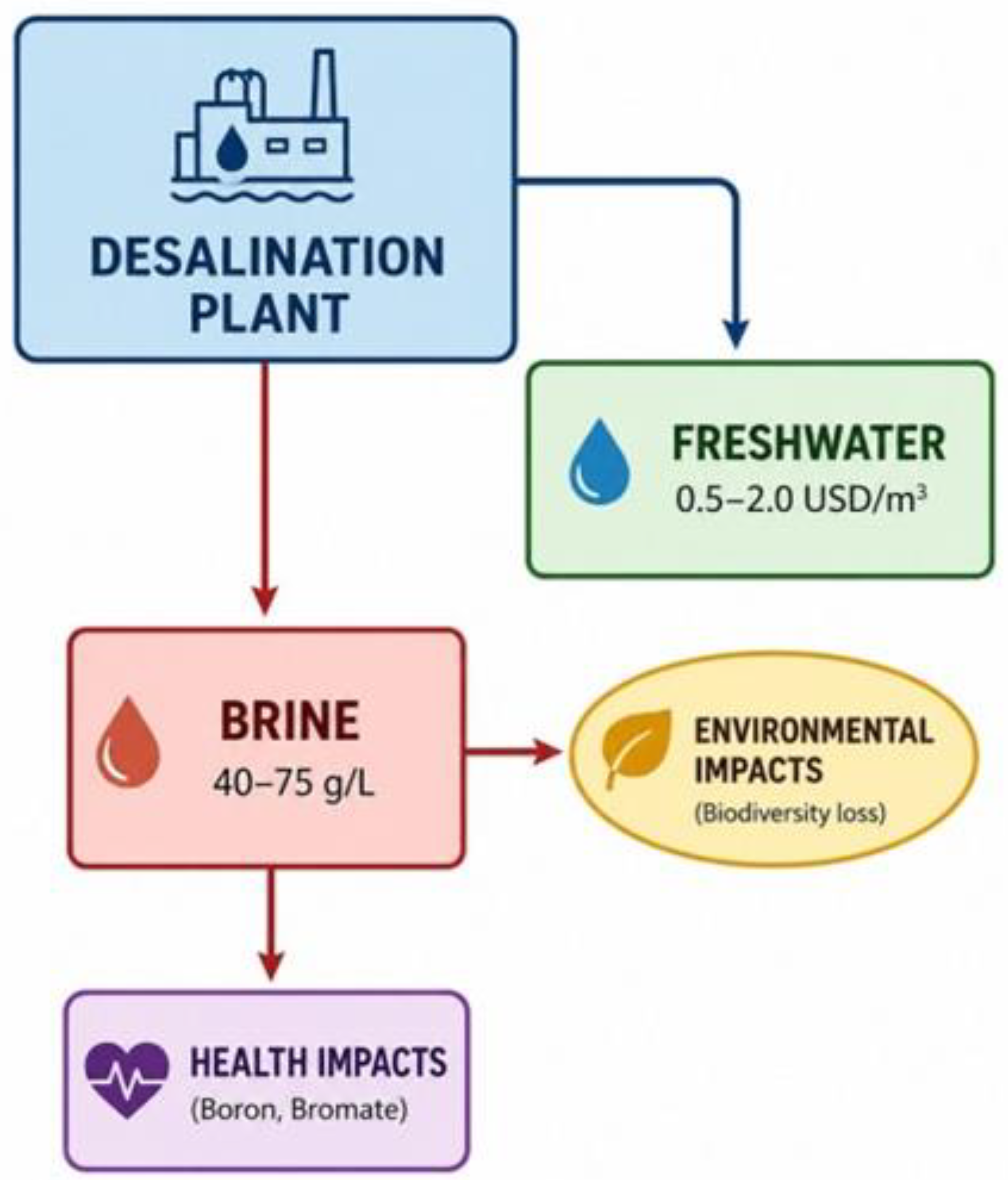
Figure 2.
Comparison of energy consumption by desalination technology (kWh/m³).
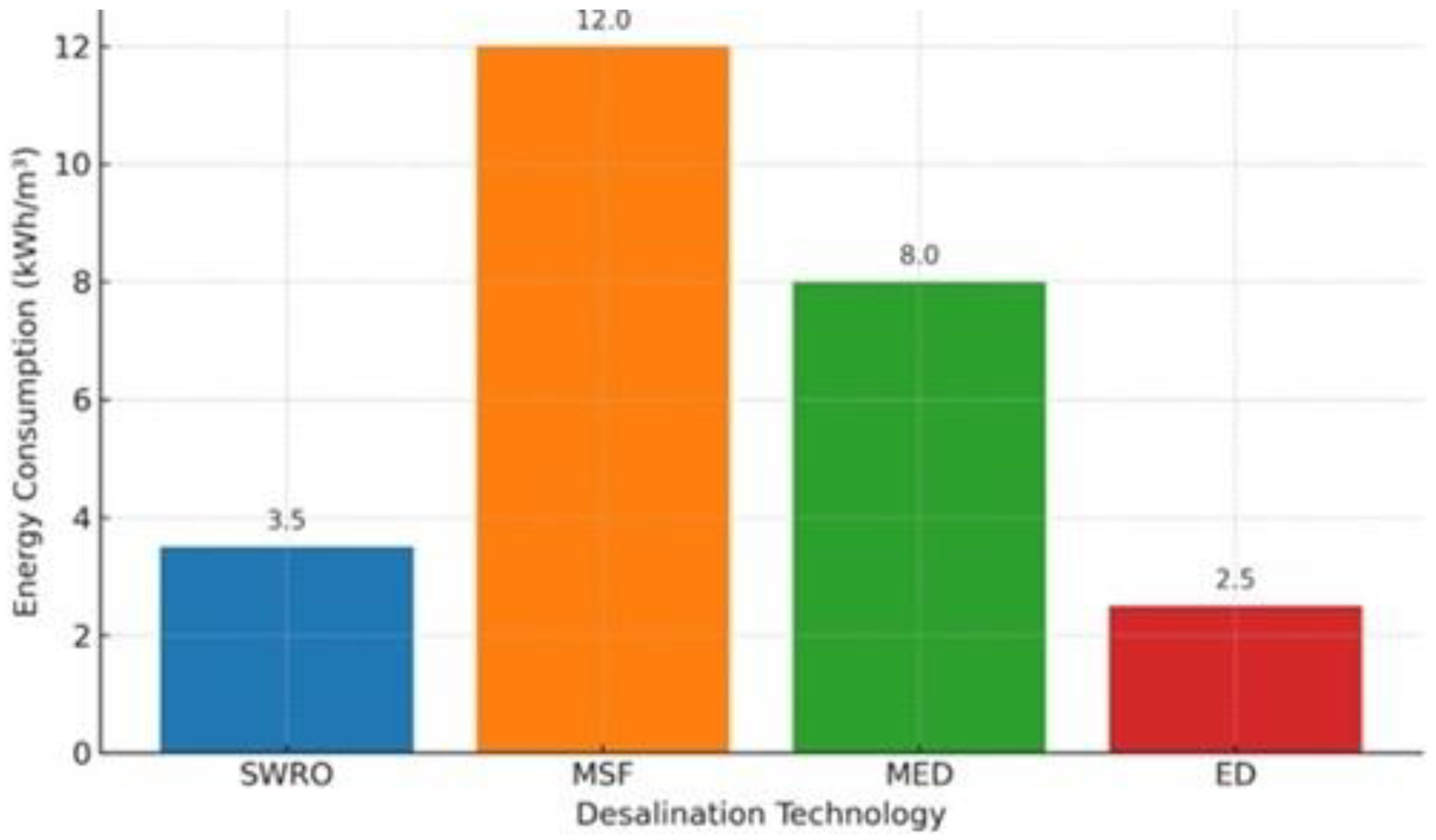
Figure 3.
Regional comparison of desalinated water costs ($/m³).
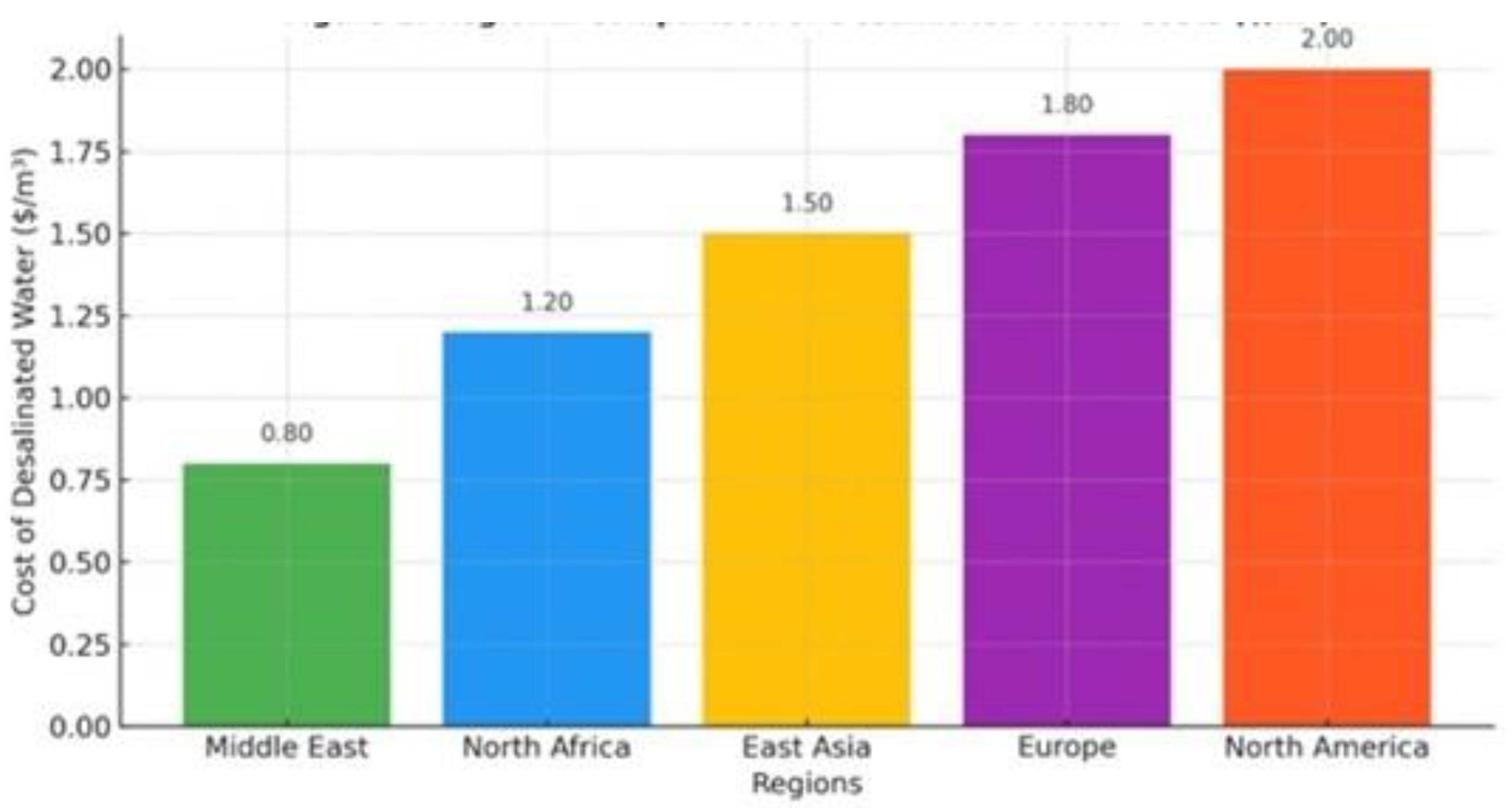
Figure 4.
Ratio of produced water to discharged brine according to technology.
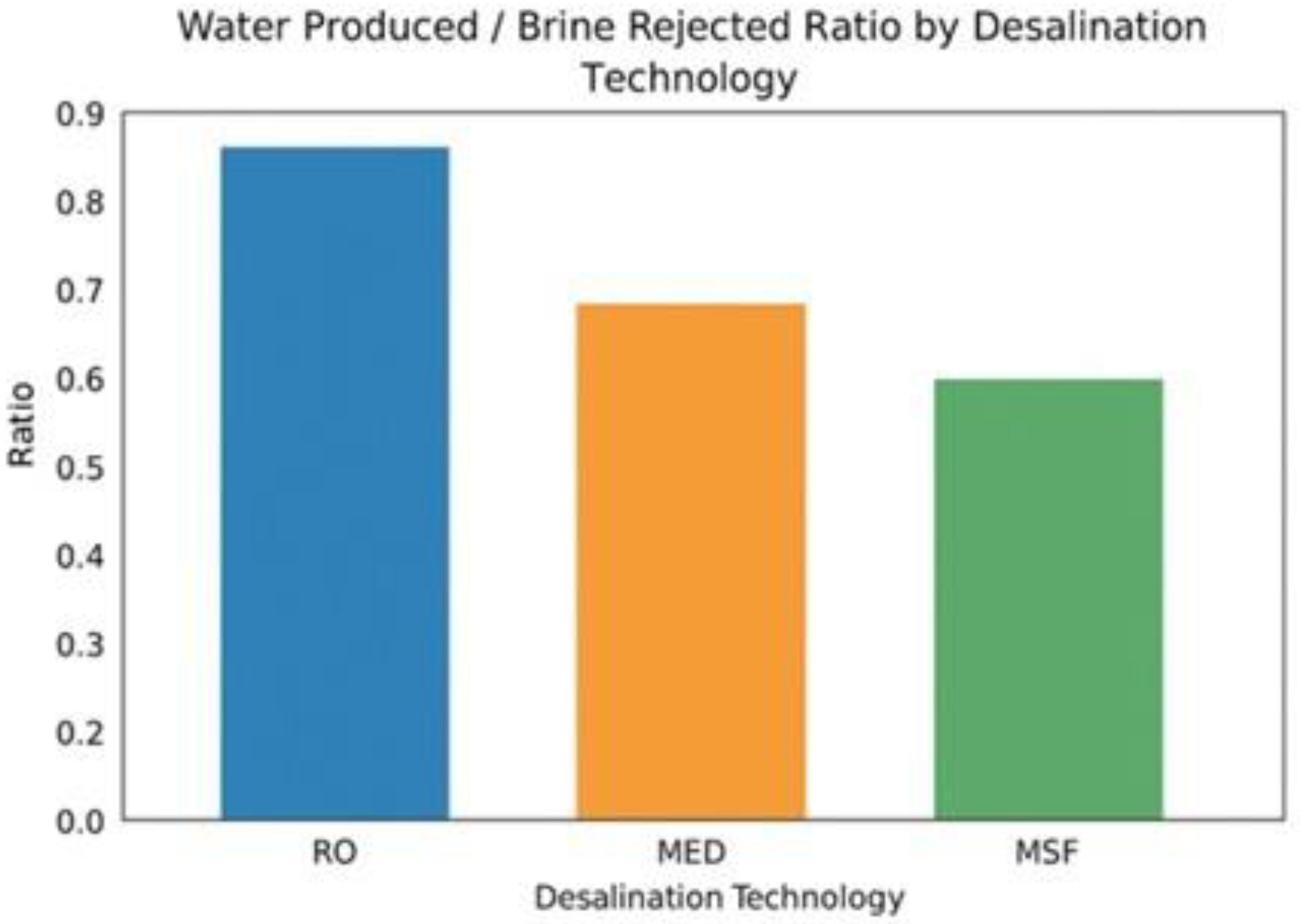
Figure 5.
Dilution and extension of brine plumes with distance from outfall.
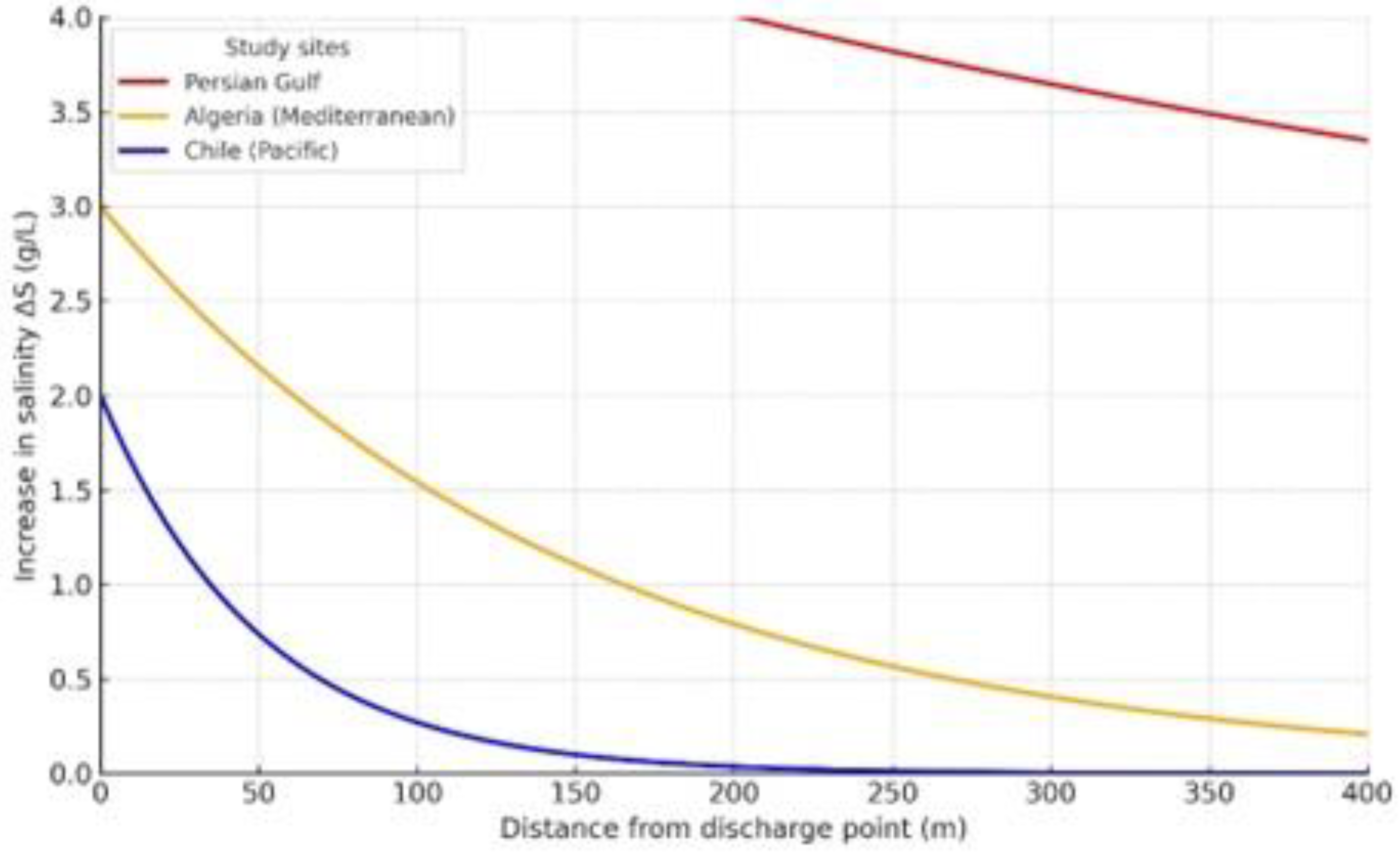
Figure 6.
Global evolution of brine production (2015–2025).
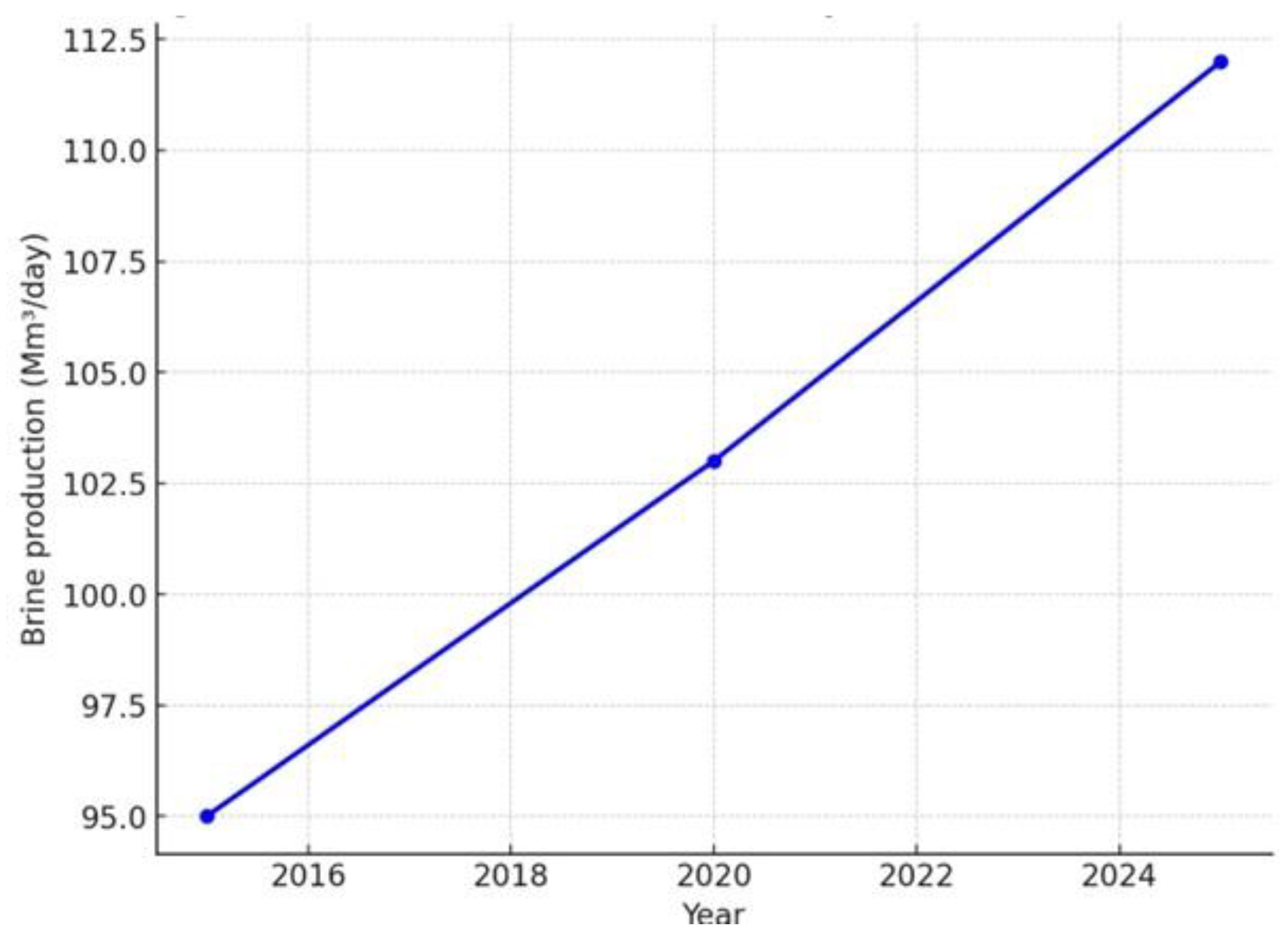
Figure 7.
Regional comparison of brine volumes and salinities.
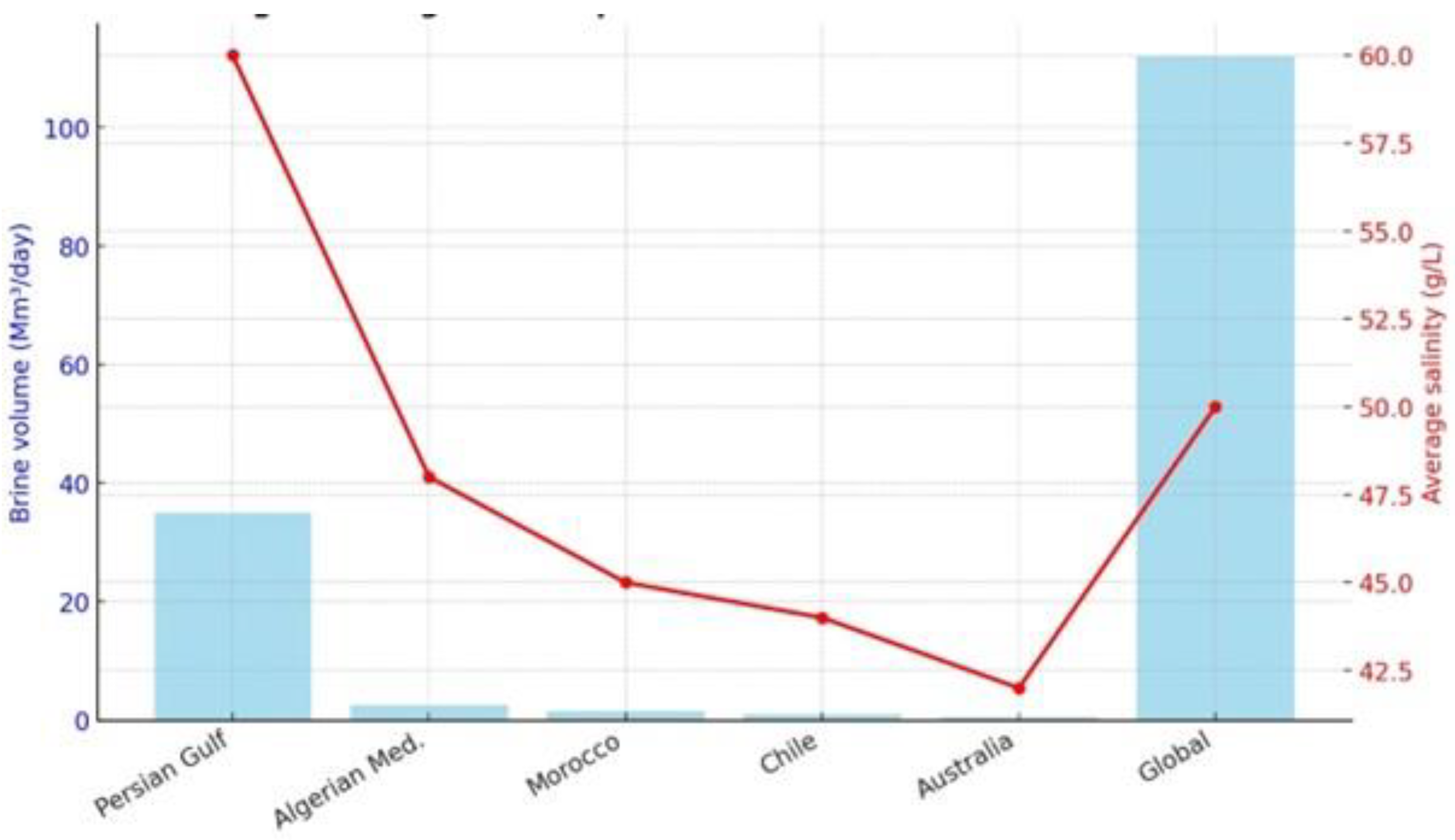
Figure 8.
Formation and discharge of disinfection by-products (DBPs) from desalination plants and their potential impact on marine fauna and flora.
Figure 8.
Formation and discharge of disinfection by-products (DBPs) from desalination plants and their potential impact on marine fauna and flora.
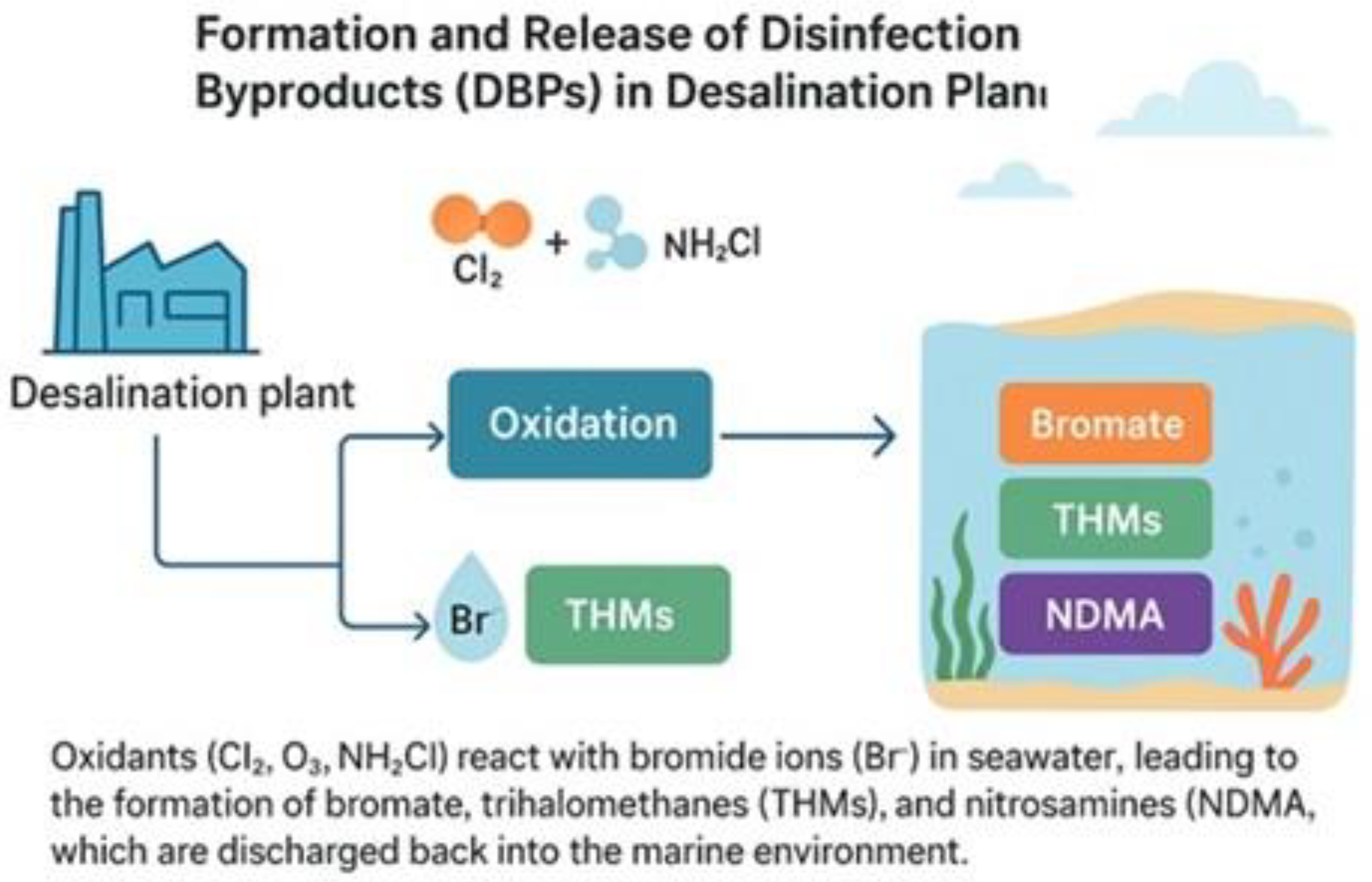
Figure 9.
Occupational Health Risks for Desalination Plant Workers.
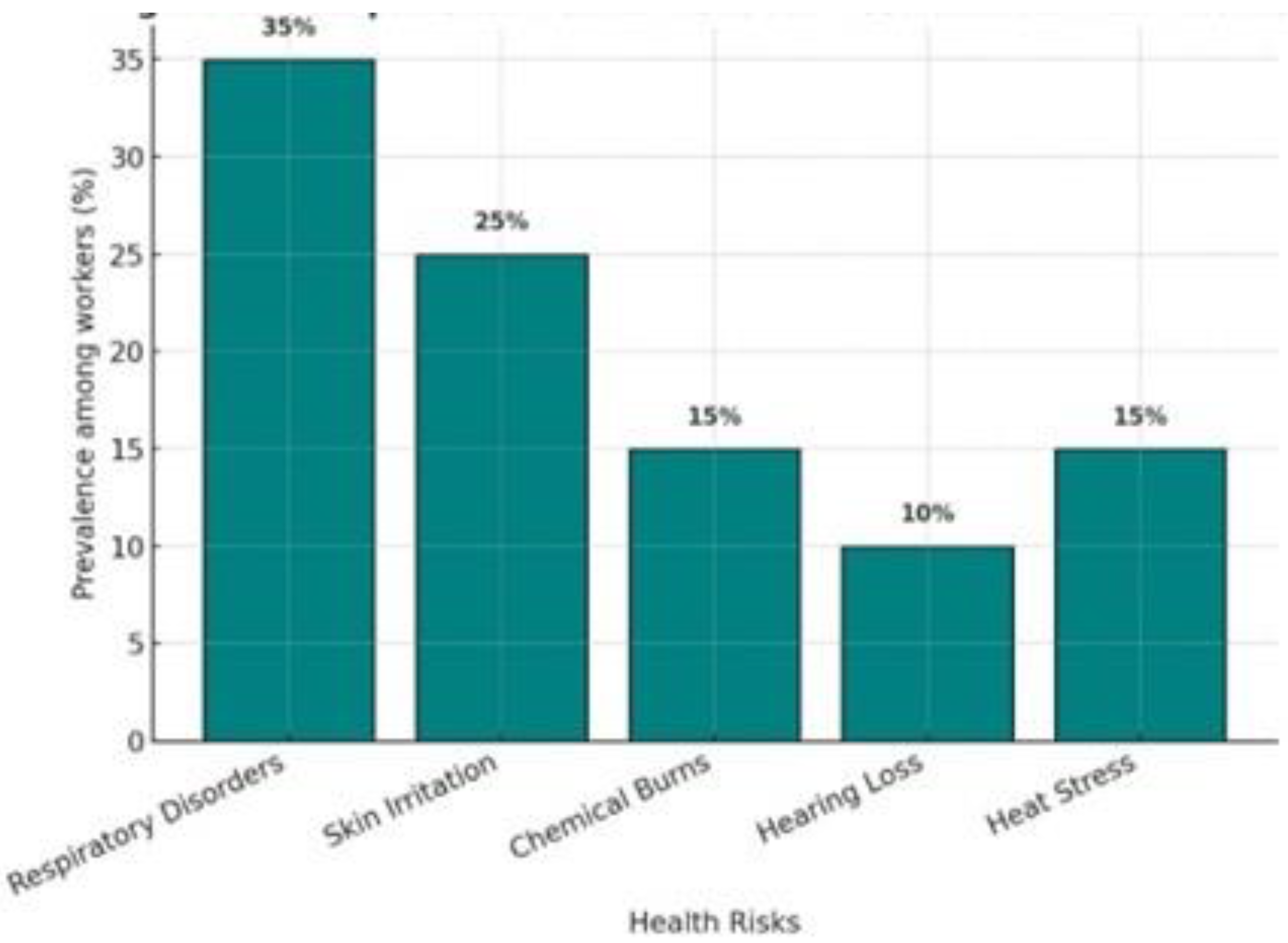
Figure 10.
Salinity plume map (Scenario A, t=24h).
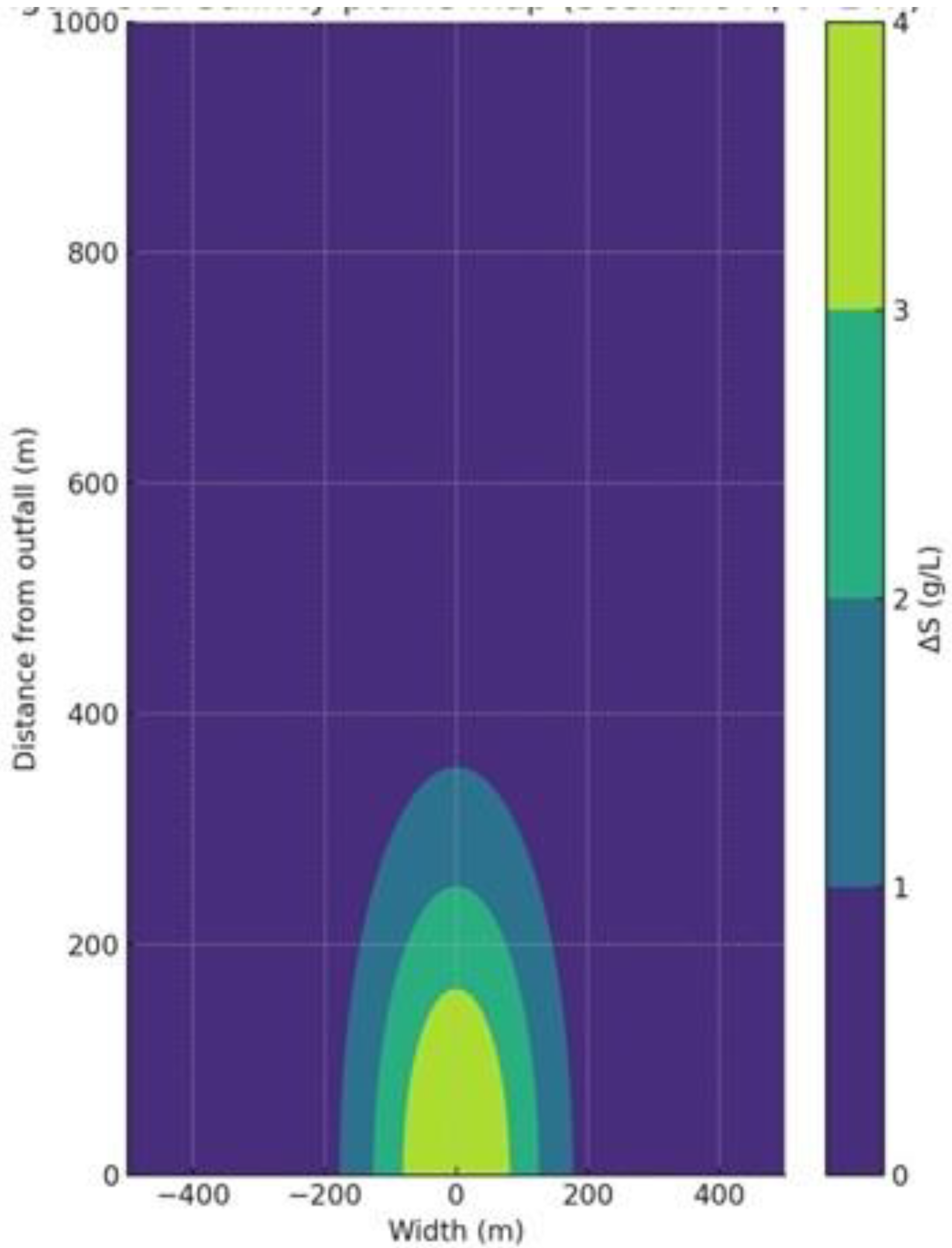
Figure 11.
Vertical cross-section of the plume (Scenario B, low current).
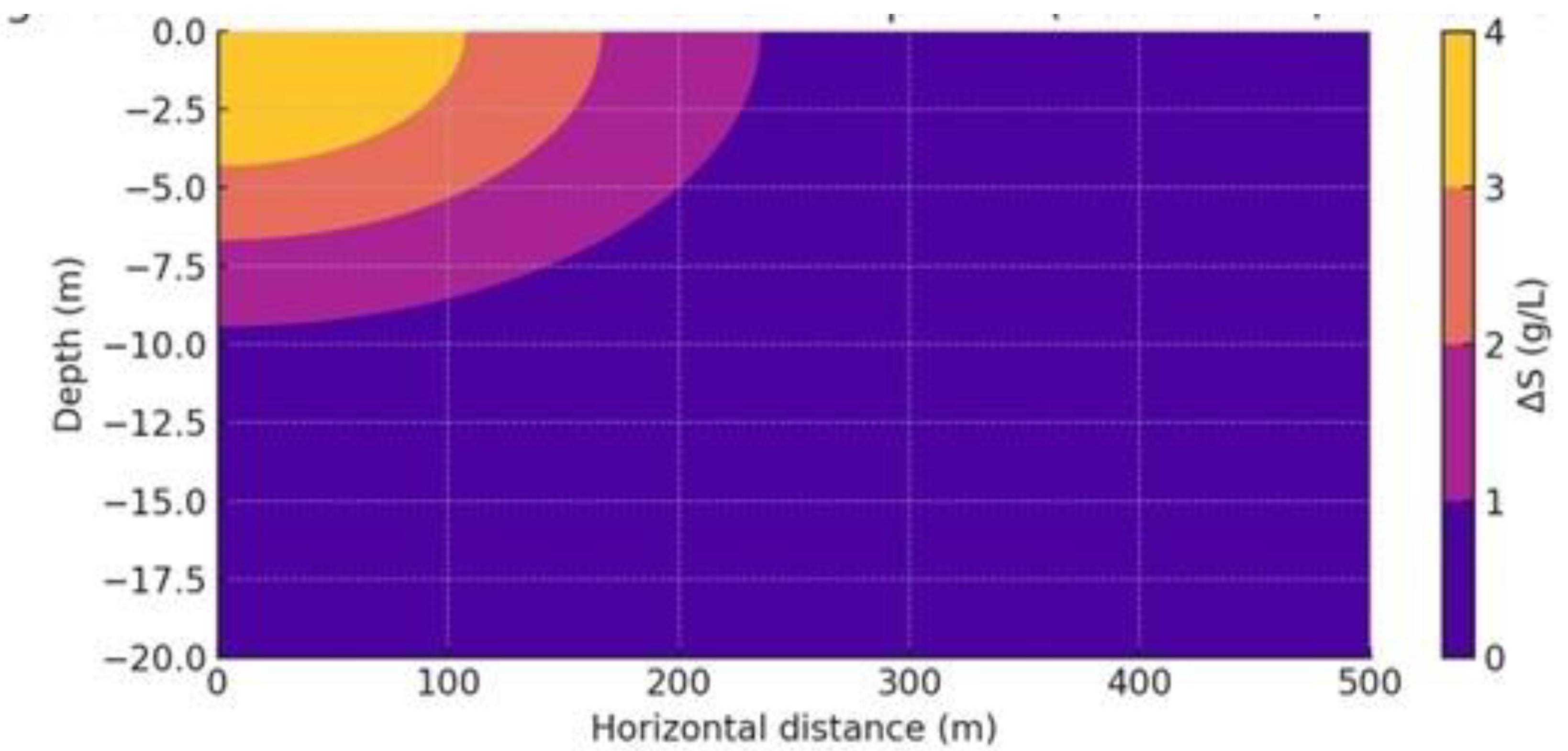
Figure 12.
Sensitivity of affected area (ΔS > 2 g/L) to current speed.

Figure 13.
Impacts of desalination plants on aquatic life.
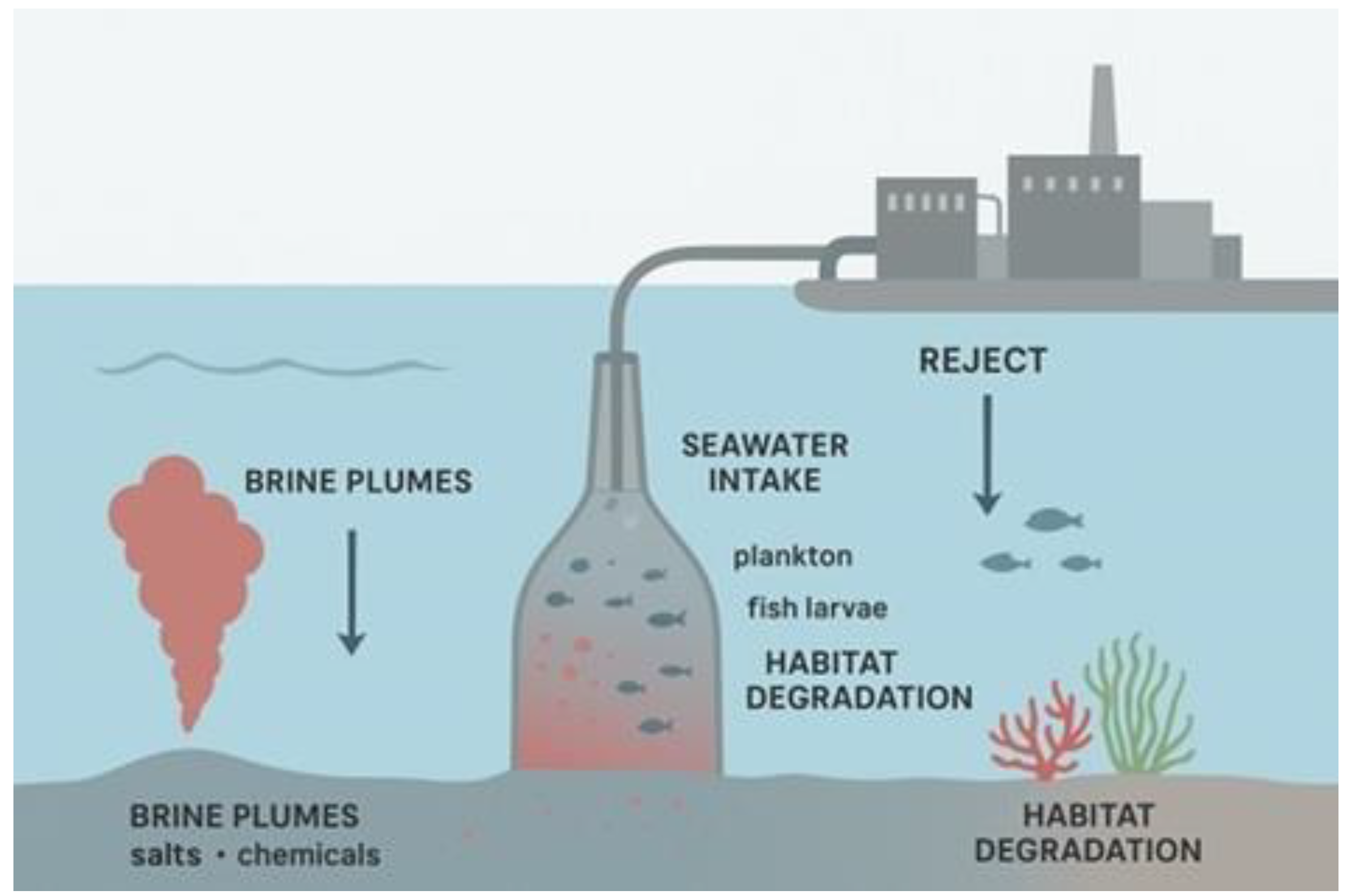

Table 1.
Inclusion and exclusion criteria for documentary sources.
| Inclusion criteria | Exclusion criteria |
| Articles published in indexed scientific journals (Scopus, Web of Science). | Opinion articles without scientific validation |
| Quantitative data on production costs, energy consumption and brine discharges. | Non-peer reviewed reports |
| Previous studies on the extent of health and environmental impacts. | Incomplete studies without empirical data |
| Official data from institutions (FAO, IRENA, WHO) | Local publications without international validation |
Table 2.
Summary comparing representative studies on the impacts of brine discharges and modeling (2015–2026).
Table 2.
Summary comparing representative studies on the impacts of brine discharges and modeling (2015–2026).
| Reference | Location / Methodology | Key results | Recommendations |
| [12] | Ténès, Algeria – CORMIX + GIS modeling | Dilution ≥ 20:1 required; dense plume in low current | Multi-nozzle diffuser |
| [13] | Tipaza, Algeria – GIS + statistics | Strong spatio-temporal variability | Permanent monitoring |
| [14] | Eastern Mediterranean – benthic monitoring + modeling | Reduction of biodiversity; sensitive corals | Maintain ΔS < 2 g/L |
| [15] | Chile – Hydrodynamic model + terrain | Rapid dilution in high energy zone | Regulation by site |
| [16] | Morocco – Regional Analysis | Lack of MENA integration | Valorization (brine mining) |
| [17] | Arabian Gulf – CORMIX + Delft3D | Dense plume persisting at the bottom | Deep discharge systems and monitoring |
| [18] | Spain – monitoring Posidonia oceanica | High sensitivity > +1 g/L | Limit discharges near seagrass beds |
| [19] | Global – Technology Analysis | SWRO Best Practices | Optimized diffusers, deep discharges |
Table 3.
Typical energy consumption by desalination technology (according to recent studies).
| Technology | SEC (kWh/m³) | Reference |
| Reverse osmosis (RO) | 2.5 – 4.0 | [8] |
| Multi-effect distillation (MED) | 6 – 12 | [22] |
| Multi-stage distillation (MSF) | 10 – 16 | [23] |
| Hybrid desalination (RO+MED) | 3 – 5 | [20] |
Table 4.
Average production costs of desalinated water (according to recent studies).
| Region | LCOW ($/m³) | Reference |
| Middle East (Saudi Arabia, UAE) | 0.50 – 1.20 | [9] |
| North Africa (Algeria, Morocco) | 0.80 – 1.50 | [22] |
| Mediterranean Europe (Spain, Italy) | 0.90 – 1.60 | [25] |
| Australia | 1.20 – 2.00 | [26] |
Table 5.
Brine Discharge Volumes by Technology.
| Technology |
Brine volume (m³ discharged / m³ produced) |
Average salinity (g/L) |
| Reverse osmosis (RO) | 1.2 – 1.5 | 60 – 75 |
| MED | 2 – 2.5 | 70 – 85 |
| MSF | 2.5 – 3 | 80 – 90 |
Table 6.
Regional summary of brine impacts.
| Region | Brine volume (Mm³/d) | Average salinity (g/L) | Typical dilution | Main impact |
| Arabian Gulf | > 35 | 50–75 | 20:1 hard to reach | Accumulation, affected macrofauna |
| Algerian Mediterranean | 2–3 | 40–55 | 20:1 à 30:1 | Stress on Posidonia, local variability |
| Morocco (Atlantic) | 1–2 | 38–50 | Rapid dilution (strong currents) | Moderate impacts but poorly monitored |
| Chile (Pacific) | ~1 | 40–50 | Dilution < 50 m | Localized, mitigated impacts |
| Australia | ~0.5 | 38–45 | Variable | Reduction in benthic diversity |
| Overall | > 110 | 40–75 | Very variable | Need for harmonized standards |
Table 7.
Ratios between produced water and brine discharged for desalination technologies.
| Technology | Produced water (m³) | Brine discharged (m³) | Report (R) |
| RO | 1 | 1.2 – 1.5 | 0.67 – 0.83 |
| MED | 1 | 0.8 – 1.0 | 1.0 – 1.25 |
| MSF | 1 | 1.5 – 2.0 | 0.5 – 0.67 |
Table 8.
Main contaminants detected in desalinated water and associated health risks.
| Contaminant | Average concentration (mg/L) | WHO standard (mg/L) | Potential health risk |
| Boron | 1.8 | 0.5 | Reproductive disorders |
| Bromate | 0.025 (25 µg/L) | 0.01 (10 µg/L) | Carcinogenic risk |
| Chloride | 450 | 250 | Hypertension |
Table 9.
Concentrations of disinfection by-products (DBPs) detected in desalinated water in different regions.
Table 9.
Concentrations of disinfection by-products (DBPs) detected in desalinated water in different regions.
| Region / Country | Dominant by-product | Measured concentration (µg/L) | WHO guideline value (µg/L) | Estimated lifetime cancer risk | Reference |
| Kuwait | Bromate | 18 – 28 | 10 | 3.9 × 10⁻⁴ | [1] |
| Saudi Arabia | Bromate | 12 – 20 | 10 | 2.5 × 10⁻⁴ | [43] |
| Occupied Territories | NDMA | 0.015 – 0.025 | 0.01 (provisional WHO) | 1.1 × 10⁻⁵ | [41] |
| Spain (Canary Islands) | Total THMs | 35 – 50 | 100 | Low, but follow-up required | [44] |
| Australia (Perth) | Bromate | < 5 | 10 | Not significant | [45] |
Table 10.
Main occupational exposure agents and associated health effects in desalination plants.
| Source of exposure | Agents concerned | Route of exposure | Adverse health effects |
| Disinfection (ozone, chlorine) | Bromates, trihalométhanes (THM) | Inhalation, skin contact | Respiratory irritation, carcinogenic risk |
| Salt and boron discharges | Boron, chlorides, sulfates | Skin contact, ingestion | Irritations, dermatitis, kidney damage |
| Cleaning the membranes | Acids, strong bases (NaOH, H₂SO₄) | Skin contact, inhalation | Chemical burns, eye injuries |
| Working conditions (internal climate) | High temperature, humidity, salt spray | Heat stress, dehydration | Hypertension, fatigue, cardiovascular disorders |
Table 11.
Parameters adopted for the simulation.
| Setting | Value | Source |
| Seawater salinity (S_sw) | 38 g/L | Western Mediterranean |
| Brine salinity (S_br) | 76 g/L | Typical SWRO |
| Produced water flow rate (Q_prod) | 25 000 m³/j | Usine moyenne |
| Brine flow rate (Q_br) | 0.433 m³/s | R = 67 % |
| Coastal current | 0.05 – 0.3 m/s | Regional data |
| Wind | 0 – 10 m/s | Seasonal conditions |
| Diffuser | Multi-nozzle, angle 20° | Good technical practice |
Table 12.
Surface area affected by scenario.
| Scenario | Surface > +1 g/L (m²) | Surface > +2 g/L (m²) |
| A | 9 500 | 3 200 |
| B | 21 800 | 11 600 |
| C | 6 200 | 1 100 |
| D | 6 800 | 2 100 |
Disclaimer/Publisher’s Note: The statements, opinions and data contained in all publications are solely those of the individual author(s) and contributor(s) and not of MDPI and/or the editor(s). MDPI and/or the editor(s) disclaim responsibility for any injury to people or property resulting from any ideas, methods, instructions or products referred to in the content. |
© 2026 by the authors. Licensee MDPI, Basel, Switzerland. This article is an open access article distributed under the terms and conditions of the Creative Commons Attribution (CC BY) license (http://creativecommons.org/licenses/by/4.0/).
Copyright: This open access article is published under a Creative Commons CC BY 4.0 license, which permit the free download, distribution, and reuse, provided that the author and preprint are cited in any reuse.


