
Submitted:
18 June 2026
Posted:
22 June 2026
You are already at the latest version
Abstract
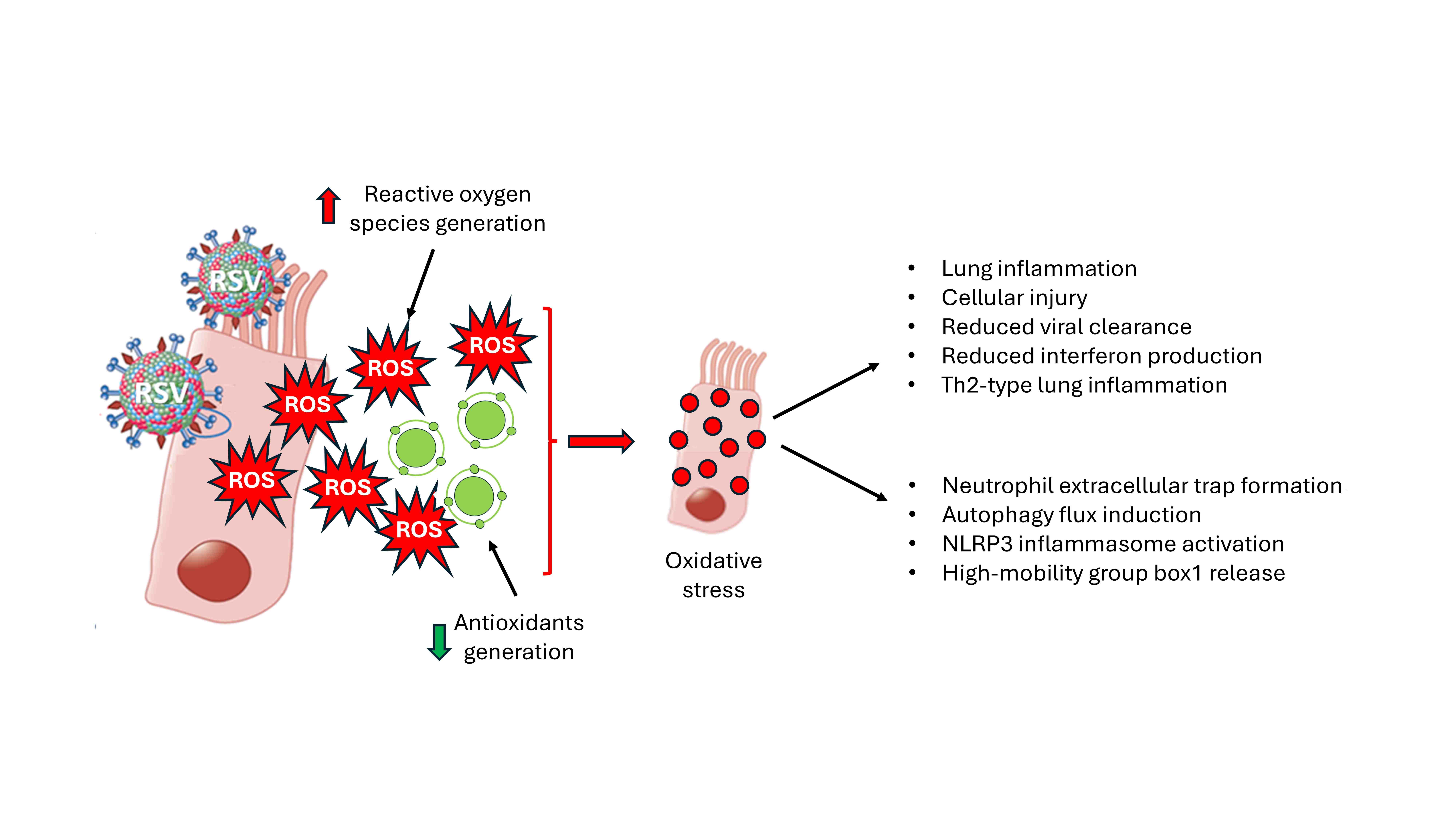
Respiratory syncytial virus (RSV) is a leading cause of severe respiratory infections in infants and young children globally. The severity of RSV-associated diseases is often ascribed to a dysregulated immune response, characterized by increased secretion of proinflammatory proteins and ineffective T helper type 2 (Th2) cells activity. The host’s primary defense against RSV relies on a well-coordinated innate immune response initiated by resident airway epithelial cells, the first target of RSV infection. These cells respond to viral invasion by generating reactive oxygen species (ROS), activating the production of Type I and III interferons, and releasing proinflammatory cytokines and chemokines. Moderate levels of ROS act as key molecules that regulate antiviral signaling, enhancing the host’s ability to recognize and eliminate invading pathogens. However, severe RSV infection disrupts cellular homeostasis triggering excessive ROS production, while simultaneously weakening the host's antioxidant defenses. This redox imbalance subverts the activity of key cellular defensive mechanisms, ultimately increasing viral replication, and worsening RSV infection severity. Modulation of oxidative stress may offer an innovative approach in managing the progression and outcome of RSV infection.
Keywords:
viral infections
; bronchiolitis
; oxidative stress
; airway epithelial cells
; innate immune response
; innate lymphoid cell2
Copyright: This open access article is published under a Creative Commons CC BY 4.0 license, which permit the free download, distribution, and reuse, provided that the author and preprint are cited in any reuse.


