

Submitted:
19 June 2026
Posted:
22 June 2026
You are already at the latest version
Abstract
Acute-on-chronic liver failure (ACLF) is a rapidly progressing and highly lethal clinical syndrome characterized by multiorgan failure, driven primarily by a severe systemic inflammatory response. The pathophysiological cascade, triggered by an initial “cytokine storm,” subsequently evolves into profound immune paralysis. This phenomenon is driven by the dysfunction of monocytes, neutrophils, and other immune cells, compounded by their impaired cellular energetics resulting from a metabolic shift toward less efficient energy-yielding mechanisms, such as aerobic glycolysis and the pentose phosphate pathway. This process is further exacerbated by disruptions within the gut-liver axis, wherein severe dysbiosis and impaired intestinal barrier integrity promote pathogen translocation. Coupled with generalized endothelial dysfunction, this ultimately leads to failure of peripheral organs. To date, no specific targeted therapies are available, and liver transplantation remains the sole intervention capable of substantially improving patient prognosis. Experimental immunomodulatory approaches including granulocyte colony-stimulating factor (G-CSF), intravenous albumin supplementation, therapeutic plasma exchange, mesenchymal stem cell therapy, and anti-cytokine agents represent promising therapeutic avenues. Nevertheless, appropriately tailoring these interventions to the evolving pathophysiological phases of the disease remains a significant clinical challenge, underscoring the critical need for developing precision therapies targeted at specific molecular pathways.
Keywords:
acute-on-chronic liver failure
; cirrhosis-associated immune dysfunction
; immunometabolism
; gut-liver axis
; plasma exchange
; liver transplantation
1. Introduction
Acute-on-chronic liver failure (ACLF) is a relatively recently defined, highly lethal clinical syndrome that develops in patients with chronic liver disease (with or without cirrhosis). It is distinguished by the rapid development of multiorgan failure (including the liver and at least one of the following five organs or systems: urinary system, central nervous system, respiratory system, cardiovascular system, and coagulation system). The short-term mortality associated with this syndrome remains dramatically high, ranging from approximately 20–30% at ACLF-1 to over 70% at ACLF-3 at 28 days [1,2]. As demonstrated by the results of the European PREDICT study, ACLF is not merely the end stage of decompensation but a distinct pathophysiological entity with a different clinical course and prognosis [3]. Although various geographically conditioned definitions of this syndrome exist in the literature, its pathophysiological foundation is of a common origin [4,5]. The diagnostic criteria adopted by different consortia are summarized in Table 1.
More precisely, under the European Association for the Study of the Liver – Chronic Liver Failure Consortium (EASL-CLIF) criteria an isolated kidney failure is itself sufficient to define ACLF, whereas a single non-renal organ failure qualifies only when accompanied by concurrent renal and/or cerebral dysfunction; the 2025 EF-CLIF international consensus has since standardized the definitions of liver, kidney, brain, coagulation, digestive, circulatory and respiratory failure, together with the major precipitants, to harmonize how ACLF is identified and treated worldwide [7]. Critically, the 2025 Asian Pacific Association for the Study of the Liver (APASL) Kyoto Consensus represents the first genuine global harmonization effort- convening APASL, European Association for the Study of the Liver (EASL) and American Association for the Study of Liver Diseases (AASLD) stakeholders and reframes these previously parallel, unreconciled consortium definitions into a single typology rather than presenting them as separate silos: Type A ACLF corresponds to the APASL/Japanese construct (a first acute hepatic insult without prior decompensation or extrahepatic injury, potentially reversible, with an approximately 30–40% 28-day mortality), whereas Type B ACLF encompasses the AASLD, EASL-CLIF, NACSELD and COSSH definitions arising on already decompensated cirrhosis. Drawing on the approximately 10,500-patient AARC database, the Kyoto Consensus also formally introduces the ‘Golden Therapeutic Window’, the ‘transplant window’ and therapeutic plasma exchange as a recognized treatment modality; Table 1 is therefore presented within this unified framework [2,7].
The majority of ACLF episodes are precipitated by defined triggering factors, which exhibit distinct geographical variability. While severe alcohol-associated hepatitis and bacterial infections predominate in Western populations, the most common trigger in Asian countries is the reactivation of hepatitis B virus (HBV) infection [3,6]. It is worth emphasizing, however, that in approximately 30 – 40% of patients, a definitive precipitating factor cannot be clearly identified [1].
Central to the pathophysiology of ACLF is the development of extremely severe systemic inflammation (SI), which is initiated by two groups of signaling molecules. The first group comprises pathogen-associated molecular patterns (PAMPs) – products of bacterial origin that enter the circulation as a result of translocation across a compromised intestinal barrier. The second group consists of damage-associated molecular patterns (DAMPs), which are released following tissue injury, including massive hepatocyte necrosis [8]. These molecules stimulate pattern recognition receptors (PRRs) (e.g., Toll-like receptors [TLRs] and NOD-like receptors [NLRs]) located on the surface of innate immune cells, such as Kupffer cells, neutrophils, and monocytes [9]. This leads to their uncontrolled hyperactivation and triggers a phenomenon termed a "cytokine storm," characterized by the massive secretion of proinflammatory mediators, including interleukin 6 (IL-6), interleukin 8 (IL-8), interleukin 1 beta (IL-1β), and tumor necrosis factor alpha (TNF-α) [9].
The progressive impairment of defense mechanisms begins as early as the stage of compensated liver cirrhosis. As the ACLF syndrome progresses, driven by accumulating metabolic disturbances and the exhaustion of immunological pathways, this impairment reaches an extreme intensity, resulting in a profound impairment of immune cell function [10]. This immune paralysis is evidenced by significantly elevated concentrations of anti-inflammatory cytokines, primarily interleukin 10 (IL-10), which, by inhibiting the nuclear factor kappa B (NF-κB) pathway, blocks further transcription and secretion of proinflammatory cytokines [9]. Furthermore, immune cells are characterized by the overexpression of inhibitory receptors-MER receptor tyrosine kinase (MERTK) on the surface of monocytes, as well as programmed cell death protein 1 (PD-1) and T-cell immunoglobulin and mucin-domain containing-3 (TIM-3) on lymphocytes, along with a substantial decrease in the production of interferon gamma (IFN-γ), which additionally exacerbates immune system dysfunction [11].
The consequences of such severe immunological impairment extend far beyond the hepatic environment. Circulating cytokines damage the endothelial barrier, induce profound oxidative stress, and generate severe microcirculatory disturbances alongside adverse changes in the metabolism of distant tissues. This pathway leads directly to secondary dysfunction and, ultimately, the failure of extrahepatic organs, which constitutes the primary cause of early mortality in these patients [12,13]. The ACLF pathophysiological cascade is presented in Figure 1.
2. Methods
The aim of this narrative review is to comprehensively present the principal cellular and molecular pathophysiological mechanisms underlying ACLF, with a particular emphasis on immune paralysis, cellular metabolic dysfunction, and the gut-liver-immune axis, as well as to discuss possible future therapeutic directions. A comprehensive review of the current literature was conducted by searching for publications from 2016 to 2026. The search strategy employed the following keywords: “acute-on-chronic liver failure”, “ACLF”, “advanced liver disease”, “humoral mediators”, “immune cells”, “immunosuppression”, “metabolism”, “systemic inflammation”, “immunometabolism”, and “cytokines”. The electronic databases searched included Embase, PubMed and Scopus. To be included in the analysis, studies were required to focus on one or more of the following domains: immune system dysfunction, metabolic disorders, immune cell dysfunction, the role of the gut-liver axis and the microbiome, endothelial dysfunction, and immunomodulatory therapeutic strategies in ACLF. Eligible article types comprised original research, meta-analyses, systematic reviews, and official guidelines from international hepatology societies published in English. Both human and animal studies were considered. Editorials, conference posters, letters to the editor, and publications without full-text availability were excluded. During the preparation of this manuscript, the authors used Claude Opus 4.x, Anthropic and Gamma to produce the schematic figures (Figure 1, Figure 2, Figure 3 and Figure 4). The figures are original conceptual illustrations generated with the aid of the tools; they do not depict primary experimental data and do not reproduce, adapt, or incorporate any third party copyrighted material. All AI-assisted output was subsequently reviewed and verified for scientific accuracy and edited by the authors, who take full responsibility for the content, integrity, and conclusions of the work. No AI tool is listed as an author.
3. Trained Immunity and Epigenetic Remodeling of Monocytes in Cirrhosis – How a History of Chronic Injury Forces Innate Immune Cells into Maladaptive States Following Acute Damage
Available data suggest that the observed mechanisms reflect the immune-tolerogenic nature of the liver, allowing for the control and limitation of excessive inflammatory activation. However, as liver disease progresses, changes occur within the immune system, leading to the development of systemic inflammation and immunodeficiency. Despite persistent immune system activation, cirrhosis-associated immune dysfunction (CAID) causes functional impairments in immune cells and, consequently, an increased risk of infection [8]. The first groundbreaking report describing monocyte dysfunction in liver cirrhosis was provided by Hassner et al. in 1979 [14]. With the progression of liver disease, the expression of major histocompatibility complex (MHC) class II antigens, specifically human leukocyte antigen D related (HLA-DR), decreases [15]. One of the proposed causes for this reduced HLA-DR expression is an increase in the production of immunosuppressive mononuclear myeloid-derived suppressor cells (CD14⁺ CD15⁻ HLA-DR⁻ M-MDSCs). Their expansion impairs the capacity of monocytes to present antigens to T lymphocytes; the production of cytokines, including TNF-α and IL-6, in response to bacterial lipopolysaccharide (LPS) declines, and the risk of secondary infections increases. The monocyte ceases to be a cell coordinating immunity, transitioning into a state of active immunosuppression [16]. Studies by Weichselbaum et al. demonstrate that persistent epigenetic changes occur in the monocytes of patients with alcohol-associated hepatitis, impairing the proinflammatory response during stimulation with PAMPs. ACLF, therefore, remains a clinical manifestation of a process that occurred much earlier [17].
Furthermore, there is an increased expansion of monocytes expressing the AXL receptor (CD14+CD16highHLA-DRhigh), which also attenuate the inflammatory response and lymphocyte activation while retaining the capacity for phagocytosis and the clearance of apoptotic cells. Studies indicate that the inhibition of AXL restores the proinflammatory mechanisms of monocytes, which may not only serve as a potential prognostic marker but also act as a target for immunotherapy in patients with liver cirrhosis [18]. Another regulator of monocyte immunosuppression is the increased expression of the MERTK receptor tyrosine kinase on monocytes, which then respond poorly to bacterial lipopolysaccharide and produce fewer proinflammatory cytokines, thereby increasing susceptibility to infections. Simultaneously, MERTK activation on macrophages promotes the progression of fibrosis in chronic liver diseases by inducing a profibrogenic response in hepatic stellate cells [15,19].
These theories are corroborated by a study by Yao et al., in which scRNA sequencing of monocyte subpopulations revealed the most profound genetic changes among proinflammatory monocytes in patients with ACLF compared to a healthy control group. The hemoglobin subunit beta (HBB) and thrombospondin 1 (THBS-1) genes exhibited increased expression. Moreover, THBS-1 expression was higher among fatal ACLF cases, suggesting it may serve as a prognostic factor [20].
4. ACLF and Neutrophil Dysfunction - Role of an Impaired Neutrophil Extracellular Trap (NET) Formation, Mitochondrial Distress, and Aberrant C-X-C Motif Chemokine Ligand (CXCL) Chemokine Signaling
In both patients with acutely decompensated cirrhosis (AD) and those with ACLF, the neutrophil count increases while the lymphocyte count decreases. Alterations in the neutrophil transcriptome lead to enhanced granulopoiesis and, consequently, the massive activation of neutrophils, including immature precursors [21]. Despite their hyperactivation, essential functions such as pathogen killing via chemotaxis, phagocytosis, degranulation, neutrophil extracellular traps (NETs), and the generation of reactive oxygen species (ROS) remain impaired [22]. Makkar et al. conducted a detailed evaluation of neutrophil parameters and their association with survival in patients with ACLF. They demonstrated that as the severity of ACLF increases, the number of neutrophils with a normal mature phenotype (CD16+, CD66b+) decreases, and their phagocytic capacity diminishes, which correlates with increased 90-day mortality. Conversely, the resting oxidative burst of neutrophils is significantly higher in patients with ACLF than in healthy controls and does not increase upon stimulation, which can lead to energy depletion and a weakening of host defense mechanisms, including phagocytosis [23]. In response to the decline in neutrophil phagocytic capacity, there is a compensatory increase in the formation of NETs – webs consisting of released DNA, histones, and granular enzymes such as myeloperoxidase (MPO), which serve as an alternative defense mechanism against pathogens [24]. Upon reaching the failing liver, neutrophils exacerbate the already activated inflammatory process. NETs enhance the release of free radicals and proteolytic enzymes, and exacerbate coagulation abnormalities, thereby promoting further hepatocyte apoptosis [25]. As research by von Meijenfeldt et al. indicates, NET formation is active in patients with acute liver failure. Moreover, elevated levels of myeloperoxidase-DNA (MPO-DNA) complexes, a specific marker of NETs, correlate with a poor prognosis [26]. Another study comparing NETosis between AD and ACLF challenges the direct role of extracellular traps in ACLF progression. Blasi et al. demonstrated that the MPO-DNA marker does not differ between patients with AD and ACLF and is not associated with adverse clinical outcomes. In contrast, cfDNA (cell-free DNA originating from the breakdown of various cells, including NETs), IL-6 (an inflammatory marker), and thiobarbituric acid reactive substances [(TBARS), a marker of oxidative stress] remain higher in patients with ACLF than in those with AD and correlate with the severity of organ failure and mortality [27].
Another hallmark of neutrophil dysfunction in ACLF is the increased expression of the chemokine ligand CXCL1. By binding to the CXCR2 receptor, it intensifies neutrophil infiltration into the liver, leading to an increase in reactive oxygen species (ROS) production, mitochondrial depolarization, and the activation of caspase-3-dependent apoptotic pathways. Studies indicate that inhibiting CXCL1 may reduce neutrophil recruitment, oxidative stress, and consequently hepatocyte apoptosis, translating into a milder clinical course of ACLF [28].
Furthermore, hyperreactive neutrophils in ACLF exhibit an upregulation of the CD177 protein, which enhances their adhesion to endothelial cells, initiating their subsequent massive migration into tissues [29].They also exhibit excessive reactivity towards parenchymal cells, including hepatocytes, resulting in their damage and death [30].
5. ACLF and Metabolic Failure of Immune Cells as a Trigger of Multi-Organ Dysfunction - Leukocytes Shift Toward Glycolysis, Lose Oxidative Phosphorylation Capacity, and ROS Bursts That Damage Distant Organs
Profound disturbances in cellular metabolism reflect the adaptive response of immune cells to acute inflammation in ACLF. Peripheral organs, such as the liver, muscles, and adipose tissue, are reprogrammed toward intensified catabolic metabolism (involving proteolysis, glycogenolysis, and lipolysis, among others), which fulfills the heightened energy demands of immune cells [31,32,33]. Concurrently, immune cells shift towards an anabolic metabolism, dictated by the necessity for the intensive synthesis of inflammatory cytokines and chemokines, which promotes enhanced granulopoiesis alongside an overlapping metabolic reprogramming of innate bone marrow cells [21,34]. Metabolic shifts constitute both a consequence of immune cell activation and a primary mechanism determining their differentiation and effector functions [35].
One of the key elements in the pathogenesis of ACLF is the disrupted energy metabolism of leukocytes. This is accompanied by significant alterations in mitochondrial ultrastructure; despite an increase in their numbers, these organelles become smaller, and their cristae become sparser and disorganized [21,36]. Functional derangements also occur, such as a disruption of the Tricarboxylic acid cycle (TCA) at the level of isocitrate dehydrogenase and succinate dehydrogenase. These disruption points are bridged by anaplerotic reactions: glutaminolysis and nucleoside metabolism, which enable continued energy production despite mitochondrial dysfunction [36]. However, energy production via oxidative phosphorylation (OXPHOS) in mitochondria under conditions of an intense inflammatory response remains insufficient. To generate Adenosine Triphosphate (ATP), leukocytes begin to utilize extramitochondrial pathways: aerobic glycolysis and the pentose phosphate pathway (PPP) [21,36,37,38,39]. The PPP not only increases nucleotide production but also leads to an overproduction of nicotinamide adenine dinucleotide phosphate (NADPH), which, serving as a primary donor for the generation of reactive oxygen species, induces oxidative stress and concomitantly exerts a secondary inhibitory effect on mitochondrial OXPHOS [40]. Aerobic glycolysis, known as the Warburg effect, leads to the production of lactate and only 2 ATP molecules, compared to the 36 ATP yielded by OXPHOS. This is energetically inefficient, and the end product additionally exerts various immunomodulatory functions [37,41]. In a state of acute inflammation, lactic acid exhibits immunosuppressive effects; it promotes the transition of macrophages toward an anti-inflammatory phenotype and inhibits the production of proinflammatory cytokines such as TNF-α and IL-6, as well as T lymphocyte proliferation [39,42,43]. Acting as a signaling molecule rather than simply an end product of metabolism, it plays a crucial suppressive role during inflammation, sepsis, or neoplastic diseases by supporting cellular proliferation [44,45]. Studies confirm that hyperlactatemia is an independent prognostic factor correlating with the degree of liver and other organ failure, and an elevated lactate-to-albumin ratio may serve as a novel biomarker for predicting mortality in ACLF patients [46,47]. Moreover, besides its immunosuppressive action, lactate prolongs inflammation, driving systemic neutrophilia and the mobilization of neutrophils to inflammatory tissues. It activates mobilizers in the bone marrow such as CXCL1, CXCL2, and G-CSF, increases bone marrow vascular permeability via the G protein-coupled receptor 81 (GPR81), and promotes NET formation [48,49]. Simultaneously, it directs macrophages toward transitioning into a fibrotic phenotype, which may further impair systemic organ function [39,50,51]. Therefore, lactate functions as a context-dependent immunometabolite: suppressive on monocytes/macrophages/T cells; pro-inflammatory on bone-marrow myelopoiesis and NETosis via GPR81.
Beyond its role as a free metabolite, lactate also drives histone and protein lactylation – a distinct epigenetic-metabolic modification that reprograms monocyte and macrophage gene expression and mechanistically connects the immunometabolic shift to the trained-immunity and epigenetic-reprogramming phenomena described earlier [49]. This concept of metabolic control over immune fate has now received direct empirical support: a 2025 single-cell study identified divergent immunometabolic cellular states separating ACLF recovery (ACLF-R) from non-recovery (ACLF-NR), with a stress-induced tolerant state and an oxidative-phosphorylation programme characterizing ACLF-R, in contrast to elevated inflammatory and stress genes [Vimentin (VIM), Lectin, galactoside-binding, soluble, 2 (LGALS2), Triggering Receptor Expressed on Myeloid cells 1(TREM1)] in ACLF-NR monocytes [52]. Consistent with this, recent integrative reviews now frame ACLF as an exemplar of the metabolic control of immunological processes, highlighting the autotaxin- lysophosphatidic acid axis as a driver of monocyte activation with reduced MERTK and CD163 expression, and synthesizing the emerging multi-omics landscape of the syndrome [53,54]. The immunometabolic rewiring of the ACLF leukocyte is presented in Figure 2.
6. The Gut–Liver–Immune Axis in ACLF- Dysbiosis Patterns, Bacterial Translocation, and Pathogen-Associated Molecular Patterns That Shape the Inflammatory Phenotype
A fundamental premise explaining the pathogenesis of ACLF is the theory of systemic inflammation induced by disruptions of the gut-liver-immune axis, which encompasses complex interactions between the gastrointestinal tract and hepatic sinusoids, mutually connected via the portal circulation and the biliary system [55]. Changes occurring in the cirrhotic liver, such as portal hypertension, impaired bile flow, and secondary intestinal mucosal ischemia, along with the loss of tight junctions in enterocytes, predispose to the compromise of the intestinal barrier and subsequent bacterial translocation through portal and lymphatic routes [56,57,58]. Furthermore, as liver disease progresses, significant quantitative and qualitative alterations occur in the gut microbiota. Dysbiosis involves not only bacterial overgrowth but, above all, a disruption of species diversity, featuring the loss of commensal microbes and the expansion of potentially pathogenic species [59]. Mantovani et al. demonstrated that fecal bacterial diversity decreases alongside the progression of liver disease, which simultaneously correlates with MELD (Model for End-Stage Liver Disease) and Child-Pugh scores, as well as the risk of 90-day mortality [60]. Regardless of the etiology, cirrhosis is associated with an increase in Fusobacteria, Proteobacteria, Enterococcaceae, and Streptococcaceae with a relative decrease in Bacteroidetes, Ruminococcus, Roseburia, Veillonellaceae and Lachnospiraceae [61]. Changes within bacterial taxa in ACLF are presented in Table 2.
Molecules of bacterial origin, referred to as pathogen-associated molecular patterns (PAMPs), including lipopolysaccharide (LPS), peptidoglycans, lipopeptides, and fragments of bacterial DNA, play a substantial role in the pathogenesis of ACLF [55,63]. Upon reaching the liver via the portal and systemic circulation, they bind to Toll-like receptors (TLR4 and TLR9) on Kupffer cells and hepatic stellate cells (HSCs), inducing a proinflammatory phenotype and increasing the production of IL-6 and TNF-α [57,64]. One of the pioneering studies on gut microbiota and ACLF demonstrated a decline in the Ruminococcaceae and Lachnospiraceae families, which was associated with an increase in proinflammatory cytokines [TNF-α, IL-6, Interleukin 2 (IL-2)]. This may indicate the protective potential of these bacteria and could serve as a target for developing novel biomarkers and targeted probiotic therapies in the future [65]. Further evidence supporting the theory of systemic inflammation was provided by Zang et al. study on HBV-ACLF, which revealed an observed increase in bacteria from the Burkholderiaceae family and a positive correlation between them and the chemokine IP-10, which acts as a chemoattractant recruiting immune cells (primarily Th1 T lymphocytes, Natural Killer (NK) cells, and monocytes) to inflammatory foci [68].
Alongside the intensification of inflammation, defensive factors become depleted. The reduction of bacteria from the Lachnospiraceae and Ruminococcaceae families, coupled with the simultaneous overgrowth of potentially invasive taxa, including Enterobacteriaceae and Streptococcaceae, is associated with a decrease in short-chain fatty acids (SCFAs) such as acetate, propionate, and butyrate. These compounds control immune cell differentiation, serve provide nutritional support, and exert beneficial effects on the intestinal barrier [57,71,72,73].The excessive proliferation of opportunistic pathogens such as Enterococcus and Klebsiella also induces structural damage to enterocyte microvilli [66].
A profound dysregulation of bile acid (BA) metabolism occurs during the course of ACLF. Under physiological conditions, the gut microbiota converts primary BAs into secondary ones (e.g., ursodeoxycholic acid [UDCA] and lithocholic acid [LCA]), which effectively attenuate the systemic inflammatory response through the activation of Takeda G-protein-coupled receptor 5 (TGR5) and Farnesoid X receptor (FXR). The capacity to synthesize these protective molecules is strictly dependent on commensal taxa, such as Clostridium and Ruminococcus, which undergo depletion in ACLF [69,70]. Furthermore, research by Bao et al. demonstrated a significant deficit of Parabacteroides distasonis in ACLF patients compared to patients with AD. Therapeutic trials utilizing Parabacteroides distasonis have been shown to increase the pool of secondary BAs and restore FXR pathway stimulation, which indicate preclinical proof of concept warranting clinical evaluation [70].
However, disturbances regarding dysbiosis in ACLF remain insufficiently understood, and most studies to date encompass gut-liver axis disorders in chronic liver diseases or liver cirrhosis. Nevertheless, initial studies assessing the prognostic value of the microbiota in the course of ACLF are emerging. Solé et al. demonstrated that species such as Paraprevotella clara, Bacteroides salyersiae, Clostridium sp., and Roseburia hominis are associated with a favorable prognosis, whereas E. faecium, Streptococcus thermophilus, and Ruminococcus lactaris are linked to a higher risk of death [67]. The observed increase in bacteria from the Pasteurellaceae family also correlates with increased mortality [65]. Combining microbiome analysis with patient assessment using established clinical scores like MELD may prove beneficial and improve prognostic accuracy [65,67]. Research by Yao et al. in a cohort of HBV-ACLF patients also illustrates how dysbiosis and a reduction in bacterial diversity translate into changes in serum biomarkers such as ALT, AST, total bilirubin, and INR. A reduced abundance of the Bacteroidetes phylum was shown to correlate with an increase in alpha- fetoprotein (AFP), while an increase in Veillonella was associated with elevated total bilirubin values. The findings confirm the profound significance of the microbiota in the development and course of ACLF [66]. Although gut dysbiosis is commonly observed in patients with liver cirrhosis, the specific overgrowth of bacteria from the Proteobacteria phylum is a strong predictor of the onset of ACLF and secondary multiorgan failure, particularly renal injury, in patients with chronic liver disease [62]. Serum metabolomic analysis proves that an increase in bacteria-derived metabolites (including aromatic compounds, secondary or sulfated bile acids, and benzoate) acts as a highly precise risk factor for ACLF development and short-term mortality [74]. Despite the varying aspects evaluated in the discussed studies, they consistently agree on the drastic decline in microbiota profile diversity, representing not just a passive symptom, but an active mechanism driving the disease.
7. Systemic Endothelial Dysfunction in ACLF: A Silent Instigator of Kidney Injury, Circulatory Collapse, and Cerebral Edema
As a consequence of the mechanisms described above, damage and dysfunction of the vascular endothelium occur in patients with ACLF. Studies confirm the presence of CD177 gene and protein overexpression in neutrophils, which induces their potent adhesion to endothelial cells [29]. This results in endothelial damage, the activation of local prothrombotic processes, and the release of plasma markers of vascular dysfunction, which may secondarily serve as a critical pathophysiological mechanism in the development of multiorgan failure over the course of ACLF [29,75].
Another indicator of endothelial dysfunction during inflammation is the elevation of endocan levels- a biomarker that modulates leukocyte migration by binding to their Lymphocyte Function-Associated Antigen-1 (LFA-1) receptors and inhibiting interactions with vascular Intercellular Adhesion Molecule 1 (ICAM-1) [76]. The level of this protein is elevated as early as the stage of hepatic steatosis and fibrosis, whereas in advanced cirrhosis, it closely correlates with the risk of developing organ failure, further corroborating the significance of endothelial dysfunction in the pathogenesis of ACLF [77,78].
A phenomenon equally closely linked to the progressive impairment of the vascular barrier in ACLF is the pathological increase in the angiopoietin-2 to angiopoietin-1 ratio. Angiopoietins are proteins that play an important role in angiogenesis. Angiopoietin-1 (Ang-1) exerts a vasoprotective effect, supporting cell differentiation and suppressing inflammation, whereas angiopoietin-2 (Ang-2) competitively blocks TIE receptors for Ang-1, exacerbating pathological angiogenesis and promoting inflammatory processes [79]. The clinical significance of this phenomenon is corroborated by prospective cohort studies. Allegretti et al. demonstrated that high Ang-2 levels strongly correlate with increased mortality and, as an independent marker, exhibit predictive value for 90-day mortality equal to or higher than classical prognostic scores (MELD, CLIF-C ACLF - CLIF Consortium Acute-on-Chronic Liver Failure score). Furthermore, elevated Ang-2 precipitates a more severe course of acute kidney injury (AKI), perfectly illustrating how endothelial dysfunction in ACLF impacts the development of multiorgan failure [80]. The ligand imbalance (increase in Ang-2 relative to Ang-1) stimulates the production of hepatocyte growth factor (HGF), which in turn enforces the prolonged activation of the CCAAT/enhancer-binding protein beta (C/EBPβ) transcription factor in the liver. Although this cascade mimics early organ regeneration at the molecular level, under the conditions of ACLF, the sustained overexpression of C/EBPβ permanently suppresses metabolic genes and disrupts hepatocyte differentiation, directly driving the progression of acute liver failure [81].
Findings from other studies demonstrate that the impairment of the regenerative angiocrine functions of liver endothelial cells stems from the reduced expression of HGF regulated by the C-X-C motif chemokine receptor 7 (CXCR7), C-X-C motif chemokine receptor 4 (CXCR4), and Inhibitor of DNA binding 1 (ID1) genes. In the course of ACLF, there is a progressive deterioration of the CXCR7-ID1-HGF dependent pathway. Although under physiological conditions, mesenchymal stromal cells stimulate the endothelium to express CXCR7, ID1 and HGF, this mechanism is critically disrupted in the pathological environment of ACLF. This leads to a substantial depletion of the CXCR7+ endothelial cell subpopulation, subsequently resulting in a decline in the total pool of endothelial cells and a drastic inhibition of hepatocyte proliferation [82].
Studies conducted on a rat model of microsurgical hepatic cholestasis aimed at analyzing the cerebral vasculopathy accompanying hepatic encephalopathy (HE) have shown that vascular disturbances in the course of ACLF result from the increased expression and activity of key endothelial enzymes. The excessive activation of endothelial nitric oxide synthase (eNOS), inducible nitric oxide synthase (iNOS), and cyclooxygenase-2 (COX-2) leads to the non-physiological release of vasodilatory factors: nitric oxide (NO) and prostacyclin (PGI2), with a concurrent lack of significant changes in the concentration of the vasoconstrictive thromboxane A2 (TXA2). The resulting distorted secretory profile of the endothelium induces pathological vasodilation and an increase in cerebral blood flow, initiating a cascade of neurological damage, including cerebral edema and hypoxia, which may ultimately lead to HE or secondary ischemia of the central nervous system [83].
In summary, endothelial dysfunction in ACLF has a multifactorial etiology. Bacterial translocation (PAMPs) from a compromised intestinal barrier and the release of molecules from disintegrating cells (DAMPs) induce a generalized activation of innate immunity, triggering subsequent pathophysiological mechanisms. At the hepatic level, secondary inflammation and oxidative stress enforce the pathological capillarization of liver sinusoidal endothelial cells (LSECs) and stimulate inflowing neutrophils to form NETs, exacerbating intrahepatic microthrombosis [84]. Conversely, at the circulatory level, a massive secretion of vasodilatory mediators [e.g., NO, Carbon Monoxide (CO), PGI2] occurs. This pathological secretory profile results in extreme vasodilation of the splanchnic and systemic vascular beds, causing arterial hypotension and a critical drop in effective circulating blood volume. In response to central hypovolemia, a compensatory, intensified activation of vasoconstrictive systems ensues. This phenomenon drastically worsens tissue ischemia and serves as the direct driving force behind secondary multiorgan failure, including hepatorenal syndrome acute kidney injury (HRS-AKI) and encephalopathy [85].
8. Therapeutic Implications: Liver Transplantation and Immune-Modulating Approaches Who Do They Help?
ACLF, characterized by multiorgan failure and high short-term mortality, currently lacks a specific targeted therapy. Treatment relies on the elimination of triggering factors, the prevention of complications, and ultimately liver transplantation, which significantly improves prognosis [86]. At the same time, the identification of the main pathophysiological mechanisms of this disorder, including the generalized inflammatory response and immunological dysfunction, presents an opportunity to integrate novel therapeutic strategies. The disease trajectory and therapeutic windows in ACLF is presented in Figure 3.
8.1. Liver Transplantation and the Transplant Window
In contrast to the immunomodulatory strategies discussed below, liver transplantation remains the only intervention with a robust survival signal in ACLF and constitutes the central thrust of the 2023 EASL clinical practice guidance, whose core management framework comprises early triage, control of the precipitating event, multi-organ support, timely definition of futility, and structured transplant evaluation [4,86]. On this basis, transplantation should be actively considered in severe presentations- including HBV-related ACLF with a MELD score above 30, or persistent ACLF grade 2–3 despite adequate antiviral therapy and organ support – provided that futility criteria are not met. The 2025 APASL Kyoto Consensus formalizes a finite ‘transplant window’ situated between the reversible ‘Golden Therapeutic Window’ and the point of therapeutic futility, underscoring that the survival benefit of transplantation is critically time-dependent and that delayed referral represents a principal, modifiable cause of avoidable mortality [2]. A pathophysiology-driven review would therefore be clinically incomplete without positioning transplantation, rather than any single immunomodulator, as the current benchmark against which adjunctive therapies must be judged.
8.2. Immune-Modulating Strategies
One of the proposed therapeutic options has been the administration of G-CSF, a pleiotropic factor that stimulates the migration of bone marrow stem cells (CD34+) to the damaged liver parenchyma, which facilitates their differentiation into hepatocytes and promotes direct organ regeneration [87]. Initial studies from Asian centers demonstrated potential for G-CSF in patients with viral HBV-related ACLF [88,89]. After 3 months of follow-up, the survival rate in the G-CSF group was 48.1%, compared to a mere 21.4% in the control group [88]. It was also demonstrated that in the case of decompensated liver cirrhosis without features of ACLF, G-CSF therapy improves prognosis [90,91]. However, the largest European multicenter randomized controlled trial (GRAFT) revealed a complete lack of clinical benefit. G-CSF administration improved neither overall survival nor transplant-free survival, and an increased risk of adverse events was additionally observed in patients receiving the factor [92]. A comprehensive meta-analysis of randomized controlled trials proves that in patients with decompensated liver cirrhosis, the use of G-CSF contributes to a reduction in mortality and a decreased risk of sepsis, particularly in the Asian population; however, such evidence is lacking in the case of ACLF [93]. This discrepancy in results between Asian and European patients may stem from the differing etiologies of ACLF depending on location and the varying diagnostic criteria applied across different regions [94].
Furthermore, the therapeutic potential of G-CSF in the course of ACLF is strictly dependent on the pathophysiological phase of the disease. In patients in the fully developed, hyperinflammatory stage or with active infection, this intervention may exacerbate the further recruitment of neutrophils and monocytes, promoting the "cytokine storm." Conversely, in the advanced phase, associated with immune paralysis and the inhibition of liver cell regeneration, it emerges as a potential therapeutic opportunity. Further research is necessary to determine specific immunological mechanisms across defined stages of liver disease [95].
Human serum albumin (HSA) also demonstrates significant therapeutic potential; its classic oncotic, antioxidant, and scavenging properties are utilized in patients with liver cirrhosis to prevent hemodynamic instability induced by paracentesis, as well as to prevent the development of ascites and hepatorenal syndrome [96]. Casulleras et al. described novel immunomodulatory and anti-inflammatory properties of albumin. Undergoing active internalization into the endosomal compartment within leukocytes, it directly inhibits signaling pathways dependent on TLRs. This intracellular mechanism effectively reduces the secretion of proinflammatory cytokines without compromising the proper phagocytic and antimicrobial functions of the immune system [11]. Moreover, albumin supplementation in patients with decompensated cirrhosis restores the normal morphology and function of endothelial cell mitochondria [97]. Studies confirm that therapeutic plasma exchange utilizing a 5% albumin solution (PE-A5%) in patients with ACLF goes beyond the simple replenishment of the vascular bed, effectively restoring deficient antioxidant, binding, and detoxification capabilities. Furthermore, this intervention optimizes the patient's condition, improving hemodynamic parameters and the functioning of the liver, kidneys, and central nervous system, as well as reducing the severity of the systemic inflammatory response. The beneficial effect is evidenced by the reduction of the MELD score, which may ultimately translate into a significant increase in survival within this patient cohort [98].
Despite its confirmed safety profile and documented immunomodulatory properties, other studies indicate that intravenous albumin supplementation in patients with ACLF does not yield a statistically significant improvement in terms of survival, the reduction of new infections, or the prevention of renal dysfunction. The limited efficacy of standard infusion in suppressing the advanced inflammatory cascade suggests that extracorporeal techniques, such as plasmapheresis, might prove to be a much more effective strategy for harnessing the therapeutic potential of this protein [99,100]. This inference should, however, be drawn cautiously, because the dedicated plasma-exchange evidence stream is more nuanced than a simple superiority claim. The APACHE phase III programme evaluates plasma exchange with 5% albumin (PE-A5%) in ACLF grades 1b/2/3a against a 90-day survival endpoint, while a 2026 single-centre randomized controlled trial reported a markedly lower 28-day mortality with therapeutic plasma exchange than with standard care (44.3% versus 63.9%) but no significant difference in 90-day mortality. The consistent pattern across meta-analyses is that plasma exchange improves survival in acute liver failure, whereas in randomized ACLF subgroups it confers, at most, a short-term rather than a durable survival advantage; the statement that extracorporeal techniques are “much more effective” should therefore be regarded as provisional pending the completion of adequately powered ACLF trials [101,102].
Evidence for albumin as a specific treatment for ACLF remains limited: many trials are small, non-randomized, or extrapolated from decompensated liver cirrhosis rather than well-defined ACLF cohorts. Its role as a disease-modifying therapy for ACLF itself continues to be investigated [96,103].
Therapy based on mesenchymal stem cells (MSCs) exhibits considerable potential in the treatment of liver diseases due to their pleiotropic immunomodulatory and antifibrotic properties, as well as their ability to stimulate endogenous hepatocyte regeneration [104]. Randomized clinical trials involving patients with HBV-related ACLF have confirmed a statistically significant improvement in survival rates, alongside a more rapid normalization of bilirubin levels and a decline in MELD scores in patients treated with intravenous infusions of bone marrow-derived MSCs [105]. It should be noted, however, that available meta-analyses provide inconsistent conclusions regarding the assessment of specific endpoints. The team of Wang et al. demonstrated that patients with ACLF derive markedly greater benefits from cellular therapy than patients with decompensated liver cirrhosis. A favorable impact on the MELD score, a decrease in total bilirubin concentration, and an increase in albumin levels were also observed, though without a discernible effect on aminotransferase activity or coagulation parameters [106]. Conversely, another study demonstrated, in addition to a similar effect on basic organ function parameters, an improvement in coagulation indices and a reduction in the risk of complications such as hepatic encephalopathy and gastrointestinal bleeding. Importantly, these positive biochemical and clinical changes did not ultimately translate into prolonged overall survival in the analyzed patient group [107]. Recent reports confirm the general beneficial impact of MSCs on patients' biochemical profiles; however, researchers strongly emphasize the urgent need to standardize medical protocols. Precisely determining the optimal cell dose, the most effective route of administration, and identifying the appropriate timing to initiate therapy remain significant challenges [108]. Despite these limitations, MSC infusions are considered a safe form of intervention even in severe forms of ACLF, although patients in the early, milder stages of the disease appear to benefit the most from them [109]. Immunomodulatory therapies in ACLF are summarized in Table 3.
The phase-targeted therapeutic map for ACLF is presented in Figure 4.
9. Conclusion
ACLF remains one of the most difficult challenges in modern hepatology, characterized by an acute clinical course and dramatically high short-term mortality. As demonstrated in this paper, the pathogenesis of this syndrome constitutes a complex network of interdependent processes extending far beyond the mere injury of the hepatic parenchyma. The pivotal driver of multiorgan failure in the course of ACLF is a devastating inflammatory cascade initiated by gut-liver axis disruptions, bacterial translocation, and massive cell breakdown. This state rapidly evolves towards profound immune paralysis, culminating in generalized endotheliopathy, which leads to microcirculatory collapse and secondary organ failure in a ‘silent’ yet catastrophic manner. Despite progress in understanding the molecular and cellular foundations of ACLF, the development of effective treatments remains a clinical challenge. The discussed immunomodulatory strategies, while promising in preclinical studies and early clinical phases, yield inconclusive results in the broader population. This is most likely due to patient heterogeneity, etiological disparities, and the failure to synchronize interventions with the appropriate pathophysiological phase of the disease. Therefore, future research directions must strictly focus on precision medicine. Only the rigorous standardization of definitions and research protocols, along with the personalization of therapy based on the patient's current immunological profile, will make it possible to overcome past therapeutic failures and to translate current pathophysiological knowledge into clinical practice. This call for precision medicine is no longer purely aspirational: the 2025 single-cell demonstration of distinct recovery (ACLF-R) and non-recovery (ACLF-NR) immunometabolic states, a stress-induced tolerant, oxidative-phosphorylation-oriented programme in ACLF-R versus an inflammatory, stress-gene-dominated monocyte phenotype (VIM, LGALS2, TREM1) in ACLF-NR, provides an empirical, cell-resolved substrate for stratifying patients and timing immunomodulatory or extracorporeal interventions to the dominant immune state [52]. Anchoring future trials to the harmonized 2025 APASL Kyoto and EF-CLIF frameworks, and to such immunometabolic signatures, offers the most credible route from mechanistic understanding to effective, phase-matched therapy [2,7,52].
Author Contributions
Conceptualization, K.K.-C. and B.K.-S.; methodology, K.K.-C.; formal analysis, B.K.-S. and H.C.-L.; investigation, K.K.-C. and B.K.-S.; writing—original draft preparation, K.K.-C. and B.K.-S.; writing—review and editing, K.K.-C. and B.K.-S.; visualization, K.K.-C.; supervision, B.K.-S.; B.K.-S. and H.C.-L. provided a scientific analysis of data and critically revised the final version of the manuscript. All authors have read and agreed to the published version of the manuscript.
Funding
This research received no external funding.
Institutional Review Board Statement
Not applicable.
Informed Consent Statement
Not applicable.
Data Availability Statement
No new data were created or analyzed in this study. Data sharing is not applicable to this article.
Acknowledgments
During the preparation of this manuscript, the authors used Claude Opus 4.x, Anthropic and Gamma to produce the schematic figures (Figure 1, Figure 2, Figure 3 and Figure 4). All outputs were critically reviewed and validated by the authors. The authors take full responsibility for all content. No AI tools were used for data analysis or interpretation.
Conflicts of Interest
The authors declare no conflicts of interest.
Abbreviations
The following abbreviations are used in this manuscript:
| AARC | APASL ACLF Research Consortium |
| AASLD | American Association for the Study of Liver Diseases |
| ACLF | Acute-on-chronic liver failure |
| ACFL-R | Acute-on-chronic liver failure recovery |
| ACLF-NR | Acute-on-chronic liver failure non recovery |
| AD | Acute decompensation |
| AFP | Alpha-fetoprotein |
| AH | Alcoholic hepatitis |
| AKI | Acute kidney injury |
| Ang-1 | Angiopoietin-1 |
| Ang-2 | Angiopoietin-2 |
| APASL | Asian Pacific Association for the Study of the Liver |
| ATP | Adenosine Triphosphate |
| BA | Bile acid |
| CAID | Cirrhosis-associated immune dysfunction |
| CANONIC | CLIF Acute-oN-chrONic lIver failure in Cirrhosis study |
| cfDNA | cell-free DNA |
| CLD | Chronic liver disease |
| CLIF-C | Chronic Liver Failure Consortium |
| COSSH | Chinese Group on the Study of Severe Hepatitis B |
| CO | Carbon Monoxide |
| COX-2 | Cyclooxygenase-2 |
| CXCL1 | C-X-C motif chemokine ligand 1 |
| CXCL1 | C-X-C motif chemokine ligand 2 |
| CXCR4 | C-X-C motif chemokine receptor 4 |
| CXCR7 | C-X-C motif chemokine receptor 7 |
| C/EBPβ | CCAAT/enhancer-binding protein beta |
| DAMPs | Damage-associated molecular patterns |
| EASL | European Association for the Study of the Liver |
| EASL-CLIF | European Association for the Study of the Liver – Chronic Liver Failure Consortium |
| EF-CLIF | European Foundation for the study of Chronic Liver Failure |
| eNOS | Endothelial nitric oxide synthase |
| FXR | Farnesoid X receptor |
| G-CSF | Granulocyte colony-stimulating factor |
| GPR81 | G protein-coupled receptor 81 |
| HBB | Hemoglobin subunit beta |
| HBV | Hepatitis B virus |
| HE | Hepatic encephalopathy |
| HGF | Hepatocyte growth factor |
| HLA-DR | Human leukocyte antigen D Related |
| HRS-AKI | Hepatorenal syndrome-acute kidney injury |
| HSA | Human serum albumin |
| HSCs | Hepatic stellate cells |
| ICAM-1 | Intercellular Adhesion Molecule 1 |
| ID1 | Inhibitor of DNA binding 1 |
| IFN-γ | Interferon gamma |
| IL-1β | Interleukin 1 beta |
| IL-2 | Interleukin 2 |
| IL-6 | Interleukin 6 |
| IL-8 | Interleukin 8 |
| IL-10 | Interleukin 10 |
| iNOS | Inducible nitric oxide synthase |
| INR | International normalised ratio |
| IP-10 | Interferon-γ-induced protein 10 |
| LCA | Lithocholic acid |
| LFA1 | Lymphocyte Function-Associated Antigen-1 |
| LGALS2 | Lectin, galactoside-binding, soluble, 2 |
| LPS | Lipopolysaccharide |
| LSECs | Liver sinusoidal endothelial cells |
| MELD | Model for End-stage Liver Disease |
| MERTK | MER receptor tyrosine kinase |
| MHC | Major histocompatibility complex |
| M-MDSCs | Mononuclear myeloid-derived suppressor cells |
| MPO | Myeloperoxidase |
| MPO-DNA | Myeloperoxidase- DNA |
| MSCs | Mesenchymal stem cells |
| NACSELD | North American Consortium for the Study of End-Stage Liver Disease |
| NADPH | Nicotinamide adenine dinucleotide phosphate |
| NETs | Neutrophil extracellular traps |
| NF-κB | Nuclear factor kappa B |
| NK | Natural Killer |
| NLRs | NOD-like receptors |
| NO | Nitric oxide |
| OF | Organ failure |
| OXPHOS | Oxidative phosphorylation |
| PAMPs | Pathogen-associated molecular patterns |
| PD-1 | Programmed cell death protein 1 |
| PE | Plasma exchange |
| PE-A5% | Plasma exchange with 5% albumin replacement |
| PGI2 | Prostacyclin |
| PPP | Pentose phosphate pathway |
| PRRs | Pattern recognition receptors |
| RCT | Randomised controlled trial |
| ROS | Reactive oxygen species |
| SBP | Spontaneous bacterial peritonitis |
| SCFA | Short-chain fatty acid |
| SI | Systemic inflammation |
| TBARS | Thiobarbituric Acid Reactive Substances |
| TREM1 | Triggering Receptor Expressed on Myeloid cells 1 |
| TCA | Tricarboxylic acid cycle |
| TGR5 | Takeda G-protein-coupled receptor 5 |
| THBS-1 | Thrombospondin 1 |
| TIM-3 | T-cell immunoglobulin and mucin-domain containing-3 |
| TLRs | Toll-like receptors |
| TNF-α | Tumor necrosis factor alpha |
| TPE | Therapeutic plasma exchange |
| TXA2 | Thromboxane A2 |
| UDCA | Ursodeoxycholic acid |
| VIM | Vimentin |
References
- Moreau, R.; Jalan, R.; Gines, P.; Pavesi, M.; Angeli, P.; Cordoba, J.; Durand, F.; Gustot, T.; Saliba, F.; Domenicali, M.; et al. Acute-on-Chronic Liver Failure Is a Distinct Syndrome That Develops in Patients With Acute Decompensation of Cirrhosis. Gastroenterology 2013, 144, 1426–1437.e9. [Google Scholar] [CrossRef]
- Choudhury, A.; Kulkarni, A.V.; Arora, V.; Soin, A.S.; Dokmeci, A.K.; Chowdhury, A.; Koshy, A.; Duseja, A.; Kumar, A.; Mishra, A.K.; et al. Acute-on-Chronic Liver Failure (ACLF): The ‘Kyoto Consensus’—Steps from Asia. Hepatol. Int. 2025, 19, 1–69. [Google Scholar] [CrossRef] [PubMed]
- Trebicka, J.; Fernandez, J.; Papp, M.; Caraceni, P.; Laleman, W.; Gambino, C.; Giovo, I.; Uschner, F.E.; Jimenez, C.; Mookerjee, R.; et al. The PREDICT Study Uncovers Three Clinical Courses of Acutely Decompensated Cirrhosis That Have Distinct Pathophysiology. J. Hepatol. 2020, 73, 842–854. [Google Scholar] [CrossRef] [PubMed]
- Moreau, R.; Tonon, M.; Krag, A.; Angeli, P.; Berenguer, M.; Berzigotti, A.; Fernandez, J.; Francoz, C.; Gustot, T.; Jalan, R.; et al. EASL Clinical Practice Guidelines on Acute-on-Chronic Liver Failure. J. Hepatol. 2023, 79, 461–491. [Google Scholar] [CrossRef] [PubMed]
- APASL ACLF Research Consortium (AARC) for APASL ACLF working Party.; Sarin, S.K.; Choudhury, A.; Sharma, M.K.; Maiwall, R.; Al Mahtab, M.; Rahman, S.; Saigal, S.; Saraf, N.; Soin, A.S.; et al. Acute-on-Chronic Liver Failure: Consensus Recommendations of the Asian Pacific Association for the Study of the Liver (APASL): An Update. Hepatol. Int. 2019, 13, 353–390. [Google Scholar] [CrossRef] [PubMed]
- Wu, T.; Li, J.; Shao, L.; Xin, J.; Jiang, L.; Zhou, Q.; Shi, D.; Jiang, J.; Sun, S.; Jin, L.; et al. Development of Diagnostic Criteria and a Prognostic Score for Hepatitis B Virus-Related Acute-on-Chronic Liver Failure. Gut 2018, 67, 2181–2191. [Google Scholar] [CrossRef] [PubMed]
- Bajaj, J.S.; Shawcross, D.L.; Choudhury, A.; Karvellas, C.J.; O’Leary, J.G.; Trebicka, J.; Kulkarni, A.V.; Marciano, S.; Asrani, S.K.; Premkumar, M.; et al. Defining Organ Failures in Patients With Cirrhosis: Consensus Statements. Gastroenterology 2025, 169, 1043–1062. [Google Scholar] [CrossRef] [PubMed]
- Albillos, A.; Martin-Mateos, R.; Van der Merwe, S.; Wiest, R.; Jalan, R.; Álvarez-Mon, M. Cirrhosis-Associated Immune Dysfunction. Nat. Rev. Gastroenterol. Hepatol. 2022, 19, 112–134. [Google Scholar] [CrossRef] [PubMed]
- Clària, J.; Stauber, R.E.; Coenraad, M.J.; Moreau, R.; Jalan, R.; Pavesi, M.; Amorós, À.; Titos, E.; Alcaraz-Quiles, J.; Oettl, K.; et al. Systemic Inflammation in Decompensated Cirrhosis: Characterization and Role in Acute-on-chronic Liver Failure. Hepatology 2016, 64, 1249–1264. [Google Scholar] [CrossRef] [PubMed]
- Martin-Mateos, R.; Alvarez-Mon, M.; Albillos, A. Dysfunctional Immune Response in Acute-on-Chronic Liver Failure: It Takes Two to Tango. Front. Immunol. 2019, 10, 973. [Google Scholar] [CrossRef] [PubMed]
- Casulleras, M.; Flores-Costa, R.; Duran-Güell, M.; Alcaraz-Quiles, J.; Sanz, S.; Titos, E.; López-Vicario, C.; Fernández, J.; Horrillo, R.; Costa, M.; et al. Albumin Internalizes and Inhibits Endosomal TLR Signaling in Leukocytes from Patients with Decompensated Cirrhosis. Sci. Transl. Med. 2020, 12, eaax5135. [Google Scholar] [CrossRef] [PubMed]
- Zaccherini, G.; Weiss, E.; Moreau, R. Acute-on-Chronic Liver Failure: Definitions, Pathophysiology and Principles of Treatment. JHEP Rep. 2021, 3, 100176. [Google Scholar] [CrossRef] [PubMed]
- Arroyo, V.; Moreau, R.; Jalan, R. Acute-on-Chronic Liver Failure. N. Engl. J. Med. 2020, 382, 2137–2145. [Google Scholar] [CrossRef] [PubMed]
- Hassner, A.; Kletter, Y.; Jedvab, M.; Aronson, M.; Shibolet, S. Impaired Monocyte Function in Liver Cirrhosis. Lancet Lond. Engl. 1979, 1, 329–330. [Google Scholar] [CrossRef] [PubMed]
- Bernsmeier, C.; der Merwe, S. van; Périanin, A. Innate Immune Cells in Cirrhosis. J. Hepatol. 2020, 73, 186–201. [Google Scholar] [CrossRef] [PubMed]
- Bernsmeier, C.; Triantafyllou, E.; Brenig, R.; Lebosse, F.J.; Singanayagam, A.; Patel, V.C.; Pop, O.T.; Khamri, W.; Nathwani, R.; Tidswell, R.; et al. CD14+ CD15− HLA-DR− Myeloid-Derived Suppressor Cells Impair Antimicrobial Responses in Patients with Acute-on-Chronic Liver Failure. Gut 2018, 67, 1155–1167. [Google Scholar] [CrossRef] [PubMed]
- Weichselbaum, L.; Azouz, A.; Smolen, K.K.; Das, J.; Splittgerber, M.; Lepida, A.; Moreno, C.; Schreiber, J.; Sersté, T.; Trepo, E.; et al. Epigenetic Basis for Monocyte Dysfunction in Patients with Severe Alcoholic Hepatitis. J. Hepatol. 2020, 73, 303–314. [Google Scholar] [CrossRef] [PubMed]
- Brenig, R.; Pop, O.T.; Triantafyllou, E.; Geng, A.; Singanayagam, A.; Perez-Shibayama, C.; Besse, L.; Cupovic, J.; Künzler, P.; Boldanova, T.; et al. Expression of AXL Receptor Tyrosine Kinase Relates to Monocyte Dysfunction and Severity of Cirrhosis. Life Sci. Alliance 2019, 3, e201900465. [Google Scholar] [CrossRef] [PubMed]
- Pastore, M.; Caligiuri, A.; Raggi, C.; Navari, N.; Piombanti, B.; Di Maira, G.; Rovida, E.; Piccinni, M.-P.; Lombardelli, L.; Logiodice, F.; et al. Macrophage MerTK Promotes Profibrogenic Cross-Talk with Hepatic Stellate Cells via Soluble Mediators. JHEP Rep. Innov. Hepatol. 2022, 4, 100444. [Google Scholar] [CrossRef] [PubMed]
- Yao, J.; Liu, T.; Zhao, Q.; Ji, Y.; Bai, J.; Wang, H.; Yao, R.; Zhou, X.; Chen, Y.; Xu, J. Genetic Landscape and Immune Mechanism of Monocytes Associated with the Progression of Acute-on-Chronic Liver Failure. Hepatol. Int. 2023, 17, 676–688. [Google Scholar] [CrossRef] [PubMed]
- Clària, J.; Arroyo, V.; Moreau, R. Roles of Systemic Inflammatory and Metabolic Responses in the Pathophysiology of Acute-on-Chronic Liver Failure. JHEP Rep. 2023, 5, 100807. [Google Scholar] [CrossRef] [PubMed]
- Engelmann, C.; Zhang, I.W.; Clària, J. Mechanisms of Immunity in Acutely Decompensated Cirrhosis and Acute-on-chronic Liver Failure. Liver Int. 2025, 45, e15644. [Google Scholar] [CrossRef] [PubMed]
- Makkar, K.; Tomer, S.; Verma, N.; Rathi, S.; Arora, S.K.; Taneja, S.; Duseja, A.; Chawla, Y.K.; Dhiman, R.K. Neutrophil Dysfunction Predicts 90-day Survival in Patients with Acute on Chronic Liver Failure: A Longitudinal Case–Control Study. JGH Open Open Access J. Gastroenterol. Hepatol. 2020, 4, 595–602. [Google Scholar] [CrossRef] [PubMed]
- Wu, W.; Sun, S.; Wang, Y.; Zhao, R.; Ren, H.; Li, Z.; Zhao, H.; Zhang, Y.; Sheng, J.; Chen, Z.; et al. Circulating Neutrophil Dysfunction in HBV-Related Acute-on-Chronic Liver Failure. Front. Immunol. 2021, 12. [Google Scholar] [CrossRef] [PubMed]
- Zhang, Y.; Shi, K.; Zhu, B.; Feng, Y.; Liu, Y.; Wang, X. Neutrophil Extracellular Trap Scores Predict 90-Day Mortality in Hepatitis B-Related Acute-on-Chronic Liver Failure. Biomedicines 2024, 12, 2048. [Google Scholar] [CrossRef] [PubMed]
- von Meijenfeldt, F.A.; Stravitz, R.T.; Zhang, J.; Adelmeijer, J.; Zen, Y.; Durkalski, V.; Lee, W.M.; Lisman, T. Generation of neutrophil extracellular traps in patients with acute liver failure is associated with poor outcome. Hepatology 2022, 75, 623. [Google Scholar] [CrossRef] [PubMed]
- Blasi, A.; Patel, V.C.; Adelmeijer, J.; Azarian, S.; Aziz, F.; Fernández, J.; Bernal, W.; Lisman, T. Plasma Levels of Circulating DNA Are Associated with Outcome, but Not with Activation of Coagulation in Decompensated Cirrhosis and ACLF. JHEP Rep. 2019, 1, 179–187. [Google Scholar] [CrossRef] [PubMed]
- Tang, S.; Zhang, J.; Zhang, L.; Zhao, Y.; Xiao, L.; Zhang, F.; Li, Q.; Yang, Y.; Liu, Q.; Xu, J.; et al. Knockdown of CXCL1 Improves ACLF by Reducing Neutrophil Recruitment to Attenuate ROS Production and Hepatocyte Apoptosis. Hepatol. Commun. 2023, 7, e0257. [Google Scholar] [CrossRef] [PubMed]
- Weiss, E.; de la Grange, P.; Defaye, M.; Lozano, J.J.; Aguilar, F.; Hegde, P.; Jolly, A.; Moga, L.; Sukriti, S.; Agarwal, B.; et al. Characterization of Blood Immune Cells in Patients With Decompensated Cirrhosis Including ACLF. Front. Immunol. 2021, 11. [Google Scholar] [CrossRef] [PubMed]
- Khanam, A.; Trehanpati, N.; Riese, P.; Rastogi, A.; Guzman, C.A.; Sarin, S.K. Blockade of Neutrophil’s Chemokine Receptors CXCR1/2 Abrogate Liver Damage in Acute-on-Chronic Liver Failure. Front. Immunol. 2017, 8. [Google Scholar] [CrossRef] [PubMed]
- Wu, L.; Yan, Z.; Jiang, Y.; Chen, Y.; Du, J.; Guo, L.; Xu, J.; Luo, Z.; Liu, Y. Metabolic Regulation of Dendritic Cell Activation and Immune Function during Inflammation. Front. Immunol. 2023, 14. [Google Scholar] [CrossRef] [PubMed]
- Moreau, R.; Clària, J.; Aguilar, F.; Fenaille, F.; Lozano, J.J.; Junot, C.; Colsch, B.; Caraceni, P.; Trebicka, J.; Pavesi, M.; et al. Blood Metabolomics Uncovers Inflammation-Associated Mitochondrial Dysfunction as a Potential Mechanism Underlying ACLF☆. J. Hepatol. 2020, 72, 688–701. [Google Scholar] [CrossRef] [PubMed]
- Energetic Trade-Offs and Hypometabolic States Promote Disease Tolerance - ScienceDirect. Available online: https://www.sciencedirect.com/science/article/pii/S0092867419301138?via%3Dihub (accessed on 24 April 2026).
- Medzhitov, R. The Spectrum of Inflammatory Responses. Science 2021, 374, 1070–1075. [Google Scholar] [CrossRef] [PubMed]
- Angajala, A.; Lim, S.; Phillips, J.B.; Kim, J.-H.; Yates, C.; You, Z.; Tan, M. Diverse Roles of Mitochondria in Immune Responses: Novel Insights Into Immuno-Metabolism. Front. Immunol. 2018, 9, 1605. [Google Scholar] [CrossRef] [PubMed]
- Zhang, I.W.; Curto, A.; López-Vicario, C.; Casulleras, M.; Duran-Güell, M.; Flores-Costa, R.; Colsch, B.; Aguilar, F.; Aransay, A.M.; Lozano, J.J.; et al. Mitochondrial Dysfunction Governs Immunometabolism in Leukocytes of Patients with Acute-on-Chronic Liver Failure. J. Hepatol. 2022, 76, 93–106. [Google Scholar] [CrossRef] [PubMed]
- Casulleras, M.; Zhang, I.W.; López-Vicario, C.; Clària, J. Leukocytes, Systemic Inflammation and Immunopathology in Acute-on-Chronic Liver Failure. Cells 2020, 9, 2632. [Google Scholar] [CrossRef] [PubMed]
- Kou, K.; Sun, X.; Tian, G.; Zhi, Y.; Fan, Z.; Lv, G. The Mechanisms of Systemic Inflammatory and Immunosuppressive Acute-on-Chronic Liver Failure and Application Prospect of Single-Cell Sequencing. J. Immunol. Res. 2022, 2022, 5091275. [Google Scholar] [CrossRef] [PubMed]
- Zhang, D.; Shi, C.; Wang, Y.; Guo, J.; Gong, Z. Metabolic Dysregulation and Metabolite Imbalances in Acute-on-Chronic Liver Failure: Impact on Immune Status. J. Clin. Transl. Hepatol. 2024, 12, 865–877. [Google Scholar] [CrossRef] [PubMed]
- O’Neill, L.A.J.; Pearce, E.J. Immunometabolism Governs Dendritic Cell and Macrophage Function. J. Exp. Med. 2015, 213, 15–23. [Google Scholar] [CrossRef] [PubMed]
- Brown, T.P.; Ganapathy, V. Lactate/GPR81 Signaling and Proton Motive Force in Cancer: Role in Angiogenesis, Immune Escape, Nutrition, and Warburg Phenomenon. Pharmacol. Ther. 2020, 206, 107451. [Google Scholar] [CrossRef] [PubMed]
- Yang, K.; Xu, J.; Fan, M.; Tu, F.; Wang, X.; Ha, T.; Williams, D.L.; Li, C. Lactate Suppresses Macrophage Pro-Inflammatory Response to LPS Stimulation by Inhibition of YAP and NF-κB Activation via GPR81-Mediated Signaling. Front. Immunol. 2020, 11. [Google Scholar] [CrossRef] [PubMed]
- Zhang, J.; Muri, J.; Fitzgerald, G.; Gorski, T.; Gianni-Barrera, R.; Masschelein, E.; D’Hulst, G.; Gilardoni, P.; Turiel, G.; Fan, Z.; et al. Endothelial Lactate Controls Muscle Regeneration from Ischemia by Inducing M2-like Macrophage Polarization. Cell Metab. 2020, 31, 1136–1153.e7. [Google Scholar] [CrossRef] [PubMed]
- Ngwa, V.M.; Edwards, D.N.; Philip, M.; Chen, J. Microenvironmental Metabolism Regulates Antitumor Immunity. Cancer Res. 2019, 79, 4003–4008. [Google Scholar] [CrossRef] [PubMed]
- Caslin, H.L.; Abebayehu, D.; Abdul Qayum, A.; Haque, T.T.; Taruselli, M.T.; Paez, P.A.; Pondicherry, N.; Barnstein, B.O.; Hoeferlin, L.A.; Chalfant, C.E.; et al. Lactic Acid Inhibits Lipopolysaccharide-Induced Mast Cell Function by Limiting Glycolysis and ATP Availability. J. Immunol. 2019, 203, 453–464. [Google Scholar] [CrossRef] [PubMed]
- Krispin, I.; Mahamid, M.; Goldin, E.; Fteiha, B. Elevated Lactate/Albumin Ratio as a Novel Predictor of in-Hospital Mortality in Hospitalized Cirrhotics. Ann. Hepatol. 2023, 28, 100897. [Google Scholar] [CrossRef] [PubMed]
- Chen, W.; You, J.; Chen, J.; Zhu, Y. Combining the Serum Lactic Acid Level and the Lactate Clearance Rate into the CLIF-SOFA Score for Evaluating the Short-Term Prognosis of HBV-Related ACLF Patients. Expert Rev. Gastroenterol. Hepatol. 2020, 14, 483–489. [Google Scholar] [CrossRef] [PubMed]
- Khatib-Massalha, E.; Bhattacharya, S.; Massalha, H.; Biram, A.; Golan, K.; Kollet, O.; Kumari, A.; Avemaria, F.; Petrovich-Kopitman, E.; Gur-Cohen, S.; et al. Lactate Released by Inflammatory Bone Marrow Neutrophils Induces Their Mobilization via Endothelial GPR81 Signaling. Nat. Commun. 2020, 11, 3547. [Google Scholar] [CrossRef] [PubMed]
- Wei, S.; Dai, Z.; Wu, L.; Xiang, Z.; Yang, X.; Jiang, L.; Du, Z. Lactate-Induced Macrophage HMGB1 Lactylation Promotes Neutrophil Extracellular Trap Formation in Sepsis-Associated Acute Kidney Injury. Cell Biol. Toxicol. 2025, 41, 78. [Google Scholar] [CrossRef] [PubMed]
- Cui, H.; Xie, N.; Banerjee, S.; Ge, J.; Jiang, D.; Dey, T.; Matthews, Q.L.; Liu, R.-M.; Liu, G. Lung Myofibroblasts Promote Macrophage Profibrotic Activity through Lactate-Induced Histone Lactylation. Am. J. Respir. Cell Mol. Biol. 2021, 64, 115–125. [Google Scholar] [CrossRef] [PubMed]
- Manosalva, C.; Quiroga, J.; Hidalgo, A.I.; Alarcón, P.; Ansoleaga, N.; Hidalgo, M.A.; Burgos, R.A. Role of Lactate in Inflammatory Processes: Friend or Foe. Front. Immunol. 2022, 12. [Google Scholar] [CrossRef] [PubMed]
- Feio-Azevedo, R.; Boesch, M.; Radenkovic, S.; Van Melkebeke, L.; Smets, L.; Wallays, M.; Boeckx, B.; Philips, G.; Prata De Oliveira, J.; Ghorbani, M.; et al. Distinct Immunometabolic Signatures in Circulating Immune Cells Define Disease Outcome in Acute-on-Chronic Liver Failure. Hepatology 2025, 81, 509–522. [Google Scholar] [CrossRef] [PubMed]
- Artru, F.; McPhail, M.J. Immunopathogenesis of Acute on Chronic Liver Failure. Am. J. Transplant. 2024, 24, 724–732. [Google Scholar] [CrossRef] [PubMed]
- Li, P.; Liang, X.; Luo, J.; Li, J. Omics in Acute-on-chronic Liver Failure. Liver Int. 2025, 45, e15634. [Google Scholar] [CrossRef] [PubMed]
- Tranah, T.H.; Edwards, L.A.; Schnabl, B.; Shawcross, D.L. Targeting the Gut-Liver-Immune Axis to Treat Cirrhosis. Gut 2021, 70, 982–994. [Google Scholar] [CrossRef] [PubMed]
- Trebicka, J.; Bork, P.; Krag, A.; Arumugam, M. Utilizing the Gut Microbiome in Decompensated Cirrhosis and Acute-on-Chronic Liver Failure. Nat. Rev. Gastroenterol. Hepatol. 2021, 18, 167–180. [Google Scholar] [CrossRef] [PubMed]
- Albillos, A.; De Gottardi, A.; Rescigno, M. The Gut-Liver Axis in Liver Disease: Pathophysiological Basis for Therapy. J. Hepatol. 2020, 72, 558–577. [Google Scholar] [CrossRef] [PubMed]
- Tripathi, A.; Debelius, J.; Brenner, D.A.; Karin, M.; Loomba, R.; Schnabl, B.; Knight, R. The Gut–Liver Axis and the Intersection with the Microbiome. Nat. Rev. Gastroenterol. Hepatol. 2018, 15, 397–411. [Google Scholar] [CrossRef] [PubMed]
- Philips, C.A.; Augustine, P. Gut Barrier and Microbiota in Cirrhosis. J. Clin. Exp. Hepatol. 2022, 12, 625–638. [Google Scholar] [CrossRef] [PubMed]
- Mantovani, A.; Longo, L.; Thoen, R.U.; Rampelotto, P.H.; Salinas, R.; Guerreiro, G.T.S.; Álvares-da-Silva, M.R. Firmicutes/Bacteroidetes and Firmicutes/Proteobacteria Ratios Are Associated with Worse Prognosis in a Cohort of Latin American Patients with Cirrhosis. Clinics 2024, 79, 100471. [Google Scholar] [CrossRef] [PubMed]
- Trebicka, J.; Macnaughtan, J.; Schnabl, B.; Shawcross, D.L.; Bajaj, J.S. The Microbiota in Cirrhosis and Its Role in Hepatic Decompensation. J. Hepatol. 2021, 75, S67–S81. [Google Scholar] [CrossRef] [PubMed]
- Bajaj, J.S.; Vargas, H.E.; Reddy, K.R.; Lai, J.C.; O’Leary, J.G.; Tandon, P.; Wong, F.; Mitrani, R.; White, M.B.; Kelly, M.; et al. Association Between Intestinal Microbiota Collected at Hospital Admission and Outcomes of Patients With Cirrhosis. Clin. Gastroenterol. Hepatol. 2019, 17, 756–765.e3. [Google Scholar] [CrossRef] [PubMed]
- Tilg, H.; Adolph, T.E.; Trauner, M. Gut-Liver Axis: Pathophysiological Concepts and Clinical Implications. Cell Metab. 2022, 34, 1700–1718. [Google Scholar] [CrossRef] [PubMed]
- Di Vincenzo, F.; Del Gaudio, A.; Petito, V.; Lopetuso, L.R.; Scaldaferri, F. Gut Microbiota, Intestinal Permeability, and Systemic Inflammation: A Narrative Review. Intern. Emerg. Med. 2024, 19, 275–293. [Google Scholar] [CrossRef] [PubMed]
- Chen, Y.; Guo, J.; Qian, G.; Fang, D.; Shi, D.; Guo, L.; Li, L. Gut Dysbiosis in Acute-on-Chronic Liver Failure and Its Predictive Value for Mortality. J. Gastroenterol. Hepatol. 2015, 30, 1429–1437. [Google Scholar] [CrossRef] [PubMed]
- Yao, X.; Yu, H.; Fan, G.; Xiang, H.; Long, L.; Xu, H.; Wu, Z.; Chen, M.; Xi, W.; Gao, Z.; et al. Impact of the Gut Microbiome on the Progression of Hepatitis B Virus Related Acute-on-Chronic Liver Failure. Front. Cell. Infect. Microbiol. 2021, 11. [Google Scholar] [CrossRef] [PubMed]
- Solé, C.; Guilly, S.; Da Silva, K.; Llopis, M.; Le-Chatelier, E.; Huelin, P.; Carol, M.; Moreira, R.; Fabrellas, N.; De Prada, G.; et al. Alterations in Gut Microbiome in Cirrhosis as Assessed by Quantitative Metagenomics: Relationship With Acute-on-Chronic Liver Failure and Prognosis. Gastroenterology 2021, 160, 206–218.e13. [Google Scholar] [CrossRef] [PubMed]
- Zhang, Y.; Zhao, R.; Shi, D.; Sun, S.; Ren, H.; Zhao, H.; Wu, W.; Jin, L.; Sheng, J.; Shi, Y. Characterization of the Circulating Microbiome in Acute-on-Chronic Liver Failure Associated with Hepatitis B. Liver Int. 2019, 39, 1207–1216. [Google Scholar] [CrossRef] [PubMed]
- Winston, J.A.; Theriot, C.M. Diversification of Host Bile Acids by Members of the Gut Microbiota. Gut Microbes 2019, 11, 158–171. [Google Scholar] [CrossRef] [PubMed]
- Bao, Z.; Wei, R.; Zheng, X.; Zhang, T.; Bi, Y.; Shen, S.; Zou, P.; Zhang, J.; Yan, H.; Li, M.D.; et al. Landscapes of Gut Microbiome and Bile Acid Signatures and Their Interaction in HBV-Associated Acute-on-Chronic Liver Failure. Front. Microbiol. 2023, 14. [Google Scholar] [CrossRef] [PubMed]
- Shao, L.; Ling, Z.; Chen, D.; Liu, Y.; Yang, F.; Li, L. Disorganized Gut Microbiome Contributed to Liver Cirrhosis Progression: A Meta-Omics-Based Study. Front. Microbiol. 2018, 9. [Google Scholar] [CrossRef] [PubMed]
- Kim, S.-E.; Park, J.W.; Kim, H.S.; Jang, M.-K.; Suk, K.T.; Kim, D.J. The Role of Gut Dysbiosis in Acute-on-Chronic Liver Failure. Int. J. Mol. Sci. 2021, 22, 11680. [Google Scholar] [CrossRef] [PubMed]
- Zhou, J.; Zhu, B.; Bing, Z.; Wang, T.; Zhao, Y. The Gut–Liver Axis in MASLD: From Host–Microbiome Crosstalk to Precision Therapeutics. Microorganisms 2026, 14, 471. [Google Scholar] [CrossRef] [PubMed]
- Bajaj, J.S.; Reddy, K.R.; O’Leary, J.G.; Vargas, H.E.; Lai, J.C.; Kamath, P.S.; Tandon, P.; Wong, F.; Subramanian, R.M.; Thuluvath, P.; et al. Serum Levels of Metabolites Produced by Intestinal Microbes and Lipid Moieties Independently Associated With Acute-on-Chronic Liver Failure and Death in Patients With Cirrhosis. Gastroenterology 2020, 159, 1715–1730.e12. [Google Scholar] [CrossRef] [PubMed]
- Adrover, J.M.; del Fresno, C.; Crainiciuc, G.; Cuartero, M.I.; Casanova-Acebes, M.; Weiss, L.A.; Huerga-Encabo, H.; Silvestre-Roig, C.; Rossaint, J.; Cossío, I.; et al. A Neutrophil Timer Coordinates Immune Defense and Vascular Protection. Immunity 2019, 51, 966–967. [Google Scholar] [CrossRef] [PubMed]
- Bessa, J.; Albino-Teixeira, A.; Reina-Couto, M.; Sousa, T. Endocan: A Novel Biomarker for Risk Stratification, Prognosis and Therapeutic Monitoring in Human Cardiovascular and Renal Diseases. Clin. Chim. Acta 2020, 509, 310–335. [Google Scholar] [CrossRef] [PubMed]
- Klisić, A.; Kavarić, N.; Abenavoli, L.; Stanišić, V.; Spasojević, K.V.; Kotur, S.J.; Ninić, A. Is Endocan a Novel Potential Biomarker of Liver Steatosis and Fibrosis? J. Med. Biochem. 2020, 39, 363–371. [Google Scholar] [CrossRef] [PubMed]
- Wejnaruemarn, S.; Suksawatamnuay, S.; Vanichanan, J.; Komolmit, P.; Treeprasertsuk, S.; Thanapirom, K. Association between Serum Endocan Levels and Organ Failure in Hospitalized Patients with Cirrhosis. PLoS ONE 2024, 19, e0315619. [Google Scholar] [CrossRef] [PubMed]
- Lefere, S.; Devisscher, L.; Geerts, A. Angiogenesis in the Progression of Non-Alcoholic Fatty Liver Disease. Acta Gastro-Enterol. Belg. 2020, 83, 301–307. [Google Scholar]
- Allegretti, A.S.; Parada, X.V.; Ortiz, G.A.; Long, J.; Krinsky, S.; Zhao, S.; Fuchs, B.C.; Sojoodi, M.; Zhang, D.; Karumanchi, S.A.; et al. Serum Angiopoietin-2 Predicts Mortality and Kidney Outcomes in Decompensated Cirrhosis. Hepatol. Baltim. Md. 2019, 69, 729–741. [Google Scholar] [CrossRef] [PubMed]
- Elias, G.; Schonfeld, M.; Saleh, S.; Parrish, M.; Barmanova, M.; Weinman, S.A.; Tikhanovich, I. Sepsis Induced Endothelial Dysfunction Drives Acute-on-Chronic Liver Failure via Angiopoietin-2-HGF-C/EBPβ Pathway. Hepatol. Baltim. Md. 2023, 78, 803–819. [Google Scholar] [CrossRef] [PubMed]
- Shubham, S.; Kumar, D.; Rooge, S.; Maras, J.S.; Maheshwari, D.; Nautiyal, N.; Kumari, R.; Bhat, A.; Kumar, G.; Rastogi, A.; et al. Cellular and Functional Loss of Liver Endothelial Cells Correlates with Poor Hepatocyte Regeneration in Acute-on-Chronic Liver Failure. Hepatol. Int. 2019, 13, 777–787. [Google Scholar] [CrossRef] [PubMed]
- Caracuel, L.; Sastre, E.; Callejo, M.; Rodrigues-Díez, R.; García-Redondo, A.B.; Prieto, I.; Nieto, C.; Salaices, M.; Aller, M.Á.; Arias, J.; et al. Hepatic Encephalopathy-Associated Cerebral Vasculopathy in Acute-on-Chronic Liver Failure: Alterations on Endothelial Factor Release and Influence on Cerebrovascular Function. Front. Physiol. 2020, 11, 593371. [Google Scholar] [CrossRef] [PubMed]
- Nesci, A.; Ruggieri, V.; Manilla, V.; Spinelli, I.; Santoro, L.; Di Giorgio, A.; Santoliquido, A.; Ponziani, F.R. Endothelial Dysfunction and Liver Cirrhosis: Unraveling of a Complex Relationship. Int. J. Mol. Sci. 2024, 25, 12859. [Google Scholar] [CrossRef] [PubMed]
- Engelmann, C.; Clària, J.; Szabo, G.; Bosch, J.; Bernardi, M. Pathophysiology of Decompensated Cirrhosis: Portal Hypertension, Circulatory Dysfunction, Inflammation, Metabolism and Mitochondrial Dysfunction. J. Hepatol. 2021, 75, S49–S66. [Google Scholar] [CrossRef] [PubMed]
- Belli, L.S.; Duvoux, C.; Artzner, T.; Bernal, W.; Conti, S.; Cortesi, P.A.; Sacleux, S.-C.; Pageaux, G.-P.; Radenne, S.; Trebicka, J.; et al. Liver Transplantation for Patients with Acute-on-Chronic Liver Failure (ACLF) in Europe: Results of the ELITA/EF-CLIF Collaborative Study (ECLIS). J. Hepatol. 2021, 75, 610–622. [Google Scholar] [CrossRef] [PubMed]
- Rathi, S.; Hussaini, T.; Yoshida, E.M. Granulocyte Colony Stimulating Factor: A Potential Therapeutic Rescue in Severe Alcoholic Hepatitis and Decompensated Cirrhosis. Ann. Hepatol. 2021, 20, 100211. [Google Scholar] [CrossRef] [PubMed]
- Duan, X.-Z. Granulocyte-Colony Stimulating Factor Therapy Improves Survival in Patients with Hepatitis B Virus-Associated Acute-on-Chronic Liver Failure. World J. Gastroenterol. 2013, 19, 1104. [Google Scholar] [CrossRef] [PubMed]
- APASL ACLF working party; Saha, B.K.; Mahtab, M.A.; Akbar, S.M.F.; Noor-E-Alam, S.M.; Mamun, A.A.; Hossain, S.M.S.; Alam, M.A.; Moben, A.L.; Khondaker, F.A.; et al. Therapeutic Implications of Granulocyte Colony Stimulating Factor in Patients with Acute-on-Chronic Liver Failure: Increased Survival and Containment of Liver Damage. Hepatol. Int. 2017, 11, 540–546. [Google Scholar] [CrossRef] [PubMed]
- Prajapati, R.; Arora, A.; Sharma, P.; Bansal, N.; Singla, V.; Kumar, A. Granulocyte Colony-Stimulating Factor Improves Survival of Patients with Decompensated Cirrhosis: A Randomized-Controlled Trial. Eur. J. Gastroenterol. Hepatol. 2017, 29, 448–455. [Google Scholar] [CrossRef] [PubMed]
- De, A.; Kumari, S.; Singh, A.; Kaur, A.; Sharma, R.; Bhalla, A.; Sharma, N.; Kalra, N.; Singh, V. Multiple Cycles of Granulocyte Colony-Stimulating Factor Increase Survival Times of Patients With Decompensated Cirrhosis in a Randomized Trial. Clin. Gastroenterol. Hepatol. 2021, 19, 375–383.e5. [Google Scholar] [CrossRef] [PubMed]
- Engelmann, C.; Herber, A.; Franke, A.; Bruns, T.; Reuken, P.; Schiefke, I.; Zipprich, A.; Zeuzem, S.; Goeser, T.; Canbay, A.; et al. Granulocyte-Colony Stimulating Factor (G-CSF) to Treat Acute-on-Chronic Liver Failure: A Multicenter Randomized Trial (GRAFT Study). J. Hepatol. 2021, 75, 1346–1354. [Google Scholar] [CrossRef] [PubMed]
- Di Martino, V.; Questiaux, J.; Lemagoarou, T.; Weil, D.; Vendeville, S.; Engelmann, C.; Hu, J.; Singh, V.; Newsome, P.N.; Lal, S.B.; et al. Granulocyte Colony Stimulating Factor in Decompensated Cirrhosis, Acute Alcoholic Hepatitis, and Acute-on-Chronic Liver Failure: A Comprehensive Meta-Analysis of Randomized Controlled Trials. Clin. Res. Hepatol. Gastroenterol. 2023, 47, 102207. [Google Scholar] [CrossRef] [PubMed]
- Hou, X.; Li, Y.; Yuan, H.; Cai, J.; Liu, R.; Li, J.; Zhu, C. Therapeutic Effect and Safety of Granulocyte Colony-Stimulating Factor Therapy for Acute-On-Chronic Liver Failure: A Systematic Review and Meta-Analysis of Randomized Controlled Trials. Front. Med. 2021, 8, 784240. [Google Scholar] [CrossRef] [PubMed]
- Engelmann, C.; Berg, T. G-CSF Treatment in Decompensated Liver Disease: A Double-Edged Sword? Hepatol. Int. 2022, 16, 979–982. [Google Scholar] [CrossRef] [PubMed]
- Bernardi, M.; Angeli, P.; Claria, J.; Moreau, R.; Gines, P.; Jalan, R.; Caraceni, P.; Fernandez, J.; Gerbes, A.L.; O’Brien, A.J.; et al. Albumin in Decompensated Cirrhosis: New Concepts and Perspectives. Gut 2020, 69, 1127–1138. [Google Scholar] [CrossRef] [PubMed]
- Fischer, S.E.; Postma, R.J.; Bijkerk, R.; Kerbert, A.J.C.; Van Zonneveld, A.J.; Coenraad, M.J. Albumin Restores Endothelial Cell Mitochondrial Morphology in Patients With Decompensated Cirrhosis. Liver Int. 2026, 46, e70653. [Google Scholar] [CrossRef] [PubMed]
- Fernández, J.; Lozano, M.; Torres, M.; Horrillo, R.; Afonso, N.; Núñez, L.; Mestre, A.; Pérez, A.; Cid, J.; Costa, M.; et al. Effect of Plasma Exchange with Albumin Replacement on Albumin Functionality and Organ Dysfunction in Acute-on-Chronic Liver Failure. JHEP Rep. 2024, 6, 101017. [Google Scholar] [CrossRef] [PubMed]
- Department of Hepatology; Bangladesh Medical University; Dhaka; Bangladesh; Sarker; S.; Noor E Alam, S.M.; Rahim, Md.A.; Deb, P.; Das; D.C.; Department of Hepatology; International Medical College; Gazipur; Bangladesh; Fazle Akbar; S.M.; Department of Internal Medicine; University of Iowa; Iow; USA; Mahtab, M.A.; et al. Intravenous Albumin in Treatment of Acute on Chronic Liver Failure: Can It Be an Option for Resource Constrained Situation. J. Am. Med. Sci. Res. 2025, 4, 42–46. [Google Scholar] [CrossRef]
- China, L.; Freemantle, N.; Forrest, E.; Kallis, Y.; Ryder, S.D.; Wright, G.; Portal, A.J.; Becares Salles, N.; Gilroy, D.W.; O’Brien, A. A Randomized Trial of Albumin Infusions in Hospitalized Patients with Cirrhosis. N. Engl. J. Med. 2021, 384, 808–817. [Google Scholar] [CrossRef] [PubMed]
- Pyrsopoulos, N.; Perricone, G.; Bajaj, J.S.; Gustot, T.; Reiberger, T.; Torres, M.; Nelson, P.; Fernandez, J. P-5 APACHE STUDY DESIGN TO EVALUATE THE EFFICACY AND SAFETY OF PLASMA EXCHANGE WITH HUMAN SERUM ALBUMIN 5% ON SHORT-TERM SURVIVAL IN PATIENTS WITH ACUTE-ON-CHRONIC LIVER FAILURE AT HIGH RISK OF HOSPITAL MORTALITY. Ann. Hepatol. 2024, 29, 101192. [Google Scholar] [CrossRef]
- Swaroop, S.; Biswas, S.; Saxena, S.; Garg, S.; Jain, S.; Coshic, P.; Pandey, H.C.; Andriyas, V.; Chopra, S.; Sil, S.; et al. Therapeutic Plasma Exchange in Patients With Acute Liver Failure: A Pilot Randomized Controlled Trial. J. Clin. Exp. Hepatol. 2026, 16, 103178. [Google Scholar] [CrossRef] [PubMed]
- Trebicka, J.; Garcia-Tsao, G. Controversies Regarding Albumin Therapy in Cirrhosis. Hepatology 2025, 81, 288–303. [Google Scholar] [CrossRef] [PubMed]
- Hu, C.; Wu, Z.; Li, L. Mesenchymal Stromal Cells Promote Liver Regeneration through Regulation of Immune Cells. Int. J. Biol. Sci. 2020, 16, 893–903. [Google Scholar] [CrossRef] [PubMed]
- Lin, B.; Chen, J.; Qiu, W.; Wang, K.; Xie, D.; Chen, X.; Liu, Q.; Peng, L.; Li, J.; Mei, Y.; et al. Allogeneic Bone Marrow–Derived Mesenchymal Stromal Cells for Hepatitis B Virus–Related Acute-on-chronic Liver Failure: A Randomized Controlled Trial. Hepatology 2017, 66, 209–219. [Google Scholar] [CrossRef] [PubMed]
- Wang, H.; Yao, W.; Wang, Y.; Dong, H.; Dong, T.; Zhou, W.; Cui, L.; Zhao, L.; Zhang, Y.; Shi, L.; et al. Meta-Analysis on Last Ten Years of Clinical Injection of Bone Marrow-Derived and Umbilical Cord MSC to Reverse Cirrhosis or Rescue Patients with Acute-on-Chronic Liver Failure. Stem Cell Res. Ther. 2023, 14, 267. [Google Scholar] [CrossRef] [PubMed]
- Liu, Y.; Dong, Y.; Wu, X.; Xu, X.; Niu, J. The Assessment of Mesenchymal Stem Cells Therapy in Acute on Chronic Liver Failure and Chronic Liver Disease: A Systematic Review and Meta-Analysis of Randomized Controlled Clinical Trials. Stem Cell Res. Ther. 2022, 13, 204. [Google Scholar] [CrossRef] [PubMed]
- Lu, W.; Yan, L.; Peng, L.; Wang, X.; Tang, X.; Du, J.; Lin, J.; Zou, Z.; Li, L.; Ye, J.; et al. Efficacy and Safety of Mesenchymal Stem Cell Therapy in Acute on Chronic Liver Failure: A Systematic Review and Meta-Analysis of Randomized Controlled Clinical Trials. Stem Cell Res. Ther. 2025, 16, 197. [Google Scholar] [CrossRef] [PubMed]
- Schacher, F.C.; Martins Pezzi Da Silva, A.; Silla, L.M.D.R.; Álvares-da-Silva, M.R. Bone Marrow Mesenchymal Stem Cells in Acute-on-Chronic Liver Failure Grades 2 and 3: A Phase I-II Randomized Clinical Trial. Can. J. Gastroenterol. Hepatol. 2021, 2021, 3662776. [Google Scholar] [CrossRef] [PubMed]
- Naveau, S.; Chollet-Martin, S.; Dharancy, S.; Mathurin, P.; Jouet, P.; Piquet, M.-A.; Davion, T.; Oberti, F.; Broët, P.; Emilie, D. A Double-Blind Randomized Controlled Trial of Infliximab Associated with Prednisolone in Acute Alcoholic Hepatitis. Hepatology 2004, 39, 1390–1397. [Google Scholar] [CrossRef] [PubMed]
- Boetticher, N.C.; Peine, C.J.; Kwo, P.; Abrams, G.A.; Patel, T.; Aqel, B.; Boardman, L.; Gores, G.J.; Harmsen, W.S.; McClain, C.J.; et al. A Randomized, Double-Blinded, Placebo-Controlled Multicenter Trial of Etanercept in the Treatment of Alcoholic Hepatitis. Gastroenterology 2008, 135, 1953–1960. [Google Scholar] [CrossRef] [PubMed]
- Tan, Q.; Liu, M.; Tao, X. Targeting Lactylation: From Metabolic Reprogramming to Precision Therapeutics in Liver Diseases. Biomolecules 2025, 15, 1178. [Google Scholar] [CrossRef] [PubMed]
- Bao, C.; Ma, Q.; Ying, X.; Wang, F.; Hou, Y.; Wang, D.; Zhu, L.; Huang, J.; He, C. Histone Lactylation in Macrophage Biology and Disease: From Plasticity Regulation to Therapeutic Implications. eBioMedicine 2025, 111, 105502. [Google Scholar] [CrossRef] [PubMed]
- Markwick, L.J.L.; Riva, A.; Ryan, J.M.; Cooksley, H.; Palma, E.; Tranah, T.H.; Manakkat Vijay, G.K.; Vergis, N.; Thursz, M.; Evans, A.; et al. Blockade of PD1 and TIM3 Restores Innate and Adaptive Immunity in Patients With Acute Alcoholic Hepatitis. Gastroenterology 2015, 148, 590–602.e10. [Google Scholar] [CrossRef] [PubMed]
- Bernsmeier, C.; Pop, O.T.; Singanayagam, A.; Triantafyllou, E.; Patel, V.C.; Weston, C.J.; Curbishley, S.; Sadiq, F.; Vergis, N.; Khamri, W.; et al. Patients With Acute-on-Chronic Liver Failure Have Increased Numbers of Regulatory Immune Cells Expressing the Receptor Tyrosine Kinase MERTK. Gastroenterology 2015, 148, 603–615.e14. [Google Scholar] [CrossRef] [PubMed]
Figure 1.
The ACLF pathophysiological cascade.
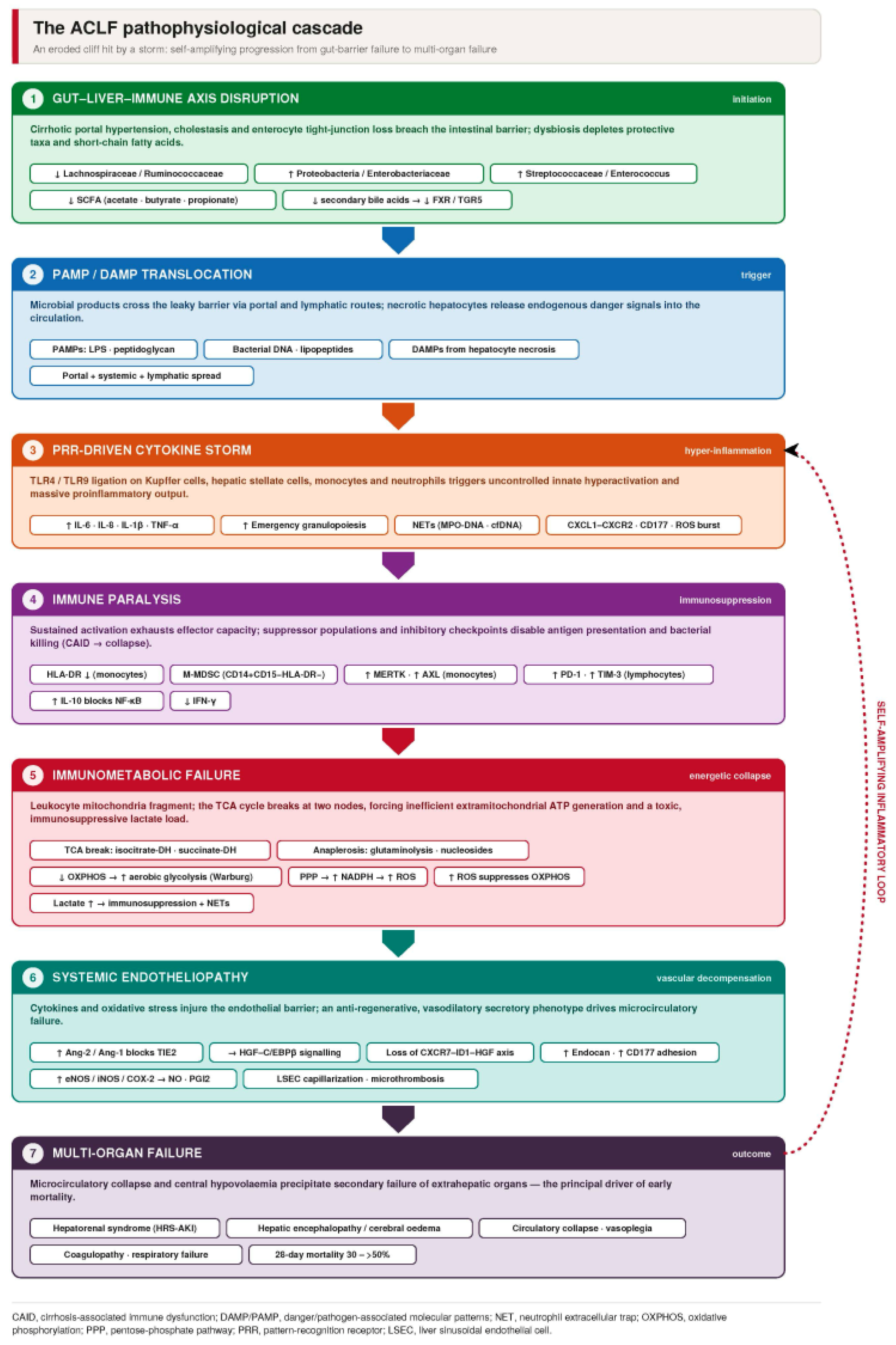
Figure 2.
The immunometabolic rewiring of the ACLF leukocyte.
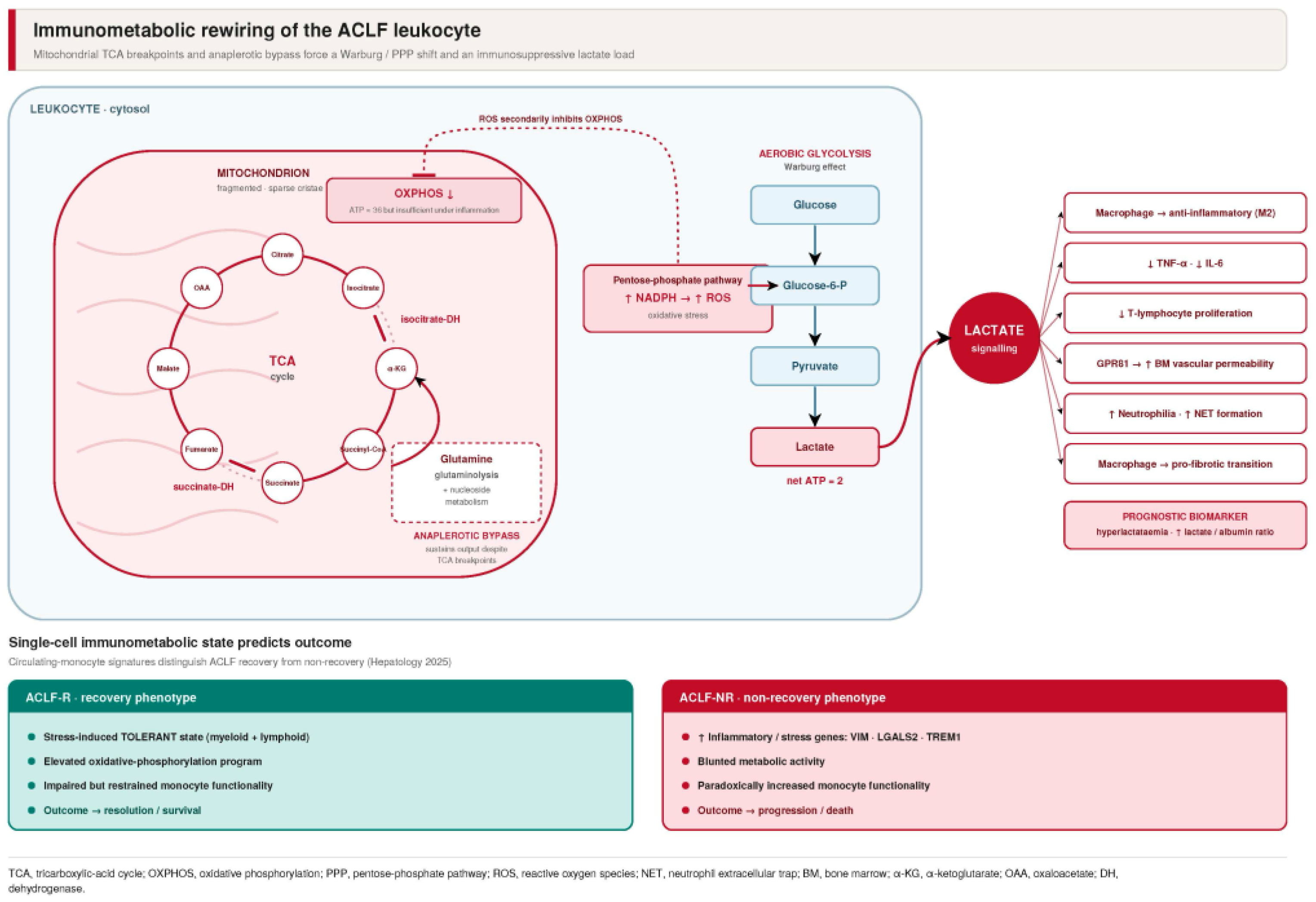
Figure 3.
The disease trajectory and therapeutic windows in ACLF.
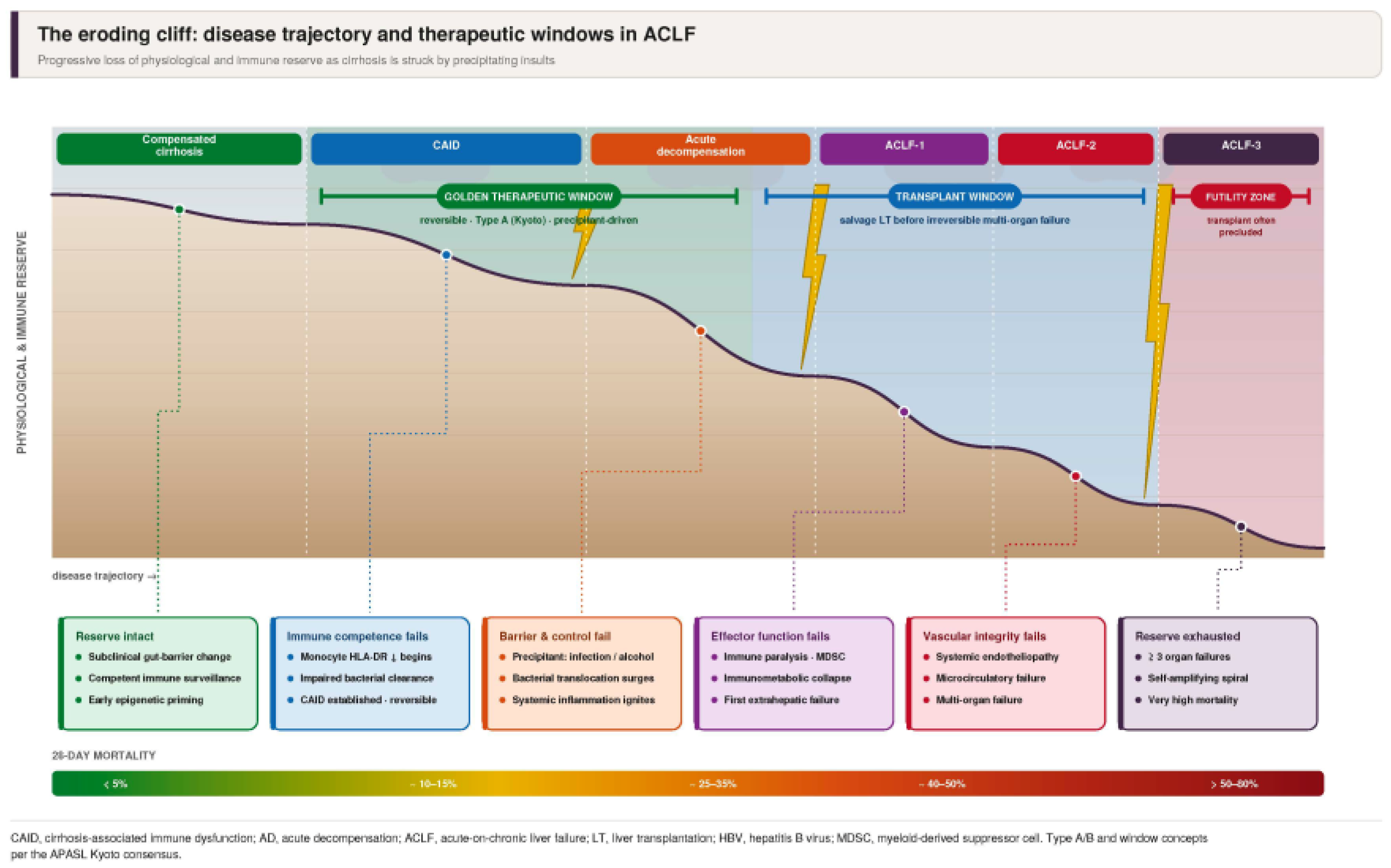
Figure 4.
The phase-targeted therapeutic map for ACLF.
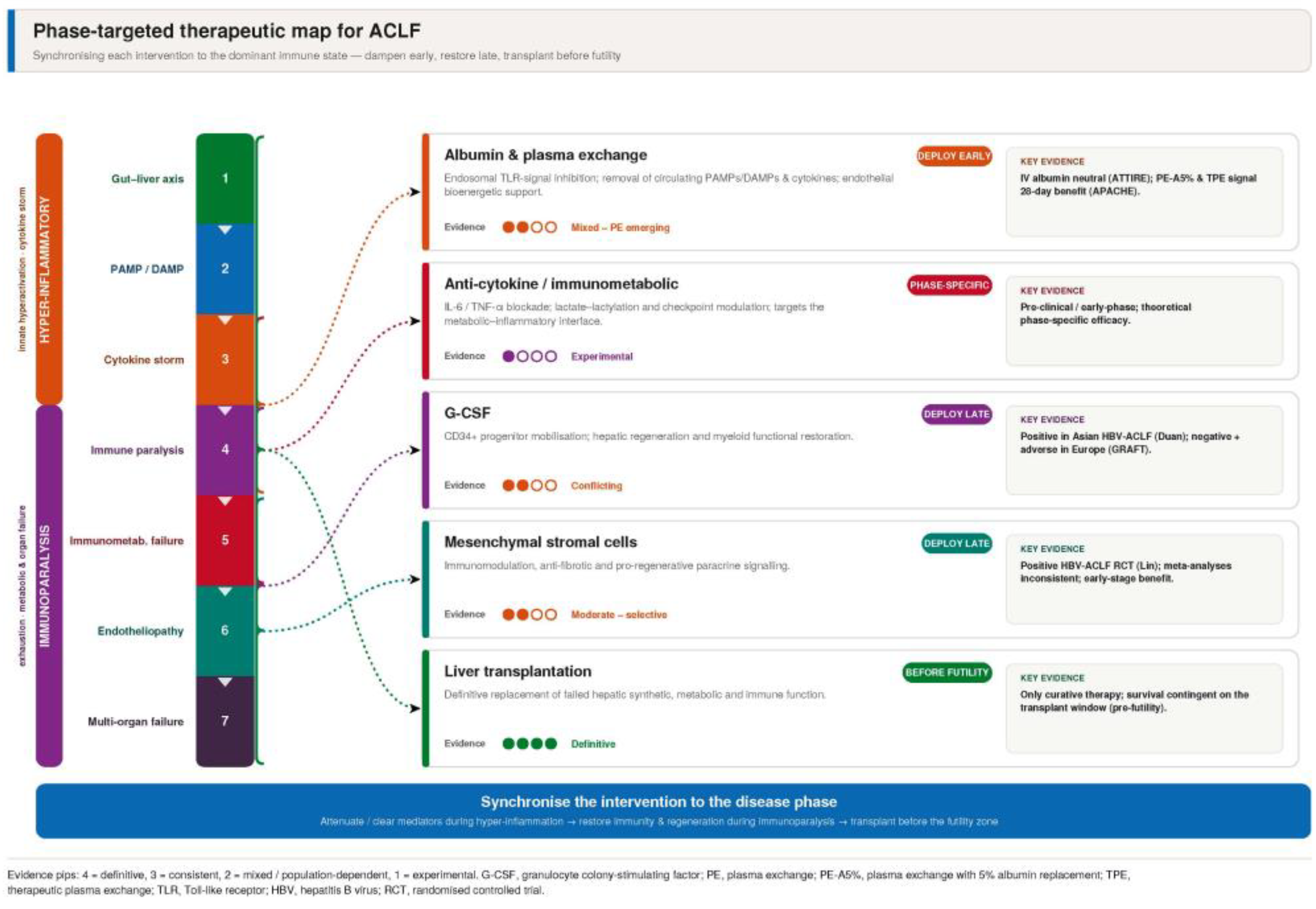

Table 1.
Definitional frameworks for ACLF, reframed against the APASL Kyoto typology.
| Consortium | Underlying population |
Organ-failure basis |
Role of infection | Grading / score | 28-day mortality range |
Kyoto type (A / B) |
|---|---|---|---|---|---|---|
| APASL / AARC | Chronic liver disease with or without cirrhosis; large non-cirrhotic fraction; HBV reactivation and alcohol dominate; no prior decompensation required |
Liver failure obligatory (bilirubin ≥ 5 mg/dL + INR ≥ 1.5) with ascites and/or HE within 4 weeks; extrahepatic failures appear later |
Infection treated as a consquence /complication — not an accepted defining precipitant (sepsis-driven cases largely excluded) |
AARC score (bilirubin, HE, INR, lactate, creatinine) → grades I–III |
Grade- dependent: I ≈ <20%, II ≈ 40–50%, III ≈ >75% (approx., cohort-dependent) |
Predominantly Type A (single hepatic insult on non-decompensated CLD; potentially reversible) |
| EASL-CLIF (CANONIC / EF-CLIF; CLIF-C ACLF) | Acute decompensation of cirrhosis (prior or index decompensation required) |
CLIF-C Organ Failure score across 6 systems (liver, kidney, brain, coagulation, circulation, respiration); organ failure defines ACLF |
Bacterial infection is a major precipitant in Western cohorts; recognised as both precipitant and consequence |
CLIF-C ACLF score; grades 1–3 by number of organ failures |
ACLF-1 ≈ 22–23%, ACLF-2 ≈ 30–32%, ACLF-3 ≈ 70–77% (28-day) | Mixed — frequently Type B (deterioration on decompensated cirrhosis); Type A when a clear precipitant is present |
| NACSELD | Hospitalised patients with cirrhosis (framework derived from infected cirrhotic cohorts) |
≥ 2 extrahepatic organ failures of 4 (shock, grade III/IV HE, renal replacement, mechanical ventilation); hepatic failure not required |
Infection central — a key precipitant; framework built around infected cirrhotics | Binary definition (≥ 2 extrahepatic OF = ACLF); no graded score |
≥ 2 OF ≈ 30–50%; rises steeply per added OF (up to >90% with 4) | Typically Type B (infection- precipitated deterioration on decompensated cirrhosis) |
| COSSH (HBV-ACLF) |
HBV-related chronic liver disease, cirrhotic and non-cirrhotic; HBV reactivation/flare |
Modified CLIF-OF adapted to HBV; admits hepatic failure on non-cirrhotic CLD; COSSH-ACLF II score |
HBV reactivation is the dominant precipitant; infection a frequent consequence |
COSSH-ACLF / COSSH-ACLF II score; grades 1–3 | Grade- dependent, steep gradient (≈ 1: ~20% → 3: >70–80%) |
Predominantly Type A (HBV-flare insult); bridges APASL and EASL concepts |
Abbreviations: AARC, APASL ACLF Research Consortium; ACLF, acute-on-chronic liver failure; AKI, acute kidney injury; APASL, Asian Pacific Association for the Study of the Liver; CANONIC, CLIF Acute-oN-chrONic lIver failure in Cirrhosis study; CLIF-C, Chronic Liver Failure Consortium; CLD, chronic liver disease; COSSH, Chinese Group on the Study of Severe Hepatitis B; EASL, European Association for the Study of the Liver; EF-CLIF, European Foundation for the study of Chronic Liver Failure; HBV, hepatitis B virus; HE, hepatic encephalopathy; INR, international normalised ratio; NACSELD, North American Consortium for the Study of End-Stage Liver Disease; OF, organ failure. Kyoto type: Type A = ACLF on non-decompensated (compensated) chronic liver disease, precipitant-driven and potentially reversible; Type B = ACLF superimposed on already decompensated cirrhosis. Mortality figures are approximate and cohort-dependent. Sources: CANONIC/EASL-CLIF [1,3,4]; APASL update [5] and the APASL Kyoto consensus (2025 [2]); COSSH [6]; NACSELD [7].
Table 2.
Gut-microbiome shifts in ACLF and their prognostic direction.
| Taxon | Direction | Functional consequence | Prognostic association | Reference |
|---|---|---|---|---|
|
Proteobacteria (phylum) |
↑ | ↑ PAMP/endotoxin load; strong driver of barrier failure | Adverse - strong predictor of ACLF onset and secondary renal failure | [57,62,63,64] |
| Enterobacteriaceae | ↑ | ↑ LPS load, endotoxaemia; ↓ barrier integrity |
Adverse- worse outcome; linked to ACLF development and AKI |
[58,62,65] |
| Streptococcaceae | ↑ | Pathobiont overgrowth; pro-inflammatory milieu |
Adverse- associated with severity |
[61,65] |
|
Enterococcus / Enterococcaceae (incl. E. faecium) |
↑ | Enterocyte microvillus damage; translocation | Adverse- E. faecium associated with higher mortality |
[66,67] |
| Veillonella | ↑ | Bile-acid/metabolic shift | Adverse- correlates with elevated total bilirubin | [66] |
| Burkholderiaceae (HBV-ACLF) | ↑ | Positive correlation with IP-10 (immune-cell chemoattractant) | Adverse- pro-inflammatory recruitment | [68] |
| Pasteurellaceae | ↑ | Dysbiotic expansion | Adverse- correlates with increased mortality |
[65] |
| Lachnospiraceae | ↓ | ↓ SCFA (butyrate); impaired barrier and immune regulation | Protective loss- reduction tracks ↑ TNF-α / IL-6 and poorer outcome | [61,65] |
| Ruminococcaceae | ↓ | ↓ SCFA and secondary bile-acid synthesis (↓ FXR/TGR5) | Protective loss- adverse | [65,69] |
|
Clostridium / Ruminococcus (commensal BA converters) |
↓ | ↓ secondary bile acids (UDCA, LCA) → ↓ TGR5/FXR anti-inflammatory signalling | Protective loss- adverse | [69,70] |
|
Parabacteroides distasonis |
↓ | ↓ secondary BA pool / FXR stimulation (deficit vs AD) | Adverse; therapeutic restoration increases secondary BAs (promising) |
[70] |
|
Bacteroidetes (phylum) |
↓ | Reduced diversity | Adverse- reduction correlates with rising AFP | [66] |
| Paraprevotella clara, Bacteroides salyersiae, Clostridium sp., Roseburia hominis | present | SCFA producers; barrier support | Favorable- presence associated with better prognosis | [67] |
| Overall faecal α-diversity |
↓ | Global loss of protective metabolic function; correlates with MELD / Child-Pugh | Adverse- lower diversity predicts ↑ 90-day mortality | [60,65] |
Abbreviations: AD, acute decompensation; AFP, alpha-fetoprotein; AKI, acute kidney injury; BA, bile acid; FXR, farnesoid X receptor; IP-10, interferon-γ-induced protein 10; LCA, lithocholic acid; LPS, lipopolysaccharide; MELD, Model for End-stage Liver Disease; PAMP, pathogen-associated molecular pattern; SCFA, short-chain fatty acid; TGR5, Takeda G-protein-coupled receptor 5; UDCA, ursodeoxycholic acid. Direction is relative to healthy controls / acute-decompensation comparators. “Protective loss” denotes depletion of a beneficial taxon, which is prognostically adverse.
Table 3.
Immunomodulatory therapies in ACLF: evidence ledger.
| Therapy | Proposed mechanism | Best evidence (n, design) |
Outcome | Asian vs Western divergence |
Recommendation |
|---|---|---|---|---|---|
| G-CSF | CD34+ progenitor mobilisation → hepatic regeneration; myeloid functional modulation |
Duan 2013 (n ≈ 55, RCT) [88] GRAFT 2021 (n = 176, RCT) [92] Di Martino 2023, (meta-analysis) [93] |
Asian trials: ↑ survival (3-month 48% vs 21%, Duan). GRAFT: no overall or transplant-free survival benefit, ↑ adverse events |
Marked — benefit largely confined to Asian (HBV) cohorts; absent in European (alcohol-predominant) ACLF; etiology and criteria differ |
Not recommended for routine ACLF use (EASL 2023); phase-dependent rationale; investigational |
| Human serum albumin (intravenous) |
Oncotic expansion; antioxidant/scavenging; endosomal TLR-signal inhibition; endothelial mitochondrial restoration |
ATTIRE 2021 (n = 777, RCT) [100] |
No reduction in infection, renal dysfunction or death as targeted IV therapy; benefit confined to classical indications; safe |
Limited divergence; principal RCT evidence Western; ACLF-specific confirmatory data lacking globally |
Recommended for SBP, HRS-AKI and large-volume paracentesis; NOT a standalone disease-modifying ACLF therapy |
| Plasma exchange / PE-A5% (extracorporeal) |
Removal of circulating PAMPs/DAMPs, cytokines and bilirubin; restoration of functional albumin and detoxification |
Fernández 2024 (proof-of-concept study) [98] Swaroop 2026 (n=40, RCT) [102] |
Signal for improved 28-day survival/ organ function (TPE 44.3% vs 63.9% mortality); no consistent 90-day ACLF benefit; strongest established benefit in ALF |
Active investigation in both regions; APASL incorporates PE in selected HBV-ACLF algorithms; Western RCT data emerging |
Promising / emerging; not yet standard of care; reasonable transplant bridge in selected centres; under RCT evaluation |
| Mesenchymal stromal cells (MSC) | Immunomodulatory, anti-fibrotic and pro-regenerative paracrine signalling |
Lin 2017 (n ≈ 110, RCT) [105] Wang 2023 (meta-analysis) [106] Liu 2022 (meta-analysis) [107] Lu 2025 (meta-analysis) [108] |
Consistent biochemical improvement and survival benefit in HBV-ACLF RCTs (Lin); meta-analyses inconsistent on hard endpoints; greatest benefit early-stage; safe |
Most RCT evidence Asian (HBV-ACLF)(Lin); dose/route/ timing heterogeneity limits generalisability |
Investigational; not standard; protocol standardisation required |
| Anti-cytokine / immunometabolic (emerging) |
IL-6 / TNF-α blockade; lactate–lactylation modulation; PD-1 / TIM-3 checkpoint inhibition to reverse immunoparalysis; AXL / MERTK targeting |
Pre-clinical and early-phase only; no completed phase III in ACLF Naveau 2004 (n=36, RCT) [110] Boetticher 2008 (n=48, RCT) [111] Tan 2025 [112] Bao 2025 [113] Markwick 2015 (n=48, prospective study) [114] Bernsmeier 2015 (n=119, prospective study) [115] |
No clinical efficacy data; theoretical phase specific use (anti-cytokine in hyper-inflammation; checkpoint blockade in immunoparalysis) Anti–TNF-α agents (infliximab, etanercept) showed harm in severe AH underscoring the risk of unselected cytokine blockade |
Not applicable (pre-clinical) | Experimental; not for clinical use outside trials |
Abbreviations: AH, alcoholic hepatitis; ALF, acute liver failure; ATTIRE, Albumin To prevenT Infection in chronic liveR failurE; BM-MSC, bone-marrow-derived mesenchymal stromal cell; G-CSF, granulocyte colony-stimulating factor; GRAFT, G-CSF to treat ACLF trial; HBV, hepatitis B virus; HRS-AKI, hepatorenal syndrome–acute kidney injury; IL, interleukin; PAMP/DAMP, pathogen-/damage-associated molecular pattern; PE, plasma exchange; PE-A5%, plasma exchange with 5% albumin replacement; RCT, randomised controlled trial; SBP, spontaneous bacterial peritonitis; TLR, Toll-like receptor; TNF-α, tumour necrosis factor α; TPE, therapeutic plasma exchange Liver transplantation remains the only definitive therapy and the survival benchmark; the therapies above are adjunctive or investigational. Recommendation status reflects EASL 2023 guidance [4] and the APASL Kyoto consensus (2025) [2].
Disclaimer/Publisher’s Note: The statements, opinions and data contained in all publications are solely those of the individual author(s) and contributor(s) and not of MDPI and/or the editor(s). MDPI and/or the editor(s) disclaim responsibility for any injury to people or property resulting from any ideas, methods, instructions or products referred to in the content. |
© 2026 by the authors. Licensee MDPI, Basel, Switzerland. This article is an open access article distributed under the terms and conditions of the Creative Commons Attribution (CC BY) license (http://creativecommons.org/licenses/by/4.0/).
Copyright: This open access article is published under a Creative Commons CC BY 4.0 license, which permit the free download, distribution, and reuse, provided that the author and preprint are cited in any reuse.


