

Submitted:
18 June 2026
Posted:
18 June 2026
You are already at the latest version
Abstract
Background/Objectives: Microsatellite-stable colorectal cancer (MSS CRC) accounts for the vast majority of CRC cases and remains largely resistant to immune checkpoint inhibitors. Emerging evidence suggests that the gut microbiome is an important regulator of antitumor immunity and may contribute to immunotherapy resistance through multiple mechanisms involving the tumor microenvironment. This review aims to summarize current knowledge of the microbiome–immunity–therapy axis in MSS CRC and to explore microbiome-based strategies to enhance immunotherapy responsiveness. Methods: A narrative review of the recent literature was conducted, focusing on studies published within the last five years that investigated gut microbiota composition, microbial metabolites, tumor immune regulation, immunotherapy response, and microbiome-targeted therapeutic interventions in CRC. Evidence from mechanistic studies, translational research, clinical investigations, and multi-omics analyses was integrated. Results: Current evidence indicates that gut dysbiosis contributes to immune resistance in MSS CRC through immune exclusion, myeloid-driven immuno-suppression, T-cell dysfunction, chronic inflammation, and altered microbial metabolite signaling. Specific microorganisms, including Fusobacterium nucleatum, enterotoxigenic Bacteroides fragilis, pks-positive Escherichia coli, and other CRC-associated pathobionts, have been implicated in tumor progression and modulation of antitumor immunity. Microbial metabolites such as short-chain fatty acids, tryptophan-derived compounds, bile acids, succinate, and inosine represent key functional mediators linking microbial communities to host immune responses. Emerging microbiome-targeted interventions, including fecal microbiota transplantation, next-generation probiotics, postbiotics, selective microbial depletion, and engineered bacterial therapeutics, show potential to restore antitumor immunity and improve immunotherapy efficacy. In parallel, advances in metagenomics, metabolomics, spatial transcriptomics, and artificial intelligence are facilitating the development of precision immuno-microbiome oncology approaches. Conclusions: The gut microbiome functions as a critical regulator of immune resistance in MSS CRC through coordinated effects on microbial composition, metabolite production, and tumor immune remodeling. Microbiome-targeted interventions, combined with multi-omics-based patient stratification, may provide new opportunities to overcome immunotherapy resistance and expand the clinical benefits of immune checkpoint blockade in this traditionally refractory disease.
Keywords:
colorectal cancer
; microsatellite-stable colorectal cancer
; gut microbiome
; immune resistance
; immune checkpoint inhibitors
; Fusobacterium nucleatum
; microbial metabolites
; tumor microenvironment
; microbiome-targeted therapy
; precision immuno-oncology
1. Introduction
Colorectal cancer (CRC) remains a major global oncological burden, with more than 1.9 million new cases and over 900,000 deaths estimated worldwide in 2022, ranking among the most common and lethal malignancies [1]. Despite progress in screening, surgery, chemotherapy, targeted therapy, and molecular stratification, metastatic CRC continues to be associated with poor long-term outcomes, particularly in patients who do not benefit from immune checkpoint inhibitors (ICIs) [1,2].
Figure 1.
Proposed role of the gut microbiome in shaping immune resistance and therapeutic responsiveness in microsatellite-stable colorectal cancer (Figure created in Canva, https://www.canva.com). Dysbiosis-associated immune suppression, microbial metabolites, and tumor microenvironment remodeling contribute to immune checkpoint inhibitor resistance, whereas microbiome-targeted interventions may promote immune reactivation and therapeutic re-sensitization.
Figure 1.
Proposed role of the gut microbiome in shaping immune resistance and therapeutic responsiveness in microsatellite-stable colorectal cancer (Figure created in Canva, https://www.canva.com). Dysbiosis-associated immune suppression, microbial metabolites, and tumor microenvironment remodeling contribute to immune checkpoint inhibitor resistance, whereas microbiome-targeted interventions may promote immune reactivation and therapeutic re-sensitization.
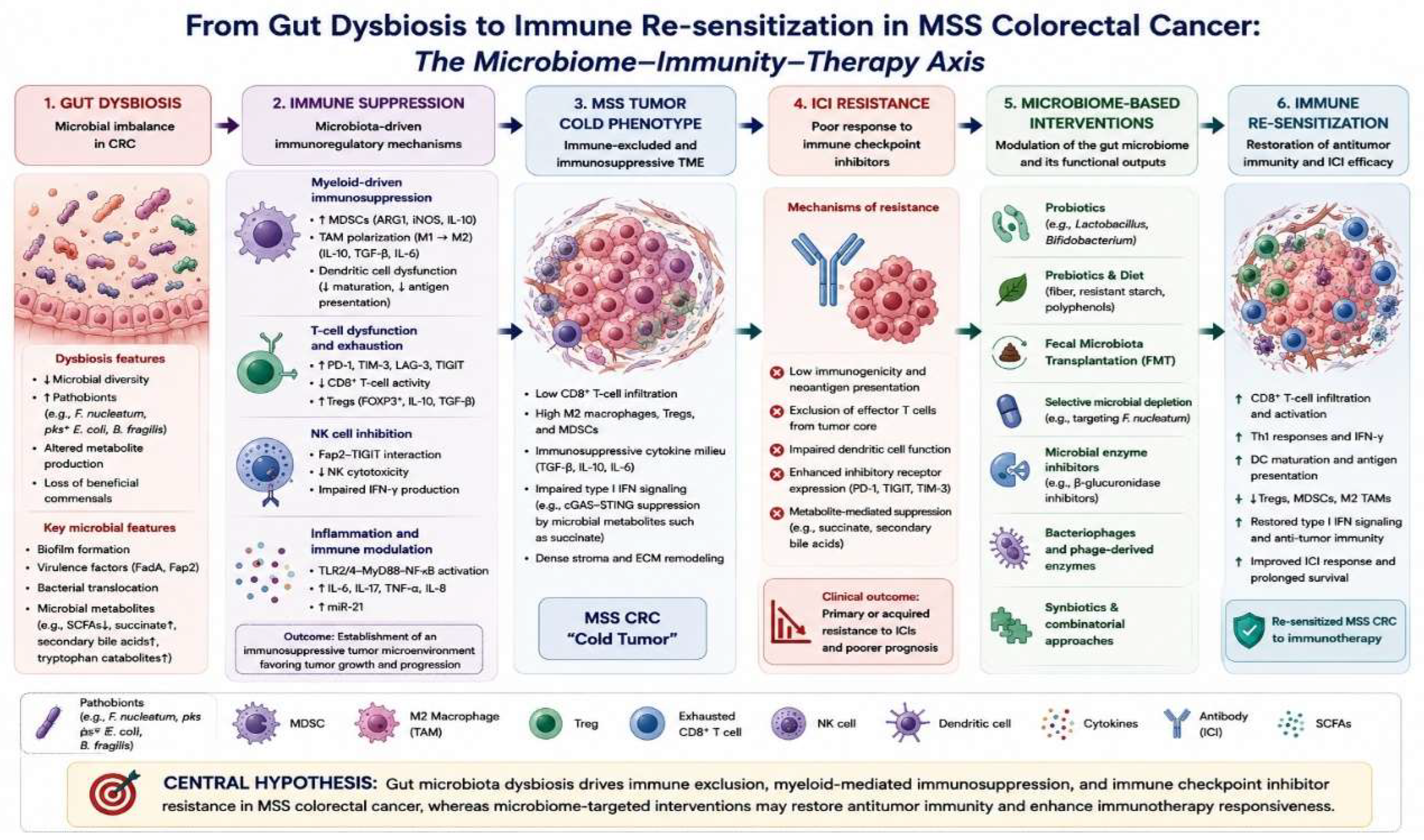
The therapeutic impact of immunotherapy in CRC is strongly dependent on mismatch repair status. In MSI-H/dMMR metastatic CRC, programmed cell death protein 1 (PD-1) blockade has demonstrated durable clinical benefit, as shown by KEYNOTE-177, in which pembrolizumab improved progression-free survival compared with chemotherapy, and by CheckMate-142, in which nivolumab plus low-dose ipilimumab showed sustained activity in MSI-H/dMMR disease [3,4,5]. However, this benefit is largely restricted to a molecularly defined minority of CRC patients. In contrast, microsatellite-stable/proficient mismatch repair (MSS/pMMR) tumors represent the predominant CRC subtype and remain largely refractory to ICI monotherapy [6,7,8].
This therapeutic gap reflects fundamental biological differences between MSI-H/dMMR and MSS/pMMR tumors. MSI-H tumors generally display high mutational burden, increased neoantigen load, abundant immune infiltration, and an immune-active tumor microenvironment. Conversely, MSS CRC is typically characterized by reduced tumor immunogenicity, limited cytotoxic T-cell infiltration, immune exclusion, myeloid-driven immunosuppression, stromal barriers, and activation of oncogenic and inflammatory pathways that collectively maintain an immunologically “cold” phenotype [6,8,9].
In recent years, the gut microbiome has emerged as a critical regulator of antitumor immunity and immunotherapy response. Microbial communities can influence immune surveillance through direct interaction with epithelial and immune cells, modulation of antigen presentation, regulation of cytokine signaling, and production of immunologically active metabolites. Recent systematic and mechanistic reviews suggest that microbiota composition may contribute to differential ICI responses in CRC and other malignancies, supporting the concept of a microbiome–immunotherapy axis [10,11,12].
In CRC, dysbiosis is particularly relevant because the tumor arises within a microbe-rich anatomical environment. Enrichment of potentially pro-tumorigenic bacteria such as Fusobacterium nucleatum (F. nucleatum), enterotoxigenic Bacteroides fragilis, and pks-positive Escherichia coli (E. coli), together with depletion of beneficial short-chain fatty acid-producing commensals, may promote chronic inflammation, epithelial barrier dysfunction, immune suppression, and therapeutic resistance. Among these microorganisms, F. nucleatum has attracted particular attention because of its ability to modulate T-cell and natural killer cell activity, promote immune escape, and potentially reduce immunotherapy responsiveness in MSS CRC [13].
Therefore, the central hypothesis of this review is that gut microbiome dysbiosis actively contributes to the immune-resistant phenotype of microsatellite-stable colorectal cancer through multiple interconnected mechanisms, including immune exclusion, myeloid-driven immunosuppression, T-cell dysfunction and exhaustion, disruption of interferon signaling, and altered microbial metabolite production. These processes collectively promote resistance to immune checkpoint inhibitors and help maintain the immunologically “cold” tumor microenvironment characteristic of MSS CRC. We further propose that microbiome-targeted interventions—including microbial modulation, metabolite-based therapies, fecal microbiota transplantation, engineered bacterial therapeutics, and precision multi-omics approaches—may represent rational strategies to restore antitumor immunity and enhance immunotherapy responsiveness in this traditionally refractory CRC subtype. Based on this conceptual framework, this review examines the mechanistic links between gut dysbiosis, immune resistance, and therapeutic failure in MSS CRC, while highlighting emerging opportunities for microbiome-guided precision immuno-oncology.
2. Microsatellite-Stable Colorectal Cancer as an Immunologically Cold Tumor
2.1. Reduced Antigenicity and Neoantigen Burden
The limited efficacy of ICIs in MSS CRC is primarily related to the low intrinsic immunogenicity of this tumor subtype. Unlike MSI-H/dMMR tumors, which accumulate numerous insertion–deletion mutations due to defective DNA mismatch repair, MSS/pMMR tumors usually exhibit a lower tumor mutational burden and generate fewer neoantigens that can be recognized by the adaptive immune system [3,6,8]. This reduced neoantigenic landscape limits the probability of effective T-cell priming and decreases the likelihood that immune checkpoint blockade alone will restore clinically meaningful antitumor immunity.
In MSI-H/dMMR CRC, abundant neoantigens promote immune recognition and explain, at least in part, the durable responses observed with pembrolizumab, nivolumab, and nivolumab–ipilimumab combinations [3,4,5]. In MSS disease, however, the antigenic stimulus is often insufficient to initiate a robust cytotoxic T-cell response. As a result, PD-1/ programmed death-ligand 1 (PD-L1) blockade may release inhibitory signaling but fail to generate effective tumor-directed immunity in the absence of pre-existing antitumor immune activation [6,7,8].
2.2. Defective T-Cell Priming and Immune Exclusion
A second major feature of MSS CRC is impaired T-cell priming and defective lymphocyte infiltration into the tumor core. Effective antitumor immunity requires antigen uptake by dendritic cells, migration to lymphoid structures, presentation to naïve T cells, expansion of tumor-specific cytotoxic lymphocytes, and trafficking of these cells into tumor tissue. In MSS CRC, several steps of this cancer–immunity cycle may be impaired [8,9].
Many MSS tumors show an immune-excluded phenotype, in which lymphocytes are present at the invasive margin but fail to penetrate the tumor parenchyma. This spatial immune exclusion limits direct contact between CD8+ T cells and malignant epithelial cells, reducing the efficacy of checkpoint inhibition. Tumor-intrinsic pathways, including Wnt/β-catenin, MAPK, PI3K–AKT, and KRAS-driven signaling, may contribute to defective dendritic-cell recruitment, reduced T-cell infiltration, and immune escape [6,8,9].
2.3. Myeloid-Driven Immunosuppression
The immunosuppressive myeloid compartment is a central determinant of immune resistance in MSS CRC. Tumor-associated macrophages, myeloid-derived suppressor cells, neutrophils, and immature dendritic cell populations can suppress cytotoxic T-cell activity through multiple mechanisms, including arginine depletion, reactive oxygen species production, secretion of interleukin-10 (IL-10) and transforming growth factor beta (TGF-β) signaling, induction of regulatory T cells, and inhibition of antigen presentation [8,9].
Tumor-associated macrophages may acquire an M2-like phenotype that supports angiogenesis, matrix remodeling, tumor invasion, and immune evasion. Similarly, myeloid-derived suppressor cells in colorectal cancer (MDSCs) accumulate in the CRC microenvironment and inhibit T-cell proliferation and effector function. These myeloid populations may also sustain resistance to ICIs by maintaining a suppressive cytokine network that cannot be reversed by PD-1/PD-L1 blockade alone [8,9].
2.4. Stromal and Vascular Barriers
The stromal architecture of MSS CRC further contributes to its cold immune phenotype. Cancer-associated fibroblasts, extracellular matrix remodeling, and abnormal vasculature create both physical and biochemical barriers to immune-cell infiltration. TGF-β signaling is particularly relevant because it promotes fibroblast activation, immune exclusion, epithelial–mesenchymal transition, and suppression of effector T-cell function [8,9].
Vascular endothelial growth factor (VEGF)-mediated abnormal angiogenesis also restricts immune cell trafficking and promotes an immunosuppressive microenvironment. These stromal and vascular barriers help explain why many MSS tumors remain resistant even when checkpoint molecules are therapeutically inhibited. Consequently, combination strategies aimed at vascular normalization, stromal remodeling, or TGF-β inhibition are being explored as potential approaches to sensitize MSS CRC to immunotherapy [6,8].
2.5. The Gut Microbiome as an Additional Layer of Immune Resistance
Although tumor-intrinsic and stromal mechanisms are central to MSS CRC immune resistance, the gut microbiome adds an additional regulatory layer. The microbiome can influence the tumor immune microenvironment through microbial antigens, pathogen-associated molecular patterns, microbial metabolites, and modulation of systemic inflammatory tone [10,11,12]. In CRC, this relationship is particularly relevant because dysbiotic microbial communities are located in direct proximity to the tumor.
Certain bacteria may promote immune escape by suppressing cytotoxic lymphocytes, polarizing macrophages, expanding MDSCs, or increasing checkpoint molecule expression. F. nucleatum is a model organism in this context, as recent evidence links it to immune modulation, reduced cytotoxic activity of T and NK cells, and possible impairment of immunotherapy responsiveness in MSS CRC [13]. These observations suggest that MSS CRC should not be viewed solely as a genetically or stromal-resistant tumor subtype, but also as a disease in which host–microbe interactions may actively shape immune resistance.
3. Fusobacterium nucleatum as a Central Microbial Driver of Immune Resistance in MSS Colorectal Cancer
Among CRC-associated microorganisms, F. nucleatum has emerged as one of the most relevant candidates linking gut dysbiosis, tumor immune remodeling, and therapeutic resistance. Recent evidence suggests that F. nucleatum is not merely a passive microbial passenger but an active modulator of CRC biology, particularly in MSS tumors, where immune checkpoint inhibitors have limited efficacy [13,14]. Its pathogenic relevance derives from its ability to adhere to epithelial cells, activate oncogenic pathways, induce inflammation, reshape the tumor microenvironment, suppress cytotoxic immunity, and contribute to resistance to conventional and immune-based therapies [13,14,15].
3.1. Adhesion, Epithelial Invasion, and Oncogenic Signaling
The pro-tumorigenic effects of F. nucleatum begin with its ability to adhere to and invade colorectal epithelial cells. The bacterial adhesin FadA binds to E-cadherin, disrupts epithelial junction integrity, and activates Wnt/β-catenin signaling, a key oncogenic pathway in CRC. This interaction promotes epithelial proliferation, survival, epithelial–mesenchymal transition, and invasive behavior, thereby linking microbial colonization to canonical CRC oncogenic signaling [14,15].
In addition to FadA, F. nucleatum expresses Fap2, an autotransporter protein that recognizes Gal-GalNAc residues enriched on colorectal tumor cells. This selective tumor tropism may explain why F. nucleatum preferentially accumulates in tumor tissue. Fap2 is also immunologically relevant because it can interact with TIGIT, an inhibitory receptor expressed on natural killer cells and T cells, thereby reducing antitumor cytotoxicity [13,14].
3.2. Inflammation-Driven Immune Remodeling
A major mechanism through which F. nucleatum contributes to CRC progression is the induction of chronic inflammation. The bacterium activates innate immune receptors, including TLR2 and TLR4, leading to downstream NF-κB and MyD88 signaling and increased production of inflammatory mediators, including IL-6, IL-8, IL-17, tumor necrosis factor α (TNF-α), and other cytokines involved in tumor progression [14,15].
This inflammatory activity is clinically relevant because chronic cytokine signaling supports epithelial proliferation, angiogenesis, tumor invasion, and immune tolerance. Recent reviews emphasize that F. nucleatum can create a tumor-promoting inflammatory niche while simultaneously impairing antitumor immune responses, a combination that may be particularly relevant in MSS CRC, where the immune microenvironment is already poorly responsive to ICI monotherapy [13,14,15].
3.3. Suppression of Cytotoxic T-Cell and NK-Cell Activity
Beyond inflammation, F. nucleatum directly contributes to immune escape. One of the best-described mechanisms involves Fap2-mediated interaction with TIGIT, which suppresses NK-cell cytotoxicity and reduces T-cell-mediated antitumor immunity [13,14]. This mechanism is highly relevant in MSS CRC, where baseline cytotoxic T-cell infiltration and immune activation are often limited.
Recent studies and reviews also suggest that F. nucleatum can modulate the tumor immune microenvironment more broadly, including effects on T-cell dysfunction, macrophage polarization, and myeloid-driven immunosuppression [13,16]. These effects may reinforce the immune-excluded or immune-suppressed phenotype characteristic of many MSS tumors.
3.4. F. nucleatum, Interferon Signaling, and PD-1 Resistance
One of the most important recent developments is the proposed link between F. nucleatum, microbial metabolites, and impaired response to PD-1 blockade. In MSS CRC models, F. nucleatum has been reported to influence anti-PD-1 responsiveness, indicating that its role in immunotherapy may be context-dependent rather than uniformly suppressive [17]. At the same time, other mechanistic evidence suggests that F. nucleatum-derived metabolites, including succinic acid, may impair cGAS–STING–IFN-β signaling, reduce dendritic-cell activation, and compromise antitumor immune priming [13].
This duality is important for the review. F. nucleatum should not be presented simplistically as only “bad” or only “pro-resistance”; rather, it appears to be a context-dependent microbial regulator of the tumor immune microenvironment. Its effects may vary depending on bacterial strain, tumor molecular subtype, metabolite production, immune baseline, and therapeutic combination.
3.5. Therapeutic Implications
Because F. nucleatum is linked to immune suppression, tumor progression, and therapy resistance, it represents a rational therapeutic target. Potential strategies include selective microbial depletion, bacteriophage-based approaches, dietary modulation, nanodrug delivery systems, and microbiome-based patient stratification [13,18]. However, current evidence remains largely preclinical or observational, and no interventional clinical trial has yet proven that direct targeting of F. nucleatum improves immunotherapy outcomes in MSS CRC.
Therefore, F. nucleatum should currently be viewed as a translationally promising but not yet clinically validated target. Its strongest immediate value may lie in biomarker development, especially for identifying patients with microbiome-driven immune suppression who may benefit from microbiome-modulating strategies combined with immunotherapy.
4. Beyond Fusobacterium Nucleatum: Other Microbial Contributors to Immune Resistance in MSS Colorectal Cancer
Although F. nucleatum is the most extensively studied CRC-associated bacterium, immune resistance in MSS CRC is unlikely to be driven by a single microorganism. Current evidence supports a broader dysbiotic ecosystem model, in which multiple microbial taxa, biofilm communities, bacterial genotoxins, and microbial metabolites interact with epithelial, stromal, and immune compartments to shape the tumor microenvironment [19,20].
Recent microbiome studies show that CRC-associated dysbiosis is characterized by enrichment of pathobionts such as enterotoxigenic Bacteroides fragilis, pks-positive E. coli, Parvimonas micra, Peptostreptococcus anaerobius, and other oral or intestinal anaerobes, together with depletion of protective short-chain fatty acid-producing commensals [19,20]. This suggests that microbiome-driven immune resistance should be interpreted as a network-level process rather than as the effect of isolated bacterial species.
4.1. Enterotoxigenic Bacteroides Fragilis: Inflammation and Immune Dysregulation
Enterotoxigenic Bacteroides fragilis (ETBF) is one of the best-characterized pro-tumorigenic bacteria in CRC. ETBF produces Bacteroides fragilis toxin, also known as fragilysin, which disrupts epithelial barrier integrity, activates β-catenin and STAT3-related signaling, and promotes chronic inflammation [19,20,21]. ETBF-driven inflammation is particularly relevant because it can induce IL-17- and IL-6-rich immune responses that support tumor growth, myeloid recruitment, and immunosuppression.
A recent systematic review and meta-analysis reported that ETBF is associated with CRC and may vary across stages of colorectal carcinogenesis [21]. Additional recent data suggest that ETBF may be linked to immune modulation in CRC liver metastasis, supporting the idea that this bacterium can shape not only primary tumor biology but also metastatic immune niches [22].
Unlike F. nucleatum, which directly interferes with cytotoxic immune mechanisms, ETBF appears to promote immune resistance mainly through chronic inflammatory signaling, barrier disruption, and myeloid-promoting cytokine networks. These mechanisms may cooperate with other microbial drivers to sustain the immune-suppressive MSS CRC microenvironment.
4.2. pks-positive Escherichia Coli: Genotoxicity and Tumor Evolution
pks-positive E. coli carries the polyketide synthase genomic island responsible for the production of colibactin, a genotoxic compound capable of inducing DNA damage. Colibactin exposure produces characteristic mutational signatures in colorectal tumors, providing one of the strongest causal links between a microbial product and human CRC genome alteration [23,24].
Although the landmark organoid and mutational signature studies were published before the last five-year window, they remain mechanistically essential and should be retained as foundational references [23,24]. More recent integrative reviews continue to highlight pks-positive E. coli as a key microbial driver of CRC through genotoxicity, disruption of the epithelial barrier, inflammation, and tumor evolution [19,20].
From the perspective of immunotherapy resistance, pks-positive E. coli may contribute indirectly by accelerating genomic instability, epithelial stress, inflammatory signaling, and tumor heterogeneity. These processes can influence antigen presentation, immune editing, and the emergence of immune-resistant tumor clones.
4.3. Parvimonas Micra, Peptostreptococcus Anaerobius, and Emerging Pathobionts
In addition to ETBF and pks-positive E. coli, several oral and intestinal anaerobes have been associated with CRC development and progression. P. micra has been repeatedly identified as enriched in CRC-associated microbial signatures and has been shown experimentally to promote colorectal tumorigenesis [25]. Recent evidence also suggests that P. micra may contribute to carcinogenesis through microbial metabolite-mediated DNA damage [26].
P. anaerobius is another CRC-associated pathobiont with potential immunological relevance. It has been reported to promote colorectal carcinogenesis and modulate the tumor immune microenvironment through PI3K/Akt-related signaling and inflammatory mechanisms [27]. Although the strongest mechanistic study is more than 5 years old, recent reviews continue to recognize P. anaerobius as part of the CRC-associated dysbiotic network [19,20].
These organisms are important because they support the view that CRC-associated dysbiosis is not a single-pathogen phenomenon. Instead, several bacterial taxa may act through complementary mechanisms: adhesion, inflammation, immune modulation, metabolite production, and genotoxicity.
4.4. Biofilms as Immunomodulatory Ecosystems
Bacterial biofilms may represent an underappreciated determinant of immune resistance in CRC. Biofilms are organized microbial communities embedded in extracellular matrices, allowing microbial persistence, spatial organization, and coordinated interactions with host tissues.
A 2024 study using fluorescence in situ hybridization and dual-RNA sequencing showed that biofilms and core pathogens shape the CRC tumor microenvironment and immune phenotype [28]. The study reported that Fusobacterium spp. were associated with increased bacterial biomass and an inflammatory response, while high bacterial activity correlated with pro-inflammatory cytokines, matrix-remodeling factors, immunomodulatory molecules, M2 macrophages, regulatory T cells, and other immune cell populations [28].
These findings are highly relevant because they move the field beyond static microbiome composition. They suggest that bacterial activity, spatial organization, and biofilm biology may be more informative than the presence of individual taxa alone. In MSS CRC, such microbial ecosystems may sustain chronic inflammation while promoting immune tolerance, thereby contributing to immune exclusion and ICI resistance.
4.5. A Microbial Network Model of Immune Resistance
Collectively, current evidence supports a transition from a pathogen-centric model to a network-based model of microbiome-driven immune resistance. In this framework, F. nucleatum, ETBF, pks-positive E. coli, P. micra, P. anaerobius, and biofilm-associated microbial communities interact to promote barrier dysfunction, inflammation, immune suppression, metabolic remodeling, and tumor progression [19,20,28].
This integrated model provides the mechanistic foundation for the next section of the review. While bacterial taxa can influence CRC through direct host–microbe interactions, many of the systemic and local immunological effects of dysbiosis are mediated by microbial metabolites. These bioactive molecules serve as a functional bridge between microbial community composition and immunotherapy responsiveness in MSS CRC.
While individual bacterial taxa contribute to immune remodeling through direct host–microbe interactions, many of the systemic immunological consequences of dysbiosis are ultimately mediated by microbial metabolites. These bioactive molecules represent a functional bridge between microbial community composition and host immune responses, providing a mechanistic link between gut dysbiosis and immunotherapy responsiveness in MSS CRC.
The microorganisms discussed above contribute to colorectal carcinogenesis and immune resistance through distinct yet frequently overlapping mechanisms. To facilitate comparison of their biological activities and potential relevance to immunotherapy responsiveness, the principal CRC-associated microbial taxa and their immunological effects are summarized in Table 1.
5. Microbial Metabolites Linking Gut Dysbiosis to Immunotherapy Resistance and Immune Re-Sensitization in MSS Colorectal Cancer
Recent advances in microbiome research have shifted attention from taxonomic composition toward microbial functionality. Although specific bacterial species are frequently associated with colorectal carcinogenesis and immune remodeling, mounting evidence indicates that many of their biological effects are mediated through the production of bioactive metabolites. These molecules function as signaling mediators between the microbiota and the host, influencing epithelial integrity, innate immunity, adaptive immune responses, and tumor progression [29,30,31].
In CRC, microbial metabolites represent a critical mechanistic bridge linking gut dysbiosis to tumor immune escape. By modulating dendritic-cell maturation, macrophage polarization, T-cell differentiation, cytokine production, and immune checkpoint signaling, these metabolites may profoundly influence the responsiveness of MSS CRC to immune checkpoint inhibitors [29,30,31,32]. Importantly, unlike bacterial composition, which varies substantially among individuals, microbial metabolites often converge into common functional pathways, making them attractive candidates for biomarker development and therapeutic intervention.
5.1. Short-Chain Fatty Acids: Beneficial Mediators of Antitumor Immunity
Short-chain fatty acids (SCFAs), including butyrate, propionate, and acetate, are among the most extensively studied microbiota-derived metabolites. They are generated through bacterial fermentation of dietary fibers and are primarily produced by beneficial commensal bacteria such as Faecalibacterium prausnitzii, Roseburia spp., and members of the Lachnospiraceae family [29,30].
Among SCFAs, butyrate has attracted particular interest because of its anti-inflammatory and antitumor properties. Butyrate serves as the primary energy source for colonocytes, enhances epithelial barrier integrity, and modulates immune responses by inhibiting histone deacetylases (HDACs). Through this mechanism, butyrate can influence gene expression, promote differentiation of regulatory immune populations, and regulate inflammatory signaling pathways [29,33].
Recent evidence suggests that SCFAs may also enhance antitumor immunity. Experimental studies have shown that butyrate can improve CD8+ T-cell function, support memory T-cell formation, and influence dendritic-cell activity. Moreover, SCFAs may modulate the efficacy of immune checkpoint blockade by affecting T-cell metabolism and cytokine production [30,31,32].
In CRC-associated dysbiosis, depletion of SCFA-producing bacteria frequently results in reduced butyrate availability. Consequently, loss of SCFA-mediated immune regulation may contribute to chronic inflammation, impaired barrier function, and immune dysfunction, thereby facilitating the development of the immunologically cold MSS tumor phenotype.
5.2. Tryptophan Metabolism and the Aryl Hydrocarbon Receptor Pathway
Tryptophan metabolism represents another major microbiome-dependent pathway with important immunological implications. Intestinal bacteria metabolize dietary tryptophan into a variety of indole derivatives that can activate the aryl hydrocarbon receptor (AhR), a ligand-dependent transcription factor involved in mucosal immunity and immune homeostasis [30,34].
AhR signaling regulates epithelial barrier maintenance, cytokine production, dendritic cell differentiation, and T cell responses. Physiological activation of AhR contributes to intestinal homeostasis and protection against excessive inflammation. However, dysregulated tryptophan metabolism may alter immune equilibrium and contribute to tumor-promoting inflammation [34,35].
Emerging evidence indicates that microbiota-derived indoles can influence antitumor immunity by regulating CD8+ T-cell activity, dendritic-cell maturation, and cytokine production. Alterations in microbial tryptophan metabolism may therefore contribute to impaired immune surveillance and reduced responsiveness to immunotherapy in MSS CRC [30,34].
Because AhR signaling represents a potentially druggable pathway, microbiome-mediated modulation of tryptophan metabolism has attracted increasing interest as a therapeutic strategy to enhance immunotherapy responsiveness.
5.3. Secondary Bile Acids and Immune Suppression
Primary bile acids synthesized by the liver undergo extensive microbial transformation within the intestine, generating secondary bile acids such as deoxycholic acid (DCA) and lithocholic acid (LCA). Although these metabolites are important regulators of host metabolism, excessive accumulation may exert pro-inflammatory and pro-carcinogenic effects [29,36].
Experimental studies have shown that secondary bile acids can influence macrophage polarization, cytokine secretion, epithelial barrier function, and immune-cell recruitment. In CRC, dysregulated bile acid metabolism has been associated with chronic inflammation, oxidative stress, DNA damage, and tumor progression [12,36].
Recent evidence further suggests that bile acids may modulate antitumor immunity by influencing dendritic-cell function, T-cell activation, and immune checkpoint signaling. Consequently, alterations in microbiota-driven bile acid metabolism may contribute to the establishment of an immunosuppressive tumor microenvironment that favors immune escape and limits responsiveness to checkpoint blockade [12,29].
5.4. Succinate: A Potential Mediator of Immunotherapy Resistance
Among emerging microbial metabolites, succinate has recently attracted considerable attention for its potential roles in immune regulation and immunotherapy resistance. Elevated succinate concentrations have been observed in inflammatory and neoplastic conditions and may influence both immune and epithelial cell function [13,30].
Recent studies suggest that succinate derived from microbes may impair antitumor immunity by modulating macrophage activity, inflammatory signaling, and interferon-related pathways. Of particular interest, recent mechanistic evidence has linked F. nucleatum-associated succinate production to suppression of the cGAS–STING–IFN-β signaling axis, a pathway critically involved in dendritic cell activation and antitumor immune priming [13].
Because cGAS–STING signaling is increasingly recognized as a key determinant of immune checkpoint inhibitor responsiveness, disruption of this pathway by microbial metabolites could represent a previously underappreciated mechanism of immunotherapy resistance in MSS CRC. Although additional validation is required, succinate is currently one of the most promising candidate metabolites linking gut dysbiosis to immune escape.
5.5. Inosine and Purine Metabolism
Inosine is a purine metabolite produced by specific intestinal bacteria and has emerged as an important regulator of antitumor immunity. Experimental studies have demonstrated that inosine can enhance T-cell activation and improve responsiveness to immune checkpoint blockade under certain conditions [30,31].
The immunological effects of inosine appear to depend on the activation state of immune cells and the cytokine milieu. In the presence of appropriate co-stimulatory signals, inosine may support Th1 polarization and promote interferon gamma (IFN-γ) production, thereby enhancing antitumor immune responses [30].
These findings are particularly intriguing because they suggest that not all microbiota-derived metabolites contribute to immune suppression. Instead, some metabolites may function as endogenous immune adjuvants that potentiate the efficacy of immunotherapy. Consequently, manipulation of microbial purine metabolism may represent a future strategy for microbiome-guided immune re-sensitization.
5.6. Microbial Metabolites as Functional Biomarkers and Therapeutic Targets
Collectively, current evidence suggests that microbial metabolites may represent more robust predictors of immunotherapy responsiveness than microbial taxonomy alone. While bacterial composition varies considerably between individuals and populations, many microbial communities converge toward similar metabolic outputs. Therefore, functional metabolomic profiling may provide a more accurate representation of microbiome–host interactions [29,30,31,32].
This concept is particularly relevant for MSS CRC, where multiple bacterial species may contribute to immune resistance through shared metabolic pathways. Metabolites such as butyrate, indole derivatives, bile acids, succinate, and inosine serve as functional mediators that influence immune surveillance, antigen presentation, cytokine signaling, and responsiveness to checkpoint inhibitors.
Accordingly, future precision immuno-oncology approaches may increasingly integrate microbiome-derived metabolomics with metagenomics, transcriptomics, and tumor immune profiling to identify patients most likely to benefit from microbiome-targeted interventions.
To facilitate the understanding of the complex interactions between gut dysbiosis, immune regulation, and therapeutic responsiveness in MSS CRC, Figure 2 summarizes the proposed microbiome–metabolite–immune axis. The schematic highlights how microbiota-derived metabolites influence the tumor microenvironment, modulate antitumor immunity, and ultimately affect responsiveness to immune checkpoint inhibitors, and illustrates emerging microbiome-targeted therapeutic strategies.
As illustrated in Figure 2, microbial metabolites represent the functional interface between gut microbial composition and host immunity. Consequently, understanding how these metabolites regulate immune cell function and tumor–host interactions may provide new opportunities for biomarker discovery and the development of microbiome-guided therapeutic strategies to overcome immunotherapy resistance in MSS CRC.
6. Microbiome-Based Therapeutic Strategies to Overcome Immunotherapy Resistance in MSS Colorectal Cancer
Growing evidence indicates that the gut microbiome is not only a biomarker of immunotherapy responsiveness but also a potentially modifiable therapeutic target. Unlike tumor genetics, which are relatively stable and difficult to manipulate, the intestinal microbiota can be altered through dietary interventions, probiotics, postbiotics, fecal microbiota transplantation (FMT), selective microbial depletion, and engineered bacterial therapies. Consequently, microbiome-targeted interventions have emerged as promising strategies to overcome immune resistance and enhance the efficacy of immune checkpoint inhibitors in MSS CRC [29,30,31,32].
The rationale for microbiome modulation is supported by accumulating evidence that microbial communities influence dendritic cell activation, antigen presentation, T-cell priming, cytokine production, immune checkpoint signaling, and microbial metabolite profiles. Therefore, therapeutic manipulation of the microbiome may represent a feasible strategy for restoring antitumor immunity and converting immunologically cold tumors into immune-responsive disease [30,31,32].
6.1. Fecal Microbiota Transplantation
FMT is currently the most direct approach for modifying the intestinal microbial ecosystem. By transferring an entire microbial community from a healthy donor or a responder patient, FMT has the potential to restore microbial diversity, re-establish beneficial metabolic pathways, and modulate systemic immune responses [37,38].
Interest in FMT as an adjunct to immunotherapy originated from landmark studies in melanoma, where transplantation of microbiota from ICI responders successfully restored responsiveness in a subset of previously resistant patients. These findings provided the first clinical evidence that microbiome composition may directly influence checkpoint inhibitor efficacy [38].
In CRC, clinical experience remains limited; however, preclinical studies suggest that FMT may improve antitumor immunity by increasing beneficial commensals, restoring short-chain fatty acid production, enhancing dendritic-cell maturation, and promoting CD8+ T-cell activation. Additionally, FMT may reduce the abundance of pathobionts associated with immune suppression, including F. nucleatum and other CRC-associated bacteria [28,37].
Despite its promise, FMT faces several challenges, including donor selection, variability in engraftment, safety concerns, and the lack of standardized protocols. Consequently, larger prospective clinical trials are required before routine integration into CRC immunotherapy strategies [39].
6.2. Probiotics and Next-Generation Beneficial Bacteria
Growing evidence suggests that specific microbial taxa may influence responsiveness to immune checkpoint blockade across multiple malignancies, supporting the rationale for probiotic-based immune modulation strategies [40,41].
Traditional probiotics have been investigated for their ability to improve gut microbial balance and reduce inflammation. However, recent attention has shifted toward next-generation probiotics with specific immunomodulatory properties, including Akkermansia muciniphila, Bifidobacterium spp., Faecalibacterium prausnitzii, and selected members of the Lachnospiraceae family [30,32].
Among these organisms, A. muciniphila has attracted particular interest due to its association with improved responses to immune checkpoint blockade across several cancers. Experimental studies indicate that A. muciniphila can enhance antigen presentation, stimulate dendritic-cell maturation, strengthen epithelial barrier integrity, and promote CD8+ T-cell activation [30,42].
Similarly, Bifidobacterium species have been shown to improve antitumor immunity by enhancing dendritic cell function and increasing interferon signaling. Because these microorganisms contribute to the production of beneficial metabolites, including SCFAs and inosine, they may simultaneously improve the metabolic and immunological components of the tumor microenvironment [30,31].
Although encouraging, current evidence remains largely preclinical, and the efficacy of probiotic supplementation in MSS CRC patients undergoing immunotherapy requires further validation in controlled clinical trials.
6.3. Postbiotics and Metabolite-Based Therapeutics
An emerging alternative to microbiome transplantation involves the direct administration of microbial metabolites or microbial-derived bioactive molecules, often referred to as postbiotics. This strategy aims to bypass the complexity and variability of microbial engraftment while preserving beneficial immunological effects [29,30,31,32].
Several metabolites discussed in the previous section have already demonstrated immunomodulatory potential. Butyrate may enhance epithelial barrier integrity and support CD8+ T-cell activity, whereas inosine can promote Th1 polarization and interferon-γ production. Conversely, therapeutic reduction of immunosuppressive metabolites such as succinate may help restore effective antitumor immunity [30,31,32].
Compared with FMT, postbiotic approaches offer greater standardization, easier regulatory approval, and improved reproducibility. Consequently, metabolite-based therapies may be among the most promising avenues for future microbiome-guided immunotherapy.
6.4. Selective Microbial Depletion and Precision Microbiome Editing
Because certain bacterial taxa contribute to immune suppression and therapy resistance, selective elimination of pathogenic microorganisms represents another potential therapeutic strategy. Unlike broad-spectrum antibiotics, which may disrupt beneficial microbial communities, precision microbiome editing aims to selectively target harmful bacteria while preserving beneficial taxa [13,30].
Potential approaches include narrow-spectrum antibiotics, bacteriophage therapy, CRISPR-based microbial editing, antimicrobial peptides, and small molecules that selectively inhibit bacterial virulence factors. Fusobacterium nucleatum is currently the most attractive target for such interventions due to its established role in immune modulation and CRC progression [13,18].
However, microbial ecosystems are highly interconnected, and elimination of a single microorganism may have unintended ecological consequences. Therefore, future precision microbiome editing strategies will likely require personalized microbiome profiling and systems-level approaches.
6.5. Engineered Bacterial Therapeutics
Advances in synthetic biology have enabled the development of genetically engineered microorganisms capable of delivering therapeutic molecules directly to the tumor microenvironment. These live bacterial therapeutics represent one of the most innovative directions in microbiome-based oncology [43].
Engineered bacteria can be designed to produce cytokines, immune stimulatory molecules, checkpoint-modulating agents, tumor antigens, or metabolite-modifying enzymes. Because bacteria naturally colonize hypoxic and necrotic tumor regions, they may serve as highly efficient therapeutic delivery systems [43].
Although most engineered bacterial platforms remain in preclinical development, their ability to combine targeted delivery with immune activation makes them particularly attractive for overcoming the profound immune resistance observed in MSS CRC.
6.6. Combination Strategies with Immune Checkpoint Inhibitors
Given the multifactorial nature of immune resistance in MSS CRC, microbiome-targeted interventions will likely be most effective when integrated into combination treatment strategies. Potential approaches include combining microbiome modulation with PD-1/PD-L1 inhibitors, CTLA-4 blockade, chemotherapy, radiotherapy, anti-angiogenic agents, TGF-β inhibitors, cancer vaccines, and adoptive cell therapies [6,30].
In this context, the microbiome should not be viewed as an isolated therapeutic target but rather as a modulatory platform that can enhance the efficacy of existing anticancer therapies. Future clinical trials will need to determine which microbiome interventions, patient populations, and treatment combinations produce the greatest therapeutic benefit.
6.7. Current Challenges and Future Perspectives
Despite remarkable progress, several obstacles continue to limit the clinical implementation of microbiome-based therapies. These include interindividual variability in microbiome composition, differences in diet and lifestyle, methodological heterogeneity across studies, lack of standardized biomarkers, and uncertainty regarding the durability of microbiome modulation [30,31,32].
Furthermore, it remains unclear whether microbial taxonomy, microbial metabolites, immune signatures, or integrated multi-omics profiles will ultimately provide the most clinically useful predictors of immunotherapy response. Addressing these challenges will be essential for translating microbiome-based interventions into routine oncological practice.
Collectively, current evidence suggests that microbiome-targeted therapies have the potential to become an important component of future immunotherapy strategies in MSS CRC. However, their successful implementation will require a precision medicine framework integrating microbiome profiling, immune characterization, metabolomics, and clinical stratification. Current evidence remains limited by methodological heterogeneity, differences in microbiome assessment techniques, variability in dietary and environmental exposures, and the lack of standardized predictive biomarkers, all of which complicate translation into clinical practice [39,40,41].
While microbiome-based interventions represent promising therapeutic tools, their successful clinical implementation requires accurate identification of patients most likely to benefit from such strategies. Consequently, recent research has increasingly focused on integrating metagenomics, metabolomics, transcriptomics, spatial profiling, and artificial intelligence to develop predictive models of immunotherapy responsiveness.
A broad range of microbiome-targeted therapeutic approaches is currently being investigated to overcome immune resistance and improve immunotherapy responsiveness in MSS CRC. The principal strategies, their mechanisms of action, and their current stage of development are summarized in Table 2.
7. Multi-Omics and Precision Immuno-Microbiome Oncology in MSS Colorectal Cancer
The growing recognition of the gut microbiome as a determinant of antitumor immunity has generated considerable interest in developing precision-medicine approaches to predict immunotherapy responsiveness. However, the clinical translation of microbiome research faces a major challenge: substantial interindividual variability in microbial composition, metabolite production, immune status, dietary habits, and tumor biology. Consequently, single biomarkers are unlikely to adequately capture the complexity of microbiome–host interactions in colorectal cancer [31,44,45].
To address this limitation, recent research has increasingly focused on integrating multiple layers of biological information, including metagenomics, metatranscriptomics, metabolomics, transcriptomics, spatial immune profiling, and artificial intelligence (AI)-based predictive modeling. Collectively, these approaches form the foundation of precision immuno-microbiome oncology, an emerging field aimed at identifying clinically actionable microbiome–immune signatures to predict treatment response and guide personalized therapeutic strategies [31,44,45].
7.1. Metagenomics: Beyond Microbial Taxonomy
Metagenomic sequencing has transformed microbiome research by enabling comprehensive characterization of microbial communities without the need for conventional culture methods. In CRC, metagenomic analyses have consistently demonstrated enrichment of microbial signatures associated with carcinogenesis, including F. nucleatum, enterotoxigenic Bacteroides fragilis, pks-positive E. coli, P. micra, and other pathobionts [19,20].
While taxonomic profiling has significantly improved our understanding of CRC-associated dysbiosis, its predictive value for immunotherapy remains limited. Different microbial communities may produce similar metabolic outputs, whereas identical bacterial species may exhibit substantial functional variability depending on strain composition and ecological context [45]. Consequently, metagenomics alone may be insufficient to accurately predict immunotherapy responsiveness in MSS CRC.
Nevertheless, microbial composition remains an important first-level biomarker and serves as the foundation for more advanced multi-omics integration strategies.
7.2. Metatranscriptomics and Functional Microbial Activity
Unlike metagenomics, which identifies the presence of microbes, metatranscriptomics evaluates microbial gene expression and therefore provides information about biological activity. This distinction is particularly important because bacterial abundance does not necessarily reflect microbial function [28].
Recent studies suggest that transcriptionally active microbial communities may be more strongly associated with tumor biology than taxonomic composition alone. For example, biofilm-associated bacteria may exhibit enhanced expression of virulence factors, inflammatory mediators, and metabolic pathways that influence immune cell recruitment and tumor progression [28].
From a clinical perspective, metatranscriptomic profiling may help distinguish passive microbial colonization from biologically relevant microbial activity. Consequently, future predictive models of immunotherapy response may benefit from integrating both microbial composition and microbial transcriptional activity.
7.3. Metabolomics: Functional Readouts of Microbiome–Host Interactions
Among all microbiome-related technologies, metabolomics may provide the most direct assessment of microbiome function. Rather than focusing on bacterial identity, metabolomic analyses quantify the bioactive molecules produced by microbial communities and their interactions with host metabolic pathways [29,30,31,32].
As discussed in the previous section, metabolites such as butyrate, inosine, indole derivatives, succinate, and secondary bile acids directly influence immune-cell differentiation, cytokine production, antigen presentation, and immune checkpoint responsiveness. Therefore, metabolomic signatures may represent more robust biomarkers of therapeutic response than bacterial taxonomy alone [29,30,31,32].
Several investigators have proposed that future patient stratification strategies should incorporate microbial metabolite profiling alongside conventional molecular biomarkers. Such approaches may facilitate identification of patients with favorable immunometabolic profiles who are more likely to benefit from microbiome-targeted interventions and immune checkpoint blockade.
7.4. Tumor Transcriptomics and Immune Gene Signatures
Microbiome-derived signals ultimately exert their effects through host cellular pathways. Consequently, integration of tumor transcriptomic data with microbiome profiling provides a powerful approach for understanding host–microbe interactions.
Transcriptomic analyses can identify immune activation signatures, interferon-related pathways, cytokine networks, T-cell exhaustion markers, antigen-presentation machinery, and immune checkpoint expression profiles. In MSS CRC, such analyses may reveal whether dysbiosis-associated microbial communities are linked to immune exclusion, myeloid-driven immunosuppression, or altered interferon signaling [8,9].
Recent studies suggest that combining microbial signatures with immune gene expression profiles improves predictive performance compared with either modality alone. This supports the concept that microbiome data should be interpreted within the broader context of the tumor immune microenvironment.
7.5. Spatial Transcriptomics and the Geography of Tumor–Microbiome Interactions
One of the most exciting recent developments is the application of spatial transcriptomics to CRC research. Unlike conventional sequencing methods, spatial transcriptomics preserves tissue architecture and allows simultaneous analysis of gene expression within specific anatomical locations [46,47].
This technology is particularly relevant in CRC because microbial communities are not uniformly distributed throughout the tumor. Instead, microorganisms often localize within biofilms, invasive margins, hypoxic regions, or specific stromal niches. Spatial transcriptomics therefore provides an unprecedented opportunity to investigate how microbial localization influences immune-cell recruitment, macrophage polarization, T-cell exclusion, and therapeutic responsiveness [46,47].
Future studies integrating microbial mapping with spatial immune profiling may reveal previously unrecognized mechanisms of immune resistance in MSS CRC.
7.6. Artificial Intelligence and Machine Learning-Based Predictive Models
The enormous complexity of microbiome–host interactions presents significant analytical challenges. Consequently, AI and machine learning approaches have become increasingly important tools for identifying predictive microbiome signatures.
Recent machine learning models have successfully integrated microbiome composition, clinical variables, immune parameters, and multi-omics datasets to predict CRC prognosis and immunotherapy responsiveness [44]. These algorithms may identify nonlinear relationships that cannot be detected through conventional statistical approaches.
Importantly, AI-based models may facilitate personalized treatment selection by identifying patient-specific microbial and immune profiles associated with favorable therapeutic outcomes. As datasets continue to expand, machine learning is expected to become an essential component of precision microbiome oncology.
7.7. Toward Precision Immuno-Microbiome Oncology
The ultimate goal of multi-omics integration is to develop clinically actionable precision medicine frameworks. In such a model, patient stratification would no longer rely solely on MSI status, tumor mutational burden, or PD-L1 expression. Instead, therapeutic decision-making would incorporate microbial composition, microbial activity, metabolite profiles, immune signatures, and computational prediction models [31,44,45].
For MSS CRC, this approach may be particularly valuable because resistance to immunotherapy is multifactorial and cannot be explained by a single biomarker. Multi-dimensional profiling may therefore identify subsets of MSS patients who could benefit from microbiome-targeted interventions combined with immune checkpoint blockade.
Collectively, these advances suggest that the future of CRC immunotherapy may lie not only in targeting tumors, but also in understanding and therapeutically manipulating the complex ecosystem that surrounds them.
8. Proposed Integrated Model of Microbiome-Driven Immune Resistance and Therapeutic Re-Sensitization in MSS Colorectal Cancer
The emerging evidence discussed throughout this review supports a paradigm shift in our understanding of immunotherapy resistance in MSS CRC. Traditionally, resistance to immune checkpoint inhibitors has been attributed primarily to tumor-intrinsic factors, including low tumor mutational burden, limited neoantigen generation, defective antigen presentation, and an immunologically “cold” tumor microenvironment. However, growing data indicate that these mechanisms alone cannot fully explain the heterogeneous responses observed among patients with MSS CRC [6,8].
We propose an integrated model in which gut microbiome dysbiosis acts as an upstream regulator of immune resistance through multiple interconnected biological pathways. In this framework, dysbiosis is characterized by enrichment of pathobionts such as F. nucleatum, enterotoxigenic B. fragilis, pks-positive E. coli, P. micra, and other CRC-associated microorganisms, together with depletion of beneficial metabolite-producing commensals [13,19,20]. These microbial alterations contribute to epithelial barrier dysfunction, chronic inflammation, activation of oncogenic signaling pathways, and remodeling of the tumor microenvironment.
The immunological consequences of dysbiosis are mediated through both direct and indirect mechanisms. Direct microbial-host interactions promote immune exclusion, suppression of dendritic-cell function, expansion of myeloid-derived suppressor cells, polarization of tumor-associated macrophages toward immunosuppressive phenotypes, and impairment of cytotoxic T-cell and natural killer cell activity [13,14,15,16]. Simultaneously, microbial metabolites—including short-chain fatty acids, indole derivatives, bile acids, succinate, and inosine—modulate immune-cell differentiation, cytokine signaling, interferon responses, and checkpoint inhibitor sensitivity [12,13,29,30,31,32,33,34,35,36].
Collectively, these processes converge to establish the characteristic immune-resistant phenotype of MSS CRC. Rather than functioning as isolated mechanisms, immune exclusion, myeloid-driven immunosuppression, T-cell dysfunction, metabolic reprogramming, and microbial signaling appear to operate as components of a coordinated dysbiosis-driven network. This model may explain why many MSS tumors remain resistant to checkpoint blockade despite expression of targetable immune pathways.
Importantly, the same framework also identifies multiple opportunities for therapeutic intervention. Strategies such as fecal microbiota transplantation, next-generation probiotics, postbiotic administration, selective microbial depletion, engineered bacterial therapeutics, and metabolite-based interventions may partially reverse dysbiosis-associated immune suppression and restore antitumor immunity [28,31,37,38,39,40,41,42,43,44,45]. In this context, microbiome-targeted therapies should not be viewed as alternatives to immunotherapy but rather as complementary approaches that can enhance responsiveness to existing immune checkpoint inhibitors.
To integrate the diverse mechanisms discussed throughout this review, Figure 3 presents a comprehensive conceptual model that links gut dysbiosis, immunosuppression, microbial metabolites, and therapeutic interventions in MSS CRC. The schematic illustrates how microbiome-driven alterations influence the tumor microenvironment and identifies potential intervention points to restore antitumor immunity and improve responsiveness to immune checkpoint inhibitors.
9. Future Directions and Clinical Perspectives
Despite remarkable progress in understanding the relationship between the gut microbiome and antitumor immunity, several important questions remain unresolved. Current evidence strongly supports the biological relevance of microbiome-mediated immune regulation in colorectal cancer; however, translation into routine clinical practice remains limited by methodological, biological, and regulatory challenges [30,31].
One of the most important priorities for future research is identifying reliable biomarkers to predict immunotherapy responsiveness. Current approaches often focus on individual bacterial taxa, yet accumulating evidence suggests that microbial metabolites, functional microbial activity, and integrated multi-omics signatures may provide more robust and reproducible biomarkers than taxonomy alone [29,30,31,32]. Consequently, future studies should prioritize developing composite microbiome–immune biomarkers that integrate metagenomics, metabolomics, transcriptomics, and immune profiling.
A second major challenge involves the standardization of microbiome assessment methodologies. Differences in sample collection, sequencing platforms, bioinformatic pipelines, dietary influences, geographic variation, and patient characteristics continue to limit comparability across studies. Establishing standardized protocols will be essential for validating microbiome-based biomarkers and facilitating multicenter clinical trials [40,41].
The development of personalized microbiome interventions represents another promising direction. Rather than applying identical microbiome-modulating therapies to all patients, future approaches may use individualized microbial and metabolic profiles to guide treatment selection. Such precision microbiome medicine could identify patients most likely to benefit from specific interventions, including FMT, probiotics, postbiotics, or targeted microbial depletion [31,44,45].
Artificial intelligence and machine learning are expected to play increasingly important roles in this process. The complexity of microbiome–host interactions exceeds the analytical capacity of conventional statistical methods, particularly when integrating high-dimensional multi-omics datasets. AI-based predictive models may therefore facilitate identification of clinically meaningful microbial signatures and improve patient stratification for immunotherapy [44].
Another emerging area involves spatially resolved analyses of tumor–microbiome interactions. Spatial transcriptomics, spatial metabolomics, and microbial localization studies may reveal how microorganisms influence specific immune niches within the tumor microenvironment. Such approaches could provide unprecedented insights into the mechanisms underlying immune exclusion, myeloid recruitment, and checkpoint inhibitor resistance in MSS CRC [46].
From a therapeutic perspective, future clinical trials should move beyond simple microbiome characterization and focus on microbiome-guided intervention strategies. Rational combination therapies integrating microbiome modulation with immune checkpoint inhibitors, anti-angiogenic agents, TGF-β inhibitors, cancer vaccines, adoptive cell therapies, or radiotherapy may represent the most promising strategy for overcoming immune resistance in MSS CRC [6,28,31,37,38,39,40,41,42,43,44,45].
Finally, microbiome research should increasingly shift from descriptive association studies toward mechanistic and interventional investigations. Although numerous studies have identified microbial signatures associated with CRC progression and immunotherapy responsiveness, causal relationships remain incompletely understood. Addressing this gap will be essential for translating microbiome science into clinically actionable therapeutic strategies.
Collectively, these developments suggest that microbiome-guided precision immuno-oncology may become an integral component of future colorectal cancer management. By integrating microbial profiling, immune characterization, metabolomics, spatial biology, and computational modeling, it may be possible to expand the benefits of immunotherapy to the large population of patients with MSS CRC who currently derive limited benefit from immune checkpoint blockade.
10. Conclusions
MSS CRC remains largely resistant to immune checkpoint inhibitors despite major advances in cancer immunotherapy. Emerging evidence indicates that gut microbiome dysbiosis contributes to this resistance by promoting immune exclusion, myeloid-driven immunosuppression, T-cell dysfunction, and alterations in microbial metabolite signaling. These processes collectively shape the immunologically “cold” tumor microenvironment that characterizes most MSS tumors. Among the microbial factors implicated in colorectal carcinogenesis and immune resistance, F. nucleatum, enterotoxigenic B. fragilis, pks-positive E. coli, and other CRC-associated pathobionts have emerged as key modulators of tumor–immune interactions. Importantly, microbial metabolites—including short-chain fatty acids, tryptophan-derived compounds, bile acids, succinate, and inosine—are critical functional mediators that link gut dysbiosis to antitumor immunity and responsiveness to immunotherapy. The growing recognition of the microbiome as a modifiable therapeutic target has generated considerable interest in microbiome-based interventions, including fecal microbiota transplantation, next-generation probiotics, postbiotics, selective microbial depletion, and engineered bacterial therapeutics. Although most of these approaches remain at preclinical or early translational stages, they offer promising opportunities to enhance the efficacy of immune checkpoint inhibitors and overcome therapeutic resistance in MSS CRC. Future progress will depend on integrating microbiome profiling with metabolomics, immune characterization, spatial biology, and artificial intelligence-driven analyses. Such multi-omics approaches may enable the development of microbiome-guided precision immuno-oncology strategies that identify patients most likely to benefit from personalized microbiome-targeted interventions. Ultimately, understanding and therapeutically manipulating the microbiome–immunity–therapy axis may represent a critical step toward expanding the clinical benefits of immunotherapy to the large population of patients with MSS CRC.
Author Contributions
Conceptualization, L.B. and A.E.G.; methodology, L.B. and A.E.G.; validation, A.E.C.P. and M.V.B.; resources, I.S. and V.P.; data curation, I.S. and V.P.; writing—original draft preparation, R.P. and M.-Z.A.; writing—review and editing, R.P. and M.-Z.A.; supervision, A.E.C.P. and M.V.B.; project administration, M.B.N. All authors have read and agreed to the published version of the manuscript.
Funding
The Article Processing Charges were funded by the University of Medicine and Pharmacy of Craiova, Romania.
Institutional Review Board Statement
Not applicable.
Informed Consent Statement
Not applicable.
Data Availability Statement
The data used to support the findings of this study are available from the corresponding author upon reasonable request.
Acknowledgments
Alice Elena Ghenea and Lidia Boldeanu share equal contributions and status as main/first authors. The authors have reviewed and edited the output and take full responsibility for the content of this publication.
Conflicts of Interest
The authors declare no conflicts of interest.
References
- Bray, F.; Laversanne, M.; Sung, H.; Ferlay, J.; Siegel, R.L.; Soerjomataram, I.; Jemal, A. Global cancer statistics 2022: GLOBOCAN estimates of incidence and mortality worldwide for 36 cancers in 185 countries. CA Cancer J. Clin. 2024, 74(3), 229–263. [Google Scholar] [CrossRef] [PubMed]
- Available online: https://gco.iarc.who.int/today/fact-sheets-cancer/about?utm (accessed on 14 May 2026).
- Diaz, L.A., Jr.; Shiu, K.K.; Kim, T.W.; Jensen, B.V.; Jensen, L.H.; Punt, C.; Smith, D.; Garcia-Carbonero, R.; Benavides, M.; Gibbs, P.; de la Fourchardiere, C.; Rivera, F.; Elez, E.; Le, D.T.; Yoshino, T.; Zhong, W.Y.; Fogelman, D.; Marinello, P.; Andre, T.; KEYNOTE-177 Investigators. Pembrolizumab versus chemotherapy for microsatellite instability-high or mismatch repair-deficient metastatic colorectal cancer (KEYNOTE-177): final analysis of a randomised, open-label, phase 3 study. Lancet Oncol. 2022, 23(5), 659–670. [Google Scholar] [CrossRef] [PubMed]
- Lenz, H.J.; Van Cutsem, E.; Luisa Limon, M.; Wong, K.Y.M.; Hendlisz, A.; Aglietta, M.; García-Alfonso, P.; Neyns, B.; Luppi, G.; Cardin, D.B.; Dragovich, T.; Shah, U.; Abdullaev, S.; Gricar, J.; Ledeine, J.M.; Overman, M.J.; Lonardi, S. First-Line Nivolumab Plus Low-Dose Ipilimumab for Microsatellite Instability-High/Mismatch Repair-Deficient Metastatic Colorectal Cancer: The Phase II CheckMate 142 Study. J. Clin. Oncol. 2022, 40(2), 161–170. [Google Scholar] [CrossRef] [PubMed]
- André, T.; Lonardi, S.; Wong, K.Y.M.; Lenz, H.J.; Gelsomino, F.; Aglietta, M.; Morse, M.A.; Van Cutsem, E.; McDermott, R.; Hill, A.; Sawyer, M.B.; Hendlisz, A.; Neyns, B.; Abdullaev, S.; Memaj, A.; Lei, M.; Dixon, M.; Kopetz, S.; Overman, M.J. Nivolumab plus low-dose ipilimumab in previously treated patients with microsatellite instability-high/mismatch repair-deficient metastatic colorectal cancer: 4-year follow-up from CheckMate 142. Ann. Oncol. 2022, 33(10), 1052–1060. [Google Scholar] [CrossRef] [PubMed]
- Wang, Q.; Yu, M.; Zhang, S. The characteristics of the tumor immune microenvironment in colorectal cancer with different MSI status and current therapeutic strategies. Front Immunol. 2025, 15, 1440830. [Google Scholar] [CrossRef] [PubMed]
- Kang, W.; Zhang, Z.; Li, W.; Zhang, Q.; Li, N.; Jiang, Y.; Zhang, J.; He, Y. Breaching the immune-cold barrier in pMMR/MSS metastatic colorectal cancer: emerging strategies beyond standard care. Front Immunol. 2026, 17, 1773002. [Google Scholar] [CrossRef] [PubMed]
- Kennel, K.B.; Greten, F.R. The immune microenvironment of colorectal cancer. Nat. Rev. Cancer 2025, 25(12), 945–964. [Google Scholar] [CrossRef] [PubMed]
- Andac-Aktas, A.B.; Calibasi-Kocal, G. Immunological landscape of colorectal cancer: tumor microenvironment, cellular players and immunotherapeutic opportunities. Front Mol. Biosci. 2025, 12, 1687556. [Google Scholar] [CrossRef] [PubMed]
- Ajab, S.M.; Zoughbor, S.H.; Labania, L.A.; Östlundh, L.M.; Orsud, H.S.; Olanda, M.A.; Alkaabi, O.; Alkuwaiti, S.H.; Alnuaimi, S.M.; Al Rasbi, Z. Microbiota composition effect on immunotherapy outcomes in colorectal cancer patients: A systematic review. PLoS ONE 2024, 19(7), e0307639. [Google Scholar] [CrossRef] [PubMed]
- Xie, J.; Liu, M.; Deng, X.; Tang, Y.; Zheng, S.; Ou, X.; Tang, H.; Xie, X.; Wu, M.; Zou, Y. Gut microbiota reshapes cancer immunotherapy efficacy: Mechanisms and therapeutic strategies. Imeta 2024, 3(1), e156. [Google Scholar] [CrossRef] [PubMed]
- Lei, W.; Zhou, K.; Lei, Y.; Li, Q.; Zhu, H. Gut microbiota shapes cancer immunotherapy responses. npj Biofilms Microbiomes 2025, 11(1), 143. [Google Scholar] [CrossRef] [PubMed]
- Incognito, D.; Ciappina, G.; Gelsomino, C.; Picone, A.; Consolo, P.; Scano, A.; Franchina, T.; Maurea, N.; Quagliariello, V.; Berretta, S.; et al. Fusobacterium Nucleatum in Colorectal Cancer: Relationship Among Immune Modulation, Potential Biomarkers and Therapeutic Implications. Int. J. Mol. Sci. 2025, 26, 9710. [Google Scholar] [CrossRef] [PubMed]
- Galasso, L.; Termite, F.; Mignini, I.; Esposto, G.; Borriello, R.; Vitale, F.; Nicoletti, A.; Paratore, M.; Ainora, M.E.; Gasbarrini, A.; et al. Unraveling the Role of Fusobacterium nucleatum in Colorectal Cancer: Molecular Mechanisms and Pathogenic Insights. Cancers 2025, 17, 368. [Google Scholar] [CrossRef] [PubMed]
- Li, Q.; Luo, W.; Xiao, L.; Xu, X.; Peng, X.; Cheng, L.; Zhou, X.; Zheng, X. Microbial manipulators: Fusobacterium nucleatum modulates the tumor immune microenvironment in colorectal cancer. J. Oral Microbiol. 2025, 17(1), 2544169. [Google Scholar] [CrossRef] [PubMed]
- Heregger, R.; Huemer, F.; Greil, R.; Canadas-Ortega, M.; Posselt, G.; Ijsselsteijn, M.E.; Plattner, C.; Rieder, D.; Trajanoski, Z.; Krogsdam, A.; Klieser, E.; Neureiter, D.; Wessler, S.; Weiss, L. Impact of Fusobacterium nucleatum on immune cell interactions and gene expression in colorectal cancer: a retrospective cohort study. Front Immunol. 2025, 16, 1629014. [Google Scholar] [CrossRef] [PubMed]
- Wang, X.; Fang, Y.; Liang, W.; Wong, C.C.; Qin, H.; Gao, Y.; Liang, M.; Song, L.; Zhang, Y.; Fan, M.; Liu, C.; Lau, H.C.; Xu, L.; Li, X.; Song, W.; Wang, J.; Wang, N.; Yang, T.; Mo, M.; Zhang, X.; Yu, J. Fusobacterium nucleatum facilitates anti-PD-1 therapy in microsatellite stable colorectal cancer. Cancer Cell 2024, 42(10), 1729–1746.e8. [Google Scholar] [CrossRef] [PubMed]
- Kowsarkhizi, A.S.; Yousefi, B.; Rahimi, A.; Aliramezani, A. Targeting Fusobacterium nucleatum in colorectal cancer: therapeutic strategies and future directions. Infect. Agent Cancer 2025, 20(1), 70. [Google Scholar] [CrossRef] [PubMed]
- Bautista, J.; Lamas-Maceiras, M.; Hidalgo-Tinoco, C.; Guerra-Guerrero, A.; Betancourt-Velarde, A.; López-Cortés, A. Gut microbiome-driven colorectal cancer via immune, metabolic, neural, and endocrine axes reprogramming. npj Biofilms Microbiomes 2026, 12(1), 21. [Google Scholar] [CrossRef] [PubMed]
- Wang, F.; Chen, W.; Jia, Y.; He, T.; Wu, S.; Xiang, J.; Chen, R.; Jiang, Q.; Yu, T.; Lan, Y.; Li, W.; Ma, L.; He, P.; Li, S. Gut Microbiota Reshapes the Tumor Microenvironment and Affects the Efficacy of Colorectal Cancer Immunotherapy. Cancer Med. 2025, 14(12), e70994. [Google Scholar] [CrossRef] [PubMed]
- Xia, S.; Ma, L.; Li, H.; Li, Y.; Yu, L. Prevalence of enterotoxigenic Bacteroides fragilis in patients with colorectal cancer: a systematic review and meta-analysis. Front Cell Infect. Microbiol. 2025, 15, 1525609. [Google Scholar] [CrossRef] [PubMed]
- Saito, R.; Shigematsu, Y.; Amori, M.; Amori, G.; Takamatsu, M.; Nishida, K.; Kanda, H.; Takahashi, Y.; Miura, Y.; Takeuchi, K.; Takahashi, S.; Inamura, K. Association of Enterotoxigenic Bacteroides fragilis with Immune Modulation in Colorectal Cancer Liver Metastasis. Cancers 2025, 17(17), 2733. [Google Scholar] [CrossRef] [PubMed]
- Pleguezuelos-Manzano, C.; Puschhof, J.; Rosendahl Huber, A.; van Hoeck, A.; Wood, H.M.; Nomburg, J.; Gurjao, C.; Manders, F.; Dalmasso, G.; Stege, P.B.; Paganelli, F.L.; Geurts, M.H.; Beumer, J.; Mizutani, T.; Miao, Y.; van der Linden, R.; van der Elst, S.; Genomics England Research Consortium; Garcia, K.C.; Top, J.; Clevers, H. Mutational signature in colorectal cancer caused by genotoxic pks+ E. coli. Nature 2020, 580(7802), 269–273. [Google Scholar] [CrossRef] [PubMed]
- Georgeson, P.; Steinfelder, R.S.; Harrison, T.A.; Pope, B.J.; Zaidi, S.H.; Qu, C.; Lin, Y.; Joo, J.E.; Mahmood, K.; Clendenning, M.; Walker, R.; Aglago, E.K.; Berndt, S.I.; Brenner, H.; Campbell, P.T.; Cao, Y.; Chan, A.T.; Chang-Claude, J.; Dimou, N.; Doheny, K.F.; Buchanan, D.D. Genotoxic colibactin mutational signature in colorectal cancer is associated with clinicopathological features, specific genomic alterations and better survival. medRxiv [Preprint] 2024, 2023, 03.10.23287127. [Google Scholar] [CrossRef] [PubMed]
- Zhao, L.; Zhang, X.; Zhou, Y.; Fu, K.; Lau, H.C.; Chun, T.W.; Cheung, A.H.; Coker, O.O.; Wei, H.; Wu, W.K.; Wong, S.H.; Sung, J.J.; To, K.F.; Yu, J. Parvimonas micra promotes colorectal tumorigenesis and is associated with prognosis of colorectal cancer patients. Oncogene 2022, 41(36), 4200–4210. [Google Scholar] [CrossRef] [PubMed]
- Guo, S.; Cao, M.; Wu, J.; Ma, W.; Liang, D.; Xie, H.; Xie, Y.; Luo, Z.; Lai, P.; Liu, D.; Zeng, W.; Zheng, J.; Xing, M.; Yin, X.; Xia, M.; He, Z. Parvimonas micra promotes carcinogenesis of colorectal cancer through phenyllactic acid-induced DNA damage. Clin. Transl. Med. 2026, 16(5), e70667. [Google Scholar] [CrossRef] [PubMed]
- Chen, C.; Su, Q.; Zi, M.; Hua, X.; Zhang, Z. Harnessing gut microbiota for colorectal cancer therapy: from clinical insights to therapeutic innovations. npj Biofilms Microbiomes 2025, 11(1), 190. [Google Scholar] [CrossRef] [PubMed]
- Kvich, L.; Fritz, B.G.; Zschach, H.; Terkelsen, T.; Raskov, H.; Høst-Rasmussen, K.; Jakobsen, M.R.; Gheorghe, A.G.; Gögenur, I.; Bjarnsholt, T. Biofilms and core pathogens shape the tumor microenvironment and immune phenotype in colorectal cancer. Gut Microbes 2024, 16(1), 2350156. [Google Scholar] [CrossRef] [PubMed]
- Luo, W.; Li, R.; Pan, C.; Luo, C. Gut microbiota-derived metabolites in immunomodulation and gastrointestinal cancer immunotherapy. Front Immunol. 2025, 16, 1710880. [Google Scholar] [CrossRef] [PubMed]
- Huang, M.; Chen, Y.; Cui, X. Targeting the gut microbiota-metabolite-immune axis in cancer immunotherapy: mechanistic interplay, therapeutic strategies, and translational applications-a narrative review. Transl. Cancer Res. 2026, 15(3), 214. [Google Scholar] [CrossRef] [PubMed]
- Wang, X.X.; Liang, J.J.; Duan, X.; Chen, G. Microbial metabolites for cancer immunotherapy: Current evidence and future directions. Semin Cancer Biol. 2025, 117, 89–110. [Google Scholar] [CrossRef] [PubMed]
- Liu, H.; Xiong, X.; Zhu, W.; Wang, S.; Huang, W.; Zhu, G.; Xu, H.; Yang, L. Gut microbial metabolites in cancer immunomodulation. Mol. Cancer 2025, 25(1), 8. [Google Scholar] [CrossRef] [PubMed]
- Cao, Q.; Yang, M.; Chen, M. Metabolic interactions: how gut microbial metabolites influence colorectal cancer. Front Microbiol. 2025, 16, 1611698. [Google Scholar] [CrossRef] [PubMed]
- Li, D.; Lan, X.; Xu, L.; Zhou, S.; Luo, H.; Zhang, X.; Yu, W.; Yang, Y.; Fang, X. Influence of gut microbial metabolites on tumor immunotherapy: mechanisms and potential natural products. Front Immunol. 2025, 16, 1552010. [Google Scholar] [CrossRef] [PubMed]
- Lu, Y.; Yuan, H.; Liang, S.; Li, D.; Jiang, P.; Wang, X.; Zhang, K.; Liu, D. Microbial metabolite-driven immune reprogramming in tumor immunotherapy: mechanisms and therapeutic perspectives. Front Immunol. 2025, 16, 1603658. [Google Scholar] [CrossRef] [PubMed]
- Zhao, H.; Wang, D.; Zhang, Z.; Xian, J.; Bai, X. Effect of Gut Microbiota-Derived Metabolites on Immune Checkpoint Inhibitor Therapy: Enemy or Friend? Molecules 2022, 27, 4799. [Google Scholar] [CrossRef] [PubMed]
- Brusnic, O.; Onisor, D.; Boicean, A.; Hasegan, A.; Ichim, C.; Guzun, A.; Chicea, R.; Todor, S.B.; Vintila, B.I.; Anderco, P.; et al. Fecal Microbiota Transplantation: Insights into Colon Carcinogenesis and Immune Regulation. J. Clin. Med. 2024, 13, 6578. [Google Scholar] [CrossRef] [PubMed]
- Davar, D.; Dzutsev, A.K.; McCulloch, J.A.; Rodrigues, R.R.; Chauvin, J.M.; Morrison, R.M.; Deblasio, R.N.; Menna, C.; Ding, Q.; Pagliano, O.; Zidi, B.; Zhang, S.; Badger, J.H.; Vetizou, M.; Cole, A.M.; Fernandes, M.R.; Prescott, S.; Costa, R.G.F.; Balaji, A.K.; Morgun, A.; Zarour, H.M. Fecal microbiota transplant overcomes resistance to anti-PD-1 therapy in melanoma patients. Science 2021, 371(6529), 595–602. [Google Scholar] [CrossRef] [PubMed]
- Hu, S.; Luo, C.; Wan, S.; Zhang, S.; Li, N.; Liu, G.; Zhao, L.Y. Modulating the gut microbiome to enhance cancer immunotherapy: a systematic review and Meta-Analysis of probiotics and FMT as adjuncts. BMC Cancer 2026, 26(1), 279. [Google Scholar] [CrossRef] [PubMed]
- Ciernikova, S.; Sevcikova, A.; Novisedlakova, M.; Mego, M. Insights into the Relationship Between the Gut Microbiome and Immune Checkpoint Inhibitors in Solid Tumors. Cancers 2024, 16, 4271. [Google Scholar] [CrossRef] [PubMed]
- Jiang, H.; Zhang, Q. Gut microbiota influences the efficiency of immune checkpoint inhibitors by modulating the immune system (Review). Oncol. Lett. 2024, 27(2), 87. [Google Scholar] [CrossRef] [PubMed]
- Zuo, S.; Huang, Y.; Zou, J. The role of the gut microbiome in modulating immunotherapy efficacy in colorectal cancer. IUBMB Life 2024, 76(12), 1050–1057. [Google Scholar] [CrossRef] [PubMed]
- Zhang, J.; Hasty, J.; Zarrinpar, A. Live bacterial therapeutics for detection and treatment of colorectal cancer. Nat. Rev. Gastroenterol. Hepatol. 2024, 21(5), 295–296. [Google Scholar] [CrossRef] [PubMed]
- Wang, J.; Cong, Y.; Tang, B.; Liu, J.; Pu, K. Integrative analysis of multi-omics data and gut microbiota composition reveals prognostic subtypes and predicts immunotherapy response in colorectal cancer using machine learning. Sci. Rep. 2025, 15(1), 25268. [Google Scholar] [CrossRef] [PubMed]
- Torshizi Esfahani, A.; Zafarjafarzadeh, N.; Vakili, F.; Bizhanpour, A.; Mashaollahi, A.; Karimi Kordestani, B.; Baratinamin, M.; Mohammadpour, S. Gut microbiome in colorectal cancer: metagenomics from bench to bedside. JNCI Cancer Spectr. 2025, 9(3), pkaf026. [Google Scholar] [CrossRef] [PubMed]
- Carranza, F.G.; Diaz, F.C.; Ninova, M.; Velazquez-Villarreal, E. Current state and future prospects of spatial biology in colorectal cancer. Front Oncol. 2024, 14, 1513821. [Google Scholar] [CrossRef] [PubMed]
- Song, W.; Wang, D.; Li, J.; Zhang, R. Spatial transcriptomics: integrating platforms and computational approaches for clinical insights. Biotechnol. Adv. 2026, 87, 108791. [Google Scholar] [CrossRef] [PubMed]
Figure 2.
Microbial metabolites regulating antitumor immunity and immunotherapy response in microsatellite-stable colorectal cancer (MSS CRC) (Figure created in Canva, https://www.canva.com). Gut dysbiosis alters the production of key microbiota-derived metabolites, including short-chain fatty acids, tryptophan metabolites, secondary bile acids, succinate, and inosine. These metabolites modulate epithelial barrier integrity, dendritic cell maturation, macrophage polarization, T cell activation, cytokine signaling, and immune checkpoint responsiveness, thereby shaping the tumor microenvironment and influencing the efficacy of immune checkpoint inhibitors. The figure also illustrates emerging microbiome-targeted interventions aimed at restoring beneficial metabolite profiles and enhancing antitumor immunity in MSS CRC.
Figure 2.
Microbial metabolites regulating antitumor immunity and immunotherapy response in microsatellite-stable colorectal cancer (MSS CRC) (Figure created in Canva, https://www.canva.com). Gut dysbiosis alters the production of key microbiota-derived metabolites, including short-chain fatty acids, tryptophan metabolites, secondary bile acids, succinate, and inosine. These metabolites modulate epithelial barrier integrity, dendritic cell maturation, macrophage polarization, T cell activation, cytokine signaling, and immune checkpoint responsiveness, thereby shaping the tumor microenvironment and influencing the efficacy of immune checkpoint inhibitors. The figure also illustrates emerging microbiome-targeted interventions aimed at restoring beneficial metabolite profiles and enhancing antitumor immunity in MSS CRC.
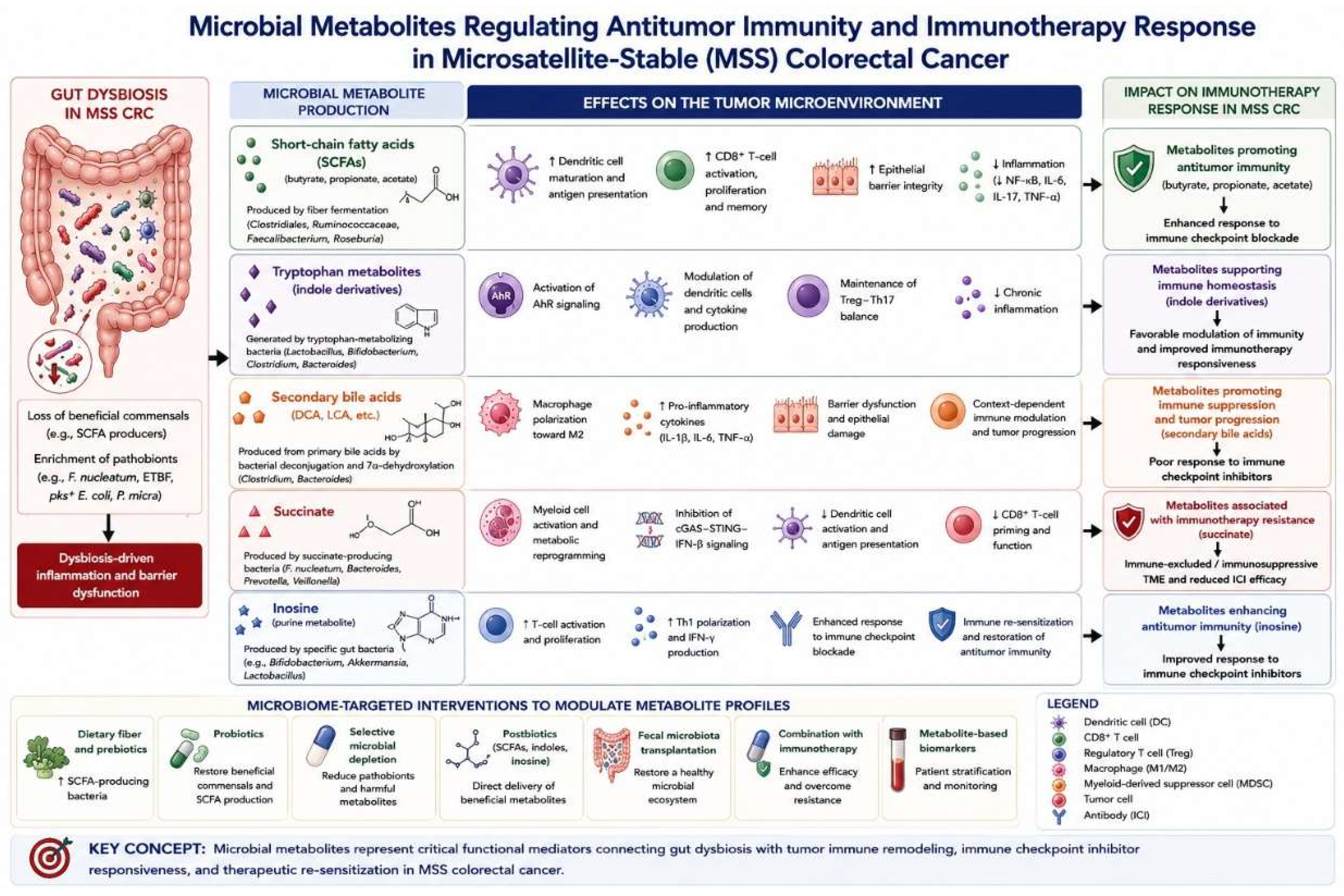
Figure 3.
Proposed integrated model of microbiome-driven immune resistance and therapeutic re-sensitization in microsatellite-stable colorectal cancer (MSS CRC) (Figure created in Canva, https://www.canva.com). Gut dysbiosis promotes epithelial barrier dysfunction, chronic inflammation, immune exclusion, myeloid-driven immunosuppression, T-cell dysfunction, and altered microbial metabolite signaling. These interconnected mechanisms collectively drive the development of an immune-excluded, immunologically cold tumor microenvironment and contribute to resistance to immune checkpoint inhibitors. Microbiome-targeted interventions, including fecal microbiota transplantation, next-generation probiotics, postbiotics, selective microbial depletion, engineered bacterial therapeutics, metabolite-based interventions, and combination treatment strategies, may restore antitumor immunity, enhance responsiveness to immune checkpoint inhibitors, and improve clinical outcomes in MSS CRC.
Figure 3.
Proposed integrated model of microbiome-driven immune resistance and therapeutic re-sensitization in microsatellite-stable colorectal cancer (MSS CRC) (Figure created in Canva, https://www.canva.com). Gut dysbiosis promotes epithelial barrier dysfunction, chronic inflammation, immune exclusion, myeloid-driven immunosuppression, T-cell dysfunction, and altered microbial metabolite signaling. These interconnected mechanisms collectively drive the development of an immune-excluded, immunologically cold tumor microenvironment and contribute to resistance to immune checkpoint inhibitors. Microbiome-targeted interventions, including fecal microbiota transplantation, next-generation probiotics, postbiotics, selective microbial depletion, engineered bacterial therapeutics, metabolite-based interventions, and combination treatment strategies, may restore antitumor immunity, enhance responsiveness to immune checkpoint inhibitors, and improve clinical outcomes in MSS CRC.
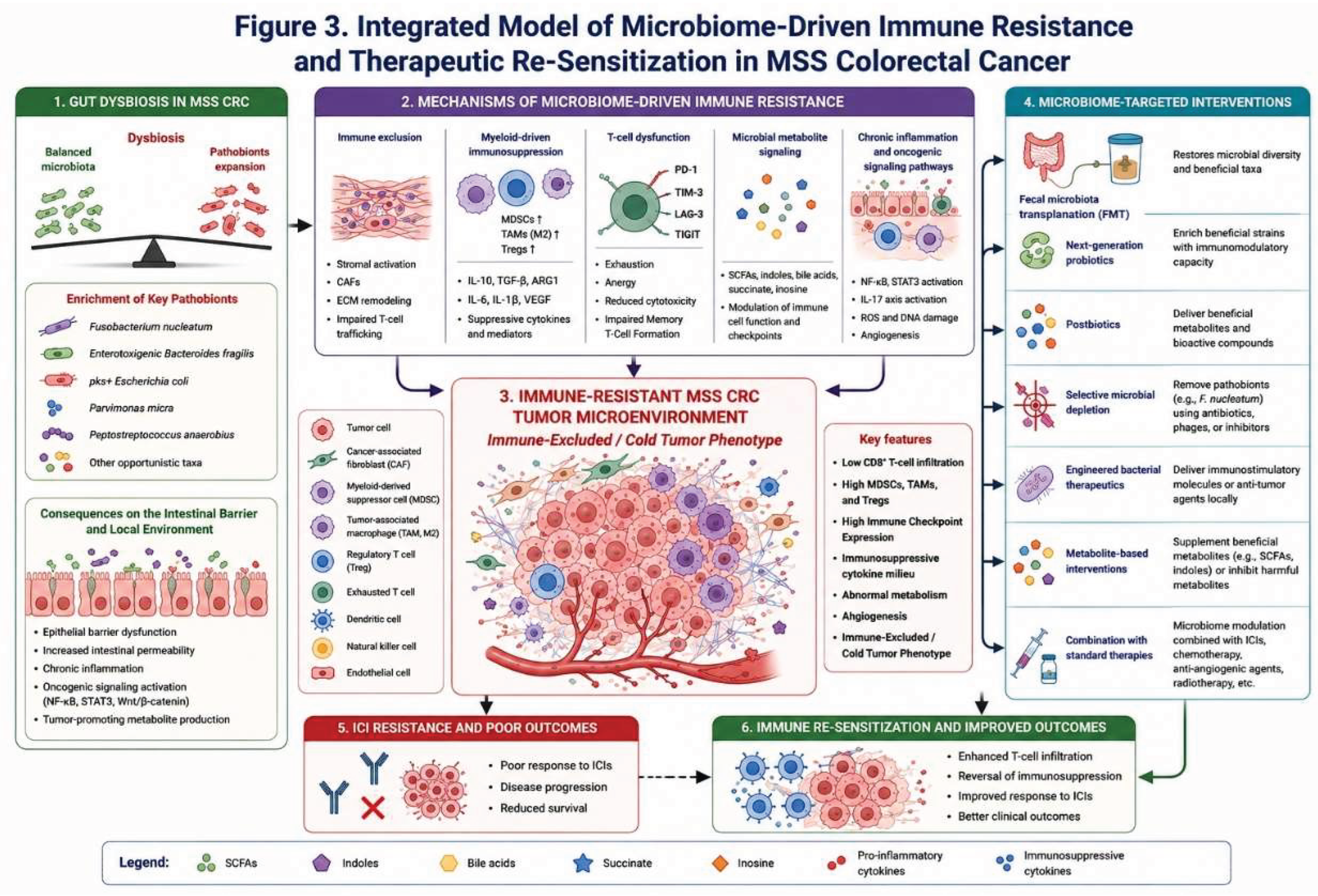

Table 1.
Major gut microbial taxa implicated in immune modulation and immunotherapy resistance in microsatellite-stable colorectal cancer.
Table 1.
Major gut microbial taxa implicated in immune modulation and immunotherapy resistance in microsatellite-stable colorectal cancer.
| Microorganism |
Major Virulence Factors/ Mechanisms |
Effects on the Tumor Microenvironment |
Potential Impact on Immunotherapy |
|
Fusobacterium nucleatum |
FadA, Fap2, TIGIT interaction, NF-κB activation | T-cell suppression, NK-cell inhibition, MDSC/TAM recruitment | Immune evasion, potential ICI resistance |
| Enterotoxigenic Bacteroides fragilis |
BFT (fragilysin), IL-17/STAT3 activation |
Chronic inflammation, Th17 polarization |
Pro-tumor immune remodeling |
| pks-positive Escherichia coli |
Colibactin production | DNA damage, genomic instability, inflammation |
Tumor evolution and immune escape |
| Parvimonas micra | Metabolite-mediated signaling | Inflammatory microenvironment | CRC progression |
| Peptostreptococcus anaerobius | PI3K/Akt activation, ROS generation |
Immune modulation and tumor promotion |
Potential contributor to immune resistance |
| Biofilm-associated communities | Spatial microbial organization | Chronic inflammation, Treg/M2 enrichment |
Maintenance of immune-suppressive niches |
Table 2.
Emerging microbiome-based therapeutic strategies aimed at overcoming immune resistance and enhancing immunotherapy responsiveness in microsatellite-stable colorectal cancer.
Table 2.
Emerging microbiome-based therapeutic strategies aimed at overcoming immune resistance and enhancing immunotherapy responsiveness in microsatellite-stable colorectal cancer.
| Strategy | Mechanism of Action | Immune Effects |
Current Level of Evidence |
| Fecal microbiota transplantation (FMT) |
Restoration of microbial diversity | Enhanced antigen presentation and T-cell activation | Early clinical studies |
| Next-generation probiotics |
Enrichment of beneficial taxa | Improved immune regulation and metabolite production |
Preclinical/Early clinical |
| Postbiotics | Administration of microbial metabolites | Direct modulation of immune pathways | Preclinical |
| Selective microbial depletion |
Removal of pathobionts (e.g., F. nucleatum) |
Reduced immune suppression | Preclinical |
| Bacteriophage therapy |
Targeted elimination of pathogenic bacteria |
Precision microbiome editing | Experimental |
| Engineered bacterial therapeutics |
Local delivery of immune-stimulatory molecules | Tumor-targeted immune activation | Preclinical |
| Metabolite-based interventions |
Restoration of beneficial metabolite profiles |
Immune re-sensitization | Emerging |
| Combination with ICIs |
Microbiome modulation plus checkpoint blockade | Enhanced antitumor immunity | Ongoing investigation |
Disclaimer/Publisher’s Note: The statements, opinions and data contained in all publications are solely those of the individual author(s) and contributor(s) and not of MDPI and/or the editor(s). MDPI and/or the editor(s) disclaim responsibility for any injury to people or property resulting from any ideas, methods, instructions or products referred to in the content. |
© 2026 by the authors. Licensee MDPI, Basel, Switzerland. This article is an open access article distributed under the terms and conditions of the Creative Commons Attribution (CC BY) license (http://creativecommons.org/licenses/by/4.0/).
Copyright: This open access article is published under a Creative Commons CC BY 4.0 license, which permit the free download, distribution, and reuse, provided that the author and preprint are cited in any reuse.


