
Submitted:
17 June 2026
Posted:
18 June 2026
You are already at the latest version
Abstract
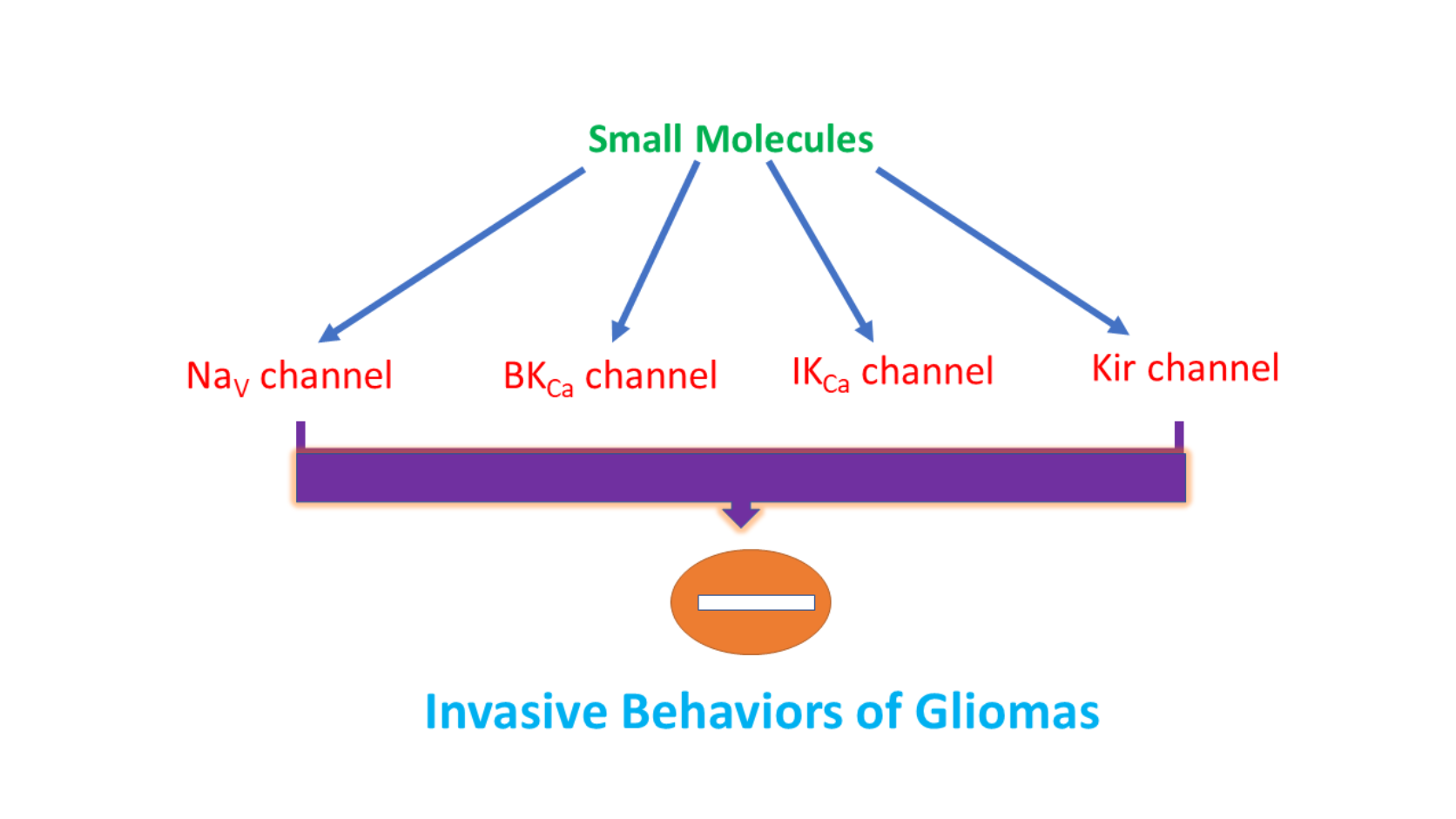
Despite advances in neurosurgery and oncology, many gliomas—particularly highly aggressive variants such as glioblastoma multiforme—remain exceedingly difficult to treat. While surgical resection can eliminate a considerable proportion of tumor mass, clinical outcomes are frequently compromised by tumor recurrence, increased invasiveness, metastatic spread, and the development of glioma-associated epilepsy. These persistent challenges continue to drive intensive research efforts. Accumulating evidence suggests that glioma cell plasma membranes express several key classes of ion channels that contribute to tumor behavior. The four principal types identified to date include voltage-gated Na⁺ channels, large-conductance Ca²⁺-activated K⁺ (BKCa) channels, intermediate-conductance Ca²⁺-activated K⁺ (IKCa) channels, and inwardly rectifying K⁺ (Kir) channels. In this review article, eight representative drugs or phytoconstituents are discussed with particular emphasis on their modulatory actions on these ion channels. Perampanel and valproic acid can suppress the amplitude of voltage-gated Na+ current in glioma cells, an effect that may be particularly beneficial for managing glioma-associated epilepsy. Cilostazol is originally a vasodilatory drug; however, through drug repurposing approaches, it has been shown to stimulate BKCa channels in glioma cells, thereby potentially exerting anti-tumor effects. Berberine, an isoquinoline alkaloid, has been shown to suppress the activity of IKCa channels and this effect is associated with the suppression of tumors. Oxaliplatin, belonging to a family of platinum-based chemotherapeutic compounds, has been shown to diminish IKCa-channel activity in glioma cells, thereby affecting their malignant behaviors. Temozolomide, an oral alkylator of the imidazotetrazine family, was found to suppress IKCa-channel activity effectively in glioma cells. Arecoline, an alkaloid extracted from areca nut, is effective in suppressing the activity IKCa and Kir channels in neoplastic astrocytes. Triptolide, a diterpene triepoxide, has been shown to inhibit the activity of Kir channels in glioma cells. Some compounds have also been subjected to docking predictions on specific ion channels. Although these are hypothetical approaches, they provide useful insights into how such molecules might engage in distinctive molecular interactions with the channels. With appropriate and judicious use, these ion channel–specific modulators are expected to provide significant pharmacological and therapeutic benefits in glioma treatment.
Keywords:
glioma
; ion channel
; channel kinetics
; ionic current
; small molecules
; docking prediction
Copyright: This open access article is published under a Creative Commons CC BY 4.0 license, which permit the free download, distribution, and reuse, provided that the author and preprint are cited in any reuse.


