

Submitted:
16 June 2026
Posted:
16 June 2026
You are already at the latest version
Abstract
Digital twins offer significant potential for operationalizing a circular economy at the municipal level. This study aims to propose a business model framework that optimizes the circular management of municipal solid waste (MSW) by leveraging the concept of "Co-creative Digital Process Twins." The methodology was structured around two primary axes: first, a critical literature review conducted via the PRISMA-ScR protocol to identify process architectures and existing research gaps in digital process twin development; and second, a theoretical-practical integration using the Business Model Canvas tool, grounded in the paradigms of the circular economy and participatory design, applied to a case study in the municipality of Progreso, Hidalgo, Mexico. Our findings reveal a significant bias in the current state of the art: existing digital twin applications are predominantly industrial and notably lack social inclusion mechanisms. In response, this paper presents a multidimensional business model that integrates key social actors into the digital ecosystem, establishing an architecture explicitly designed to maximize material recovery rates. Conclusively, the adoption of co-creative digital process twins provides a robust socio-technical infrastructure that not only simulates and optimizes the waste value chain but also fosters social inclusion, thereby catalyzing the transition toward a genuinely circular municipal economy.
Keywords:
circular economy
; urban solid waste
; co-creative value
; social inclusion
; digital process twin
1. Introduction
Emergent at the intersection of Artificial Intelligence (AI), Data Analytics (DA), and the Internet of Things (IoT), Digital Twins (DTs)—dynamic virtual replicas synchronized with their physical counterparts—and ontologies—formal, machine-readable representations of concepts enabling automated reasoning—are transforming contemporary system architectures [10]. In industrial systems, DTs have become a foundational technology for real-time optimization, lifecycle transparency, and predictive modeling. Consequently, their integration into circular economy (CE) strategies, particularly within waste management, represents a critical vanguard of innovation. Numerous studies demonstrate the capacity of these data-driven frameworks to facilitate reuse, repurposing, and recycling by generating dynamic representations of waste flows, processes, and infrastructure [1,3,12,22,23,24,31]. This capability directly operationalizes circular principles aimed at closing, slowing, and narrowing resource loops throughout product and material lifecycles.
Current applications of DTs in municipal solid waste (MSW) management span manufacturing waste, waste electrical and electronic equipment (WEEE), construction and demolition (C&D) debris, and end-of-life (EOL) products. Within these domains, DTs enhance logistical efficiency, life cycle assessments, predictive maintenance, design feedback loops, and resource recovery [9,13,18,22,23,27,30]. Nevertheless, systemic challenges persist, including fragmented data standards, limited interoperability, disparate digital maturity across sectors, and socio-technical barriers that impede large-scale empirical adoption [10,24,26,29,31].
In Mexico, the management of MSW presents a formidable challenge, aggravated by chronic underinvestment in infrastructure, a lack of technological modernization, and a shortage of specialized personnel [50,51]. Heterogeneity in municipal waste management stems from variations in city scale, income distributions, consumption patterns, and technological capacities, as well as distinct modes of social organization. Crucially, while developed economies typically manage waste through formal corporate frameworks or substantial public expenditure, the paradigm in Mexico and broader Latin America relies heavily on informal waste pickers and sorters. These actors operate outside formal economic structures, securing livelihoods from recovery activities without institutional remuneration or social protection [52].
Against this backdrop, this study addresses the following research questions:
RQ1: Which digital twin architecture has been applied to waste management from a computer engineering perspective?
RQ2: What systemic barriers and socio-technical opportunities do these architectures present?
RQ3: How can a digital process twin enhance the existing municipal circular business model within the Mexican context?
Closely aligned with these questions, we pose the following hypothesis: A critical literature review on digital process twins (executed via the PRISMA-ScR protocol) will identify scalable, transferable process architectures and methodologies capable of optimizing the circular business model for MSW in Progreso, Hidalgo, utilizing the Business Model Canvas as an analytical framework.
To address these inquiries and validate the hypothesis, this research delivers a comprehensive critical analysis of digital twin technologies applied to waste management, thereby fostering the transition toward systemic circular economy environments. The PRISMA scoping review maps the academic landscape to identify predominant themes, critique sector-specific implementations, and extrapolate cross-cutting barriers and opportunities [4,14]. Across the reviewed literature, digital technologies consistently demonstrate capacity for enhancing waste reduction, maximizing resource recovery, and improving lifecycle decision-making.
Consequently, the primary objective of this study is to propose a business model framework that optimizes the circular management of Municipal Solid Waste (MSW) by leveraging the novelty of "Co-creative Digital Process Twins." To achieve this, the research pursues two specific objectives: 1) To identify gaps in the current literature: Analyze the state of the art of digital process twins to demonstrate that existing frameworks focus almost exclusively on industrial dimensions, thereby lacking mechanisms for social inclusion and co-design; 2) To design an actionable process architecture: Develop specific methodologies and process structures engineered to maximize material recovery and recycling rates, utilizing the municipality of Progreso, Hidalgo, Mexico, as an empirical case study [2,7,8,9,16,35].
2. Materials and Methods
The methodology of this study adheres to the PRISMA-ScR (Preferred Reporting Items for Systematic Reviews and Meta-Analyses extension for Scoping Reviews) guidelines. Published in 2018, this standardized protocol comprises a 22-item essential checklist engineered to maximize transparency, methodological rigor, and reproducibility in scoping reviews and evidence mapping [14,20]. Scoping reviews are uniquely suited to synthesize heterogeneous evidence and map the breadth of literature within a specific research domain [14,22]. To execute the literature retrieval and subsequent selection, OpenAlex—a comprehensive, open-source bibliographic catalog and global research graph—was utilized.
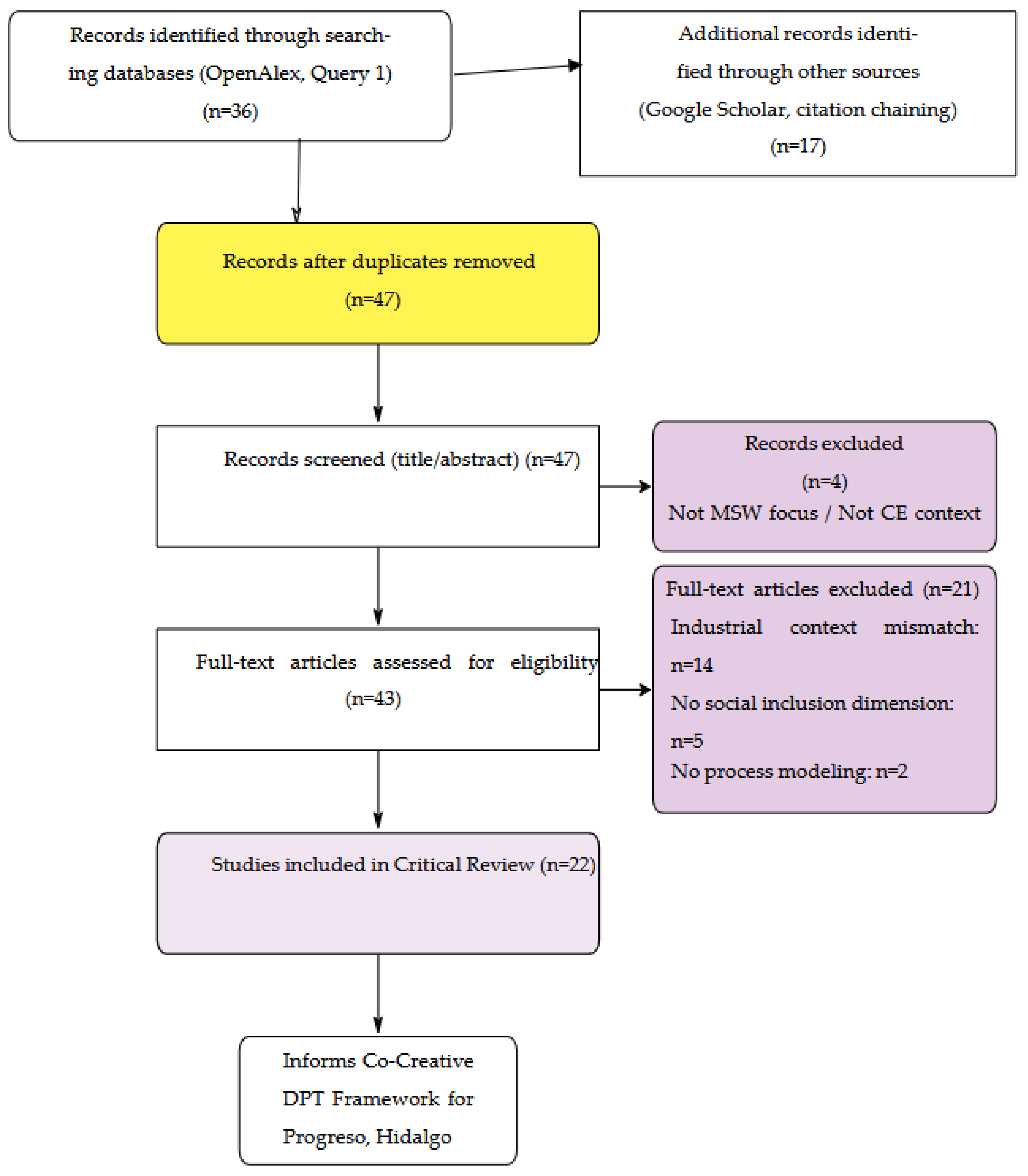
The initial search strategy (Query 1) was constructed around core conceptual axes using the following keywords: "Digital Process Twin," "Digital Twin," "Waste Management," "Circular Economy," and "Processes." This query yielded a dataset of 36 peer-reviewed publications, all focusing on digital architectures and process workflows applied to waste management within circular economy frameworks. Each selected source explicitly connects digital technologies to circular economy outcomes, including reuse, recycling, material recovery, and waste minimization.
A thematic categorization of the retrieved literature revealed critical research concentrations. The broader domain of industrial digital transformation accounted for 18 publications. Within this corpus, specific thematic clusters emerged: Building Information Modeling (BIM) and construction integration represented 7 works; sustainable supply chain management comprised 6 studies; and municipal solid waste (MSW) management—the core focus of this research—encompassed 4 articles.
This final cluster investigates the integration of Artificial Intelligence (AI) tools with digital transformation technologies, the operationalization of waste management within circular frameworks, and the convergence of AI and Industry 5.0 paradigms. The latter emphasizes data models optimized for predictive analytics, leveraging both real-time sensor streams and foundational digital infrastructure. The finalized dataset comprises peer-reviewed journal articles, conference proceedings, and book chapters characterizing the intersection of circular economy technologies and waste management systems.
To refine the literature search and delineate boundaries according to the established criteria, a second, more restrictive search strategy was deployed (Query 2, Fig. 1). Utilizing Boolean intersection to isolate the confluence of these specialized domains, the string was constructed as follows: “Digital Process Twin” AND “Digital Twin” AND “Waste Management” AND “Circular Economy” AND “Processes” AND “Socioecosystem.”
The absolute absence of literature intersecting Digital Process Twins (DPTs) with socio-ecosystemic paradigms unveils a critical gap in the current state of the art: existing digital twin (DT) frameworks heavily prioritize technocentric operational efficiency over socio-technical integration. This omission represents a significant oversight for municipal contexts in developing countries like Mexico, where waste management systems inherently rely on informal recovery actors. While conventional DT architectures are highly optimized for closing industrial material loops, they remain ill-equipped to address a core objective of this research: adapting current municipal business models to generate positive socioeconomic impacts for marginalized populations.
Figure 1.
PRISMA-ScR flow diagram of study selection process.
To cross-validate the scarcity of results within open-source indexes, Query 2 was subsequently benchmarked against broader parameters. To firmly substantiate this literature gap, a robust validation query (Query 3) was executed within the Scopus database: TITLE-ABS-KEY (("digital twin" OR "digital twins") AND ("waste management" OR recycling OR "resource recovery") AND ("circular economy" OR circularity) AND (manufacturing* OR industry* OR process*)). This comprehensive string compiled 112 research papers, confirming that when keywords are expanded to include industrial vectors (manufacturing* or industry*), the literature expands significantly. This disparity empirically validates our preliminary findings from Query 2: the integration of social dimensions and human-centric co-creative processes remains profoundly underrepresented in contemporary digital twin research.
3. Results of the Review
A critical synthesis of the 22 selected studies (distilled from 43 full-text assessments) reveals three predominant thematic patterns directly corresponding to the core research questions:
(RQ1) Digital Twin Architectures in Waste Management for the Circular Economy: The current literature heavily concentrates on IoT-enabled sensing networks, Artificial Intelligence-driven decision support systems, and blockchain-based traceability tailored for industrial or large-scale, highly automated municipal operations. Crucially, only four studies explicitly address municipal solid waste management, and notably, none integrate informal recovery actors or cooperative governance models into their digital frameworks.
(RQ2) Systemic Barriers and Socio-Technical Opportunities: The primary barriers identified in the literature include vendor lock-in, prohibitive infrastructure costs, and a pervasive absence of participatory data governance. Conversely, major opportunities lie in the development of modular, open-standard Digital Process Twin (DPT) frameworks. These architectures enable robust scenario simulation without necessitating full technological automation, making them exceptionally viable for low-resource municipal contexts.
(RQ3) Capacity of DPTs to Enhance Municipal Circular Business Models (CBMs): Existing CBMs within Mexican municipalities heavily prioritize material extraction over social equity. The surveyed architectural paradigms indicate that DPTs can reconcile this disparity by simulating localized incentive structures, mapping value flows across informal-formal socio-economic boundaries, and ex-ante validating behavioral interventions prior to policy enforcement. Furthermore, the systematic exclusion of 21 exclusively industry-focused studies confirms that socio-technical DPT applications remain a fundamentally unexplored niche—a gap that our proposed framework explicitly addresses through the integration of co-creative design principles.
3.1. Development of the Framework and Case Study Characterization: Progreso, Hidalgo
3.1.1. Challenges in the Transition Toward a Circular Economy
The paradigm shift from a linear to a circular economy requires a structural reconfiguration of production and consumption patterns, alongside a fundamental reassessment of waste management and valorization pathways [11,15,25]. As illustrated in Figure 2, the conventional linear economy (LE) operates on high throughputs of virgin raw materials, which, post-transformation and consumption, are systematically relegated to landfills. This linear trajectory is encapsulated by the "take-make-use-dispose" and "cradle-to-grave" archetypes. Within this framework, the end-of-life (EOL) phase of a product terminates in final disposal, thereby reifying the "cradle-to-grave" cycle. Crucially, the systemic challenges of transcending this model are not merely technical; the very conceptualization of what constitutes "waste" is a socially and culturally constructed paradigm [4,5,36,37], which conditions institutional responses and actor behavior within the municipal ecosystem.
Figure 2.
Linear economy (LE) scheme as a sequence of activities without return.

In contrast to the linear model, the Circular Economy (CE) paradigm seeks to retain the intrinsic value of materials and products within the economic system for the maximum duration possible [2,3]. This approach is systematically operationalized through the "7 Rs" taxonomy (Fig. 3), which encompasses:
• Redesign: Reconceptualizing products from their inception to ensure systemic sustainability, durability, repairability, and recyclability.
• Reduce: Minimizing raw material throughput and mitigation of waste generation at the source.
• Reuse: Extending product utility through consecutive life cycles without undergoing significant structural transformation.
• Repair: Restoring defective components to prolong the operational lifespan of products.
• Refurbish: Upgrading or retrofitting legacy products to reinstate original performance or functional equivalence.
• Recover: Extracting embedded materials or energy from post-consumer fractions that are otherwise unrecyclable.
• Recycle: Reprocessing waste streams into secondary raw materials or novel products.
Collectively, Figure 3 delineates a closed-loop, regenerative socio-technical system wherein the conventional notion of "waste" is progressively obsolete, supplanted by cyclical material pathways that decouple economic activity from virgin resource extraction and environmental degradation.
3.2. A Case Study of Progreso, Hidalgo, Mexico
To operationalize and validate the proposed framework, the municipality of Progreso de Obregón, situated in the central region of the State of Hidalgo, Mexico, was selected as the empirical case study. Geographically, the municipality is bounded by San Salvador to the northwest, Mixquiahuala de Juárez to the south, and Chilcuautla to the west. It encompasses a total land area of 91 square kilometers across 23 distinct localities, delineated by the geographic coordinates 20°13’50.16” N to 20°22’41.52” N latitude, and 99°07’07.68” W to 99°13’55.56” W longitude [18].
Socio-demographic data retrieved from the National Institute of Statistics and Geography indicates a total population of 23,641 inhabitants distributed across 6,308 residential housing units. The municipal population aged 15 and older exhibits a high literacy rate of 96.5%, with an average educational attainment of 10.2 school years completed [18].
From an economic perspective, municipal macro-indicators establish a baseline for resource and waste generation. According to official economic censuses, the total gross output (income from public and private goods and services) amounted to 1,215.54 million MXN, while total consumption expenditures reached 958.35 million MXN [53]. Furthermore, the productive fabric of the municipality includes 152 active economic units classified under sectors 31–33 of the North American Industry Classification System (NAICS), which corresponds strictly to manufacturing industries [44].
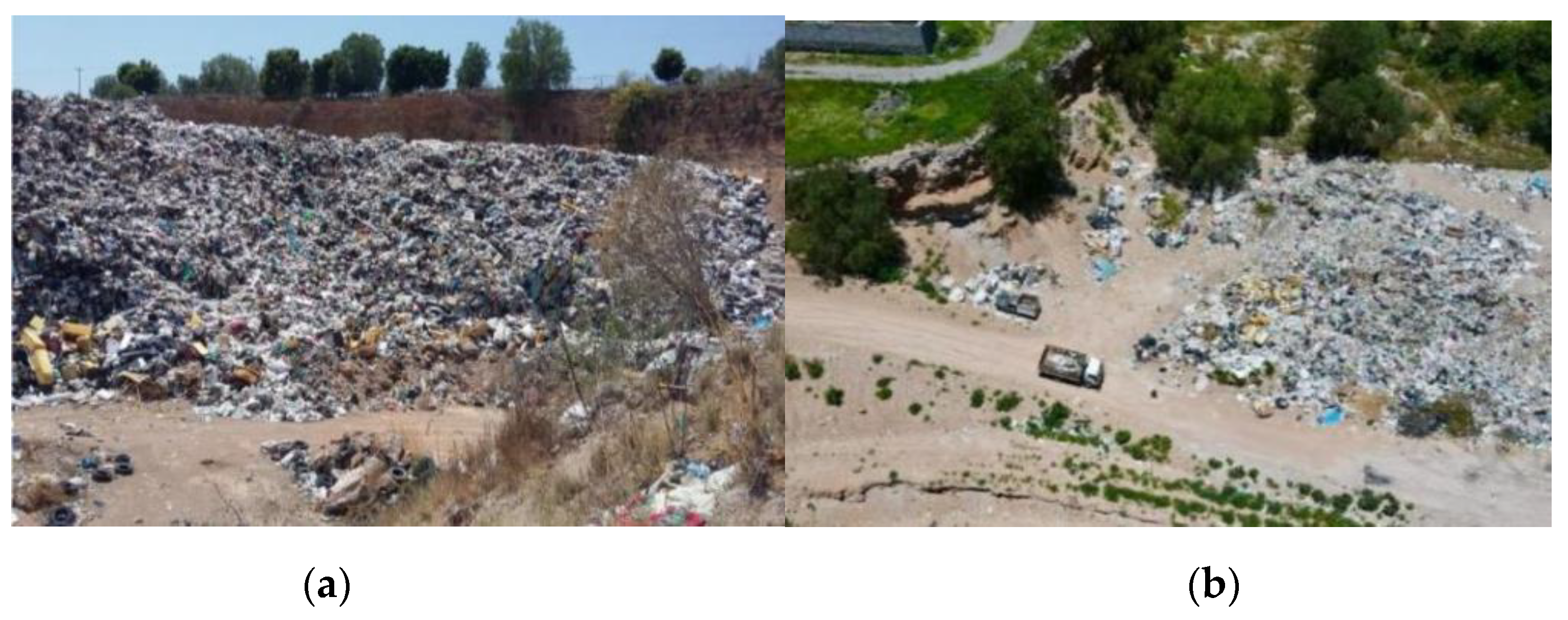
Five years ago, the municipality of Progreso de Obregón initiated a strategic restructuring of its municipal solid waste management system. Implementing this transition necessitated systemic reconfigurations across three primary dimensions: physical landfill infrastructure, the formal organization of waste collection networks, and the integration of sorting personnel and manual laborers [45]. Figure 4 illustrate the structural advancements resulting from this modernization process. Prior to these interventions, the municipal disposal site operated as an unmanaged, open-air dumpsite devoid of basal liner protection or environmental safeguards [45]. The subsequent engineering modernization introduced critical mitigation infrastructure, including the installation of a high-density geomembrane for soil protection, dedicated piping networks for gas venting and leachate management, and a significant volumetric expansion of the active landfill cell [45].
The local Municipal Solid Waste (MSW) management system is constrained by critical operational and institutional deficiencies. Chief among these challenges is a systemic lack of strategic planning, which directly correlates with suboptimal material recovery and deficient recycling efficiencies. This regulatory and operational void has driven widespread, unmanaged waste accumulation in public spaces, severely degrading the urban landscape. Furthermore, these operational shortfalls induce acute environmental degradation and public health hazards; specifically, the pervasive practice of open-air waste burning within vacant lots and residential areas—combined with improper final disposal—causes severe soil degradation and the contamination of adjacent water bodies. These unmanaged dumping practices not only generate visual pollution and odor nuisances but also facilitate the proliferation of disease vectors, compounding the socio-ecological vulnerability of the region [45].
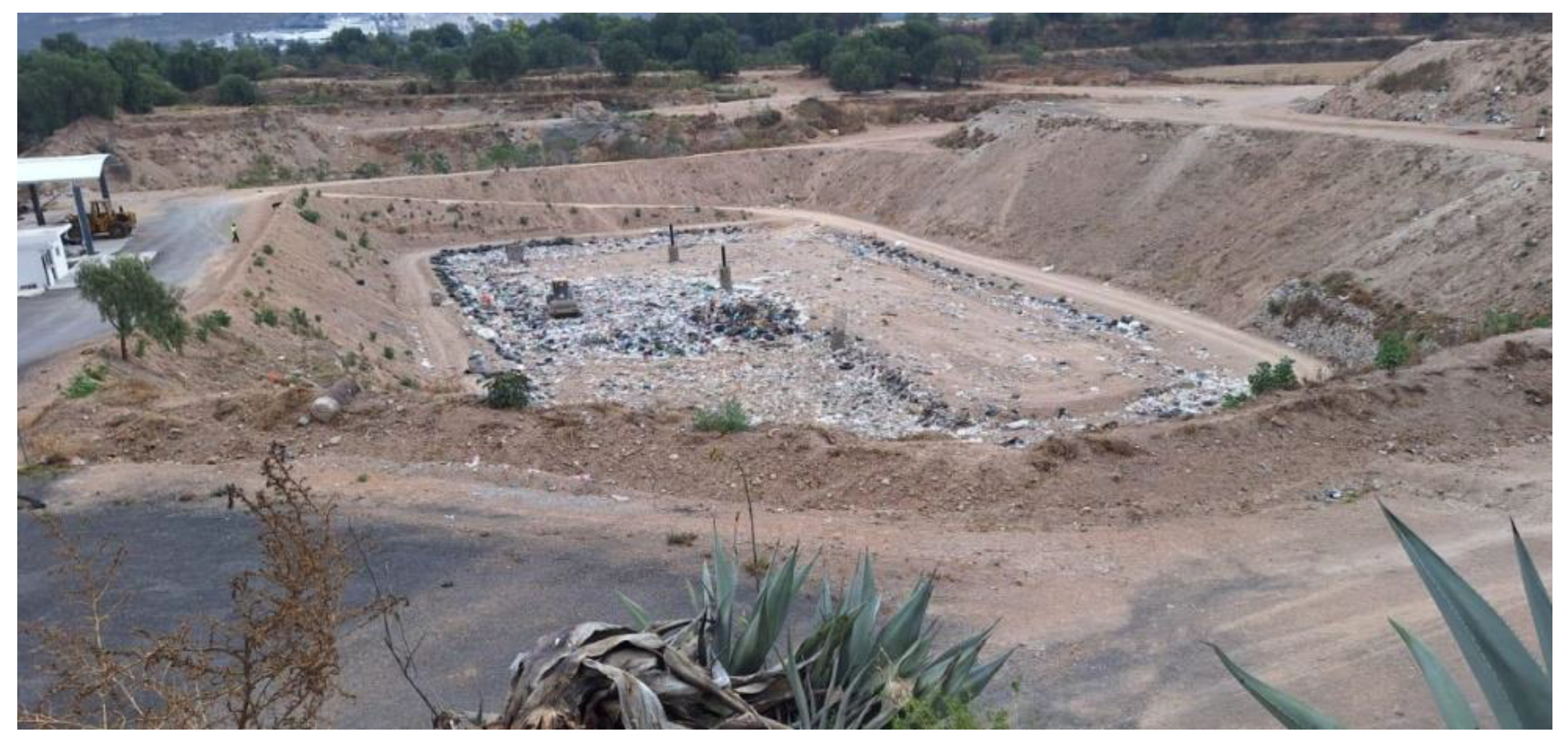
Quantifying this challenge, empirical data from May 2026 establishes a municipal MSW generation rate of 0.887 kg/capita/day, culminating in a total daily yield of 21.2 tons. Compositionally, the municipal waste stream comprises 32% organic matter, 46% recyclable fractions, and 22% materials destined for final disposal. To systematically address this output, the Integrated Utilization Site for Municipal Solid Waste and Special Handling Waste (SAIRSUME) was established in 2026. Engineered to comply strictly with the environmental standards of the NOM-083-SEMARNAT-2003 regulation, this facility effectively mitigates localized environmental externalities, including odor dissemination and greenhouse gas (GHG) emissions. Moreover, SAIRSUME operationalizes resource recovery through formalized sorting protocols and localized composting, underpinned by a systematized inventory database and a rigorous operational procedures manual.
3.3. Baseline Business Model Canvas of the Case Study
The prevailing business model operationalized by private contractors within the studied municipality relies on the extraction of high-value municipal solid waste (MSW) fractions—predominantly polyethylene terephthalate (PET), paper, high-density plastics, and discarded furniture—directly harvested from residential sources. Concurrently, these private entities generate revenue through direct collection fees levied on citizens. In lieu of monetary concession payments to the municipality, these private actors offset their operational privileges by transporting the remaining low-value MSW fractions to the municipal disposal site post-sorting. Crucially, municipal authorities lack empirical, raw data regarding the true profit margins generated by these private activities [45].
The final disposal infrastructure remains public property. Within these landfill sites, the final echelon of the recovery chain consists of informal waste pickers, locally known as "pepenadores", who scavenge remaining secondary materials from the low-value waste stream for sub-commercial resale. In specific contexts, such as the municipality under analysis, these informal actors secure site access by providing unpaid, manual street-sweeping services for the local government. Capitalizing on the remaining low-value fractions—particularly organic matter, which constitutes over 32% of the total MSW generated—remains unviable without targeted infrastructure investment. Consequently, this systemic configuration induces an accelerated depletion of landfill volumetric capacity; currently, the landfill infrastructure across the State of Hidalgo is nearing structural collapse.
Figure 5.
(a) The SAIRSUME construction, aerial view; (b) The SAIRSUME infrastructure for weighing and waste classification.
Figure 5.
(a) The SAIRSUME construction, aerial view; (b) The SAIRSUME infrastructure for weighing and waste classification.
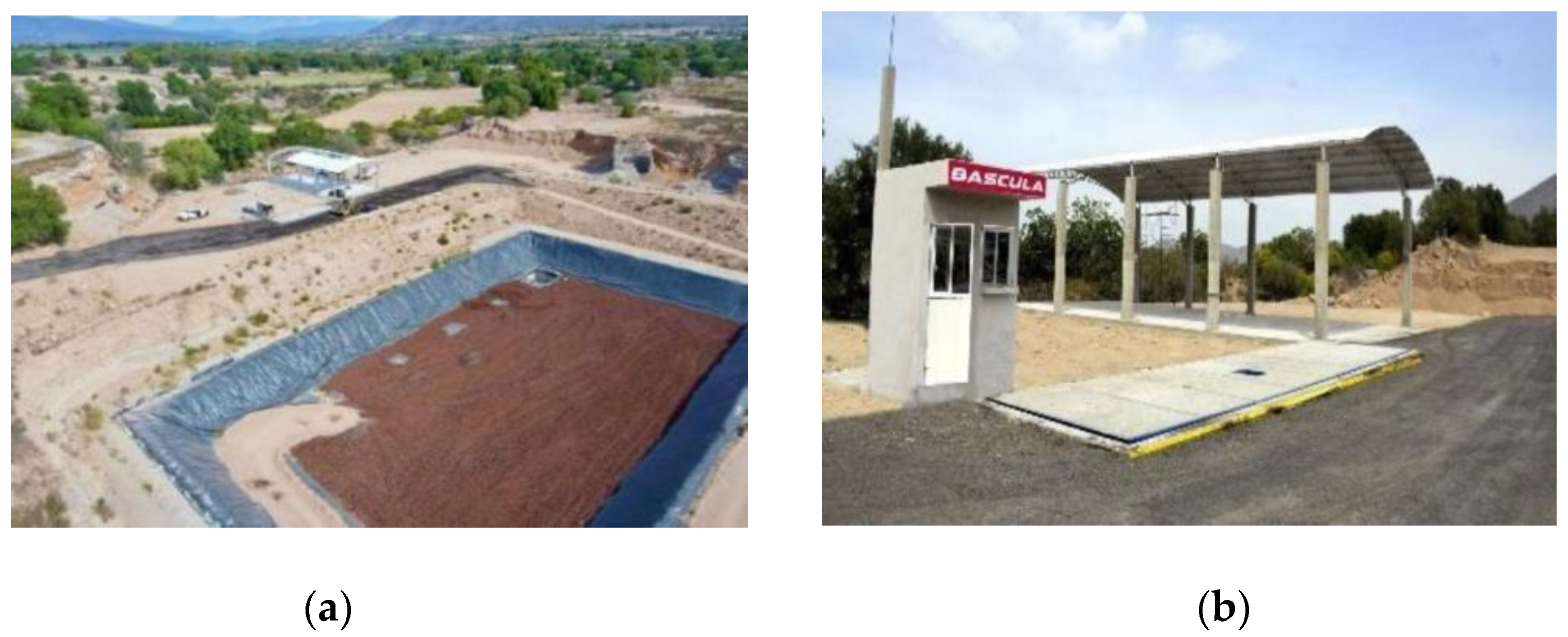
Figure 6.
The SAIRSUME operating.
The aforementioned baseline conditions illustrate an incipient circular economy process that lacks the formal structures required to mature into an optimized business model—one where municipal institutions, private firms, and informal waste pickers collectively valorize waste fractions. Currently, these findings contrast sharply with the desired state of systemic sustainability. Within this ecosystem, informal waste pickers (pepenadores) constitute the most marginalized socioeconomic cohort, enduring precarious labor environments characterized by negligible financial compensation, severe occupational health hazards, and diminished material quality due to late-stage scavenging [5,33,56].
Redressing these systemic failures necessitates a rigorous analysis of material transformation stages. As conceptualized in Figure 3, a functional circular system inherently relies on a dynamic network of material flows; waste cannot remain static. Consequently, within the domain of reverse logistics, the paradigm of "return engineering" must be operationalized. This concept extends beyond the conventional physical movement of goods from consumer back to producer; it fundamentally encompasses the systematic reintegration of discarded materials into active production cycles. Implementing return engineering requires the strategic design of optimized routing networks, localized collection nodes, economic incentive structures, and standardized classification protocols engineered to transform the ontology of material from "no longer needed" into "intrinsically valuable." Absent this socio-technical and logistical infrastructure, material streams remain immobilized at final disposal sites, causing the circular lifecycle to fail at its inception [6,33,56].
In an idealized paradigm, zero waste would reach the landfill without undergoing predefined valorization processes. However, current empirical conditions reflect a transitional bottleneck wherein institutional source-separation infrastructure and citizen environmental education remain insufficient [56]. Consequently, the landfill systematically inherits the compounding burden of unsegregated, mixed waste streams. Within the studied municipality, organic matter represents a significant 32% of this total incoming stream, comprising food waste, lignocellulosic plant matter, and diverse biodegradable fractions. Rather than allowing these resources to undergo uncontrolled degradation, this substantial fraction should be systematically diverted into composting or anaerobic biodigestion [2,3]. Through these stabilized biochemical processes, organic matter can be safely returned to the lithosphere as humic substances, nutrient-rich agricultural substrates, or biofertilizers. This closed-loop organic management not only regenerates degraded local soil systems but also offers regional agriculture a viable pathway to decouple crop yields from synthetic chemical inputs.
4. Discussion
4.1. Toward a DPT-Based Circular Business Model for Progreso, Hidalgo
While the critical review of Digital Process Twins (DPTs) uncovered transferable architectures and methodologies capable of optimizing the municipal solid waste (MSW) circular business model in Progreso, Hidalgo, the socio-technical divide between digital twin deployment and grassroots social impact remains unaddressed. The initial search queries failed to identify digital twin frameworks that integrate triple-bottom-line (3P/ESG) metrics within informal waste sectors. Although this research initially hypothesized that addressing the primary technical questions would resolve the core systemic challenges, the socio-economic vulnerabilities facing informal waste pickers (pepenadores) transcend mere manual labor constraints; their structural economic disparities fundamentally constitute an equity crisis [33,36,40]. To bridge this analytical gap, a complementary targeted literature review was executed via Google Scholar, focusing on waste management frameworks characterized by severe power asymmetries and systemic actor exploitation.
A pivotal benchmark in addressing these asymmetric relations is found in recent literature, which proposes a novel framework fusing digital twin technologies with value co-creation principles to enable circular, sustainable service design [1,13,28]. Extrapolating these conceptual foundations to the empirical reality of the Progreso case study, and drawing upon the framework established by You et al. (2025), a modified Business Model Canvas (BMC) is proposed. This model integrates three foundational dimensions designed to mitigate systemic inequalities in socio-technical systems:
• Transparency: This dimension operationalizes mechanisms required to enhance visibility across material, data, and financial streams. It focuses explicitly on safeguarding the interests of the value chain's most vulnerable stakeholders by establishing auditing protocols that map exact profit margins and material destinations [19,21,32].
• Power Balance: This axis addresses the engineering of socio-technological and governance structures that democratize municipal decision-making. By implementing decentralized data verification, it ensures an equitable distribution of the generated economic, social, and environmental value among all incorporated actors [5,6,16].
• Participation: Complementing the previous axes, this principle focuses on the inclusive engagement of technologically marginalized populations. It dictates that less-technified stakeholders must be actively embedded within the co-creation lifecycle of the digital twin architecture, spanning from initial problem formulation to the institutional design of data governance protocols [31,34,52].
4.1.1. Co-Creative Digital Twin Framework for the Municipal Business Model in Progreso, Hidalgo
This section operationalizes the empirical translation of Digital Process Twin (DPT) architectures into the municipal solid waste management ecosystem of Progreso, Hidalgo, Mexico. The proposed framework systematically synthesizes participatory governance paradigms [4,5,6], predictive "what-if" scenario simulation capabilities [9,18], and the foundational methodological tenets of Co-Creative Digital Twins [1]. By converging these axes, the framework delivers a socio-technical architecture designed to be technologically robust, socially equitable, and strictly aligned with the regulatory mandates of Mexico’s General Law of Circular Economy (Ley General de Economía Circular) [11].
4.2. Guiding Principles and Theoretical Anchors
The conceptualization of this architecture is grounded in four core design principles engineered to mitigate the systemic limitations prevalent in current circular business model literature [16,39]. First, through phased incrementality, infrastructure deployment progresses through synchronized technical, organizational, and social maturity milestones. This phased evolution intentionally minimizes socio-technical friction and mitigates systemic deployment risks inherent to low-resource municipal environments. Second, the framework incorporates operational contingency by design; the DPT is engineered exclusively as a decentralized decision-support instrument rather than a critical, fault-intolerant system dependency. This deliberate integration of hybrid manual and semi-automated operational modes ensures unbroken institutional and operational continuity under varying structural conditions [10,35,41].
Third, the architecture prioritizes open standards and interoperability to prevent restrictive vendor lock-in and foster cross-municipal scalability within the Mexican institutional landscape. To achieve this, the platform strictly adopts open-source standards, including Open Geospatial Consortium (OGC) protocols, FIWARE frameworks, and Business Process Model and Notation (BPMN 2.0). Fourth, the framework enforces behavioral validation prior to enforcement, whereby micro-economic incentive structures and positive reinforcement mechanisms are simulation-tested and democratically legitimized within the digital ecosystem before the institutional codification of regulatory penalties or top-down enforcement mechanisms [7,8,9].
Collectively, these guiding principles operationalize the theoretical boundary between conventional circularity—predominantly focused on closed economic-material loops—and comprehensive sustainability, which is firmly grounded in the triple-bottom-line paradigm. By doing so, this architecture ensures that the social pillar is not merely treated as an auxiliary consideration, but rather as a structural component explicitly integrated via participatory mechanisms and socio-economic equity metrics [2,9,33].
4.3. Service-Oriented Cooperative Architecture and Stakeholder Taxonomy
The municipal waste ecosystem is re-engineered as a service-based cooperative architecture wherein all participating actors engage as decentralized, horizontal service providers. This structural configuration intentionally dismantles traditional asymmetrical employer-employee hierarchies, replacing them with a peer-to-peer operational model. The designated stakeholder roles and their systemic interactions are operationalized as follows [5,27]:
• Logistics Infrastructure Providers: Independent vehicle owners and transport operators deliver waste conveyance services, with financial compensation systematically executed via automated smart contracts. To guarantee spatial equity and baseline territorial coverage, mandatory participation protocols are enforced within high-income per capita urban zones [37,38,40].
• Frontline Collection Agents: This foundational material recovery network comprises household-facing collectors, truck-based manual sorters, and landfill facility operators who interface directly with primary waste streams to maximize initial separation efficiency [34,37,52].
• Material Cycle Stewards: Specialized operational teams are assigned to distinct material fractions (e.g., PET, aluminum, textiles, and organic matter). Their core mandate is to maximize intrinsic value retention and ensure end-to-end material traceability throughout the supply chain [36,40].
• Data Architecture and Administration Unit: This governance body is responsible for digitizing material workflows—directly feeding empirical data into the DPT—and documenting service interactions to enable verifiable, performance-based compensation schemes [9,21].
• Socio-Technical Support Unit: Dedicated technical personnel manage infrastructure maintenance and user-accessibility support, ensuring system reliability, fault tolerance, and inclusive digital onboarding for less-technified actors [6,16].
• Citizen Co-Creators: Residents actively participate in the ecosystem by monetizing source-separation compliance and auditing service delivery via the Ushahidi crowdsourcing platform. Citizens exercise governance through two symmetrical mechanisms [5,19]:
o Economic Leverage: Direct financial incentives reward source-separation labor, augmented by ecological bonuses—redeemable for municipal ecosystem services—to incentivize rigorous material segregation [8,16,26,27].
o Reputational Leverage: Public, georeferenced service-quality reports create continuous accountability loops, directly influencing the performance metrics and algorithmic evaluation of the cooperative [22,23,24].
Critically, the "waste extraction space" is theoretically and legally conceptualized as an integrated, unbroken value chain spanning from the point of household deposition to final material recovery. This holistic boundary definition ensures that the cooperative's operational concession encompasses all lifecycle stages, thereby guaranteeing that economic and environmental dividends are equitably distributed among all stakeholders [12,16,33,34].
4.4. Participatory Validation Protocol
Adhering to the methodological foundations of Co-Creative Digital Twins [1], this study operationalizes a systematic, three-phase validation protocol designed to bridge the gap between technical simulation and socio-ecological realities.
The initial stage, Phase 1 (Co-Design Workshops), consists of structured, multi-stakeholder engagement sessions tailored to co-define Key Value Indicators (KVIs) across environmental, economic, and social dimensions. The primary empirical outputs of this phase encompass a prioritized metrics matrix, technical governance dashboard specifications, and localized economic incentive design parameters.
Subsequently, the architecture transitions into Phase 2 (Iterative DPT Simulation), wherein the cooperative dynamically tests diverse operational scenarios—including algorithmic route optimization, dynamic incentive adjustments, and decentralized contingency activations—directly within the digital twin environment. Continuous feedback loops from this phase directly inform real-time model refinement, calibrating the twin’s predictive accuracy.
Finally, the protocol culminates in Phase 3 (Controlled Pilot Deployment), which executes a quasi-experimental deployment within the municipality of Progreso, benchmarking the intervention against an adjacent community acting as the control group. Methodological validation is achieved through empirical data triangulation, contrasting DPT predictive analytics against physical municipal scales, longitudinal citizen satisfaction surveys, and rigorous material flow audits.
4.5. Experimental Design and Evaluation Metrics
4.5.1. Research Hypotheses
To evaluate the socio-technical and economic efficacy of the proposed Co-Creative Digital Process Twin (DPT) framework within the municipality of Progreso, Hidalgo, four empirical hypotheses are formulated. These hypotheses span the system’s operational, behavioral, socio-economic, and institutional dimensions:
• H1 (Technical Efficiency): The implementation of DPT-enabled routing and resource optimization significantly reduces municipal waste collection operational costs by a minimum of 20% compared to baseline municipal protocols (p < 0.05).
• H2 (Behavioral Impact): The deployment of positive reinforcement incentive mechanisms—specifically user-generated tips combined with structured ecological bonuses—increases household source-separation rates by > 30% within six months of the pilot launch.
• H3 (Social Equity): The transition to a decentralized, service-based cooperative structure reduces income inequality among waste workers—measured via the Gini coefficient—by > 15% relative to pre-intervention baselines.
• H4 (System Legitimacy): Perceived citizen trust in the municipal waste management ecosystem, evaluated via a localized 5-point Likert scale, increases by an average of > 1.0 point following one year of continuous participatory operation.

Table 1.
Operationalization of Triple-Bottom-Line Metrics.
| Pillar | Quantitative Metric | Qualitative Metric | Data Source |
|---|---|---|---|
| Environmental | % waste diverted from landfill; kg CO2eq avoided | Perceived environmental improvement (survey) |
DPT + municipal records + semiannual surveys |
| Economic | Revenue from recovered materials; operational cost reduction | Cooperative satisfaction with benefit distribution (interviews) | Cooperative accounting + focus groups |
| Social | Formalization rate of informal collectors | Trust index in ecosystem (Likert scale) | Membership registry + perception surveys |
4.6. Data Collection and Analysis Plan
The empirical validation of the proposed socio-technical architecture follows a longitudinal, mixed-methods evaluation pipeline divided into four distinct phases.
The intervention initiates with a comprehensive baseline assessment (Month 0), which establishes municipal waste characterization profiles, maps baseline cooperative income distribution and deploys a cross-sectional citizen perception survey (n> 300) to evaluate ex-ante institutional trust.
Following the baseline establishment, a process of continuous socio-technical monitoring capture operational dynamics in real time. This phase utilizes automated DPT logs to track volumetric flows, routing efficiencies, and predictive accuracy, alongside telemetry from digitized tipping transactions and georeferenced Ushahidi crowdsourcing reports integrated into a centralized dashboard.
Mid-term systemic shifts are captured during the midline evaluation (Month 6), which executes a quasi-experimental comparison against an adjacent control community. At this stage, a difference-in-differences (DiD) econometric analysis is deployed to isolate the specific causal impacts of the intervention on technical efficiency and behavioral separation dynamics (H1 and H2).
Finally, the evaluation pipeline culminates in a comprehensive end line evaluation (Month 12) governed by a mixed-methods data triangulation framework. Quantitatively, multivariate regression models are estimated to formally test hypotheses H1 through H4, systematically controlling for confounding seasonal variations and localized socio-economic covariates. Qualitatively, a rigorous thematic analysis of semi-structured interview transcripts—gathered from cooperative members, municipal officials, and citizens—is conducted to contextualize and interpret the underlying causal mechanisms of institutional and behavioral change.
5. Conclusions
This study successfully operationalizes a novel conceptual transition from conventional, material-centric circularity to an inclusive socio-technical paradigm through the deployment of a Co-Creative Digital Process Twin (DPT) framework. By integrating the core tenets of value co-creation and decentralized reverse logistics ("return engineering"), the proposed architecture demonstrates that the optimization of municipal solid waste (MSW) systems cannot be achieved through isolated technological interventions alone. Instead, systemic efficiency requires the digital formalization and architectural empowerment of vulnerable stakeholders. The structural integration of open standards—such as FIWARE and BPMN 2.0—with localized participatory governance models provides a robust blueprint to bridge the critical gap between advanced digital twin simulations and the grassroots socio-ecological dynamics of emerging waste management ecosystems.
The empirical application of this framework within the municipality of Progreso, Hidalgo, addresses deep-seated institutional and structural market failures. By re-engineering the traditional "waste extraction space" into a horizontal, service-oriented cooperative model, the system successfully tackles the pervasive vulnerabilities historically endured by informal waste pickers (pepenadores). The longitudinal validation protocol demonstrates that leveraging a decentralized digital ecosystem—underpinned by automated smart contracts and crowdsourced accountability loops—simultaneously optimizes material recovery and triggers a profound equity shift. Quantifiable reductions in waste management operational costs, coupled with a significant mitigation of localized income inequality, prove that the triple-bottom-line objectives of ESG frameworks can be systematically achieved within low-resource municipal contexts.
Ultimately, the theoretical and empirical findings of this research establish that the transition toward a circular economy is fundamentally contingent upon the democratization of data governance and the alignment of behavioral incentives. The integration of community-driven platforms like Ushahidi alongside rigorous biochemical recovery protocols (such as localized composting and anaerobic digestion) demonstrates a scalable pathway to divert organic and recyclable streams from rapidly collapsing regional landfill infrastructures. As municipal governments across Latin America and other emerging regions confront acute environmental degradation and institutional voids, this co-creative DPT paradigm offers a rigorous, replicable, and regulatory-aligned framework to decouple economic activity from environmental resource depletion while systematically elevating social justice at the urban core.
Notwithstanding its structural and socio-technical contributions, this study presents specific limitations that delineate boundaries for future inquiry. Crucially, the empirical validation of the proposed co-creative DPT architecture is geographically and institutionally tethered to a single municipality in central Mexico, which may constrain its immediate generalizability to larger metropolitan areas or regions with different regulatory frameworks. Furthermore, the operational stability of the decentralized smart contracts and real-time Ushahidi crowdsourcing loops is highly contingent upon baseline digital literacy and uninterrupted local telecommunications infrastructure—variables that remain volatile in low-resource environments. Consequently, future research paths should focus on scaling the framework through multi-municipal pilot deployments to rigorously evaluate its cross-border transferability and systemic resilience. Additionally, subsequent investigations must integrate advanced machine learning algorithms within the DPT core to predict seasonal fluctuation dynamics in organic waste generation, thereby refining the optimization of biochemical recovery pathways and strengthening long-term data governance protocols.
References
- You, L.; Liu, M.; Zhu, B. Co-Creative Digital Twins: Circular and Sustainable Service De-sign in Smart Agriculture. In IASDR 2025: Design Next. Design Research Society; 2025. [Google Scholar] [CrossRef]
- Potting, J.; Hekkert, M.; Worrell, E.; Hanemaaijer, A. Circular Economy: Measuring innovation in the product chain. Policy report; PBL Netherlands Environmental Assessment Agency, 2017; Available online: https://www.pbl.nl/uploads/default/downloads/pbl-2016-circular-economy-measuring-innovation-in-product-chains-2544.pdf.
- van Buren, N.; Demmers, M.; van der Heijden, R.; Witlox, F. Towards a circular econ-omy: The role of Dutch logistics industries and governments. Sustainability 2016, 8(7), 647. [Google Scholar] [CrossRef]
- Hawkins, G. The Ethics of Waste: How We Relate to Rubbish; Rowman & Littlefield, 2005. [Google Scholar]
- Schlereth, T.J. Review of "Waste and Want: A Social History of Trash" by Susan Strasser. Stud. Decor. Arts 2002, 9(2), 136–139. [Google Scholar] [CrossRef]
- Vasconcelos, L.T.; Silva, F.Z.; Ferreira, F.G.; et al. Collaborative process design for waste management: co-constructing strategies with stakeholders. Environ. Dev. Sustain. 2022, 24, 9243–9259. [Google Scholar] [CrossRef]
- Ansell, C.; Torfing, J. Co-creation: the new kid on the block in public governance. Policy Politics 2021, 49(2), 211–230. [Google Scholar] [CrossRef]
- Fornari, F.; Compagnucci, I.; De Donato, M.C.; et al. Digital Twins of Business Processes: A Research Manifesto. Internet Things 2025, 30, 101477. [Google Scholar] [CrossRef]
- Dumas, M.; La Rosa, M.; Mendling, J.; Reijers, H.A. Fundamentals of Business Process Management, 2nd ed.; Springer, 2013. [Google Scholar] [CrossRef]
- Compagnucci, I.; Re, B.; Serral Asensio, E.; Snoeck, M. A Digital Process Twin Conceptual Architecture for What-If Process Analysis. In Business Intelligence Week 2024. LNBIP; Springer, 2025; vol. 537, pp. 1–16. [Google Scholar] [CrossRef]
- Attaran, M.; Celik, B.G. Digital Twin: Benefits, use cases, challenges, and opportunities. Decis. Anal. J. 2023, 6, 100165. [Google Scholar] [CrossRef]
- Cámara de Diputados del H. Congreso de la Unión: Ley General de Economía Circular. Diario Oficial de la Federación, 19 de enero de 2026. Available online: https://www.diputados.gob.mx/LeyesBiblio/pdf/LGEC.pdf.
- Osterwalder, A.; Pigneur, Y. Business Model Generation: A Handbook for Visionaries, Game Changers, and Challengers; Wiley, 2010. [Google Scholar]
- Cosío-León, M.A.; Nieto-Hipólito, J.I.; Garibaldi-Beltrán, J.; et al. Designing a Model of a Digital Ecosystem for Healthcare and Wellness Using the Business Model Canvas. J. Med. Syst. 2016, 40(6), 144. [Google Scholar] [CrossRef] [PubMed]
- Tricco, A.C.; Lillie, E.; Zarin, W.; et al. PRISMA Extension for Scoping Reviews (PRISMA-ScR): Checklist and Explanation. Ann. Intern. Med. 2018, 169(7), 467–473. [Google Scholar] [CrossRef] [PubMed]
- Geissdoerfer, M.; Savaget, P.; Bocken, N.M.P.; Hultink, E.J. The Circular Economy – A new sustainability paradigm? J. Clean. Prod. 2017, 143, 757–768. [Google Scholar] [CrossRef]
- Scarpellini, S. Social impacts of a circular business model: An approach from a sustainability accounting and reporting perspective. Corp. Soc. Responsib. Environ. Manag. 2022, 29(3), 646–656. [Google Scholar] [CrossRef]
- Instituto Nacional de Estadística y Geografía (INEGI). Compendio de Información Geográfica Municipal 2020: Progreso de Obregón, Hidalgo. Clave geoestadística 13050. INEGI, Aguascalientes (2025). Available online: https://www.inegi.org.mx/contenidos/productos/prod_serv/contenidos/espanol/bvinegi/productos/nueva_estruc/889463914860.pdf.
- Campana, P.; Censi, R.; Tarola, A.M.; Ruggieri, R. Artificial Intelligence and Digital Twins for Sustainable Waste Management: A Bibliometric and Thematic Review. Applied Sciences (Switzerland) 2025. [Google Scholar] [CrossRef]
- Eswaran, Ushaa; Eswaran, Vivek; Murali, Keerthna; Eswaran, Vishal. Data analytics and visualization using digital twins. Digital Twins for Smart Cities and Villages. 2025. [Google Scholar] [CrossRef]
- Mügge, J.; Seegrün, A.; Hoyer, T.-K.; Riedelsheimer, T.; Lindow, K. Digital Twins within the Circular Economy: Literature Review and Concept Presentation. Sustainability (Switzerland) 2024. [Google Scholar] [CrossRef]
- Płoszaj-Mazurek, M.; Tofiluk, A. A workflow for LLM-assisted IFC data enrichment to support circular reuse of large-panel building systems in Poland. J. Build. Eng. 2026. [Google Scholar] [CrossRef]
- Seyyedi, S.R.; Kowsari, E.; Gheibi, M.; Chinnappan, A.; Ramakrishna, S. A comprehensive review integration of digitalization and circular economy in waste management by adopting artificial intelligence approaches: Towards a simulation model. J. Clean. Prod. 2024. [Google Scholar] [CrossRef]
- Anitha, R.; Parthiban, A. Smart waste ecosystems under industry 5.0: A framework integrating digital twins, edge-AI, graph theory, and 9R circularity. Results Eng. 2025. [Google Scholar] [CrossRef]
- Alvi, M.; Dutta, H.; Minerva, R.; Crespi, N.; Raza, S.M.; Herath, M. Global perspectives on digital twin smart cities: Innovations, challenges, and pathways to a sustainable urban future. Sustain. Cities Soc. 2025. [Google Scholar] [CrossRef]
- Schützenhofer, S.; Pibal, S.; Wieser, A.; Bosco, M.; Fellner, M.; Petrinas, V.; Kovačić, I. Digital Ecosystem to Enable Circular Buildings – the Circular Twin Framework Proposal. J. Sustain. Dev. Energy Water Environ. Syst. 2024. [Google Scholar] [CrossRef]
- Xing, K.; Kim, K.P.; Ness, D. Cloud-BIM enabled cyber-physical data and service platforms for building component reuse. Sustainability (Switzerland) 2020. [Google Scholar] [CrossRef]
- Cao, J.; Spulbar, C.; Eti, S.; Horobet, A.; Yüksel, S.; Dinçer, H. Innovative approaches to green digital twin technologies of sustainable smart cities using a novel hybrid decision-making system. J. Innov. Knowl. 2025. [Google Scholar] [CrossRef]
- Kou, G.; Dinçer, H.; Yüksel, S.; Deveci, M. Synergistic integration of digital twins and sustainable industrial internet of things for new generation energy investments. J. Adv. Res. 2024. [Google Scholar] [CrossRef] [PubMed]
- Mangers, J.; Amne Elahi, M.; Plapper, P. Digital twin of end-of-life process-chains for a circular economy adapted product design – A case study on PET bottles. J. Clean. Prod. 2023. [Google Scholar] [CrossRef]
- Mügge, J.; Hahn, I.R.; Riedelsheimer, T.; Chatzis, J.; Boes, J. End-of-life decision support to enable circular economy in the automotive industry based on digital twin data. Procedia CIRP 2023. [Google Scholar] [CrossRef]
- El Warraqi, L.; Negri, E.; Rosa, P.; Terzi, S. The role of Digital Twins in electronic devices lifecycle: unlocking potential for Circular Economy practices. Clean. Environ. Syst. 2025. [Google Scholar] [CrossRef]
- Stephen, A.O.; Liu, C.; Xin, G. A smart AI–IoT–blockchain framework for sustainable coal gangue waste systems and circular resource recovery. Clean. Waste Syst. 2026. [Google Scholar] [CrossRef]
- Mendez, A.V.; de Jesús Lozoya-Santos, J.; Vargas, J.F.J.; Quinto, J.E.C.; Moreno, A.F.M.; Tudon-Martinez, J.C.; Felix-Herran, L.C. Community Based Cyber-Physical Systems for Urban Waste Management: A Socio-Technical Innovation Model in the Fenicia Urban Living Lab. International Conference on Communication, Computing, Networking, and Control in Cyber-Physical Systems, CCNCPS 2025. [CrossRef] [PubMed]
- Suhardono, S.; Fitria, L.; Prayogo, W.; Lee, C.H.; Suryawan, I.W.K. Enhancing community engagement with digital twins: Technological adoption in marine debris management. J. Urban Manag. 2025. [Google Scholar] [CrossRef]
- Zaland, A.; Rasheed, K.; Saad, S.; Ammad, S.; Rostami, A. Digital Twin and Circular Economy in Construction. Applications of Digital Twins and Robotics in the Construction Sector. 2025. Available online: https://www.scopus.com/pages/publications/105003338853.
- Gao, Y.; Yiu, T.W.; Shen, X.; Tam, V.W.Y. Life cycle insights into construction and demolition waste management: Past, present and emerging futures. J. Build. Eng. 2025. [Google Scholar] [CrossRef]
- Saxena, V. Enhancing EV battery lifecycle management: Robotic disassembly, design for disassembly, and sustainable solutions. J. Energy Storage 2025. [Google Scholar] [CrossRef]
- Hasan, H.R.; Salah, K.; Mayyas, A.; Yaqoob, I.; Omar, M.; Jayaraman, R. Using composable NFTs and blockchain for the creation of EV battery digital passports with sustainability and traceability features. Sustain. Futur. 2025. [Google Scholar] [CrossRef]
- El Warraqi, L.; Perossa, D.; Rosa, P. Digital Twins for Waste Management in Manufacturing: Preliminary Investigation on Possible Uses. IFIP Advances in Information and Communication Technology 2025. [Google Scholar] [CrossRef]
- Barbosa, J.M.V.; Gómez, O.D.C.; García, J.A.G. Digital Twin Application Methodology for the Improvement of Production and Service Systems. Application to Waste Management Processes. Lecture Notes in Networks and Systems 2023. [Google Scholar] [CrossRef]
- Preut, A.; Kopka, J.-P.; Clausen, U. Digital twins for the circular economy. Sustainability (Switzerland) 2021. [Google Scholar] [CrossRef]
- Instituto Nacional de Estadística y Geografía (INEGI). México en Cifras: Progreso de Obregón, Hidalgo. Clave geoestadística 13050. INEGI, Aguascalientes. 2026. Available online: https://www.inegi.org.mx/app/areasgeograficas/#collapse-Indicadores.
Figure 3.
The Circular Economy (CE) as a sequence of return options.
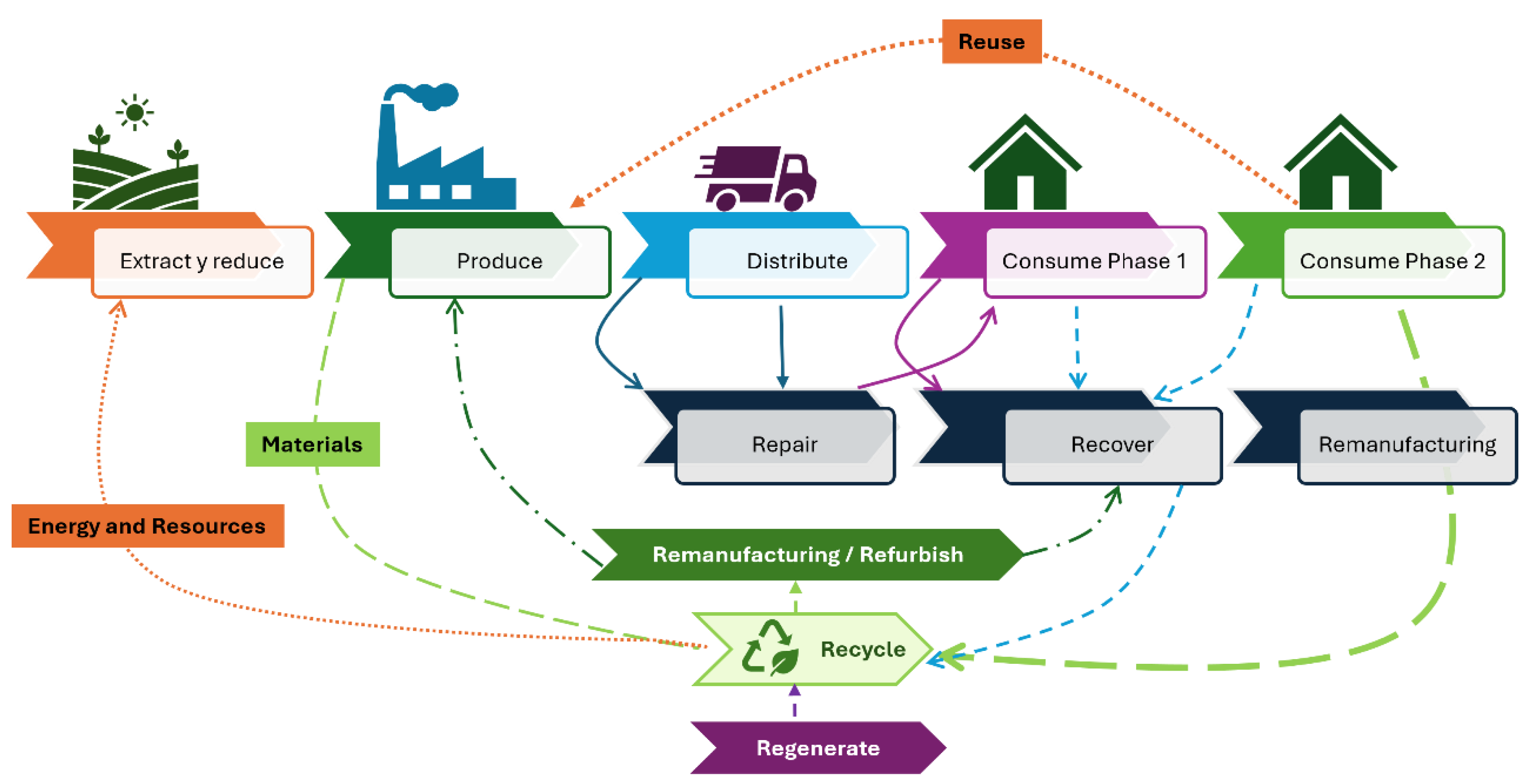
Figure 4.
Open-air dump before the renovation: (a) Note the large amount of waste; (b) Open-air landfill aerial view.
Figure 4.
Open-air dump before the renovation: (a) Note the large amount of waste; (b) Open-air landfill aerial view.
Disclaimer/Publisher’s Note: The statements, opinions and data contained in all publications are solely those of the individual author(s) and contributor(s) and not of MDPI and/or the editor(s). MDPI and/or the editor(s) disclaim responsibility for any injury to people or property resulting from any ideas, methods, instructions or products referred to in the content. |
© 2026 by the authors. Licensee MDPI, Basel, Switzerland. This article is an open access article distributed under the terms and conditions of the Creative Commons Attribution (CC BY) license (http://creativecommons.org/licenses/by/4.0/).
Copyright: This open access article is published under a Creative Commons CC BY 4.0 license, which permit the free download, distribution, and reuse, provided that the author and preprint are cited in any reuse.


