
Submitted:
13 June 2026
Posted:
16 June 2026
You are already at the latest version
Abstract
A 16th-century gilded and polychrome limestone relief depicting the Annunciation, attributed to the workshop of the Persio family and tentatively associated with Aurelio Persio, belongs to the main altarpiece of the Cathedral of Madonna della Bruna and Sant’Eustachio in Matera (Italy). The artwork showed a highly compromised preservation state, with two superimposed decorative phases, extensive loss of legibility and compact deposits masking the original gilding and polychromy. A multi-analytical diagnostic campaign (UV fluorescence, FTIR, SEM–EDS, PY-GC/MS and GC-MS) revealed casein-based preparations, oleoresinous binding media (linseed oil, colophony, lanolin), organic lakes, lead white and smalt. The presence of highly hygroscopic preparatory layers and fragile gilding made traditional solvent cleaning risky. A combined approach was therefore developed, integrating controlled solvent pre-conditioning, local consolidation with 2% acrylic dispersion K52 in hydroalcoholic solution, and laser cleaning using a Nd:YAG laser (1064 nm) in Q-switched mode. Damage and ablation thresholds were experimentally determined for gold leaf, oleoresinous missions and white preparations. The most effective and selective results were obtained with low-energy Q-switched laser irradiation, assisted by ligroin or hydroalcoholic pre-moistening through Japanese paper. The method allowed the safe removal of concreted deposits and the recovery of the original brilliance of the gold leaf and chromatic nuances of both decorative phases, demonstrating the potential of integrated laser–solvent treatments for complex gilded polychrome stone surfaces.
Keywords:
laser cleaning
; Nd:YAG
; laser gilded polychromy
; stone conservation
; polychrome stone surfaces
; cultural heritage
1. Introduction
Laser-based techniques have been increasingly applied to the study and conservation of artworks, both for analytical purposes and for controlled surface cleaning1. In the case of gilded and polychrome stone artefacts2, the coexistence of inorganic substrates, proteinaceous preparations, oleoresinous binding media and metallic leaf makes the use of conventional cleaning systems particularly critical. Solvent action may induce swelling and decohesion of ground and paint layers, while improper laser parameters can lead to irreversible damage to the gold leaf and fragile paints3.
This paper presents a preliminary study towards the definition of an integrated cleaning protocol for gilded and polychrome relief carved in limestone, the study was made and used on a 16th-century relief with the upper mentioned feature, depicting the Annunciation and functioning as the predella of the main altarpiece of Matera Cathedral (Figure 1). Stylistic and comparative analyses support an attribution to Aurelio Persio, active in the Murgia area within the Persio family workshop.
The relief exhibited a very poor preservation state, with:
- -
- diffuse incoherent and concreted deposits;
- -
- greyed stone surfaces;
- -
- extensive lacunae and decohesion of preparatory and pictorial layers;
- -
- severely altered gilding;
- -
- overlapping decorative phases with different chromatic schemes.
The main goal of this work was to investigate the feasibility of a combined solvent–laser cleaning strategy, based on a thorough understanding of the stratigraphy and material behaviour, and on the experimental determination of laser damage and ablation thresholds for the main constituents.
2. Experimental
2.1. State of Conservation
The relief is carved in a yellowish limestone locally used in the Matera area. Based on the results of the petrographic analyses carried out on sample of a thin section and on microscopic observation, the support was identified as a fine biocalcarenite whose characteristics are comparable to those of Lecce stone4.Visual examination in natural and raking light showed a diffuse, powdery, incoherent surface deposit extending over the entire surface, including undercuts (Figure 2). Exposed stone presented an anomalous grey tone, attributable to both the penetration of past organic coatings and the increased surface roughness caused by decohesion.
White preparation layers belonging to both decorative phases were widely lacunose and often detached from the stone support, with low internal cohesion. The paint layers showed local lifting, abrasions and material losses. The coexistence of organic (resins, oils, waxes, casein) and inorganic (gypsum, calcite, lead white, smalt) components within the stratigraphy led to differentiated alteration phenomena, including chromatic changes.
In the first decorative phase, flesh tones based on lead white and a red organic lake were veiled by a compact grey film, initially interpreted as possible alteration of lead white. Digital microscopy combined with controlled imbibition using hydroalcoholic solution indicated instead the presence of concreted deposits. In the second phase, areas appearing grey at first inspection were recognised as originally blue; microscopic observations and analyses (sample F2) confirmed smalt as the blue pigment5, affected by a known degradation process in oil media6’7.
Gold leaf, present in both phases, showed lacunae and loss of adhesion to the underlying mission.
2.2. Diagnostic Methods
A multi-analytical diagnostic campaign was carried out to characterise the materials and stratigraphy and to support cleaning decisions.
UV fluorescence imaging confirmed the coexistence of organic and inorganic materials and helped to distinguish different retouching and coating areas (Figure 3).
FTIR spectroscopy identified:
- -
- gypsum and calcite in white preparations;
- -
- casein as preparatory binder;
- -
- oleoresinous mixtures containing linseed oil, colophony and lanolin in missions and, in part, in paint layers (Figure 4).
SEM–EDS analysis of sample A5 detected Pb, Ca, Al, Si and Cl, supporting the identification of lead white and an aluminium/silicon-containing substrate associated with an organic red lake applied over a lead-white-based layer. These results were consistent with FTIR and chromatographic data, which indicated calcite, lead white, a red lake possibly attributable to madder or cochineal, milk proteins, linseed oil, colophony and lanolin.
PY-GC/MS and GC-MS confirmed the systematic use of linseed oil, colophony and lanolin as components of missions and, partially, of paint media. Casein was consistently identified in ground layers.
Two decorative phases were recognised:
- -
- First phase: a thin white preparation composed of gypsum and calcite with a proteinaceous binder (casein), pink hues obtained with organic lakes (madder or cochineal) over lead white, and a yellow oleoresinous mission locally observed at approximately 15-20 µm.
- -
- Second phase: a thicker and more porous white preparation of similar composition, pink based on calcite and lead white, blue based on smalt, and a thinner brownish oleoresinous mission (approximately 5 µm), with different chromatic choices, as also observed in the stratigraphic documentation of sample A2 (Figure 4).
The recurrence of casein and lanolin suggests a technical system consistent with local practices and material availability in the Murgia region.
2.3. Solvent Tests
Solvent-based tests were first carried out on detached fragments and marginal areas at 21 degrees C and 50% RH. Acetone, isopropyl alcohol, ligroin, hydroalcoholic mixtures, white spirit and cyclohexane were evaluated through optical microscopy and localised wettability tests. The selection criteria were high volatility, low penetration capacity and sufficient wetting power, while avoiding excessive solvent action on the original materials8. The more polar solvents showed some effectiveness in reducing compact deposits but also induced swelling and weakening of the casein-bound preparations and oleoresinous missions. Menthol was therefore tested as a volatile binder/barrier layer, applied by brush to form a temporary superficial film intended to limit solvent penetration into the most sensitive gilded and mission layers. Menthol diluted at 50-70% in ligroin was tested at room temperature as a temporary protective barrier. Although partial reduction of the concreted deposits was observed, the system showed limits of effectiveness and was not adopted as the main cleaning method. Because solvent action remained potentially risky, it was restricted to controlled pre-moistening of deposits before laser irradiation, primarily using ligroin via Japanese paper.
2.4. Laser Equipment and Methodology
Laser cleaning tests were performed with an EOS QS Nd:YAG9 laser (1064 nm), comparing short free-running/free-running (SFR/FR) and Q-switched (QS) modes. The final protocol was based mainly on QS irradiation. Main technical features are (Table 1): wavelength: 1064 nm;
- -
- wavelength: 1064 nm;
- -
- pulse duration: 15 ns (QS mode);
- -
- maximum pulse energy: 140 mJ (QS mode);
- -
- selectable repetition rate: single pulse, 1–10 Hz, 15 Hz, 20 Hz;
- -
- spot size: 1.5–6 mm (variable focus handpiece);
- -
- homogeneous beam profile;
- -
- fibre delivery system.
Preliminary tests were conducted to compare the short free-running/free-running (SFR/FR) and Q-switched (QS) emission modes of the EOS QS Nd:YAG system. The FR mode (30-100 microsecond pulses) was tested at 200-250 mJ on gilded and mission areas and up to 1000 mJ on white deposits; however, it was either insufficiently selective or produced undesirable effects, such as detachment of gold leaf from the underlying mission or darkening of some deposits. For this reason, the final cleaning protocol was mainly based on QS irradiation, supported when necessary, by bandpass filters (25 or 50) to reduce the nominal energy and improve control on fragile gilded and polychrome layers. The corresponding FR fluence values were 1.590 J/cm² for the yellow mission, 7.961 J/cm² for the brown mission and gold leaf, and 31.846 J/cm² for the white preparation layer. The QS mode used for the final protocol operated at 1.415 J/cm² for the yellow mission, 12.738 J/cm² for the brown mission, 0.955 J/cm² for gold leaf, and 2.866 J/cm² for the white preparation layer.
An Er:YAG laser in very short mode was also tested but was not further used because of the high sensitivity of organic binders at 2.94 μm.
Cleaning tests were carried out on selected areas representative of the different materials (gold leaf, yellow and brownish oleoresinous missions, white preparations, altered paints). Energy per pulse, repetition rate and spot size were varied to determine ablation and damage thresholds and to evaluate cleaning performance under magnification10.
For the most fragile gilding, consolidation with 2% acrylic dispersion K52 in hydroalcoholic solution was applied via Japanese paper and brush prior to laser application11.
2.5. Threshold Determination
Damage and ablation thresholds were experimentally defined by gradually increasing pulse energy and monitoring the onset of material loss or alteration (Table 2); threshold verification and continuous monitoring of the ablative process during cleaning were carried out using a Dino-Lite digital microscope, with observations performed before, during, and after treatment at magnifications of up to 200×.
- -
- Yellow mission: deposit removal was observed at 100 mJ (reported fluence: 1.415 J/cm²), corresponding to the ablation threshold; the damage threshold was identified at 110 mJ, with a spot diameter of 3 mm and a repetition rate of 1 Hz.
- -
- Brownish mission: the ablation threshold was identified at 40 mJ (reported fluence: 12.738 J/cm²), while the damage threshold was observed at 50 mJ, with a spot diameter of 2 mm and a repetition rate of 1 Hz. Controlled pre-moistening with ligroin was necessary.
- -
- Gold leaf: the ablation threshold was identified at 30 mJ (reported fluence: 0.955 J/cm²), while the damage threshold was observed at 40 mJ, with a spot diameter of 3 mm and a repetition rate of 1 Hz. These parameters were considered as limiting values, requiring very low energies and strict control.
- -
- White preparation: the ablation threshold was identified at 90 mJ (reported fluence: 2.866 J/cm²), while the damage threshold was observed at 100 mJ, with a spot diameter of 3 mm and a repetition rate of 2 Hz. For carbonaceous black spots, 100 mJ and 2 Hz were used with caution.
Bandpass filters (25 or 50) were adopted to fine-tune energy delivery in the most sensitive areas.
The experimentally determined ablation and damage thresholds for the main materials are summarized in Table 2.
The reported fluence values made it possible to compare the behaviour of the different materials more directly. The operational QS fluences recorded in the original conservation documentation ranged from 0.955 J/cm² on gold leaf to 12.738 J/cm² on the brown oleoresinous mission, confirming the markedly different response of each stratigraphic component. Damage thresholds are therefore reported as pulse-energy values, while the fluence values refer to the tested operating/ablation conditions. Under the selected conditions, the short pulse duration favoured rapid ablation and spallation of the deposits while limiting thermal effects on the original stratigraphy.
3. Results
3.1. Behaviour of Materials Under Laser Irradiation
The comparative analysis of threshold values confirmed that:
- -
- gold leaf is the most sensitive material to 1064 nm radiation, requiring minimal energies and consolidated support;
- -
- oleoresinous missions show different responses: the yellow mission is more easily ablated, whereas the brownish mission is more resistant and benefits from pre-moistening;
- -
- the white preparation tolerates higher energies but shows ablation risk above 90 mJ.
These differences reflect the specific composition and thickness of each layer as determined by diagnostic analyses.
3.2. Cleaning Performance
Tests were conducted in the areas most representative of both degradation phenomena and complex execution techniques. Where cleaning parameters gave positive results, these settings were adopted for the final intervention.
For gilded areas of the first phase that were sensitive to both solvents and laser ablation, a differentiated strategy was implemented. Some areas were treated only with carefully controlled solvent cleaning; others were treated with combined consolidation and Q-switched laser cleaning at very low energy, using bandpass filters.
Figure 5.
Laser cleaning test areas showing different responses of gold leaf (A,B), oleoresinous missions (C,D,E,F) and white preparation (G,H).
Figure 5.
Laser cleaning test areas showing different responses of gold leaf (A,B), oleoresinous missions (C,D,E,F) and white preparation (G,H).
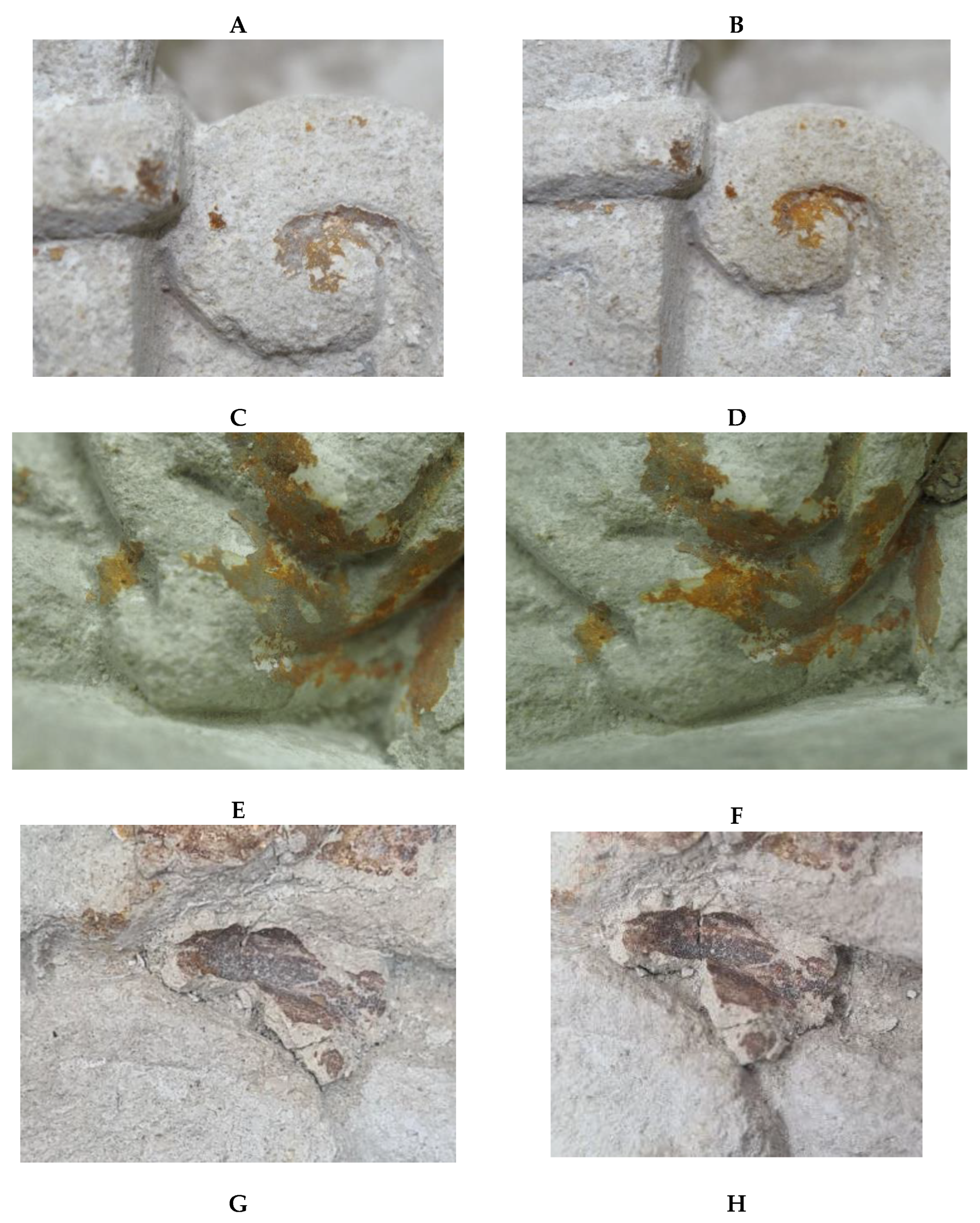
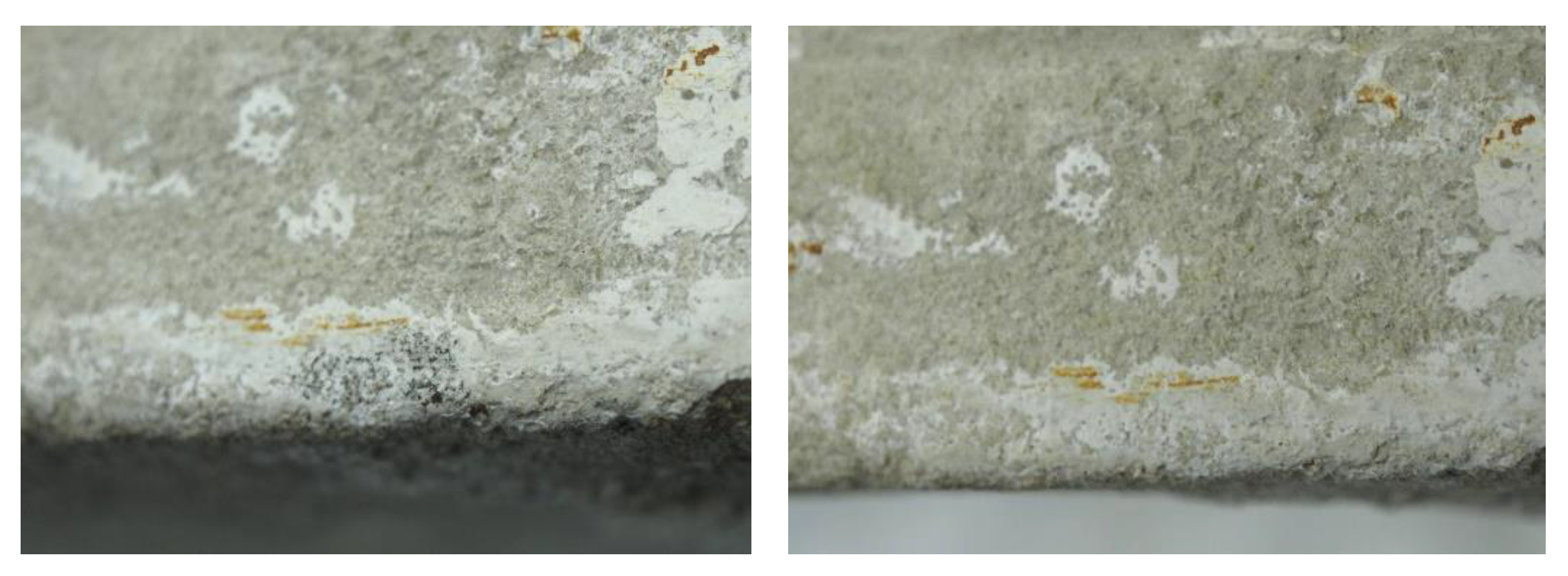
Figure 6.
Laser cleaning on gold leaf after consolidation with 2% K52 acrylic dispersion (Nd:YAG QS, 30 mJ).
Figure 6.
Laser cleaning on gold leaf after consolidation with 2% K52 acrylic dispersion (Nd:YAG QS, 30 mJ).
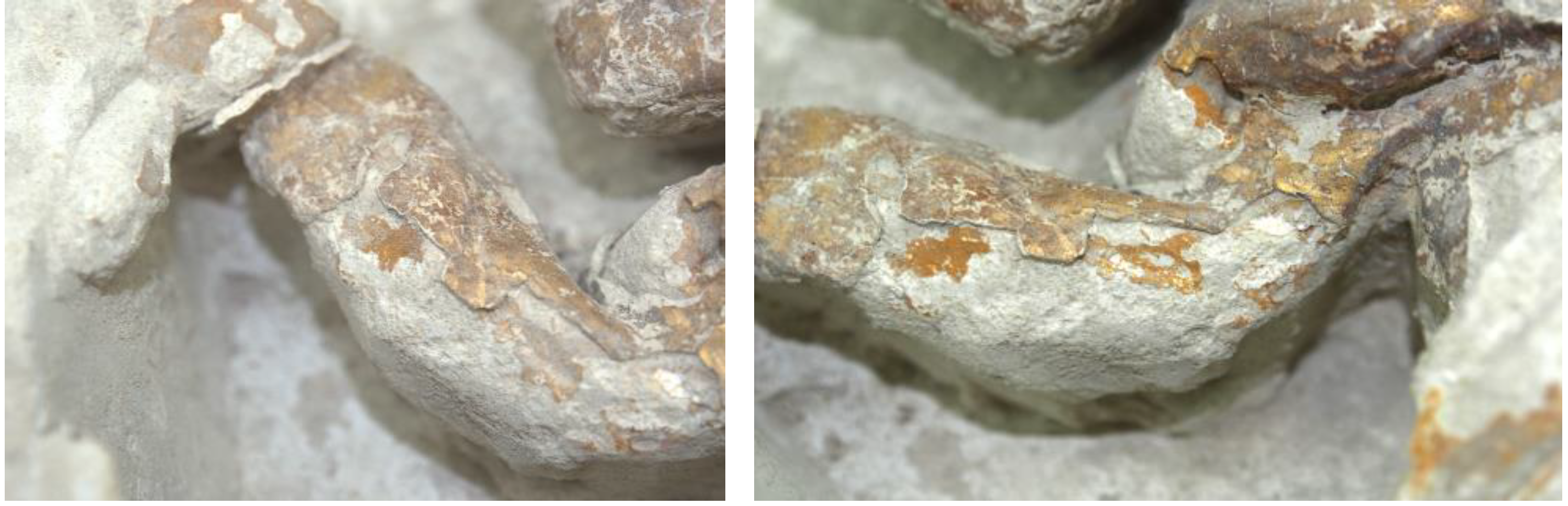
For gilded finishes of the second decorative phase, deposits were softened with ligroin via Japanese paper and immediately removed by Q-switched Nd:YAG laser, with energies derived from test areas and using filters 25 or 50.
The integrated protocol allowed:
- -
- removal of compact grey deposits masking pink flesh tones of the first phase, with reappearance of the original chroma;
- -
- recovery of blue tones in smalt areas of the second phase, with improved saturation and legibility;
- -
- significant enhancement of the brilliance and depth of the gold leaf, especially where consolidation preceded laser action;
- -
- preservation of fragile preparations and paints, with no detectable new losses or burns under magnification.
4. Discussion
The results highlight the importance of correlating diagnostic data with laser behaviour. The systematic use of linseed oil, colophony and lanolin as mission and paint components, together with casein preparations, explains the high sensitivity of the stratigraphy to both solvents and heat.
The experimental energy thresholds and the reported fluence values show that a purely laser-based approach would have been unsafe for gold leaf and fragile preparations, while a purely solvent-based one would risk swelling and decohesion. The combined method proved effective in tailoring the treatment to the different layers and decorative phases, relying on:
- -
- selective consolidation;
- -
- controlled pre-moistening;
- -
- use of Q-switched pulses at low energy with appropriate filters,
The differentiation between the first and second decorative phases, in terms of thickness, pigment choice (lakes and lead white vs. smalt and lead white) and mission colour, was crucial for establishing area-specific strategies. The dedicated recording scheme developed for this polychrome stone artwork, integrating UNI standards and ICR models, facilitated a multilayer reading of the object and a structured documentation of both condition and intervention.
5. Conclusion
This preliminary study shows that:
- -
- a Nd:YAG laser in Q-switched mode, combined with solvent pre-conditioning and local consolidation, can be safely employed on gilded and polychrome stone reliefs with complex stratigraphy;
- -
- material-specific damage and ablation thresholds are essential for defining safe operating windows, particularly for gold leaf;
- -
- the integrated approach allowed the selective removal of concretionary deposits, restoring the legibility and luminosity of both decorative phases without inducing further damage.
The methodology developed for this 16th-century relief from Matera Cathedral can be regarded as a promising model for future laser-based interventions on similarly complex gilded polychrome stone artworks.
Data Availability Statement
The original contributions presented in this study are included in the article and supplementary material. Further inquiries can be directed to the corresponding author(s).
Acknowledgments
Authors would like to acknowledge the Superintendency for Archeology, Fine Arts and Landscape of the Basilicata for facilitating research, especially Barbara Improta and Mariagrazia Di Pede. Thanks also to the Institute of Heritage Science, CNR Lecce (especially Angela Calia and Giulia Germinario) for assisting with scientific analyses, and the Department of Chemical and Geological Sciences, University of Cagliari (Simone Murgia, Massimiliano Arca, Maria Carla Aragoni, Anna Pintus) for providing the products used (diammonium phosphate-based consolidants).
References
- Cianchetta, I.; Colantoni, I.; Talarico, F.; D’Acapito, F.; Trapananti, A.; Maurizio, C.; Fantacci, S.; Davoli, I. Discoloration of the smalt pigment: experimental studies and ab initio calculations. J. Anal. At. Spectrom. 2012, 27, 1941–1948. [Google Scholar] [CrossRef]
- Conti, L.; Sidoti, G.; Botticelli, M.; Medeghini, L.; Pannuzzi, S.; Galanti, G.; Montemaggiori, D. Le policromie e le dorature del dossale d’altare marmoreo dell’antica Cattedrale di Orte; Bollettino ICR, 2021; ISSN 1594-2562. [Google Scholar]
- Cremonesi, P. L’uso dei solventi organici nella pulitura di opere policrome, 2ª ed.; Il Prato, Collana I Talenti: Padova, 2004. [Google Scholar]
- Di Stasio, F.; Santamaria, U.; Agresti, G. Determinazione della soglia di fluenza di danno nella pulitura delle superfici policrome. Poster presented at APLAR 6 – Applicazioni Laser nel Restauro, Florence, Auditorium di Sant’Apollonia, 14–16 September 2017. In Atti del Convegno APLAR 6 (published July 2019). ISBN 978-88-404-0090-7.
- Furgiuele, E. A.; Zenucchini, F.; Croveri, P.; Capua, M. C. Egyptian limestone polychrome statues: laser cleaning in comparison with traditional methods. In Lasers in the Conservation of Artworks XIII: Proceedings of the International Conference on Lasers in the Conservation of Artworks (LACONA XIII); Florence, Italy, Siano, S., Ciofini, D., Eds.; CRC Press: London, 2023. [Google Scholar] [CrossRef]
- Giannini, C. (Ed.) Dizionario del restauro. Tecniche, diagnostica, conservazione; Nardini Editore: Firenze, 2010. [Google Scholar]
- Siano, S.; Giamello, M.; Bartoli, L.; et al. Laser cleaning of stone by different laser pulse duration and wavelength. Laser Phys. 2008, 18, 27–36. [Google Scholar] [CrossRef]
- Siano, S.; Salimbeni, R. Advances in Laser Cleaning of Artwork and Objects of Historical Interest: The Optimized Pulse Duration Approach. Acc. Chem. Res. 2010, 43(6), 739–750. [Google Scholar] [CrossRef] [PubMed]
- Wiesner, F. F. M.; Lanfranchi, M. R.; Brunetto, A.; Daffara, C. Valutazione di differenti strumentazioni laser per la rimozione di scialbo da una stesura di blu di smalto del dipinto murale di San Rocco a Ponte Capriasca (Svizzera). In Atti del Convegno APLAR 7 – Applicazioni laser nel restauro, Venezia, Palazzo Ducale, 7–9 novembre 2019; 2022; pp. 297–312. [Google Scholar]
| 1 | SIANO 2008/2010; For the theoretical and methodological foundations of laser cleaning in conservation; |
| 2 | FURGIUELE et al.. 2023, For laser cleaning applications on polychrome stone artefacts and comparative assessments with traditional methods; |
| 3 | CONTI et al. 2021, For comparable issues related to laser cleaning on gilded and polychrome stone surfaces, including the coexistence of metallic leaf, organic preparations and inorganic substrates; |
| 4 | The characterization of the stone was carried out through petrographic analysis on a sample taken from an erratic fragment; the analyses were performed by the Consiglio Nazionale delle Ricerche (CNR) in Lecce. Lecce stone is a calcareous rock belonging to the family of Miocene calcarenites, composed of sands derived from limestone rocks and elements of organic origin, such as skeletal remains of mammals, coral fragments, and various microscopic marine organisms embedded in a calcitic cement. |
| 5 | The blue pigment was further identified by SEM–EDS analysis as smaltino. |
| 6 |
Giannini 2010, p. 165 |
| 7 |
Cianchetta 2012, Smalt discoloration has been variously attributed to changes in cobalt oxidation state or ion migration; however, recent studies identify potassium leaching as the main cause, with no depletion of the cobalt chromophore. |
| 8 | CREMONESI 2004, It belongs to the class of aliphatic hydrocarbons which, among their properties, exhibit low penetrability, volatility, and weak retention (p. 71); |
| 9 | This type of short free-running pulsed laser (30–119 μs pulses) combines a Q-switch pulse (15 ns duration) with energy of up to 140 mJ. The optical fiber transmits the beam for up to 1200 μs. The lasers used are provided by El.En. Light for Art. |
| 10 | DI STASIO 2019, For methodological approaches to the experimental determination of damage fluence thresholds in the laser cleaning of polychrome surfaces; |
| 11 | The method was used to restore the cohesion of the pictorial layer of the wall paintings in the Chapter Hall of the Basilica of Saint Anthony (Padua), during the training conservation project carried out in September 2019. |
Figure 1.
General view of the 16th-century polychrome and gilded stone relief before conservation treatment.
Figure 1.
General view of the 16th-century polychrome and gilded stone relief before conservation treatment.
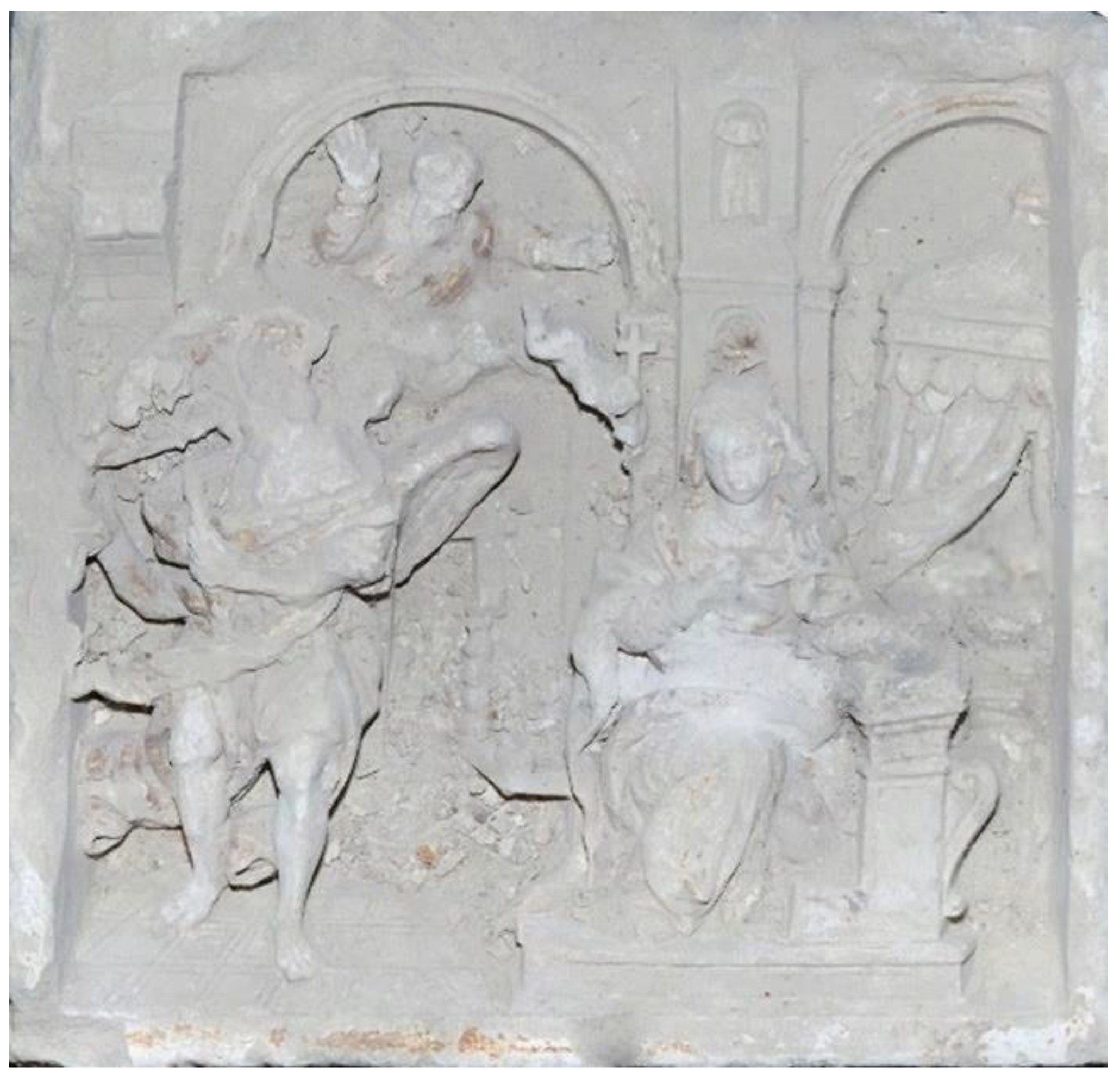
Figure 2.
Detail of gilded areas before cleaning, showing compact grey deposits and partial loss of adhesion of the gold leaf.
Figure 2.
Detail of gilded areas before cleaning, showing compact grey deposits and partial loss of adhesion of the gold leaf.
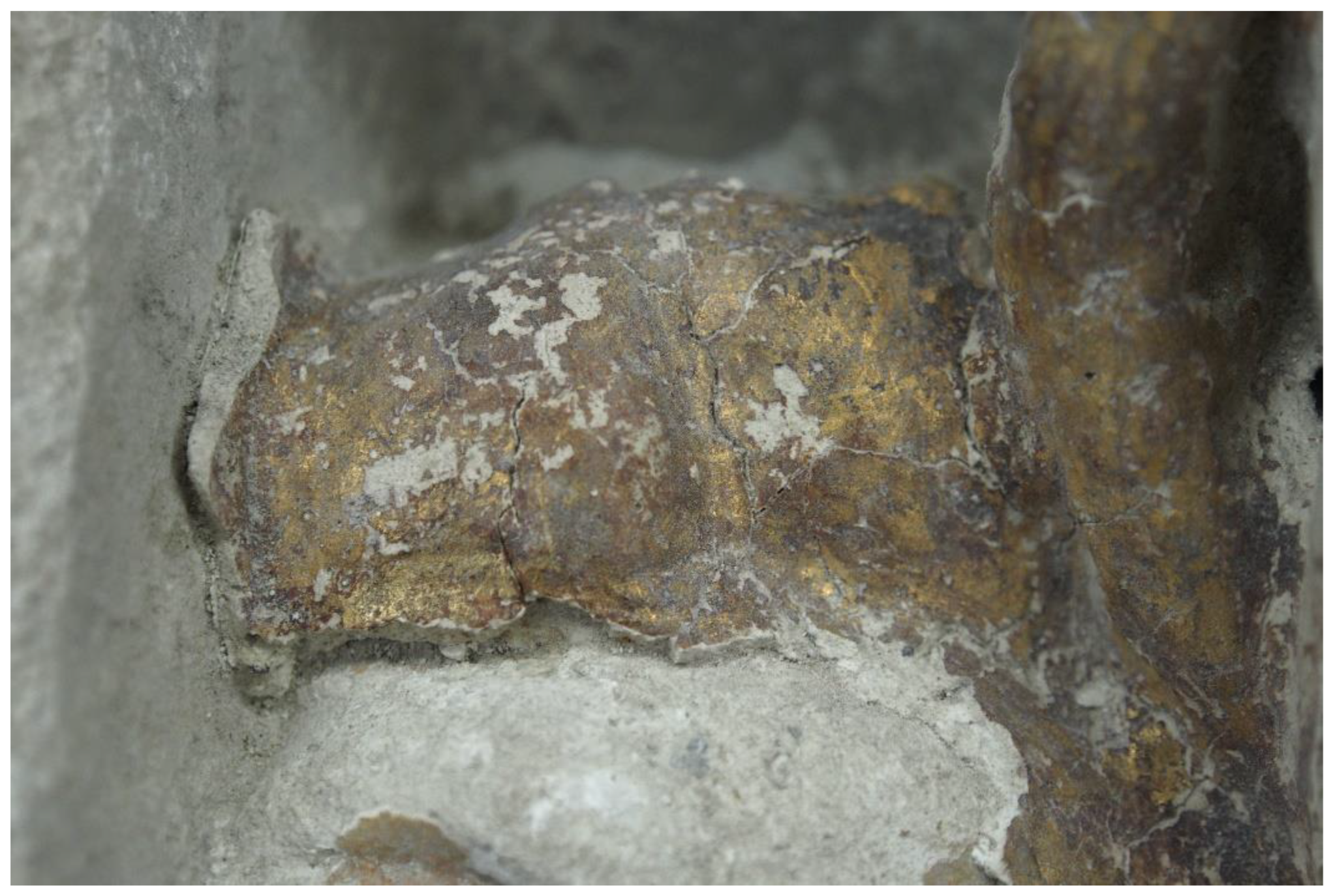
Figure 3.
UV fluorescence image of the surface, indicating the presence of organic materials and two superimposed decorative phases.
Figure 3.
UV fluorescence image of the surface, indicating the presence of organic materials and two superimposed decorative phases.
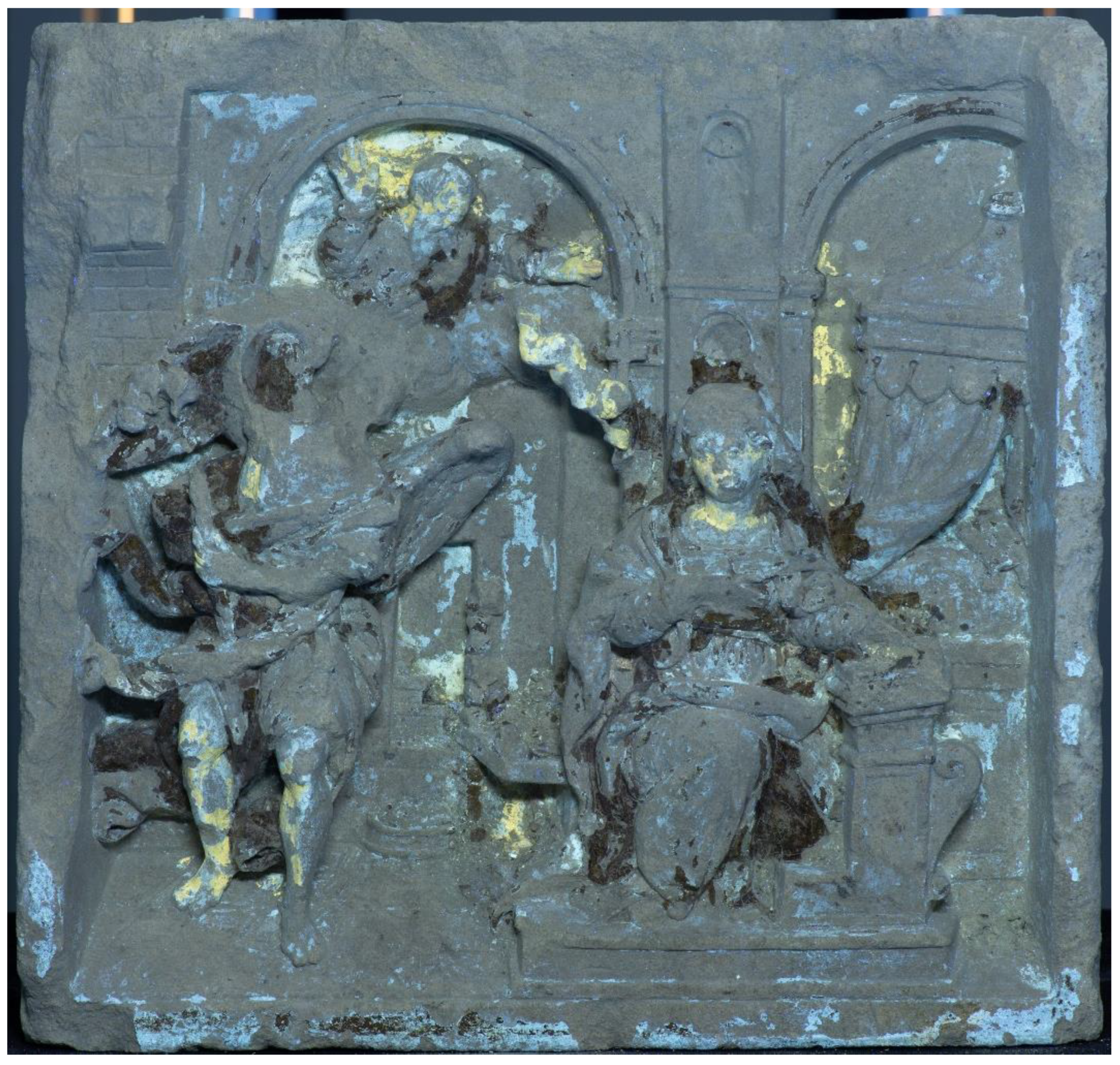
Figure 4.
Sample A2: sampling photograph and comparative documentation of Phase 1 and Phase 2. Front and back views of the sample and polished cross-sections observed at 10× and 20× magnification are shown. The Phase 1 mission appears yellow, with a thickness of approximately 15–20 µm, whereas the Phase 2 mission is brown and significantly thinner (≈5 µm). FTIR analyses identified casein in the preparation layers and linseed oil, colophony and lanolin in the missions.
Figure 4.
Sample A2: sampling photograph and comparative documentation of Phase 1 and Phase 2. Front and back views of the sample and polished cross-sections observed at 10× and 20× magnification are shown. The Phase 1 mission appears yellow, with a thickness of approximately 15–20 µm, whereas the Phase 2 mission is brown and significantly thinner (≈5 µm). FTIR analyses identified casein in the preparation layers and linseed oil, colophony and lanolin in the missions.

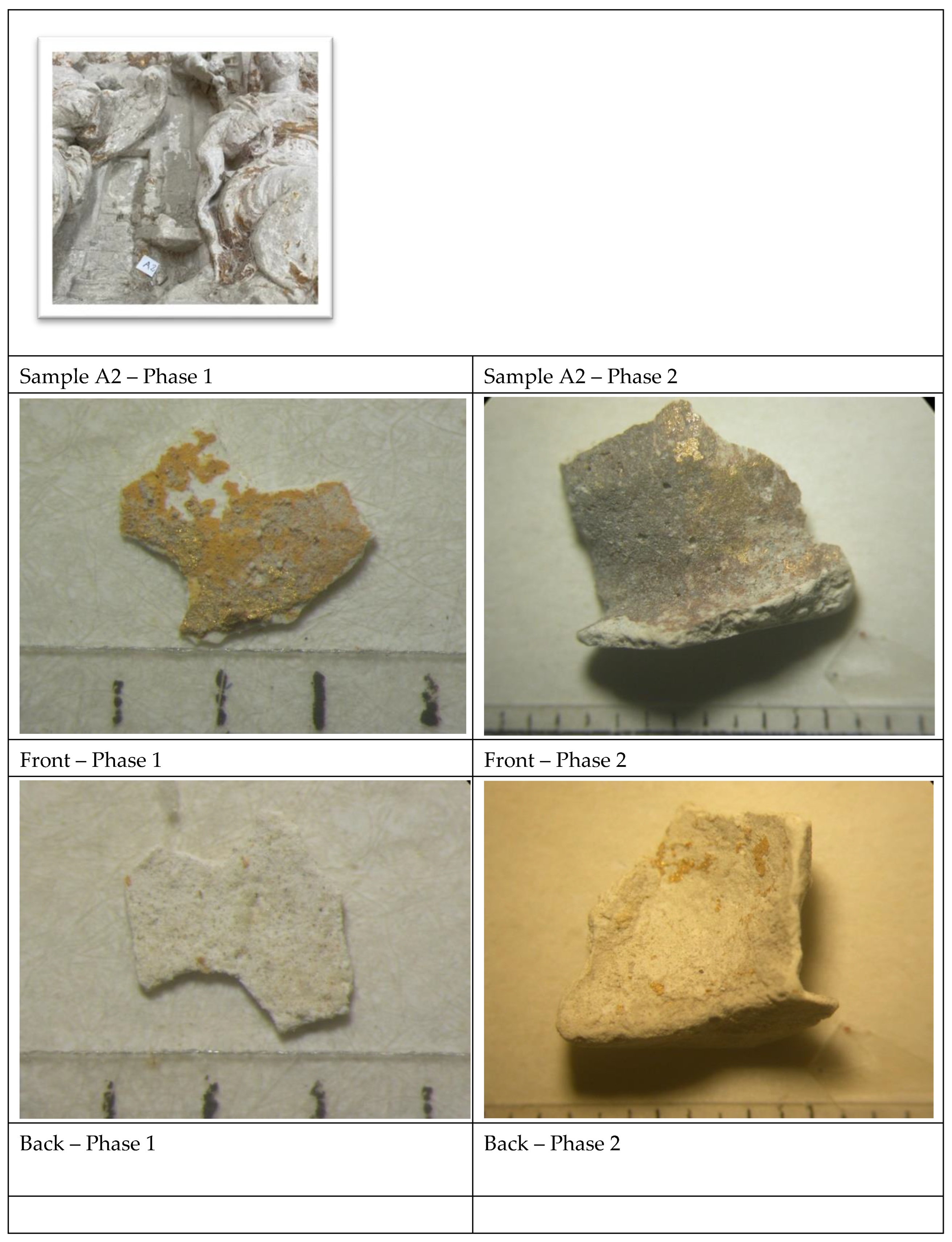
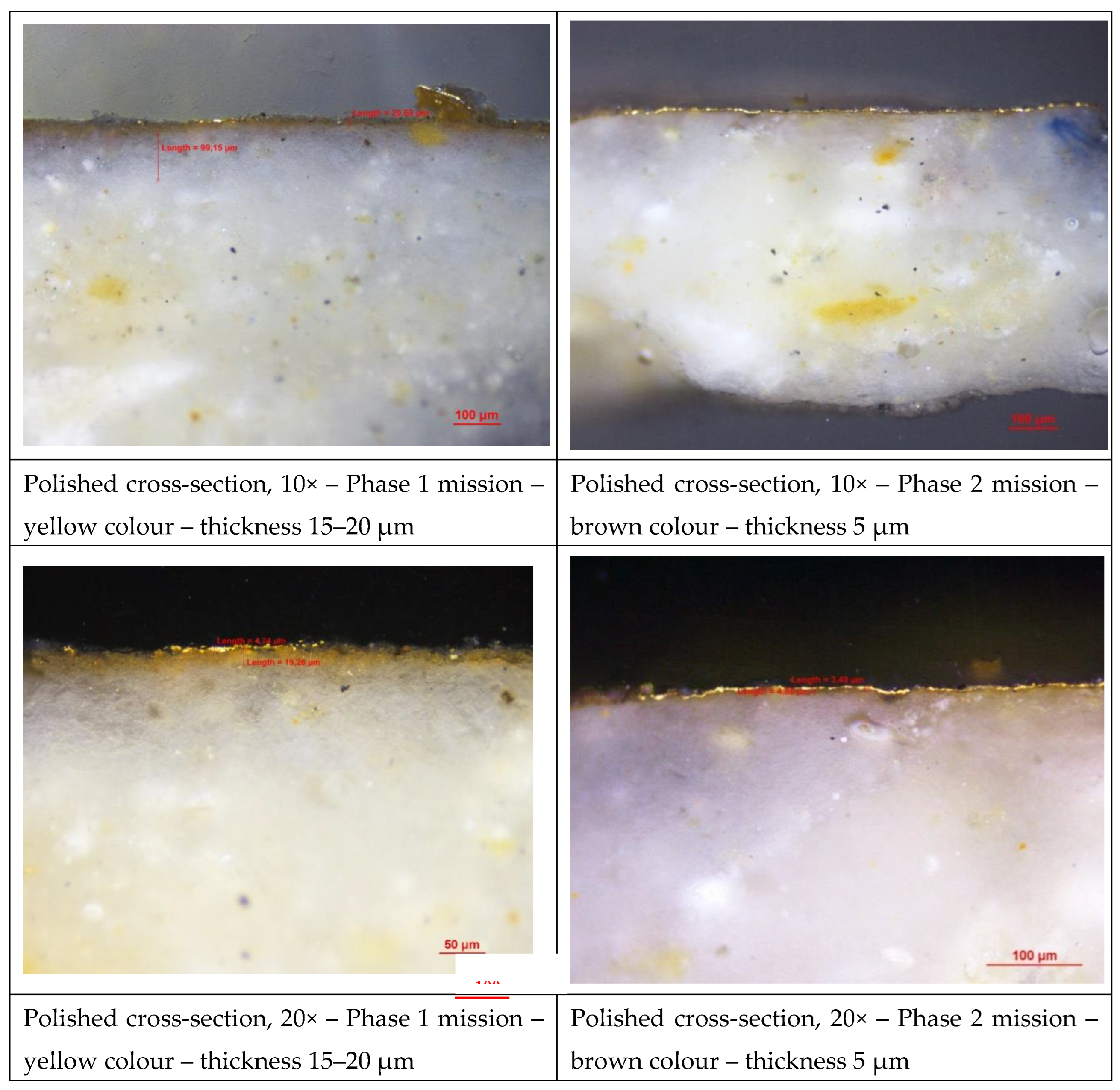

Table 1.
Nd:YAG Q-switched laser parameters used during cleaning tests.
| Wavelength (nm) | Pulse duration | Energy (mJ) | Spot size (mm) | Repetition rate (Hz) |
|---|---|---|---|---|
| 1064 | 15 ns | 30–110 | 2–3 | 1–2 |
Table 2.
Q-switched Nd:YAG laser cleaning tests on different materials.
| Area / material | Operating energy and reported fluence | Repetition / spot | Thresholds | Outcome and notes |
|---|---|---|---|---|
| Yellow deposit (mission area) | 100 mJ; 1.415 J/cm² | 1 Hz; Ø 3 mm | Ablation: 100 mJ; Damage: 110 mJ | Deposit removed at 100 mJ. Effective cleaning at the ablation threshold without substrate damage. |
| Brownish deposit (mission area) | 40 mJ; 12.738 J/cm² | 1 Hz; Ø 2 mm | Ablation: 40 mJ; Damage: 50 mJ | Surface slightly moistened with ligroin; deposit progressively thinned; treatment repeated after drying. |
| Gold leaf | 30 mJ; 0.955 J/cm² | 1 Hz; Ø 3 mm | Ablation: 30 mJ; Damage: 40 mJ | Limit parameters: gold leaf undergoes ablation with increasing energy. Recommended operating energy: 30 mJ. Laser cleaning performed after application of K52 (2% in hydroalcoholic solution) using interposed Japanese paper. |
| White area (carbonaceous spots) | 90 mJ; 2.866 J/cm² | 2 Hz; Ø 3 mm | Ablation: 90 mJ; Damage: 100 mJ | Reduction of carbonaceous deposits. Parameters optimized for black carbonaceous spots; 100 mJ and 2 Hz used with caution. No visible substrate alteration. |
Disclaimer/Publisher’s Note: The statements, opinions and data contained in all publications are solely those of the individual author(s) and contributor(s) and not of MDPI and/or the editor(s). MDPI and/or the editor(s) disclaim responsibility for any injury to people or property resulting from any ideas, methods, instructions or products referred to in the content. |
© 2026 by the authors. Licensee MDPI, Basel, Switzerland. This article is an open access article distributed under the terms and conditions of the Creative Commons Attribution (CC BY) license.
Copyright: This open access article is published under a Creative Commons CC BY 4.0 license, which permit the free download, distribution, and reuse, provided that the author and preprint are cited in any reuse.