

Submitted:
12 June 2026
Posted:
17 June 2026
You are already at the latest version
Abstract
This paper discusses the progress of research in the field of "Artificial Intelligence and Macroeconomics/Econometrics" from 1975 to October 14, 2025, using a bibliometric analysis approach. The main research method of this paper is bibliometric analysis using VOSviewer software, which examines the characteristics of published articles such as co-authors' collaborations, geographical distribution, keywords, and reviews of scientific productions of different institutions and journals. By reviewing 256 articles in the Scopus database from 1975 to October 14, 2025, the findings showed that the growth of research in this field has accelerated since the 2010s. The 2023-2024 season has peaked. The United States and China have been the largest producers of scientific papers in this field. The results were grouped into five main research clusters: (1) AI-based economic decision-making; (2) forecasting econometrics and spatial econometrics; (3) innovation and sustainability; (4) cost effectiveness and sectoral risks; and (5) business intelligence and organisational data. Co-citation analysis shows that the intellectual foundation of this field is based on econometrics, statistics, and artificial intelligence. Policy implications suggest that increased interdisciplinary collaboration and open data infrastructure can accelerate the integration of AI into macroeconomic policymaking.
Keywords:
artificial intelligence
; bibliometric analysis
; macroeconomics
; econometrics
; vosviewer
; co-citation
1. Introduction
Artificial Intelligence (AI) has become one of the fundamental factors in the world’s economic and technological transformation in recent decades. The rapid advancement of this field, from learning systems to language models and deep neural networks, has transformed economic decision-making and policy-making processes. Artificial intelligence (AI) has affected productivity, economic growth, employment structure, income distribution, and investment, and by creating new approaches in data analysis, it has drastically reduced the costs of decision-making inthe economy.
Despite these achievements, the widespread use of AI has also posed challenges for the macroeconomy, including workforce mobility, the skills gap, income inequality, and the need to develop supportive policies for the adaptation of the workforce to new technologies. Recent reports from international sources such as the AI Index (2023) and McKinsey (2023) show that more than half of business organisations globally are using AI in one or more functional units, and the amount of global investment in this area has more than tripled over the past five years. This trend reflects the growing position of AI as the decision-making infrastructure in modern economies.
From a theoretical point of view, artificial intelligence, which was first defined by John McCarthy (2004) as “the science and engineering of building intelligent machines”, today encompasses a set of technologies including machine learning, neural networks, and natural language processing. With the help of predictive models and pattern extraction from big data, especially in macroeconomics, these technologies have become an effective tool for analysing economic trends and models. Major shocks have been reported. Numerous studies in the last decade have shown that deep learning-based models have a more accurate performance in predicting variables such as economic growth, inflation rates, and financial market volatility than traditional econometric approaches (Kose & Curry, 2020; Bais et al., 2025).
Along with these advancements, there are challenges. Research by Walton (2018) and Roetzer (2022) shows that AI’s dependence on the quality of input data, lack of human considerations in algorithms, and limitations in interpreting textual and emotional information limit its effectiveness in macroeconomic decision-making. In addition, the adoption of technology in traditional industries still faces barriers such as lack of investment in data infrastructure and risk aversion. There is a shortage of organisational and expert manpower.
In general, the rapid growth of research and development in the field of AI, along with the increase in its applications in macroeconomic spaces, has necessitated the need to recognise scientific models and knowledge networks in this field. A review of the literature shows that although several studies have dealt with applied or theoretical analyses related to AI and macroeconomics, a comprehensive and systematic study that provides a general picture of the structure of research and the emergence of concepts and citation relationships in this area has not been done so far.
Accordingly, the purpose of this study is to draw a science map in the field of “Applications of Artificial Intelligence in Macroeconomics and Econometrics” through bibliometric analysis of Scopus database data in the period from 1975 to October 14, 2025, using VOSviewer software. This research tries to provide a systematic picture of the global perspective of this field by identifying trends, scientific collaborations, and subject clusters.
2. Literature Review
Research on the intersection of artificial intelligence (AI) and macroeconomics has expanded substantially over the past two decades. Early studies primarily focused on conceptual and technical foundations of AI, emphasising its capacity to replicate human reasoning and learning. McCarthy (2004) defined AI as “the science and engineering of making intelligent machines” capable of simulating processes such as learning and decision-making. Subsequent works by Harpur (2020) and Kumar and Thakur (2012) deepened the technical understanding of AI by highlighting the role of machine learning, neural networks, and deep learning in analytical modelling — paving the way for their integration into economic analysis.
From an economic perspective, numerous studies have examined the influence of AI on productivity, labour markets, and investment dynamics. Agrawal et al. (2018) described AI as a “prediction machine” that transforms economic decision-making by reducing uncertainty in forecasting. A 2023 McKinsey report further indicated that the share of organisations adopting AI rose from 20 per cent in 2017 to over 55 per cent in 2023, demonstrating AI’s accelerating role in efficiency gains and structural transformation. In contrast, Glikson and Woolley (2020) and Marlatt (2023) emphasised social and employment challenges, noting the risks of job displacement and rising income inequality. Consistent with this perspective, Acemoglu and Restrepo (2022) argued that while AI enhances productivity, it can also induce structural shifts in labour markets. Recent findings thus underscore concerns regarding skill polarisation and distributional imbalances fuelled by automation (Glikson & Woolley, 2020; Marlatt, 2023).
Beyond these labour-market and productivity effects, several studies have addressed broader social and policy dimensions of AI. They highlight both opportunities for enhanced welfare and efficiency and challenges such as data privacy, algorithmic bias, and potential job losses resulting from accelerated automation (Walton, 2018; Rotzer, 2022).
At the econometric frontier, recent research has explicitly incorporated neural networks and deep-learning models into forecasting macroeconomic variables. Kassa et al. (2022) demonstrated that recurrent architectures such as LSTM and RNN effectively capture nonlinear relationships often missed by traditional econometric models. Similarly, Bais et al. (2025) reported higher accuracy in predicting economic growth and inflation when deep-learning systems were integrated into macroeconomic forecasting frameworks. These contributions signal a paradigm shift in macroeconomic research—from linear, theory-driven modelling toward hybrid approaches that combine AI-based learning systems with classical econometrics.
A synthesis of the existing literature reveals three dominant research streams:
(1) Conceptual and technological foundations concerned with the theoretical and algorithmic bases of AI;
(2) Macroeconomic impact studies exploring effects on growth, productivity, and employment; and
(3) Econometric and forecasting models integrating machine-learning methods with macro-modelling practices.
Despite notable advances, several research gaps persist. First, most empirical evidence remains concentrated in advanced economies, with limited attention to emerging or developing contexts. Second, the integration of deep-learning techniques with traditional econometric frameworks is still at an early stage and requires broader empirical validation. Third, distributive and social consequences of AI—such as automation-induced inequality and job reallocation—remain underexplored.
Finally, the absence of comprehensive bibliometric and scientometric assessments leaves the field without a systematic understanding of its knowledge structure. Addressing this gap, the present study applies co-occurrence and co-citation analyses using the Scopus database and VOSviewer software to map the global research landscape on “AI applications in macroeconomics”.
3. Materials and Methods
3.1. Data Source and Bibliometric Approach
Bibliometric analysis, as a quantitative method for evaluating scientific literature, traces its origins to the post-World War II period and is now widely employed across diverse academic domains. This approach enables researchers to identify structural patterns, collaboration networks, and developmental trajectories within a given field of knowledge.
In this study, bibliometric and network analyses were conducted using VOSviewer (version 1.6.20). The software generates science-mapping visualizations based on bibliographic data, allowing exploration of research collaboration among countries, institutions, journals, and authors, as well as co-citation and co-occurrence relationships. In these maps, each node represents a research unit, such as a country or publication outlet; node size reflects the frequency or significance of that unit, while colors indicate thematic clusters. The link thickness between nodes corresponds to the intensity of cooperation or co-citation strength.
The bibliographic dataset was retrieved from the Scopus database, which was selected due to its comprehensive coverage of economics and interdisciplinary AI studies. Searches were restricted to document titles, abstracts, and author keywords. Boolean operators AND and OR were applied to ensure retrieval completeness. The query, executed on 14 October 2025, used the following key terms:
( TITLE-ABS-KEY ( “Artificial intelligence” ) AND TITLE-ABS-KEY ( “Macroeconomics” ) OR TITLE-ABS-KEY ( “Econometrics” ) ) AND ( LIMIT-TO ( DOCTYPE , “ar” ) OR LIMIT-TO ( DOCTYPE , “cp” ) OR LIMIT-TO ( DOCTYPE , “re” ) OR LIMIT-TO ( DOCTYPE , “bk” ) OR LIMIT-TO ( DOCTYPE , “ch” ) OR LIMIT-TO ( DOCTYPE , “cr” ) OR LIMIT-TO ( DOCTYPE , “no” ) )
Extracted records were subsequently imported into VOSviewer, where three main analyses were performed:
(1) Conceptual clustering based on keyword co-occurrence;
(2) Intellectual structure analysis through source co-citation; and
(3) Network mapping of international research collaboration.
3.2. Methodological Limitations
Despite the robustness of bibliometric techniques, several methodological limitations should be acknowledged:
- Database dependency – The dataset was exclusively derived from Scopus; consequently, valuable studies indexed solely in Web of Science or Google Scholar may have been omitted.
- Language and regional bias – Scopus’s predominant focus on English-language publications could result in the under-representation of research in other languages or regions.
- Keyword selection – The chosen set of search terms, while comprehensive, might exclude studies employing alternative or synonymous expressions.
- Temporal staticity – The analysis reflects data available up to 14 October 2025; subsequent developments in AI could reshape the domain’s research landscape.
- Interpretive caution: co-occurrence and co-citation links represent statistical associations, not necessarily theoretical or causal relationships; therefore, qualitative follow-up is essential for deeper conceptual interpretation.
4. Discussion & Results
Data collection, screening, analysis, and visualisation yielded a total of 256 documents related to “Artificial Intelligence and Macroeconomics or Econometrics” published between 1975 and 2025. These comprised 135 journal articles, 79 conference papers, 12 reviews, 10 books, 14 book chapters, 5 conference reviews, and 1 note. The United States (65 documents), China (43), the United Kingdom (17), and Italy (14) were identified as the leading contributors to research on artificial intelligence in macroeconomics/econometrics.
Figure 1 illustrates the distribution of document types published in the field of “Artificial Intelligence and Macroeconomics/Econometrics”.
Figure 1.
Distribution of Publications by Document Type.
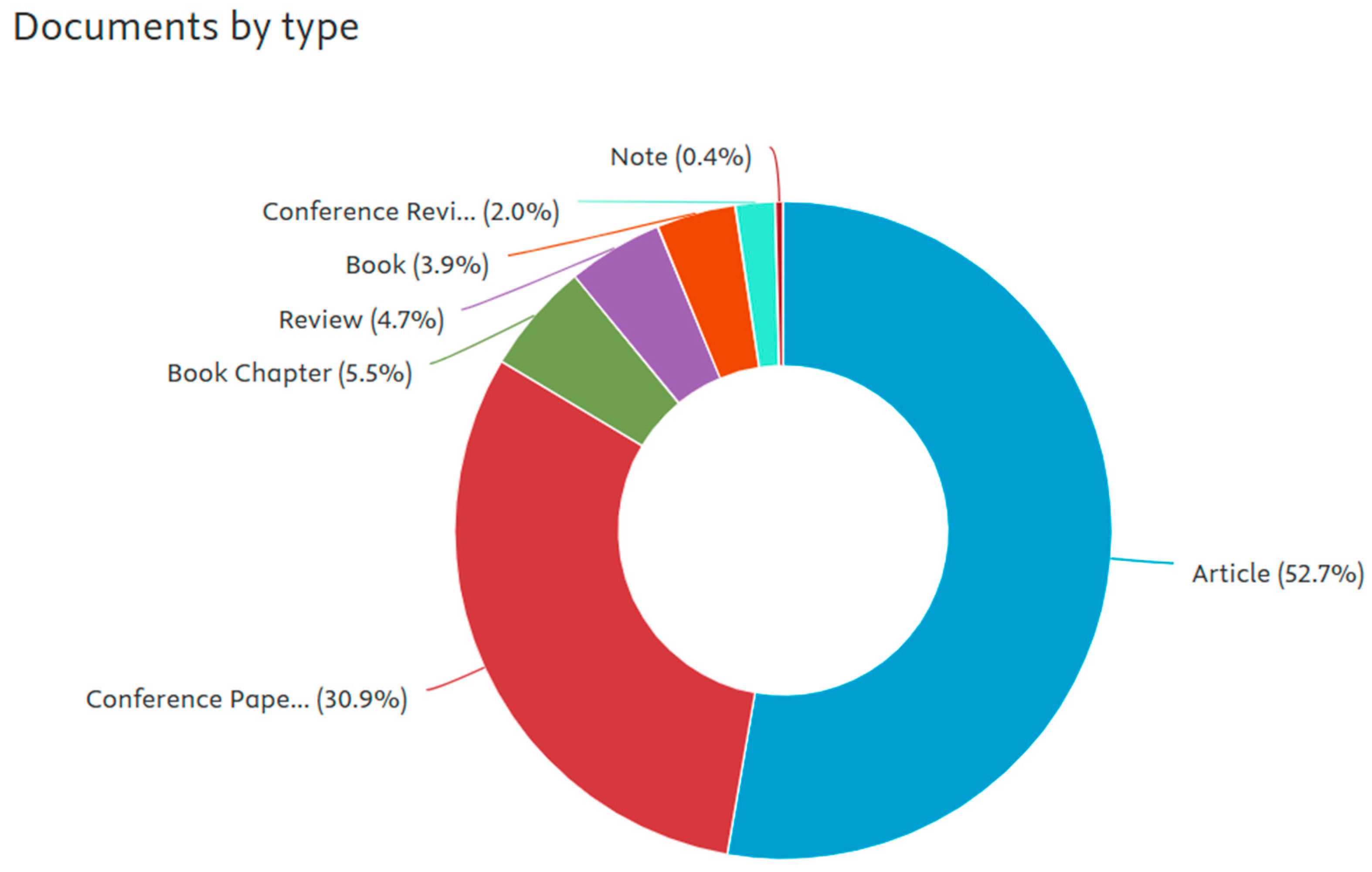
Seven distinct research document types were identified. Among them, journal articles (n = 135) represent the largest share, indicating that the majority of scientific output in this domain has been disseminated through peer-reviewed research articles. This dominance suggests that the field’s core knowledge production is primarily academic and research-driven, with other formats—such as conference papers, reviews, books, and book chapters—playing complementary roles.
Figure 2 presents the geographical distribution of publications related to “Artificial Intelligence and Macroeconomics/Econometrics” based on Scopus data (1975–2025).
The United States (n = 65) and China (n = 43) dominate this field, reflecting their leading investment and research capacity in data-driven economics. The United Kingdom (n = 17) and Italy (n = 14) follow as active contributors.
Countries such as Iran, Russia, Egypt, Greece, Hungary, Singapore, and Switzerland each have only a few publications (n = 3), indicating that while engagement has begun, research in these contexts remains at an early stage.
Overall, the map shows a high concentration of research output in technologically advanced economies, alongside emerging participation from developing regions.
Table 1 summarises the number of research documents related to “Artificial Intelligence” and “Macroeconomics/Econometrics” across the top ten contributing countries based on Scopus data. The results indicate a global yet uneven participation in this interdisciplinary domain. The United States (n = 65) and China (n = 43) account for the largest shares of total publications, reflecting their strong research capacity, financial investment, and policy emphasis on data-driven economics. Iran has produced three documents in this field, similar to countries such as Russia, Egypt, Greece, Hungary, Singapore, and Switzerland, which positions it among emerging contributors with early-stage research engagement. Given the growing global importance of artificial intelligence in macroeconomic and econometric analysis, greater interdisciplinary collaboration, international research networking, and increased R&D investment could significantly enhance Iran’s scientific visibility and impact in this evolving area.

Table 1.
The Top 10 Countries by Number of Publications (1975–2025).
| Number of Documents (n) | Country | Rank |
| 65 | United States | 1 |
| 43 | China | 2 |
| 17 | United Kingdom | 3 |
| 14 | Italy | 4 |
| 14 | Undefined | 5 |
| 11 | India | 6 |
| 11 | Taiwan | 7 |
| 10 | France | 8 |
| 9 | Germany | 9 |
| 9 | Netherlands | 10 |
Source: Author’s analysis based on Scopus data (1975–October 2025).
Figure 3 and Table 2 display the annual evolution of publications in the field of “Artificial Intelligence and Macroeconomics/Econometrics”.
The results show that research output remained scarce and sporadic between 1975 and the late 1990s, with most years showing zero or one publication. From the early 2000s, and particularly after 2010, a steady upward trajectory is observed, reflecting the growing integration of AI methods into economic modelling. The most significant growth occurred in 2024 (n = 31) and 2025 (n = 35), marking the field’s acceleration and maturity phase. This surge can be attributed to the global expansion of digital infrastructures, advances in machine learning, and increased research investment in applied AI economics. The trend confirms that AI-driven macroeconomic analysis has transitioned from an emerging topic to a recognised interdisciplinary research frontier by 2025.
The data reveal that research activity remained minimal and sporadic from 1975 until the late 1990s, with most years producing zero or one document. From the early 2000s onwards, and particularly after 2010, the number of studies shows a steady and then accelerated increase. The highest growth rate occurred in 2025 (n = 35), followed by 2024 (n = 31), which together mark the peak phase of scholarly output in the field. This sustained rise after 2010 coincides with the expansion of artificial intelligence technologies and the growing integration of AI-based tools into economic forecasting, education, and research investments. Overall, the trend indicates a clear transition from a nascent to a mature and fast-developing research domain, reflecting the strategic importance of AI applications in macroeconomic and econometric studies.
Figure 4.
Top 10 Institutional Affiliations (Based on Scopus Data) Source: Scopus (1975–2025).
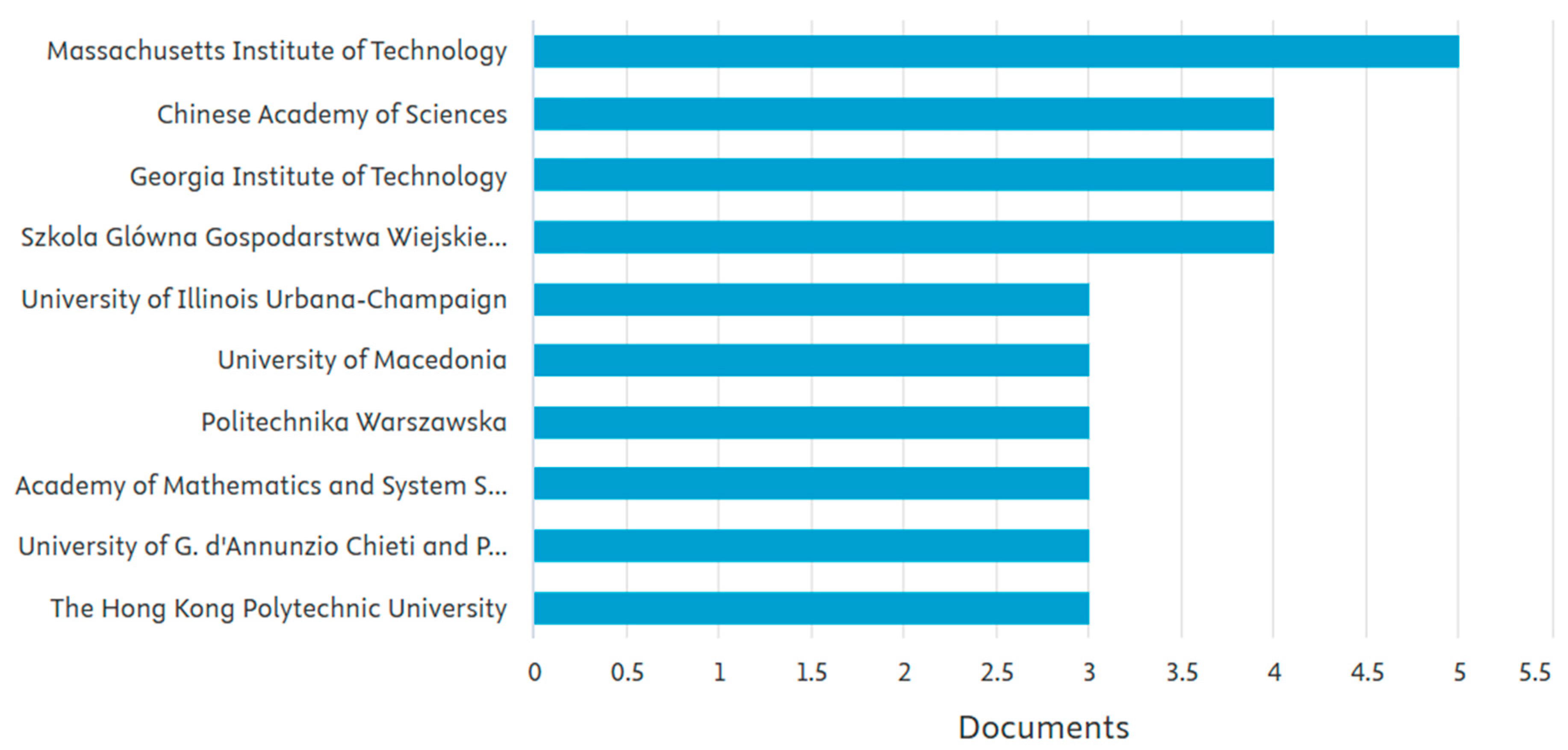
Table 3 shows that the most active institutions in AI-related macroeconomic research are predominantly universities and public research centres, confirming that academic communities drive innovation in this field. MIT, with five publications, and the Chinese Academy of Sciences, with four, stand out as the leading contributors, reflecting their early integration of AI in economic modelling and decision frameworks. European institutions such as Warsaw University of Life Sciences and the University of Macedonia also play visible roles, highlighting the geographical diversity of research. The Amirkabir University of Technology (Iran), although appearing with only one indexed paper outside this top ten, signals the beginning of regional participation in this growing interdisciplinary domain.
Figure 5.
Top Authors and Number of Contributions. Scopus (1975 – October 14, 2025).
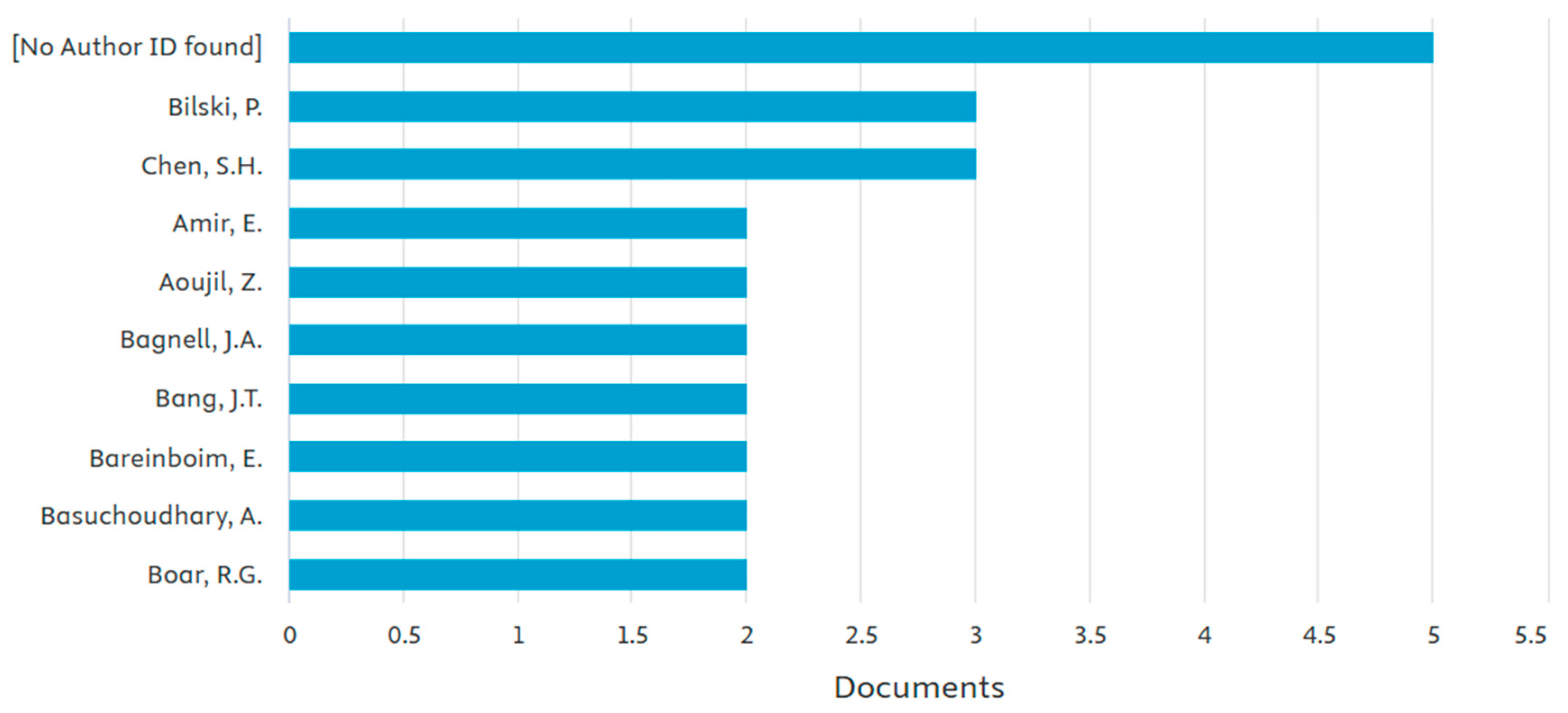
The analysis of author productivity in the field of artificial intelligence and macroeconomics shows that only a small number of researchers (three authors) account for the highest publication counts (three documents each). This pattern indicates a moderate concentration of research activity among a few recurring contributors, suggesting limited but consistent collaboration networks. In contrast, the majority of authors have produced only one paper, revealing a high level of diversity and dispersed authorship within the field. The wide variety of names and affiliations reflects the multinational and multidisciplinary nature of current research, where scholars from different countries and academic backgrounds contribute to the evolving intersection between artificial intelligence, econometrics, and macroeconomic studies.
Figure 6 and Table 6 show that research on artificial intelligence and macroeconomics is published across a broad range of journals, confirming the field’s multidisciplinary and evolving nature. Journals such as Sustainability and Technological Forecasting and Social Change jointly occupy the first rank with five articles each, emphasising the growing intersection of AI with sustainability studies and technology-driven economic forecasting. In addition, outlets like Expert Systems with Applications and the Journal of Risk and Financial Management highlight the applied and financial dimensions of this emerging discipline. The absence of a single dominant publication venue suggests that this research stream is dispersed yet rapidly expanding, engaging audiences from economics, computer science, and management.
Figure 7.
International co-authorship network on artificial intelligence in macroeconomics research. Source: Authors’ analysis based on Scopus (1975–October 2025) using VOSviewer v1.6.20.
Figure 7.
International co-authorship network on artificial intelligence in macroeconomics research. Source: Authors’ analysis based on Scopus (1975–October 2025) using VOSviewer v1.6.20.
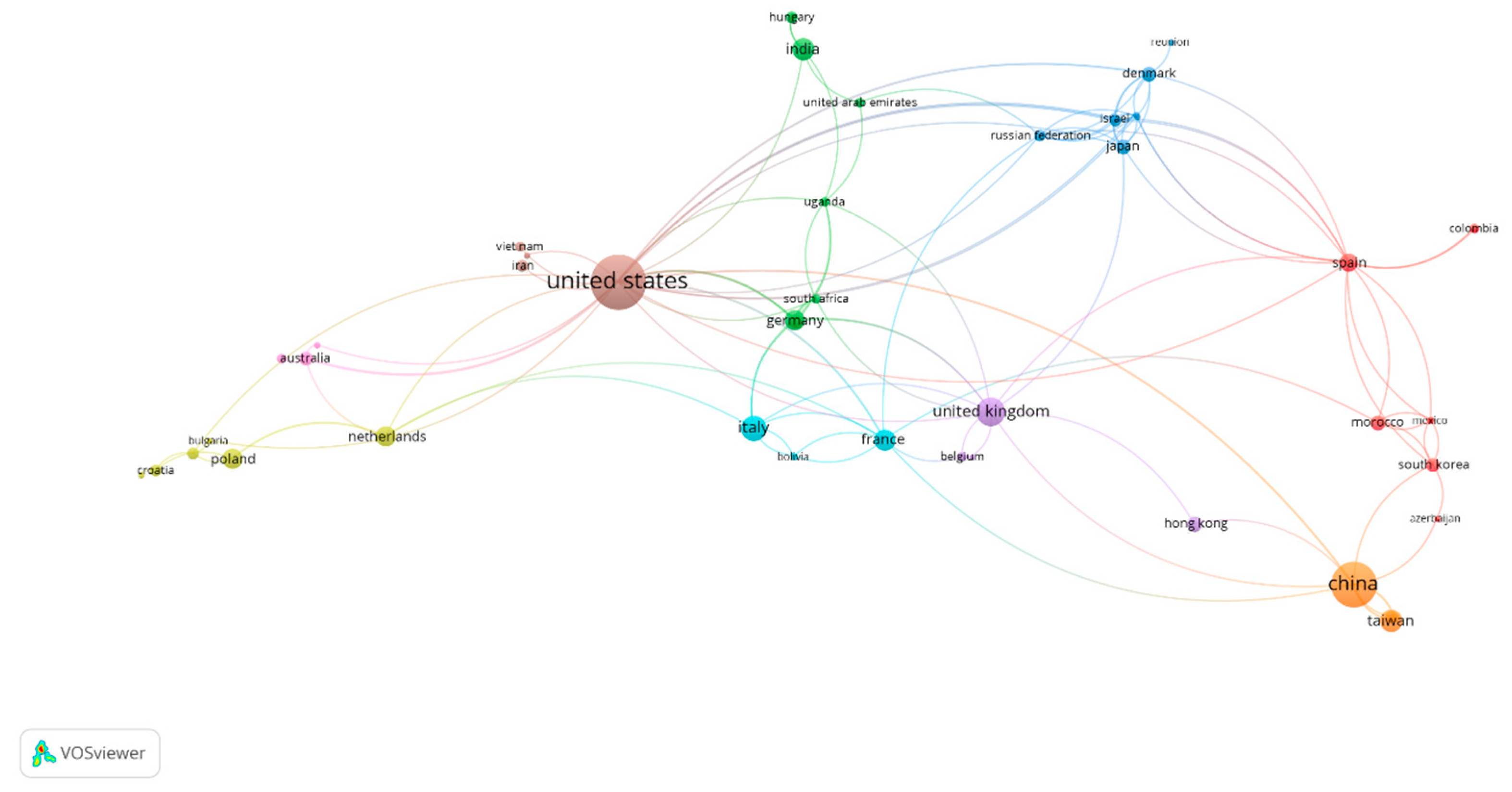
The international co-authorship network visualised in Figure 7 reveals a multi-cluster and semi-polarised structure in global research on Artificial Intelligence (AI) and Macroeconomics.
Six major collaboration clusters were identified, summarised below:
Green Cluster – Technology and Innovation Nexus:
Comprising India, Germany, Israel, Russia, the United Arab Emirates, and South Africa, this group focuses on technological and industrial applications of AI to economic development and innovation policy. It reflects an emerging convergence between technologically advanced and developing economies.
Blue Cluster – Digital Economics and European Policy:
Dominated by Italy, France, Germany, Denmark, and Belgium, this cluster represents the European strand of research on digital macroeconomics, emphasising data-driven fiscal frameworks and economic modelling. Italy and France serve as key linking nodes connecting the European network with the UK.
Orange Cluster – East Asian Dynamics:
Centred on China and including Hong Kong, Taiwan, South Korea, Spain, Australia, and Mexico, this cluster focuses on machine-learning models for macro-financial forecasting and trade analytics. China acts as the principal hub in East Asia, bridging Asian and Southern European partners.
Purple Cluster – Transatlantic Broking:
A smaller but strategically significant group led by the United Kingdom and Belgium, functioning as a bridge between North America and Europe. The UK serves as a key broker node, linking Western and Eastern scientific communities.
Brown Cluster – Core Hegemon Network:
Anchored by the United States, along with Iran, Vietnam, Poland, the Netherlands, and Greece, this cluster forms the central nucleus of the entire co-authorship map with the highest Total Link Strength. Countries like Iran and Vietnam appear in peripheral yet connected positions, signalling growing participation in global AI-economics research.
Yellow Cluster – Emerging European Cooperation:
Including Poland, Greece, Bulgaria, and the Netherlands, this cluster shows medium-scale collaborative activity related to productivity studies and data-driven economic assessment, largely in partnership with the United States.
Macro-level Network Interpretation
The network structure demonstrates a highly centralised and polarised pattern of global knowledge production. The United States and China emerge as the dual intellectual poles, directing the main flow of research. European countries—notably Germany, France, Italy, and the United Kingdom—play an intermediary and balancing role, serving as connectors between the Western and Eastern research spheres. Meanwhile, Iran, India, and South Africa occupy semi-peripheral positions: linked to the global core yet contributing a limited portion of scholarly output.
Theoretical and Policy Implications
- Geographical Concentration and Thematic Bias:
The dominance of the US, China, and a few EU economies directs most outputs toward advanced-economy topics—such as financial markets and industrial productivity—while developmental and distributional issues in emerging economies remain under-represented.
- 2.
- Weak South–South Collaboration:
Limited horizontal cooperation among developing nations (e.g., Iran, India, South Africa, and the UAE) restricts the creation of indigenous knowledge networks, deepening the research divide between North and South.
- 3.
- Technological Divide and Knowledge Accumulation Risk:
Large international consortia—typically led by the US and China—offer learning benefits but may also reinforce structural inequalities in knowledge production unless balanced by targeted capacity building in peripheral regions.
The current topology of global research on AI in macroeconomics depicts a clear core–periphery structure:
The US and China at the centre, Europe as a bridging intermediary, and developing countries at the outer margin. To reduce this imbalance, strengthening regional collaboration, promoting South–South partnerships, investing in open-data infrastructures, and building academic capacity in emerging economies are essential. Only such coordinated strategies can foster a balanced and inclusive global knowledge system, enabling a more comprehensive understanding of how AI transforms macroeconomic performance, from growth and inflation to labour productivity.
Figure 8 illustrates the co-occurrence map of author keywords related to Artificial Intelligence (AI) and Macroeconomics, highlighting the intellectual structure and thematic evolution of this interdisciplinary field. The network indicates that the keyword “Artificial Intelligence” functions as the core node, having the highest frequency and link strength with other concepts. Around this nucleus, five distinct colour-coded clusters represent the major research themes connecting AI methodologies with macroeconomic inquiry.
Cluster 1 – AI Core and Economic Decision-Making (Hub Cluster, Red)
This is the largest cluster, consisting of terms such as artificial intelligence, neural networks, data mining, learning systems, macroeconomics, and investments. It forms the conceptual backbone of the field, focusing on how AI algorithms, inference engines, and machine-learning models reshape macroeconomic theory and decision processes. The cluster denotes the fusion between computational intelligence and economic modelling, where predictive systems guide strategic economic decisions.
Cluster 2 – Public Policy, Big Data, and Digital Economy (Blue)
Positioned on the right side of the map, this cluster links macroeconomics, public policy, big data, digitisation, economic development, energy poverty, and electricity. It reflects the emergence of data-driven policymaking and the transformation of macroeconomics into a digital science. The presence of country-specific keywords such as ‘China’ and ‘Netherlands’ indicates empirical, nation-level analyses on how intelligent technologies support economic growth.
Cluster 3 – Statistical and Computational Econometrics (Green)
Containing keywords like ‘algorithms’, ‘probability distributions’, ‘stock markets’, ‘data processing’, and ‘inference engines’, this cluster represents the methodological foundation of AI-based economic analysis. It emphasises analytical algorithm modelling and the use of statistical simulation techniques for macro-financial forecasting, serving as a theoretical bridge with the core cluster (Cluster 1).
Cluster 4 – Energy, Productivity, and Sustainability (Orange)
Located at the lower region of the map, this cluster includes fuel consumption, electricity supply, numerical methods, and efficiency.
It highlights research applying AI to energy management, consumption forecasting, and efficiency optimisation. Given energy’s central role in economic growth, this cluster links technological innovation to environmental and macroeconomic sustainability.
Cluster 5 – Managerial Systems and Networked Entrepreneurship (Purple)
This upper-map cluster contains terms such as ‘decision support systems’, ‘planning’, ‘business models’, and ‘entrepreneurial networks’. It represents the application of AI in organisational decision-making and business network optimisation. Studies here focus on smart management systems and AI-assisted strategic planning in corporate and market contexts.
Synthesis and Policy Implications
The keyword network consolidates five interconnected research streams:
Machine-learning-driven economic decision systems
Data-centric public policy and digital economy frameworks
Algorithmic and statistical foundations of computational econometrics
AI applications in energy efficiency and sustainability
Intelligent management and entrepreneurial systems
This structure illustrates a transition from purely technical research to interdisciplinary integration, where AI serves not only as a computational tool but also as a strategic instrument for macroeconomic analysis and policy design. From a policy perspective, sustaining this evolution requires investment in open data, cross-domain collaboration, and interdisciplinary education to enhance national capacity for evidence-based economic governance.
Figure 9.
Co Citation Network of Sources (1975–2025) Source: Authors’ analysis based on Scopus data (1975–October 2025) using VOSviewer v1.6.20.
Figure 9.
Co Citation Network of Sources (1975–2025) Source: Authors’ analysis based on Scopus data (1975–October 2025) using VOSviewer v1.6.20.
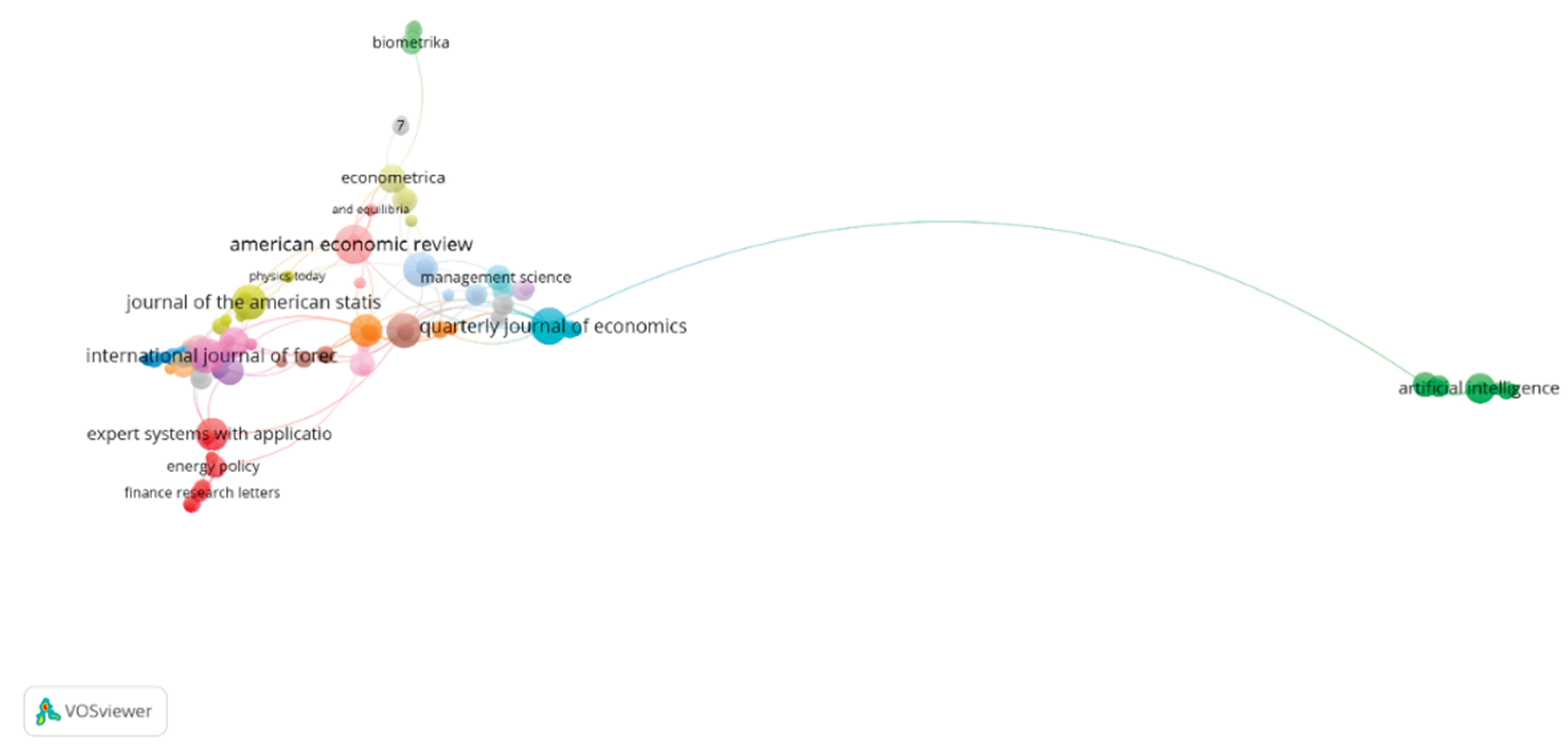
The co-citation network of sources (Figure 9) visualises the intellectual backbone of global research connecting Artificial Intelligence (AI) and Macroeconomics. Co-citation analysis—first proposed by Small (1973) and later refined by Van Eck and Waltman (2010)—identifies how scholarly journals are intellectually linked through shared references, revealing the implicit structure of academic knowledge. The present network comprises three major clusters, together depicting a three-layered, interdisciplinary knowledge system.
Red Cluster – Theoretical and Methodological Foundation
This central cluster anchors the network around classic journals such as Econometrica, American Economic Review, Journal of the American Statistical Association, and Biometrika. Complementary bridges appear through management science and expert systems with applications, linking traditional econometric thought with computational and algorithmic methods. The pattern demonstrates that the conceptual base of AI-macroeconomics research still rests on econometrics, classical statistics, and mathematical modelling, while machine-learning and intelligent-systems outlets are gradually merging into this foundation. This convergence aligns with the Kai & Zhou (2015) framework, emphasising that data-driven macroeconomics integrates analytical rigour and computational intelligence.
Green Cluster – Policy and Energy Applications
Located at the network’s periphery, this cluster is led by journals such as Energy Policy and, to a lesser extent, Finance Research Letters. It focuses on energy, sustainability, and financial-policy modelling, showcasing AI as a decision-support tool for governments and firms. Connections with the red theoretical core via Management Science and the Quarterly Journal of Economics indicate a two-way knowledge flow between economic theory and applied policy. Within this framework, Energy Policy has emerged as a key outlet for AI-based predictive analytics addressing energy demand, efficiency, and sustainable development.
Blue Cluster – Managerial and Service Applications
This cluster centres around management science and is characterisedby decision-making, forecasting, and business optimisation themes. Although Tourism Management is not explicitly visible in the dataset, its thematic orientation aligns with this group, which connects Expert Systems with Applications to managerial and organisational AI implementations. The blue cluster thus represents the applied, enterprise-oriented dimension of the field—modelling intelligent decision systems, operational planning, and market service innovation. Its links to Econometrica and JASA underscore that even AI-driven management research remains grounded in strong statistical and economic logic (Gretzel et al., 2015).
The co-citation network confirms a three-tiered architecture of the AI-macroeconomics domain:
| Layer / Cluster | Core Focus | Representative Journals |
| Theoretical & Methodological (Red) | Econometrics and statistical modelling foundations |
Econometrica, AER, JASA, Biometrika |
| Policy & Energy (Green) | Data-driven sustainability and energy-policy research | Energy Policy, Finance Research Letters |
| Managerial & Service (Blue) |
Intelligent systems and managerial decision applications |
Management Science, Expert Systems with Applications |
Together, these layers depict the evolution of a data-intensive, knowledge-integrated macroeconomic paradigm that merges:
Econometrics + Artificial Intelligence + Policy Analytics
This synthesis reflects what McAfee and Brynjolfsson (2017) described as the emerging “data-driven economy”, where empirical rigour and machine learning jointly shape future macroeconomic research and policy design.
5. Conclusion
Recently, artificial intelligence (AI) has been considered in various economic fields. Artificial intelligence (AI) has revolutionised the fields of banking, investment, and human resource management in various societies and covers a wide range of economic applications. Artificial intelligence has been able to play a key role in improving economic forecasts and optimising financial and economic processes in analysing large and complex data. Artificial Intelligence Results It has brought positivity to the field of economic analysis, improving the accuracy of forecasting, reforming advanced decision-making processes, and creating innovative and new ways to advance economic theories and applications, optimising strategies and increasing efficiency in stock trading, market analysis and risk management. The use of artificial intelligence has significantly increased the accuracy of these economic forecasts. Also, artificial intelligence has been able to have a positive impact on human resource management, including in processes such as recruitment, training, performance appraisal, and increasing employee engagement, and ultimately the dynamics of the workplace, although the inherent challenges such as data integrity, privacy concerns, and algorithmic transparency biases and issues require special attention.
References
- Acemoglu, D.; Restrepo, P. Demographics and automation. Rev. Econ. Stud. 2022, 89(1), 1–44. [Google Scholar] [CrossRef]
- Bais, Neelam; Rathore, Bhawana; Thankachan, Blessy; Goswami, Chandramani; Anooja. Artificial Intelligence in Economic Forecasting: A Paradigm Shift from Traditional Econometrics. J. Harbin Eng. Univ. 2025, Vol 46(No. 6), 1006–7043. [Google Scholar]
- Glikson, E.; Woolley, A. W. Human trust in artificial intelligence: Review of empirical research. Acad. Manag. Ann. 2020, 14(2), 627–660. [Google Scholar] [CrossRef]
- Kase, H.; Melosi, L.; Rottner, M. Estimating nonlinear heterogeneous agents models with neural networks. In Centre for Economic Policy Research; 2022. [Google Scholar]
- Lamarre, E.; Smaje, K.; Zemmel, R. Rewired: the McKinsey Guide to Outcompeting in the Age of Digital and AI; John Wiley & Sons, 2023. [Google Scholar]
- Marlatt, J. While tech fawns over AI, consumers need more convincing. Morning Consult Pro. 8 August 2023. Available online: https://morningconsult.com/2022/12/07/tech-fawns-over-artificialintelligence-consumers-need-convincing/.
- Maslej, N.; Fattorini, L.; Perrault, R.; Gil, Y.; Parli, V.; Kariuki, N.; Oak, S. Artificial intelligence index report 2025. arXiv 2025, arXiv:2504.07139. [Google Scholar]
- McCarthy, J. What Is Artificial Intelligence ? What is Artificial Intelligence? 24 November 2004. Available online: http://www-formal.stanford.edu/jmc/whatisai/whatisai.html.
- McCarthy, J. What Is Artificial Intelligence? Computer Science Department Stanford University: Stanford, CA94305, 2007. Available online: http://www-formal.stanford.edu/jmc.
- Walton, P. Artificial Intelligence and the limitations of information. Information 2018, 9(12), 332. [Google Scholar] [CrossRef]
Figure 2.
Distribution of Publications by Country.
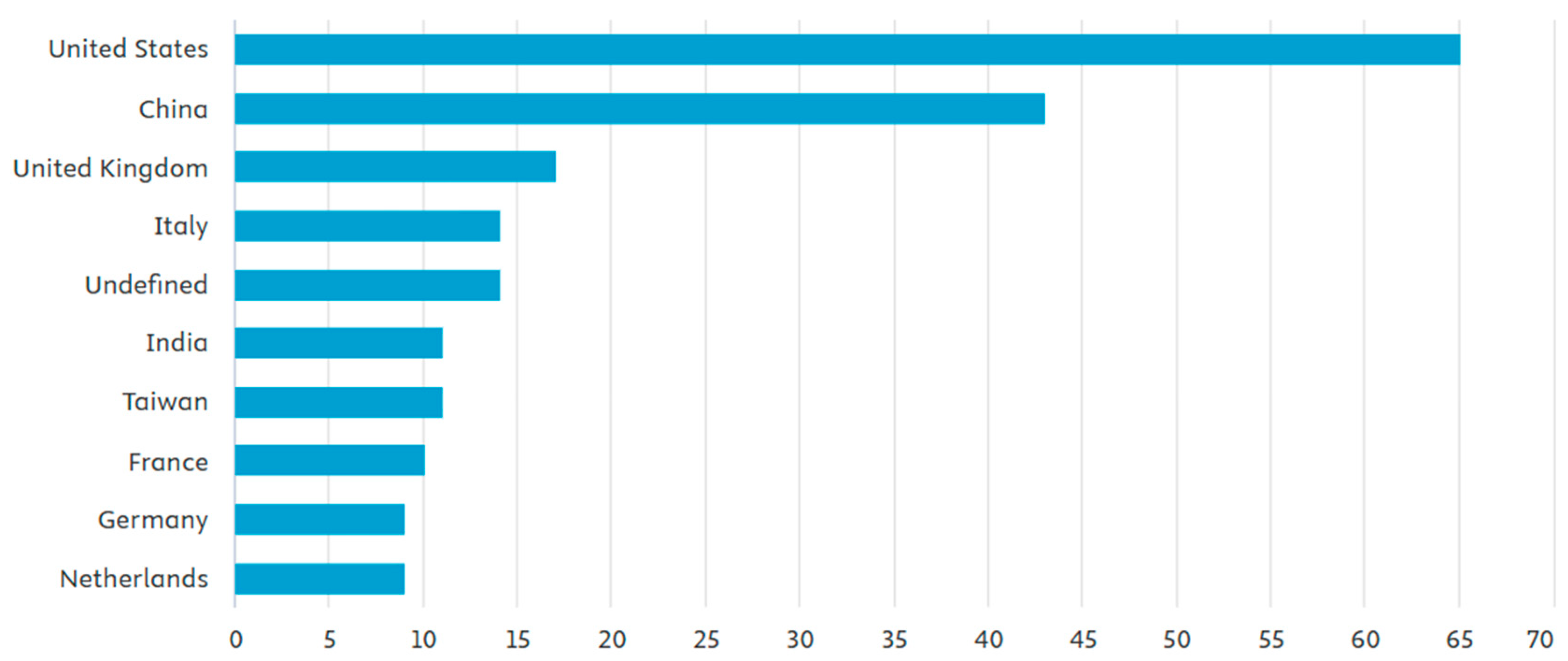
Figure 3.
Annual Distribution of Publications (1975–2025).
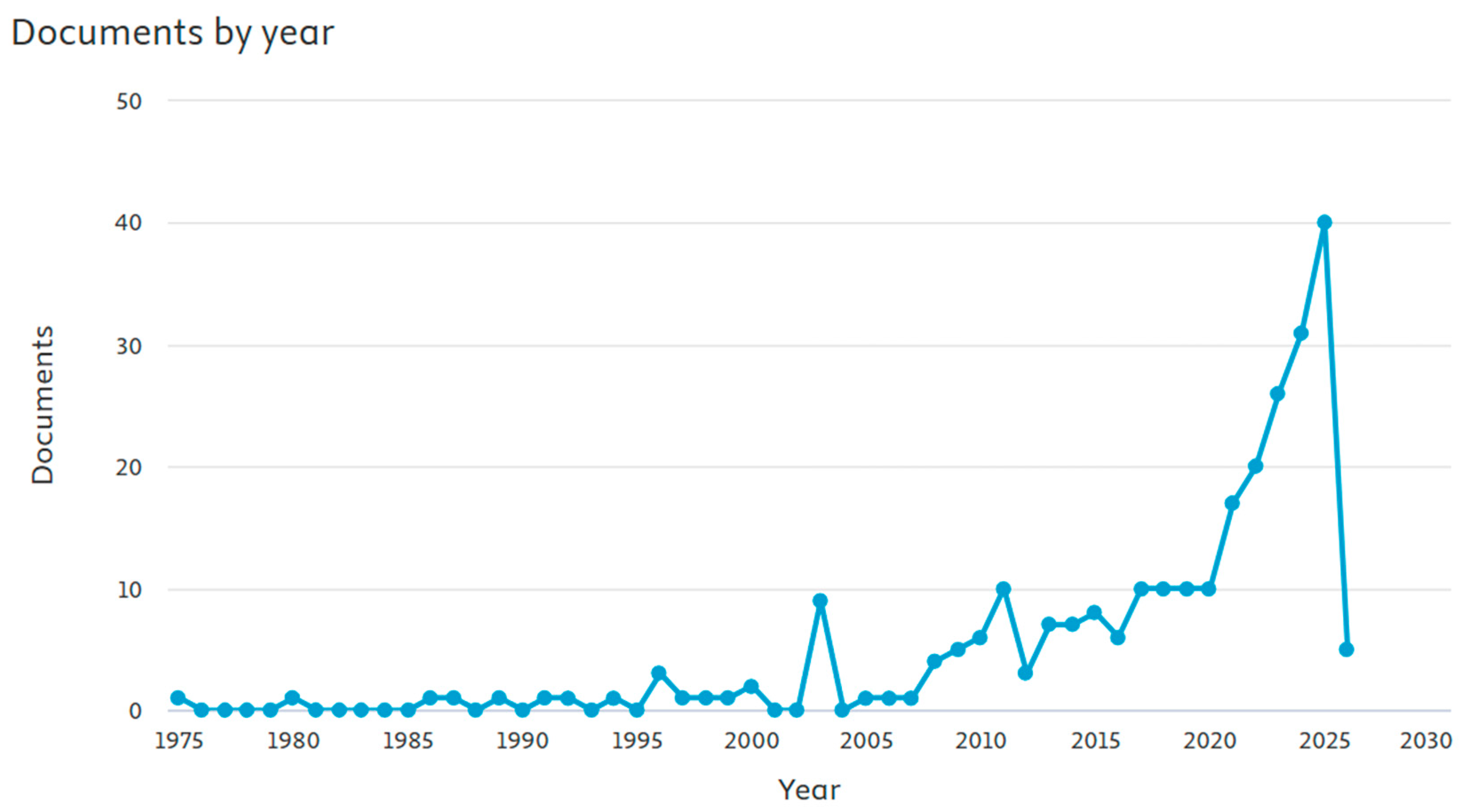
Figure 6.
Top 10 Most Productive Journals (Based on Scopus Data).
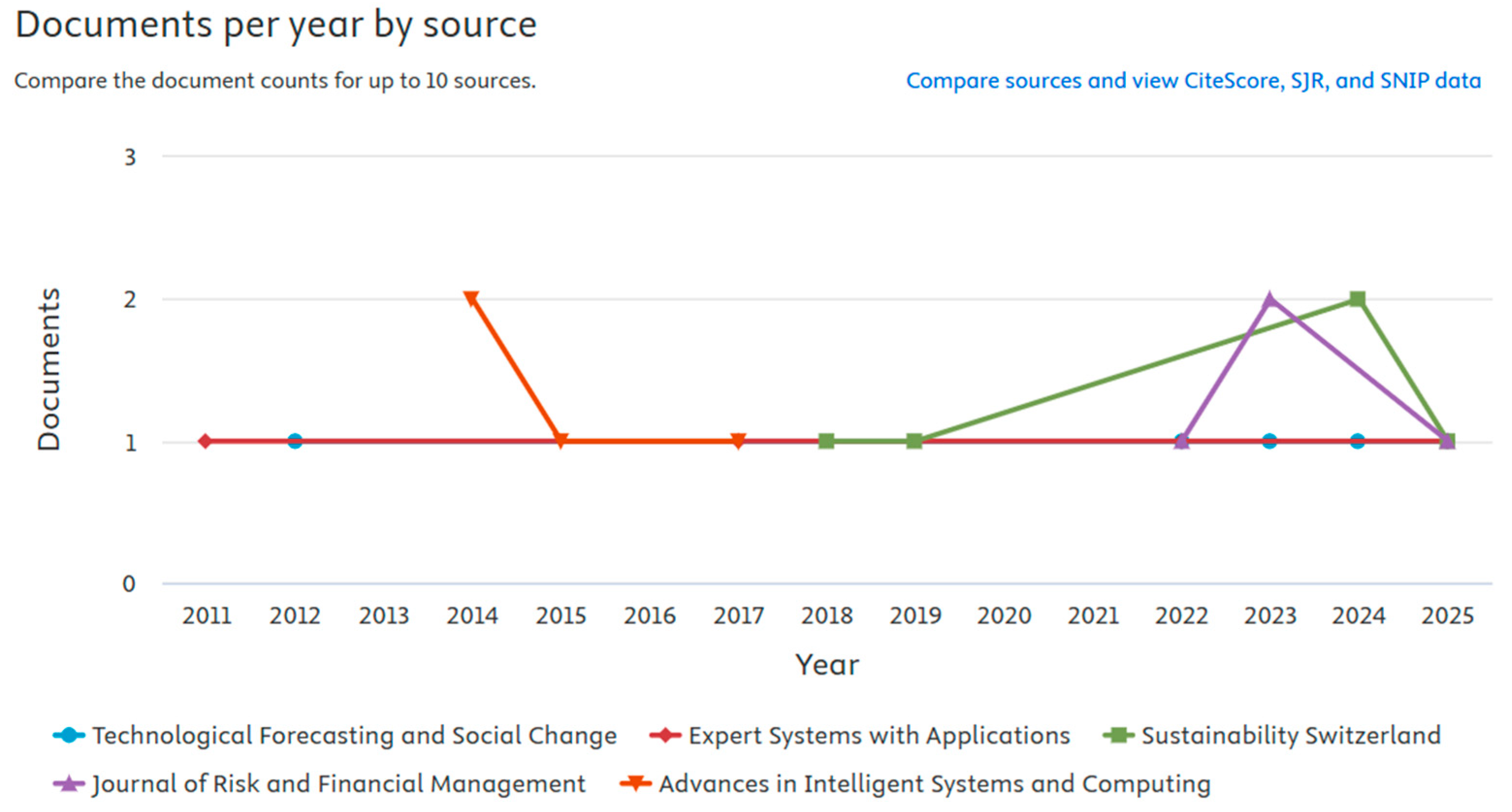
Figure 8.
Keyword Co Occurrence Network Map (1975–2025). Source: Authors’ analysis from Scopus data (1975–October 2025) using VOSviewer v1.6.20.
Figure 8.
Keyword Co Occurrence Network Map (1975–2025). Source: Authors’ analysis from Scopus data (1975–October 2025) using VOSviewer v1.6.20.
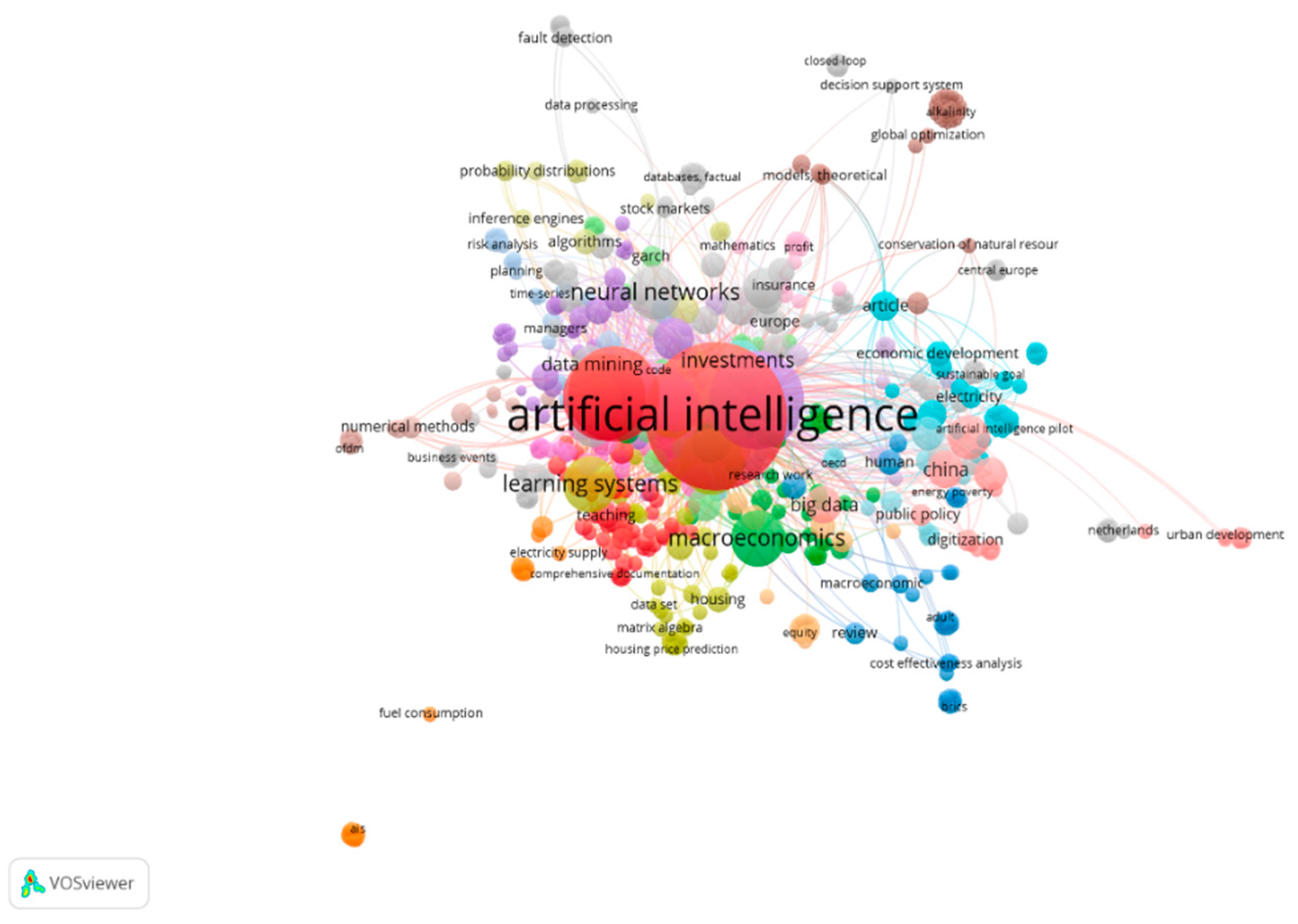
Table 2.
Number of Publications during the Last Ten Years.
| Year | 2026 | 2025 | 2024 | 2023 | 2022 | 2021 | 2020 | 2019 | 2020 | 2021 |
| Number of Documents (n) | 3 | 35 | 31 | 26 | 20 | 17 | 10 | 10 | 10 | 10 |
Table 3.
Top 10 Academic and Governmental Affiliations (Based on Scopus Data).
| Rank | Institution / Organization | Number of Publications (n) |
| 1 | Massachusetts Institute of Technology | 5 |
| 2 | Chinese Academy of Sciences | 4 |
| 3 | Georgia Institute of Technology | 4 |
| 4 | Szkola Glówna Gospodarstwa Wiejskiego w Warszawie | 4 |
| 5 | University of Illinois Urbana-Champaign | 3 |
| 6 | University of Macedonia | 3 |
| 7 | Politechnika Warszawska | 3 |
| 8 | Academy of Mathematics and System Science Chinese Academy of Sciences | 3 |
| 9 | University of G. d’Annunzio Chieti and Pescara | 3 |
| 10 | The University of Texas at Austin | 3 |
Source: Authors’ analysis based on Scopus (1975–October 14, 2025).
Table 6.
Top 10 Academic Journals Publishing Research on AI and Macroeconomics.
| Rank | Journal Title | Number of Articles (n) |
| 1 | Sustainability Switzerland | 5 |
| 2 | Technological Forecasting and Social Change | 5 |
| 3 | Advances in Intelligent Systems and Computing | 4 |
| 4 | Expert Systems with Applications | 4 |
| 5 | Journal of Risk and Financial Mangement | 4 |
| 6 | Proceeding of Machine Learning Research | 3 |
| 7 | Cogent Economics and Finance | 3 |
| 8 | Energy Economics | 3 |
| 9 | Journal of Economic Surveys | 3 |
| 10 | Journal of Modelling in Management | 3 |
Source: Compiled by the authors from Scopus data (accessed October 2025).
Disclaimer/Publisher’s Note: The statements, opinions and data contained in all publications are solely those of the individual author(s) and contributor(s) and not of MDPI and/or the editor(s). MDPI and/or the editor(s) disclaim responsibility for any injury to people or property resulting from any ideas, methods, instructions or products referred to in the content. |
© 2026 by the authors. Licensee MDPI, Basel, Switzerland. This article is an open access article distributed under the terms and conditions of the Creative Commons Attribution (CC BY) license (http://creativecommons.org/licenses/by/4.0/).
Copyright: This open access article is published under a Creative Commons CC BY 4.0 license, which permit the free download, distribution, and reuse, provided that the author and preprint are cited in any reuse.


