

Submitted:
12 June 2026
Posted:
15 June 2026
You are already at the latest version
Abstract
Background: The mannan-conjugated birch pollen polymerised allergoid EP-088_T502 has previously been shown to reduce allergic symptoms and anti-allergic medication use during the birch pollen season. This confirmatory phase III trial aimed to evaluate the efficacy, safety, tolerability, and immunologic effects of six pre-seasonal subcutaneous injections.Methods: In this DBPC trial, 278 participants with birch pollen–induced allergic rhinoconjunctivitis (ARC) received either placebo or a cumulative dose of 28,000 mTU EP-088_T502. The primary efficacy endpoint was the combined symptom and medication score (CSMS) during the peak birch pollen season. Safety, tolerability, health-related quality of life (QoL), and immunologic parameters were also assessed.Results: EP-088_T502 significantly reduced the CSMS during the peak birch pollen season compared with placebo (mean absolute difference [MAD] −0.31; p=0.016, FAS). In the PP and Complete Cases sets, MAD were -0.36 (p=0.012) and -0.51 (p=0.013), respectively. Health-related QoL improved by 20% in the EP-088_T502 group compared with placebo during the peak season (p<0.005). EP-088_T502 increased Bet v1-specific IgG4 levels after treatment compared with placebo (6.4-fold; p<0.0001). The Bet v1-specific IgE/IgG4 ratio was reduced by 73% from baseline and by 69% compared with placebo (both p<0.0001). Thirteen systemic allergic reactions occurred, including one grade III systemic reaction considered related to EP-088_T502.Conclusions: EP-088_T502 significantly improved symptom and medication scores in participants with birch pollen–induced ARC and induced a substantial Bet v1-specific IgG4 response. The higher cumulative dose was associated with enhanced immunologic effects and an acceptable safety and tolerability profile.
Keywords:
allergic rhinoconjunctivitis
; birch pollen
; combined symptom and medication score
; mannan-conjugated allergoid
; subcutaneous immunotherapy
1. Introduction
Mannan-conjugated allergoids have demonstrated efficacy, safety, and good tolerability as short-course pre-seasonal treatment for birch pollen allergy, as well as for grass pollen and house dust mite allergy [1]. Modified allergoids coupled to mannan show enhanced uptake by antigen-presenting cells, particularly dendritic cells (DCs), thereby promoting immunomodulatory immune responses [2]. Mannan targets C-type lectin receptors expressed on DCs, facilitating allergen uptake and immune processing [3]. Structural modification of allergen proteins and enhanced bioavailability may allow administration of higher cumulative allergen doses without increasing allergenicity [4,5].
These developments represent an important step toward improving the safety and tolerability profile of subcutaneous immunotherapy (SCIT), while maintaining clinical efficacy [6].
The maximal well-tolerated concentration of EP-088_T502 (10,000 mTU/mL) was established in a previous dose-finding trial [7]. Subsequently, a pivotal double-blind placebo-controlled (DBPC) phase III trial demonstrated that short-course pre-seasonal SCIT with EP-088_T502 at a cumulative dose of 23,000 mTU significantly improved CSMS, induced relevant immunologic responses, and showed a favourable safety profile [8].
The present confirmatory DBPC phase III trial aimed to further evaluate the efficacy, safety, tolerability, and immunologic effects of EP-088_T502 in participants with birch pollen-induced ARC. In addition, the study investigated whether an increased cumulative dose of 28,000 mTU administered over six treatment visits could further enhance clinical and immunologic responses.
2. Methods
2.1. Trial Design
The study was designed as a prospective, multicentre, double-blind placebo-controlled (DBPC) trial conducted in Germany and included 10 visits: one Screening visit, six treatment visits before the 2025 birch pollen season, two observational visits before and during the birch pollen season and one end of the trial visit after the birch pollen season (Figure 1). It was planned to randomise at least 273 participants (with 27 being adolescents) in a ratio of 1:2 (Placebo:EP-088_T502) to the treatment.
For inclusion and non-inclusion criteria, please refer to Supplementary Material S1.
2.2. Ethics declaration:
The trial was conducted in accordance with the Declaration of Helsinki (75th World Medical Association General Assembly, Helsinki, Finland, October 2024), Good Clinical Practice (GCP) guidelines (CPMP/ICH/135/95), and applicable national drug and data protection regulations [9].
Relevant trial documents, including participant information sheets, informed consent forms, and data protection declarations, were approved by the responsible ethics committees before trial initiation.
The Paul-Ehrlich-Institut, Germany, approved the trial (EU trial number: 2024-515717-17-00) on 17 October 2024.
2.3. Allergen immunotherapy (AIT)
Allergen immunotherapy (AIT) was performed using a mannan-conjugated allergoid preparation derived from Betula pendula pollen allergens (EP-088_T502, 10,000 mTU/mL) or placebo. Coupling of polymerised allergoids to mannan by glutaraldehyde treatment results in high-molecular-weight glycoconjugates with modified allergenic properties. Details regarding the manufacturing process have been described previously [3,4,5].
Participants received eight subcutaneous injections of EP-088_T502 or placebo during six treatment visits before the start of the 2025 birch pollen season. The treatment schedule (Supplementary Material S2) included a short up-dosing phase followed by a maintenance phase.
During the up-dosing phase, treatment intervals between visits T1–T2 and T2–T3 ranged from 7 to 14 days. At T1, participants received injections of 0.1 mL followed by 0.2 mL if tolerated. At T2, injections of 0.2 mL and 0.3 mL were administered.
During the maintenance phase (T3–T6), 0.5 mL injections were administered at intervals of 21–35 days. Overall, participants received either placebo or a cumulative dose of 28,000 mTU EP-088_T502 over a treatment period of 105 days.
2.4. Determination of the pollen season
The entire and peak birch pollen seasons were defined according to the EAACI recommendations for clinical trials in allergen immunotherapy published by Pfaar et al [10].
Daily mean pollen concentrations (pollen/m³) used for the primary endpoint analysis were provided by the German Pollen Information Service (Polleninformationsdienst, PID), which operates standardised monitoring stations throughout Germany. Trial sites were assigned to the nearest available pollen monitoring station (Supplementary Material S3).
2.5. Endpoints and statistical analysis
2.5.1. Assessment of efficacy—Combined symptom and medication score:
The CSMS was defined as the primary efficacy endpoint and was compared between the placebo and active treatment group during the peak birch pollen season 2025.
The CSMS combines daily symptom scores (dSS) and daily medication scores (dMS), each ranging from 0 to 3. Symptom severity was graded from no symptoms to severe symptoms, while medication use ranged from no medication to maximal permitted medication use. ¹¹ An adapted version of the CSMS previously applied in earlier studies was used [8,13].
The dSS included nasal symptoms (rhinorrhea, sneezing, nasal pruritus, nasal congestion) and ocular symptoms (ocular pruritus and watery eyes), each scored from 0 to 3 and averaged across six symptoms.
For the dMS, additional rescue medications beyond the classical EAACI 4-step scoring system were permitted and scored additively as follows: antihistamine eye drops (0.5), oral antihistamines (1.0), and intranasal corticosteroids (1.5), resulting in a modified 7-step scoring system ranging from 0 to 3.
2.5.2. Assessment of efficacy—Clinical endpoints
Health-related QoL was assessed using the Rhinitis Quality of Life Questionnaire (RQLQ) originally developed by Juniper and Guyatt [14], in its validated German version [15]. The RQLQ was designed for clinical trials to evaluate impairment associated with ARC symptoms. The questionnaire was completed before treatment initiation (T1), before the birch pollen season (O1), and during the birch pollen season (O2). Adolescent participants completed the AdolRQLQ.
To assess immunologic responses, serum levels of Bet v 1-specific IgE, IgG, and IgG4 were measured before and after treatment (S1 and O1). Clinical laboratory analyses were performed at the central laboratory MLM Medical Labs (Mönchengladbach, Germany).
2.5.3. Safety and tolerability
Local reactions (LRs) (wheal and redness at the injection site) were assessed by investigators 30 minutes after each injection and documented as solicited local adverse events (AEs). Wheal diameters were categorised as mild, moderate, or severe according to immediate and delayed mean wheal diameters (<5/<10 cm, 5–10/10–20 cm, and >10/>20 cm, respectively).
In addition, other LRs and AEs, including SRs, were documented by participants on the evening of the injection day and during the following two days using the CCC STUDY Diary App. LRs other than wheals or redness, as well as all SRs, were recorded as unsolicited treatment-emergent adverse events (TEAEs). All AEs were coded according to the Medical Dictionary for Regulatory Activities (MedDRA, version 25.0).
Vital signs and physical examinations were assessed at each visit.
Fexofenadine 180 mg was provided as rescue medication for on-demand treatment of treatment-related side effects during the treatment phase. Rescue medication use was documented in the treatment diary section of the CCC STUDY Diary App.
Blood samples for assessment of hematologic, renal, and liver function parameters were collected at S1, O1, and ET-FU (if applicable).
In participants with asthma, pulmonary function testing by spirometry (FEV1) or peak expiratory flow (PEF) measurement was performed at each visit, particularly before and after treatment administration.
2.6. Statistical analysis
Sample size calculations were performed using SAS for Windows version 9.4 based on results from the T502-SIT-045 trial. In the previous phase III trial (T502-SIT-045; EudraCT No. 2021-002252-36), the mean CSMS during the peak birch pollen season was 1.3 in the placebo group and 1.0 in the 10,000 mTU/mL treatment group within the modified intention-to-treat (mITT) population. The overall standard deviation (SD) was approximately 0.8.
Assuming a two-sided alpha error of 5%, a statistical power of 80%, and a 1:2 randomization ratio (placebo:EP-088_T502), the required sample size was calculated as 252 participants. After adjustment for an anticipated dropout rate of 7.5% after randomization, the final sample size was set at 273 participants (91 placebo and 182 active treatment participants). Approximately 400 participants were expected to be screened to compensate for screening failures.
The safety analysis set (SAF) included all randomised participants who received at least one dose of investigational medicinal product (IMP). The full analysis set (FAS) comprised all participants exposed to the IMP at least once and was used for the primary and secondary efficacy analyses. The per-protocol set (PP) included randomised participants who completed treatment as planned and without major protocol deviations, as defined in the Statistical Analysis Plan (n=227; 151 in the EP-088_T502 arm and 76 in the placebo arm). The CC set was defined as all participants who completed the treatment and without missing eDiary entries during the peak birch pollen season 2025 (EP-088_T502: N=68, placebo: N=42). Participants with at least two measurements of at least one immunologic parameter formed the immunogenicity set (IM set).
Statistical analyses were performed according to a predefined statistical analysis plan using SPSS Statistics for Windows version 29.0.1 (IBM Corp., Armonk, NY, USA).
The primary analysis (additive CSMS during the peak birch pollen season) was conducted in the FAS population. Analysis of variance (ANOVA) models were applied for comparison of CSMS values between treatment groups. Mean daily CSMS, dMS, and dSS values were calculated for each participant during the entire and peak birch pollen seasons. In addition, a sensitivity analysis was performed using the weighted EAACI CSMS defined by Pfaar et al [11].
Normality of continuous variables was assessed using the Shapiro–Wilk test and graphical methods. All statistical tests were two-sided, and p<0.05 was considered statistically significant.
Categorical variables were compared using the chi-square test or Fisher’s exact test, as appropriate. Continuous variables were analysed using Student’s t test or the Mann–Whitney U test where appropriate. Comparisons between time points were performed using paired t tests or Wilcoxon signed-rank tests.
Safety analyses were performed descriptively in the SAF population.
Immunologic parameters were summarised descriptively for each assessment time point. Serum levels, IgE/IgG4 ratios, and absolute and relative changes from baseline were calculated.
Changes in health-related quality of life (RQLQ/AdolRQLQ) were analysed using ANCOVA.
Data are presented as median (interquartile range [IQR]) and/or mean ± SD. Graphs were generated using GraphPad Prism version 10 for Windows (GraphPad Software, San Diego, CA, USA).
3. Results
General trial data and baseline characteristics:
The trial was conducted between November 2024 (first screening visit) and June 2025 (last end-of-trial visit). The mean/median overall trial duration was 171.9/179.5 days in the placebo group and 169.8/179.0 days in the EP-088_T502 group. Mean/median treatment duration was 101.3/104 days in the placebo group and 97.1/103 days in the EP-088_T502 group.
Details regarding the duration of the entire and peak birch pollen seasons are provided in Supplementary Material S3.
Of the 376 screened participants (361 adults and 15 adolescents), 278 participants were randomised, including 13 adolescents (4.7%). Participants received either placebo (n=92) or 10,000 mTU/mL EP-088_T502 (n=186) (Figure 2).
Demographic characteristics, baseline clinical characteristics, and asthma status were comparable between treatment groups (Supplementary Material S4).
3.1. Allergy-related baseline values (SAF):
All randomised participants had a documented history of birch pollen-induced ARC or birch pollen allergy for at least two birch pollen seasons and a positive skin prick test to birch pollen.
In the ARIA questionnaire, all participants (n=278) reported troublesome and persistent rhinitis symptoms (Supplementary Material S5).
Baseline immunologic parameters were comparable between treatment groups. Median birch pollen-specific IgE levels (common silver birch, t3 serum level) measured at S1 were 25.00 kU/L in the placebo group and 29.92 kU/L in the EP-088_T502 group. The distribution of CAP classes is shown in Supplementary Material Table S6.
3.2. CSMS during the peak birch pollen season:
3.2.1. Additive dMS, CSMS and dSS during the peak birch pollen season
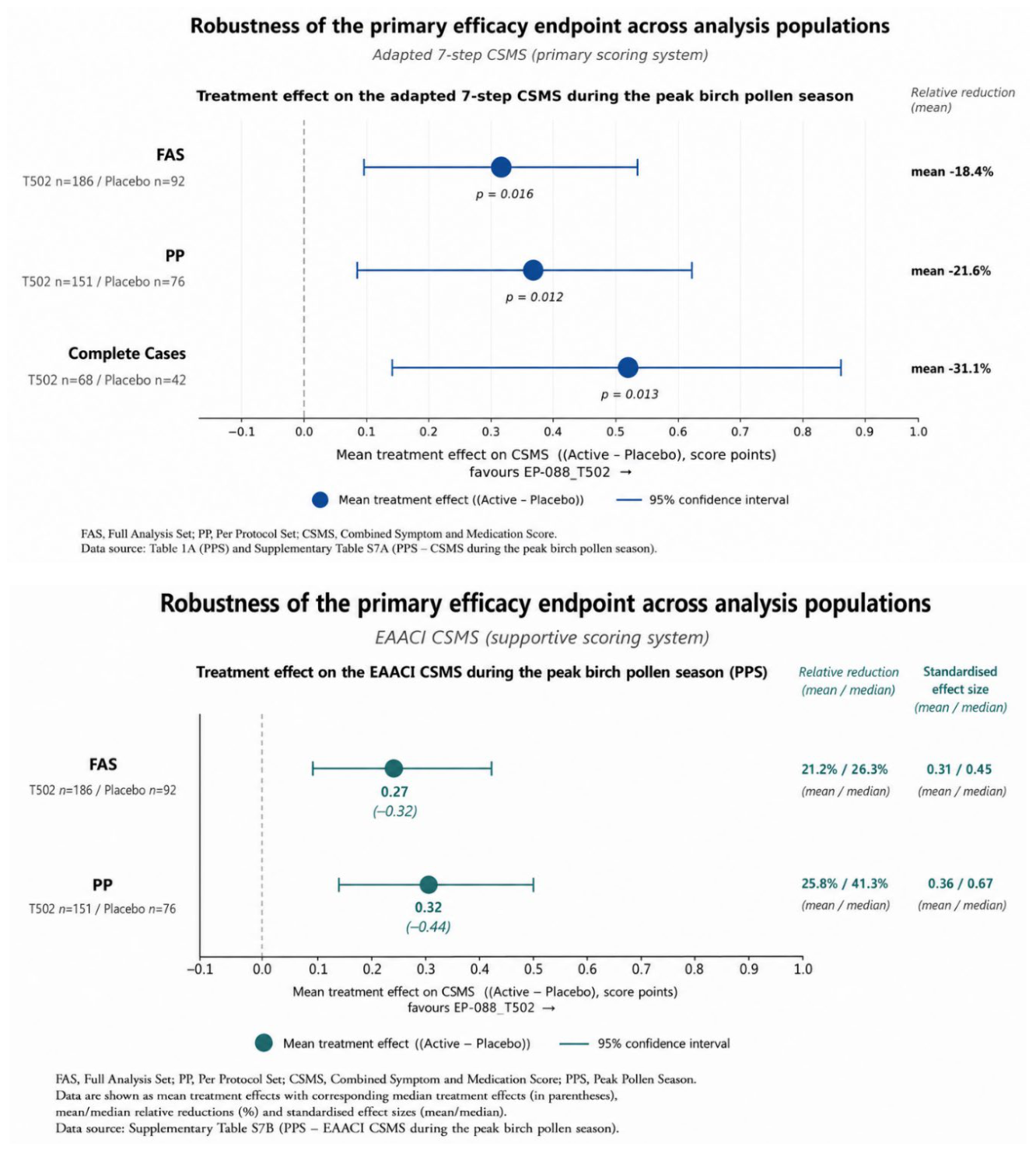
In the FAS, EP-088_T502 significantly improved allergic symptoms and reduced medication intake during the peak birch pollen season. The mean and median CSMS according to the adapted 7-step score were reduced by 18.4% and 17.4%, respectively, compared with placebo. The absolute mean difference between treatment groups was −0.31 score points (p=0.016, Table 1A), corresponding to a standardised effect size of 0.31 and exceeding the minimal clinically important difference described for allergen immunotherapy [16,17].
The treatment effect was more pronounced in the PP set, with an absolute mean difference of −0.36 score points (p=0.012). The largest treatment effect was observed in the CC set, comprising participants who completed treatment and provided complete diary records during the peak birch pollen season, with an absolute mean difference of −0.51 score points (p=0.013) (Table 1A).
Regarding medication use, the mean dMS during the peak birch pollen season was reduced from 0.81 in the placebo group to 0.62 in the EP-088_T502 group, corresponding to an absolute difference of −0.19 and a median reduction of 22.4%. However, the treatment effect did not reach statistical significance in the FAS (p=0.062, Table 1B).
For symptom severity, the mean dSS was reduced from 0.86 in the placebo group to 0.75 in the EP-088_T502 group during the peak birch pollen season. This corresponded to an absolute difference of −0.11 and a median reduction of 20.1% (p=0.021, Table 1C).
Data regarding relative and absolute differences as well as effect sizes for the CSMS, dSS and dMS are displayed in Supplementary Material S7A.
3.2.2. dMS and CSMS according to EAACI during the peak birch pollen season
In addition to the adapted 7-step CSMS used as the primary endpoint, the CSMS was also calculated according to the original EAACI/Pfaar definition as a pre-specified sensitivity analysis.
Using the EAACI/Pfaar CSMS definition (Supplementary Material S7B), EP-088_T502 was associated with lower symptom and medication scores compared with placebo during the peak birch pollen season. In the FAS, the mean and median absolute treatment effects were −0.27 and −0.32 score points, respectively, corresponding to relative reductions of 21.2% and 26.3%. The corresponding standardised effect sizes were 0.31 and 0.45, respectively.
In the PP set, the treatment effect was more pronounced, with mean and median absolute differences of −0.32 and −0.44 score points, respectively. Relative reductions reached 25.8% and 41.3%, with corresponding standardised effect sizes of 0.36 and 0.67, respectively.
The corresponding effect on the EAACI-defined dMS was particularly pronounced. In the PP set during the peak birch pollen season, the median dMS was reduced by 68.2% compared with placebo, corresponding to a median-based standardised effect size of 1.85. No participant required oral glucocorticosteroid treatment during the trial, resulting in a maximum EAACI dMS of 2.
The treatment effect was also confirmed across the entire birch pollen season. In the FAS, the mean and median absolute treatment effects for the EAACI-defined CSMS were −0.26 and −0.35 score points, respectively, corresponding to relative reductions of 21.6% and 31.0%. The corresponding standardised effect sizes were 0.33 and 0.49, respectively.
Data regarding relative and absolute differences as well as effect sizes for the CSMS and dMS are displayed in Supplementary Material S7B.
3.2.3. Additive CSMS during the peak birch pollen season defined based on pollen forecast data
The peak pollen season could not be determined with accuracy from pollen counts as originally planned because data from several monitoring stations were still unavailable at the time of analysis, which was performed in autumn 2025, approximately half a year later. Therefore, a post hoc analysis based on daily regional pollen forecasts from the official website of the German Weather Service (Deutscher Wetterdienst, DWD) was used to estimate the pollen peak for the individual trial sites.
Using this alternative approximation, the mean/median CSMS values during the peak pollen season were 1.701/1.529 in the placebo group and 1.357/1.200 in the EP-088_T502_group, corresponding to a mean/median reduction of 20.22%/21.52% and a mean/median difference of −0.34/−0.33 (p=0.0078). For details please refer to Supplementary Material S8.
3.3. Rhinoconjunctivitis Quality of Life Questionnaire (RQLQ):
Health-related QoL was analysed in adults using the RQLQs and in adolescents using the AdolRQLQ at T1, O1, and O2.
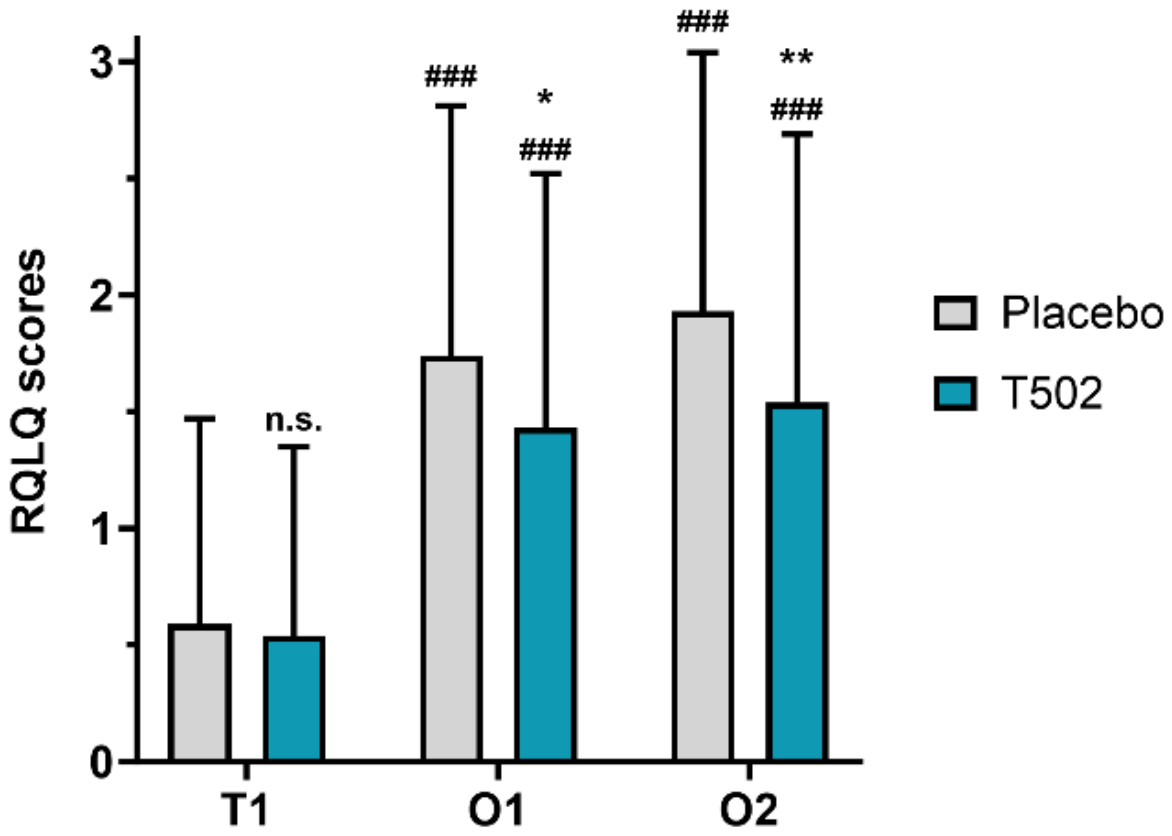
At T1 (performed in winter), the mean RQLQs score in adults was 0.59 (SD: 0.88) in the placebo group and 0.59 (SD: 0.85) in the EP-088_T502 group (p=0.758).
At O1, the mean RQLQs score was 1.80 (SD: 1.06) in the placebo group and 1.48 (SD: 1.10) in the EP-088_T502 group, corresponding to an 18% lower score in the EP-088_T502 group compared with placebo (p<0.05).
At O2, the mean RQLQs score was lower in the EP-088_T502 group compared with placebo, with a reduction of 20% (p<0.005) (Figure 4).
Regarding the adolescent subgroup, no statistically significant differences between treatment groups were observed at T1. In contrast to the findings in the overall and adult populations, changes from T1 to O2 in adolescents were also not statistically significant in the EP-088_T502 group compared with placebo (p=0.739).
3.4. Development of immunological parameters (Immunogenicity set):
After treatment (O1), the Bet v 1-specific sIgE level was 19.75 kU/L in the placebo group and 39.50 kU/L in the T502 group, representing a 2.0-fold increase (p<0.0001). Changes from baseline were also statistically significant in the EP-088_T502 group, with a 1.4-fold increase compared with S1 (p<0.0001).
Subgroup analysis of adolescents showed slightly increased Bet v 1-specific sIgE levels in the EP-088_T502 group (1.2-fold). Owing to the small sample size, these differences were not statistically significant (Supplementary Material S9).
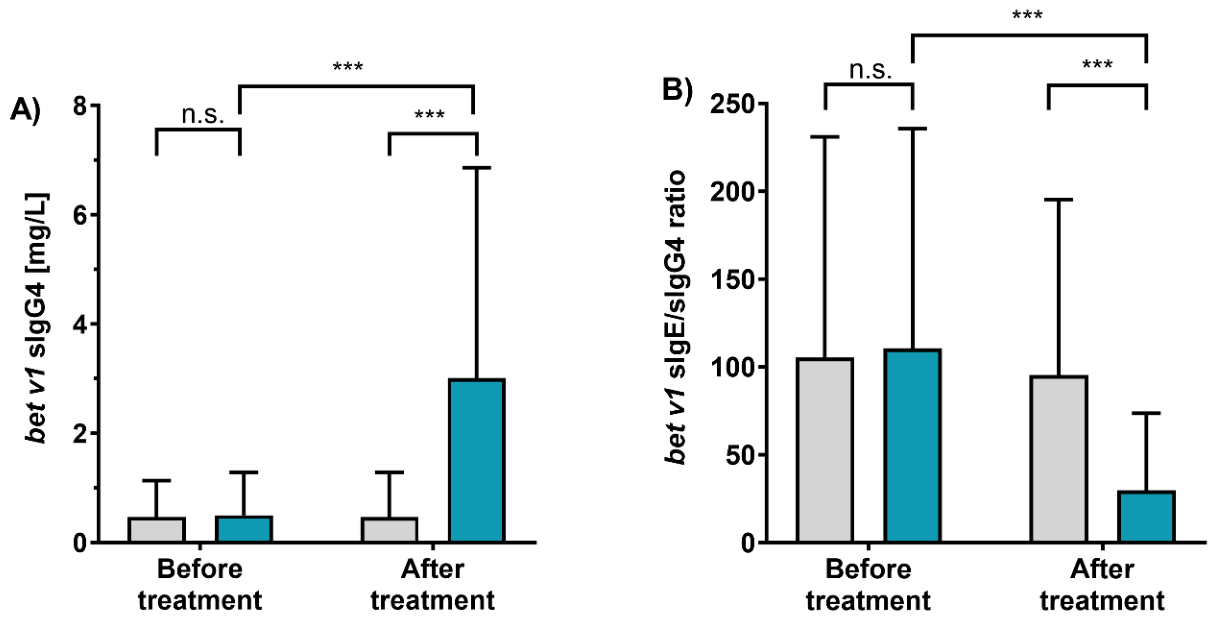
Regarding Bet v 1-specific sIgG4, values in the EP-088_T502 group increased 6.0-fold from S1 (0.50 mg/L) to O1 (3.01 mg/L), whereas sIgG4 levels in the placebo group remained largely unchanged. Changes from baseline were meaningful in the EP-088_T502 group (p<0.0001).
In adolescents, treatment with T502 also increased the production of Bet v 1-specific sIgG4 (5.4-fold) compared with baseline. A 6.1-fold increase was observed in adolescents compared with placebo after treatment. Owing to the small sample size in this subgroup, the differences were not statistically significant (Figure 5A).
When comparing the sIgE/sIgG4 ratio at S1, mean values were similar between the placebo and EP-088_T502 groups (105.31 and 110.59, respectively; n.s.). After treatment, the ratio decreased slightly in the placebo group (95.35). In the EP-088_T502 group, the ratio was reduced by 73% (29.82). The change from baseline was meaningful (p<0.0001).
In adolescents, the active treatment group also showed a reduction in the sIgE/sIgG4 ratio compared with baseline (64.7%, n.s.) (Figure 5B).
3.5. Safety results
The analysis focused on TEAEs. Overall, 537 TEAEs occurred in 138 participants (placebo: n=27; EP-088_T502: n=111). For MedDRA-based analyses, these TEAEs corresponded to 579 coded events, as individual TEAEs could be assigned to more than one MedDRA term.
The most common unsolicited TEAE in the active treatment group was injection-site pruritus (n=162, 32.73% of all TEAEs in this group [n=495]), followed by injection-site swelling (n=73, 14.75%). The frequency distribution is shown in Supplementary Material S10.
In the EP-088_T502 group, adolescent participants experienced a similar proportion of unsolicited LRs compared with adults (64.71% vs 61.92%). In the placebo group, 7.14% of all TEAEs (n=84) were unsolicited TEAEs and occurred exclusively in adults, with injection-site pruritus (2.38%) being the most common event (Supplementary Material S10).
Three SAEs occurred during the trial. All SAEs occurred in adults, and all affected participants recovered without complications. One SAE was considered related to the IMP and was classified as a severe grade III SR according to AWMF criteria. Narratives of this SR are provided in Supplementary Material S11.
Overall, 13 SRs occurred during the trial. Twelve SR occurred in 11 participants treated with EP-088_T502 (5.9%), whereas one grade II SR occurred in one placebo-treated participant. One grade III systemic reaction occurred in a participant treated with EP-088_T502. No grade IV systemic allergic reactions according to the AWMF classification were reported. None of the participants experiencing SRs were adolescents or had asthma.
In relation to the number of EP-088_T502 injections administered (n=1608), SR occurred in 0.75% of all injections.
In addition to TEAEs, local wheal reactions at the injection site were assessed. Nearly all wheal diameters measured 30 minutes after EP-088_T502 injection were either 0 cm (35.3%) or <5 cm (64.4%). Moderate wheal diameters accounted for 0.3% of measurements in the EP-088_T502 group.
Among adolescent participants treated with EP-088_T502 (n=9), wheals were also either absent (0 cm, 48.6%) or mild in severity (<5 cm, 51.4%) (Supplementary Material S12).
Regarding late-phase local wheal reactions, wheals were absent (0 cm) in 95.7% of all measurements in the placebo group and in 69.5% of measurements in the EP-088_T502 group. Of all documented wheals in the active treatment group (n=3759), two (0.1%) were categorised as severe (wheal diameter >20 cm).
In adolescents, nearly all wheals in the placebo group (98.7%) measured 0 cm. In the active treatment group, most wheal diameters (65.2%) were 0 cm. One wheal in an adolescent participant treated with EP-088_T502 was categorised as severe (>20 cm) (Supplementary Material S12).
4. Discussion
The aim of this confirmatory phase III trial was not only to confirm the efficacy and safety/tolerability of SCIT with EP-088_T502, but also to investigate whether increasing the cumulative dose from 23,000 mTU8 to 28,000 mTU by adding a sixth treatment visit could further enhance clinical and immunological responses. In addition, efficacy and safety/tolerability of EP-088_T502 in adolescents were investigated.
In the current trial, the median CSMS in the active treatment group was reduced by 17.4% compared with placebo using the pre-specified adapted 7-step score, and by 31.0% (FAS) and 45.5% (PP) when calculated using the EAACI/Pfaar definition. The median dMS was reduced by 25.0% (adapted score) and by up to 68.2% (EAACI definition, PP, peak pollen season), whereas the median dSS was reduced by approximately 20%. These findings indicate reduced medication use and fewer symptoms during the birch pollen season, consistent with results from the previous T502-SIT-045 trial. 8 In that trial, the median CSMS in the active treatment group was reduced by 33%, the dSS by 30.4%, and the dMS by 56.3% compared with placebo. However, it should be considered that the mean/median CSMS in the placebo group differed substantially between studies, with values of 1.67/1.49 in the present trial compared with 1.29/0.96 during the 2022 birch pollen season, which was still influenced by pandemic-related conditions and face-mask use. In addition, missing values were not imputed and only patients who completed treatment were analysed. In the present trial, a true FAS was used and missing data were imputed.
Although the magnitude of the treatment effect differed between studies, both trials consistently demonstrated significant efficacy of EP-088_T502 treatment. Several factors may have contributed to these differences. In the present trial, the primary endpoint analysis was performed in a true FAS population and missing data were imputed. In contrast, the previous trial used a modified ITT population including only participants who completed treatment and had at least one entry in the eDiary for the birch pollen season. Similar clinical effects were also observed in the EP-088_T502 dose-finding trial, in which participants treated with 10,000 mTU/mL showed a median CSMS reduction of 24.7% compared with placebo. ⁷ Taken together, the findings from all previous EP-088_T502 studies consistently demonstrate a significant treatment effect, further supported by the observed immunological responses.
Beyond the adapted 7-step CSMS used as the primary endpoint, treatment efficacy was also confirmed when the original EAACI/Pfaar CSMS was applied as a pre-specified sensitivity analysis. Under this scoring system, the standardised effect size of EP-088_T502 on CSMS during the peak pollen season was 0.31 (mean-based) and 0.49 (median-based) in the FAS, increasing to 0.36 and 0.67 in the PP set. These values exceed the minimal clinically important difference proposed for allergen immunotherapy by Pfaar et al. and are consistent with effect sizes reported for other licensed birch pollen products. The effect on medication use was particularly notable: in the PP set during the peak pollen season, the median dMS was reduced by 68.2% in the EP-088_T502 group compared with placebo, with a standardised effect size of 1.85. As no participant required oral glucocorticosteroids during the trial, the dMS reduction reflects a true decrease in the use of oral antihistamines, intranasal corticosteroids and antihistamine eye drops rather than a downstaging from systemic therapy.
The robustness of the treatment effect was further supported by the consistency observed across multiple complementary analyses of the primary efficacy endpoint. In addition to the primary analysis in the full analysis set (mean treatment effect −0.31, p=0.0169), the treatment effect was confirmed in the per-protocol set (−0.36, p=0.0117) and in participants with complete diary records during the peak pollen season (−0.51, p=0.0129), illustrating a progressive increase in effect size with adherence to the protocol (Figure 3A). The treatment effect was also consistent across two independent definitions of the analysis window addressing an identified logistical limitation: official PID pollen counts were incomplete at the time of the primary analysis, which may have limited the precision with which the peak pollen season could be defined in some trial sites. When the analysis was extended to the entire pollen season — a window that does not require accurate identification of the peak — a statistically significant treatment effect was confirmed (mean absolute CSMS difference −0.31, p=0.0096; median EAACI/Pfaar reduction −0.35 score points or 23%, p=0.015). When the peak pollen season was instead defined using DWD pollen forecast data, which provided complete coverage of all trial sites, the treatment effect was −0.34 (p=0.0078). The CSMS calculated according to the original EAACI/Pfaar definition further confirmed efficacy (mean absolute difference −0.26 in the FAS, p=0.02; standardised effect size 0.49 in the median-based FAS analysis and 0.67 in the median-based PP analysis; Figure 3B). The convergence of these analyses, each addressing the limitations of the others from a different angle, supports the conclusion that the treatment effect of EP-088_T502 is robust and consistent throughout the birch pollen season, and that the original PID-based peak-season analysis is likely to have underestimated rather than overestimated the true magnitude of the effect.
Figure 3.
Forest plot of the treatment effect of the additive CSMS (A) and the weighted/EAACI CSMS (B) for the FAS (Full Analysis Set), PP (Per Protocol) and Complete Cases (CC) set.
Figure 3.
Forest plot of the treatment effect of the additive CSMS (A) and the weighted/EAACI CSMS (B) for the FAS (Full Analysis Set), PP (Per Protocol) and Complete Cases (CC) set.
Taken together, the magnitude of the treatment effect on the EAACI/Pfaar CSMS, the consistent direction of the dSS and dMS components, the absence of any need for oral glucocorticosteroids, and the imputation of missing values according to the pre-specified statistical analysis plan support the conclusion that the efficacy criteria for allergen immunotherapy products formulated by the Paul-Ehrlich-Institut are met.
Clinical efficacy of allergen immunotherapy assessed by CSMS reduction has also been demonstrated in other studies. Pfaar et al.18 reported a 32% reduction in CSMS during the birch pollen season following treatment with a sublingual birch pollen preparation. In another study by Pfaar et al., 19 depigmented-polymerised mixed grass/birch pollen SCIT reduced CSMS values by 33.7% in the active treatment group during the second treatment year compared with placebo.
The beneficial effects of EP-088_T502 treatment were not limited to CSMS improvement but were also reflected in health-related QoL outcomes. In contrast to the previous T502-SIT-045 trial, in which the RQLQ was assessed only immediately before and during the birch pollen season [8], the present trial additionally included an assessment at treatment initiation during autumn/winter, providing a true baseline value unaffected by tree pollen exposure, including hazel, alder, and birch pollen.
Assessment of the RQLQ outside the birch pollen season appears particularly relevant, since scores measured immediately before the birch pollen season were already almost twice as high because of alder and hazel pollen exposure compared with autumn/winter baseline values. Consequently, differences between pre-seasonal and peak-season measurements become less pronounced. These findings also support observations from the previous T502-SIT-045 study, in which RQLQ assessment immediately before the birch pollen season was likely influenced by early tree pollen exposure, limiting comparison with a true baseline measurement. In adolescents, only marginal improvements in RQLQ scores were observed, which may be explained by the small sample size (n=4 placebo; n=9 T502).
As patient-reported outcomes such as symptom diaries and questionnaires are inherently influenced by subjective symptom perception, objective immunological parameters were additionally assessed. Bet v 1-specific sIgE levels were not substantially affected by treatment with EP-088_T502. This is in line with previous studies showing that changes in allergen-specific IgE are typically observed only after 2–3 years of AIT [20]. As treatment in the present trial was administered during a single treatment cycle, major effects on Bet v 1-specific sIgE were not expected. Demonstration of such effects would require long-term follow-up studies.
In contrast, Bet v 1-specific sIgG4 levels were 6.4-fold higher after treatment with EP-088_T502 compared with placebo (p<0.0001). In the previous T502-SIT-045 trial, Bet v 1-specific sIgG4 levels were 5.2-fold higher after treatment with EP-088_T502 compared with placebo. The stronger increase observed in the present trial may be related to the higher cumulative dose of 28,000 mTU compared with 23,000 mTU in the previous trial. In both studies, the development of immunological parameters supports the concept that short-course treatment can already induce relevant immunological effects. Consequently, the sIgE/sIgG4 ratio was also markedly reduced after treatment compared with placebo.
This may be of particular relevance, as treatment adherence remains a major challenge in allergen immunotherapy. Several studies have suggested that adherence may be higher in SCIT than in SLIT (sublingual immunotherapy) [21,22]. Nevertheless, adherence rates during the third treatment year also vary considerably among SCIT-treated patients [22]. In this context, short-course treatment schedules may represent a promising future approach. Especially in studies involving only a limited number of injections, higher adherence rates may be expected. In the previous trial [8], 91% of participants completed the study, whereas 93% (n=258) completed the present trial.
Regarding safety, SCIT is generally considered to be associated with a higher frequency of SRs than SLIT. However, besides the up-dosing schedule, the use of native allergen extracts has also been associated with an increased risk of SRs during AIT. The present trial provides further safety data for mannan-conjugated SCIT, which may offer an improved tolerability profile, as discussed above.
In the present trial, 13 systemic allergic reactions (grade I–III) occurred. No grade IV SRs according to the AWMF classification were reported. None of the affected participants were adolescents or had asthma. In relation to the total number of EP-088_T502 injections administered (n=1608), SRs occurred in 0.75% of injections. These findings are consistent with the safety results of the previous trial, in which 16 SRs (grade I/II) were reported. Wheal diameters measured 30 minutes after injection were absent or mild in most participants in both studies, which is in line with the tolerability profile described for other SCIT preparations. According to previous studies, the incidence of SRs per injection visit generally remains below 1% [23,24,25].
Figure 4.
RQLQ scores before treatment (T1), before the birch pollen season (O1), and during the birch pollen season (O2). Data are presented as mean ± SD. *p<0.05 compared with placebo; **p<0.003; ###p<0.0001 compared with T1; n.s., not statistically significant.
Figure 4.
RQLQ scores before treatment (T1), before the birch pollen season (O1), and during the birch pollen season (O2). Data are presented as mean ± SD. *p<0.05 compared with placebo; **p<0.003; ###p<0.0001 compared with T1; n.s., not statistically significant.
In relation to the number of participants treated with EP-088_T502, SRs occurred in 5.9% of participants in the present trial. In the previous T502-SIT-045 trial, the proportion was slightly higher, with 8.1% of participants experiencing at least one SR. Calderon et al [26]. reported frequencies ranging from 22% (immediate systemic reactions) to 89% (late-phase systemic reactions) in a Cochrane systematic review of SCIT. The favourable tolerability profile of EP-088_T502 is additionally reflected by the very low number of participants who discontinued treatment.
To minimise the risk of AEs and SRs, EAACI recommendations for safe AIT administration were followed [27]. Emergency equipment and trained physicians for anaphylaxis management were available at all trial sites. In addition, participants remained under observation for 30 minutes after each injection, since SRs frequently occur during this period [28]. Nevertheless, delayed SRs occurring after 30 minutes have also been reported, with some studies describing delayed reactions in 50% or more of cases [25,28]. In the present trial, delayed SRs also accounted for a relevant proportion of cases.
Preventive measures are particularly important in asthmatic participants, as asthma may represent one of the main risk factors for SRs during AIT. To ensure participant safety, asthma control and pulmonary function were closely monitored throughout the trial. These findings underline the importance of assessing asthma control status before and during treatment, while also demonstrating that well-controlled asthma does not necessarily represent a contraindication to AIT. 29
One limitation of the present trial is the relatively small adolescent subgroup. Although 10% adolescent recruitment had originally been planned, only 4% of participants were adolescents. Consequently, several findings indicating positive treatment effects in this subgroup did not reach statistical significance. One example is the marked increase in Bet v 1-specific sIgG4 production (5.4-fold increase compared with baseline; 6.1-fold increase compared with placebo). Further evaluation of adolescents may therefore be warranted in future studies.
In conclusion, EP-088_T502 demonstrated efficacy as a short-course treatment and was generally well tolerated and safe. The findings of the present trial are consistent with those of previous studies, supporting the reproducibility of both efficacy and safety outcomes for EP-088_T502 in birch pollen allergy.
Figure 5.
A) Bet v 1-specific sIgG4 levels before and after treatment with T502 or placebo. B) Bet v 1-specific sIgE/sIgG4 ratio before and after treatment with EP-088_T502 or placebo. Data are presented as mean ± SD. *p<0.05; ***p<0.0001; n.s., not statistically significant.
Figure 5.
A) Bet v 1-specific sIgG4 levels before and after treatment with T502 or placebo. B) Bet v 1-specific sIgE/sIgG4 ratio before and after treatment with EP-088_T502 or placebo. Data are presented as mean ± SD. *p<0.05; ***p<0.0001; n.s., not statistically significant.
Supplementary Materials
The following supporting information can be downloaded at the website of this paper posted on Preprints.org.
Funding
Article processing charges were funded by Inmunotek S.L. All authors approved the final version of the manuscript before submission.
Ethics approval and consent to participate
The trial was conducted in accordance with the Declaration of Helsinki, Good Clinical Practice (GCP) guidelines, and applicable national regulations. The study was approved by the Paul-Ehrlich-Institut, Germany (EU trial number: 2024-515717-17-00), and by the responsible ethics committees before trial initiation.
Data availability statement
The data that support the findings of this trial are available from the corresponding author upon reasonable request.
Acknowledgments
The authors would like to thank all study participants, investigators, and study site personnel involved in the conduct of the trial.
Conflicts of Interest Statement
ER, CN, AR, NK, HS, SA and LD are employees of the ClinCompetence Cologne GmbH, have no conflicts of interest to disclose. SP has nothing to disclose. LK reports grants and personal fees from Inmunotek during the conduct of the trial; grants and personal fees from Allergopharma, grants and personal fees from Viatris, personal fees from HAL Allergie, personal fees form ALK-Abelló, grants and personal fees from LETI Pharma, grants and personal fees from Stallergenes, grants from Quintiles, grants and personal fees from Sanofi, grants from ASIT biotech, grants bromoform, personal fees from Allergy Therapeutics., grants from Astra-Zeneca, grants and personal fees from GSK, grants from Inmunotek, personal fees from Cassella med, personal fees from Novartis, personal fees from Regeneron Pharmaceuticals, personal fees from ROXALL Medizin GmbH, outside the submitted work; and Membership: AeDA, DGHNO, Deutsche Akademie für Allergologie und klinische Immunologie, HNO-BV, GPA, EAACI. OP reports grants for his institution during the conduct of the trial from Inmunotek S.L., Spain; he also reports grants and/or personal fees and/or travel support from AEDA, Alfried Krupp Krankenhaus, ALK-Abelló, Allergopharma, Almirall, Altamira Therapeutics, ASIT Biotech, AstraZeneca, Bencard Allergie GmbH/Allergy Therapeutics, Blueprint, Breazy Health, Cliantha, Deutsche AllergieLiga e.V., Deutsche Forschungsgemeinschaft, Dustri-Verlag, ECM Ex-pro&Conference Management GmBH, Forum für Medizinische Fortbildung, Georg-Thieme-Verlag, GSK, HAL Allergy Holding B.V./HAL Allergie GmbH, Inmunotek, Ingress Health, Institut für Disease Management, IQVIA Commercial, Japanese Society of Allergology, Königlich Dänisches Generalkonsulat, Laboratorios LETI/LETI Pharma, Lilly, Lofarma, Medizinische Hochschule Hannover, med update europe GmbH, Meinhardt Congress GmbH, Novartis, Paul-Ehrlich-Institut, Paul-Martini-Stiftung, PneumoLive, Pohl-Boskamp, Procter & Gamble, Red Maple Trials Inc., Re-generon, RG Aerztefortbildung, ROXALL Medizin, Sanofi Aventis, Sanofi Genzyme, Springer Publisher, Stallergenes Greer, streamedup! GmbH, Technical University Dresden, John Wiley & sons publishers, Wort & Bild Verlag, Verlag ME, all outside the submitted work. In addition, OP is Vice President of the European Academy of Allergy and Clinical Immunology (EAACI), a member of EAACI Excom and a member of the external board of directors of the German Society of Allergy and Clinical Immunology (DGAKI); the coordinator, main author, or co-author of different position papers and guidelines in rhinology, allergology, and allergen immunotherapy; and the Editor-in-Chief of Clinical Translational Allergy and Associate Editor of Allergy. RM reports grants and personal fees from Inmunotek during the conduct of the trial; personal fees from ALK, grants from ASIT biotech, personal fees from Allergopharma, personal fees from Allergy Therapeutics, grants and personal fees from Bencard, grants from Leti, grants, personal fees and non-financial support from Lofarma, non-financial support from Roxall, grants and personal fees from Stallergenes, grants from Optima, personal fees from Friulchem, personal fees from Hexal, personal fees from Servier, personal fees from Klosterfrau, non-financial support from Atmos, personal fees from Bayer, non-financial support from Bionorica, personal fees from FAES, personal fees from GSK, personal fees from MSD, personal fees from Johnson&Johnson, personal fees from Meda, personal fees and non-financial support from Novartis, non-financial support from Otonomy, personal fees from Stada, personal fees from UCB, non-financial support from Ferrero, grants from Hulka, personal fees from Nuvo, grants and personal fees from Ursapharm, personal fees from Menarini, personal fees from Mundipharma, personal fees from Pohl-Boskamp, grants from Cassella-med GmbH & Co. KG, personal fees from Laboratoire de la Mer, personal fees from Sidroga, grants and personal fees from HAL BV, personal fees from Lek, personal fees from PRO-AdWise, personal fees from Angelini Pharma, grants and non-financial support from JGL, grants and personal fees from bitop, grants from Sanofi, personal fees from Menarini, outside the submitted work; MC declares honoraria for presentations ALK-Abelló, Allergopharma, AstraZeneca, Bencard Allergie/Allergy Therapeutics, Celltrion Healthcare Deutschland GmbH, GlaxoSmithKline, HAL Allergy, Leti Pharma, NeilMed, Novartis, Roxall, Sanofi-Aventis, Stallergenes outside the submitted work. Other non-financial interests: German Society of Allergy (AeDA), German Society of Oto-Rhino-Laryngology, Head and Neck Surgery DGHNO-KHC. MC is the coordinating investigator of the presented clinical trials. JLS and MCV are shareholders of Inmunotek, SdP is an employee of Inmunotek. All authors had full access to all the data in this trial and take complete responsibility for the integrity of the data and accuracy of the data analysis.
Abbreviations:
AE, adverse event; AIT, Allergen Immunotherapy; ARC, Allergic Rhinoconjunctivitis; CSMS, Combined Symptom and Medication Score; DBPC, double-blind placebo-controlled; DC, dendritic cell; dMS, daily Medication Score; dSS, daily Symptom Score; EAACI, European Academy of Allergy and Clinical Immunology; GCP, Good Clinical Practice; IM, immunogenicity; IMP, Investigational Medicinal Product; LR, Local Reaction; MedDRA, Medical Dictionary for Regulatory Activities; mITT, modified intention-to-treat; mTU, Mannan Therapeutic Units; PP, Per Protocol; PRO, Patient-reported outcome; RQLQ, Rhinoconjunctivitis Quality of Life Questionnaire; SAE, serious adverse event; SAF, Safety analysis set; SD, Standard deviation; SCIT, Subcutaneous Immunotherapy; SLIT, Sublingual Immunotherapy; SR, Systemic Reaction; TEAE, treatment-emergent adverse event; Treg, regulatory T cells; V, Visit.
References
- Nieto, A.; Mazón, Á.; Nieto, M.; et al. First-in-human phase 2 trial with mite allergoids coupled to mannan in subcutaneous and sublingual immunotherapy. Allergy 2022, 77(10), 3096–3107. [Google Scholar] [CrossRef] [PubMed]
- Soria, I.; López-Relaño, J.; Viñuela, M.; et al. Oral myeloid cells uptake allergoids coupled to mannan driving Th1/Treg responses upon sublingual delivery in mice. Allergy 2018, 73(4), 875–884. [Google Scholar] [CrossRef] [PubMed]
- Manzano, A.I.; Javier Cañada, F.; Cases, B.; et al. Structural studies of novel glycoconjugates from polymerized allergens (allergoids) and mannans as allergy vaccines. Glycoconj. J. 2016, 33(1), 93–101. [Google Scholar] [CrossRef] [PubMed]
- Benito-Villalvilla, C.; Soria, I.; Subiza, J.L.; Palomares, O. Novel vaccines targeting dendritic cells by coupling allergoids to mannan. Allergo J. Int. 2018, 27(8), 256–262. [Google Scholar] [CrossRef] [PubMed]
- Sirvent, S.; Soria, I.; Cirauqui, C.; et al. Novel vaccines targeting dendritic cells by coupling allergoids to nonoxidized mannan enhance allergen uptake and induce functional regulatory T cells through programmed death ligand 1. J. Allergy Clin. Immunol. 2016, 138, 558–567.e11. [Google Scholar] [CrossRef] [PubMed]
- Klimek, L.; Brehler, R.; Hamelmann, E.; et al. Evolution of subcutaneous allergen immunotherapy (part 1): from first developments to mechanism-driven therapy concepts. Allergo J. Int. 2019, 28, 78–95. [Google Scholar] [CrossRef]
- Mösges, R.; Zeyen, C.; Raskopf, E.; et al. A randomized, double- blind, placebo- controlled trial with mannan- conjugated birch pollen allergoids. Allergy 2024, 79(4), 990–1000. [Google Scholar] [CrossRef] [PubMed]
- Mösges, R.; Raskopf, E.; Klimek, L.; et al. Short-course subcutaneous treatment with birch pollen allergoids greatly improves symptom and medication scores in birch allergy. Allergy 2025, 80, 817–826. [Google Scholar] [CrossRef] [PubMed]
- World Medical Association. World Medical Association Declaration of Helsinki: Ethical Principles for Medical Research Involving Human Subjects. JAMA 2013, 310(20), 2191–2194. [Google Scholar] [CrossRef] [PubMed]
- Pfaar, O.; Bastl, K.; Berger, U.; et al. Defining pollen exposure times for clinical trials of allergen immunotherapy for pollen-induced rhinoconjunctivitis—an EAACI position paper. Allergy 2017, 72(5), 713–722. [Google Scholar] [CrossRef] [PubMed]
- Pfaar, O.; Demoly, P.; Gerth van Wijk, R.; et al. Recommendations for the standardization of clinical outcomes used in allergen immunotherapy trials for allergic rhinoconjunctivitis: an EAACI position paper. Allergy 2014, 69(7), 854–867. [Google Scholar] [CrossRef] [PubMed]
- Rybachuk, A.; Neuhof, C.; Curtius, E.; Acikel, C.; Fragel, S.; et al. Prospective Evaluation of Symptom Burden and Medication Use in Seasonal Allergic Rhinitis/Rhinoconjunctivitis Patients Considering Allergen-Specific Immunotherapy. Preprints 2026, 2026040120. [Google Scholar] [CrossRef]
- Mösges, R.; Fragel, S.; Raskopf, E.; Drevermann, A.; Allekotte, S. 80% reduction of required sample size in clinical trials by eDiary monitoring (2024), Flash talks (FT). Allergy 79, 165–357. [CrossRef]
- Juniper, E.F.; Guyatt, G.H. Development and testing of a new measure of health status for clinical trials in rhinoconjunctivitis. Clin. Exp. Allergy 1991, 21(1), 77–83. [Google Scholar] [CrossRef] [PubMed]
- Neumann, Y.; Bullinger, M.; Przybilla, B. Quality of life in allergic rhinitis: standardisation of a self assessment questionnaire. Allergy 1992, 47 (Suppl 12), 72. [Google Scholar]
- Pfaar, O.; Mösges, R.; Blaiss, M.S.; et al. The Minimal Clinically Important Difference in Allergen Immunotherapy: An Evidence-Based Approach. Allergy 2025, 80(12), 3369–3376. [Google Scholar] [CrossRef] [PubMed]
- Hartenstein, D.; Schmidt, S.; Mahler, V.; Kaul, S. The Minimal Clinically Important Difference in Allergen Immunotherapy: The Rocky Road Toward an Evidence-Based Value. Allergy 2026. [Google Scholar] [CrossRef] [PubMed]
- Pfaar, O.; Bachert, C.; Kuna, P.; et al. Sublingual allergen immunotherapy with a liquid birch pollen product in patients with seasonal allergic rhinoconjunctivitis with or without asthma. J. Allergy Clin. Immunol. 2019, 143(3), 970–977. [Google Scholar] [CrossRef] [PubMed]
- Pfaar, O.; Biedermann, T.; Klimek, L.; Sager, A.; Robinson, D.S. Depigmented-polymerized mixed grass/birch pollen extract immunotherapy is effective in polysensitized patients. Allergy 2013, 68(10), 1306–13. [Google Scholar] [CrossRef] [PubMed]
- Valovirta, E.; Petersen, T.H.; Piotrowska, T.; Laursen, M.K.; Andersen, J.S.; Sørensen, H.F.; et al. GAP investigators. Results from the 5-year SQ grass sublingual immunotherapy tablet asthma prevention (GAP) trial in children with grass pollen allergy. J. Allergy Clin. Immunol. 2018, 141(2), 529–538.e13. [Google Scholar] [CrossRef] [PubMed]
- Lemberg, M.L.; Berk, T.; Shah- Hosseini, K.; Kasche, E.M.; Mösges, R. Sublingual versus subcutaneous immunotherapy: patient adherence at a large German allergy center. Patient Prefer Adherence 2017, 11, 63–70. [Google Scholar] [CrossRef] [PubMed]
- Vogelberg, C.; Brüggenjürgen, B.; Richter, H.; Jutel, M. Real-World Adherence and Evidence of Subcutaneous and Sublingual Immunotherapy in Grass and Tree Pollen-Induced Allergic Rhinitis and Asthma. Patient Prefer Adherence 2020, 14, 817–827. [Google Scholar] [CrossRef] [PubMed] [PubMed Central]
- Mustafa, S.S.; Bingemann, T.; Blue, H.; Conn, K.; Hanley, T.; Ramsey, A. Systemic reactions to subcutaneous immunotherapy: Effects of dosing and aeroallergen content. Ann. Allergy Asthma Immunol. 2019, 123(3), 284–287. [Google Scholar] [CrossRef] [PubMed]
- Robertson, K.; Montazeri, N.; Shelke, U.; Jeimy, S.; Kim, H. A single centre retrospective study of systemic reactions to subcutaneous immunotherapy. Allergy Asthma Clin. Immunol. 2020, 16(1), 93. [Google Scholar] [CrossRef] [PubMed]
- DaVeiga, S.P.; Liu, X.; Caruso, K.; Golubski, S.; Xu, M.; Lang, D.M. Systemic reactions associated with subcutaneous allergen immunotherapy: timing and risk assessment. Ann. Allergy Asthma Immunol. 2011, 106(6), 533–537.e2. [Google Scholar] [CrossRef] [PubMed]
- Calderon, M.A.; Alves, B.; Jacobson, M.; Hurwitz, B.; Sheikh, A.; Durham, S. Allergen injection immunotherapy for seasonal allergic rhinitis. Cochrane Database Syst. Rev. Published. 2007, 2007(1), CD001936. [Google Scholar] [CrossRef] [PubMed]
- Roberts, G.; Pfaar, O.; Akdis, C.A.; et al. EAACI guidelines on allergen immunotherapy: allergic rhinoconjunctivitis. Allergy 2018, 73(4), 765–798. [Google Scholar] [CrossRef] [PubMed]
- Calderón, M.A.; Vidal, C.; Rodríguez Del Río, P.; et al. European Survey on Adverse Systemic Reactions in Allergen Immunotherapy (EASSI): a real-life clinical assessment. Allergy 2017, 72(3), 462–472. [Google Scholar] [CrossRef] [PubMed]
- Virchow, J.C.; Pfaar, O.; Lommatzsch, M. Allergen immunotherapy for allergic asthma. Allergol. Sel. Published. 2024, 8, 6–11. [Google Scholar] [CrossRef] [PubMed]
Figure 1.
T502-SIT-073 trial design. Subcutaneous injections of T502 or placebo were administered before the start of the birch pollen season (treatment phase). The observation phase took place during the birch pollen season, during which CSMS and RQLQ data were collected to assess the clinical effect. mTU/mL, mannan therapeutic units per millilitre; FU, follow-up; CSMS, combined symptom and medication score; RQLQ, Rhinoconjunctivitis Quality of Life Questionnaire.
Figure 1.
T502-SIT-073 trial design. Subcutaneous injections of T502 or placebo were administered before the start of the birch pollen season (treatment phase). The observation phase took place during the birch pollen season, during which CSMS and RQLQ data were collected to assess the clinical effect. mTU/mL, mannan therapeutic units per millilitre; FU, follow-up; CSMS, combined symptom and medication score; RQLQ, Rhinoconjunctivitis Quality of Life Questionnaire.
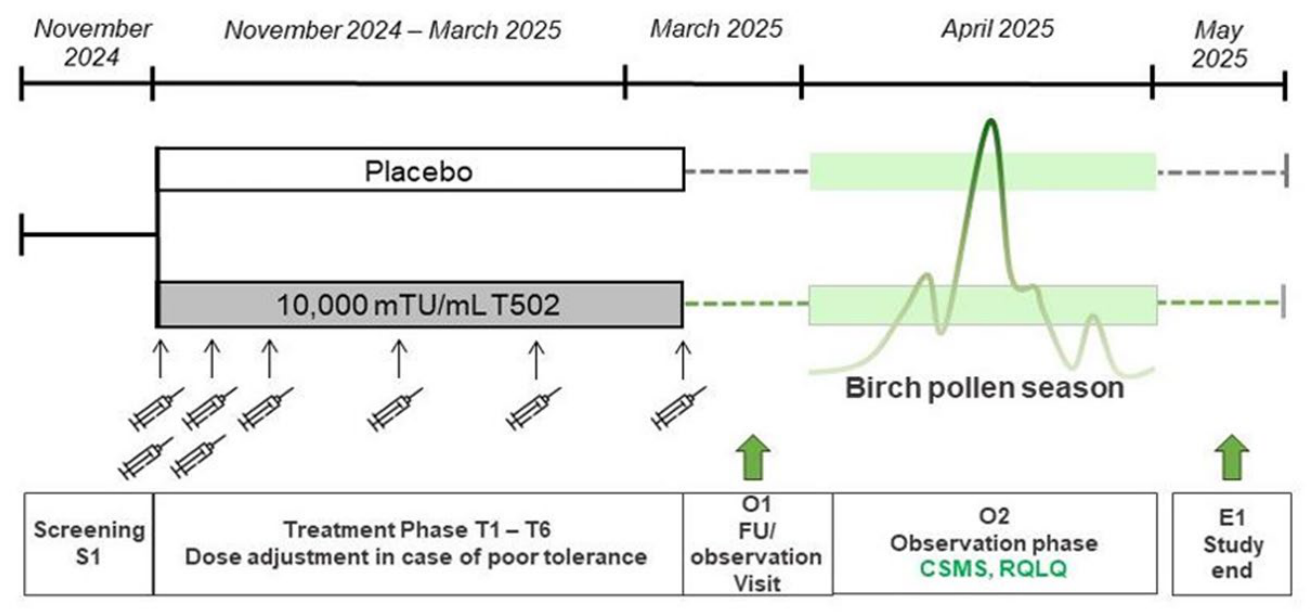
Figure 2.
Flow chart of the trial.
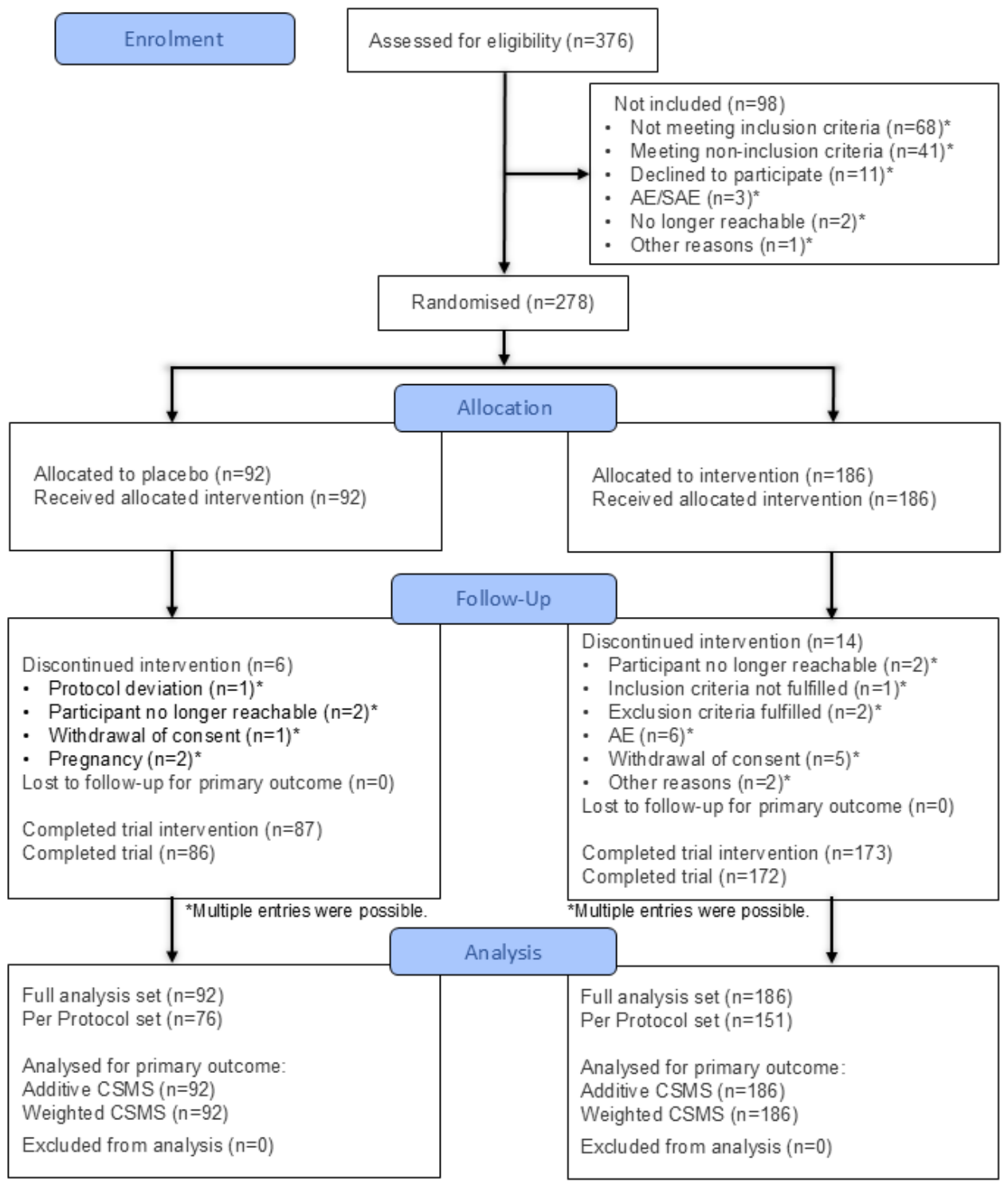

Table 1.
A) Combined Symptom and Medication Score (CSMS), B) Daily Medication Score and C) Daily Symptom Score during the peak (PPS) and entire (EPS) birch pollen season for the Full Analysis Set (FAS), PP-set (PP) and the Complete Cases set (CC).
Table 1.
A) Combined Symptom and Medication Score (CSMS), B) Daily Medication Score and C) Daily Symptom Score during the peak (PPS) and entire (EPS) birch pollen season for the Full Analysis Set (FAS), PP-set (PP) and the Complete Cases set (CC).
| Table 1A: | |||||
| Pollen season | Analysis Set | Descriptive statistics | Treatment group | p-value | |
| Placebo | EP-088_T502 | ||||
| PPS | FAS | Mean | 1.67 | 1.36 | 0.016 |
| SD | 1.05 | 0.98 | |||
| Median | 1.49 | 1.23 | |||
| Min/Max | 0.00 / 4.63 | 0.00 / 5.19 | |||
| PPS | PP | Mean | 1.67 | 1.31 | 0.012 |
| SD | 1.07 | 1.01 | |||
| Median | 1.45 | 1.12 | |||
| Min/Max | 0.00 / 4.63 | 0.00 / 5.19 | |||
| PPS | CC | Mean | 1.63 | 1.12 | 0.013 |
| SD | 1.00 | 0.79 | |||
| Median | 1.40 | 1.05 | |||
| Min/Max | 0.25 / 4.31 | 0.00 / 2.74 | |||
| EPS | FAS | Mean | 1.59 | 1.29 | 0.016 |
| SD | 1.00 | 0.89 | |||
| Median | 1.51 | 1.18 | |||
| Min/Max | 0.00 / 4.63 | 0.00 / 4.52 | |||
| EPS | PP | Mean | 1.59 | 1.23 | 0.007 |
| SD | 1.02 | 0.91 | |||
| Median | 1.46 | 1.05 | |||
| Min/Max | 0.00 / 4.63 | 0.00 / 4.52 | |||
| EPS | CC | Mean | 1.56 | 1.02 | 0.003 |
| SD | 0.95 | 0.71 | |||
| Median | 1.37 | 0.93 | |||
| Min/Max | 0.18 / 3.75 | 0.00 / 2.42 | |||
| Table 1B: | |||||
| Pollen season | Analysis Set | Descriptive statistics | Treatment group | p-value | |
| Placebo | EP-088_T502 | ||||
| PPS | FAS | Mean | 0.81 | 0.62 | 0.062 |
| SD | 0.77 | 0.65 | |||
| Median | 0.62 | 0.48 | |||
| Min/Max | 0.00 / 3.00 | 0.00 / 3.00 | |||
| PPS | PP | Mean | 0.80 | 0.61 | 0.058 |
| SD | 0.77 | 0.68 | |||
| Median | 0.61 | 0.40 | |||
| Min/Max | 0.00 / 3.00 | 0.00 / 3.00 | |||
| PPS | CC | Mean | 0.80 | 0.50 | 0.062 |
| SD | 0.80 | 0.53 | |||
| Median | 0.50 | 0.36 | |||
| Min/Max | 0.00 / 2.82 | 0.00 / 1.96 | |||
| EPS | FAS | Mean | 0.77 | 0.57 | 0.026 |
| SD | 0.72 | 0.58 | |||
| Median | 0.61 | 0.47 | |||
| Min/Max | 0.00 / 2.75 | 0.00 / 3.00 | |||
| EPS | PP | Mean | 0.76 | 0.56 | 0.036 |
| SD | 0.73 | 0.60 | |||
| Median | 0.59 | 0.43 | |||
| Min/Max | 0.00 / 2.75 | 0.00 / 3.00 | |||
| EPS | CC | Mean | 0.77 | 0.45 | 0.029 |
| SD | 0.75 | 0.46 | |||
| Median | 0.51 | 0.28 | |||
| Min/Max | 0.00 / 2.61 | 0.00 / 1.65 | |||
| Table 1C: | |||||
| Pollen season | Analysis Set | Descriptive statistics | Treatment group | p-value | |
| Placebo | EP-088_T502 | ||||
| PPS | FAS | Mean | 0.86 | 0.75 | 0.021 |
| SD | 0.45 | 0.55 | |||
| Median | 0.83 | 0.66 | |||
| Min/Max | 0.00 / 2.57 | 0.00 / 2.94 | |||
| PPS | PP | Mean | 0.87 | 0.70 | 0.007 |
| SD | 0.47 | 0.53 | |||
| Median | 0.80 | 0.58 | |||
| Min/Max | 0.00 / 2.57 | 0.00 / 2.94 | |||
| PPS | CC | Mean | 0.83 | 0.62 | 0.013 |
| SD | 0.38 | 0.46 | |||
| Median | 0.79 | 0.51 | |||
| Min/Max | 0.25 / 1.65 | 0.00 / 2.02 | |||
| EPS | FAS | Mean | 0.82 | 0.72 | 0.038 |
| SD | 0.43 | 0.51 | |||
| Median | 0.78 | 0.64 | |||
| Min/Max | 0.00 / 1.95 | 0.00 / 2.92 | |||
| EPS | PP | Mean | 0.83 | 0.67 | 0.008 |
| SD | 0.45 | 0.49 | |||
| Median | 0.79 | 0.58 | |||
| Min/Max | 0.00 / 1.95 | 0.00 / 2.92 | |||
| EPS | CC | Mean | 0.80 | 0.57 | 0.004 |
| SD | 0.38 | 0.42 | |||
| Median | 0.82 | 0.54 | |||
| Min/Max | 0.15 / 1.80 | 0.00 / 1.82 | |||
Disclaimer/Publisher’s Note: The statements, opinions and data contained in all publications are solely those of the individual author(s) and contributor(s) and not of MDPI and/or the editor(s). MDPI and/or the editor(s) disclaim responsibility for any injury to people or property resulting from any ideas, methods, instructions or products referred to in the content. |
© 2026 by the authors. Licensee MDPI, Basel, Switzerland. This article is an open access article distributed under the terms and conditions of the Creative Commons Attribution (CC BY) license (http://creativecommons.org/licenses/by/4.0/).
Copyright: This open access article is published under a Creative Commons CC BY 4.0 license, which permit the free download, distribution, and reuse, provided that the author and preprint are cited in any reuse.