

Submitted:
12 June 2026
Posted:
15 June 2026
You are already at the latest version
Abstract
The increasing use of online review platforms has transformed how patients evaluate and select healthcare providers. Negative online reviews provide valuable insights into patient experiences and sources of dissatisfaction; however, the available evidence remains fragmented across healthcare and dental settings. This scoping review aimed to map the existing literature on negative patient reviews published on online platforms and to identify the main factors associated with patient dissatisfaction in healthcare and dentistry. A literature search was conducted in PubMed, Scopus, and Google Scholar for studies published between January 2015 and October 2025. Studies analyzing pa-tient-authored negative reviews from publicly accessible online platforms, including Google Reviews, Yelp, and Healthgrades, were eligible for inclusion. Data was extracted and synthesized using a thematic approach to identify recurring complaint categories and patterns across settings. Twenty-two studies met the inclusion criteria. The findings showed that negative reviews were predominantly associated with non-clinical aspects of care. The most frequently reported complaints concerned poor communication, un-professional staff behavior, long waiting times, administrative inefficiencies, and financial issues, including perceived high costs and limited pricing transparency. Complaints directly related to clinical quality, treatment outcomes, or pain, were reported less fre-quently. In dental settings, additional concerns were associated with aesthetic outcomes and perceived value for money. The available evidence suggests that patient dissatisfac-tion expressed through online reviews is primarily driven by interpersonal and organi-zational factors rather than clinical performance. Online reviews represent an important source of real-world patient feedback and may support quality improvement initiatives aimed at enhancing patient-centered care.
Keywords:
online reviews
; patient complaints
; patient experience
; healthcare services
; dentistry
; patient-centered care
1. Introduction
Patient experience has emerged as a fundamental dimension of healthcare quality, complementing traditional indicators focused on clinical outcomes, morbidity, and mortality [1,2]. Contemporary healthcare systems increasingly recognize that quality of care encompasses not only technical competence and clinical effectiveness but also communication, accessibility, organizational efficiency, and the quality of interactions between healthcare professionals and patients [3,4,5]. Positive patient experiences have been associated with improved treatment adherence, greater trust in healthcare providers, and better health outcomes, highlighting their importance in patient-centered care [3,4].
The rapid digitalization of healthcare has transformed how patients seek, share, and evaluate health-related information [6]. Alongside traditional patient satisfaction surveys, online review platforms have become an increasingly important source of public feedback regarding healthcare services [7,8]. Websites such as Google Reviews, Yelp, Healthgrades, and Vitals allow patients to publicly describe their experiences, evaluate providers, and influence healthcare decision-making among prospective patients [9,10]. The large volume of publicly available reviews offers a unique opportunity to explore patient perceptions and identify recurring patterns of satisfaction and dissatisfaction across healthcare settings [10,11].
Unlike traditional patient-reported experience measures (PREMs), online reviews represent unsolicited and patient-initiated narratives that often capture aspects of care not fully reflected in structured questionnaires [12,13]. These reviews provide insight into how patients perceive communication, professionalism, responsiveness, and overall service delivery, offering a complementary perspective on healthcare quality [14]. Negative reviews are of particular interest because they frequently highlight unmet expectations, perceived service failures, and aspects of care that contribute to dissatisfaction [15]. Previous studies examining online patient reviews have reported that dissatisfaction is often associated with factors extending beyond clinical outcomes alone. Issues related to communication, interpersonal interactions, accessibility, waiting times, administrative processes, and financial concerns have been repeatedly identified as important determinants of negative evaluations across healthcare settings [16,17,18,19,20,21]. At the same time, online reviews provide valuable insight into how patients interpret and evaluate the overall care experience, including dimensions that may not be routinely captured through conventional quality assessment methods [9,12].
Dentistry represents a particularly relevant area for the study of online patient feedback. Compared with many other healthcare services, dental care frequently involves elective procedures, aesthetic expectations, and substantial out-of-pocket payments, factors that may influence both patient expectations and perceptions of value [22,23,24]. Consequently, the drivers of dissatisfaction in dental settings may differ from those reported in broader healthcare contexts, particularly regarding treatment outcomes, professional trust, financial transparency, and perceived value for money. Despite the growing body of literature on online patient reviews, existing studies have largely focused on specific specialties, healthcare sectors, or individual review platforms. Furthermore, healthcare and dentistry have often been examined separately, limiting opportunities to identify common and specific patterns of dissatisfaction. Therefore, a comprehensive synthesis of the available evidence is warranted. Consequently, the aim of this scoping review was to map the existing literature on negative online patient reviews in healthcare and dentistry, identify the main sources of patient dissatisfaction reported across online review platforms, and explore similarities and differences between healthcare and dental settings. Finally, the study attempts to move beyond descriptive reporting and offer insights that may support more informed, practical improvements in the way care is delivered, communicated, and experienced in contemporary healthcare environments.
2. Materials and Methods
2.1. Design
This scoping review was conducted in accordance with the PRISMA Extension for Scoping Reviews (PRISMA-ScR) guidelines. The review aimed to systematically search the available literature on factors associated with negative patient reviews in healthcare and dental settings. The purpose was to map the available evidence and identify recurring themes rather than assess the quality or strength of evidence. A predefined protocol guided the review process, including eligibility criteria, database searching, study selection, data charting, and critical appraisal. This approach was adopted to ensure transparency, reproducibility, and methodological consistency while providing a comprehensive overview of the existing evidence base for this theme.
2.2. Search Strategy
A comprehensive literature search was conducted in the electronic databases PubMed and Scopus to identify relevant studies published between January 2015 and October 2025. These databases were selected because of their extensive coverage of biomedical, dental, and health services research literature, making them suitable sources for evidence synthesis in healthcare research [26,27]. To maximize search sensitivity and reduce the risk of omitting relevant studies, a supplementary search was performed using Google Scholar. Google Scholar has been shown to identify additional relevant records, including studies not consistently indexed in traditional bibliographic databases, thereby enhancing the comprehensiveness of literature retrieval [28]. The selected time frame (2015–2025) reflects the period during which online review platforms became widely integrated into healthcare decision-making processes, ensuring that the included evidence captures contemporary digital behaviors and patient engagement trends.
The search strategy was based on a structured combination of keywords and Boolean operators, targeting three core conceptual domains: (i) negative patient feedback (e.g., “online reviews”, “negative reviews”, “patient complaints”); (ii) healthcare and dentistry (e.g., “healthcare”, “medical services”, “dentist”, “dental services”); and (iii) digital context (e.g., “online”, “digital platforms”, “web-based”, “Google reviews”). Searches were conducted within the Title and/or Abstract fields to improve specificity and ensure retrieval of studies with a primary focus on the topic [27]. Social media platforms (e.g., Facebook, Twitter/X, Instagram) were explicitly excluded from the search strategy. This decision was made to maintain conceptual and methodological consistency, as social media content differs substantially from structured online review platforms in terms of data format, user intent, and evaluation mechanisms. Unlike review platforms, which typically provide standardized rating systems and are primarily used for service evaluation, social media content is more heterogeneous, less structured, and often driven by broader social interaction rather than focused healthcare assessment [9,29].
Details of the complete electronic search strategy for each database are provided in Table S1.
2.3. Study Selection
All records retrieved from the selected databases were imported into a reference management system, where duplicate entries were identified and removed prior to screening. The study selection process was conducted in two sequential stages, following a structured and predefined protocol to ensure methodological consistency and transparency. In the first stage, titles and abstracts were screened by one reviewer to exclude studies that were clearly irrelevant to the research question, based on the established inclusion and exclusion criteria. In the second stage, the full texts of the remaining articles were independently assessed for eligibility by two reviewers. Discrepancies between reviewers were resolved through discussion and consensus, ensuring consistency in the application of the eligibility criteria and minimizing selection bias. The final set of included studies comprised 22 articles. The overall study selection process is presented in the PRISMA flow diagram (Figure 1).
2.4. Data Collection, Data Items, and Synthesis
Data extraction was performed independently by two reviewers using a predefined data-charting form. Extracted information included study characteristics (authors, year, country, and study design), healthcare setting, review platform, sample size, and the main sources of patient dissatisfaction reported in each study. Any discrepancies were resolved through discussion and consensus. Then data were synthesized using a thematic approach. Categories of negative online reviews were extracted from each study, compared across studies, and grouped into broader domains of dissatisfaction based on conceptual similarity. This process enabled the identification of recurring themes and patterns of patient complaints across healthcare and dental settings. As the aim of this scoping review was to map the available evidence, no formal critical appraisal of the included studies was further undertaken.
2.5. Inclusion and Exclusion Criteria
Studies were considered eligible for inclusion if they met the following predefined criteria: they analyzed online patient reviews or complaints; focused on healthcare and/or dental services; utilized data derived from publicly accessible online review platforms (e.g., Google Reviews, Yelp, Healthgrades); included patient- or family-authored content; were primary research studies (qualitative, quantitative, or mixed-methods); were published in peer-reviewed journals; and had full-text availability. These criteria were established to ensure the inclusion of studies providing original, patient-generated data within structured digital evaluation environments, thereby enhancing the relevance and comparability of the findings. Studies were excluded if they focused on social media platforms (e.g., Facebook, Twitter/X, Instagram), as these differ substantially from structured review platforms in terms of content format and user intent; if they constituted secondary research (e.g., systematic reviews, narrative reviews, editorials, theses, or conference abstracts); or if they were not published in English. The exclusion of non-English studies was applied to ensure consistency in data interpretation and analysis, although it is acknowledged as a potential source of selection bias.
3. Results
3.1. Characteristics of the Included Studies
A total of 22 studies met the inclusion criteria and were included in the final synthesis. The key characteristics of the included studies, including study design, geographical distribution, healthcare setting, sample size, and main findings, are summarized in Table 1.
The included studies represented a diverse body of evidence encompassing multiple healthcare specialties, review platforms, and geographical settings. Despite methodological variation, a notable consistency emerged across studies, with negative reviews predominantly focusing on interpersonal interactions, communication, organizational performance, financial concerns, and, to a lesser extent, clinical outcomes. These recurring themes formed the basis of the thematic synthesis presented below.
3.2. Sources and Platforms of Complaints
All included studies analyzed patient-generated content derived from publicly accessible online review platforms. The most frequently examined sources were Google Reviews, Yelp, Healthgrades, Vitals, and other physician-rating websites specific to countries or healthcare systems. These platforms combine quantitative ratings with narrative comments, allowing researchers to examine both the frequency and nature of patient complaints. Despite variations in platform type, the included studies demonstrated considerable consistency in the themes identified across different digital environments. Complaints related to interpersonal interactions, communication, accessibility, administrative processes, and financial concerns were reported irrespective of the platform used, suggesting that these issues represent recurring dimensions of patient dissatisfaction rather than platform-specific phenomena. In studies that evaluated both positive and negative reviews, only data relating to negative patient evaluations were included in the present synthesis.
3.3. Geographical Distribution of Included Studies
The included studies originated from a diverse range of geographical settings; however, the distribution of evidence was markedly uneven. More than half of the studies were conducted in the United States (n = 13), while the remaining evidence was derived from Canada (n = 1), Turkey (n = 1), China (n = 3), Taiwan (n = 1), India (n = 1), Saudi Arabia (n = 1), and Australia (n = 1). This pattern indicates that current knowledge regarding negative online patient reviews is largely derived from healthcare systems with established digital infrastructures and widespread use of online rating platforms. The predominance of U.S.-based studies likely reflects the extensive integration of physician-rating websites and digital patient feedback mechanisms into healthcare decision-making. In contrast, evidence from other regions remains comparatively limited, despite the growing global adoption of online review platforms. The inclusion of studies from Asia and the Middle East suggests increasing international interest in digital patient feedback; however, differences in healthcare systems, cultural expectations, digital engagement, and review platforms may influence both the content and interpretation of patient complaints. Notably, only one study focused specifically on dental services outside North America, highlighting the limited geographical diversity of the available dental evidence. This imbalance suggests that the current literature may not fully capture how sociocultural, economic, and healthcare system factors shape patient dissatisfaction across different populations. Consequently, the findings of this review should be interpreted within the context of a predominantly Western and high-income evidence base, while future research should seek to expand representation from underexplored regions and healthcare settings.
3.5. Thematic Categories of Negative Online Reviews
The thematic synthesis revealed that patient dissatisfaction extends beyond clinical outcomes and is largely shaped by the broader experience of care. Across healthcare and dental settings, negative reviews most frequently focused on interpersonal interactions, communication, accessibility, administrative processes, and financial concerns, whereas complaints directly related to treatment quality, complications, or pain were comparatively less common. This pattern was remarkably consistent across different specialties, healthcare systems, and geographical contexts, suggesting that patients often evaluate healthcare through experiential and relational dimensions rather than technical performance alone. Although substantial overlap was observed between healthcare and dental settings, notable differences also emerged [22,24].. Reviews from general healthcare services were predominantly centered on interpersonal, communication, and organizational issues, whereas dental complaints more frequently reflected the interplay between treatment outcomes, professional trust, financial investment, and perceived value. Collectively, these findings support the view that patient dissatisfaction is a multidimensional phenomenon arising from the interaction of clinical and non-clinical experiences throughout the patient journey.
3.5.1. Interpersonal Behavior and Staff Conduct
Interpersonal behavior emerged as one of the most influential and consistently reported sources of patient dissatisfaction across healthcare and dental settings. Negative reviews frequently described healthcare professionals and staff as dismissive, disrespectful, inattentive, or lacking empathy, indicating that patients place substantial importance on how they are treated throughout their care journey [5,11,14,19,30,31,35].
Across multiple specialties, interpersonal concerns were reported more frequently than complaints related to clinical quality or treatment outcomes. Anastasio et al. (2023) [33] found that bedside manner and patient experience represented the largest category of one-star reviews in orthopedic foot and ankle surgery, while Imbergamo et al. (2021) [18] reported similar findings among patients undergoing joint replacement procedures. Comparable patterns were observed in orthopedic oncology, plastic surgery, otolaryngology, and oncology services, where dissatisfaction was more commonly linked to professionalism, empathy, attentiveness, and staff attitudes than to technical aspects of care [5,14,21,31]. We should additionally, mention that interpersonal complaints often appeared to influence how patients interpreted other aspects of their healthcare experience. Perceived rudeness, indifference, or lack of empathy frequently co-occurred with dissatisfaction regarding communication, organizational processes, and even treatment outcomes [16,17]. This pattern suggests that interpersonal interactions may function as a reference point through which patients evaluate the overall quality of care, shaping perceptions that extend beyond the immediate encounter.
A similar trend was observed in dental settings, where concerns regarding provider attitude, professionalism, and trust frequently accompanied complaints related to treatment outcomes and financial issues [22,24]. The recurrence of these findings across diverse healthcare environments suggests that interpersonal experiences represent a fundamental component of patient evaluations regardless of specialty or care setting. Rather than reflecting isolated episodes of poor conduct, these complaints point to the broader importance of relational quality in healthcare. Patients appear to use interpersonal interactions as a visible and tangible indicator of how much respect, attention, and concern they receive from healthcare providers, making interpersonal behavior one of the strongest determinants of negative online evaluations.
3.5.2. Communication-Related Complaints
Communication-related issues emerged as a major and recurrent theme of patient dissatisfaction across the included studies. Negative reviews frequently highlighted inadequate explanations of diagnosis and treatment, unanswered questions, unclear or ambiguous language, and difficulties in accessing healthcare providers, particularly through telephone communication. These deficiencies were consistently reported across a wide range of healthcare settings, including hospital care, outpatient services, and dental practices [11,14,15,17,19,20,23,36]. Further, quantitative and qualitative findings converge in demonstrating that communication failures are strongly associated with negative patient perceptions, often independently of clinical outcomes. For instance, DeMartini et al. (2025) [15] reported that communication-related complaints were particularly prevalent among nonsurgical patients, who placed greater emphasis on clarity of information, time spent with the provider, and responsiveness. Similarly, Qubain et al. (2022) identified communication difficulties, especially challenges in contacting providers and insufficient interaction, as key contributors to dissatisfaction in orthopedic oncology settings. Evidence from hospice, medical, and dental settings consistently demonstrates that communication influences not only what patients understand about their care but also how they emotionally and cognitively interpret their healthcare experience [23,36]. Consequently, communication functions as a lens through which patients evaluate other dimensions of care, including professionalism, clinical competence, organizational efficiency, and trustworthiness. Failures in communication may therefore magnify dissatisfaction even when technical aspects of care are considered adequate.
3.5.3. Waiting Time, Scheduling, and Administrative Processes
Organizational and time-related factors emerged as one of the most prominent sources of patient dissatisfaction across the included studies. Complaints frequently referred to prolonged waiting times, appointment scheduling difficulties, limited accessibility, administrative inefficiencies, and challenges in contacting healthcare providers. Collectively, these issues reflected broader concerns regarding the organization and responsiveness of healthcare services rather than isolated operational failures [10,14,20].
Waiting time was consistently identified as a major driver of negative online reviews. Patients frequently reported dissatisfaction with delays before consultations, extended telephone waiting times, difficulties securing appointments, and inadequate communication regarding scheduling changes. In a study of orthopedic surgery reviews, Imbergamo et al. (2021) [18] found that waiting time accounted for 25.4% of negative reviews, representing one of the most frequently cited complaints. Similar findings were reported across multiple healthcare settings, where delays, unanswered calls, and limited access to providers were repeatedly associated with negative patient evaluations [10,14]. Further, dissatisfaction was not determined solely by the duration of waiting but also by how patients perceived the overall management of their time. Several studies reported that patients were particularly dissatisfied when long waiting periods were followed by brief, rushed, or impersonal consultations [15,16]. This suggests that patients evaluate healthcare encounters through a broader assessment of efficiency, attentiveness, and respect, rather than through waiting time alone. Thus administrative processes constituted a closely related source of dissatisfaction. Negative reviews frequently highlighted scheduling errors, inadequate coordination, poor communication from front-desk staff, lack of updates regarding delays, and difficulties navigating healthcare systems [19,20]. These experiences were often interpreted as indicators of organizational dysfunction and contributed to perceptions of poor service quality, regardless of the clinical care received. Finally, these findings suggest that patients rarely separate organizational performance from healthcare quality. Instead, waiting times, accessibility, and administrative efficiency become integral elements of the care experience, shaping perceptions of professionalism, responsiveness, and respect long before any clinical interaction takes place.
3.5.4. Cost, Billing, and Financial Concerns
Financial dissatisfaction emerged as one of the most consistently reported sources of negative online reviews across healthcare and dental settings. Patients frequently expressed concerns regarding high treatment costs, unexpected charges, limited pricing transparency, billing disputes, insurance-related issues, and perceptions of inadequate value for money. In several studies, dissatisfaction extended beyond the actual cost of care to encompass broader concerns regarding fairness, transparency, and trust in healthcare providers and organizations [19,24,30].
The available evidence suggests that financial concerns represent a significant determinant of patient dissatisfaction, particularly when patients perceive a discrepancy between the cost of care and the benefits received. In orthodontic practice, Skrypczak et al. (2020) [22] identified financial issues as the third most common category of complaints, occurring in 46.9% of negative reviews. These complaints frequently involved treatment costs, unclear pricing structures, and perceptions that financial considerations were prioritized over patient needs. Similarly, Liu et al. (2024) [32] reported that treatment costs constituted the most frequently cited source of dissatisfaction in online healthcare consultations, particularly when patients questioned the value or effectiveness of the services provided. Importantly, financial dissatisfaction rarely occurred in isolation. Across multiple studies, concerns regarding costs were closely linked to communication deficiencies, inadequate explanation of fees, unrealistic expectations, and perceived lack of transparency [19,24,32]. This finding suggests that patient dissatisfaction is influenced not only by the financial burden itself but also by how financial information is communicated and managed throughout the care process.
Financial concerns appeared particularly prominent in dental settings, where out-of-pocket expenditures are often substantial and treatment costs may vary considerably across providers. In these contexts, patients frequently evaluated treatment through a value-based perspective, balancing financial investment against perceived treatment outcomes, provider competence, and overall care experience [22,24]. The evidence suggests that patients rarely evaluate costs in isolation. Instead, financial dissatisfaction emerges when the perceived value of the healthcare experience fails to justify the resources invested, including money, time, and effort. In this context, transparency, trust, and expectation management become central determinants of how financial aspects of care are interpreted and ultimately judged by patients.
3.5.5. Clinical Care Quality, Outcomes, and Pain
Complaints related to clinical care quality, treatment outcomes, and pain were identified across most included studies; however, they consistently represented a smaller proportion of negative online reviews compared with interpersonal, communication, organizational, and financial concerns. Reported issues included perceived poor quality of care, misdiagnosis, inadequate examinations, postoperative complications, suboptimal treatment outcomes, uncontrolled pain, and concerns regarding professional competence [11,14,15,16,24,30,33]. Despite their clinical importance, these complaints were generally less prevalent than non-clinical sources of dissatisfaction. Olsen et al. (2025) [30], for example, reported that only 18.8% of complaints in Mohs surgery were clinical in nature, whereas more than 80% were associated with non-clinical issues. Similarly, Qubain et al. (2022) [14] found that although complications, uncontrolled pain, reoperations, and perceived misdiagnoses contributed substantially to dissatisfaction, complaints related to bedside manner, communication, and professionalism were considerably more frequent. Comparable patterns were reported across orthopedic, pain management, and dental settings, where patients often prioritized their overall care experience over purely technical aspects of treatment [16,24,33].
The relative importance of clinical complaints also appeared to vary according to the type of healthcare encounter. Surgical patients were more likely to report dissatisfaction associated with complications, pain, scarring, and unsatisfactory outcomes, reflecting the greater risks and expectations associated with invasive procedures [15,21,33]. In contrast, patients receiving non-surgical care more frequently emphasized communication, professionalism, accessibility, and provider responsiveness, suggesting that the determinants of dissatisfaction are influenced by the nature of the clinical interaction and the expectations attached to it [15]. Importantly, the findings suggest that patients rarely evaluate clinical outcomes alone. Perceptions of treatment success appear to be strongly influenced by communication quality, empathy, trust, and expectation management. Consequently, adverse outcomes may be perceived more favorably when accompanied by effective communication and professional conduct, whereas technically acceptable outcomes may still generate dissatisfaction when interpersonal interactions are perceived negatively. This observation was consistent across multiple healthcare and dental settings and highlights the interconnected nature of clinical and non-clinical dimensions of patient experience. Although clinical quality remains an important component of patient evaluations, the findings suggest that negative online reviews are rarely driven by clinical outcomes alone. Instead, dissatisfaction appears to arise when clinical experiences intersect with unmet expectations, inadequate communication, or diminished trust in the provider. This pattern indicates that patients evaluate healthcare not solely on technical performance but through the broader context in which care is delivered and experienced.
3.5.6. Dentistry-Related Complaints
Although dental complaints shared several common characteristics with those reported across broader healthcare settings, the available evidence suggests a distinct pattern characterized by a stronger emphasis on treatment outcomes, professional trust, and perceived value for money. Across the included dental studies, dissatisfaction was not limited to interpersonal interactions or organizational inefficiencies but frequently extended to concerns regarding treatment quality, clinical outcomes, and financial fairness [22,23,24]. For example, in orthodontic settings, the most frequently reported sources of dissatisfaction included quality of care, interpersonal interactions, and financial concerns, while communication and waiting times were reported less frequently [22]. Also, financial issues were identified in nearly half of negative orthodontic reviews, highlighting the importance of perceived value and transparency in treatment planning and delivery. Similarly, Kroon et al. (2022) [23] found that treatment-related concerns represented the dominant category of complaints within dental services, suggesting that patients often evaluate dental care primarily through the perceived success of treatment outcomes.
Dental patients also appeared particularly sensitive to issues of professional competence and trustworthiness. Alsaeed et al. (2024) [24] reported that concerns related to professional skills, professional conduct, and negative treatment experiences constituted major sources of dissatisfaction, while complaints regarding dishonesty, inadequate communication, and prolonged waiting times further contributed to negative evaluations. Unlike many medical settings, where dissatisfaction was predominantly driven by interpersonal and organizational factors [14,21,30], dental complaints more frequently reflected a direct linkage between treatment outcomes, financial investment, and patient expectations. This distinction may be explained by the unique characteristics of dental care. Dental treatments often involve elective, restorative, or aesthetic components, require substantial financial contribution, and are closely linked to appearance, function, and quality of life. Consequently, patients may place greater emphasis on perceived treatment success and value for money than patients receiving many forms of medical care. Similar patterns have been reported in broader healthcare studies, where dissatisfaction with outcomes, perceived technical competence, and treatment effectiveness became more prominent when expectations were high or when patients bore significant personal costs [17]. Unlike many medical settings, where dissatisfaction is predominantly linked to interpersonal and organizational experiences, dental complaints more frequently reflect the alignment between treatment outcomes, patient expectations, and perceived value. This pattern likely stems from the elective, aesthetic, and financially intensive nature of many dental interventions, where patients evaluate care not only in terms of clinical effectiveness but also in relation to the personal investment involved.
3.6. Conceptual Framework of Patient Dissatisfaction
The synthesis of the included studies revealed that patient dissatisfaction expressed through online reviews is multifactorial and cannot be adequately explained by clinical outcomes alone. Across healthcare and dental settings, complaints consistently clustered around five interrelated domains: interpersonal, communication, organizational, financial, and clinical factors [14,21,23]. Based on this thematic synthesis, a conceptual framework was developed to illustrate how these domains collectively shape patient perceptions of care. At the foundation of the framework lie interpersonal factors, including empathy, respect, professionalism, and provider attitudes. These elements directly influence the quality of provider-patient interactions and establish the relational context in which healthcare experiences are interpreted [5,30,31].
To start with, communication factors represent a closely related domain and include the clarity of explanations, responsiveness to patient concerns, information sharing, and involvement in decision-making. Effective communication influences patient understanding, trust, and expectations, thereby mediating the impact of both clinical and non-clinical experiences [15,16,17]. Then organizational factors encompass operational aspects of service delivery, such as waiting times, appointment scheduling, accessibility, and administrative efficiency. Patients frequently interpreted these factors as indicators of how healthcare organizations value their time, needs, and overall experience [10,18,20]. In addition, financial factors include treatment costs, billing procedures, transparency of charges, insurance-related issues, and perceived value for money. These concerns were particularly evident in settings characterized by substantial out-of-pocket expenditures and often interacted with communication and trust-related issues [19,24,32]. Finally, clinical factors comprise treatment outcomes, pain management, complications, diagnostic accuracy, and perceived technical competence. Although clinically important, these factors were reported less frequently than interpersonal and organizational concerns across the included studies [14,30,33].
Our framework proposes that patient dissatisfaction develops through a sequence of interconnected experiences rather than as a response to isolated failures. Interpersonal interactions and communication appear to influence how patients interpret organizational processes, financial obligations, and clinical outcomes, creating a cascade effect across the patient journey. Consequently, negative online reviews may be viewed as the final expression of accumulated experiences that collectively shape perceptions of care quality. This systemic perspective extends beyond traditional outcome-focused models by recognizing dissatisfaction as an emergent property of the entire healthcare experience. As such, the framework offers a conceptual basis for understanding patient complaints and guiding future quality improvement efforts in both healthcare and dentistry (Figure 2).
4. Discussion
This scoping review synthesized evidence from 22 studies examining negative online patient reviews in healthcare and dentistry and identified a consistent pattern across settings: dissatisfaction was driven predominantly by non-clinical factors rather than by clinical outcomes alone [14,21,30].
4.1. Beyond Clinical Outcomes: The Primacy of Patient Experience
The most consistent finding of this scoping review was that negative online reviews were more frequently associated with experiential and organizational aspects of care than with clinical outcomes alone. Across healthcare and dental settings, patients were considerably more likely to express dissatisfaction with communication failures, interpersonal interactions, administrative inefficiencies, accessibility barriers, and financial concerns than with treatment complications, technical errors, or pain outcomes [14,15,21,30,33]. This pattern was observed across different specialties, healthcare systems, and digital platforms, suggesting that patient dissatisfaction is largely shaped by how care is experienced rather than exclusively by what care is delivered. These findings align also with contemporary patient-centered care models, which conceptualize healthcare quality as a multidimensional construct integrating technical competence, communication, emotional support, accessibility, and responsiveness [3,4]. While traditional quality assessment frameworks have historically emphasized clinical effectiveness and safety, increasing evidence suggests that patients evaluate healthcare through a broader experiential lens that incorporates relational and organizational dimensions of care [9,12,37].
A particularly important observation is that patients rarely possess the expertise necessary to directly assess technical competence or clinical decision-making. Instead, they frequently rely on observable indicators such as communication quality, provider attitude, transparency, responsiveness, and respect to form judgments regarding overall care quality [37,38]. Consequently, interpersonal and organizational experiences often become surrogate markers of clinical excellence in the minds of patients. This may help explain why negative online reviews frequently focus on issues that healthcare professionals may perceive as secondary, while patients regard them as fundamental components of quality care.
The findings also support the distinction between clinical adequacy and experiential adequacy. A technically successful intervention does not necessarily translate into a positive patient experience if expectations remain unmet, communication is insufficient, or the care process is perceived as impersonal or poorly coordinated [15,20]. Conversely, effective communication, empathy, and trust may reduce dissatisfaction even when clinical uncertainty or complications arise [37]. From the patient’s perspective, healthcare quality therefore emerges not only from clinical outcomes but from the cumulative experience of navigating the entire care journey. Viewed collectively, the evidence suggests that negative online reviews should not be interpreted as isolated reactions to individual events. Rather, they represent structured evaluations of the overall healthcare experience, reflecting how patients integrate clinical, relational, organizational, and financial encounters into a coherent judgment regarding the quality of care received [9,12]. This perspective provides important support for the conceptual framework proposed in the present review and reinforces the need for healthcare systems to move beyond purely biomedical definitions of quality.
4.2. Interpersonal Relationships as Signals of Care Quality
One of the most striking findings of this review was the consistency with which patients highlighted interpersonal behavior as a source of dissatisfaction across healthcare and dental settings. Complaints concerning disrespectful attitudes, lack of empathy, inattentiveness, and perceived indifference appeared across multiple specialties, healthcare systems, and cultural contexts, suggesting that relational aspects of care represent a universal component of patient expectations [5,11,19,31].
The prominence of interpersonal complaints may be explained by the inherently asymmetric nature of healthcare encounters. Patients are often required to place trust in professionals while possessing limited ability to independently evaluate diagnostic reasoning, treatment planning, or technical competence. Under these conditions, interpersonal interactions become highly visible indicators through which patients assess the credibility, professionalism, and trustworthiness of healthcare providers [37,38]. Empathy, active listening, respect, and attentiveness, therefore, function not merely as desirable communication skills but as signals of competence and commitment to patient welfare. This interpretation is supported by evidence demonstrating that trust represents a central mechanism linking provider’s behavior to patient satisfaction, treatment adherence, and healthcare engagement [3,4]. When interpersonal interactions are perceived positively, patients are more likely to accept uncertainty, tolerate delays, and maintain confidence in treatment recommendations. Conversely, interactions characterized by perceived indifference or disrespect may undermine trust and amplify dissatisfaction, even when clinical care is technically appropriate [15,16].
Thus, interpersonal dissatisfaction should not be viewed solely as an individual provider issue. The consistency of these findings across diverse settings suggests that interpersonal experiences are also shaped by broader organizational and systemic factors, including workload pressures, staffing levels, time constraints, and workplace culture [29,38]. Consequently, efforts to improve patient experience may require not only communication training but also organizational strategies that enable healthcare professionals to engage meaningfully with patients. Taken together, the evidence suggests that interpersonal interactions occupy a unique position within the patient experience. Rather than representing a separate dimension of care, they influence how patients interpret communication, organizational performance, clinical outcomes, and even financial decisions. In this sense, interpersonal relationships function as a foundation upon which broader perceptions of healthcare quality are constructed.
4.3. Organizational Performance and the Patient Journey
Beyond interpersonal interactions, the findings of this review highlight the importance of organizational performance as a determinant of patient dissatisfaction. Waiting times, appointment availability, scheduling difficulties, administrative barriers, and limited accessibility were consistently identified across healthcare settings, suggesting that patients evaluate not only the clinical encounter itself but also the process through which care is obtained [10,18,20]. These observations reflect a broader shift in healthcare quality assessment from isolated clinical encounters toward the concept of the patient journey. Contemporary healthcare services are increasingly understood as complex service systems in which patient experiences are shaped by multiple touchpoints occurring before, during, and after treatment [29]. Consequently, dissatisfaction may arise long before any direct interaction with a healthcare professional takes place. Difficulties in scheduling appointments, poor accessibility, prolonged waiting periods, or fragmented administrative processes may establish negative perceptions that influence subsequent evaluations of care.
Further, organizational factors appear to influence perceptions of fairness and respect. Patients frequently interpreted delays, scheduling disruptions, and inadequate coordination not merely as operational inefficiencies but as indicators of how effectively healthcare organizations prioritize patient needs and allocate attention to individual concerns [15,20]. The perception of being overlooked, undervalued, or insufficiently informed may therefore contribute to dissatisfaction independently of clinical outcomes. These findings are consistent with service management literature, which emphasizes reliability, responsiveness, and accessibility as fundamental dimensions of service [29,39]. Within healthcare environments, organizational performance may be particularly influential because it shapes patients’ expectations before clinical care is delivered and affects how subsequent interactions are interpreted. A positive clinical encounter may therefore be undermined by operational failures, whereas efficient and coordinated service delivery can enhance the overall perception of care quality. From this perspective, organizational processes should not be viewed solely as administrative functions operating in the background of healthcare delivery. Rather, they constitute visible elements of the patient’s experience and play an active role in shaping patient evaluations, satisfaction, and engagement throughout the care journey.
4.4. Financial Value, Transparency, and Expectation Management
Financial concerns emerged as an important contributor to negative online reviews; however, dissatisfaction was rarely driven by cost alone. Instead, complaints frequently reflected perceived discrepancies between the resources invested and the value received, particularly when pricing information was unclear or expectations were insufficiently managed [19,24,32]. These findings suggest that patients evaluate healthcare expenditures within a broader framework of fairness, transparency, and perceived benefit [40]. When anticipated outcomes, service quality, or provider communication fail to align with financial expectations, dissatisfaction may be amplified regardless of the absolute cost involved. Finally, the importance of value perception was particularly evident in settings characterized by substantial out-of-pocket expenditures, where financial investment becomes closely intertwined with trust, confidence, and overall satisfaction. Consequently, transparent pricing, realistic expectation management, and early discussions regarding costs may represent important strategies for reducing dissatisfaction and strengthening patient-provider relationships.
4.5. Implications for Dentistry
Although the general patterns of dissatisfaction identified in this review were largely consistent across healthcare settings, dental care demonstrated several distinctive characteristics. Compared with broader medical services, dental complaints more frequently reflected concerns regarding treatment outcomes, professional trust, aesthetic expectations, and perceived value for money [22,23,24]. This difference may be explained by the unique position of dentistry within healthcare. Many dental interventions involve elective, restorative, or aesthetic components, making patient expectations particularly influential in determining satisfaction. Furthermore, the substantial role of out-of-pocket payments increases patient sensitivity to the relationship between investment and outcome [24,41]. The findings suggest that dissatisfaction in dentistry is often shaped by the extent to which treatment outcomes align with pre-treatment expectations. Consequently, expectation management, informed consent, and realistic discussions regarding anticipated results may be especially important in reducing dissatisfaction and strengthening trust within dental practice. These considerations are likely to become increasingly relevant as digital reviews continue to influence provider reputation and patient decision-making.
4.6. Practical Implications for Healthcare Quality Improvement
The findings of this review suggest that efforts to improve patient satisfaction should extend beyond traditional measures of clinical performance. While technical competence remains essential, the factors most frequently associated with negative online reviews were communication, interpersonal interactions, organizational processes, and perceived value. Consequently, quality improvement initiatives should adopt a broader perspective that incorporates both clinical and experiential dimensions of care.
At the provider level, communication skills, empathy, active listening, and expectation management should be recognized as core professional competencies rather than supplementary attributes [3,37,38]. At the organizational level, improvements in appointment scheduling, accessibility, patient flow, and administrative coordination may substantially influence patient perceptions of care quality [20,29]. The findings also highlight the potential value of online reviews as a complementary source of quality intelligence. Unlike conventional patient satisfaction surveys, online reviews provide unsolicited and real-time feedback that may reveal emerging problems not captured through structured assessment tools [9,12]. Systematic monitoring of digital feedback may therefore assist healthcare organizations in identifying recurring concerns, prioritizing quality improvement initiatives, and strengthening patient-centered service delivery. Finally, all evidence suggests that sustainable improvements in patient satisfaction are most likely to occur when healthcare organizations view patient experience as a strategic component of quality management rather than as a secondary outcome of clinical care.
5. Limitations and Future Research
Several limitations should be considered when interpreting the findings of this review. First, online reviews are inherently subject to self-selection bias, as individuals with particularly positive or negative experiences are more likely to share their opinions publicly. In addition, the authenticity of online reviews cannot always be verified, introducing potential concerns regarding data validity. Second, patient-generated reviews primarily reflect subjective experiences and perceptions. While these perspectives are highly relevant to patient-centered care, they may not accurately represent the technical quality of healthcare services and can overemphasize experiential aspects of care. Third, the included studies demonstrated substantial heterogeneity in terms of methodology, healthcare settings, review platforms, and geographical distribution. The predominance of studies from the United States may further limit the transferability of findings to healthcare systems with different organizational, cultural, and economic characteristics. Furthermore, the restriction to English-language publications may have resulted in the exclusion of relevant evidence from other regions. Despite these limitations, the consistency of findings across studies suggests that online reviews capture recurring dimensions of patient dissatisfaction that are relevant across diverse healthcare contexts.
Future research should then explore differences across healthcare systems, specialties, and cultural settings, while also examining the relationship between online reviews and established quality indicators. Integrating digital patient feedback with validated patient-reported experience measures (PREMs) may provide a more comprehensive understanding of patient experience and support the development of more effective patient-centered quality improvement strategies.
5. Conclusions
This scoping review highlights that patient dissatisfaction expressed through online reviews is shaped predominantly by experiential rather than purely clinical dimensions of care. Across healthcare and dental settings, complaints were more frequently associated with interpersonal interactions, communication, organizational processes, and perceived value than with treatment outcomes alone. The findings suggest that patients evaluate healthcare through the cumulative experience of the care journey, integrating relational, operational, financial, and clinical encounters into an overall judgment of quality. While similar patterns were observed across healthcare sectors, dental complaints demonstrated a greater emphasis on treatment expectations, trust, and perceived value for money. The conceptual framework developed in this review supports a systemic understanding of patient dissatisfaction, recognizing it as the result of multiple interacting factors rather than isolated service failures. Online patient reviews provide a valuable source of real-world patient feedback and offer important insights into dimensions of care that may not be captured by traditional quality indicators. Healthcare organizations seeking to improve patient experience should therefore complement clinical excellence with effective communication, organizational responsiveness, transparency, and patient-centered service design.
Supplementary Materials
The following supporting information can be downloaded at the website of this paper posted on Preprints.org.
Author Contributions
Conceptualization, K.T. and M.A.; methodology, M.A.; software, K.T. E.I.T and S.T; validation, K.T., S.T. E.I.T and M.A.; formal analysis, K.T. E.I.T and S.T.; investigation, K.T., S.T. E.I.T and M.A.; resources, M.A.; data curation, K.T., S.T. and M.A.; writing—original draft preparation, K.T. and M.A.; writing—review and editing, K.T., S.T. E,I.T and M.A.; visualization, K.T. and M.A.; supervision, M.A.; project administration, M.A.; funding acquisition, M.A. All authors have read and agreed to the published version of the manuscript.
Funding
This research received no external funding.
Institutional Review Board Statement
Not applicable.
Informed Consent Statement
Not applicable.
Data Availability Statement
No new data were created or analyzed in this study. Data sharing is not applicable to this article.
Conflicts of Interest
The authors declare no conflicts of interest.
References
- Seltzer, E. K.; Guntuku, S. C.; Lanza, A. L.; Tufts, C.; Srinivas, S. K.; Klinger, E. V.; Asch, D. A.; Fausti, N.; Ungar, L. H.; Merchant, R. M. Patient Experience and Satisfaction in Online Reviews of Obstetric Care: Observational Study. JMIR Form. Res. 2022, 6, e28379. [Google Scholar] [CrossRef] [PubMed]
- Schramme, T. Health as Complete Well-Being: The WHO Definition and Beyond. Public Health Ethics 2023, 16, 210–218. [Google Scholar] [CrossRef] [PubMed]
- Doyle, C.; Lennox, L.; Bell, D. A systematic review of evidence on the links between patient experience and clinical safety and effectiveness. BMJ Open 2013, 3, e001570. [Google Scholar] [CrossRef] [PubMed]
- Anhang Price, R.; Elliott, M.N.; Zaslavsky, A.M.; et al. Examining the role of patient experience surveys in measuring health care quality. Med. Care Res. Rev. 2014, 71, 522–554. [Google Scholar] [CrossRef] [PubMed]
- Morena, N.; Zelt, N.; Nguyen, D.; Dionne, E.; Rentschler, C. A.; Greyson, D.; Meguerditchian, A. N. The Use of Web-Based Patient Reviews to Assess Medical Oncologists’ Competency: Mixed Methods Sequential Explanatory Study. JMIR Form. Res. 2023, 7, e39857. [Google Scholar] [CrossRef] [PubMed]
- Fu, Y.; Han, P.; Wang, J.; Shahzad, F. Digital pathways to healthcare: a systematic review for unveiling the trends and insights in online health information-seeking behavior. Front. Public Health 2025, 13, 1497025. [Google Scholar] [CrossRef] [PubMed]
- Shah, A. M.; Muhammad, W.; Lee, K.; Naqvi, R. A. Examining Different Factors in Web-Based Patients’ Decision-Making Process: Systematic Review on Digital Platforms for Clinical Decision Support System. Int. J. Environ. Res. Public Health 2021, 18, 11226. [Google Scholar] [CrossRef] [PubMed]
- Taylor, J. G.; Leaver, M. P.; Griffiths, A. Using Online Reviews to Drive Person-Centered Care: An HCAHPS-Validated Approach. J. Patient Exp. 2025, 12, 23743735251360471. [Google Scholar] [CrossRef] [PubMed]
- Emmert, M.; Meier, F.; Pisch, F.; Sander, U. Physician choice making and characteristics associated with using physician-rating websites. J. Med. Internet Res. 2013, 15, e187. [Google Scholar] [CrossRef] [PubMed]
- Sehgal, N. K. R.; Guntuku, S. C.; Southwick, L.; Merchant, R. M.; Agarwal, A. K. Online Reviews of Health Care Facilities. JAMA Netw. Open 2025, 8, e2524505. [Google Scholar] [CrossRef] [PubMed]
- Pang, P.; Liu, L. Why Do Consumers Review Doctors Online? Topic Modeling Analysis of Positive and Negative Reviews on an Online Health Community in China. In Proceedings of the 53rd Hawaii International Conference on System Sciences, Maui, HI, USA, February 2020. [Google Scholar] [CrossRef]
- Greaves, F.; Ramirez-Cano, D.; Millett, C.; Darzi, A.; Donaldson, L. Use of sentiment analysis for capturing patient experience from free-text comments. J. Med. Internet Res. 2013, 15, e239. [Google Scholar] [CrossRef] [PubMed]
- Boylan, A. M.; Turk, A.; van Velthoven, M. H.; Powell, J. Online patient feedback as a measure of quality in primary care: a multimethod study using correlation and qualitative analysis. BMJ open. 2020, 10(2), e031820. [Google Scholar] [CrossRef] [PubMed]
- Qubain, L.; Richman, E. H.; Eaton, V.; Brinkman, J. C.; Goulding, K. M. Analysis of Negative Reviews of Orthopedic Oncology Surgeons: An Investigation of Reviews from Healthgrades, Vitals, and Google. Sarcoma 2022, 4351427. [Google Scholar] [CrossRef]
- DeMartini, S. J.; Navarro, B. J.; Dy, C. J. "They Gave Me One Star?" An Analysis of Online Reviews of Hand Surgeons. J. Hand Surg. Glob. Online 2025, 7, 100711. [Google Scholar] [CrossRef] [PubMed]
- Orhurhu, M. S.; Salisu, B.; Sottosanti, E.; Abimbola, N.; Urits, I.; Jones, M.; Viswanath, O.; Kaye, A. D.; Simopoulos, T.; Orhurhu, V. Chronic Pain Practices: An Evaluation of Positive and Negative Online Patient Reviews. Pain Physician 2019, 22, E477–E486. [Google Scholar] [CrossRef]
- Zhang, W.; Deng, Z.; Hong, Z.; Evans, R.; Ma, J.; Zhang, H. Unhappy Patients Are Not Alike: Content Analysis of the Negative Comments from China’s Good Doctor Website. J. Med. Internet Res. 2018, 20, e35. [Google Scholar] [CrossRef] [PubMed]
- Imbergamo, C.; Brzezinski, A.; Patankar, A.; Weintraub, M.; Mazzaferro, N.; Kayiaros, S. Negative Online Ratings of Joint Replacement Surgeons: An Analysis of 6,402 Reviews. Arthroplasty Today 2021, 9, 106–111. [Google Scholar] [CrossRef] [PubMed]
- Raza, A.; Dehury, R. Dissatisfaction Factors That Influence Customers To Give Low Online Rating To Hospitals. Asia Pac. J. Health Manag. 2021, 16, 193–201. [Google Scholar] [CrossRef]
- Huang, C. Y.; Lee, P. C.; Chen, L. H. Exploring Consumers’ Negative Electronic Word-of-Mouth of 5 Military Hospitals in Taiwan Through SERVQUAL and Flower of Services: Web Scraping Analysis. JMIR Form. Res. 2024, 8, e54334. [Google Scholar] [CrossRef] [PubMed]
- Prasad, S.; Lynch, C. G.; Barrett, C.; Thaller, S. Nonclinical Factors Drive the Majority of 1-Star Yelp Reviews for Plastic Surgeons in 4 Major US Cities. Ann. Plast. Surg. 2025, 95, 607–610. [Google Scholar] [CrossRef] [PubMed]
- Skrypczak, A. M.; Tressel, W. A.; Ghayour, S.; Khosravi, R.; Ramsay, D. S. Negative online reviews of orthodontists: Content analysis of complaints posted by dissatisfied patients. Am. J. Orthod. Dentofac. Orthop. 2020, 158, 237–246.e4. [Google Scholar] [CrossRef] [PubMed]
- Kroon, M.; Park, J. S. Negative reviews online: an exploratory analysis of patient complaints about dental services in Western Australia. Aust. Dent. J. 2022, 67, 138–147. [Google Scholar] [CrossRef]
- Alsaeed, S. A.; Alyahya, L. A.; Alharbi, M. N.; Alazaz, N. N.; Baeshen, M. A. Content analysis of online reviews for dental clinics in Saudi Arabia. Saudi Dent. J. 2024, 36, 1566–1569. [Google Scholar] [CrossRef] [PubMed]
- Devetziadou, M.; Antoniadou, M. Dental Patient’s Journey Map: Introduction to Patient’s Touchpoints. (Narrative review and position paper_OΕΠ) Online Journal of Dentistry & Oral Health, 2021. ISSN: 2641-1962. Issue: https://irispublishers.com/ojdoh/. https://irispublishers.com/ojdoh/pdf/OJDOH.MS.ID.000593.pdf. [CrossRef]
- Falagas, M.E.; Pitsouni, E.I.; Malietzis, G.A.; Pappas, G. Comparison of PubMed, Scopus, Web of Science, and Google Scholar: Strengths and weaknesses. FASEB J. 2008, 22, 338–342. [Google Scholar] [CrossRef]
- Bramer, W.M.; Rethlefsen, M.L.; Kleijnen, J.; Franco, O.H. Optimal database combinations for literature searches in systematic reviews. Syst. Rev. 2017, 6, 245. [Google Scholar] [CrossRef] [PubMed]
- Haddaway, N.R.; Collins, A.M.; Coughlin, D.; Kirk, S. The role of Google Scholar in evidence reviews and its applicability to grey literature searching. PLoS ONE 2015, 10, e0138237. [Google Scholar] [CrossRef] [PubMed]
- Verhoef, L.M.; Van de Belt, T.H.; Engelen, L.J.L.P.G.; Schoonhoven, L.; Kool, R.B. Social media and rating sites as tools to understand quality of care: A scoping review. J. Med. Internet Res. 2014, 16, e56. [Google Scholar] [CrossRef] [PubMed]
- Olsen, E.; Nihal, A.; Goldenberg, M.; Huang, C. Predominance of Non-Clinical Complaints in 1-Star Reviews of Mohs Surgeons: A Qualitative Analysis. Dermatol. Surg. 2026, 52, 226–231. [Google Scholar] [CrossRef]
- Spiro, G. M.; Sommerfeld, C. S.; Fung, K.; Quimby, A. E.; Pulkki, K. H.; Fortin, M.; Nguyen, L. H. Poor Online Patient Ratings of Otolaryngologists in the United States: What are Patients Saying? Ear Nose Throat J. 2025, 104(10), NP685–NP691. [Google Scholar] [CrossRef] [PubMed]
- Liu, J.; Ding, P.; Jiang, H. Exploring sources of patient dissatisfaction in mobile health communication: A text analysis based on structural topic model. Digit. Health 2024, 10, 20552076241287890. [Google Scholar] [CrossRef] [PubMed]
- Anastasio, A. T.; Baumann, A. N.; Curtis, D. P.; Rogers, H.; Hogge, C.; Ryan, S. F.; Walley, K. C.; Adams, S. B. An examination of negative one-star patient reviews for foot and ankle orthopedic surgery: A retrospective analysis. Foot Ankle Surg. 2024, 30, 252–257. [Google Scholar] [CrossRef] [PubMed]
- Daniel, M.; Gordon, M.; Patricio, M.; Hider, A.; Pawlik, C.; Bhagdev, R.; Ahmad, S.; Alston, S.; Park, S.; Pawlikowska, T.; Rees, E. An update on developments in medical education in response to the COVID-19 pandemic: A BEME scoping review: BEME Guide No. 64. Med. Teach. 2021, 43, 253–71. [Google Scholar] [CrossRef] [PubMed]
- Nazlı, M.; Arbak, H. The strategic importance of e-complaints about health services of the hospitals. İşletme Bilimi Dergisi 2020, 8, 373–397. [Google Scholar] [CrossRef]
- Brereton, E. J.; Matlock, D. D.; Fitzgerald, M.; Venechuk, G.; Knoepke, C.; Allen, L. A.; Tate, C. E. Content Analysis of Negative Online Reviews of Hospice Agencies in the United States. JAMA Netw. open. 2020, 3, e1921130. [Google Scholar] [CrossRef] [PubMed]
- Street, A. Biomedicine in an unstable place: Infrastructure and personhood in a Papua New Guinean hospital; Duke University Press: New York, USA, 2020. [Google Scholar]
- Kwame, A.; Petrucka, P.M. A literature-based study of patient-centered care and communication in nurse-patient interactions: barriers, facilitators, and the way forward. BMC Nurs. 2021, 20, 158. [Google Scholar] [CrossRef] [PubMed] [PubMed Central]
- Parasuraman, A.; Zeithaml, V.A.; Berry, L.L. SERVQUAL: A multiple-item scale for measuring consumer perceptions of service quality. J. Retail. 1988, 64, 12–40. [Google Scholar]
- Baines, T.; Menon, R.R.; Bigdeli, A.; Schroeder, A.; Adem, A.; Rathi, D.; Rapaccini, M.; Raddats, C. Development of a universal approach for measuring servitization. Prod. Plan. Control 2026, 1–22. [Google Scholar] [CrossRef]
- Listl, S.; Galloway, J.; Mossey, P.A.; Marcenes, W. Global Economic Impact of Dental Diseases. J. Dent. Res. 2015, 94, 1355–61. [Google Scholar] [CrossRef] [PubMed]
Figure 1.
PRISMA-ScR flow diagram illustrates the study selection process for the scoping review, including identification, screening, eligibility assessment, and inclusion of studies retrieved from databases and other sources.
Figure 1.
PRISMA-ScR flow diagram illustrates the study selection process for the scoping review, including identification, screening, eligibility assessment, and inclusion of studies retrieved from databases and other sources.
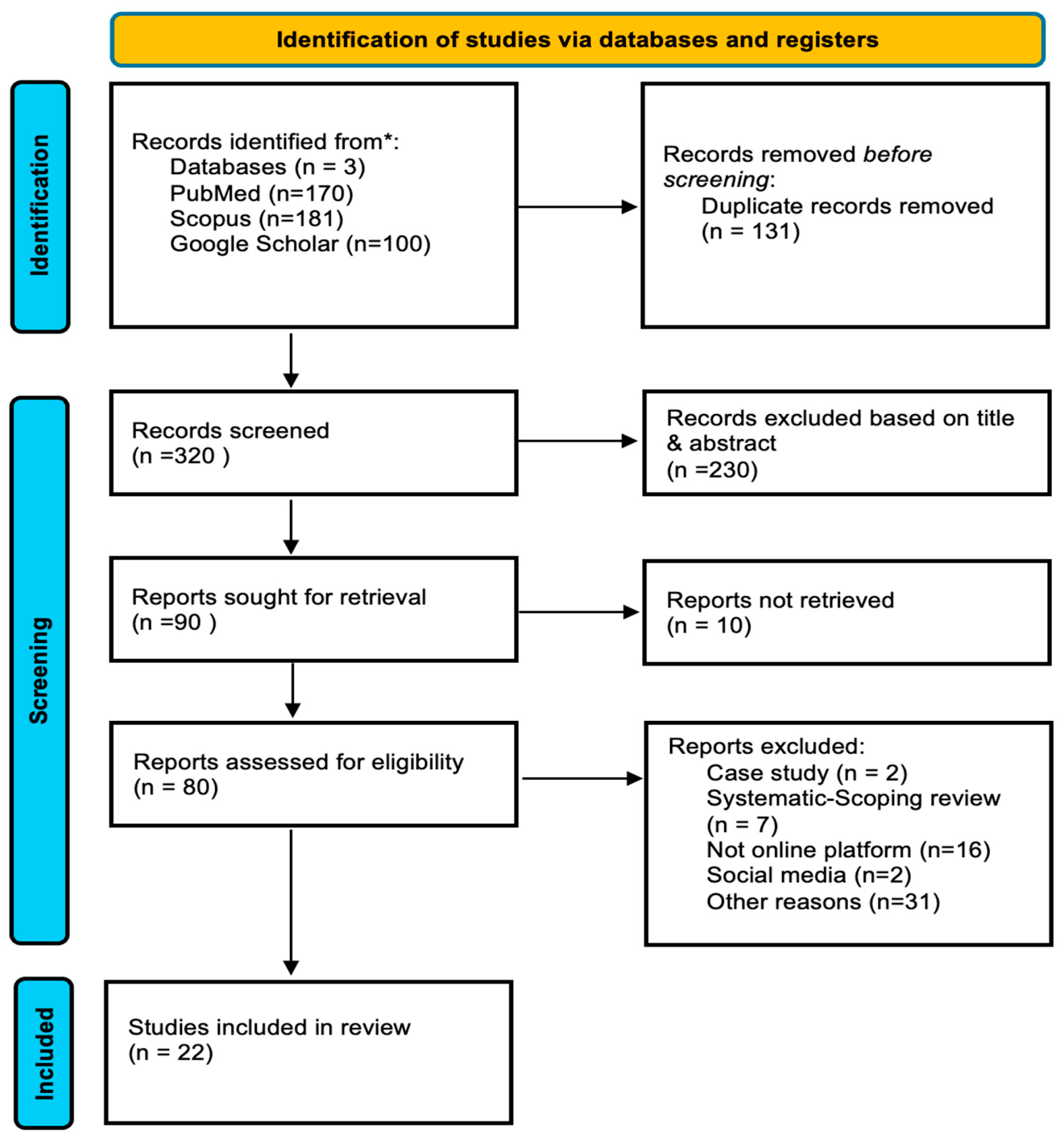
Figure 2.
Systemic conceptual framework of patient dissatisfaction in online healthcare and dental reviews. Developed from the thematic synthesis of the included studies, the framework proposes that patient dissatisfaction emerges from the dynamic interaction of five core domains: interpersonal, communication, organizational, financial, and clinical factors. These domains are embedded within a broader healthcare experience ecosystem influenced by contextual, individual, and environmental determinants. The model highlights the central role of trust, perceived fairness, and patient expectations in mediating healthcare experiences and demonstrates how dissatisfaction may generate reinforcing feedback loops through negative online reviews and subsequent patient perceptions.
Figure 2.
Systemic conceptual framework of patient dissatisfaction in online healthcare and dental reviews. Developed from the thematic synthesis of the included studies, the framework proposes that patient dissatisfaction emerges from the dynamic interaction of five core domains: interpersonal, communication, organizational, financial, and clinical factors. These domains are embedded within a broader healthcare experience ecosystem influenced by contextual, individual, and environmental determinants. The model highlights the central role of trust, perceived fairness, and patient expectations in mediating healthcare experiences and demonstrates how dissatisfaction may generate reinforcing feedback loops through negative online reviews and subsequent patient perceptions.
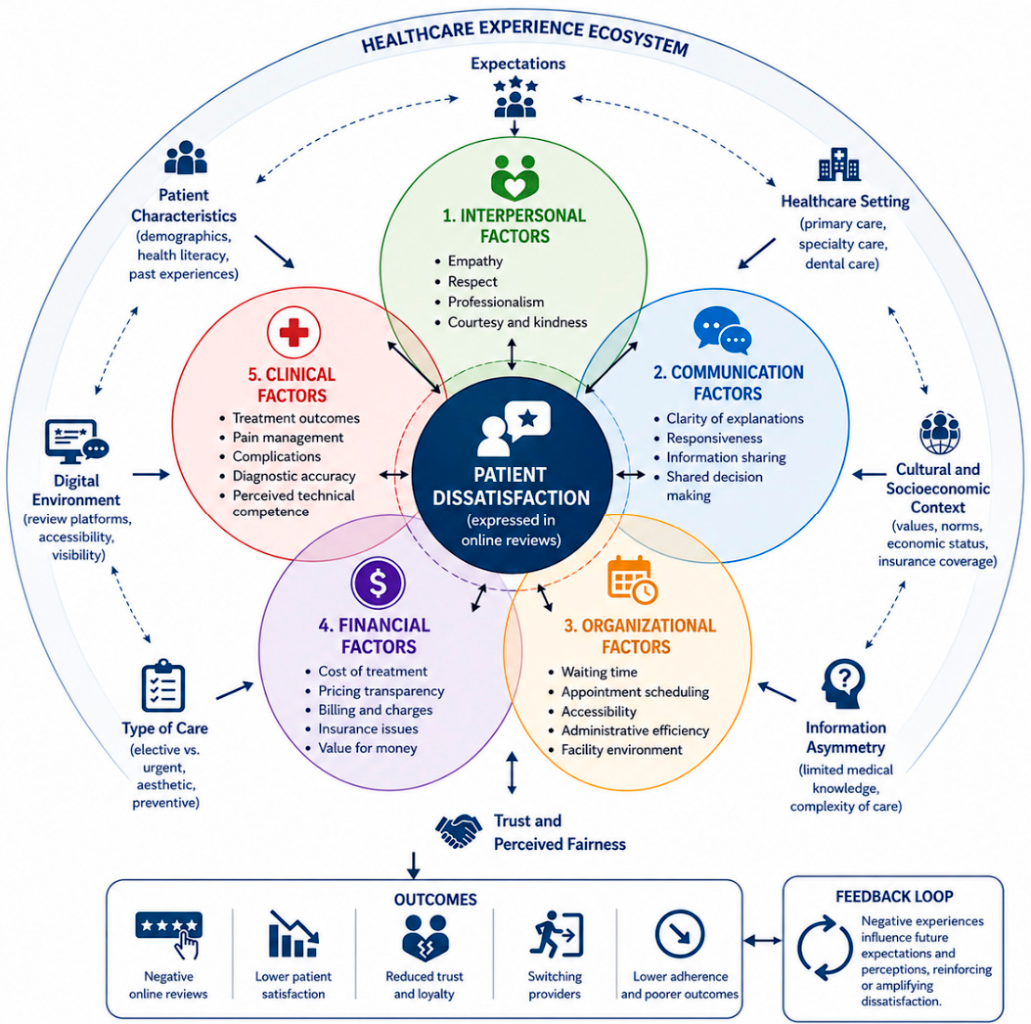

Table 1.
Data characteristics of the included studies.
| Authors, year | Country | Type of study | Method | Review platform | Healthcare provider | Sample | Findings |
|---|---|---|---|---|---|---|---|
| Prasad et al 2025 [21] |
United States | Quantitative cross-sectional | Content analysis of 1-star reviews; complaints classified as clinical or nonclinical and compared by surgery type and city. | Yelp.com | plastic surgeons | 955 negative (1-star) reviews of 86 board-certified plastic surgeons | Two thirds of 1-star plastic-surgery reviews stem from interpersonal or administrative shortcomings, not operative misadventures. |
| Olsen et al 2025 [30] |
United States | Qualitative cross-sectional | Retrospective content analysis of 1-star reviews; complaints classified as clinical or nonclinical and compared across surgical, nonsurgical, cosmetic, and noncosmetic encounters. | Υelp.com | Mohs surgeons | 670 1-star reviews, 1,486 distinct complaints | 279 (18.8%) were clinical, while 1,207 (81.2%) were nonclinical in nature. The most frequently cited clinical complaints were unsatisfactory examination (n = 53, 3.6%), poor cosmetic outcomes (n = 42, 2.8%), and postprocedural scarring (n = 37, 2.5%). By contrast, the most common nonclinical complaints included issues with cost, billing, and insurance (n = 213, 14.3%); unprofessional staff behavior (n = 184, 12.4%); and unsatisfactory physician bedside manner (n = 170, 11.4%) |
| Sehgal et al 2025 [10] |
United States | Quantitative cross-sectional | Natural language processing and topic modeling of 1M online reviews; correlation of linguistic features with ratings. | Yelp.com | health care in general | 1,003,705 reviews (positive and negative) | Top 5: Unfair payment, poor treatment, poor phone experience, phone waiting time, malpractice |
| DeMartini et al 2025 [15] |
United States | Quantitative cross-sectional | Content analysis of 1-star reviews of 377 hand surgeons; coding of 1,295 comments into 20 complaint categories with comparisons by surgery type and physician gender. | Yelp.com, Healthgrades.com, Vitals.com | physicians | 1,295 one-star 3,256 individual complaints | .70% of comments concerned physician bedside manner/professionalism. Nonsurgical patients complained more about communication, time, and scheduling; surgical patients more about outcomes and complications. Male physicians received more complaints about staff professionalism than female physicians. |
| Spiro et al 2025 [31] |
United States | Quantitative cross-sectional | Content analysis of one-star online reviews complaints coded into clinical and nonclinical categories. | RateMDs | Otolaryngologists | 350 | Unhelpfulness, staff/medical learners, and overall behavior. |
| Alsaeed et al 2024 [24] |
Saudi Arabia | Quantitative cross-sectional | Content analysis of negative reviews categorized into six domains and seventeen subdomains. | Google review | Dental Clinics | 9.515 negative reviews | The most frequently mentioned areas of complaint in negative reviews were professional skills (30.79 %), bad experiences (12.2 %), and interpersonal skills (11.34 %). “Office characteristics” (2.06 %) were the least cited, followed by clinical skills (10.15 %) and treatment costs (8.49 %), |
| Liu et al 2024 [32] |
China | Quantitative cross-sectional | Structural topic modeling of 3,070 online consultations; polarity and physician title used as covariates to identify dissatisfaction topics. | Chunyu Doctor | Doctors | 3070 positive and negative | Treatment cost, waiting time, response speed |
| Huang et al 2024 [20] |
Taiwan | Quantitative cross-sectional | Web scraping and content analysis using SERVQUAL and Flower of Services frameworks; statistical comparison before and during COVID-19. | Ewom | Military hospitals | 1259 negative reviews | Diagnosis/Examination/Medical/Hospitalization" exhibited the least satisfactory performance, with a negative review rate of 46.2%. This was followed by the subitem "In Service: Pre-diagnosis Waiting," which had a negative review rate of 20.2%. |
| Anastasio et al 2023 [33] |
United States | Quantitative cross-sectional | Retrospective content analysis of 1-star reviews; complaints categorized into seven themes and compared between surgical and non-surgical groups using chi-square tests. | Vitals.com | foot/ankle orthopedic surgeons and doctors of podiatric medicine | 885 complaints (1 star) | Most common complaints: poor bedside manner and patient experience, surgical complications, uncontrolled pain, and institutional issues. |
| Morena et al 2023 [5] |
Canada | Mixed methods (quantitative + qualitative) | Sequential explanatory design; CanMEDS-based coding and inductive thematic analysis. | RateMDs | oncologists | 473 WPRs reviewing these 49 physicians | The most common negative theme was poor interpersonal skills. Negative themes also pertained to lateness, punctuality, or overall wait time for appointments. |
| Qubain et al 2022 [14] |
United States | Quantitative cross-sectional | Content analysis of one-star reviews of orthopedic oncology surgeons, classified as clinical or nonclinical. | Google Reviews, Healthgrades, and Vitals.com | Orthopedic Oncology Surgeons | 341 one-star reviews | 907 complaints/Clinical factors that were mostly addressed included complications (87 reviews, 26%), disagreement with plan (89 reviews, 26%), uncontrolled pain (59 reviews, 17%), reoperation (37 reviews, 11%), and perceived misdiagnosis (37 reviews, 11%). The most common nonclinical complaints referenced bedside manners (220 reviews, 65%), limited time with the provider (66 reviews, 19%), phone communication issues (57 reviews, 17%), rude or unprofessional conduct (52 reviews, 15%), waiting time (47 reviews, 14%), and scheduling issues (49 reviews, 14%). |
| Seltzer et al 2022 [1] |
United States | Quantitative cross-sectional | Topic modeling and regression analysis of 1-star and 5-star reviews to identify themes linked to ratings. | Yelp.com | labor and delivery | 1957 one-star reviews | Negative interactions and lack of communication with hospital staff, long wait times, and low-quality obstetrics |
| Kroon et al 2022 [23] |
Australia | Mixed methods (quantitative descriptive + qualitative content analysis) | Cross-sectional analysis of 1–2-star reviews; thematic coding of 1071 complaints across 413 cases. | Google reviews | Dentists | 413 negative reviews | Treatment issues, staffing, communication and professionalism, finance, and premise. Overall, treatment was a primary concern for patients |
| Raza et al 2021 [19] |
India | Qualitative cross-sectional | Thematic coding and chi-square testing to identify dissatisfaction factors significantly linked with 1-star ratings. | Google Reviews | 39 hospitals | 593 total reviews | ‘Inferior medical care’, ‘inappropriate behavior of staff’ and ‘money-mindedness’ are positively associated with the reviewer giving 1 star rating to the hospital |
| Imbergamo et al 2021 [18] |
New York | Quantitative cross-sectional | Content analysis of online patient comments; coding of negative themes across orthopedic spine surgery reviews | Healthgrades, Vitals, RateMds | Orthopedic Surgeons | 1686 negative comments, | Poor bedside manner 34%, waiting time 25,4%, Poor outcome and surgeon proficiency 18%, staff interaction 16,9% |
| Daniel et al 2021 [34] |
United States | Quantitative cross-sectional | NLP content analysis (Latent Dirichlet Allocation) of online reviews of mental health treatment facilities in the U.S. | Yelp.com | Mental health treatment facilities | 4678 one-star reviews | Rude staff (ρ=−0.14) and safety and abuse (ρ=−0.14). |
| Skrypczak et al 2020 [22] |
United States | Quantitative cross-sectional | Random sample of orthodontists; content analysis of all 1–2-star reviews to identify complaint types and response behaviors. | Google, Yelp | Orthodontists | 956 negative (1–2-star) reviews from 807 orthodontists | (1) quality of care and/or service, which occurred in 53.2% of reviews; (2) interpersonal interactions, which occurred in 52.0% of reviews; and (3) money and/or financial issues, which occurred in 46.9% of reviews. These were followed by significant but less frequent types of complaints, shown in continued order of decreasing frequency of occurrence, that had to do with (4) time, which occurred in 26.8% of reviews, (5) communication, which occurred in 23.8% of reviews, and (6) unprofessional behavior, which occurred in 10.7% of reviews. |
| Nazli et al 2020 [35] |
Turkey | Qualitative (content analysis) | Deductive content analysis of online complaints categorized by service type and complaint theme. | Sikayetvar.com | Private hospitals | 500 complaints | Complaints mainly about communication, appointments, staff behavior, and pricing issues. |
| Pang et al 2020 [11] |
China | Quantitative cross-sectional | Mixed-method study combining topic modeling (LDA) and grounded theory thematic analysis of online doctor reviews from a Chinese health community. to segment the content into words. |
Haodf.com | Doctors | 839 negative reviews | 228 unsatisfactory outcomes/Inaccurate diagnoses and incorrect treatments related to children 126/insufficient skill level, 28/Not respecting patients, 21/Bad communication, 37/199 Bad attitude to families |
| Brereton et al 2020 [36] |
United States | Qualitative (thematic content analysis) | Thematic analysis of 1-star hospice reviews; inductive coding and comparison of for-profit vs nonprofit agencies. | Yelp.com | hospice agencies | 1371-star reviews | Complaints about poor care quality and unmet or false expectations. |
| Orhurhu et al 2019 [16] |
United States | Quantitative cross-sectional | Retrospective content analysis of positive and negative reviews; coded major complaint themes and compared sentiment by setting and provider type. | Yelp and Healthgrades | Chronic Pain Physicians | 1.627 reviews (331 low scoring) | Physician attributes (41.4%), administrative attributes (52.1%), and procedure attributes (5.2%). Highest proportion of 3 attributes associated with low ratings were disrespectful, unhelpful, uncared |
| Zhang et al 2018 [17] |
China | Qualitative cross-sectional | Content analysis of online physician reviews; manual coding of negative experiences. | Good doctor | physicians | 3012 negative comments | Insufficient medical consultation duration (577/3012, 19.16%), physician impatience (527/3012, 17.50%), and perceived poor therapeutic effects (370/3012, 12.28%) |
Disclaimer/Publisher’s Note: The statements, opinions and data contained in all publications are solely those of the individual author(s) and contributor(s) and not of MDPI and/or the editor(s). MDPI and/or the editor(s) disclaim responsibility for any injury to people or property resulting from any ideas, methods, instructions or products referred to in the content. |
© 2026 by the authors. Licensee MDPI, Basel, Switzerland. This article is an open access article distributed under the terms and conditions of the Creative Commons Attribution (CC BY) license (http://creativecommons.org/licenses/by/4.0/).
Copyright: This open access article is published under a Creative Commons CC BY 4.0 license, which permit the free download, distribution, and reuse, provided that the author and preprint are cited in any reuse.


