

Submitted:
11 June 2026
Posted:
12 June 2026
You are already at the latest version
Abstract
Psychiatric decision-making frequently occurs under conditions of substantial uncertainty in which both intervention and non-intervention may carry clinically significant consequences. Although therapeutic inertia has been extensively studied in chronic medical conditions such as diabetes and cardiovascular disease, its implications for psychiatry remain comparatively underexplored despite the distinctive epistemological, emotional, and institutional challenges characterizing mental healthcare. This narrative review examines how cognitive biases, asymmetrical risk perception, defensive clinical cultures, institutional pressures, and uncertainty intolerance may contribute to therapeutic inertia in psychiatric practice. Particular attention is given to the tendency to perceive harms associated with active intervention as more salient and professionally consequential than the often slower and less visible harms associated with undertreatment, persistent suicidality, chronic suffering, psychosocial deterioration, and functional disability. The review discusses how therapeutic inertia may manifest through delayed treatment intensification, prolonged continuation of partially ineffective therapies, normalization of chronic symptoms, and hesitation toward interventions perceived as high risk or institutionally burdensome. Clozapine underutilization in treatment-resistant schizophrenia is examined as a paradigmatic example of the tension between fear of iatrogenic harm and the substantial risks associated with persistent severe mental illness. Finally, the article explores future directions for more balanced psychiatric risk–benefit models capable of incorporating both the risks of intervention and the risks of non-intervention within reflective, patient-centered approaches to clinical decision-making under uncertainty.
Keywords:
therapeutic inertia
; psychiatry
; clinical decision-making
; risk perception
; uncertainty
; defensive medicine
; cognitive bias
; suicide prevention
; shared decision-making
; clozapine
; mental healthcare
; patient safety
1. Introduction
Clinical decision-making in psychiatry frequently occurs under conditions of substantial uncertainty. Unlike many other medical specialties, psychiatry often lacks definitive biological markers capable of reliably predicting illness trajectory, treatment response, relapse risk, or suicidal behavior at the individual level [1]. Psychiatric diagnosis itself remains largely grounded in phenomenology, longitudinal observation, and probabilistic clinical reasoning rather than pathophysiological certainty [2]. Under such conditions, treatment decisions commonly involve navigating competing risks in the absence of fully predictable outcomes.
This complexity becomes particularly relevant when interventions themselves may carry significant adverse effects while non-intervention may also result in substantial morbidity, psychosocial deterioration, chronic suffering, or premature mortality. In severe psychiatric disorders, clinicians are therefore rarely choosing between risk and safety in absolute terms. More often, they are attempting to balance uncertain probabilities of benefit and harm under conditions of incomplete information, substantial heterogeneity, and considerable individual variability.
Uncertainty tolerance consequently represents a central but often underrecognized component of psychiatric practice. Simpkin and Schwartzstein (2016) [3] argued that modern medicine increasingly struggles with uncertainty despite the fact that ambiguity remains inherent to clinical care. More recently, Han et al. (2011) [4] emphasized that clinical uncertainty extends beyond insufficient data and also involves psychological, ethical, and communicative dimensions that directly influence medical decision-making. In psychiatry, these challenges may become amplified by the emotional weight of decisions involving suicide risk, involuntary treatment, severe functional impairment, stigmatization, and potentially life-altering pharmacological interventions.
At the same time, severe mental disorders remain associated with profound reductions in life expectancy and substantial premature mortality [5]. Delayed treatment, insufficient intervention, prolonged symptomatic persistence, and therapeutic avoidance may therefore carry clinically meaningful consequences even when less immediately visible than medication-related adverse events. Yet contemporary psychiatric culture often places particularly strong emphasis on the prevention of iatrogenic harm, sometimes generating therapeutic environments in which caution itself may become psychologically reinforced.
Within this context, an important conceptual question emerges: can the psychological experience of therapeutic decision-making itself contribute to patterns of therapeutic inertia in psychiatry?
Although therapeutic inertia has been extensively studied in chronic medical conditions such as diabetes, hypertension, and cardiovascular disease, its implications for psychiatric practice remain comparatively underexplored. This narrative review examines how cognitive biases, emotional risk perception, defensive clinical cultures, and institutional factors may contribute to therapeutic inertia in psychiatry. Particular attention is given to the asymmetrical perception of iatrogenic harm relative to the often less visible consequences of undertreatment, chronic suffering, persistent suicidality, and psychosocial deterioration. The review also considers how psychiatric decision-making may benefit from more balanced risk–benefit frameworks that explicitly incorporate the risks of non-intervention.
2. Origins and Evolution of Therapeutic Inertia
The concept of therapeutic inertia originally emerged within the management of chronic medical conditions, particularly diabetes mellitus, hypertension, and cardiovascular disease. Phillips et al. (2001) [6] first described clinical inertia as the failure of healthcare providers to initiate or intensify therapy despite clear evidence of unmet therapeutic goals. Subsequent literature expanded the concept beyond simple physician inaction, recognizing that therapeutic inertia may arise from a complex interaction between clinician-related, patient-related, and healthcare-system-related factors [7,8].
A recent clinical overview has similarly emphasized that therapeutic inertia is often driven not only by knowledge gaps, but also by diagnostic uncertainty, uncertainty regarding therapeutic targets, and discomfort with incomplete evidence [9].
In many chronic diseases, therapeutic inertia has been associated with poorer long-term outcomes, increased morbidity, preventable complications, and greater healthcare utilization [8]. Research has shown that clinicians may postpone therapeutic changes even when treatment targets remain unmet, often due to uncertainty regarding benefits and risks, concerns about adverse effects, excessive reliance on previous management strategies, or difficulties negotiating therapeutic decisions with patients [10].
Importantly, therapeutic inertia does not necessarily imply negligence, lack of knowledge, or inadequate professional commitment. On the contrary, it frequently emerges in contexts where clinicians face competing therapeutic priorities, uncertain prognostic information, time pressures, emotional burden, and concern regarding potential iatrogenic consequences. Under such conditions, maintaining the status quo may become psychologically more comfortable than initiating changes perceived as potentially destabilizing or risky.
Despite its extensive conceptual development in other medical specialties, therapeutic inertia has received comparatively limited attention in psychiatry, although recent authors have begun to explicitly identify practice–evidence gaps and therapeutic hesitation as emerging challenges within contemporary psychiatric care [11]. This relative absence remains striking given that psychiatric practice frequently involves many of the conditions known to facilitate therapeutic inertia, including diagnostic ambiguity, uncertain prognosis, delayed treatment response, fluctuating symptom trajectories, emotionally charged outcomes, and substantial concerns regarding adverse effects and medicolegal responsibility.
Moreover, psychiatric interventions often involve decisions that extend beyond symptom reduction alone and encompass highly sensitive domains such as identity, autonomy, behavior, interpersonal functioning, suicidality, and long-term social participation. These characteristics may render psychiatric decision-making particularly vulnerable to psychologically asymmetrical perceptions of risk in which harms associated with intervention become more salient than harms associated with persistent illness or insufficient treatment.
Understanding therapeutic inertia in psychiatry therefore requires not merely importing concepts from other medical specialties, but recognizing how the unique epistemological, emotional, ethical, and institutional characteristics of psychiatric practice may shape clinicians’ thresholds for therapeutic action.
3. Why Psychiatry Is Especially Vulnerable to Therapeutic Inertia
Although therapeutic inertia has been widely recognized across multiple areas of medicine, psychiatry may represent a particularly fertile environment for its emergence. Several distinctive characteristics of psychiatric practice create conditions in which therapeutic hesitation, delayed intervention, or prolonged maintenance of partially ineffective strategies may become psychologically reinforced even among highly experienced clinicians.
One important factor involves the persistent uncertainty surrounding psychiatric diagnosis and prognosis. Unlike many medical specialties in which biomarkers, imaging findings, or laboratory parameters may guide clinical decision-making, psychiatric diagnosis continues to rely predominantly on phenomenological assessment, longitudinal observation, and probabilistic interpretation of symptoms and behavior [1]. Diagnostic boundaries frequently remain fluid, comorbidity is common, and individual illness trajectories may vary substantially across patients and over time [12].
This epistemological uncertainty may directly influence therapeutic thresholds. Clinicians may understandably hesitate to intensify treatment when diagnostic formulations remain partially unstable, when prognosis is unclear, or when anticipated benefits cannot be predicted with confidence. Such dynamics may become particularly relevant in early-stage disorders, mixed clinical presentations, personality pathology, treatment-resistant conditions, or situations involving fluctuating suicidality and psychosocial instability.
Psychiatric outcomes may also be comparatively difficult to measure objectively. In many areas of medicine, treatment response can be evaluated using quantifiable physiological indicators. In psychiatry, however, improvement often involves subjective experiences such as emotional suffering, hopelessness, anxiety, insomnia, interpersonal functioning, or quality of life. These dimensions may evolve gradually, fluctuate over time, and remain vulnerable to interpretative variability among clinicians, patients, and healthcare systems alike [13].
Another important factor concerns the emotional and ethical burden associated with psychiatric decision-making. Few medical specialties require clinicians to routinely confront uncertainty regarding suicide risk, involuntary treatment, self-harm, aggression, severe behavioral disturbance, or profound existential suffering. Decisions regarding hospitalization, compulsory treatment, pharmacological escalation, electroconvulsive therapy, or clozapine initiation may therefore acquire substantial emotional weight extending beyond purely technical considerations.
Under such conditions, clinicians may become especially sensitive to the possibility of iatrogenic harm. Adverse psychiatric outcomes are often emotionally salient, highly memorable, and potentially associated with professional self-scrutiny, institutional review, or medicolegal concern. Behavioral decision-making research suggests that emotionally charged adverse events may exert disproportionate influence on future clinical judgments, particularly when uncertainty prevents clear attribution of causality or predictability [14].
Importantly, psychiatric interventions frequently involve treatments that carry substantial symbolic and cultural burden. Clozapine, lithium, electroconvulsive therapy, involuntary admission, long-acting injectable antipsychotics, and high-dose pharmacotherapy may become associated not only with clinical complexity, but also with anticipatory anxiety regarding severe adverse reactions, loss of patient autonomy, or public and institutional scrutiny. Even when evidence supports their effectiveness, clinicians may experience psychological resistance toward interventions perceived as “high stakes” or professionally hazardous.
The stigma historically associated with severe mental illness may further complicate these dynamics. Chronic psychiatric suffering, social withdrawal, persistent psychosis, severe insomnia, or longstanding functional impairment may gradually become normalized within mental healthcare environments precisely because such phenomena are often encountered repeatedly in routine practice. By contrast, acute medication-related adverse events tend to be more visible, temporally linked to intervention, and formally documented. This asymmetry may subtly reinforce therapeutic conservatism by increasing the psychological salience of intervention-related harms relative to the less visible cumulative consequences of undertreatment.
Healthcare-system factors may also contribute substantially to therapeutic inertia in psychiatry. Contemporary psychiatric practice frequently occurs under conditions of limited consultation time, fragmented continuity of care, administrative burden, resource constraints, and increasing pressure toward protocolization and defensive documentation [15]. Under such circumstances, maintaining existing management strategies may become operationally easier than initiating complex therapeutic changes requiring prolonged monitoring, difficult conversations, or increased institutional responsibility.
Finally, psychiatry may be particularly vulnerable to therapeutic inertia because many psychiatric disorders themselves directly impair motivation, insight, adherence, hope, interpersonal trust, and decision-making capacity. Patients experiencing severe depression, psychosis, chronic anxiety, substance misuse, or personality disorders may struggle to engage consistently in treatment escalation or shared therapeutic planning. Clinicians may therefore encounter repeated situations in which both action and inaction carry substantial uncertainty, emotional burden, and potential risk.
Taken together, these factors suggest that therapeutic inertia in psychiatry reflects more than delayed treatment intensification or inadequate guideline adherence. Rather, it may emerge from the interaction of uncertainty, emotional risk perception, institutional pressures, ethical responsibility, and the distinctive characteristics of psychiatric suffering.
4. Risk Perception and the Psychology of Inaction
Human risk perception is not determined exclusively by objective probability. Cognitive psychology and behavioral decision-making research have consistently demonstrated that individuals interpret risks through psychological, emotional, contextual, and moral frameworks that may differ substantially from statistical reality [14]. Rare but emotionally salient adverse outcomes frequently exert disproportionate influence on human judgment, particularly when strong affective responses become associated with perceived danger [16].
One of the most influential concepts in this field is omission bias, whereby harmful consequences resulting from action are frequently perceived as less acceptable than comparable harms resulting from inaction [17]. Under such conditions, individuals may preferentially tolerate passive risk over active risk even when the objective consequences of non-intervention are equivalent or potentially greater. Related cognitive phenomena such as ambiguity aversion and loss aversion similarly suggest that decision-making under uncertainty is often shaped less by statistical reasoning than by the subjective emotional experience of potential regret, responsibility, and anticipated blame [18]. Recent experimental evidence further suggests that the communication of epistemic uncertainty may itself influence perceived risk and emotional responses, independently of the numerical magnitude of the risk being communicated [19]. Recent conceptual work has further emphasized the importance of distinguishing between risk and ambiguity in decision-making research, noting that uncertainty itself may involve qualitatively different cognitive and emotional processes that substantially influence human judgment under conditions of incomplete information [20].
Prospect theory further demonstrated that human beings do not evaluate risks symmetrically. Potential losses are often psychologically weighted more heavily than equivalent gains, particularly when decisions are framed in emotionally threatening contexts [18]. In clinical medicine, this may contribute to situations in which the possibility of visible iatrogenic harm acquires greater psychological salience than the more gradual and less attributable harms associated with undertreatment or therapeutic delay.
These dynamics may become especially relevant under conditions of uncertainty. Research in medical cognition suggests that clinicians, like patients, remain vulnerable to cognitive biases, affective heuristics, framing effects, and emotionally reinforced decision patterns despite high levels of expertise and professional training [21]. Recent work has further emphasized that cognitive bias remains highly relevant to diagnostic reasoning and clinical decision-making, particularly in complex, uncertain, and time-pressured contexts [22]. Importantly, expertise does not eliminate uncertainty-related cognitive distortions but may instead alter the contexts in which they emerge.
Psychiatric practice may represent a particularly fertile context for these phenomena. Psychiatric interventions frequently involve delayed outcomes, incomplete biological understanding, fluctuating symptom trajectories, uncertain prognosis, and emotionally charged adverse events including suicidality, behavioral disinhibition, metabolic complications, treatment-emergent agitation, or severe medication-related adverse reactions. In many situations, clinicians must make consequential decisions despite the absence of clear predictive certainty regarding either benefits or harms.
Importantly, the harms associated with intervention and non-intervention are often perceived differently within clinical culture. Adverse drug reactions are typically visible, attributable, documentable, and potentially medicolegally scrutinized. By contrast, the consequences of undertreatment, delayed intervention, chronic suicidality, persistent psychosis, severe insomnia, or progressive psychosocial deterioration frequently emerge gradually and may become partially normalized within the expected course of psychiatric illness.
This asymmetry may influence therapeutic decision-making by linking professional responsibility more strongly to action than to inaction. Clinicians may experience greater emotional discomfort when harm follows intervention than when comparable harm develops through non-intervention, even when both carry substantial risk.
Hindsight bias may further reinforce these dynamics. Once adverse outcomes occur, retrospective evaluations often create the illusion that events were more predictable than they actually were at the time decisions were made [23]. In psychiatry, where adverse outcomes such as suicide, behavioral deterioration, or severe medication reactions may later undergo institutional or medicolegal review, clinicians may become particularly sensitive to interventions perceived as retrospectively vulnerable to criticism.
Recognizing these psychological mechanisms does not imply that psychiatric caution is irrational or inappropriate. Many psychiatric interventions carry substantial risks that require individualized assessment and careful monitoring. The relevant question is whether psychiatric practice may sometimes underestimate the harms associated with therapeutic inertia itself.
In psychiatry, the absence of intervention may sometimes feel emotionally safer precisely because its consequences are slower, less attributable, less visible, and less immediately associated with personal responsibility.
Taken together, these mechanisms suggest a conceptual pathway through which uncertainty, cognitive biases, and contextual pressures may contribute to therapeutic inertia in psychiatric practice. A schematic representation of this framework is presented in Figure 1.
The model illustrates how therapeutic inertia may emerge from the interaction of contextual factors, cognitive biases, and asymmetrical risk perception. Clinical uncertainty, institutional pressures, medicolegal concerns, burnout, and resource limitations may increase the salience of intervention-related harms. Through mechanisms such as omission bias, loss aversion, and ambiguity aversion, these influences may contribute to an asymmetrical perception of risk in which the consequences of action are weighted more heavily than the consequences of inaction. This process may foster therapeutic inertia, manifested as treatment delay, hesitation, or maintenance of ineffective therapeutic strategies, potentially leading to persistent symptoms, chronic suffering, functional deterioration, increased suicide risk, disability, and other adverse outcomes associated with insufficient treatment.
5. Therapeutic Inertia in Psychiatry
Therapeutic inertia generally refers to the failure to initiate, intensify, modify, or optimize treatment despite the persistence of clinically significant illness or ongoing risk [6]. Although the concept was initially developed within chronic medical conditions such as diabetes and hypertension, its relevance to psychiatry may be particularly important because psychiatric decision-making frequently involves uncertainty, delayed outcomes, emotionally salient risks, and substantial variability in treatment response.
Therapeutic inertia in psychiatry does not necessarily reflect negligence or inadequate clinical competence. More often, it may arise from reasonable caution operating under conditions of diagnostic uncertainty, incomplete predictability, and concern regarding iatrogenic harm.
However, maintaining the status quo may itself represent an active clinical decision with potentially life-altering consequences. In psychiatry, therapeutic inertia may manifest not only through explicit treatment avoidance, but also through more subtle forms of delay including prolonged continuation of partially ineffective therapies, repeated postponement of treatment escalation, reluctance to revisit diagnostic formulations, avoidance of difficult conversations regarding prognosis, or hesitation to implement interventions perceived as high risk.
Clozapine remains one of the clearest examples of therapeutic inertia in contemporary psychiatry. Despite robust evidence supporting its efficacy in treatment-resistant schizophrenia and its association with reduced suicidal behavior, delayed initiation and substantial underutilization remain consistently documented across multiple healthcare systems [24]. Studies suggest that many patients fulfilling guideline criteria experience prolonged delays before clozapine initiation, often after exposure to multiple ineffective antipsychotic trials [25].
Recent population-based trajectory data have further shown complex and prolonged antipsychotic treatment sequences before clozapine initiation, supporting the view that delay is not exceptional but structurally embedded in many treatment pathways [26]. Current discussions on earlier clozapine use also suggest that the therapeutic window for more assertive intervention may be broader than traditionally assumed, further challenging prolonged therapeutic hesitation in early nonresponse [27].
Importantly, concerns regarding agranulocytosis, myocarditis, metabolic complications, treatment monitoring requirements, and medicolegal responsibility are clinically legitimate and should not be minimized. Recent reviews have also described “clozaphobia” as a clinically relevant pattern of exaggerated fear, limited familiarity, and organizational barriers that may contribute to persistent clozapine underprescription [28]. However, several authors have argued that contemporary psychiatric culture may sometimes overestimate certain clozapine-related risks relative to the substantial morbidity, suicidality, hospitalization burden, and mortality associated with persistent treatment-resistant psychosis itself [29,30].
More recently, the concept of regulatory inertia has been applied to clozapine, emphasizing how historical safety concerns, administrative requirements, and institutional conservatism may continue to influence clinical action even when contemporary evidence and monitoring frameworks have evolved [31].
Similar dynamics may emerge in severe depressive disorders. Clinicians may hesitate to intensify treatment, recommend electroconvulsive therapy, introduce lithium augmentation, or substantially revise ineffective treatment strategies despite persistent suicidality or profound functional impairment. In some cases, prolonged therapeutic continuation may become reinforced by uncertainty regarding treatment response, concern about adverse effects, fear of destabilization, or the emotional burden associated with acknowledging insufficient clinical improvement. This concern is supported by recent real-world data in major depressive disorder showing that treatment inertia remains common even when symptoms persist and treatment goals are not achieved [32]. Recent consensus work on treatment-resistant depression has likewise emphasized the need for structured algorithms and timely reassessment of response in order to avoid therapeutic inertia and reduce chronicity [33].
Therapeutic inertia may also emerge in less dramatic but clinically important situations. Chronic insomnia, refractory anxiety, persistent negative symptoms, enduring emotional suffering, severe psychosocial withdrawal, or longstanding functional deterioration may gradually become normalized over time, particularly when complete remission appears unlikely. Under such conditions, persistent symptoms may inadvertently become perceived as clinically tolerable simply because they are familiar, chronic, and less immediately alarming than the potential adverse effects associated with more assertive intervention.
Importantly, psychiatry may be especially vulnerable to what could be described as “soft therapeutic inertia”, namely the gradual acceptance of partial response, chronic residual symptoms, or incomplete recovery as unavoidable endpoints rather than potentially modifiable clinical states. Such inertia may develop progressively through repeated therapeutic compromise, accumulated uncertainty, fragmented continuity of care, resource limitations, or emotional exhaustion among both clinicians and patients.
The consequences of therapeutic inertia may nevertheless be substantial. Untreated or insufficiently treated psychiatric illness is associated with impaired quality of life, reduced social functioning, increased healthcare utilization, suicide risk, substance misuse, chronic disability, and premature mortality [5]. Delays in effective intervention may additionally contribute to long-term psychosocial deterioration, loss of occupational functioning, interpersonal disruption, and reduced recovery potential, particularly in severe or recurrent psychiatric disorders.
Understanding therapeutic inertia in psychiatry therefore requires moving beyond simplistic distinctions between “active” and “passive” treatment decisions. In many situations, maintaining current management strategies may itself constitute a consequential therapeutic choice shaped not only by scientific evidence, but also by cognitive, emotional, institutional, ethical, and cultural factors influencing how psychiatric risk is perceived and tolerated.
6. Defensive Psychiatry and Institutional Risk Culture
Psychiatric decision-making does not occur in isolation from broader institutional, legal, organizational, and cultural pressures. Contemporary clinicians operate within healthcare systems increasingly shaped by concerns regarding patient safety, liability, guideline adherence, documentation requirements, quality metrics, and retrospective scrutiny of adverse outcomes. Although these developments have contributed importantly to improved standards of care and greater accountability, they may also inadvertently reinforce forms of defensive clinical practice in which the avoidance of visible iatrogenic harm becomes psychologically and institutionally prioritized.
Defensive medicine has traditionally been described as the modification of clinical behavior primarily to reduce medicolegal risk rather than to optimize patient outcomes [34]. Recent systematic evidence on defensive healthcare practice further suggests that defensive behavior is shaped by multiple interacting factors, including professional norms, organizational pressures, perceived accountability, and uncertainty, rather than medicolegal risk alone [35]. In psychiatry, however, defensive practice may assume particularly complex forms because psychiatric outcomes frequently remain difficult to predict with certainty and are often emotionally charged. Suicide, violence, involuntary hospitalization, severe adverse drug reactions, behavioral disinhibition, and treatment-related metabolic complications may all carry substantial emotional, professional, and institutional consequences for clinicians.
Importantly, the psychological impact of psychiatric adverse outcomes often extends beyond objective clinical severity alone. Events perceived as preventable, visible, or directly attributable to clinical intervention may exert disproportionate emotional influence on future decision-making. Research in cognitive psychology suggests that emotionally salient negative outcomes frequently reinforce future risk-avoidant behavior even when such behavioral adaptation may not necessarily improve overall long-term outcomes [14].
Under such conditions, interventions perceived as “high risk” may acquire symbolic significance extending beyond their objective probability of harm. Clozapine, lithium, electroconvulsive therapy, involuntary interventions, high-dose pharmacotherapy, or complex augmentation strategies may therefore become associated not only with clinical complexity, but also with anticipatory anxiety regarding professional responsibility, institutional scrutiny, patient complaints, or medicolegal vulnerability.
Institutional risk culture may further amplify these dynamics. Contemporary healthcare systems increasingly emphasize protocol adherence, documentation quality, incident reporting, and defensive traceability of clinical decisions. Recent discussions within mental healthcare literature have additionally highlighted how psychiatric documentation itself increasingly incorporates relational, interpretative, and transparency-related dimensions that may further intensify clinicians’ awareness of professional scrutiny under conditions of uncertainty [36]. While such mechanisms may improve transparency and patient safety, they may also unintentionally reinforce therapeutic conservatism in situations where clinicians perceive that intervention-related adverse events will receive greater scrutiny than harms associated with non-intervention.
This asymmetry may be particularly relevant in psychiatry because many consequences of undertreatment remain comparatively difficult to operationalize or formally measure. Persistent hopelessness, chronic suicidality, emotional suffering, social withdrawal, progressive disability, or prolonged functional deterioration frequently evolve gradually over time and may become normalized within long-term psychiatric care environments. By contrast, acute medication-related adverse effects are usually more temporally linked to intervention, more visible within institutional systems, and more likely to trigger formal review processes.
Burnout and emotional exhaustion among mental health professionals may additionally contribute to therapeutic inertia. Contemporary psychiatric practice often occurs under conditions of high clinical demand, limited resources, fragmented continuity of care, administrative overload, and chronic exposure to emotionally distressing situations. Such conditions may reduce clinicians’ tolerance for uncertainty and increase preference for management strategies perceived as safer, more predictable, or institutionally defensible [37].
Fear of professional criticism may also influence therapeutic behavior. Recent work has highlighted that risk-management decisions under uncertainty may generate substantial anticipated and recalled personal consequences for clinicians, potentially reinforcing defensive or risk-averse patterns of practice. [38]. Retrospective review processes frequently evaluate adverse outcomes with the benefit of hindsight, potentially creating unrealistic expectations regarding predictability and clinical control. In psychiatry, where uncertainty remains inherent to many aspects of diagnosis, prognosis, and risk assessment, clinicians may therefore experience substantial pressure to minimize exposure to interventions perceived as professionally vulnerable to criticism should complications occur.
Importantly, recognizing these institutional and psychological dynamics does not imply that psychiatric caution, monitoring systems, or accountability mechanisms are inappropriate. On the contrary, psychiatric history contains many examples of inadequate oversight producing substantial patient harm. Rather, the relevant question is whether some contemporary healthcare environments may inadvertently create conditions in which clinicians become progressively more fearful of the consequences of action than of the consequences of insufficient intervention.
Understanding therapeutic inertia in psychiatry therefore requires examining not only individual clinician psychology, but also the broader institutional ecosystems within which psychiatric risk is interpreted, negotiated, documented, and retrospectively judged.
7. The Hidden Risks of Non-Intervention
In clinical medicine, inaction is often implicitly perceived as a neutral, conservative, or lower-risk position. Yet in psychiatry, non-intervention may itself carry substantial and sometimes irreversible consequences. Persistent suicidality, chronic psychosis, severe affective symptoms, refractory insomnia, substance misuse, social isolation, functional decline, and cumulative psychosocial deterioration may progressively shape long-term outcomes even in the absence of dramatic acute events.
The harms associated with insufficient treatment are often less visible than treatment-related adverse effects. Whereas medication complications are usually identifiable and formally documented, the consequences of undertreatment frequently emerge gradually through chronic suffering, functional decline, repeated hospitalization, reduced quality of life, and premature mortality [39].
Recent analyses of care trajectories in severe mental illness have similarly emphasized how fragmentation of care, discontinuity, structural barriers, and progressive psychosocial marginalization may contribute to persistent healthcare gaps and cumulative morbidity over time [40].
This asymmetry may be particularly relevant in suicide prevention. Suicide remains one of the leading causes of premature mortality among individuals with severe mental disorders, and many psychiatric conditions are associated with markedly elevated lifetime suicide risk [41]. Nevertheless, interventions specifically intended to reduce suicide risk frequently involve difficult therapeutic decisions under conditions of incomplete certainty. Clinicians may therefore experience persistent tension between the desire to minimize iatrogenic harm and the recognition that insufficient intervention may also contribute to lethal outcomes.
The dilemma becomes especially complex in severe and treatment-resistant psychiatric illness. In schizophrenia, prolonged psychosis and delayed access to effective treatment have been associated with poorer long-term functional and symptomatic outcomes [42]. Similarly, recurrent or persistent major depression may progressively contribute to social withdrawal, cognitive impairment, hopelessness, occupational dysfunction, and reduced quality of life when insufficiently treated over time.
Clozapine provides a particularly illustrative example of these tensions. Despite consistent evidence supporting its efficacy in treatment-resistant schizophrenia and its association with reduced suicidal behavior, substantial barriers to its use remain present across many healthcare systems [24]. Concerns regarding adverse drug reactions are clinically legitimate and require careful monitoring. However, the risks associated with delaying or avoiding clozapine initiation in severely ill patients may sometimes receive comparatively less psychological and institutional attention than the potential harms associated with treatment itself.
Importantly, therapeutic inertia may not only affect severe psychotic disorders. Similar patterns may emerge across a wide range of psychiatric conditions. In severe depression, prolonged continuation of partially ineffective treatments may delay access to more effective therapeutic strategies. In chronic insomnia, persistent symptoms may gradually become normalized despite accumulating cognitive, emotional, cardiovascular, and metabolic consequences. In refractory anxiety disorders, long-term functional restriction and avoidance behaviors may progressively consolidate over time. Under such conditions, prolonged therapeutic hesitation may inadvertently reinforce trajectories of chronicity and disability.
The normalization of suffering may itself represent an underrecognized component of therapeutic inertia in psychiatry. Mental health professionals frequently encounter chronic emotional distress, persistent suicidal ideation, severe psychosocial dysfunction, and recurrent relapse as part of routine clinical practice. Repeated exposure to such phenomena may unintentionally reduce their perceived urgency, particularly when compared with acute treatment-related complications that are more visible, temporally attributable, and institutionally scrutinized.
Recognizing the risks of non-intervention does not imply that more aggressive treatment is always preferable. Psychiatric interventions require individualized assessment and careful monitoring. The key issue is whether risk–benefit evaluations adequately incorporate the potential consequences of therapeutic delay, avoidance, or prolonged acceptance of ineffective treatment.
The ethical weight of psychiatric decision-making therefore lies not only in the risks clinicians choose to take, but also in the risks they choose to tolerate. Under such conditions, doing nothing may sometimes represent not the absence of risk, but a different and less visible form of risk exposure.
The asymmetrical way in which intervention-related and non-intervention-related harms are perceived within psychiatric practice may influence both clinicians’ emotional responses and therapeutic thresholds. Importantly, many harms associated with undertreatment remain comparatively less visible, less attributable, and less institutionally scrutinized despite their potentially substantial cumulative consequences. Table 1 summarizes some of the principal contrasts between intervention-related and non-intervention-related risk perception in psychiatric decision-making.
8. Future Directions and Clinical Implications
If therapeutic inertia in psychiatry is influenced partly by asymmetrical perceptions of risk, an important clinical challenge emerges: how can psychiatric practice develop more balanced approaches to decision-making under uncertainty?
A central step may involve recognizing that psychiatric treatment decisions rarely occur between clearly “safe” and clearly “dangerous” alternatives. More commonly, clinicians are required to navigate competing forms of risk in which both intervention and non-intervention may carry potentially serious consequences. Under such conditions, the absence of therapeutic action should not automatically be conceptualized as a neutral or lower-risk position.
Greater awareness of cognitive and emotional influences on clinical judgment may therefore be valuable within psychiatric education and professional development. Research in medical cognition increasingly suggests that decision-making under uncertainty is shaped not only by scientific evidence, but also by affective responses, framing effects, previous clinical experiences, institutional pressures, and anticipatory perceptions of responsibility [21]. Making these dynamics more explicit may help clinicians reflect more critically on how therapeutic thresholds are constructed and how certain forms of harm become psychologically more visible than others.
Training in uncertainty tolerance may also become increasingly relevant in psychiatric practice. Uncertainty cannot be entirely eliminated from mental healthcare because many aspects of psychiatric diagnosis, prognosis, suicidality, and treatment response remain inherently probabilistic. Developing reflective approaches capable of tolerating ambiguity without defaulting toward either excessive intervention or excessive therapeutic passivity may therefore represent an important professional skill for contemporary psychiatrists.
Shared decision-making may play a particularly important role in reducing therapeutic inertia. Patients experiencing severe psychiatric suffering may value risks and benefits differently from clinicians operating primarily within institutional or defensive frameworks. Transparent discussion regarding uncertainty, adverse effects, quality of life, psychosocial functioning, long-term prognosis, and the potential consequences of both intervention and non-intervention may therefore facilitate more individualized and ethically balanced treatment decisions [43,44]. Previous research in psychiatric outpatients has additionally shown that many patients perceive relatively limited involvement in mental healthcare decision-making, particularly under conditions of greater clinical complexity and reduced self-efficacy [45].
Recent work in mental healthcare has further emphasized that barriers to shared decision-making frequently involve structural, institutional, and relational factors rather than lack of patient willingness alone, highlighting the importance of healthcare environments capable of supporting collaborative and longitudinal therapeutic dialogue [46]. Additional evidence has shown that barriers to shared decision-making in mental healthcare operate at micro-, meso-, and macro-levels, including clinical complexity, organizational constraints, professional attitudes, and systemic structures, rather than reflecting lack of patient willingness alone [47].
Similarly, recent evidence on supported decision-making interventions in mental healthcare identifies organizational, process-related, and relational barriers, including risk-management priorities, time constraints, lack of knowledge, and fear or distrust between service users and clinicians [48].
Future psychiatric research may additionally benefit from developing more sophisticated models capable of integrating the longitudinal consequences of undertreatment into psychiatric risk–benefit assessment. In major depressive disorder, recent work on algorithm-guided treatment has similarly highlighted that structured, stepwise frameworks may help counteract slow progression through therapeutic sequences [49]. Contemporary pharmacovigilance systems appropriately emphasize the identification of adverse effects associated with intervention. However, psychiatric healthcare systems may devote comparatively less systematic attention to the cumulative harms associated with prolonged therapeutic delay, chronic symptomatic persistence, recurrent hospitalization, or persistent suicidality.
Importantly, more balanced risk–benefit models do not imply minimizing the importance of patient safety, pharmacovigilance, or careful monitoring. Psychiatric history contains many examples of interventions producing substantial harm when enthusiasm exceeded scientific caution. Rather, the goal is to avoid situations in which fear of visible iatrogenic harm unintentionally obscures the equally meaningful consequences of severe and persistent psychiatric illness itself.
Healthcare systems may also benefit from institutional cultures that support reflective clinical reasoning rather than exclusively defensive decision-making. Excessive protocolization, retrospective blame dynamics, and administrative overload may unintentionally reinforce therapeutic conservatism by increasing clinicians’ fear of adverse outcomes associated with active intervention. Organizational environments capable of acknowledging the inherent uncertainty of psychiatric care while supporting transparent, patient-centered, and ethically reasoned decision-making may therefore help reduce maladaptive forms of therapeutic inertia.
Finally, therapeutic inertia in psychiatry should not be conceptualized exclusively as a pharmacological phenomenon. It may also involve delays in psychotherapy referral, insufficient psychosocial intervention, inadequate rehabilitation planning, avoidance of difficult conversations regarding prognosis, or prolonged acceptance of chronic suffering as therapeutically inevitable. Future psychiatric models may therefore benefit from broader frameworks capable of recognizing that non-intervention itself may sometimes constitute a clinically consequential form of decision-making.
Ultimately, the challenge for contemporary psychiatry is not to eliminate uncertainty, but to develop more balanced and reflective ways of acting responsibly within uncertainty itself.
9. Conclusions
Therapeutic inertia in psychiatry is frequently discussed implicitly yet comparatively rarely examined as a distinct psychological, clinical, and institutional phenomenon. However, psychiatric decision-making commonly occurs under conditions of uncertainty in which both intervention and non-intervention may carry substantial consequences for patients, clinicians, and healthcare systems alike.
Under such conditions, the perception that “doing nothing” is inherently safer may sometimes reflect not only objective clinical reasoning, but also cognitive biases, emotional risk perception, institutional pressures, medicolegal concerns, and broader cultural attitudes toward psychiatric intervention. Adverse effects associated with treatment are often highly visible, temporally attributable, and professionally scrutinized, whereas the consequences of undertreatment frequently emerge gradually through chronic suffering, persistent suicidality, psychosocial deterioration, recurrent hospitalization, disability, and premature mortality.
This review does not argue against psychiatric caution, pharmacovigilance, or individualized risk assessment. On the contrary, many psychiatric interventions require careful monitoring, transparent communication, and nuanced clinical judgment. Nevertheless, excessive emphasis on avoiding visible iatrogenic harm may inadvertently obscure the equally meaningful consequences associated with prolonged therapeutic delay, persistent illness, and insufficient intervention.
Recognizing therapeutic inertia as a potential component of psychiatric practice may therefore help promote more balanced and reflective approaches to clinical decision-making under uncertainty. Future psychiatric care may benefit from models capable of integrating not only the risks associated with intervention, but also the risks associated with non-intervention itself, particularly in severe, refractory, or chronically disabling psychiatric conditions.
The present review is primarily conceptual and hypothesis-generating. Future empirical research is needed to quantify the prevalence, determinants, and clinical consequences of therapeutic inertia across psychiatric settings and to examine how these factors influence clinical outcomes and decision-making processes.
Ultimately, therapeutic caution becomes problematic not when it acknowledges uncertainty, but when uncertainty itself begins to justify therapeutic paralysis. Psychiatric practice does not involve choosing between certainty and uncertainty, but learning to make ethically responsible decisions within uncertainty itself.
Author Contributions
The author solely conceived, wrote, and revised the manuscript and approved the final version for publication.
Funding
This research received no external funding.
Institutional Review Board Statement
This article does not involve human participants, animals, or identifiable personal data and therefore did not require ethical approval.
Informed Consent Statement
Not applicable.
Data Availability Statement
No new data were created or analyzed in this study. Data sharing is not applicable to this article.
Conflicts of Interest
The author declares that he has no conflicts of interest.
References
- Insel, T.R.; Cuthbert, B.N. Brain disorders? Precisely. Science 2015, 348, 499–500. [Google Scholar] [CrossRef] [PubMed]
- Beresford, E.B. Uncertainty and the shaping of medical decisions. Hastings Cent. Rep. 1991, 21, 6–11. [Google Scholar] [CrossRef]
- Simpkin, A.L.; Schwartzstein, R.M. Tolerating uncertainty—the next medical revolution? N Engl. J. Med. 2016, 375, 1713–1715. [Google Scholar] [PubMed]
- Han, P.K.; Klein, W.M.; Arora, N.K. Varieties of uncertainty in health care: a conceptual taxonomy. Med. Decis. Mak. 2011, 31, 828–838. [Google Scholar]
- Walker, E.R.; McGee, R.E.; Druss, B.G. Mortality in mental disorders and global disease burden implications: a systematic review and meta-analysis. JAMA Psychiatry 2015, 72, 334–341. [Google Scholar] [PubMed]
- Phillips, L.S.; Branch, W.T.; Cook, C.B.; Doyle, J.P.; El-Kebbi, I.M.; Gallina, D.L.; Miller, C.D.; Ziemer, D.C.; Barnes, C.S. Clinical inertia. Ann. Intern Med. 2001, 135, 825–834. [Google Scholar] [CrossRef] [PubMed]
- Reach, G. Clinical inertia, uncertainty and individualized guidelines. Diabetes Metab. 2014, 40, 241–245. [Google Scholar] [CrossRef] [PubMed]
- Khunti, K.; Gomes, M.B.; Pocock, S.; Shestakova, M.V.; Pintat, S.; Fenici, P.; Hammar, N.; Medina, J. Therapeutic inertia in the treatment of hyperglycaemia in patients with type 2 diabetes: a systematic review. Diabetes Obes. Metab. 2018, 20, 427–437. [Google Scholar] [PubMed]
- Usherwood, T. Therapeutic inertia. Aust. Prescr. 2024, 47, 15–19. [Google Scholar] [CrossRef] [PubMed]
- Okonofua, E.C.; Simpson, K.N.; Jesri, A.; Rehman, S.U.; Durkalski, V.L.; Egan, B.M. Therapeutic inertia is an impediment to achieving the Healthy People 2010 blood pressure control goals. Hypertension 2006, 47, 345–351. [Google Scholar] [CrossRef] [PubMed]
- Llach, C.D.; Vieta, E. Therapeutic inertia in psychiatry: focus on practice-evidence gaps. Eur. Neuropsychopharmacol. 2023, 66, 64–65. [Google Scholar] [PubMed]
- Sandhu, T.R.; Xiao, B.; Lawson, R.P. Transdiagnostic computations of uncertainty: towards a new lens on intolerance of uncertainty. Neurosci. Biobehav Rev. 2023, 148, 105123. [Google Scholar] [CrossRef] [PubMed]
- Paris, J. The Intelligent Clinician’s Guide to the DSM-5®; Oxford University Press: Oxford, UK, 2015. [Google Scholar]
- Slovic, P.; Finucane, M.L.; Peters, E.; MacGregor, D.G. Risk as analysis and risk as feelings: some thoughts about affect, reason, risk, and rationality. Risk Anal. 2004, 24, 311–322. [Google Scholar] [CrossRef] [PubMed]
- Fonagy, P.; Luyten, P.; Allison, E. Epistemic petrification and the restoration of epistemic trust: a new conceptualization of borderline personality disorder and its psychosocial treatment. J. Personal. Disord. 2015, 29, 575–609. [Google Scholar] [CrossRef] [PubMed]
- Slovic, P. Perception of risk. Science 1987, 236, 280–285. [Google Scholar] [CrossRef]
- Ritov, I.; Baron, J. Reluctance to vaccinate: omission bias and ambiguity. J. Behav. Decis. Mak. 1990, 3, 263–277. [Google Scholar] [CrossRef]
- Kahneman, D.; Tversky, A. Prospect theory: an analysis of decision under risk. Econometrica 1979, 47, 263–291. [Google Scholar] [CrossRef]
- Vromans, R.D.; van Goor, L.M.A.; Pauws, S.C. Investigating the psychological impact of communicating epistemic uncertainty in personalized and generic risk estimates: an experimental study. J. Risk Res. 2024, 27, 1461–1475. [Google Scholar] [CrossRef]
- Botelho, C.; Fernandes, C.; Campos, C.; Pasion, R.; Barbosa, F. Uncertainty deconstructed: conceptual analysis and state-of-the-art review of the ERP correlates of risk and ambiguity in decision-making. Cogn. Affect Behav. Neurosci. 2023, 23, 522–542. [Google Scholar] [PubMed]
- Croskerry, P. The importance of cognitive errors in diagnosis and strategies to minimize them. Acad. Med. 2003, 78, 775–780. [Google Scholar] [CrossRef] [PubMed]
- Webster, C.S.; Taylor, S.; Weller, J.M. Cognitive biases in diagnosis and decision making during anaesthesia and intensive care. BJA Educ. 2021, 21, 420–425. [Google Scholar] [CrossRef] [PubMed]
- Arkes, H.R.; Faust, D.; Guilmette, T.J.; Hart, K. Eliminating the hindsight bias. J. Appl. Psychol. 1988, 73, 305–307. [Google Scholar] [CrossRef]
- Farooq, S.; Choudry, A.; Cohen, D.; Naeem, F.; Ayub, M. Barriers to using clozapine in treatment-resistant schizophrenia: systematic review. BJPsych Bull. 2019, 43, 8–16. [Google Scholar] [PubMed]
- Yoshimura, B.; Yada, Y.; So, R.; Takaki, M.; Yamada, N. The critical treatment window of clozapine in treatment-resistant schizophrenia: secondary analysis of an observational study. Psychiatry Res. 2017, 250, 65–70. [Google Scholar] [CrossRef] [PubMed]
- Laforgue, E.J.; Istvan, M.; Chaslerie, A.; Artarit, P.; Vallot, G.; Jolliet, P.; Grall-Bronnec, M.; Victorri-Vigneau, C. Characterization of antipsychotic utilization before clozapine initiation for individuals with schizophrenia: an innovative visualization of trajectories using French National Health Insurance data. Epidemiol. Psychiatr. Sci. 2023, 32, e59. [Google Scholar] [CrossRef] [PubMed]
- Davani, A.J.; Gallego, J.A.; Malhotra, A.K. Clozapine treatment in the early stages of schizophrenia. Curr. Opin. Psychiatry 2026, 39, 209–215. [Google Scholar] [CrossRef] [PubMed]
- Brito Castro, R.; Ferreira, J.J.; Gama-Marques, J. Underprescription of clozapine: a narrative review regarding ‘clozaphobia’. Hum. Psychopharmacol. 2026, 41, e70050. [Google Scholar] [CrossRef] [PubMed]
- Siskind, D.; McCartney, L.; Goldschlager, R.; Kisely, S. Clozapine v. first- and second-generation antipsychotics in treatment-refractory schizophrenia: systematic review and meta-analysis. Br. J. Psychiatry 2016, 209, 385–392. [Google Scholar] [PubMed]
- de Leon, J.; Ruan, C.J.; Verdoux, H.; Wang, C. Clozapine is strongly associated with the risk of pneumonia and inflammation. Gen. Psychiatr. 2020, 33, e100183. [Google Scholar] [CrossRef] [PubMed]
- De las Cuevas, C. Clozapine and regulatory inertia: revisiting evidence, risks, and reform. Healthcare 2025, 13, 1668. [Google Scholar] [CrossRef] [PubMed]
- Sheehan, J.J.; LaVallee, C.; Maughn, K.; Balakrishnan, S.; Pesa, J.A.; Joshi, K.; Nelson, C. Real-world assessment of treatment inertia in the management of patients treated for major depressive disorder in the USA. J. Comp. Eff. Res. 2024, 13, e230091. [Google Scholar] [CrossRef] [PubMed]
- Mora, F.; Ramos-Quiroga, J.A.; Baca-García, E.; Crespo, J.M.; Gutiérrez-Rojas, L.; Madrazo, A.; Pérez Costillas, L.; Saiz, P.A.; Tordera, V.; Vieta, E. Treatment-resistant depression and intranasal esketamine: Spanish consensus on theoretical aspects. Front Psychiatry 2025, 16, 1623659. [Google Scholar] [CrossRef] [PubMed]
- Studdert, D.M.; Mello, M.M.; Sage, W.M.; DesRoches, C.M.; Peugh, J.; Zapert, K.; Brennan, T.A. Defensive medicine among high-risk specialist physicians in a volatile malpractice environment. JAMA 2005, 293, 2609–2617. [Google Scholar] [CrossRef] [PubMed]
- Lorenc, T.; Khouja, C.; Harden, M.; Fulbright, H.; Thomas, J. Defensive healthcare practice: systematic review of qualitative evidence. BMJ Open 2024, 14, e085673. [Google Scholar] [CrossRef] [PubMed]
- Monaci, M.; Javaher, S.; Barello, S. Open notes in mental health: a scoping review of stakeholder experiences and implications for clinical practice. Healthcare 2025, 13, 2777. [Google Scholar] [CrossRef] [PubMed]
- West, C.P.; Dyrbye, L.N.; Shanafelt, T.D. Physician burnout: contributors, consequences and solutions. J. Intern Med. 2018, 283, 516–529. [Google Scholar] [CrossRef] [PubMed]
- Challinor, A.; Bhandari, S.; Boyle, S.; Gabbay, M.; Wilson, P.; Saini, P.; Nathan, R. Risks to the clinician of risk management: recalled and anticipated consequences of decision-making. Front Psychiatry 2025, 16, 1484372. [Google Scholar] [CrossRef] [PubMed]
- Vigo, D.; Thornicroft, G.; Atun, R. Estimating the true global burden of mental illness. Lancet Psychiatry 2016, 3, 171–178. [Google Scholar] [CrossRef] [PubMed]
- Wiesepape, C.N.; Queller Soza, S.E.; Faith, L.A. Behind the gaps: a narrative review of healthcare barriers for individuals with serious mental illness. Healthcare 2025, 13, 2387. [Google Scholar] [CrossRef] [PubMed]
- Turecki, G.; Brent, D.A.; Gunnell, D.; O’Connor, R.C.; Oquendo, M.A.; Pirkis, J.; Stanley, B.H. Suicide and suicide risk. Nat. Rev. Dis. Prim. 2019, 5, 74. [Google Scholar] [CrossRef] [PubMed]
- Penttilä, M.; Jääskeläinen, E.; Hirvonen, N.; Isohanni, M.; Miettunen, J. Duration of untreated psychosis as predictor of long-term outcome in schizophrenia: systematic review and meta-analysis. Br. J. Psychiatry 2014, 205, 88–94. [Google Scholar] [CrossRef] [PubMed]
- Deegan, P.E.; Drake, R.E. Shared decision making and medication management in the recovery process. Psychiatr. Serv. 2006, 57, 1636–1639. [Google Scholar] [CrossRef] [PubMed]
- Elwyn, G.; Frosch, D.; Thomson, R.; Joseph-Williams, N.; Lloyd, A.; Kinnersley, P.; Cording, E.; Tomson, D.; Dodd, C.; Rollnick, S.; Edwards, A.; Barry, M. Shared decision making: a model for clinical practice. J. Gen. Intern Med. 2012, 27, 1361–1367. [Google Scholar] [CrossRef] [PubMed]
- De las Cuevas, C.; Peñate, W. To what extent psychiatric patients feel involved in decision making about their mental health care? Relationships with socio-demographic, clinical, and psychological variables. Acta Neuropsychiatr. 2014, 26, 372–381. [Google Scholar] [PubMed]
- Schladitz, K.; Weitzel, E.C.; Löbner, M.; Soltmann, B.; Jessen, F.; Pfennig, A.; Riedel-Heller, S.G.; Gühne, U. Experiencing shared decision making: results from a qualitative study of people with mental illness and their family members. Healthcare 2023, 11, 2237. [Google Scholar] [CrossRef] [PubMed]
- Verwijmeren, D.; Grootens, K.P. Shifting perspectives on the challenges of shared decision making in mental health care. Community Ment. Health J. 2024, 60, 292–307. [Google Scholar] [PubMed]
- Francis, C.J.; Johnson, A.; Wilson, R.L. Supported decision-making interventions in mental healthcare: a systematic review of current evidence and implementation barriers. Health Expect. 2024, 27, e14001. [Google Scholar] [PubMed]
- Rkman, D.; Nielsen, R.E.; Licht, R.W.; Martiny, K.; Ritter, P.; Asztalos, M. Algorithm-guided treatment for major depressive disorder versus treatment as usual: a systematic review. Front Psychiatry 2026, 17, 1765024. [Google Scholar] [CrossRef] [PubMed]
Figure 1.
Conceptual framework of therapeutic inertia in psychiatry.
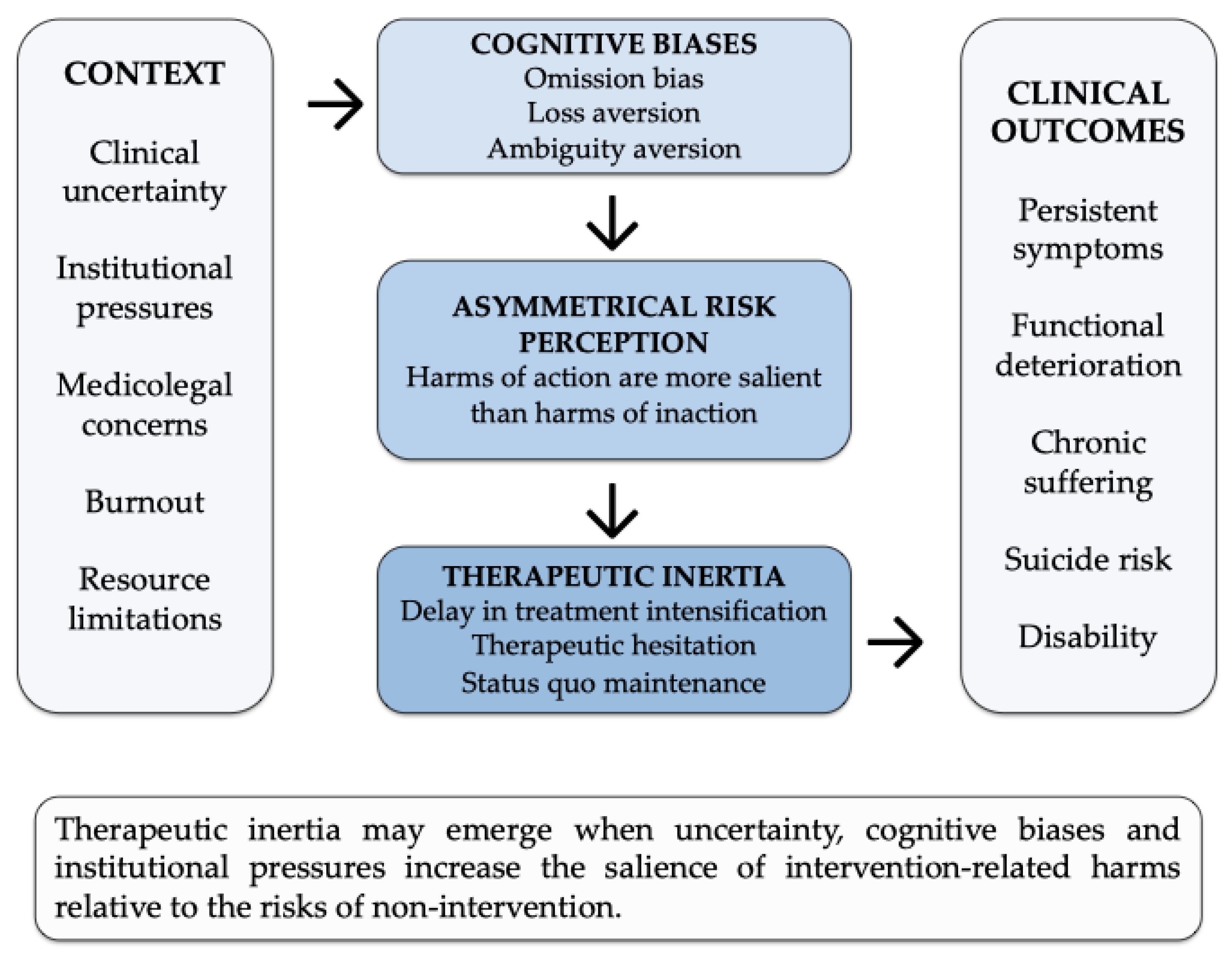

Table 1.
Asymmetrical perception of intervention-related and non-intervention-related harms in psychiatric practice.
Table 1.
Asymmetrical perception of intervention-related and non-intervention-related harms in psychiatric practice.
| Dimension | Harms associated with intervention | Harms associated with non-Intervention |
| Visibility | Usually immediate and clinically visible | Often gradual and less visible |
| Attribution | Directly attributable to treatment | Frequently attributed to illness course |
| Clinician responsibility | Often perceived as resulting from an active clinical decision | Often perceived as resulting from the natural progression of illness |
| Documentation | Formally documented within healthcare systems and pharmacovigilance frameworks | Often insufficiently operationalized or systematically measured |
| Emotional Impact on Clinicians | High emotional salience and anticipatory anxiety | Progressive normalization over time |
| Medicolegal Scrutiny | Frequently associated with institutional and legal review | Comparatively less likely to trigger formal scrutiny |
| Examples | Agranulocytosis, myocarditis, metabolic adverse effects, behavioral disinhibition | Persistent suicidality, chronic psychosis, psychosocial deterioration, functional disability |
| Institutional Response | Immediate investigation and monitoring | Often gradual adaptation or long-term management |
| Psychological Framing | Perceived as consequences of active clinical decisions | Perceived as part of the natural course of illness |
| Temporal Pattern | Acute or temporally linked to intervention | Chronic, cumulative, and progressive |
| Potential Consequence | Fear of iatrogenic harm | Risk of therapeutic inertia and undertreatment |
Disclaimer/Publisher’s Note: The statements, opinions and data contained in all publications are solely those of the individual author(s) and contributor(s) and not of MDPI and/or the editor(s). MDPI and/or the editor(s) disclaim responsibility for any injury to people or property resulting from any ideas, methods, instructions or products referred to in the content. |
© 2026 by the authors. Licensee MDPI, Basel, Switzerland. This article is an open access article distributed under the terms and conditions of the Creative Commons Attribution (CC BY) license (http://creativecommons.org/licenses/by/4.0/).
Copyright: This open access article is published under a Creative Commons CC BY 4.0 license, which permit the free download, distribution, and reuse, provided that the author and preprint are cited in any reuse.


