

Submitted:
10 June 2026
Posted:
11 June 2026
You are already at the latest version
Abstract
Background & Aims: Hepatic encephalopathy (HE) significantly impairs quality of life (QoL) in patients with cirrhosis. While rifaximin is established in HE treatment and prevention, its specific impact on QoL remains less clearly defined. This systematic review aims to evaluate the effects of rifaximin on QoL in patients with HE. Methods: A comprehensive literature search was conducted in MEDLINE/PubMed, Embase, and CENTRAL through November 2025. Clinical studies evaluating rifaximin's impact on QoL in patients with decompensated cirrhosis and HE were included. Study selection followed PRISMA guidelines. Data extraction focused on study design, population, treatment, and QoL outcomes. Results: Out of 4,343 records screened, 10 studies met the inclusion criteria. Most studies evaluated rifaximin in comparison with placebo and focused on patients with minimal or covert HE. Rifaximin was almost consistently associated with statistically significant improvements in overall and domain-specific QoL scores compared with placebo, particularly in fatigue, activity and emotional function. These benefits were observed across different dosages and treatment durations. In comparative studies, rifaximin showed QoL outcomes comparable to those of lactulose, L-ornithine L-aspartate, and combination regimens. One study reported greater improvement in QoL with nitazoxanide, although rifaximin showed significant improvements in specific QoL domains. Conclusion: Rifaximin is associated with improvements in QoL in patients with cirrhosis and HE, with benefits observed across multiple domains and outcomes comparable to alternative therapies. Further high-quality comparative trials, particularly in patients with overt HE and in prophylactic settings, are needed to confirm these findings and to better inform patient-centered management strategies.
Keywords:
hepatic encephalopathy
; rifaximin
; quality of life
; cirrhosis
1. Introduction
Hepatic encephalopathy (HE) is a neuropsychiatric complication commonly observed in patients with liver cirrhosis, a chronic condition marked by progressive hepatic fibrosis and dysfunction [1]. It results from impaired hepatic detoxification or portosystemic shunting, leading to the systemic accumulation of neurotoxins—primary ammonia—which alters cerebral functions [2].
Clinically, HE presents along a spectrum from mild cognitive and psychomotor disturbances to severe manifestations, such as unconsciousness and cerebral edema [3]. It is broadly classified into covert HE, including minimal and grade I presentations, and overt HE, defined by more evident neurological symptoms of grade II or higher [3,4].
The cornerstone of HE management focuses on reducing systemic ammonia levels; however, growing evidence indicates that systemic inflammation, endotoxemia and gut microbiota-driven immune activation act synergistically with hyperammonemia to drive neurocognitive dysfunction [5]. Lactulose, a nonabsorbable disaccharide, is considered the frontline therapy for episodic overt HE and is frequently used to prevent recurrence. It functions by decreasing ammonia generation and absorption in the gut, effectively reducing systemic ammonia levels [3]. Despite its efficacy, lactulose is often poorly tolerated due to gastrointestinal side effects, such as bloating, abdominal cramping and diarrhea, which may compromise patients’ adherence [6].
Rifaximin, a non-systemic oral antibiotic, has emerged as an effective option, either alone or in combination with lactulose, for the treatment of HE [7]. Its primary mechanism of action involves modulation of the gut microbiota with selective targeting of ammonia-producing bacteria, leading to reduced ammonia generation and absorption [2]. In addition, rifaximin seems to play a role in gut barrier repair, which may contribute to reduced bacterial translocation and attenuation of systemic endotoxemia in patients with cirrhosis [8]. A placebo-controlled trial showed that rifaximin led to resolution of overt and covert HE, a reduced risk of infections, decreased gut bacterial overgrowth, and attenuation of systemic inflammation in patients with cirrhosis and HE [8]. Consistent with these findings, treatment with rifaximin has been shown to reduce circulating levels of inflammatory cytokines, including IL-6, IL-10 and TNF-α, in patients with alcoholic cirrhosis, nonalcoholic fatty liver disease-related cirrhosis, and HE over treatment periods ranging from 4 to 12 weeks [9]. Lastly, rifaximin’s minimal systemic absorption makes it well-tolerated and suitable for long-term use6.
Clinical trials and meta-analysis have shown that rifaximin is at least as effective as lactulose in improving HE symptoms, and when combined, the two agents yield superior outcomes, including higher resolution rates, lower mortality and shorter hospital stays [1,3,7]. Current guideline recommendations support rifaximin mainly as add-on therapy to lactulose for secondary prophylaxis after recurrent overt HE, whereas evidence for primary prophylaxis remains limited and inconsistent [10]. In addition, long-term observational data have reported sustained clinical benefits with rifaximin, including reductions in ammonia levels and stabilization of liver function, without adverse effects on renal parameters [4].
Although HE is potentially reversible with appropriate treatment, the condition is still associated with poor prognosis and significant quality of life (QoL) impairment [1]. Even minimal HE is linked to cognitive decline, psychomotor slowing, sleep disturbances, and behavioral changes that impair daily functioning, increase the risk of falls or injury and may interfere with complex activities such as the ability to drive [2,4]. Additionally, HE imposes a significant emotional and psychological burden on caregivers, contributing to distress, uncertainty, and reduced QoL to both their patients and their families1.
Aim of the Review
This systematic review aims to critically assess the current literature on the effects of rifaximin therapy on QoL in patients with cirrhosis and HE.
2. Methods
2.1. Search Strategy
A comprehensive literature search to identify relevant studies was carried out up to 20 November 2025, using the following databases: MEDLINE/PubMed (National Library of Medicine), Embase (Ovid), and the Cochrane Central Register of Controlled Trials (CENTRAL).
To retrieve all the existing literature about the topic, the search string contains Thesaurus Terms (Medical Subject Headings/MeSH for PubMed and Emtree Terms for Embase) and their synonymous (free-text terms), combining using the Boolean operators (AND—OR). The search strategy can be found in the Supplementary Material.
We used the RefWorks-ProQuest citation manager and Rayyan software to identify and remove duplicate articles. This was done to ensure data integrity and improve transparency of the process and results. The Preferred Reporting Items for Systematic Reviews and Meta-Analyses (PRISMA) methodology was used to select studies, and the PRISMA flowchart (Figure 1) summarizes the Search and Screening Process of this study.
2.2. Eligibility Criteria
During the first phase of screening, the titles and abstracts were reviewed and excluded if they met one of the following criteria: (1) the article was not written in English; (2) the article was a review, case report, letter, editorial, cost-effectiveness analysis, non-clinical study; (3) the trial was terminated or withdrawn; (4) the trial did not evaluate decompensated stage, rifaximin or HE and QoL; and (5) the trial evaluated rifaximin for other indications other than cirrhosis. The inclusion criteria were as follows: (1) clinical trials, including randomized, non-randomized, observational, retrospective and uncontrolled studies; (2) studies investigating QoL or QoL-related outcomes; and (3) studies including subjects with decompensated cirrhosis and HE regardless of age, sex, etiology of condition, or presence of other precipitating factors. The selection phase was performed using Rayyan Software.
2.3. Data Extraction
For all articles included in the first phase of screening, the following data were extracted: ASuthors, title, year, ISSN, volume, issue, pages, doi, abstract and keywords.
2.4. Data Selection
A total of 262 full-text articles and abstracts were identified and reviewed. The authors manually screened all records to assess their relevance to the research objective and excluded those that fell outside the scope of the review. Publications presenting overlapping or duplicate study data were also examined, and only the most comprehensive or most recent version was retained.
The following data were extracted for all included articles: authors, year, study design, population, treatment(s), QoL assessment and QoL findings.
2.5. Risk of Bias Assessment
The methodological quality and risk of bias of the included studies were assessed as follows. Randomized controlled trials were evaluated using the Cochrane Risk of Bias 2 tool, which assesses bias across five domains: randomization process, deviations from intended interventions, missing outcome data, outcome measurement, and selection of reported results. Observational studies were assessed using the Newcastle–Ottawa Scale, which evaluates study quality across the domains of selection, comparability, and outcome assessment. Each study was classified as having high or low overall quality based on the results of the corresponding assessment tool.
3. Results
3.1. Characteristics of the Selected Studies
The database search yielded 4343 studies. After the removal of 612 duplicate records, 3731 unique articles were screened by title and abstract. Based on the inclusion/exclusion criteria, 3469 studies were excluded. The articles were sought for retrieval, and 125 articles could not be accessed. Finally, a total of 262 full-text articles were further assessed for eligibility (Figure 1).
Following database searches and full-text screening, 252 articles were excluded for reasons including absence of quality-of-life data (e.g., guidelines, healthcare professional surveys, consensus papers, presentation of study design without reported results, studies focusing on quality of care or cognitive outcomes; n = 239); lack of focus on patients with HE (n = 6); quality-of-life data not related to rifaximin treatment (n = 1); and duplicate publications of the same study (n = 6). Ultimately, 10 studies met the inclusion criteria and were included in the systematic review. The study selection process is summarized in Figure 1.
Among the included studies, six investigated the impact of rifaximin on QoL without active comparator therapies (Table 1) [11,12,13,14,15,16], while four directly compared rifaximin with alternative treatment strategies, including lactulose, L-ornithine L-aspartate (LOLA), nitazoxanide, or combination regimens (Table 2) [17,18,19,20,21]. Notably, two studies—Bajaj et al. and Bruyneel et al.—primarily focused on cognitive function and driving performance, and on sleep quality, respectively [13,14]. However, as both included QoL outcomes, they were retained for analysis.
The majority of studies were randomized controlled trials, either double-blind (n = 6) or open-label (n = 2). Additionally, one prospective observational study and one interventional non-randomized study were included. Most studies enrolled patients with minimal or covert HE (n = 8), while two focused on individuals with recurrent overt HE.
3.2. Risk of Bias Assessment
The methodological quality and risk-of-bias assessment of the included studies are summarized in Table 3. Among the randomized controlled trials, most studies were judged to be of overall high quality, whereas two studies showed an overall low-quality rating, mainly due to concerns related to randomization and deviations from intended interventions. Among observational studies, two were rated as high quality according to the Newcastle–Ottawa Scale, while one study was rated as low quality. Overall, the available evidence was considered acceptable, although heterogeneity in study design and methodological quality should be considered when interpreting the findings.
3.3. Summary of QoL Outcomes
Among the six studies without active comparators, three were randomized controlled trials, one was a randomized open-label study, one was prospective and observational, and one was interventional. Sample sizes ranged from 15 to 258 participants, with treatment durations between 8 weeks and 12 months.
Across these studies, rifaximin treatment was almost consistently associated with statistically significant improvements in overall QoL, most commonly assessed by the Chronic Liver Disease Questionnaire (CLDQ) and the Sickness Impact Profile (SIP). Improvements were reported across multiple QoL domains, with superior outcomes compared with placebo for total SIP scores and for all CLDQ domains, including fatigue, abdominal symptoms, systemic symptoms, activity, emotional function, and worry. No significant differences were noted in terms of QoL improvement between low-dose (800 mg/day) and high-dose (1200 mg/day) rifaximin; however, this finding may be partly attributable to the relatively short follow-up duration of 8 weeks, which may have limited the ability to detect dose-related differences in patient-reported outcomes, nor between rifaximin monotherapy and rifaximin combined with lactulose15. Notably, rifaximin dosages of 550 mg twice daily and 1200 mg/day represent the reference regimens most consistently associated with clinically meaningful outcomes in patients with HE, including reductions in recurrence rates, hospital readmissions, and mortality, as demonstrated in pivotal randomized trials and long-term observational studies [22,23,24].
Two studies did not report statistically significant improvements in overall QoL. In Bajaj et al., [13] total or domain-specific SIP scores were not significantly different between rifaximin and placebo; however, a significant improvement was observed in the psychosocial domain after 8 weeks of rifaximin therapy. Bruyneel et al. also found no significant changes in QoL based on the Short Form-36 (SF-36) or Hospital Anxiety and Depression Scale (HADS) [14]. However, evidence from a comparative analysis of continuous versus cyclic rifaximin administration over 12 months in patients with cirrhosis and minimal HE indicated that continuous therapy (1200 mg/day for 360 days) was associated with a more pronounced reduction in specific neurocognitive symptoms, including impairments in concentration, memory, overall cognitive function, and daily performance, compared with cyclic administration (600–1200 mg/day given in 7–14-day cycles) [16]. The four comparative studies were randomized trials focusing primarily on patients with minimal HE. In comparison with lactulose, rifaximin demonstrated comparable improvements in QoL outcomes, with no statistically significant differences in total or domain-specific scores [17,21]. In studies comparing rifaximin with multiple therapeutic strategies, including lactulose and LOLA, all treatment regimens resulted in similar QoL improvements [19,20]. In a single head-to-head trial versus nitazoxanide, rifaximin was associated with domain-specific improvements in QoL, particularly in fatigue and activity. In contrast, nitazoxanide demonstrated a greater overall improvement in CLDQ scores [20].
4. Discussion
This systematic review synthesizes the available evidence on the impact of rifaximin on QoL in patients with cirrhosis and HE.
In studies without active comparators, rifaximin was almost consistently associated with statistically significant improvements in overall QoL, particularly in patients with minimal or covert HE, as assessed using validated instruments across different treatment dosages and durations. QoL benefits were observed across multiple domains, including fatigue, activity, emotional function, abdominal symptoms, systemic symptoms and worry [11,12]. These effects were documented primarily using SIP and CLDQ, providing a degree of methodological consistency across studies.
Notably, two studies did not report significant improvements in overall QoL with rifaximin compared to placebo. However, both were limited by small sample sizes (n = 42 and n = 15, respectively) and were not primarily designed to assess QoL outcomes. In the study by Bajaj et al., which focused on cognitive performance and driving ability, rifaximin did not significantly improve total SIP or most subdomain scores but did result in a significant improvement in the psychosocial SIP domain. Moreover, these changes were accompanied by significant improvements in cognitive test performance and driving simulator outcomes compared with placebo [13]. Similarly, Bruyneel et al. found no significant changes in standard QoL or sleep questionnaires (SF-36, HADS, PSQI and EES) after rifaximin; however, objective sleep assessments showed significant improvements in REM sleep duration and overall sleep architecture as measured by polysomnography [14].
Comparative studies consistently reported no significant differences in QoL outcomes between rifaximin and other therapies, such as lactulose, LOLA and combination regimens [17,18,19,21]. A single trial comparing rifaximin with nitazoxanide reported greater overall improvement in CLDQ scores with nitazoxanide, while rifaximin demonstrated significant domain-specific benefits, particularly in fatigue and activity [20]. Given the small sample size of this study (30 patients per arm), these findings should be interpreted cautiously.
Taken together, these findings suggest that rifaximin may improve QoL in selected patients with cirrhosis and HE, particularly those with minimal or covert HE. However, the strength of this conclusion is limited by the small number of studies, modest sample sizes, heterogeneity in study design and QoL instruments, and variable methodological quality identified in the risk-of-bias assessment. Therefore, the observed QoL benefits should be interpreted as supportive but not definitive evidence.
Further comparative research is warranted to better define the impact of rifaximin and alternative therapies on QoL in patients with HE, given the clinical relevance of this outcome when evaluating treatment strategies. In particular, future studies should focus on patients with overt HE and on prophylactic use, settings in which evidence is currently limited. Notably, a multicentre, randomized, double-blind, placebo-controlled trial is currently investigating the efficacy and safety of rifaximin and lactulose in patients with cirrhosis undergoing placement of a transjugular intrahepatic portosystemic shunt, with QoL assessed using the LDSI v2.0 and EQ-5D-5L questionnaires; however, results from this trial are not yet available [25].
Strengths and Limitations
This systematic review has several strengths. Most of the included studies were randomized controlled trials, enhancing the robustness of the available evidence [12,13,17,20]. This was supported by the formal risk-of-bias assessment, which indicated that most included studies were of acceptable methodological quality. In addition, most of the studies used validated and similar QoL instruments, namely the SIP and CLDQ, thus supporting the comparability of the observed QoL effects. Notably, this study should be interpreted alongside the previous systematic review and meta-analysis by Moon et al., [26] which assessed patient-reported outcomes in HE and included both rifaximin and lactulose. Although this overlap may limit the novelty of our work, our review provides a rifaximin-focused and more updated synthesis of data.
Several limitations should also be acknowledged. The overall number of included studies remains limited, particularly those providing direct comparisons between rifaximin and alternative therapies. Similarly, the total number of enrolled patients is relatively small. Moreover, the current evidence base is primarily focused on patients with minimal or covert HE, with comparatively limited data on those with overt HE. Most studies evaluated rifaximin as a treatment strategy rather than for prophylactic use, thereby limiting conclusions about its impact on QoL in preventive settings [15,17]. Finally, three of the ten included studies were available only in abstract format, which may reduce the completeness of methodological reporting and outcome detail [18,19]. Accordingly, methodological limitations identified in the risk-of-bias assessment should be considered when interpreting the overall findings.
Overall, discordant findings across studies with respect to QoL outcomes are likely attributable to heterogeneity in study characteristics. In particular, variability in patient populations, including differences in HE severity (minimal or covert versus overt HE), baseline functional impairment, and disease phase at enrollment, likely influenced the sensitivity of QoL assessments and the magnitude of observed effects. Additionally, small sample sizes in several studies may have limited the ability to detect statistically significant QoL changes.
While the heterogeneity of the available evidence precluded a formal meta-analysis, future pooled quantitative analyses focusing on QoL outcomes and stratified by HE severity (covert versus overt HE) would be valuable to better delineate the patient populations most likely to benefit from rifaximin therapy.
5. Conclusion
This systematic review suggests that rifaximin may be associated with improvements in QoL in patients with cirrhosis and HE, particularly in minimal or covert HE. Across the available studies, rifaximin treatment was almost consistently associated with improvements in patient-reported QoL, measured using validated instruments, with benefits registered across multiple domains relevant to daily functioning and well-being. These findings complement existing evidence on the clinical efficacy of rifaximin in HE management by emphasizing its impact on patient-centered outcomes. However, given the limited number of available studies, small sample sizes, heterogeneity of study designs and QoL measures, and methodological limitations identified in the risk-of-bias assessment, these findings should be interpreted with caution.
Future well-designed randomized trials are warranted to further clarify the impact of rifaximin on QoL in patients with both covert and overt HE, as well as in both prophylactic and treatment settings.
Supplementary Materials
The following supporting information can be downloaded at the website of this paper posted on Preprints.org.
Funding
Editorial assistance was supported by an independent grant from Alfasigma S.p.A. (Bologna, Italy).
Authors’ Contributions
Study conception and design: All; collection and interpretation of data: All; manuscript drafting: RS, AC; manuscript editing: AF; approval to submit: All.
Ethics Approval
Not applicable.
Consent to Participate
Not applicable.
Consent for Publication
Not applicable.
Acknowledgments
Editorial assistance was provided by Claudia Messina and Aashni Shah (Polistudium SRL, Milan, Italy).
Conflicts of interest
Luca Giacomelli is the Director of Polistudium SRL.
Availability of Data and Material
All data are available from the corresponding author upon reasonable request.
References
- Zacharias, H.D.; Kamel, F.; Tan, J.; Kimer, N.; Gluud, L.L.; Morgan, M.Y. Rifaximin for prevention and treatment of hepatic encephalopathy in people with cirrhosis. Cochrane Database Syst. Rev. 2023, 7, CD011585. [Google Scholar] [CrossRef] [PubMed]
- Hu, Y.; Zhang, X.; Xiao, Y.; Wu, Z.; Wang, Y. Efficacy and safety of rifaximin in preventing hepatic encephalopathy: A systematic review and meta-analysis. PLoS ONE 2025, 20, e0323359. [Google Scholar] [CrossRef] [PubMed]
- Alazazzi, H.; Algahiny, A.T.; Sharif, Z.; et al. Evaluating Clinical Outcomes of Adjunct Rifaximin Therapy in Patients with Overt Hepatic Encephalopathy: A Prospective Randomized Study. Euroasian J. Hepatogastroenterol 2025, 15, 58–62. [Google Scholar] [CrossRef] [PubMed]
- Kawaratani, H.; Namisaki, T.; Kondo, Y.; et al. Real-World Setting of Efficacy and Safety of 3 Years of Rifaximin Administration in Japanese Patients with Hepatic Encephalopathy: A Multicenter Retrospective Study. J. Clin. Med. 2025, 14, 1358. [Google Scholar] [CrossRef] [PubMed]
- Luo, M.; Xin, R.J.; Hu, F.R.; Yao, L.; Hu, S.J.; Bai, F.H. Role of gut microbiota in the pathogenesis and therapeutics of minimal hepatic encephalopathy via the gut-liver-brain axis. World J. Gastroenterol. 2023, 29, 144–156. [Google Scholar] [CrossRef] [PubMed]
- Huang, J.; Cheng, C.; Li, Y.; Liu, Y.; Liu, Y. Efficacy and safety of rifaximin for the prophylaxis of hepatic encephalopathy: A meta-analysis. Medicine 2025, 104, e39905. [Google Scholar] [CrossRef] [PubMed]
- Oriko, D.O.; Khawaj, Z.; Cheema, M.U.; et al. Therapeutic duel of rifaximin versus lactulose in hepatic encephalopathy: A systematic review. Cureus 2025, 17, e86193. [Google Scholar] [CrossRef] [PubMed]
- Patel, V.C.; Lee, S.; McPhail, M.J.W.; et al. Rifaximin-α reduces gut-derived inflammation and mucin degradation in cirrhosis and encephalopathy: RIFSYS randomised controlled trial. J. Hepatol. 2022, 76, 332–342. [Google Scholar] [CrossRef] [PubMed]
- Torre, A.; Córdova-Gallardo, J.; Frati Munari, A.C. Rifaximin alfa and liver diseases: More than a treatment for encephalopathy, a disease modifier. Ther. Clin. Risk Manag. 2023, 19, 839–851. [Google Scholar] [CrossRef] [PubMed]
- Montagnese, S.; Rautou, P.; Romero-Gómez, M. EASL Clinical Practice Guidelines on the management of hepatic encephalopathy. J. Hepatol. 2022, 77, 807–824. [Google Scholar] [CrossRef]
- Sidhu, S.S.; Goyal, O.; Mishra, B.P.; Sood, A.; Chhina, R.S.; Soni, R.K. Rifaximin improves psychometric performance and health-related quality of life in patients with minimal hepatic encephalopathy (the RIME Trial). Am. J. Gastroenterol. 2011, 106, 307–316. [Google Scholar] [CrossRef] [PubMed]
- Sanyal, A.; Younossi, Z.M.; Bass, N.M.; et al. Randomised clinical trial: Rifaximin improves health-related quality of life in cirrhotic patients with hepatic encephalopathy—a double-blind placebo-controlled study. Aliment Pharmacol. Ther. 2011, 34, 853–861. [Google Scholar] [CrossRef] [PubMed]
- Bajaj, J.S.; Heuman, D.M.; Wade, J.B.; et al. Rifaximin improves driving simulator performance in a randomized trial of patients with minimal hepatic encephalopathy. Gastroenterology 2011, 140, 478–487.e1. [Google Scholar] [CrossRef] [PubMed]
- Bruyneel, M.; Sersté, T.; Libert, W.; et al. Improvement of sleep architecture parameters in cirrhotic patients with recurrent hepatic encephalopathy with the use of rifaximin. Eur. J. Gastroenterol. Hepatol. 2017, 29, 302–308. [Google Scholar] [CrossRef] [PubMed]
- Tan, W.; Wang, J.; Shi, P.M.; et al. Effects of low-dose and high-dose rifaximin in the treatment of covert hepatic encephalopathy. J. Clin. Transl. Hepatol. 2022, 10, 1099–1106. [Google Scholar] [CrossRef] [PubMed]
- Bakulin, I.G.; Ivanova, K.N.; Eremina, E.Y.; Marchenko, N.V.; NORMIND Study Team. Comparative analysis of the efficacy of different regimens of 12 months rifaximin-alfa therapy in patients with liver cirrhosis and minimal hepatic encephalopathy. Diagnostics 2023, 13, 3239. [Google Scholar] [CrossRef] [PubMed]
- Sidhu, S.S.; Goyal, O.; Parker, R.A.; Kishore, H.; Sood, A. Rifaximin vs. lactulose in treatment of minimal hepatic encephalopathy. Liver Int. 2016, 36, 378–385. [Google Scholar] [CrossRef] [PubMed]
- Elnoemany, K.S.; Reweisha, E.A.; Salman, T.A.; Shebl, N.A.; Alghoraieb, A.A. Combination of lactulose, rifaximin and LOLA in treatment of minimal hepatic encephalopathy P0834. Abstracts of the 25th Annual Conference of APASL, February 20–24 2016, Tokyo, Japan. Hepatol. Int. 2016, 10, 1–506. [Google Scholar] [CrossRef] [PubMed]
- Elnoemany, K.S.; Alghoraieb, A.A.; Shebl, N.A.E.; Salman, T.A.H.; Reweisha, E.A. #P-0687 Challenges in treatment of minimal hepatic encephalopathy. J. Gastreonterol. Pathol. 2017, 32. [Google Scholar] [CrossRef]
- Glal, K.A.M.; Abd-Elsalam, S.M.; Mostafa, T.M. Nitazoxanide versus rifaximin in preventing the recurrence of hepatic encephalopathy: A randomized double-blind controlled trial. J. Hepatobiliary Pancreat. Sci. 2021, 28, 812–824. [Google Scholar] [CrossRef] [PubMed]
- Sahid Aziz, S. Comparative study of rifaximin vs. lactulose on minimal hepatic encephalopathy, an open label randomized trial. J. Clin. Exper Hepatol. 2023, 13, S28. [Google Scholar] [CrossRef]
- Bass, N.M.; Mullen, K.D.; Sanyal, A.; et al. Rifaximin treatment in hepatic encephalopathy. N. Engl. J. Med. 2010, 362, 1071–1081. [Google Scholar] [CrossRef] [PubMed]
- Mullen, K.D.; Sanyal, A.J.; Bass, N.M.; et al. Rifaximin is safe and well tolerated for long-term maintenance of remission from overt hepatic encephalopathy. Clin. Gastroenterol. Hepatol. 2014, 12, 1390–1397.e2. [Google Scholar] [CrossRef] [PubMed]
- Wang, Z.; Chu, P.; Wang, W. Combination of rifaximin and lactulose improves clinical efficacy and mortality in patients with hepatic encephalopathy. Drug Des. Devel Ther. 2018, 13, 1–11. [Google Scholar] [CrossRef] [PubMed]
- de Wit, K.; Schaapman, J.J.; Nevens, F.; et al. Prevention of hepatic encephalopathy by administration of rifaximin and lactulose in patients with liver cirrhosis undergoing placement of a transjugular intrahepatic portosystemic shunt (TIPS): A multicentre randomised, double blind, placebo controlled trial (PEARL trial). BMJ Open Gastroenterol. 2020, 7, e000531. [Google Scholar] [CrossRef] [PubMed]
- Moon, A.M.; Kim, H.P.; Jiang, Y.; Lupu, G.; Bissram, J.S.; Barritt, A.S., 4th; Tapper, E.B. Systematic Review and Meta-Analysis on the Effects of Lactulose and Rifaximin on Patient-Reported Outcomes in Hepatic Encephalopathy. Am. J. Gastroenterol. 2023, 118, 284–293. [Google Scholar] [CrossRef] [PubMed]
Figure 1.
PRISMA flowchart representing the study selection process.
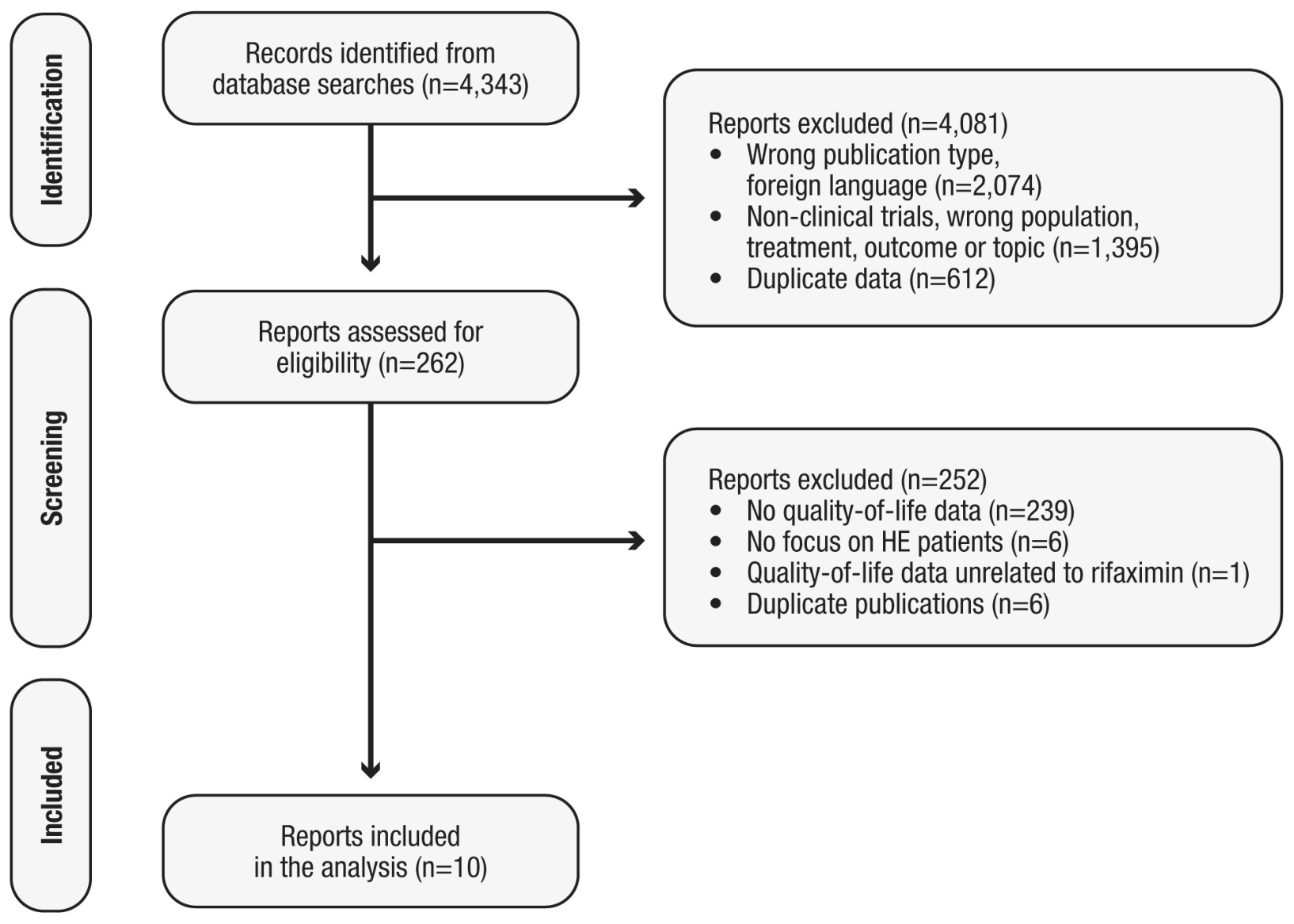

Table 1.
Summary of studies on the impact of rifaximin on quality of life in hepatic encephalopathy.
Table 1.
Summary of studies on the impact of rifaximin on quality of life in hepatic encephalopathy.
| Author(s), Year | Study Design | Population | RFX Treatment | QoL Assessment Tools) | Main QoL Findings |
|---|---|---|---|---|---|
| Sidhu et al., 2011 [11] | Double-blind randomized placebo-controlled trial (RIME trial) | 94 patients with cirrhosis and minimal HE | 1200 mg/day for 8 weeks (n = 49) vs. placebo (n = 45) | SIP | RFX significantly reduced total SIP score from baseline to 8 weeks (11.67 → 6.45; p < 0.001), while placebo showed no significant change (9.86 → 8.51; p = 0.82). QoL improvement correlated with reversal of MHE and improvement in psychometric tests |
| Sanyal et al., 2011 [12] | Randomized, double-blind, placebo-controlled trial | 219 patients with cirrhosis and recurrent overt HE (≥2 episodes in the prior 6 months), in remission at baseline | 550 mg BID for 6 months (lactulose permitted) | CLDQ | RFX significantly improved overall CLDQ score compared with placebo (p = 0.0093) Improvements observed across all CLDQ domains: fatigue (p = 0.0087), abdominal symptoms (p = 0.0090), systemic symptoms (p = 0.0160), activity (p = 0.0022), emotional function (p = 0.0065), and worry (p = 0.0436) |
| Bajaj et al., 2011 [13] | Randomized, double-blind, placebo-controlled trial | 42 patients with cirrhosis and minimal HE | RFX 550 mg BID for 8 weeks (n = 21) vs. placebo (n = 21) | SIP; driving simulation and cognitive testing | RFX significantly reduced SIP psychosocial dimension score (from 13 ± 3 → 8 ± 2, p = 0.04). No other significant changes in other SIP dimensions nor vs. placebo. RFX significantly improved driving performance vs. placebo (reduction in total driving errors 76% vs. 31%, p = 0.013) RFX significantly improved cognitive performance vs. placebo (91% vs. 61%, p = 0.01) |
| Bruyneel et al., 2017 [14] | Prospective exploratory study | 15 patients with cirrhosis with recurrent overt HE | 550 mg BID for 28 days + daily lactulose | SF-36, HADS | No significant changes in QoL measured with SF-36 or HADs scores REM sleep and overall sleep architecture improved on PSG. REM sleep increased from 2.5% to 8.5% of total sleep time (p = 0.003); pooled REM + stage 3 sleep rose from 37.6% to 55.6% (p = 0.007) |
| Tan et al., 2022 [15] | Single-center, randomized, open-label controlled trial | 40 patients with cirrhosis and covert HE | Low dose: 800 mg/day for 8 weeks (n = 12) High dose: 1200 mg/day for 8 weeks (n = 14) Control (n = 14) |
SIP | Both low- and high-dose rifaximin significantly improved total SIP score vs. control at 8 weeks (low dose: −1.98 vs. 0; p = 0.048; high dose: −4.00 vs. 0; p = 0.007). No significant difference between low- and high-dose rifaximin (p = 0.592) Improvements mainly in physical and psychosocial domains |
| Bakulin et al., 2023 [16] | Prospective, multicenter, open-label observational study | 258 patients with cirrhosis and minimal HE | Continuous: 1200 mg/day for 12 months (n = 41) Cyclic: 600–1200 mg/day for 7–14 days/month (n = 217) |
CLDQ | Significant improvement in CLDQ total score over 12 months in both subgroups. No significant difference between the two subgroups |
BID: twice a day; CBI: Caregiver Burden Inventory; CLDQ: Chronic Liver Disease Questionnaire; HADS: Hospital Anxiety and Depression Scale; HE: hepatic encephalopathy; PSG: Polysomnography; REM: Rapid Eye Movement; RFX: rifaximin; SF-36: Short Form-36 Health Survey; SIP: Sickness Impact Profile.
Table 2.
Summary of studies on the impact of rifaximin versus comparators on quality of life in hepatic encephalopathy.
Table 2.
Summary of studies on the impact of rifaximin versus comparators on quality of life in hepatic encephalopathy.
| Author(s), Year | Study Design | Population | Treatment Regimens Compared | QoL Assessment Tool(s) | Main QoL Findings |
|---|---|---|---|---|---|
| Sidhu et al., 2016 [17] | Prospective, randomized, open-label non-inferiority trial | 112 patients with cirrhosis and minimal HE | RFX 400 mg TID (n = 57) vs. lactulose 30–120 mL/day (n = 55) for 3 months | SIP | Total SIP score improved in both treatment arms (rifaximin: 15.7 → 7.5; lactulose: 15.2 → 8.2) Adjusted mean difference in total SIP score: −0.92 (95% CI −2.36–0.52; p = 0.20) No significant differences across individual SIP domains |
| Elnoemany et al., 2016; 2017 [18,19] | Prospective, randomized comparative study | 126 patients with cirrhosis and minimal HE | Lactulose 30–60 mL BID (n = 31) vs. RFX 200 mg TID (n = 32) vs. LOLA 6 g TID (n = 32) vs. combination therapy (n = 31) | SIP | Total SIP score improved significantly in the three groups (mean SIP: 24.75 vs. 16.1 vs. 16.31; p = 0.001). No statistically significant difference across groups for SIP scores (overall p > 0.05) |
| Glal et al., 2021 [20] | Prospective, randomized, double-blind controlled trial | 60 patients with cirrhosis and recurrent HE (≥1 prior episode) | RFX 550 mg BID (n = 30) vs. nitazoxanide 500 mg BID (n = 30) for 24 weeks | CLDQ | RFX was associated with significant improvement in fatigue (p = 0.013) and activity (p = 0.019) domains vs. baseline. No significant changes in emotional function, worry, abdominal or systemic symptom domains Total CLDQ change was not significant (p = 0.39) Nitazoxanide was associated with significant improvement in all the domains except systemic symptoms, and the total CLDQ change was significant (p = 0.0004) |
| Sahid Aziz et al., 2023 [21] | Prospective, randomized, open-label non-inferiority trial | 31 patients with cirrhosis and minimal HE | RFX 400 mg TID (n = 15) vs. lactulose 30–120 mL/day (n = 16) for 12 weeks | SF-12 (PCS, MCS); PSQI | SF-12 physical and mental component scores improved significantly in both treatment arms (p < 0.001). PSQI scores decreased significantly at 12 weeks (p < 0.001), indicating improved sleep quality. No significant differences were observed between treatments for QoL outcomes |
BID: twice a day; HE: hepatic encephalopathy; LOLA: L-Ornithine L-Aspartate; RFX: rifaximin; SIP: sickness impact profile; TID: thrice a day.
Table 3.
Risk of bias assessment and quality of included studies.
| Observational Studies a | Selection | Comparability | Outcome | Overall quality | ||||||||||||
|---|---|---|---|---|---|---|---|---|---|---|---|---|---|---|---|---|
| Bakulin et al., 2023 [16] | *** | ** | ** | H | ||||||||||||
| Bruyneel et al., 2017 [14] | ** | NA | ** | L | ||||||||||||
| Elnoemany et al., 2017 [18] | * | * | * | H | ||||||||||||
| Randomized controlled trials b | 1 | 2 | 3 | 4 | 5 | Overall quality | ||||||||||
| Sahid Aziz et al., 2023 [21] | U | U | H | L | L | L | ||||||||||
| Bajaj et al., 2011 [13] | L | L | L | L | L | H | ||||||||||
| Glal et al., 2021 [20] | L | L | L | L | L | H | ||||||||||
| Sanyal et al., 2011 [12] | L | L | L | L | L | H | ||||||||||
| Sidhu et al., 2011 [11] | L | U | H | L | L | L | ||||||||||
| Sidhu et al., 2016 [17] | L | L | L | L | L | H | ||||||||||
| Tan et al., 2022 [15] | L | L | L | L | L | H | ||||||||||
|
a Study quality assessment performed by means of the Newcastle–Ottawa scale (each asterisk represents whether the respective criterion within the subsection was satisfied). b Cochrane Collaboration’s tool 2 for assessing the risk of bias across 5 domains: 1 (Random sequence generation), 2 (Deviations from the intended interventions), 3 (Missing outcome data), 4 (Outcome measurement), 5 (Selection of the reported results). L = low; H = high; U = unclear; NA = not applicable. | ||||||||||||||||
Disclaimer/Publisher’s Note: The statements, opinions and data contained in all publications are solely those of the individual author(s) and contributor(s) and not of MDPI and/or the editor(s). MDPI and/or the editor(s) disclaim responsibility for any injury to people or property resulting from any ideas, methods, instructions or products referred to in the content. |
© 2026 by the authors. Licensee MDPI, Basel, Switzerland. This article is an open access article distributed under the terms and conditions of the Creative Commons Attribution (CC BY) license (http://creativecommons.org/licenses/by/4.0/).
Copyright: This open access article is published under a Creative Commons CC BY 4.0 license, which permit the free download, distribution, and reuse, provided that the author and preprint are cited in any reuse.


