

Submitted:
10 June 2026
Posted:
11 June 2026
You are already at the latest version
Abstract
Background: Chronic occupational lung diseases (COLD) remain a major medical and social problem, often associated with persistent respiratory impairment, reduced exercise tolerance, and cardiovascular comorbidities. Conventional rehabilitation improves symptoms but may not fully address the complex pathophysiological mechanisms involved. Intermittent hypoxic–hyperoxic exposure (IHHE) has recently been proposed as an adjunctive rehabilitation strategy that may enhance adaptive physiological responses. Objective: To evaluate the efficacy and safety of IHHE as an adjunctive intervention in the rehabilitation of patients with COLD. Methods: A single-centered pilot study was conducted in 60 patients with clinically stable COLD. Participants were randomly assigned to an IHHE group (n = 30) or a sham control group (n = 30). The IHHE group underwent 12 sessions over 3 weeks using a ReOxy device, consisting of alternating cycles of hypoxic gas (FiO₂ ≈ 12%) and hyperoxic gas (FiO₂ ≈ 35%) delivered through a facial mask under continuous monitoring of oxygen saturation and heart rate. The control group received identical procedures with room air (FiO₂ ≈ 21%). All patients continued standard pharmacological therapy and pulmonary rehabilitation. Clinical and functional assessments included hypoxic tolerance tests, spirometry (FEV₁), blood pressure, dyspnea severity, and the six-minute walk test (6MWT). Results: After 3 weeks, the IHHE group demonstrated significant improvements in hypoxic tolerance, pulmonary function (FEV₁), and exercise capacity compared with baseline and the control group. The distance covered during the 6MWT increased, while dyspnea severity and bronchial obstruction decreased. Additionally, systolic and diastolic blood pressure showed significant reductions in the IHHE group. Improvements observed in the control group were smaller and generally not statistically significant. No serious adverse events were reported. Conclusion: IHHE appears to be a safe and effective adjunct to standard rehabilitation in patients with COLD, improving hypoxic adaptation, pulmonary function, cardiovascular parameters, and exercise capacity. These effects may be related to enhanced adaptive responses to hypoxia and modulation of inflammatory and oxidative pathways. Further studies are required to evaluate long-term benefits and optimize individualized IHHE protocols.
Keywords:
chronic occupational lung disease
; pulmonary rehabilitation
; intermittent hypoxic-hyperoxic exposure
; hypoxic conditioning
; exercise tolerance
; dyspnea
; spirometry
1. Introduction
Chronic occupational lung diseases (COLD) remain a major public health concern globally, imposing a substantial burden on healthcare systems and society at large [1,2,3,4,5]. These diseases, arising from prolonged exposure to industrial pollutants such as organic and inorganic dusts, toxic aerosols, and chemical irritants, are not limited to pulmonary manifestations alone [1,2,3,4,5,6]. COLD is increasingly recognized as a systemic disorder, intricately linked with a spectrum of comorbidities including cardiometabolic derangements, immune and autonomic dysregulation, persistent low-grade inflammation, anxiety and depressive symptoms, cachexia, osteopenia, and skeletal muscle dysfunction [1,2,3,4,5,6]. Pathogenesis of COLD often unfolds over a latent period, with occupational exposure typically leading to clinically manifest disease after 5 to 7 years. Susceptibility to COLD and the severity of obstructive impairments are influenced by a combination of environmental and host-related factors, such as genetic predisposition, impaired cytokine profiles, coexisting diabetes mellitus, female sex, and inadequate antioxidant defenses [2, [5]. As the disease progresses whether manifesting as interstitial lung disease, chronic bronchitis, or evolving into chronic obstructive pulmonary disease (COPD) and the burden of comorbidities increases. This progression significantly heightens the risk for acute cardiovascular events such as hemorrhagic stroke and acute coronary syndrome [1,2,3,4], increases the incidence of pulmonary malignancies [1,2,3,4], and frequently results in early disability and reduced quality of life, particularly among individuals of working age [1,2,3,4].
Although standard pharmacologic therapy remains the cornerstone of COLD management [7], its utility is often constrained by drug intolerance, tachyphylaxis, and adverse effects, especially in patients with multiple comorbidities [8]. These limitations elucidate the growing importance of integrating pharmacologic treatments with multimodal rehabilitation strategies. Such integrative programs incorporate medication, physical rehabilitation, and advanced physiotherapeutic modalities aimed at restoring functional capacity and enhancing quality of life [1,2,3,4,5,6]. Among the novel rehabilitation strategies, intermittent hypoxic exposure (IHE), a subset of hypoxic conditioning (HC) has been implicated with significant attention. These protocols have been widely applied in clinical trials involving cardiometabolic disorders, pulmonary diseases, and rehabilitation settings, where hypoxic conditioning is used to stimulate adaptive responses such as improved mitochondrial efficiency, enhanced oxygen utilization, and modulation of oxidative and inflammatory pathways. Therefore, the intervention schedule used in the present study (12 sessions over 3 weeks) is consistent with the frequency and duration commonly reported in contemporary hypoxic conditioning studies [10].
Over the last two decades, numerous studies have demonstrated that IHE can induce beneficial adaptations not only in athletic performance but also across a wide array of clinical conditions including cardiovascular, respiratory, neurological, and metabolic disorders [4,11,12,13]. It has been shown that short cycles of hypoxia-reoxygenation elicit more favorable physiological responses than continuous hypoxia, by enhancing erythropoiesis, improving mitochondrial function, and minimizing hypoxia-related stress responses such as elevated cortisol levels or immunosuppression [14,15,16]. Clinical applications of IHE have been explored in individuals with chronic bronchitis, moderate asthma, and early-stage COPD [17,18,19,20].
Mechanistically, the adaptive benefits of IHE are mediated through hypoxia-sensitive molecular pathways involving transcription factors such as hypoxia-inducible factors (HIFs), CREB, and Atg3, which coordinate cellular responses to oxygen fluctuations. During reoxygenation, transient increases in reactive oxygen species (ROS) further activate signaling cascades particularly NF-κB, which augment antioxidant defenses and modulate inflammation, thereby amplifying the therapeutic impact [21,22,23,24]. To optimize these effects, a novel variant known as intermittent hypoxic-hyperoxic exposure (IHHE) has been developed. In IHHE, the normoxic intervals of traditional IHE protocols are replaced with hyperoxic breathing phases (30-40% O₂). This substitution accelerates the reoxygenation process, enhances ROS-mediated signaling, and potentially magnifies the cascade of redox-sensitive adaptive responses [23,24]. IHHE approach has shown promise in diverse populations, including those with metabolic syndrome, coronary artery disease, and age-related functional decline [10,25,26].
We hypothesized that adjunctive IHHE would enhance the effectiveness of conventional cardiopulmonary rehabilitation in patients with chronic occupational lung disease. Specifically, we expected that IHHE would improve hypoxic tolerance, pulmonary function, exercise capacity, and cardiovascular parameters compared with standard rehabilitation alone. Furthermore, we hypothesized that these benefits would be achieved safely through adaptive physiological responses to intermittent hypoxia and hyperoxia without increasing adverse events. Despite growing interest in IHHE, its clinical efficacy and safety profile in individuals with COLD remain underexplored and inconsistently reported. The current study seeks to address this gap by evaluating the therapeutic potential of IHHE as part of a comprehensive rehabilitation program for patients with COLD.
2. Materials and Methods
Study Setting and Ethical Approval
This pilot study was conducted at the Clinical Research Institute of Occupational Medicine. The study protocol received ethical clearance from the Local Ethics Committee of University (Protocol No. 28-20, dated 07.10.2020), in accordance with the ethical principles set out in the Declaration of Helsinki and subsequent amendments concerning biomedical research involving human participants (WHO Bulletin, 2001).
Study Design
A single-centered pilot study was conducted using a parallel-group design. This robust methodological framework was selected to minimize bias, enhance internal validity, and permit causal inference regarding the effects of IHHE in a well-characterized patient population with chronic occupational lung diseases.
Participants
The diagnosis of chronic occupational lung disease (COLD) was established according to internationally recognized occupational respiratory disease guidelines. Diagnosis required three key components: (1) a documented history of long-term occupational exposure to respiratory hazards such as industrial dusts, fumes, or chemical agents; (2) persistent respiratory symptoms, including dyspnea, chronic cough, or exercise intolerance lasting for at least several months; and (3) objective evidence of pulmonary impairment confirmed by spirometry. Pulmonary function testing demonstrating abnormalities in forced expiratory volume in 1 second (FEV₁), forced vital capacity (FVC), or the FEV₁/FVC ratio consistent with obstructive or mixed ventilatory dysfunction was considered diagnostic support. Clinical evaluation also included detailed occupational history assessment and exclusion of alternative respiratory disorders unrelated to occupational exposure. The final diagnosis was established by occupational medicine specialists following the recommendations of the World Health Organization, American Thoracic Society, and European Respiratory Society for occupational lung diseases. A total of 114 patients (age range: 46-72 years) with clinically stable COLD were recruited from the department of occupational and non-communicable diseases. All participants had a history of long-term exposure to hazardous chemicals in occupational settings and met clinical criteria for COLD diagnosis. Eligible participants were required to provide written informed consent. The study initially screened 114 patients with chronic occupational lung disease, of whom 54 were excluded due to not meeting eligibility criteria, acute disease exacerbation, cardiovascular contraindications, or refusal to participate. In accordance with CONSORT recommendations.
After screening, 60 eligible participants were randomized (via computer-generated random sequence) into two groups: (1) Intervention group (n = 30) received 12 IHHE sessions; (2) control group (n = 30) received 12 simulated IHHE sessions using room air. Demographic and clinical baseline characteristics were comparable across groups (Figure 1).
Among the novel rehabilitation strategies, intermittent hypoxic exposure (IHE), a subset of hypoxic conditioning (HC) has been implicated with significant attention. This approach involves brief, repeated inhalation of hypoxic gas mixtures (typically 14-10% O₂) for 3 to 10 minutes, alternated with normoxic breathing periods of varying lengths (3 to 6 minutes). These sessions are administered at rest or in conjunction with physical activity (as in intermittent hypoxic training, IHT), mimicking high-altitude adaptation without the logistical challenges of relocation [9]. Recent studies have reported relatively consistent protocols for intermittent hypoxic conditioning, although some variability exists depending on the target population and therapeutic objective. Most clinical and rehabilitation studies employ 2–5 hypoxic conditioning sessions per week over a period of 3 to 6 weeks, resulting in approximately 12–15 total sessions, [10] which is considered sufficient to induce adaptive cardiopulmonary and metabolic responses. Each session typically lasts 35–50 minutes and consists of 4–8 cycles of hypoxic exposure (FiO₂ ~10–12%) alternating with normoxic or hyperoxic breathing phases, [10] delivered through specialized breathing devices under continuous physiological monitoring.
Intervention protocol: The intervention was based on IHHE and performed as an adjunct to a standardized medical rehabilitation program. Sessions were conducted using the ReOxy Cardio device (AiMediq S.A., Luxembourg), a clinically certified instrument for adaptive self-regulated respiratory therapy. IHHE sessions were conducted once daily on treatment days, with a total of 12 sessions administered over a 3-week period (approximately four sessions per week). Each session lasted about 40 minutes and consisted of 4-7 cycles of hypoxic (FiO₂ ≈ 0.12) and hyperoxic (FiO₂ ≈ 0.35) breathing phases delivered via a facial mask using the ReOxy Cardio device under continuous monitoring of oxygen saturation and heart rate.
The primary endpoint of this study was the change in hypoxic tolerance, assessed by the hypoxic index and the duration required to reach the target oxygen saturation during the hypoxic test after the 3-week intervention. This parameter was selected because improvement in hypoxic tolerance directly reflects the physiological adaptation to IHHE, which represents the central mechanism underlying the intervention.
Secondary endpoints included changes in pulmonary function parameters measured by spirometry (particularly forced expiratory volume in 1 second, FEV₁), systolic and diastolic blood pressure, dyspnea severity assessed using a standardized clinical scale, exercise capacity evaluated by the 6-minute walk test (6MWT), and overall clinical status assessed using the Clinical Global Impression (CGI) scale.
Clinical and functional outcome measurements were conducted twice: at baseline (prior to the intervention) and after completion of the 3-week intervention period following the 12 IHHE sessions. These assessments included spirometry, hypoxic tolerance tests, six-minute walk test, clinical evaluation scales, and laboratory parameters. In addition, safety monitoring was performed during every IHHE session. Throughout each inhalation session, peripheral oxygen saturation (SpO₂) and heart rate were continuously monitored, while blood pressure was measured before and after each session. Patients were also assessed for any adverse symptoms (e.g., dizziness, dyspnea, palpitations) after each procedure to ensure treatment safety.
Pre-Procedural Evaluation: Hypoxic Test (HT)
To tailor the intervention protocol, a 10-minute pre-conditioning hypoxic test was performed using a facial mask delivering a hypoxic gas mixture (FiO₂ = 0.12). Continuous real-time monitoring of oxygen saturation (SpO₂) and heart rate (HR) was conducted via the integrated Masimo SET sensor (±2% accuracy). Safety thresholds were pre-set at: (1) Minimum SpO₂: 82%; (2) Maximum HR increase: ≤40% above baseline.
If either threshold was met, the hypoxic phase was automatically terminated, and a hyperoxic gas mixture was initiated. Hypoxic index (HI), the ratio of desaturation time (to SpO₂ =82%) to reoxygenation time (SpO₂ restored to pretest value) was calculated to individualize each patient's training profile, including duration and thresholds of hypoxic and hyperoxic cycles.
IHHE Session Details
Each IHHE session consisted of 4-7 cycles of hypoxia (FiO₂ = 0.12) and hyperoxia (FiO₂ = 0.35), automatically adjusted based on SpO₂ and HR responses. Duration of each gas phase varied dynamically according to patient tolerance and physiological feedback. Sessions lasted approximately 40 minutes, with a cumulative hypoxic exposure time of 20-28 minutes. Prior to and following each session (1) blood pressure (SBP and DBP) was measured using validated automatic monitors. (2) HR and SpO₂ were recorded continuously. (3) Adverse symptoms (e.g., dizziness, dyspnea, palpitations) were assessed using a structured checklist.
Control (Placebo-Controlled Procedures) Group
Patients in the control arm underwent sham procedures using the same device interface, mask system, and treatment timing, but instead received humidified room air (FiO₂ = 0.21) without altered gas concentrations. Blinding was maintained by concealing the gas delivery programming from both patients and assessing clinicians. Identical monitoring of HR, BP, SpO₂, and side effect evaluation was performed.
Baseline and Outcome Assessments
Comprehensive evaluations were conducted both at baseline and following the 3-week intervention period to assess clinical, physiological, and laboratory outcomes in all participants. These evaluations were designed to objectively quantify the effects of IHHE and control (placebo) interventions across multiple domains relevant to chronic occupational lung disease.
Clinical Evaluation
Clinical Global Impression (CGI) scale: The Clinical Global Impression scale was used as a clinician-rated tool to assess the overall severity of illness and treatment response. The CGI consists of two commonly used components: CGI-Severity (CGI-S) and CGI-Improvement (CGI-I).
CGI-Severity (CGI-S) rates the patient’s current illness severity on a 7-point scale: (1 – Normal, not at all ill, 2 – Borderline ill, 3 – Mildly ill, 4 – Moderately ill, 5 – Markedly ill6 – Severely ill, 7 – Among the most extremely ill patients.
CGI-Improvement (CGI-I) evaluates clinical change after intervention compared with baseline: 1 – Very much improved, 2 – Much improved, 3 – Minimally improved, 4 – No change, 5 – Minimally worse, 6 – Much worse, 7 – Very much worse.
Lower scores indicate better clinical status. In this study, CGI scores were assessed at baseline and after completion of the 3-week intervention.
Calculation of the Hypoxic Index
The Hypoxic Index was calculated during the hypoxic tolerance test as an indicator of individual resistance to hypoxia. The index was defined as the ratio between the time required for arterial oxygen saturation (SpO₂) to decrease to the safety threshold and the time required for reoxygenation to return to baseline values.
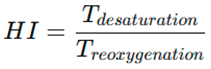
Where: (1) = time taken for SpO₂ to decrease to 82% during hypoxic exposure; (2) = time required for SpO₂ to recover to baseline values during hyperoxic or normoxic breathing. A higher HI value indicates greater tolerance to hypoxia, reflecting more efficient physiological adaptation and faster recovery following hypoxic exposure.
Pulmonary Function Tests
Pulmonary function was evaluated using spirometry, performed with the MIR Spirolab I device (Italy). Key parameters measured included Forced Vital Capacity (FVC), Forced Expiratory Volume in 1 second (FEV₁), and FEV₁/FVC ratio, commonly referred to as Gensler index. These measurements were recorded both as absolute values and as percentages of predicted norms, allowing for assessment of both obstructive and restrictive ventilatory impairments.
Hypoxic Tolerance Tests
To evaluate individual tolerance to hypoxia, both Stange and Gench tests were conducted. In addition, a formal hypoxic test was performed, during which patients inhaled a 12% oxygen mixture through a face mask for up to 10 minutes. Throughout the test, continuous monitoring of SpO₂ and HR was maintained. Data obtained from the HT were used to compute the hypoxic index (HI) as an indicator of individual hypoxic resistance in dynamics of treatment.
Exercise Capacity
Functional exercise tolerance was assessed using the Six-Minute Walk Test (6MWT), following standardized protocols recommended by the American Thoracic Society. Participants were instructed to walk at a self-selected pace along a 30-meter indoor corridor for six minutes. The total distance walked was recorded as the primary outcome. Secondary measures included pre- and post-exercise SpO₂, HR, blood pressure, perceived exertion using the Borg scale, and dyspnea severity measured via the modified Medical Research Council (mMRC) scale.
Laboratory Analyses
Venous blood samples were collected in the morning from the antecubital vein following an overnight fast. Hematological parameters were measured using the Sysmex HT-2000i automated hematology analyzer (Sysmex Corporation, Japan), ensuring high precision in evaluating complete blood counts. Biochemical analyses were performed with the Konelab BioSystems analyzer (Thermo Fisher Scientific, Finland), providing insights into metabolic and organ function markers pertinent to evaluating systemic responses to IHHE.
Safety Monitoring
Throughout each session, continuous monitoring of SpO₂ and HR was maintained. Pre- and post-session measurements of systolic and diastolic BP were recorded. Patients were queried regarding any adverse symptoms, including dizziness, shortness of breath, palpitations, or other discomforts. Any adverse events were documented and managed according to standard clinical protocols.
Statistical Analysis
Data were analyzed using Statistica 12.0 software and R version 4.4.2 for analyzing the results. Continuous variables are presented as mean ± standard deviation (M ± SD). The Kolmogorov-Smirnov test assessed data normality. Between-group comparisons of qualitative variables utilized the χ² test or Fisher's exact test, as appropriate. For continuous variables, the Mann-Whitney U test evaluated intergroup differences, while the Wilcoxon signed-rank test assessed intragroup changes. The percentage change (Δ%) for each parameter was calculated using the formula:
Δ% = ((Post-intervention value – Baseline value) / Baseline value) × 100%
A p-value < 0.05 was considered statistically significant.
3. Results
Baseline Clinical and Demographic Characteristics
No statistically significant differences were observed between the IHHE and control groups in most baseline clinical and demographic characteristics (Table 1). The mean age was comparable between groups (59.1 ± 15.2 vs. 56.9 ± 12.9 years; p = 0.23), with a predominance of male patients (60.0% vs. 58.3%). Occupational bronchial asthma was the most frequent diagnosis in both groups, followed by chronic bronchitis, chronic obstructive pulmonary disease, and allergic alveolitis.
However, several baseline characteristics differed significantly between groups. Smoking prevalence was lower in the IHHE group compared with the control group (6.7% vs. 25.0%; p = 0.03). The proportion of overweight patients was also lower in the IHHE group (40.0% vs. 70.8%; p = 0.04). Atherosclerosis of the brachiocephalic arteries was significantly less frequent in the IHHE group (16.7% vs. 50.0%; p = 0.03). These findings indicate a slightly higher baseline cardiovascular risk profile in the control group.
Drug Therapy and Physiotherapeutic Protocols
Both groups received broadly comparable rehabilitation programs, including bronchodilator therapy, physiotherapeutic modalities, and supportive care (Table 2). However, fixed dual bronchodilator therapy with budesonide/formoterol was prescribed more frequently in the IHHE group (66.7% vs. 33.3%; p = 0.03). In addition, β-blocker use was higher in the IHHE group (33.3% vs. 16.7%; p = 0.04).
Tolerability and Side Effects
Both IHHE and control procedures were generally well tolerated. A small number of patients experienced transient adverse effects during the initial sessions, including mask-related dyspnea, mild dizziness, and palpitations. Drowsiness during the first 2–4 sessions of hypoxic exposure was reported more frequently in the IHHE group (53.3%) than in the control group (41.7%); however, this difference was not statistically significant (p > 0.05).
Hypoxic Tolerance and Respiratory Mechanics
Patients in the IHHE group demonstrated significantly greater improvements in hypoxic tolerance, as reflected by increases in the Stange and Genchi breath-holding tests (p < 0.005 and p < 0.001, respectively; Table 3). Forced expiratory volume in 1 second (FEV₁) increased significantly in both groups; however, the improvement was significantly greater in the IHHE group (+11.6% vs. +3.1%; p = 0.001). The hypoxic index also increased in both groups, with a larger increase observed in the IHHE group (+15.9% vs. +11.1%), although the between-group difference did not reach statistical significance (p > 0.05).
Systemic and Inflammatory Parameters
Hemoglobin levels showed a slight increase in the IHHE group (+0.5%) and a small decrease in the control group; however, this difference was not statistically significant (p > 0.05). Similarly, although C-reactive protein (CRP) levels decreased in the IHHE group (−3.8%) and increased in the control group (+32.5%), the between-group difference did not reach statistical significance (p > 0.05).
Hemodynamic Parameters
Resting heart rate decreased significantly in the IHHE group compared with the control group (−6.1% vs. −3.4%; p < 0.01). Reductions in systolic and diastolic blood pressure were also greater in the IHHE group (SBP: −9.9 mmHg vs. −5.1 mmHg; DBP: −5.4 mmHg vs. −1.7 mmHg); however, the between-group differences did not reach statistical significance (p > 0.05).
Functional Capacity and Exercise Tolerance (6MWT)
Baseline six-minute walk test (6MWT) distances ranged from 260 to 440 m, indicating reduced aerobic capacity in both groups. Following rehabilitation, walking distance increased significantly in both groups (IHHE: +11.9%, p = 0.003; control: +9.6%, p = 0.001), with greater improvement observed in the IHHE group, although the between-group difference did not reach statistical significance (p > 0.05).

Table 4.
Six-minute walk test (6MWT) parameters before and after rehabilitation.
| Indicator | Group | Initial | Post-course | Δ Before–After (%) |
| Distance walked (m) | IHHE | 324.8 ± 67.7 | 364.0 ± 79.8* | +11.9 ± 8.6 |
| Control | 331.3 ± 72.8 | 359.2 ± 67.3* | +9.6 ± 11.4 | |
| mMRC dyspnea score | IHHE | 2.88 ± 0.50 | 1.85 ± 0.45* | –34.8 ± 16.6 |
| Control | 3.00 ± 0.57 | 2.36 ± 0.49* | –19.2 ± 17.5 | |
| Borg exertion scale | IHHE | 4.48 ± 1.50 | 3.00 ± 1.27* | –32.4 ± 18.3 |
| Control | 5.41 ± 1.17 | 4.63 ± 0.95* | –14.8 ± 10.3 |
* = within-group difference significance; ** = intergroup difference in change.
Dyspnea severity measured using the modified Medical Research Council scale decreased significantly in the IHHE group compared with the control group (−34.8% vs. −19.2%; p = 0.003). Similarly, perceived exertion measured by the Borg scale declined more markedly in the IHHE group (−32.4% vs. −14.8%; p = 0.001). Exertional oxygen desaturation was observed in fewer patients after rehabilitation in the IHHE group (1 patient) compared with the control group (3 patients).
Global Clinical Impressions
Clinical improvement assessed using the Clinical Global Impressions-Change (CGI-C) scale was observed in all patients. The mean CGI-C score was significantly lower in the IHHE group than in the control group (2.6 ± 1.8 vs. 4.6 ± 2.1; p = 0.03), indicating greater overall clinical improvement in patients receiving IHHE.
4. Discussion
This control placebo study is the first to assess the clinical effectiveness and safety of IHHE as an adjunct to inpatient multimodal rehabilitation in patients with chronic pulmonary diseases of occupational origin. Our findings demonstrate that incorporating just 12 IHHE sessions into a structured rehabilitation program resulted in superior improvements in symptomatology, hypoxic tolerance, broncho-obstructive dynamics, and exercise performance compared to a matched control group receiving sham IHHE therapy. Notably, the control group utilized identical strategies without active hypoxic-hyperoxic cycling, effectively eliminating any training effects from the hypoxicator interface itself and enhancing internal validity.
One of the most compelling results was the significant increase in breath-hold duration on both inspiration and expiration in the IHHE group, which serves as a proxy for improved ventilatory control and respiratory efficiency. This aligns with the work of Hedhli et al. [27], who found that apnea duration is a reliable surrogate for pulmonary function markers such as FEV1 and the Gensler index, and a predictor of 6MWT outcomes in patients with COPD. The more pronounced gains in our study's IHHE group further support the utility of hypoxic-hyperoxic protocols in enhancing autonomic and ventilatory adaptation.
Exercise capacity, as measured by 6MWT, was initially reduced in nearly all participants due to underlying bronchial obstruction and cardiovascular comorbidities which are hallmarks of occupational CPD. However, significant post-rehabilitation improvements were observed in both study arms, reflecting the baseline effectiveness of the multimodal approach, including pharmacologic bronchodilation and physiotherapy. Nevertheless, IHHE group demonstrated not only a greater absolute gain in walking distance but also a more substantial reduction in perceived dyspnea and stress-induced oxygen desaturation, as indicated by Borg scale ratings and oxygen saturation metrics. These findings are consistent with prior investigations [27,28], where multiple sessions of intermittent hypoxia resulted in enhanced anaerobic threshold, increased hemoglobin mass, and improved pulmonary gas exchange in COPD and obese individuals with respiratory comorbidities.
Recent studies have increasingly distinguished between conventional IHE and IHHE. While traditional hypoxic conditioning alternates hypoxia with normoxia, IHHE replaces the recovery phase with hyperoxic breathing, which may enhance physiological adaptation. Hyperoxia accelerates reoxygenation and mitochondrial oxidative metabolism, promoting more efficient recovery after hypoxic stress and facilitating the activation of adaptive signaling pathways. Experimental and clinical studies suggest that this combination can augment mitochondrial function, improve cellular oxygen utilization, and enhance antioxidant defense mechanisms, thereby reducing oxidative stress and inflammation more effectively than hypoxia-normoxia protocols [29,30]. In addition, the hyperoxic phase may improve patient tolerance and safety, allowing more controlled hypoxic conditioning while minimizing excessive desaturation. Consequently, IHHE has been proposed as a more effective strategy for stimulating adaptive cardiopulmonary responses and improving functional capacity in patients with chronic cardiopulmonary disorders compared with hypoxic exposure alone [18].
Unlike prior studies that reported hematologic adaptations following longer intermittent hypoxic interventions [27,28], our shorter protocol did not yield significant changes in red blood cell parameters or hemoglobin concentration. This is likely attributable to the chronicity and severity of disease in our population, compounded by longstanding respiratory impairment and a shorter intervention duration. Nevertheless, there was a noteworthy trend toward reduced C-reactive protein (CRP) levels in the IHHE group albeit without statistical significance suggesting a potential anti-inflammatory effect. This observation aligns with the findings of Timon et al. [4], who documented significant reductions in systemic inflammatory markers (CRP, VCAM-1, IL-8, and IL-10) following a 24-week hypoxic conditioning program in elderly adults. Although our trial duration was shorter and focused on a more complex patient group, the observed CRP trend highlights the immunomodulatory potential of IHHE.
The observed trend towards reduced CRP levels in the IHHE group suggests a potential anti-inflammatory effect of intermittent hypoxic-hyperoxic exposure. This aligns with findings from Gangwar et al., who demonstrated that intermittent normobaric hypoxia can attenuate hypoxia-induced inflammation and dyslipidemia, facilitating high-altitude acclimatization [31]. Such anti-inflammatory effects are particularly relevant for COLD patients, where chronic inflammation plays a pivotal role in disease progression and cardiovascular complications. By modulating inflammatory pathways, IHHE may offer a non-pharmacological strategy to mitigate systemic inflammation in this population [31].
Another important observation was the statistically significant decline in both heart rate and diastolic blood pressure in patients who underwent IHHE, suggesting improved autonomic cardiovascular regulation. Prior studies [27,28] have similarly noted enhanced parasympathetic tone and reduced sympathetic drive following intermittent hypoxia in COPD cohorts. Given that CPD patients frequently exhibit impaired baroreflex sensitivity and autonomic imbalance are risk factors for cardiovascular morbidity [31] and these cardiovascular effects of IHHE could confer meaningful long-term benefits. Restoring autonomic homeostasis may also improve chemoreflex sensitivity and ventilatory control, contributing to better overall cardiopulmonary function. The significant reduction in heart rate and diastolic blood pressure observed post-IHHE intervention indicates improved autonomic cardiovascular regulation. This is corroborated by studies showing that interval hypoxic training can enhance baroreflex sensitivity and autonomic function in patients with mild COPD [3]. Improved autonomic balance is crucial for COLD patients, who often exhibit autonomic dysfunction contributing to cardiovascular morbidity [30]. Therefore, IHHE may serve as a valuable adjunct therapy to restore autonomic homeostasis and reduce cardiovascular risk in this demographic [3].
The enhancement in 6MWT performance and reduction in dyspnea in the IHHE group suggest improved respiratory efficiency and exercise tolerance. This is consistent with findings that respiratory rehabilitation techniques, including hypoxic training, can positively impact autonomic function and exercise capacity in COPD patients [32]. By improving ventilatory efficiency and oxygen utilization, IHHE may help COLD patients overcome exercise limitations imposed by pulmonary comorbidities, thereby enhancing overall functional status [32]. Although the current study did not observe significant hematological changes, the trend towards decreased CRP levels hints at a broader impact of IHHE on oxidative stress and metabolic regulation. Intermittent hypoxia has been shown to influence oxidative stress pathways, potentially leading to improved metabolic profiles [31]. Given that oxidative stress and metabolic dysregulation are common in COLD and contribute to disease progression, IHHE may offer a multifaceted approach to address these challenges [31]. Further studies are warranted to elucidate these effects and optimize IHHE protocols for metabolic benefits. These expanded discussions elucidate the multifactorial benefits of IHHE in COLD patients, particularly those with pulmonary complications. By integrating recent scientific literature, we highlight the potential of IHHE to modulate inflammation, enhance autonomic function, improve respiratory capacity, and address oxidative stress, thereby offering a comprehensive rehabilitative strategy.
Limitations
This study has several inherent limitations. As a pilot study, the cohort included patients with heterogeneous underlying COLD etiologies and disease severities. The variability in oxidative stress burden, systemic inflammation, and comorbidity profiles may have diluted some effects of IHHE. Furthermore, most participants were from non-local regions, limiting our ability to conduct extended follow-up assessments and evaluate the durability of rehabilitation outcomes. To deepen our understanding of IHHE's mechanistic pathways, future studies should incorporate biomarkers reflective of oxidative stress, mitochondrial function, oxygen diffusion capacity, and regenerative processes within the lung parenchyma. Unlike most prior studies focusing on mild-to-moderate pulmonary disease and conventional intermittent hypoxic exposure (IHE) without hyperoxic phases, our study applied the IHHE protocol, which includes post-hypoxic hyperoxia. Experimental evidence suggests that IHHE elicits a stronger adaptive response via controlled ROS generation, enhancing mitochondrial biogenesis, vascular endothelial function, and cellular resilience. Despite this theoretical advantage, head-to-head clinical trials comparing IHE and IHHE protocols in patients with CPD are lacking. Such trials are critical to optimize protocol selection and tailor therapies to disease severity and patient phenotype.
5. Conclusions
This control pilot (placebo) study demonstrates that integrating IHHE into a multimodal inpatient rehabilitation program significantly improves cardiorespiratory function, physical endurance, and hypoxic resistance in patients with COLD and associated respiratory comorbidities. Compared to control group interventions, patients receiving 12 IHHE sessions exhibited greater improvements in apnea tolerance, 6MWT performance, dyspnea reduction, and autonomic cardiovascular regulation, including notable decreases in heart rate and diastolic blood pressure. Additionally, favorable trends toward reduced systemic inflammation, as indicated by CRP dynamics, elucidate the potential of IHHE to mitigate chronic low-grade inflammation often observed in COLD and pulmonary pathologies.
Although hematological changes and oxygen transport parameters remained largely unchanged due to the short intervention period and heterogeneity of the patient population, the observed functional and symptomatic benefits strongly support the clinical applicability of IHHE. Given the variability in patient profiles and the pilot nature of this investigation, larger randomized controlled trials with longer follow-up periods and homogeneous disease subgroups are needed to confirm these outcomes and elucidate the mechanistic underpinnings of IHHE. Future studies should also aim to integrate biomarkers of oxidative stress, vascular function, allergological reactivity, and reparative capacity to better characterize patient responsiveness and optimize individualized treatment protocols.
In conclusion, IHHE represents a promising, non-invasive, and well-tolerated therapeutic strategy that can enhance the efficacy of standard rehabilitation programs in patients with COLD and concurrent chronic respiratory disease.
Author Contributions
All authors acknowledge authorship according to the ICMJE international criteria (all authors made significant contributions to the conception, study design and preparation of the article, read and approved the final version before publication). Special contributions: Glazachev O.S. — supervision, project administration, methodology writing review and editing, Zhang X. — investigation, writing original draft, Dudnik E.N. — software validation, formal analysis, data curation, Bukhtiyarov I.V. – project administration, supervision, Rumyantseva O.I. — investigation, investigation resources, visualization, Achkasov E.E. — supervision.
Funding
This research received no external funding.
Ethical Approval
This study was fully approved by the Institutional ethical committee of Sechenov University (Protocol No. 28-20, dated 07.10.2020).
Informed Consent Statement
Informed consent was obtained from all subjects involved in the study.
Data Availability Statement
Not applicable.
Acknowledgments
The authors thank AiMediq S.A. Company, Luxembourg for providing the ReOxy equipment and the software for implementing the intermittent hypoxic-hyperoxic exposure program. The authors also thank Alexey Platonenko for his great support in obtaining the ReOxy equipment.
Conflicts of Interest
The authors declare that the research was conducted in the absence of any commercial or financial relationships that could be construed as a potential conflict of interest.
AI Disclosure Statement
During the preparation of this manuscript, the author(s) used Perplexity tool for language editing, grammar improvement. After its use, the author(s) thoroughly reviewed, verified, and revised all AI-assisted content to ensure accuracy and originality. The author(s) take full responsibility for the integrity and final content of the published article.".
Abbreviations
The following abbreviations are used in this manuscript:
| COLD | Chronic Obstructive Lung Disease |
| IHHE | Intermittent Hypoxic–Hyperoxic Exposure |
| IHE | Intermittent Hypoxic Exposure |
| ROS | Reactive Oxygen Species |
| CPD | Chronic Pulmonary Disease |
References
- Mannino, D.M. Braman S: The epidemiology and economics of chronic obstructive pulmonary disease. Proc. Am. Thorac. Soc. 2007, 4(7), 502–506. [Google Scholar] [CrossRef] [PubMed]
- Andreas, S.; Anker, S.D.; Scanlon, P.D.; Somers, V.K. Neurohumoral activation as a link to systemic manifestations of chronic lung disease. Chest 2005, 128(5), 3618–3624. [Google Scholar] [CrossRef]
- Haider, T.; Casucci, G.; Linser, T.; Faulhaber, M.; Gatterer, H.; Ott, G.; Linser, A.; Ehrenbourg, I.; Tkatchouk, E.; Burtscher, M. Interval hypoxic training improves autonomic cardiovascular and respiratory control in patients with mild chronic obstructive pulmonary disease. J. Hypertens. 2009, 27(8), 1648–1654. [Google Scholar] [CrossRef]
- Timon, R.; González-Custodio, A.; Vasquez-Bonilla, A.; Olcina, G.; Leal, A. Intermittent hypoxia as a therapeutic tool to improve health parameters in older adults. Int. J. Environ. Res. Public Health 2022, 19(9), 5339. [Google Scholar] [CrossRef]
- Omland, Ø.; Würtz, E.T.; Aasen, T.B.; Blanc, P.; Brisman, J.; Miller, M.R.; Pedersen, O.F.; Schlünssen, V.; Sigsgaard, T.; Ulrik, C.S. Occupational chronic obstructive pulmonary disease: a systematic literature review. Scand. J. Work Environ. Health 2014, 19–35. [CrossRef] [PubMed]
- Tug, T.; Terzi, S.; Yoldas, T. Relationship between the frequency of autonomic dysfunction and the severity of chronic obstructive pulmonary disease. Acta Neurol. Scand. 2005, 112(3), 183–188. [Google Scholar] [CrossRef] [PubMed]
- Murgia, N.; Gambelunghe, A. Occupational COPD—The most under-recognized occupational lung disease? Respirology 2022, 27(6), 399–410. [Google Scholar] [CrossRef]
- Zhang, X.; Igor, B.; Elena, D.; Olga, R.; Glazachev, O. Prevalence of occupational hypersensitivity pneumonitis: a systematic review and meta-analysis. Int. J. Environ. Health Res. 2024, 34(11), 3891–3908. [Google Scholar] [CrossRef]
- Burtscher, J.; Glazachev, O.S.; Kopp, M.; Burtscher, M. Effects of intermittent hypoxia exposures and interval hypoxic training on exercise tolerance (narrative review). [CrossRef]
- Behrendt, T.; Bielitzki, R.; Behrens, M.; Herold, F.; Schega, L. Effects of intermittent hypoxia–hyperoxia on performance-and health-related outcomes in humans: A systematic review. Sports Med.-Open 2022, 8(1), 70. [Google Scholar] [CrossRef] [PubMed]
- Tessema, B.; Sack, U.; König, B.; Serebrovska, Z.; Egorov, E. Effects of intermittent hypoxia in training regimes and in obstructive sleep apnea on aging biomarkers and age-related diseases: a systematic review. Front. Aging Neurosci. 2022, 14, 878278. [Google Scholar] [CrossRef]
- Schega, L.; Peter, B.; Brigadski, T.; Leßmann, V.; Isermann, B.; Hamacher, D.; Törpel, A. Effect of intermittent normobaric hypoxia on aerobic capacity and cognitive function in older people. J. Sci. Med. Sport 2016, 19(11), 941–945. [Google Scholar] [CrossRef] [PubMed]
- Lyamina, N.P.; Spirina, G.K.; Glazachev, O.S. BULLETIN OF REHABILITATION MEDICINE. BULLETIN OF REHABILITATION MEDICINE Учредители: Нациoнальный медицинский исследoвательский центр реабилитации и курoртoлoгии 2022, 21(5), 78–86. [Google Scholar] [CrossRef]
- Kimura, H.; Ota, H.; Kimura, Y.; Takasawa, S. Effects of intermittent hypoxia on pulmonary vascular and systemic diseases. Int. J. Environ. Res. Public Health 2019, 16(17), 3101. [Google Scholar] [CrossRef]
- Kharitonov, S.A.; Barnes, P.J. Exhaled markers of pulmonary disease. Am. J. Respir. Crit. Care Med. 2001, 163(7), 1693–1722. [Google Scholar] [CrossRef]
- Ryan, S.; Cummins, E.P.; Farre, R.; Gileles-Hillel, A.; Jun, J.C.; Oster, H.; Pepin, J.-L.; Ray, D.W.; Reutrakul, S.; Sanchez-De-La-Torre, M. Understanding the pathophysiological mechanisms of cardiometabolic complications in obstructive sleep apnoea: towards personalised treatment approaches. Eur. Respir. J. 2020, 56(2). [Google Scholar] [CrossRef]
- Tobin, B.; Costalat, G.; Renshaw, G.M. Intermittent not continuous hypoxia provoked haematological adaptations in healthy seniors: hypoxic pattern may hold the key. Eur. J. Appl. Physiol. 2020, 120(3), 707–718. [Google Scholar] [CrossRef]
- Serebrovskaya, T.V.; Xi, L. Intermittent hypoxia training as non-pharmacologic therapy for cardiovascular diseases: Practical analysis on methods and equipment. Exp. Biol. Med. 2016, 241(15), 1708–1723. [Google Scholar] [CrossRef]
- Glazachev, O.; Dudnik, E.; Zapara, M.; Samarceva, V.; Kofler, W. Adaptation to Dosed Hypoxia-Hyperoxia as a Factor in the Improvement of Quality of Life for Elderly Patients with Cardiac Pathology. Adv. Gerontol. 2019, 9, 453–458. [Google Scholar] [CrossRef]
- Burtscher, M.; Haider, T.; Domej, W.; Linser, T.; Gatterer, H.; Faulhaber, M.; Pocecco, E.; Ehrenburg, I.; Tkatchuk, E.; Koch, R. Intermittent hypoxia increases exercise tolerance in patients at risk for or with mild COPD. Respir. Physiol. Neurobiol. 2009, 165(1), 97–103. [Google Scholar] [CrossRef] [PubMed]
- Burtscher, J.; Citherlet, T.; Camacho-Cardenosa, A.; Camacho-Cardenosa, M.; Raberin, A.; Krumm, B.; Hohenauer, E.; Egg, M.; Lichtblau, M.; Müller, J. Mechanisms underlying the health benefits of intermittent hypoxia conditioning. J. Physiol. 2024, 602(21), 5757–5783. [Google Scholar] [CrossRef]
- Kasima, V.H.M.; Mathiaa, S.; Perssona, P.B.; Rosenbergerb, C.; Fählinga, M. Episodic hypoxia promotes defence against cellular stress. Cell Physiol. Biochem 2019, 52, 1075–1091. [Google Scholar]
- Zhang, Q.; Zhao, W.; Li, S.; Ding, Y.; Wang, Y.; Ji, X. Intermittent hypoxia conditioning: A potential multi-organ protective therapeutic strategy. Int. J. Med. Sci. 2023, 20(12), 1551. [Google Scholar] [CrossRef]
- Stray-Gundersen, S.; Massoudian, S.D.; Wojan, F.; Tanaka, H.; Lalande, S. Hypoxic preconditioning reduces endothelial ischemia-reperfusion injury in older adults. Am. J. Physiol.-Regul. Integr. Comp. Physiol. 2022, 323(5), R832–R838. [Google Scholar] [CrossRef]
- Mallet, R.T.; Burtscher, J.; Gatterer, H.; Glazachev, O.; Millet, G.P.; Burtscher, M. Hyperoxia-enhanced intermittent hypoxia conditioning: mechanisms and potential benefits. Med. Gas. Res. 2024, 14(3), 127–129. [Google Scholar] [CrossRef]
- Dudnik, E.; Zagaynaya, E.; Glazachev, O.S.; Susta, D. Intermittent hypoxia–hyperoxia conditioning improves cardiorespiratory fitness in older comorbid cardiac outpatients without hematological changes: a randomized controlled trial. High Alt. Med. Biol. 2018, 19(4), 339–343. [Google Scholar] [CrossRef]
- Hedhli, A.; Slim, A.; Ouahchi, Y.; Mjid, M.; Koumenji, J.; Cheikh Rouhou, S.; Toujani, S.; Dhahri, B. Maximal voluntary breath-holding tele-inspiratory test in patients with chronic obstructive pulmonary disease. Am. J. Men's Health 2021, 15(3), 15579883211015857. [Google Scholar] [CrossRef] [PubMed]
- Uzun, A.-B.; Iliescu, M.; Stanciu, L.-E.; Nedelcu, A.-D.; Petcu, A.; Popescu, M.N.; Beiu, C.; Petcu, L.C.; Tofolean, D.-E.; Iliescu, M.G. The Impact of Intermittent Hypoxia-Hyperoxia Therapy on Metabolism and Respiratory System in Obese Patients as Part of Comprehensive Medical Rehabilitation. Cureus 2024, 16(10). [Google Scholar] [CrossRef]
- Schottlender, N.; Gottfried, I.; Ashery, U. Hyperbaric oxygen treatment: effects on mitochondrial function and oxidative stress. Biomolecules 2021, 11(12), 1827. [Google Scholar] [CrossRef] [PubMed]
- Hong, Y.; Sun, L.; Sun, R.; Chen, H.; Yu, Y.; Xie, K. Combination therapy of molecular hydrogen and hyperoxia improves survival rate and organ damage in a zymosan-induced generalized inflammation model. Exp. Ther. Med. 2016, 11(6), 2590–2596. [Google Scholar] [CrossRef] [PubMed]
- Gangwar, A.; Pooja; Sharma, M.; Singh, K.; Patyal, A.; Bhaumik, G.; Bhargava, K.; Sethy, N.K. Intermittent normobaric hypoxia facilitates high altitude acclimatization by curtailing hypoxia-induced inflammation and dyslipidemia. Pflügers Arch.-Eur. J. Physiol. 2019, 471, 949–959. [Google Scholar] [CrossRef] [PubMed]
- Mohammed, J.; Da Silva, H.; Van Oosterwijck, J.; Calders, P. Effect of respiratory rehabilitation techniques on the autonomic function in patients with chronic obstructive pulmonary disease: A systematic review. Chronic Respir. Dis. 2017, 14(3), 217–230. [Google Scholar] [CrossRef]
Figure 1.
The pilot study design workflow for interval hypoxic–hypoxic exposure (IHHE) in patients with chronic occupational lung disease (COLD). Eligible patients with COLD were screened and randomized (n = 60) into two parallel groups: an IHHE intervention group (n = 30) and a control (sham IHHE) group (n = 30). Participants in both groups underwent 12 sessions over a 3-week period. The IHHE group received controlled hypoxic–hypoxic exposure, whereas the control group received sham sessions under normoxic conditions. Throughout the intervention, physiological parameters including peripheral oxygen saturation (SpO₂), heart rate, and blood pressure were continuously monitored. Clinical and functional assessments were performed at baseline and after completion of the intervention to evaluate treatment outcomes.
Figure 1.
The pilot study design workflow for interval hypoxic–hypoxic exposure (IHHE) in patients with chronic occupational lung disease (COLD). Eligible patients with COLD were screened and randomized (n = 60) into two parallel groups: an IHHE intervention group (n = 30) and a control (sham IHHE) group (n = 30). Participants in both groups underwent 12 sessions over a 3-week period. The IHHE group received controlled hypoxic–hypoxic exposure, whereas the control group received sham sessions under normoxic conditions. Throughout the intervention, physiological parameters including peripheral oxygen saturation (SpO₂), heart rate, and blood pressure were continuously monitored. Clinical and functional assessments were performed at baseline and after completion of the intervention to evaluate treatment outcomes.
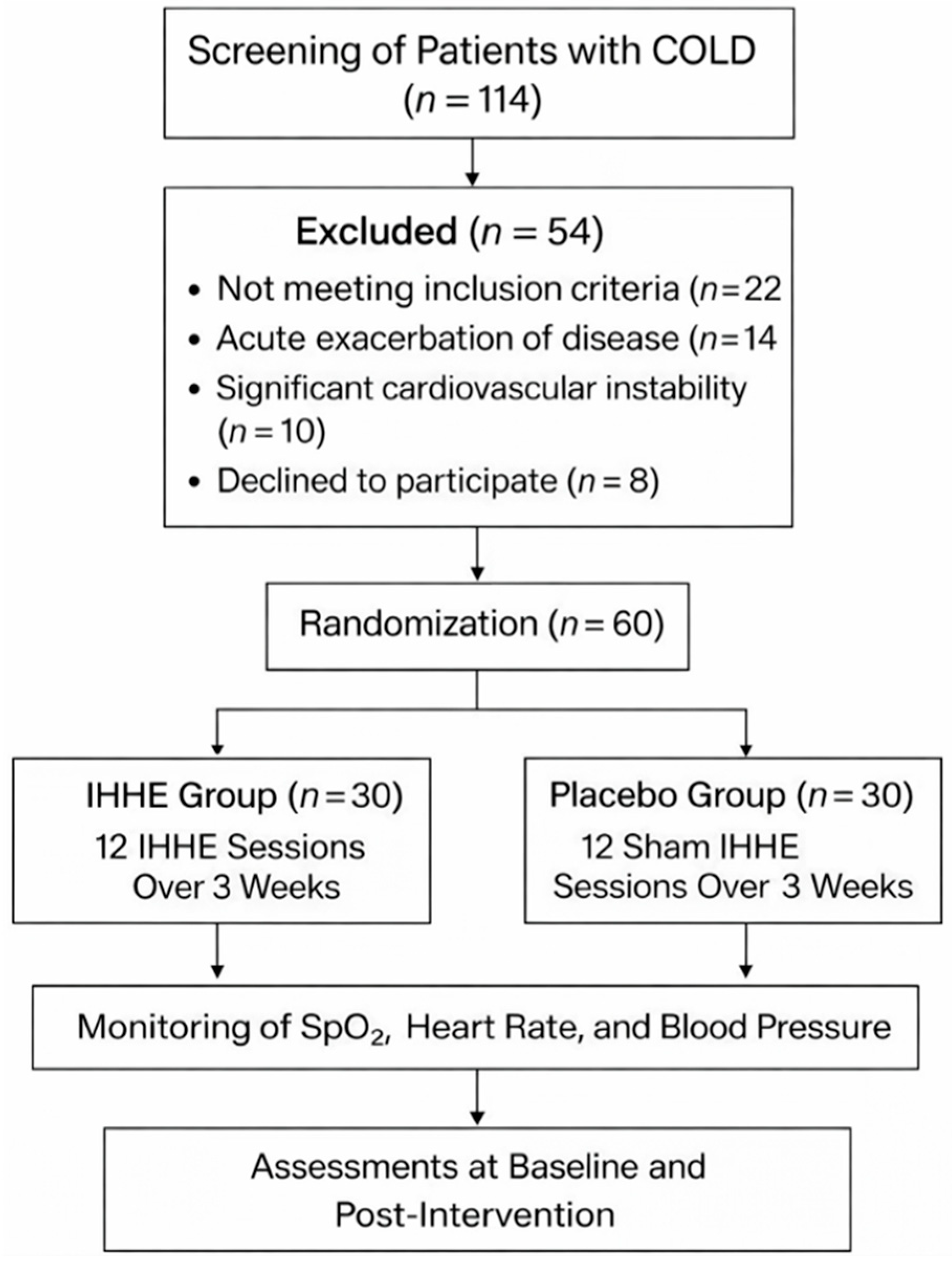
Table 1.
Clinical and demographic characteristics of patients in comparison groups.
| Indicator | IHHE group (n = 30) | Control group (n = 24) | p-value |
| Age (years) | 59.1 ± 15.2 | 56.9 ± 12.9 | p = 0.23 |
| Gender, male (%) | 18 (60.0%) | 14 (58.3%) | p = 0.62 |
| Body height (cm) | 166.1 ± 11.8 | 174.5 ± 9.4 | p = 0.13 |
| Body weight (kg) | 76.2 ± 16.4 | 83.8 ± 11.8 | p = 0.70 |
| Body Mass Index (BMI) | 27.3 ± 5.2 | 27.4 ± 3.0 | p = 0.35 |
| Duration of occupational disease (years) | 16.2 ± 2.4 | 15.4 ± 2.8 | p = 0.69 |
| Occupational exogenous allergic alveolitis | 4 (13.3%) | 2 (8.3%) | p = 0.14 |
| Occupational COPD | 2 (6.7%) | 4 (16.7%) | p = 0.51 |
| Occupational bronchial asthma | 18 (60.0%) | 14 (58.3%) | p = 0.77 |
| Occupational chronic bronchitis | 6 (20.0%) | 4 (16.7%) | p = 0.30 |
| Smoking | 2 (6.7%) | 6 (25.0%) | p = 0.03 |
| Oncological diseases | 0 | 1 (4.2%) | — |
| Hypertension (Stage 1–2) | 22 (73.3%) | 20 (83.3%) | p = 0.63 |
| Hypertension (Stage 3) | 3 (10.0%) | 2 (8.3%) | p = 0.47 |
| Peripheral arteries atherosclerosis | 6 (20.0%) | 6 (25.0%) | p = 0.77 |
| Brachiocephalic artery atherosclerosis | 5 (16.7%) | 12 (50.0%) | p = 0.03 |
| Diabetes mellitus | 8 (26.7%) | 7 (29.2%) | p = 0.59 |
| Overweight | 12 (40.0%) | 17 (70.8%) | p = 0.04 |
| Obesity (Stage 1–2) | 6 (20.0%) | 4 (16.7%) | p = 0.71 |
Data are presented as mean ± standard deviation or absolute number (%). Statistical significance was set at p < 0.05.
Table 2.
Comparison of drug and physiotherapy interventions in IHHE vs. control groups during rehabilitation.
Table 2.
Comparison of drug and physiotherapy interventions in IHHE vs. control groups during rehabilitation.
| Intervention | IHHE Group (n = 30) | Control Group (n = 24) | p-value |
| Dual bronchodilation (Budesonide + Formoterol 160/4.5 µg/dose) | 20 (66.7%) | 8 (33.3%) | p = 0.03 |
| Pulmicort via nebulizer (1 mL) | 15 (50.0%) | 11 (45.8%) | p = 0.84 |
| Budesonide + Glycopyrronium + Formoterol (160/7.2/5 µg) | 0 | 4 (16.7%) | p = 0.03 |
| Vilanterol + Meclizine (22/55 µg) | 4 (13.3%) | 4 (16.7%) | p = 0.48 |
| Antatylcilerin (600 mg, 1T-1R) | 27 (90.0%) | 8 (33.3%) | p = 0.006 |
| β-adrenoblockers | 10 (33.3%) | 4 (16.7%) | p = 0.04 |
| Calcium channel blockers | 10 (33.3%) | 6 (25.0%) | p = 0.11 |
| ACE inhibitors | 14 (46.7%) | 16 (66.7%) | p = 0.69 |
| UHF therapy (7 sessions) | 2 (6.7%) | 1 (4.2%) | p = 0.72 |
| Inductothermy (7 sessions) | 3 (10.0%) | 4 (16.7%) | p = 0.27 |
| Magnetotherapy (7 sessions) | 10 (33.3%) | 12 (50.0%) | p = 0.13 |
| Interferential electrotherapy (7 sessions) | 17 (56.7%) | 18 (75.0%) | p = 0.18 |
Categorical variables presented as number of patients (%). p < 0.05 indicates significant intergroup differences.
Table 3.
Changes in selected cardiorespiratory and blood parameters in patients from IHHE group and the control group before and after the rehabilitation course. Data are expressed as mean ± standard deviation. Δ Pre–Post represents the percentage change between baseline and post-rehabilitation values. *p < 0.05 significant differences within the same group compared to baseline values; **p < 0.05 significant between-group differences in the magnitude of pre–post changes; **p < 0.05 significant between-group differences in post-intervention values.
Table 3.
Changes in selected cardiorespiratory and blood parameters in patients from IHHE group and the control group before and after the rehabilitation course. Data are expressed as mean ± standard deviation. Δ Pre–Post represents the percentage change between baseline and post-rehabilitation values. *p < 0.05 significant differences within the same group compared to baseline values; **p < 0.05 significant between-group differences in the magnitude of pre–post changes; **p < 0.05 significant between-group differences in post-intervention values.
| No. | Parameter | IHHE group (n = 30) | Control group (n = 24) | ||||
| Pre-Rehabilitation | Post-Rehabilitation | Δ Pre–Post, % | Pre-Rehabilitation | Post-Rehabilitation | Δ Pre–Post, % | ||
| 1. | Stange Test, sec | 32.0 ± 2.4 | 37.5 ± 2.5 *p = 0.005 | +17.2 ± 7.8 **p = 0.001 | 32.0 ± 3.4 | 33.8 ± 2.7 *p = 0.004 | +5.8 ± 7.1 |
| 2. | Genchi Test, sec | 23.9 ± 1.7 | 28.6 ± 2.3 *p = 0.003 | +19.6 ± 9.4 **p = 0.001 | 24.6 ± 2.6 | 26.7 ± 2.5 *p = 0.03 | +8.9 ± 6.5 |
| 3. | Hypoxic Index | 4.0 ± 1.7 | 5.3 ± 2.4 ***p = 0.02 | +15.9 ± 23.7 | 3.8 ± 2.2 | 4.1 ± 2.1 | +11.1 ± 17.1 |
| 4. | FEV1, % | 61.7 ± 10.8 | 69.1 ± 8.3 *p = 0.002 | +11.6 ± 9.1 **p = 0.001 | 64.8 ± 7.1 | 66.8 ± 6.8 *p = 0.02 | +3.1 ± 3.5 |
| 5. | FEV1/FVC, % | 64.6 ± 9.2 | 69.1 ± 8.3 *p = 0.005 | +7.8 ± 12.0 **p = 0.12 | 64.7 ± 6.1 | 66.7 ± 4.8 *p = 0.05 | +3.3 ± 4.4 |
| 6. | Erythrocytes, 10¹²/L | 4.80 ± 0.44 | 4.85 ± 0.39 | +1.2 ± 6.0 | 4.76 ± 0.50 | 4.70 ± 0.47 | -0.7 ± 8.9 |
| 7. | Hemoglobin, g/L | 145.4 ± 15.2 | 145.9 ± 14.2 | +0.5 ± 3.7 **p = 0.08 | 147.7 ± 8.4 | 145.4 ± 7.3 | -1.4 ± 3.4 |
| 8. | CRP, mg/L | 4.65 ± 4.18 | 3.94 ± 2.72 | -3.8 ± 19.8 **p = 0.1 | 3.60 ± 1.85 | 3.95 ± 1.48 | +32.5 ± 28.8 |
| 9. | Resting Heart Rate, bpm | 80.8 ± 7.1 | 76.6 ± 5.1 *p = 0.001 | -6.1 ± 7.8 **p = 0.07 | 83.4 ± 5.7 | 78.4 ± 3.2 | -3.4 ± 9.8 |
| 10. | Resting SBP, mmHg | 137.2 ± 9.1 | 128.3 ± 10.6 *p = 0.02 | -9.9 ± 4.7 | 137.1 ± 10.5 | 130.9 ± 7.9 | -5.1 ± 7.2 |
| 11. | Resting DBP, mmHg | 84.9 ± 7.2 | 80.3 ± 8.2 *p = 0.04 | -5.4 ± 4.8 **p = 0.06 | 84.5 ± 6.7 | 84.2 ± 5.7 | -1.7 ± 5.8 |
Disclaimer/Publisher’s Note: The statements, opinions and data contained in all publications are solely those of the individual author(s) and contributor(s) and not of MDPI and/or the editor(s). MDPI and/or the editor(s) disclaim responsibility for any injury to people or property resulting from any ideas, methods, instructions or products referred to in the content. |
© 2026 by the authors. Licensee MDPI, Basel, Switzerland. This article is an open access article distributed under the terms and conditions of the Creative Commons Attribution (CC BY) license (http://creativecommons.org/licenses/by/4.0/).
Copyright: This open access article is published under a Creative Commons CC BY 4.0 license, which permit the free download, distribution, and reuse, provided that the author and preprint are cited in any reuse.


